

Have you ever looked at a finished piece and felt a small gap between the art you imagined and the embroidery resting in your hands? It’s a quiet frustration many of us feel—the sense that your work is lovely, but could be something more.
The secret to closing that gap isn’t about learning dozens of complex stitches or buying expensive new threads. It’s about intention. It’s in the small, deliberate choices: using a heavier thread for an outline, placing a single motif with perfect balance, or combining two simple textures to create surprising depth.
Think of your bedroom not just as a place to rest, but as your personal gallery. The headboard, the curtains, the pillows—each surface is an opportunity to create something that feels truly yours. These ideas are designed to show you how those small, intentional shifts in technique can transform everyday objects into extraordinary statements of art and comfort.
1. Channel Tufted Art Deco Headboard

Create an unforgettable headboard by combining embroidery with channel tufting.
First, plan your radiating lines, marking them on velvet or another heavyweight fabric.
Instead of standard thread, use a fine metallic cord and the couching stitch—tacking it down with a thinner, matching thread.
This technique allows the metallic cord to sit cleanly on the surface, catching the light and creating sharp, luxurious lines that define the Art Deco shell shape.
The combination of plush velvet and sleek metallic embroidery creates a dramatic textural contrast.
2. Create a Statement Jungle Tapestry
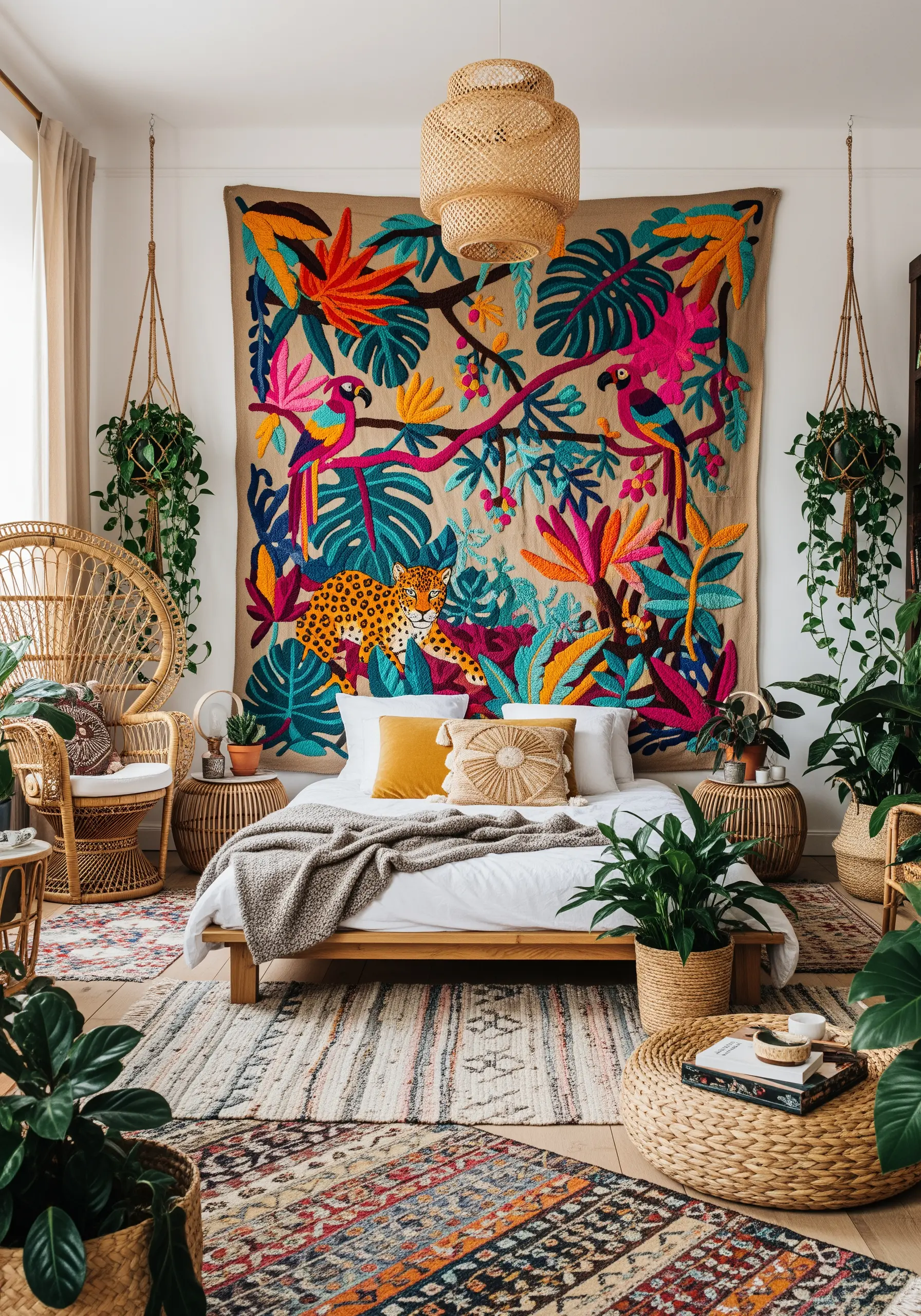
Move beyond the hoop and design a large-scale textile hanging that acts as a focal point.
Use a heavy, rustic fabric like linen or burlap as your canvas, which provides the necessary weight and texture.
Work with thick wool or cotton yarns and a punch needle to fill in large areas of color quickly, creating a lush, looped texture that mimics foliage.
For finer details like animal spots or leaf veins, switch to a traditional needle and six-strand floss, using satin stitch or chain stitch for crisp definition.
This mix of textures—chunky loops next to flat stitches—is what gives the piece its incredible depth and handmade character.
3. Master High-Contrast Botanical Linens
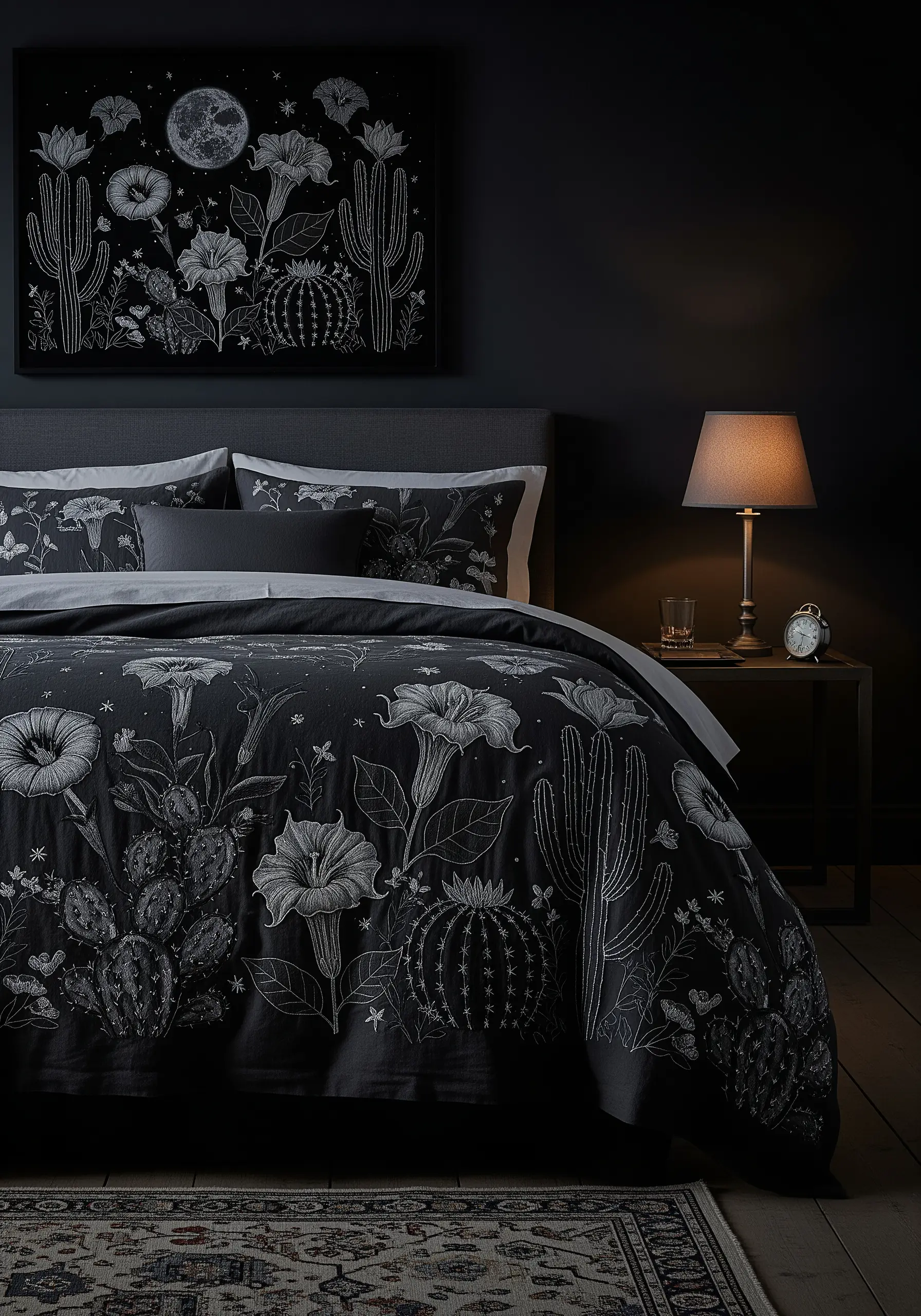
Transform simple bedding with the quiet drama of high-contrast embroidery.
On a dark fabric like charcoal gray or black linen, a single strand of white or silver floss creates lines that are both delicate and powerful.
Trace your botanical designs—think night-blooming flowers or desert cacti—and use a simple backstitch or stem stitch for the outlines.
To create texture without adding color, fill in petals and leaves with sparsely placed seed stitches or parallel straight stitches.
This technique relies on the power of negative space, allowing the unstitched dark fabric to become an integral part of the design.
4. Embroider on Sheer Curtains for an Ethereal Effect
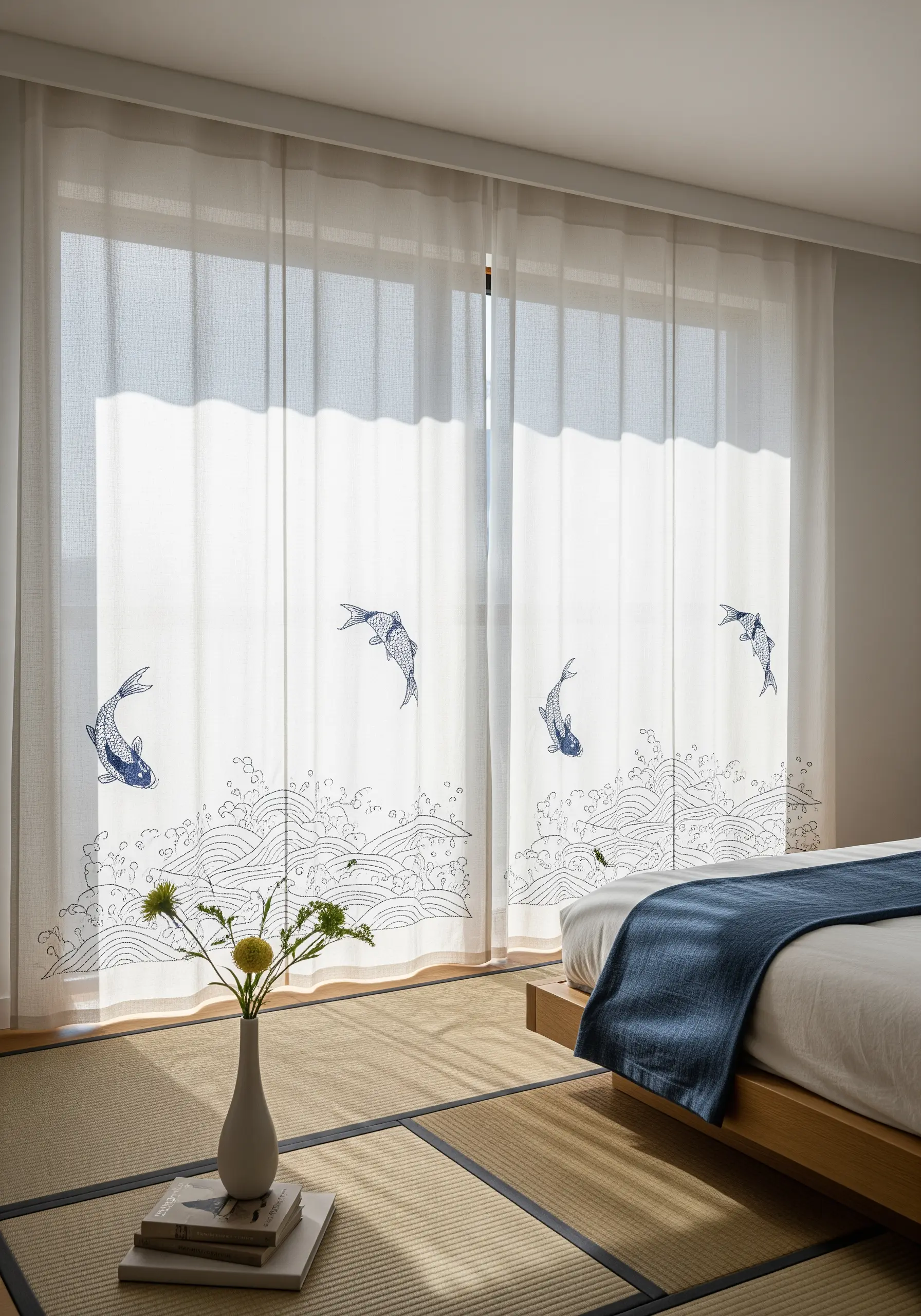
Add a touch of artistry to your windows by stitching directly onto sheer curtain panels.
Choose a lightweight linen or cotton voile fabric that allows light to filter through.
To prevent puckering, you must use a water-soluble stabilizer; hoop the stabilizer and fabric together, stitch your design, and then gently rinse it away.
A simple backstitch in a contrasting color, like this classic blue on white, creates a clean, illustrative feel.
By placing motifs like these swimming koi sporadically, you create a sense of calm movement as the light and breeze animate the design.
5. Design a Botanical Border for Upholstery

Elevate a simple piece of furniture, like an ottoman or bench, by adding a custom embroidered border.
Select a durable, tightly woven fabric such as a linen-cotton blend that can withstand tension.
To create a cohesive look, use a limited color palette—here, earthy browns and greens—for a subtle, hand-drawn aesthetic.
Vary your stitches to add interest: stem stitch for slender stalks, lazy daisy stitch for small petals, and satin stitch for fuller leaves.
A continuous border that wraps around the piece feels more intentional and professionally integrated than a single, centered motif.
6. Arrange Abstract Punch Needle Hoops as a Triptych
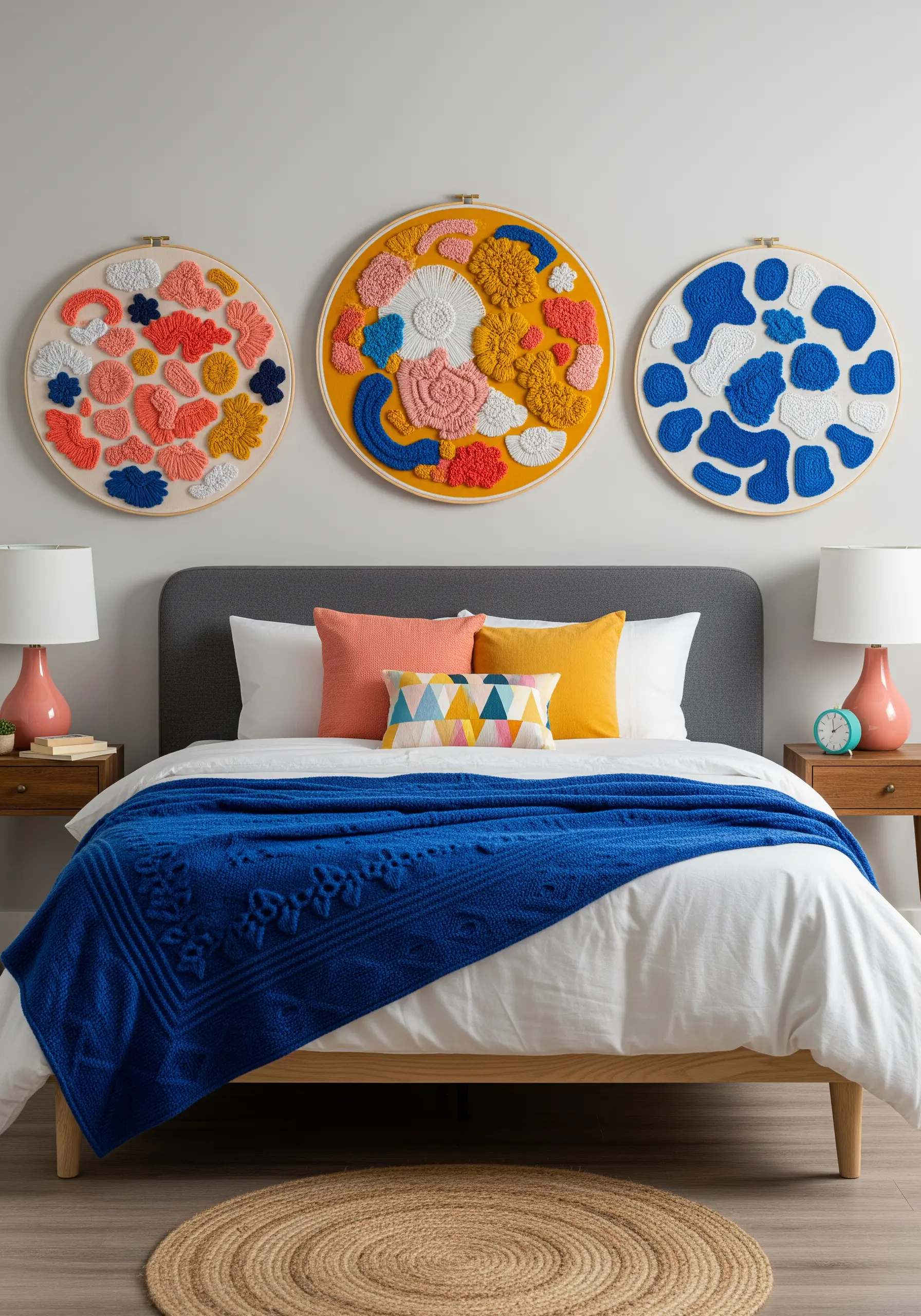
Create impactful wall art by displaying a series of punch needle hoops together.
Instead of a literal image, focus on abstract shapes and color fields, allowing texture to be the main subject.
Combine flat stitches with high-pile loops within the same piece for dynamic contrast—you can achieve this by working from both sides of the fabric.
Choose a unified color palette across the three hoops, but vary the compositions to keep them interesting.
Arranging them as a triptych above a headboard transforms simple hoops into a cohesive, gallery-style decor installation.
7. Embellish Velvet with an Elegant Motif
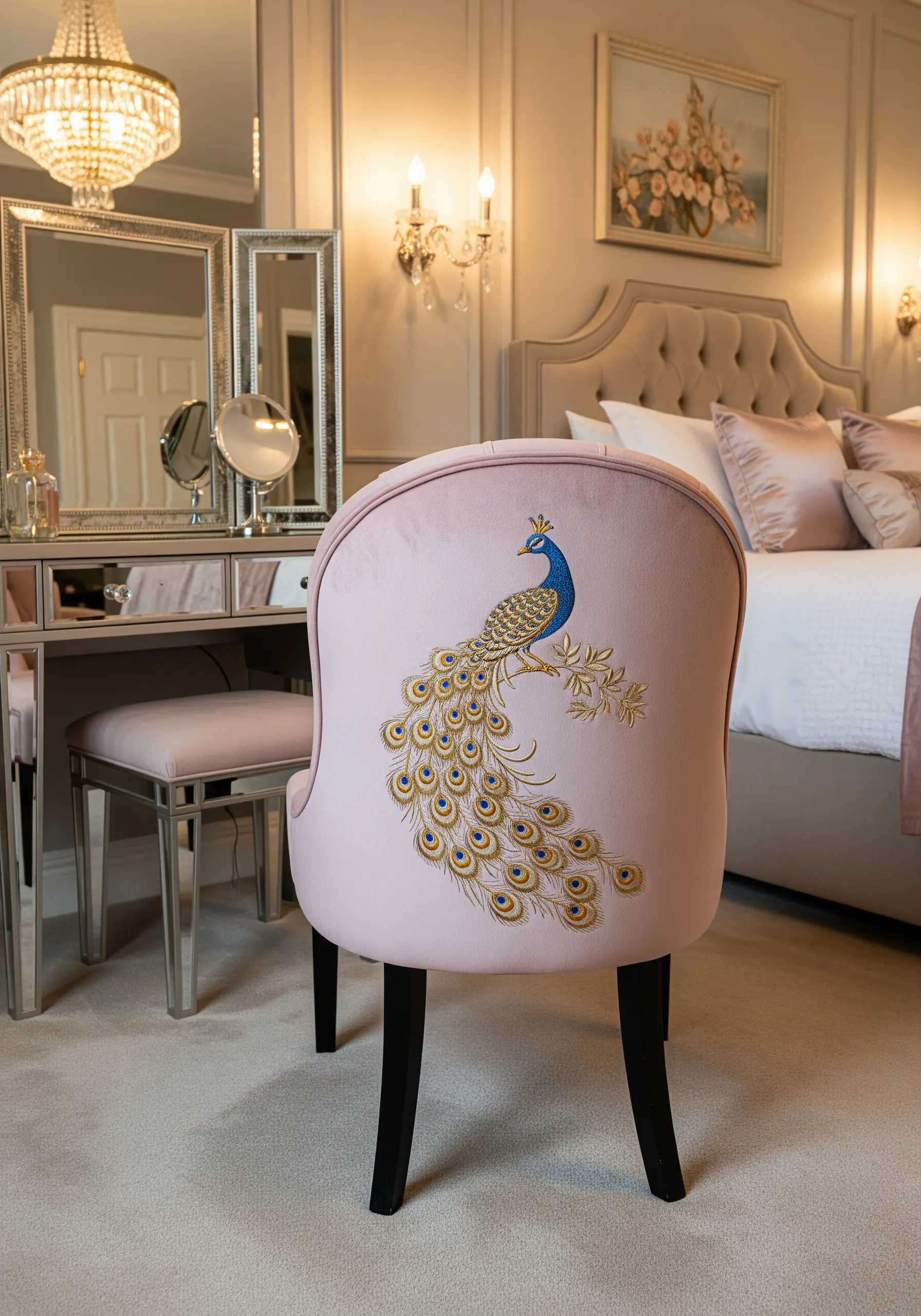
Stitching on velvet adds a layer of luxury, but it requires a careful approach to protect the fabric’s pile.
Always use a hoop to keep the tension even, but wrap the inner ring with cotton twill tape to prevent it from crushing the velvet.
Choose a design with clear, elegant lines, like this peacock, as intricate details can get lost in the fabric’s texture.
Combine standard floss with a fine gold metallic thread for the details—the metallic thread catches the light beautifully against the matte velvet.
Use satin stitch for color blocks and a delicate backstitch for the feather outlines to ensure every detail stands out.
8. Curate a Collection of Folk Art Cushions
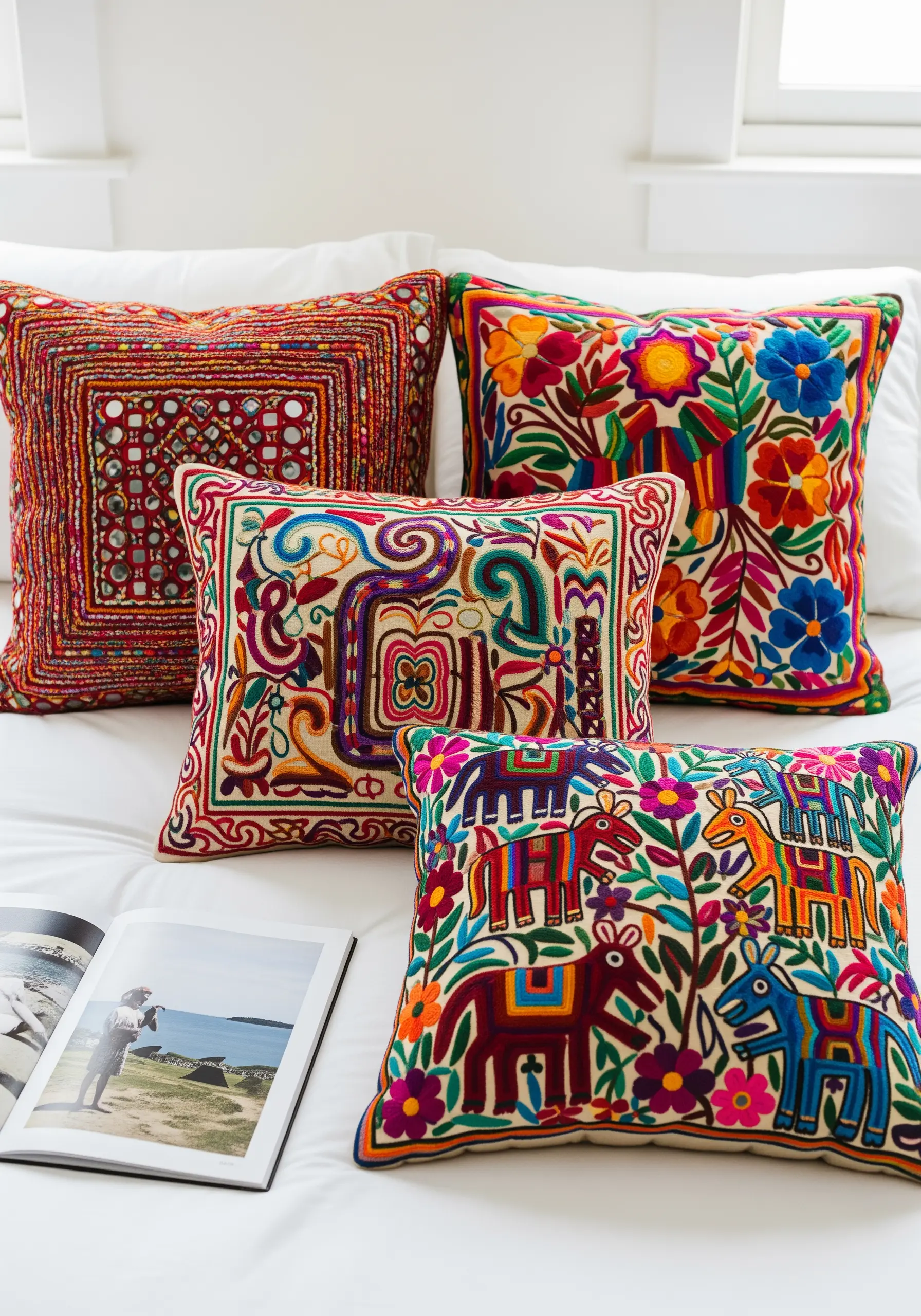
Turn your bed into a canvas by layering cushions with bold, traditional embroidery styles like Otomi or Shisha.
Focus on dense stitching that completely covers the fabric surface, using stitches like the chain stitch or herringbone stitch for rich texture.
Don’t be afraid to mix patterns, but maintain a sense of harmony by choosing pieces that share a few key colors.
Incorporate small mirrors (shisha work) for a touch of sparkle and reflection, which adds another layer of dimension.
This maximalist approach celebrates color, craftsmanship, and storytelling through textiles, making your bed the most vibrant spot in the room.
9. Translate Woven Patterns into Threaded Art
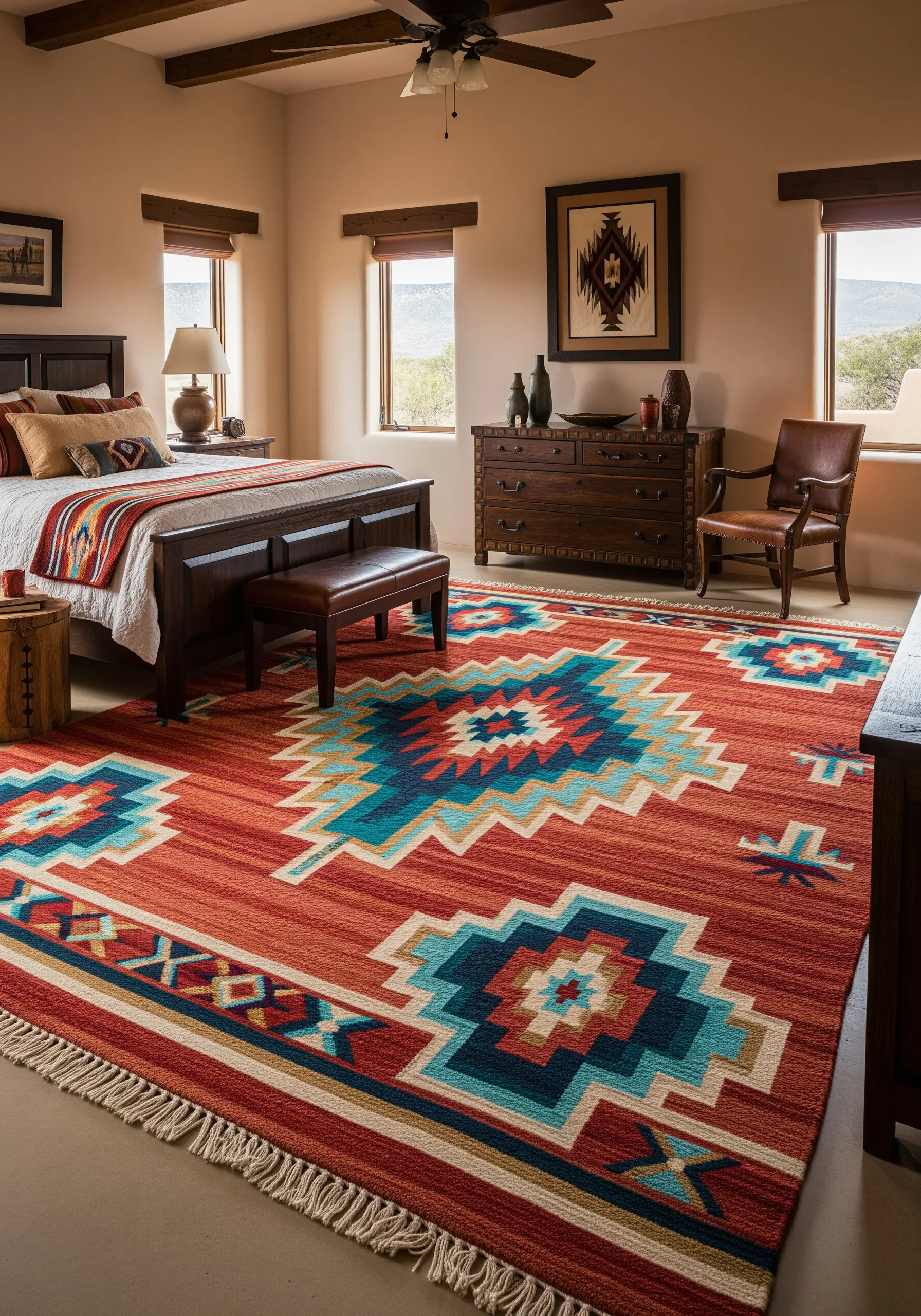
Take inspiration from woven textiles, like a Southwestern rug, to create an embroidered wall hanging or floor cushion.
Use a heavy canvas or linen base to support the weight of the stitching.
To replicate the bold, geometric look, outline each shape with a split stitch, then fill it with a dense, smooth satin stitch.
Work with thicker threads, like tapestry wool or multiple strands of cotton floss, to achieve the substantial feel of a woven piece.
Maintaining perfectly parallel stitches is key to creating the clean, graphic quality that defines this style.
10. Create Narrative Art on a Folding Screen
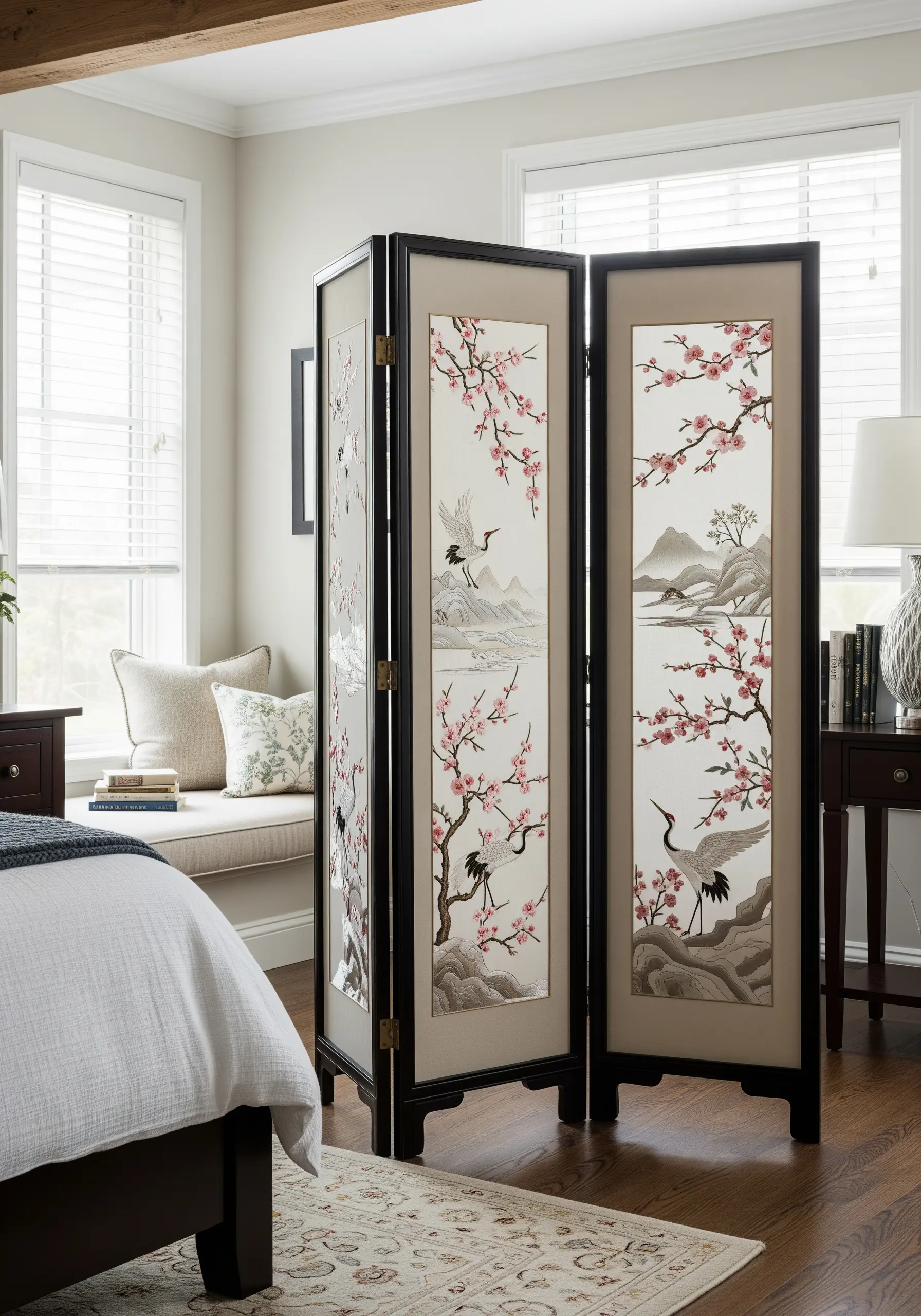
A folding screen offers a unique, vertical canvas for telling a story with thread.
Design a single, continuous scene that flows across the panels, like a traditional landscape painting.
Stretch your fabric tightly onto each panel’s frame before you begin stitching to ensure a perfectly flat surface.
Use a delicate long-and-short stitch to create soft color gradients in the mountains and blossoms, which gives the scene a painterly quality.
This transforms a functional room divider into a piece of fine art that adds elegance and structure to your bedroom.
11. Stitch the Stars on a Celestial Quilt
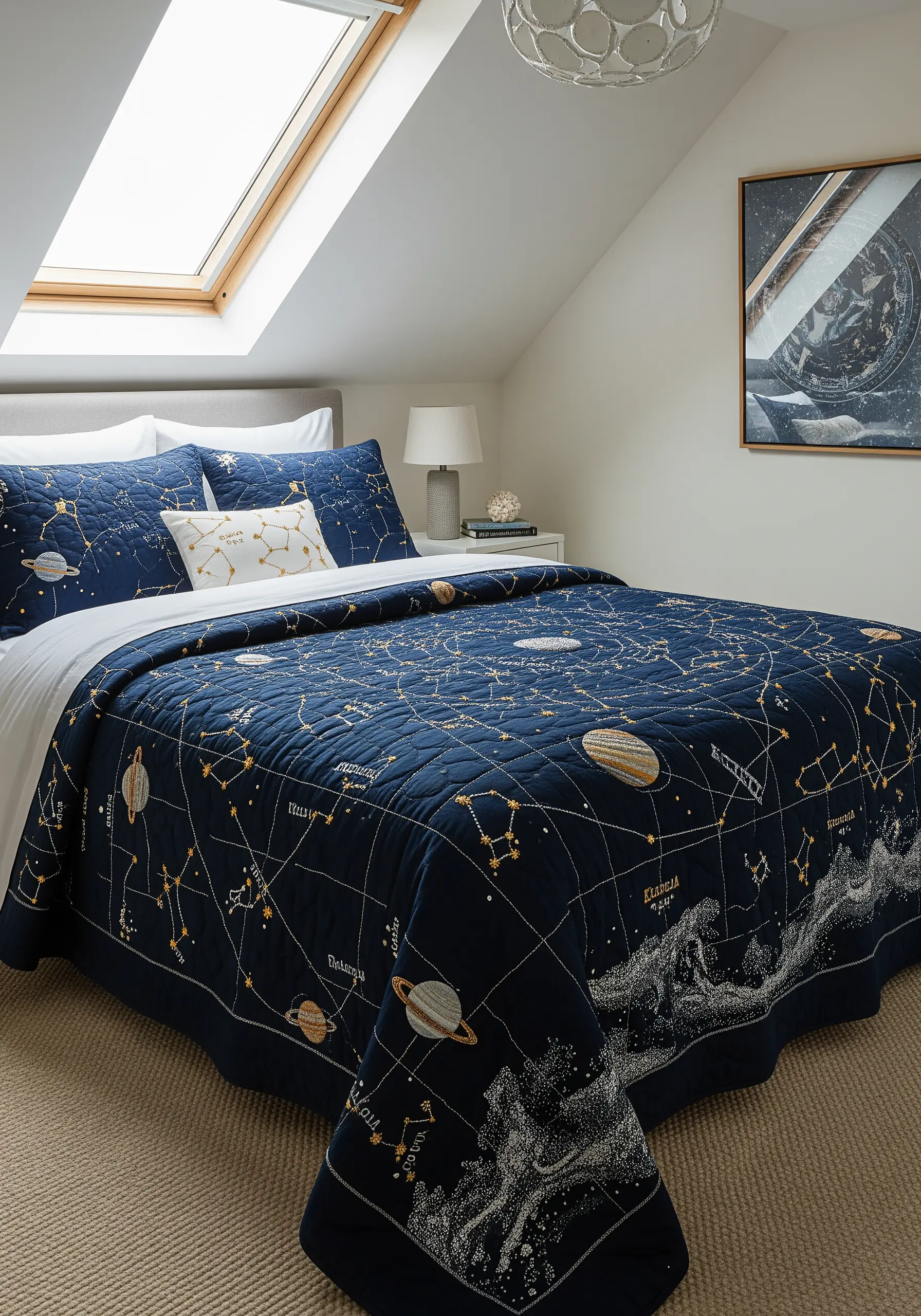
Combine the crafts of quilting and embroidery to create a stunning celestial-themed bedspread.
On a dark navy or black quilted fabric, use a shimmering gold or silver metallic thread to stand out against the deep background.
Use a simple backstitch for constellation lines and French knots of varying sizes for stars to create a sense of depth.
For planets and other celestial bodies, use a circular satin stitch, making sure your stitches radiate smoothly from the center.
The quilting provides a subtle, gridded texture that complements the embroidered star map perfectly, adding warmth and structure.
12. Drape Your Bed in an Embroidered Canopy

Create a romantic and ethereal focal point with a sheer, embroidered bed canopy.
Choose a very lightweight fabric, like cotton voile or organza, that drapes beautifully.
To create the cascading wisteria, use a combination of stitches: stem stitch in green for the vines and lazy daisy stitches or French knots in purples and lavenders for the blossoms.
Concentrate the embroidery along the top border, allowing the motifs to trail down naturally.
This placement draws the eye upward and makes the entire bed feel like a secluded, magical space.
13. Personalize a Lampshade with Retro Motifs
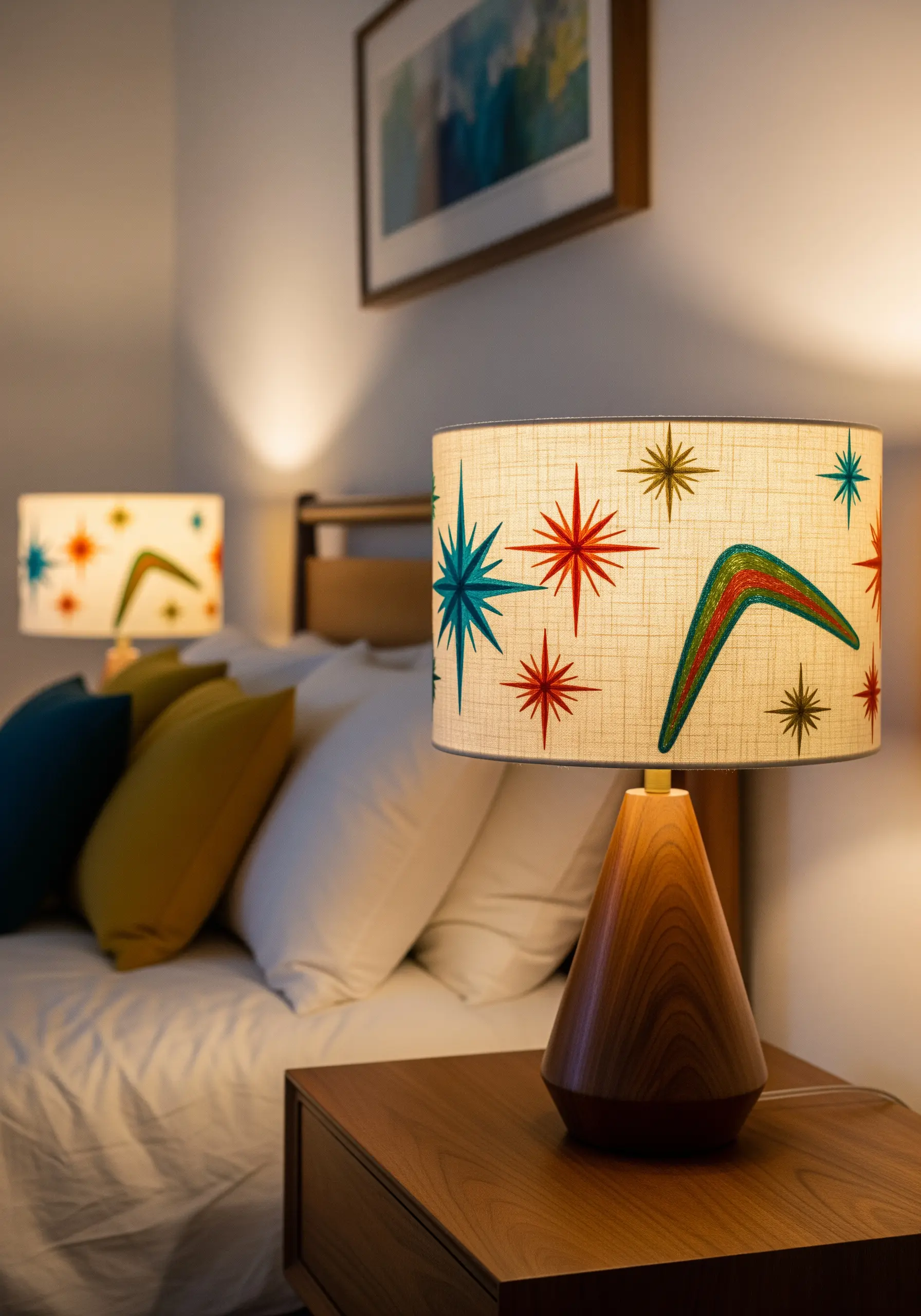
Turn a plain lampshade into a piece of mid-century modern art with a few simple stitches.
Select a lampshade made from a fabric like linen or coarse cotton that is easy to pierce with a needle.
Draw your retro-inspired designs—like starbursts and boomerangs—directly onto the shade with a heat-erasable pen.
Use a bold satin stitch with vibrant, contrasting colors to fill in the shapes.
The light from the bulb will shine through the threads, making the embroidered design glow and creating a warm, playful ambiance.
14. Reupholster a Chair with Toile-Inspired Stitches
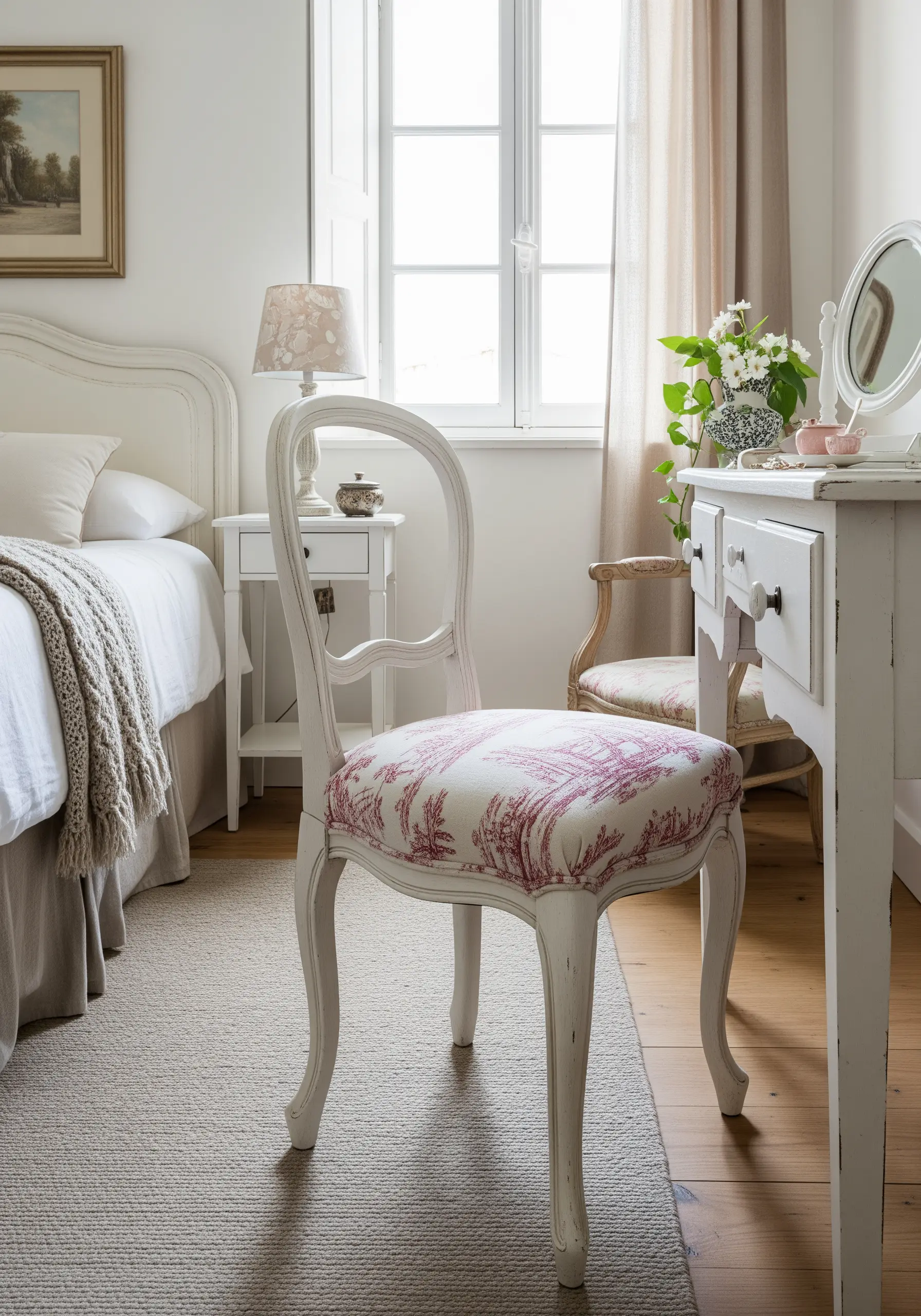
Capture the timeless elegance of Toile de Jouy by creating your own version with a needle and thread.
Work on a neutral, tightly woven cotton or linen fabric in a single color of floss, typically red, blue, or black.
Use a fine backstitch or stem stitch to outline the pastoral scenes, characters, and floral elements.
The key to the toile style is its illustrative, almost sketch-like quality, so focus on clean lines rather than dense fills.
Reupholstering a small vanity chair with your custom fabric adds a sophisticated, personal touch to a classic design.
15. Create Bold Line Art with Yarn Couching

For a large-scale wall piece that makes a statement, traditional embroidery can be too time-consuming.
Instead, use a thick yarn or rope and the couching technique to create bold, graphic outlines.
Simply lay the yarn along your design line on a fabric-covered panel and use a thinner, coordinating thread to tack it down every half-inch.
This method allows you to create huge, textural designs like these ginkgo leaves with speed and precision.
The raised, rope-like quality of the yarn gives the artwork a sculptural feel that stands out from the wall.
16. Frame a Mirror with Three-Dimensional Flowers
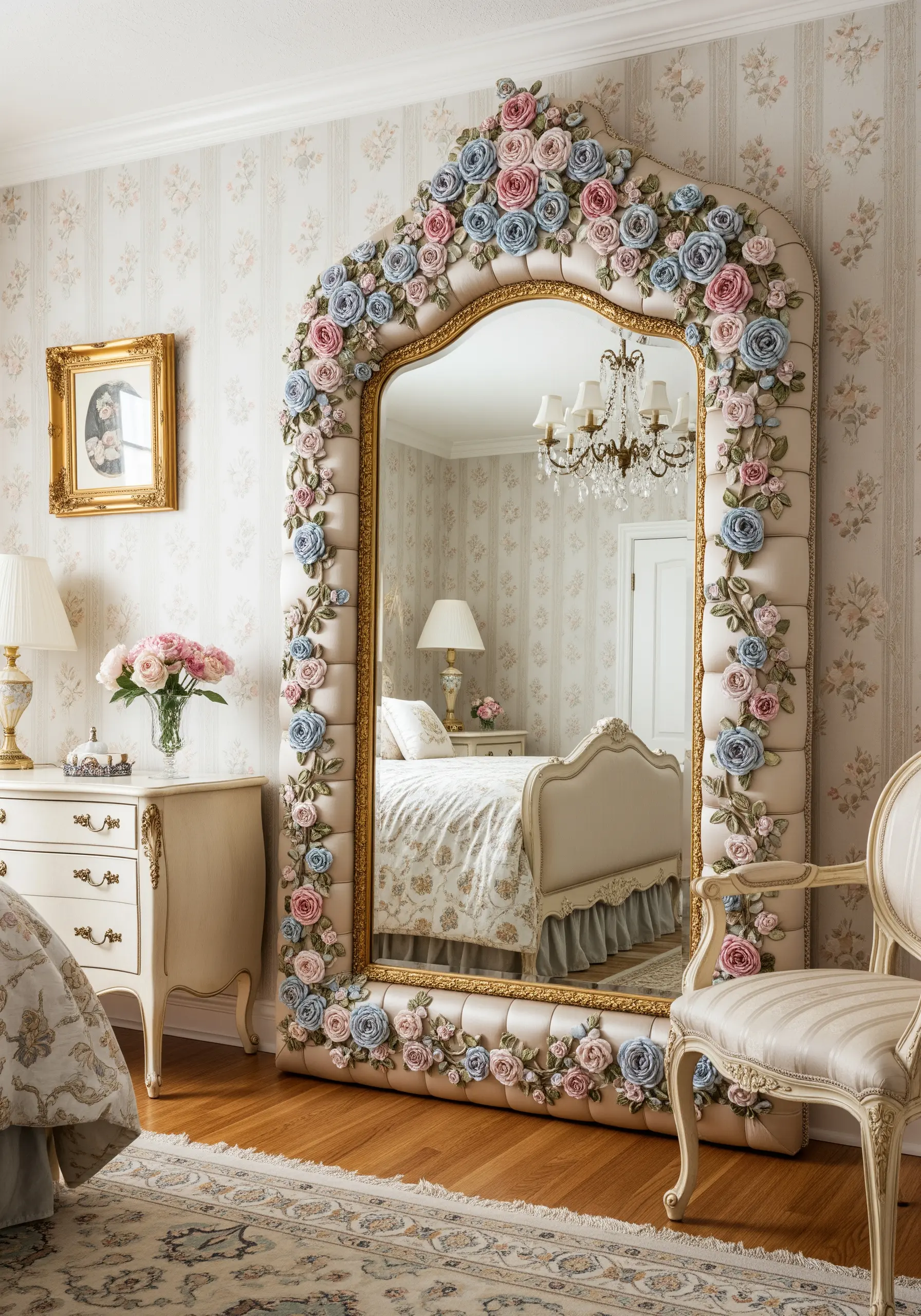
Transform a simple mirror into a romantic, fairytale piece by adding a frame of sculptural, embroidered flowers.
Use stumpwork and ribbon embroidery techniques to create raised, 3D petals and leaves.
For the roses, create individual petals on a separate piece of fabric using wire along the edges, then cut them out and assemble them into a flower.
Attach the finished blossoms to a padded fabric frame, creating a soft, tufted border.
This highly textural, floral-inspired ribbon embroidery turns a functional object into a breathtaking work of art.
17. Hang a Wabi-Sabi Textile Collage
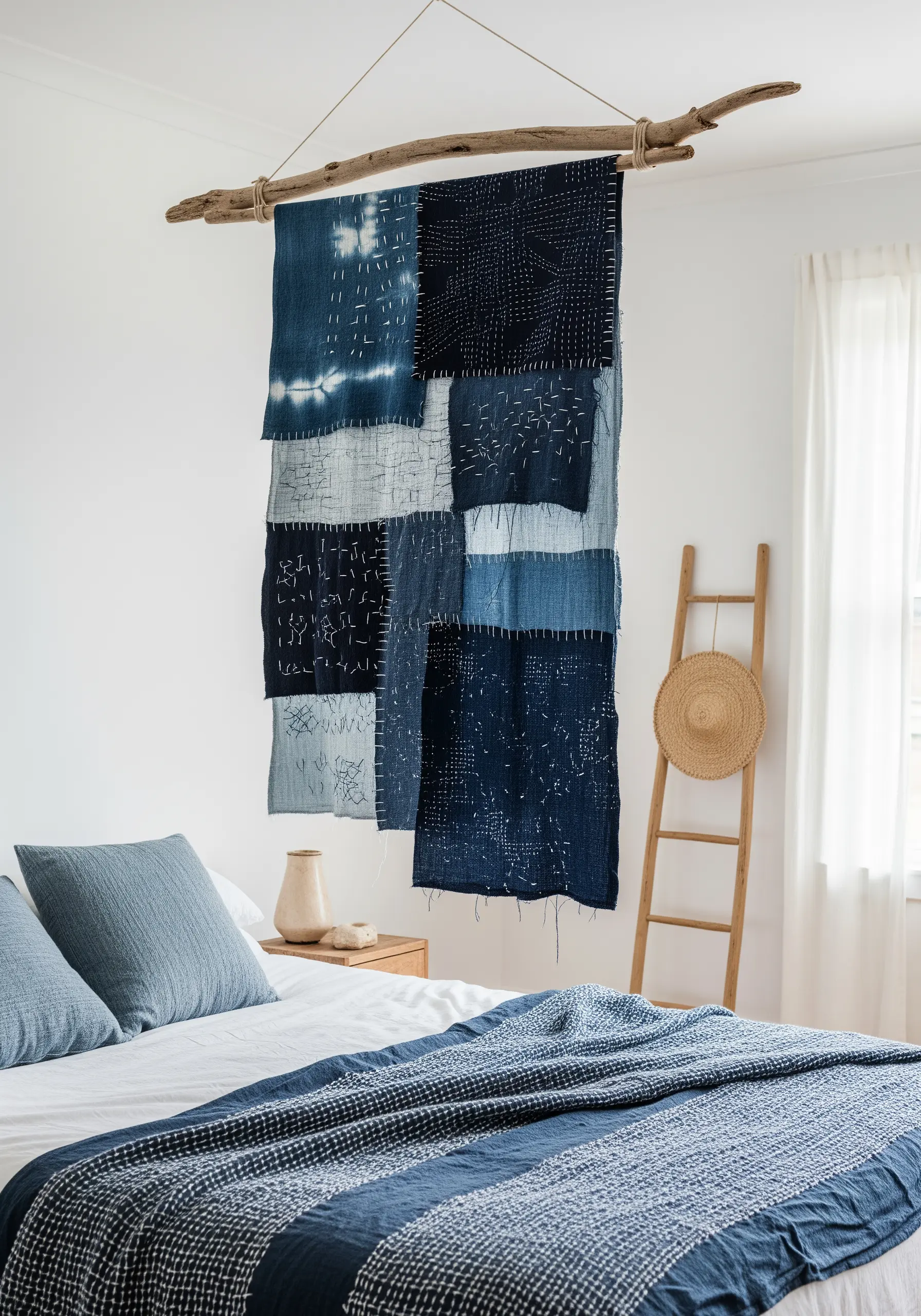
Embrace imperfection and mindfulness with a wall hanging inspired by Japanese Boro and Sashiko techniques.
Patch together scraps of indigo-dyed linen and cotton in various shades to create a layered, asymmetrical collage.
Use a simple, straight running stitch—the foundation of Sashiko—with a contrasting white thread to join the pieces and add decorative patterns.
The visible mending and simple stitches celebrate resourcefulness and find beauty in repair.
Hanging the finished piece from a piece of driftwood enhances its natural, organic aesthetic.
18. Upholster a Headboard in a Tropical Print

Create a vibrant, vacation-inspired mood with a headboard upholstered in densely embroidered fabric.
To achieve the look of a printed textile, use thread painting—blending shades of floss with long-and-short stitches to create smooth color gradients.
Focus on one or two botanical motifs, like monstera leaves and birds of paradise, and repeat them across the fabric.
The dense satin stitch fills give the design a smooth, almost glossy finish that makes the colors pop.
This unique embroidered headboard becomes the undeniable focal point of the room, radiating energy and color.
19. Weave a Darkly Romantic Bed Runner
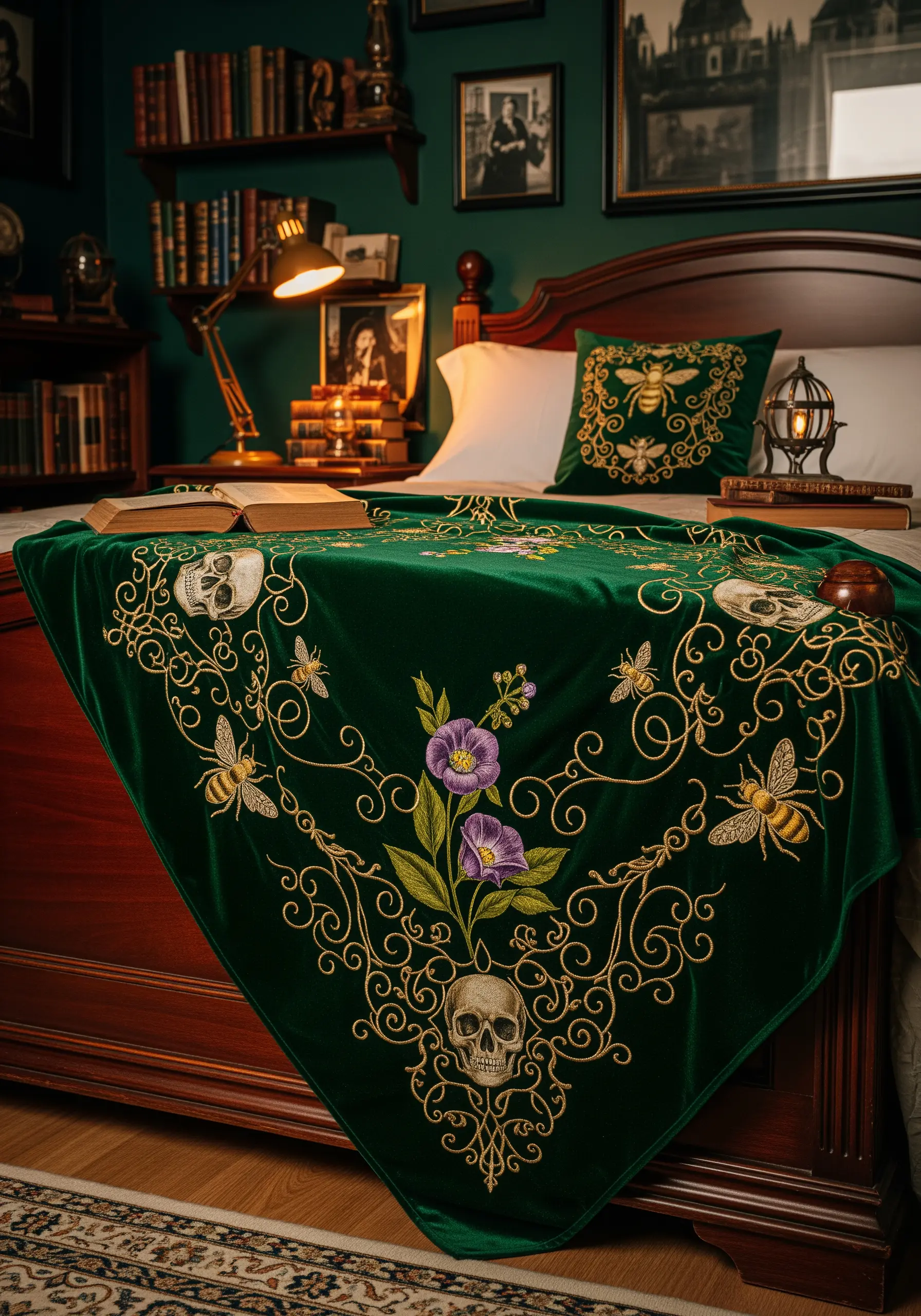
Set a moody, intellectual tone with a velvet bed runner featuring gothic and botanical motifs.
The deep green velvet provides a rich, dark canvas that makes metallic and jewel-toned threads glow.
Use a fine gold thread for swirling filigree, outlining the shapes with a delicate backstitch.
For the florals and skulls, use a soft, painterly long-and-short stitch to create subtle shading and dimension.
This combination of elegant scrollwork with memento mori imagery creates a sophisticated, dark academia aesthetic.
20. Design a Duvet with Modernist Color Blocking

Channel the spirit of modern art with a duvet cover featuring bold, geometric embroidery inspired by artists like Mondrian.
On a crisp white cotton base, use appliqué for the large blocks of primary colors—simply cut the fabric shapes and secure them with a neat satin stitch border.
For the clean black lines, use a wide band of satin stitch or couched black cord to achieve a bold, graphic effect.
The key is precision: perfectly straight lines and sharp corners are essential for capturing the minimalist, architectural feel of the modernist movement.
This turns your bed into a piece of abstract art.
21. Tell a Folk Tale with a Wall Tapestry

Create a charming, narrative tapestry filled with stylized folk art motifs.
Use a simple color palette on a solid background to let the whimsical characters and scenery shine.
Fill in the shapes with flat, decorative stitches like satin stitch or long-and-short stitch, focusing on creating clean silhouettes rather than realistic shading.
Embrace a slightly naive, illustrative style for the animals and people, as this is central to the charm of folk art.
Bordering the entire piece with a simple, contrasting pattern ties the composition together and gives it a finished look.
22. Adorn Roman Blinds with a Single Motif
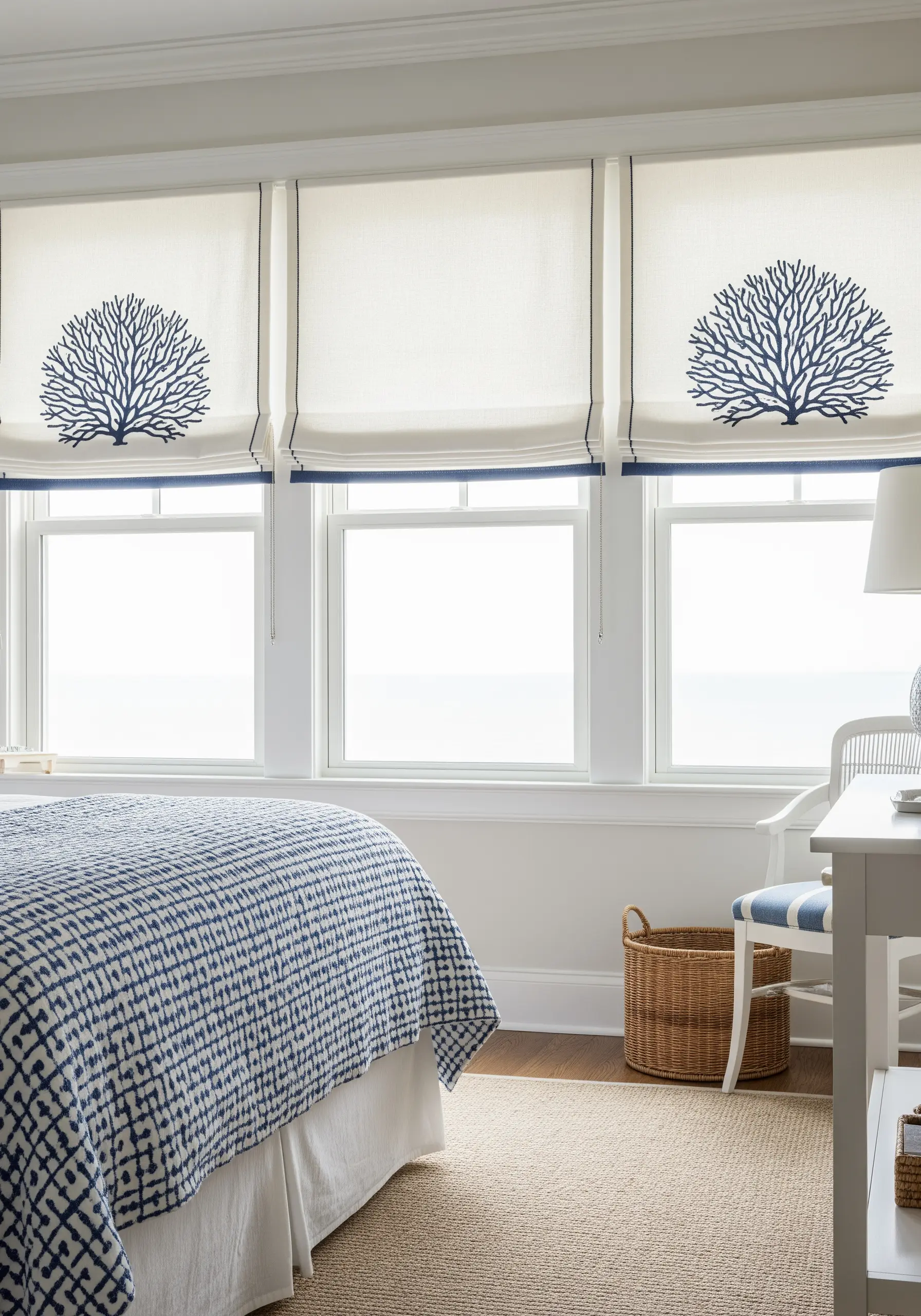
Elevate functional window treatments by adding a single, well-placed embroidered motif.
For Roman blinds, the design must be positioned so it remains fully visible when the blind is down.
Choose a graphic, elegant design like this coral silhouette that can be rendered beautifully in a single color.
A dense satin stitch or a field of carefully placed seed stitches will create a solid, impactful shape that stands out against the neutral fabric.
This minimal, ocean-inspired embroidery adds a custom, high-end feel to standard blinds.
23. Upholster a Statement Chair with Psychedelic Florals

Go bold by covering an entire piece of furniture in vibrant, textural embroidery.
Working on a sturdy fabric like corduroy adds an extra layer of retro texture that complements a 70s-inspired design.
Use thick, plush yarns and a combination of long-and-short stitch and dense French knots to create a rich, raised surface.
Don’t shy away from unconventional color combinations—the clash of purple, orange, and yellow is what gives this piece its energetic, psychedelic feel.
Outlining the shapes in a contrasting color helps define the motifs within the riot of color and texture.
24. Add Appliqué to a Chunky Knit Blanket

Combine different fiber arts by adding embroidered appliqué motifs to a chunky knit blanket.
Instead of stitching directly into the loose knit, create your motifs on a separate piece of felt or non-fraying wool fabric.
Use yarn and a satin stitch or chain stitch to fill in the designs, like these deer and trees.
Carefully cut out the finished shapes and use a matching yarn to whipstitch them securely onto the blanket.
This technique ensures your embroidery is stable and crisp, creating a charming, rustic look without distorting the knit.
25. Embellish a Bed Skirt with Ribbon Embroidery
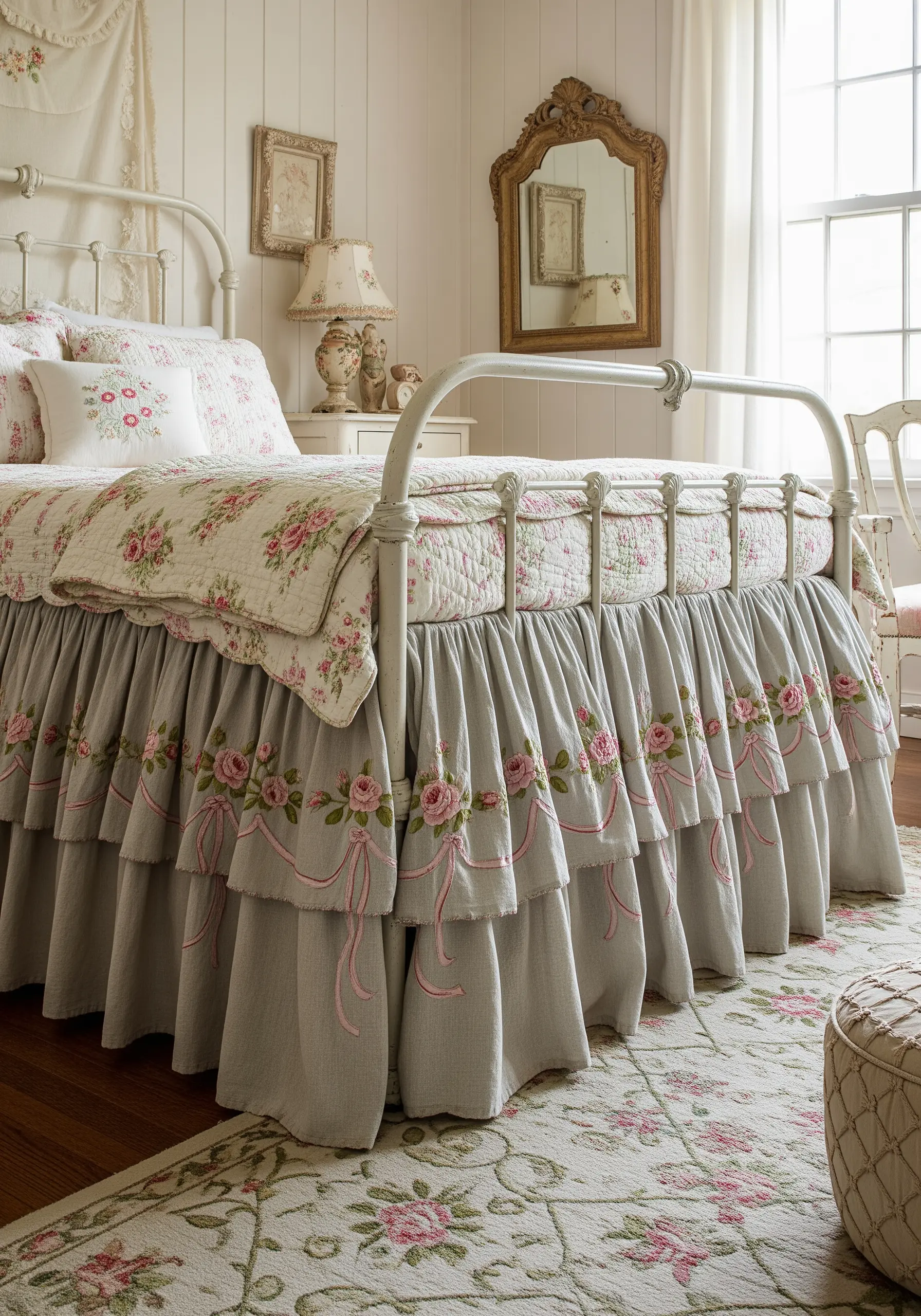
Add a touch of romantic, vintage charm to your bedroom by decorating a bed skirt with delicate floral details.
Ribbon embroidery is perfect for this, as it creates soft, dimensional petals with just a few simple stitches.
Use the ribbon stitch or a looped lazy daisy stitch to form the rose petals, and a thin green ribbon or floss with a stem stitch for the vines and leaves.
Arranging the flowers in swags tied with stitched bows gives the design a classic, graceful movement.
This subtle embellishment on a simple linen bed skirt adds a layer of custom, handcrafted beauty.
26. Create Ornate, Upholstered Closet Doors
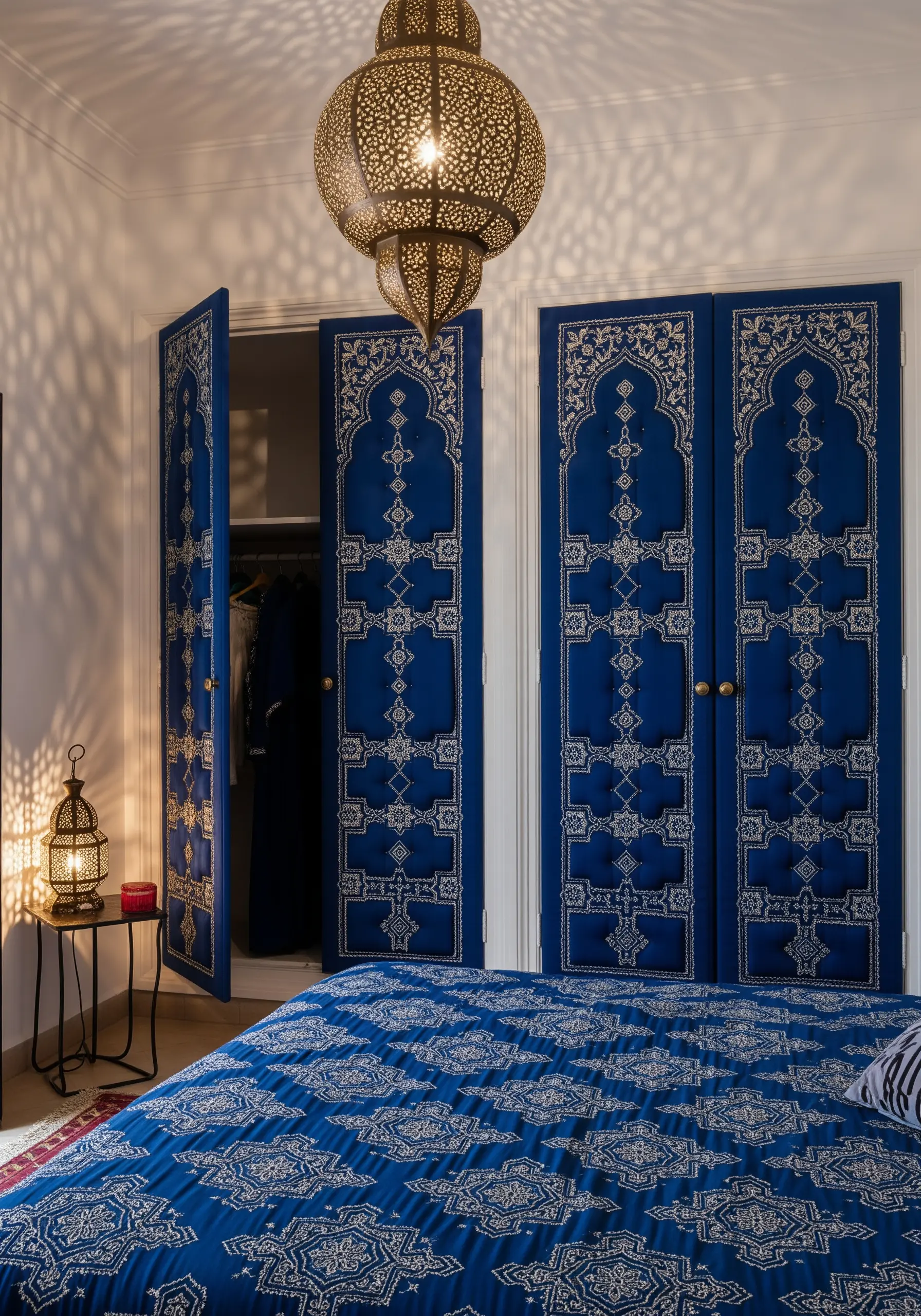
Make a bold architectural statement by treating your closet doors as a canvas for textile art.
Upholster the doors with a rich fabric like blue velvet, adding padding and tufting for a plush, three-dimensional effect.
Use a bright, contrasting thread, such as silver or white, to embroider intricate geometric patterns inspired by Moroccan tilework.
A thick chain stitch or couched cord works perfectly to create the bold, decorative lines that define this style.
This unexpected application of embroidery turns a purely functional element into the room’s most dramatic feature.
27. Chart a Journey on a World Map Tapestry

Create a stunning and personal piece of wall art with an embroidered world map tapestry.
Start with a printed map on heavy canvas as your guide.
Use a simple backstitch or stem stitch in black or brown to outline the continents and borders for a vintage, hand-drawn look.
Instead of filling the countries with color, you can use tiny seed stitches or even leave them blank to let the fabric show through.
Personalize it by using different colored threads or small French knot markers to chart your travels or dream destinations.
28. Sculpt with Fiber for Abstract Wall Art

Push the boundaries of embroidery by creating a sculptural, abstract piece for your wall.
Work on an irregularly shaped canvas, allowing the fabric edge to be part of the composition.
Combine traditional flat embroidery or appliqué for the graphic black shapes with highly textural, three-dimensional elements.
Create the white sculptural forms by wrapping or knotting thick wool roving and stitching it securely to the surface.
This statement textured embroidery moves beyond decoration into the realm of fine art, creating a powerful, tactile focal point.
29. Achieve a Maximalist Look with All-Over Florals
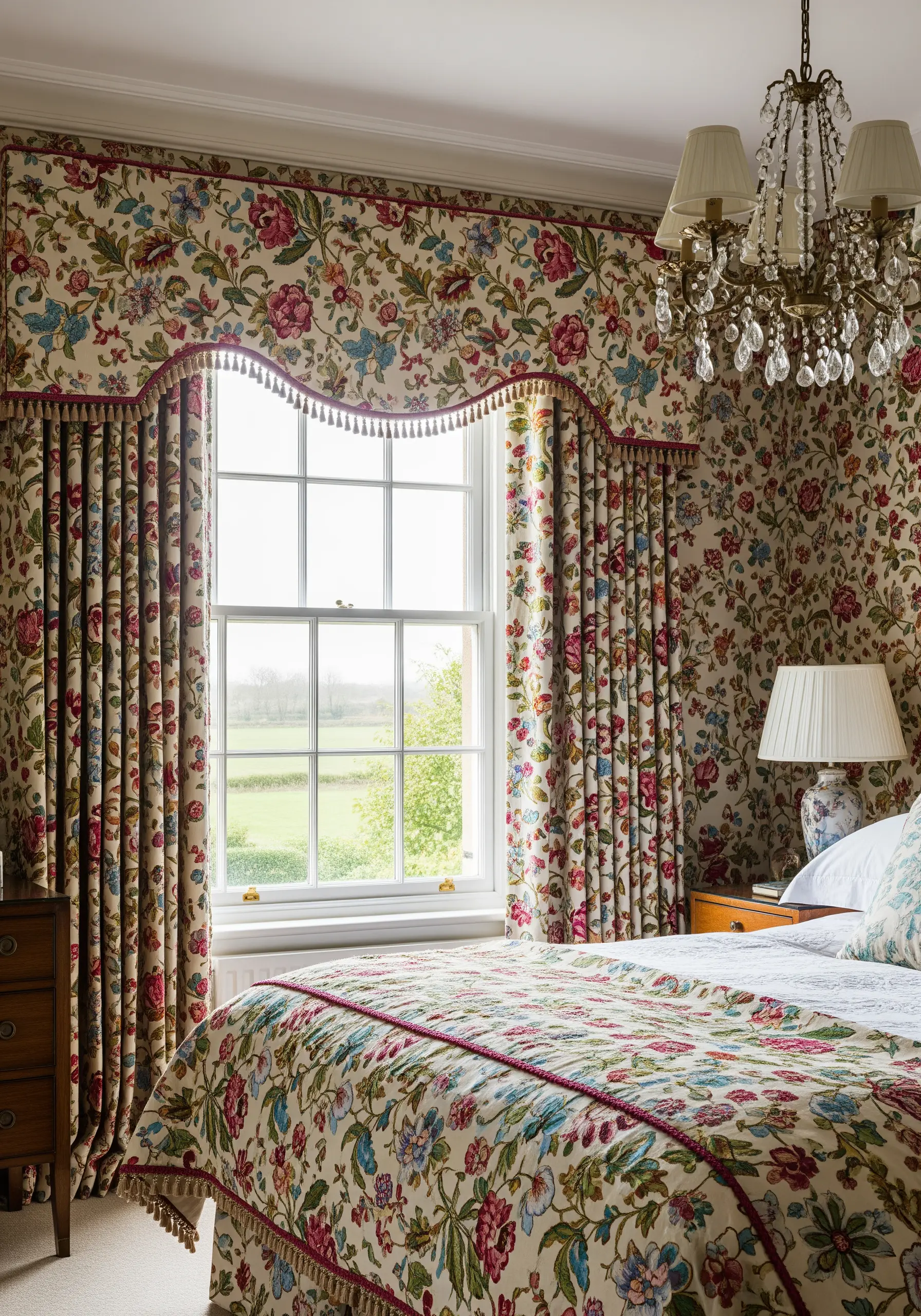
Embrace the “more is more” philosophy by coordinating embroidered patterns across multiple surfaces.
Choose a classic, dense floral pattern, like a traditional chintz, for your curtains, valance, and bedspread.
To prevent the room from feeling overwhelmed, ensure the background color is consistent and the floral motifs are identical in scale and style.
Adding a contrasting trim or tassel fringe along the edges of the curtains and quilt helps to define the shapes and adds a tailored finish.
This cohesive, immersive approach creates a luxurious and traditional English country house aesthetic.
30. Stitch a Personal Landmark with a City Map
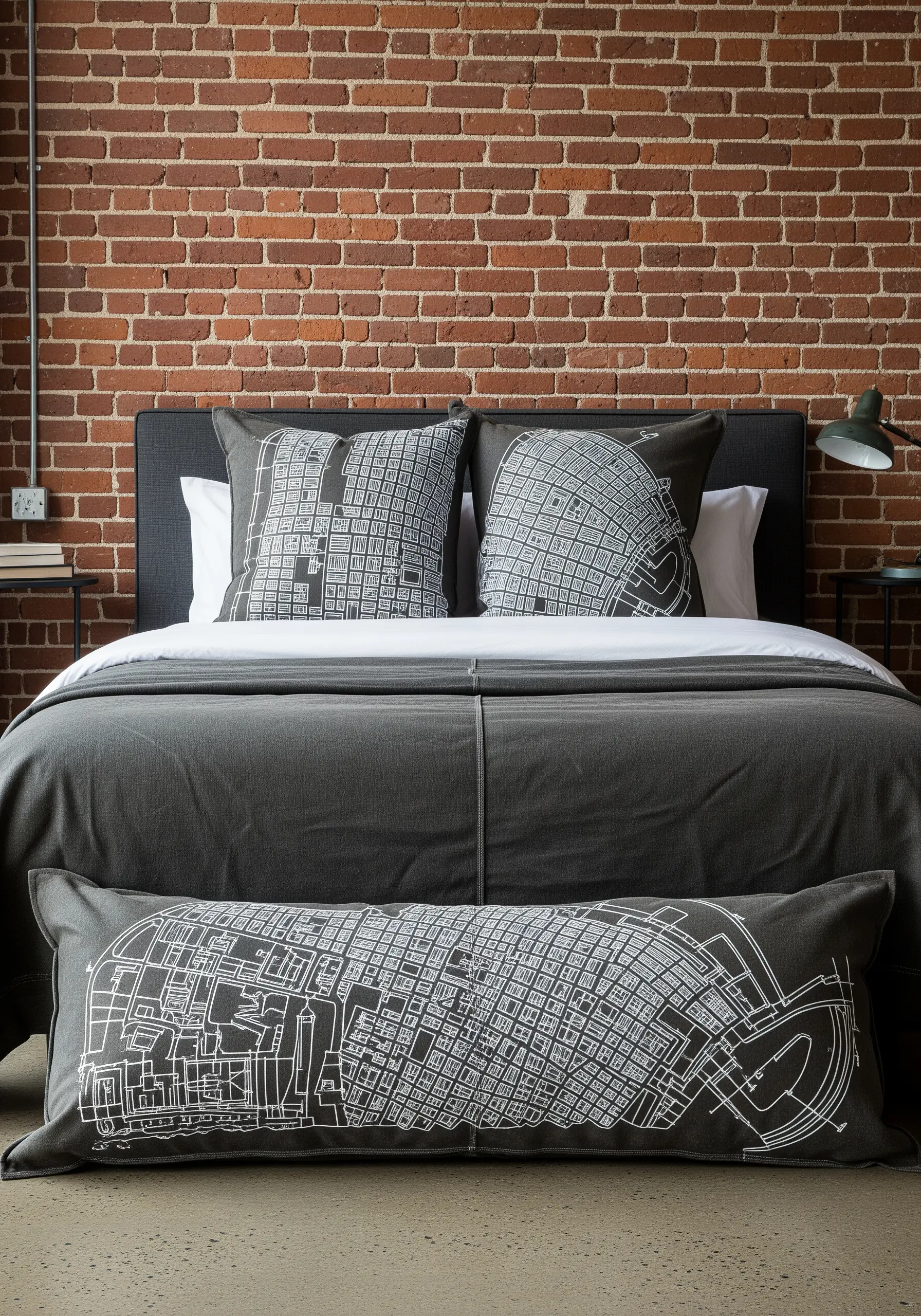
Capture the memory of a favorite city or neighborhood by embroidering a map onto your pillows.
Print a simplified, high-contrast map onto water-soluble stabilizer and adhere it to your fabric.
Using a single color of thread, carefully trace the streets and landmarks with a simple backstitch.
This technique is all about the beauty of line work, transforming a complex grid into a clean, graphic pattern.
It’s a sophisticated and deeply personal way to celebrate a place that holds meaning for you.
31. Create a Glowing Galaxy Canopy
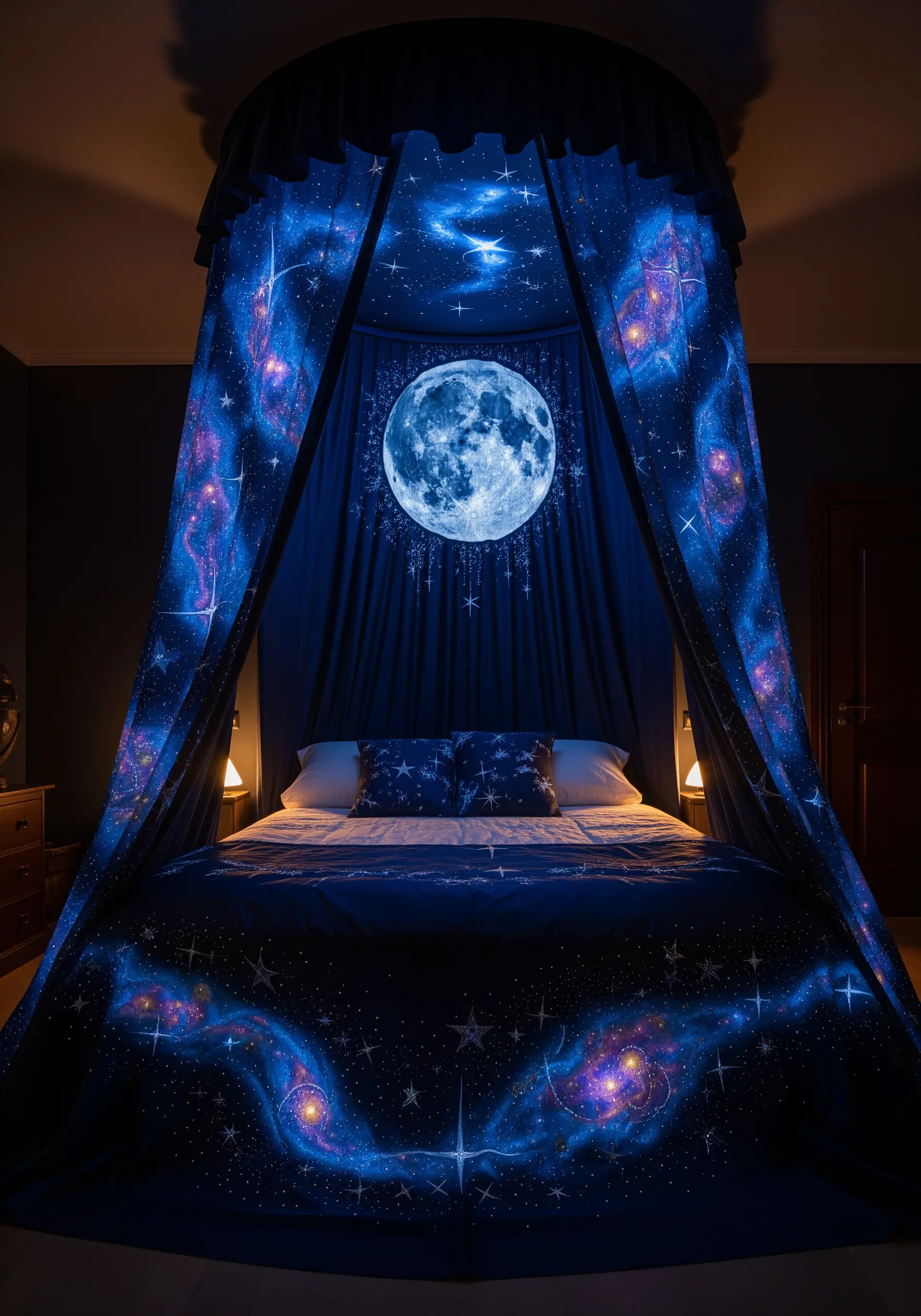
Design a truly magical and immersive experience by embroidering a celestial scene with glow-in-the-dark thread.
On a dark blue or black fabric canopy, use thread painting techniques to create the swirling colors of nebulae, charging the thread under a bright light before you stitch.
Use white or silver glow-in-the-dark thread to stitch a central moon and scatter hundreds of French knots across the fabric to represent stars.
During the day, it’s a beautiful celestial scene; at night, it transforms into a glowing galaxy that surrounds you.
32. Master Negative Space with Otomi Embroidery
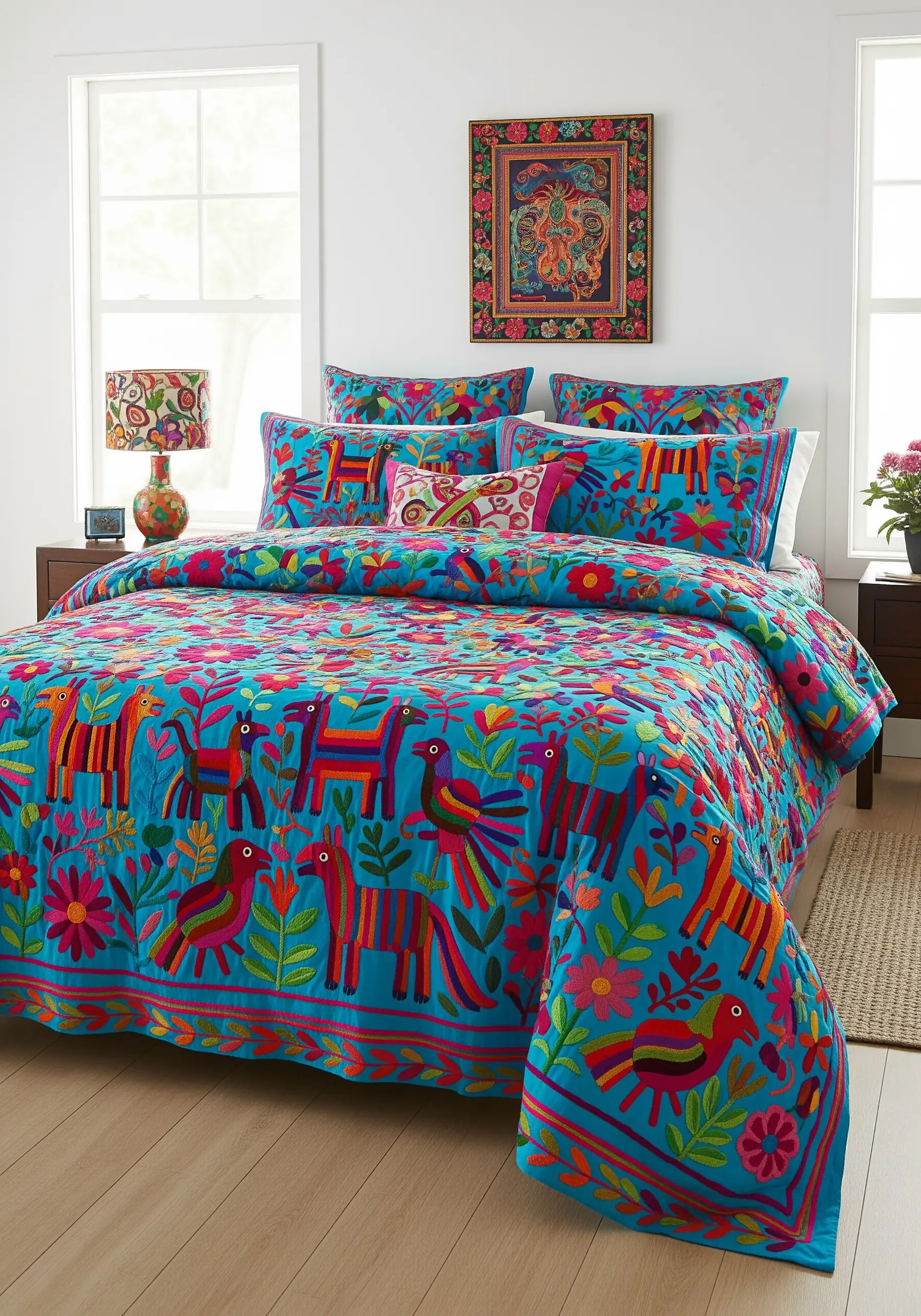
Explore the vibrant world of Otomi embroidery, a style that focuses on filling the negative space.
The technique involves drawing stylized animal and floral motifs on a solid background, typically white or brightly colored cotton.
You then fill the entire background area around the motifs with a dense, close herringbone stitch or satin stitch, making the unstitched figures pop.
This method creates a stunning, graphic effect that is rich in texture and cultural storytelling.
Applying this to a full bedspread results in a joyful, energetic piece that radiates handmade charm.
33. Mimic Cable Knits with Couching

If you love the cozy texture of a chunky cable-knit blanket but don’t knit, you can achieve a similar look with embroidery.
On a plain wool or fleece blanket, lay down thick, soft yarn in the twisting patterns of a cable knit.
Use the couching technique, tacking the yarn in place with a thinner, matching thread.
This method creates the raised, sculptural effect of knitting without requiring any knitting needles.
It’s a clever way to add immense texture and a cozy, handmade feel to a store-bought blanket.
34. Create a Serene Willow Wall Mural

Turn an entire wall into a piece of art by creating a large-scale embroidery that mimics the look of a serene wallpaper.
Work on fabric panels that can be stretched or mounted directly to the wall.
To capture the graceful drape of weeping willow branches, use long, flowing vertical stitches in various shades of green and gray.
Let your stitches be slightly irregular and overlapping to create a natural, organic texture.
This immersive approach to embroidery brings a profound sense of calm and nature into your bedroom, transforming the space completely.


