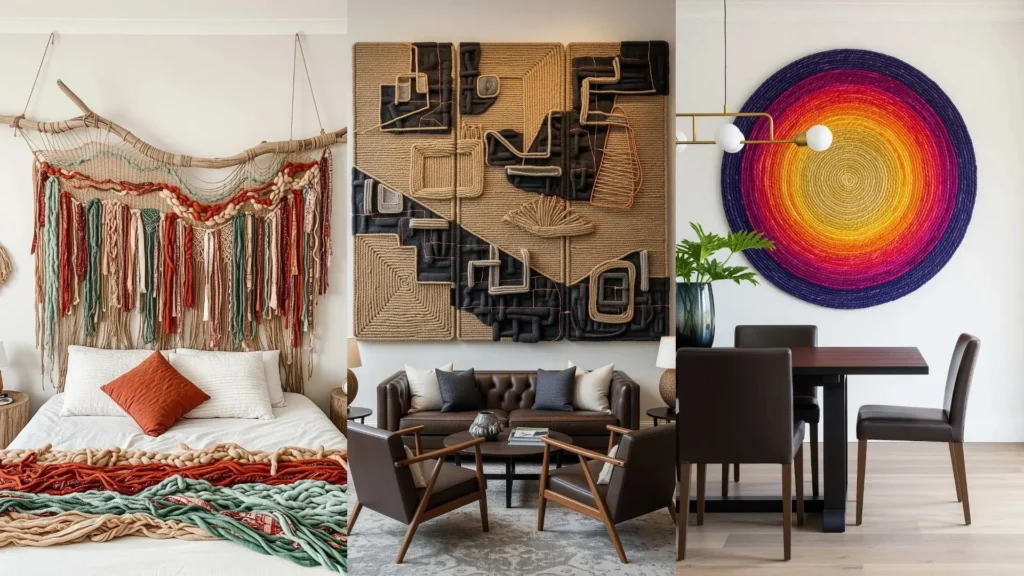
Sometimes, the next step in your creative journey isn’t about learning a more complex stitch, but about rethinking scale and texture. The thread and fabric you hold in your hands have the power to do more than fill a hoop; they can redefine a room, soften its edges, and tell a story that unfolds across an entire wall.
Think of your fiber art not just as decoration, but as an architectural element. Consider how it interacts with light, how it absorbs sound, and how its texture can bring warmth and character to a space in a way no painting can. This is where your skills truly come alive—in the bold gesture of a large-scale weaving or the quiet power of a meticulously textured panel.
These ideas are here to give you that gentle push, to help you see the potential in your materials to create something immersive and truly transformative. Let’s explore how you can take your love of fiber and turn it into an environment.
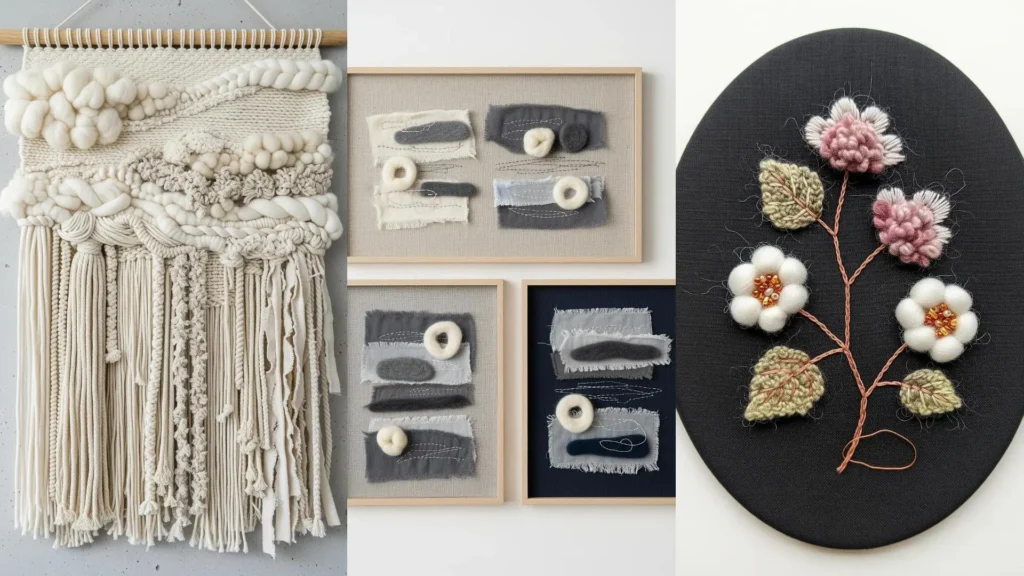
1. Compose a Macramé Wall with Varied Textures
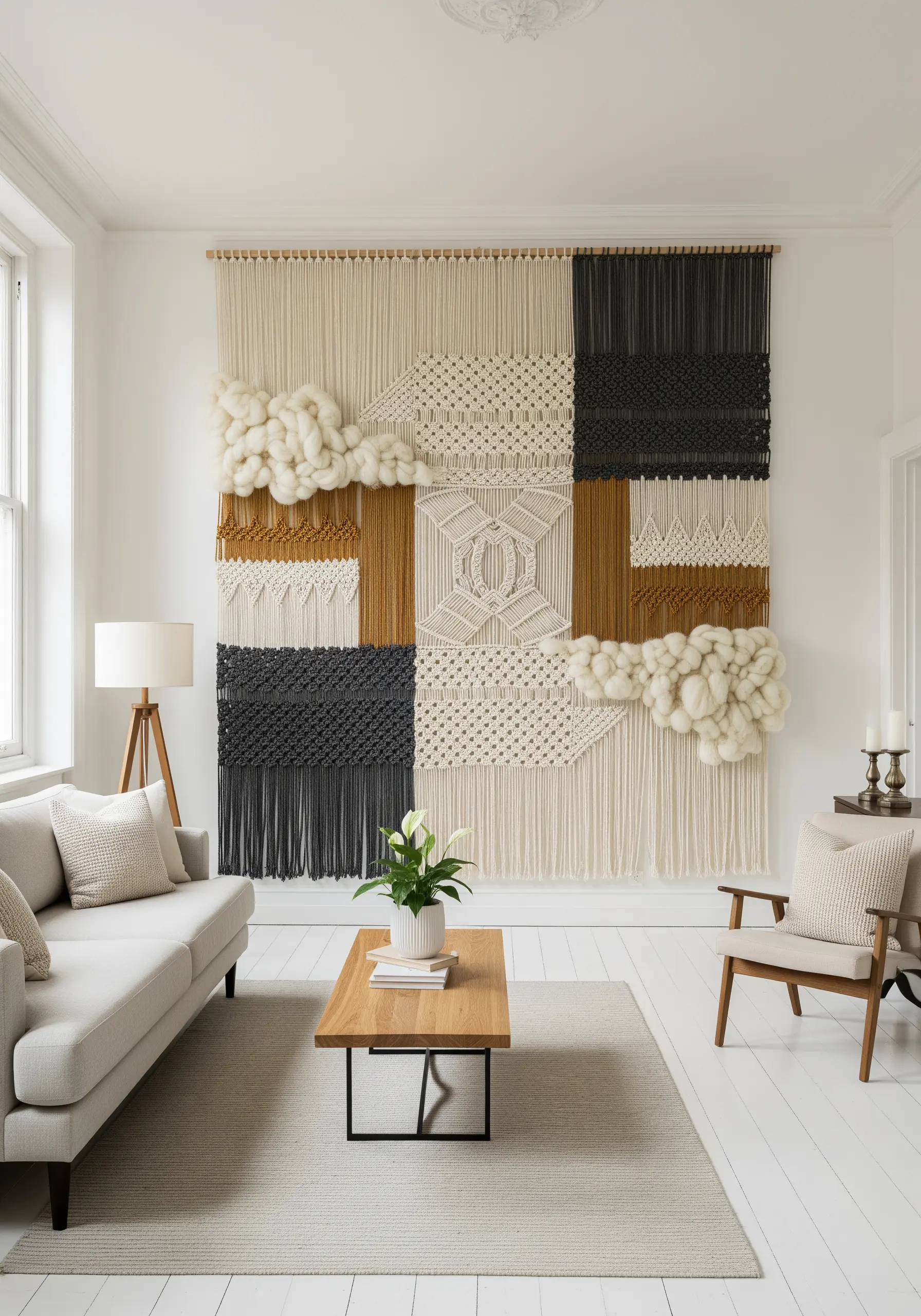
Move beyond a single macramé pattern and think like a composer, creating a patchwork of textures within one large-scale piece.
Divide your dowel or support into sections and assign a different technique to each: dense square knots, open and airy alternating half-hitches, and soft, un-spun roving woven through the warp threads.
This modular approach breaks down a large project into manageable parts, while the contrast between tight knots and plush wool creates rhythm and depth.
Anchor the design with a limited color palette—such as neutrals and a single accent color—to ensure the textural variations remain the focal point.
2. Suspend Felted Forms for an Ethereal Installation
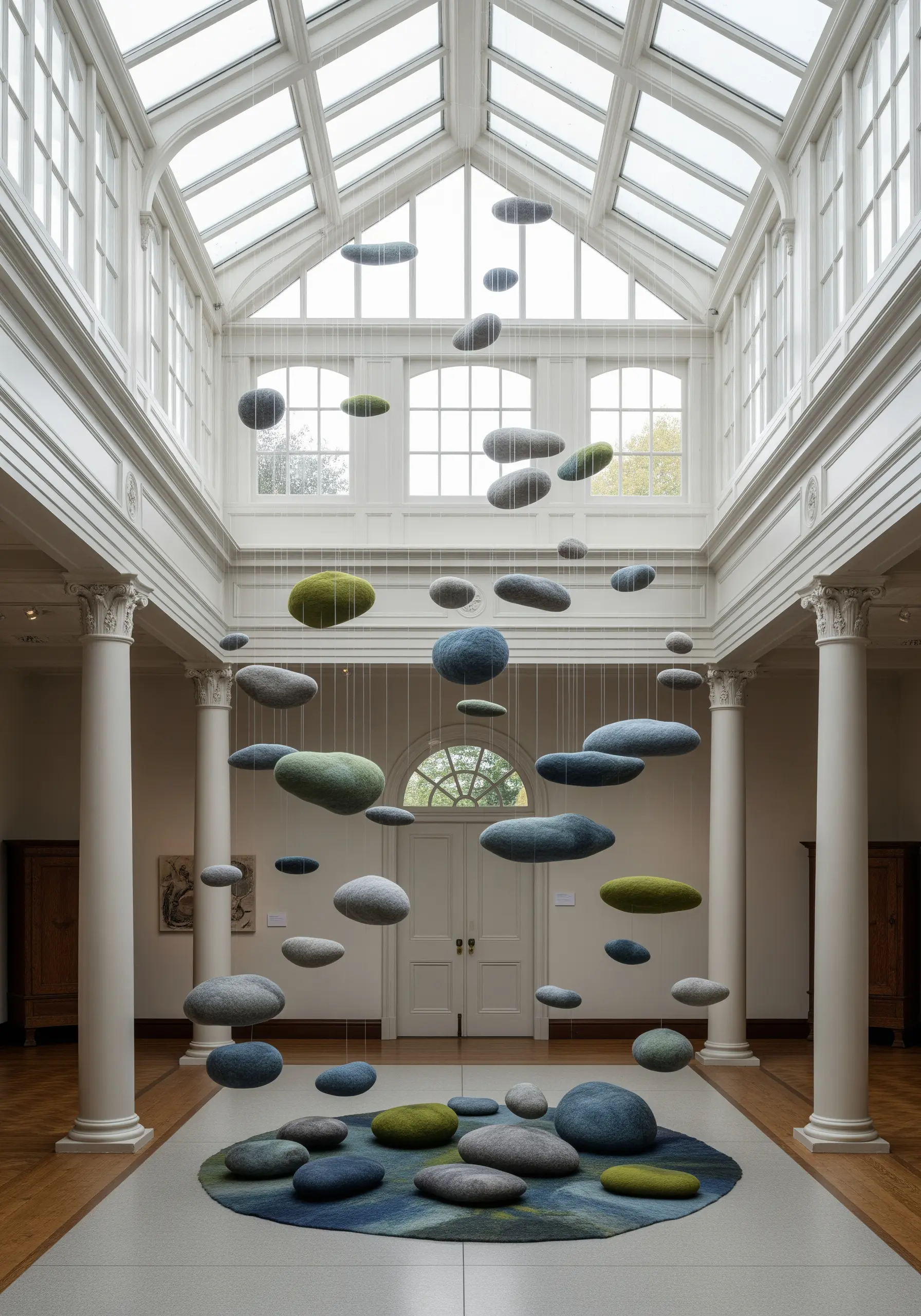
Create a sense of weightlessness by crafting and suspending three-dimensional felted shapes.
Use wet or needle felting techniques with merino wool roving to form organic, stone-like shapes of varying sizes and colors.
The key to a successful installation is the hanging mechanism: use fine, strong monofilament or thread that becomes nearly invisible from a distance.
Arrange the forms at different heights to create a floating, dreamlike cloud that gently moves with the air currents, transforming the space with subtle motion and soft texture.
3. Master the Art of Coiled and Wrapped Rope
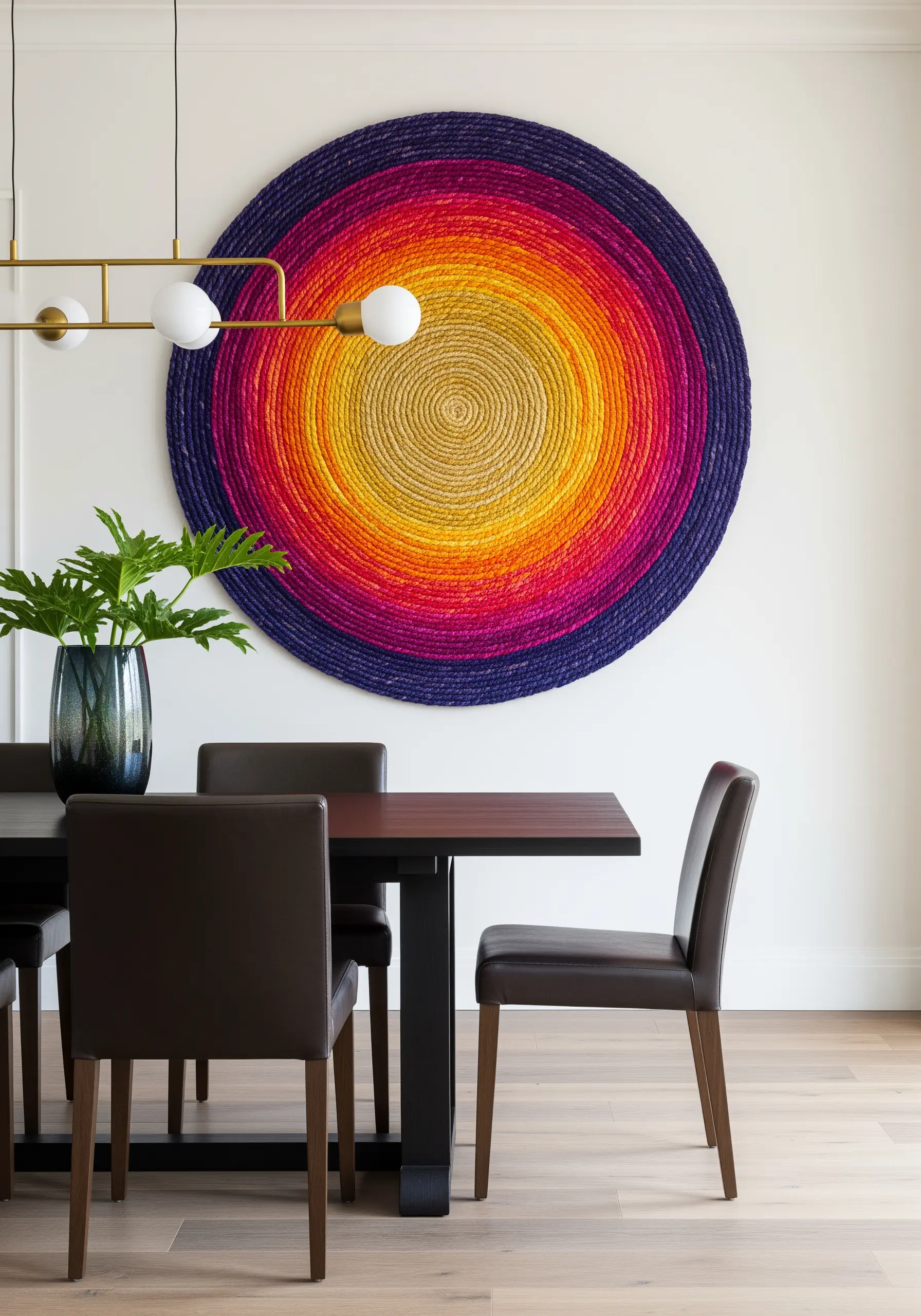
Build a bold, graphic statement piece by coiling thick rope and wrapping it with colorful yarn.
Start with a circular base of wood or heavy cardstock and begin gluing down the rope in a tight spiral, using a strong adhesive.
To create the color gradients, wrap sections of the rope with different yarns *before* you glue it down, ensuring the transitions are smooth.
This technique turns a simple material into a hypnotic, radiant design, allowing you to explore magical ombre effects on a grand scale.
4. Define Shapes with High-Density Tufting

For clean, graphic compositions, use a punch needle or tufting gun to create fields of dense, uniform texture.
The technique’s power lies in creating crisp edges between color blocks, much like a digital design translated into fiber.
To achieve this sharpness, work with a tightly stretched monk’s cloth or primary tufting fabric and pack your stitches closely together.
By keeping the pile height consistent, you emphasize the bold geometry of your design, creating a piece that feels both soft and strikingly modern.
5. Weave onto a Natural Branch for Organic Structure
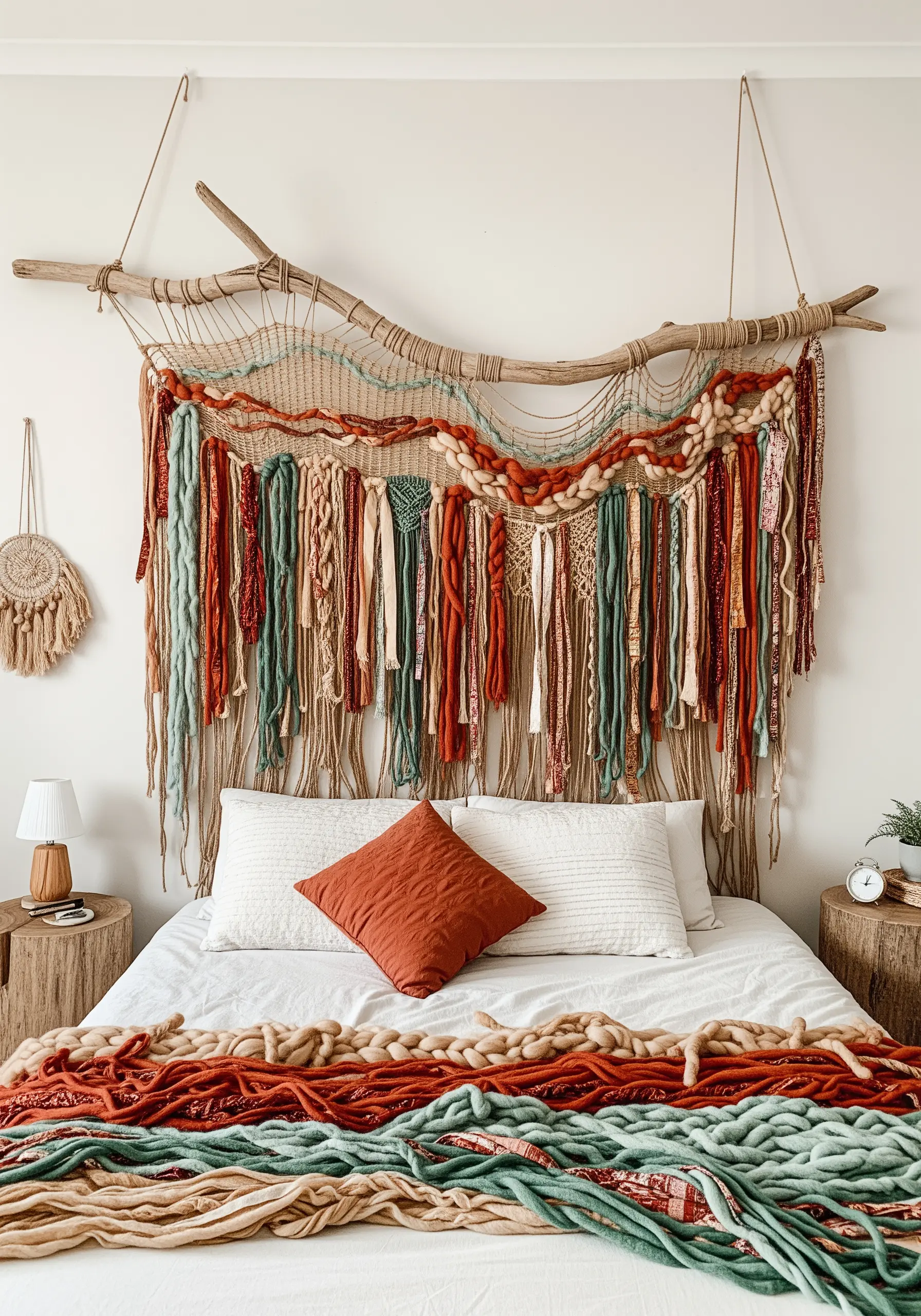
Integrate the raw beauty of nature into your work by using a piece of driftwood or a sculptural branch as your loom’s frame.
Instead of a straight dowel, the branch’s organic curves will dictate the final shape of your weaving, creating a more dynamic and free-flowing piece.
Combine various yarn weights, from chunky roving to fine silk ribbons, allowing the textures to cascade naturally.
This method produces mixed-fiber creations inspired by nature that feel both intentionally crafted and beautifully wild.
6. Transform Lace into Architectural Light Screens
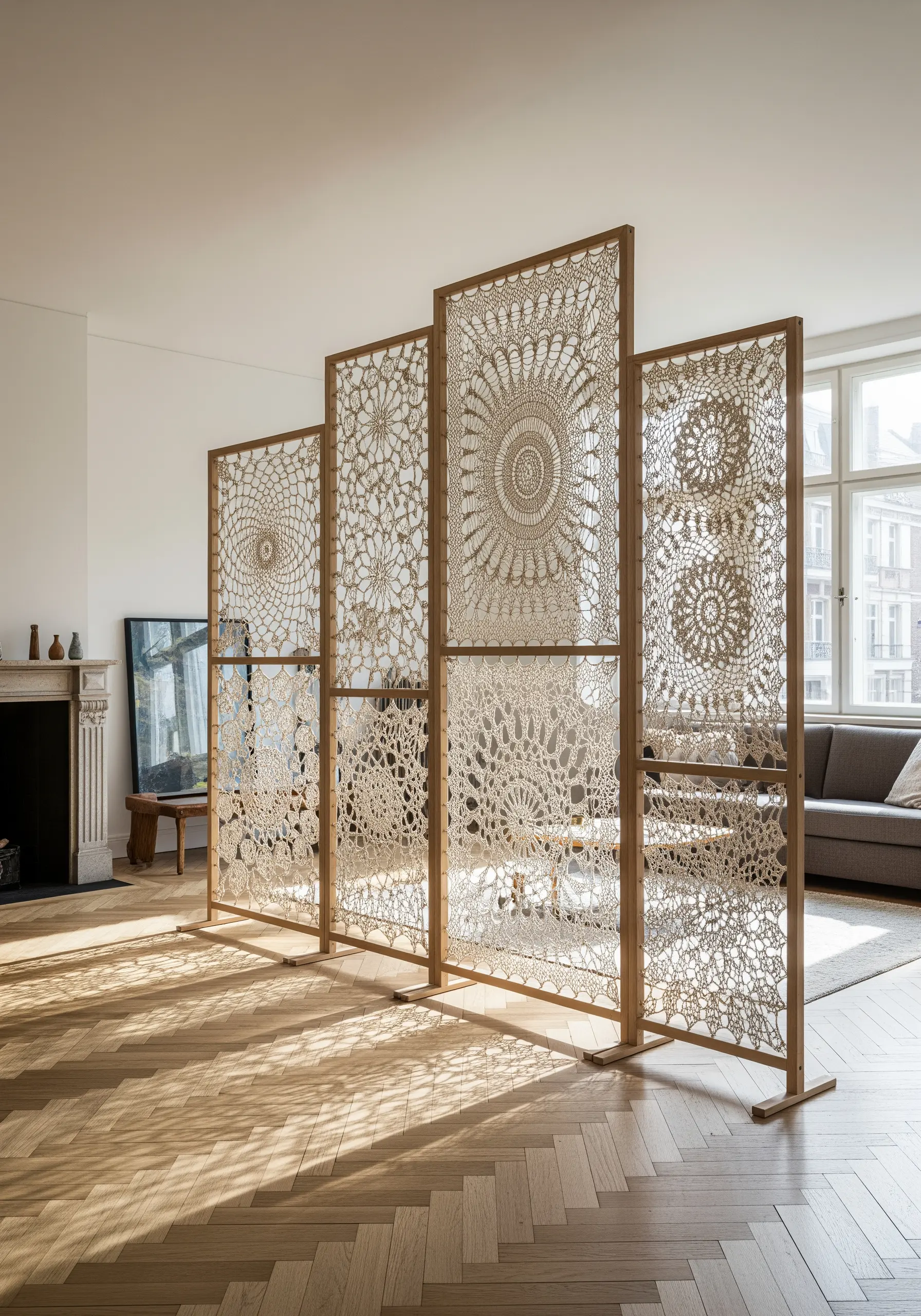
Elevate delicate textiles by framing them as functional art, such as room dividers or window screens.
Stretch vintage or handmade crochet doilies and lace panels onto simple wooden frames, securing them tautly to highlight the intricate openwork patterns.
When placed near a light source, these panels cast beautiful, complex shadows that shift throughout the day.
This approach gives fragile heirlooms a modern, structural purpose, turning them into architectural elements that play with light and space.
7. Animate a Space with Sculptural Rope Knots
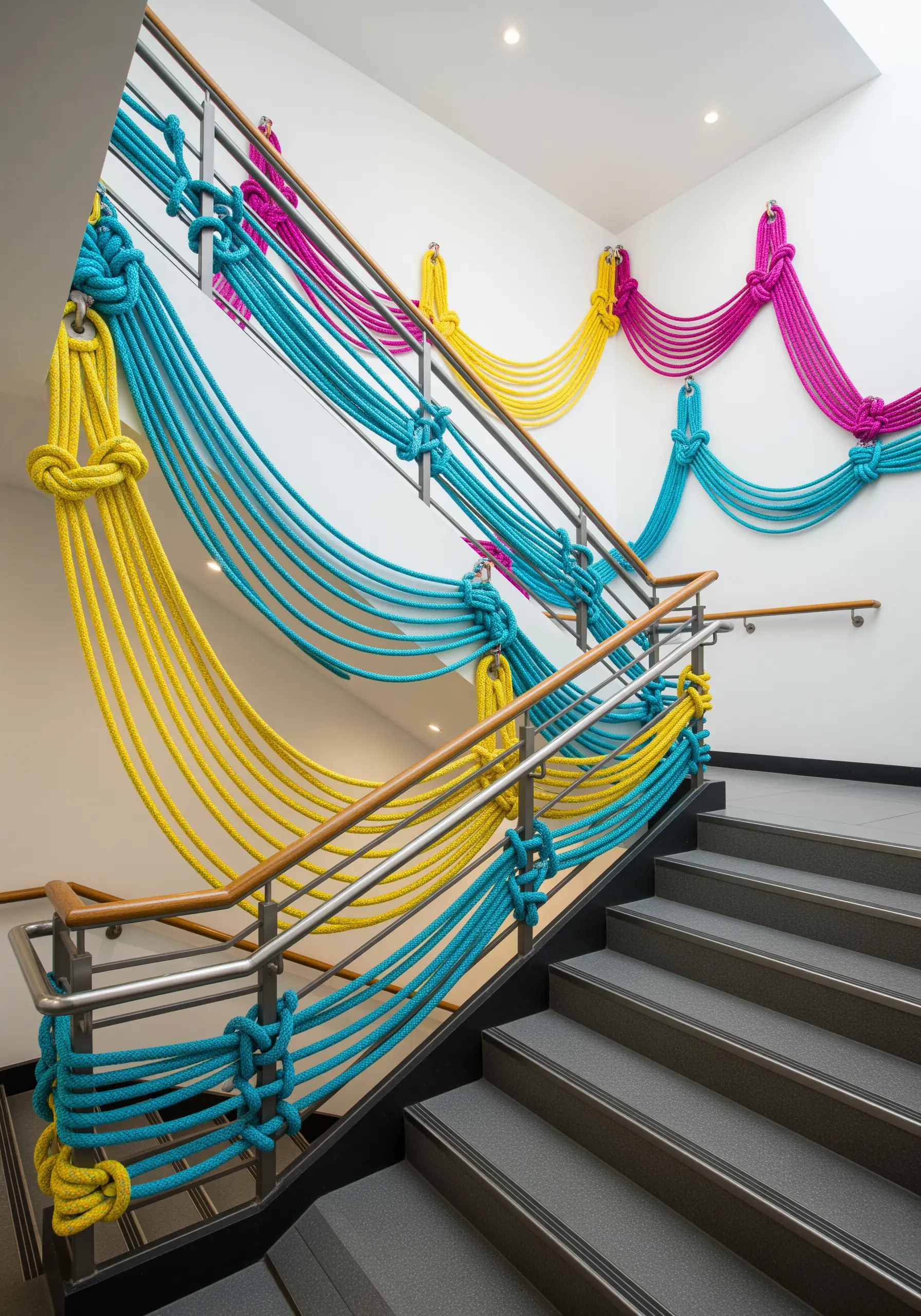
Use thick, brightly colored rope to create a dynamic installation that follows the lines of your architecture.
Instead of a flat wall hanging, think three-dimensionally. Drape and secure ropes along a staircase, ceiling, or corner, using simple, strong knots like the figure-eight or monkey’s fist as focal points.
The repetition of knots and swags of rope draws the eye through the space, adding energy and a playful, graphic quality to otherwise overlooked areas.
This is a high-impact way to introduce color and form without altering the walls.
8. Build a Narrative Wall with Fabric Appliqué
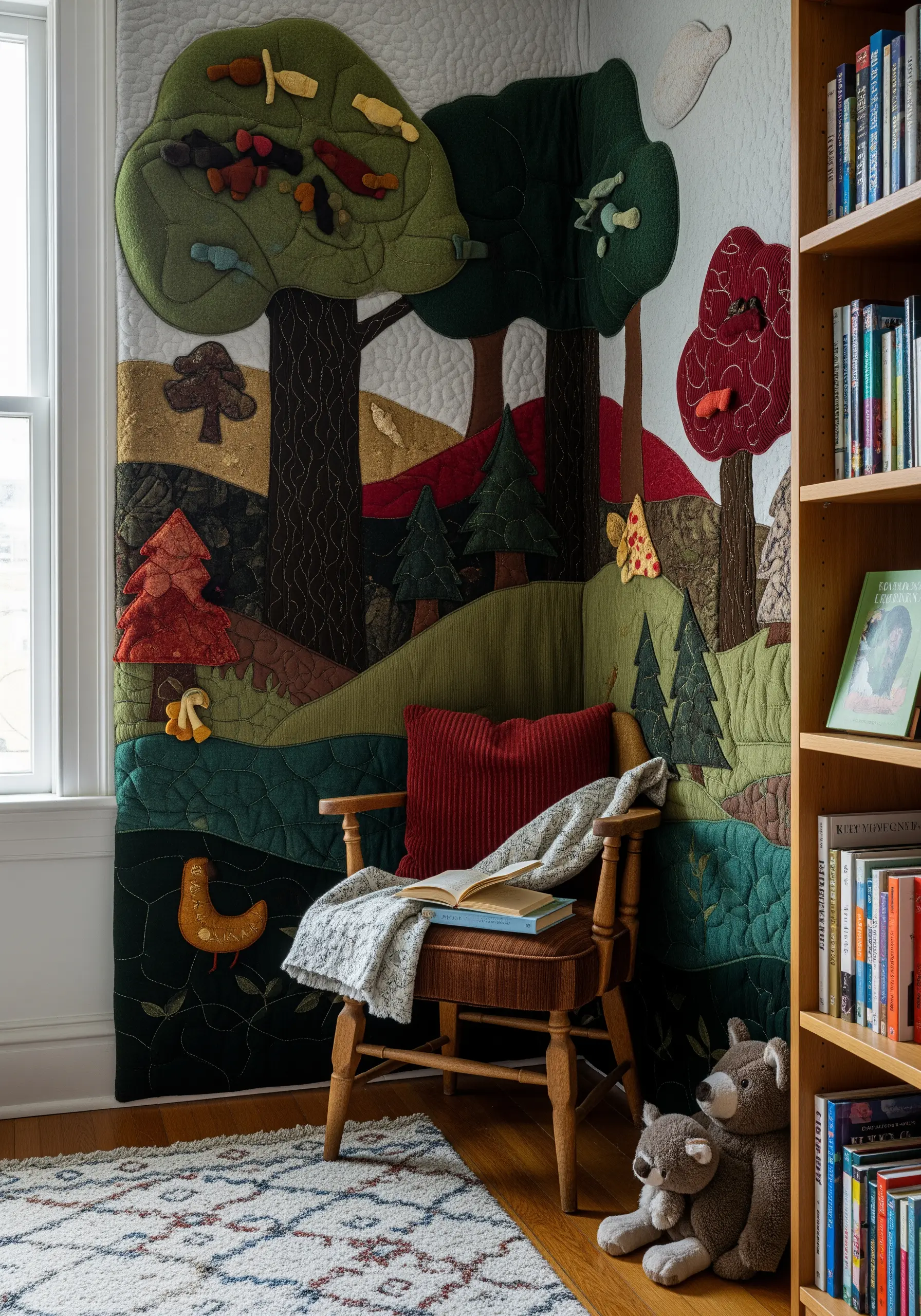
Tell a story by layering different fabrics to create a large-scale quilted and appliquéd mural.
Choose textiles with inherent texture, such as corduroy for tree bark, velvet for dark hills, and felt for soft leaves, to add tactile dimension.
Cut your shapes and layer them, using simple running stitches or decorative embroidery to secure the edges and add fine details.
This technique transforms a wall into a cozy, immersive scene, perfect for an embroidered nursery decor that invites touch and imagination.
9. Embrace Architectural Scale with Giant Knitting
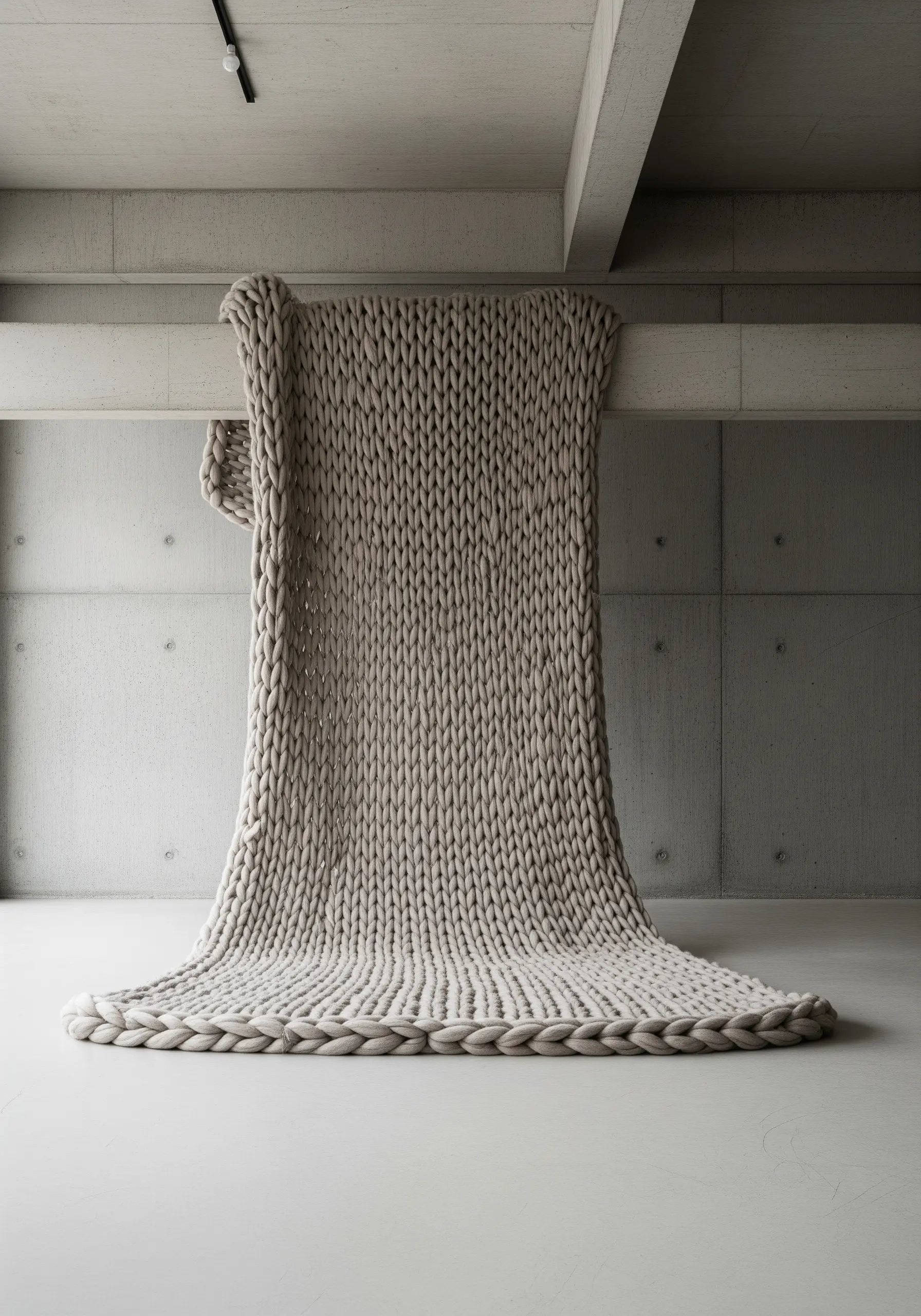
Take knitting from a craft to a sculptural practice by dramatically increasing its scale.
Using giant needles (or your arms) and un-spun wool roving, create a piece so large it interacts with the architecture of the room.
Instead of a simple blanket, consider a piece that drapes over a beam or pools onto the floor, allowing its weight and texture to become the room’s focal point.
The beauty of this technique is its simplicity; the monumental scale of each stitch is what creates the awe-inspiring impact.
10. Create Graphic Lines with Couched Rope Art
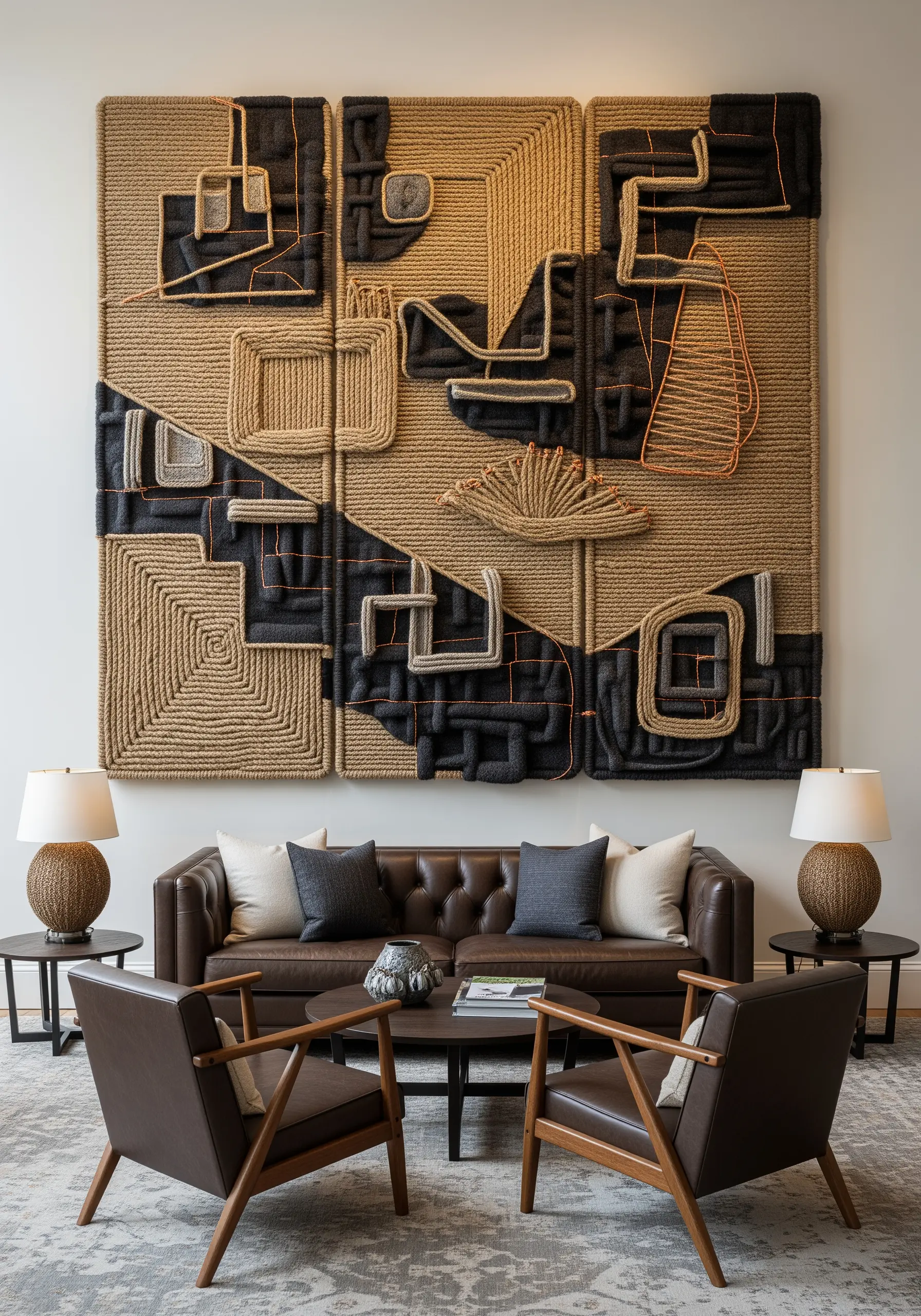
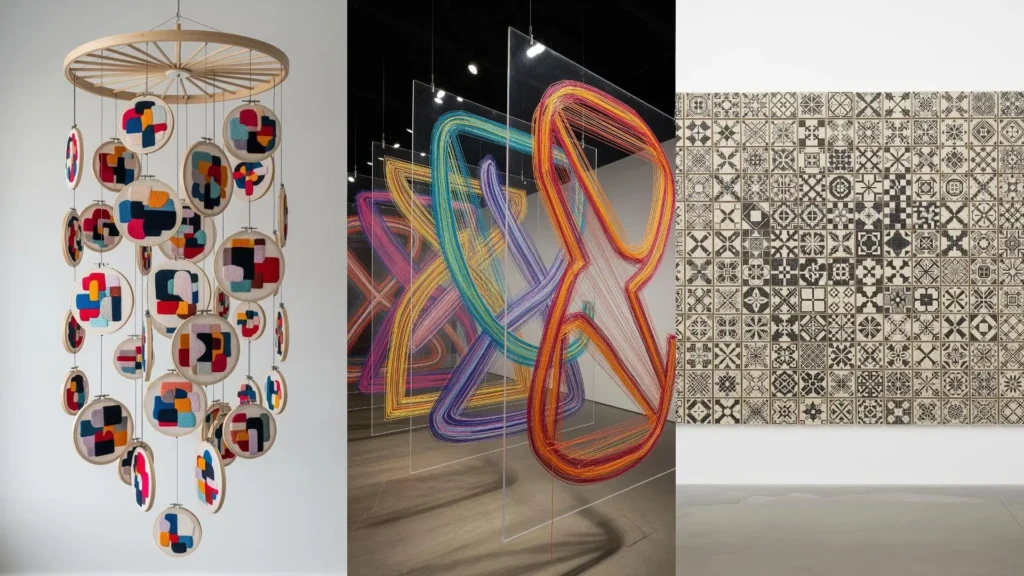
Construct a bold, abstract composition by combining thick, couched ropes with areas of wrapped yarn.
Plan your design on a sturdy backing, like a wooden panel, and use a strong glue to lay down the main rope outlines.
For the filled sections, wrap rope with contrasting yarn or use different fibers entirely, creating a dynamic interplay between line and texture.
This technique is similar to holiday-themed string art patterns but on a more robust, textural scale, resulting in a sophisticated, graphic statement piece.
11. Design a Multi-Layered Celestial Mobile
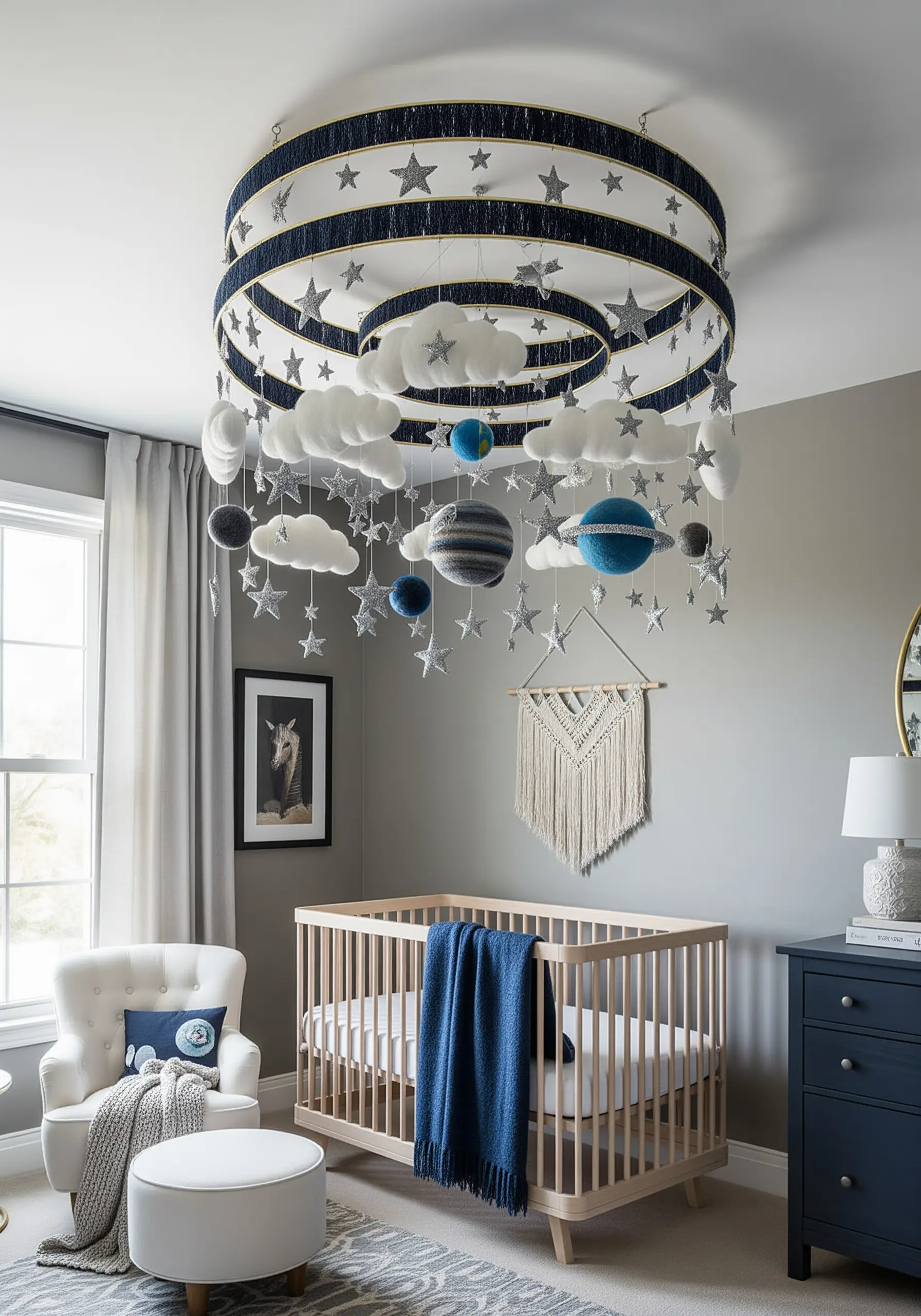
Go beyond a simple mobile by creating a multi-tiered installation that tells a story.
Use concentric hoops of decreasing size to build a chandelier-like structure, forming the framework for your celestial scene.
Combine different fiber techniques: needle-felted planets, soft-sculpture clouds from cotton batting, and hand-embroidered stars on felt, attached with varying lengths of thread.
This creates a magical, floating universe with depth and detail, perfect for inspiring wonder in a nursery decor setting.
12. Weave a Vertical Garden with Fiber Textures
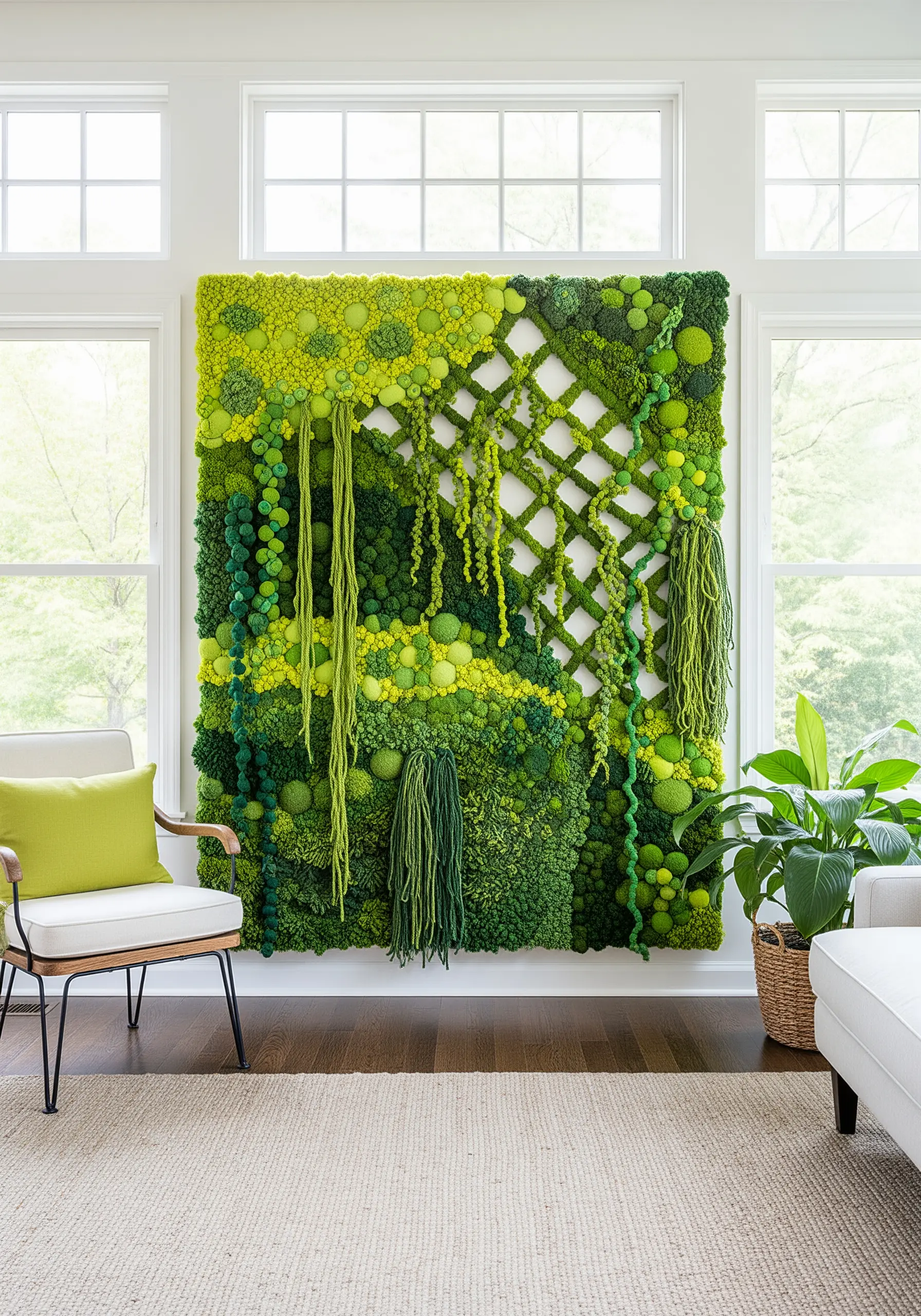
Emulate the lush, varied textures of a living moss wall using only fiber.
Work on a trellis or mesh base, filling sections with different green-toned materials and techniques: chunky French knots, turkey work for a shaggy effect, plush pompoms, and needle-felted balls.
By limiting your palette to shades of green but maximizing textural variety, you create a stunning illusion of biodiversity.
These are embroidery projects inspired by textures you’d find on a nature walk, offering a maintenance-free slice of nature indoors.
13. Construct a Chandelier from Cascading Ribbons

Create a monumental yet airy installation using simple, accessible materials like fabric ribbons.
Build a multi-ringed frame from metal or wooden hoops, suspended one inside the other.
Attach long strips of ribbon in a carefully chosen color palette to each ring, letting them hang freely.
The semi-transparency of the fabric catches the light, creating a soft, diffused glow and a sense of gentle movement, transforming a high ceiling into a delicate, colorful cascade.
14. Add Dimension with Fabric-Wrapped Acoustic Panels
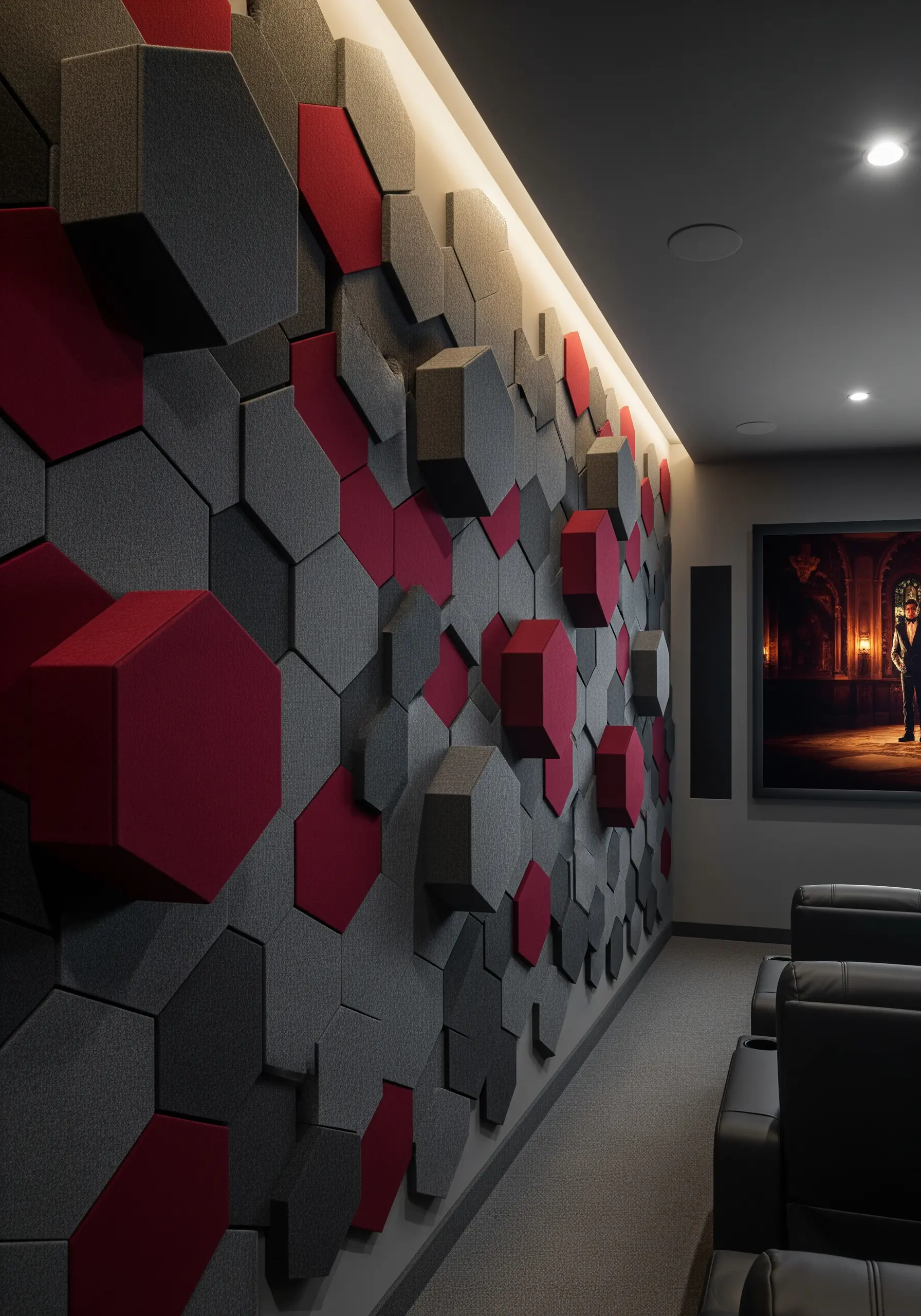
Combine aesthetics and function by creating a 3D wall feature from fabric-wrapped panels.
Cut geometric shapes like hexagons or triangles from acoustic foam or rigid insulation board.
Wrap each shape tightly with a textural fabric, like felt or a heavy linen blend, securing it on the back with a staple gun or strong adhesive.
Arranging these panels on a wall in a dynamic pattern adds visual depth, absorbs sound, and introduces a soft, tactile element to modern interiors.
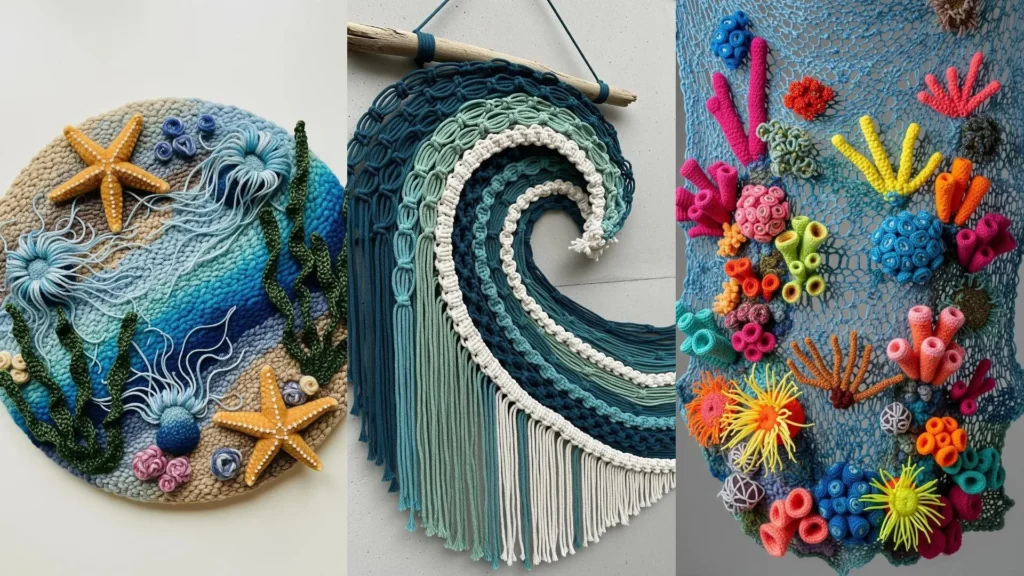
15. Sculpt an Organic World with Freeform Crochet
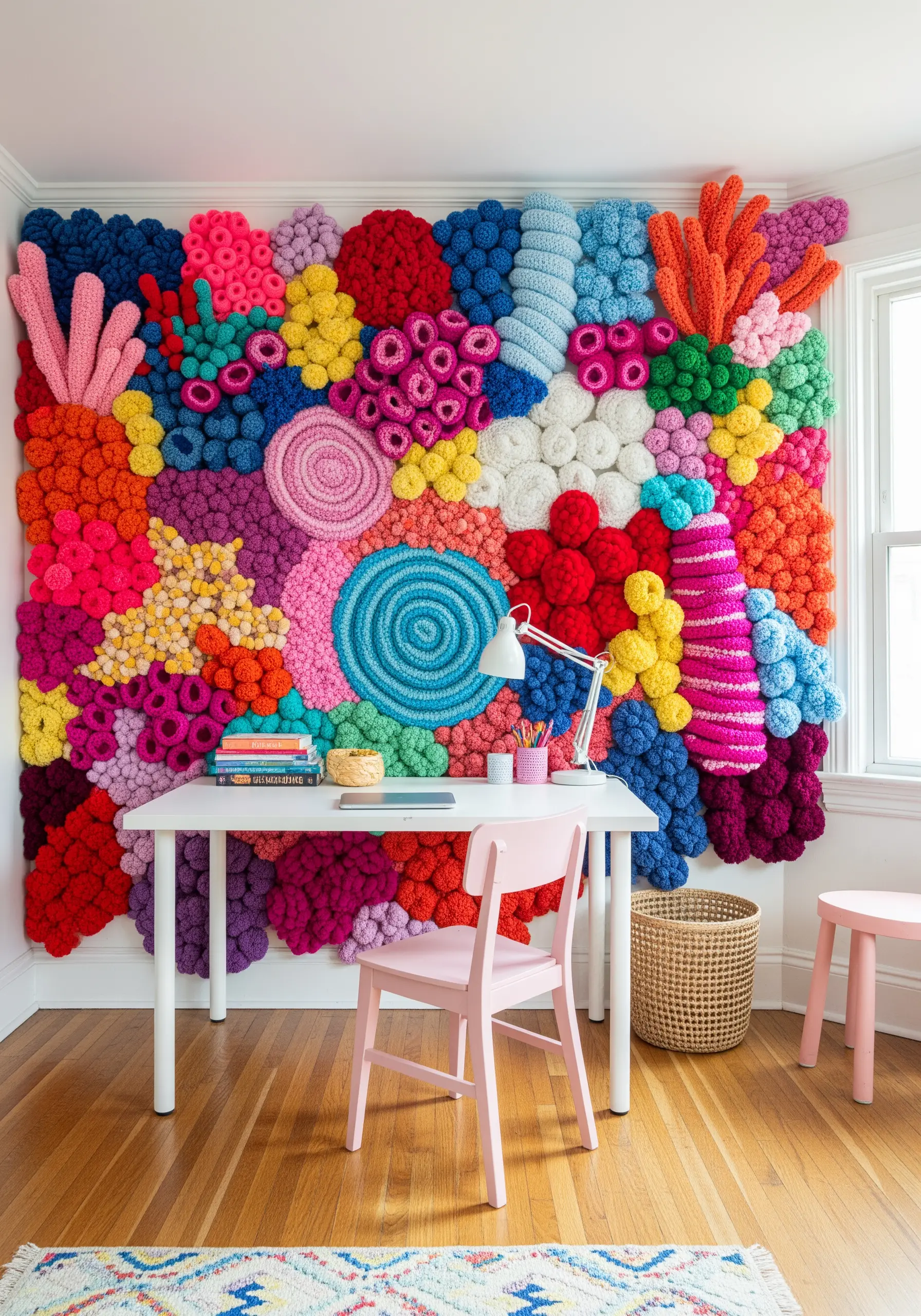
Build a vibrant, textural ecosystem on your wall using freeform crochet and knitting techniques.
Forget patterns and instead focus on creating organic, biomorphic shapes reminiscent of a coral reef: spirals, tubes, ruffles, and nubby clusters.
Work with a bold, saturated color palette and various yarn weights to enhance the sense of biodiversity.
Assemble the individual pieces onto a fabric-covered canvas or directly onto the wall, creating a dense, tactile world that bursts with energy and creativity.
16. Explore Texture Through Monochromatic Weaving
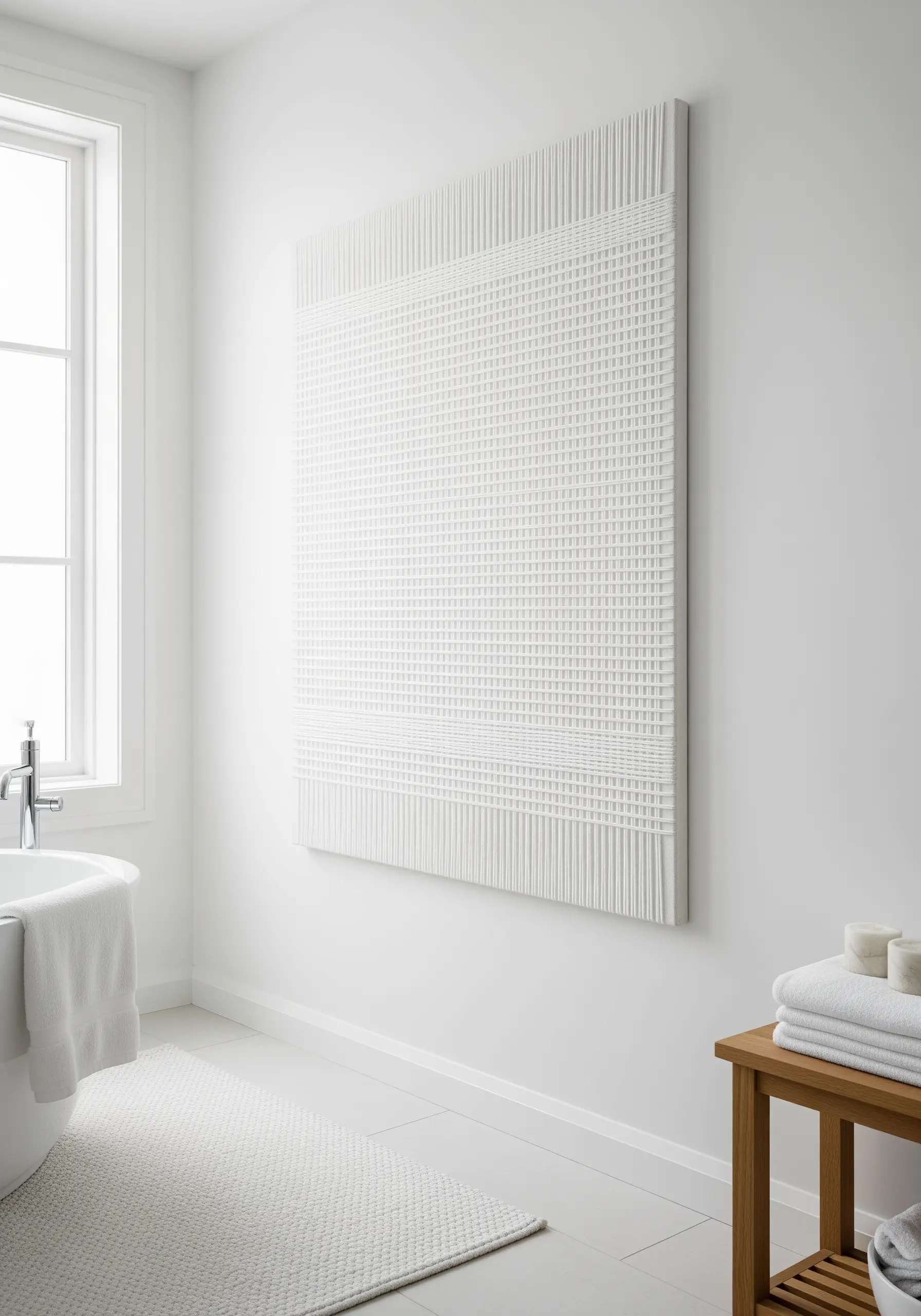
Make a powerful statement by removing color and focusing solely on texture and structure.
Using a single color of yarn, create a large-scale woven panel that explores different weaving techniques: plain weave for flat areas, soumak for raised lines, and looped pile (rya knots) for plushness.
The way light hits the varying surfaces creates a subtle, sophisticated pattern that invites closer inspection.
This minimalist approach proves that compelling organic embroidery designs rely on structure as much as on color.
17. Create an Immersive Sky of Fiber Pompoms
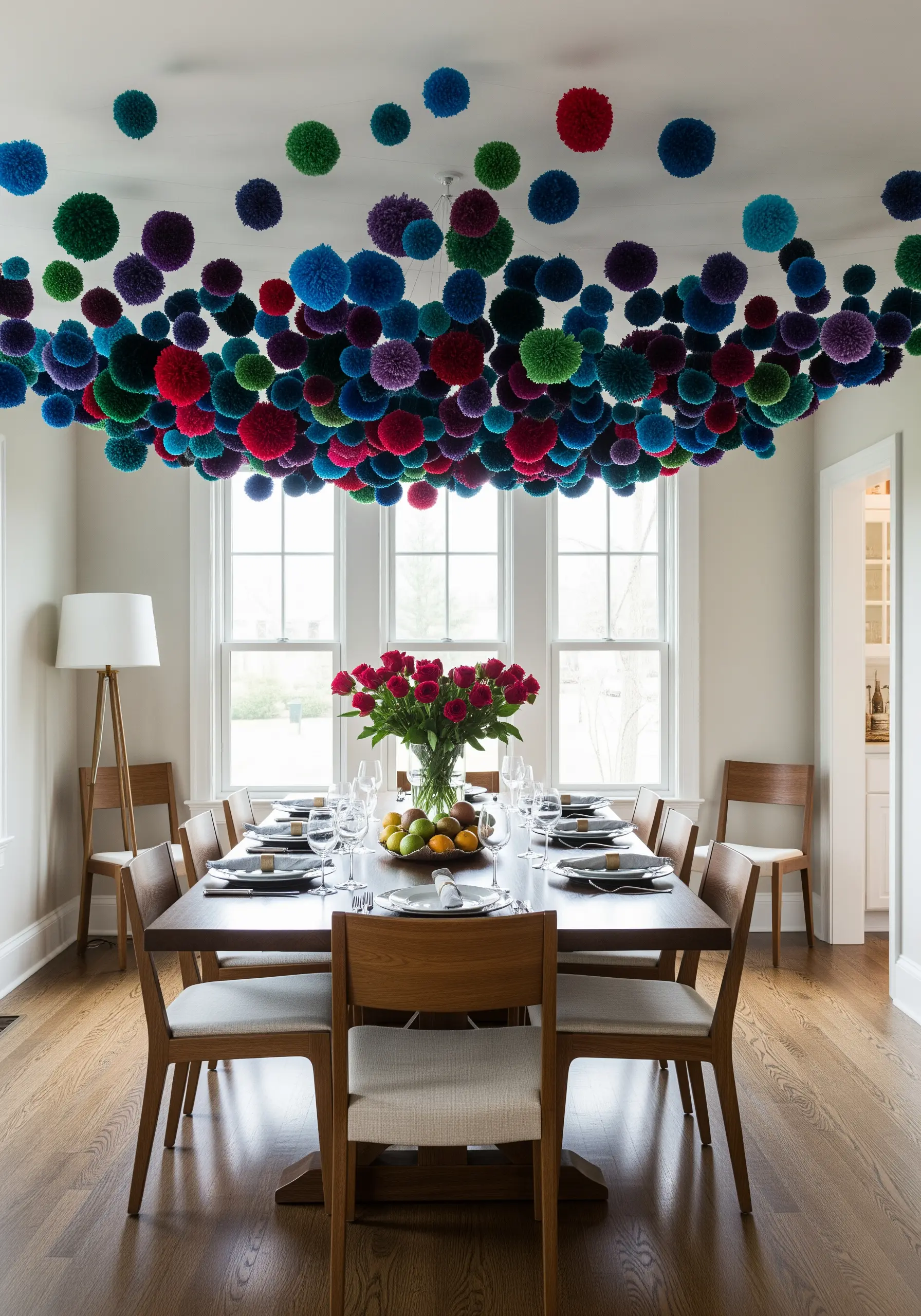
Transform a ceiling into a playful, immersive canopy by suspending a dense cloud of handmade pompoms.
Create dozens of pompoms in varying sizes and colors using a pompom maker for consistency.
The key to the effect is density: hang them close together at slightly different heights from a mesh grid or ceiling hooks.
This technique fills the upper volume of a room with soft texture and vibrant color, creating a joyful, celebratory atmosphere that feels truly unique.
18. Weave a Celestial Map with Contrasting Threads
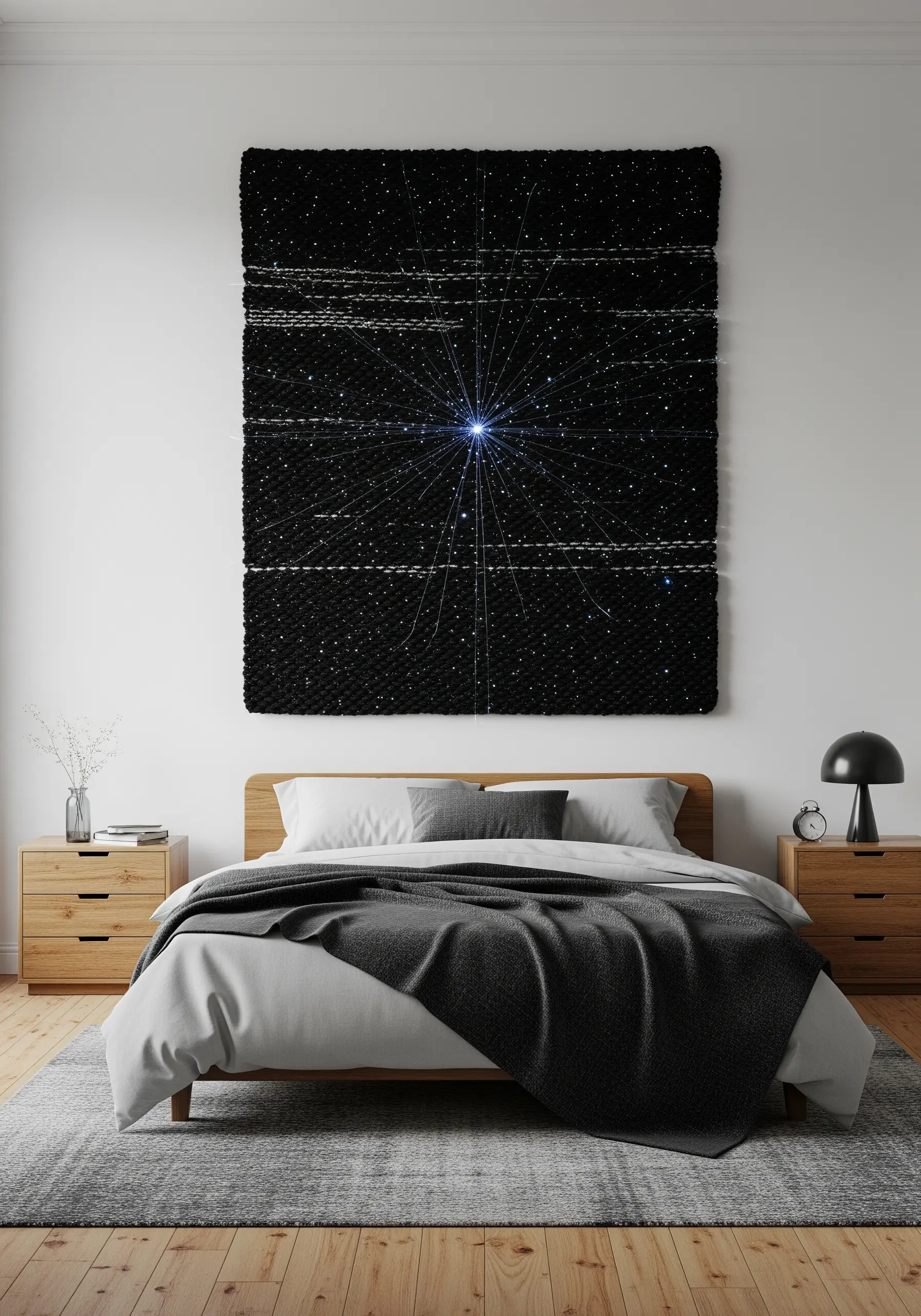
Translate abstract data or celestial imagery into a compelling tapestry by using high-contrast threads.
On a dark, tightly woven background, use fine, light-colored or metallic threads to stitch or weave radiating lines, constellations, or abstract networks.
The tension between the dense, dark base and the delicate, bright lines creates a sense of infinite depth and cosmic energy.
This is a sophisticated way to create modern thread art ideas that feel both graphic and deeply conceptual.
19. Tell a Story with Upcycled Denim Weaving
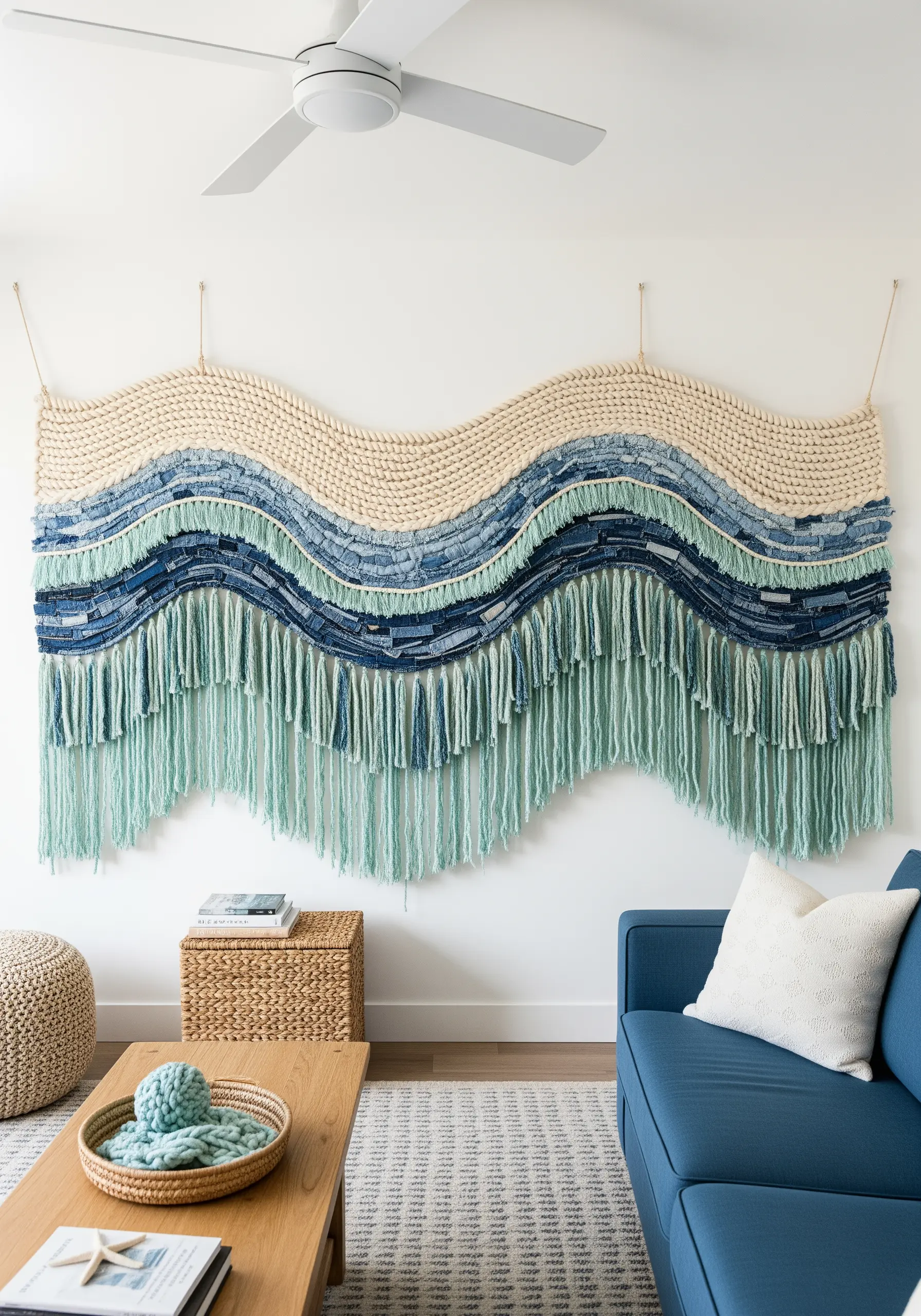
Infuse your weaving with history and character by using unconventional, meaningful materials like old denim.
Cut discarded jeans into long strips to use as your weft thread, allowing the original seams, pockets, and fades to become part of the design.
Combine the denim with softer yarns like cotton or wool to create a contrast in texture.
This technique results in a piece that is not only visually interesting but also holds personal stories, turning waste into beautiful, sustainable coastal theme tiny embroidery art.
20. Design a Modular Installation with Woven Panels
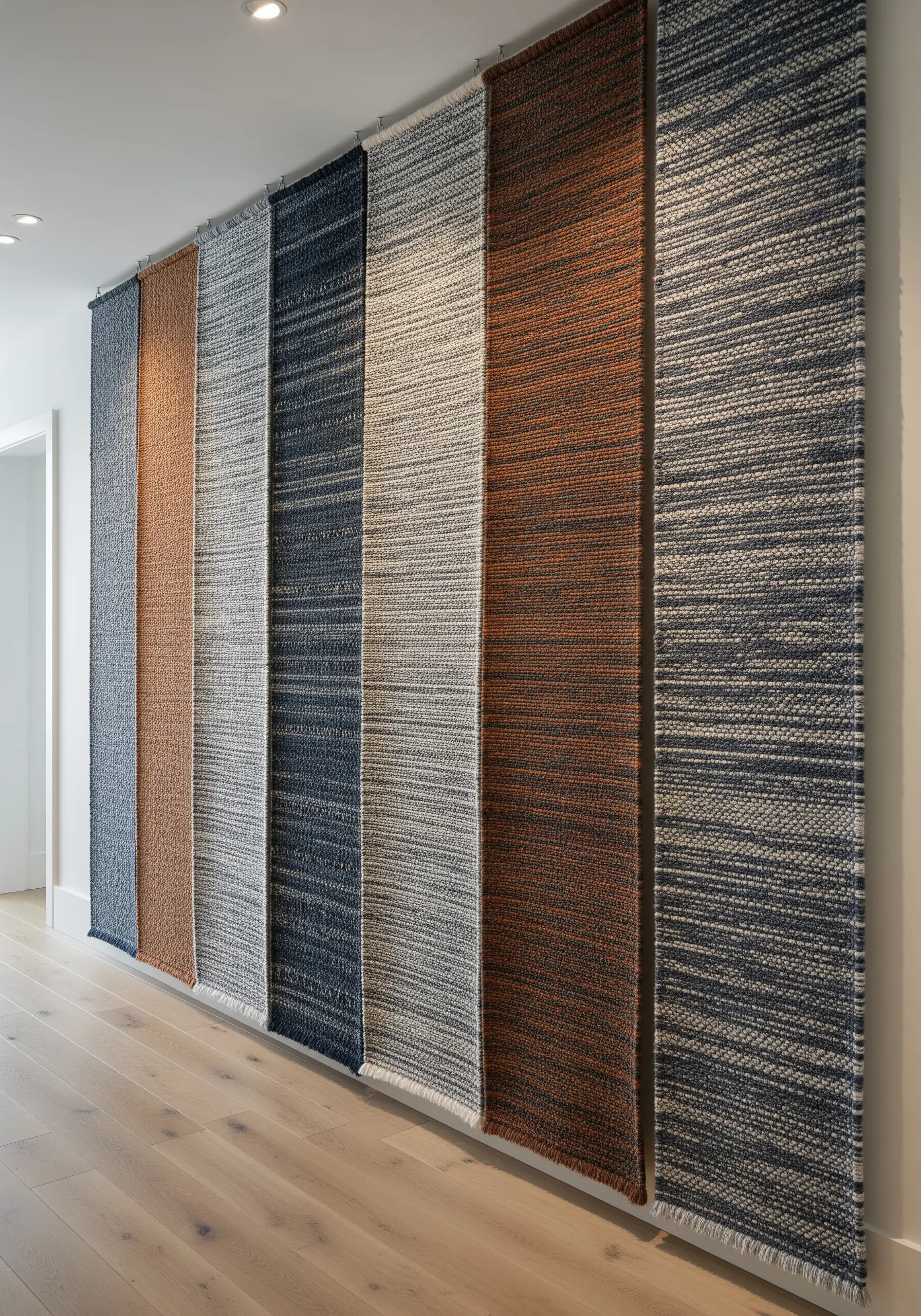
Create a large, adaptable art piece by designing it as a series of individual woven panels.
Weave several narrow tapestries using a consistent color palette but varying the patterns or color dominance in each one.
When hung side-by-side, they create a cohesive, rhythmic whole that can be rearranged or expanded over time.
This modular approach makes large-scale projects less intimidating and offers the flexibility to fit different walls, making for perfect fiber art installations that are perfect for gallery-worthy DIY.
21. Paint with Yarn in an Abstract Landscape Tapestry
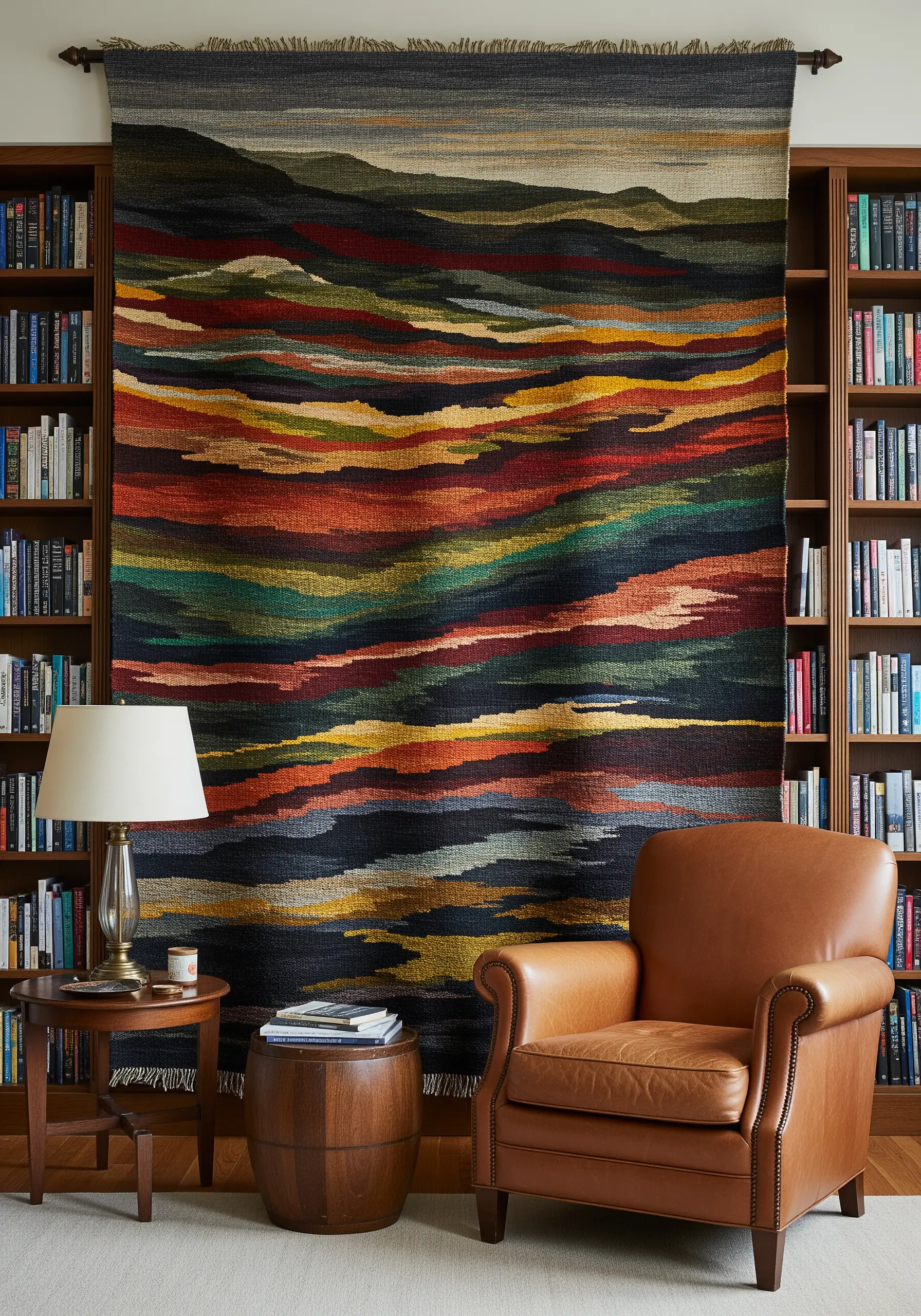
Use tapestry weaving techniques to create a painterly, abstract landscape full of depth and movement.
Work with a large palette of yarn colors, blending them together within the weaving to create soft, impressionistic transitions, much like brushstrokes.
Use techniques like hatching and soumak to define shapes and add texture that mimics the natural contours of hills, water, or sky.
This approach elevates weaving from pattern-making to a form of painting, resulting in stunning framed embroidery pieces with rich, atmospheric color.