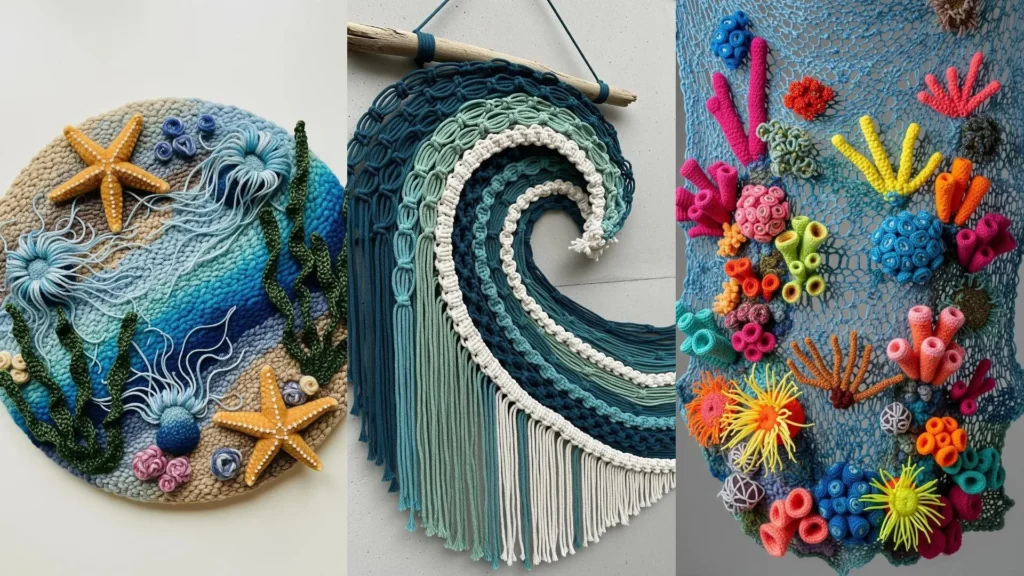
You’ve mastered the basics, and now you’re looking for that next step—the shift from following a pattern to creating a true piece of art for your home. The answer lies not in more complex stitches, but in a deeper understanding of texture, material, and form.
Think of yarn not just as thread, but as a sculptural medium. A thick, unspun roving can create soft, cloud-like forms that a thin cotton cord simply cannot. By blending different fibers, incorporating unexpected materials, and playing with scale, you can transform a flat textile into a dynamic, touchable masterpiece.
This collection is designed to give you tangible techniques that will immediately elevate your work. Forget trends and focus on the timeless principles of composition and texture. It’s time to create yarn art that not only decorates your space but completely transforms its energy.
1. Blend Roving and Weave for Tactile Depth
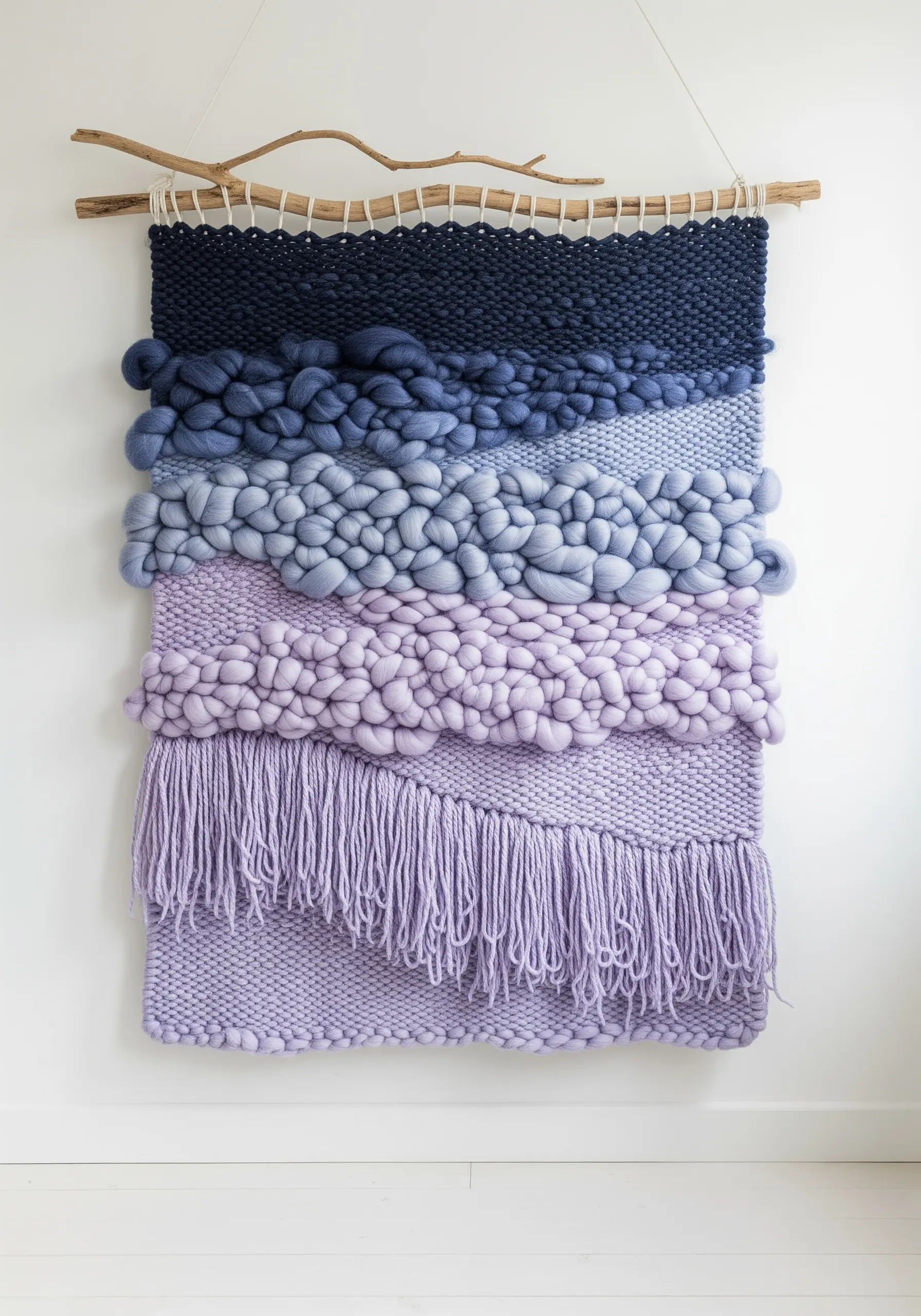
Create a dramatic landscape in your weaving by contrasting thick, unspun wool roving with sections of tight, flat plain weave.
The roving creates soft, cloud-like volumes that pop against the disciplined structure of the weave, adding immediate dimension.
Work with an analogous color palette—like shades of blue and lavender—to ensure the textural shifts remain the focus, creating a cohesive, touchable piece of art.
Finish by hanging the piece from a natural branch to enhance its organic, sculptural quality.
2. Integrate Metallic Elements into Macrame
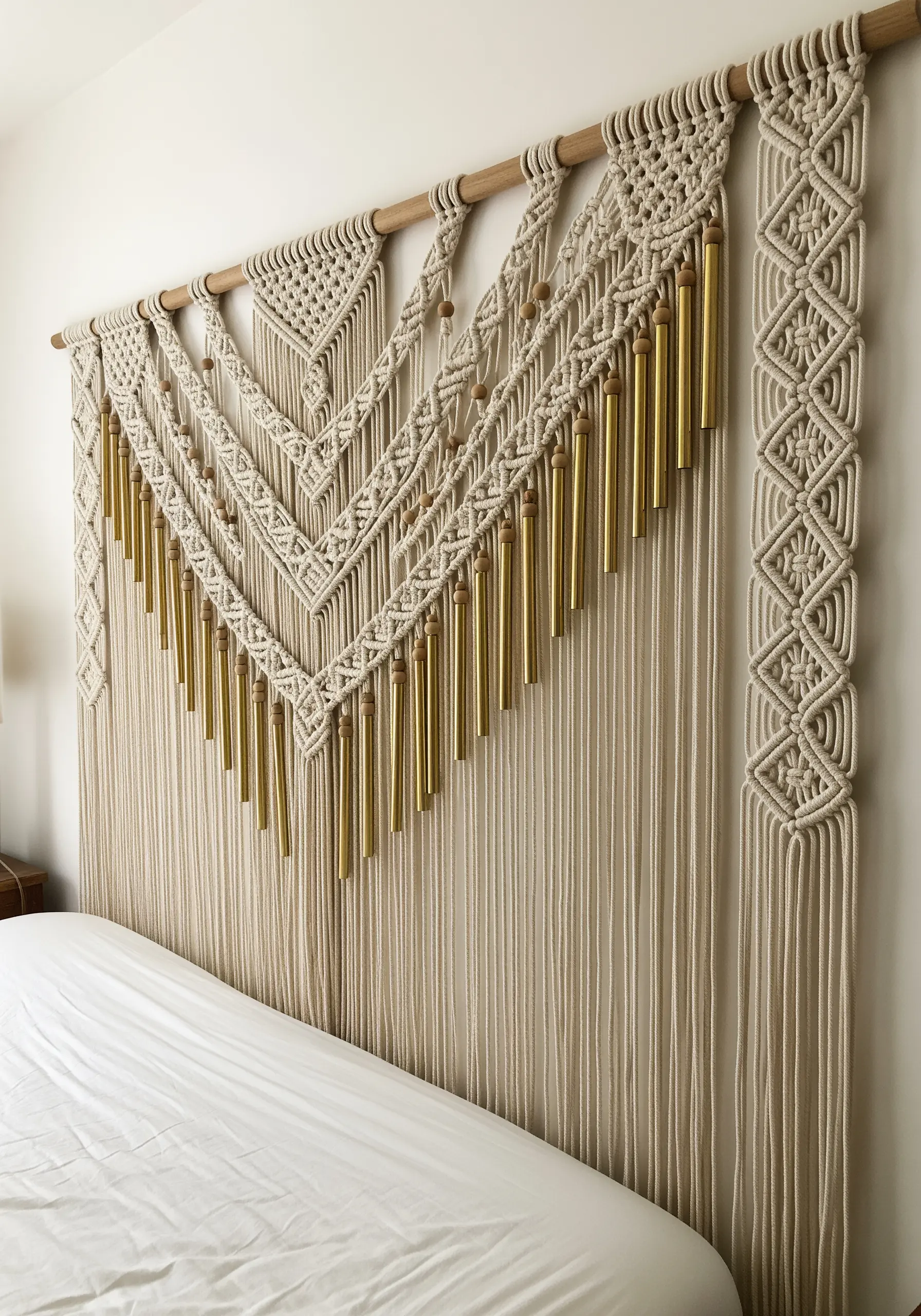
Elevate a traditional macrame headboard or wall hanging by incorporating non-fiber elements like brass tubes or wooden beads.
These materials interrupt the soft texture of the cotton cord, introducing points of light, sound, and structure that draw the eye.
Simply thread the tubes onto your cords between knot sections, treating them as you would a bead.
This technique transforms a decorative piece into a multi-sensory work, adding a layer of refined, unexpected elegance that feels custom and high-end.
3. Define Punch Needle Art with Metallic Contours
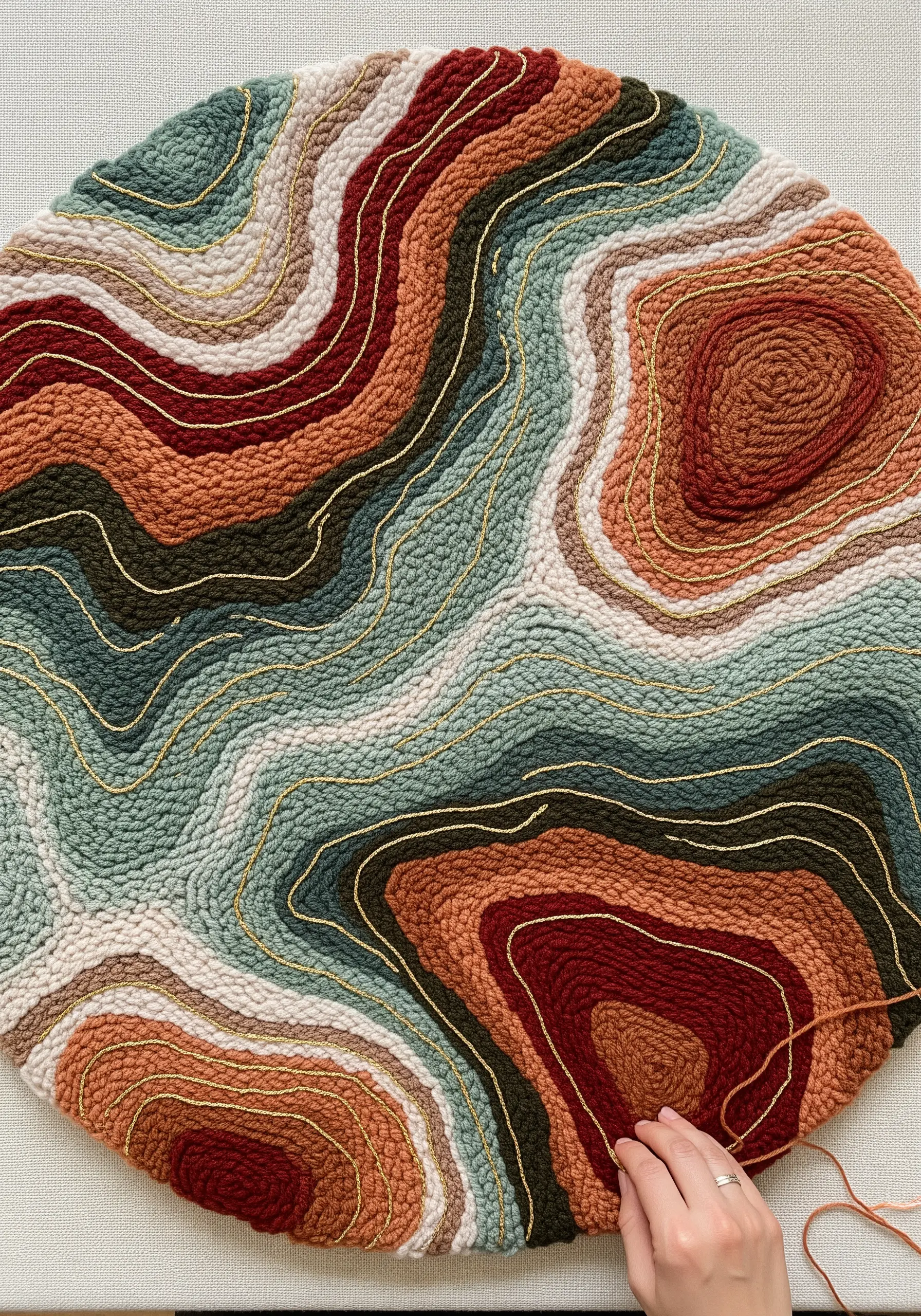
Give your punch needle designs a geological or topographic feel by outlining color fields with a single, delicate line of metallic thread.
First, create your plush, textured shapes using a standard punch needle and chunky yarn.
Then, use a traditional embroidery needle to couch or backstitch a fine gold or copper thread along the borders where colors meet.
This contrast between the matte, soft yarn and the shimmering, fine line adds a level of polish and intentionality, transforming a simple piece into a sophisticated abstract map.
4. Achieve Precision with Geometric Yarn Wrapping
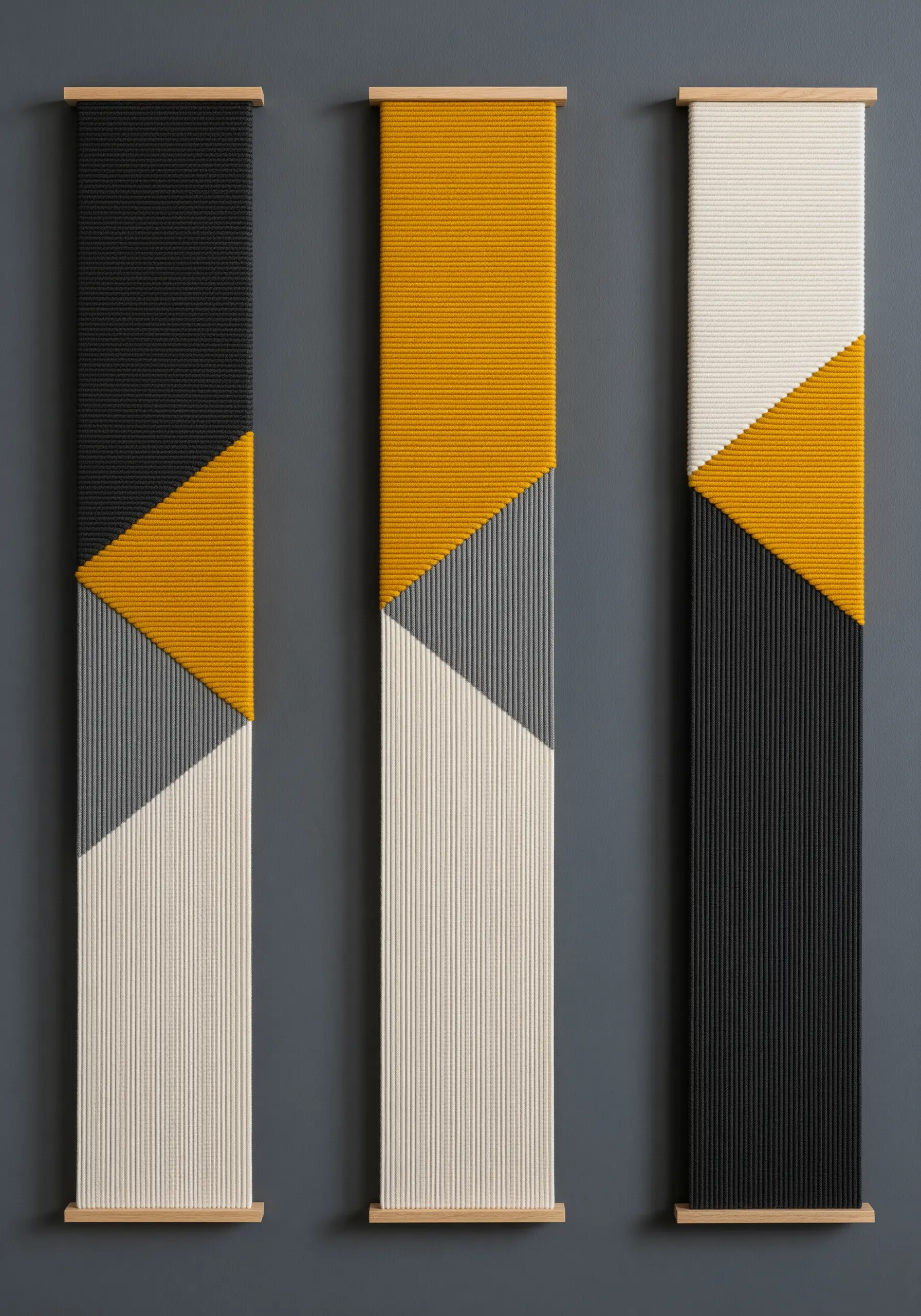
Create sleek, modern wall panels by focusing on the technique of tight, controlled yarn wrapping rather than complex knots or weaves.
Stretch vertical warp threads across a simple wooden frame, then tightly wrap sections with your chosen colors.
The key to achieving those sharp, graphic lines is maintaining consistent, firm tension as you wrap.
This method allows you to build bold, geometric compositions with a clean, architectural finish, perfect for a minimalist or mid-century modern space.
5. Embrace Asymmetry with a Freeform Shag Tapestry

Move beyond structured weaving by creating a vibrant, shaggy wall hanging that celebrates controlled chaos.
Use a latch hook or Rya knots to attach varied lengths and textures of yarn—bouclé, merino, and even strips of recycled silk—to a mesh or woven base.
Build up organic, undulating layers of color instead of straight lines, and allow the fringe to be uneven and expressive.
This technique results in a richly textured, bohemian piece that feels alive with movement and energy.
6. Weave with Light on a Circular Loom
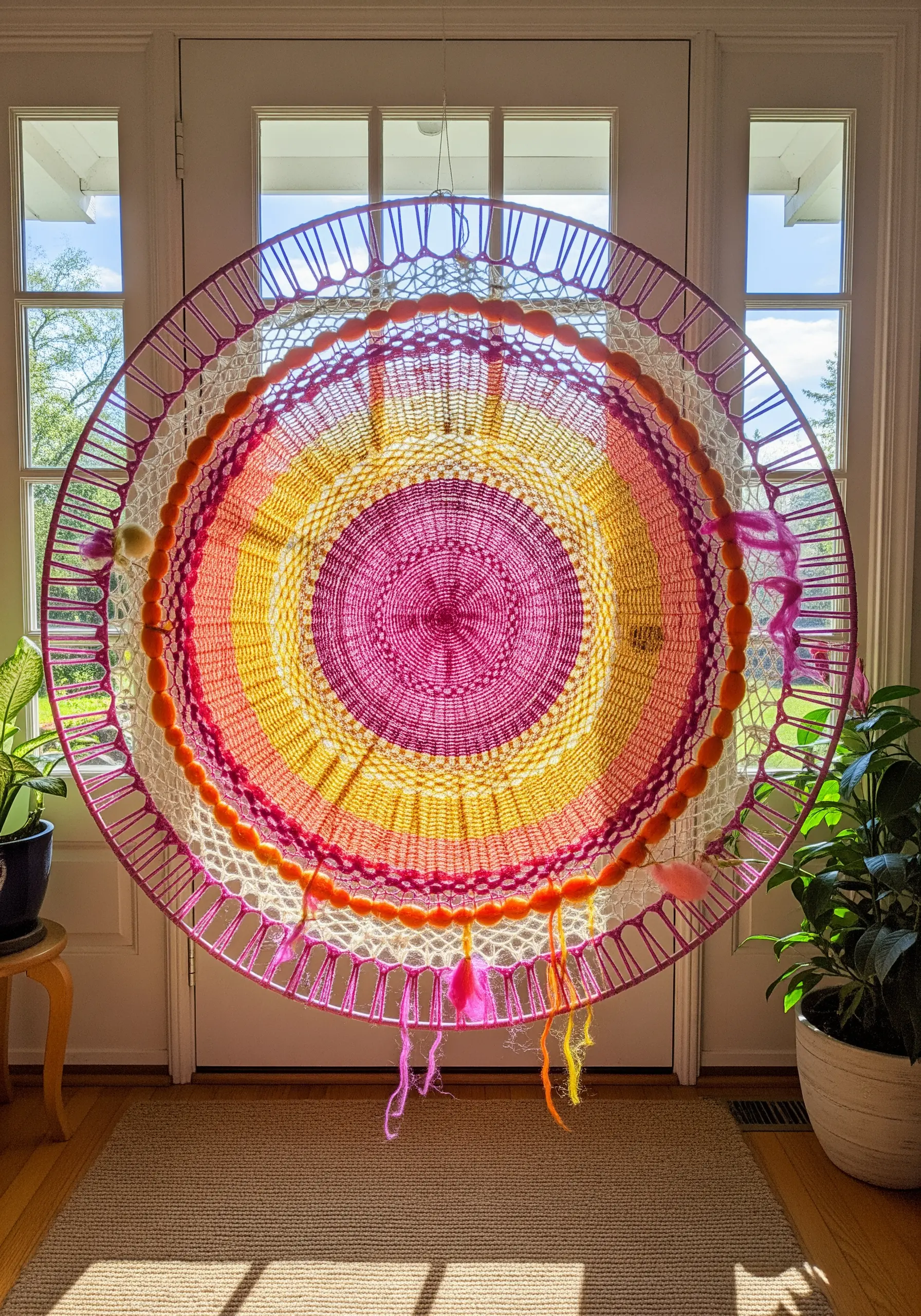
Use a large hoop—even a hula hoop—as a circular loom to create a stunning, mandala-like weaving that interacts with light.
Work from the center out, using simple weaving techniques and experimenting with thread tension to create open, lace-like sections.
Choose vibrant, semi-translucent yarns that will glow when hung in a window or against a light source.
This approach turns your weaving into a functional suncatcher, casting colored light and creating an ethereal focal point in your room.
7. Sculpt Graphic Shapes with a Tufting Gun

Create bold, contemporary art with the satisfying speed of a tufting gun, focusing on clean lines and graphic color blocking.
Draw your abstract design onto the monk’s cloth backing before you begin, creating clear boundaries for each color section.
To achieve that crisp, defined look, you can shear the finished piece to a uniform height, which makes the borders between colors pop.
Fine, contrasting lines can be added to delineate shapes and add a final layer of graphic detail.
8. Create Intrigue with Negative Space Weaving
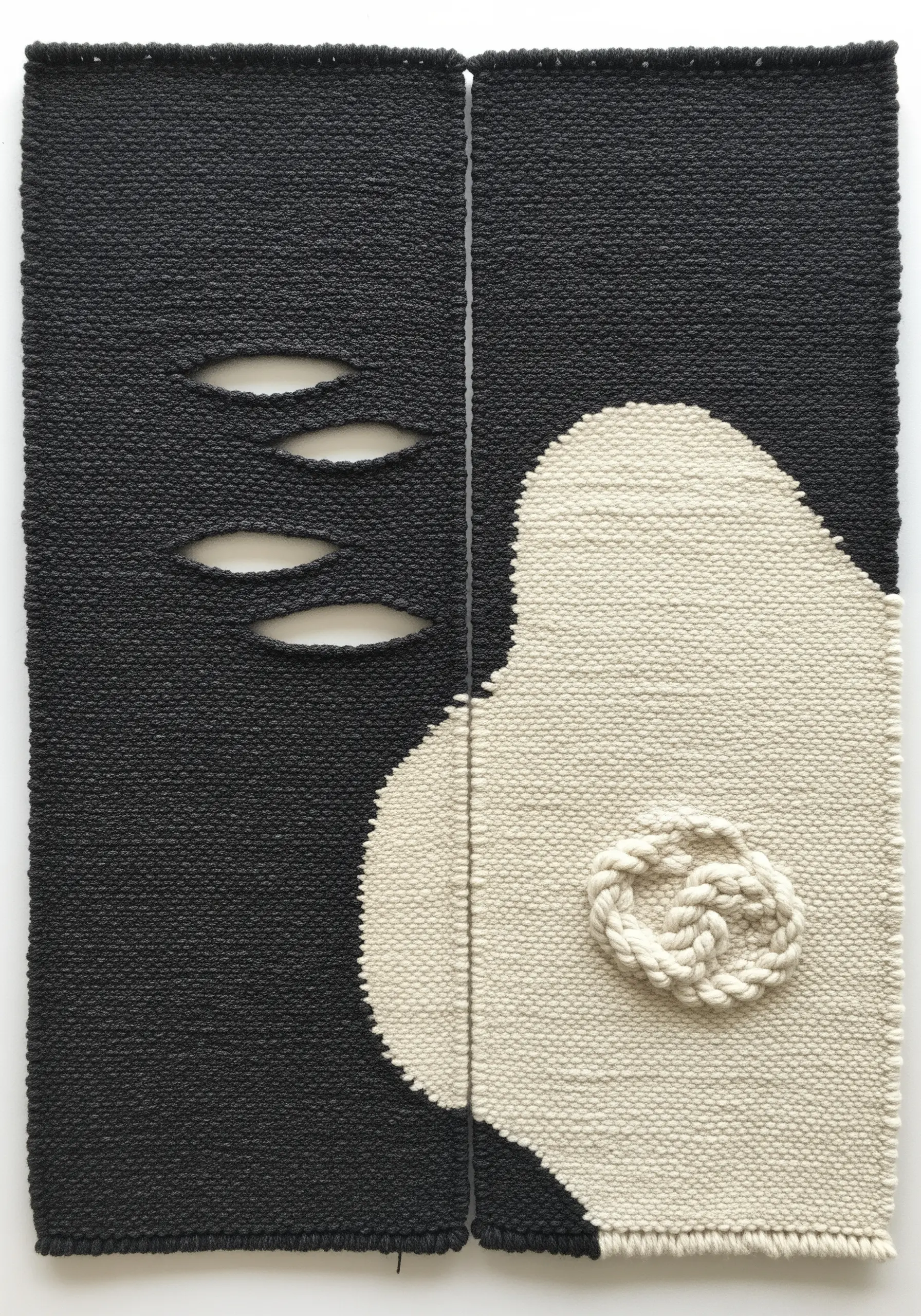
Incorporate deliberate openings, or negative space, into your weaving to create a sense of lightness and architectural interest.
This is achieved by weaving sections independently and leaving areas of the bare warp threads exposed.
In a high-contrast palette like black and white, these voids become powerful design elements that draw the viewer in.
Pair this technique with a single, sculptural element, like a 3D knot, to create a focused and contemplative art piece.
9. Go Architectural with Large-Scale Macrame
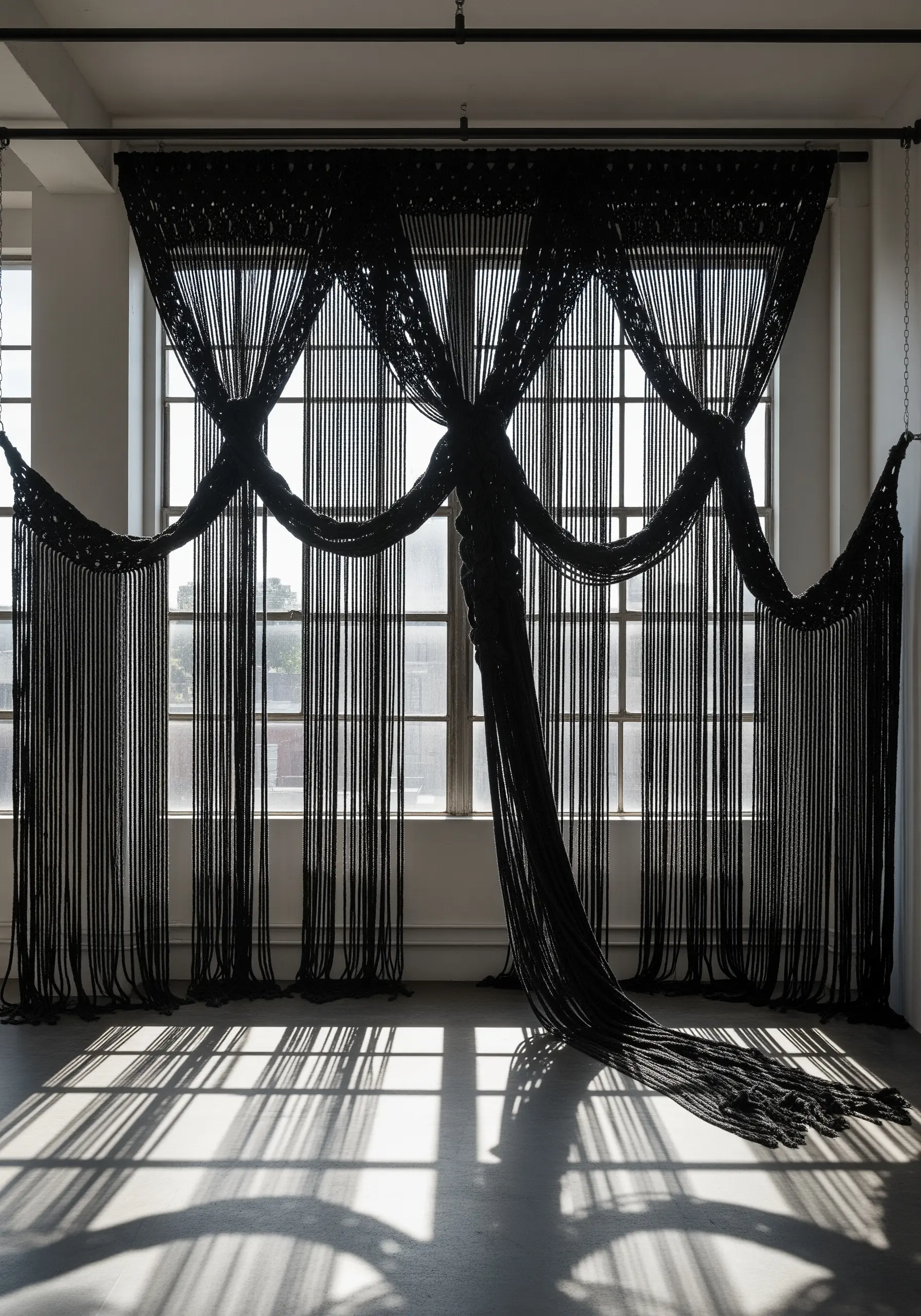
Transform an entire wall or window by thinking of macrame on an architectural scale.
Use a thick, dramatic cord—in a bold color like black—and focus on simple, repeating knots to build a structure that feels both grand and airy.
Instead of a small, decorative piece, design your macrame to function as a curtain, a room divider, or a dramatic canopy.
The power of this technique lies in its scale, turning simple knots into an immersive, light-filtering installation.
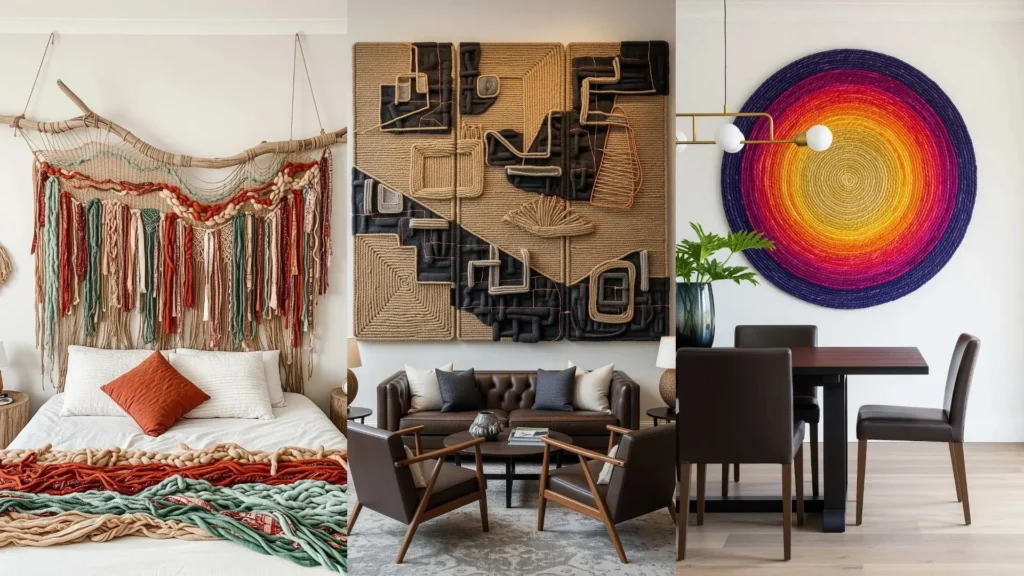
10. Craft a Statement Piece with Coiled Rope

Create a stunning, graphic wall piece using the simple and meditative technique of rope coiling.
Start with a thick cotton rope and begin coiling it into a flat, circular shape.
As you coil, use colorful embroidery floss or fine yarn to wrap the rope, securing the coils together and creating your desired pattern.
By alternating the wrapping color, you can create spirals, stripes, and blocks that give the finished piece a bold, rhythmic quality.
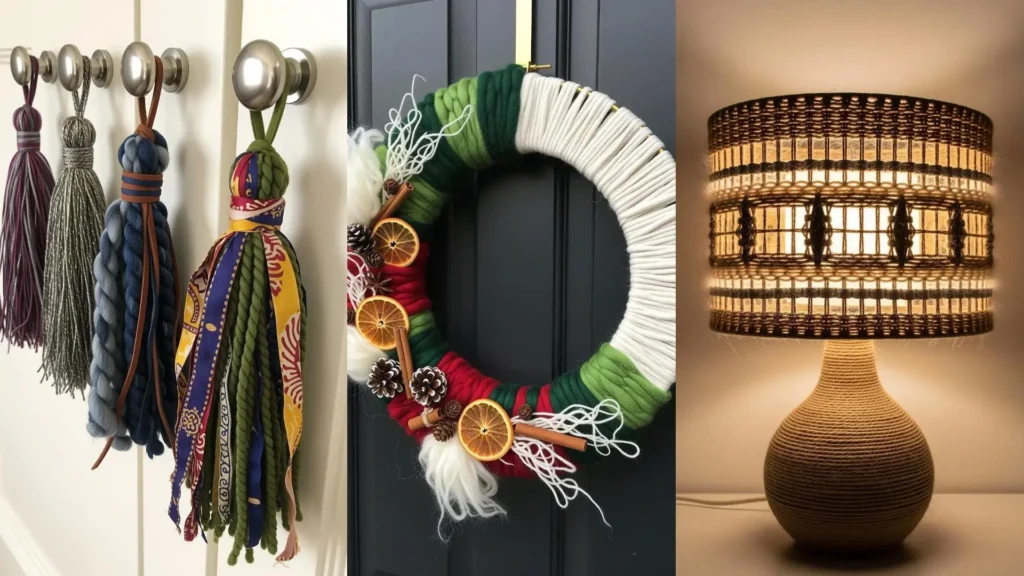
11. Curate a Dynamic Tassel and Pom-Pom Garland
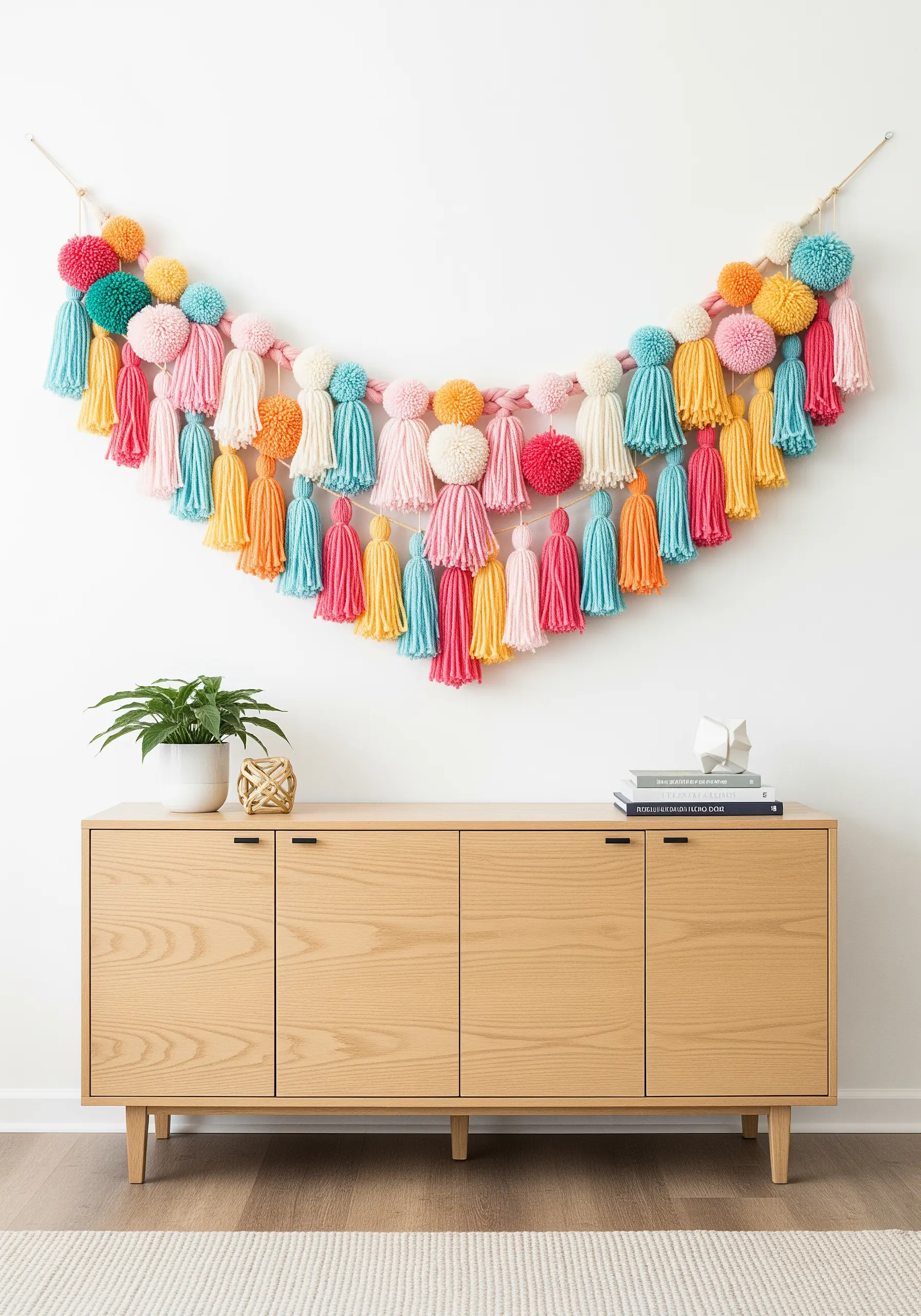
Elevate the humble pom-pom and tassel garland by focusing on intentional composition and color theory.
Create your components in varying sizes, densities, and shades, then arrange them in a deliberate rhythm—perhaps an ombré fade or a sequence of complementary colors.
String them onto a thick, corded rope for a substantial feel, and consider knotting between each element to give it structure and definition.
This thoughtful approach turns a playful craft into a beautifully balanced piece of celebratory wall decor.
12. Weave with Found Natural Elements

Ground your weaving in a sense of place by incorporating found natural objects directly into the weft.
Small twigs, dried grasses, or strips of bark can be woven in just like yarn, creating rigid, organic lines that contrast with the softness of the fiber.
Let the shape of the branch or twig dictate the movement of the weave around it, creating undulating, natural forms.
This technique creates a beautiful dialogue between the natural and the man-made, resulting in a truly unique, textural piece.
13. Paint with Wool Using Needle Felting

Create soft, atmospheric landscapes by using wool roving as your “paint” and a felting needle as your “brush.”
Start with a base of pre-felt or wool felt, and lay down thin wisps of colored roving.
Use your felting needle to repeatedly poke the fibers into the base, blending colors together to create soft gradients and painterly effects.
This technique allows for incredible nuance and shading, perfect for capturing the hazy, layered look of distant mountains or a misty sky.
14. Fuse Macrame and Weaving for a Hybrid Wall Hanging

Create a seamless transition between two beloved fiber arts by combining macrame and weaving in a single piece.
Start by creating a section of macrame knots at the top, hanging from a dowel. Then, use the long, un-knotted cords from your macrame section as the warp for your weaving.
Weave directly into these cords with chunky roving or textured yarn.
This method produces stunning mixed-fiber creations that feel cohesive and expertly crafted, showcasing a beautiful range of textures.
15. Structure Your Design with Color-Blocked Textures
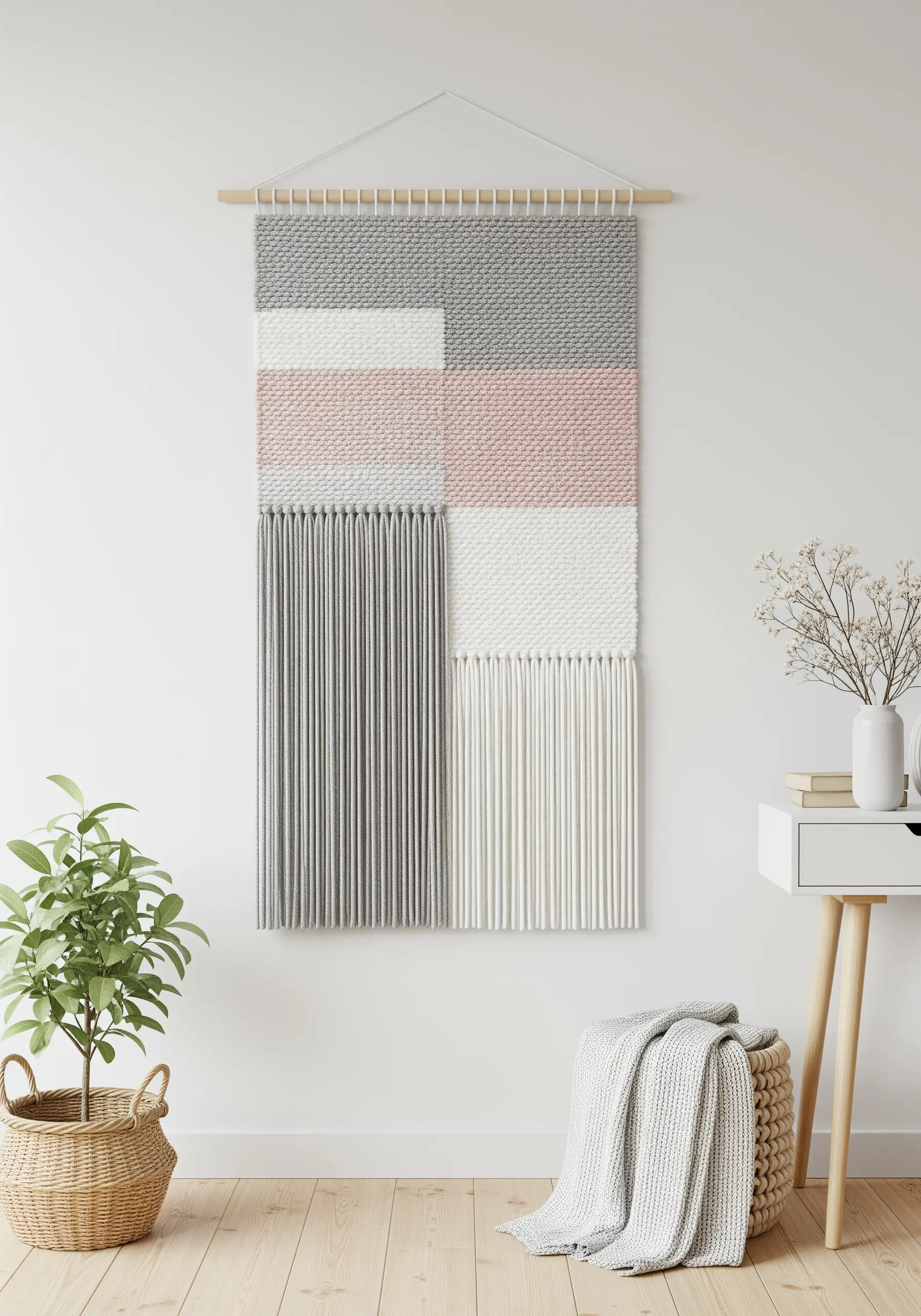
Create a sophisticated, contemporary wall hanging by dividing your canvas into clean, geometric blocks of distinct textures.
Within a simple grid, assign a different technique to each rectangle: one might be a tight plain weave, another a looped pile, and a third made of long, straight-hanging cords.
Stick to a restrained color palette of soft neutrals like pink, grey, and cream to let the textural differences shine.
This structured approach feels modern and balanced, turning a sampler of techniques into a unified work of art.
16. Build Volume with Sculptural Knotting
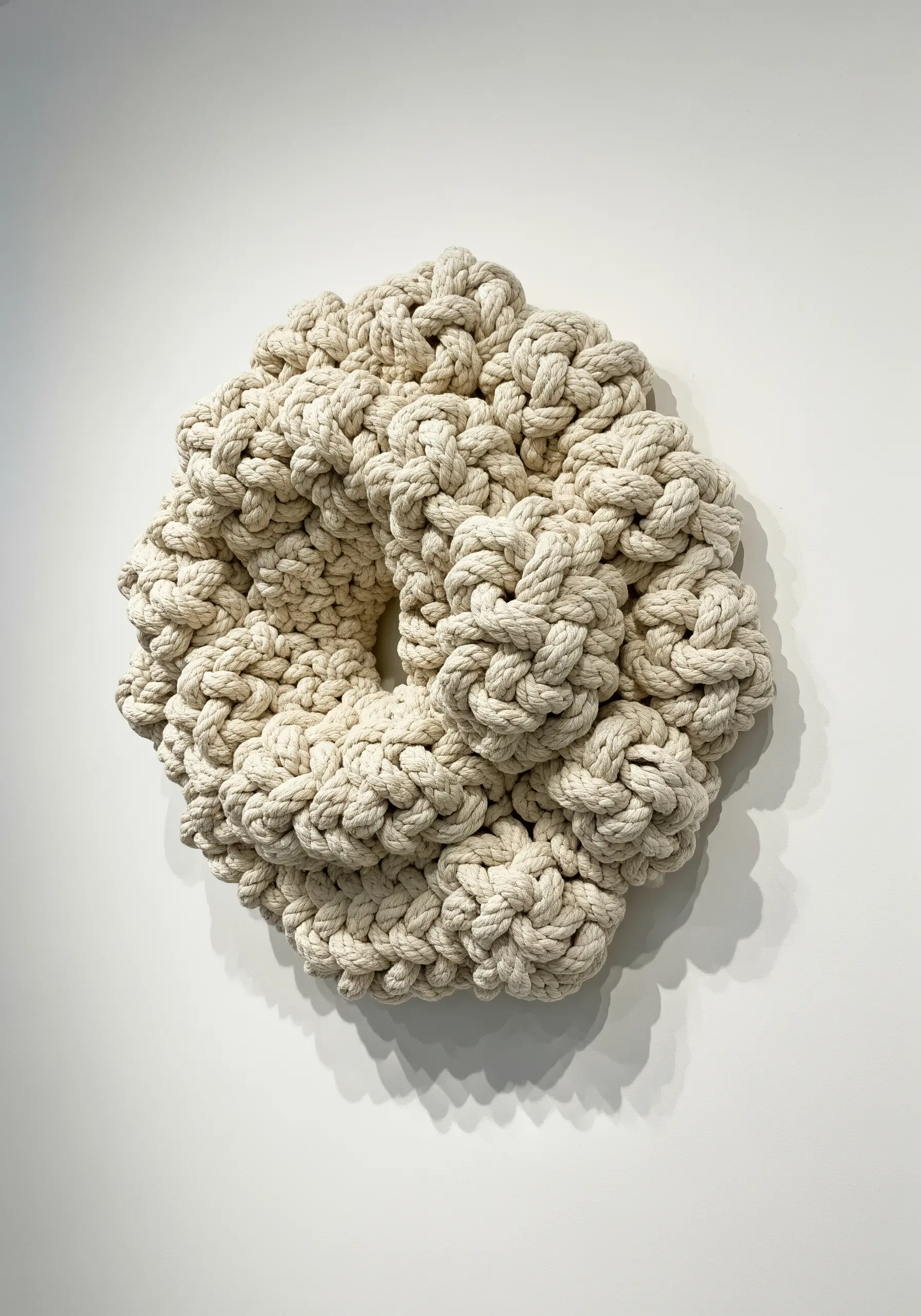
Move your knot work off the wall and into three dimensions by focusing on building sculptural forms.
Using a thick, pliable rope, create a dense cluster of continuous knots, like a series of interconnected monkey’s fist or Celtic knots.
Instead of creating a flat pattern, think about building mass and volume, allowing the piece to curve and swell.
The result is a powerful, tactile object that plays with light and shadow, commanding attention as a unique piece of fiber sculpture.
17. Modernize the Ojo de Dios with Bold Color

Reimagine the traditional Ojo de Dios (God’s Eye) weaving with a contemporary color palette and refined finishing touches.
The technique involves systematically wrapping yarn around a frame of crossed sticks to create concentric diamonds of color.
Choose a vibrant, high-contrast color scheme to give it a modern, graphic feel.
Adding sleek, uniform tassels at the ends of the sticks provides a polished finish, transforming a folk-art classic into a sharp piece of modern decor.
18. Highlight the Beauty of Raw Wool Locks

Create a wall hanging that is a pure celebration of natural fiber by working with raw, un-spun wool locks.
Source high-quality, curly locks (like those from Teeswater or Wensleydale sheep) in their natural, variegated colors.
Either gently weave them into a warp or simply attach them to a fabric backing, doing as little as possible to disturb their incredible natural texture.
This minimalist approach results in a piece that is wild, soft, and deeply connected to its organic origins.
19. Create Energy with Dense Yarn Pointillism
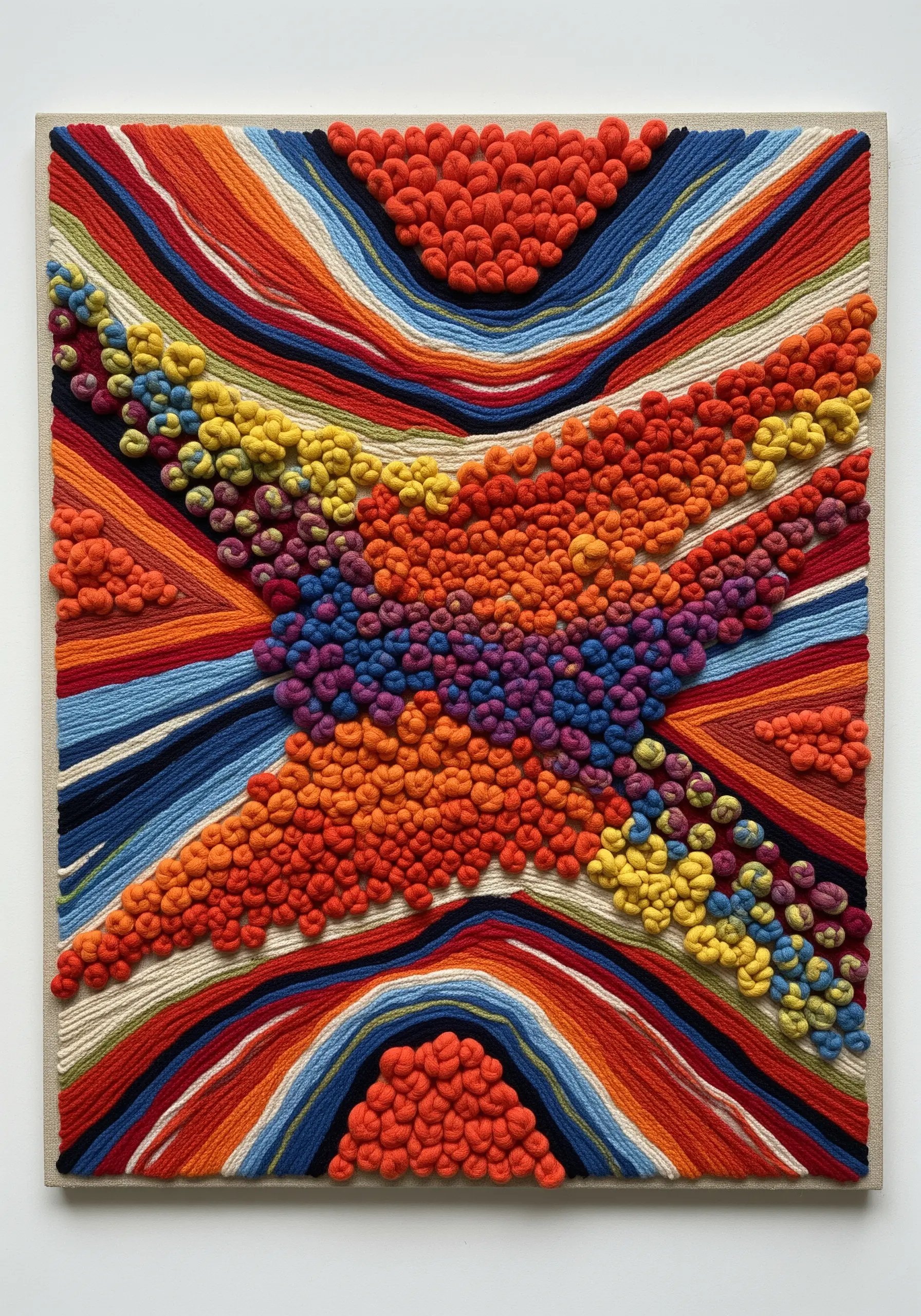
Fill your canvas with vibrant energy by using dense clusters of knots and loops to create a pointillist-style texture.
Instead of long stitches, pack your design with thousands of French knots, bullion knots, or small tufted loops made with a punch needle.
Arrange your colors in dynamic, intersecting paths to build a composition that vibrates with movement.
This technique is incredibly tactile and transforms simple yarn into a rich, complex surface that feels like a living mosaic.
20. Construct a Transparent Thread Grid
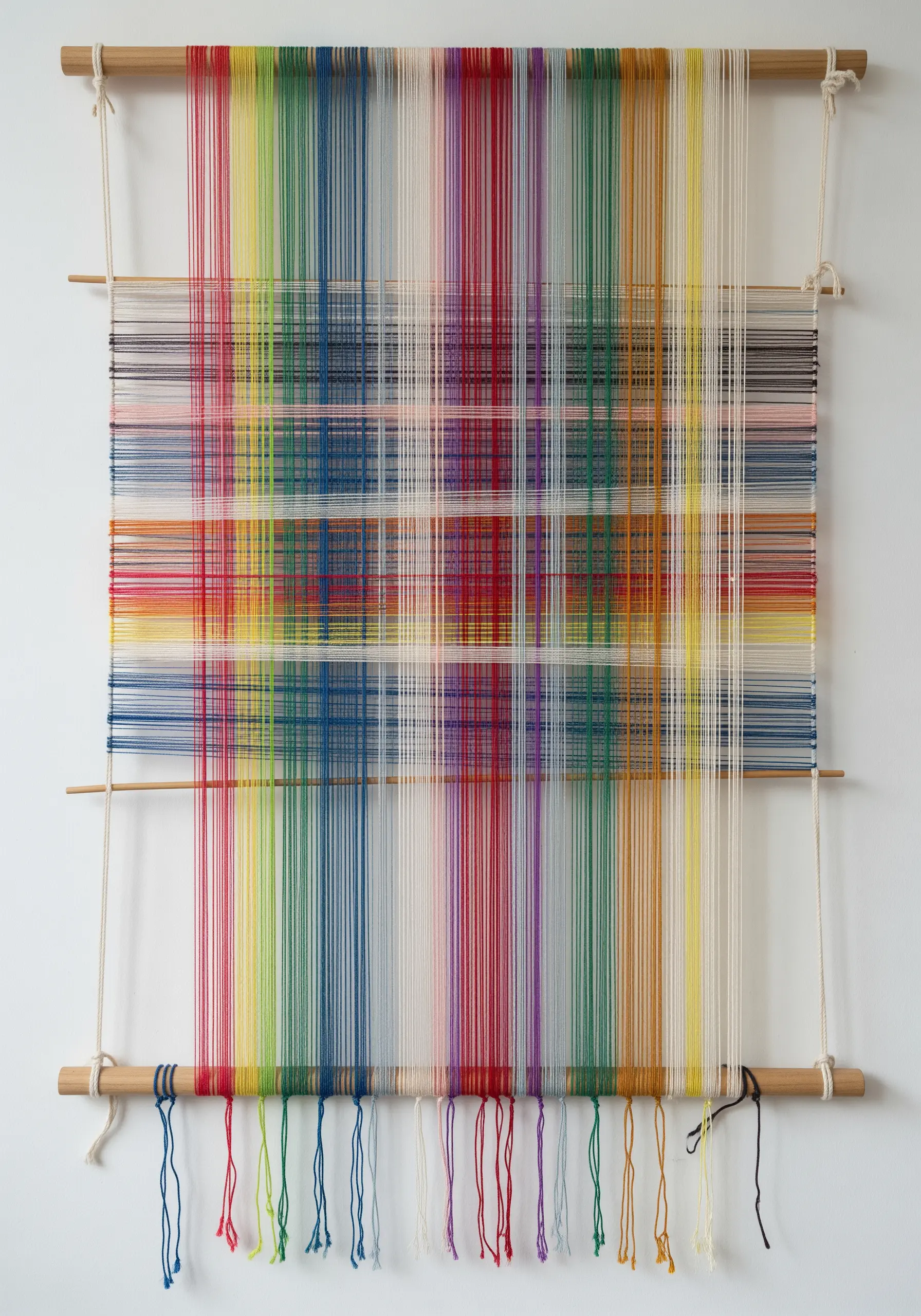
Create a lightweight, ethereal piece by stretching threads across a simple frame rather than weaving them tightly.
Wrap your warp (vertical) threads first, then add your weft (horizontal) threads, allowing the two layers to interact and create a transparent grid.
Where different colored threads intersect, they will create new, optically blended hues.
This loom-less technique produces a delicate, almost digital-looking plaid that plays with color theory and transparency.
21. Weave Dried Botanicals into Macrame
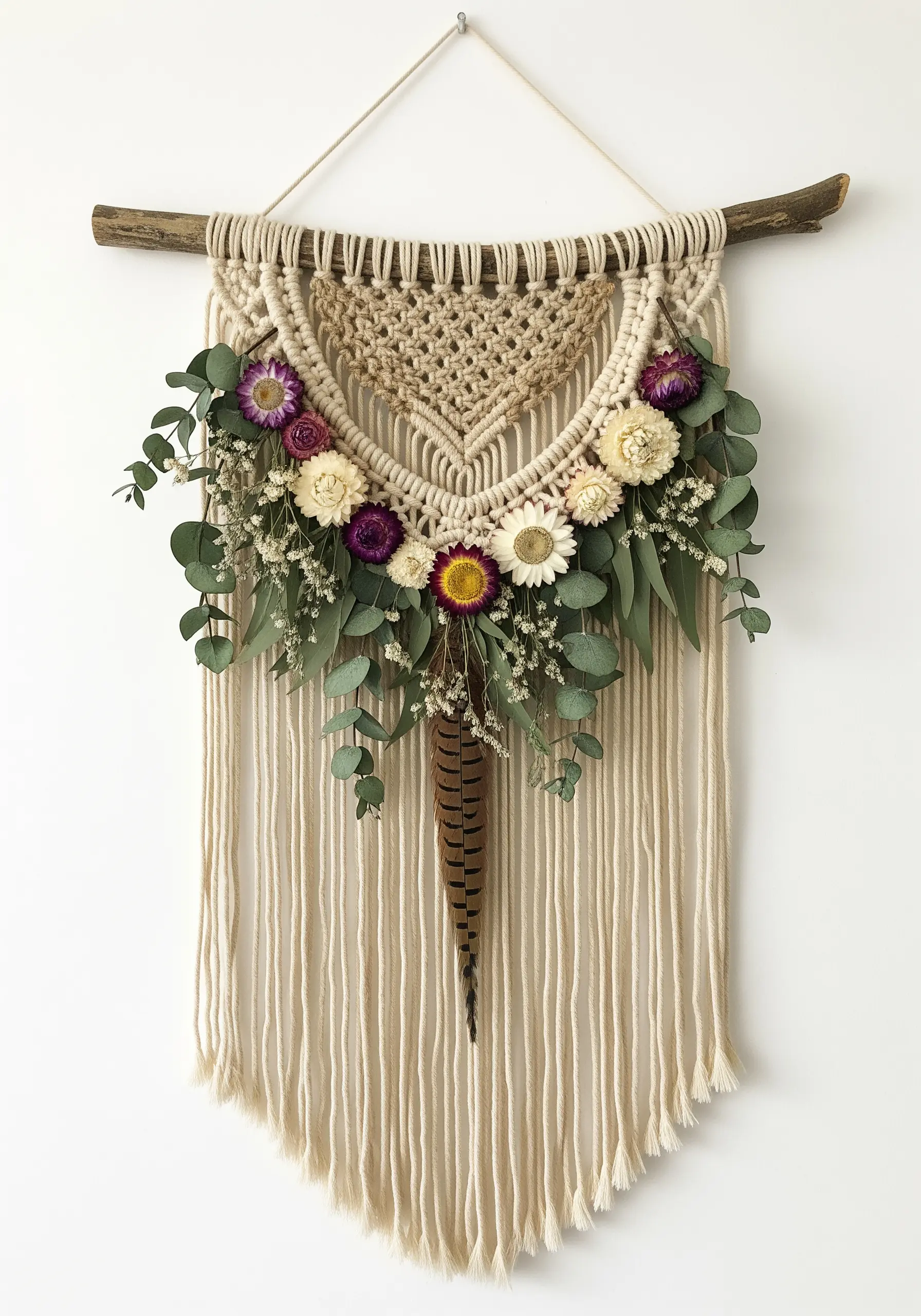
Soften the geometric structure of macrame by incorporating the delicate, organic forms of dried flowers and foliage.
After completing your main knot work, gently weave in stems of eucalyptus, strawflowers, and baby’s breath, securing them within the knots and loops.
This technique combines the enduring quality of fiber art with the ephemeral beauty of botanicals. For a more permanent design, you can use pressed flower art that will not wilt or fade.
The result is a romantic, bohemian piece that brings a touch of nature indoors.
22. Design a Cascading Waterfall of Fringe

Make a bold statement with a wall hanging that focuses entirely on the drama of layered fringe.
Using a series of Lark’s Head or Rya knots, attach dense rows of yarn to a dowel, with each subsequent row slightly longer than the last.
This creates a cascading, chevron-like effect that is pure color and texture.
Using vibrant, monochromatic color blocks enhances the graphic, waterfall-like shape of the piece, making it a powerful focal point.
23. Assemble a Modular Textured Gallery Wall
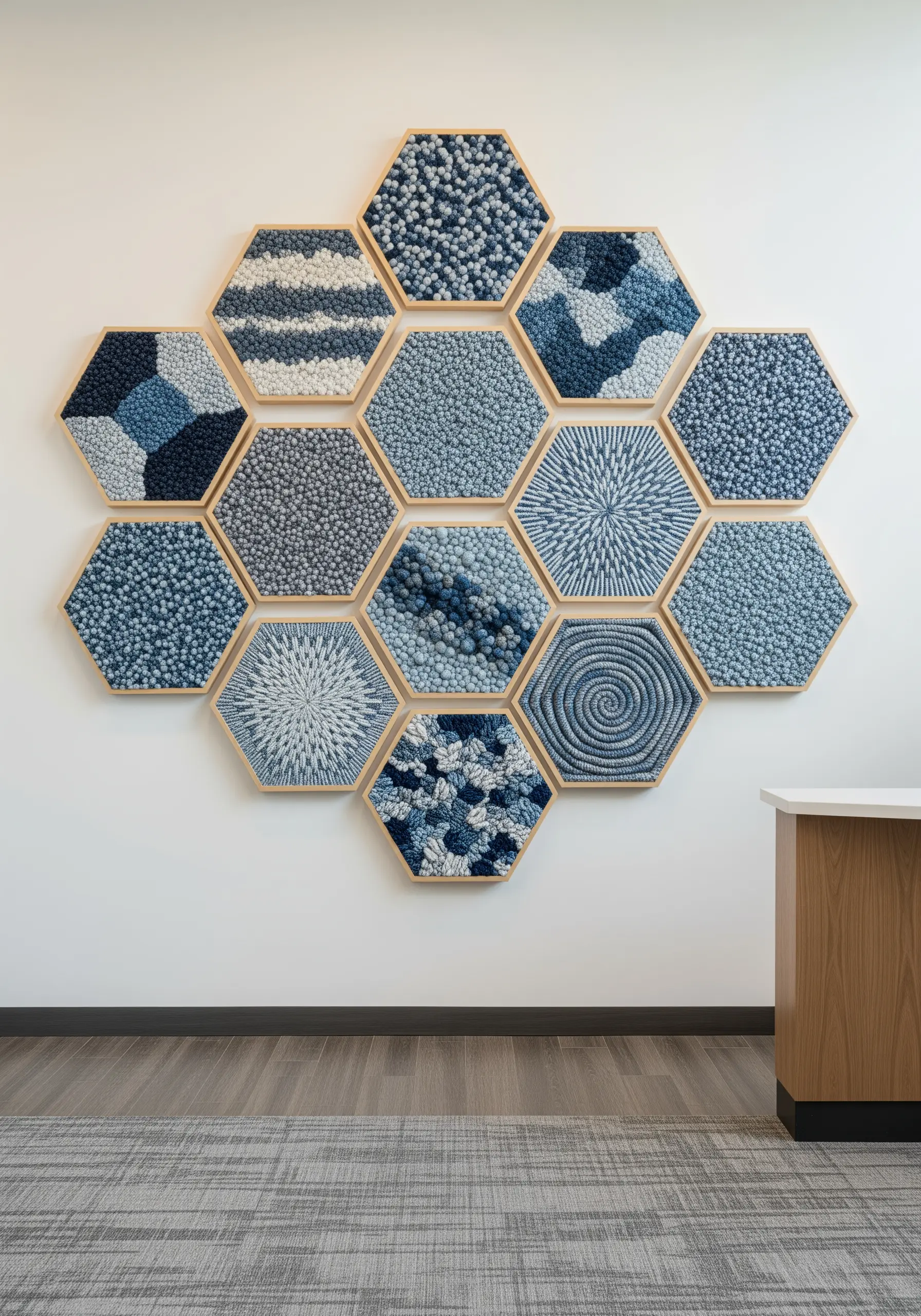
Create a large-scale, cohesive art installation by working with multiple small, modular frames.
Choose a uniform shape, like hexagons or circles, and fill each one with a different yarn texture or pattern, all within a consistent color palette.
Techniques can include punch needle, coiling, weaving, or dense knotting.
Arranging these individual “tiles” together on a wall creates a stunning, quilt-like display that feels both personal and professionally curated. These handmade embroidery hoop designs can be rearranged anytime for a fresh look.
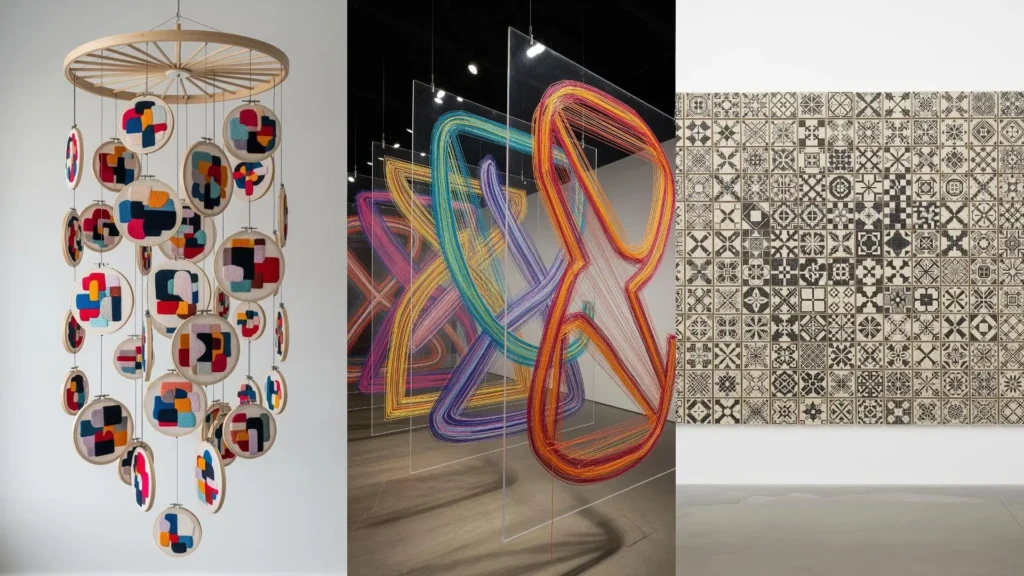
24. Modernize String Art with Neon and Acrylic

Give classic string art a futuristic update by swapping wood and nails for an unconventional frame and vibrant, modern thread.
Use a clear acrylic form or a metal grid as your base, which gives the finished piece a sense of floating, ethereal structure.
Wrap the frame with fluorescent or neon-colored thread to create sharp, geometric patterns that seem to glow.
This combination of materials transforms a retro craft into a piece of contemporary, high-energy sculpture.
25. Add Quiet Luxury with Metallic Accents

Introduce a subtle touch of elegance into your weaving by incorporating fine metallic threads alongside your primary yarn.
Instead of creating a solid block of shimmer, try alternating single rows of metallic thread with several rows of a matte fiber like cotton or wool.
This creates a delicate, heathered effect that catches the light beautifully without overwhelming the piece.
It’s a sophisticated way to add depth and a hint of luxury, elevating even the simplest weave.
26. Explore Deconstruction in Your Weaving
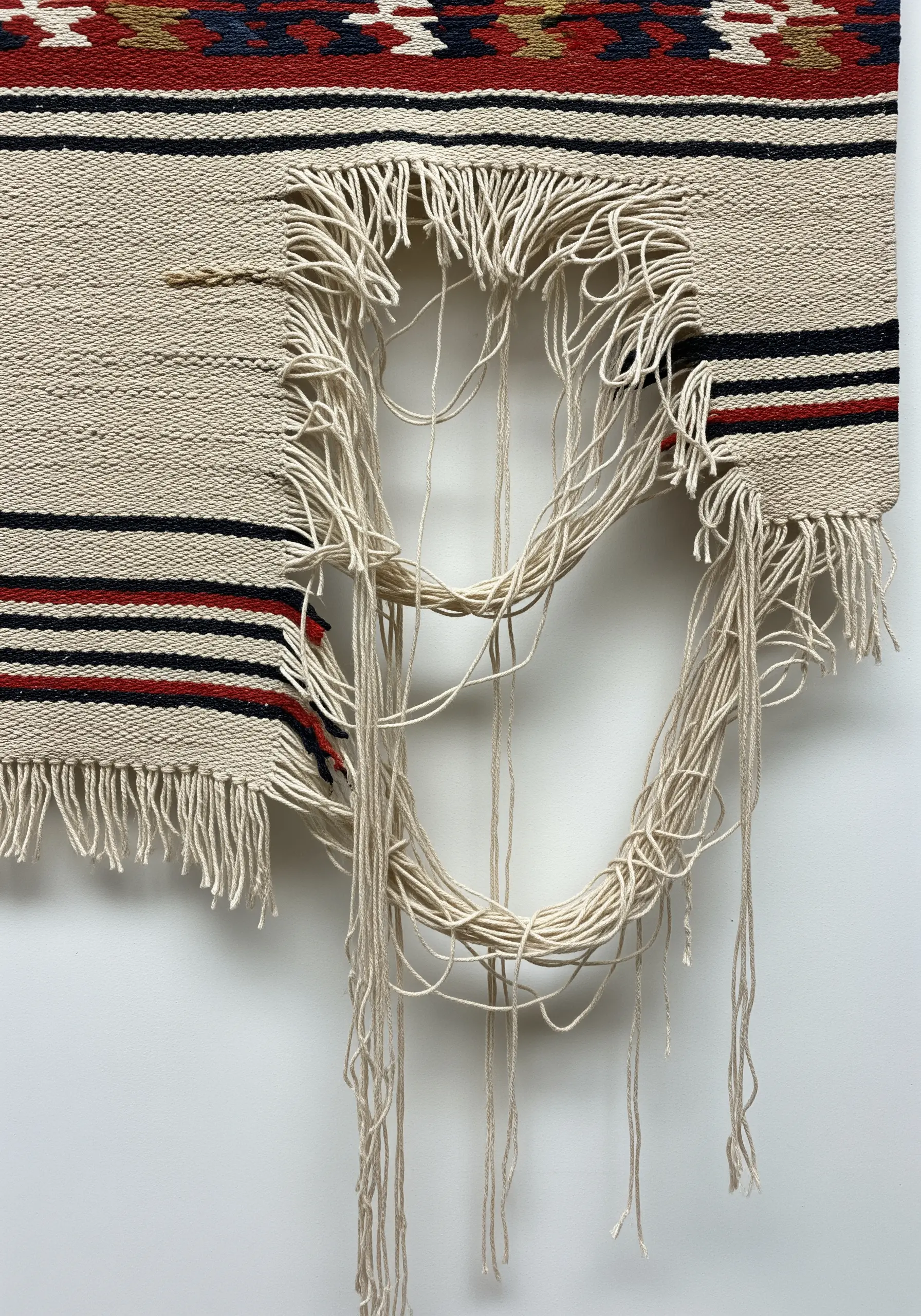
Challenge traditional weaving by intentionally deconstructing your work to create an expressive, modern textile.
Weave a solid piece of fabric, then selectively cut or pull out sections of the weft threads to expose the underlying warp.
You can gather, twist, or knot these exposed warp threads to create new lines and forms.
This technique adds a layer of history and vulnerability to the piece, transforming a simple textile into a compelling work of abstract art.
27. Create a Cozy Nook with Giant Knitting

Make an immersive statement of comfort by using giant knitting techniques to create a functional piece of wall art.
Work with extremely thick, unspun merino wool roving and either your own arms or giant knitting needles to create massive stitches.
Instead of a blanket, hang your oversized knit panel on the wall behind a bench or bed to create an instant cozy reading nook.
This technique brings unparalleled softness and architectural scale to a room, inviting touch and creating a sanctuary of comfort.
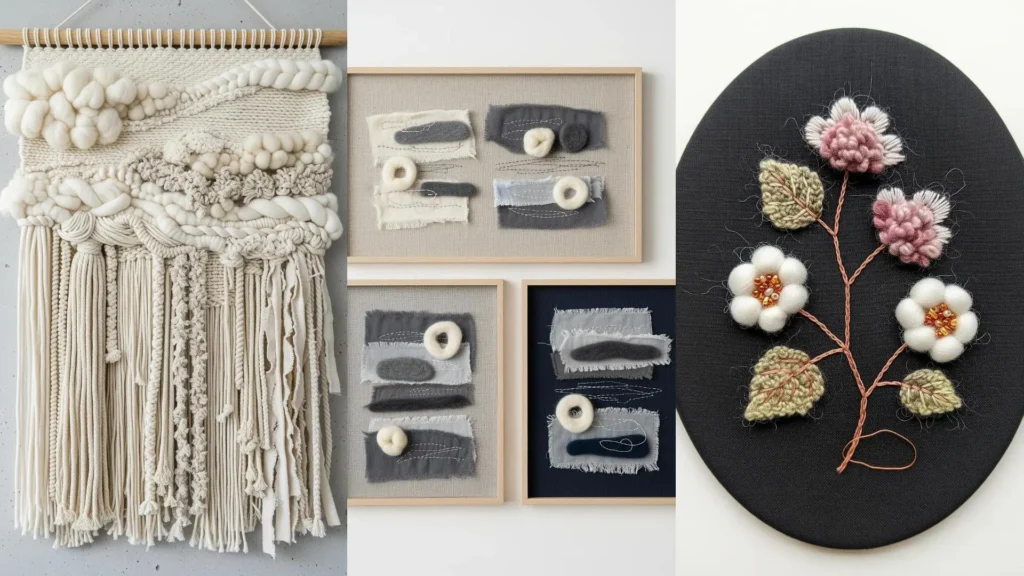
28. Master Monochromatic Texture

Challenge yourself to create a visually rich wall hanging using only a single color, forcing texture to become the star.
In a monochromatic palette like all-white, the subtle differences between techniques become magnified.
Combine a variety of stitches and forms: thick soumak braids, puffy roving clouds, tight woven sections, and delicate loops.
This study in texture results in an incredibly sophisticated and serene piece, proving that you don’t need color to make a powerful impact.