You have the stitches down. You can follow a pattern with precision and grace. But you’re ready to move beyond tracing lines and start painting with thread—to create art that feels less like a craft project and more like an extension of your own aesthetic vision.
This is where the magic of the gradient comes in. It’s not just about blending colors; it’s about controlling the mood, creating depth, and guiding the eye through a piece with intention. It’s the technique that separates a good piece from a breathtaking one. An ombre wall hanging doesn’t just add color to a room; it adds a sense of flow, atmosphere, and sophisticated calm.
Think of this collection not as a set of rules, but as a series of conversations about color and texture. Each piece offers a specific technique—from thread painting and pointillism to textural blocking—that you can adapt and make your own. Let this be the moment you stop just stitching, and start composing.
1. The Vertical Fill Gradient
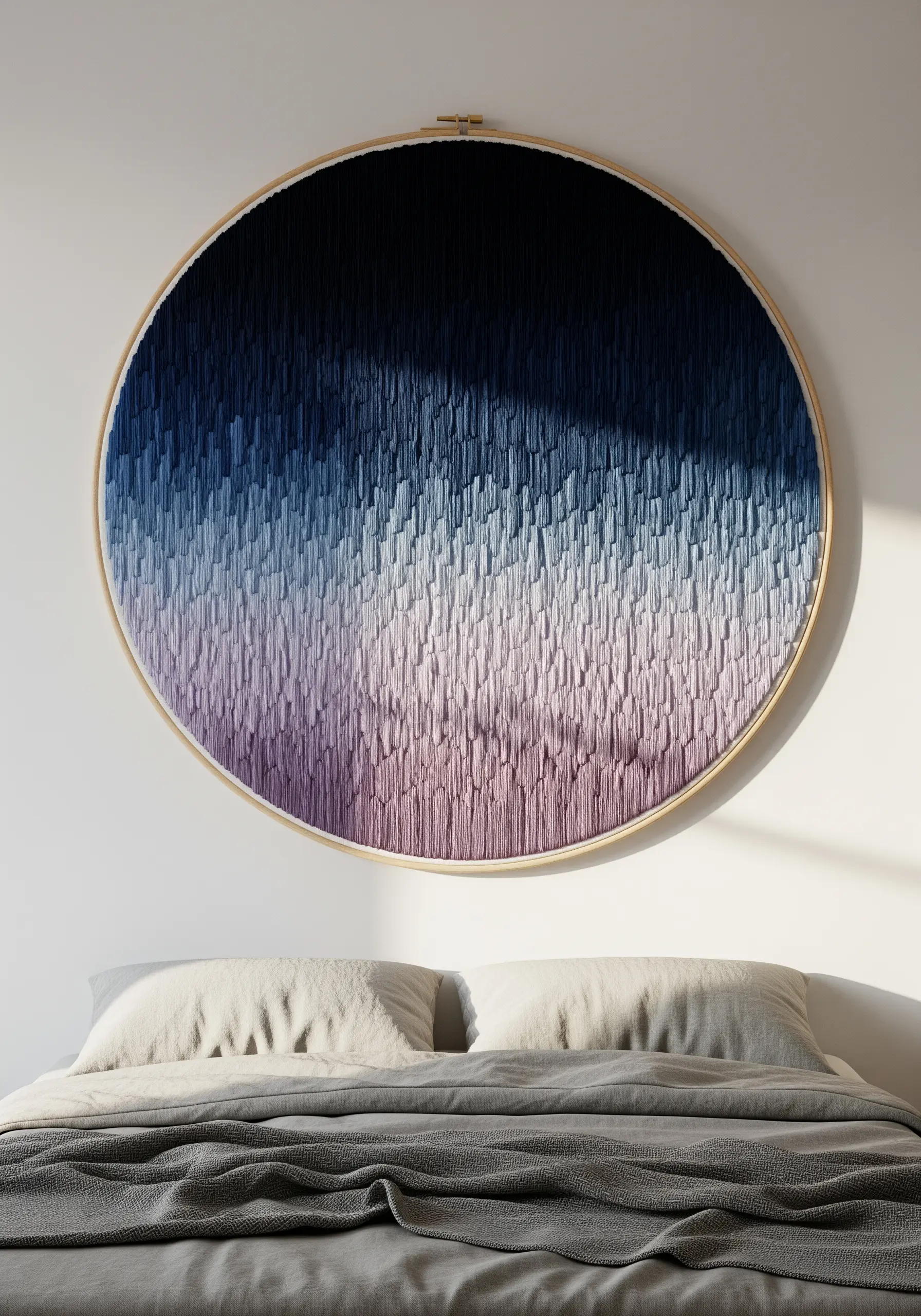
To achieve this seamless flow, use vertical satin stitches and slightly vary their length where two colors meet—this is the secret to soft blending without complex techniques.
Opt for a high-strand-count floss, like all six strands of cotton or a soft pearl cotton, to ensure full coverage and a plush, light-absorbing texture.
This method transforms the entire hoop into a canvas for a single, powerful statement of color, making it an exercise in meditative stitching that rewards your patience with a flawless finish.
Working on a large scale allows the gradient to breathe, turning a simple concept into one of the most impactful embroidery wall hangings for a modern bedroom.
2. Atmospheric Washes with Layered Stitches
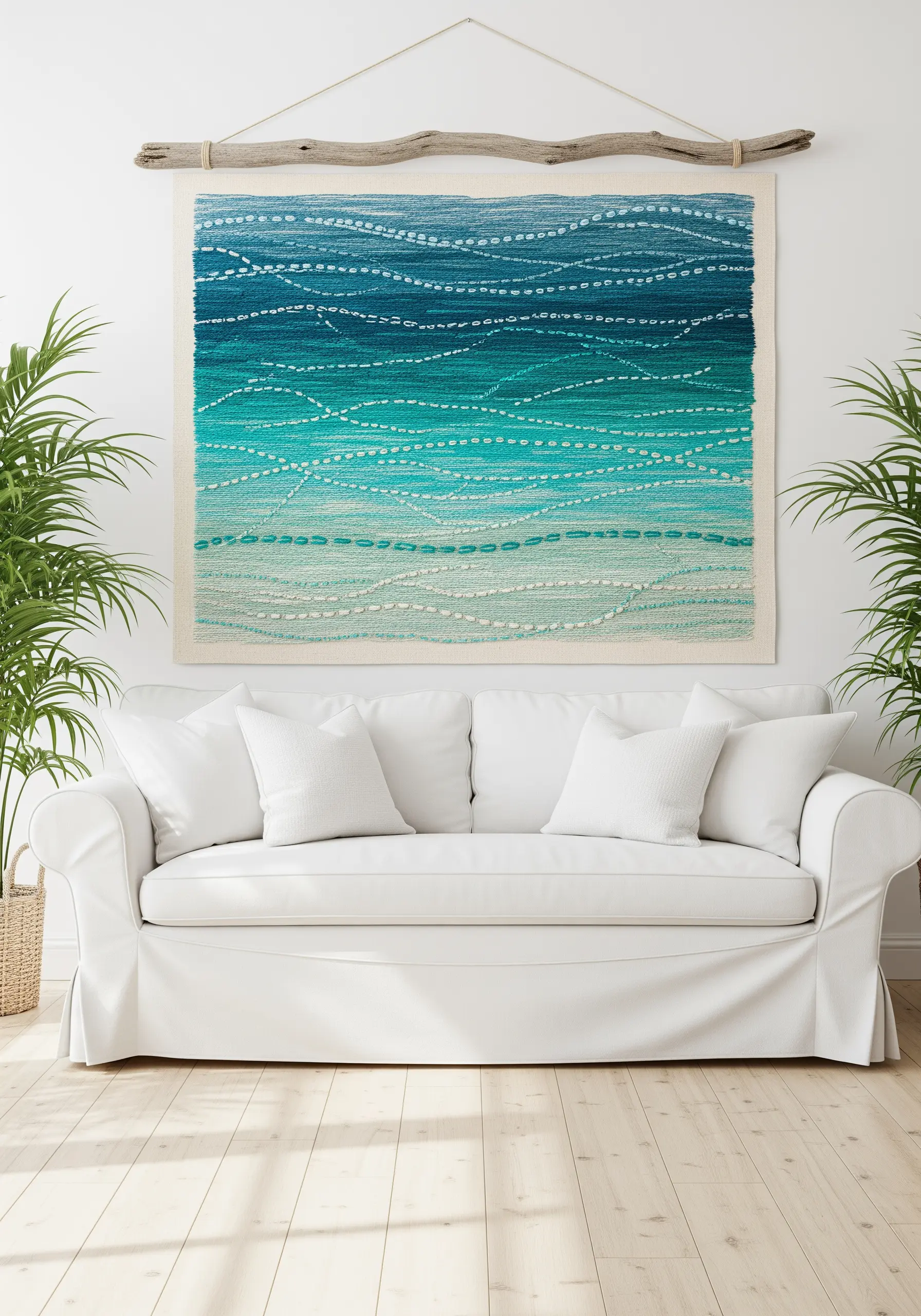
Create an ocean-inspired gradient by layering loose, straight stitches over a fabric base, which gives it a more organic feel than a solid fill.
Use variegated thread for automatic color shifts, or manually blend 3-4 similar shades of blue and green for more control.
Introduce movement and a focal point by adding delicate running stitches or French knots in a contrasting color, like white or cream, to mimic seafoam or light on water.
This approach gives your textile art a soft, ethereal quality, almost like a watercolor painting in thread, perfect for creating coastal-inspired embroidery wall decorations.
3. The Structured Gradient Triptych

Break down a smooth gradient into geometric blocks using dense satin stitch or thousands of tiny French knots for a pixelated effect.
Before you start, plan your color progression on graph paper, assigning a specific shade to each block to ensure the final composition is balanced.
By splitting the design across three separate frames, you transform a simple gradient into a cohesive, high-impact art installation that commands attention.
This is one of those minimal geometry stitch projects that works beautifully in a modern home office.
4. Organic Gradients with Mixed Textures
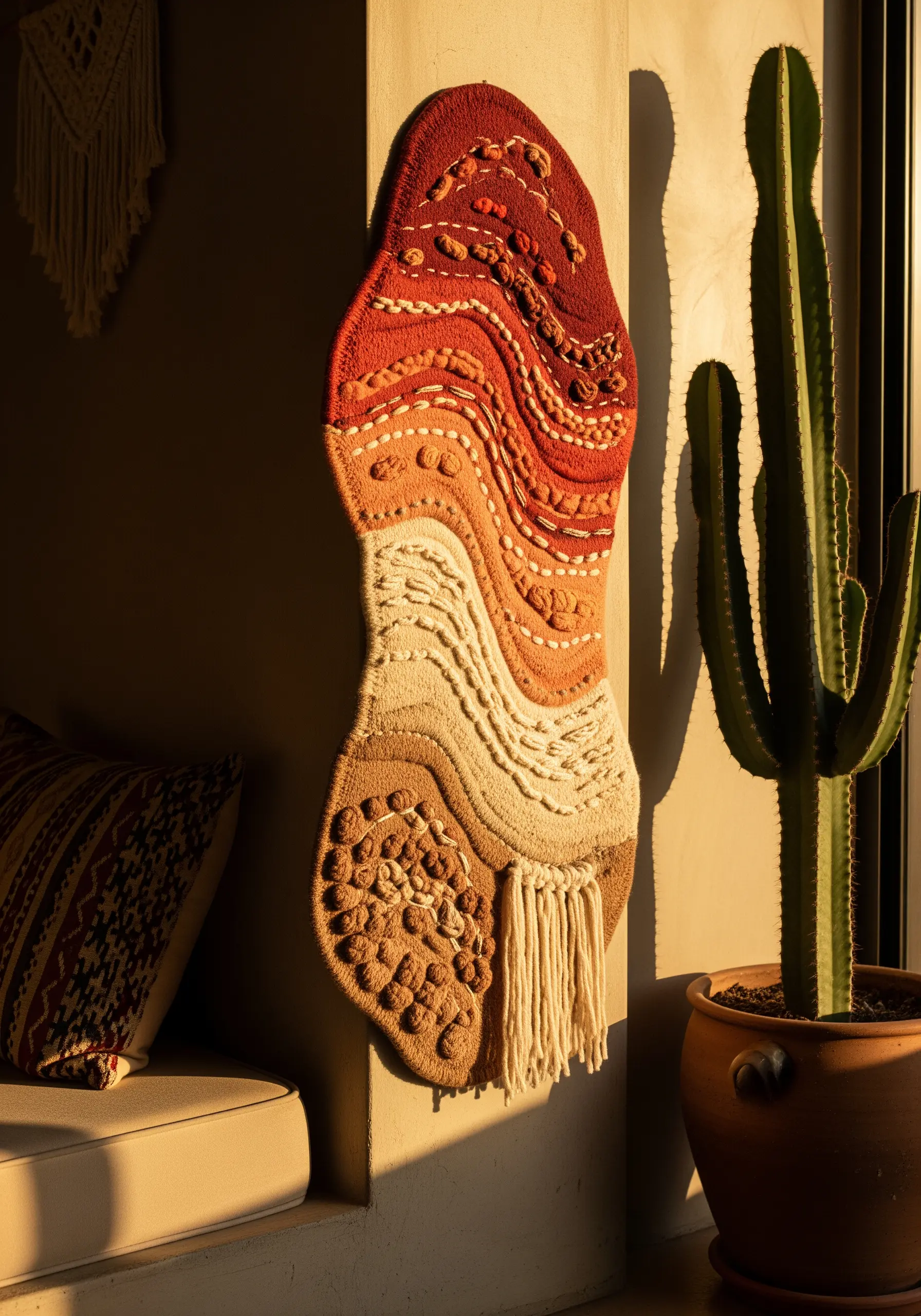
Move beyond the confines of a hoop by creating a freeform piece that combines a color gradient with shifts in texture.
Map out your gradient with earthy tones, but let each color zone be defined by a different technique—punch needle for flat loops, French knots for bumpy texture, and couching for raised lines.
This method allows you to create abstract textile wall art designs that are both visually and tactilely dynamic, telling a story through touch as well as sight.
5. Dynamic Light Trails on Dark Fabric

Use a dark fabric base, such as black linen or deep navy cotton, to make bright and neon threads vibrate with energy.
Stitch long, flowing lines using the long-and-short stitch, gradually introducing new shades to create the illusion of light trails or an aurora.
The high contrast between the background and the threads is what creates the sense of movement, turning your wall hanging into a dramatic focal point.
It’s an ideal canvas for exploring modern neon thread designs on a large, impactful scale.
6. The Monochromatic Geometric Fade
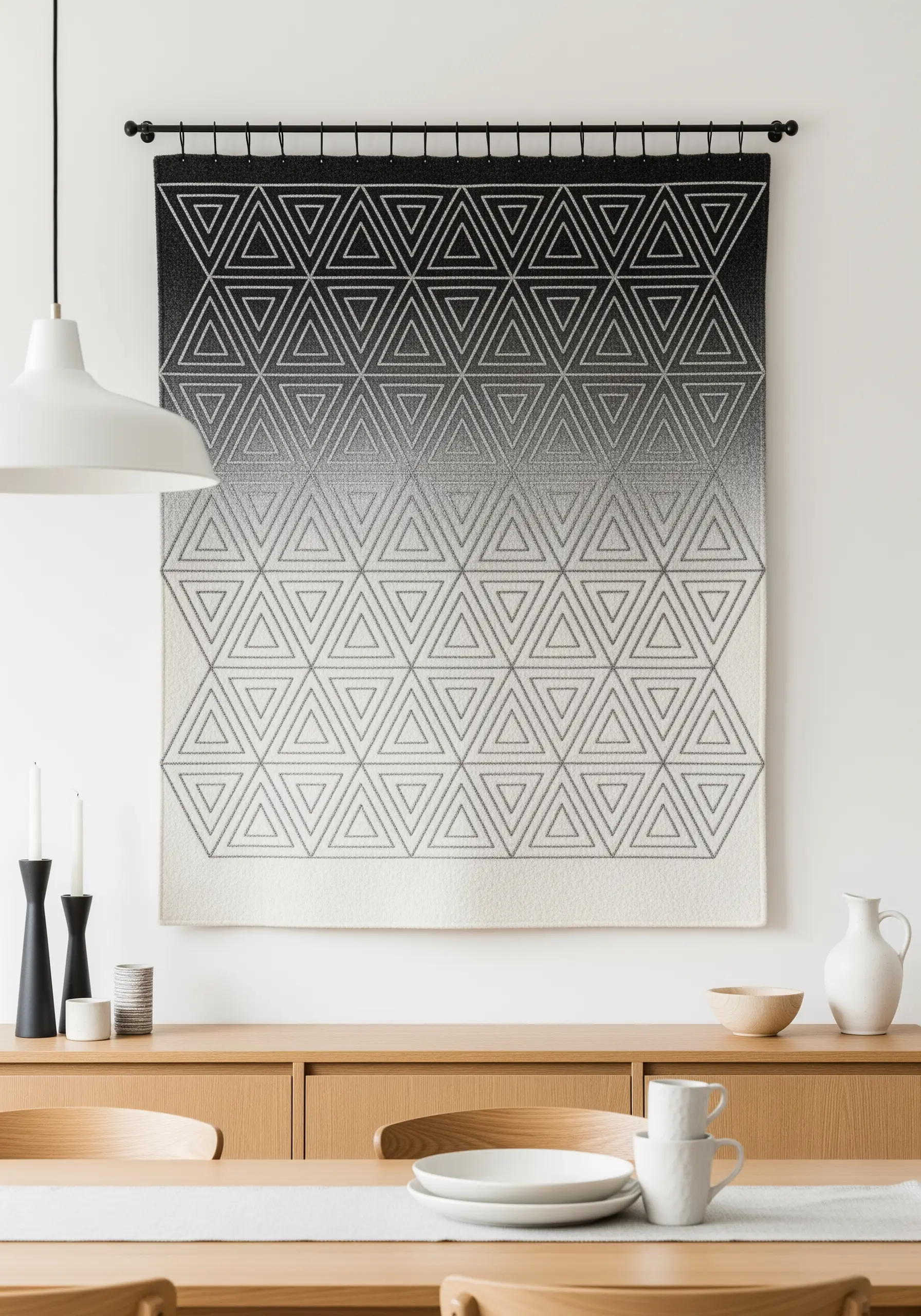
Discover the power of a single color family by creating a gradient with shades of grey, from deep charcoal to pale silver.
When applied to a repeating geometric pattern, this monochromatic approach results in a piece that feels both bold and calmingly sophisticated.
Use a consistent stitch, like a clean backstitch or satin stitch, for the outlines to maintain the crispness of the geometric shapes against the smooth color transition.
This technique is a perfect example of elegant monochrome textile wall art that complements any modern decor.
7. Radiant Sunburst Gradient
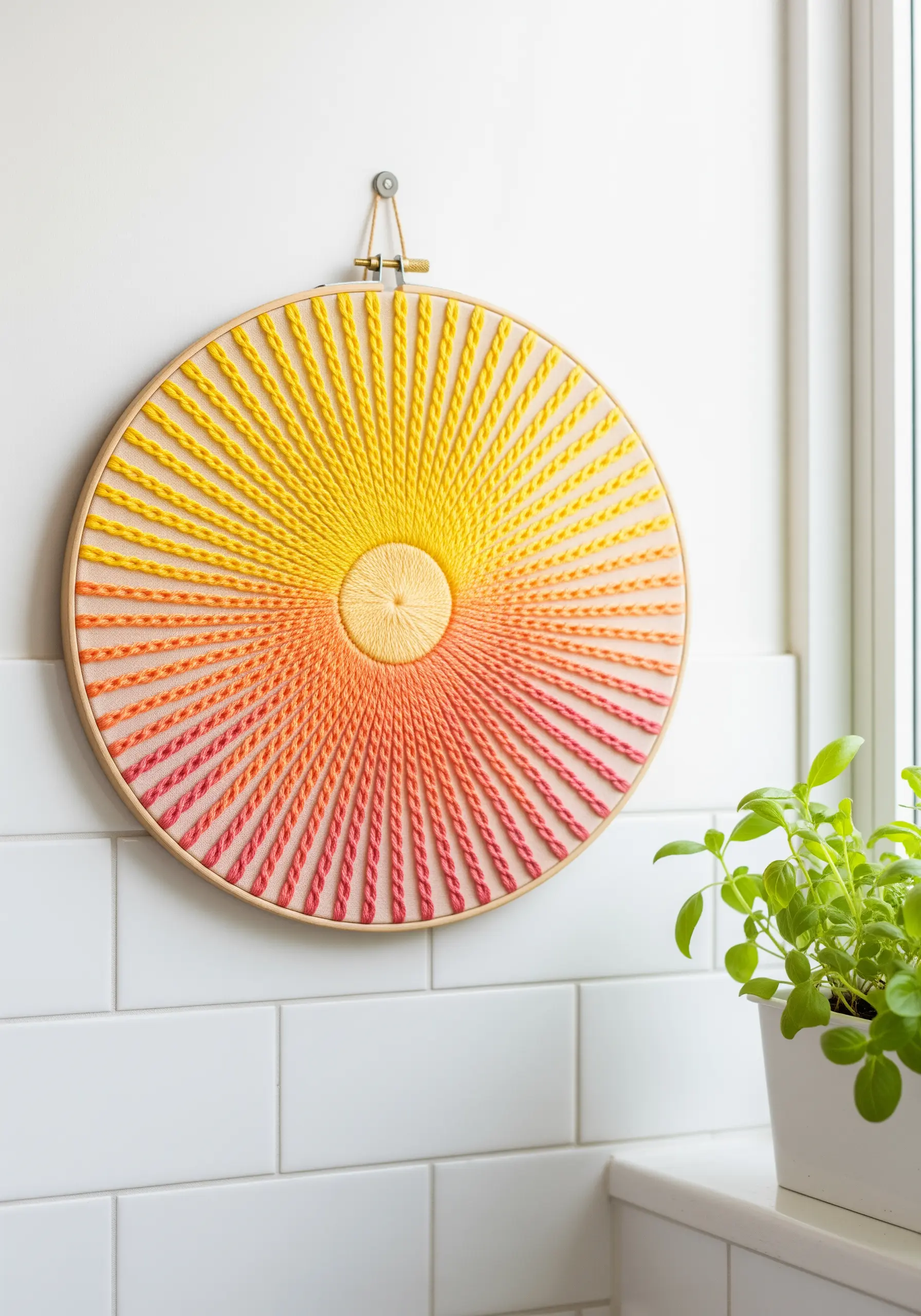
Create a dynamic sunburst using straight stitches that radiate from a central point, a technique that is both simple and incredibly effective.
You achieve the gradient by simply switching your thread color as you work your way around the circle, blending warm yellows into oranges and pinks.
Use a thick thread, like pearl cotton or all six strands of embroidery floss, to give the rays a satisfying texture and visual weight.
This is one of the most rewarding cozy embroidery patterns you can finish in one afternoon.
8. Atmospheric Perspective in Thread

Use gradients to create the illusion of depth in an embroidered landscape. Stitch foreground elements with darker, more saturated threads, and transition to lighter, cooler tones for the background.
This mimics atmospheric perspective, making distant trees and hills appear farther away.
Employ long-and-short stitch for soft blending in the sky and foliage, and add French knots for textural moss to create a truly immersive scene.
It’s one of the most beautiful embroidery projects inspired by nature to refresh your bedroom decor.
9. Color Spectrum Panel Installation
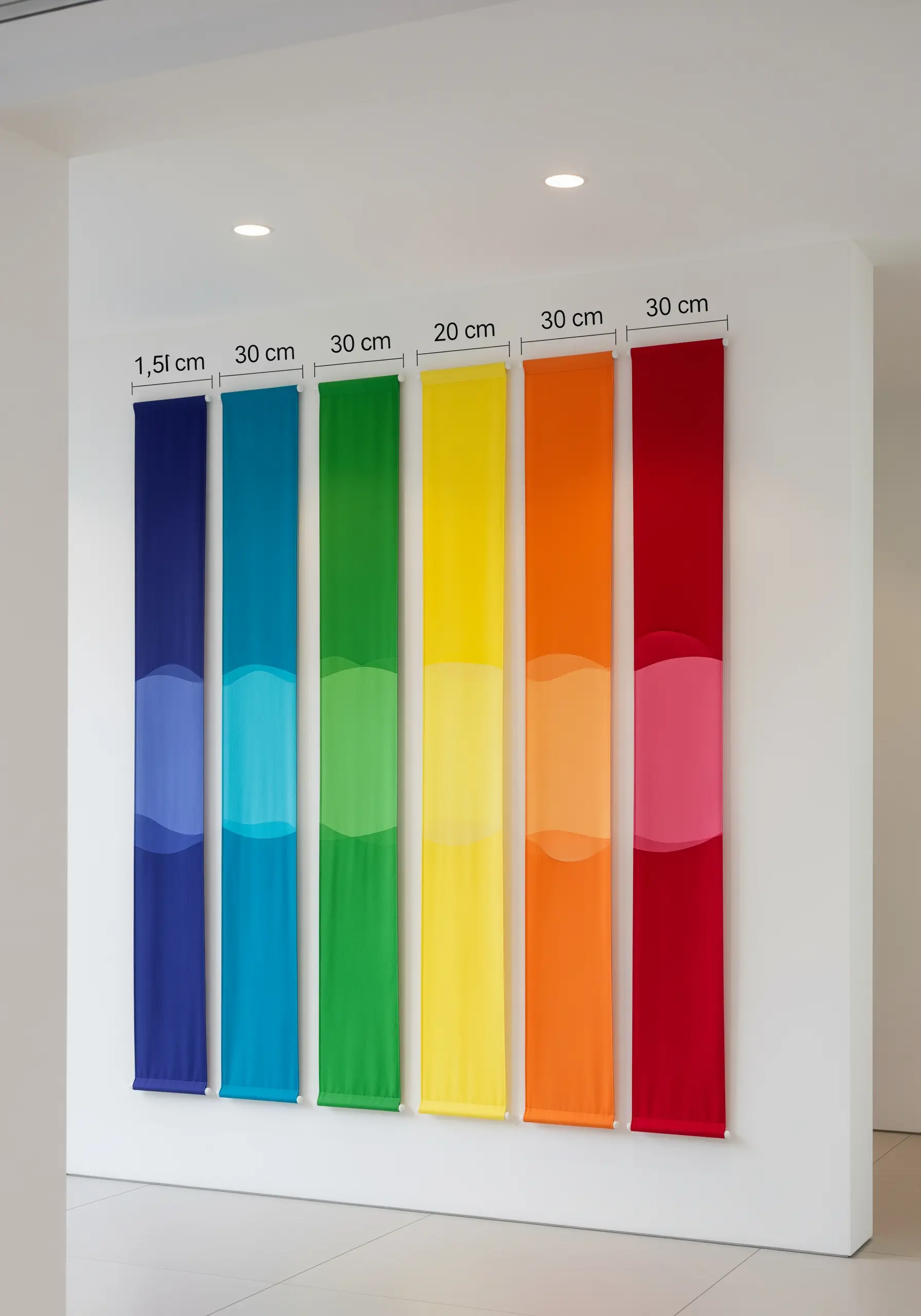
Instead of blending colors within one piece, create a large-scale gradient by dedicating individual panels to each color family.
Arrange the banners in spectral order to create a full rainbow that flows across the wall, turning a simple concept into a major installation.
For the subtle wave detail, you can either stitch an overlay of sheer fabric or simply change the thread’s sheen or weight in that section for a change in texture.
This is a stunningly effective way to create colorful fiber art installations that define a space.
10. Celestial Gradient with Beaded Stars

Save yourself hours of stitching by starting with a pre-dyed gradient fabric, or create your own with fabric paint for a perfectly smooth night-sky effect.
Then, use this gradient as your canvas, scattering a starfield across it with beads, sequins, and metallic French knots.
Concentrate larger, brighter embellishments in the lighter part of the gradient and use smaller, more subtle beads in the darkest areas to create depth.
This is one of the most magical moon and stars embroidery ideas for a peaceful bedroom.
11. Tactile Neutral Gradient
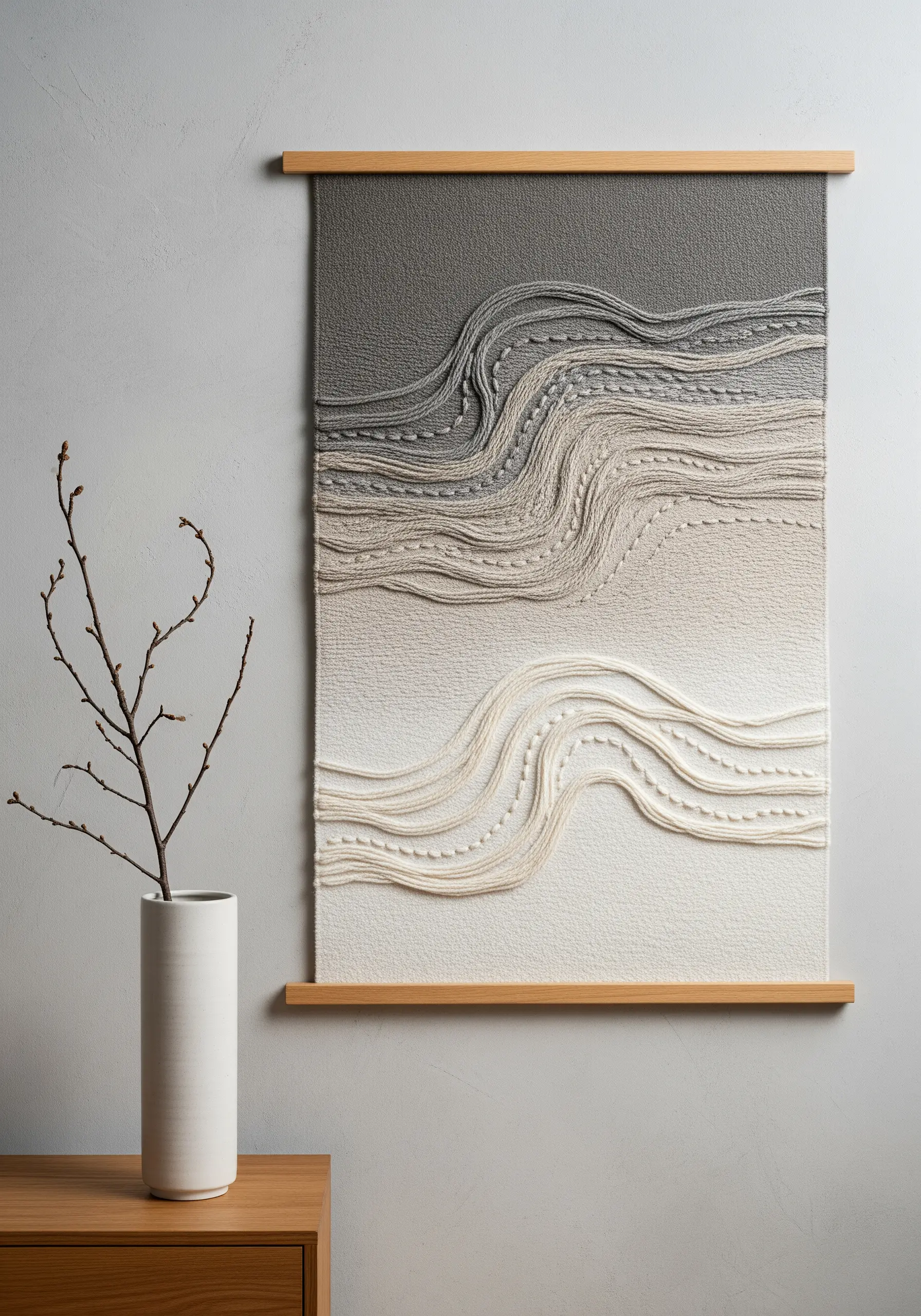
Explore a gradient through texture as much as through color by using a calm, neutral palette.
Assign a different, distinct stitch to each color band: dense French knots for the darkest shade, smooth satin stitches for mid-tones, and a looser seed stitch for the lightest areas.
This approach creates a piece that invites touch and showcases how beautifully neutral thread texture combinations can work together to create a dynamic composition.
12. Floral Cascades with Thread Painting
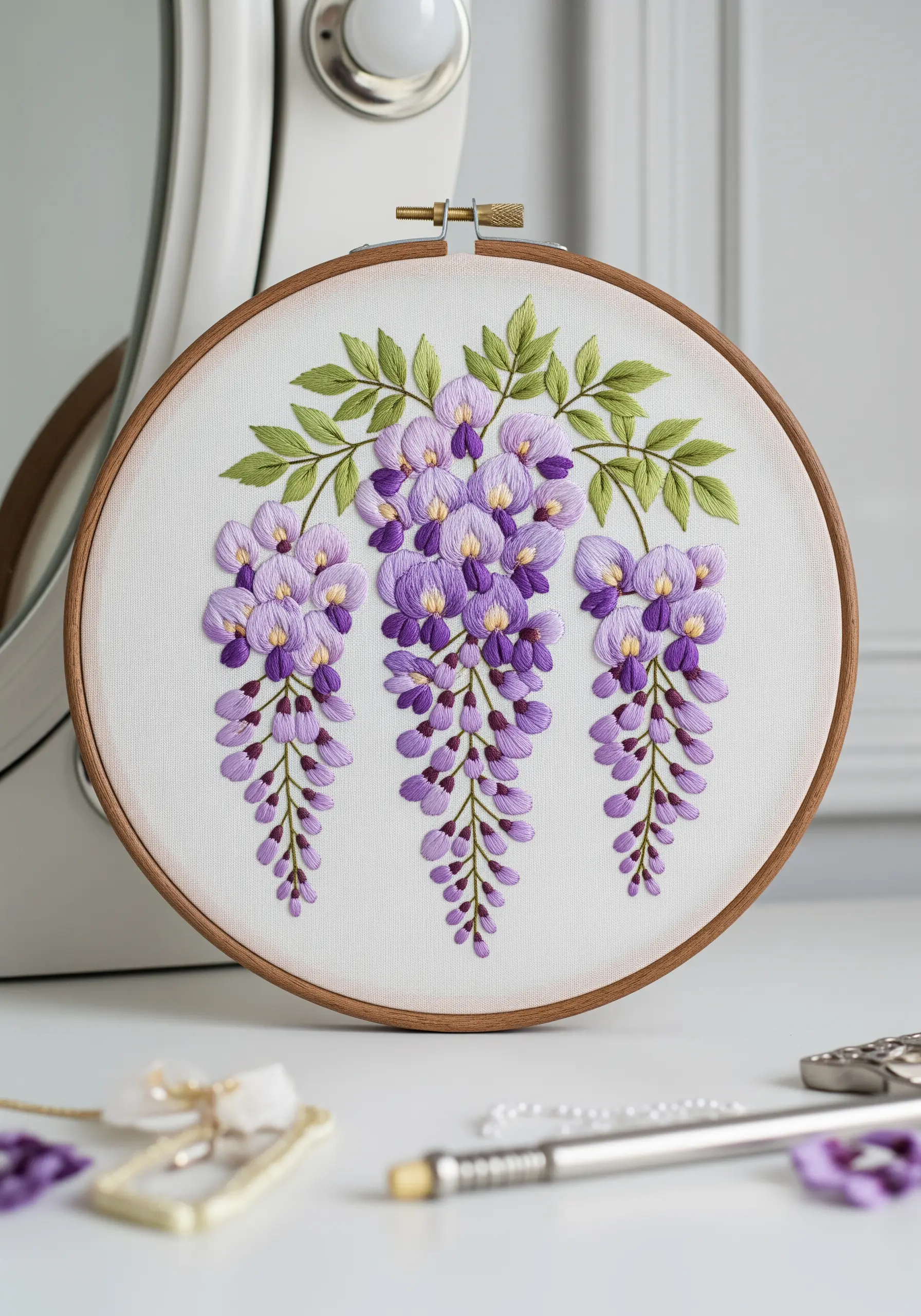
For realistic florals like wisteria, use the long-and-short stitch to seamlessly blend multiple shades within each petal cluster.
Start with your darkest shade at the top of the blossom and work down to the lightest tip, which gives the flowers natural-looking shape and dimension.
Using a single strand of floss will give you the most detailed and painterly effect.
This is a perfect project to practice wildflower thread painting techniques and achieve stunning results.
13. Immersive Abstract Color Field
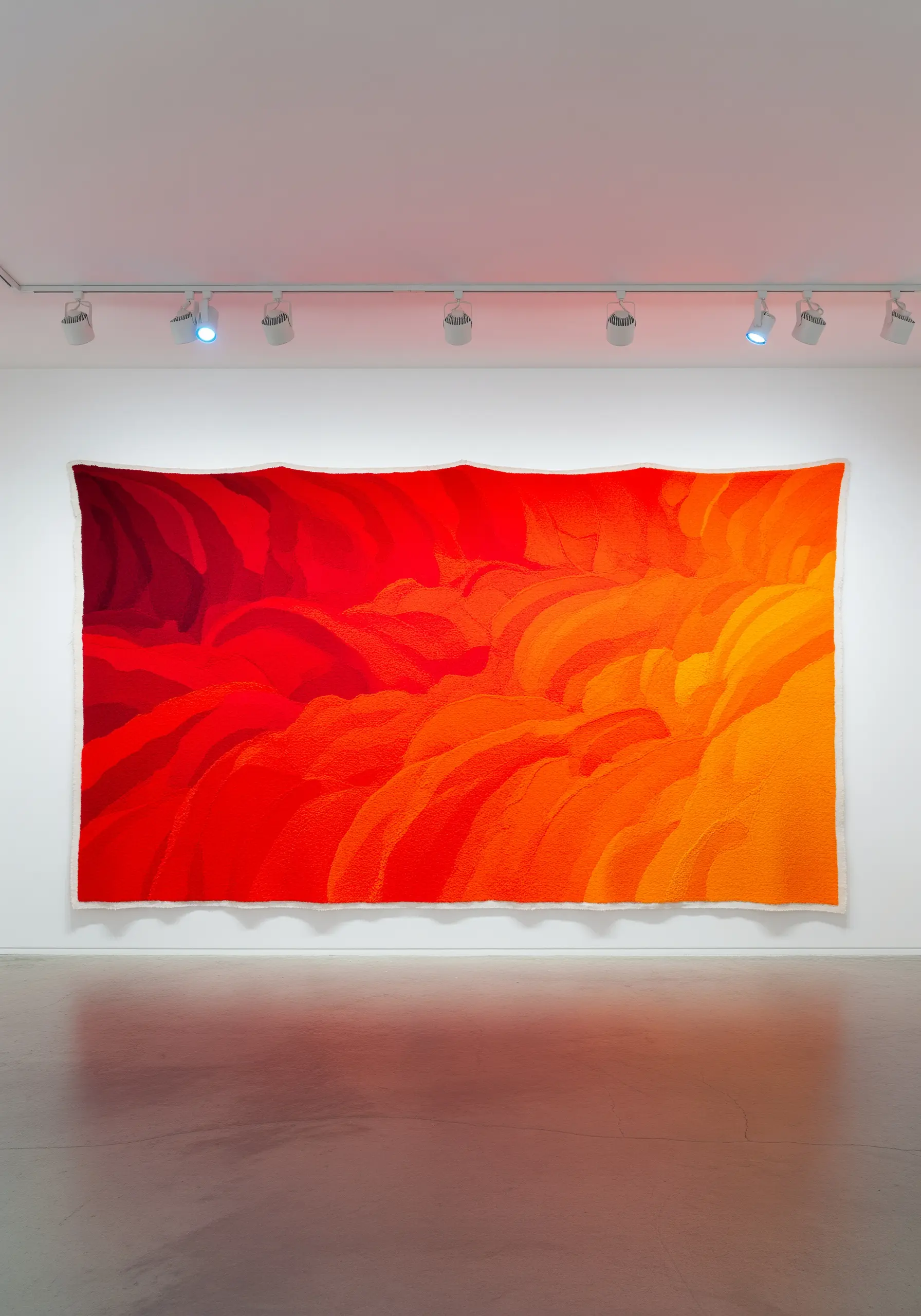
For a large-scale, statement piece, approach your embroidery like a painter creating a color field painting.
Use dense, highly textural stitches like French knots or punch needle to create large, organic blocks of color that flow into one another without hard edges.
Using a dozen or more shades of a single color family—like fiery reds and oranges—creates an immersive, energetic effect.
These are the kinds of abstract thread-based gradient pieces that make a gallery wall.
14. The Coastal Diptych
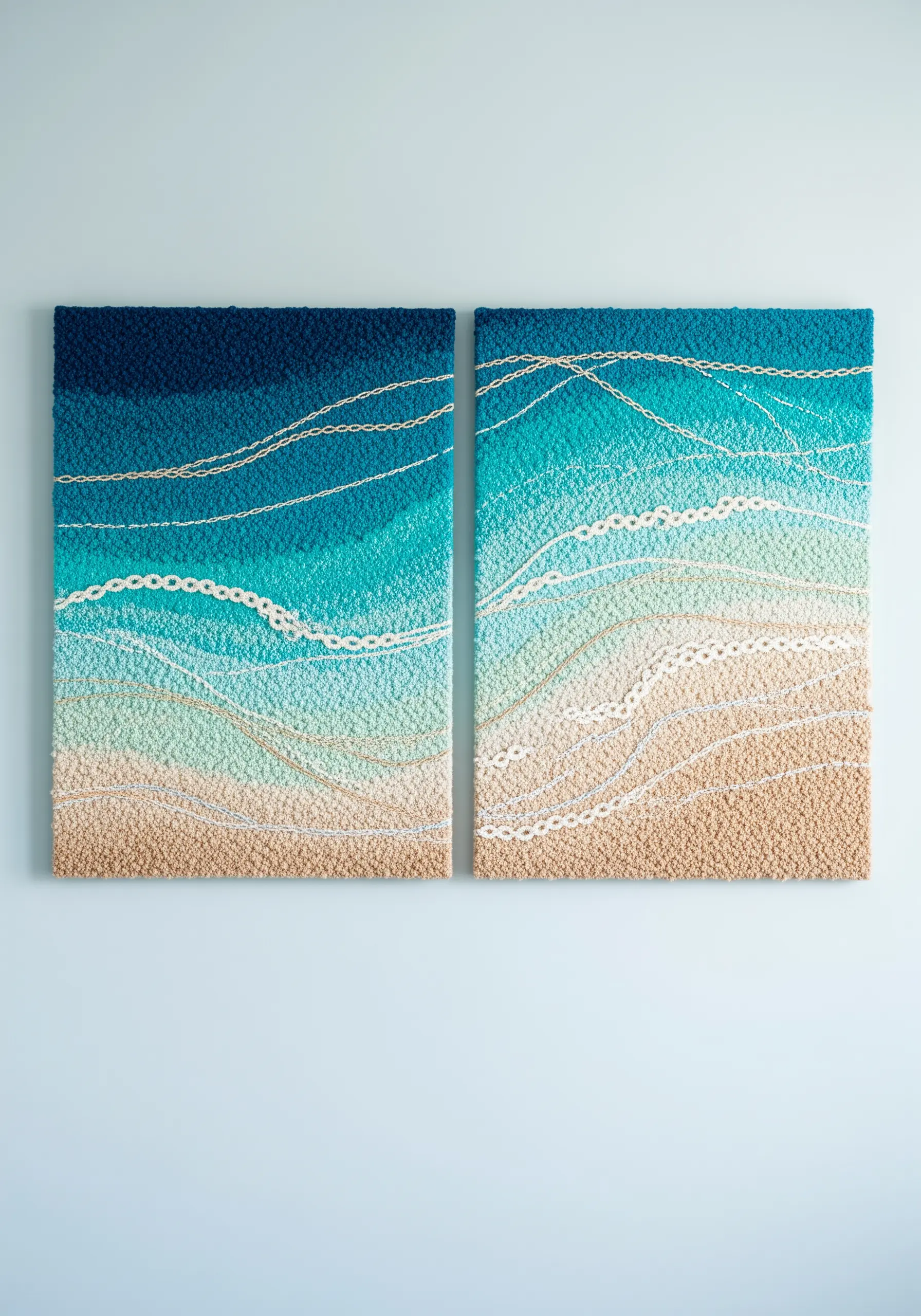
Elevate a landscape by splitting the scene across two canvases, creating a modern and sophisticated diptych.
Use punch needle or tufting to build up a thick, tactile surface that mimics the texture of sand and seafoam, making the piece feel more alive.
The gradient from deep ocean blue to sandy beige tells a clear visual story.
You can accent the waves with couched yarn or metallic thread to capture the glint of sunlight on water, turning it into a beautiful piece of ocean marine embroidery.
15. Translucent Gradient Mobile

Stitch your gradients on a sheer fabric like organza or tulle to create a delicate, light-filtering effect.
To create the soft, feathered edge of the gradient, use sparse single-strand stitches that seem to dissolve into the transparent fabric.
Assembling the embroidered pieces into a mobile allows them to gently rotate and interact with the light, adding a dynamic quality.
It’s a beautiful and modern approach to nursery stitch art.
16. Metallic Art Deco Gradient
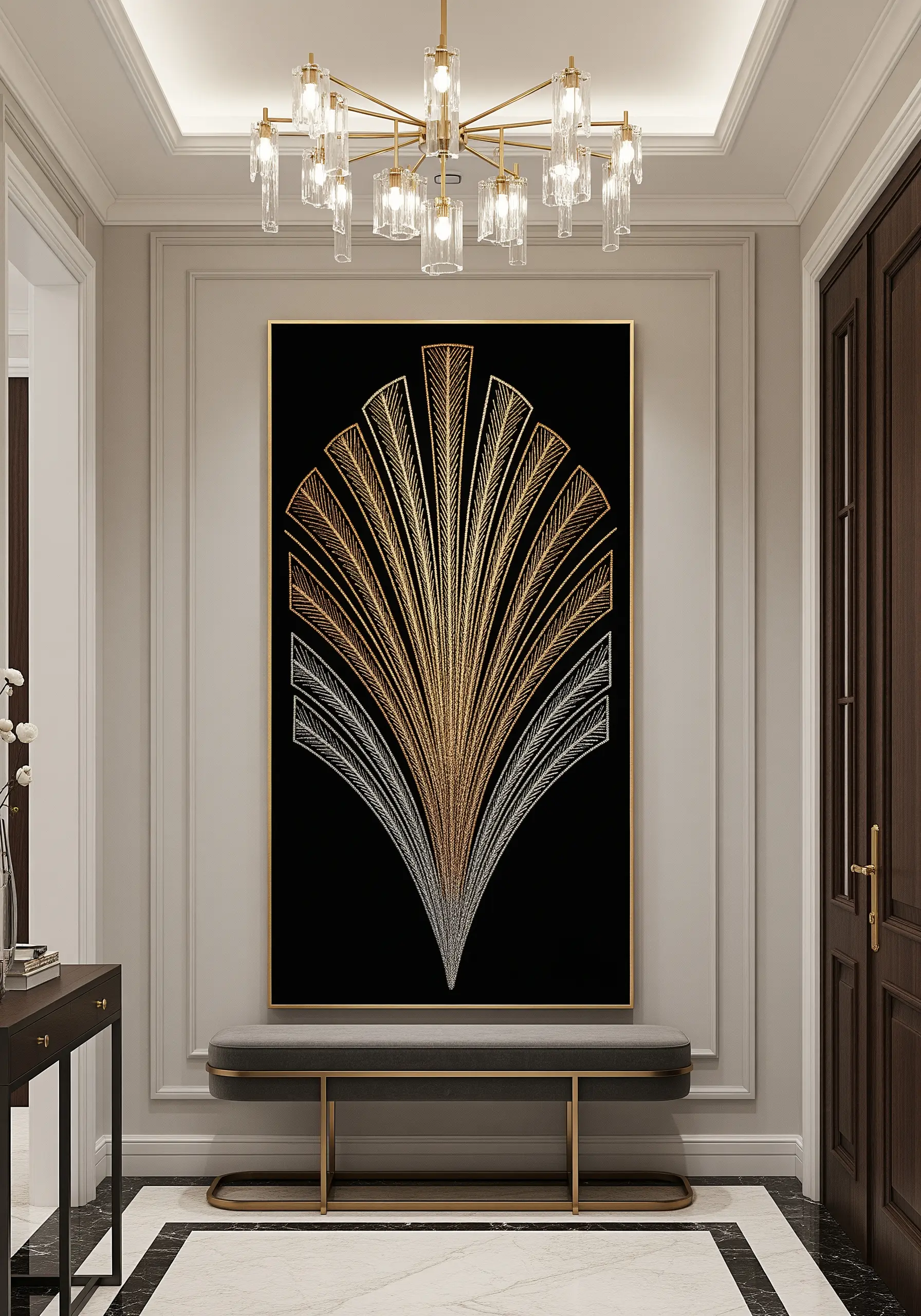
Combine a classic Art Deco motif with a modern gradient using metallic threads in gold, bronze, and silver.
This creates a stunning transition from warm to cool metals. To make metallic floss easier to work with, use shorter lengths of thread and a thread conditioner like beeswax.
When stitched on black fabric, the effect is pure, unapologetic luxury.
These are the kinds of luxury metallic thread wall decor ideas that elevate an entryway.
17. The Meditative Labyrinth Gradient
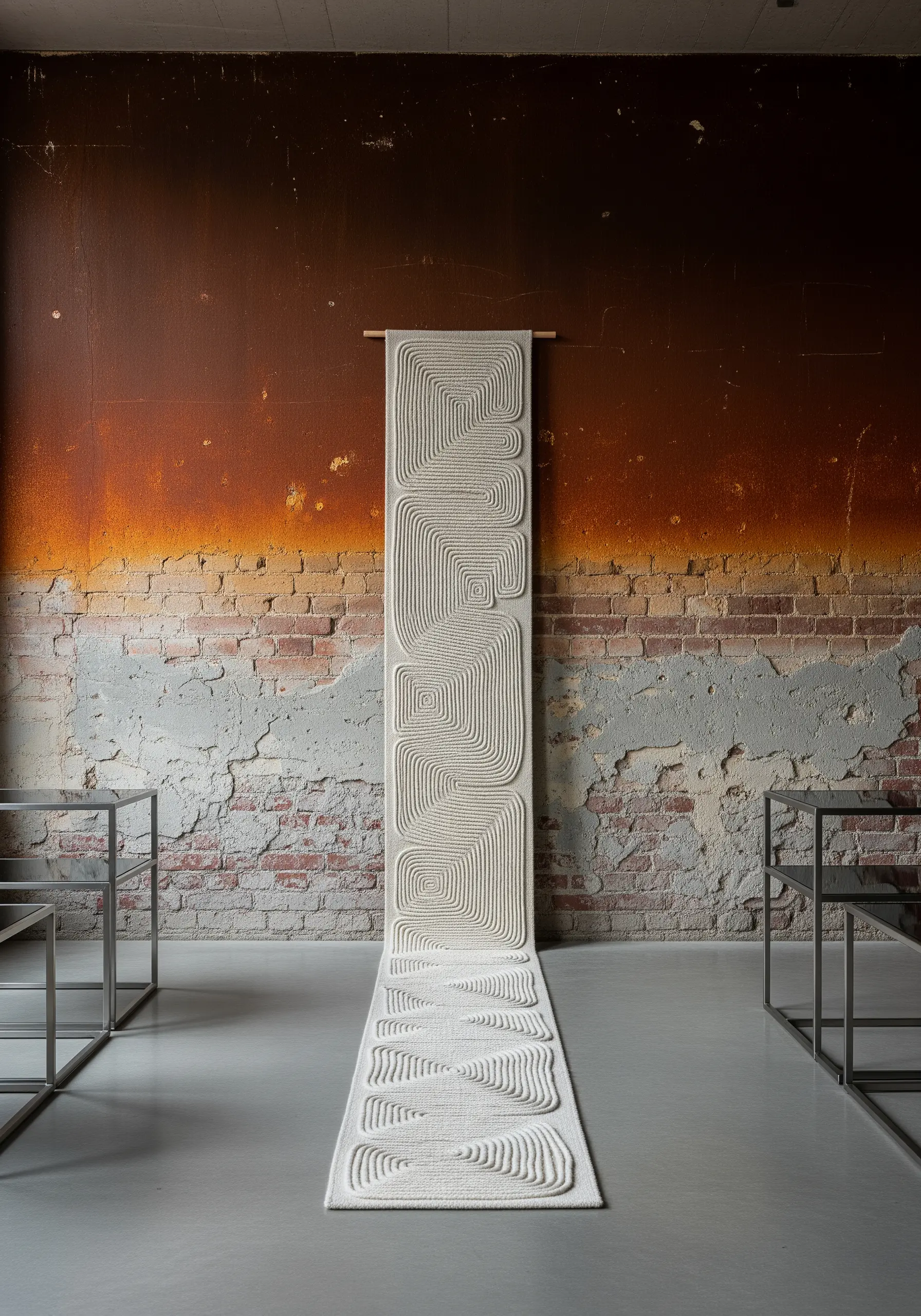
This piece uses a single, continuous, coiling line to create both its texture and its subtle gradient.
Use a thick yarn or rope and the couching stitch to trace a labyrinthine pattern, gradually switching to a slightly lighter shade of yarn every few rows.
The focus is on a slow, meditative transition rather than a dramatic color shift.
The three-dimensional quality of the couched yarn creates fascinating shadows, making it a perfect piece of calm vibe neutral wall embroidery.
18. Segmented Citrus Gradient
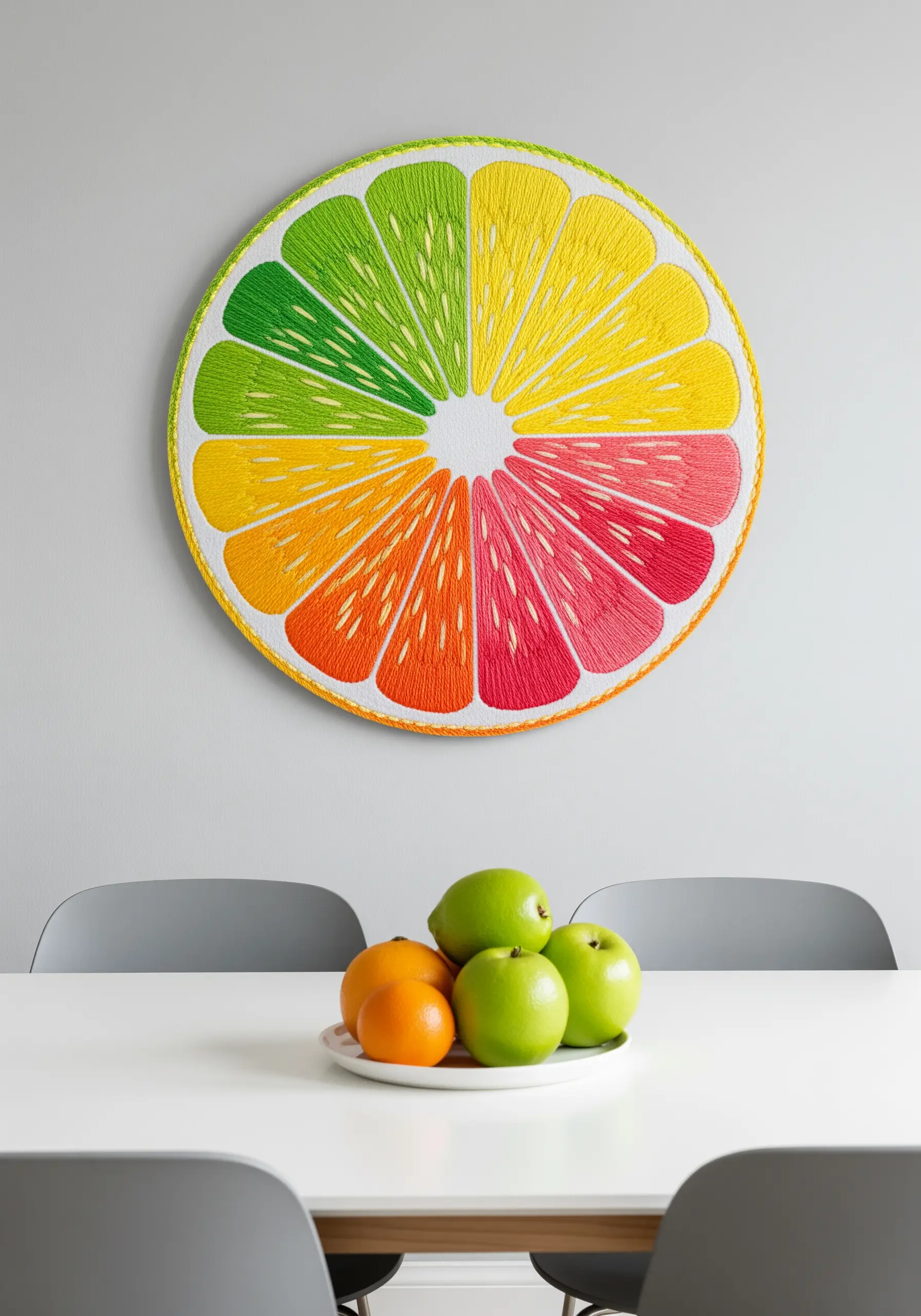
Use the natural segments of a fruit slice as a guide for your gradients.
Fill each segment with satin stitch, using three or four closely related shades to create a mini-gradient within each section, which adds realism and vibrancy.
Outline each segment with a clean backstitch in a contrasting color to make the colors pop.
This is one of the most cheerful modern embroidery ideas to elevate your dining space or kitchen.
19. Layered Mountainscape Gradient
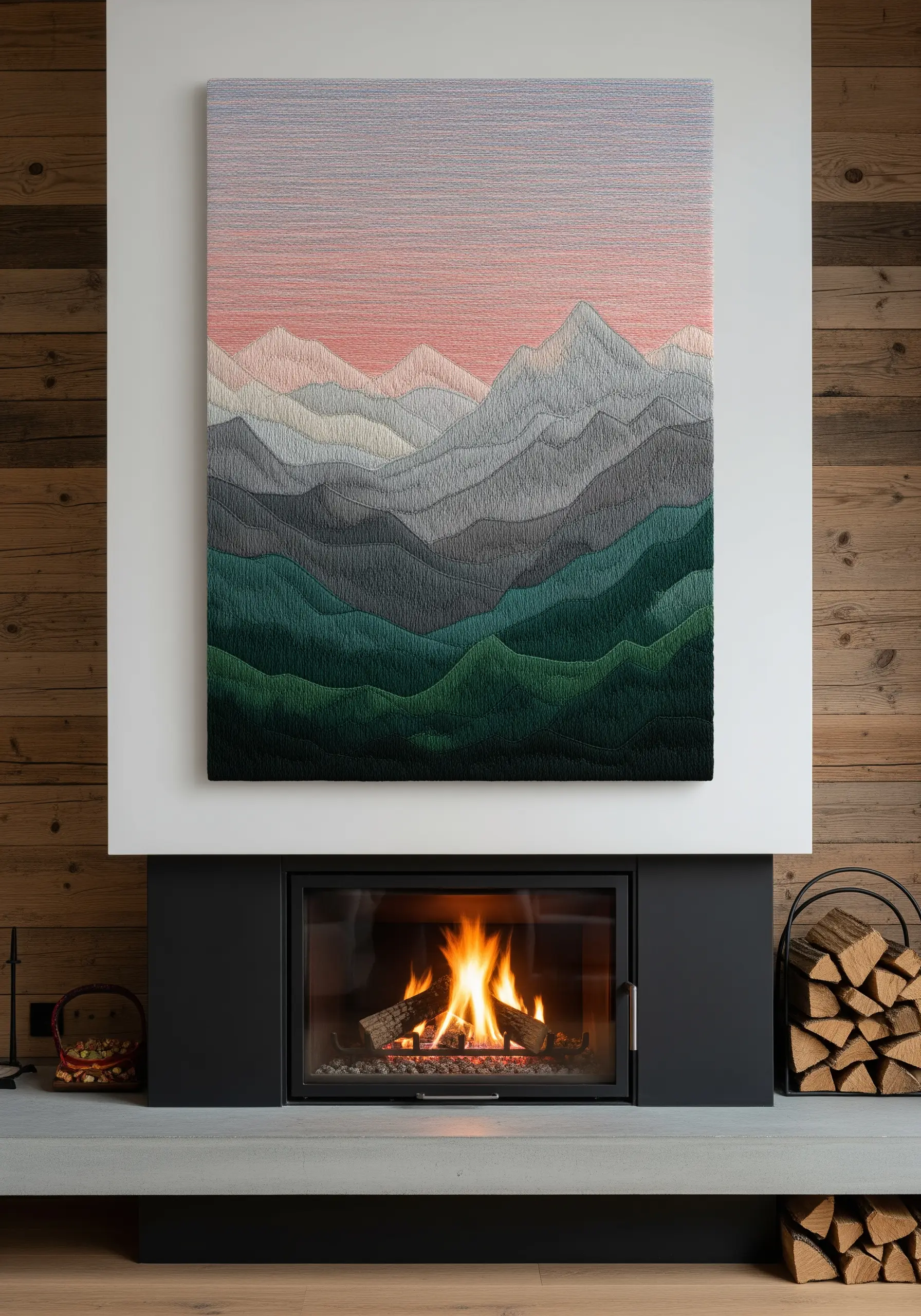
Create a sense of incredible depth by layering mountain ranges, each stitched in a different color family.
Stitch the closest range in dark, detailed greens, the middle ranges in muted greys, and the furthest hills in pale pinks and blues to represent the sky’s reflection at dusk.
Use simple straight stitches or seed stitches, focusing on the crisp outlines to define each layer.
The beauty is in the color selection, which tells a story of atmosphere and light, making it an ideal soft neutral nature-inspired stitch pattern.
20. The Rainbow Gradient Sampler
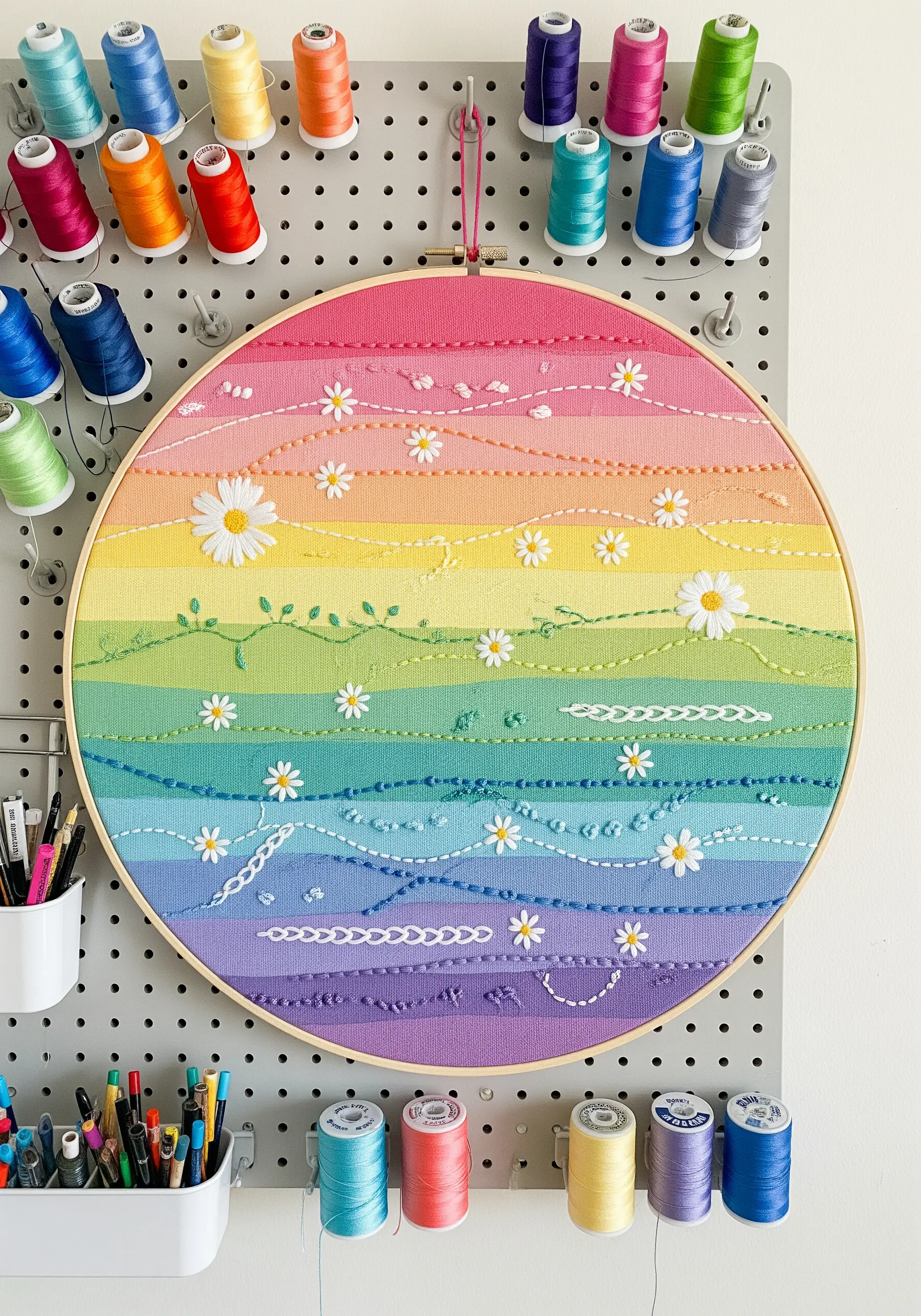
Turn your stitch practice into a finished piece of art by creating horizontal bands of color on your fabric to form a rainbow gradient.
Use each color band as a zone to practice a different decorative stitch—chain stitch, feather stitch, or woven picot—in a contrasting white thread.
This approach is not only beautiful but also serves as a functional reference for future projects.
It’s like creating a botanical garden sampler, but for stitch types instead of plants.
21. The Chevron Color-Fade Tapestry

The classic, graphic chevron pattern provides the perfect structure for a clean, stepped gradient.
Mark out your zig-zag pattern and fill each stripe with a solid satin stitch or a dense long-and-short stitch.
Dedicate each full chevron row to a single shade, moving from dark to light to create a clear, satisfying color fade.
This design feels both timeless and modern, and it is a simple way to create embroidery wall tapestries that add warmth to a room.
22. Cosmic Swirls with 3D Elements
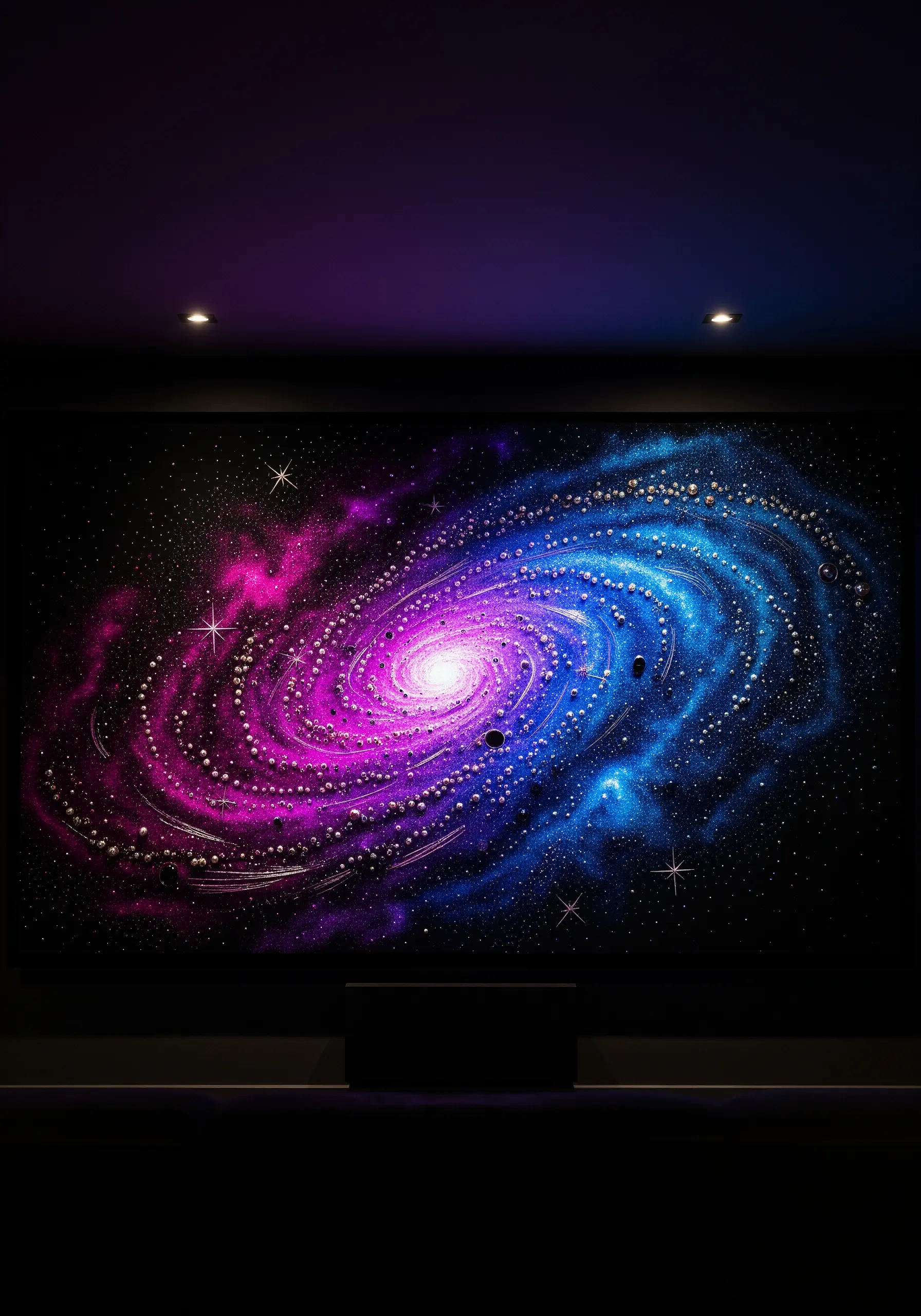
To capture the immense depth of a galaxy, layer your stitches and colors strategically.
Start with a base of long-and-short stitch in deep blues and purples, then add wispy swirls of bright pink and white on top using single strands of floss.
Finally, add French knots and beads of varying sizes to represent stars and distant planets.
This advanced take on dreamy galaxy string art concepts combines blended colors and 3D elements for a truly awe-inspiring piece.
23. Pointillist Gradient on Sheer Fabric
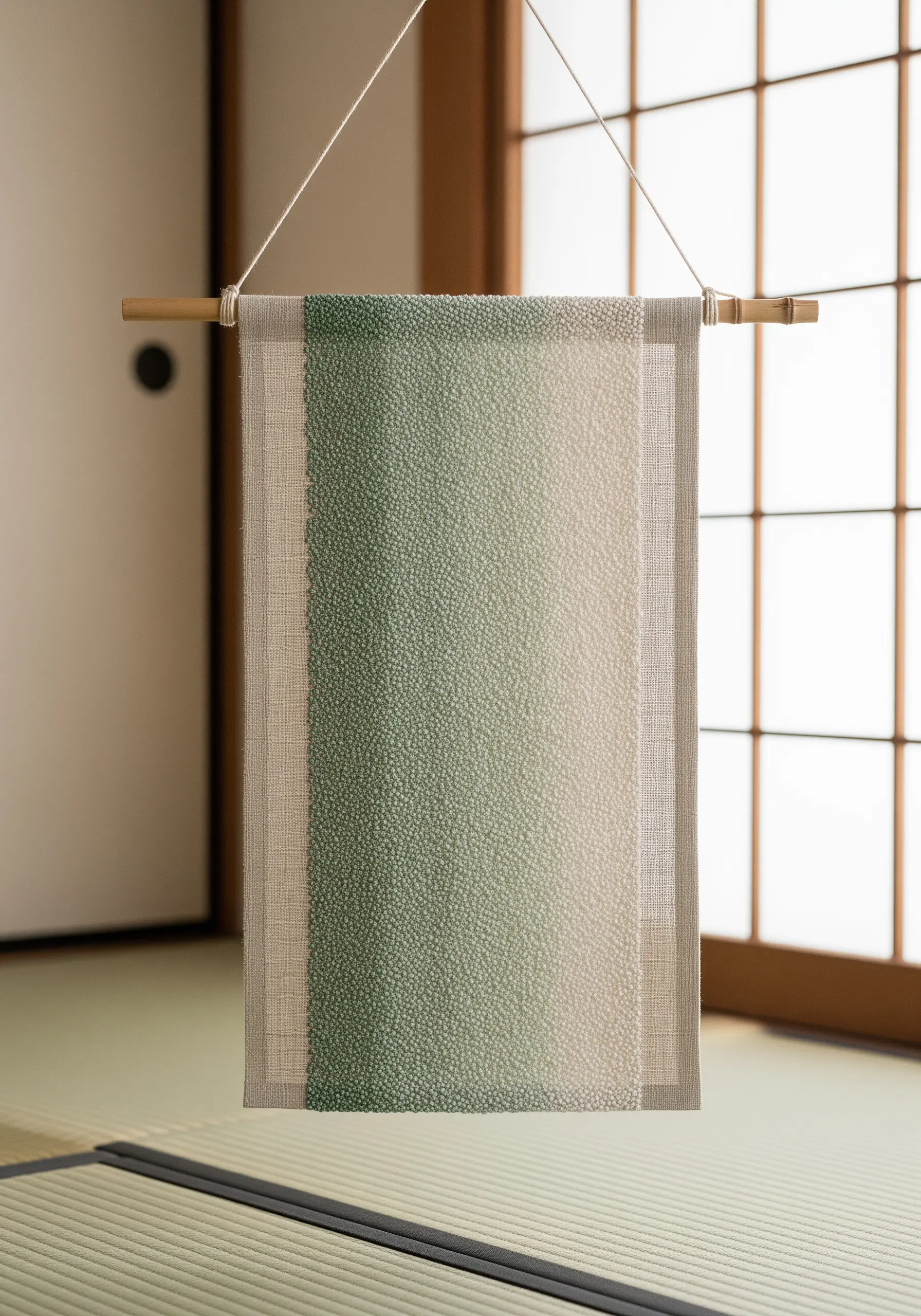
Achieve a soft, pixelated gradient using only French knots or seed stitches—a technique inspired by Pointillism.
On a lightweight, semi-transparent fabric, densely cluster your stitches at one end using your darkest color.
As you move across the fabric, gradually increase the space between the stitches and transition to lighter threads for an ethereal fade that seems to dissolve into thin air.
This is a beautiful example of minimalist color palette embroidery that plays with light and space.
24. Autumnal Leaf Mosaic
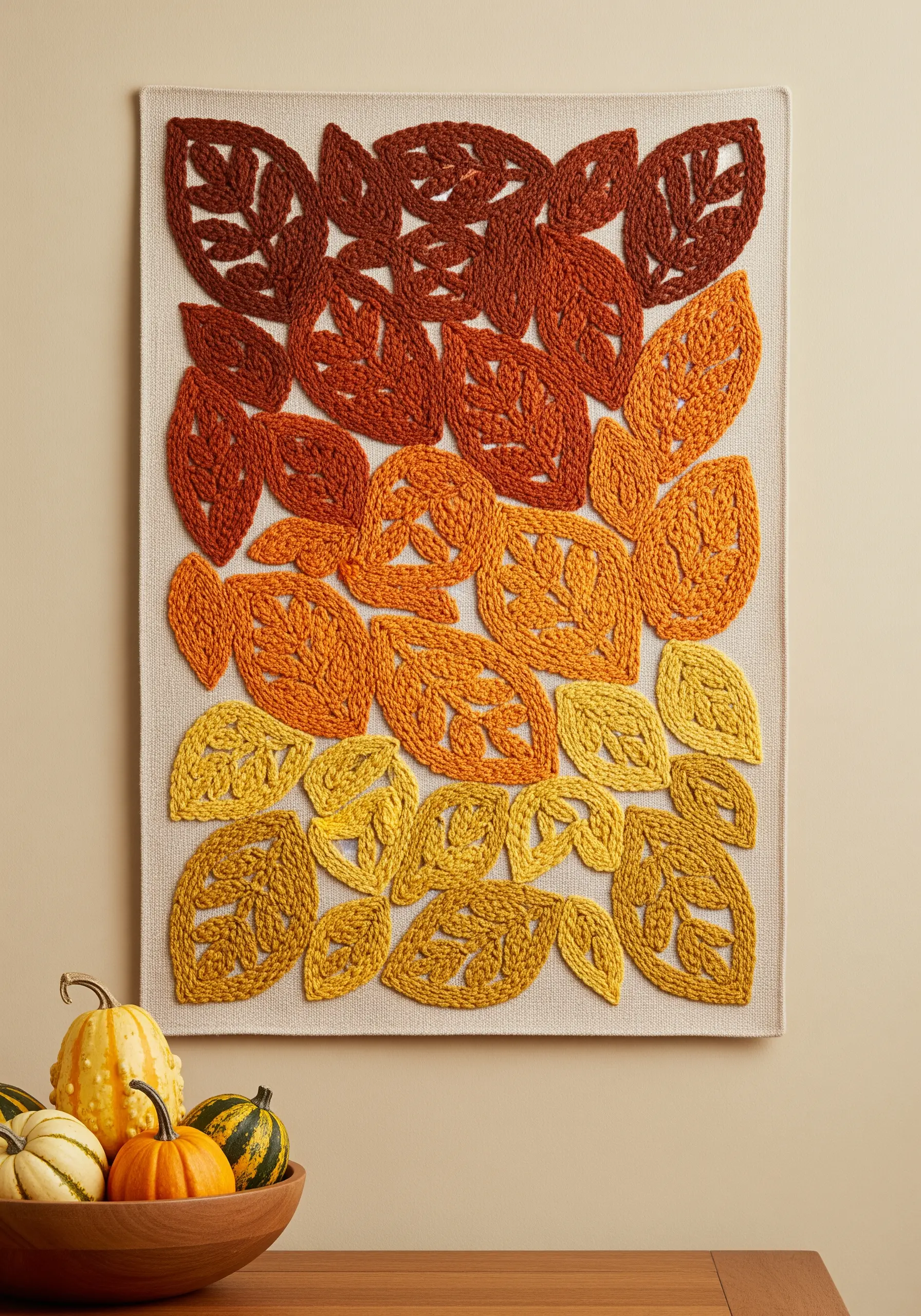
Use appliqué and negative space to build your gradient. Cut leaf shapes from felt or another sturdy, non-fraying fabric in a rich autumnal palette.
Arrange and stitch them onto your backing fabric with a simple running stitch, leaving small gaps in between to create a mosaic-like effect.
Organize the leaves by color, flowing from deep reds to bright yellows, to create one of the most satisfying earth-tone embroidery projects for the season.
25. Minimalist Color Block Study
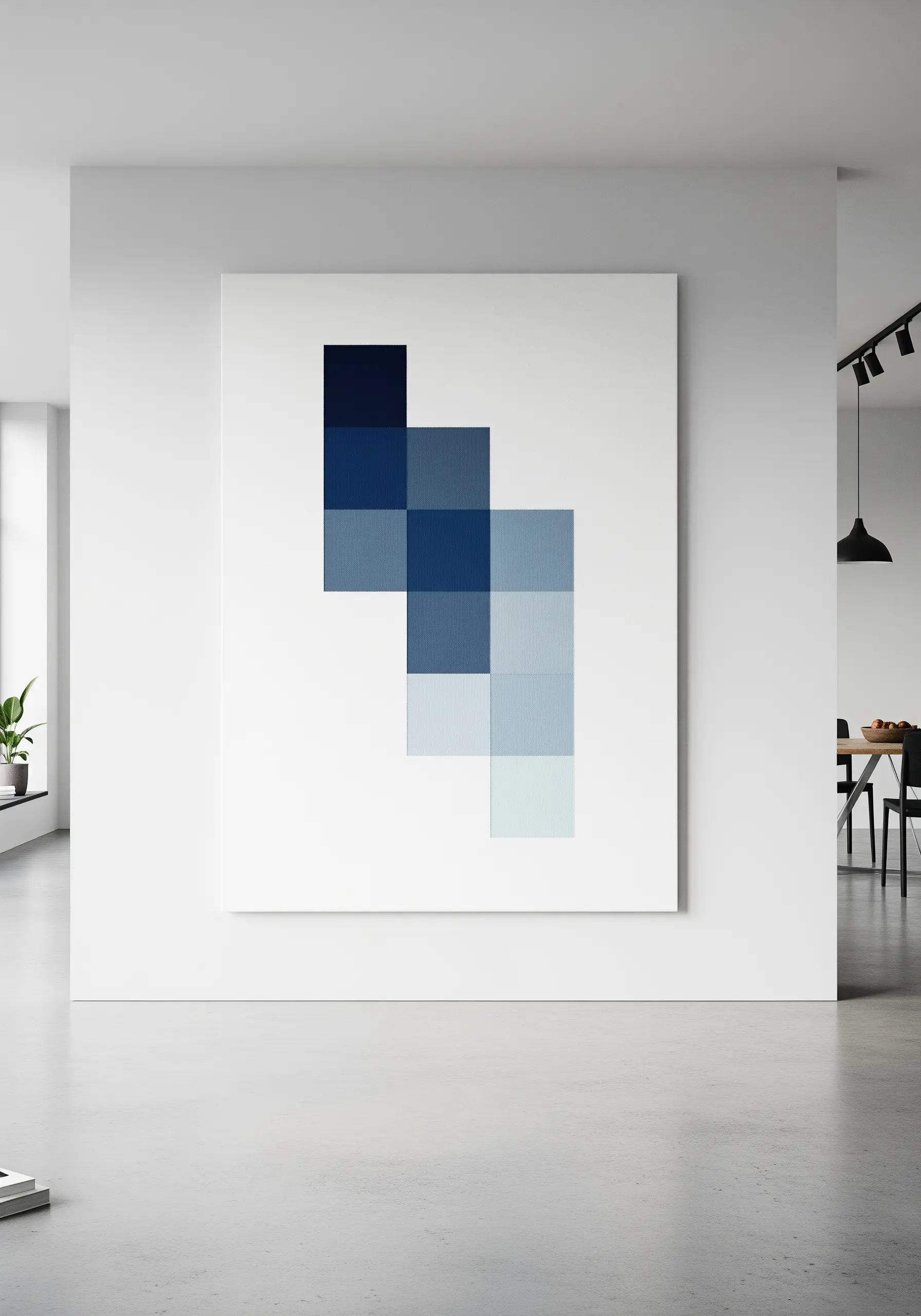
This piece is a pure exploration of color theory and precision stitching, where the gradient is deconstructed into clean, separate blocks.
Divide your canvas into a simple grid and fill each block with a perfect satin stitch, ensuring every stitch lies flat and parallel.
Choose a single color and select 5-10 shades from its family to create a clean, graphic statement that feels both artistic and architectural.
It elevates simple shapes into abstract geometric hoops perfect for a modern interior.
26. The Radial Mandala Gradient
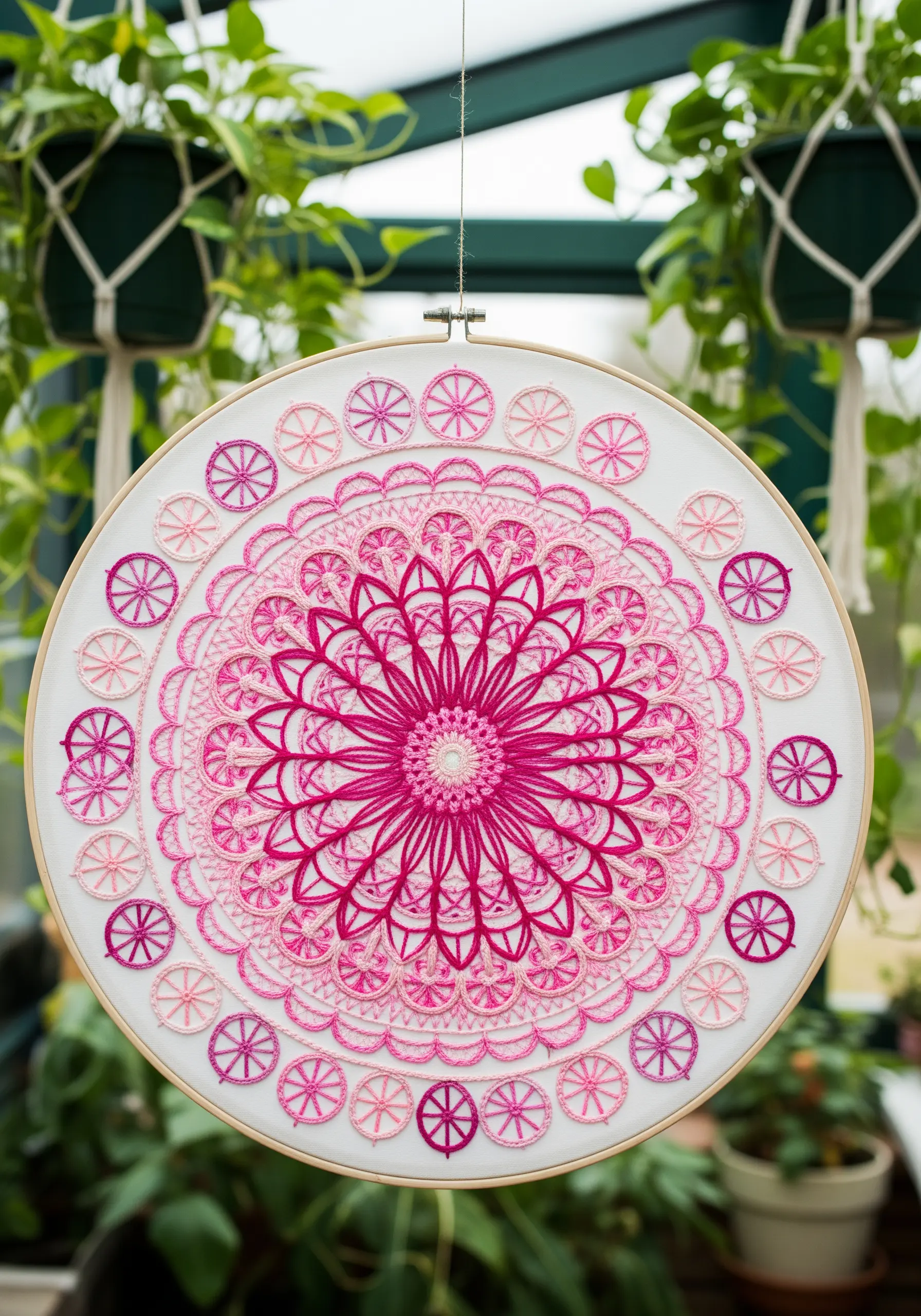
Use the concentric circles of a mandala as a natural framework for your gradient.
Start with your most intense color at the center and work your way outwards with progressively lighter shades for each ring of the design.
Vary your stitches—satin stitch for filled areas, backstitch for outlines—to add intricate detail.
The radial nature of the design draws the eye inward, making this a gorgeous and meditative take on modern mandala stitch patterns.
27. Floating Gradient on Acrylic
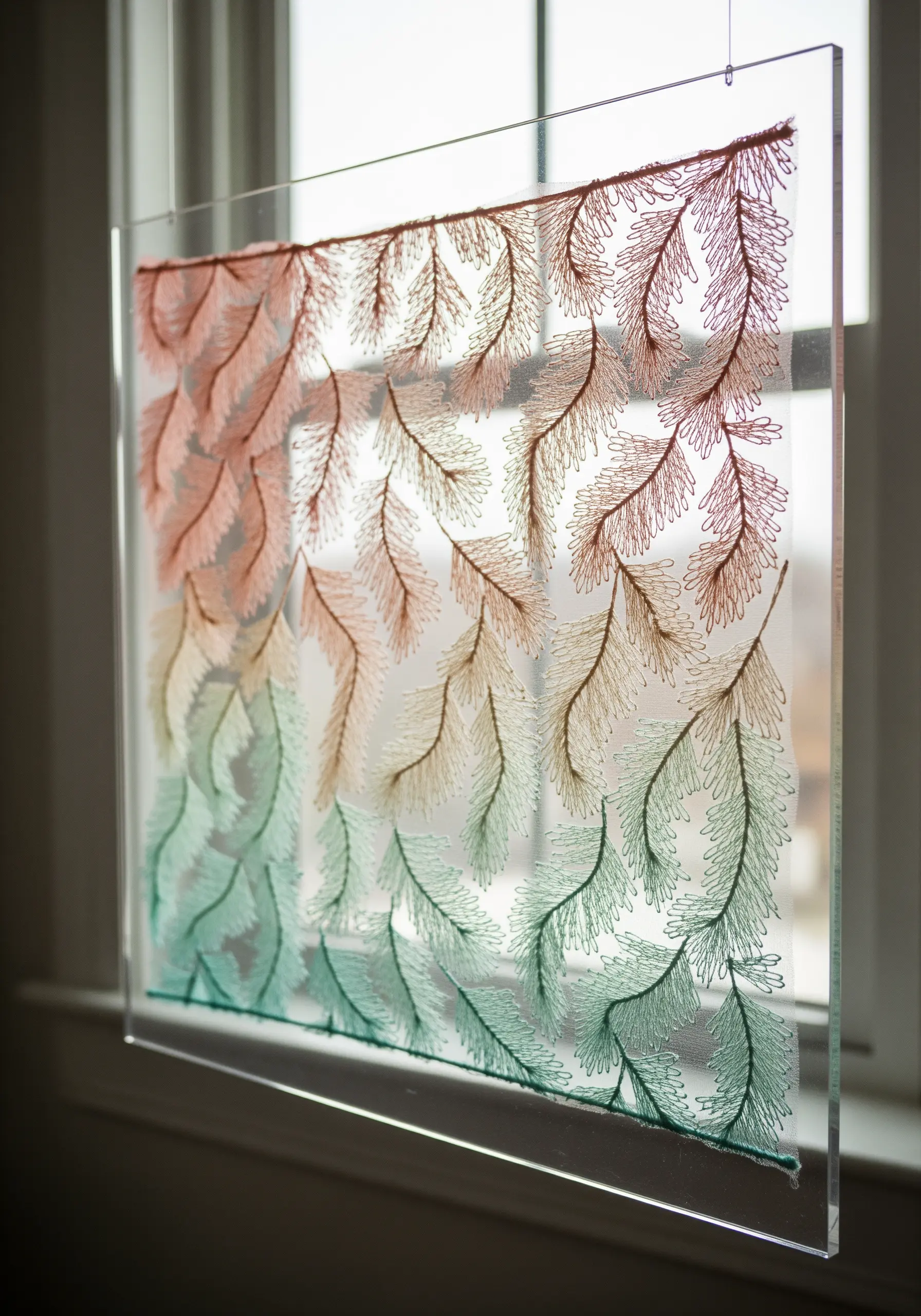
Embroidering on an unconventional surface like clear acrylic creates a magical, “floating” effect for your stitches.
You’ll need to carefully drill tiny, evenly spaced holes to serve as your stitching grid before you begin.
Use a simple stitch like a fly stitch or backstitch to create the botanical patterns, planning your gradient to flow across the pane.
This is one of the most creative ways to embroider fabric that truly pushes artistic boundaries.
28. Faux Weave Gradient with Texture
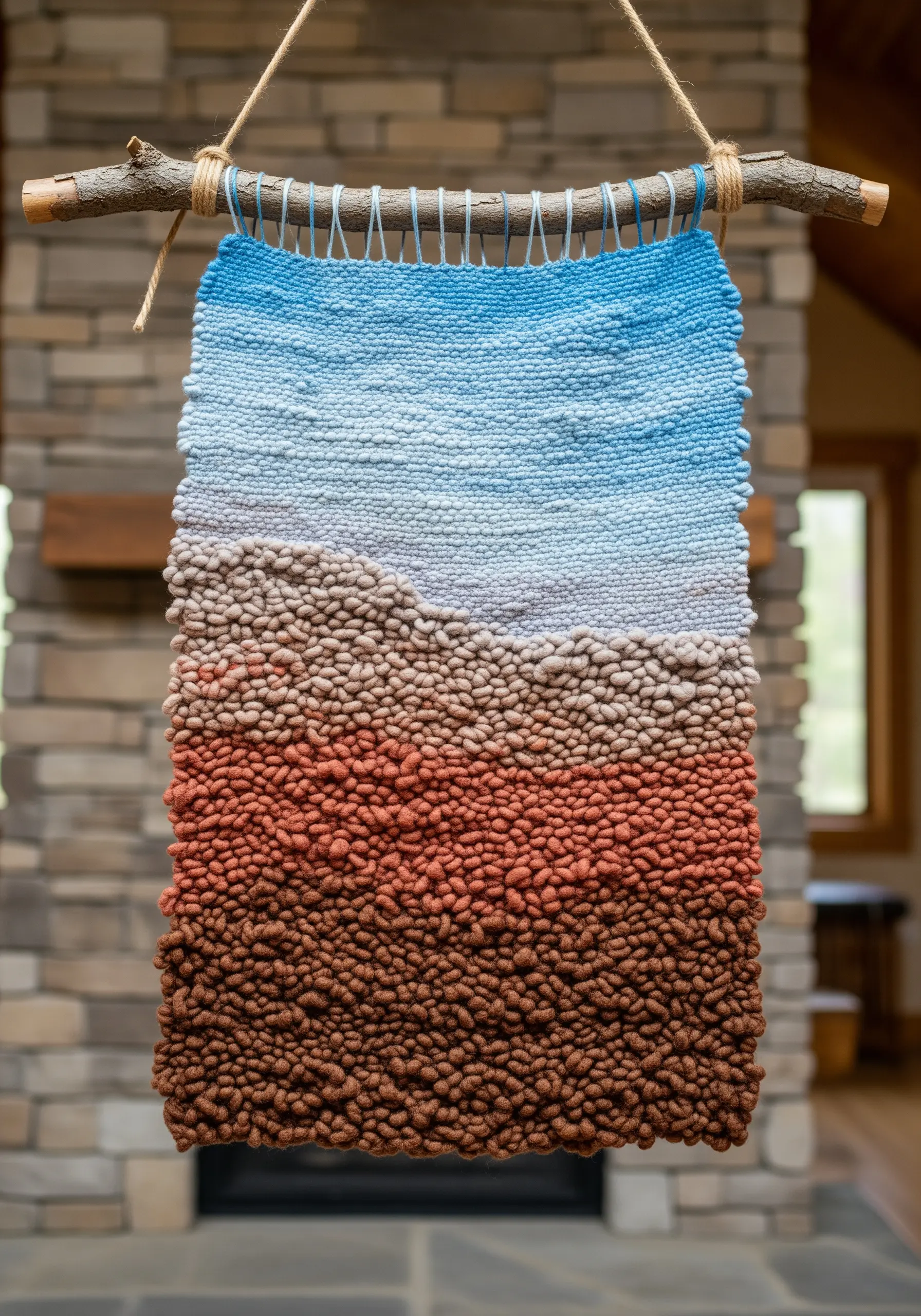
You can mimic the cozy, tactile look of a woven wall hanging using only embroidery stitches.
Use thick, textural stitches like the woven wheel stitch, Turkey work for shaggy sections, or chunky French knots packed closely together.
Create horizontal bands of color, blending them at the edges to create a soft gradient, and vary your yarn weights to enhance the woven illusion.
This piece is perfect for achieving a boho-style embroidery decor look with just a needle and thread.
29. The Soundwave Gradient
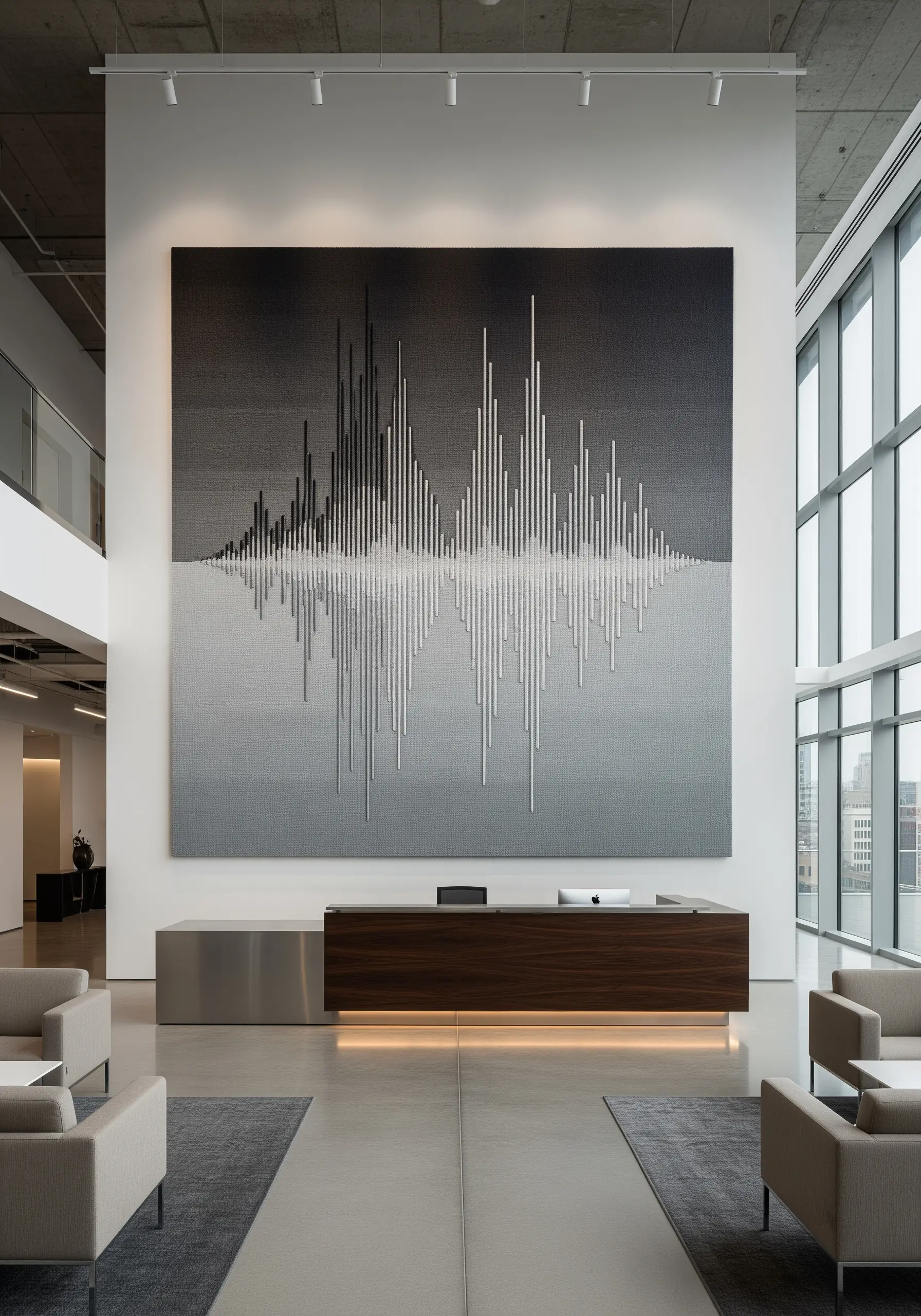
Translate a meaningful sound—a line from a favorite song, a baby’s laugh, a partner’s voice—into a striking piece of visual art.
Use a free soundwave generator app to create your pattern, then render it with dense vertical satin stitches.
Applying a monochrome gradient that fades from black to white gives the design a sleek, modern depth.
This is a brilliant way to create deeply personalized embroidery wall pieces that tell a unique story.
30. Atmospheric Stormscape
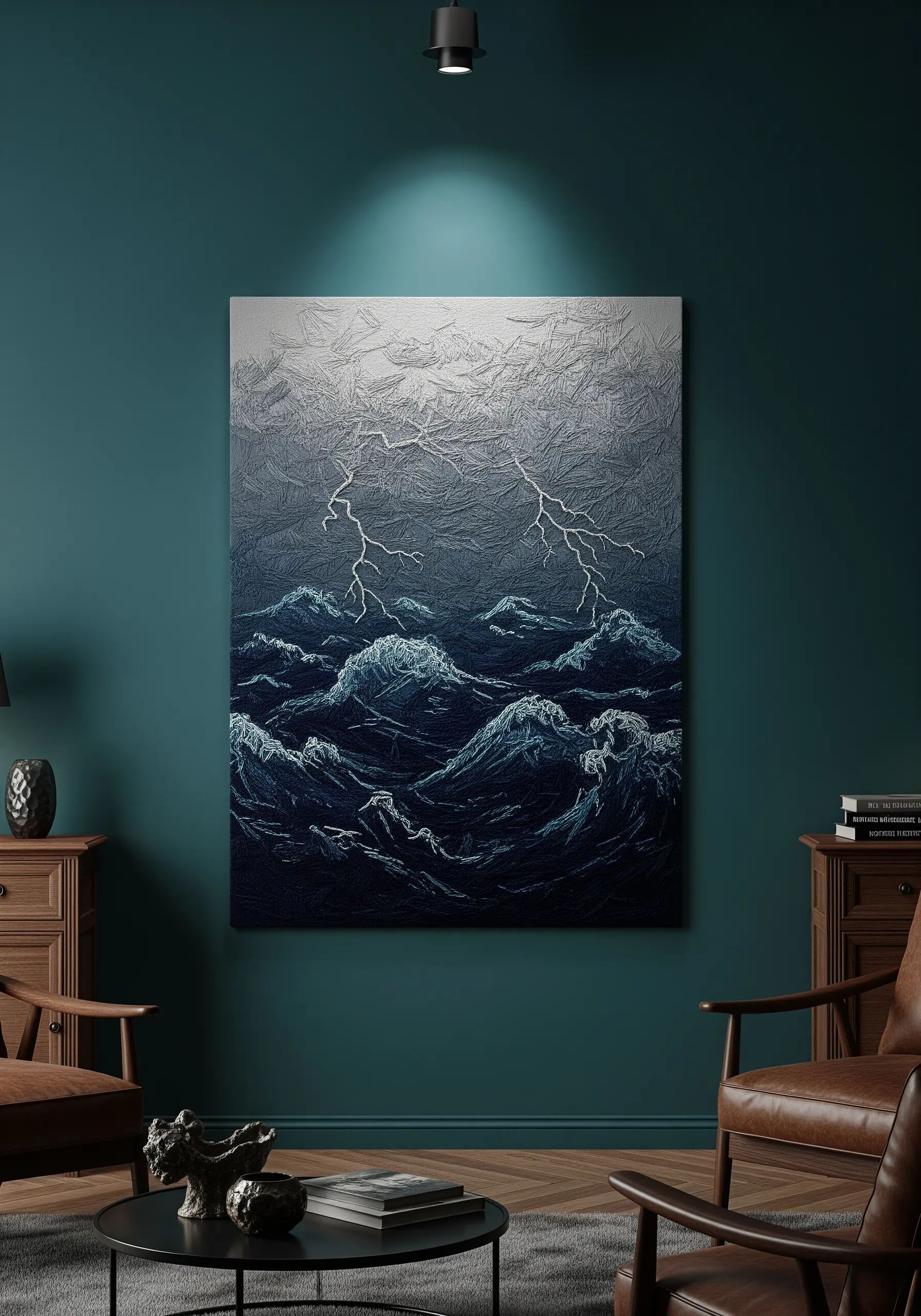
Capture the kinetic energy of a storm by creating a gradient from a turbulent, dark sea to a bright, breaking sky.
Use a chaotic mix of French knots, seed stitches, and short straight stitches for the waves to give them a churning, three-dimensional texture.
Contrast this with smoother, directional long-and-short stitches for the sky, and add lightning with a bright white or silver metallic thread.
This kind of dramatic dark thread embroidery is perfect for creating a powerful mood.
31. The Gradient Trio
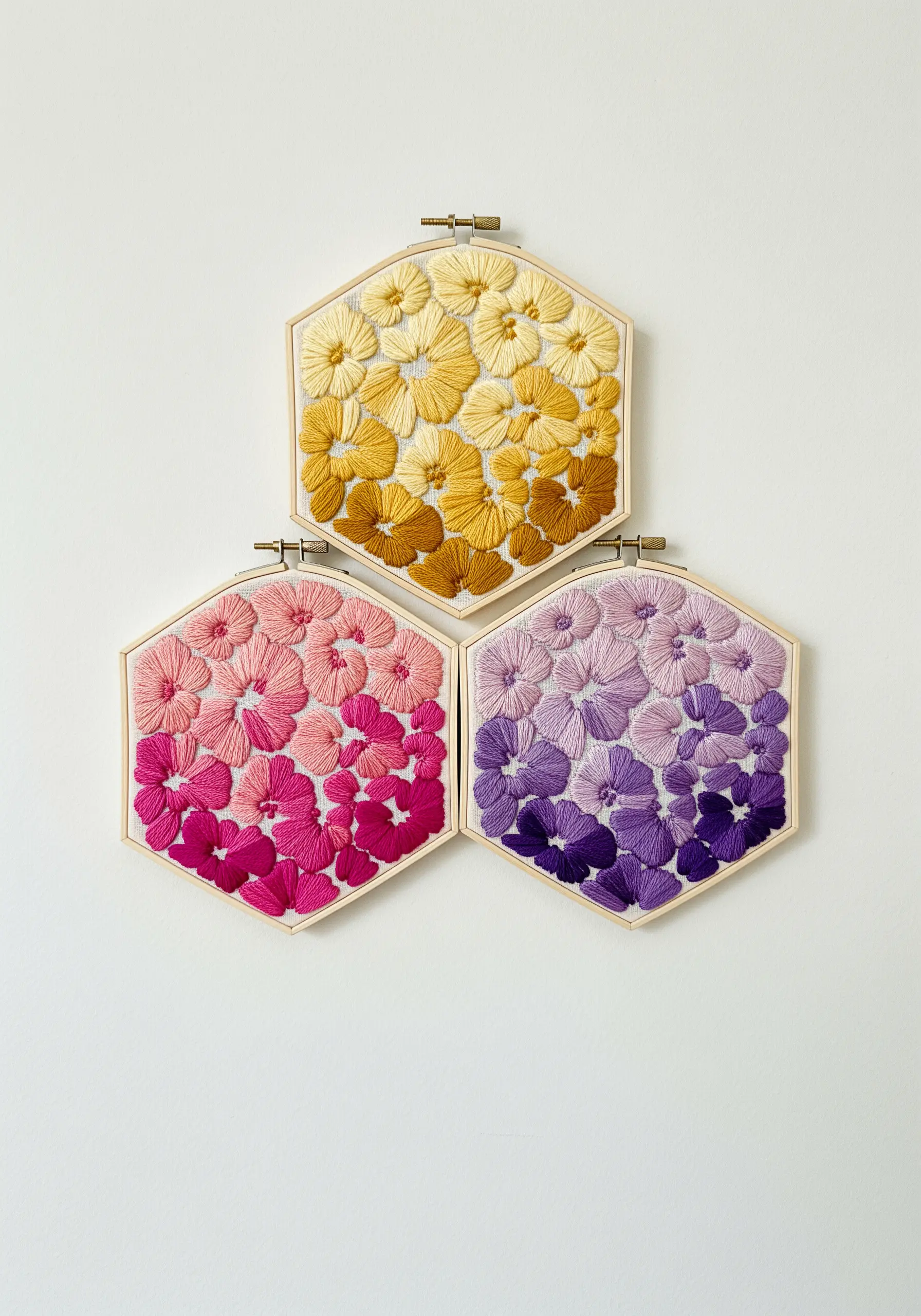
Instead of containing your gradient within one hoop, let the color story flow across a set of three or more.
Dedicate each hexagon to a different color family—yellows, pinks, purples—but stitch the flowers inside each one in a distinct gradient from dark to light.
Use the woven wheel stitch for the flowers; it’s fast, textural, and perfect for this project.
Arranging them together creates a cohesive and dynamic take on floral embroidery wall decor projects.
32. The Cascading Mandala Gradient

This stunning piece combines the intricate detail of mandalas with a luxurious metallic gradient.
The composition is key: arrange the mandalas so they appear to bubble up and cascade down the fabric.
Use metallic threads, transitioning smoothly from gold to silver, to fill in the complex patterns.
To make metallics manageable, use a larger needle eye and work with shorter strands.
It’s a breathtaking version of the boho string art dreamcatcher embroidery designs we love, elevated to pure opulence.
33. The Serene Panoramic Gradient
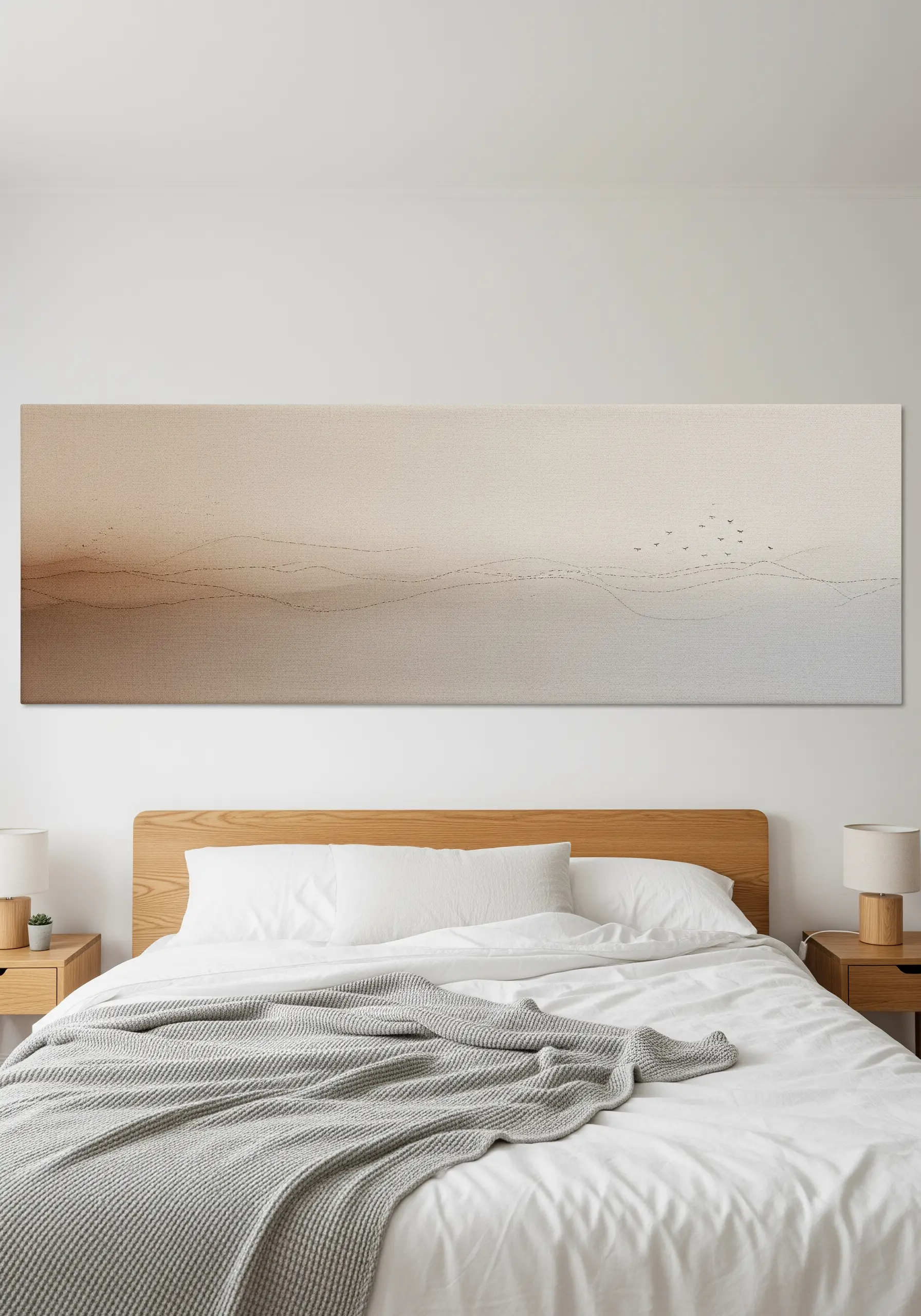
For a minimalist and deeply calming effect, work on a wide panoramic canvas that emphasizes horizontal space.
The gradient here is incredibly subtle, created with sparse, delicate stitches like the seed stitch or tiny single straight stitches in soft, earthy tones.
Gentle, undulating lines suggest a distant horizon, while a few tiny knots can represent a flock of birds.
The power of this piece lies in its restraint and its masterful use of negative space embroidery techniques to evoke a sense of peace.