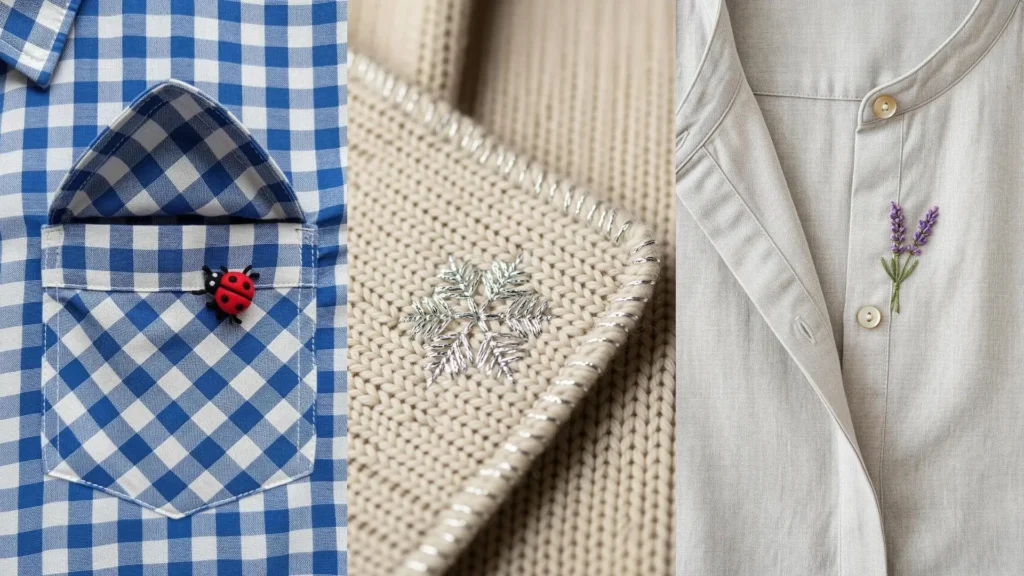
Your jacket is more than just a piece of clothing; it’s a travelogue waiting to be written in thread. Each stitch can be a memory of a place you’ve been, a dream of a destination yet to come, or a tribute to the feeling of adventure itself.
Forget generic patches and predictable designs. We’re going to explore how you can use specific stitches, thoughtful color choices, and creative placement to turn your outerwear into a deeply personal and beautifully crafted statement piece.
Think of your needle as a pen and the fabric as your journal. Let’s begin creating something that tells your unique story, one that you can wear with pride on all the journeys that lie ahead.
1. Couture Cartography: Stitching a World Map
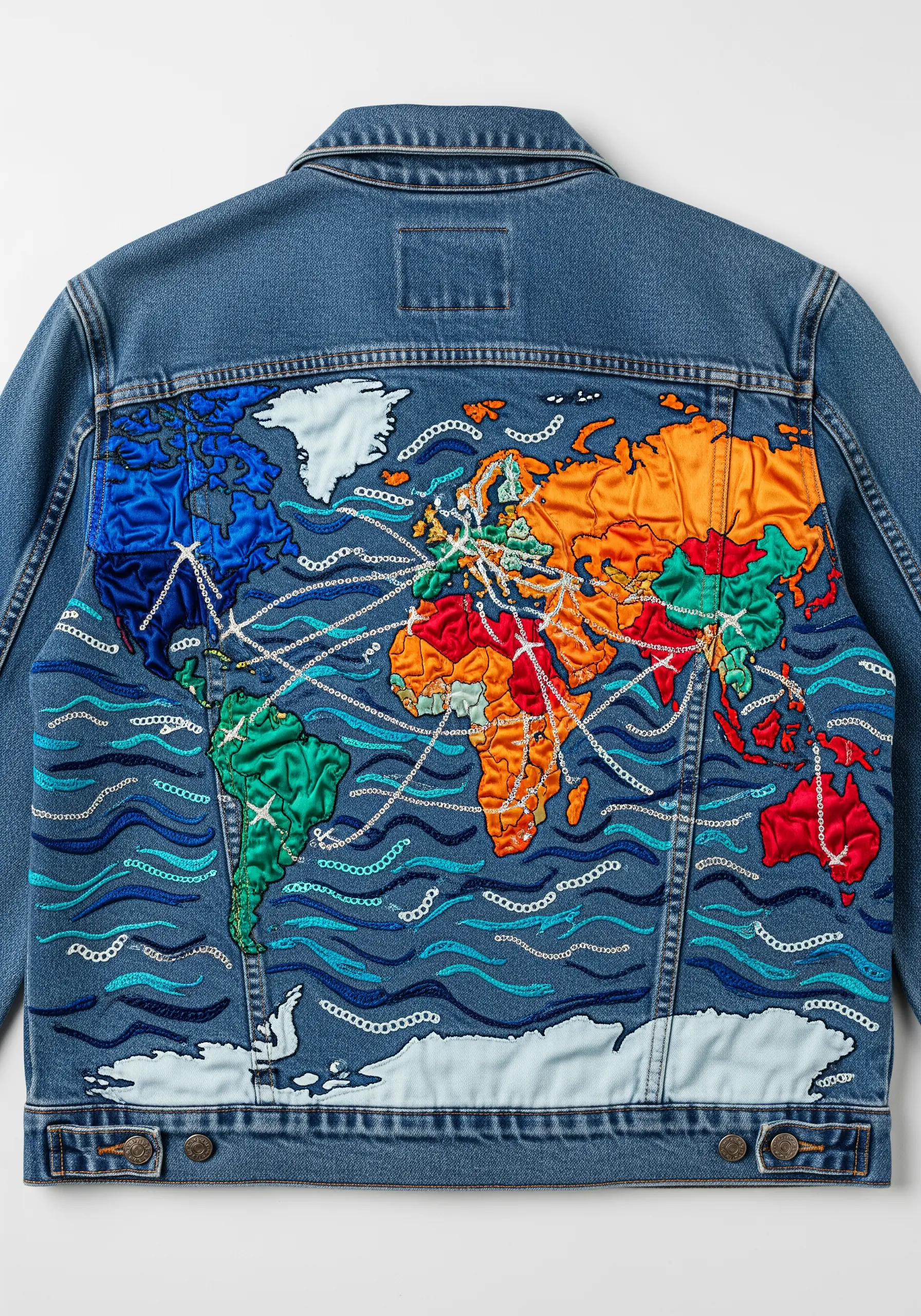
Create a tactile, three-dimensional effect for the continents by using a heavily textured stitch, such as a messy, sculptural satin stitch or by couching down thick ribbon.
This technique creates a raised surface that contrasts beautifully with the clean, flat lines of the chain-stitched travel routes.
For the ocean, lay down various shades of blue thread in wavy patterns and couch them with a single transverse stitch, adding a sense of movement and depth.
2. Parisian Elegance on Faux Leather
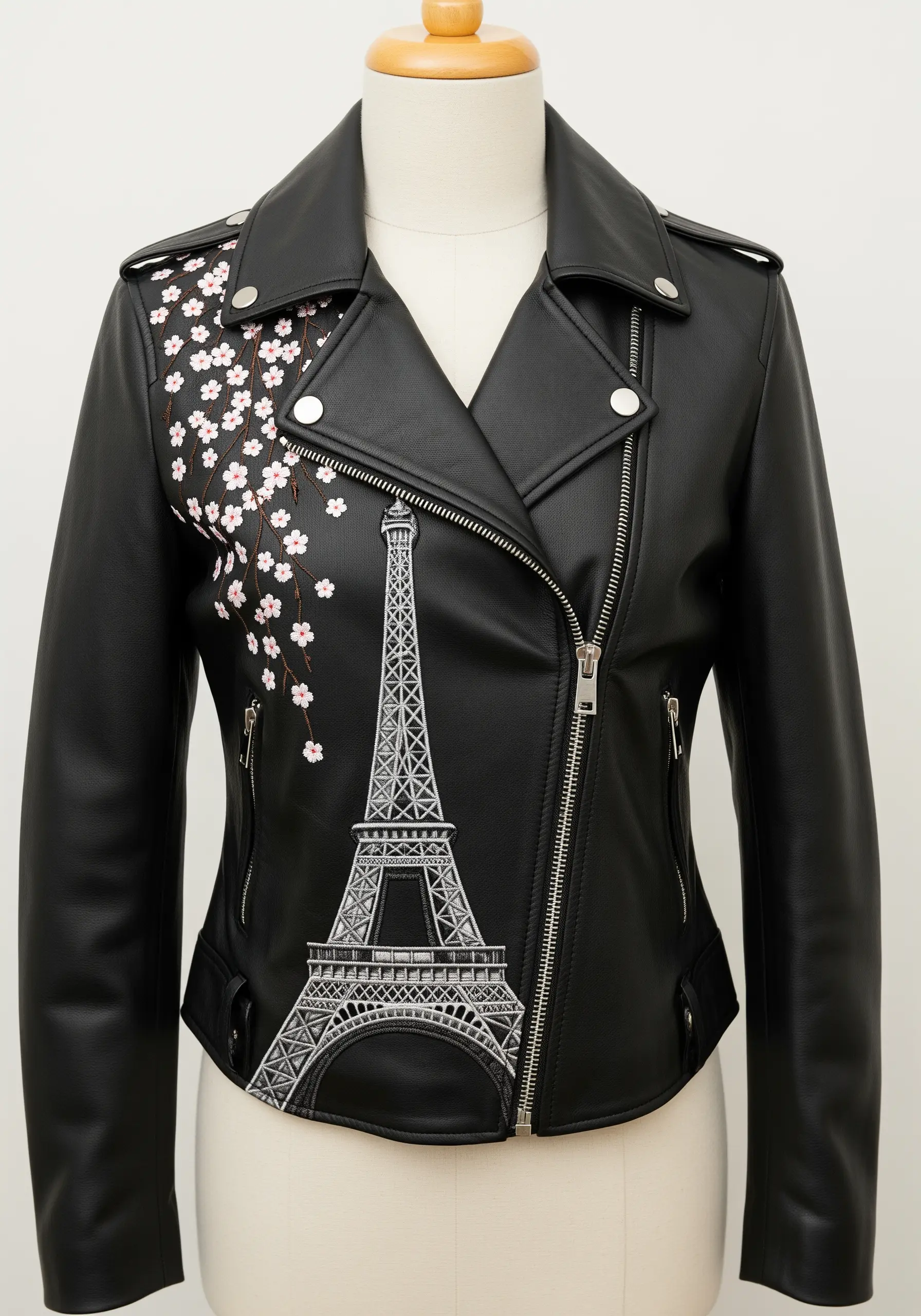
Stitching on faux leather requires a specific needle—a leather or microtex needle—to pierce the material cleanly without causing tears.
Use a single strand of fine thread for the architectural details of the Eiffel Tower to maintain crisp, sharp lines.
For the blossoms, combine delicate French knots with detached chain (lazy daisy) stitches to create a varied, organic texture that softens the graphic structure.
3. Thread-Painted Mountain Sunrise
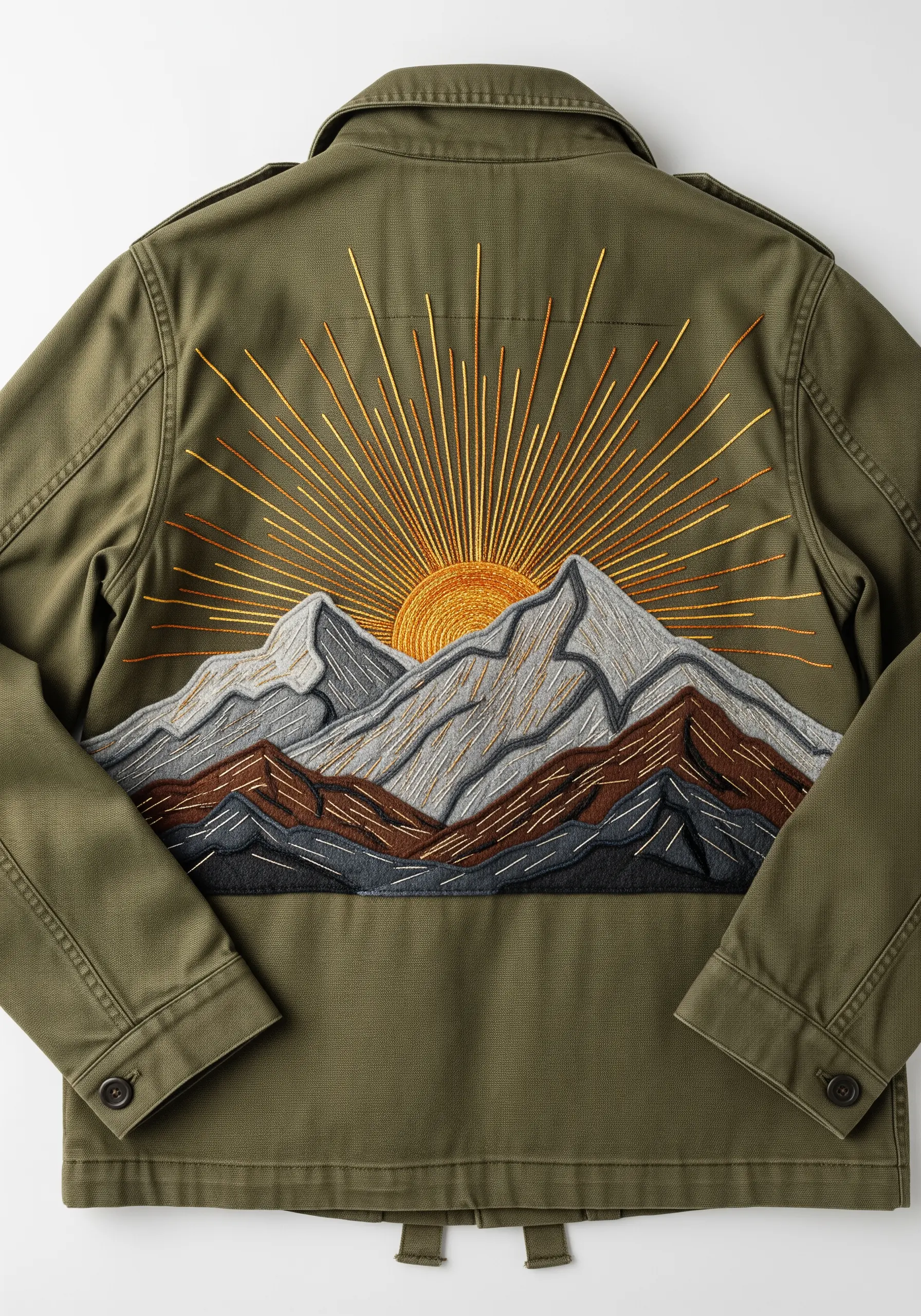
To achieve the radiant sunbeam effect, use long, straight stitches with a high-sheen rayon or metallic thread that will catch the light.
For the mountains, employ a long-and-short stitch to blend shades of grey, brown, and metallic gold, creating realistic depth and texture.
This mountain landscape thread painting technique captures the layered, atmospheric quality of a dawn scene by allowing colors to merge softly into one another.
Vary your stitch direction to follow the natural contours of the peaks and valleys, which enhances the sense of form.
4. Whimsical Skies on Corduroy
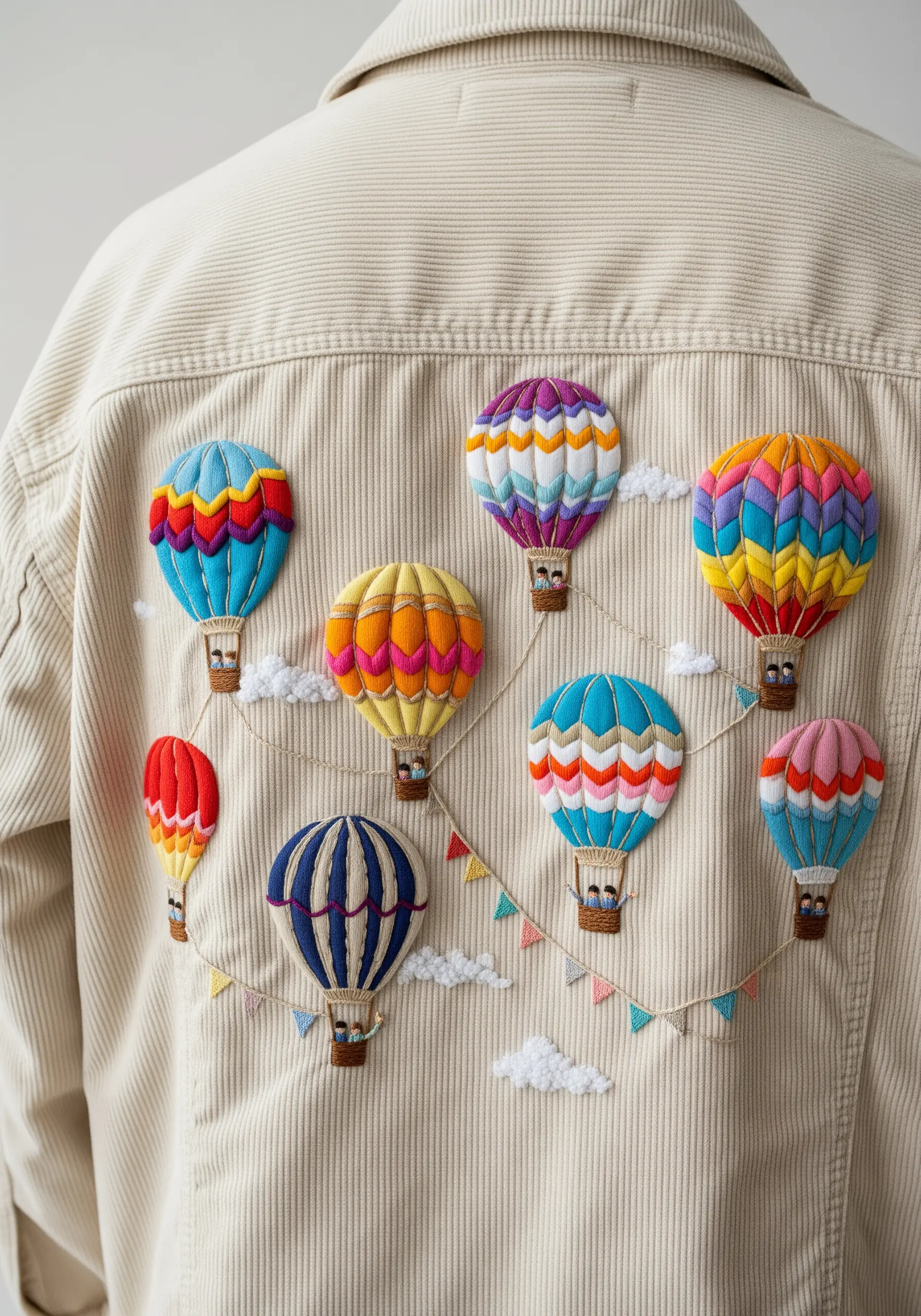
Use the texture of corduroy to your advantage; its wales grip the thread beautifully and add subtle dimension.
Create puffy, three-dimensional balloons by using a padded satin stitch—first, fill the shape with an underlayer of seed stitches, then cover it with smooth satin stitches.
This padding lifts the embroidery from the surface, making the colors pop and giving the balloons a satisfyingly full appearance.
5. Celestial Navigation on Denim
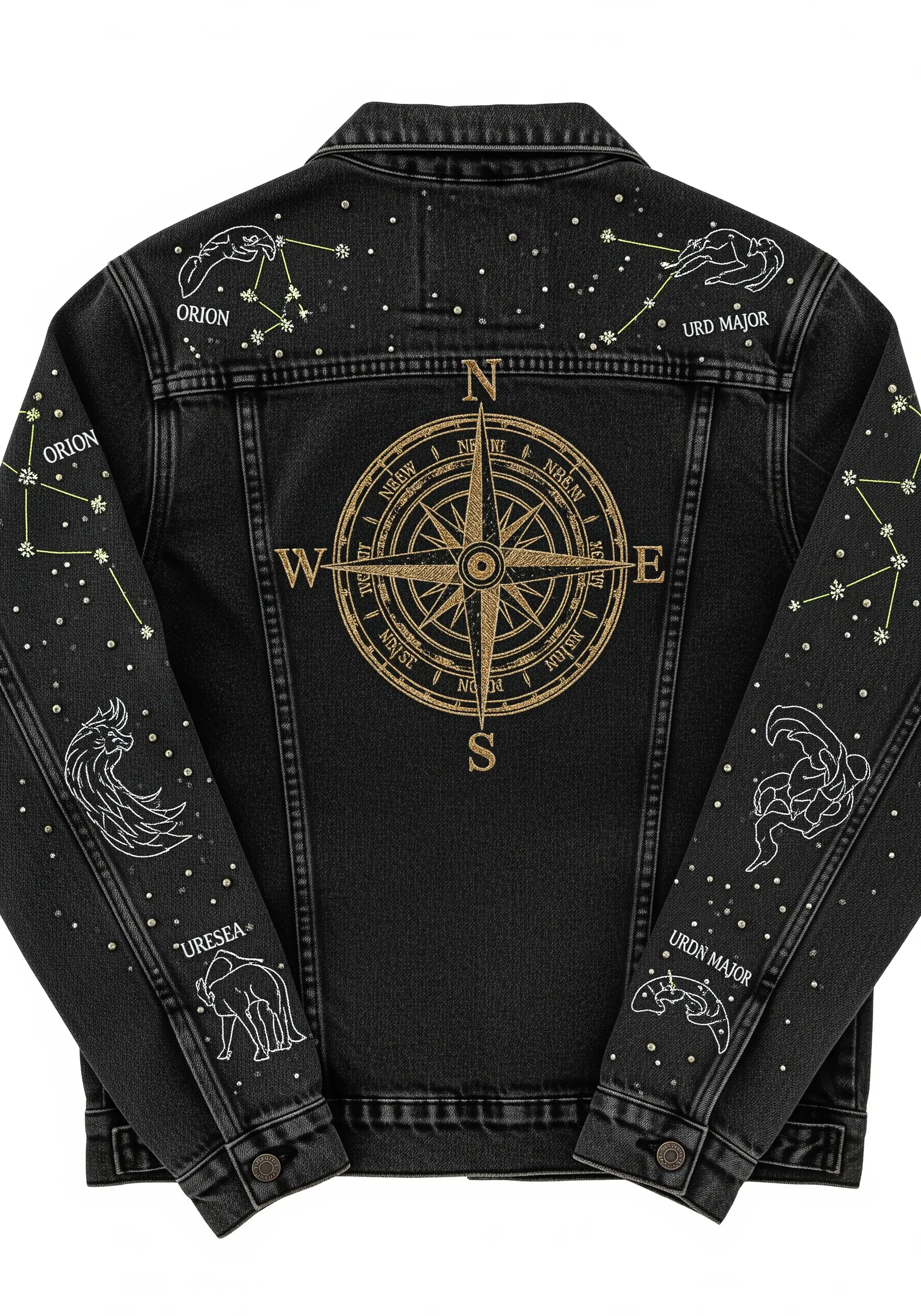
Map out your constellations with a simple backstitch for the connecting lines and use French knots or tiny seed stitches for the stars.
For a subtle shimmer, incorporate a single strand of metallic or glow-in-the-dark thread alongside your standard floss.
The key to this design is the use of negative space—allow the dark denim to become the vast night sky, making your stitched stars feel intentional and impactful.
6. Mediterranean Mosaic on Tailored Lapels
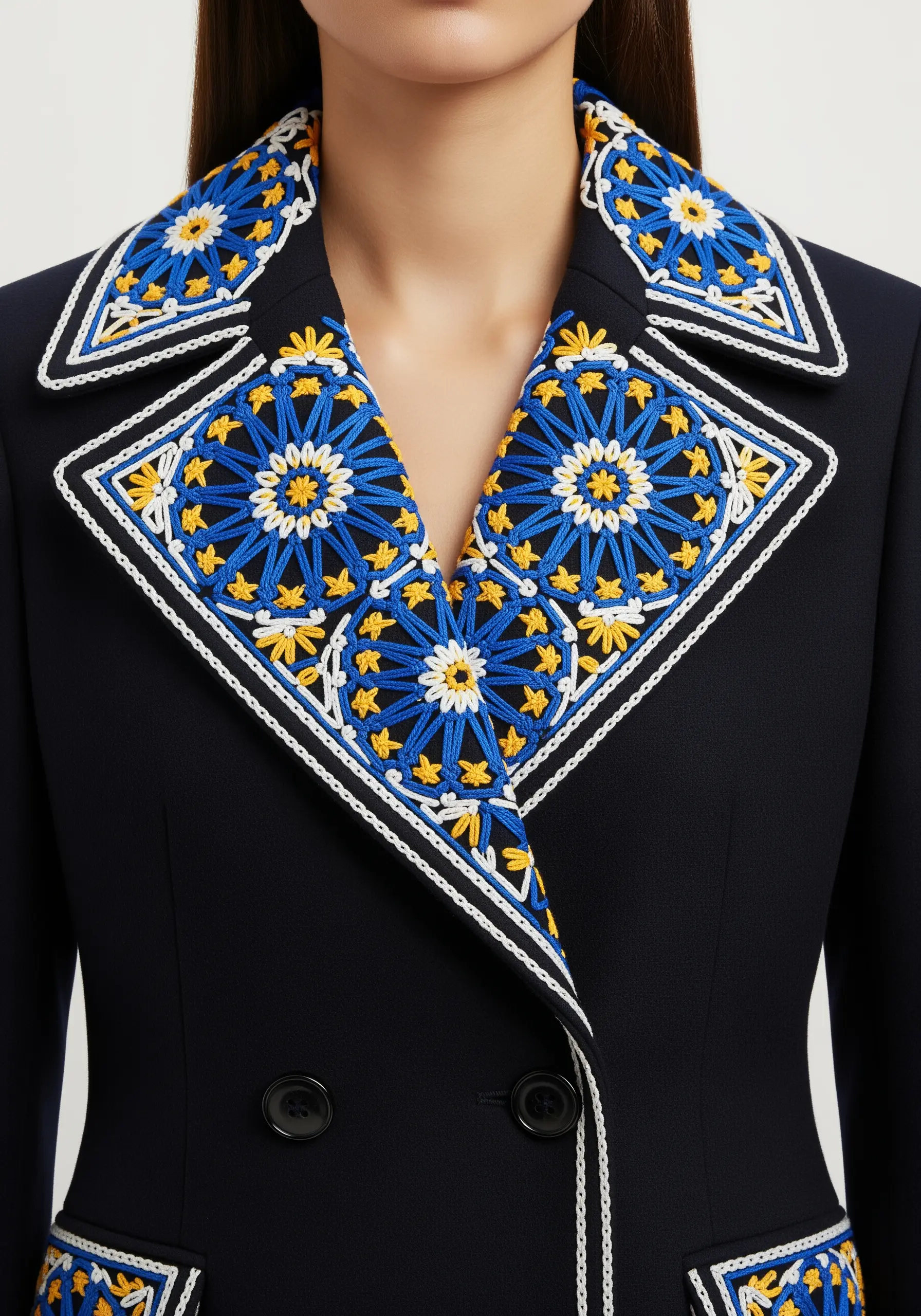
Recreate the look of intricate tilework by using satin stitch blocks for color fields and woven wheel stitches for the central floral motifs.
To ensure your geometric shapes are perfectly crisp, outline each section with a split stitch before filling it in.
This technique creates a firm, raised edge for your satin stitches to butt up against, resulting in clean, defined lines reminiscent of Moroccan zellij or Portuguese azulejos.
7. Lush Jungle Scene on a Bomber
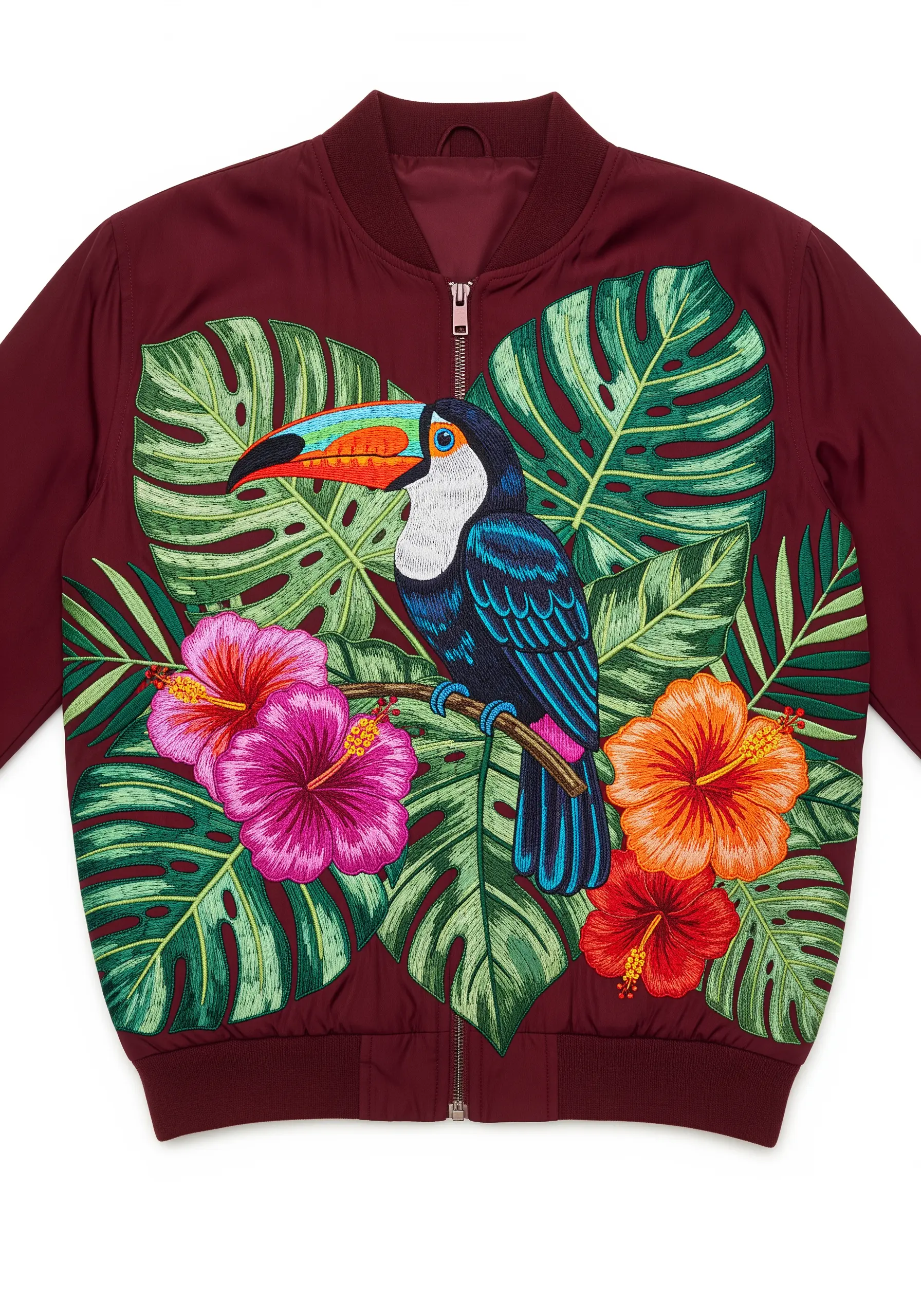
To render the toucan’s vibrant beak, use a long-and-short stitch to seamlessly blend the bright colors, creating a smooth, painterly gradient.
For the large monstera leaves, avoid a flat look by varying the direction of your satin stitches to mimic the way light hits the leaf’s surface.
Using multiple shades of green for the foliage builds depth, preventing the background from receding and making the entire composition feel more alive and lush.
This approach to directional stitching elevates tropical leaf embroidery designs into dynamic art.
8. A Traveler’s Log in Patches
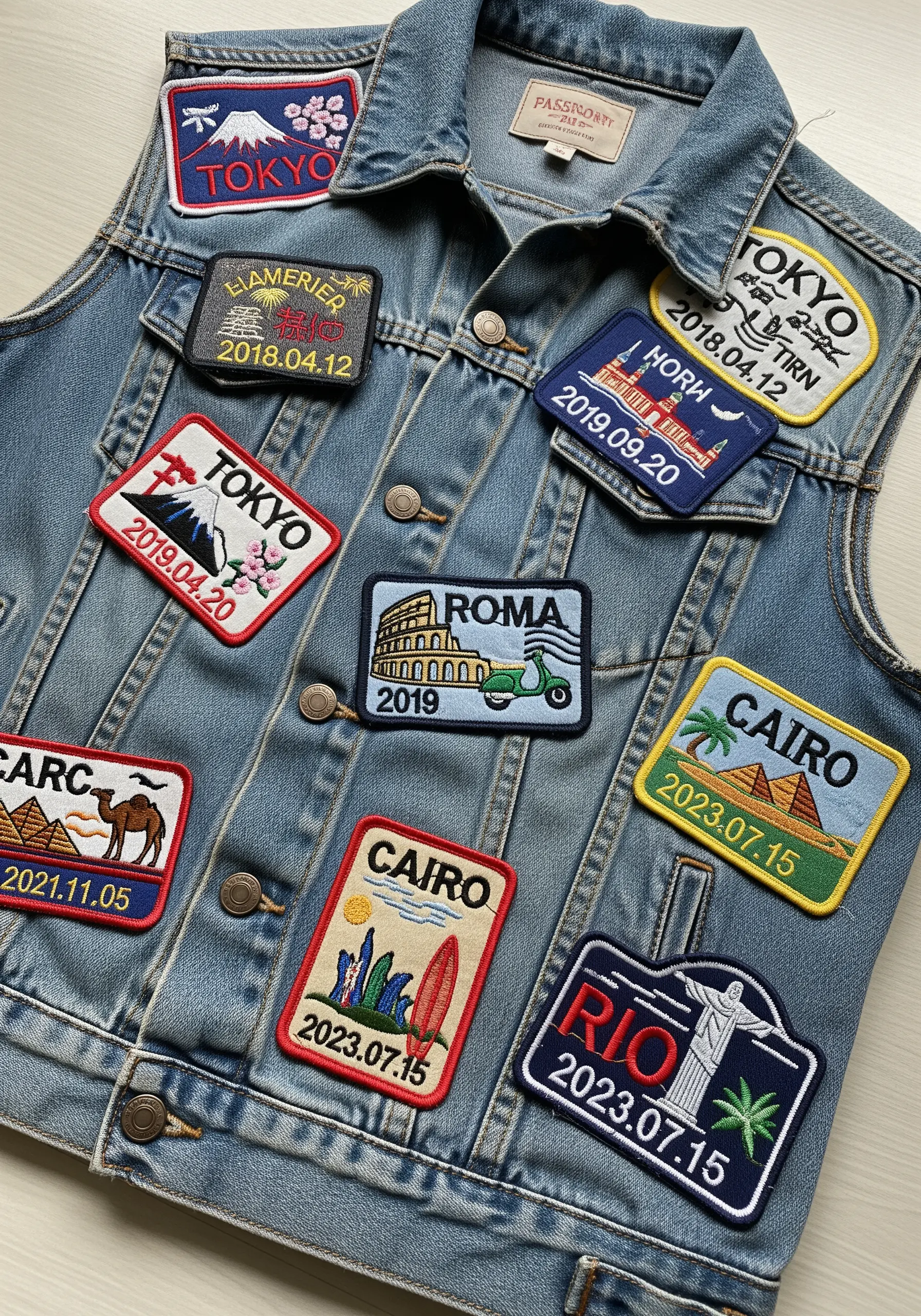
Create your own bespoke travel patches by embroidering your designs on separate pieces of felt or sturdy canvas first.
This method allows you to perfect each motif without risking damage to your jacket, and you can arrange them before committing to placement.
Use a dense satin stitch for bold color fills and a simple backstitch for text. To attach, use a neat whipstitch around the border for a secure and professional finish.
9. Grecian Isles on a Crisp White Blazer
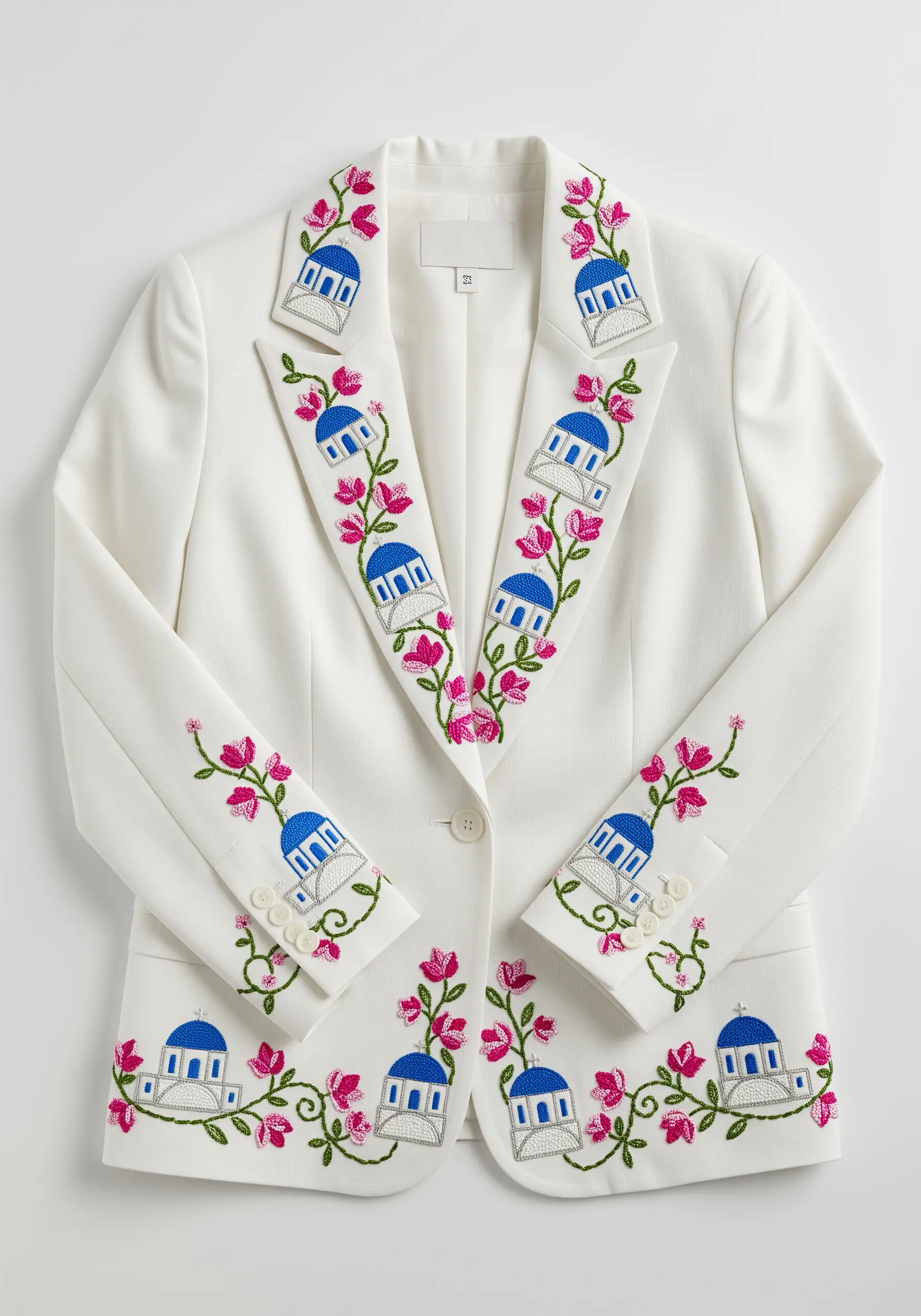
Capture the iconic essence of Santorini by using a restrained color palette of bright white, cobalt blue, and magenta.
Use a dense, smooth satin stitch for the blue domes and a clean backstitch for the architectural lines.
For the bougainvillea, create texture and volume by clustering French knots in various sizes—this mimics the organic, cascading growth of the flowers and adds a beautiful tactile contrast.
10. Savannah Sunset Portrait
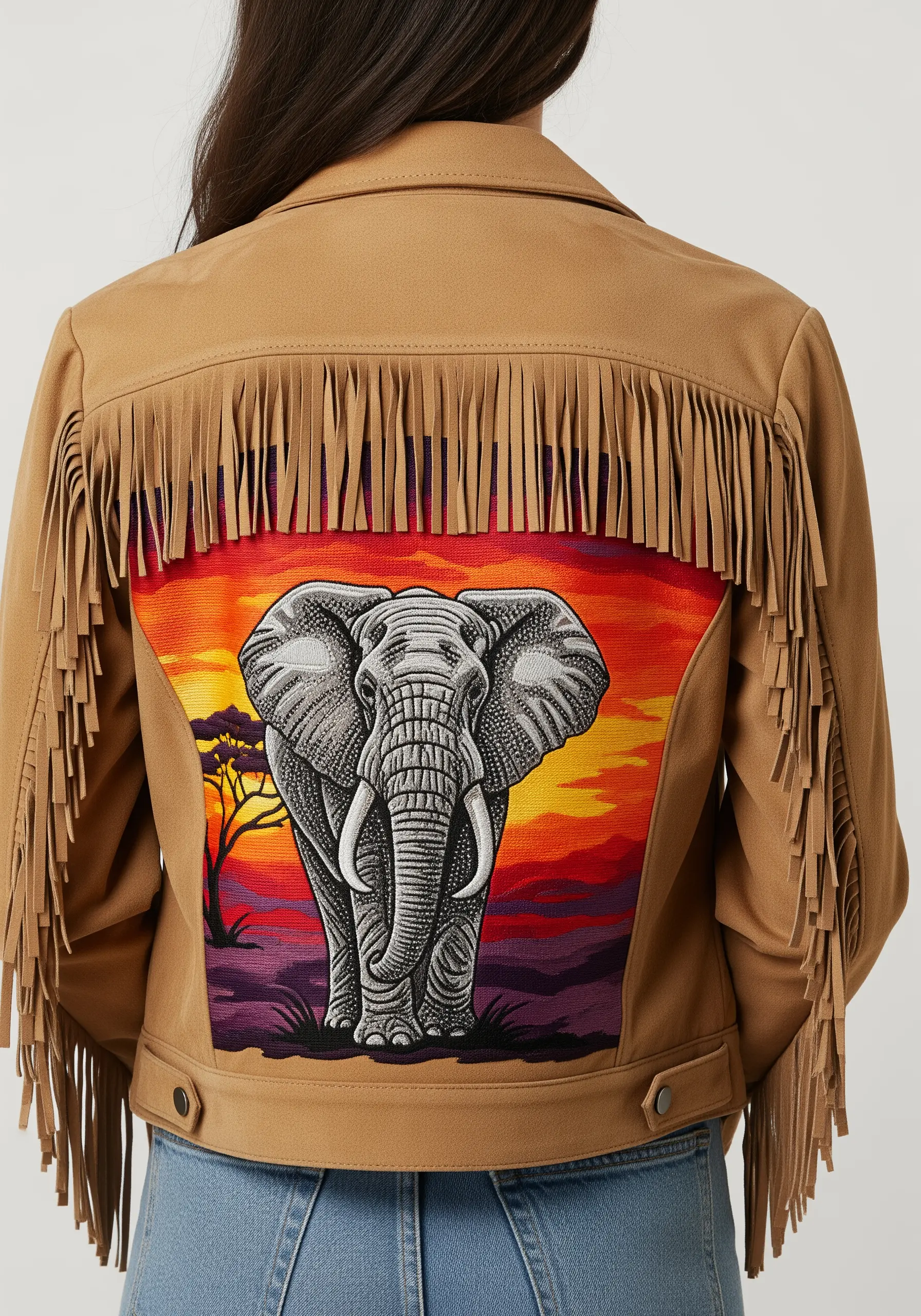
To achieve the stunning blended sunset, embroider it on a separate fabric panel using long-and-short stitch with a mix of red, orange, yellow, and purple threads.
For the elephant’s detailed texture, switch to a single strand of grey thread and use tiny split stitches to create an engraved, photorealistic effect.
Appliqué the finished panel onto the jacket; this preserves the integrity of the jacket’s fabric while allowing for incredible detail in the embroidery.
11. Cartographic Pocket Accents
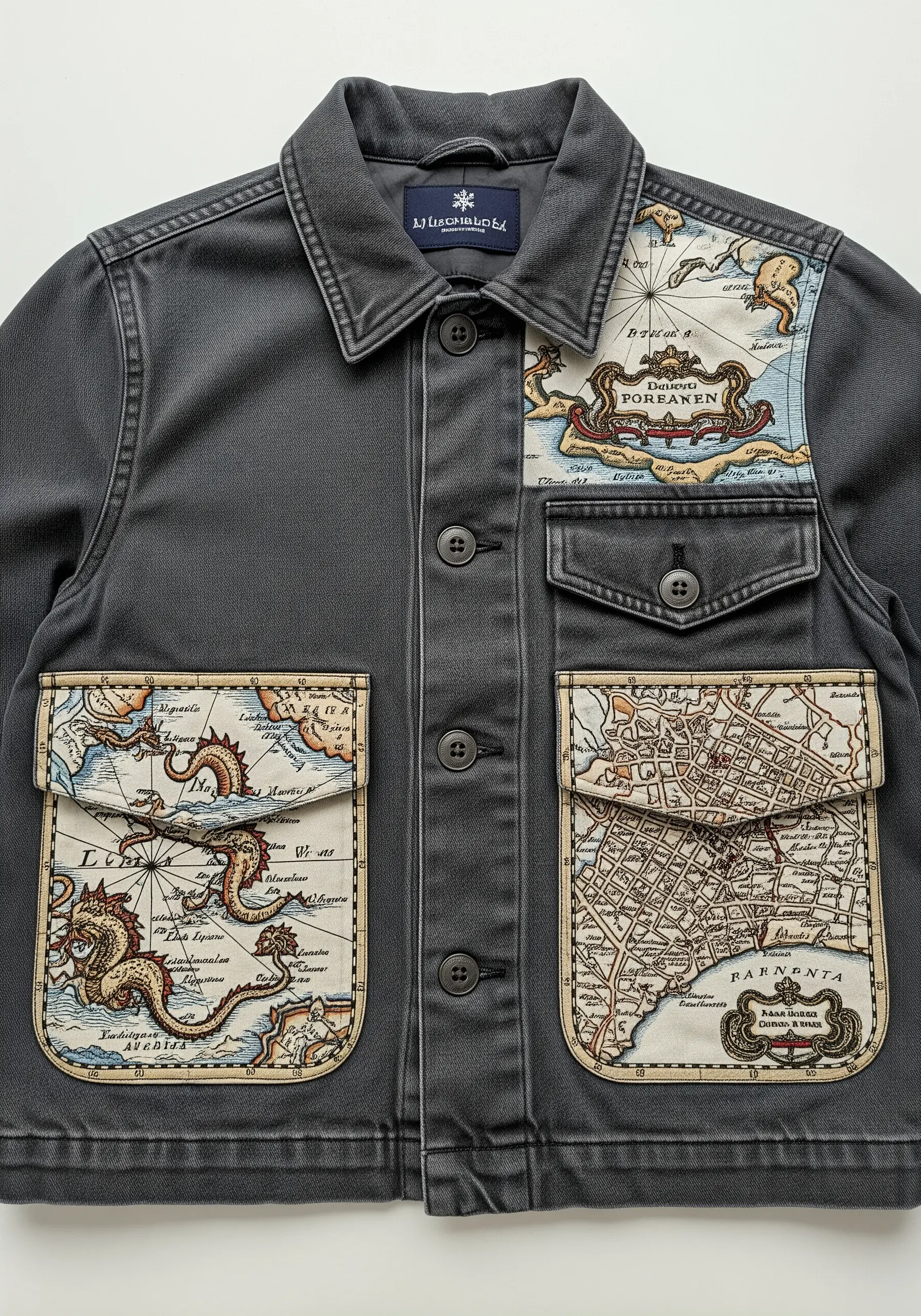
This design utilizes fabric appliqué for a bold, graphic effect. Choose a fabric printed with vintage maps that speaks to your travels.
Carefully cut the fabric to the shape of the pocket flaps and chest panel, leaving a small seam allowance. Press the allowance under for a clean edge, then topstitch it neatly onto the jacket.
To integrate an embroidered touch, use a single strand of contrasting thread to backstitch a highlight, like a specific coastline or a mythical sea creature from the map.
12. Mythical Koi on Satin

The secret to successful embroidery on a slippery fabric like satin is using a quality stabilizer on the back to prevent puckering and distortion.
Create the koi’s shimmering scales with an overlapping fishbone stitch or rows of small scallop stitches; this layering technique creates a realistic, textured effect.
Choose high-sheen rayon or silk thread to complement the fabric’s natural luster, enhancing the sense of fluid movement and light.
13. The Great American Road Trip
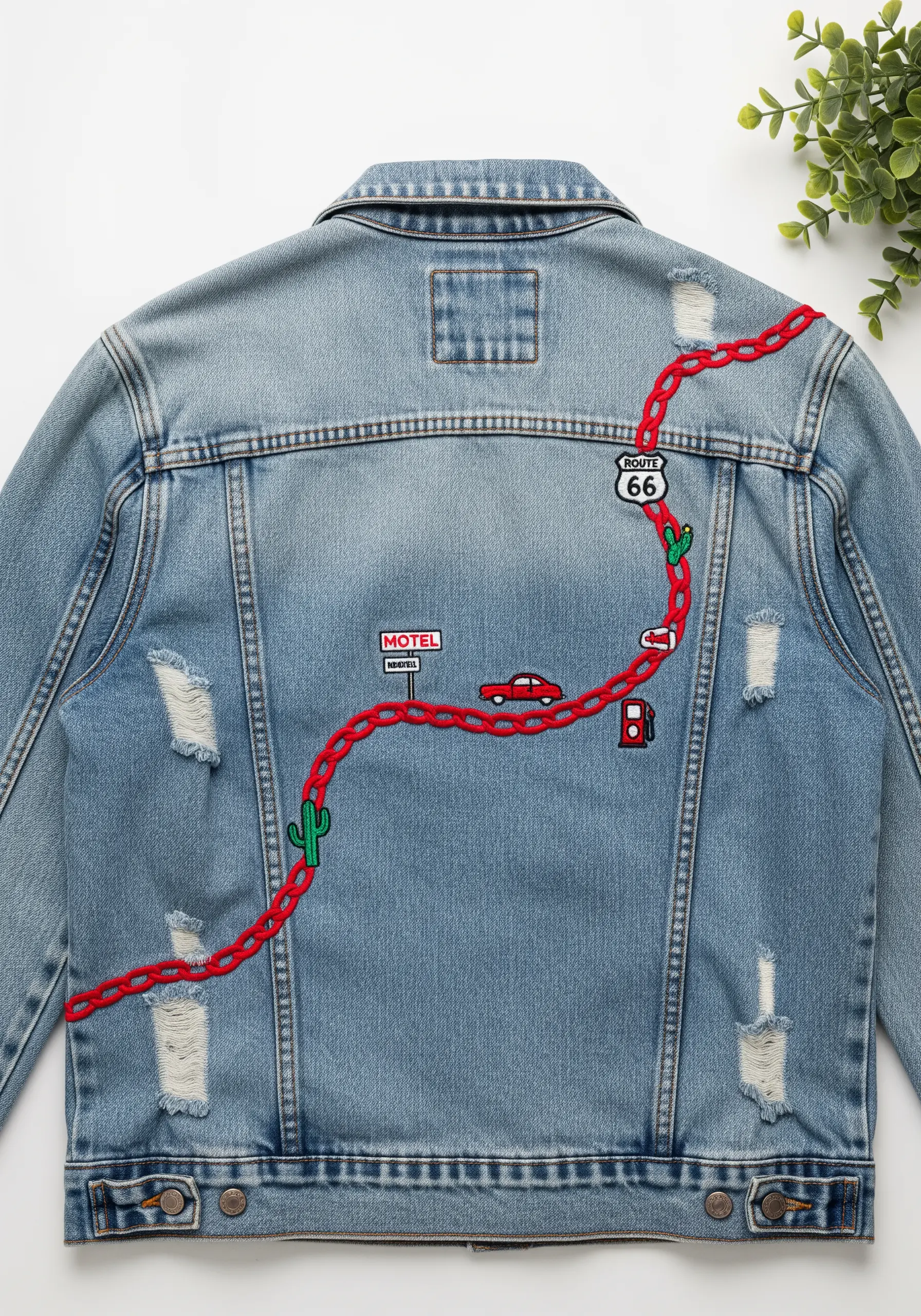
Create a strong visual narrative by using a bold, thick chain stitch for the main route, giving it presence and a satisfying texture.
For the small, iconic landmarks along the way, switch to a delicate backstitch using fewer strands of thread.
This intentional variation in thread weight and stitch type establishes a clear visual hierarchy, guiding the eye along the stitched journey and making the small details a delightful discovery.
14. Northern Lights on Velvet
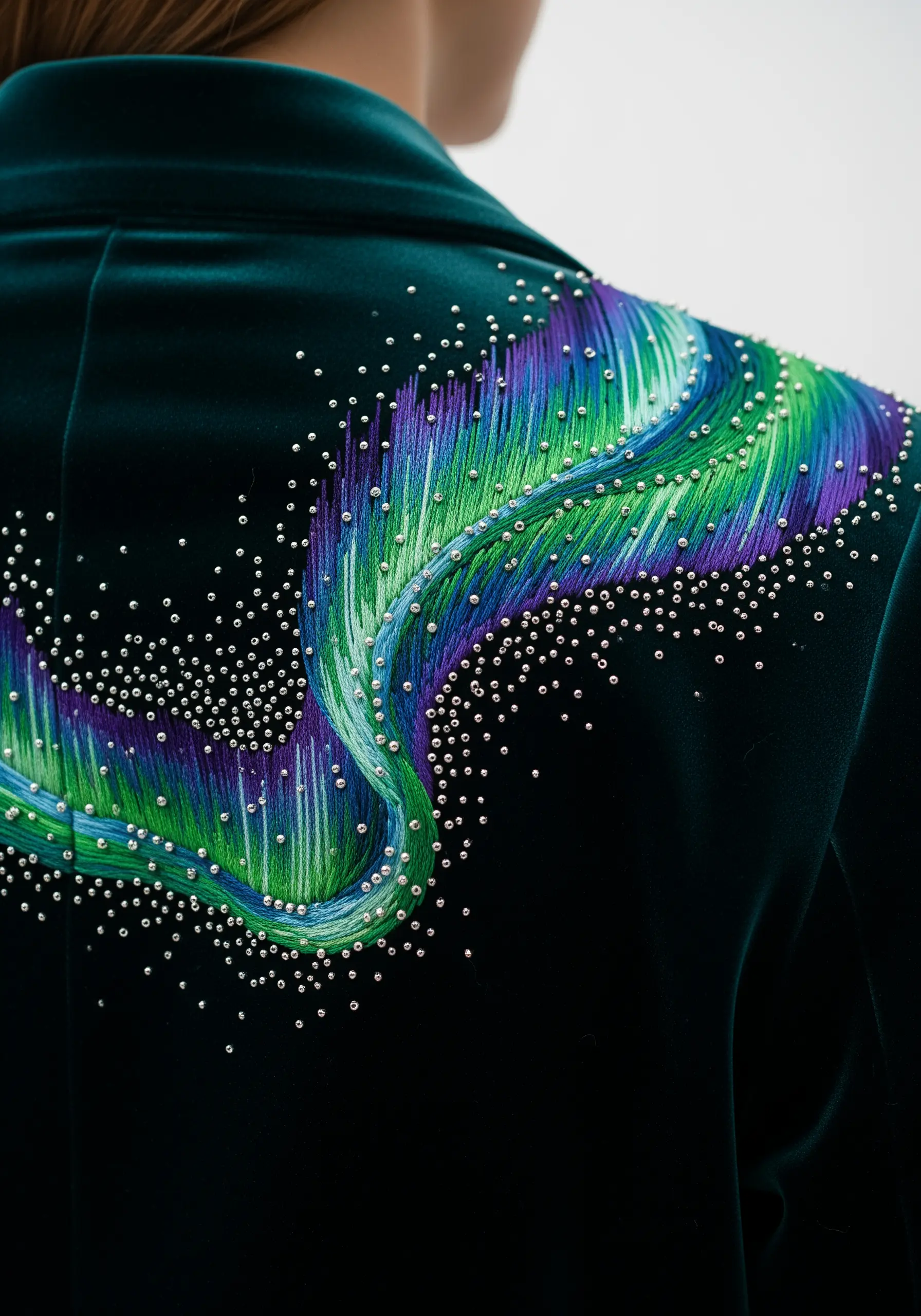
Capture the ethereal, flowing quality of the aurora borealis with long, straight stitches that blend multiple shades of green, blue, and violet.
For an organic and seamless gradient, thread your needle with 2-3 different colors at once.
Scatter tiny silver seed beads or isolated French knots throughout the design to represent stars, adding a magical, textural sparkle against the deep pile of the velvet.
15. A Modern Tribute to Ancient Egypt
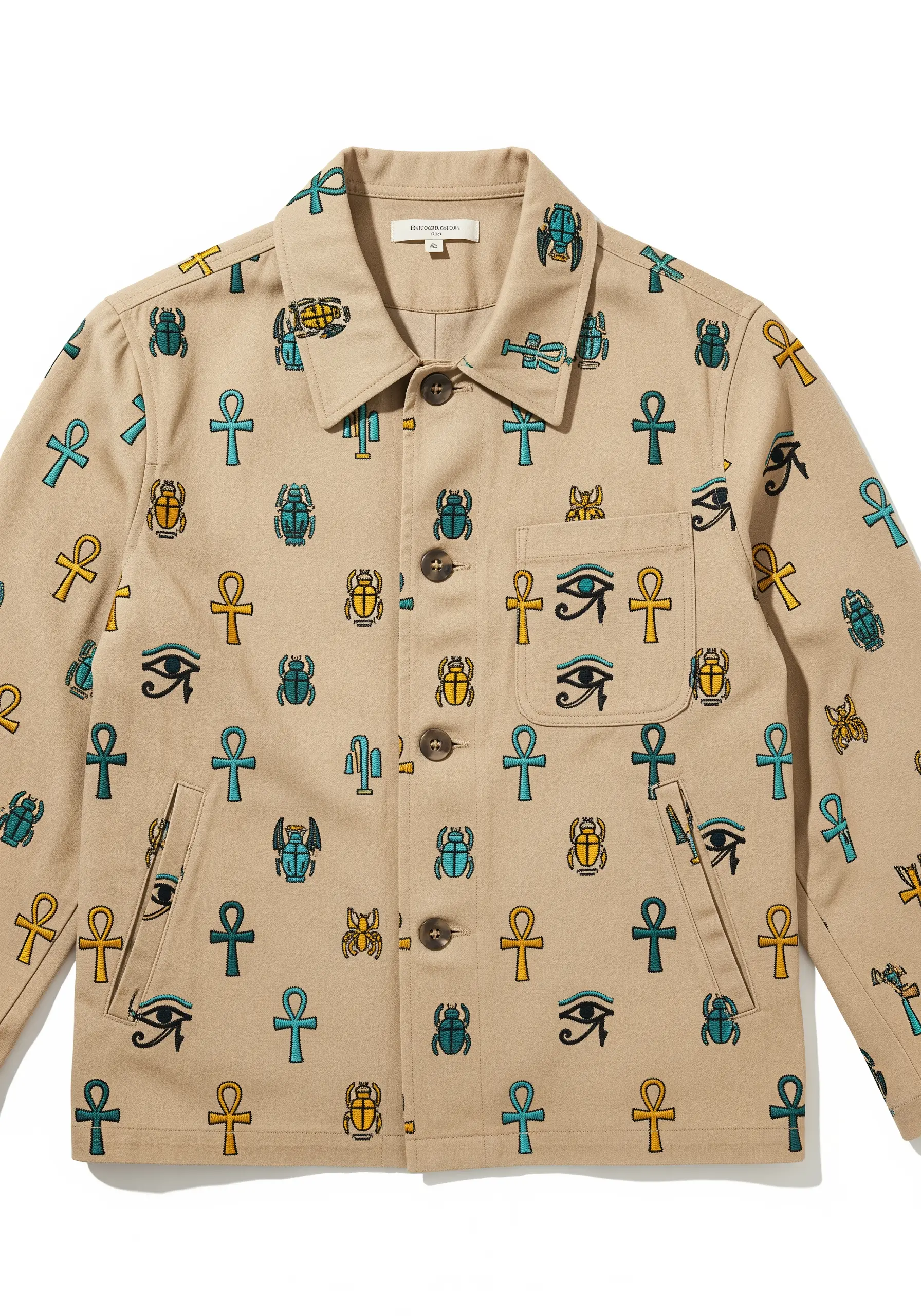
This sophisticated all-over pattern relies on the power of repetition and a clean, graphic style.
Select a limited, earthy color palette inspired by ancient Egyptian pigments—such as terracotta, turquoise, and ochre—for a cohesive and authentic feel.
Use a smooth satin stitch for filled areas and a crisp backstitch for outlines. The precise repetition of these simple motifs creates a textile that feels both historically rich and strikingly modern.
16. Singular Statement Poppy
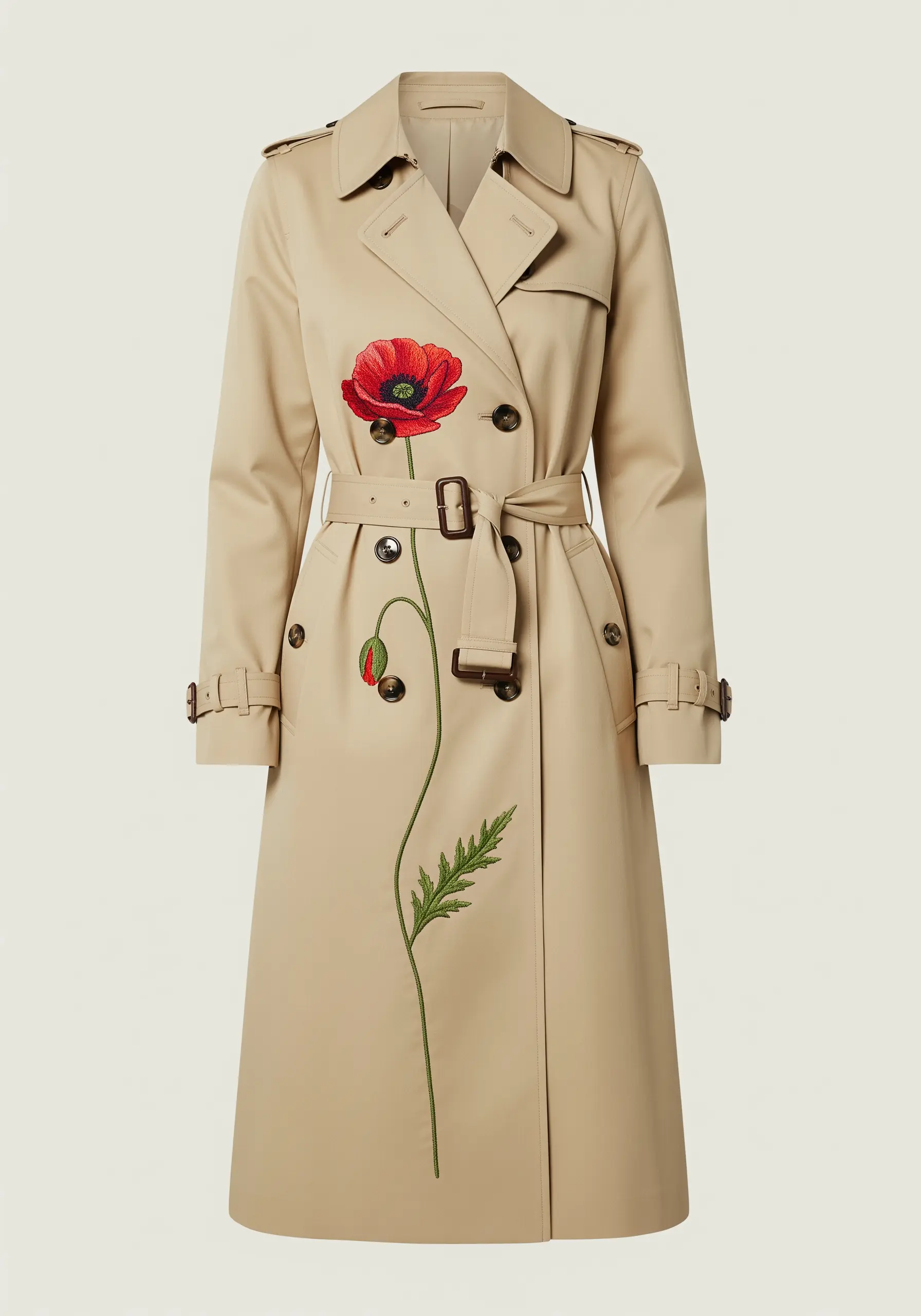
The dramatic impact of this design comes from its bold scale and thoughtful placement, transforming the garment into a canvas.
Use long-and-short thread painting stitches to create the soft, realistic shading on the poppy petals, blending reds and pinks for depth.
For the long, elegant stem, a whipped backstitch or stem stitch will create a smooth, continuous line that flows gracefully down the length of the coat.
17. A Window Seat to the World
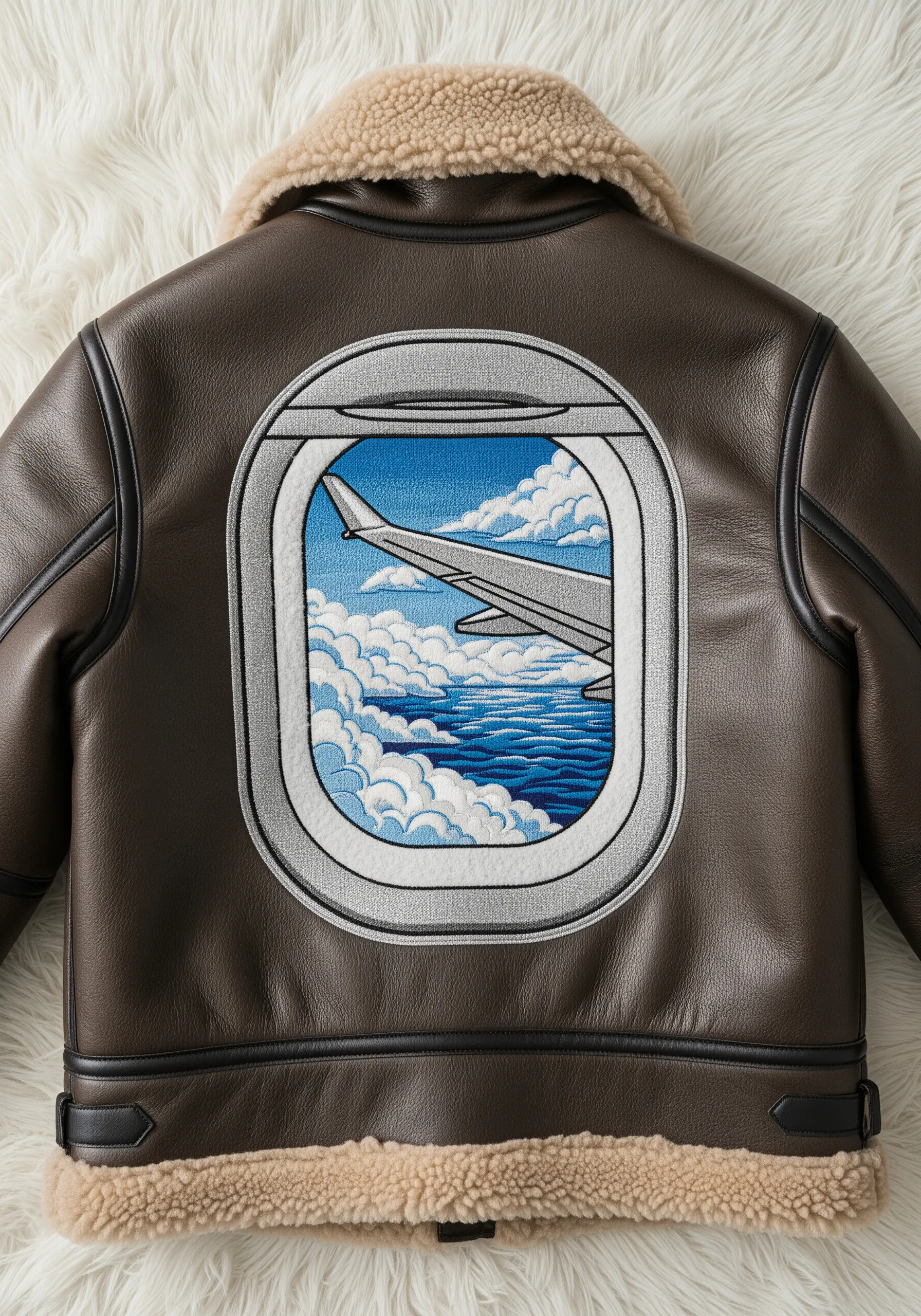
Create a sense of atmospheric depth in the sky by blending different shades of blue thread with a long-and-short stitch.
For the fluffy clouds, use dense clusters of French knots in white and pale grey. The contrast between the smooth satin stitch of the airplane frame and the textural clouds is what makes the scene so compelling.
Use directional split stitches for the ocean waves below to suggest movement.
18. Stitched Postcard from Venice
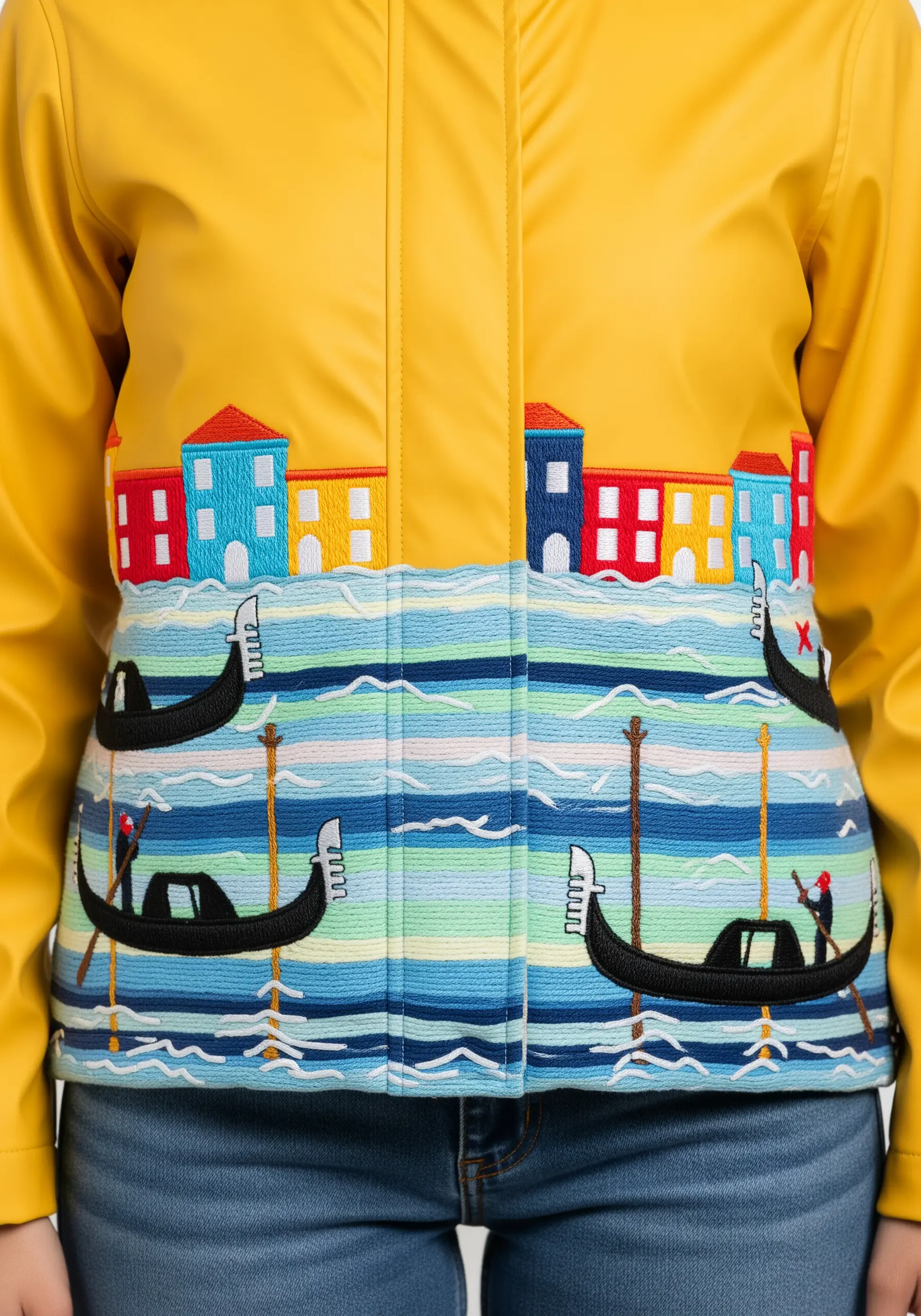
This design achieves its charming, painterly effect through strategic color blocking with satin stitch.
Use vertical satin stitches for the buildings to emphasize their height, and horizontal satin stitches for the water to suggest stillness and reflection.
By arranging different shades of blue and green threads in neat rows for the water, you can create the illusion of light and movement on the canal’s surface without complex blending.
19. A Whisper of the Himalayas
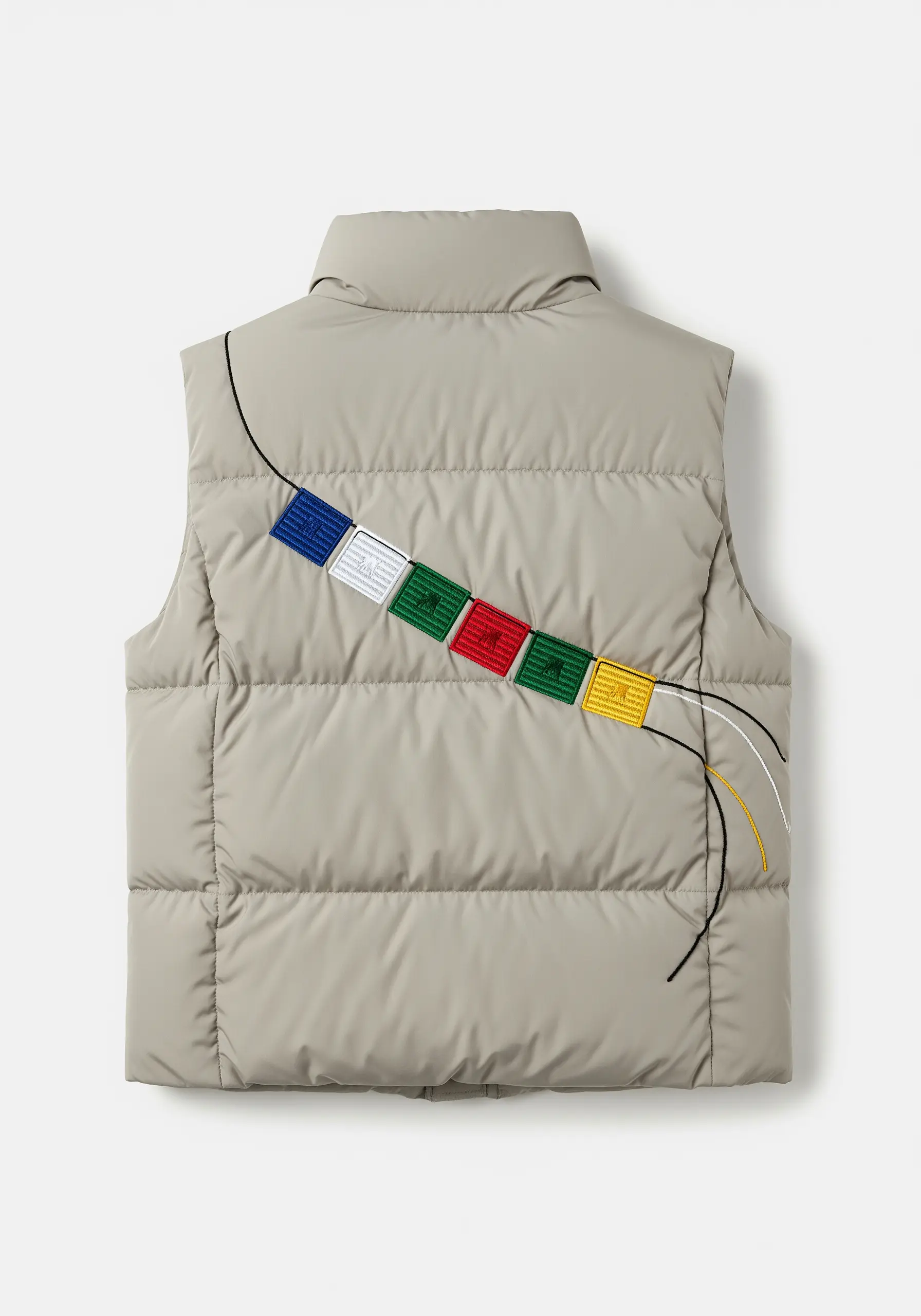
Embrace a minimalist, deconstructed aesthetic by stitching the prayer flags as small, solid-colored squares using satin stitch.
Instead of a solid stitched line connecting them, let the threads hang loose and expressive, capturing the feeling of movement in the wind.
This artistic approach focuses on the essence and feeling of the flags, making it a modern and thoughtful tribute. These are perfect mini embroidery projects you can complete in an evening.
20. The Majestic Peacock Cape
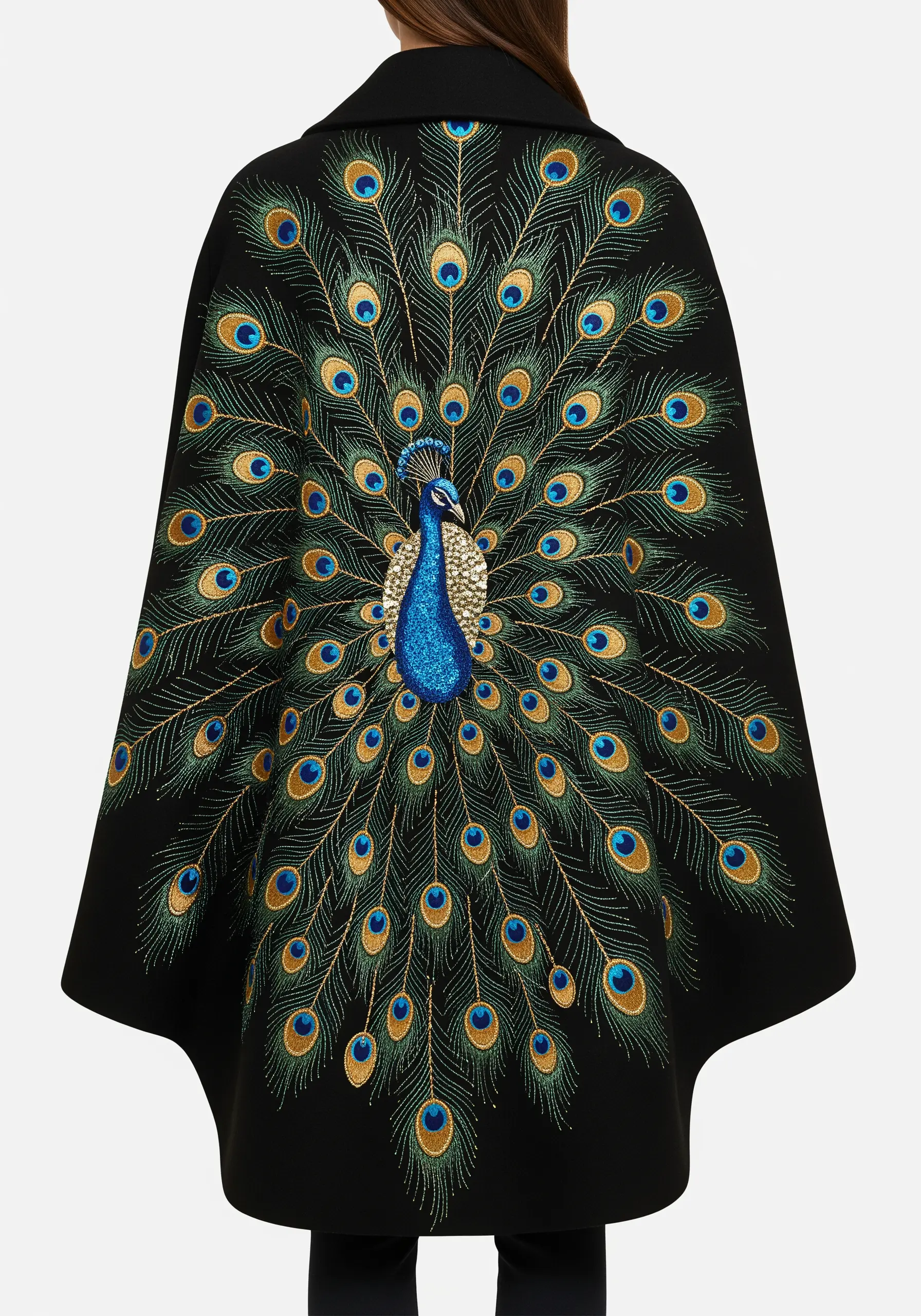
To capture the iridescent quality of the peacock’s feathers, use a foundation of metallic gold or bronze thread for the “eye” of each feather.
In the center of the metallic base, stitch a vibrant blue satin stitch oval or a tight French knot to create that iconic, jewel-toned spot.
For the fine, wispy fronds, use a single strand of thread in long, delicate straight stitches. This interplay between metallic and matte threads brings the design to life.
21. Cozy Cabin Getaway
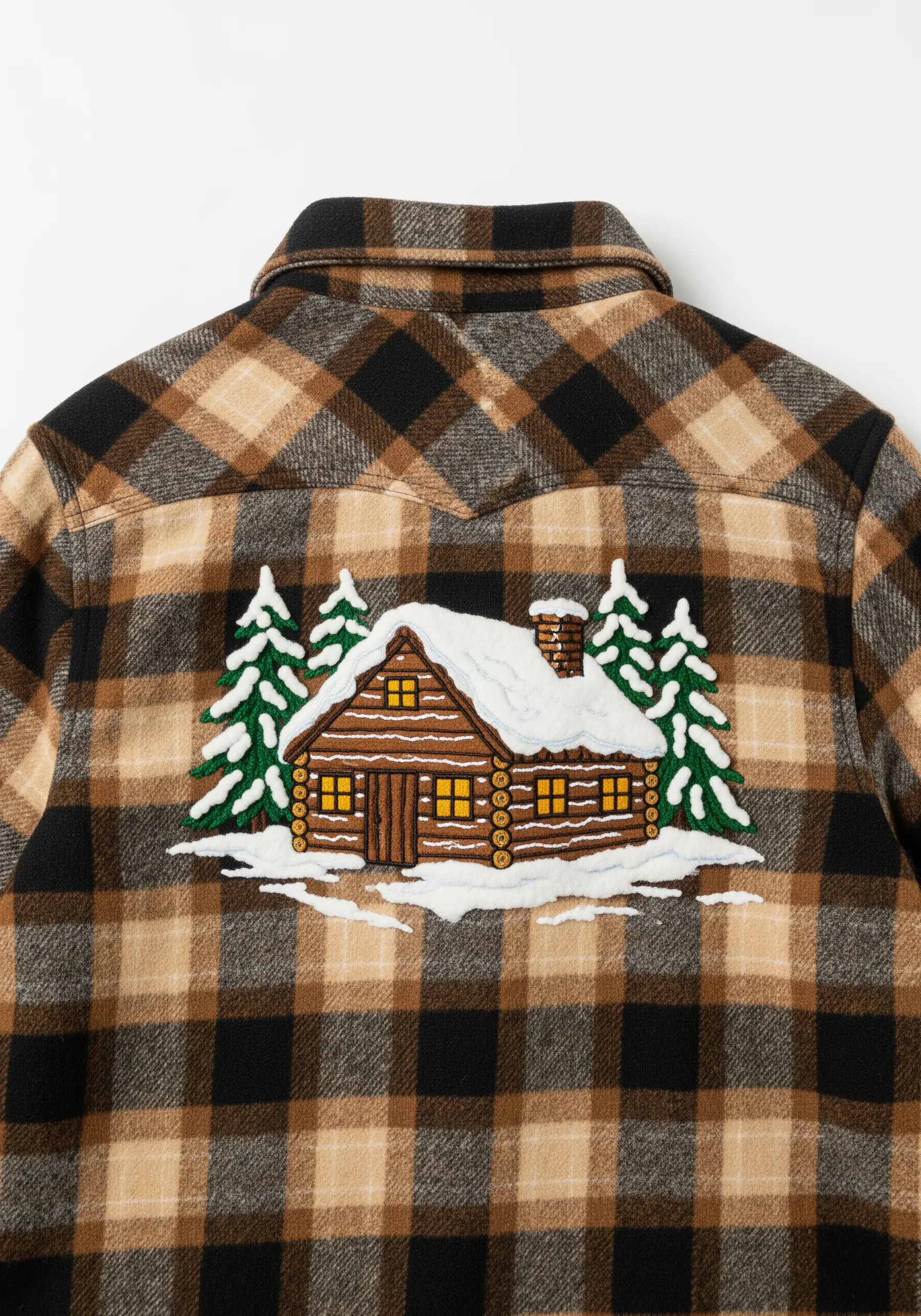
For the snow on the roof and ground, create a thick, fluffy texture by using bulky white yarn and either couching it down or creating dense clusters of French knots.
This mixed-fiber embroidery technique adds a wonderfully tactile, three-dimensional quality that makes the snow look freshly fallen.
Use the flannel’s existing plaid as a natural grid to help keep the lines of your log cabin straight and even.
22. Architectural Simplicity on Denim
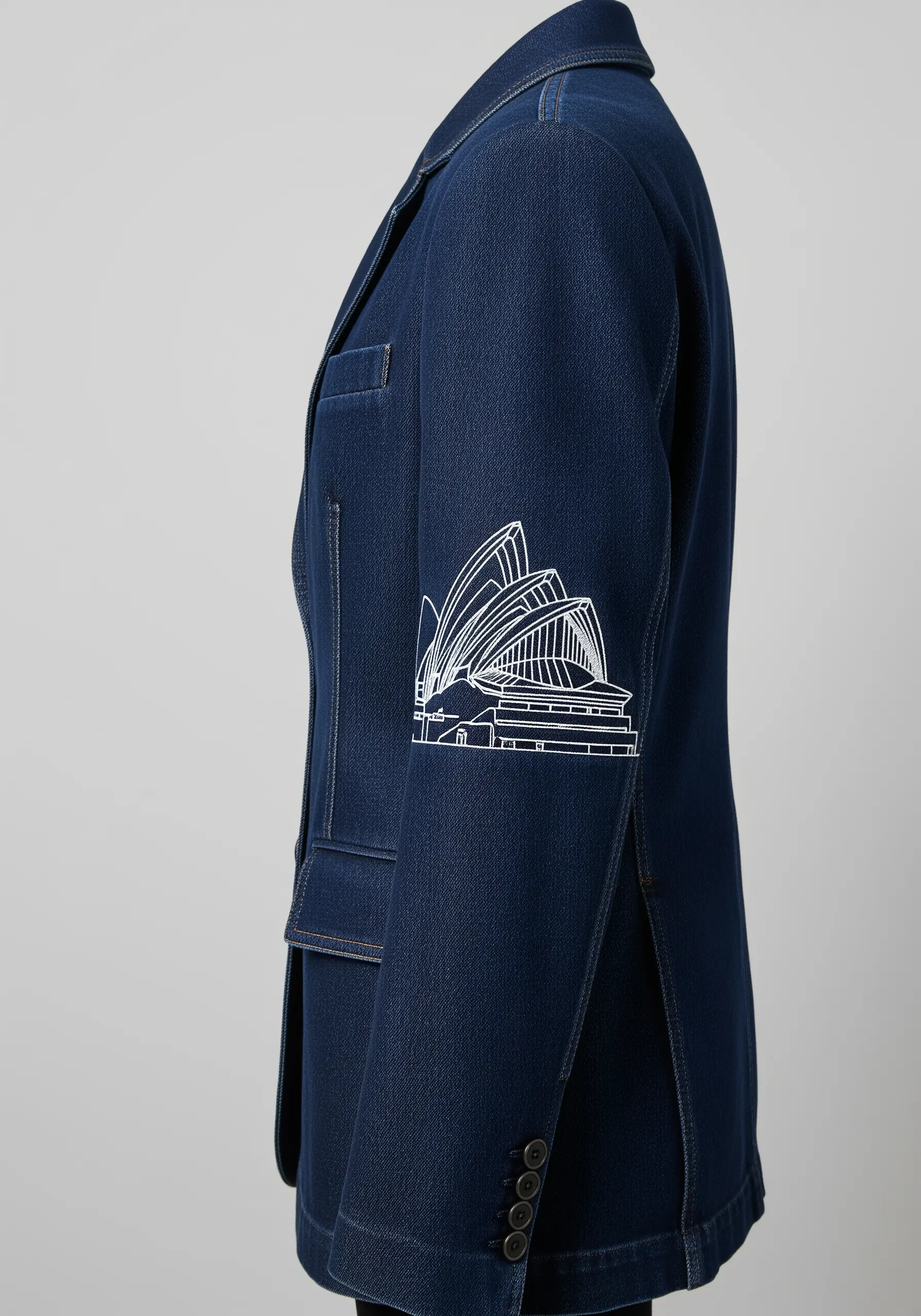
The power of this design lies in its minimalist elegance. You can recreate any iconic landmark with a clean, continuous line using a simple backstitch or stem stitch.
Choose a high-contrast thread color, like bright white on dark denim, to ensure the architectural form stands out.
The success of this style is all in the precision, so focus on achieving smooth curves and sharp, decisive angles for a polished, graphic look.
23. A Playful Trip Around the World
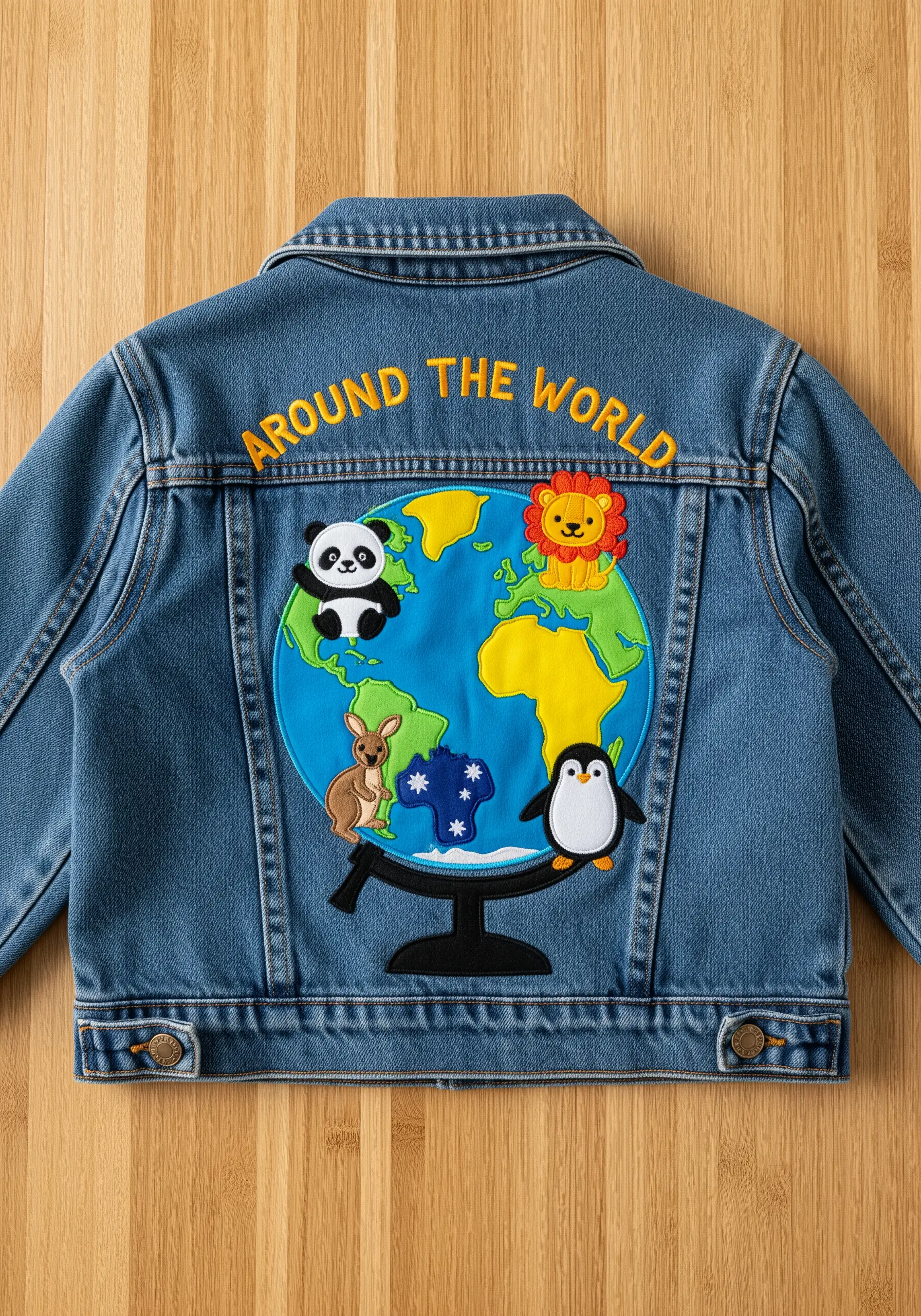
This charming design is a perfect candidate for felt appliqué, a technique that is both fast and visually impactful.
Cut the continents and animal shapes from different colors of felt, iron them into place with a fusible bonding web, and then secure the edges with a neat blanket stitch.
The blanket stitch not only adds durability but also provides a lovely, handcrafted border that frames each element.
24. Abstract Desert Vista
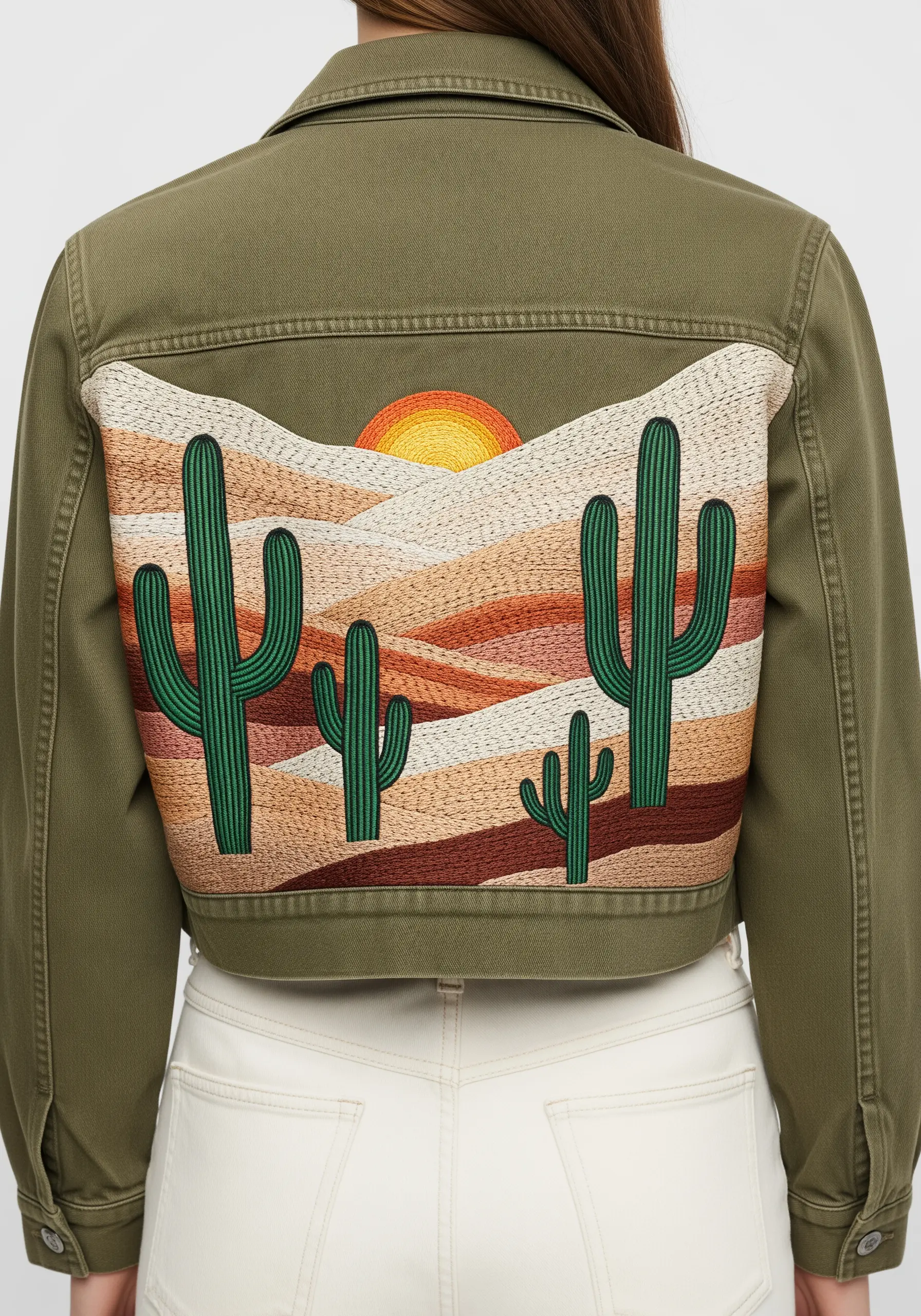
Instead of literal representation, capture the mood of a desert landscape by embroidering horizontal bands of color on a separate fabric panel.
Assign a different textured stitch to each band—satin stitch, long-and-short stitch, seed stitch, or French knots—to represent varied terrain and light.
This abstract thread landscape approach is about conveying feeling through texture and color. Once complete, appliqué the finished panel onto your jacket for a clean, modern look.
25. Delicate Sakura on Silk
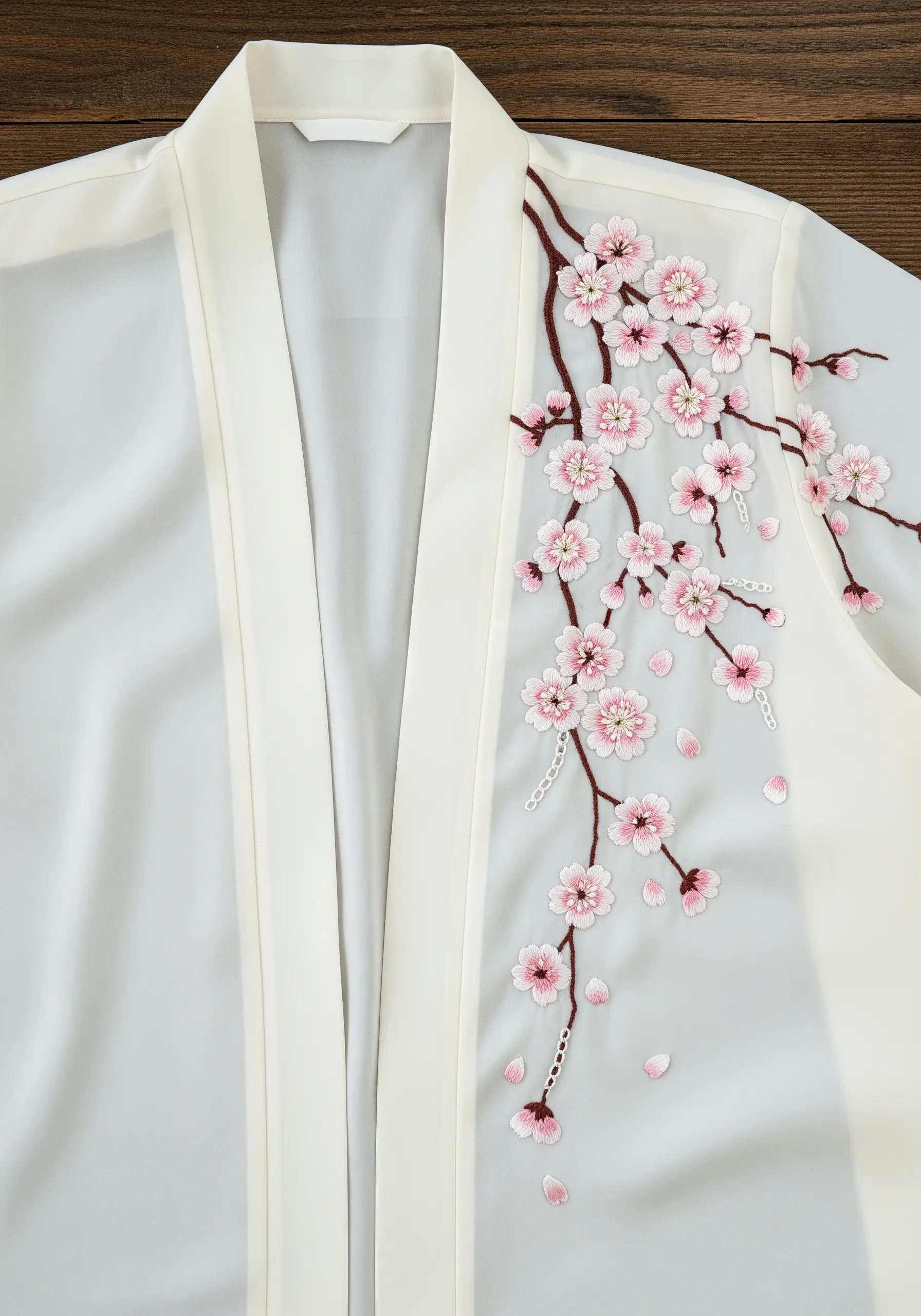
When embroidering on a lightweight, flowing fabric like silk or rayon, use only one or two strands of thread to maintain the garment’s drape.
Create the ethereal cherry blossoms using a lazy daisy stitch for the five petals and a single, contrasting French knot for the center.
For the branches, use a delicate and slightly irregular backstitch to mimic natural wood texture. This light touch ensures the embroidery enhances the fabric, rather than weighing it down.
26. Vintage National Park Souvenir
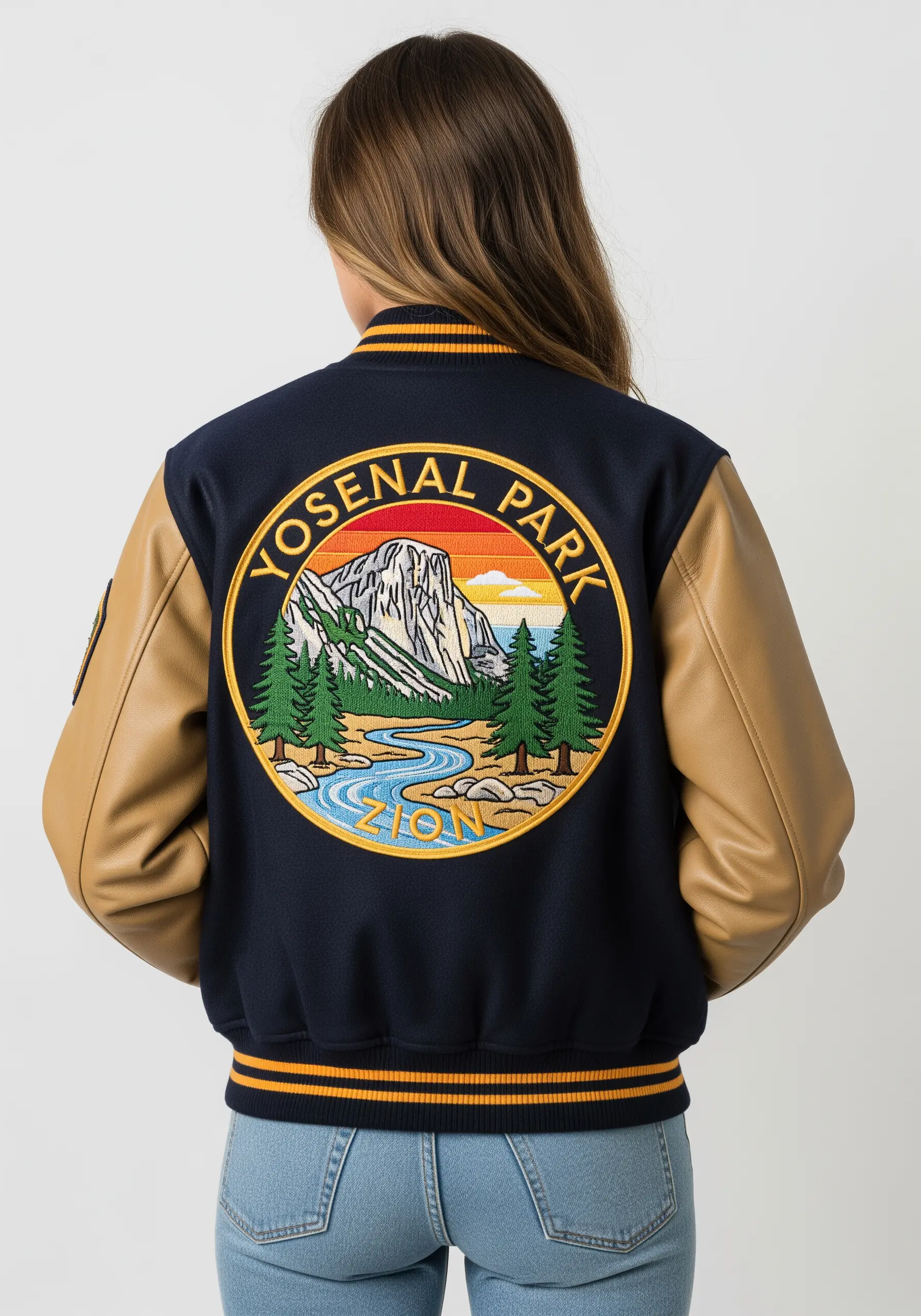
To achieve that classic, collectible patch aesthetic, the defining element is a thick, raised satin stitch border.
Embroider this border last, stitching it over the edges of your inner design. This creates a clean, defined boundary and gives the patch a professional, finished look.
For the landscape itself, use thread painting but with bolder, more graphic color transitions to mimic the screen-printed style of vintage patches.
27. Dynamic Volcanic Power
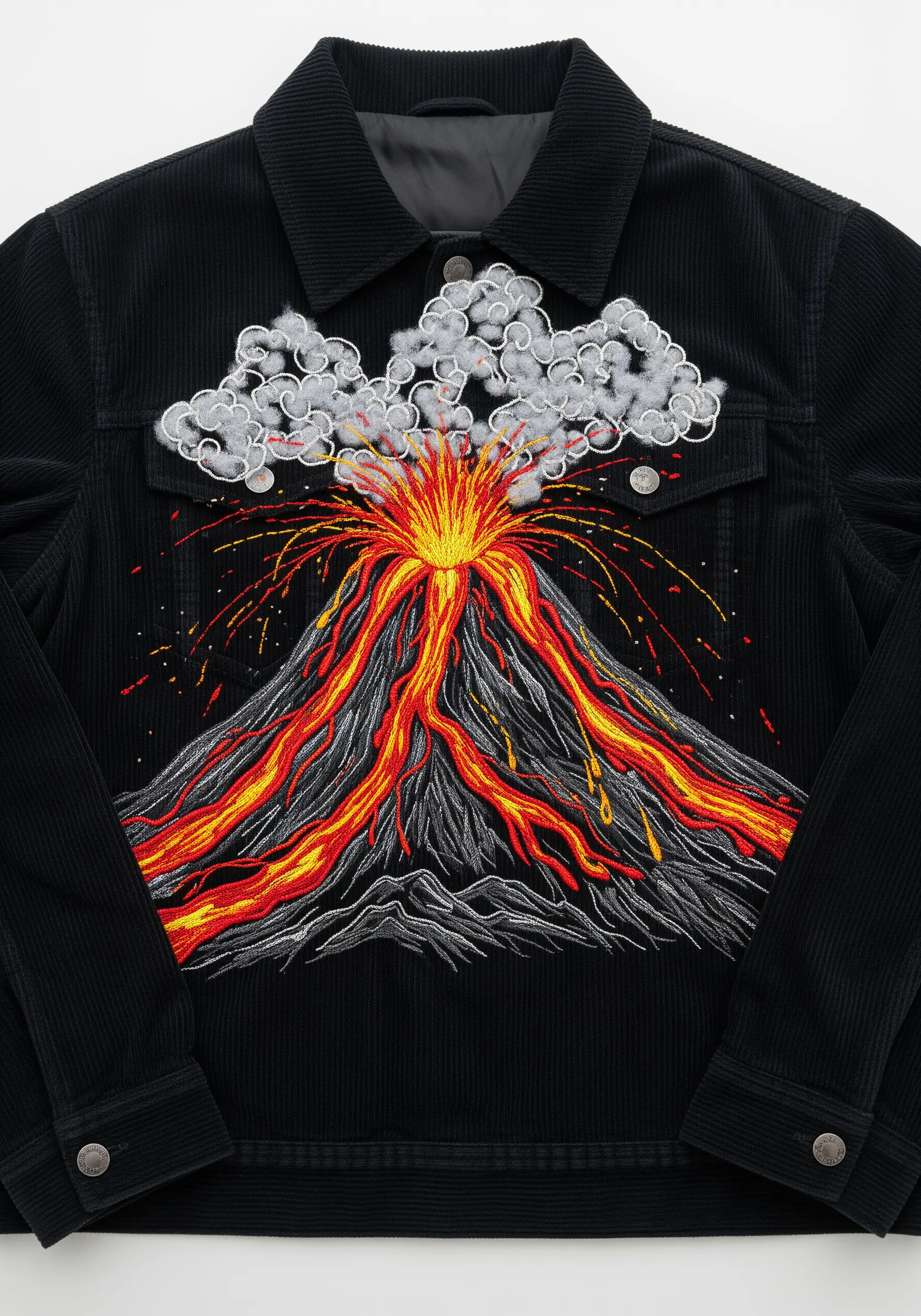
Capture the explosive energy of an eruption by combining different stitch techniques to represent different natural forces.
Use long, radiating straight stitches in red, orange, and yellow for the fiery lava spray.
For the billowing smoke clouds, create dense clusters of French knots in various shades of grey and white. This juxtaposition of linear and textural stitches makes the entire scene feel dynamic and alive.
28. A Call to Adventure in Gradients

Achieve a seamless color transition in your lettering by using a thread blending technique.
Start with two strands of your first color. After a few stitches, swap one of those strands for one of your second color. Continue this process through your color sequence.
This method creates beautiful, gentle gradient embroidery designs that make simple text feel polished and artistic.
29. Undersea Garden on a Raincoat
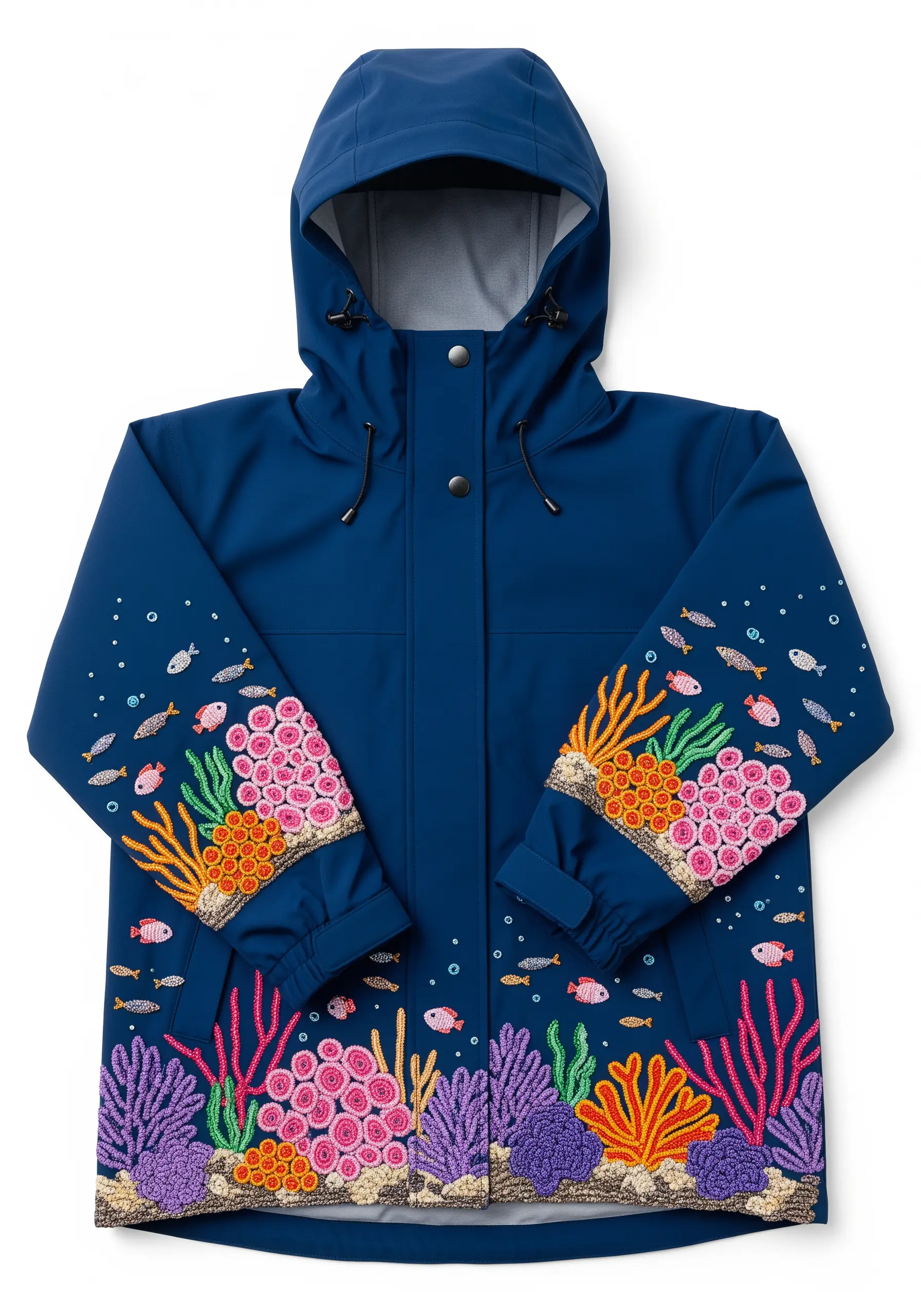
When stitching on waterproof fabric, you must seal the holes created by your needle. After finishing your embroidery, apply a waterproof seam sealant to the back of the stitching.
To create the varied textures of a coral reef, use a joyful mix of highly dimensional stitches: bullion knots for tubular shapes, woven wheel stitches for circular forms, and dense French knots for porous textures.
30. A Ticket to a Fantasy World
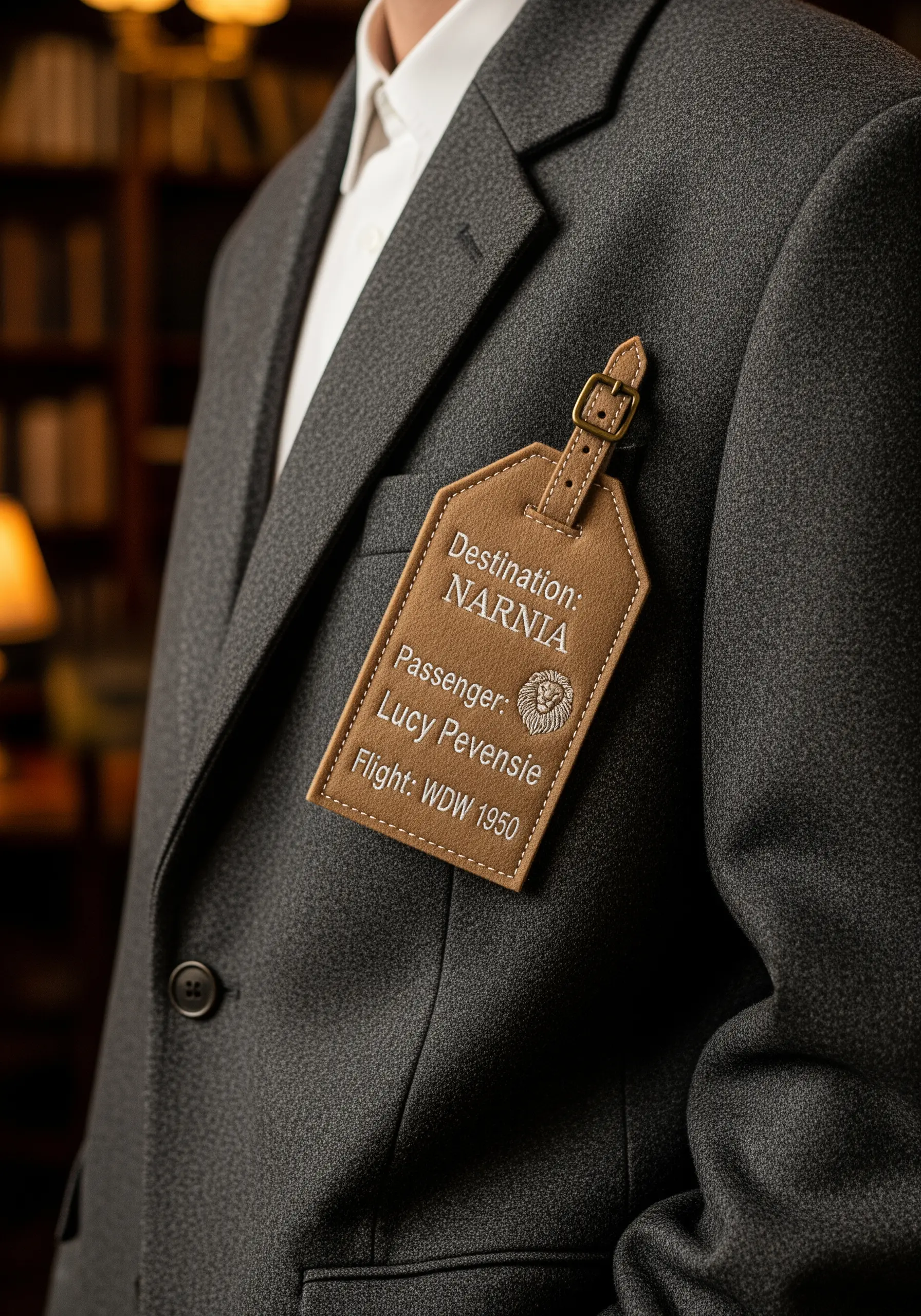
This clever accessory tells a travel story. To create your own custom luggage tag, embroider directly onto a sturdy material like canvas or faux leather.
For the fine lettering, ensure perfect legibility by using a simple backstitch with only a single strand of thread.
This project is a subtle, witty, and beautifully executed nod to the journeys we take in our imaginations, making it a perfect conversation starter.
31. An Epic Landscape in Stitches
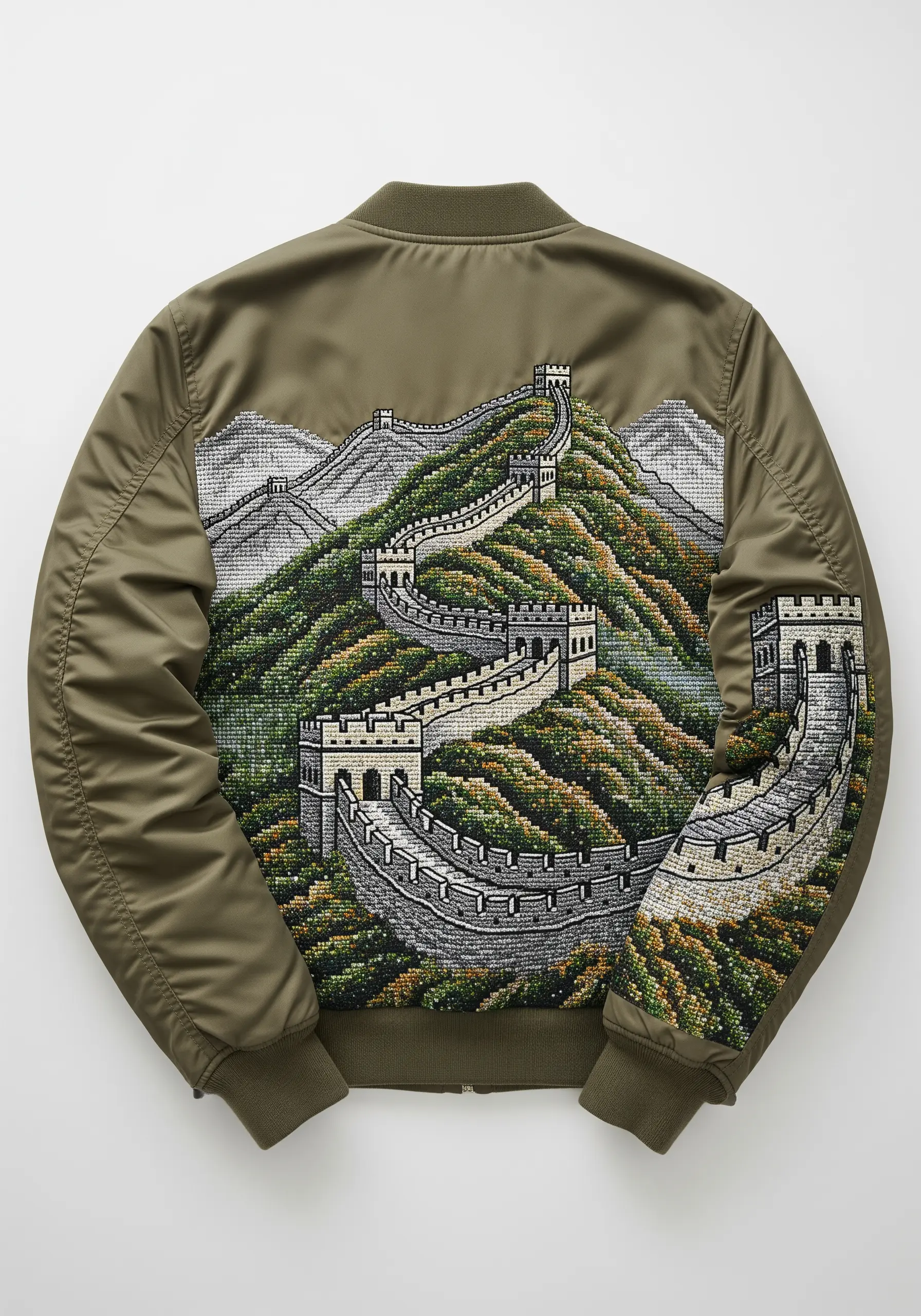
For a large-scale, highly detailed piece like this, approach it with a painterly mindset. Use tiny seed stitches or single-strand backstitches in a pointillist style to build up color and texture on the hillsides.
By clustering different shades of green, brown, and grey thread, you can create a complex, tapestry-like image that has incredible depth and realism.
This technique requires patience, but the result is a breathtaking and unique work of wearable art.
32. Vibrant Celebration of Life
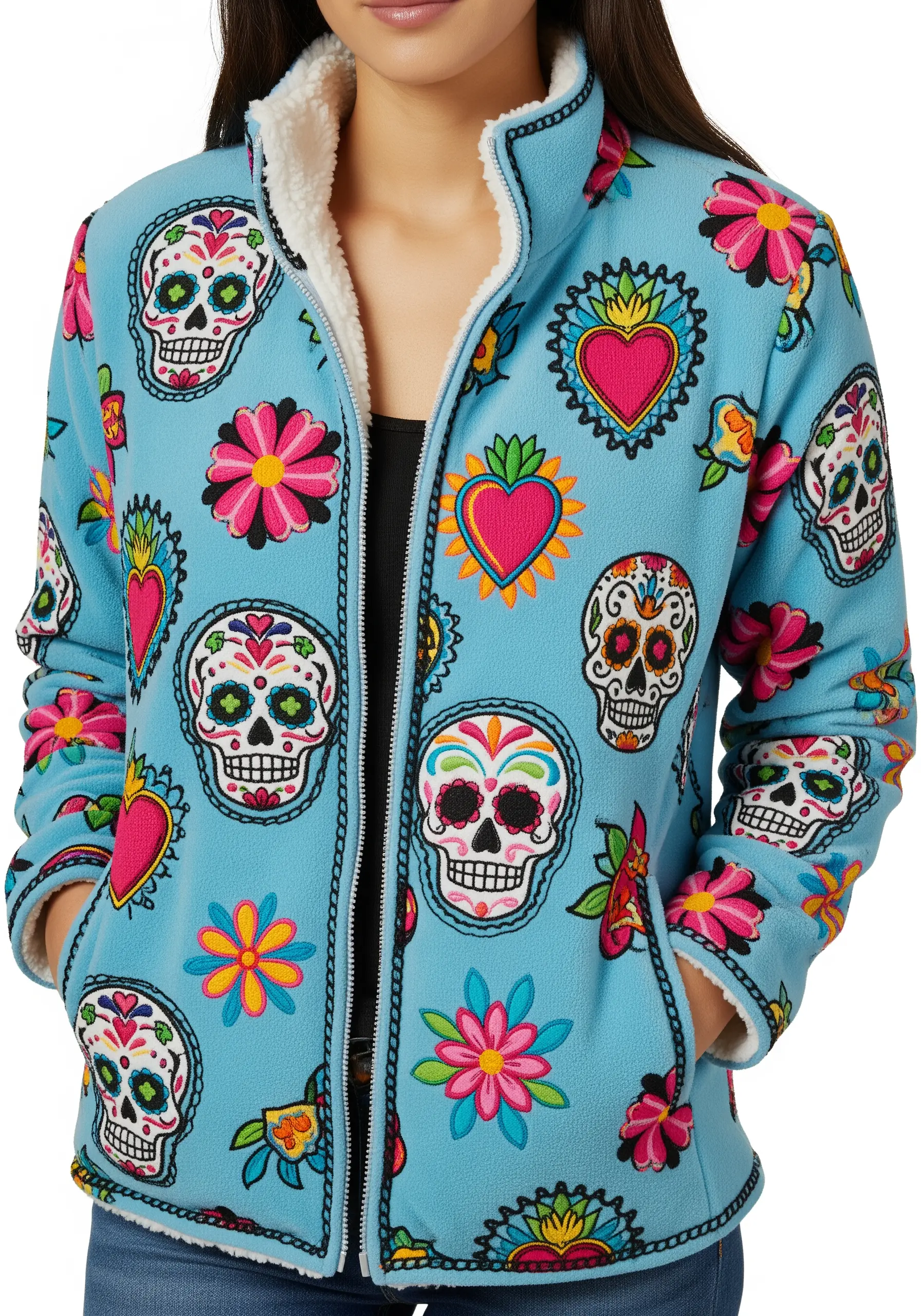
The joy of Calavera (sugar skull) embroidery is in the rich, decorative details. Use a bold backstitch for the black outlines to make them pop against the brightly colored fleece.
For the decorative fillings, embrace a playful mix of stitches: use satin stitch for solid hearts, lazy daisy stitches to form flower-petal eyes, and French knots for tiny, dotted accents.
This combination of techniques enhances the joyful, celebratory spirit inherent in the design.
33. Maritime Message in Code
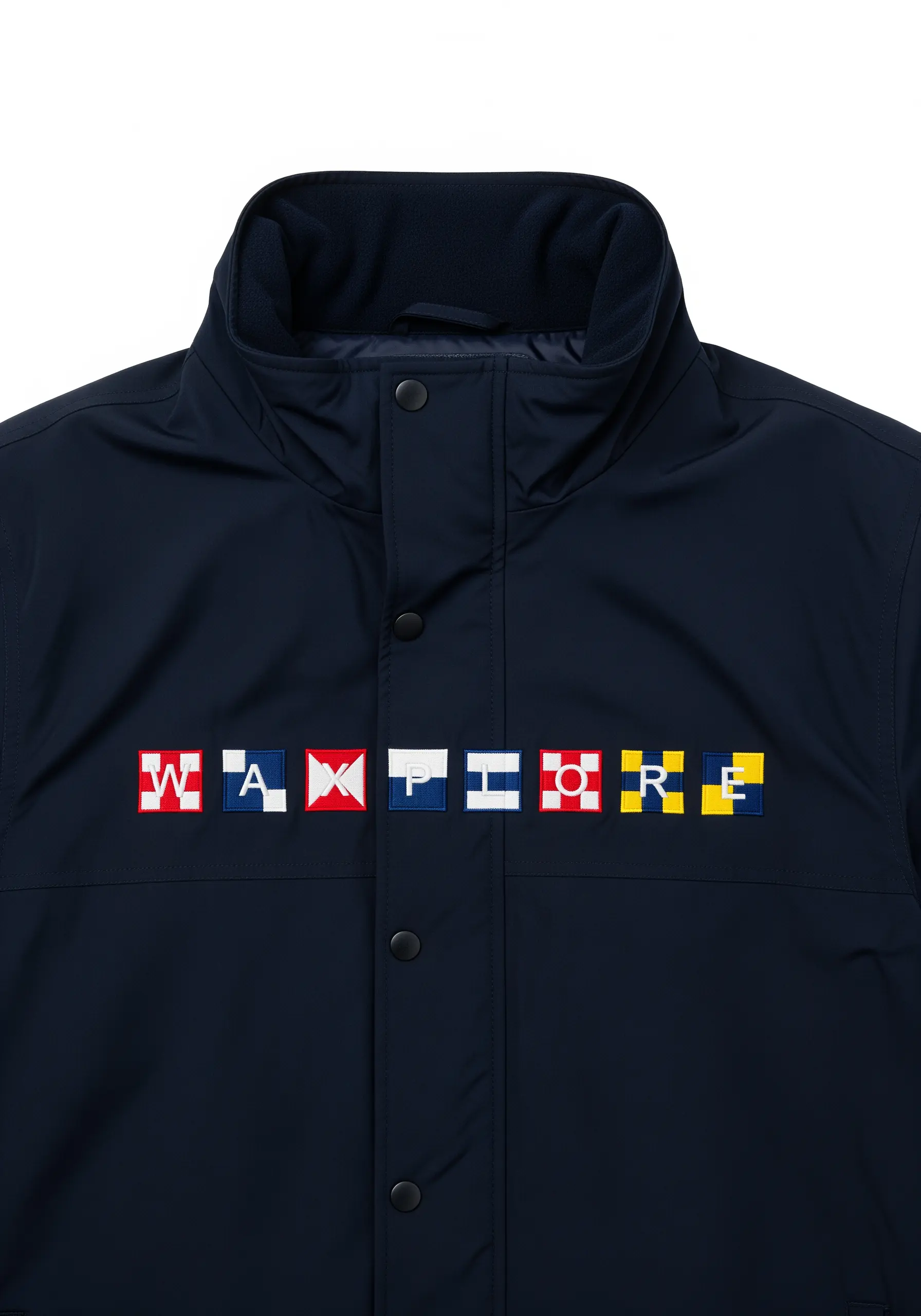
Spell out a meaningful word, a place, or your initials using the graphic language of nautical signal flags.
For these clean, geometric designs, a perfectly executed satin stitch is essential. The secret to achieving sharp edges and full coverage is to outline each color block with a split stitch first.
This simple preparatory step creates a contained area to fill, guaranteeing a professional, high-end finish for your coded message.