There’s a special kind of magic in tropical embroidery. It’s more than just stitching a flower onto fabric; it’s about capturing the feeling of sun on your skin, the sound of waves, and the vibrant, effortless beauty of a vacation.
But how do you translate that feeling into thread without your work looking flat or cartoonish? The secret isn’t in complex patterns, but in thoughtful technique. It’s in the way you blend two shades of red to make a hibiscus petal glow, or the specific stitch you choose to give a palm leaf its texture.
Here, I’ll show you how to move beyond basic stitches and infuse your apparel and decor with that authentic, breezy vacation spirit. You’ll learn to use color, texture, and placement to create embroidery that feels alive, modern, and deeply personal. It’s time to stitch your own little piece of paradise.
1. Master Realistic Petal Shading on Denim
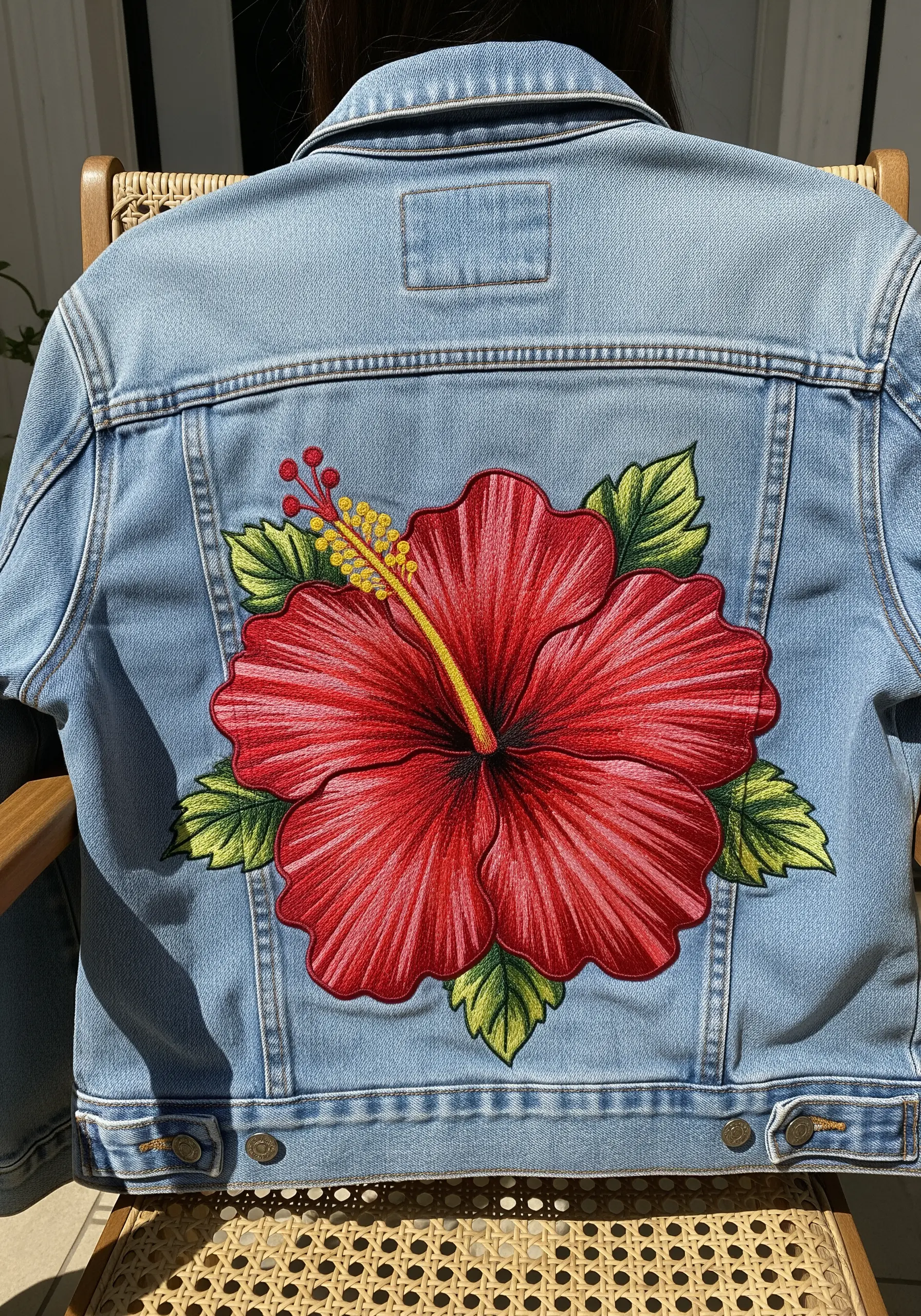
To achieve a smooth, painted effect on heavy fabric like denim, use the long-and-short stitch technique.
Work in sections, blending at least three shades of red per petal to create depth and shadow.
Always use a tear-away stabilizer on the back of your jacket to prevent the fabric from puckering under the dense stitching.
Finish with a strong split-stitch outline in a slightly darker thread to give the hibiscus a clean, defined edge.
2. Frame a Collar with Delicate Plumeria
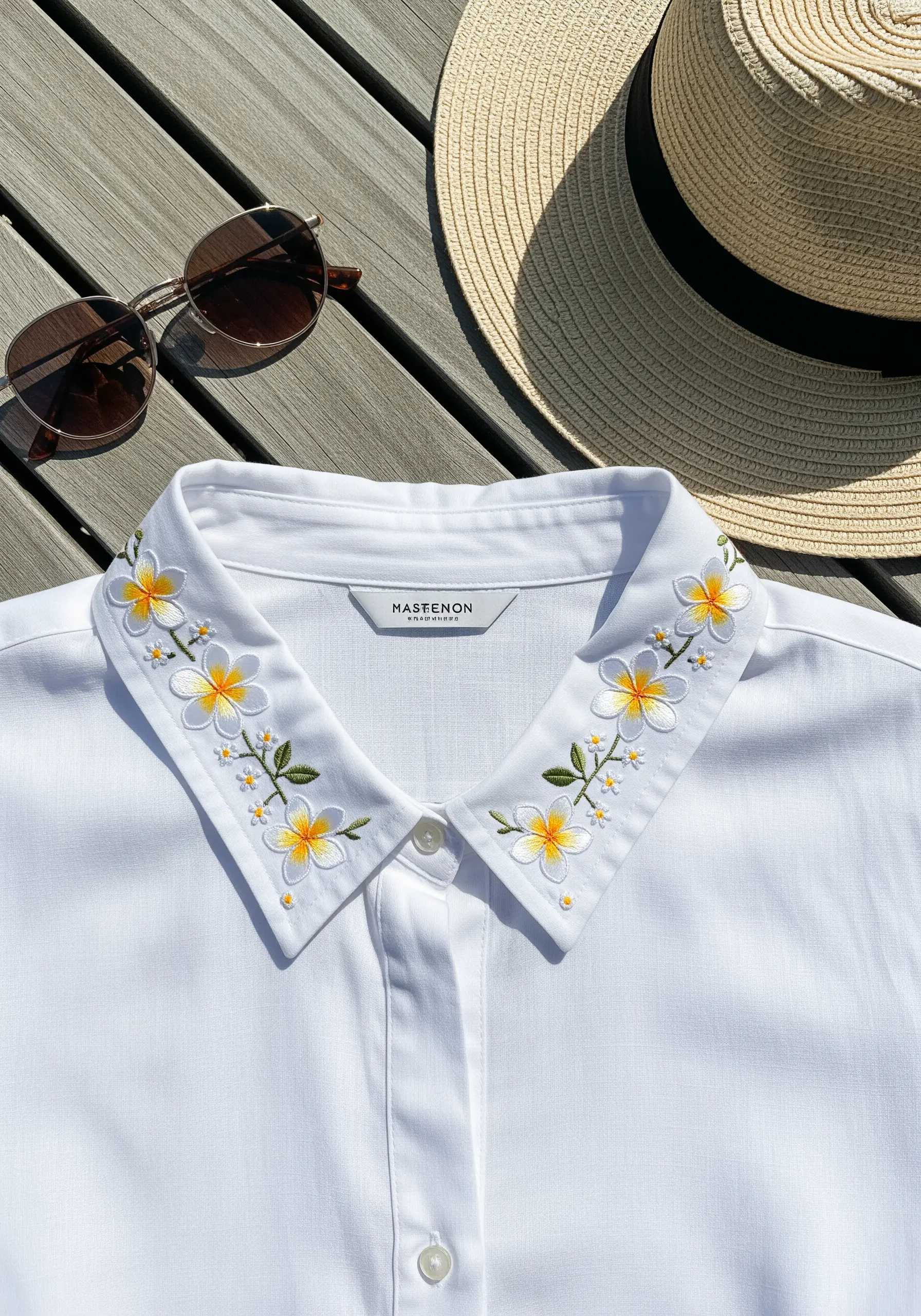
For a subtle, elegant embellishment, arrange small plumeria flowers symmetrically along a shirt collar.
Use only two strands of floss for a refined finish on crisp cotton, preventing the stitches from looking bulky.
Create a soft gradient in the center of each petal by blending yellow and orange with a few simple straight stitches.
Add tiny French knots with white or pale yellow thread to complete the flower centers and provide a touch of texture.
3. Combine Geometric Blocks with Organic Florals
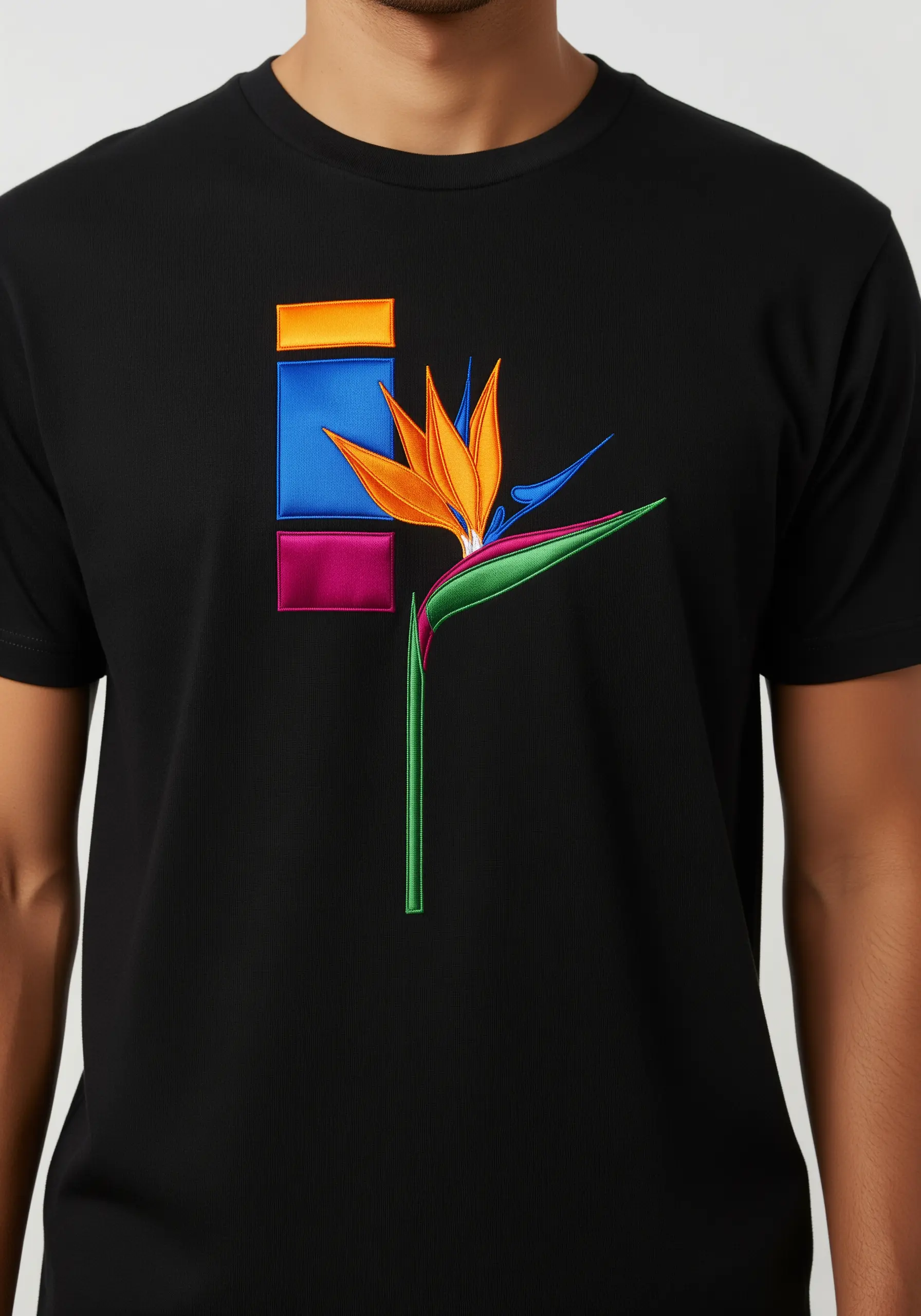
Juxtapose the sharp angles of a bird of paradise flower with bold, color-blocked rectangles for a modern, artistic composition.
Fill the geometric shapes with flawless satin stitch, ensuring each stitch lays flat and parallel for a solid, fabric-like sheen.
Use a contrasting black T-shirt to make the vibrant oranges, blues, and magentas of the flower appear even more saturated.
This design works because the structure of the blocks grounds the wild, expressive shape of the bloom.
4. Create Depth with a Monochromatic Leaf Study
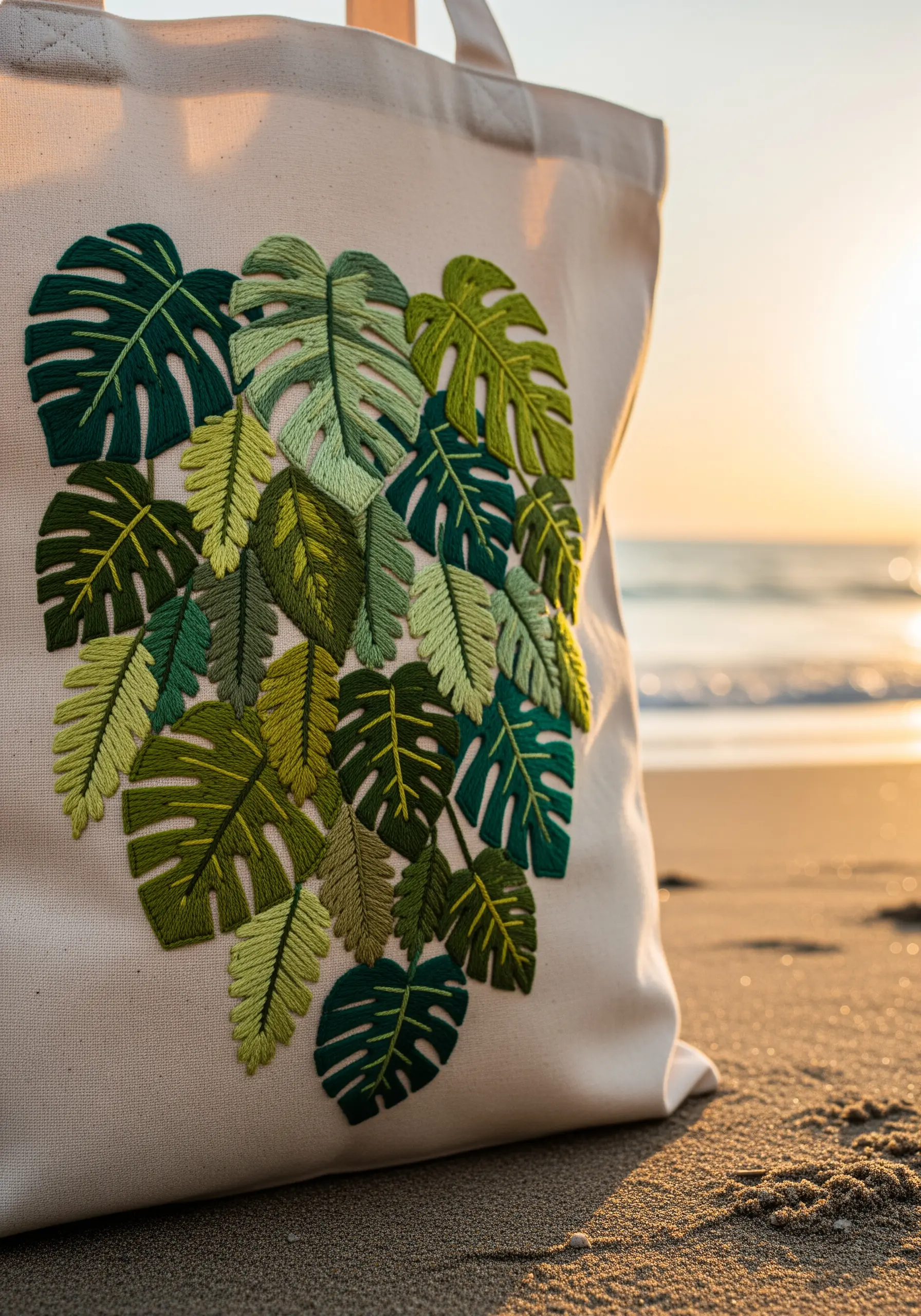
Explore the beauty of a single color family by filling a canvas tote with Monstera leaves in varying shades of green.
Use different fill stitches for each leaf—like fishbone stitch for some and satin stitch for others—to introduce subtle textural variations.
Overlapping the leaves creates a sense of lush density, turning a simple design into a rich botanical arrangement.
This technique proves that you don’t need a wide color palette to create a visually dynamic and sophisticated piece.
5. Design a Narrative on a Denim Pocket
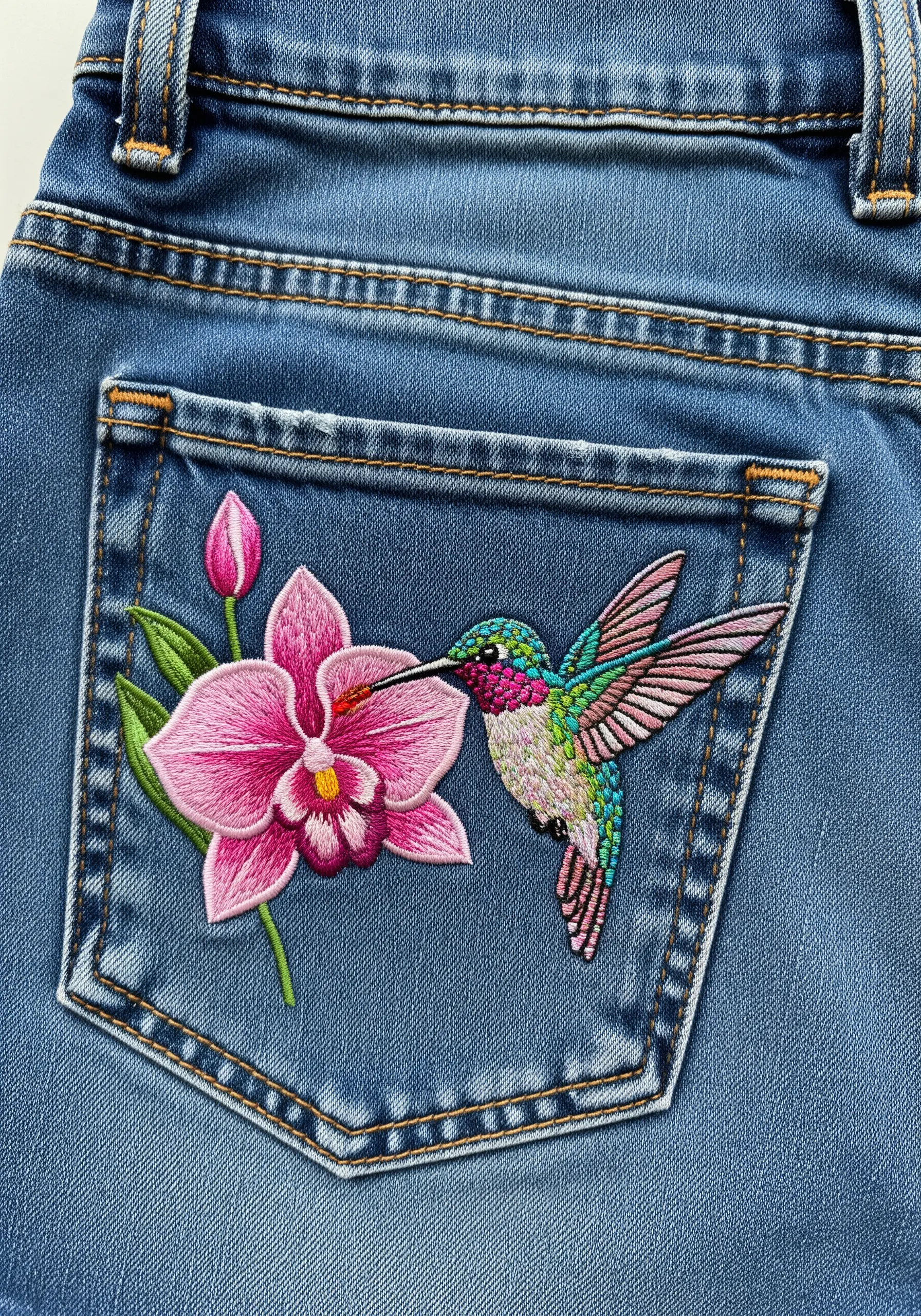
Use a back pocket as a miniature canvas for a dynamic scene, like a hummingbird visiting an orchid.
Achieve the iridescent look of the hummingbird’s feathers by using directional satin stitches that catch the light from different angles.
Place the main elements diagonally to create a sense of movement and guide the viewer’s eye across the composition.
Using a limited palette of pinks, teals, and greens ensures the two detailed motifs feel cohesive rather than cluttered.
6. Embroider Bougainvillea on a Straw Hat
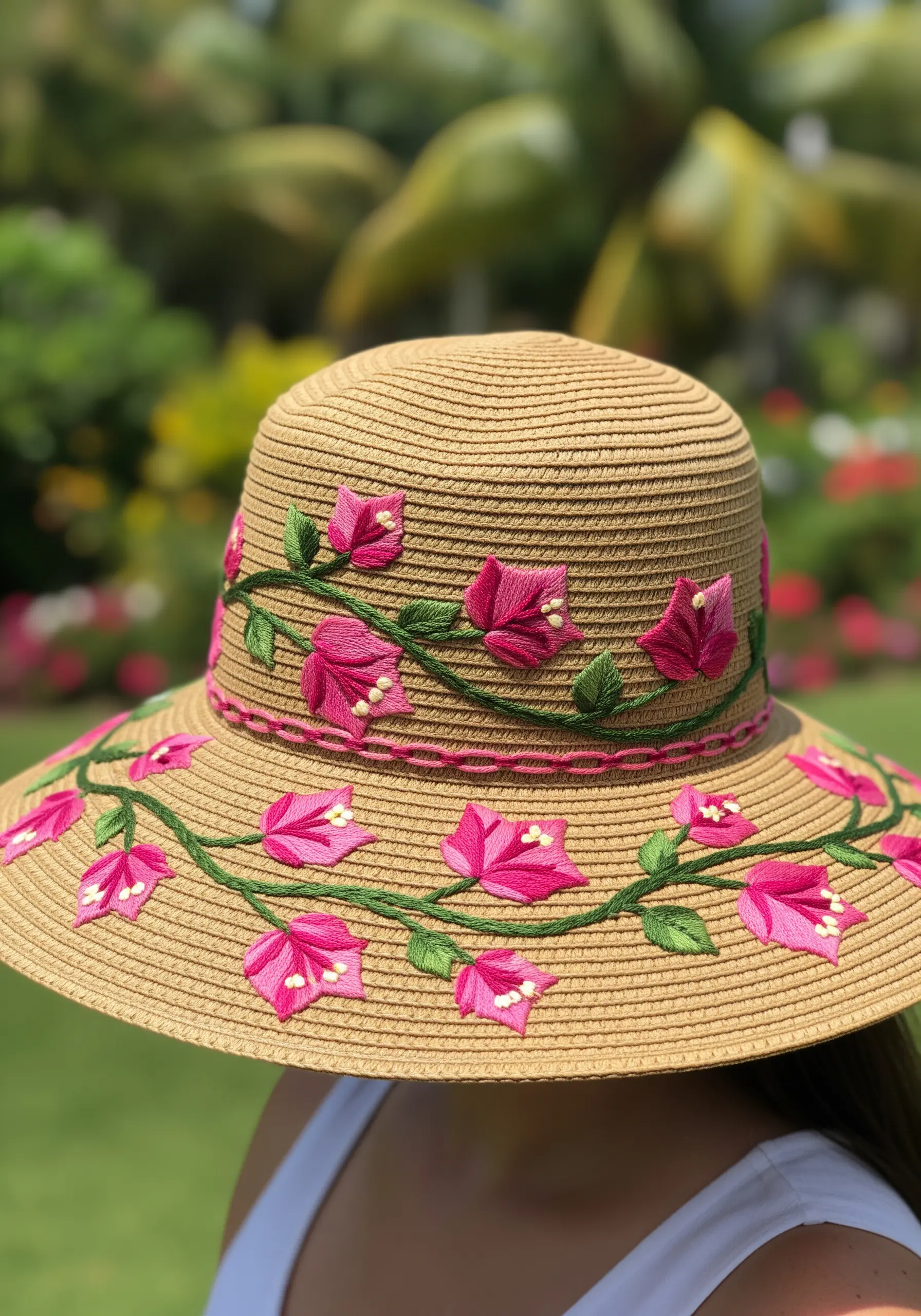
When stitching on a textured surface like a straw hat, choose simpler, bolder stitches that won’t get lost in the weave.
Use detached chain stitches (lazy daisies) or satin stitch to form the bright pink bracts of the bougainvillea.
A thicker thread, such as pearl cotton or all six strands of embroidery floss, will provide better coverage and durability.
Anchor your stitches securely through the straw, and consider adding a spot of fabric glue on the backside knots for extra security.
7. Stitch a Modern, Geometric Pineapple
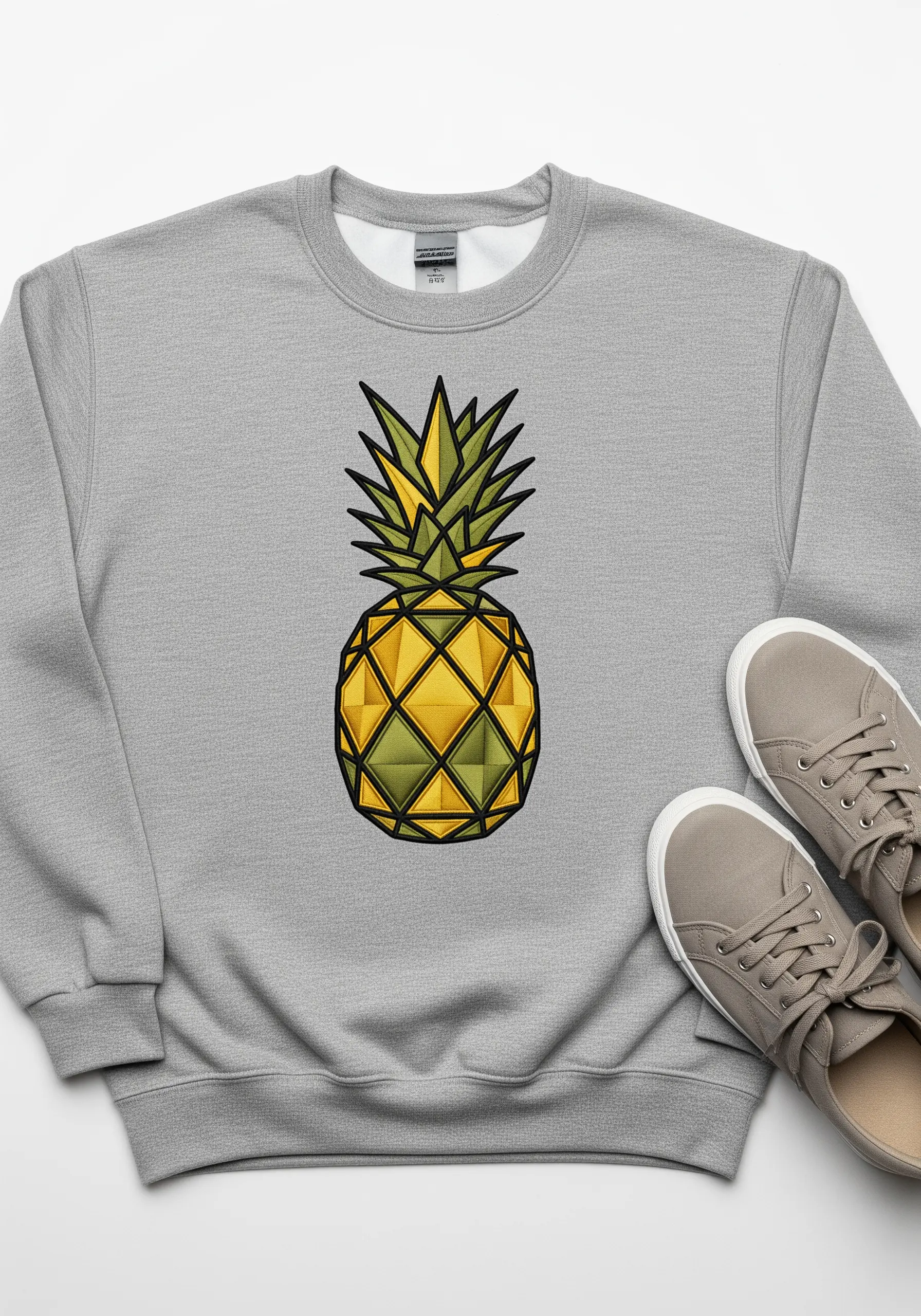
Give a classic tropical motif a contemporary twist by rendering it in a faceted, geometric style.
Outline each segment with a crisp black backstitch or split stitch to define the sharp, clean lines of the design.
Fill the facets with directional satin stitch, alternating the angle of your stitches in adjacent sections to enhance the three-dimensional effect.
This abstract approach works especially well on modern apparel like a heather grey sweatshirt, creating a cool, graphic statement.
8. Use Variegated Thread for Effortless Blending
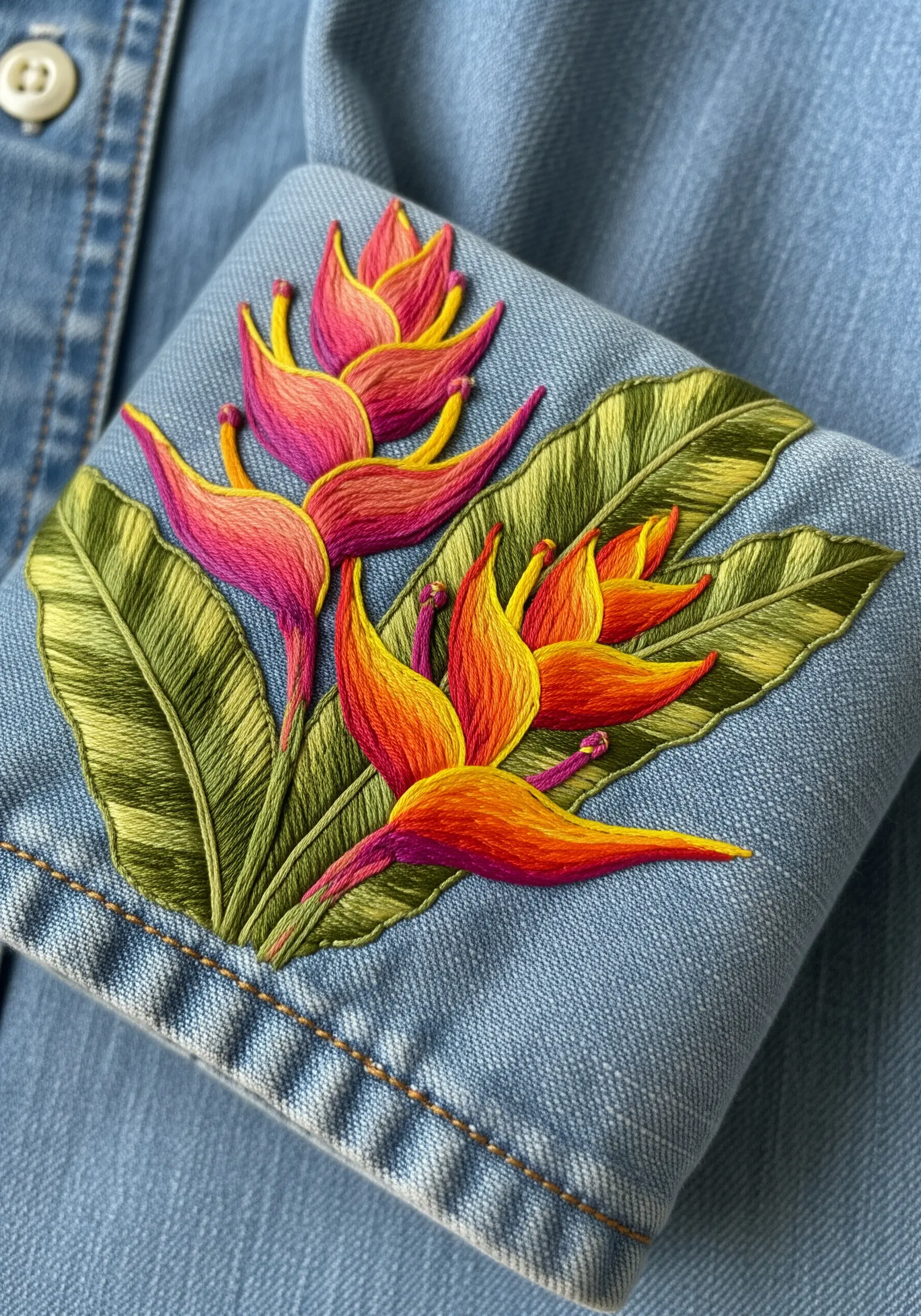
Let variegated floss do the color-blending work for you when stitching tropical flowers like heliconia or birds of paradise.
As you stitch, the thread will naturally shift from one color to the next, creating stunning gradient magic with minimal effort.
For the long leaves, use a fishbone stitch with a variegated green to mimic the subtle color shifts found in nature.
This technique is perfect for adding complex color transitions to a small area, like a denim shirt cuff, without changing threads.
9. Capture Intricate Detail on Dark Fabric
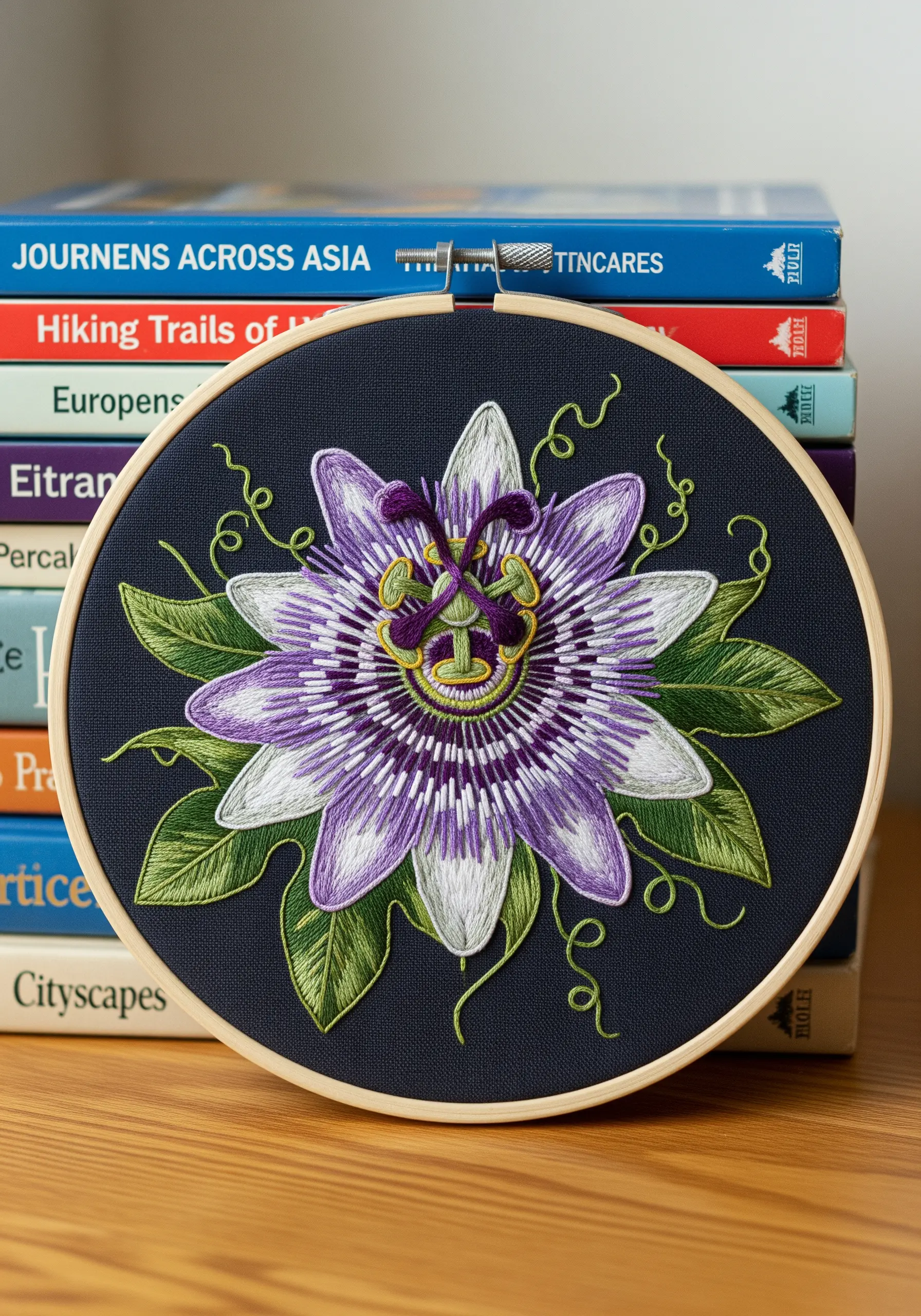
Choose a dark, solid background like navy or black cotton to make the complex layers of a passion flower truly stand out.
Break the flower down into simple components: satin stitch for the main petals, straight stitches for the corona filaments, and French knots for the central structure.
Use a stark white or pale lilac for the outer petals to create high contrast and draw the eye inward.
The dark fabric recedes, allowing the intricate textures and vibrant colors of your stitching to become the undisputed focus.
10. Add a Minimalist Touch with a Single Palm Frond
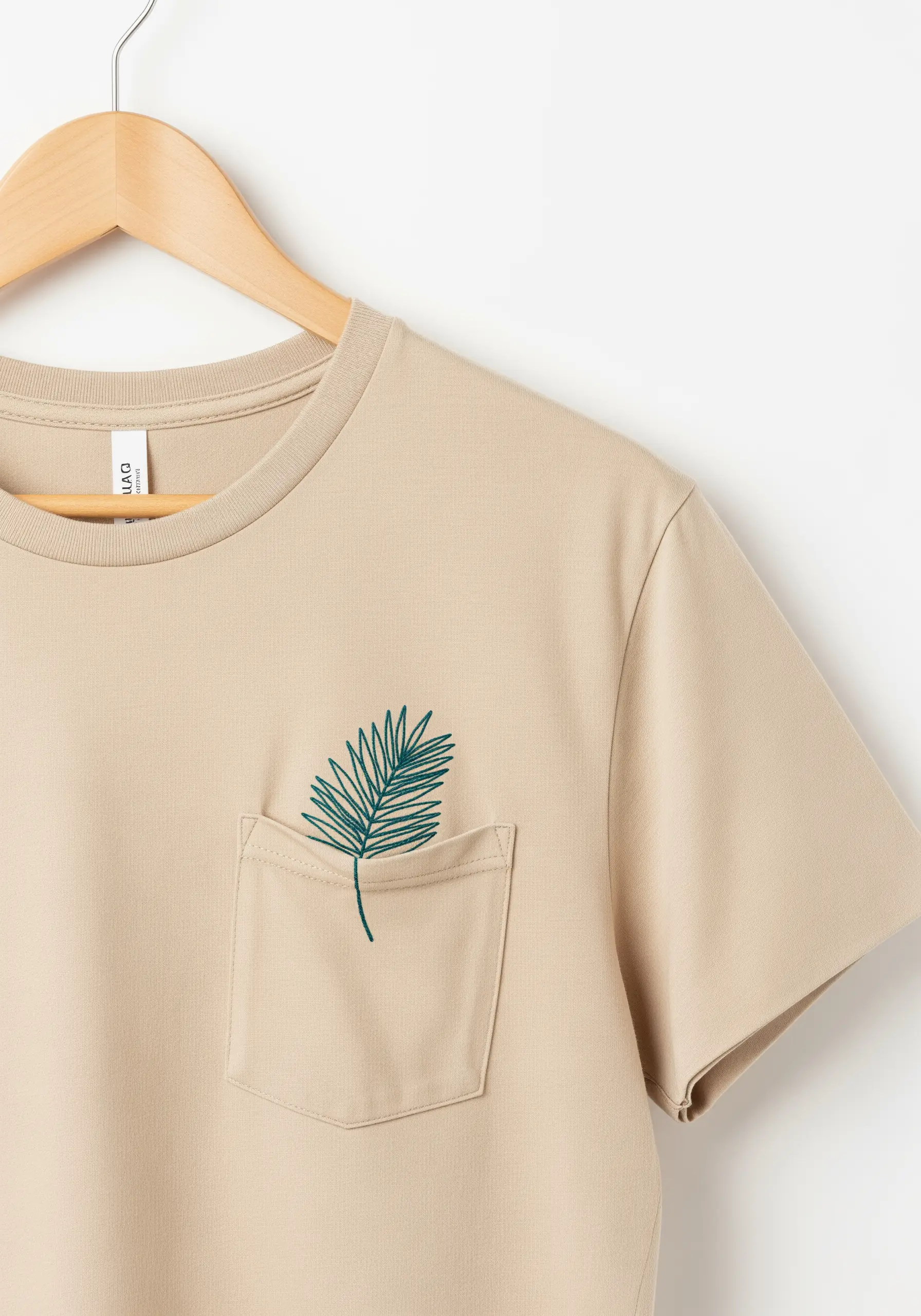
Sometimes, the most elegant statement is the simplest one. A single palm frond stitched on a T-shirt pocket adds a breezy, modern touch.
Use a stem stitch or split stitch to create a clean, continuous line for the stem and individual leaflets.
Choosing a single, rich color like teal or deep green against a neutral fabric creates a sophisticated, graphic look.
This proves that botanical line art embroidery patterns can have just as much impact as a fully filled design.
11. Emphasize Form with Directional Satin Stitch
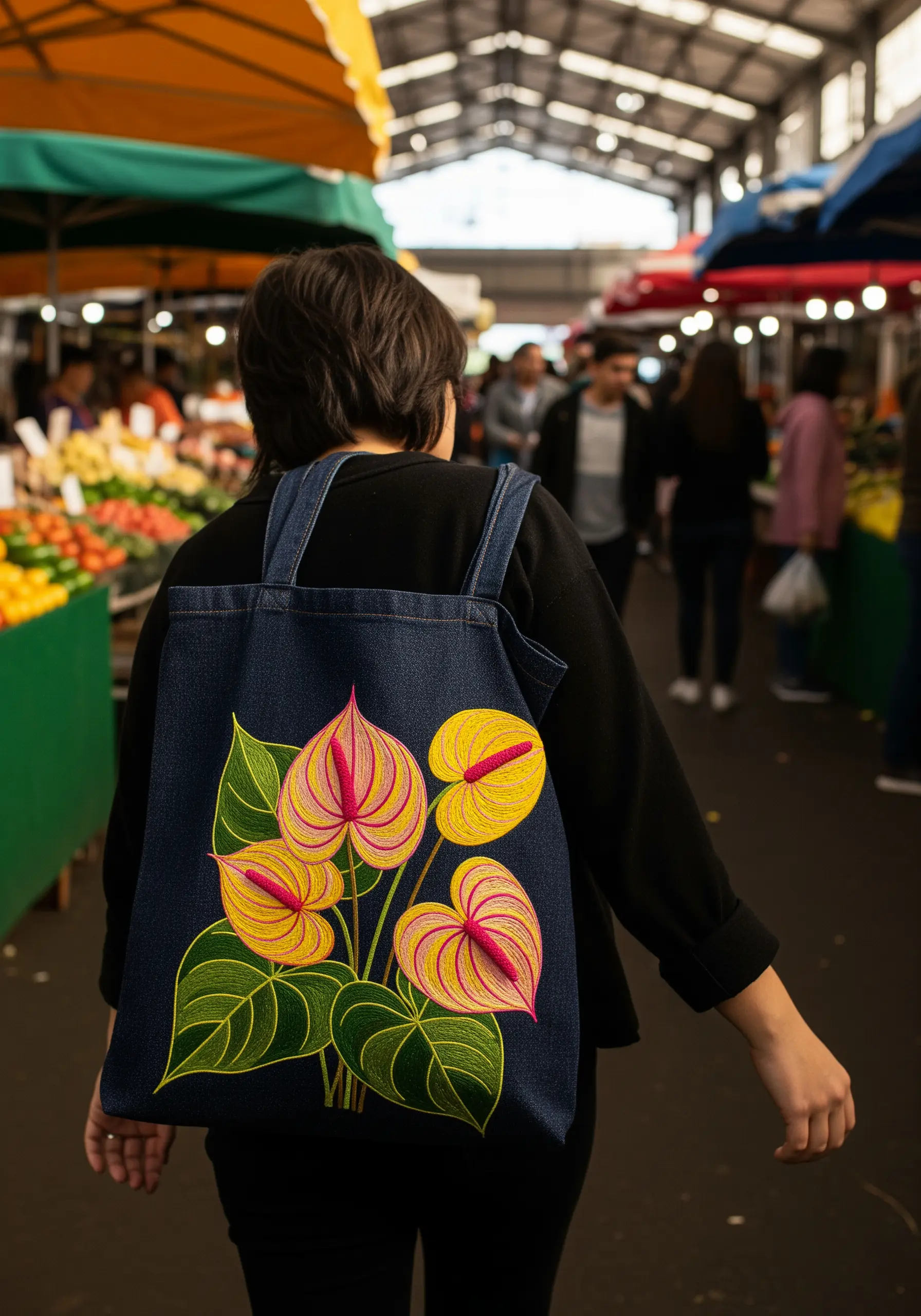
The unique, heart-like shape of anthuriums is perfect for practicing directional satin stitch.
Angle your stitches to follow the natural curves of the flower’s spathe, radiating from the center outwards to create a realistic sheen.
Use a contrasting color for the spadix (the central spike), filling it with a dense pattern of French knots for texture.
Stitching this design large-scale on a dark denim tote makes the vibrant pinks and yellows impossible to ignore.
12. Create a Statement Piece on a Pant Leg
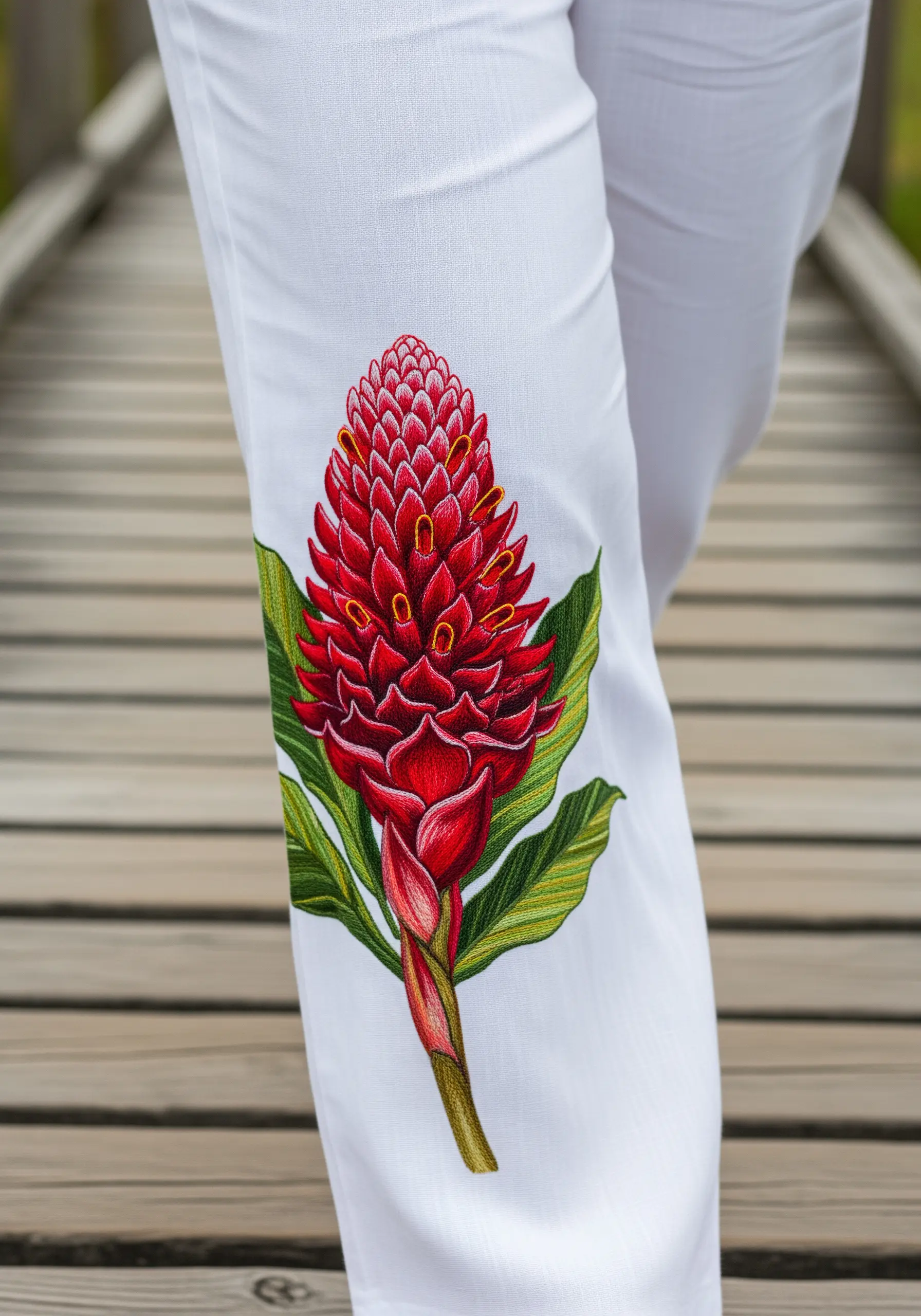
Utilize the long, vertical canvas of a pant leg to stitch a tall, dramatic flower like a red ginger torch.
Use long-and-short stitch to blend multiple shades of red and pink within the bracts, giving the flower a vibrant, dimensional look.
Keep the stem and leaves relatively simple to ensure the intricate flower head remains the focal point.
When placed along the outer seam, the design elongates the leg and creates a stunning, unexpected piece of wearable art.
13. Design a Patch-Style Motif on a Cap
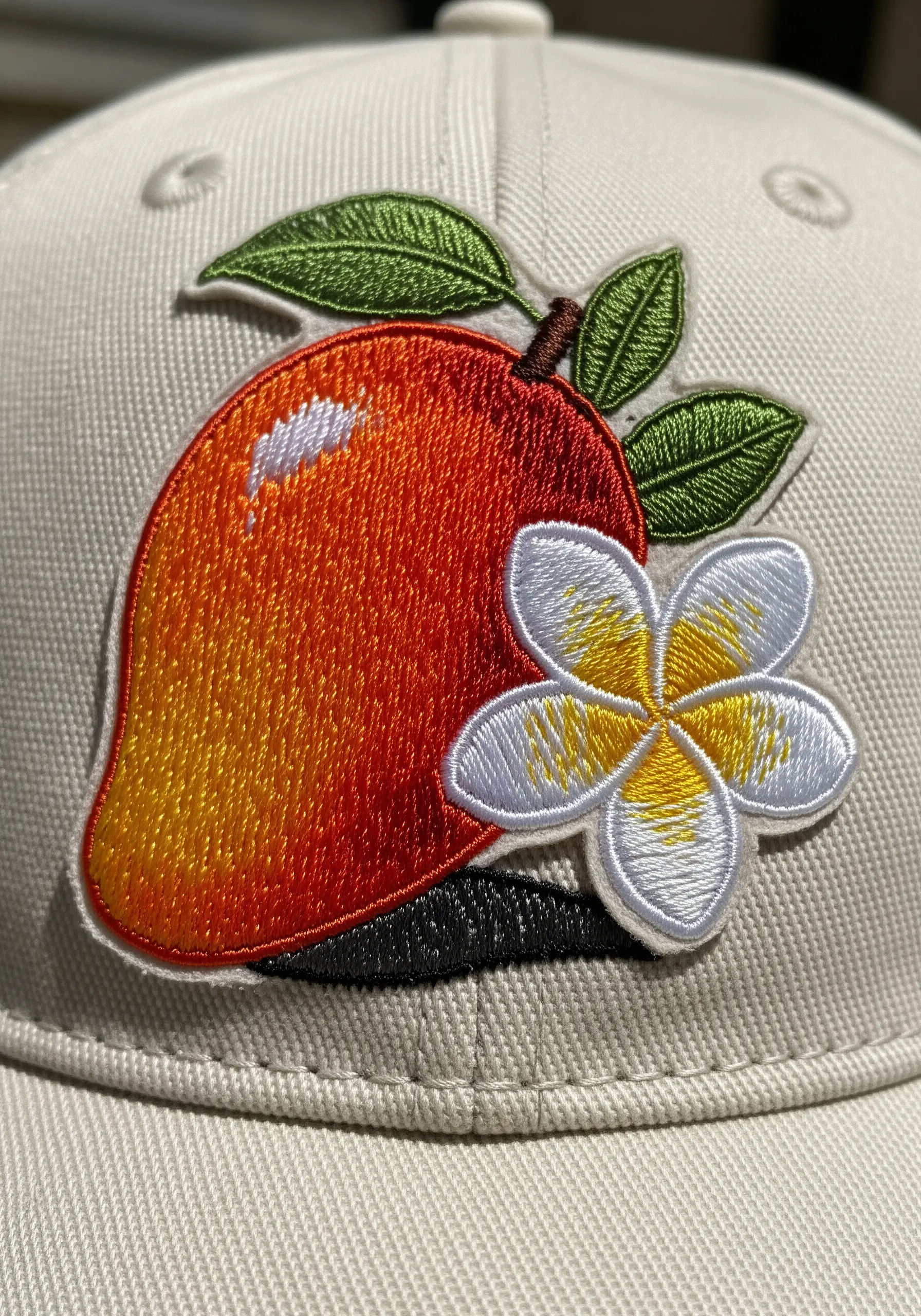
Create the clean, contained look of an embroidered patch by outlining your entire design with a thick, tight satin stitch border.
For the mango, blend warm reds, oranges, and yellows to mimic the gradient of sun-ripened fruit.
Add a single highlight in white using a few short straight stitches to give the fruit a sense of light and dimension.
This technique makes your embroidery stand out crisply against the texture of a baseball cap or beanie.
14. Achieve a Painted Look with Full-Coverage Embroidery
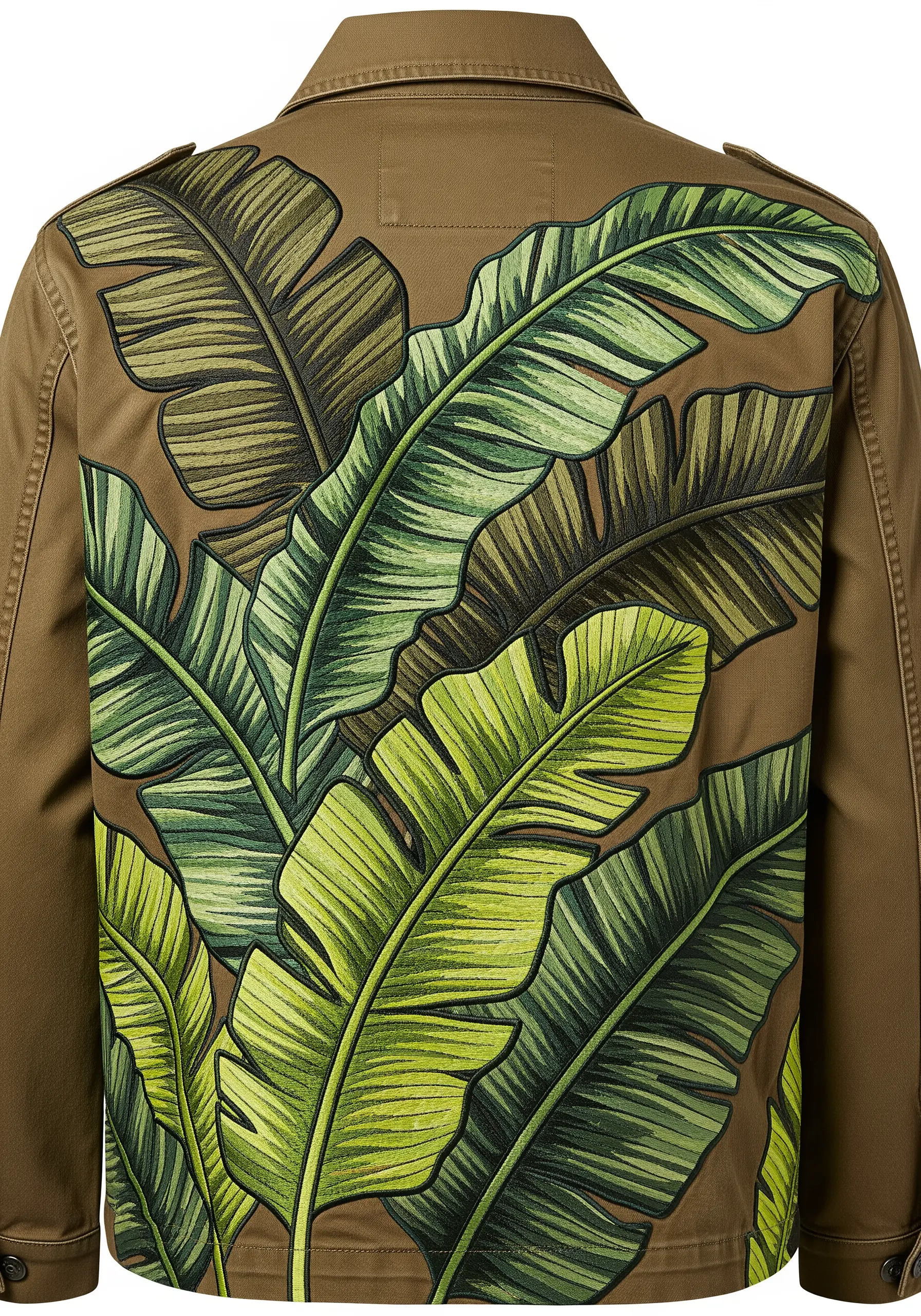
For an ambitious, all-over design like a back panel of banana leaves, think like a painter using thread.
Work with long-and-short stitches, laying them in the direction of the leaf’s veins to create a sense of natural growth and movement.
Don’t be afraid to use a wide range of greens—from deep olive to bright chartreuse—to give the composition depth and realism.
Tackle the design in smaller, manageable sections to maintain consistency and prevent the large area from feeling overwhelming.
15. Add Sophistication with a Monochrome Calla Lily
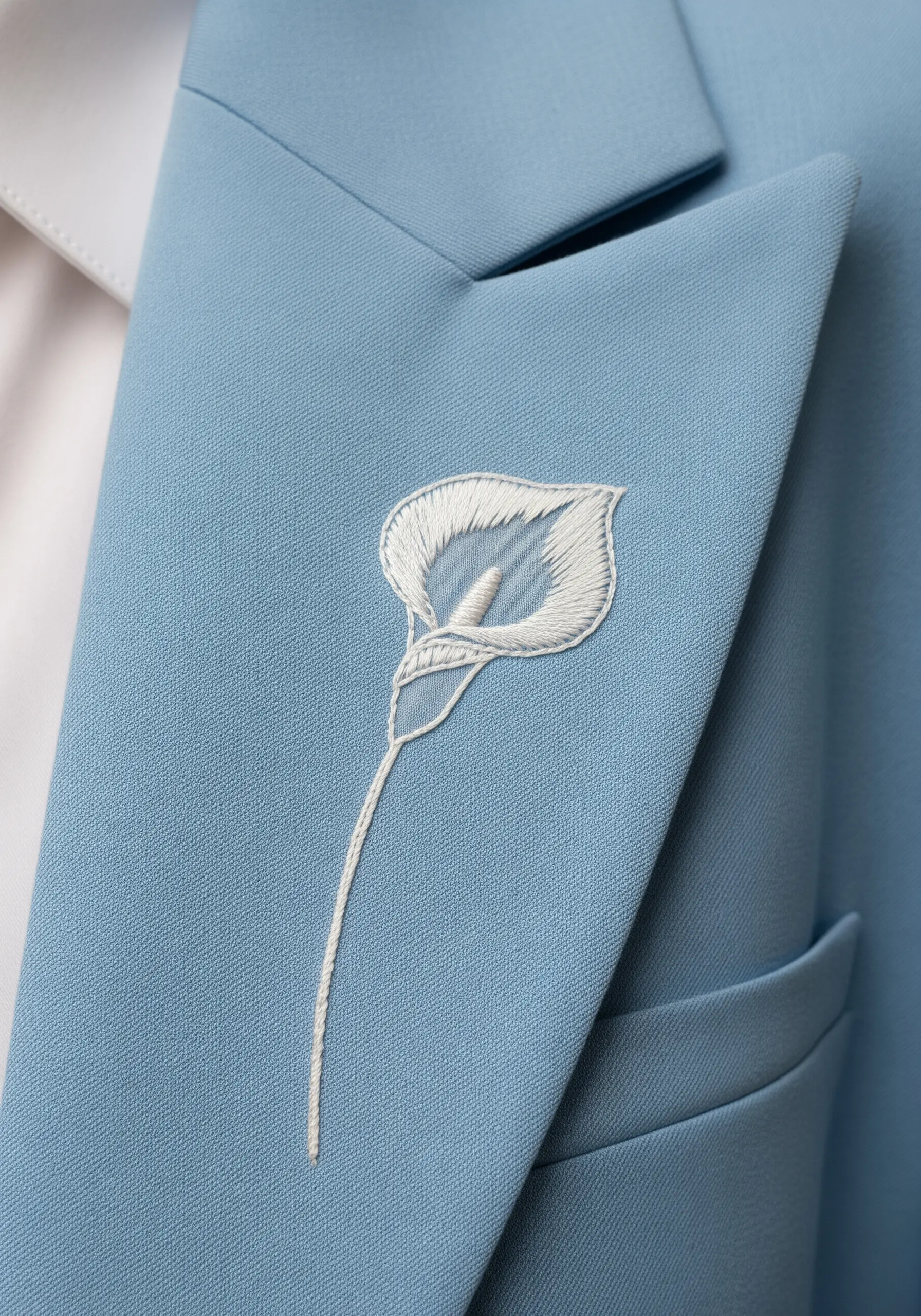
Elevate a blazer lapel with the understated elegance of a single calla lily stitched in white thread.
Use an outline stitch, like a delicate split stitch, for the flower’s contours. This preserves the clean, sculptural shape.
Fill the inside of the spathe with a few carefully placed long-and-short stitches to suggest shadow and form without adding color.
This minimalist approach demonstrates how powerful a single color and clean lines can be, creating a look that is both modern and timeless.
16. Build an Underwater World with Textured Stitches
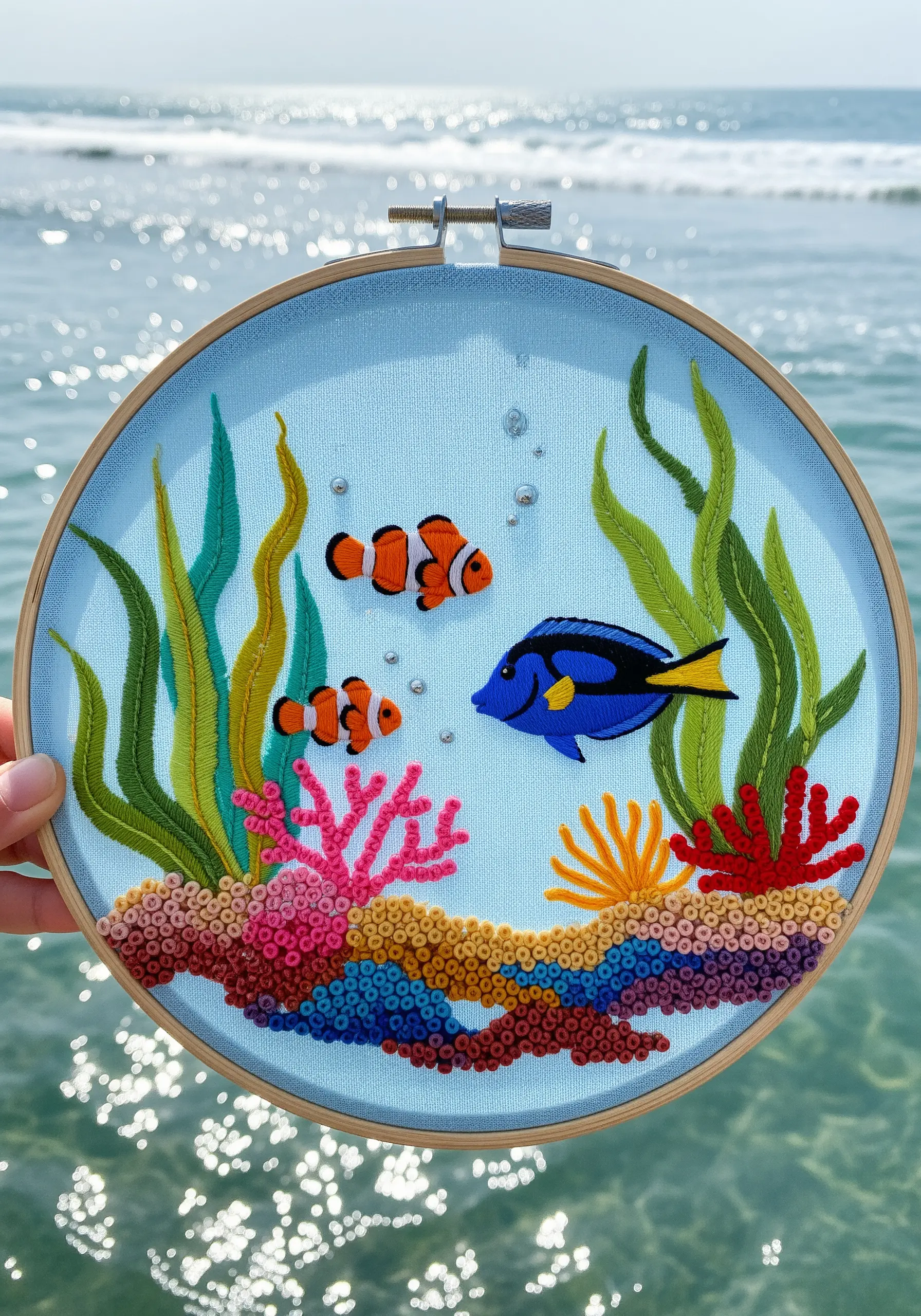
Recreate the vibrant life of a coral reef by using a variety of highly textural stitches.
Use dense clusters of French knots and bullion knots in bright colors to form the coral, mimicking its bumpy, organic structure.
Incorporate small beads as shimmering air bubbles, adding a touch of sparkle and dimension to the scene.
Fill the fish with smooth satin stitch to contrast with the rougher textures of the reef, making them glide across the fabric.
17. Master the Art of the Repeat Pattern
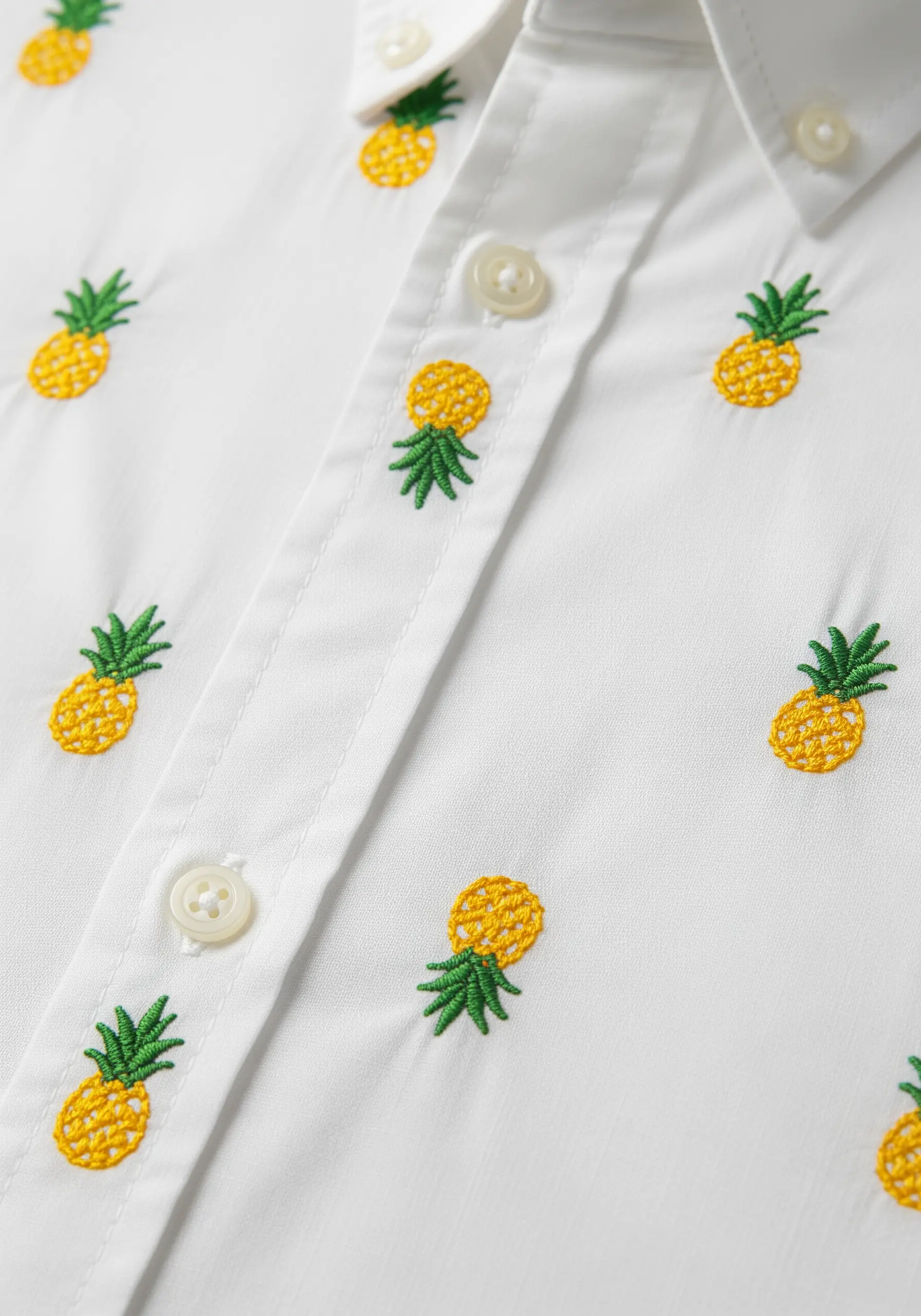
Turn a plain shirt into a custom-printed piece by embroidering a simple motif in a repeating pattern.
To ensure even spacing, use a water-soluble fabric marker and a small stencil to mark the placement of each pineapple before you begin stitching.
Keep the motifs simple—a yellow French knot cluster for the fruit and a few green lazy daisy stitches for the crown is all you need.
The repetition is what creates the visual impact, transforming tiny stitches into a cohesive and playful design.
18. Design a Lush, Symmetrical Neckline
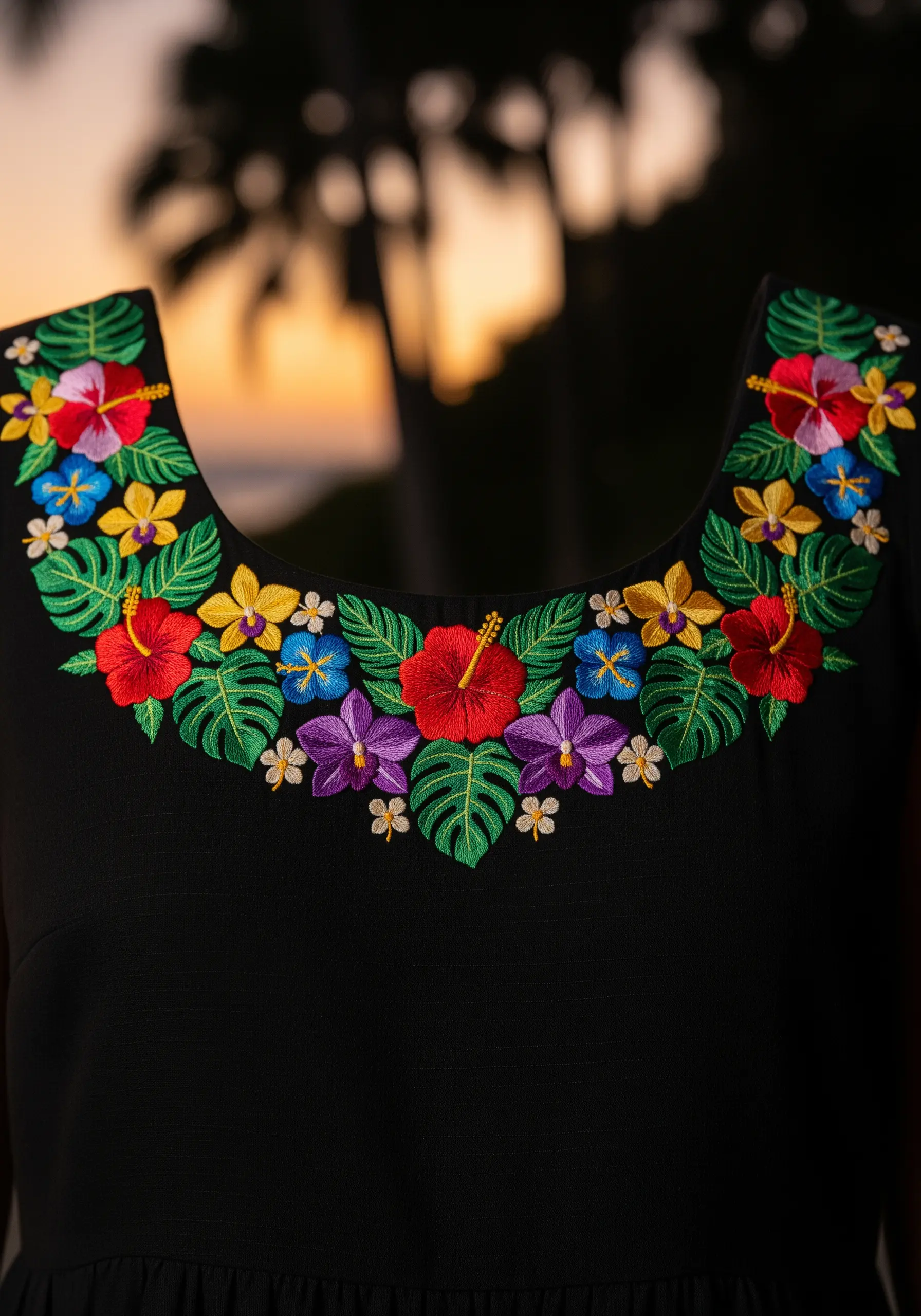
Frame your collarbones with a rich tapestry of tropical flowers and leaves for a bold, wearable art piece.
Create a paper template of your neckline shape first, then sketch a symmetrical design that flows with the curve of the garment.
Balance large, vibrant flowers like hibiscus with smaller, complementary blooms and plenty of lush Monstera leaves.
Stitching on a black dress makes the colors feel exceptionally rich and turns the embroidery into a stunning, built-in necklace.
19. Create High Contrast with a Protea on Dark Denim
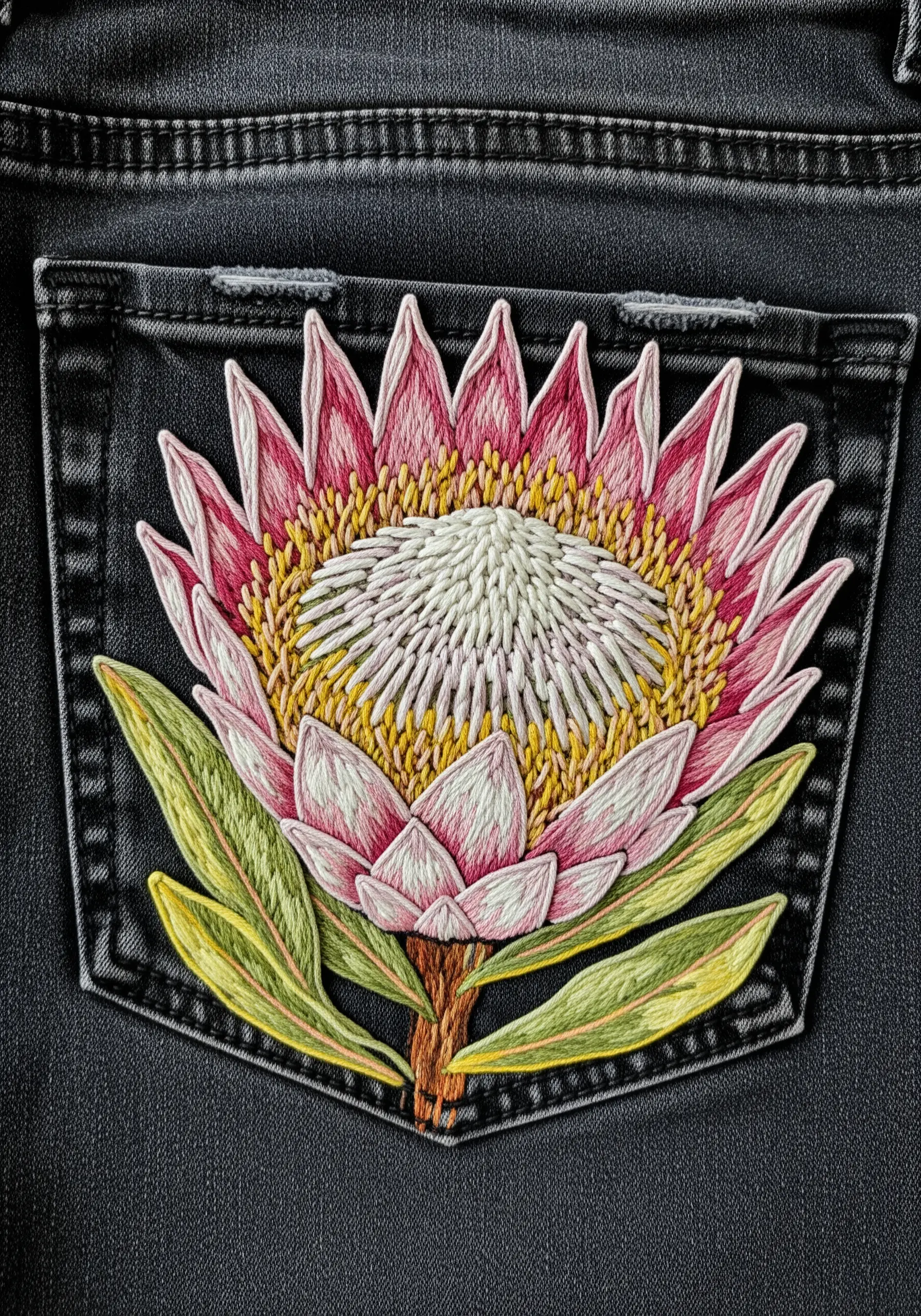
The dramatic form of a king protea is perfect for creating a high-impact design on the back pocket of dark jeans.
Use a dense field of straight stitches or French knots for the fuzzy central dome, contrasting it with the smooth satin stitch of the outer bracts.
Incorporate pale pinks and whites against the dark denim to make the flower’s form pop.
The texture contrast between the soft center and the sharp, pointed bracts is what gives this flower its unique visual power.
20. Explore Symmetry with Mirrored Toucans
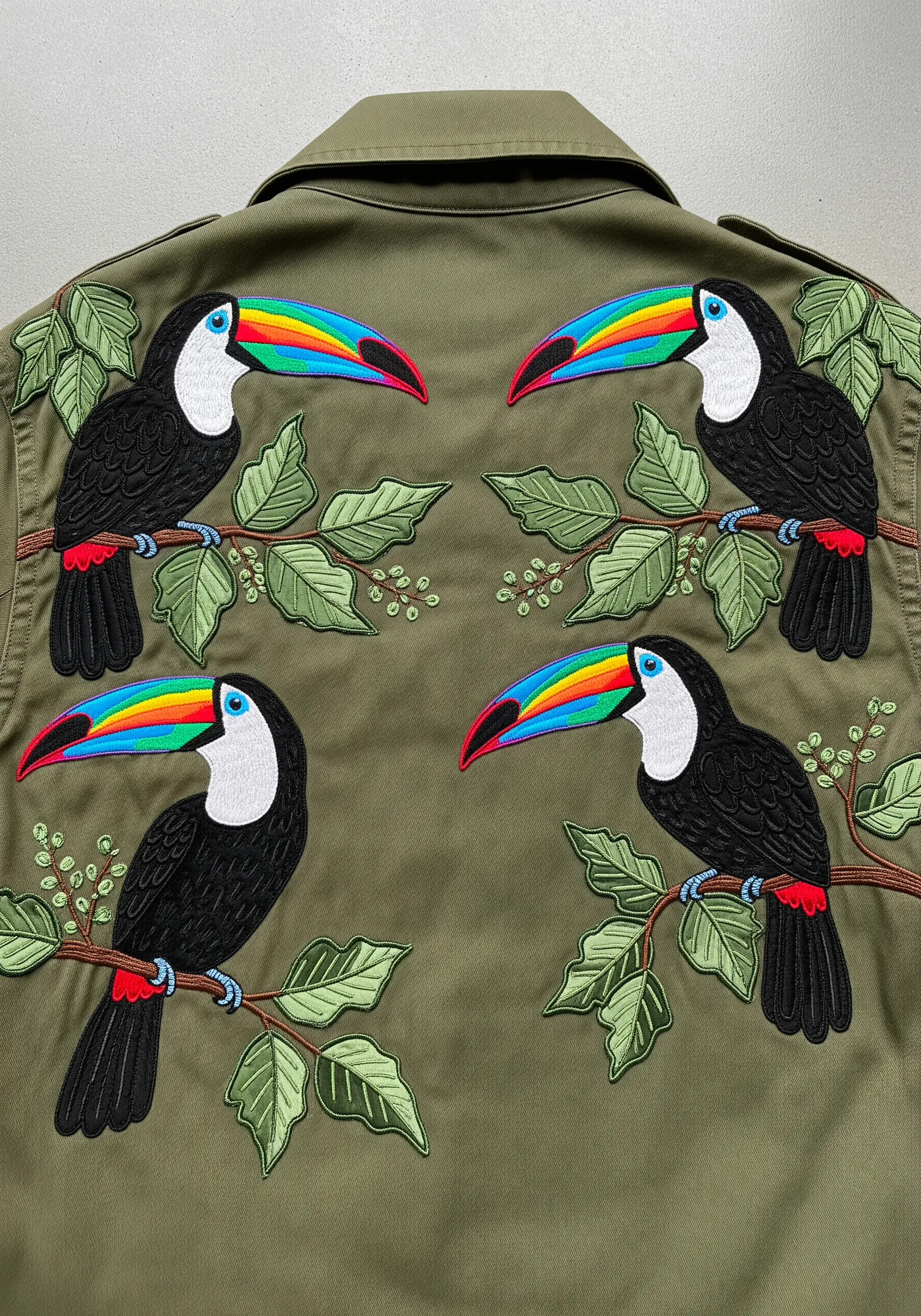
Create a powerful and balanced composition on the back of a jacket by stitching a symmetrical, mirrored design.
Use a heat-erasable pen to transfer your design, then simply flip the pattern for the opposite side to ensure a perfect mirror image.
Make the toucans’ beaks the focal point by filling them with a vibrant rainbow satin stitch.
The formal symmetry gives the playful subject matter a more structured and intentional feel, turning it into a sophisticated statement.
21. Add a Casual Accent to Canvas Sneakers
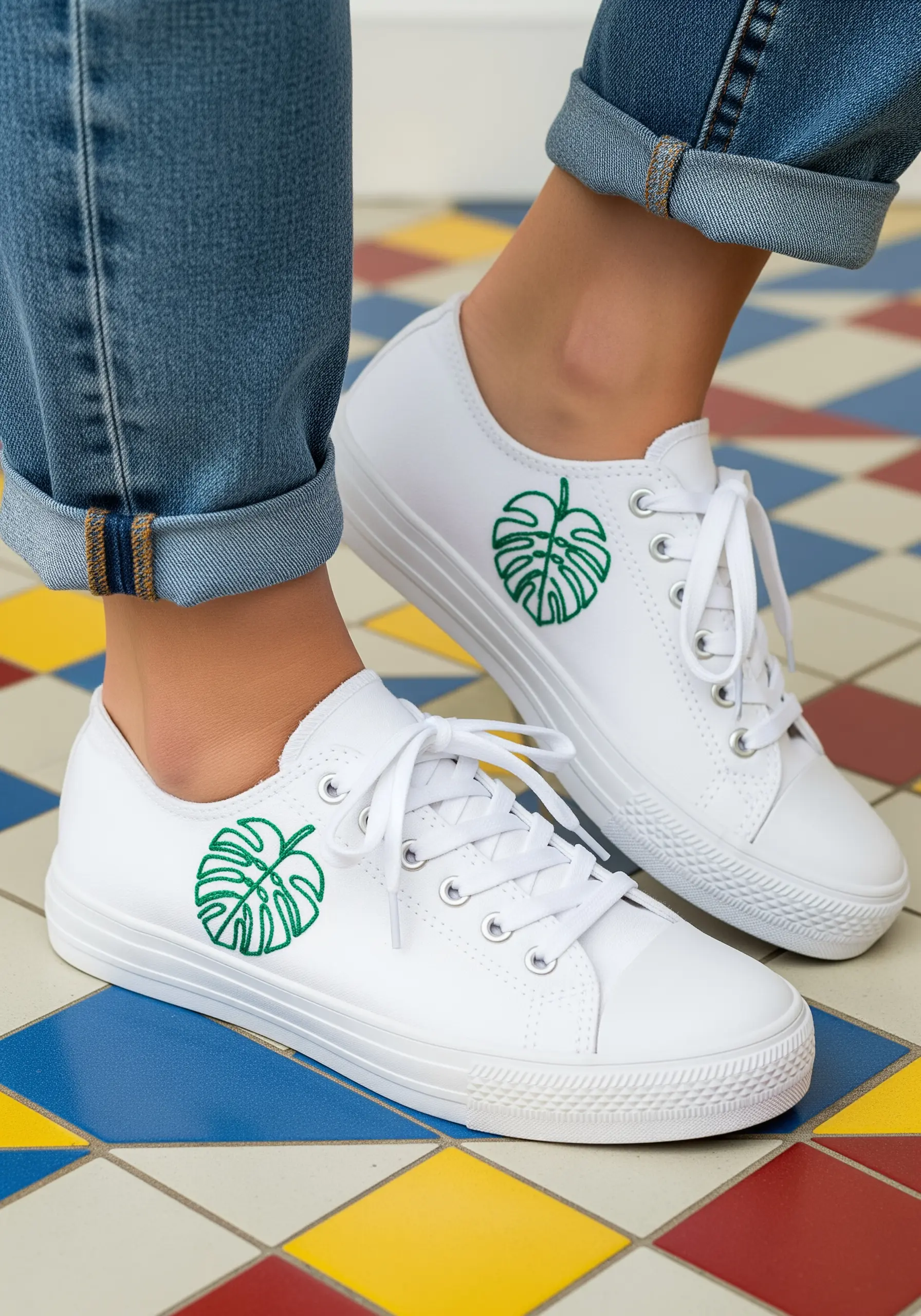
Personalize a pair of plain white sneakers with a simple, graphic Monstera leaf outline.
Use a stem stitch or backstitch for a clean, durable line that can withstand wear and tear.
You will need a strong, sharp needle to penetrate the shoe’s canvas—a thimble is your best friend here.
This small, unexpected touch of green adds a fresh, tropical vibe to a wardrobe staple.
22. Stitch a Night-Blooming Flower in Monochrome
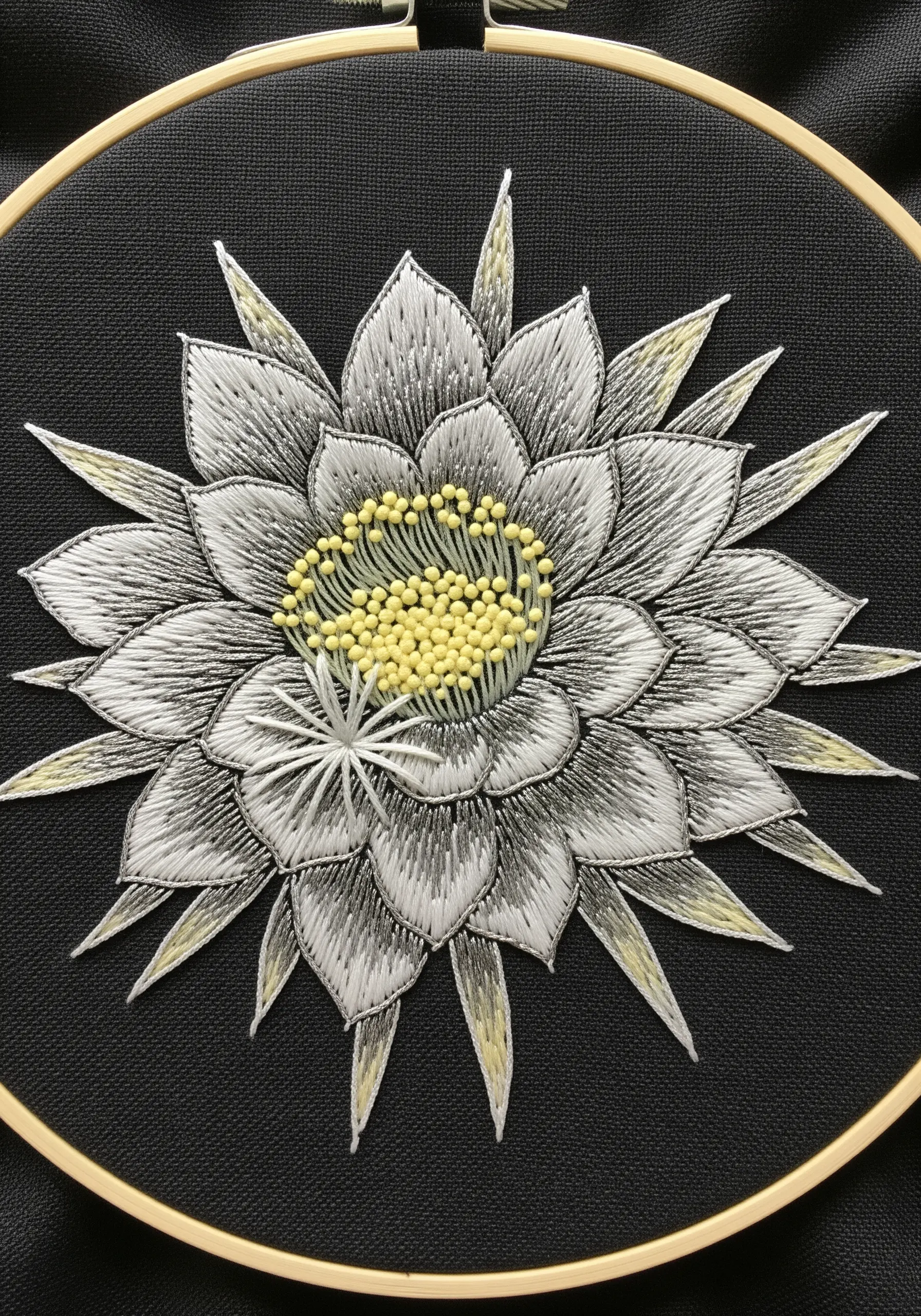
Explore the power of value and texture by stitching a flower that blooms in the dark, like a night-blooming cereus, using only shades of white and grey.
Use long-and-short stitch to create subtle shading on the petals, giving them form and dimension without color.
Introduce a single pop of color—like the dense yellow French knots in the center—to create a striking focal point.
Stitching on black fabric enhances the nocturnal theme and makes the white and grey threads glow.
23. Fill Typography with Tropical Textures
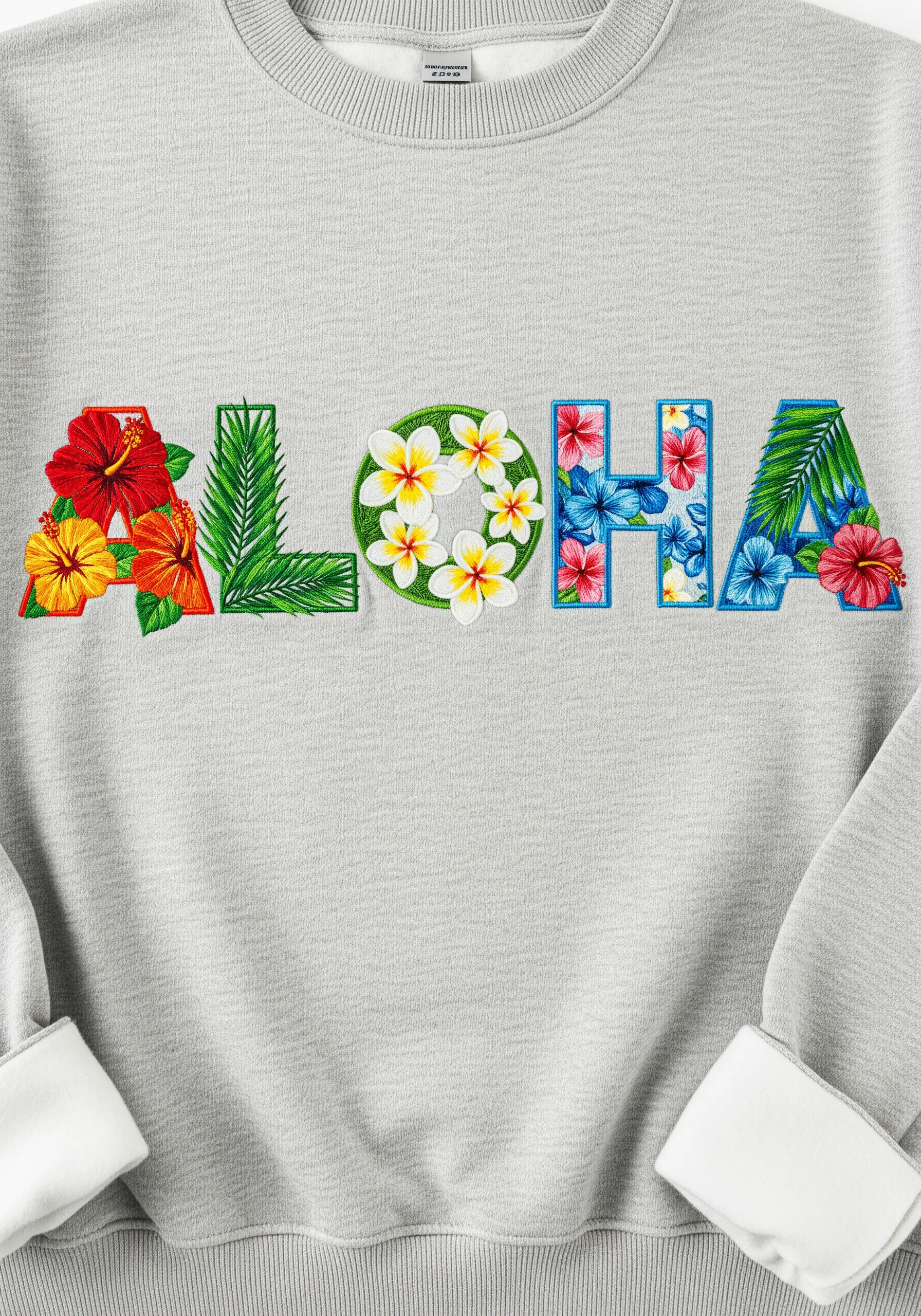
Transform simple block letters into a vibrant message by filling them with a collage of tropical flowers and leaves.
Assign a different floral theme to each letter to create a rich, scrapbook-like effect.
Use small-scale stitches, like tiny lazy daisies and single-stitch leaves, to fit intricate details within the confines of the letters.
This is a wonderfully creative way to combine your love for typography and botanical stitching.
24. Create an Asymmetrical Design Flowing from a Pocket
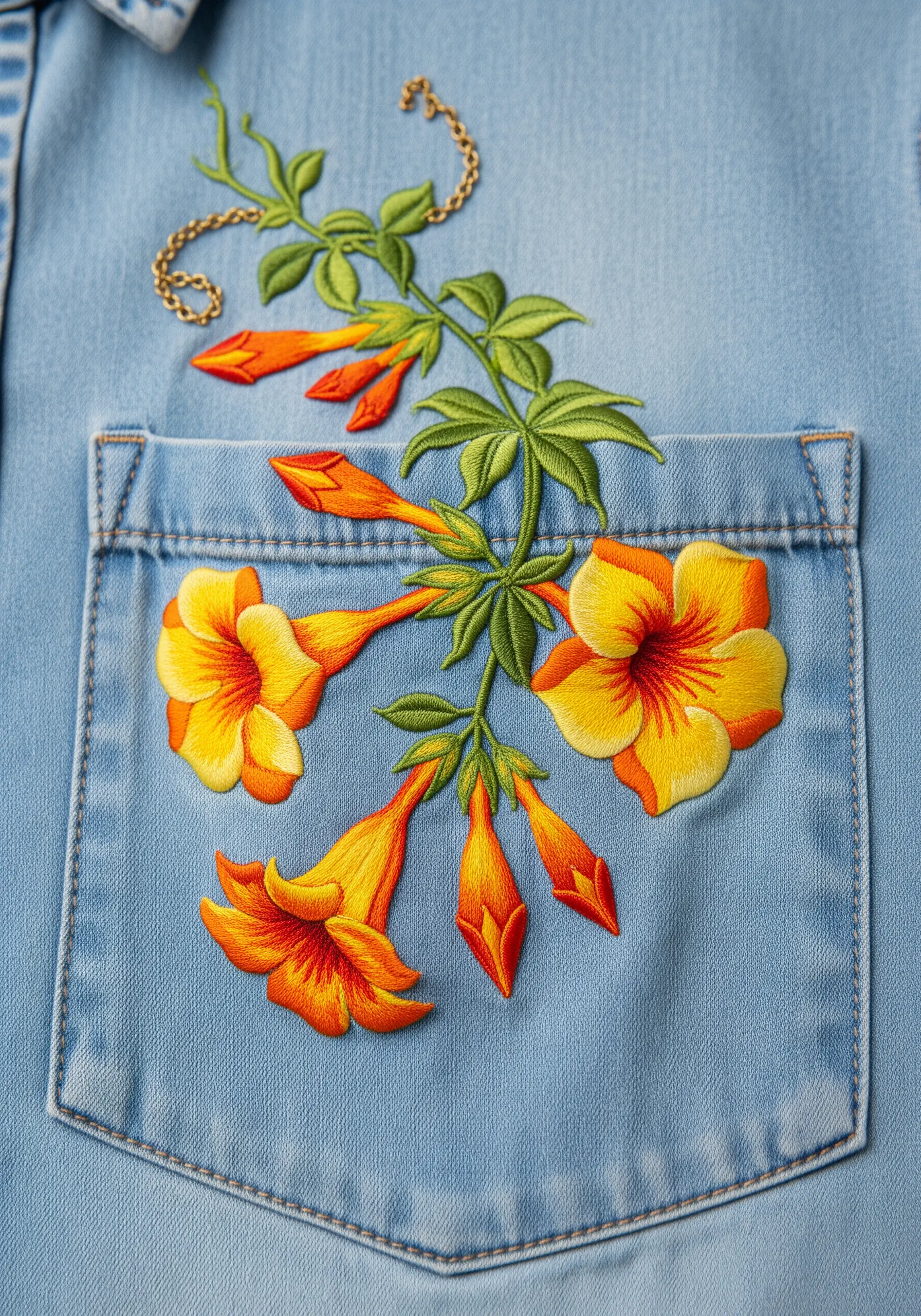
Add a playful, organic touch to a denim shirt by designing a flowering vine that appears to grow out of the pocket.
Use a smooth stem stitch for the vines to give them a graceful, flowing line.
Incorporate an unexpected element, like a small piece of jewelry chain stitched into the vine, to add a touch of unique, mixed-media flair.
The asymmetry of the design makes it feel dynamic and alive, as if it’s truly climbing up the shirt.
25. Embellish a Hemline with a Cascading Floral Border
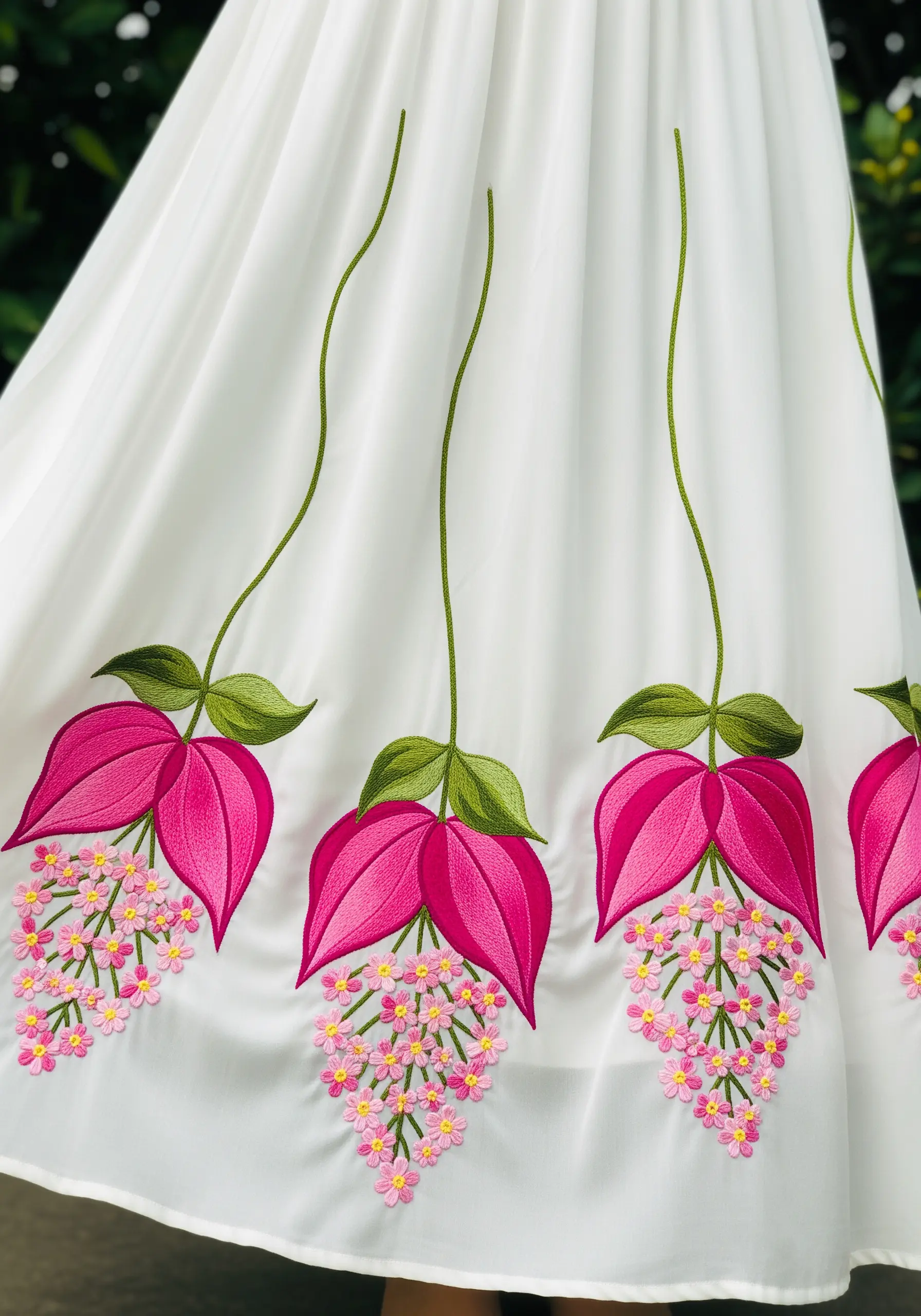
Draw attention to the beautiful drape of a skirt by adding a delicate, repeating floral motif along the hem.
Use long, elegant stem stitches that descend vertically, creating a sense of graceful movement.
For the clusters of tiny flowers, use lazy daisy stitches with French knot centers for a quick yet charming effect.
The repetition of the motif creates a rhythmic, decorative border that enhances the garment’s flow as you walk.
26. Use Negative Space to Define a Monstera Leaf
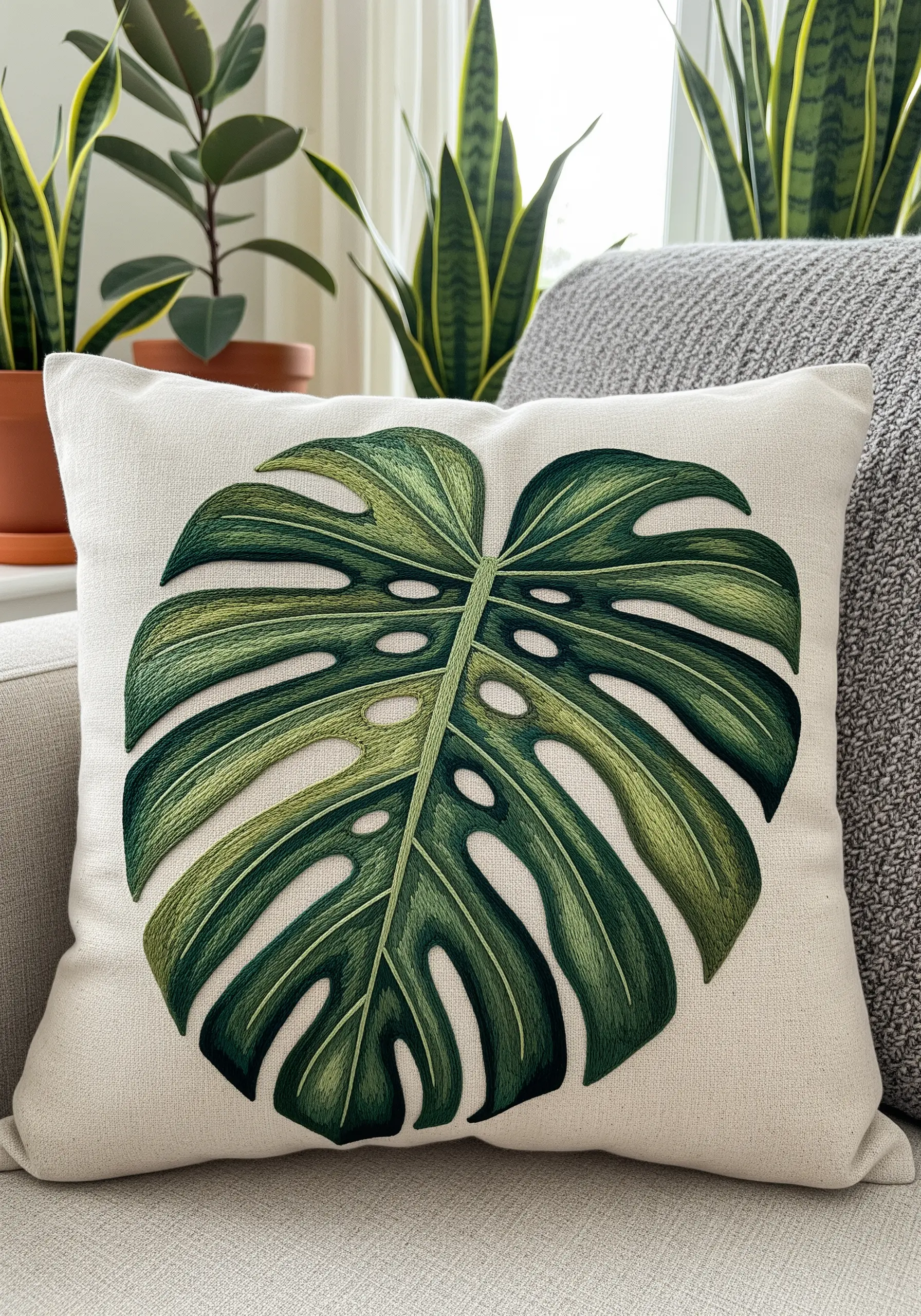
Instead of stitching the entire leaf, use the fabric of the pillow as part of the design itself.
Embroider the solid parts of the Monstera leaf, leaving the characteristic holes (fenestrations) empty to reveal the linen canvas underneath.
This negative space technique creates a clean, modern look and highlights the beautiful texture of your base fabric.
It’s an intelligent way to create a large-scale design without the time commitment of a fully filled piece.
27. Weave Chunky Yarn onto a Straw Bag
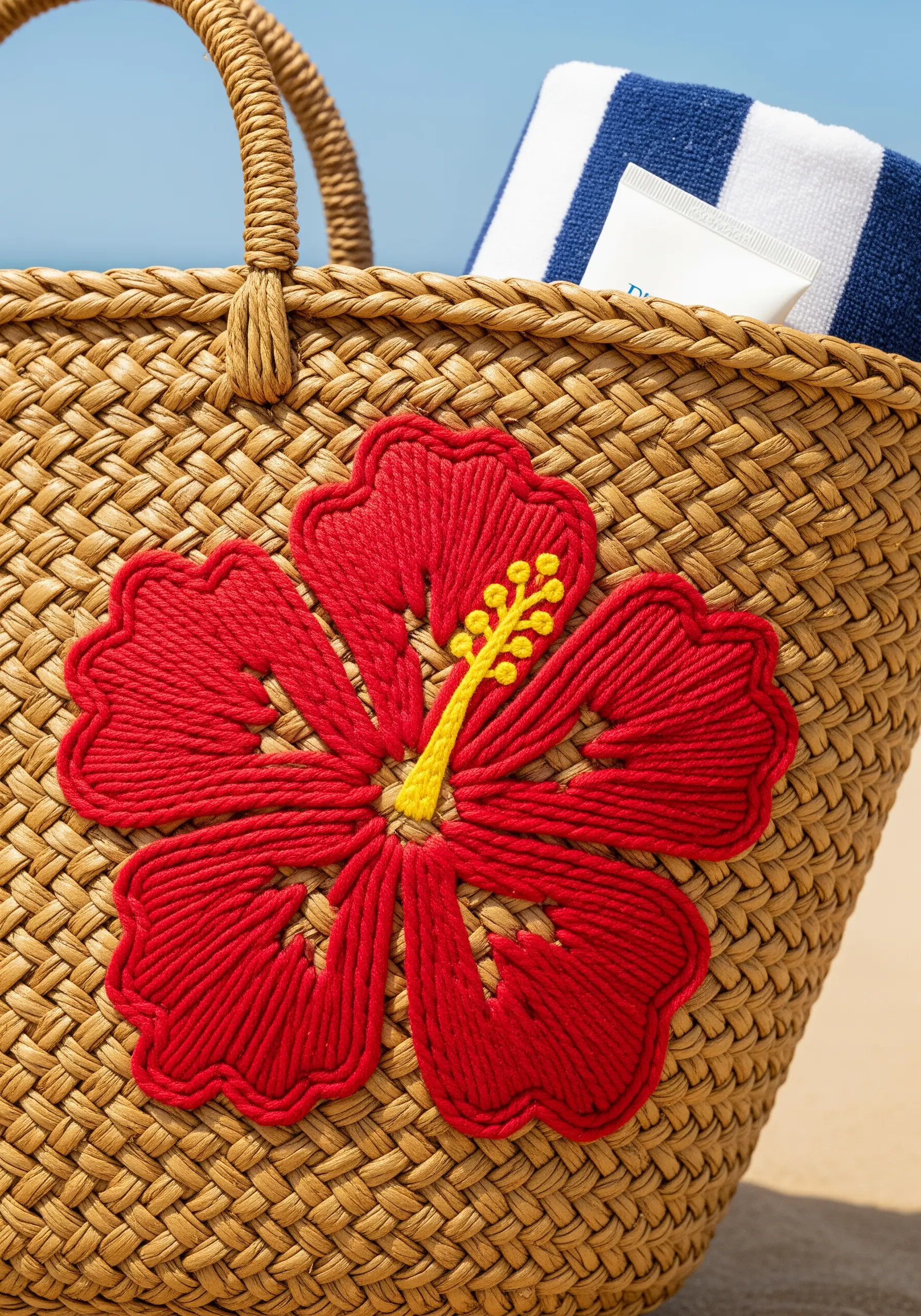
For a bold, graphic effect on a heavily textured surface like a woven bag, switch from floss to a chunkier fiber like yarn.
Use a large tapestry needle to weave the yarn directly through the straw, or use a couching stitch with regular floss to tack the yarn down in your desired shape.
This creates a highly tactile, dimensional flower that stands up to the bag’s rustic texture.
This technique is a perfect example of cozy mixed-fiber projects adapted for a summer accessory.
28. Create a Beaded Seascape with Mixed Media
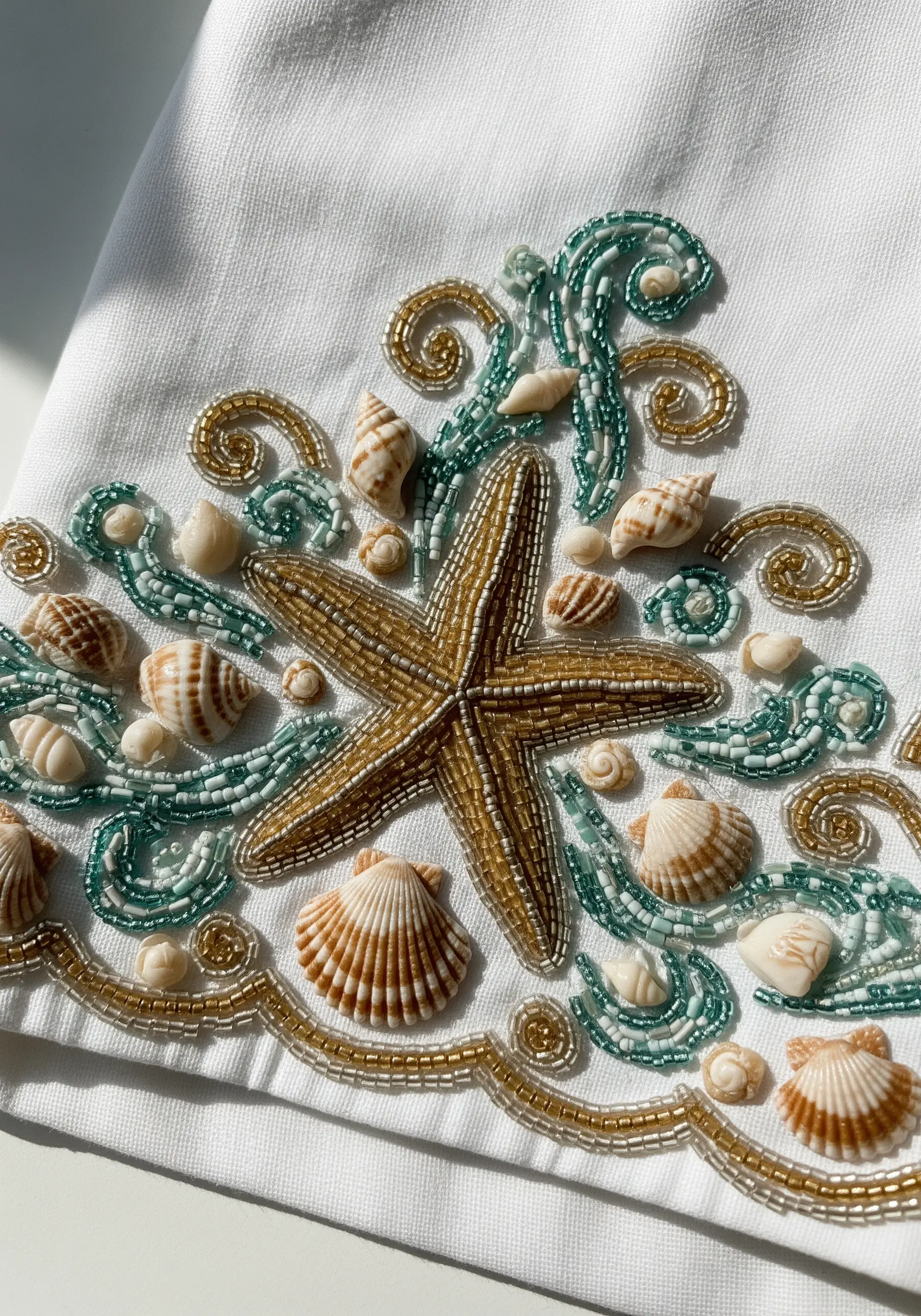
Capture the shimmering quality of the ocean by incorporating beads, shells, and metallic threads into your embroidery.
Use rows of couched seed beads to create flowing water currents and the texture of a starfish.
Secure tiny, real shells onto the fabric with strong thread to add authentic, natural texture.
This mixed-media embroidery approach transforms a flat piece into a tactile treasure box of coastal finds.
29. Practice Advanced Needle Painting on Linen
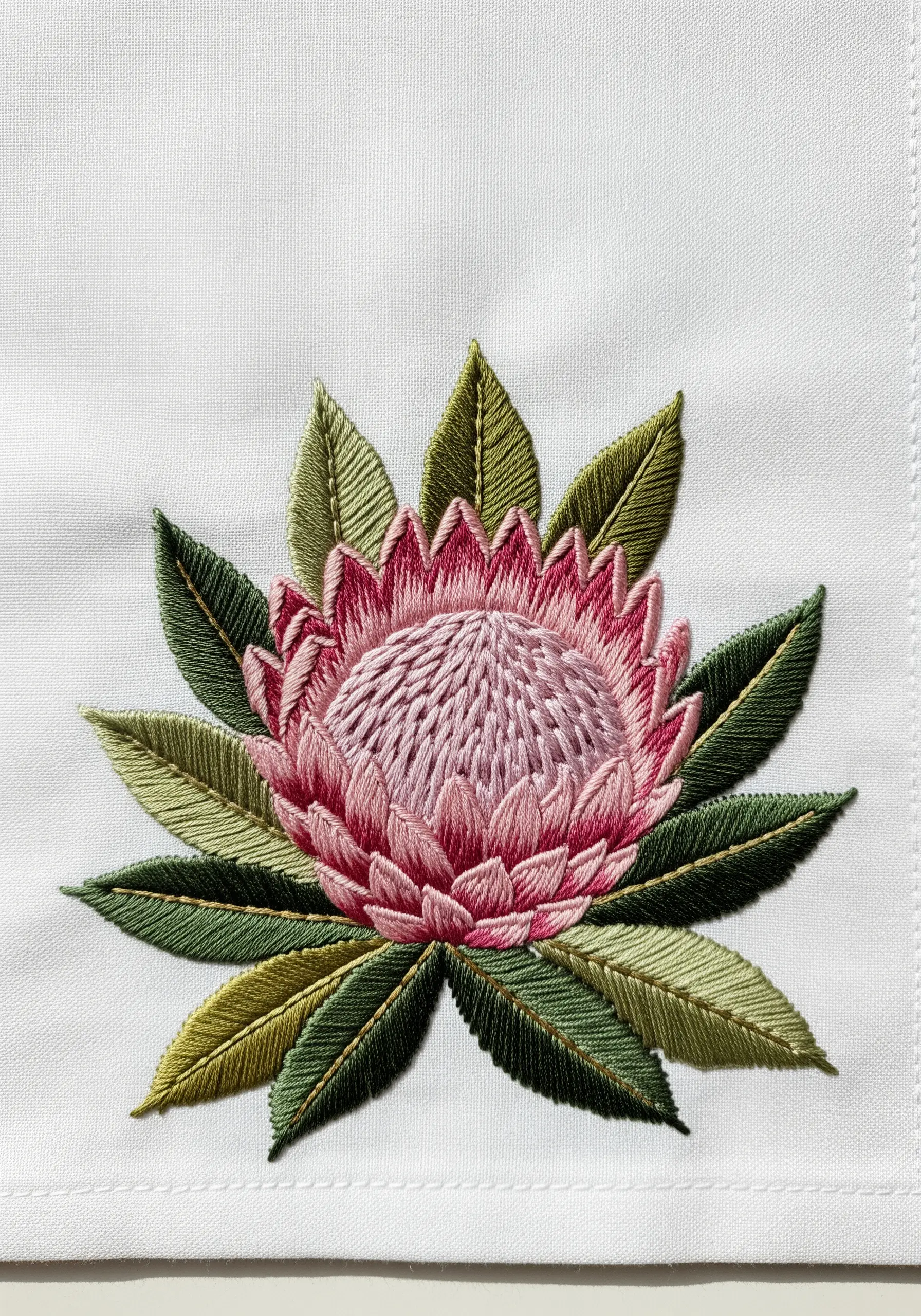
For a highly realistic floral portrait, use the long-and-short stitch—also known as needle painting—to create seamless color blends.
Work with a single strand of floss to achieve the finest, most detailed shading, especially on the delicate edges of the protea’s bracts.
Map out your colors beforehand, using at least four or five shades per section to transition smoothly from light to shadow.
Stitching on a high-quality, even-weave linen provides a stable and smooth foundation for this advanced technique.
30. Add an Unexpected Detail to a Denim Cuff
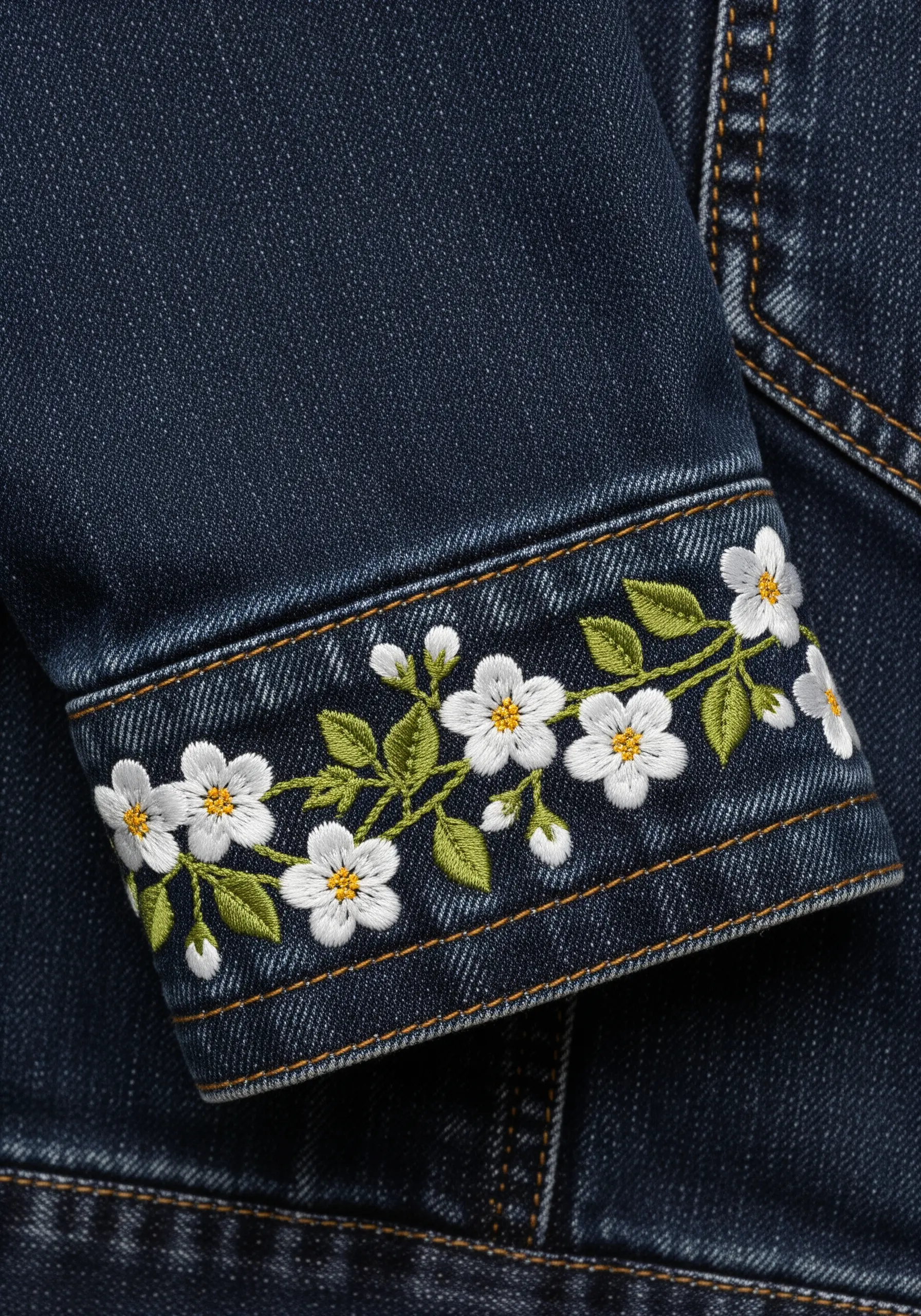
A small, beautifully executed band of embroidery on a jacket cuff provides a subtle yet impactful personal touch.
A simple, winding vine of stem-stitched leaves serves as the perfect base for small, satin-stitched white flowers.
This placement is unexpected, drawing the eye to a detail that is often overlooked.
It’s a small commitment of time for a huge upgrade in style, turning a basic garment into a bespoke piece.
31. Capture an Exotic Bloom with Dimensional Stitching
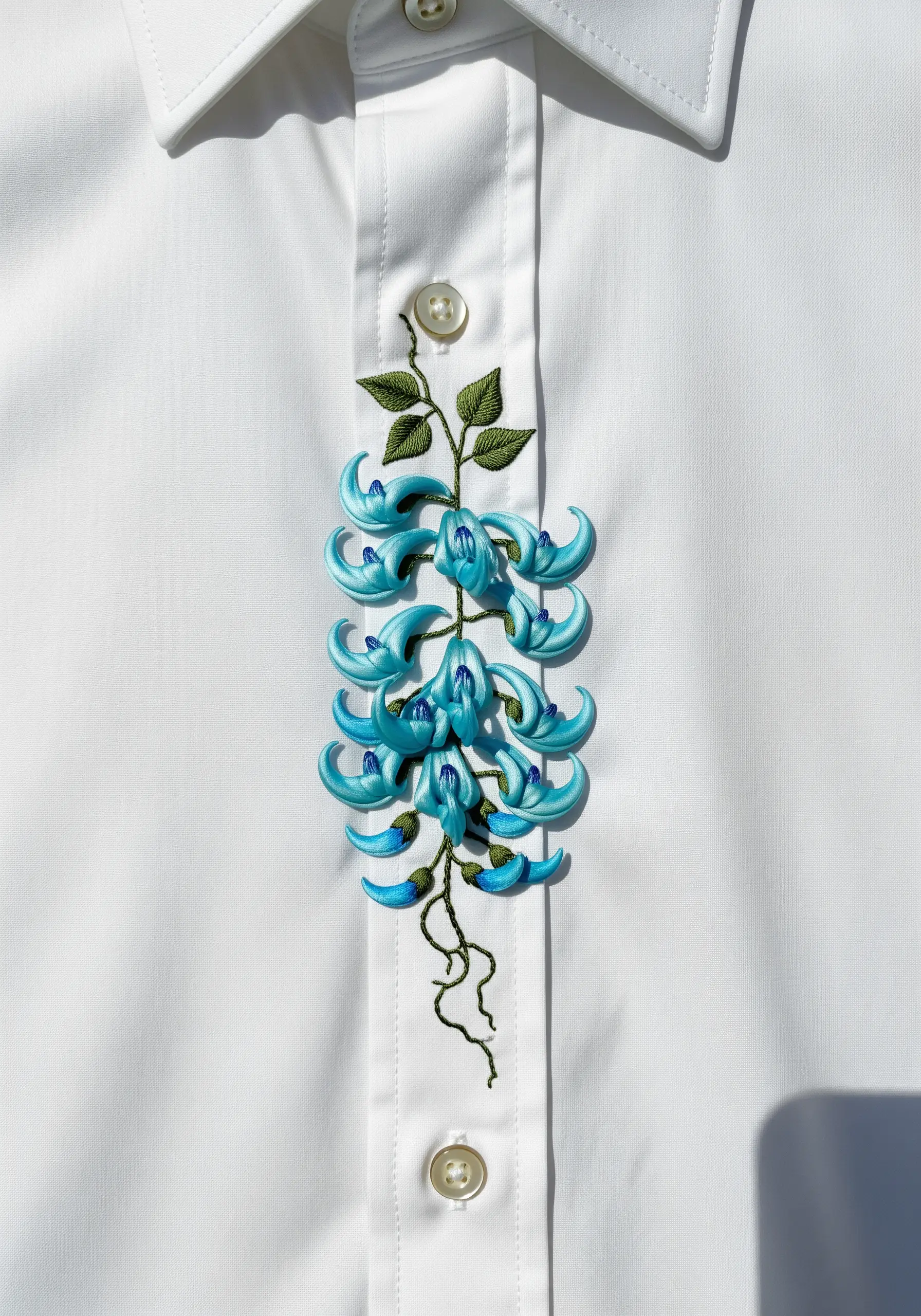
To stitch the uniquely curved petals of a Jade Vine, use a padded satin stitch.
First, create a base layer of small underlying stitches (like split stitches) in the shape of the petal.
Then, cover this padding with your final satin stitches, laying them perpendicular to the base stitches. This forces the top layer to arch, creating a raised, 3D effect.
This technique gives the cascading flower a lifelike volume that makes it feel like it’s growing right off the shirt.
32. Create a Playful All-Over Coconut Print
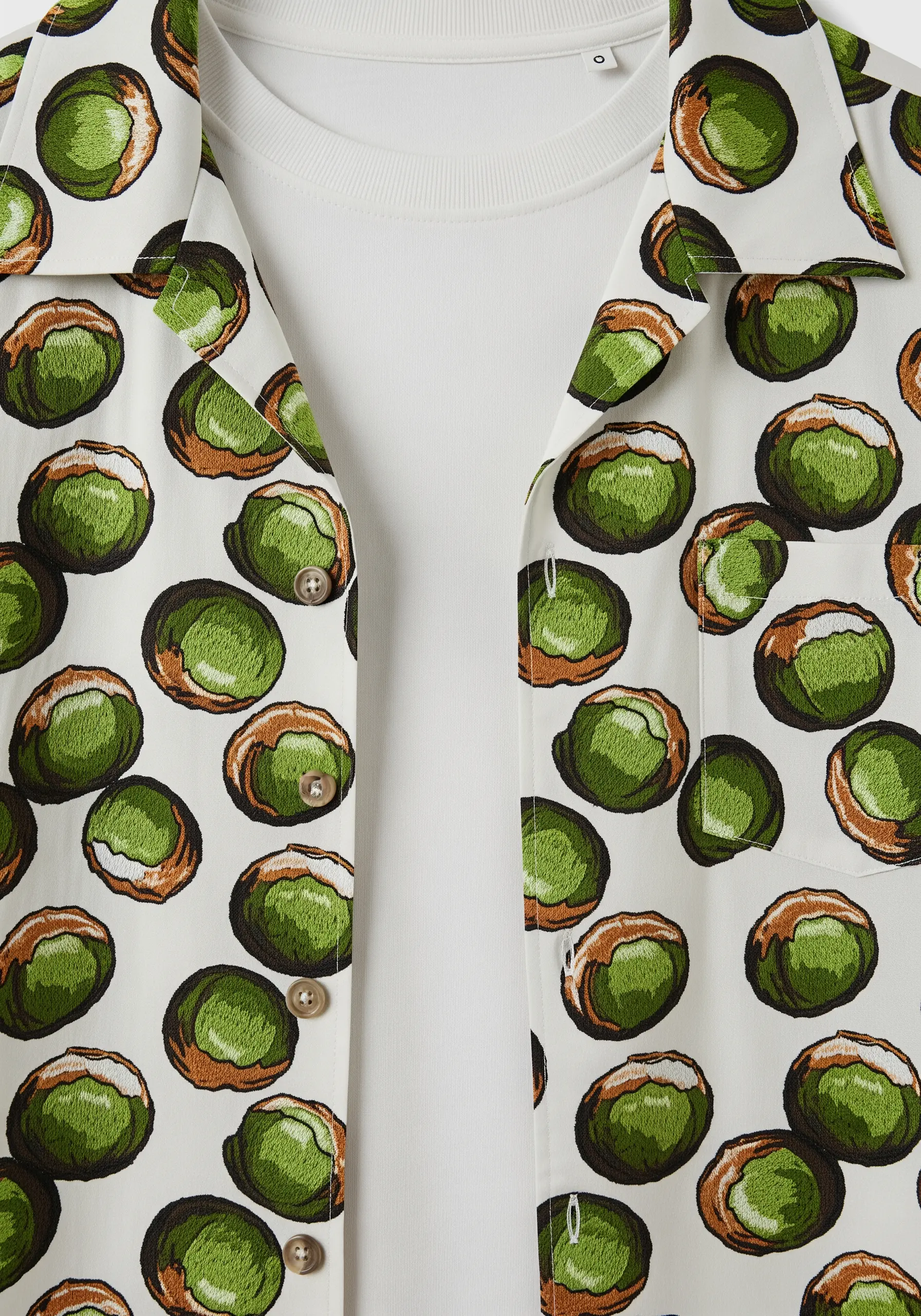
Design a fun, retro-inspired camp shirt by scattering embroidered coconuts across the fabric.
To create the round shape, fill the area with concentric circles of split stitch, or use a circular satin stitch, pivoting your needle from a central point.
Use just a few shades of green and brown to keep the look graphic and cohesive, letting the pattern itself be the star.
This is a great project for practicing stitch consistency across multiple, identical motifs.
33. Stitch a Sunset Gradient as a Backdrop
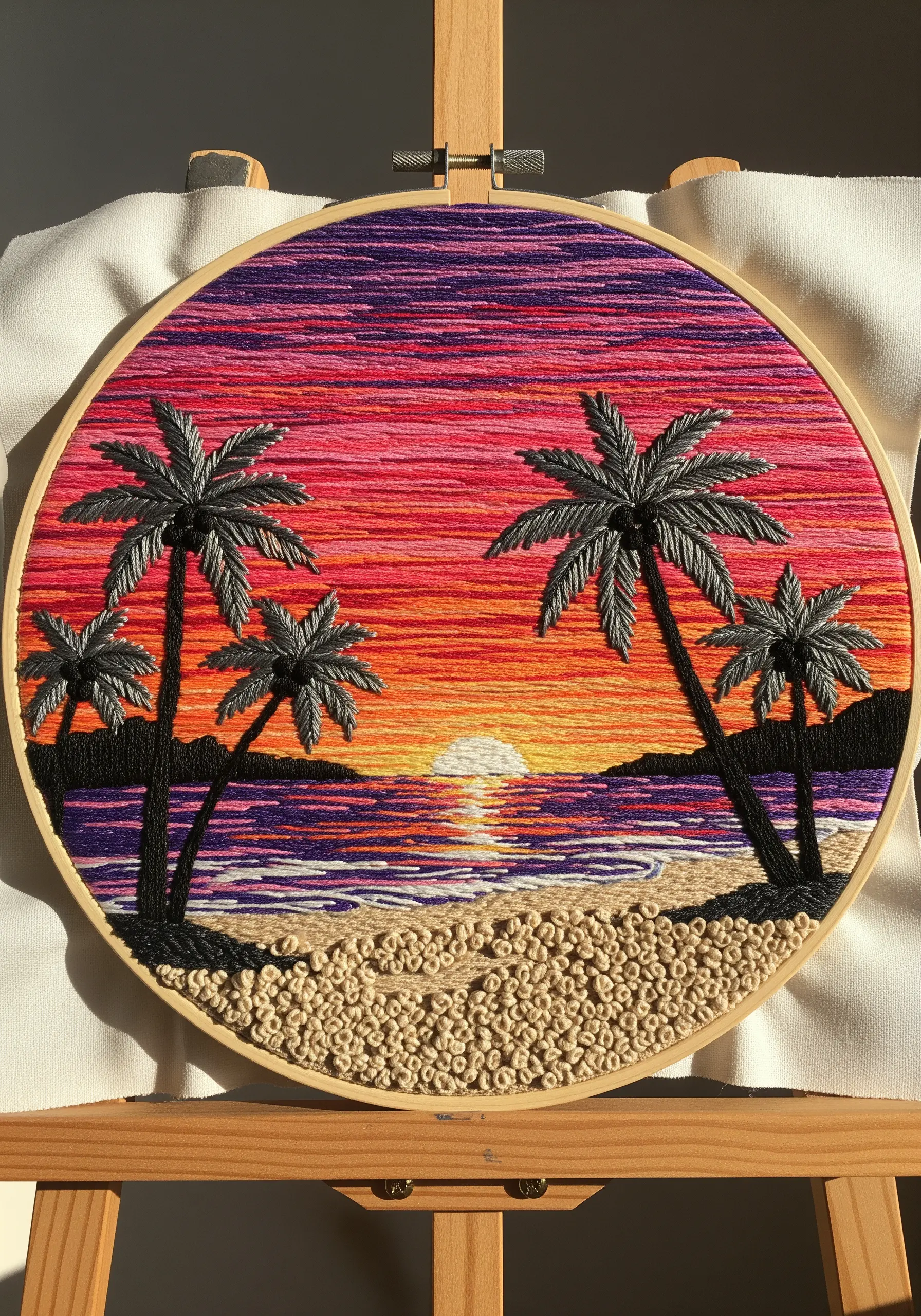
Instead of stitching on plain fabric, create your own vibrant background by embroidering a sunset sky.
Use horizontal long-and-short stitches, blending shades of purple, pink, orange, and yellow to create a seamless ombre petal effects.
Once the sky is complete, stitch the palm tree silhouettes on top using black thread and simple satin stitches.
Finish with a textured beach made of dense French knots, adding another layer of depth to your tropical landscape.