
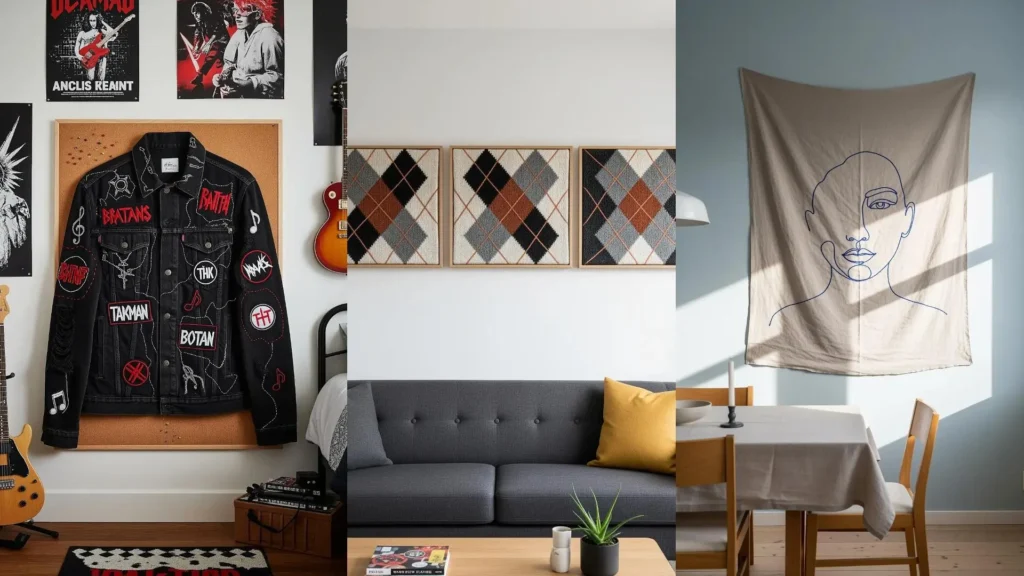
Before you discard that old shirt, stained tablecloth, or pair of jeans, I want you to see it differently. Think of every piece of fabric in your home not by its original purpose, but as a canvas, rich with the texture and memory of a life already lived.
This is where the true art of upcycling begins—not just in mending or covering a flaw, but in reimagining the entire surface. Your needle and thread become the tools to add a new layer to its story, transforming something forgotten into a piece of meaningful, personal wall art.
In the following ideas, you will find ways to honor the fabric you already own. These projects are about more than just stitching; they are about preservation, transformation, and the quiet joy of making something beautiful from something beloved.
1. Botanical Overgrowth on Denim
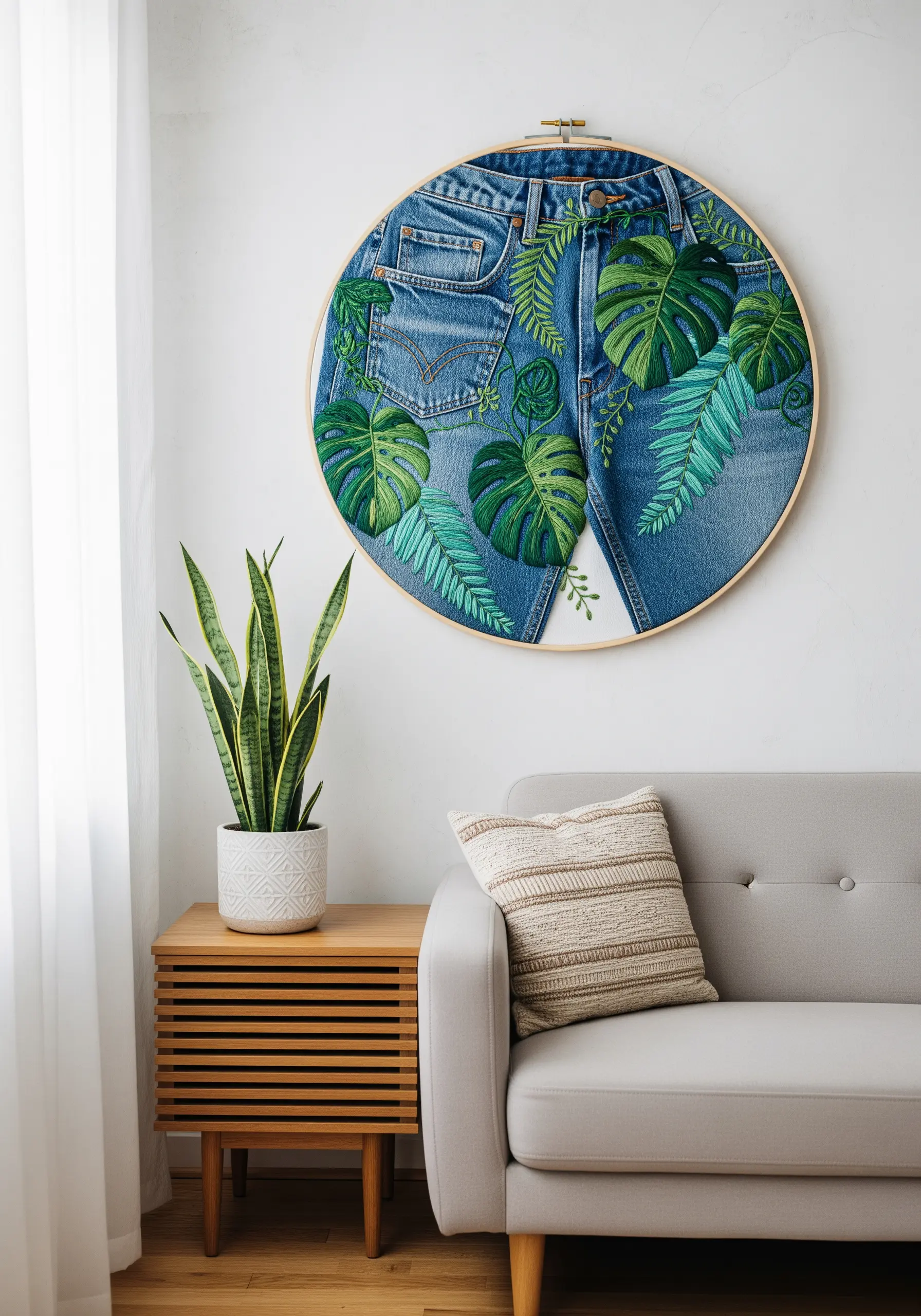
Transform a pair of old jeans into a canvas for lush, textural foliage.
Use a sharp, size 18 chenille needle to cleanly pierce the thick denim without excessive force, preventing hand strain.
Create realistic leaves by blending three shades of green floss with a long-and-short stitch, giving each leaf dimension and a natural gradient.
The contrast between the rugged, woven texture of denim and the smooth satin stitch of the leaves is what gives this piece its captivating depth.
For the delicate ferns, use a lighter-weight thread and a simple fern stitch to create an airy, layered look behind the bolder Monstera leaves.
2. Graphic Mandalas on Patterned Flannel
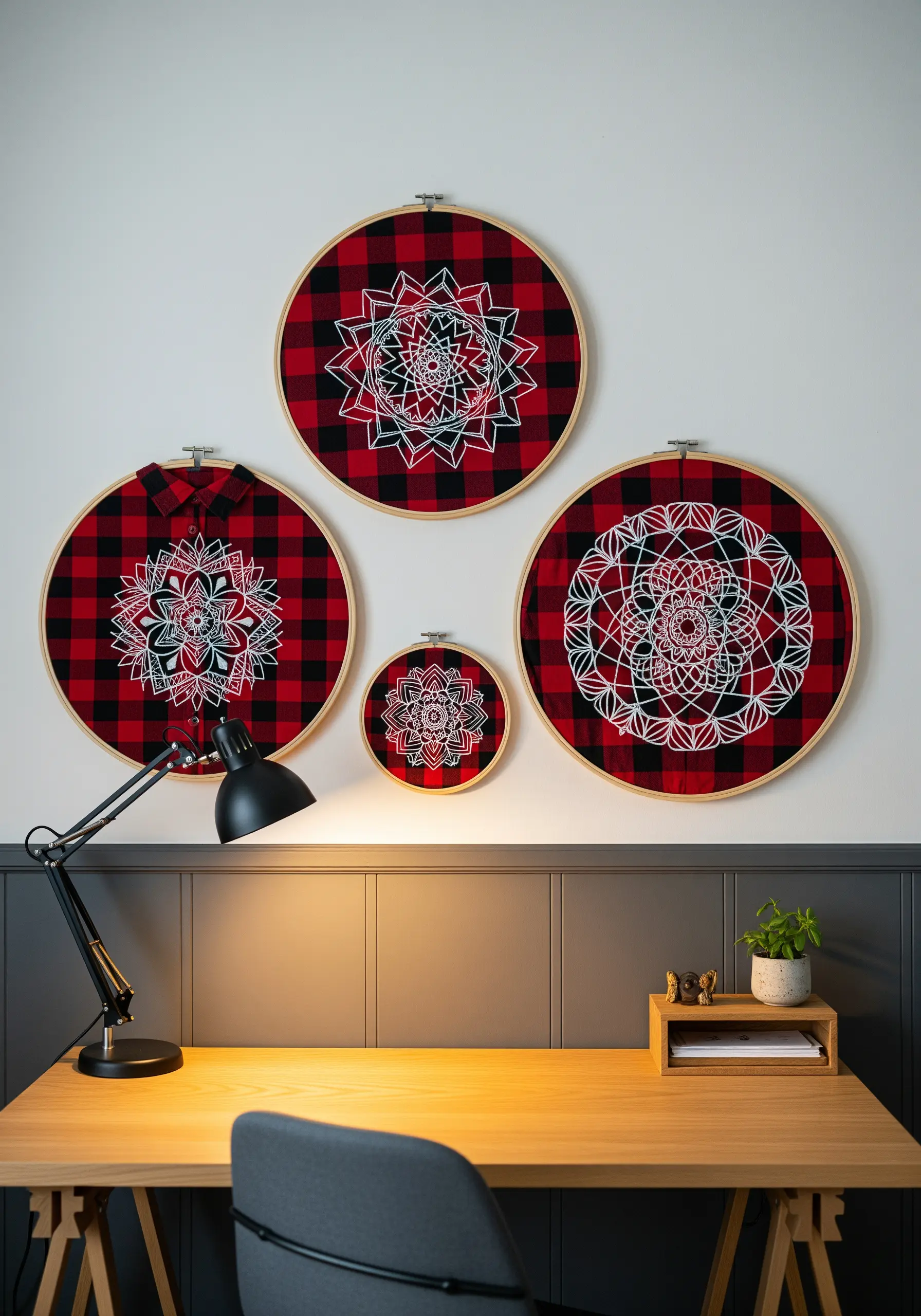
Make intricate designs stand out on a visually busy fabric like plaid flannel by choosing a high-contrast thread.
Use all six strands of white embroidery floss to give your lines weight and presence, ensuring they don’t get lost in the pattern.
Trace your mandala with a white gel pen that will show up on the dark fabric, or use a stick-and-stitch stabilizer pattern for perfect precision.
The geometric precision of a neutral mandala embroidery pattern provides a beautiful counterbalance to the rustic, comfortable feel of the flannel.
Arrange hoops of different sizes in an asymmetric cluster for a dynamic and modern gallery wall display.
3. Sculptural Yarn Appliqué on Knitwear
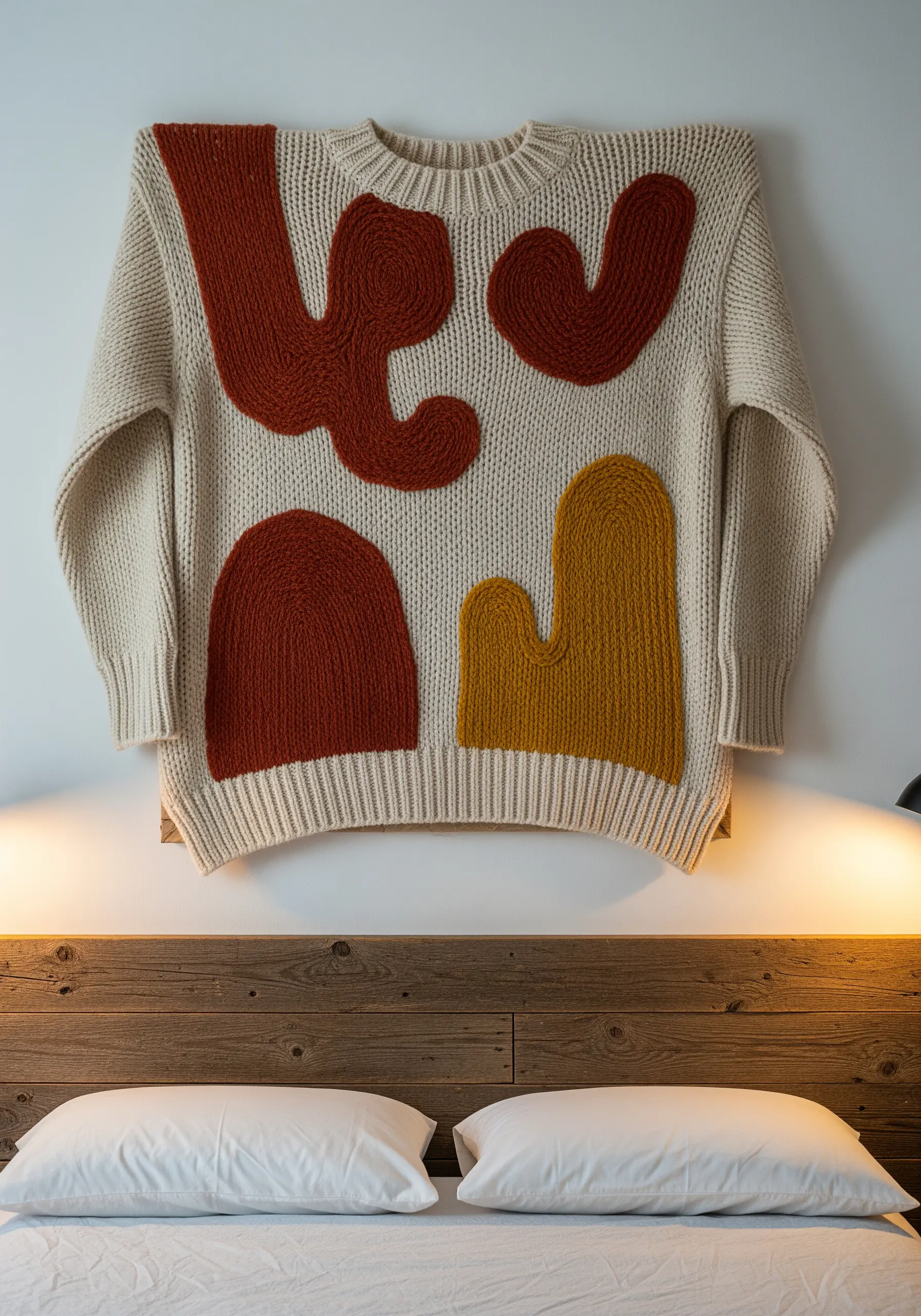
Create bold, abstract art by treating an old sweater as a three-dimensional canvas.
This technique, known as couching, involves laying thick yarn on the surface of the fabric and tacking it down with a thinner, matching thread.
This method allows you to create fluid, organic shapes with incredible texture that traditional embroidery cannot replicate.
Choose a chunky wool or roving yarn for maximum loft and dimension, making the shapes feel soft and sculptural.
When composing your abstract thread art, balance larger shapes with smaller ones and use a warm, analogous color palette for a cohesive, artistic look.
4. Single-Line Portrait on Raw Linen
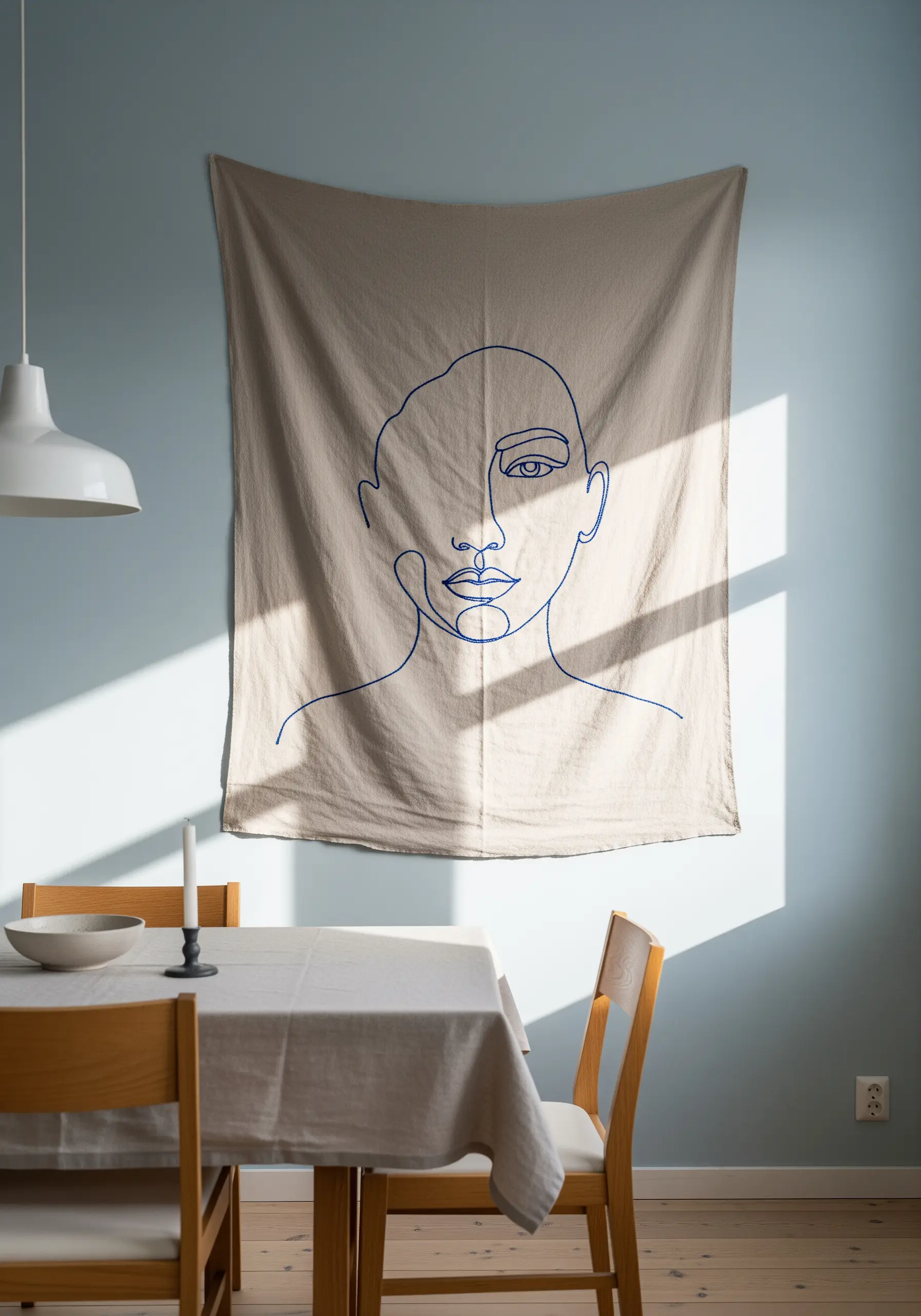
Embrace minimalist elegance by stitching a portrait with a single, continuous line.
Use a simple backstitch or stem stitch and focus on maintaining consistent stitch length for a clean, flowing line that defines the facial features beautifully.
Select a neutral linen scrap from old tablecloths or curtains; its natural texture adds warmth and character to the piece.
The key to this modern aesthetic is the confidence in the line itself—don’t overwork it. Let the simplicity be the statement.
Instead of hemming the edges, let them fray slightly for an organic, unfussy finish that complements the rawness of the artwork.
5. Urban Landscape from Upcycled T-Shirts
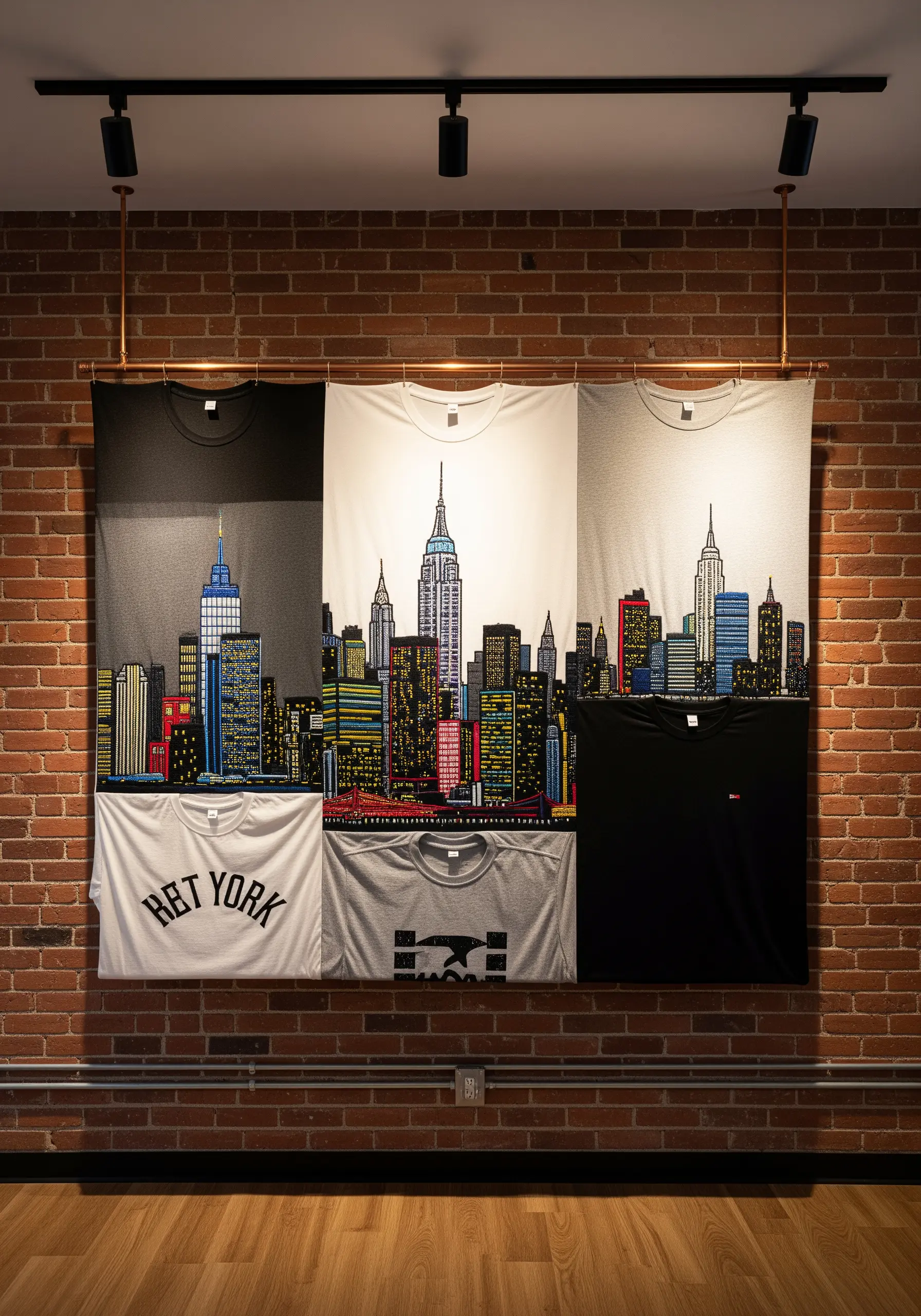
Construct a vibrant cityscape by using old t-shirts as your color palette.
Cut geometric shapes from various shirts to represent buildings, arranging them in a layered composition to create perspective and depth.
Use a fusible web adhesive to secure the fabric pieces to your background before stitching; this prevents shifting and keeps your edges clean.
Once your collage is set, add architectural details like windows and outlines using a simple backstitch in a contrasting color like black or white.
This fabric collage embroidery technique turns sentimental (but unwearable) shirts into a graphic, narrative art piece.
6. Celestial Nursery Art from Baby’s First Clothes
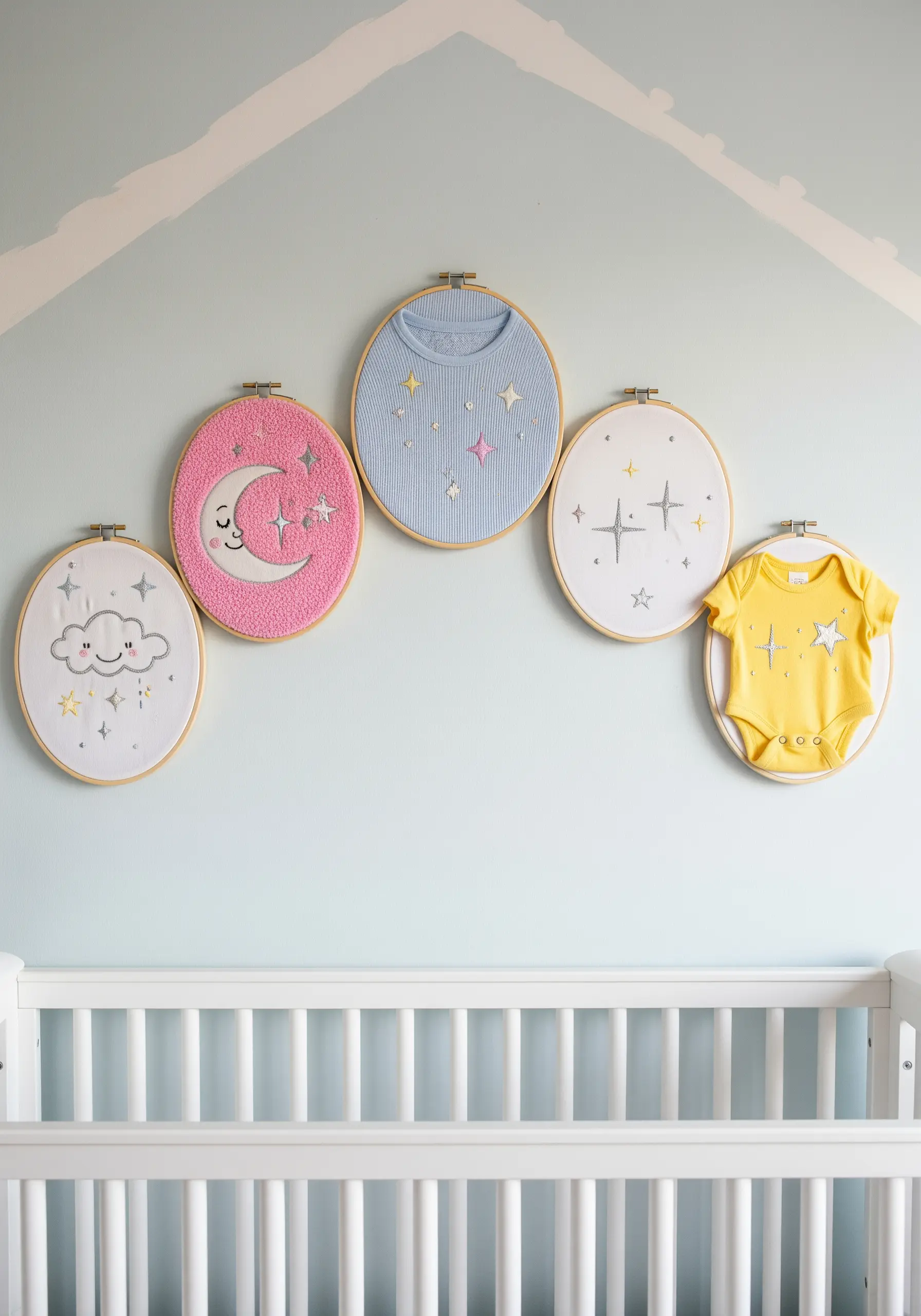
Preserve precious memories by turning outgrown baby clothes into a celestial gallery wall.
Before you stitch on soft, stretchy fabrics, apply a stick-on or iron-on stabilizer to the back to prevent the material from puckering and distorting your stitches.
Use textural stitches that are soft to the touch, like French knots for twinkling stars and a plush satin stitch for the moon.
For a touch of magic, incorporate a single strand of metallic floss with your regular thread to give the stars a subtle, gentle shimmer.
This approach transforms simple garments into embroidered nursery decor that tells a personal story.
7. Botanical Herbarium on a Kitchen Apron
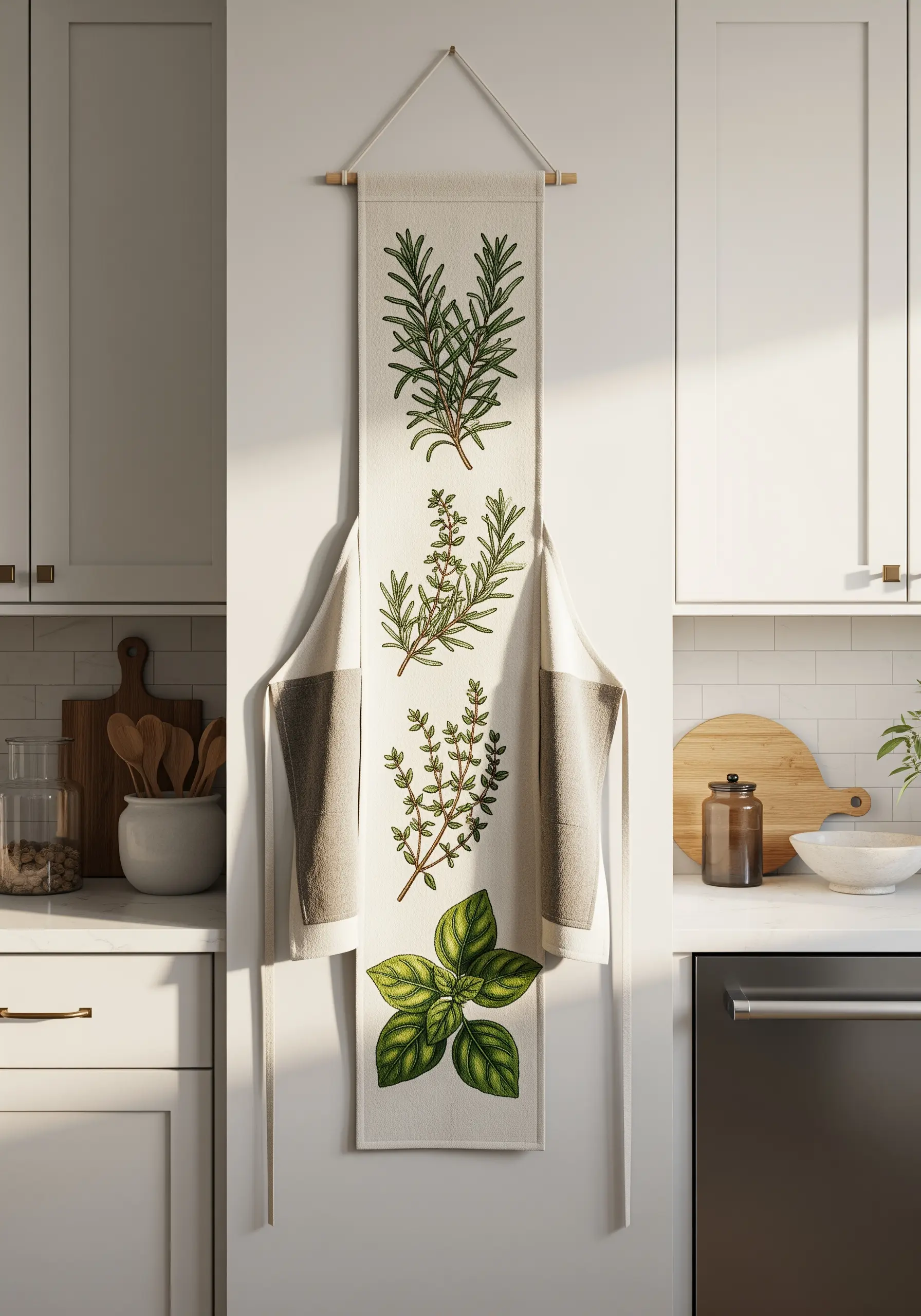
Elevate a simple kitchen apron into a piece of botanical art with finely stitched herbs.
To achieve a realistic look, use a fine split stitch for the outlines and a stem stitch for the central stems, which gives them a subtle, rounded appearance.
Limit your palette to two or three shades of green per herb, using the darkest shade for shadows to create depth without overwhelming the design.
The key to delicate medicinal herb embroidery designs is using only two strands of floss, which allows for greater detail and precision.
Displaying the apron on a simple wooden hanger turns a functional object into a piece of charming, rustic kitchen decor.
8. Constellation Map on a Corduroy Jacket
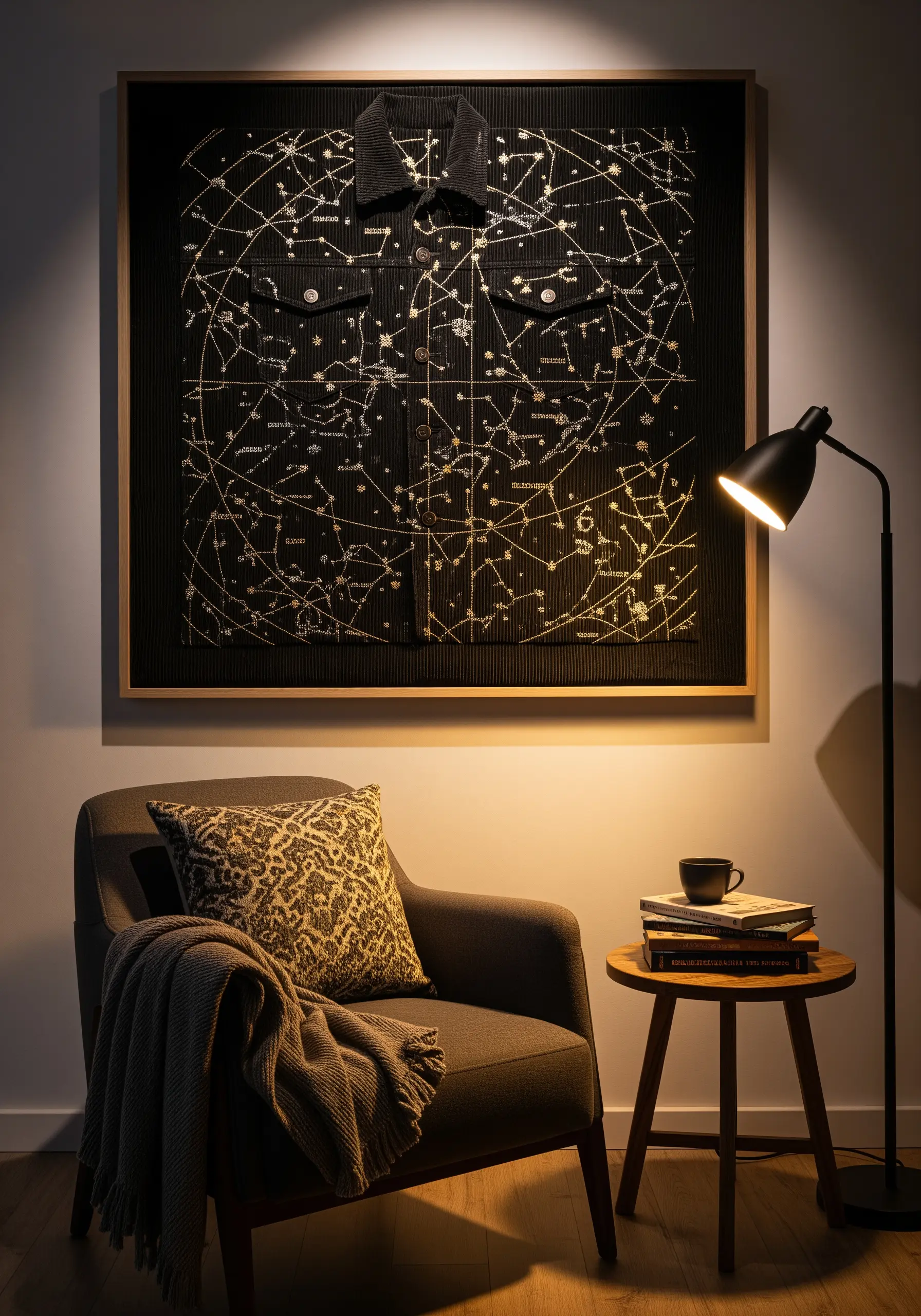
Map the night sky across the rich texture of a dark corduroy or denim jacket.
Use a simple combination of straight stitches for the constellation lines and French knots for the stars, varying the number of wraps on your knots to represent stars of different magnitudes.
A metallic silver or gold thread provides a stunning contrast against the dark fabric, catching the light and mimicking the sparkle of real stars.
For an extra touch, consider using a glow-in-the-dark thread that will reveal the constellations after the lights are out.
Framing the entire jacket elevates it from clothing to a dramatic, personal piece of metallic thread wall art.
9. Painted Brushstrokes on Silk Scarves
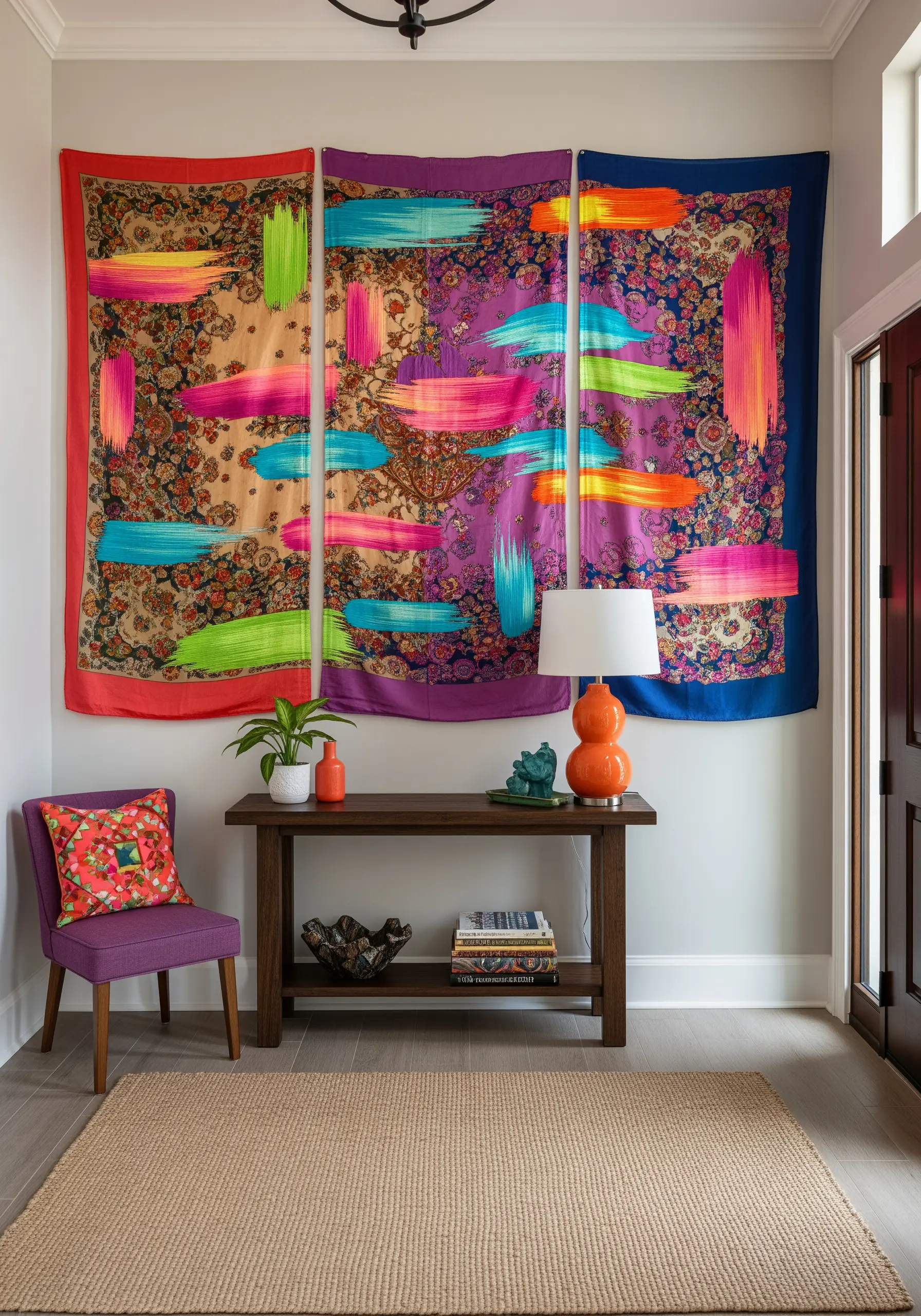
Combine the fluidity of paint with the texture of thread for a dynamic mixed-media piece.
Start by laying an old silk scarf flat and applying bold, expressive strokes of fabric paint. Let the paint dry completely according to the manufacturer’s instructions.
Then, enhance the edges of your brushstrokes with a simple running stitch in a contrasting or complementary thread color.
This subtle embroidery adds a layer of texture and definition, bridging the gap between the painted and woven surfaces.
Hanging three scarves together as a triptych turns this simple mixed-media project into a large-scale, impactful statement.
10. Minimalist Wave Embroidery on Terrycloth
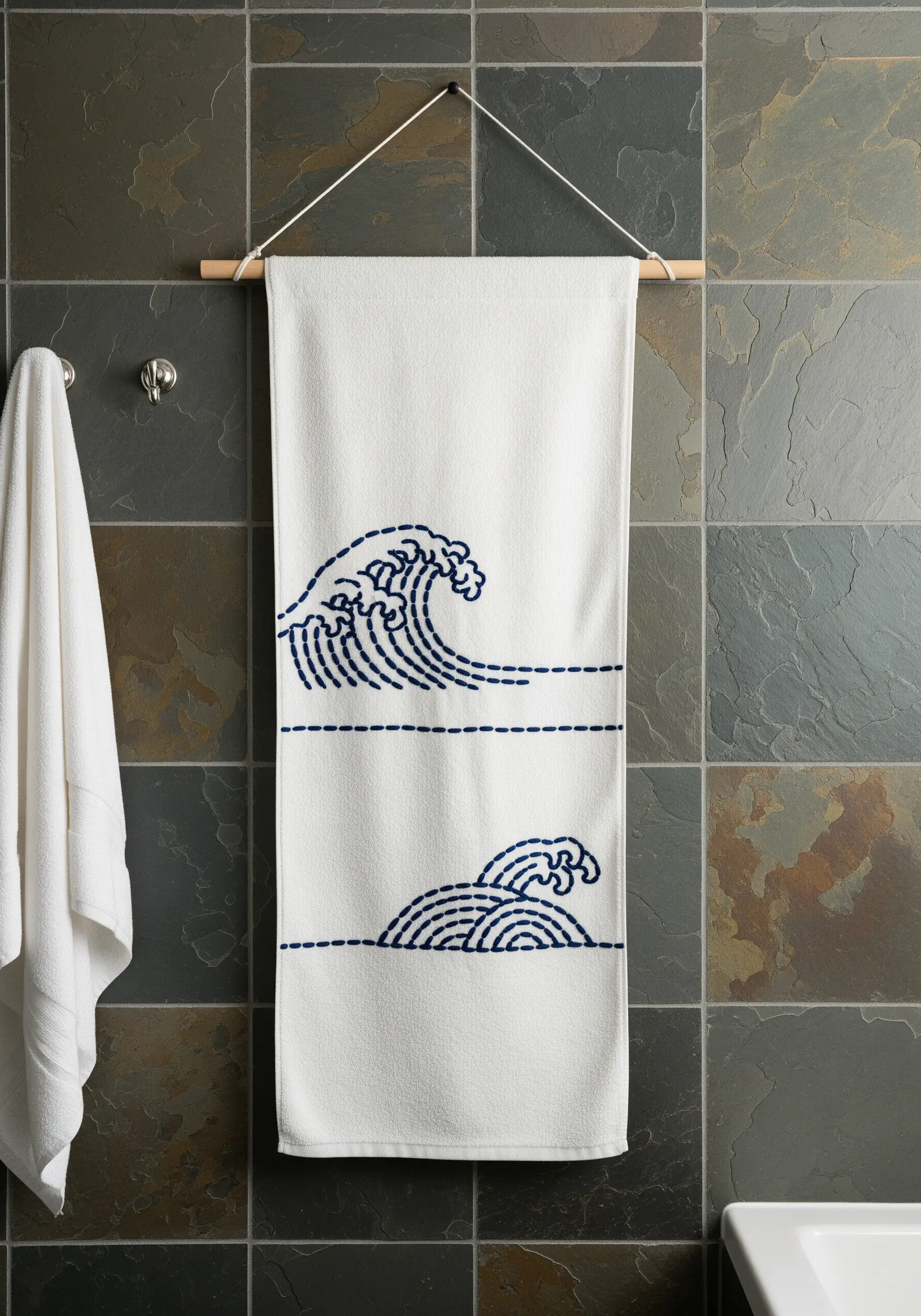
Master stitching on high-pile fabrics like terrycloth towels with one simple trick.
Place a layer of water-soluble stabilizer on top of the towel before you begin stitching. This creates a smooth surface and prevents your stitches from sinking into the fabric’s loops.
Use a bold stitch that won’t get lost in the texture, like a thick chain stitch or a backstitch worked with all six strands of floss.
A simple, graphic design like these abstract thread waves is ideal, as intricate details can be difficult to execute on this type of fabric.
Once you are finished, simply wash the towel to dissolve the stabilizer, leaving behind crisp, clean stitches.
11. Punk-Inspired Patchwork and Stitch Graffiti
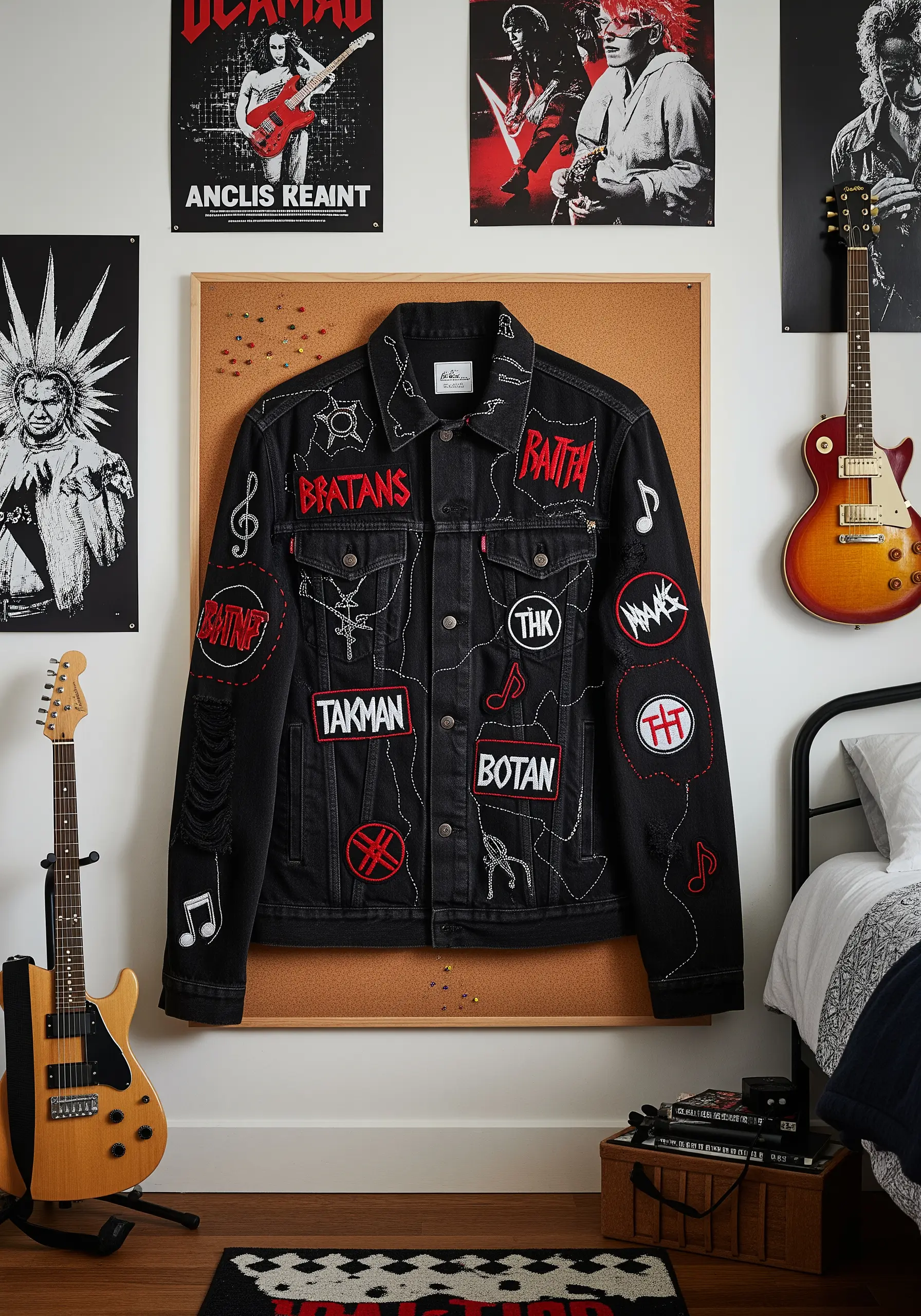
Channel a raw, rebellious energy by treating a denim jacket as a canvas for stitch-based graffiti.
Combine purchased patches with your own embroidered words and symbols for a truly personalized piece.
Use a thick, high-contrast thread, like white sashiko thread, and intentionally visible stitches like the running stitch to attach your patches and draw your motifs.
The beauty of this style is in its imperfection—embrace uneven stitches and a freeform composition.
This approach to vintage-inspired denim jacket embroidery is less about technical perfection and more about personal expression.
12. Floating Meadow on Sheer Fabric
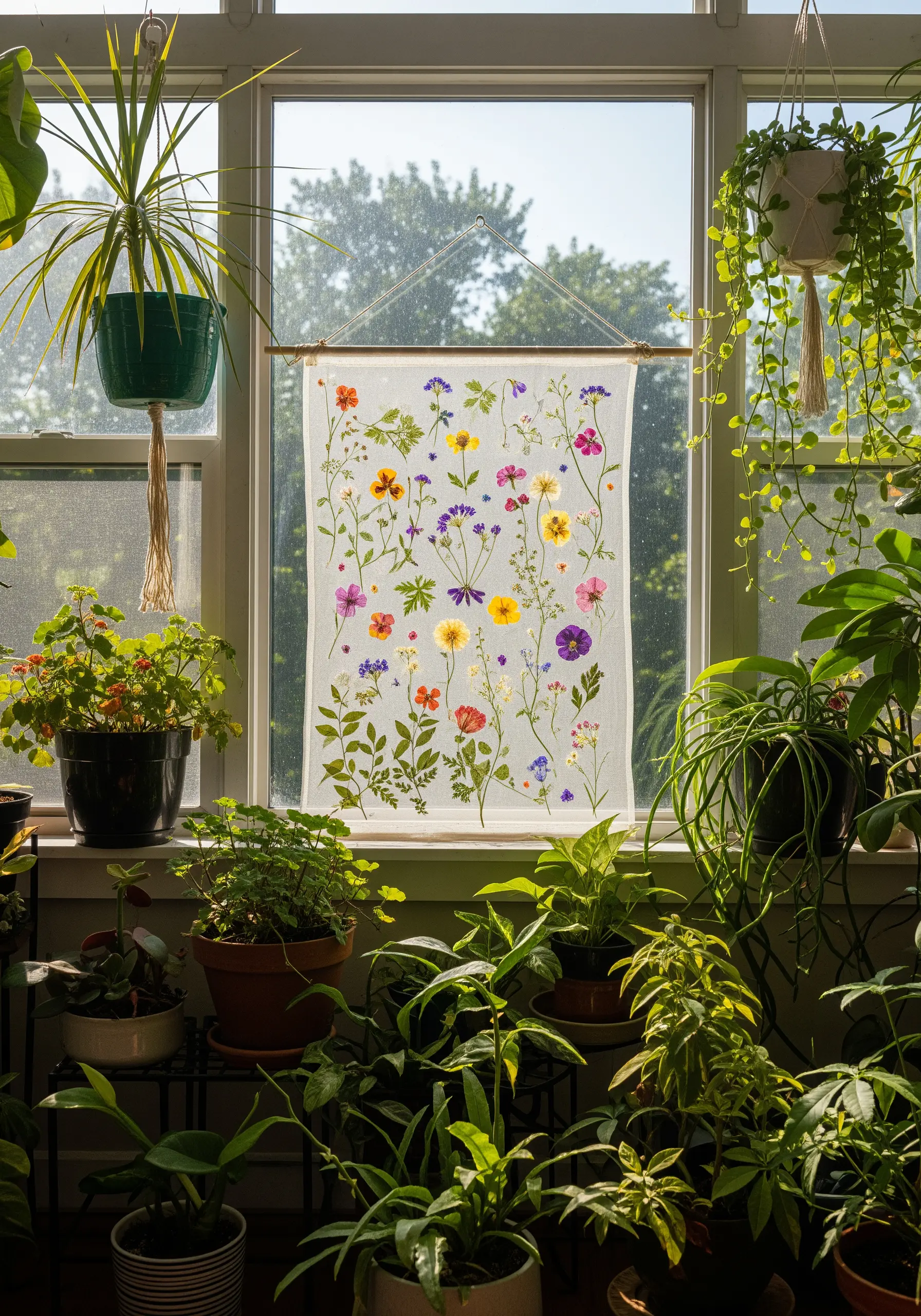
Create the illusion of wildflowers suspended in mid-air by stitching on a sheer fabric like organza or voile.
Use a very fine needle and only a single strand of floss to keep the stitching light and delicate, preventing tears in the fabric.
For the petals, use simple detached chain stitches and lazy daisies. Tiny French knots make perfect flower centers.
The magic of these pressed flower-inspired embroidery stitches happens when you hang the finished piece in a window, allowing light to filter through and make the flowers glow.
An old sheer curtain panel provides the perfect canvas for this ethereal project.
13. Art Deco Fan on a Tailored Blazer
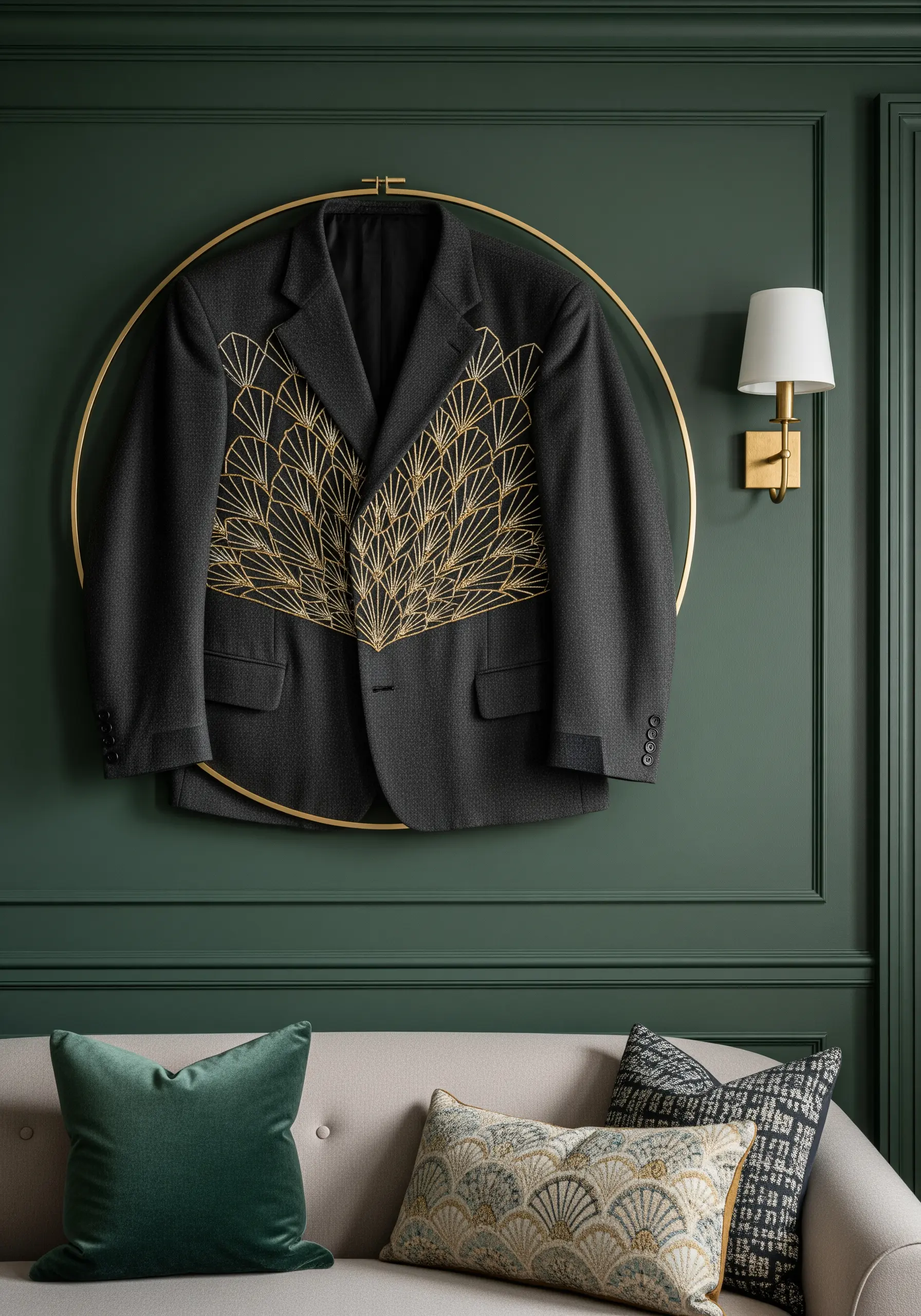
Imbue a structured blazer with the elegance of the Art Deco era using precise, radiating stitches.
Use a single, long straight stitch for each line of the fan, starting from a common point and fanning outwards.
To ensure your lines are perfectly straight and evenly spaced, draw your design onto the fabric first with a chalk pencil or a heat-erasable pen.
The choice of a metallic gold thread against a dark, textured wool creates a look of pure luxury and sophistication.
Perfect thread tension is crucial here to prevent any puckering on the finely tailored fabric.
14. Mending with Joy: Covering Stains with Playful Stitches
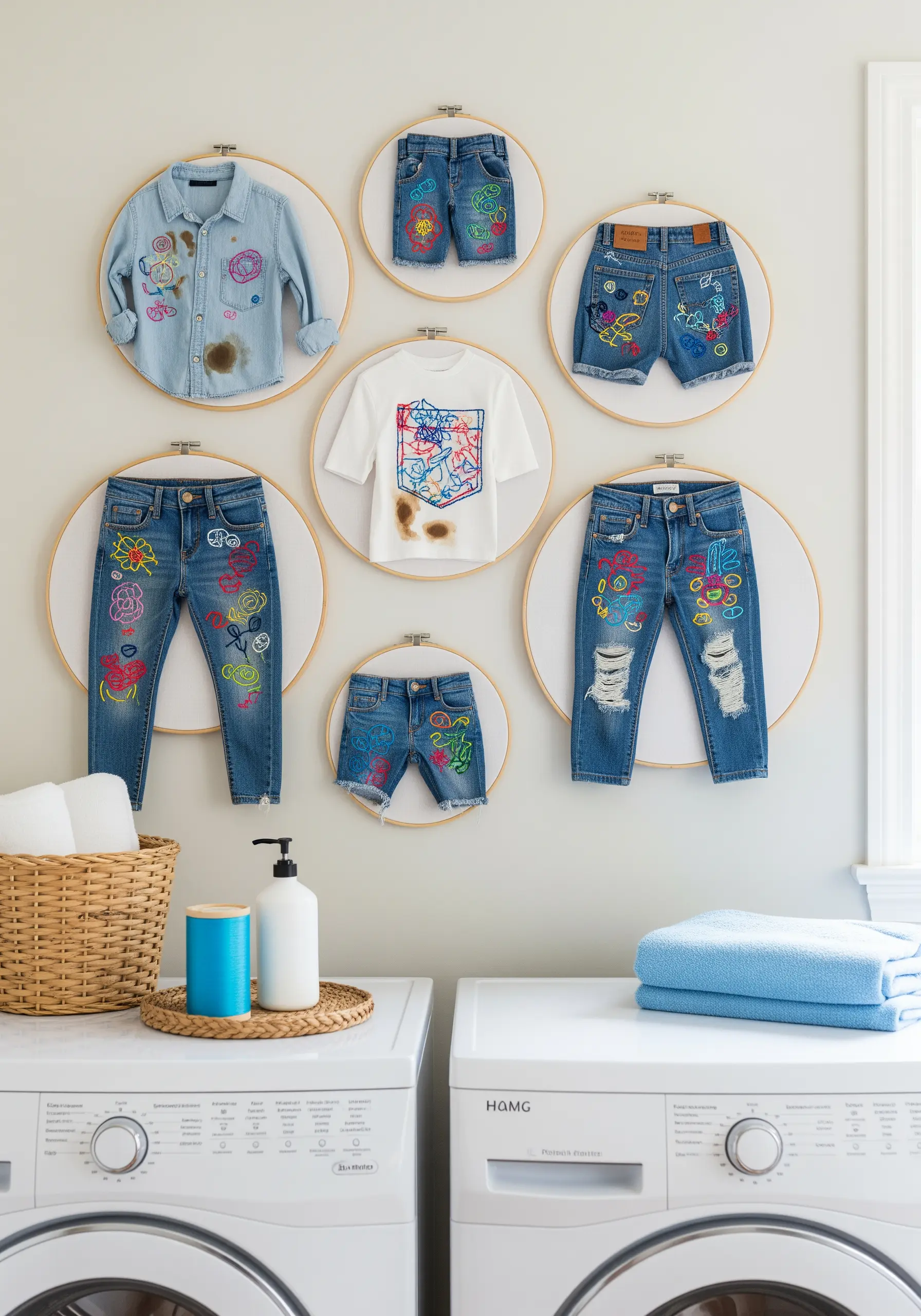
Turn accidental stains on children’s clothing into an opportunity for creative expression.
Instead of trying to hide the mark, celebrate it by using it as the foundation for your embroidery.
You can outline the shape of the stain with a bright chain stitch or completely cover it with a dense cluster of French knots for a fun, bubbly texture.
This approach reframes mending not as a chore, but as a playful act of storytelling, making the garment even more special.
These cartoon-style embroidery ideas give stained clothes a second life as a joyful piece of wall art.
15. A Literary Spine from Upcycled Trousers
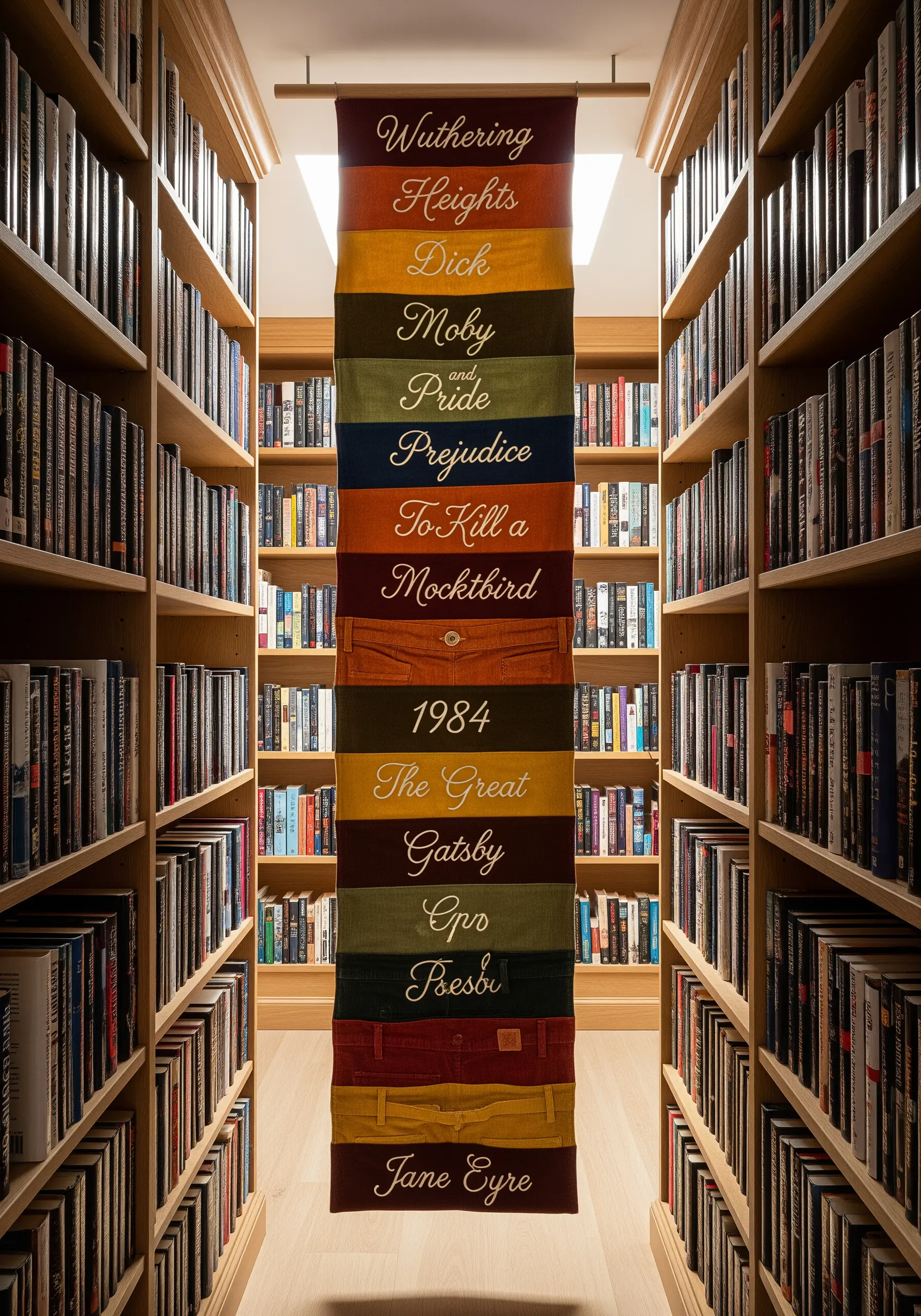
Craft a unique ode to literature by turning the waistbands of old trousers into a library of fabric book spines.
Deconstruct several pairs of corduroy, twill, or denim pants, keeping the waistband and a portion of the fabric below it intact.
Stitch them together into a long, vertical panel, creating a wonderfully textured and colorful wall hanging.
Use a clean, legible backstitch or split stitch to embroider your favorite book titles onto each panel.
These embroidered quote wall hangings transform textile waste into a deeply personal and artistic statement.
16. Cherry Blossom Branch on a Framed Sweater
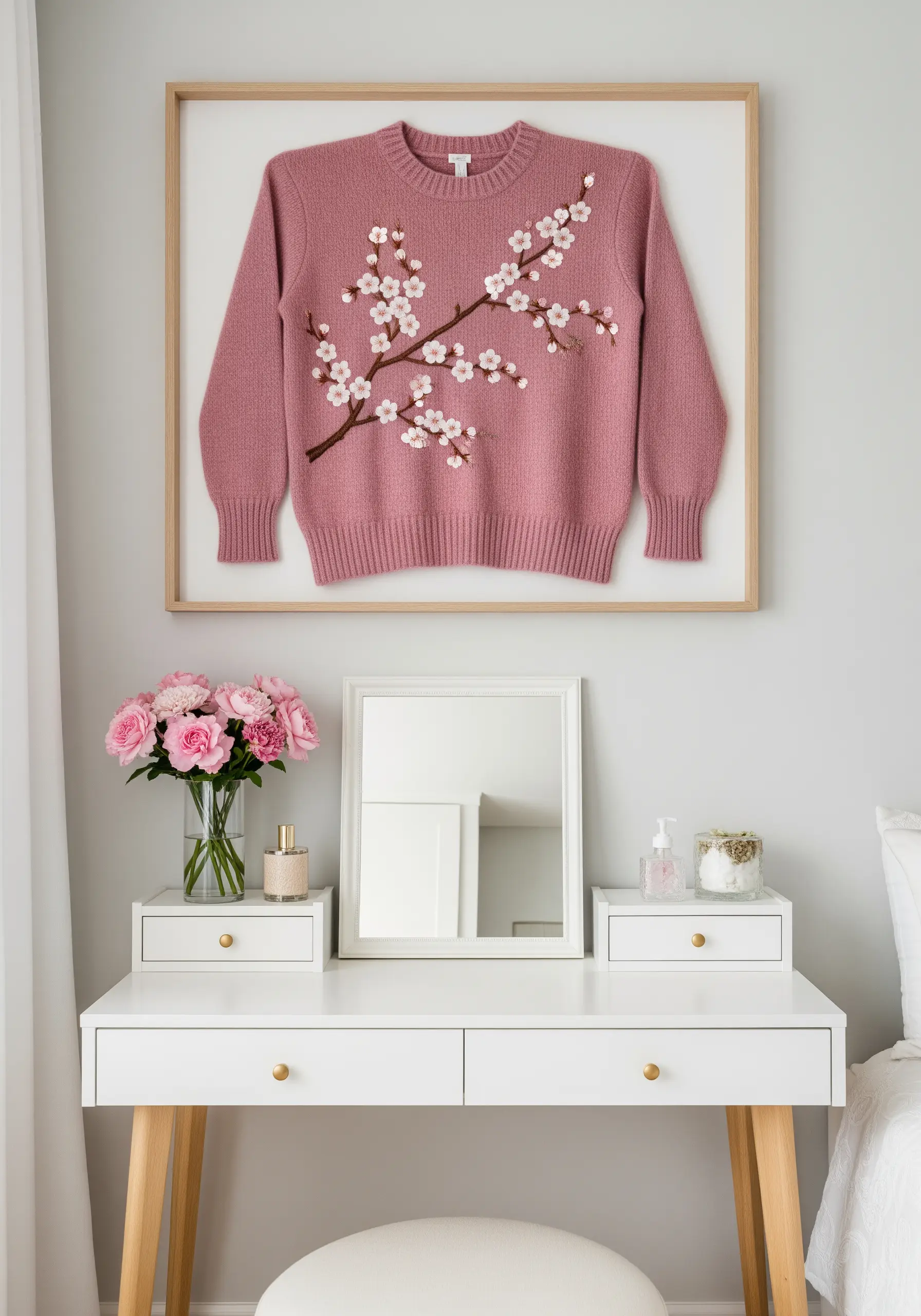
Capture the delicate beauty of spring by stitching a blooming branch onto a forgotten sweater.
Create the branch using a stem stitch, varying the number of floss strands—more for the thicker base, fewer for the delicate twigs.
For the blossoms, use a combination of pale pink and white detached chain stitches for the petals and tiny yellow French knots for the centers.
Mounting the finished sweater on a canvas board and placing it in a shadow box frame transforms it from apparel into a piece of fine textile art.
These soft pastel embroidery ideas give old knitwear a new, artistic purpose.
17. Patchwork Landscape with Appliquéd Mountains
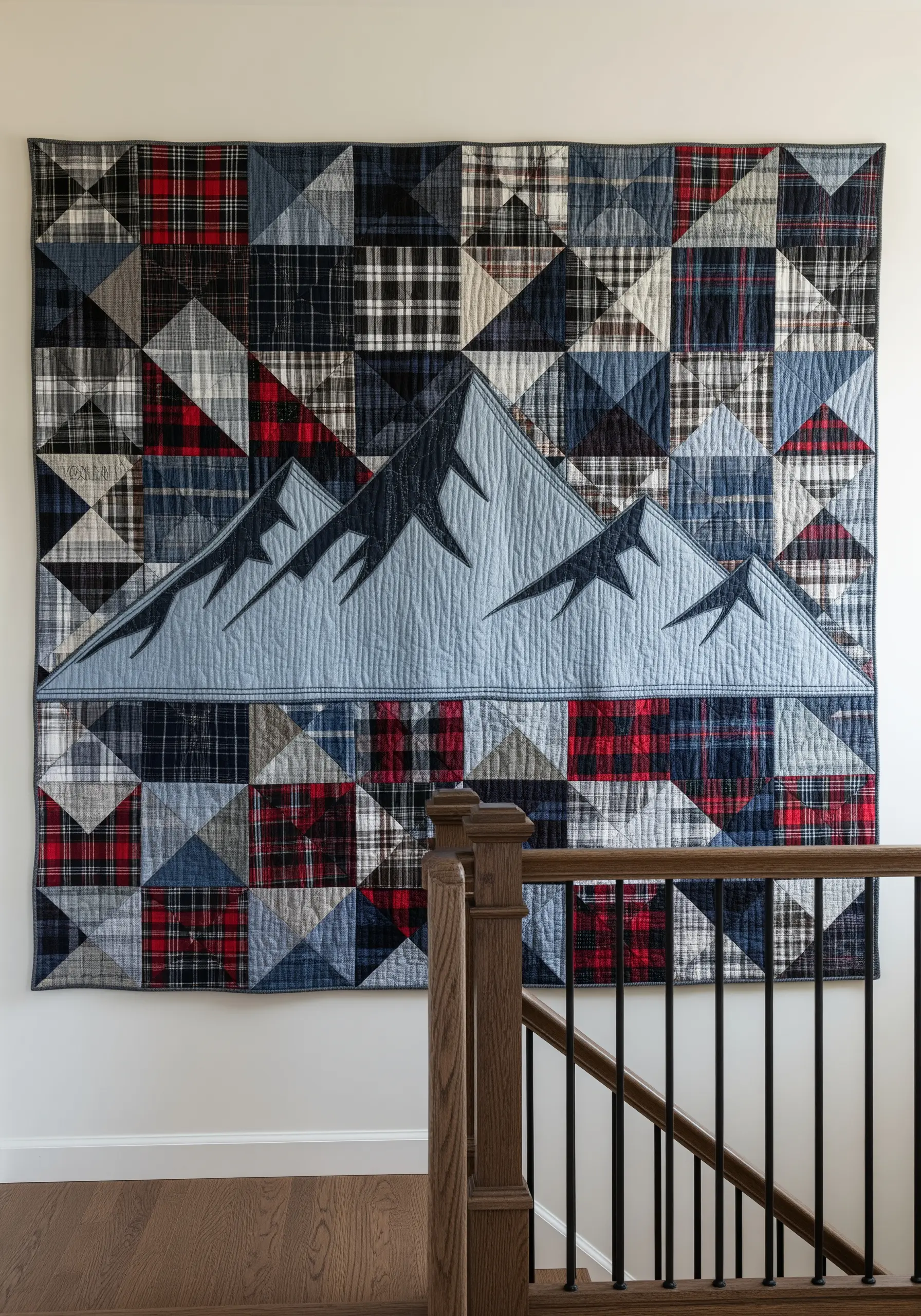
Build a majestic mountain scene using the scraps from old flannel shirts and denim jeans.
First, create your background by piecing together squares and triangles of plaid and chambray fabrics to create a ‘sky’.
Next, cut your mountain range silhouette from a solid, contrasting fabric like gray corduroy or dark denim.
Secure the mountain appliqué to the patchwork background using a decorative blanket stitch or a simple running stitch around the edges.
This project beautifully combines quilting and appliqué techniques to create rustic, travel-inspired wall art.
18. Zesty Citrus Slices in a Floating Frame
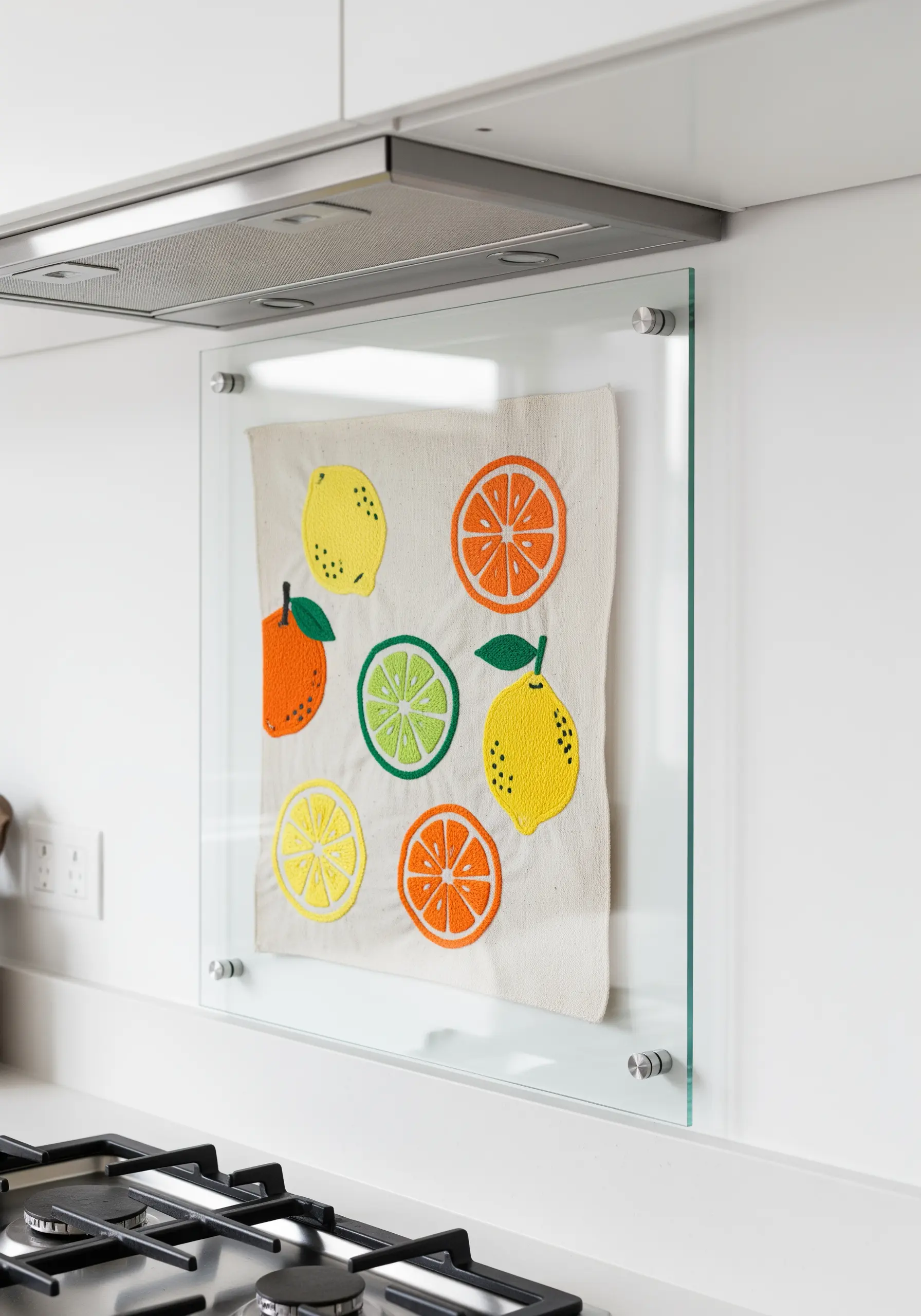
Capture the vibrant, juicy look of fresh citrus using smooth, dense satin stitches.
Work your satin stitches in clean, parallel lines to fill each fruit segment, making sure to keep the tension even to prevent puckering.
Use a split stitch to create a clean outline around each slice and segment, which adds definition and makes the colors pop.
Stitching on a neutral canvas from an old tote bag or pillowcase makes the bright citrus colors the star of the show.
Displaying the finished piece in a modern, floating glass frame gives it a clean and contemporary look perfect for a kitchen wall.
19. Meditative Mandala Over a T-Shirt Quilt
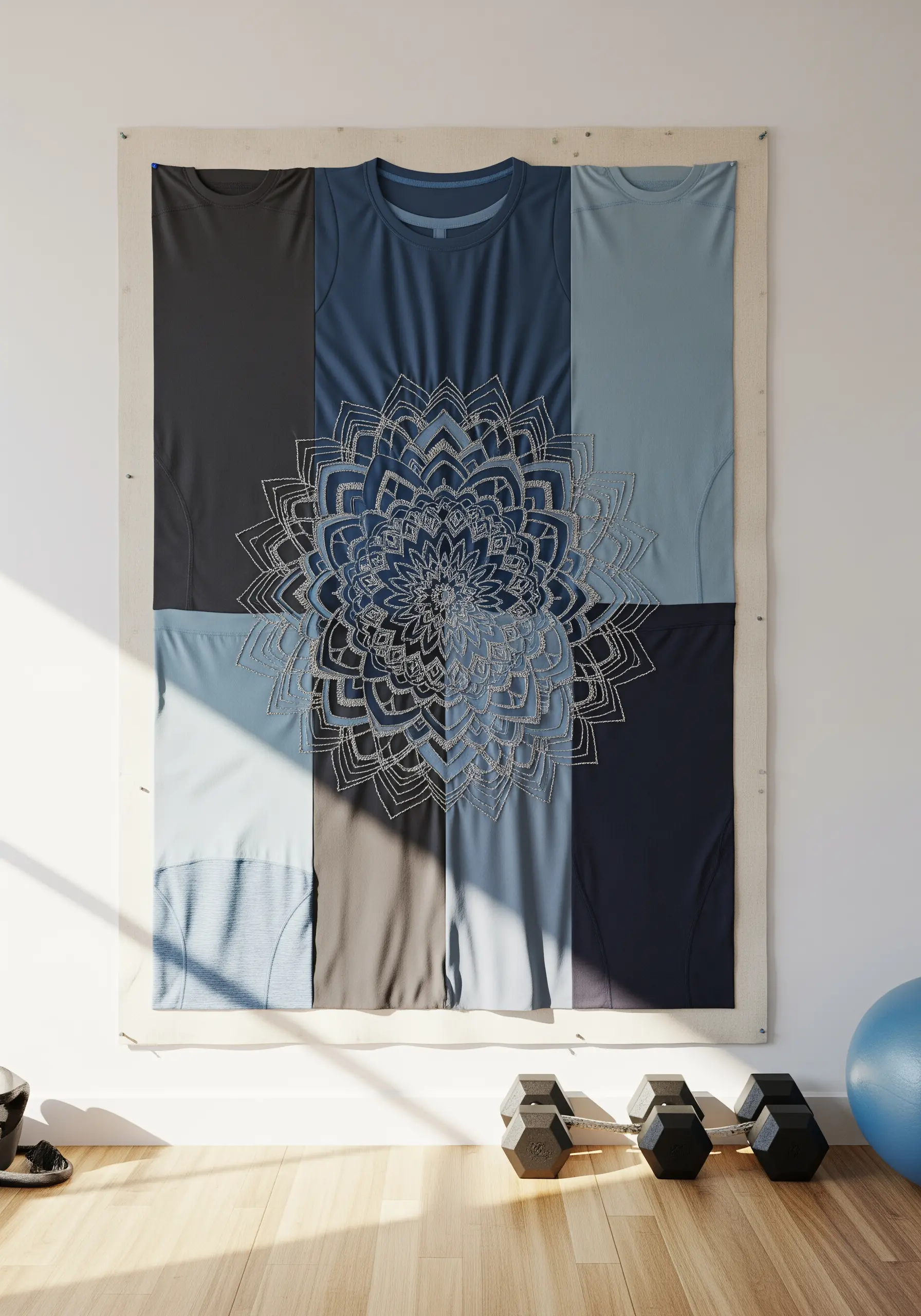
Breathe new life into a sentimental t-shirt quilt by using it as the canvas for a unifying design.
Once you have pieced together your quilt top from old athletic or concert tees, use the entire surface for a single, large-scale mandala.
Choose a high-contrast thread, such as a silver metallic or a bright white, to ensure the design is visible across all the different colors and logos.
A simple backstitch or stem stitch is all that is needed to create the intricate linework of the mandala.
This embroidered mandala wall art project transforms a collection of memories into a cohesive work of art.
20. Entomological Studies on Vintage Handkerchiefs
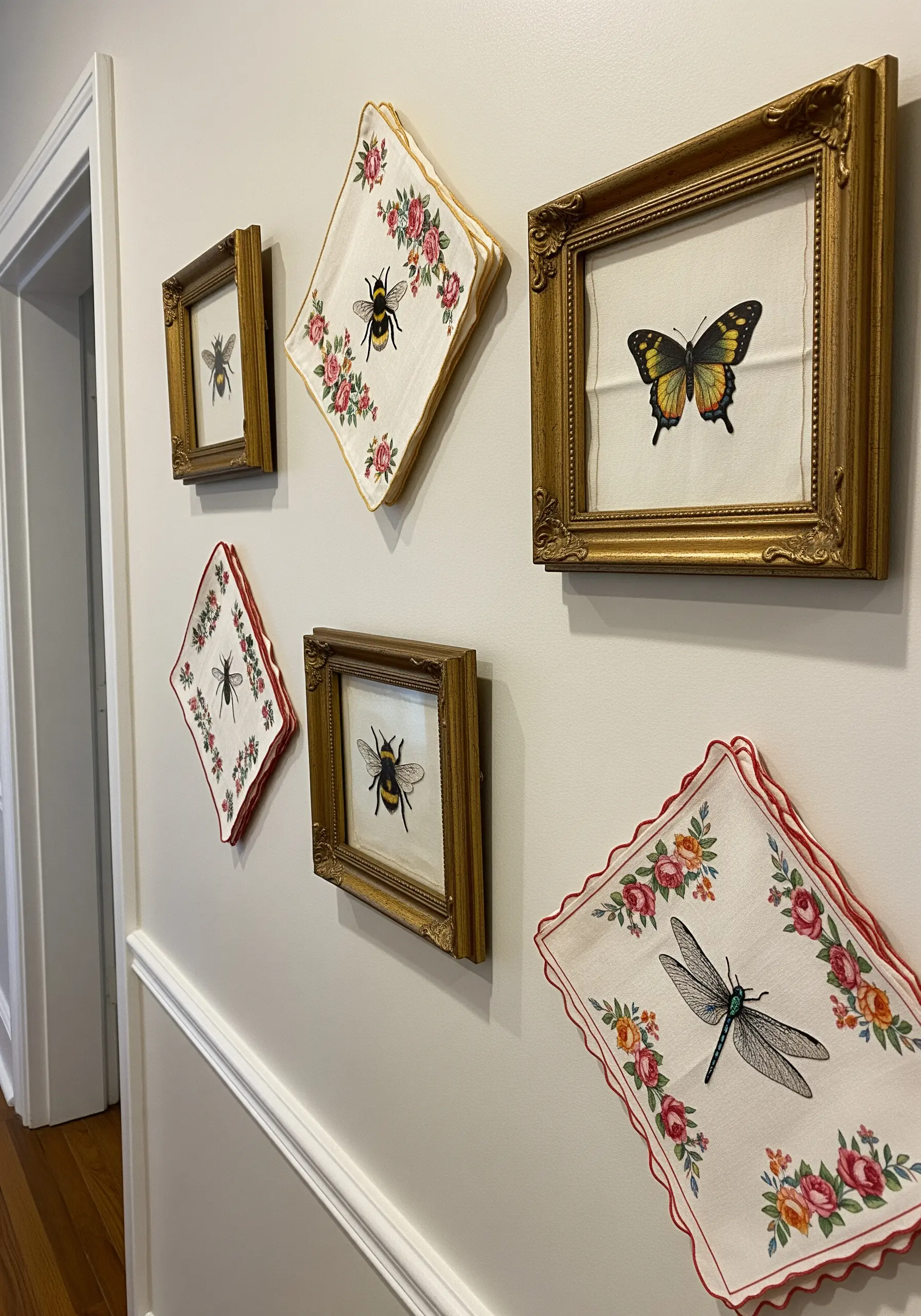
Turn delicate, heirloom handkerchiefs into a charming ‘cabinet of curiosities’ wall display.
When working on fine vintage linen, use a very sharp, fine needle (like a size 10) and only one or two strands of floss to avoid creating large holes or pulling the threads.
Use long-and-short stitch to blend colors on butterfly wings and tiny seed stitches to create the fuzzy texture on a bee’s body.
The contrast between the delicate, often floral-printed handkerchief and the scientific precision of the insect illustration is what makes these pieces so compelling.
Frame them in mismatched, ornate vintage frames to complete the collected, eclectic look.
21. Tone-on-Tone Stitching on a Psychedelic Print
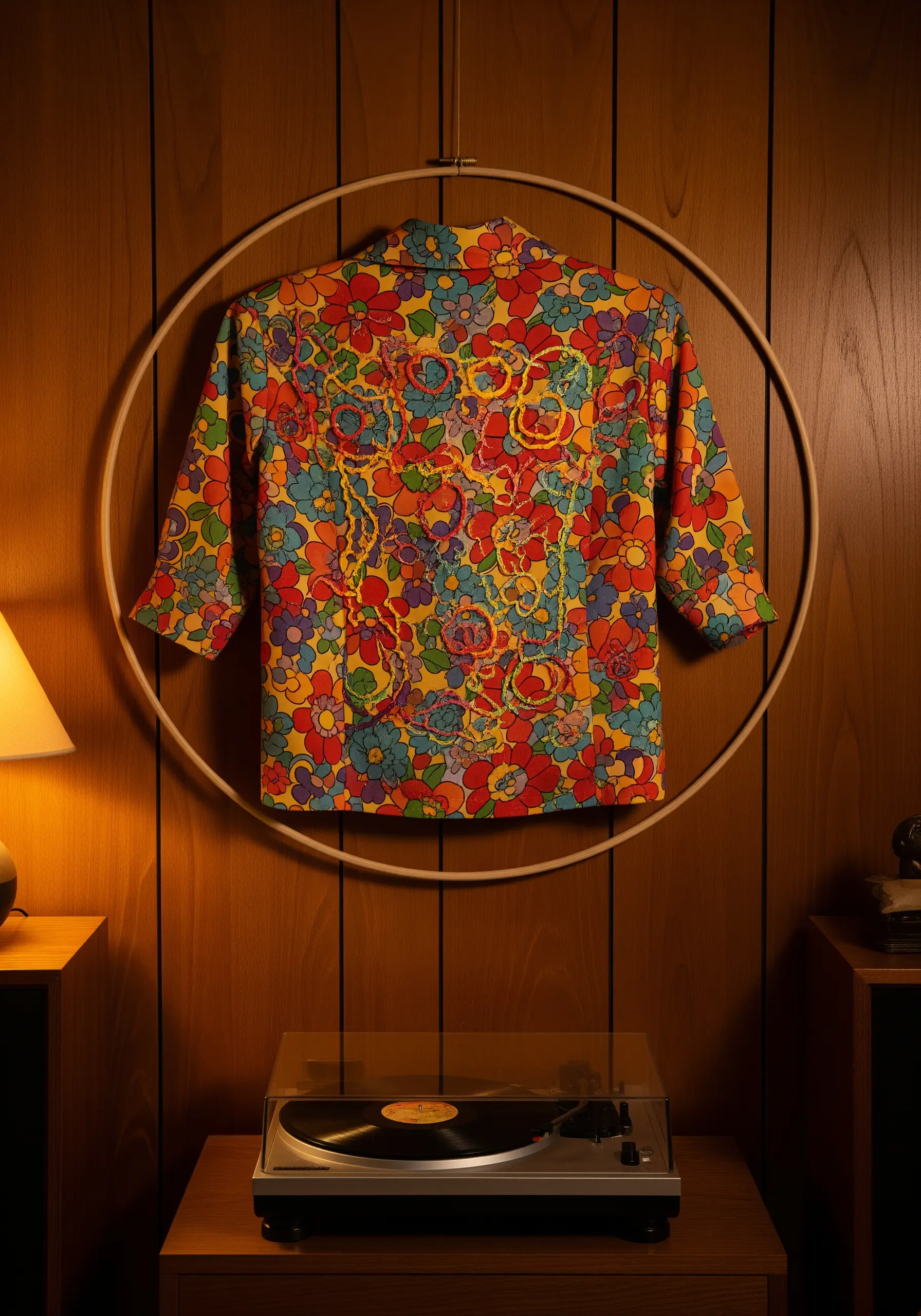
Add a layer of subtle, tactile interest to a wildly patterned garment without competing with the design.
Instead of introducing new colors, select threads that match the colors already present in the vibrant print.
Use a simple stem stitch or chain stitch to trace and emphasize some of the existing floral or abstract shapes within the pattern.
This technique creates a ‘secret’ layer of texture that is more felt than seen, rewarding the viewer who looks closely.
It’s a sophisticated way to add a handmade touch while honoring the original fabric’s design.
22. Coastal Scene on a Chambray Shirt
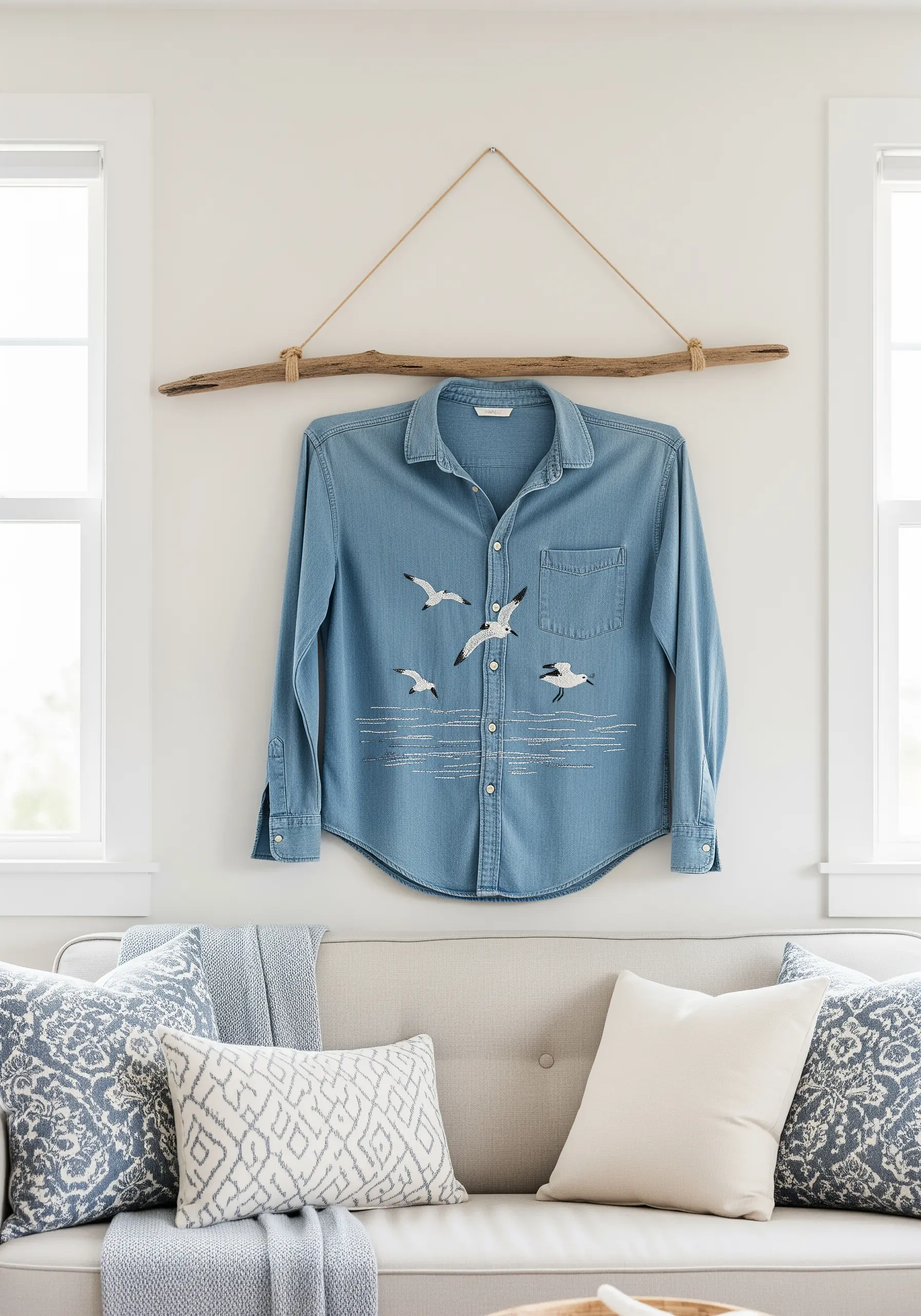
Use the color of a worn chambray shirt as the perfect backdrop for a serene coastal scene.
For the flying seagulls, use white and pale gray floss, employing a combination of satin stitch for the bodies and single straight stitches for fine wing details.
Create the illusion of light on water by stitching long, horizontal running stitches with a thread just a shade lighter than the shirt fabric.
This creates a subtle, shimmering effect that integrates beautifully with the base material.
Hanging the finished shirt from a piece of weathered driftwood enhances the nautical theme and turns it into a complete art piece.
23. Highlighting Heirlooms: Framing Damask
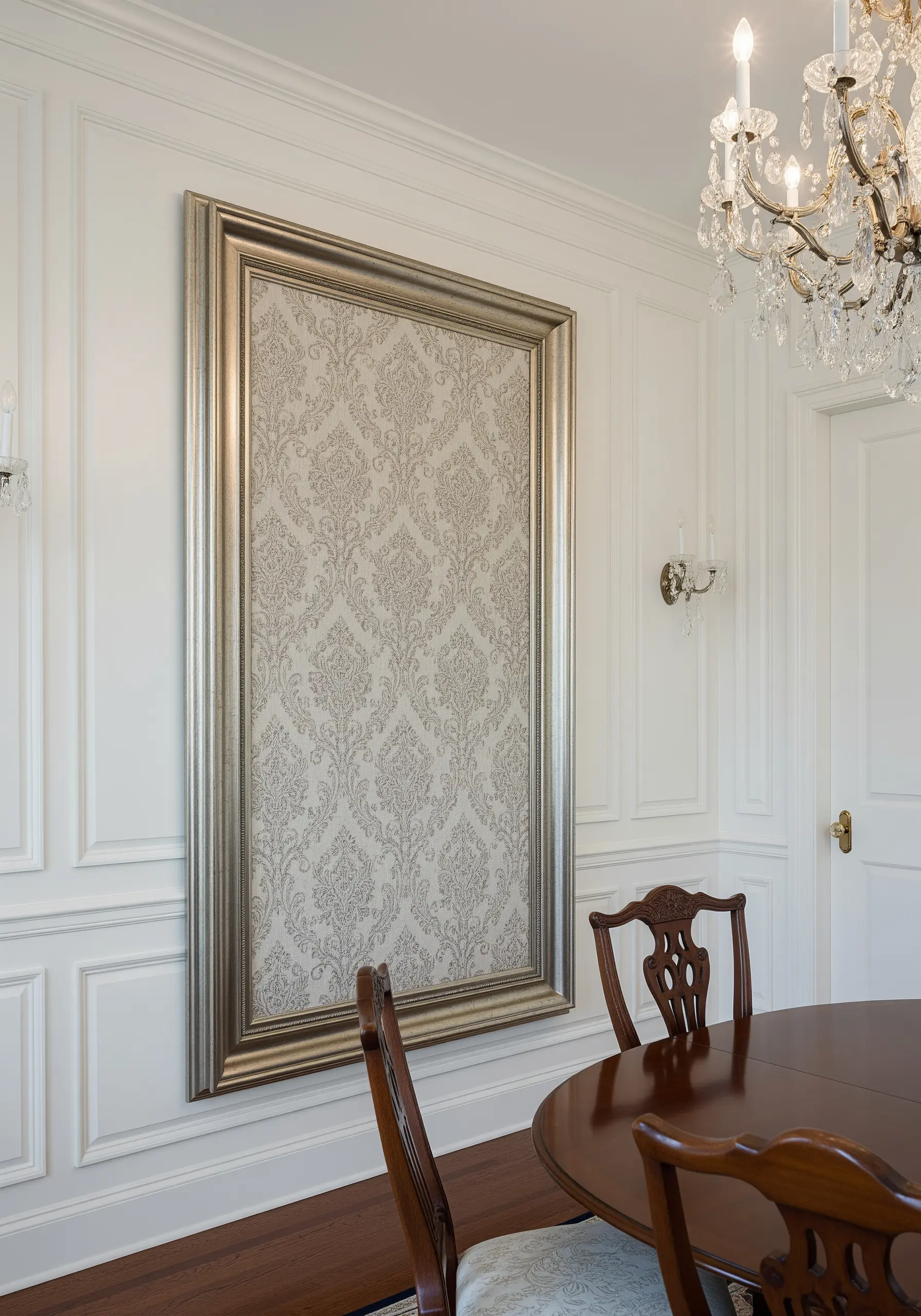
Recognize that sometimes, the fabric itself is the masterpiece.
If you have a remnant of beautiful damask upholstery, an old brocade curtain, or a piece of jacquard, its intricate weave may not need any additional stitching.
Instead, honor the craftsmanship of the textile by stretching it taut over a canvas or foam board and placing it in a substantial, elegant frame.
This method turns a forgotten scrap into a piece of large-scale abstract art, celebrating the beauty of pattern and texture.
This is the ultimate upcycling project—no needle or thread required, only a curator’s eye.
24. Modular Typography with Wrapped Yarn
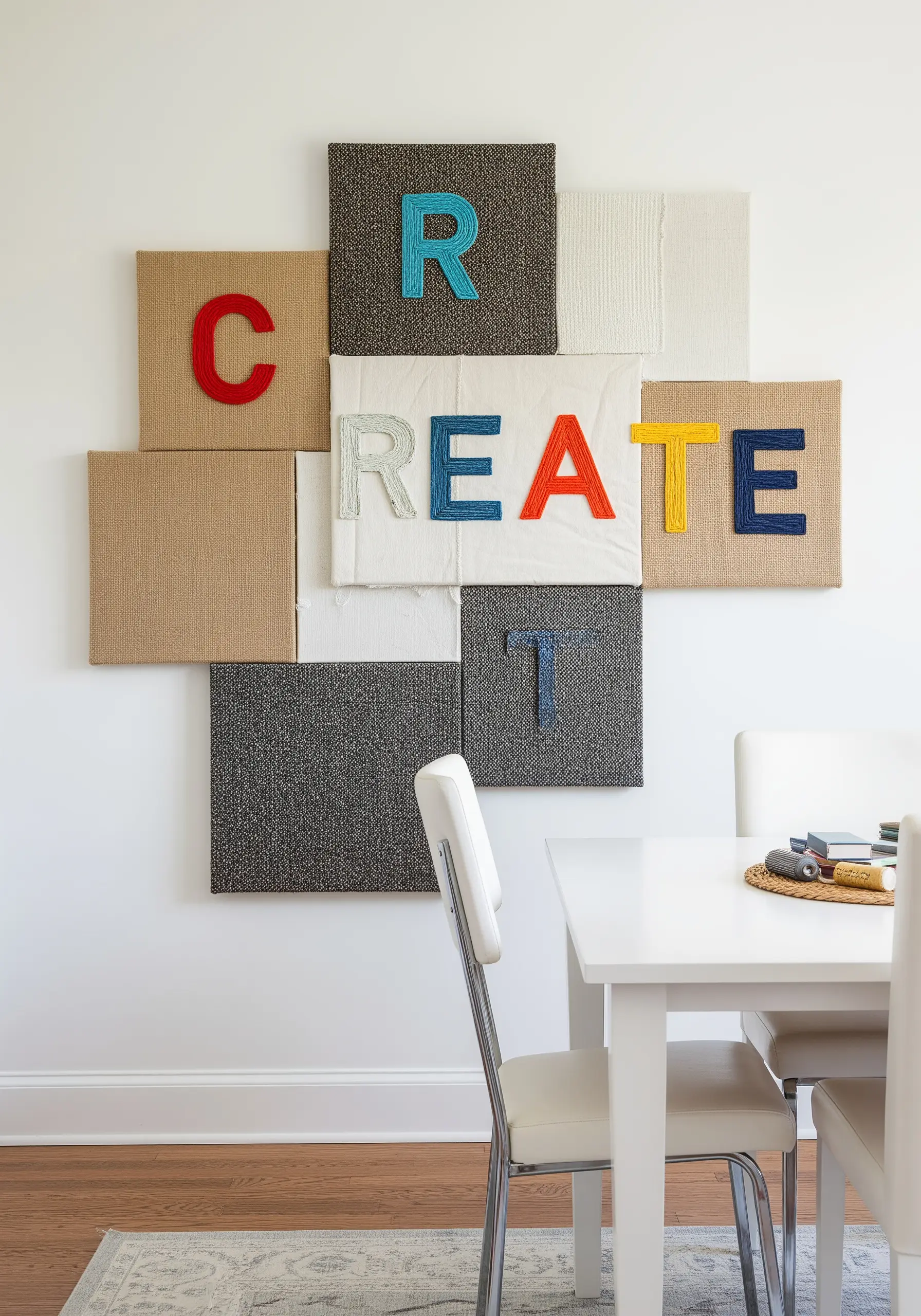
Create high-impact, textural typography using canvases, fabric scraps, and yarn.
Begin by covering several small, square artist canvases with different textured fabrics from your scrap bin, like burlap, linen, or tweed.
Then, design your letters and wrap colorful yarn tightly and neatly around the canvases to form the shapes.
This sculptural technique offers a bold, graphic alternative to traditional embroidered lettering.
Arrange the modular panels to spell out an inspiring word, creating a dynamic and personal piece of DIY yarn wall art.
25. Embroidered Family Tree on a Wool Blanket
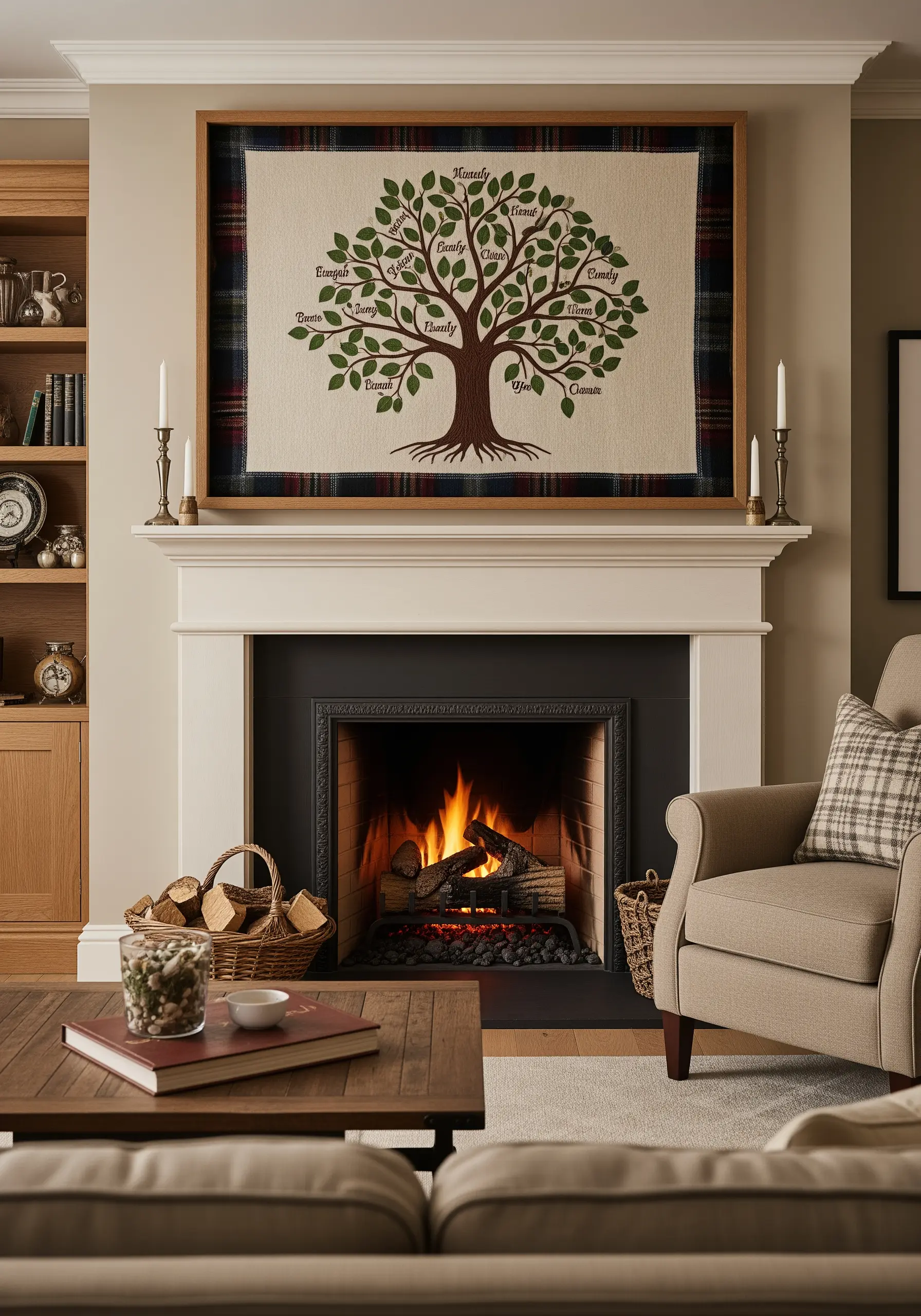
Craft a modern heirloom by stitching your family’s history onto a cozy blanket.
Use a wool or flannel blanket as your base for its warmth and durability.
For the tree trunk and branches, use a textured stitch like the stem stitch or chain stitch to give them dimension and a rustic feel.
A simple fishbone stitch is perfect for creating uniform, elegant leaves.
Use a neat, clear backstitch for the names on each branch, ensuring they are legible and timeless.
Framing the blanket with a border made from a loved one’s old plaid shirt adds another layer of personal history.
26. Anatomical Heart on a Tweed Jacket
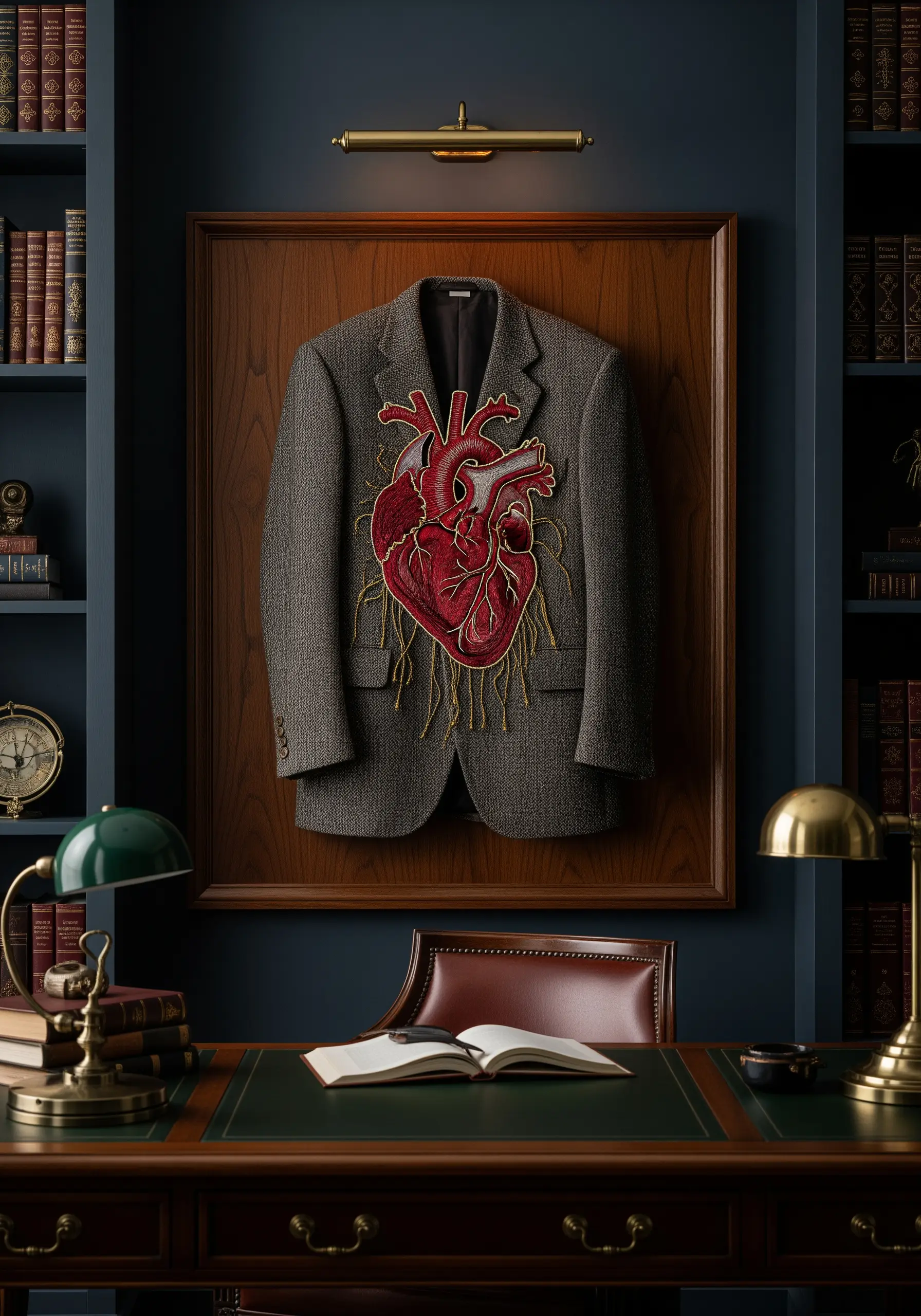
Juxtapose the clinical precision of an anatomical drawing with the classic texture of a tweed blazer.
Use a long-and-short stitch with various shades of red and burgundy floss to create the realistic, muscular texture of the heart.
A very fine split stitch is ideal for rendering the delicate arteries and veins with scientific accuracy.
For the fibrous roots extending downwards, try couching a thicker, textured gold thread to the surface for a dramatic, artistic contrast.
This project transforms a formal garment into a piece of profound, symbolic art.
27. Abstract Sunset Pieced from Fabric Scraps
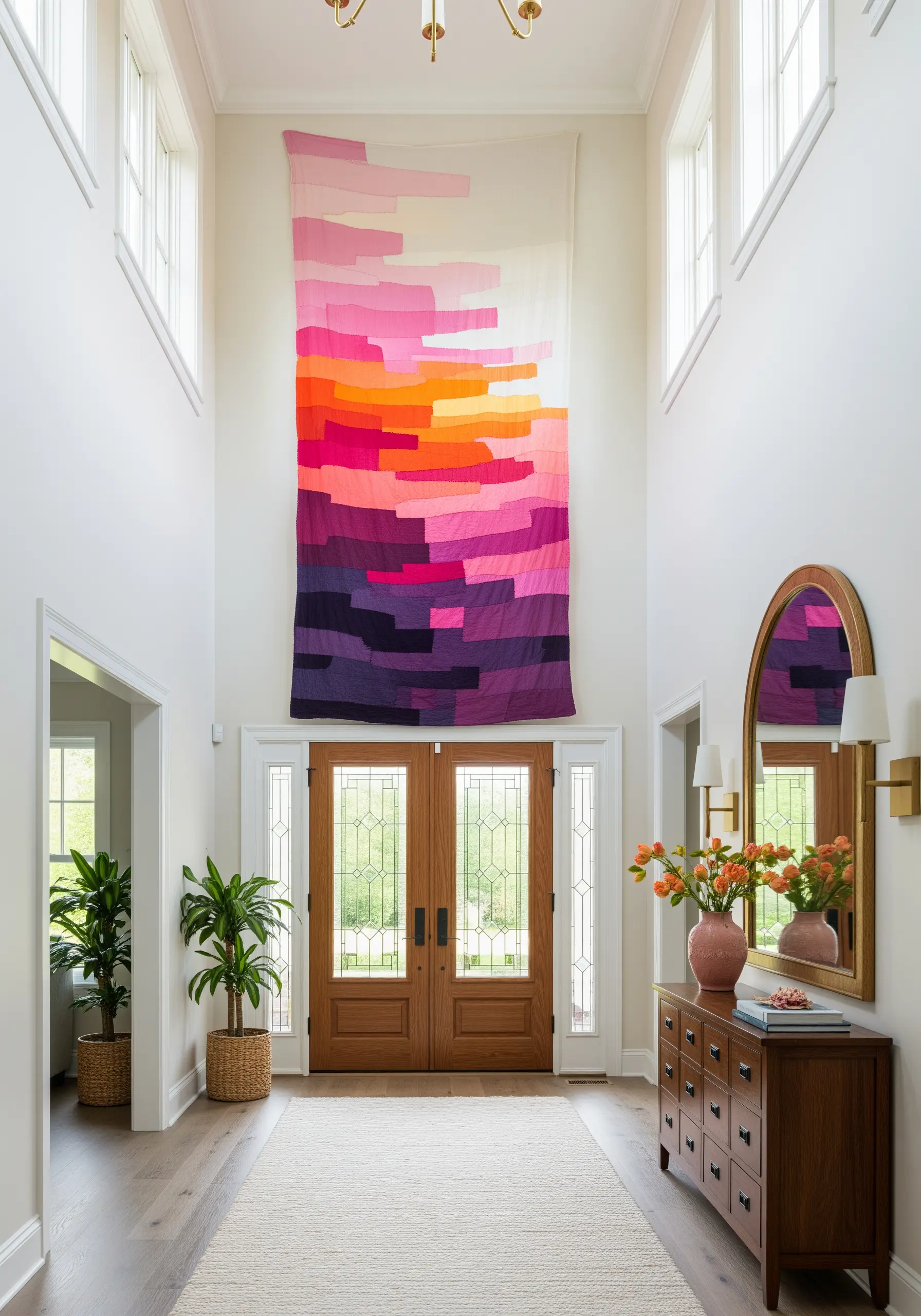
Think like a painter and use fabric scraps as your palette to create a stunning, large-scale abstract landscape.
Gather old t-shirts, dresses, and linens in a gradient of sunset colors—pinks, oranges, reds, and deep purples.
Cut them into strips and rectangular blocks and piece them together using a sewing machine to form your composition.
You can add a final layer of texture by hand-quilting with a simple running stitch, following the lines of your color blocks.
This method of creating abstract fabric collage embroidery turns textile waste into a breathtaking focal point for any room.
28. Cottagecore Fruit on Gingham Squares
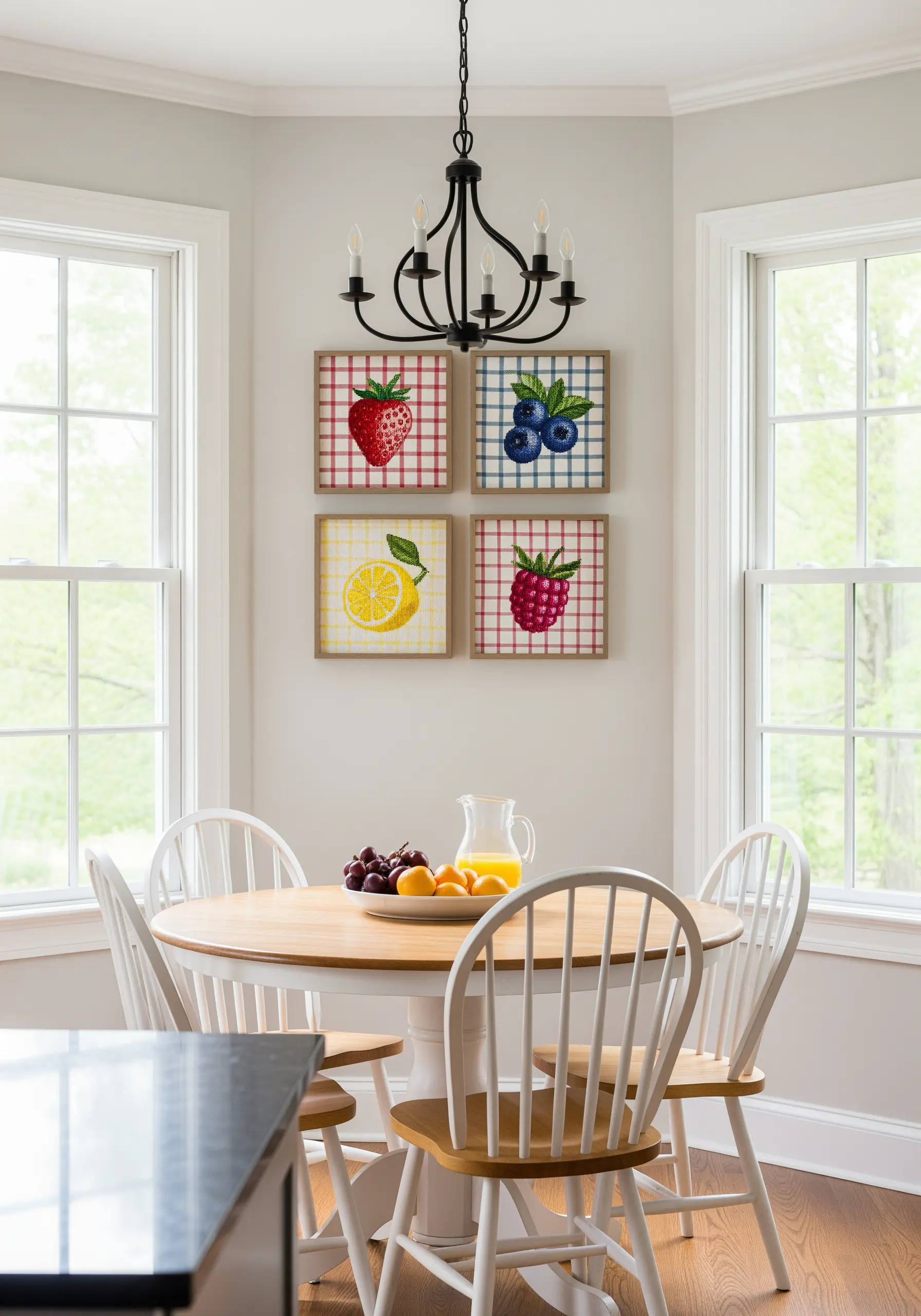
Use the grid of a gingham or plaid shirt as a natural guide for creating a charming set of kitchen art.
The woven pattern makes it incredibly easy to center your designs and keep your proportions consistent across multiple pieces.
Use a bold, dense satin stitch to fill in the fruits, which will make them pop beautifully against the patterned background.
A clean backstitch outline in a dark, contrasting color adds a crisp, illustrative quality to each motif.
Framing four different fruits as a set creates a cohesive and delightful gallery wall perfect for a dining nook.
29. Macrame and Fabric Strip Wall Hanging
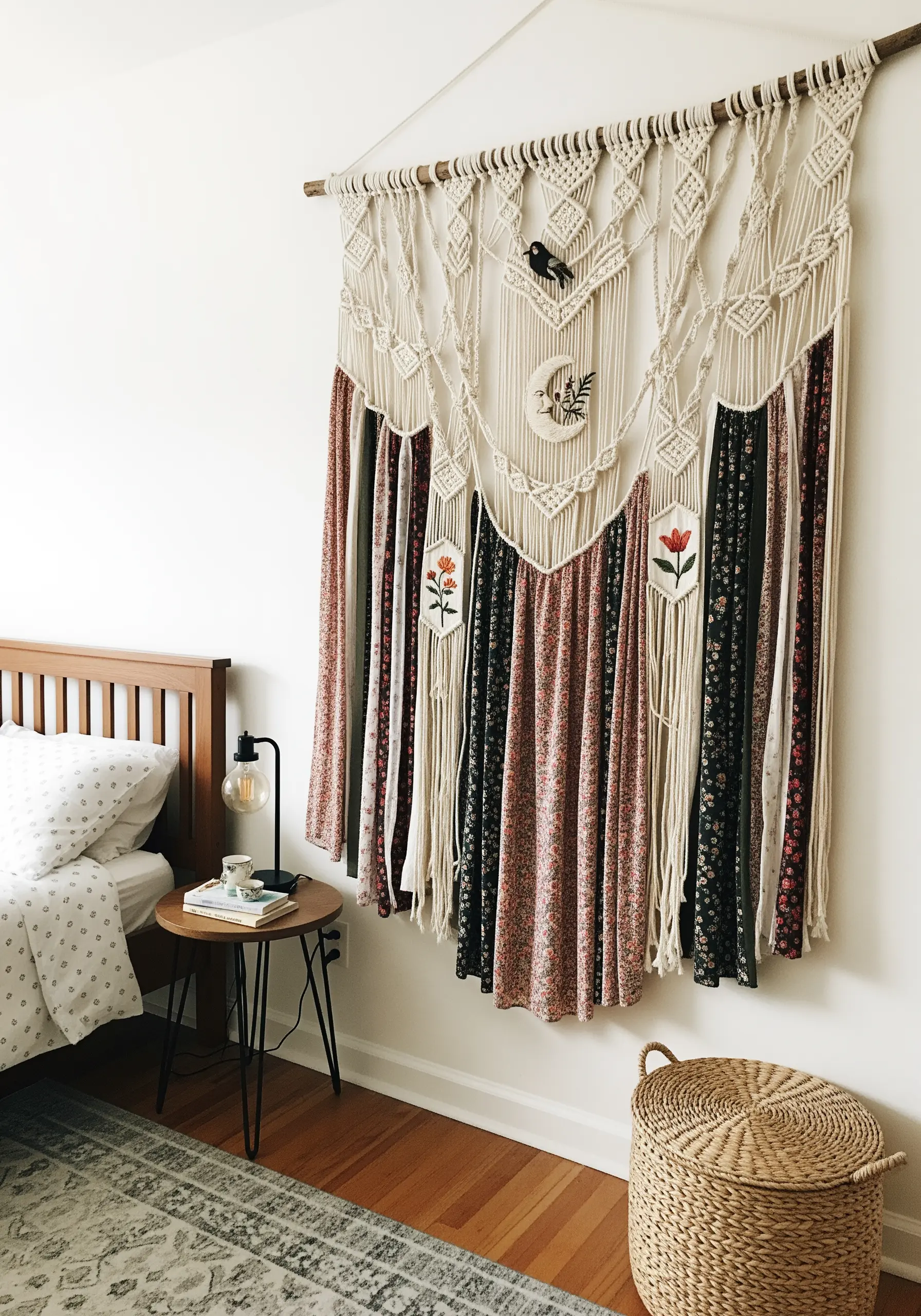
Create a rich, bohemian tapestry by combining the arts of macrame, weaving, and embroidery.
As you work your macrame knots, integrate long strips of fabric torn from old floral dresses or soft t-shirts.
You can also create small, individual embroidered patches on felt or canvas and stitch them onto the finished piece.
This project is all about celebrating different materials and creating gorgeous mixed-fiber textures.
The result is a deeply personal and sentimental piece that tells a story through both thread and memory.
30. Whimsical Beanstalk on Upcycled Trousers
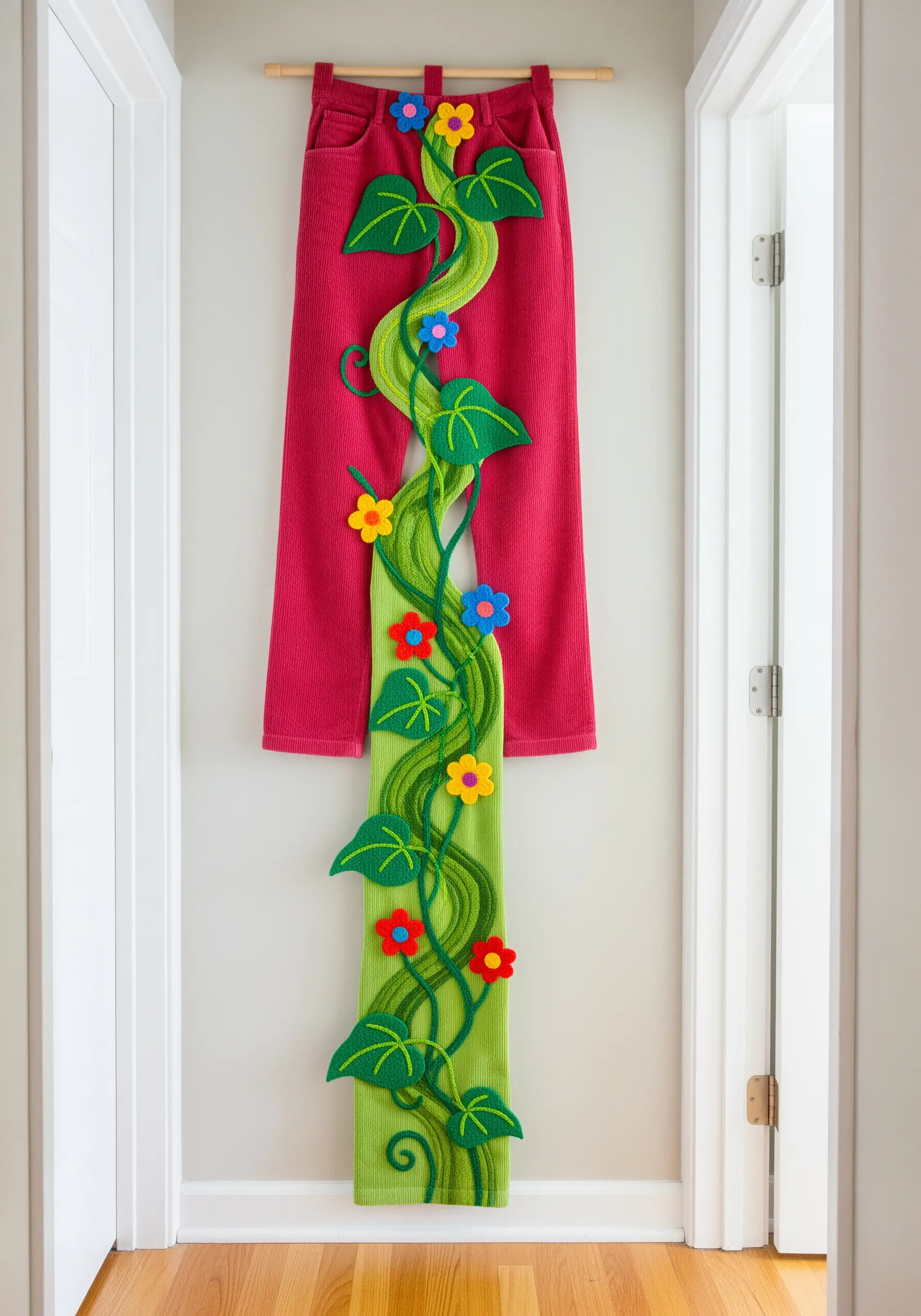
Tell a beloved fairy tale through playful appliqué and simple embroidery on a pair of colorful trousers.
Create the main beanstalk by cutting a long, winding shape from a piece of green fabric, like a knit scarf or felt, and stitching it onto the leg of the pants.
Cut simple leaf and flower shapes from felt or cotton scraps and attach them with a basic running stitch.
Add details like leaf veins with a simple backstitch to bring your whimsical creation to life.
This is a joyful, narrative project perfect for decorating a child’s room or play space.
31. Abstract Geometry Suspended in a Hoop
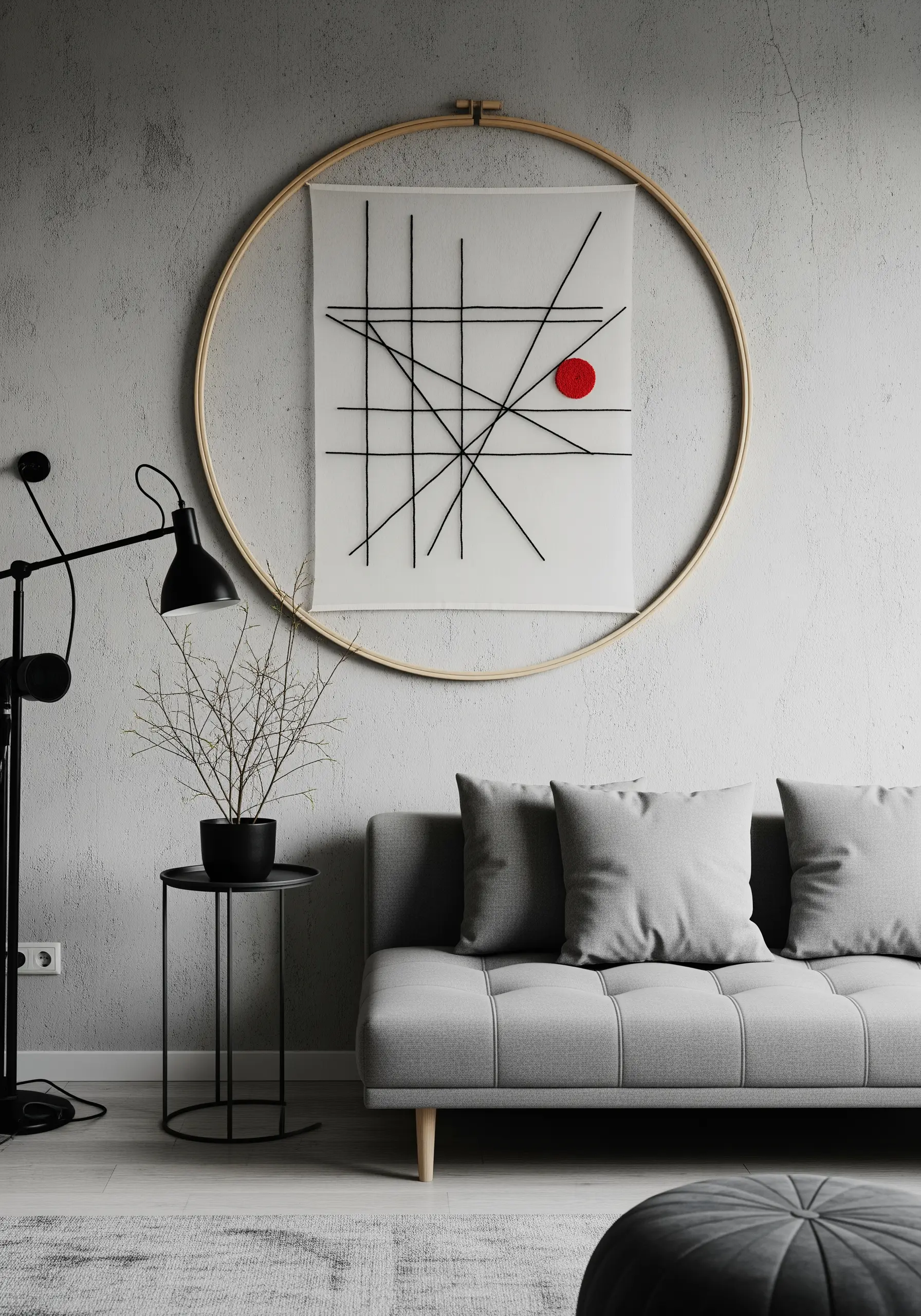
Turn an oversized embroidery hoop into a frame for a minimalist, architectural art piece.
Stretch a piece of semi-sheer fabric, like linen or cotton voile, tightly in the hoop.
Use a thick black thread or fine yarn to stitch long, intersecting straight lines, creating a sense of tension and movement.
The single, bold red circle, filled with a dense satin stitch, serves as a powerful focal point that anchors the entire composition.
This abstract framed embroidery transforms simple materials into a sophisticated work of modern art.
32. Cross-Stitched World Map on Burlap
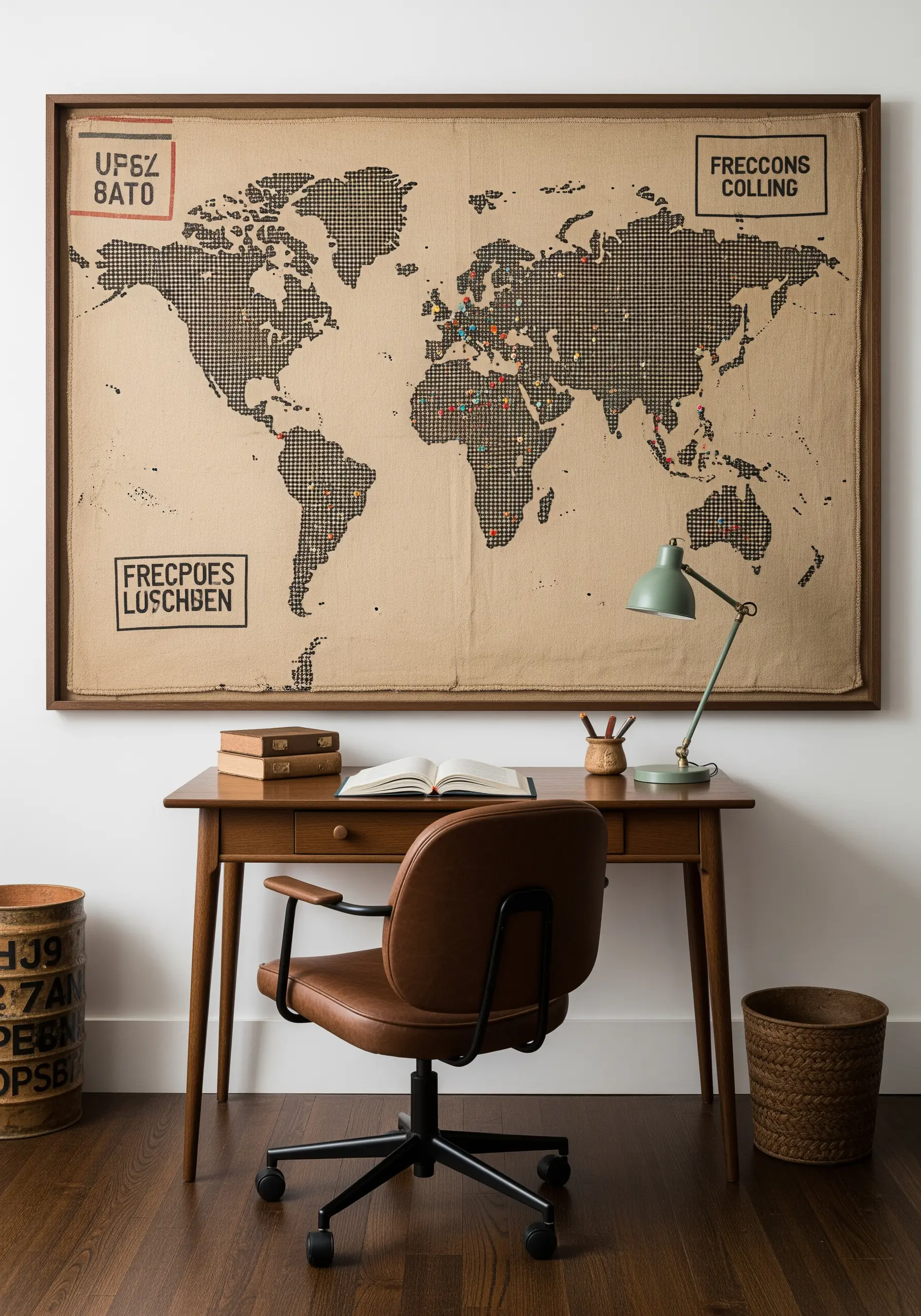
Utilize the natural, open weave of burlap or hessian fabric as a perfect grid for a rustic cross-stitch project.
Use a blunt tapestry needle and a thick fiber like wool yarn or all six strands of embroidery floss to make your stitches bold and substantial.
Fill in the continents with dense cross-stitches for a wonderfully tactile, pixelated effect.
After the map is complete, you can personalize it by adding colorful French knots or tiny star stitches to mark places you’ve been or dream of visiting.
This project turns a humble fabric into a meaningful and adventurous piece of wall art.
33. A Flock of Embroidered Summer Dresses
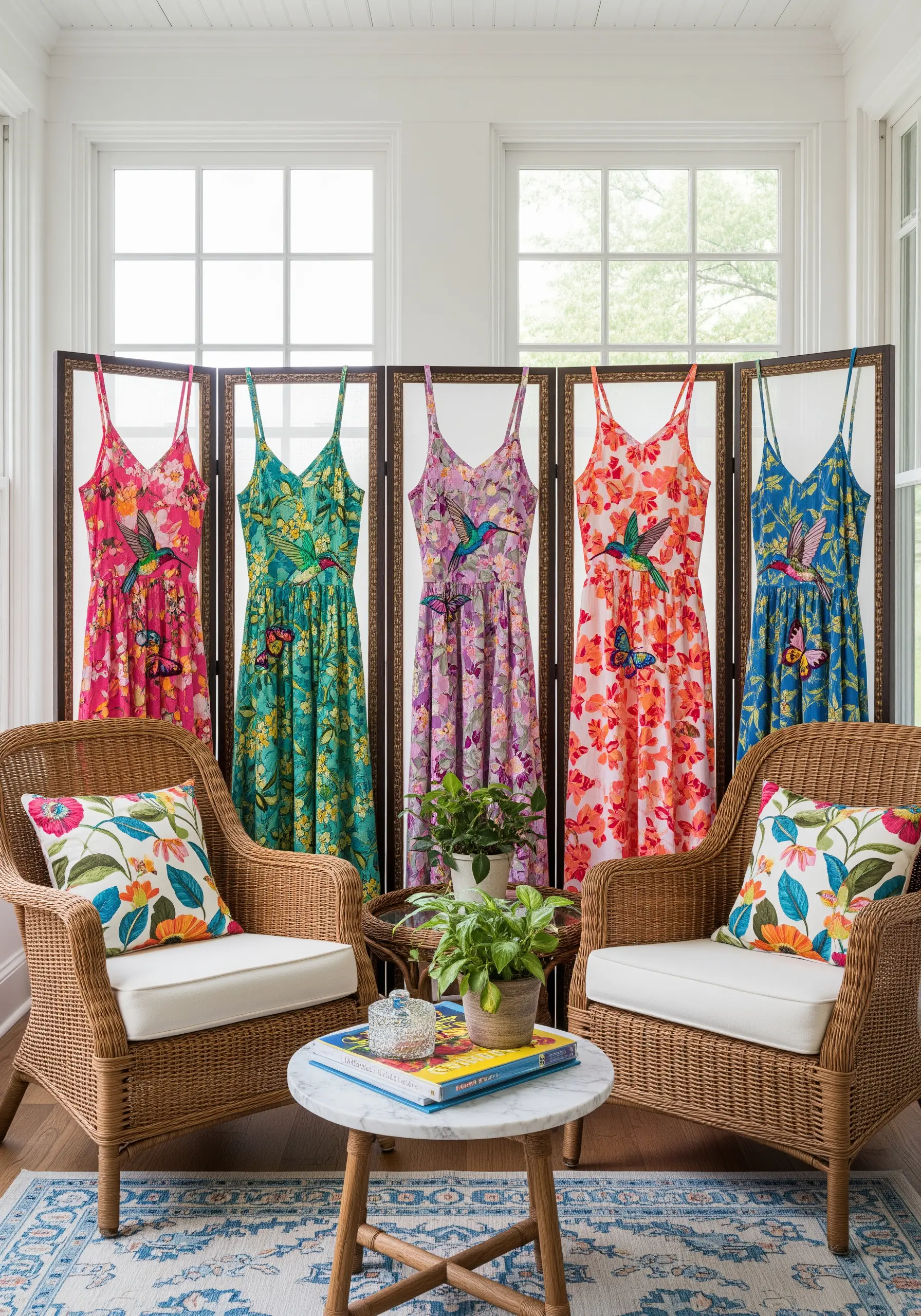
Create a stunning, cohesive art installation by uniting a collection of different garments with a single, repeated motif.
Gather several dresses in a similar style but with different colors and patterns.
Choose a single, elegant design—like a hummingbird—and embroider it onto each dress.
Use thread painting techniques (long-and-short stitch) to create realistic shading on the bird, and add a touch of metallic thread for an iridescent sheen.
This approach transforms a group of individual items into a powerful, unified collection that tells a larger story.
34. Argyle Triptych from a Sweater Pattern
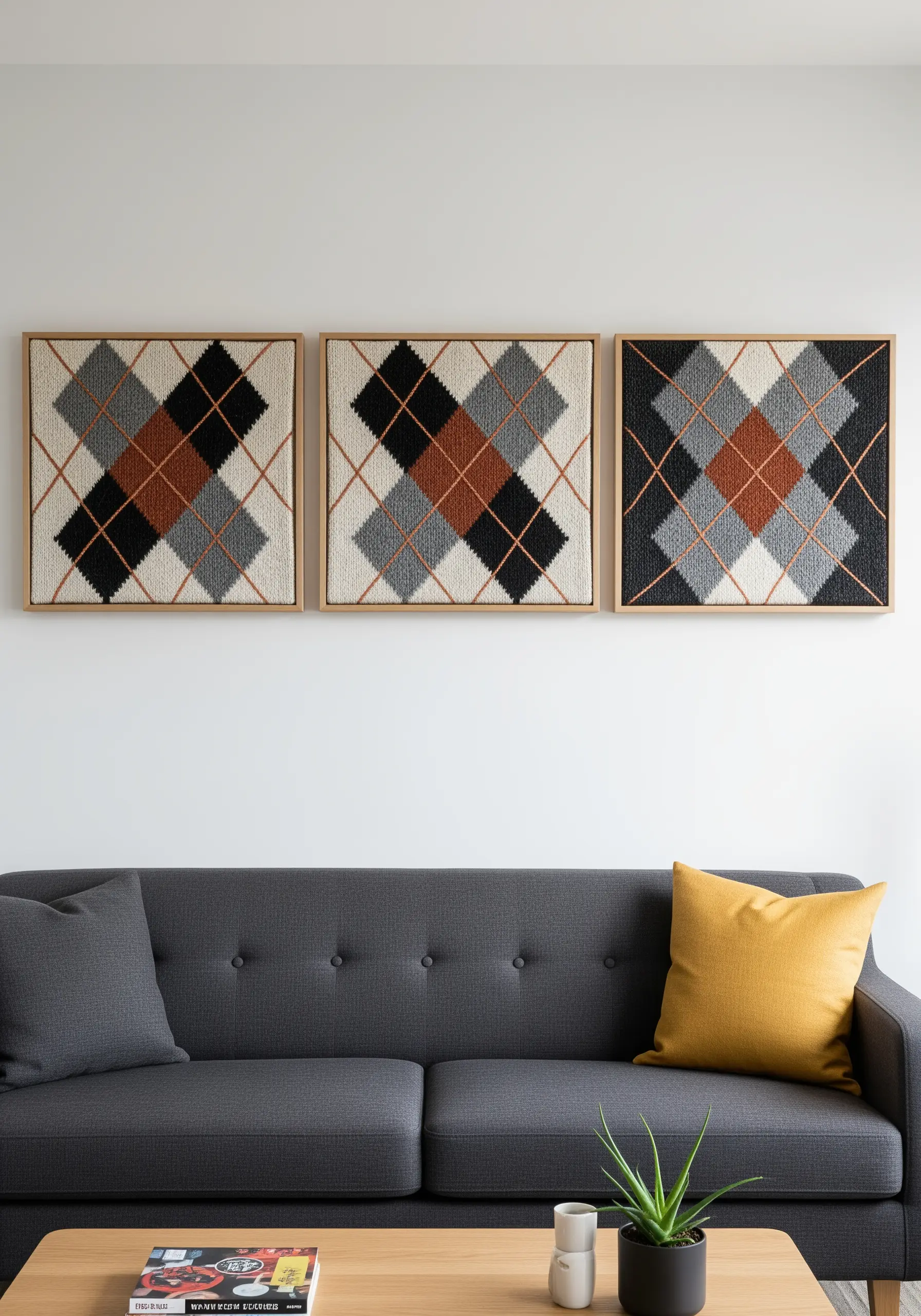
Deconstruct a classic clothing pattern and reinterpret it as a piece of modern, graphic wall art.
Instead of stitching on an old sweater, use its argyle pattern as your inspiration.
Stretch a neutral fabric, like linen or cotton canvas, over three identical square frames.
Use yarn or thick floss to stitch the iconic diamond and line pattern, varying the color placement in each panel to create interest while maintaining a cohesive look.
This project elevates a familiar pattern from fashion to sophisticated home decor.
35. Minimalist Script on a Linen Headboard
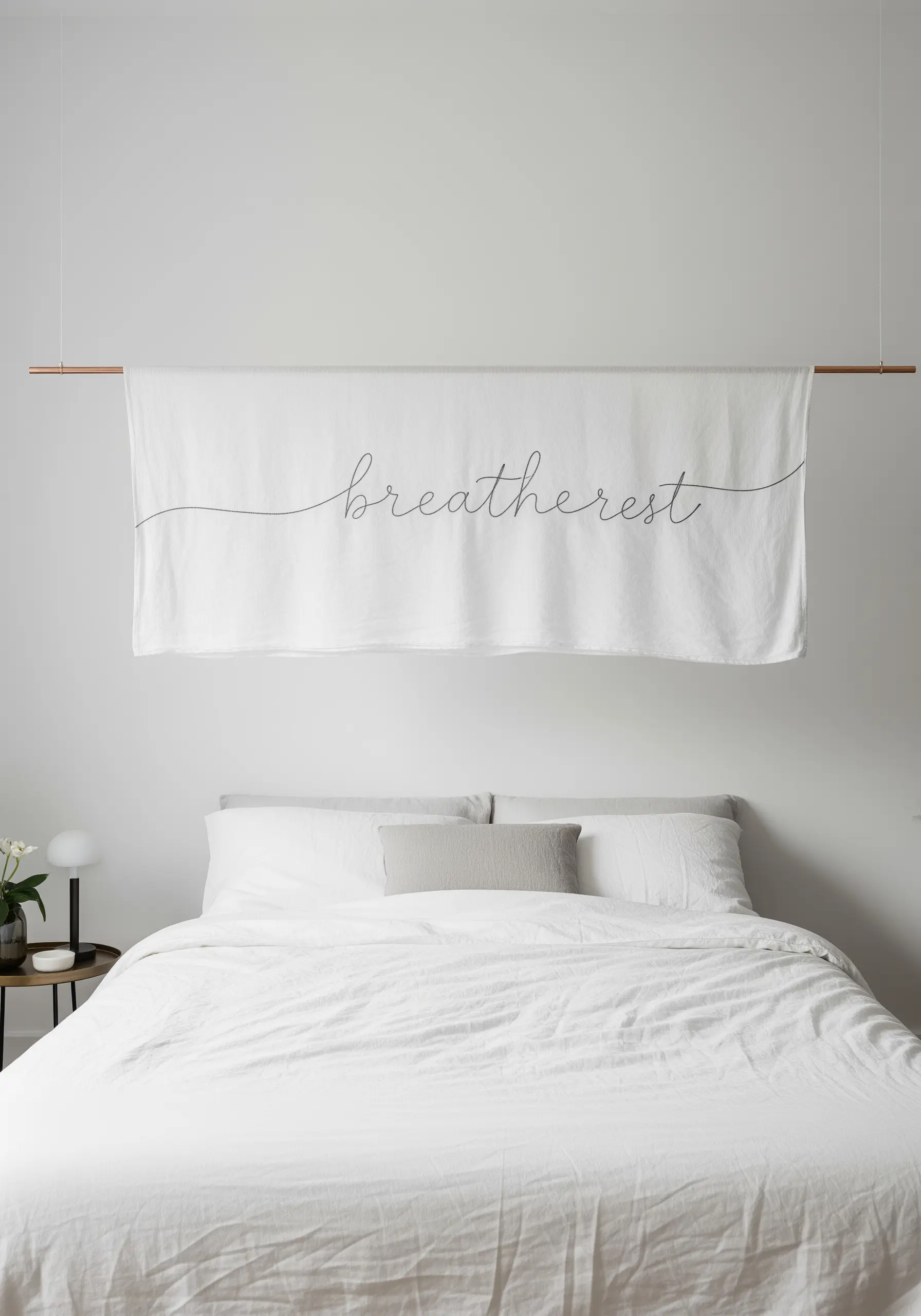
Craft a serene and personal focal point for your bedroom with elegant, hand-stitched lettering.
Use a long piece of an old linen sheet or tablecloth as your canvas.
Choose a calming word or phrase and trace it onto the fabric in a delicate, flowing script.
A simple backstitch using just two or three strands of floss will create a clean, refined line that is both subtle and impactful.
Hanging the finished banner from a simple copper pipe or wooden dowel adds a modern, minimalist touch that is perfect for creating a peaceful atmosphere.
36. A Stitcher’s Collection in a Hoop Gallery
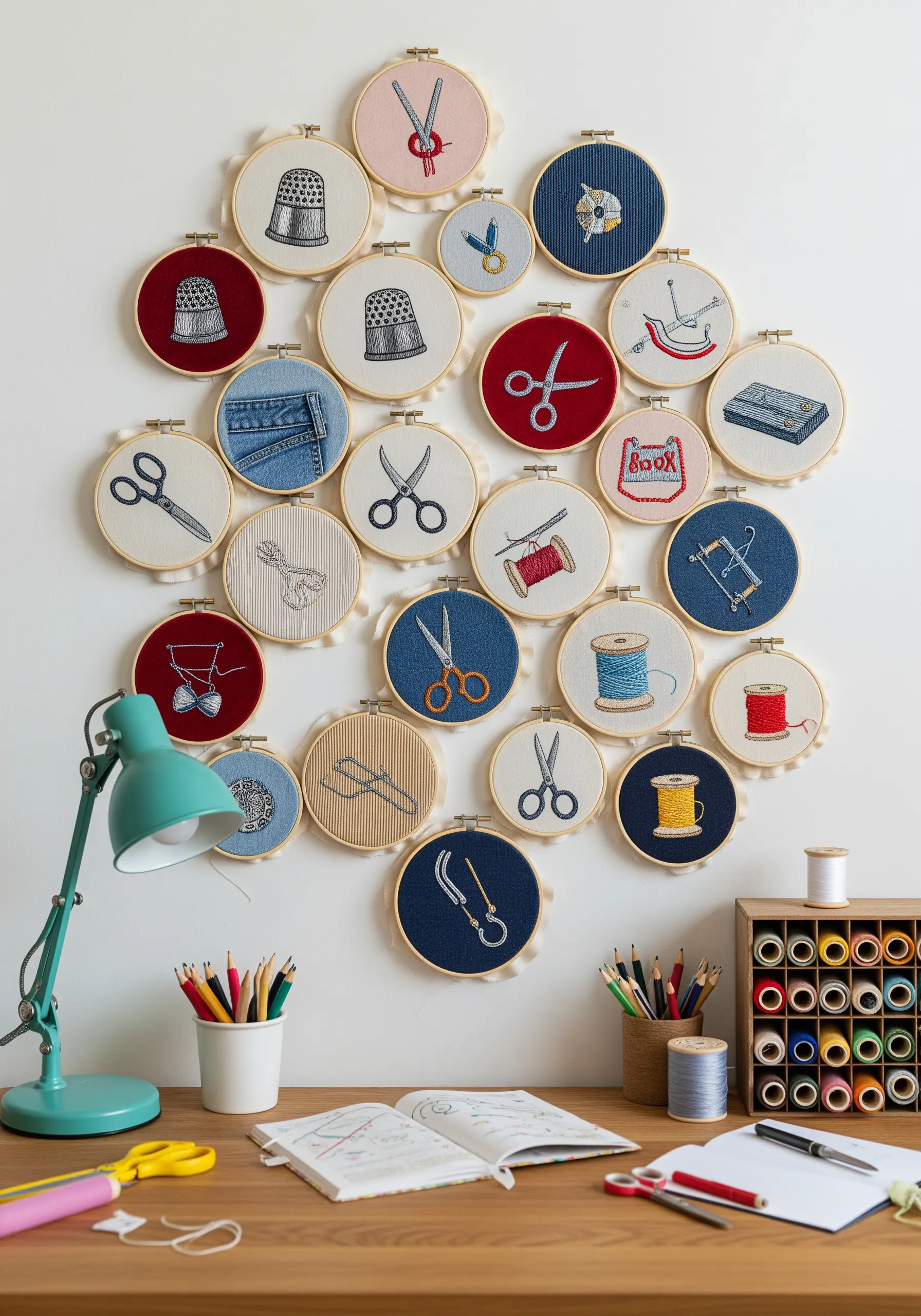
Pay tribute to the tools of your craft by creating a detailed gallery wall of sewing notions.
Dedicate each small hoop to a single object: scissors, a thimble, a spool of thread, a needle threader.
Vary your stitches to capture the unique texture of each item—a smooth satin stitch for the metal of the scissors, metallic thread for the thimble, and a couching stitch to represent the thread on the spool.
Arranging dozens of these tiny hoop embroidery projects together creates a stunning visual ode to the art of embroidery itself.


