If you feel like your embroidery is missing that spark of confidence, I want you to reconsider the thread in your hands. It’s not just about filling in shapes—it’s about directing energy, building texture, and making deliberate choices that turn a simple floral into a piece of art that feels entirely your own.
Bohemian style isn’t about haphazard color; it’s about intentional vibrancy. It’s the contrast of a metallic thread against raw linen, the sculptural lift of a detached petal on a cushion, or the bold statement of a single, perfect stitch on the back of a denim jacket.
Here, you’ll find techniques designed to elevate your work right now. Forget hesitation. Let’s explore how a simple shift in stitch direction, a thoughtful mix of materials, or a fearless color choice can unlock the bold, creative expression you’ve been searching for.
1. Layered Protea with a Statement Tassel
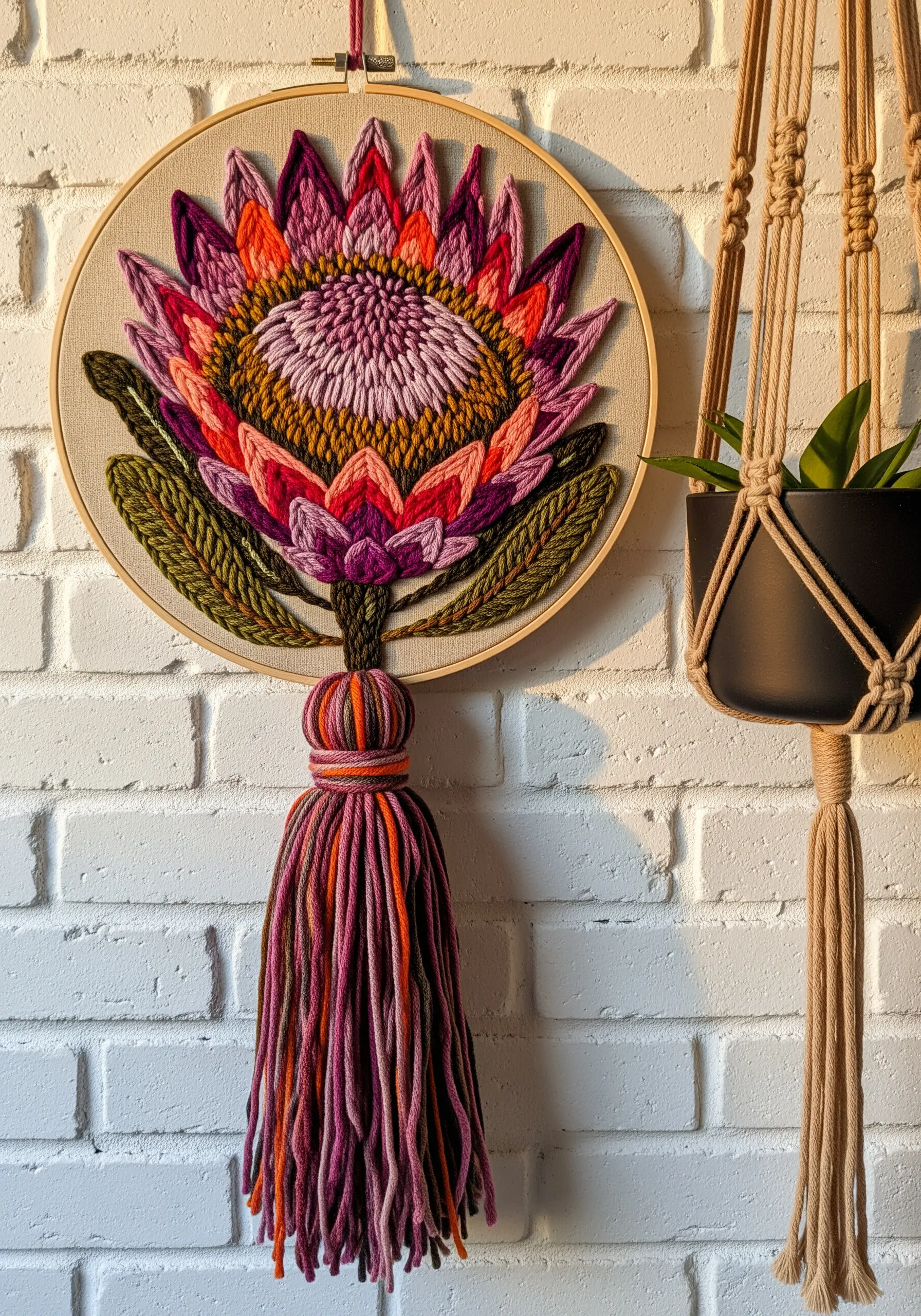
Create depth in your floral motifs by layering different stitch directions and weights.
For the outer petals, use a long-and-short stitch with thicker, wool-blend threads to add a plush, matte texture.
Contrast this by working the center of the flower with finer, six-strand cotton floss in a dense satin stitch, which gives it a subtle sheen and a tighter appearance.
Finish your piece with a custom tassel made from the same threads used in the embroidery; this technique ensures perfect color harmony and transforms a simple hoop into a cohesive piece of embroidered wall art.
2. Celestial Florals on a Midnight Canvas
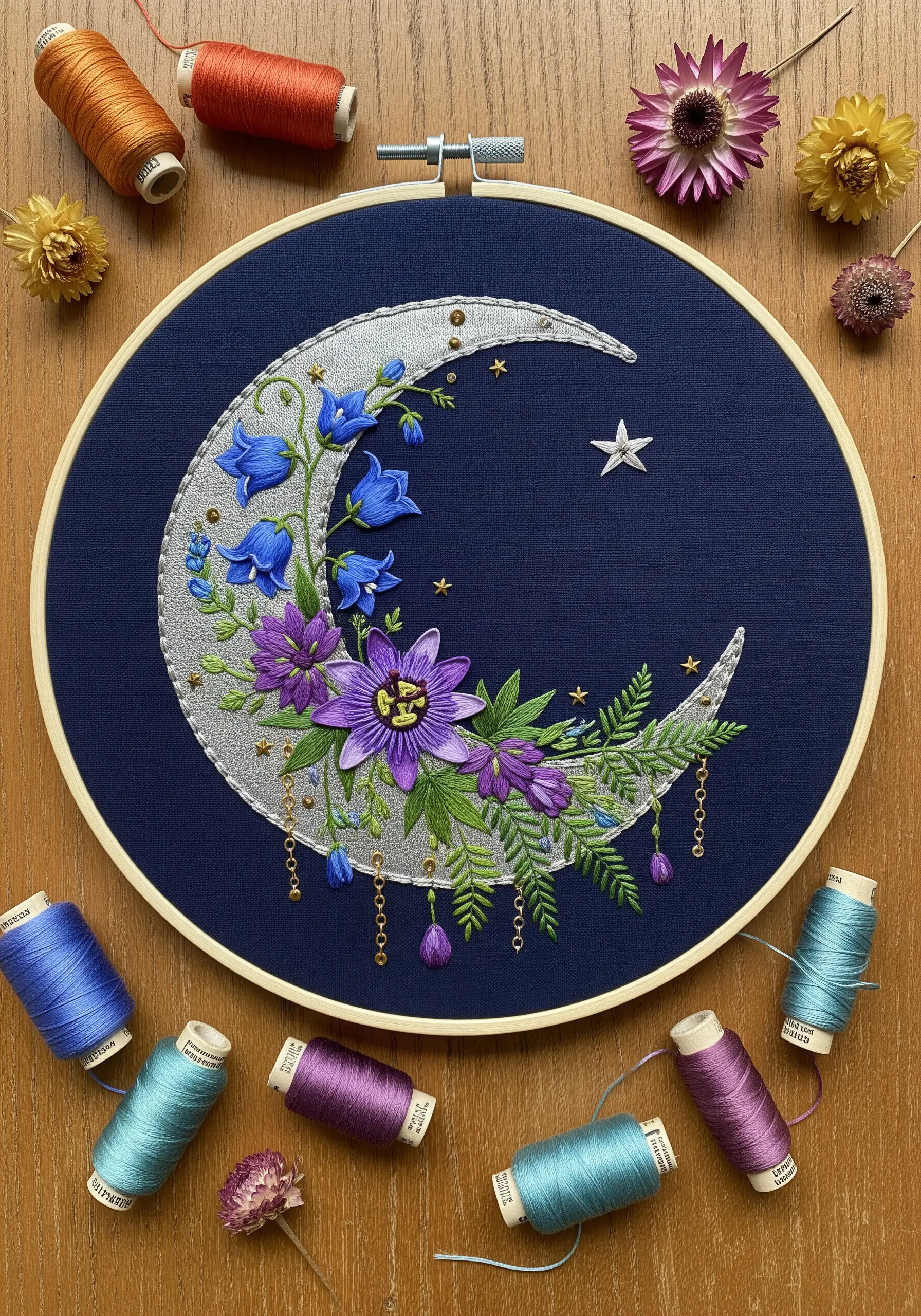
Make your colors radiate by choosing a dark, high-contrast fabric like navy blue or black cotton twill.
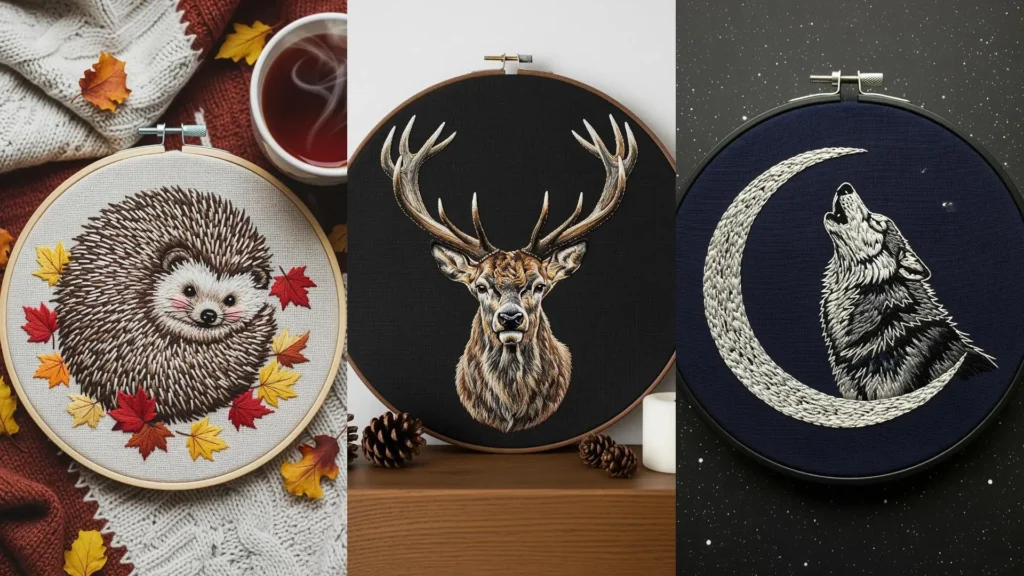
Incorporate silver metallic thread not just for outlines, but as a filler for the moon itself, using a satin stitch to create a solid, light-catching surface.
Introduce dimension with detached stitches, like lazy daisies or cast-on stitches, to make petals and buds lift slightly from the fabric.
Small, strategically placed beads or metallic French knots will mimic stars, adding a final layer of celestial magic to your composition.
3. Sculptural Petals for High-Impact Cushions
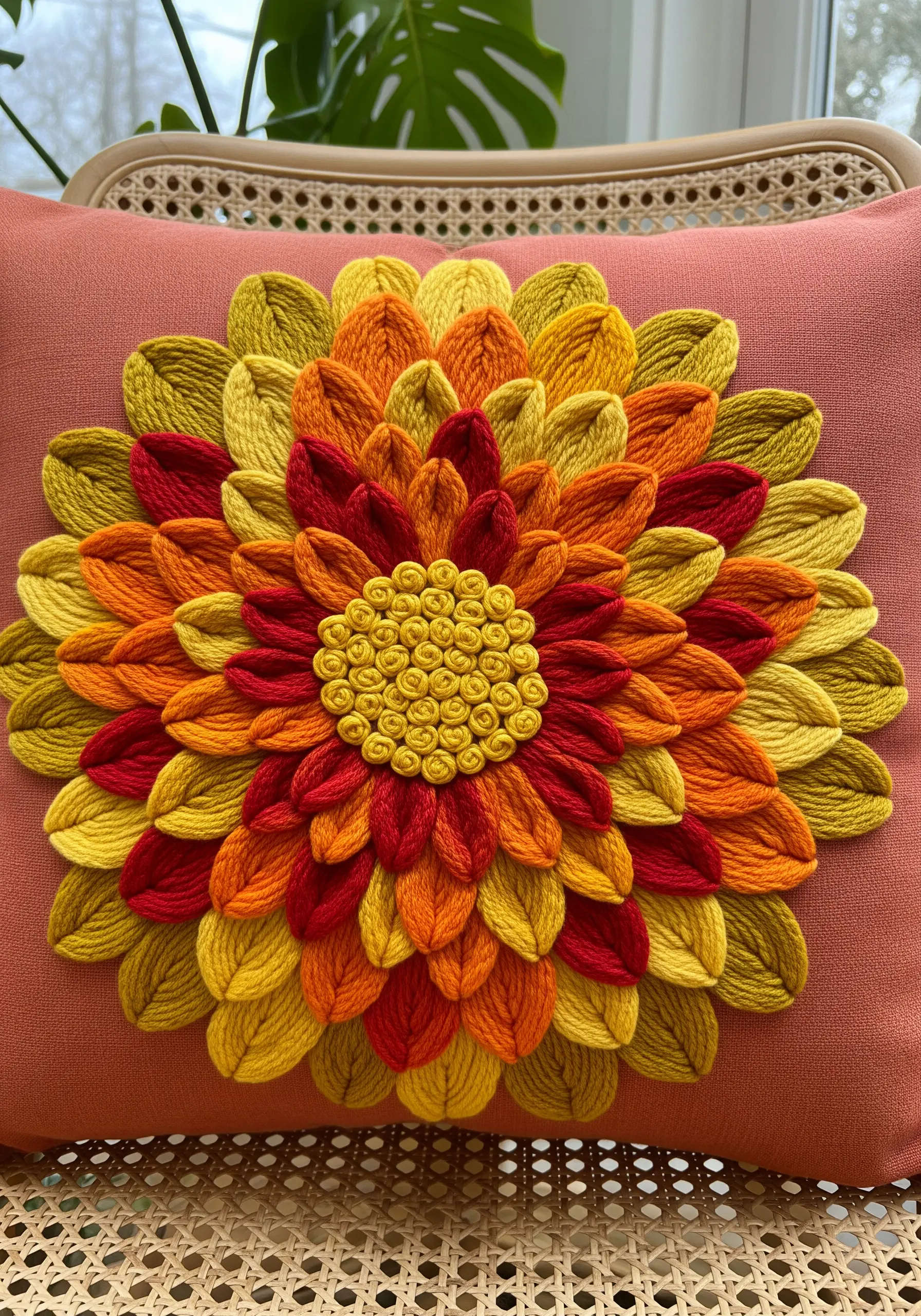
Transform a simple cushion cover by building three-dimensional petals that invite touch.
Create each petal individually using a detached buttonhole stitch, working in concentric circles from the outside in.
This method allows the petals to overlap and lift from the surface, creating natural shadows and depth.
For a bold, graphic look, use thick wool or tapestry yarn, which fills the space quickly and enhances the sculptural quality of the flower.
These 3D floral embroidery techniques turn home decor into a tactile experience.
4. Bold Botanical Statements for Denim
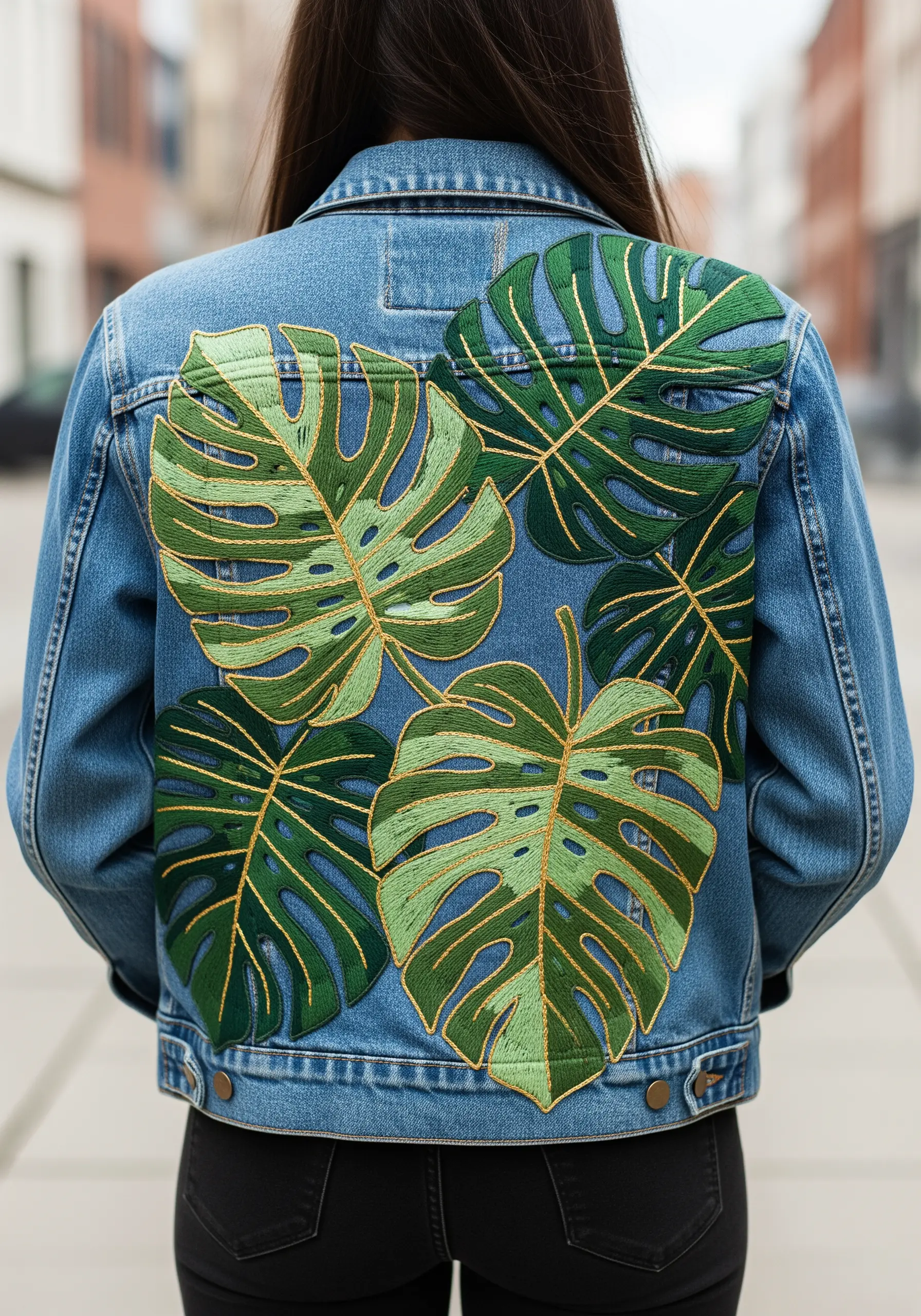
When embroidering on heavy fabric like denim, think in bold shapes and clean lines.
Use a split stitch to outline each leaf section first; this creates a raised, stable edge for your satin stitch to rest against, resulting in much cleaner and more defined shapes.
To add a touch of modern luxury, swap standard cotton floss for a fine metallic thread for the veins and outlines.
Always use a tear-away stabilizer on the inside of the jacket to prevent the fabric from puckering under the tension of dense stitches.
5. Playful Cactus Garden with Vibrant Textures
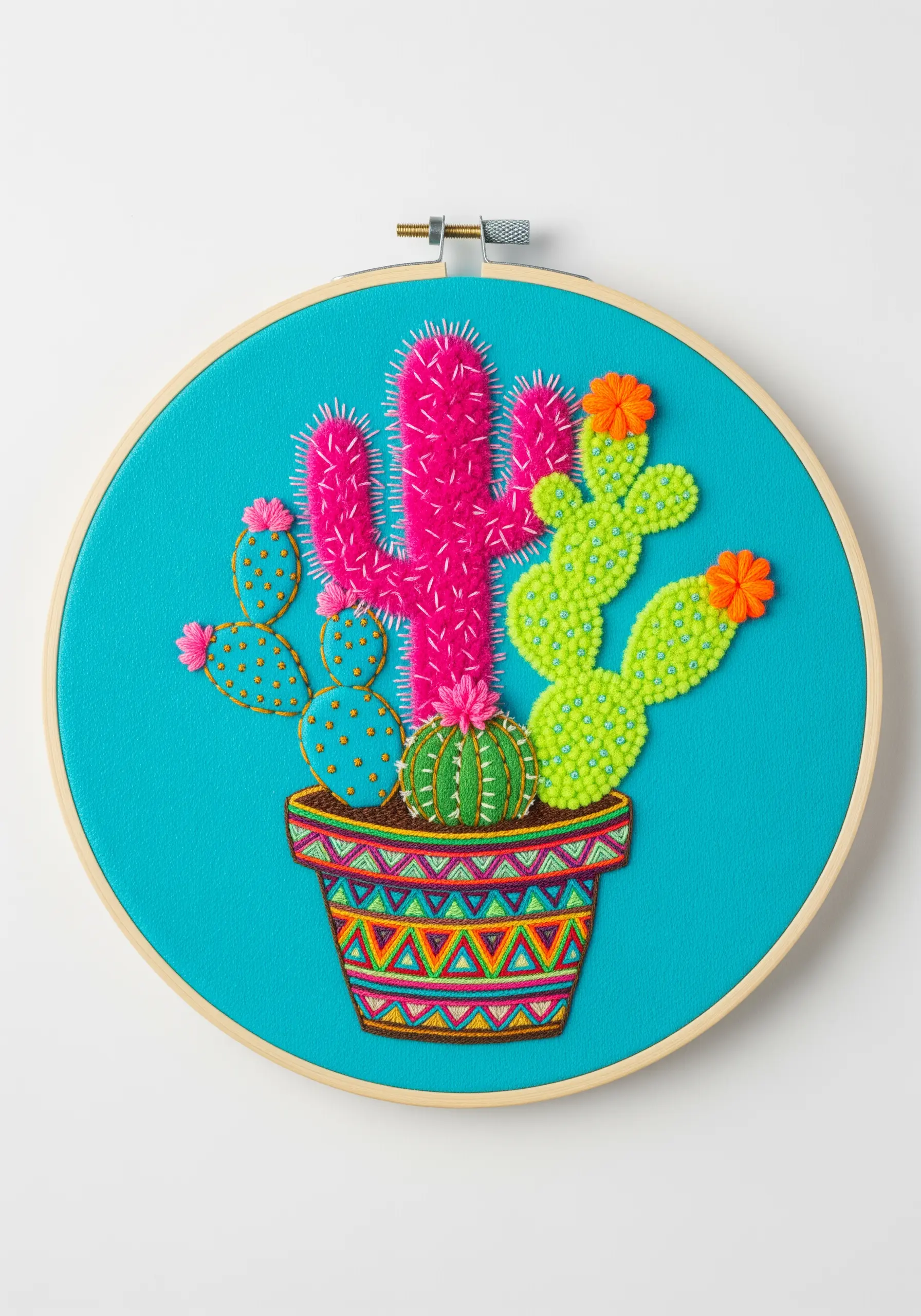
Combine multiple textures and materials to create a whimsical, tactile desert scene.
Use turkey work for the fuzzy pink cactus to create a soft, brush-like texture that you can trim to your desired length.
For the beaded cactus, fill the shape with seed beads instead of thread for a sparkling, dotted effect that contrasts beautifully with the matte floss.
A densely stitched satin stitch in variegated colors for the pot will ground the piece and add a touch of geometric order to the organic chaos of the plants.
6. Symmetrical Mandalas with Folkloric Charm
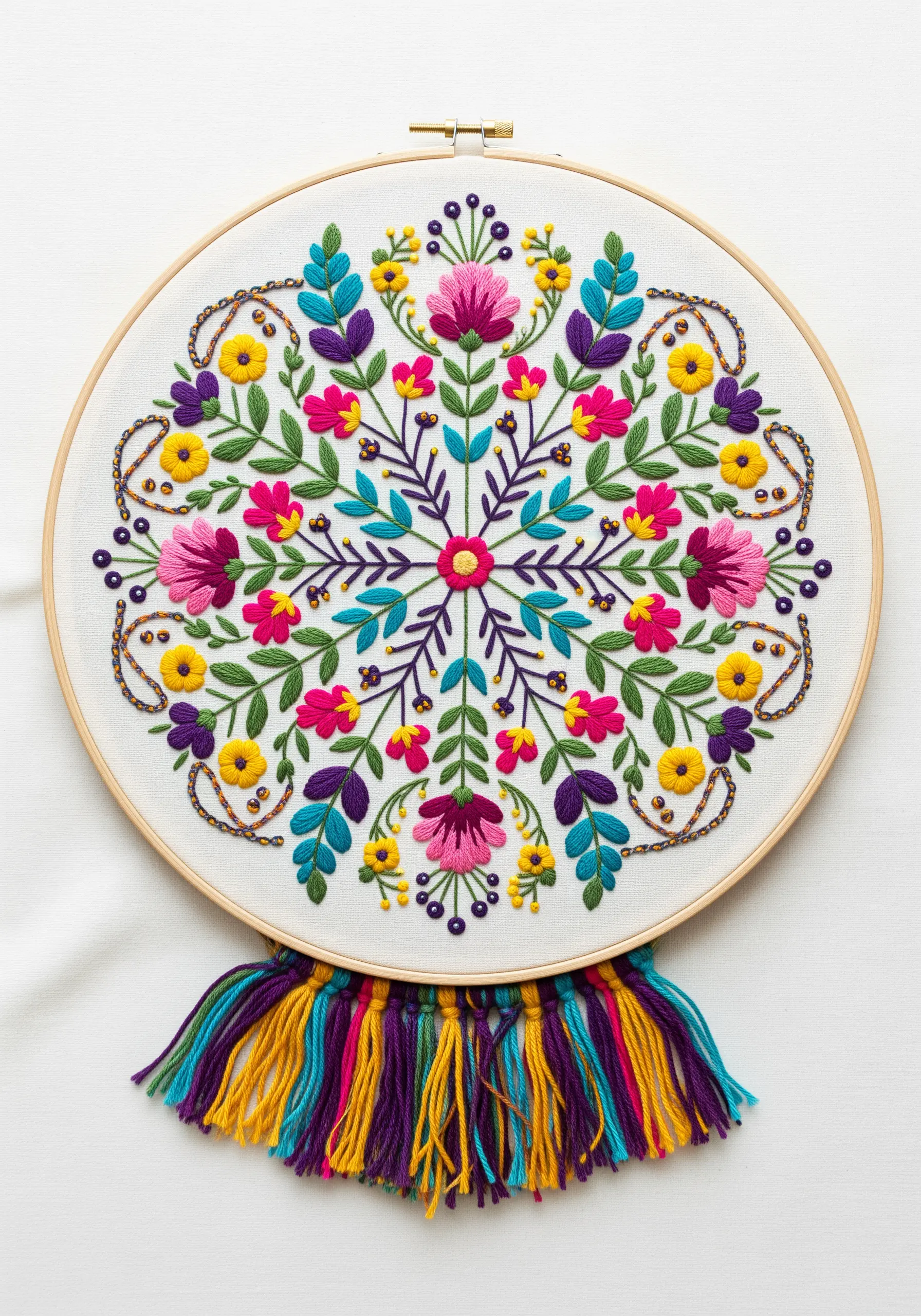
Achieve perfect balance in a floral mandala by starting with a precise central point and building your design outward in rings.
Use a water-soluble marker to draw concentric circles and radial lines as guides, ensuring your motifs are evenly spaced.
Incorporate a variety of stitches to keep the eye moving: satin stitch for bold petals, French knots for dotted textures, and a heavy chain stitch for decorative, rope-like borders.
A colorful tassel at the base anchors the circular design and reinforces the bohemian aesthetic.
7. Iridescent Feather with Metallic Accents
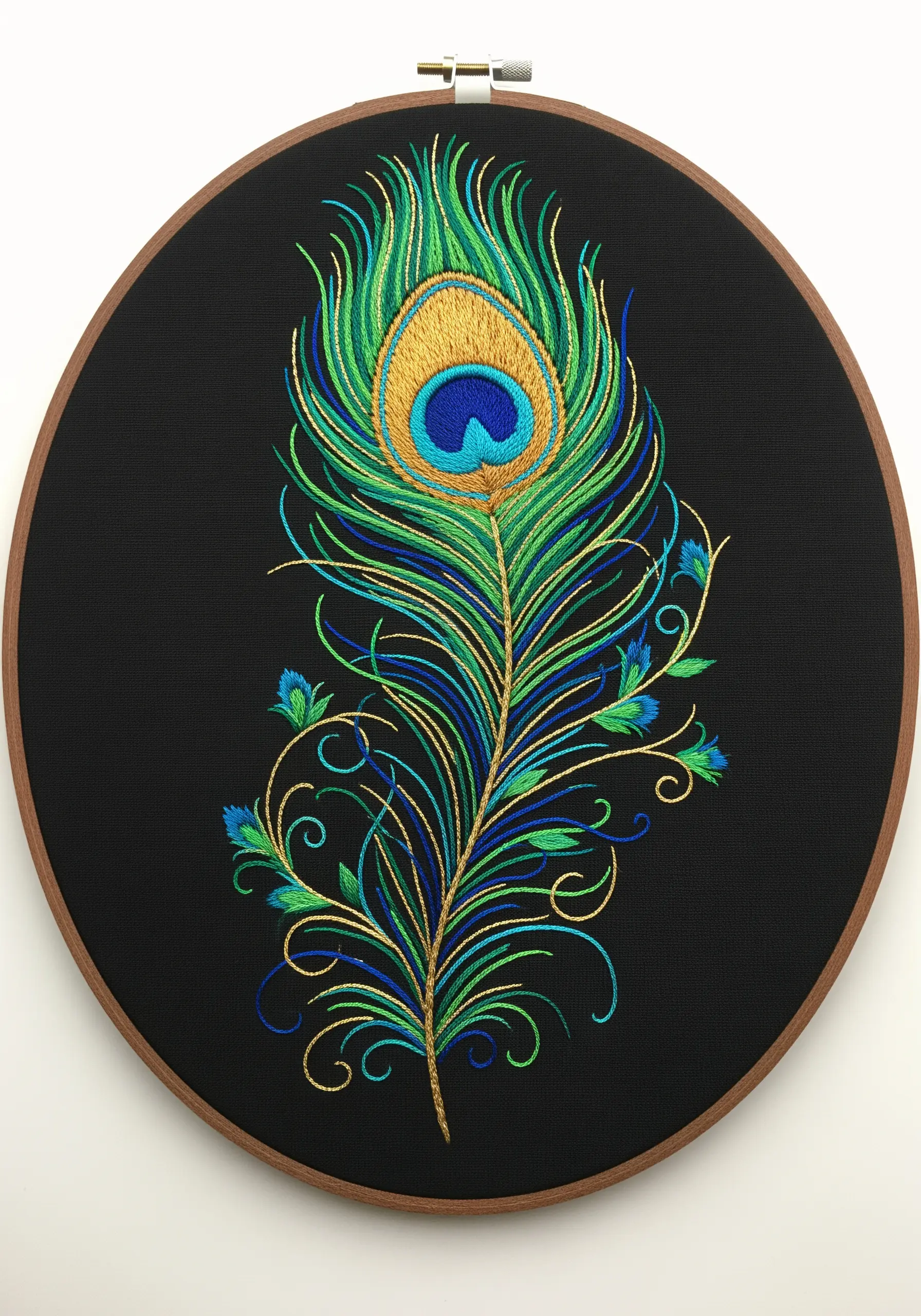
To capture the shimmer of a peacock feather, thread painting is your essential technique.
Instead of using a single color, blend three or four similar shades of blue and green within each section, using long-and-short stitches to create a seamless gradient.
Introduce a fine gold metallic thread alongside your cotton floss, stitching it sparsely at first and more densely toward the edges to create a highlight that catches the light.
This subtle integration of metallic thread is what creates a truly convincing and luxurious iridescence.
8. Vibrant Marigolds on Wearable Art
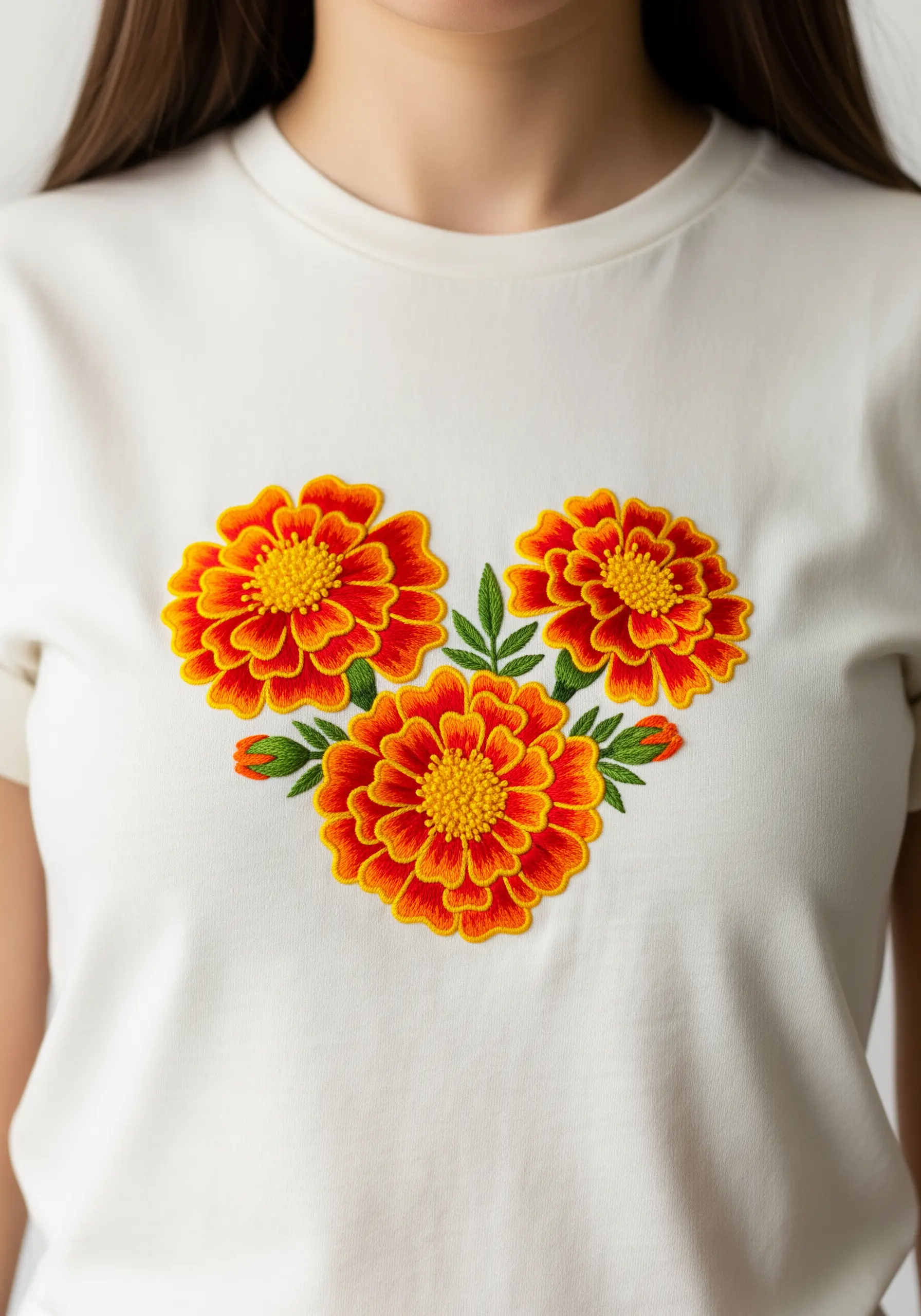
When stitching on jersey or t-shirt fabric, a stabilizer is non-negotiable for achieving a professional finish.
Iron on a fusible interfacing to the back of the fabric before you begin; this prevents the knit from stretching or distorting as you stitch.
Use a sharp needle to pierce the fabric cleanly without snagging the fibers.
For petals with a gradient effect, use a long-and-short stitch, blending from a deep orange at the edges to a bright yellow near the center, which gives the flowers a sun-kissed, realistic glow.
9. Enchanted Forest with Beaded Details
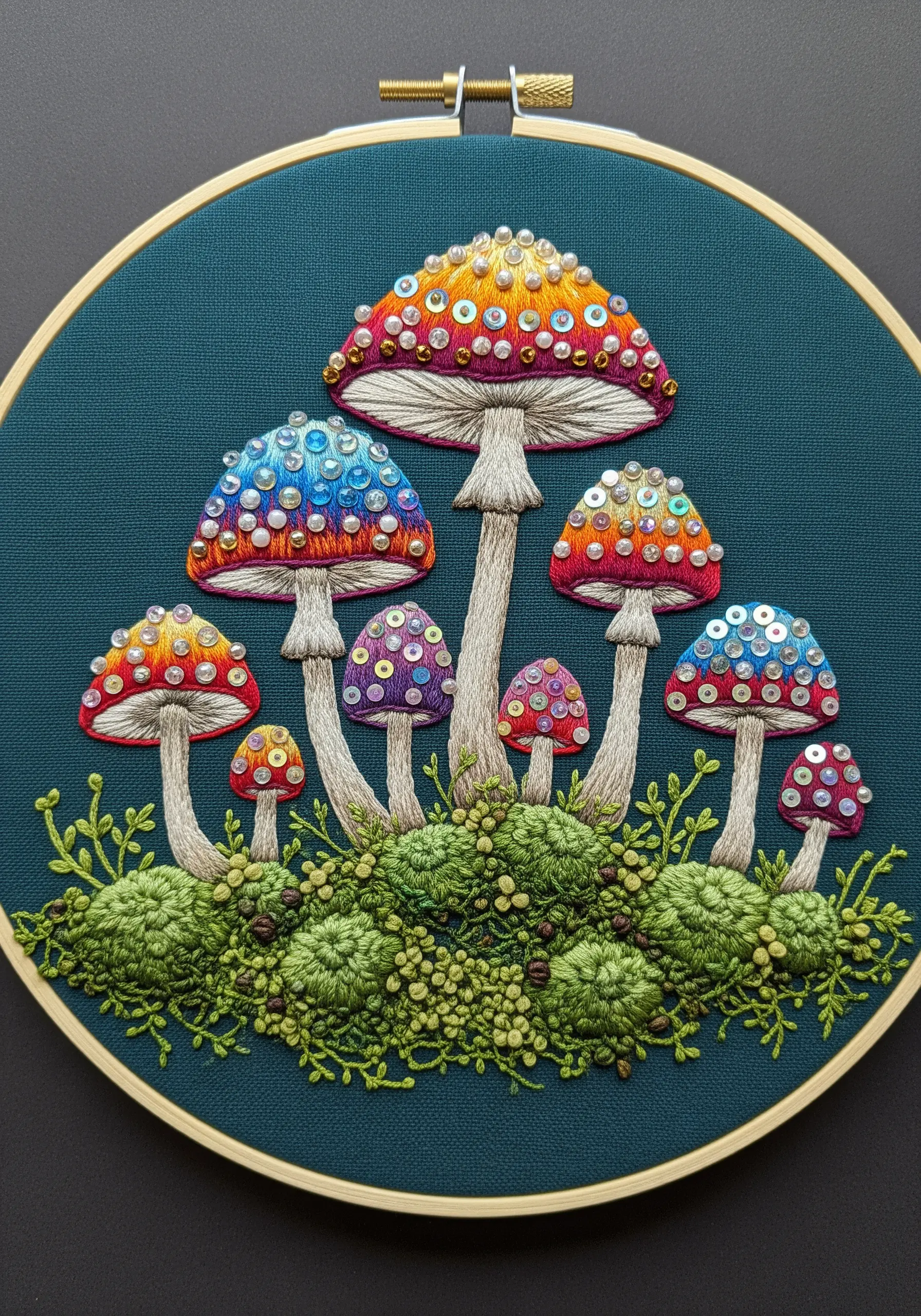
Elevate a simple satin stitch by incorporating tiny, iridescent sequins or beads throughout the mushroom caps.
Secure each sequin with a single seed bead in the center, which locks it in place and adds another layer of texture and sparkle.
For the mossy ground, move beyond French knots and try colonial knots, which are sturdier and create a more uniform, pebble-like texture.
Use several shades of green floss randomly to give the moss a more natural, varied appearance.
10. Textured Botanicals with Chunky Yarn
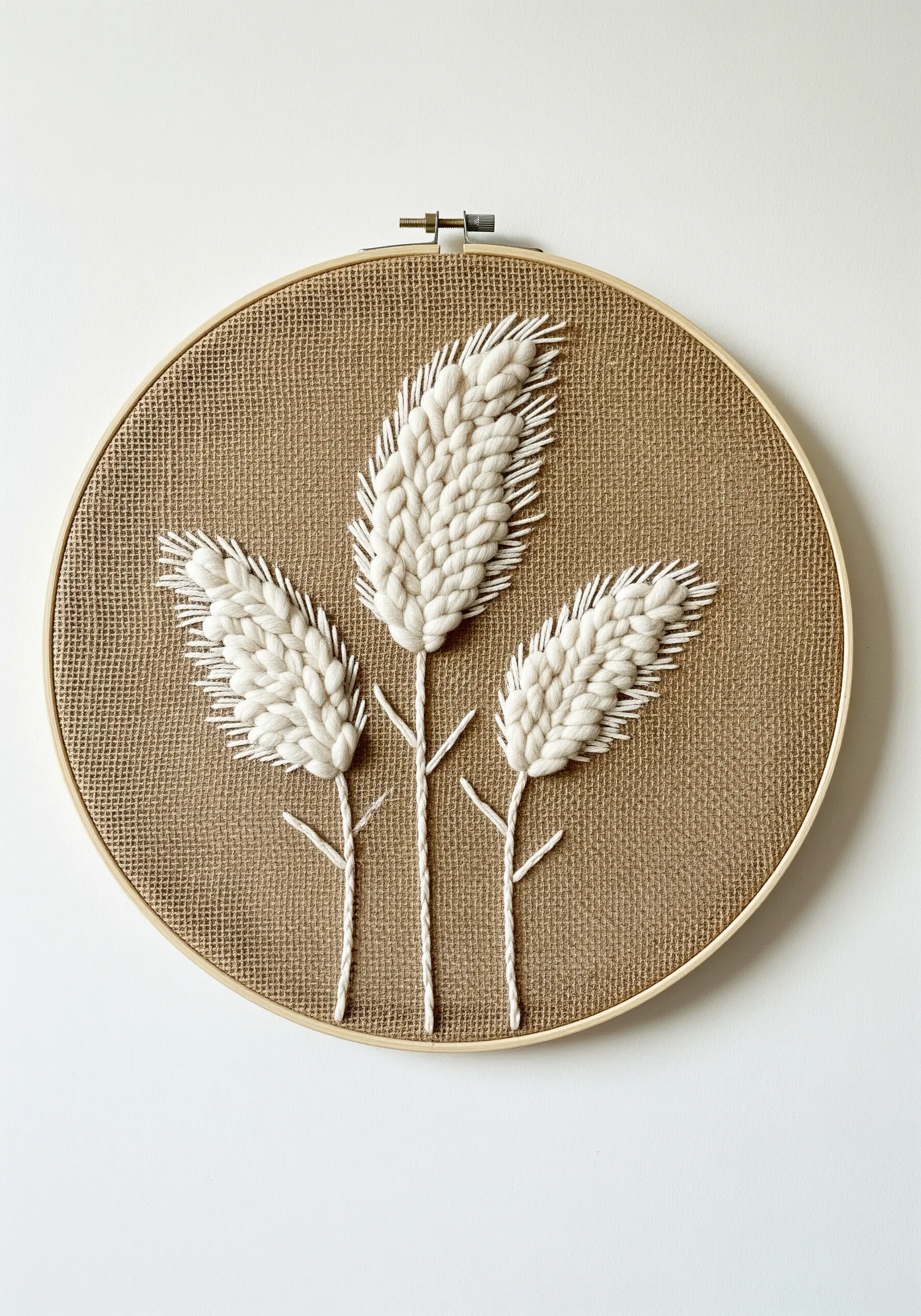
Create high-impact, minimalist art by pairing thick, chunky yarn with a coarse, open-weave fabric like burlap.
Instead of a traditional needle, use a tapestry needle with a large eye to accommodate the yarn’s thickness.
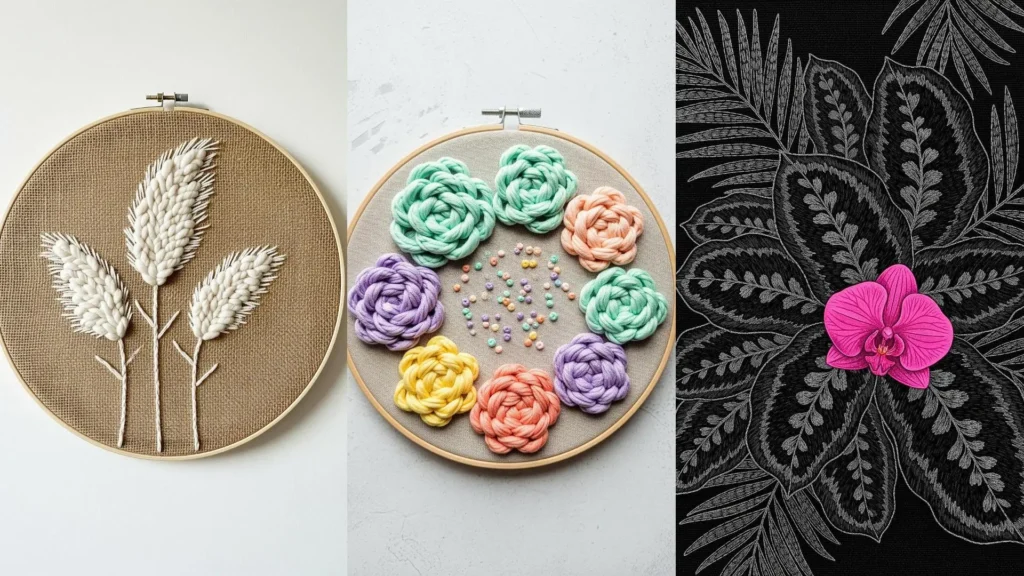
Use a simple fishbone stitch for the fluffy tops of the pampas grass; the technique naturally creates a braided, central spine and allows the yarn to fan out beautifully.
This approach emphasizes texture over intricate detail, allowing you to turn natural textures into stunning embroidery art with just a few mindful stitches.
11. Impressionistic Poppy Field Tapestry
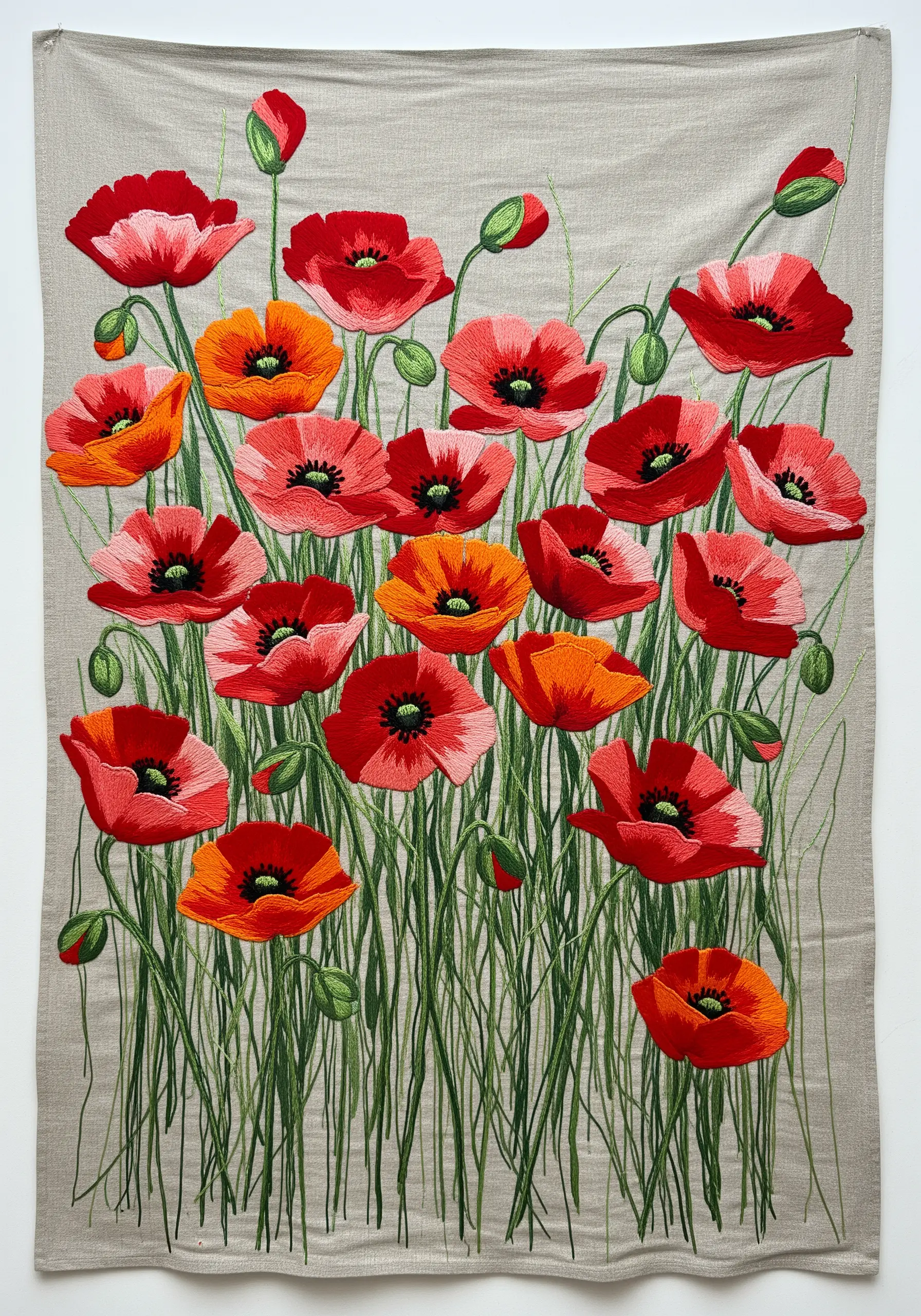
Suggest a field of flowers rather than rendering each one perfectly to create a sense of depth and movement.
For poppies in the foreground, use a full satin stitch and darker, more saturated colors.
As you move up the tapestry to suggest distance, switch to simpler, smaller lazy daisy stitches and lighter, less detailed shapes in paler shades.
Keep the stems as simple vertical lines in varying shades of green. This variation in detail and color tricks the eye into seeing a vast, layered meadow.
12. Woven Totes with a Cascade of Blooms
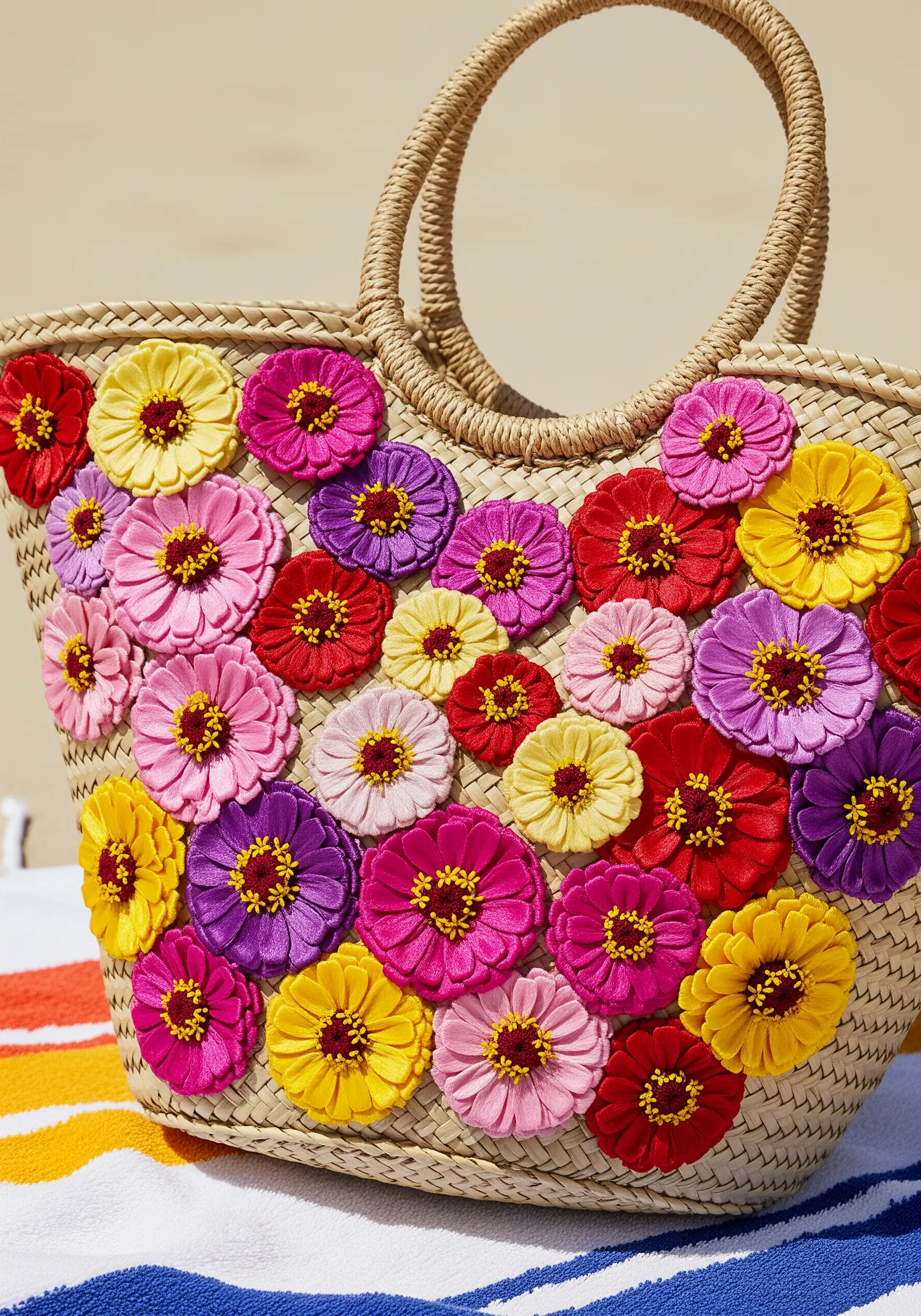
When embellishing a rigid, woven surface like a straw bag, stitching directly can be difficult and damaging.
Instead, create your flowers on a separate piece of felt or fabric using ribbon stitch or by making folded ribbon zinnias.
Once complete, trim each flower closely and attach it to the bag with a strong, clear-drying fabric glue or by carefully stitching it onto the straw weave from the inside.
This method protects the bag’s structure and gives you complete control over the placement of your floral cascade.
13. Sculptural Rope Florals for 3D Art
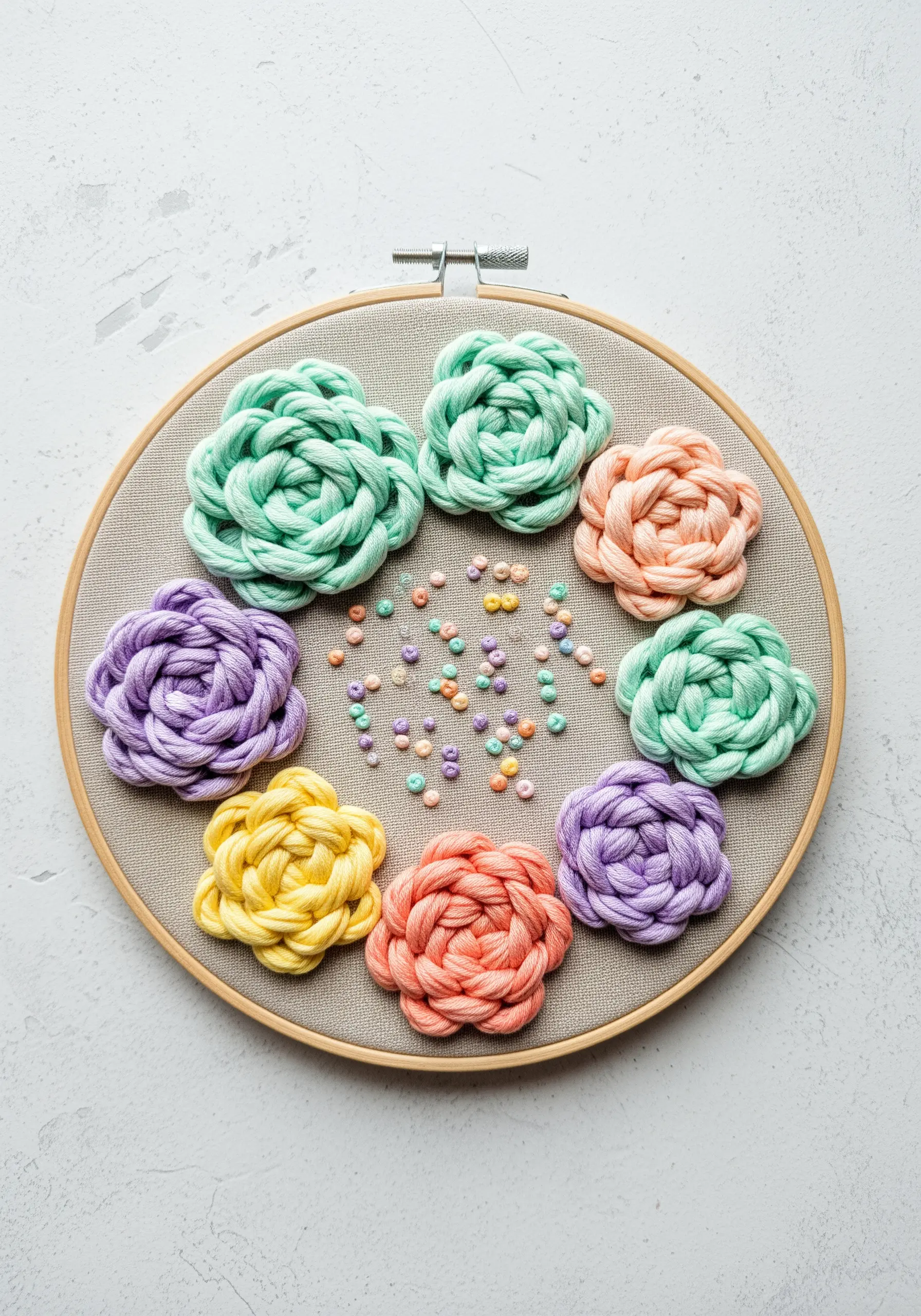
Move beyond thread and explore fibers like soft cotton rope to create bold, highly textural floral shapes.
To create these rosettes, couch the rope onto your fabric by laying it in a spiral and securing it with small, coordinating stitches of regular embroidery floss every centimeter or so.
This technique allows you to create large-scale, dimensional art that has a soft, sculptural presence.
Arrange the finished flowers in a simple circle for a clean, modern composition.
14. Holographic Ferns on a Dark Canvas
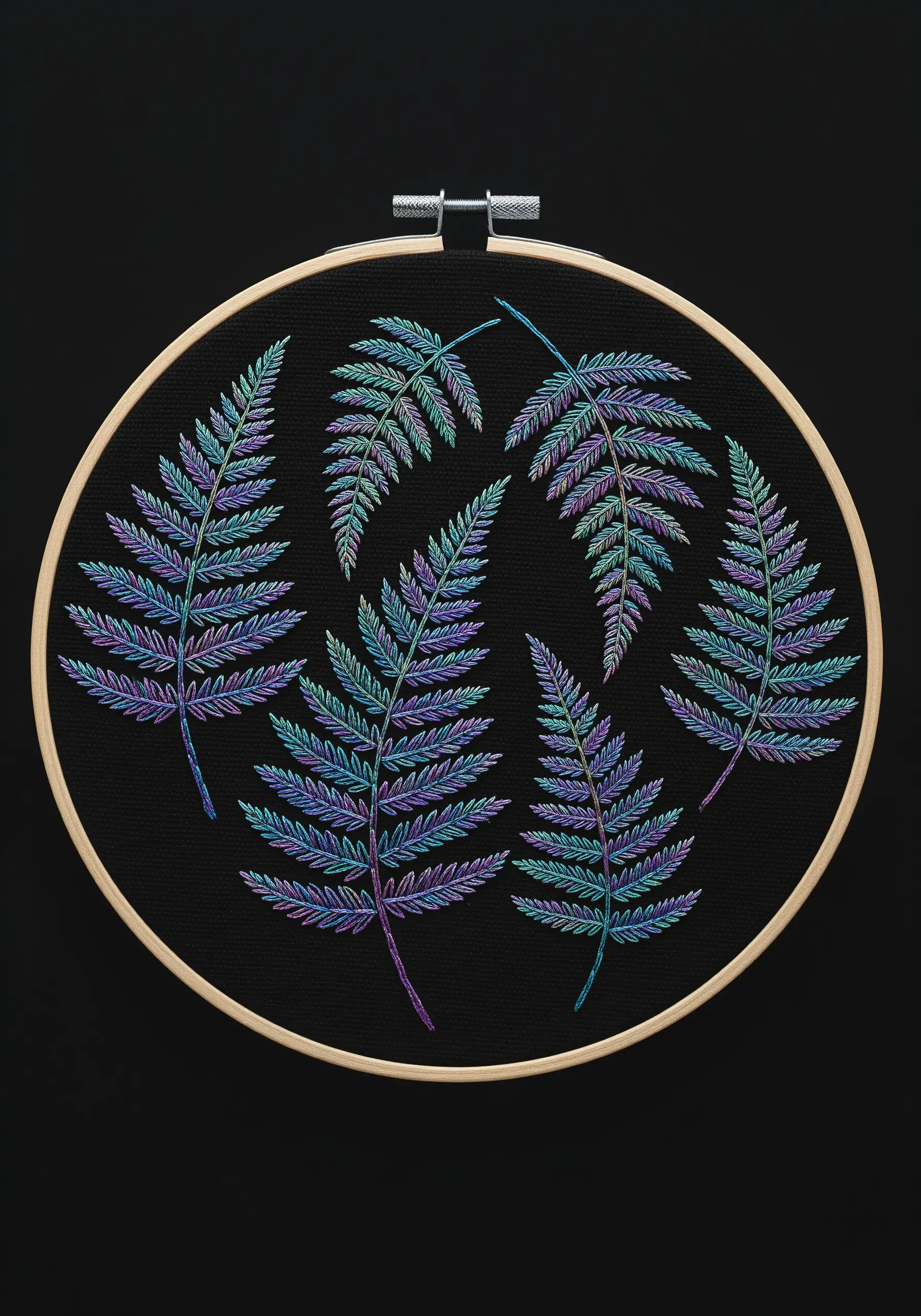
Achieve an iridescent, almost holographic effect by using a high-quality variegated thread on a black or dark navy fabric.
Choose a thread that shifts between cool tones like blue, purple, and teal for the most dramatic effect.
Use a simple fishbone stitch for each fern leaf; this stitch allows the color transitions in the thread to flow naturally, creating organic gradients without any extra work on your part.
The dark background makes the subtle color shifts pop, resulting in a design that seems to glow from within.
15. Realistic Thread Painting for Lifelike Botanicals
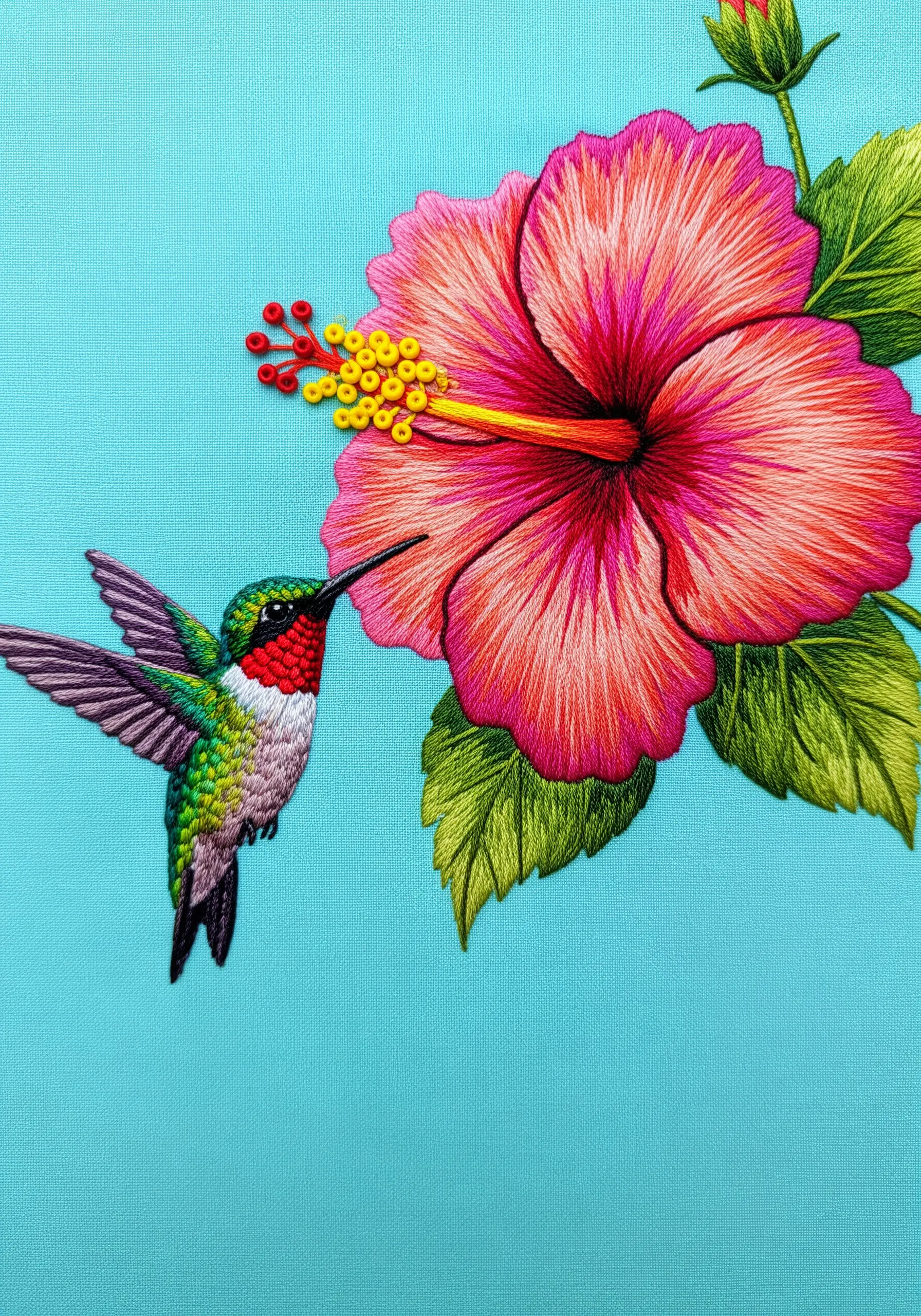
The key to hyper-realistic thread painting is mastering the long-and-short stitch to create seamless color blends.
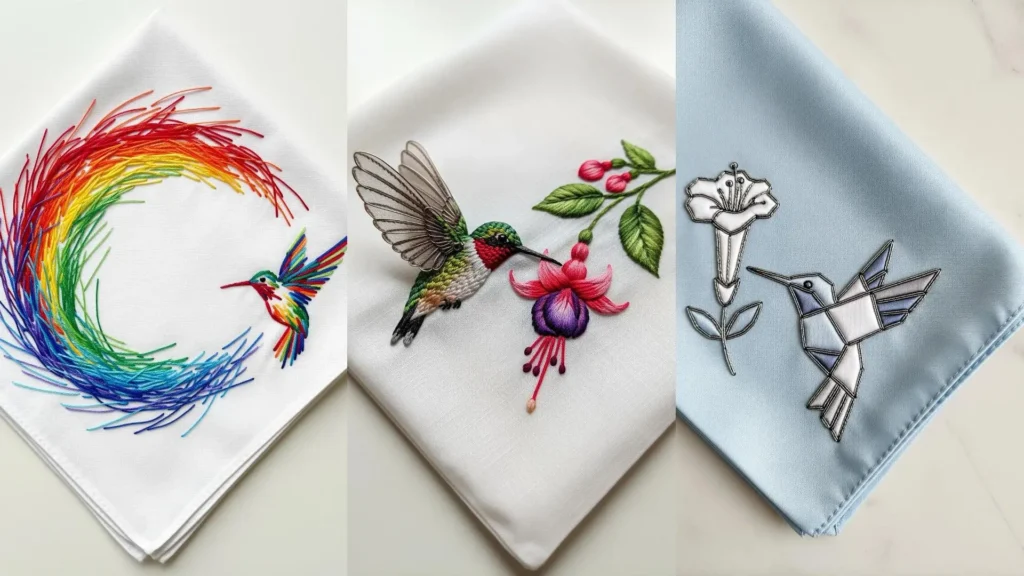
Work with a single strand of floss at a time for the finest detail, especially on the hummingbird’s delicate feathers and the hibiscus petals’ soft gradients.
Pay close attention to the direction of your stitches; they should mimic the natural growth pattern of the feathers or the curve of the petals.
This directional stitching is what creates the illusion of form and movement, transforming a flat image into a lifelike scene.
16. Gilded Ginkgo with Dynamic Light Play
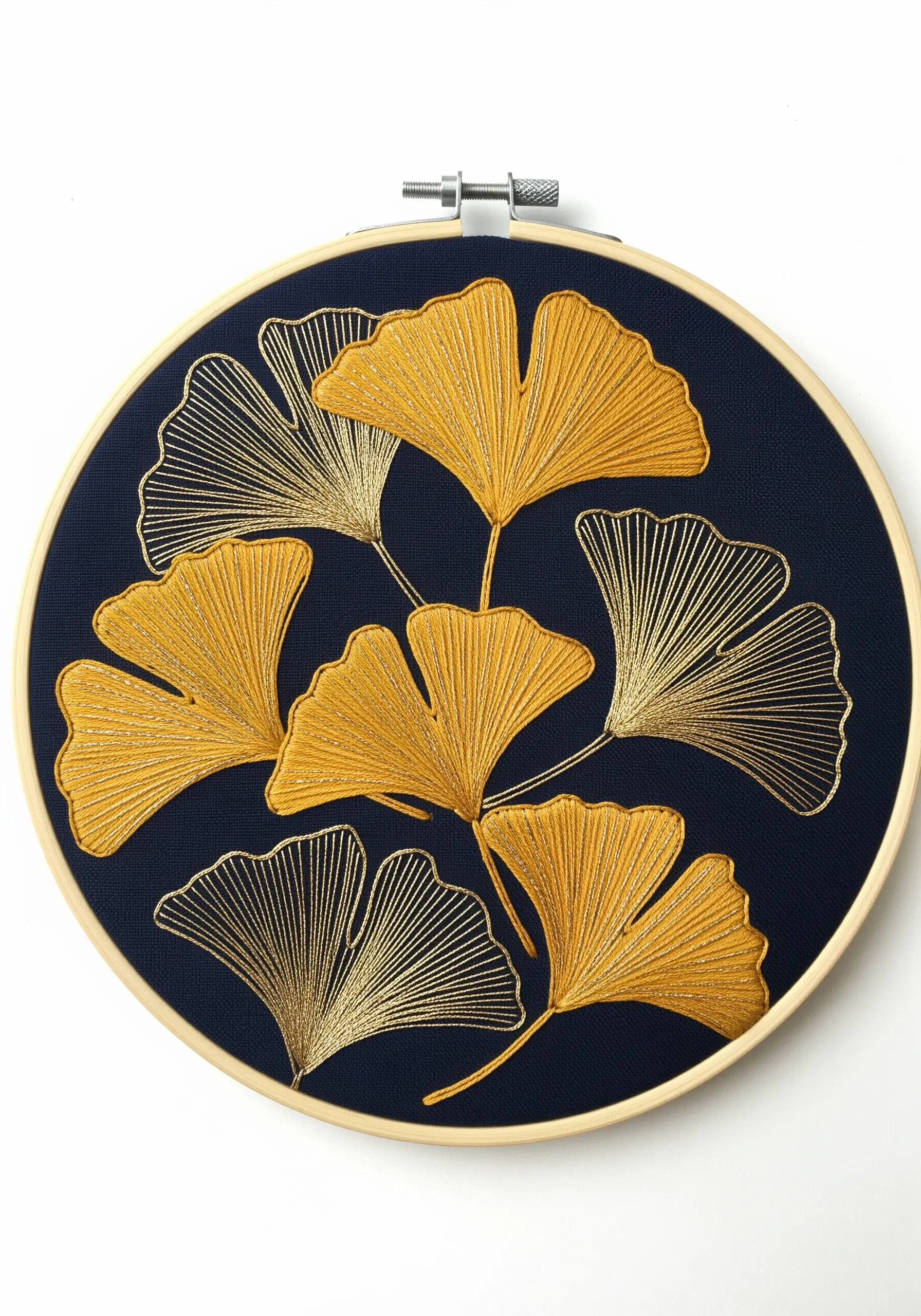
Create the illusion of multiple shades of gold using just one or two threads by manipulating stitch direction.
Fill each ginkgo leaf with a satin stitch, but angle the stitches in different directions for each leaf.
Some leaves can have stitches running vertically, some horizontally, and others diagonally.
As light hits the finished piece, each leaf will reflect it differently, creating a dynamic composition of light and shadow that appears far more complex than it is.
17. Freestyle Bouquet with Mixed-Media Elements
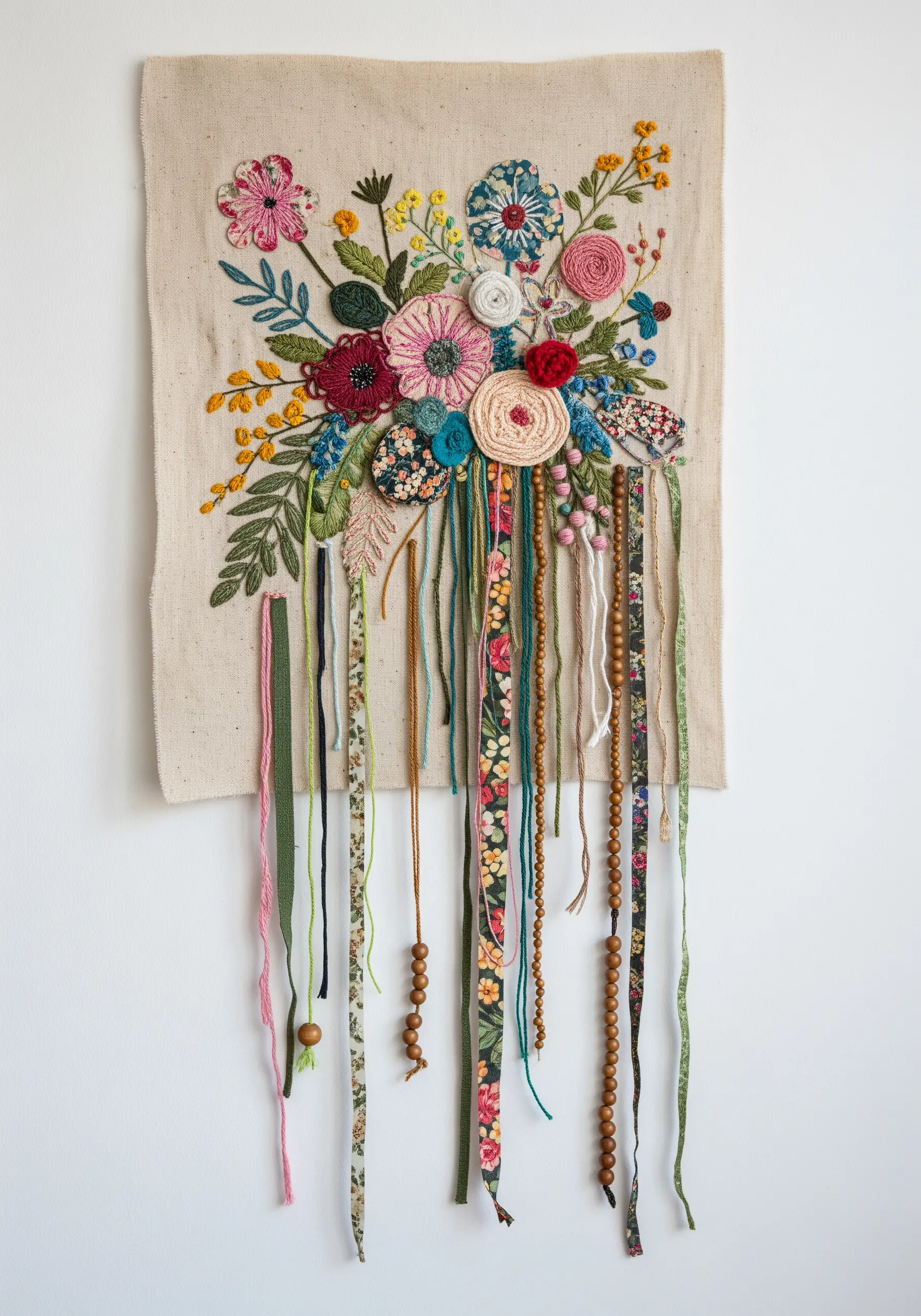
Break free from traditional patterns by combining embroidery with appliqué, beads, and fabric strips for a truly bohemian wall hanging.
Use fabric scraps for larger flower shapes, attaching them with a simple running stitch around the edges.
Incorporate woven wheel roses, French knot clusters, and simple leaf stitches to fill in the bouquet.
Letting threads, ribbons, and beaded strings hang loose at the bottom adds movement and a wonderfully unstructured feel. Fabric collage embroidery ideas like this are perfect for using up leftover materials.
18. Radiant Sun Motif with Couched Yarn
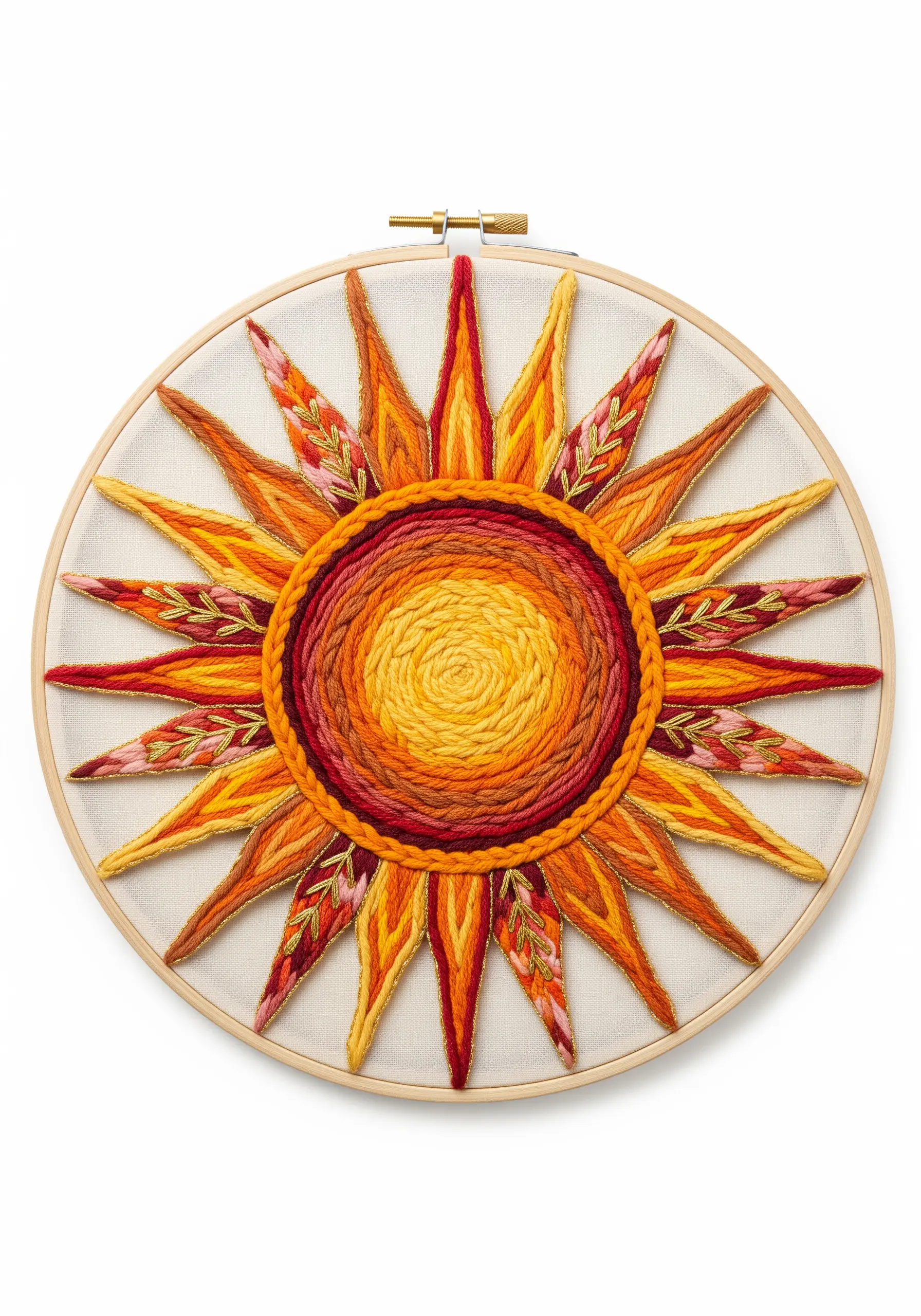
For a bold, graphic effect that fills a large area with incredible texture, try couching.
Lay down thick yarn or multiple strands of embroidery floss on your fabric and then use a single, contrasting strand to tack it down with small, perpendicular stitches.
In the center, spiral the yarn to create a dense, coiled sun.
For the rays, blend different shades of orange and yellow yarn to create a fiery gradient that radiates outward, adding warmth and energy to the design.
19. Minimalist Wildflowers with an Earthy Finish
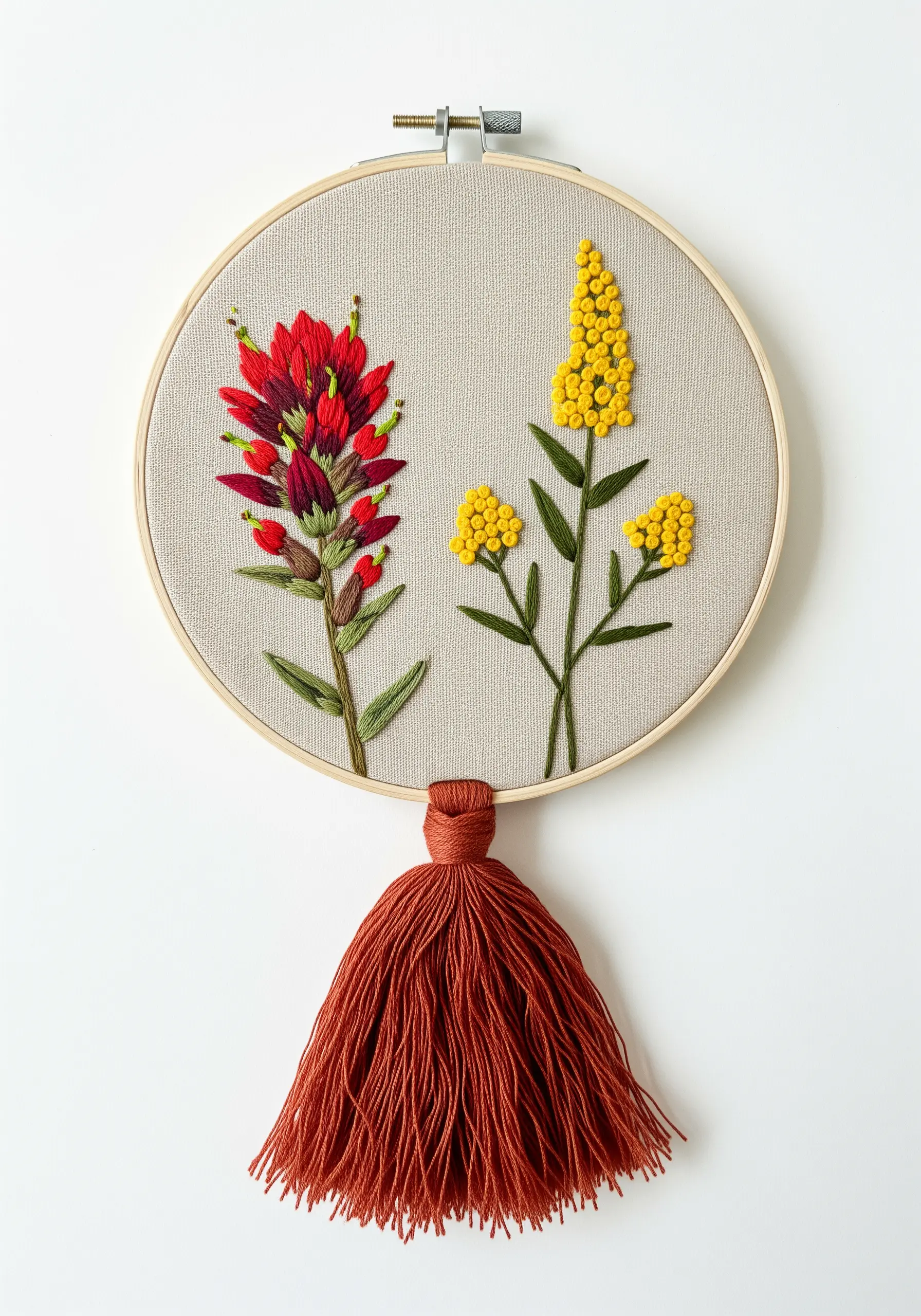
Embrace the power of negative space by focusing on just two or three beautifully rendered botanical specimens.
Use contrasting stitch techniques to differentiate the flowers. For the Indian Paintbrush, layer satin stitches to create its dense, feathery bracts.
For the Goldenrod, use clusters of French knots to mimic its fluffy, pollen-rich texture.
Mounting the work on a neutral, textured fabric like linen or cotton canvas enhances the organic, earthy feel of the composition.
20. Bold Graphic Florals with High Contrast
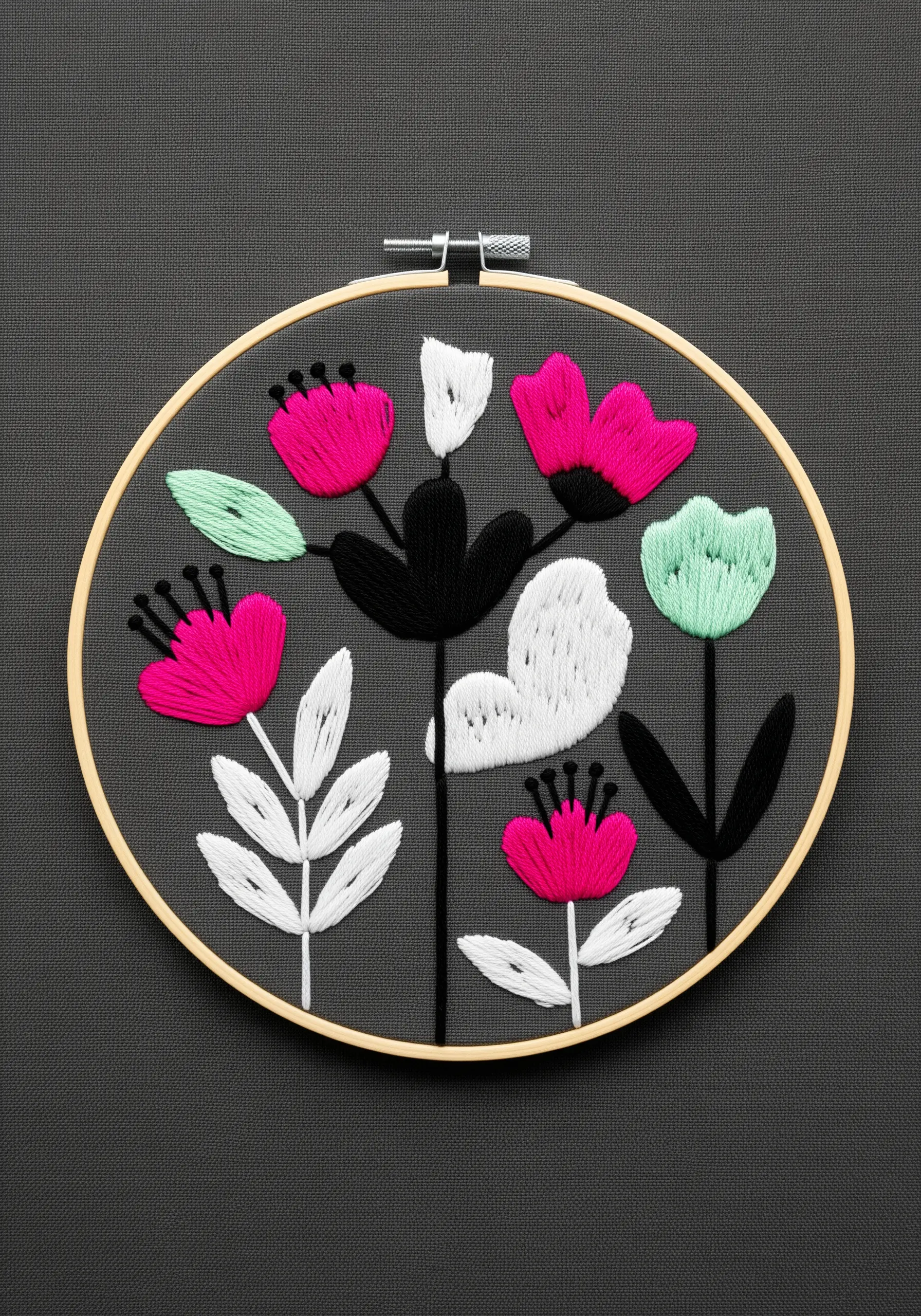
Create a striking, modern look by simplifying floral shapes and using a limited, high-contrast color palette.
Instead of detailed shading, fill each petal and leaf with a flat, dense satin stitch.
The key to a clean finish is a perfectly executed outline; use a split stitch or backstitch to create a crisp edge before filling the shape.
Pairing bright, saturated colors like magenta and mint with stark black and white on a dark gray background makes the simple forms pop with graphic intensity.
21. Luminous Florals with Bead Embroidery
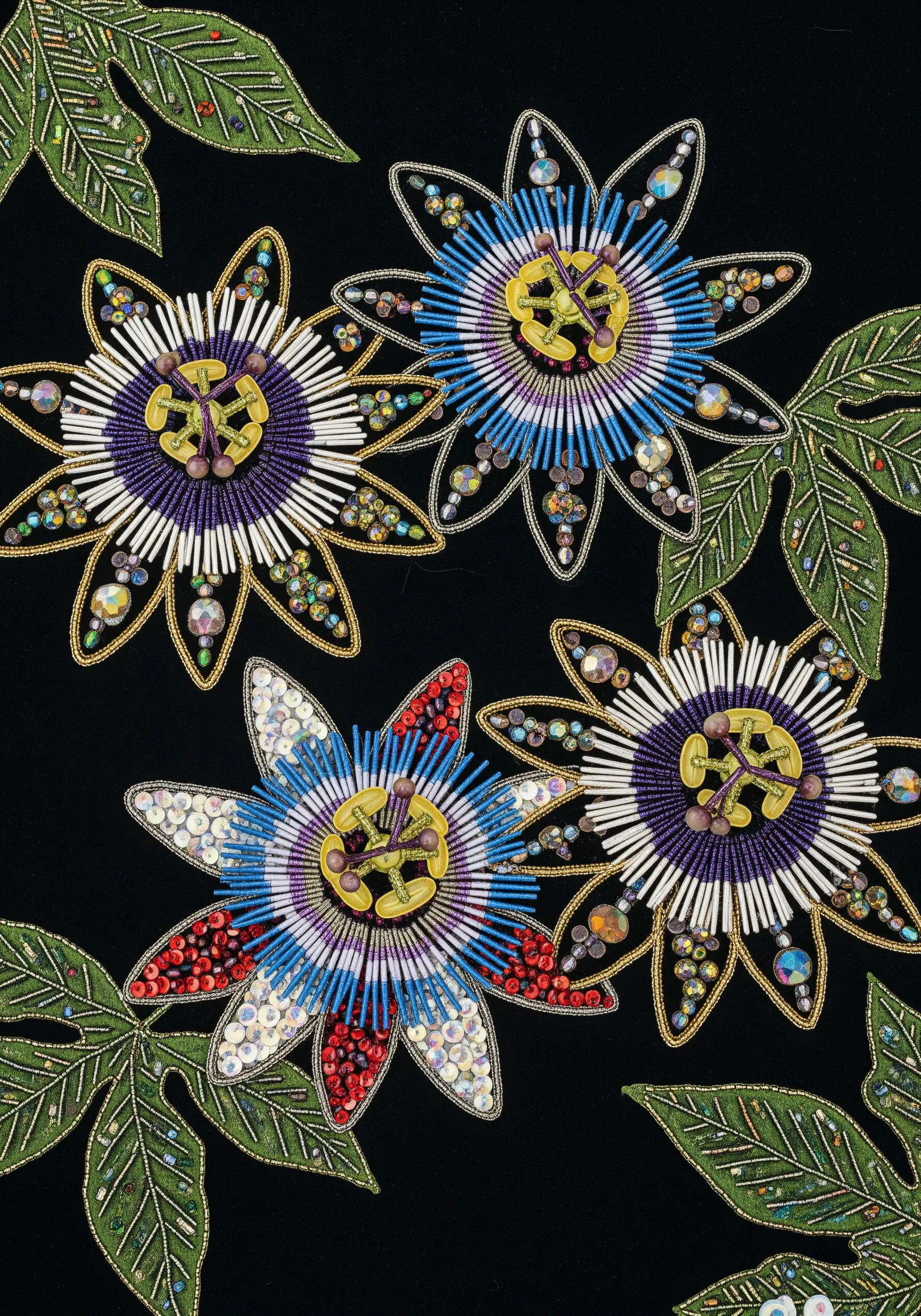
Transform your floral embroidery into a piece of jewelry for your fabric by incorporating beads and sequins.
Use bugle beads radiating from the center to create a dynamic, light-reflecting stamen.
Outline petals with a delicate line of seed beads to define their shape and add a subtle sparkle.
Fill larger areas with flat sequins, each anchored by a seed bead, to create a shimmering, pavé-like effect that feels incredibly luxurious against a dark background.
22. Layered Landscapes with Fabric and Thread
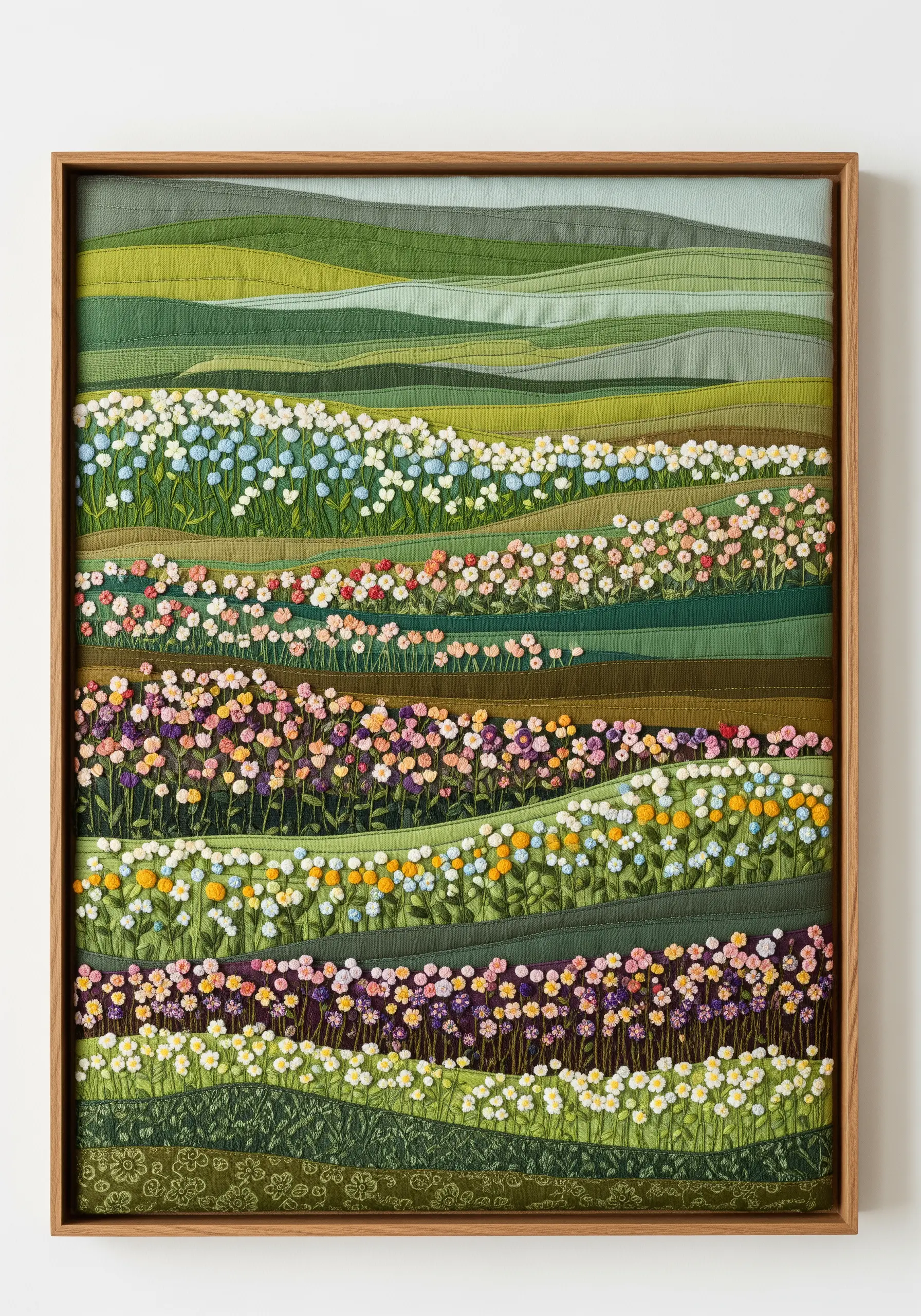
Build a landscape with incredible depth by using strips of fabric for the background and reserving embroidery for the fine details.
Cut wavy strips of cotton or linen in various shades of green and appliqué them onto your base fabric to create rolling hills.
Then, populate your fabric hills with tiny flowers using French knots, lazy daisies, and straight stitches.
This mixed-media approach is not only visually stunning but also an efficient way to cover large areas while creating rich, layered texture.
23. Hyper-Realistic Tiger Lilies with Thread Painting
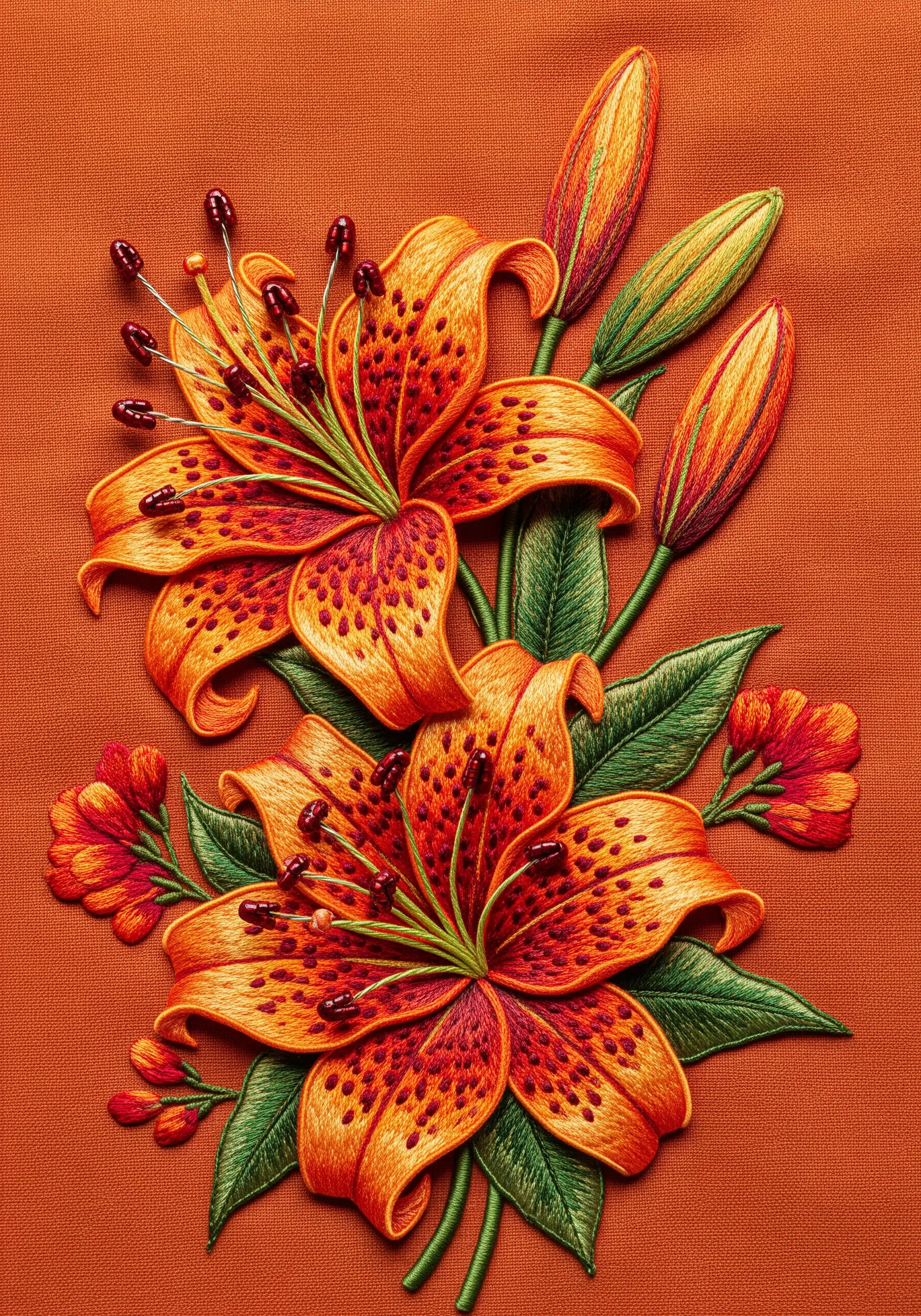
Capture the vibrant, organic details of a tiger lily by using directional thread painting.
For the petals, ensure your long-and-short stitches follow the gentle curve and outward flick of the lily’s shape. This directional work is what creates a sense of realism and form.
Use single-strand black or dark brown thread to create the delicate spots with tiny seed stitches or French knots.
For the stamens, use a wired thread or wrap thread around a pin and heat-set it to create the three-dimensional, pollen-dusted tips.
24. Monochrome Drama with a Single Pop of Color
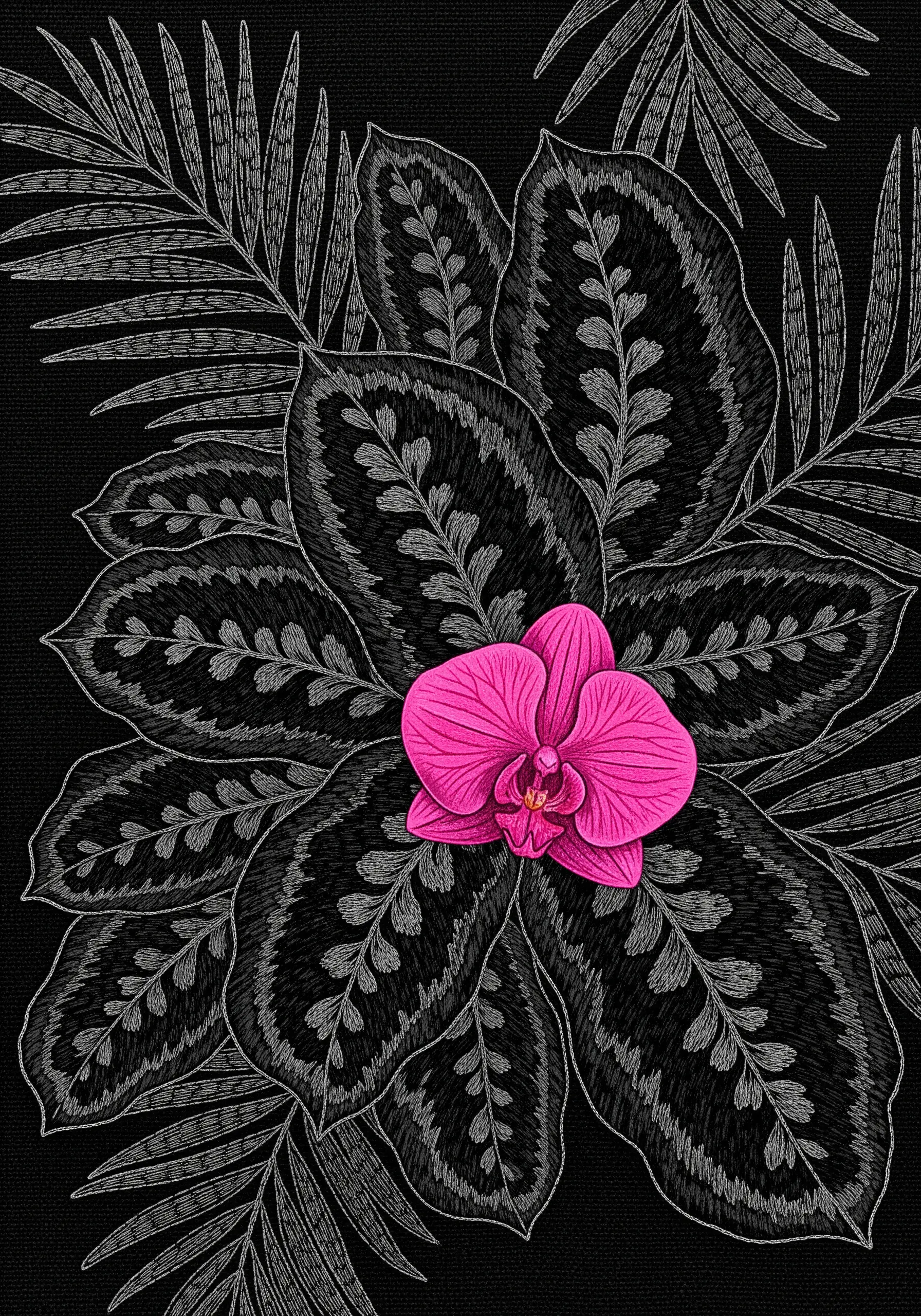
Create a powerful focal point by executing the majority of your design in a monochrome palette.
Use shades of gray, black, and white—or even a single color like silver—to stitch the background foliage.
Vary your stitch direction and density to create texture and prevent the monochrome areas from looking flat.
Then, introduce a single, intensely saturated element, like a magenta orchid, stitched with meticulous detail. This stark contrast instantly draws the eye and gives the piece a sophisticated, artistic edge.
25. A Tapestry of Woven Wheel Roses
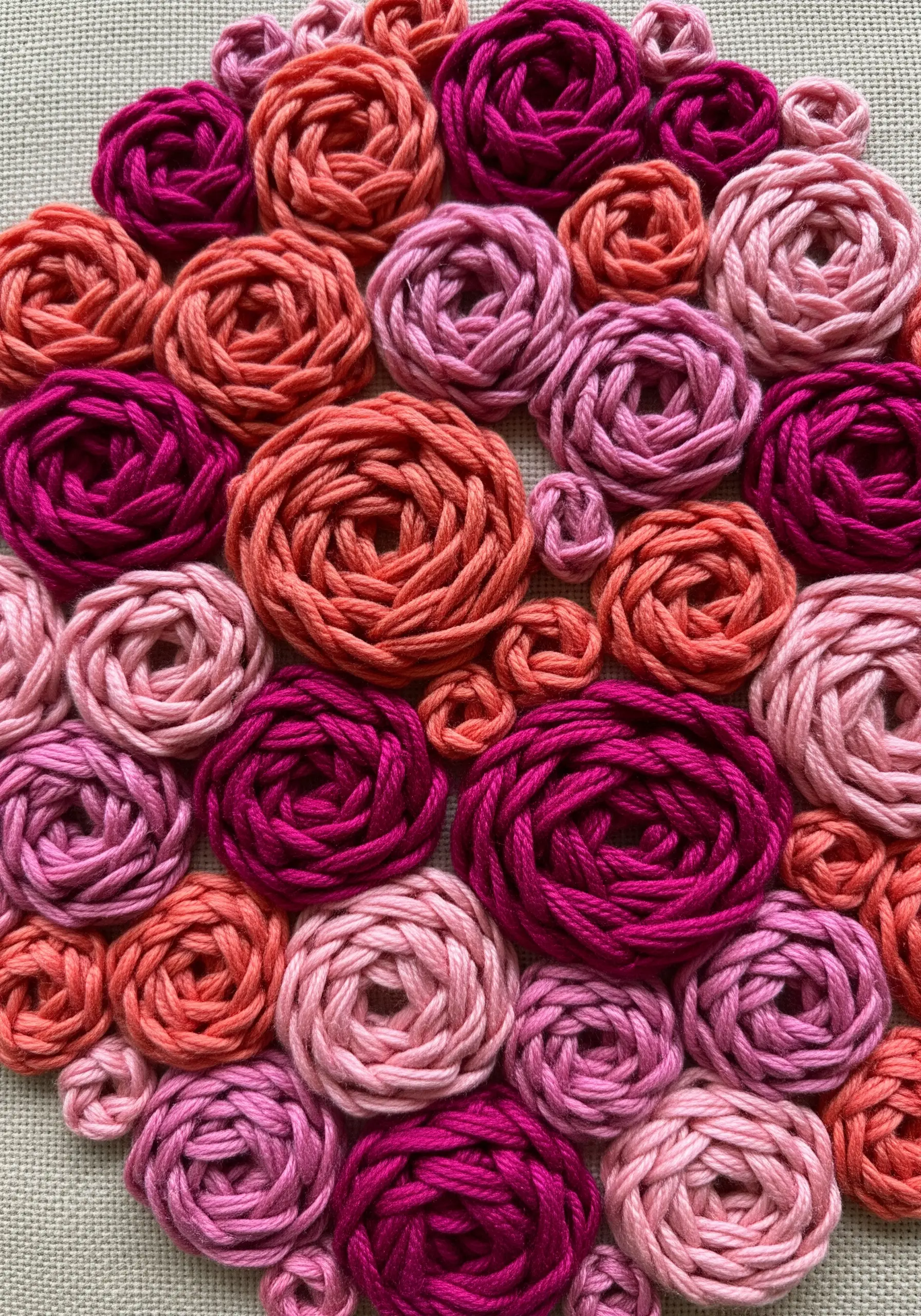
Fill a hoop with a lush, textural garden of roses using the woven wheel stitch (or woven picot stitch).
This stitch is incredibly fast and satisfying, allowing you to create dense, round flowers in minutes.
For a richer look, vary the size of your roses by changing the length of the five straight stitches that form the base.
Use a tapestry wool or a full six strands of cotton floss to create plump, dimensional flowers that completely cover the fabric, forming a beautiful, textured tapestry.
26. Elegant Chrysanthemum with Flowing Stitches
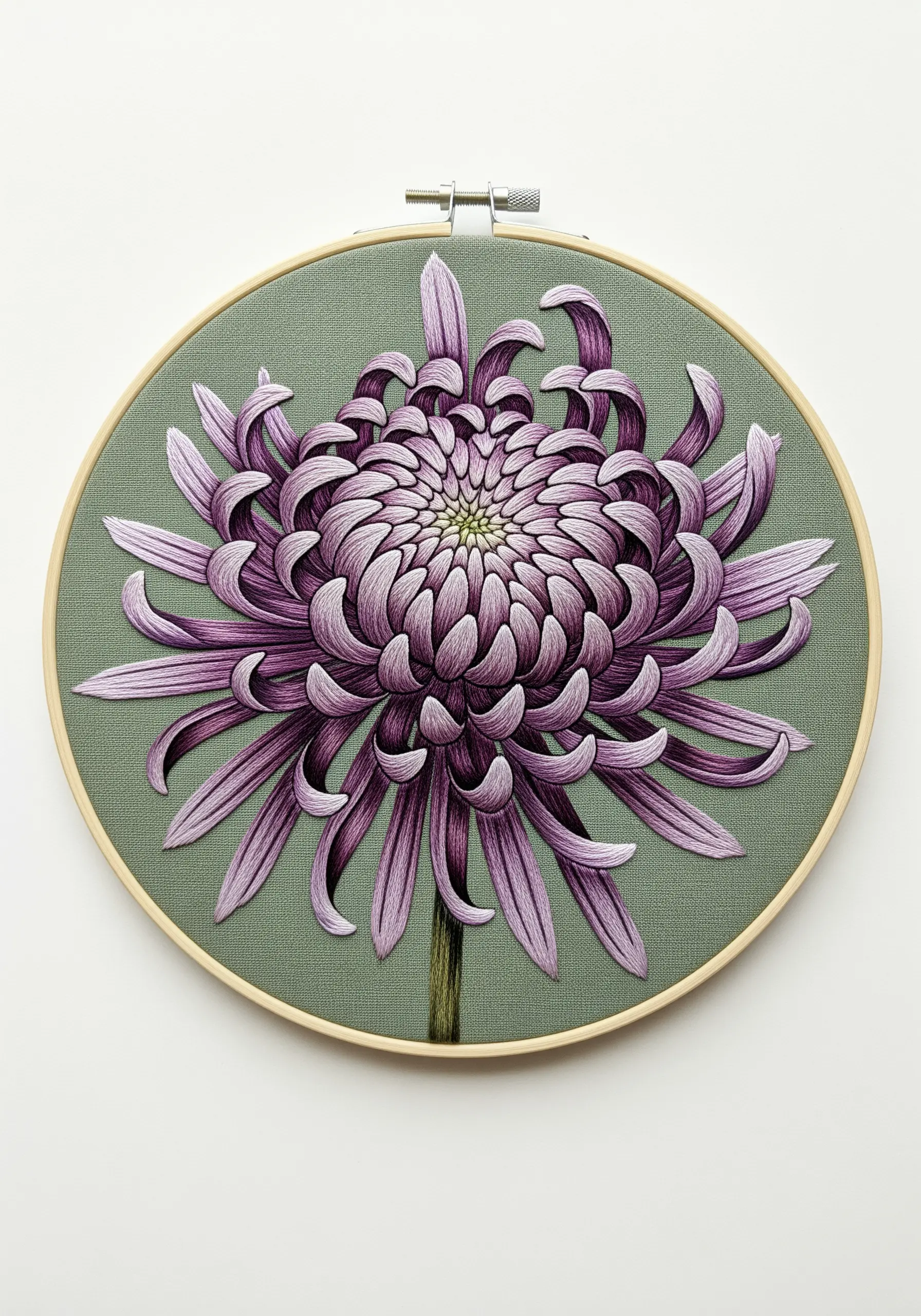
The beauty of a chrysanthemum lies in its complex, curving petals, and your stitch work should reflect that movement.
Use a single strand of floss and long, graceful fishbone or long-and-short stitches that sweep from the center outward.
Instead of filling each petal solidly, allow some of the background fabric to show through, creating a sense of delicacy and light.
Blend two or three shades of the same color within each petal to give it dimension and a soft, realistic gradient.
27. Textural Thistle with Contrasting Stitches
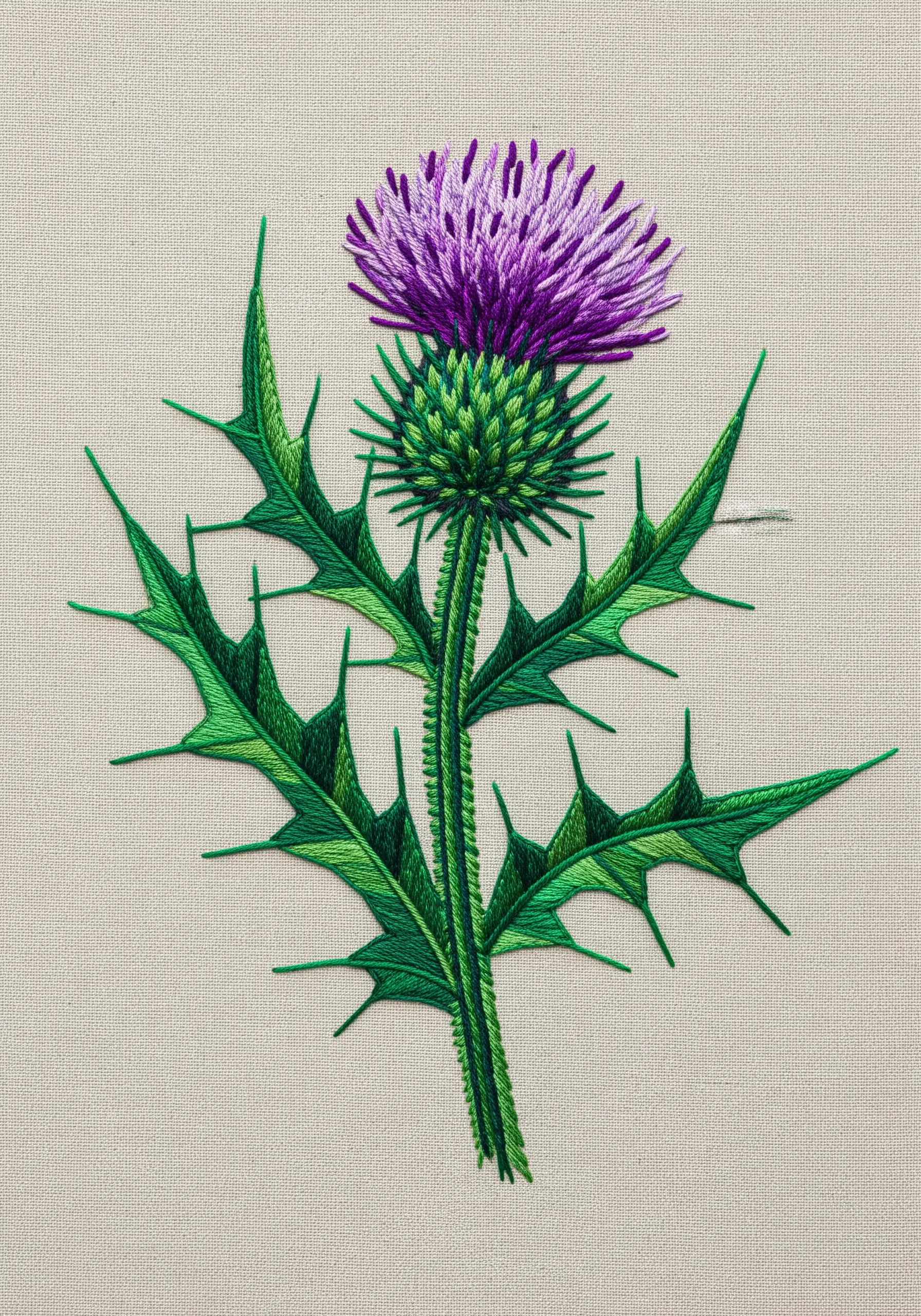
Capture the unique duality of a thistle by pairing soft and sharp stitch textures.
For the spiky leaves and stem, use a very precise and sharp satin stitch, ensuring your edges are crisp and pointed.
Contrast this by creating the thistle’s fluffy purple bloom with turkey work, which creates soft, thread loops that you can trim to create a plush, brush-like effect.
This tactile contrast is what makes the final piece so engaging and true to the nature of the plant.
28. Botanical Sampler on a Patchwork Canvas
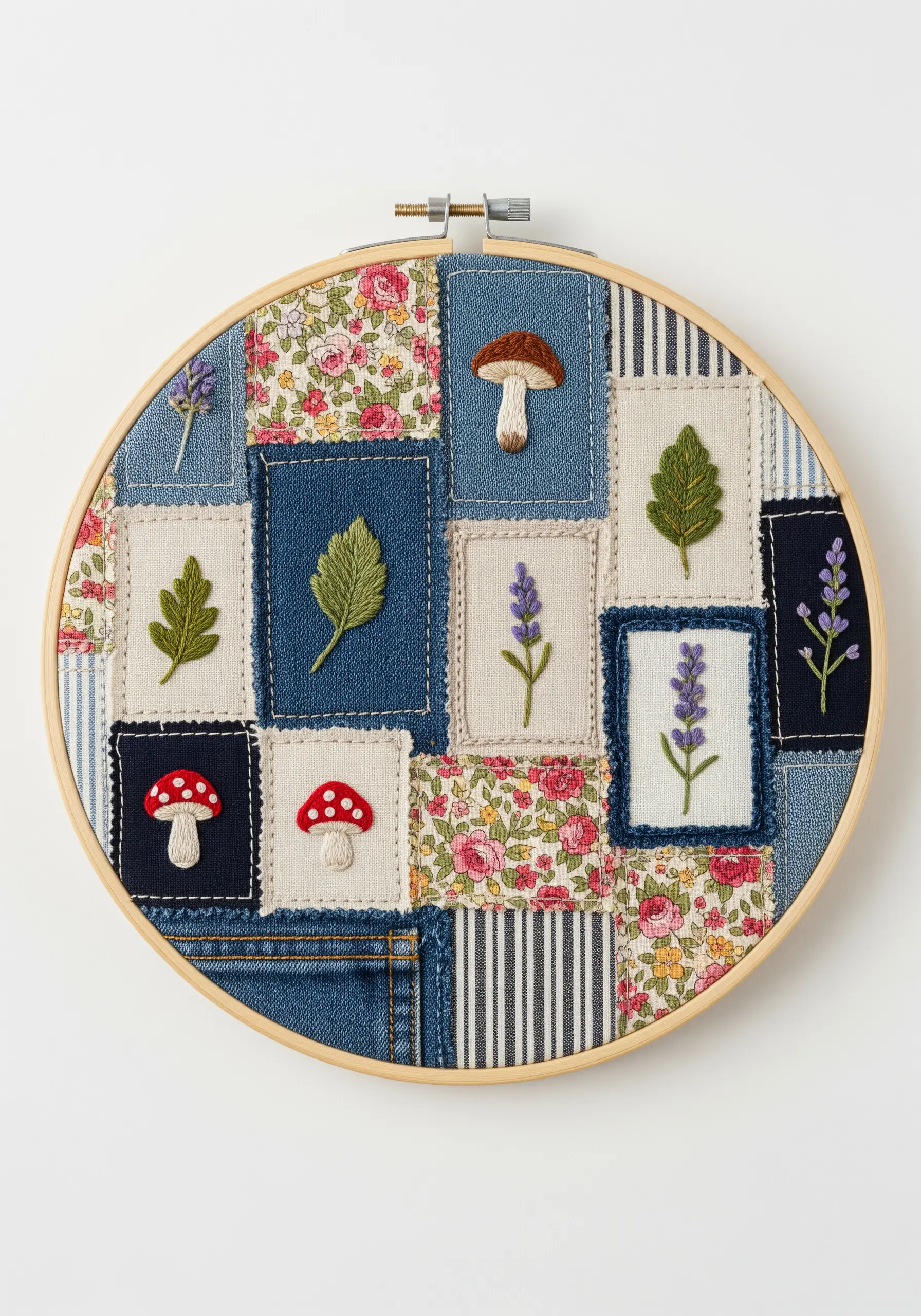
Create a charming, quilt-inspired piece by combining small embroidered motifs on a patchwork background.
Cut small squares and rectangles from various fabrics—denim, floral prints, solids—and arrange them in a collage within your hoop.
On separate pieces of plain linen or cotton, stitch your individual botanical motifs like leaves, mushrooms, and lavender sprigs.
Finally, appliqué your embroidered patches onto the patchwork base, finishing the edges with a simple running stitch for a rustic, handmade feel.
29. Abstract Roots with Braided Fibers
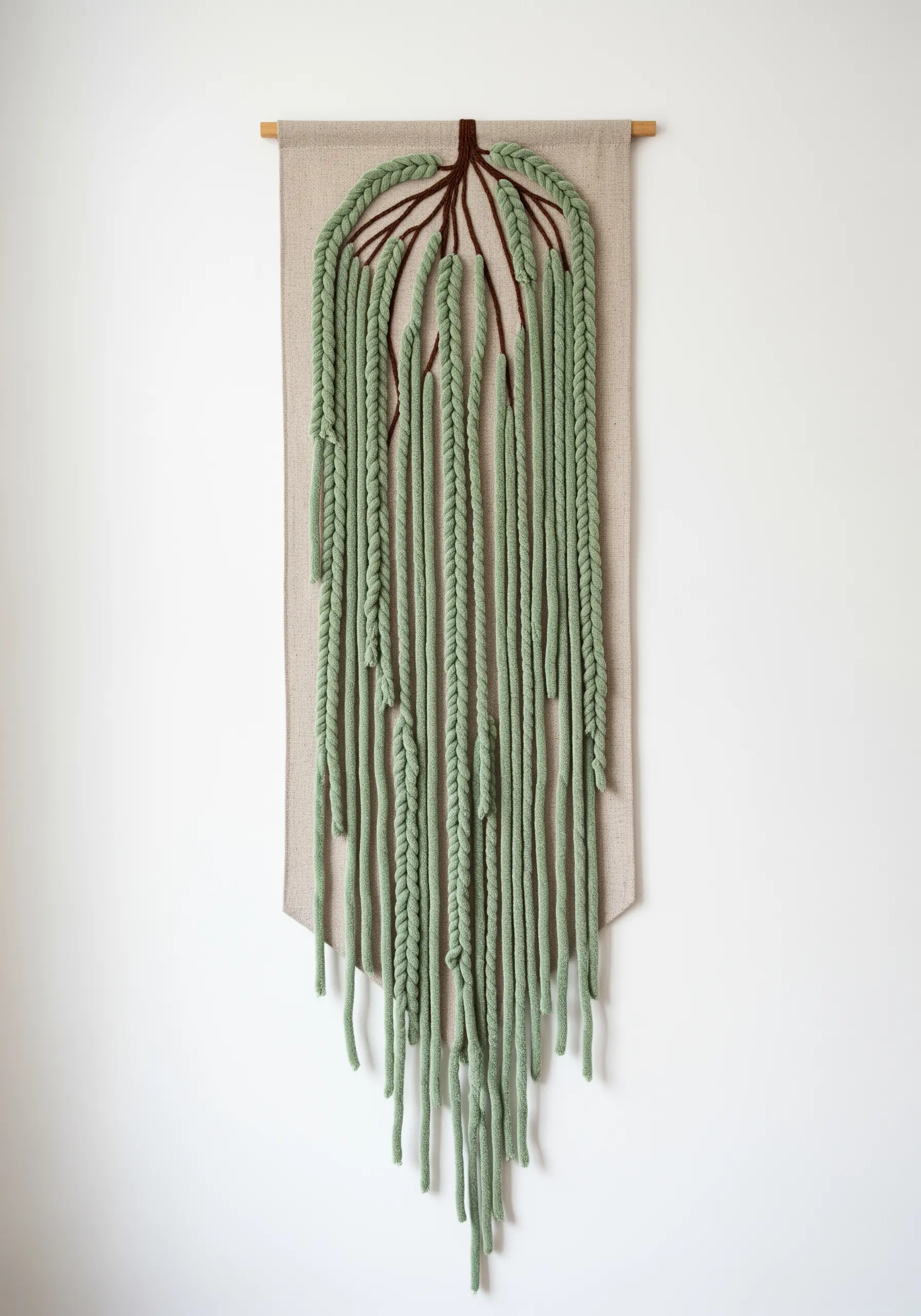
Explore embroidery as a sculptural medium by incorporating thick, braided elements that hang freely.
Use a soft, pliable rope or chunky yarn to create long, three-strand braids.
Anchor the top of your design to the fabric with dense couching stitches, forming the base of the root system.
Allow the braided strands to hang loose, varying their lengths to create a natural, organic flow. This technique bridges the gap between embroidery and macrame, resulting in a striking piece of fiber art.
30. Dimensional Anemones with Stumpwork Petals
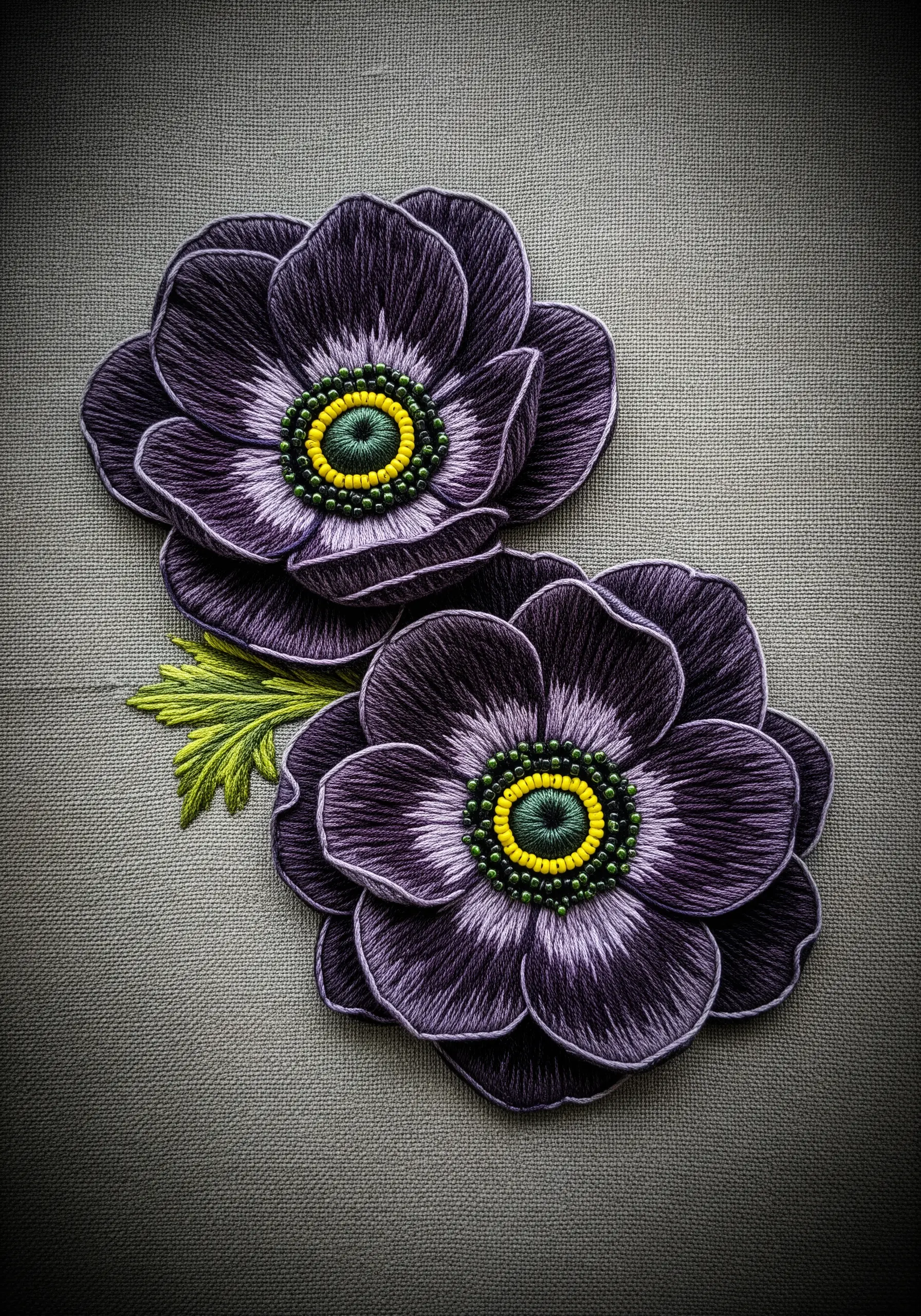
Bring your flowers to life with stumpwork, a technique that creates raised, three-dimensional elements.
Create each petal separately by stitching over a piece of craft wire on a spare piece of fabric. Use a buttonhole stitch to secure the thread to the wire edge.
Once filled with long-and-short stitch, cut out each petal and bend it into a natural, curved shape.
Stitch the wired petals onto your main fabric around a beaded center, allowing them to overlap and stand away from the background for an incredibly realistic effect.
31. Minimalist Eucalyptus with a Touch of Sheen
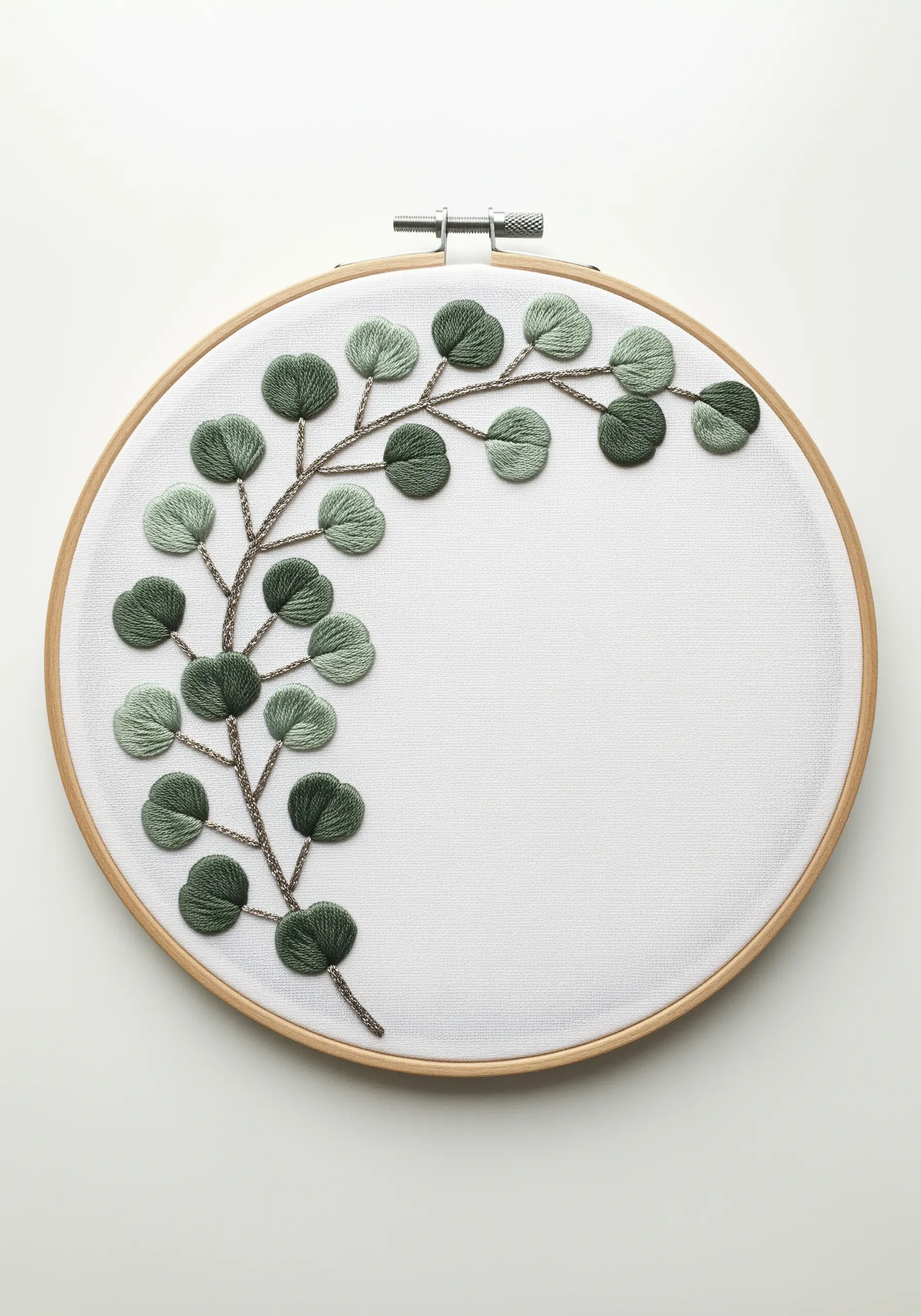
In minimalist embroidery, every stitch counts. Create a clean, elegant design by focusing on form and texture.
Use a simple satin stitch to create the round eucalyptus leaves, alternating between two or three complementary shades of green for a subtle, natural variation.
For the stem, use a couched metallic or silk thread. This adds a delicate line of shine that contrasts beautifully with the matte cotton leaves, elevating the entire piece with a single, thoughtful detail.
The ample negative space allows the simple beauty of the branch to shine.
32. Serene Lotus with a Geometric Mandala Frame
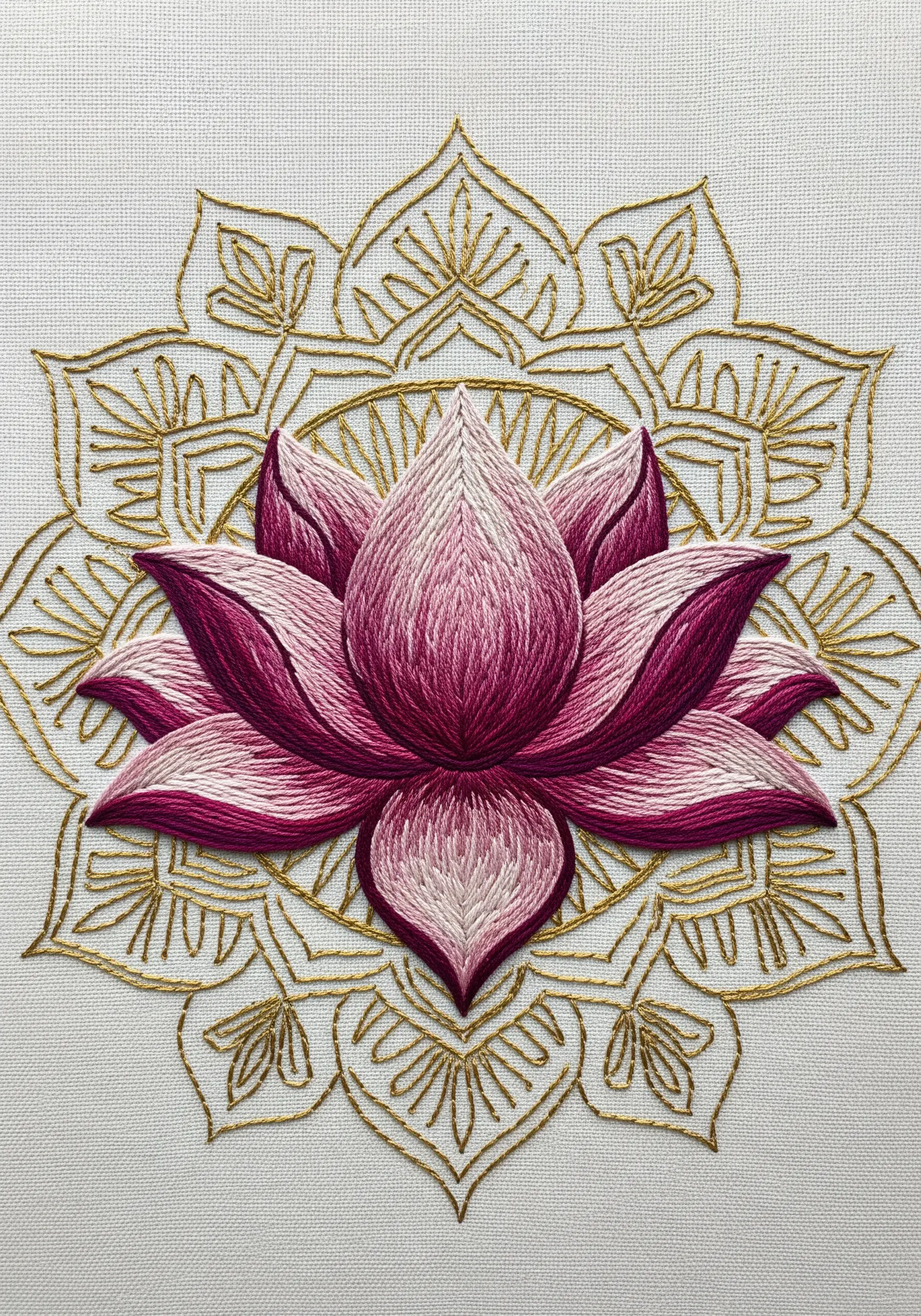
Create a beautiful sense of harmony by contrasting a softly shaded organic flower with a crisp, geometric background.
For the lotus, use thread painting techniques with long-and-short stitches to blend pinks and whites for a soft, realistic look.
For the mandala, switch to a single, bright metallic gold thread. Use a simple backstitch or stem stitch to create the clean, graphic lines of the pattern.
This juxtaposition of soft and sharp, organic and geometric, creates a visually balanced and spiritually calming piece of art.
33. Glistening Pomegranate with Beaded Seeds
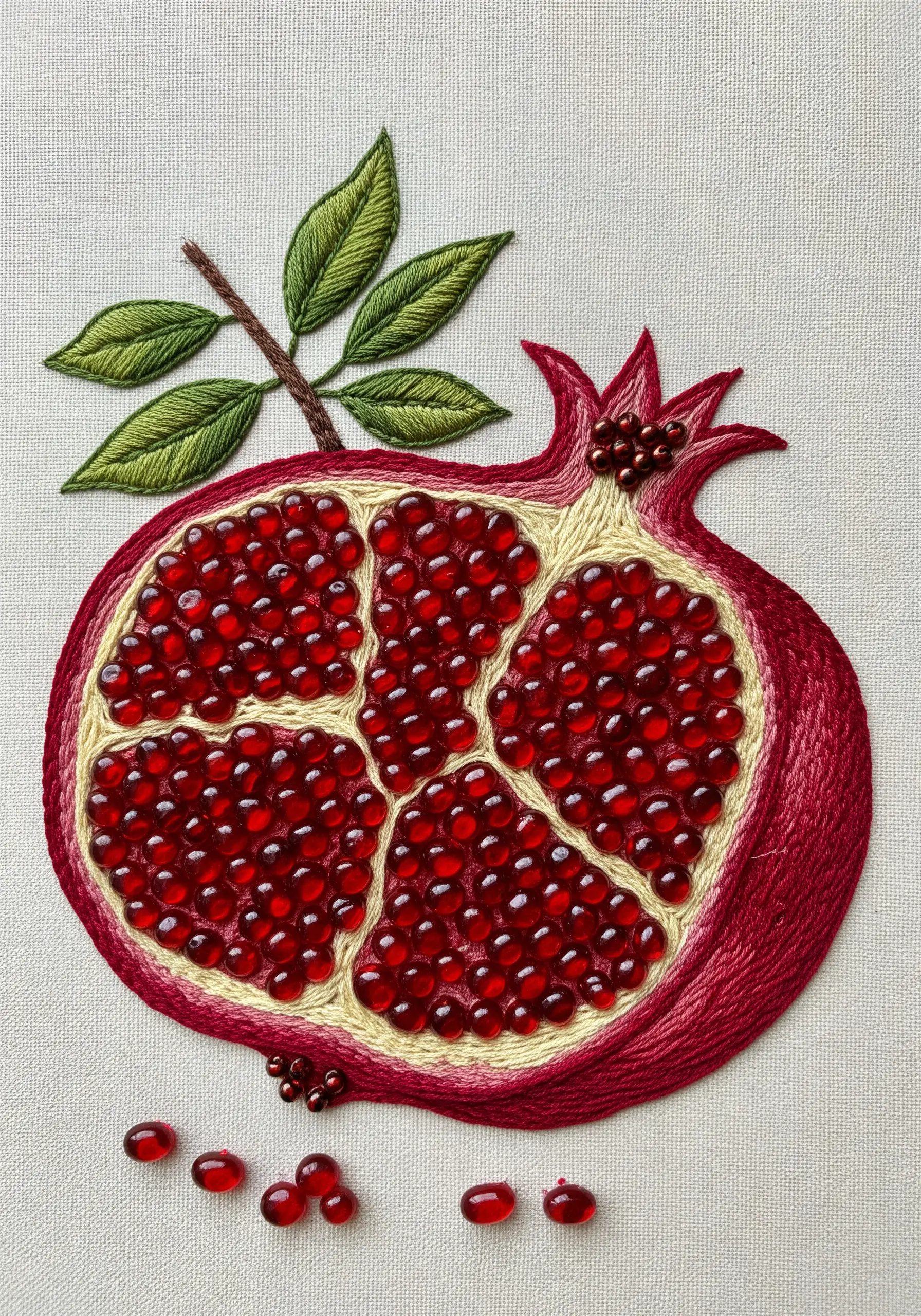
Capture the juicy, jewel-like quality of pomegranate seeds by using translucent red beads instead of thread.
Outline each section of the fruit with a satin stitch and fill the pith with a pale, textured stitch like the seed stitch.
Then, carefully fill each seed section with small, glossy red beads, securing each one with a tiny stitch. The light will catch the beads, creating a wet, glistening effect that thread alone cannot achieve, adding a stunning layer of realism and texture.
34. Elegant Vine Tapestry for Vertical Spaces
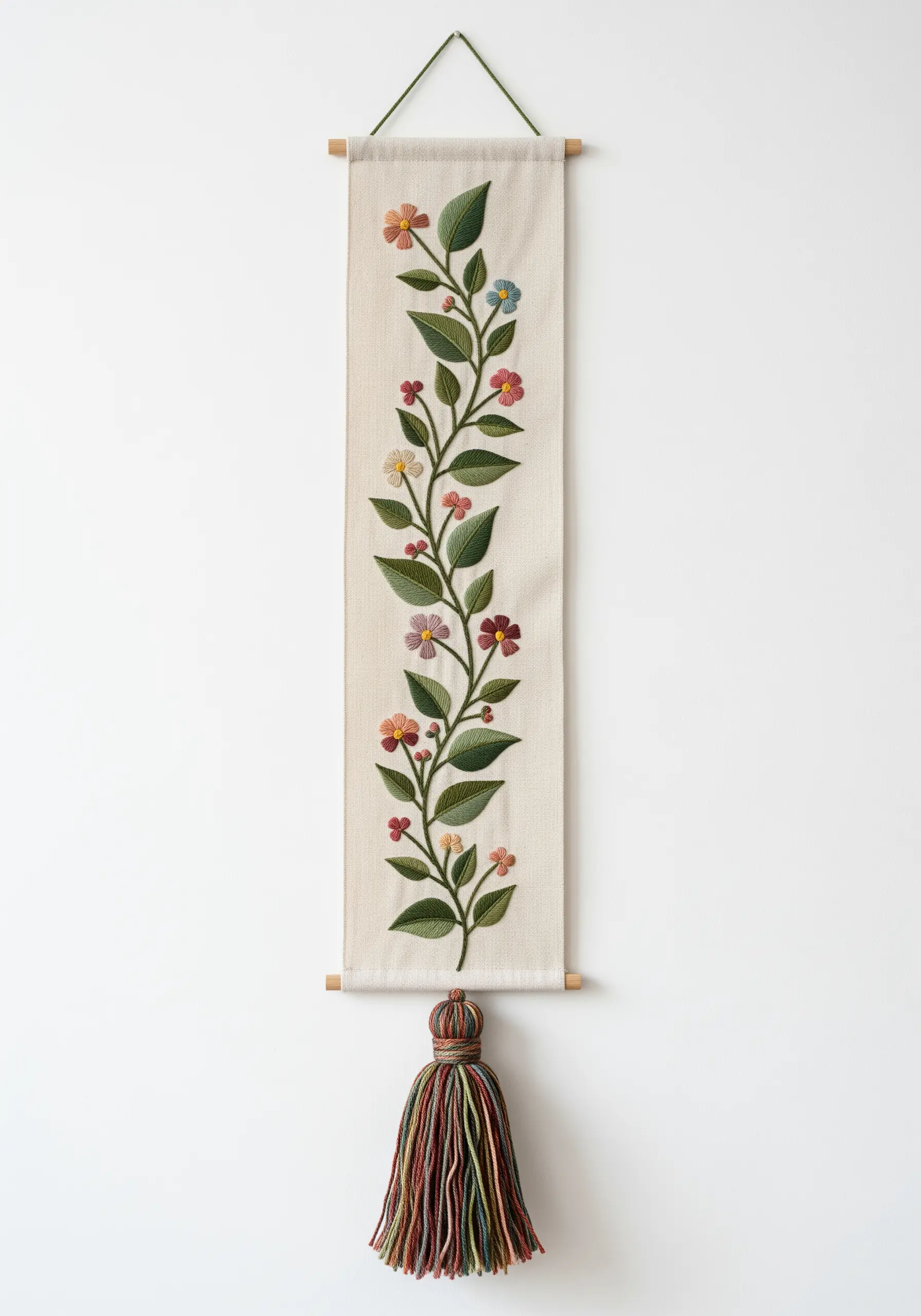
Design for narrow, vertical spaces by creating a long, flowing botanical tapestry.
Draw a single, gently curving vine as the foundation of your composition. Use a stem stitch for a smooth, rope-like texture.
Branch off from the vine with leaves and small, simple flowers, ensuring the design feels balanced but not perfectly symmetrical to maintain an organic feel.
Adding a tassel at the bottom made from all the colors in your palette not only adds weight, helping the tapestry hang straight, but also ties the entire color story together beautifully. These botanical embroidery wall pieces are perfect for adding life to forgotten corners.