

If you’ve ever held a pressed flower, you know the delicate, papery memory it contains. Now, imagine combining that quiet beauty with the gentle permanence of thread. This isn’t about just stitching flowers; it’s about making your embroidery a home for real botanicals.
You don’t need complex new skills. Instead, I want you to see your needle and thread as tools for connection—for anchoring a fragile petal to sturdy denim, for tracing a real stem with a line of silk, for blending the garden with your fabric.
In these ideas, you’ll find ways to use stitchwork not just as decoration, but as a framework. You’ll learn to secure, to highlight, and to build stories around the natural elements you choose. Let’s begin.
1. Render Pansies with Dimensional Thread Painting
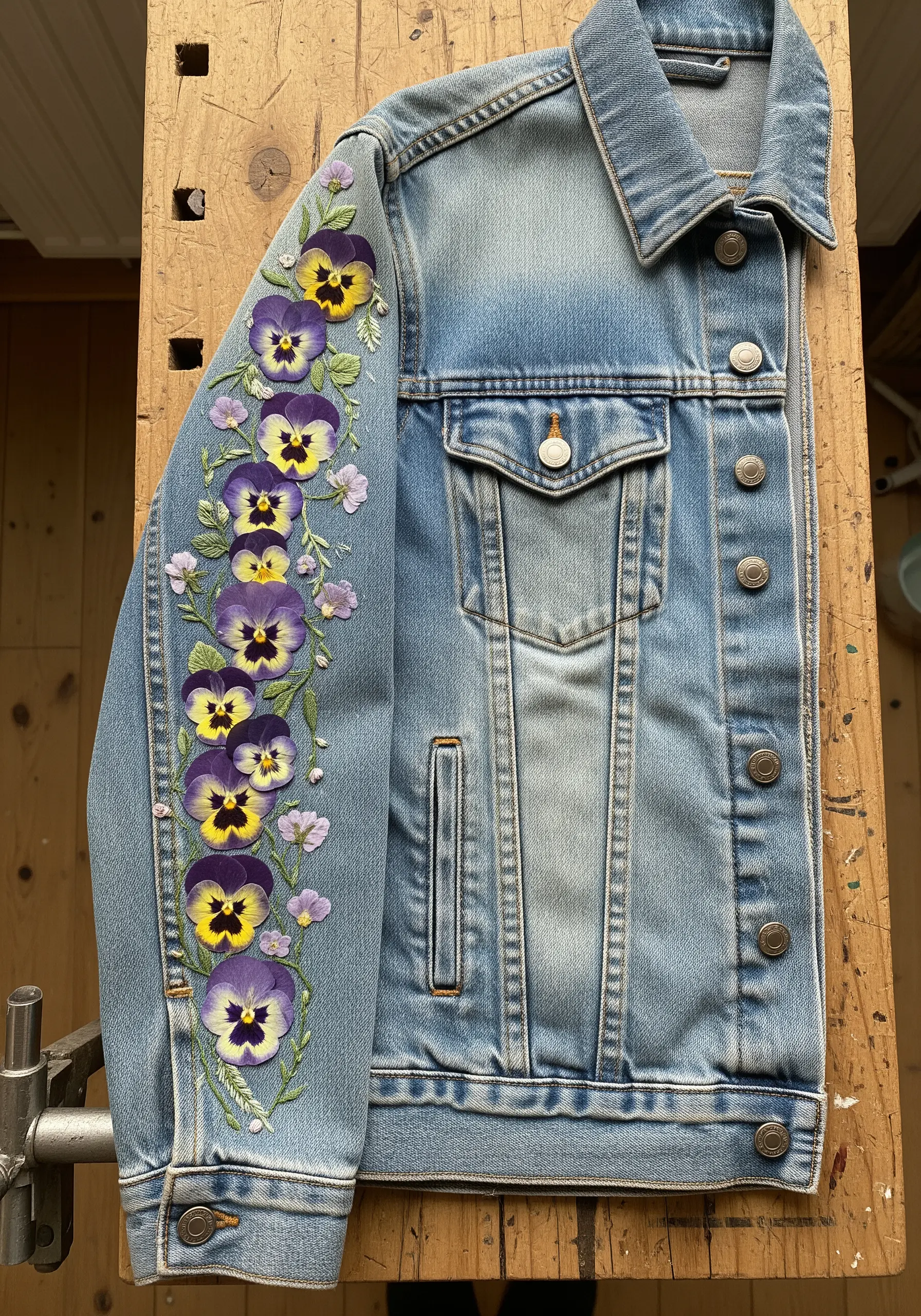
Transform a denim jacket sleeve into a canvas for a cascade of pansies.
Use a long-and-short stitch to blend purples, violets, and yellows, giving the petals a soft, painted quality that mimics real flowers.
For durability on clothing, secure your work with a fusible interfacing on the inside of the sleeve—this protects the stitches during washing.
Vary the direction of your stitches on each petal to create natural-looking folds and light reflection, which adds depth and realism.
This is one of the most effective aesthetic embroidery ideas to turn your old clothes into art.
2. Combine Ribbon Stitch with Fine Thread for a Wildflower Border
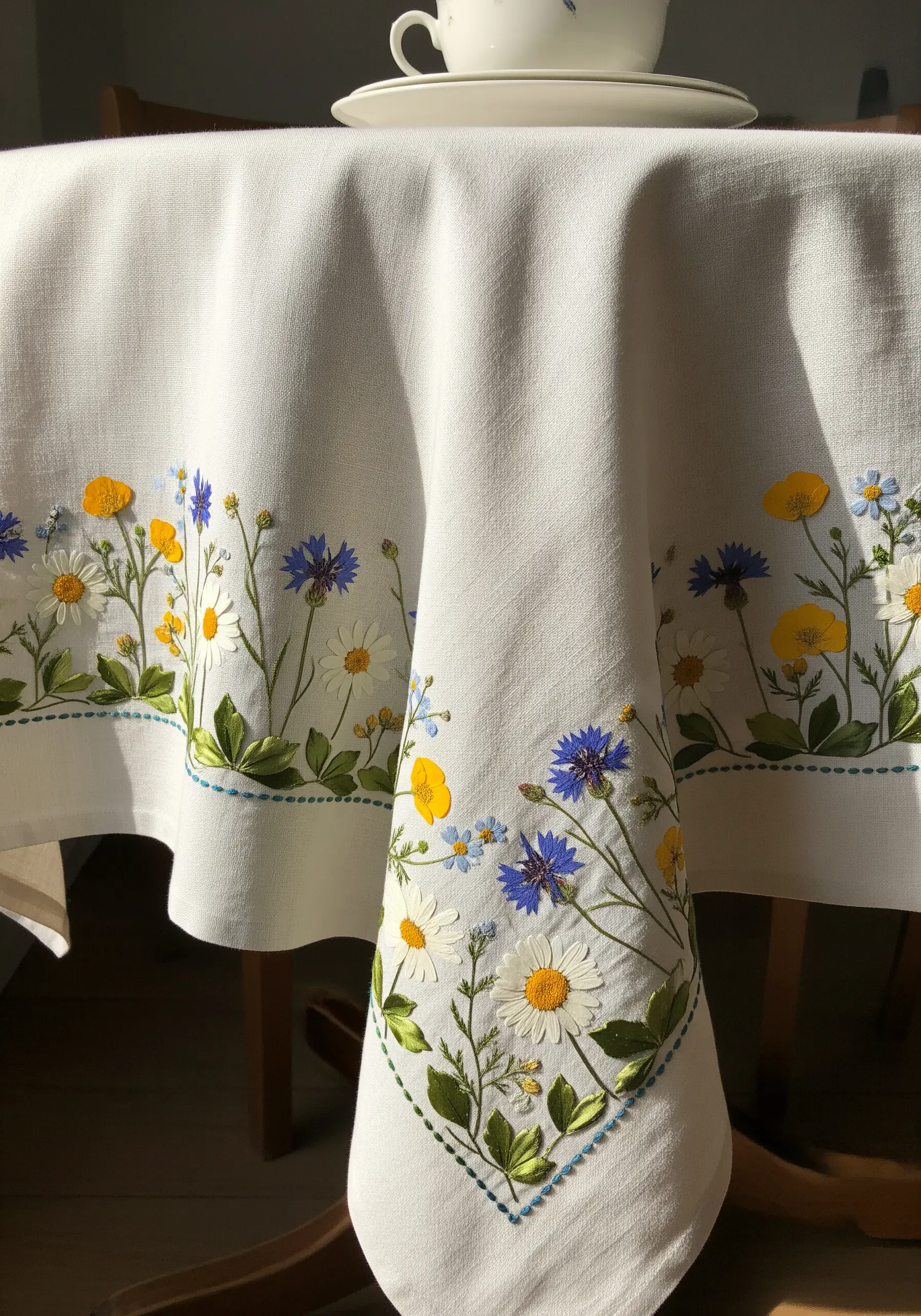
Create a dynamic wildflower border on a tablecloth by mixing textures.
Use silk ribbon for wider leaves and petals—the ribbon stitch creates a natural, folded dimension that standard floss cannot replicate.
Combine this with delicate six-strand floss for thin stems and intricate flower heads like cornflowers and daisies.
This contrast between the flat, fine stitches and the voluminous ribbon makes the entire design feel more alive and less uniform.
You can use these line art garden motifs that transform table runners as a base for your composition.
3. Anchor Real Pressed Botanicals with Minimalist Stitches
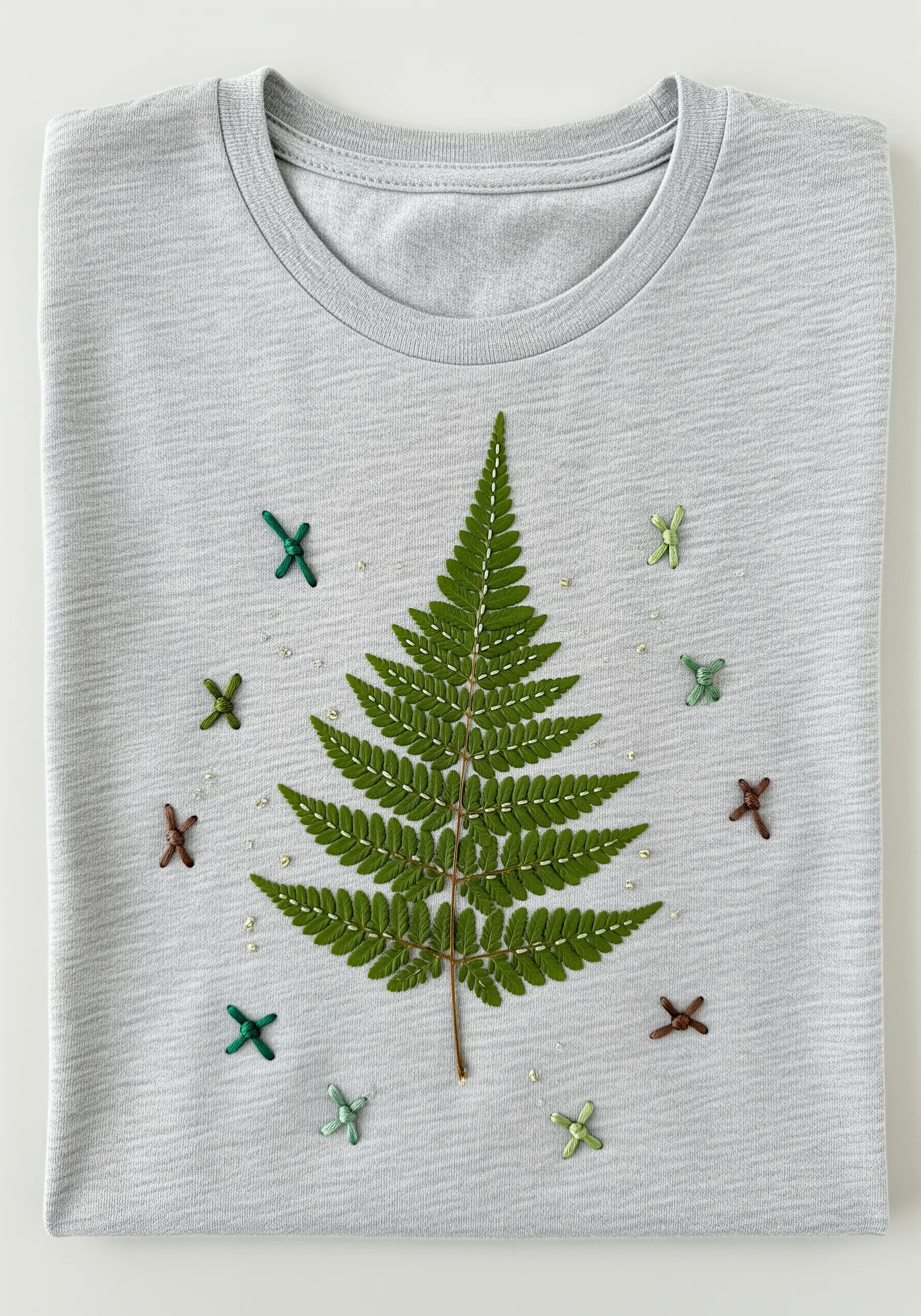
Secure a genuine pressed fern onto a t-shirt for a striking mixed-media piece.
Use a fine, single strand of thread that matches the fern’s color and make tiny couching stitches over the stem and fronds to hold it in place.
The goal is invisibility—the stitches should disappear, letting the fern appear as if it grew there.
Accent the arrangement with scattered, chunky cross-stitches in various shades of green to create a sense of movement and energy.
This technique elevates botanical line art embroidery patterns by blending nature with craft.
4. Craft Buzzing Bees with High-Texture Turkey Work
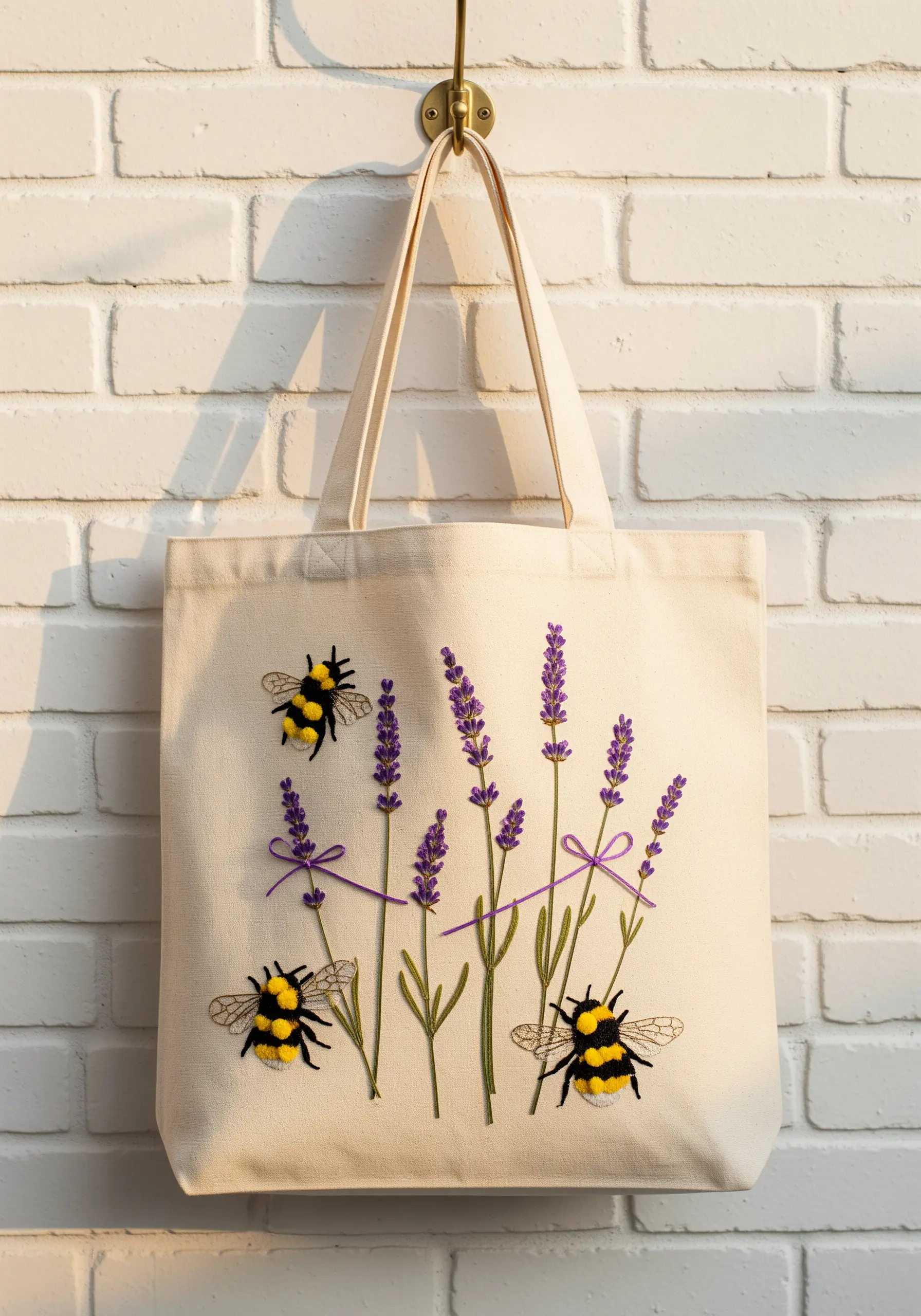
Give your embroidered bees a fuzzy, three-dimensional body using the turkey work stitch.
Create loops with yellow and black thread, then snip and trim them to form a soft, chenille-like texture that begs to be touched.
For the lavender, use detached chain stitches for the buds and a simple stem stitch for the stalks.
Add a thin ribbon tied into a bow to gather the lavender stems, adding another layer of texture and a touch of whimsy to your canvas tote.
These are the kinds of easy small embroidery patterns that make everyday items feel special.
5. Build a Dense Floral Wreath with Layered Stitches
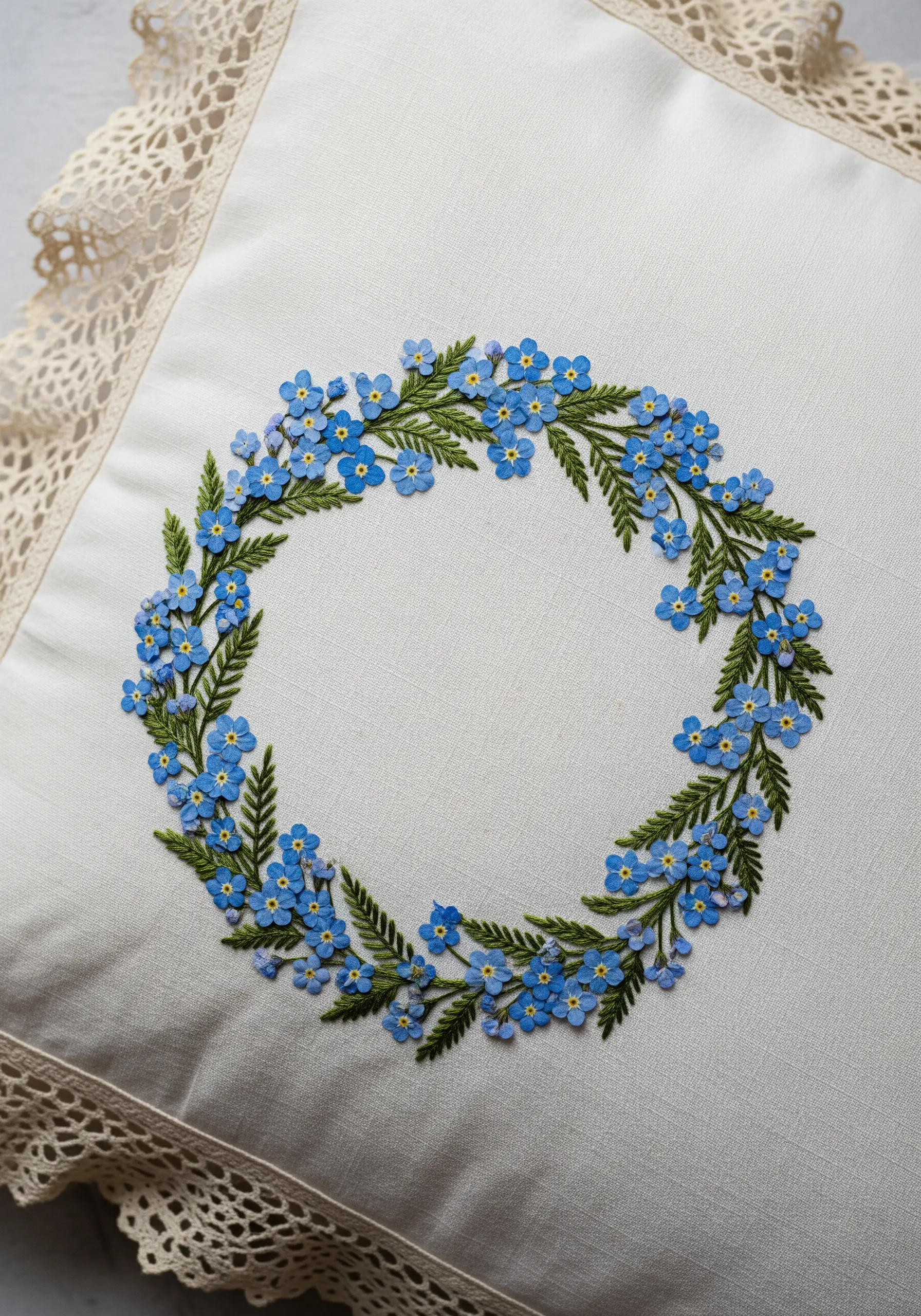
Construct a lush forget-me-not wreath on a pillow cover by layering simple stitches.
Use lazy daisy (detached chain) stitches for the tiny blue petals, clustering them tightly together to form dense blossoms.
Add a French knot in a contrasting yellow or white to the center of each flower for a realistic touch.
For the foliage, use fishbone stitch to create solid, defined leaves that weave between the flowers, providing structure and a rich green backdrop.
This design style can transform a minimalist sofa into a cozy haven.
6. Scatter Organic Patterns with Pressed Queen Anne’s Lace
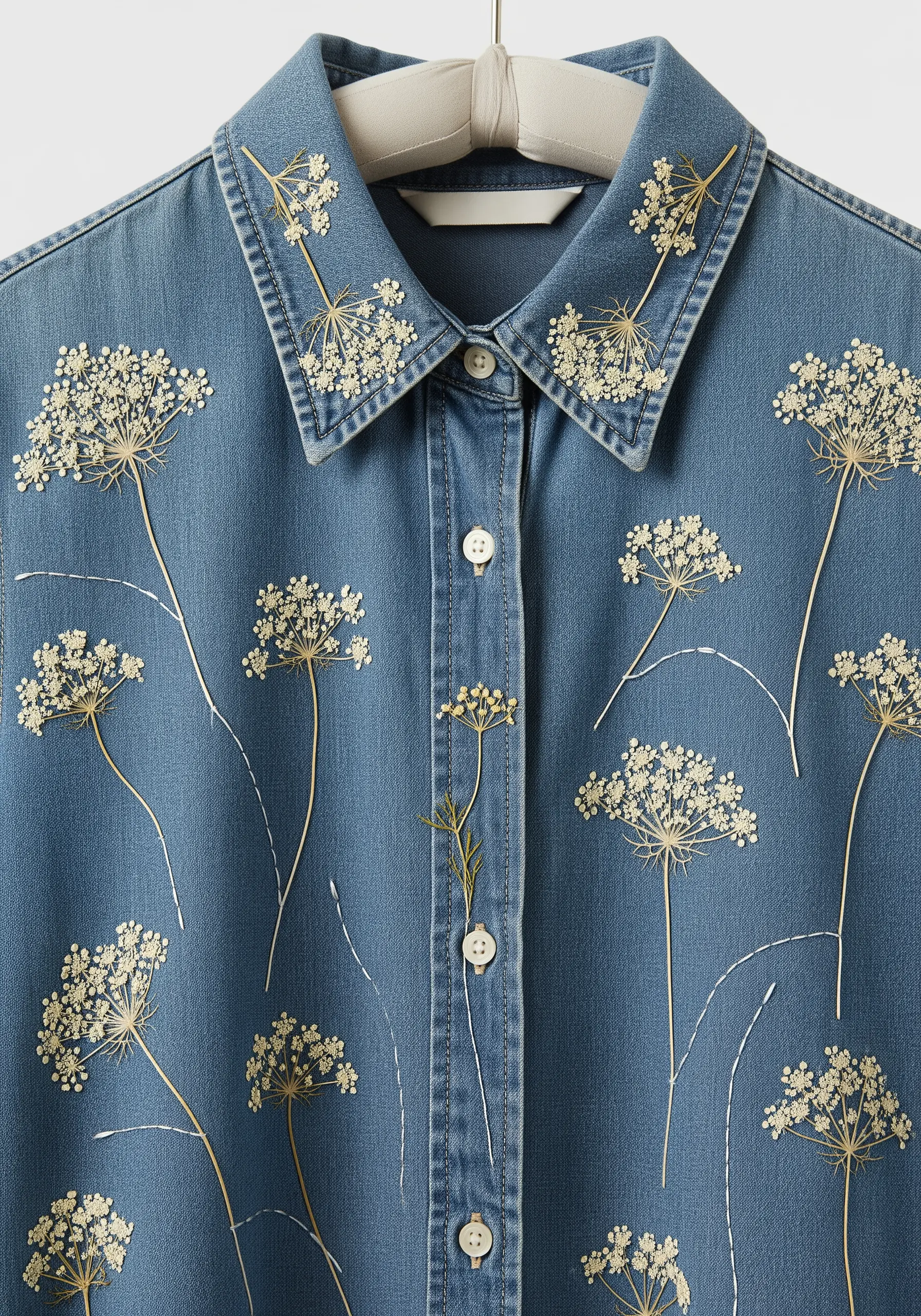
Embellish a denim shirt by attaching real pressed Queen Anne’s Lace for an ethereal, scattered effect.
Secure each delicate flower head with a few tiny, discreet stitches at its base, using a thread that matches the denim.
Embroider delicate, curving stems using a single strand of off-white or light tan thread in a simple backstitch, connecting the blossoms organically across the fabric.
This method creates a design that feels both intentional and naturally grown, making it one of the most beautiful pressed flower art projects.
7. Illustrate a Kitchen Garden with Real Herbs
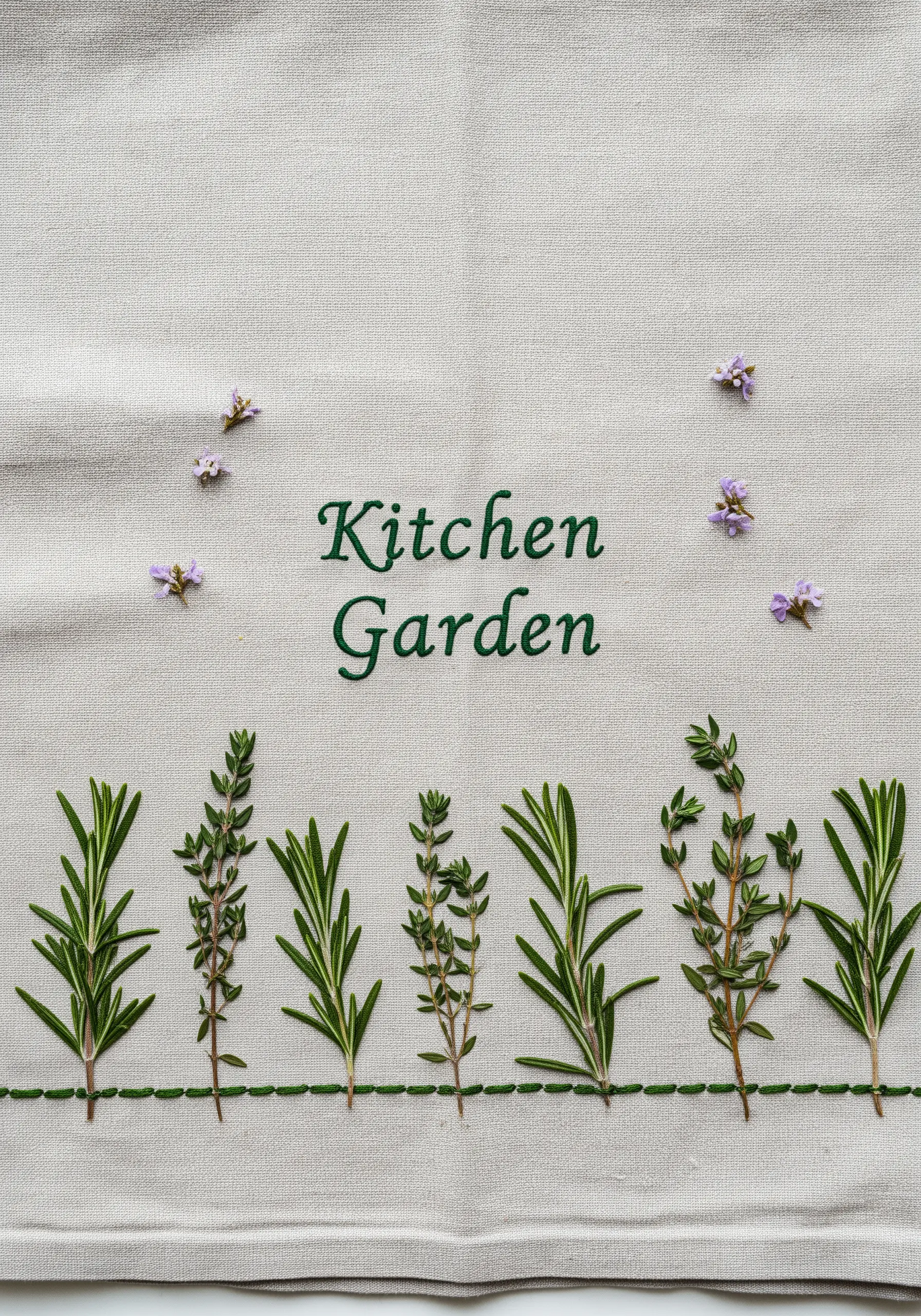
Create a charming kitchen towel by combining real herbs with classic embroidered text.
Arrange small sprigs of pressed rosemary and thyme along the bottom edge of a linen or cotton towel.
Anchor them with a simple, decorative running stitch in a contrasting green thread just above the stems, creating a clean, garden-row effect.
Above the herbs, stitch a title like “Kitchen Garden” in an elegant script using a split stitch for smooth, continuous lines.
8. Achieve Cascading Dimension with Stumpwork Wisteria
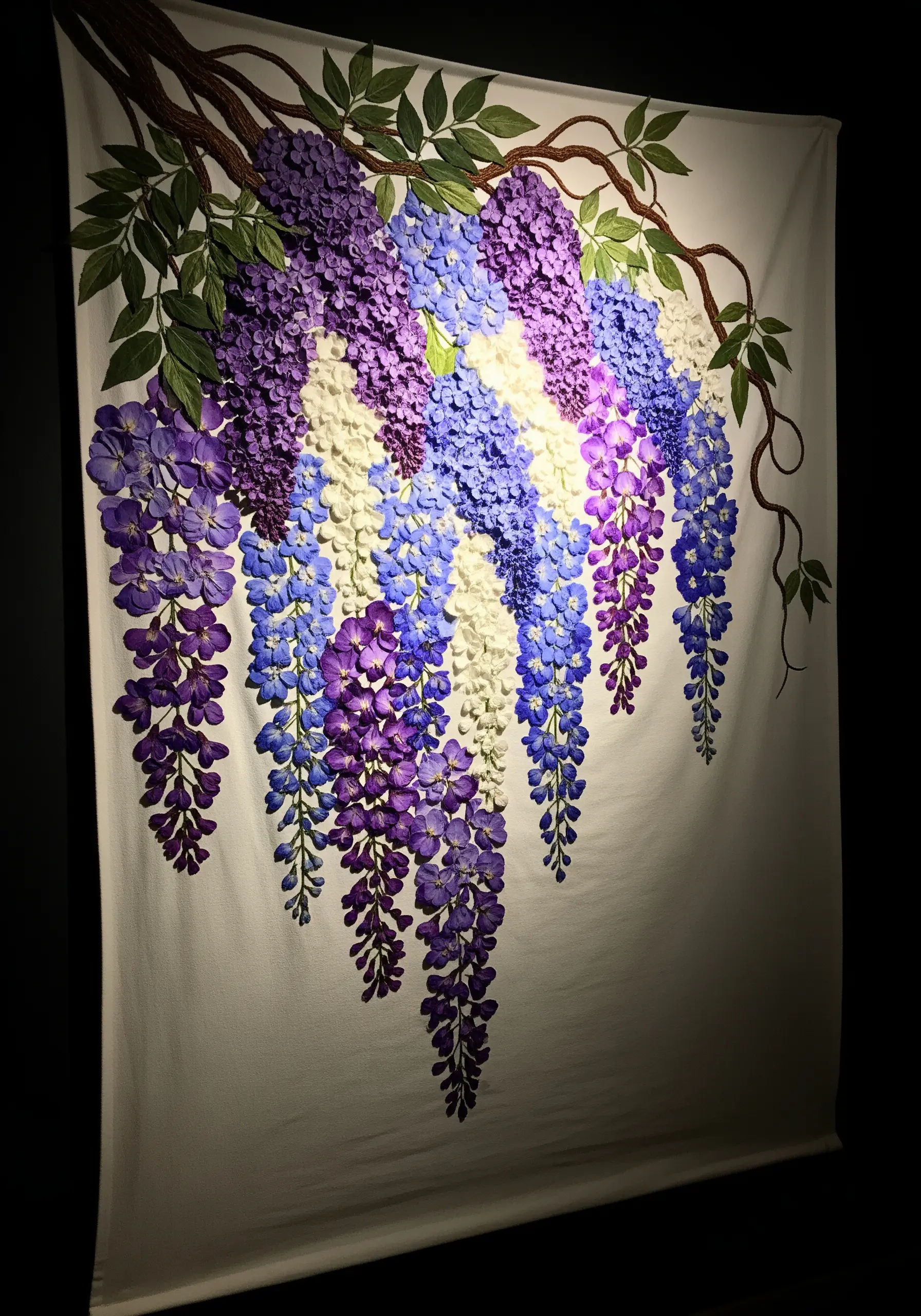
For a statement wall hanging, build wisteria blossoms using stumpwork techniques for dramatic, 3D effects.
Create individual petals or small flower clusters on a separate piece of fabric over a wire frame, then cut them out and apply them to the main canvas.
This allows the blossoms to hang away from the background fabric, casting real shadows and creating unparalleled depth.
Blend shades of purple, blue, and white to give the cascading flowers a natural, sun-dappled appearance, turning your work into one of those stunning framed embroidery pieces.
9. Create an Illusion with Embroidered Stems
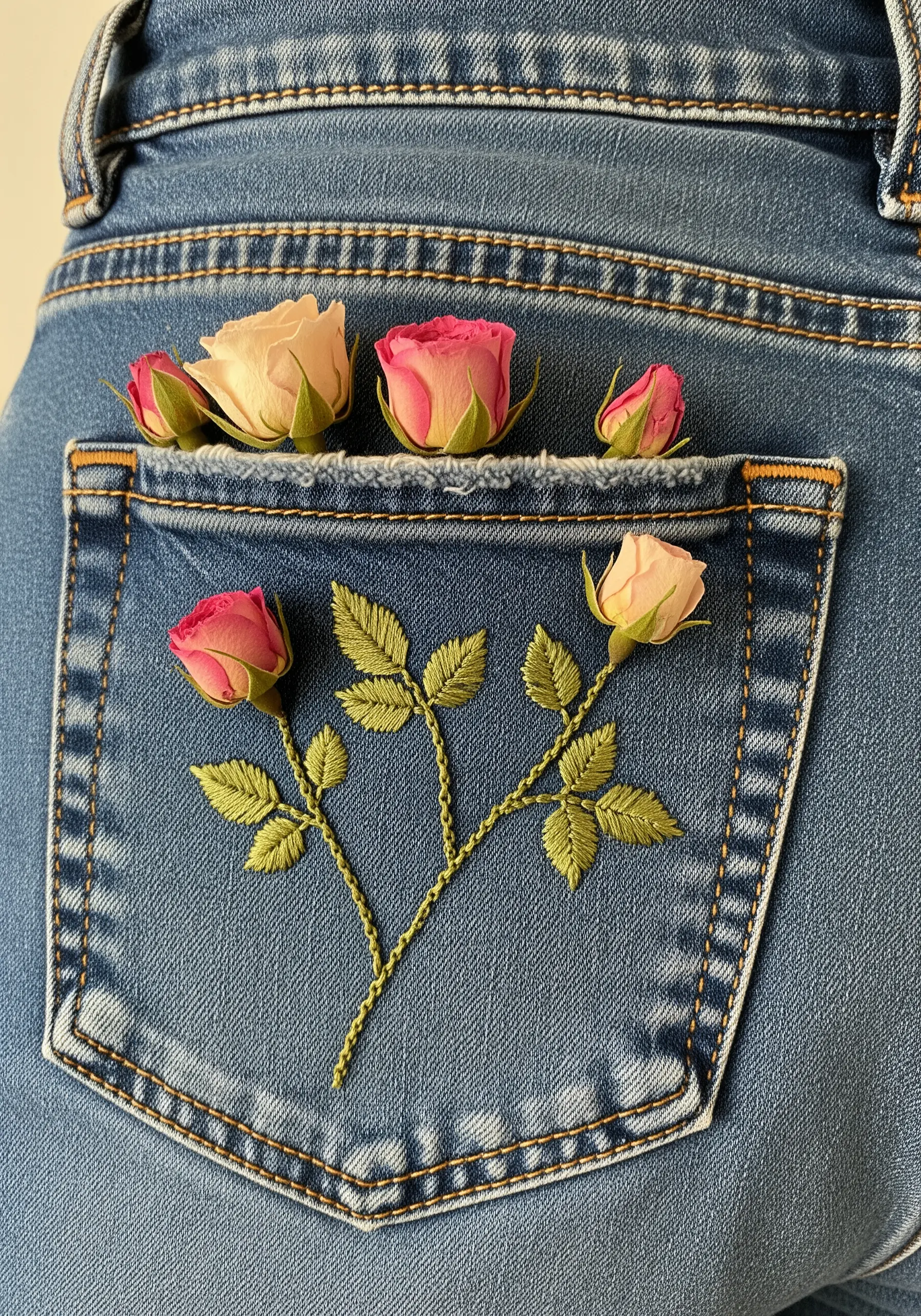
Play with perception by embroidering realistic stems and leaves on a denim pocket, making it seem as though they are holding real rosebuds.
Use a closely worked split stitch for the main stems to create a smooth, rounded line.
For the leaves, a fishbone stitch allows you to naturally incorporate two tones of green, creating a central vein and realistic shading in one step.
This technique helps you practice ways to embroider realistic shadows under leaves for a truly convincing effect.
10. Embellish Wool with Appliqué and Decorative Couching
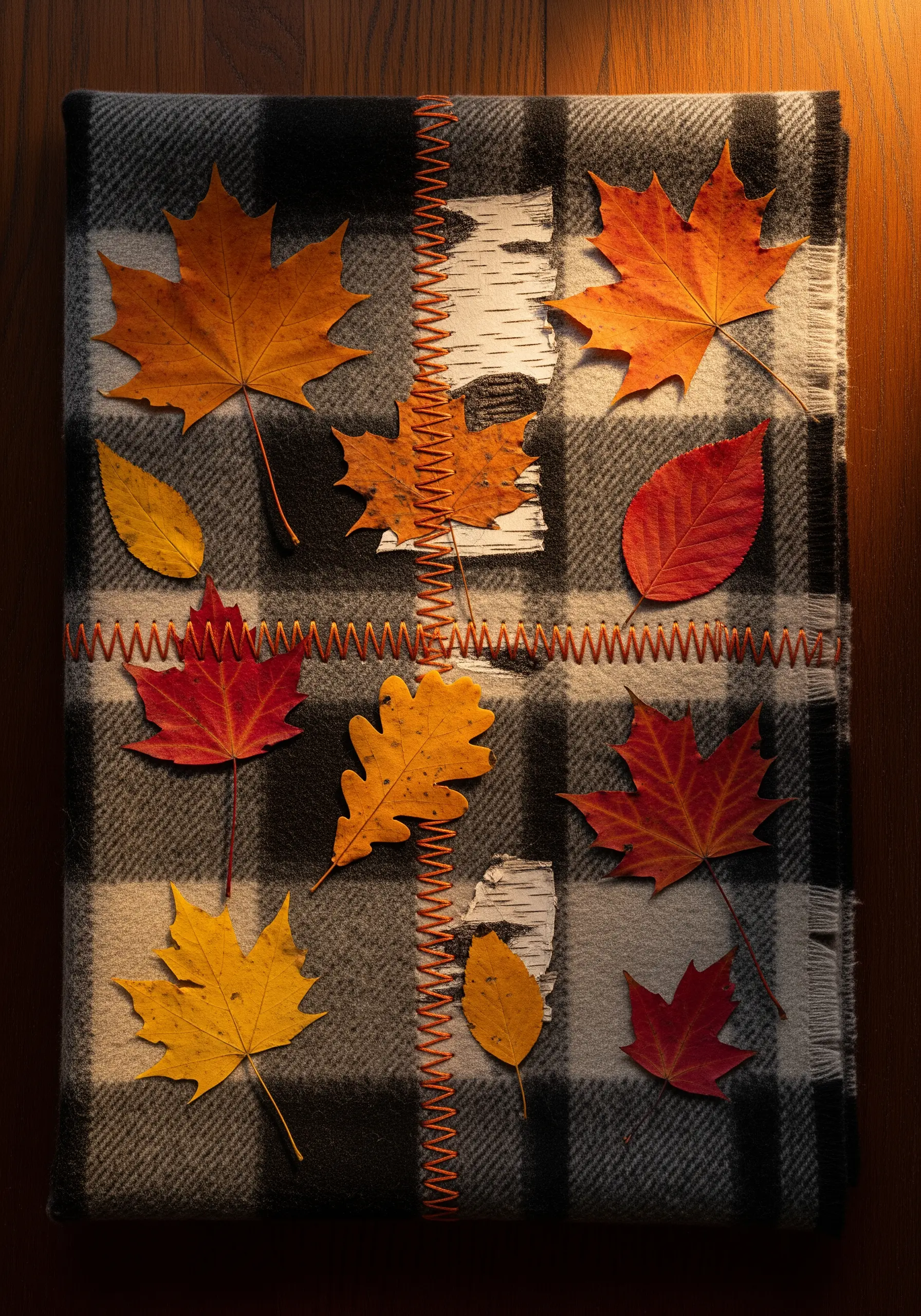
Transform a rustic wool blanket by combining pressed autumn leaves with textured appliqué and bold stitching.
First, apply patches of contrasting fabric—like the white birch bark here—using a decorative stitch like a blanket or herringbone stitch for a handmade feel.
Then, arrange real pressed maple and oak leaves over the blanket and secure them with a couching technique, laying a strand of thread over the leaf stem and tacking it down with small, perpendicular stitches.
This project is perfect for one of your embroidered throws and blankets.
11. Integrate a Single Stem for Minimalist Elegance
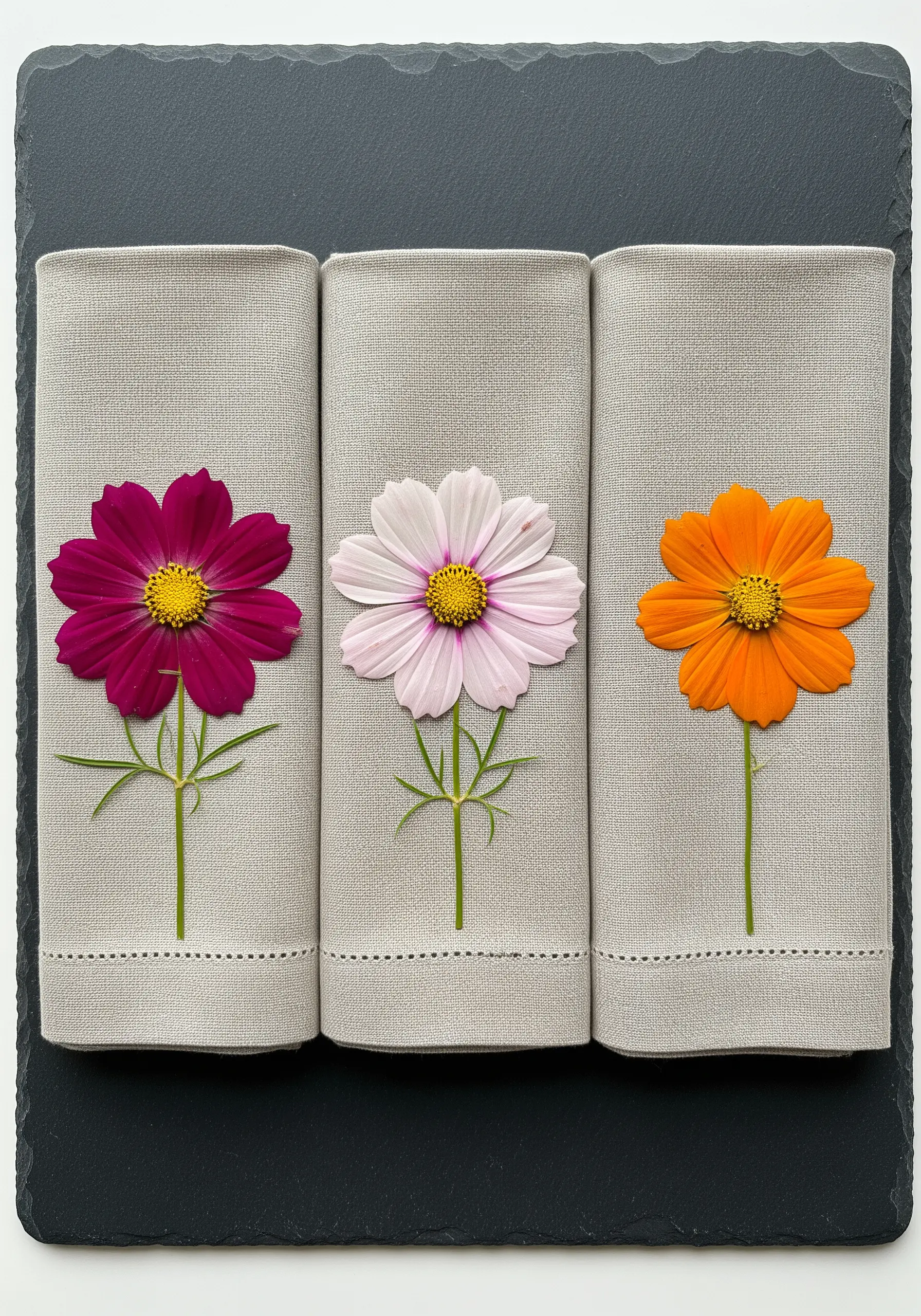
Achieve a clean, modern aesthetic on linen napkins by connecting a real pressed flower to an embroidered element.
Position the pressed cosmos flower head just above the napkin’s hemstitch border.
Then, using a single strand of green floss, stitch a delicate stem in a simple backstitch, making it appear as if it is growing directly from the hemline.
This technique is all about restraint—the single, unbroken line provides structure without overwhelming the natural beauty of the flower.
12. Build a Forest Floor with Moss and Stumpwork
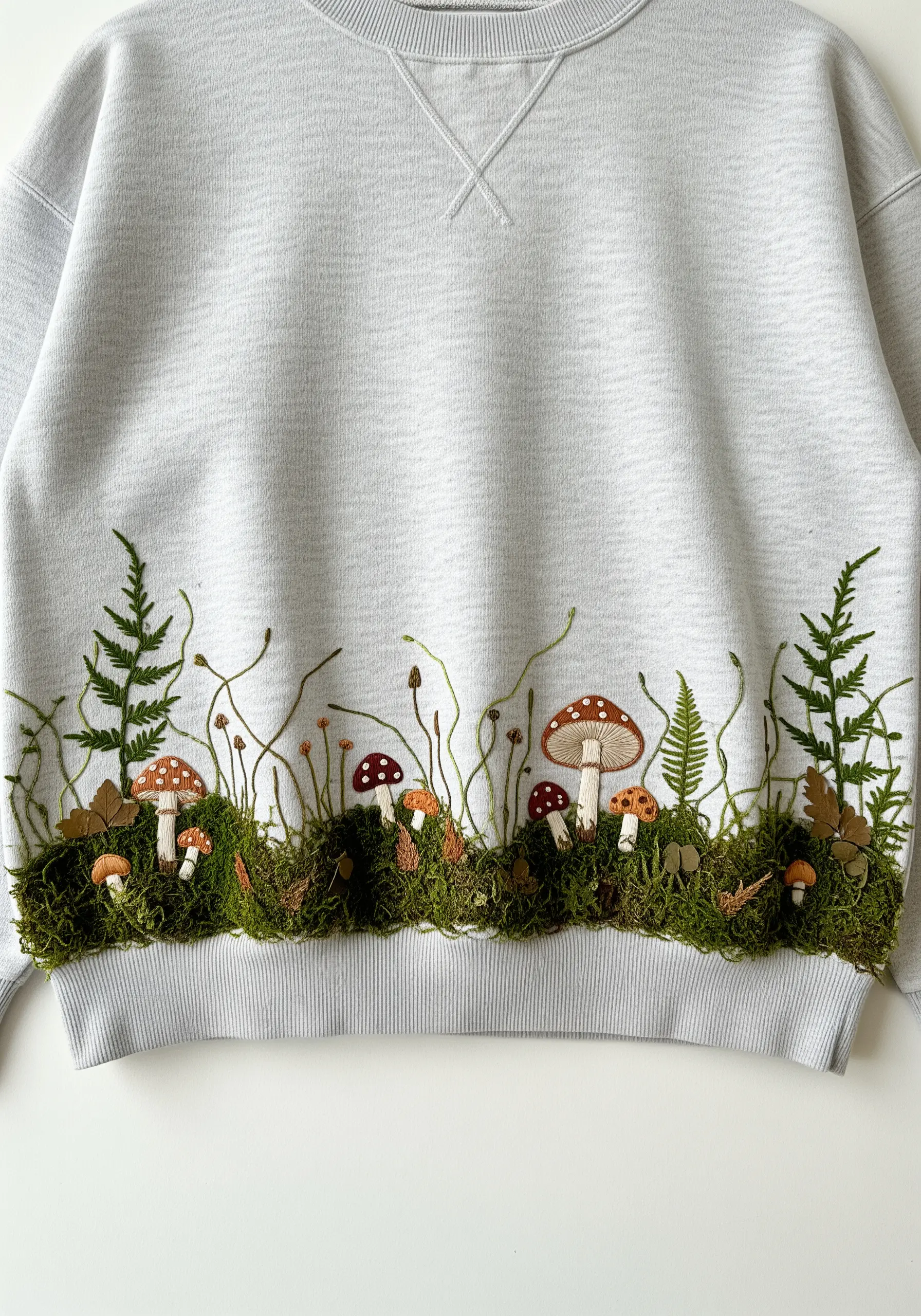
Create an immersive, textural landscape along the hem of a sweatshirt.
Secure real, preserved moss to the fabric using a fine, matching thread and loose, broad stitches that sink into the texture.
For the mushrooms, use a padded satin stitch for the caps to give them a rounded, 3D shape, and add tiny French knots for the iconic white spots.
This is one of the most inventive high-texture fabric collage embroidery projects you can try.
13. Adorn a Book Cover with a Delicate Botanical Collage
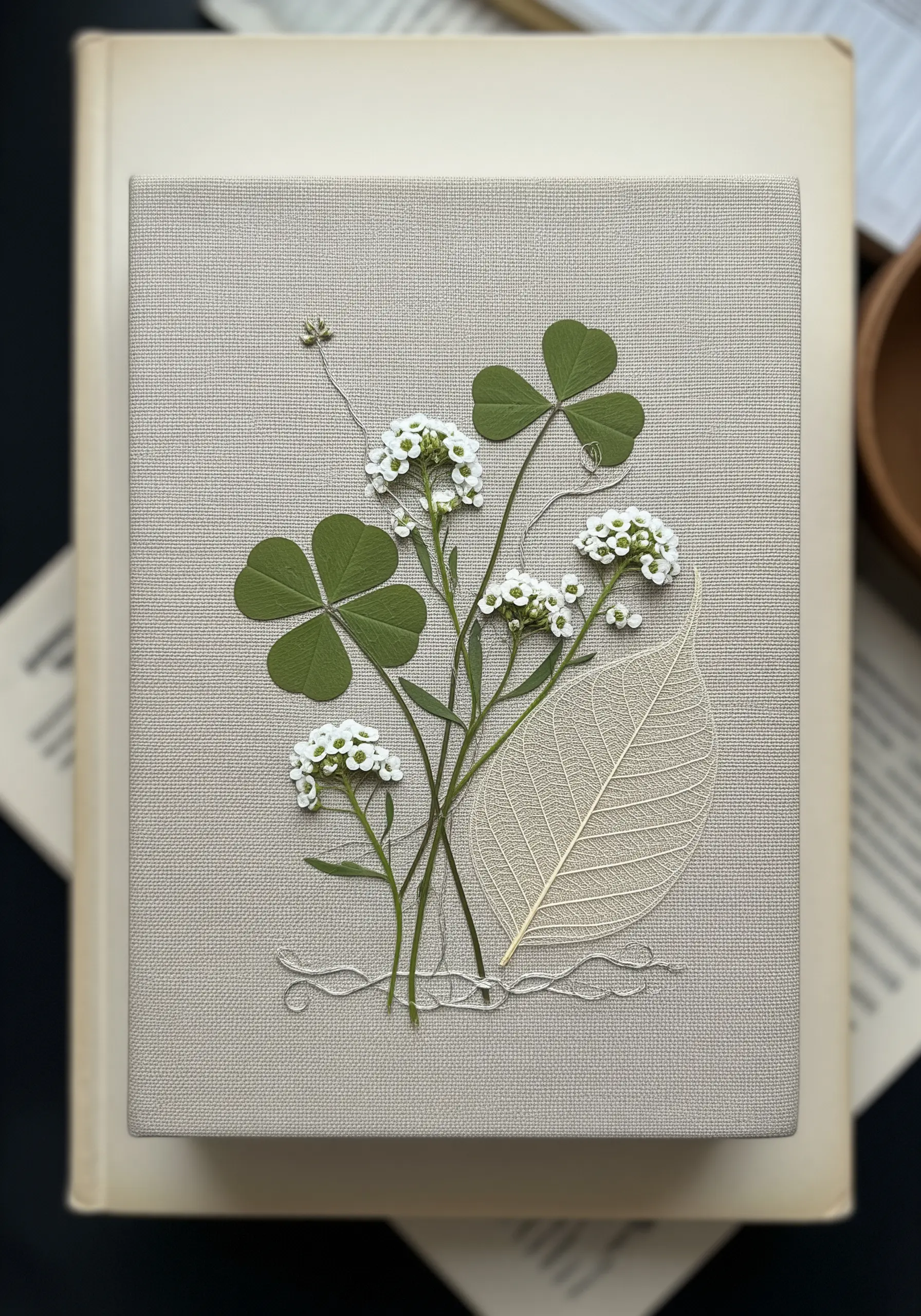
Turn a cloth-bound book into a keepsake by creating a botanical arrangement on its cover.
Use real pressed clover, wildflowers, and a fragile skeleton leaf for a variety of shapes and textures.
Secure each element with the tiniest possible tacking stitches, using a single strand of thread that matches the color of the botanical at that point.
Add a few embroidered roots at the base with a split stitch to ground the composition, blending real elements with stitched art seamlessly.
This is a beautiful example of combining paper layers with subtle embroidery.
14. Create a Sunflower with Layered Fabric Appliqué
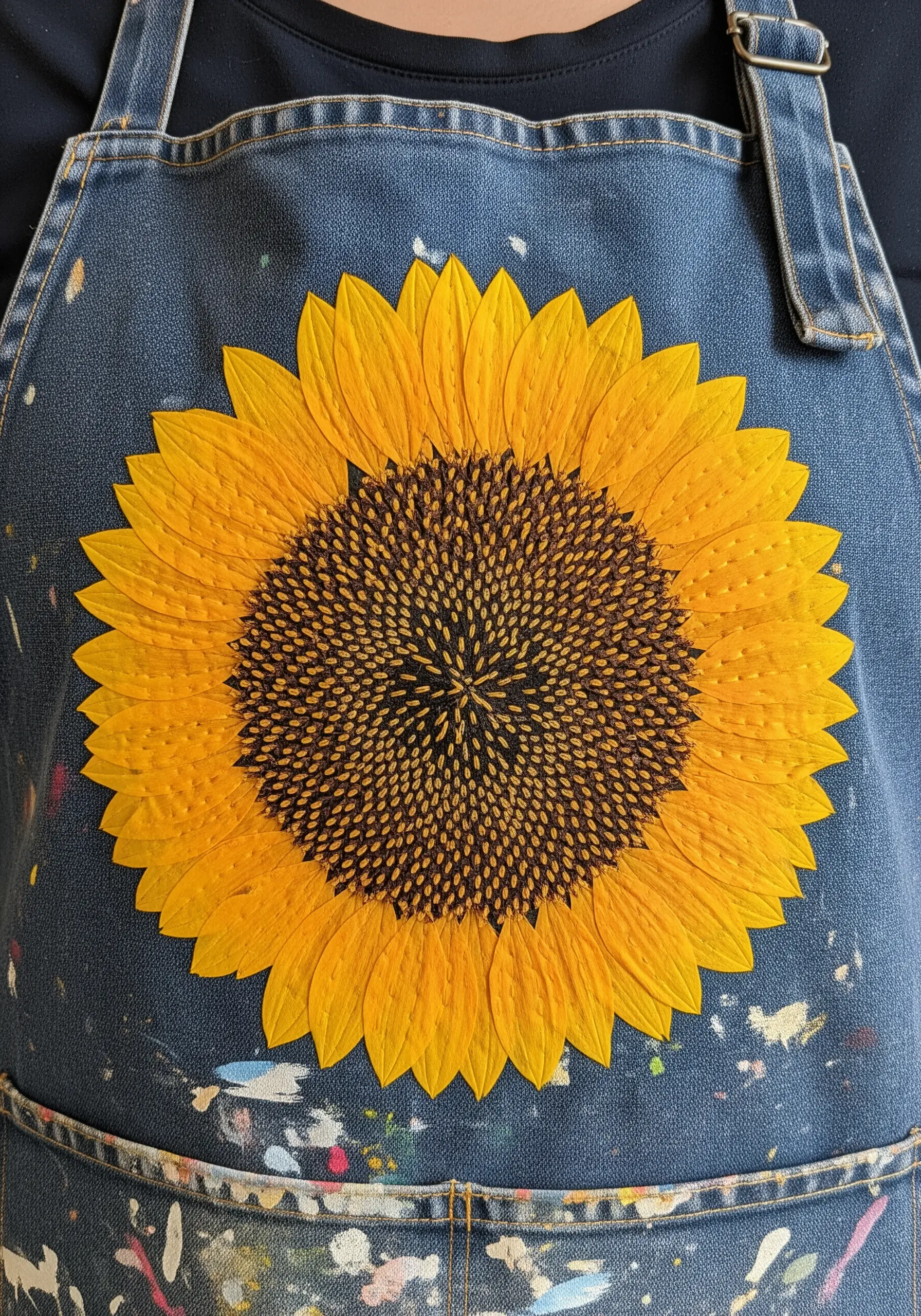
Construct a bold, graphic sunflower on a denim apron using fabric appliqué instead of thread for the petals.
Cut petal shapes from shades of yellow and orange cotton fabric and arrange them in overlapping layers to create a sense of depth and fullness.
Secure them with a simple running stitch around the edges.
For the center, fill the entire circle with tightly packed French or colonial knots in variegated brown and black floss to mimic the dense texture of seeds.
15. Frame a Corner with Classic Satin Stitch Botanicals
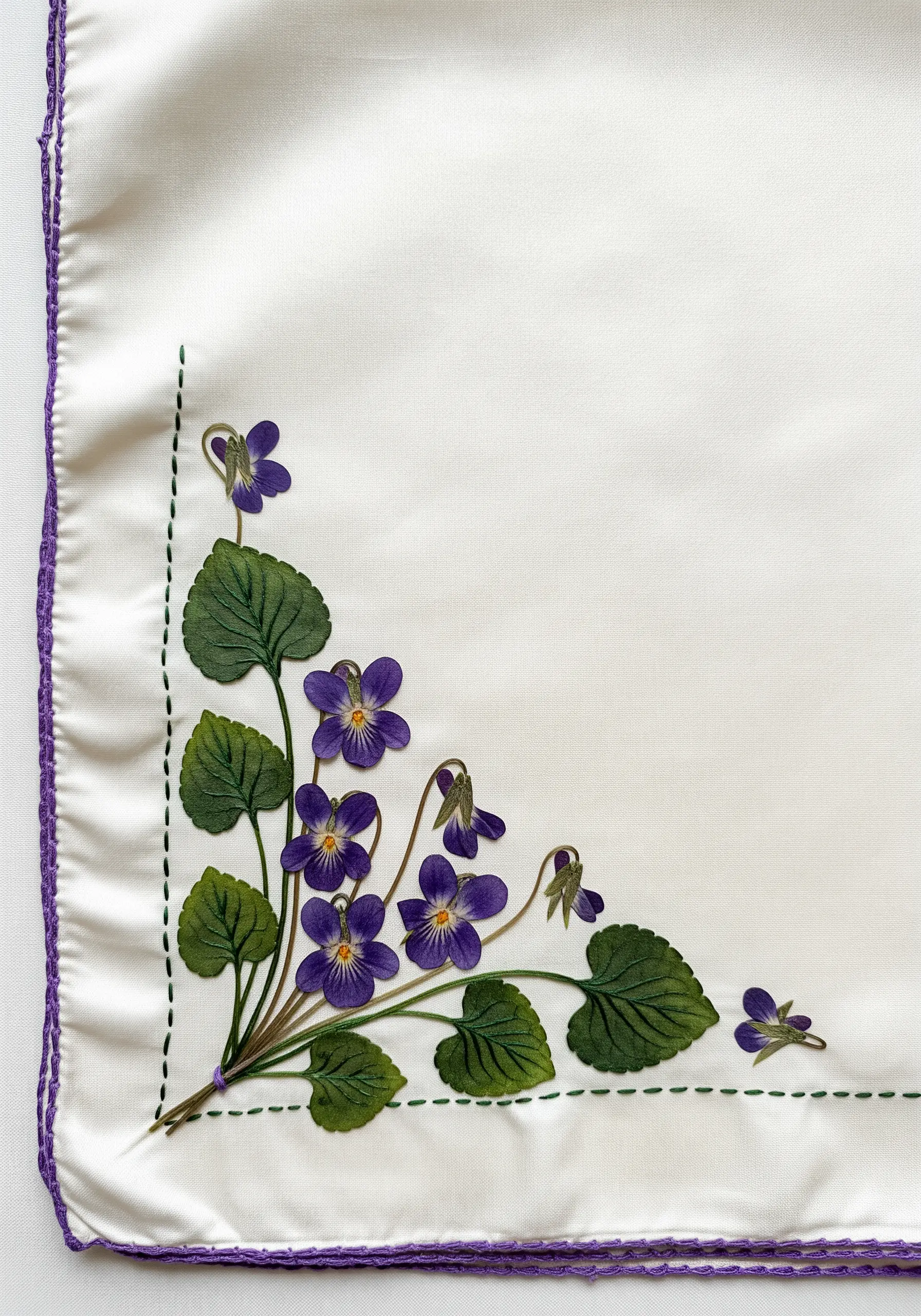
Embellish a silk handkerchief or napkin with a traditional corner bouquet of violets.
Use a smooth satin stitch for the petals and leaves, ensuring your stitches lie flat and even for a lustrous, painterly finish.
To achieve clean, sharp edges on a delicate fabric, first outline each shape with a tiny split stitch—this creates a raised edge that contains your satin stitches perfectly.
Finish the piece with a hand-rolled hem or a decorative blanket stitch edge in a matching purple thread.
16. Embellish with Golden Ginkgo Appliqués
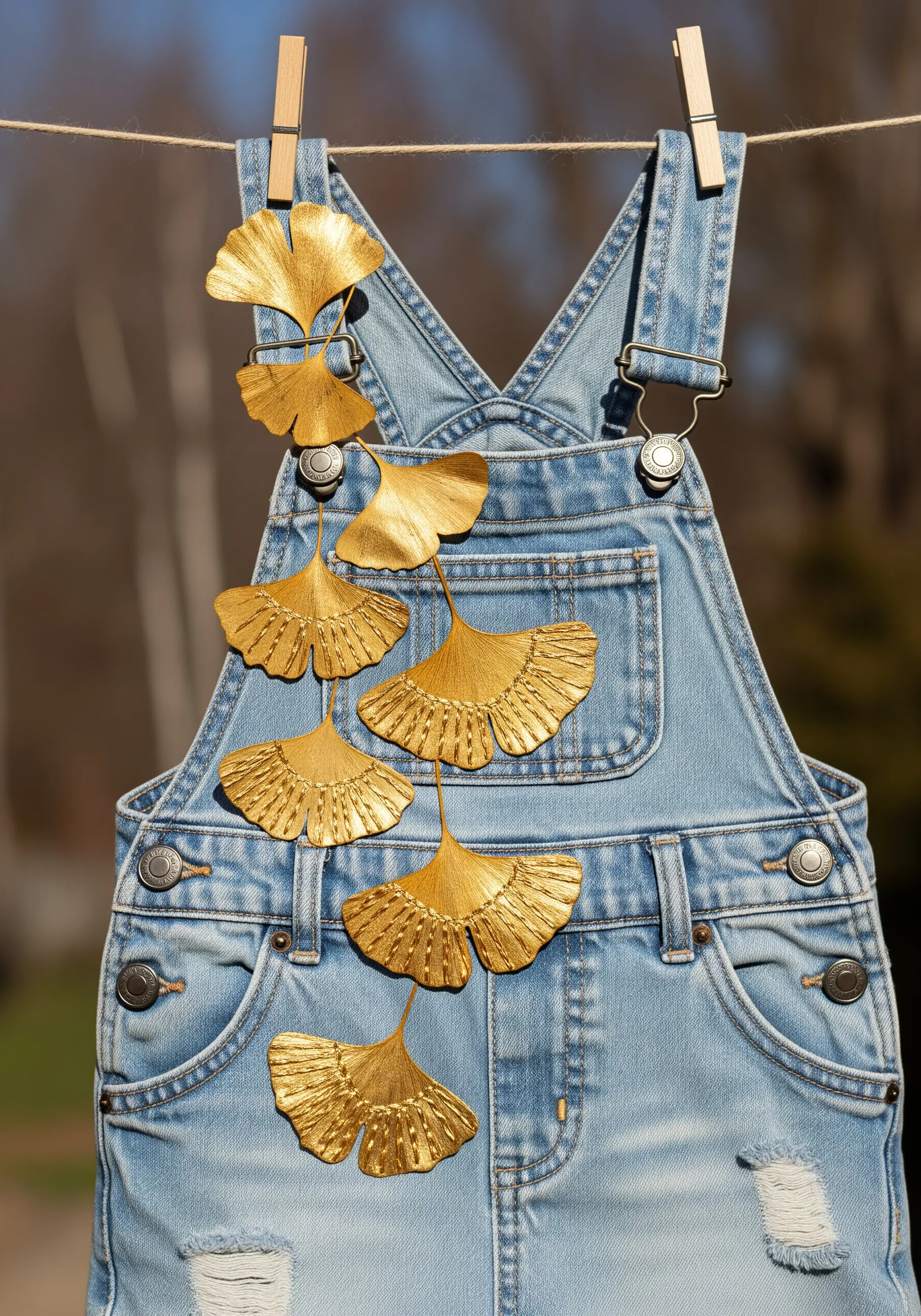
Add a touch of metallic elegance to denim overalls with a cascade of golden ginkgo leaves.
Create the leaves from metallic leather, faux leather, or a stiff, painted fabric.
Use a strong thread to stitch a central vein down each leaf in a contrasting color, which both adds detail and secures the leaf to the garment.
Arrange the leaves as if they are falling, overlapping them slightly to create a sense of movement and grace.
17. Draw with Thread on a Translucent Lampshade
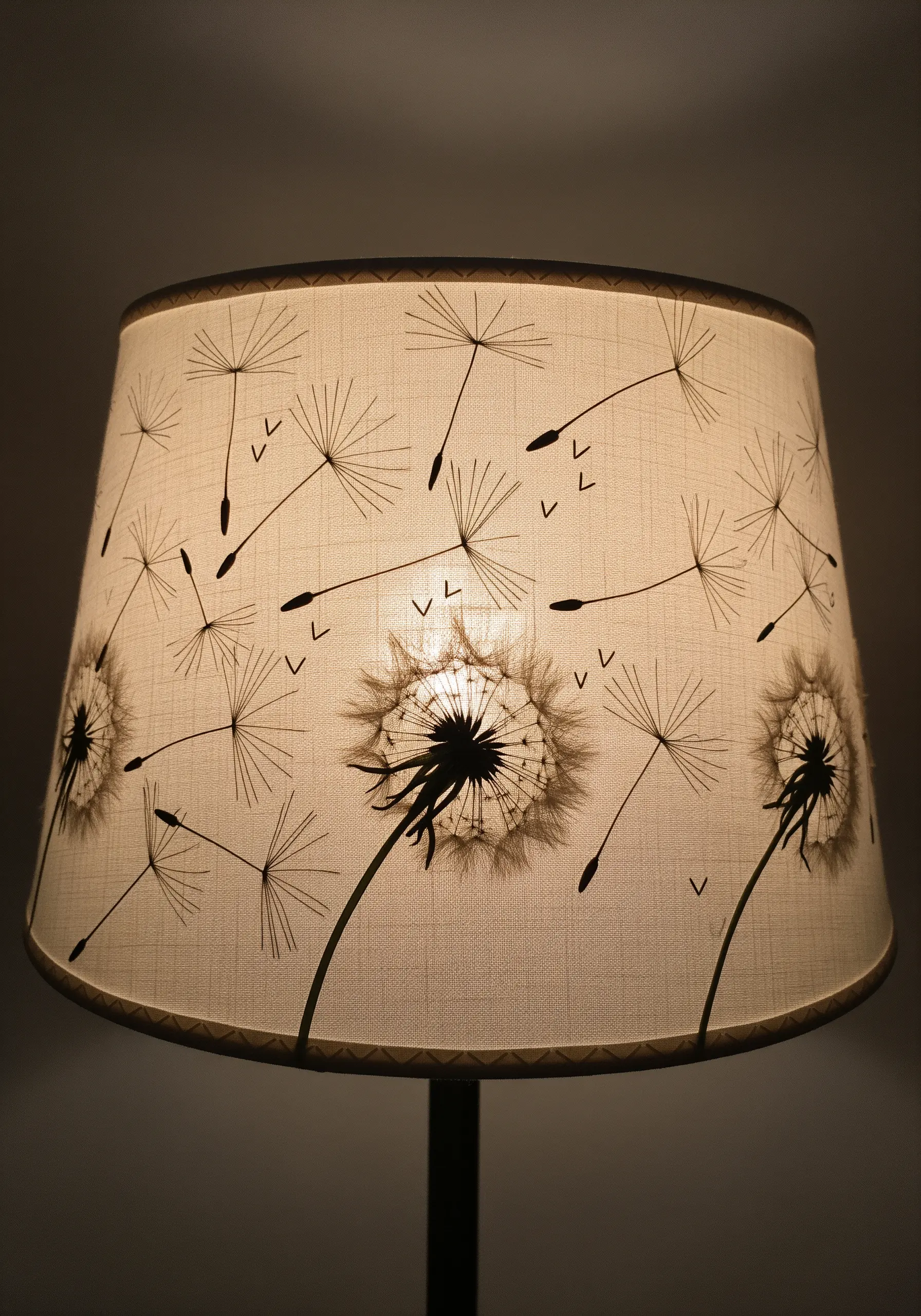
Use the surface of a simple fabric lampshade as a canvas for a delicate line-art design.
Stitch dandelion seeds drifting in the wind using a simple backstitch or stem stitch in a dark, contrasting thread.
The magic of this project is revealed when the lamp is turned on—the light shines through the fabric, transforming your stitches into a glowing silhouette.
This is a perfect way to incorporate handmade embroidery touches that make every room feel natural and functional.
18. Pair Coarse Fabrics with Rugged Botanicals
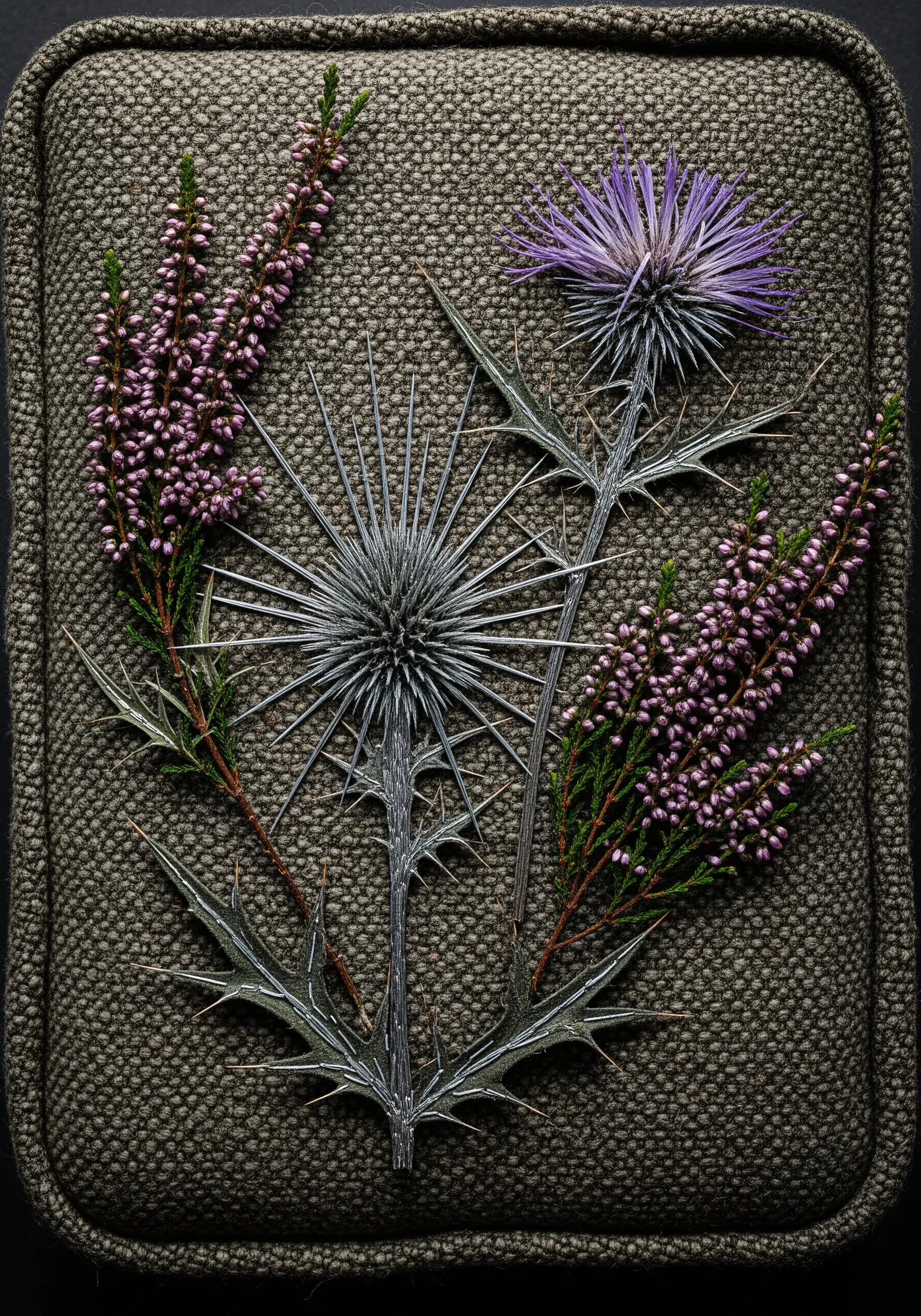
Create a powerful textural statement by combining spiky thistles and heather with a coarse, heavyweight fabric like tweed or burlap.
The natural roughness of the textile enhances the wild, untamed feel of the botanicals.
Use a mix of stitches to replicate the thistle’s unique texture: long, straight stitches for the spiky bracts and dense French knots or turkey work for the purple flower head.
Secure the real heather with discreet couching stitches that blend into the stems.
19. Weave a Vine Through Corduroy’s Texture
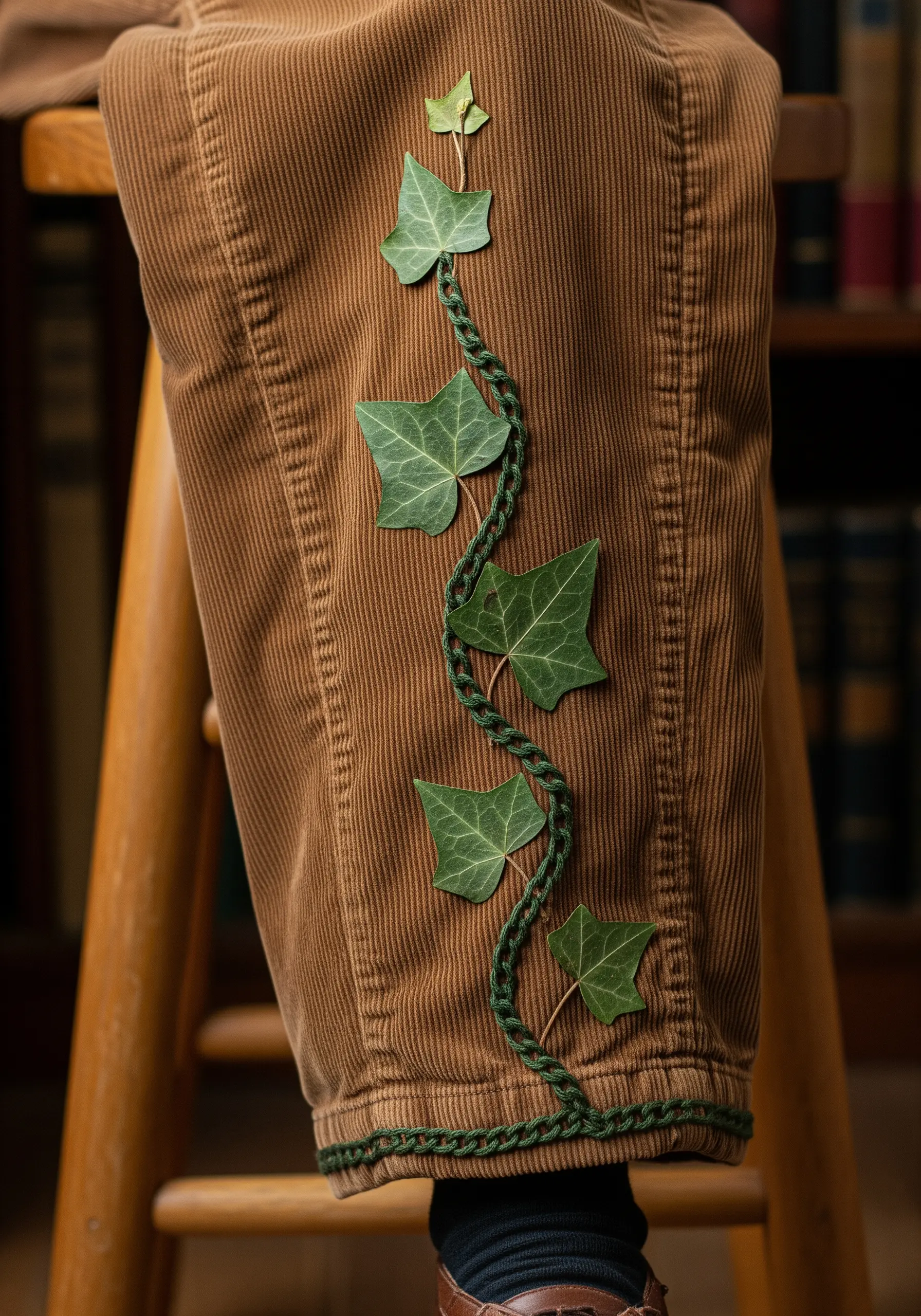
Use the natural channels of corduroy fabric to guide your stitching for a perfectly straight and textured vine.
Select a thick yarn or multiple strands of embroidery floss and use a chain stitch or a whipped backstitch to create a raised, rope-like effect.
Tuck real, pressed ivy leaves along the embroidered vine, securing them with a few tiny stitches at their base.
This design works with the fabric’s existing texture rather than fighting it, resulting in a beautifully integrated embellishment.
20. Compose a Harvest Bouquet with Varied Stitches
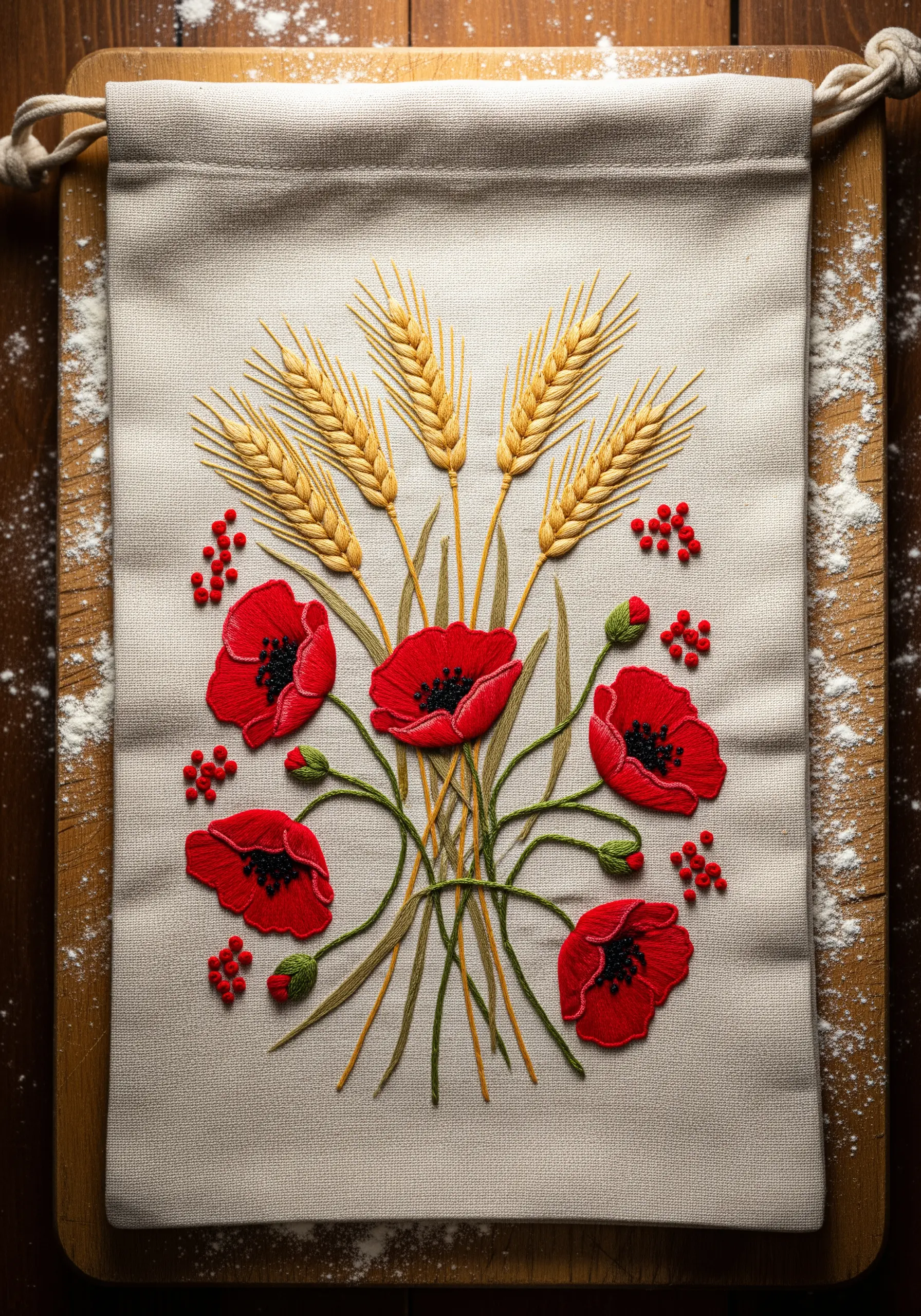
Capture the richness of a harvest field by combining poppies, wheat, and berries in a single composition.
Use a smooth satin stitch for the bold red poppy petals and a dense cluster of black French knots for their centers.
For the wheat, the fishbone stitch is ideal as it creates the central shaft and angled grains simultaneously.
Add small, raised berry clusters using bullion knots or by stitching over a small bead to give them dimension.
21. Frame Pressed Flowers in a Vinyl Window
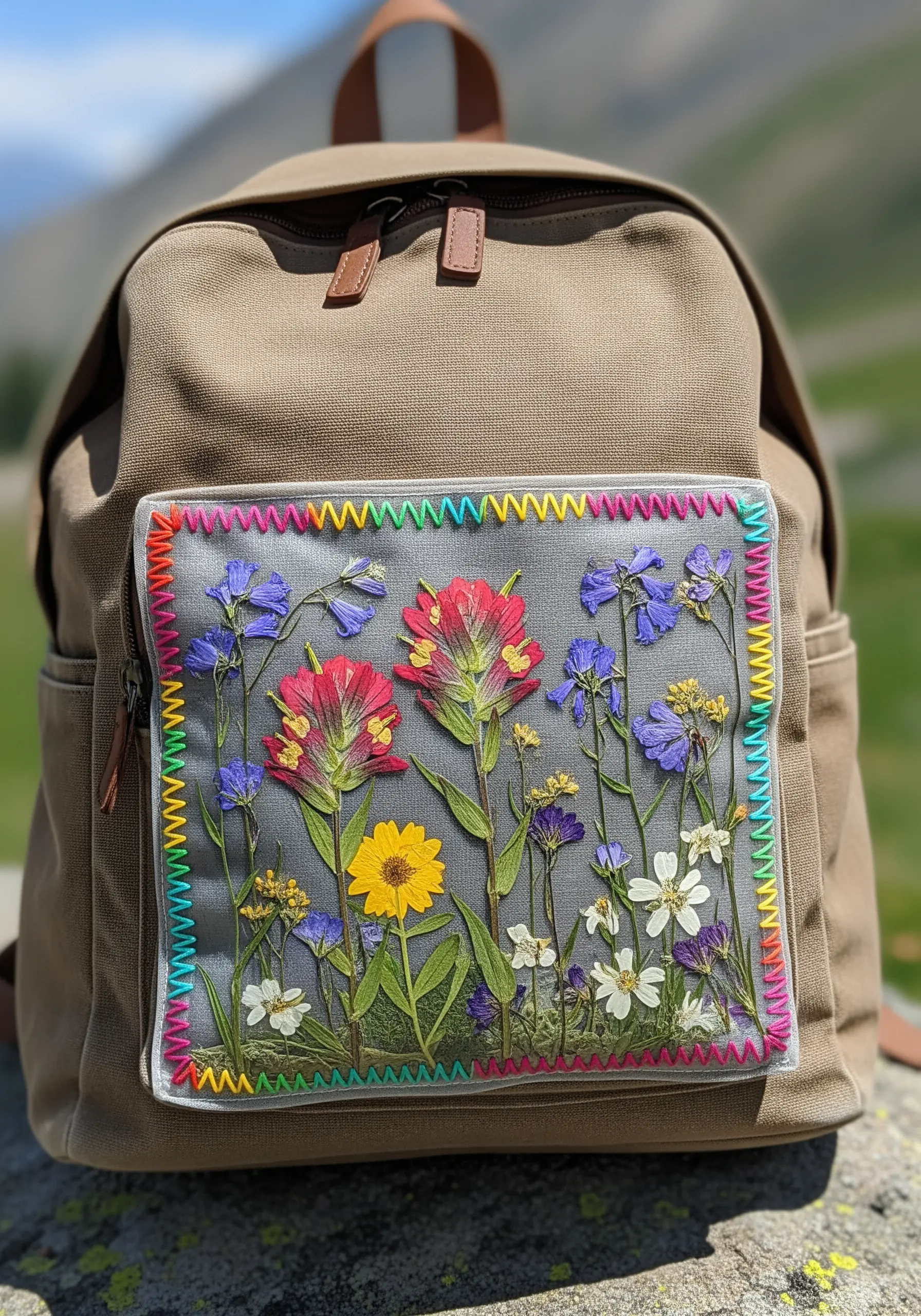
Preserve a miniature garden on a backpack by creating a see-through vinyl pocket.
Arrange your pressed wildflowers on a fabric patch, then lay a piece of clear vinyl over the top.
Stitch the layers together around the edge with a colorful, decorative blanket stitch—a variegated rainbow thread works beautifully for this.
This technique permanently protects the delicate flowers from wear and tear, making it perfect for bags and other high-use items.
22. Outline Appliqué with Metallic Thread for a Festive Look

Create elegant holiday motifs by outlining fabric appliqué with a fine metallic thread.
Cut holly leaf shapes from a textured green fabric and apply them to your background.
Then, carefully outline each leaf with a gold or silver metallic thread using a tight backstitch or couching technique for a clean, jewelry-like edge.
For the berries, use a padded satin stitch over a few seed stitches to create a raised, spherical shape.
These are the kind of minimal festive motifs that make holiday gifts look elegant.
23. Create a Temporary Embellishment with a Decorative Running Stitch
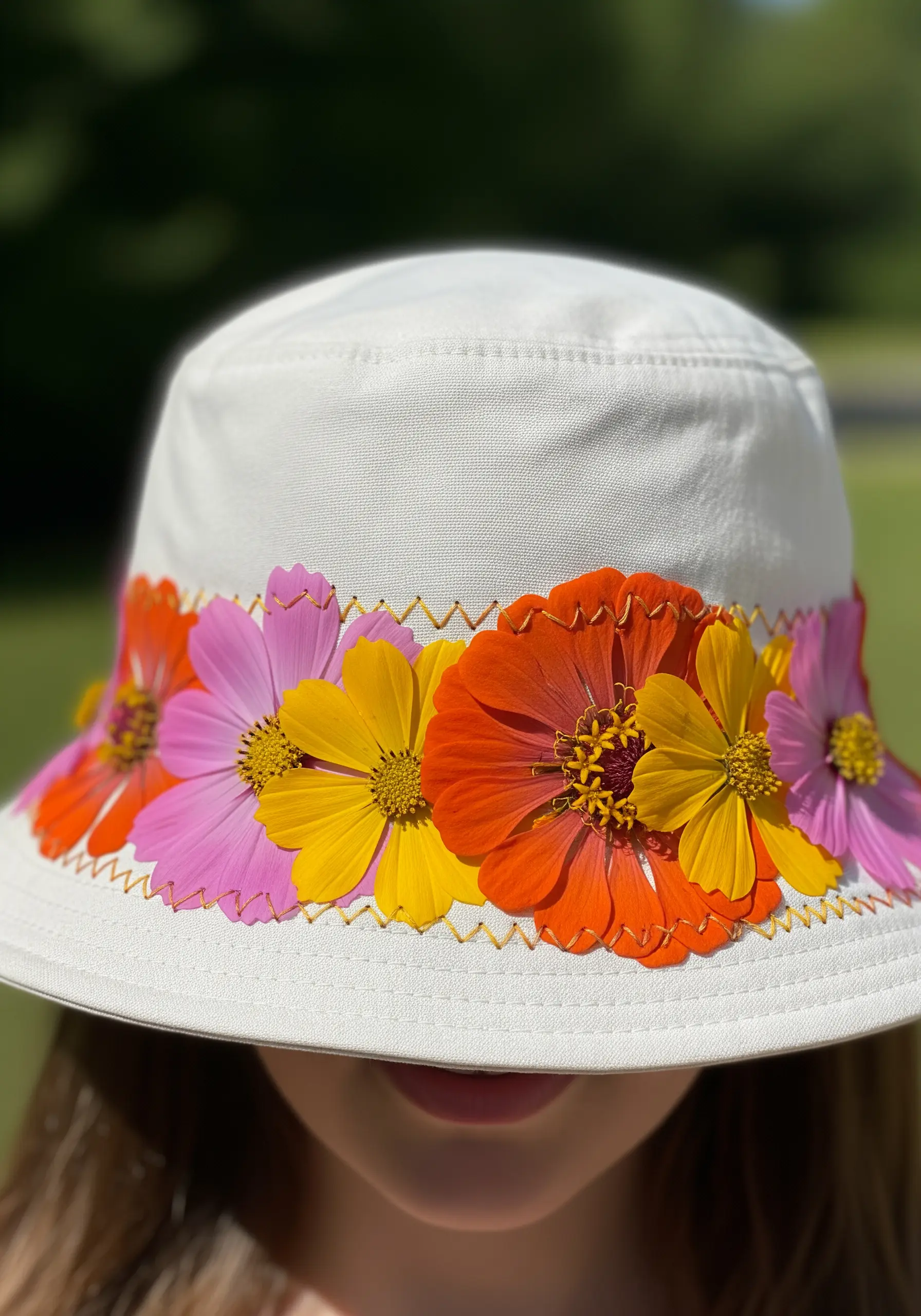
Adorn a simple sun hat with a vibrant, interchangeable flower band.
Arrange a series of colorful pressed flowers, like these zinnias, around the base of the hat’s crown.
Instead of permanently attaching them, hold them in place with a wide, decorative running stitch, such as a zigzag or wave stitch, using a contrasting thread.
This method allows you to easily remove or swap out the flowers to match an outfit or the season.
24. Add Subtle Elegance to a Collar with Baby’s Breath
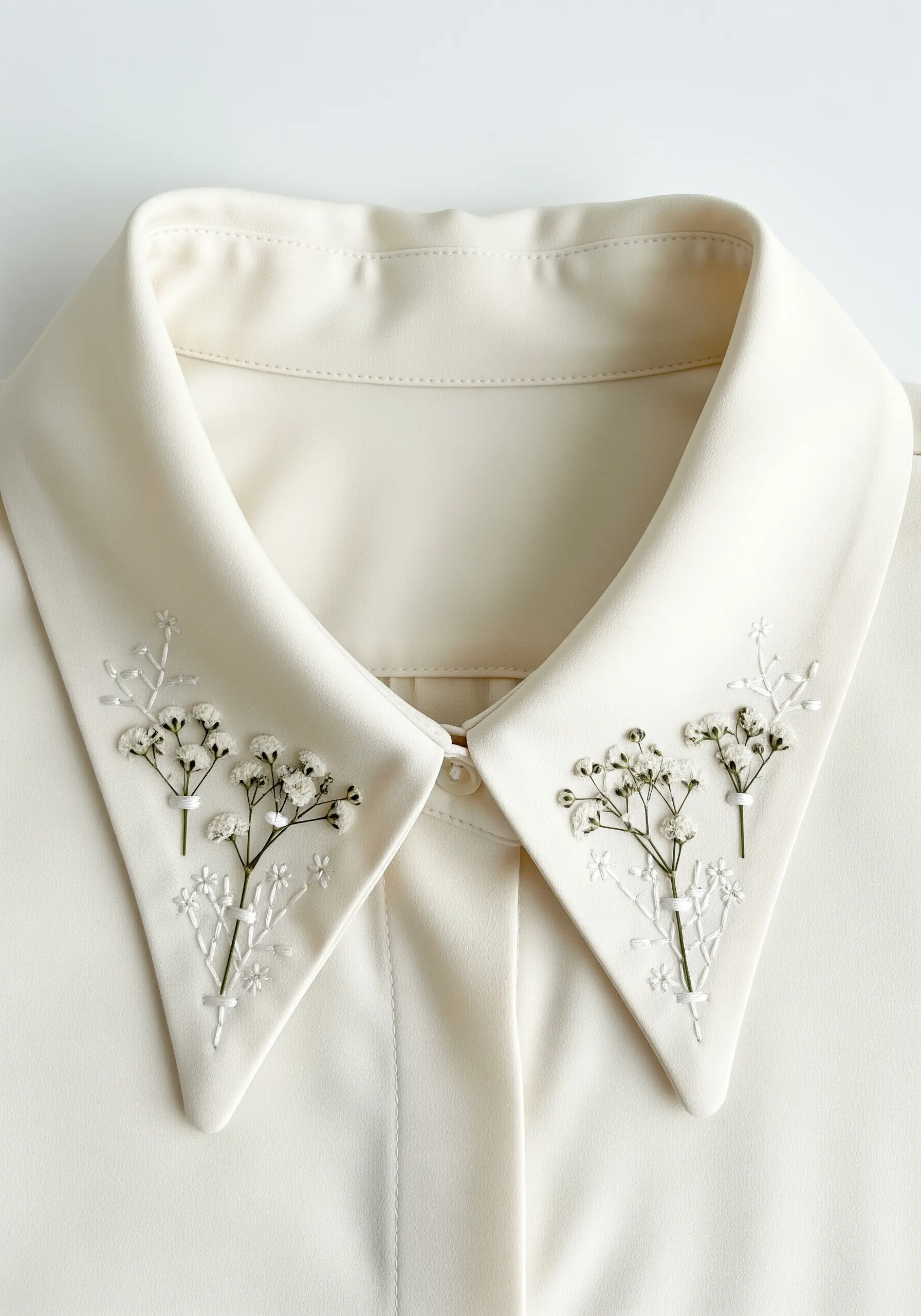
Transform a plain shirt collar into a delicate statement piece with sprigs of real baby’s breath.
Arrange the tiny sprigs symmetrically on each collar point.
Use a single strand of white floss to make tiny seed stitches that mimic the blossoms, securing the real flowers in the process.
Embroider the fine green stems with a simple backstitch, integrating the natural element so seamlessly it looks like part of the original design.
This is how tiny embroidery patterns can make your clothes look custom-made.
25. Drape Bed Linens with Preserved Eucalyptus
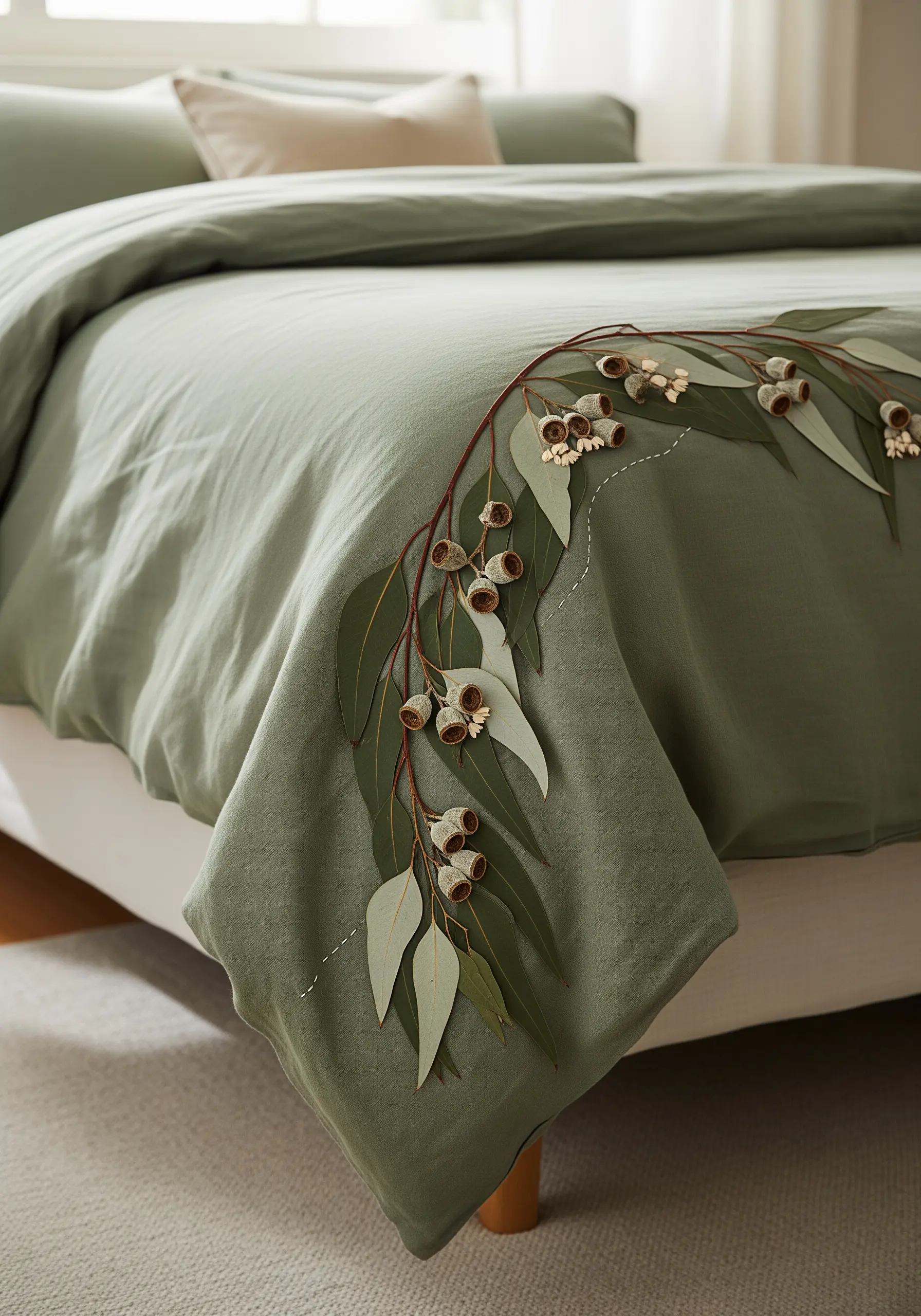
Create a serene and aromatic bedroom accent by attaching preserved eucalyptus to a duvet cover.
Arrange a long, graceful branch diagonally across the corner of the bed.
Use a strong, color-matched thread to tack the main stem to the fabric at several points, hiding your stitches on the underside of the stem.
Add a few scattered, dashed running stitches nearby to create a subtle echo of the design, making the placement feel intentional and artistic.
This is one of the easiest nature-calm stitching projects to create a bedroom oasis.
26. Construct a Celestial Tapestry with Mixed Media
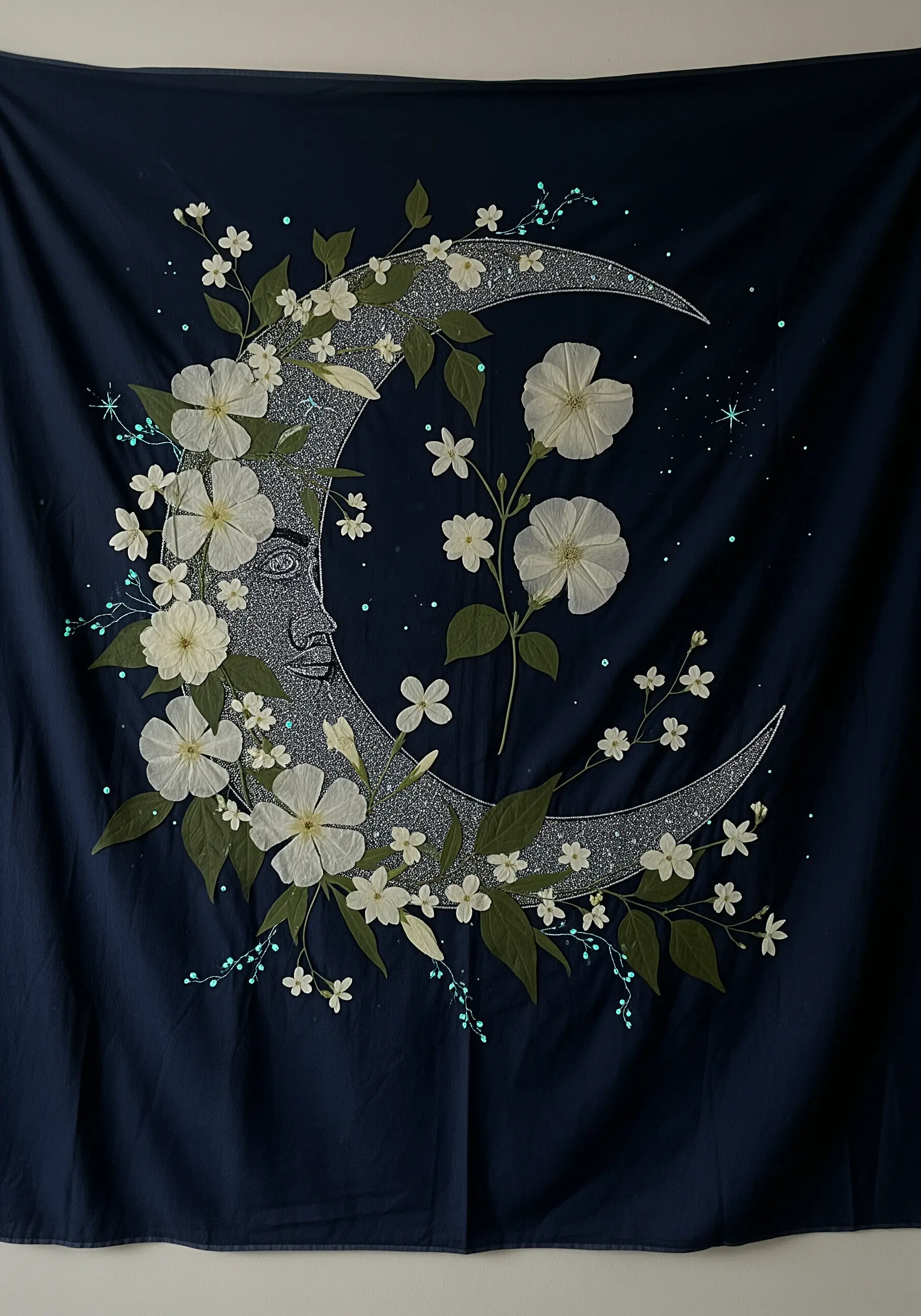
Design a stunning wall tapestry by combining fabric appliqué, glitter, and pressed flowers on a dark background.
Create the crescent moon from a silver, textured fabric or by applying silver glitter fabric paint.
Arrange white pressed flowers and embroidered leaves to curve around the moon, creating a celestial garland.
Use French knots and star stitches with white or glow-in-the-dark thread to scatter a field of stars across the navy fabric, completing the cosmic scene.
This project is perfect for oversized hoop wall displays.
27. Scatter a Playful Strawberry Field on a Pouch
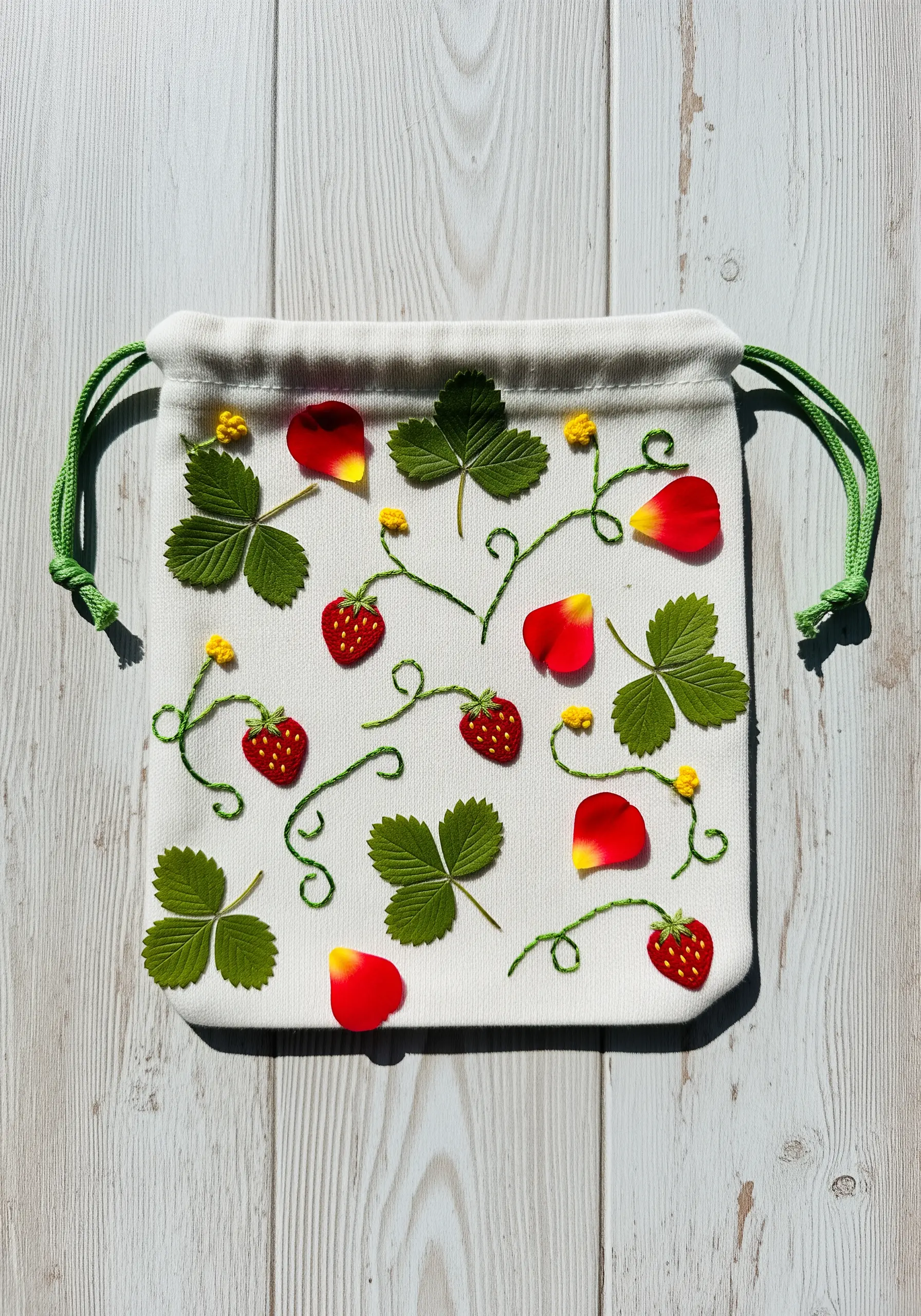
Decorate a small drawstring bag with a cheerful mix of embroidered elements and real botanicals.
Stitch the strawberries using red satin stitch, adding tiny yellow seed stitches on top for texture.
Use a simple stem stitch in green to create meandering vines across the fabric.
Complete the design by attaching real pressed strawberry leaves and a few scattered red petals with tiny, invisible stitches for a whimsical, multimedia effect.
28. Create a Framed Botanical Herb Chart
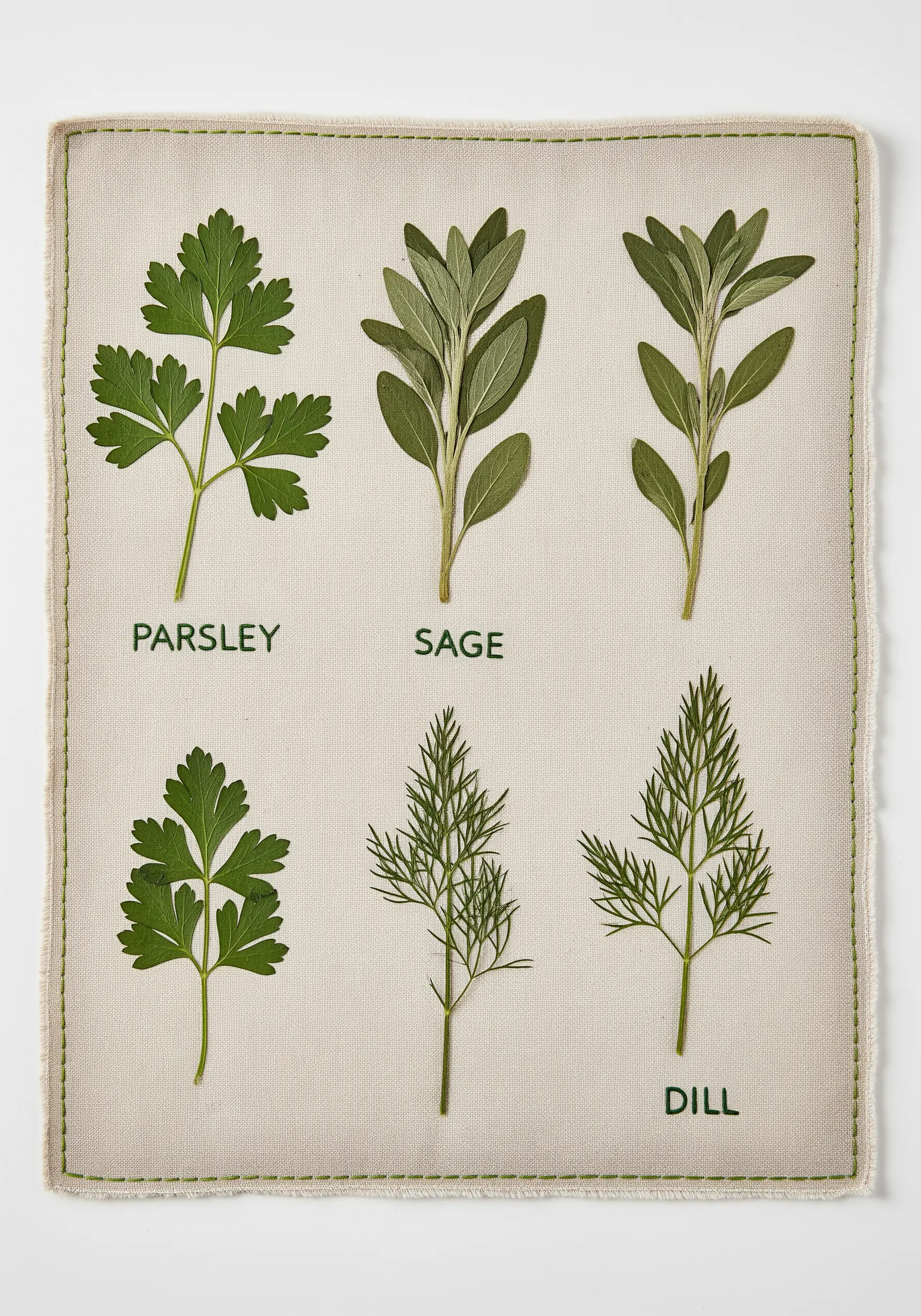
Design an elegant, educational piece of art by creating a sampler of culinary herbs.
Arrange pressed sprigs of parsley, sage, and dill neatly on a piece of neutral linen.
Secure each one with a few discreet tacking stitches.
Use a simple, clean backstitch to embroider the name of each herb underneath it, and finish the piece with a neat running stitch border for a polished, framed look.
This is a wonderful way to practice your stitching on nature-themed embroidery samplers.
29. Adorn Knits with a Single Botanical Accent
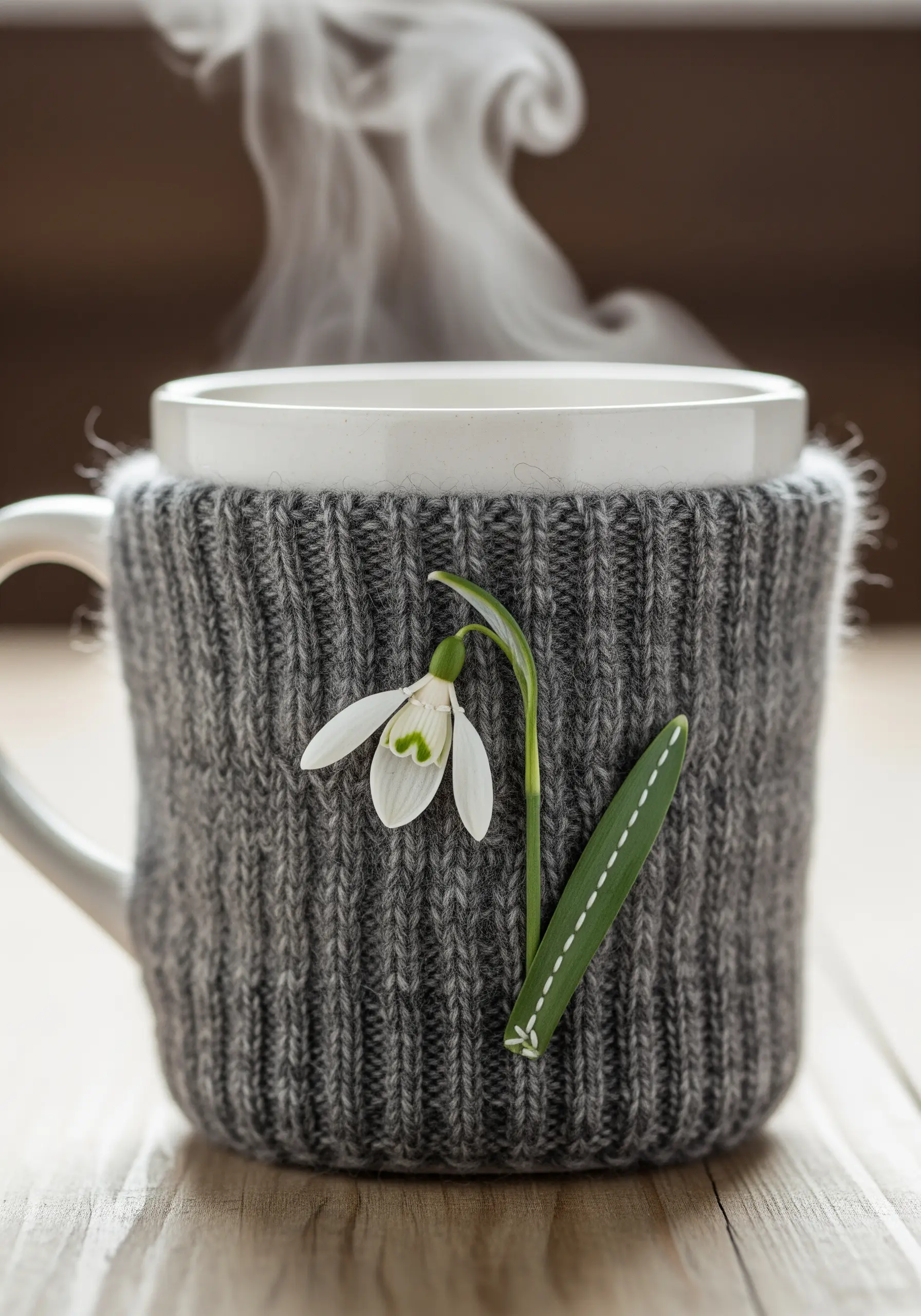
Elevate a simple knitted item, like this mug cozy, with a single, perfectly placed botanical element.
Because knits are stretchy, avoid dense embroidery that can cause puckering. Instead, attach a single pressed snowdrop using a few small, secure stitches that go through the knit fabric.
Add a minimalist embroidered detail, like the single line of running stitch on the leaf, to integrate the flower into the cozy’s design without compromising the fabric’s structure.
30. Embellish Lace with strategically Placed Petals
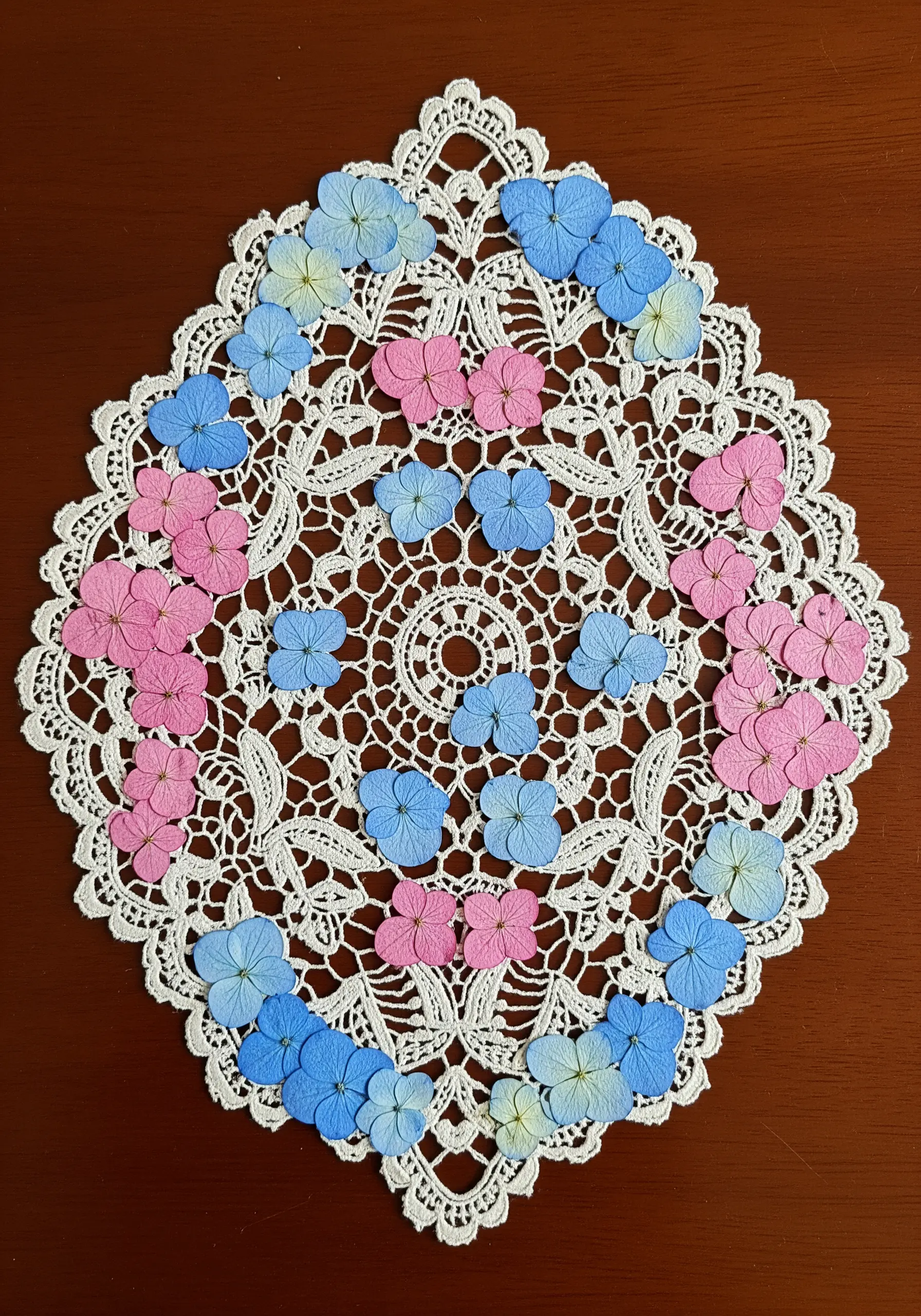
Use the intricate pattern of a lace doily as a guide for embellishment.
Instead of stitching on a blank canvas, you can enhance an existing textile.
Select small, colorful pressed petals, like these hydrangea blossoms, and arrange them within the geometric spaces of the lace.
Secure each petal with a single, tiny stitch in the center using a thread that matches the petal’s color, making the stitches almost impossible to see.


