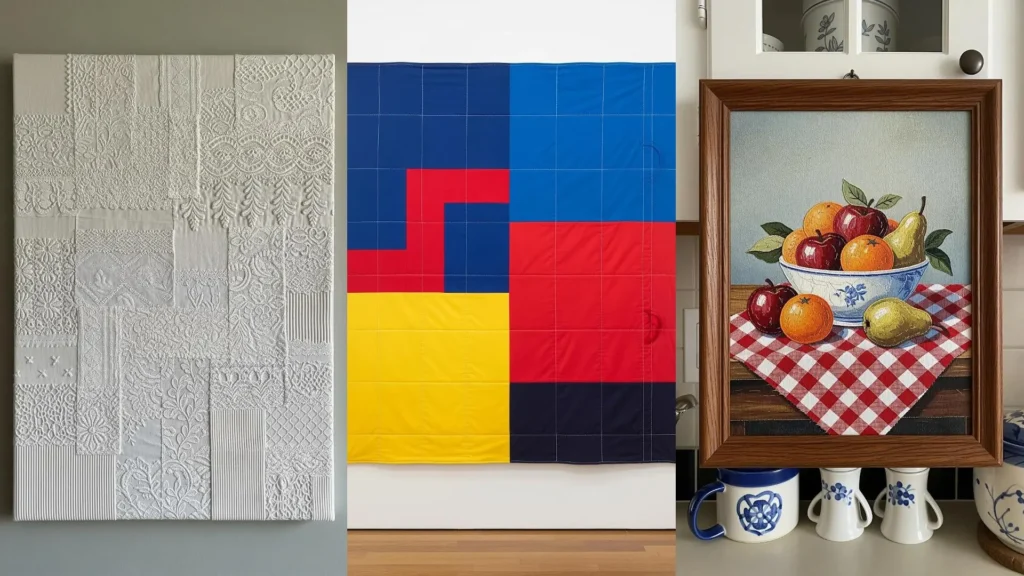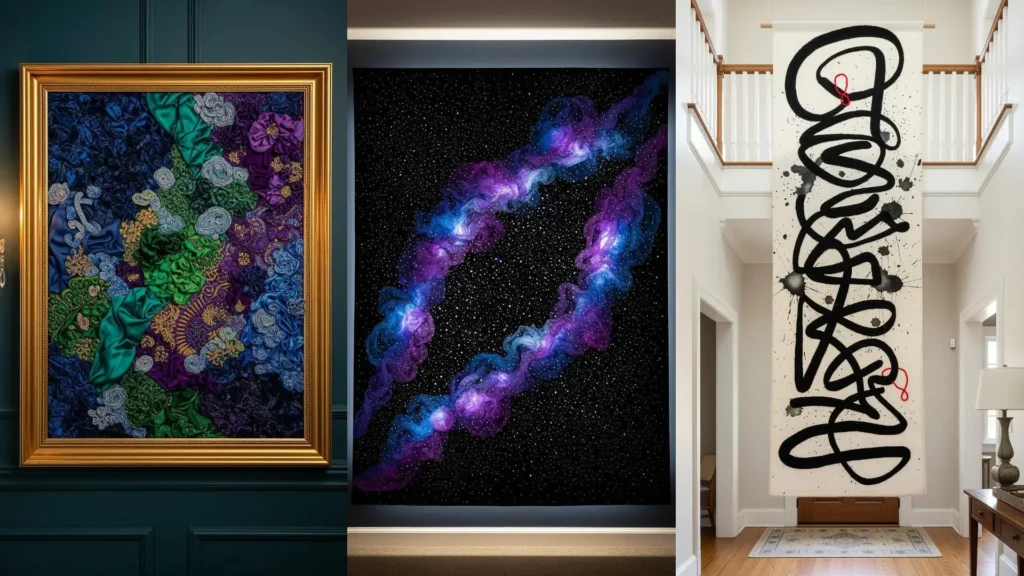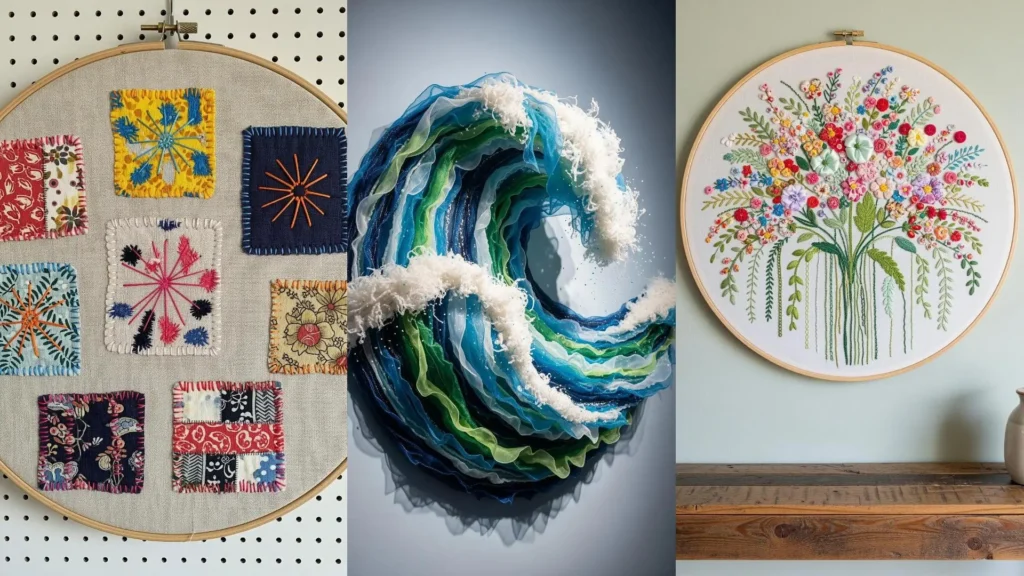
Look at that pile of fabric scraps and leftover threads. You see the potential, the memories in each piece, but feel a quiet pressure to turn it into something worthy—something more than just another small project.
Let’s shift your perspective. Stop thinking of it as ‘using up’ scraps and start seeing it as designing with a rich, unique palette that no one else has. These aren’t just leftovers; they are textures, colors, and stories waiting for a new form. Your creativity isn’t limited by what you have, it’s liberated by it.
Here, you won’t find quick, disposable crafts. You’ll discover how to collage, sculpt, and stitch your materials into intentional works of art for your walls. It’s time to give those beautiful remnants the thoughtful, artistic purpose they deserve.
1. Build a Monumental Landscape with Fabric Scraps
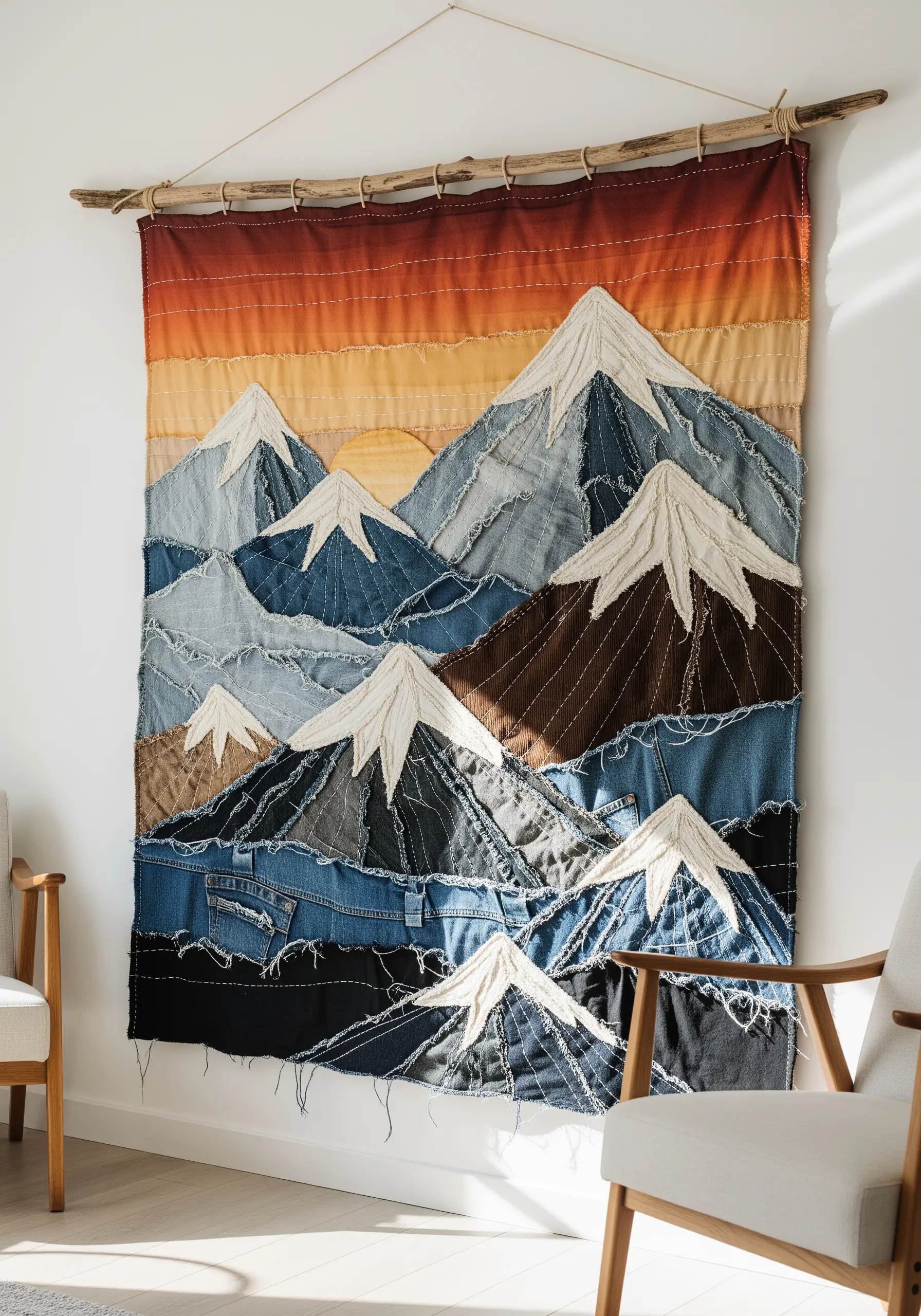
Transform old denim and cotton remnants into a large-scale textile tapestry that tells a story of texture and time.
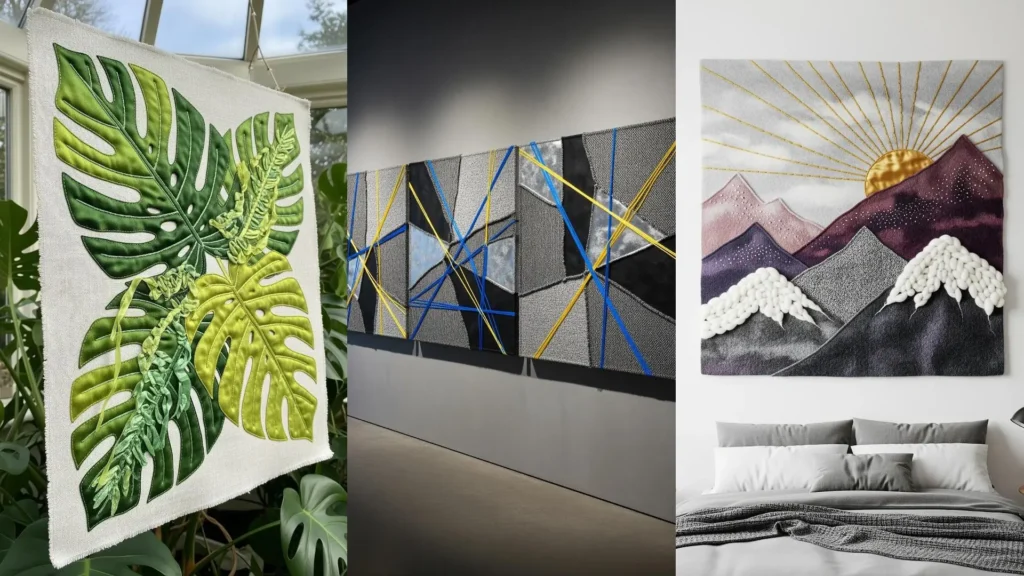
Begin by dyeing simple cotton or muslin fabric in a gradient to create a sky, then layer fabric pieces to build your mountain ranges, using darker denim for the foreground to create depth.
Secure the fabric pieces with a simple, utilitarian straight stitch; this quilting not only holds the layers but adds subtle contour lines to your landscape.
The contrast between worn, soft denim and crisp cotton creates a tactile richness that paint alone cannot achieve, turning waste into statement-size wall art.
2. Compose with Geometric Fabric Collage
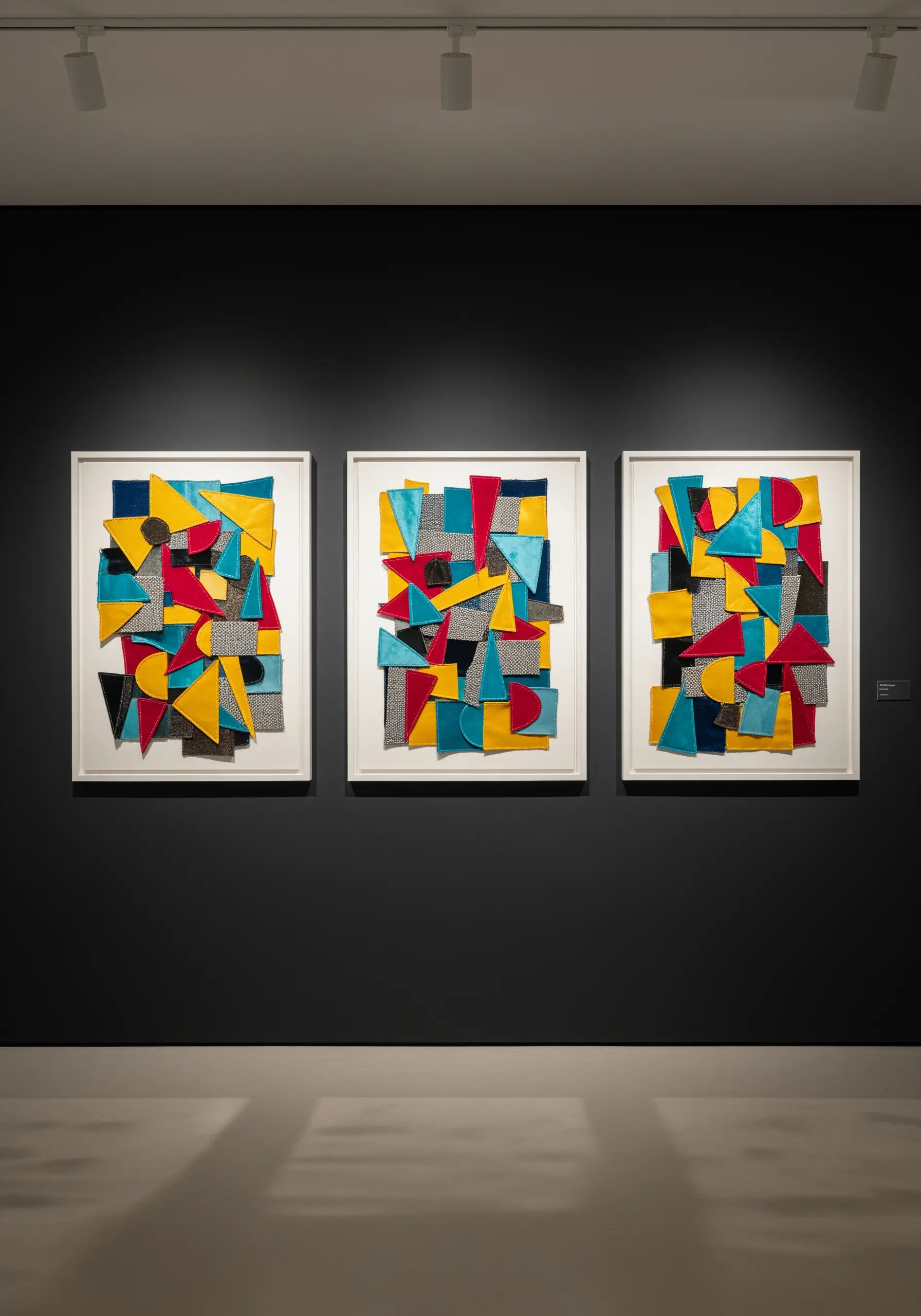
Approach your fabric scraps like a graphic designer, focusing on shape, color, and balance to create a modern triptych.
Cut scraps of velvet, tweed, and bright cotton into bold geometric shapes—circles, triangles, and rectangles.
Before you stitch, arrange the shapes on a neutral background, playing with composition until the balance feels right; this ‘fabric sketch’ phase is crucial.
Secure each piece with a nearly invisible tacking stitch, allowing the crisp edges and vibrant color relationships to remain the focus of your abstract framed embroidery.
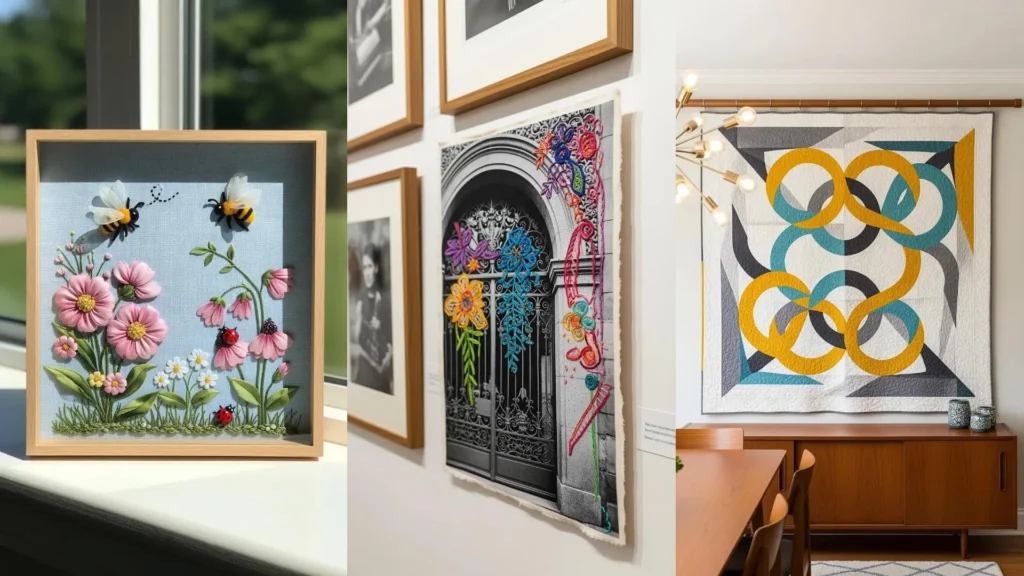
3. Cultivate a Three-Dimensional Floral Bouquet
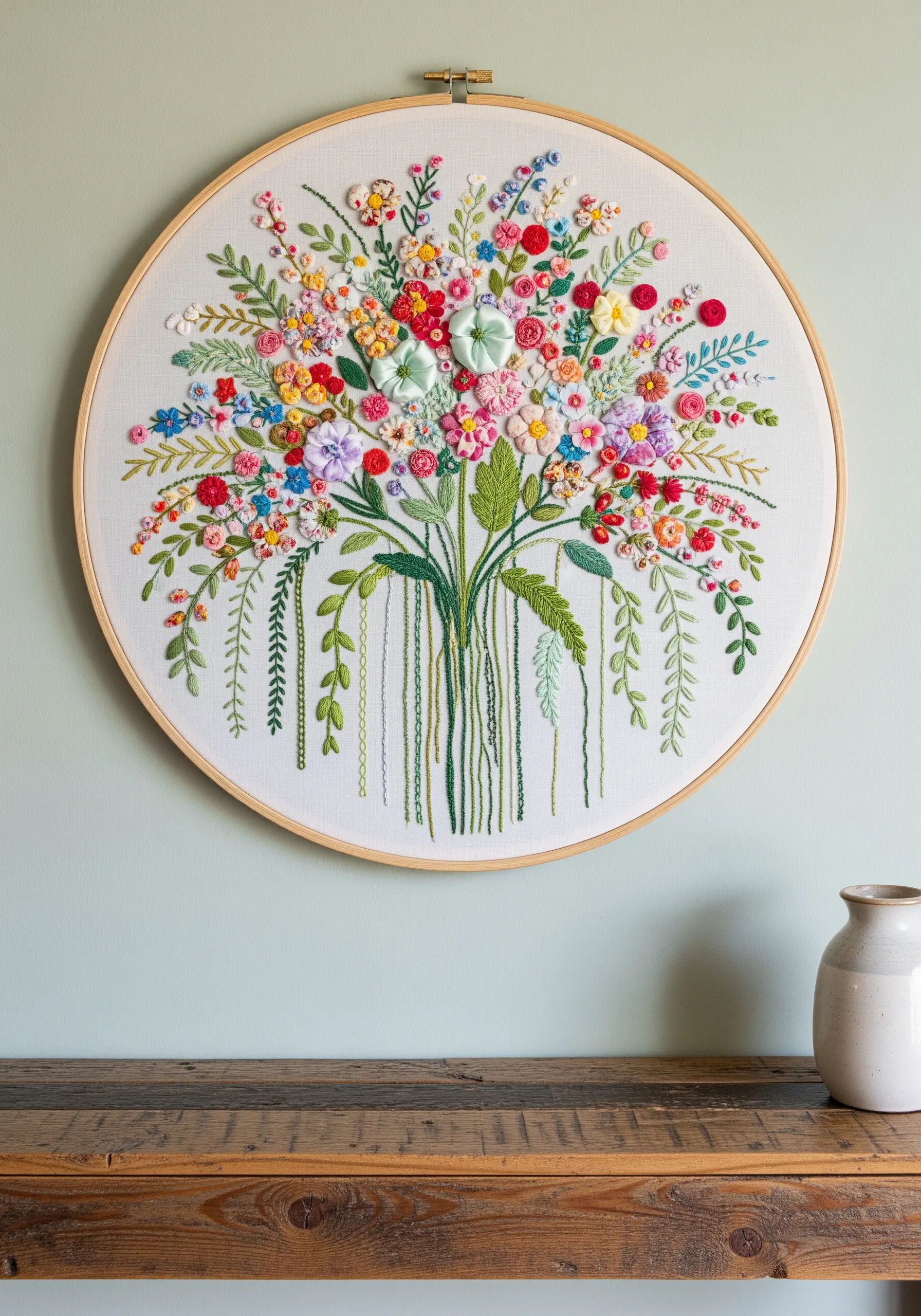
Move beyond flat stitches to create a botanical composition that feels lush, abundant, and alive with texture.
Combine a wide variety of stitches: use silk ribbon for broad, soft petals, bullion knots for lavender sprigs, and dense French knots for textured flower centers.
Vary your thread weight dramatically—from six-strand floss for bold blooms to a single strand for delicate, airy stems.
The key to this vibrant look is density and layering; don’t be afraid to stitch flowers directly on top of one another to create a truly overflowing arrangement that makes gorgeous floral embroidery ideas feel effortless.
4. Explore Texture Through a Monochrome Palette
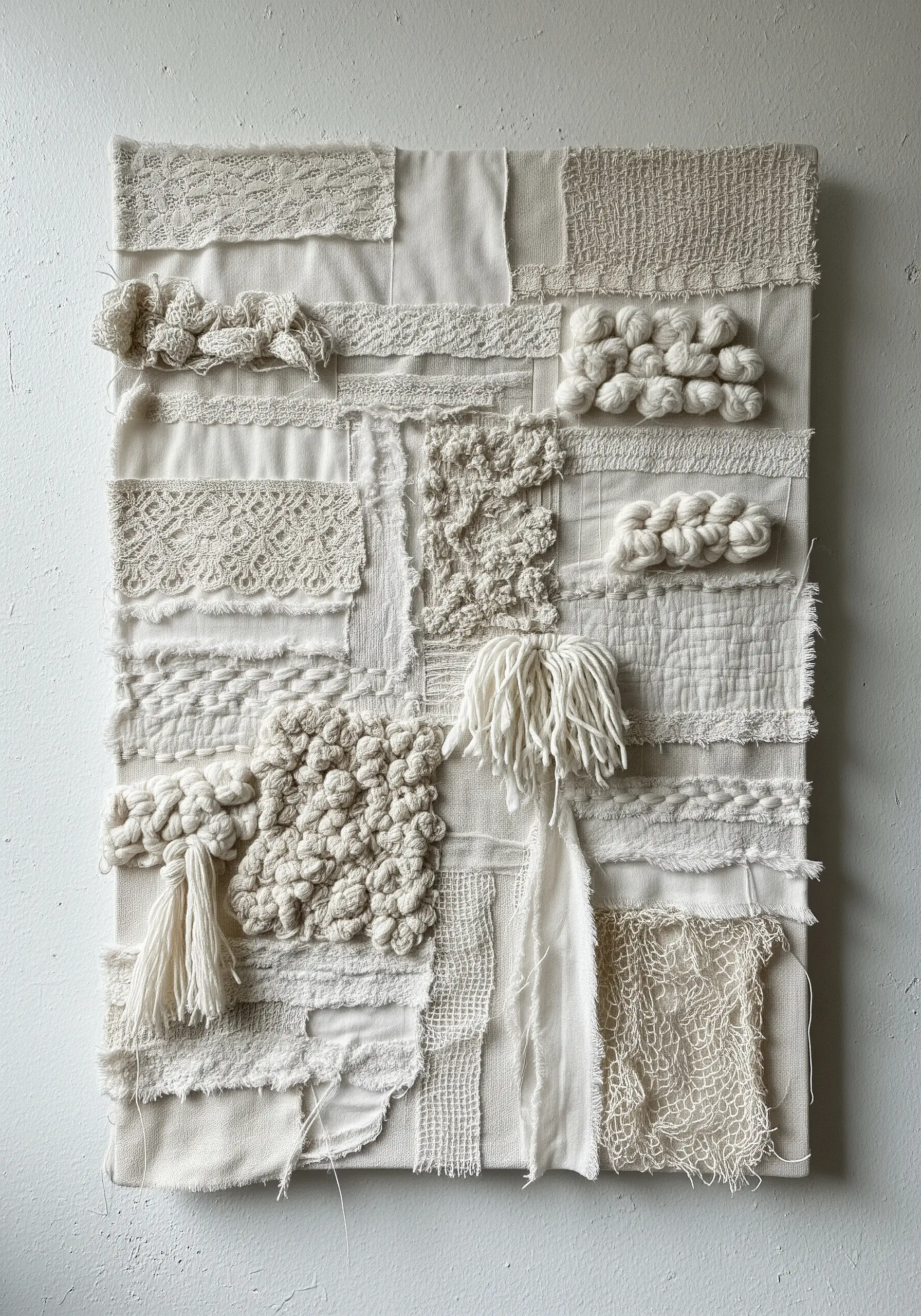
By removing color, you invite the viewer to appreciate the subtle, sophisticated language of texture.
Gather every white, cream, and ecru scrap you own—from chunky yarn and delicate lace to frayed canvas and soft gauze.
Arrange the pieces on a backing fabric, focusing on creating contrast between smooth and rough, dense and open, and flat and dimensional elements.
Use simple, hidden stitches to attach each piece, allowing the raw edges and tactile surfaces to form a cohesive, sculptural whole, turning simple materials into monochrome embroidery ideas that elevate any space.
5. Illustrate a Cityscape with Light and Shadow
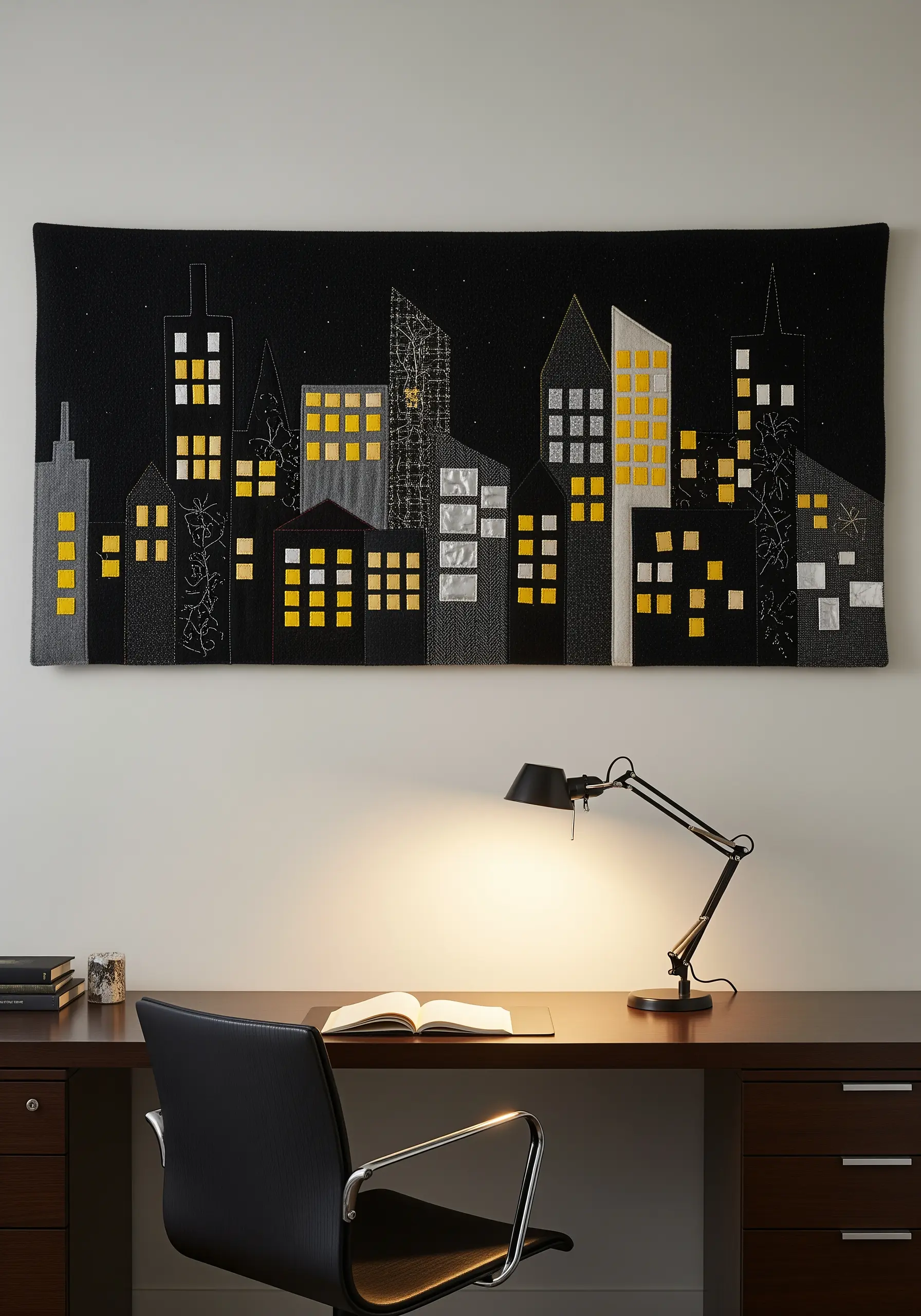
Use a dark, heavy fabric like black felt or wool to set the stage for a dramatic nighttime scene.
Cut small squares and rectangles from yellow, white, and metallic fabric scraps to represent illuminated windows, securing them with a clean appliqué stitch.
Then, use single strands of metallic or white thread to add architectural details with minimal straight stitches and seed stitches.
This technique creates the illusion of distant, glittering city lights and transforms a simple concept into refined, luxe minimalist wall art.
6. Sculpt a Dynamic Wave with Sheer Fabrics
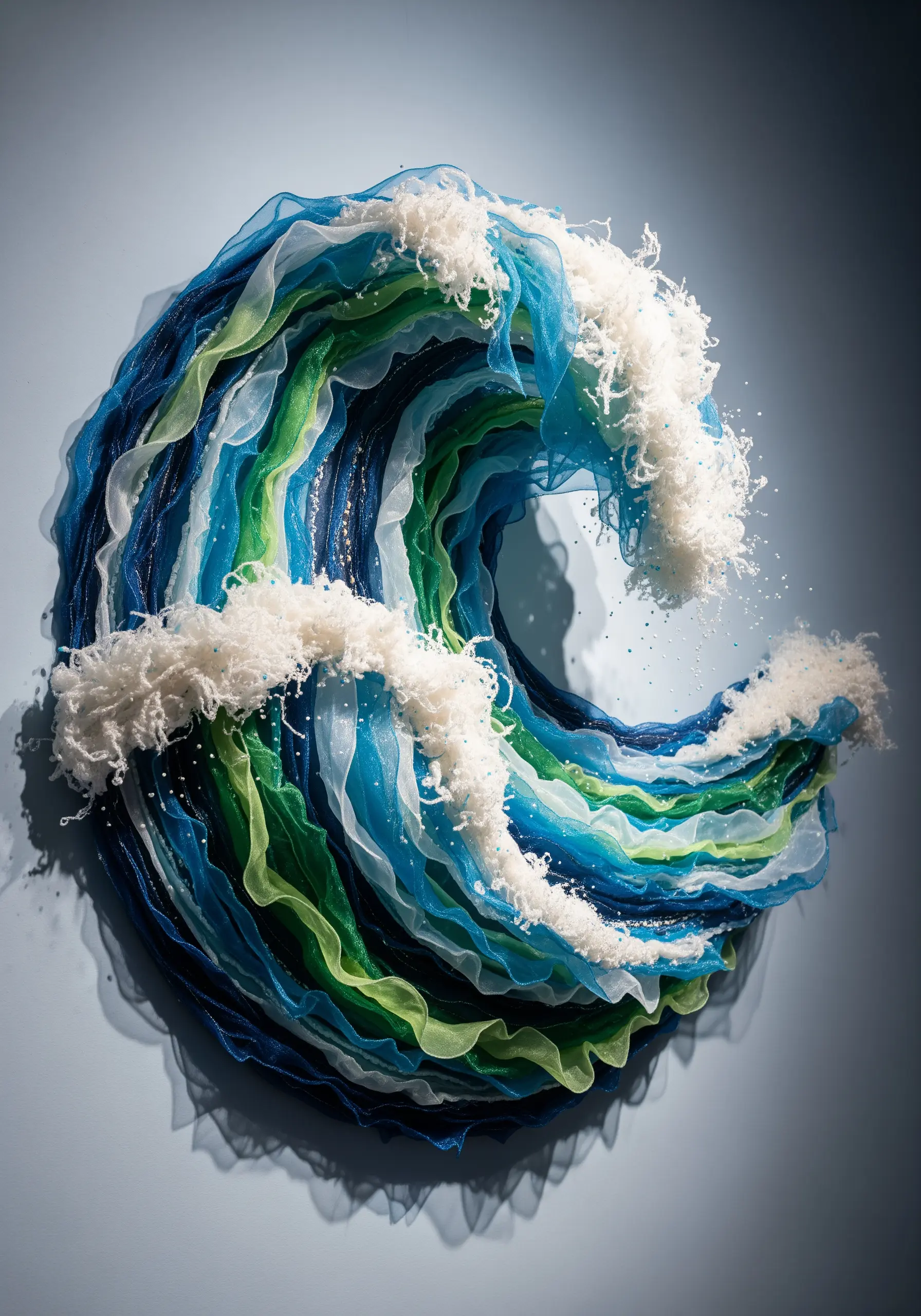
Step away from the flat surface and build a three-dimensional form that captures the energy of water.
Use a sturdy wire mesh or heavy interfacing as a base, shaping it into a cresting wave.
Layer long strips of sheer fabrics like organza and chiffon in shades of blue, green, and white, stitching them down to create flowing lines and translucent depth.
For the sea foam, couch down teased wool roving or chunky white yarn, which adds a soft, frothy texture that contrasts beautifully with the sharp organza folds, creating incredible fiber art installations.
7. Paint a Portrait with Fabric Mosaic
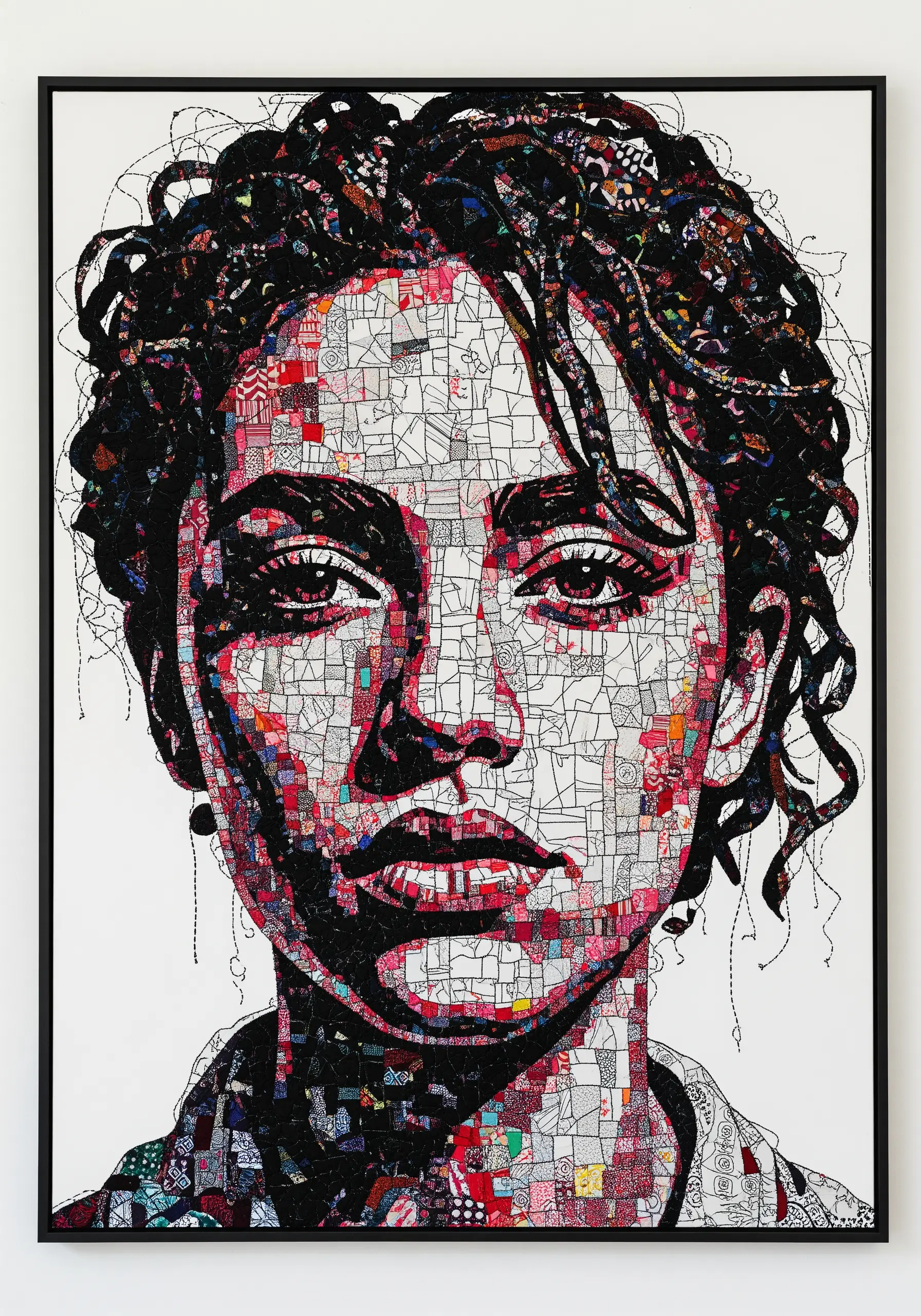
Treat your smallest, most patterned fabric scraps like dabs of paint to construct a complex and expressive portrait.
Begin with a clear line drawing of your subject on a canvas or heavy fabric backing.
Cut your scraps into tiny, irregular pieces and sort them by color and value (light, medium, dark).
Fill in the drawing by gluing or stitching each tiny piece in place, using the patterns and colors to define shadows, highlights, and contours for a truly unique piece of hand-stitched portrait wall art.
8. Chart a Celestial Scene with Appliqué and Stitch
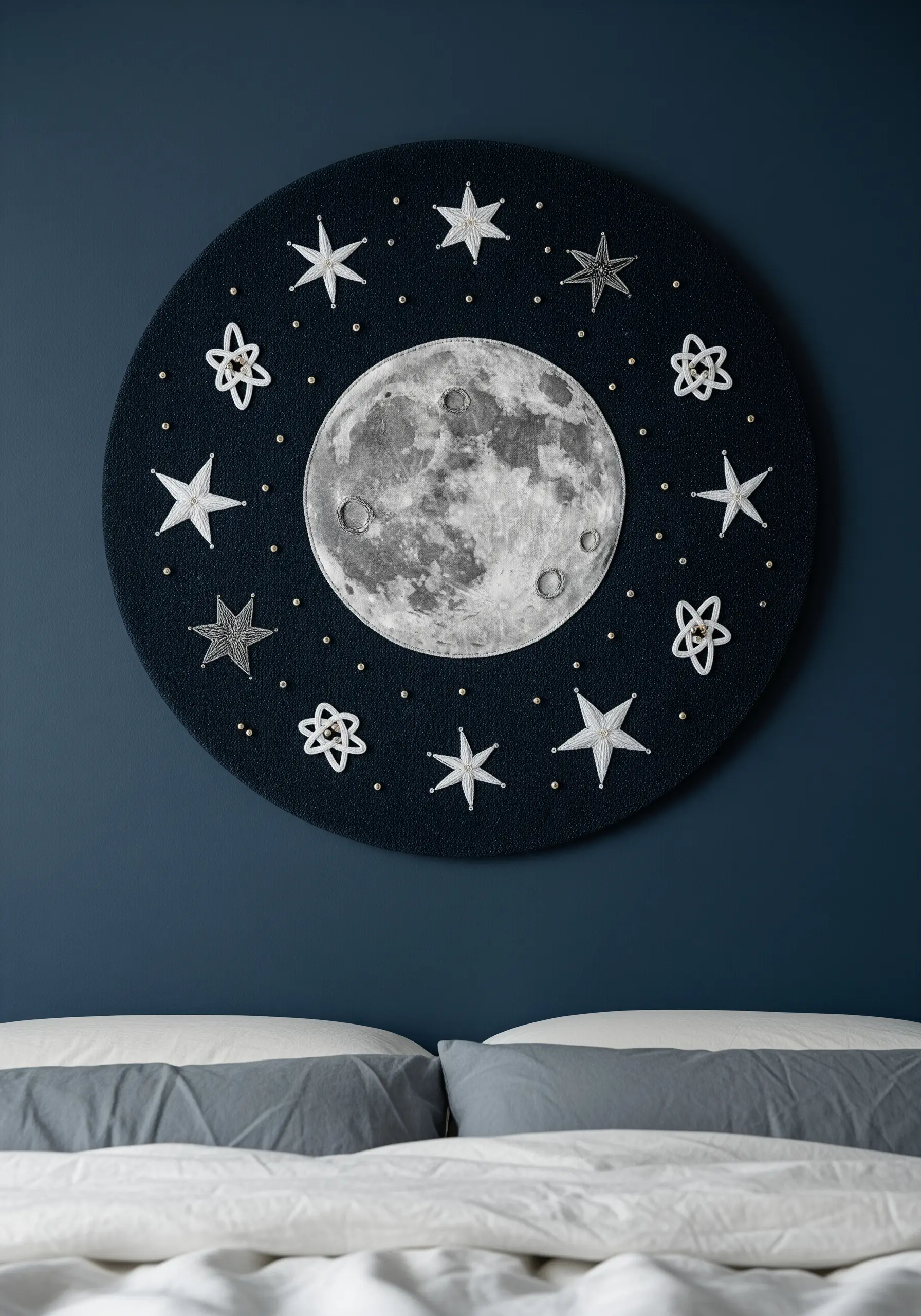
Create a sophisticated piece of cosmic art by combining the clean shapes of appliqué with the delicate detail of embroidery.
Choose a rich, dark wool or felt for the night sky, which provides a beautiful texture and makes stitches pop.
For the moon, appliqué a piece of printed or subtly textured gray fabric using a neat blanket stitch for a defined edge.
Embroider the stars using a variety of threads—metallic for shimmer, variegated for depth—and simple stitches like the star stitch and French knots to create a dynamic, sparkling constellation that elevates bedroom wall embroidery ideas.
9. Create an Autumnal Cascade with Felt Leaves
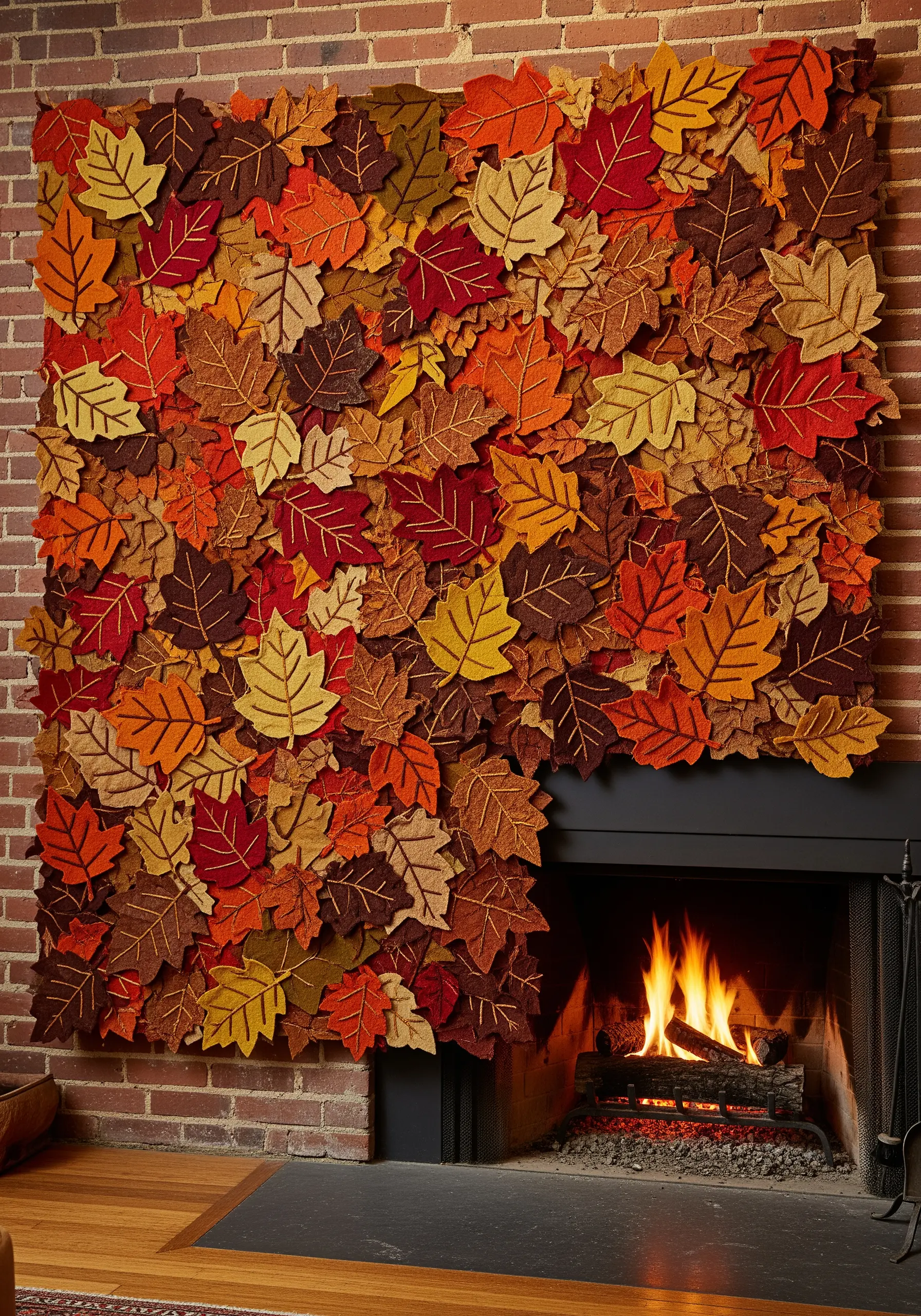
Capture the feeling of falling leaves with a large-scale, textural wall hanging made from simple felt scraps.
Cut dozens of leaf shapes from felt in a warm, earthy palette—mustard, rust, brown, and deep red.
Add a single vein to each leaf with a simple running stitch in a contrasting thread, which adds definition and a handmade touch.
Attach the leaves to a large backing fabric, starting at the top and overlapping them generously to create a sense of depth and movement, perfect for earthy texture embroidery patterns.
10. Weave a Modern Tapestry with Fabric Strips
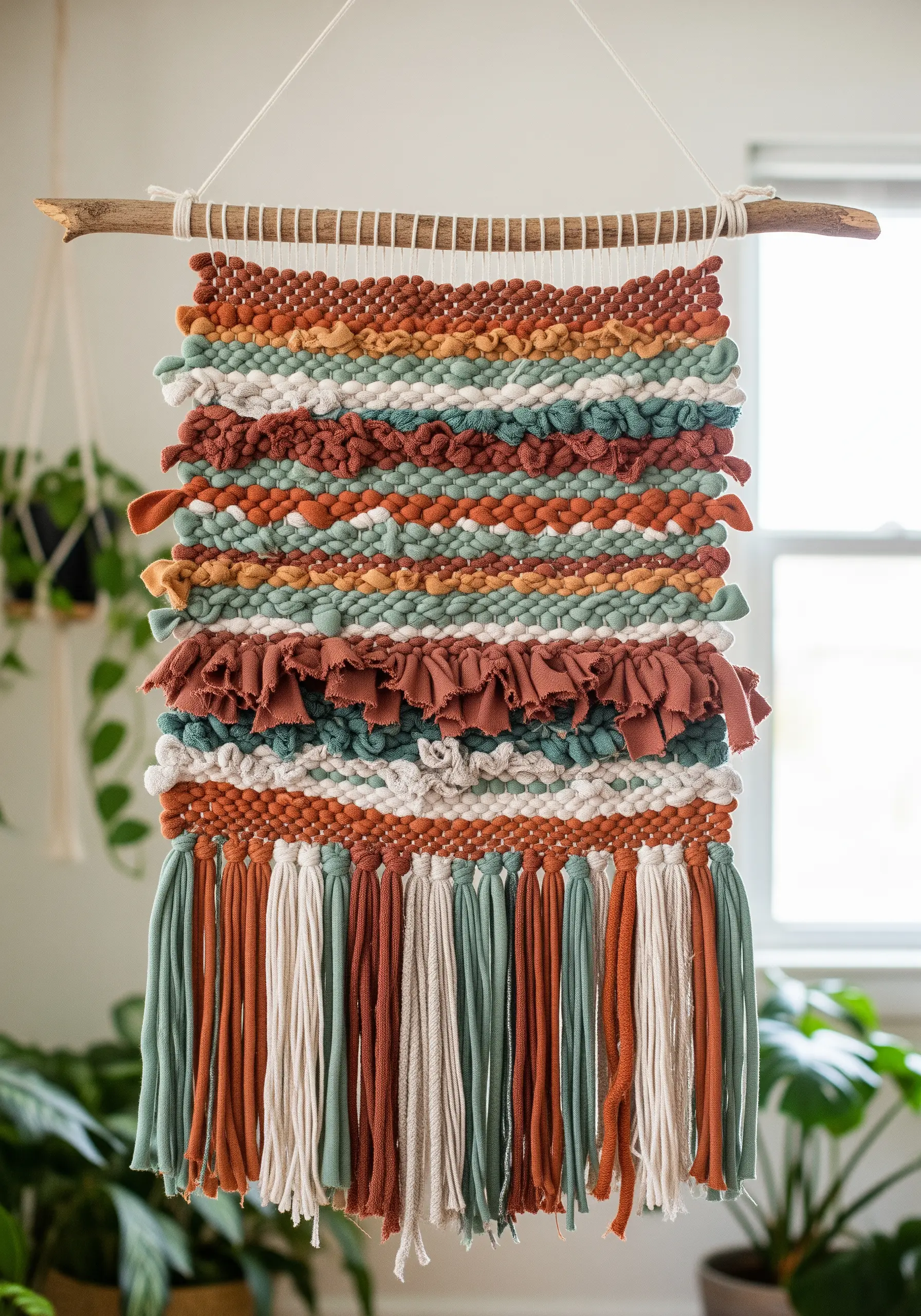
You don’t need a traditional loom to create a stunning woven piece; a simple frame or even a sturdy piece of cardboard is enough to begin.
Instead of just yarn, use strips of scrap fabric—old t-shirts, cotton prints, and linens—as your weft.
Vary the texture by alternating between a simple tabby weave (over-one, under-one) and sections of thick, plush rya knots.
This technique turns textile waste into beautiful, tactile DIY yarn wall art with a modern-boho feel.
11. Study Color with Miniature Fabric Collages
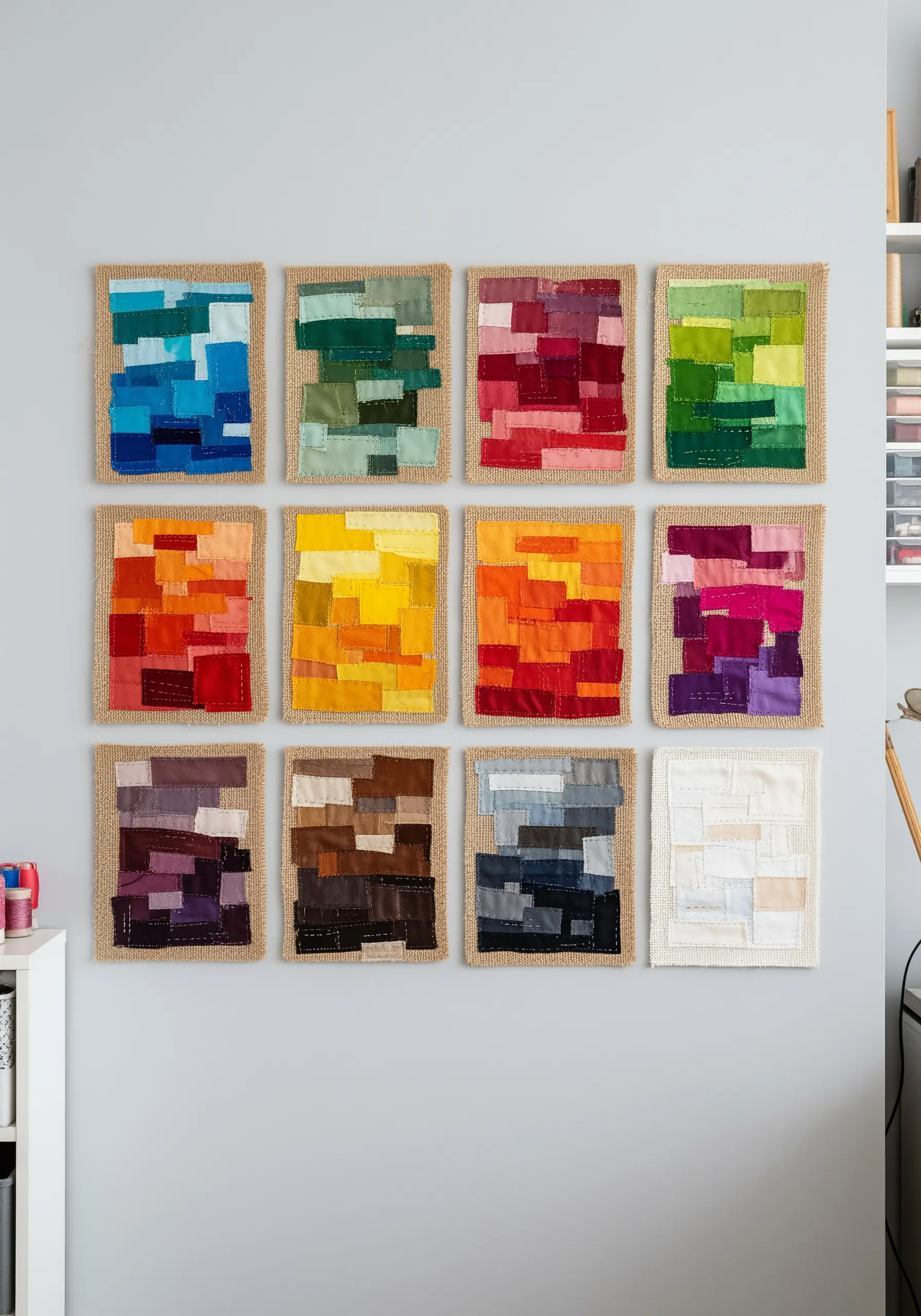
Transform your creative process into a mindful practice by creating a series of small, focused color studies.
Choose a base fabric like burlap or linen for its rustic texture, and dedicate each piece to a single color family (e.g., all blues, all reds).
Layer scraps of satin, cotton, and silk within that color family, exploring how different textures and shades interact.
Secure the layers with a simple running stitch and display the finished pieces in a grid for a powerful, gallery-style statement about the nuances of color, similar to abstract layered thread collages.
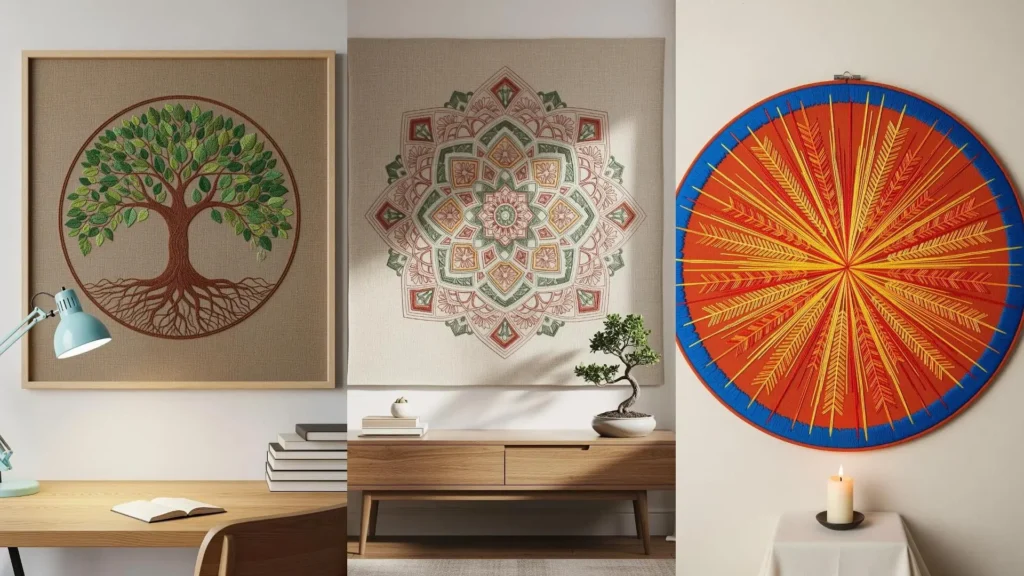
12. Stitch a Meditative Mandala Quilt
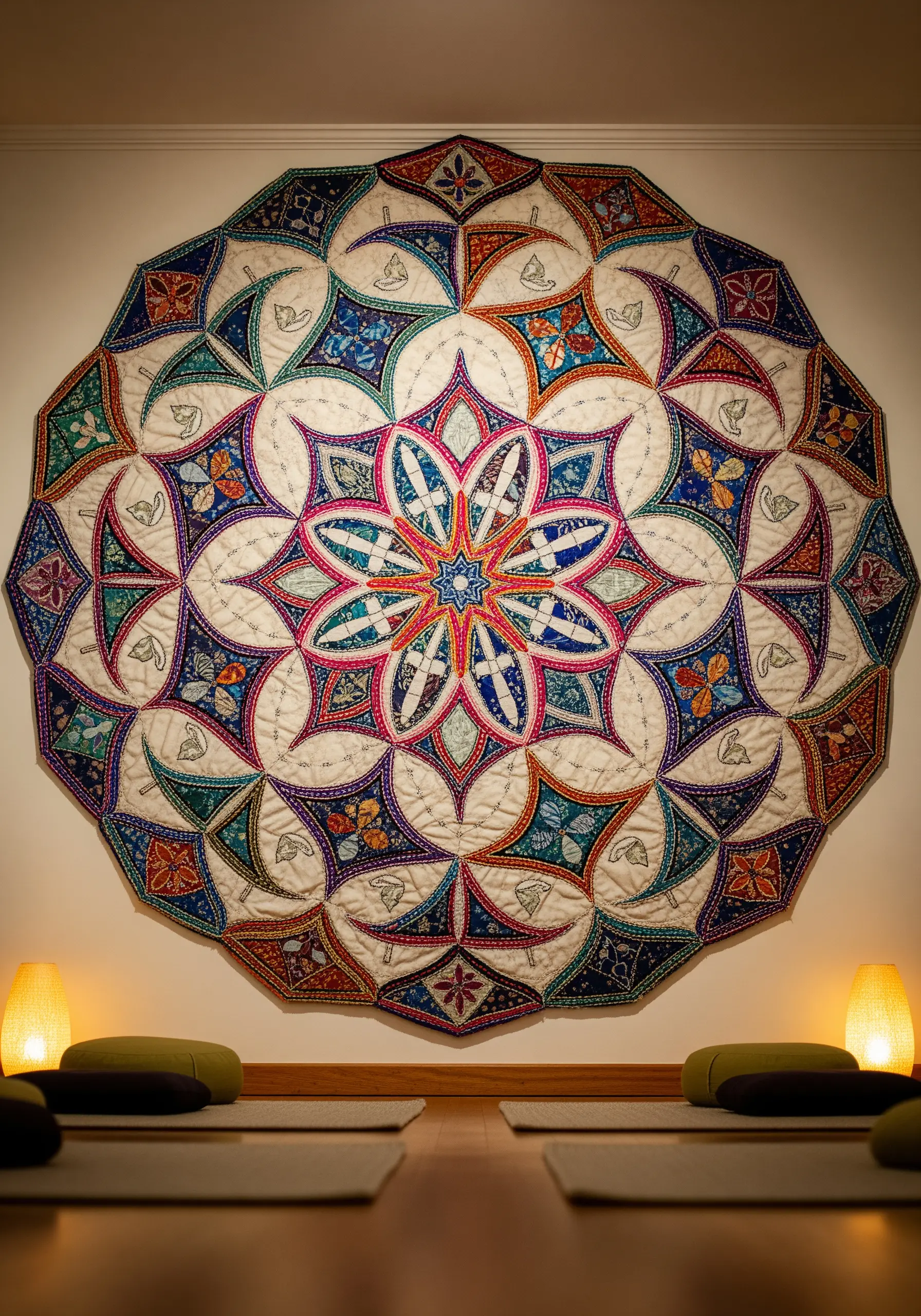
Combine the precision of quilting with the freeform nature of scrap fabrics to create a large, impactful piece that radiates calm.
Draft a symmetrical mandala design first, then use your pattern to cut shapes from various fabric scraps.
Appliqué the pieces onto a large circular background, paying close attention to symmetry and color flow.
Elevate the design by adding decorative quilting stitches along the seams, turning the construction lines into an integral part of the intricate, meditative pattern of your mandala embroidery wall art.
13. Design a Playful Storybook Scene with Appliqué
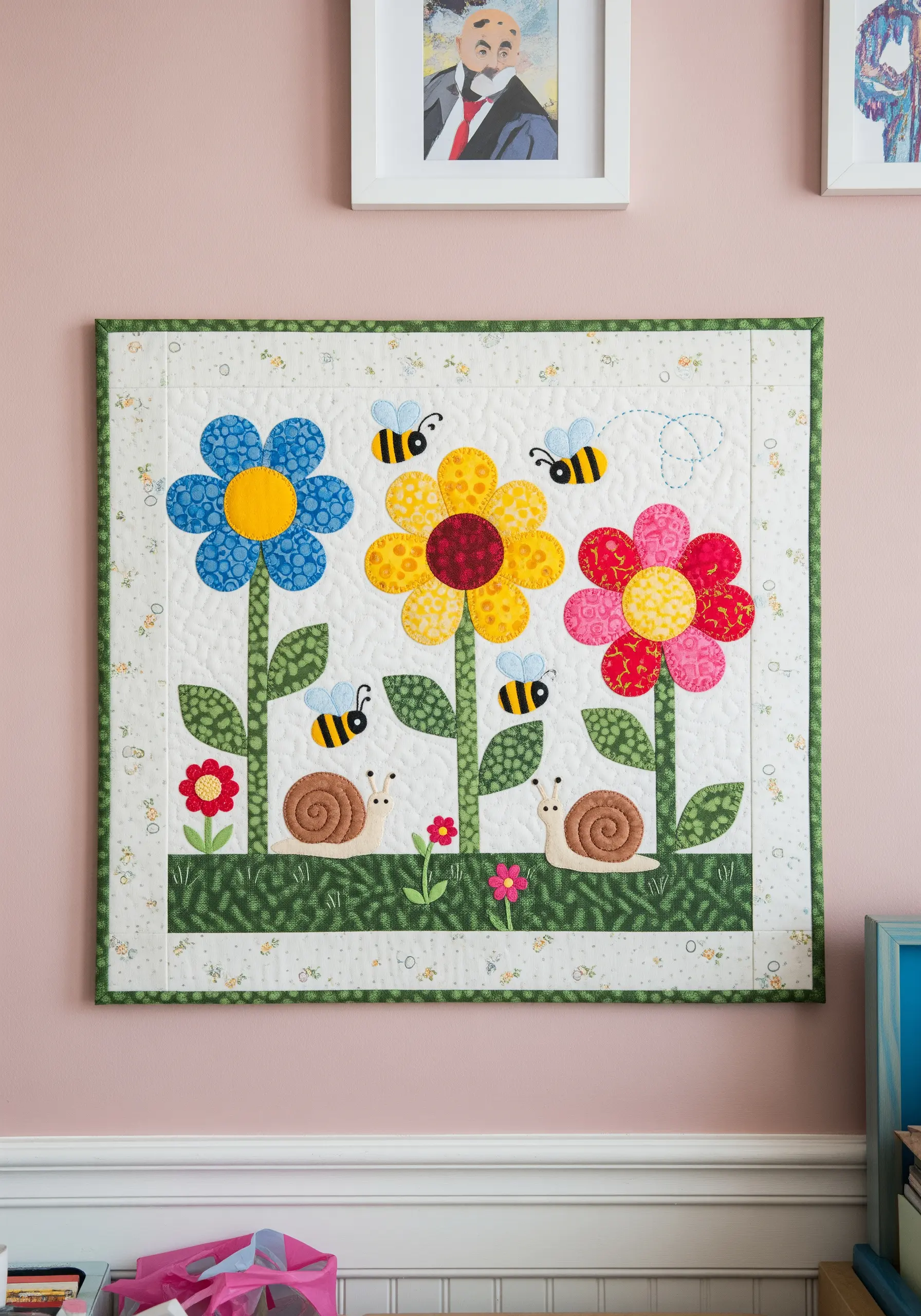
Use bright, patterned fabric scraps to build a whimsical narrative perfect for a child’s room or a cheerful corner.
Keep the shapes simple and graphic—scalloped flower petals, spiral snail shells, and simple bee bodies.
Secure each piece with a neat, hand-stitched blanket stitch in a contrasting color to give it a charming, illustrative quality.
Finally, add small embroidered details like bee flight paths (dotted running stitch) or smiling faces to bring your characters to life in these adorable forest animal embroidery ideas.
14. Construct a Soft Sculpture Mobile
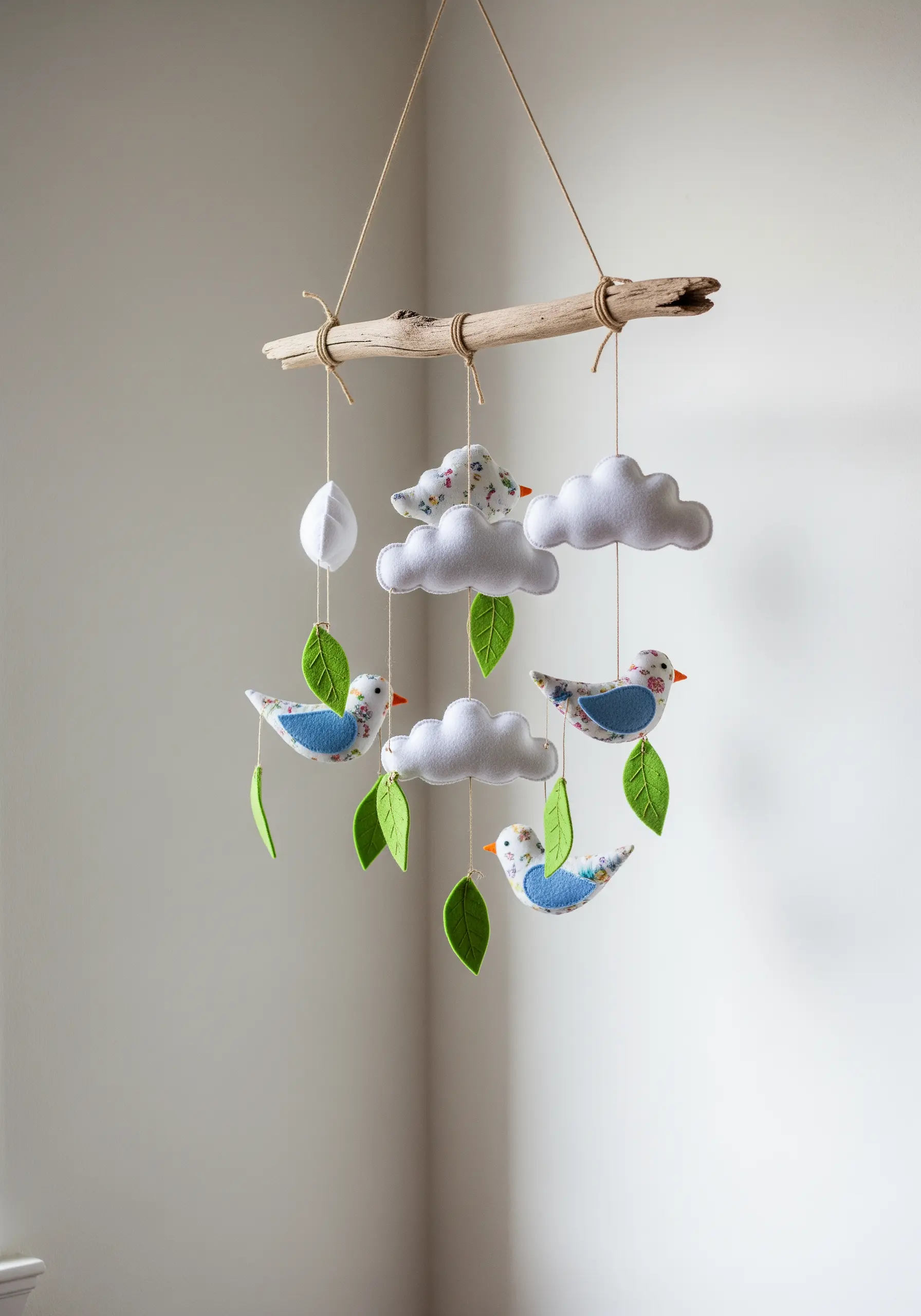
Create a gentle, kinetic piece of art using soft felt and patterned cotton scraps.
Cut two identical shapes for each element (clouds, birds, leaves) from felt and stitch them together around the edge with a blanket stitch, leaving a small opening for stuffing.
Use patterned fabric scraps as appliqué accents—like a floral wing on a bird—before stuffing lightly with poly-fil or tiny fabric remnants.
Suspend your finished soft sculptures from a piece of weathered driftwood using twine for a natural, handmade mobile that doubles as creative handmade trinkets.
15. Build Architectural Stories with Dense Stitching
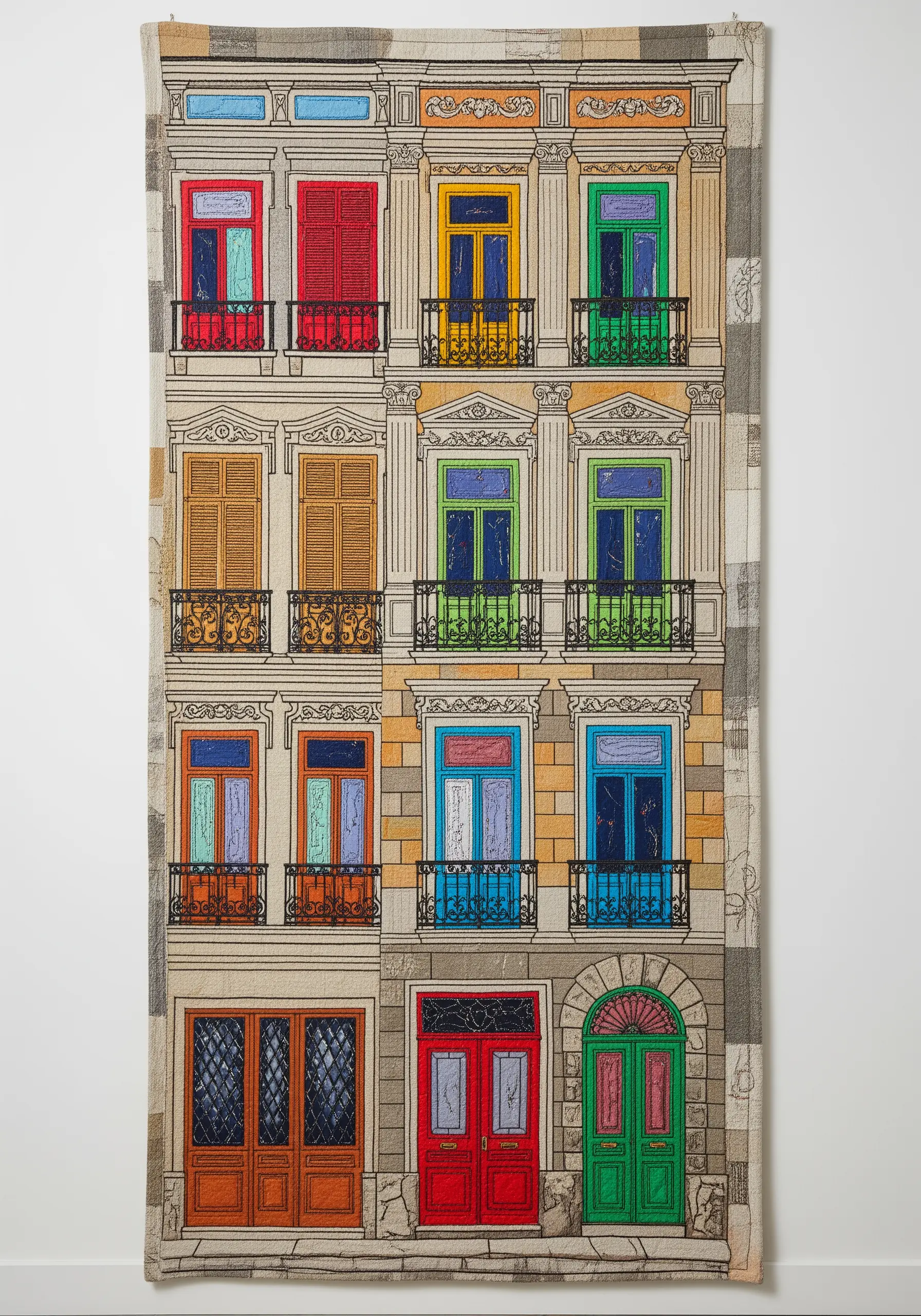
Instead of using fabric pieces for color, let your thread do the work by ‘painting’ with dense, textural stitches.
Outline your architectural design on a neutral fabric base.
Fill in shapes like windows and doors with solid satin stitch or long-and-short stitch, using bold colors to create visual impact.
Define the structure with crisp backstitched lines for railings and window frames, allowing the texture of the thread to become the primary medium in your detailed embroidered textile wall hangings.
16. Layer a Lush Botanical Wall Quilt
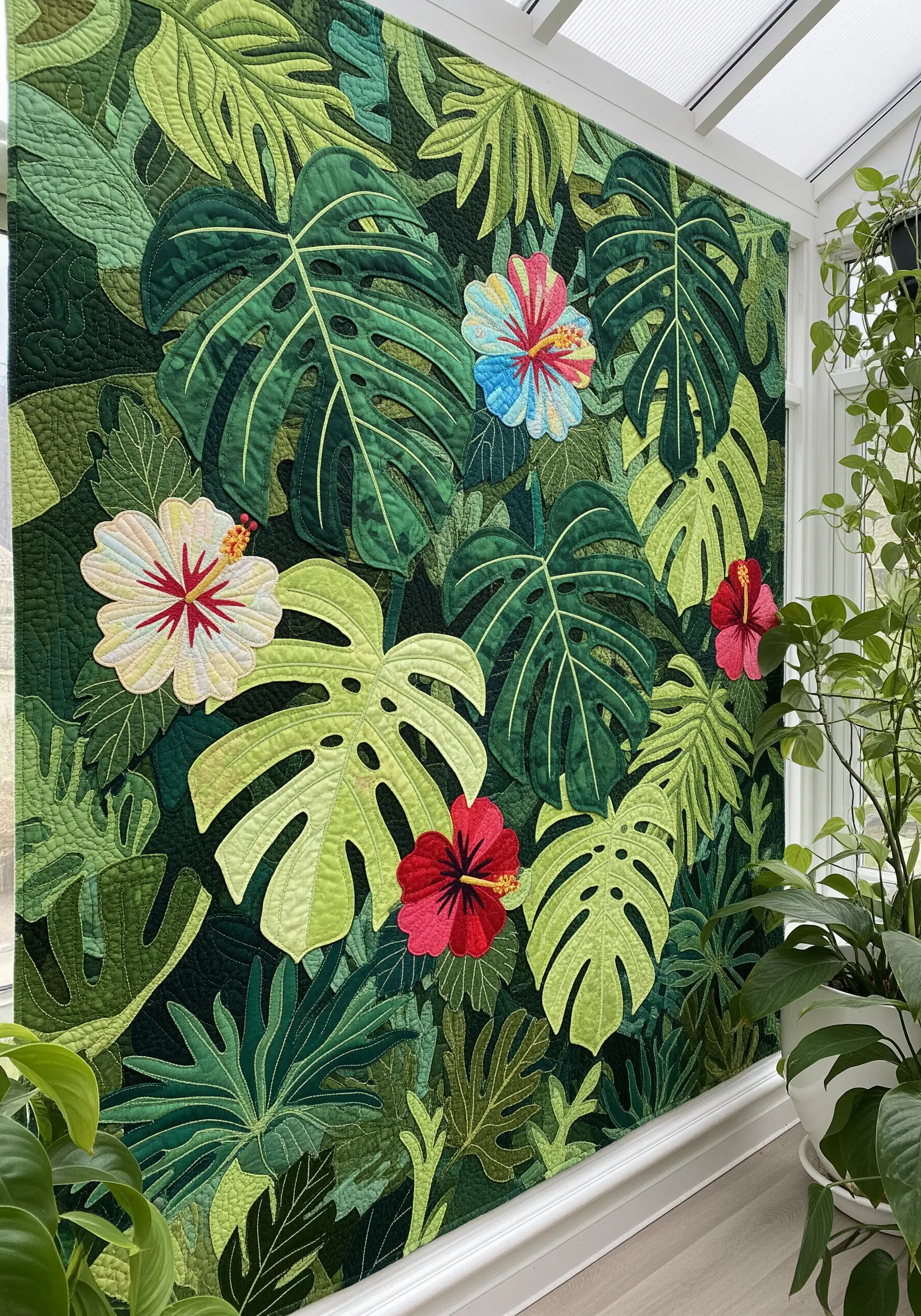
Create the illusion of a dense, overlapping jungle by strategically layering fabric leaf appliqués.
Cut monstera and other leaf shapes from various green fabrics, using darker, less detailed prints for the background layer and brighter, more vibrant ones for the foreground.
When quilting, stitch vein patterns onto each leaf; this technique, known as thread painting, adds realism and texture while securing the appliqué.
Add a few brightly colored hibiscus flowers as focal points to break up the green and draw the eye, making your tropical leaf embroidery designs pop.
17. Curate a Sampler of Stitched Fabric Snippets
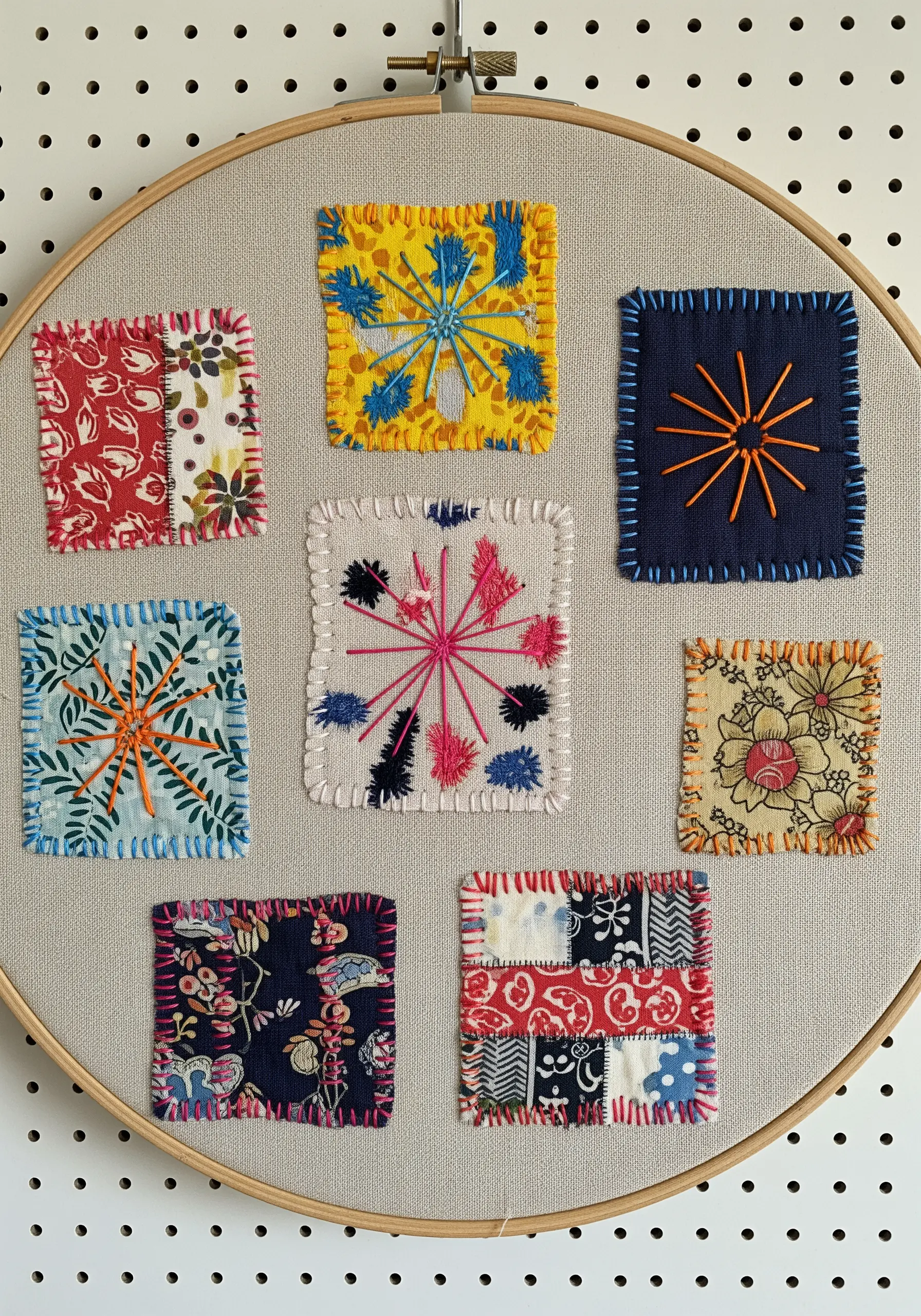
Turn your random thread and fabric scraps into a cohesive, modern piece of hoop art.
Cut small squares from your favorite patterned fabrics to act as mini-canvases.
On each square, create a small ‘stitch doodle’—a burst of radiating straight stitches, a cluster of French knots, or a simple woven pattern.
Arrange your finished snippets on a larger piece of fabric in a hoop and secure them with a decorative blanket stitch around the edges to create a contemporary sampler.
18. Appliqué a Gentle Reminder
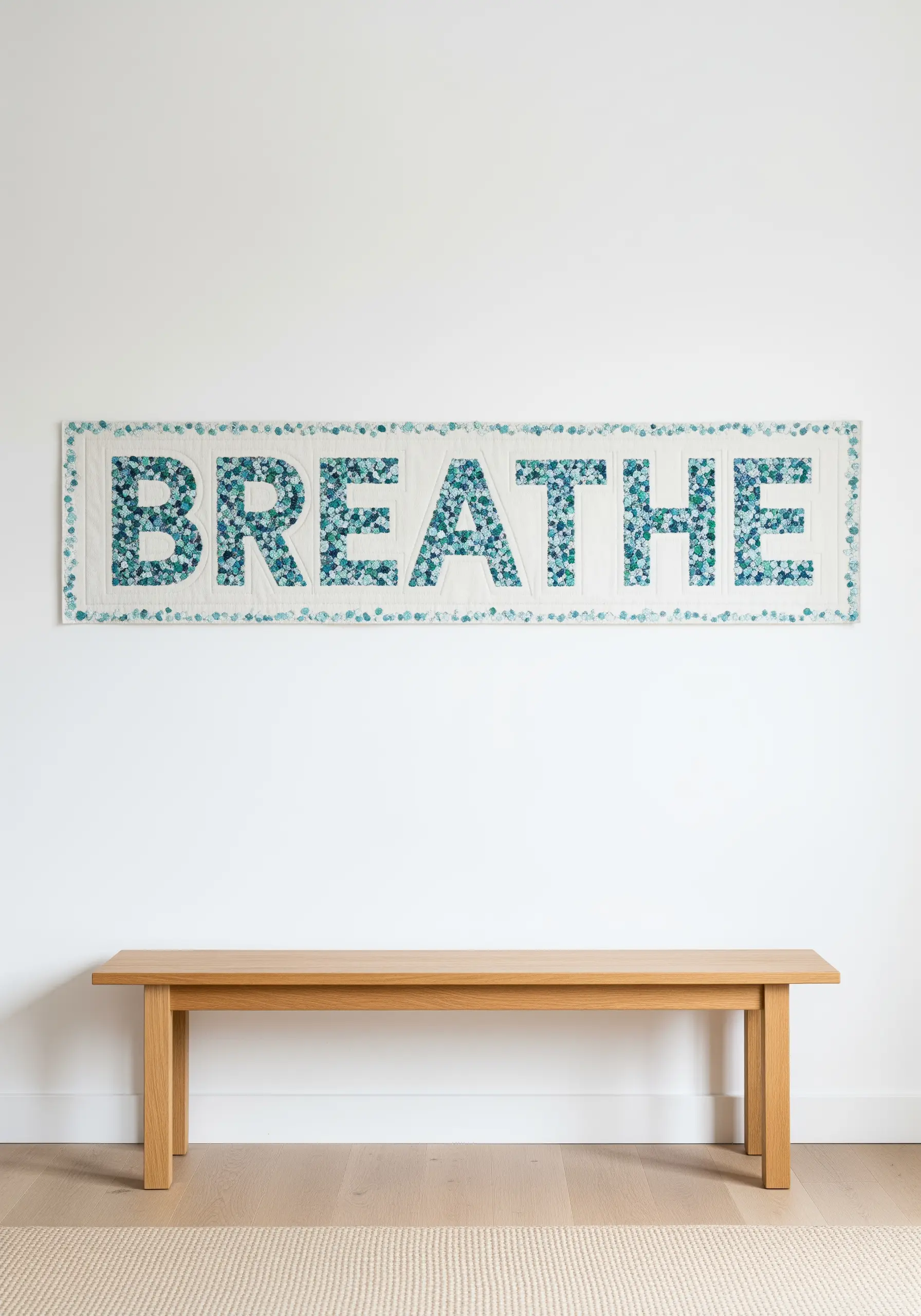
Use the simplicity of text and the beauty of patterned fabric to create a piece with a clear, calming message.
Choose a single powerful word and carefully cut the letters from a fabric that evokes the feeling you want to convey.
Pin the letters onto a simple, neutral background like linen or canvas, ensuring perfect spacing.
Secure them with a neat machine zigzag stitch or a meticulous hand blanket stitch for a soft, handmade finish that makes your embroidered quote wall hangings both beautiful and meaningful.
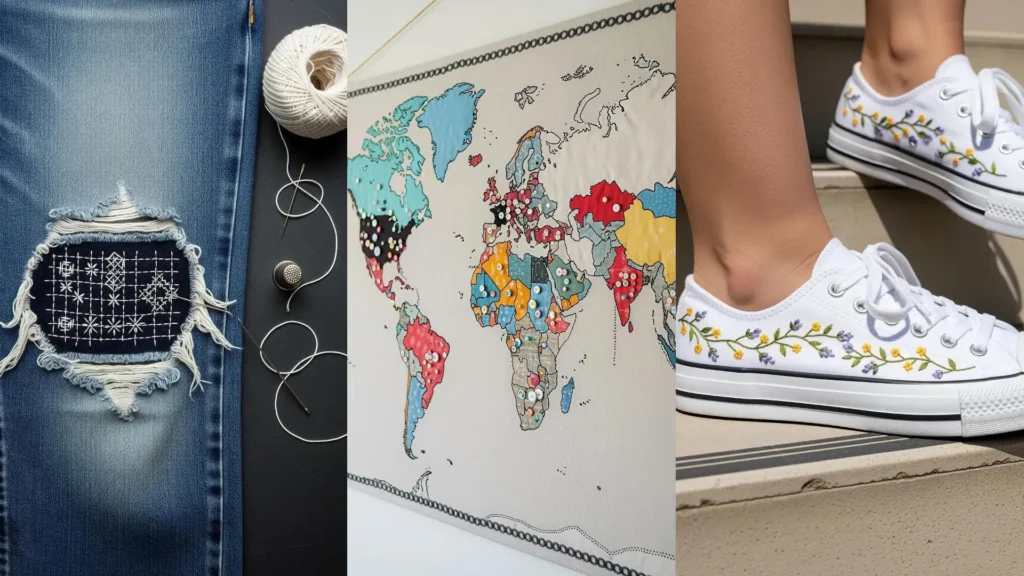
19. Map Your Personal Story with Fabric and Thread
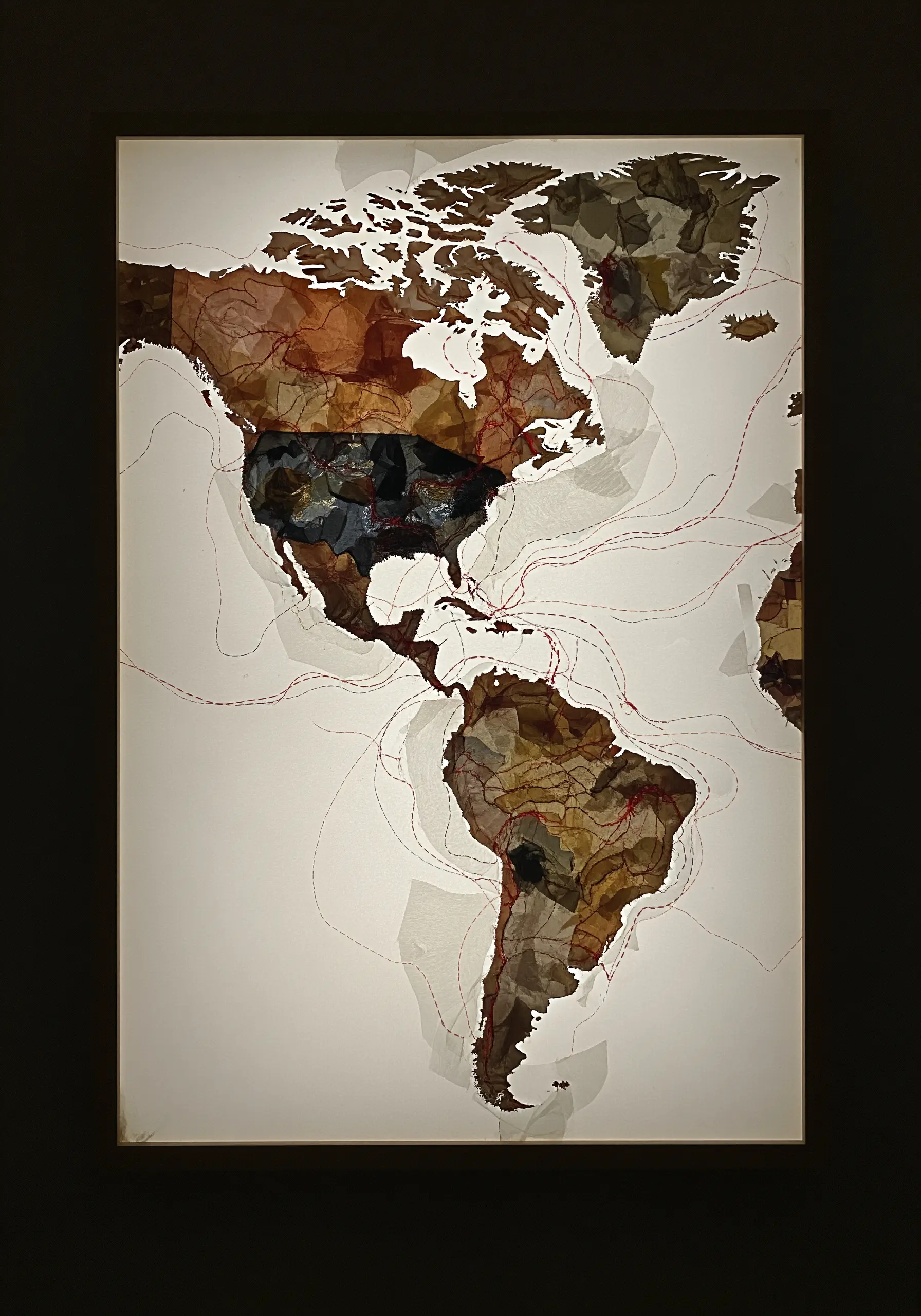
Transform a standard map into a deeply personal narrative by using meaningful fabric scraps.
Trace the outlines of continents or countries onto fusible webbing, iron it onto your chosen scraps, and then cut them out for perfect appliqué shapes.
Arrange the fabric pieces on a neutral background to form your map.
Use a single strand of red or contrasting thread to stitch significant routes or connect important places with a simple running stitch, creating beautiful travel-inspired embroidery hoops.
20. Tell a Story with Visible Mending
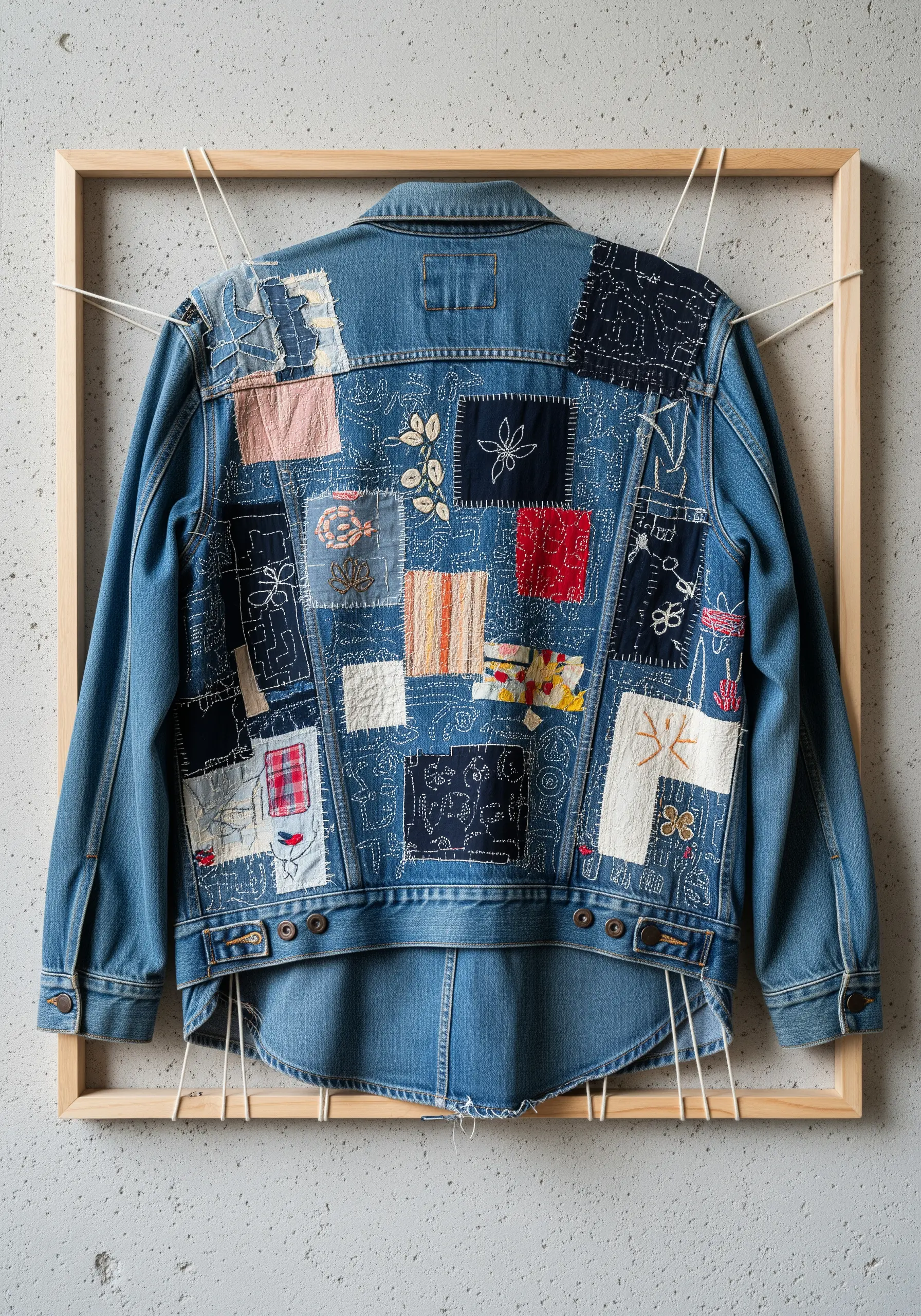
Apply the Japanese philosophy of Boro—the art of mending with decorative patches—to create a piece that celebrates history and reuse.
Arrange a collage of mismatched fabric scraps onto a sturdy base like denim or canvas.
Instead of hiding your stitches, make them a key design element.
Use a thick thread, like sashiko cotton, in a contrasting color and secure the patches with rows of simple, rhythmic running stitches, turning everyday materials into art with easy stitches that bring your plain denim jackets to life.
21. Craft a Lasting Seasonal Wreath from Felt
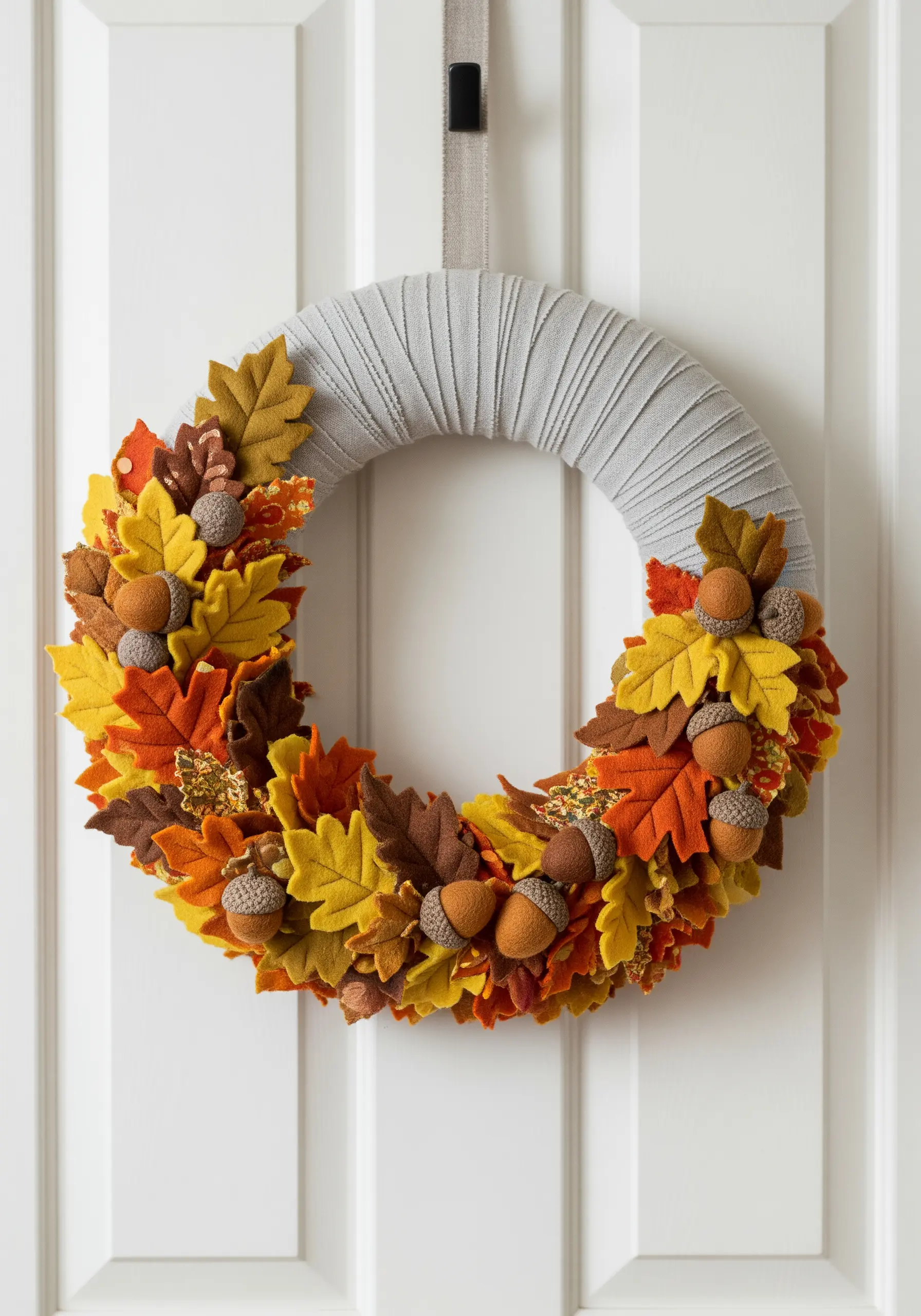
Create seasonal decor that you can use year after year by working with durable, easy-to-cut felt scraps.
Tightly wrap a wreath form with neutral fabric strips to create a clean base.
Cut dozens of leaf shapes from felt in a rich autumnal palette. For acorns, wrap a felt ball or wooden bead in a brown felt ‘cap’ and secure with glue.
Layer the elements densely onto the wreath form using a hot glue gun for a lush, three-dimensional effect, making this one of those cozy DIY ideas you’ll cherish.
22. Build a Miniature World in a Shadow Box
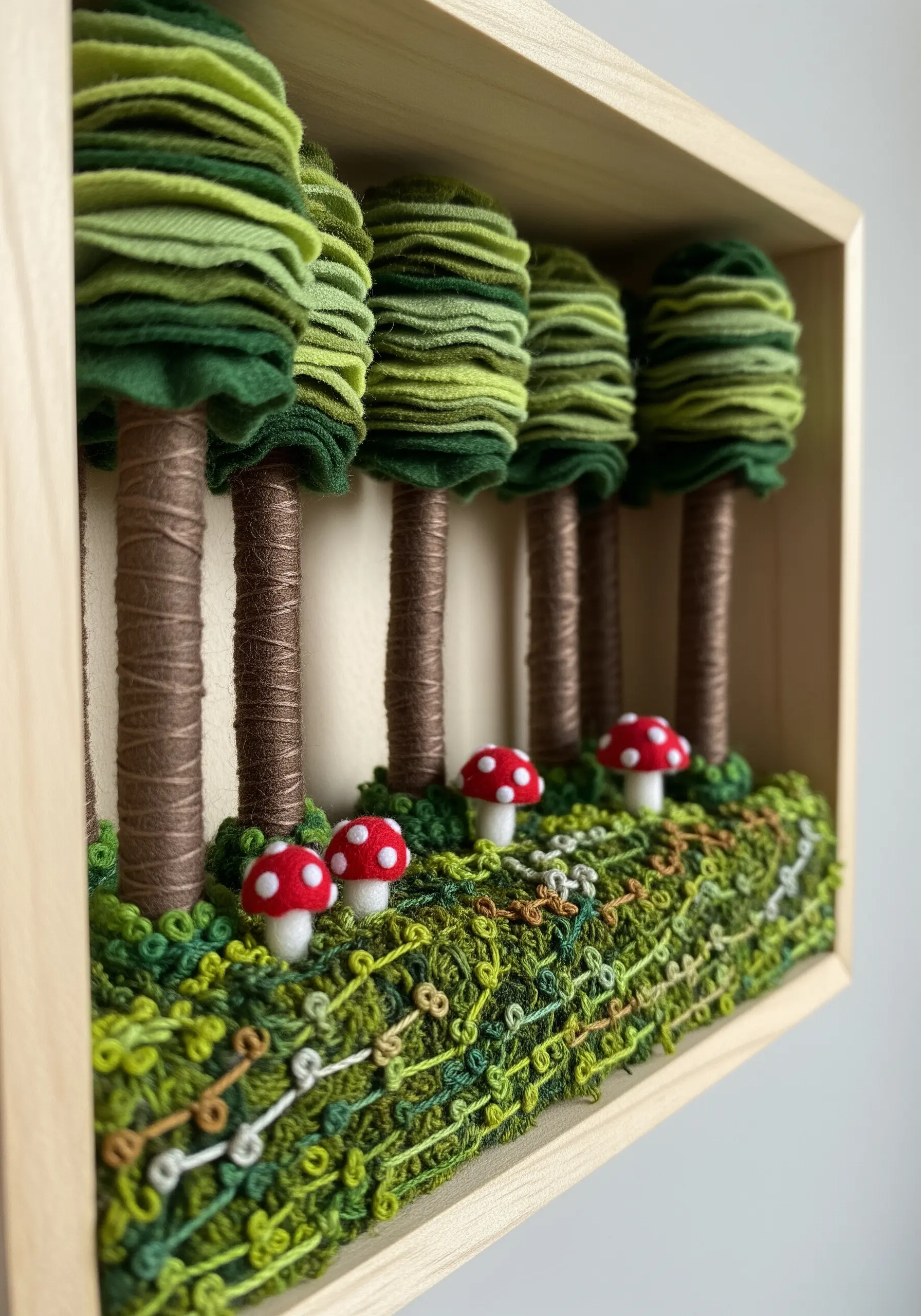
Move your textile art into the third dimension by creating a diorama-style scene inside a simple wooden box.
Create tree trunks by wrapping dowels with brown yarn, then add foliage by cutting and stacking graduated circles of green felt.
For the forest floor, work directly onto the back of the box, building up dense texture with French knots, bullion knots, and Turkey work in various shades of green and brown.
This technique allows you to create captivating forest floor botanical stitch ideas with incredible depth.