Have you ever looked at a landscape and wished you could capture not just its image, but its feeling? That’s the space where embroidery transforms from a craft into an art form. It’s not about perfectly replicating a photograph, but about translating light, texture, and mood into thread.
You don’t need dozens of complex stitches to create depth or emotion. Often, a simple change—like using a single strand of floss for a soft sky, or clustering French knots to mimic moss—is what elevates your work. It’s about making conscious choices with your needle.
Think of this collection not as a set of patterns to follow, but as a series of techniques to borrow. See how a stitch can be used to create wind, how color can convey distance, and how texture can tell a story. This is your invitation to look closer at the world and translate its beauty, one stitch at a time.
1. Render a Painterly Sky With Thread Blending
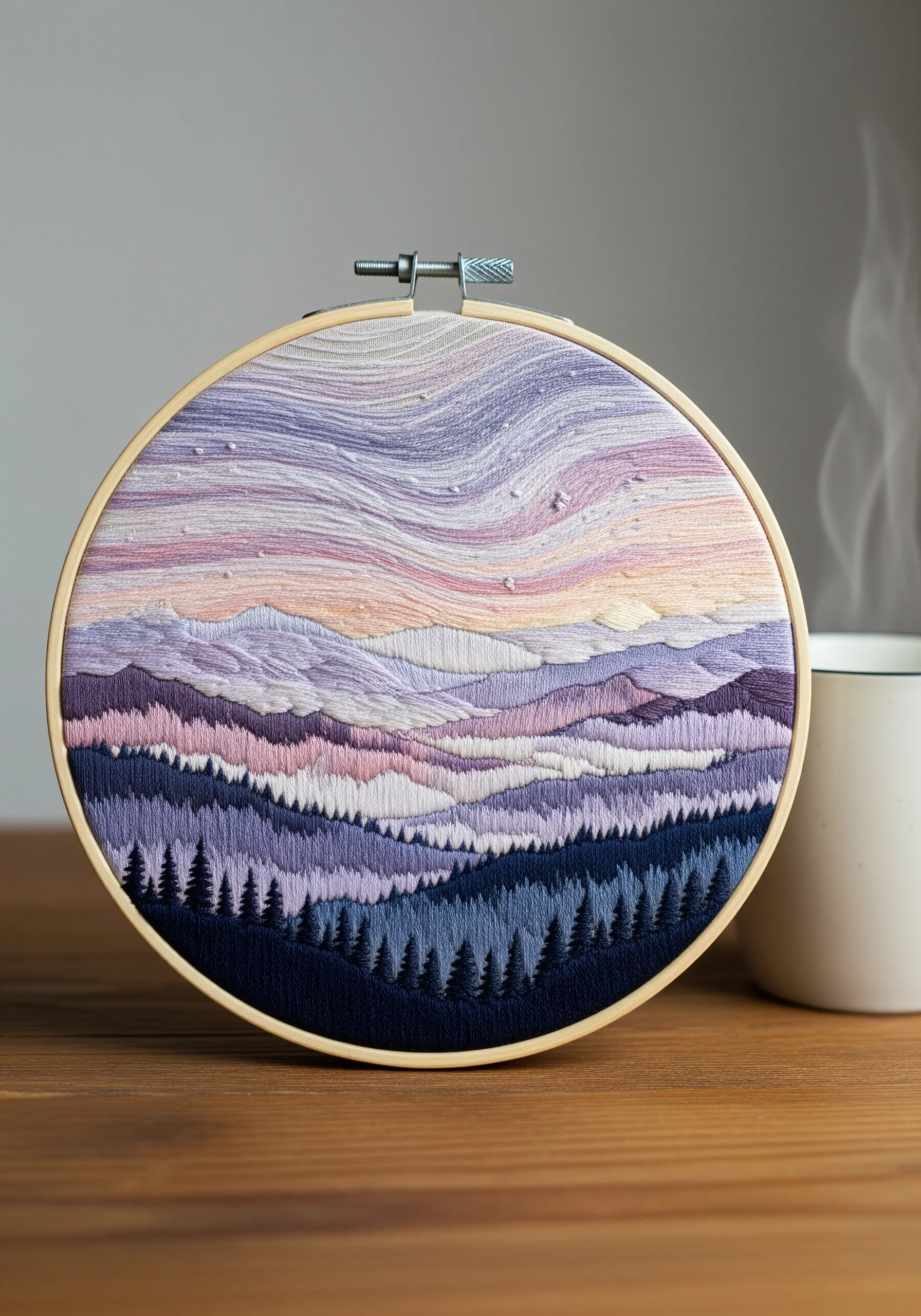
To create a soft, atmospheric sky, use the long-and-short stitch technique with single strands of floss.
Blend three to five adjacent shades—like lilac, dusty rose, and pale peach—by overlapping your stitches slightly, just as you would blend paint.
This method eliminates harsh lines and creates a gentle gradient that makes the sky feel expansive and luminous.
Contrast this soft texture with the sharper, more defined satin stitch used for the mountains to create depth and visual separation.
Explore different mountain landscape thread painting techniques to perfect this contrast.
2. Create Depth in Fields With Varied Stitch Scale
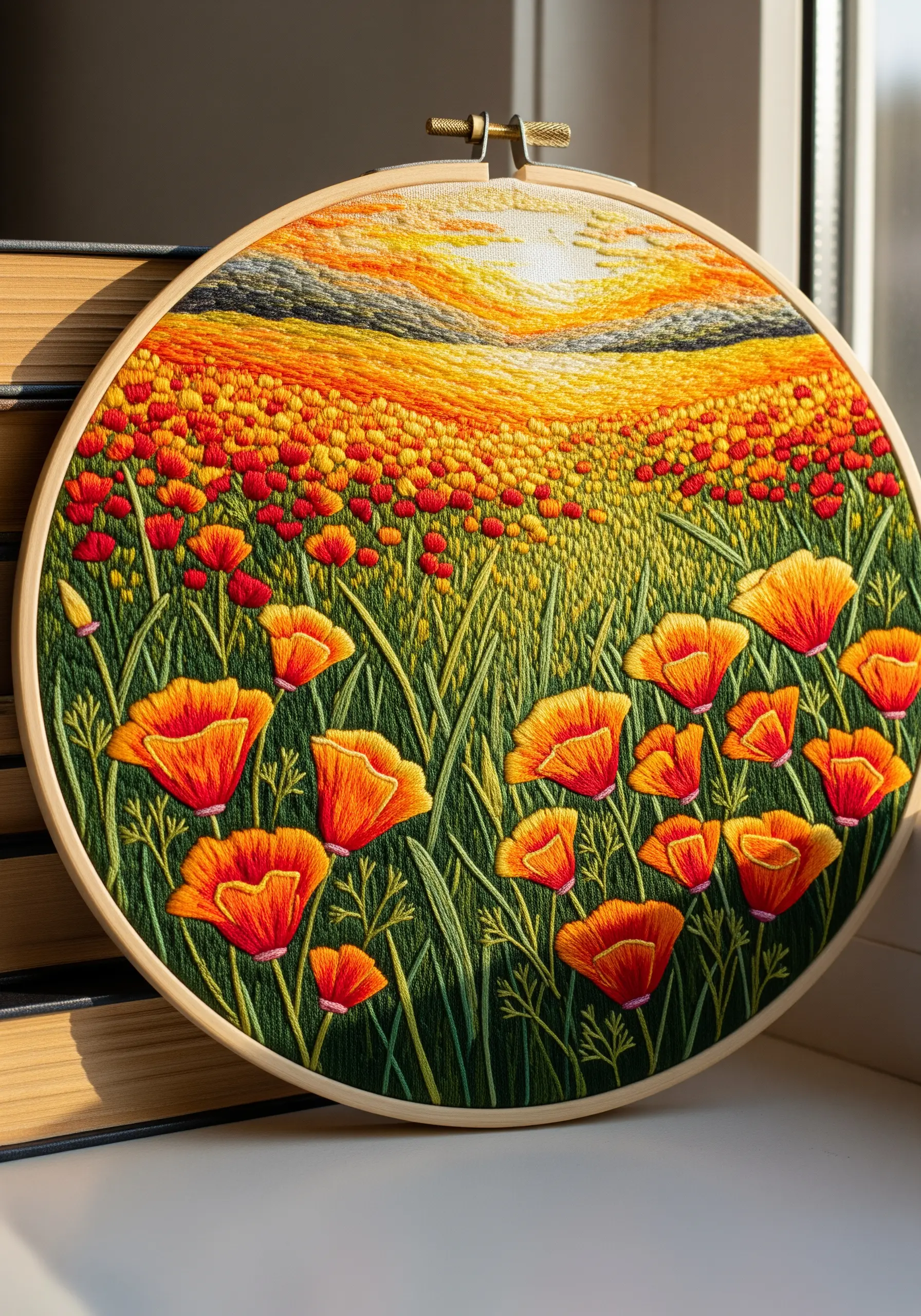
Build a sense of perspective in a floral field by varying the scale and detail of your stitches.
In the foreground, stitch large, distinct poppies using a padded satin stitch for the petals to give them dimension and weight.
As you move toward the horizon, reduce the size of the flowers and simplify them into dense clusters of French knots or single lazy daisy stitches.
This mimics how our eyes perceive detail at a distance, making your landscape feel vast and immersive.
Choosing the right wildflower thread palettes will enhance this effect, with brighter tones forward and muted ones in the back.
3. Use Dark Fabric to Amplify Light and Reflection
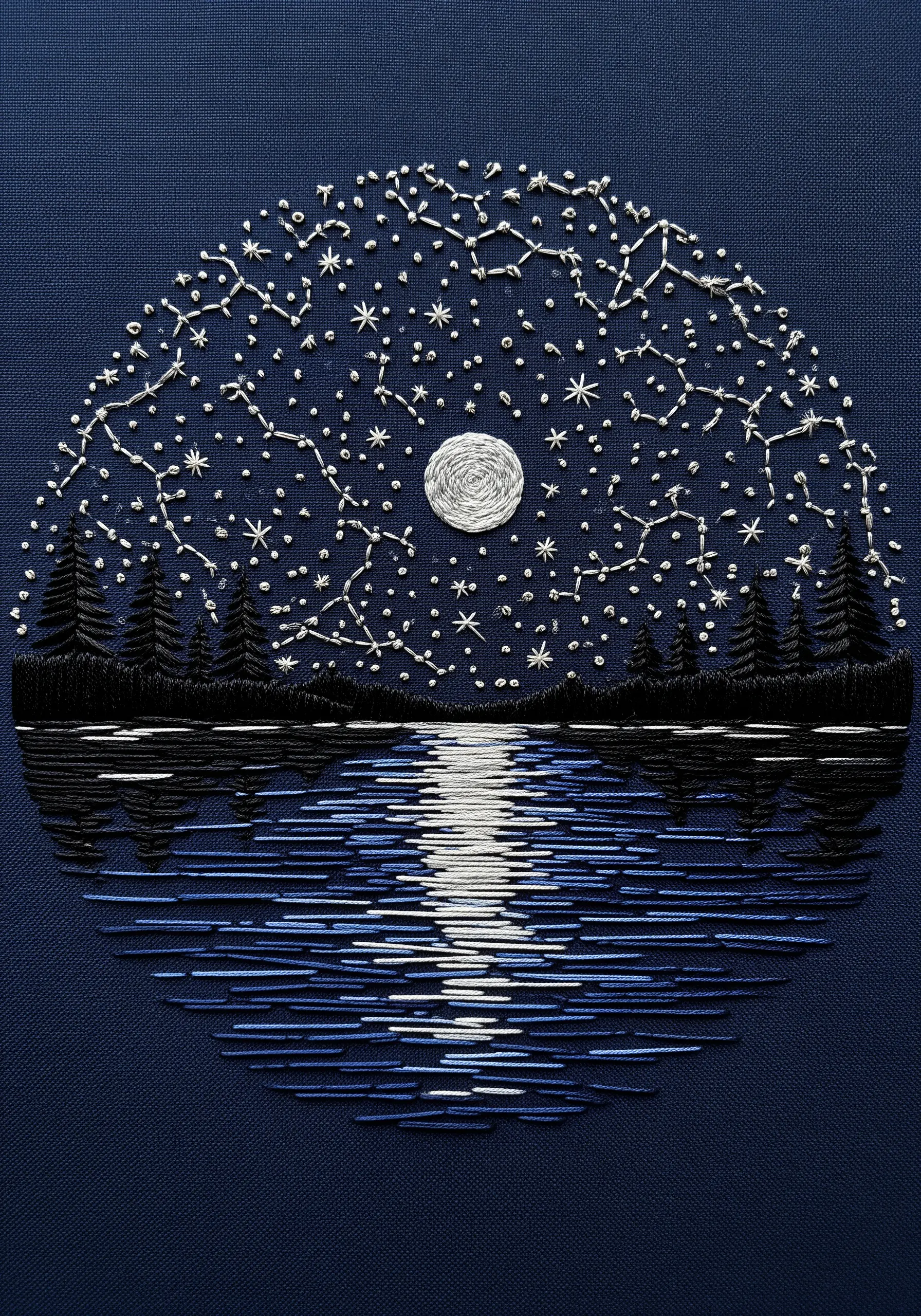
Stitching on dark navy or black fabric provides a dramatic canvas that makes light elements pop.
For stars and constellations, use a single strand of white or metallic thread for crisp, delicate lines and tiny French knots for distant stars.
To create a convincing water reflection, lay horizontal satin stitches in varying lengths, using shades of blue, grey, and bright white to mirror the moonlight.
This technique turns the unstitched fabric into the deep shadows of the night, saving you thread and creating powerful contrast.
These night sky embroidery designs are perfect for capturing celestial magic.
4. Sculpt a Stormy Sky With Couching and Loops
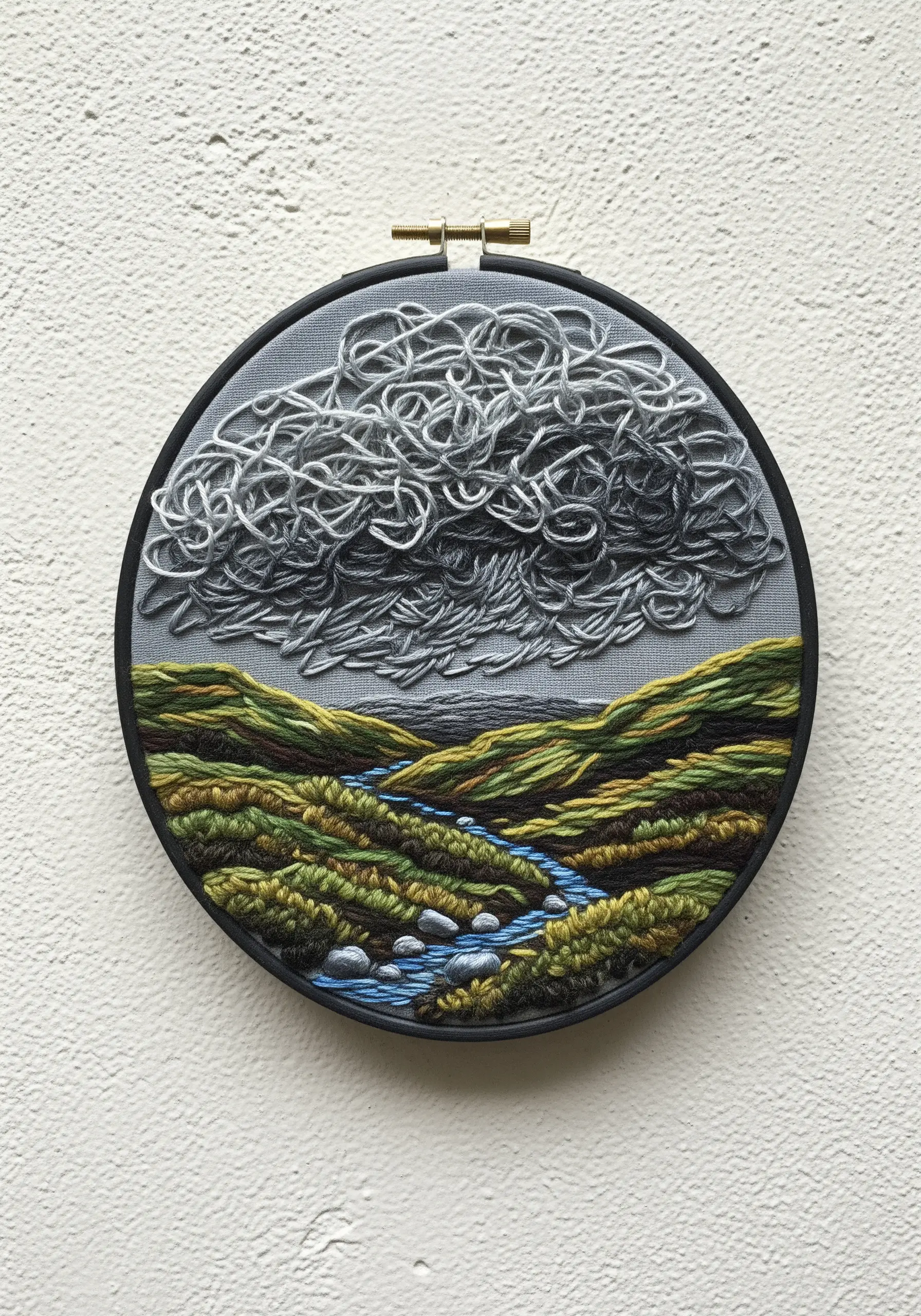
Capture the chaotic energy of a storm cloud not with neat stitches, but with texture and form.
Use a thick thread or multiple strands of floss and lay them on the fabric in random, swirling loops.
Then, use a thinner, matching thread to tack these loops down with tiny couching stitches, creating a sculptural, high-relief cloud.
This technique adds a tangible sense of movement and turbulence that contrasts beautifully with the flatter landscape below, making the sky the focal point.
These are some of my favorite abstract thread embroidery ideas inspired by nature.
5. Build Pointillist Foliage With French Knots
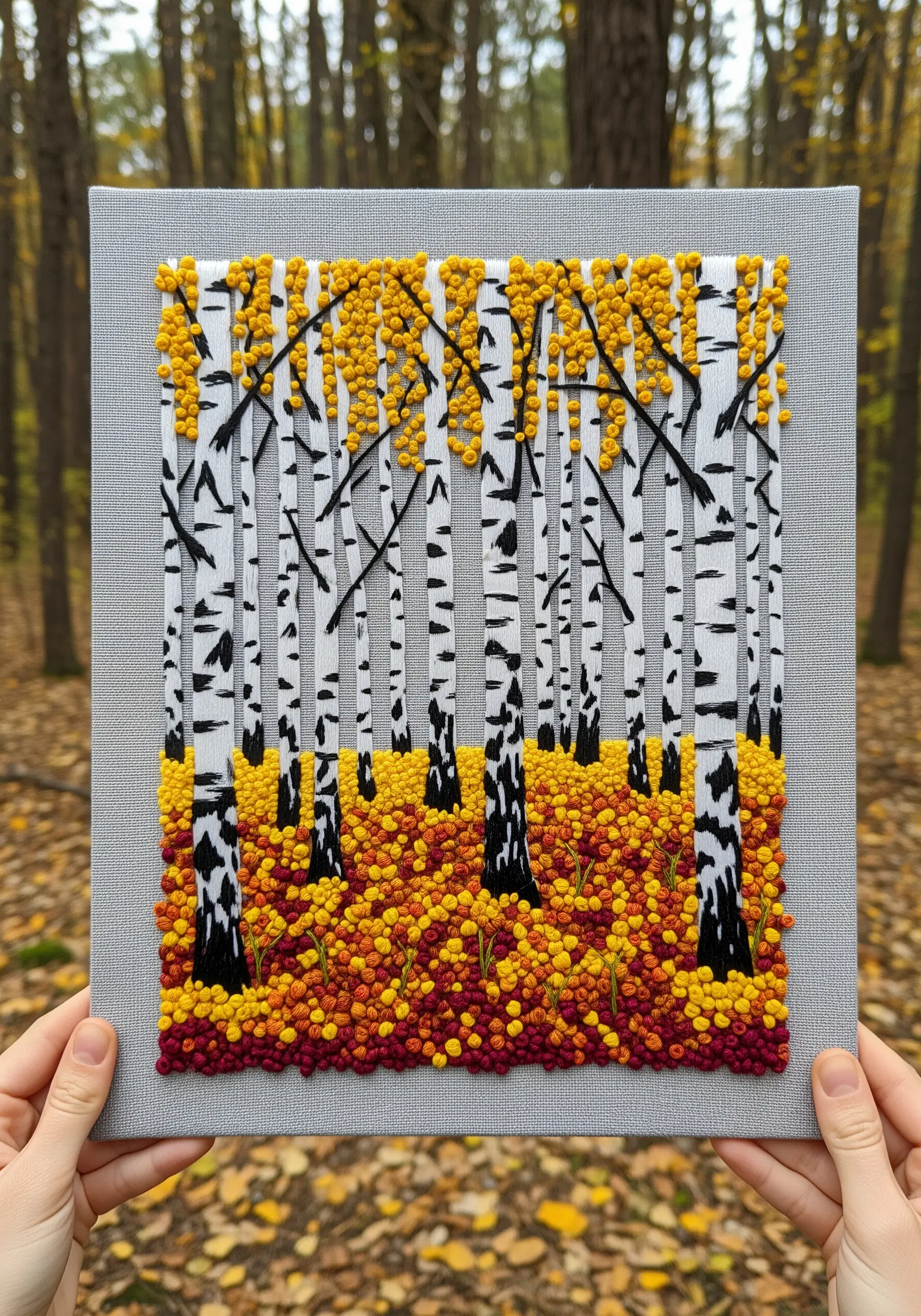
Instead of outlining leaves, create an impressionistic canopy of foliage using clusters of French knots.
Vary the colors—mixing yellows, oranges, and deep reds—to give the leaves a dappled, sunlit appearance.
For the iconic birch tree bark, use short, horizontal bars of black satin stitch over a white satin-stitched trunk to create that distinct, papery texture.
This combination of pointillist dots and graphic lines creates a piece that is both texturally rich and visually striking.
You can also try other forest floor botanical stitch ideas to complete your woodland scene.
6. Stitch Perspective Into a Lavender Field
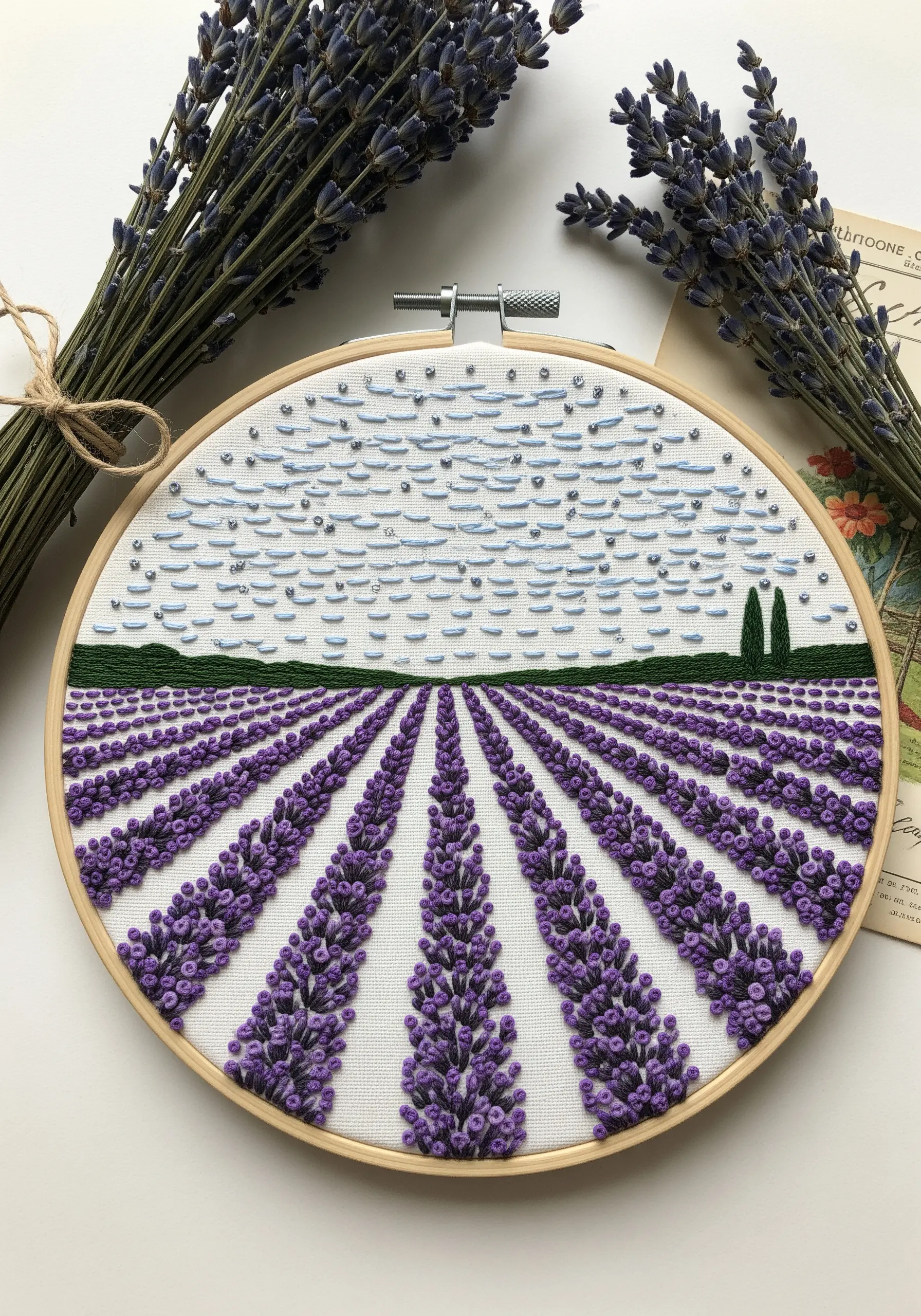
Create the illusion of rows stretching to the horizon by systematically adjusting your stitch size.
In the foreground, use plush, thick French knots or bullion stitches for the lavender blooms, giving them volume and definition.
As the rows recede, gradually reduce the size of your knots and use fewer strands of thread.
For the farthest rows, a simple series of tiny seed stitches in the same purple hue is enough to suggest the texture without adding bulk.
This methodical approach to scale is a simple but powerful way to create realistic perspective.
Explore other calming lavender stitch ideas for your next project.
7. Paint a Canyon Sunset With Directional Stitching
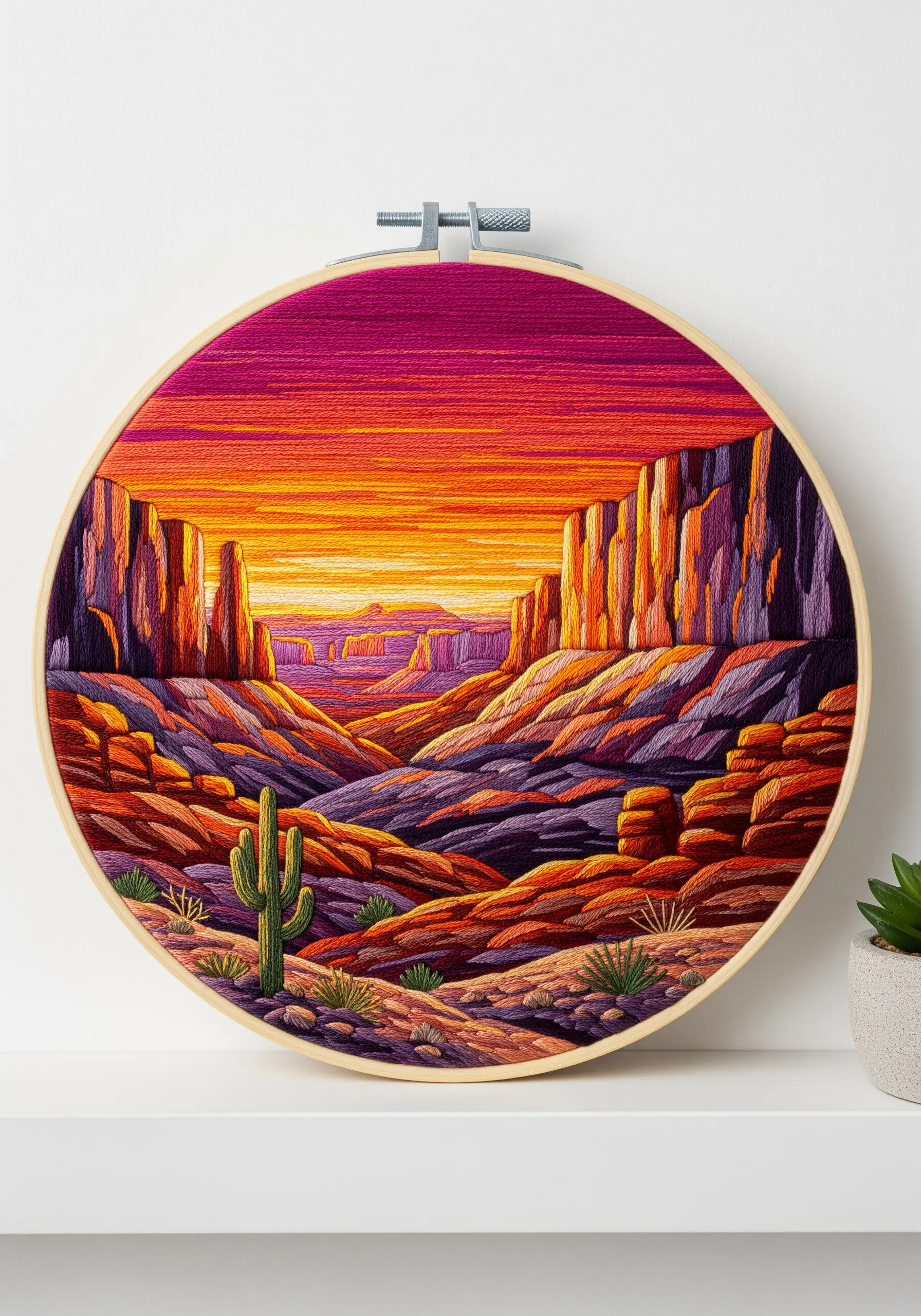
Capture the dramatic light of a desert sunset through meticulous thread painting.
Use a single strand of floss and long-and-short stitches that follow the contours of the rock formations, creating a sense of flow and erosion.
Select a bold, warm palette and blend colors directly on the fabric to show how light hits the canyon walls and casts deep shadows.
This technique is less about individual stitches and more about building layers of color to create a vibrant, cohesive whole.
Find more inspiration in these embroidery ideas inspired by national parks.
8. Create Fluffy, Dimensional Snow With Turkey Work
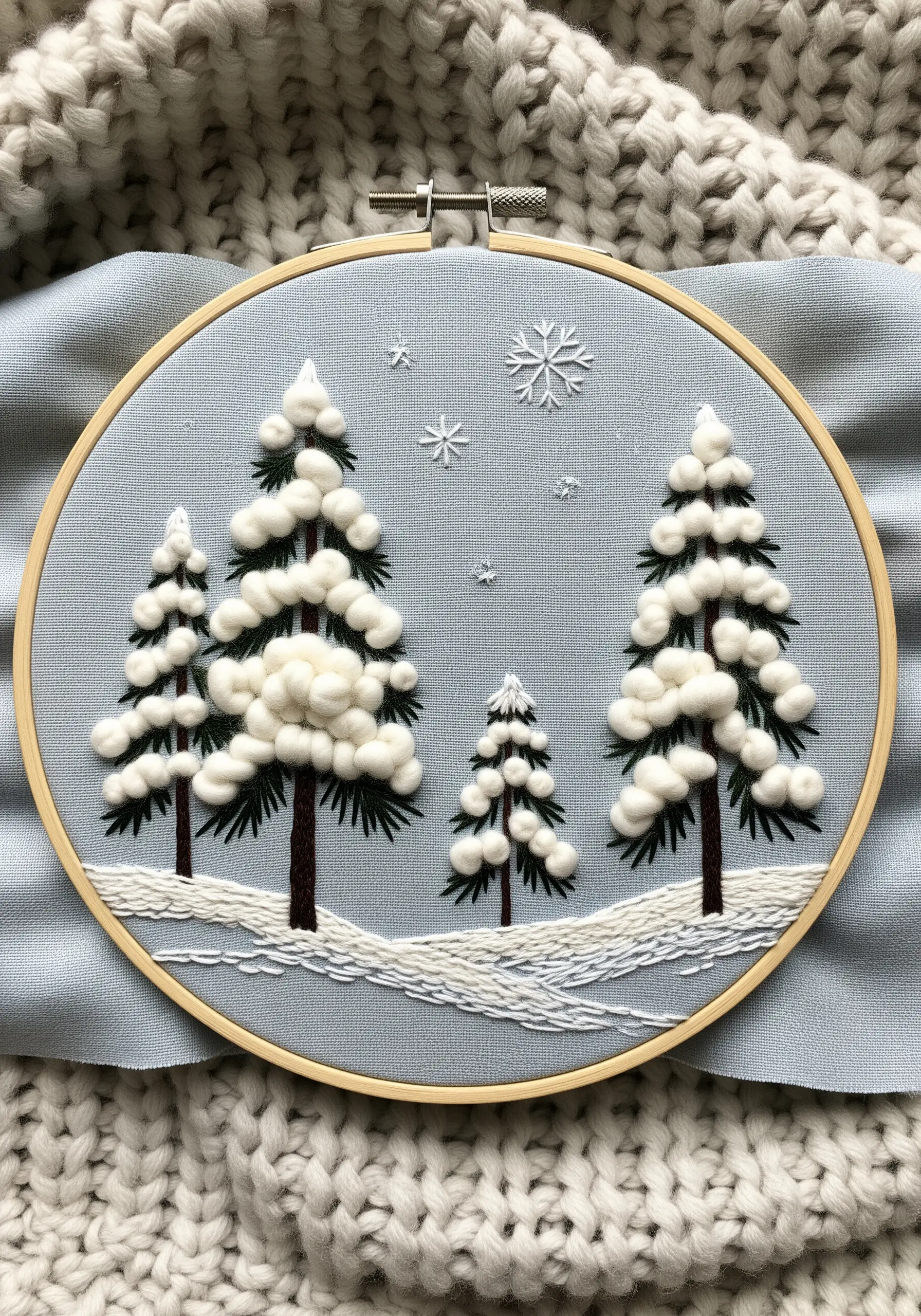
Give your winter scene a soft, tactile quality by stitching snow-laden branches with the Turkey work stitch.
Create loops of thick white or off-white wool thread, then snip and fluff them to mimic freshly fallen snow.
This high-pile texture provides a stunning contrast against the flat, dark green fly stitches of the pine needles and the simple satin stitch of the tree trunk.
It’s a technique that invites touch and makes your snowy landscape feel cozy and three-dimensional.
These seasonal wall art projects are perfect for celebrating the changing landscape.
9. Mimic Lush Moss With Dense Knotting
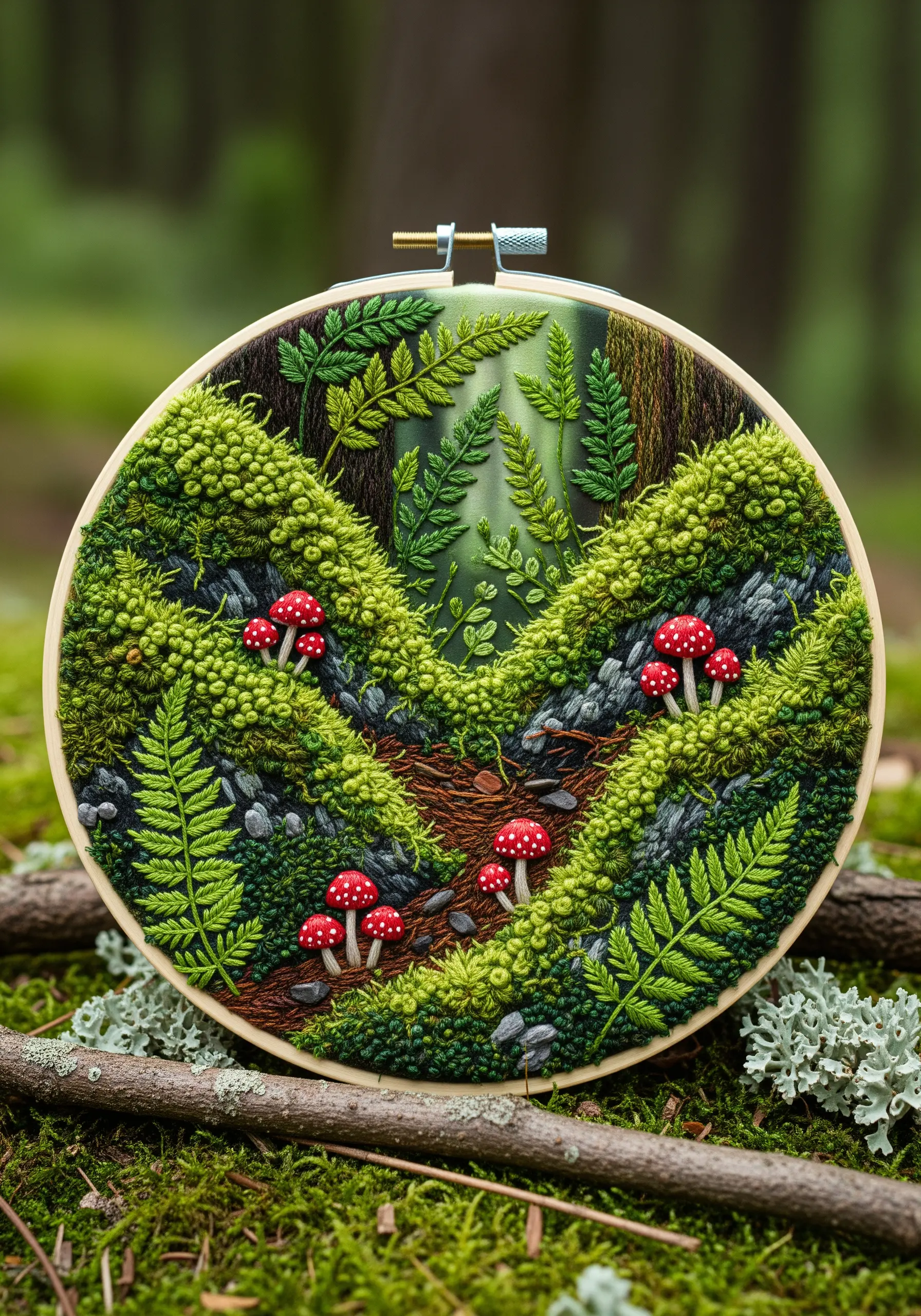
Recreate the rich, velvety texture of a forest floor with a dense application of French and colonial knots.
Use several shades of green, from deep emerald to bright chartreuse, and pack the knots tightly together to build up a plush, mossy carpet.
Vary the size of the knots by changing the number of thread strands and how many times you wrap the needle.
This layered approach gives your work an incredibly realistic, organic feel, beautifully contrasted by the delicate fern or fly stitches you can add for foliage.
Explore more ways to stitch natural textures to bring your art to life.
10. Suggest Sand and Seafoam With Scattered Stitches
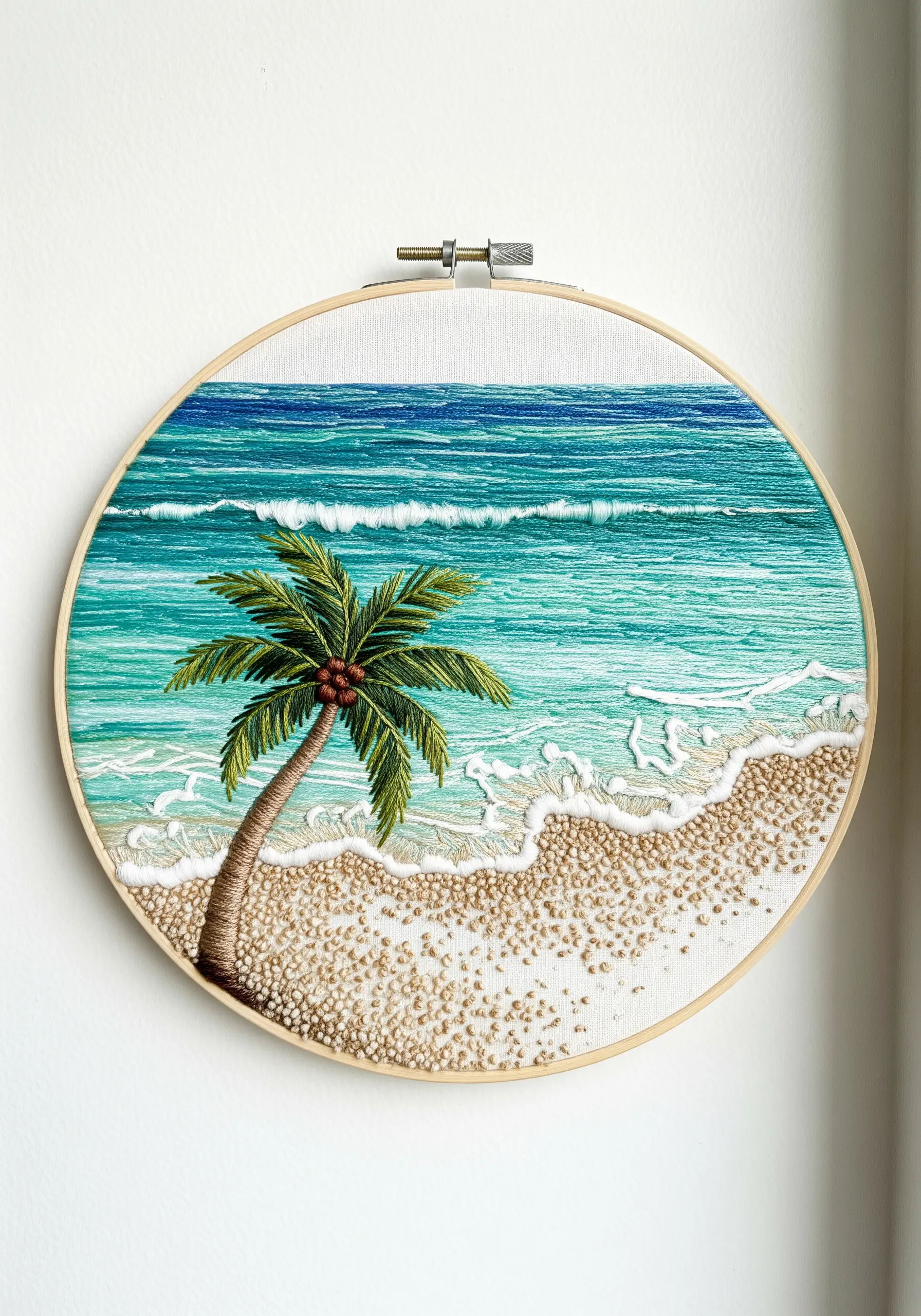
Capture the granular texture of a sandy beach using scattered French knots or seed stitches.
Cluster them more densely near the water’s edge and spread them out further up the shore to create a natural gradient.
For the delicate line of seafoam, use a series of small, overlapping bullion knots or detached chain stitches in bright white thread.
This creates a frothy, bubbly texture that perfectly contrasts with the smooth, horizontal satin stitches of the ocean waves.
Embrace these coastal vibe embroidery projects for a touch of seaside calm.
11. Add a Conceptual Layer With Negative Space
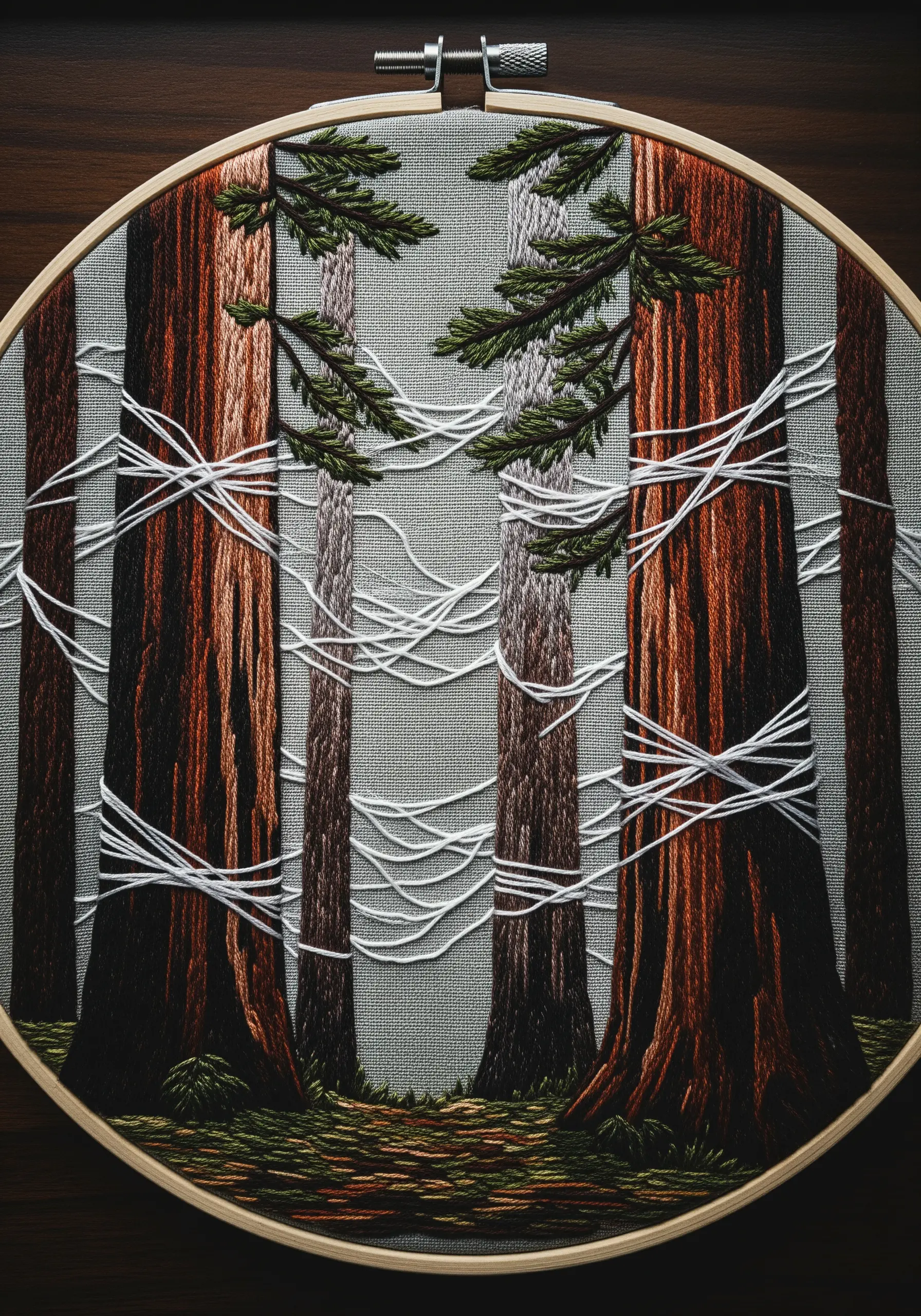
Elevate a traditional landscape by introducing an abstract element that plays with negative space.
First, stitch a realistic forest scene using classic thread painting techniques for the tree bark and foliage.
Then, stretch long, intersecting strands of a contrasting color—like stark white—across the composition, tacking them down only at the edges.
This creates a visual tension between the detailed background and the graphic foreground, turning a simple scene into a piece of conceptual art.
Play with abstract thread designs using negative space to give your work a modern edge.
12. Give Cherry Blossoms a 3D Pop
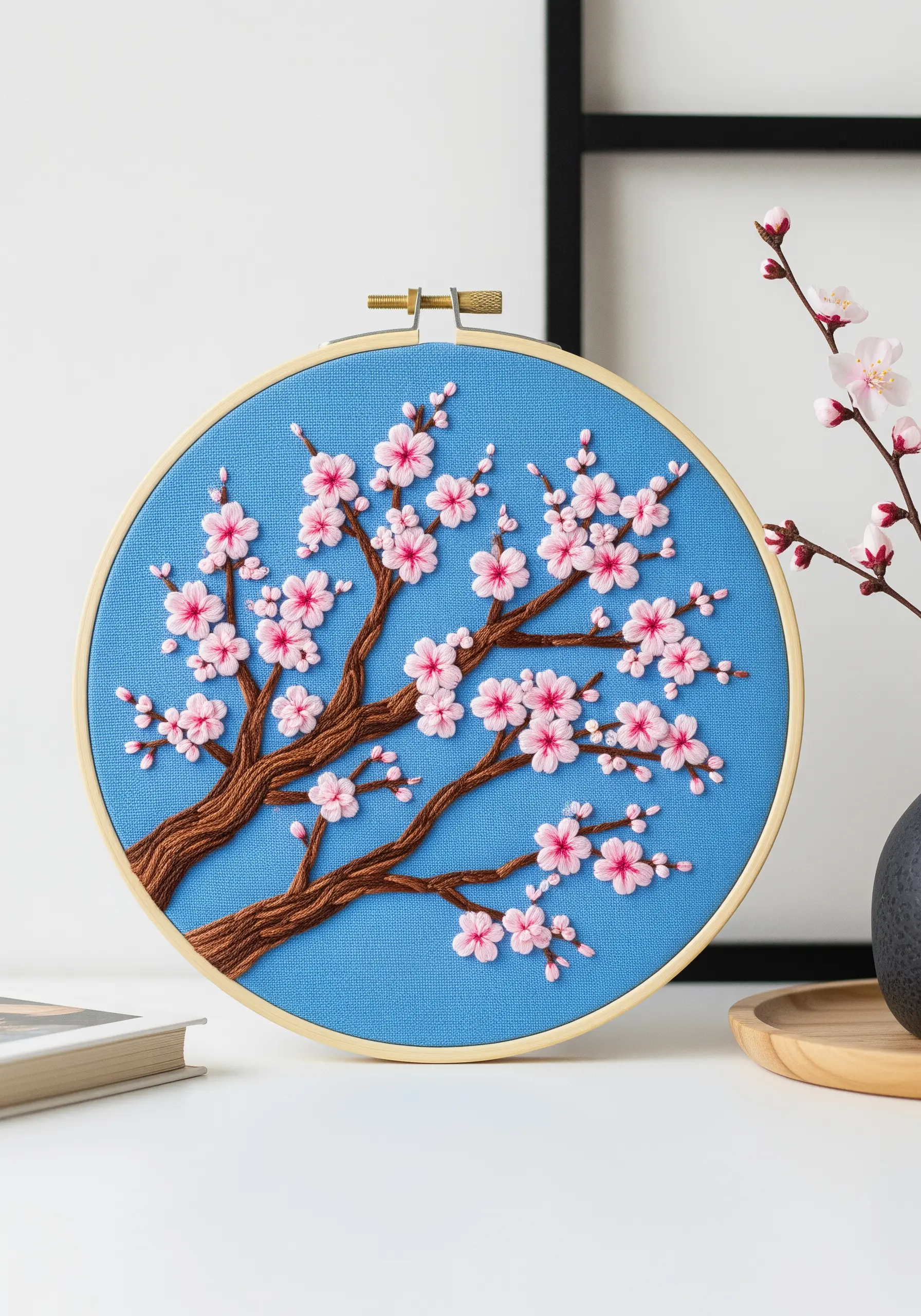
Make your floral branches feel like they are blooming right off the fabric with dimensional stitches.
Create each blossom using five detached chain stitches (lazy daisies) for the petals, arranged in a circle.
Place a single French knot in a contrasting color, like pale yellow or deep pink, in the center of each flower.
This simple combination creates a raised, sculptural effect that gives the blossoms a lifelike quality and beautiful texture.
Mastering 3D floral embroidery techniques will make your botanical pieces unforgettable.
13. Define a Landscape With Directional Satin Stitch
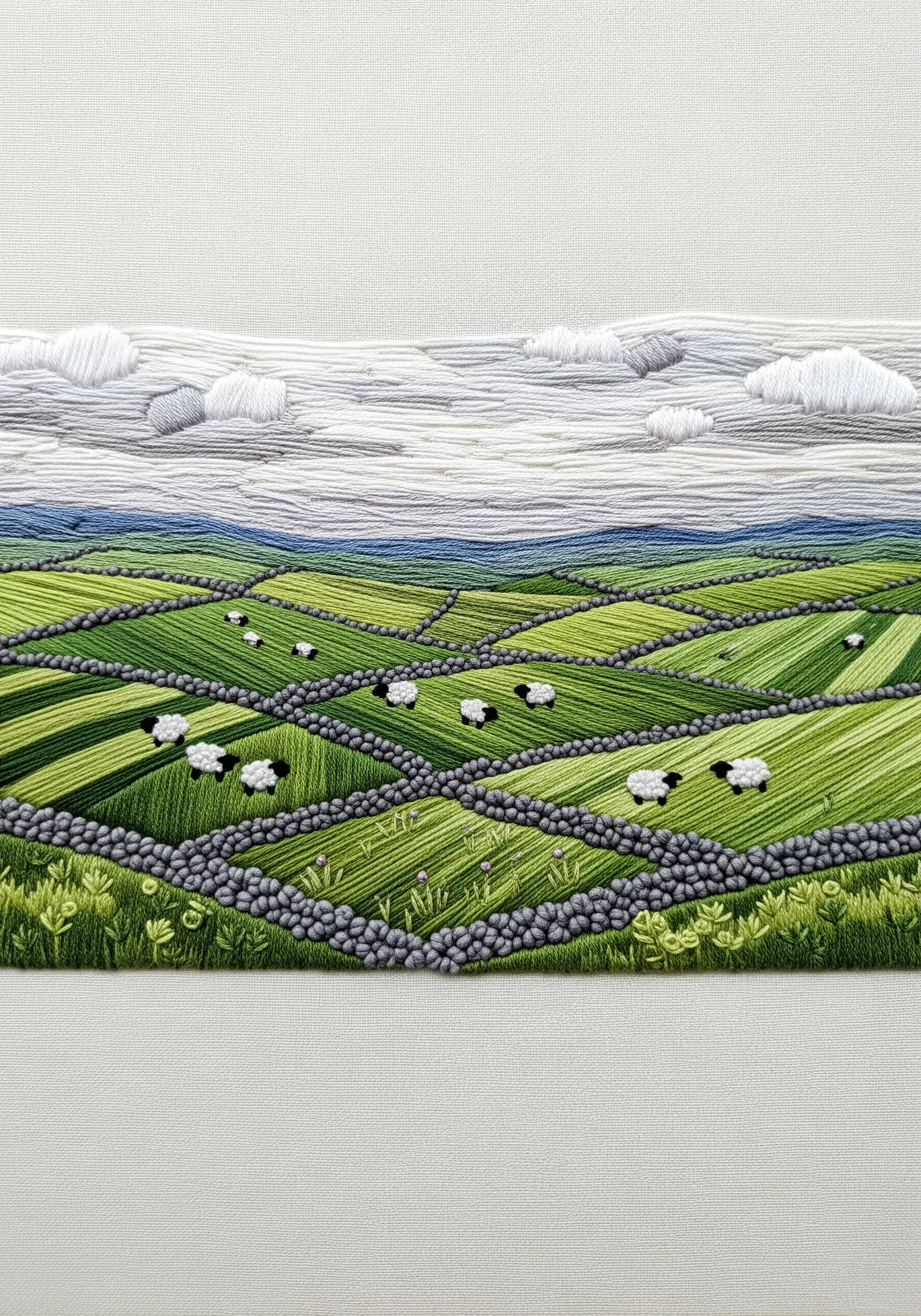
Create a clean, graphic landscape by using the direction of your satin stitches to define different elements.
Fill in each patch of field with stitches angled to suggest the contour of the land, creating a sense of rolling hills.
For the stone walls, switch to tightly packed French knots in shades of grey to build a contrasting, bumpy texture.
This methodical use of stitch direction and texture transforms a simple scene into a highly structured and visually satisfying composition.
These cottage garden embroidery themes are perfect for practicing this technique.
14. Capture the Aurora With Vertical Thread Painting
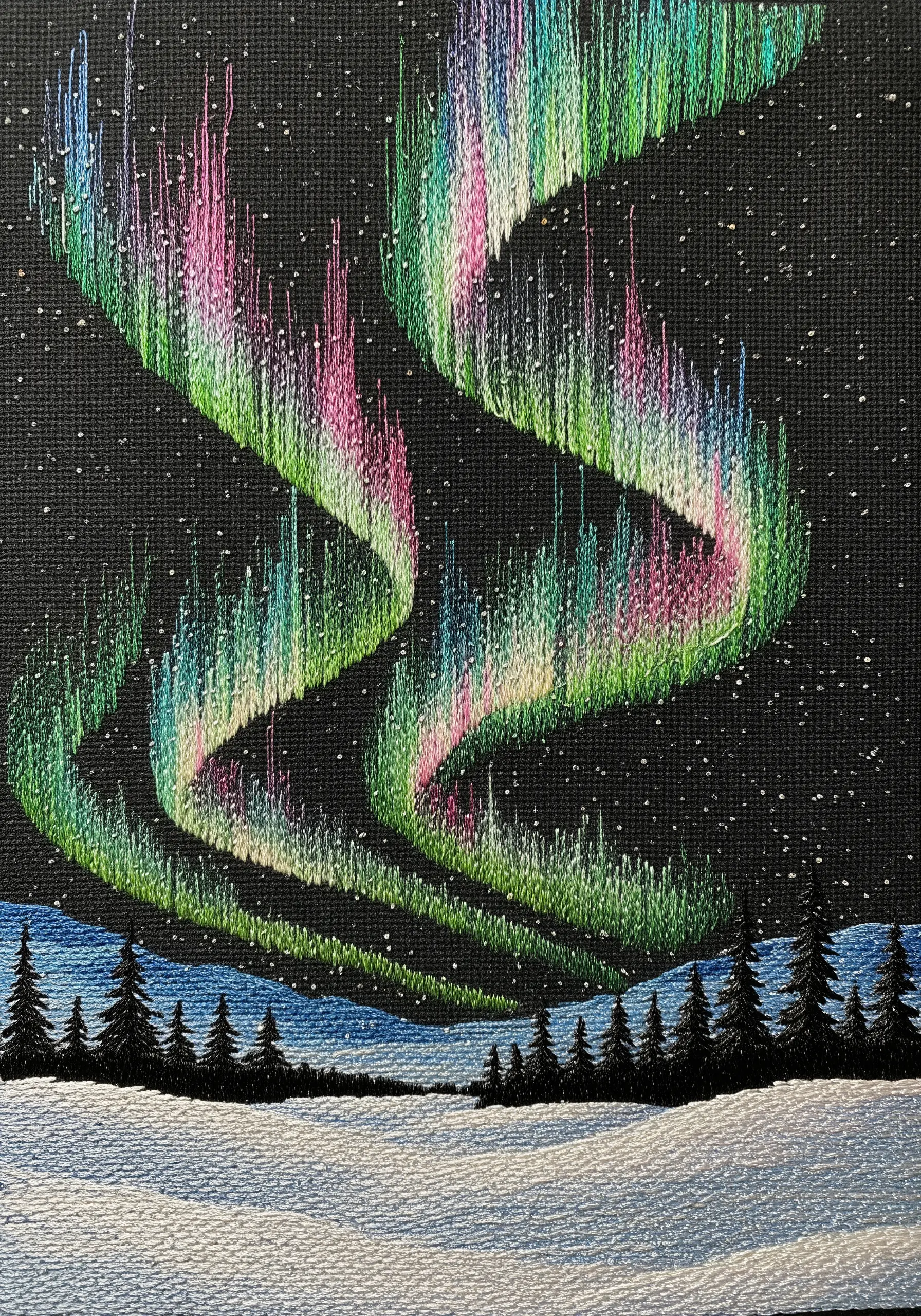
Replicate the ethereal glow of the Northern Lights using vertical straight stitches on a dark canvas.
Instead of pre-blending threads, lay down a base of your lightest color (like pale green or white), then stitch over it with other colors like pink, turquoise, and deeper green.
Keep the stitches loose and slightly transparent, allowing the colors to blend optically and create a shimmering, dancing effect.
The key is not to cover the underlying layers completely but to let them glow through.
You can achieve similar painterly effects with these abstract color blend stitch ideas.
15. Build a Sunflower’s Form With Stitch Logic
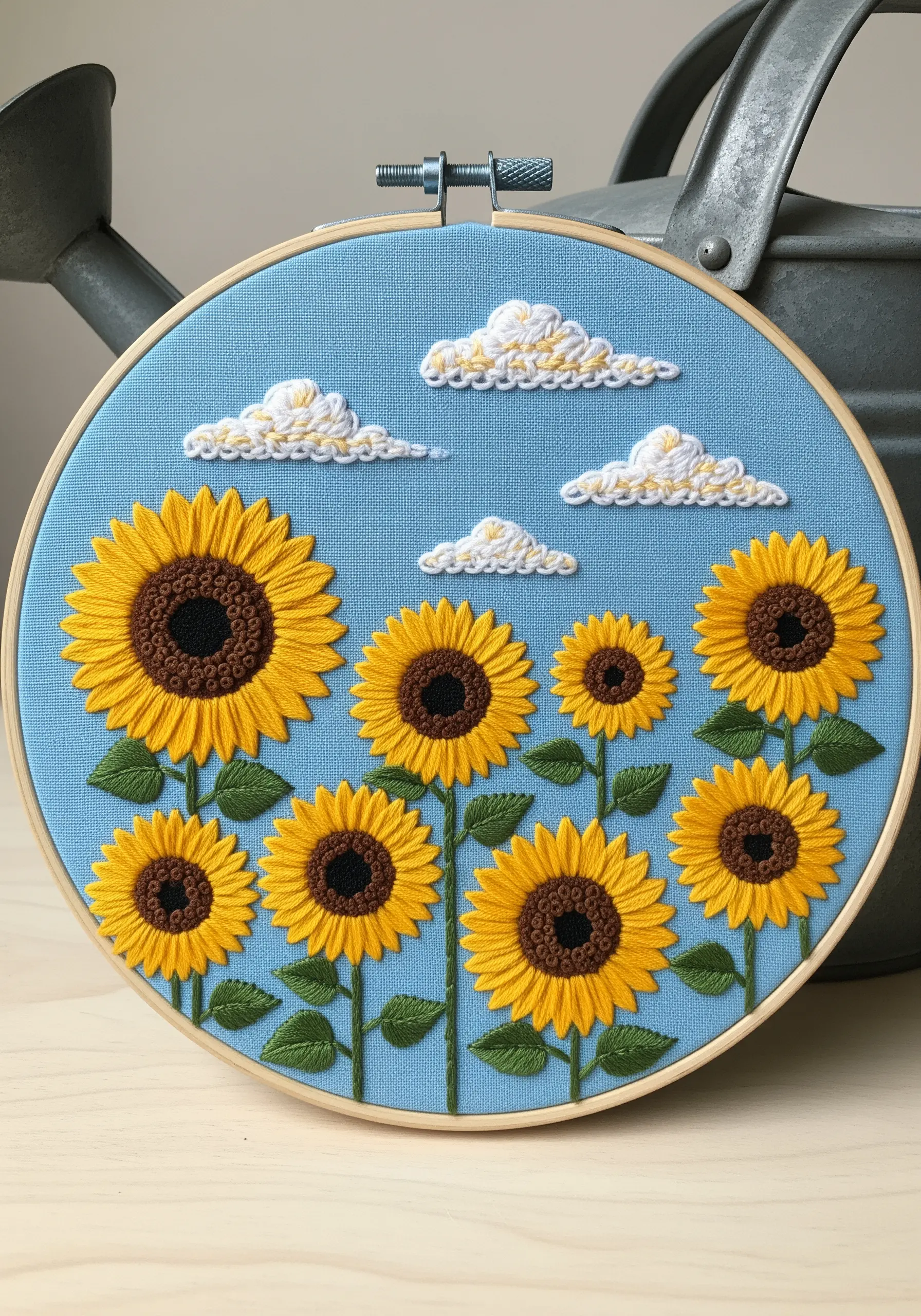
A sunflower’s beauty lies in its structure, which you can replicate with specific stitches.
Use long-and-short stitch for the petals, starting with a lighter yellow at the tip and blending into a deeper gold or orange at the base to create a realistic gradient.
For the intricate seed head, fill the center with a dense spiral of French knots, using several shades of brown and black for depth and texture.
This combination of smooth, blended petals and a nubby, textured center makes each sunflower visually compelling.
Try more sunflower-inspired embroidery crafts to brighten your home.
16. Stitch a Dew-Kissed Web With Fine Thread
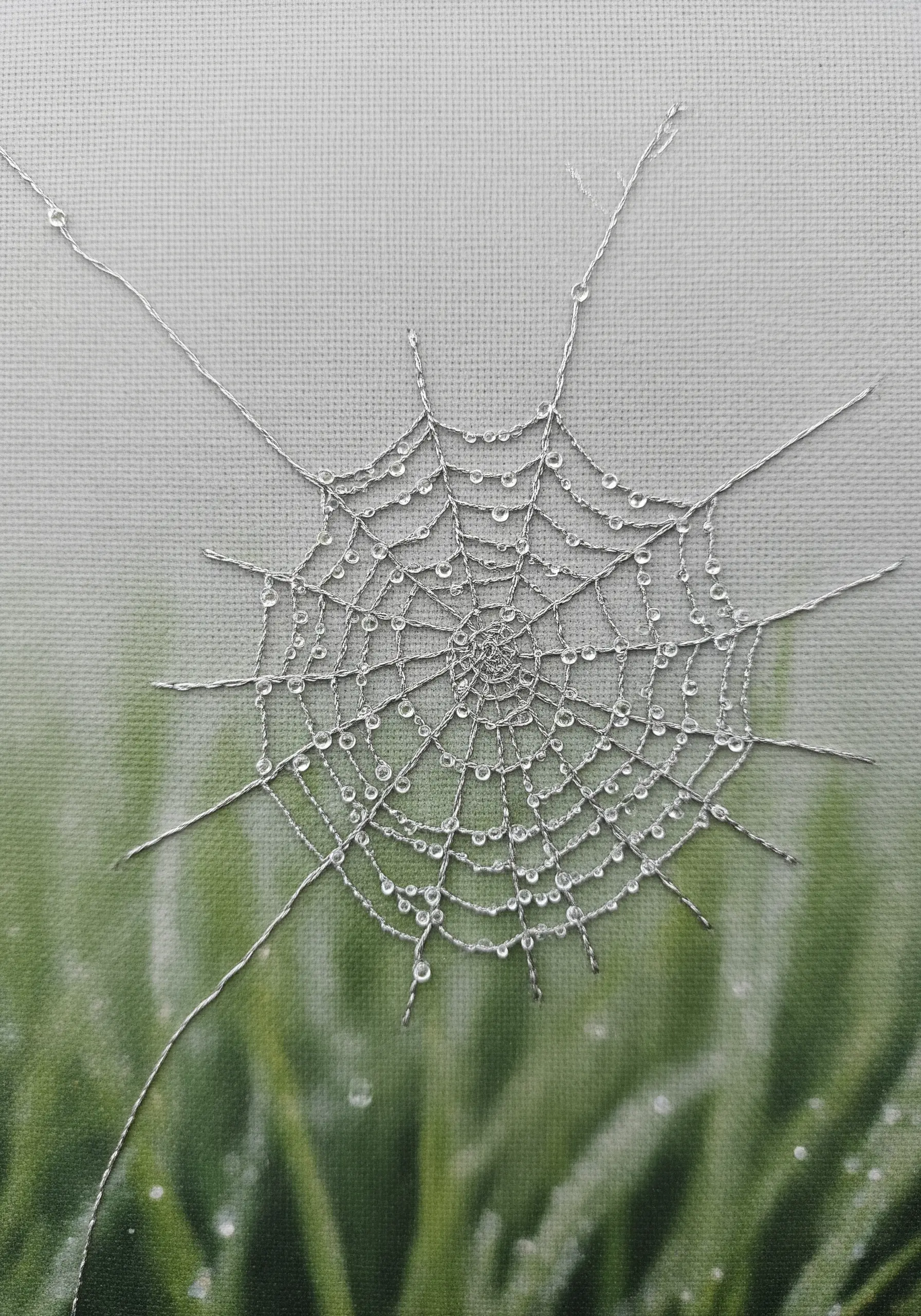
Capture the delicate nature of a spider web by choosing the right materials and focusing on tiny details.
Use a single strand of a fine, silvery metallic or silk thread to stitch the web’s structure with straight stitches.
To create the illusion of dewdrops, use tiny seed beads or place minuscule French knots made with a single strand of glossy white thread along the web’s lines.
The subtle shine against a soft-focus background creates a hyper-realistic and magical effect.
Even the most tiny stitched details can completely transform a piece.
17. Convey Water’s Motion With Thread Direction
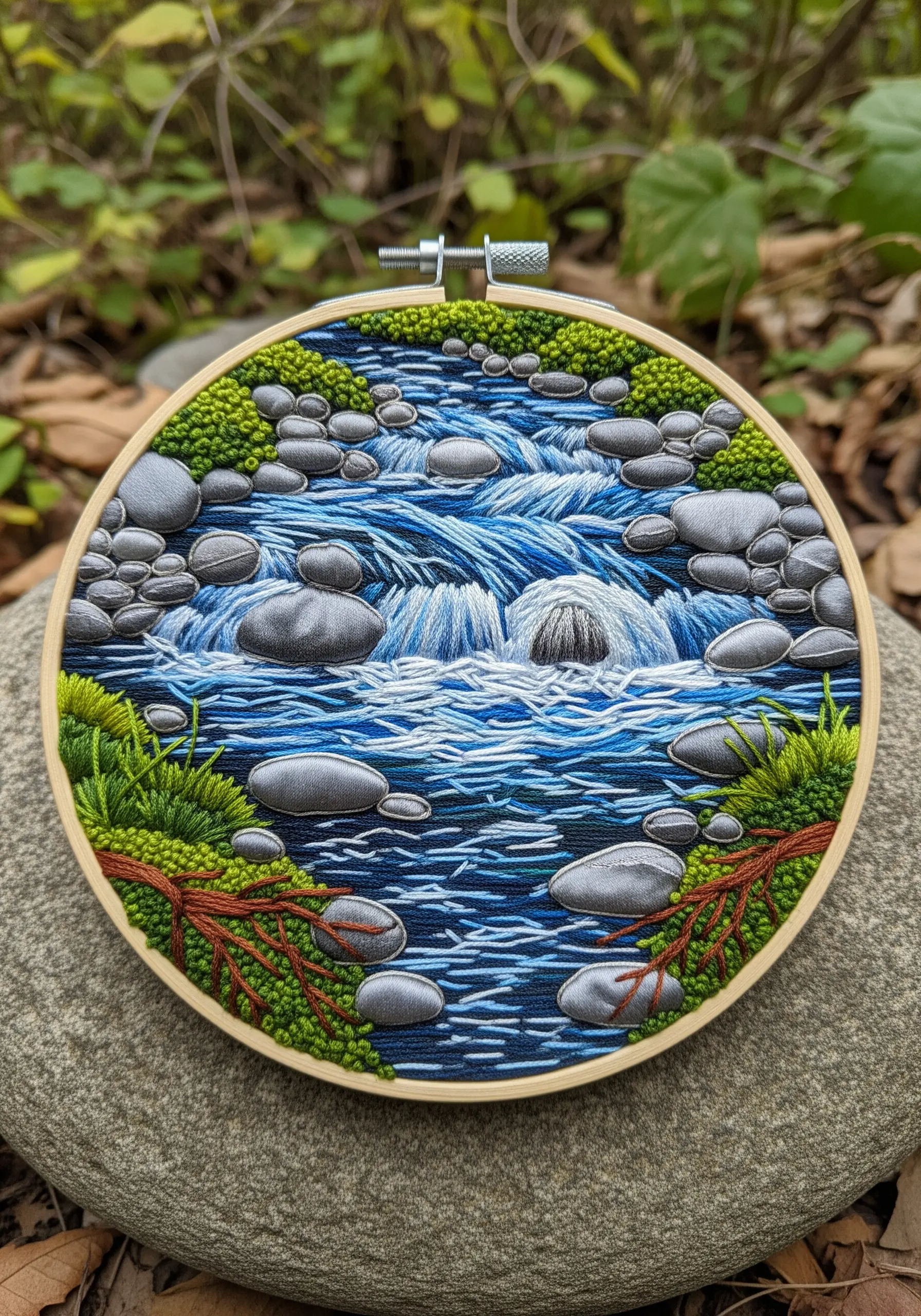
To make water look like it’s actually flowing, the direction of your stitches is everything.
Use a mix of long straight stitches and long-and-short stitches in various shades of blue, grey, and white.
Angle your stitches to follow the current, swirling them around rocks and letting them cascade downwards in a waterfall.
Where the water is turbulent, use short, chaotic stitches and more white to suggest foam and spray.
This technique turns a static image into a dynamic scene full of energy and movement.
Try these lake river embroidery ideas to practice stitching water.
18. Trace Geological Time With Contour Stitching
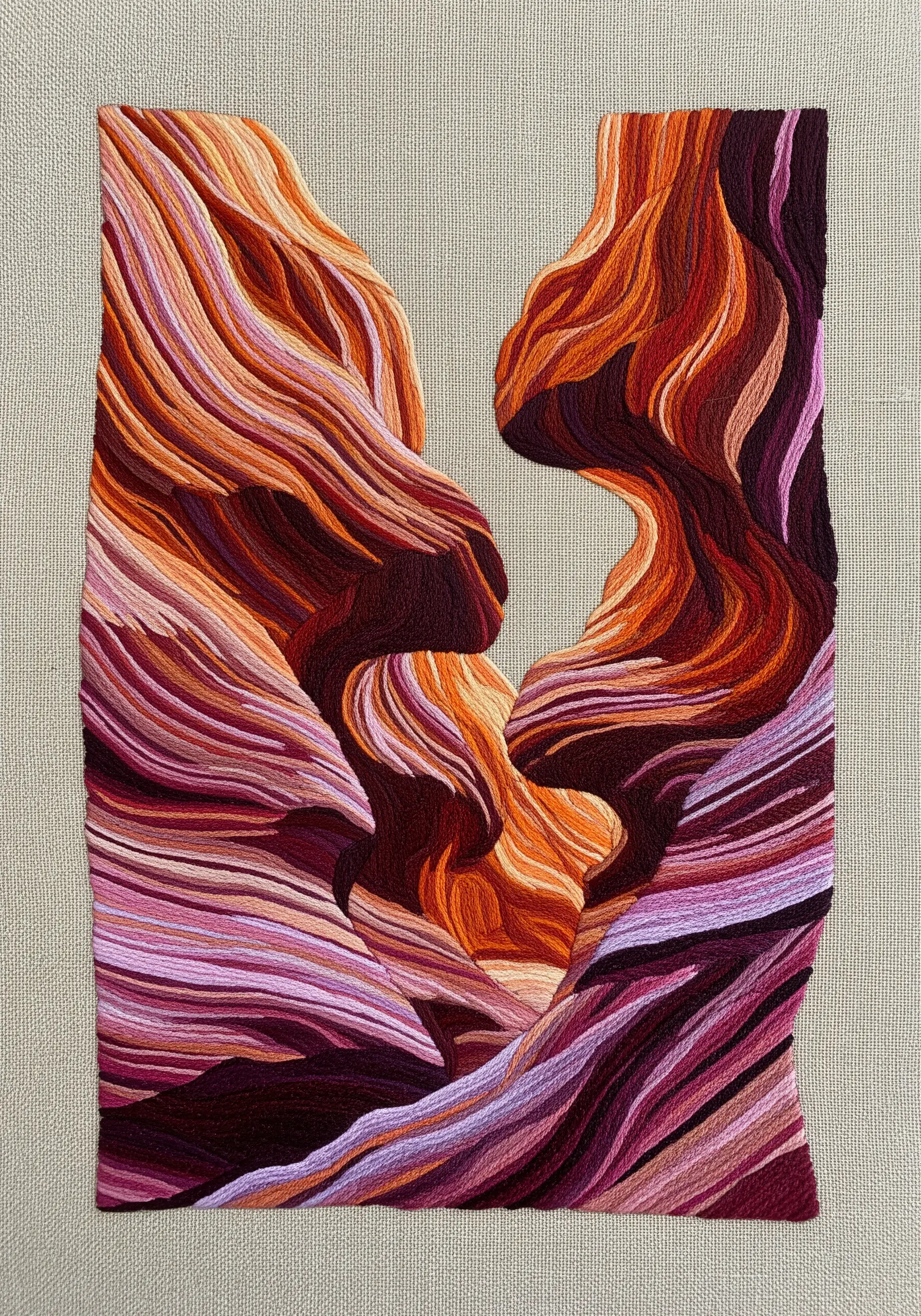
Emphasize the flowing lines of rock formations like these slot canyons by using your stitches to trace their contours.
Fill large areas with long, undulating split stitches or satin stitches that follow the natural curves and layers of the rock.
Use a palette of closely related colors—pinks, oranges, and deep reds—and allow the direction of your stitches, rather than dramatic color shifts, to define the shape.
This creates a mesmerizing, fluid effect that highlights the geological story of the landscape.
These organic shape embroidery patterns are perfect for exploring natural forms.
19. Make Fireflies Glow With a Simple Stitch Combo
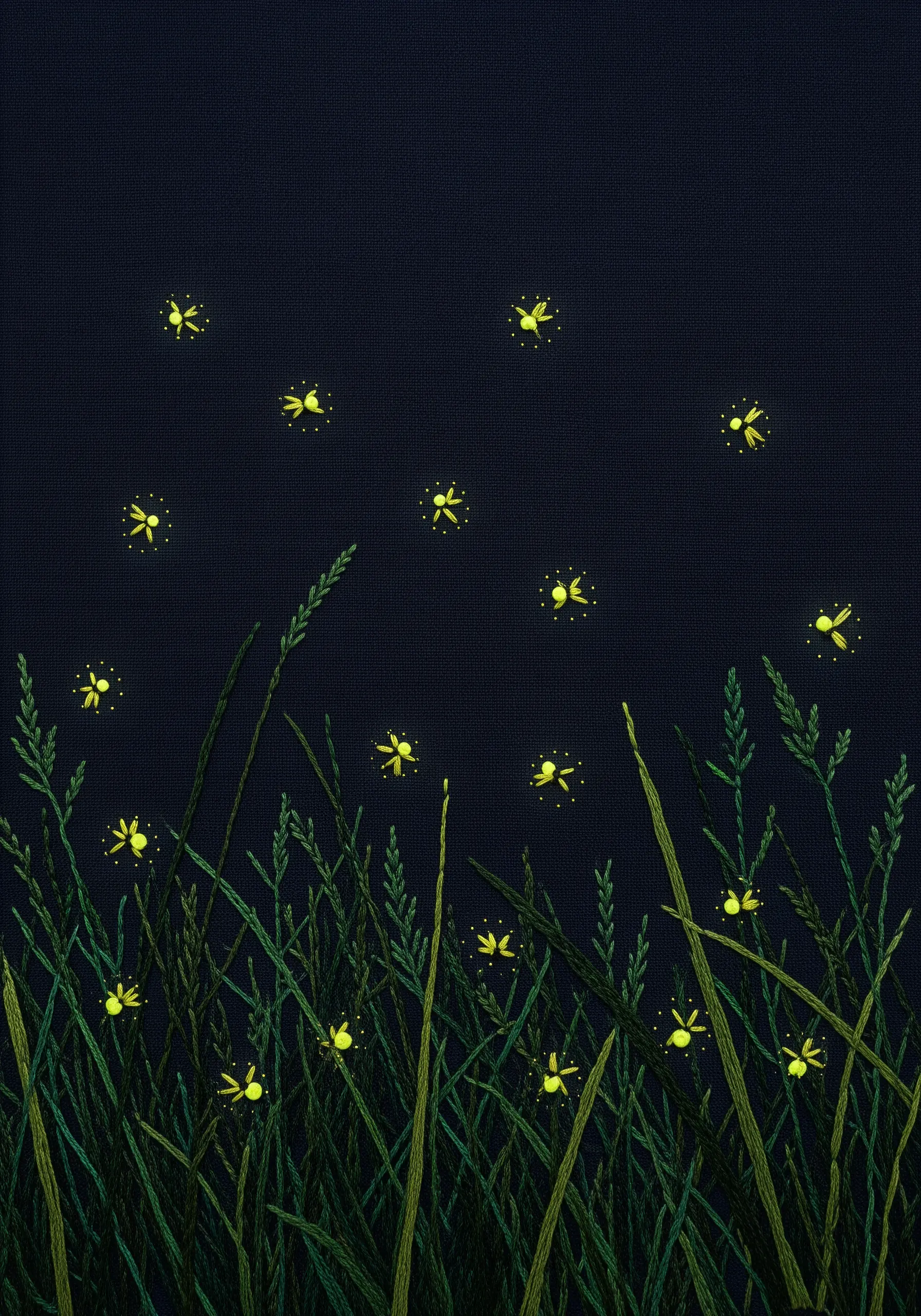
Create the magical glow of fireflies using glow-in-the-dark thread and a strategic stitch combination.
For each firefly, make a central French knot with a bright yellow or chartreuse thread.
Then, using the same thread, add four to six tiny, radiating straight stitches—like sun rays—out from the knot.
This simple technique creates a soft, bursting glow effect that looks beautiful in the light and adds a hidden, magical element in the dark.
Combine this with night garden embroidery ideas for an enchanting piece.
20. Achieve a Perfect Reflection With Symmetry
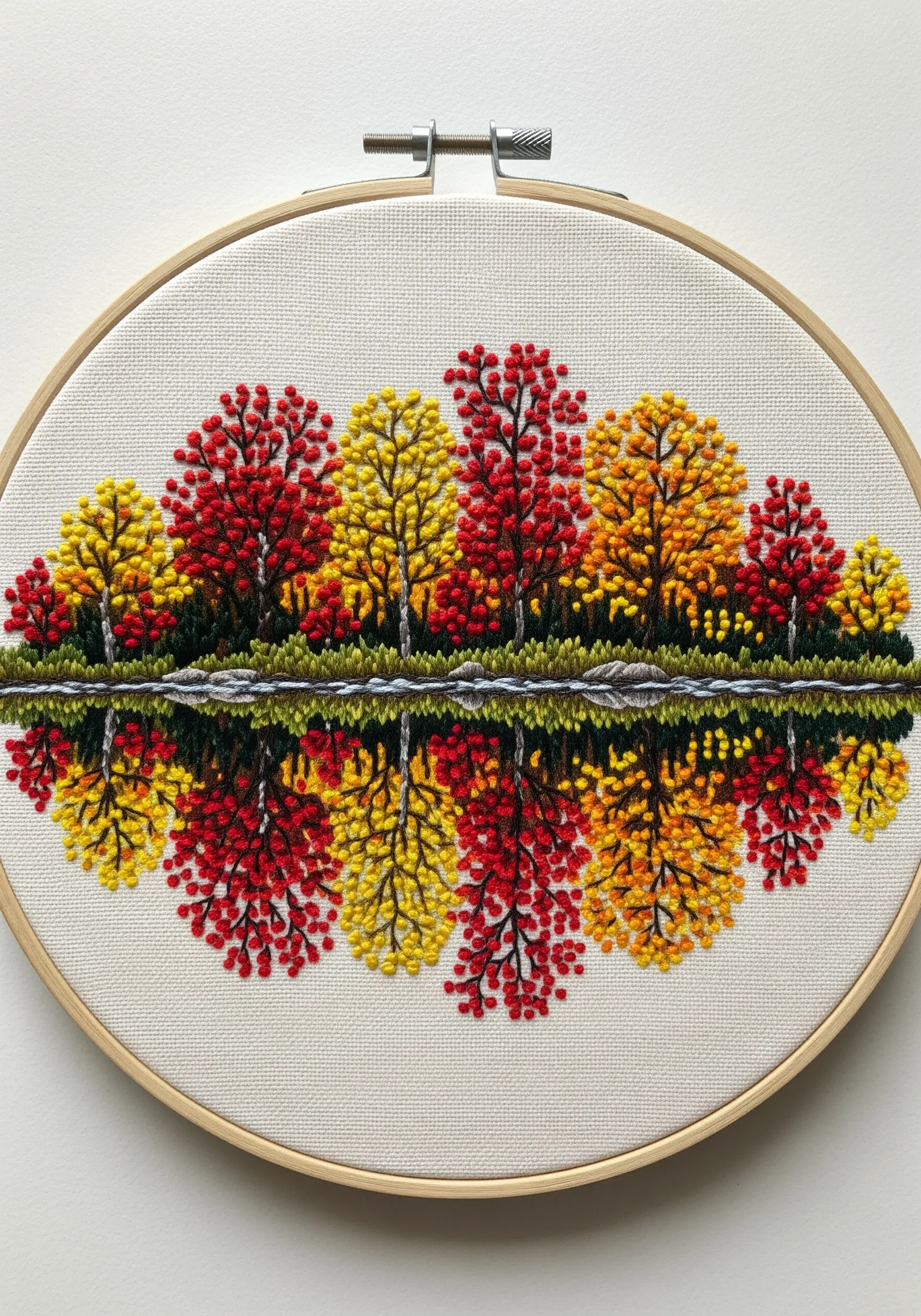
The trick to a convincing water reflection is mirroring your composition with careful precision.
Stitch the top half of your design first, using French knots for the autumn foliage.
Then, replicate it exactly in the bottom half, ensuring your colors and shapes are perfectly symmetrical across the horizontal shoreline.
You can add a slight waviness to the reflection by gently curving your stitch placement or slightly blending the edges where the colors meet.
Practice with your favorite earth-inspired embroidery designs.
21. Layer Stitches for Dense Bluebonnet Spires
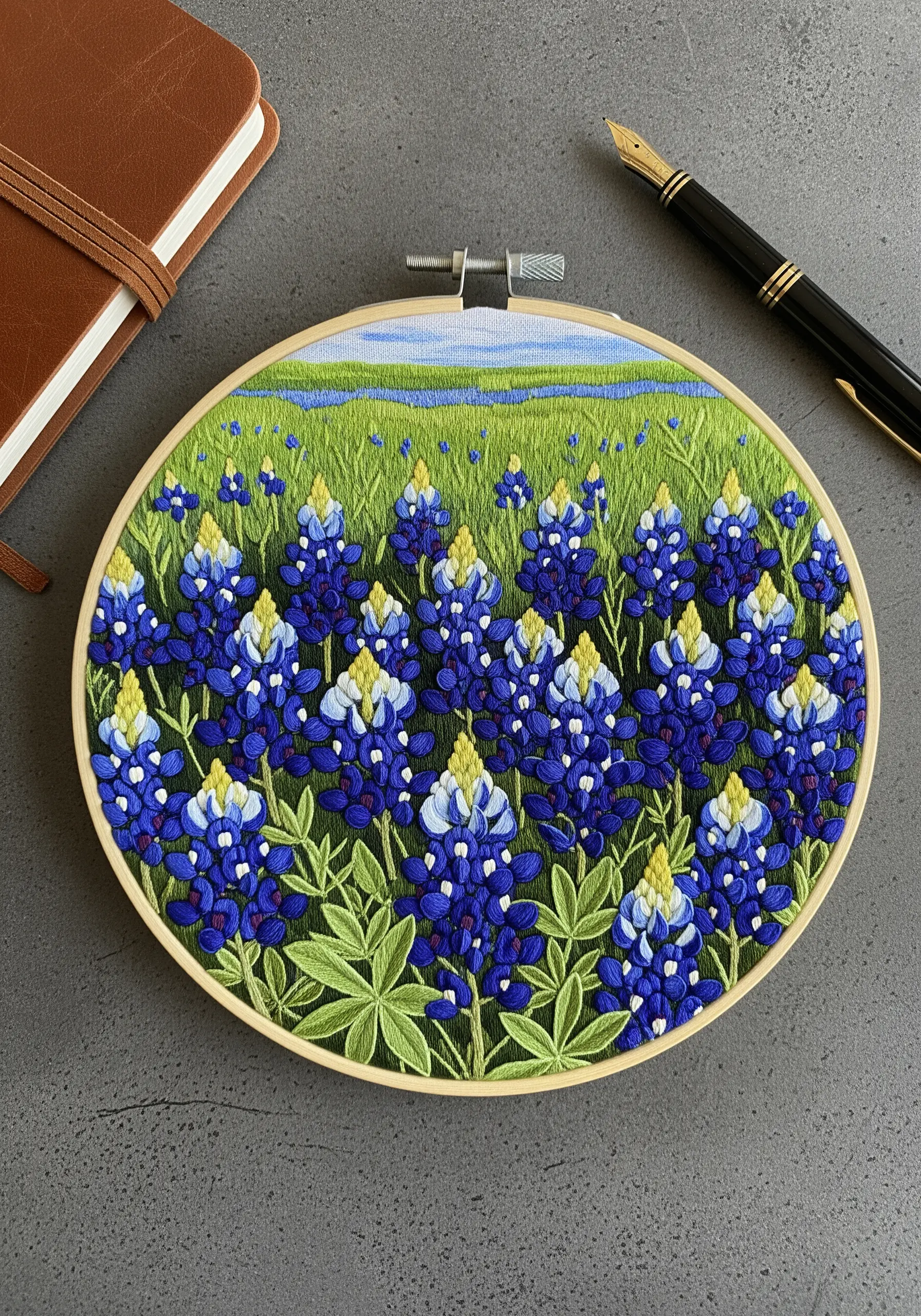
To capture the iconic shape of bluebonnets, you need to build volume and color variation within each flower.
Create the main spire shape with vertical rows of lazy daisy stitches in a medium blue.
Then, layer French knots in a darker blue and bright white on top to create the flower’s characteristic speckled appearance and density.
This layering technique gives each bloom a rich, three-dimensional look that makes the entire field feel lush and full.
These meadow bloom stitch projects are a great way to practice floral layering.
22. Use Padded Satin Stitch for Raised Elements
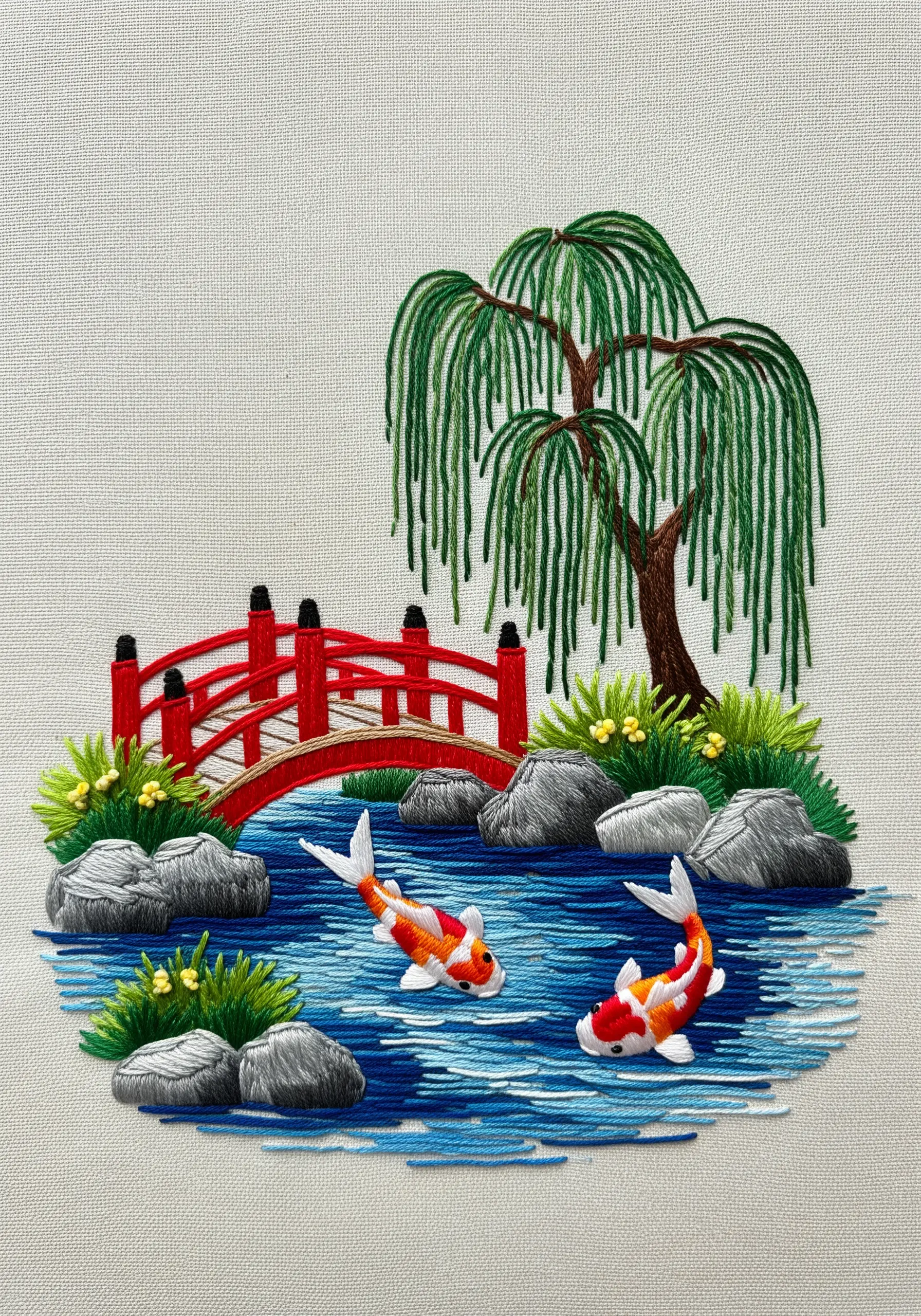
Make key elements in your scene, like these koi fish, stand out by giving them physical dimension.
First, fill the shape of the fish with a base layer of small seed stitches or split stitches.
Then, cover this padding with smooth, neat satin stitches, following the contours of the fish’s body.
This simple preparation lifts the element off the fabric surface, creating a subtle shadow and making it the clear focal point of your composition.
Many contemporary stitch designs use this technique for a high-end finish.
23. Capture Electric Energy With High-Contrast Thread
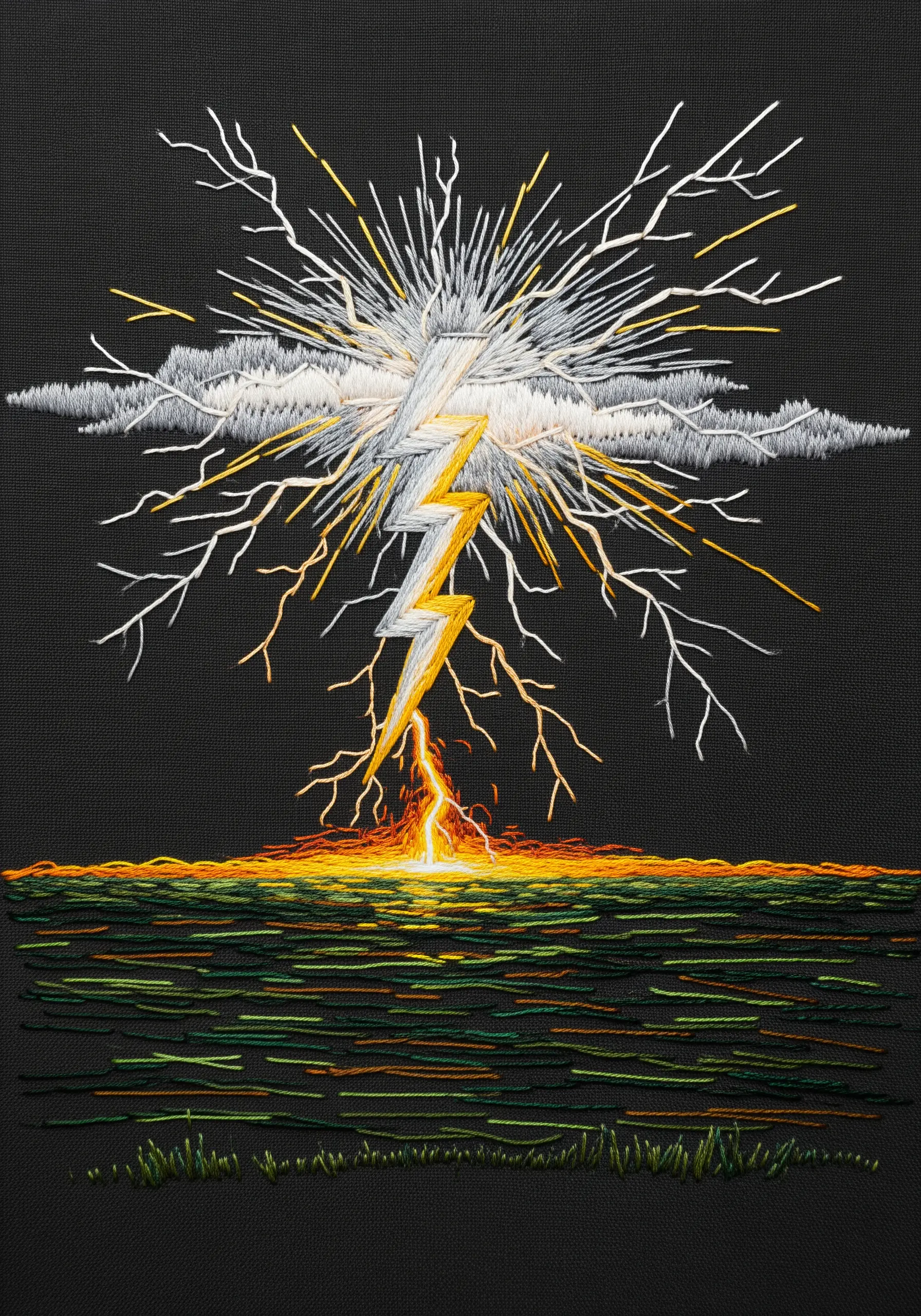
A lightning strike is all about capturing a fleeting moment of intense energy, and your thread choice is crucial.
On black fabric, use a bright white or silvery metallic thread for the main bolt, stitched with a sharp split stitch or backstitch.
Radiate smaller, thinner lightning tendrils outwards with single-strand straight stitches.
To show the impact, use a vibrant mix of yellow, orange, and white French knots and straight stitches, creating a brilliant flash of light against the dark landscape.
Explore other abstract thread burst techniques for dynamic compositions.
24. Form Grape Clusters With Bullion Knots
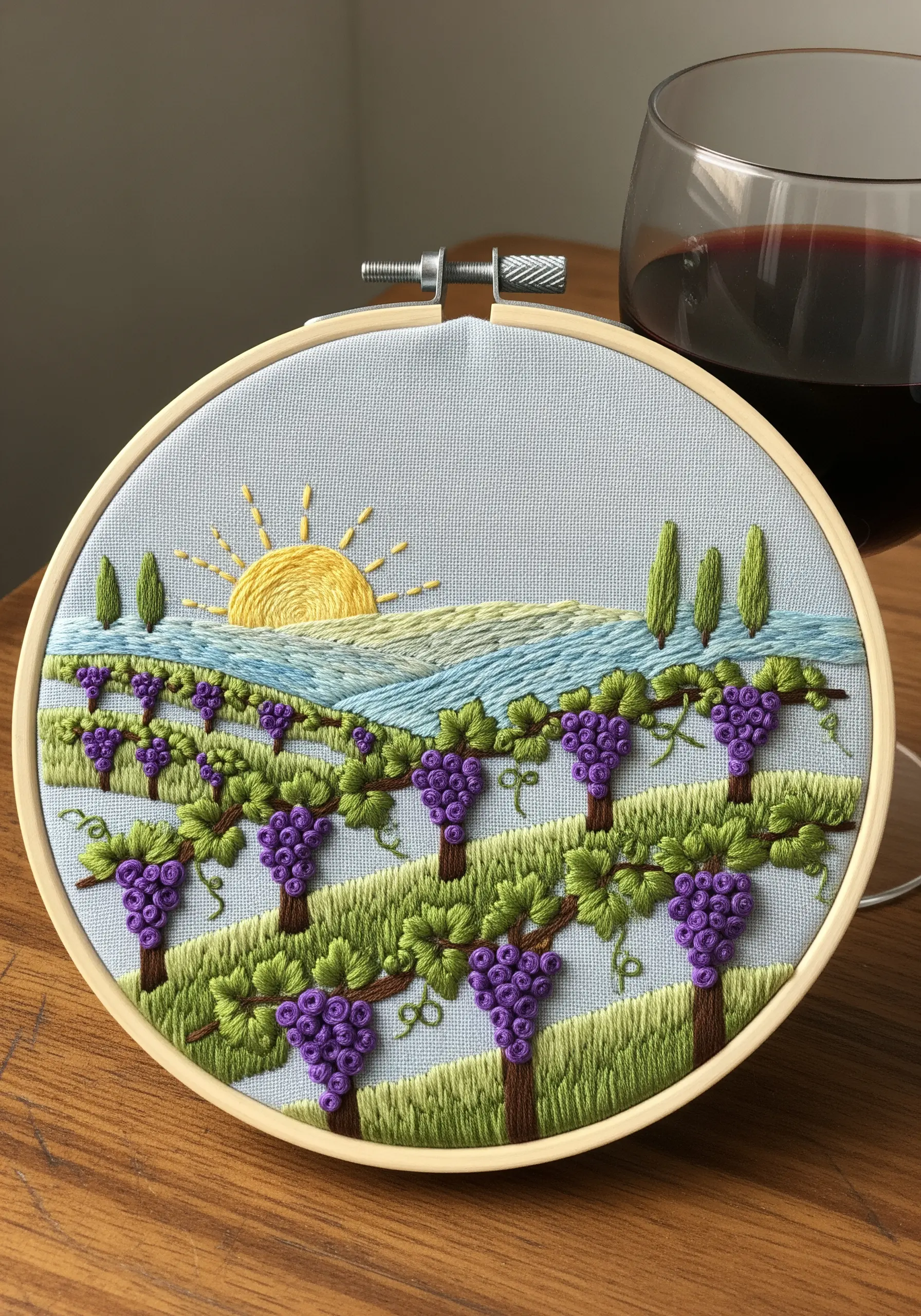
The bullion knot is the perfect stitch for creating the round, plump shape of grapes.
Work in clusters, stitching each knot closely beside the next, using two or three shades of purple to give the bunch dimension and a hint of light and shadow.
For the leaves, a simple fishbone stitch provides the perfect shape and veining with minimal effort.
This pairing of a complex knot with a simple filler stitch creates a balanced and texturally interesting design.
These minimal fruit plant motifs are perfect for embellishing home textiles.
25. Imply Texture on Minimalist Sand Dunes
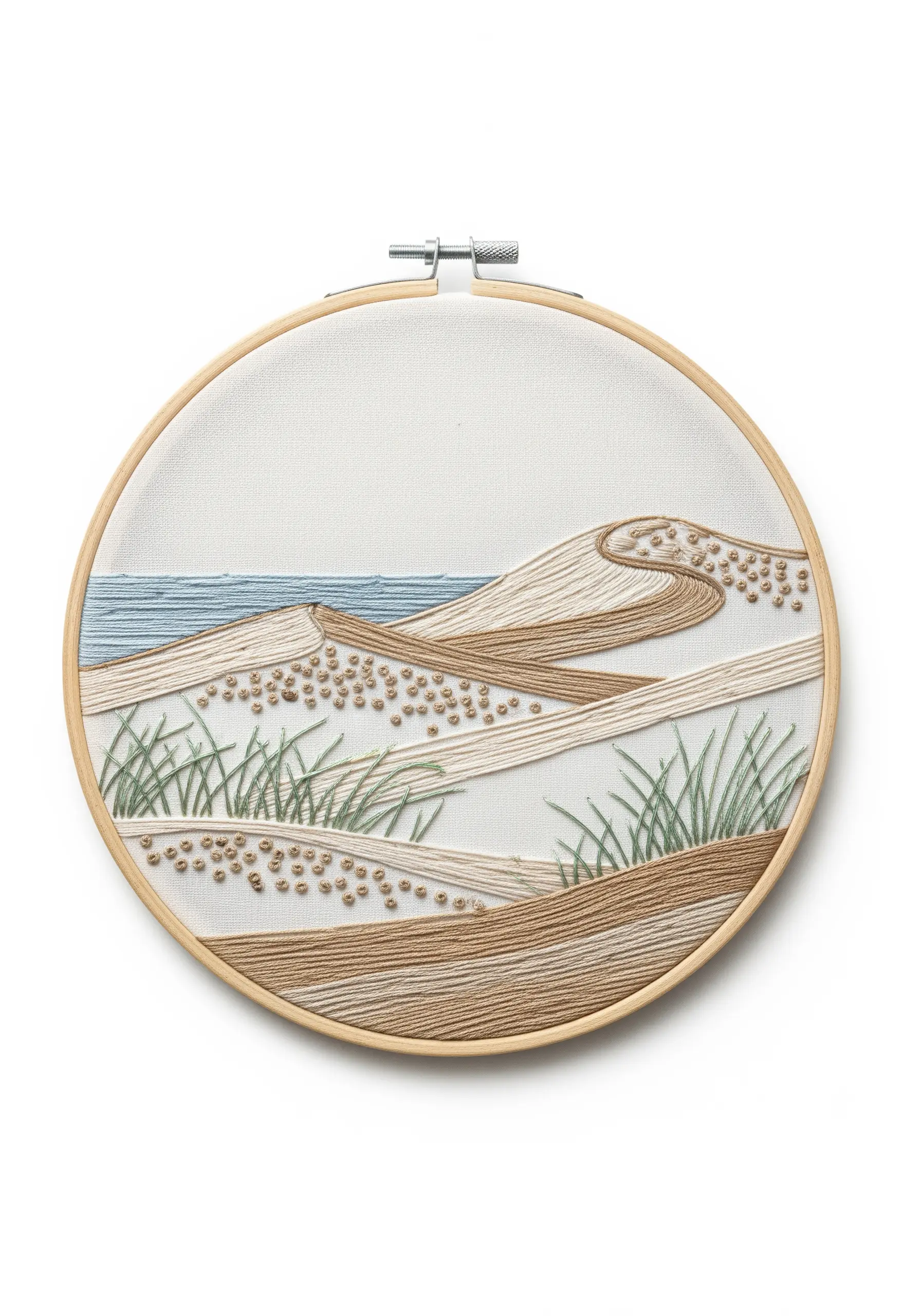
In a minimalist composition, you can suggest texture without filling the entire space.
Define the elegant curves of the sand dunes with clean lines of split stitch or stem stitch.
Then, instead of covering the dunes in stitches, scatter small French knots or seed stitches along the crests and slopes.
This selective use of texture guides the eye and evokes the feeling of windblown sand without overwhelming the clean, serene aesthetic of the design.
You can find similar inspiration in these embroidery ideas inspired by stones, sand, and soil.
26. Weave an Ancient Tree Trunk With Layered Stitches
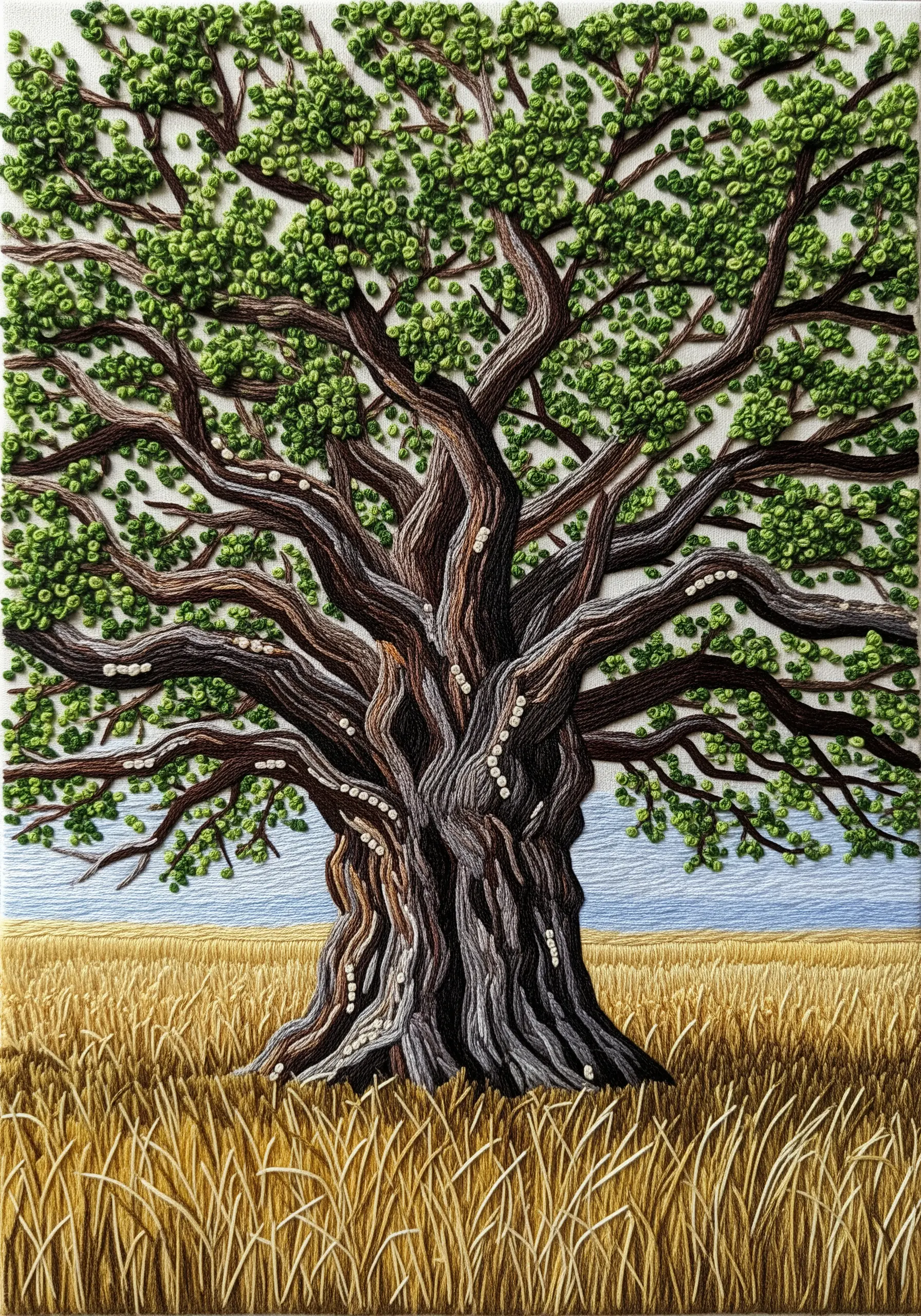
To convey the age and texture of a mighty oak, you need to build the bark in layers.
Start by laying down a foundation of long satin stitches in various shades of brown and grey, following the direction of the trunk’s growth.
Then, stitch over this base with shorter, more chaotic straight stitches and split stitches to create a gnarled, rough texture.
You can even couch a thicker, darker thread onto the surface to represent deep fissures in the bark.
Learning ways to layer leaf stitching for three-dimensional botanical texture will make your trees even more realistic.