If you’ve ever felt that your embroidery, while beautiful, could have a deeper sense of calm and intention, you are in the right place. It’s not about learning hundreds of new stitches or investing in expensive supplies. It’s about shifting your perspective.
The most impactful embroidery—the kind that feels like art—comes from thoughtful choices. It’s in the way a single line can define a landscape, how texture can tell a story without color, and how a limited palette can create a feeling of profound peace.
Consider these ideas not as strict patterns to be followed, but as gentle invitations. They are techniques and concepts designed to help you create work that resonates with the quiet, clean aesthetic of a Scandinavian home—and more importantly, with your own desire for mindful, meaningful creation.
1. Sculptural Forms with Dimensional Stitching
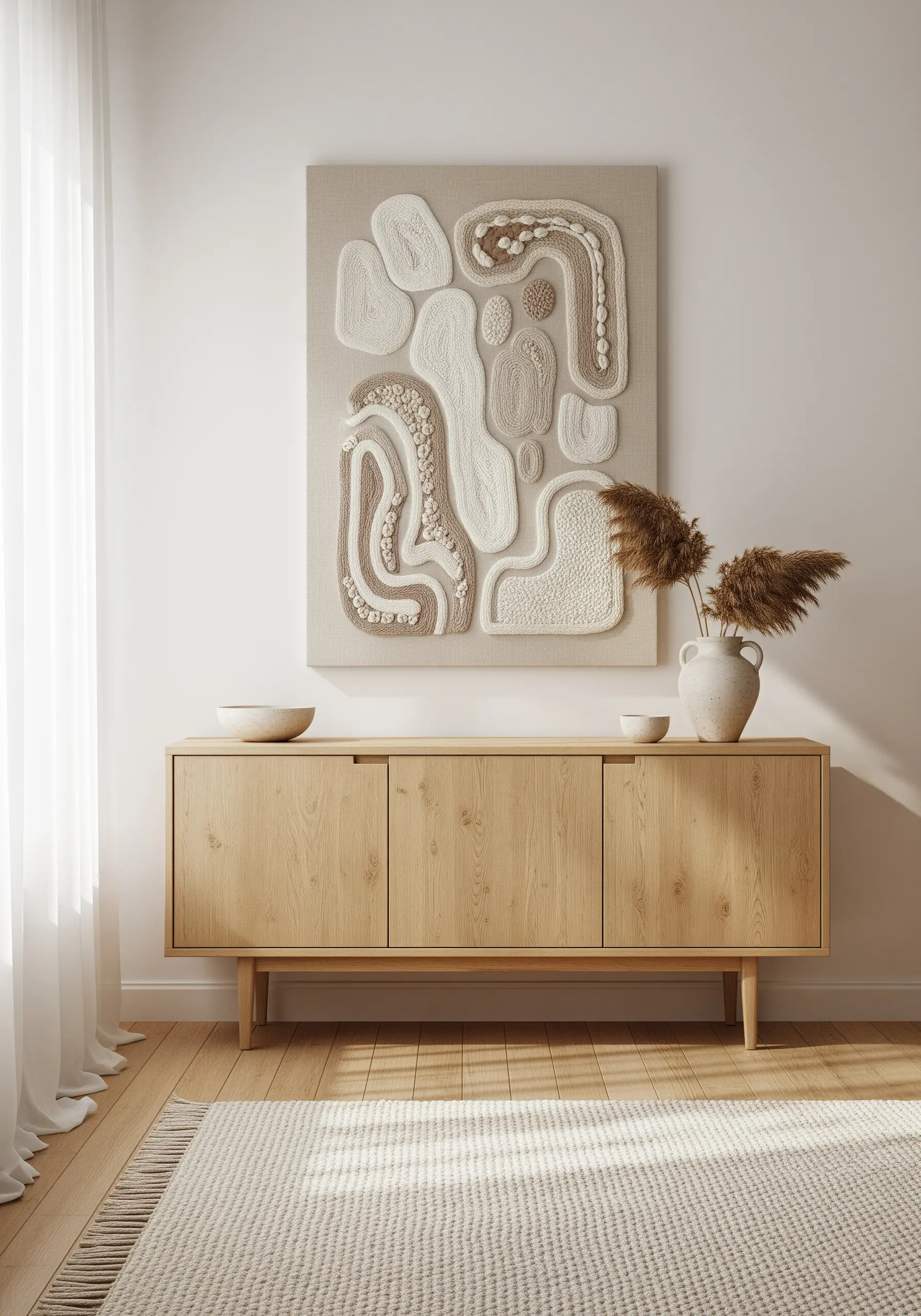
Create high-relief texture by combining punch needle loops with couched yarn on a neutral linen canvas.
Outline your organic shapes first, then fill each one with a distinct texture: tight French knots, varying loop heights, or smooth satin stitches.
Use thick, undyed wool or cotton roving for the couched outlines to create bold, sculptural divisions between sections.
This method transforms a flat surface into a tactile landscape, inviting both the eye and hand, making it a perfect example of sculptural embroidery surfaces.
The monochromatic palette of creams, beige, and taupe ensures the focus remains entirely on form and texture.
2. The Expressive Power of a Single Line
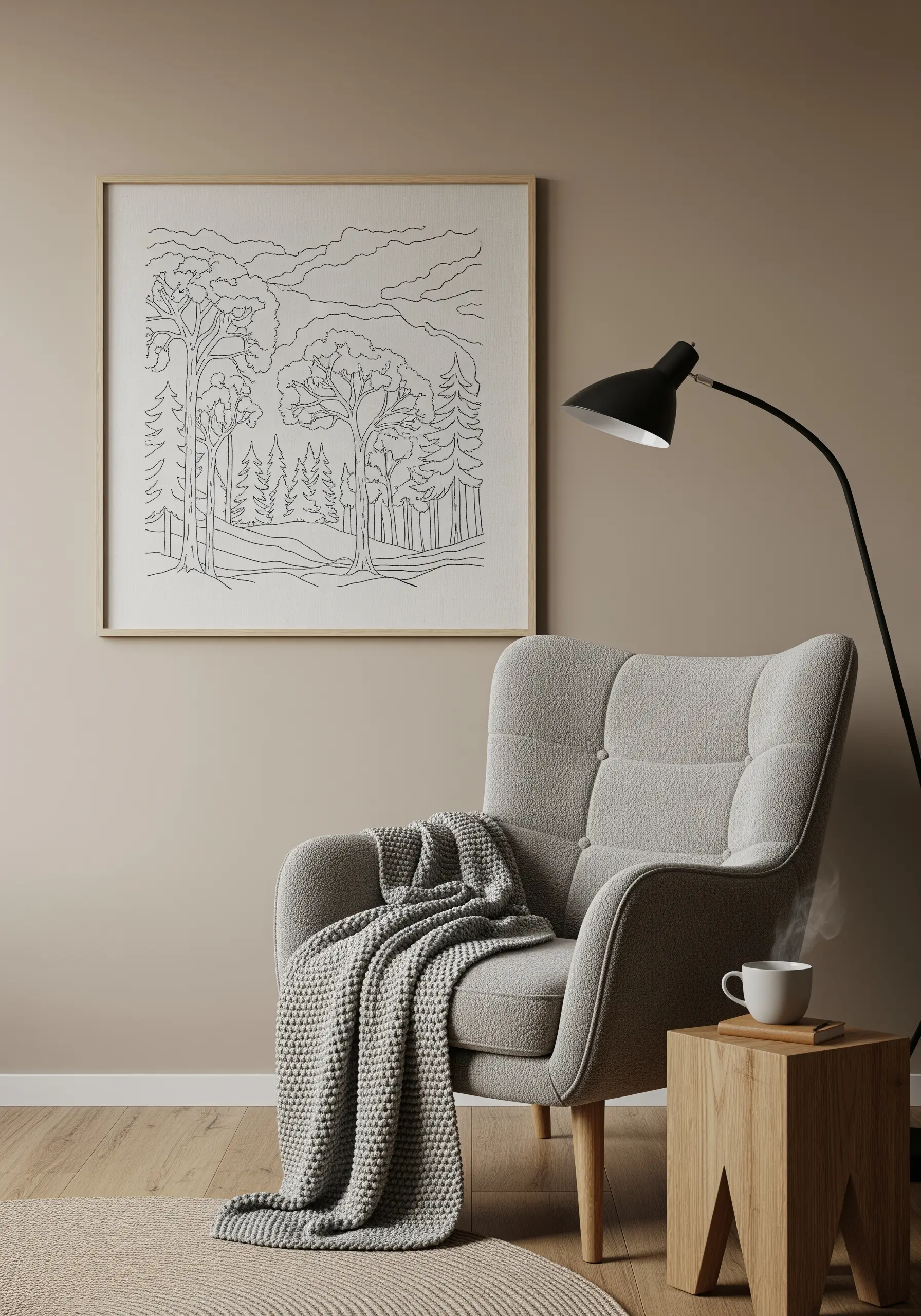
Capture the essence of a landscape using only continuous black thread on unbleached cotton or linen.
Use a consistent three-strand backstitch or stem stitch to maintain a uniform line weight, which gives the piece a clean, illustrative quality.
Don’t aim for perfect realism; instead, focus on the flow and rhythm of the lines to evoke the feeling of a forest.
This is the core of minimalist line art nature embroidery—it’s about suggestion, not detailed rendering.
Framing it with a simple, light wood frame enhances the Scandinavian aesthetic and lets the artwork breathe.
3. Cohesive Geometry in a Triptych
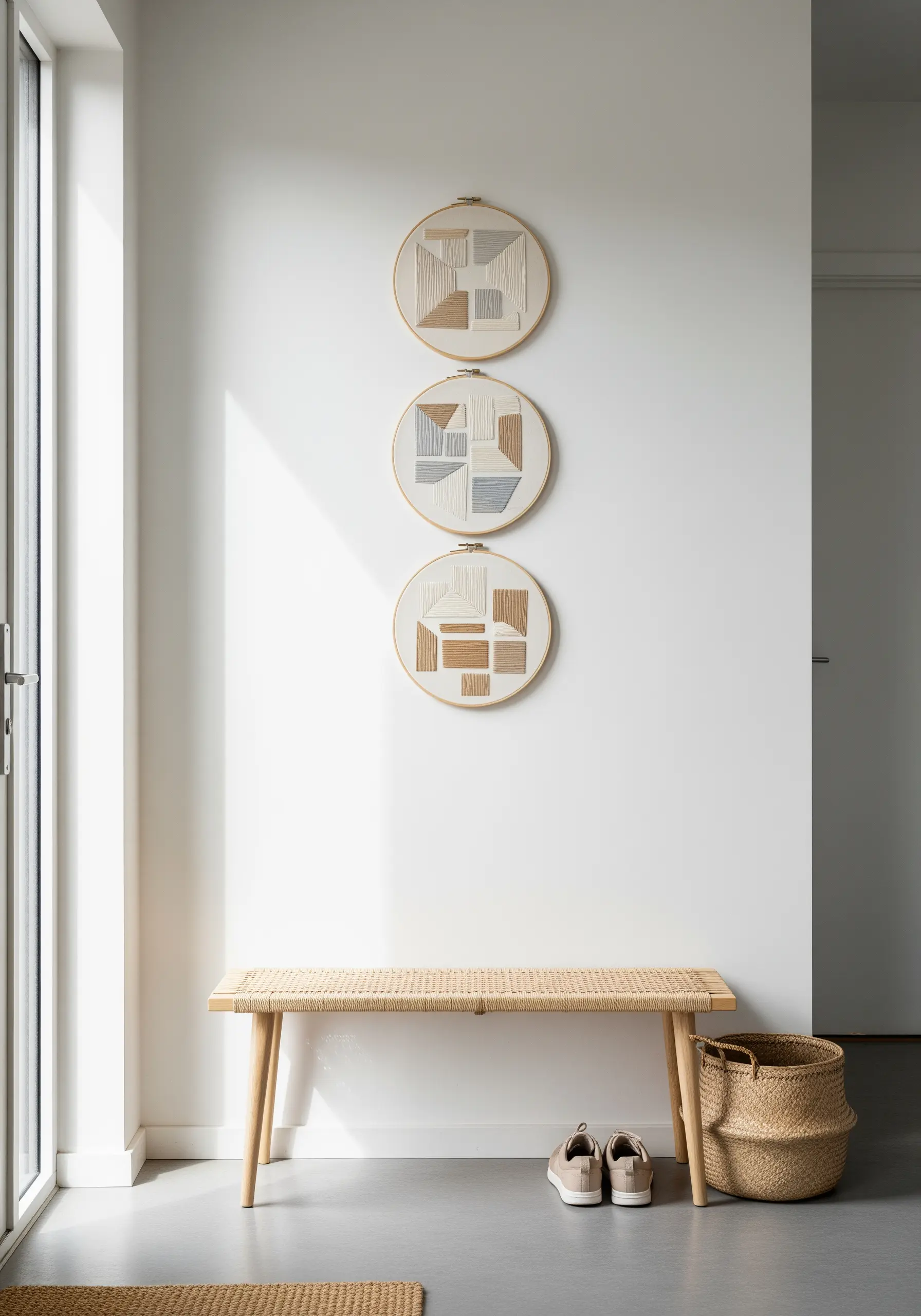
To create a balanced series like this, choose a strict color palette of three or four muted tones and use them across all hoops.
Fill the geometric shapes with directional satin stitch, varying the angle of your stitches in adjacent blocks to create subtle shifts in light and texture.
A whipped backstitch outline provides a clean, raised edge that defines each shape with precision.
Planning your design on graph paper first is essential for achieving these crisp, interlocking forms and mastering these geometric stitch patterns.
4. Monochromatic Waves of Texture
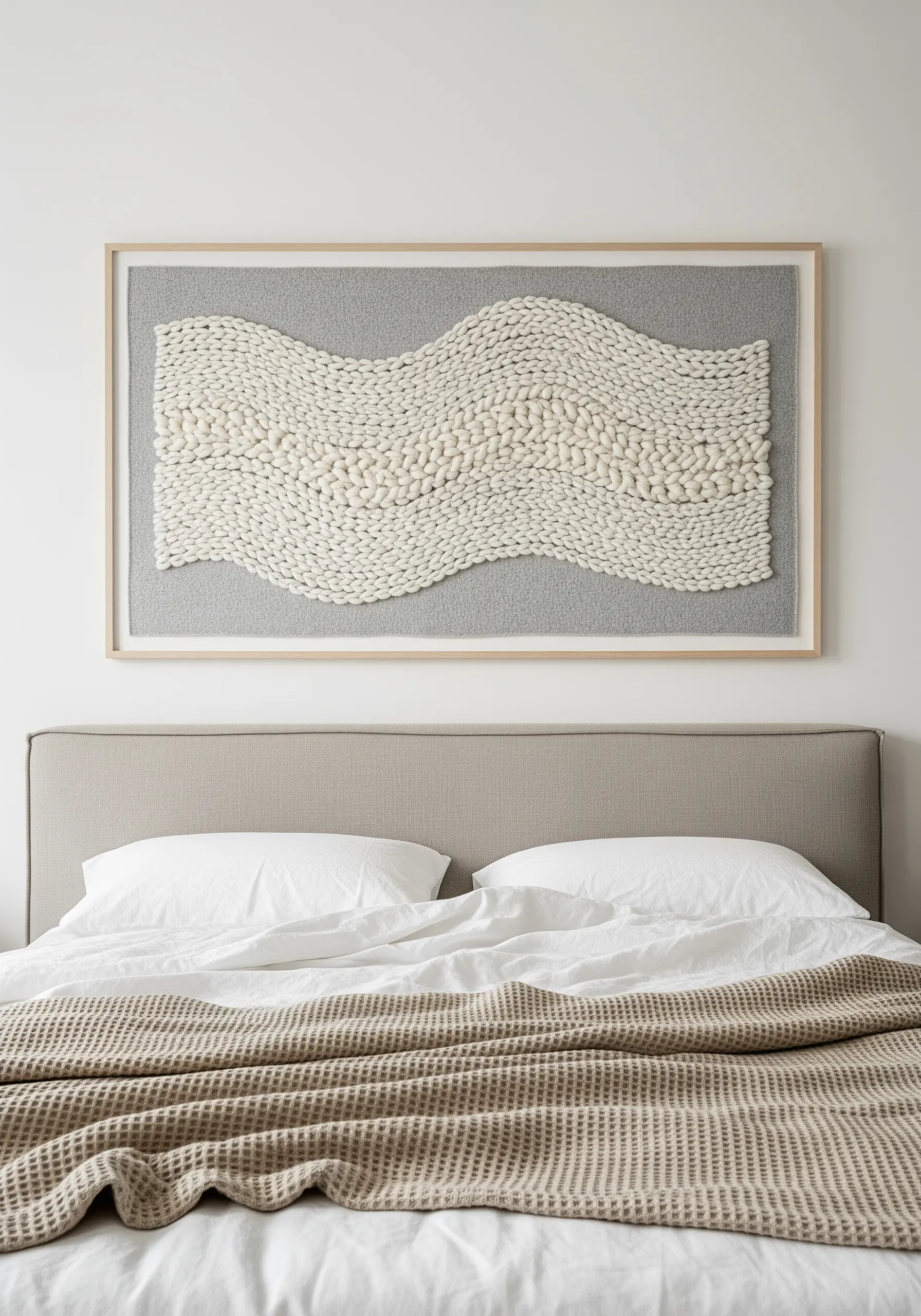
Achieve this deeply textured, woven effect using a punch needle with thick wool yarn.
The magic is in varying your loop height—create dense, short loops for the valleys and taller, plusher loops for the crests of the waves.
Working in a single color, like this soft ivory, forces the viewer to focus solely on the sculptural quality of the piece.
These statement textured embroidery techniques are most effective on a contrasting background, such as this charcoal gray felt, which makes the creamy waves pop.
5. A Gallery of Minimalist Botanicals
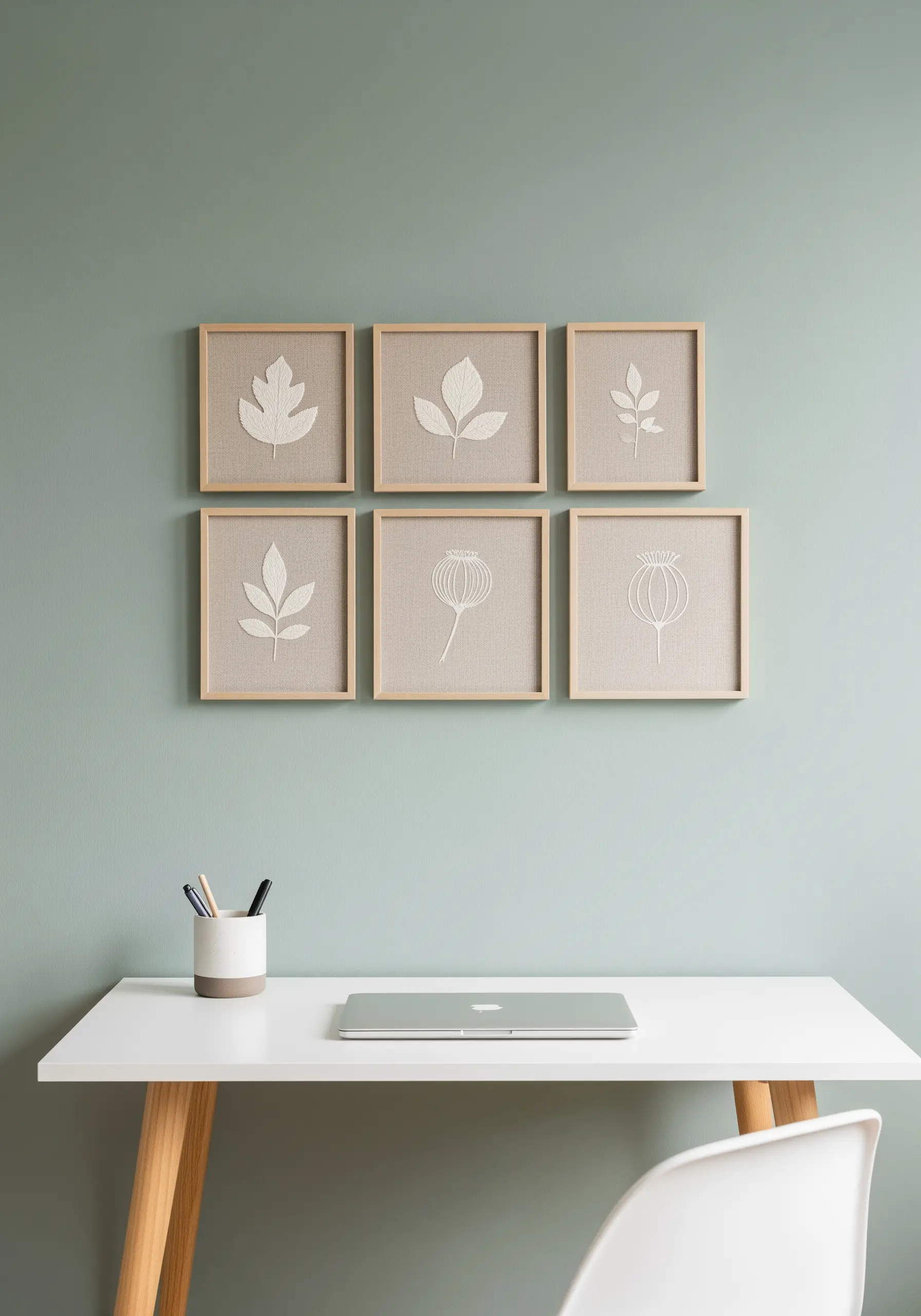
Create a sophisticated botanical collection by isolating single leaf or seed pod motifs on a shared background fabric.
Use a tone-on-tone approach, stitching with an ivory or off-white thread on a natural linen or oatmeal-colored fabric for a subtle, elegant effect.
A perfectly executed satin stitch fill, contained by a sharp split stitch outline, gives these simple shapes a polished, graphic look.
These delicate leaf embroidery stitches prove that simplicity, when repeated, creates a powerful and cohesive statement wall.
6. Large-Scale Abstract Thread Painting
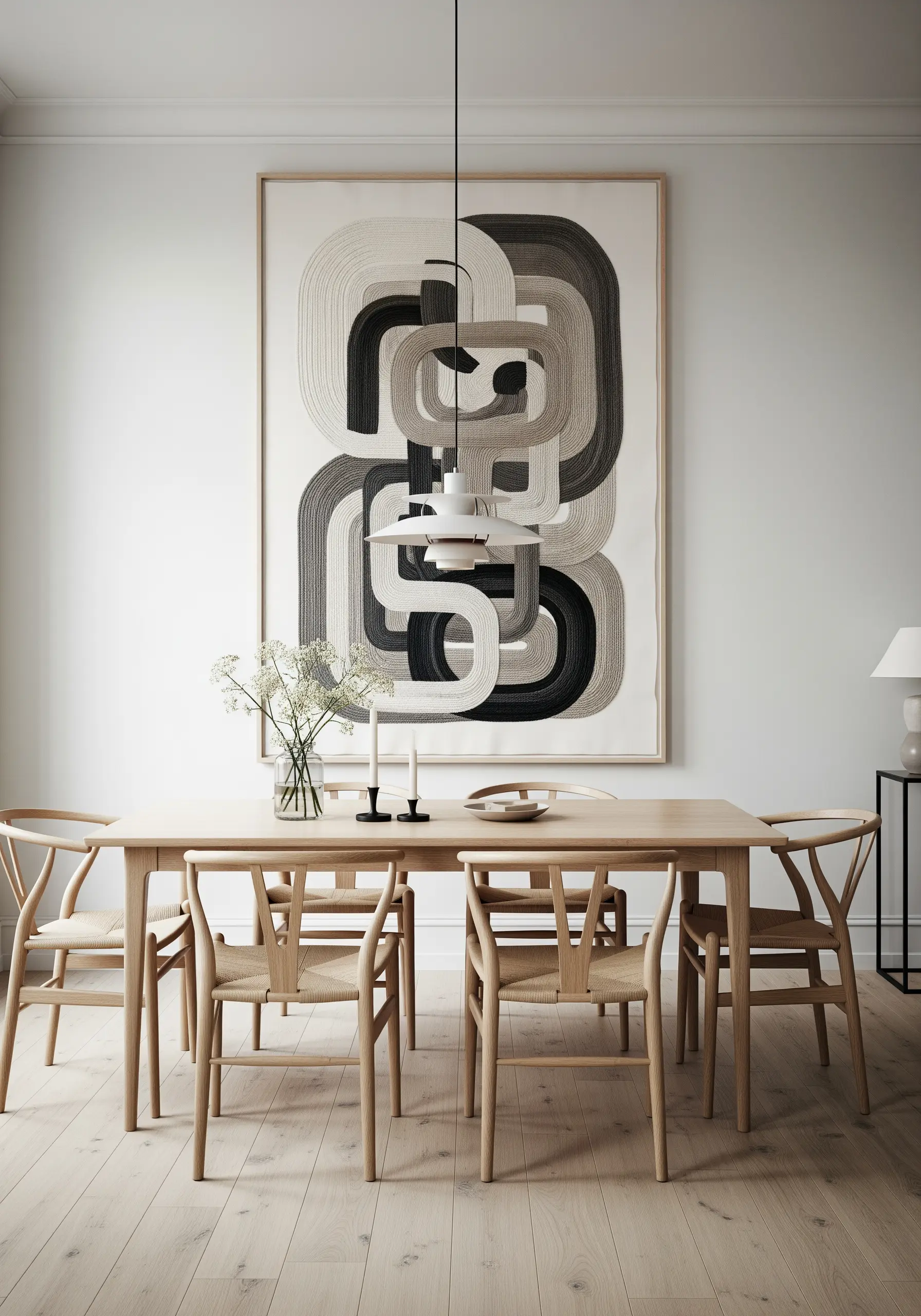
For a piece with this much impact, think of your thread as paint and your needle as a brush.
Use the long and short stitch to blend shades of black, gray, and taupe seamlessly, creating smooth gradients that give the looping forms depth and movement.
Always direct your stitches to follow the curves of the design; this enhances the flow and prevents the texture from looking flat or chaotic.
These abstract thread painting ideas work best on a large scale, allowing the subtle color transitions to make a dramatic statement.
7. A Celestial Hoop Gallery Wall
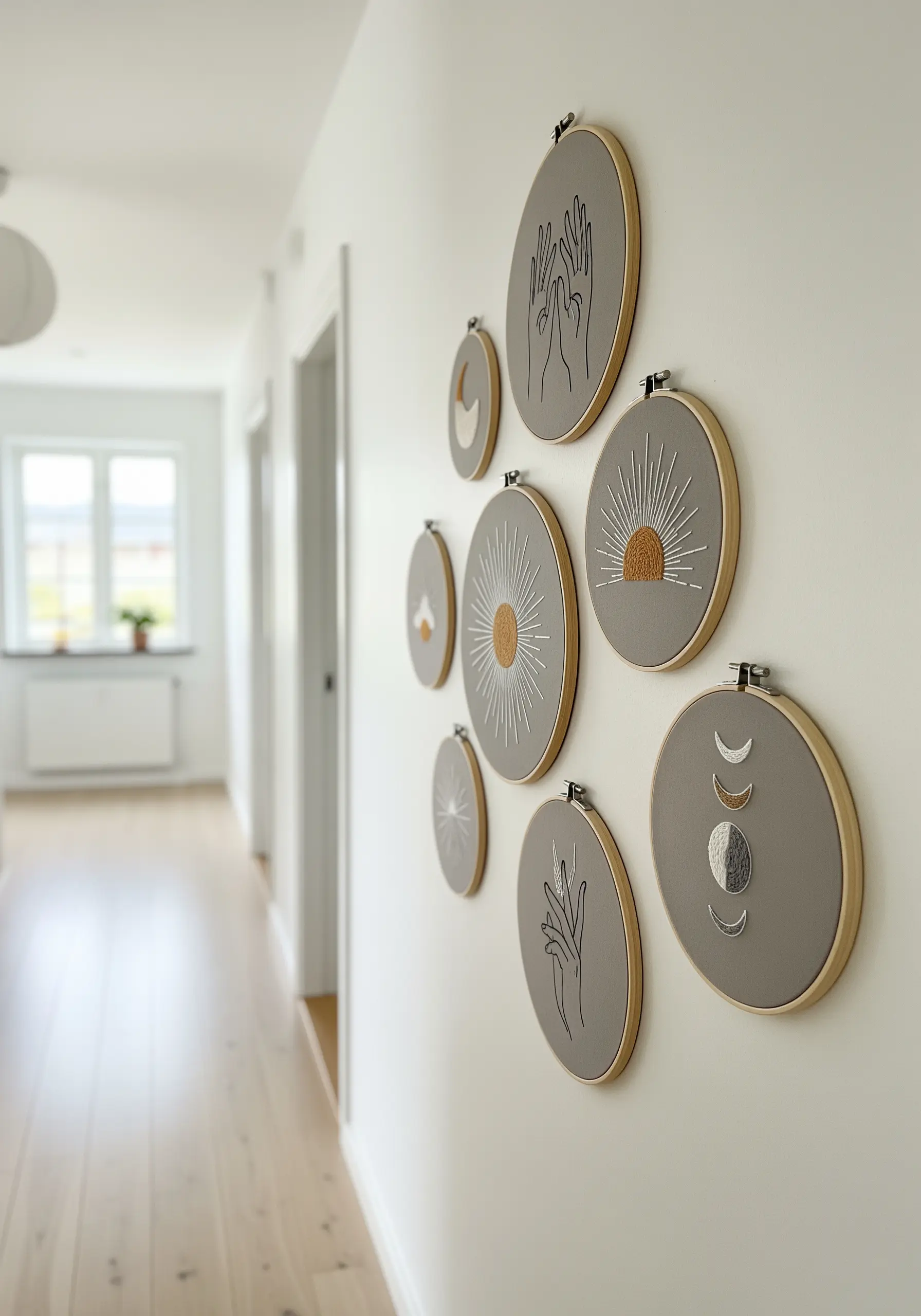
Design a dynamic gallery wall by varying the size of your hoops and the complexity of the motifs within a unified theme.
Use a consistent fabric color—like this muted gray—to tie the collection together, allowing the metallic and white threads to stand out.
Incorporate negative space effectively; not every hoop needs to be filled. Simple line art hands or a partial sunburst can be more powerful than a dense design.
You can use micro-hoop embroidery collections to tell a story across a narrow hallway or entryway wall.
8. Topographic Lines and Negative Space
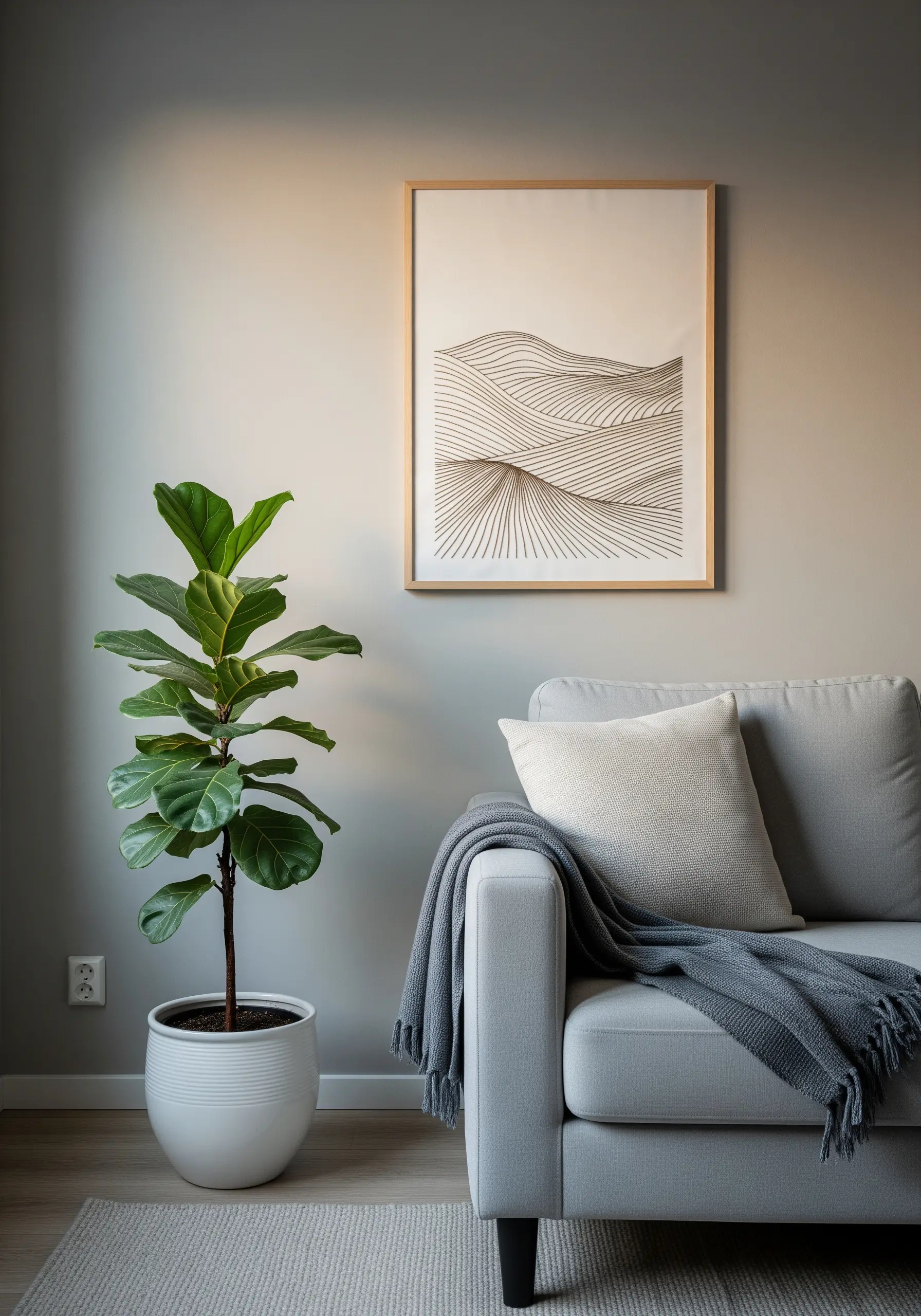
Create the illusion of rolling hills or gentle waves by stitching parallel lines that converge and diverge.
Use a simple backstitch with a consistent number of strands (two or three works well) to maintain visual clarity.
The key to this design is the intelligent use of negative space; the unstitched areas are just as important as the lines themselves in defining the form.
These kinds of abstract thread designs using negative space achieve a sophisticated, airy feel that’s perfect for modern interiors.
9. Textured Color Blocking for Cozy Spaces
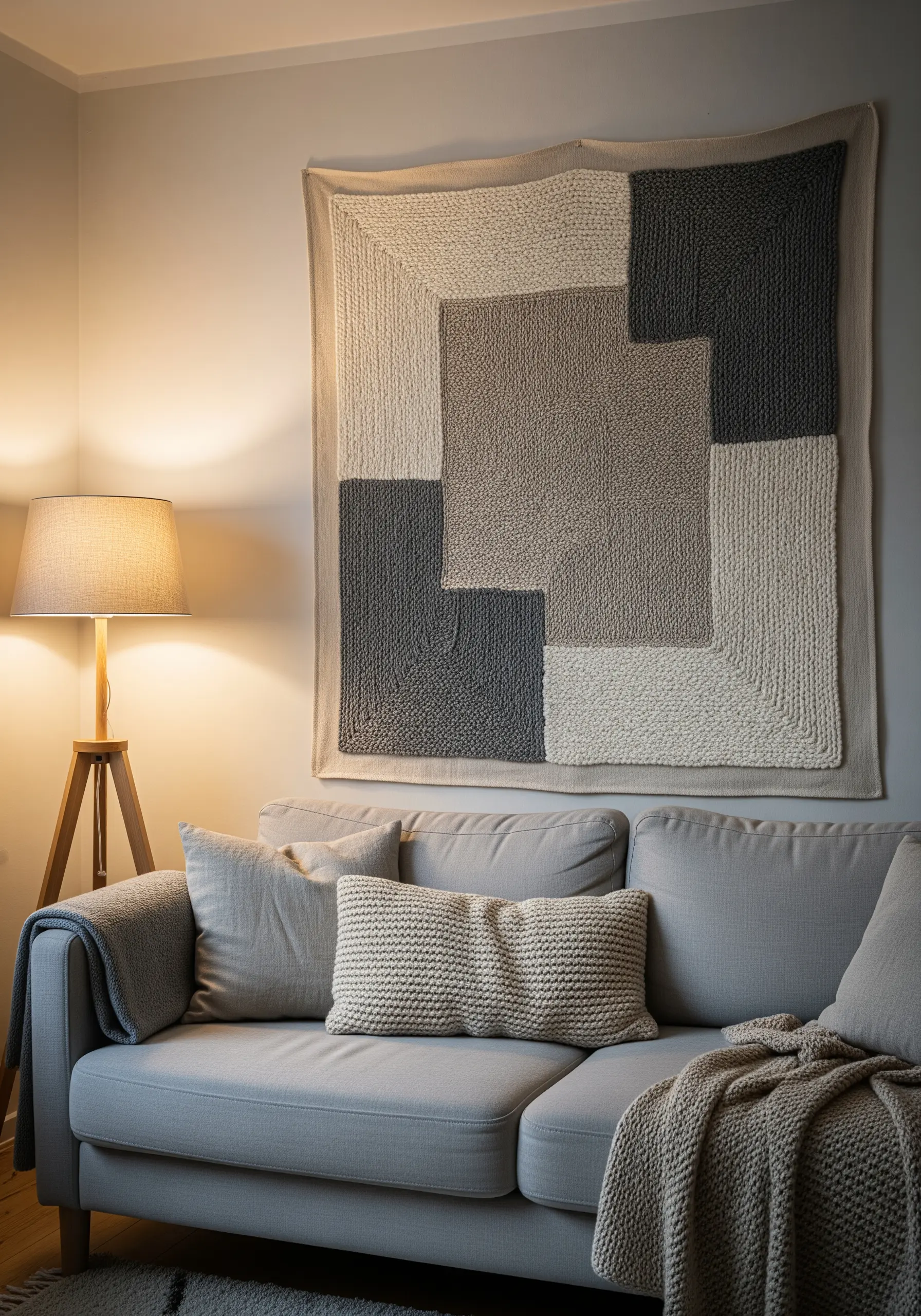
Move beyond flat color blocks by filling each section with a tactile stitch, such as the seed stitch or French knots.
To achieve this plush, woven look, use a punch needle with thick yarn on monk’s cloth, which creates a dense, rug-like texture.
A muted palette of charcoal, dove gray, and ecru keeps the geometric design feeling calm and sophisticated.
This is one of the most effective Scandinavian texture embroidery ideas for adding warmth and sound-dampening qualities to a living room or bedroom.
10. Capturing Delicacy in a Dandelion
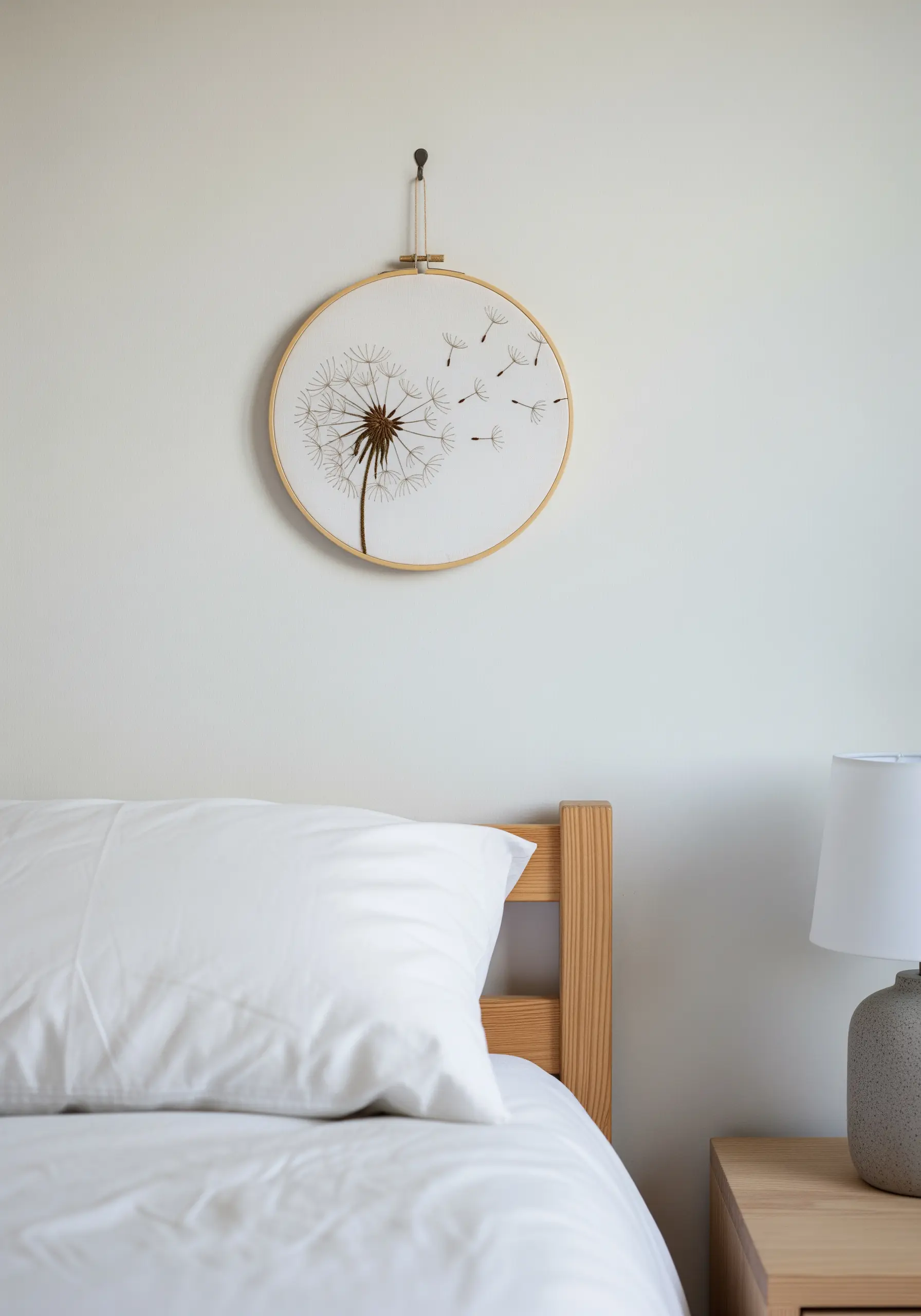
To embroider something as delicate as a dandelion, focus on thread weight and stitch choice.
Use a single strand of dark brown or gray floss for the seeds and stems, employing tiny straight stitches and French knots.
For the fluffy pappus, switch to a single strand of white or cream thread and use detached chain stitches or fly stitches to create a light, airy effect.
The key to mastering these delicate leaf stitch techniques is to embrace imperfection; the floating seeds should feel organic and windswept, not rigidly placed.
11. A Touch of Color with Botanical Sprigs
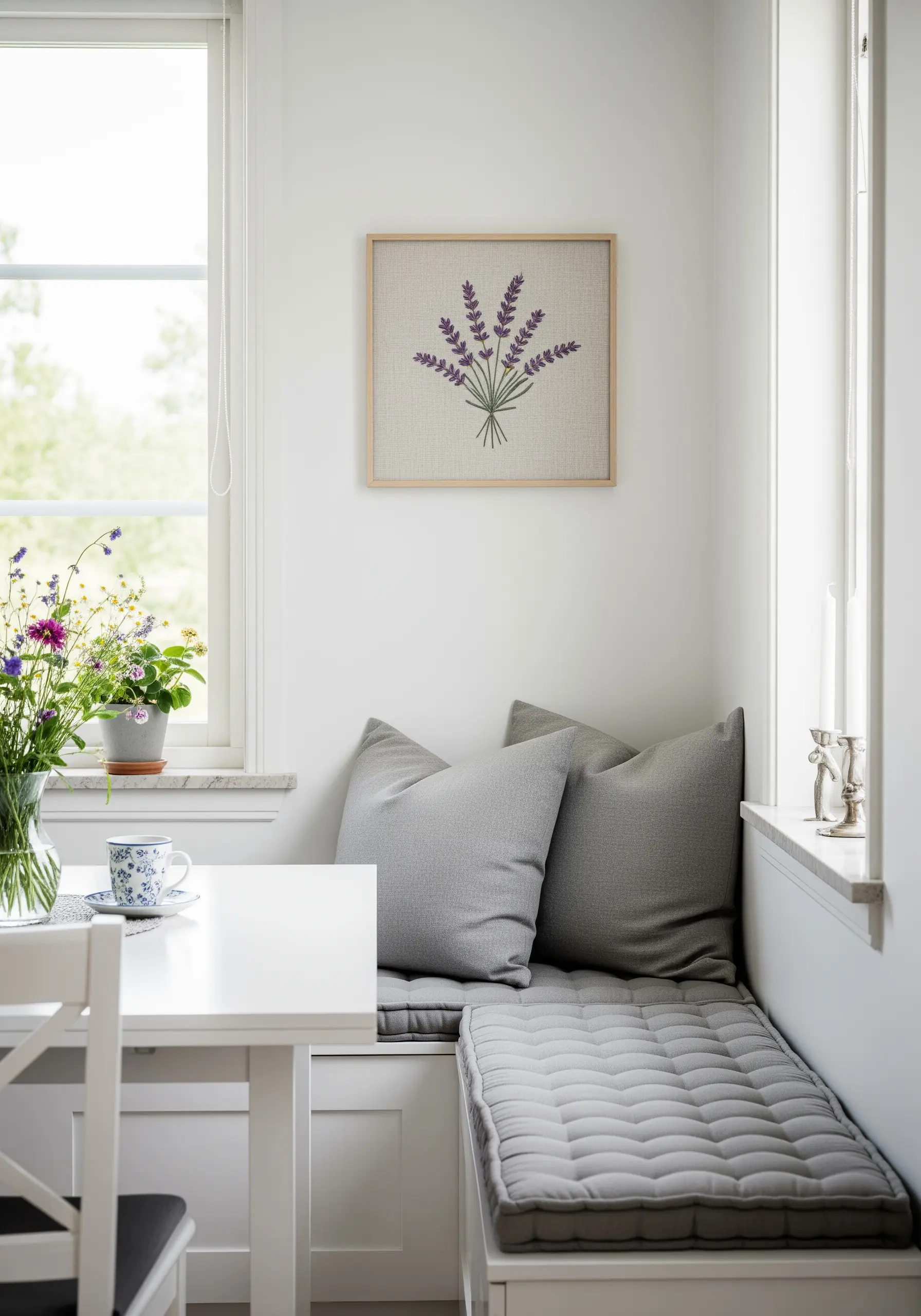
Even a neutral home benefits from a whisper of color, and a simple botanical sprig is the perfect way to introduce it.
Stitch lavender buds with dense French knots or lazy daisy stitches, varying the shades of purple slightly to add dimension.
For the stems, a simple stem stitch in a muted sage green provides structure without overwhelming the delicate flowers.
These lavender field embroidery ideas work beautifully on a rustic linen fabric, enhancing the natural, calming vibe.
12. The Art of the Subtle Gradient
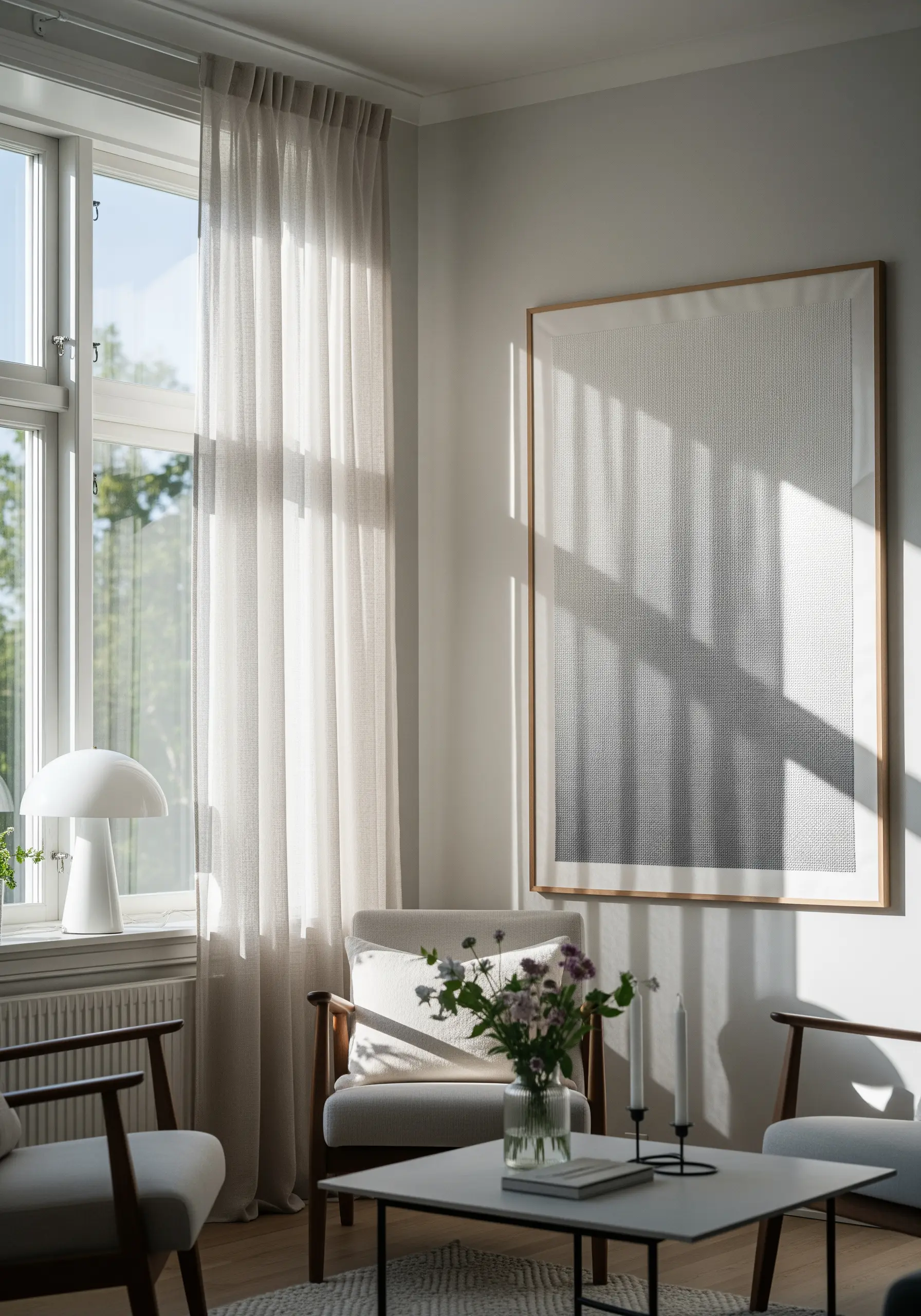
Create a mesmerizing, atmospheric effect with thousands of tiny, uniform stitches.
Use single strands of floss in graduating shades of gray, from near-white to charcoal, to build the gradient slowly.
The seed stitch—small, straight stitches scattered in random directions—is perfect for this technique as it creates a texture that resembles woven fabric or fine static.
These gentle gradient embroidery designs are meditative to create and incredibly calming to view, making them ideal for a tranquil living space.
13. Soft-Scapes for a Serene Nursery
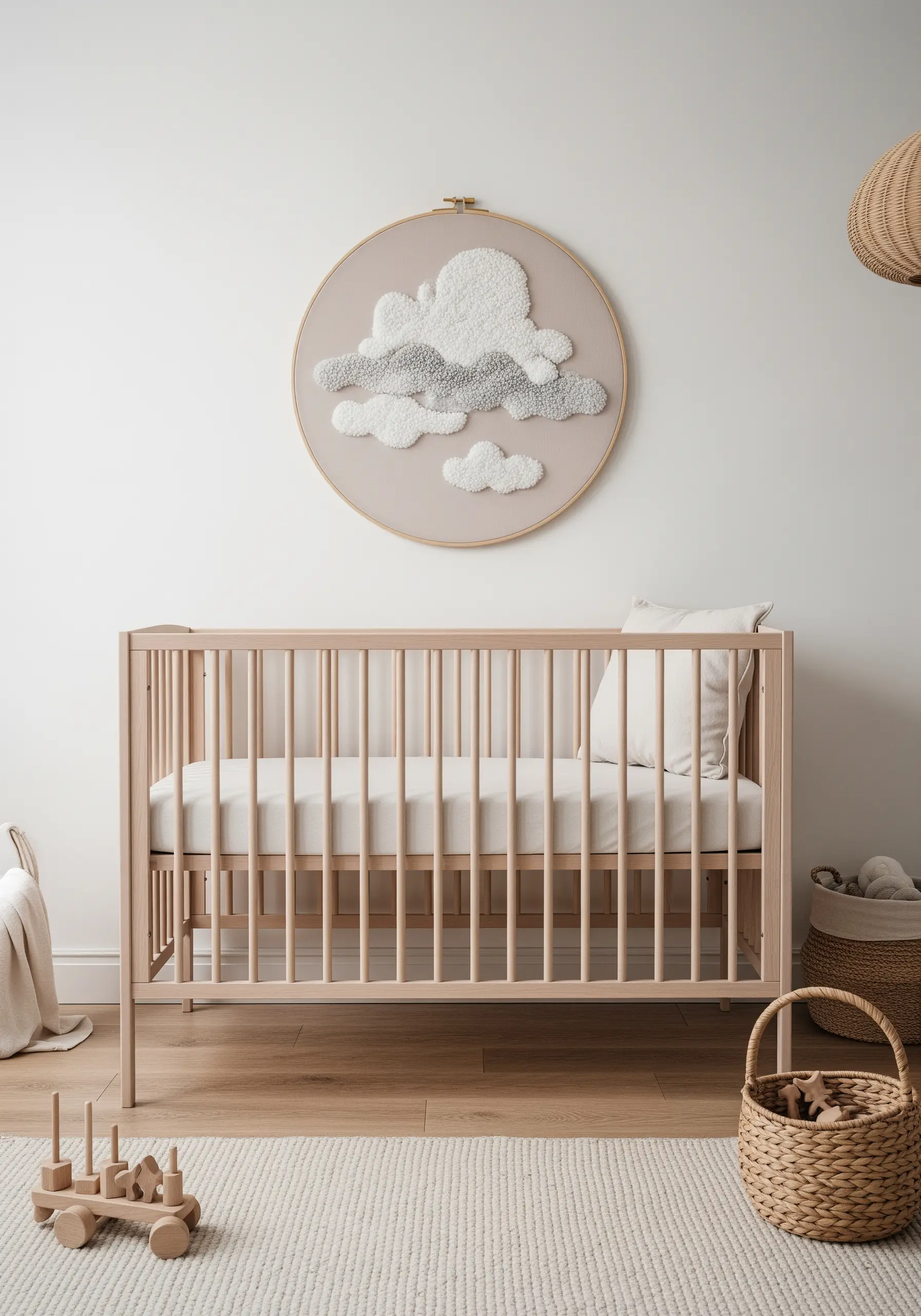
For a child’s room, prioritize soft textures and gentle forms.
Create plush, fluffy clouds using a punch needle with soft merino wool yarn, or by filling the shapes with a high pile of French knots.
Layering the clouds in shades of white, cream, and light gray adds depth and visual interest without introducing harsh colors.
These cloud-soft embroidery hoops become tactile art pieces that are both visually soothing and safe for a nursery environment.
Mounting the finished piece on a solid, muted fabric inside the hoop gives it a clean, finished look.
14. Graphic Tension with Threaded Lines
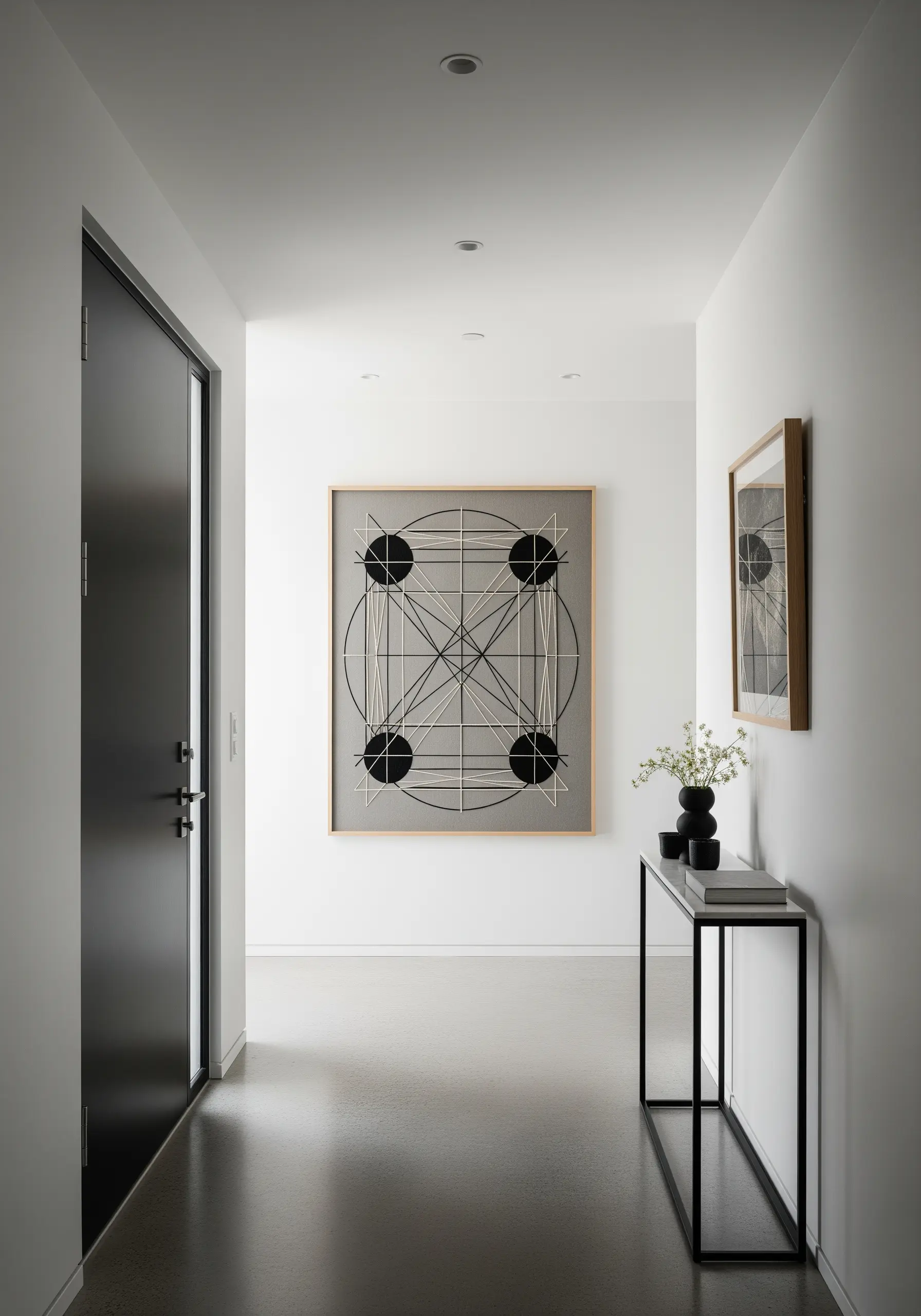
This style combines embroidery with string art principles to create striking geometric compositions.
Start by stitching solid anchor points—in this case, filled black circles using satin stitch.
Once the anchors are secure, wrap thread tautly between them to form the intersecting lines. Use a strong, smooth thread like pearl cotton that won’t fray under tension.
These minimal geometry stitch projects explore the relationship between solid forms and delicate lines, creating a dynamic and modern focal point.
15. Composing with High-Relief Textures
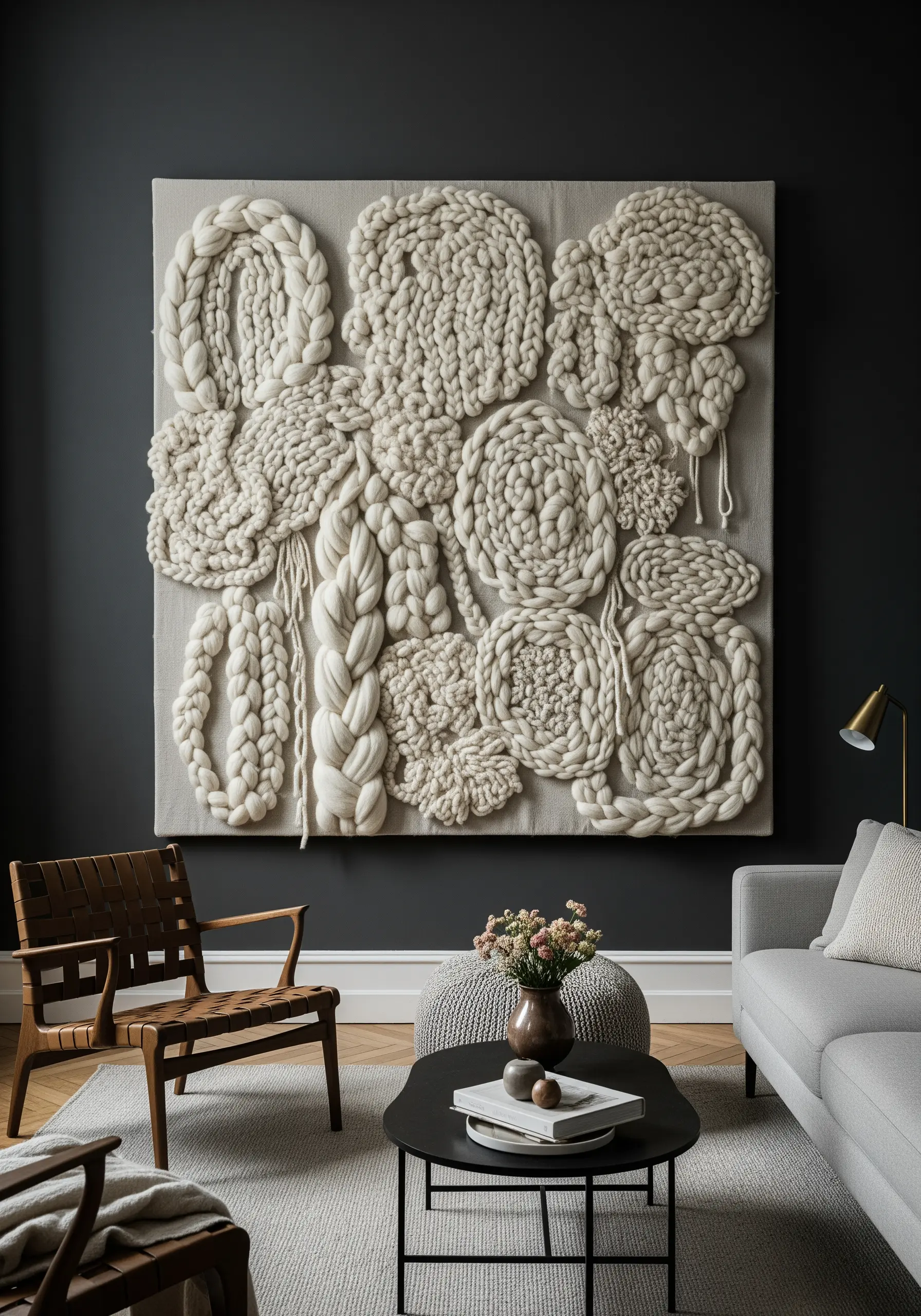
Elevate your textile art by using extremely thick fibers, like chunky wool roving or braided cotton cord.
Instead of stitching through the fabric, couch these thick fibers onto the surface using a matching, thinner thread. This allows you to create bold, three-dimensional shapes.
Vary the texture within your composition by including braided sections, coiled circles, and densely packed punch needle areas.
This approach transforms your canvas into a piece of organic texture embroidery, a celebration of fiber itself.
16. The Minimalist Continuous Line Portrait
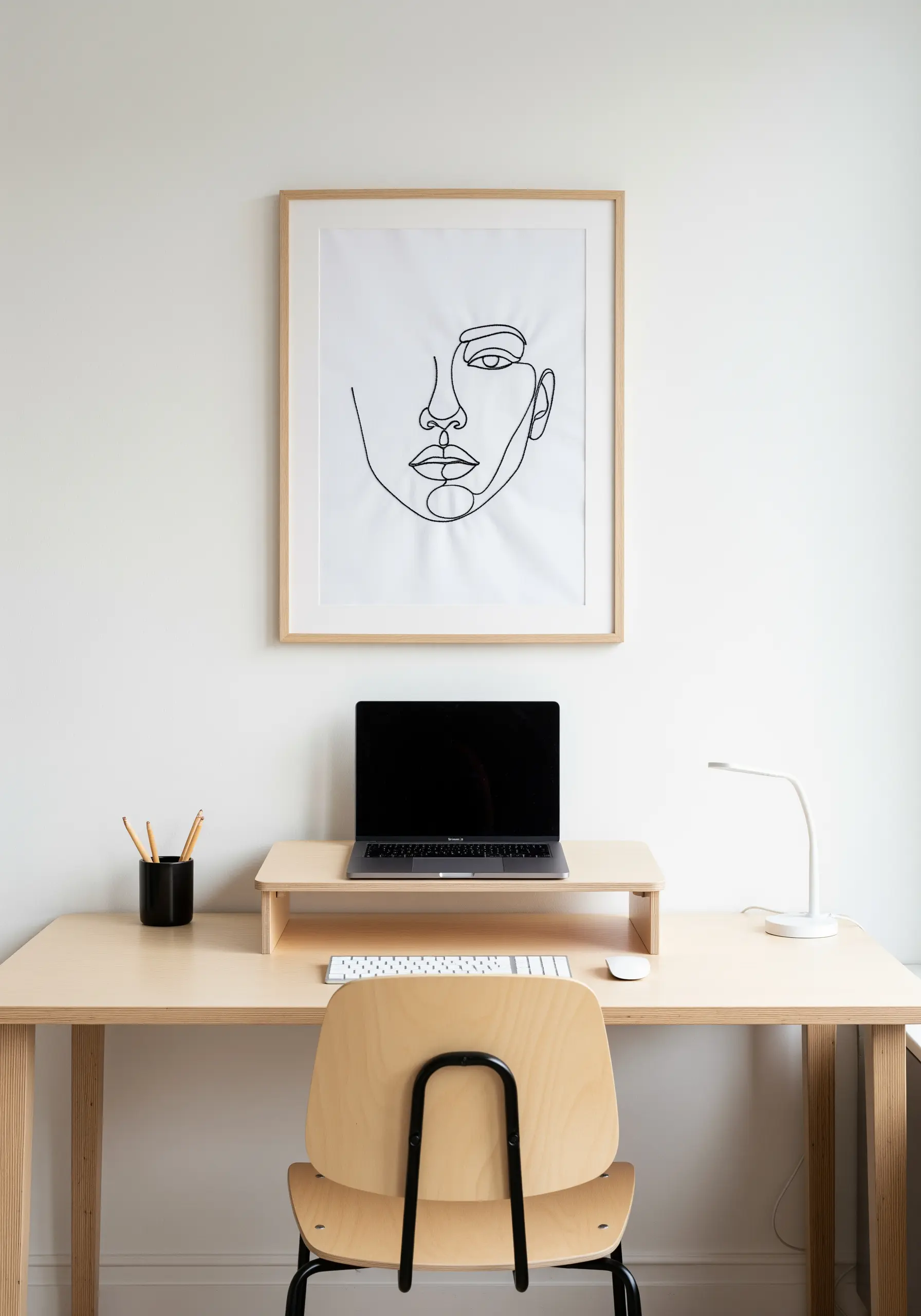
Capture the essence of a face with a single, unbroken line. This requires careful planning before you stitch.
Trace your design onto the fabric with a water-soluble marker, ensuring your start and end points are deliberate.
Use a stem stitch or a whipped backstitch with two to three strands of black floss. This creates a smooth, slightly raised line that reads clearly from a distance.
These modern line art pieces are powerful because of their simplicity and the fluidity of the single line.
17. Panoramic Landscapes with Directional Stitches
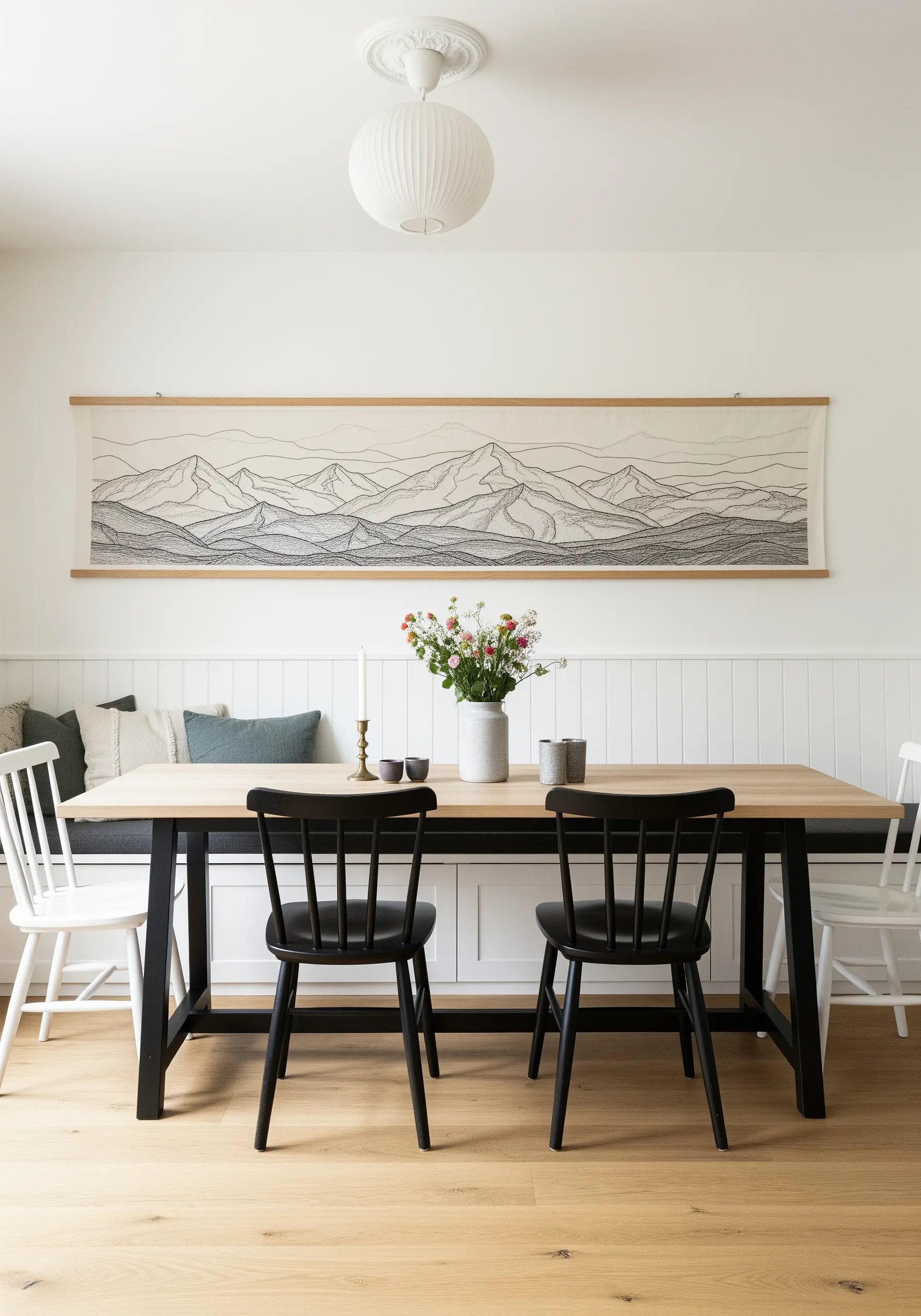
To create a wide, panoramic landscape, use long straight stitches or seed stitches to suggest texture and shadow.
Define the ridgelines of the mountains with a clean backstitch, then fill the areas below with stitches that follow the slope of the land. This directional stitching is key to creating a sense of perspective and form.
Using varying shades of grey and black thread adds depth, making the foreground mountains appear darker and closer.
You can master these mountain landscape thread painting techniques to turn any vista into a stunning textile banner.
18. Intricate Mandalas on a Dark Canvas
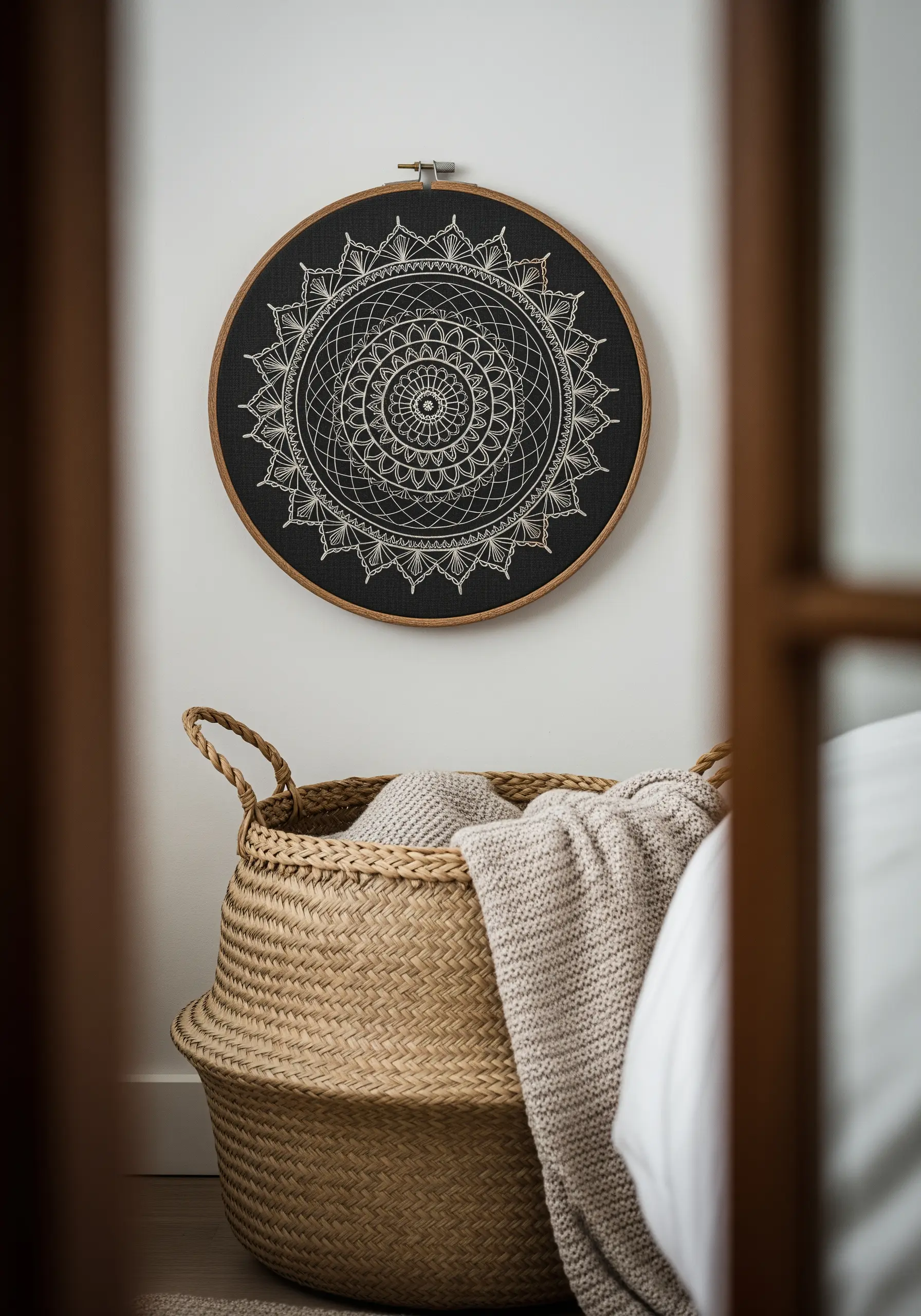
Make your line work pop by stitching with a bright white or silver thread on a black or charcoal fabric.
The key to a successful mandala is precision. Use a compass and protractor with a white gel pen to draw your guidelines directly onto the fabric before you begin.
Combine a variety of simple stitches—backstitch for lines, detached chain stitches for petals, and French knots for dots—to build intricate, layered patterns.
These modern thread mandala ideas are a beautiful exercise in mindfulness and precision stitching.
19. A Celestial Scene with Stitched Starlight
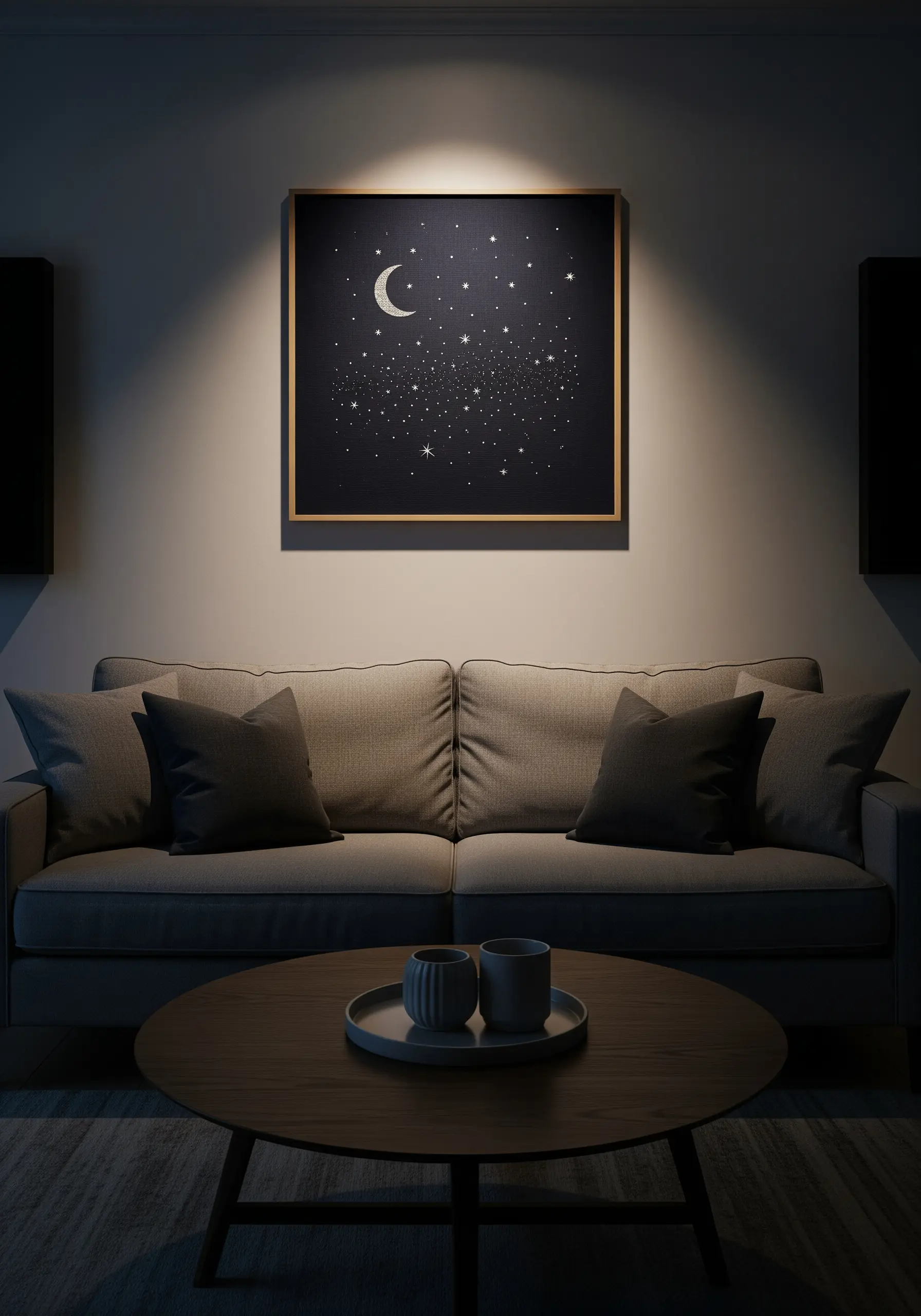
Create a sparkling night sky by using a combination of thread types and stitch techniques.
Use a silver metallic thread for the prominent stars and moon, stitching them with small satin stitches to maximize light reflection.
For the distant starfield, scatter tiny French knots and single straight stitches using a single strand of white or glow-in-the-dark floss.
Here, you can see how ways to combine thread and negative space on a dark canvas can evoke the vastness of space, making the unstitched areas as important as the stars themselves.
20. Tone-on-Tone Geometric Weaving
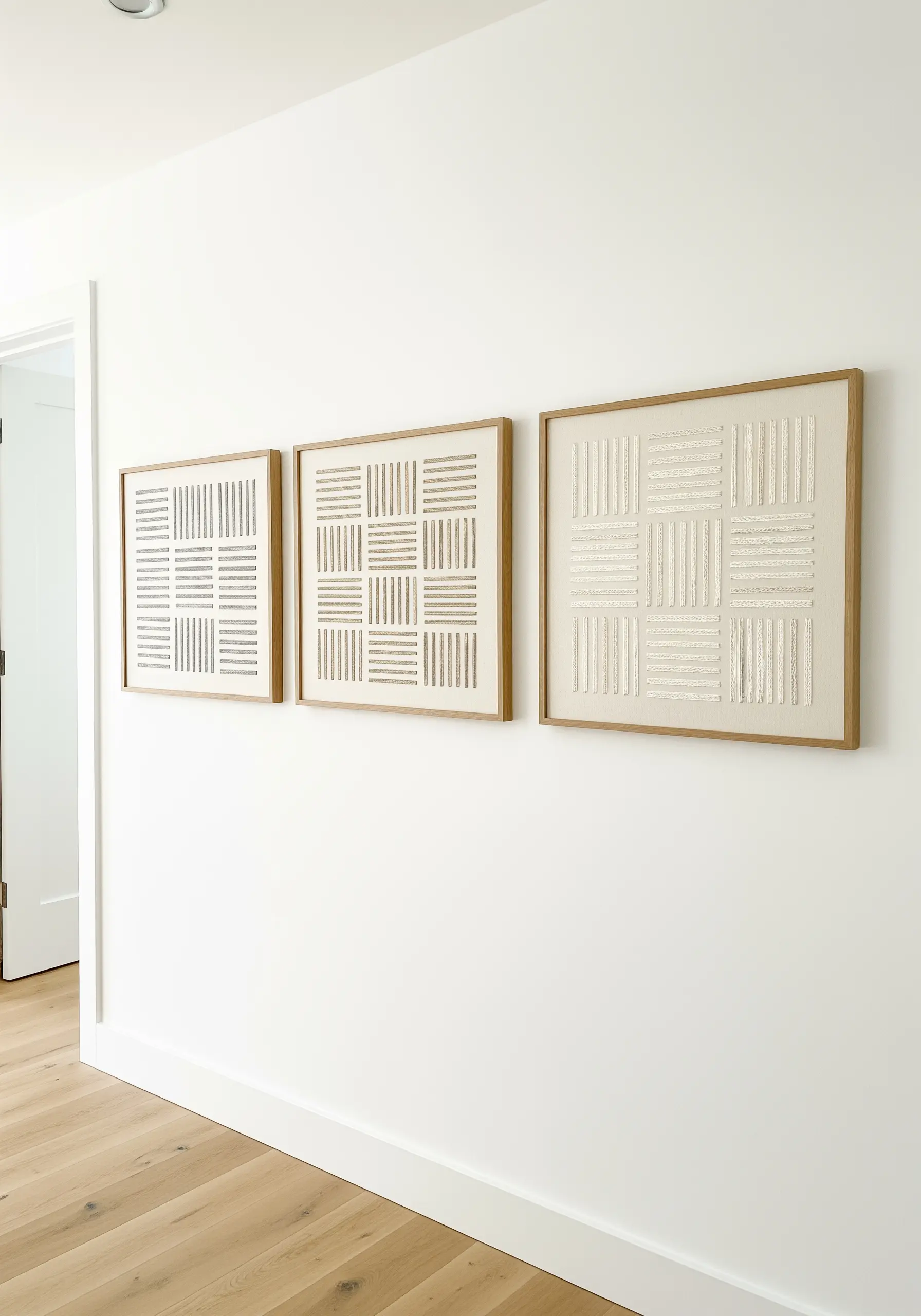
Achieve a subtle, sophisticated pattern by using thread that is only a shade or two lighter than your fabric.
This design uses disciplined blocks of vertical and horizontal straight stitches to create a woven, checkerboard-like effect.
The slight sheen of the thread against the matte fabric creates a pattern that shifts with the light, adding depth without adding color.
These tone-on-tone embroidery techniques are perfect for creating art that feels integrated and calming, rather than demanding attention.
21. Layered Botanicals with Blended Threads
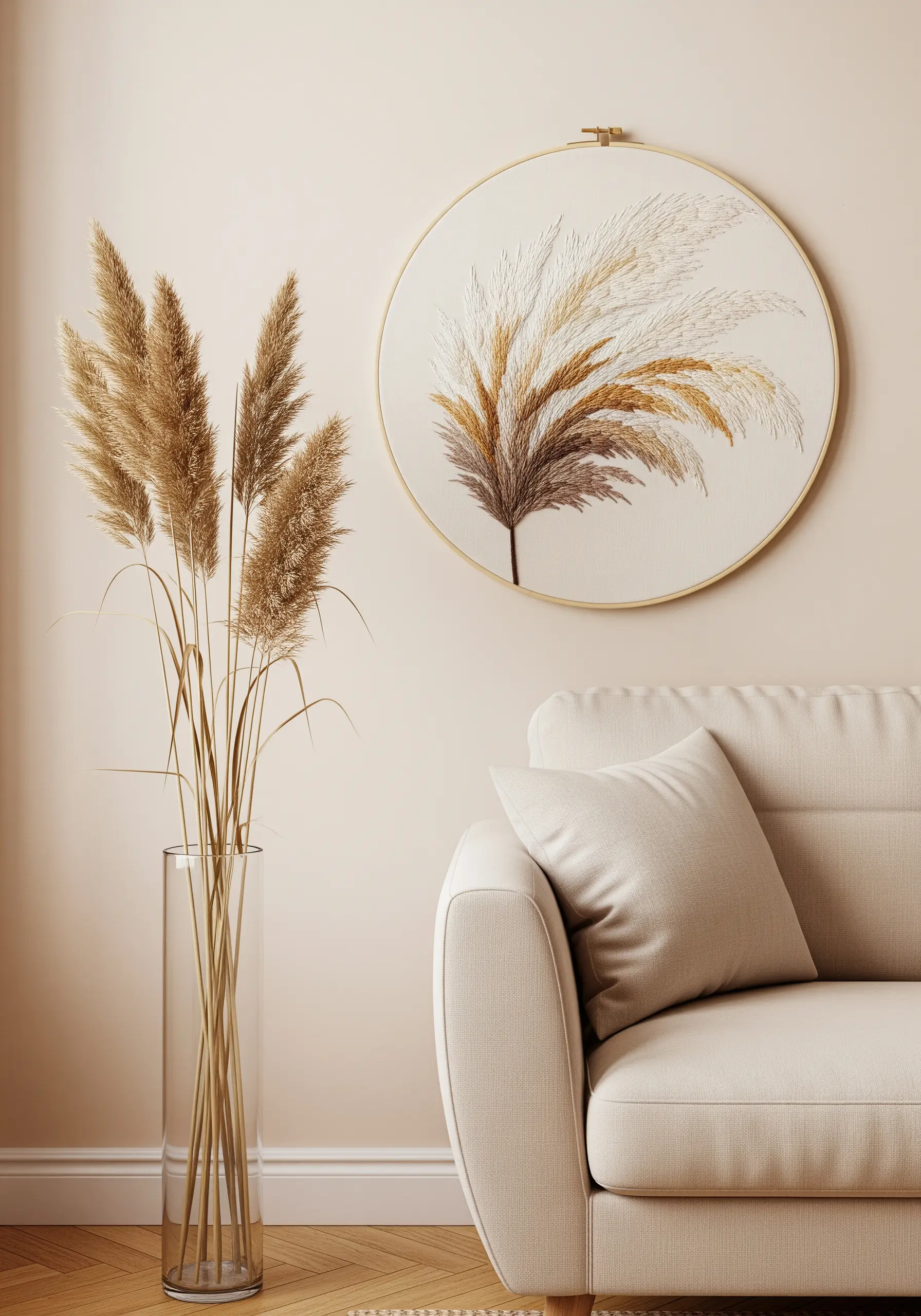
To capture the multi-tonal nature of pampas grass, don’t use a single color. Instead, thread your needle with multiple strands of different shades at once.
Combine one strand of beige, one of gold, and one of dark brown in your needle to create an instantly blended, naturalistic effect with each stitch.
Use long, fanned-out straight stitches or fishbone stitches to create the fluffy, feathery texture of the plumes.
This method is ideal for creating watercolor-style floral threads, giving your work a soft, painterly quality.
22. Abstract Seascapes in Thread
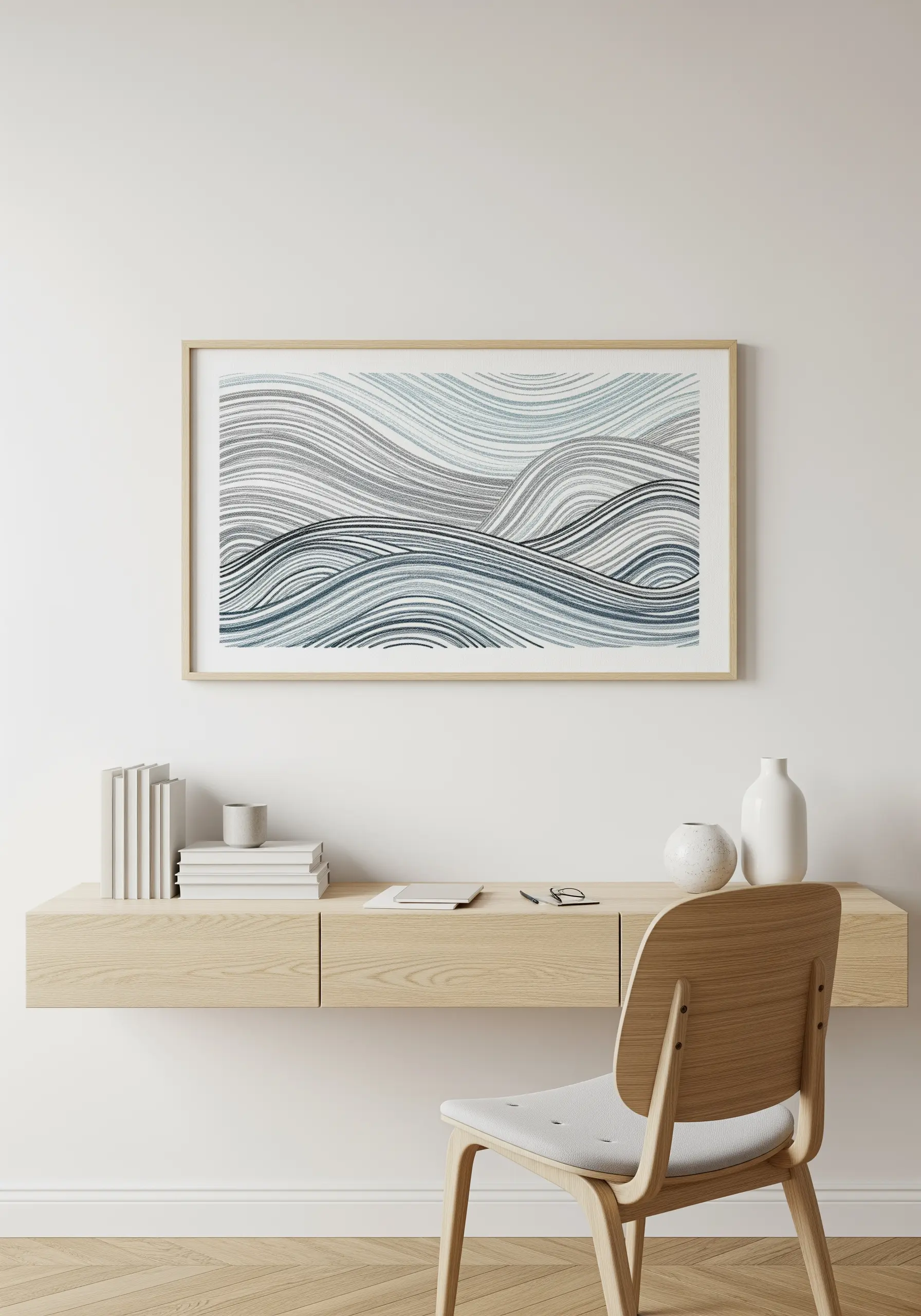
Evoke the movement of water by filling your canvas with dense, undulating lines of thread.
Use a long and short stitch technique, but instead of blending colors for realism, use it to create blocks of texture in a limited palette of seafoam, gray, and black.
Let your stitched lines follow the contour of the waves, creating a powerful sense of flow and rhythm across the entire piece.
You can use this approach to create abstract thread landscapes that capture the feeling of a place rather than its literal appearance.
23. Hyper-Realistic Botanical Studies
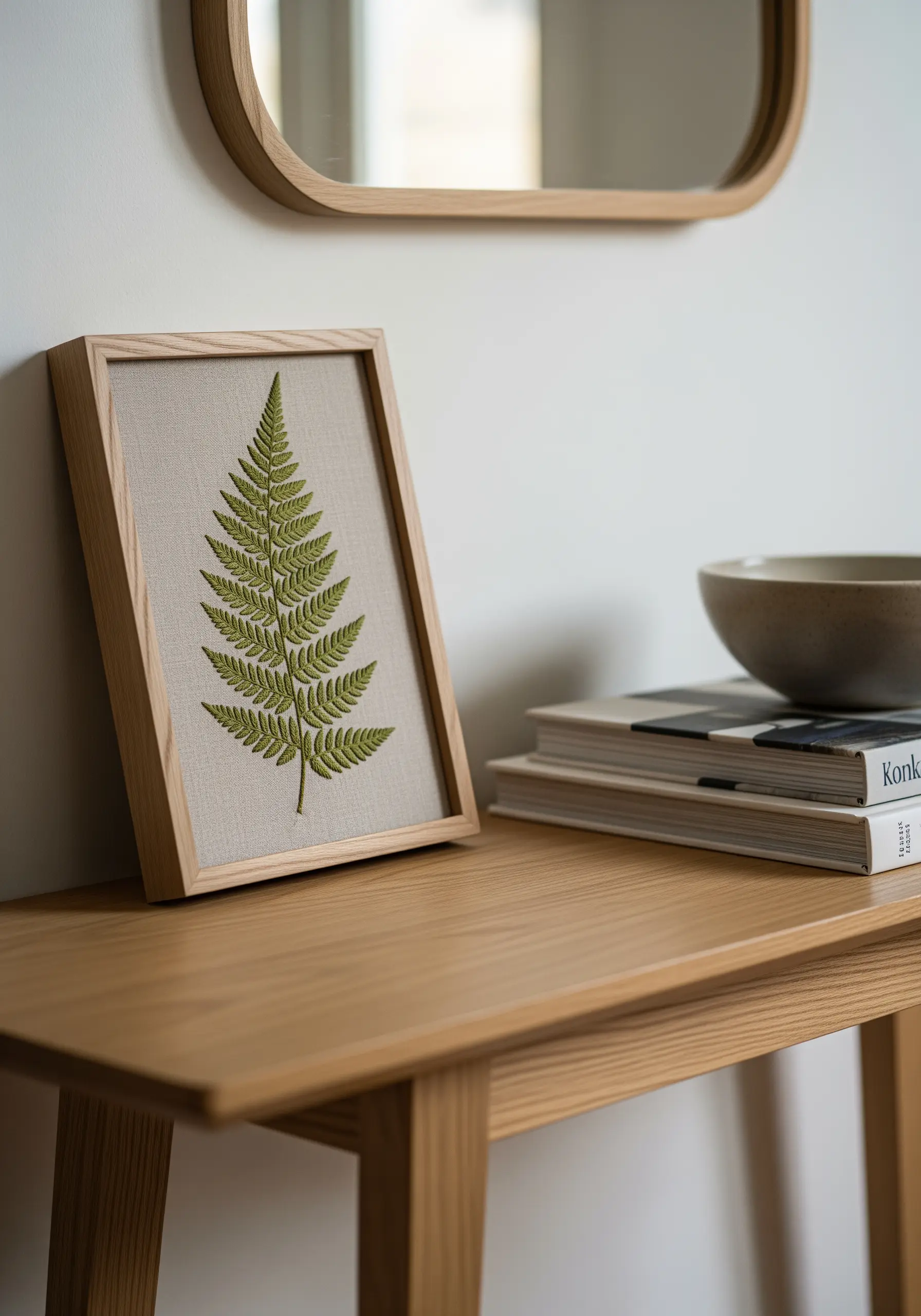
To achieve this level of realism in a fern, precision is everything.
Each tiny frond is created with a single, angled straight stitch or a lazy daisy stitch. Pay close attention to the direction and length of each stitch to mimic the plant’s natural growth pattern.
Use at least two or three shades of green to create subtle highlights and shadows, giving the leaf dimension.
Mastering these leaf vein stitch methods and tiny details is what separates a simple motif from a stunning botanical portrait.
24. Minimalist Sculpture with Fiber
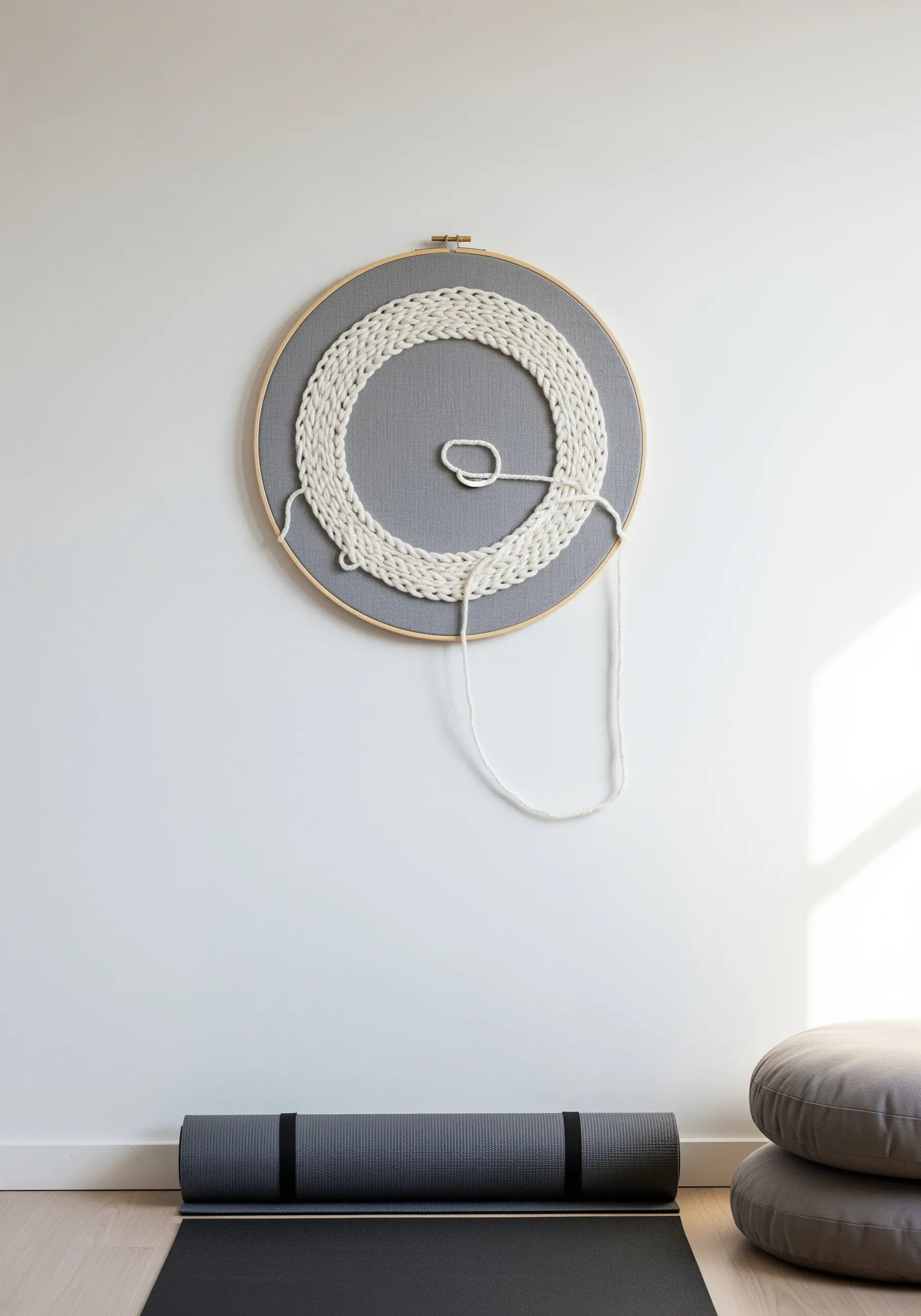
Challenge the conventional idea of hoop art by bringing the fiber outside the hoop itself.
Use a thick, soft cotton rope or cord, securing it to the fabric background with a few strong, hidden couching stitches.
The composition here is simple but effective: a coiled circle that suggests both order and infinity, with the loose end grounding the piece in reality.
This style of minimalist embroidery hoops acts more like a sculptural object, playing with line, form, and the material’s natural tendency to drape.