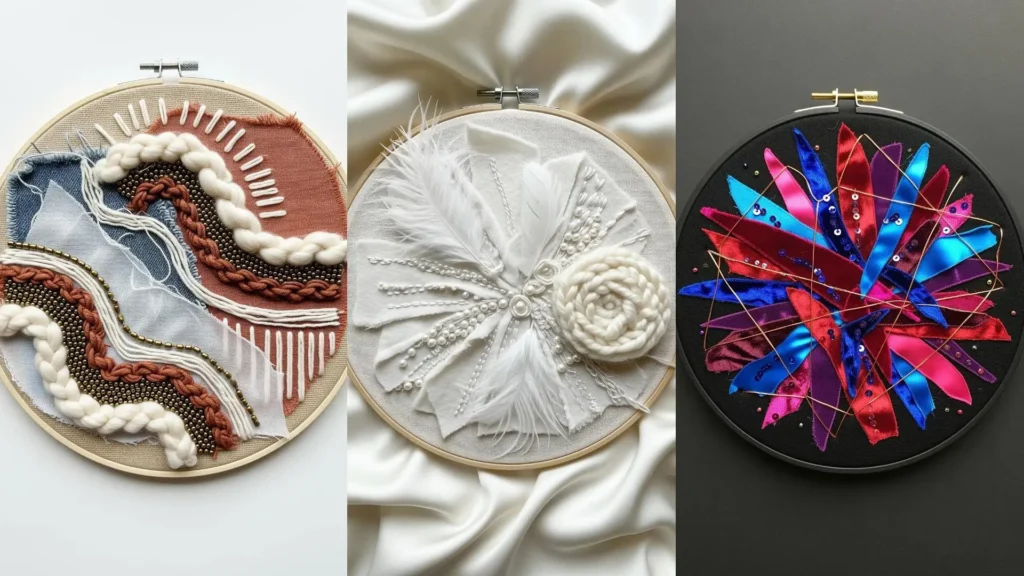
Perhaps you’re looking at your embroidery and wondering how to move beyond simply filling in a pattern. You want your work to have a voice, a presence—to feel less like a hobby and more like art. The answer isn’t in more complex stitches, but in more intentional choices.
Transforming a simple pillow from a mere home accessory into a gallery-worthy piece is about understanding the power of a single, well-placed line. It’s about how that line interacts with the texture of the fabric, how its thickness creates a shadow, and how its color can change the mood of an entire room.
Here, you’ll discover how to think like a textile artist. We will explore how to use line, texture, and composition to create abstract designs that are both minimalist and deeply expressive. You already have the skills; it’s time to give them a new perspective.
1. Sculptural Presence with Padded Cording
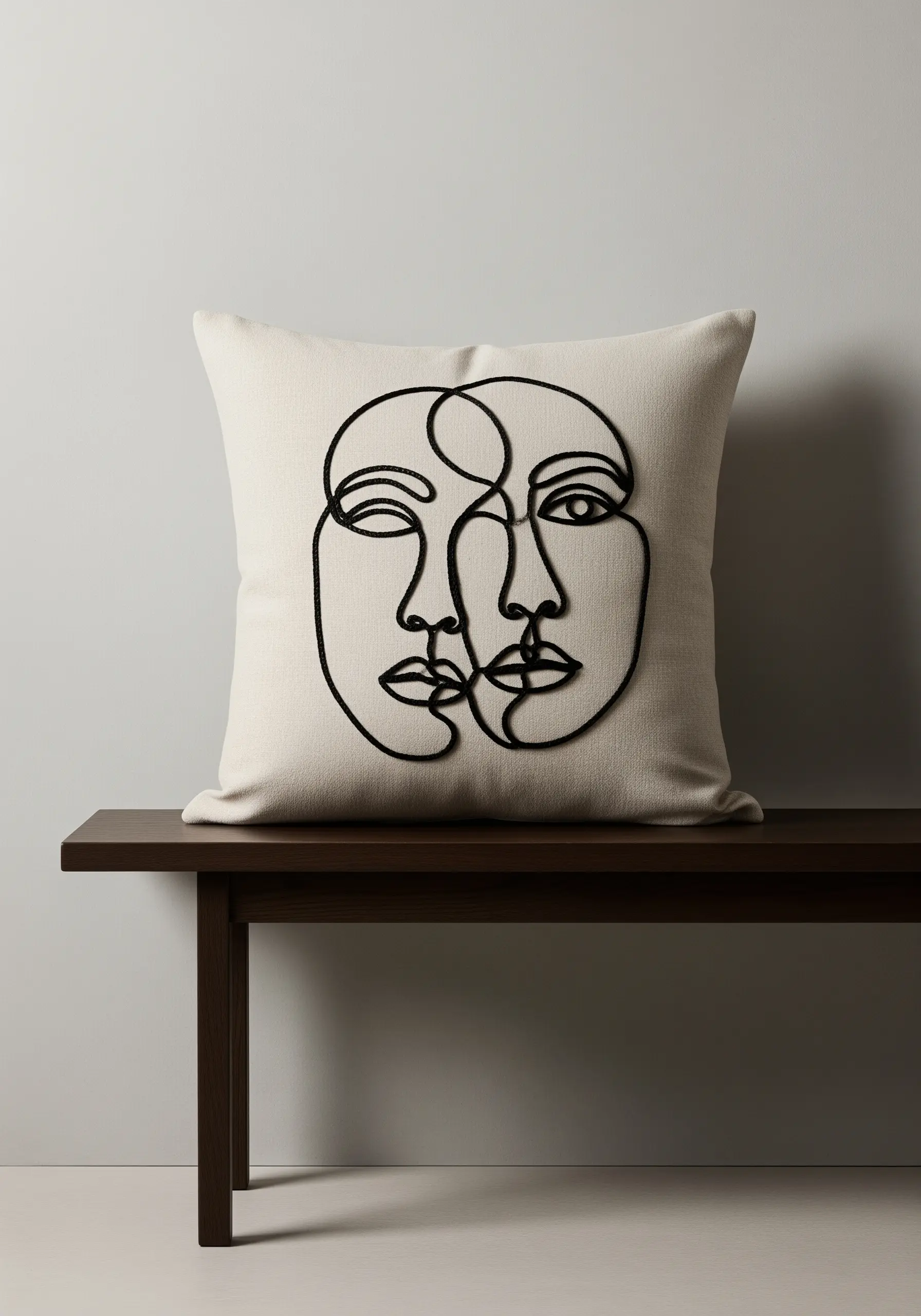
To achieve this bold, three-dimensional effect, you aren’t stitching a line but applying one to the surface.
Use a couching stitch to sew down a thick cotton cord or a pre-made fabric tube, creating a line with physical weight and shadow.
For a seamless look, match your couching thread to the cord; for a decorative accent, use a contrasting color.
This technique elevates a simple line-art design into a tactile, sculptural piece that invites touch.
2. Rhythmic Flow with Intersecting Metallic Arcs
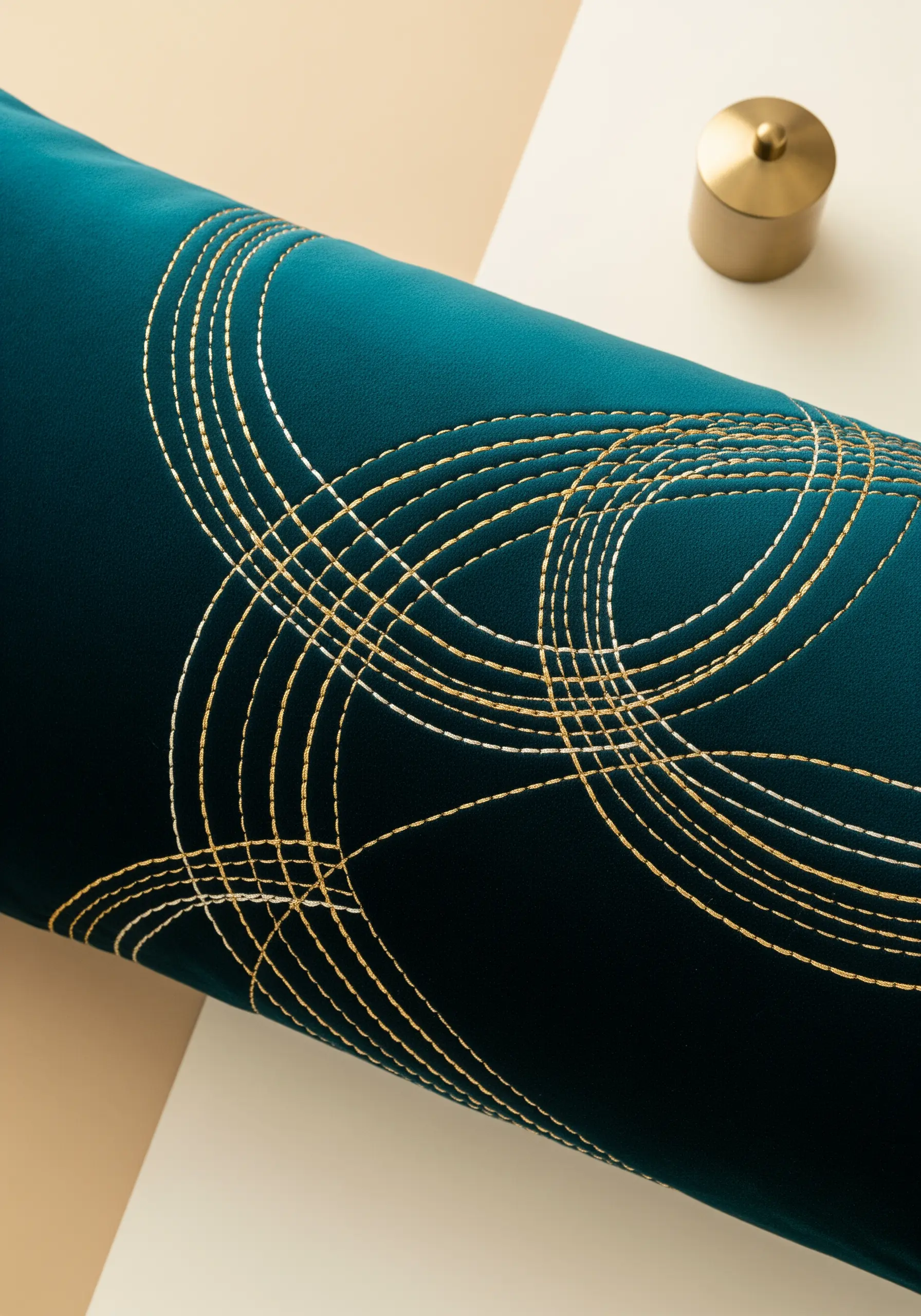
Create this sense of luxurious movement by layering simple running stitches with a high-quality metallic thread.
Work on a fabric with a slight sheen, like velvet or sateen, to enhance the glimmer.
To ensure your intersecting arcs are perfectly placed, draw your design onto a water-soluble stabilizer first.
The overlapping lines create a visual rhythm and depth, turning a basic stitch into an elegant statement on motion.
3. The Architectural Grid in Running Stitch

Transform the humble running stitch into a sophisticated, architectural pattern through repetition and precision.
Use a high-contrast thread, like navy on pristine white, to emphasize the clean, geometric lines.
Vary the spacing between your lines—some dense, some sparse—to create negative space that becomes part of the design itself.
This works because its minimalist aesthetic feels both intentional and modern, perfect for Scandinavian interiors.
4. Vibrant Botanicals on a Moody Canvas
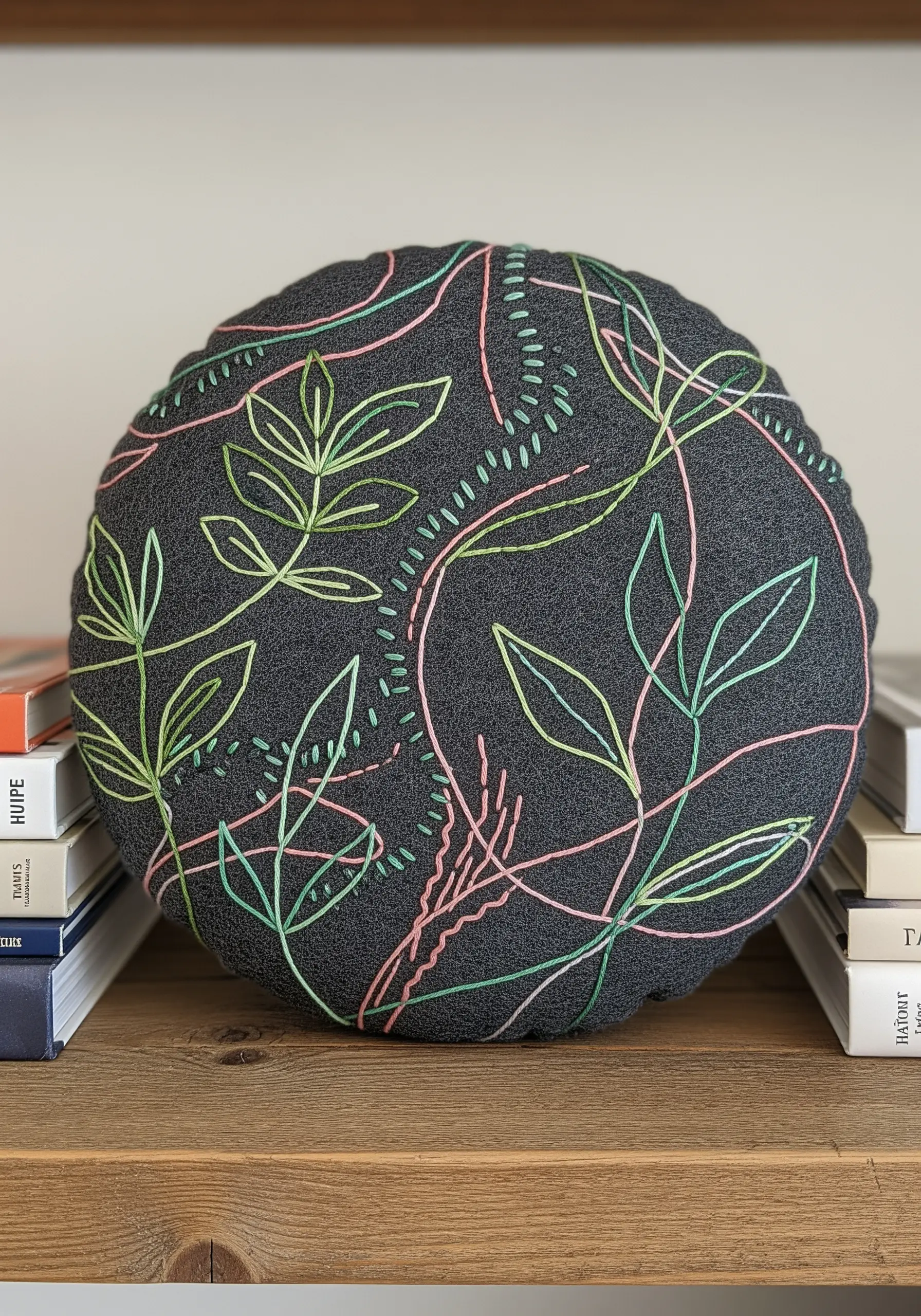
Make your line work pop by stitching with bright, neon-adjacent threads on a dark, textured fabric like charcoal felt or wool.
Combine stitch styles to add interest: use a smooth stem stitch for the main outlines and introduce seed stitches or French knots for textural details.
This high-contrast approach gives botanical designs an electric, contemporary energy that feels fresh and alive.
5. Bold Typography with Wrapped Cording
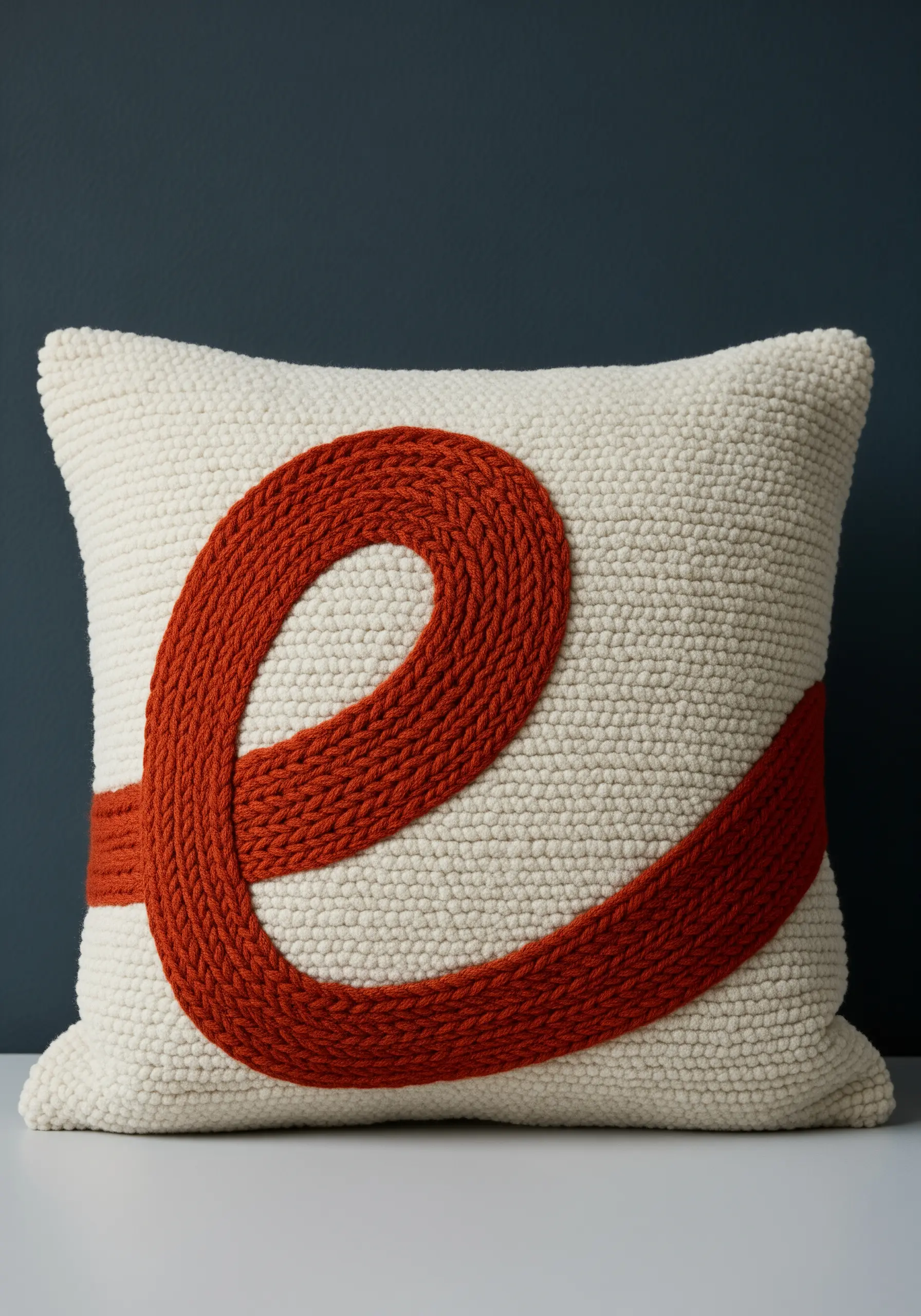
This is a masterclass in texture that turns a simple monogram into a statement piece.
First, tightly wrap a thick cotton piping cord with your chosen embroidery floss.
Then, couch the wrapped cord onto the surface of your pillow, shaping it into your desired letterform.
The technique creates a substantial, highly tactile letter that stands out, especially against a nubby, textured background fabric.
6. Topographic Contours in Varied Stitches
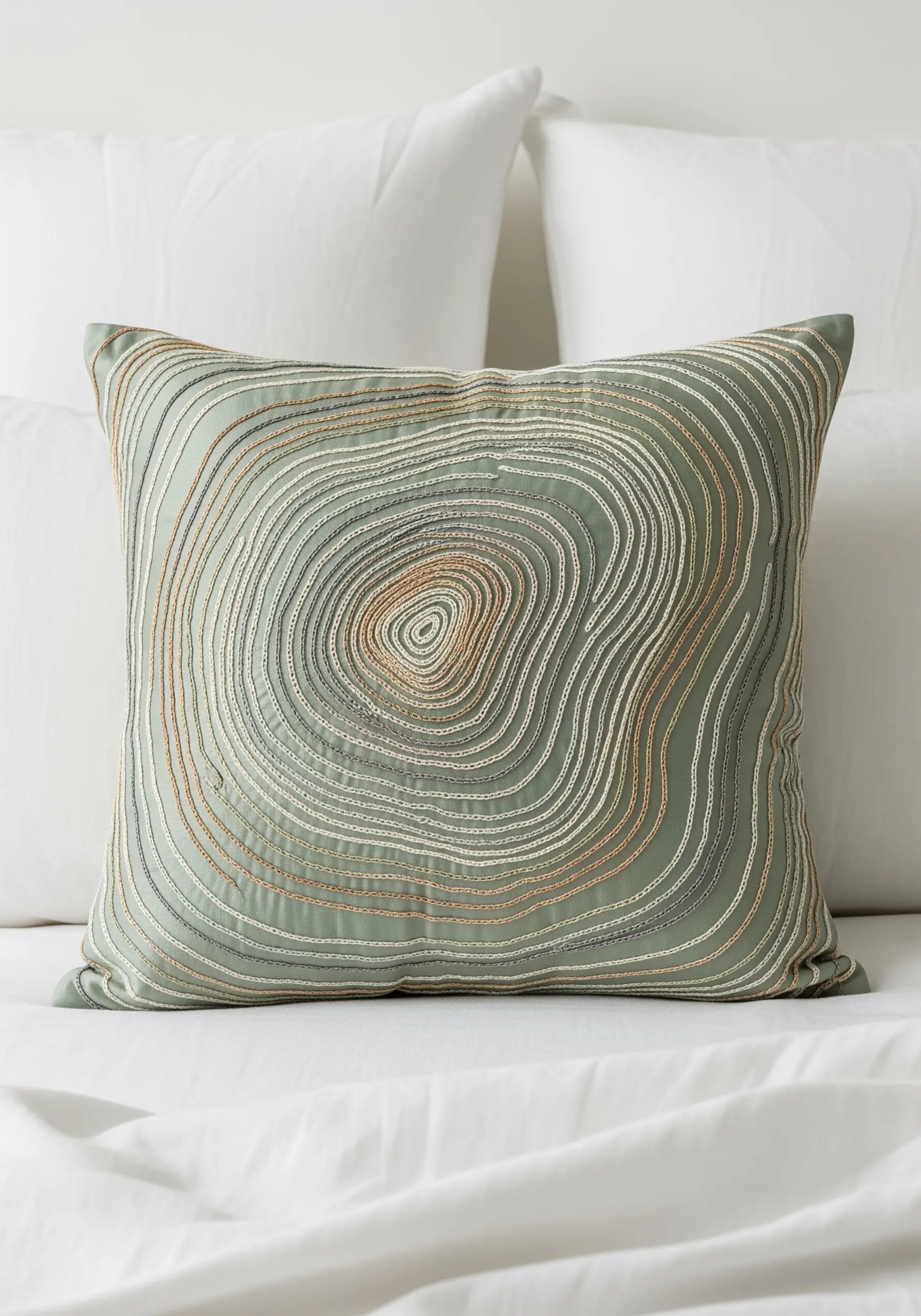
Mimic the organic lines of a topographic map by stitching concentric shapes with a mix of threads and simple stitches.
Combine backstitch, split stitch, and running stitch within the same design to create subtle variations in line weight and texture.
Work with a tight, earthy color palette—creams, grays, and a touch of metallic gold—to maintain a cohesive, natural feel.
The result is a design that feels like a slice of the natural world, full of quiet depth and organic texture.
7. Celestial Geometry with Star Stitch Accents

Combine the precision of geometry with the magic of the night sky.
Use a crisp backstitch with a silver metallic thread to form the connecting lines of your constellation.
At the vertices, add small star stitches or tiny, tight French knots to represent the stars, giving the design a focal point and a touch of sparkle.
Stitched on black or deep navy fabric, this technique creates a powerful, graphic interpretation of celestial beauty.
8. Woven Color-Blocking with Surface Appliqué
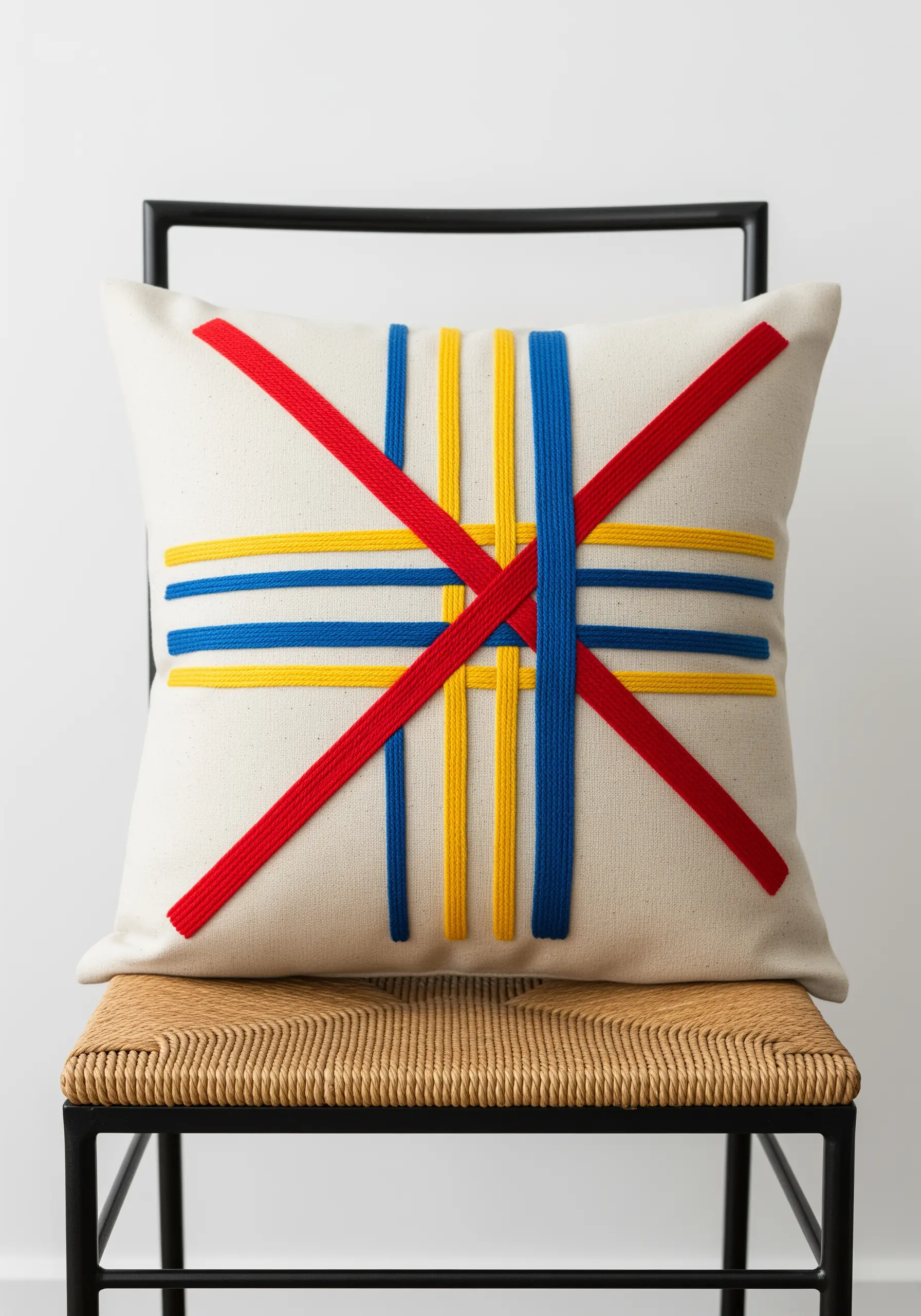
Achieve a bold, graphic look without a single embroidery stitch by weaving flat fabric strips or ribbons directly onto your pillow front.
Lay down your vertical strips first, securing the ends, then weave the horizontal strips over and under.
This surface embellishment technique is inspired by Bauhaus design and creates a tactile, dimensional pattern.
Choose primary colors for a classic modern art feel or a tonal palette for a more subtle effect.
9. Deconstructed Lines with Expressive Thread Tails
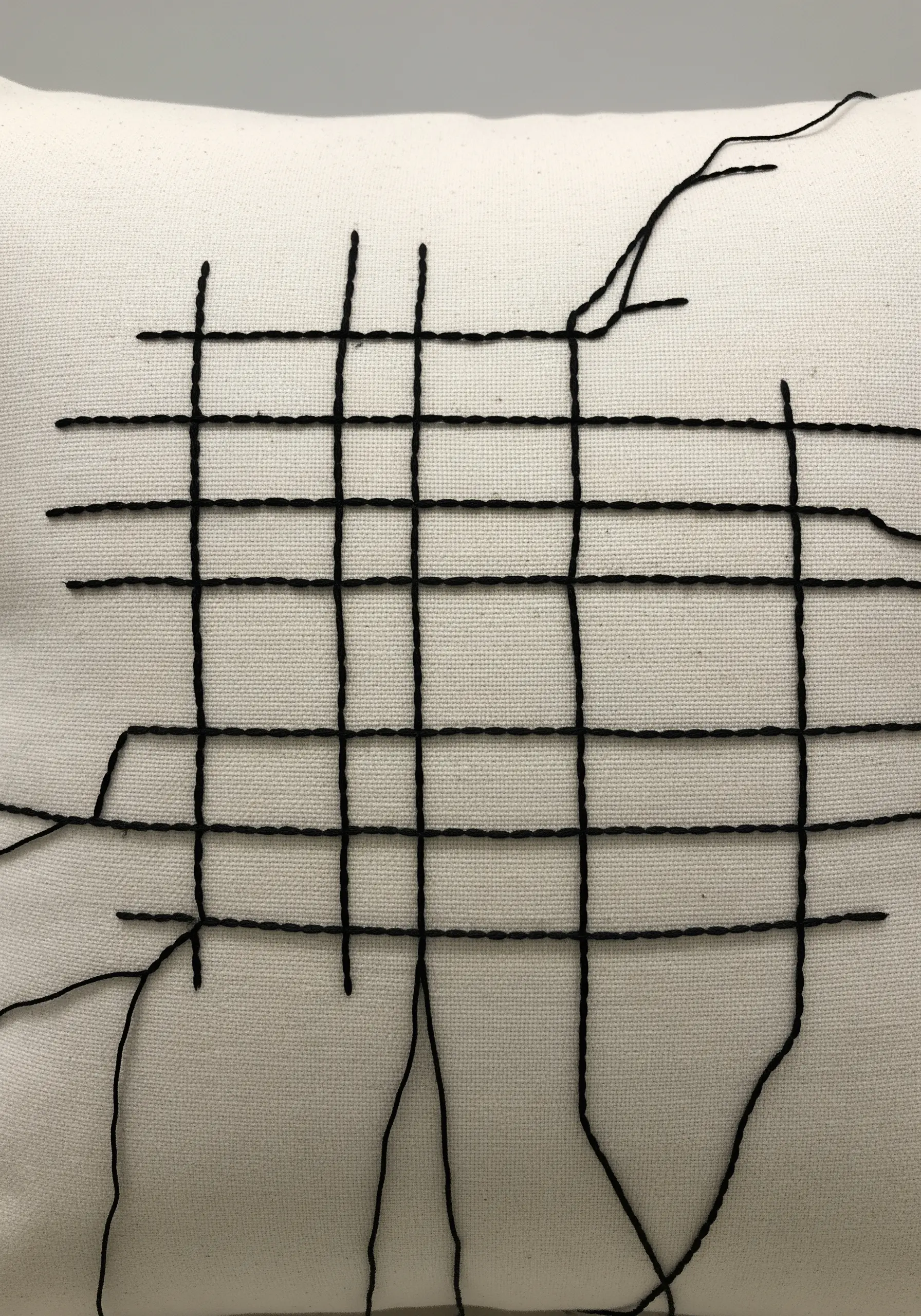
Introduce an element of intentional imperfection into a structured grid pattern.
Use a standard backstitch for your grid, but at the start and end of certain lines, leave the thread tails long and loose on the fabric’s surface.
This technique challenges the neatness of traditional embroidery, adding a raw, organic quality that feels artistic and personal.
It suggests the design is still in process, a living piece of abstract thread art.
10. Gradient Echoes in Lustrous Satin Stitch
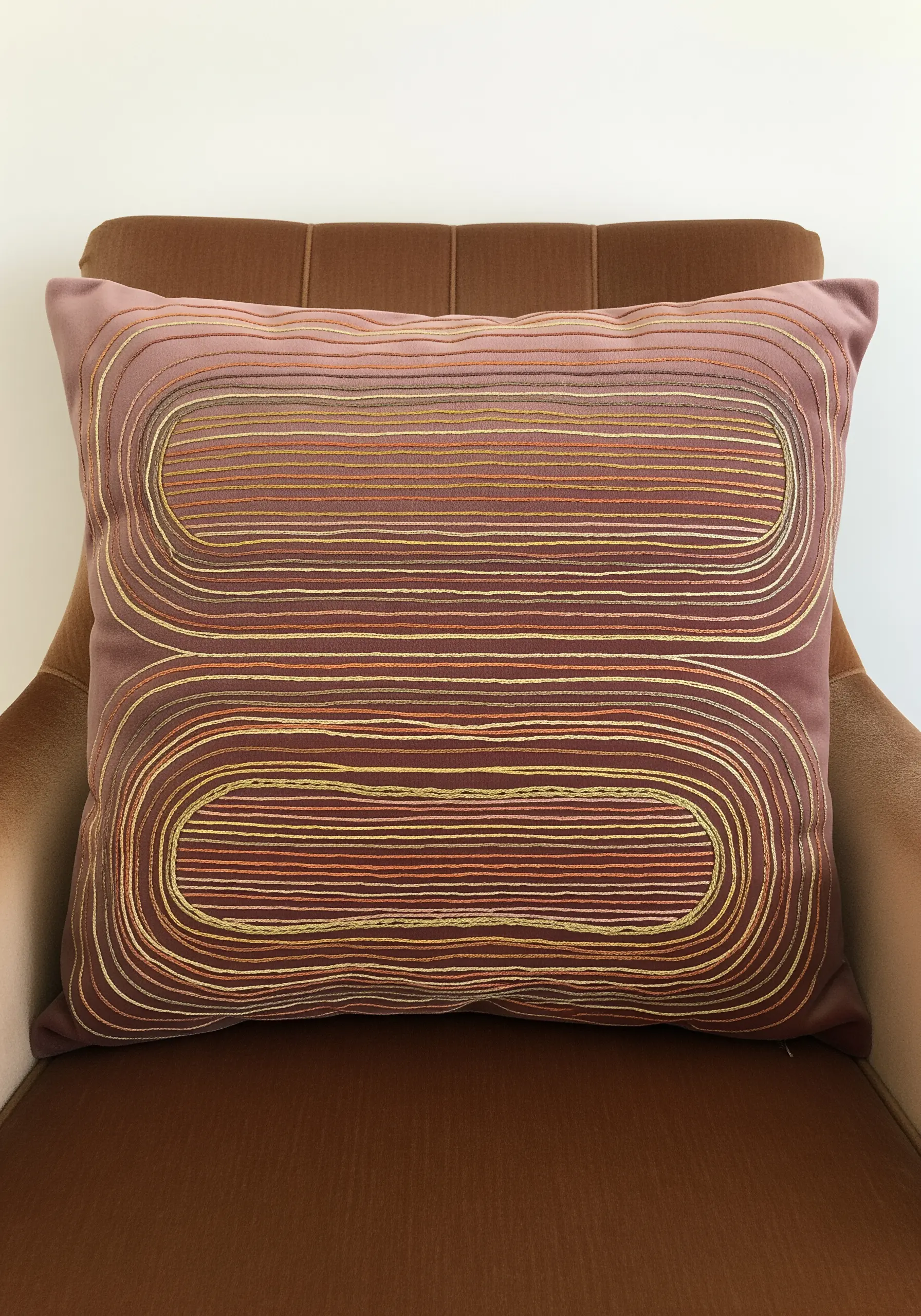
Create this mesmerizing, shimmering effect by working concentric shapes in dense satin stitch.
The key is to use a range of threads in a subtle gradient, moving from light to dark or from one hue to another, like gold to copper.
Keep your stitches parallel and your tension even to achieve that smooth, light-catching surface.
This technique turns your pillow into a sophisticated study of color and light.
11. Graphic Illusions with Raised Chain Stitch

Give the illusion of a heavy, three-dimensional chain by using a dense, raised stitch.
A padded satin stitch or a thick, heavy chain stitch worked closely together will create a rounded, cord-like line.
By stitching a bold outline and leaving the interior empty, you emphasize the power of negative space.
The high-contrast black on white makes this design unapologetically graphic and modern.
12. Dimensional Waves with Thick Yarn Couching
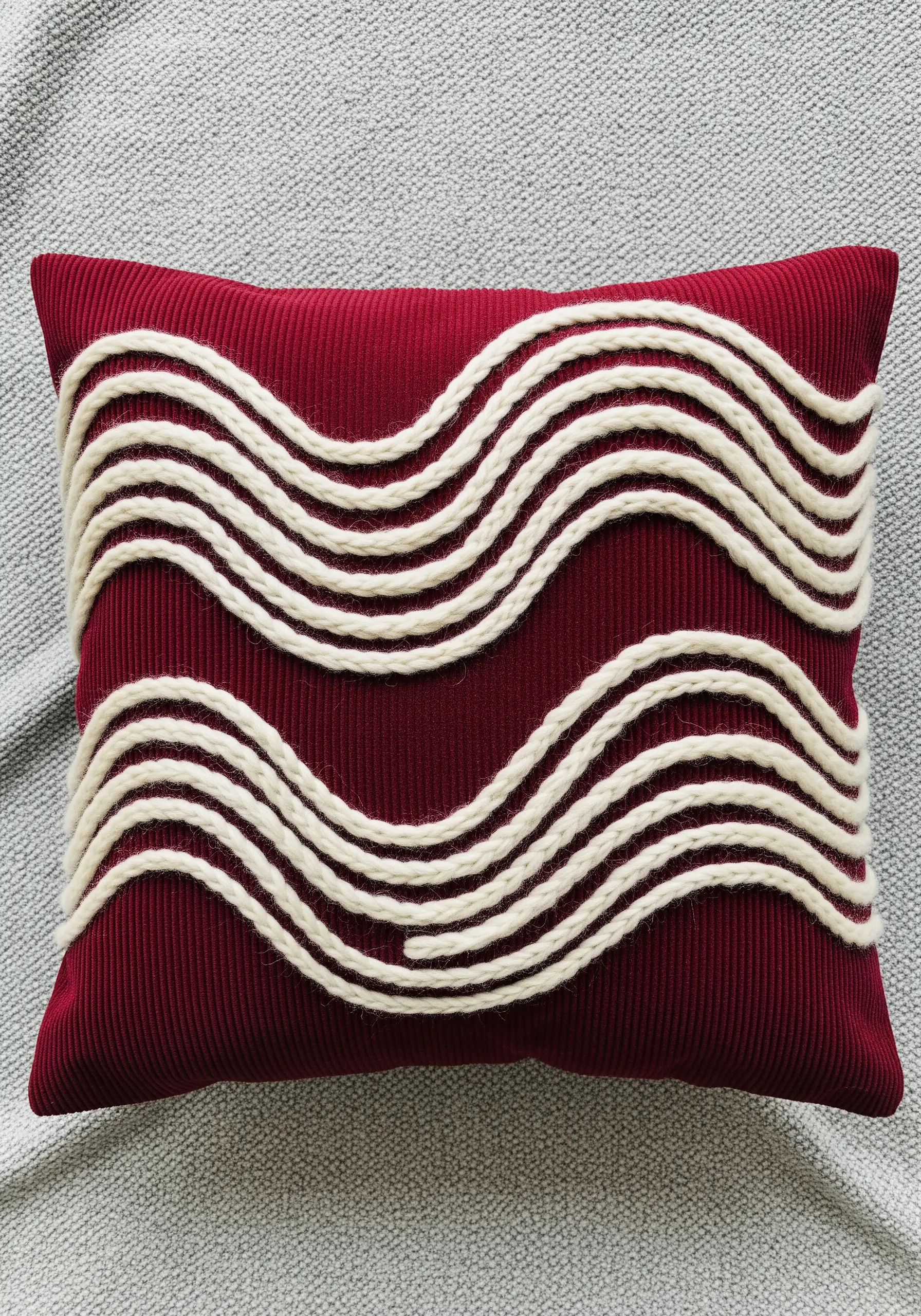
Explore dramatic texture by couching thick, soft yarn onto a contrasting fabric base like corduroy or velvet.
Lay the yarn in gentle, flowing waves and use a matching, thinner thread to tack it down with small, invisible stitches.
The juxtaposition of the soft, bulky yarn against the fabric’s fine texture creates a design that is incredibly tactile and visually striking.
This is a perfect example of how mixed-fiber creations can add depth to home decor.
13. Monochromatic Tangents with Piped Cording
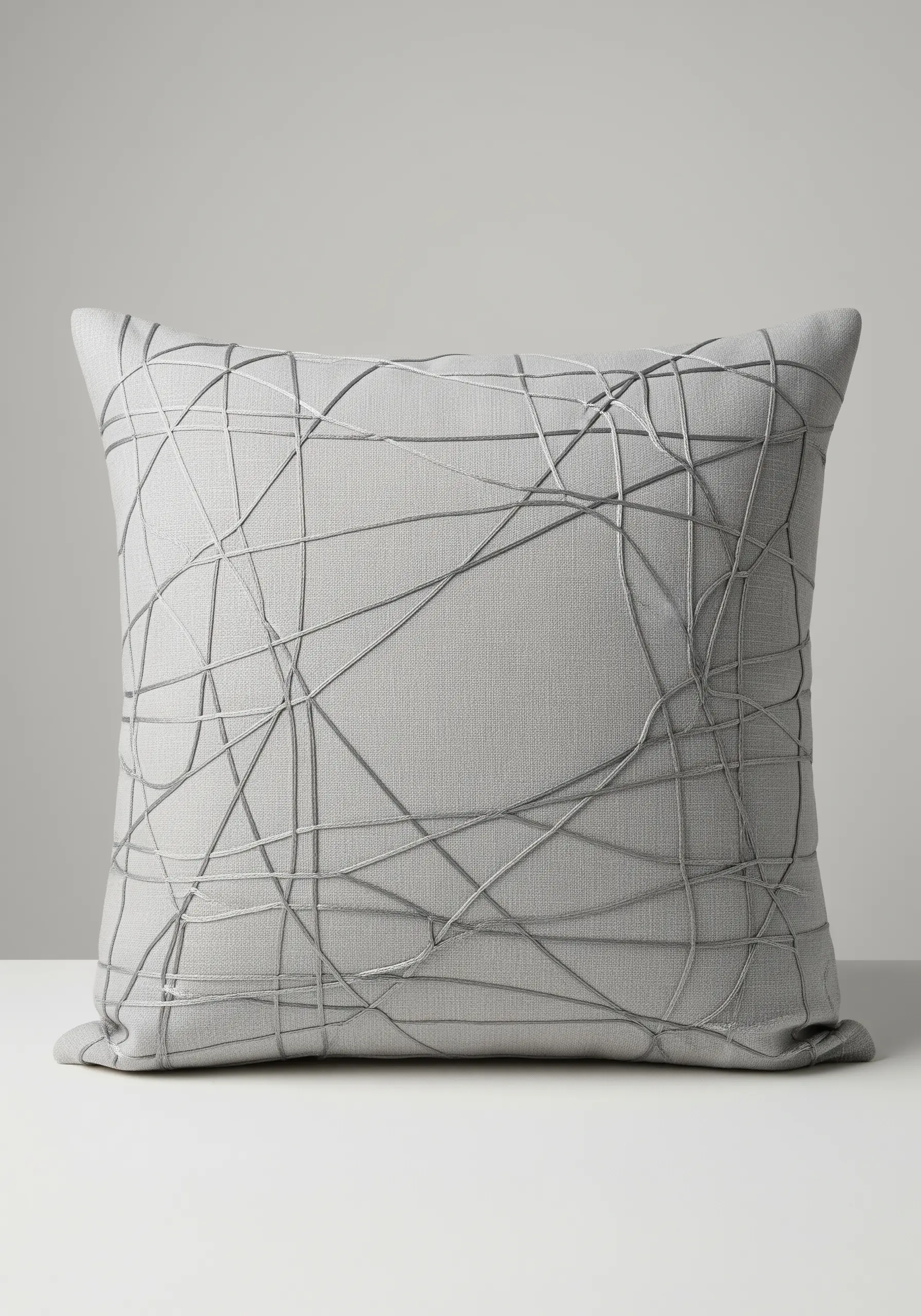
For an understated yet complex look, couch thin cording onto your fabric in a monochromatic color scheme.
Using a cord that is only a shade or two different from your base fabric creates a subtle, tone-on-tone effect.
The interest comes from the controlled chaos of the intersecting and overlapping lines, which build a sophisticated, architectural texture.
This design proves that you don’t need bold color to make a dramatic statement.
14. Interrupted Pathways with Satin Stitch Bars
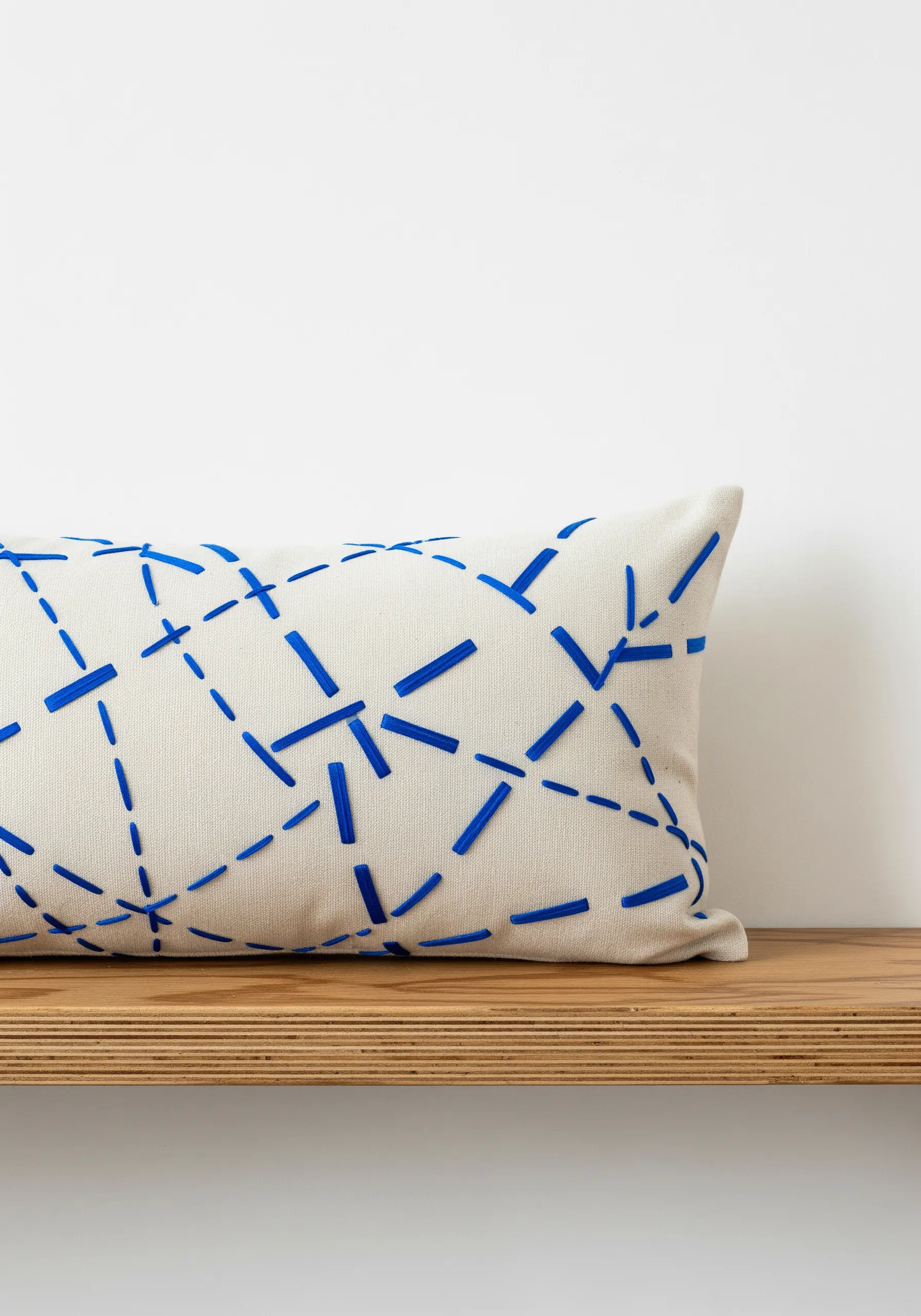
This is a modern, graphic take on the simple dashed line.
Instead of a running stitch, create your pattern using short, precise bars of satin stitch.
This gives each segment more weight and presence, turning the negative space between them into an active part of the design.
It’s a clever way to build a complex-looking geometric pattern from very simple, repeated elements.
15. Meditative Spirals with Whipped Stitching
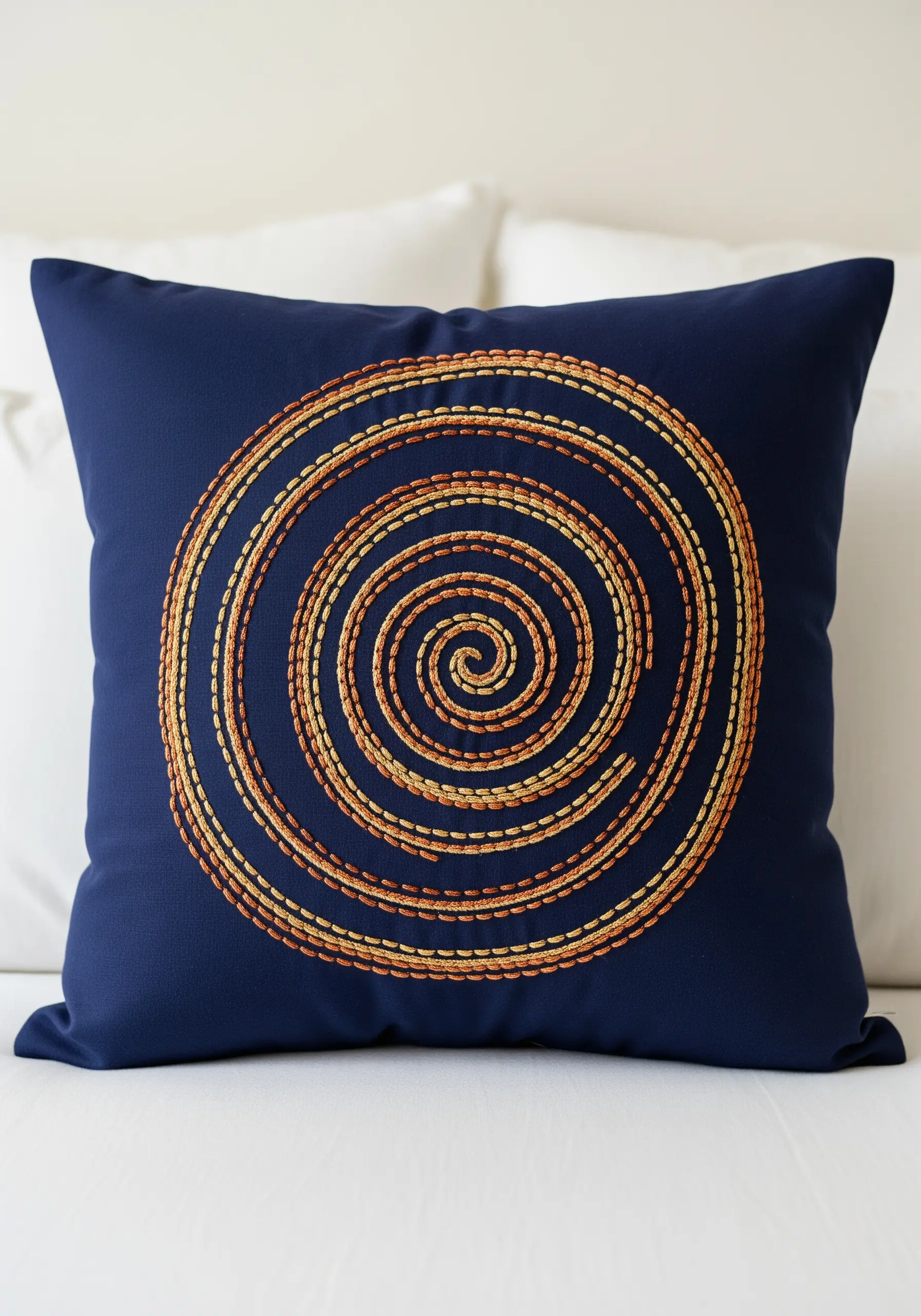
To achieve a perfectly smooth, raised spiral, use a whipped backstitch or whipped running stitch.
First, lay down your foundation stitches in a spiral shape. Then, take a second thread and ‘whip’ it around each stitch on the surface, without piercing the fabric.
This technique covers the gaps between stitches, resulting in a solid, cord-like line that emphasizes the spiral’s continuous, meditative flow.
16. Mid-Century Modernism with Satin Stitch Blocks

Channel the spirit of mid-century modern design by filling clean, geometric shapes with solid blocks of satin stitch.
Create subtle texture and light play by varying the direction of your stitches in each shape—some vertical, some horizontal, some diagonal.
A limited, high-contrast palette of black, white, and gray on a warm, colorful background like mustard yellow enhances the graphic, retro feel.
17. Free-Form Contours with Rouleau Straps
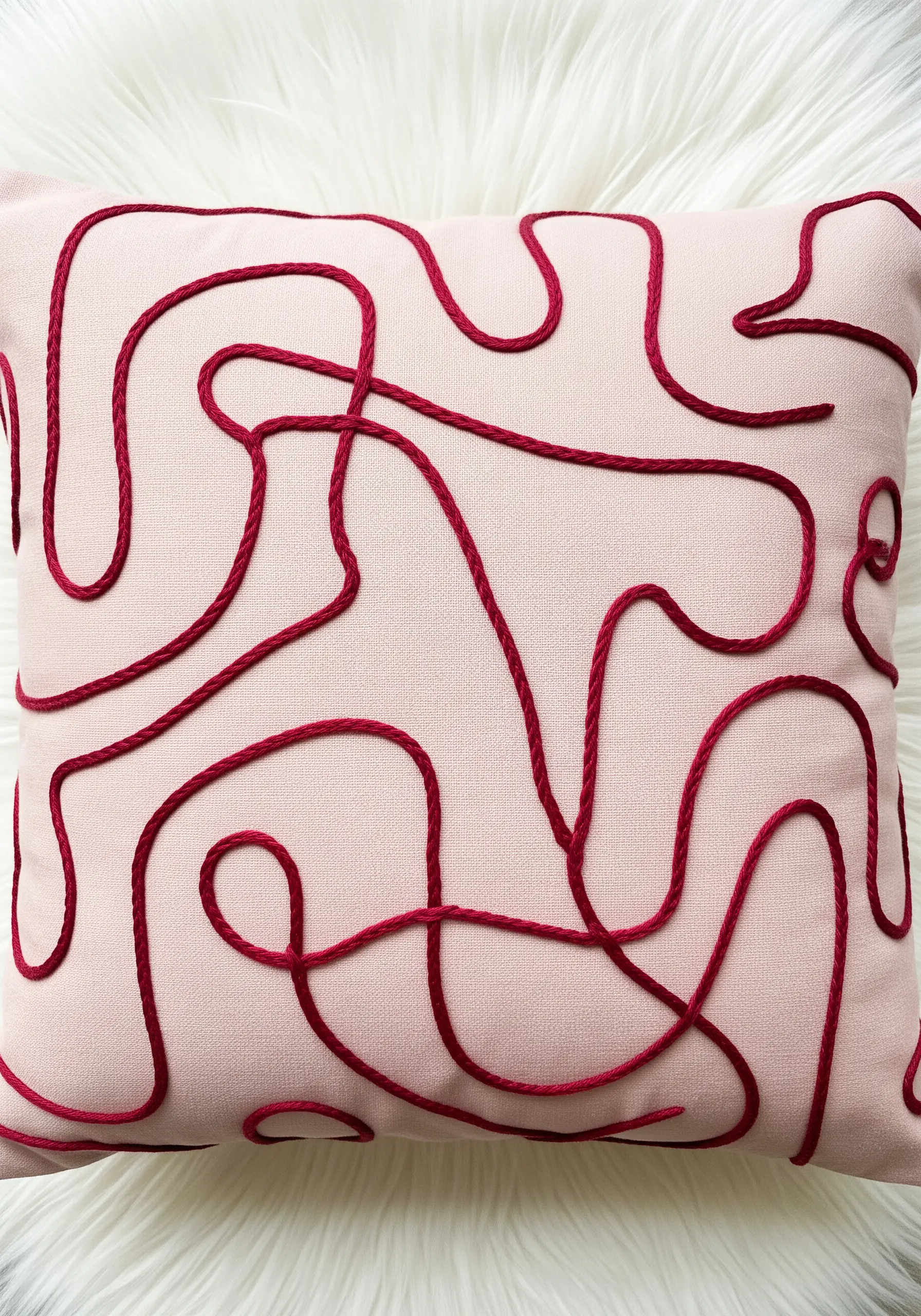
For a line with serious presence, create your own fabric tubes, known as rouleau loops or straps.
Stitch these tubes onto your pillow’s surface, allowing them to meander in an organic, free-form pattern.
This surface appliqué technique provides a bold, sculptural line that embroidery floss alone cannot achieve, giving your design a playful, graphic quality.
18. Tech-Inspired Precision with Silver Backstitch
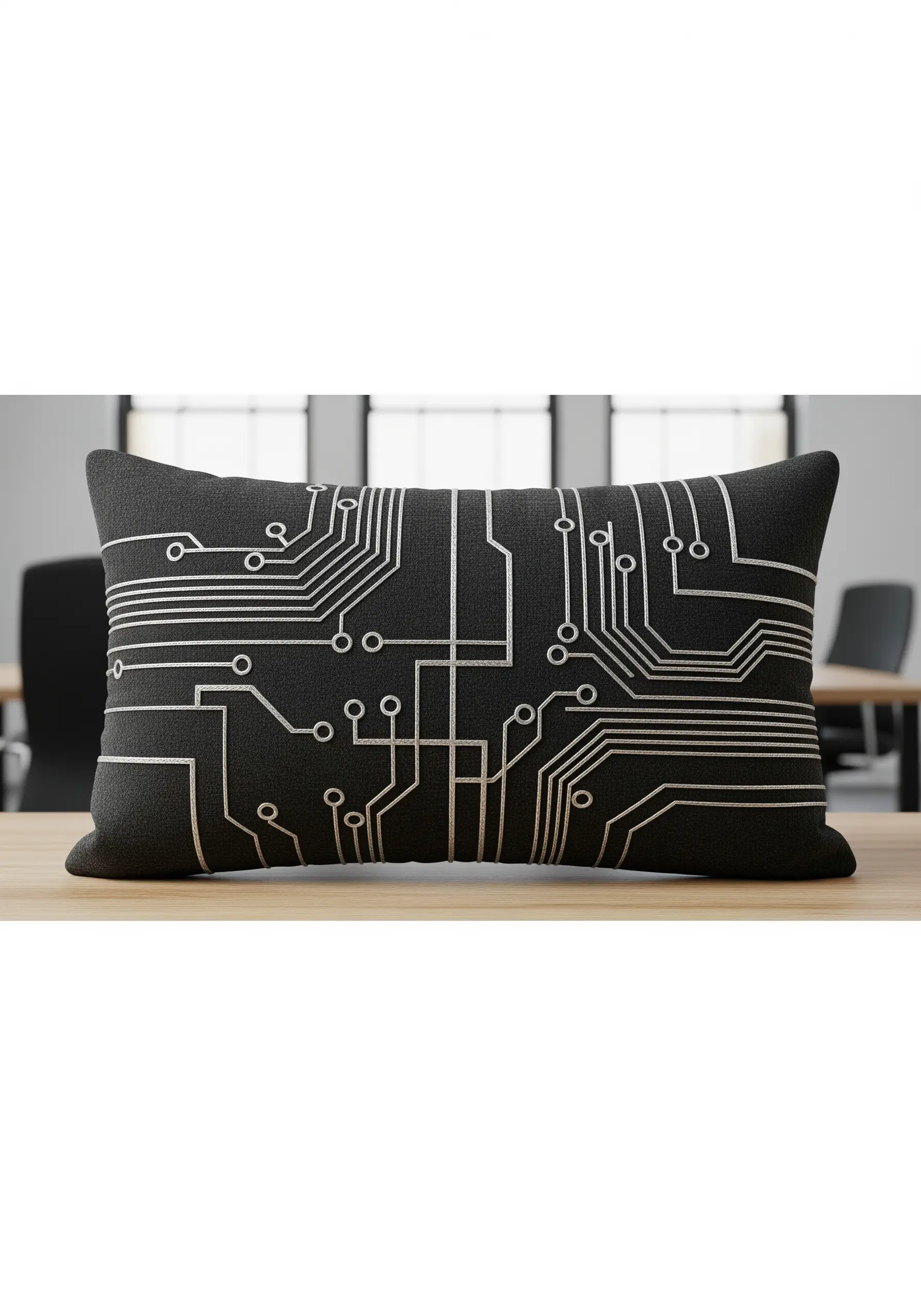
Replicate the intricate beauty of a circuit board using a precise, clean backstitch.
A high-sheen silver or pearlescent white thread on a black fabric base creates the perfect high-tech contrast.
Use a water-soluble stabilizer to transfer your pattern flawlessly, ensuring every line is sharp and every angle is perfect.
Tiny French knots or seed stitches make excellent connection points, completing the technical aesthetic.
19. Sculptural Arcs with Raised Piped Edges
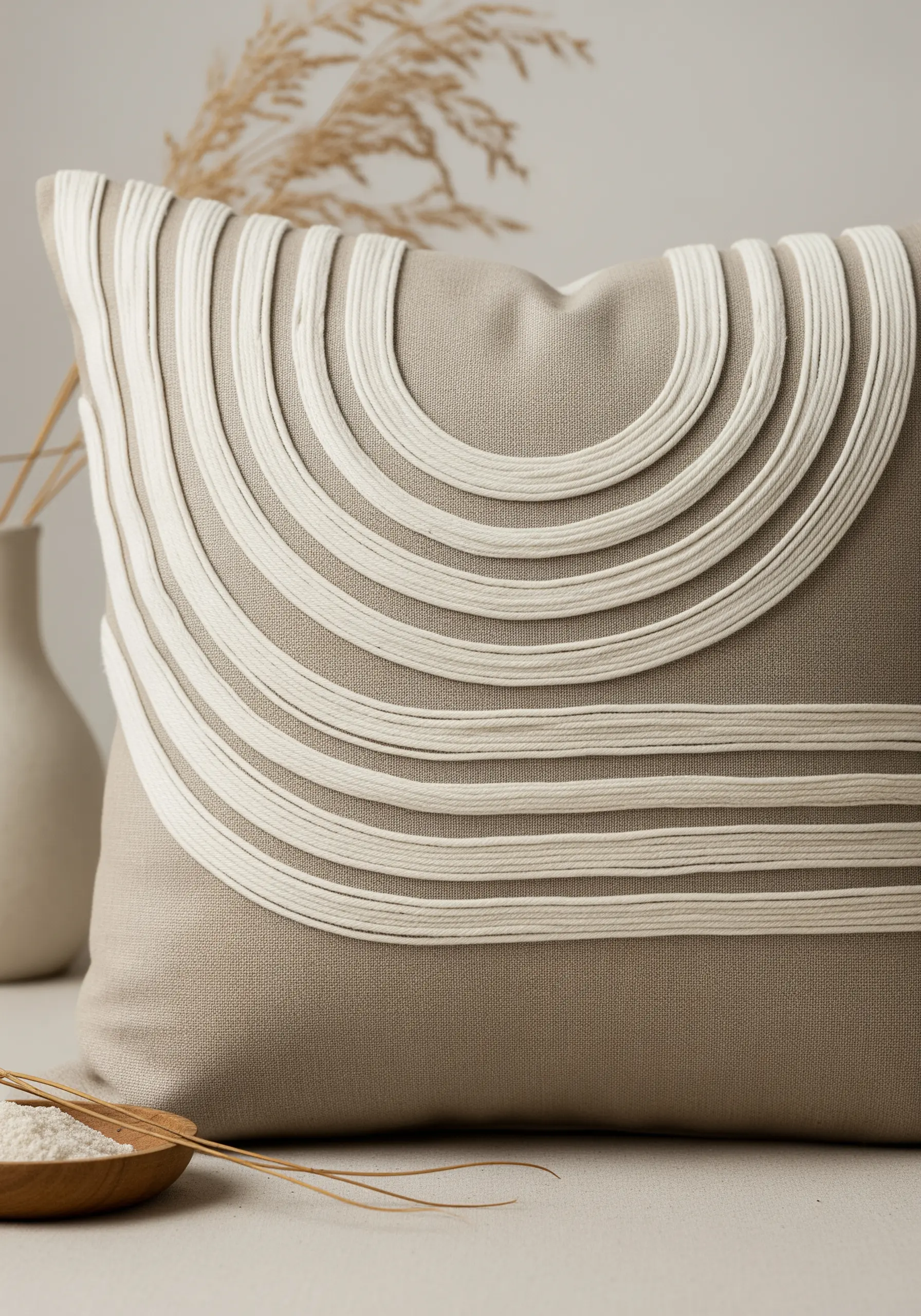
This advanced technique borrows from upholstery to create stunning, raised forms.
Create your own piping by encasing a cord in fabric strips, then sew these piped strips onto your pillow cover in concentric curves.
The result is a highly sculptural design where the play of light and shadow across the raised edges becomes the main feature.
It’s a sophisticated way to add architectural dimension to a plain textile surface.
20. Dynamic Energy with a Multi-Color Grid

Inject a simple grid pattern with vibrant energy through a bold and unexpected color palette.
Use a clean backstitch or stem stitch for your lines, but let the colors do the talking: hot pink, electric blue, and crisp white on a saturated green background.
The joyful clash and intersection of the colors turn a basic geometric design into a piece of contemporary art that feels alive and energetic.
21. Woven Texture with Variegated Yarn Bundles
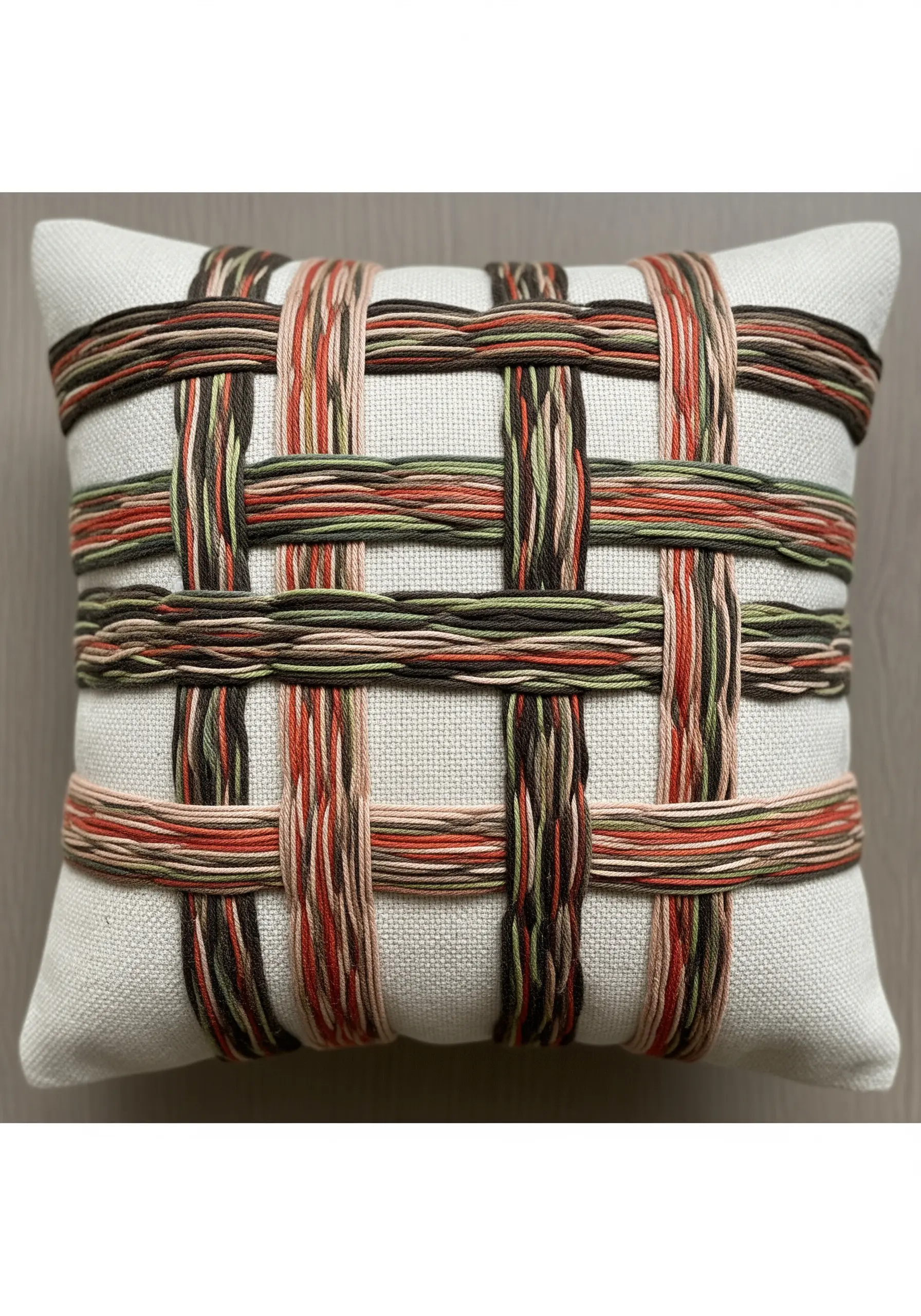
Create rich, painterly texture by working with bundles of thread rather than single strands.
Group together several strands of variegated embroidery floss or thin yarn and couch them down in a woven pattern.
The natural color shifts in the variegated thread will blend and merge, creating incredible depth and a tapestry-like effect with minimal effort.
22. Optical Motion with Precisely Stitched Lines

This design is an exercise in pure precision, creating an optical illusion of movement.
Use a simple backstitch in a high-contrast color, like white on black, to create flowing, parallel lines.
The key to the op-art effect is maintaining an absolutely consistent stitch length and keeping your lines perfectly spaced as they curve and converge.
The result is a design that seems to ripple and warp, demonstrating the power of simple lines.
23. Topographic Sculpting with Padded Satin Stitch

Achieve this incredible soft-sculptural effect using a technique similar to trapunto.
Place a layer of felt or cotton batting underneath your design area before you begin stitching.
Work your outlines first to secure the padding, then fill the shapes with dense satin stitch worked over the top.
The padding raises the stitched areas, creating a lush, topographic surface that is both visually and texturally captivating.
24. Pop-Art Repetition with Bold Chain Motifs
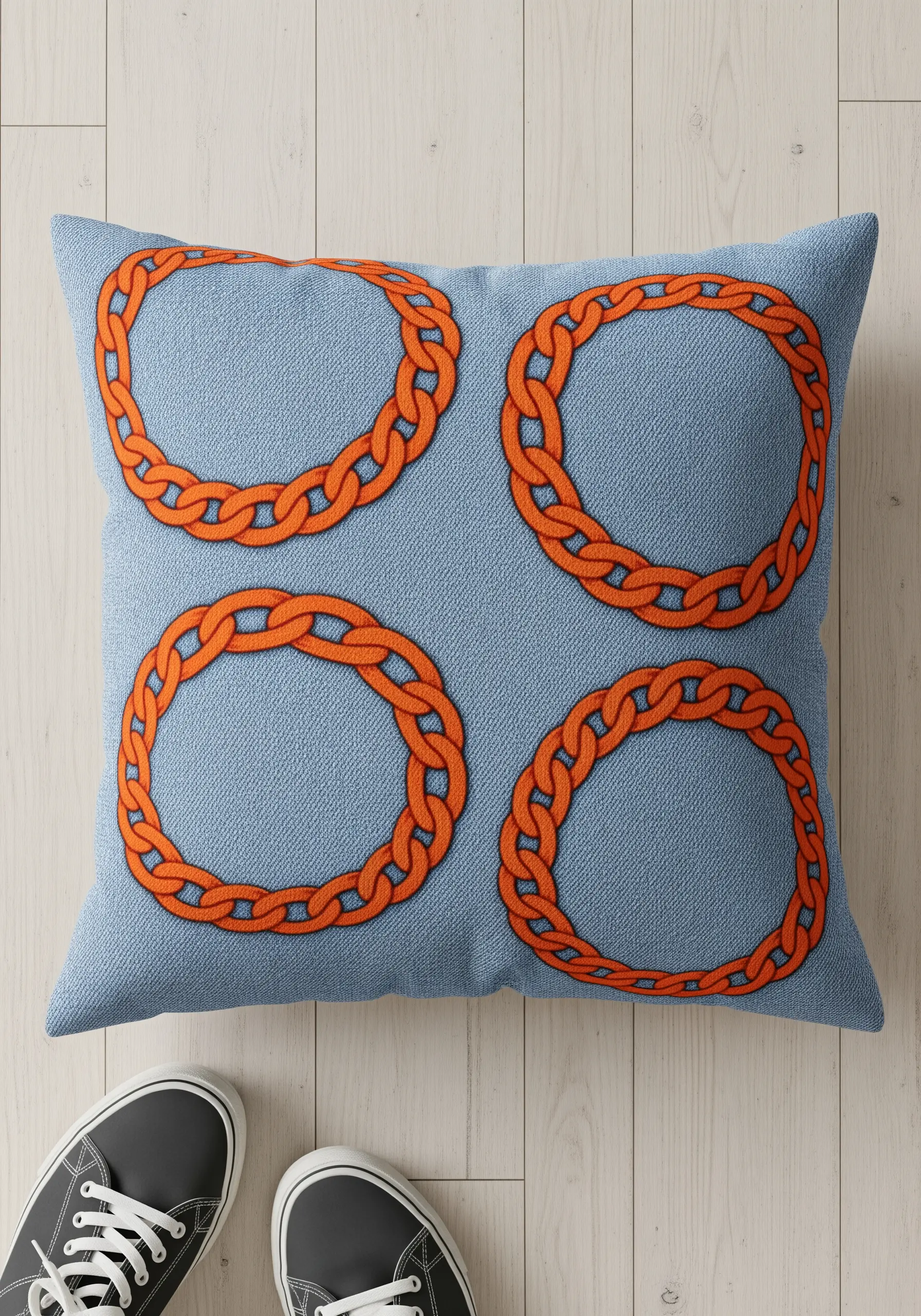
Create a fun, pop-art aesthetic by pairing a bold, repeating motif with a casual, everyday fabric like denim.
Use a heavy chain stitch or a padded stem stitch to give your chain links a raised, graphic quality.
The bright, saturated orange thread pops against the cool blue of the denim, creating a look that feels playful, confident, and contemporary.
25. De Stijl Composition with Lines and Blocks
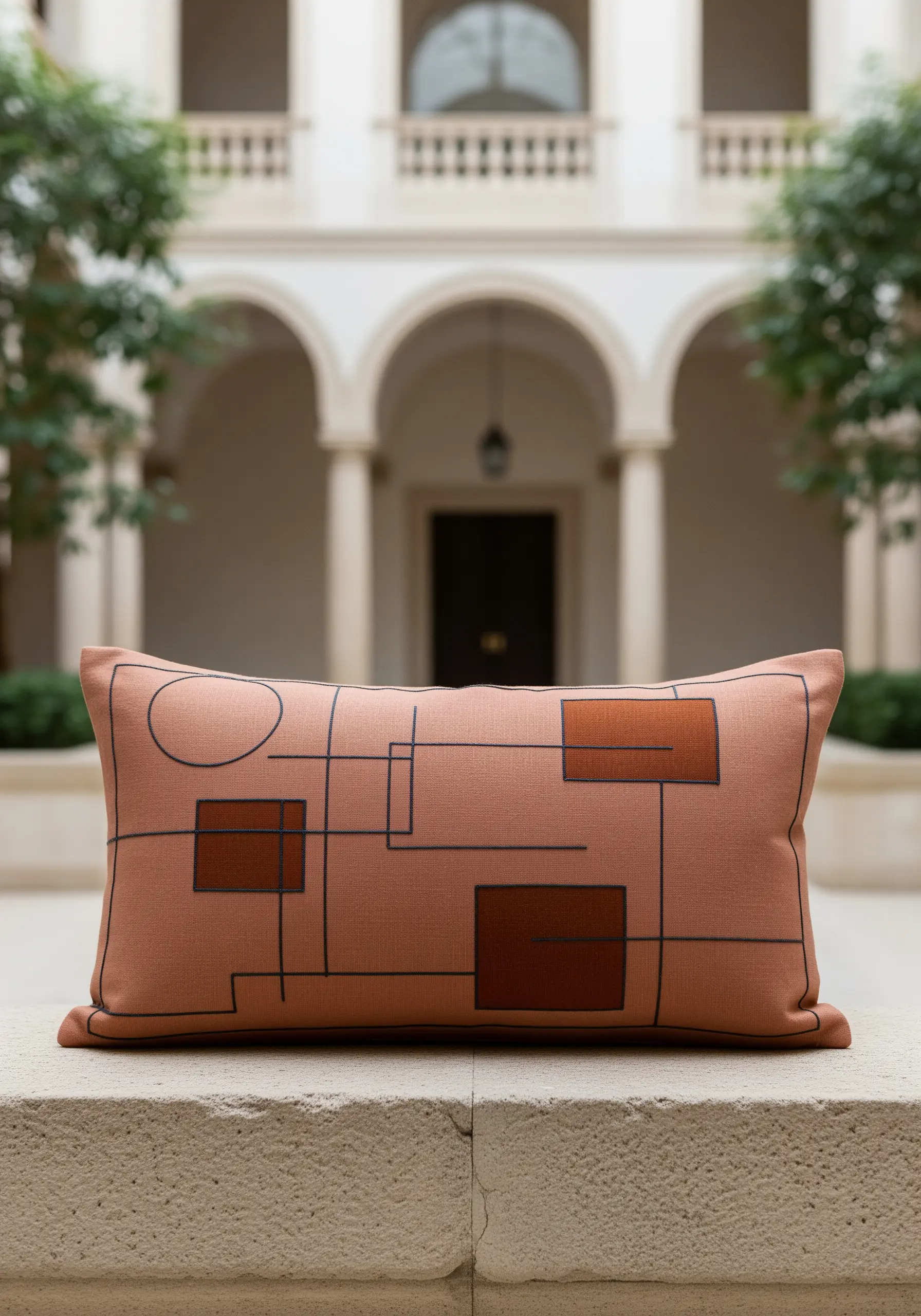
Create a sophisticated, architectural design inspired by the clean geometry of the De Stijl art movement.
Use a crisp backstitch to create the thin, intersecting lines that form your grid.
Fill in select rectangles with blocks of appliqué fabric or dense satin stitch to create areas of solid weight and color.
An asymmetrical layout and a limited, earthy palette give this classic style a warm, contemporary update.