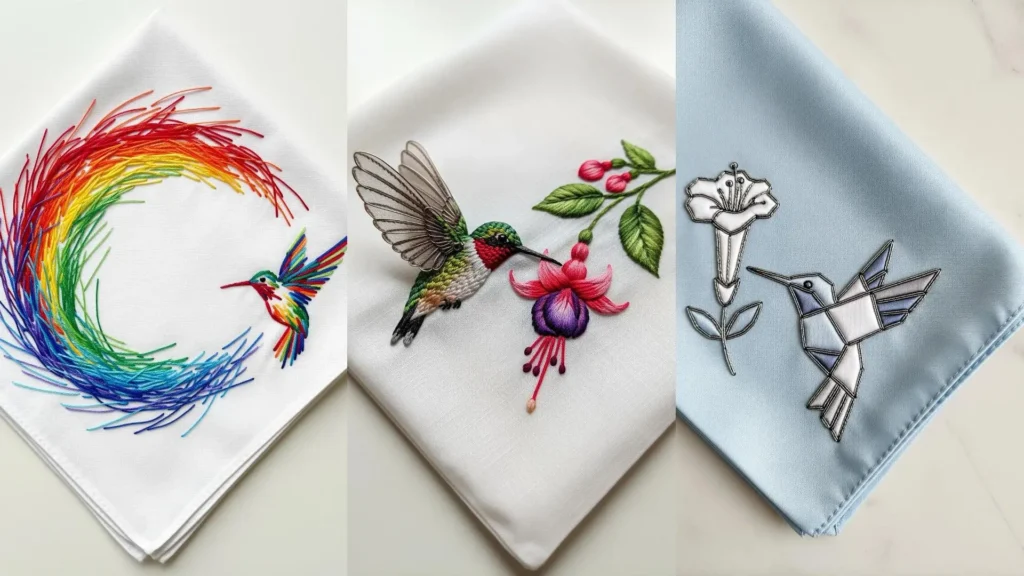
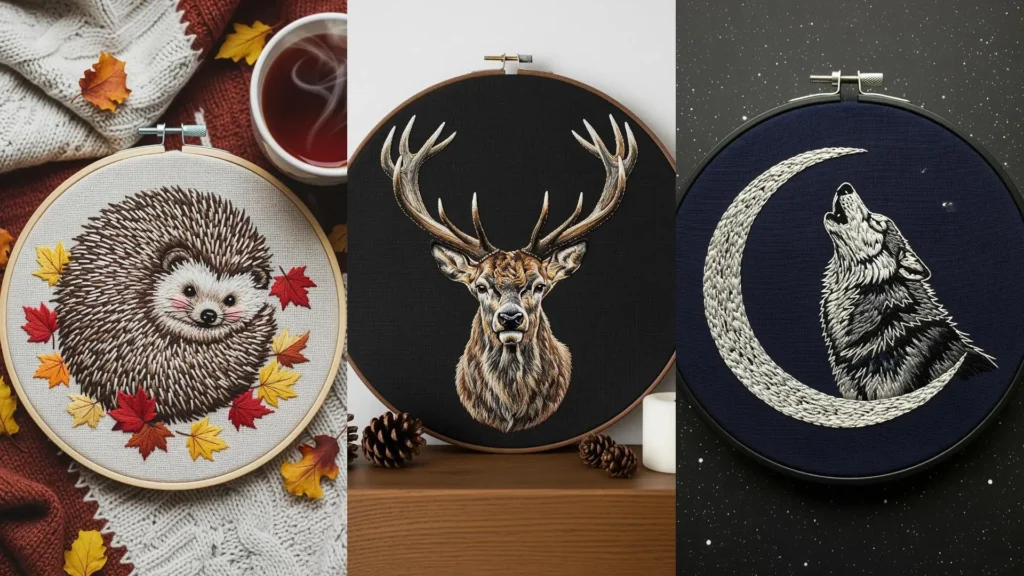
Sometimes, the most beautiful embroidery comes not from learning a hundred new stitches, but from rethinking how you use the ones you already know. The ocean, with its endless textures and fluid movements, is the perfect muse for this exploration.
Let these designs guide you toward more intentional choices. See how a change in thread weight can mimic the delicacy of a jellyfish tentacle, or how layering simple stitches can build the shimmering, dimensional scales of a mermaid’s tail.
Here, you won’t find complex patterns, but rather ideas that invite you to play with texture, color, and composition. Let the rhythm of the waves inspire your needle, and transform your fabric into a small piece of ocean magic.
1. Sculptural Mermaid Scales with Silk Ribbon
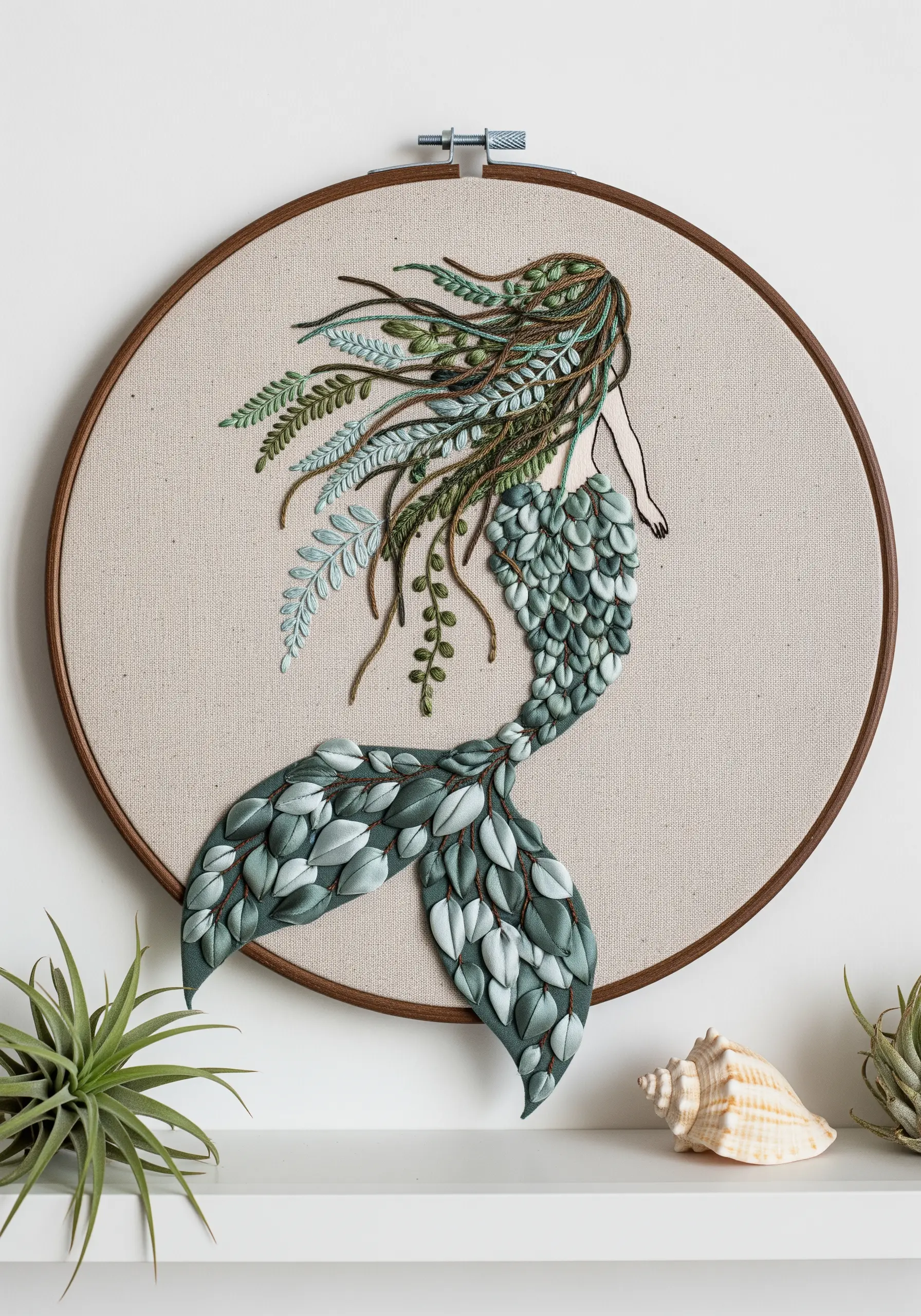
Create a stunning three-dimensional effect on mermaid tails by swapping thread for silk ribbon.
Use a simple detached chain stitch or ribbon stitch, layering each one like a fish scale, to build up a shimmering, textured surface.
Vary the colors of the ribbon slightly—from seafoam green to pale blue—to mimic the iridescent quality of light hitting water.
This technique adds volume and a luxurious sheen that standard six-strand floss simply cannot replicate, turning a flat design into a tactile sculpture.
2. Fluid Fins with Thread Painting
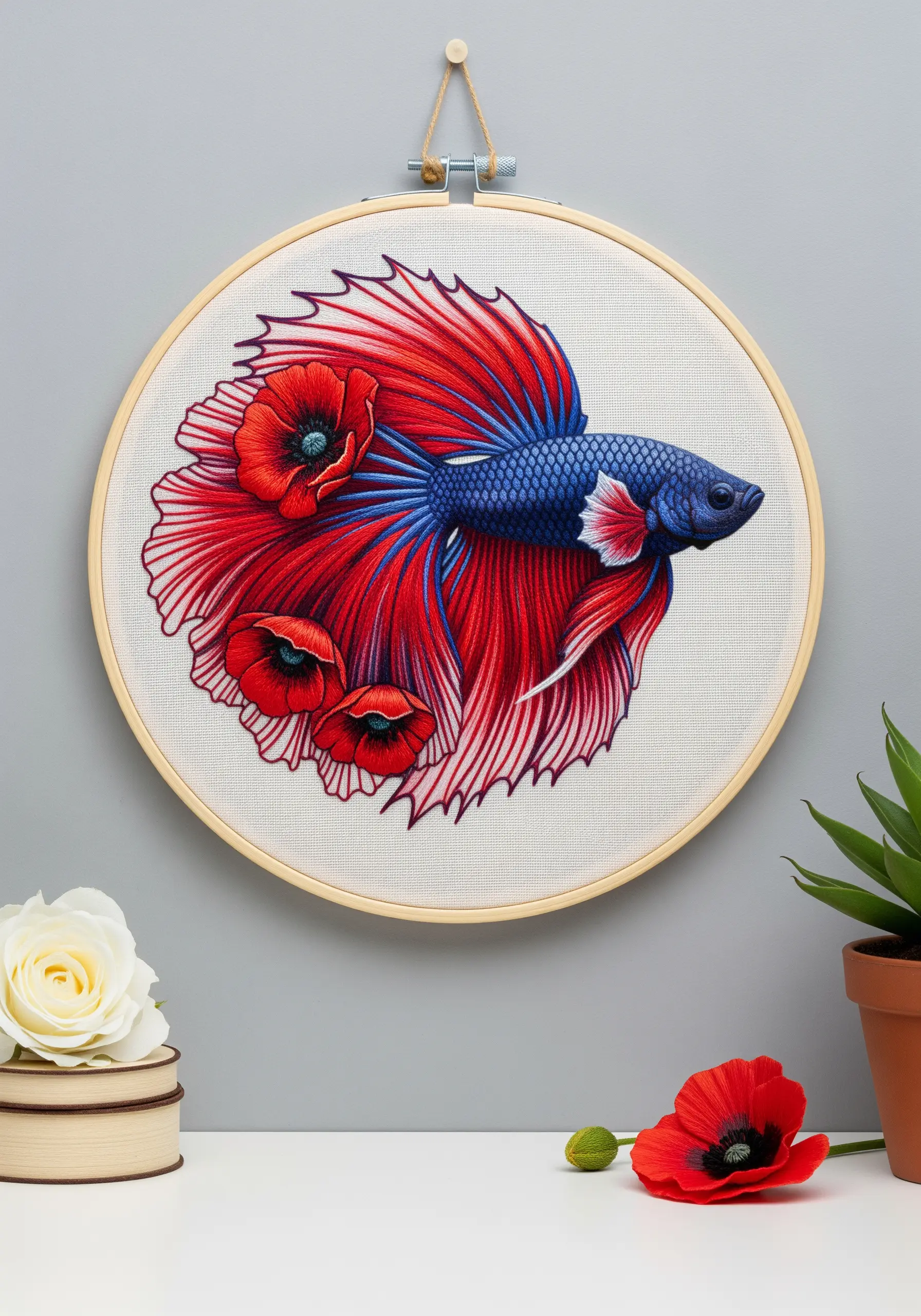
Capture the graceful movement of a betta fish’s fins using the long-and-short stitch, also known as thread painting.
Select four to five closely-related shades of a single color, such as reds and blues, and blend them seamlessly to create a gradient effect.
Work your stitches in the direction of the fin’s natural flow to enhance the sense of motion.
This approach gives your work a painterly, realistic quality that makes the subject feel alive, especially when contrasted with the sharp outline of the fish’s body.
3. Celestial Silhouettes on Deep Blue Canvas
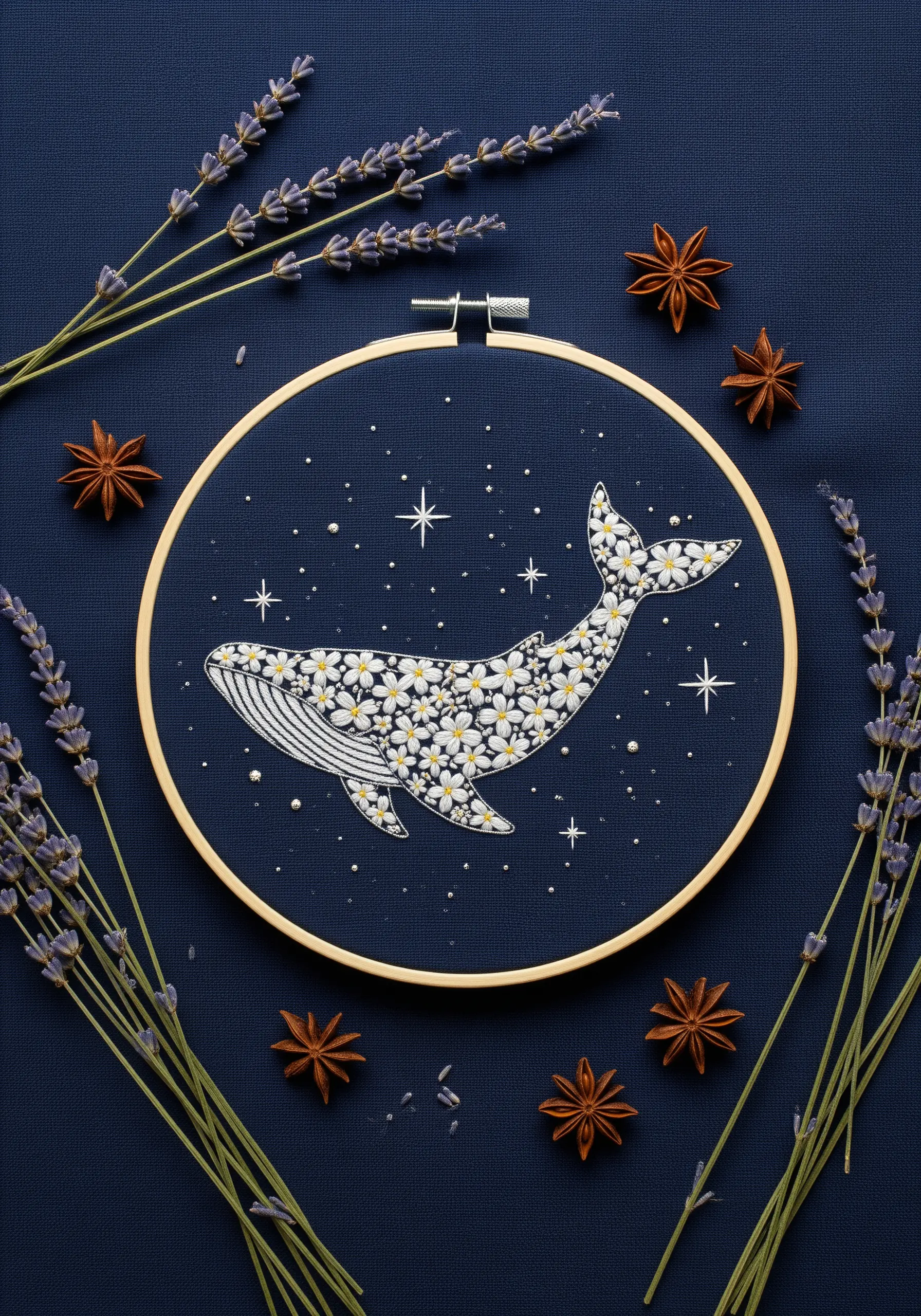
Use the fabric itself as a key design element by stitching a detailed fill pattern inside a simple silhouette.
Choose a dark, high-contrast fabric like navy or black linen to represent the deep ocean or night sky.
Fill the shape of a whale or manta ray with tiny, repeating stitches like French knots or lazy daisies to create a dense, intriguing texture.
The contrast between the dark negative space and the bright, patterned subject creates a dramatic and sophisticated piece of ocean-inspired wall art.
4. Padded Satin Stitch for Sculptural Seahorses

Give your seahorses a raised, bas-relief effect with padded satin stitch.
First, fill the areas you want to elevate—like the segments of the body—with a base of small, underlying stitches (like seed stitches or a simple satin stitch).
Then, cover this padding with your final layer of satin stitches, ensuring they are smooth and uniform.
This technique makes the seahorses physically pop from the fabric, creating shadows and highlights that add incredible depth and realism to your design.
5. Crafting a Coral Reef with Unexpected Botanicals

Think beyond literal interpretations and design an underwater scene using terrestrial plants and fungi.
Stitch mushrooms, dahlias, and succulents in vibrant, oceanic colors to build a fantastical coral reef.
Use thread painting for the flower petals and dense French knots for the mushroom spots to create a rich variety of textures.
This imaginative fusion of forest and sea results in a unique piece of surrealist embroidery that is full of surprise and wonder.
6. Ethereal Jellyfish with Delicate Stitches
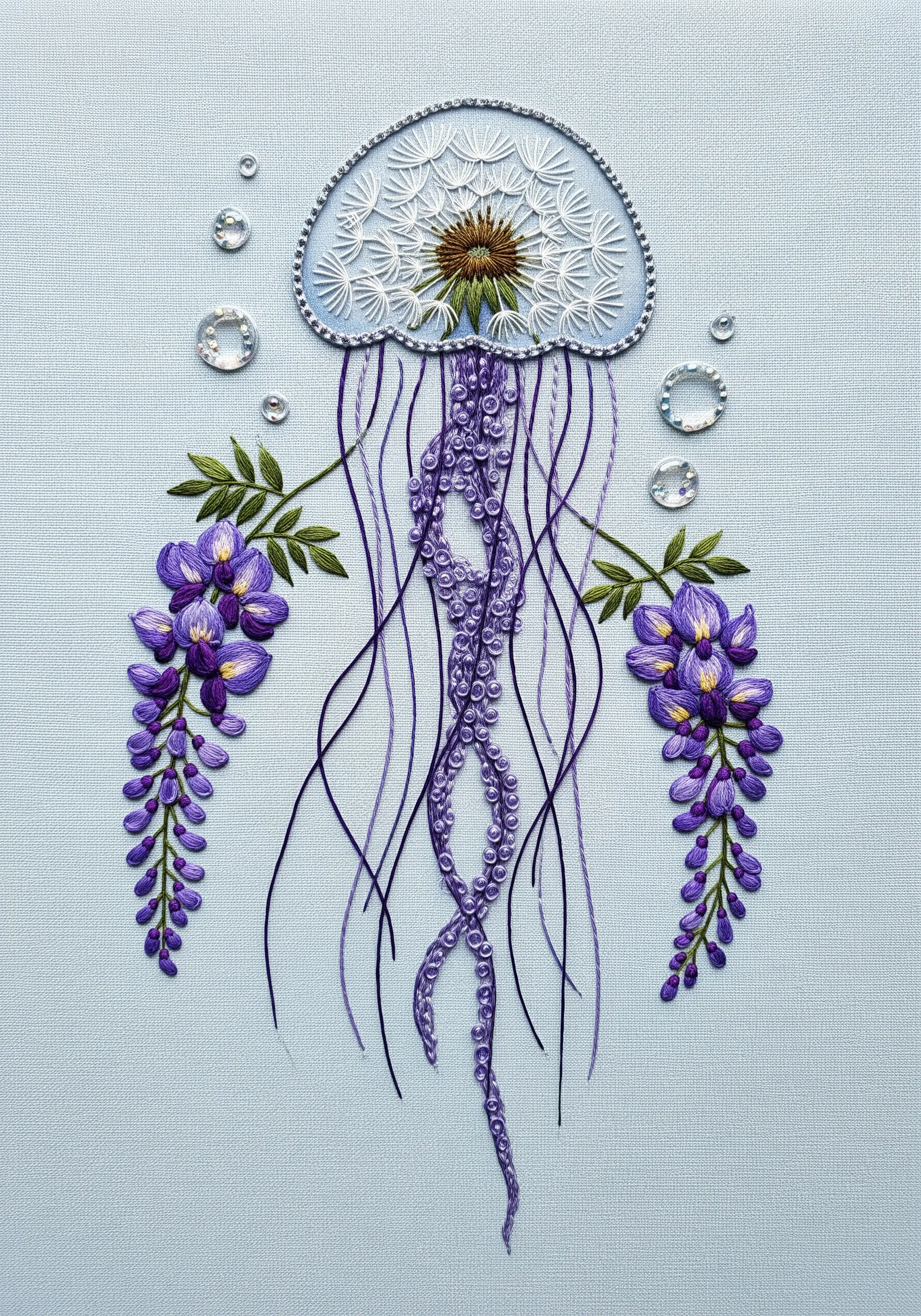
Capture the translucent quality of a jellyfish by combining different thread weights and textures.
For the bell, use a whipped backstitch with a fine metallic thread or add tiny seed beads for a subtle sparkle.
Create the trailing tentacles with single strands of floss in varying lengths and colors, allowing them to hang loosely for movement.
Combine this with delicate botanical elements, like wisteria, to ground the ethereal creature in a soft, dreamlike composition.
7. Minimalist Koi with Textured Scale Accents
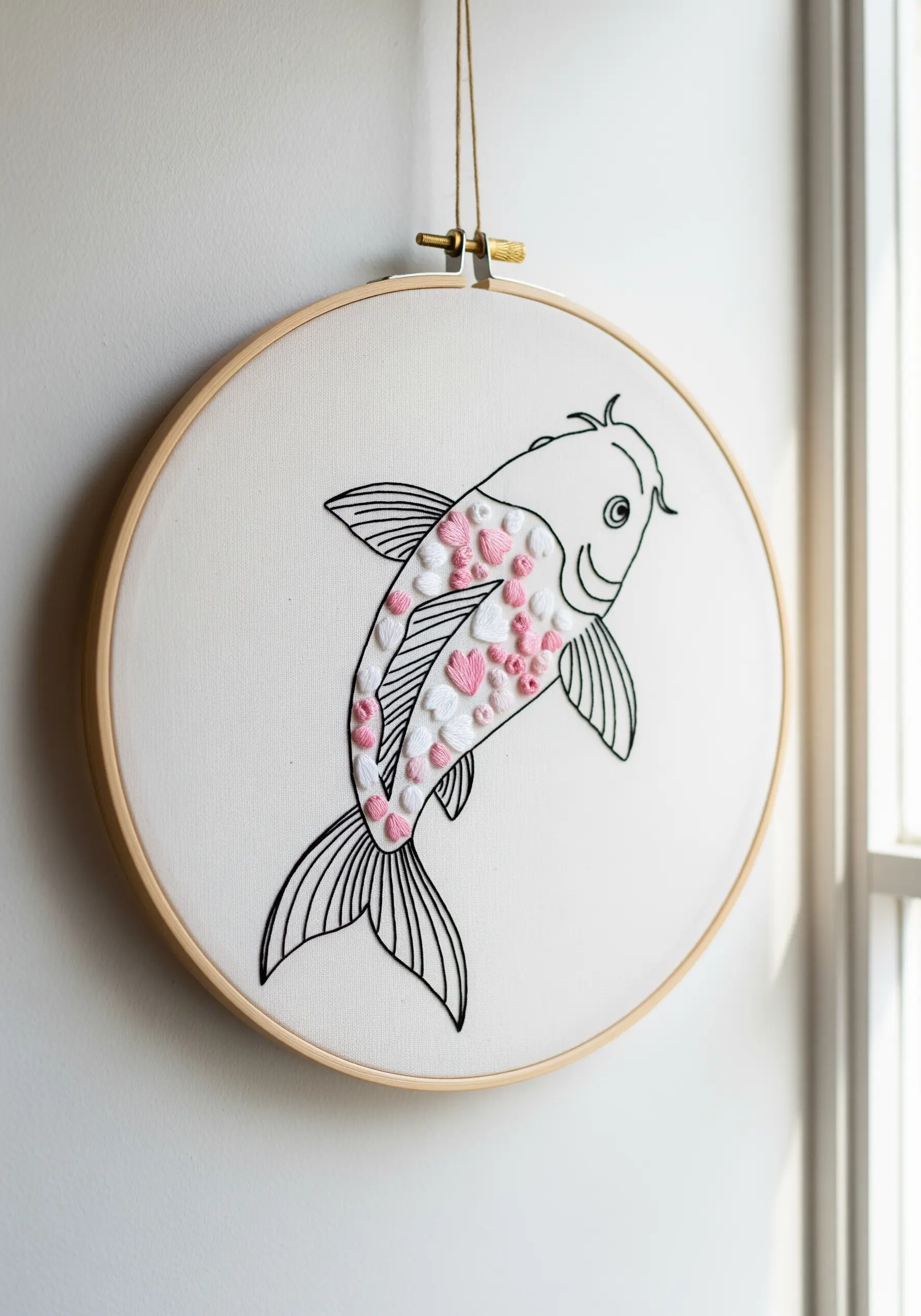
Achieve a modern, elegant look by pairing a clean line-art outline with small pockets of dense texture.
Stitch the koi’s body using a simple, sharp backstitch or stem stitch with a dark thread.
Instead of filling the entire fish, selectively add clusters of woven wheel roses or French knots to represent scales.
This minimalist approach draws the eye to the intricate details while maintaining a light, airy feel.
8. Botanical Tentacles with Pearl Embellishments
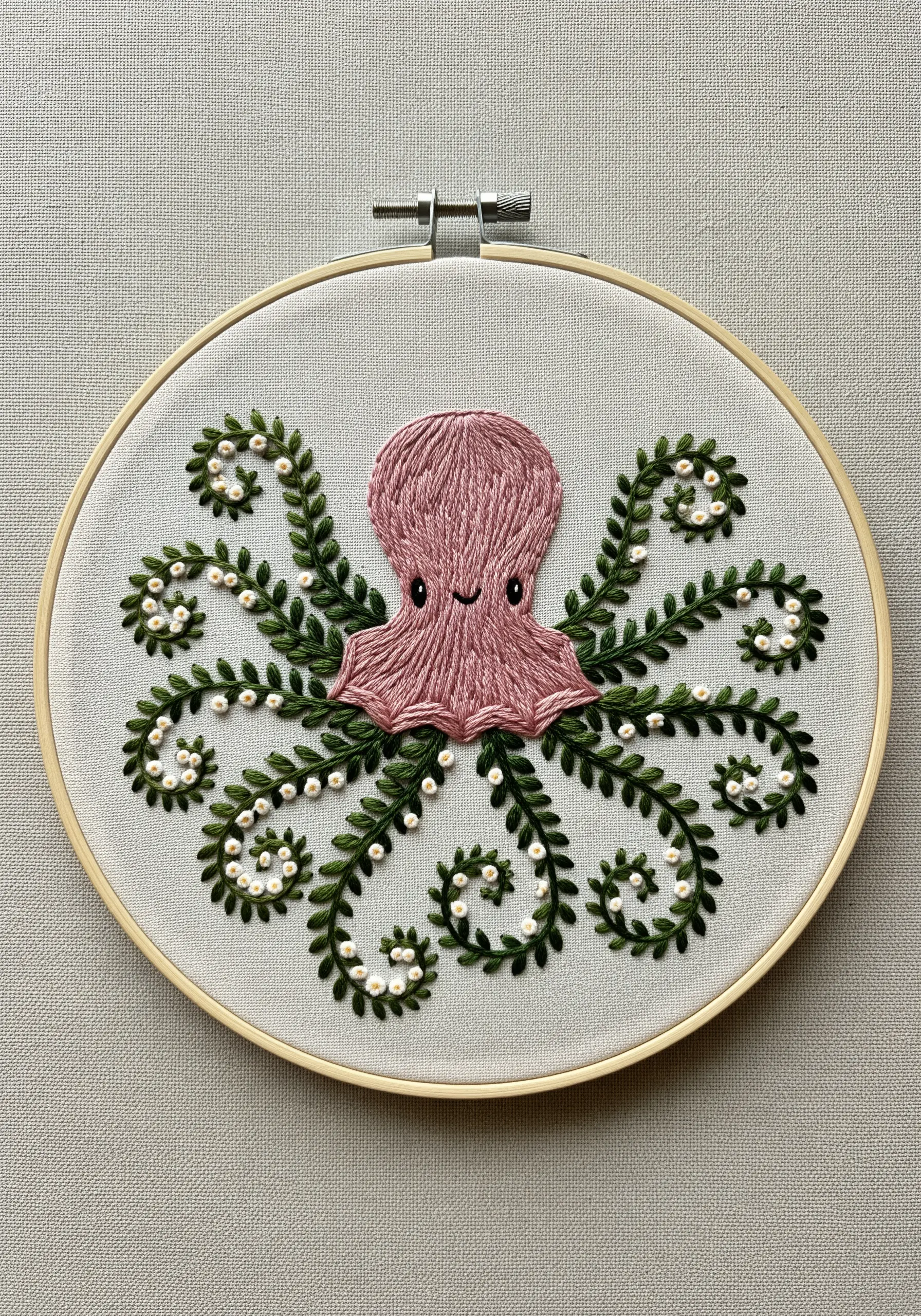
Transform an octopus into a whimsical sea creature by replacing its tentacles with curling botanical vines.
Use a fern stitch or fly stitch to create leafy, organic-looking arms that twist and curl gracefully.
For a touch of oceanic magic, add small seed pearls or white French knots at the tips of the leaves, suggesting suction cups or seafoam.
This combination of flora and fauna adds a playful, imaginative layer to a classic marine subject.
9. A Royal Crown with Stumpwork and Metallics

Create a regal mermaid portrait by focusing on intricate, three-dimensional details for her crown.
Use stumpwork techniques—layering felt padding and stitching over it—to give shells and flowers a raised shape.
Incorporate silver metallic thread and tiny beads to mimic the shimmer of seashells and pearls.
Placing this highly detailed, textured element against a dark background ensures it becomes the undeniable focal point of your artwork.
10. A Succulent Garden on a Turtle’s Shell
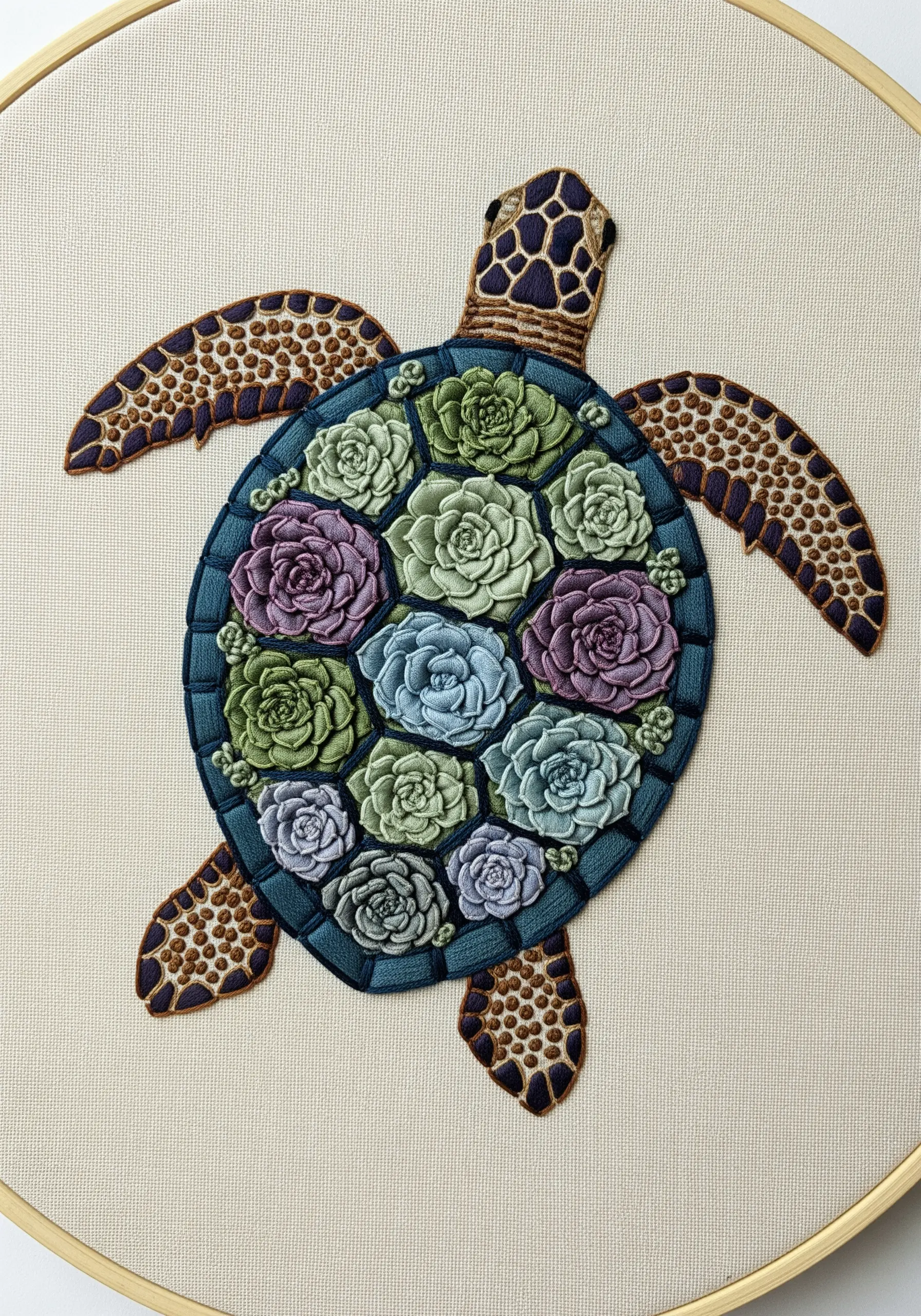
Reimagine animal patterns by substituting them with unexpected botanical motifs.
Instead of a traditional shell pattern, fill the turtle’s back with a cluster of colorful, textured succulents.
Create them using woven wheel roses in various sizes and shades of green, purple, and blue.
This creative substitution turns a simple animal portrait into a conversation piece, blending earth and sea in a beautiful, harmonious design.
11. Graphic Impact with a Repeating Motif
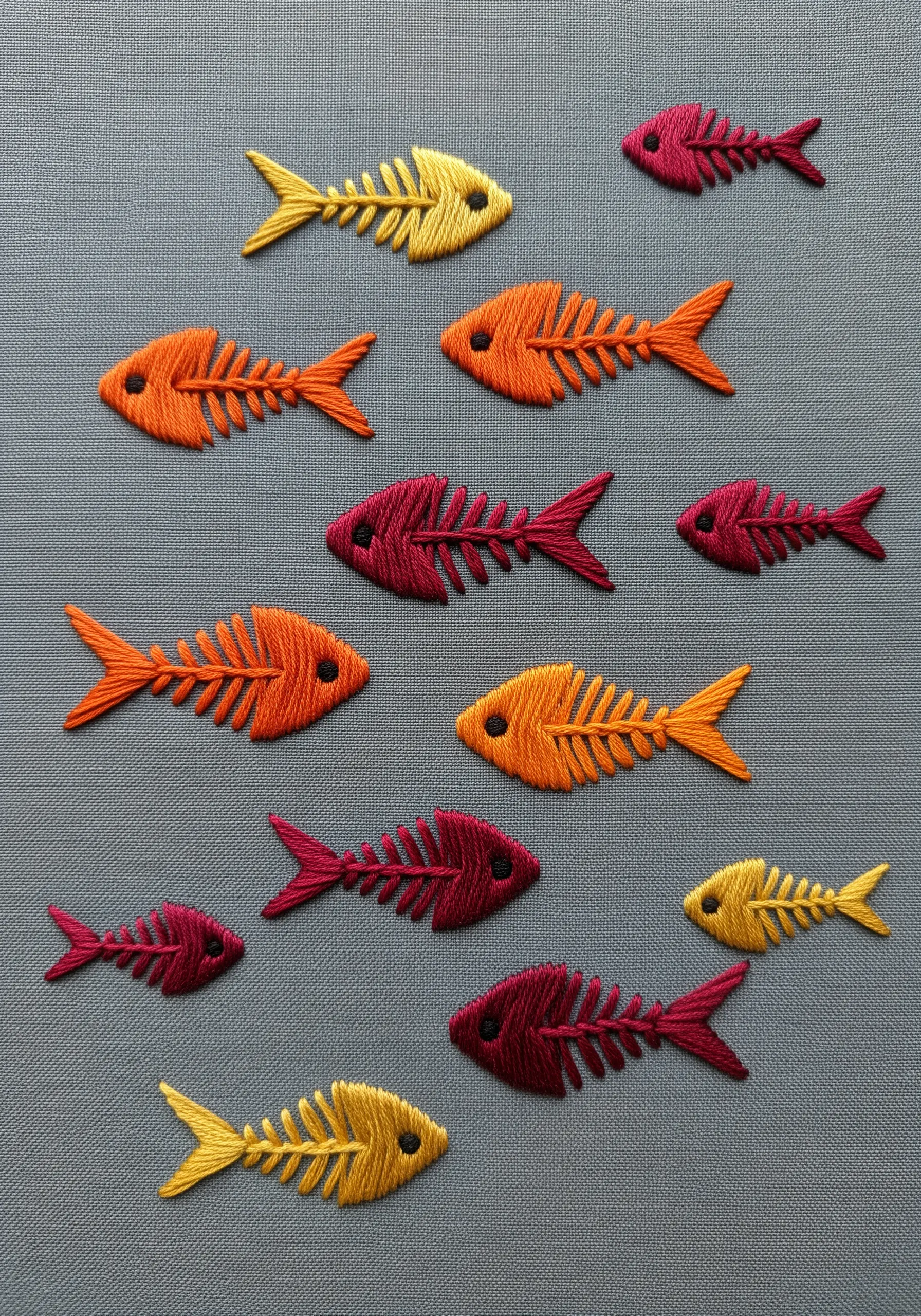
Create a bold, modern wall hanging by focusing on repetition and a tightly controlled color palette.
Choose a simple, graphic motif like a fish skeleton and stitch it multiple times across your fabric.
Use only three or four complementary colors and fill each shape with a clean, perfectly executed satin stitch.
The rhythmic pattern and clean lines give the piece a contemporary, almost pop-art feel, proving that simplicity can be incredibly powerful.
12. The Seashell Sampler: A Study in Texture
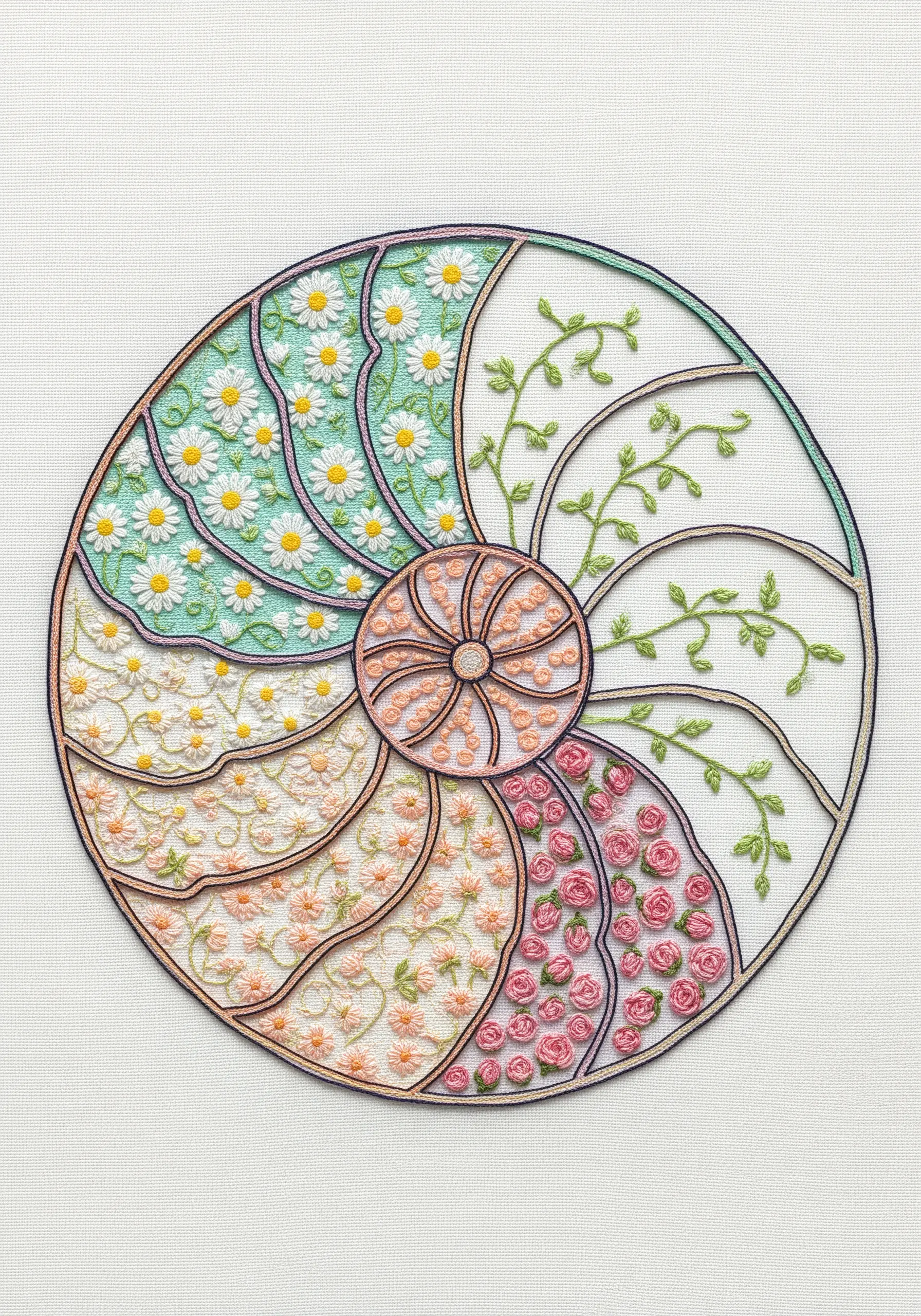
Turn a single motif, like a seashell, into a sophisticated stitch sampler.
Divide the shell’s shape into distinct sections with a clean backstitch outline.
Fill each segment with a different stitch or pattern: tiny lazy daisies, dense French knots, straight stitches, or woven wheel roses.
This approach is not only a beautiful way to display your skills but also a meditative exercise in exploring how different textures can work together in one cohesive piece.
13. Sunken Treasures with Overgrown Textures
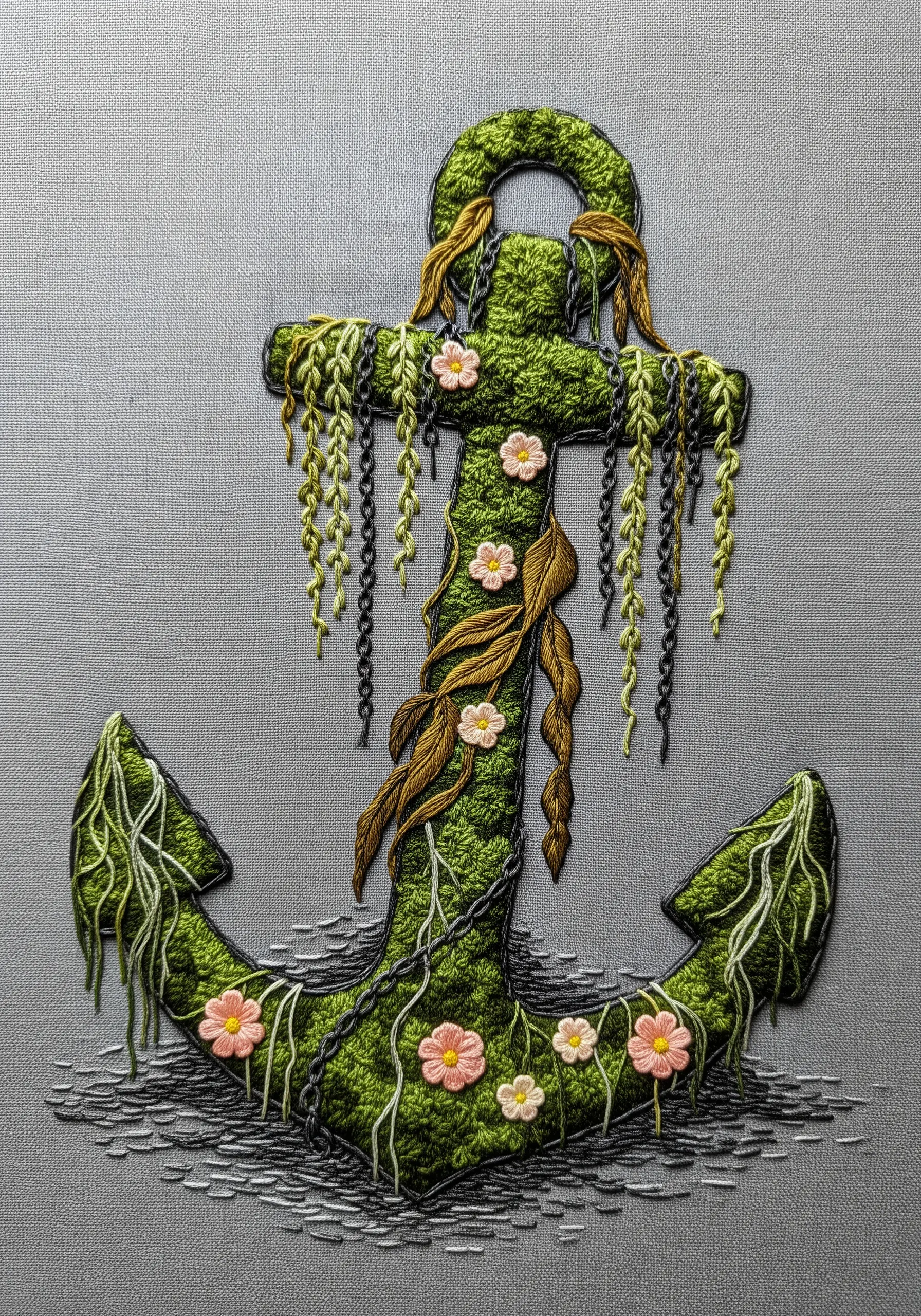
Bring a sunken anchor to life by covering it in layers of tactile, moss-like stitches.
Use turkey work (or Ghiordes knot) to create a fuzzy, three-dimensional surface that you can trim to resemble moss.
Add long, trailing strands of green and grey thread using couching to mimic seaweed, and stitch delicate chains with metallic thread to suggest rusted metal.
These textured embroidery techniques build a rich, atmospheric story directly on your fabric.
14. Marrying Line Art with a Hyper-Realistic Element
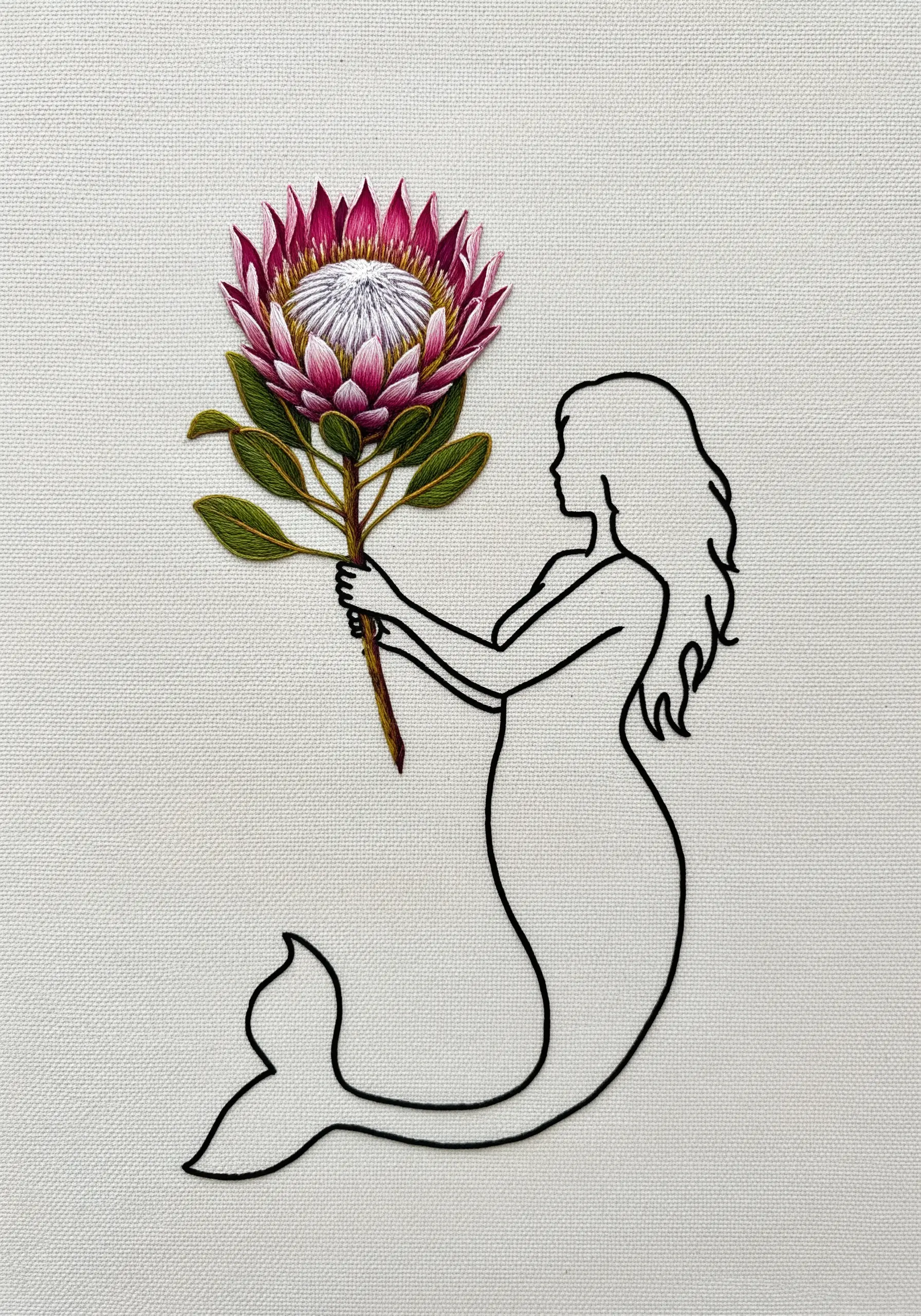
Create a breathtaking focal point by combining a minimalist outline with one area of intense, realistic detail.
Stitch a mermaid’s silhouette using a simple, clean backstitch to suggest her form without defining it completely.
Then, dedicate your full attention to thread-painting a single, complex object she is holding, like a protea flower.
This powerful contrast between simplicity and detail guides the viewer’s eye and tells a story with masterful restraint.
15. Weaving a Botanical Sea Star Mandala
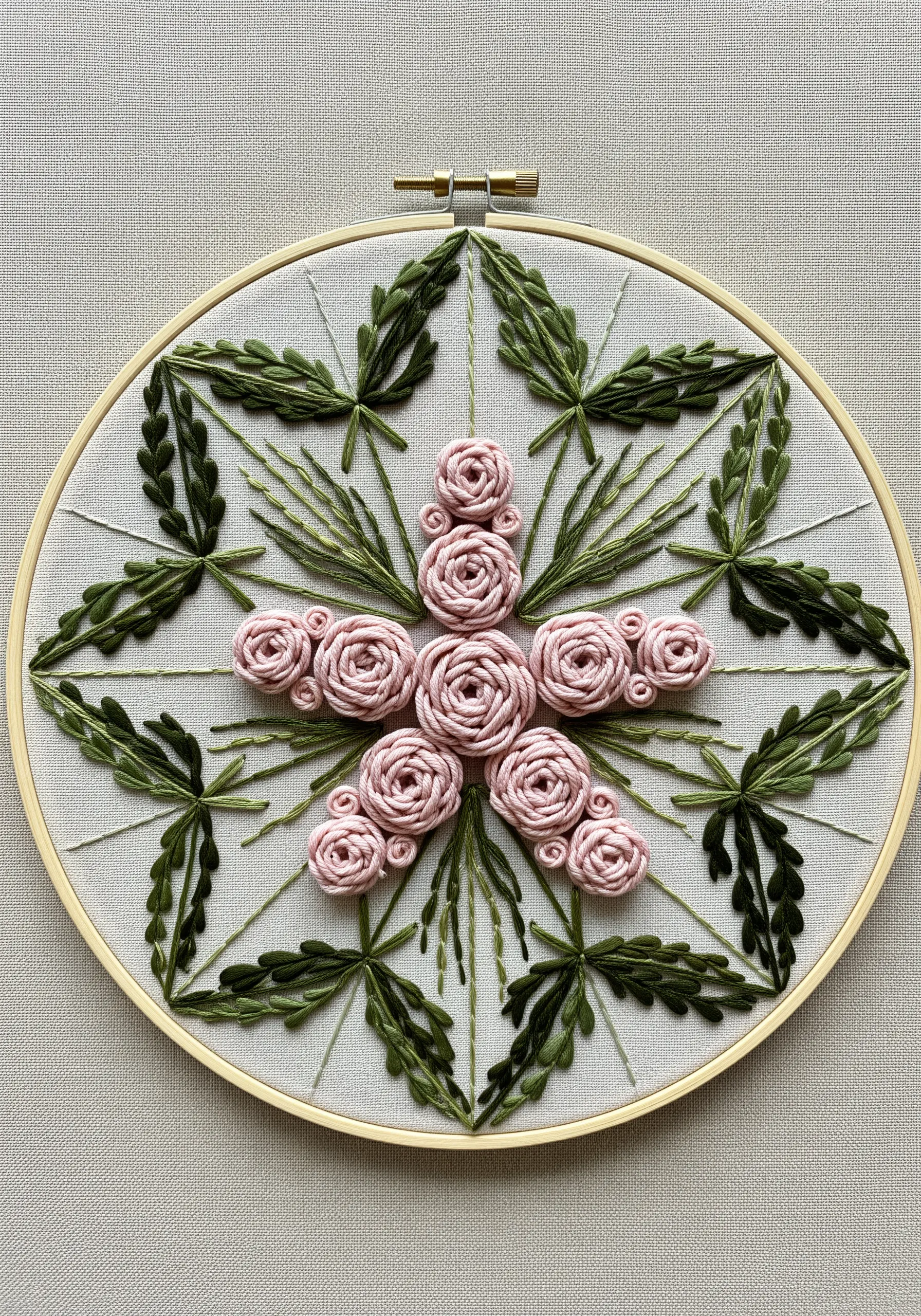
Design a symmetrical sea star or anemone using woven wheel roses as the central structural element.
Arrange the roses in a circular or star-shaped pattern to form the core of your mandala.
Radiate outwards from the center with straight stitches and detached chain stitches to create leafy, geometric arms.
This methodical, repetitive process creates a balanced and serene piece, perfect for calm, mindful stitching.
16. Creating Depth on a Dark Canvas
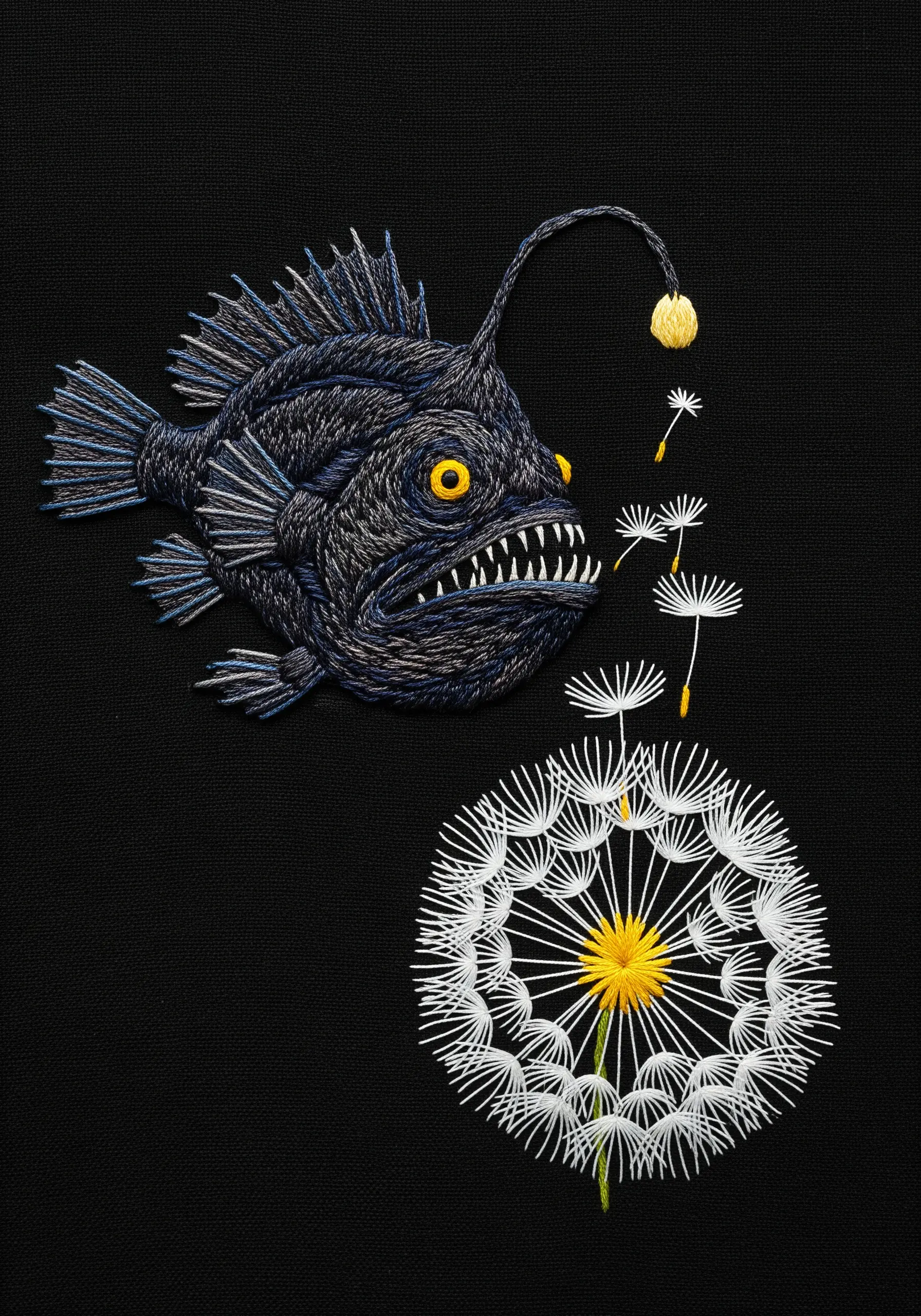
Make your deep-sea creatures emerge from the shadows by stitching them on black or dark navy fabric.
Use layers of long-and-short stitch in shades of grey, charcoal, and dark blue to build up the form of an anglerfish, adding touches of a lighter color only at the highest points.
This technique mimics how light falls on an object in the dark, creating a dramatic, high-contrast effect.
The dark fabric does half the work, providing instant depth and atmosphere for your scene.
17. Stitching Constellations on a Manta Ray
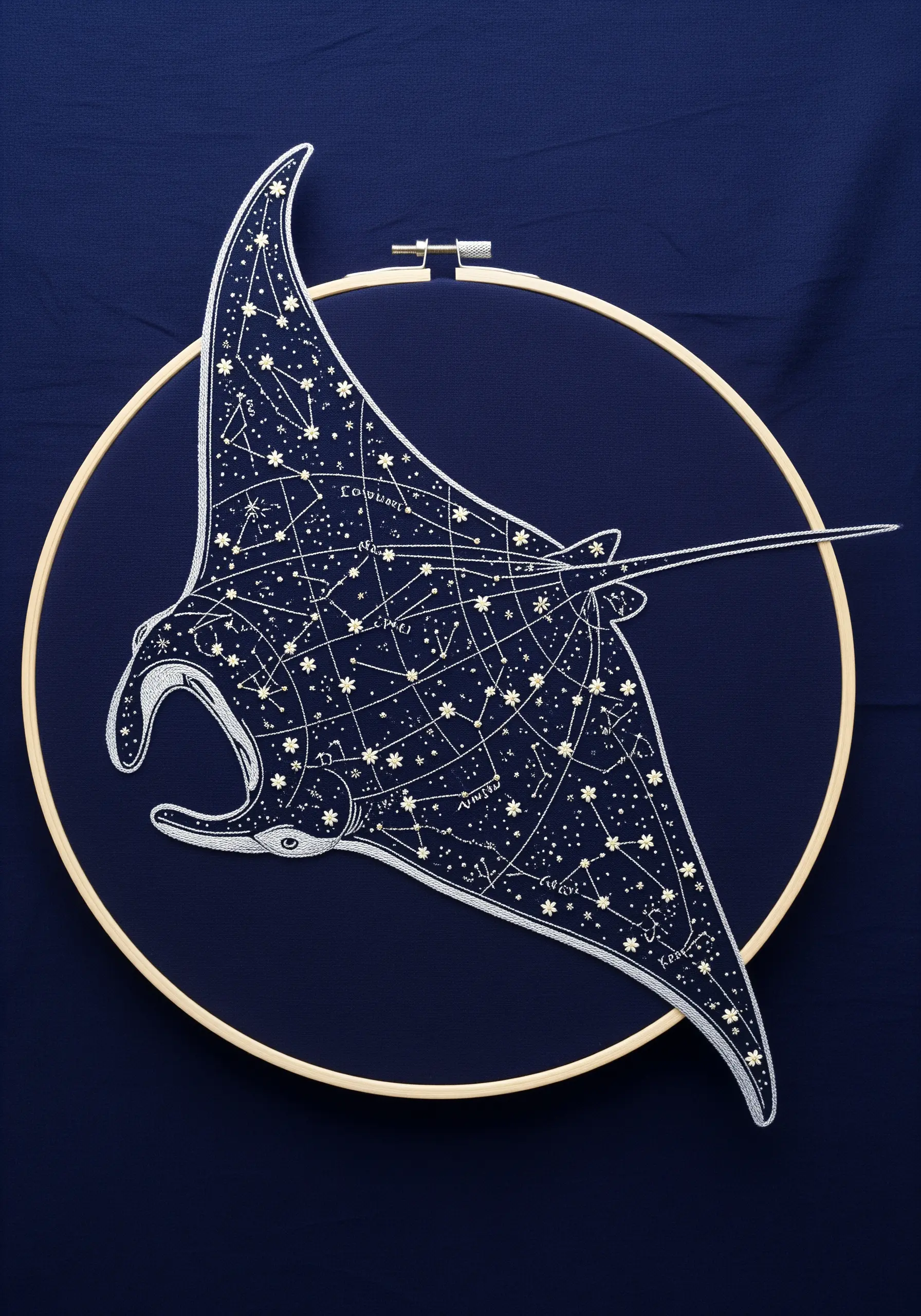
Turn a marine animal’s silhouette into a celestial map for a piece that blends ocean and sky.
Outline the manta ray and then fill its body with embroidered constellations, using tiny straight stitches for stars and delicate backstitches for the connecting lines.
Use a light-colored thread on a dark blue background to maximize the starry-night effect.
This imaginative concept transforms a simple animal portrait into a piece of magical, narrative art.
18. Abstract Rivers with Textural Stitches
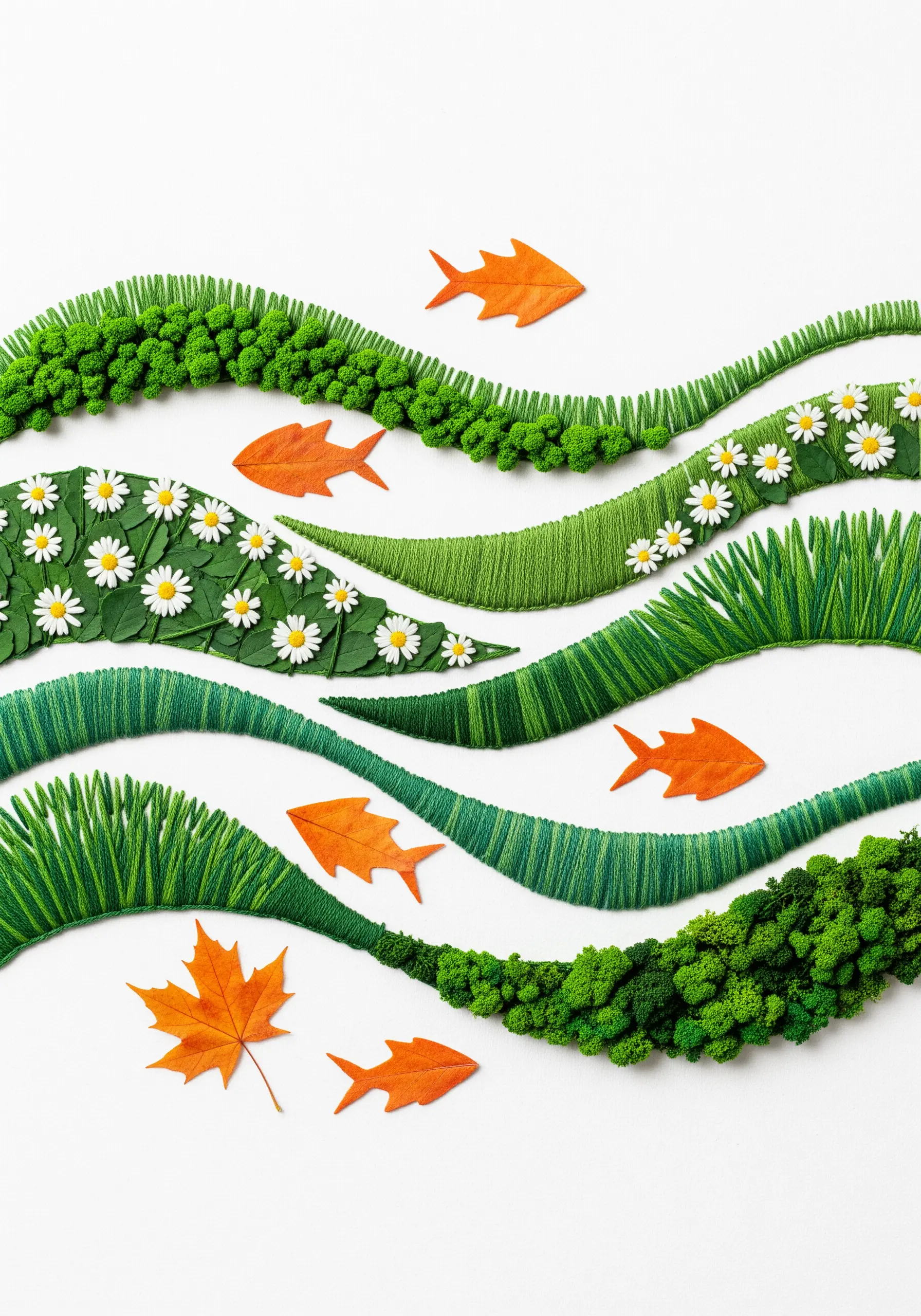
Move beyond figurative work and create an abstract representation of a flowing river or ocean current.
Stitch undulating bands across your fabric, filling each one with a unique textural stitch like turkey work, French knots, or wrapped straight stitches.
Incorporate other materials like preserved moss or felt cutouts to add even more dimension and interest.
This mixed-fiber approach allows you to focus purely on texture, color, and movement.
19. Delicate Skin Details with Single-Thread Shading
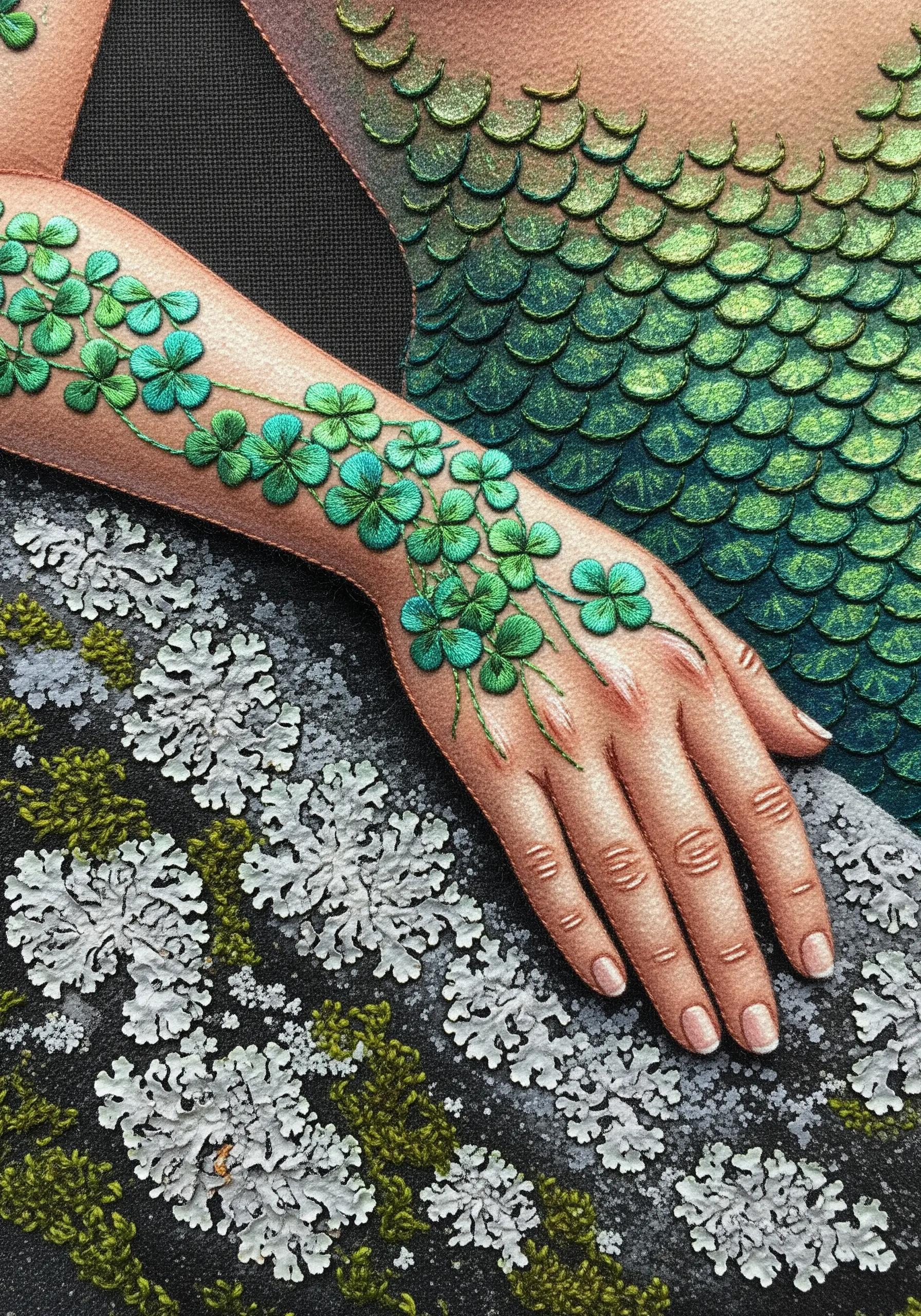
To achieve realistic skin tones and subtle shading on figures like mermaids, work exclusively with a single strand of floss.
Use a split stitch or tiny seed stitches to lightly contour muscles and bone structure, layering shades to create soft gradients.
This delicate approach allows for incredible control and prevents the embroidery from becoming bulky.
Pair the softly shaded skin with more textured elements, like lazy daisy clovers, to create a beautiful contrast between smooth and embellished surfaces.
20. Balancing Yin and Yang with Floral Textures
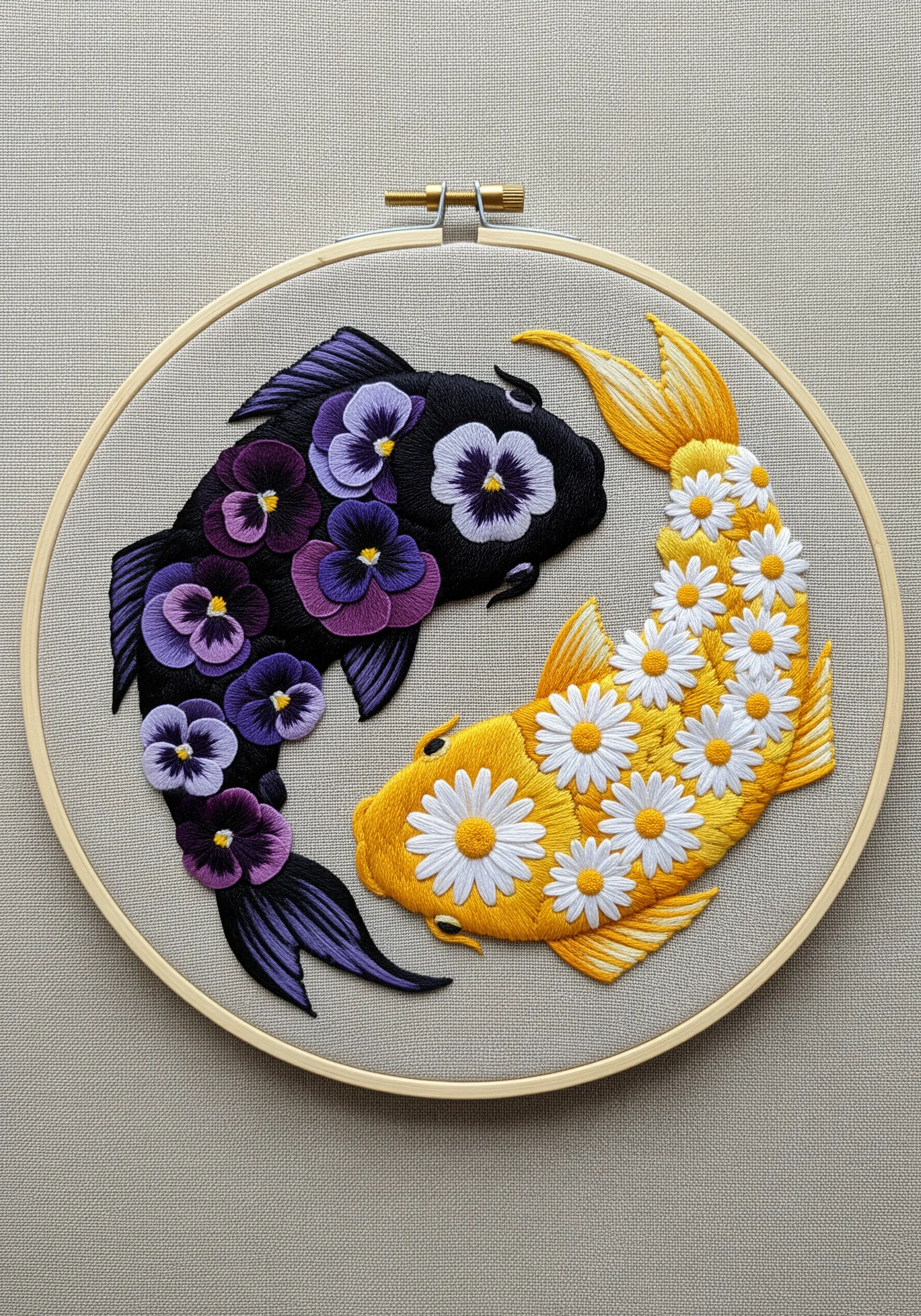
Give the classic yin-yang symbol a fresh, botanical update by incorporating floral-filled koi fish.
Use high-contrast colors for the fish bodies, such as black and gold, to maintain the design’s core symbolism.
Fill the body of each fish with complementary floral stitches—pansies on the dark fish and daisies on the light one—using woven wheels and detached chain stitches.
This design beautifully balances bold shapes with intricate, delicate textures.
21. A Surreal Underwater Sunflower Garden

Create a playful and surrealist scene by placing unexpected elements in an underwater setting.
Embroider tall, vibrant sunflowers as if they are seaweed, using satin stitch for the petals and French knots for the centers.
Add small, simple fish silhouettes swimming between the stems to solidify the aquatic environment.
This imaginative juxtaposition creates a cheerful and whimsical piece that defies expectations and sparks joy.
22. Gentle Giants with Appliqué and Contour Stitching
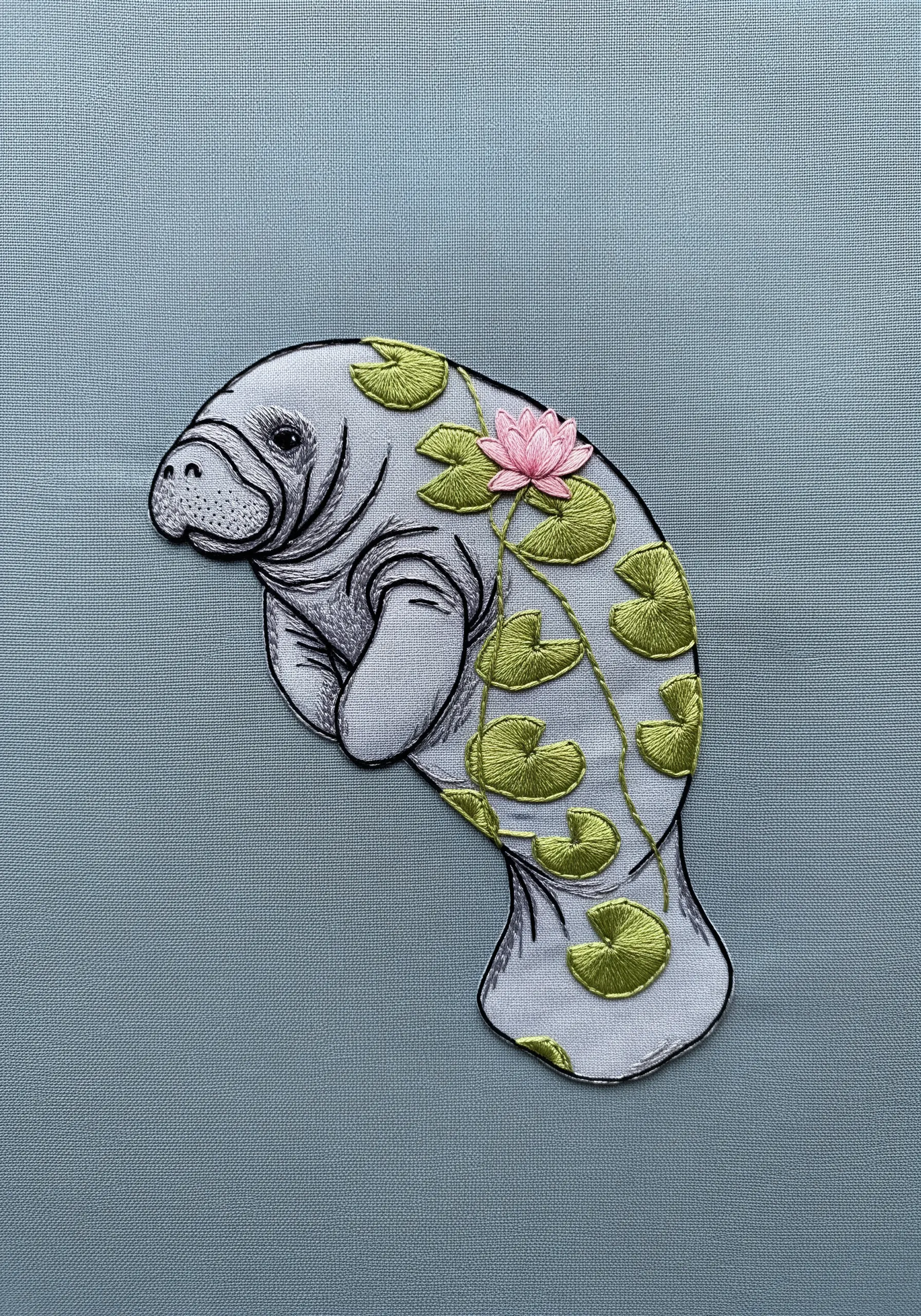
For large, smooth areas like a manatee’s body, combine appliqué with embroidery for a clean, efficient finish.
Cut the main shape from a piece of grey felt or cotton, tack it down, and then use thread to add contour lines and shading with a split stitch.
This method creates a smooth base while allowing you to focus your detailed stitching on expressive elements like the face and delicate lily pads.
It’s a time-saving technique that produces a polished, multi-layered result.