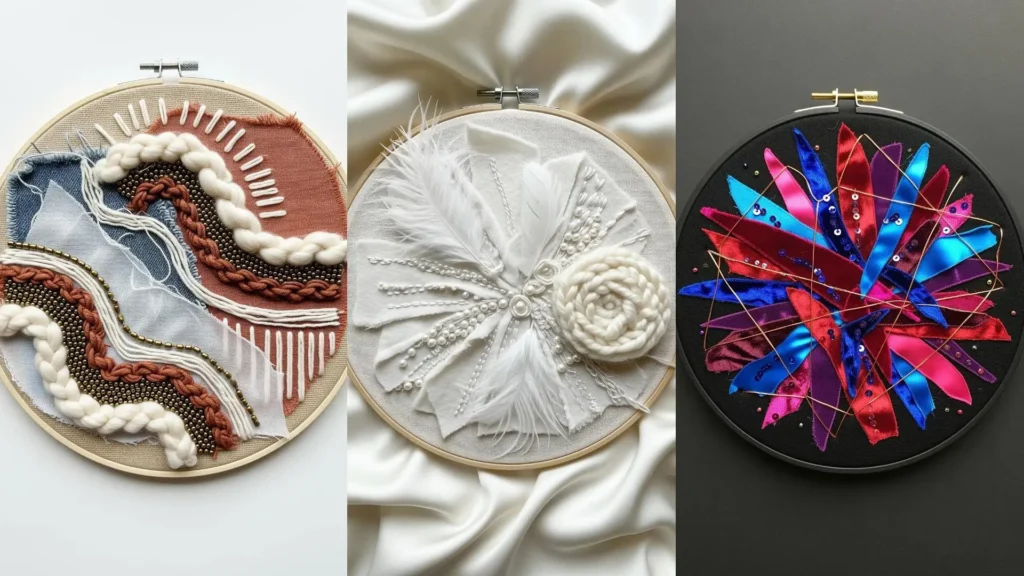
Your bedroom is more than just a place to sleep; it’s a sanctuary. And the quiet, deliberate art of embroidery can transform it into a space that feels deeply personal and serene. You don’t need complex, multi-colored patterns to make an impact. Instead, let’s explore the elegance of the simple line—how a single thread can create art that is both modern and timeless.
The secret to beautiful line art isn’t speed, but intention. It’s about choosing the right stitch to create a smooth, continuous curve, or selecting a thread with enough weight to give your design a subtle, tactile presence. In these ideas, you’ll discover how small adjustments—like using a whipped backstitch for fluidity or a chain stitch for texture—can elevate your work from homemade to handmade with purpose.
Consider each project a meditation. As you guide the needle through the fabric, you’re not just decorating a pillow or a wall hanging; you’re infusing your space with calm, focus, and a piece of yourself. This is your chance to create a room that doesn’t just look peaceful, but feels it, too.
1. Continuous Line Portraiture on Soft Furnishings

To achieve the fluid look of a single, unbroken line, use a whipped backstitch or a stem stitch for your entire design.
Varying the stitch length slightly around curves creates a more organic, hand-drawn feel, preventing the stiffness that uniform stitches can cause.
For a design that stands out on a pillow, choose a slightly thicker thread, like a #8 pearl cotton or 3-4 strands of standard floss.
This added weight gives the line a pleasing, tactile quality, turning a simple cushion into a modern art piece.
2. Botanical Sketches with Open Fill Stitches
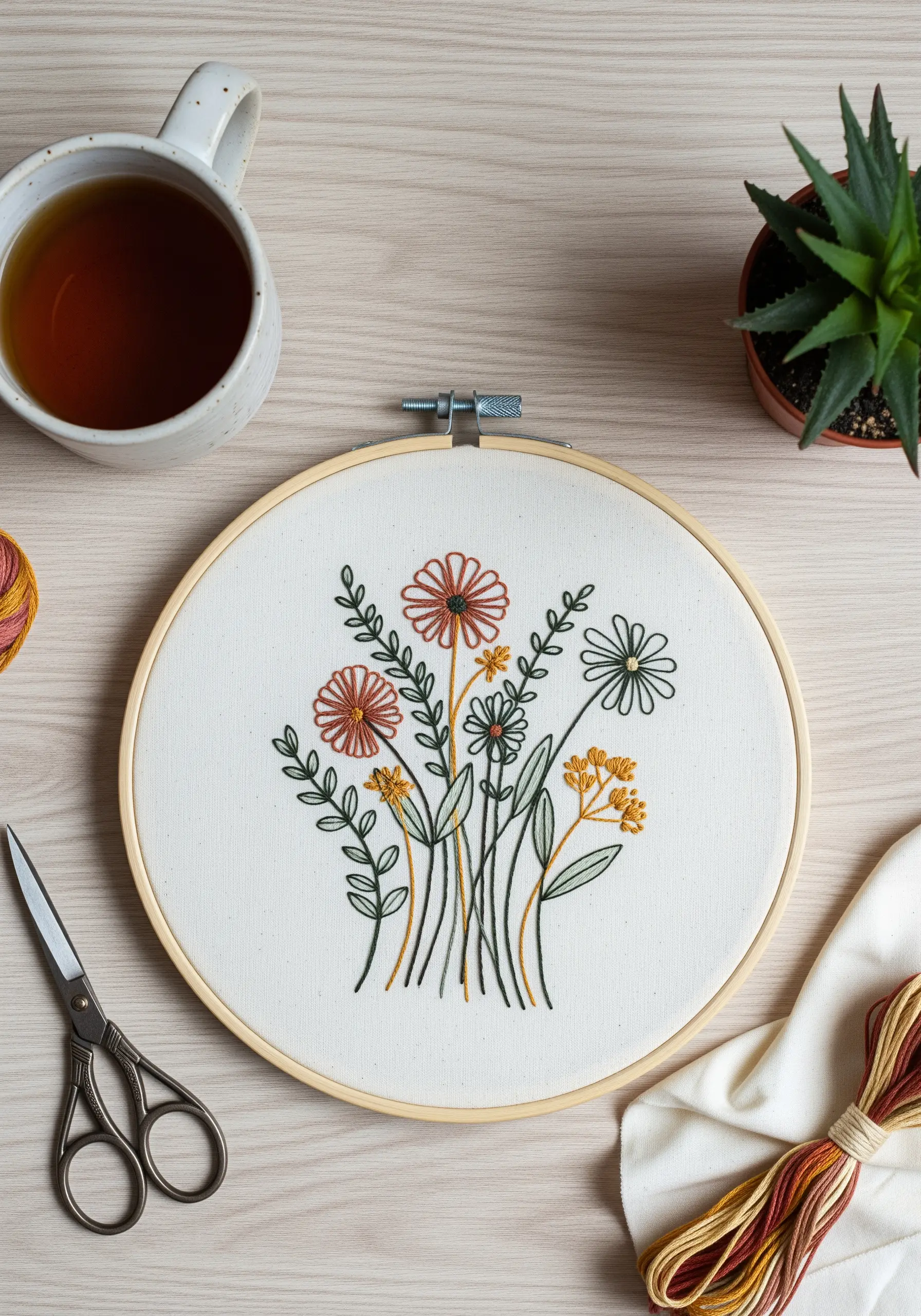
Instead of filling petals and leaves with a dense satin stitch, use sparsely placed running stitches or seed stitches for a light, illustrative effect.
This technique adds texture without overwhelming the delicate outlines, allowing the fabric’s natural color to become part of the design.
Create a subtle visual hierarchy by using a single strand of floss for the outlines and two strands for the open fills.
The result is a composition of delicate, textured botanicals that feels balanced and breathes life into the fabric.
3. Large-Scale Line Art for Statement Wall Hangings

When embroidering a large-scale design, consistency is your most important tool for a professional finish.
Instead of a standard backstitch, which can look uneven over long distances, use couching.
Lay down a thick yarn or multiple strands of floss (6-8) along your design line, then tack it in place with smaller, perpendicular stitches using a single matching thread.
This method ensures your lines are perfectly smooth and graphically bold, creating impressive statement wall hangings with surprising speed.
4. Celestial Motifs with a Subtle Shimmer
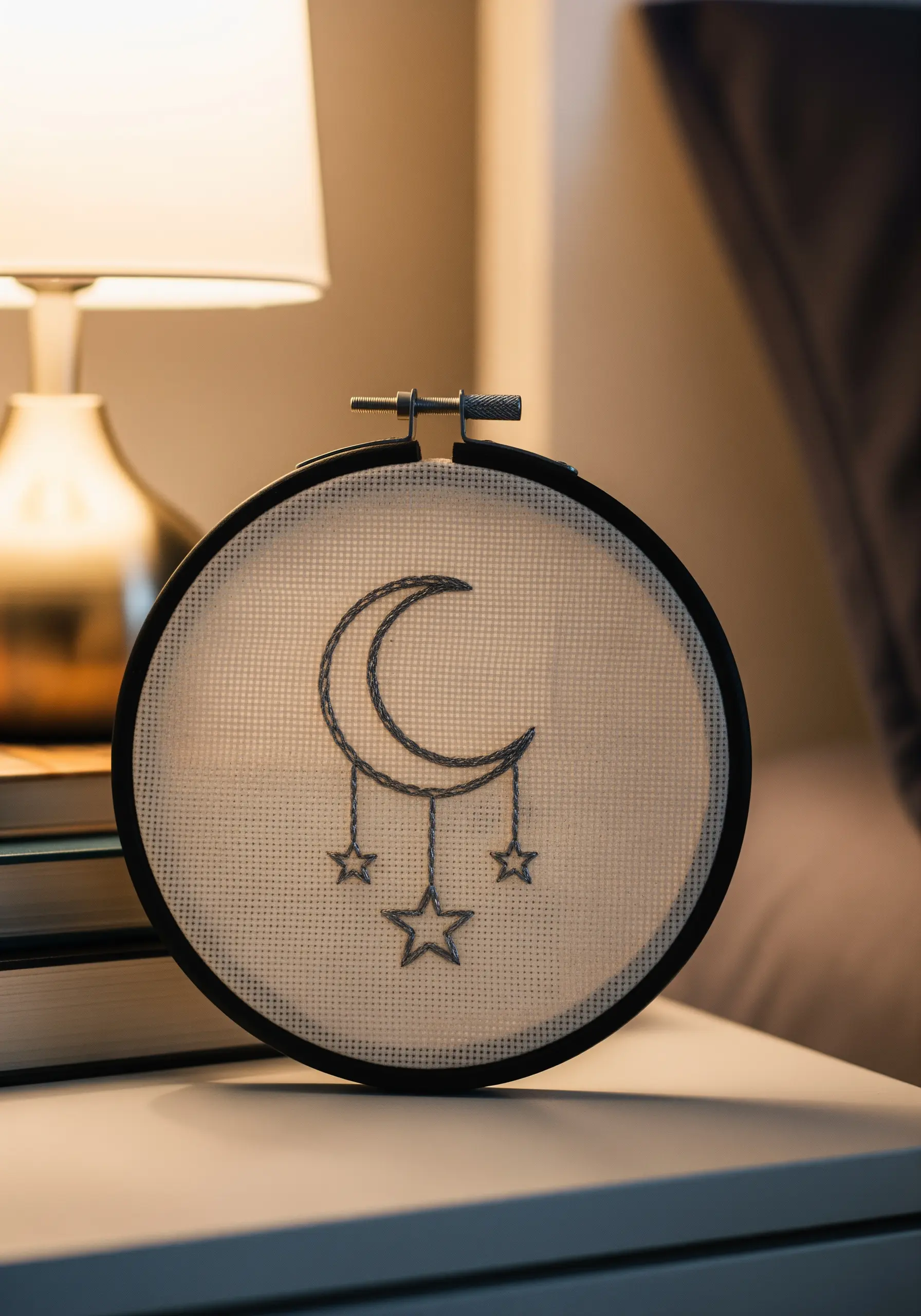
Stitching on a visible-weave fabric like Aida cloth adds a layer of graphic precision to your work.
Choose a silver metallic thread to give your celestial designs a subtle shimmer that catches the bedside lamp’s light beautifully.
To prevent the frustration of fraying, work with shorter lengths of metallic thread (about 12 inches) and consider using a thread conditioner.
A simple backstitch or chain stitch provides a defined, raised line that creates a beautiful contrast against the fabric’s grid, lending a celestial glow to your work.
5. Integrating Motifs with Bed Linen Design
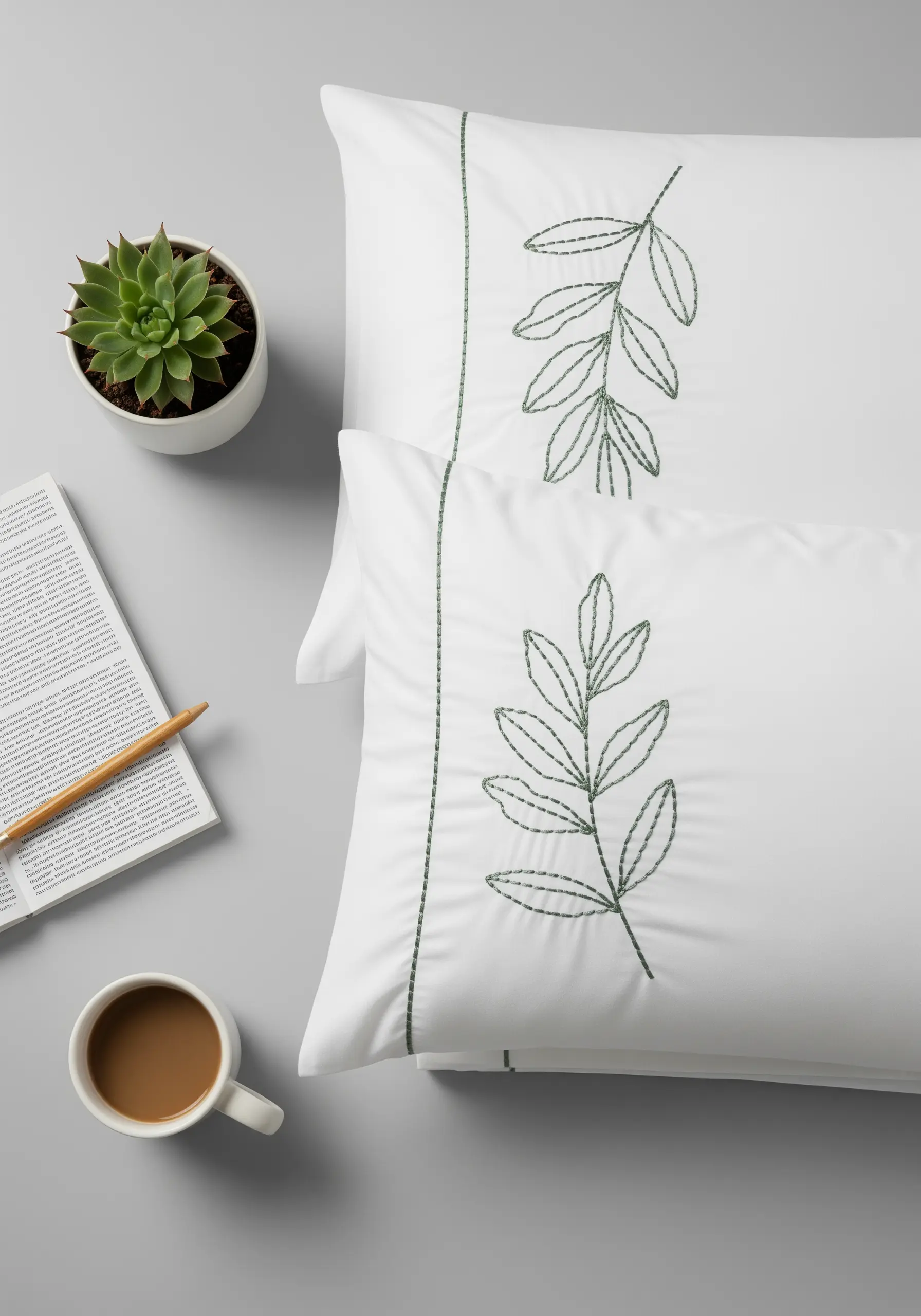
Make your embroidery feel like a deliberate part of the textile by placing a simple botanical motif alongside a seam or finished edge.
Use a split stitch for the outlines; it creates a solid, almost rope-like line that holds up exceptionally well to frequent washing.
Select a thread color that complements your existing bedding, like a soft sage on crisp white cotton, for a bespoke and tranquil look.
This small detail is enough to elevate your entire bedding set into something truly special.
6. Bold Outlines on Knitted Textures
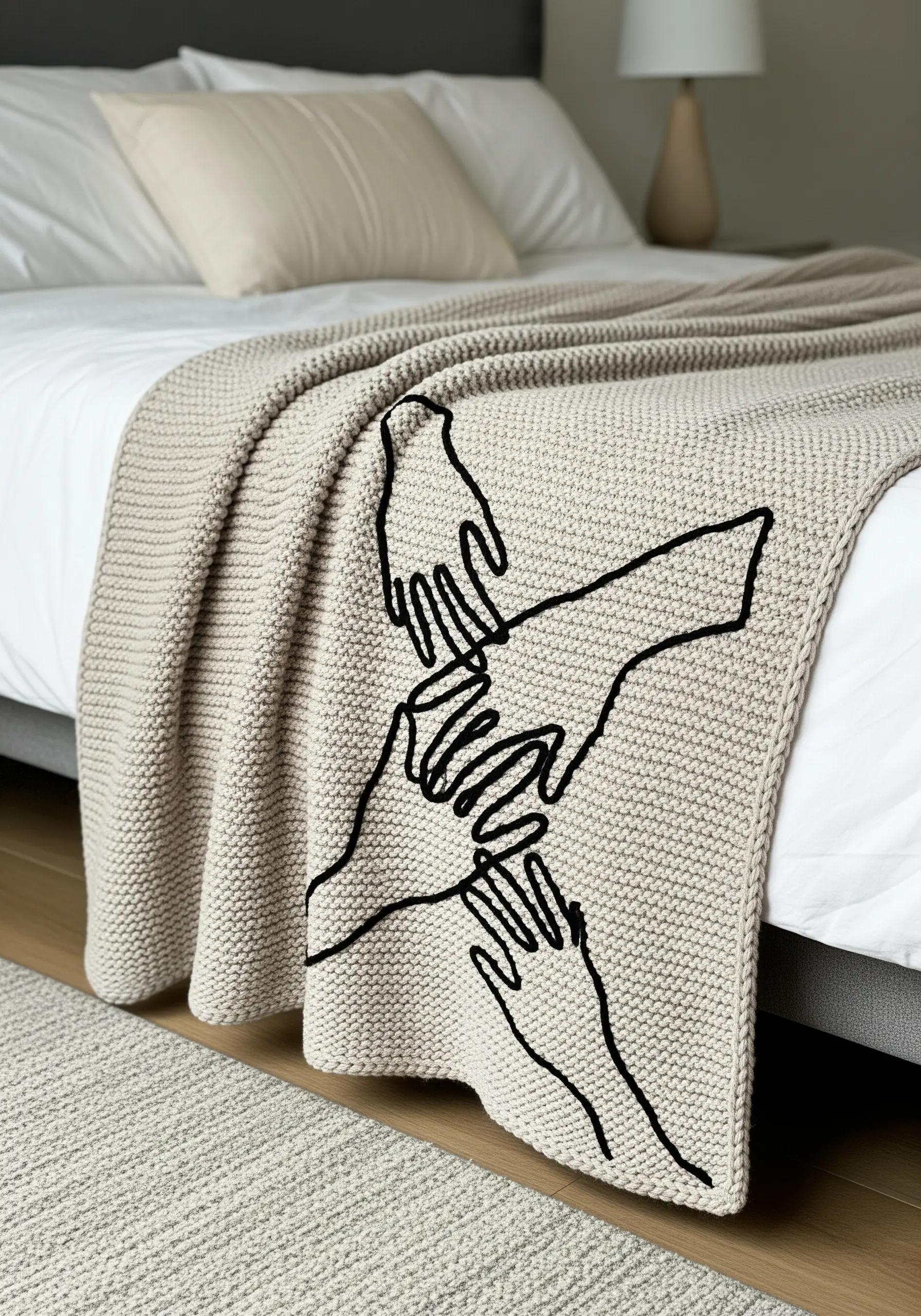
Embroidering on a knit surface requires a stitch that moves with the fabric to prevent puckering.
The chain stitch is your best choice, as its looped structure provides the necessary flexibility.
Use a yarn of a similar weight to the blanket itself for a cohesive look, and trace your design onto a wash-away stabilizer first.
This provides a smooth, stable guide for your needle, allowing you to create clean and meaningful line art that won’t distort the cozy texture of the knit.
7. Single-Color Motifs for Framed Art
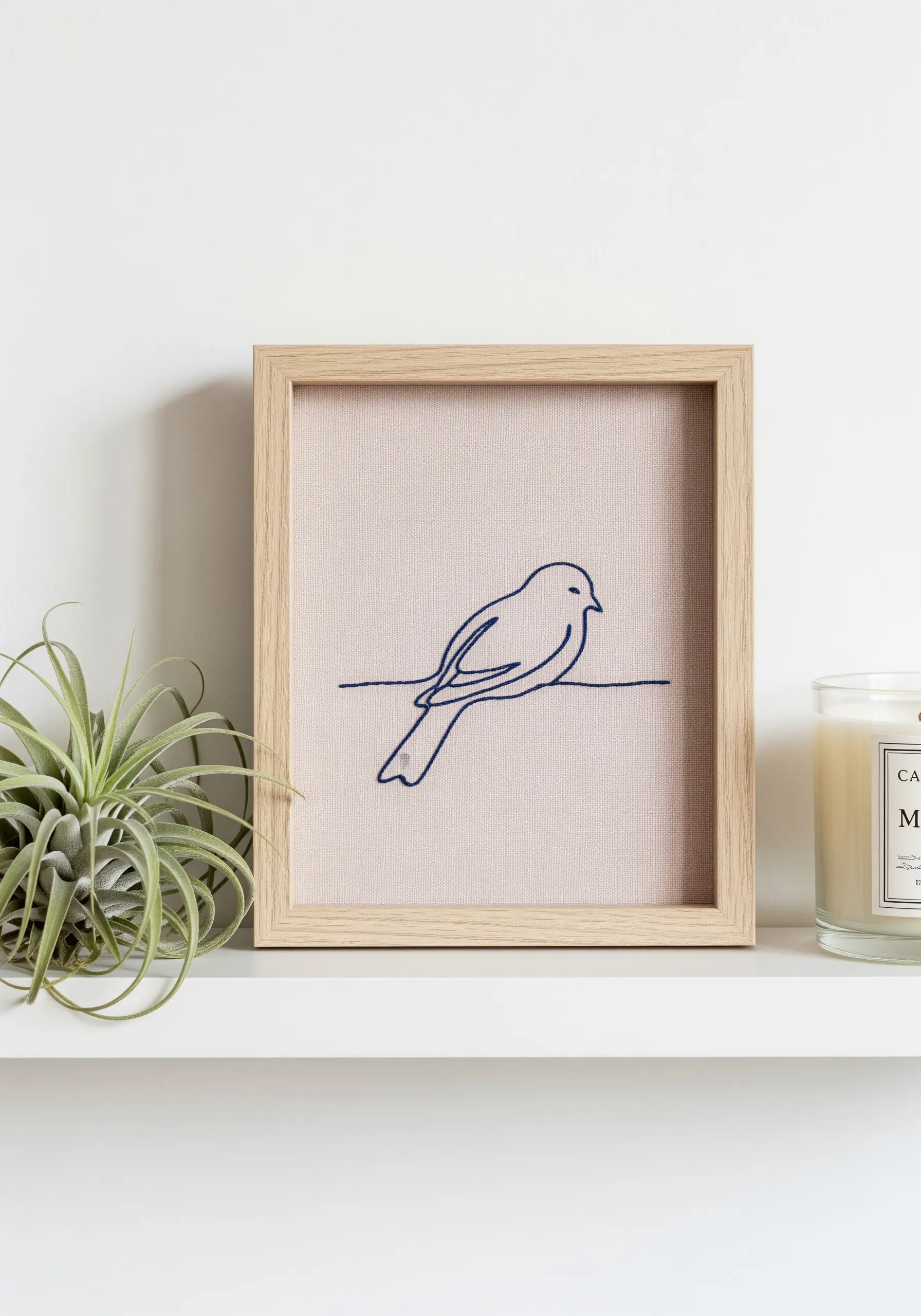
When you limit yourself to a single thread color, the quality of your line becomes the central focus.
Use a stem stitch, which creates a beautifully twisted, rope-like line that is perfect for outlining curves with grace and definition.
For a truly professional finish, mount your completed embroidery on a padded board before placing it in the frame.
This simple step gives your work a soft dimension, transforming it into refined, framed art worthy of any wall.
8. Rhythmic Lines for Functional Décor
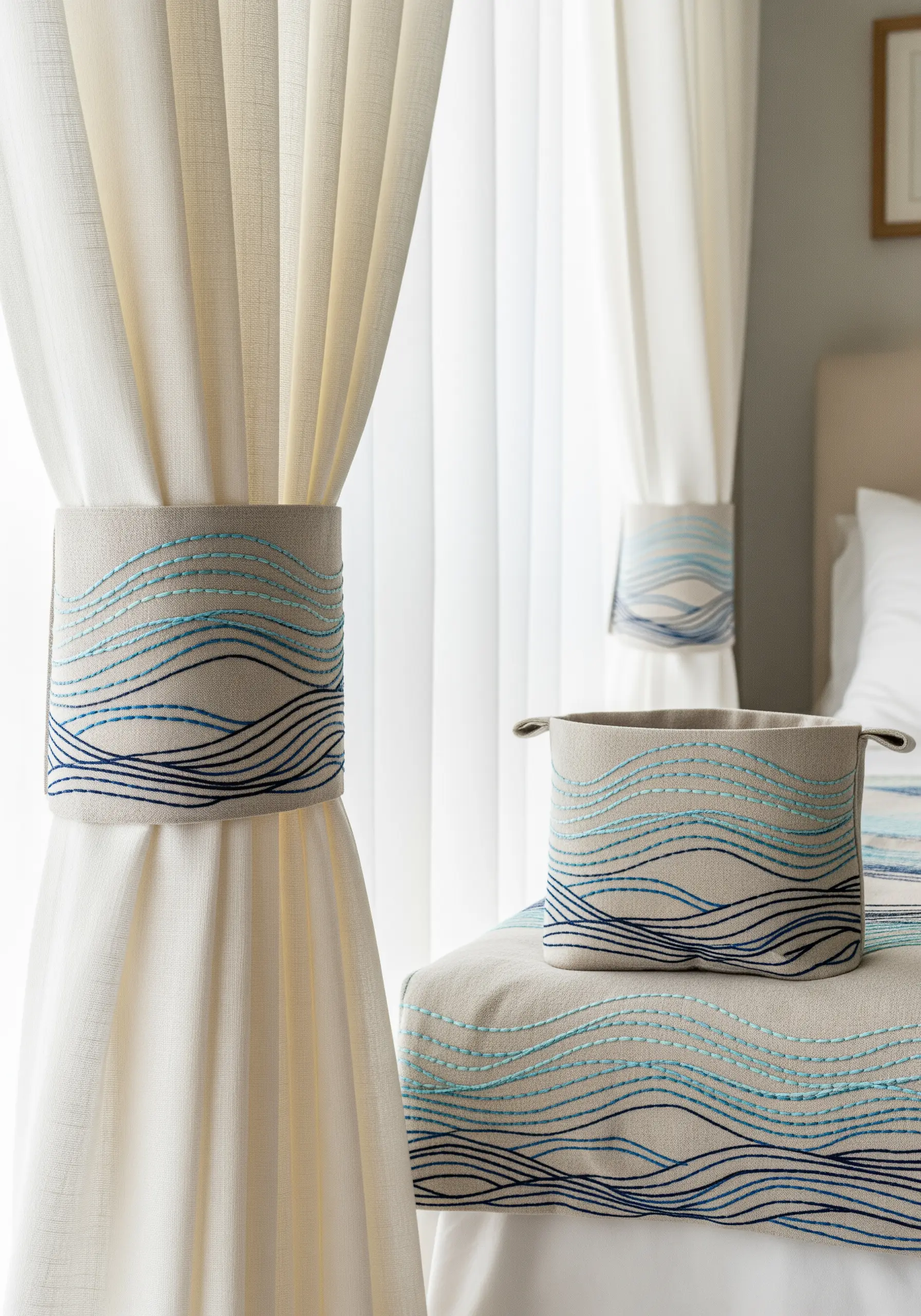
Create a sophisticated sense of movement by stitching parallel lines in a gradient of colors—from dark to light.
A simple, evenly spaced running stitch is perfect for this, allowing you to build layers of color quickly and effectively.
Apply this technique to a set of related items, like curtain tie-backs and storage baskets, to unify your bedroom with a cohesive and serene theme.
9. Subtle Embellishments for Apparel
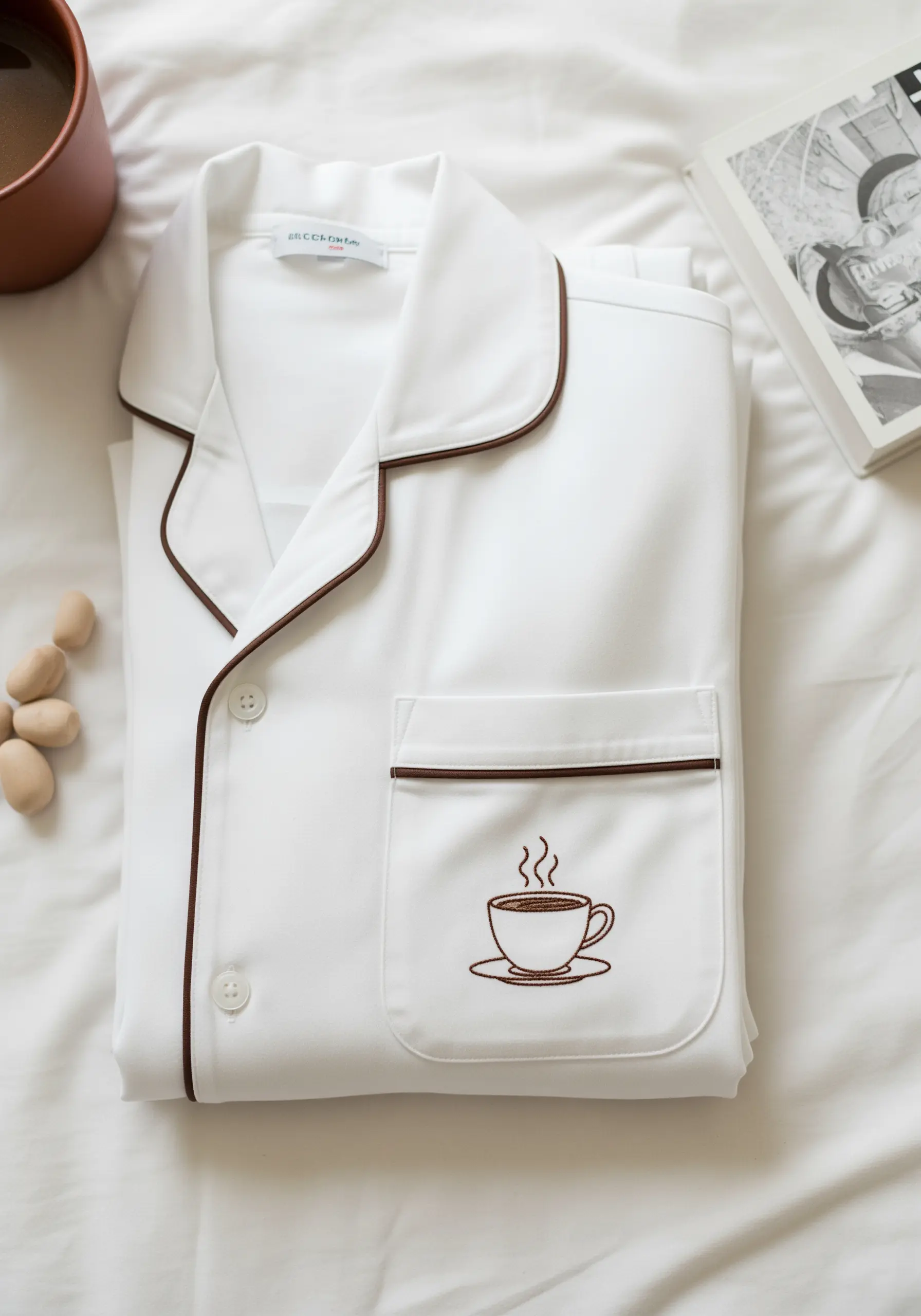
For clothing that needs to endure wear and washing, durability is paramount.
A whipped backstitch provides a perfectly smooth and snag-resistant line that feels comfortable against the skin.
Place a small, personal motif on a pocket, cuff, or collar to add a touch of quiet charm to your favorite pieces.
Always use a high-quality, colorfast thread to ensure your design stays crisp and vibrant on your loungewear.
10. Textural Exploration with Thick Cording
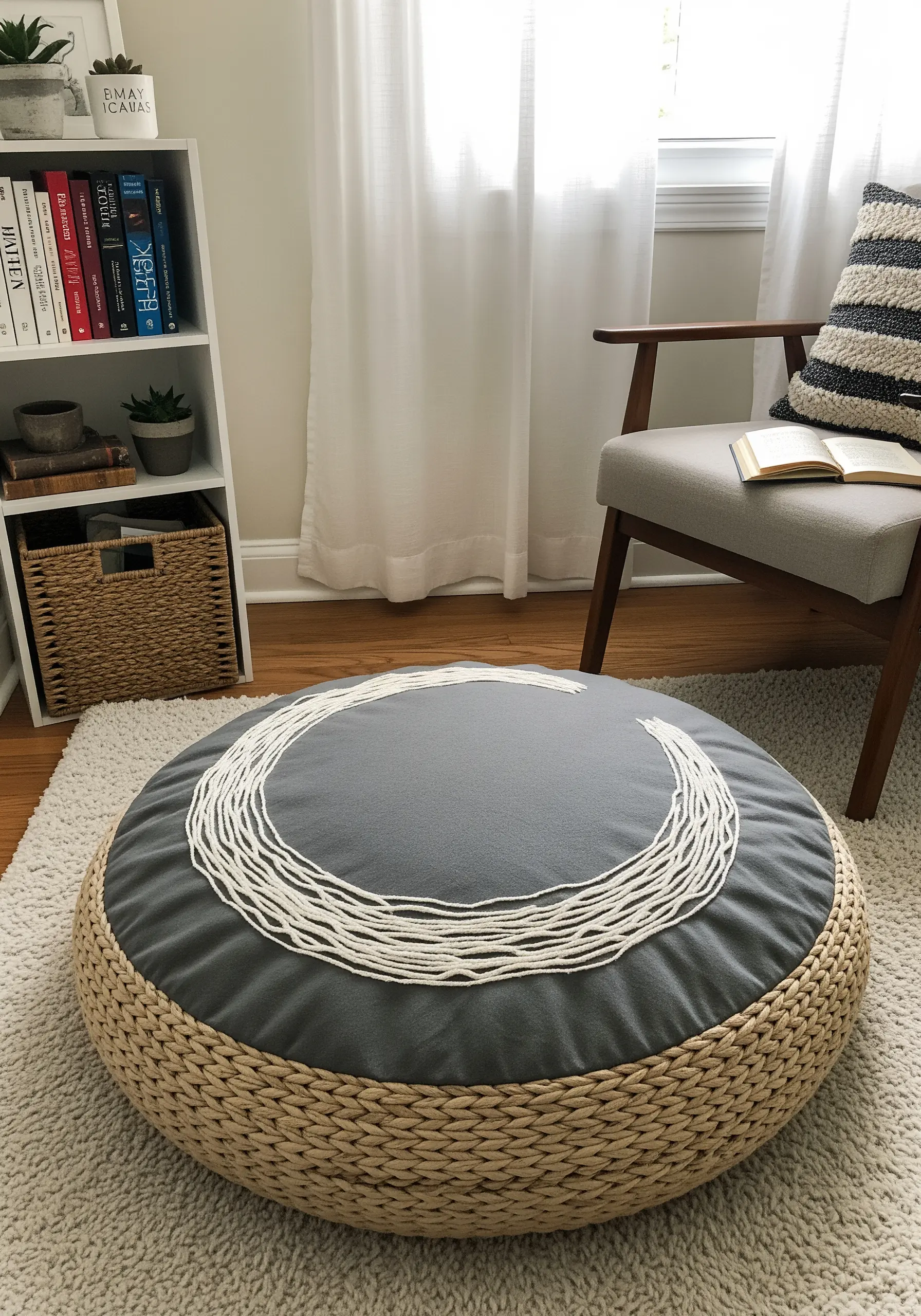
Move beyond standard floss to create a highly tactile, dimensional design by couching thick cord or yarn onto a heavy-duty fabric like canvas.
Choose a contrasting, thinner thread for the small tacking stitches to make them a visible, graphic element of the pattern.
This technique adds a weighty, sculptural quality that is perfect for functional items like floor cushions, transforming them into touchable art.
The result is a design with bold, sculptural lines and incredible texture.
11. Pierced Embroidery for Illuminated Art
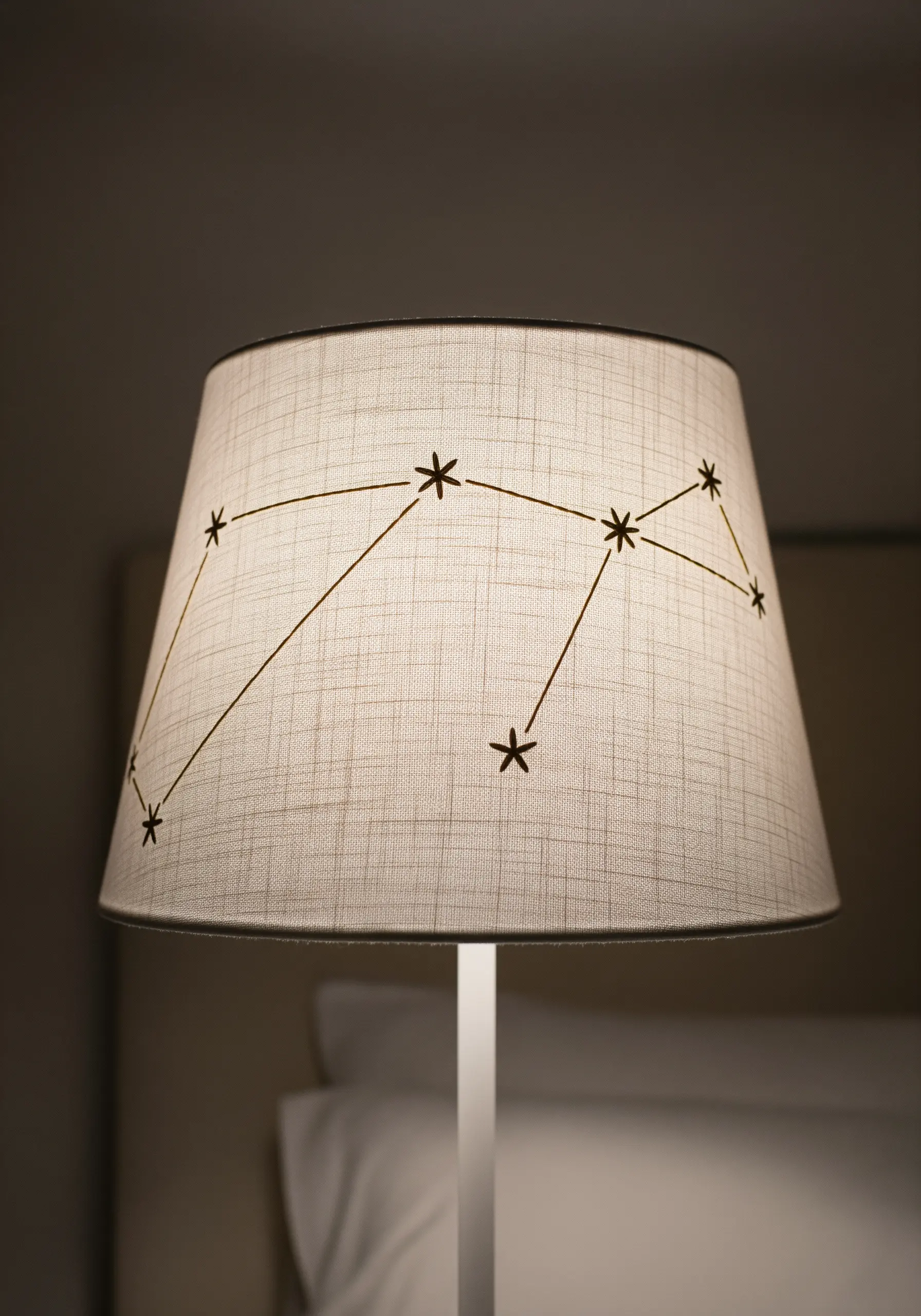
You can embroider directly onto a sturdy fabric or paper lampshade to create an enchanting effect.
Start by gently piercing your design’s key points with an awl or a thick needle; this guides your stitching and prevents the material from tearing.
Use a simple backstitch with a metallic or glow-in-the-dark thread for an extra touch of magic.
When the lamp is lit, the light will filter through the holes, creating a magical ambiance in your room.
12. Botanical Triptych for a Cohesive Wall Display

Create an instant gallery wall by stitching a series of related motifs, like different leaf shapes, in identical hoops.
Maintain visual harmony by using the same thread color and fabric across all pieces.
The stem stitch is your best friend for botanical outlines, as it navigates sharp points and graceful curves with unmatched precision.
Arranging the hoops in a vertical line draws the eye upward, making any wall feel taller and more curated.
This simple grouping creates inspiring hoop art projects for a cohesive wall display.
13. Combining Line Art with Denser Textures
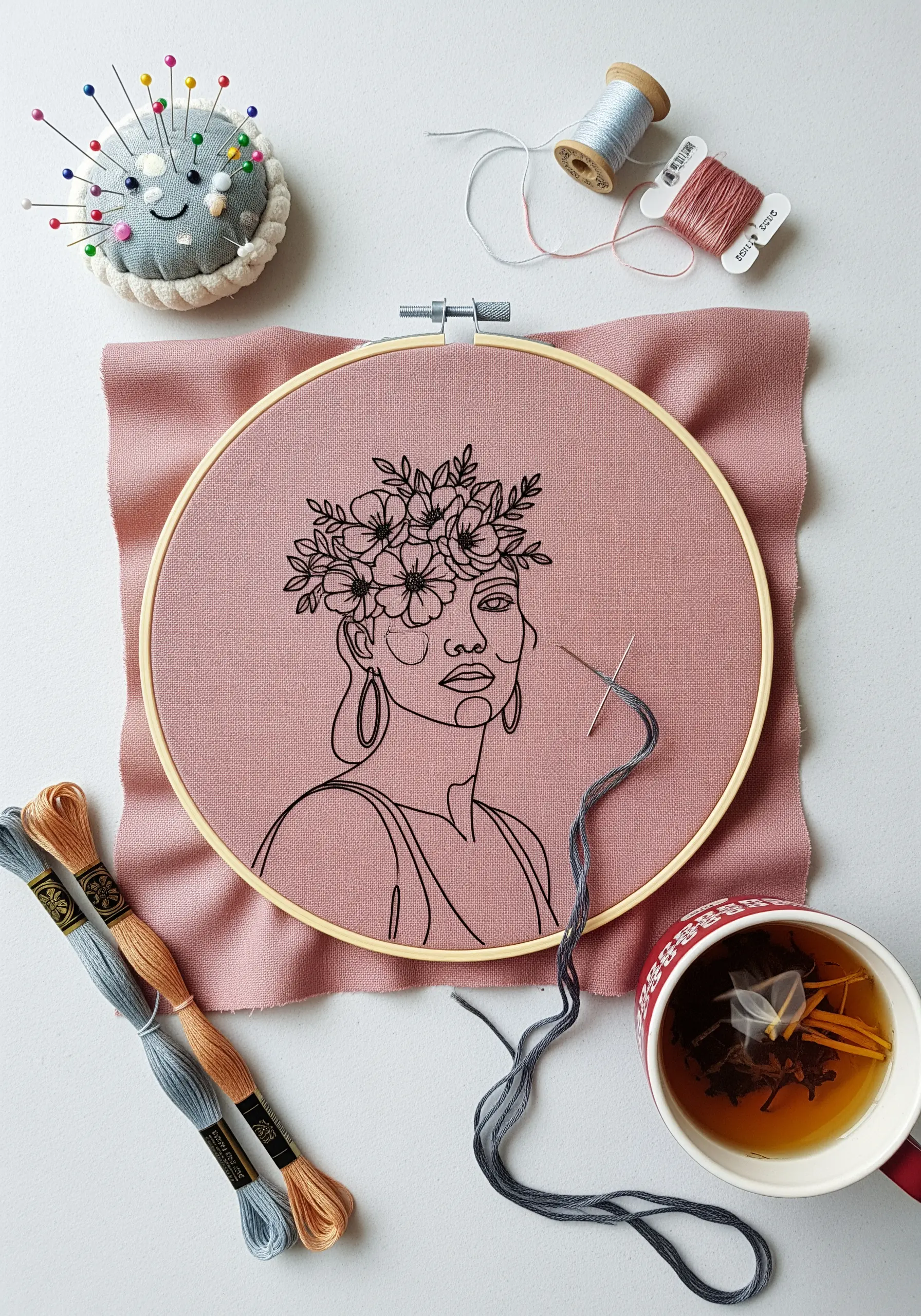
Create a stunning visual hierarchy by pairing clean, single-strand backstitching for a portrait’s outline with denser stitches for focal elements like a floral crown.
Use lazy daisy stitches for petals and small, tight French knots for flower centers to build up a rich, touchable texture.
This deliberate mix of sparse and dense stitching draws the eye immediately to the detailed areas, giving the piece a captivating textural contrast and profound depth.
14. Repeating Patterns as a Bedding Border
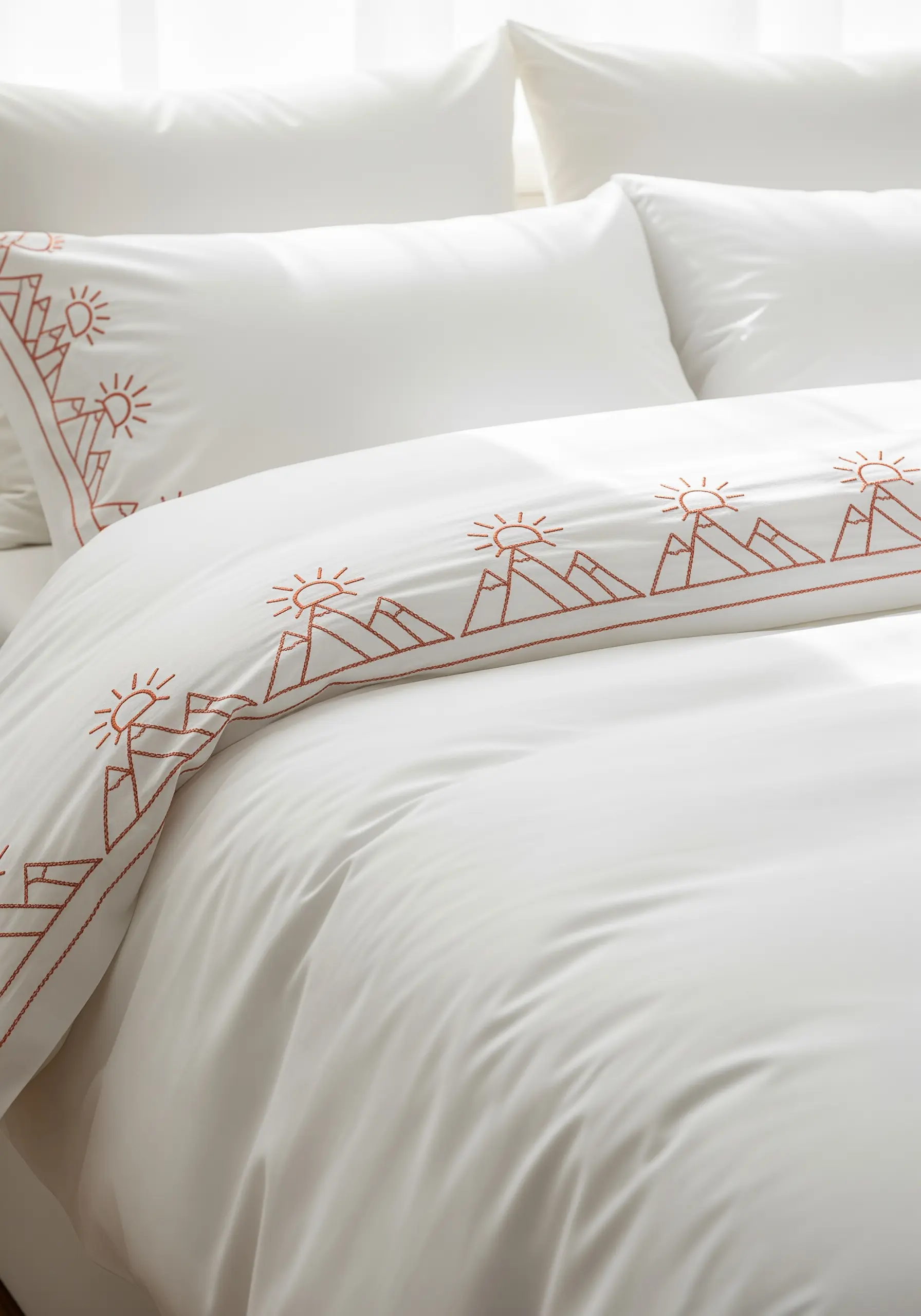
Emulate the look of high-end linens by adding a repeating geometric or landscape motif to the border of a duvet cover or pillowcase.
A simple backstitch or running stitch is all you need to create a clean, graphic, and sophisticated look.
To ensure your pattern is perfectly spaced and aligned, use a water-soluble transfer pen or a quilter’s guide to keep your lines uniform.
It’s a bespoke, hotel-style touch that feels both modern and timeless.
15. Dynamic Lines for Fabric Wall Banners
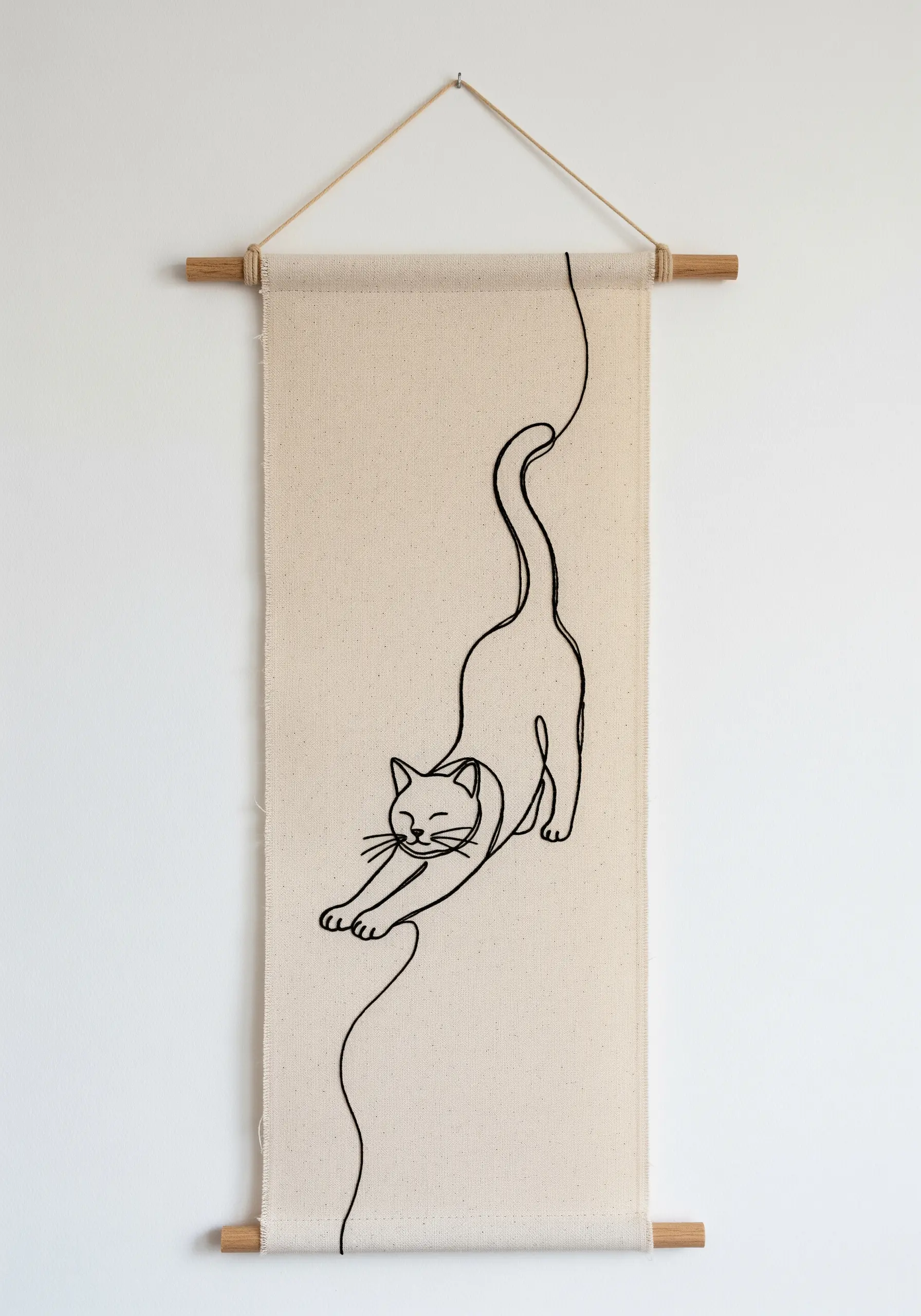
Capture a sense of life and movement in your subjects by using a single, flowing line to render their form.
A whipped backstitch is the ideal choice for this, as it smooths over the segmented look of a standard backstitch, creating one continuous stroke.
Consider letting the beginning and end threads hang loose as part of the design to enhance the free-flowing, sketchy aesthetic and emphasize the dynamic movement.
16. Padded Satin Stitch for Textural Typography
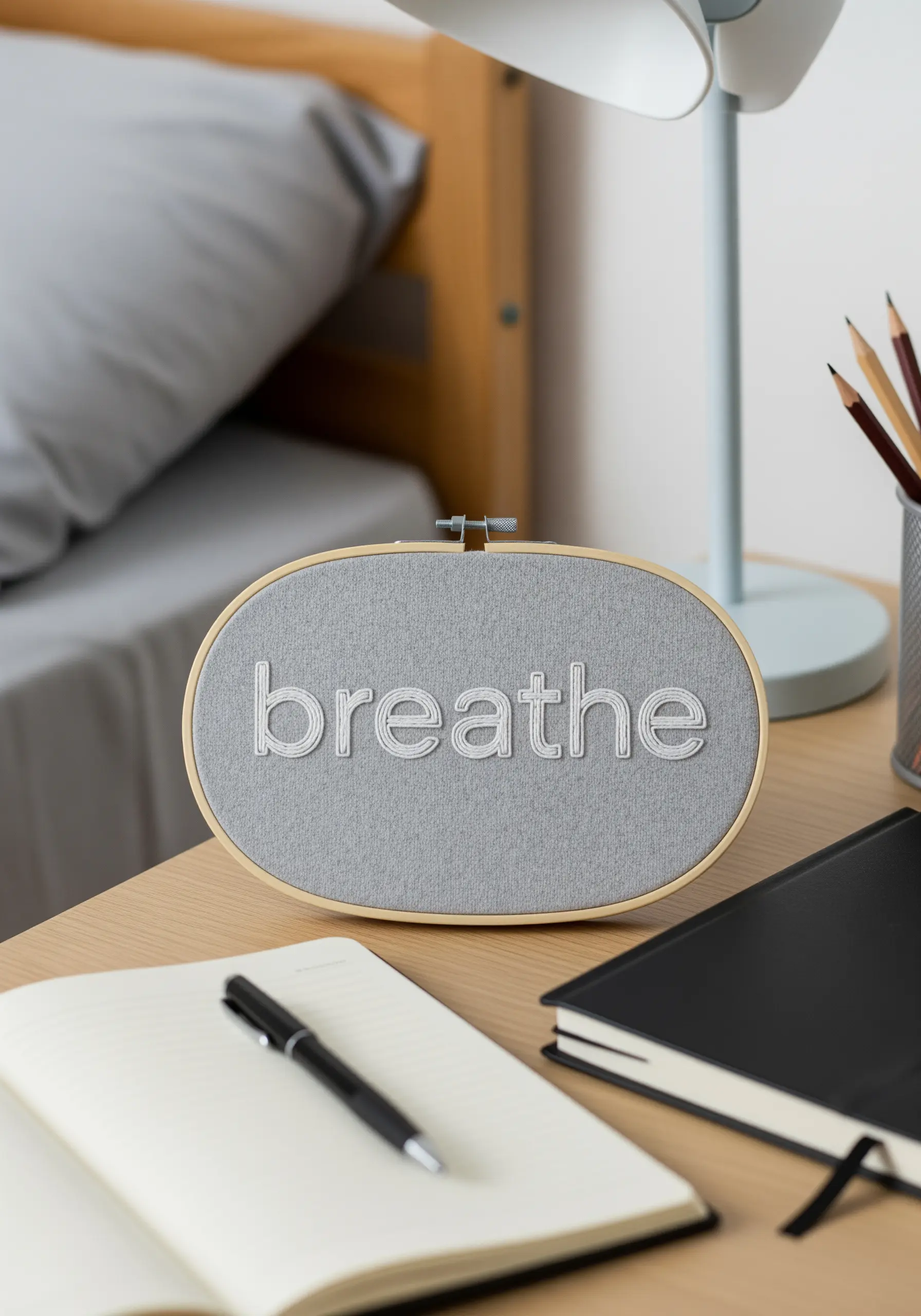
Give embroidered words a raised, three-dimensional effect with the padded satin stitch technique.
First, create a foundation by outlining your letters with split stitch, then fill the inside area with small, random seed stitches.
Finally, cover this entire padded base with smooth satin stitches laid perpendicular to the foundation.
The result is clean, crisp, and wonderfully tactile lettering that stands out from the fabric.
17. High-Contrast Celestial Charting
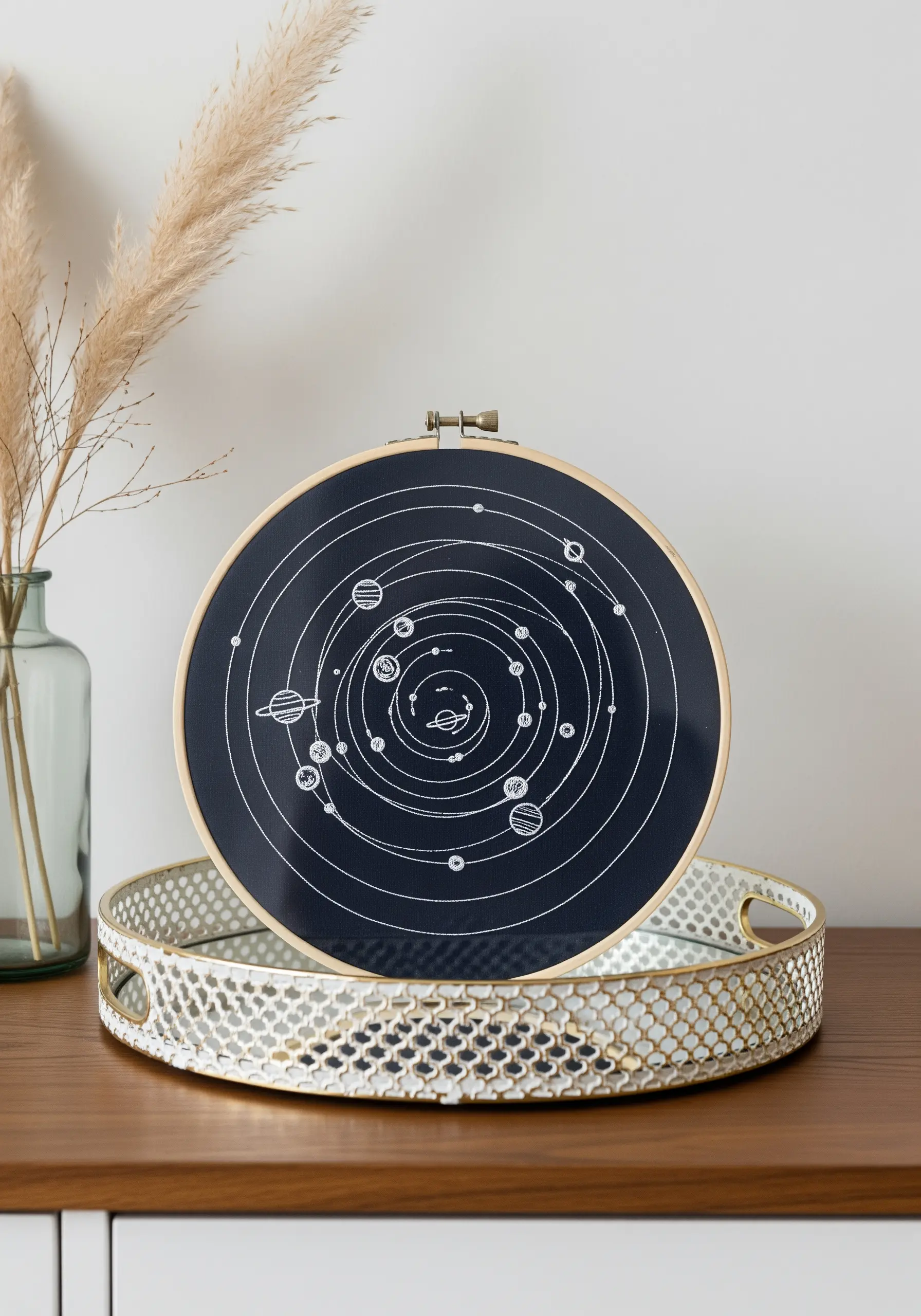
For an instantly dramatic effect, use a single light-colored thread on a dark fabric background.
A crisp white or shimmering silver floss on navy or black cotton creates a striking visual that evokes a clear night sky.
To stitch perfectly circular orbits, use a stem stitch and physically rotate your hoop as you work, which is far easier and more effective than trying to change your stitch direction.
This technique helps you create a clean and graphic cosmic design.
18. Combining Embroidery with Other Fiber Arts
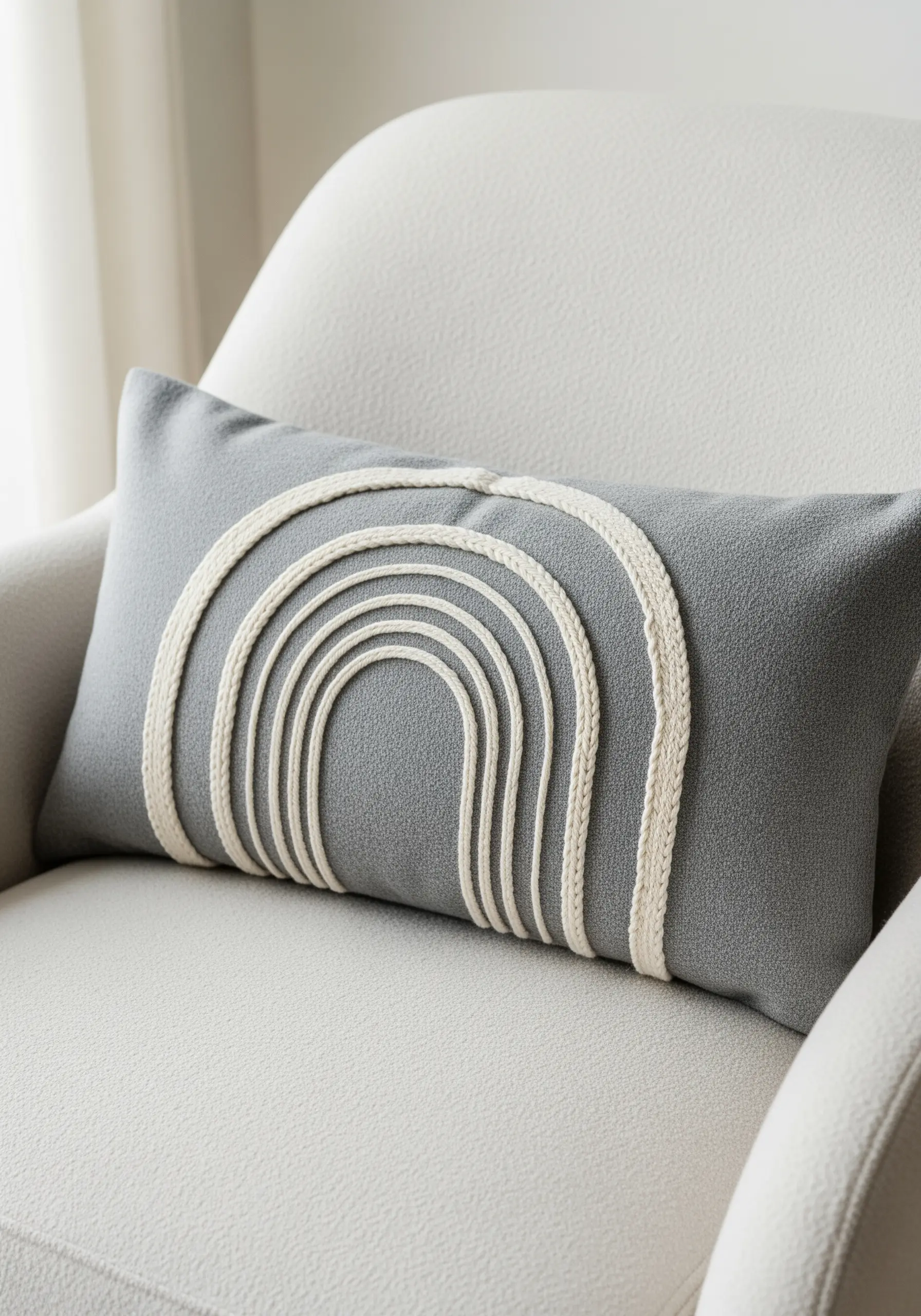
Introduce another textile craft, like crochet or macrame, to create lines with unparalleled dimension and texture.
Create a simple crocheted chain or a series of macrame square knots using a soft cord, then carefully stitch it onto the pillow’s surface with a matching thread.
This mixed-media approach adds incredible tactile interest, turning a simple line design into a statement piece of fiber art.
19. Delicate Goldwork for Luxe Accents

Instantly add a touch of luxury to surfaces like velvet or suede by using a fine metallic thread for your line art.
When the thread itself is the main feature, a simple, clean backstitch is all you need for a stunning result.
To prevent the delicate metallic fibers from snagging or breaking, use a sharp, fine needle (like a size 9 or 10 crewel) and pull each stitch through the fabric slowly and deliberately.
It’s a beautiful way to add a touch of luxury to treasured items.