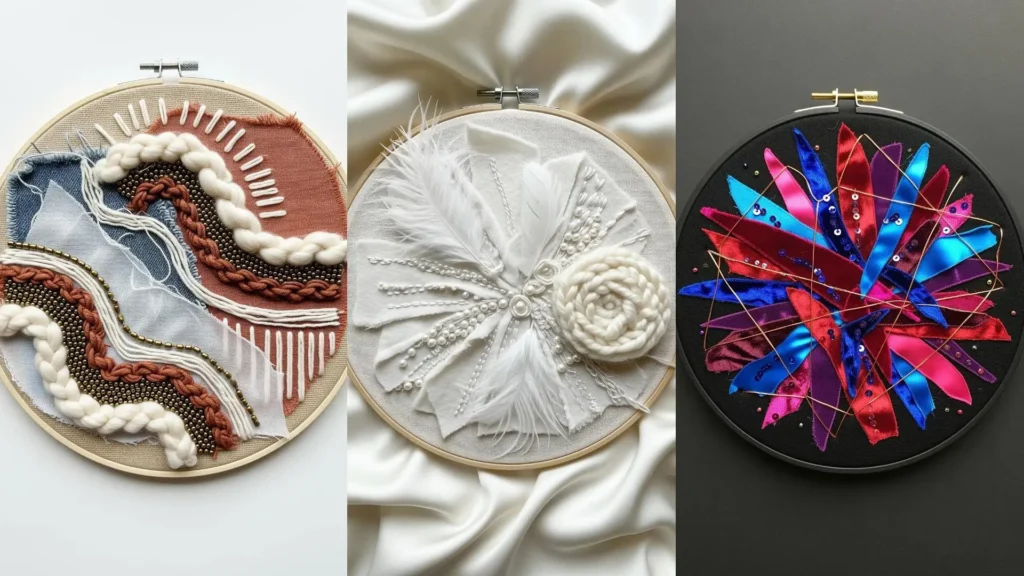
When the pressure to follow a pattern feels more restrictive than inspiring, it’s time to let your needle wander. Freeform stitching isn’t about chaos; it’s about trusting your creative intuition and allowing texture, color, and rhythm to guide your hands. It’s your permission slip to play, explore, and create something that is uniquely, unapologetically yours.
Think of your hoop as a canvas for texture. How does a chunky yarn feel next to a delicate silk thread? What happens when you fill a shape with dense French knots instead of smooth satin stitch? These ideas are starting points—invitations to explore the expressive potential hiding in the simplest of stitches.
Forget perfection. Embrace the slightly uneven line, the unplanned color combination, the happy accident. Every stitch you make is a mark of your presence, a quiet celebration of the handmade. Let’s begin.
1. Layer Chunky Yarn for Sculptural Dimension
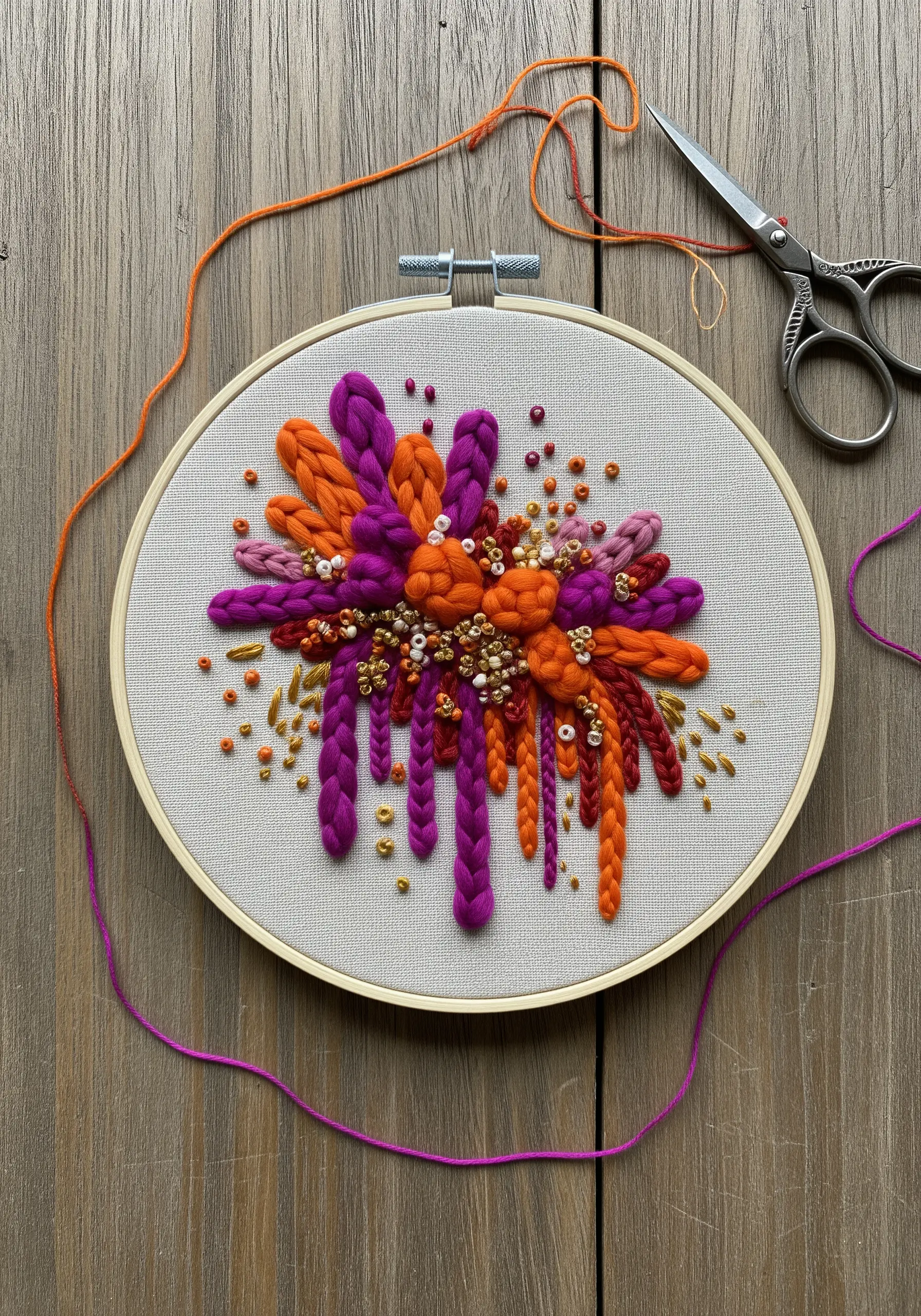
Move beyond standard floss by incorporating thick, plush yarns or wool roving into your hoop.
Create braids off the fabric, then secure them with couching stitches for a bold, three-dimensional effect that sits high above the surface.
Fill the negative space around these sculptural elements with clusters of French knots and scattered beads.
This technique creates a dramatic textural contrast, making the yarn elements feel grounded while the smaller details add a delicate shimmer.
Choose a high-contrast color palette, like magenta and orange, to ensure each texture remains distinct and vibrant.
2. Build Architectural Depth with Layered Straight Stitches
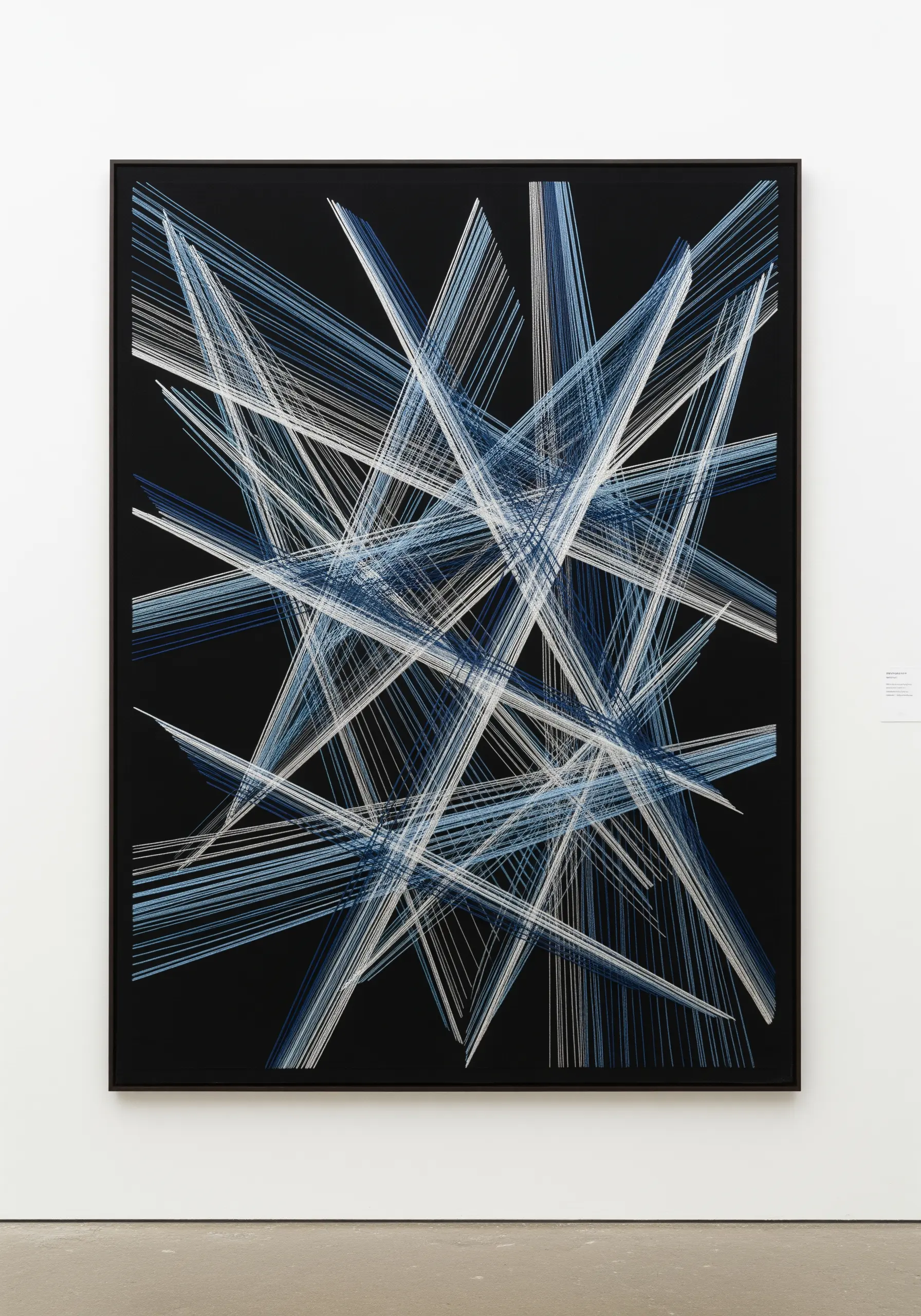
Use your sewing machine’s straight stitch (or a simple hand-stitched running stitch) to build layers of intersecting lines.
Start with a dark, high-contrast fabric like black linen or canvas, which makes the thread colors pop.
Work in one color family, using various shades and thread weights—from fine machine thread to thicker sashiko thread—to create a sense of depth.
Each layered line catches the light differently, resulting in a composition that has incredible movement and an almost architectural quality, turning simple stitches into a complex visual field.
3. Compose a Landscape of Pure Texture
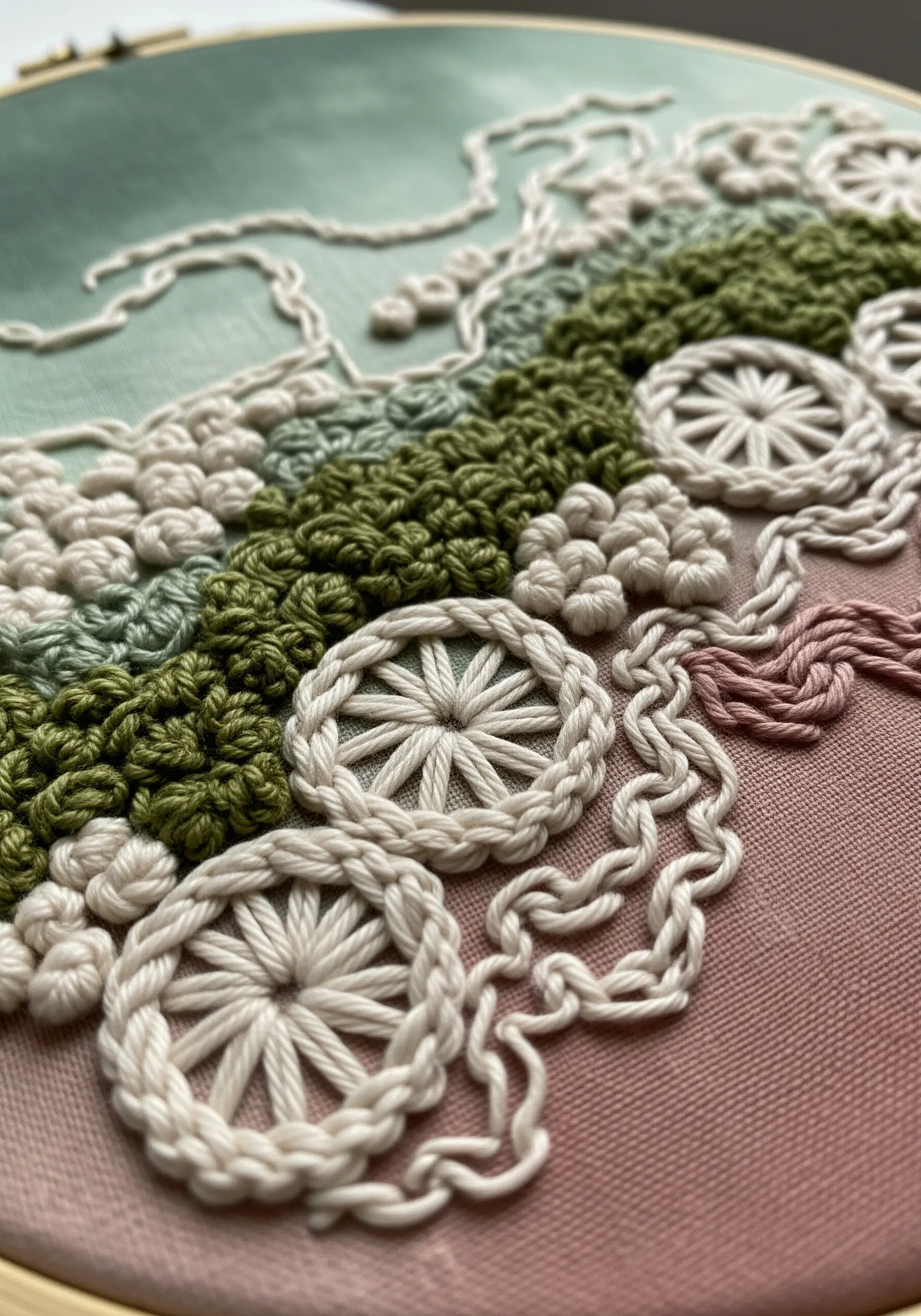
Instead of drawing with thread, think like a sculptor and build a tactile surface using highly dimensional stitches.
Group different stitches together to create distinct textural zones: fill one area with dense French knots, another with smooth woven wheels, and connect them with chunky chain stitch paths.
Work with a monochromatic or analogous color scheme (like shades of green and cream) to keep the focus entirely on the interplay of textures.
This approach transforms your hoop into a sampler of sensations, inviting the viewer to imagine the feel of each section.
4. Create Rhythmic Flow with Couching Stitches
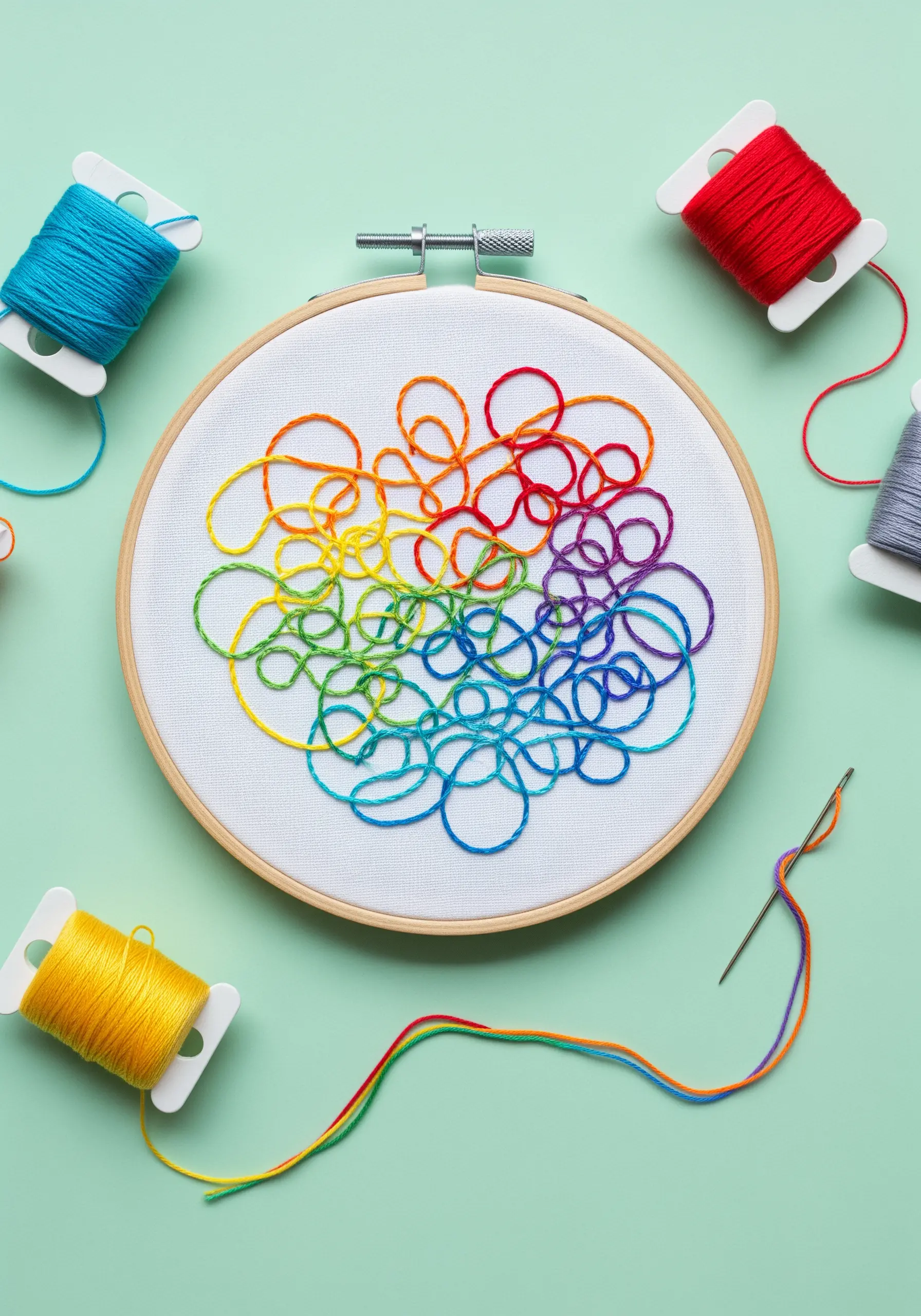
Use a simple couching stitch to create a fluid, continuous line that moves and coils without ever piercing the main thread.
Lay down a long piece of thread or yarn in a looping, organic pattern, then use a second, finer thread to tack it down at regular intervals.
Plan a color gradient from one side of the hoop to the other for a dynamic, rainbow-like effect.
This technique allows you to work quickly and create the illusion of a single, unbroken line, perfect for capturing a sense of energy and spontaneity.
5. Blend Mixed Fibers for an Organic Feel
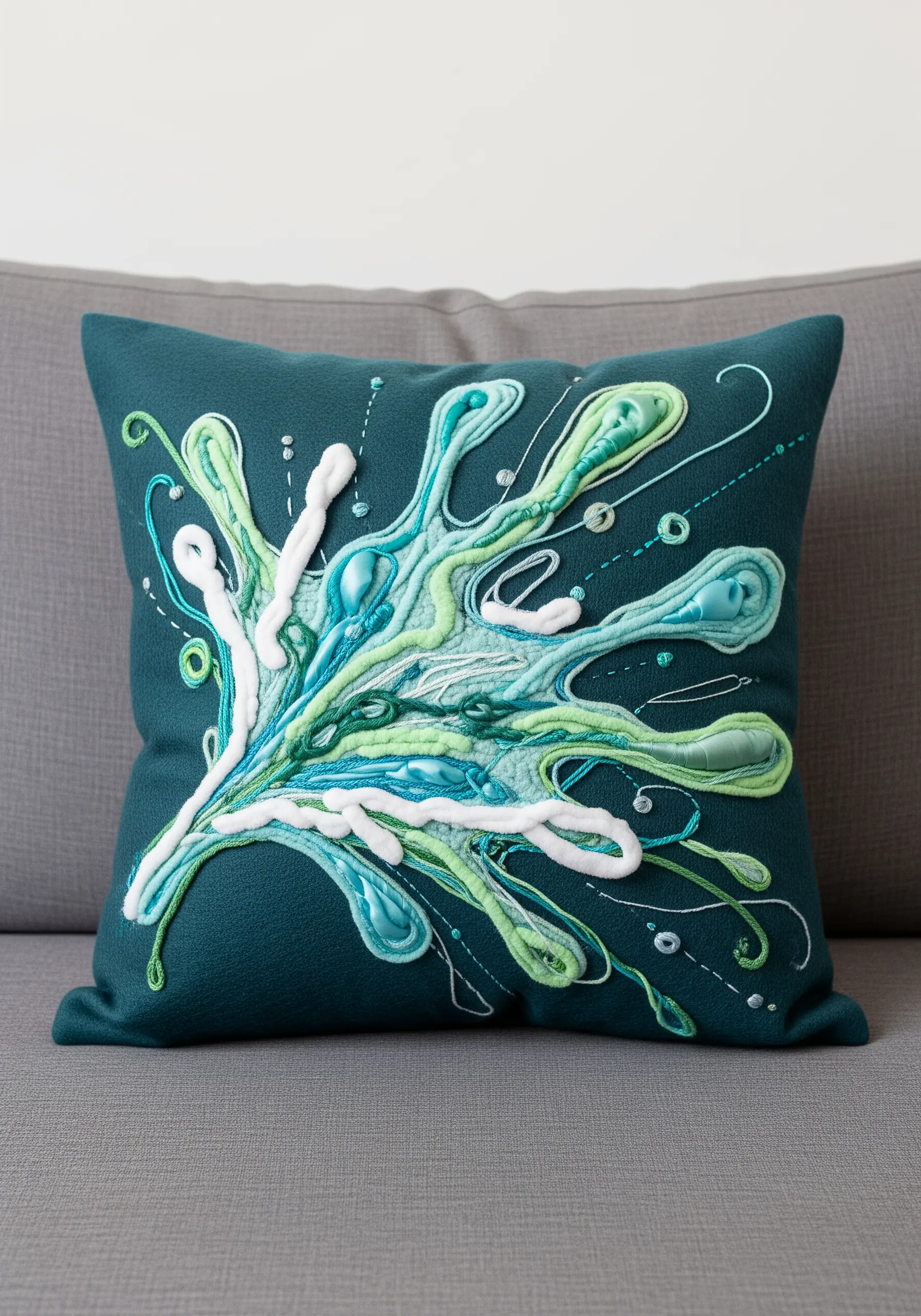
Elevate a simple cushion cover by treating it as a canvas for mixed-fiber art.
Combine thick yarn, silky ribbon, and standard embroidery floss to build an abstract shape with varying sheens and thicknesses.
Use padded satin stitch to create raised, puffy areas, then surround them with delicate straight stitches and seed bead accents.
This layering of materials creates a rich, organic form that feels both intentionally designed and naturally grown, adding a sophisticated, artistic touch to your home décor.
6. Use Beads to Define Monochromatic Flow
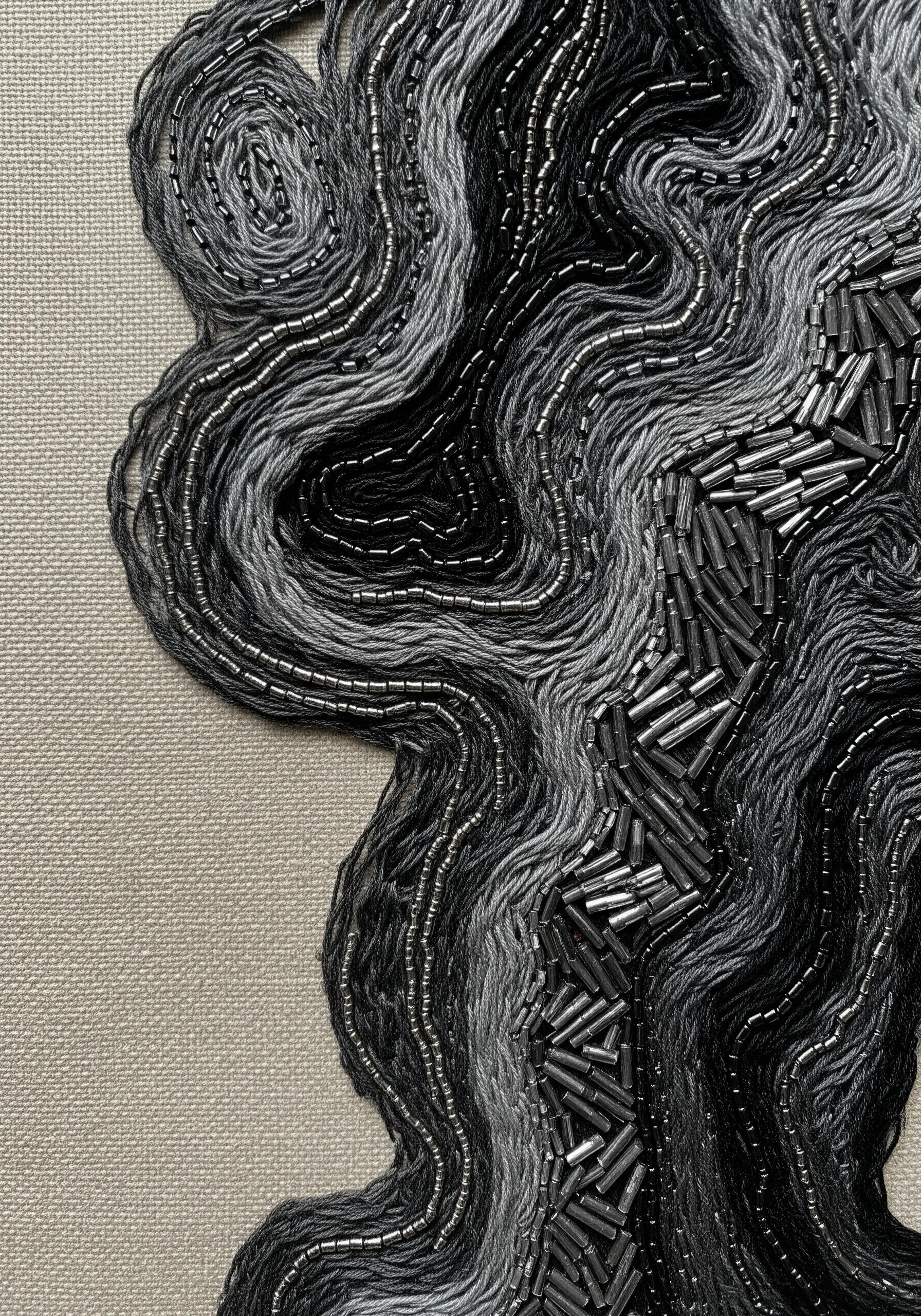
Create a powerful abstract piece by limiting your palette to shades of a single color and focusing on the contrast between thread and beads.
Outline a flowing, river-like shape and fill sections with long, directional satin stitches, letting the thread suggest movement.
In other sections, use bugle beads laid in the same direction. The hard, reflective surface of the beads creates a sharp, crystalline contrast against the soft sheen of the thread.
This technique turns a simple composition into a study of light and texture, proving that a monochromatic palette can be incredibly dynamic.
7. Arrange a Playful Garden of Stitch Medallions
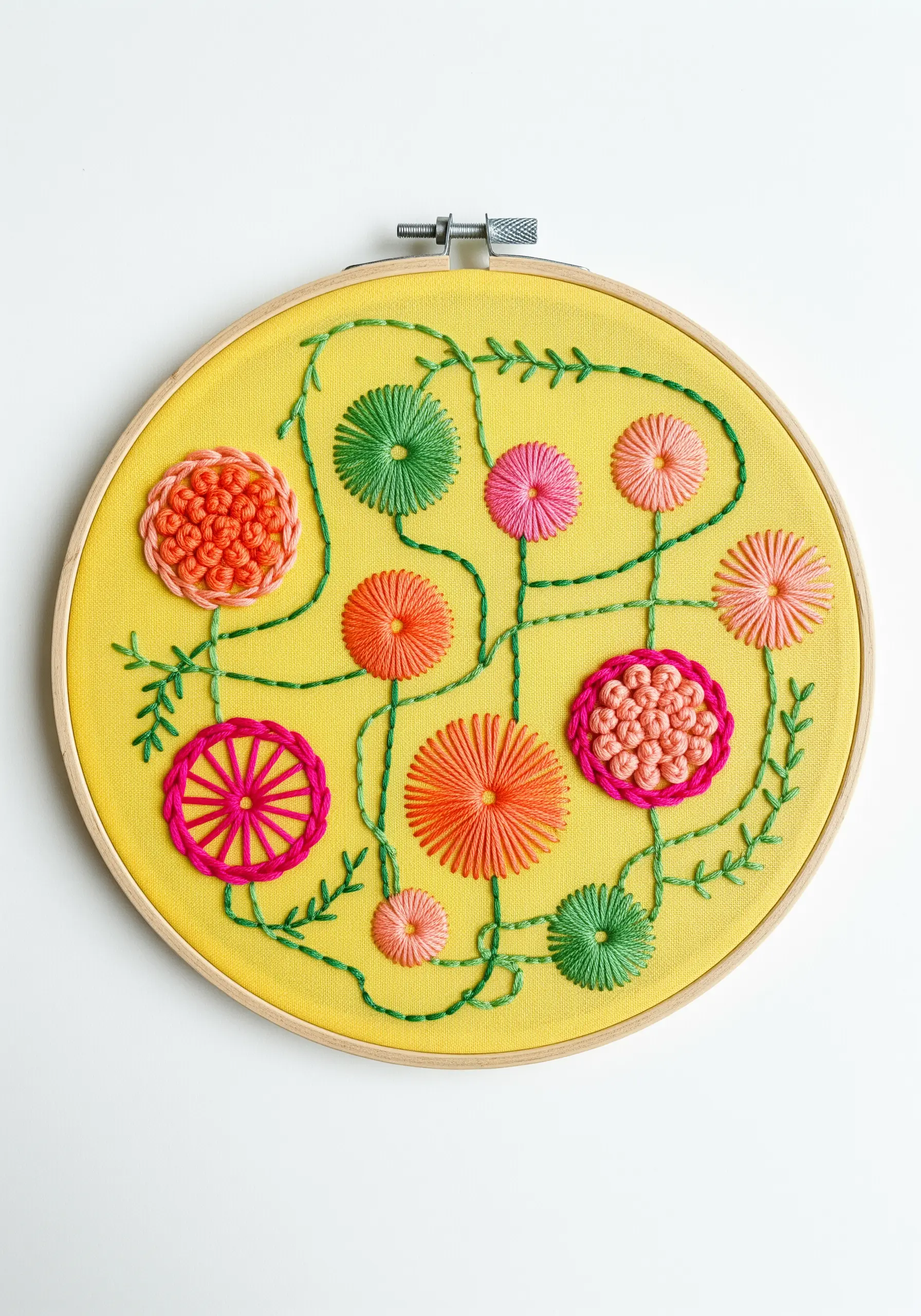
Fill a hoop with a collection of circular stitch motifs to create a joyful, abstract floral arrangement.
Combine wagon wheel stitches, woven wheels, and dense clusters of French knots in various sizes and vibrant colors.
Connect these ‘blossoms’ with wandering backstitched stems and add tiny lazy daisy stitches as leaves.
The key is to embrace imperfection and asymmetry; this isn’t a precise botanical drawing but a cheerful, stylized garden where every element is pure, happy texture.
8. Explore Minimalist Marks in a Triptych
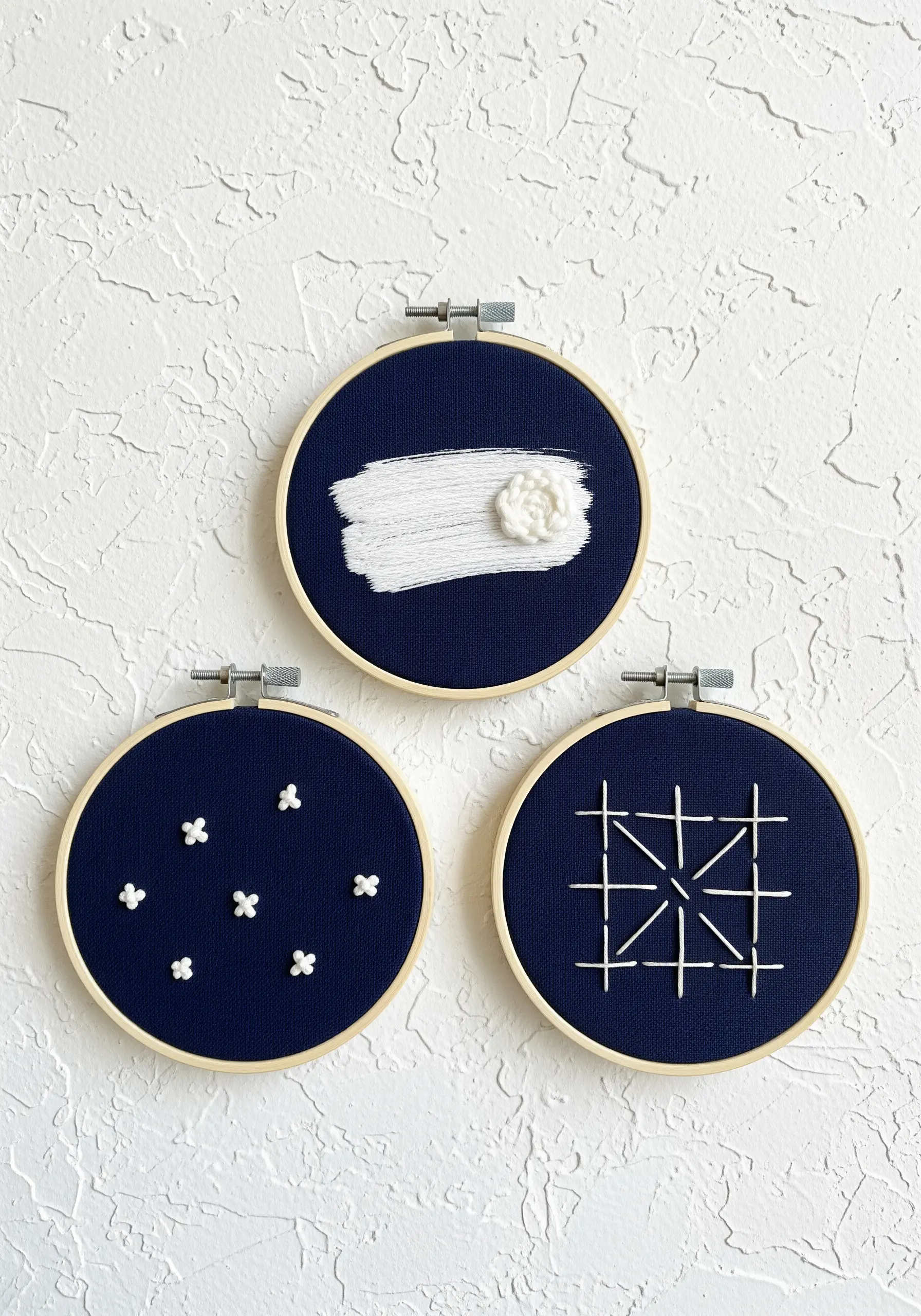
Tell a story in three parts by creating a series of small, minimalist hoops that explore a single theme.
Choose a dark, dramatic background fabric like navy blue and a single contrasting thread color, such as white or cream.
In each hoop, feature a different abstract mark: a textural brushstroke of satin stitch, a sparse constellation of cross stitches, or a clean geometric grid.
Displayed together, these minimalist embroidery patterns create a cohesive and sophisticated statement, proving that less is truly more.
9. Ignite Apparel with Mixed-Media Flames
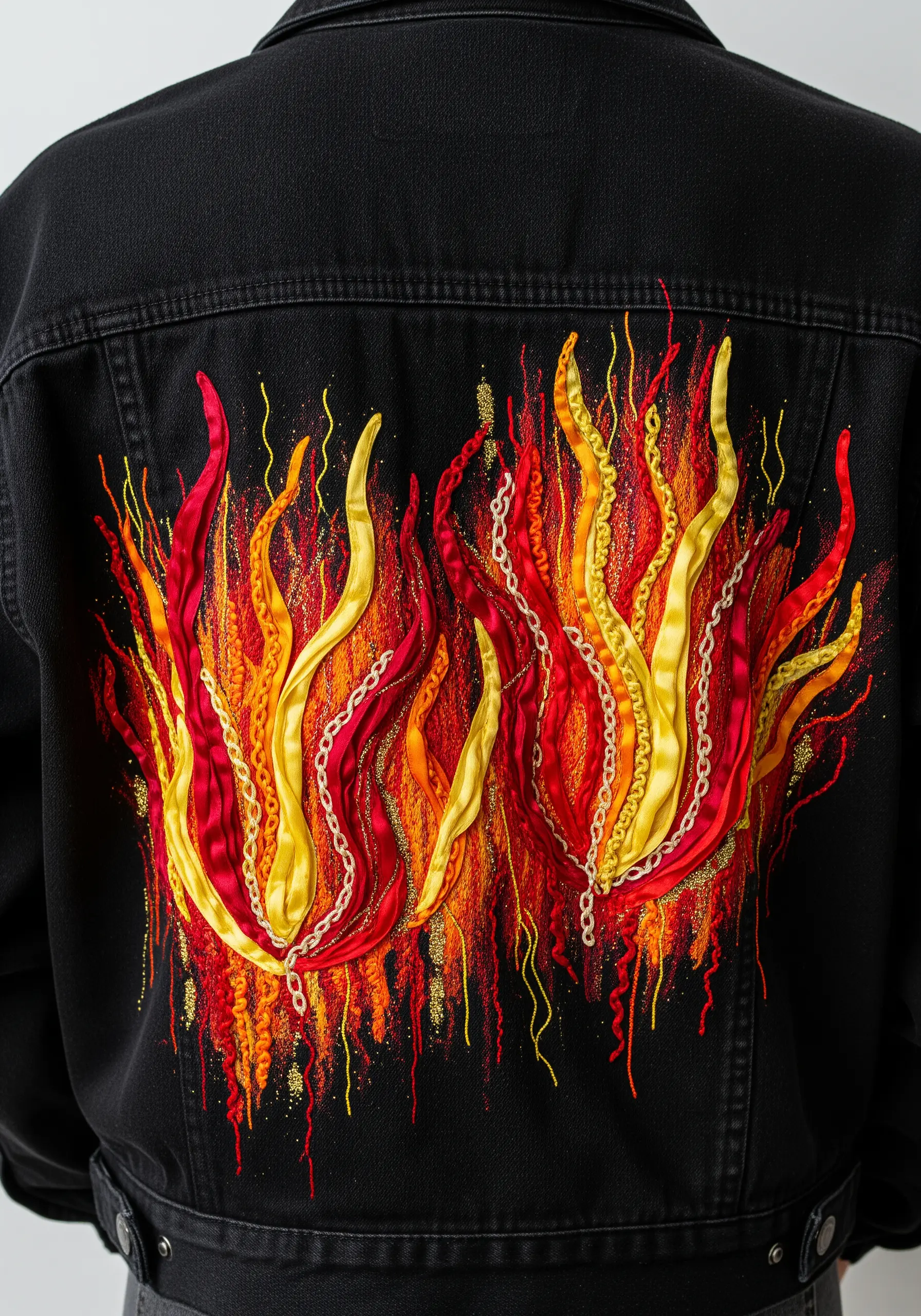
Transform a plain denim jacket into a statement piece with explosive, textural flames.
Lay down flowing shapes with brightly colored silk ribbons using ribbon stitch, then outline and accent them with couched gold chain and glittery thread.
Fill the surrounding area with a chaotic splatter of straight stitches and seed stitches in a fiery palette, creating the effect of sparks and embers.
This mixed-media embroidery technique adds incredible energy and dimension, turning everyday apparel into wearable art.
10. Stitch an Abstract Topographical Map
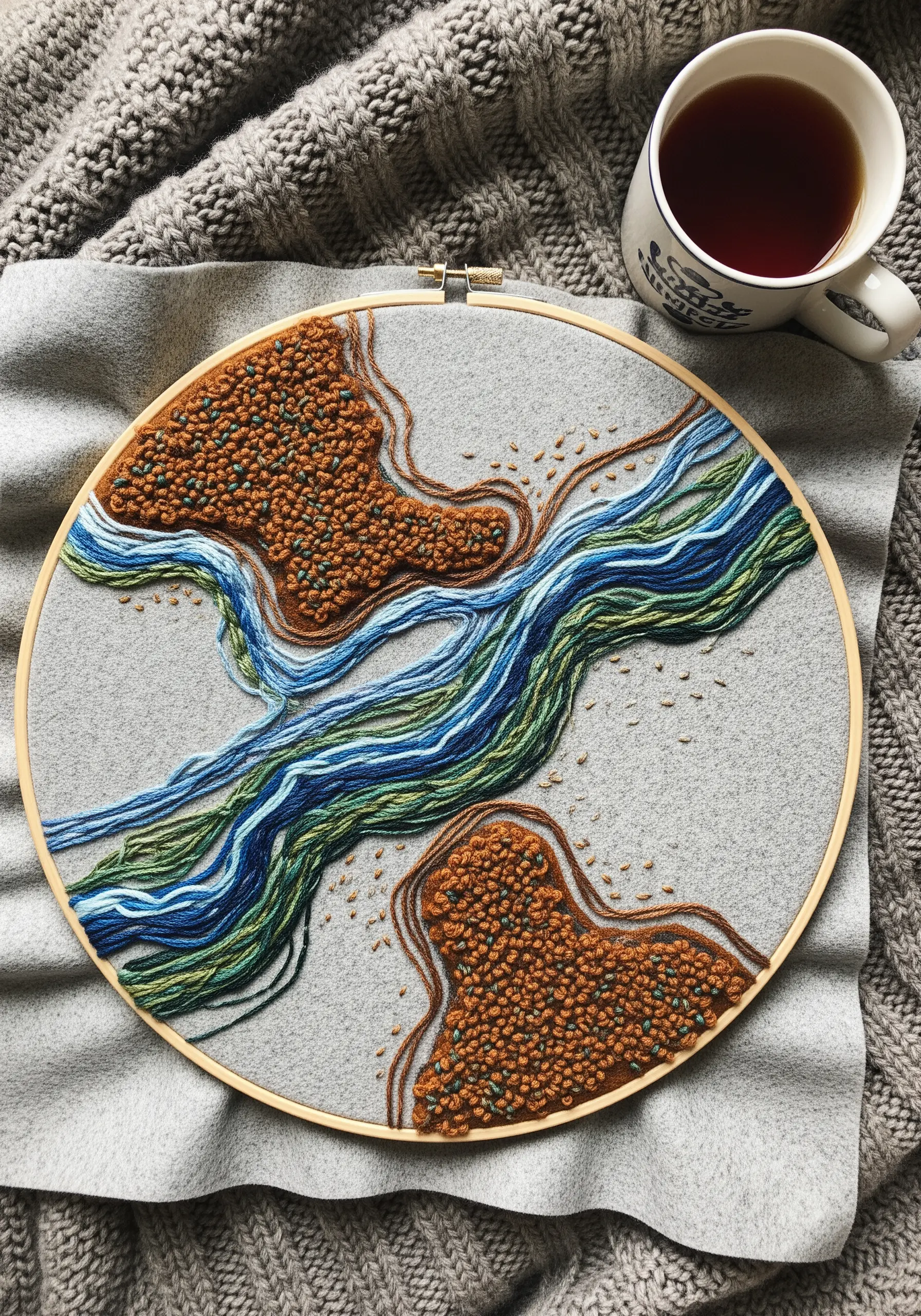
Evoke the feeling of a landscape viewed from above by mapping out organic shapes and filling them with distinct textures.
Use dense French knots or colonial knots to represent landmasses, varying the color slightly to create depth and nuance.
For rivers or waterways, fill sinuous paths with layered straight stitches or satin stitches in variegated blue and green threads to mimic the flow of water.
This approach allows you to create earth-tone embroidery projects that feel both abstract and deeply connected to nature.
11. Weave Threads on Sheer Fabric for an Ethereal Effect
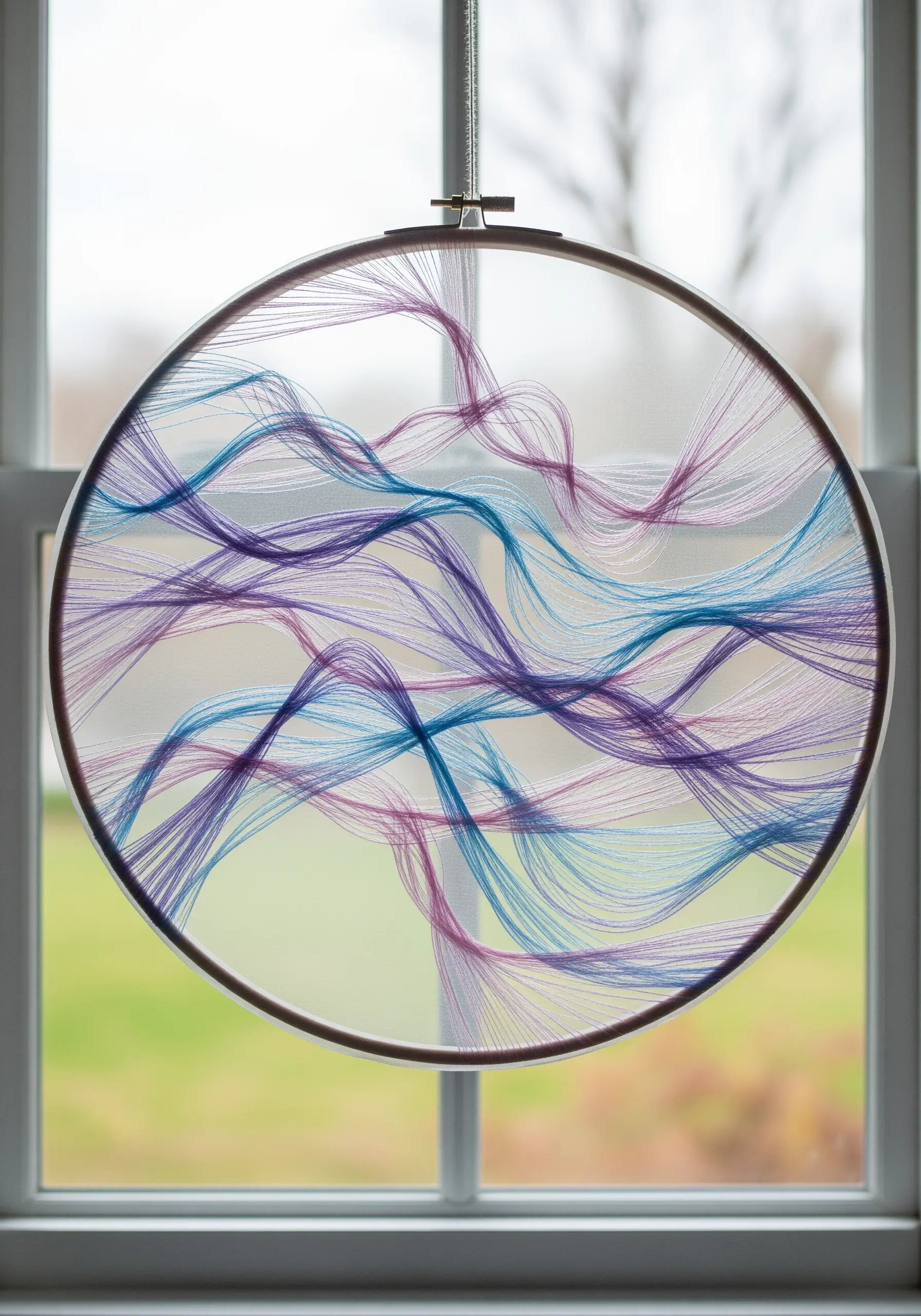
Create a design that floats in mid-air by using sheer organza or tulle as your canvas.
Instead of stitching through the fabric, wrap your threads from one edge of the hoop to the other, securing them tightly around the frame.
Layer different colors and let them intersect and overlap, creating a delicate, web-like structure that changes with the light behind it.
This technique is perfect for creating botanical hoop embroidery projects that look stunning when hung in a window, where they can interact with natural light.
12. Frame Geometric Fills with Metallic Outlines
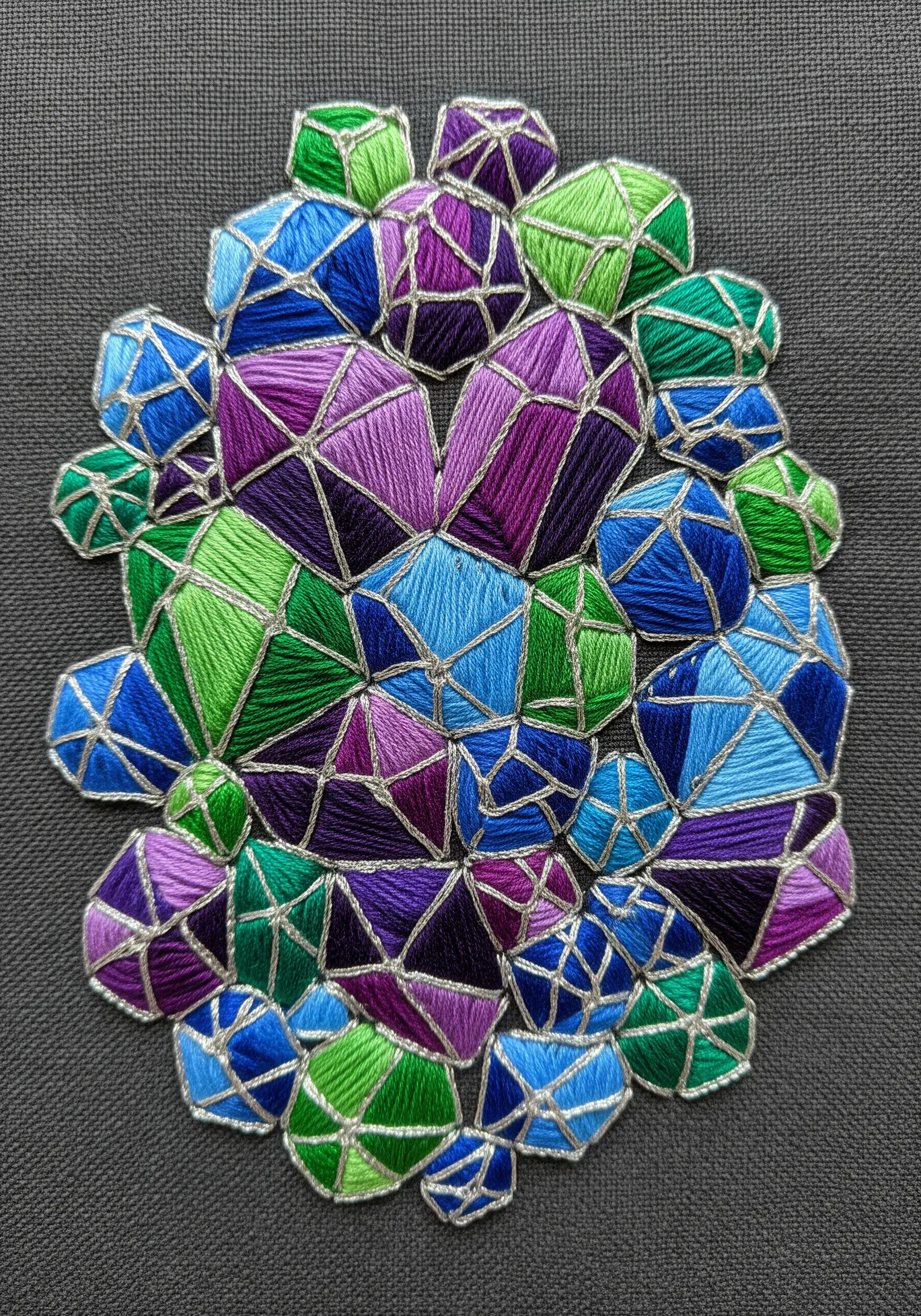
Give abstract geometric shapes a polished, jewel-like finish by combining matte fills with shimmering outlines.
Sketch a cluster of angular, crystalline shapes and fill each facet with directional satin stitch in a rich, cool-toned palette.
Then, outline each shape with a fine metallic thread using a clean backstitch or stem stitch. The metallic thread acts like leading in a stained-glass window, defining each color block and adding a touch of luxury.
This contrast makes the colors appear more vibrant and the entire piece more structured and intentional.
13. Turn a Clock into a Tactile Timepiece
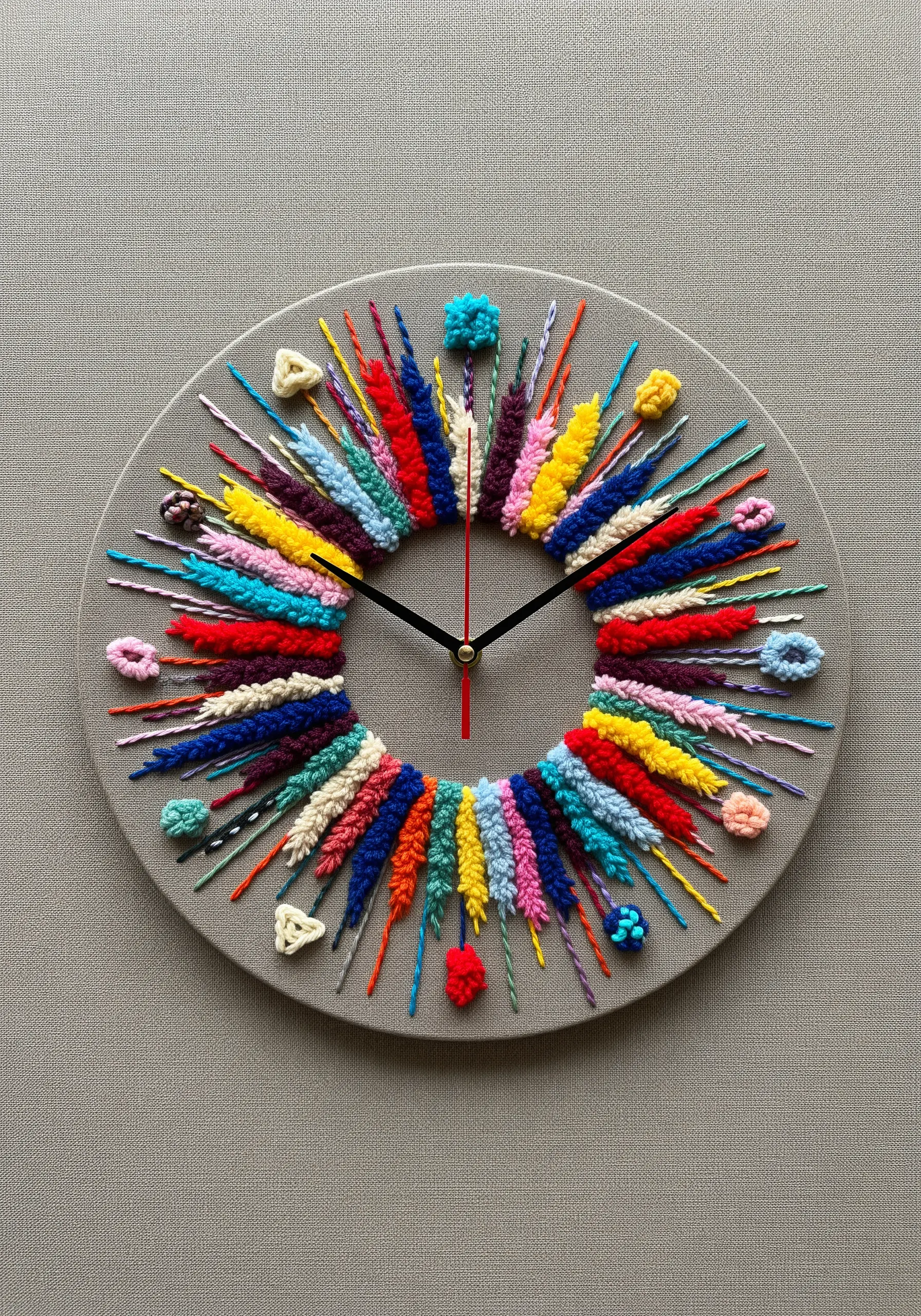
Combine function and fiber art by creating a unique, highly textural clock face.
Start with a simple canvas-covered clock base and replace the numbers with small, abstract stitch formations.
Use a variety of dimensional techniques: wrapped straight stitches, chunky French knots, woven picot stitches, and braided loops.
Assigning a different texture and color to each hour mark makes the clock a playful, interactive piece of art that celebrates the passage of time through texture.
14. Incorporate Found Objects from Nature
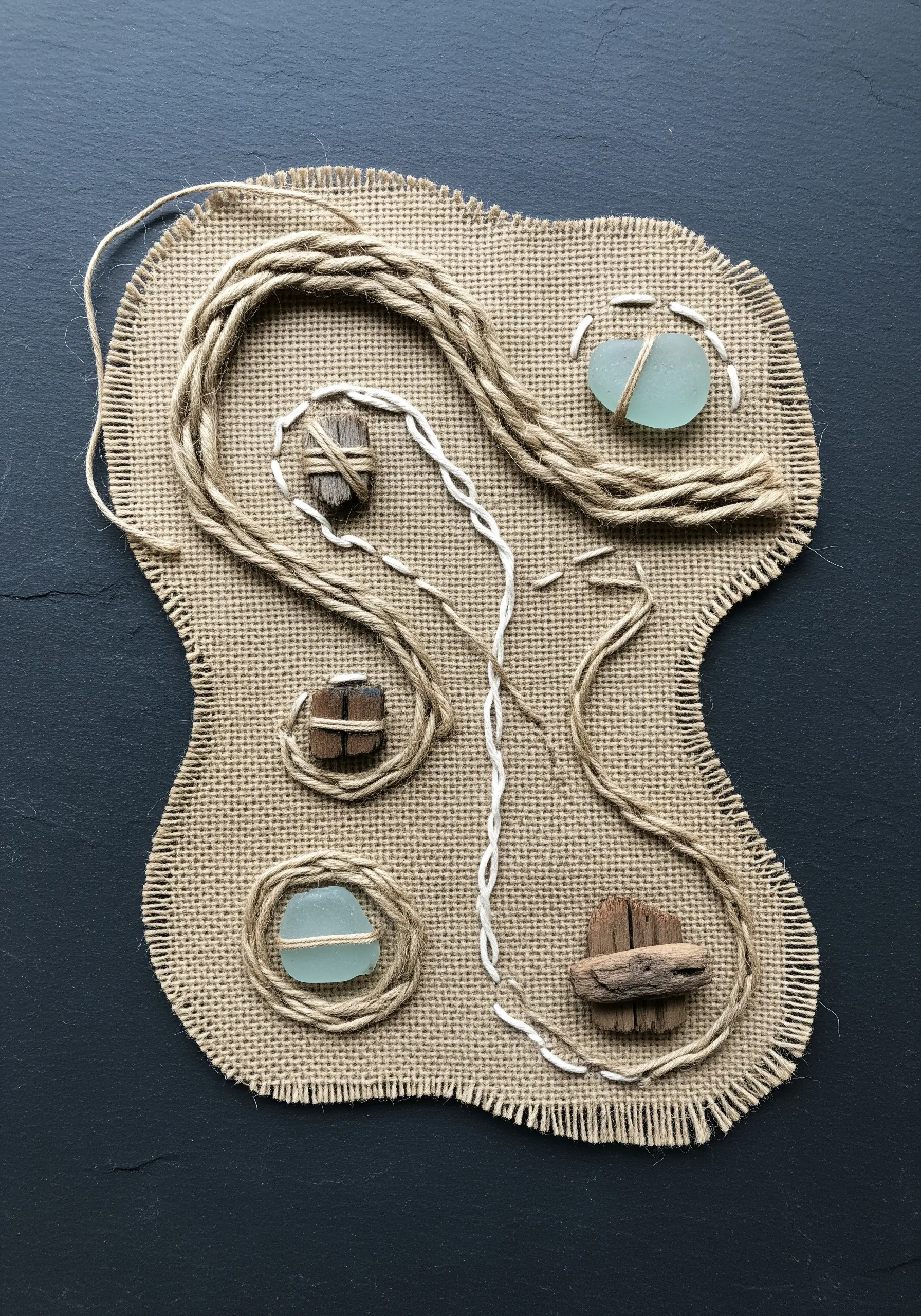
Create a composition that tells a story of place by incorporating natural, found objects into your work.
On a rustic base fabric like burlap or linen, arrange elements like sea glass, driftwood, or smooth stones.
Secure them by creating stitched ‘cages’ or frames with couched twine or thick thread. This method holds the objects in place while integrating them into the overall textile design.
This technique celebrates the raw beauty of natural textures and materials.
15. Sculpt Contours with Directional Stitching
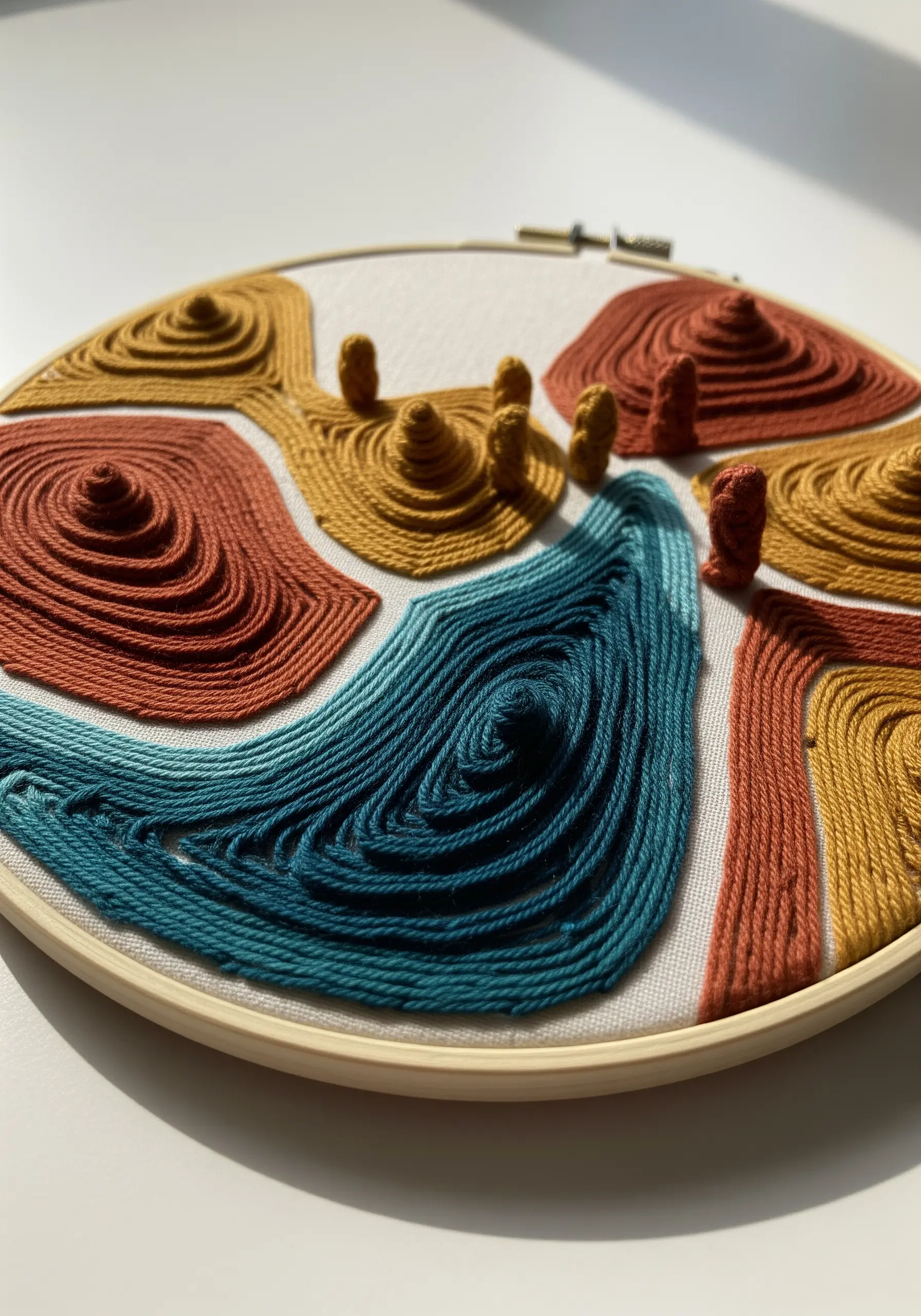
Create the illusion of rolling hills and valleys using nothing but thread and directional stitching.
Draw organic, topographical shapes on your fabric. Fill each shape with concentric rings of stem stitch or split stitch, working from the outside in.
As you approach the center, you can build up the thread height to create actual dimension, or simply let the tightly packed lines trick the eye.
This meditative technique results in a stunning, minimalist landscape that feels both graphic and tactile.
16. Design a Set of Abstract Stitch Studies

Explore different freeform ideas on a small scale by creating a set of embroidered coasters or mini art tiles.
On each small canvas, try a different abstract concept: a cluster of French knots, a splash of satin stitch, a grid of running stitches, or a minimalist arrangement of seed stitches.
By using a consistent color palette across the set, you can create a cohesive collection of individual artworks that also function beautifully together as embroidery projects that combine beauty with function.
17. Unify Patchwork with Expressive Running Stitches

Combine fabric collage and hand stitching for a piece rich in history and texture.
Create a base of patchwork squares from denim, linen, or cotton scraps in a similar color family.
Then, use a contrasting, thick thread like perle cotton to stitch over the patches, ignoring the seams.
Create patterns with simple running stitches—grids, dashes, and organic shapes—that connect the different fabric pieces and create a new, unified visual layer.
This technique is inspired by Japanese boro and sashiko, celebrating repair and texture.
18. Create Metallic Sheen on a Plush Surface
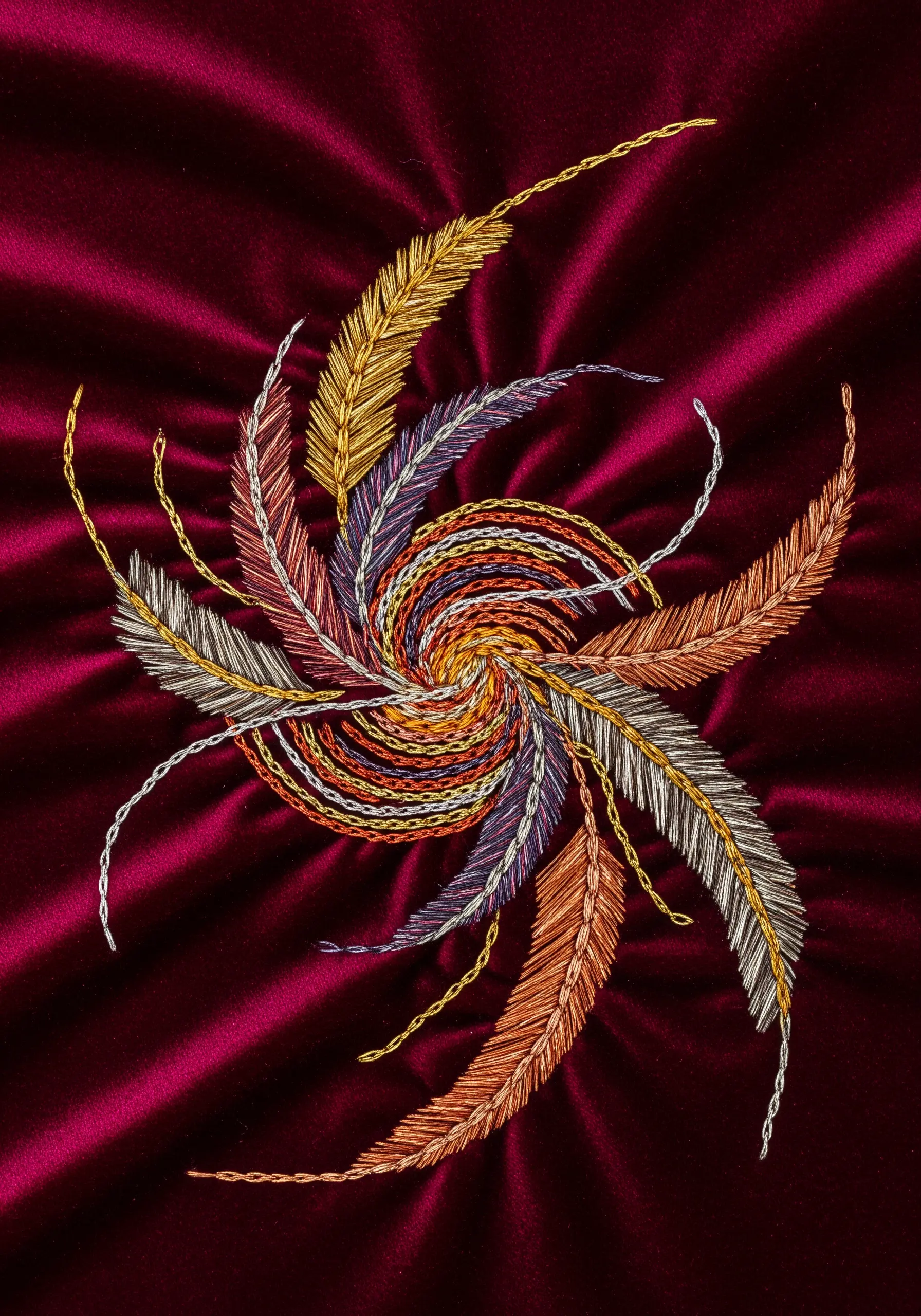
Stitch on a luxurious, high-pile fabric like velvet or velour to create a stunning interplay of light and texture.
The plush background absorbs light, making metallic and silk threads appear exceptionally vibrant and luminous.
Use directional fishbone stitch or long-and-short stitch to create feather-like shapes that radiate from a central point.
Vary the colors of your metallic threads—gold, copper, silver—to create a dynamic, swirling composition that feels opulent and alive.
19. Mimic Weaving with Stitched and Wrapped Elements
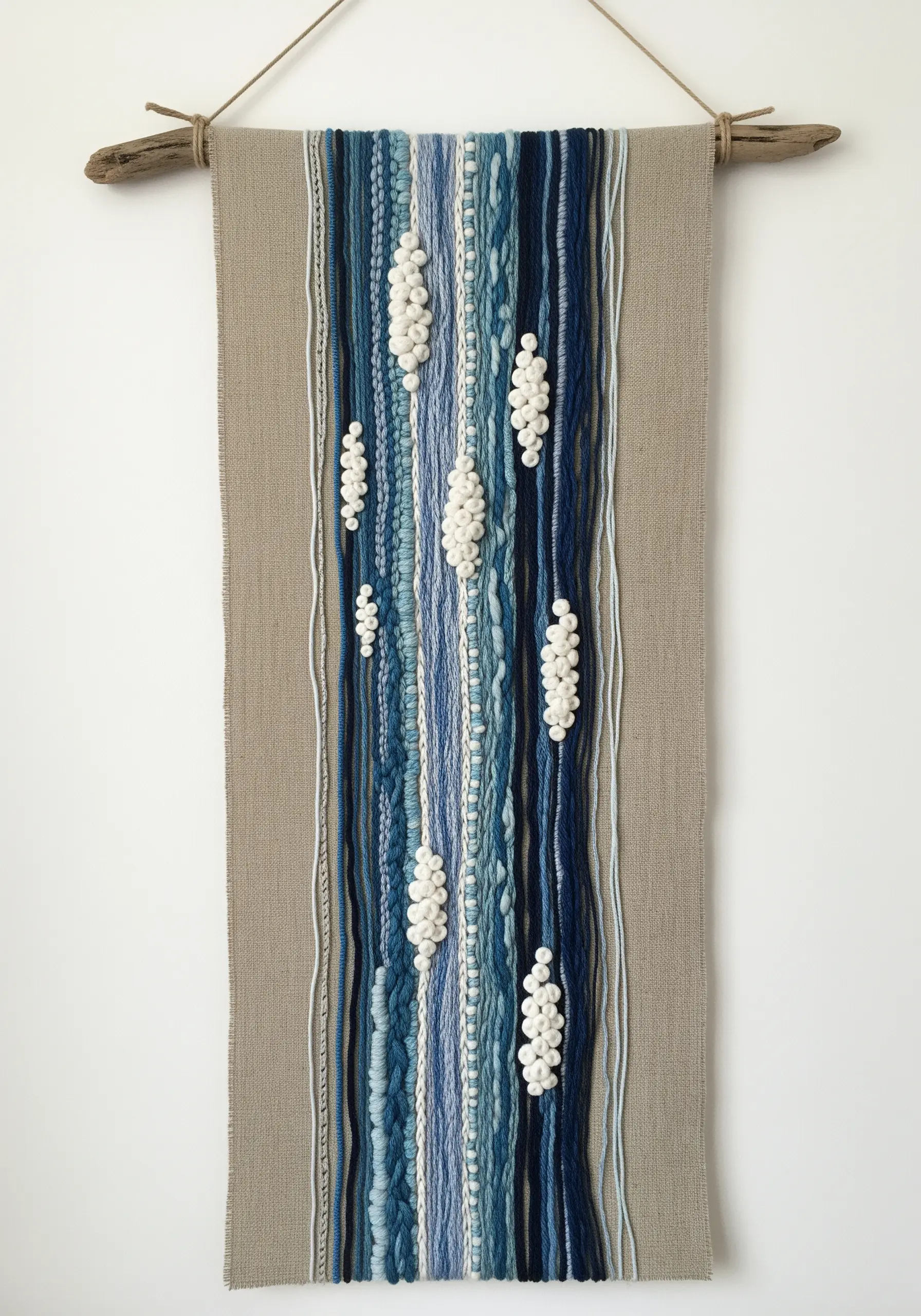
Achieve the look of a woven wall hanging directly on your fabric without a loom.
Fill a vertical space with long, straight stitches of varying yarn weights and colors to create the ‘warp’.
Then, ‘weave’ other elements over and under these threads, such as couched braids or thick, wrapped cords.
Incorporate clusters of textural pom-poms or knots to add even more dimension, resulting in a rich embroidery mixed-media wall hanging with a distinctly bohemian feel.
20. Scatter a Joyful Confetti of Stitches
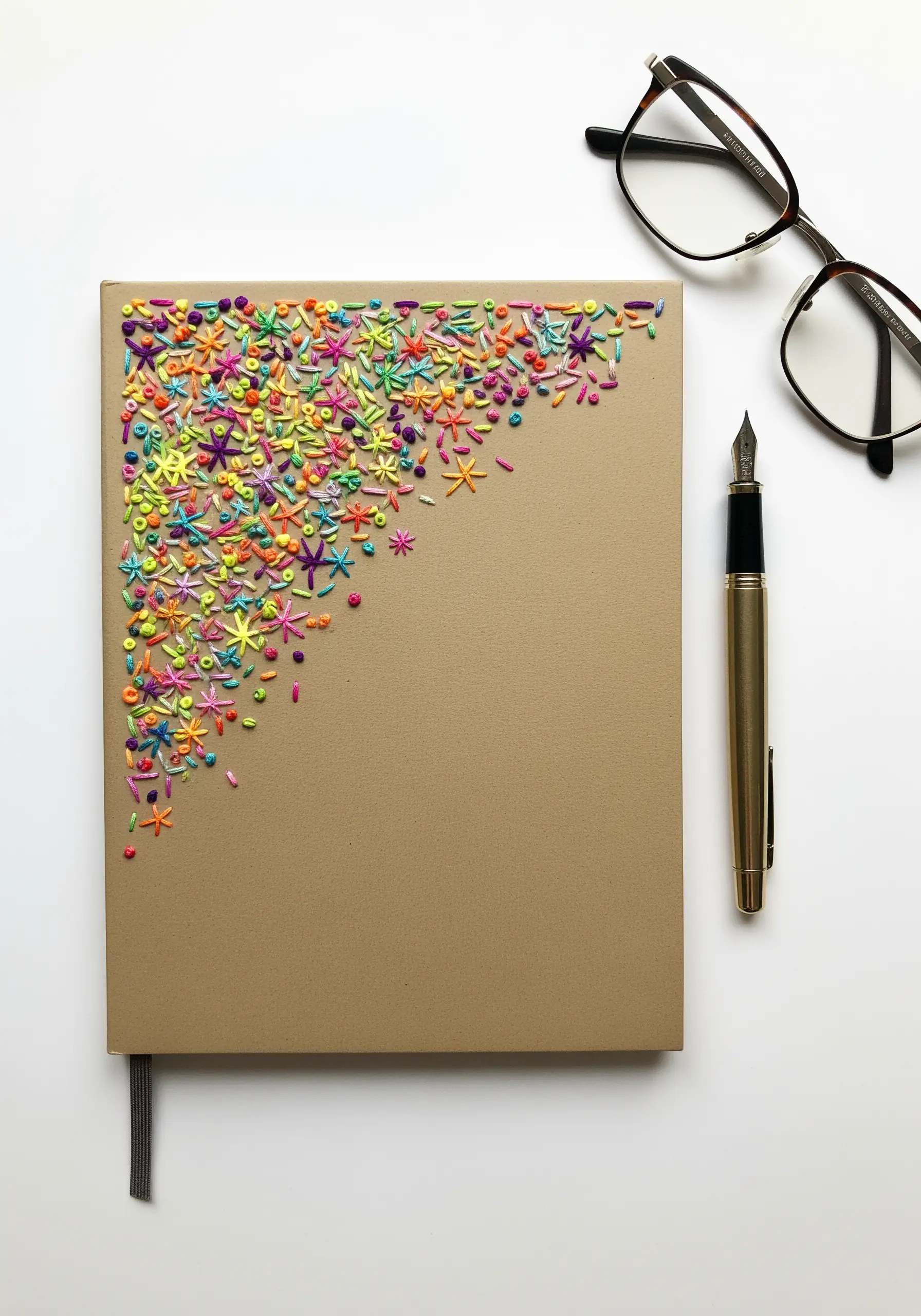
Embellish a journal cover or piece of fabric with a dense, celebratory explosion of tiny stitches.
Concentrate a variety of small, colorful stitches—like seed stitch, French knots, single lazy daisies, and straight stitches—in one corner.
Gradually decrease the density as you move away from the corner, creating a fading ‘sprinkle’ effect.
This technique is a perfect way to use up small scraps of colorful thread and turns any plain surface into a joyful, tactile celebration.
21. Draw with Thread Over a Sheer Fabric Collage
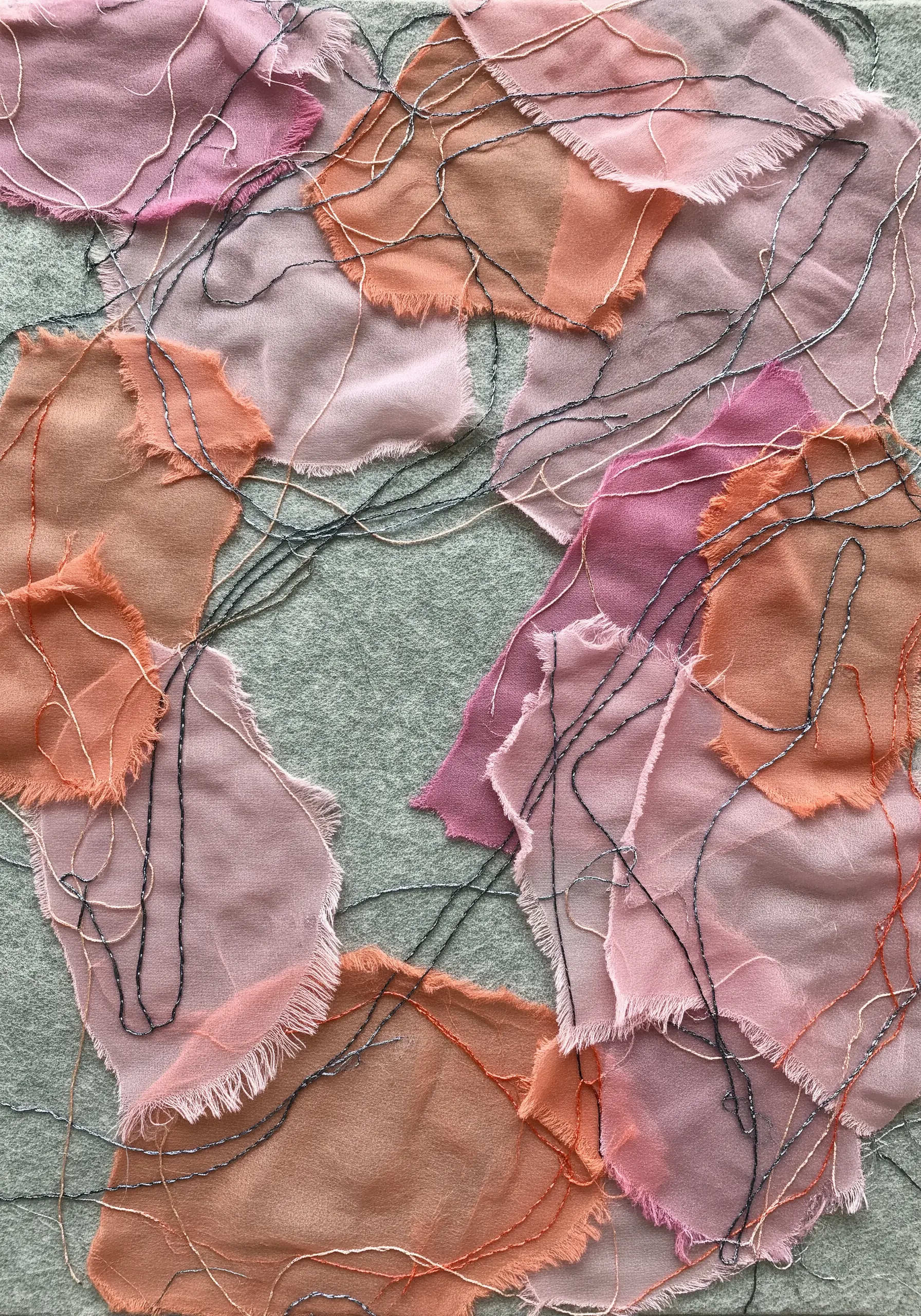
Create a dreamy, layered background by first creating a fabric collage from scraps of sheer, delicate materials like chiffon or organza.
Arrange the frayed-edge pieces on a felt or linen base and tack them down lightly.
Then, use your sewing machine’s free-motion stitching capability (or a simple backstitch by hand) to ‘draw’ continuous, wandering lines over the top.
The thread secures the delicate fabric while adding a graphic element that contrasts beautifully with the soft, ethereal layers beneath.
22. Fill a Contained Shape with Geometric Patchwork
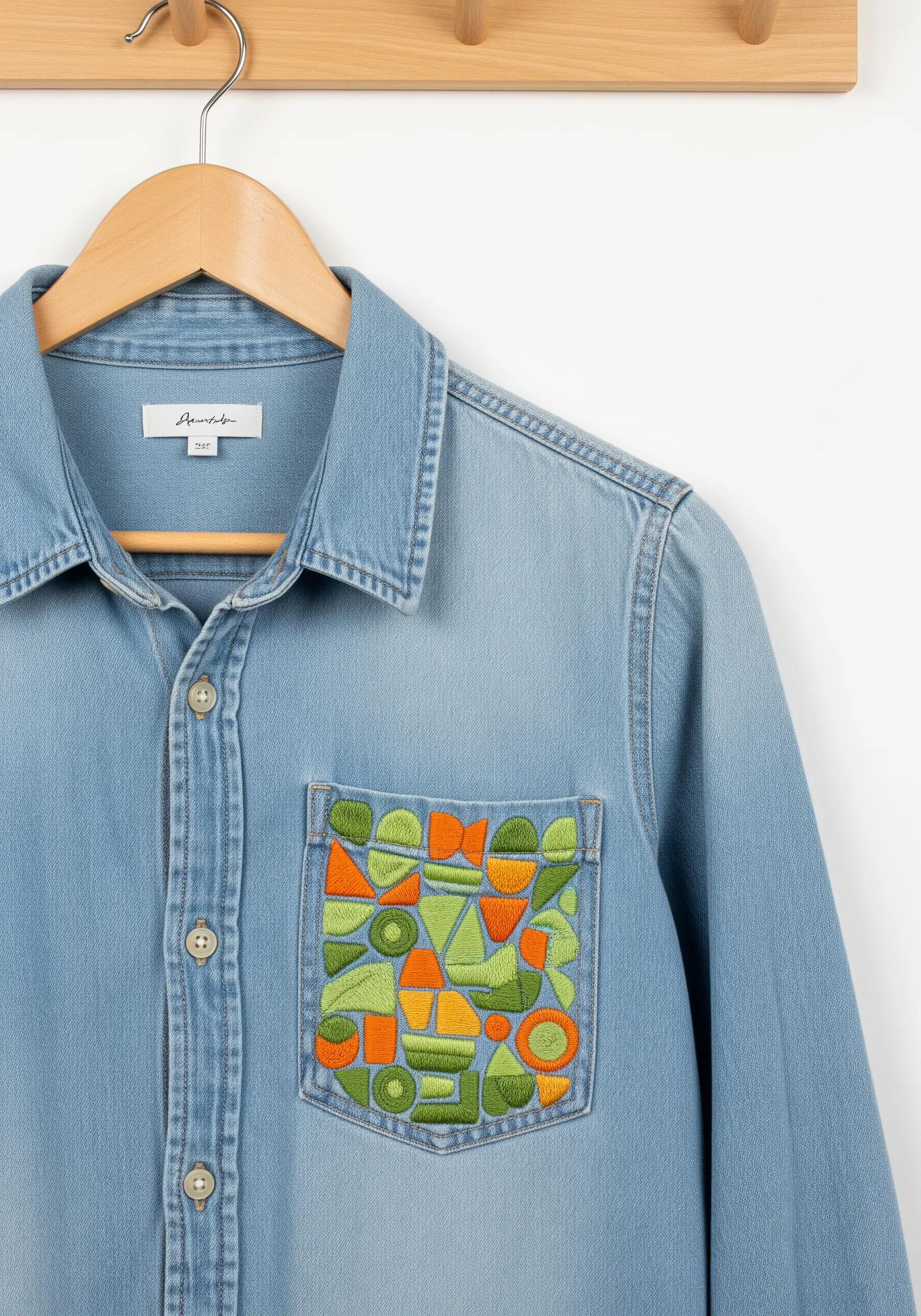
Use an existing boundary, like a shirt pocket, as a canvas for a contained abstract design.
Divide the space into a mosaic of small, interlocking geometric shapes.
Fill each shape with dense satin stitch, alternating the direction of your stitches in neighboring sections to create a subtle textural shift.
Using a planned, analogous color palette (like greens, oranges, and yellows) gives the abstract ‘patchwork’ a cohesive and modern feel, turning a simple garment into a piece of custom art.
23. Create Drama with a Single, Bold Interruption
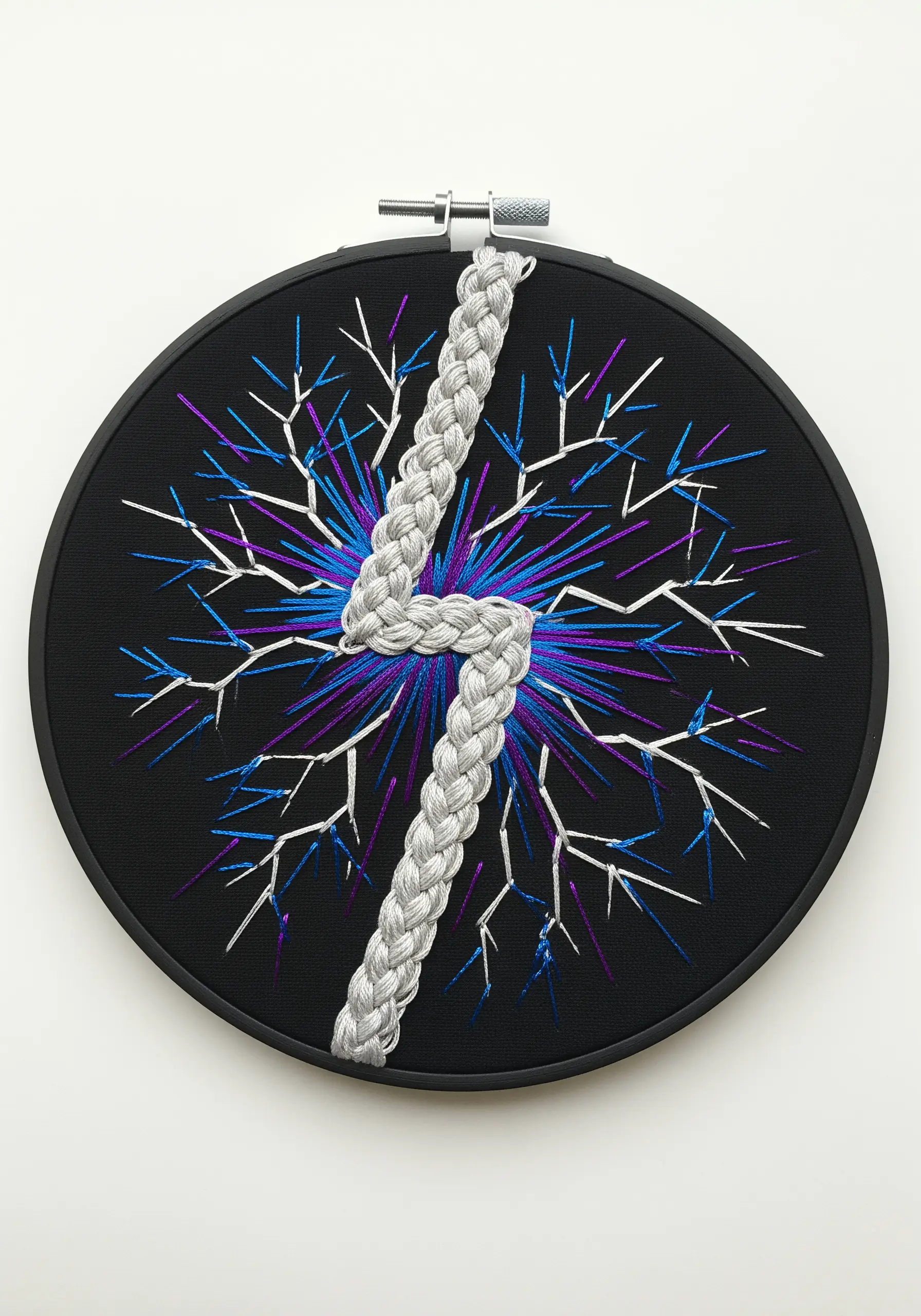
Build a composition around a single, powerful interruption to create visual tension and focus.
On a dark background, stitch a radiating starburst of fine, high-contrast lines in electric blues and purples.
Then, lay a thick, chunky braid made from a neutral color like gray directly across the center, partially obscuring the delicate lines beneath.
This juxtaposition of texture (thick vs. thin) and energy (calm vs. explosive) creates a compelling piece that is both balanced and dynamic.
24. Isolate a Single, Textured Stitch for Repetition
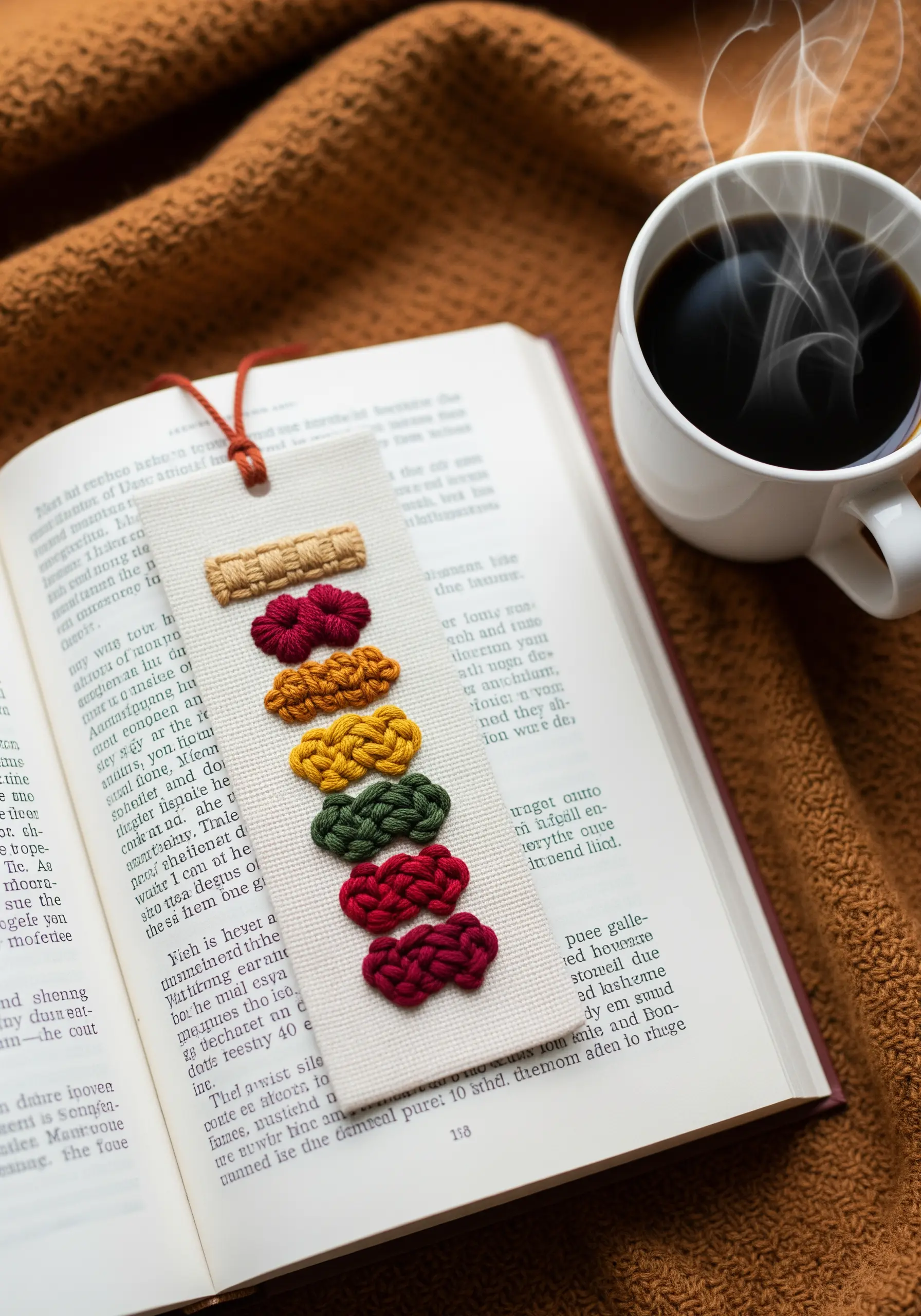
Explore the beauty of a single stitch by making it the hero of your design.
Choose a highly textural, knot-based stitch like the Chinese knot, bullion knot, or a woven picot stitch.
Create a series of these knots in a simple row, using a different rich, autumnal color for each one.
This technique, perfect for a bookmark or a garment detail, transforms a humble stitch into a series of small, elegant jewels, proving that complexity isn’t required for beauty.
25. Deconstruct a Grid for Organized Chaos
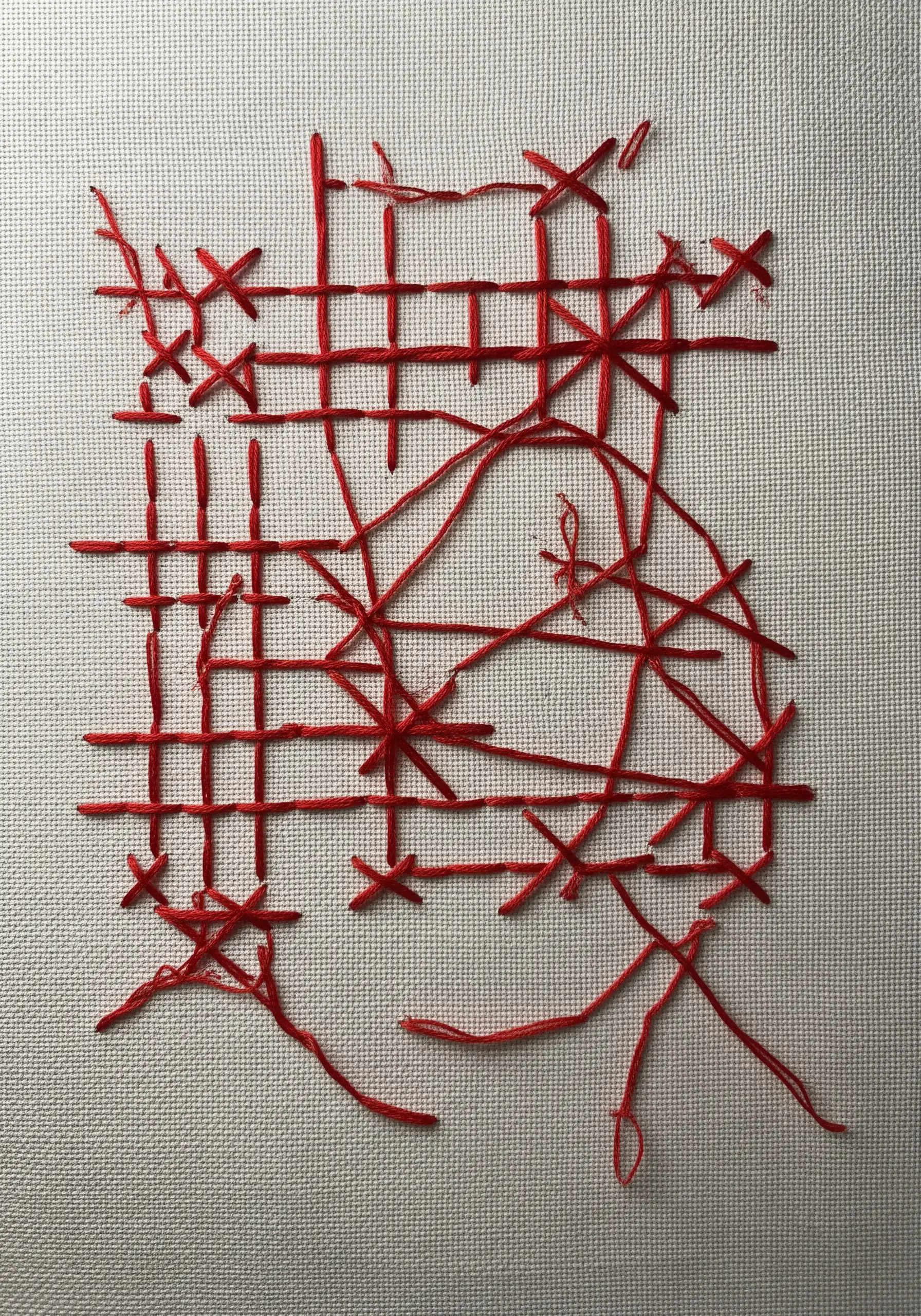
Play with the concepts of order and disorder in this simple yet effective exercise.
Begin by stitching a basic grid with straight stitches in a single, bold color like red.
Once the orderly grid is established, intentionally disrupt it. Add wandering, curved lines that intersect the grid, leave some sections incomplete, or add chaotic cross-stitches that break the pattern.
This process creates a visually fascinating piece that feels both structured and wildly spontaneous.
26. Translate Natural Textures into Stitch Formations
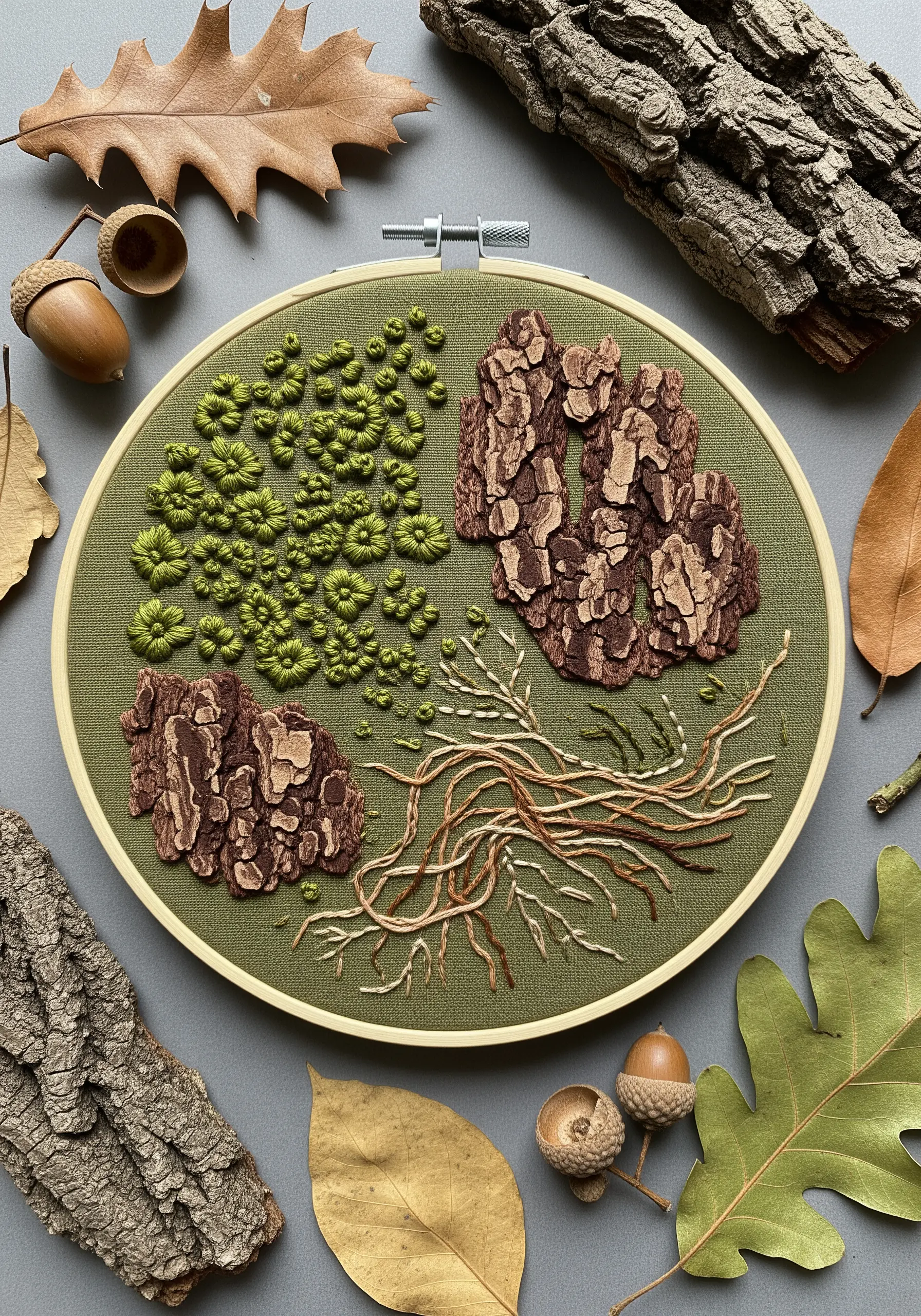
Go on a nature walk and collect textural inspiration—tree bark, moss, delicate roots, and fallen leaves.
Challenge yourself to replicate these textures in thread. Use raised satin stitch or appliqué with real bark for a rough, woody feel.
Create dense clusters of French knots or colonial knots for mossy patches. Use fine, wandering straight stitches or thread painting for the delicate structure of roots.
This exercise sharpens your observation skills and expands your stitch vocabulary, connecting your craft directly to the natural world.
27. Define Organic Shapes with a Clean Outline
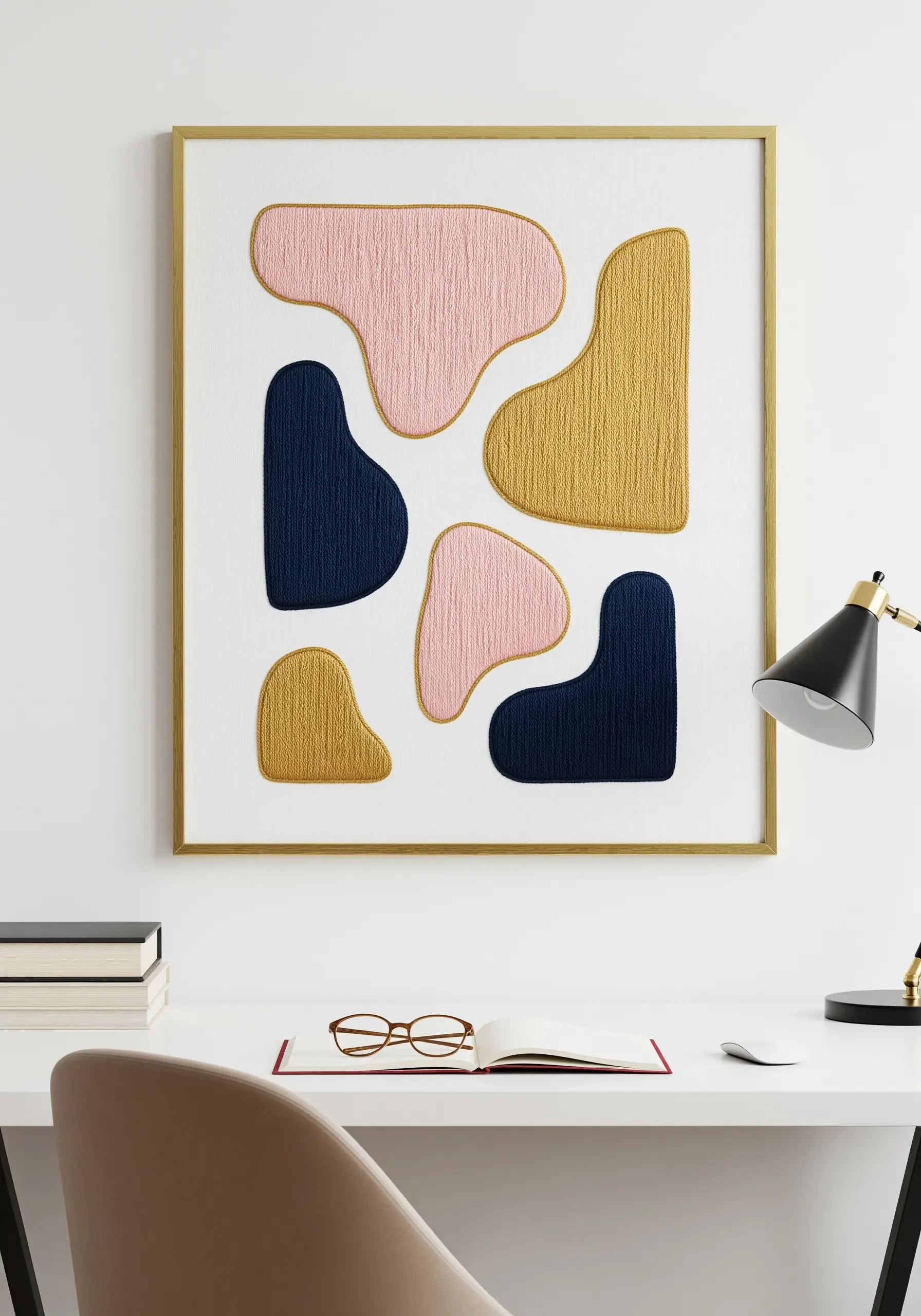
For a modern, graphic look, first fill large, organic shapes with a dense texture like seed stitch or short satin stitches.
Keep the fill slightly irregular to maintain a soft, handmade feel. Choose a sophisticated color palette like pink, navy, and ochre for a contemporary aesthetic.
Once the shapes are filled, give them a crisp, professional finish by outlining each one with a single, clean line of backstitch or stem stitch in a contrasting color, like gold.
This technique elevates simple blobs into intentional, polished modern thread art projects.
28. Weave Color Gradients Without a Loom
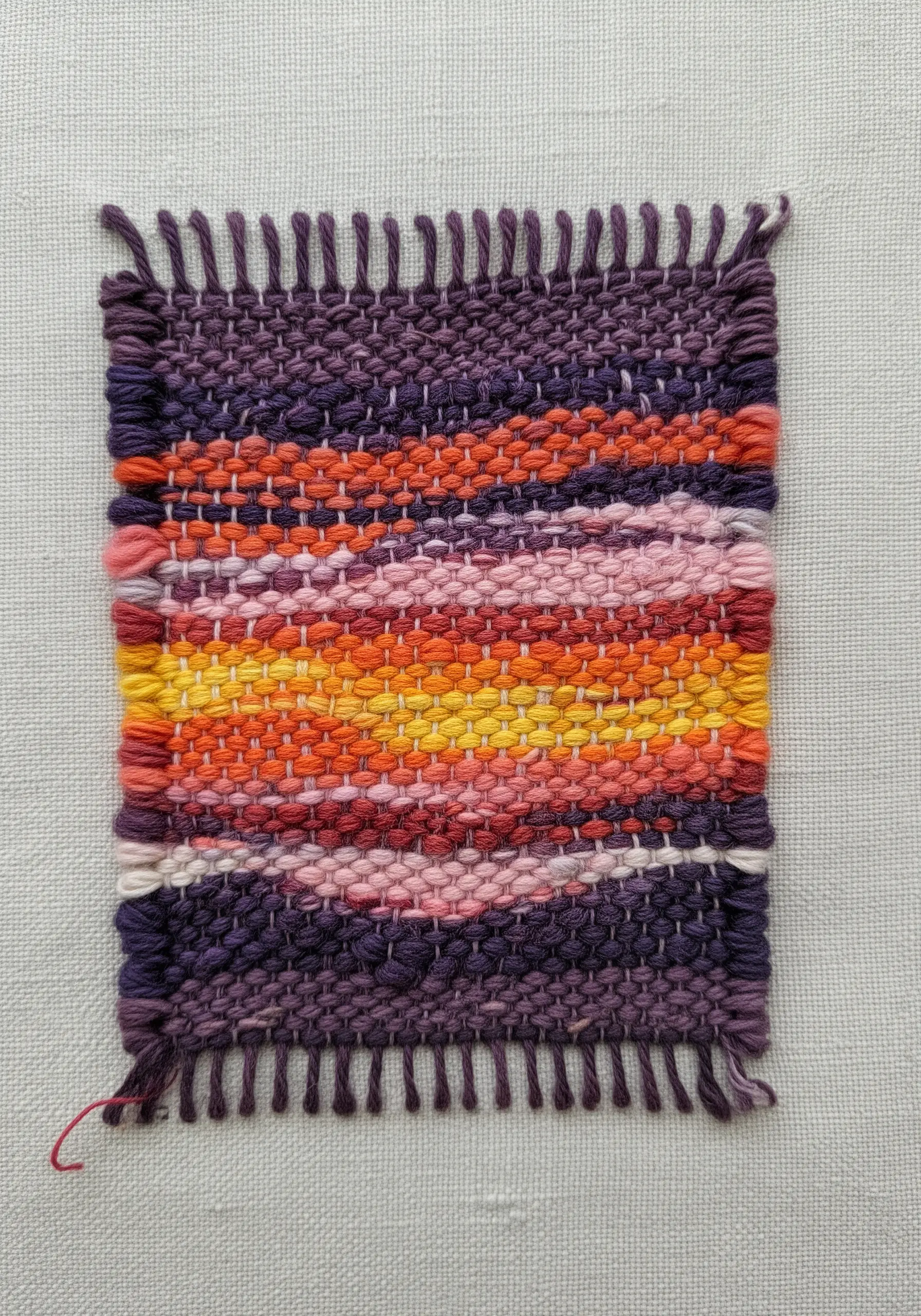
Create a small, woven tapestry effect directly in your hoop or on a piece of fabric.
Start by creating a ‘warp’ with a series of parallel vertical stitches. Then, using a blunt tapestry needle, weave your ‘weft’ threads over and under the warp threads.
Don’t pull the weft too tight, allowing it to curve gently to create a soft, pillowy texture.
This is a wonderful way to blend colors and create beautiful gradients, perfect for using up leftover yarn and creating textured neutral embroidery samplers.
29. Curate a Personal Encyclopedia of Stitches
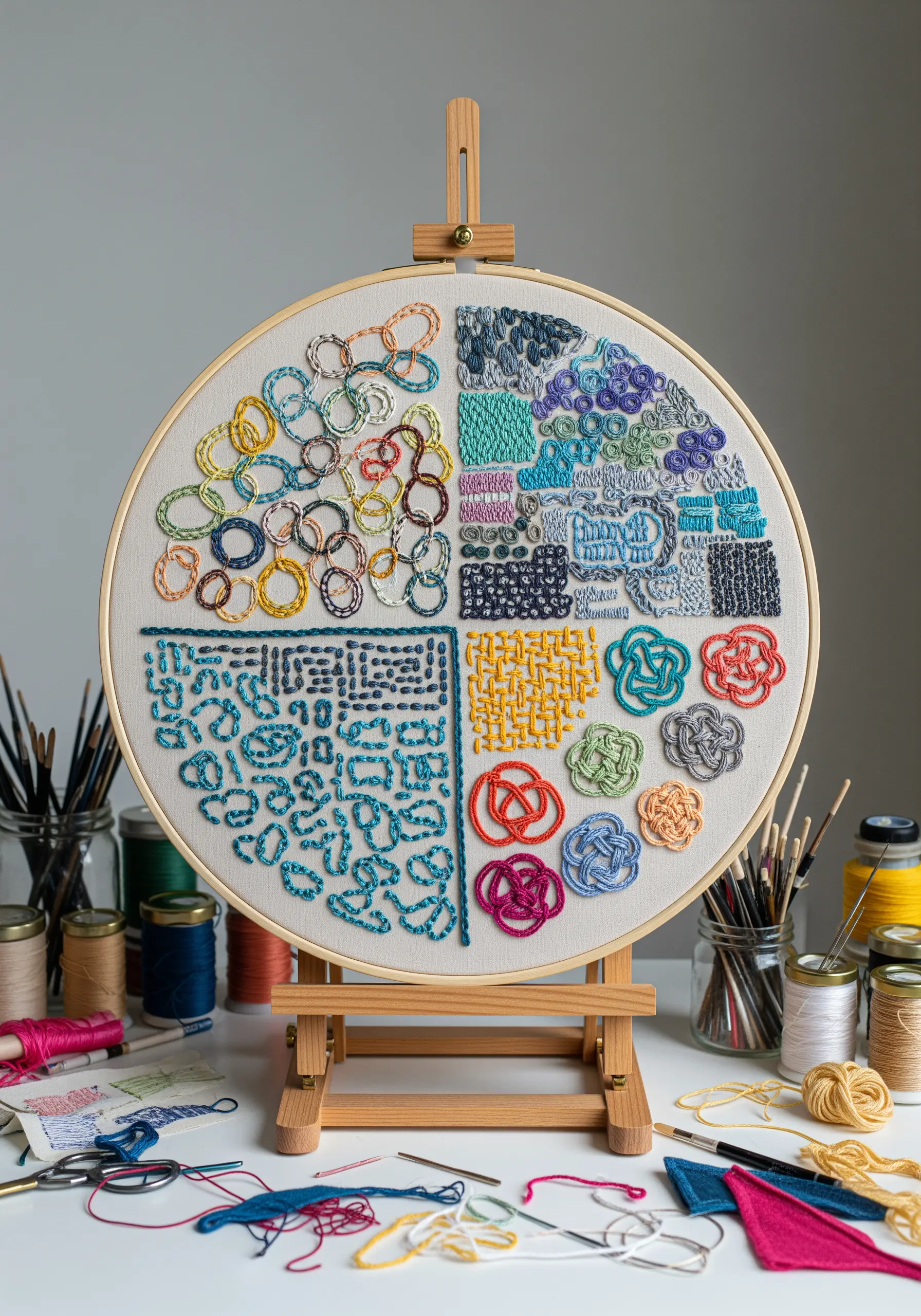
Dedicate a single large hoop to creating a personal stitch library—a sampler that is both a beautiful piece of art and a practical reference.
Divide your hoop into quadrants and fill each section with experiments in different stitches, color combinations, and textures.
Try repeating a single motif in different thread weights, or fill a block with a dense pattern of a newly learned stitch.
This ongoing project becomes a record of your creative journey and a source of inspiration for future work.
30. Create a Delicate Trail of Sequins and Beads
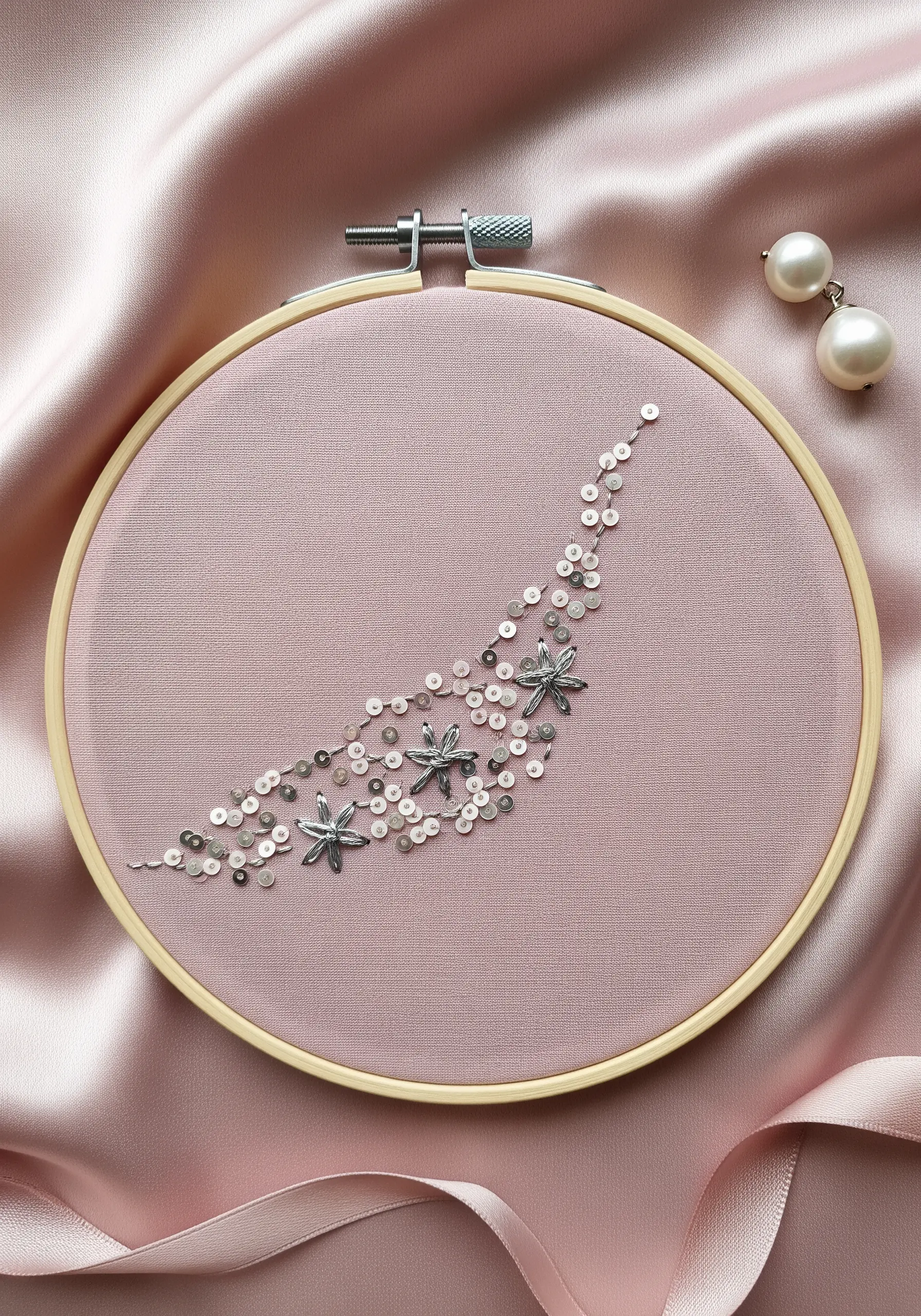
For an ethereal and minimalist design, let your embellishments do the talking.
On a fine, elegant fabric like satin or silk, stitch a gently curving path using a mix of sequins and tiny seed beads.
Use a single strand of matching thread to keep the work delicate and almost invisible. Overlap the sequins slightly to create a shimmering, scale-like texture.
Anchor the design with a few larger, feature beads or metallic star-shaped sequins to create focal points along the trail.