

Before you pick up your needle, I want you to think about lavender not just as a flower, but as an exercise in texture and tranquility. Its form is beautifully simple—a stem, a cluster of buds—which makes it the perfect subject for moving beyond basic stitches and into more expressive, intentional embroidery.
Your thread is more than color; it’s a tool for creating depth, shadow, and light. We’ll explore how using one versus three strands can push a stem into the background, how tightly packed French knots can mimic the dense texture of a blossom, and how blending shades of purple can make a single sprig feel alive.
These ideas are designed to be more than just patterns. They are invitations to slow down, to observe the subtle details, and to create something that not only looks beautiful but also brings a tangible sense of calm to your hands and your home. Let’s begin.
1. Create a Lavender Meadow Pillow
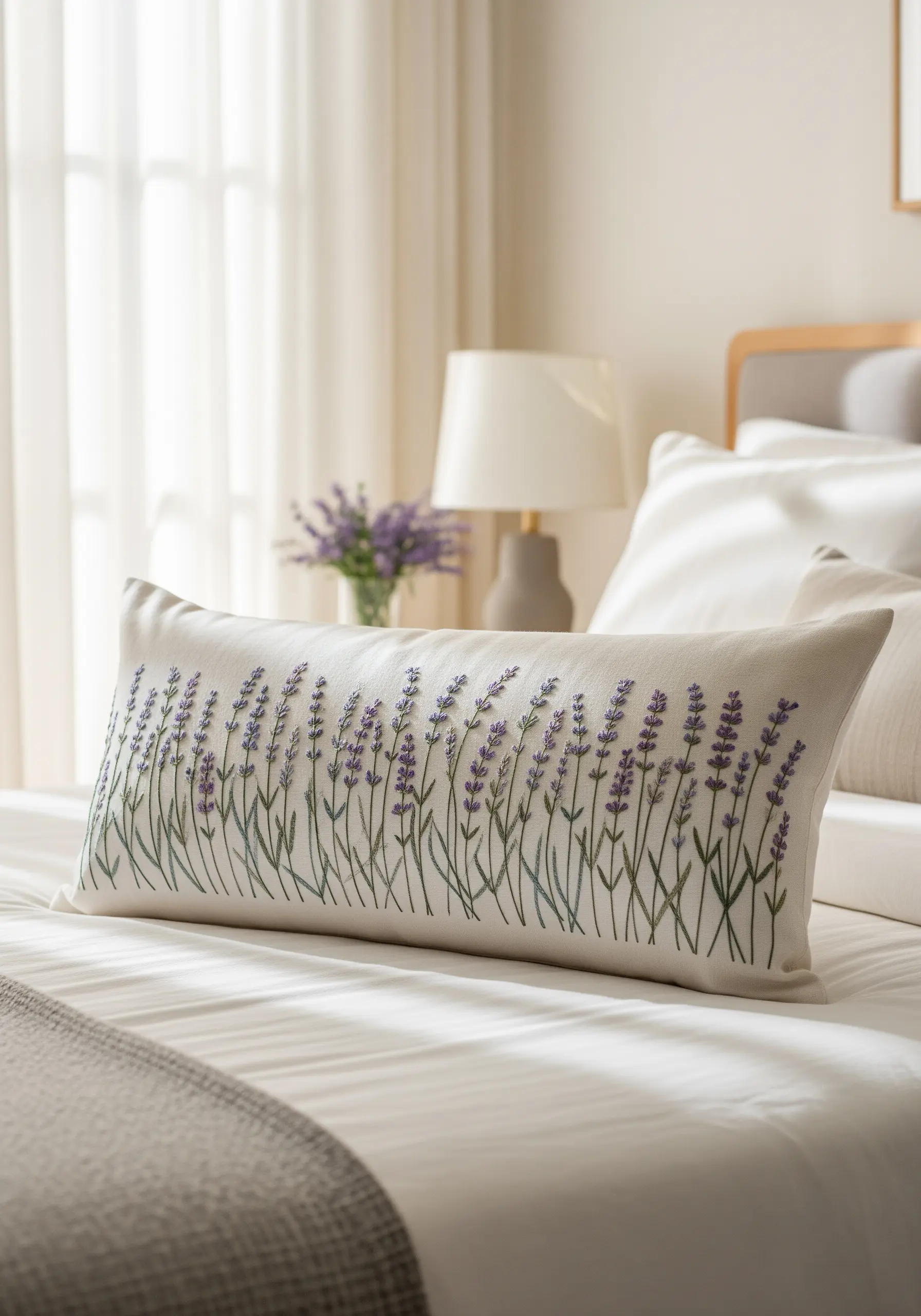
Transform a simple lumbar pillow into a serene lavender field by varying the height and density of your stems.
Use a single strand of green floss for distant stems and two strands for those in the foreground to create an illusion of depth.
For the lavender buds, alternate between small, tight French knots and single straight stitches in at least three shades of purple.
This variation mimics how light hits a real meadow, giving your embroidery a soft, painterly quality that feels calming and organic.
2. Unify a Set with a Signature Motif
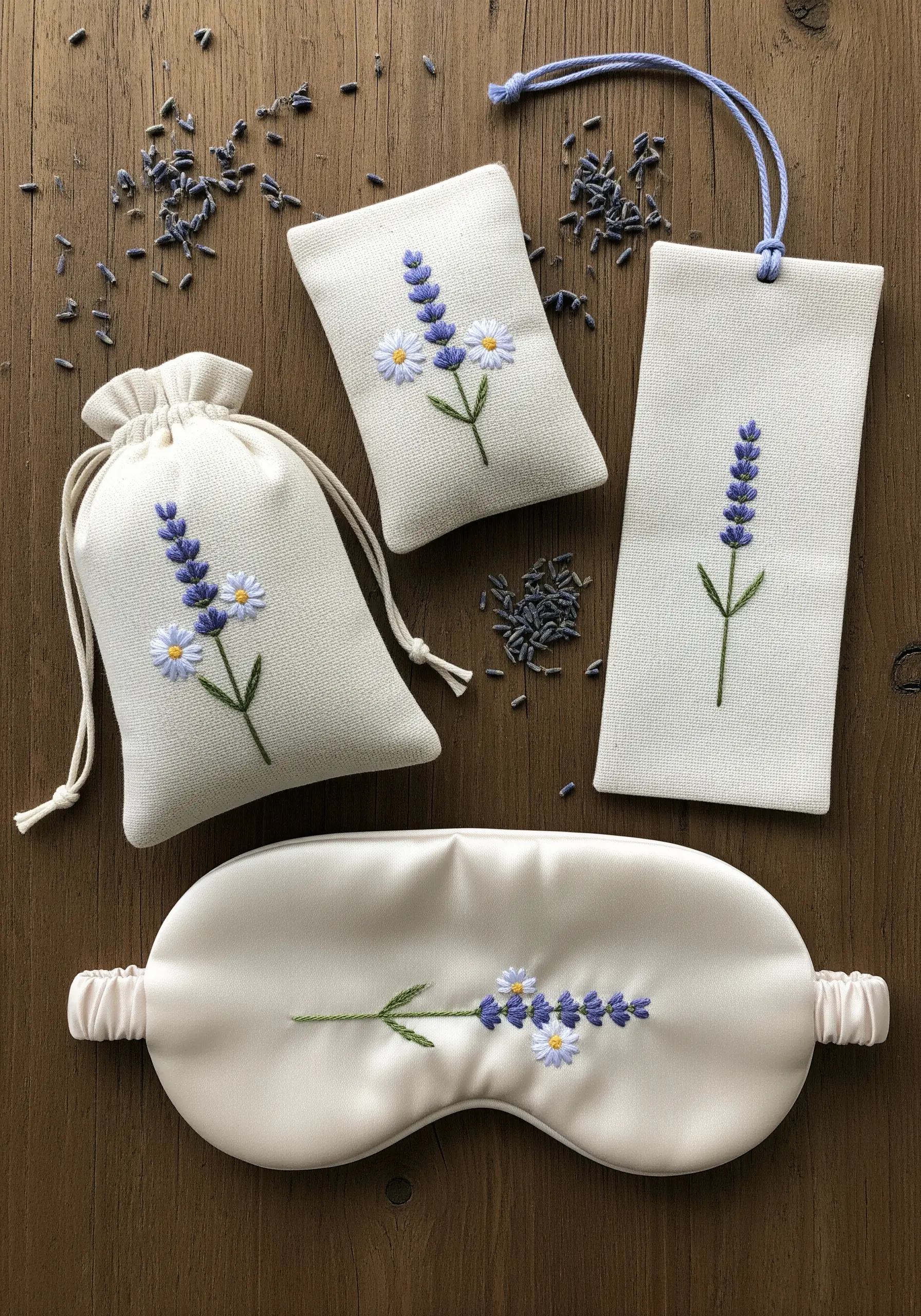
Elevate simple relaxation gifts by applying a consistent lavender and daisy motif across different objects, like a sleep mask, bookmark, and sachet.
The key to a cohesive look is adjusting the scale, not the design itself. Use fewer floss strands for smaller items to maintain detail and clarity.
Combine satin stitch for the daisy petals with French knots for the lavender, creating a pleasing contrast in texture that feels professional and intentional.
This technique turns simple handmade items into a beautifully curated gift set.
3. Paint a Landscape with Thread
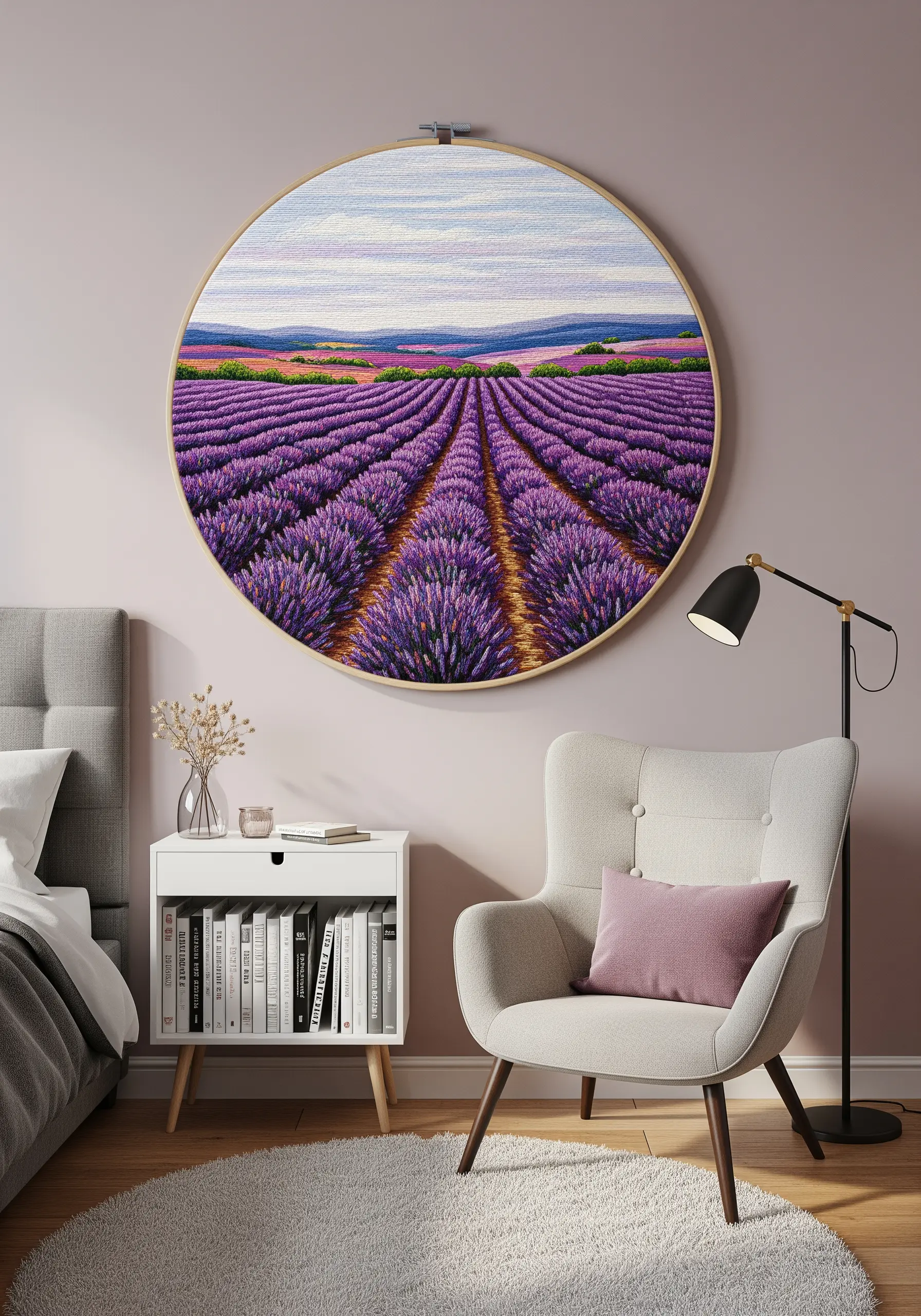
Move beyond simple motifs and tackle a full lavender landscape using thread painting techniques.
Use directional long-and-short stitches to create the illusion of rows receding into the distance. Keep your stitches for the foreground lavender longer and more textured, while background rows should be smaller and smoother.
Select a palette of at least five purples, three greens, and several blues and whites for the sky to achieve a realistic gradient.
This ambitious project becomes a stunning piece of statement wall art, proving embroidery can be as expressive as painting.
4. Design a Modern Botanical Wreath
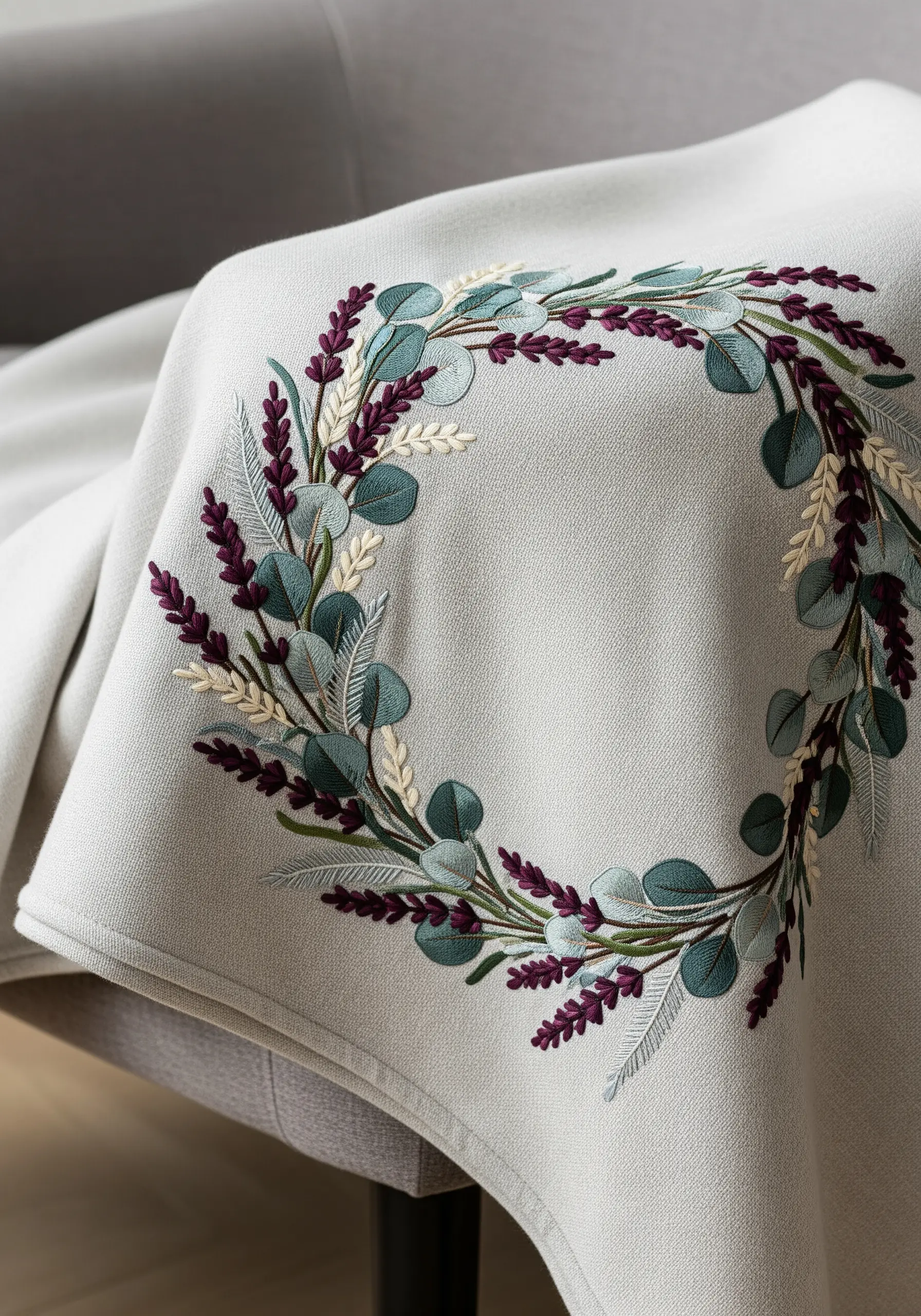
Combine lavender with other botanicals like eucalyptus and wheat to create a sophisticated, modern wreath.
The aesthetic success lies in the balance of textures and colors. Use a smooth, flat satin stitch for the rounded eucalyptus leaves and dense French knots or bullion stitches for the lavender sprigs.
Incorporate a contrasting color, like the deep plum or burgundy, to add visual depth and prevent the design from feeling flat.
This approach works beautifully on throw blankets or cushion covers, adding an elegant touch to your home decor.
5. Add Tactile Detail to a Felt Journal
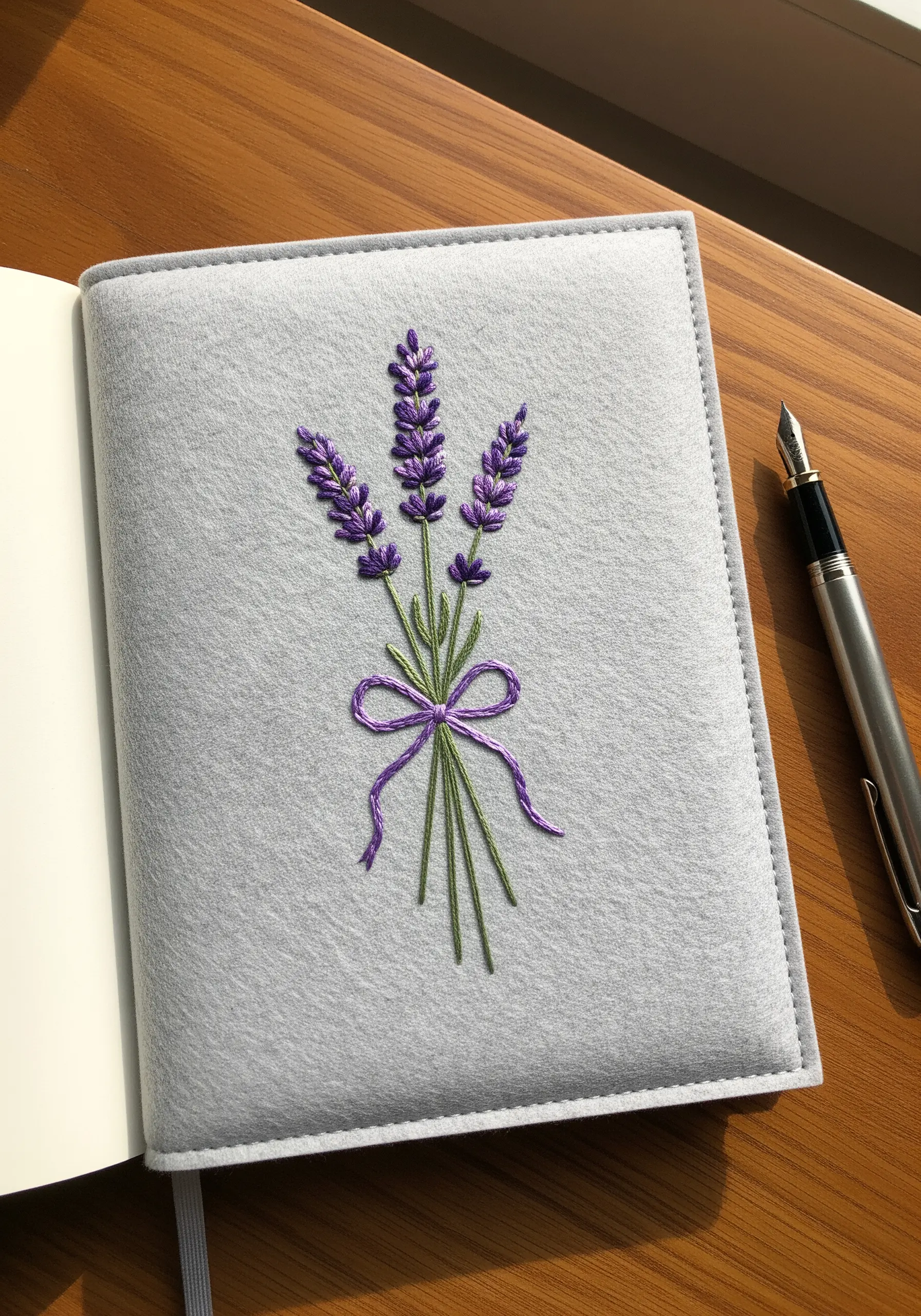
Embroidering on felt offers a wonderfully tactile surface that makes your stitches pop.
Use a sharp needle to pierce the dense fibers cleanly, and consider a lightweight stabilizer on the back to prevent puckering, especially with straight stitches for the stems.
For the bow, use a whipped backstitch or chain stitch to create a raised, cord-like texture that stands out against the flat felt surface.
This simple bouquet transforms a plain journal into a personal and thoughtful gift.
6. Tell a Story with a Hoop Art Triptych
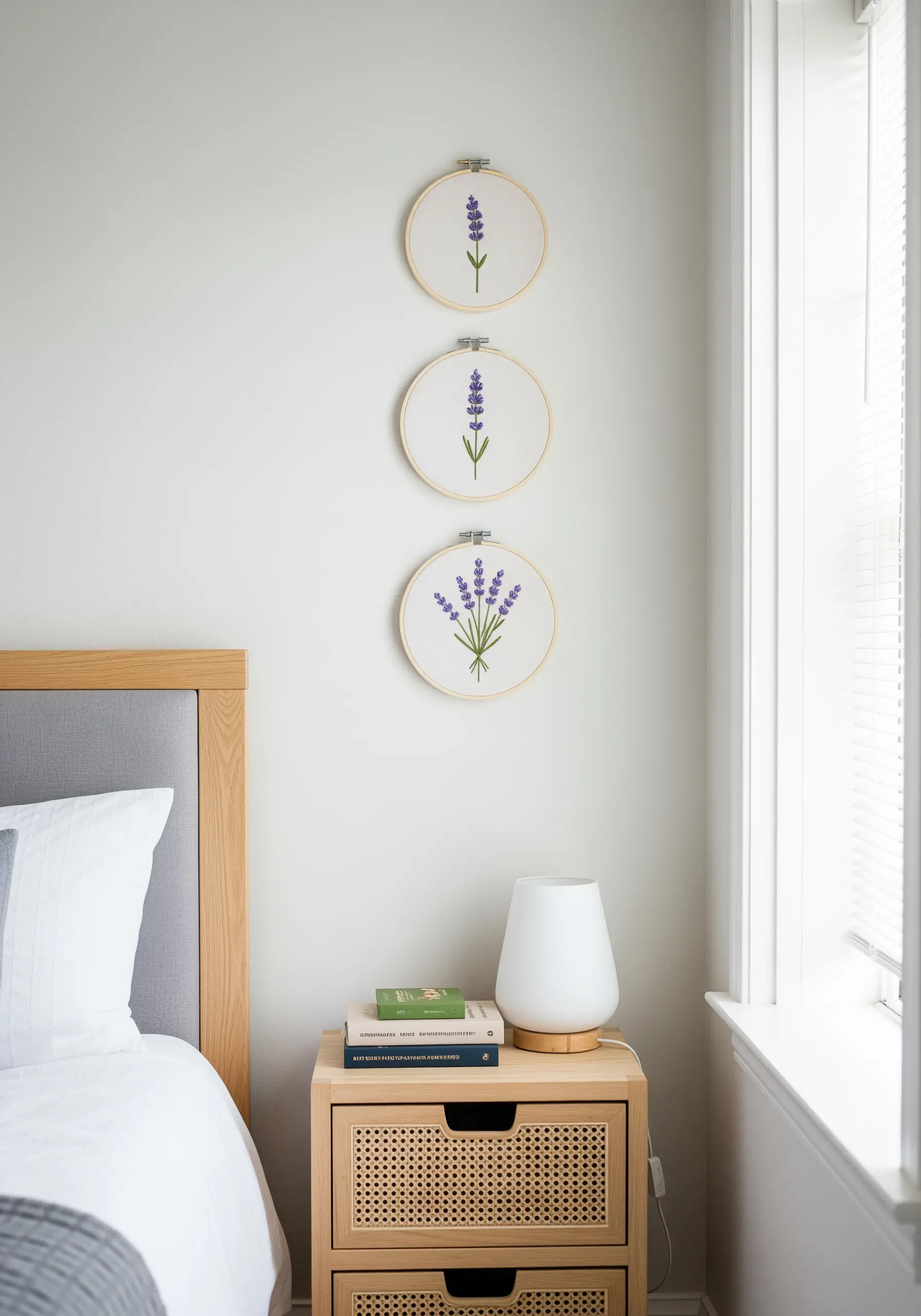
Create a simple yet compelling narrative by displaying three hoops together as a series.
Stitch a single lavender sprig in the first hoop, a slightly fuller one in the second, and a small bouquet in the third.
This progression suggests growth and abundance, turning basic motifs into a cohesive art installation.
Hang them vertically above a nightstand or horizontally over a headboard for a clean, minimalist decor statement.
7. Embroider on Sheer Curtains for an Ethereal Effect
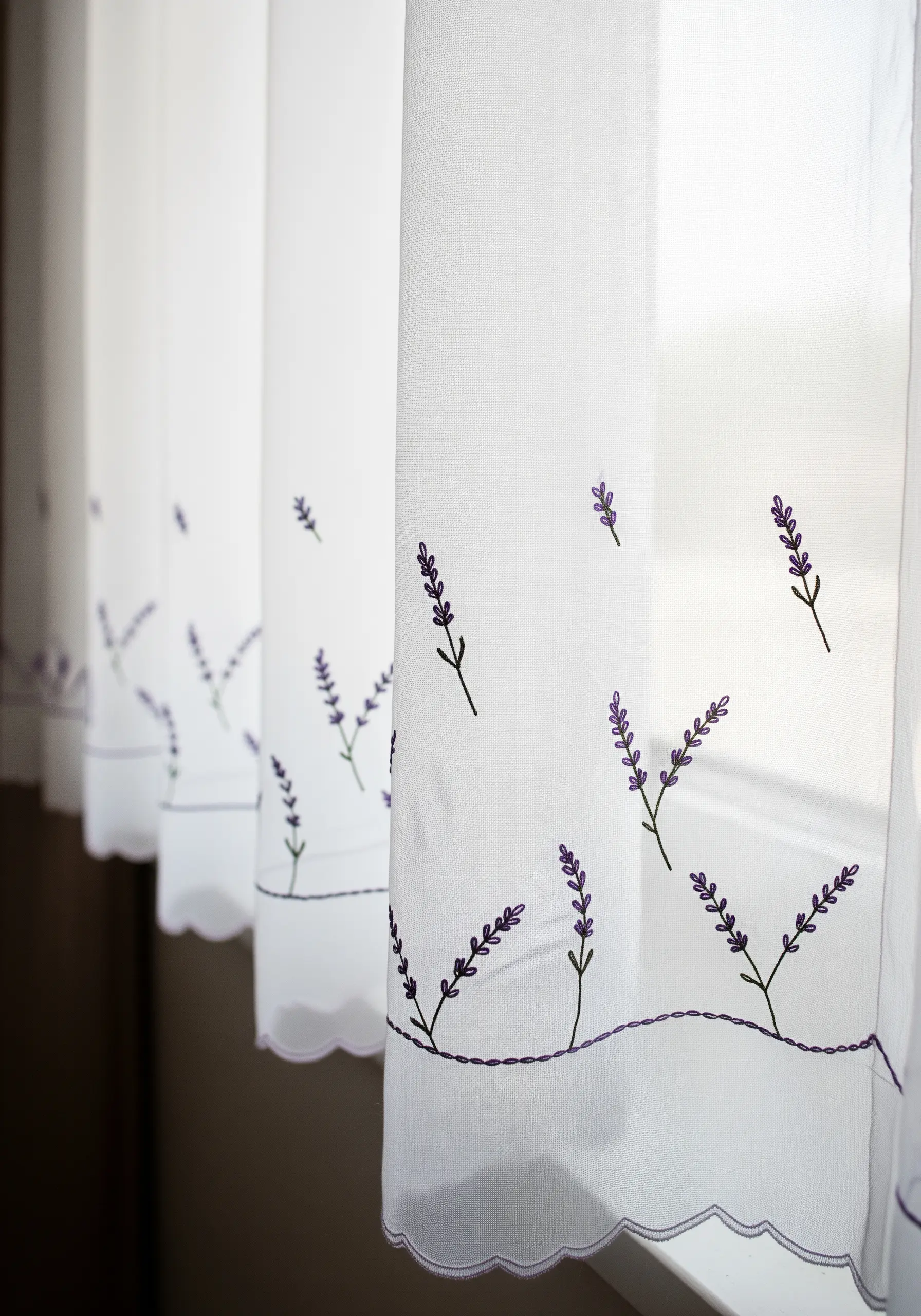
Stitching on sheer fabric like voile or organza adds a delicate, almost magical touch to a room.
To prevent puckering, use a water-soluble stabilizer; it provides support while you stitch and washes away completely, leaving only the thread.
Use just one or two strands of floss to keep the design light and airy, ensuring it doesn’t weigh down the delicate fabric.
The scattered lavender sprigs will appear to float, catching the light beautifully and adding a custom detail to your windows.
8. Create a Thematic Coaster Set
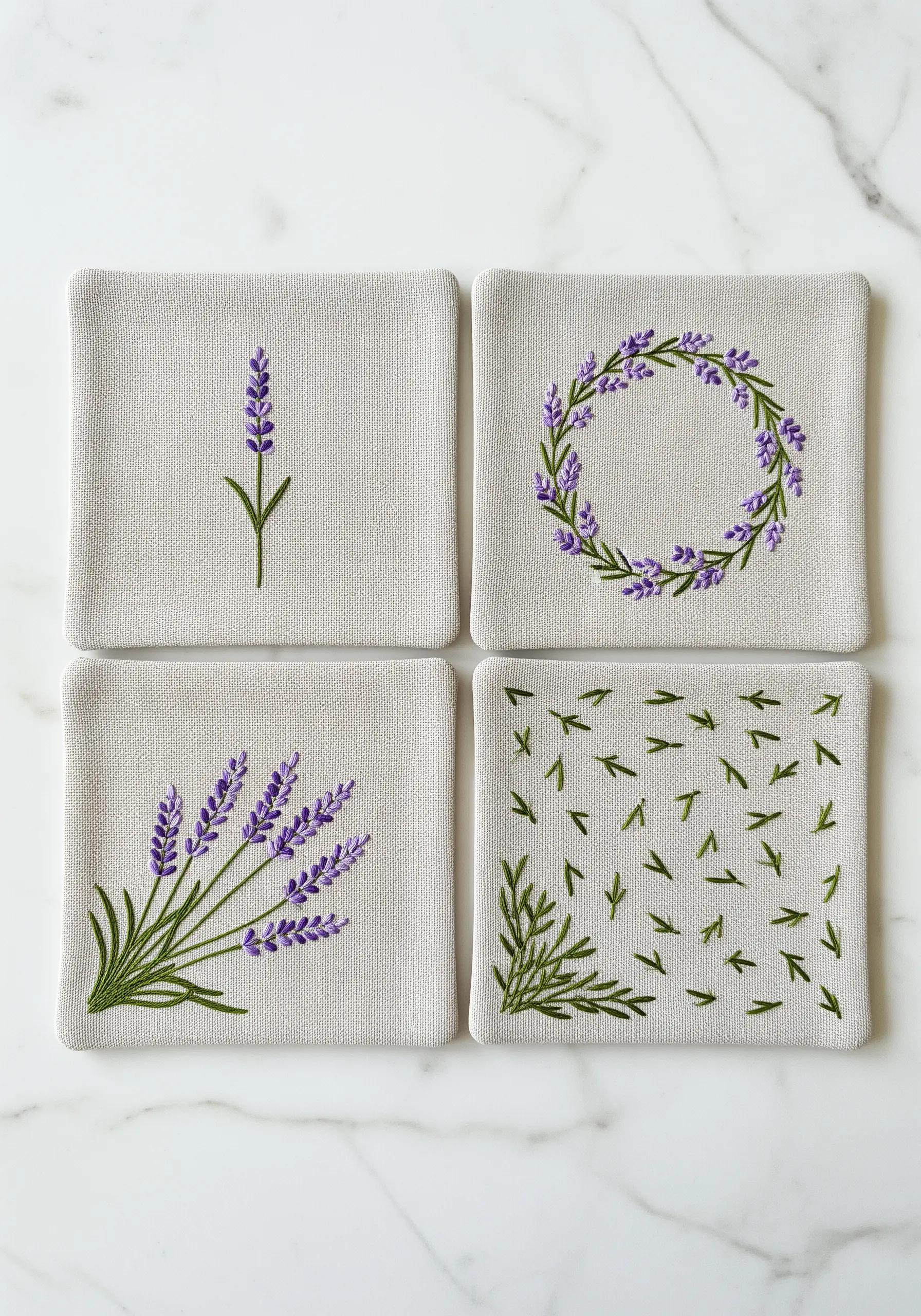
Design a set of four coasters that are related but not identical for a sophisticated, custom look.
Start with a single lavender sprig, then expand to a full wreath, a lush bouquet, and finally an abstract pattern of scattered leaves.
Using the same color palette across all four designs ensures they feel like a cohesive collection.
This project is a fantastic way to practice different compositions on a small scale, resulting in beautiful and functional art.
9. Weave a High-Texture Wall Hanging
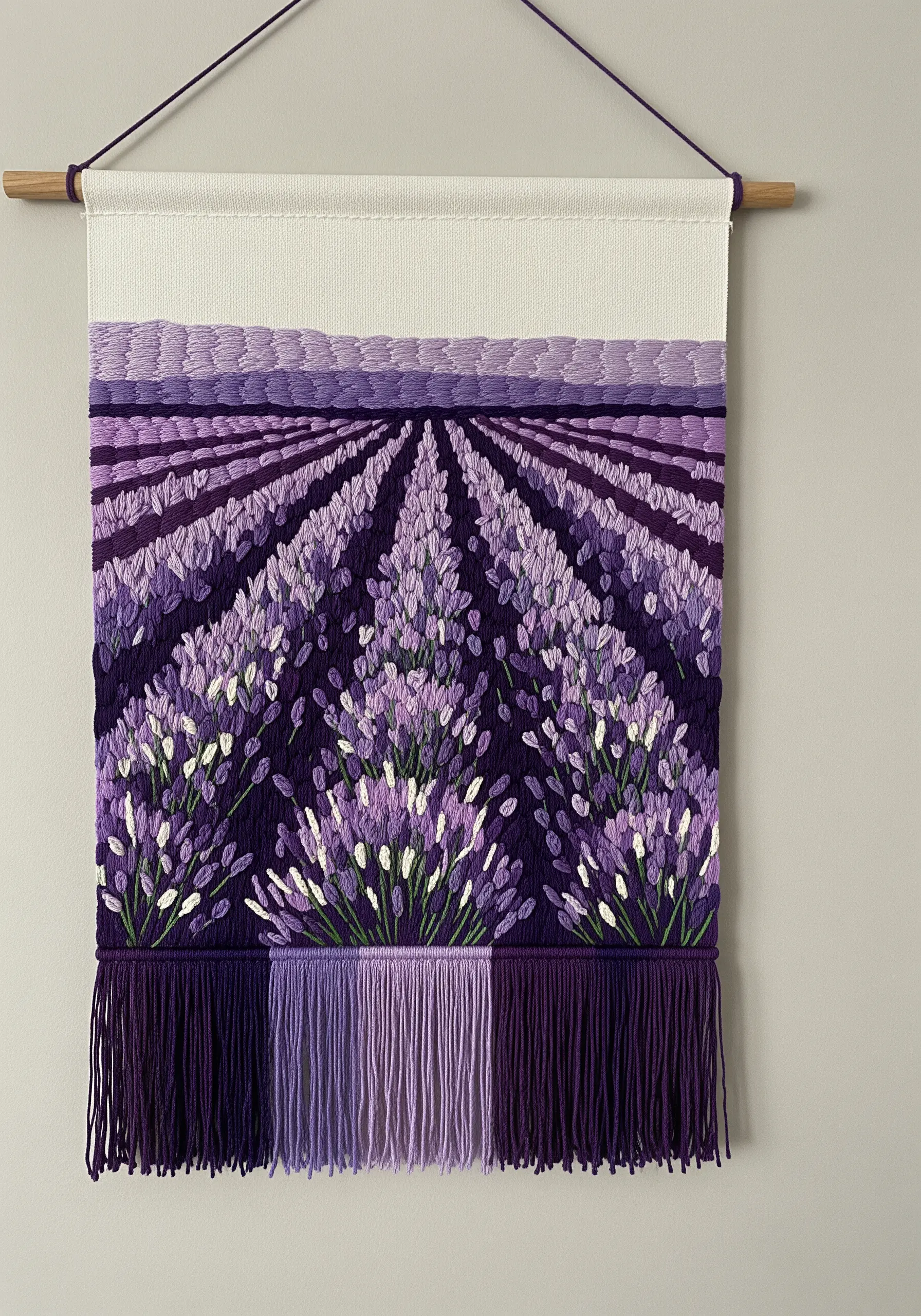
Combine embroidery with weaving techniques to create a dimensional lavender field with incredible texture.
Use thick yarn or multiple strands of floss for the lavender rows, employing turkey work or long, loose French knots to build up a plush, 3D surface.
For the sky and distant hills, use a flat weave or tightly packed satin stitches to create contrast with the textured foreground.
The final piece is a tactile textile wall hanging that invites touch and adds warmth to any room.
10. Integrate Botanicals with a Monogram
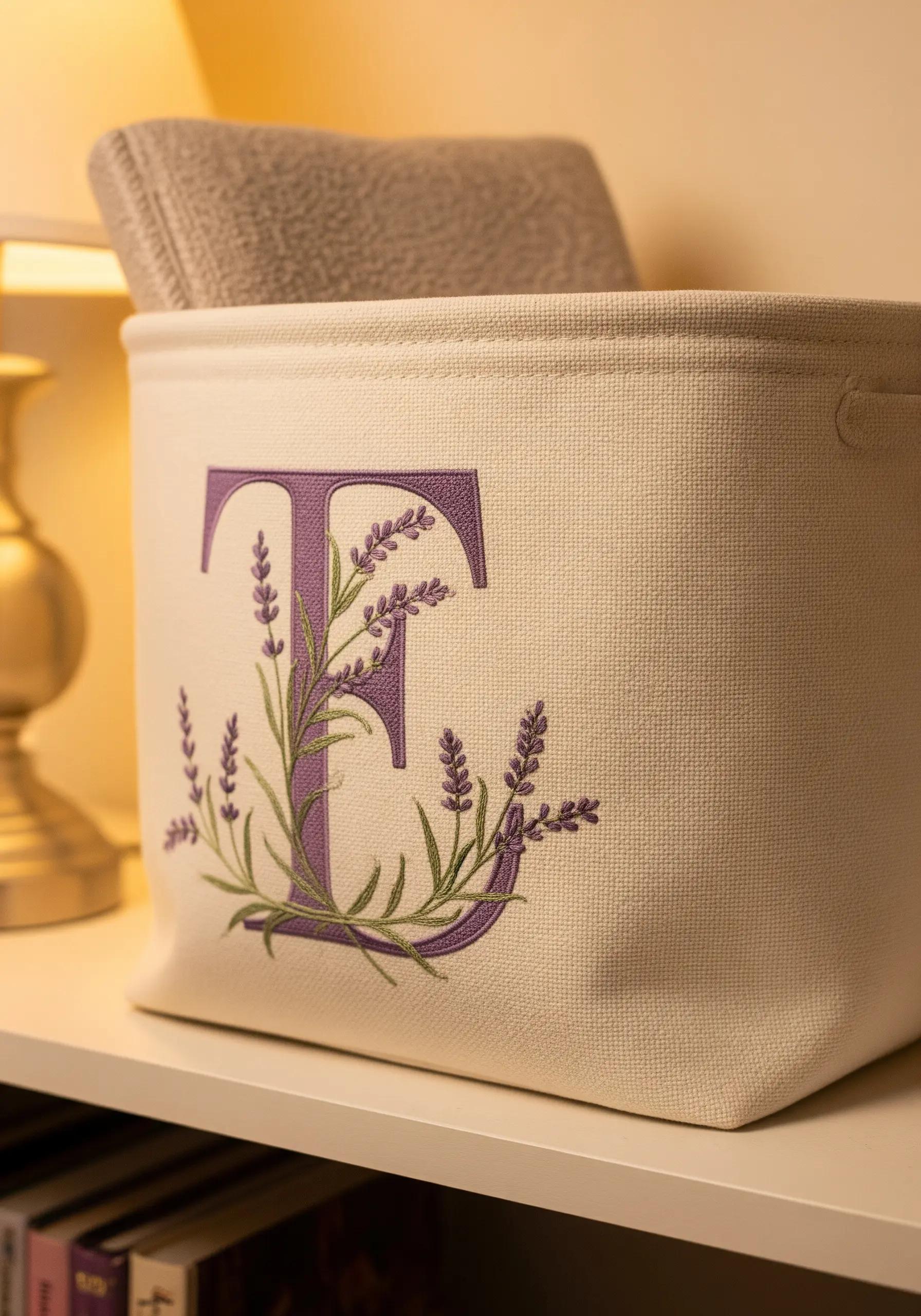
Personalize a canvas storage bin by weaving delicate lavender sprigs around a bold monogram.
First, stitch the letter using a confident satin stitch to create a solid, defined shape. Then, add the lavender stems with a finer stem stitch, allowing them to curve and overlap the letter naturally.
This technique makes it look as though the botanicals are growing around the initial, creating an elegant and integrated design.
It’s a perfect way to add a custom touch to bedroom storage solutions.
11. Add Subtle Detail to a Silk Sleep Mask

When embroidering on a delicate fabric like silk, subtlety is key.
Use a single strand of floss and a very fine needle to create the delicate eyelashes and tiny lavender accent. This prevents large holes and maintains the fabric’s smooth surface.
Choose a silk thread for a tone-on-tone sheen that complements the fabric’s natural luster.
The minimal design feels luxurious and intentional, turning a functional item into a small piece of art.
12. Use High-Contrast Colors on Dark Fabric
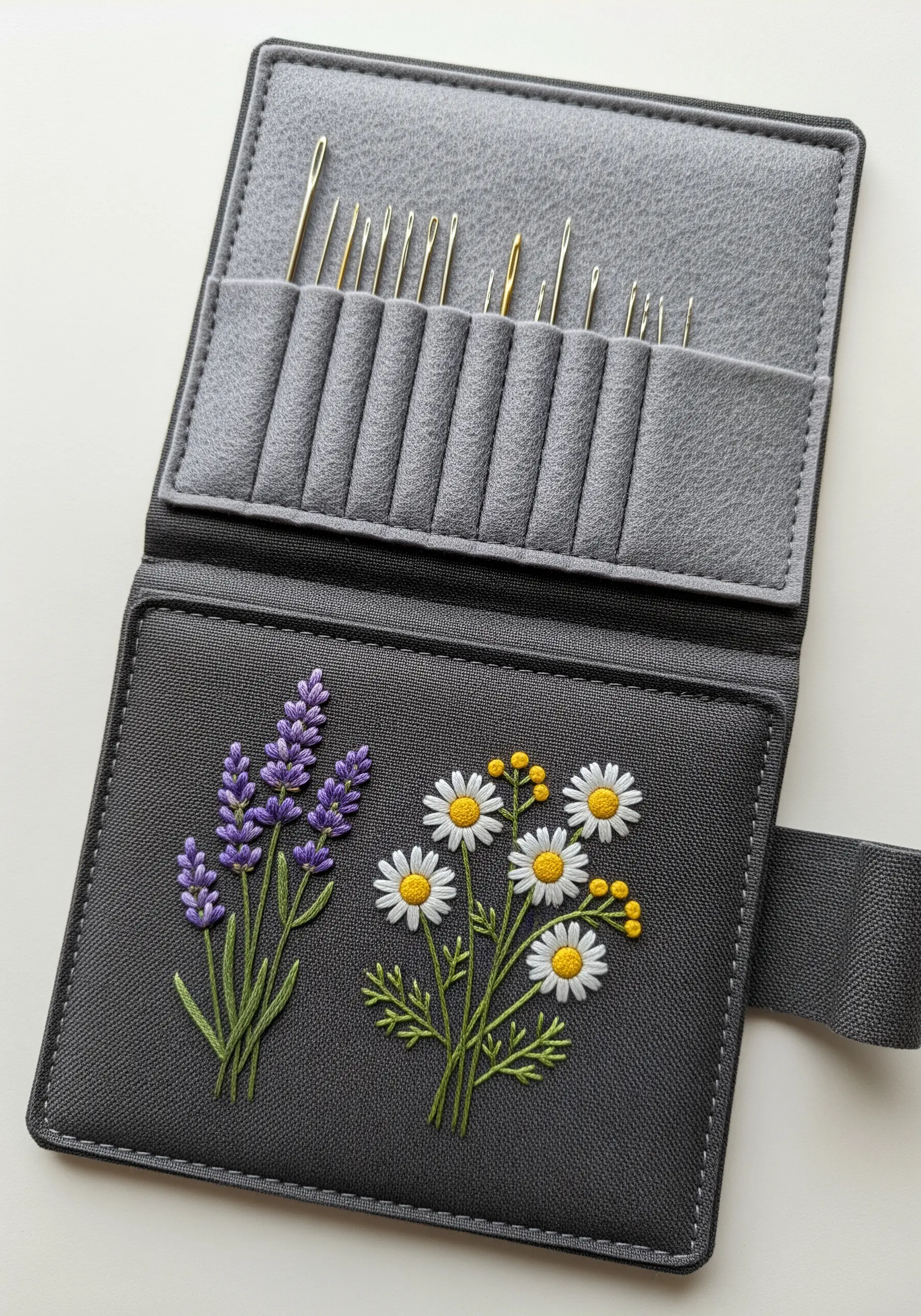
Make your floral embroidery pop by stitching on a dark, textured fabric like charcoal canvas.
The success of this design lies in its high-contrast palette. Use the brightest whites and yellows for the daisy petals and centers, which makes the deep purples of the lavender appear even richer.
Outline your lavender florets with a slightly darker purple to give them definition against the dark background.
This color strategy ensures your work is vibrant and legible, creating a striking visual impact.
13. Illuminate Your Stitches on a Lampshade
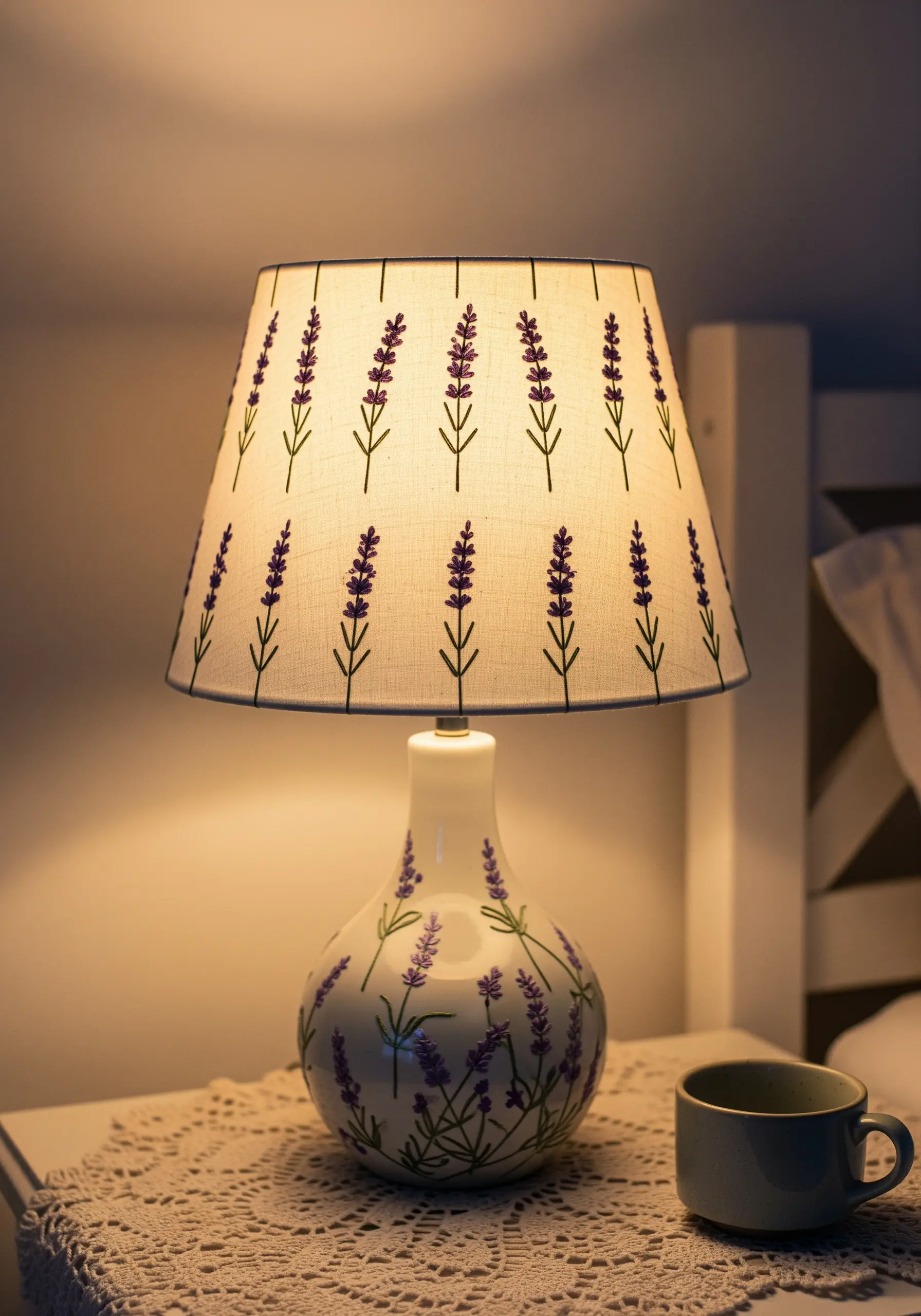
Embroidering a lampshade allows you to play with light in a unique way.
Choose a simple, repeating pattern of lavender sprigs that is easy to execute on a curved surface. The negative space is as important as the stitches, so don’t overcrowd the design.
When the lamp is on, the light will filter through the fabric, creating a soft glow and highlighting the texture of your thread.
This project turns a plain lamp into a focal point, adding a layer of handmade charm to your bedroom lighting.
14. Craft a Miniature Wreath on Aida Cloth
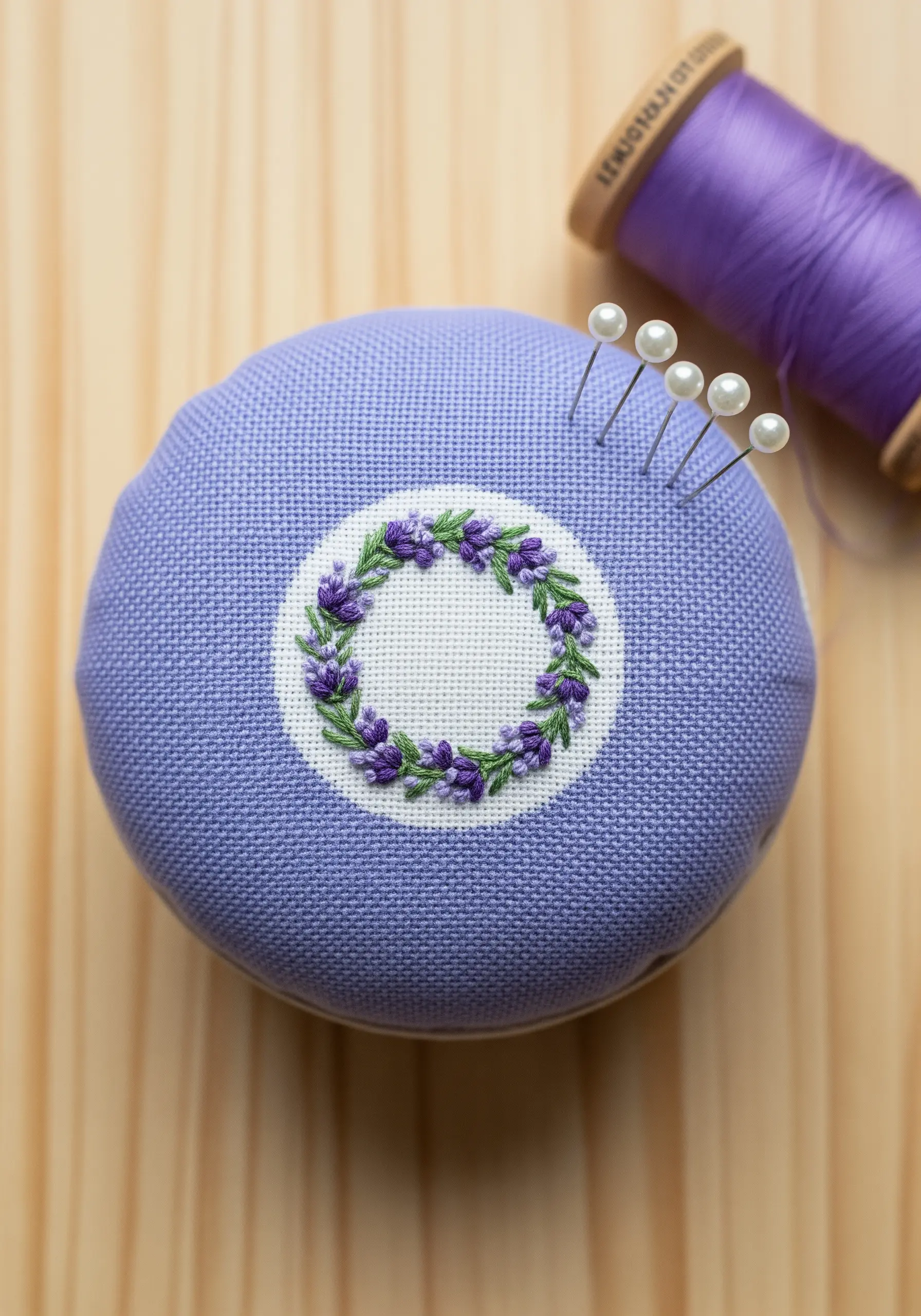
Use the gridded structure of Aida cloth to create a perfectly round and symmetrical miniature lavender wreath.
The evenly spaced holes in the fabric act as a guide, making it easier to place your French knots for a dense, uniform texture.
Stitch a circle of green leaves first using a simple backstitch, then fill it with tightly packed knots in various shades of purple.
This small-scale project is perfect for a pincushion or as a framed piece of miniature art.
15. Frame Your Embroidery for a Gallery Finish
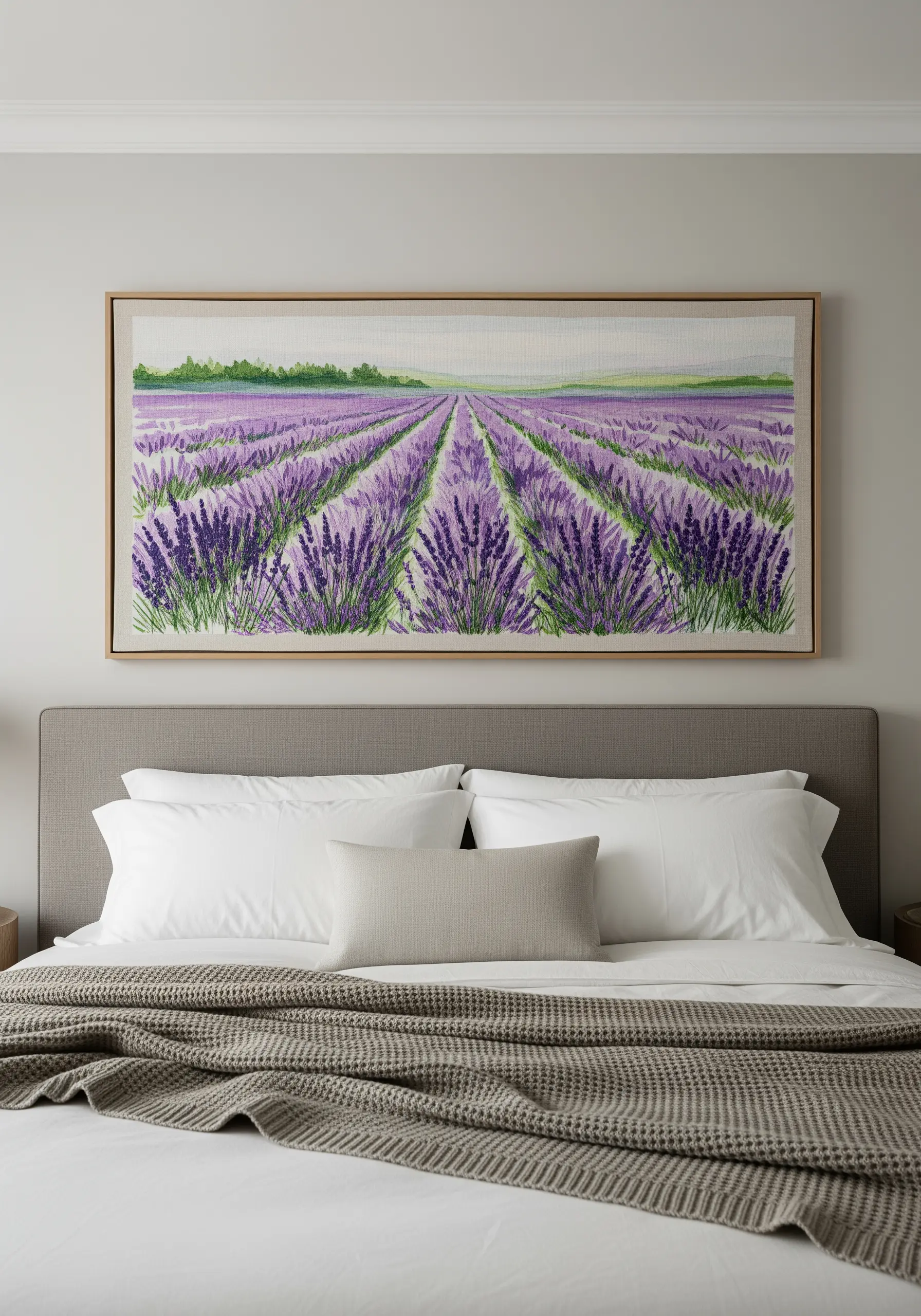
Present your thread-painted landscape as a professional piece of art by stretching it over a canvas frame.
After completing your stitching, carefully press the fabric from the back. Center the design on a stretched canvas or artist board, pulling it taut and securing it on the back with staples or archival tape.
This finishing method eliminates hoop marks and gives your work a clean, contemporary look.
Placing it in a simple floating frame completes the gallery-worthy presentation, perfect for hanging above a bed.
16. Build Density and Realism in Bouquets
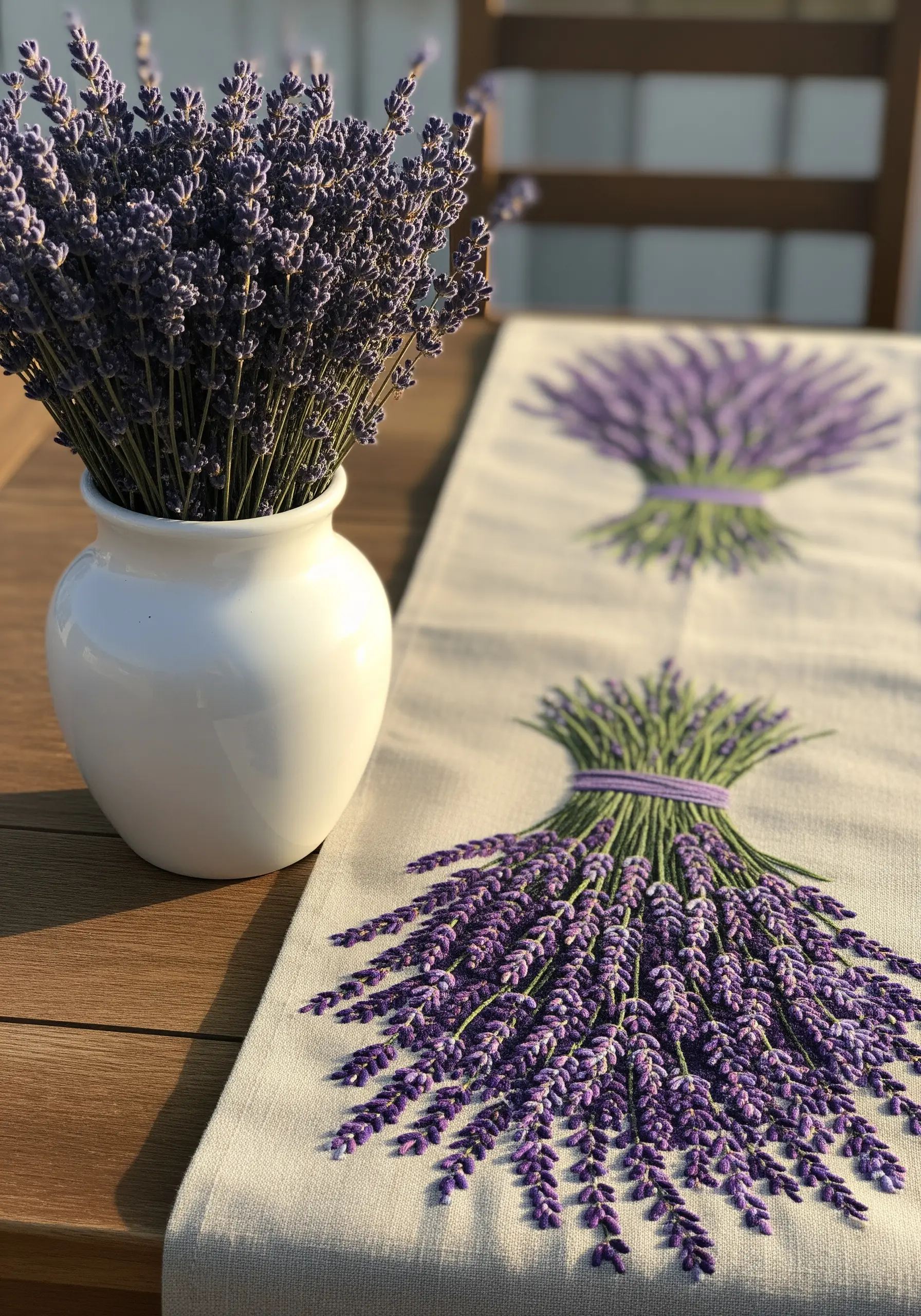
To create a lavender bouquet that looks lush and realistic, focus on layering and texture.
Begin by stitching the stems and florets that are furthest in the back. Then, work forward, stitching over the previous layers to build up density and create a convincing 3D effect.
Use a high concentration of French knots in varying sizes and purples to mimic the clustered buds of a real lavender bunch.
This technique gives your embroidered bouquet a rich, abundant feel, perfect for a statement table runner.
17. Add a Delicate Touch to Fine Linens
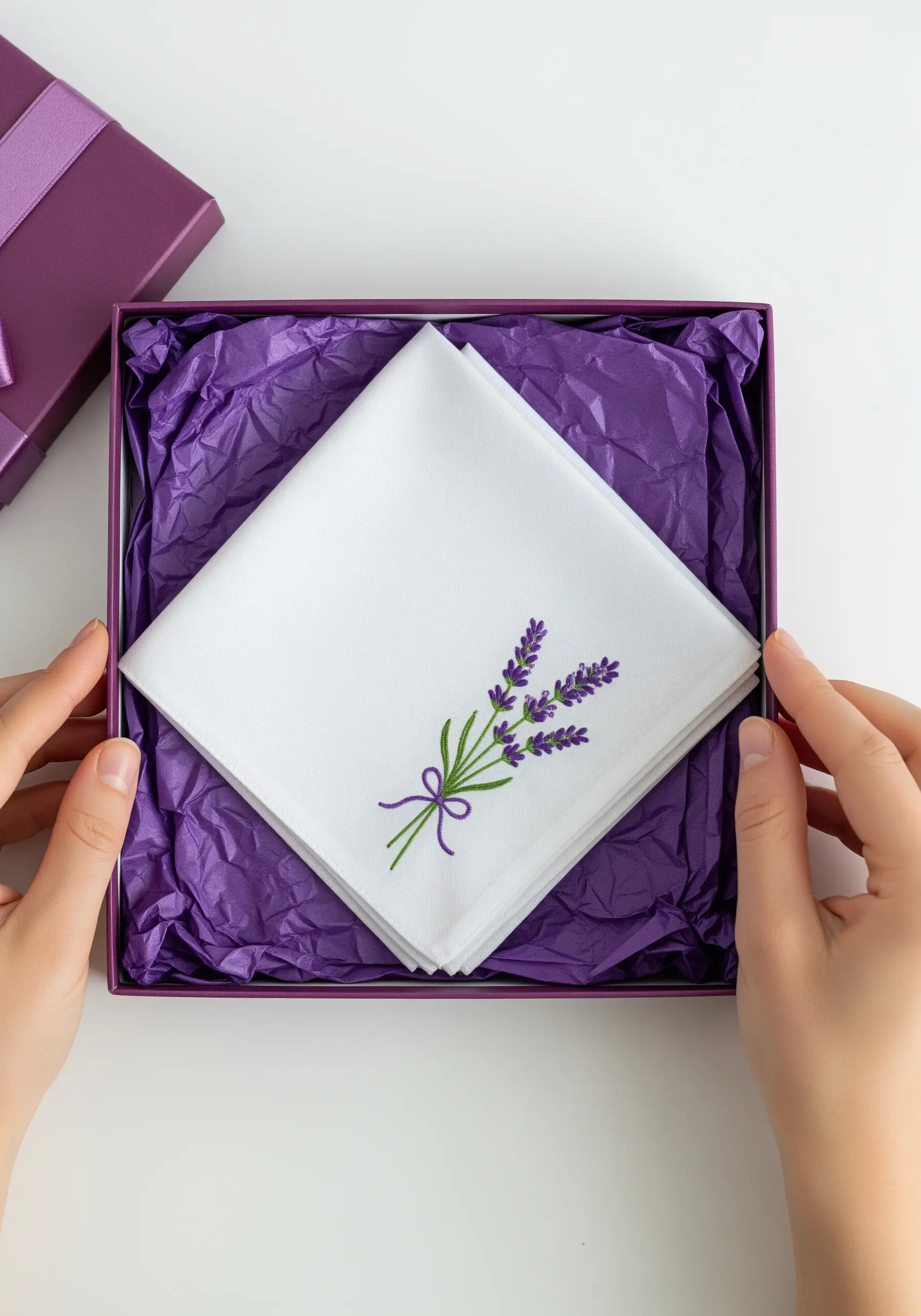
Embroidering on a fine cotton or linen handkerchief requires a light touch and minimal detail to preserve the fabric’s elegance.
Opt for a small, simple bouquet motif in a corner. Use just one or two strands of floss to keep the stitches delicate and prevent puckering.
A whipped backstitch for the bow’s ribbon adds a subtle, raised detail that feels refined.
This classic embellishment turns a simple handkerchief into a precious heirloom or a thoughtful, personalized gift.
18. Stitch a Botanical Illustration with Roots
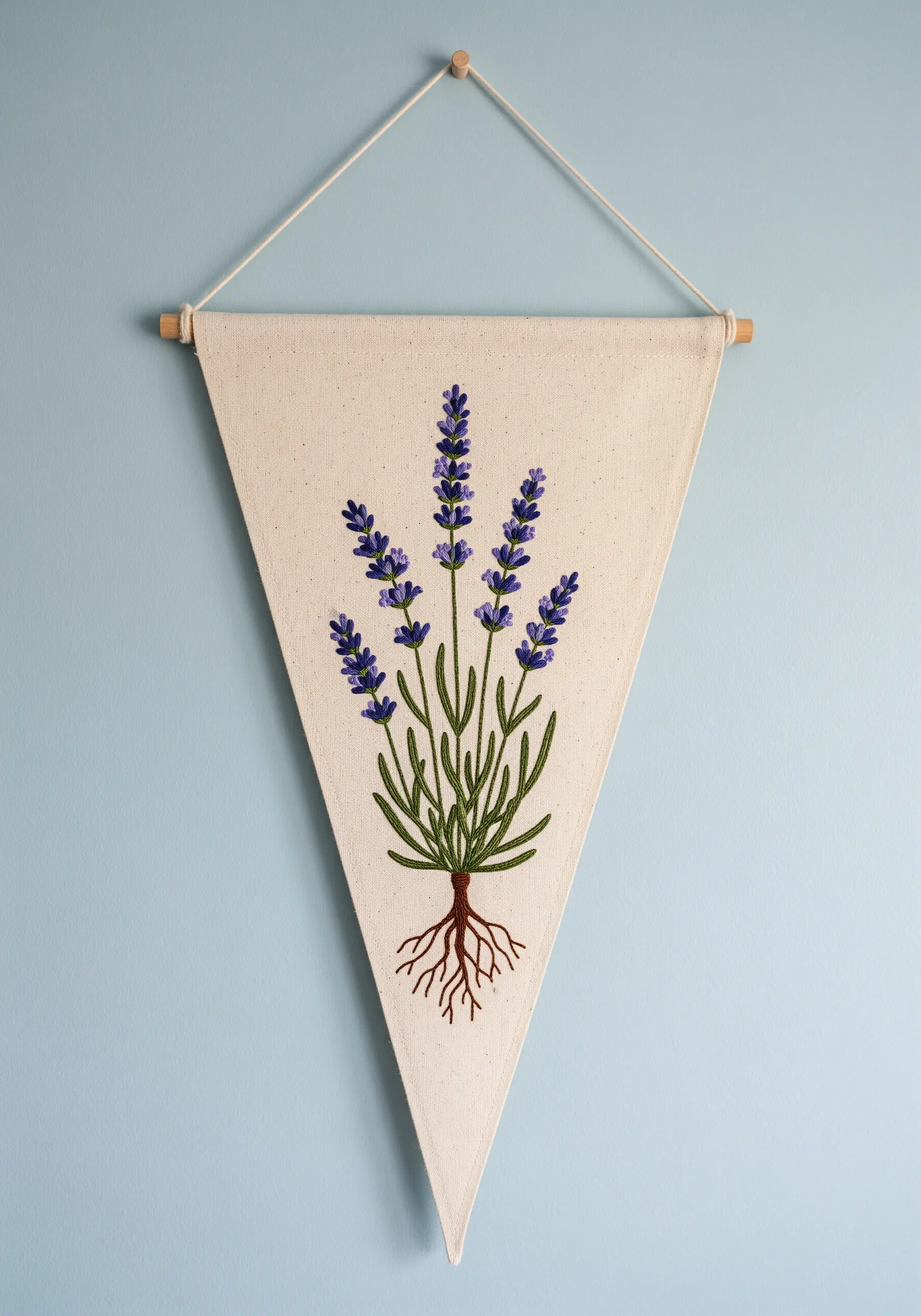
Elevate a simple plant motif by adopting the style of a botanical illustration and including the root system.
Use a clean split stitch for all your outlines to achieve the crisp, defined lines characteristic of scientific drawings.
For the roots, use a single strand of brown or tan floss and a chaotic series of straight stitches to mimic their fine, tangled structure.
This approach turns a decorative flower into a fascinating piece of art, perfect for a modern pennant or wall hanging.
19. Embellish a Pajama Collar with a Delicate Border
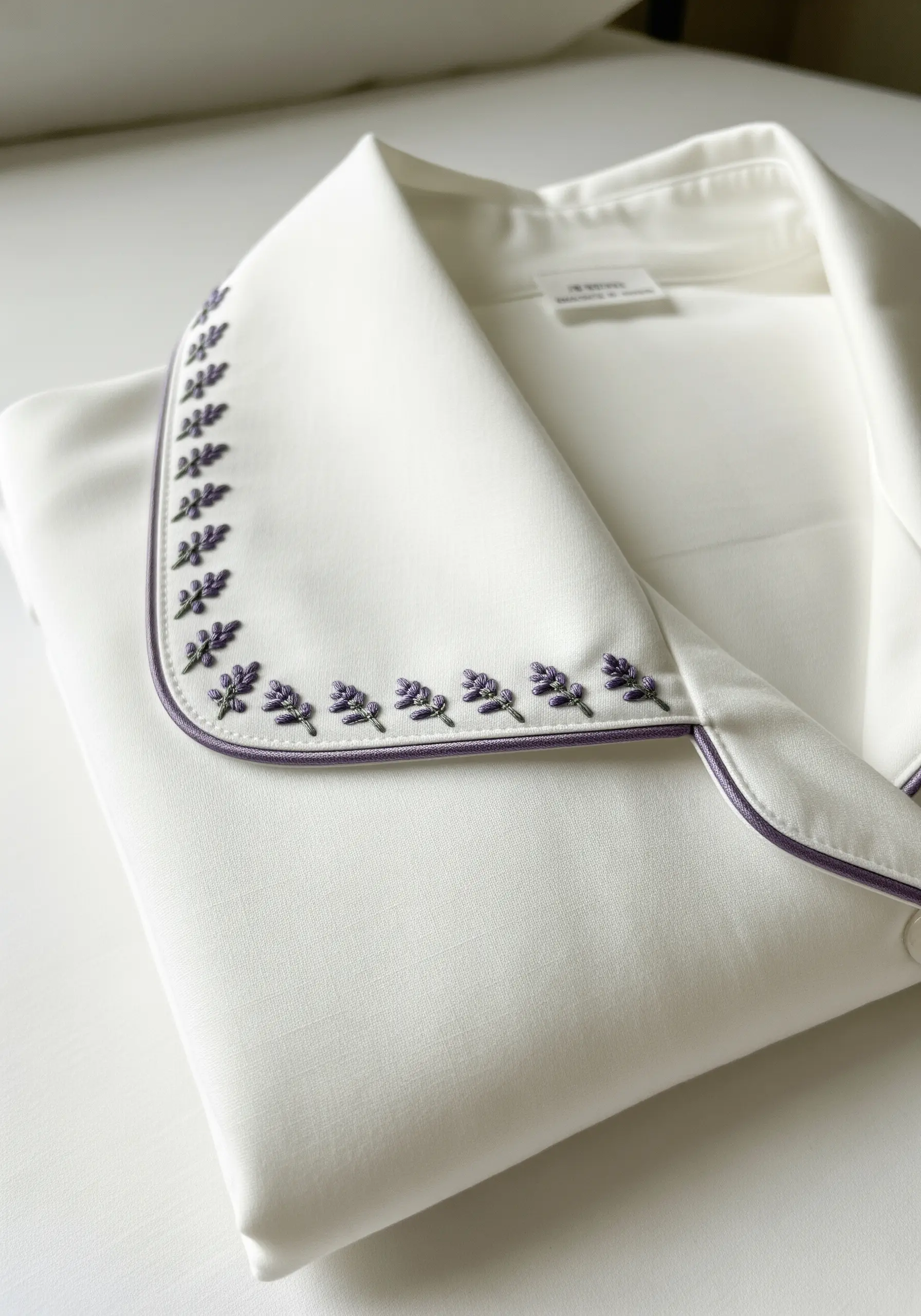
Add a touch of bespoke luxury to a plain pajama top by embroidering a simple lavender border along the collar.
Design a small, repeatable motif that is easy to space evenly. A simple stem with three or four French knot buds is perfect.
Mark your spacing with a water-soluble pen before you begin to ensure a uniform and professional-looking result.
This subtle detail transforms off-the-rack sleepwear into a custom-designed piece.
20. Introduce Texture with Seed Beads
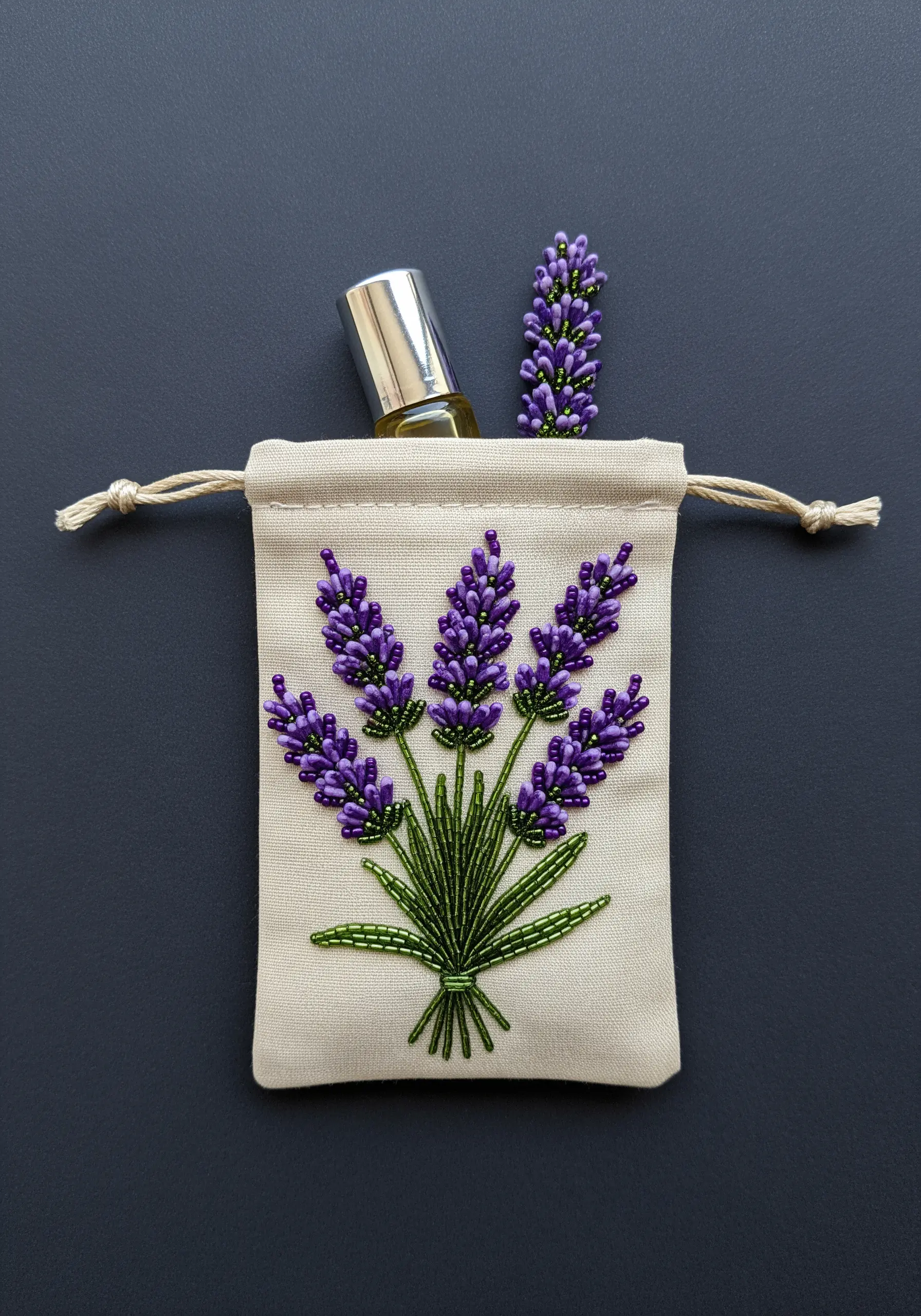
Incorporate beading to give your lavender embroidery a shimmering, dimensional quality.
Instead of using French knots for the florets, stitch on tiny seed beads in various shades of purple and lilac.
First, create the green stems and leaves with traditional embroidery floss. Then, go back and attach the beads individually with a matching or translucent thread.
This mixed-media approach adds a surprising element of light and texture, making your design truly stand out.
21. Integrate Embroidery into a Modern Quilt
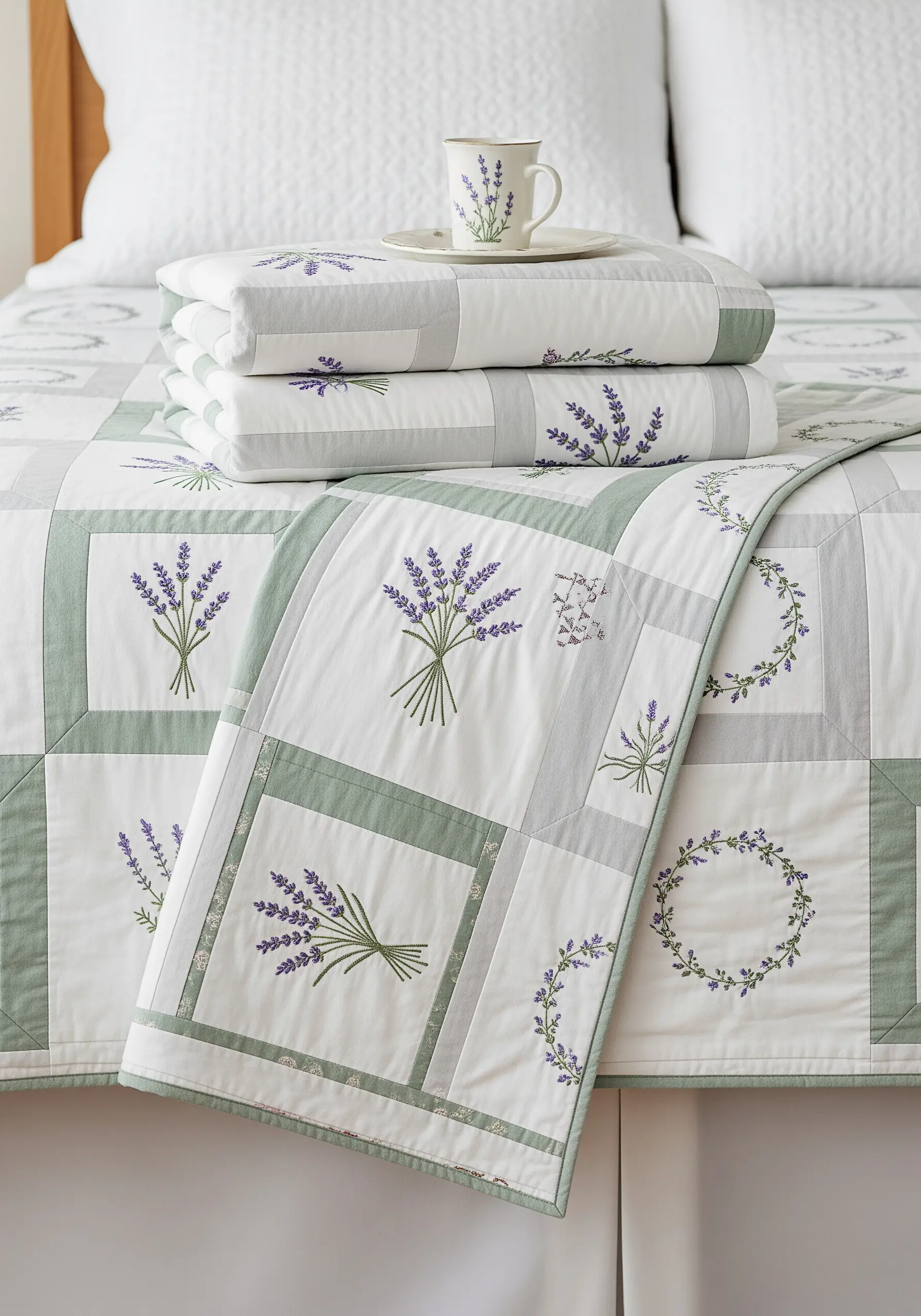
Bridge the worlds of quilting and embroidery by incorporating stitched motifs into your patchwork.
Embroider simple lavender designs—bouquets, wreaths, and single sprigs—onto the plain white squares before you assemble the quilt top.
This method allows you to work comfortably in a hoop and ensures your stitches are perfect.
The embroidered blocks add a layer of delicate, handmade detail that unifies the quilt’s design and creates a calming, cohesive aesthetic.
22. Design a Graceful Crescent Wreath
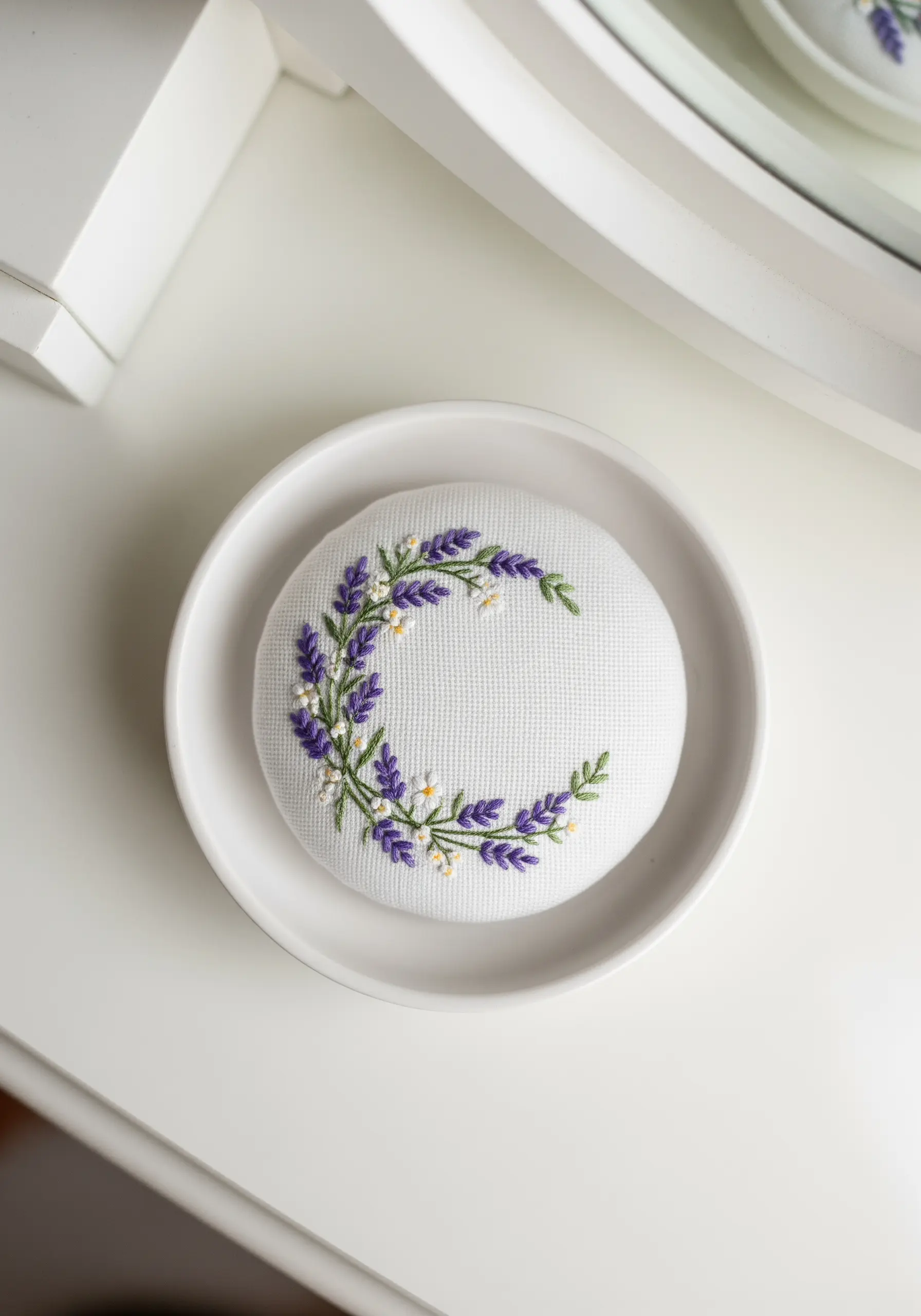
Break away from traditional circular wreaths and stitch a delicate crescent shape for a more modern, dynamic composition.
Lightly draw a curved guideline on your fabric with a water-soluble marker. Arrange your lavender sprigs and tiny daisy fillers along this arc.
Vary the direction and length of the sprigs to create a sense of natural movement.
This asymmetrical design works beautifully on pincushions, pockets, or as a corner accent on a pillow, drawing the eye in a gentle, sweeping motion.
23. Create 3D Florets with Dimensional Stitches
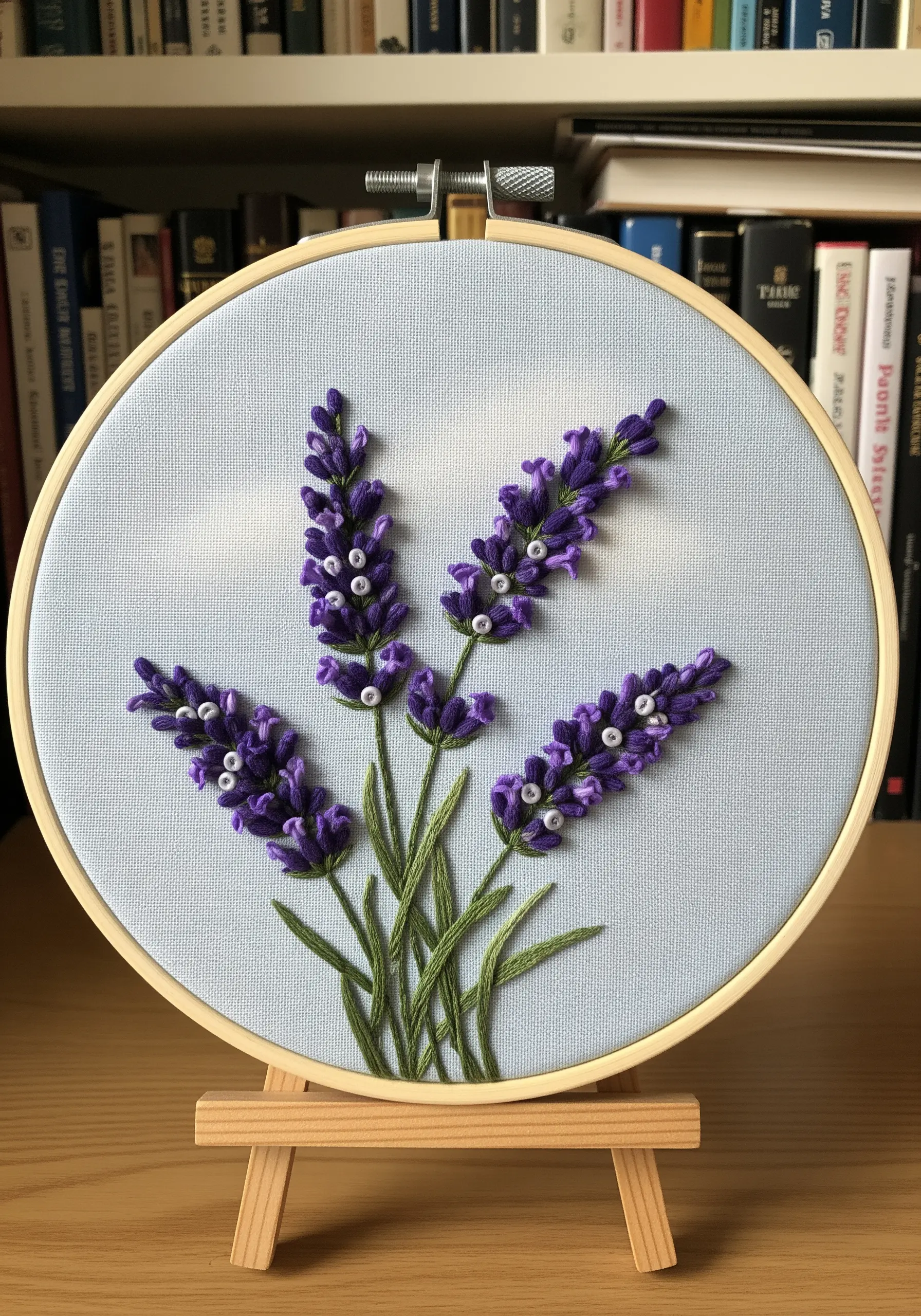
Give your lavender an incredibly realistic, textured look by using dimensional stitches.
Bullion knots or cast-on stitches are perfect for creating the elongated shape of lavender florets. Make them in varying lengths and cluster them tightly around the stem.
Incorporate a few tiny white seed beads or French knots to mimic the appearance of new buds or light reflecting off the petals.
This high-texture technique makes your embroidery tactile and visually impressive, perfect for hoop art that truly stands out.
24. Craft a Cascading Lavender Wall Tapestry
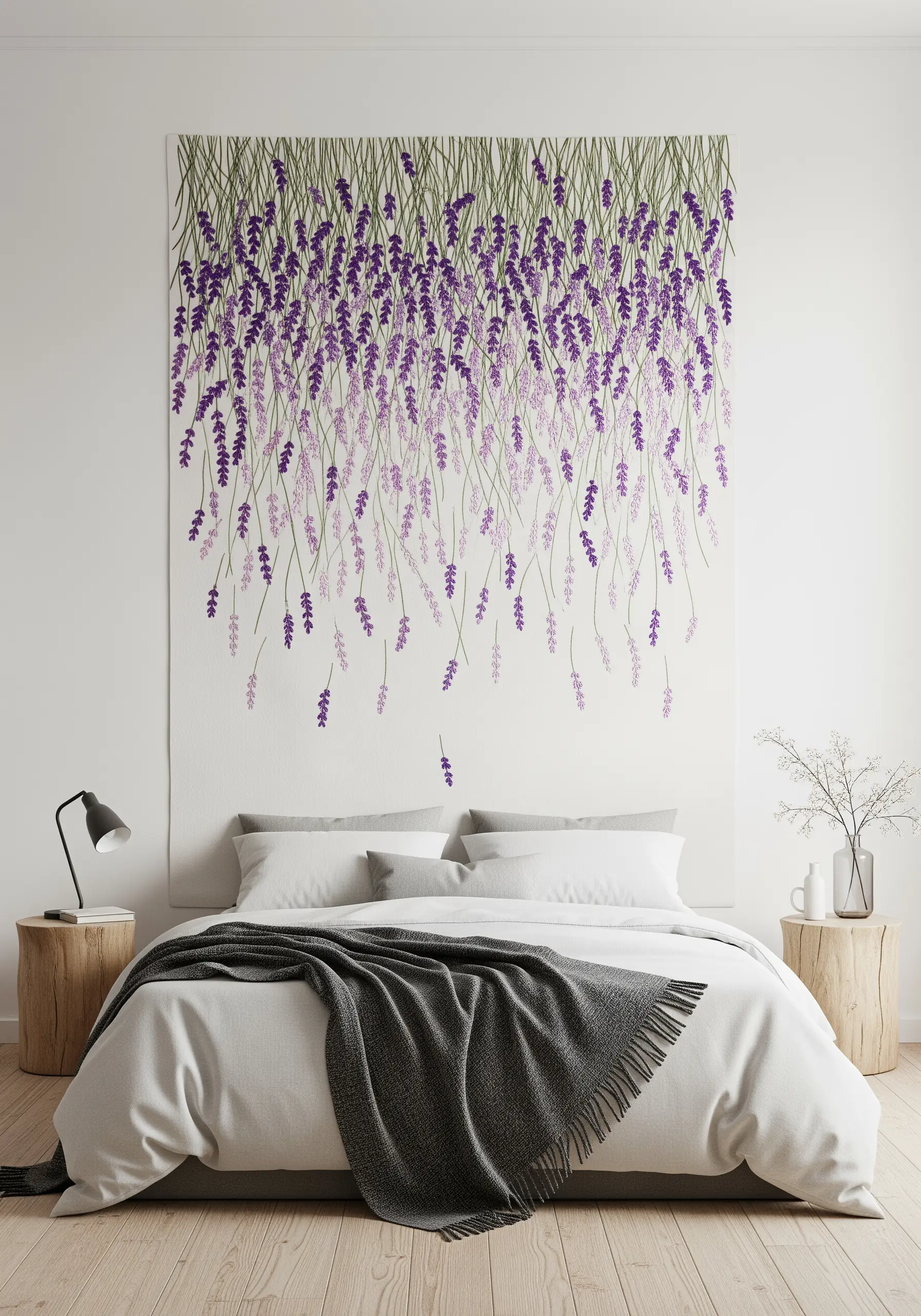
Make a dramatic statement with a large-scale wall hanging that depicts a cascade of falling lavender.
Start with densely stitched, dark purple lavender at the top, gradually spacing out the stems and using lighter shades of lilac and pink as you move down the fabric.
This creates a beautiful ombré effect and a sense of weightless movement.
The ample negative space at the bottom keeps the composition balanced and serene, making it a perfect piece of calming art above a bed.
25. Frame a Motif with Cross-Stitch
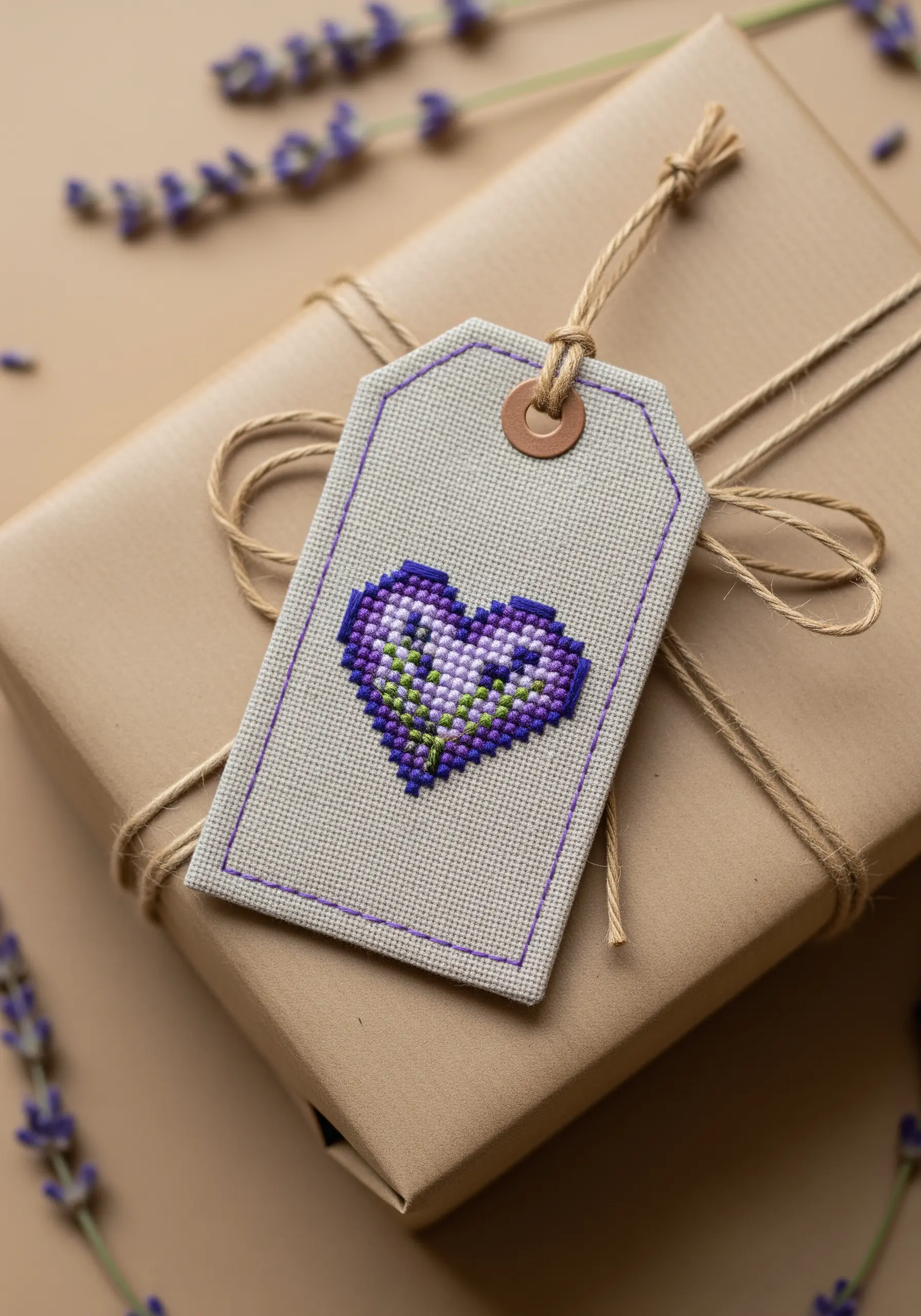
Combine the organic flow of embroidery with the structured grid of cross-stitch for a charming, modern folk aesthetic.
Create a central heart shape filled with a pixelated lavender design using cross-stitch on Aida or evenweave fabric.
This technique is perfect for gift tags or small ornaments, offering a unique blend of two classic needlework styles.
The contrast between the sharp, geometric heart and the soft, natural lavender is visually engaging and heartfelt.
26. Master Towel Embroidery with a Bold Border
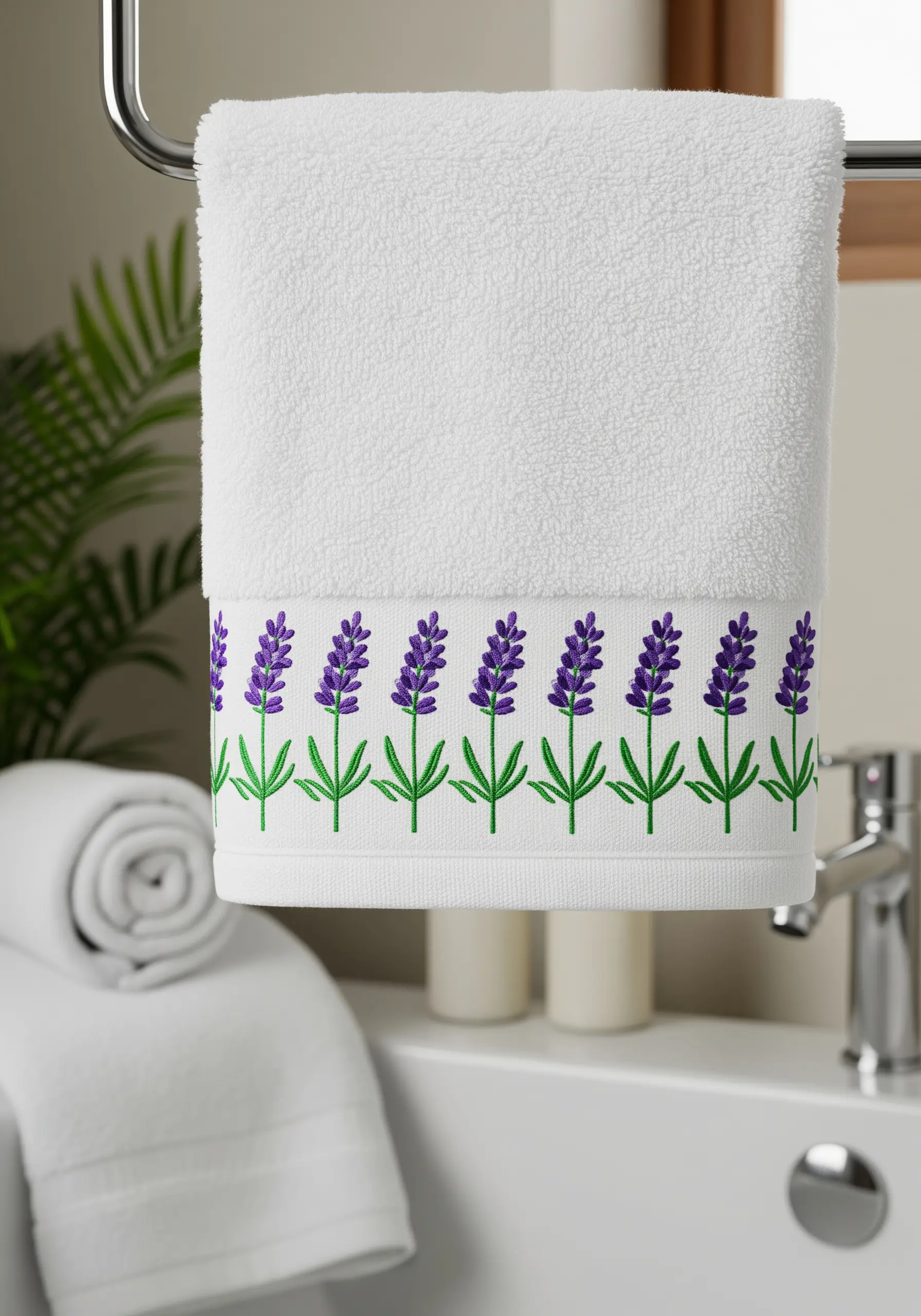
To ensure your embroidery stands out on plush terry cloth, you need to think about density and stability.
Always use a tear-away or water-soluble stabilizer on top of the towel to prevent the stitches from sinking into the loops.
Choose a bold satin stitch for the lavender florets. The solid, dense fill provides strong visual impact and holds its own against the towel’s thick texture.
A repeating border pattern creates a polished, hotel-inspired look for your bathroom linens.
27. Plan Your Palette for a Cohesive Design
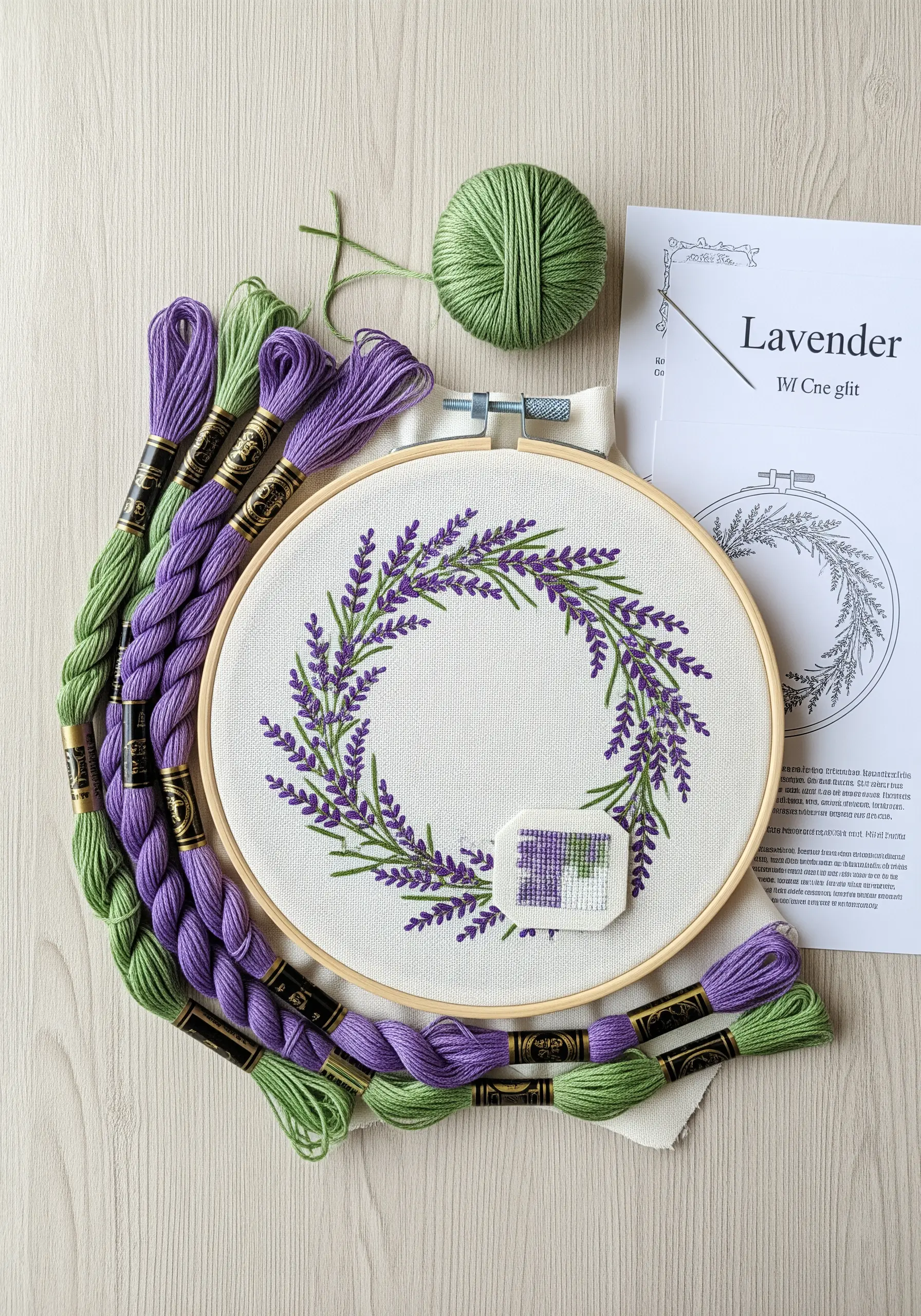
The key to a professional-looking piece is a well-considered color palette.
Before you begin stitching a wreath, select three to four shades of purple and at least two greens. Arranging your floss in a gradient from light to dark helps you visualize the final look.
Use the darkest purple for shadows and the base of the florets, adding lighter shades for highlights.
This intentional approach to color selection elevates a simple pattern into a harmonious and balanced work of art.
28. Elevate a Tote with an Embroidered Panel
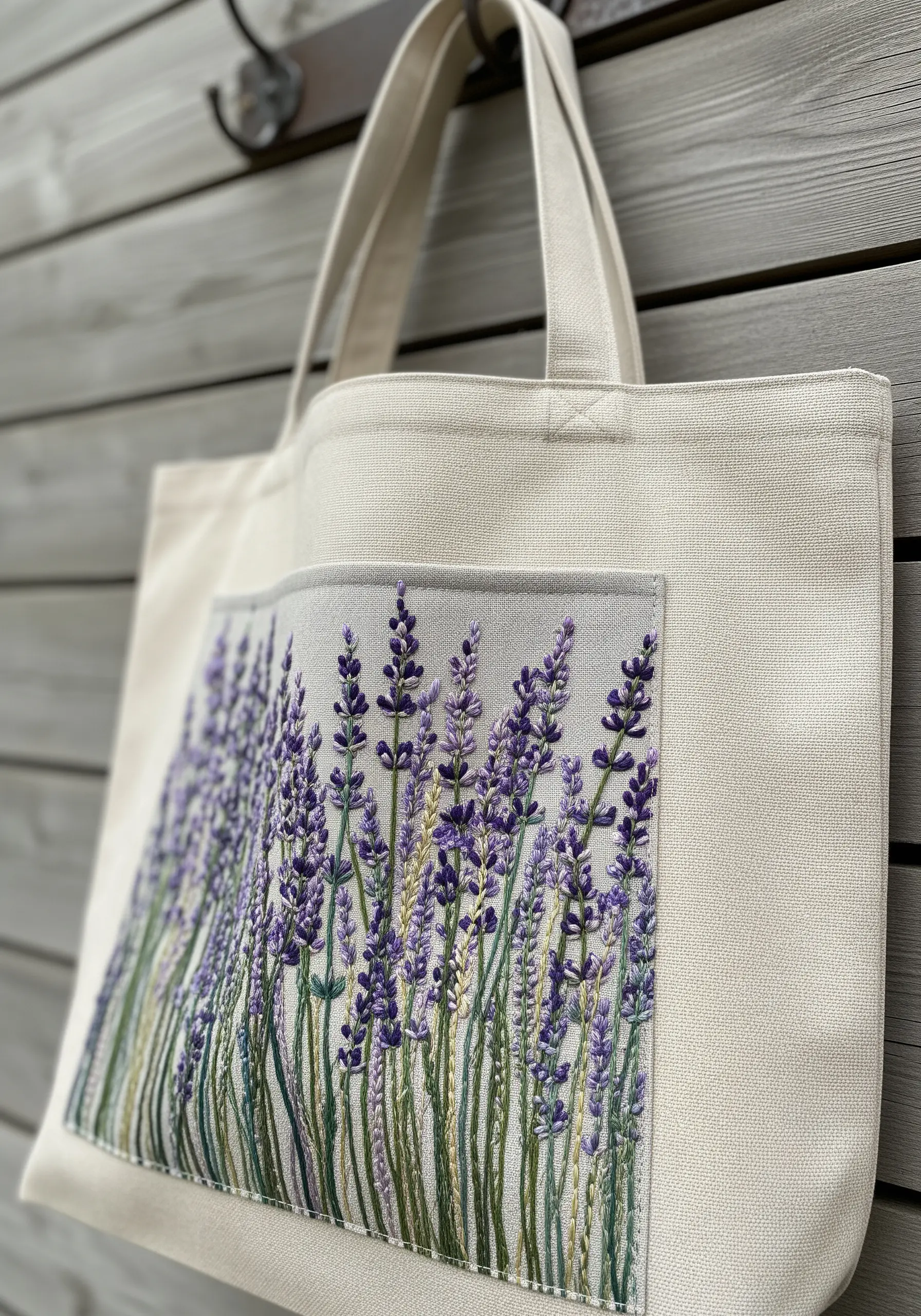
Instead of embroidering directly onto a heavy canvas tote, stitch your design on a separate piece of finer linen and apply it as a pocket or decorative panel.
This technique allows you to create a more detailed, thread-painted lavender field without wrestling with the bulk of the bag.
Once complete, neatly stitch the panel onto the tote for a clean, appliqué finish.
It adds a layer of texture and sophistication, transforming a basic bag into a piece of wearable art.
29. Capture Botanical Realism in a Single Stem
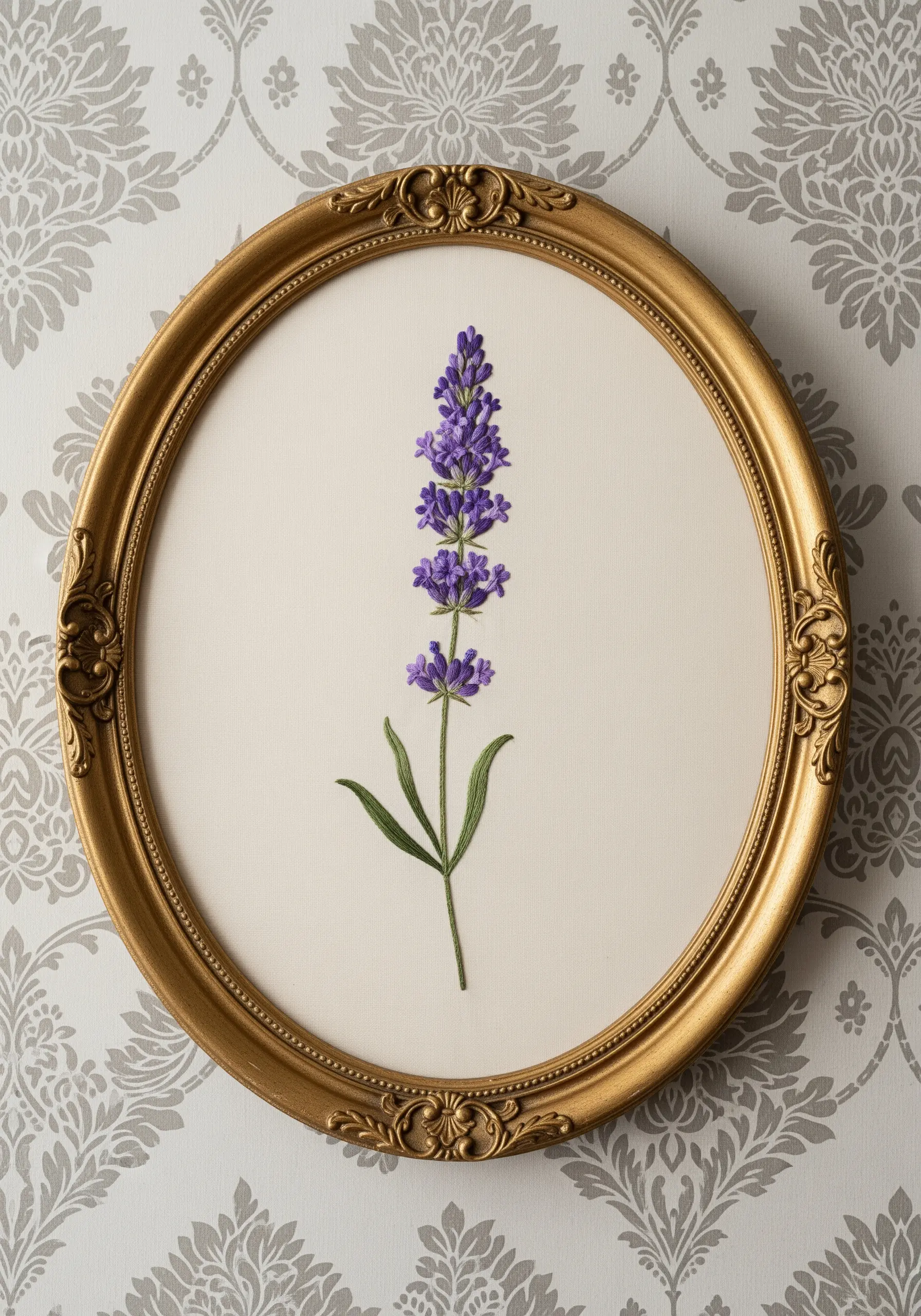
Create a stunningly realistic lavender sprig by focusing on the subtle details of color and form.
Use the long-and-short stitch to blend multiple shades of purple within each tiny floret, mimicking the way light creates natural highlights and shadows.
For the leaves and stem, use a single strand of floss in a split stitch to achieve sharp, clean lines.
Displayed in a vintage-style oval frame, this single specimen becomes an elegant piece of botanical art.
30. Add Understated Elegance to Napkins
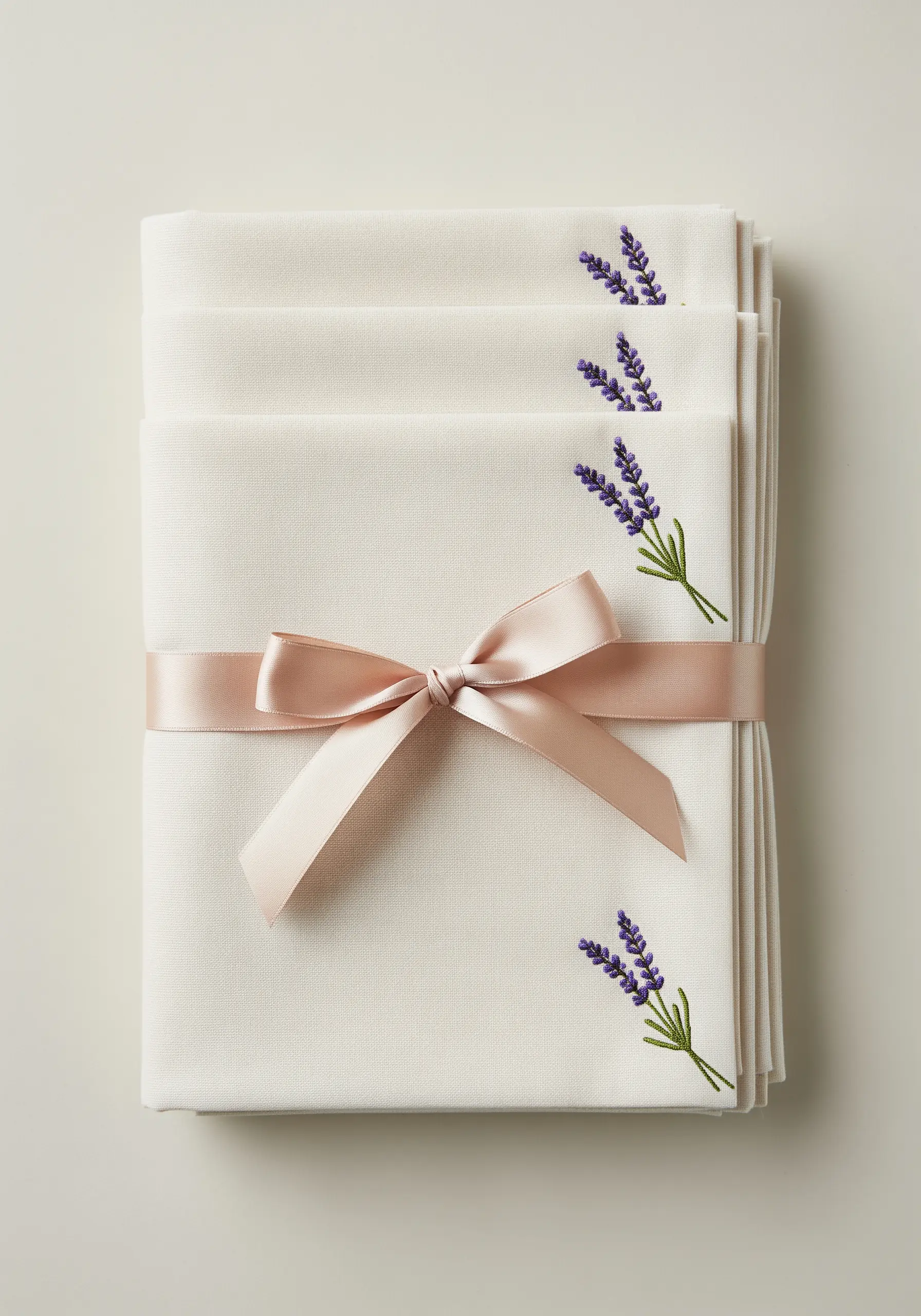
For table linens, a small, perfectly executed motif often makes a bigger impact than a large, complex design.
Stitch a simple two-sprig lavender accent in the corner of each napkin. The minimal design adds a touch of handmade elegance without overwhelming the piece.
Using just two or three colors ensures the design remains chic and versatile, suitable for both casual and formal dining.
This is a wonderful way to practice consistency and create a beautiful, functional set for your home or as a gift.
31. Contrast Soft Florals with a Celestial Theme
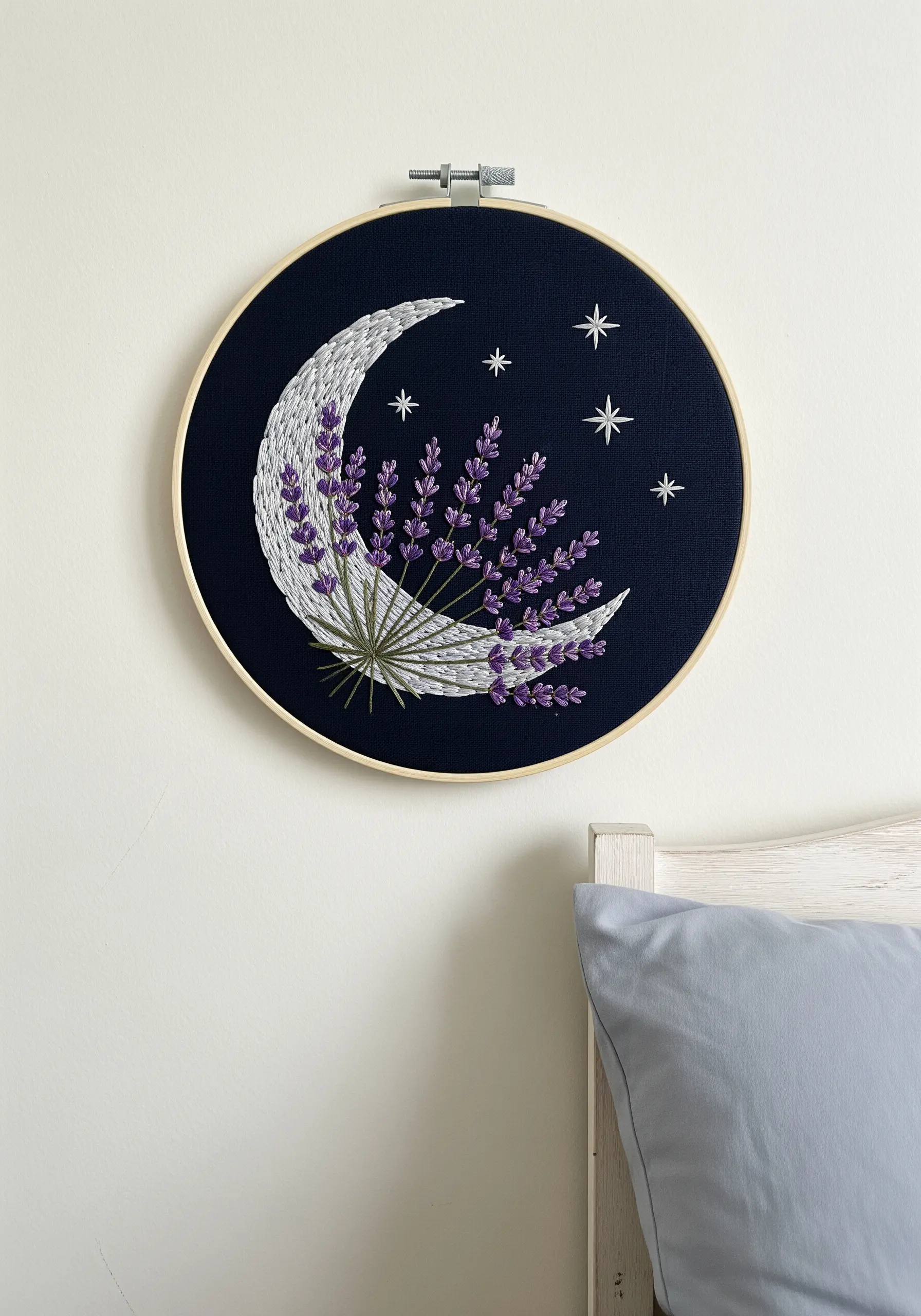
Create a magical, dreamy atmosphere by combining a lavender bouquet with celestial elements.
Stitch on a dark navy or black fabric to make the colors of the moon and stars pop. Use a directional satin stitch in white, silver, and grey threads to give the crescent moon a shimmering texture.
Arrange the lavender sprigs as if they are blooming from within the moon’s curve for a whimsical composition.
This design is perfect for bedroom art that feels both calming and enchanting.
32. Create a Symmetrical Medallion for Bed Linens
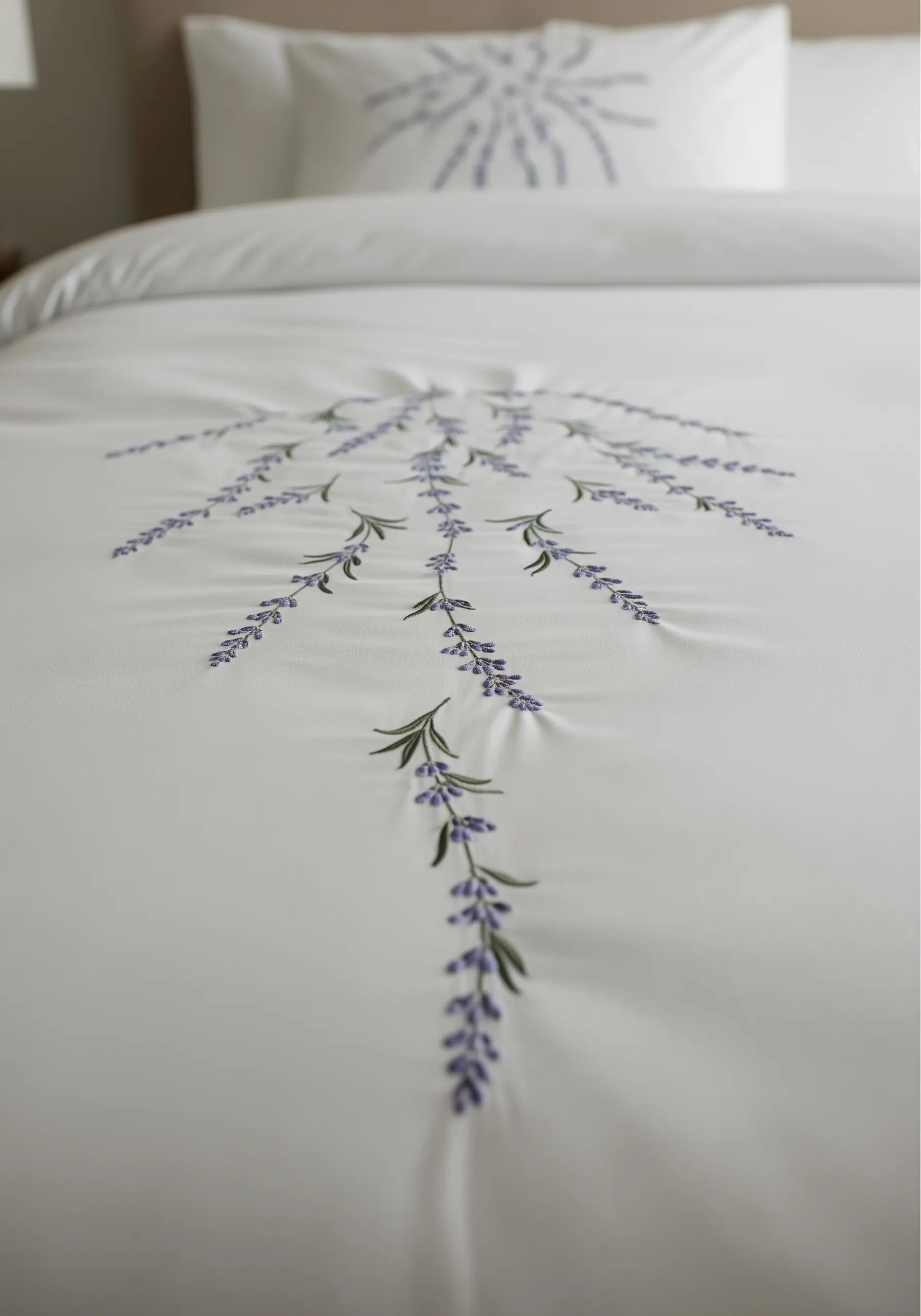
Transform a plain duvet cover with a large, symmetrical lavender medallion that radiates from the center.
Use a water-soluble transfer paper to precisely place your pattern. The key to this design’s success is its perfect symmetry and repetition.
Keep the individual lavender sprigs simple, focusing on clean lines and consistent stitching.
The final effect is a calming, mandala-like design that acts as a stunning focal point for the entire bed, adding a bespoke, high-end feel to your room.
33. Pair Gentle Lettering with Botanical Accents
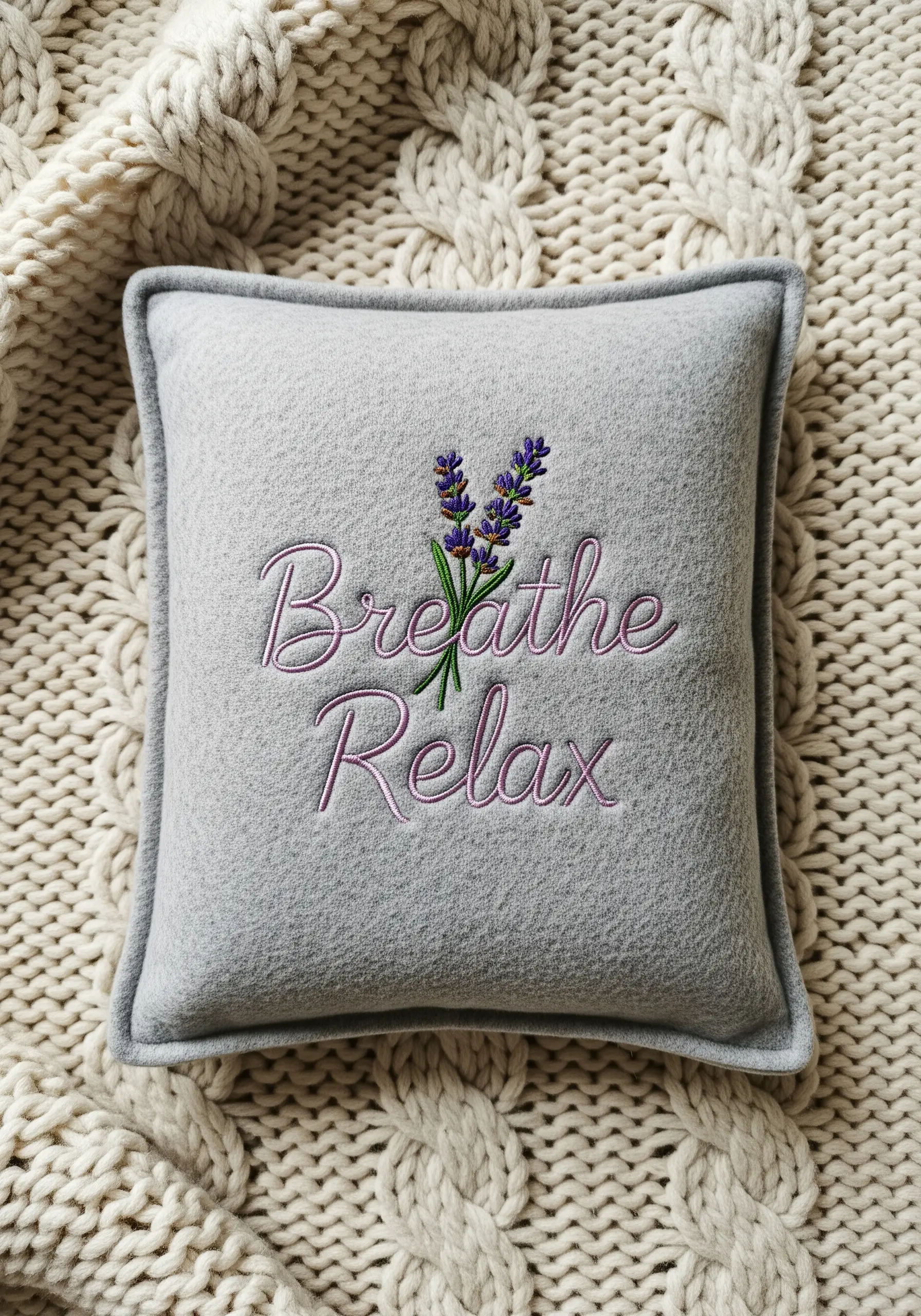
When combining text and florals, ensure they complement each other rather than compete for attention.
Choose a flowing, delicate script for words like “Breathe” and “Relax.” Use a simple whipped backstitch to give the letters a smooth, raised appearance.
Tuck a small, simple lavender bouquet behind or beside the text. This placement makes the florals feel like a gentle accent to the message.
Stitching on soft felt or flannel enhances the cozy, comforting theme of this mindful project.
34. Blend Folk Art with Cross-Stitch Details
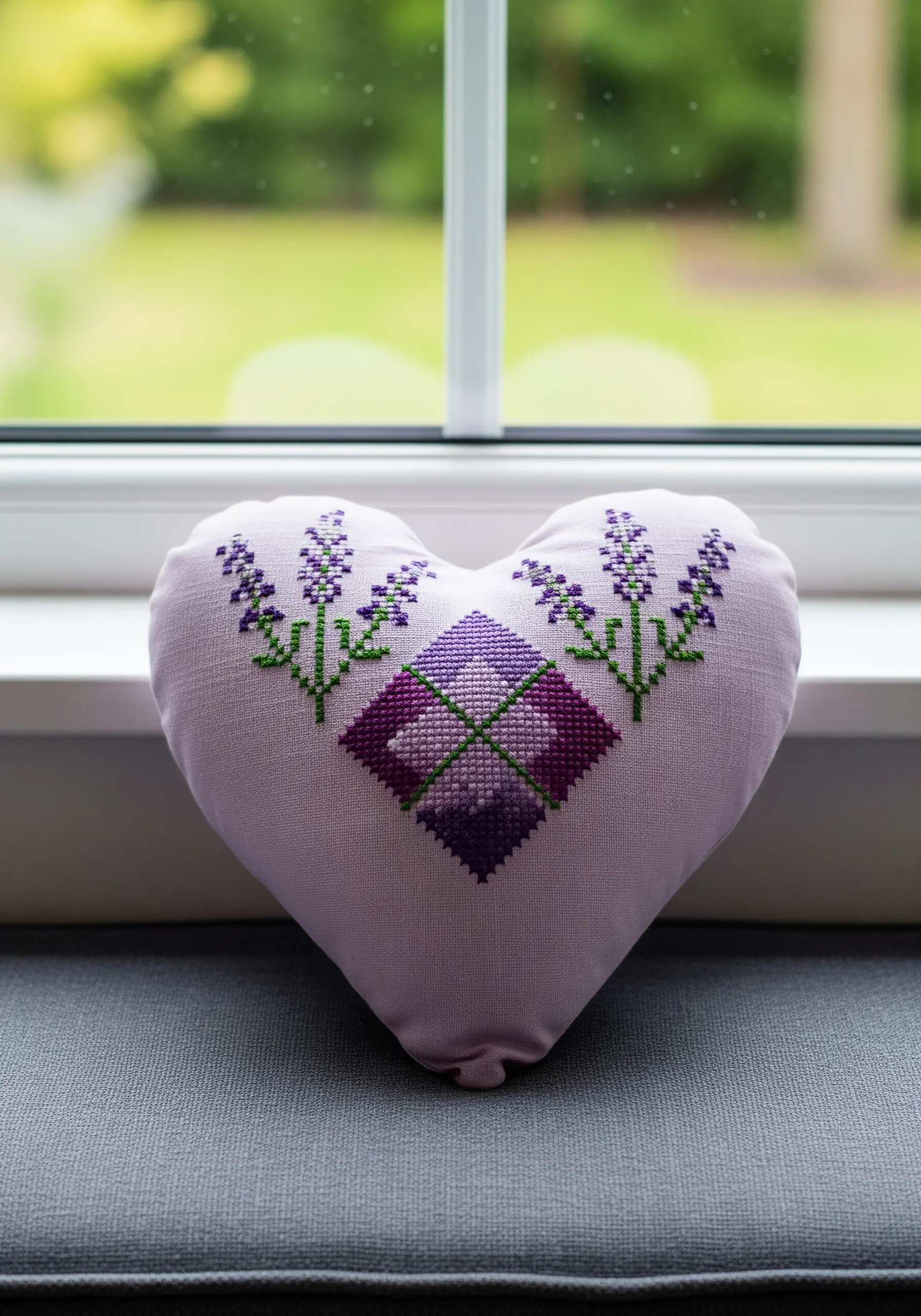
Create a heart-shaped sachet with a charming, rustic feel by merging different stitching styles.
Use cross-stitch to create a geometric, quilt-like pattern in the center of the heart. The blocky, pixelated nature of cross-stitch provides a beautiful contrast to the free-form embroidery.
Frame the central pattern with symmetrically placed, delicately stitched lavender sprigs using simple backstitches and French knots.
This combination of styles gives the piece a unique, modern folk-art aesthetic that feels both traditional and fresh.
35. Frame Your Stitches Within a Project
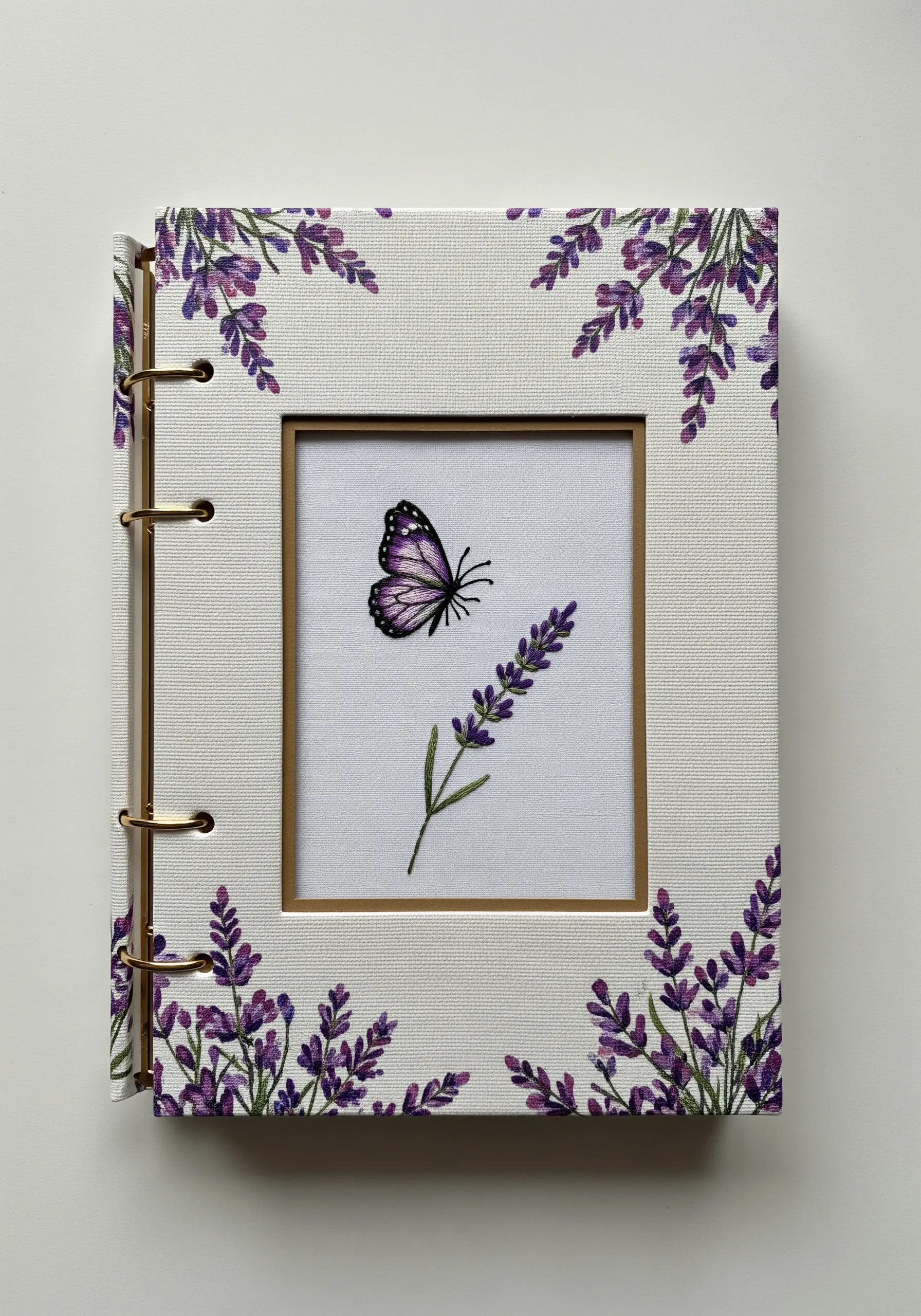
Turn a small piece of embroidery into a focal point by featuring it in a window-style photo album or scrapbook.
Stitch your lavender and butterfly motif on a small piece of fabric, then mount it behind the cover’s cutout window.
This technique elevates both the embroidery and the object, turning a simple stitched sample into a protected and celebrated detail.
It’s a wonderful way to personalize a gift and showcase your needlework in an unexpected and interactive way.


