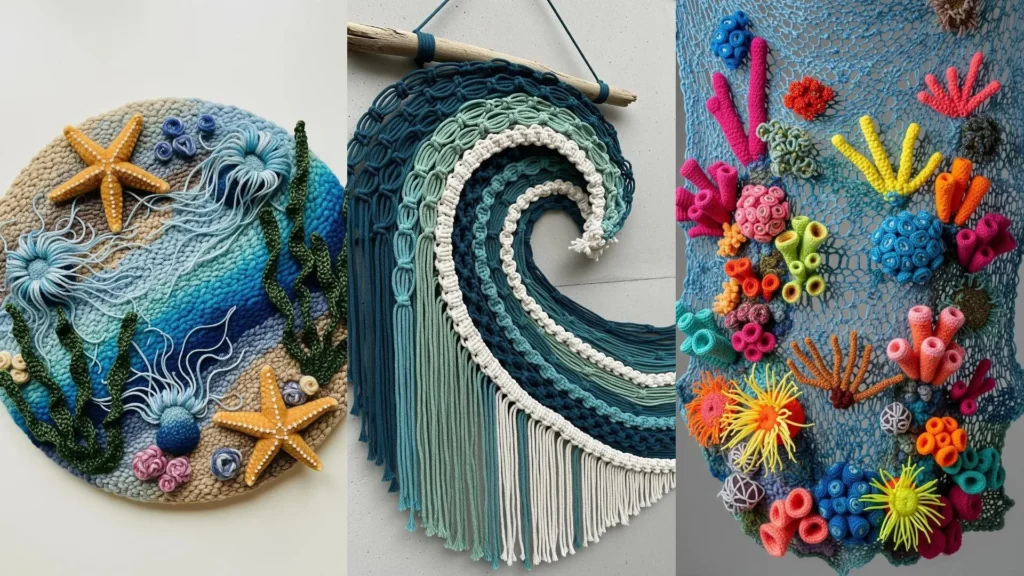
Before you start your next project, I want you to look at the materials you already have. Not just the pristine skeins of yarn, but the things you might otherwise discard: the lone sock, the stained t-shirt, the leftover scraps of thread, the plastic bag tucked under the sink.
This is where true artistry begins—not with a blank canvas, but with the challenge of transformation. The projects you’re about to see are more than just crafts; they are proof that thoughtful technique and a creative eye can elevate the most humble, recycled materials into stunning works of art.
Forget the pressure to be perfect. Instead, focus on texture, on the story embedded in a worn piece of denim, on the unexpected beauty of a coiled fabric scrap. Here, you will find the inspiration and the methods to turn waste into wonder, creating pieces for your home that are not only beautiful but also deeply and personally meaningful.
1. Master Architectural Macrame with Recycled Cord

Move beyond simple plant hangers by focusing on knot tension and geometric precision to create architectural structure.
Use a sturdy, recycled cotton cord and pull each knot with consistent firmness for a professional, uniform finish that prevents buckling.
Incorporate a piece of found driftwood as your base; its organic shape provides a beautiful contrast to the sharp lines of your knot work.
The combination of repeating diamond knots and vertical clove hitches builds a design that feels both intricate and powerfully grounded.
2. Weave with ‘Plarn’ for Sculptural Impact
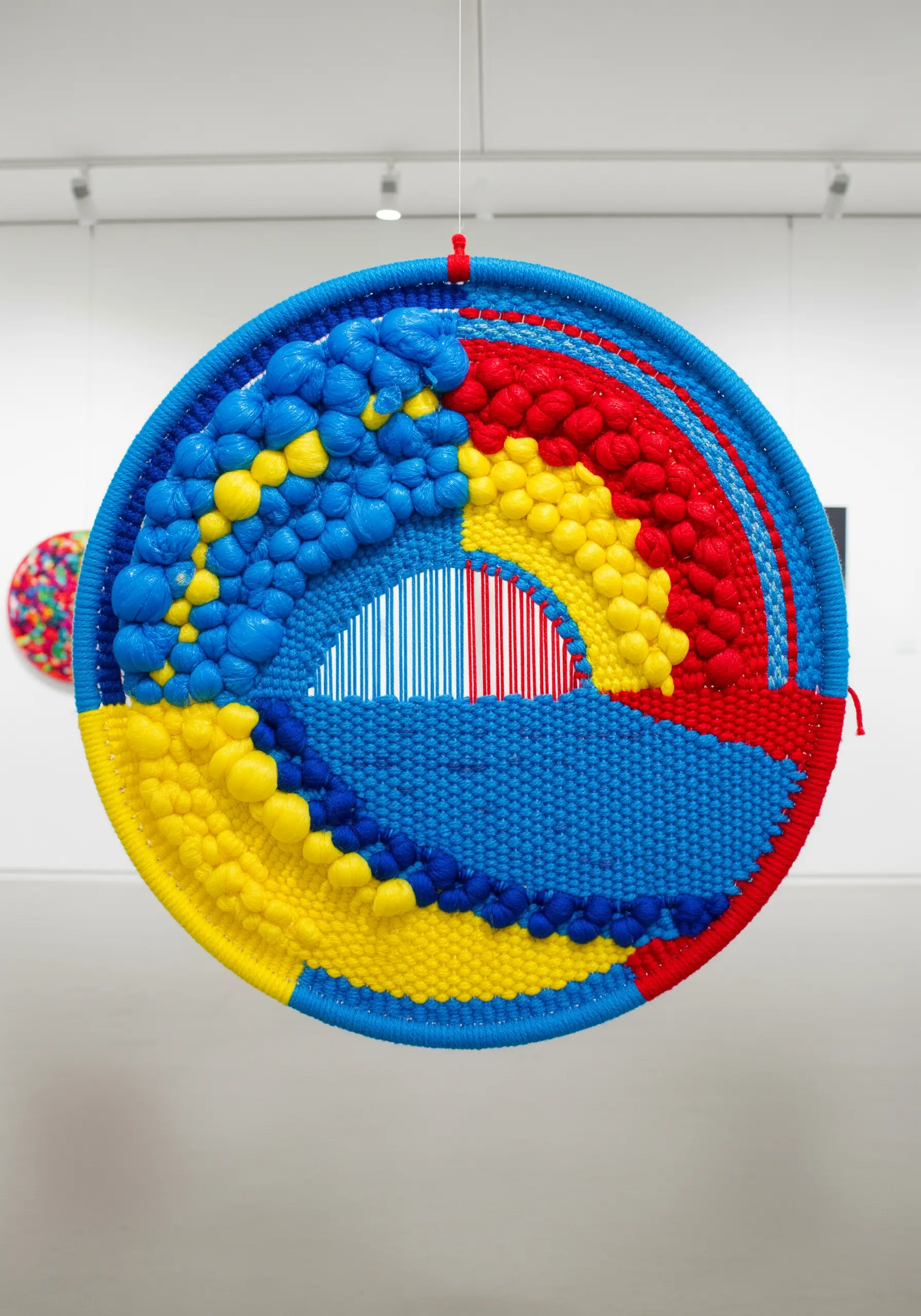
Create your own durable, vibrant yarn by cutting plastic bags into continuous strips, a material known as ‘plarn’.
Wrap a recycled metal hoop (like a bicycle wheel rim) to create a circular loom, then use weaving and knotting techniques to build texture.
Group French knots or use a Ghiordes knot to create dense, bumpy sections that contrast with flat woven areas, adding a sculptural dimension to your work.
This method transforms single-use plastics into playful mixed-fiber art projects, giving them a permanent, artistic purpose.
3. Construct a Shag Tapestry from Fabric Scraps
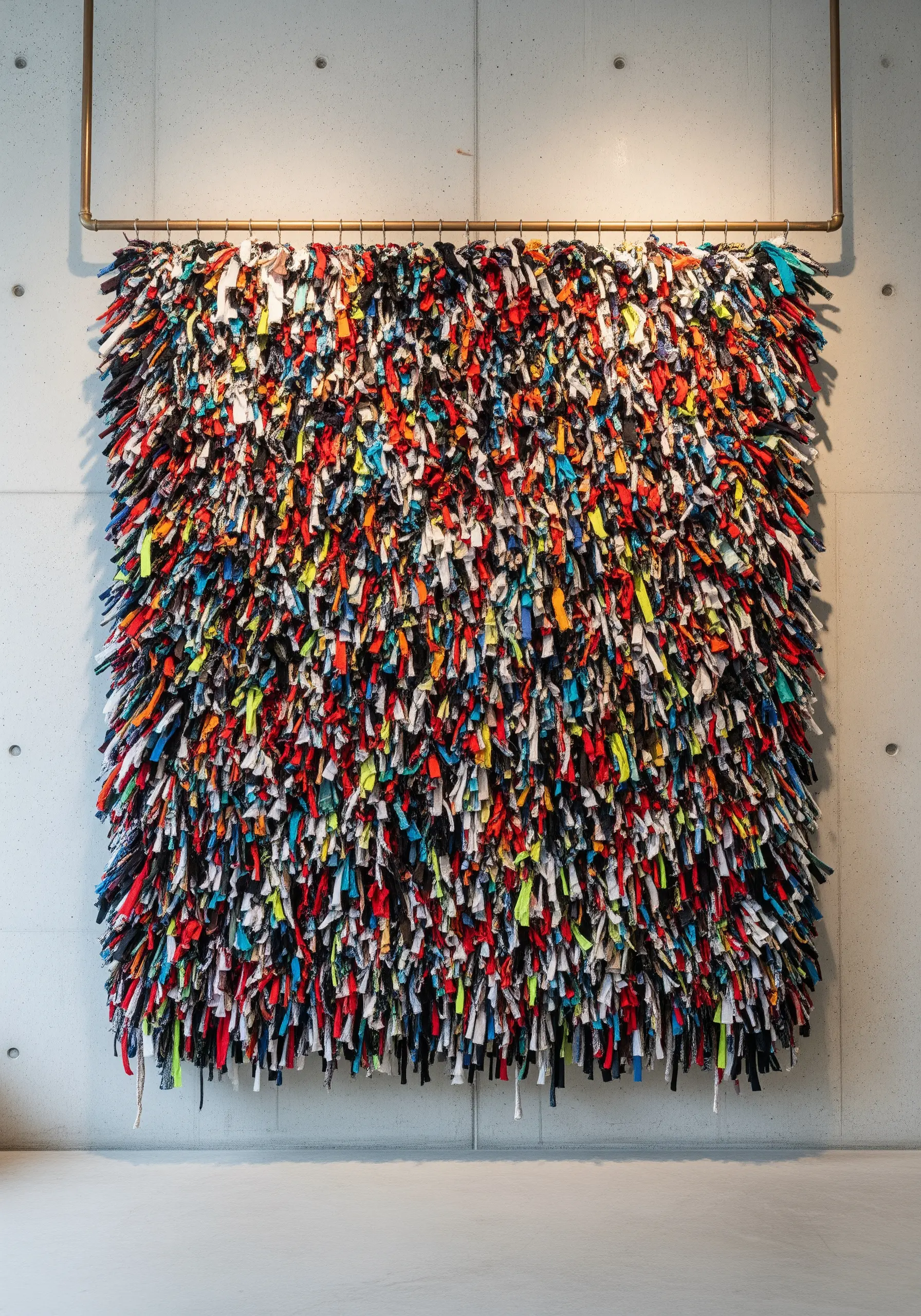
Give new life to old clothing by cutting fabric into uniform strips for a lush, textural shag tapestry.
Use a sturdy mesh backing, like a salvaged laundry bag or fruit net, as your foundation.
Attach each fabric strip using a simple latch hook or Rya knot, ensuring they are packed densely together for a full, luxurious effect.
The visual magic comes from the chaotic blend of colors and patterns, turning a pile of scraps into a cohesive, abstract masterpiece.
4. Sculpt Punch Needle Landscapes on Repurposed Wood
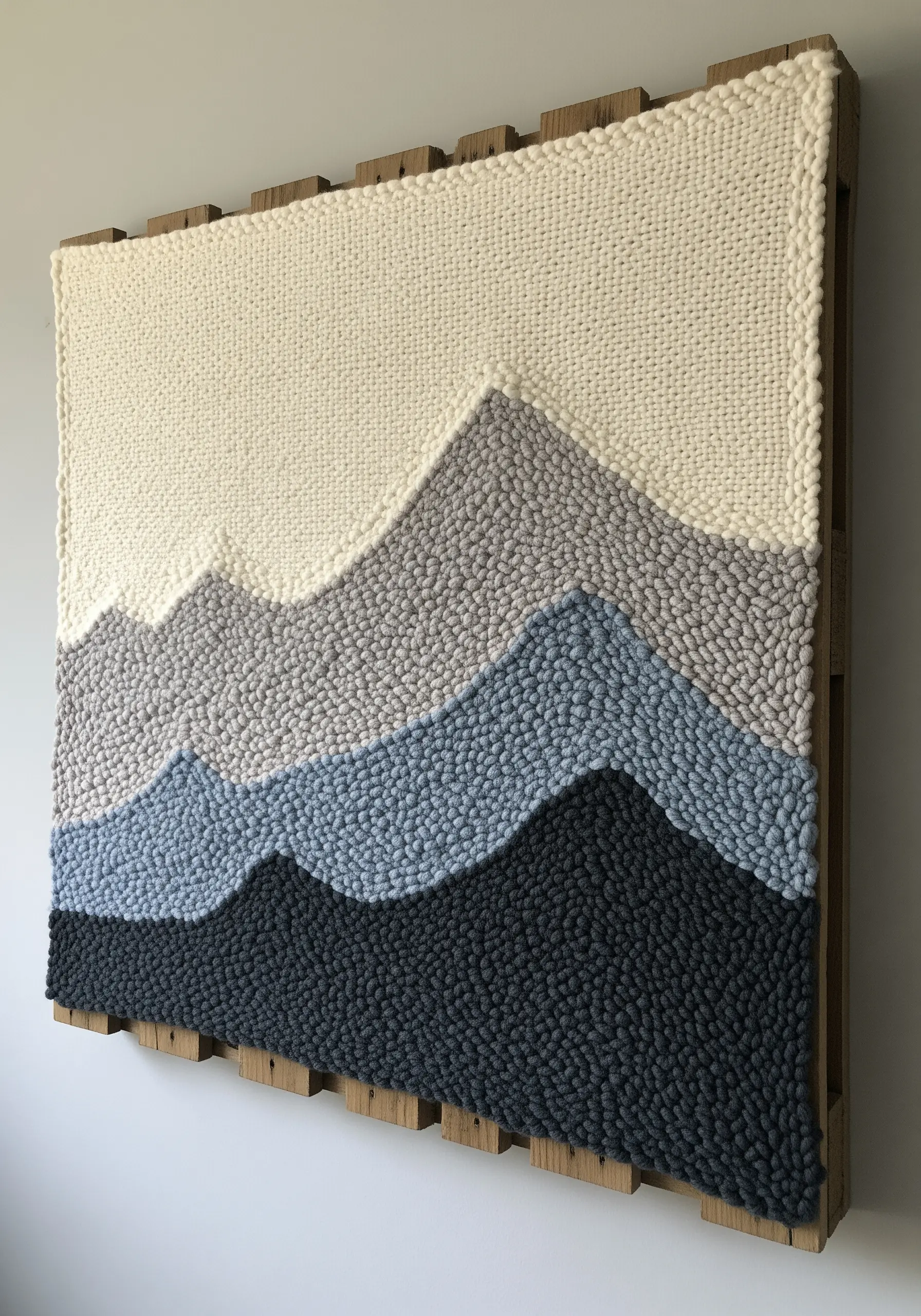
Use a punch needle and chunky recycled yarn to create art that feels more like a low-relief sculpture than a flat textile.
Varying your loop heights is the key to creating depth; use shorter loops for distant mountains and longer, plusher loops for the foreground to create perspective.
Stretch your backing cloth over a frame made from discarded pallet wood for a rustic, industrial finish that complements the soft texture of the yarn.
This technique turns a simple landscape into abstract thread sculpt designs with tangible depth.
5. Combine Delicate Stitches with Upcycled Fabric Strips
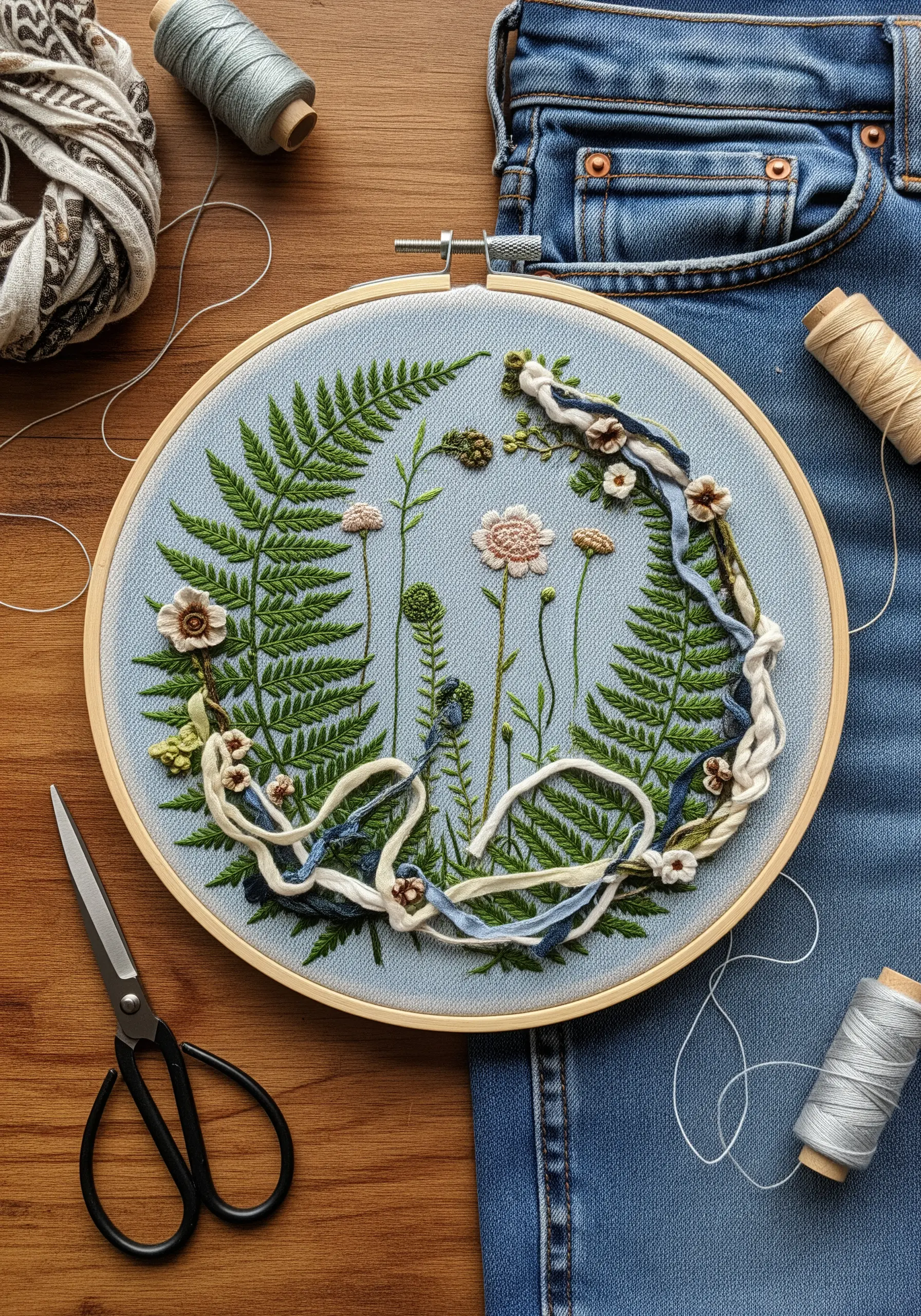
Elevate your botanical embroidery by creating a dynamic textural contrast between fine threads and bulky, recycled materials.
Use a single strand of thread for hyper-realistic fern fronds, focusing on the precision of each tiny stitch to capture its delicate structure.
Then, couch or braid strips of old fabric or chunky yarn to create a bold, flowing ribbon that weaves through your delicate botanicals.
This juxtaposition of textures makes the delicate leaf stitch techniques appear even more refined and detailed.
6. Create Sculptural Forms with Reclaimed Nautical Rope
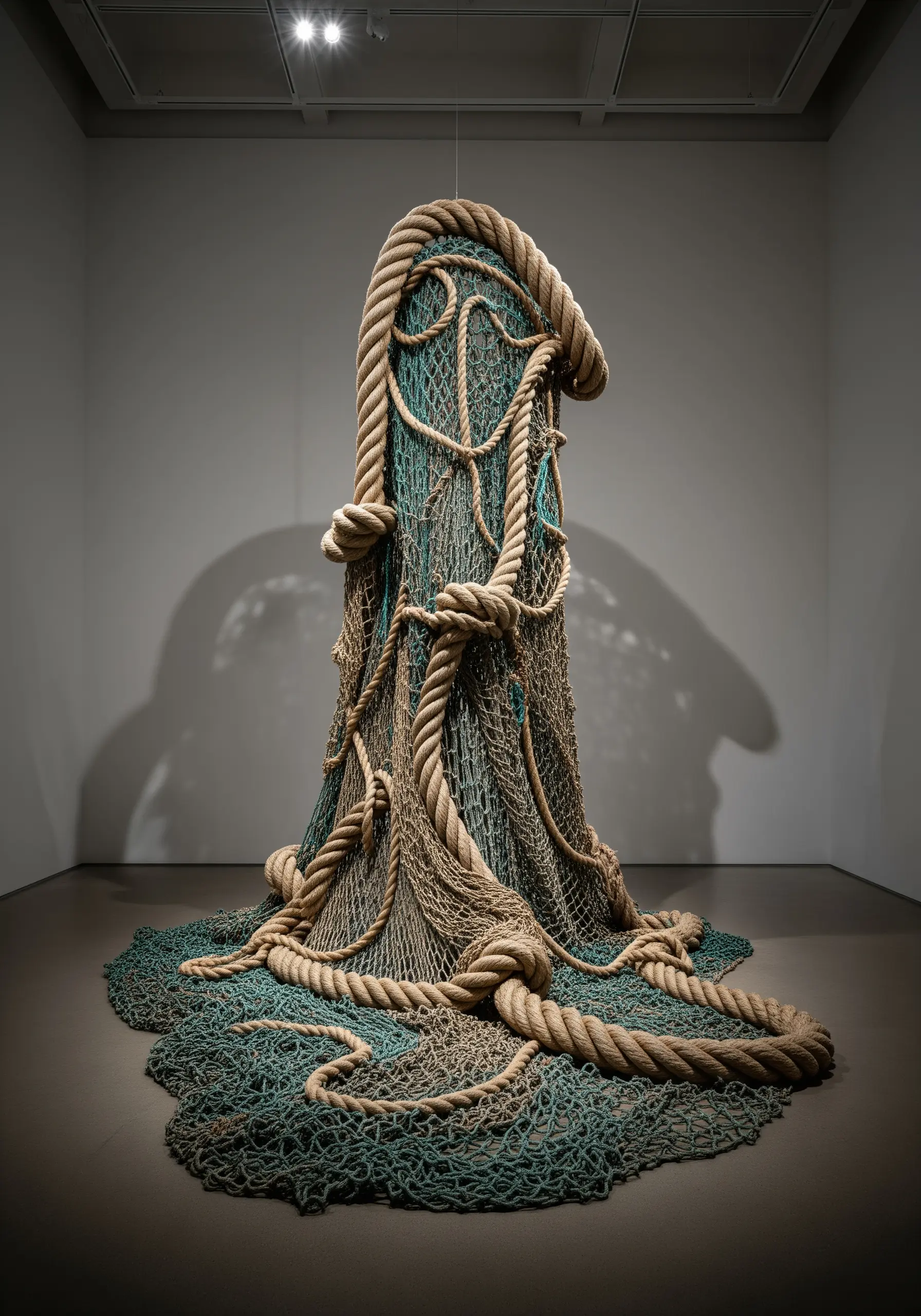
Explore large-scale art by sourcing discarded fishing nets and thick, weathered rope to build a freestanding sculpture.
The inherent stiffness of old rope allows you to create dramatic, self-supporting loops and curves that hold their shape.
Drape the netting over and through the rope structure, letting it pool at the base to create a sense of weight and gravity.
This approach moves beyond the wall, turning recycled materials into a commanding installation that interacts with the space around it.
7. Craft Coiled Wall Art from Fabric Remnants
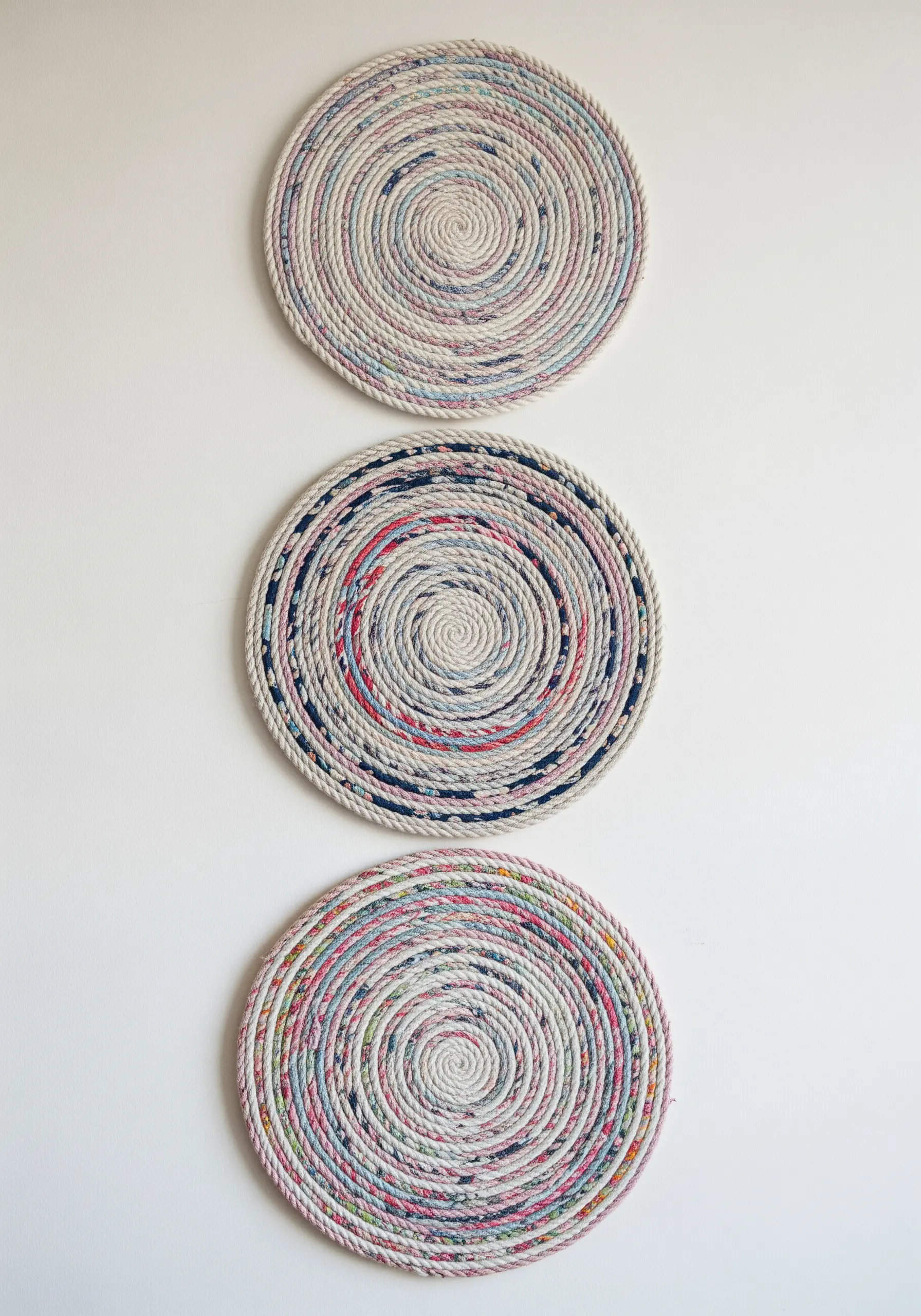
Turn even the smallest fabric scraps into elegant wall decor by wrapping them tightly around a cotton cord or clothesline rope.
Begin coiling the wrapped rope, stitching it to itself every inch with a sturdy needle and strong thread to maintain a tight, flat spiral.
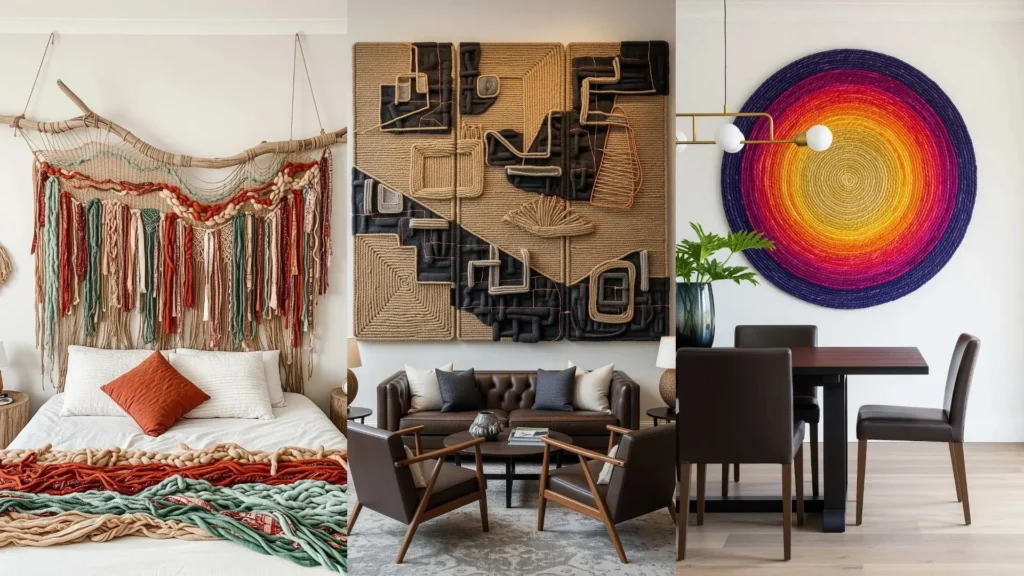
Arrange three finished coils in a vertical line to create a triptych; this simple grouping transforms them from coasters into intentional wall art.
This meditative process ensures no scrap goes to waste and results in handmade organic pieces that add instant texture to any room.
8. Weave with Unconventional Materials
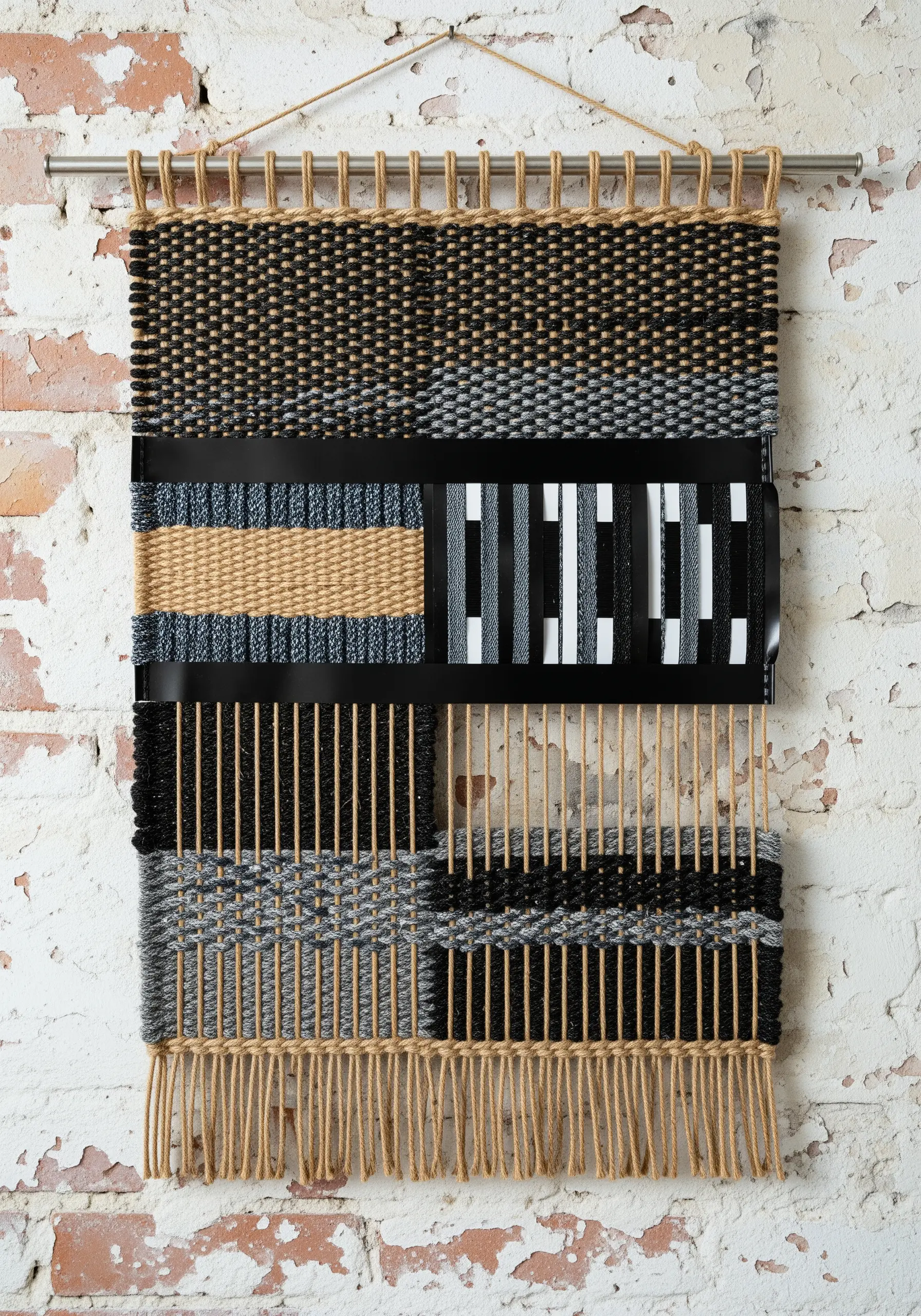
Introduce unexpected textures into your weaving by incorporating materials like strips of faux leather, vinyl, or even old cassette tape.
Create intentional ‘windows’ in your design by leaving sections of the warp threads exposed, adding negative space and a modern, graphic quality.
The contrast between matte yarn, glossy plastic, and the raw jute of the warp creates a sophisticated composition with minimal effort.
This project is a perfect example of how mixed-fiber designs can blend traditional and modern styles seamlessly.
9. Arrange a Gallery of ‘Ojos de Dios’
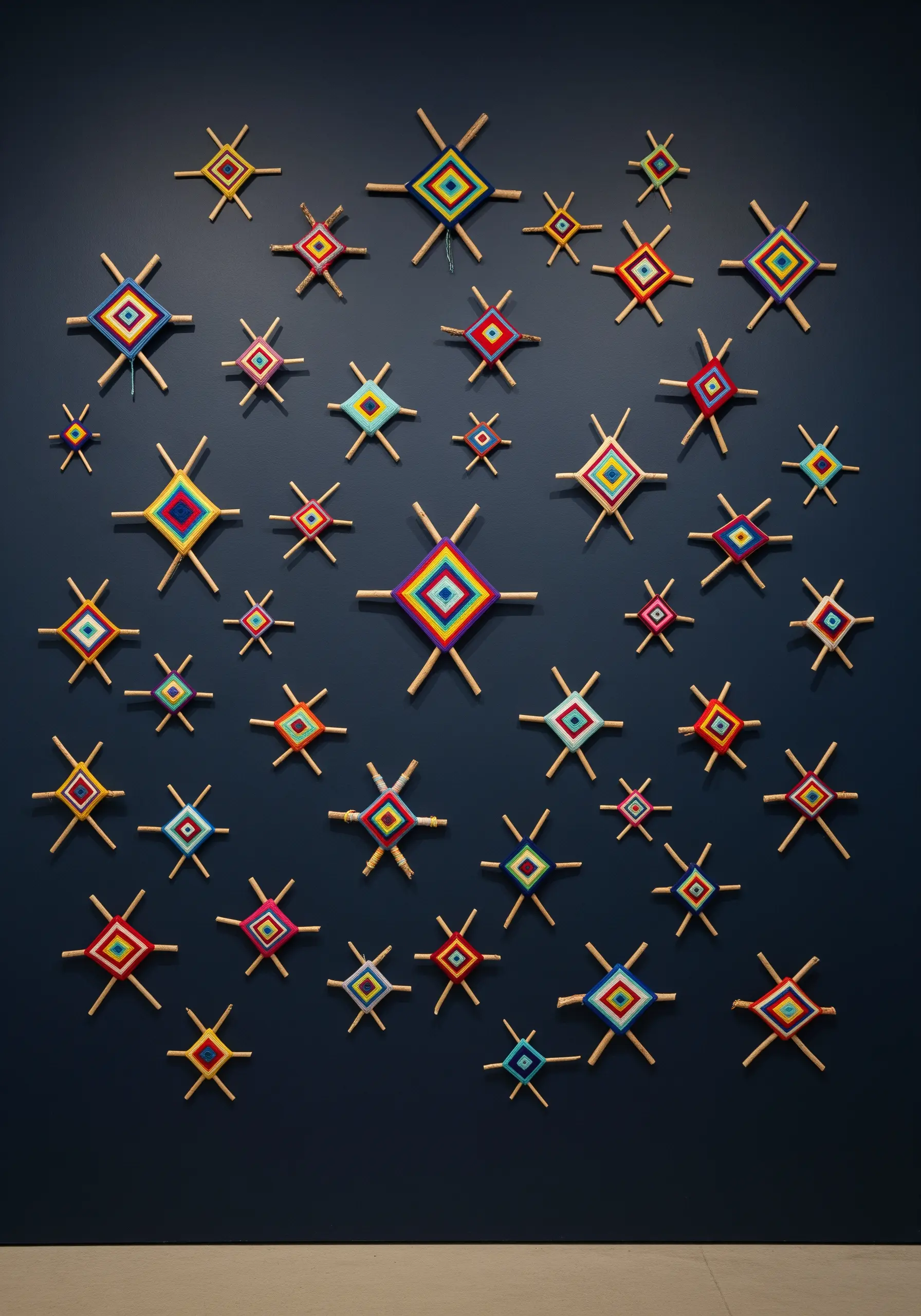
Create a stunning gallery wall using the simple technique of Ojos de Dios, or ‘God’s Eyes’, made from foraged sticks and yarn scraps.
The process is a simple, meditative wrap of yarn around a cross-frame of two sticks, making it perfect for using up small amounts of leftover colors.
The power of this project lies in multiplication; make dozens in varying sizes and colors, then arrange them in a dynamic, scattered pattern on a dark wall.
This turns a simple craft into a large-scale, colorful yarn wall art idea that brightens any room.
10. Design a Gradient Tassel and Pom-Pom Hanging

Use scrap yarn to build a joyful wall hanging that celebrates color and texture through repetition.
Create uniform tassels by wrapping yarn around a piece of cardboard, and make dense pom-poms using a fork or a pom-pom maker.
Arrange them in a rainbow gradient for a visually satisfying flow, using white beads as neutral spacers to help each color pop.
This design proves that simple, repeated elements made from recycled materials can be combined into an incredibly cheerful and whimsical yarn wall art craft.
11. Reimagine the Dreamcatcher with Plastic Ephemera

Elevate the classic dreamcatcher by weaving in unexpected, hard-surfaced recycled materials for a modern twist.
Use colorful plastic bread tags, engraved labels, or other small, flat plastic items as your ‘beads’.
String them along the radial threads of the web, allowing them to replace traditional feathers and beads.
The contrast between the soft, netted thread and the rigid, colorful plastic creates a unique piece of art that tells a story of modern consumption.
12. Explore ‘Macra-Weaving’ with Chunky Recycled Yarns
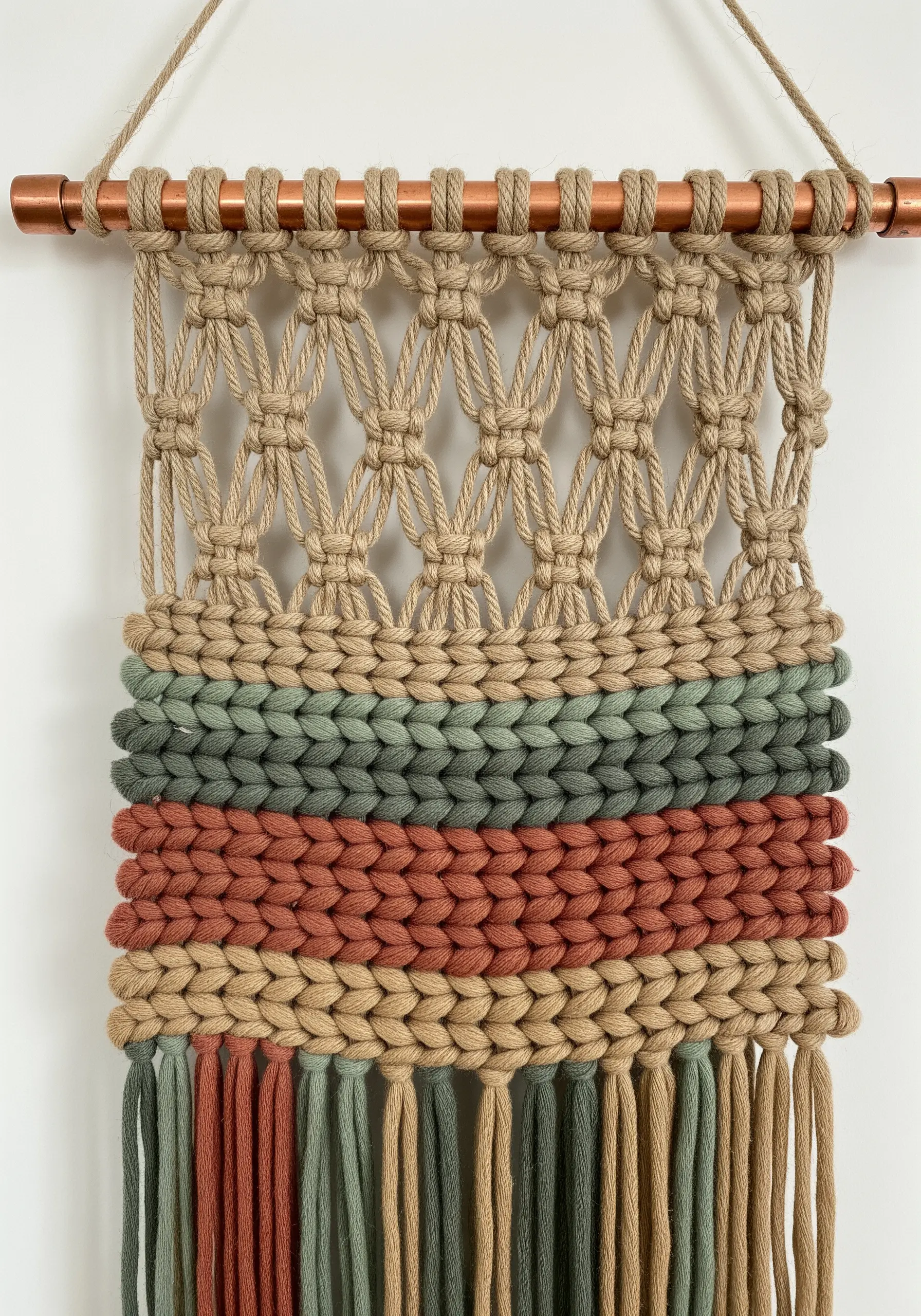
Combine the structure of macrame with the textural freedom of weaving in a single piece.
Start by creating a simple macrame header with square knots or alternating half-hitches to establish a sturdy base on a recycled copper pipe.
Use the vertical hanging cords as your warp threads, weaving chunky, soft-spun recycled yarn through them in thick, satisfying rows.
This hybrid technique allows you to create mixed-fiber wall hangings with both graphic lines and soft, touchable texture.
13. Create an Abstract Collage with Old Neckties
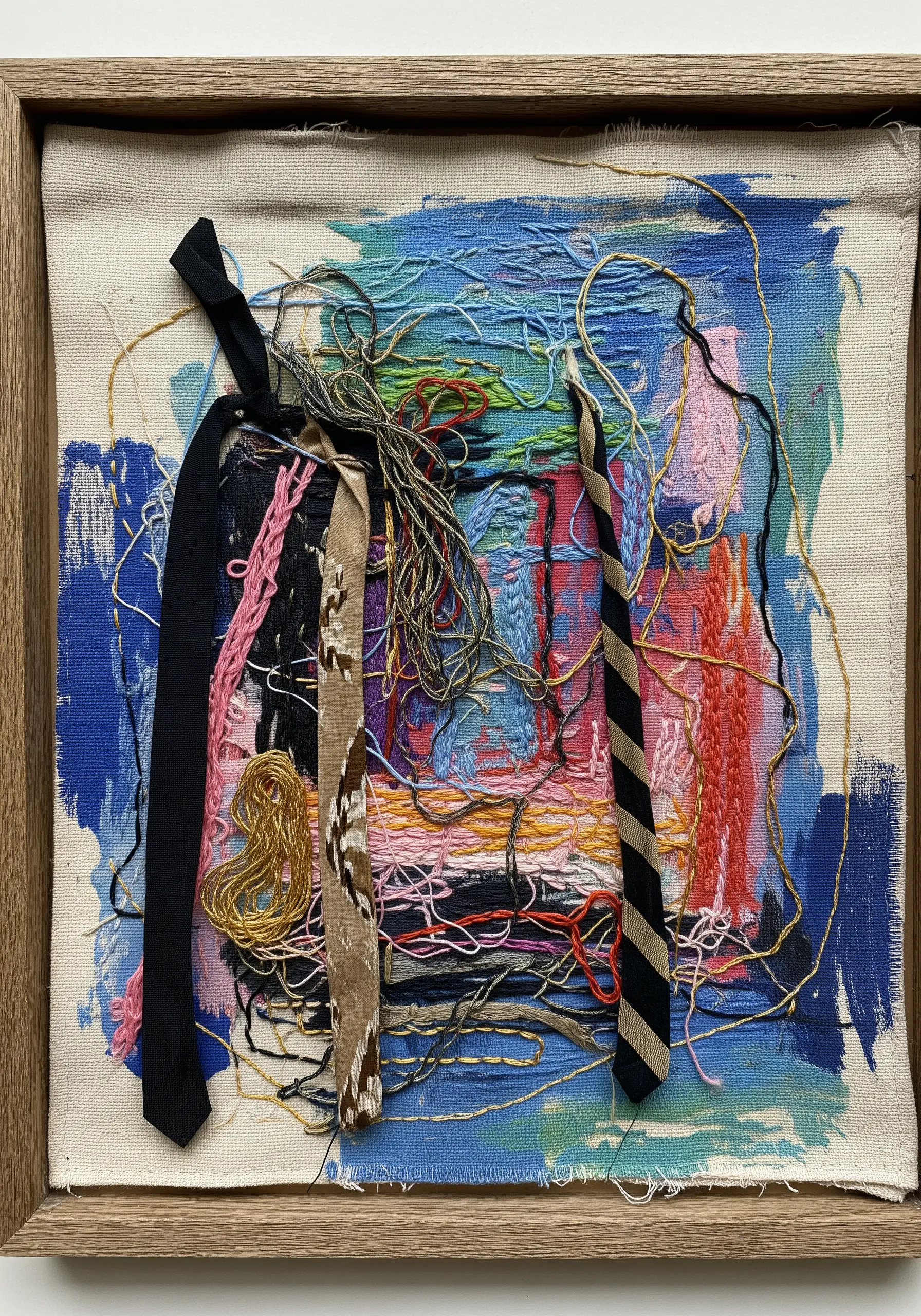
Treat your canvas like a sketchbook and embrace expressive, chaotic energy by collaging with unconventional textiles.
Use old neckties, with their unique patterns and silky textures, as bold, graphic elements within your composition.
Anchor them with loose, sprawling stitches and unraveled threads, allowing the materials to overlap and tangle organically.
This approach is less about perfect stitches and more about building layers of color and history, turning discarded accessories into mesmerizing wall art.
14. Sculpt with Wire Armatures and Scrap Yarn
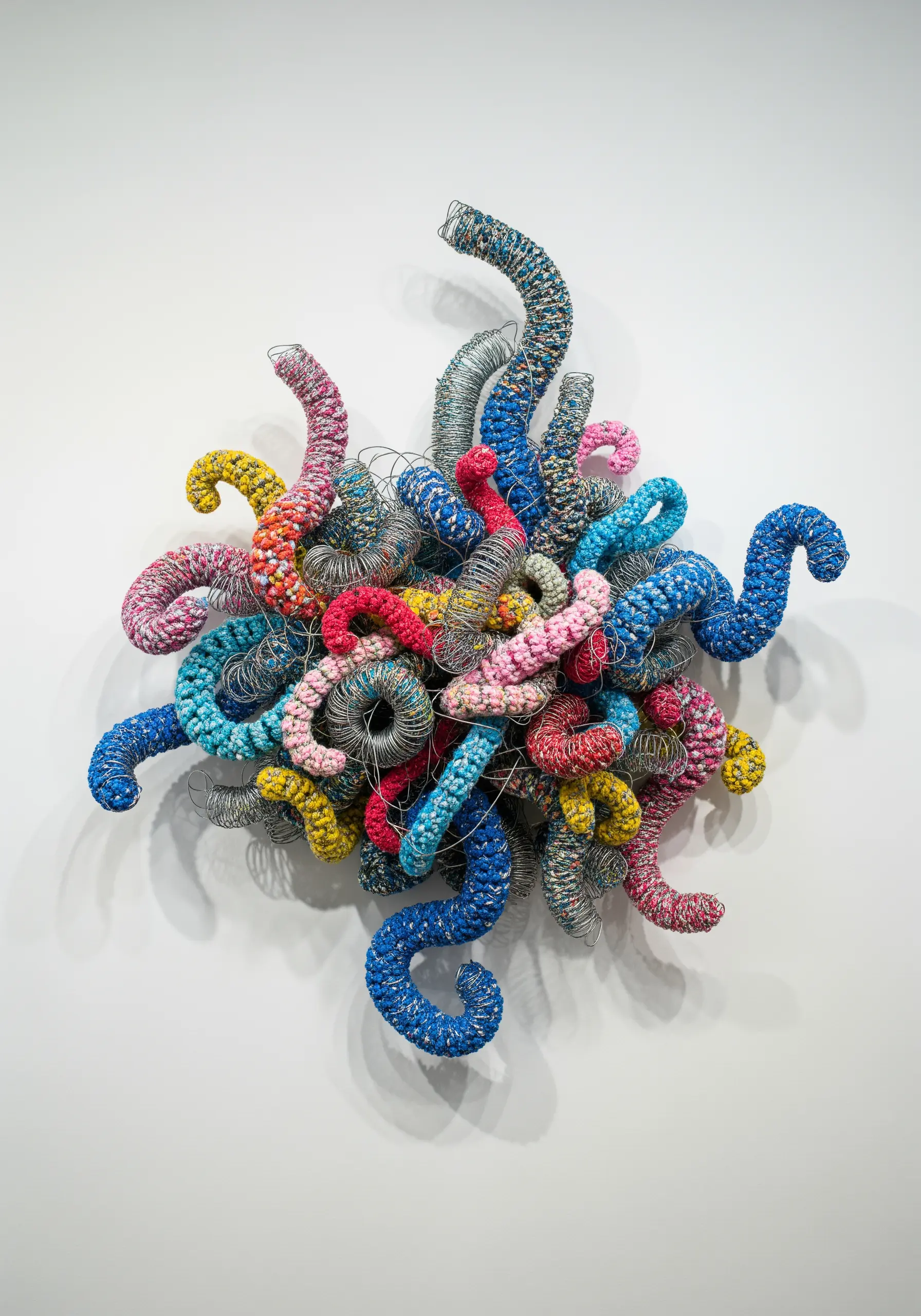
Move your fiber art into the third dimension by using a hidden structure of recycled wire.
Bend and shape sturdy wire (from old coat hangers, for example) into organic, curving forms, creating a skeleton for your sculpture.
Tightly wrap these wire armatures with brightly colored scrap yarn, changing colors to create striped or mottled patterns.
Cluster the finished forms together, allowing them to intertwine and create a single, dynamic sculpture that bursts from the wall with playful energy.
15. Weave Abstract Landscapes with Natural Dyes
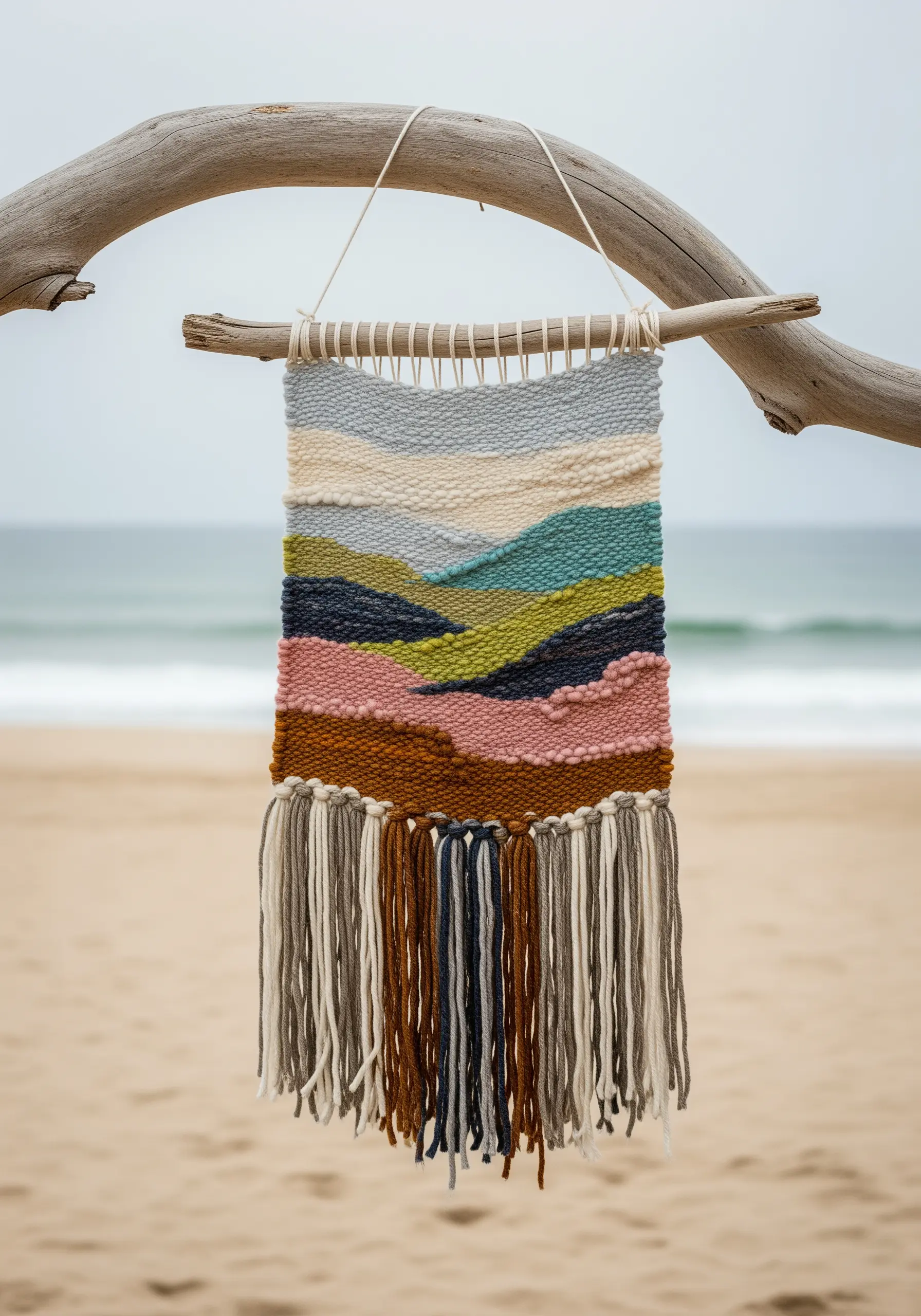
Capture the essence of a landscape by focusing on blocks of color and soft, rolling lines rather than specific details.
Use recycled yarns colored with natural dyes (from onion skins, avocado pits, or black beans) to achieve a muted, earthy palette that feels cohesive.
Create undulating shapes by weaving in ‘hills’ of color, beating each row down gently with a fork to follow the curve of the previous one.
Hanging the finished piece from a found branch reinforces the connection to nature, making it a perfect example of earth-inspired embroidery textures.
16. Paint a Cityscape with Punch Needle Pointillism

Tackle a large-scale, ambitious piece by treating each punch needle loop as a single dot of color, like a pointillist painting.
Use a projector to trace a complex image, like a cityscape, onto your backing fabric.
Work in blocks of color, filling each section with dense loops of recycled yarn to create a vibrant, pixelated effect.
This technique is perfect for creating statement-size embroidered textile hangings that have the graphic impact of a painting but the softness of fiber.
17. Design a Geometric Triptych with Simple Weaving
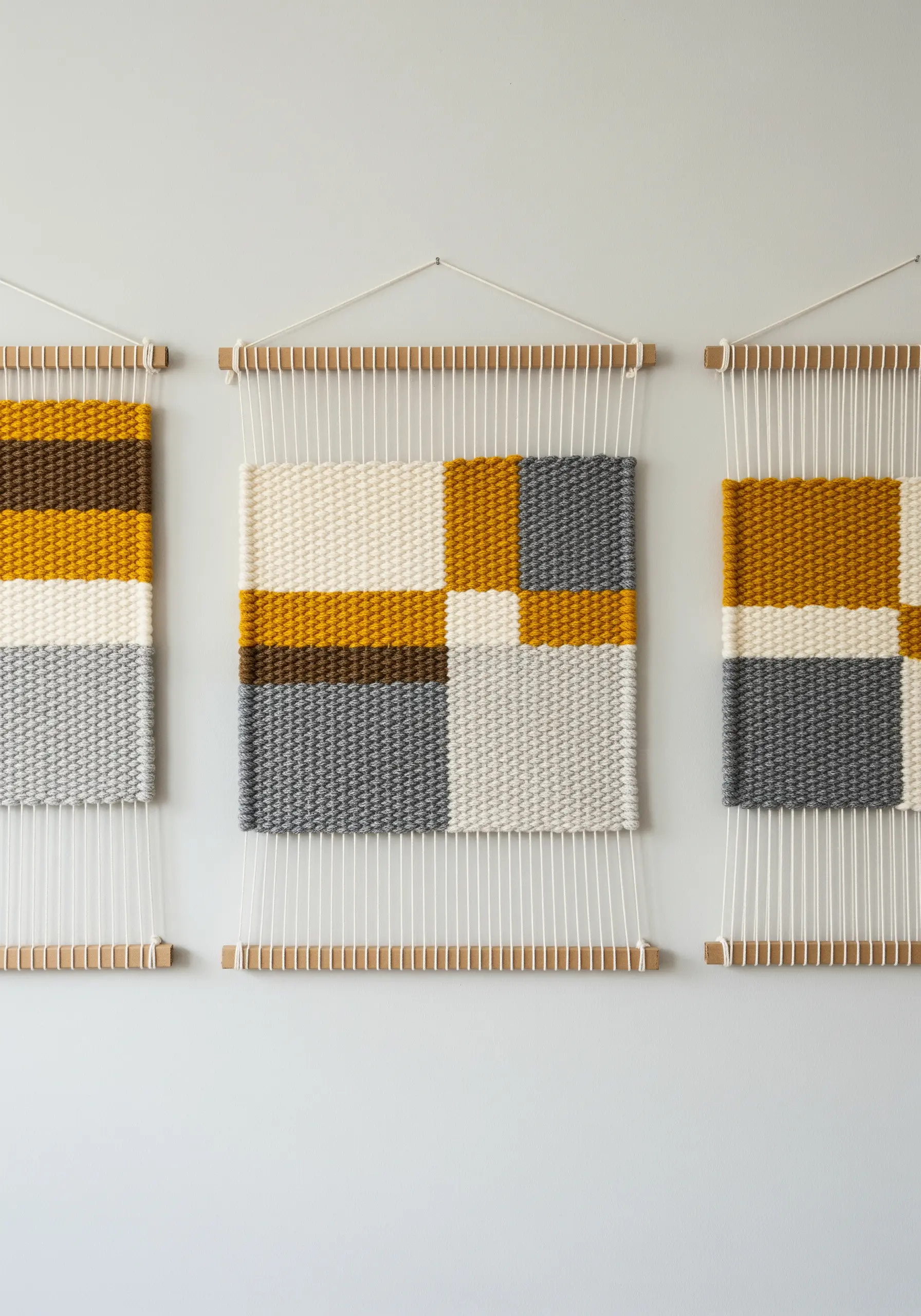
Create a sophisticated, modern art installation by weaving three separate panels that work together as a single piece.
Use a simple frame loom—which you can easily make from an old picture frame and nails—to ensure each panel is the same width.
Plan your geometric design on graph paper first, then use color blocking to create clean shapes and lines.
Hanging them side-by-side with a slight gap between them creates a rhythmic, architectural feel perfect for minimalist embroidery wall pieces.
18. Craft a Boho Wall Hanging with Lace and Ribbon Scraps
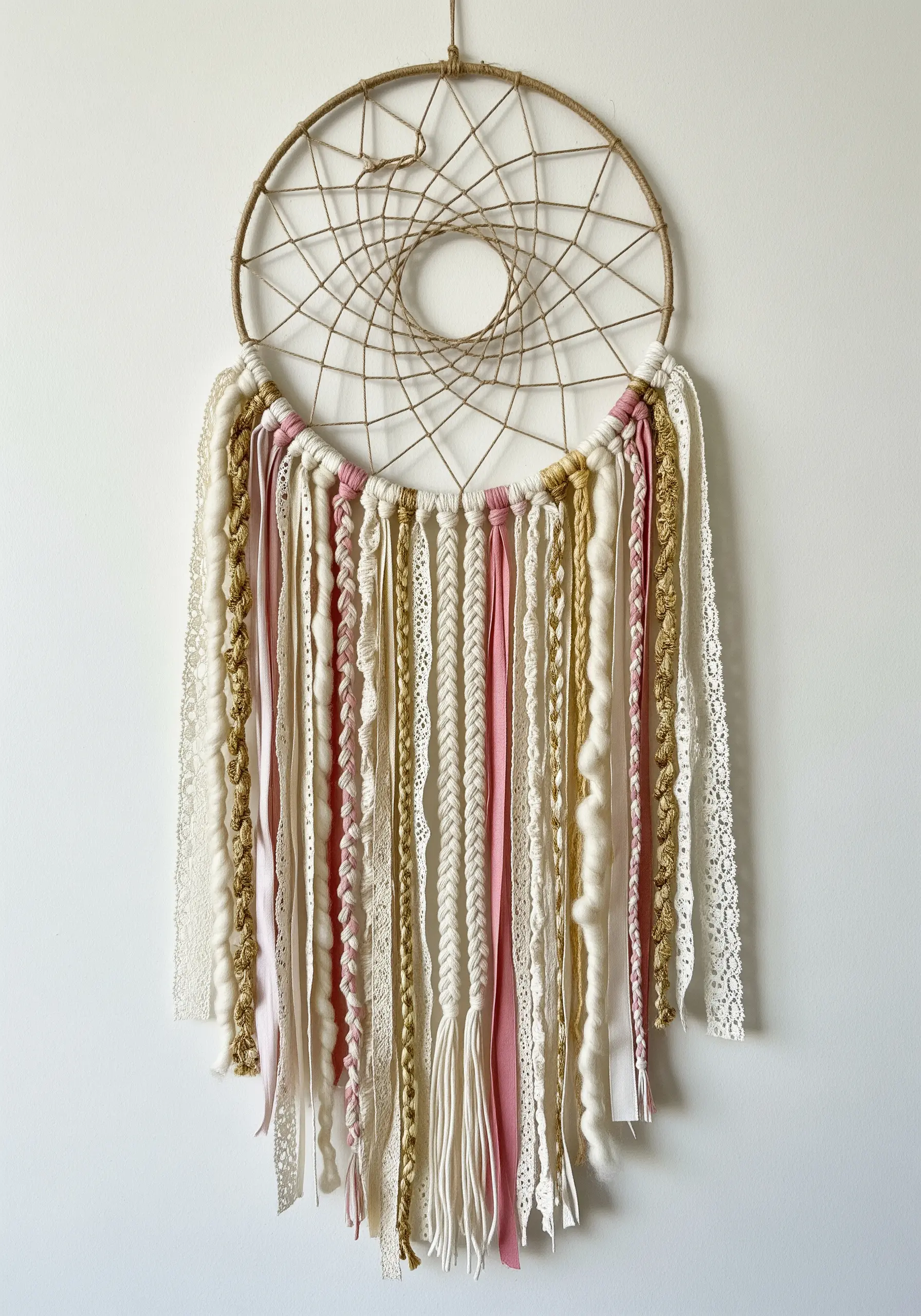
Create a romantic, bohemian wall hanging by combining a variety of textures in a soft, harmonious color palette.
Use a recycled metal hoop as your base, then attach long strips of salvaged lace, torn fabric, satin ribbon, and chunky wool roving.
Braid or twist some of the strips together to create more complex textures and visual interest.
This project is entirely about layering, allowing you to create boho-inspired wall hoop embroidery that feels both luxurious and effortlessly free-spirited.
19. Install a Gradient Fabric Waterfall
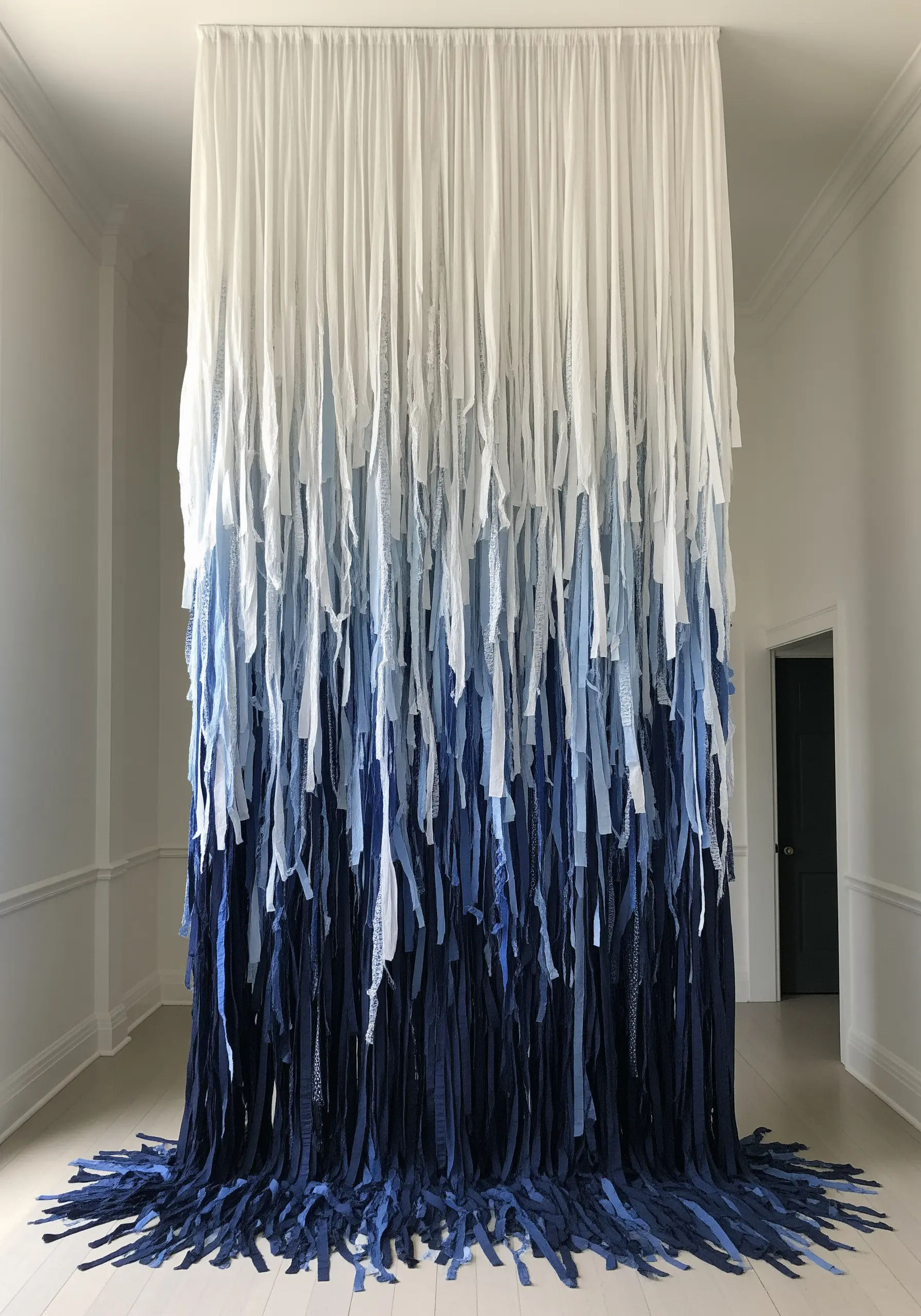
Make a dramatic statement with an immersive, floor-to-ceiling installation made from recycled fabric strips.
Source old bedsheets or tablecloths from thrift stores, then cut or rip them into long, continuous strips.
Use fabric dye to create a beautiful gradient effect, dyeing batches of strips in progressively darker shades of a single color.
Hang them from a ceiling-mounted rod, allowing the fabric to pool on the floor, transforming a simple material into a breathtaking, waterfall-like sculpture.
20. ‘Paint’ a Portrait with Plaid Fabric Scraps
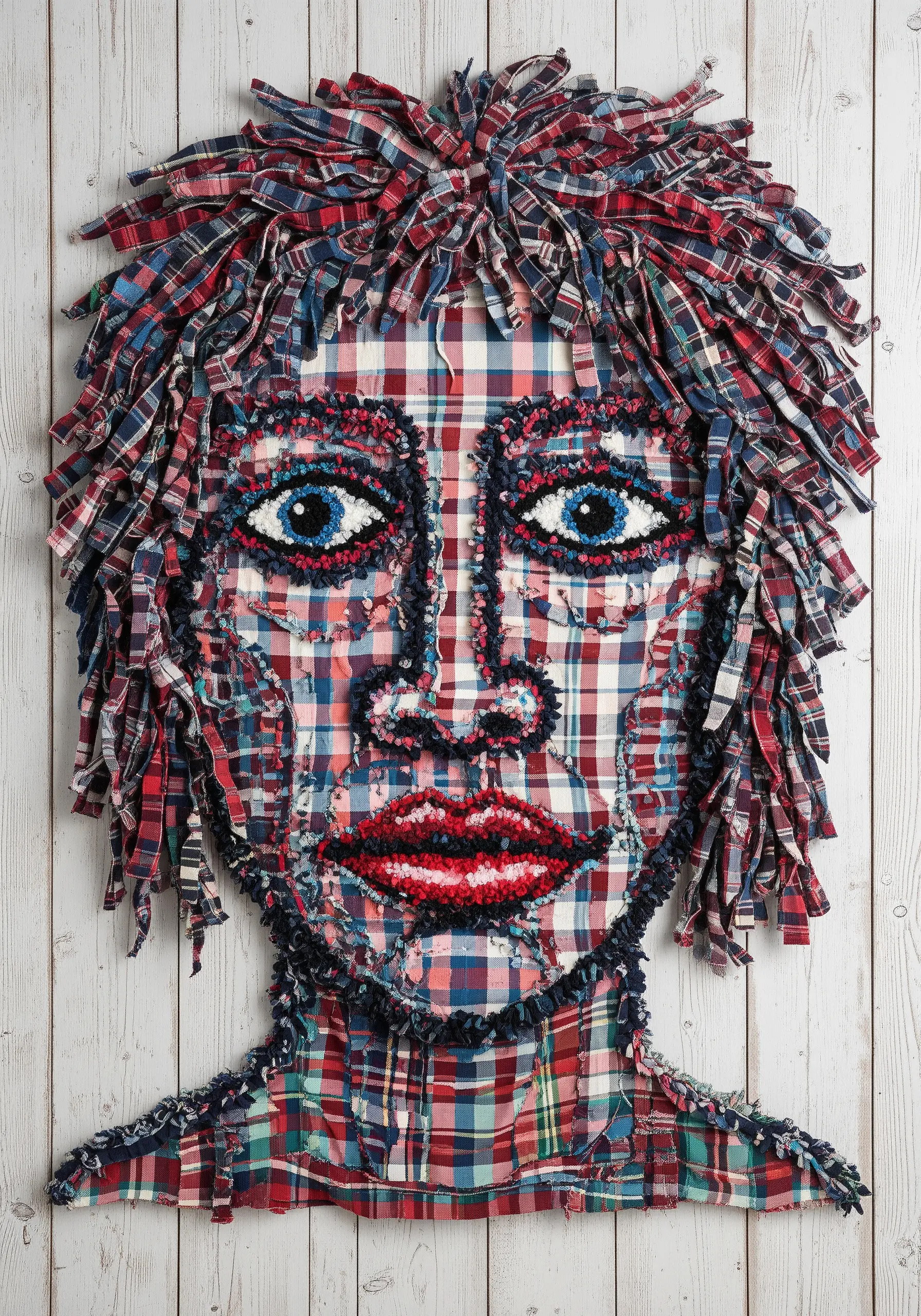
Challenge yourself to create a portrait using fabric scraps as your palette, a technique that blends collage with mosaic art.
Cut up old plaid shirts and other patterned fabrics, sorting them by color and tone.
Think of the patterns as your brushstrokes; use the lines of the plaid to suggest contours and the different colors to create shading and highlights.
Glue or stitch the pieces onto a backing fabric to slowly build a complex, expressive portrait that is rich with texture and history.
21. Weave a Seascape from Old Denim
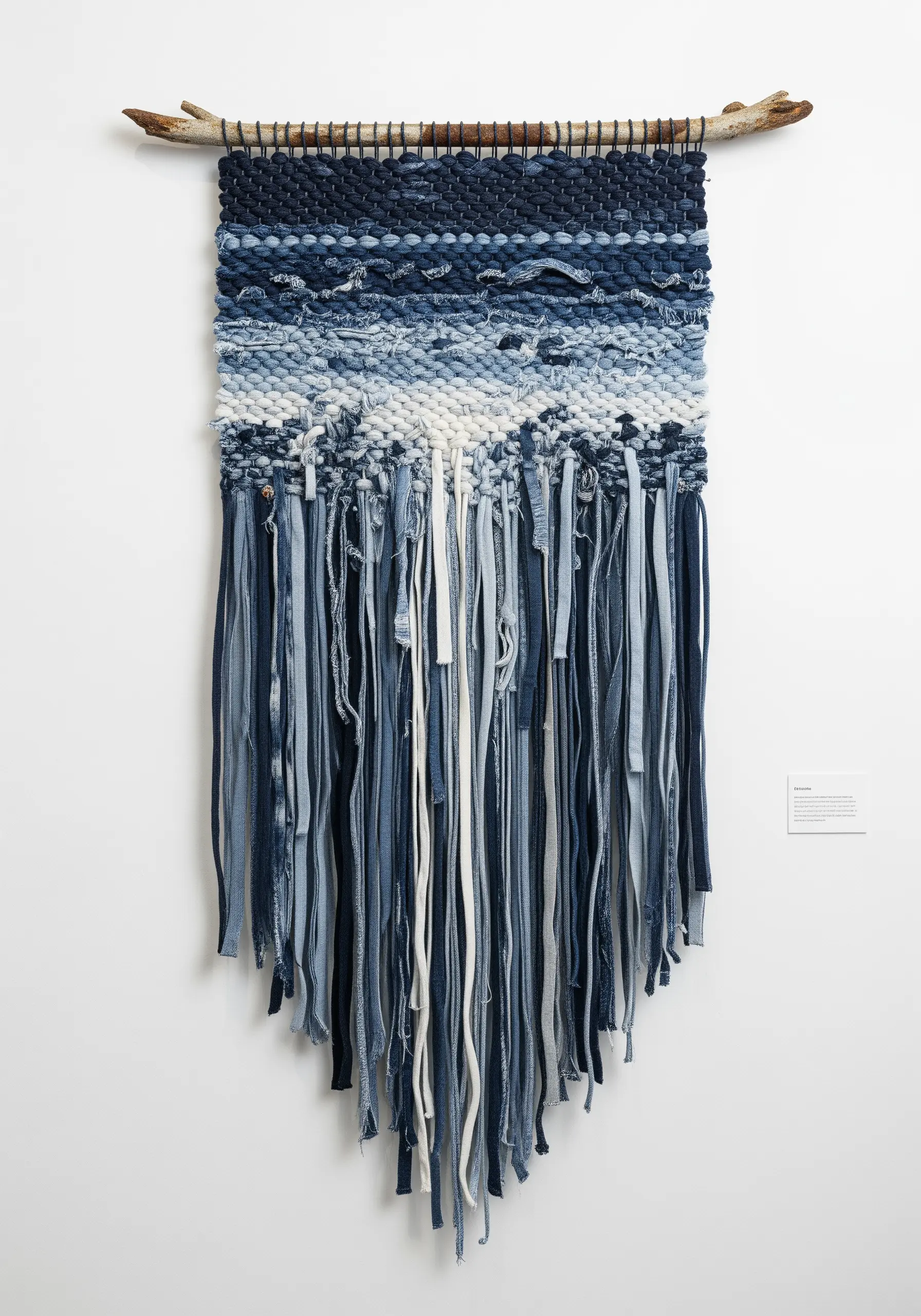
Capture the movement and tones of the ocean by weaving with strips cut from old jeans.
Collect denim in various washes—dark, light, acid-washed, and white—to create your color palette.
Alternate between plain weave for calm sections and textured soumak stitch or thick knots to represent crashing waves and sea foam.
Let the raw, frayed edges of the denim strips become part of the design, adding to the rugged, organic feel of this coastal vibe embroidery project.
22. Incorporate Found Objects into Minimalist Macrame

Elevate your macrame by integrating a natural, found object as the focal point of a simple design.
Find a beautiful, smooth stone and use a series of lark’s head and half-hitch knots to create a secure net or cradle around it.
Keep the surrounding macrame minimal and asymmetrical, allowing the stone to be the hero of the piece.
This thoughtful composition creates a sense of balance and calm, turning a simple rock into a piece of zen-inspired handmade earth-tone decor.
23. Create Graphic Pop Art with Punch Needle
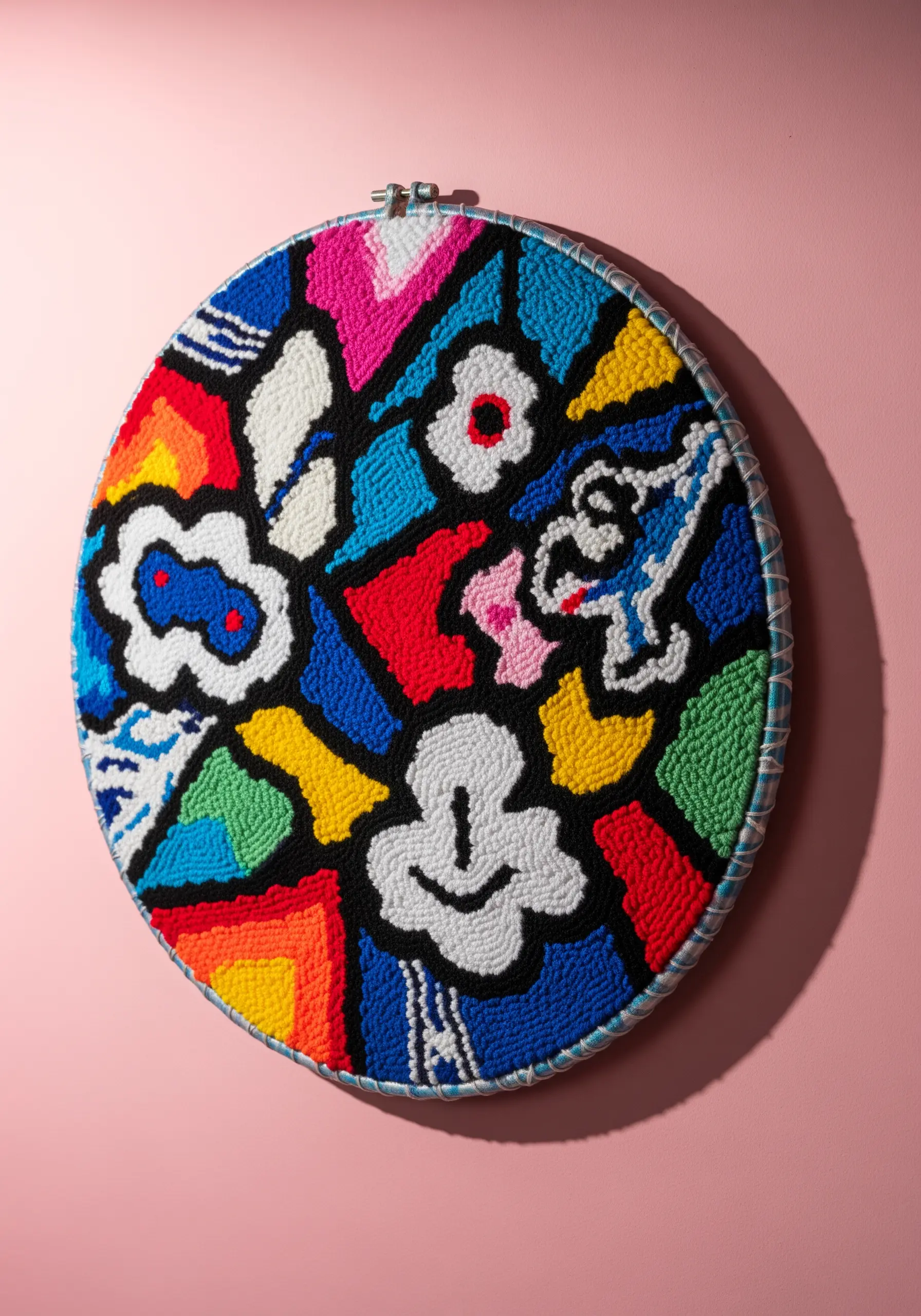
Use the punch needle technique to create bold, graphic art that feels modern and playful.
Outline each shape in your design first with a line of black or dark-colored loops; this creates a crisp, containing border that makes your colors pop.
Fill in each section with flat, even loops of brightly colored yarn scraps, creating a clean, cartoon-like effect.
Mounting the finished piece in a simple embroidery hoop keeps the focus on the vibrant, energetic design, making it a perfect color-pop embroidery art idea.
24. Embellish a Secondhand Tapestry with Stitching
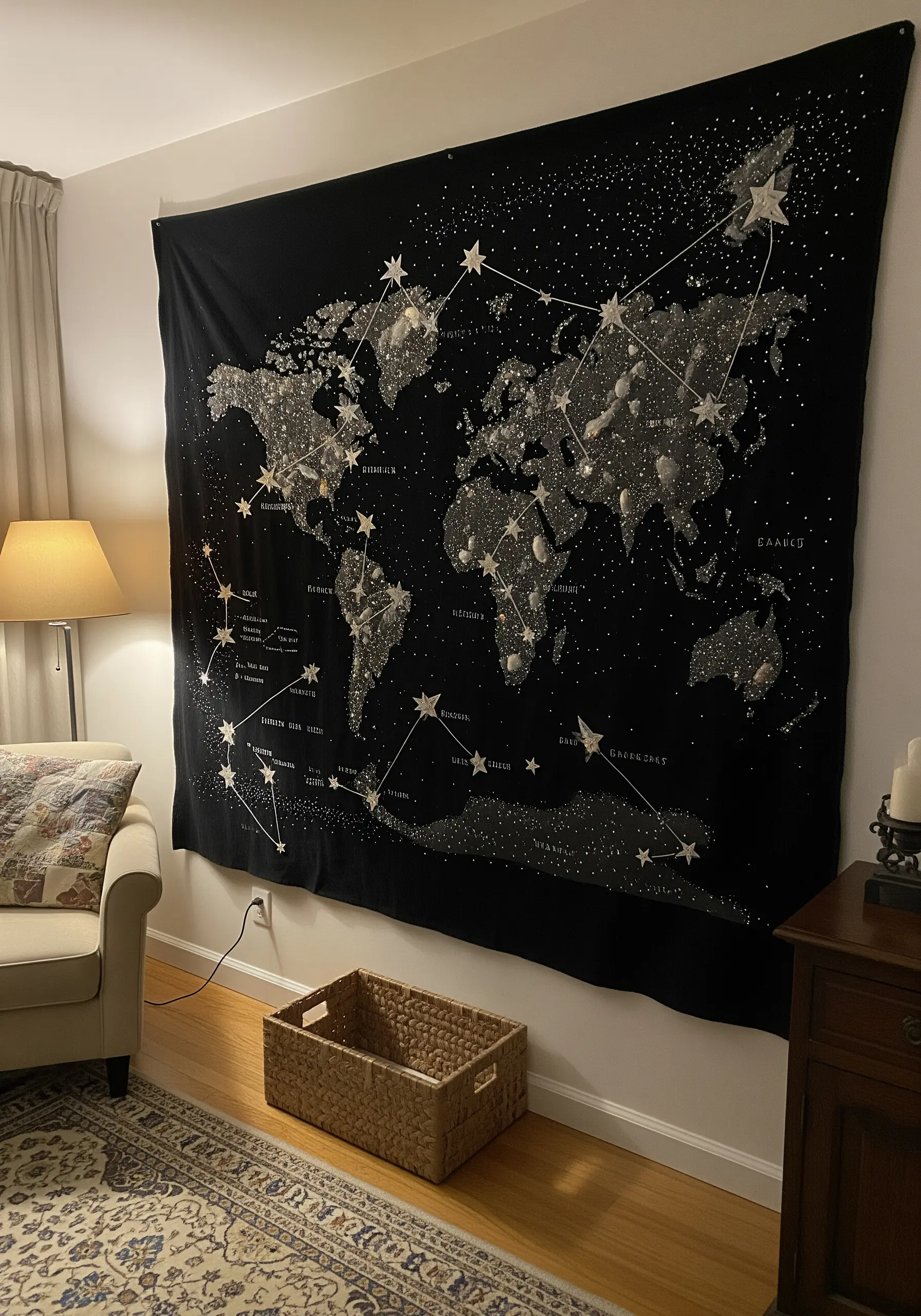
Transform a generic, store-bought wall tapestry into a unique, personal work of art with simple embroidery and appliqué.
Use embroidery floss, yarn, or metallic thread to trace and highlight existing lines in the printed design.
Appliqué small shapes cut from felt or glittery fabric—like stars or continents—to add texture and a layer of new meaning.
This is one of the easiest ways to create large-scale DIY embroidery projects without having to design from scratch.
25. Craft a Sculptural Knot from Reclaimed Rope
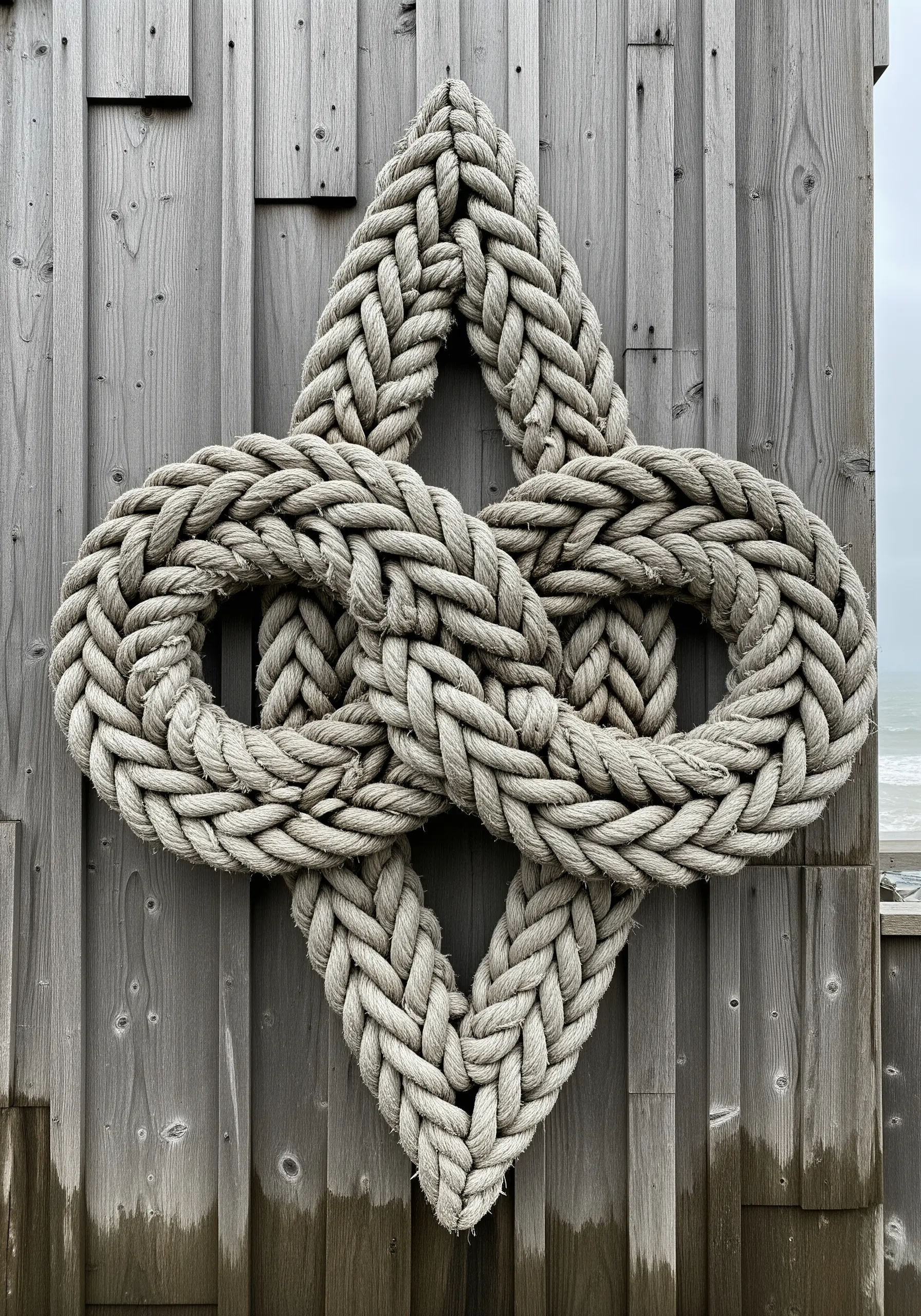
Turn a single, complex knot into a powerful piece of sculptural wall art using thick, reclaimed rope.
Choose a decorative knot with a pleasing symmetry, like a Celtic knot, a Josephine knot, or a Carrick mat knot.
Practice tying it with a smaller cord first before committing with your heavy rope, ensuring each loop is even and the pattern is clear.
The texture and history of the weathered rope provide all the visual interest needed, creating a minimal yet commanding statement piece.
26. Weave an Intuitive ‘Scrap-Buster’ Tapestry

Embrace improvisation by creating a weaving without a plan, letting your collection of scraps guide the design.
Combine different materials in each row: thin yarn, chunky roving, torn fabric strips, and unraveled threads.
Experiment with leaving gaps, creating loops, or letting the edges be uneven and organic.
This intuitive process results in a unique piece that documents your materials and creative mood, turning textile waste into shockingly beautiful scrap fabric collage embroidery.
27. Construct a Social Commentary with Consumer Waste

Use your fiber art skills to create a piece that tells a story about our culture of consumption.
Weave a large-scale tapestry using disposable materials like branded plastic bags, product packaging, and promotional fabric totes.
Incorporate whole items, like crumpled bags or small toys, to add a sculptural, almost archaeological dimension.
This technique transforms overlooked trash into a powerful visual statement, proving that even the most humble materials can be used to create compelling DIY art pieces.
28. Build Soft Sculptures from Old Knitwear
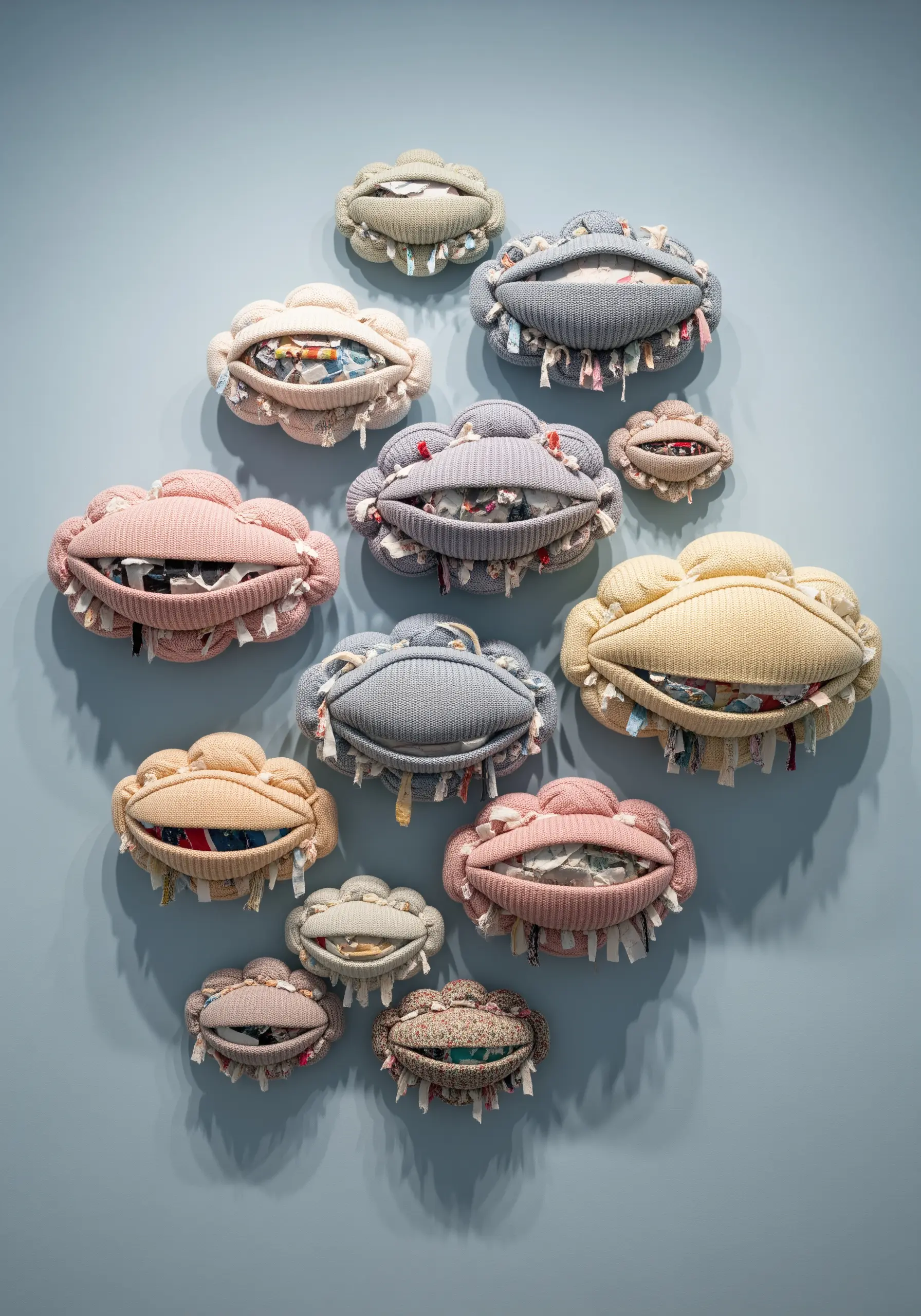
Give old, stretched-out sweaters a new life as charming, three-dimensional soft sculptures.
Cut organic, cloud-like shapes from the knitted fabric, stitch two identical pieces together, and leave a small opening for stuffing.
Fill them with fabric scraps, old socks, or other textile waste that can’t be used for anything else, then stitch them closed.
Group these soft, puffy forms on a wall to create a whimsical, comforting installation that invites touch and curiosity.
29. Create a Coiled Rag Rug from Unwearable Clothes
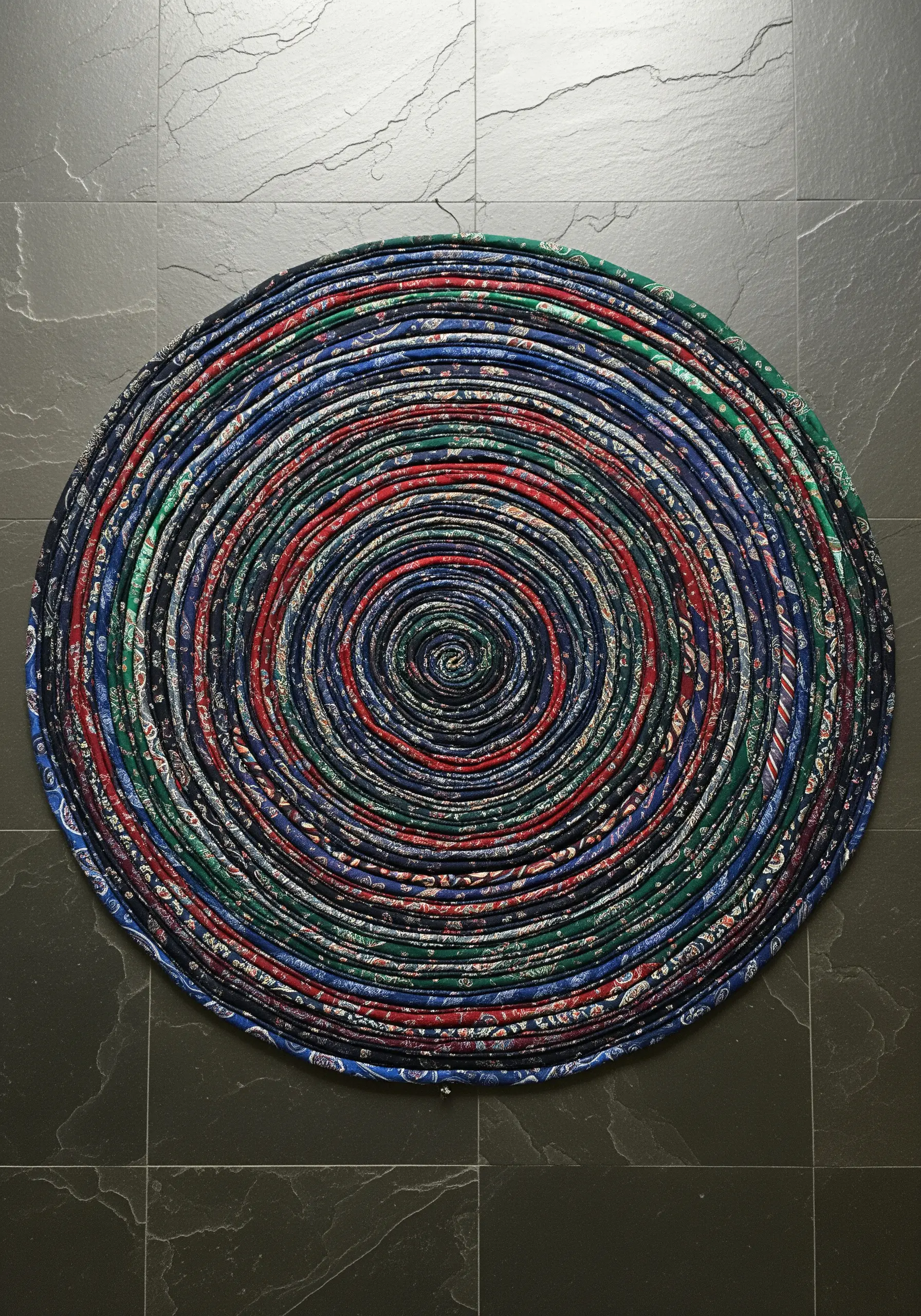
Use the traditional rag rug technique to turn a pile of worn-out clothing into a durable and beautiful floor piece.
Cut old t-shirts, dresses, and leggings into long, continuous strips, then braid or wrap them around a central cord.
Coil the thick braid tightly, hand-stitching the coils together with a heavy-duty needle and thread as you go.
The random mix of colors and patterns from your old wardrobe creates a vibrant, spiral design that is both deeply personal and practical.