You have the materials, the patience, and the desire to create something beautiful with your hands. But sometimes, what you envision in your mind doesn’t quite translate through the needle. The stitches feel flat, the composition lacks energy, or the finished piece just doesn’t have that spark you were hoping for.
The secret to elevating your work often lies not in learning dozens of new, complicated stitches, but in shifting your perspective. It’s about looking at the world around you—the texture of bark, the geometry of a bridge, the flow of water—and asking, ‘How can I interpret that with fiber?’
These ideas are your invitation to think like a sculptor, a painter, and an architect, all while holding a needle and thread. Let’s explore how to manipulate texture, command color, and play with form to make your embroidery feel more intentional, more dynamic, and more uniquely yours.
1. Embrace Sculptural Stitching with Chunky Yarn

Move beyond flat surfaces by treating yarn as a sculptural medium.
Instead of stitching onto fabric, think about wrapping forms—like branches or wire shapes—to bring your art into three-dimensional space.
Use a simple stockinette stitch with oversized needles to create textured sleeves for objects, transforming the everyday into something playful and unexpected.
This technique isn’t about intricate detail; it’s about the bold impact of color and texture on a large scale.
2. Integrate Macrame Knots for Geometric Texture

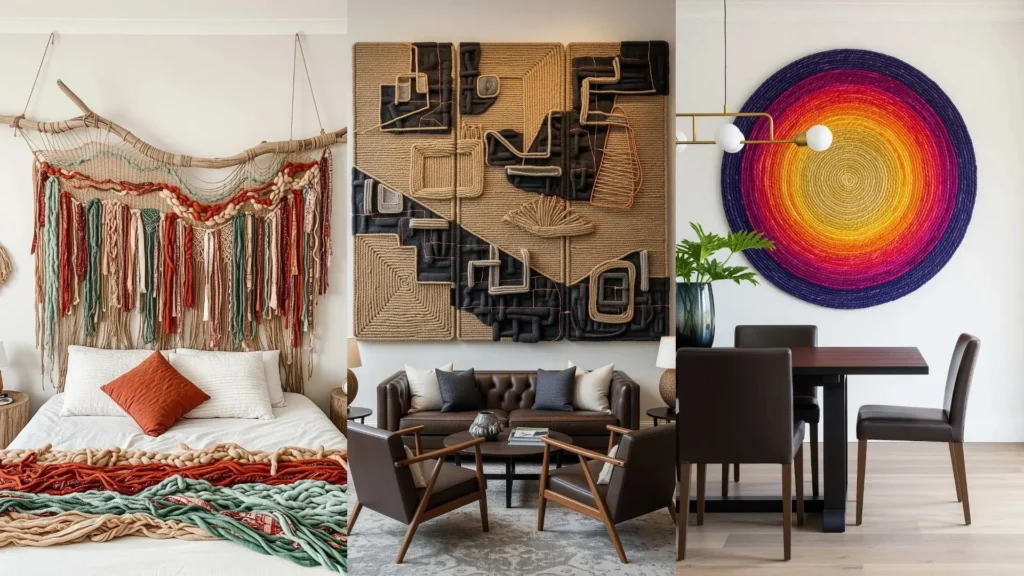
Introduce macrame into your work to create structure and intricate, repeating patterns without a needle.
Use square knots and half-hitch knots with thick cotton cord to build panels of texture.
Plan your color changes in vertical blocks to create a clean, graphic effect that feels both modern and handmade.
This method is perfect for creating mixed-fiber wall hangings or decorative borders that combine the softness of yarn with the precision of knot-work.
3. Layer Sheer Fabrics for an Immersive Color Experience

Create the illusion of blended thread colors by layering strips of translucent fabric like organza or chiffon.
Arrange the fabric in a gradient to achieve a soft, watercolor-like transition that light can pass through.
This technique allows you to work on a grand scale, shaping space and directing the eye with swathes of color.
Secure the fabric strips at anchor points and let them drape; the magic is in the overlapping hues and the way they interact with light.
4. Use Parallel Lines to Create Architectural Form

Mimic the precision of architecture by stretching threads in disciplined, parallel lines across a rigid frame.
Use alternating colors or thread weights to generate a sense of movement and dimension, much like light and shadow on a building’s facade.
The key is maintaining consistent, high tension in each strand to ensure the lines remain crisp and intentional.
These abstract thread illusion techniques turn simple string into a powerful graphic statement.
5. Add Softness and Dimension with Needle Felting

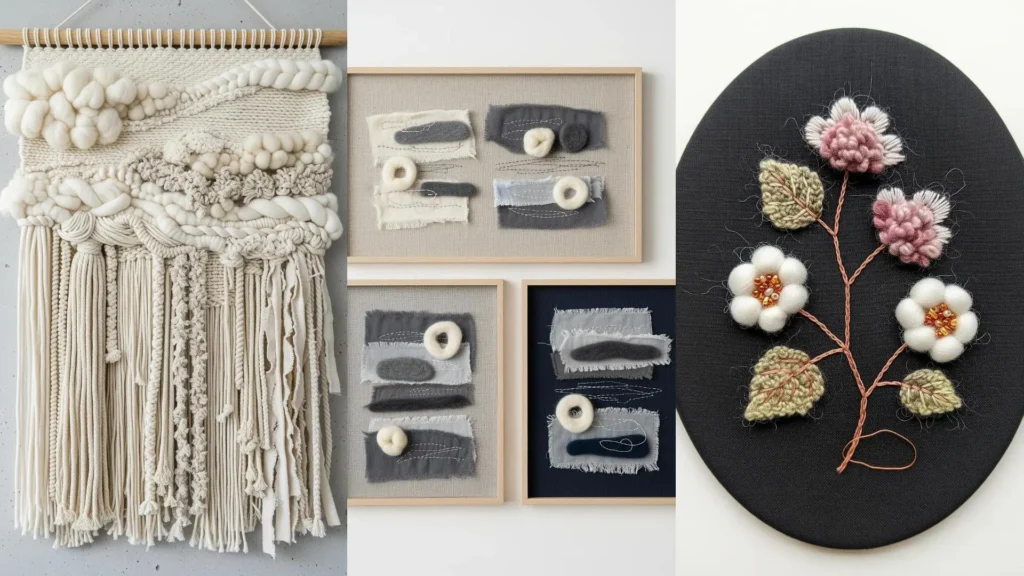
Integrate needle felting to add soft, painterly color fields to your embroidery base before you even make a stitch.
Use wool roving and a felting needle to blend colors directly onto your fabric, creating gentle gradients and organic shapes.
This technique creates a beautiful contrast when you add sharp, defined stitches on top of the soft, diffused background.
It’s an ideal way to fill large areas with texture and color without the time commitment of satin stitch.
6. Couch Neon Cords for High-Impact Outlines

Make your designs impossible to ignore by couching thick, fluorescent cords onto your fabric.
Instead of stitching a line, lay down a bold cord and use a thinner, matching thread to tack it into place with small, discreet stitches.
This technique allows you to create fluid, sculptural lines that stand off the surface, adding both dramatic color and a highly tactile dimension.
It works beautifully for abstract art where the line itself is the main event.
7. Build Dimension with Appliquéd Fiber Elements

Create depth and visual interest by crafting individual fiber components and then applying them to a surface.
Crochet or knit simple shapes, like leaves or circles, and stitch them onto a wrapped base or flat fabric panel.
This layering technique adds genuine three-dimensionality that catches light and creates shadows, making your composition far more dynamic.
It’s a perfect way to build up complex scenes in manageable, piece-by-piece sections.
8. Adapt String Art for Geometric Hoop Designs

Borrow from the principles of string art to create intricate, geometric patterns within an embroidery hoop.
Instead of stitching through fabric, wrap your thread around pins or small nails set into the frame of your hoop.
By layering threads in systematic patterns, you can build complex, web-like designs that rely on tension and mathematical precision.
Nature-inspired string art patterns can be adapted to this method for a modern, graphic take on botanical forms.
9. Weave Threads in Space to Create Perspective

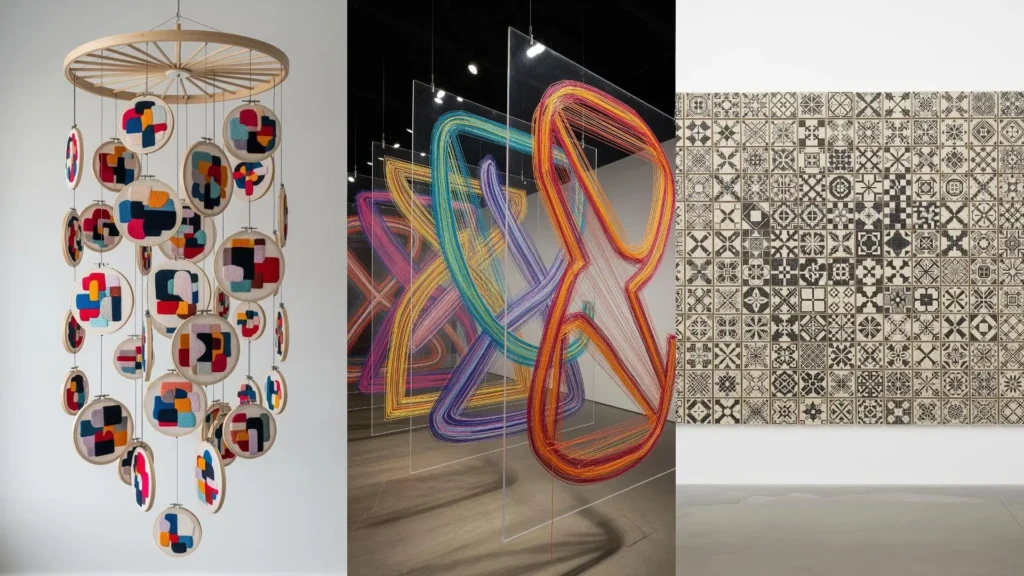
Move your embroidery off the fabric and into the air by stretching threads between multiple anchor points.
Use vibrant, contrasting colors and crisscross them at different angles and heights to build a dynamic, architectural installation.
This technique plays with perspective and forces the viewer to see how simple lines, when layered, can create a complex and immersive environment.
It demonstrates how thread can be used to draw in three dimensions.
10. Cluster 3D Stitches for a Dense Floral Texture

Create a lush, sculptural surface by massing together dimensional floral stitches.
Combine techniques like woven wheel roses, cast-on stitches, and bullion knots in a tight, overlapping arrangement.
Work with a limited color palette of reds, pinks, and creams to create a sense of cohesion, letting the varied textures provide the primary visual interest.
This approach transforms a simple surface into a rich, tactile garden.
11. Incorporate Light for a Magical Reveal

Design your piece to have a second life after dark by integrating lights or using specialty threads.
Stitch with glow-in-the-dark floss for patterns that emerge in low light, or use fine, flexible fairy lights as a couching element.
You can also use unexpected ways to use metallic thread that will catch and reflect even the dimmest light source, adding a subtle glimmer.
This transforms your embroidery from a static object into an interactive experience.
12. Stitch Over Wire Armatures for Self-Supporting Shapes

Give your embroidered creations structure and shape by building them around a simple wire armature.
Form a wire into the outline of a leaf, petal, or abstract pod, then use buttonhole stitch to wrap the wire completely, filling the interior with threadwork like satin or long-and-short stitch.
This allows your stitched elements to stand freely, break away from the fabric background, and hold a dynamic, three-dimensional form.
13. Create Flow with Gradient-Dyed Fibers

Achieve a seamless color transition by working with gradient-dyed materials like wool roving or fabric panels.
Instead of changing threads, let the pre-dyed fiber do the work, creating a natural and organic flow from one hue to the next.
This is particularly effective for large-scale abstract pieces representing water or sky, where needle felting or layering can enhance the effect.
The result is a painterly composition that feels both intentional and effortless.
14. Use Knotting as a Primary Design Element

Elevate knots from a mere fastening method to the central feature of your design.
Explore different knotting traditions, like macrame or nautical knots, and use them to build intricate patterns and textures.
Vary the thickness of your cord and the density of your knots to create areas of light and shadow.
This technique shifts the focus from stitched color to sculpted form, resulting in a piece with incredible tactile appeal.
15. Work in Modules for Ambitious Projects

Break down a large-scale project into small, manageable modules, like individual stitched squares.
This approach allows you to experiment with different patterns and color-blocking embroidery patterns on a small scale before joining them together.
Use a consistent whip stitch or a decorative join to connect your finished pieces, turning the seams into part of the overall design.
This makes overwhelming ideas feel achievable and results in a stunning patchwork effect.
16. Recreate Organic Textures with Clustered Knots

Mimic the complex surfaces found in nature by clustering dimensional stitches together.
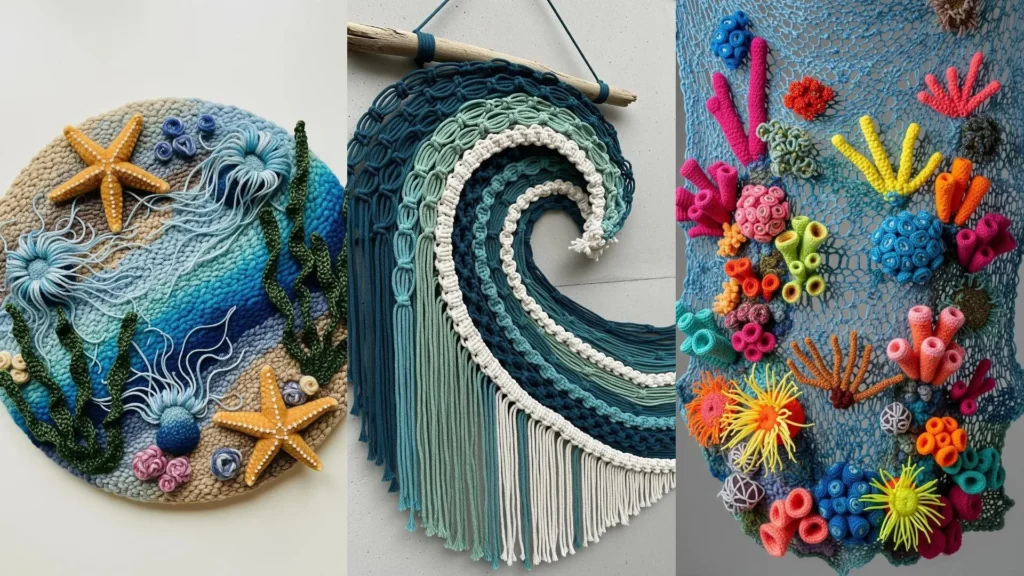
Use a dense application of French knots, colonial knots, and bullion knots in varying sizes and earthy tones to simulate the texture of barnacles, moss, or coral reefs.
The key is to abandon uniform rows and embrace irregularity, allowing the knots to overlap and form a truly organic-feeling surface.
These creative ways to stitch natural textures add incredible realism and depth.
17. Weave with Fabric Strips to Paint a Landscape

Create a painterly, abstract scene by weaving with strips of fabric instead of thread.
Cut or tear fabric into various widths and weave them on a large frame or directly onto a canvas, using a plain weave structure.
Choose colors that evoke a specific mood or landscape, like the warm oranges and deep purples of a sunset.
You can add select embroidery stitches later to secure the strips and add fine details, blending two fiber disciplines into one.
18. Master the Art of Controlled Wrapping

Elevate simple wrapping into a precise art form by focusing on tension and color placement.
Use smooth, consistent yarn to wrap objects like dowels or cardboard tubes, ensuring each strand lies perfectly next to the last without gaps or overlaps.
Create patterns by switching colors at planned intervals, or use variegated yarn for an organic, unpredictable effect.
This meditative technique turns humble materials into sleek, modern sculptures.
19. Design with Durability in Mind

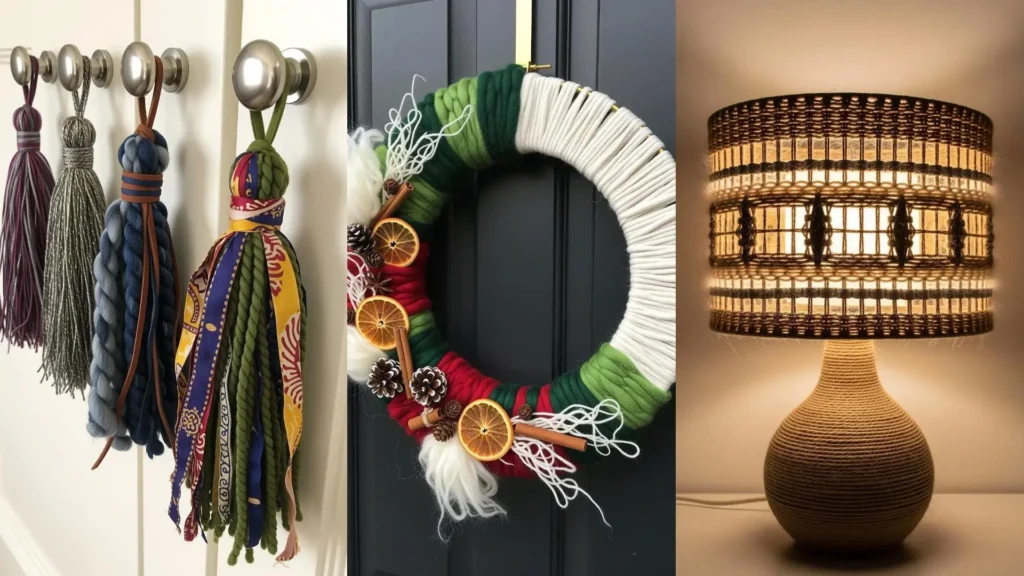
When applying fiber art to functional objects, prioritize materials that can withstand wear and tear.
Choose tightly plied yarns like cotton or durable wool instead of delicate, single-ply fibers.
Techniques like crochet and knitting create a dense, resilient fabric that is more robust than surface embroidery.
This ensures your creative work remains beautiful even when it’s part of everyday life.
20. Explore Scale by Enlarging Delicate Patterns

Create breathtaking impact by taking a small, intricate pattern and recreating it on a massive scale.
Translate a delicate lace doily or a detailed embroidery motif into a design executed with thick rope or cord.
This exercise forces you to focus on the core structure and form of the pattern, turning something traditionally seen as fragile into a powerful, graphic statement.
It’s a masterful play on expectation and scale.
21. Use a Grid to Create Pixelated Imagery

Translate digital aesthetics into fiber art by using a grid as your canvas.
Map out a pixelated design and replicate it using uniform stitches like cross-stitches or French knots, with each stitch representing one pixel.
For a more sculptural approach, use a pegboard and spools of thread or yarn, with each spool acting as a single, oversized pixel.
This method is perfect for creating bold, graphic images, like these tiny animal embroidery designs, on a larger scale.
22. Construct Ethereal Forms with Thread and Stiffener

Create delicate, three-dimensional spheres that seem to defy gravity.
Wrap thread or fine yarn coated in fabric stiffener or a glue mixture around an inflated balloon.
Once the sphere is dry and rigid, simply pop and remove the balloon, leaving behind a hollow, lace-like structure.
Group these spheres in various sizes and pastel colors to create a whimsical installation that plays with volume and negative space.
23. Layer Cut Felt for Quick, Dimensional Botanicals

Build lush, dimensional flowers and leaves without complex stitching by layering shapes cut from felt.
Cut out individual petals and leaves, then arrange them in overlapping layers to create a sense of fullness and depth.
Use a few simple stitches, like a backstitch for leaf veins or a cluster of French knots for the flower’s center, to add detail and secure the pieces together.
This is a fast and effective way to achieve a high-impact, textural result.
24. Combine Fiber with Rigid Materials for Delicate Structures

Push the boundaries of embroidery by incorporating non-fiber elements to create structure.
Use fine wire or stiffened rods to build the delicate, airy parts of a design, like dandelion seeds floating away.
Wrap these rigid elements with thread or attach small, stitched components to them.
This mixed-media approach allows you to create forms that are both strong and ethereal, capturing a sense of movement and fragility.
25. Give Your Work Personality with Amigurumi

Add a playful, narrative quality to your projects by incorporating small, stuffed characters made with amigurumi techniques.
This Japanese art of crocheting or knitting small, stuffed creatures allows you to create charming 3D figures.
You can create standalone sculptures or stitch these figures onto a flat background to create a dynamic diorama that tells a story.
It’s a wonderful way to bring personality and whimsy to your fiber art.
26. Create Patterns Through Strategic Yarn Wrapping

Go beyond simple color wrapping by planning your yarn changes to create complex geometric patterns.
Map out a design, such as stripes, chevrons, or even a checkerboard, on the object you intend to wrap.
Carefully switch between two or more colors of yarn as you wrap, ensuring clean transitions.
These yarn wall art techniques transform a simple process into a display of graphic precision and vibrant rhythm.
27. Use Patchwork to Create a Canopy of Light and Shadow

Construct a large-scale piece by joining smaller, individual textile squares into a stunning patchwork.
Incorporate panels of open-weave fabrics, lace, or net alongside more densely stitched or woven pieces.
When suspended overhead, this creates a beautiful interplay of light and shadow, casting intricate patterns on the ground below.
This technique celebrates the beauty of negative space and the unique character of each small component.
28. Embrace Maximalism with an Abundance of Texture

Create a composition that is an absolute feast for the eyes by layering multiple fiber techniques with joyful abandon.
Combine chunky crochet, plush pom-poms, dimensional stitched flowers, and trailing vines in one dense, overlapping arrangement.
Use a riot of bright, saturated colors to enhance the sense of energy and abundance.
This maximalist approach is about celebrating the sheer variety and tactile pleasure of fiber art.
29. Tell a Story with Flowing, Organic Forms

Use fiber to create long, flowing forms that seem to grow organically from their surroundings.
Craft soft, rope-like tentacles from felted wool or stuffed knitted tubes, and allow them to spill over and connect different elements in your space.
The gentle, natural drape of the fiber creates a sense of slow, quiet movement, transforming static objects into a dynamic, interconnected scene.
This technique is perfect for adding a touch of surrealism and narrative to your work.
30. Mimic Weaving with Surface Embroidery Stitches

Achieve the look of woven tapestry directly on your fabric using specific embroidery stitches.
Use the basket stitch or soumak stitch to create raised, textured areas that look like they were made on a loom.
This is a fantastic way to add areas of dense, graphic pattern and texture that contrast beautifully with more delicate line work.
It allows you to introduce the solid, blocky feel of weaving without needing any extra equipment.
31. Translate Graphic Design into Bold Fiber Art

Borrow principles from graphic design to create fiber art with sharp, clean lines and high visual impact.
Instead of blending colors, use bold, distinct blocks of color with hard edges, a technique known as color blocking.
You can achieve this by appliquéing shapes cut from felt or by filling areas with dense, uniform satin stitch.
This approach gives your work a modern, dynamic energy that commands attention.