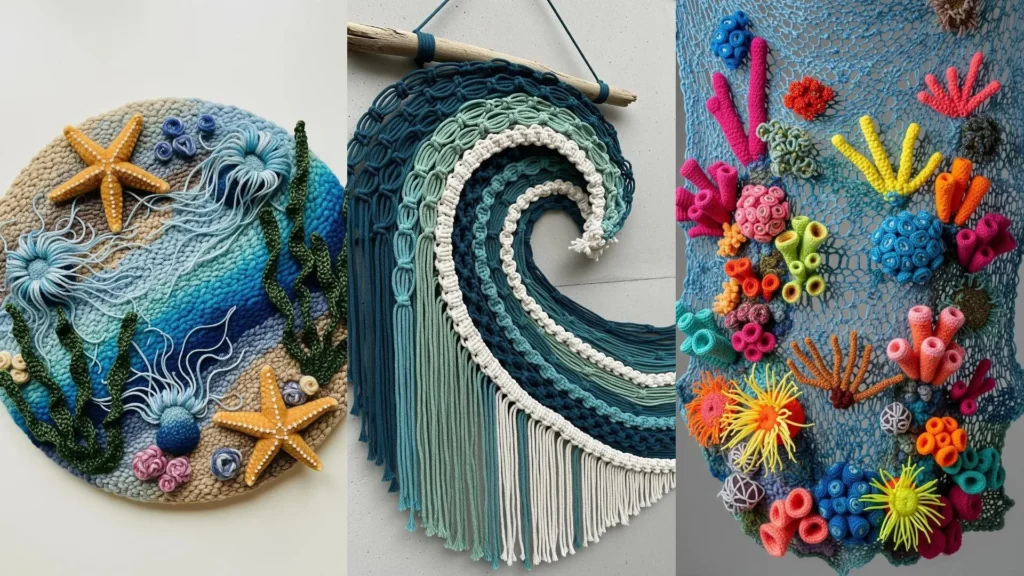
There’s a quiet moment in every project when you look at your work and wonder how to make it more. Not necessarily more complex, but more intentional, more resonant, more you.
These large-scale fiber installations hold the key. They aren’t just about size; they are masterful lessons in texture, color, form, and emotion. By looking closely, you can borrow their core principles and translate them directly into your own hoop art, apparel, and home décor.
Forget the pressure to create a masterpiece. Instead, let’s explore how a single, thoughtful change—in material, in scale, in stitch—can transform your work from something you’ve made into something you truly feel.
1. Creating Sculptural Depth with Wool Roving

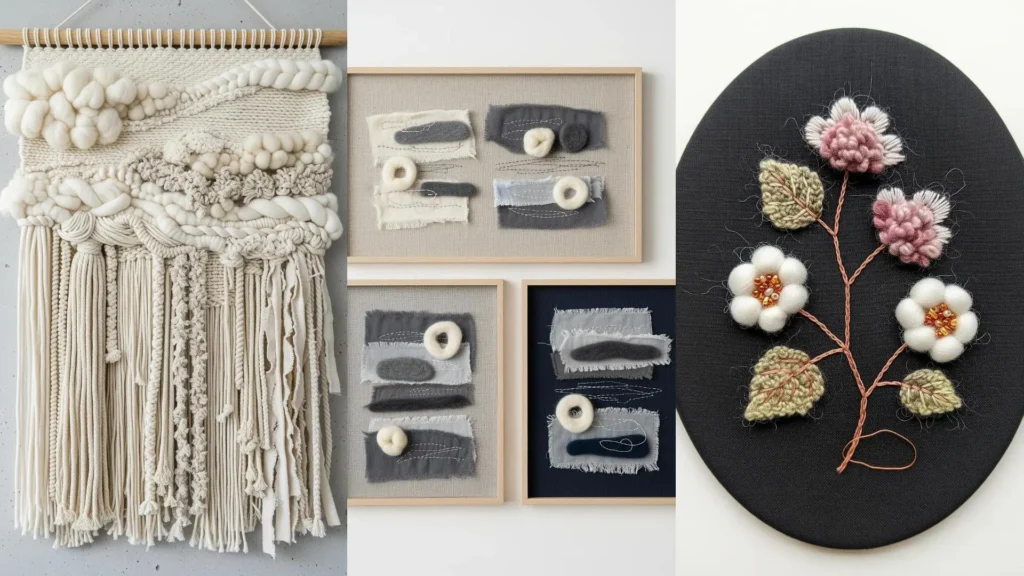
Translate the soft volume of these clouds into your own work by incorporating wool roving.
Instead of thread, use a felting needle to attach tufts of wool directly onto your fabric, building up layers to create gentle, three-dimensional forms.
Use several shades of grey and white to build realistic shadows, giving your shapes a weightless, cloud-like appearance that traditional stitches can’t replicate.
This is one of the best soft textured embroidery patterns to elevate cozy beige reading corners.
2. Translating Woven Textures into Hoop Art

You don’t need a loom to achieve this rich, layered effect.
In your hoop, mimic the varied textures by combining chunky yarn with traditional floss.
Create dense areas of French knots for a bubbly surface, couch thick yarn for bold lines, and use satin stitch for smooth patches.
This mix of materials and techniques is key for organic texture embroidery designs that add life to any room and feels incredible to the touch.
3. The Art of Intentional Negative Space

The impact of these pieces comes as much from the empty spaces as from the intricate knotwork.
Apply this principle to your embroidery by focusing on outlines rather than fillings.
Use a bold whipped backstitch or chain stitch to define a shape, then leave the interior empty.
This technique draws the eye, creates a modern, airy feel, and honors the idea of Japanese Zen-inspired embroidery designs to balance bedroom energy.
4. The Power of Oversized Fiber and Bold Color

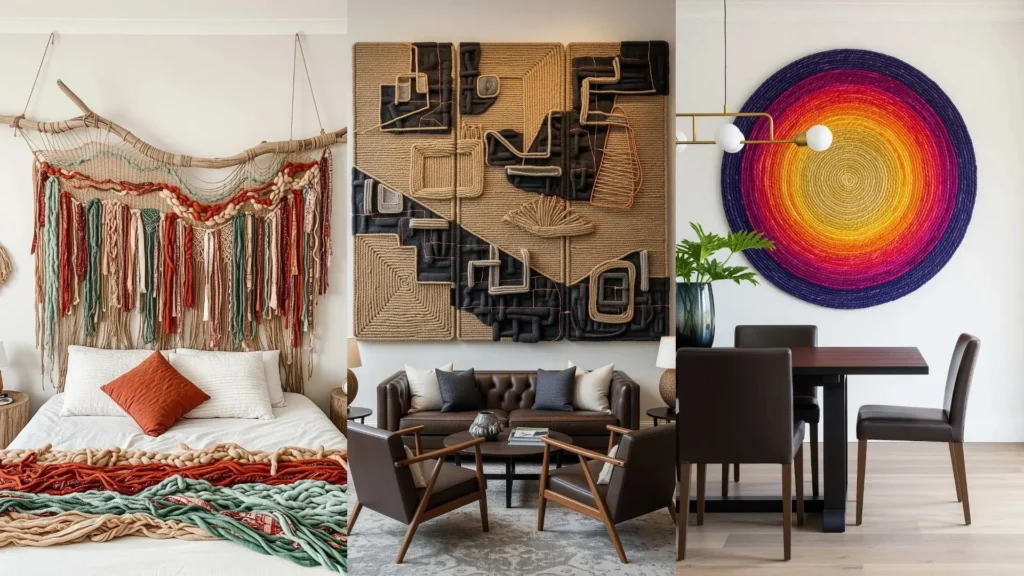
Incorporate the bold energy of these ropes by experimenting with unconventional, thick materials.
Try couching thick cord or braided yarn onto a sturdy fabric like denim or canvas.
Use a thinner, contrasting thread for the couching stitches to create a graphic, textured line.
This method simplifies your design process, forcing you to focus on the power of line and form, making it perfect for color pop embroidery art ideas that revive boring white walls.
5. Draping Threads Beyond the Hoop
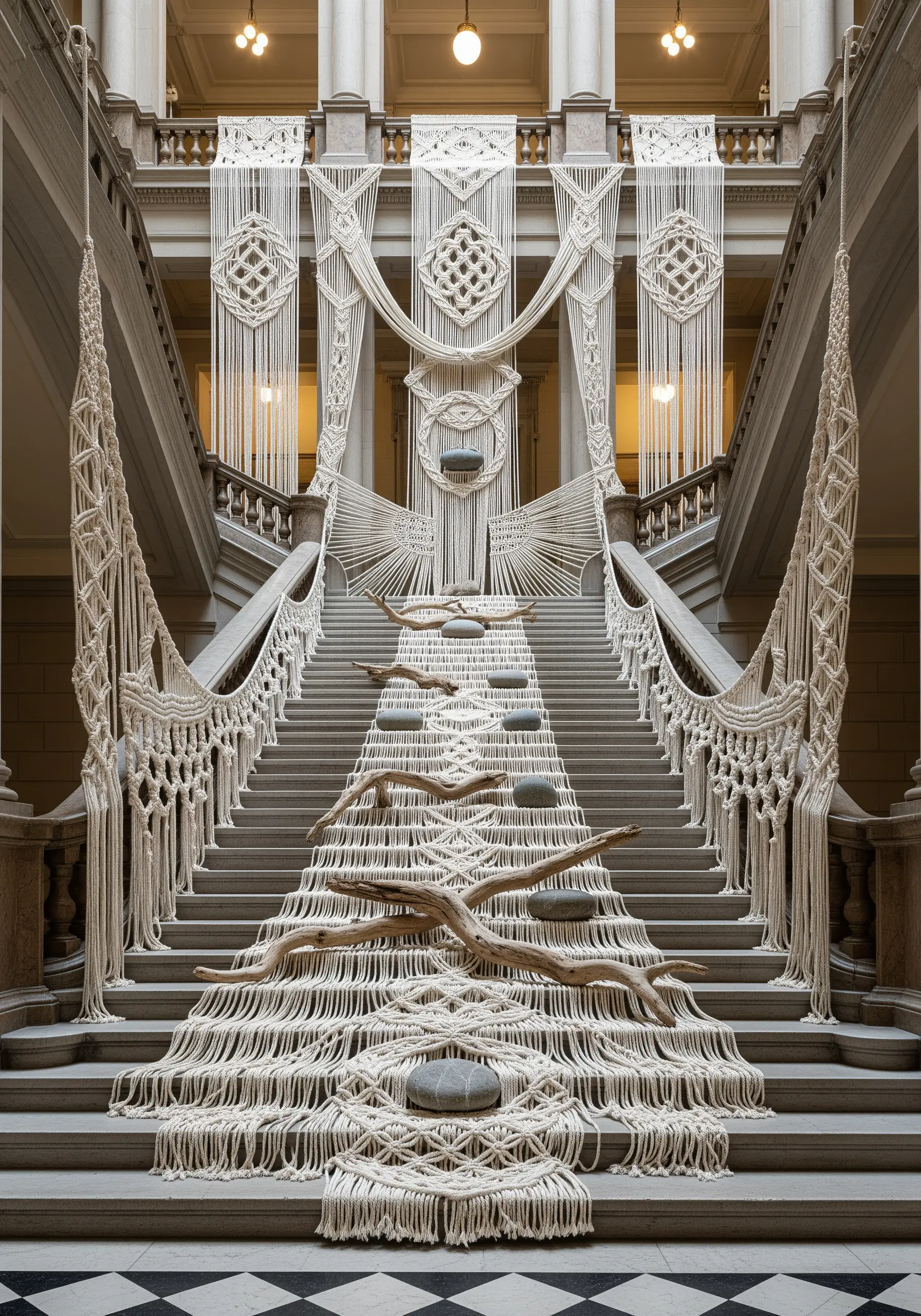
Allow your embroidery to interact with the space it occupies.
Stitch a design on a piece of linen or sheer fabric, but intentionally leave some threads hanging several inches below the main composition.
When you display the piece on a shelf or wall, these threads can drape elegantly, connecting your art to its surroundings.
This technique is perfect for boho-inspired textile wall art patterns for embroiderers who love earthy aesthetics.
6. Weaving with Light and Geometric Tension
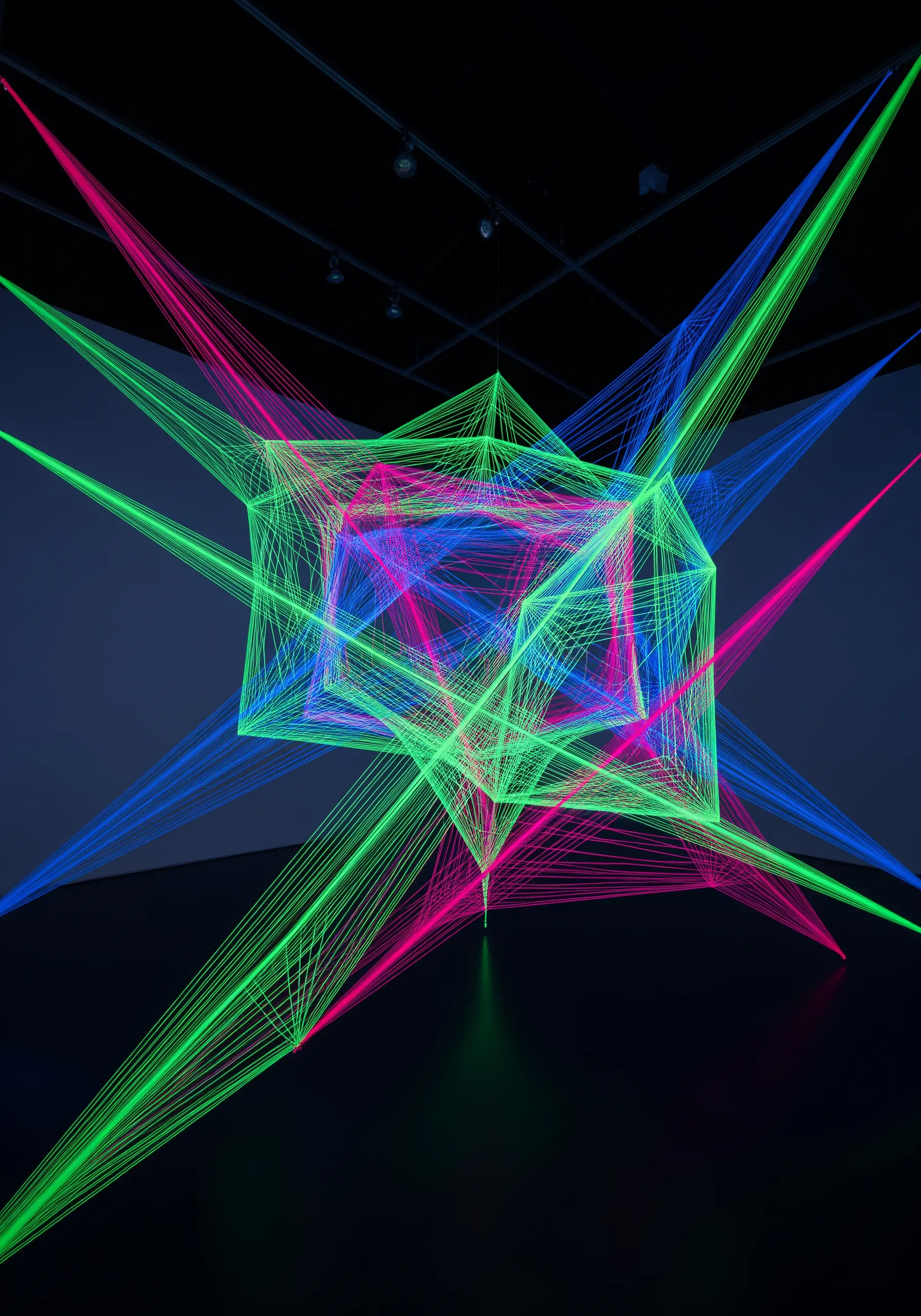
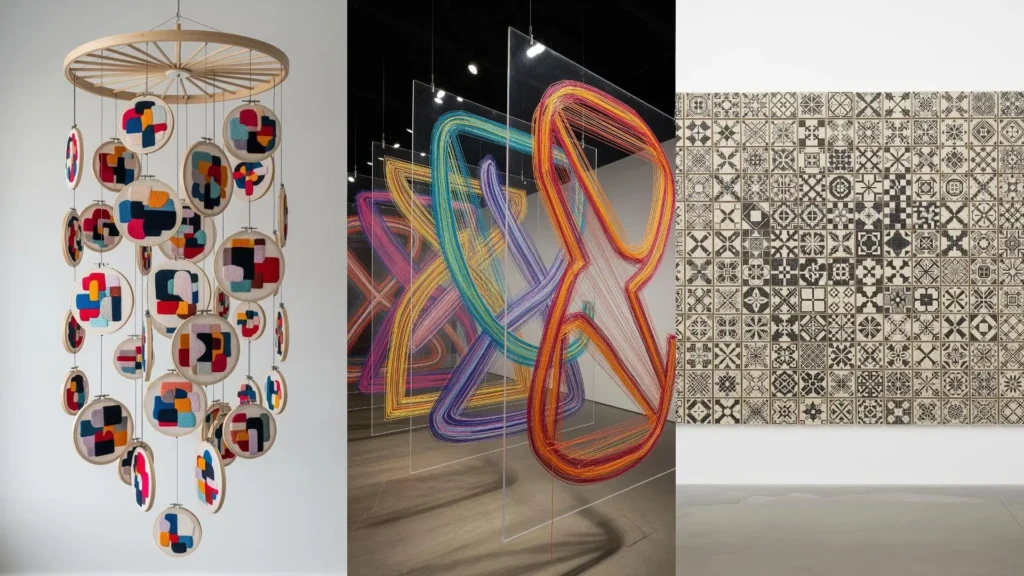
You can create this stunning effect on a smaller scale with string art techniques.
Use a sturdy frame or even a piece of wood and map out your design with small nails or pins.
Stretch metallic or fluorescent thread between these points, layering colors to build complex geometric shapes.
This process highlights how straight lines can form beautiful curves and is one of the best modern thread art ideas using only black and gold.
7. Sculpting with Fabric and Subtle Texture
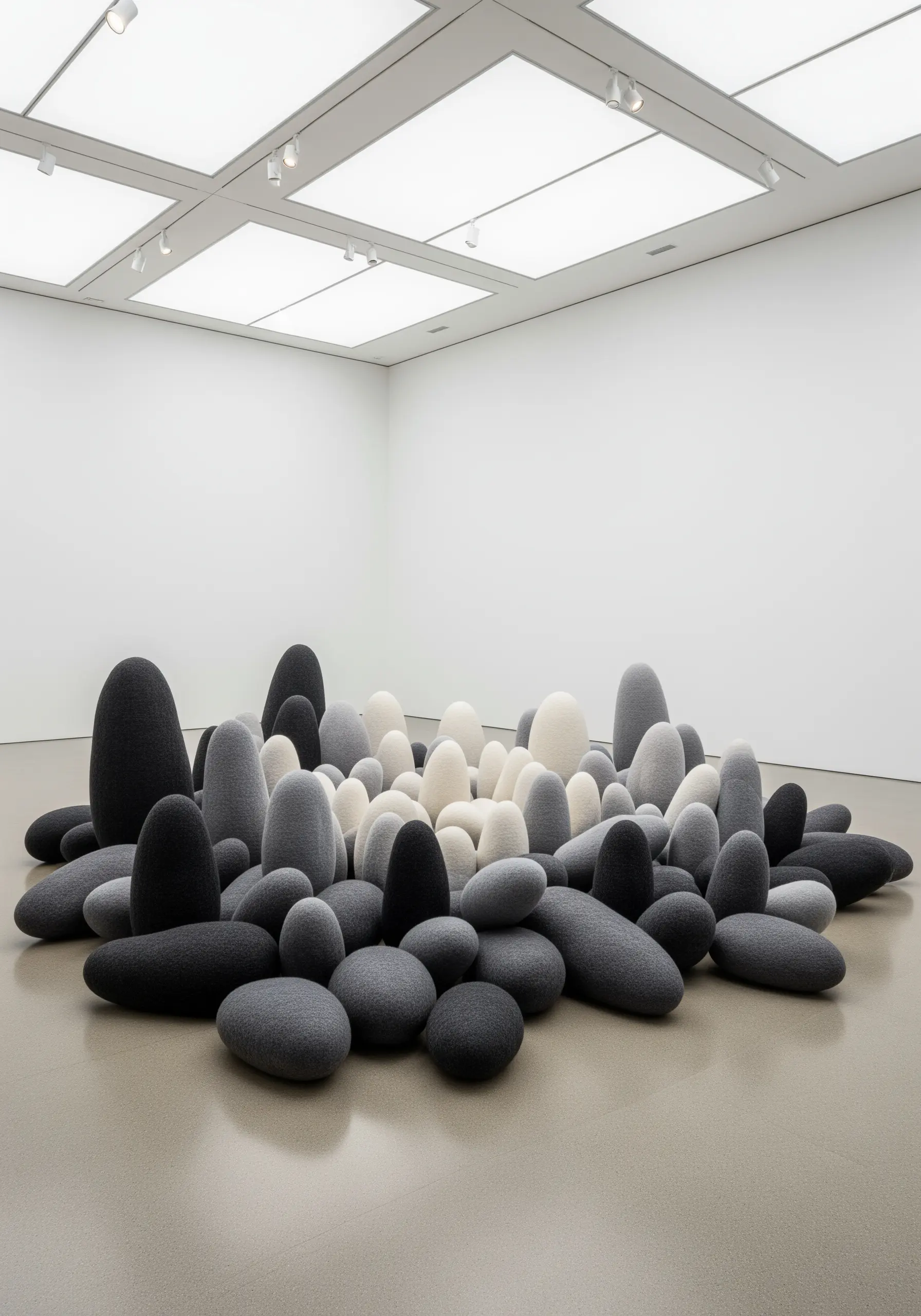
To achieve a smooth, dense, and sculptural finish in your embroidery, focus on stitch direction and density.
Use a single strand of matte cotton floss and pack your long-and-short stitches tightly together, ensuring they all flow in a uniform direction.
This creates a non-reflective surface that absorbs light, giving your shapes a solid, calming presence much like these soft stones.
Try creating simple stone gray embroidered table runner ideas with this method.
8. Painting with Yarn: Blending Color Fields

Recreate a painterly, impressionistic effect by thinking in terms of texture rather than lines.
Use dense clusters of French knots or turkey work, placing different shades next to each other to create a pointillist-style color blend.
This technique eliminates harsh outlines and allows colors to merge softly, just like paint on a canvas.
It’s one of the most effective abstract thread painting ideas to mix shades like a contemporary artist.
9. Creating Ethereal Effects with Hanging Threads
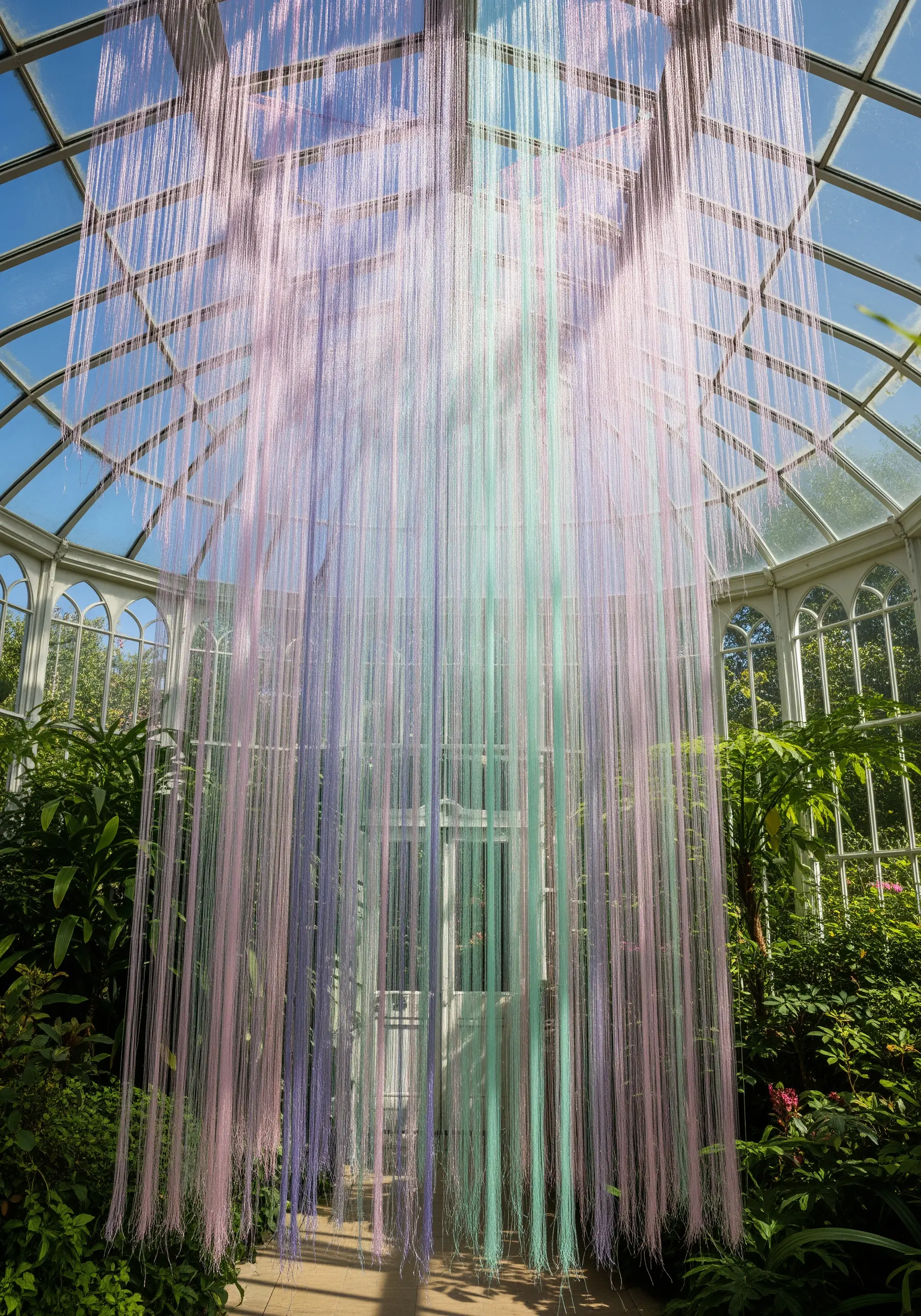
Introduce movement and delicacy to your work by letting your threads hang free.
When you finish a section, instead of trimming the thread on the back, leave a long tail hanging from the front of the fabric.
Group these hanging threads to create a waterfall or fringe effect, which is especially beautiful with wildflower thread palettes that make your hoop look like a miniature meadow.
When displayed, the threads will sway gently, bringing your piece to life.
10. The Sculptural Impact of a Single, Powerful Knot
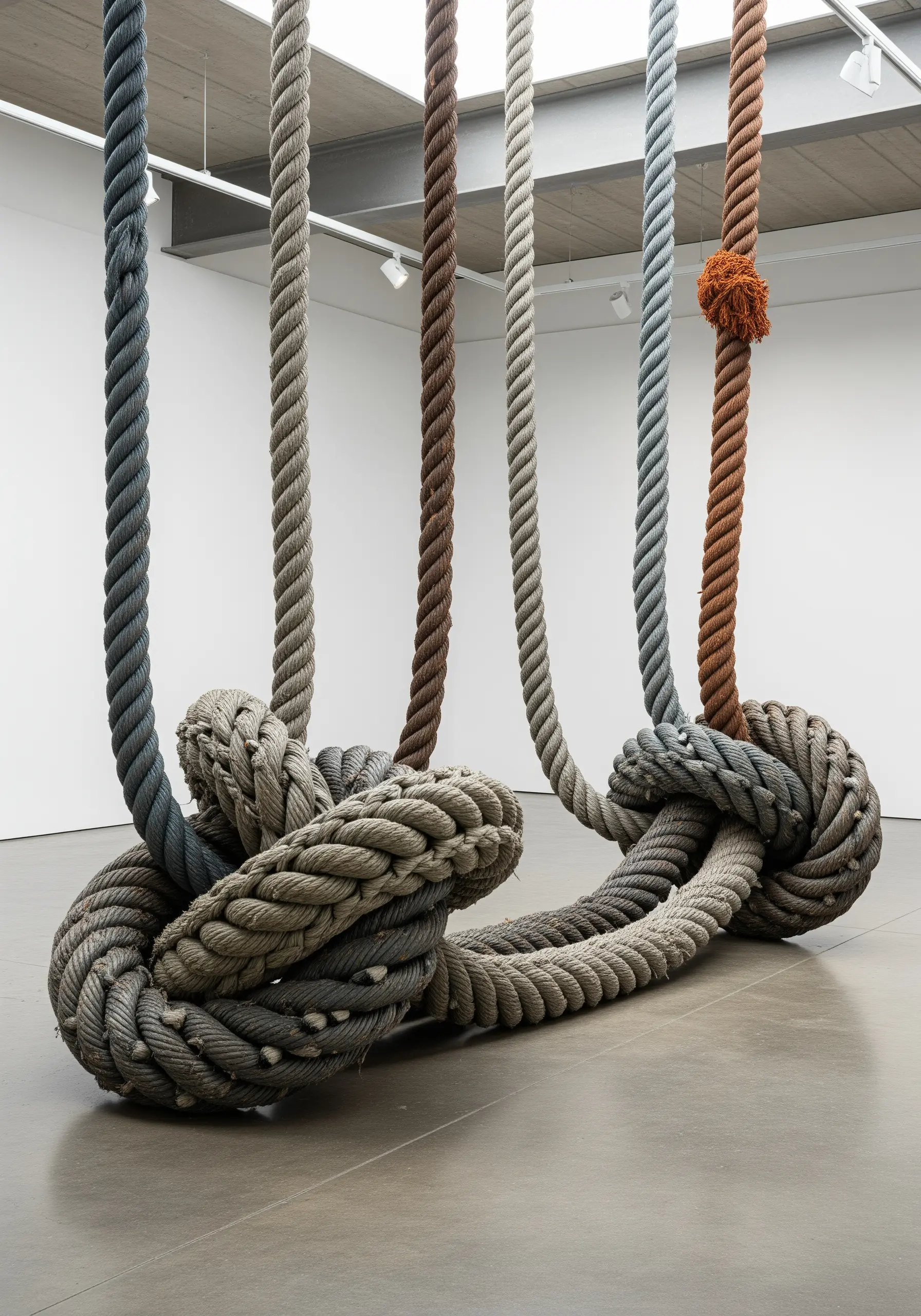
For your next project, focus on a single, dominant element instead of a busy composition.
Create a large, three-dimensional knot using padded satin stitch or by physically couching a thick, knotted cord onto your fabric.
By placing this solitary, textural feature against a minimal background, you give it the space to command attention, showcasing the beauty of its form.
These are the kinds of statement textured embroidery techniques for 3D wall decor that pops.
11. The Modular Magic of Patchwork Stitching
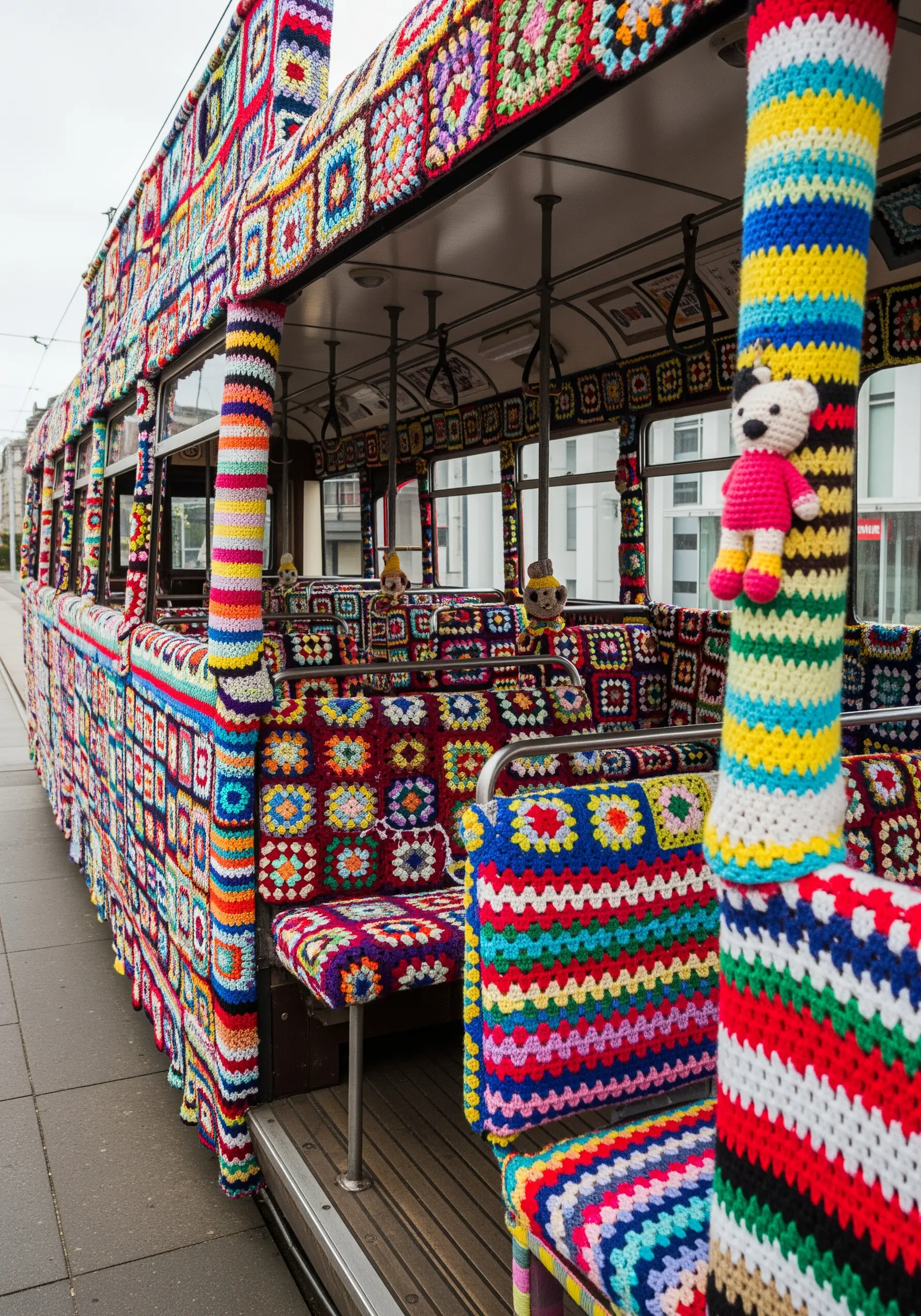
Break down a large project into small, manageable components, like the granny squares on this tram.
Create several small embroidered motifs on individual pieces of fabric.
Once complete, arrange and appliqué them onto a larger background, such as a tote bag or denim jacket.
This modular approach is less intimidating and perfect for fabric collage embroidery animals that look alive through layered stitching.
12. Finding Rhythm in Repetitive Geometric Lines
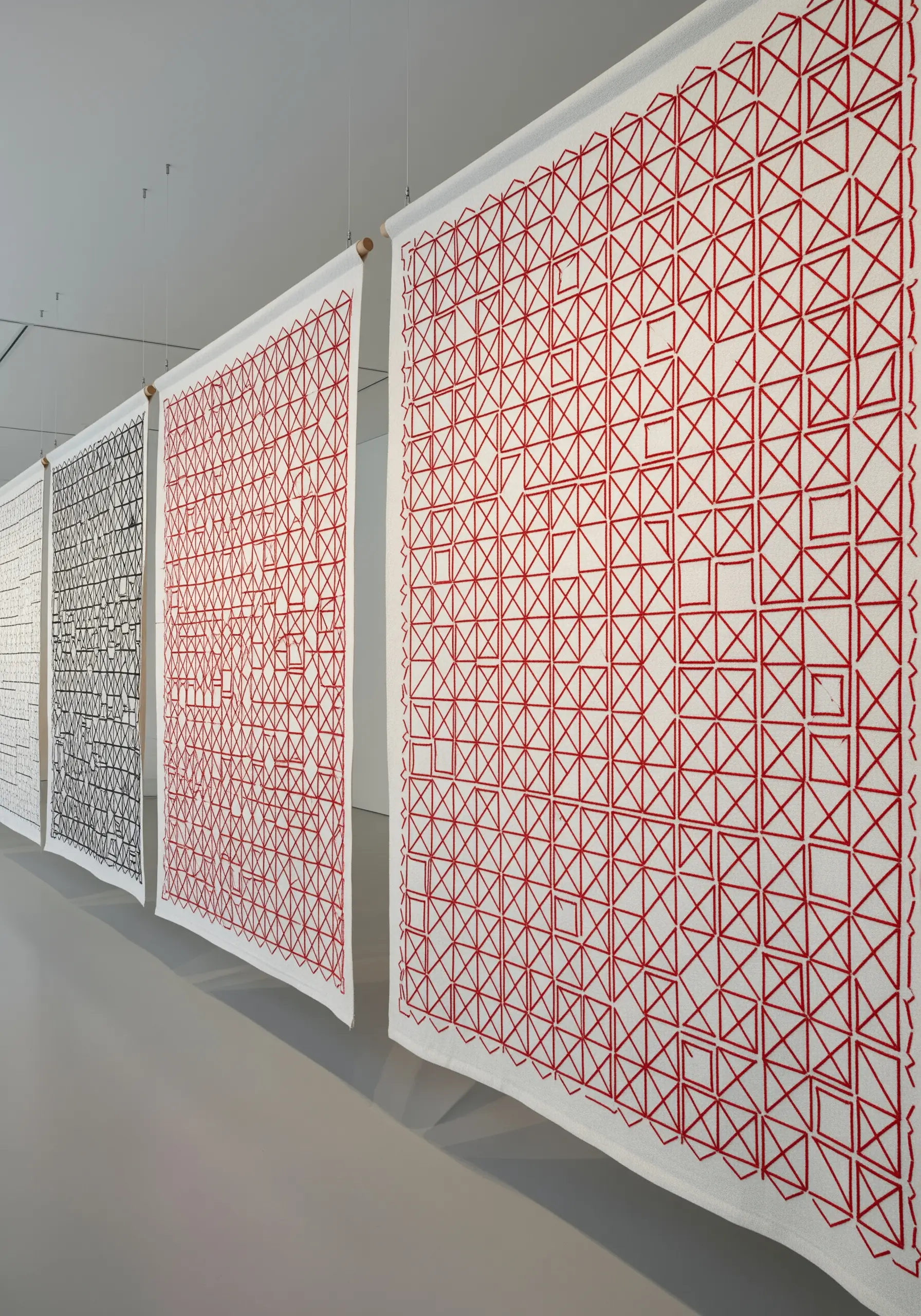
Explore the meditative power of repetition by choosing a simple geometric element and stitching it over and over.
The visual strength of the final piece comes from the consistency of your stitches and the rhythm of the pattern.
Use a single, high-contrast color on a neutral fabric to emphasize the clean lines and structure.
These minimal geometry stitch projects create a sophisticated and calming effect.
13. Building Three-Dimensional, Sculptural Florals

Lift your floral embroidery off the fabric using stumpwork techniques.
Stitch individual petals over a thin wire frame, using dense buttonhole stitches to secure the edges.
Once finished, you can cut the petals out and bend them into realistic, three-dimensional shapes, giving your flowers incredible life and volume.
It’s the secret behind truly gorgeous floral embroidery ideas for a dreamy bedroom aesthetic.
14. Stitching Contours for a Topographic Effect
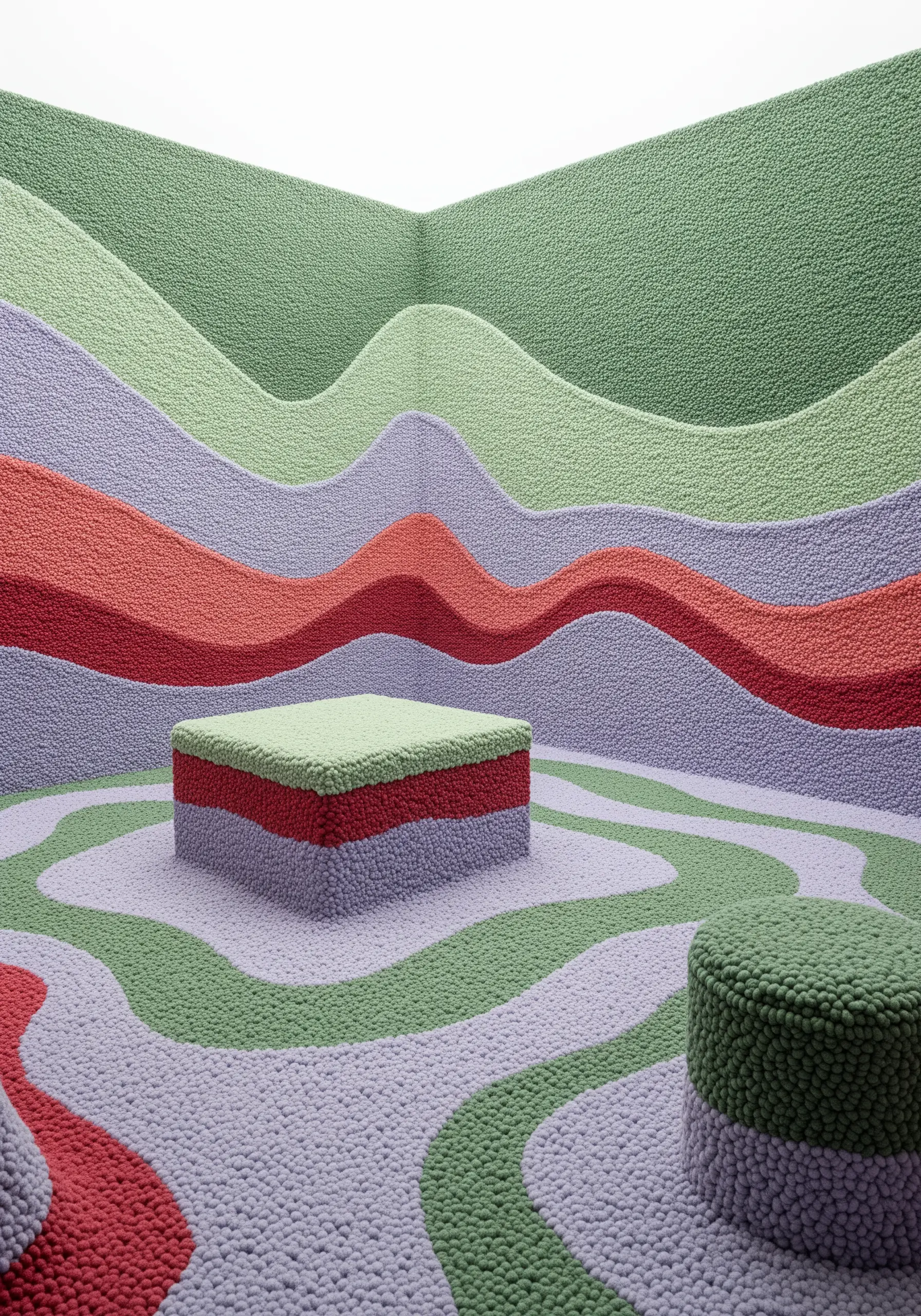
Create a textured, map-like surface using rows of raised stitches.
Work with chain stitch, stem stitch, or even turkey work, packing the rows tightly together to form contoured lines.
By varying the height of your stitches—for example, by trimming turkey work loops to different lengths—you can build a tactile landscape that invites touch.
This is a great way to approach mountain landscape thread painting techniques for nature scenes.
15. Capturing Fluid Movement with Braided Fibers
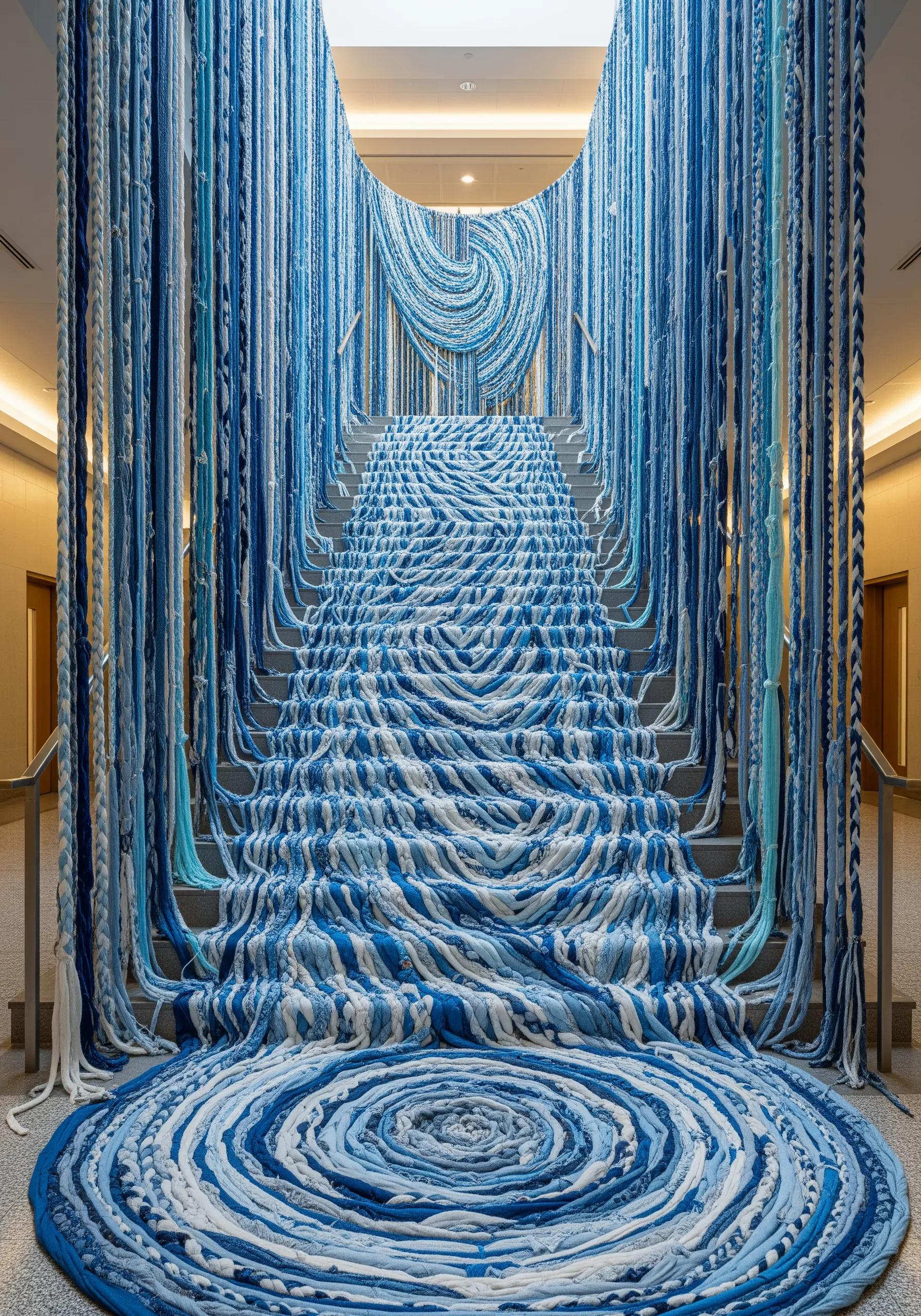
Instantly add texture and complex color variation to your work by braiding your threads before you stitch.
Combine three or more different shades of floss or fine yarn into a single braid.
Then, couch this braided cord onto your fabric in flowing, organic curves to simulate the movement of water, smoke, or wind.
This method is perfect for ocean-inspired hoop embroidery ideas for seashells, waves, and coral.
16. Integrating Negative Space Directly into Your Fabric

Challenge the notion of a solid background by strategically removing parts of your fabric.
Try stitching on a loosely woven Aida or linen, or experiment with cutwork techniques where you carefully snip away sections of the cloth within a stitched border.
These transparent areas create layers of depth and are one of the most elegant ways to combine thread and negative space.
17. Experimenting with Fluorescent and Blacklight Threads
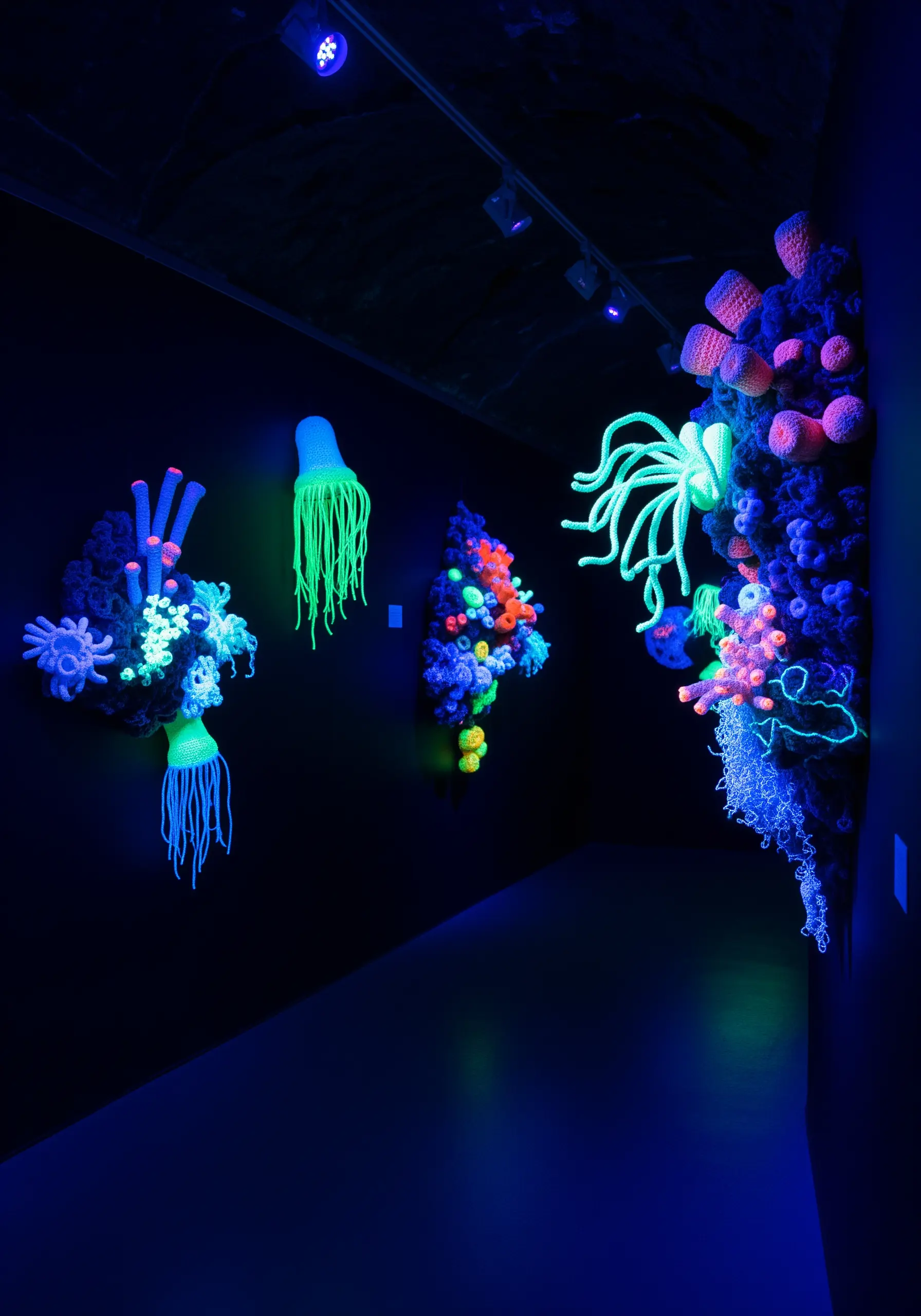
Create a piece with a secret life by stitching with fluorescent or glow-in-the-dark threads.
Choose a dark background, like black or navy linen, to make the colors pop.
Use highly textural stitches like bullion knots, French knots, and woven picots to build organic, coral-like forms.
These modern neon on black thread art ideas reveal a hidden dimension when viewed under a blacklight.
18. Taking Your Stitching into the Environment
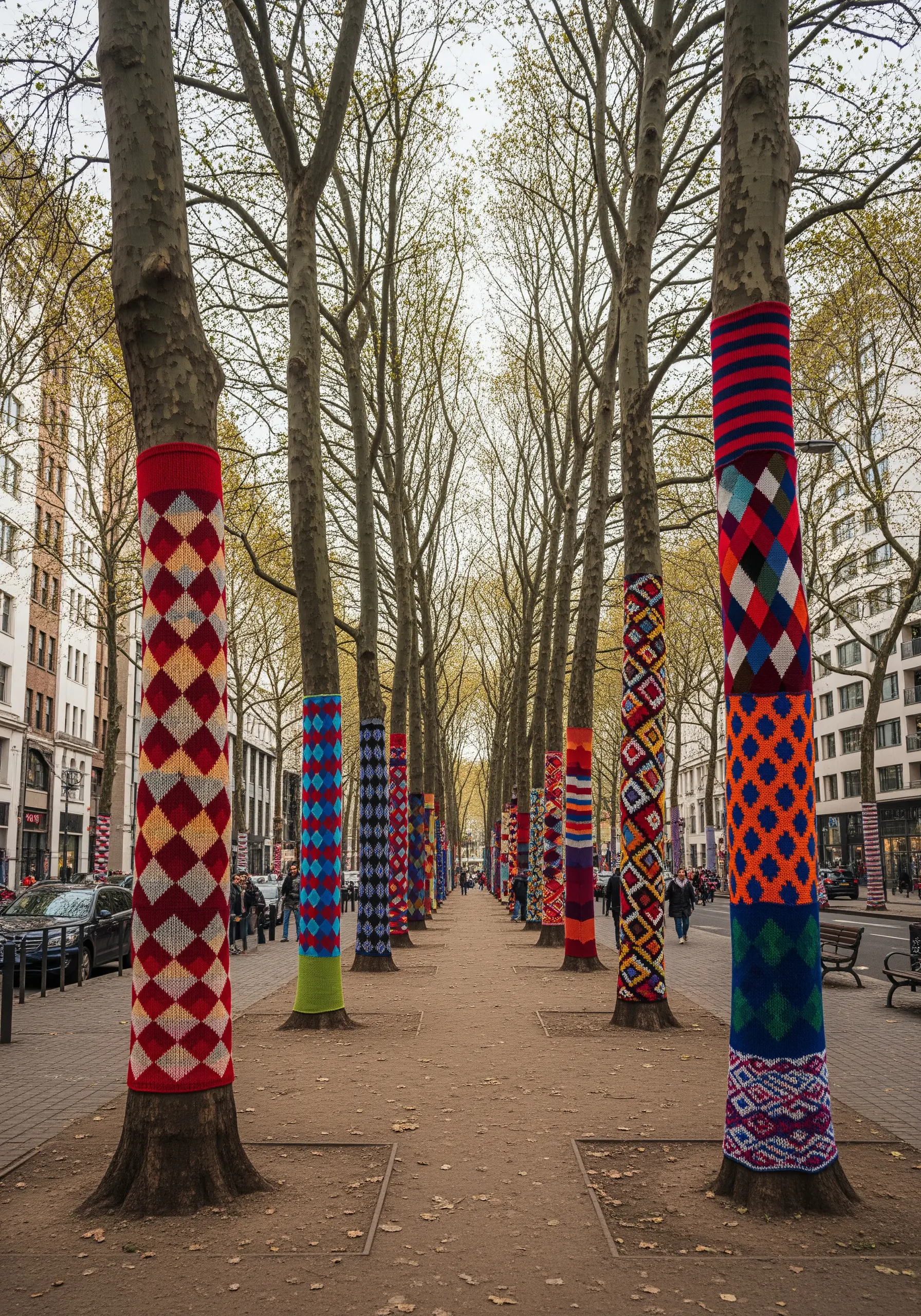
Think of your embroidery as something that can live outside the frame.
Your next project doesn’t have to be a permanent wall hanging; it could be a small, temporary installation.
Stitch a simple leaf or geometric pattern on a scrap of fabric and tie it to a tree branch or park bench.
It’s a joyful, low-pressure way to interact with your surroundings and is one of the most beginner-friendly embroidery patterns to try this month.
19. Creating Form by Wrapping, Not Stitching
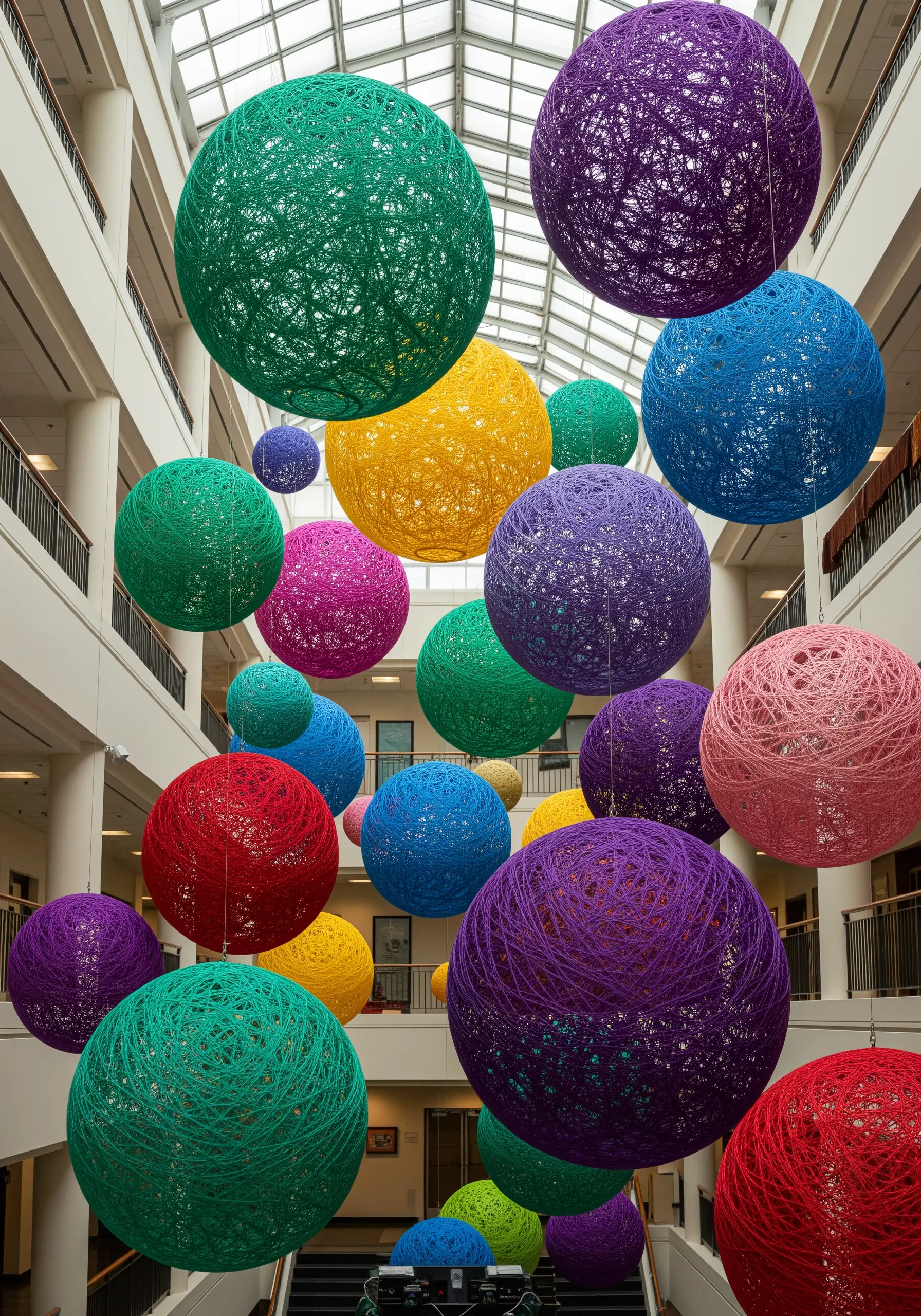
Explore fiber art from a different angle by using thread to create a surface rather than decorate one.
Select a simple form—a wooden bead, a smooth stone, or a styrofoam ball—and meticulously wrap it with different colors of yarn or embroidery floss.
This meditative technique turns everyday objects into small sculptures focused purely on color interaction and texture.
These are great yarn wall art techniques that transform simple threads into art.
20. The Quiet Eloquence of Tone-on-Tone Texture
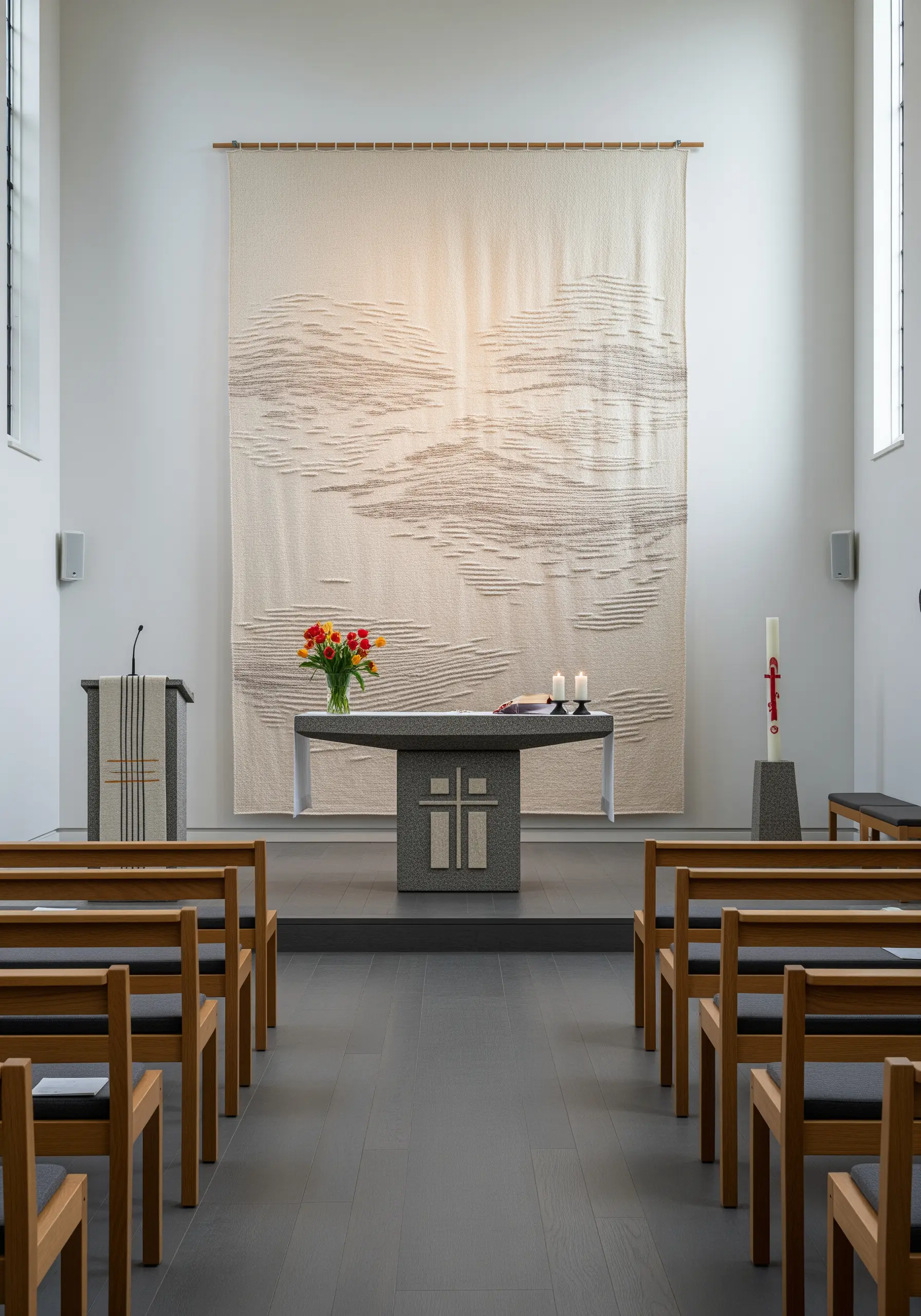
Create a deeply sophisticated piece by limiting your color palette and emphasizing texture.
Choose a thread color that is identical or very similar to your fabric.
The entire design becomes a subtle play of light and shadow, where the textures of different stitches—the smoothness of satin stitch against the bumpiness of seed stitch—form the composition.
This tone-on-tone embroidery creates a quiet, high-end result.
21. Incorporating Fabric Strips for Painterly Marks

For a bold, expressive effect, try stitching with thin strips of fabric instead of thread.
You can use silk ribbon, torn strips of cotton, or even sheer organza.
These wider materials create broad, painterly strokes and can fill areas much faster than traditional floss.
Couching them down or using them for large straight stitches adds dramatic texture and is a great way to use up remnants in scrap fabric collage embroidery ideas.
22. Building Intricate Designs with Layered Straight Lines

You can achieve the complexity of string art directly on fabric with nothing more than a simple straight stitch.
Using a single strand of floss for crispness, stitch long, overlapping lines in various colors and directions.
As the lines intersect, new shapes and color blends emerge, creating a visually intricate design from the simplest of means.
It’s one of the most effective abstract thread layering techniques to create mind-bending 3D textured embroidery.
23. Sculptural Stitching for Playful, Rounded Forms
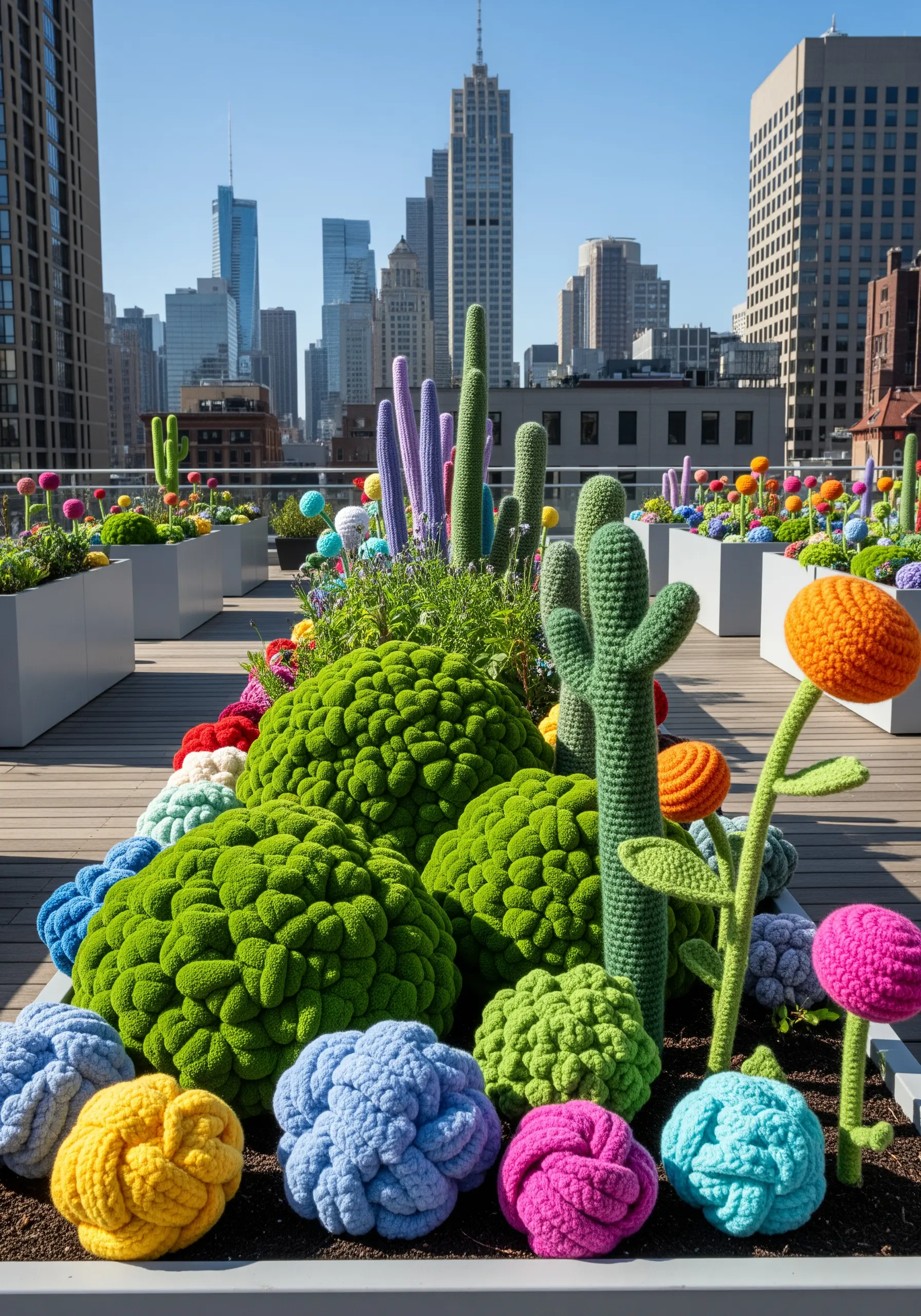
To create the bubbly, rounded textures of these cacti, turn to dimensional stitches.
Cluster bullion knots or cast-on stitches together to build highly raised, organic shapes.
For a smoother but still rounded effect, use padded satin stitch, placing your stitches over a base of felt or other stitches.
This approach gives your work a playful, three-dimensional quality perfect for cute and colorful embroidery projects you can finish in a day.
24. The Beauty of Imperfect and Weathered Textiles
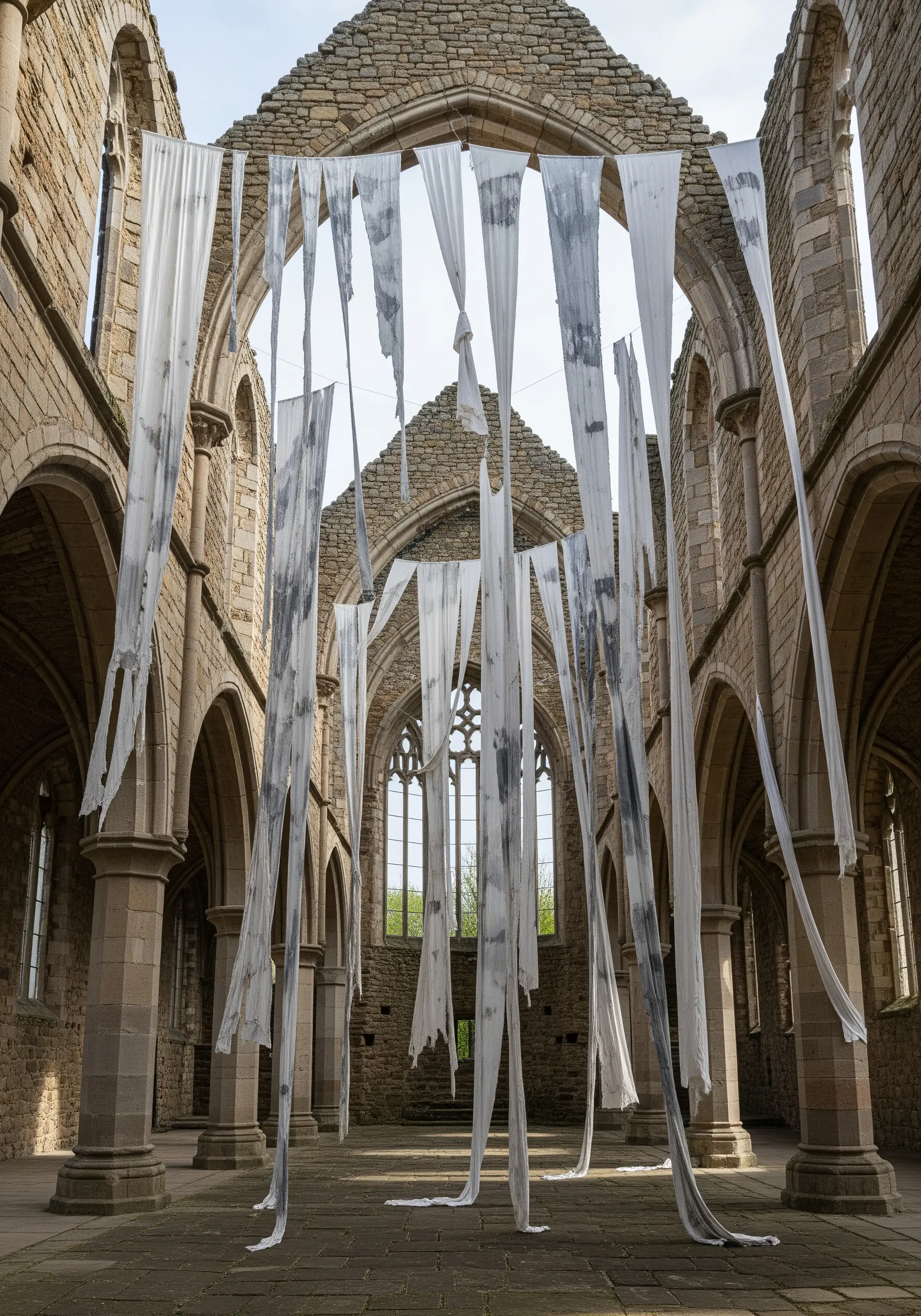
Add a layer of history and emotion to your work before you even make a stitch.
Experiment with intentionally aging your base fabric—try a light tea or coffee stain, or gently fray the edges.
Incorporate these ‘imperfections’ into your composition rather than hiding them.
This method adds depth and character, perfect for vintage-inspired framed embroidery ideas you’ll want to collect.
25. Transforming Found Objects by Wrapping with Thread
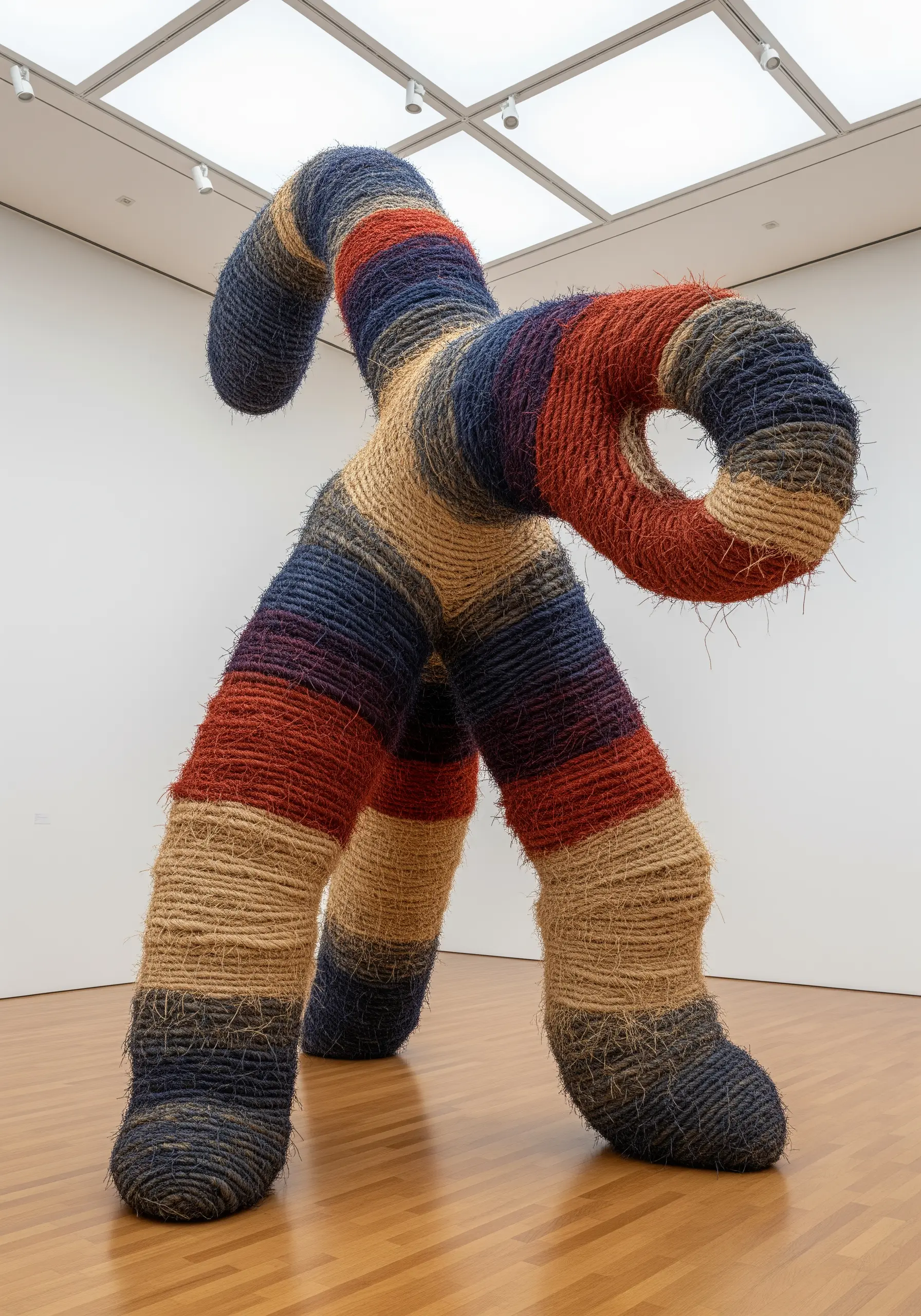
Turn a found object into a personal sculpture through the meditative act of wrapping.
Choose something with an interesting form—a piece of driftwood, a smooth stone, or even an old key—and meticulously wrap it with colorful embroidery floss or yarn.
The process completely transforms the object, highlighting its shape with color and texture.
You’ll be surprised how many DIY art objects inspired by nature you can create this way.
26. Evoking Coziness with Cable-Knit Inspired Stitches

You can replicate the cozy, tactile appeal of knitted cables using specific embroidery stitches.
The cable chain stitch, raised stem stitch, and Pekinese stitch all create beautiful, rope-like lines that mimic knitting.
Use a thicker fiber, like cotton perle or tapestry wool, to enhance the three-dimensional, comforting effect.
These techniques are wonderful for soft-texture embroidery projects for cozy headboards and bed runners.
27. Using Abstract Lines to Activate Your Composition
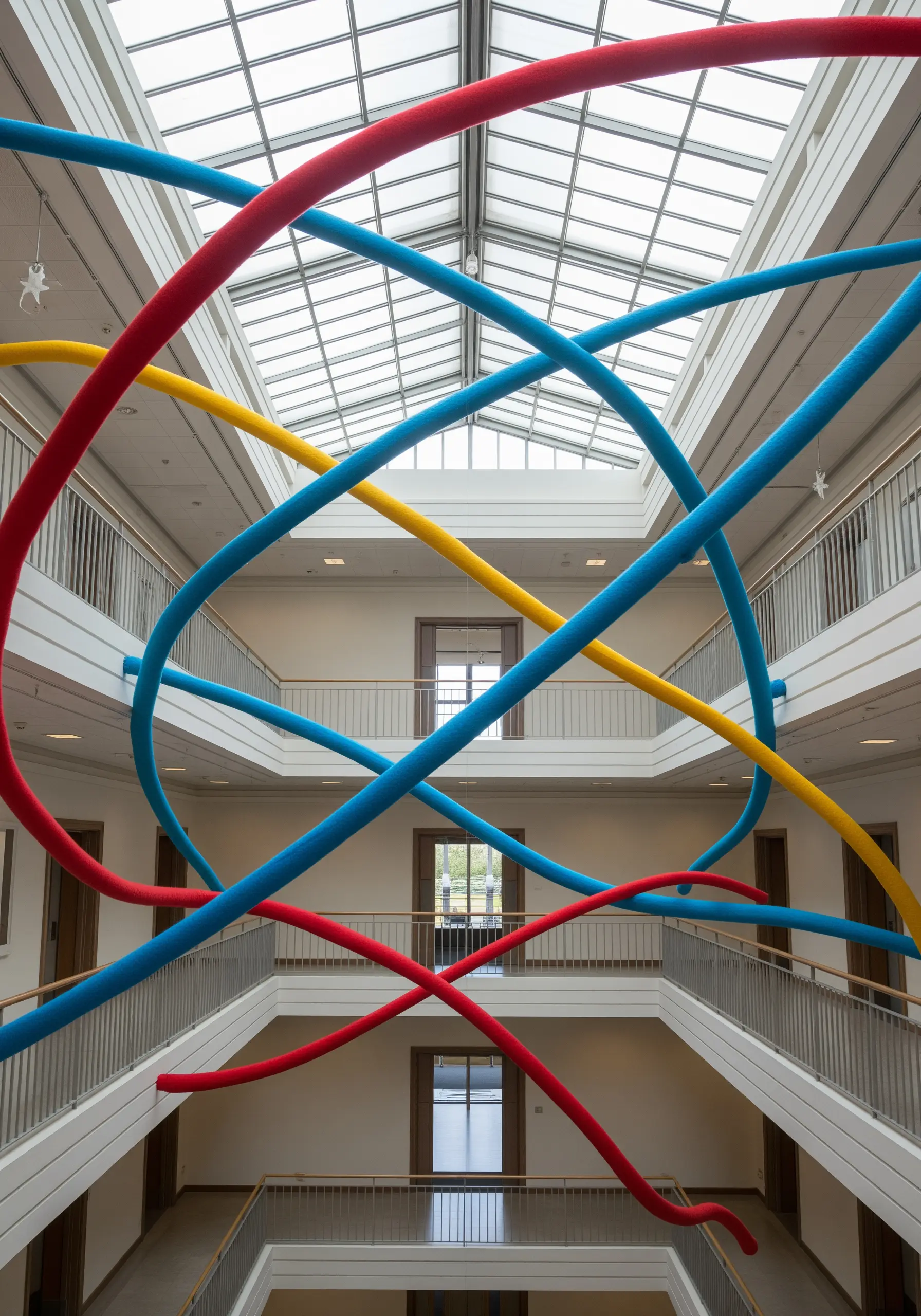
For your next piece, challenge yourself to work only with line.
Use a single, continuous line of a bold color to travel across your fabric, letting it twist, curve, and intersect with itself.
A whipped backstitch or stem stitch will give your line beautiful definition and consistency.
This simple exercise creates dynamic energy and is one of the quickest abstract line art embroidery styles to elevate your bedroom walls instantly.