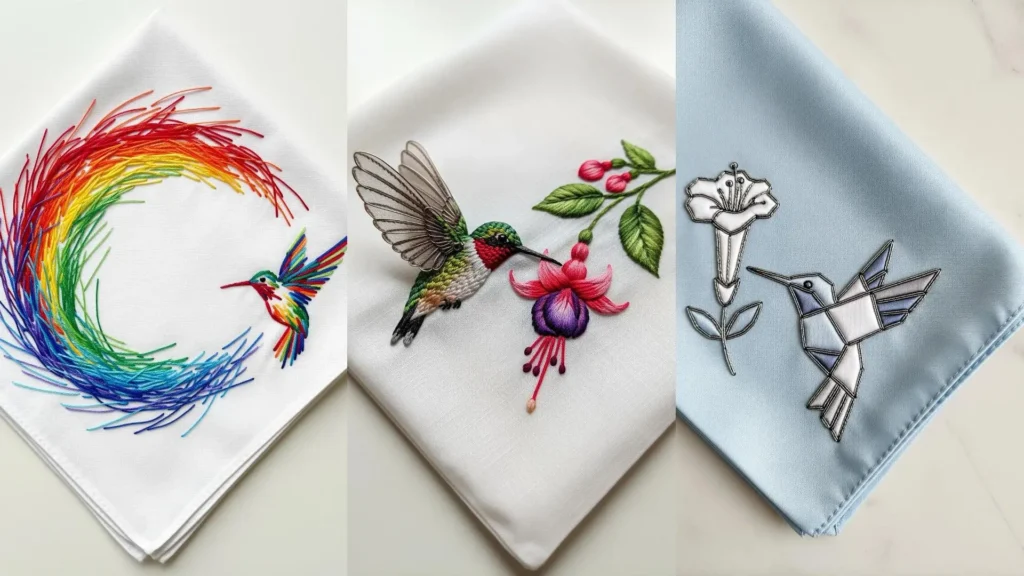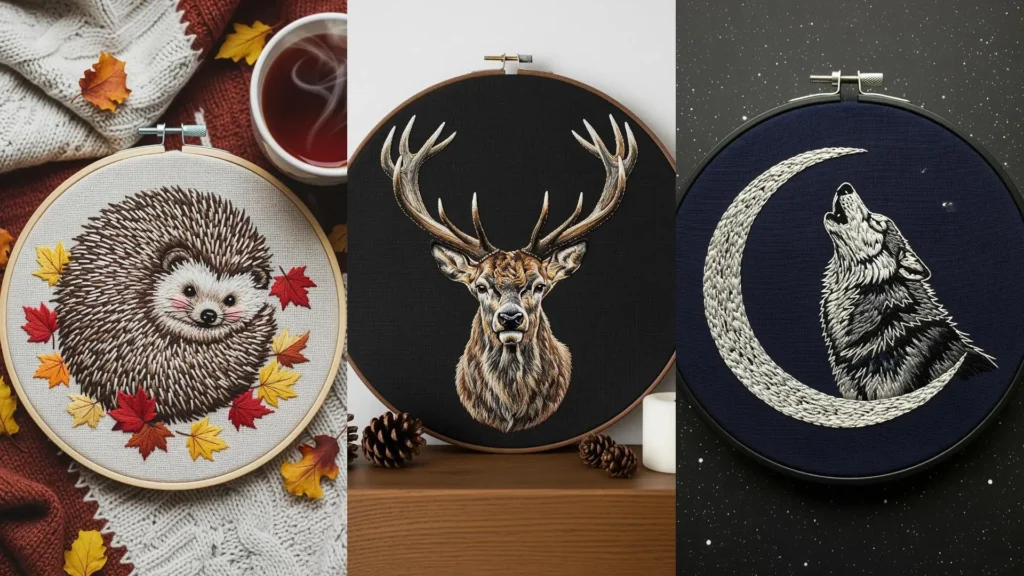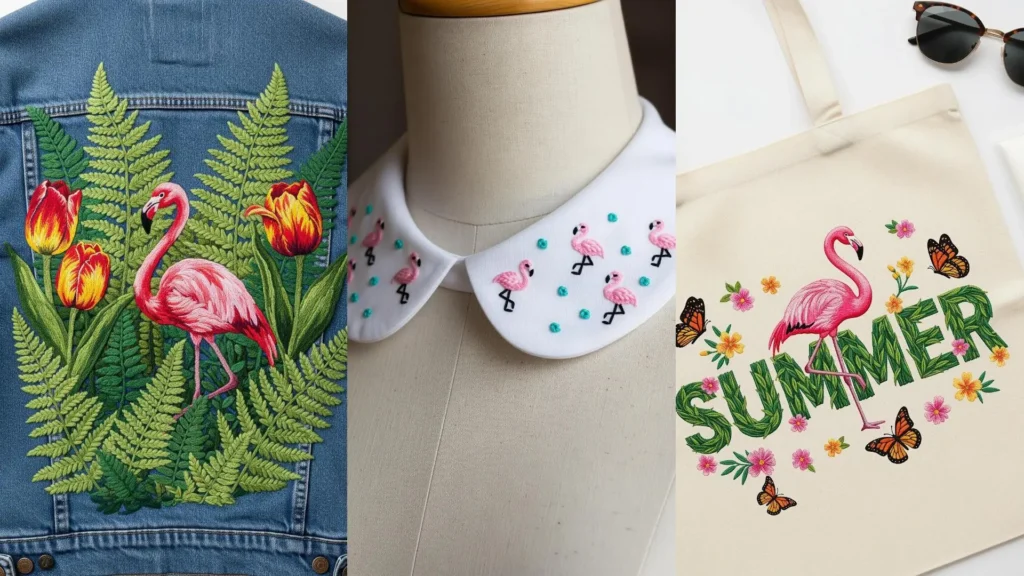
Summer fashion demands a certain lightness—a playfulness that heavy, traditional embroidery often misses. But when you treat your summer dress as a canvas for modern thread painting or clever outlining, you elevate a simple garment into a bespoke wardrobe staple.
The key to embroidering on summer fabrics, whether it’s delicate linen or sturdy denim, is stabilization and stitch choice. You want designs that move with the fabric, not stiffen it. By choosing the right motif—like the elegant curve of a flamingo—and pairing it with the correct technique, you ensure your handiwork survives the wash and the wear.
Here are 29 distinct ways to approach this tropical motif, from minimalist outlines perfect for beginners to dense, painterly textures that challenge your skills. Let’s get your hoop ready.
1. High-contrast tropical satin stitch

When working on crisp white bodice fabric, your edges must be impeccable; use a split stitch outline before filling with satin stitch to ensure a raised, smooth finish.
Notice how the monstera leaves frame the bird—stitch these first to establish your background layer before layering the flamingo on top.
For the feathers, switch to long-and-short stitch to blend the coral and blush tones seamlessly.
2. Narrative hoop art with varied textures

Create movement in the water by using a whipped backstitch or chain stitch, swirling the blue threads to mimic crashing waves.
The contrast between the smooth body of the bird and the textured palm leaves gives the piece depth without requiring complex shading.
This composition works beautifully as a standalone art piece or a patch for a beach bag.
3. Minimalist pocket outline

Transform denim instantly by using a bold chain stitch for the outline; this stitch stands up well against the heavy weave of jeans.
If you are looking for tiny motifs that instantly add personality to jeans without overwhelming them, this open-line style is the perfect solution.
Avoid filling the shape to keep the fabric flexible and comfortable for everyday wear.
4. Thread painting on sheer tulle

Embroidery on tulle requires a water-soluble stabilizer to prevent the delicate mesh from tearing under the weight of the thread.
Use single strands of cotton floss for the needle painting to achieve that hyper-realistic, painterly gradient in the feathers.
The floating effect of the ferns and orchids creates an ethereal look perfect for formal summer overlays.
5. Rhythmic hemline border
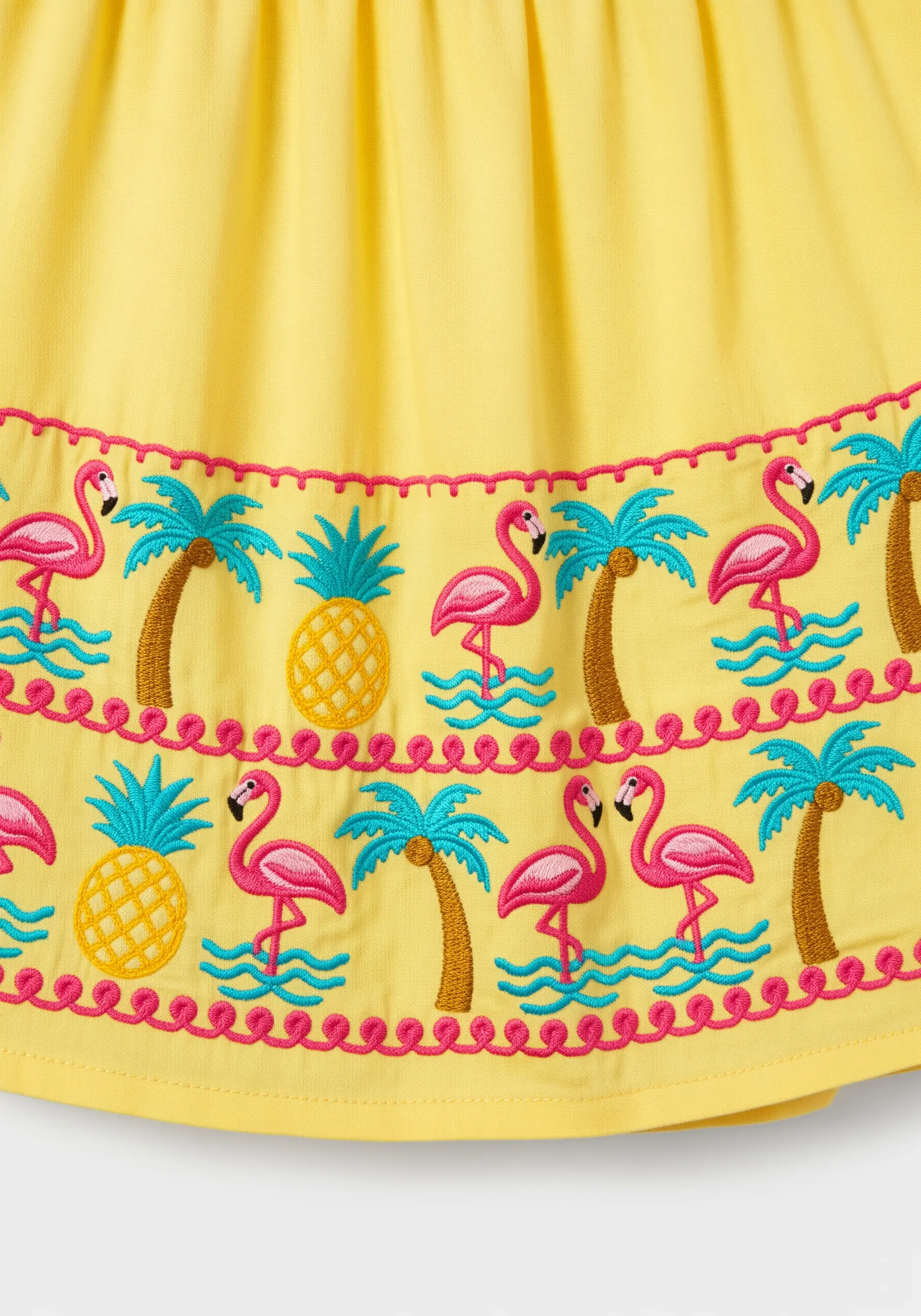
For a skirt hem, consistency is key; mark your spacing with a water-soluble pen to ensure the palm trees and flamingos repeat at exact intervals.
Stick to a limited color palette of three or four shades to keep the busy pattern from looking chaotic.
Use a stem stitch for the curved necks and tree trunks to maintain a smooth, rope-like line.
6. Dynamic motion in thread painting
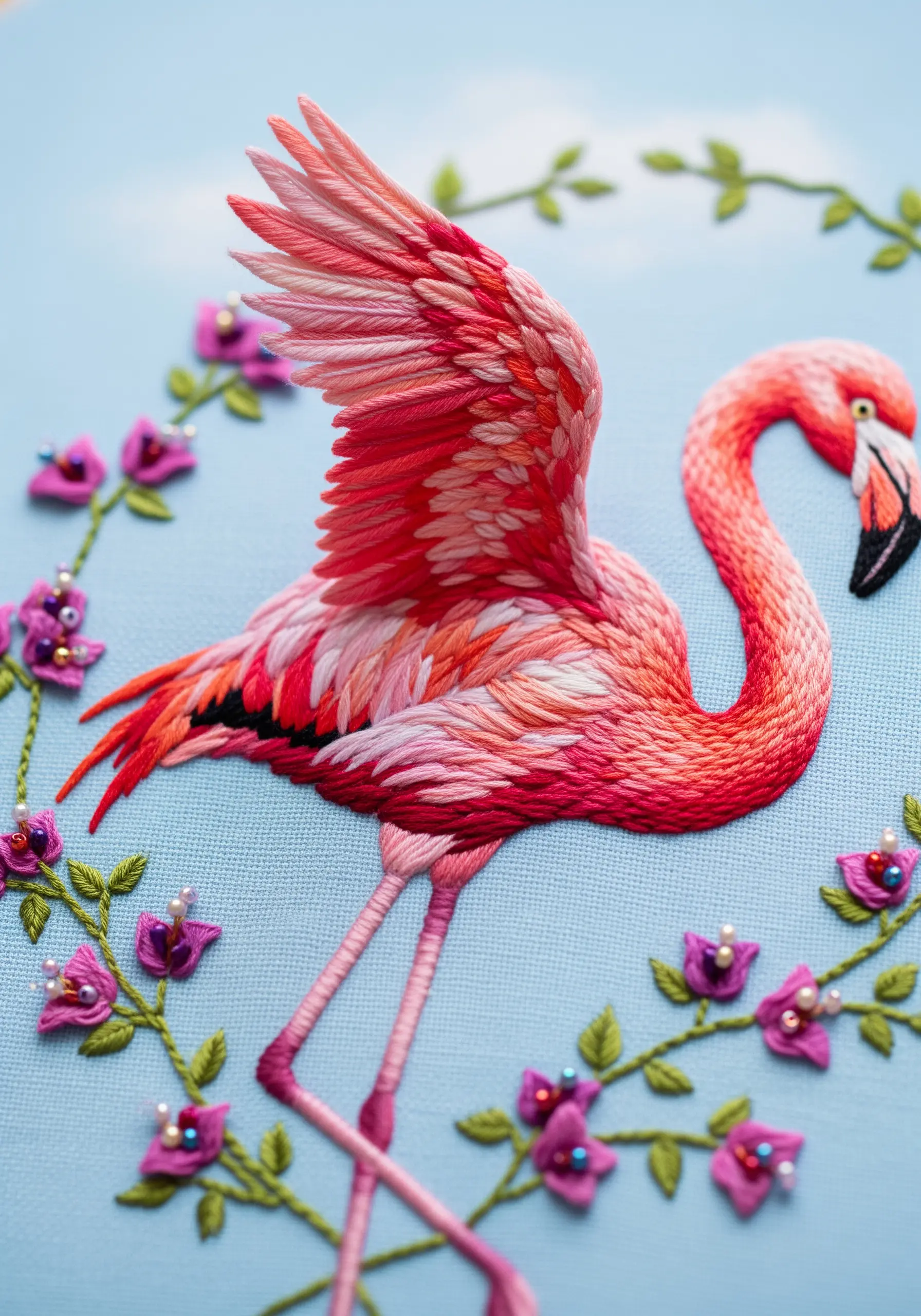
Capture the energy of a taking flight by directing your stitches outward along the wing span, simulating the rush of air.
Blend deeper reds into pale pinks using the long-and-short technique to give the plumage a rich, volumetric look.
Add tiny French knots or seed beads near the flowers to introduce a subtle tactile contrast.
7. Geometric Aztec filler pattern
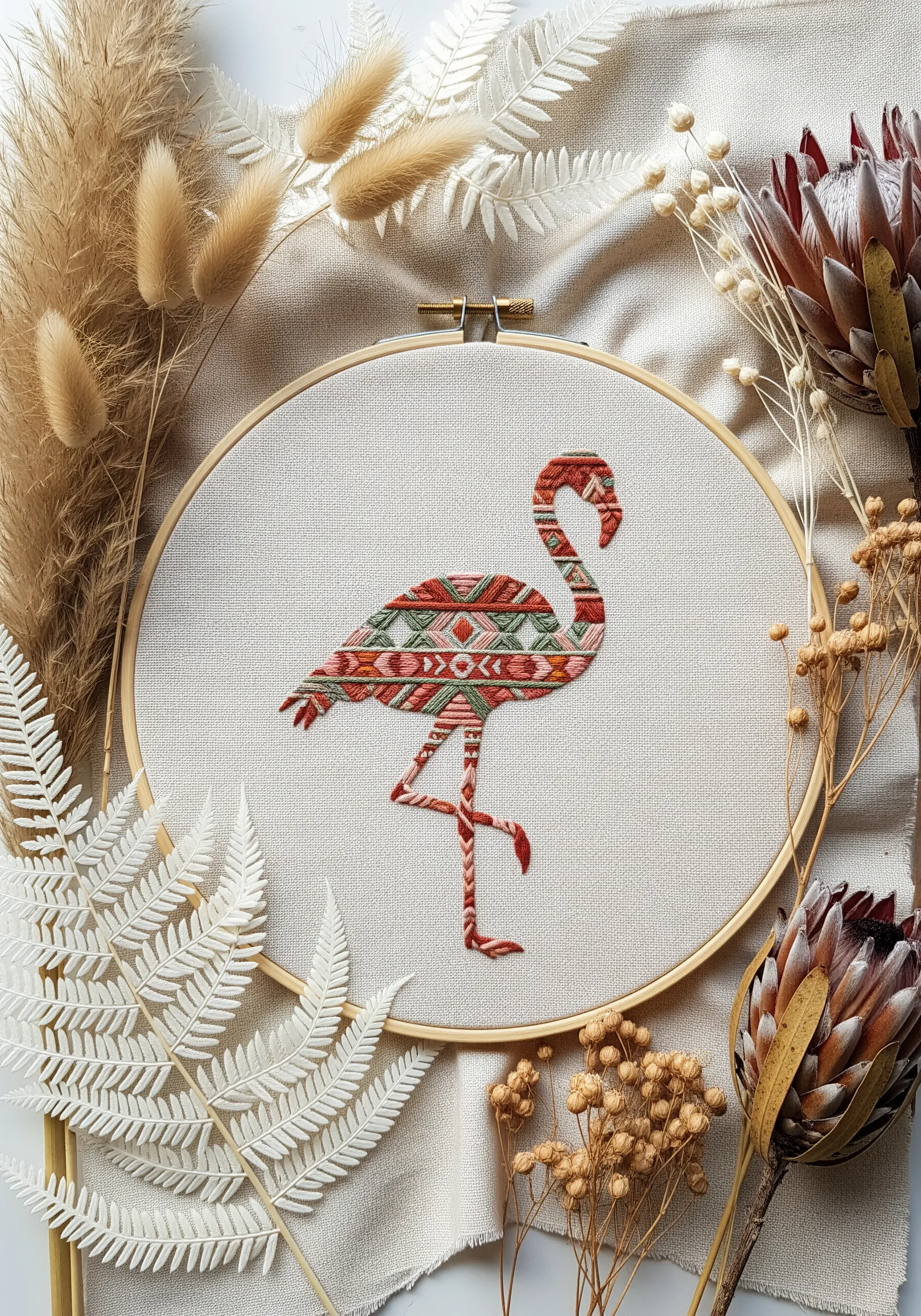
Depart from realism by filling the silhouette with geometric satin stitch blocks; this modern approach is easier for beginners than shading.
Ensure your fabric is drum-tight in the hoop to prevent the dense geometric blocks from puckering the surrounding linen.
The earthy tones mixed with pinks make this design versatile for boho-style interior decor.
8. Symmetrical neckline composition

Mirroring your design across a neckline creates a bespoke, high-end garment look that feels intentional and balanced.
Use the ‘kissing’ flamingos to create a heart shape, softening the composition for a romantic aesthetic.
Keep the floral vines delicate with a simple lazy daisy stitch to ensure they don’t distract from the central birds.
9. Neon contrast on dark denim

Navy or black fabric makes fluorescent threads pop vibrantly; use this to your advantage for a striking summer statement.
For those interested in modern neon on black thread art ideas that glow under uv lights, this palette is a perfect starting point.
Incorporate fern stitches for the foliage to cover ground quickly while maintaining a light, airy texture.
10. Textural botany and typography
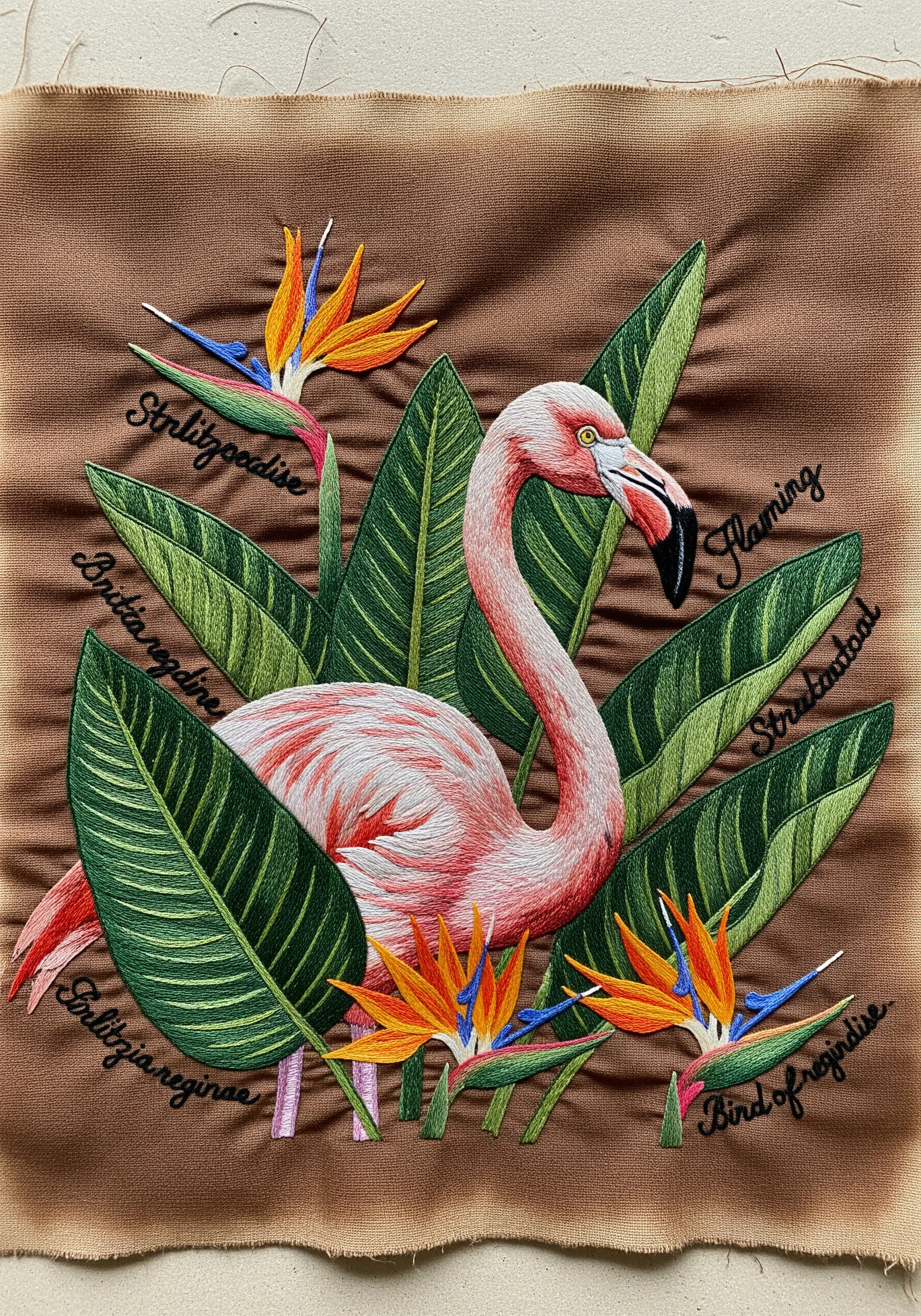
Combine your stitching with fabric manipulation or ruching to create a unique, textured canvas before you even begin embroidering.
The sharp angles of the Bird of Paradise flowers complement the curve of the flamingo’s neck perfectly.
Use a split stitch for the lettering to ensure the text remains legible and crisp against the textured background.
11. Abstract one-line art

Master the art of the continuous line using a whipped backstitch for a fluid, uninterrupted drawing effect on a t-shirt.
Add splashes of watercolor paint behind the stitching for a mixed-media look that is trendy and artistic.
Keep your thread tension loose enough to prevent puckering on jersey knit fabrics.
12. Statement denim jacket panel

When working on a large back panel, use bold back panel embroidery designs to upgrade old shirts into fashion statements that truly turn heads.
Layer the ferns in the background first, using varied shades of green to create depth and a lush jungle feel.
Use a thicker thread weight, like pearl cotton, to help the flamingo stand out against the heavy denim texture.
13. Soft sleeve embellishment
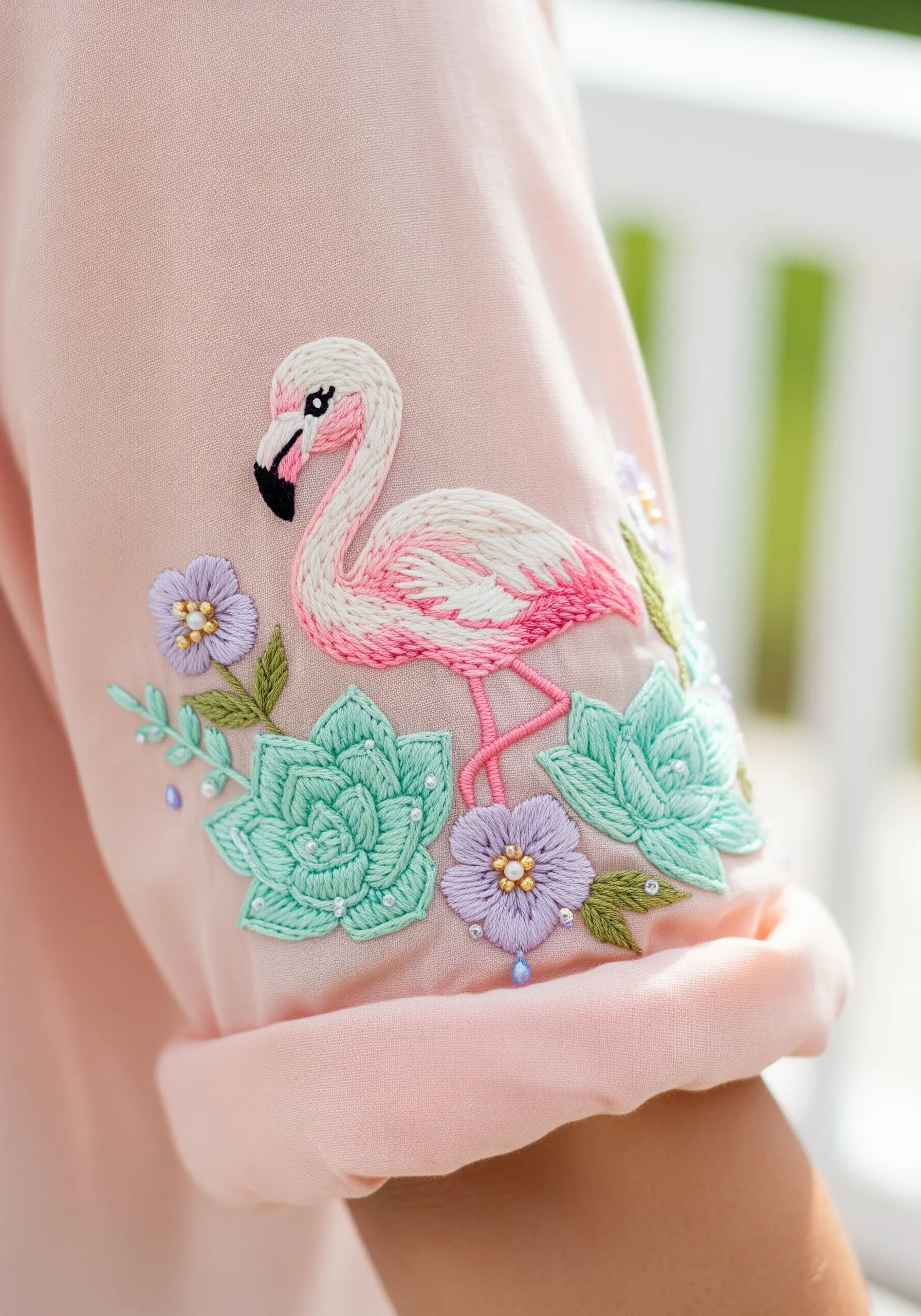
Pastel tones and curved lines make this design perfect for the cuff or shoulder of a light summer blouse.
Incorporate bullion knots or padded satin stitch for the succulents to give them a 3D, fleshy appearance.
The softness of the thread choice here is crucial; stick to cotton or silk to avoid a scratchy finish against the arm.
14. Vibrant folk art sampler
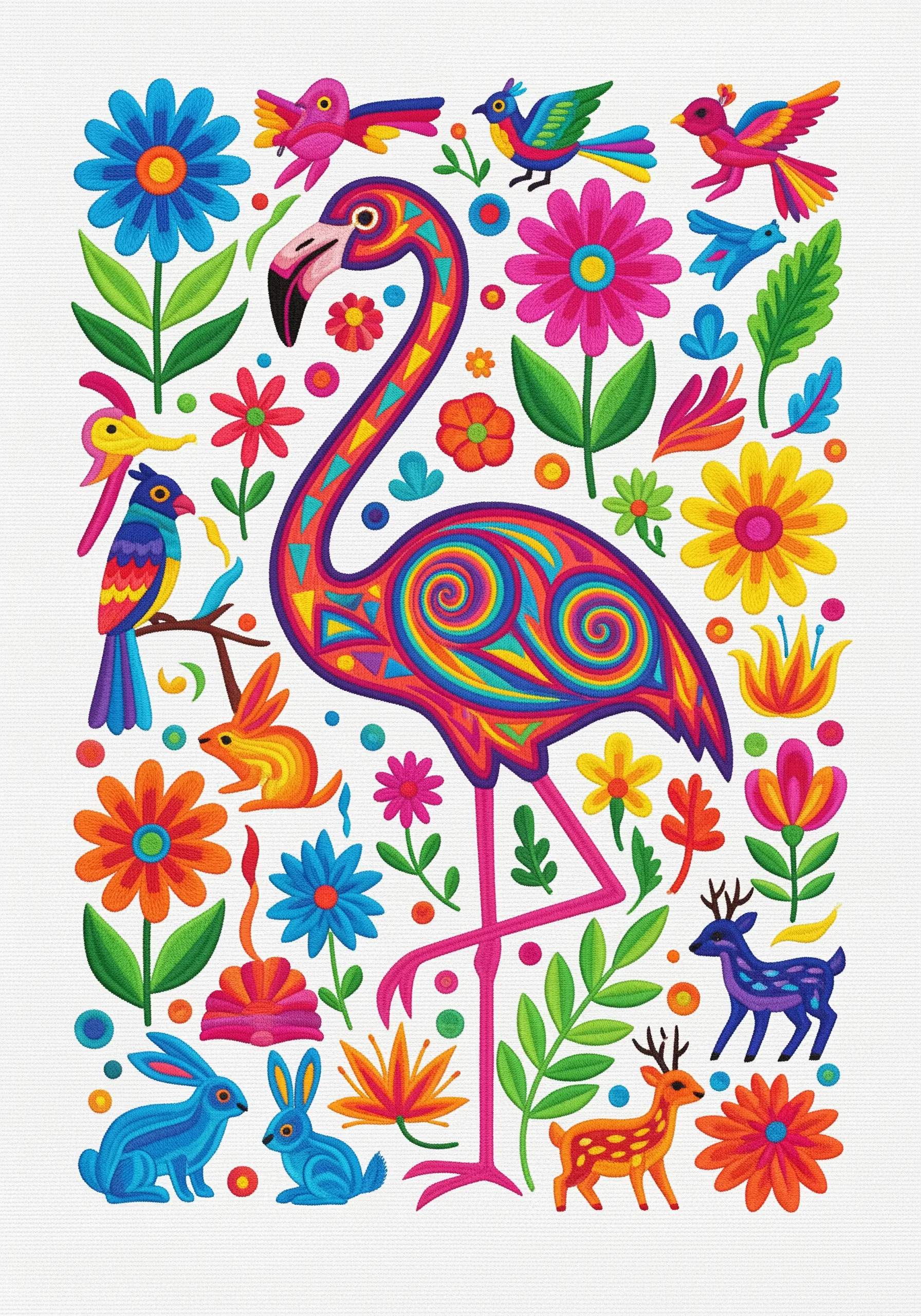
Embrace the Otomi or Mexican folk art style by using bright, contrasting colors and filling shapes with close satin stitching.
Don’t worry about realistic shading; this style is about bold blocks of color and whimsical, stylized animal forms.
Balance the large flamingo with smaller, equally colorful elements like the blue rabbit and deer to keep the eye moving.
15. Whimsical pool float texture
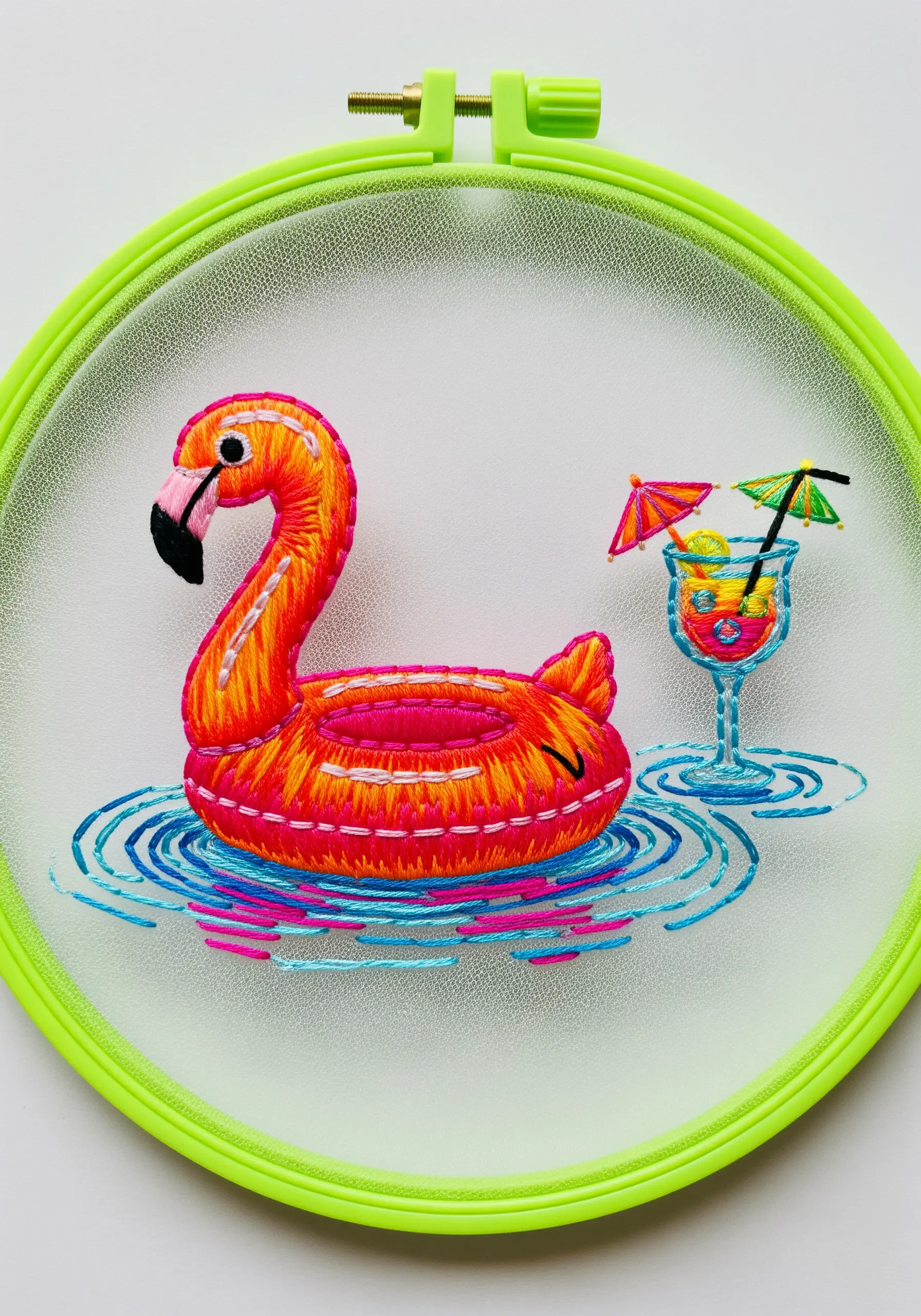
Stitch the ‘plastic’ texture of the float by using horizontal satin stitches with deliberate white gaps to mimic light reflections.
This playful design is ideal for canvas beach bags or casual summer totes.
Use a bright neon orange thread to distinguish the float toy from the natural pinks of a real bird.
16. Elegant white-on-white texture

Whitework relies entirely on stitch direction and light and shadow; change the angle of your satin stitch for each feather group.
The raised leaf veins, created with padding, add necessary definition when you remove color contrast from the equation.
This technique looks exceptionally sophisticated on linen summer dresses.
17. Tropical wreath framing

Compose a wreath to center your subject; the circular motion leads the eye directly to the central flamingo.
You can adapt swan flamingo embroidery patterns for romantic bedroom decor looks by framing them with hibiscus instead of roses.
Ensure the green leaves vary in tone to prevent the wreath from looking like a flat green donut.
18. Mixed media beads and sequins

Elevate your embroidery by stitching sequins in overlapping rows (like fish scales) to mimic the bird’s feathers.
Use beads for the eye and beak detail to catch the light and add a jewelry-like quality to the garment.
This technique is heavier than thread, so ensure your base fabric is sturdy enough to support the weight.
19. Sashiko-inspired background
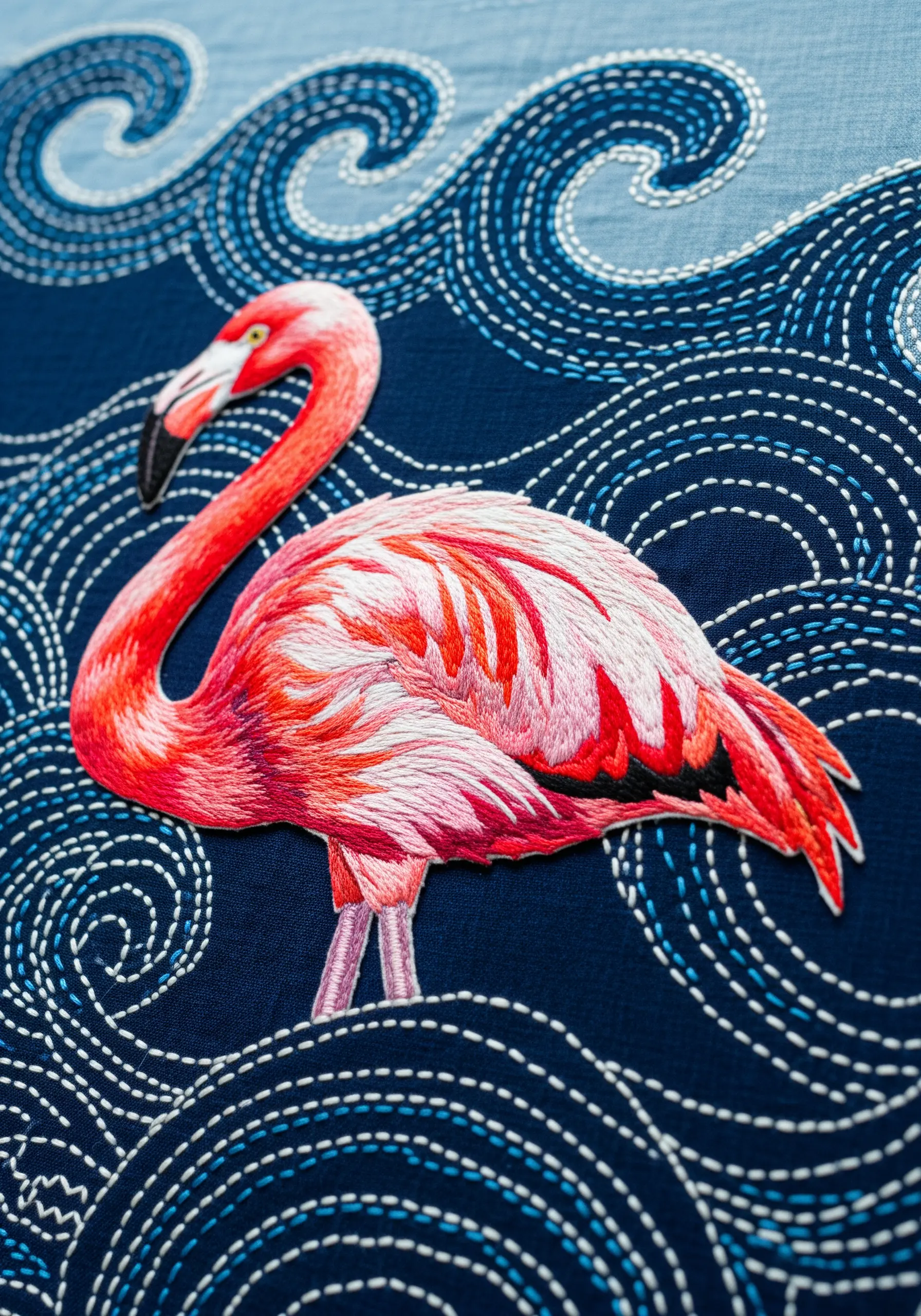
Create a dynamic background using a running stitch in a wave pattern; this traditional Sashiko style adds movement without overwhelming the focal point.
The contrast of the structured background waves against the organic thread painting of the bird creates a stunning visual tension.
Use a slightly thicker thread for the white waves to make them stand out against the deep indigo.
20. Cross-stitch on clothing

To achieve this pixelated look on a dress, use waste canvas to keep your grid perfect, then pull the canvas threads out when finished.
The charm here lies in the gradient; select 4-5 shades of pink floss to create the smooth transition in the pixels.
Frame the pixel art with free-hand vine embroidery to soften the edges and integrate it into the garment.
21. Painted canvas integration
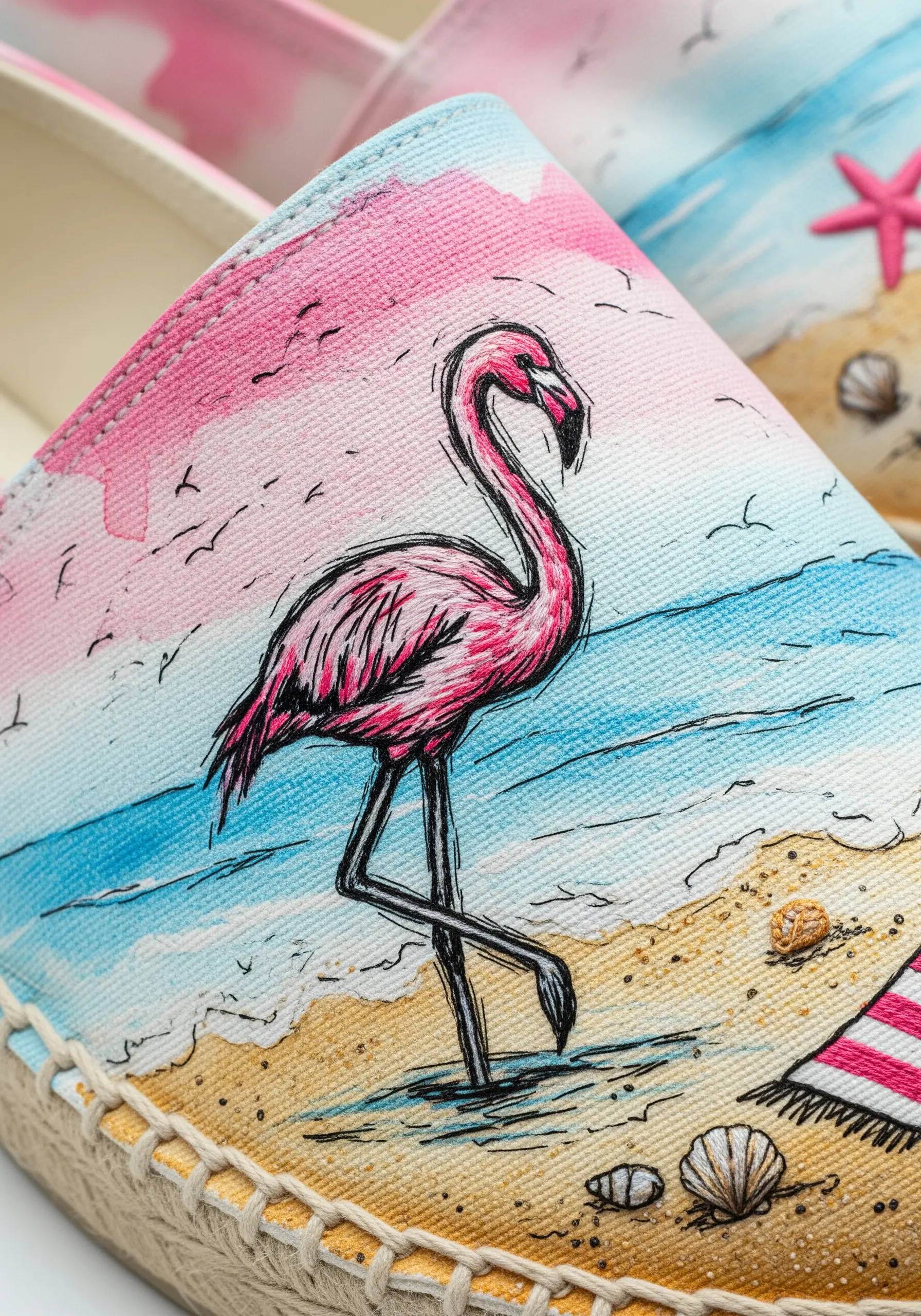
Combine fabric paint with embroidery for a mixed-media approach; paint the sunset gradient first and let it dry completely.
Use black thread for a sketch-like outline to define the flamingo against the painted background.
This is one of those creative embroidery projects that transform ordinary fabric shoes into custom summer wear.
22. Working with printed stripes
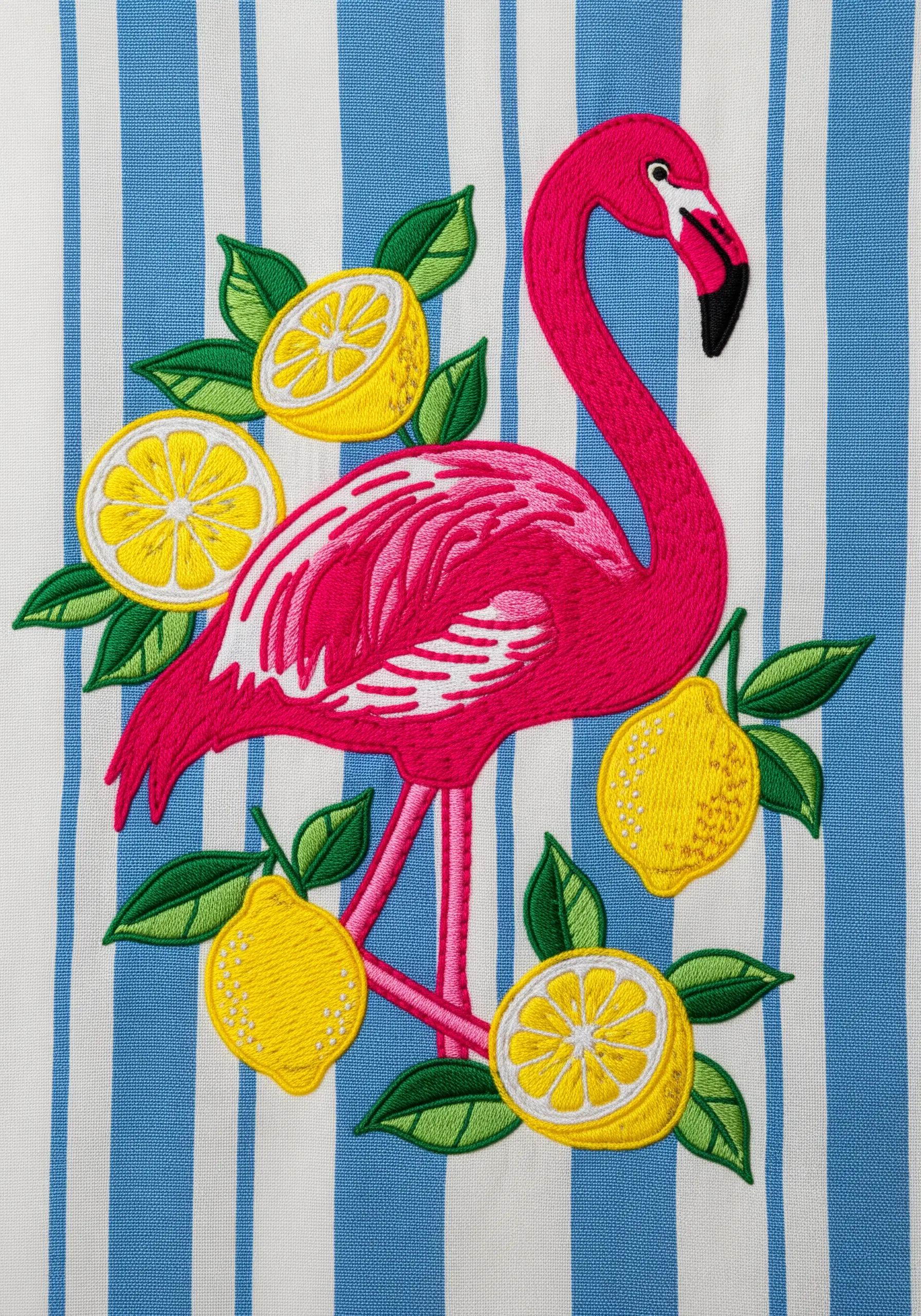
Use the existing pattern of your fabric; here, the vertical stripes contrast with the organic curves of the bird.
Fill the lemons with seed stitching rather than satin stitch to create a dimpled, rind-like texture.
Bold black outlines help separate the embroidery from the busy striped background.
23. Silhouette on sunset gradients

Instead of stitching the bird, stitch the silhouette in solid black to contrast against a colorful, printed background.
The palm trees should be stitched with a feather stitch to replicate the fringed look of the fronds.
This approach is faster than filling a whole bird and looks incredibly chic on patterned swimwear or activewear.
24. French knot ‘poodle’ texture
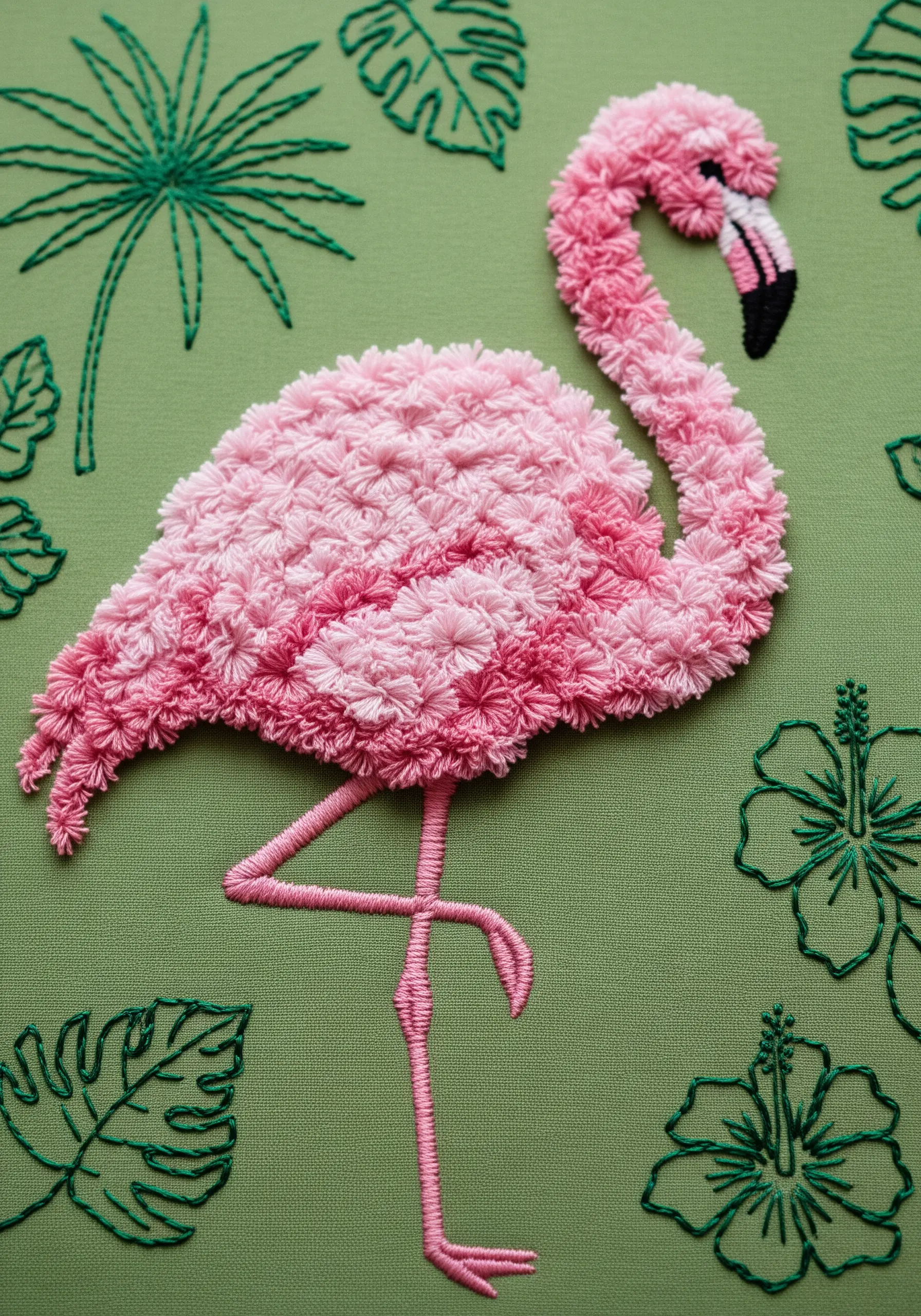
Create a dense, rug-like texture by filling the entire flamingo body with thousands of French knots.
This tactile surface is fun to touch and adds significant durability to the design.
Vary the number of wraps in your knots to create slight size differences, adding to the organic feel.
25. The Peter Pan collar detail

Micro-embroidery is perfect for collars; use a single strand of floss to keep the tiny flamingos detailed and recognizable.
If you love subtle touches, check out tiny embroidery details that make big impact on room vibes, which applies to fashion just as well.
Space the motifs randomly for a playful, confetti-like distribution.
26. Goldwork on velvet

When stitching on velvet, use a water-soluble topping to prevent your stitches from sinking into the pile.
Incorporate gold metallic thread for the legs and beak outline to add a luxurious contrast to the deep green velvet.
Use a long-and-short stitch for the feathers to make them look like they are painted onto the fabric.
27. Sketch-style motion lines
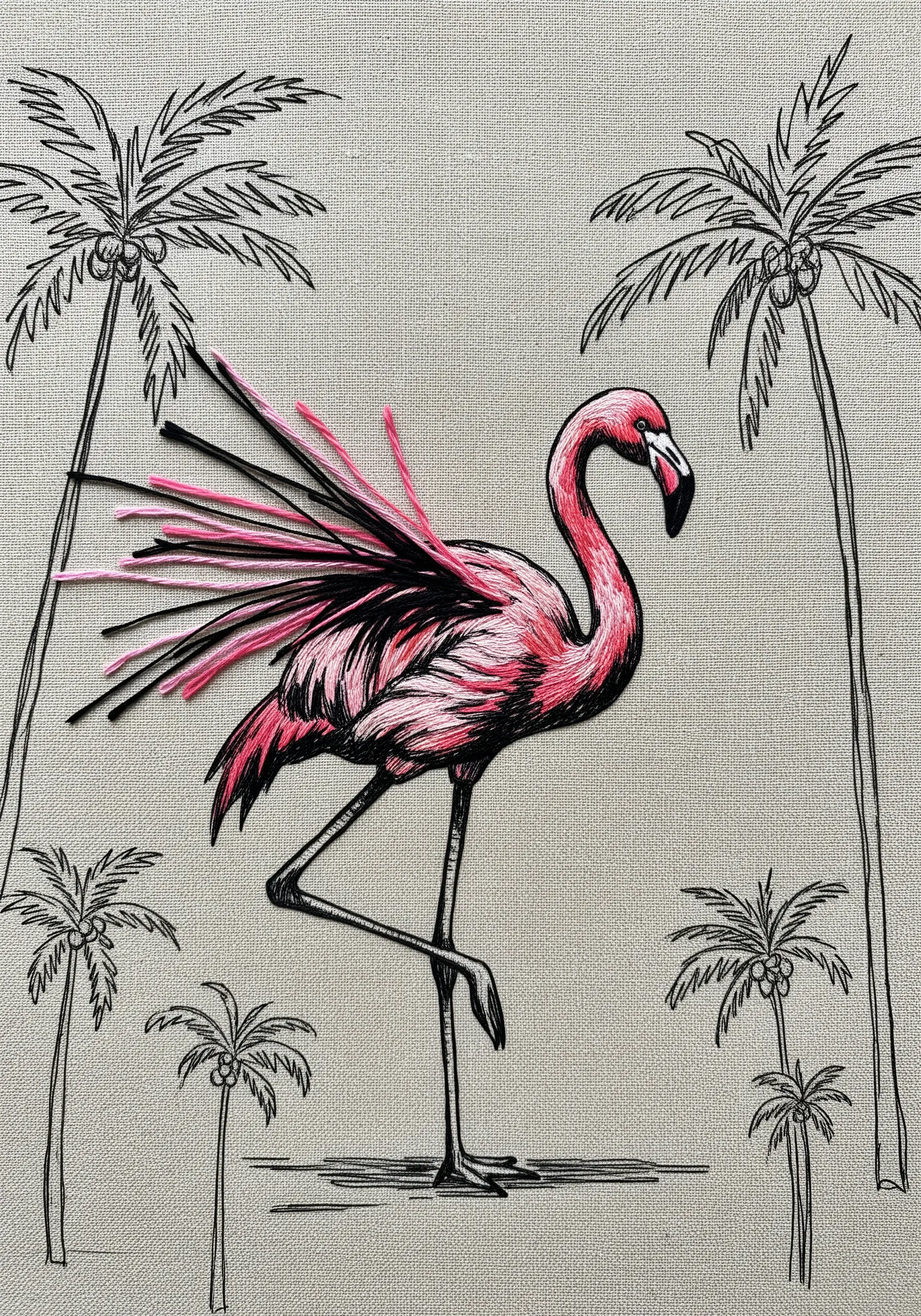
Mimic a pencil sketch by using quick, overlapping straight stitches in black, pink, and white.
Leave parts of the linen visible through the body to keep the design feeling light and artistic.
Elongate the legs and neck slightly to exaggerate the elegance of the bird’s form.
28. Surrealist floral anatomy

Blend botany and biology by replacing the bird’s body with a lush bouquet of roses and peonies.
For inspiration on petal realism, look at modern floral stitch ideas that look like real petals when seen up close.
Ensure the ‘stem’ legs transition smoothly into roots to ground the surrealist concept.
29. Typography and nature blend

Intertwine your lettering with leaves; stitch the word ‘SUMMER’ first, then weave the vine stitches over and under the letters.
This style is perfect for tote bag embroidery designs for coffee lovers who want cafe core style or beach vibes.
Keep the flamingo centralized to anchor the text and butterflies around a focal point.