

You have the skill, the patience, and the love for the craft. But sometimes, you look at your finished embroidery and feel a small gap between what you made and the polished, intentional art you want to create. It’s not about mastering more complex stitches—it’s about learning to see with an artist’s eye.
The real magic happens in the details. It’s in the thoughtful placement of a single motif, the subtle texture of a tone-on-tone thread, or the unexpected surprise of a stitch on an everyday object. These are the elements that transform a piece from simply ‘handmade’ to ‘handcrafted,’ giving it a quiet confidence that elevates the entire room.
This collection is an invitation to explore that next step. These are not just projects, but principles you can apply to anything you make. Think of them as tiny secrets that will help you infuse your work with more meaning, personality, and artistry, turning every textile in your home into a canvas for your unique voice.
1. Upgrade Utilitarian Surfaces with Geometric Lines

Transform a simple felt desk mat with a clean, geometric motif that adds personality without compromising function.
Because you’re stitching through a dense material, use a sturdy, sharp needle and a thimble to guide it through without straining your hands.
A simple running stitch or backstitch is all you need, but choose a high-contrast thread—like this vibrant orange on grey—to make the design feel intentional and graphic.
This technique turns a purely functional item into a small piece of art that subtly energizes your workspace.
2. Add a Glimmer of Detail with Metallic Thread
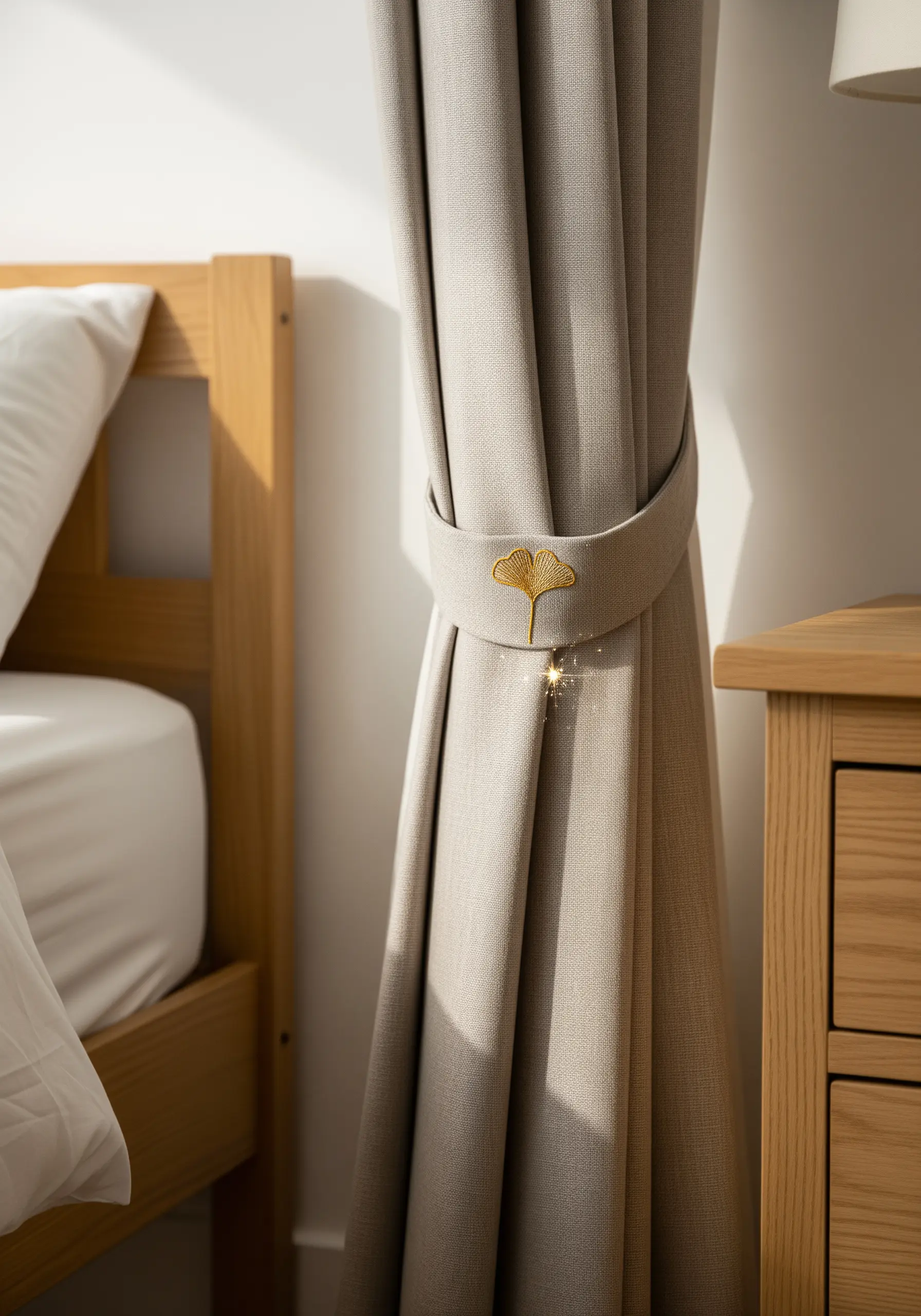
Elevate simple textiles like curtain tie-backs with a single, elegant motif stitched in metallic thread.
When working with metallics, use a shorter length of thread (no more than 12 inches) to prevent the notorious fraying and tangling.
The way the floss catches the light adds a dynamic, luxurious feel that transforms an ordinary object into a refined accent.
Consider this for any textile that moves, drapes, or catches the light to maximize the shimmer effect.
3. Define Furniture Silhouettes with Structural Stitches
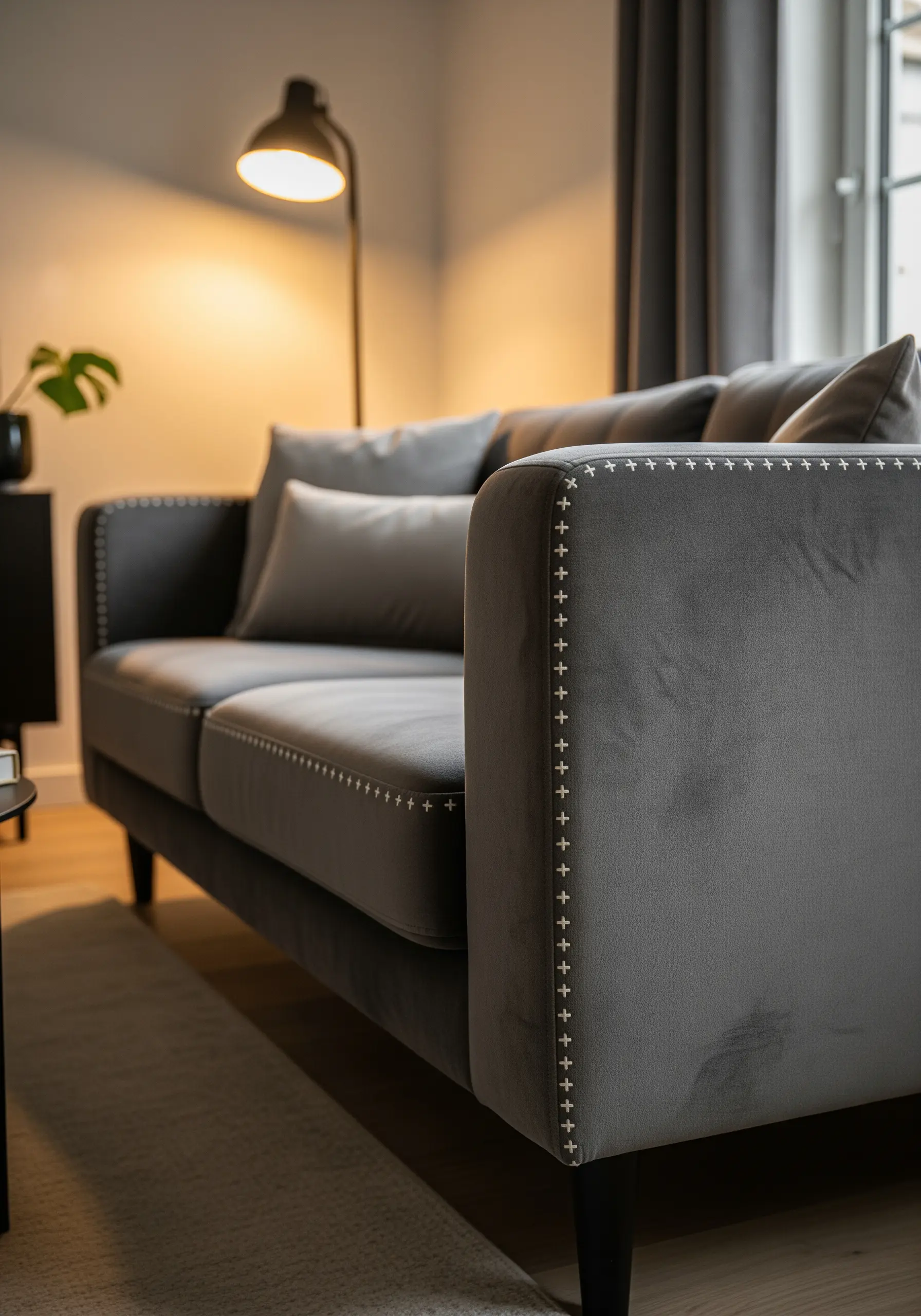
Use a simple, repetitive stitch like a cross stitch or seed stitch to trace the seams of upholstered furniture.
This technique acts like a hand-drawn architectural line, highlighting the piece’s shape and adding a bespoke feel.
Choose a thick, durable thread like cotton perle or sashiko thread that can withstand wear, and use a curved upholstery needle to navigate angles with ease.
The contrast between the soft fabric and the crisp, matte stitches creates a beautiful textural dialogue that makes furniture feel custom-made.
4. Infuse Linens with a Delicate Botanical Touch

Embellish a simple pantry shelf liner or tea towel with a single, delicate botanical sprig.
Using just two or three shades of green in a fishbone or stem stitch is enough to create realistic dimension without overcomplicating the design.
Placing the motif off-center gives the design a more organic, modern feel than a perfectly centered pattern would.
This is a perfect way to add quiet, intentional beauty to an overlooked space using only small scraps of thread.
5. Introduce Color and Texture with Thread Wrapping

Turn a plain leather or fabric tassel into a vibrant focal point by wrapping the neck with embroidery floss.
This no-sew technique requires only thread and a steady hand; use a dab of fabric glue to discreetly secure the ends for a clean finish.
Experiment with color blocking by wrapping different sections in complementary or contrasting hues, or incorporate variegated thread for an effortless gradient.
Use this method to customize keychains, drawer pulls, or curtain tie-backs for a quick, impactful upgrade that blends different materials beautifully.
6. Use Graphic Icons as Functional Placeholders

Stitch a minimalist icon, like a fork and spoon, onto a placemat to create a playful and modern table setting.
To achieve the clean, sharp edges essential for a graphic look, first outline the shape with a split stitch before filling it with a dense satin stitch.
This outline acts as a containing ‘wall,’ helping your satin stitches lay flat and uniform.
The concept works beautifully on all table linens, from napkins with glass icons to coasters with coffee cup motifs.
7. Add a Secret Signature with a Tiny Stitched Tag

Create a small, personal ‘maker’s mark’ by stitching a tiny motif onto a fabric tag and tucking it into a seam.
This adds a deeply personal, almost secret detail that speaks to the handcrafted nature of a space.
Use a single strand of thread on a scrap of felt or linen to stitch a heart, initial, or star, then tuck it into a cushion, curtain hem, or chair arm.
It’s a whisper of intention—a detail just for you—that elevates an object with personal meaning.
8. Refine the Monogram with Tone-on-Tone Stitching
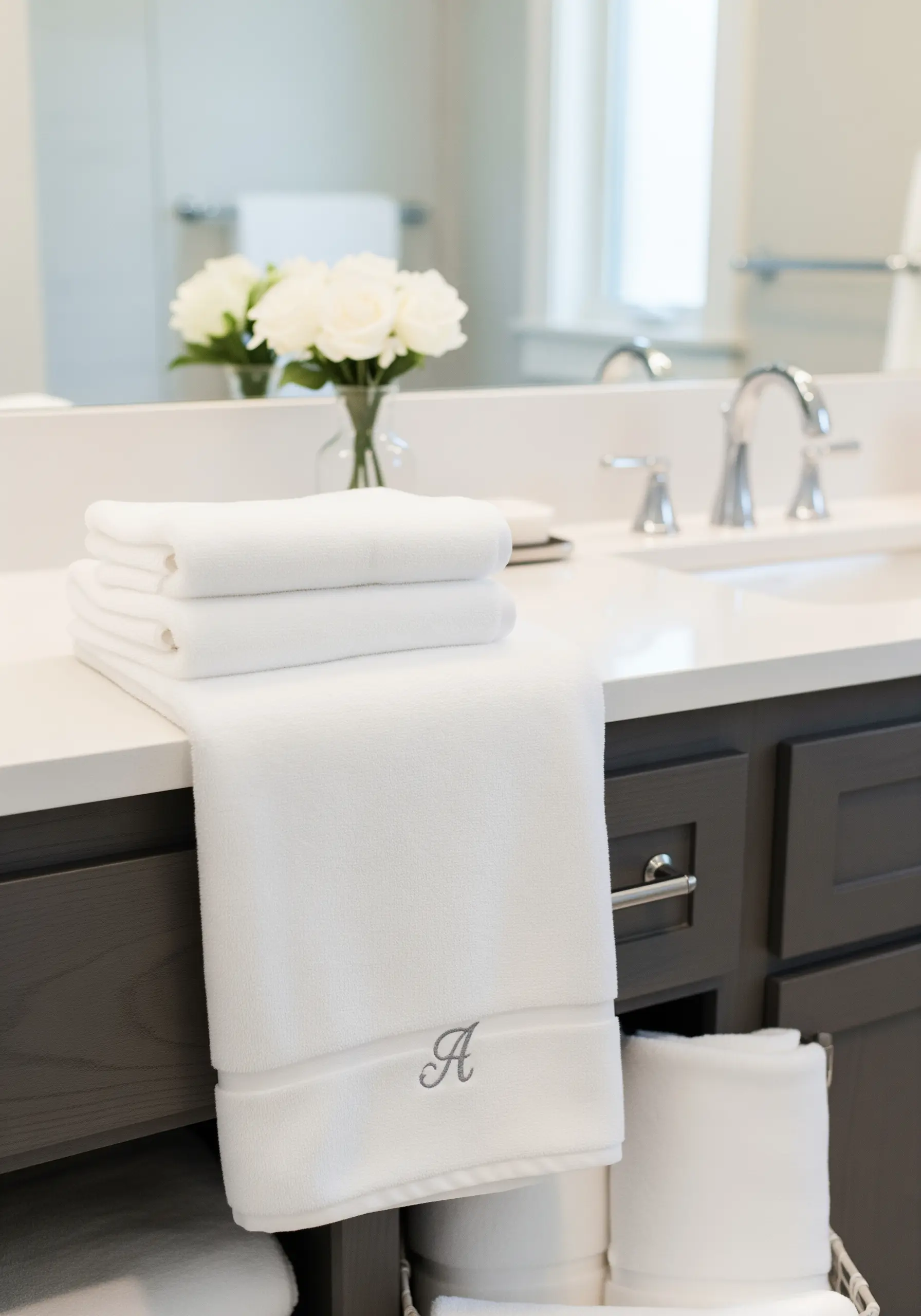
Reimagine the traditional monogram by using a thread color that is just a few shades lighter or darker than the towel fabric.
This subtle, textural effect feels more like an embossed detail than a bold statement, adding quiet luxury.
For plush fabrics like terry cloth, place a water-soluble stabilizer on top; it creates a smooth surface and prevents stitches from sinking into the pile.
The result is a sophisticated, understated detail that feels effortlessly chic.
9. Create Faux Piping with Raised Corded Stitches

Outline the seams of an armchair with a raised stitch to mimic the look of custom piping.
The heavy chain stitch, whipped backstitch, or Palestrina knot stitch are perfect choices, as they create a thick, rope-like line.
Select a high-contrast, thick thread like a #5 perle cotton to make the detail substantial and eye-catching.
This technique adds a pop of color and artisanal dimension, turning a standard piece of furniture into a unique statement piece.
10. Turn Mundane Fixtures into Miniature Artworks

Elevate an ordinary light switch plate by covering it with a tiny, embroidered scene.
Stretch a piece of evenweave fabric over the plate, embroider your design, and then fold and glue the edges securely to the back.
Use a craft knife to carefully cut out openings for the switch and screws.
This simple project transforms one of the most overlooked wall details into an unexpected moment of artistry.
11. Reinforce and Decorate with Functional Stitches

Add personality and strength to fabric handles on storage boxes with a bold, decorative stitch.
A wide zigzag or a graphic running stitch not only adds a pop of color but can also reinforce the handle’s connection point.
Using a variegated or rainbow thread is a simple way to create an effortless, multi-color effect with a single strand.
This is a fantastic way to unify mismatched storage containers or simply to make utilitarian items feel more joyful and integrated into your decor from scrap fabric.
12. Craft a Tiny Charm for an Everyday Object

Add a delicate, personal touch to a journal with a tiny embroidered charm on its ribbon bookmark.
Stitch a small motif, like a celestial symbol, onto two pieces of felt or sturdy fabric.
Cut out the shapes and use a blanket stitch around the edges to join them, encasing the end of the ribbon inside.
Using metallic thread for key details adds a bit of magic, making a daily routine feel more special.
13. Create Faux Nailhead Trim with French Knots
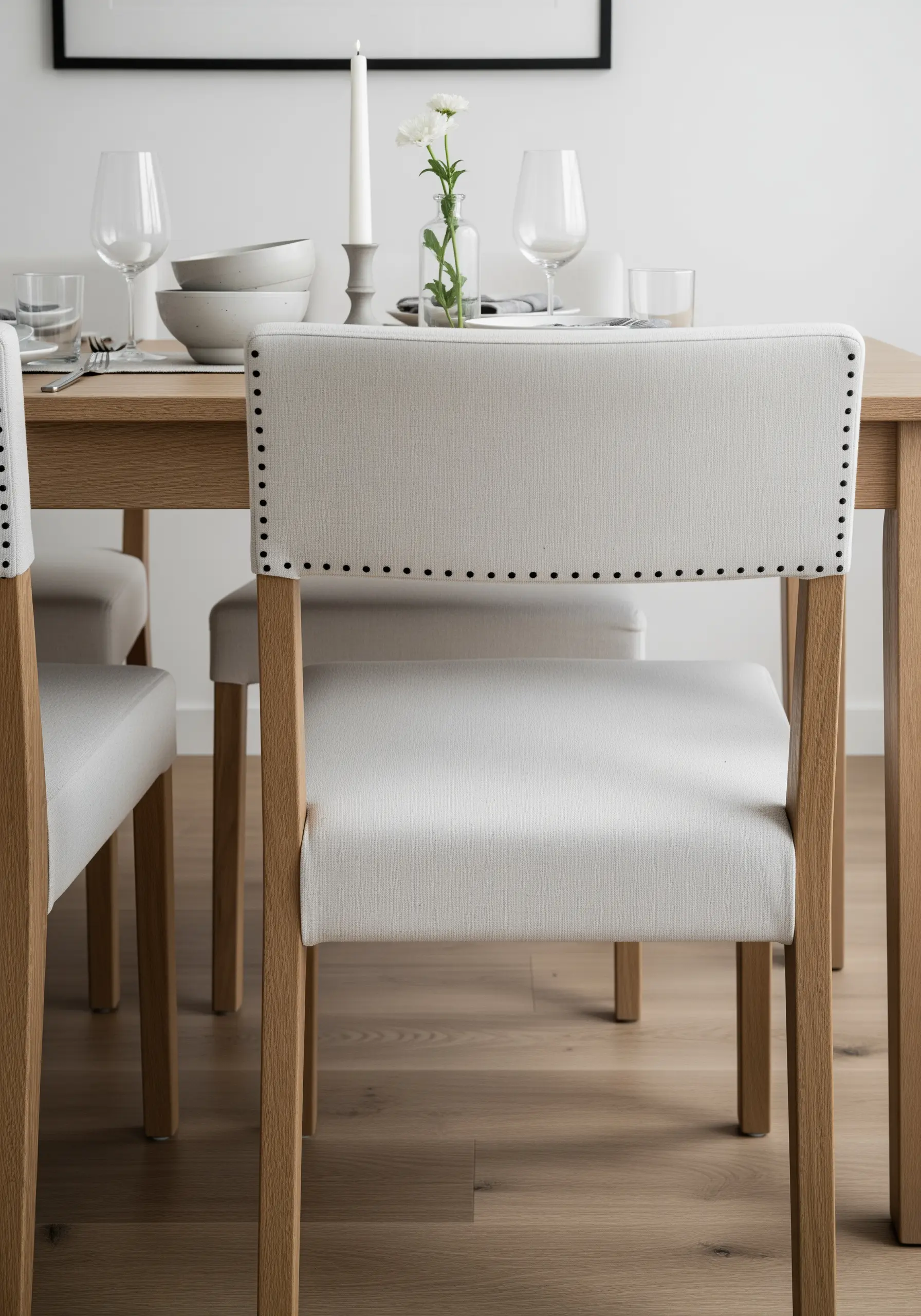
Emulate the look of high-end nailhead trim on dining chairs or headboards using evenly spaced French knots.
Use a dark, high-contrast thread against a light fabric for a crisp, graphic effect.
To ensure perfect spacing, use a quilting ruler and a water-soluble marking pen to create a guideline and mark the placement for each knot.
Wrapping the thread twice around the needle creates a substantial knot that mimics the dimension of a real nailhead, adding a big impact with less.
14. Integrate Your Motif with the Fabric’s Design
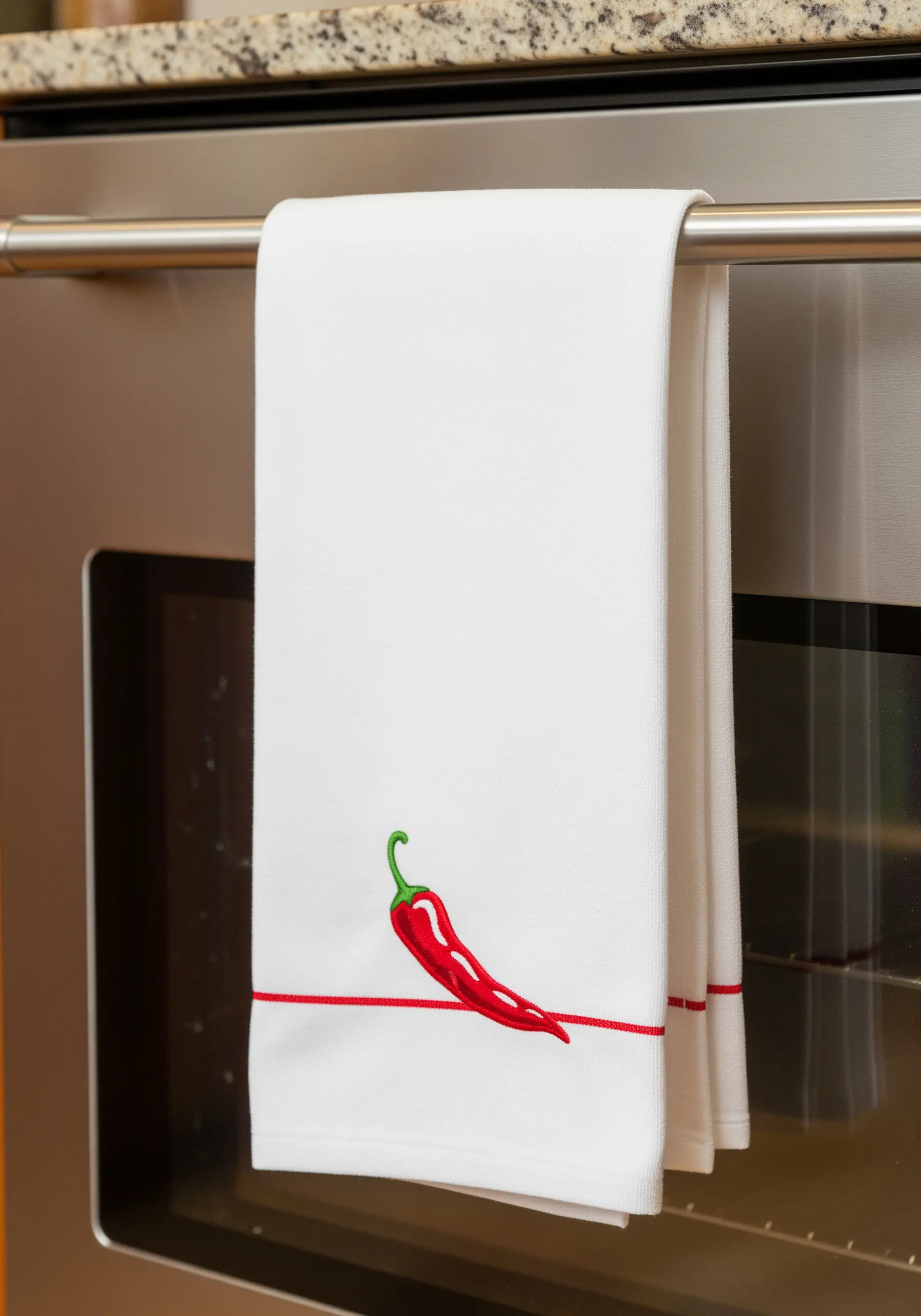
Elevate a simple design by making it interact with the existing features of the textile, such as a woven border or stripe.
Here, a simple running stitch line becomes the ground on which the chili pepper rests, making the motif feel fully integrated and intentional.
Use long-and-short stitch to fill the pepper; this technique creates subtle color blending for a realistic, glossy look.
This thoughtful placement turns a standard embroidered item, like a kitchen towel, into a cohesive piece.
15. Combine Fiber Arts on Woven Textures

Add an unexpected focal point to a macrame or woven wall hanging by embroidering a small design directly onto its fringe.
Bundle a section of the fringe tightly and treat it as your ‘fabric,’ using a sharp needle and simple stitches like lazy daisies and French knots.
This fusion of techniques creates a stunning piece that feels layered, unique, and deeply textural.
It’s a beautiful way to combine two crafts into one cohesive work of art.
16. Add Botanical Details to Closet Essentials

Transform a simple padded hanger into a beautiful closet accessory with a delicate, winding vine.
A classic stem stitch for the vine and detached chain stitches (lazy daisies) for the leaves create an organic, elegant look with minimal effort.
This is a wonderful way to add a touch of luxury to your own closet or to create a thoughtful, personalized gift.
The detail ensures that even the hidden-away parts of your home feel intentional and beautiful.
17. Anchor a Corner with a Single, Charming Motif

Instead of a large, central design, place a single, tiny motif in the corner of a pillowcase or duvet cover.
This asymmetrical placement draws the eye and feels more modern and understated than a repeating pattern or centered design.
Combine simple stitches—satin stitch for the pot, stem stitch for the stems, and fishbone stitch for the leaves—to create varied textures in one small area.
A tiny, isolated design adds a pop of personality without disrupting the restful feeling of your bedding, instantly upgrading plain linens.
18. Curate a Soothing Palette for a Cohesive Look

When embellishing items for a specific room, like a nursery, let the desired mood guide your color choices.
A soft, muted color palette—like dusty rose, baby blue, and cream—creates a gentle, calming effect that complements a serene aesthetic.
Stitch a simple, whimsical design onto a canvas toy basket using a basic satin stitch for fill and a backstitch for clean outlines.
This approach ensures your handmade details enhance the room’s atmosphere rather than compete with it, creating a truly cohesive space.
19. Create Versatile Decor with Removable Stitched Tags

Instead of stitching directly onto an object, create a small embroidered tag that can be tied on with a ribbon.
This allows you to add a handmade touch to items you can’t normally stitch on, like ceramic vases, glass jars, or lamp bases.
Embroider a simple, radiant sunburst onto a small piece of linen, fold the edges for a clean finish, and attach a ribbon.
You can swap these tags seasonally or move them around the room, making them a wonderfully flexible decorating tool.
20. Bridge Hard and Soft Textures with Stitched Tabs

Add an unexpected element of softness and personality to hard objects like slate coasters by attaching a small, embroidered fabric tab.
Use a strong industrial adhesive (like E6000) to secure the fabric tab to the underside of the coaster for a durable bond.
Stitch tiny, simple icons—like the sun, moon, and stars—to help differentiate each coaster in a set.
This fusion of materials creates a sophisticated, tactile experience and turns a simple coaster set into a conversation piece.
21. Weave in a Subtle Message with Fine Lettering

Add a layer of personal meaning to a fabric-covered object by stitching a favorite quote or a meaningful phrase.
For tiny, delicate lettering, use a single strand of embroidery floss and a simple, clean backstitch or whipped backstitch.
To keep your lines straight, draw a faint guideline with a heat- or water-soluble pen before you begin.
Placing the text along an edge makes it a subtle discovery, adding quiet sophistication and turning decor into a personal statement.


