A man’s shirt, in its classic simplicity, is the perfect canvas. It holds a story of utility, comfort, and character. With a needle and thread, you have the quiet power to add a new chapter to that story—one that is personal, thoughtful, and entirely unique.
Don’t just think of this as adding a flower to a pocket. Think of it as tucking a memory, a favorite scent, or a shared landscape into the fabric. Each stitch is a mark of intention, a quiet conversation between you and the person who will wear it.
Here, you will find techniques that move beyond simple outlines. We will explore texture, color, and composition to help you create embroidery that feels not just handmade, but alive. Your goal is not perfection, but expression—a small, stitched detail that carries great meaning.
1. Understated Lavender Sprig

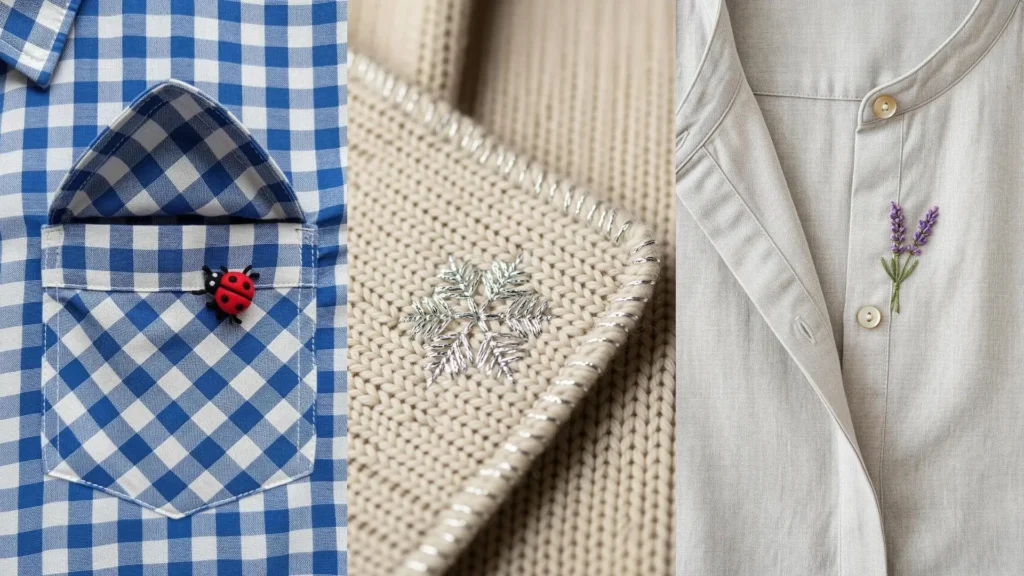
Create a sense of calm elegance by stitching a single lavender sprig emerging from the pocket.
Use tightly packed French knots for the lavender buds, varying the size slightly to mimic natural growth.
For the stem and leaves, a whipped backstitch provides a smooth, raised line that contrasts beautifully with the textured buds, giving the design a clean, professional finish.
Choose a thread two shades darker for the whipping stitch to add subtle dimension without overwhelming the delicate composition.
2. Bold Thistle on Denim

Stitching on denim allows for dense, textured designs that won’t pucker the fabric.
Achieve the thistle’s fluffy top with turkey work, trimming the loops to create a plush, 3D effect that invites touch.
For the spiky leaves, use a fishbone stitch with a sharply defined center line, exaggerating the points to capture the plant’s wild, protective nature.
The contrast between the soft flower head and the sharp leaves makes the entire piece visually dynamic and engaging.
3. Whispers of a Dandelion
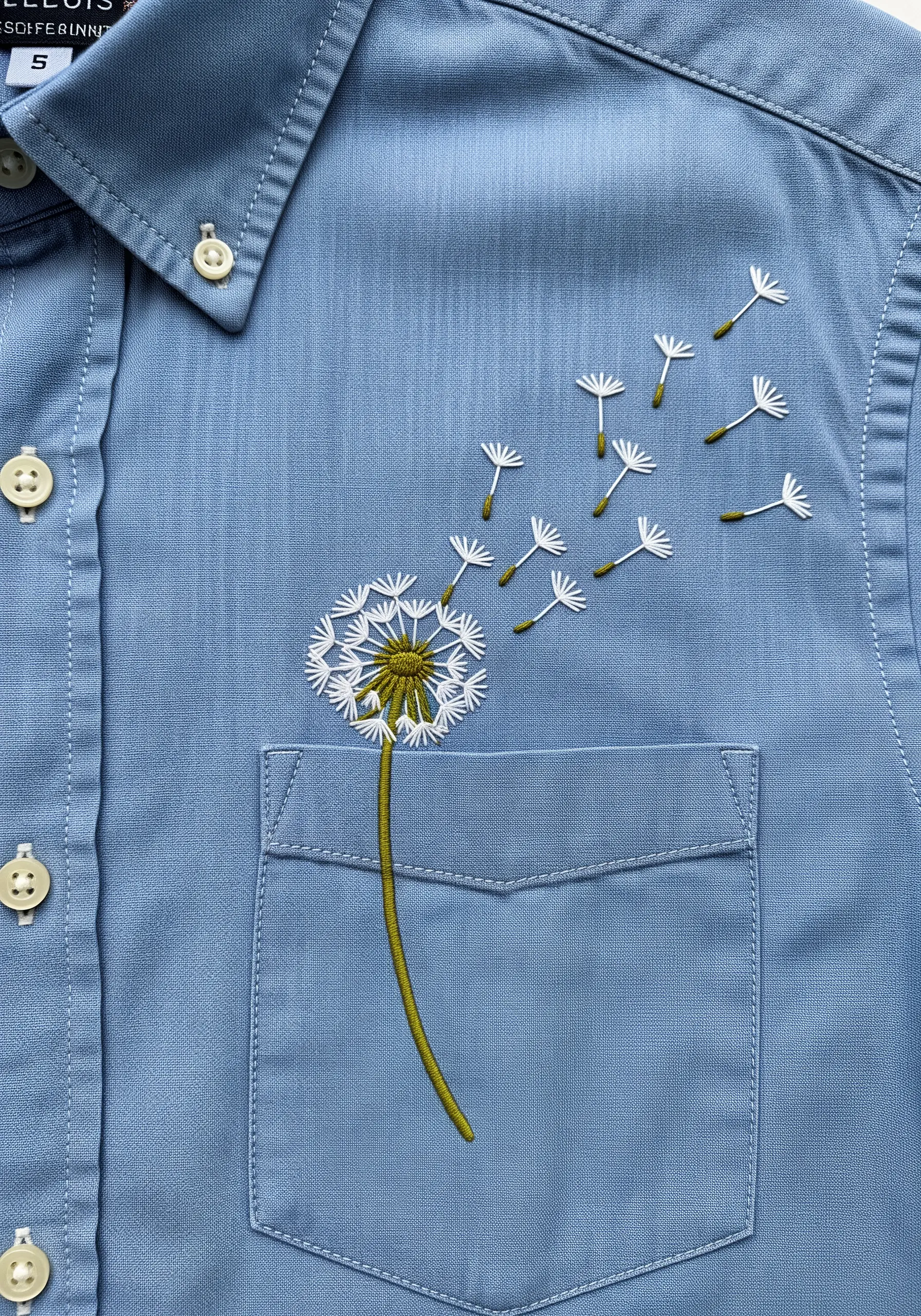
Capture the feeling of movement by stitching dandelion seeds floating away from the pocket.
Use a single strand of white floss for the delicate parachute of each seed, created with a few simple straight stitches originating from a central point.
Keep the stem slender and graceful with a fine stem stitch, ensuring it doesn’t overpower the airy quality of the seeds.
This design works because it uses negative space, letting the shirt’s color become the sky and giving the composition room to breathe.
4. Architectural Fern Framing
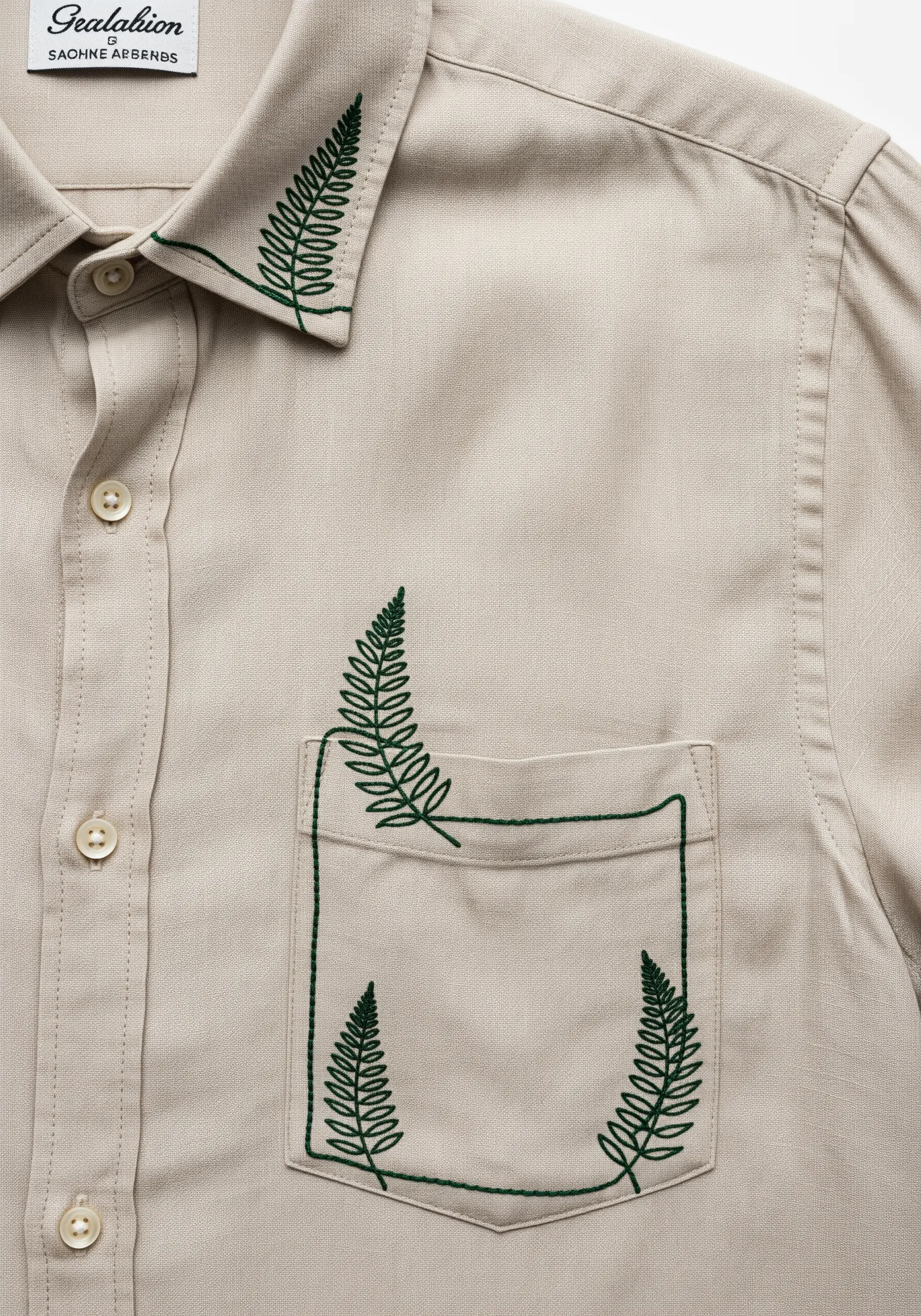
Transform the pocket from a simple feature into an integrated design element by using embroidery to outline its shape.
Stitch fern fronds that appear to grow along the pocket’s seams, using a fern stitch for a clean, organic look.
Placing one frond on the collar continues the theme and draws the eye upward, creating a cohesive and intentional piece of wearable art.
This technique elevates the entire shirt by making the embroidery feel like part of its construction, not just an addition.
5. Cherry Blossoms in Bloom
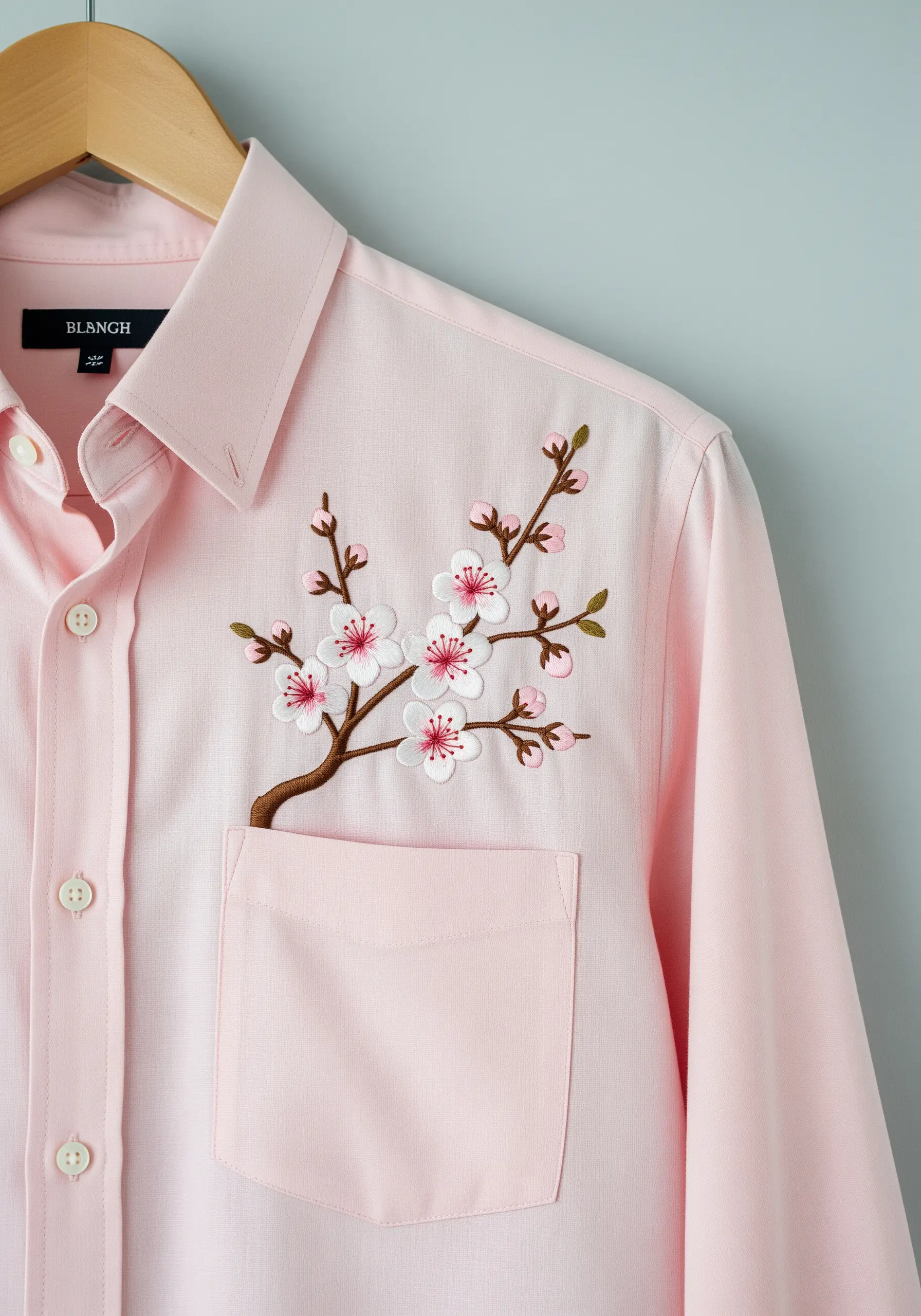
Create the illusion of a branch growing organically from within the pocket.
Use a padded satin stitch for the main branch to give it a rounded, three-dimensional form that stands out from the flat fabric.
For the blossoms, combine delicate satin stitch petals with French knot centers, using a bright, contrasting color for the knots to draw attention.
Place a few unopened buds at the tips of the branches to add realism and a sense of ongoing growth.
6. A Pocketful of Succulents
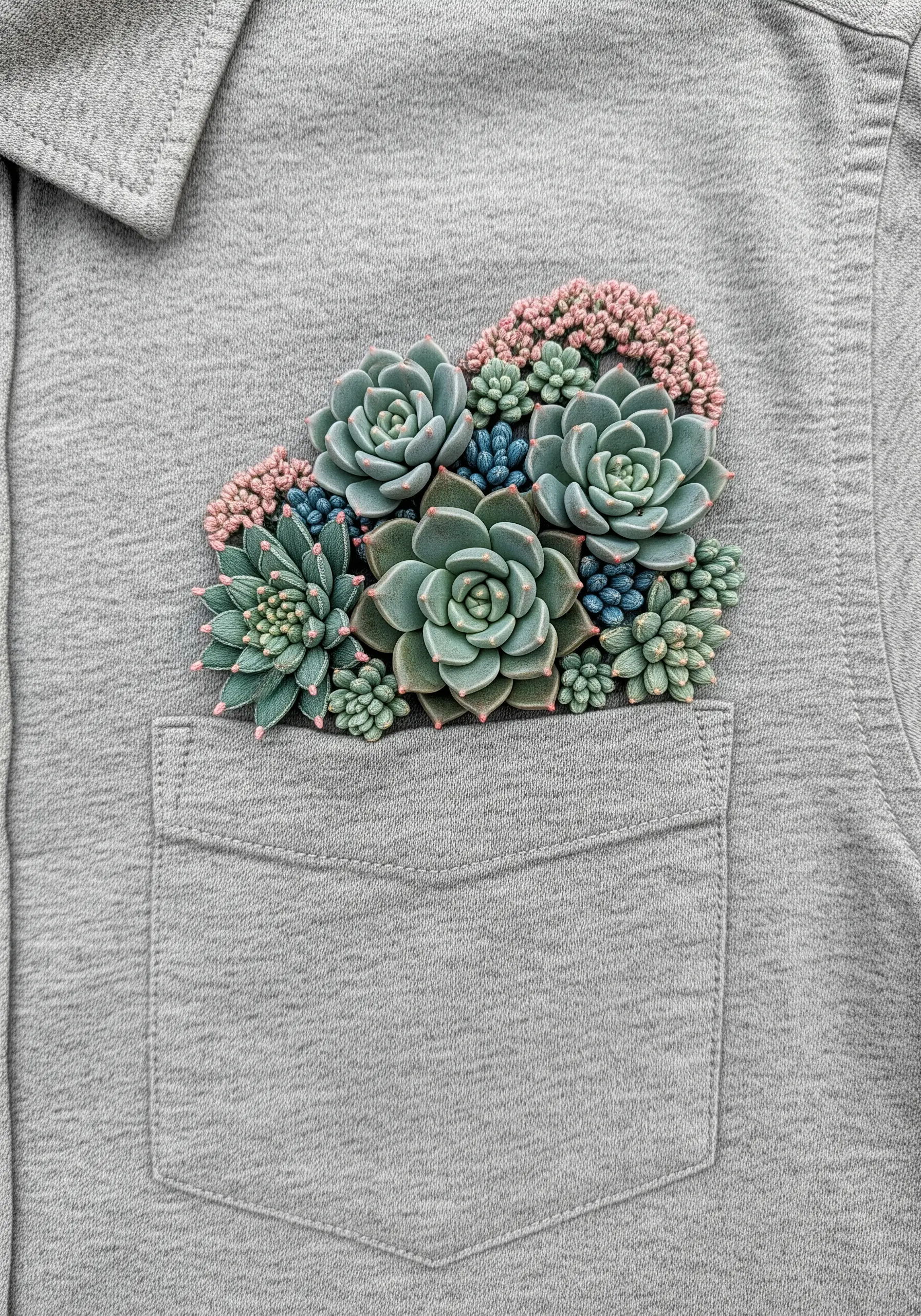
Move beyond flat stitches and build a lush, three-dimensional succulent arrangement that bursts from the pocket.
Use woven wheel stitches (or woven picot stitches) for the rosettes, layering them to create realistic depth.
Incorporate bullion knots and dense clusters of French knots for the smaller, filler succulents, varying colors from soft greens to dusty pinks.
This high-texture approach makes the design feel like a living sculpture, turning a simple shirt into one of those 3D embroidery wall art pieces you can wear.
7. Wildflower Meadow Bouquet

Stitch a vibrant mix of wildflowers to create the cheerful illusion of a freshly picked bouquet tucked into the pocket.
Vary your stitches to match each flower’s personality: lazy daisy for simple petals, satin stitch for bold poppies, and French knots for cornflower centers.
Layer the taller flowers in the back and shorter ones in the front to create a sense of depth and abundance.
Using a bright, high-contrast color palette ensures the bouquet pops against a crisp white linen or cotton shirt.
8. Mountain Vista on Plaid
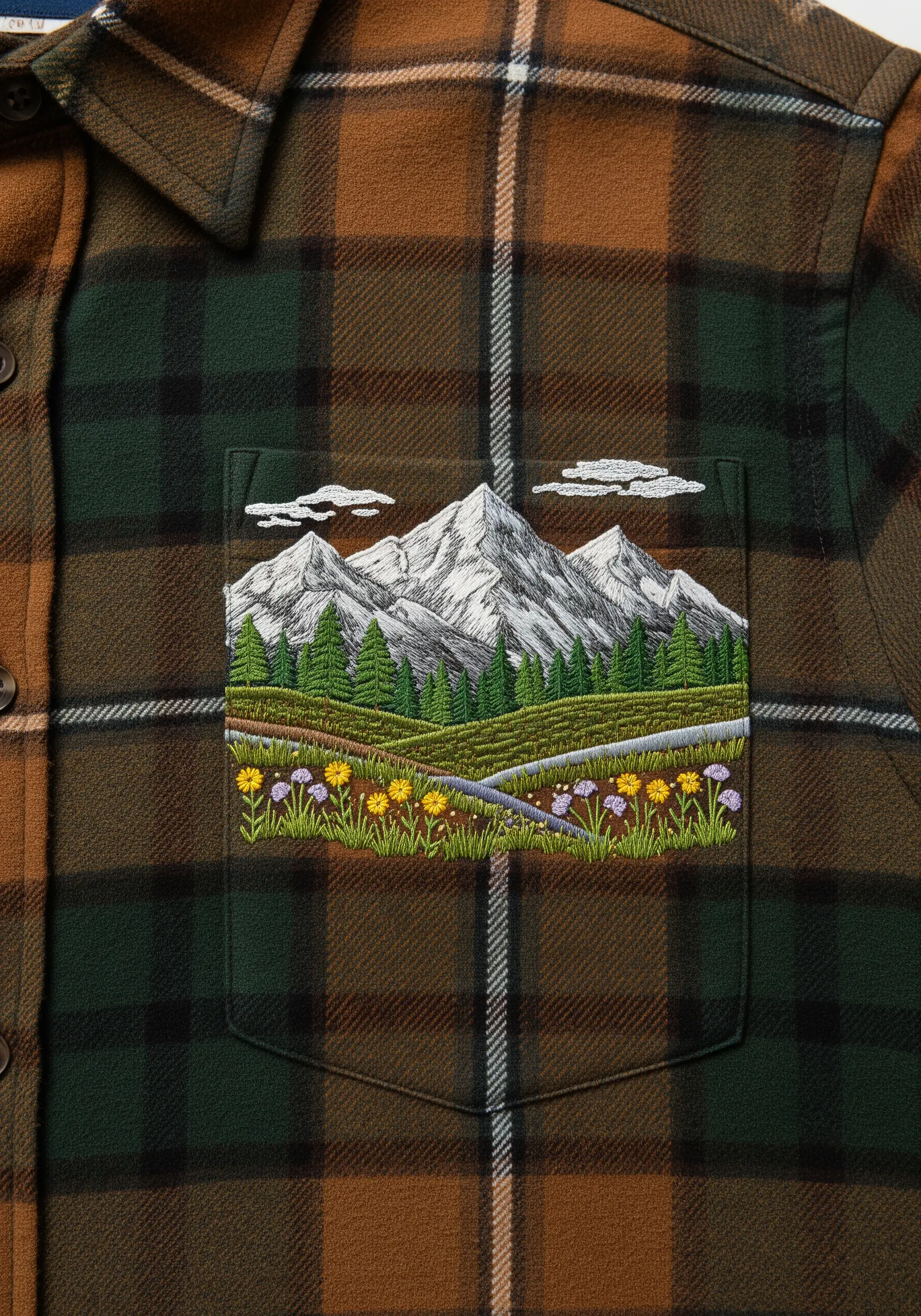
Embrace the challenge of a patterned fabric by turning the pocket into a canvas for a full landscape.
Use single-thread long-and-short stitch to create the subtle shading and sharp peaks of the mountains, a technique often used in modern thread landscape projects.
For the foreground, use denser stitches like satin stitch and French knots to bring it forward visually, separating it from the background mountains.
Choose thread colors that harmonize with the plaid but are distinct enough to ensure your detailed work remains the focal point.
9. High-Contrast Sunflower
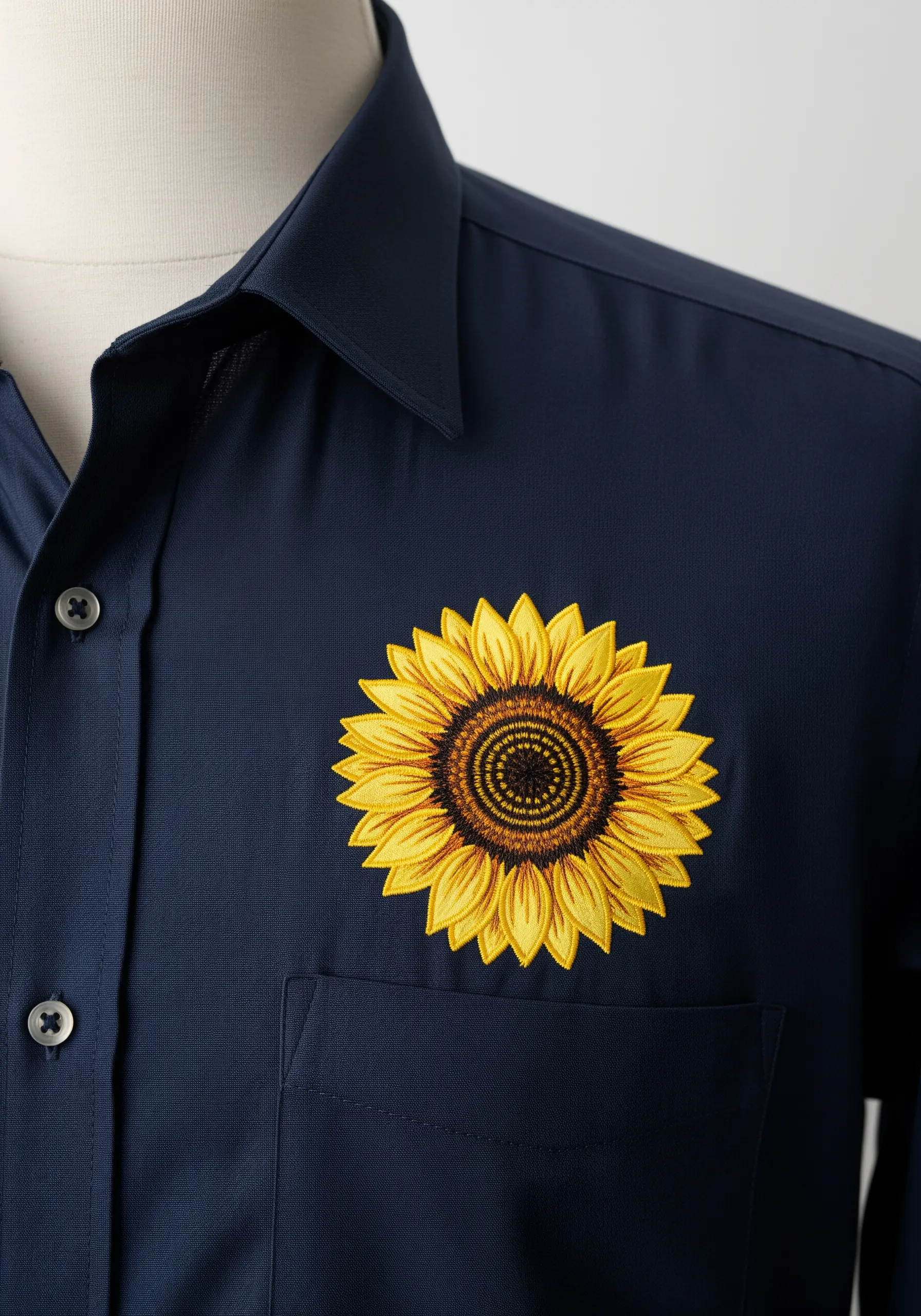
Make a bold statement by placing a single, vibrant sunflower against a dark, solid-colored shirt.
The success of this design lies in smooth color blending. Use long-and-short stitch with at least three shades of yellow and gold to give the petals a sun-kissed, realistic gradient.
Create the intricate center with concentric circles of French knots, seed stitches, and colonial knots in browns and blacks for intense texture.
This focused, high-impact approach turns a simple floral motif into a powerful graphic element.
10. Geometric Line Art Rose
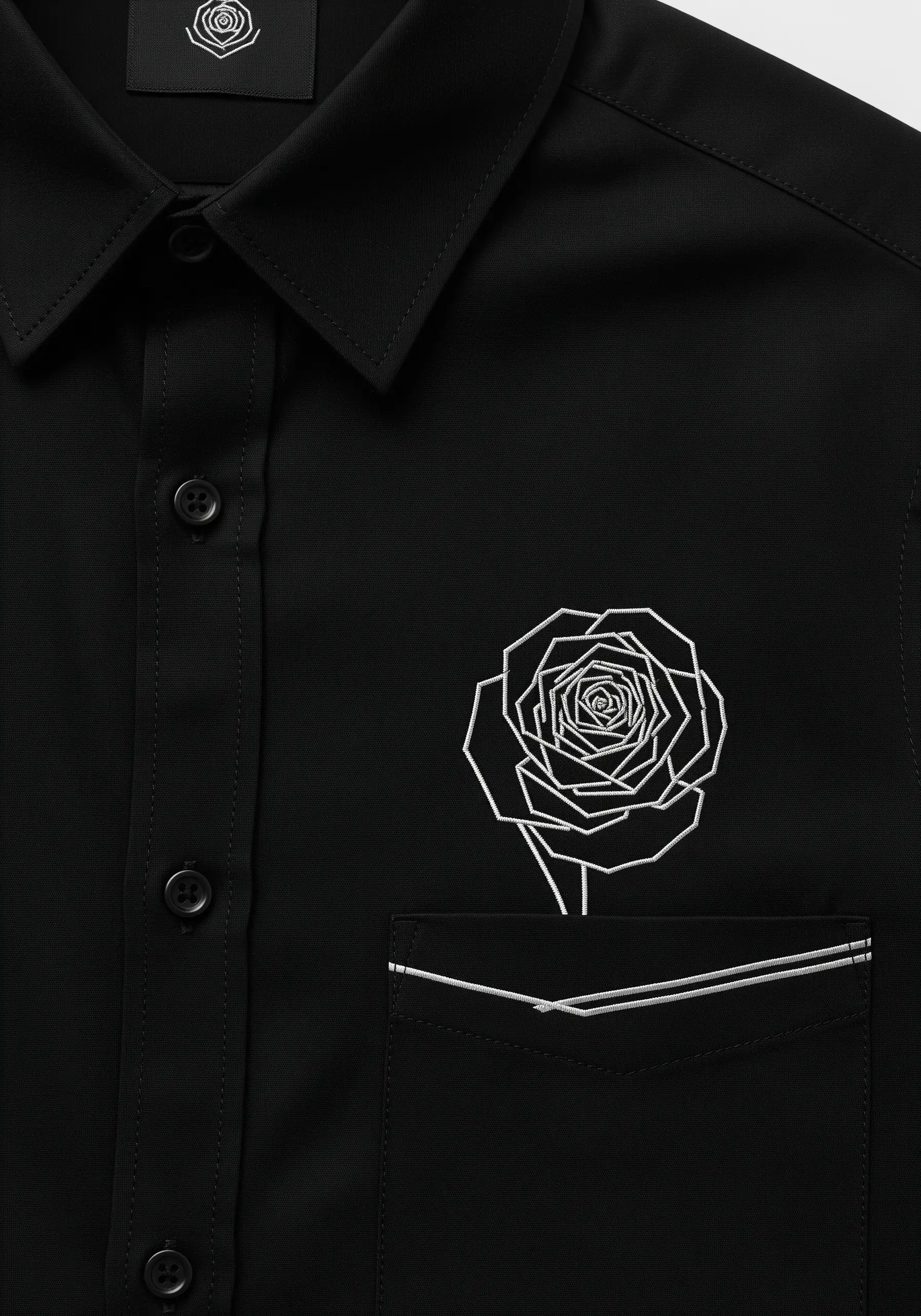
Reinterpret a classic floral with a modern, minimalist approach using clean lines and negative space.
This design relies on the precision of your outline stitch. A two-strand backstitch or stem stitch will provide the clean, consistent lines necessary for the geometric form to read clearly.
Use a high-contrast thread—like white on black—to emphasize the graphic quality of the rose.
Extend a few lines to interact with the pocket’s edge to connect the abstract design to the garment, making it feel intentional.
11. Oversized Monstera Leaves
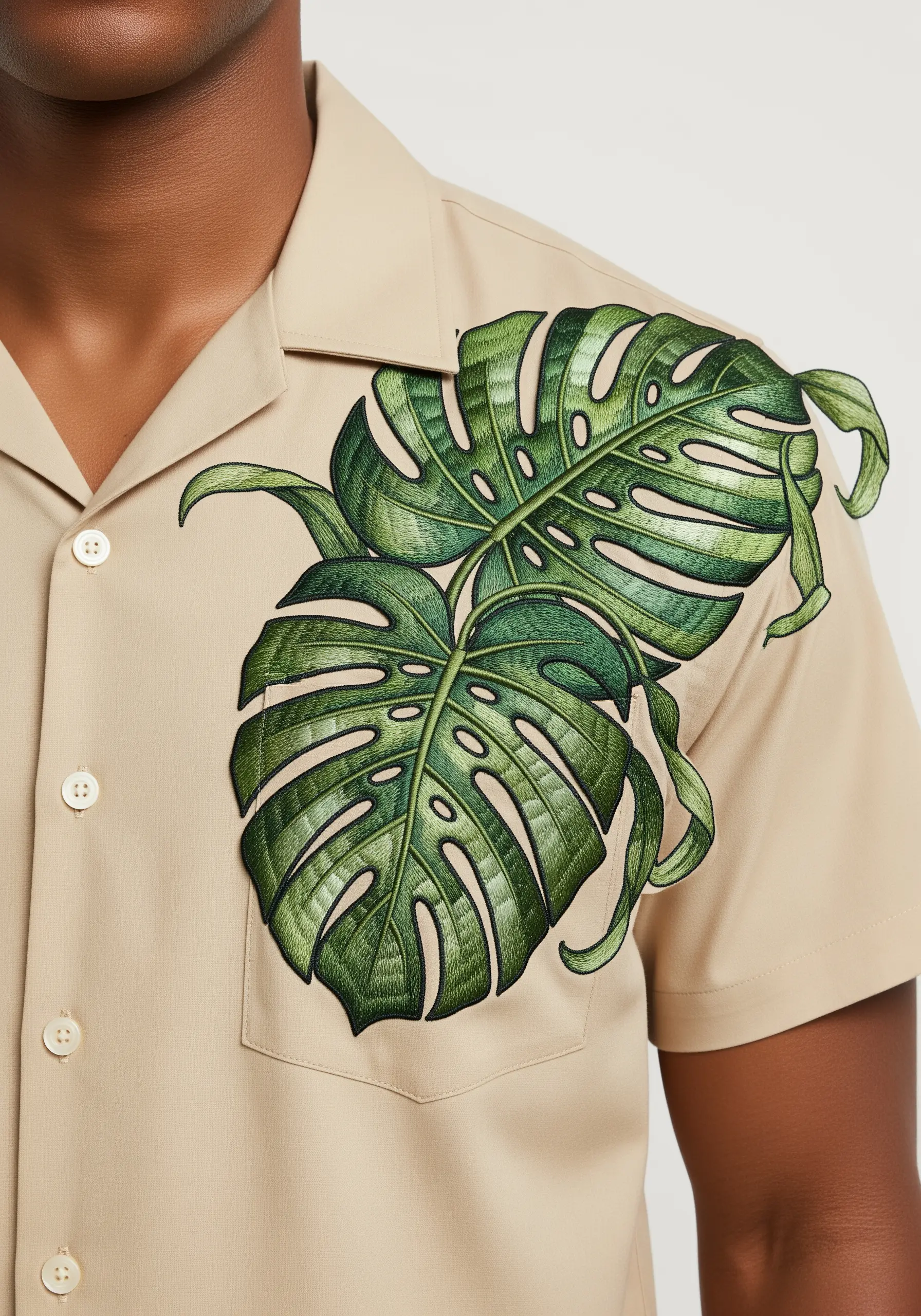
Break the boundaries of the pocket with a large-scale botanical that climbs onto the shoulder.
To tackle a large shape like a monstera leaf, first outline it with a split stitch. This creates a clean edge and a guide for your fill stitches.
Fill the leaves with a directional satin stitch or long-and-short stitch, angling your stitches to follow the natural direction of the leaf’s veins for a more realistic effect.
Using multiple shades of green adds depth and prevents the large shape from looking flat.
12. Scattered Forget-Me-Nots
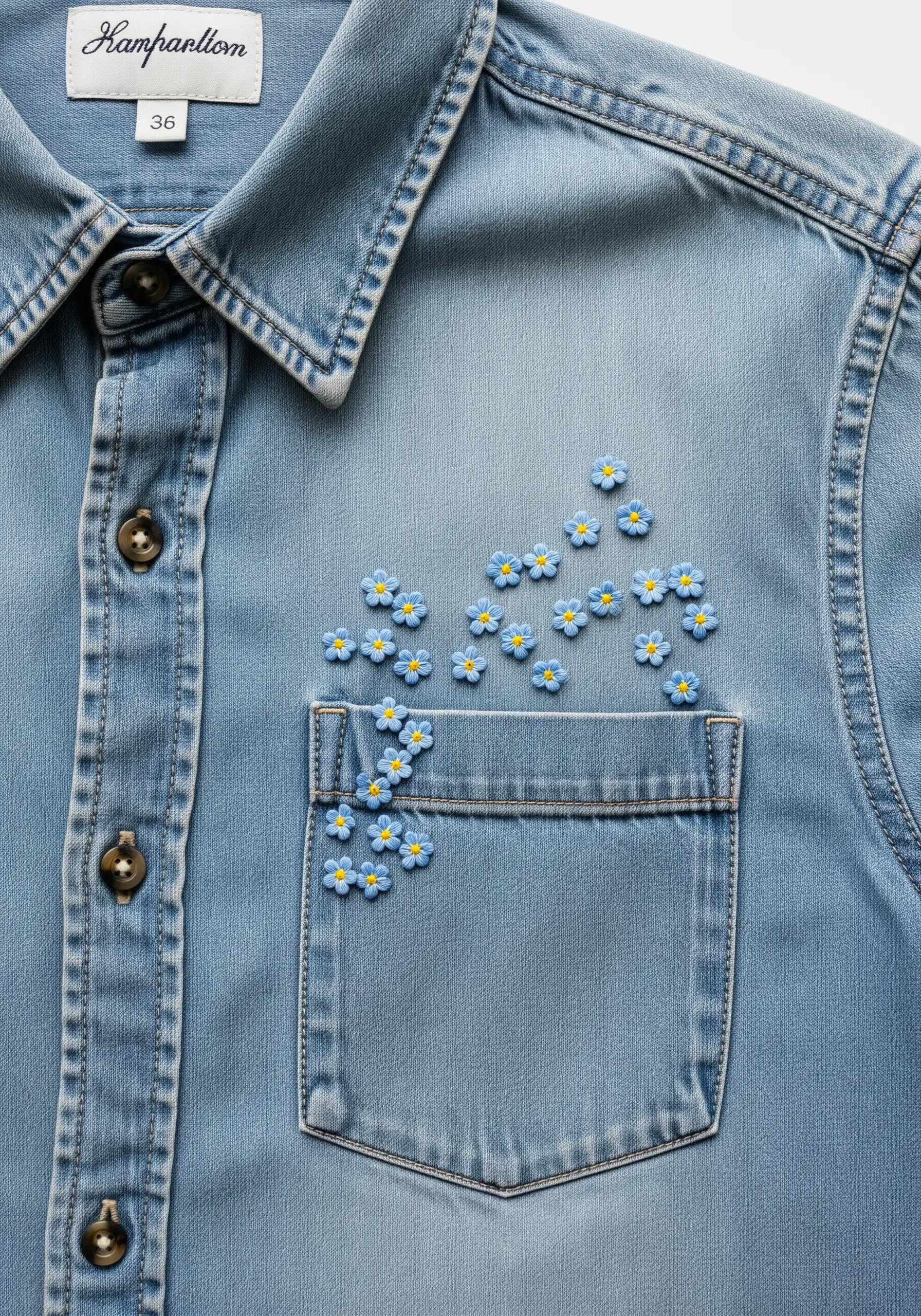
Create a whimsical, playful effect by stitching tiny flowers that seem to spill out of the pocket and across the shirt.
Each forget-me-not can be quickly stitched using five detached chain stitches (lazy daisy) for the petals around a single yellow French knot.
The magic is in the placement. Cluster them densely near the pocket opening and scatter them with more space in between as they move away, creating a sense of lighthearted movement.
This is a perfect technique for beginners, as each small flower is a quick win, and the overall effect is charmingly imperfect.
13. Painterly Poppy Statement
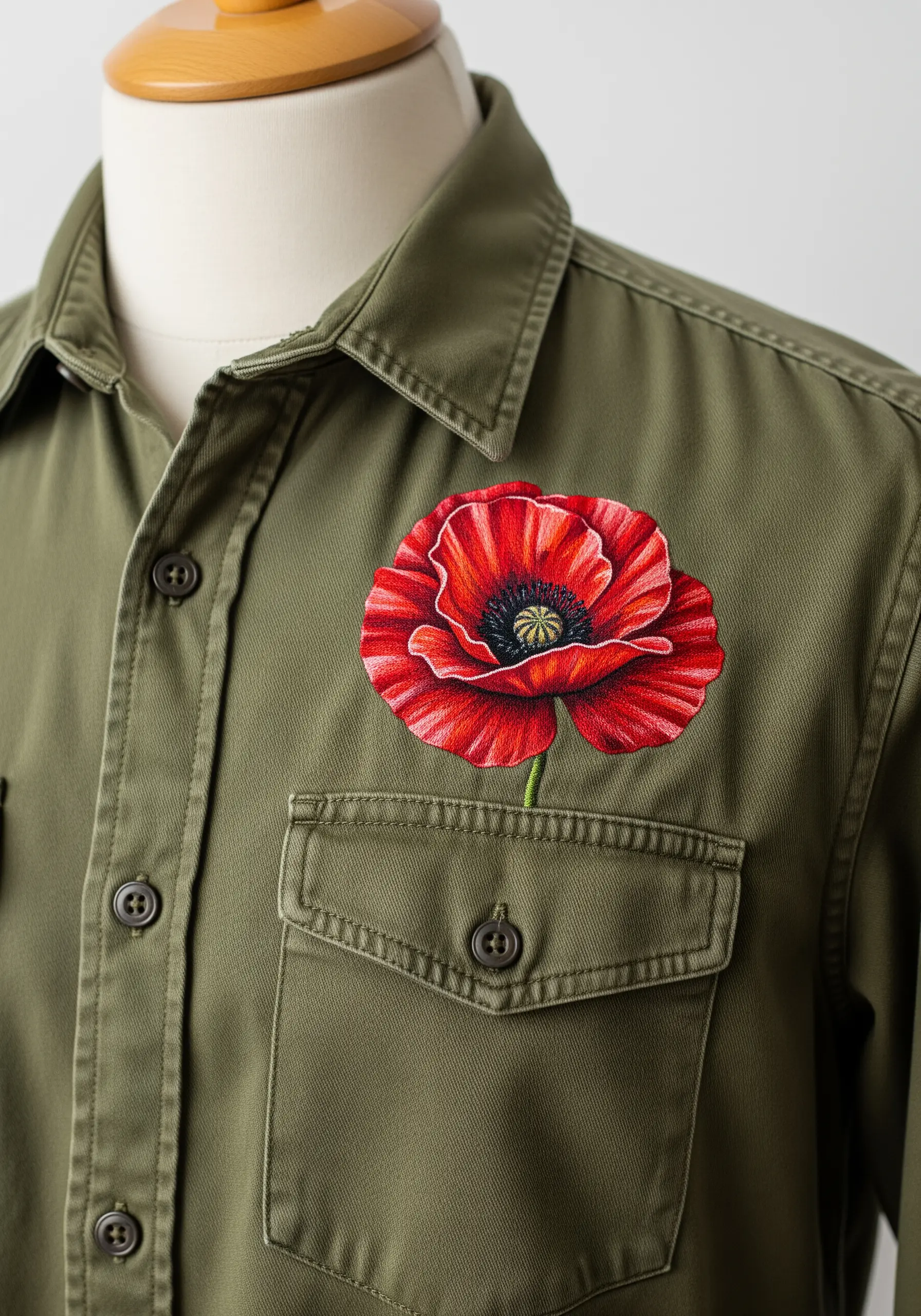
Elevate a single flower into a work of art using thread painting techniques for intense realism.
Use a single strand of floss and long-and-short stitch to blend multiple shades of red and pink seamlessly across the petals.
Pay close attention to the direction of your stitches, following the natural curves of the petals to create form and highlights.
The rich, saturated color against an earthy olive green fabric creates a sophisticated, high-fashion contrast.
14. Woodland Mushrooms on Corduroy
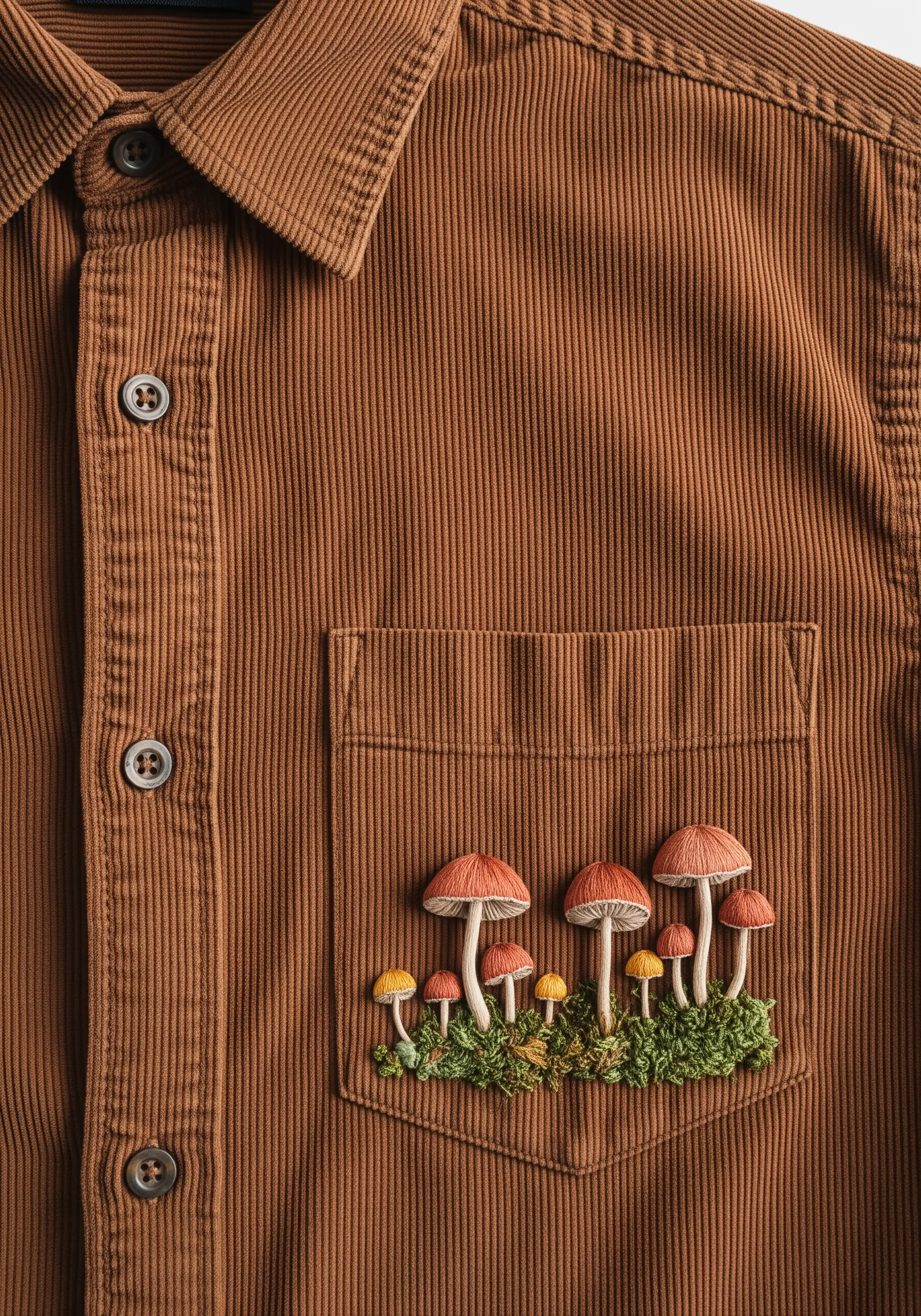
Complement the texture of corduroy with a design that feels like a miniature woodland floor.
Create a lush, mossy base with a dense patch of French knots or turkey work in several shades of green.
Use satin stitch for the mushroom caps, adding a few straight stitches in a lighter shade underneath to suggest gills.
The combination of the fabric’s ridges and the embroidery’s varied textures makes this design exceptionally tactile and cozy.
15. Delicate Daisy Wreath
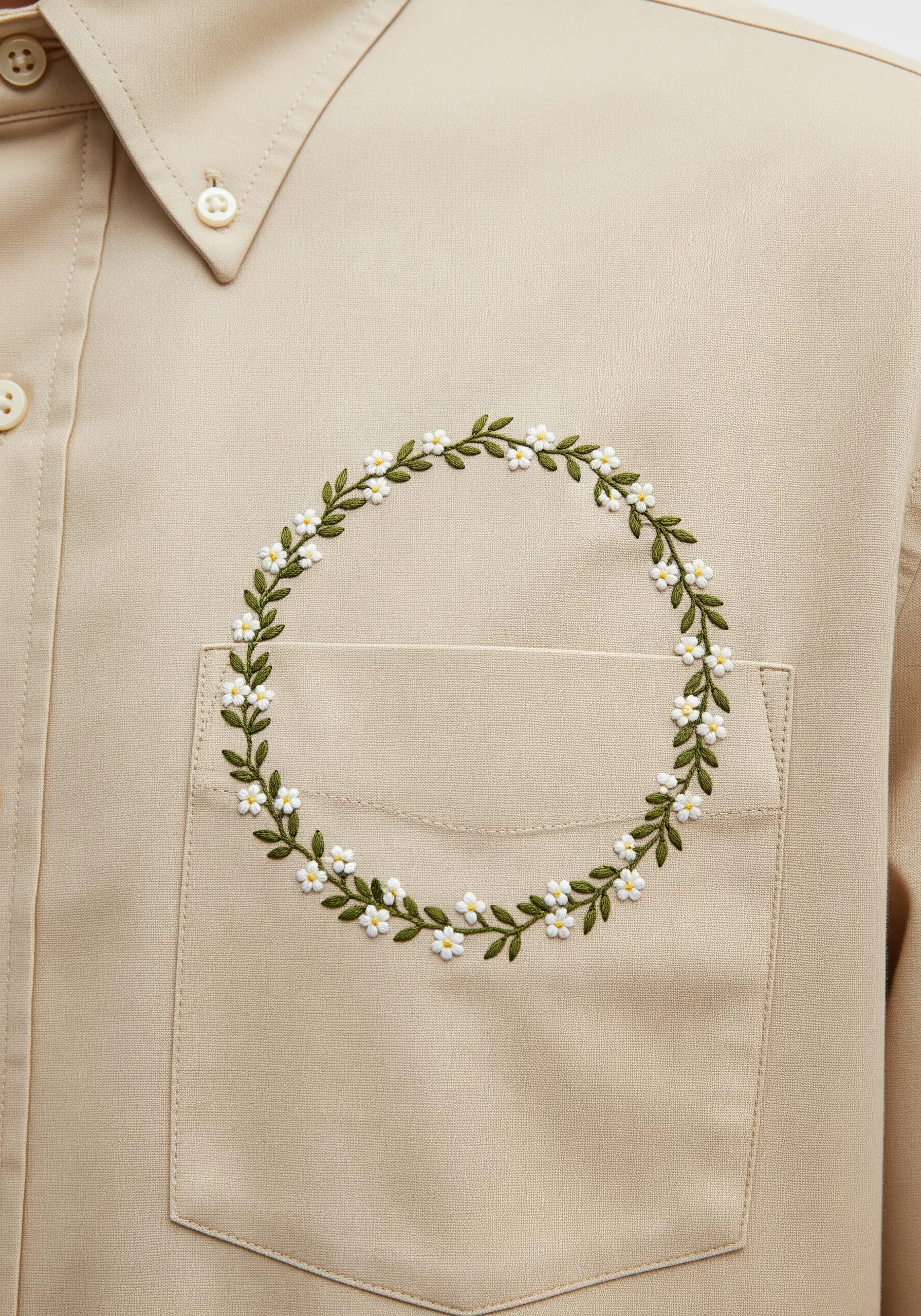
Frame the pocket with a classic floral wreath for a touch of timeless, understated elegance.
Lightly trace a perfect circle around the pocket as your guide. Use a fine stem stitch for the green vine.
Stitch the tiny daisies with lazy daisy stitches for petals and a single French knot for the center, distributing them evenly along the vine.
This design is about precision and balance, creating a clean, symmetrical look that enhances the shirt without overwhelming it.
16. Celestial Floral Constellation
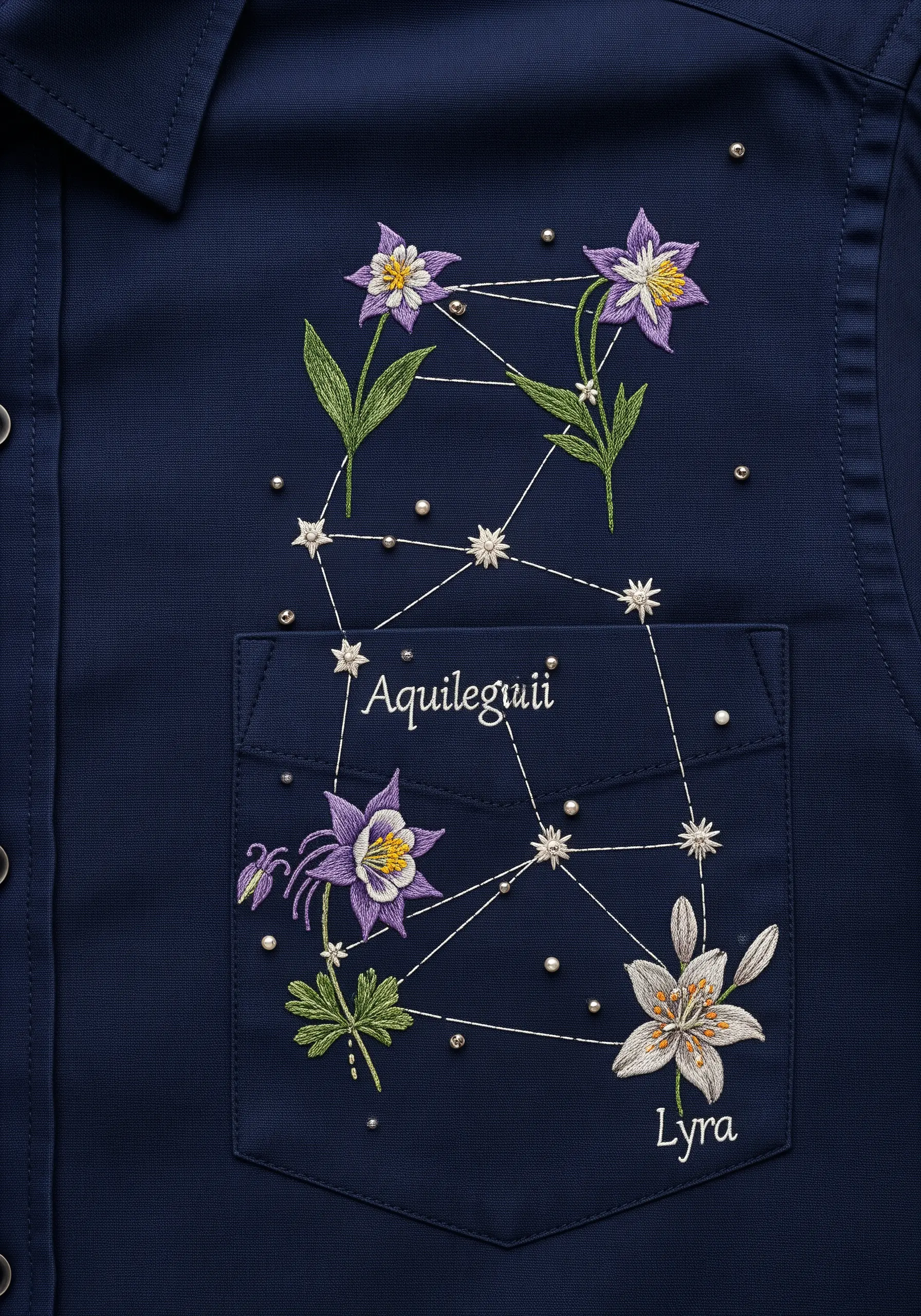
Combine botanical illustration with celestial mapping for a uniquely personal and imaginative gift.
Embroider a few elegant columbine flowers using satin stitch and long-and-short stitch for detail.
Connect them with fine, single-strand straight stitches to form a constellation pattern, adding tiny star stitches or metallic French knots at the intersections.
For extra sparkle, you can add handmade miniature crafts like tiny beads or sequins to represent the brightest stars, creating a magical narrative.
17. Autumnal Oak Leaf Cascade
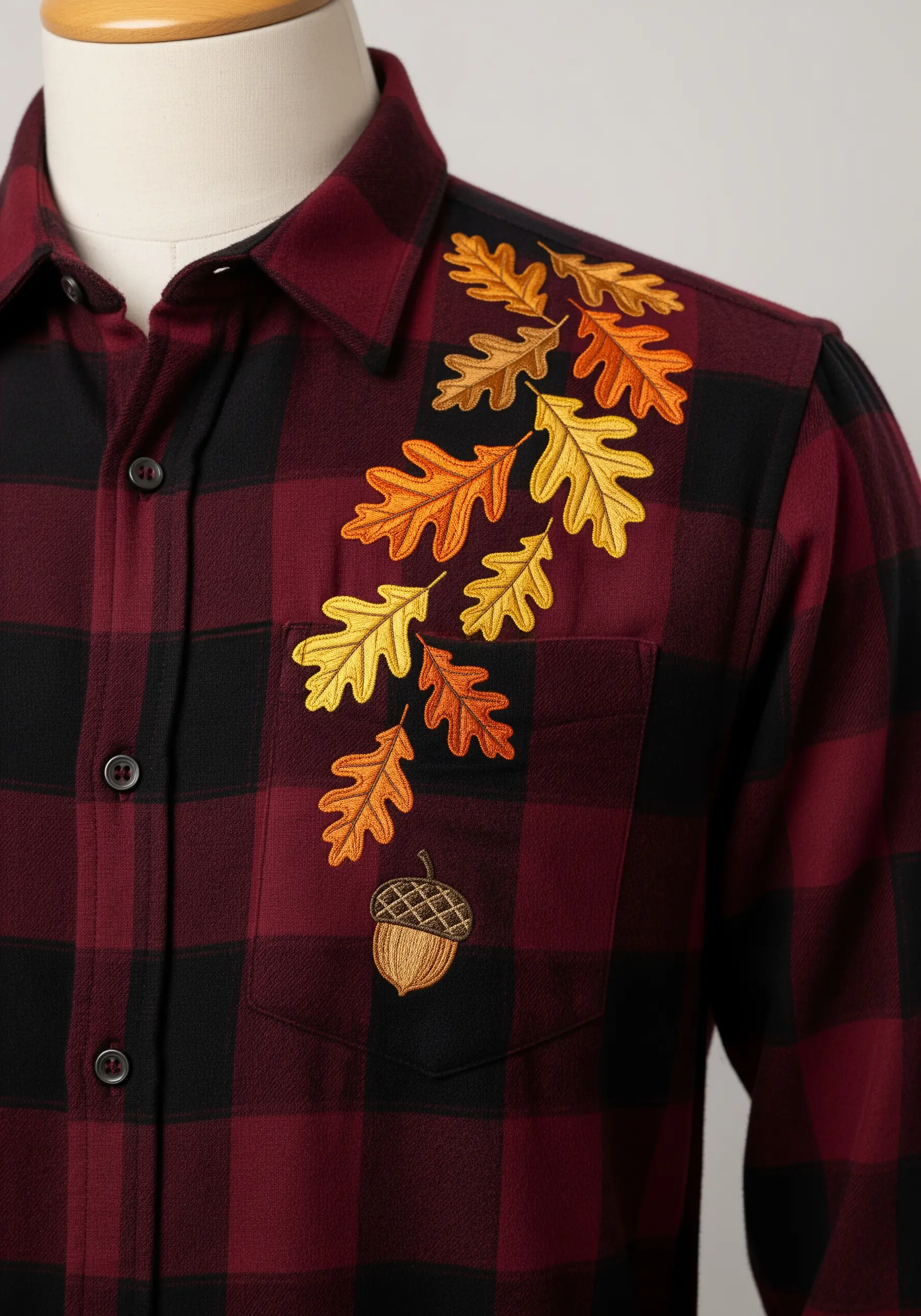
Create a design that feels dynamic by stitching a cascade of oak leaves tumbling down from the shoulder.
Select a warm, autumnal palette of golds, oranges, and browns. Stitch each leaf using fishbone stitch to create a prominent central vein.
Vary the colors and orientations of the leaves to create a natural sense of movement and depth.
A single, detailed acorn stitched near the pocket acts as a perfect focal point and anchors the entire composition.
18. Classic Daisy Pocket Bouquet
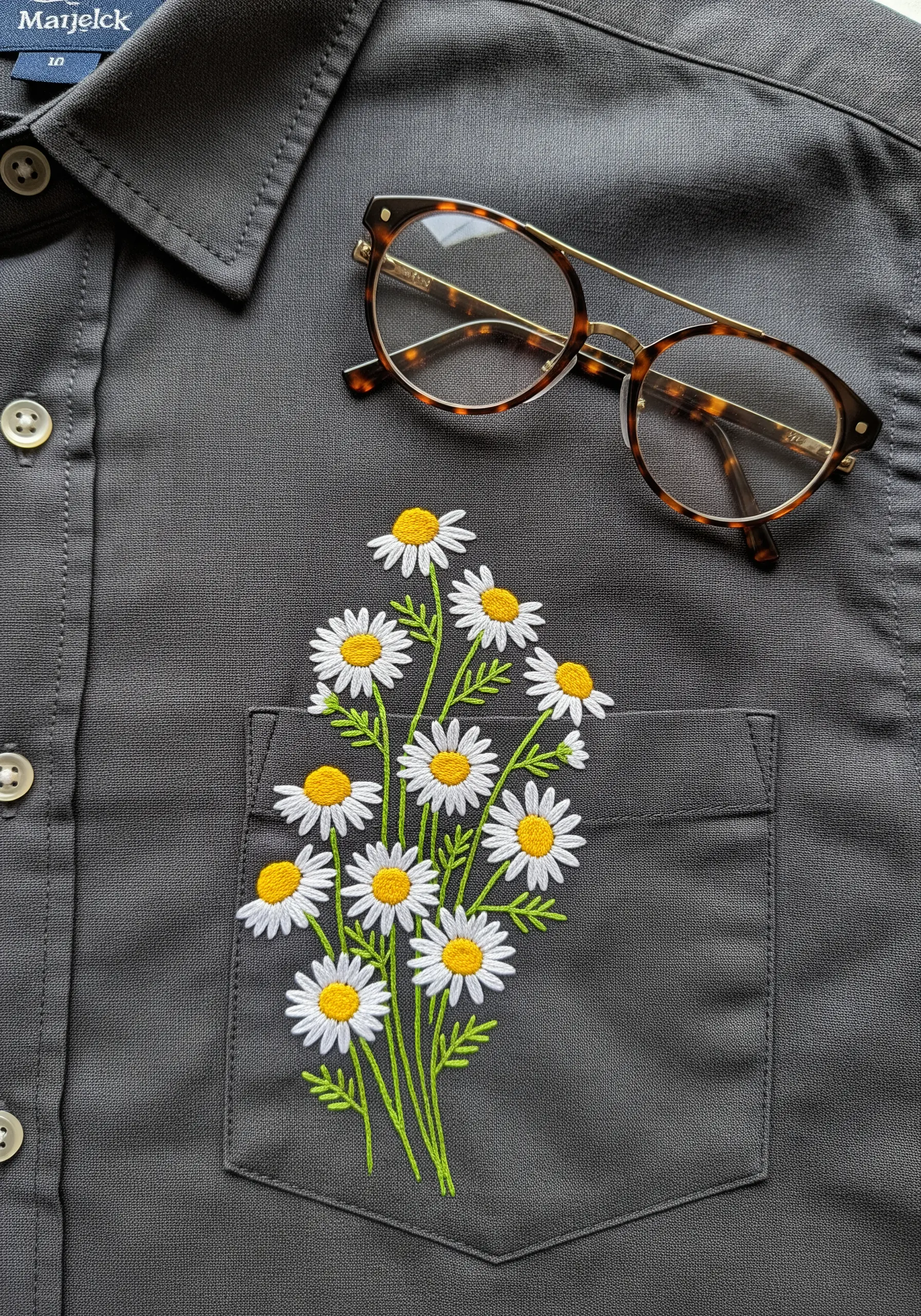
A simple bouquet of daisies becomes strikingly modern and clean when stitched on a dark, solid background.
The key to making the white petals pop is a neat, dense satin stitch. Outline each petal with a split stitch first to ensure a crisp, defined edge.
Keep the stems long and elegant with a simple stem stitch in a bright, fresh green.
This classic design is elevated by its thoughtful composition and flawless execution, proving that simple can be incredibly sophisticated.
19. Textured Hydrangea Cluster

Capture the full, cloud-like form of a hydrangea by completely covering the pocket with texture.
This entire design is built from hundreds of French knots. Use at least four to five shades of blue, purple, and white, and scatter them randomly to create a natural, variegated look.
Tuck a few green leaves stitched in fishbone or satin stitch underneath the cluster to ground the design.
Stitching over a busy pattern like stripes works here because the dense texture of the embroidery creates a solid block of its own.
20. Blooming Prickly Pear Cactus

Evoke a desert landscape with a charming prickly pear cactus that adds a pop of unexpected color.
Fill the cactus pads with a seed stitch using a light green thread. This creates a subtle texture that mimics the plant’s surface without being overly complex.
Use a bold, contrasting magenta for the flowers, stitched with a vibrant satin stitch to make them the undeniable focal point.
A black backstitch outline around each element gives the design a clean, illustrative quality.
21. Abstract Calla Lily
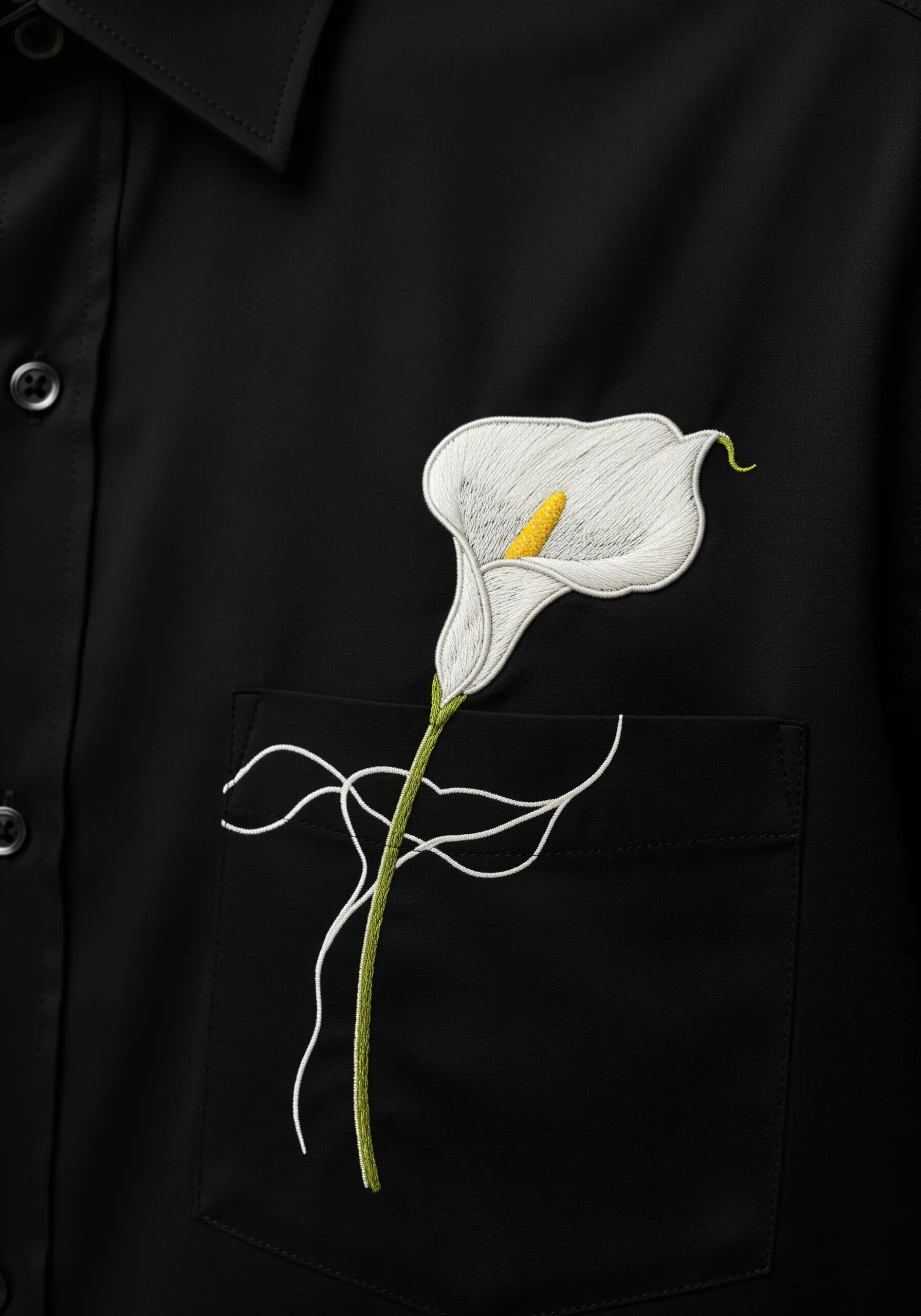
Focus on elegant form and subtle shading to create a sophisticated, artistic calla lily.
The lily’s spathe is a perfect canvas for long-and-short stitch, allowing you to blend white and light grey threads for a smooth, sculptural look.
Use a vibrant yellow satin stitch for the spadix in the center, providing a single point of warm color.
The addition of loose, trailing threads at the base adds a touch of abstract flair, transforming the piece from a simple floral into a modern art statement.
22. Tone-on-Tone Ivy Vines
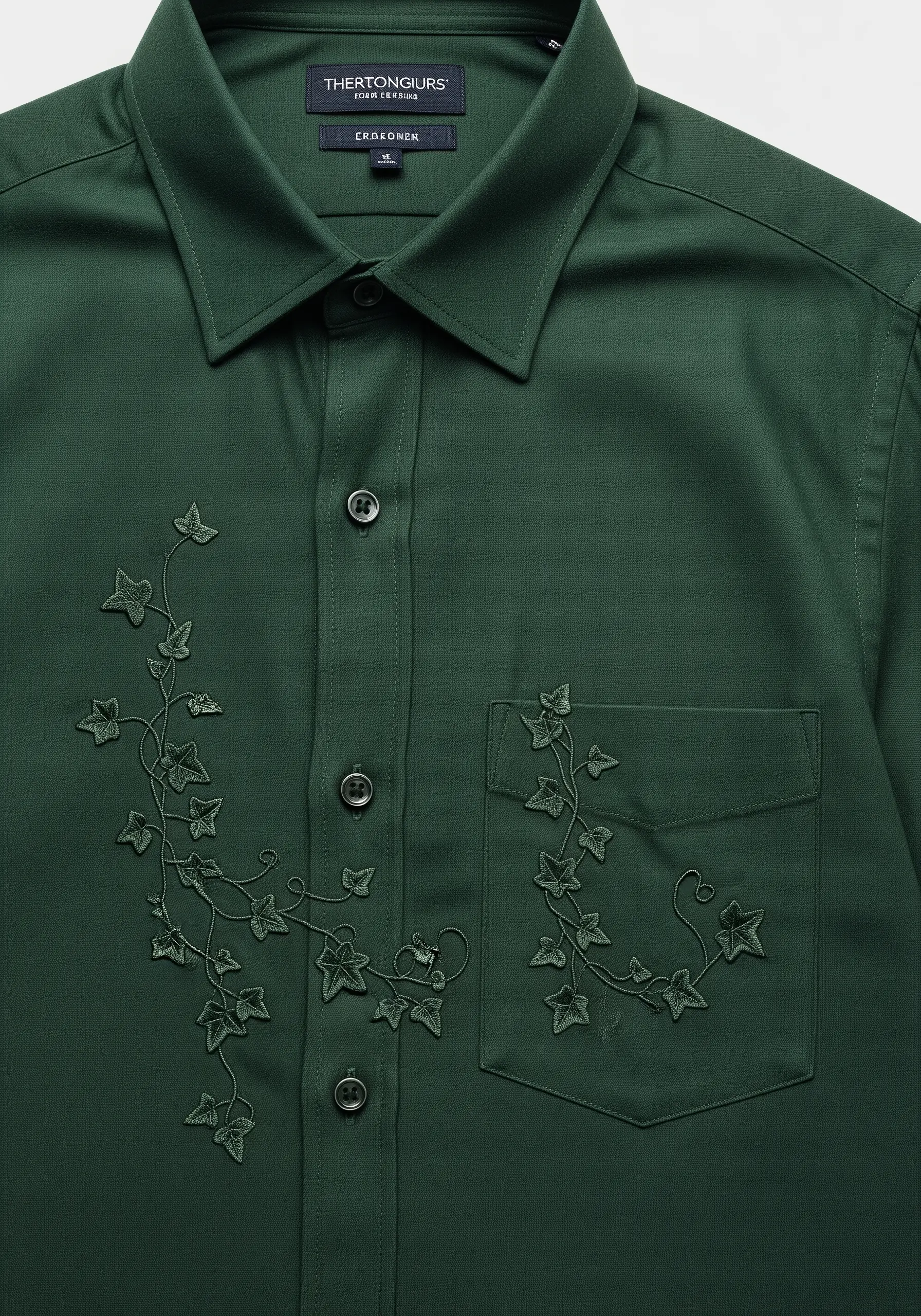
For a gift of subtle sophistication, embroider a design using thread that is only a few shades different from the shirt fabric.
Trace delicate ivy vines that wander across the chest and onto the pocket using a fine stem stitch.
Keep the leaves small and simple, filled with a few straight stitches or a tiny satin stitch.
This monochromatic, low-contrast technique creates a textured, almost embossed effect that is discovered rather than announced—perfect for someone with a minimalist aesthetic.
23. Ruffled Carnation Bouquet
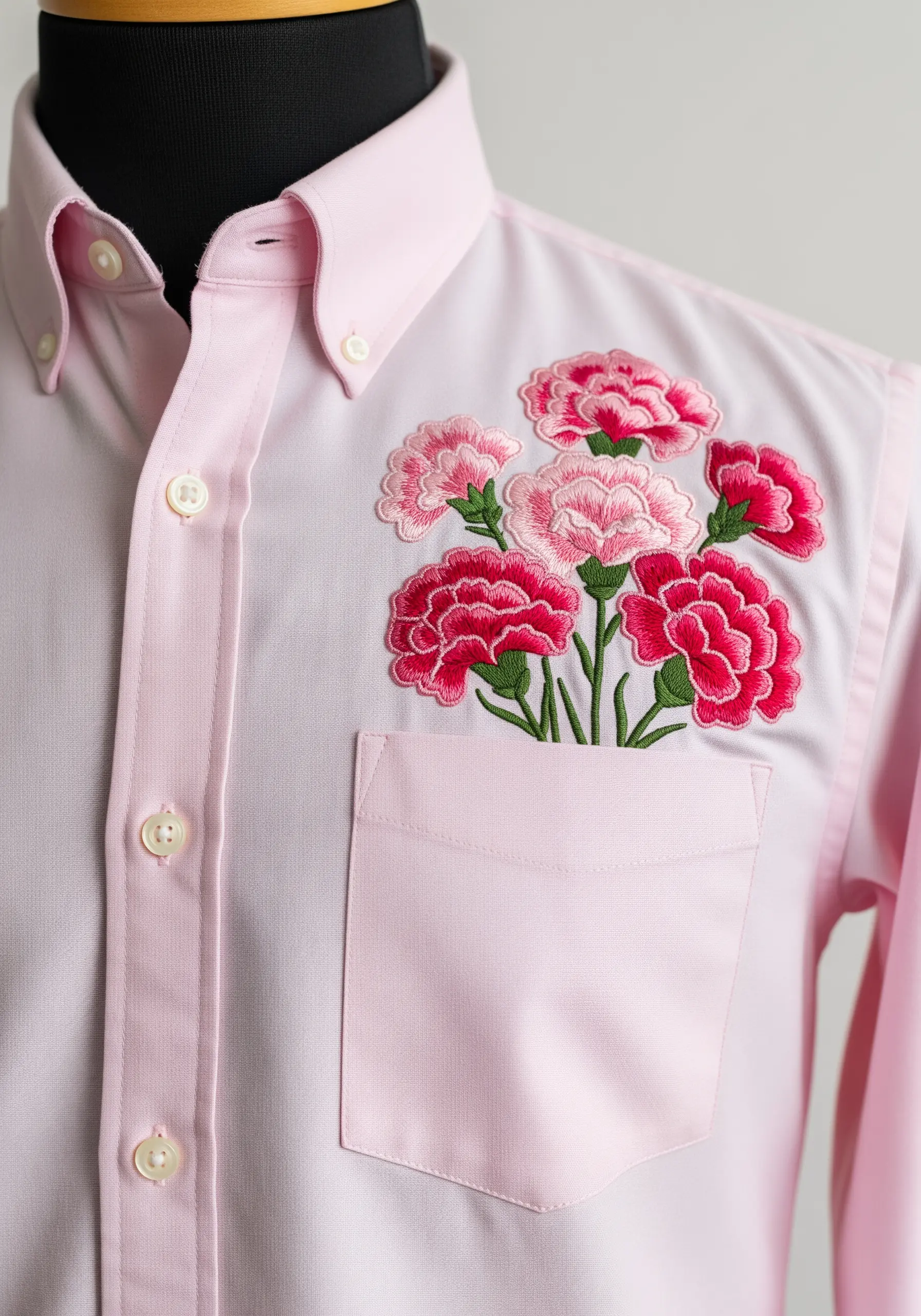
Mimic the dense, ruffled texture of carnations using a more advanced stitch that creates incredible dimension.
Create each flower by first stitching a spiral of backstitch. Then, use that spiral as a base for a woven wheel or whipped backstitch, packing the stitches tightly to create the ruffled effect.
Use a gradient of pinks and reds to give the bouquet depth and visual interest.
This technique turns a simple floral bouquet into a rich, textural statement.
24. Golden Wheat Sheaf
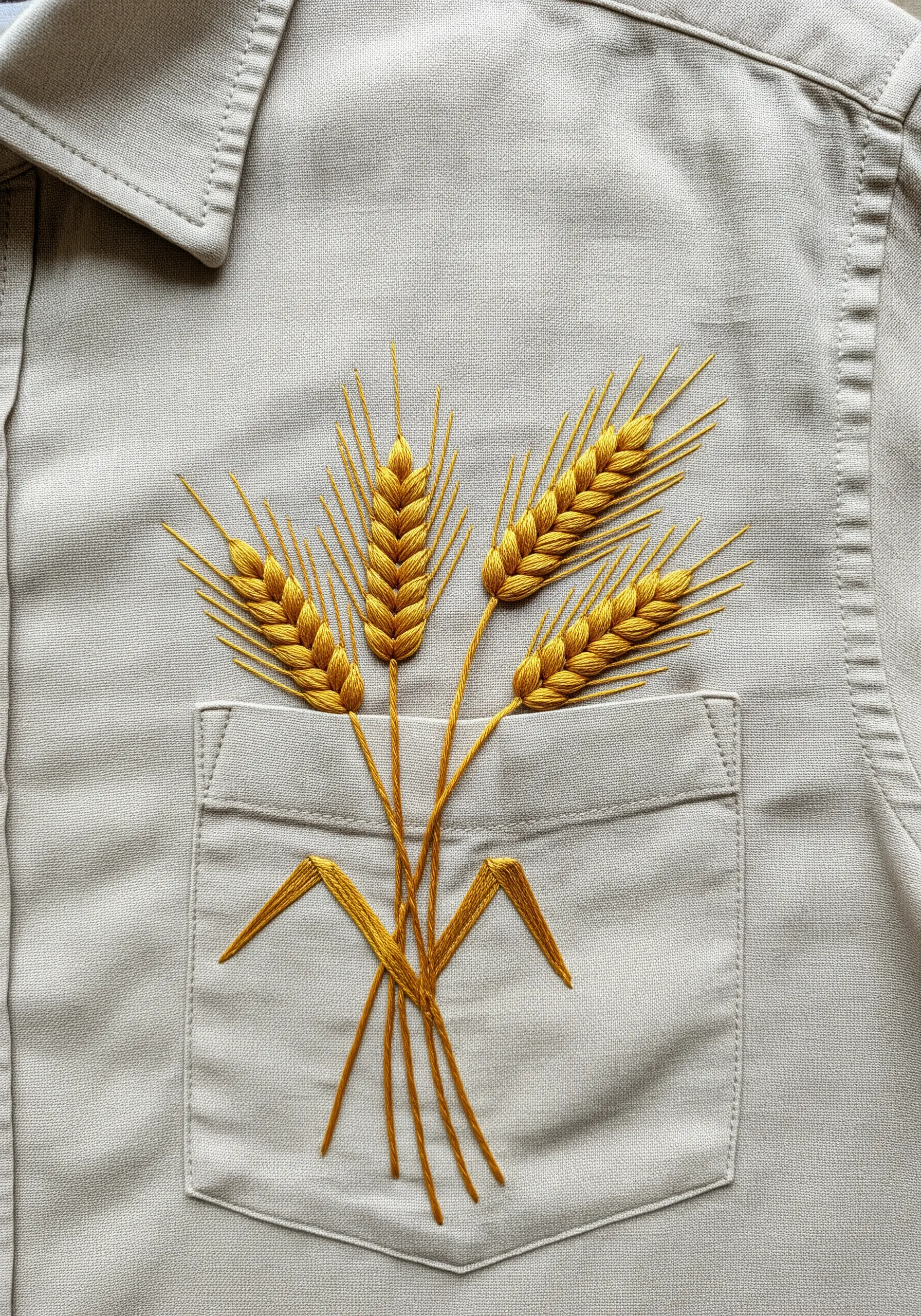
Symbolize abundance and growth with a clean, graphic sheaf of wheat.
Use a vertical satin stitch for the individual grains, ensuring each stitch is smooth and lies flat against the fabric.
A single, long straight stitch for each awn (the bristle) adds a delicate, spiky texture that contrasts with the solid grains.
The warm, golden metallic or satin floss against a neutral, earthy fabric like linen or chambray creates a look of rustic elegance.
25. Modern Color-Block Floral
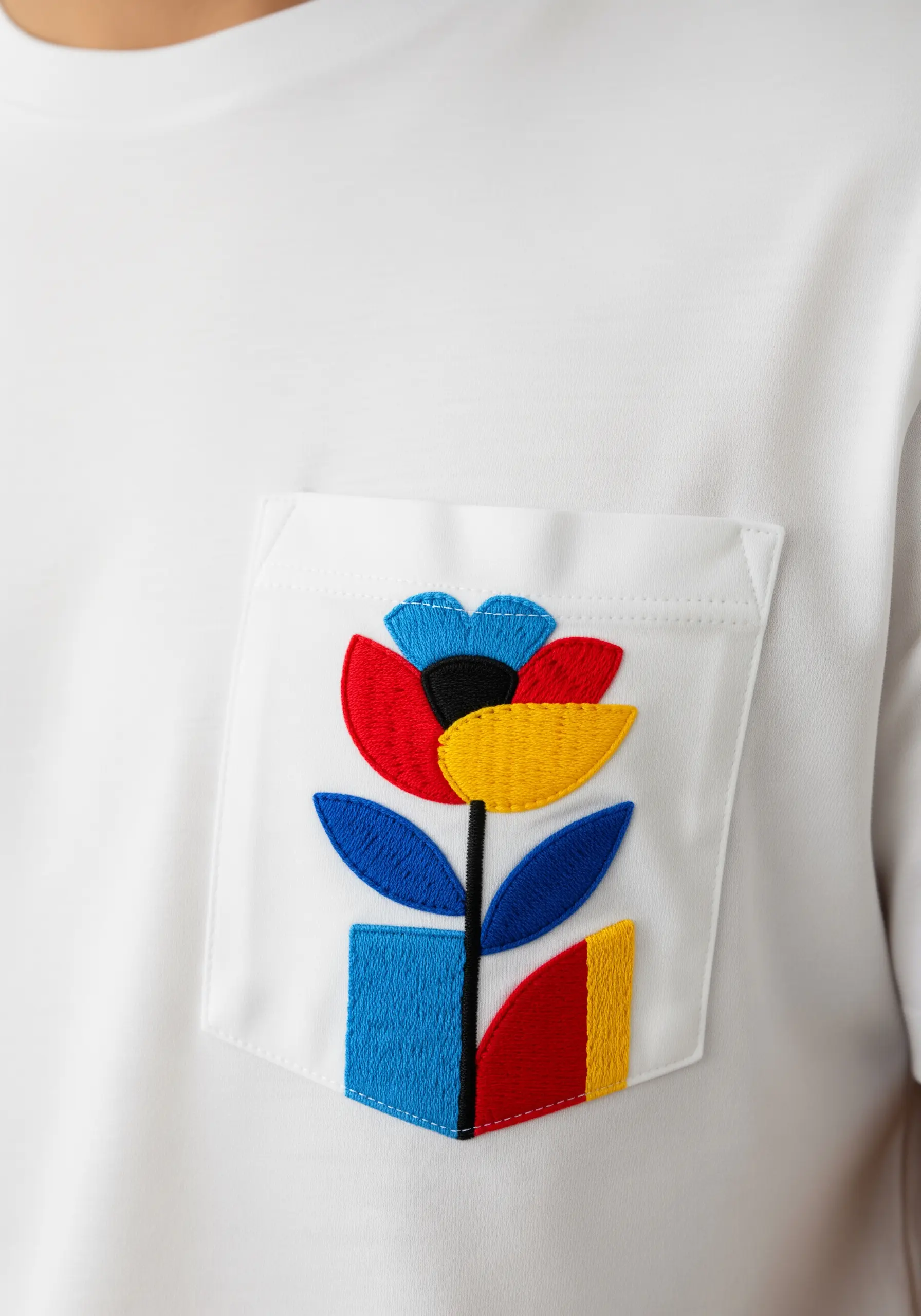
Deconstruct a flower into its basic shapes and fill them with bold, solid blocks of color for a modern, pop-art feel.
The key to this style is impeccably clean edges. Outline each color section with a precise split stitch before filling it with a dense, flat satin stitch.
Use a limited, primary-inspired color palette to enhance the graphic, stylized nature of the design.
This approach transforms a traditional floral into a confident, contemporary statement piece.
26. Exquisite Thread-Painted Iris
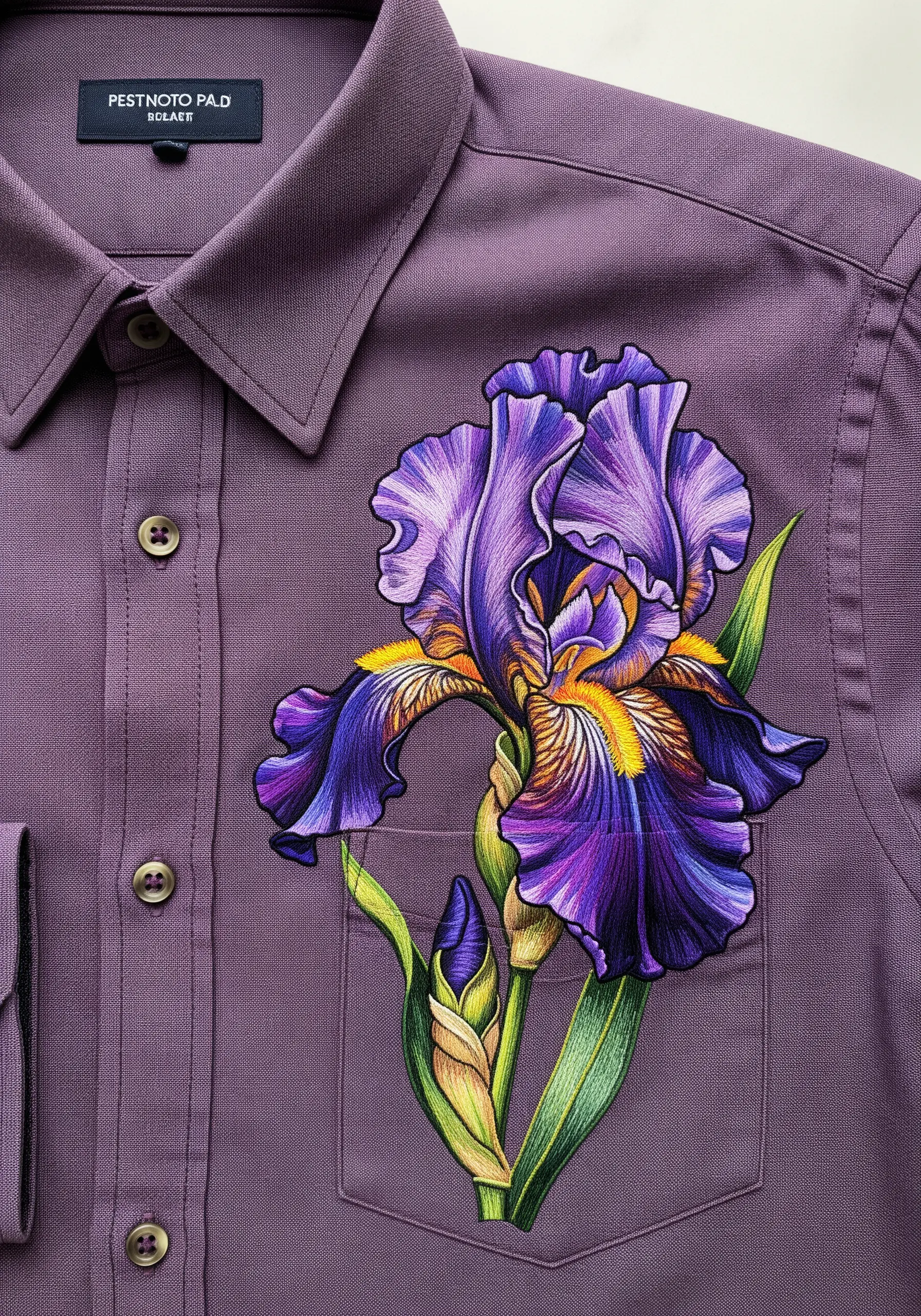
For a truly spectacular gift, dive into the art of thread painting to capture the intricate beauty of an iris.
This technique requires using a single strand of floss and blending many shades of purple, blue, and yellow with directional long-and-short stitches.
Study the flower’s form and let your stitches mimic the way its petals curve and fold, creating realistic highlights and shadows.
While time-consuming, the result is a breathtaking piece of wearable art that showcases incredible skill and dedication.
27. Hummingbird and Fuchsia
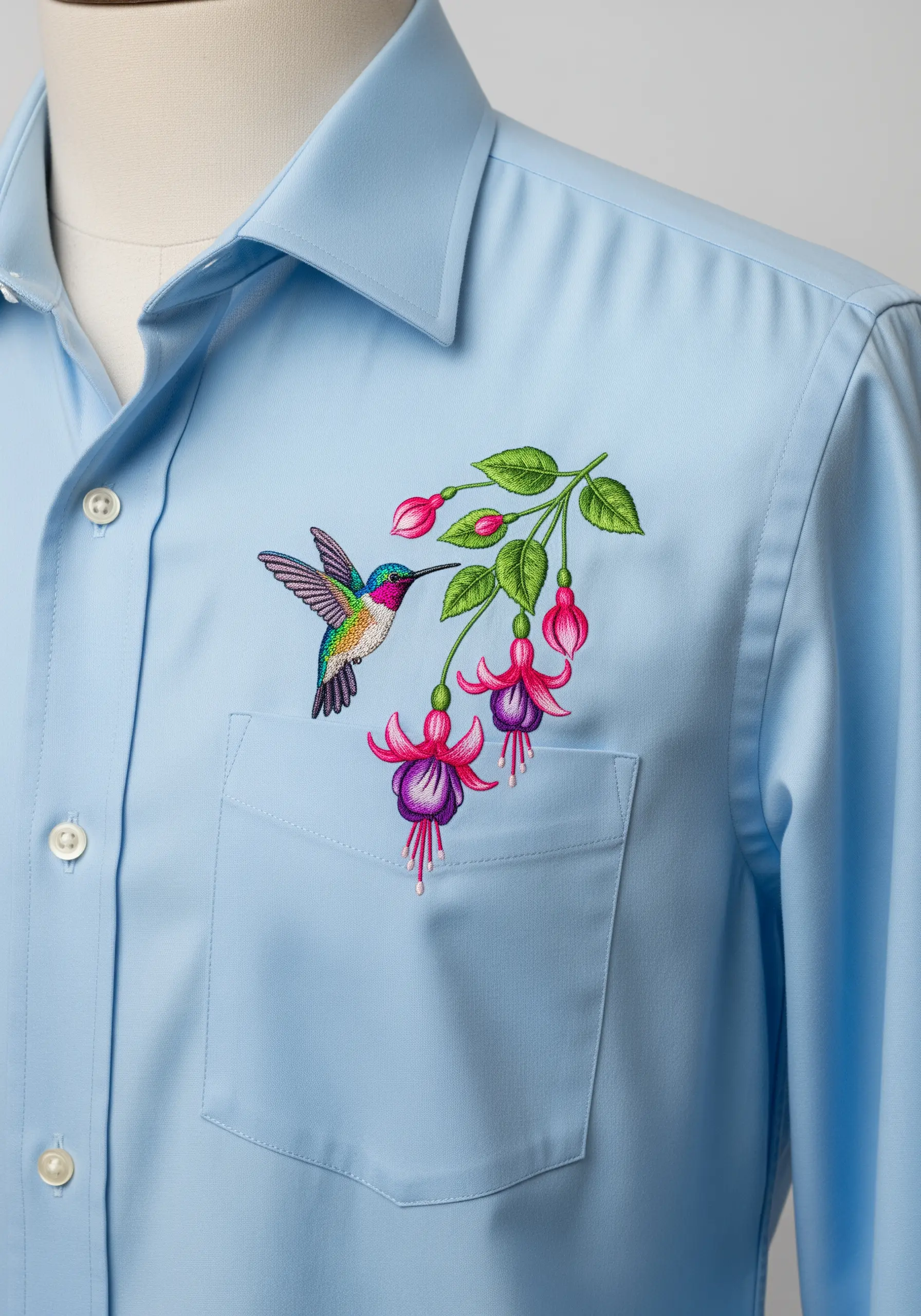
Create a dynamic scene full of life and energy by pairing a flower with its pollinator.
Capture the hummingbird’s iridescence by laying short satin stitches of different bright colors next to each other, mimicking the shimmer of its feathers.
For the fuchsia flowers, use padded satin stitch to give the blossoms a plump, bell-like shape that makes them appear to hang heavily from the branch.
This pairing creates a small, self-contained narrative that is both beautiful and engaging.
28. Lush, Full-Bloom Peony

Tackle a large, complex flower like a peony by breaking it down into individual petals.
Lightly draw the main petal shapes onto the fabric first. Outline each shape with split stitch, then fill it with long-and-short stitch, directing your stitches from the outer edge inward.
Use a range of pinks, from pale blush to deep magenta, to create the illusion of layers and shadows within the dense bloom.
This methodical approach makes a complex subject manageable and results in a stunningly realistic flower.
29. Framed Denim Rose
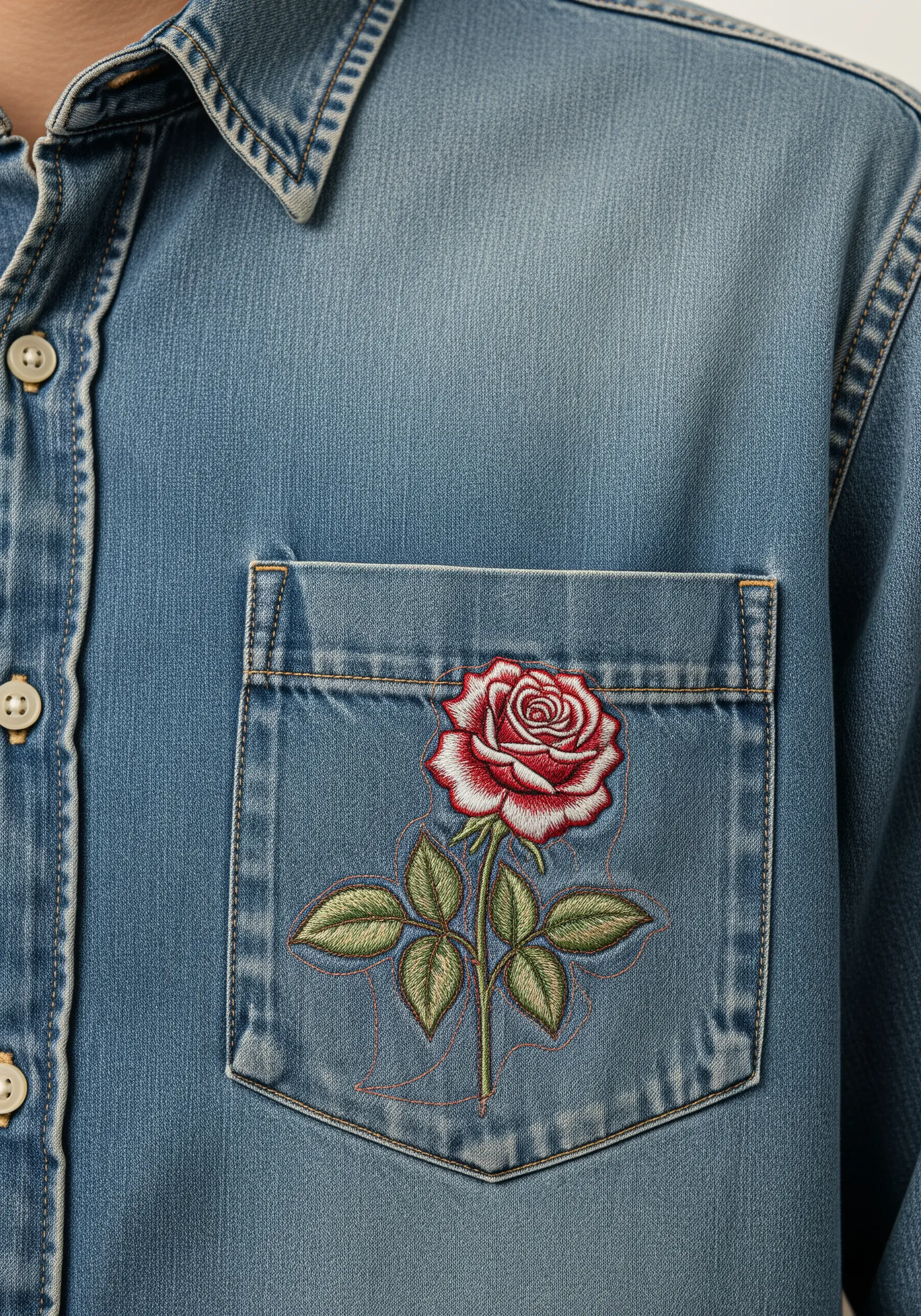
Give a classic rose a unique, almost sketched quality by adding a stitched frame around it.
Embroider a simple rose using satin stitch for the petals, layering shades of red and white for dimension.
After the rose is complete, use a simple running stitch in a contrasting color to trace the outline of the pocket itself.
This simple addition acts as a frame, drawing the eye inward and making the entire design feel more intentional and complete.
30. Fireweed on Buffalo Plaid
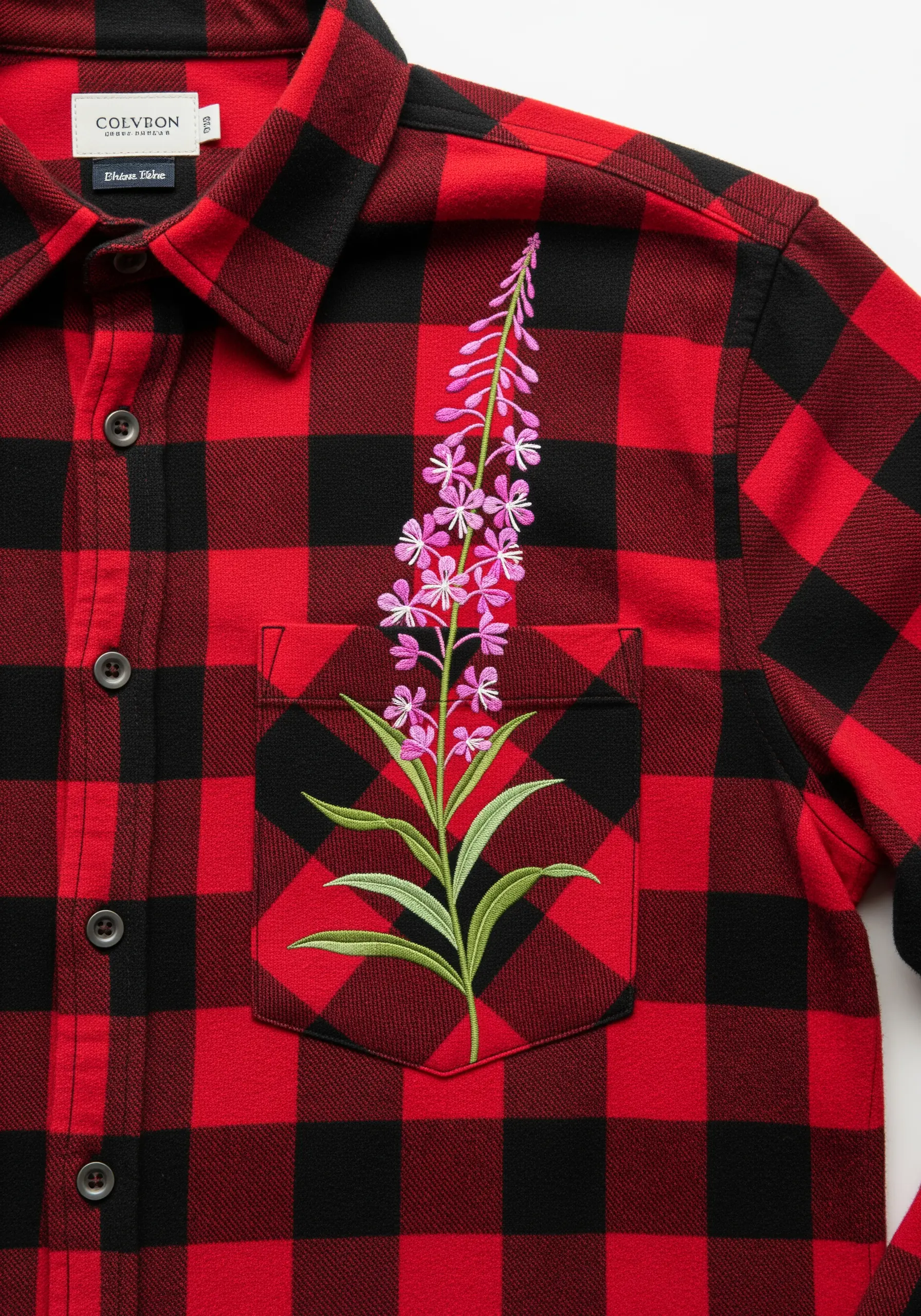
Make your embroidery stand out on a bold, busy pattern like buffalo plaid by choosing your subject and colors carefully.
A tall, vertical flower like fireweed creates a strong line that cuts through the horizontal and vertical lines of the plaid.
Select a flower color, like this vibrant lavender-pink, that isn’t present in the plaid. This ensures your design won’t get lost in the pattern.
This thoughtful pairing of motif and fabric creates a harmonious yet striking result.
31. Dimensional Felted Edelweiss
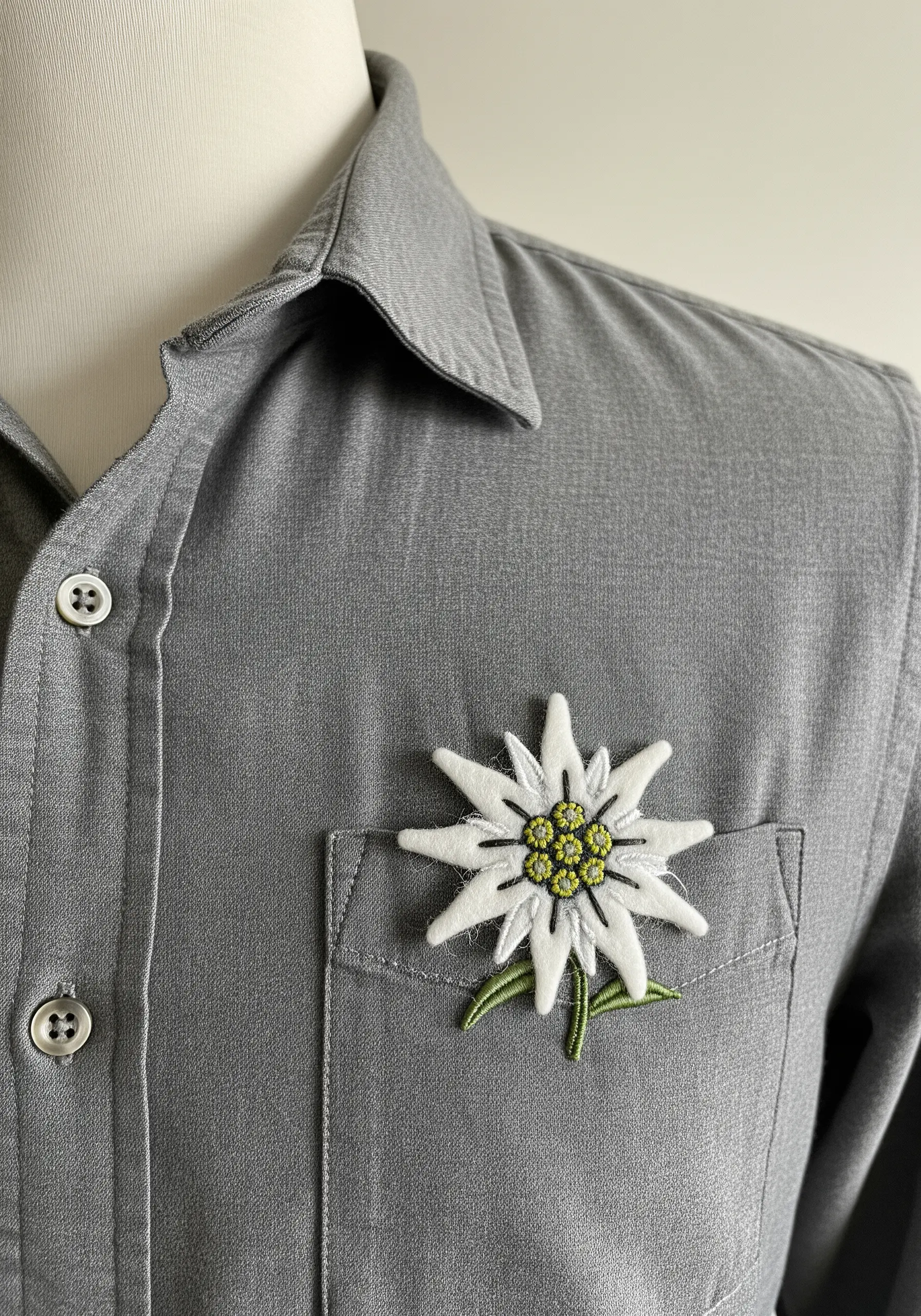
Capture the unique, fuzzy texture of an edelweiss by incorporating a different material into your embroidery.
Cut the star-shaped petals from a piece of stiff white felt and tack it onto the shirt. Then, embroider over it with long white stitches to create the petal veins and texture.
Use a dense cluster of yellow-green French knots for the center.
This mixed-media approach provides instant dimension and texture that would be difficult to achieve with thread alone.
32. Zesty Lemon Branch
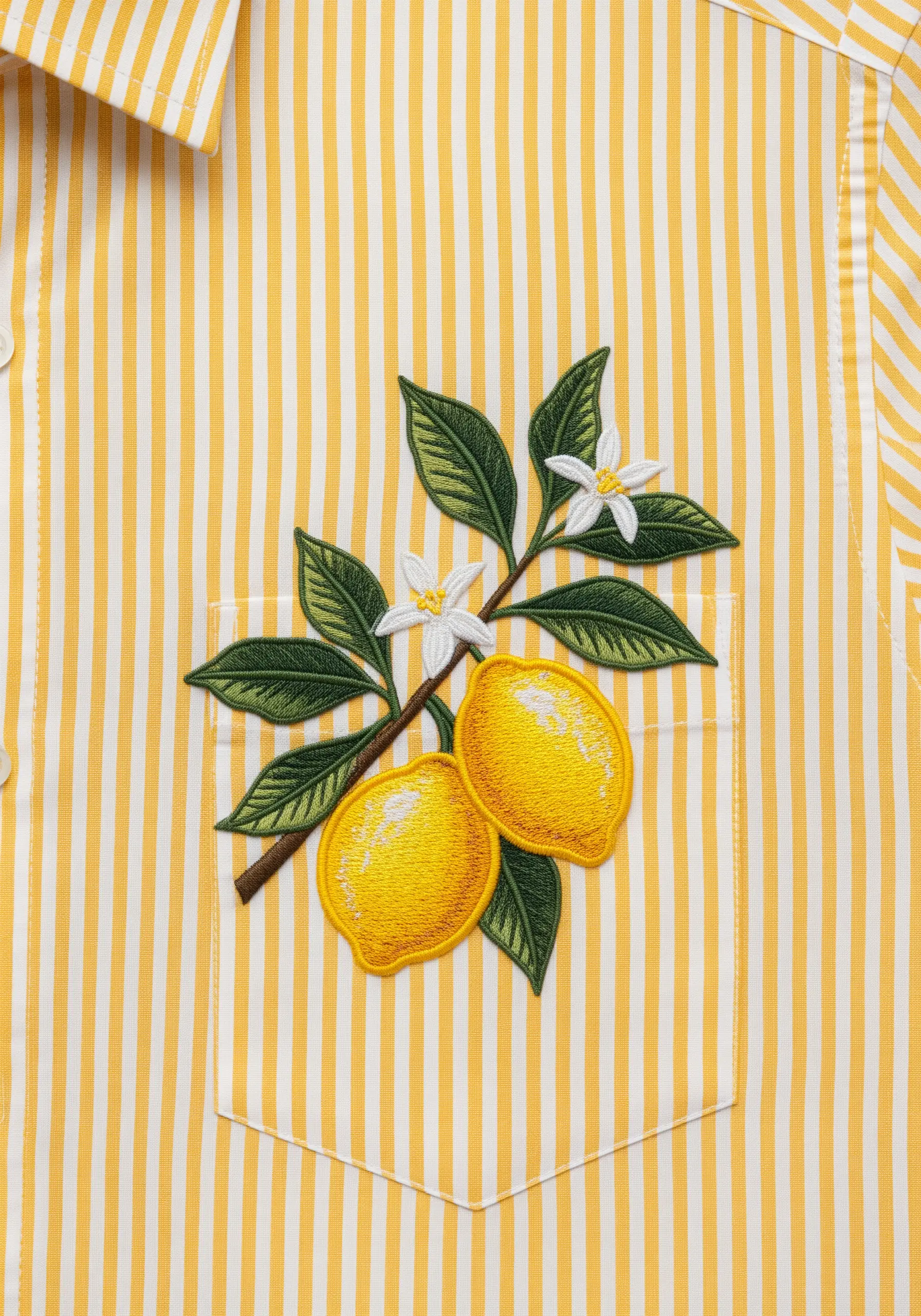
Bring a touch of Mediterranean sunshine to a shirt with a bright and cheerful lemon branch.
To make the lemons look plump and round, use a padded satin stitch. Create a base of small running stitches within the lemon shape, then cover it with smooth, vertical satin stitches.
A bold outline in a slightly darker color will help the design pop, especially against a patterned fabric like these yellow stripes.
The combination of bright yellow and deep green is a classic pairing that always feels fresh and optimistic.
33. Aromatic Herb Bundle
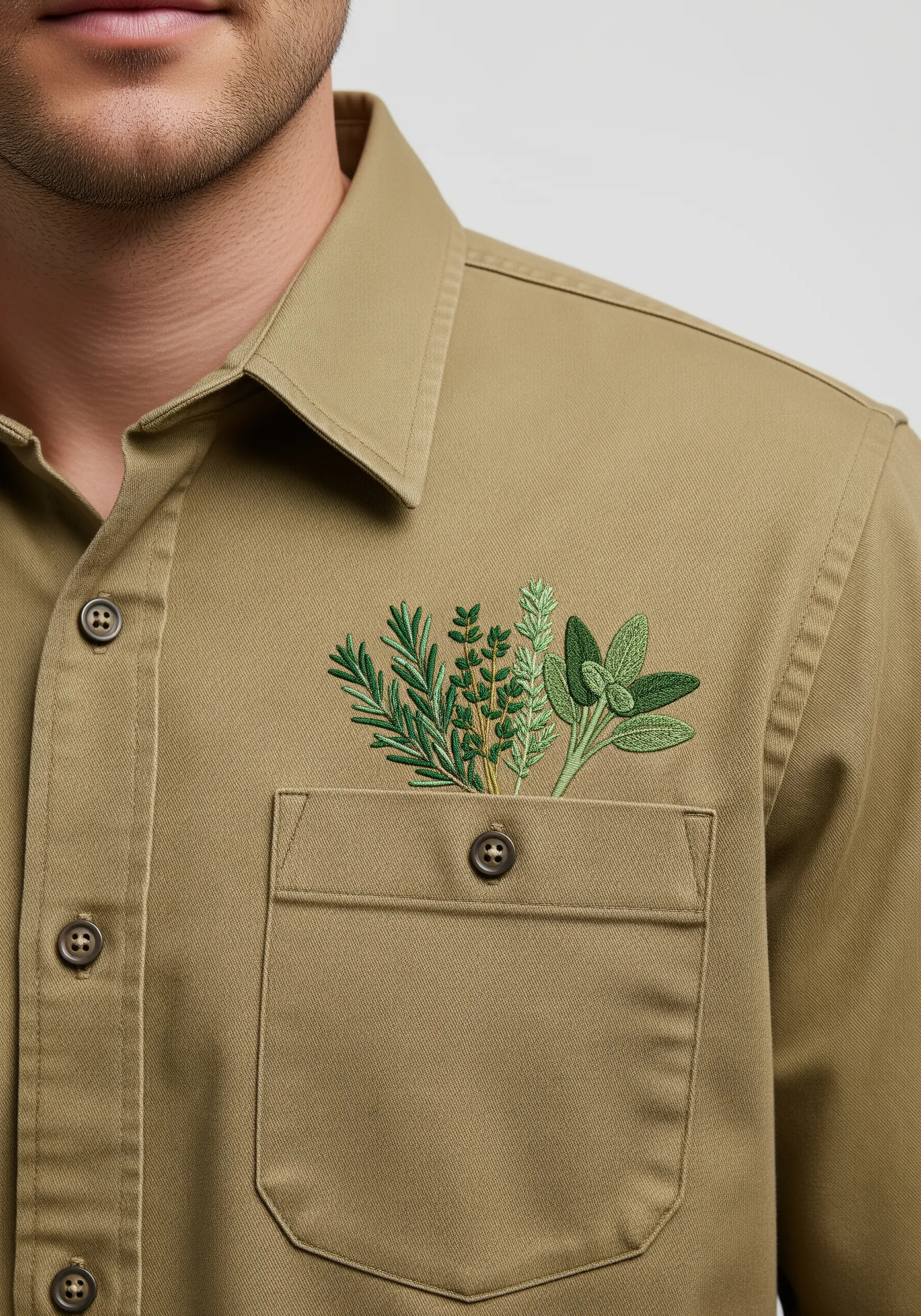
Create a subtle, earthy design by stitching a small bundle of kitchen herbs.
The key to making this design successful is to give each herb its own distinct texture. Use fern stitch for rosemary, scattered French knots for thyme, and small satin-stitched leaves for sage.
Keeping the color palette entirely within shades of green creates a sophisticated, cohesive look that celebrates the subtle variations in nature.
These garden herb embroidery patterns are perfect for a foodie or gardener.
34. Coral Garden Pocket
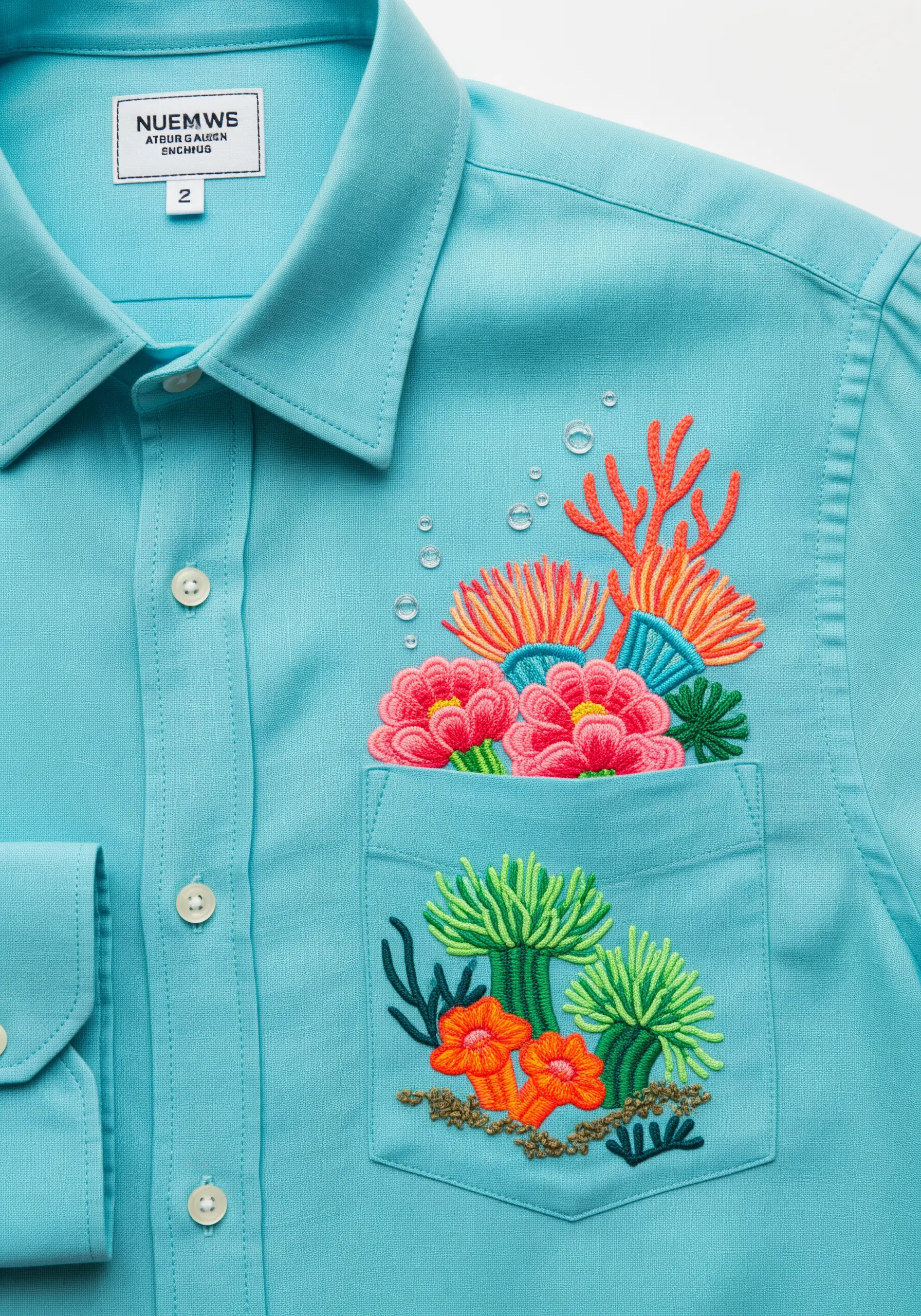
Venture beyond traditional florals and create a vibrant underwater scene teeming with texture and color.
Use a variety of textural stitches: bullion knots for anemones, branching stem stitch for hard corals, and clusters of French knots for softer coral polyps.
Embroider some elements inside the pocket and some emerging from it to create a layered, immersive effect.
A few tiny seed beads or straight stitches in a light, shimmery thread can represent air bubbles, adding a final touch of magic.