You have the threads, the fabric, and the desire to create something beautiful. But perhaps you feel that your work, while heartfelt, isn’t quite reaching the level of artistry you envision. It’s a common feeling—the gap between what you can imagine and what your hands can currently produce.
The solution isn’t about mastering hundreds of complex stitches or buying expensive new materials. Instead, it’s about making small, intentional shifts in your technique. It’s about understanding how to use texture to create depth, how to choose a thread that adds subtle elegance, and how a simple change in composition can turn a pleasant design into a breathtaking one.
Here, you’ll find twenty distinct ways to refine your approach. Each idea is a practical step you can take right now to elevate your fabric crafts from simple textiles into true statement pieces. Let’s begin transforming the way you see—and use—your needle and thread.
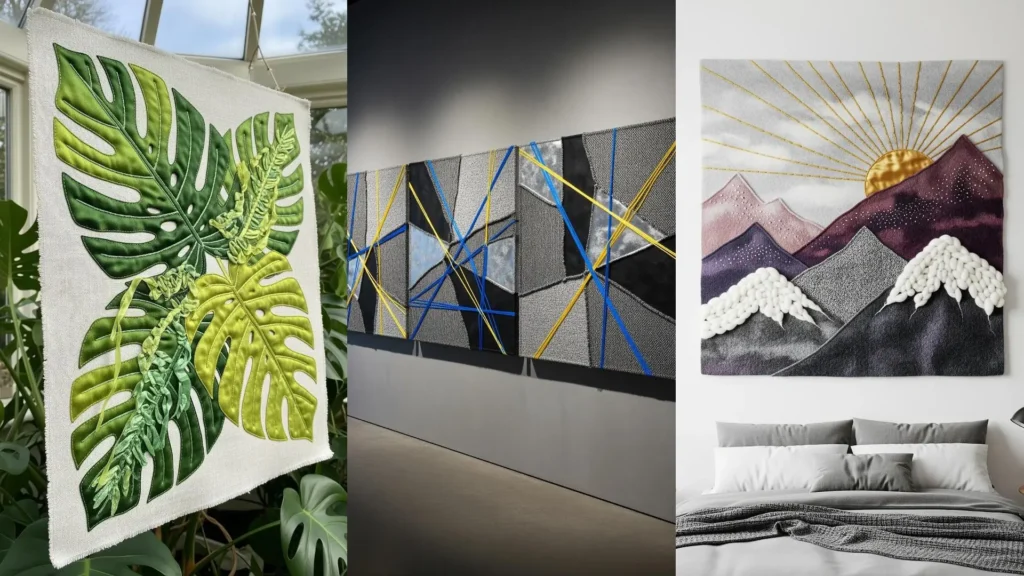
1. Create Topographic Texture with Appliqué

Transform a simple wall hanging by layering organic fabric shapes to create an abstract landscape.
Cut your colored fabrics with raw, undulating edges and arrange them, overlapping slightly, to build depth.
Instead of stitching the edges down flat, use a simple running stitch a quarter-inch from the edge to allow for subtle fraying, which adds softness and texture.
Finally, couch a thick, contrasting yarn over the top in sweeping lines to unify the composition and guide the eye, creating a sense of movement.
This approach turns flat cloth into statement-size embroidered textile hangings that feel both modern and grounded.
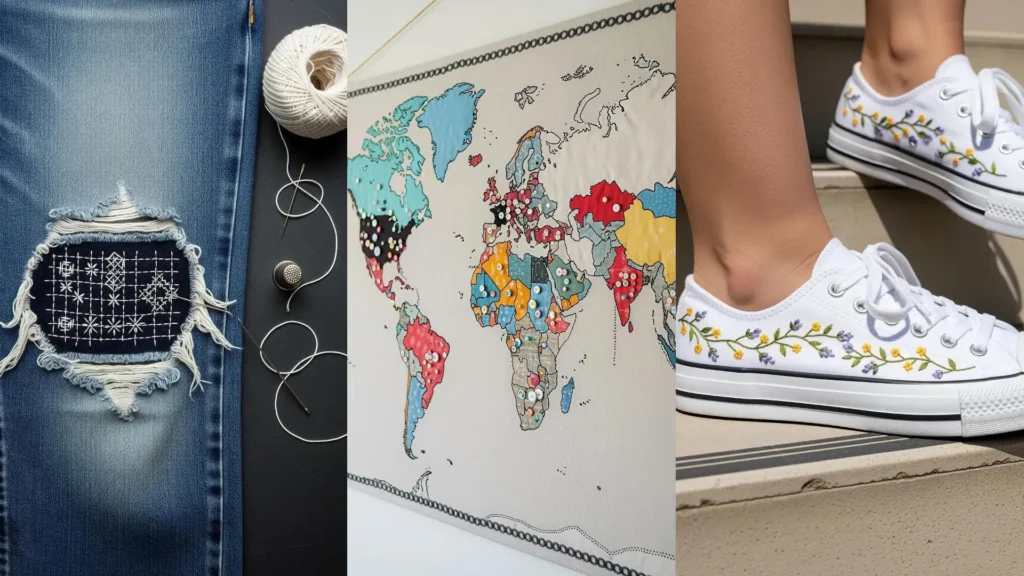
2. Master 3D Florals with Ribbon Embroidery

Elevate your denim by trading standard floss for silk ribbon to create dimensional, lifelike petals.
Use a wide ribbon for voluminous flowers like peonies, pulling the ribbon loosely through the fabric to let it fold and twist naturally—this creates the texture of real petals.
For smaller daisies, a simple ‘lazy daisy’ stitch with a narrow ribbon provides a perfect shape without bulk.
Combine ribbon stitches with traditional French knots and leaf stitches using standard cotton floss to add delicate details and compositional balance.
This mix of materials gives your apparel a lush, tactile quality that standard embroidery can’t replicate, perfect for bringing plain denim jackets to life.
3. Accentuate Pattern with Bold Hand Stitching

Give pre-patterned fabric, like shibori or tie-dye, a bespoke finish with intentional, high-contrast hand stitching.
Instead of trying to hide your seams, make them a design feature.
Use a thick thread, like a pearl cotton or sashiko thread, in a vibrant, opposing color to create a dramatic visual pop.
A simple, evenly spaced blanket stitch or whipstitch along the edges not only secures the fabric but also adds a graphic, handcrafted element that elevates the entire piece from a simple pillow to a designer object.
These handmade pillow and cushion patterns prove that the simplest stitches often make the biggest impact.
4. Unify a Collage with Thread Drawing

Create a stunning portrait not with paint, but with fragments of fabric held together by the power of a stitch.
Arrange small, patterned fabric scraps to block out the lights and shadows of your subject, securing them with a glue stick.
Then, using a free-motion sewing machine foot or a simple hand-stitched backstitch, draw over the collage with black thread.
The stitched lines serve as both contour and texture, unifying the disparate patterns into a cohesive and expressive image.
This mixed-media fabric collage technique turns textile chaos into compelling art.
5. Design Graphic Textiles with Punch Needle

Move beyond the hoop and create functional art like rugs and wall hangings using the punch needle technique.
The magic of punch needle lies in creating dense loops of yarn that build a plush, textured surface.
To achieve a clean, graphic look, map out your design with bold, geometric shapes and distinct color blocking.
Use a consistent loop height for a uniform finish, allowing the crisp edges between colors to define the pattern.
This method is incredibly fast and satisfying, making it one of those DIY fabric crafts that feel expensive but cost almost nothing to start.
6. Sculpt with Thread for Topographic Art

Create dramatic, sculptural wall art by focusing entirely on texture rather than color.
Instead of filling shapes, use dense, parallel lines of stitching to create raised, topographic forms.
You can achieve this effect by couching thick cord onto the fabric or by building up layers of satin stitch.
Work with a monochrome or tightly limited color palette—like grays, blues, and creams—to let the shadows cast by the raised stitches become the central element of the design.
This focus on form turns a flat surface into a mesmerizing, sculptural embroidery piece.
7. Embroider a Lampshade for Illuminated Art

Take your embroidery off the wall and integrate it into your decor by stitching directly onto a fabric lampshade.
Choose a simple, open design, like botanical silhouettes, which will look elegant both day and night.
Use a basic backstitch or stem stitch in a dark, contrasting thread on a light-colored linen shade for maximum impact.
The true beauty of this project is revealed when you turn on the light, as the stitched pattern is thrown into dramatic relief, creating a warm, ambient glow.
These gentle botanical embroidery stitches are perfect for creating a serene atmosphere.
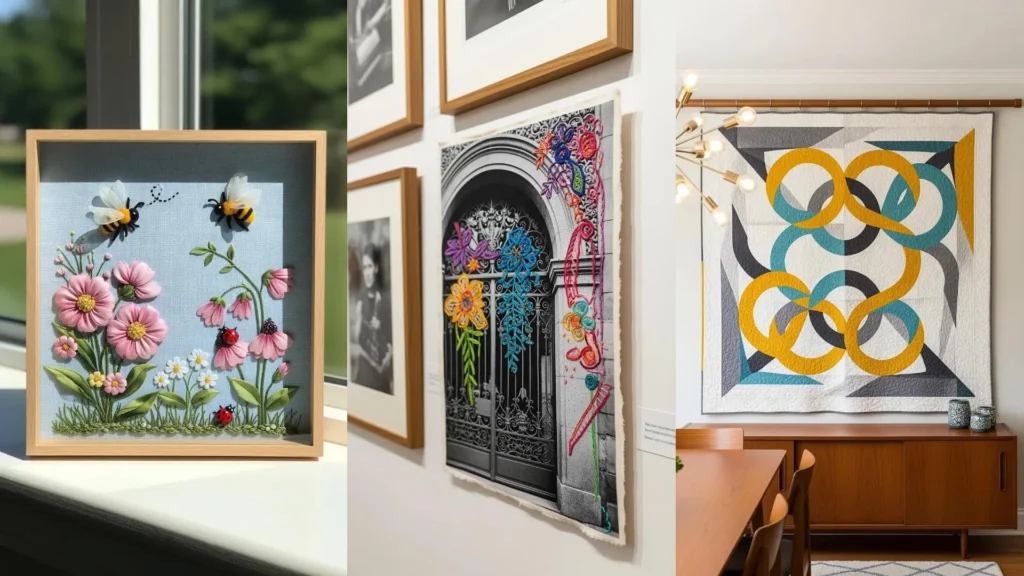
8. Build Realistic 3D Forms with Stumpwork

Bring your nature-inspired embroidery to life with stumpwork, a technique that allows elements to lift off the fabric surface.
Create mushroom caps by embroidering onto a separate piece of fabric with a wire outline, then cut it out and attach it to your main piece, bending it into a dimensional shape.
For the mossy ground, use dense clusters of French knots in various shades of green and different thread weights to build a rich, uneven texture.
This method transforms a flat image into a miniature sculpture, making it one of those stunning natural texture embroidery patterns that captivates viewers.
9. Weave Textures into a Hoop Loom

Use an embroidery hoop not just for stitching, but as a loom for a small-scale woven wall hanging.
Warp your hoop with a strong cotton thread, then weave different materials through it—chunky yarn, soft roving, strips of patterned fabric, and even silk ribbons.
Vary your weaving techniques, creating tight sections of plain weave next to fluffy, looped soumak stitch.
Letting the tails and tassels hang from the bottom adds movement and a relaxed, bohemian feel to these mixed-fiber embroidery patterns.
10. Layer Appliqué for a Vibrant Pop-Art Effect

Construct a playful and graphic design by layering brightly colored fabric pieces, a technique known as appliqué.
Cut out your main shapes from different fabrics—using felt for its no-fray edges is a great choice for beginners.
Arrange the pieces and secure them with a neat blanket stitch or a simple running stitch around the edges.
Elevate the design further by adding beads, sequins, and small embroidered details to create highlights and texture.
Finish with a row of colorful tassels for a fun, tactile border that makes your tote bags impossible to miss.
11. Construct a Tufted Patchwork Headboard

Create a stunning bedroom centerpiece by turning a collection of fabric squares into a custom upholstered headboard.
Choose fabrics with a unifying theme—like a color palette or pattern style—to ensure the final piece feels cohesive, not chaotic.
After sewing your patchwork panel, wrap it around a padded board and secure it at the back.
The final, professional touch is tufting: pull the fabric inwards at regular intervals with a strong thread and secure with a fabric-covered button. This adds depth, dimension, and a sense of luxury.
Explore these unique headboard designs to inspire your own project.
12. Capture a Soul with Thread Painting

To create a realistic pet portrait, you need to think like a painter, using thread as your medium.
Work with a single strand of embroidery floss to allow for subtle color blending.
Use the long-and-short stitch, and always follow the natural direction of the fur’s growth—this single detail is the key to realism.
Layer different shades of thread to create depth, highlights, and shadows, especially in the eyes, to give your portrait life.
These meaningful, personalized keepsakes are a testament to the emotional power of thread.
13. Define Space with Geometric Fabric Piecing

Elevate your table linens with a modern, architectural design created through fabric piecing and clean stitch lines.
Combine two contrasting fabrics, like a dark navy and a neutral linen, cut into bold geometric shapes.
Instead of a standard seam, use a French seam or a flat-felled seam to create a crisp, finished line on both sides of the runner.
Reinforce these lines with a precise topstitch. This technique is not about hiding the construction, but celebrating it as part of the minimalist aesthetic.
This approach can instantly transform a plain dining table.
14. Craft a Felt Garland with Beaded Centers

Create a lush, lasting floral garland using felt for a craft that requires minimal sewing and offers maximum impact.
Cut your petal shapes from different colors of felt; layering them from largest to smallest creates dimension.
Instead of stitching, you can often assemble the flowers with a hot glue gun for speed and ease.
For the centers, create a tight cluster of seed beads or French knots on a small felt circle before attaching it to the flower. This touch of texture and sparkle elevates the piece from a simple craft to elegant decor.
It’s one of those festive holiday designs you can adapt for any season.
15. Create Optical Illusions with Precision Stitching

Turn simple lines into a mesmerizing work of art by focusing on precision, repetition, and high contrast.
Start with a geometric design and use a single color of thread—black on a white or cream background is most effective.
The key to a flawless finish is consistent stitch length and perfect tension. Use a simple backstitch and a ruler to mark your lines beforehand.
The overlapping and repeating lines will trick the eye, creating a sense of three-dimensional space and movement.
These geometric abstract thread patterns are perfect for a modern, minimalist home.
16. Map the Stars with Metallic Thread

Stitch a celestial map that brings a sense of wonder to your walls, especially on a deep navy or black fabric background.
Use a fine metallic thread for the constellation lines; a backstitch or whipped backstitch will give them a smooth, unbroken appearance.
For the stars themselves, vary your technique: use single cross-stitches for dimmer stars, sparkling seed beads for brighter ones, and tight French knots for star clusters.
This mix of textures will make your map shimmer and feel truly cosmic, perfect for transforming your workspace into a place of inspiration.
17. Craft a Zero-Waste Fabric Scrap Wreath

Give your leftover fabric scraps a beautiful new purpose by creating a vibrant, no-sew rag wreath.
All you need is a wire wreath frame and strips of fabric, ideally two to three inches wide and six inches long.
Simply tie each strip onto the frame with a single knot, pushing them tightly together to create a full, fluffy texture.
The key to a dynamic look is to mix and match as many colors, patterns, and fabric types as possible. This is one of the best ideas that make fabric scraps look like magic.
18. Make a Statement with Punch Needle Typography

Create bold, tactile lettering for a banner or pennant using the plush texture of punch needle.
Draw your letters onto your backing fabric—a sturdy monk’s cloth is ideal—and stretch it tightly in a frame.
Working from the back, punch your design using a thick, soft yarn like merino wool for a luxurious, cloud-like finish on the front.
The uniform loops create a clean, graphic font that stands out beautifully against a flat felt background.
This is a perfect way to make trendy wall quotes with satisfying, touchable texture.
19. Embrace Abstract Mending with Visible Stitches

Channel the spirit of Japanese boro and sashiko by creating a patchwork design where the stitches are the main event.
Arrange patches of contrasting fabrics like denim and linen, allowing the raw edges to show for added texture.
Instead of hiding your stitches, use a thick, contrasting thread to sew the patches down with a simple, graphic running stitch.
Then, layer abstract lines of couched yarn or long, straight stitches over the top, connecting the different patches and creating a sense of chaotic harmony.
These neutral thread texture combinations celebrate imperfection as a design choice.
20. Create Ethereal Layers with Sheer Fabrics

Construct a piece that feels like a delicate watercolor by layering translucent fabrics and minimal embroidery.
Start with a lightbox or a bright window to see how strips of sheer material like organza, tulle, or chiffon interact as you layer them.
Once you have a soft, blended background, add your final design on the topmost layer only.
Use a very fine thread and a simple backstitch to draw delicate botanical motifs. The lines will appear to float weightlessly over the soft colors beneath, turning your sheer fabrics into a dreamy, ethereal artwork.