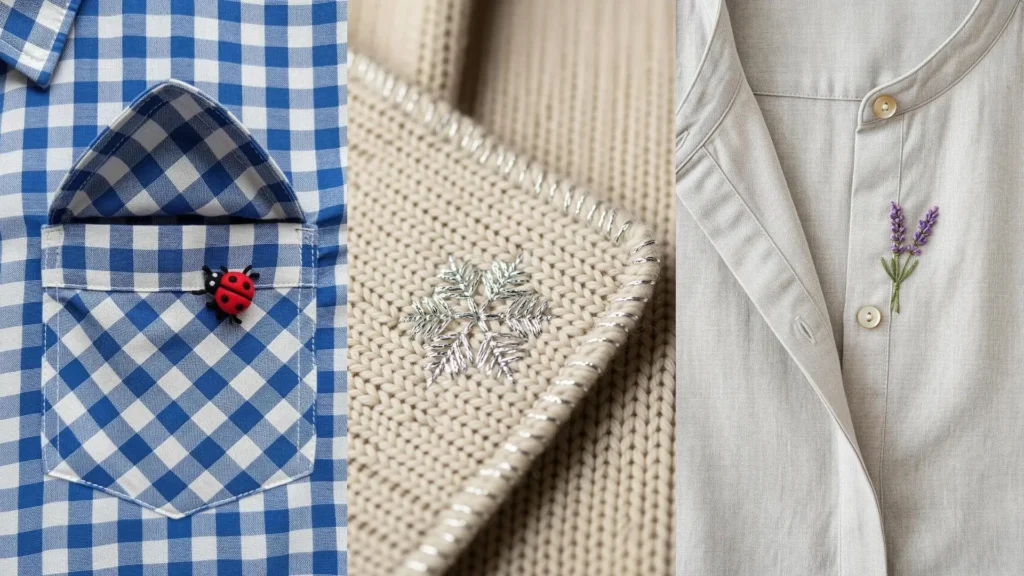
Your table linens are more than just fabric—they are the canvas for the memories you’ll make around them. With just a needle and thread, you can transform them from simple cloths into heirlooms, imbued with the quiet beauty of a garden party.
Forget perfection and focus on intention. It’s not about flawless stitches, but about the life you breathe into your work. Whether you choose the soft gradient of a rose petal, the simple texture of a lavender sprig, or the winding path of an ivy vine, each stitch is a decision. A choice to create something personal and lasting.
Here, you will find thirty distinct ways to approach that canvas. Think of them not as strict patterns, but as starting points—ideas on how to handle color, texture, and composition to make your embroidery feel elevated and uniquely yours. Let’s begin.
1. Frame Your Table with a Classic Rose & Ivy Border

To create a truly heirloom-quality placemat or tablecloth, focus on the flow of your stitches.
For the rose petals, use a long-and-short stitch, angling your stitches toward the center of the bloom to create a natural, curved appearance.
Use a single strand of thread and a delicate split stitch for the winding ivy stems; this keeps the lines crisp and prevents them from overpowering the roses.
The balance between the bold florals and the delicate vines is what creates this timeless, elegant structure for your table setting.
2. Achieve Delicate Texture on Lavender Napkins

The beauty of embroidering lavender lies in its simple, textural form.
Create the individual buds using a combination of French knots and tiny, detached straight stitches, varying the tension slightly for a more organic look.
Use three strands of floss for the purple blossoms but only two for the green stems—this subtle shift in thread weight adds visual depth and keeps the stalks looking slender and elegant.
Position the bouquet off-center on your napkins for a modern, considered composition.
3. Add Three-Dimensionality with Silk Ribbon Ivy

Elevate a simple ivy vine on a table runner by incorporating silk ribbon for the tiny rosebuds.
Use a Japanese ribbon stitch or a simple folded ribbon stitch to create dimensional, realistic petals that sit proudly on the fabric surface.
For the ivy leaves, revert to traditional floss using a fishbone stitch to create a defined central vein, which contrasts beautifully with the soft sheen of the ribbon.
This mixed-fiber approach introduces a tactile quality that invites touch and closer inspection.
4. Compose a Balanced Rose and Lavender Wreath

When combining bold flowers with more delicate ones, composition is everything.
Anchor your wreath with four evenly spaced, vibrant red roses, using them as the focal points of the design.
Weave the lavender sprigs and ivy leaves between the roses, allowing their softer forms and cooler colors to act as graceful connecting elements.
This creates a rhythm in the design, guiding the eye around the circle and ensuring no single element feels too heavy or out of place.
5. Master the Art of the Corner Spray

A corner embroidery design instantly makes a plain piece of linen feel custom and luxurious.
Achieve the soft color gradients in the pink roses by mastering thread painting with a long-and-short stitch, using three or four similar shades of pink and blending them seamlessly.
Keep the lavender simple with satin stitches or French knots to avoid competing with the detailed roses.
This technique concentrates the visual interest, leaving elegant negative space that enhances the overall design.
6. Personalize Linens with an Ivy Monogram
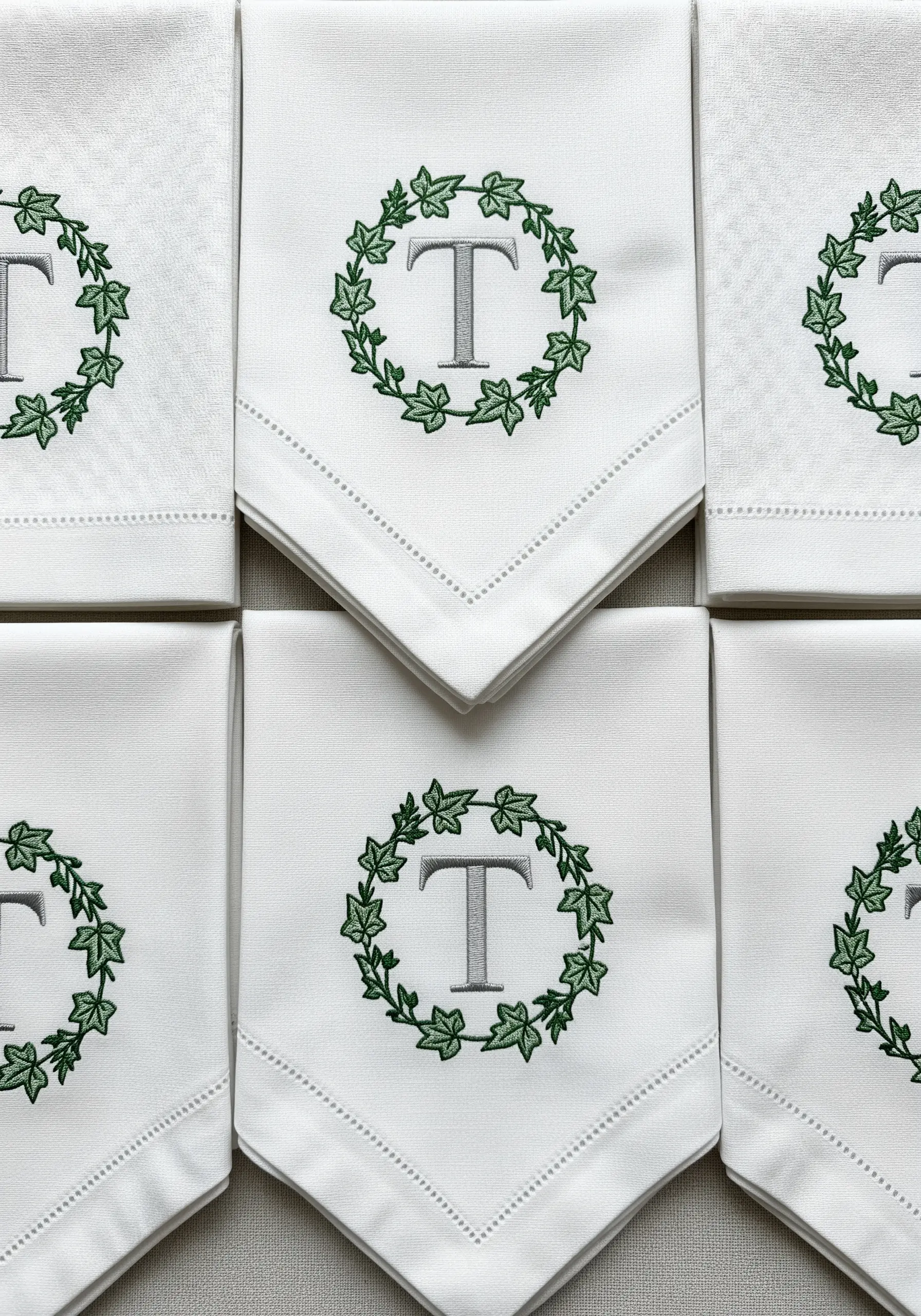
Transform simple napkins into bespoke heirlooms with an embroidered monogram.
First, stitch the letter using a padded satin stitch—outline the letter with a split stitch, then fill it before stitching over it to give the monogram a raised, professional look.
Frame the initial with a delicate ivy wreath using a fishbone stitch for the leaves; this automatically creates a beautiful, defined center line in each leaf.
This combination of bold lettering and delicate botanicals creates a perfectly personalized table linen that feels both classic and personal.
7. Build Sculptural Florals with Padded Satin Stitch

To make your roses and lavender pop off the fabric, experiment with stumpwork techniques.
Before you begin your satin stitch, lay down a foundation of small felt shapes or layers of seed stitches exactly where you want the highest points of your petals to be.
Stitch directly over this padding with your final colors. This creates a raised, sculptural effect that gives the flowers a stunning, lifelike dimension.
This is one of the most effective abstract thread sculpting tricks to add depth to your work.
8. Embrace Elegance with Minimalist Lavender Sprigs

Prove that less is more by creating a delicate, gridded pattern on a table runner.
Use a simple running stitch in a contrasting color, like white on blue, to create your grid lines—this adds a subtle, handcrafted border.
Place a single, tiny lavender sprig in the center of each square, using just two or three detached chain stitches for the blossoms and a single straight stitch for the stem.
The beauty of this design lies in its use of negative space, which makes each tiny motif feel intentional and precious.
9. Create a Cohesive Set of Botanical Coasters

Design a charming, coordinated set of coasters by dedicating one botanical motif to each.
Choose a neutral, tightly woven linen or canvas that can withstand use and provides a clean backdrop for your stitches.
Use the same color palette across all the designs—roses, lavender, and ivy—to ensure they feel like a cohesive collection, even with different subjects.
This approach allows you to practice different delicate leaf stitch techniques while creating a beautiful and functional set.
10. Design a Lush, Two-Tone Ivy Border
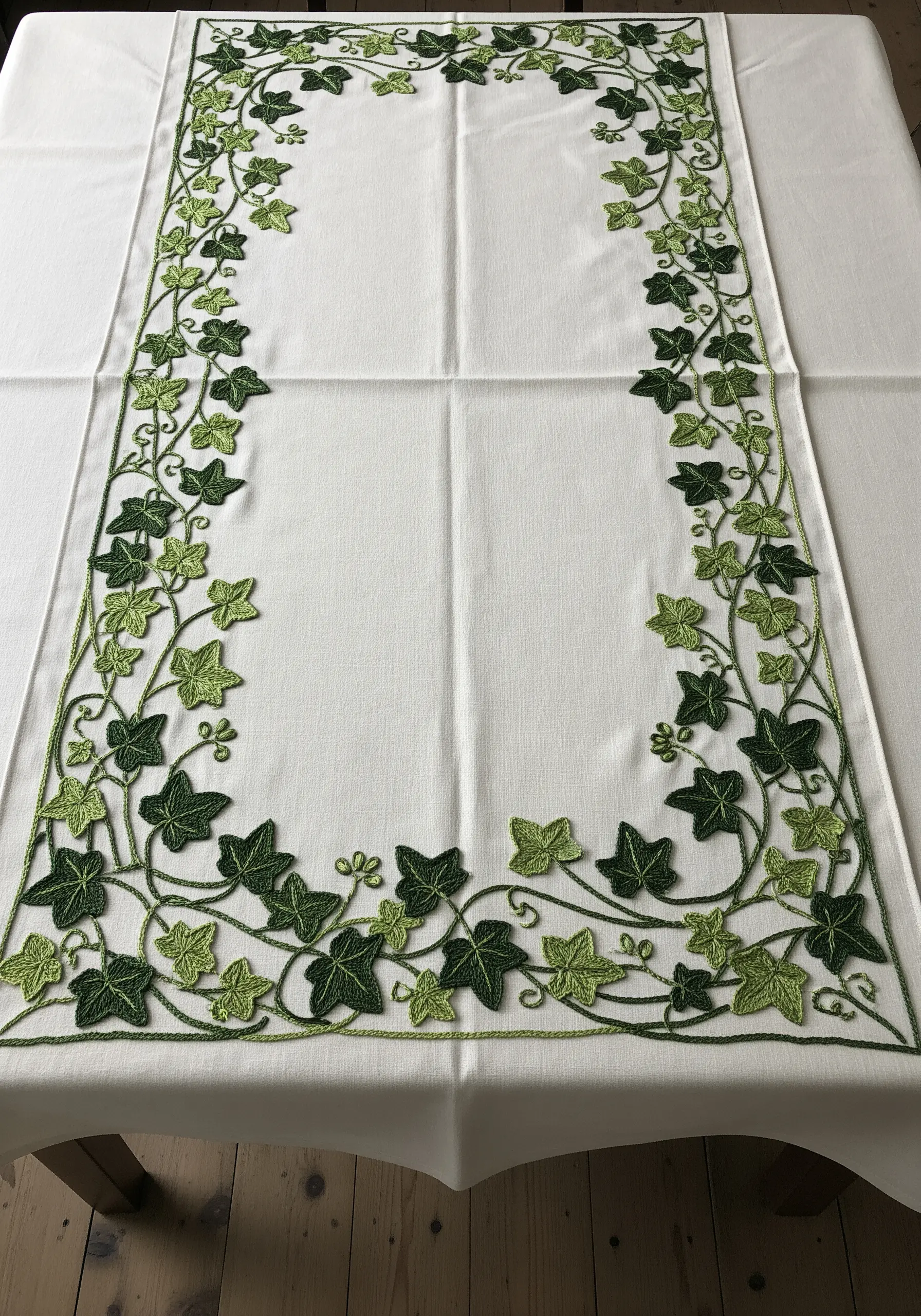
To prevent a dense ivy border from looking flat, introduce subtle color variation.
Use two closely related shades of green floss—a medium olive and a brighter spring green—and alternate them randomly among the leaves.
Fill the leaves with a satin stitch, making sure to angle the stitches to mimic the natural direction of leaf growth.
This simple color trick creates an illusion of light and shadow, giving the entire tablecloth a more dynamic and realistic feel.
11. Master Subtlety with Tone-on-Tone Roses
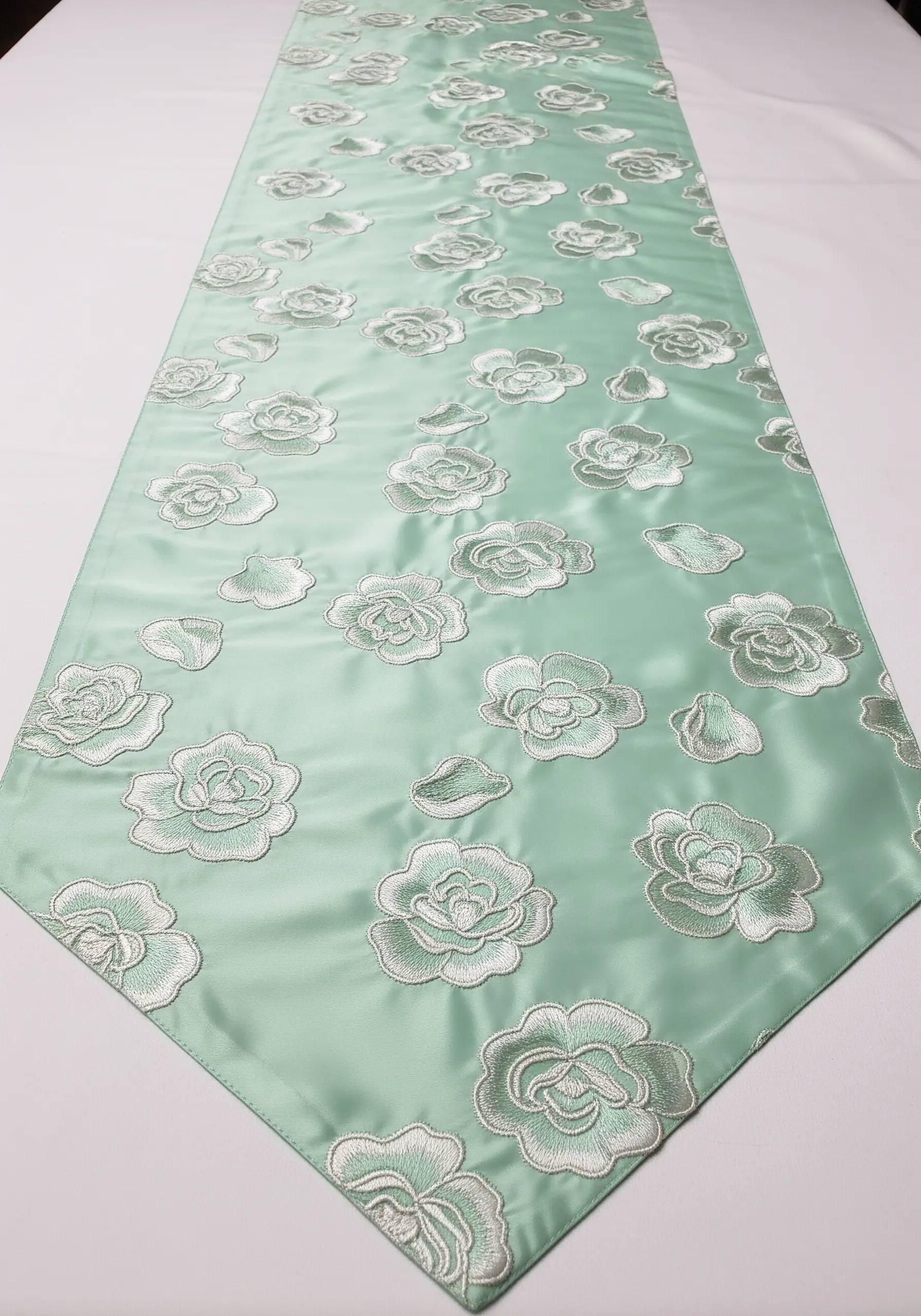
For an exceptionally elegant and modern look, embroider your design in a color that closely matches your fabric.
On this mint green satin runner, the roses are stitched in a slightly lighter, silvery-green thread.
The magic happens when light hits the fabric; the difference in texture and sheen between the satin ground and the embroidery floss makes the design shimmer and appear.
This tone-on-tone embroidery technique is perfect for creating a sophisticated, high-end finish that whispers rather than shouts.
12. Create Graphic Impact with High-Contrast Outlines
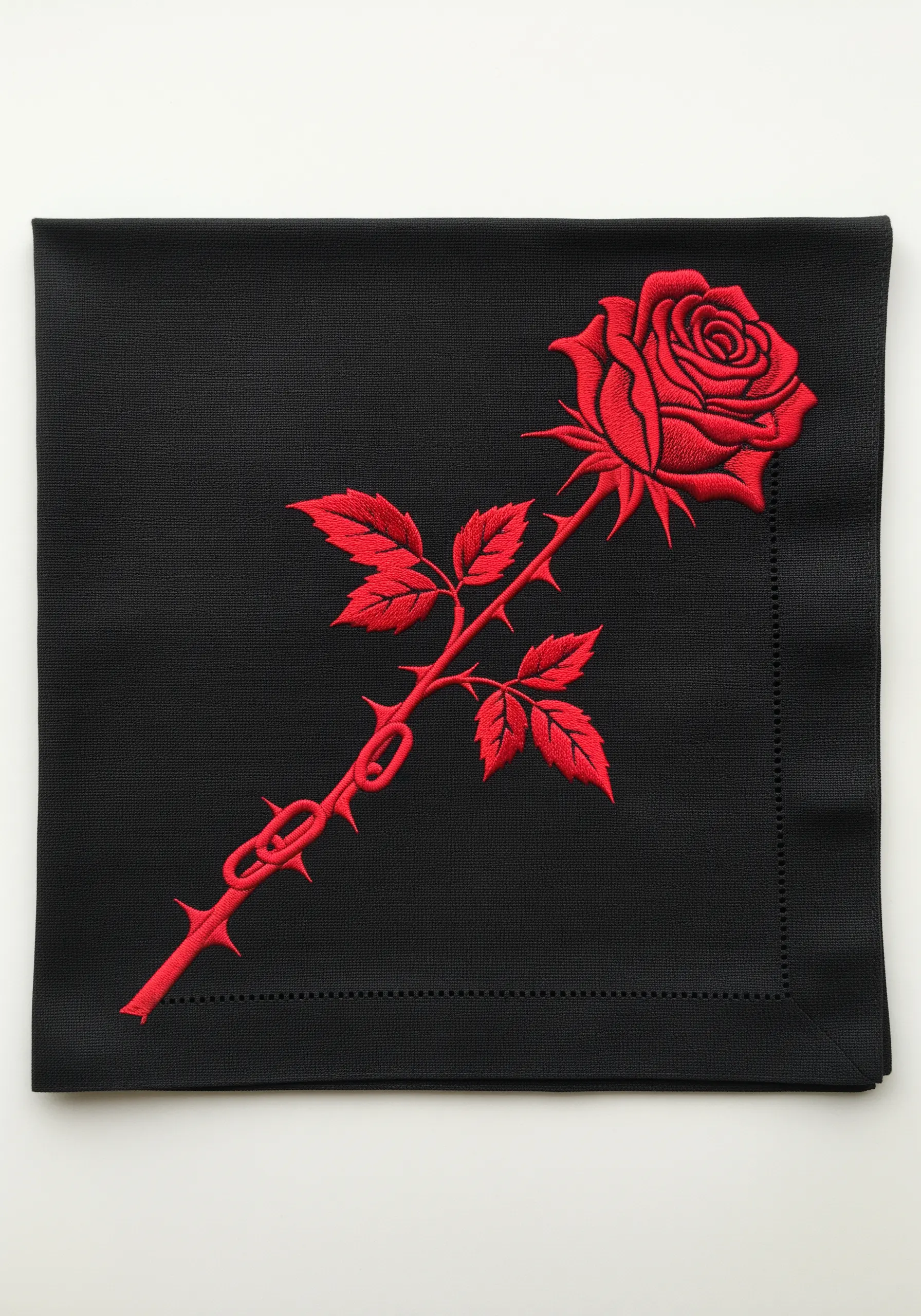
Make a bold statement by stitching a graphic rose in vibrant red on a stark black napkin.
The key to this modern look is the clean, defined lines. Use a whipped backstitch or a stem stitch for all outlines to ensure they are smooth and solid.
By leaving the interior of the rose unstitched, you turn the black fabric into a crucial part of the design itself, creating a dramatic, almost stencil-like effect.
This is a powerful way to make abstract line art embroidery feel both delicate and strong.
13. Stitch Boldly on Patterned Gingham Fabric
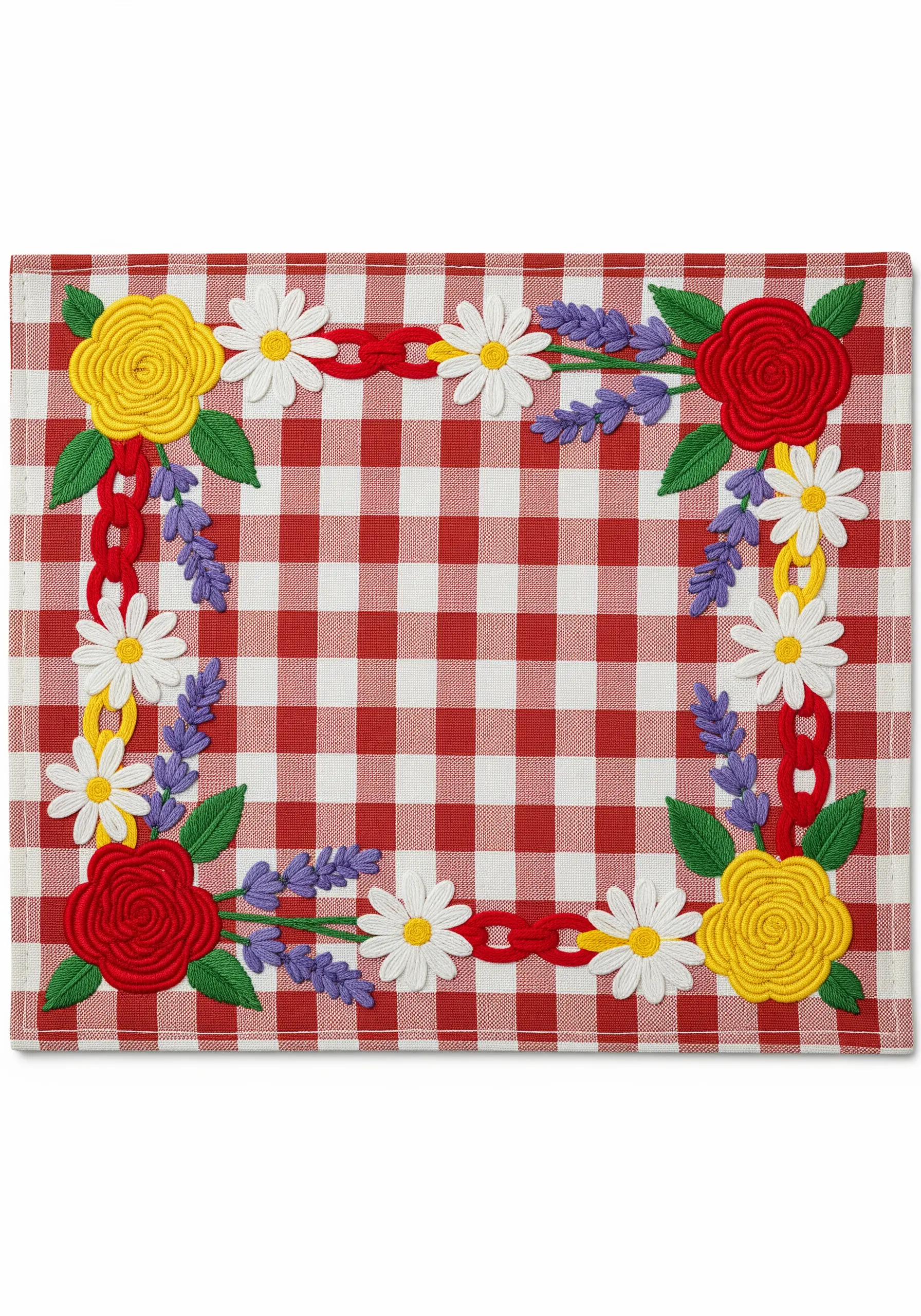
Embroidering on a patterned fabric like gingham requires a bold approach to prevent your work from getting lost.
Choose primary colors—like the red, yellow, and white here—that command attention and don’t clash with the checked background.
Use stitches that create solid, opaque blocks of color, such as a dense satin stitch or woven wheel stitch for the roses.
This ensures your embroidery sits on top of the pattern, rather than sinking into it, for a cheerful, folk-art inspired finish.
14. Explore Texture with Whitework and Cutwork
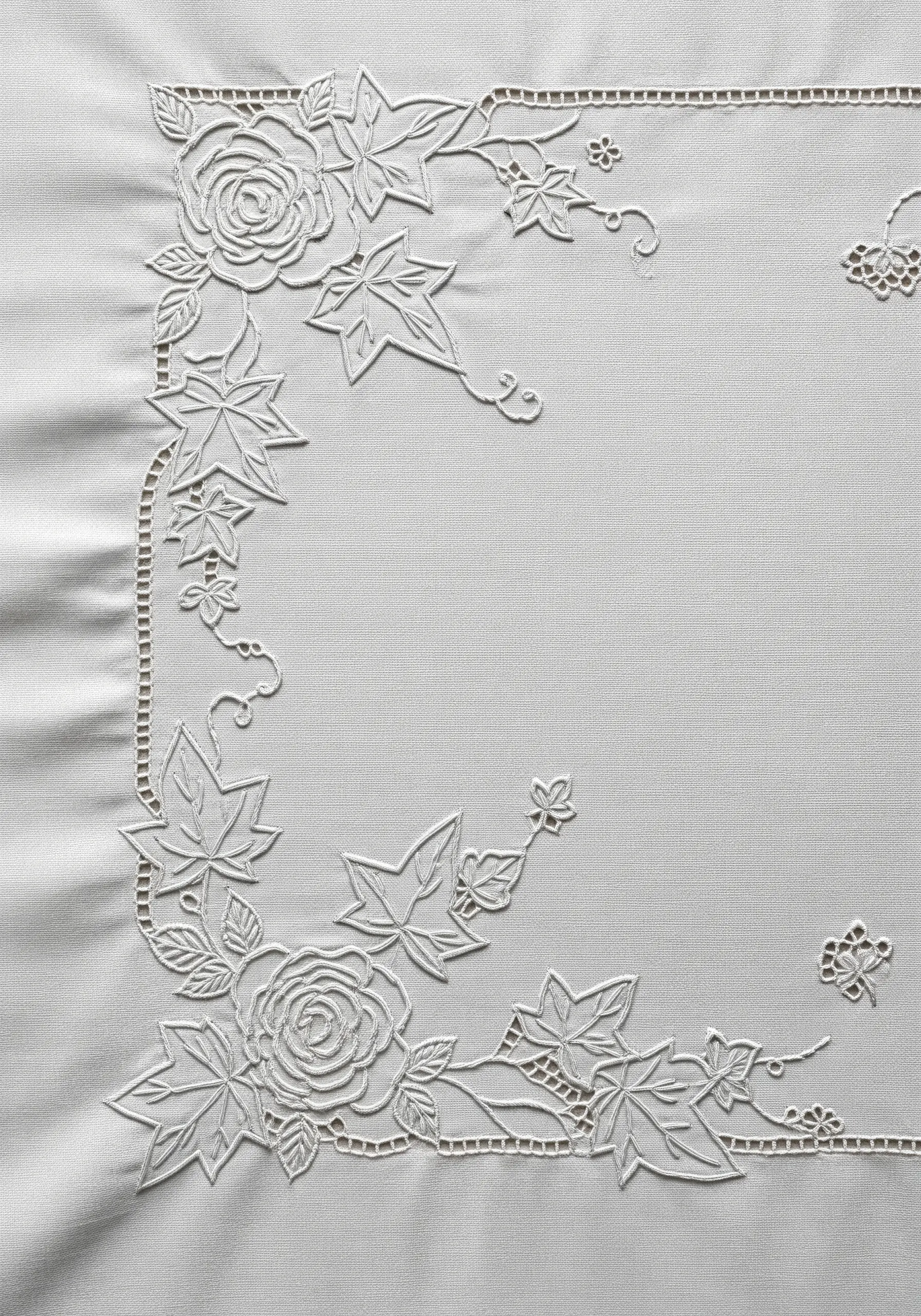
Create breathtaking elegance without a single pop of color by exploring whitework.
This technique relies on texture, using white thread on white fabric. Outline your rose and ivy shapes with a fine satin stitch border.
For the cutwork elements, carefully snip away the fabric inside these stitched borders to create delicate, lace-like openings.
The interplay of solid stitches and open spaces adds a layer of sophistication and antique charm to any table linen.
15. Tell a Color Story with an Ombré Napkin Set
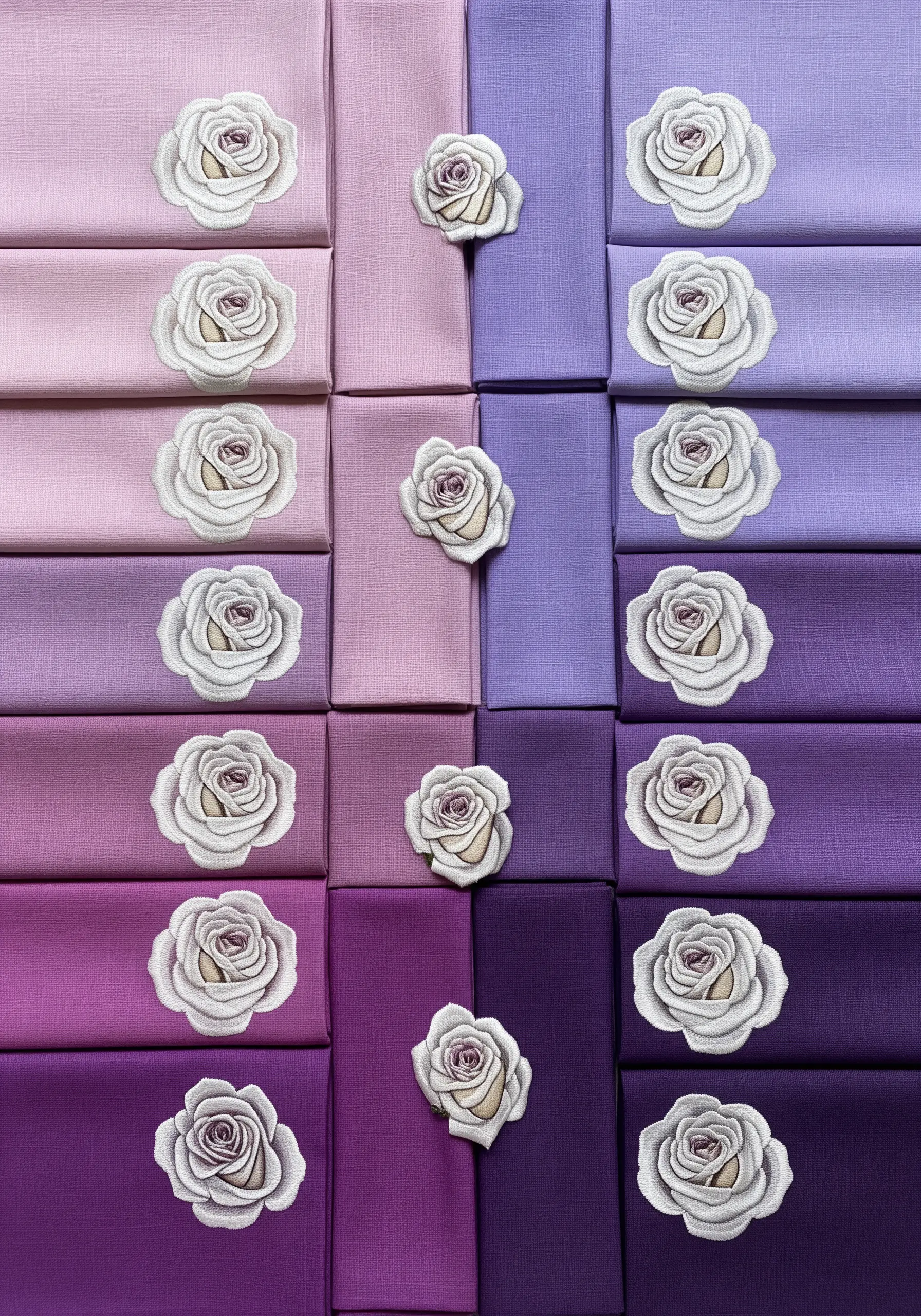
Elevate a simple motif by turning your entire napkin collection into a gradient color story.
Select a single, elegant design, like this white rose, and stitch it on fabrics in graduating shades of the same color family—from pale lilac to deep violet.
The consistent motif ties the set together, while the ombré effect creates a stunning visual impact when the napkins are stacked or set on a table.
This is a designer-level trick that is surprisingly simple to execute.
16. Pair Rustic Texture with Modern Silhouette

Create a striking modern-farmhouse look by contrasting a clean, bold silhouette with a rustic fabric.
On a heavily textured burlap or linen runner, a simple ivy border in solid black creates incredible graphic impact.
You can achieve this look with either appliqué or an extremely dense, tight satin stitch that completely covers the fabric beneath.
The juxtaposition of the sleek, modern ivy shape against the organic, earthy fabric is what makes this design so compelling.
17. Design a Quilted Lavender Landscape
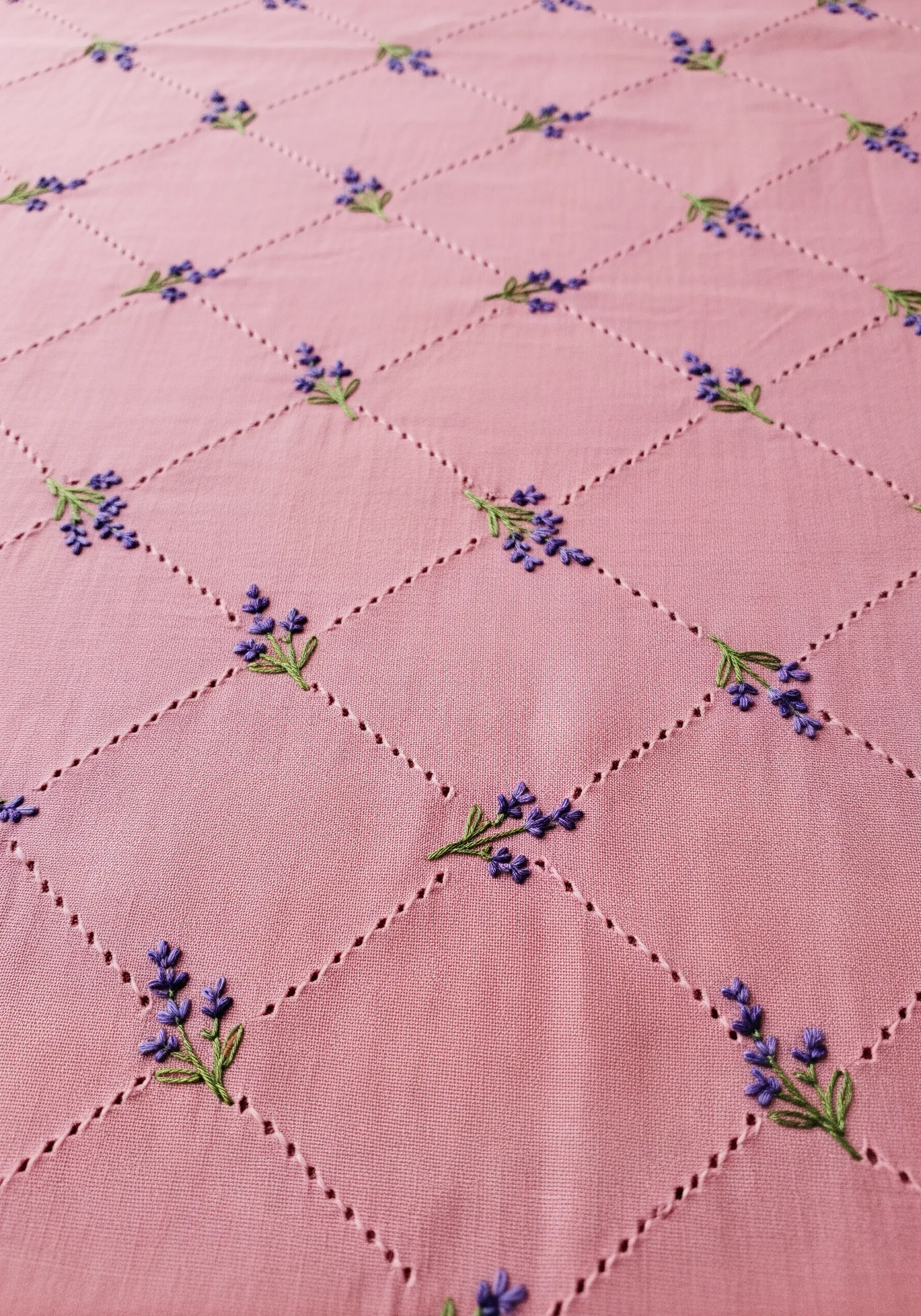
Integrate your embroidery into a larger textile structure by combining it with drawn thread work.
Use a simple running stitch or hemstitch to create a diamond grid across your tablecloth, which adds a subtle, geometric texture reminiscent of quilting.
At each intersection of the grid, add a small, delicate lavender sprig. The combination of the linear grid and the organic florals creates a beautifully balanced and sophisticated pattern.
This technique elevates a simple pattern into an heirloom-style piece.
18. Weave Light with Metallic Threads on Dark Fabric

Create a sense of luxury and magic by using metallic threads for your floral wreath.
On a deep navy or black fabric, gold and silver threads catch the light, making the design seem to glow.
Use a simple backstitch or stem stitch for the outlines to let the shimmer of the threads be the main feature.
To make working with metallics easier, use shorter thread lengths and a needle with a larger eye to minimize friction and prevent fraying.
19. Combine Embroidery with Functional Quilting
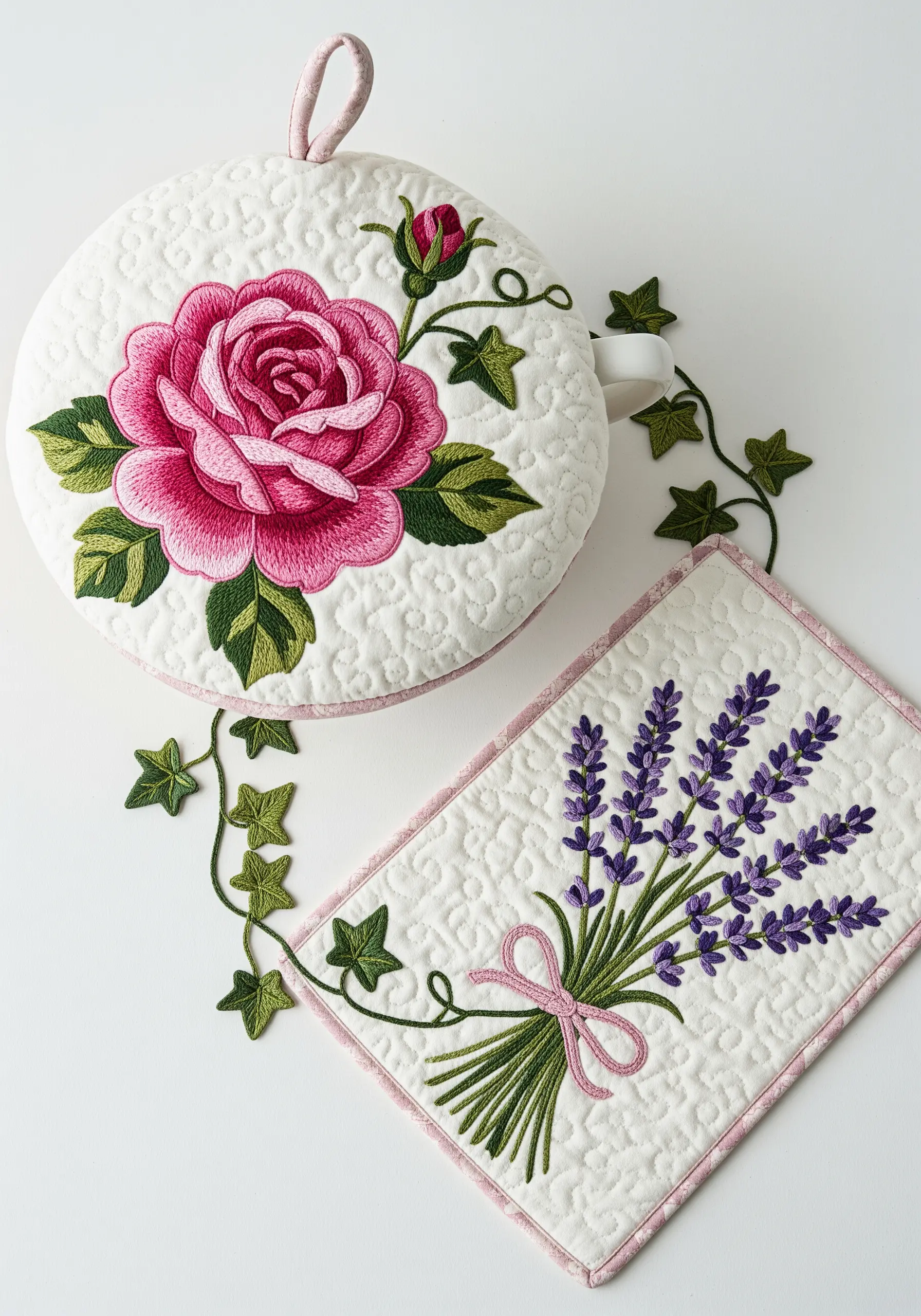
When embroidering functional items like pot holders, integrate the stitching with the object’s structure.
First, create your quilted base. The stitched quilting lines add a beautiful background texture that complements your embroidery.
Embroider your rose and lavender motifs directly onto the quilted surface. This not only looks beautiful but also adds an extra layer of durability.
Finishing the edges with coordinating bias tape gives it a clean, professional look and ties the entire piece together.
20. Frame Your Design with Delicate Drawn Thread Work

Combine dense embroidery with an airy, delicate border for a study in contrasts.
First, complete your ivy corner design using satin and stem stitches for a solid, lush look.
Then, create the border by carefully removing select threads from the linen’s weave (drawn thread work) and securing the remaining threads into decorative patterns with your needle.
This traditional technique creates a transparent, lace-like frame that makes the solid embroidery feel even more substantial and rich.
21. Tell a Story with a Rose’s Life Cycle

Transform a set of simple napkins into a narrative art piece by depicting the life cycle of a rose.
Dedicate each napkin to a different stage: a tight bud, a blooming flower, a full-blown rose, and finally, a wilting bloom with a fallen petal.
Use thread painting techniques to capture the subtle shifts in color and texture at each stage, from the vibrant life of a new bloom to the muted tones of decay.
This creates a thoughtful and compelling collection that tells a story on your table.
22. Anchor Your Runner with Symmetrical Urns
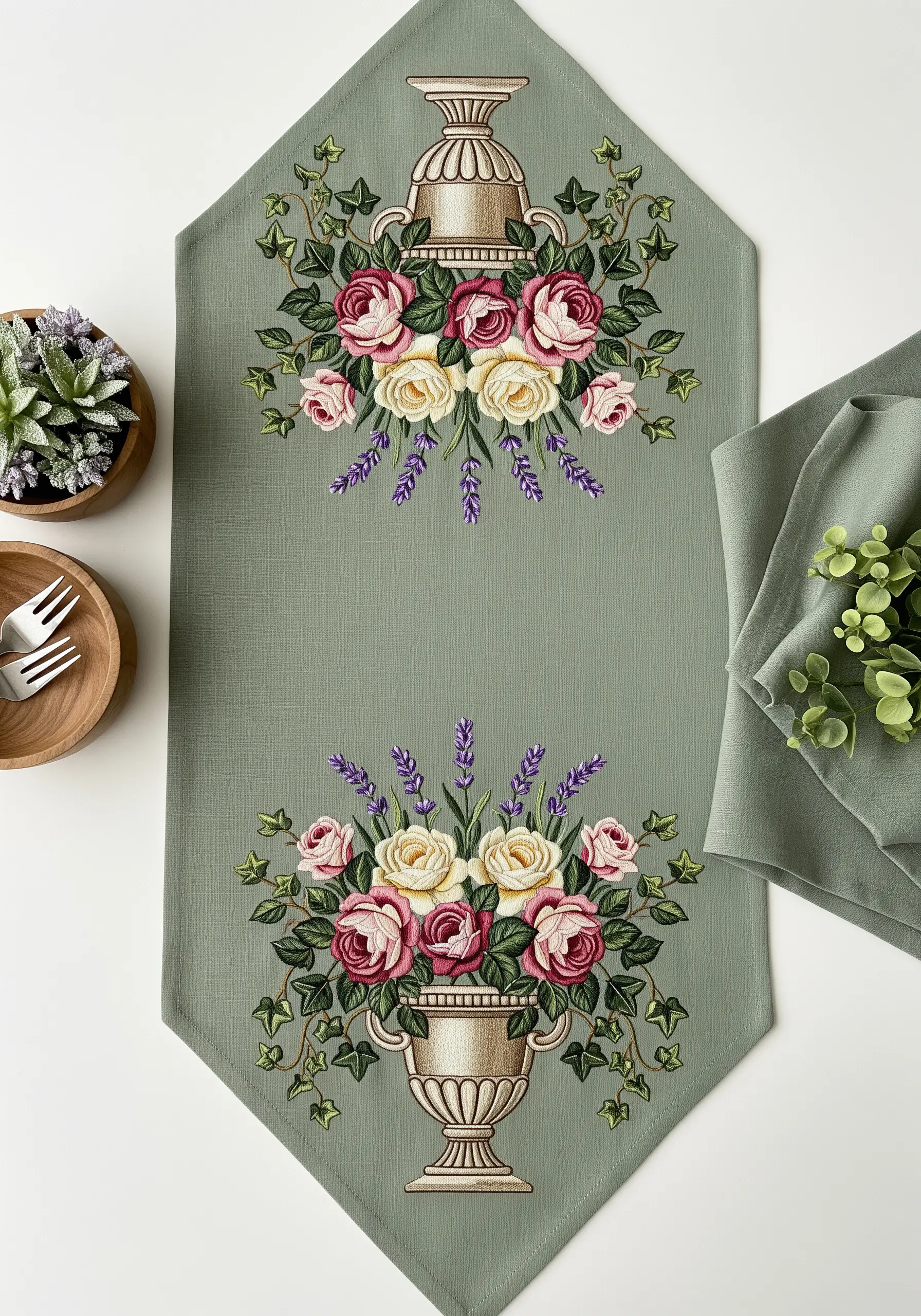
For a formal, neoclassical look on a table runner, use perfect symmetry in your design.
Place an identical, ornate motif—like a classical urn filled with a floral bouquet—at each end of the runner.
To ensure they are exact mirrors, trace your pattern onto transfer paper, stitch the first one, then flip the paper to trace the mirror image on the other end.
This balanced composition creates a sense of order, formality, and timeless elegance.
23. Create a Playful, Scattered Petal Design
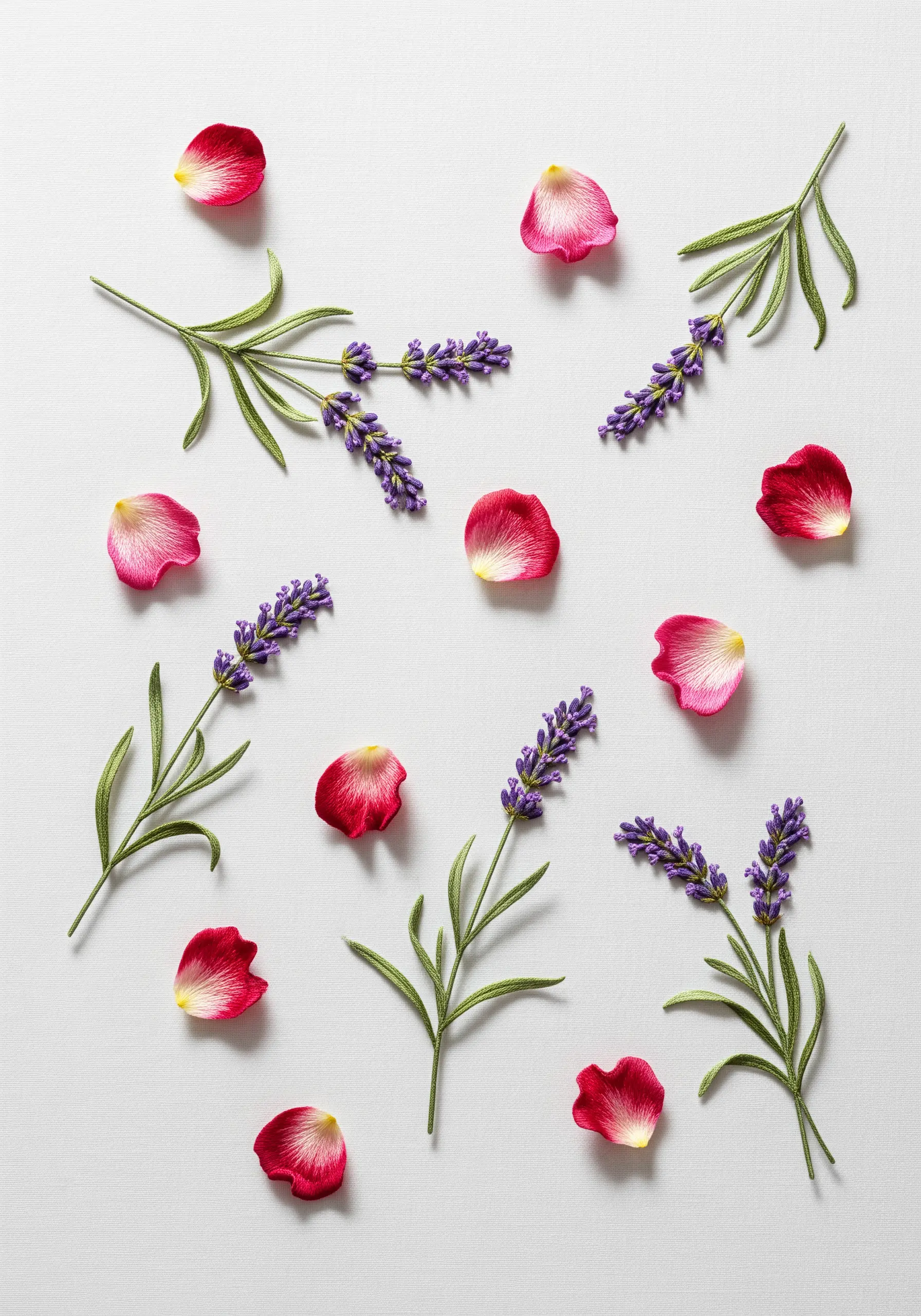
Break free from traditional borders and wreaths with a scattered, random pattern.
Embroider individual lavender sprigs and loose rose petals as if they were gently tossed across the fabric.
Vary the orientation and spacing of each element to create a sense of natural, effortless movement. This deconstructed approach feels modern, light, and whimsical.
It’s a perfect way to add a touch of charm to a tablecloth without the formality of a structured design.
24. Layer with Sheer Fabric for Ethereal Dimension
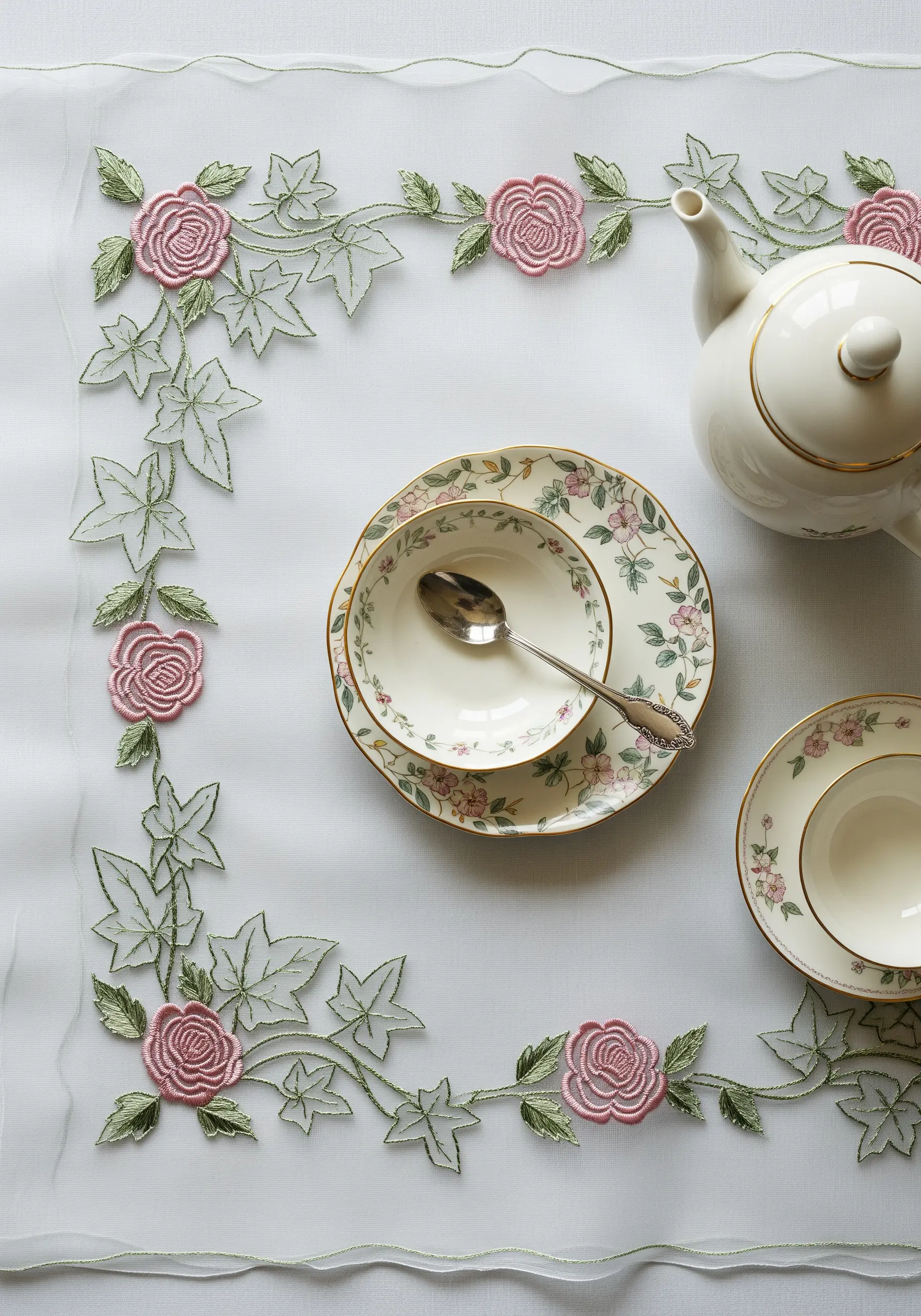
Add a dreamy, ethereal quality to your tablecloth by stitching onto a sheer organza overlay.
Outline the ivy vines with a simple backstitch directly on the organza. For the roses, use a more opaque stitch like a woven wheel or a dense satin stitch so they stand out.
When layered over a solid white tablecloth, the ivy appears to float, and the roses become soft, translucent focal points.
This technique adds incredible depth and a touch of romanticism to your table setting.
25. Define Form with Abstract Contour Stitching
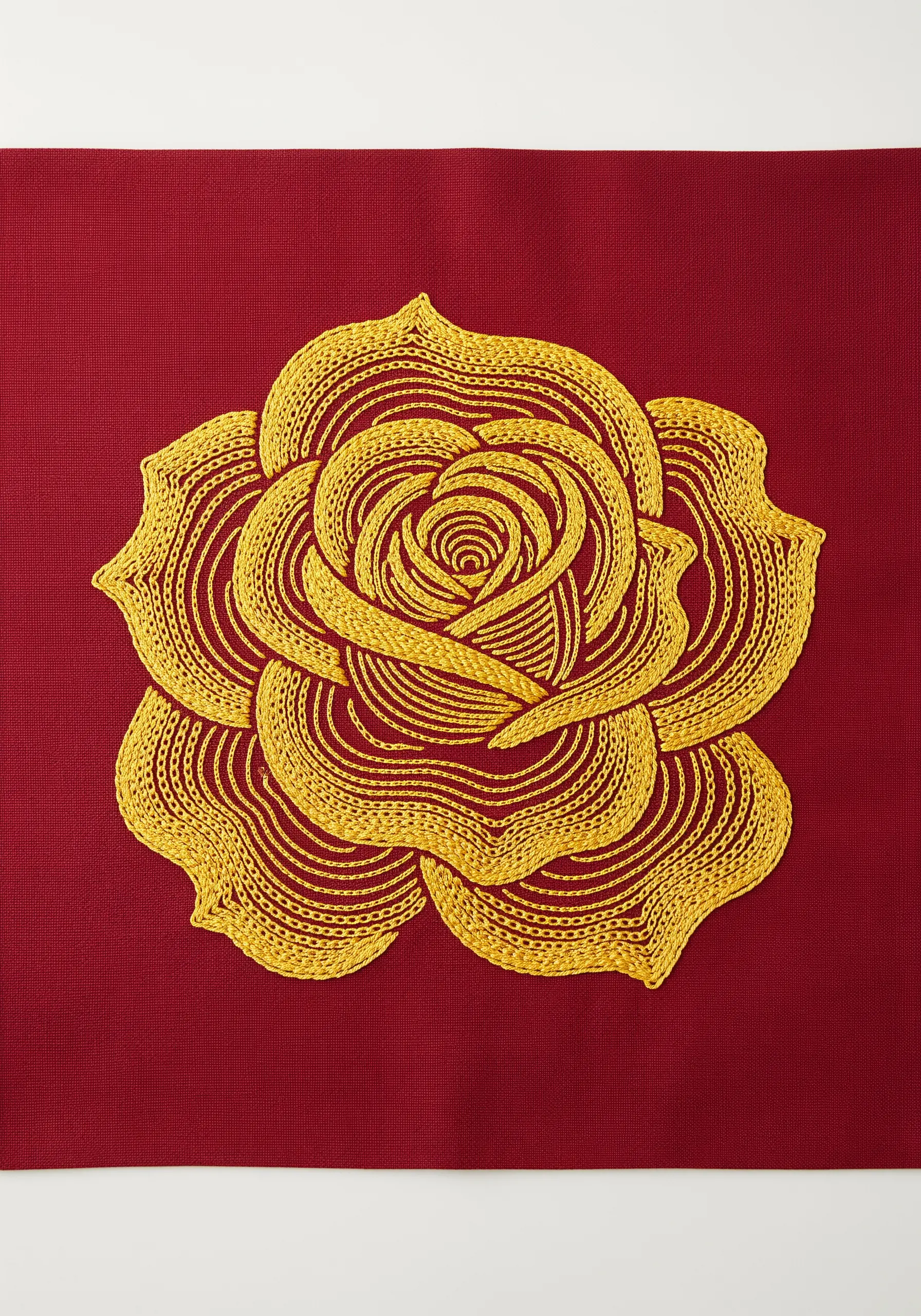
Reimagine a classic rose with a modern, graphic approach using contour lines.
Instead of filling the petals with color, define their shape and curve with concentric lines of a simple backstitch or whipped chain stitch.
This technique transforms the flower into a piece of abstract art, focusing on form and line rather than realistic color.
On a bold, contrasting fabric like this deep red, a single metallic gold thread makes the design feel like a piece of sophisticated modern sculpture.
26. Design a Rhythmic Lavender Border
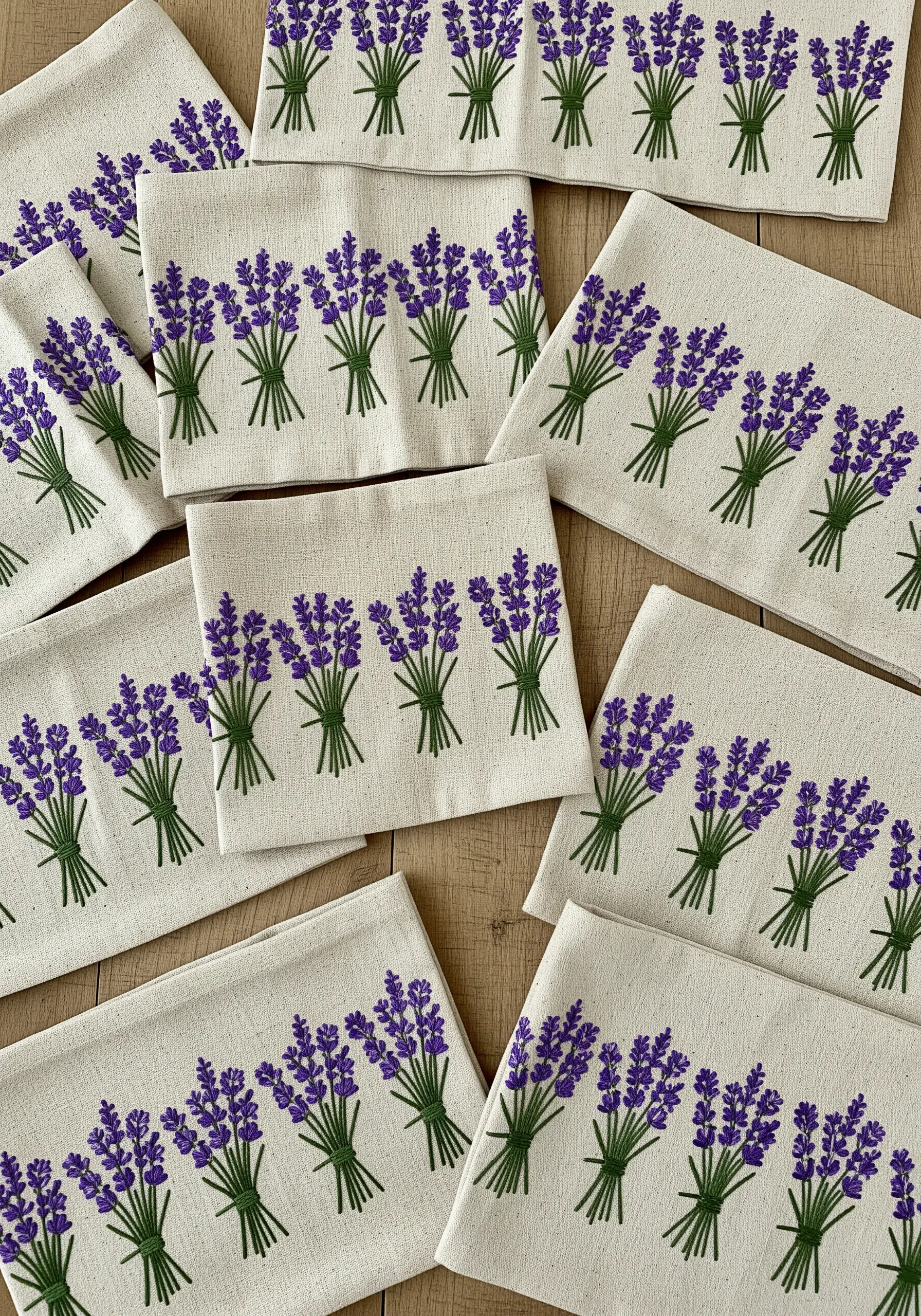
For a clean and satisfying design, repeat a single, simple motif to create a border.
Stitch several small bouquets of lavender in a row along the edge of your napkins or placemats.
To ensure consistency, create a small, reusable paper template to mark the placement and general shape of each bouquet before you begin stitching.
The repetition creates a pleasing rhythm and a sense of handmade uniformity that looks incredibly polished and intentional.
27. Create a Botanical Study with Line Art
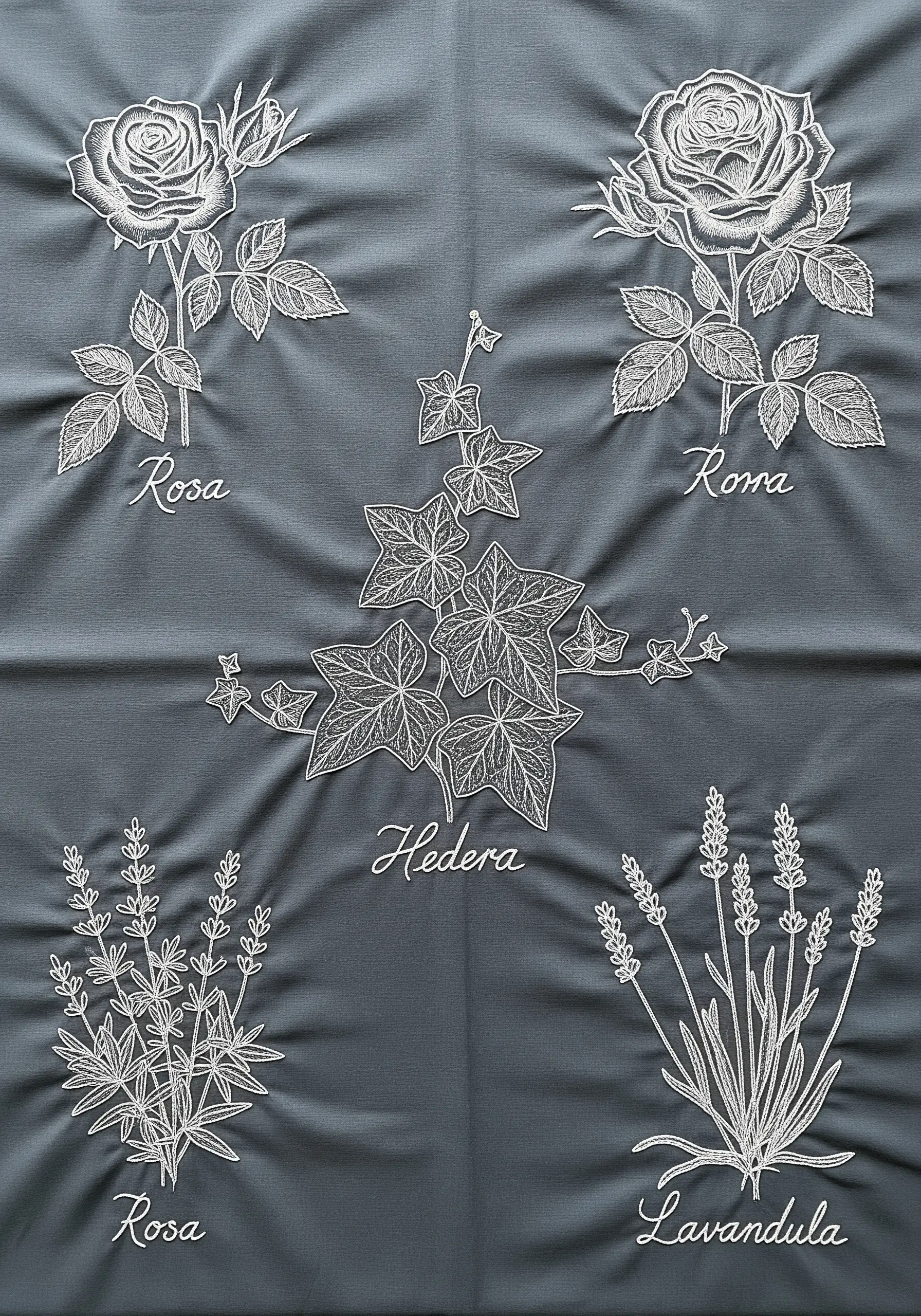
Channel the elegance of vintage botanical illustrations with a fine line-art approach.
Use a single strand of white or off-white thread on a dark, muted fabric like this charcoal gray.
Render your roses, lavender, and ivy with a delicate backstitch for the outlines and add the plant’s Latin name in a simple, elegant script below.
This style transforms your tablecloth into a sophisticated piece of art that celebrates the scientific beauty of nature.
28. Complement a Woven Pattern with Bold Stitches

When embroidering on a textured, patterned fabric like damask, your stitches need to have presence.
Choose a rich, contrasting color palette, like these deep reds and soft pinks, that stands out against the subtle woven design.
Use a dense satin stitch for the roses, building them up so they are raised slightly from the surface. This ensures your handiwork is the star, beautifully complementing the fabric’s inherent pattern rather than competing with it.
This creates a luxurious, layered textile piece.
29. Master the Art of the Single, Elegant Sprig

Sometimes, the most powerful statement is the most minimal one.
Place a single, delicately stitched floral bouquet in the corner of a placemat or napkin. The surrounding empty space, or ‘negative space,’ acts as a frame, drawing the eye to the detail of your work.
Use French knots for the tiny white lily-of-the-valley bells and a soft long-and-short stitch for the single pink rose.
This approach feels incredibly modern and refined, proving that you don’t need a complex design to create something beautiful.
30. Embrace a Bold, Folk-Art Floral Wreath

Move away from realism and embrace a stylized, graphic look inspired by folk art.
Use bold, flat areas of color to define the rose petals and ivy leaves, filling them with a dense, textured stitch like a chain stitch or a thick satin stitch.
Don’t worry about subtle shading; the charm of this style is in its simple, strong shapes and rich, earthy color palette.
This gives your table setting a warm, rustic, and wonderfully handmade feel.