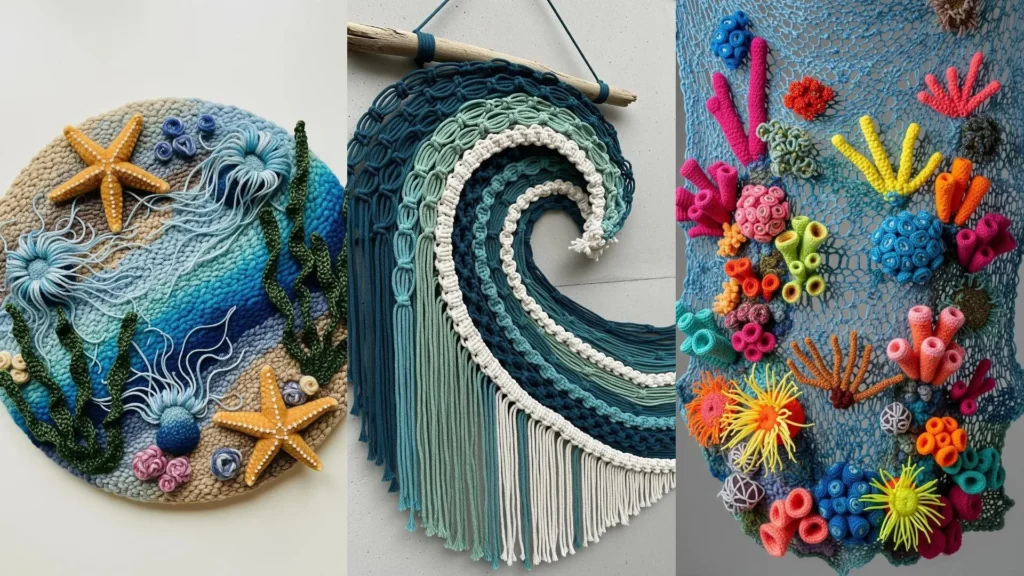
If you’ve ever felt that your embroidery, while beautiful, is missing a certain depth or feeling, you’re not alone. The journey from proficient stitcher to true textile artist often begins when you start thinking less about the stitch and more about the material itself.
This is where mixed fibers come in. It’s the practice of seeing thread not just as a line of color, but as a sculptural element. By introducing wool roving, silk ribbons, chunky yarns, and even unconventional materials, you begin to paint with texture, creating pieces that invite not just a look, but a touch.
These ideas aren’t about learning dozens of complex new techniques. They are about shifting your perspective—seeing the potential in combining the smooth with the rough, the thick with the thin, and the matte with the lustrous. Let’s explore how you can add gorgeous, intentional texture to your work, starting today.
1. Weave with Architectural Volume
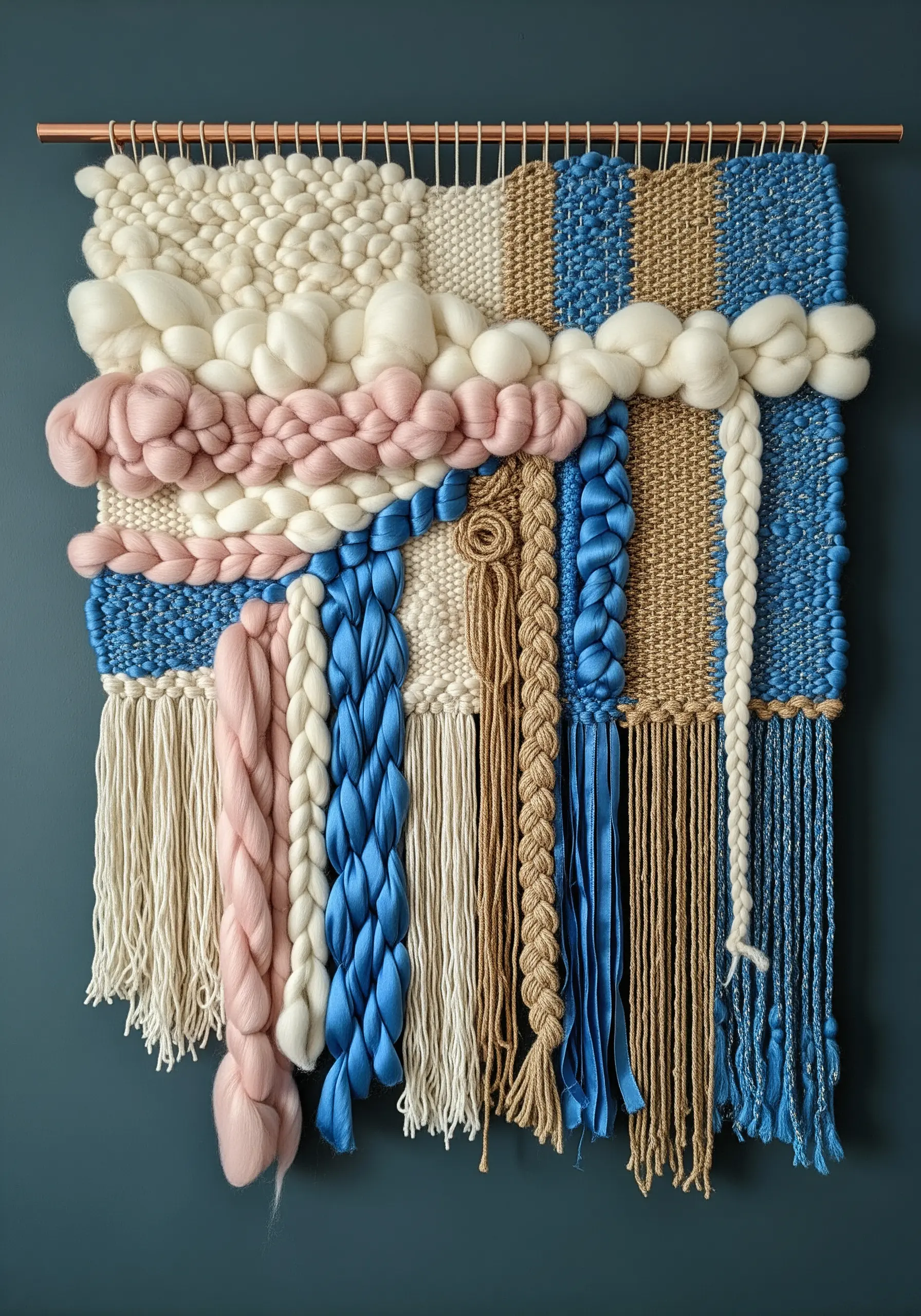
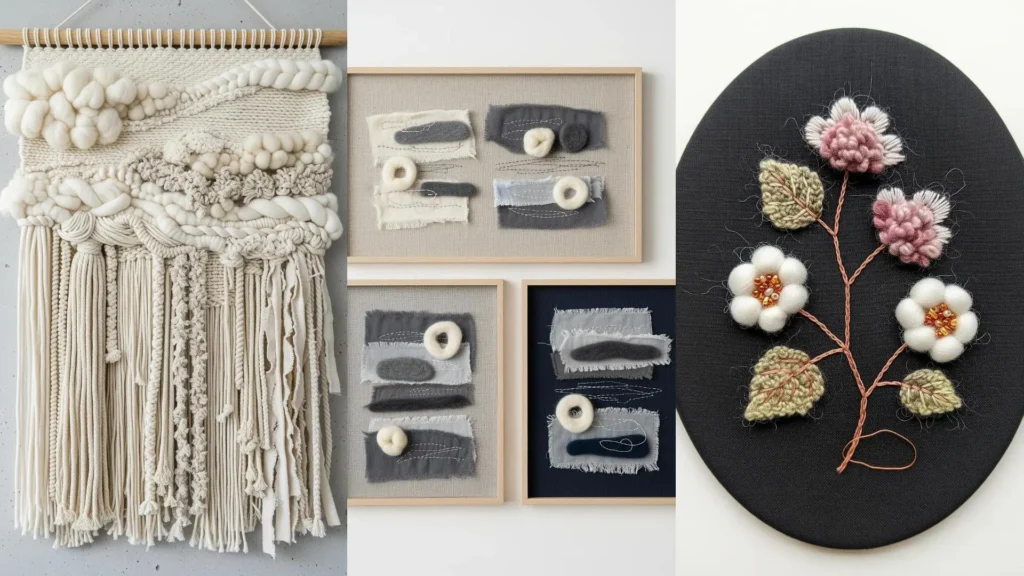
Create dramatic depth in your weaving by contrasting tight, controlled stitches with oversized, sculptural elements.
Use a dense technique like Soumak stitch or plain weave for your base, then introduce thick, unspun wool roving for cloud-like volume.
For structured lines, braid several strands of yarn or ribbon together *before* weaving them into the piece—this gives you a single, bold element to work with.
This contrast in scale and density is what transforms a flat textile into one of many stunning fiber art installations that transform any room instantly.
2. Sculpt a Seascape with Tactile Stitches
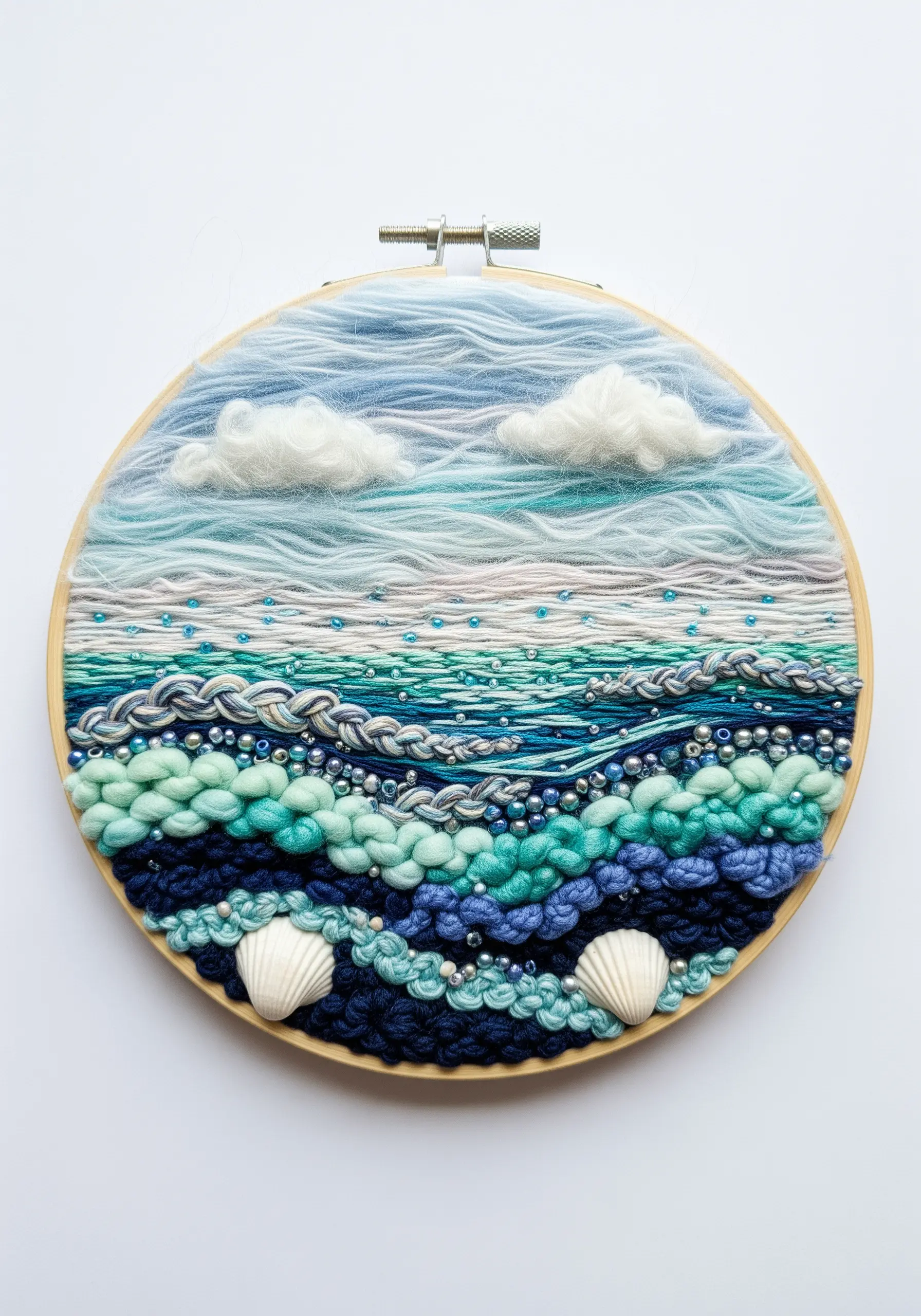
To capture the movement of water, think beyond traditional embroidery floss and embrace thicker, more expressive fibers.
Use couching stitches to secure braided or plied yarns, creating the undulating shapes of waves.
Scatter translucent seed beads and small pearls throughout your stitches to mimic the glint of sea spray and add a subtle, light-catching quality.
Incorporating found objects, like tiny shells, anchors the piece in its natural inspiration and provides a hard, smooth contrast to the soft yarns, resulting in vibrant hoop art designs.
3. Create Calm with Graphic Weaving
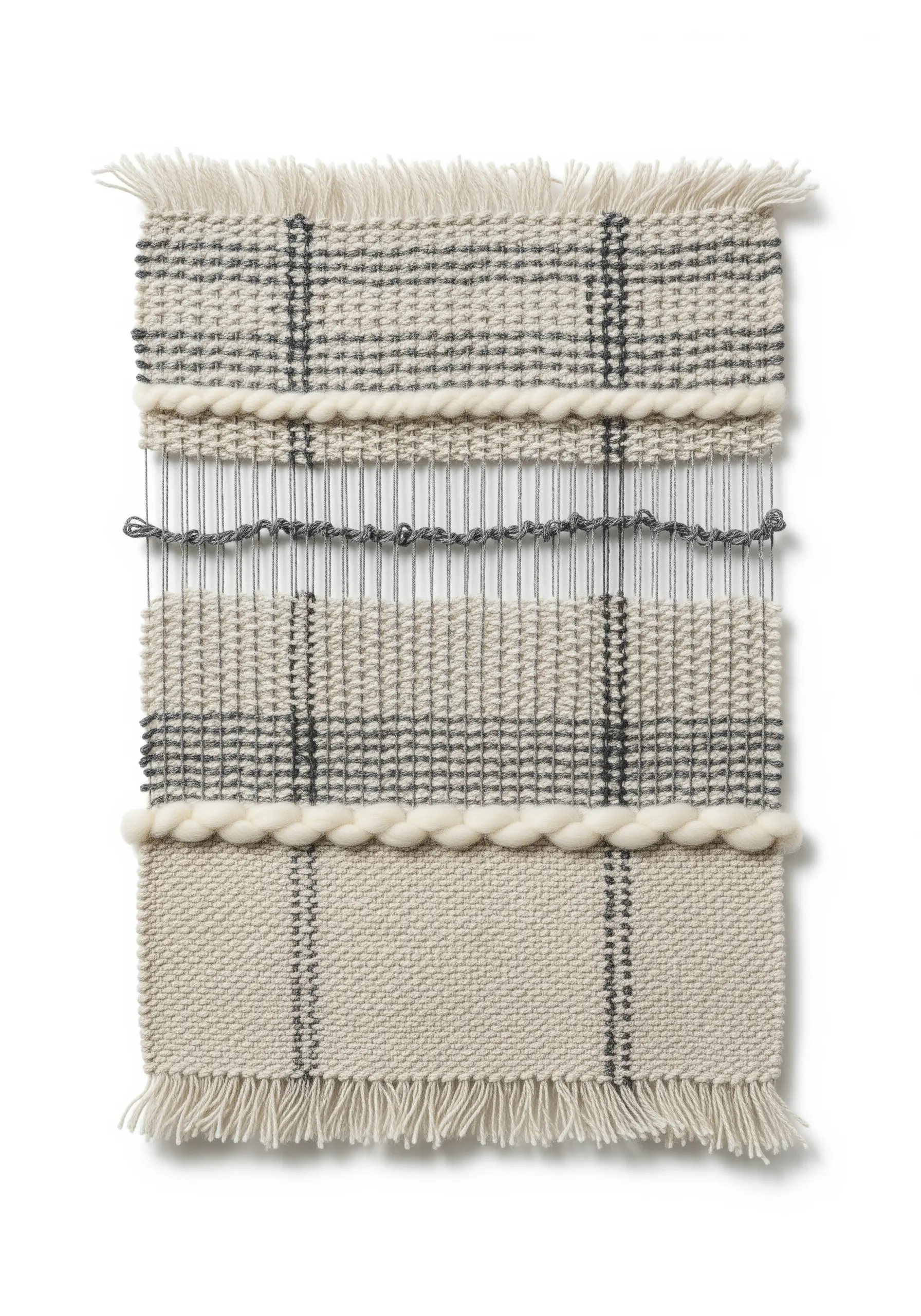
Achieve a modern, minimalist aesthetic by letting the structure of the loom become part of the design.
This plaid-like effect is created by weaving your weft yarn in sections, intentionally leaving some warp threads exposed.
These untouched vertical threads create clean, graphic lines and introduce negative space, which is just as important as the woven areas for creating a balanced composition.
This technique is perfect for crafting minimalist embroidery decor ideas that make compact apartments look clean and modern.
4. Build Organic Forms with Coiling and Lashing
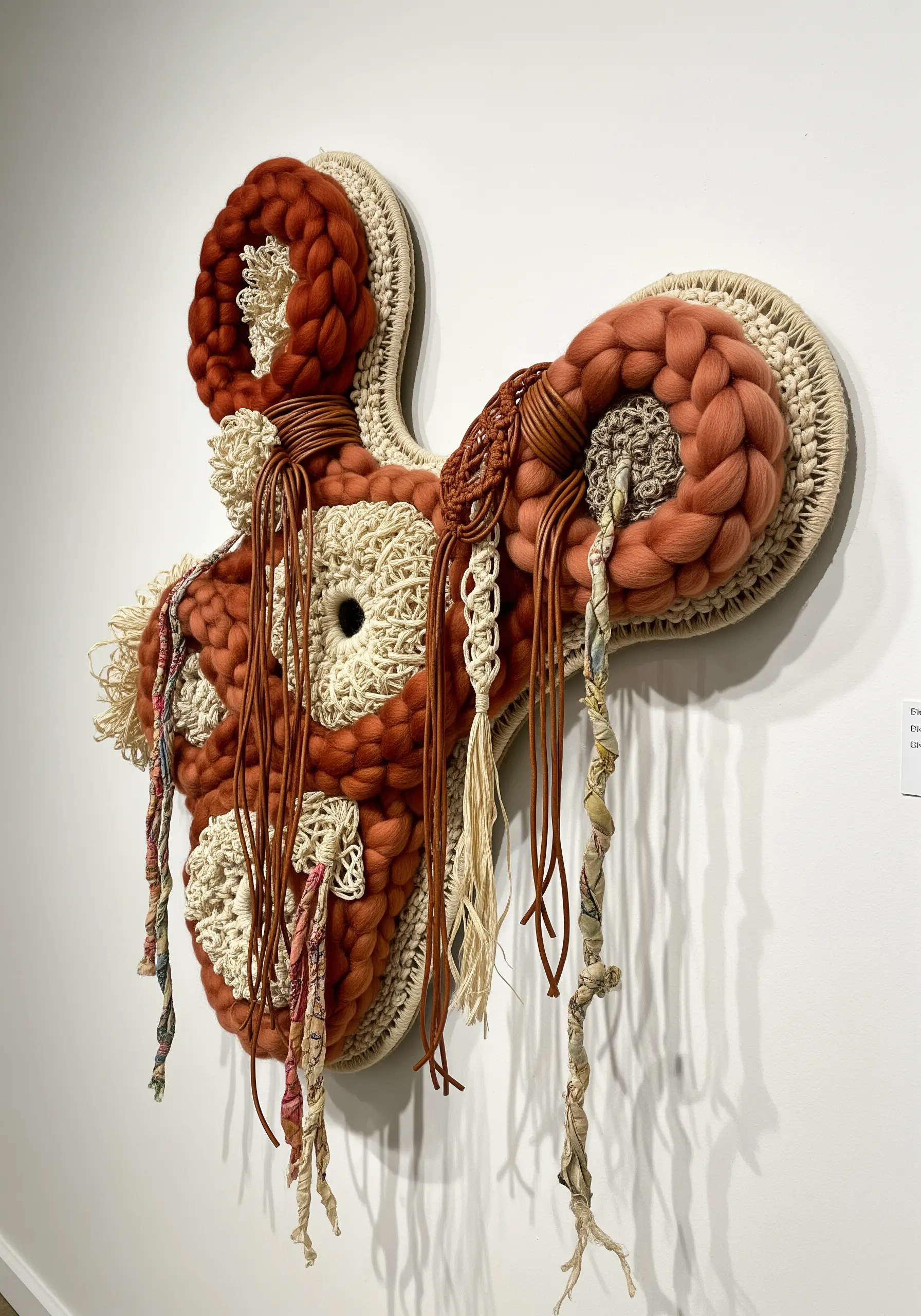
Move your fiber art off the wall and into three-dimensional space by building sculptural forms.
Create solid, curved shapes by coiling thick wool roving and wrapping it tightly with a contrasting thread, a technique borrowed from basketry.
Instead of thread, use strips of soft leather or suede to lash different components together—it introduces a sleek, unexpected texture that beautifully complements the soft wool.
This is one of the more advanced fiber art installations combining modern art and classic embroidery techniques.
5. Paint with Yarn Using Punch Needle

Punch needle is the perfect medium for creating plush, painterly compositions with clean blocks of color.
Create subtle dimension by varying your loop height—use a shorter setting for the background and a slightly longer one for your foreground motifs to make them pop.
To achieve crisp outlines on your leaves, work a single row of shorter loops in a defining color. This adds definition without the harshness of a traditional embroidered outline.
The plush texture is perfect for tactile art, including playful leaf & plant embroidery ideas.
6. Elevate Macrame with Velvet and Metal
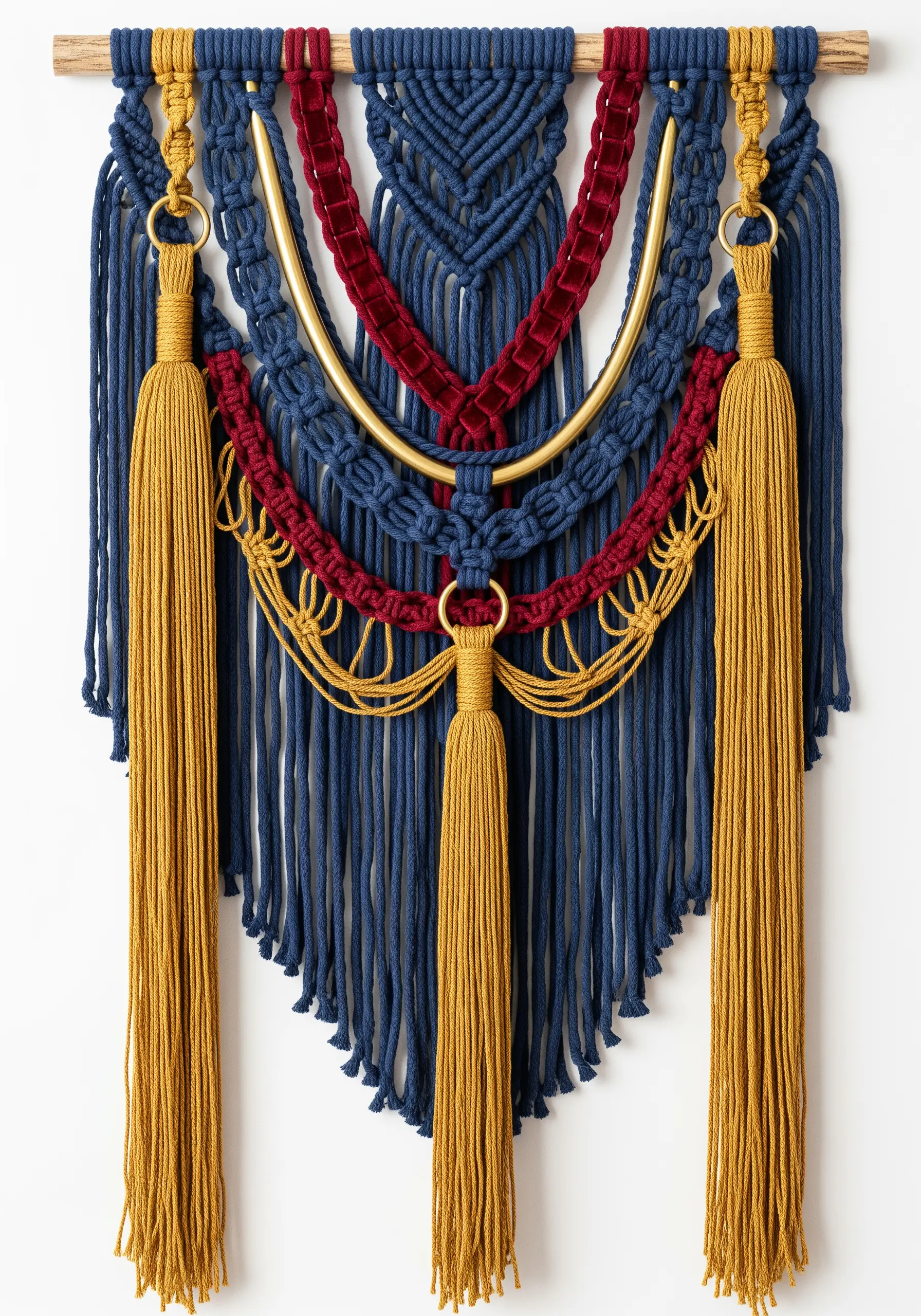
Breathe new life into traditional macrame by introducing unexpected materials that play with light and texture.
Integrate strips of velvet ribbon alongside your macrame cord; its plush surface absorbs light, creating a deep, rich contrast to the matte cord.
Don’t just use metal hardware for hanging—incorporate polished brass rings or tubes as central design elements to add structure and a touch of modern glamour.
This approach elevates simple knotting into luxurious yarn wall art creations.
7. Layer a Landscape with Felt and Ribbon
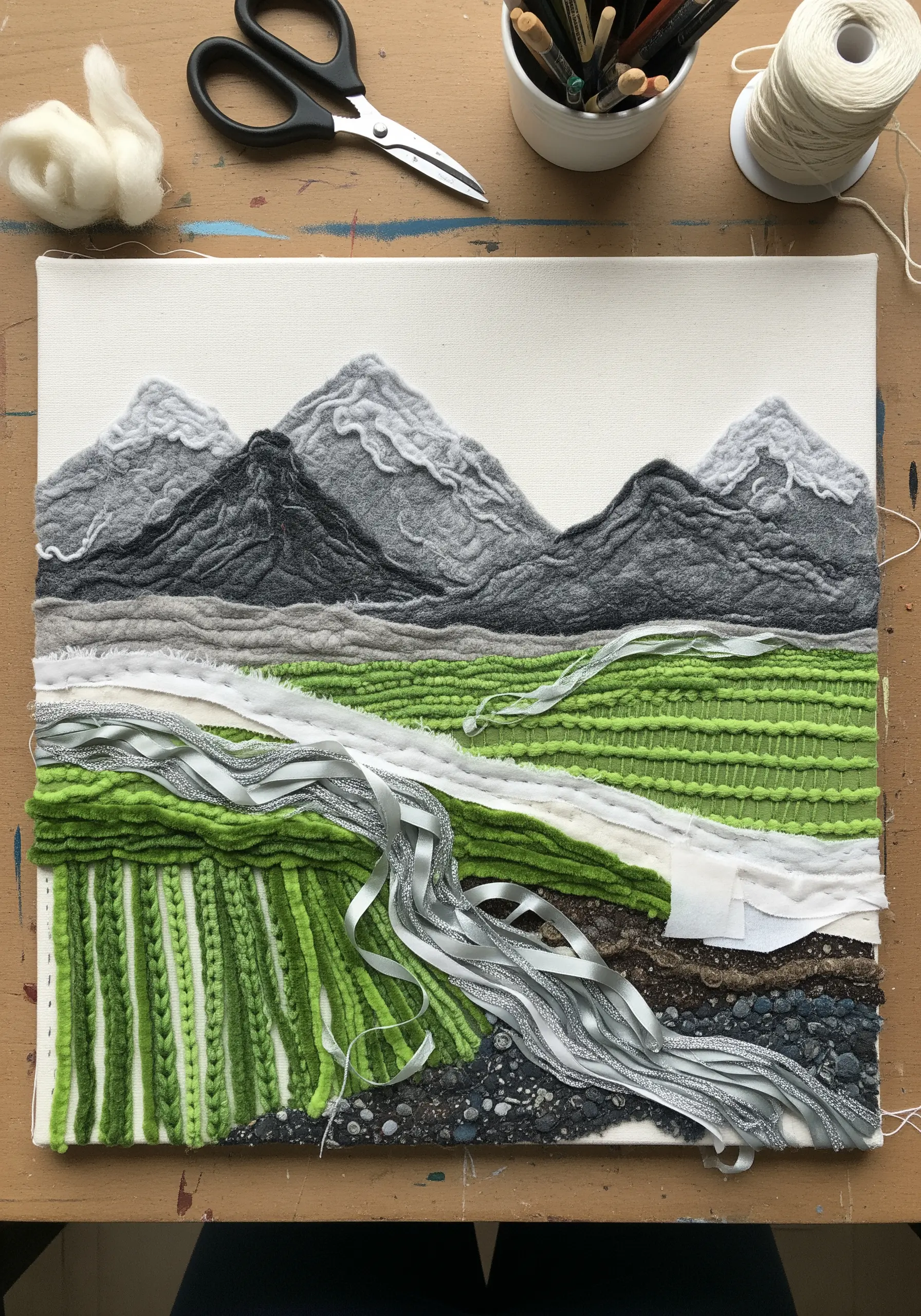
Build a rich, topographical landscape on canvas by layering different fibers to represent natural textures.
Start by needle-felting wool roving directly onto the fabric to create soft, blended mountain ranges in the background.
For the foreground, couch down braided green yarns to mimic rows of crops, and let shimmering silver ribbons flow freely to suggest a winding river.
This is one of the best DIY mixed-media embroidery projects you can finish in an afternoon.
8. Define Motifs with High-Contrast Weaving
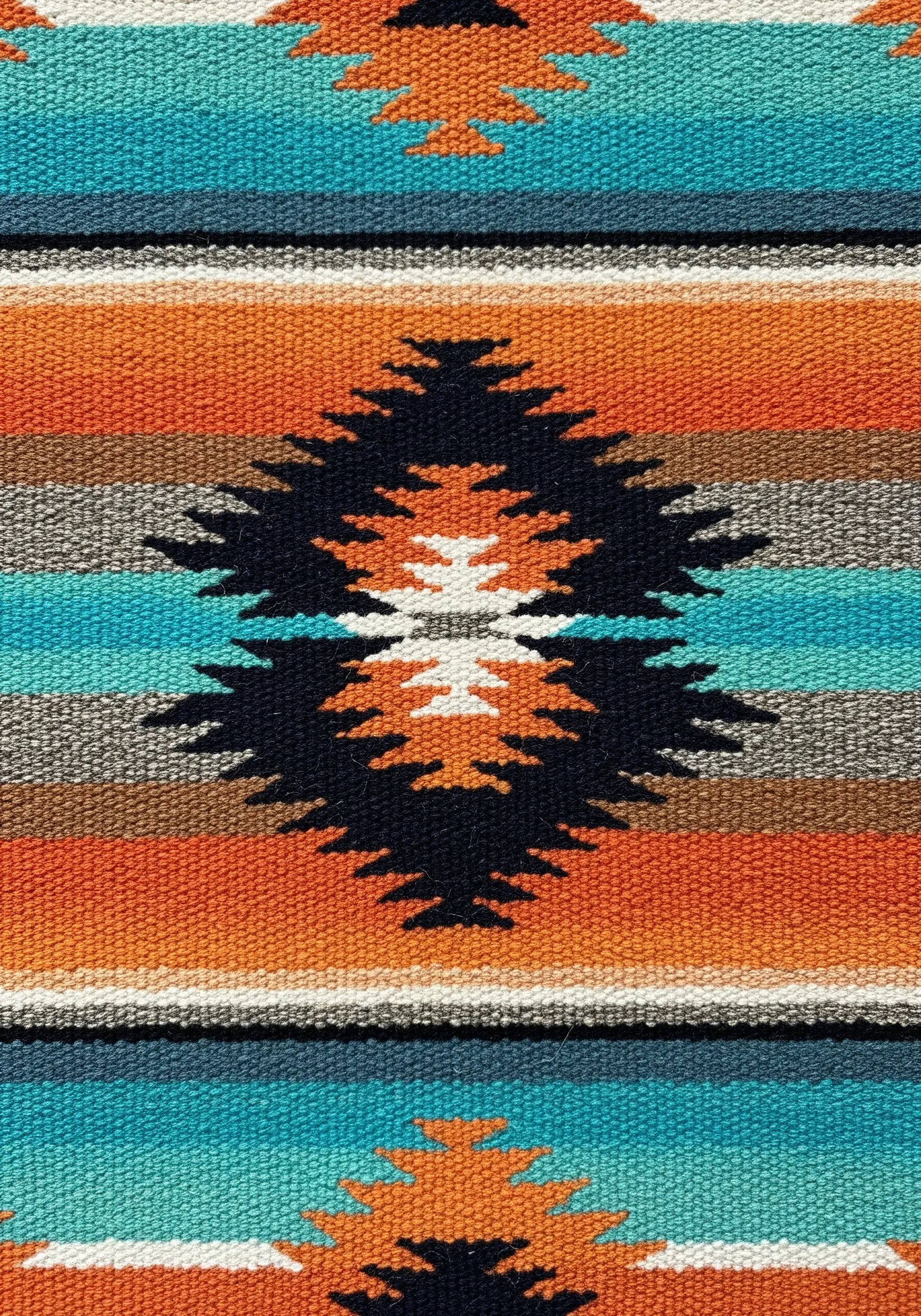
To create sharp, graphic patterns like this, precise tapestry weaving techniques are essential.
The clarity of the motif comes from interlocking different colored yarns where they meet, ensuring there are no gaps.
Choose a high-contrast color palette and pack your weft threads down very tightly with a weaving comb or fork. This completely covers the vertical warp threads, allowing your design to be the star.
These principles are key to many striking earth tone patterns every handmade decor enthusiast needs to try.
9. Compose Miniature Woven Worlds
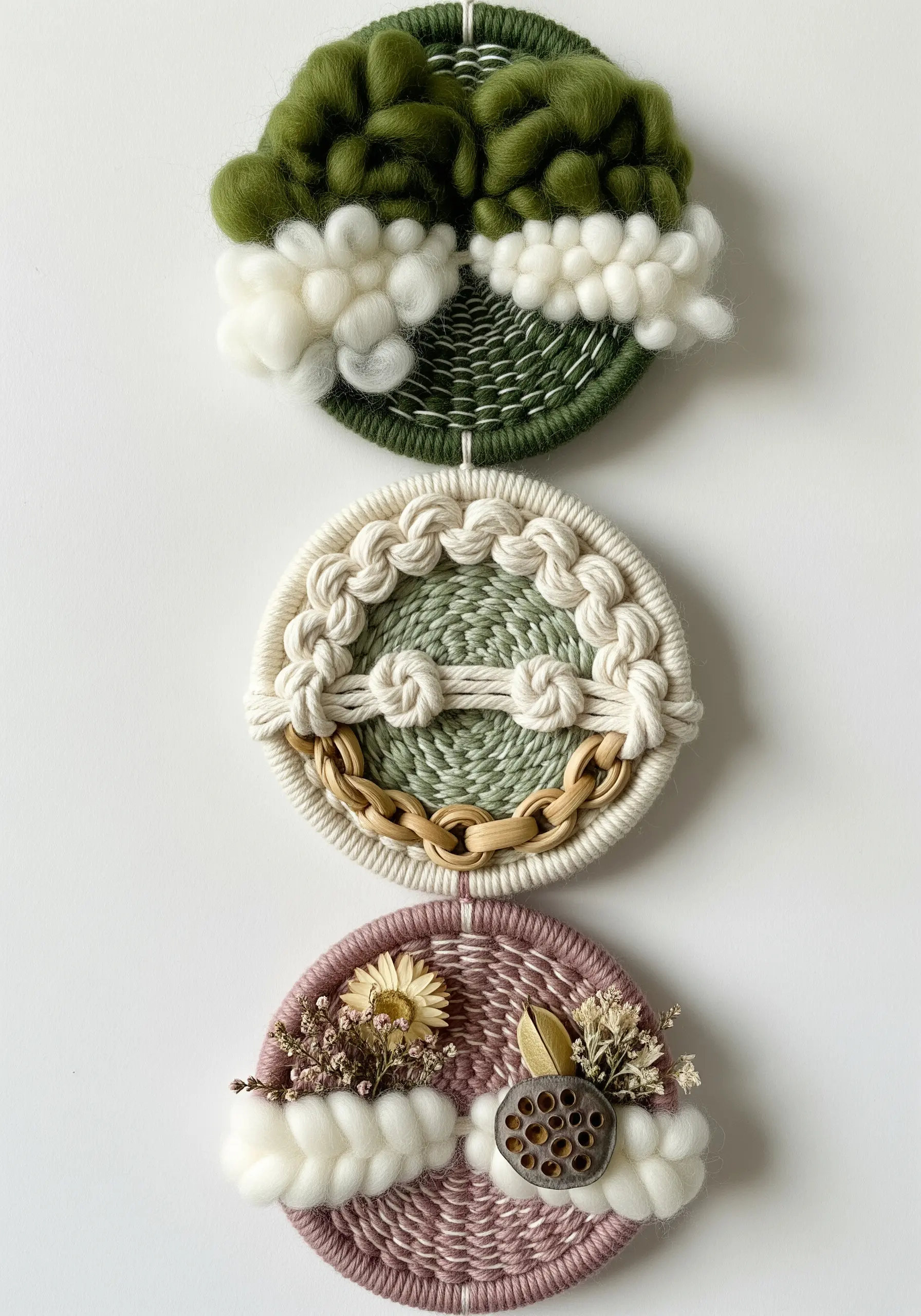
Working on a small scale allows you to focus on creating a perfectly balanced composition with unique materials.
Use a small circular loom or even an embroidery hoop as your frame to create these focused vignettes.
Incorporate non-traditional elements like wooden beads, chain links, or dried botanicals by weaving your threads directly around and through them. This integrates them into the structure, rather than just sticking them on top.
These are beautiful small hoop embroidery ideas that turn minimal stitching into maximum style.
10. Contain Softness with a Crocheted Structure

Explore the powerful visual contrast between a rigid, structured exterior and a soft, untamed interior.
First, create a container or pod-like shape using a sturdy fiber like jute or hemp and a tight crochet stitch.
Then, gently fill the crocheted vessel with loose, vibrant, hand-dyed wool roving. The organic, colorful wool spilling out of the neutral, ordered structure creates a beautiful tension.
It’s one of many stunning mixed fiber creations inspired by nature you’ll want to copy.
11. Stitch the Stars with Abstract Textures
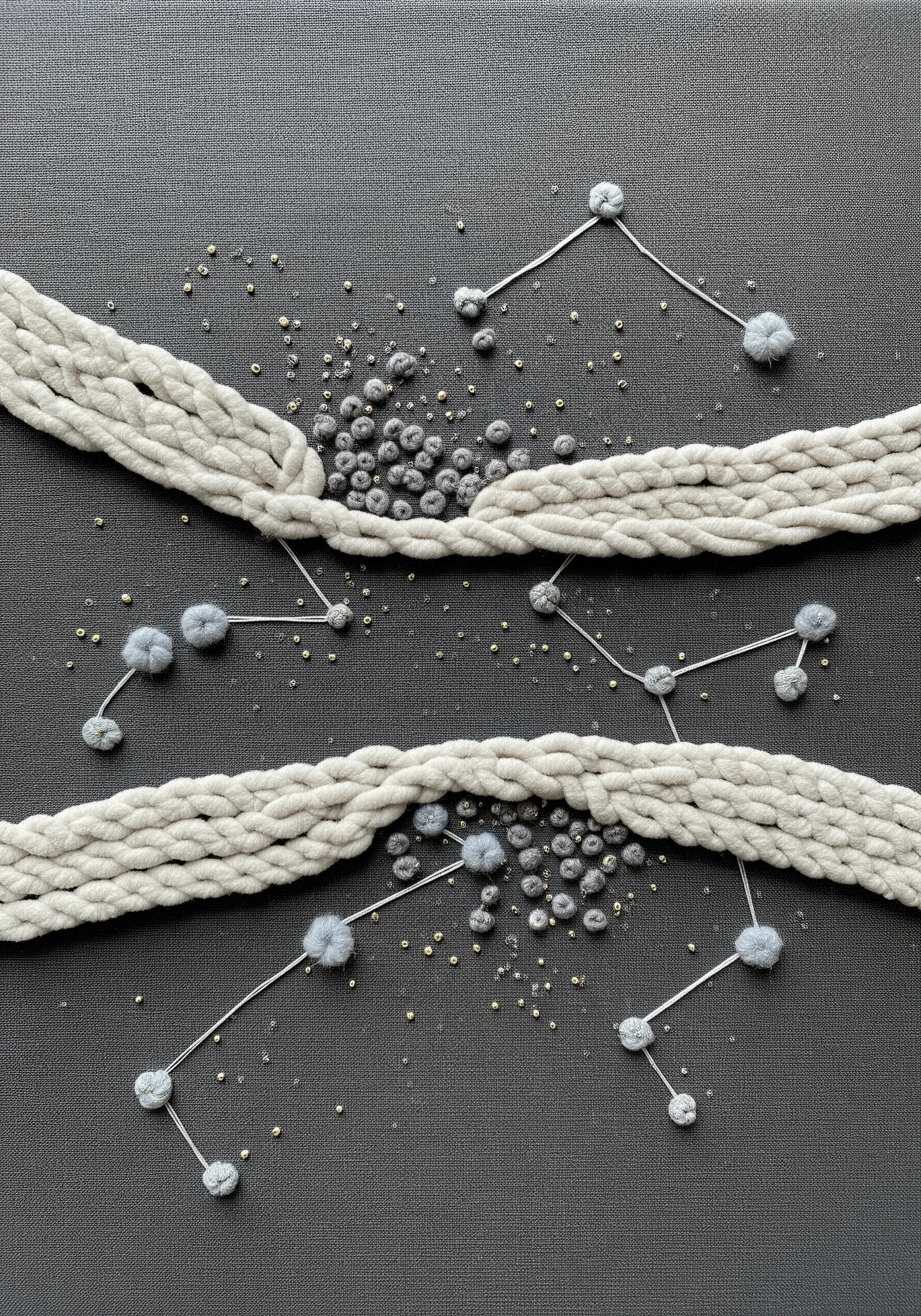
Recreate the magic of a night sky using a variety of dimensional stitches and materials on a dark background.
Couch down thick, twisted yarn to form the flowing bands of the Milky Way.
Use fluffy chenille thread to make mini pompoms or tufted French knots for the main stars in your constellations.
Finally, scatter tiny seed beads or single stitches of metallic thread to represent distant, twinkling stars, adding depth and shimmer to your celestial scene.
These are perfect minimal sky & moon designs for a modern aesthetic.
12. Weave a Narrative with Reclaimed Fabrics
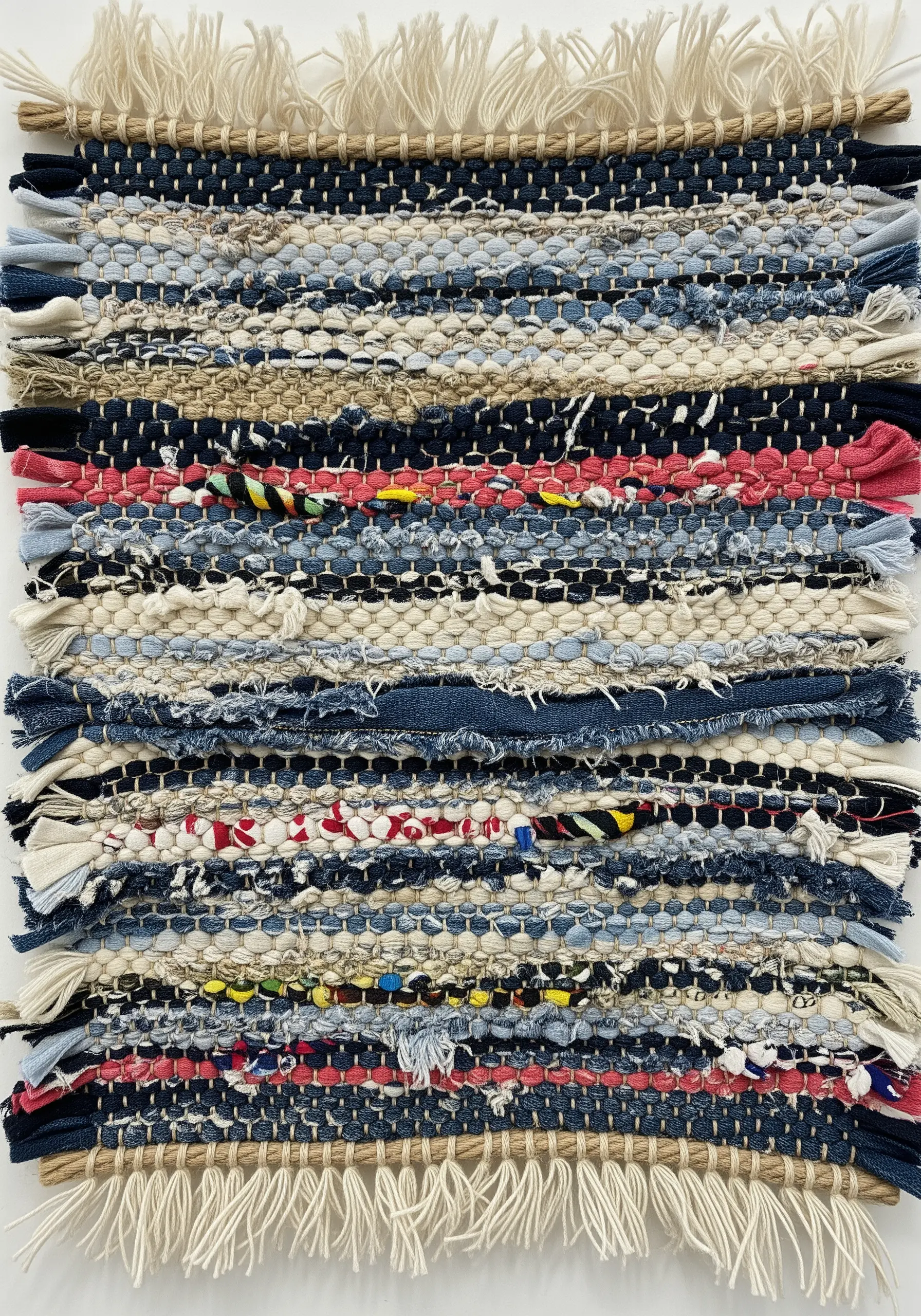
Give old textiles new life by cutting them into strips and using them as your weft in a simple weaving.
Don’t worry about perfect edges; allowing the fabric to fray adds a crucial textural element and a sense of history to the piece.
Combine different fabric weights, such as sturdy denim, soft cotton, and patterned scraps, to create a rich tapestry that tells a story. It’s a beautiful way to reuse old clothes in artistic ways.
13. Sculpt a Mossy Forest Floor
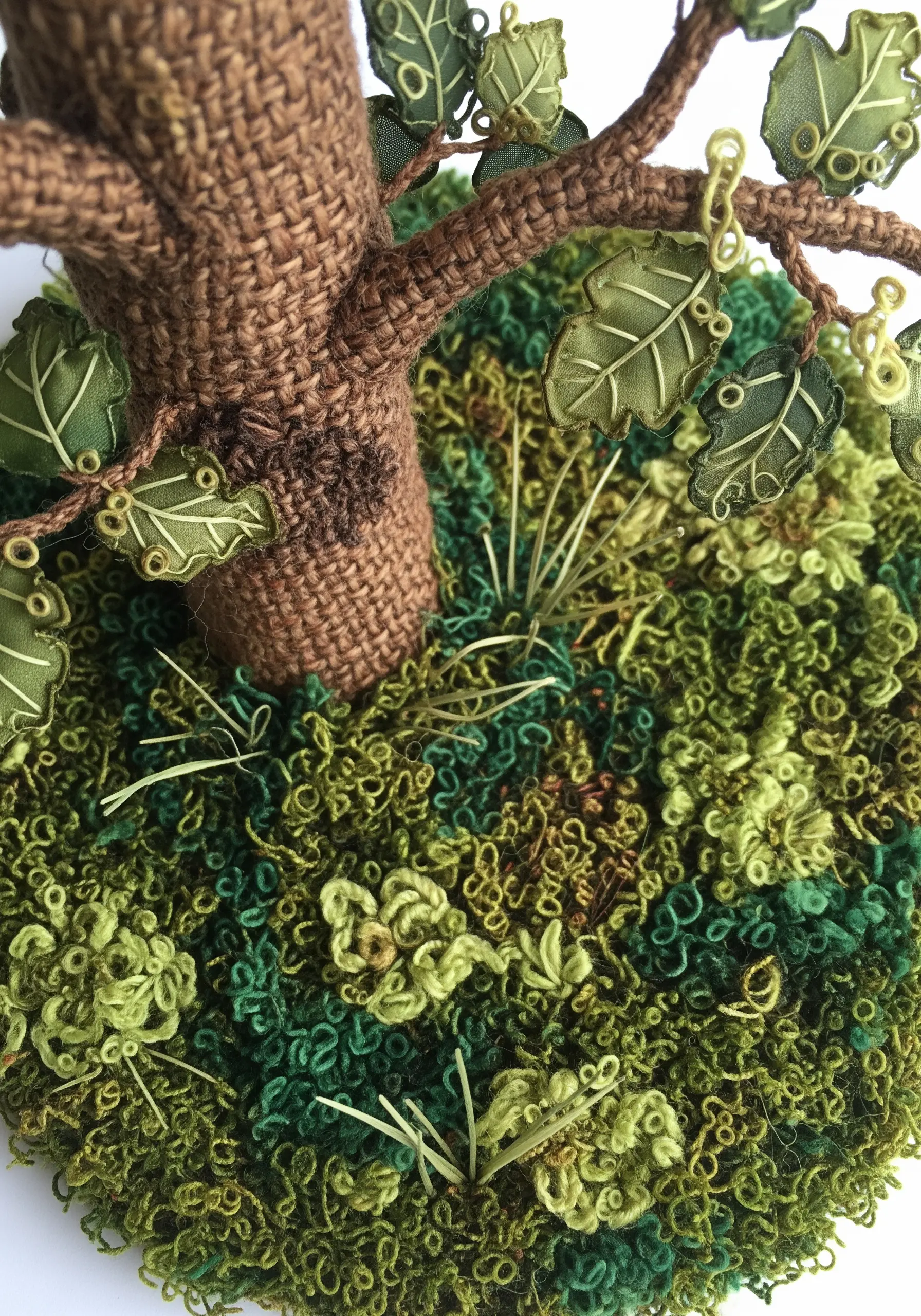
To create a dense, moss-like ground cover, fill the area with tightly packed French knots and bullion knots.
Use several shades of variegated green and brown thread to give the texture a natural, organic look.
For the leaves, try a stumpwork technique: stitch them onto a separate piece of fabric with a wire outline, cut them out, and then attach them to your piece so you can bend them into realistic, three-dimensional shapes.
This is an ideal technique for creating realistic mushroom & forest floor embroidery projects.
14. Weave a Seamless Color Gradient
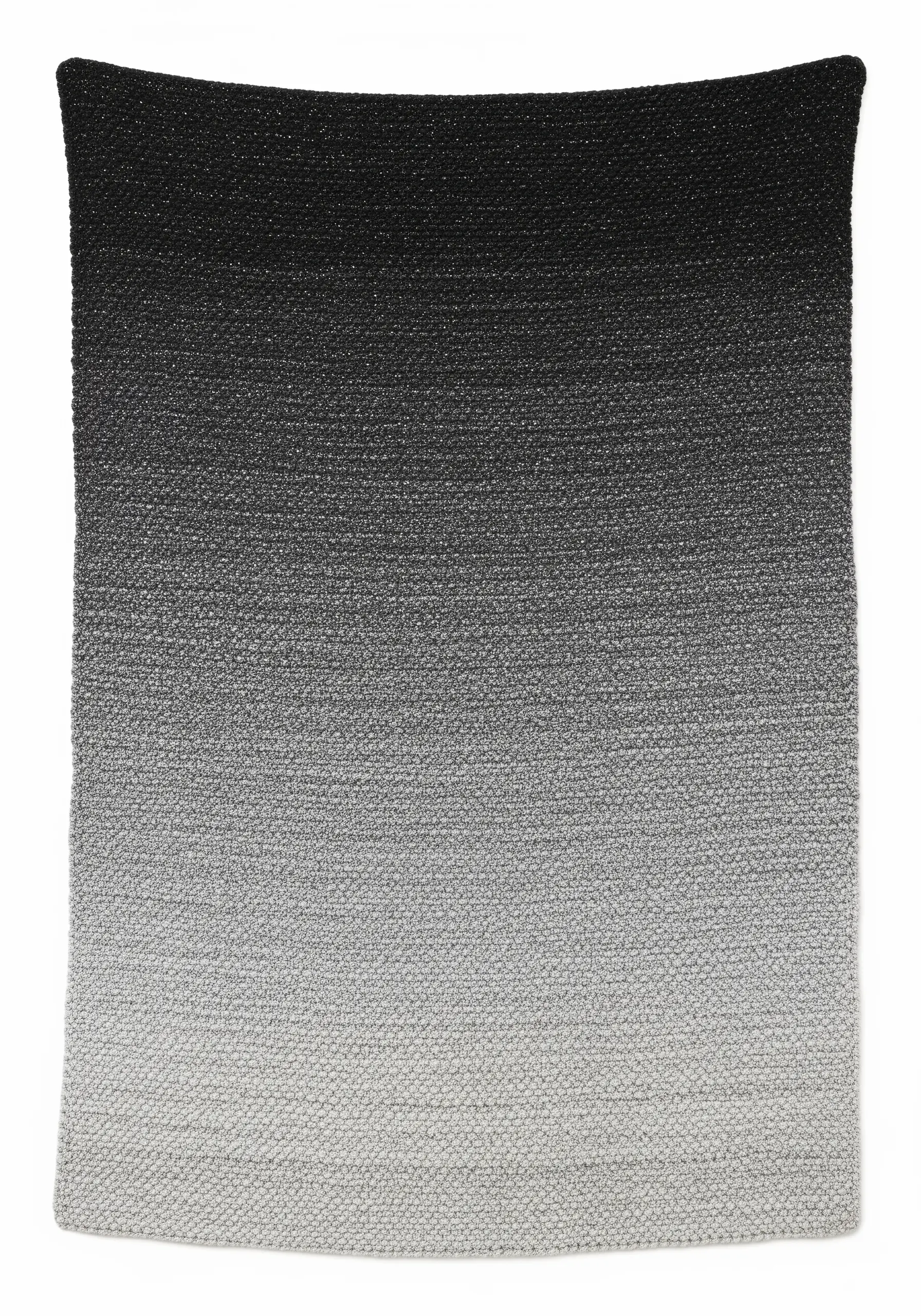
A smooth, painterly ombré effect in weaving is achieved through methodical color blending.
Begin with your first color, then introduce the second shade gradually. Weave a few rows of the old color, then one of the new, slowly increasing the new color’s frequency until the first is fully phased out.
For an extra touch of sophistication, carry a single, subtle metallic thread through the entire piece. It adds a cohesive shimmer that unifies the gradient.
This method is central to creating beautiful neutral color gradient embroidery ideas.
15. Build a Tapestry of Pompoms and Tassels
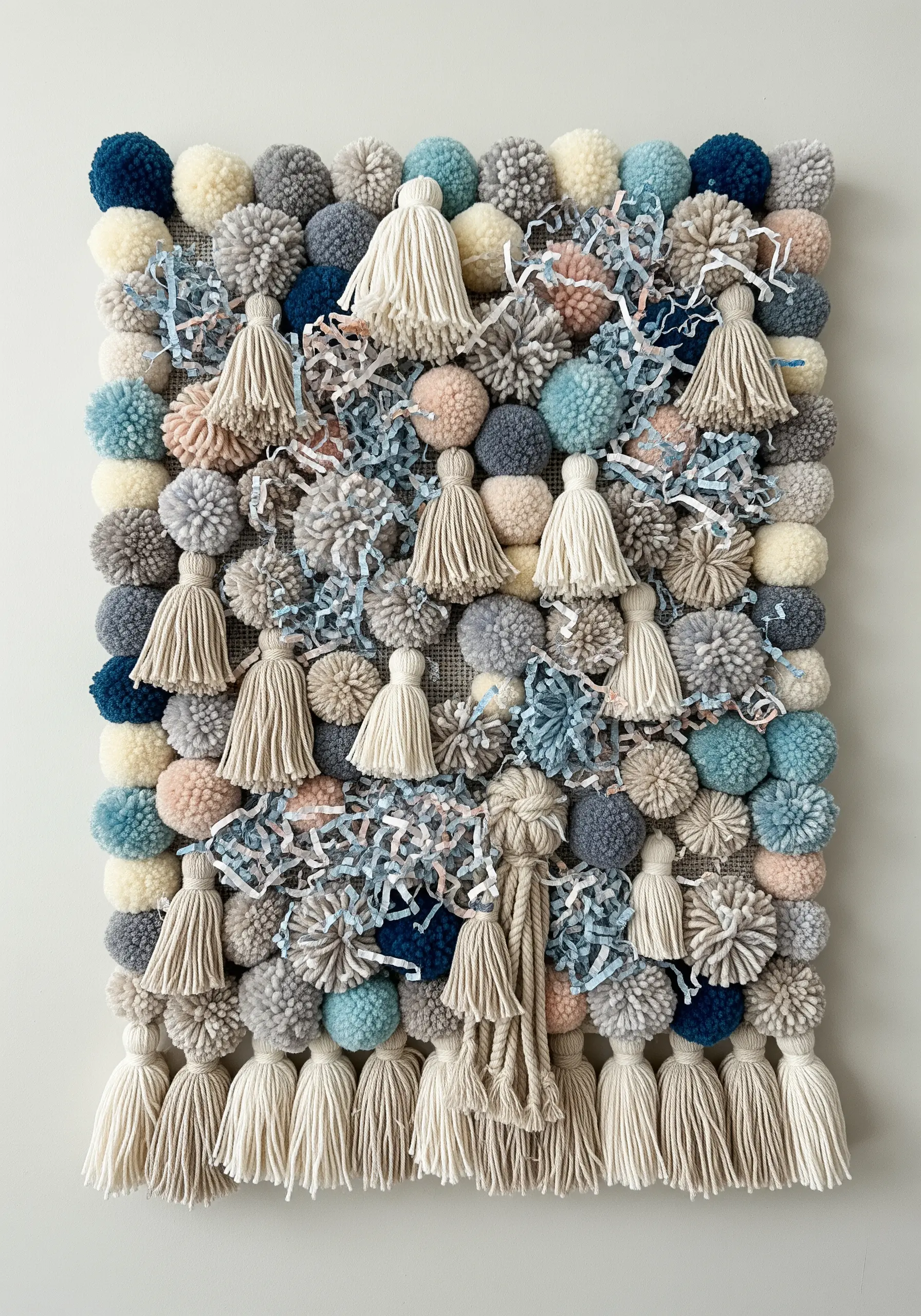
Create a joyous, highly textural surface by building your entire composition from dimensional fiber elements.
Make pompoms in varying sizes and densities using a pompom maker, then attach them securely to a sturdy mesh or canvas backing.
Intersperse tassels to create strong vertical lines and add movement. For a final touch of whimsy, tuck in shredded paper or crinkled ribbon for a delicate, unexpected texture.
The result is one of the most cozy mixed fiber projects perfect for winter decorating.
16. Weave Texture into Functional Decor
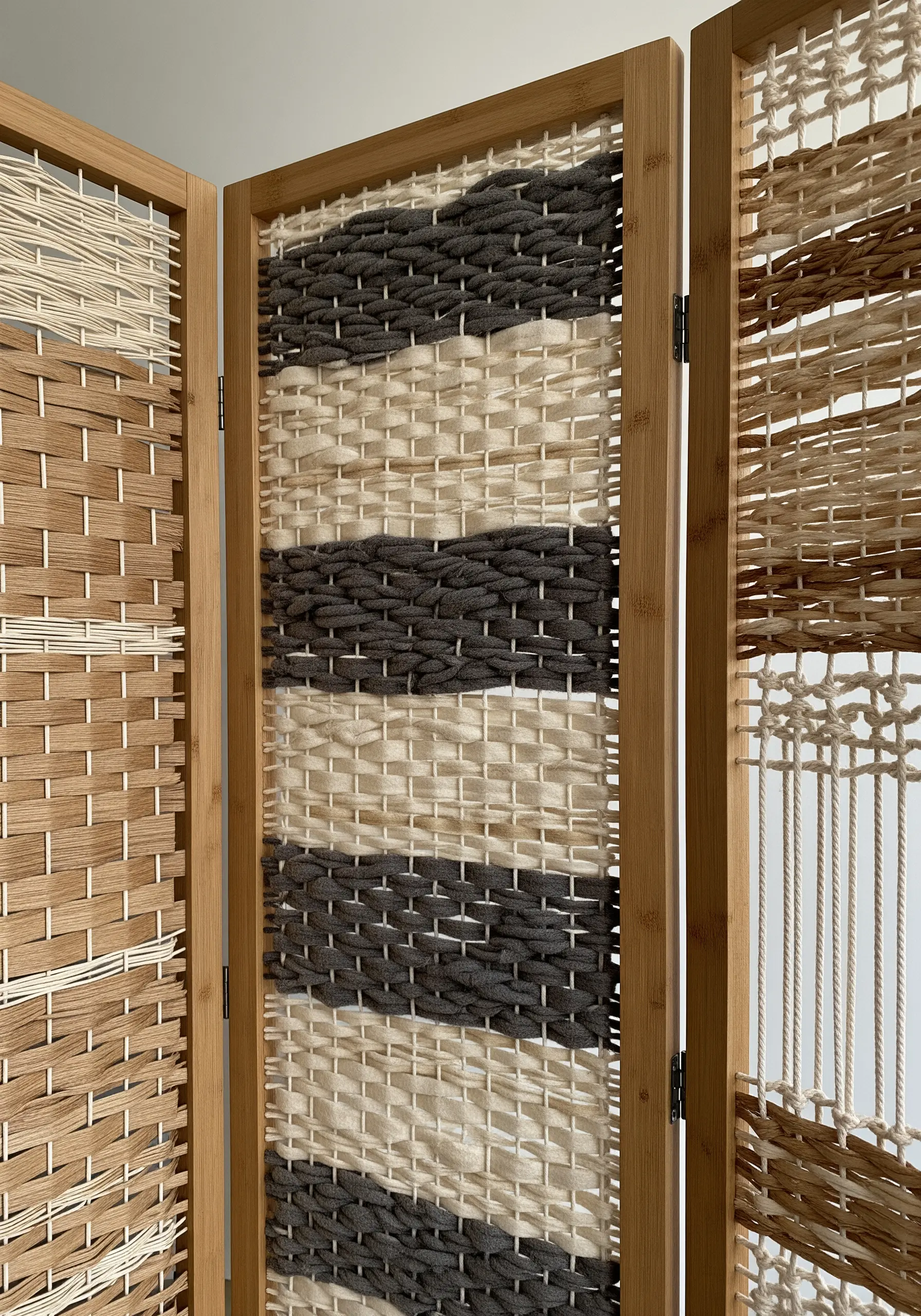
Take your weaving off the wall and apply it to functional objects like this room divider screen.
Use the existing frame as your loom, warping your threads directly onto it.
Play with opacity by alternating between thick, chunky yarns that block light and thinner, spaced-out materials like paper cord that allow light to filter through. This creates a dynamic piece of art that interacts with its environment.
This is how you turn furniture into one of those minimalist embroidery wall art ideas that transforms a space.
17. Map a Landscape with Stone and Roving
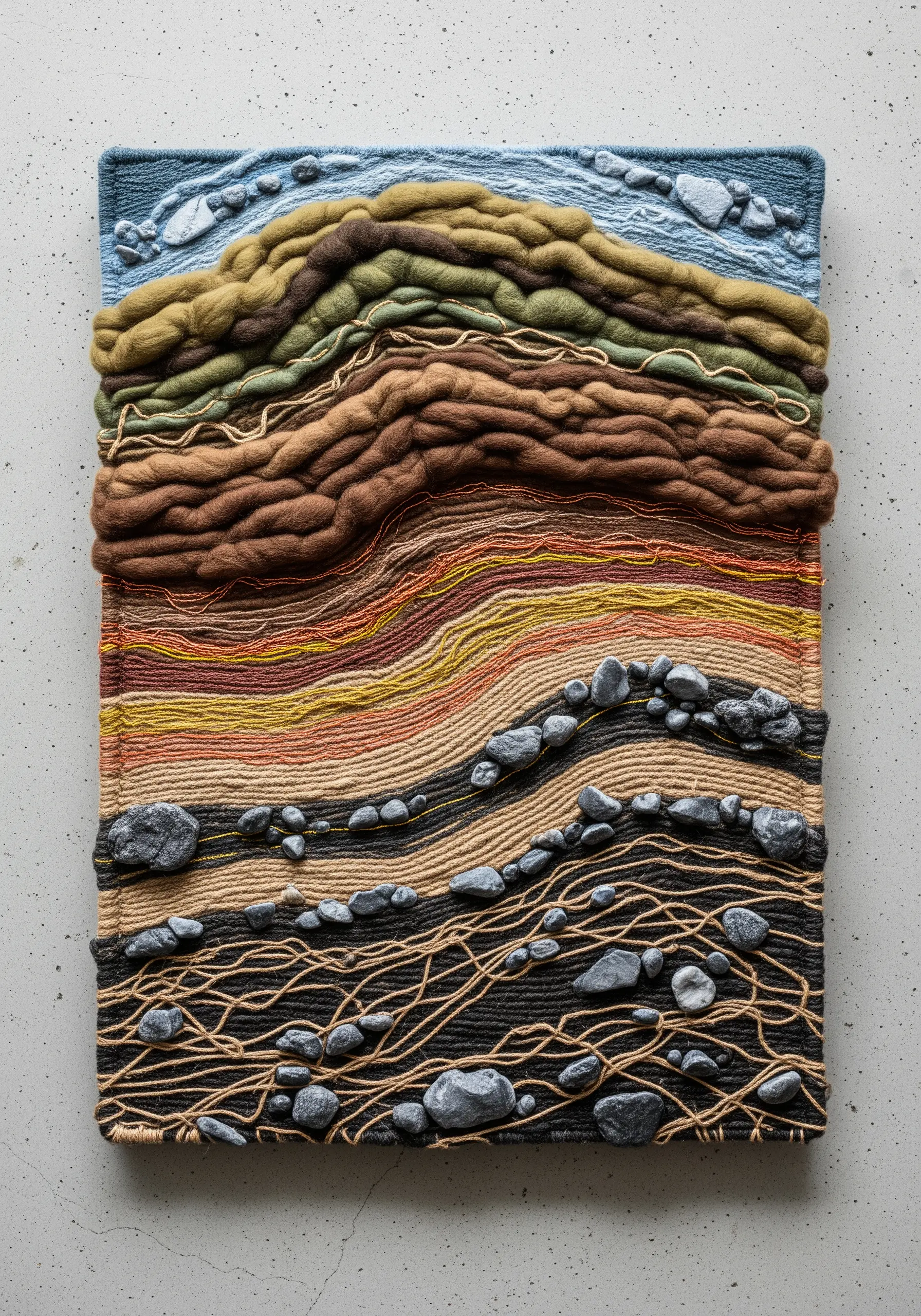
Create an abstract, geological map by combining soft fibers with hard, natural elements.
Couch down thick, earthy-toned wool roving to establish the soft, rolling contours of hills and landforms.
Use thin, contrasting threads to stitch fine strata lines or winding paths across the landscape. Finally, securely stitch smooth, flat stones onto the surface to add weight, texture, and a direct connection to the natural world.
This is one of the best embroidery projects inspired by textures you’d find on a nature walk.