You likely associate embroidery with the soft give of linen or the tight drum of cotton in a hoop, but moving your needle to paper changes everything. The stakes are higher—every puncture is permanent—but the rewards are a crispness and structural clarity that fabric simply cannot match.
Paper allows you to explore embroidery as a graphic element rather than just surface decoration. It forces you to be intentional with your tension, precise with your spacing, and creative with how you bridge gaps and build texture. From upcycling vintage maps to sculpting 3D forms, paper demands a different kind of respect from your hands.
These ideas are designed to push you out of your comfort zone. You will learn to navigate the fragility of dried leaves, the density of cardstock, and the transparency of vellum. Grab your pilot needle and a self-healing mat; it is time to rethink what your thread can do.
1. Tension control in geometric paper stitching

When working with paper, the interplay between thread tension and structural integrity is paramount; unlike fabric, paper remembers every puncture and pull.
To achieve crisp geometric stitch patterns like these intersecting triangles and circles, you must pre-pierce your holes using a pilot needle to ensure precision without creasing the surface.
Opt for a medium-weight cotton thread—it offers enough vibrancy to stand out against the textured paper but is light enough to prevent the cardstock from warping under the strain of long satin stitches.
2. Integrating botanicals with subtle piercing
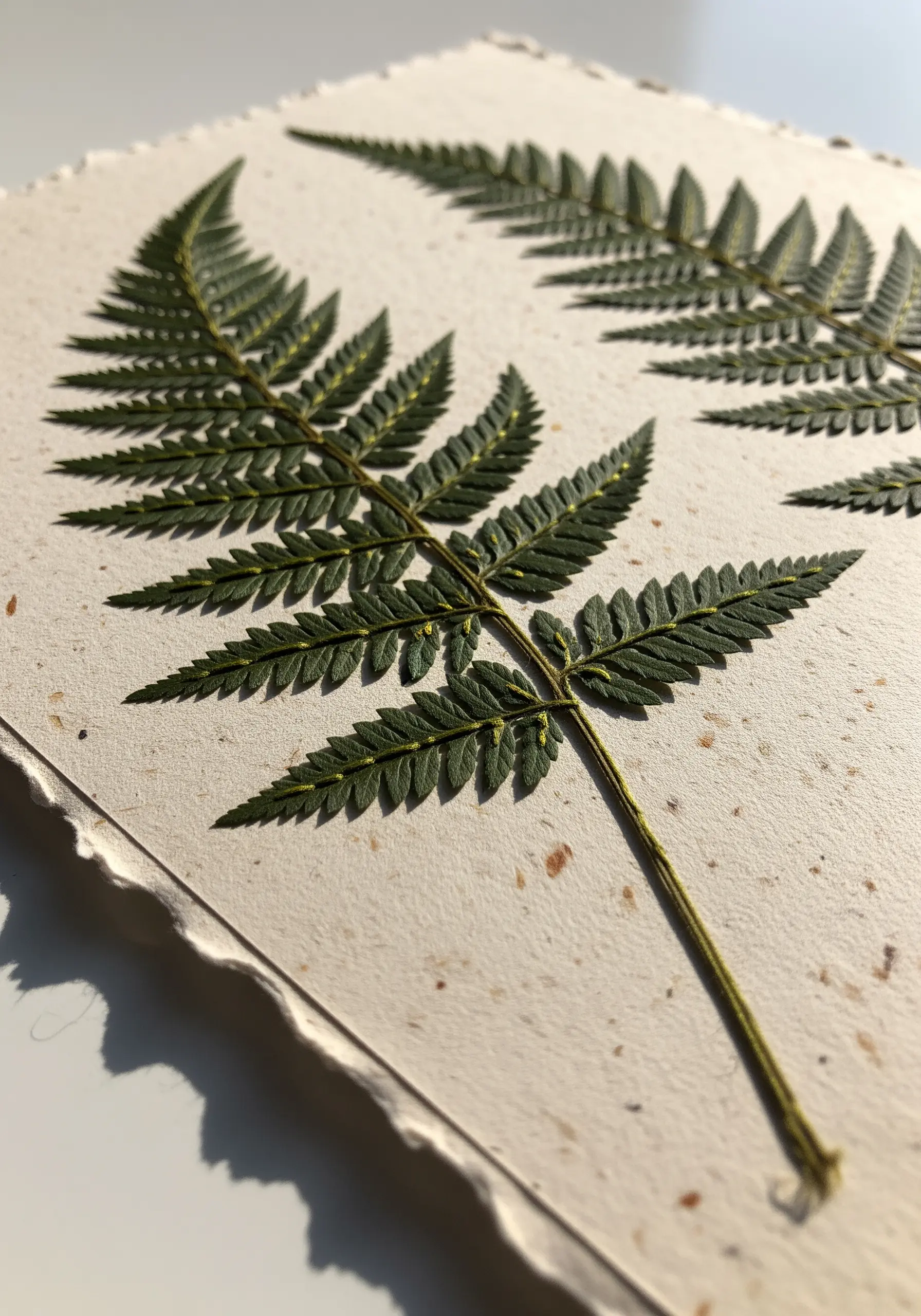
Pressed ferns offer a natural skeletal structure that guides your needle, allowing you to enhance nature rather than replicate it.
By stitching directly over the central veins with a single strand of green thread, you secure the fragile leaf while adding a tactile, dimensional layer.
This technique relies on pressed flower embroidery hacks such as using a very fine needle to avoid shattering the dried plant matter, merging botanical specimens with textile art seamlessly.
3. Heavy yarn typography on cardstock

For bold, impactful lettering, abandon standard floss in favor of heavy tapestry wool or yarn that sits proudly on the paper’s surface.
The key here is a modified chain stitch or a couching technique, which allows you to create fluid curves and thick lines without punching excessively large holes that would weaken the paper.
These thread based typography ideas work best on heavyweight black cardstock, where the contrast of the yellow yarn creates a graphic, poster-like quality.
4. Framing memories with floral borders

Transform vintage photographs into mixed-media heirlooms by stitching a vibrant floral frame directly onto the border, rather than the image itself.
Use short, satin stitches for the petals to create a raised, jewel-like effect that contrasts with the flat, glossy surface of the photograph.
This approach to embroidered flower frame ideas respects the integrity of the subject while directing the viewer’s eye inward through color and texture.
5. Free-form collage with outline stitching
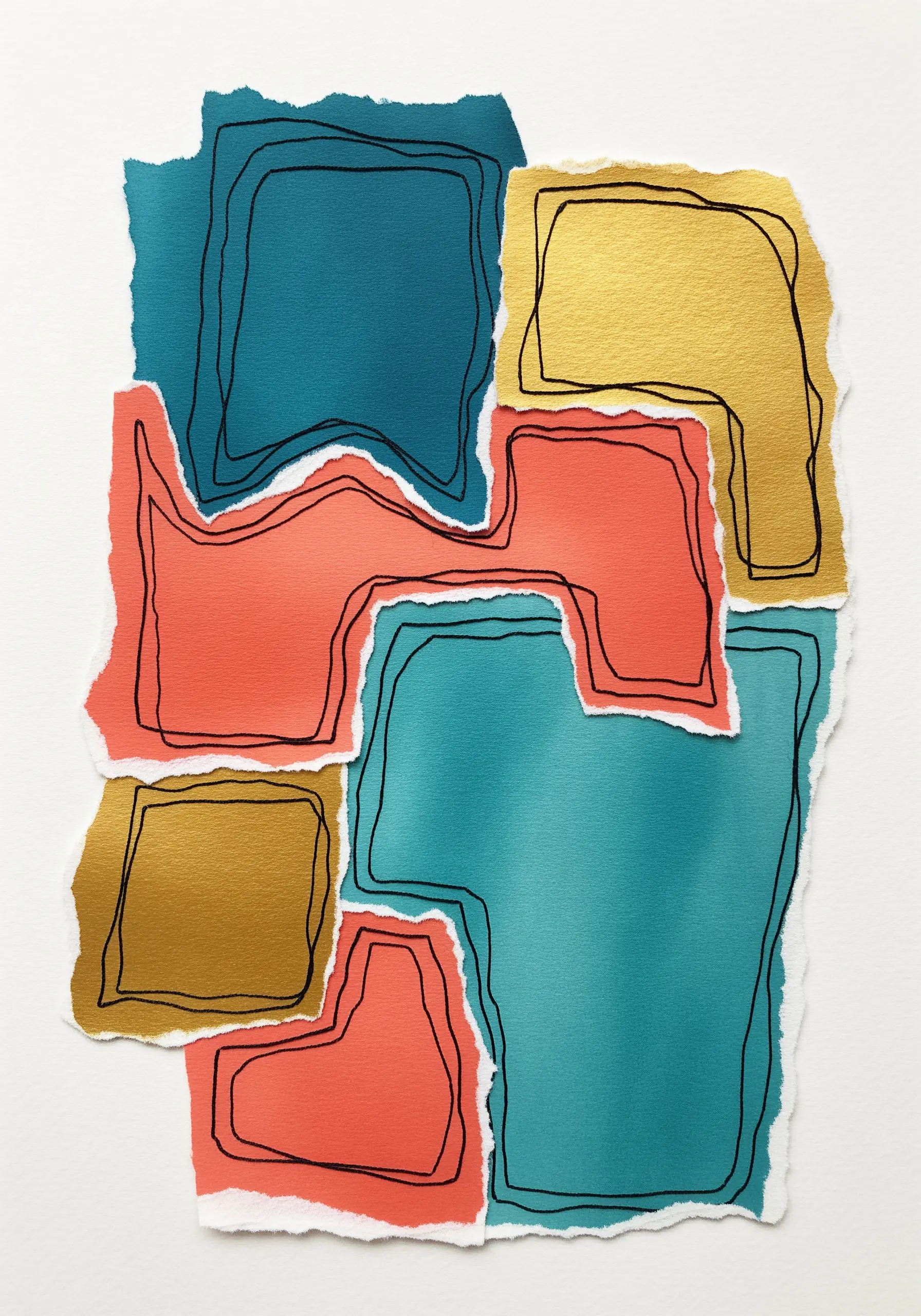
Embrace the imperfect beauty of torn edges by using black thread to outline and secure overlapping layers of colored paper.
The sketchy, multiple-pass backstitch acts as both a functional binding agent and a graphic element, mimicking the spontaneity of a pen drawing.
Applying creative collage tutorials like this allows you to experiment with negative space and color blocking without the need for precise pattern transfer.
6. Structural stitching on accordion folds

Paper structure provides a unique opportunity to display stitch samples in 3D form, turning a sampler into a sculptural object.
Utilize the ridges of an accordion-folded book to showcase vertical bands of different stitches, from herringbones to cross-stitches, creating a rhythm of texture.
These paper art patterns allow you to test thread combinations and tension settings in a format that stands upright as its own display piece.
7. Spirelli-inspired geometric tension

Explore the mathematical beauty of string art by stitching distinct geometric layers on neutral grey cardstock.
By stitching chords across a circle’s perimeter, you create intricate interference patterns that form inner shapes without ever stitching the center.
This precise technique, often found in minimal geometry stitch projects, relies entirely on high thread tension and perfectly spaced pre-punched holes to maintain symmetry.
8. Narrative mapping with running stitch

Personalize a vintage map by physically tracing a journey with a bright red running stitch, instantly marking a path through history.
The dashed line implies movement and travel, while the tactile raised pins add a necessary anchor point to the visual story.
These mini travel story embroidery hoops and map concepts transform flat paper ephemera into dynamic records of personal experience.
9. Textured landscapes using torn paper layers

Combine the rough, organic texture of handmade paper with the precision of embroidery to build a mountain landscape.
White stitching on the peaks mimics snow and highlights the raw, torn edges of the blue paper, reinforcing the separation between atmospheric layers.
This method of creating landscape embroidery wall pieces uses thread not just for color, but to mechanically bond the stratum of the scene together.
10. Metallic thread on textured dark paper

Deep indigo, crinkled paper mimics the night sky, providing the perfect backdrop for silver metallic thread constellations.
Metallic thread can be brittle; when working on paper, use short straight stitches and French knots (for stars) to minimize friction and breakage.
Discovering unexpected ways to use metallic thread elevates simple line art into a celestial piece that catches the light beautifully.
11. Binding woven paper strips

Repurpose magazine strips or newsprint by weaving them into a mat and using embroidery to lock the weave in place.
A strong, black cotton thread stitched in a running pattern perpendicular to the weave adds graphical contrast and structural stability.
This is one of those mixed media paper inspirations that turns recycling into a durable, textile-like surface suitable for book covers or art mats.
12. Shadow play on translucent vellum
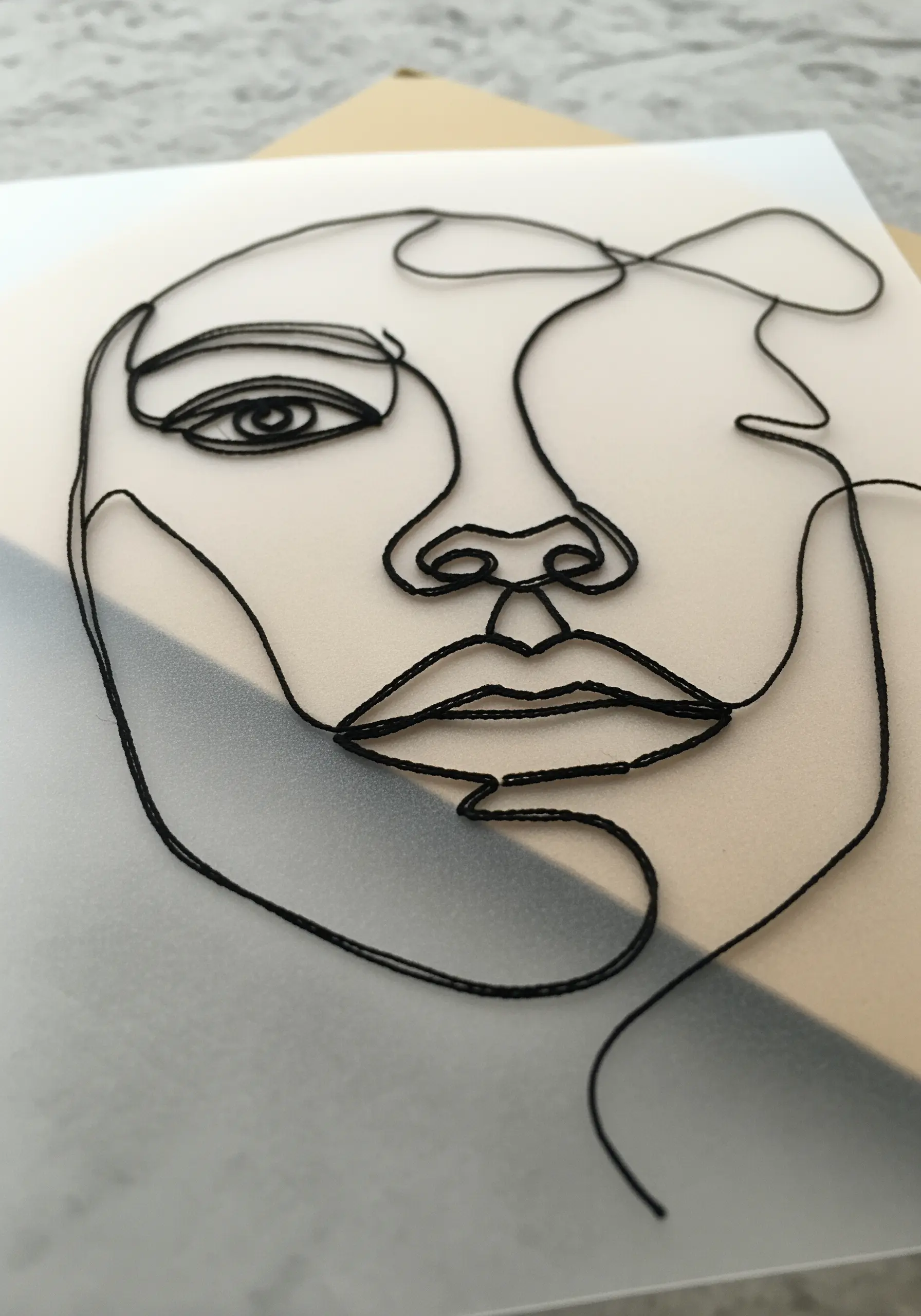
Stitching on semi-transparent vellum creates a delicate shadow effect against the background, adding depth to a single line.
Use a backstitch for a smooth, continuous line drawing, handling the paper gently to avoid kinks or white stress marks.
These minimal line drawing embroidery ideas rely on the clean, unbroken flow of the black thread to define the face without shading.
13. Dense texture with French knot fills
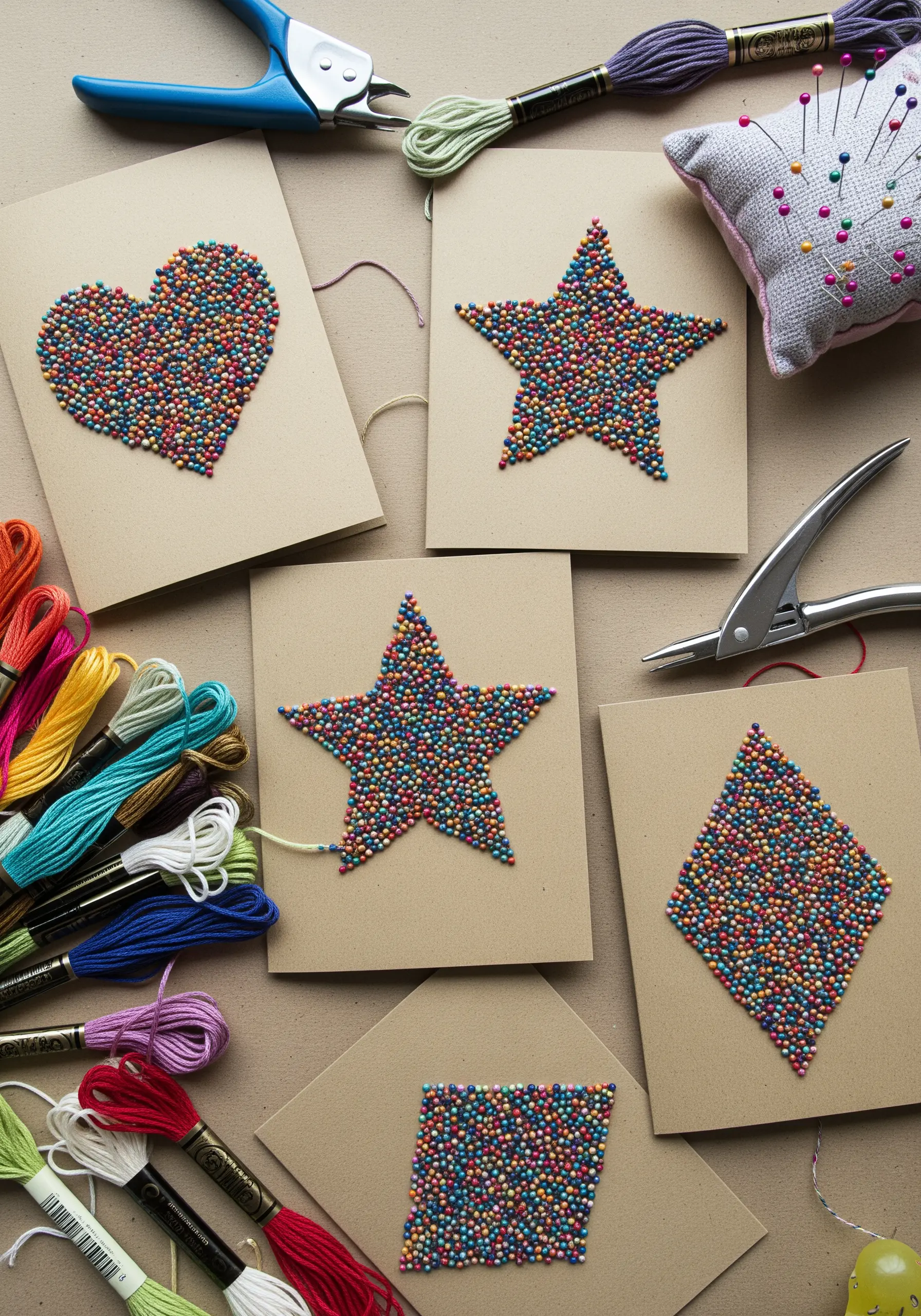
Turn simple geometric cutouts into vibrant focal points by filling them entirely with densely packed French knots.
The challenge here is to distribute the needle punctures so you don’t perforate the cardstock into a hole; spacing is critical.
Projects like these DIY embroidered cards and mini gifts prove that texture—resembling beading or confetti—can be achieved with thread alone.
14. Edging 3D paper forms
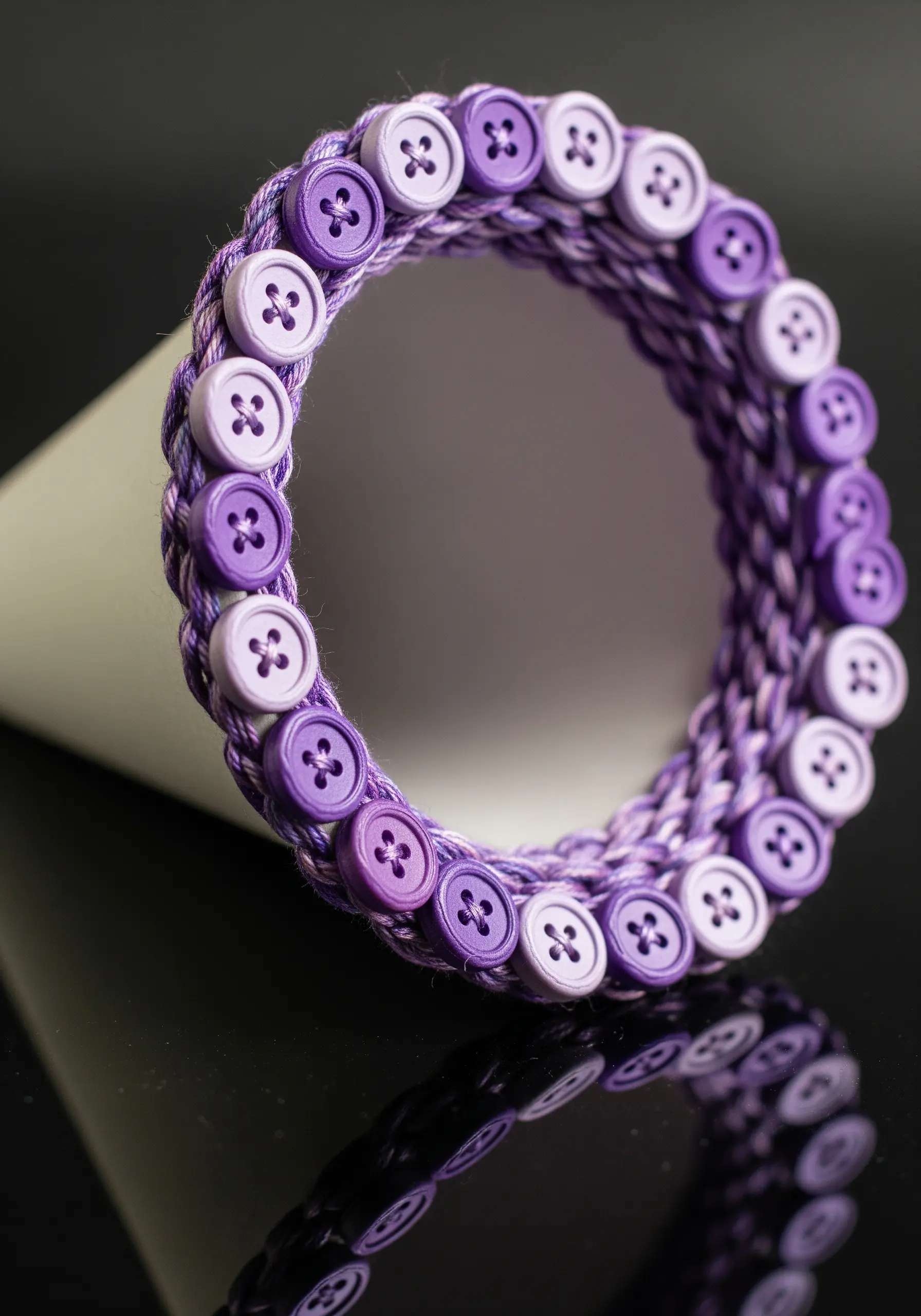
Embroidery can be structural, used to bind the edges of a rolled paper cone to create a finished, manufactured look.
A buttonhole or blanket stitch along the rim reinforces the edge and provides a foundation for adding woven or braided embellishments.
This moves beyond flat art into artistic objects you can craft, where thread acts as the hardware holding the paper sculpture together.
15. Mounting paper collections on fabric

Create a grid of vintage postage stamps by lightly stitching them onto a linen background, turning a collection into a cohesive sampler.
Use a single strand of thread to tack the corners or stitch delicately around the perforations to avoid damaging the philatelic value.
This blends mixed media techniques for embroidery with archival presentation, letting the paper artifacts shine against the woven texture.
16. Radiant gradients on circular card

Achieve a glowing mandala effect by blending warm thread tones—yellow to red—in a radial pattern on pristine white card.
The key to this vibrancy is the density of the blanket stitch variations, which must be consistent to create the seamless color transition.
Such modern mandala stitch patterns require exact geometric planning (use a compass!) before the first hole is ever pierced.
17. Mending torn paper with gold Kintsugi

Adopt the philosophy of Kintsugi by purposefully tearing paper and rejoining the fissure with intricate cross-stitching.
Using a bright turquoise thread alongside gold accents highlights the ‘repair’ rather than hiding it, adding narrative value to the rupture.
These stunning paper art ideas that inspire creativity show how destruction and reconstruction can coexist in modern embroidery.
18. Satin stitch monograms on cardboard

Elevate humble cardboard tags by embroidering bold, architectural monograms using a vertical satin stitch.
The corrugated texture of the cardboard contrasts with the smooth sheen of the thread, but be careful not to crush the internal flutes of the board.
These personalized initial embroidery ideas transform disposable packaging into reusable, luxury gift elements.