Have you ever felt your embroidery could be more… alive? That it could move beyond flat color and become something you want to reach out and touch? The secret isn’t a new, complicated stitch—it’s learning to think like a sculptor, using fabric and thread as your clay.
Fabric collage isn’t simply about arranging pretty scraps. It’s a thoughtful process of layering texture, color, and memory, then binding them together with intentional stitches. Each piece of fabric adds its own voice, and your thread becomes the conversation that unites them into a cohesive, tactile story.
Here, you won’t find intimidating projects. Instead, you’ll discover how to use materials you already have—felt, denim, lace, yarn—to create art with surprising depth and personality. It’s time to trust your instincts and let texture lead the way.
1. Sculpt Oceanic Forms with Denim and Roving

Build a dynamic seascape by layering torn strips of denim and burlap to create a textural base.
Use the frayed edges to your advantage, letting them mimic the texture of seafoam and sand.
For the cresting waves, couch thick wool roving or chunky yarn directly onto your fabric collage, creating dramatic, high-relief forms that command attention.
Anchor small pieces of driftwood or mother-of-pearl buttons with tacking stitches to add authentic coastal elements and focal points.
2. Cultivate a 3D Forest Floor with Stumpwork

Create a sense of depth by wrapping thick bundles of thread or twine to form realistic tree trunks and roots.
Incorporate preserved moss and felt appliqué for the undergrowth, securing them with discreet couching stitches.
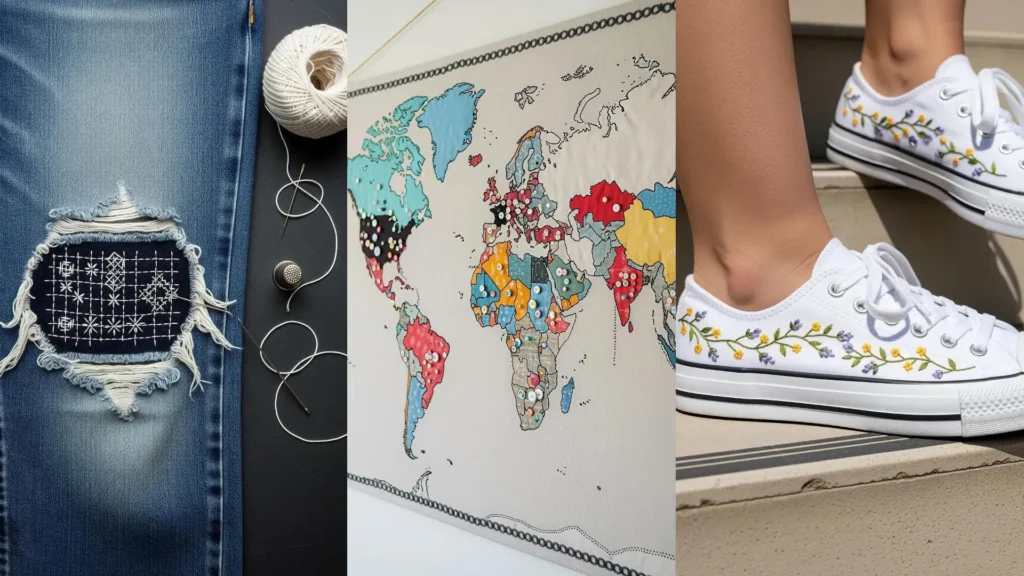
Use stumpwork techniques for the mushrooms: create padded, wired shapes, cover them with fabric, and stitch them onto the background so they stand away from the surface.
Scatter tiny French knots and seed beads to suggest dewdrops or forest floor detritus, adding a final layer of micro-detail.
3. Impose Graphic Tension with Abstract Collage

Start by creating a patchwork base of textured fabrics like tweed, suede, and canvas, focusing on geometric shapes and clean lines.
Instead of thread, use thin elastic cords or leather strips stretched across the surface, anchoring them securely on the back of the canvas.
This technique turns the negative space into an active part of the composition, creating visual energy through taught, intersecting lines.
The contrast between the soft, stitched fabric panels and the hard-edged overlay creates a powerful abstract statement.
4. Achieve Botanical Volume with Padded Appliqué

Give your leaves a lifelike, three-dimensional quality using trapunto, a form of padded appliqué.
Cut your main leaf shape and a slightly smaller backing piece. Stitch them together, leaving a small opening to insert batting before closing the seam.
Secure the padded leaf to your background fabric with a clean satin stitch border, which defines the edge and adds a polished finish.
For added texture, combine these voluminous forms with delicate botanical line art embroidery patterns stitched directly onto the background.
5. Weave a Landscape with Punch Needle and Knots

Map out your landscape with layered pieces of wool felt or thick cotton to establish broad areas of color.
Fill in these areas with varied textures: use a punch needle for the smooth, rolling hills and dense French or colonial knots for the desert foliage.
This mix of techniques allows you to control the pile height and texture, adding authentic topographical dimension to your scene.
Finish the piece with a decorative border stitch, like a whipped backstitch, to frame the landscape and give it a clean edge.
6. Explore Monochrome Texture with Found Fabrics

Challenge yourself to create a rich composition using only one color, forcing texture to be the primary focus.
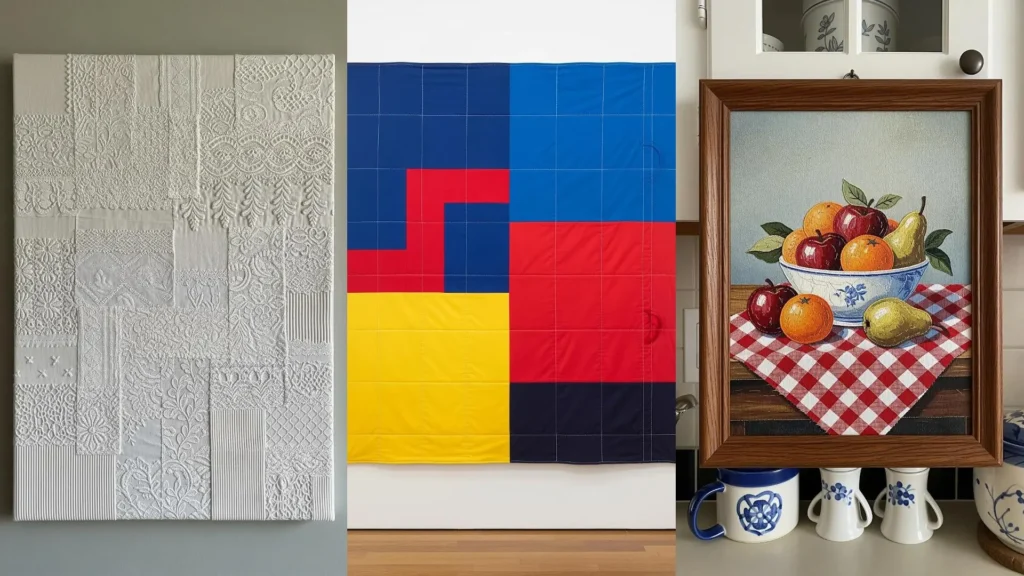
Collect scraps of lace, terry cloth, chenille, and pleated fabric, arranging them in a grid or an organic collage.
Incorporate dimensional stitches like bullion knots or cast-on stitches made with thick yarn to bridge the different fabric patches.
Adding subtle pearl beads or clear sequins catches the light differently, adding another layer of tactile interest and creating a sophisticated piece perfect for emotional nursery decor.
7. Layer an Autumnal Scene with Felt and Tweed

Cut organic, overlapping shapes from felt and wool fabrics like herringbone tweed to form a rich, layered background.
Instead of trying to hide your stitches, use a contrasting thread color for a simple backstitch or running stitch to define leaf veins and attach the layers.
This visible stitching adds both detail and a charming, handcrafted honesty to the artwork.
This approach works beautifully for holiday-themed string art patterns, celebrating the cozy textures of the season.
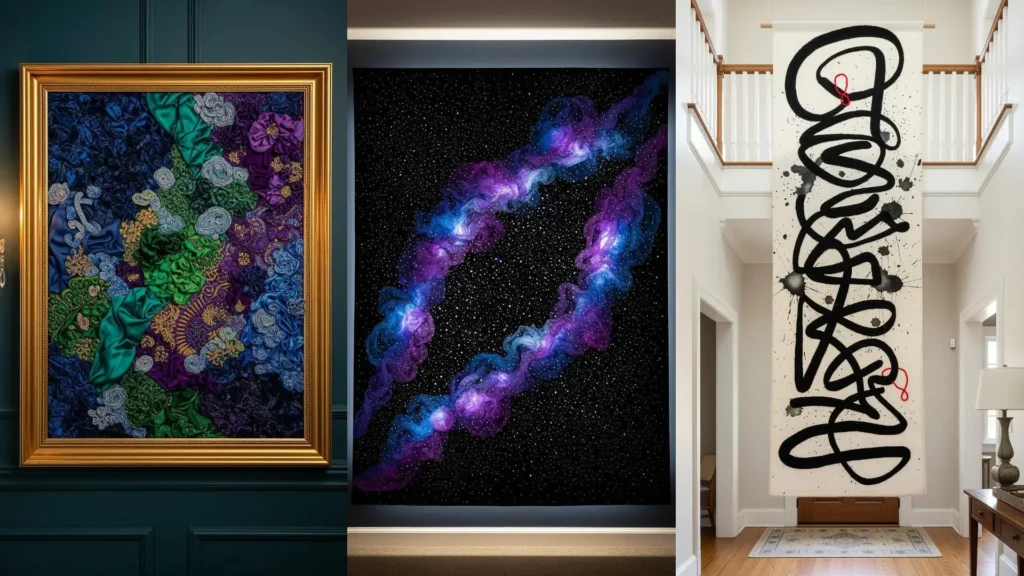
8. Construct a Galaxy with Tulle and Metallics

Create cosmic depth by layering sheer fabrics like organza and glitter tulle over a dark velvet base.
Use metallic seed beads, French knots, and silver thread to form dense, glittering star clusters and swirling nebulae.
Incorporate dimensional elements like braided yarn or fabric tubes, couching them down in spiral patterns to represent galactic arms.
These stunning framed embroidery pieces become mesmerizing focal points in any room.
9. Compose a Wabi-Sabi Study with Indigo Scraps

Embrace imperfection by arranging hand-dyed or Shibori-style fabric scraps on a neutral linen background.
Let the raw, frayed edges show, and use a simple, strong thread like sashiko cotton to join the pieces with visible running stitches.
The beauty of this style lies in its restraint; the stitches are both functional and decorative, honoring the history of the cloth.
This minimalist approach is also perfect for creating minimal festive motifs with a quiet, thoughtful elegance.
10. Craft an Ornate Mandala with Ribbon and Cord

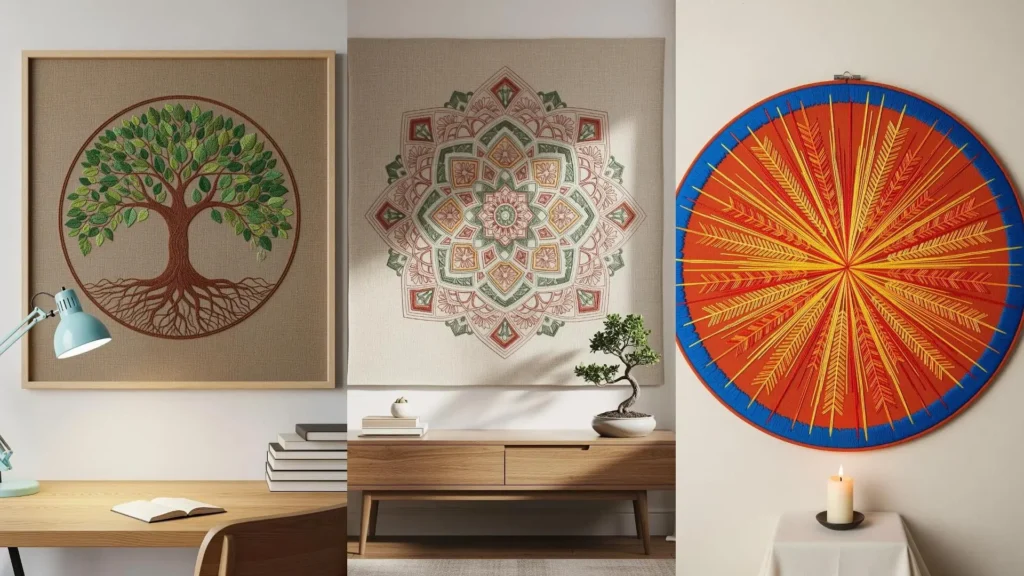
Elevate a simple circular design by using folded satin ribbon to create dimensional, petal-like shapes.
Outline these shapes with couched metallic cord, which adds structure and a touch of opulence while hiding the raw edges of the ribbon.
Fill the negative space with intricate beadwork or tiny mirrors (shisha) to reflect light and add another layer of decorative texture.
These richly detailed floral mandala embroidery ideas become a meditative and rewarding stitching experience.
11. Deconstruct Denim for Graphic Abstraction

Use the inherent character of old jeans—pockets, seams, and waistbands—as the building blocks for your composition.
Arrange these deconstructed pieces into an overlapping collage, letting the varied shades of blue and the frayed edges create visual rhythm.
Introduce a contrasting element, like a bold appliqué shape made from raw canvas, and attach it with chunky, visible stitches like cross-stitches or blanket stitches.
This technique celebrates the history of the material, turning everyday workwear into expressive art.
12. Build Soft Sculptures with Stuffed Forms

Move your embroidery off the flat plane by creating small, stuffed fabric pods or shapes.
Cover these three-dimensional forms with a dense pattern of seed stitches or French knots before clustering them together.
This method transforms fabric and thread into a playful, organic sculpture with an irresistible tactile quality.
Experiment with pastel colors and simple shapes to create cartoon style embroidery ideas that feel both soft and sophisticated.
13. “Paint” a Portrait with Fabric Scraps

Use fabric as if it were paint, cutting tiny pieces of gauze, linen, and loosely woven cotton to represent light and shadow.
Secure each piece with minimal, almost invisible tacking stitches, allowing the texture and frayed edges of the fabric to define the features.
For elements like hair, couch down bundles of thick yarn or roving to create realistic volume and flow.
This technique relies on careful observation of tone and texture, resulting in a portrait with incredible depth and emotional resonance.
14. Recreate Architecture with Photo Transfer and Decay

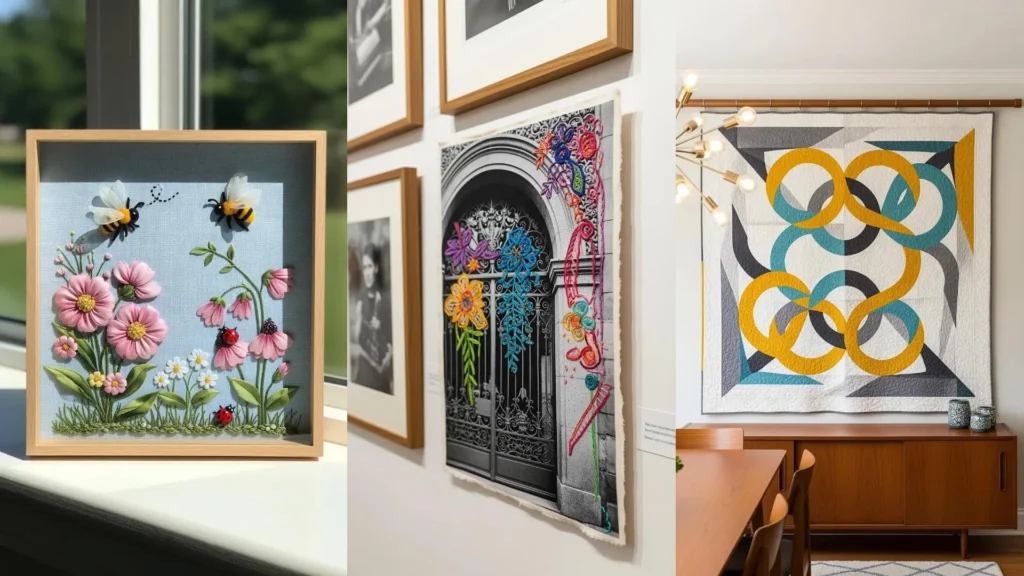
Begin with a photo transferred onto a sturdy fabric like canvas to act as your guide for value and composition.
Build up layers of texture to mimic peeling paint and weathered brick, using torn fabric scraps, gesso, or modeling paste.
Add embroidered details like iron grilles with dense satin stitch and creeping vines with couched, textured yarn.
This advanced mixed-media approach transforms a flat image into a story of time and decay, inviting the viewer to look closer.
15. Design Concentric Harmony with Pleated Fabric

Create dynamic, circular patterns by gathering and pleating strips of satin or velvet into tight rings.
Stitch each ring onto your background fabric, layering them to create a sense of depth and rhythm.
Separate the fabric rings with lines of couched metallic thread or delicate seed beads to add sparkle and definition.
This technique turns simple fabric strips into a luxurious, textured composition, similar to the optical magic of contemporary rainbow blend stitches.
16. Appliqué a Cheerful Motif with Textured Fabrics

Elevate simple shapes by choosing fabrics with inherent texture, such as corduroy, terry cloth, or waffle weave cotton.
Cut your citrus shapes and attach them using a neat blanket stitch, which secures the edges and adds a decorative outline.
Incorporate other elements like satin ribbon leaves, using a simple fold and a few tacking stitches to create dimension.
These bright and tactile tiny embroidery patterns are perfect for adding personality to journal covers or tote bags.
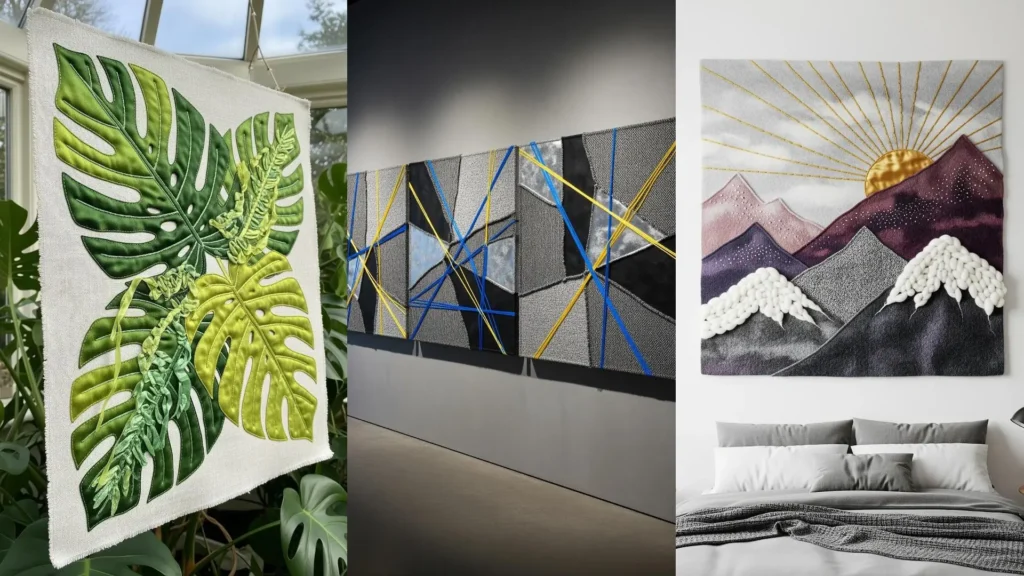
17. Juxtapose Delicate and Bold Textures in Landscapes

Create a visually striking landscape by combining materials with vastly different scales and textures.
Use soft felt appliqué for the mountain shapes and fine metallic thread for the delicate sun rays, stitched in long, straight lines.
For the snow-capped peaks, add unspun wool roving, tacking it down lightly to preserve its airy, cloud-like volume.
This contrast between the fine, shimmering thread and the chunky, soft wool gives the piece incredible energy and depth, perfect for evoking line art travel adventure symbols.
18. Sculpt a Coral Reef with Dimensional Stitches

Build a vibrant, underwater world by using a dense combination of highly textural stitches.
Create coral structures with tightly packed French knots, long bullion knots, and cast-on stitches.
For fan-like shapes, use the woven picot stitch worked around a pin to create detached, 3D elements.
This maximalist approach is a masterclass in sculptural embroidery, where the thread itself becomes the primary structural and textural medium.