Your bedroom is more than a place to sleep; it’s a sanctuary. The energy you cultivate there has the power to restore and calm you. Embroidery, with its quiet rhythm and thoughtful process, is one of the most personal ways to infuse that space with intention.
These Zen-inspired designs invite you to move beyond simple patterns and think about texture, line, and the power of negative space. You’ll explore how a single, well-placed stitch can feel more impactful than a hundred, and how the right choice of thread can capture the feeling of water, the weight of a blossom, or the glow of moonlight.
Consider this a guide to stitching with purpose. Let each project be a small meditation—a way to balance the energy not only in your room, but within yourself. You already have the skill; now, let’s refine the vision and create something truly meaningful.
1. The Meditative Ensō Circle on Raw Canvas
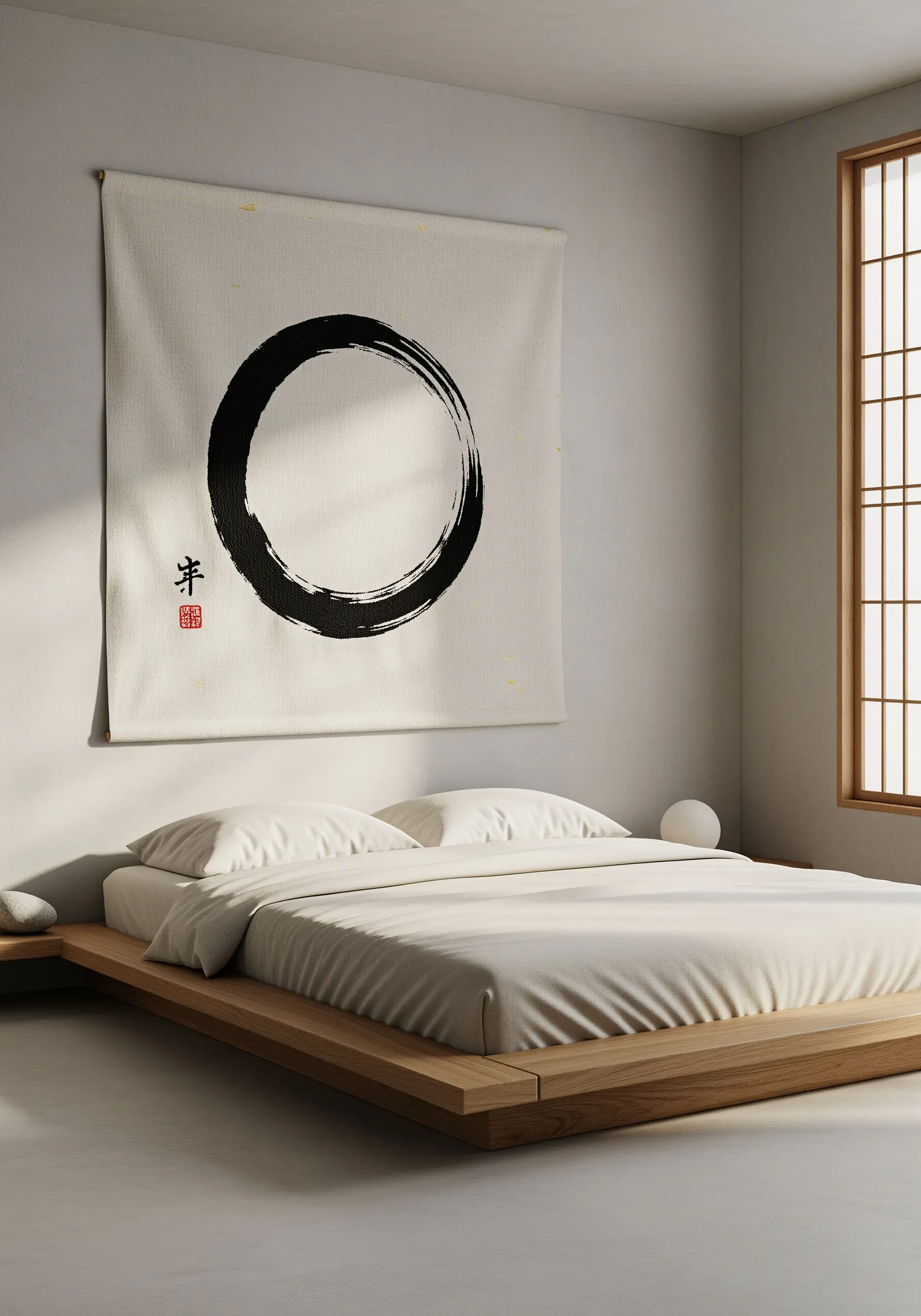
To capture the authentic brushstroke effect of an Ensō circle, use a couching stitch with a thick black yarn or multiple strands of embroidery floss.
Vary the thread’s thickness as you stitch by adding or dropping strands, which mimics the pressure changes of an ink brush and gives the circle a dynamic, organic quality.
For the small red ‘hanko’ seal, use a tight satin stitch or a cluster of tiny French knots to create a dense block of color that contrasts sharply with the raw canvas.
This design is a practice in embracing imperfection; the power lies in its spontaneity, not its perfect geometry, making it one of the most impactful statement-size embroidered textile hangings you can create.
2. Fluid Koi Movement on Linen Pillows
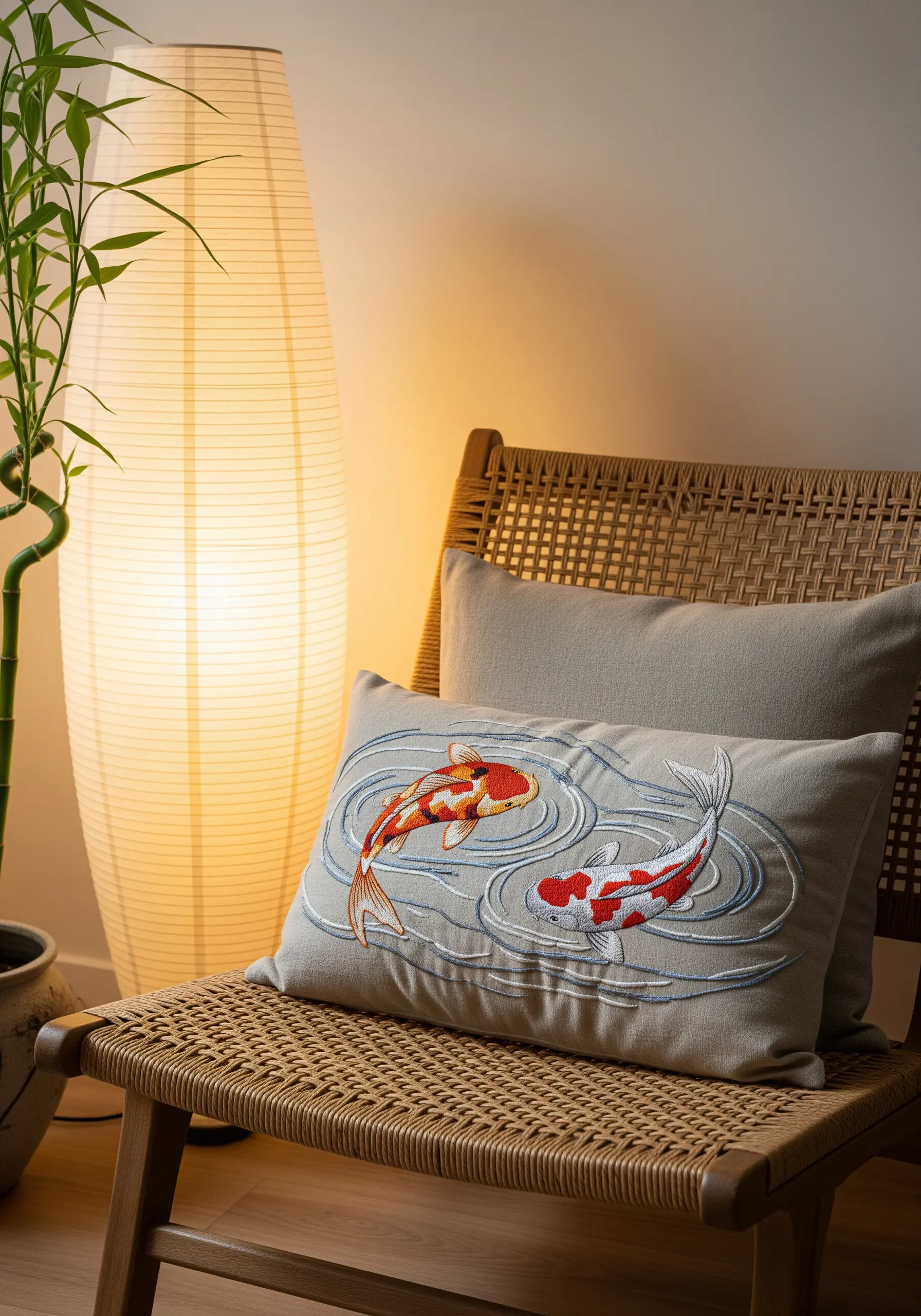
Capture the subtle shimmer of koi scales using a directional fishbone stitch with a single strand of lustrous rayon or silk thread.
This allows each stitch to catch the light independently, creating a realistic, iridescent effect that matte cotton thread cannot achieve.
For the water ripples, use a whipped backstitch in a silvery-blue or light gray to create smooth, raised lines that suggest gentle movement and depth.
The contrast between the matte linen fabric and the sheen of your thread is what will truly make this design feel alive and bring calm coastal serene aesthetic to your space.
3. Asymmetrical Cherry Blossoms for Restful Linens
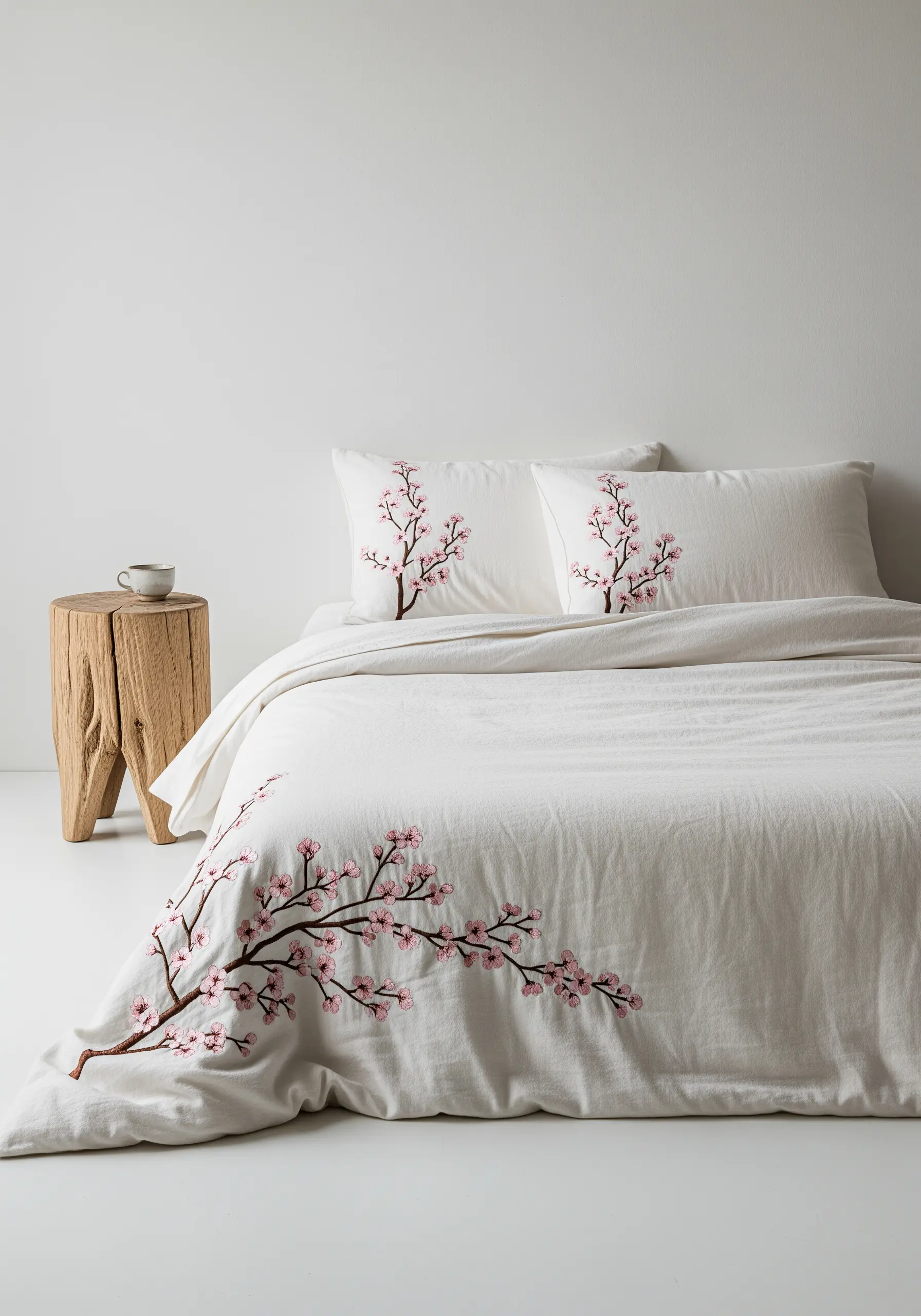
Create a natural, flowing composition by stitching a cherry branch that travels diagonally across a duvet cover or along the edge of a pillowcase.
Use detached chain stitches (lazy daisies) for the petals and tiny French knots for the centers to add delicate, three-dimensional texture.
Vary the shades of pink and off-white slightly from one blossom to another to give the branch a more realistic, less uniform appearance.
The true artistry here is in the use of negative space; allow the unstitched white linen to become part of the design, making the embroidery motifs that make your bedroom feel handcrafted and warm and breathable.
4. The Bamboo Triptych: A Study in Line and Tone
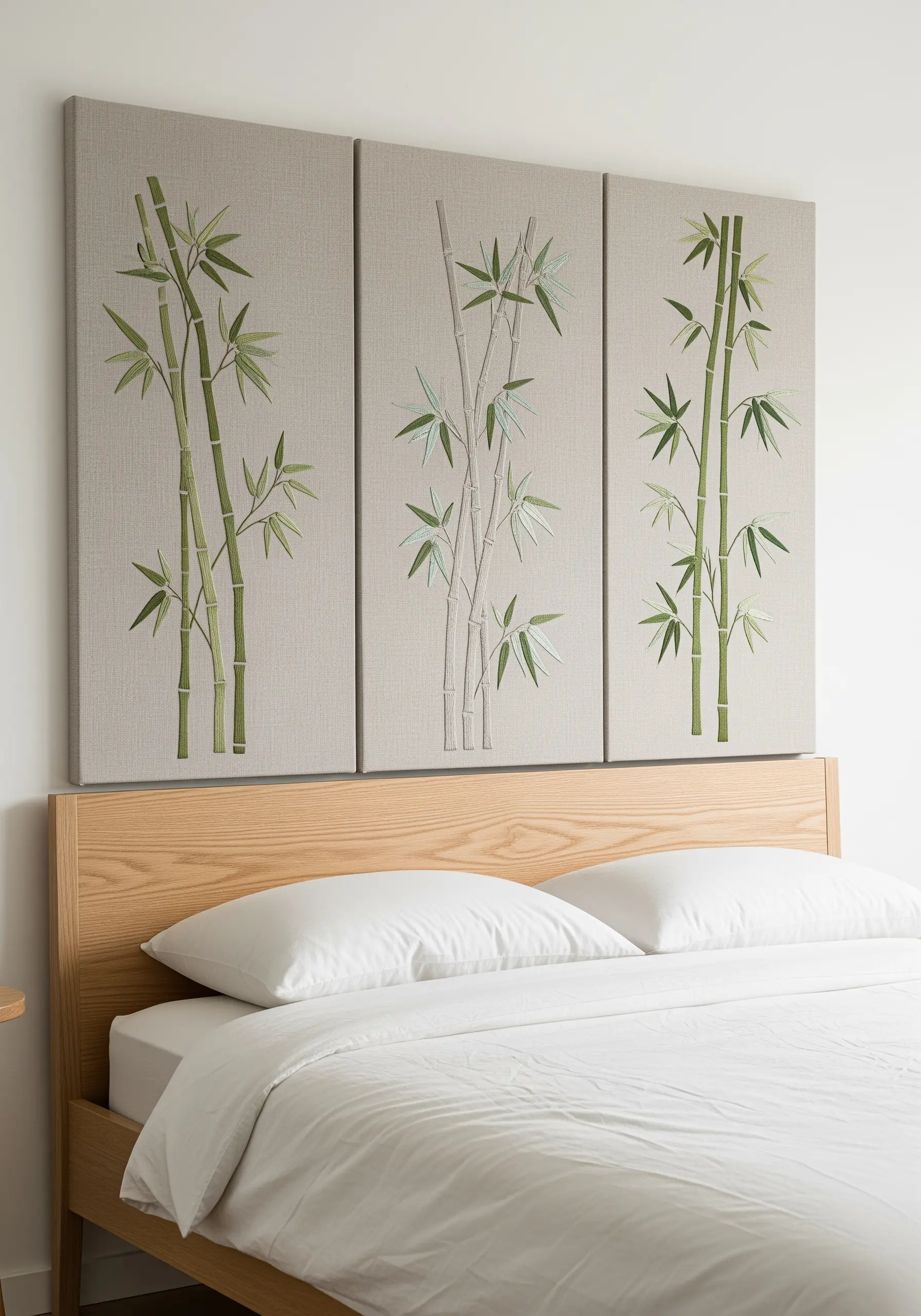
Divide your bamboo design across three separate panels to create a modern, rhythmic piece of wall art.
Use a vertical satin stitch for the bamboo stalks, changing the angle of your stitches slightly for each segment to mimic natural growth lines.
For the leaves, a simple fishbone stitch in several shades of green adds depth and dimension.
Challenge yourself by creating one of the embroidered wall panels using only grayscale threads—this tonal variation explores how color, or the lack of it, completely transforms the mood of a piece.
5. Capturing Hokusai’s Great Wave in Thread
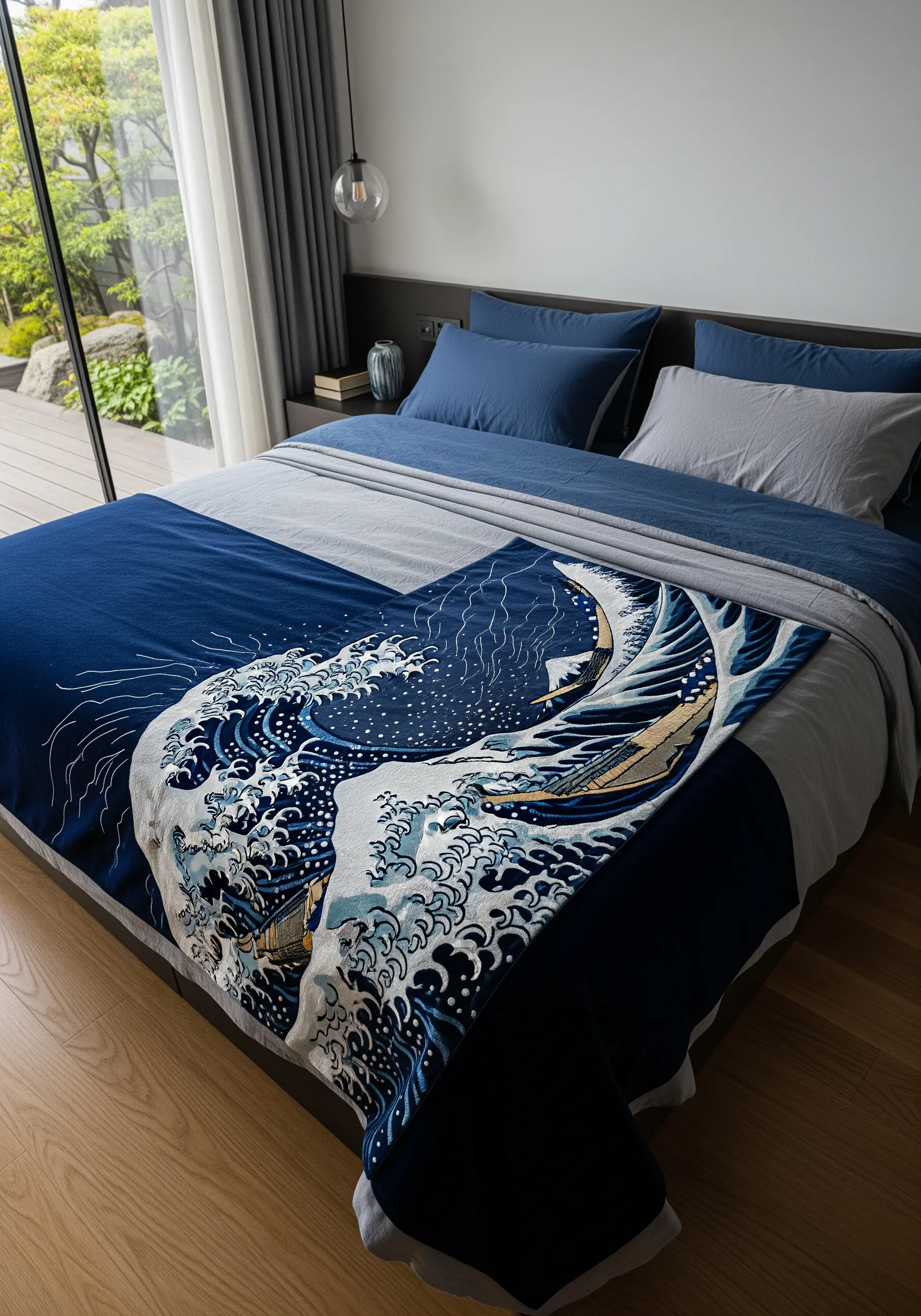
This iconic design is an exercise in translating energy into texture.
Use dense French knots and colonial knots in white and pale blue to build up the seafoam, creating a tactile, frothy effect that stands out from the fabric.
For the deep blue water, use long, directional split stitches that follow the curve of the wave, which guides the eye and enhances the sense of motion.
Don’t be afraid to mix various shades of blue and ecru to make your abstract nature-inspired embroidery motifs feel more dynamic and alive.
6. Minimalist Mountainscape on a Headboard
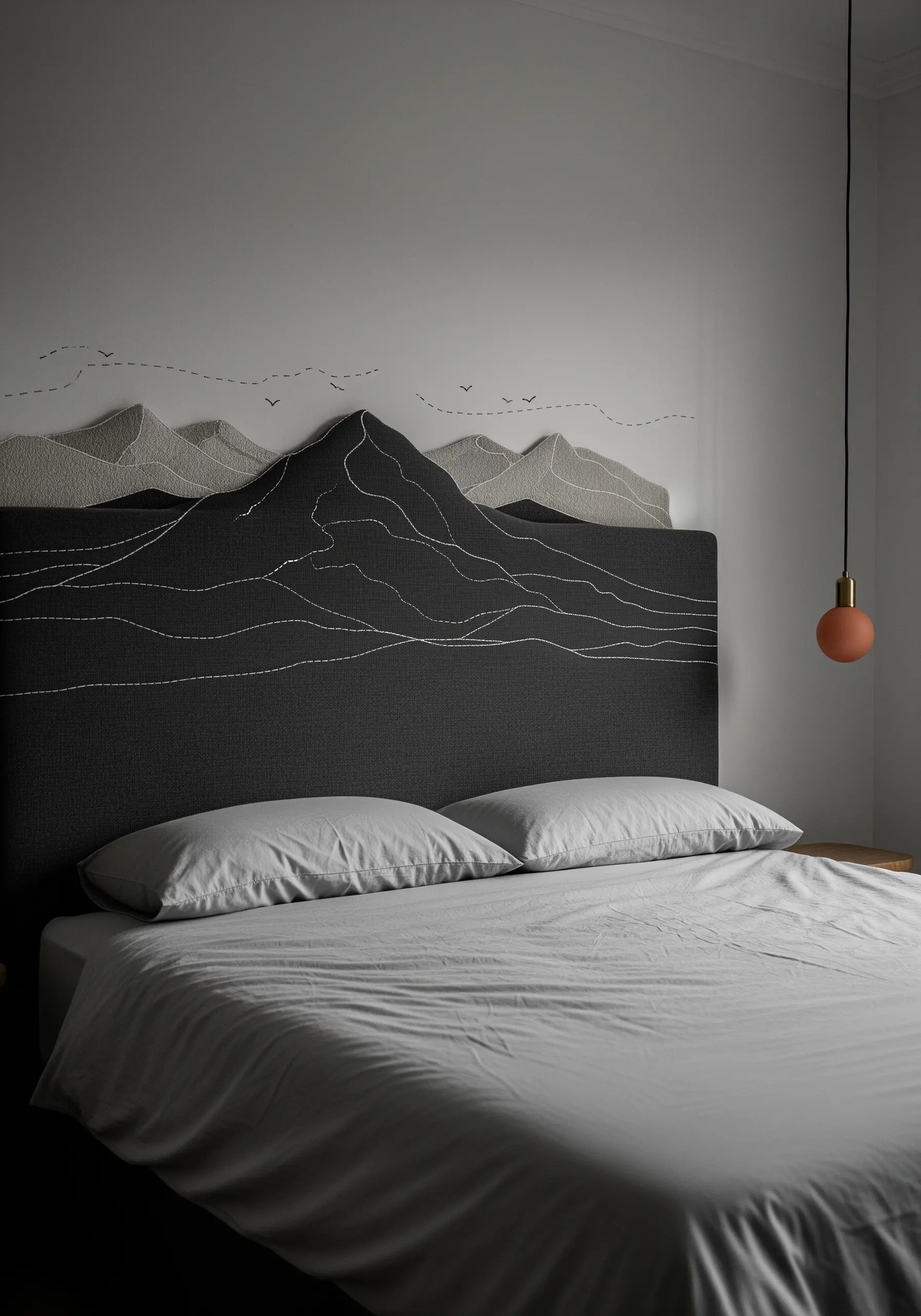
Transform a simple upholstered headboard by stitching a landscape directly onto the fabric using a long, curved upholstery needle.
A simple, uneven running stitch in a contrasting thread creates a powerful graphic outline that suggests distant peaks with minimal effort.
For the closer, shaded mountains, use dense seed stitches to build up texture and tone, creating a subtle gradient that adds depth without overwhelming the design.
These unique embroidered headboard designs integrate art directly into your furniture for a truly custom feel.
7. A Flock of Cranes on Sheer Curtains
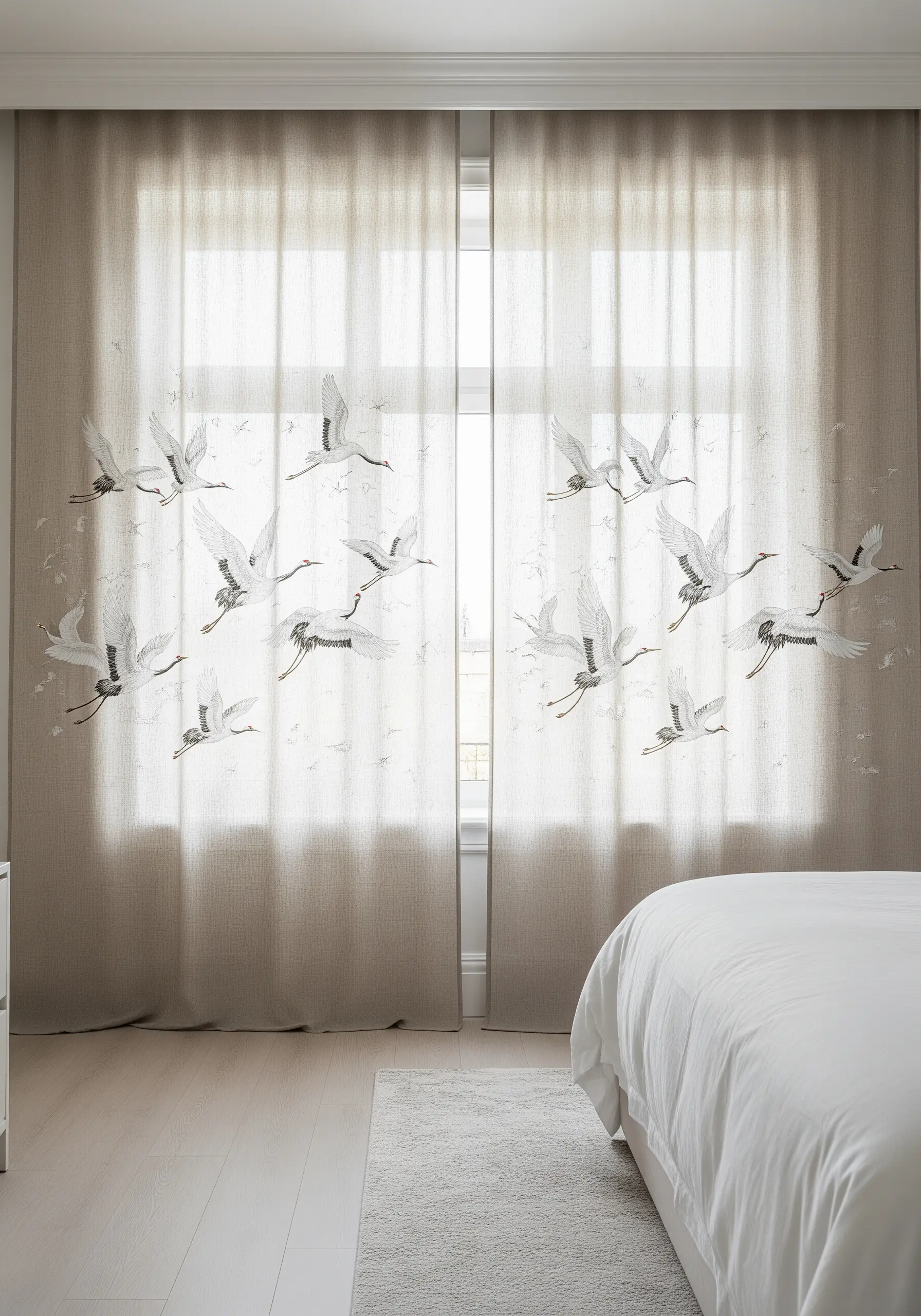
When embroidering on sheer or semi-sheer fabric, your technique must be impeccable, as the reverse side is often visible.
Use a single strand of thread and secure your starts and ends meticulously by weaving them under existing stitches.
A delicate split stitch for outlines and sparse satin stitch for fills will keep the design feeling light and airy, allowing sunlight to pass through.
The scattered composition of the cranes makes them appear to float, turning your window into a piece of living art with these embroidered curtain & blind ideas.
8. Golden Ginkgo on a Chunky Knit Blanket
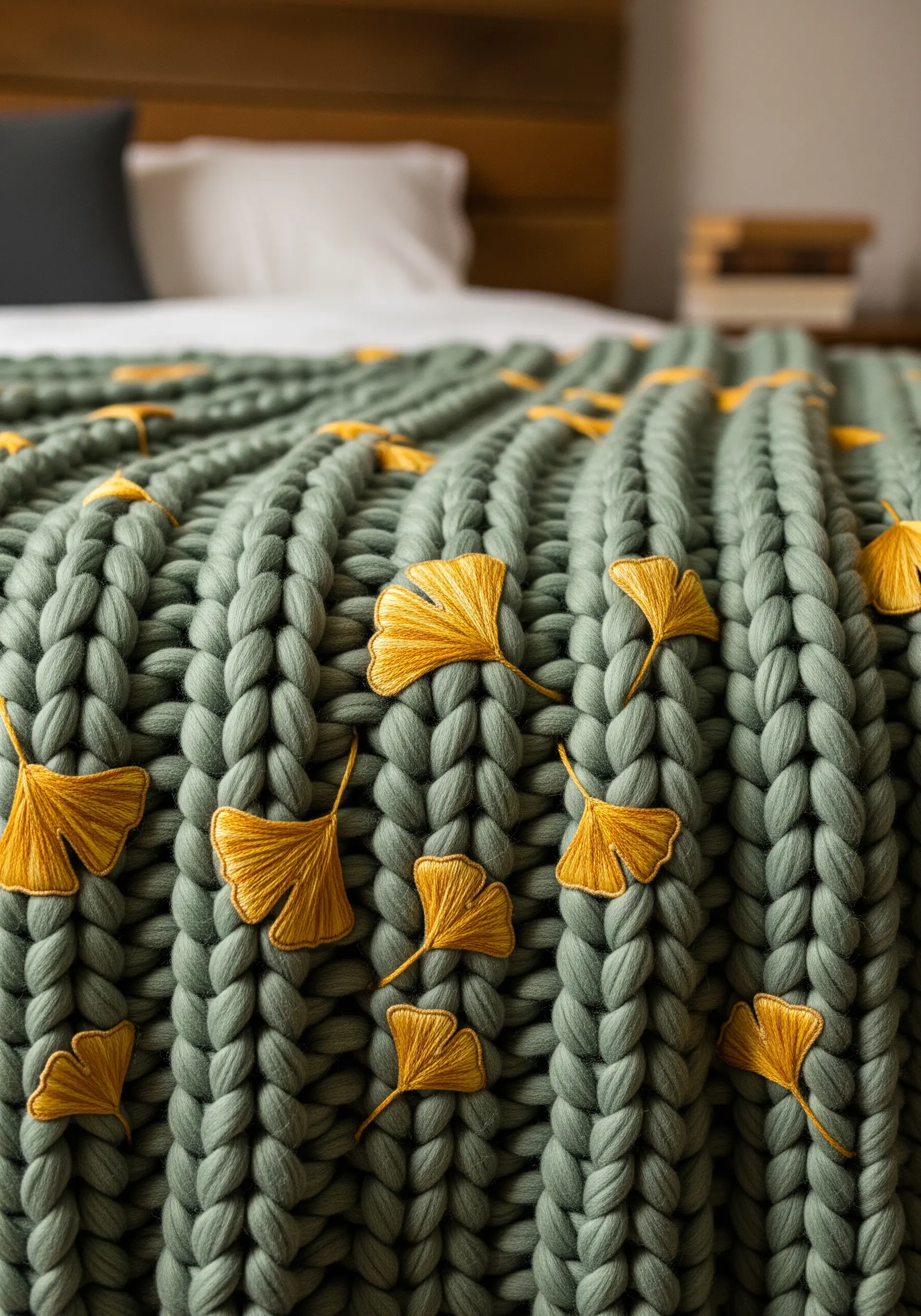
Stitching on a heavy, open-weave knit requires you to work with the fabric’s structure, not against it.
Use a blunt tapestry needle and a smooth yarn that won’t snag the knit fibers.
Create the iconic fan shape of the ginkgo leaf with a radiating satin stitch, allowing your stitches to sink slightly into the plush texture of the blanket.
This contrast between the soft, chunky wool and the smooth, golden yarn is what gives these leaf stitching techniques such a striking, tactile appeal.
9. The Rhythmic Seigaiha Wave Pillow
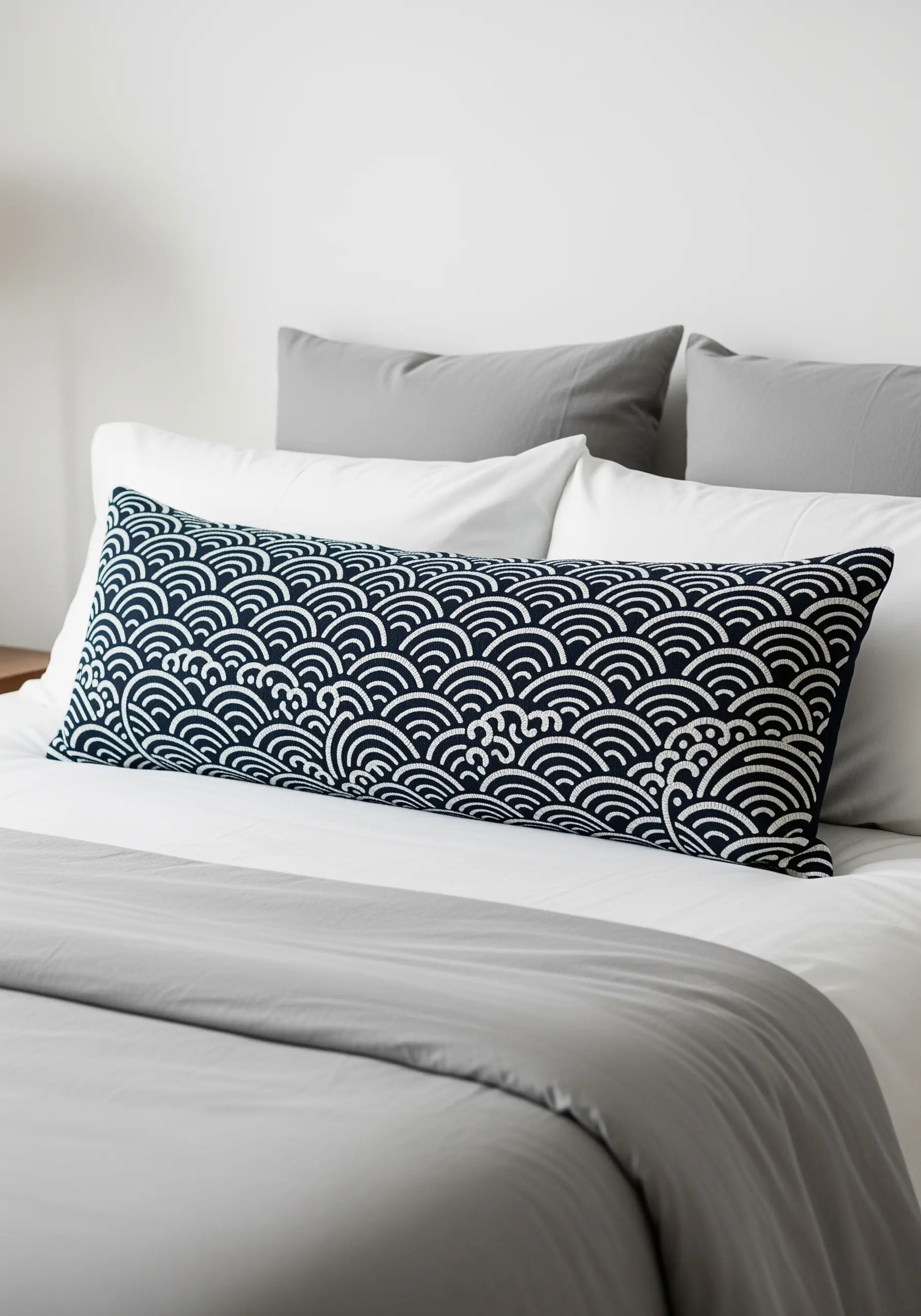
The Seigaiha wave pattern is a perfect meditative stitching exercise, as it relies on rhythm and repetition.
Use a heavier thread, like a cotton perle or traditional sashiko thread, to give the lines weight and presence.
A simple backstitch or stem stitch works beautifully, but the key to a polished look is absolute consistency in your stitch length and the curve of each arc.
The high-contrast navy and white palette turns these simple lines into bold geometric abstract thread patterns that feel both classic and modern.
10. Centering Spiral for a Meditation Cushion
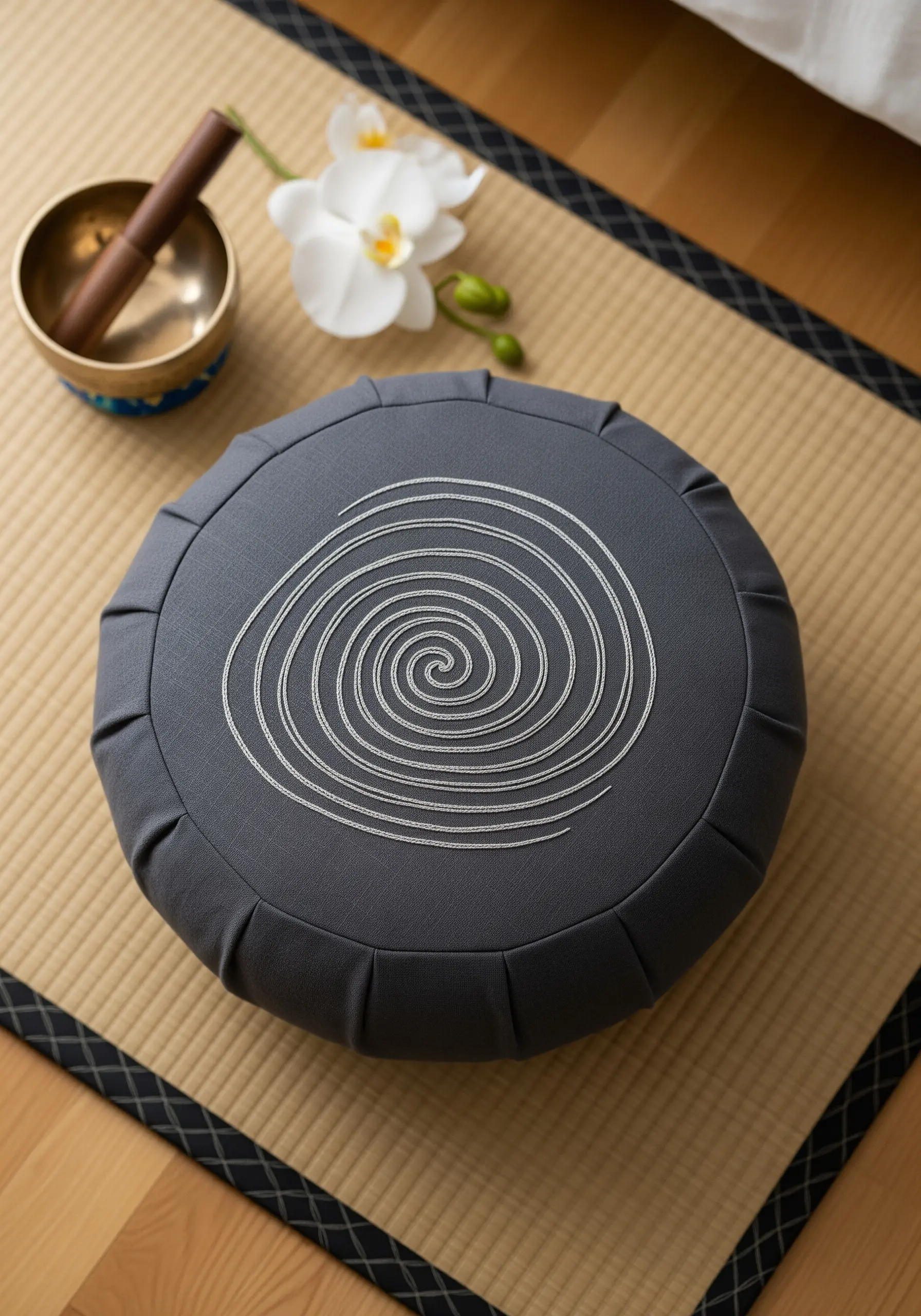
For a meditation cushion, a tactile design can serve as a grounding focal point.
Use a whipped backstitch or a heavy chain stitch to create a raised spiral line that you can physically trace with a fingertip.
Start from the center and work your way outward in a smooth, continuous motion to enhance the meditative quality of the stitching process itself.
Choosing a lustrous thread, like pearl cotton, against a matte fabric creates a subtle visual draw, perfect for soft-tone embroidery mandalas and centering motifs.
11. Cascading Wisteria Tapestry
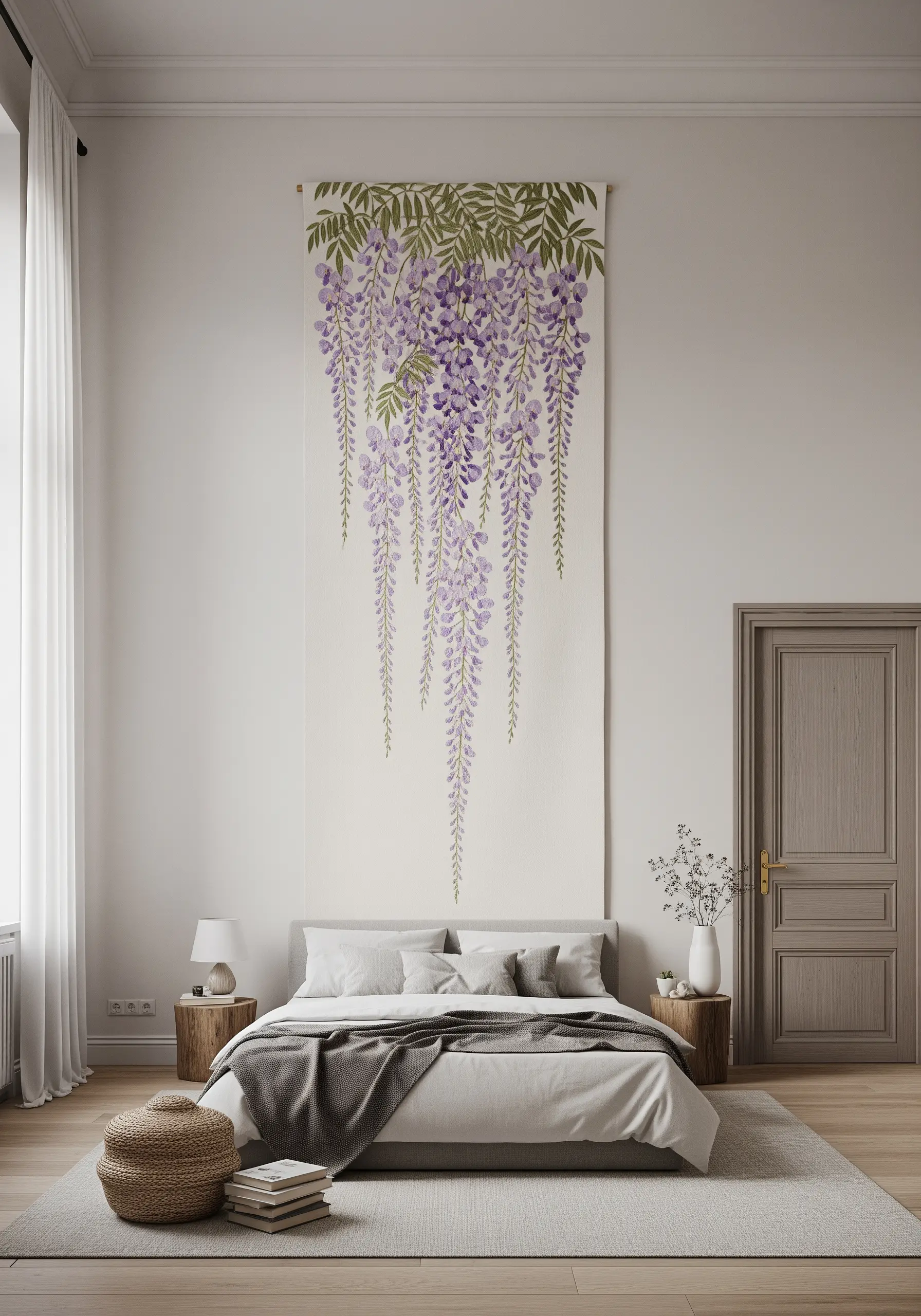
Achieve the lush, drooping effect of wisteria by using a dense collection of French knots and detached chain stitches.
Use at least three to four shades of lavender and violet, clustering them tightly at the top of each blossom and becoming sparser toward the bottom to create a natural gradient.
The long, vertical format of the tapestry draws the eye downward, creating a sense of calm and serenity, making it one of the most gorgeous floral embroidery ideas for a bedroom wall.
12. Framed Stitches as Minimalist Wall Art
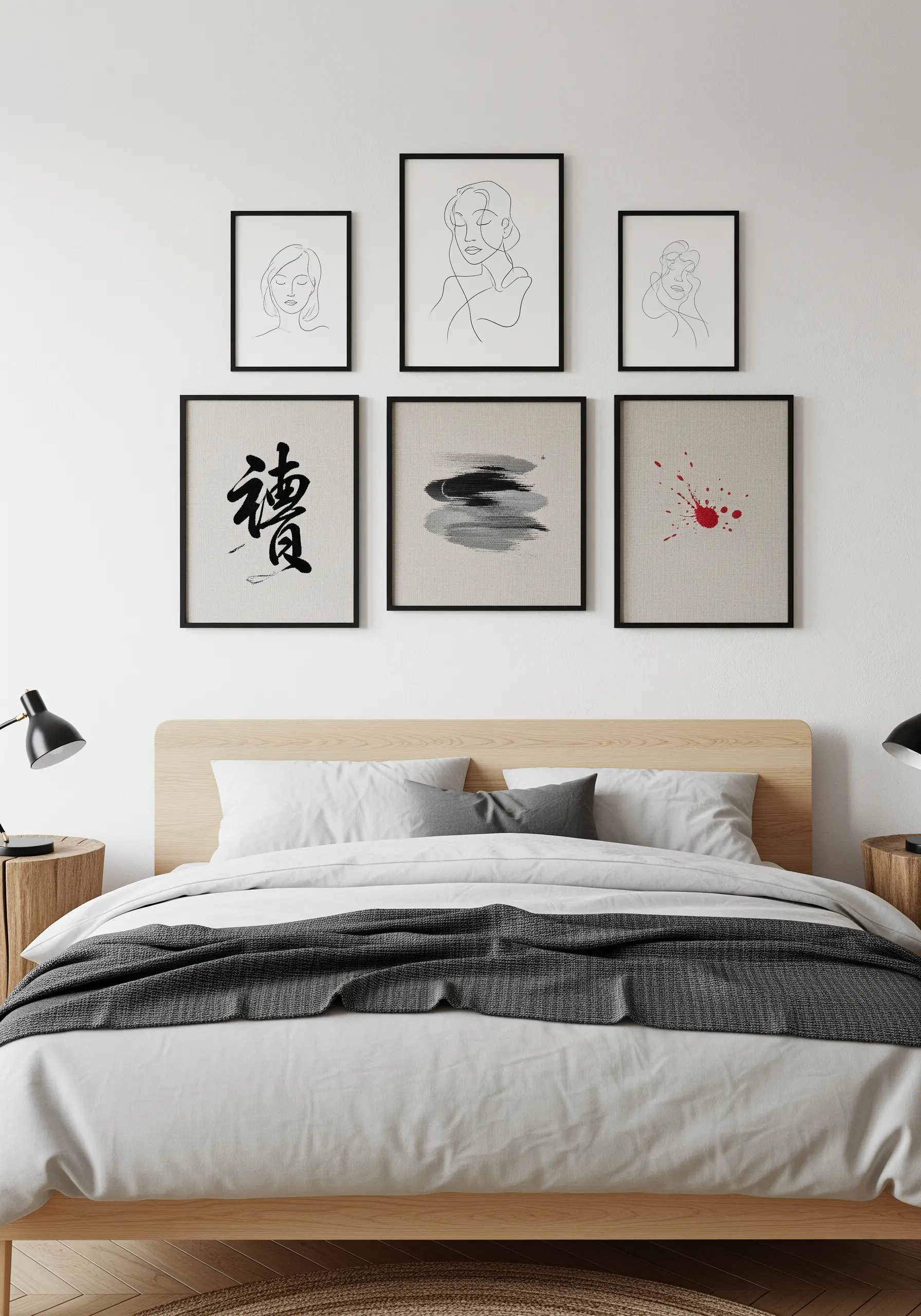
Elevate your stitch practice by treating simple marks as complete works of art.
Use a single, continuous line of backstitch on high-quality linen to create abstract line art silhouettes.
To mimic an ink wash, lay down several strands of gray and black floss and couch them with a single fine thread.
Even a small, unexpected splash of color using satin stitch can become a powerful focal point. Grouping these framed embroidery art pieces creates a sophisticated, personal gallery wall.
13. The Illuminated Lotus Floor Cushion
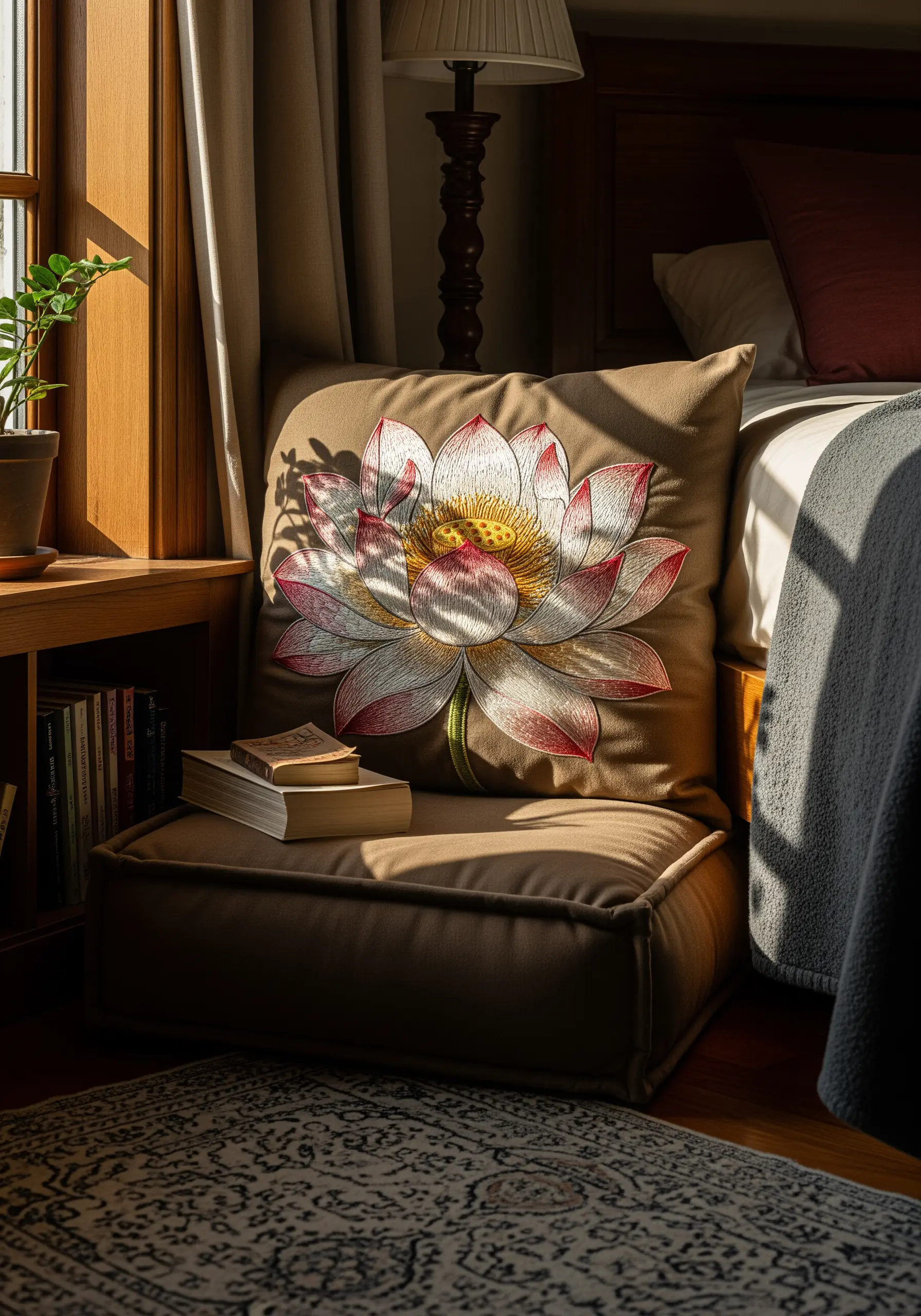
Create a luminous, glowing effect on the lotus petals by mastering the long-and-short stitch gradient.
Carefully blend your threads from a deep pink or red at the petal tips to a soft cream or pure white at the base.
Using a single strand of silk or rayon thread is crucial here, as its natural sheen will catch the light and enhance the illusion of radiance.
For the center, fill the space with dense French knots in gold and yellow to mimic the texture of stamen and create full, plush petals with a sense of depth.
14. The Enduring Bonsai on a Pillowcase
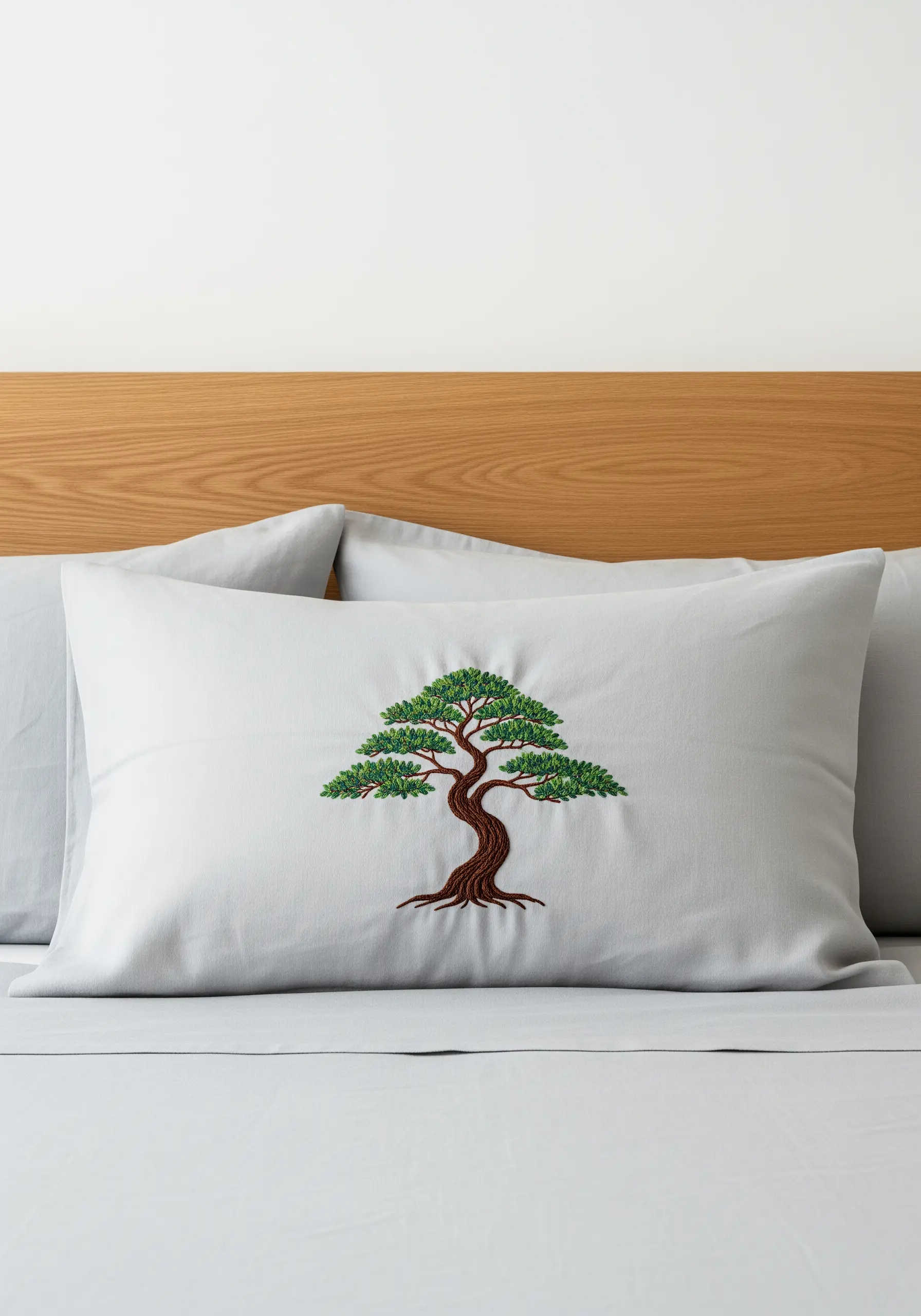
Give the bonsai trunk a sense of age and texture by using a whipped backstitch or a heavy stem stitch with a variegated brown thread.
The subtle, built-in color shifts of a variegated thread will do the work for you, creating the look of weathered bark without constant color changes.
For the foliage, use dense clusters of French knots in two or three shades of green. This technique gives the leaves a sculpted, three-dimensional appearance, making it one of the most beloved houseplant embroidery motifs.
15. Pagoda and Moon Night Tapestry
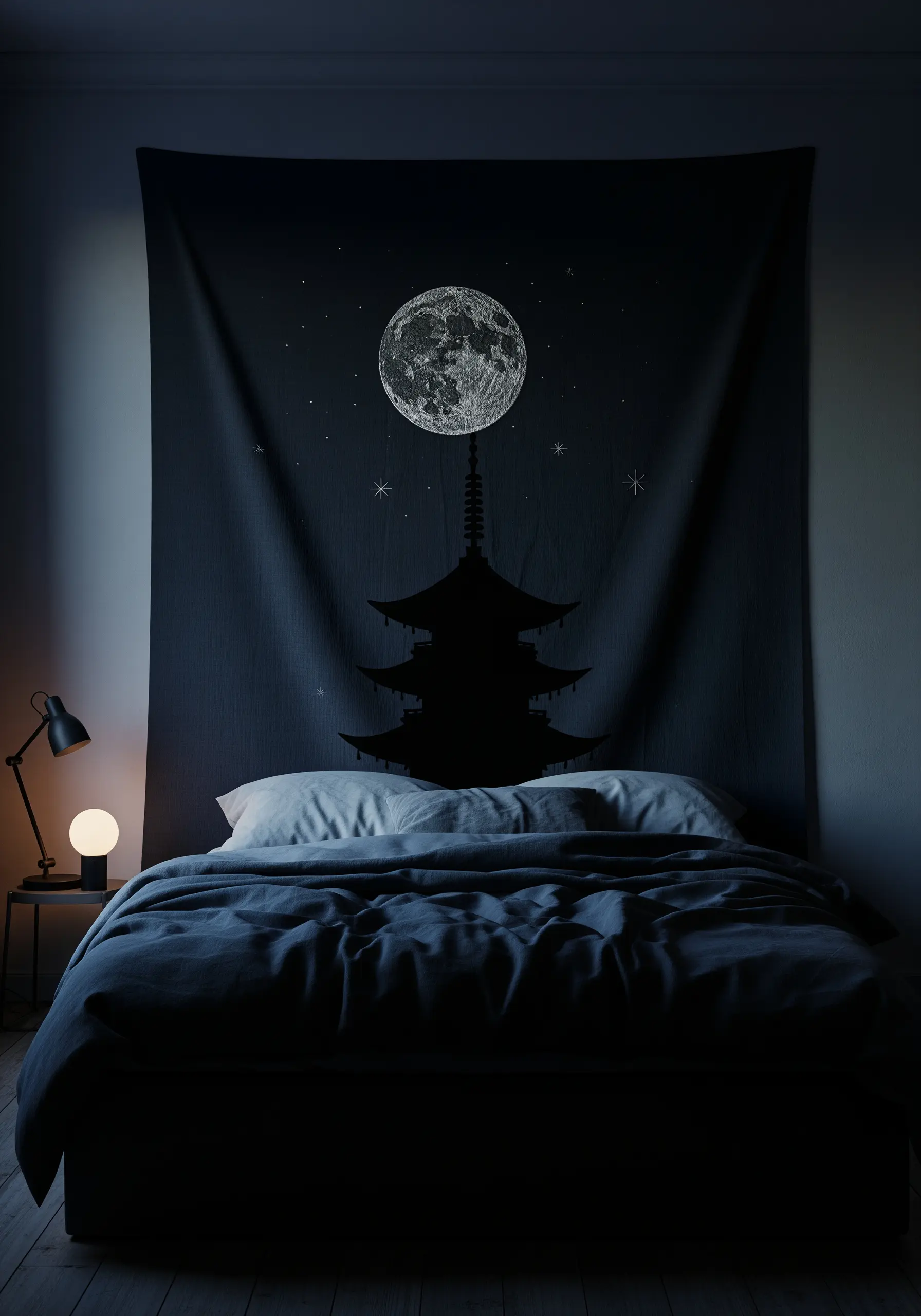
Create a dramatic, textured moon by filling a circle with dense satin stitches using a metallic silver or light gray thread.
Instead of keeping the stitches parallel, intentionally vary their direction to create the illusion of craters and shadows on the lunar surface.
For the stars, a few strategically placed single seed stitches or tiny straight stitches will sparkle without overwhelming the scene.
These abstract metallic thread embroidery concepts work best with high contrast, like a dark fabric background.
16. Dragonfly Lampshade that Casts Shadows
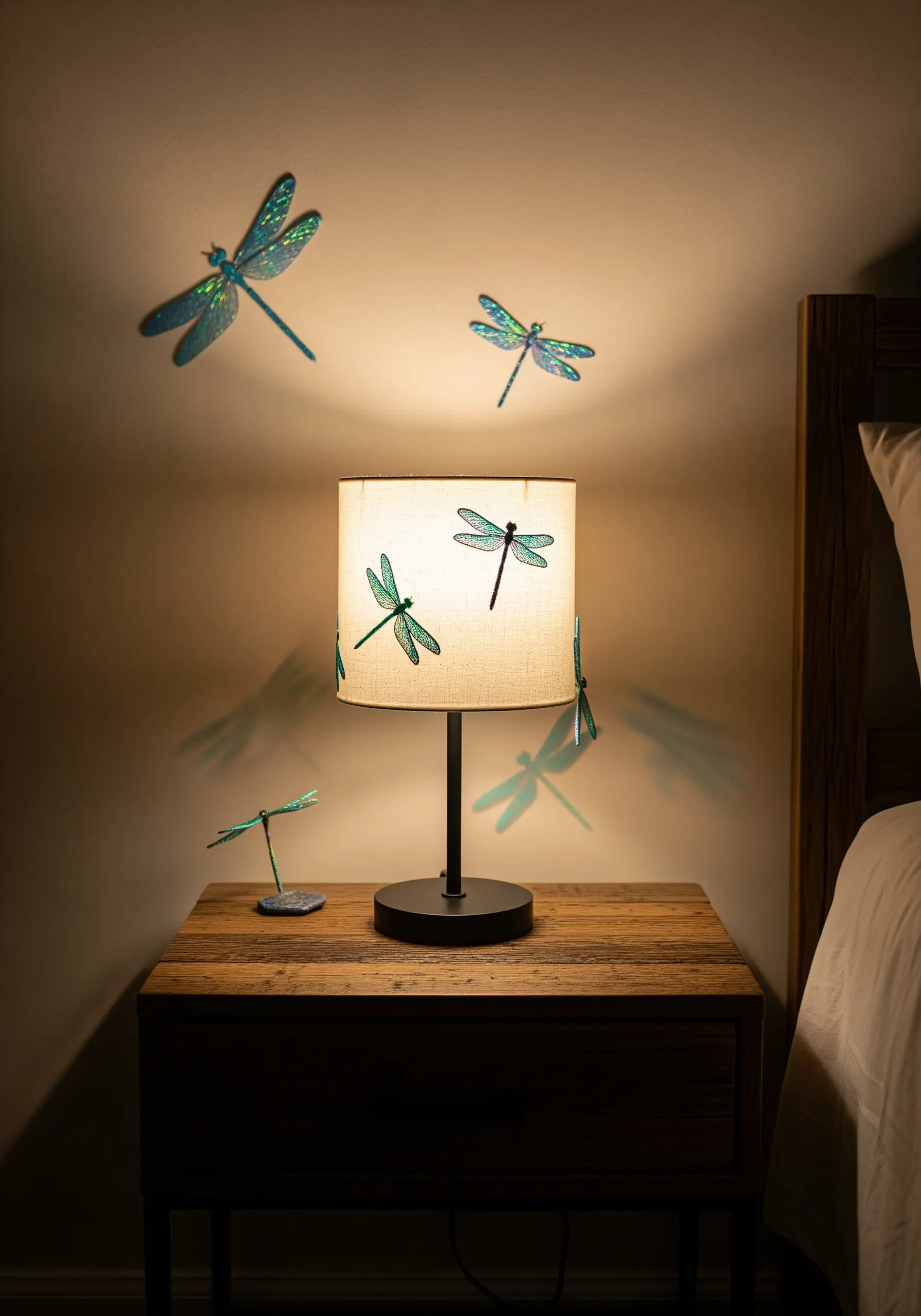
When embroidering a lampshade, your design has two lives: one when the light is off, and another when it’s on.
Use an open, airy stitch like a detached chain (lazy daisy) or fly stitch for the dragonfly wings, and choose iridescent or metallic threads that will catch the light.
When the lamp is turned on, the light will pass through the open stitches and reflect off the shiny threads, casting beautiful, intricate shadows on the nearby wall.
This transforms simple bird & butterfly embroidery patterns into a dynamic light installation.
17. An Autumnal Cascade of Maple Leaves
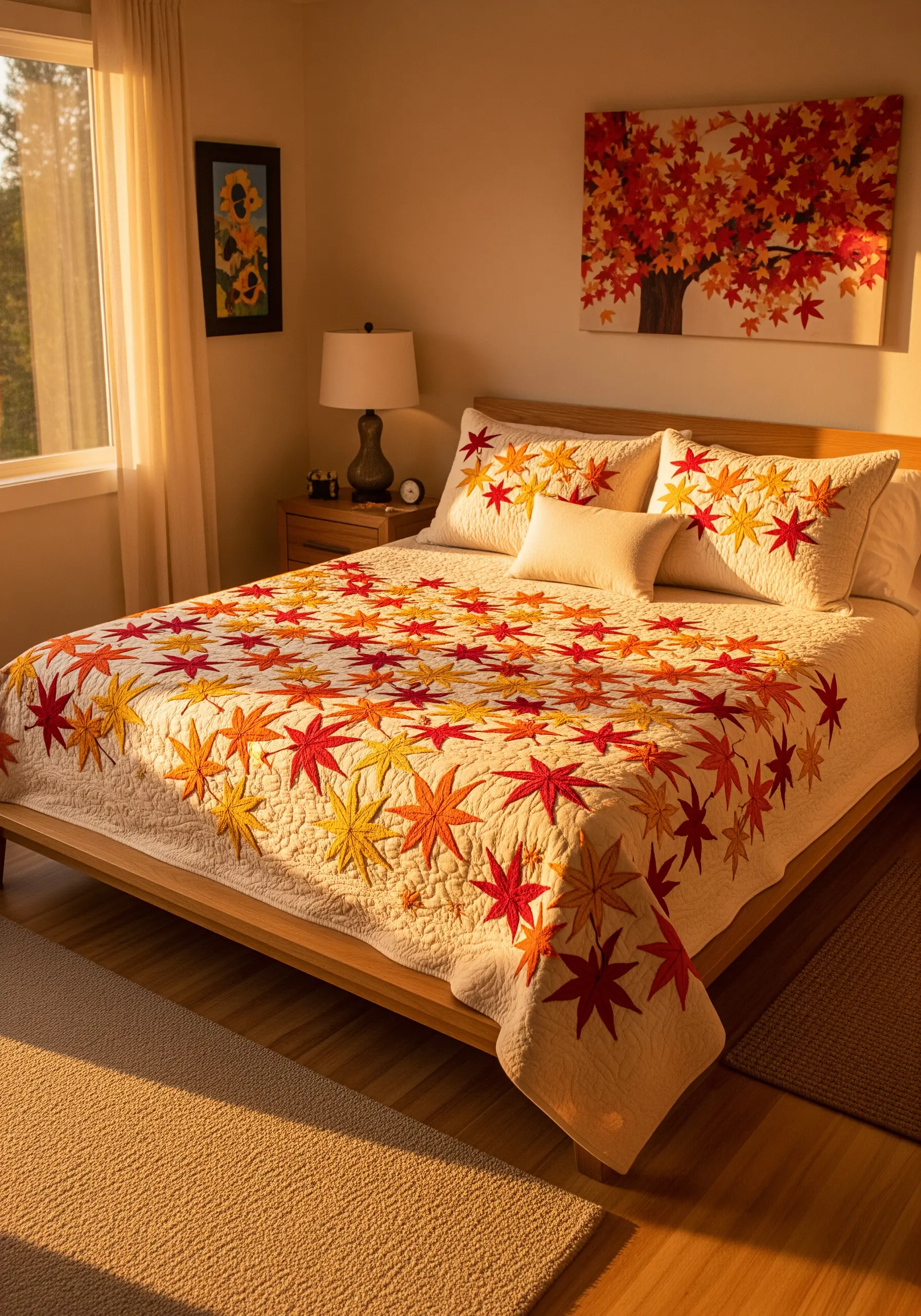
On a quilt or blanket with repeating motifs, embroidery can add definition and detail that elevates the entire piece.
Outline each maple leaf with a simple backstitch to give it a clean, defined edge against the background fabric.
Add delicate veins using a single straight stitch or a fine stem stitch.
Using a variegated thread in autumnal colors is a smart choice here, as it gives each leaf a unique, natural look, making your delicate leaf stitch techniques appear more complex than they are.
18. A Flowing River of Stitches on Upholstery
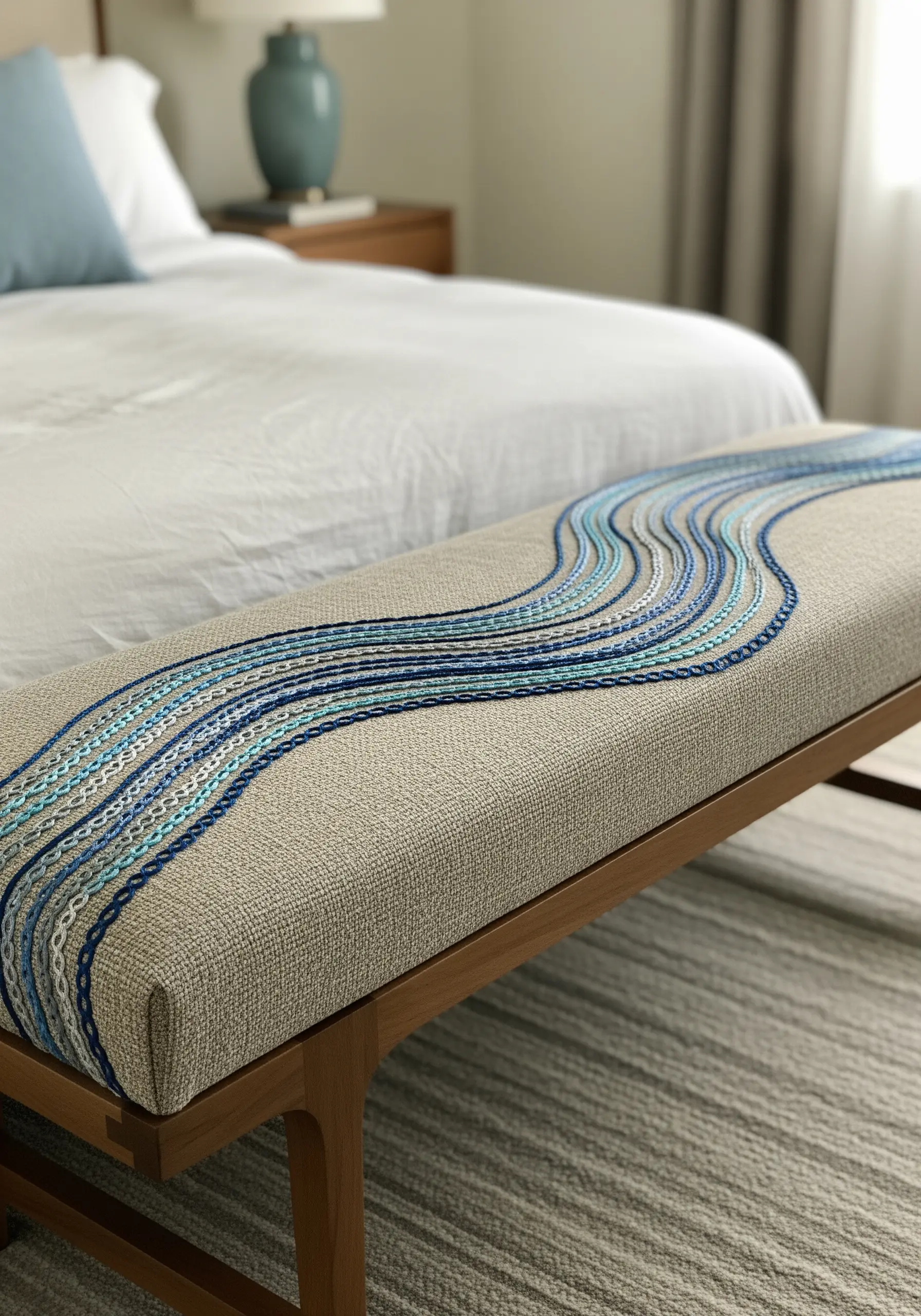
Create this powerful, flowing water effect by couching multiple strands of yarn and thick cotton threads onto your fabric.
Arrange your strands in wavy, organic lines, then use a finer, contrasting thread to tack them down with small, evenly spaced perpendicular stitches.
By mixing different shades of blue with white and silver threads, you create the impression of depth, movement, and light reflecting on the water’s surface.
These lake & river embroidery ideas are perfect for adding a graphic, textural element to furniture.
19. Stylized Cloud Motifs on a Modern Headboard
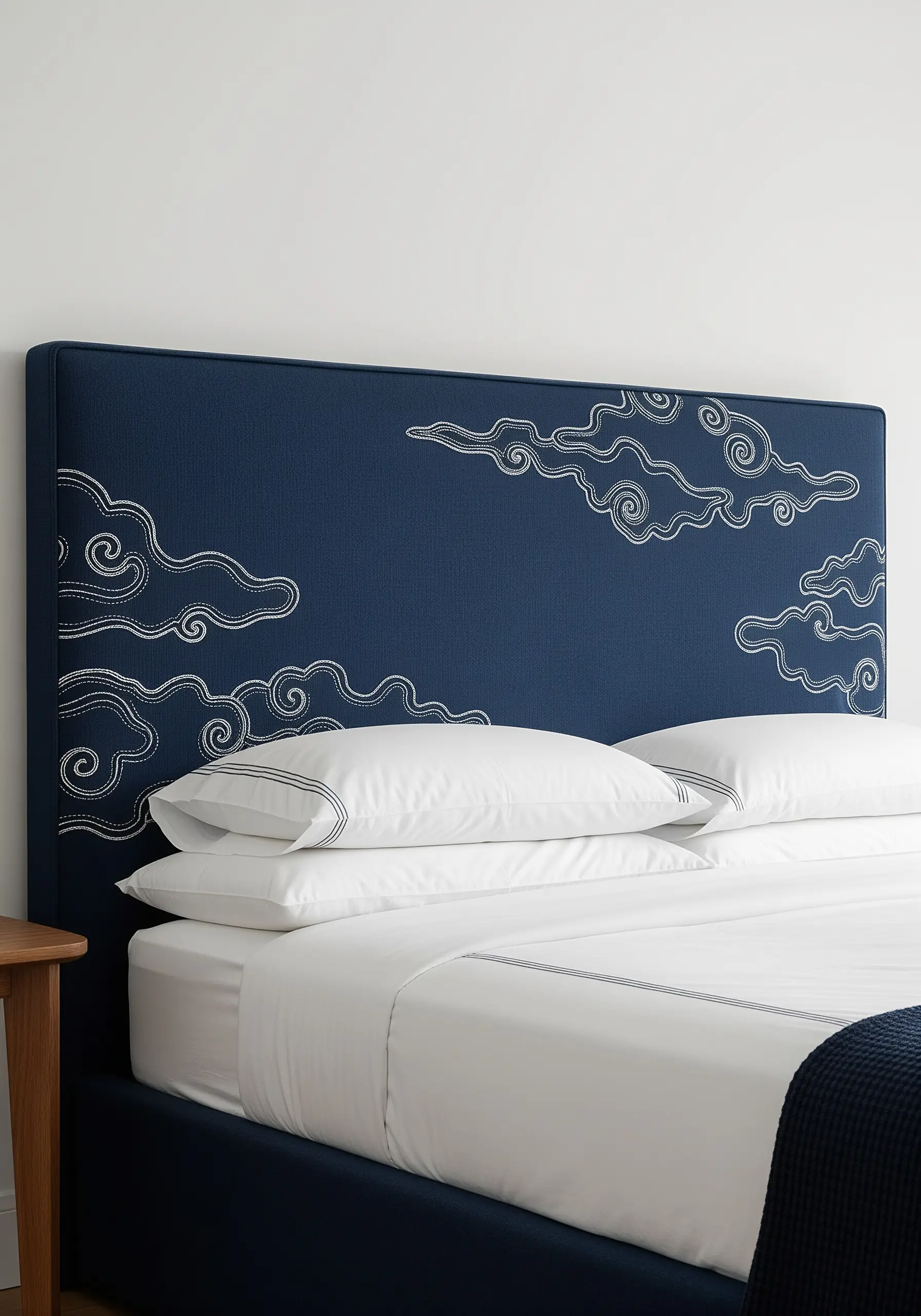
Translate the beauty of traditional Japanese cloud illustrations into embroidery by focusing on the quality of your line work.
Use a bold whipped backstitch or a heavy chain stitch to create a raised, solid outline that has real presence.
A thick, bright white thread on a dark blue fabric creates a crisp, graphic look that feels both classic and contemporary.
The key is maintaining smooth, swirling curves, which makes this a perfect project for those looking for neutral tone embroidery ideas with a graphic punch.
20. Kintsugi: The Art of Mending with Golden Thread
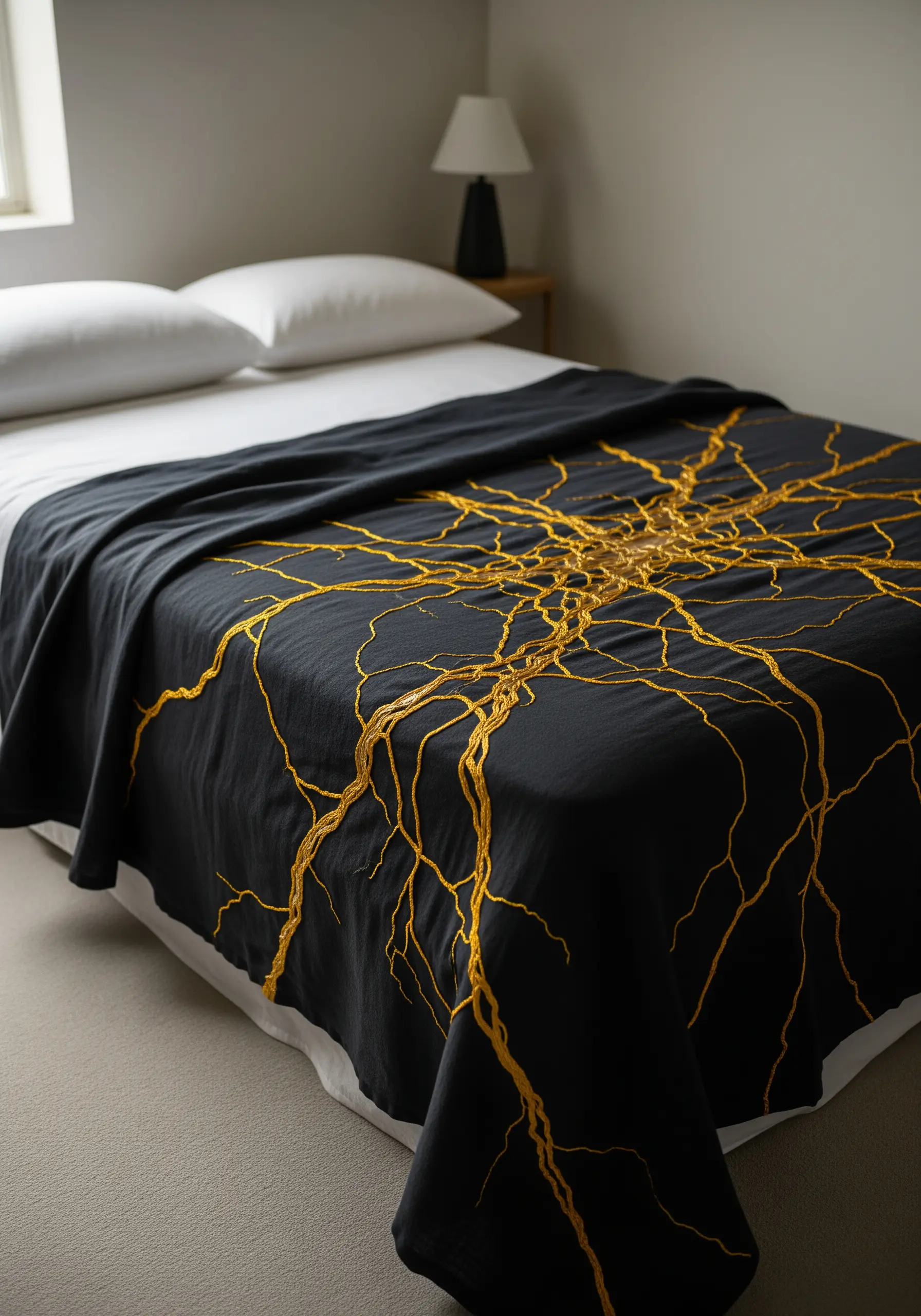
Inspired by the Japanese art of repairing broken pottery with gold lacquer, this design celebrates the beauty of imperfection and resilience.
Use a bold, textured stitch like a whipped backstitch or a heavy chain stitch with a bright gold metallic thread to create your ‘cracks’.
Let the lines branch out organically, as if tracing a real fissure in the fabric.
This transforms a simple blanket into a powerful statement piece, turning a plain textile into gold thread luxury wall art.
21. The Symbolic Torii Gate on a Wall Scroll
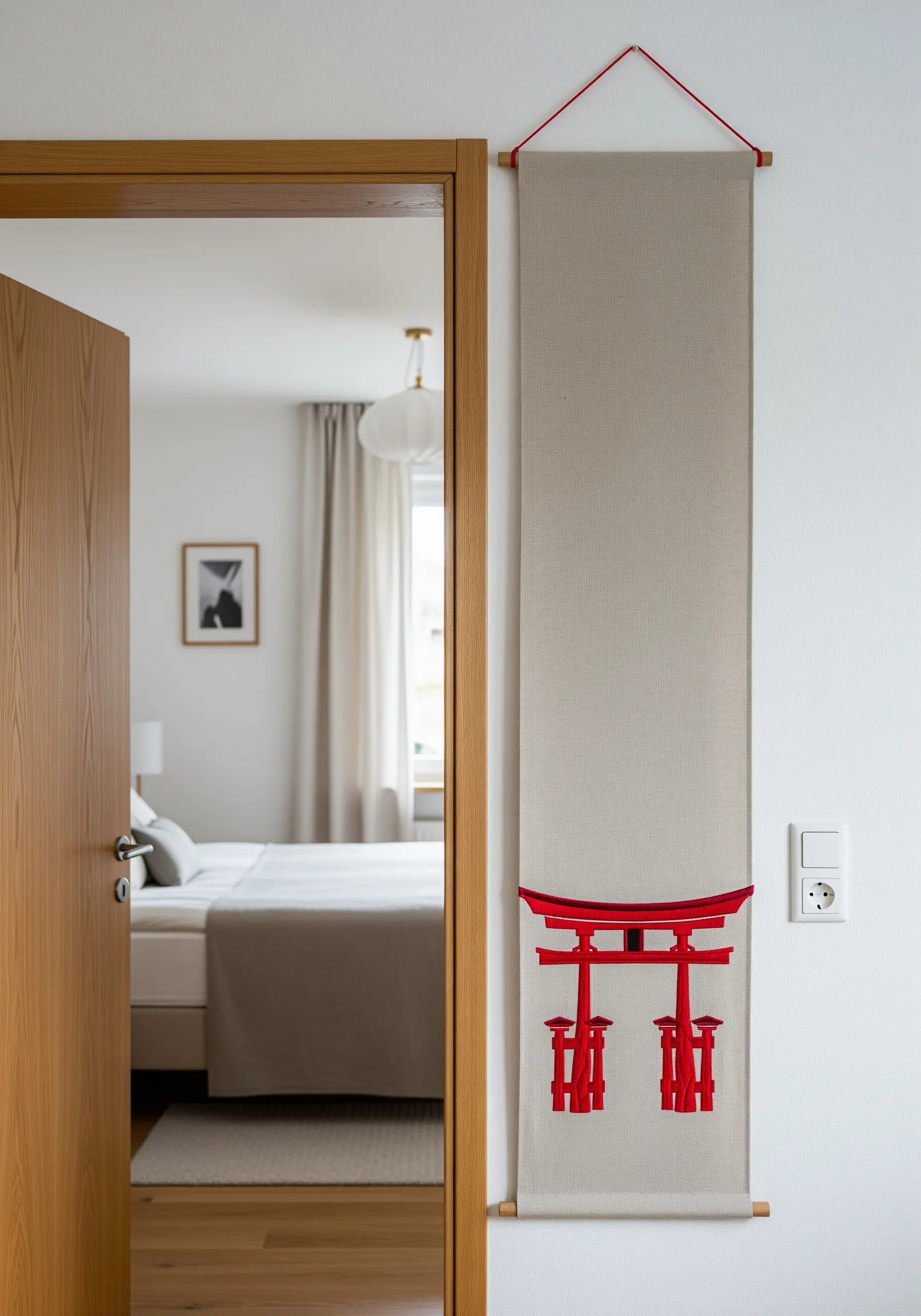
For a sharp, architectural design like a Torii gate, precision and clean lines are paramount.
Use a perfectly even satin stitch to fill the solid red areas, ensuring your stitches lie flat and parallel for a smooth, glossy finish.
Then, outline the entire structure with a single strand of black thread using a split stitch—this will give it a crisp, defined edge.
This contrast between the bold fill and the fine outline makes these minimal embroidery wall pieces incredibly striking.
22. Embroidered Calligraphy as Wall Art
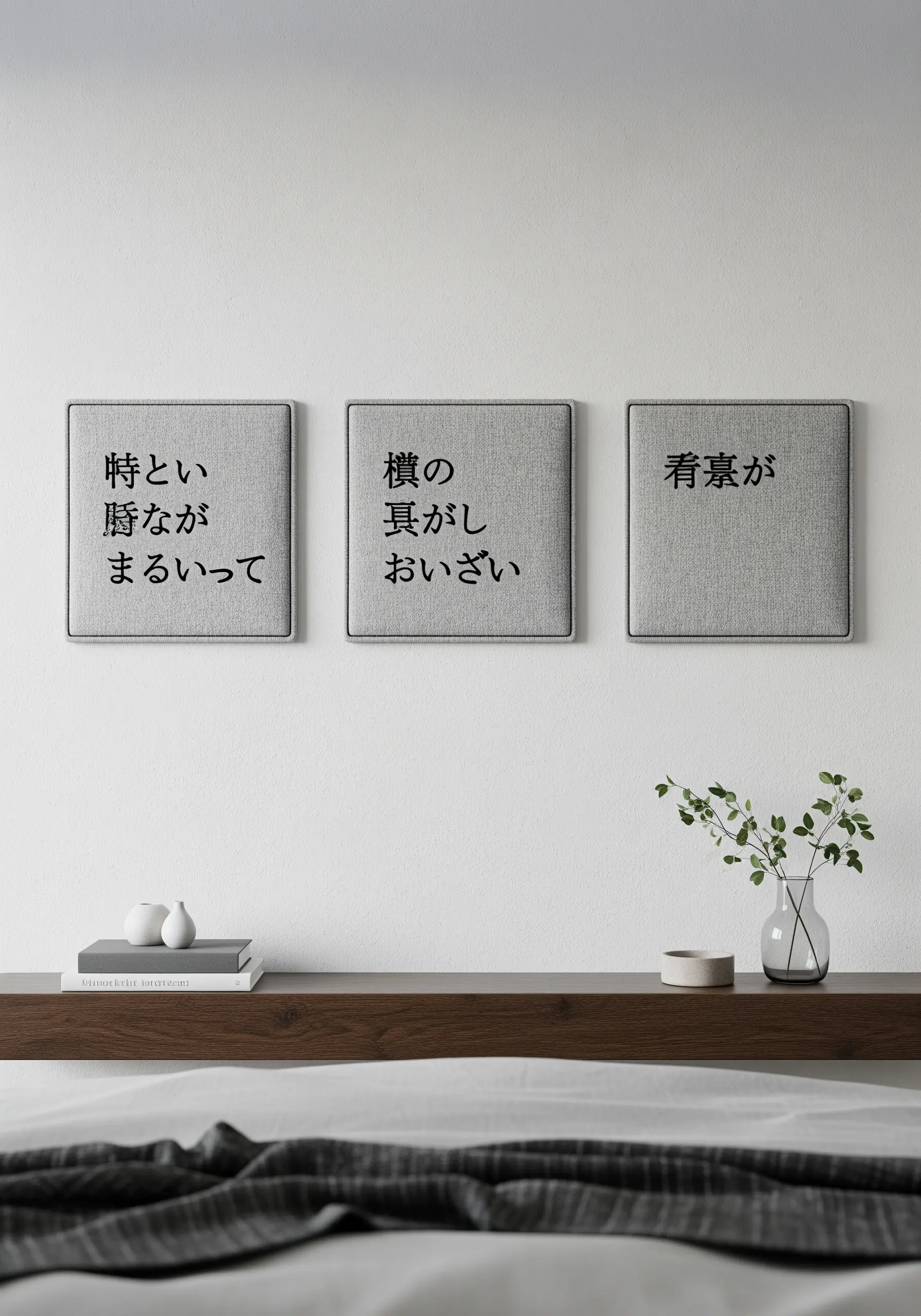
To translate the expressive nature of calligraphy into thread, you must let go of uniform, perfect stitches.
Use a stem stitch, as it allows you to control sharp curves and fluid lines with ease.
Vary the number of strands you use within a single character—using six strands for a ‘heavy’ downstroke and two for a ‘light’ upstroke—to mimic the pressure of a brush.
This approach to minimal typography embroidery patterns focuses on capturing energy, not just shape.