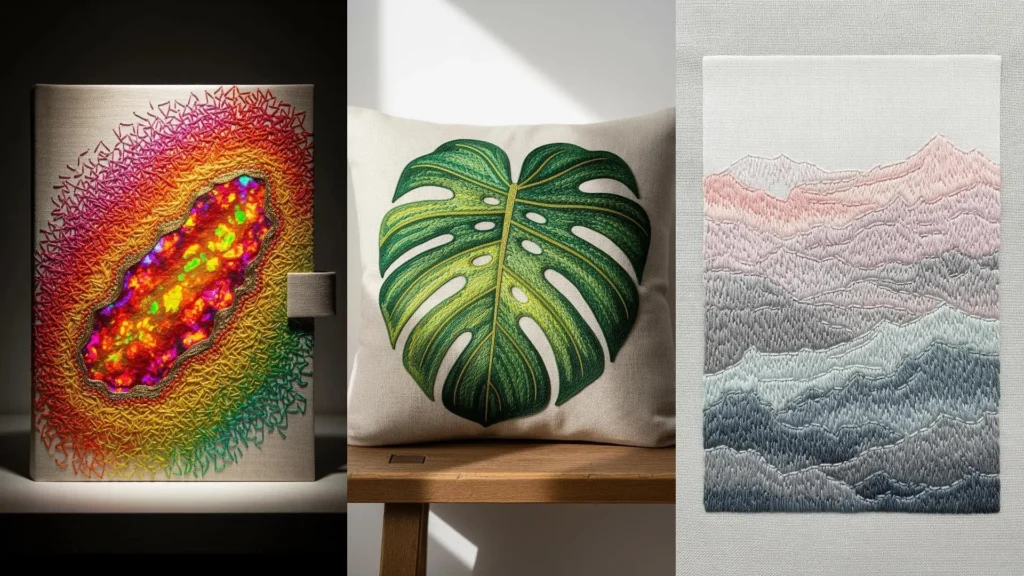
Have you ever looked at a simple line drawing and felt a story unfold? Your embroidery needle holds that same power. It’s not about adding more stitches or brighter colors, but about making every single line count.
Think of your thread not just as a material, but as a pen drawing with texture, tension, and emotion. You can make a line feel soft and fluid, sharp and energetic, or delicate and barely there. It all comes down to choosing the right stitch, the right fabric, and the right approach for the story you want to tell.
Here, we’ll explore how to transform simple outlines into portraits that breathe. You’ll learn to use negative space, play with scale, and even mix media to give your work a voice. It’s time to move beyond just filling in shapes and start sculpting stories, one intentional stitch at a time.
1. The Unbroken Line: A Study in Fluidity
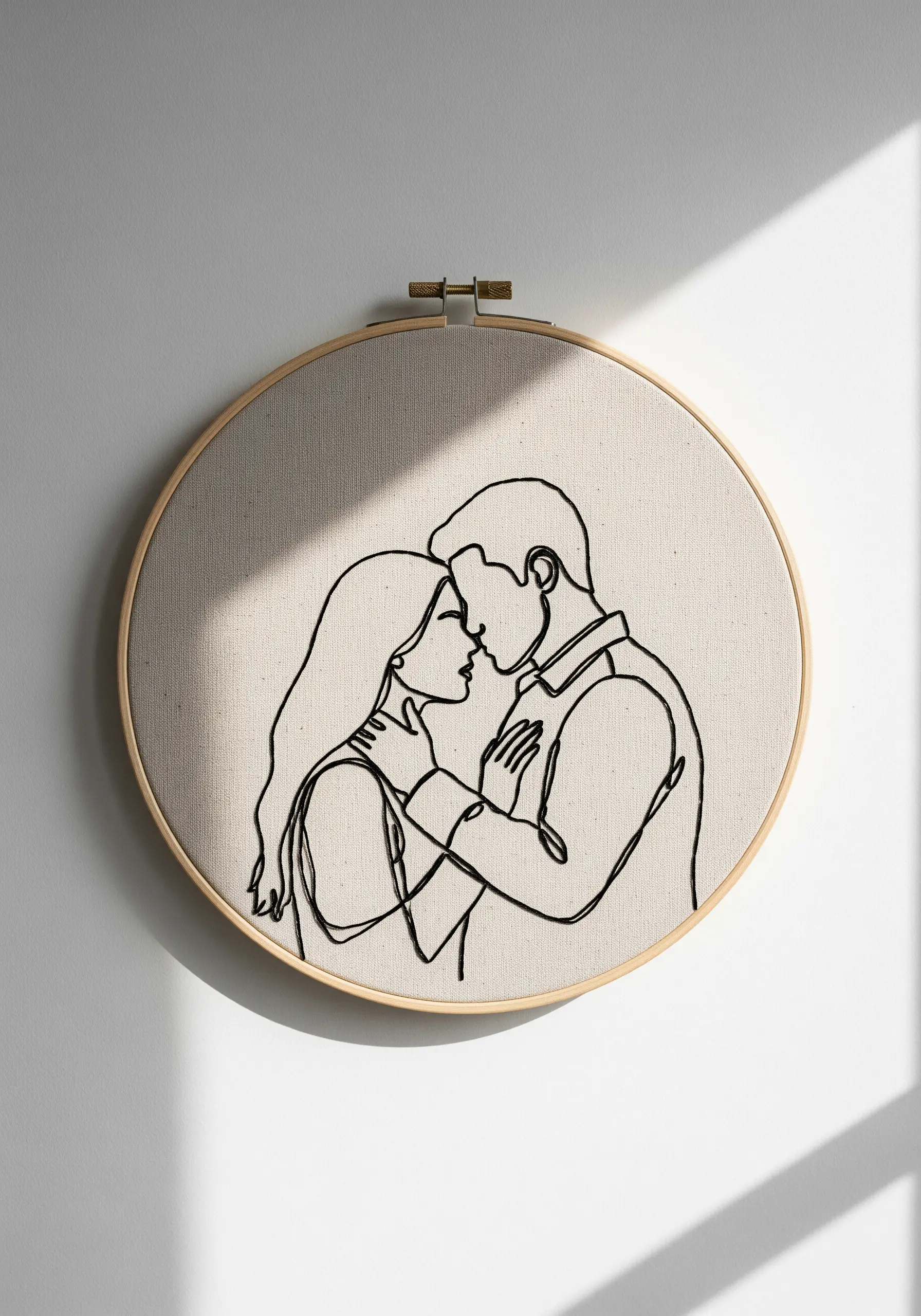
To create a portrait with a single, continuous line, your stitch choice is paramount.
Opt for a whipped backstitch or a stem stitch, as both are designed to create smooth, uninterrupted curves without the jagged edges a standard backstitch can produce.
Use a single, long piece of six-strand floss to minimize the need to start and stop, preserving the design’s fluid integrity.
Stitching on a fabric with a visible weave, like a cotton-linen blend, provides a subtle grid that helps you maintain consistent stitch length and tension for a polished, professional finish.
2. Emotional Gradients: Thread Painting Joy
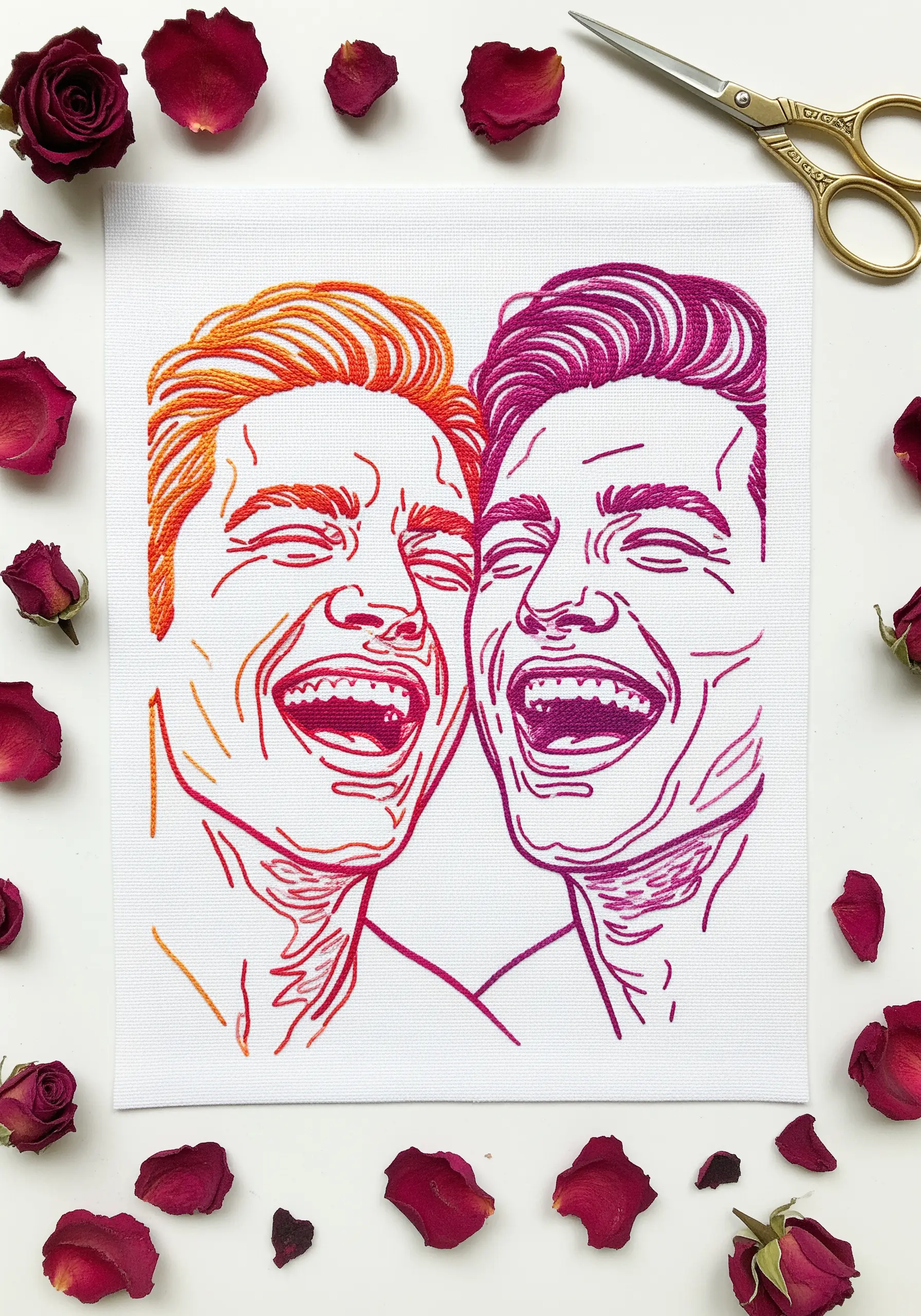
Move beyond flat color by using a thread-painting technique to blend a vibrant gradient within the outlines of a portrait.
Select an analogous color palette—like this fiery orange to magenta—to represent warmth and emotion.
Use a single strand of floss and long-and-short stitches, angling your stitches to follow the contours of the face and hair to create natural-looking dimension and movement.
This method turns a simple line drawing into a dynamic piece where the color blending thread patterns themselves convey the emotion.
3. Abstract Connections in Gold and Velvet

Create a sense of luxury and drama by combining high-contrast materials.
Use a metallic blending filament or a fine metallic thread, couching it onto a rich, dark velvet background.
Couching—tacking down a thicker thread with smaller, invisible stitches—allows you to work with difficult metallic fibers without them fraying or breaking.
The abstract flow of the gathered threads into the delicate hands creates a powerful metaphor for two lives intertwining, while the texture of the velvet absorbs light and makes the gold shine even brighter.
4. Sculpting with Thread: Directional Fill
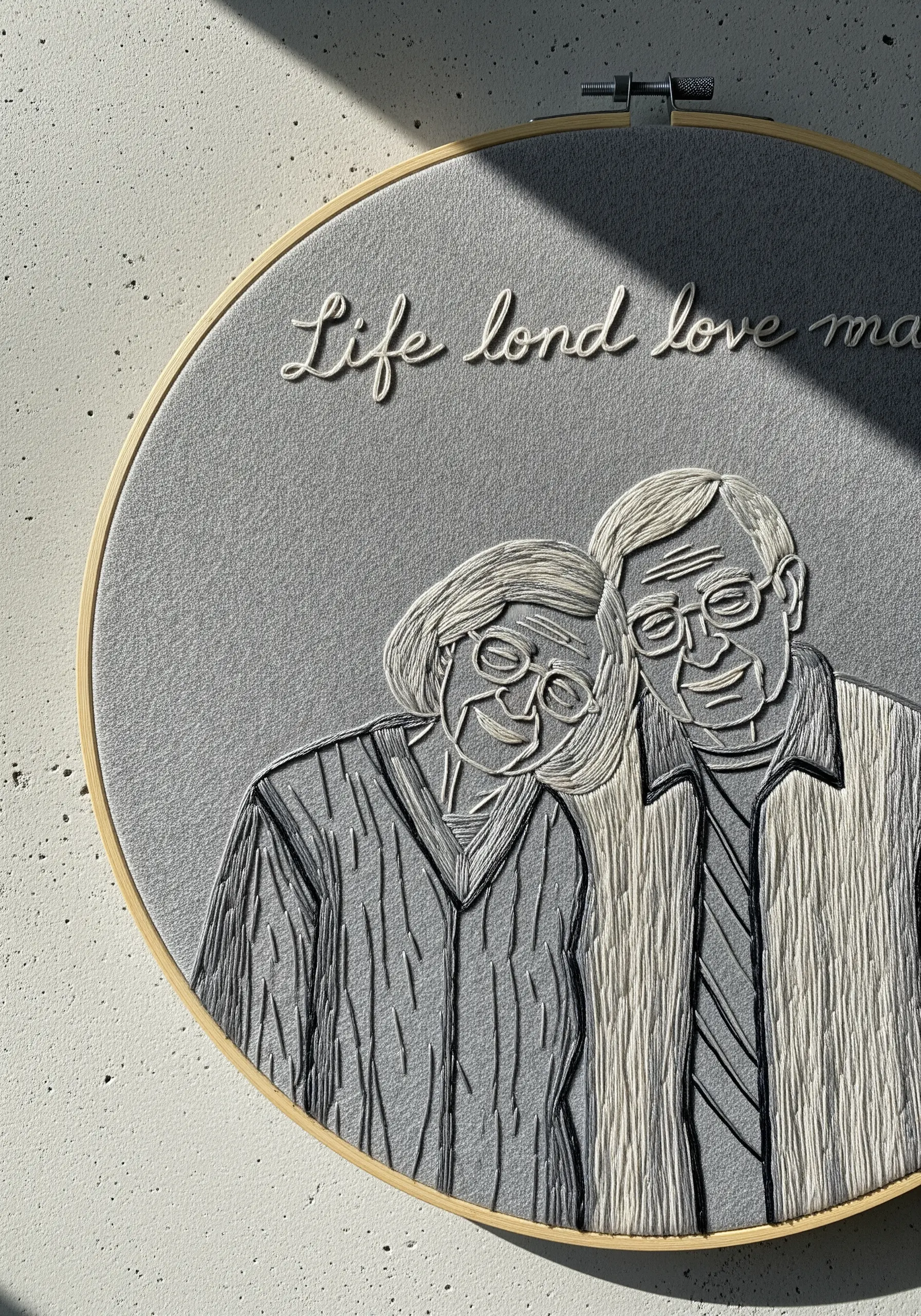
Give your portraits depth and character by filling shapes with directional satin stitches.
Instead of a uniform fill, vary the angle of your stitches to mimic how light and shadow fall across different surfaces, like the folds of a shirt or the curve of a cheek.
Use a limited, monochromatic color palette (shades of grey, white, and black) to emphasize form and texture over color.
This technique transforms flat outlines into three-dimensional forms, making the portrait feel solid and lifelike.
5. The Floating Portrait: Stitching on Air
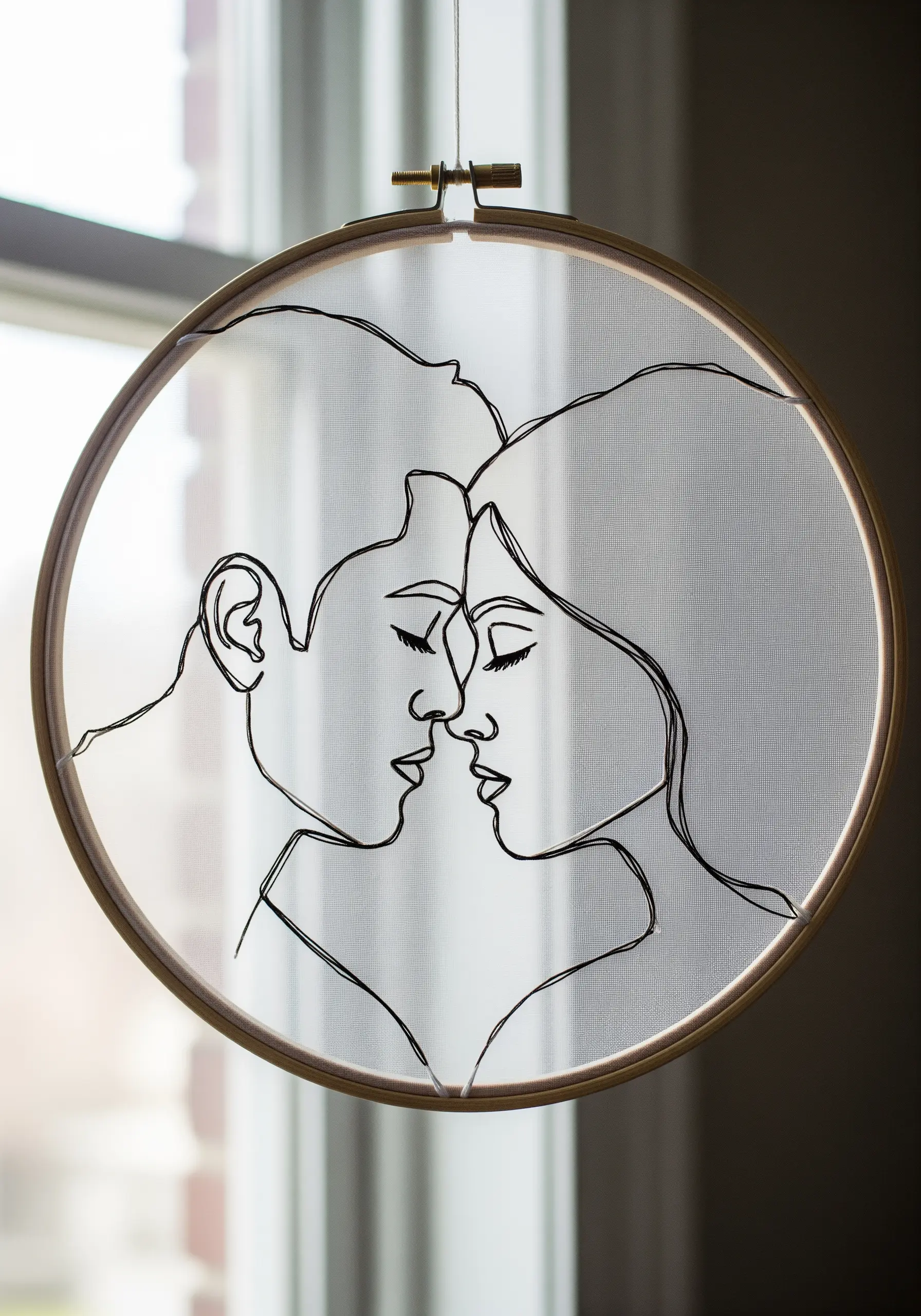
Achieve a delicate, ethereal effect by embroidering your line art on a sheer fabric like tulle or organza.
To prevent the fabric from puckering, use a water-soluble or heat-away stabilizer as your base; once your stitching is complete, the stabilizer dissolves, leaving only the threadwork suspended in the hoop.
This technique relies on the power of negative space stitch ideas, creating a piece that interacts with its environment and feels incredibly light.
A simple backstitch with three to four strands of floss provides enough weight to be seen without compromising the design’s airy quality.
6. Wall-Scale Narratives with Simple Lines
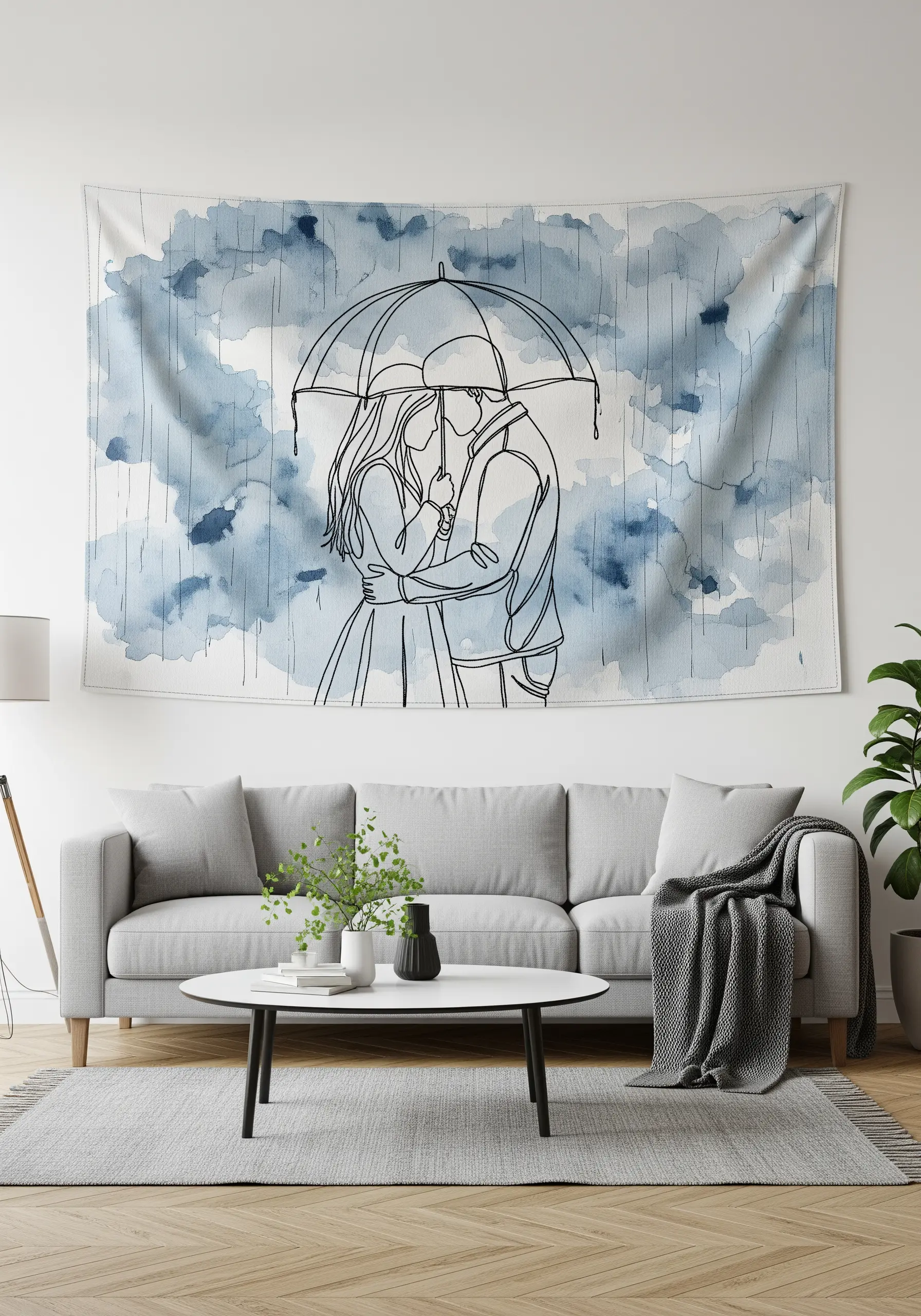
Transform a simple outline into a statement piece of decor by scaling it up onto a large fabric panel or tapestry.
Combine embroidery with a painted background, like this watercolor wash, to add atmospheric depth without complex stitching.
Use a thicker thread, such as Perle cotton or even fine yarn, to ensure the lines are bold enough to be seen from a distance.
This approach proves that you don’t need dense, intricate stitching to create large-scale embroidery wall tapestries with significant emotional impact.
7. Geometric Abstraction: From Thread to String Art
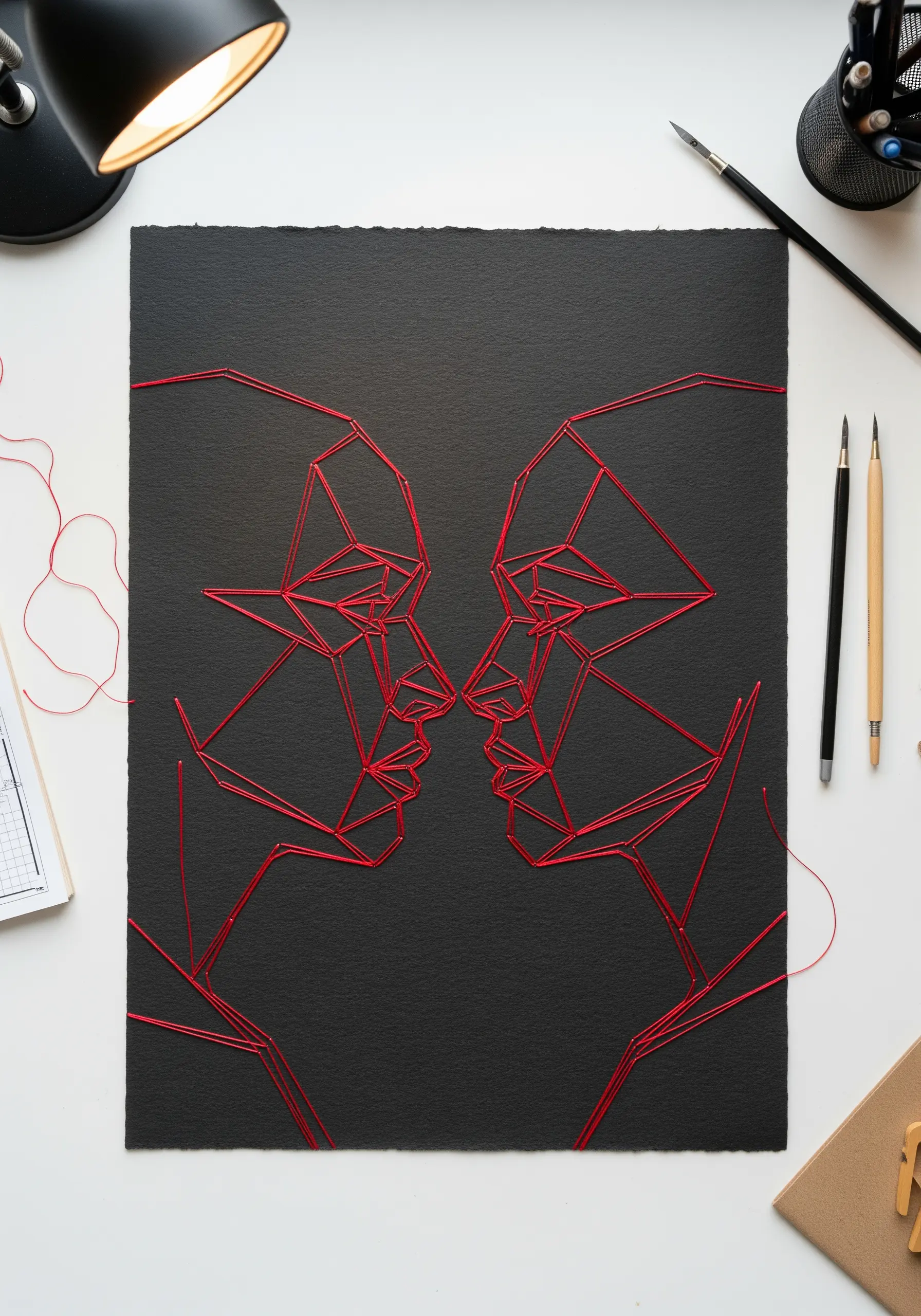
Borrow principles from string art to create a sharp, geometric portrait with a modern edge.
Work on a rigid surface like heavy cardstock or illustration board instead of fabric.
Plot your design and pierce the paper with an awl or a thick needle at each vertex before you begin stitching. This prevents tearing and ensures clean lines.
Using a single, bold color like red on a black background creates a high-contrast, graphic effect that feels both architectural and deeply human.
8. Botanical Silhouettes: Weaving in Nature
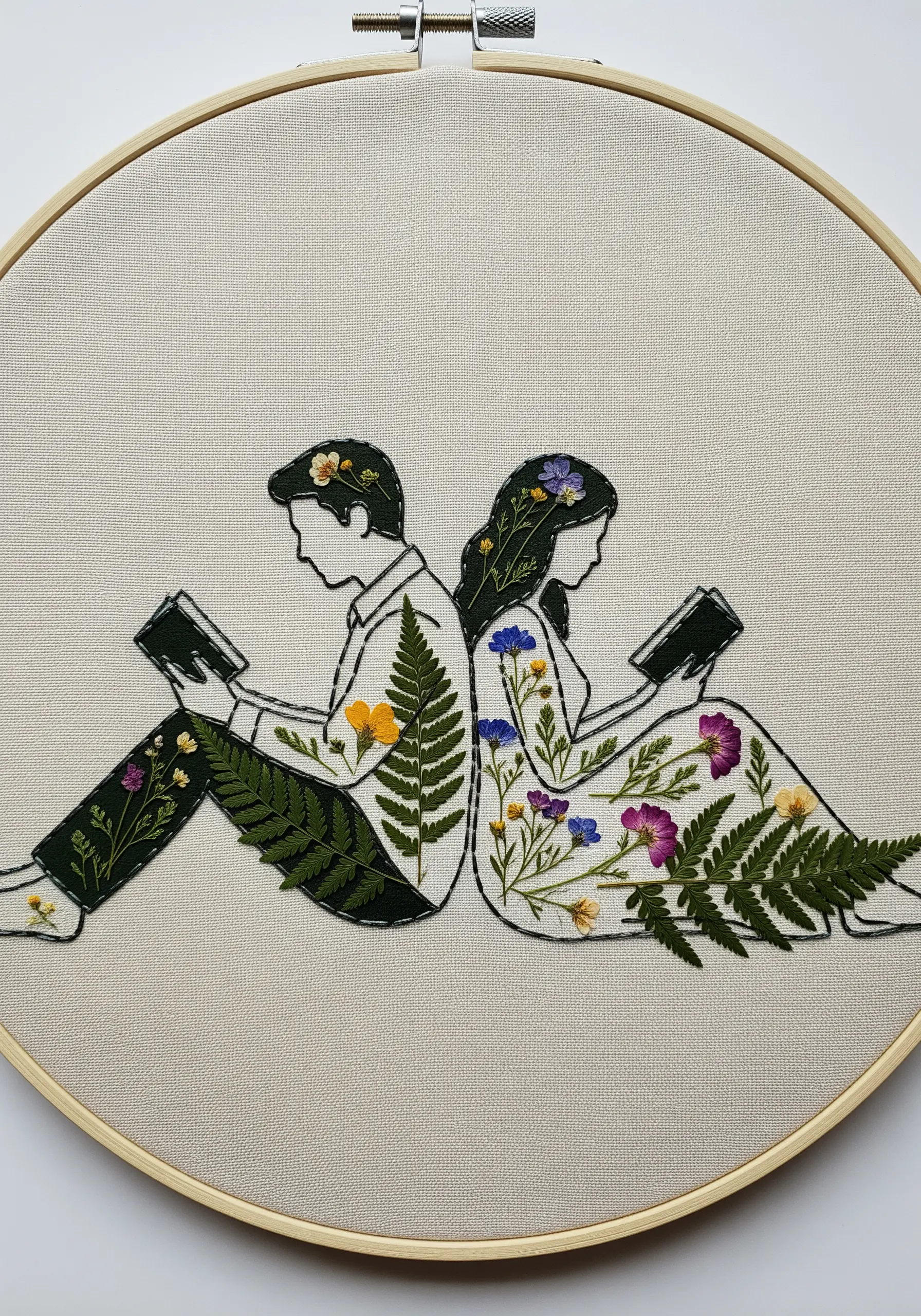
Infuse your portraits with life by combining thread with real pressed botanicals.
First, stitch the simple black outlines of the figures using a clean backstitch.
Then, arrange dried flowers and ferns within the silhouettes and secure them with tiny, almost invisible couching stitches in a matching thread color.
This mixed-media technique creates a beautiful story where human connection and the natural world become one. It’s one of the most elegant ways to mix pressed flowers and embroidery thread for magic.
9. Defining Love Through Negative Space
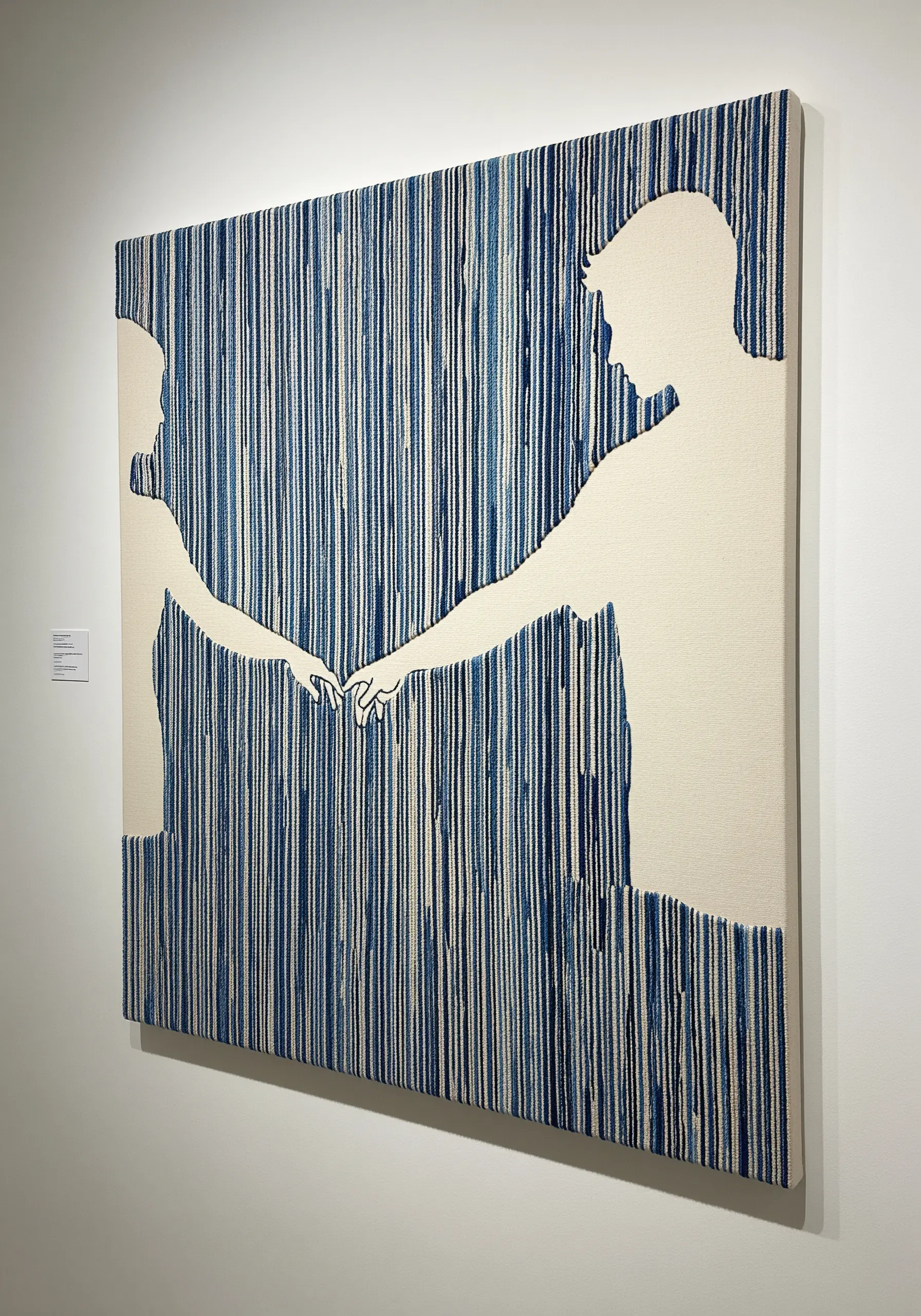
Create a powerful portrait not by stitching the figures, but by stitching the space around them.
Lightly trace your silhouette onto the canvas, then fill the entire background with dense, vertical straight stitches.
The unstitched fabric becomes the subject, creating a striking visual contrast that highlights the form and connection of the figures.
This technique is particularly effective on a large canvas, where the texture of the background fill adds a rich, textile quality to the artwork.
10. The Connecting Thread: A Diptych Story
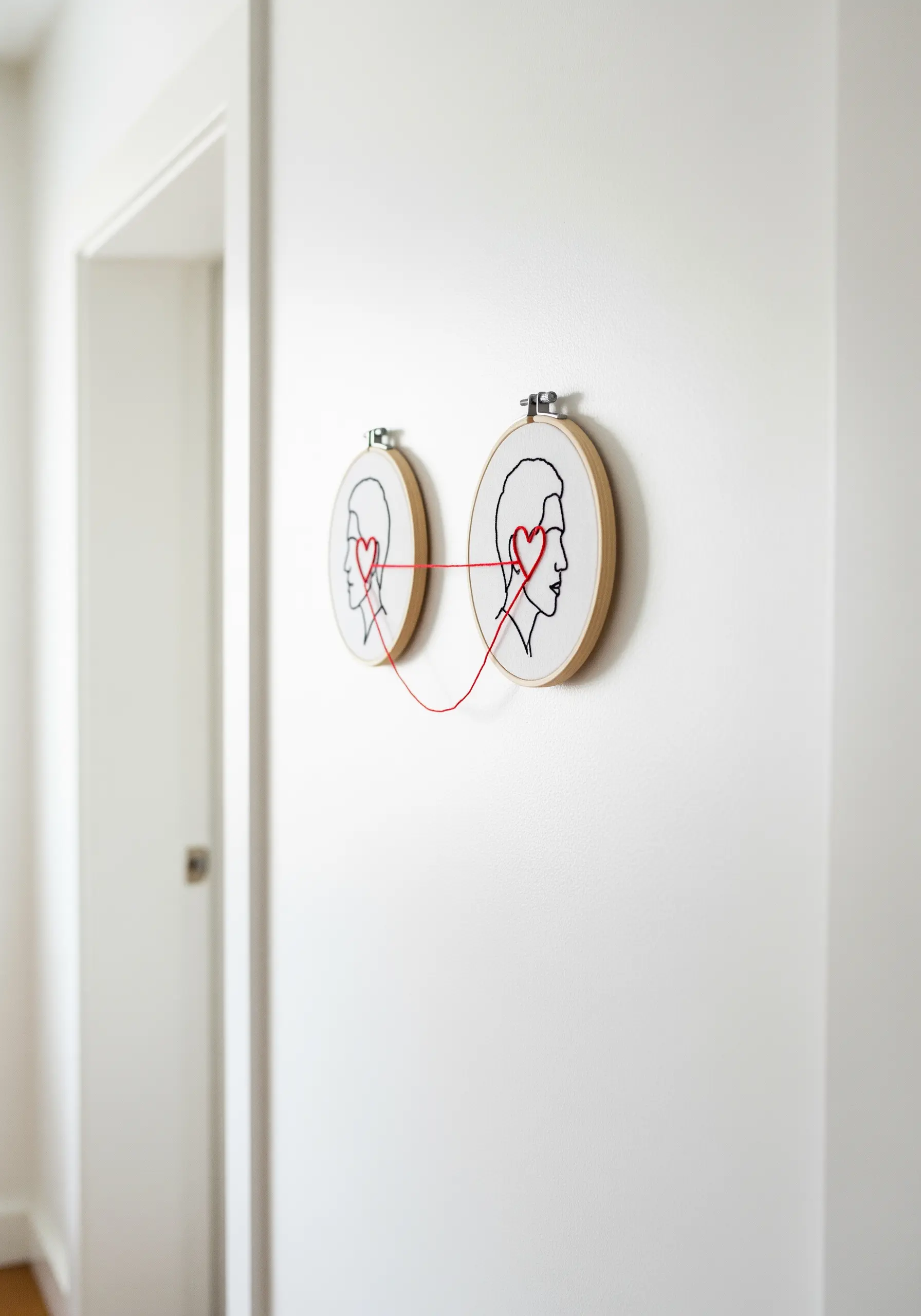
Tell a story across two separate hoops to represent connection over any distance.
Stitch two simple, corresponding portraits, then use a single, unbroken thread to link a key element in each—in this case, the hearts.
This physical connection turns the two individual pieces into a single, conceptual artwork that visualizes an invisible bond.
Mount the hoops close together on a wall to maintain the visual tension and narrative of the connecting thread.
11. Stitching Memories onto a Map

Elevate your portrait by choosing a meaningful background, like a vintage map, as your canvas.
Instead of precise lines, use a dense, free-form scribble stitch to build up the figures, creating a raw, sketch-like texture that feels immediate and emotional.
The chaotic energy of the stitching contrasts beautifully with the precise lines of the map, suggesting a personal story unfolding across a specific geography.
This technique works best when the background itself holds personal significance, adding another layer to your love story.
12. Sculptural Comfort: Chunky Yarn on Burlap
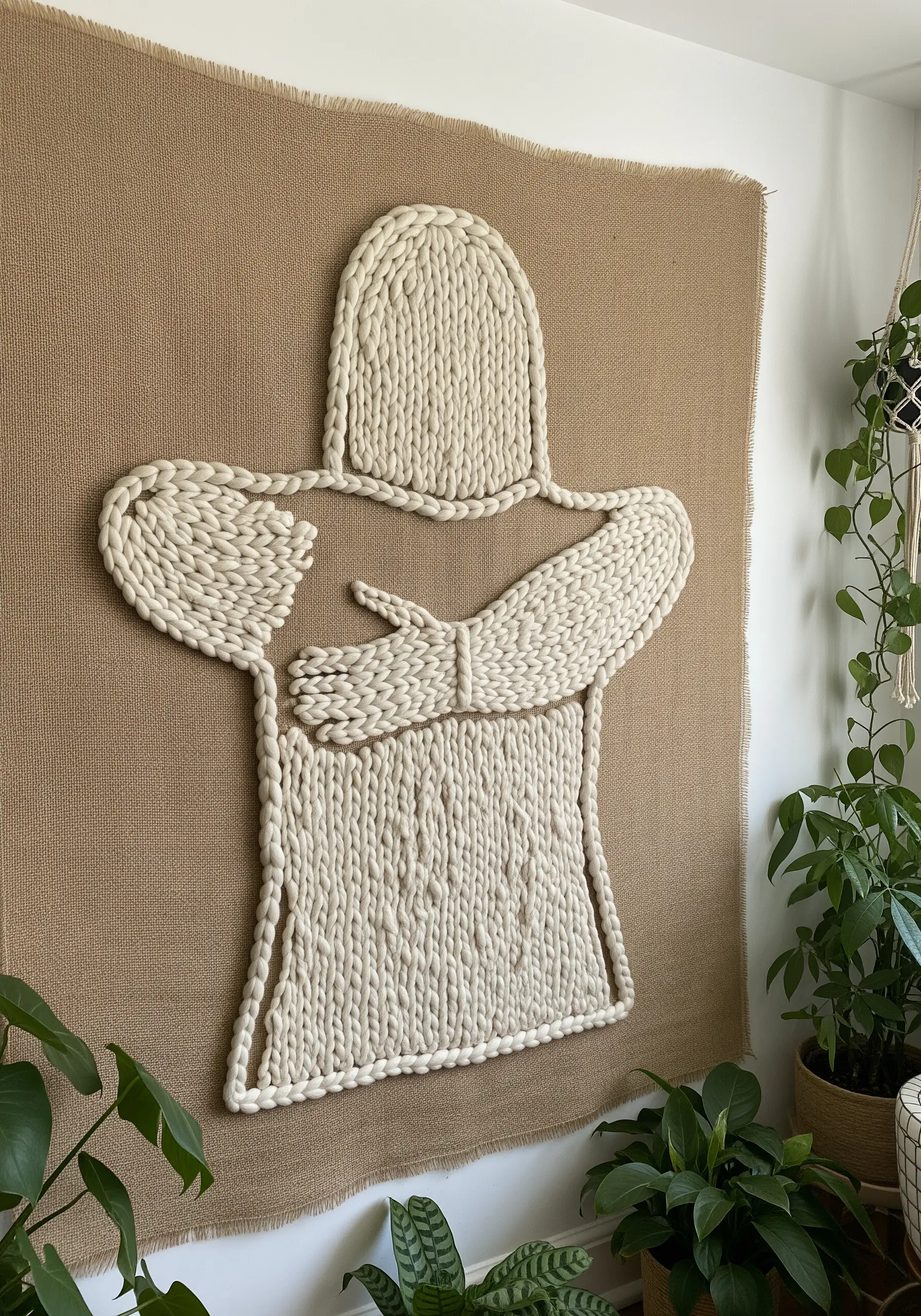
Create a deeply tactile and comforting portrait by trading fine floss for thick, chunky yarn.
Couch braided or knitted yarn onto a rustic, sturdy fabric like burlap or hessian to form the outlines and fill of your design.
The extreme texture makes the embrace feel tangible and soft, transforming the portrait into a sculptural piece of art.
This is one of those bold yarn wall art patterns that prioritizes touch and physical presence over fine detail.
13. Fragmented Reality: A Cubist Approach
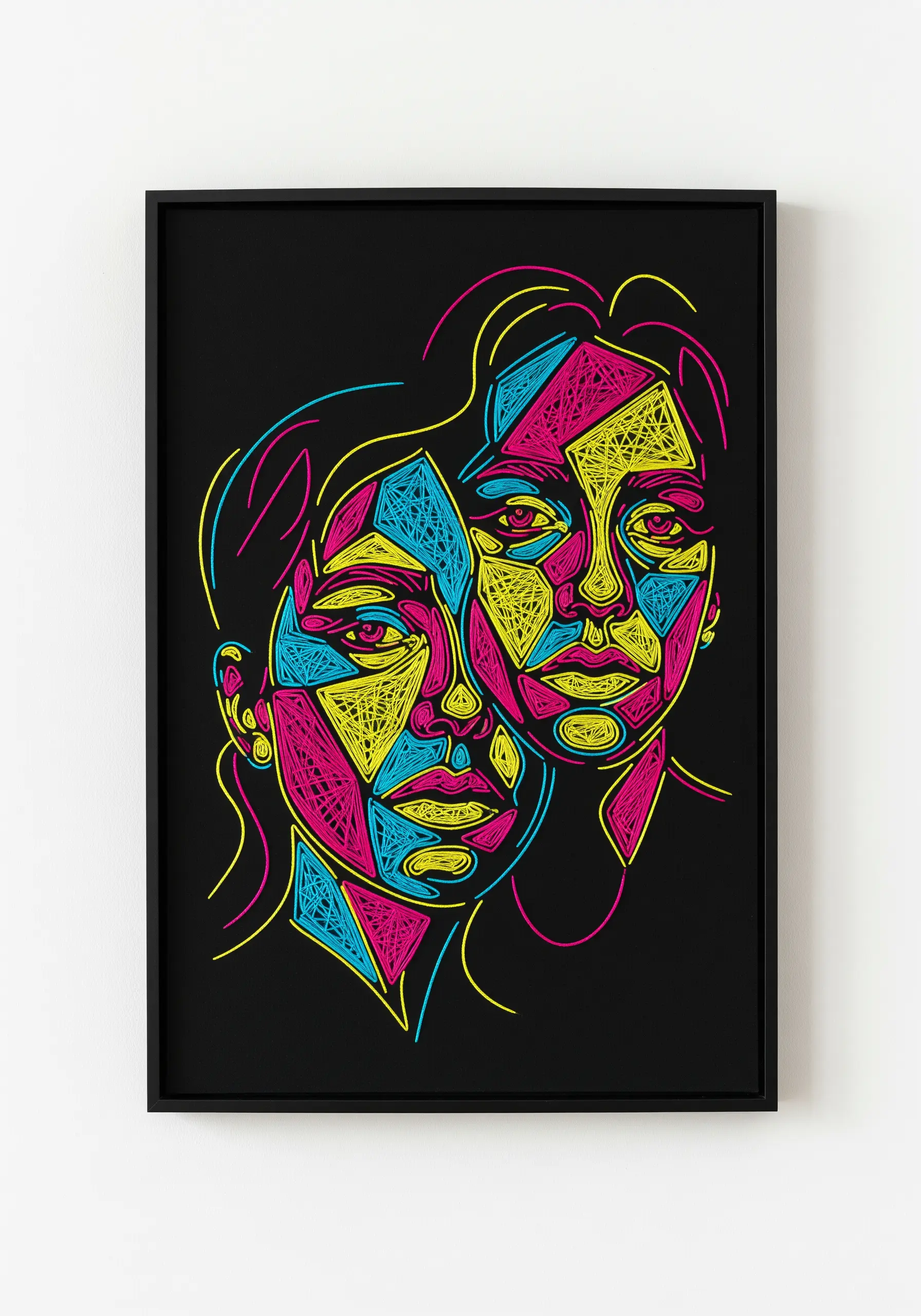
Deconstruct a portrait into geometric shapes and fill them with bold, contrasting colors for a modern, cubist-inspired piece.
Use a limited, high-energy palette—like neon pink, yellow, and blue—against a black background to make the colors vibrate.
Fill each colored segment with directional satin stitches, changing the angle of the stitches in adjacent shapes to enhance the fragmented, crystalline effect.
This technique is less about realism and more about capturing the complex, multifaceted nature of a person or relationship.
14. The Ethereal Dance: White Thread on Black Tulle
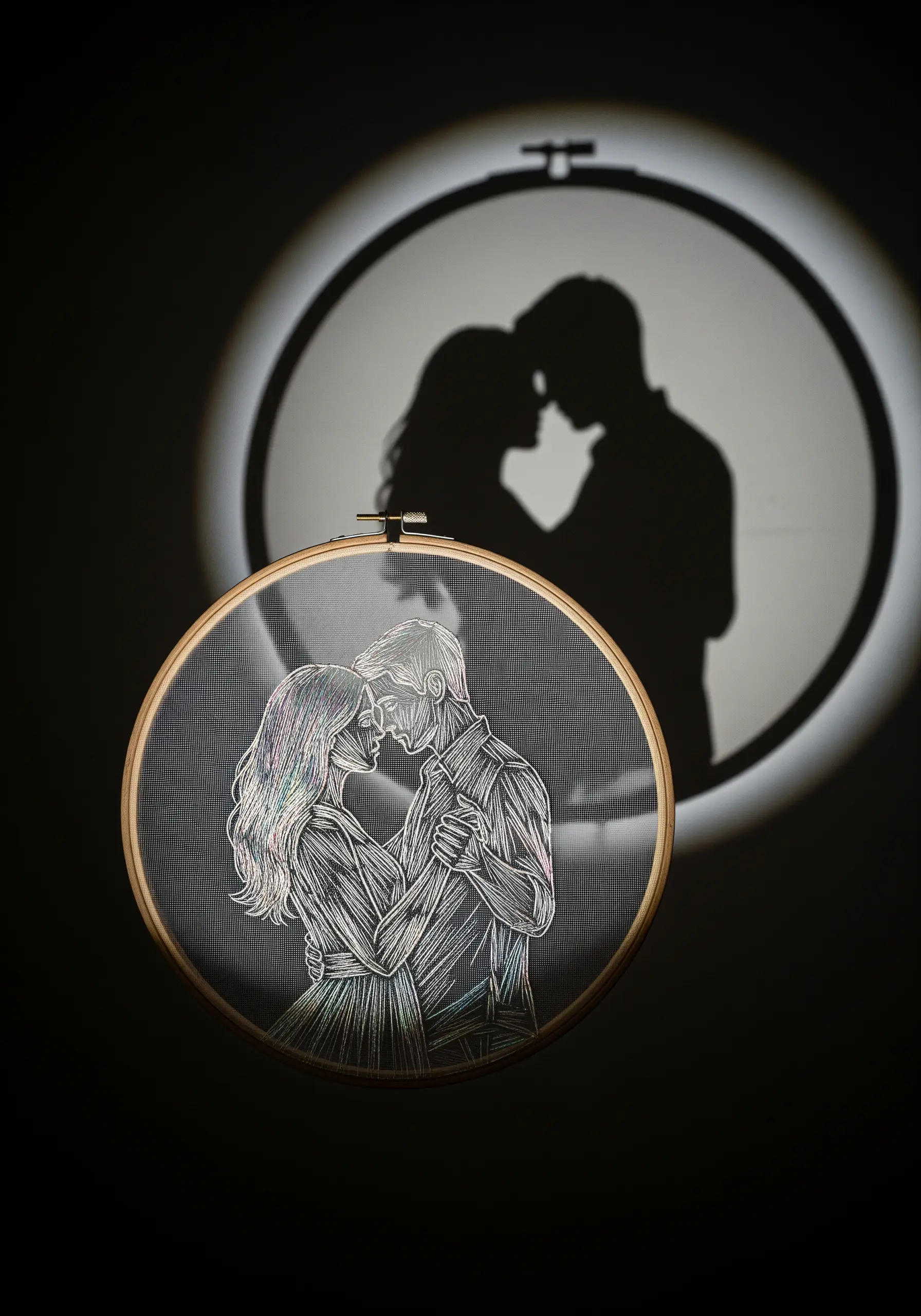
Capture a moment of quiet intimacy by stitching with a single strand of white thread on black tulle.
The high contrast creates a design that appears to be drawn with light, while the sheer fabric gives it a ghostly, dreamlike quality.
Use directional stitching to suggest the flow of fabric and hair, creating texture and form with nothing but white lines.
When lit from the side, this piece casts a shadow that becomes an integral part of the artwork, adding another layer of depth and romance.
15. A Portrait Written in Words
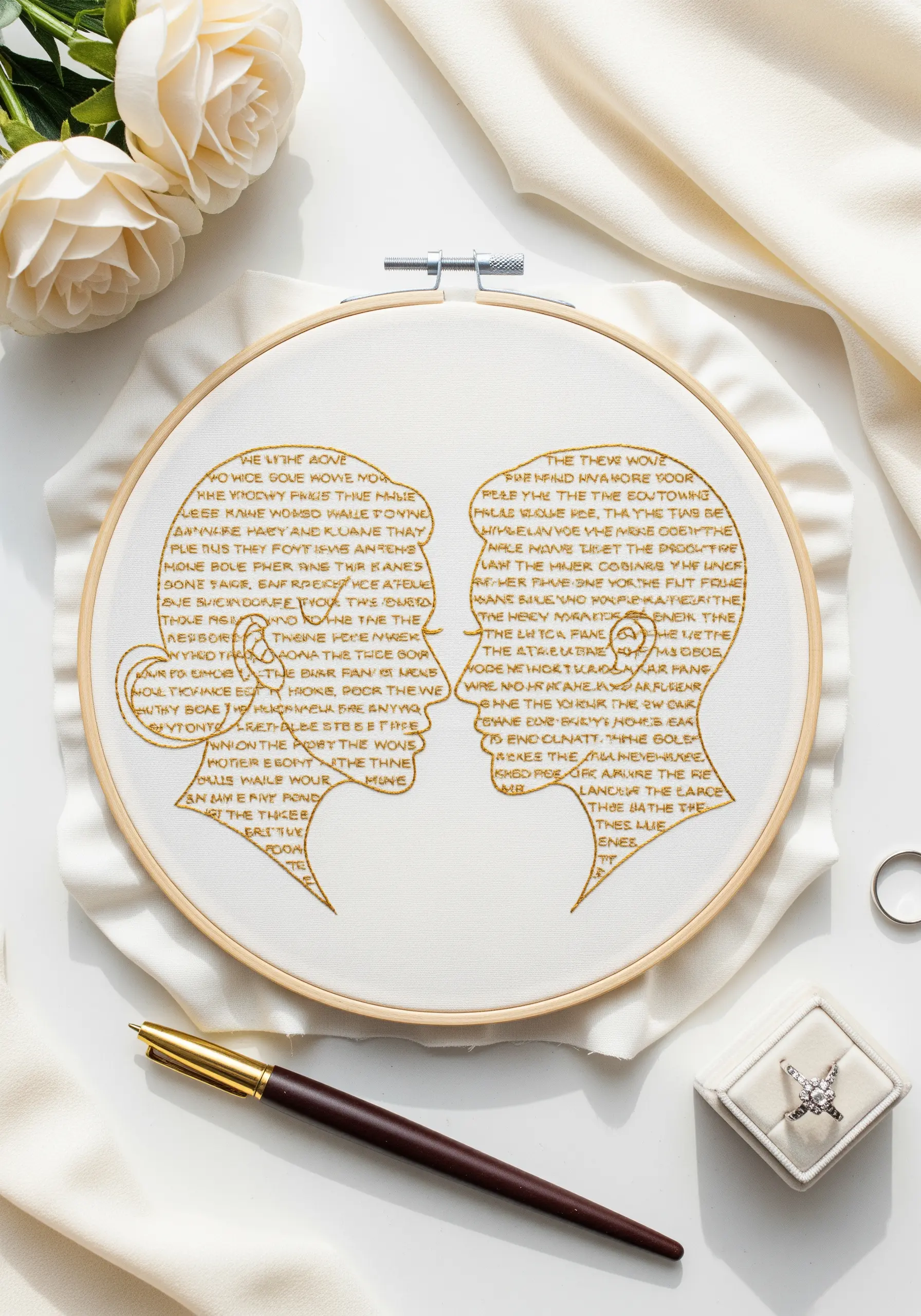
Instead of filling a silhouette with color, fill it with meaning by using handwritten text.
Use a fine, single-strand backstitch to meticulously trace the words of a love letter, poem, or wedding vows inside the outline of two profiles.
The text itself becomes the texture and shading of the portrait, creating an incredibly personal and intimate piece of art.
A metallic gold thread on a soft ivory fabric adds a touch of timeless elegance, perfect for commemorating a special occasion.
16. Highlighting Emotion with a Single Thread
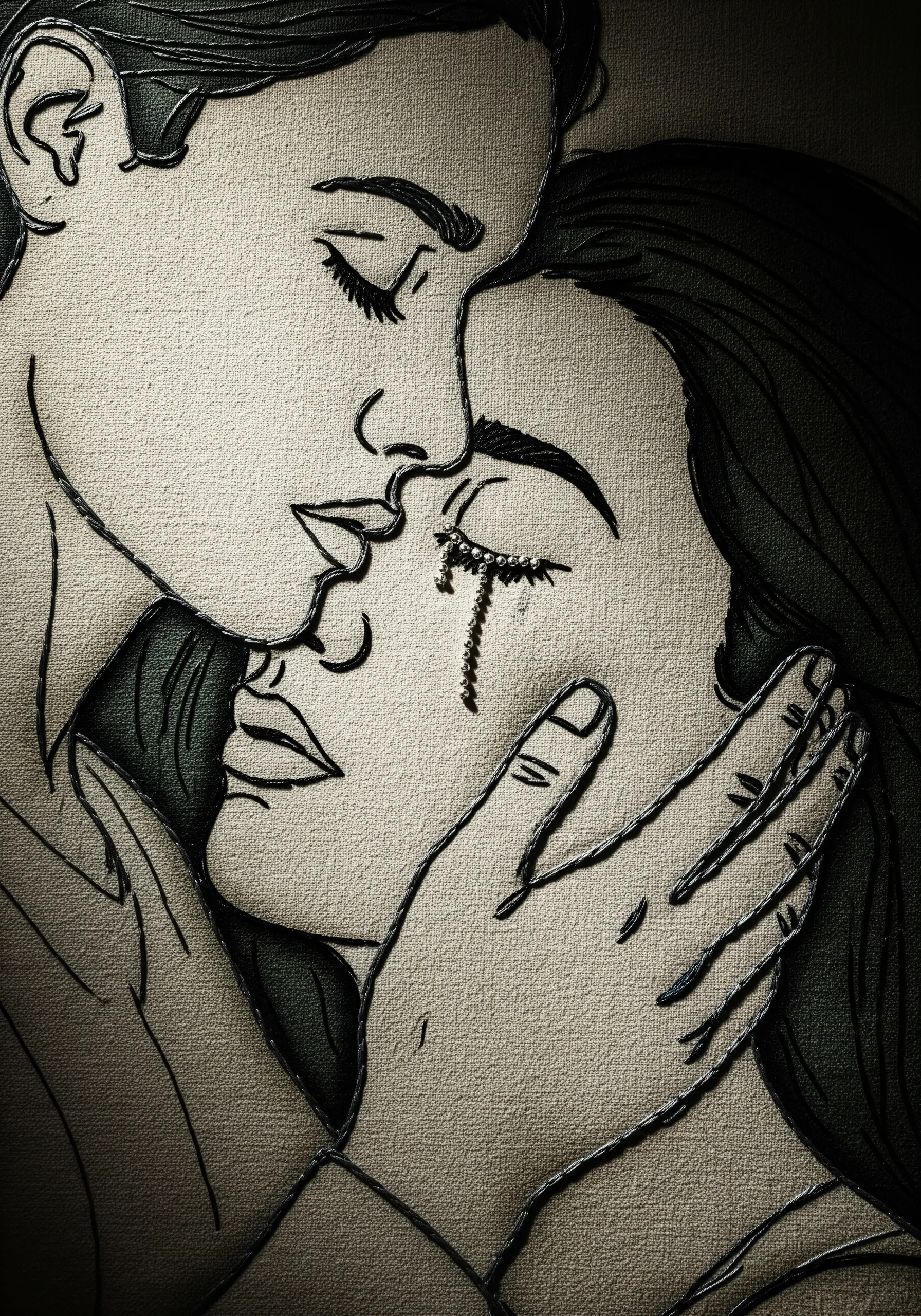
In a minimalist portrait, a single, unexpected detail can carry immense emotional weight.
Render the majority of the portrait in a simple, dark backstitch to create a somber, intimate mood.
Then, introduce a small, powerful accent using a different material, like a single tear stitched with shimmering metallic or silvery thread.
This focal point immediately draws the eye and transforms a simple scene of comfort into a profound story of empathy and support.
17. Lines That Unify: Stitching on Patchwork

Use a single, continuous line of embroidery to unite a color-blocked or patchwork background.
Create a simple quilt top with solid blocks of harmonious, earthy colors.
Then, stitch your family portrait over the seams using a contrasting color like off-white and a clean, simple backstitch.
The unbroken line of thread visually ties the separate blocks of fabric together, creating a beautiful metaphor for family unity that is both modern and heartfelt.
18. A Love Story Written in the Stars
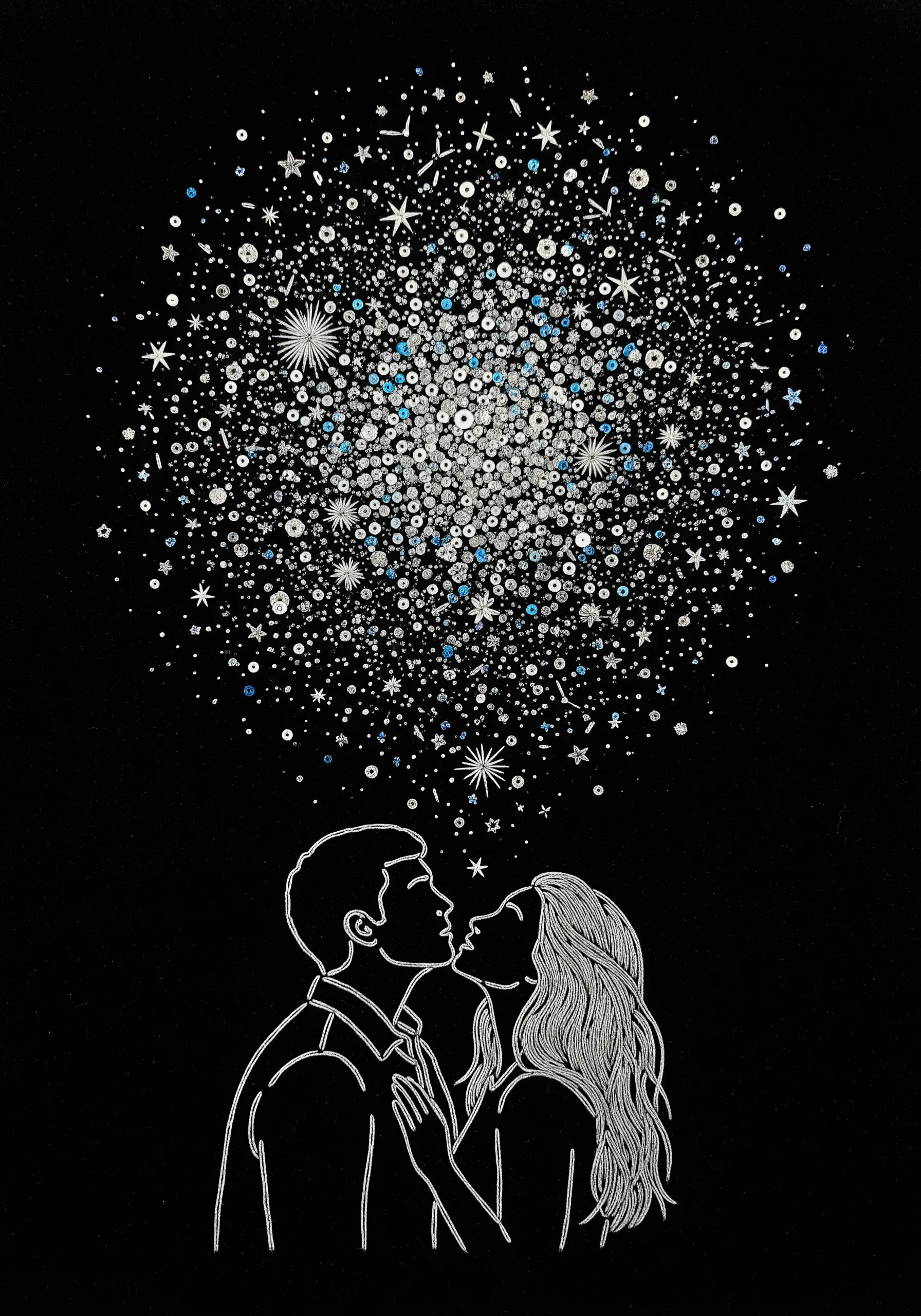
Combine delicate line art with a universe of beads and sequins to create a truly magical scene.
Stitch the figures in a simple, clean backstitch using a white or silver thread on black fabric.
For the cosmic explosion, use a dense mix of silver seed beads, iridescent sequins, and French knots in varying sizes to create a sparkling, galactic texture.
The contrast between the sharp, clean lines of the portrait and the chaotic, glittering starburst creates a breathtaking sense of wonder and romance.
19. The Electric Touch: Tension in Thread
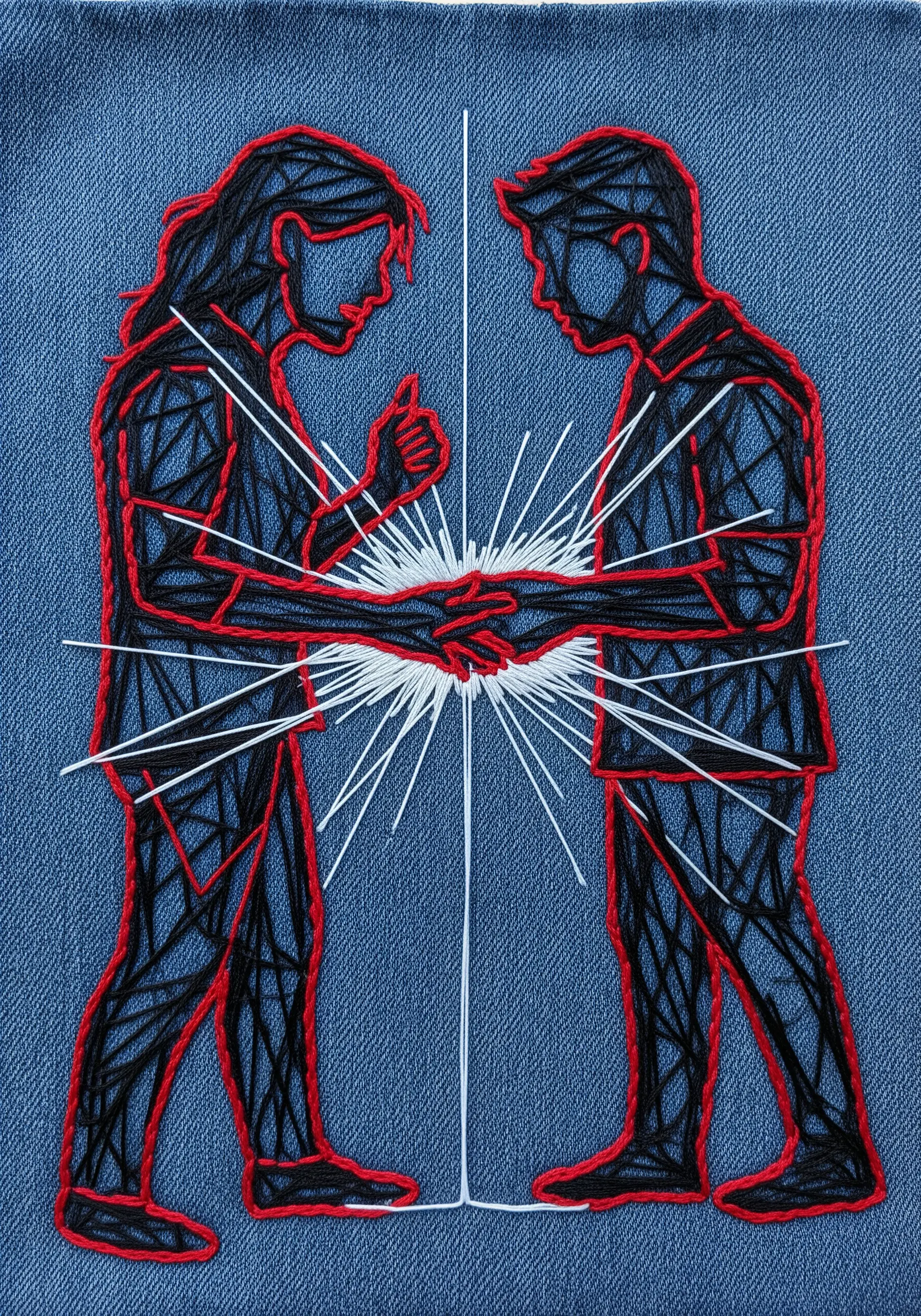
Use intersecting lines and high-contrast colors to depict the energy and tension of a connection.
Stitch the inner geometric forms in black thread, then outline the figures in a bold, electric color like red.
At the point of contact—the handshake—use explosive straight stitches in pure white to create a flash of light, symbolizing the spark of the relationship.
Stitching on a sturdy, textured fabric like denim adds a modern, utilitarian feel that grounds the abstract design.
20. Raised Lines for a 3D Effect
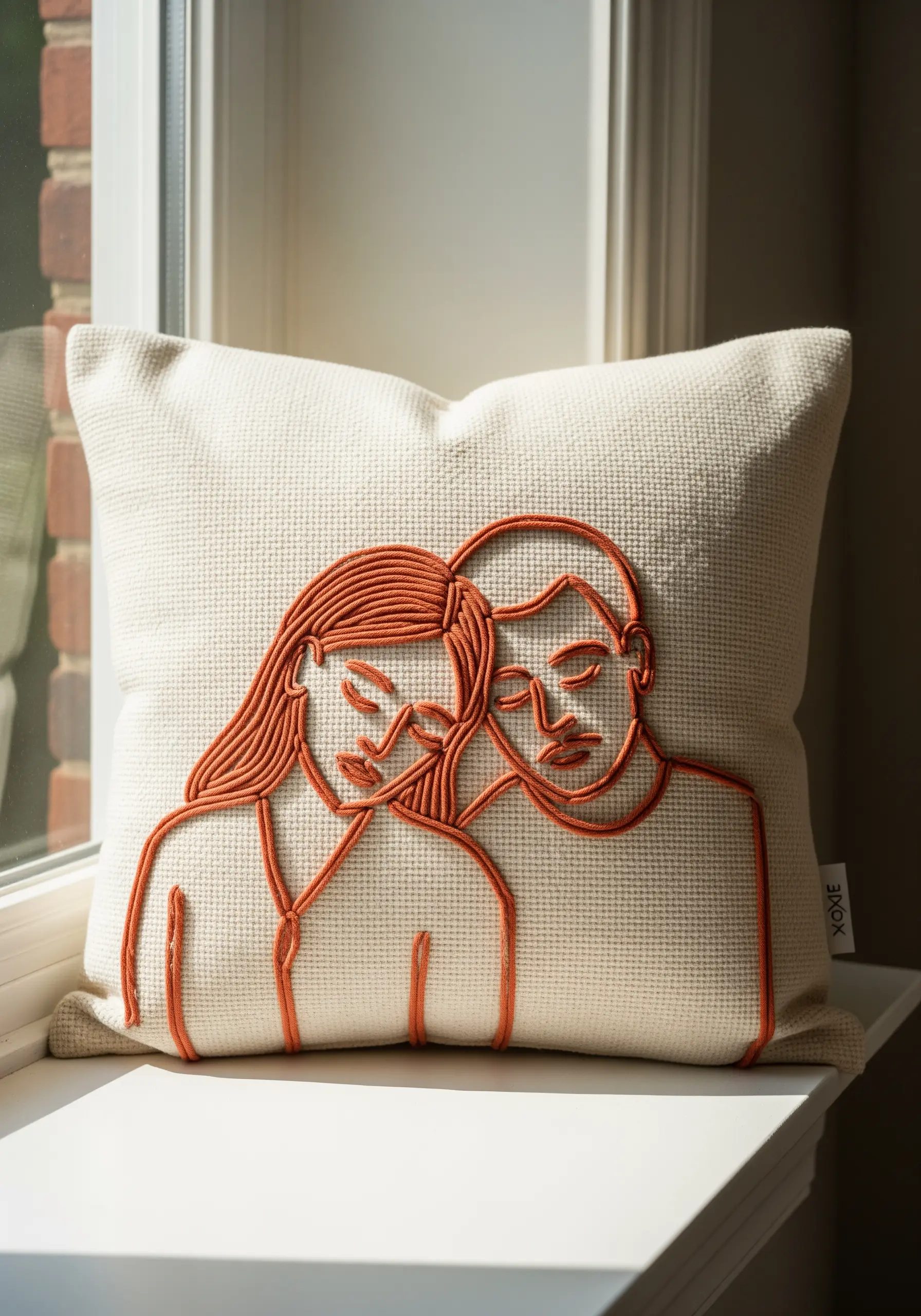
Give your line art a tactile, three-dimensional quality by using a couching technique with thick cording.
Lay down a piece of smooth cord or thick yarn along your design lines.
Then, using a regular, matching embroidery floss, secure the cord to the fabric with small, evenly spaced stitches that are perpendicular to the cord.
This method creates bold, raised lines that pop off the fabric, making your portrait visually and physically engaging. It’s one of the simplest abstract thread sculpting tricks you can master.
21. Deconstructed Design: Breaking the Hoop’s Barrier
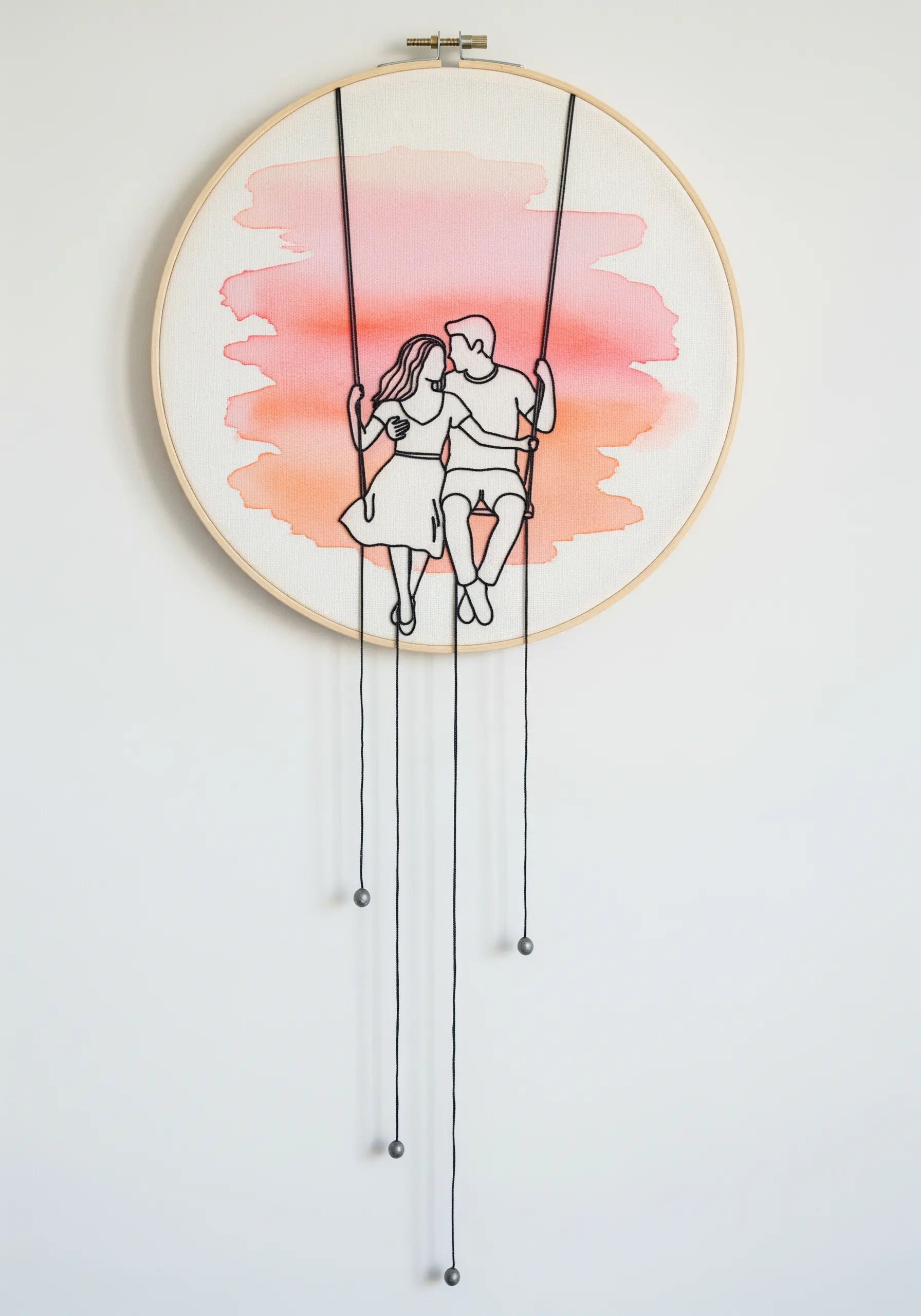
Add a layer of painterly abstraction and playful design by combining watercolor with loose, weighted threads.
Before stitching, apply a soft watercolor wash to the center of your fabric and let it dry completely.
After embroidering your outline, intentionally leave some threads hanging long below the design, securing small beads or weights to the ends.
This deconstructed approach breaks the traditional boundary of the hoop and adds a dynamic, sculptural element to the finished piece.
22. The Art of the Unfinished: A Portrait in Progress
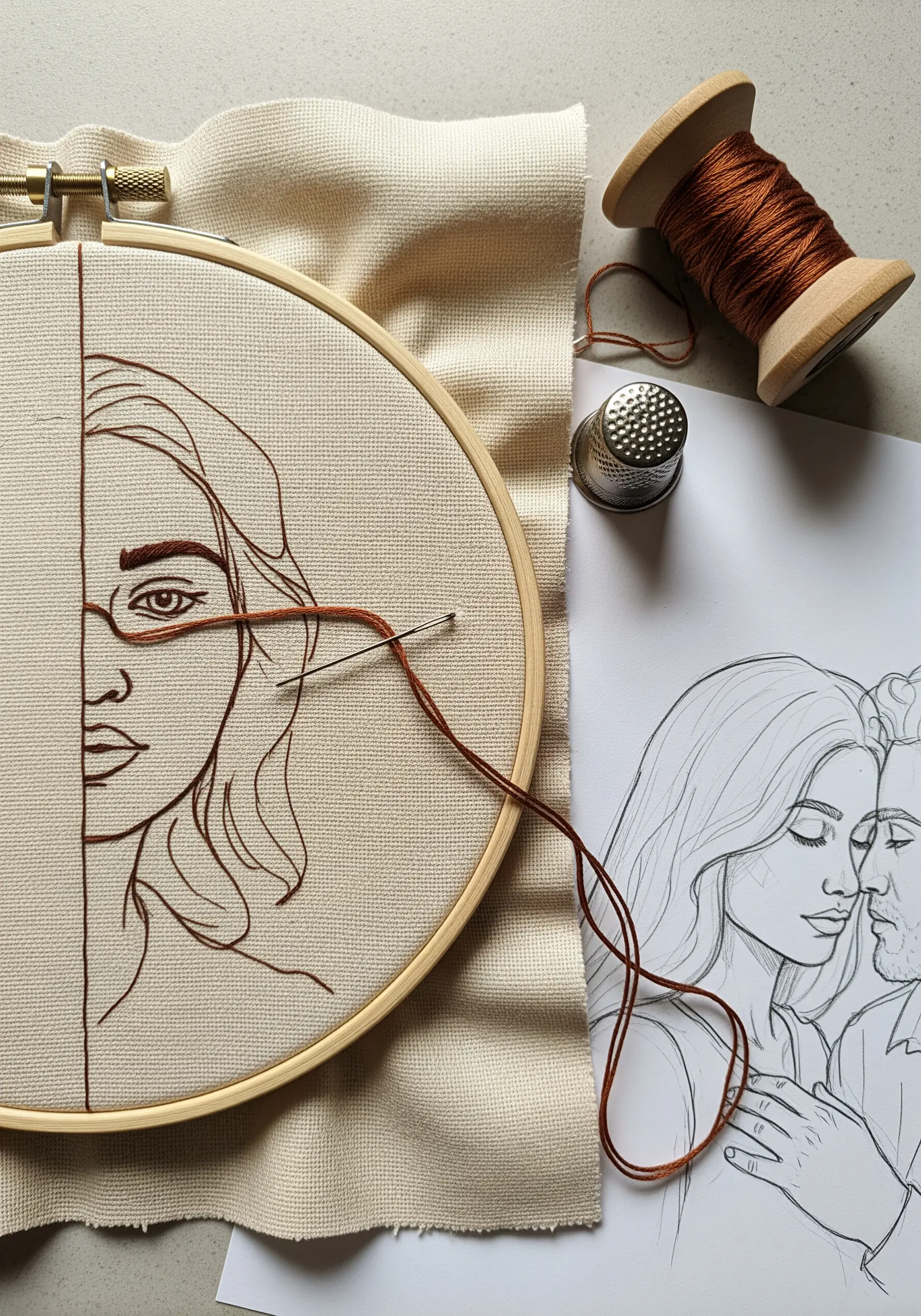
Create a compelling narrative by intentionally leaving your portrait half-finished.
Complete one side of the portrait with detailed stitching, using a simple backstitch or stem stitch for clean lines.
Leave the other half as a faint pencil sketch on the fabric, or don’t mark it at all.
This technique creates a powerful visual story about memory, process, or the merging of two individuals into one, transforming the piece from a simple depiction into a conceptual work of art.
23. Capturing Motion with Gold Leaf and Scribble Stitch
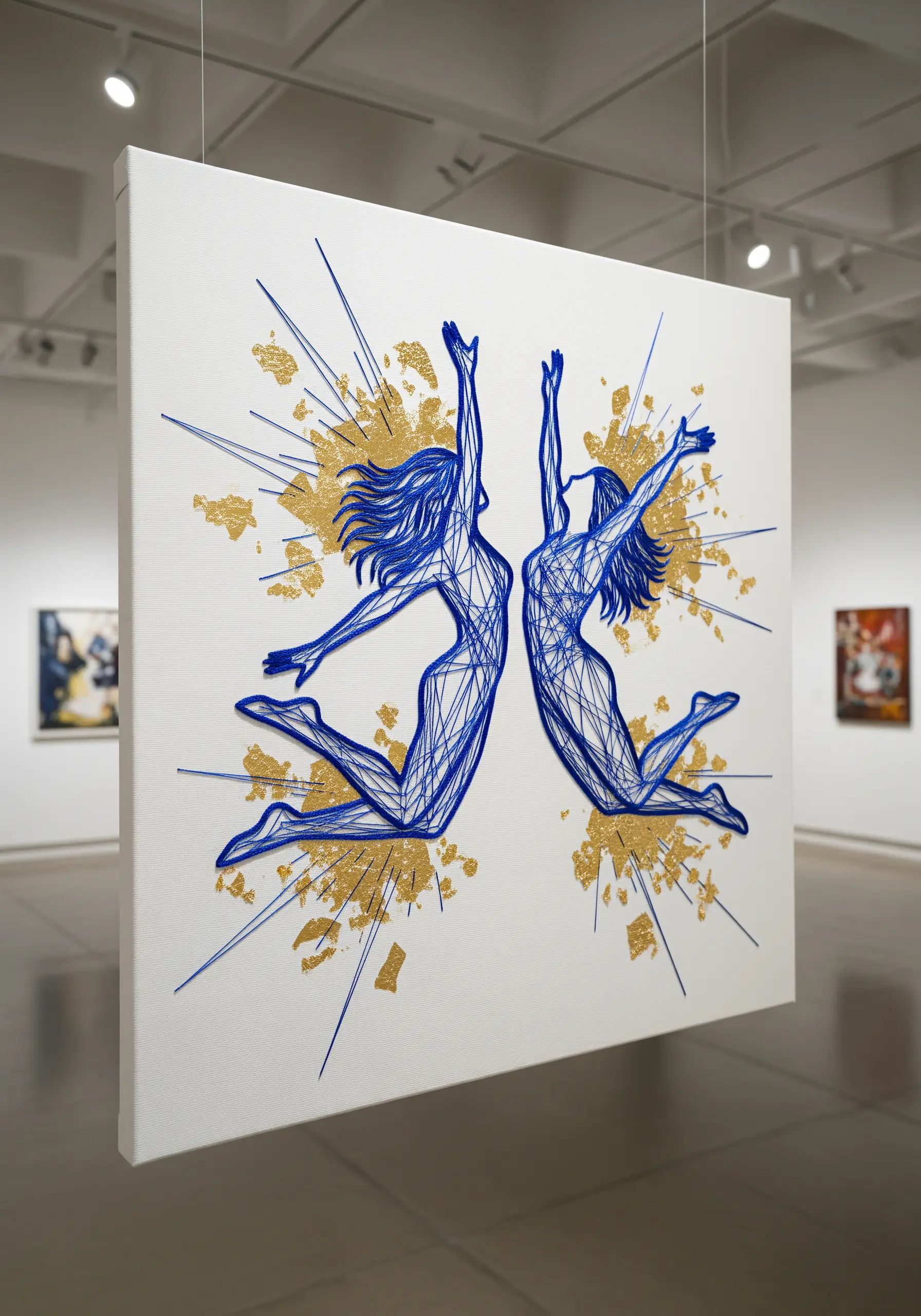
Convey explosive energy and joy by combining chaotic stitching with the luxury of gold leaf.
Use a free-motion machine embroidery setting or a hand-stitched “scribble” technique to create dynamic, layered lines that suggest movement and abandon.
Apply gold leaf sizing to the canvas in abstract bursts, then press on flakes of imitation gold leaf for a fractured, glittering effect.
The contrast between the sharp, energetic thread and the warm, shattered gold creates a portrait that feels celebratory and alive.
24. Layered Perspectives: Portraits on Sheer Banners
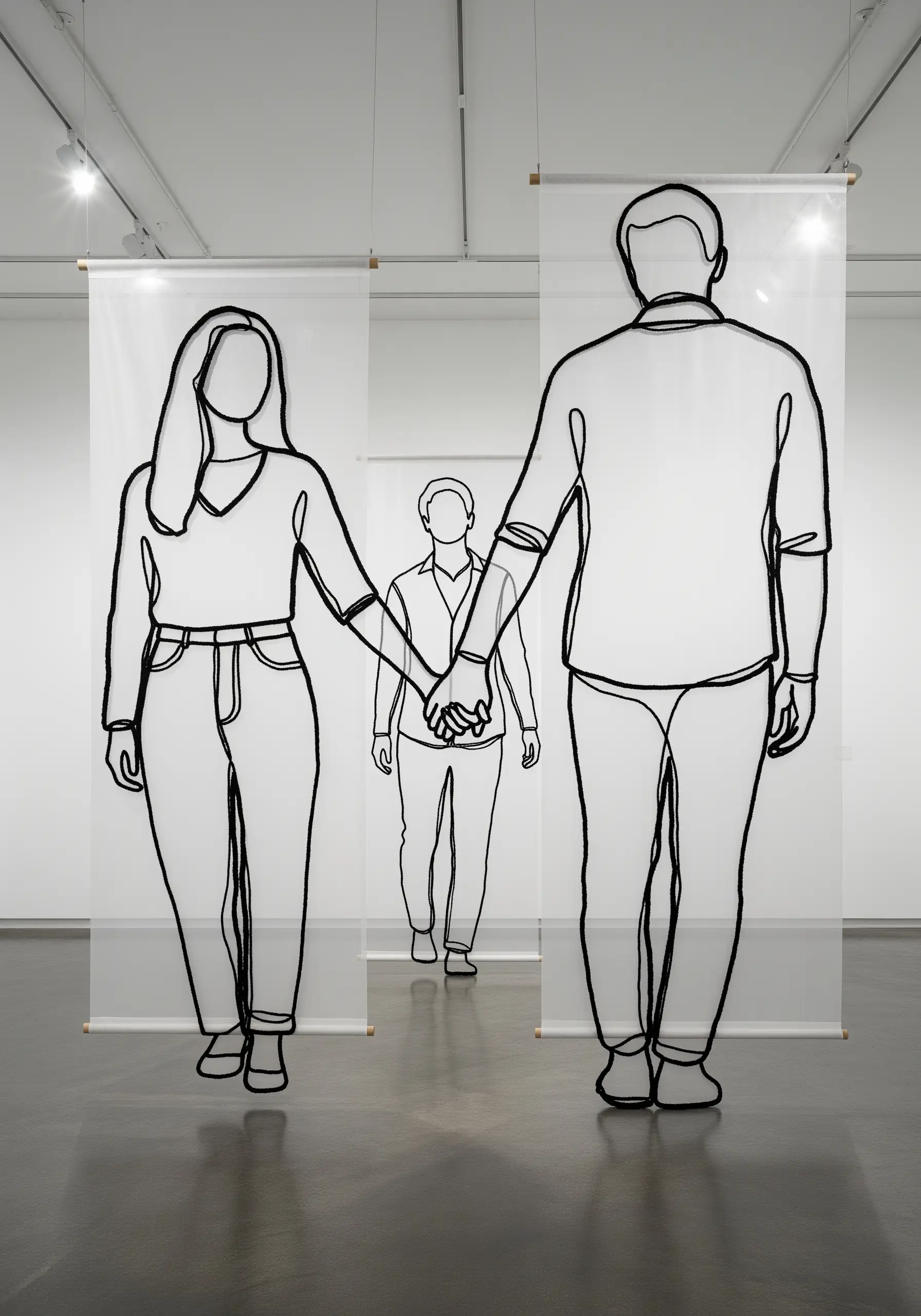
Move your embroidery off the wall and into the room by stitching on large, transparent panels.
Use a bold, heavy-weight thread to create simple line portraits on separate pieces of sheer fabric like organza or voile.
Hang the panels one in front of another with space in between, creating a layered, three-dimensional installation.
As the viewer moves around the piece, the figures shift and interact, creating a dynamic love story that changes with every perspective.
25. The Minimalist Kiss: A Study in Symmetry
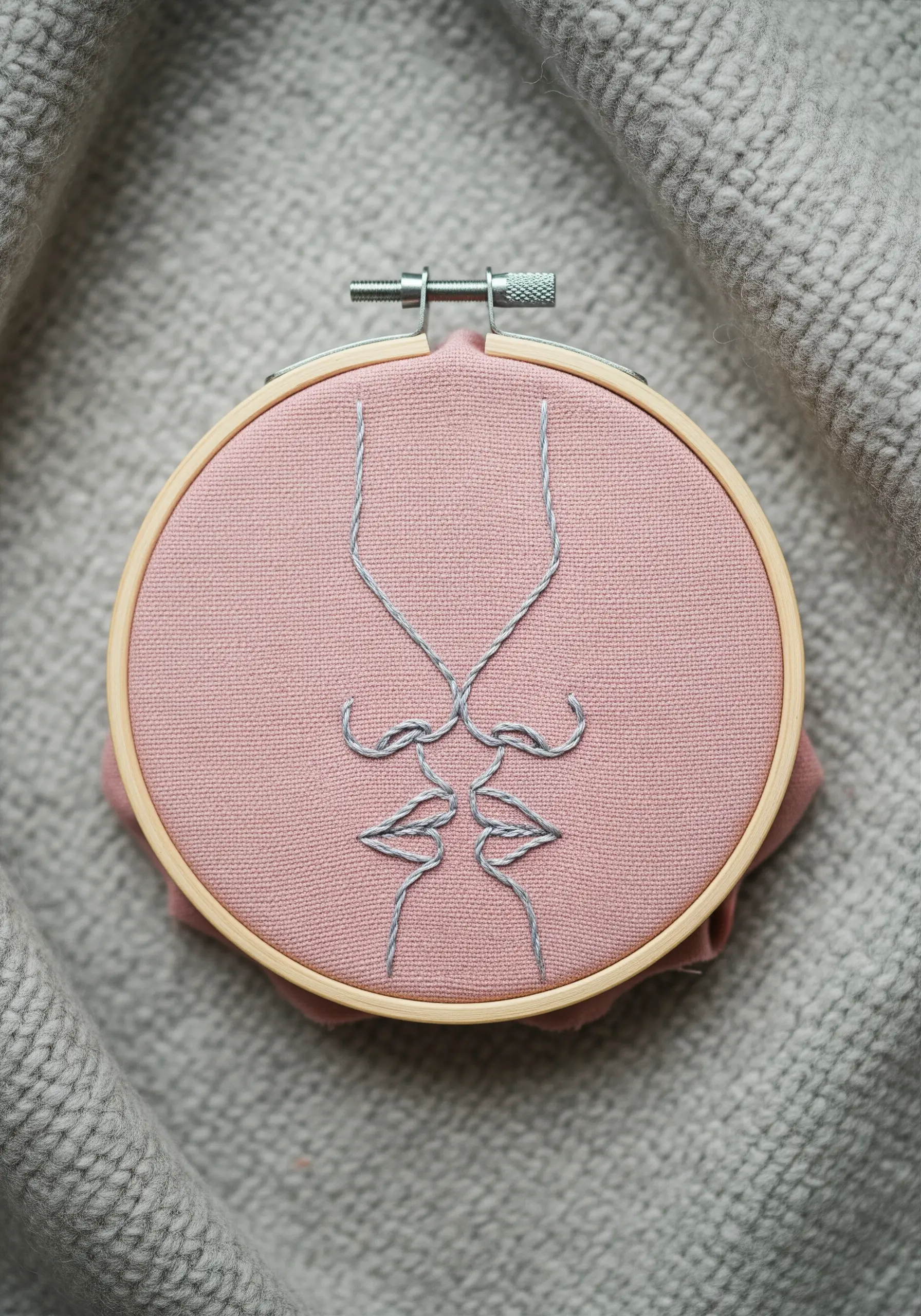
Explore intimacy through radical simplicity and perfect symmetry.
This abstract design uses just a few carefully placed backstitches to suggest two faces meeting in a kiss.
The power of this piece lies in its perfect mirroring and clean execution. Use a fabric with a clear weave, like linen or Aida, to help you count threads and ensure every stitch is perfectly symmetrical.
This is a testament to how modern line art self love body positive stitches can convey deep emotion with the fewest possible marks.
26. Organic Storytelling: Thread on Raw Wood
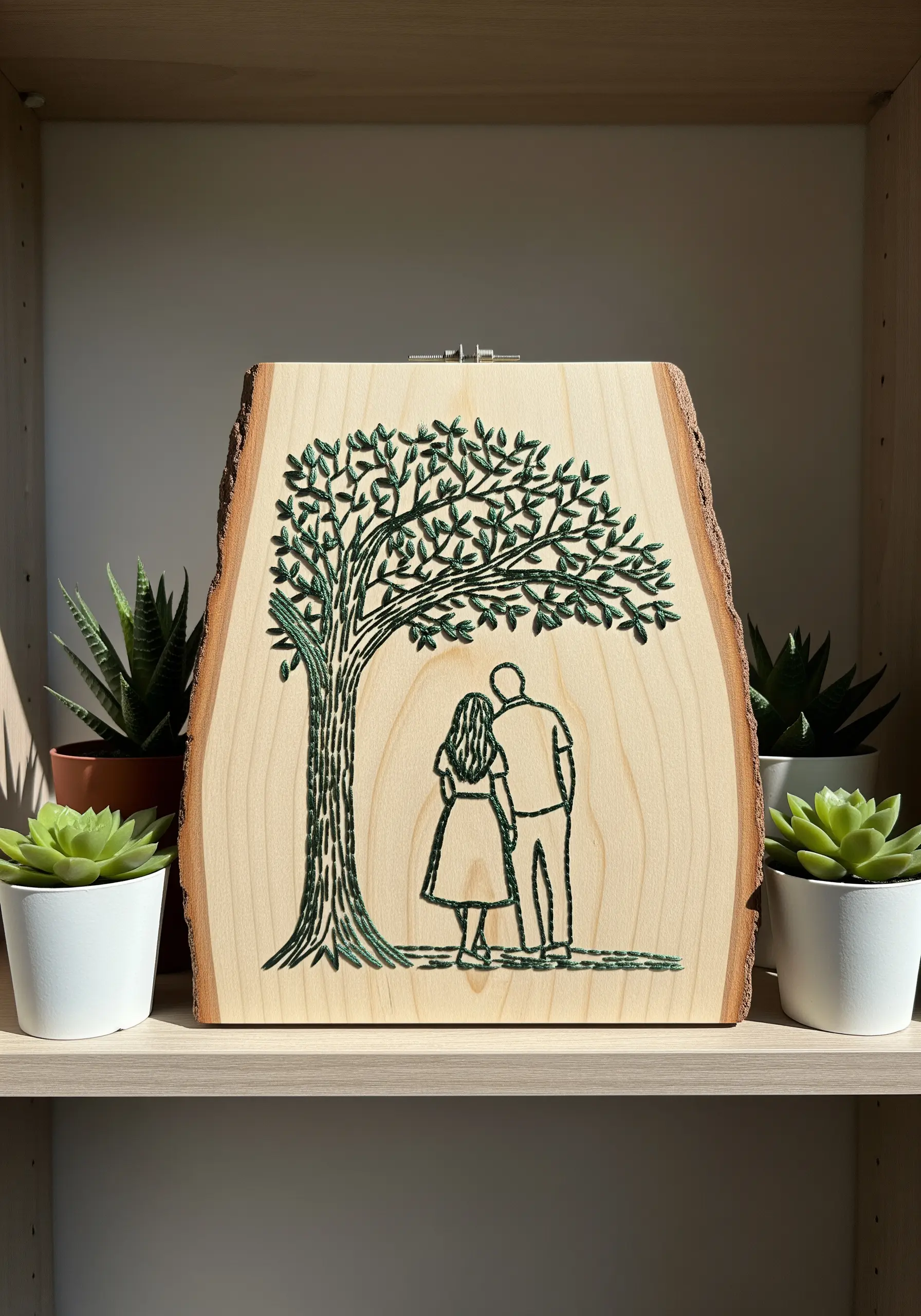
Combine the softness of thread with the rustic strength of wood for a truly unique piece.
Transfer your design onto a thin slice of wood with a live edge.
Using a small drill bit, carefully create holes along the lines of your design, spaced like stitches.
Thread your needle and stitch through the pre-drilled holes. The contrast in textures—smooth thread against natural wood grain—creates an organic, earthy portrait that feels grounded and timeless.
27. The Power of Presentation: Framed to Perfection
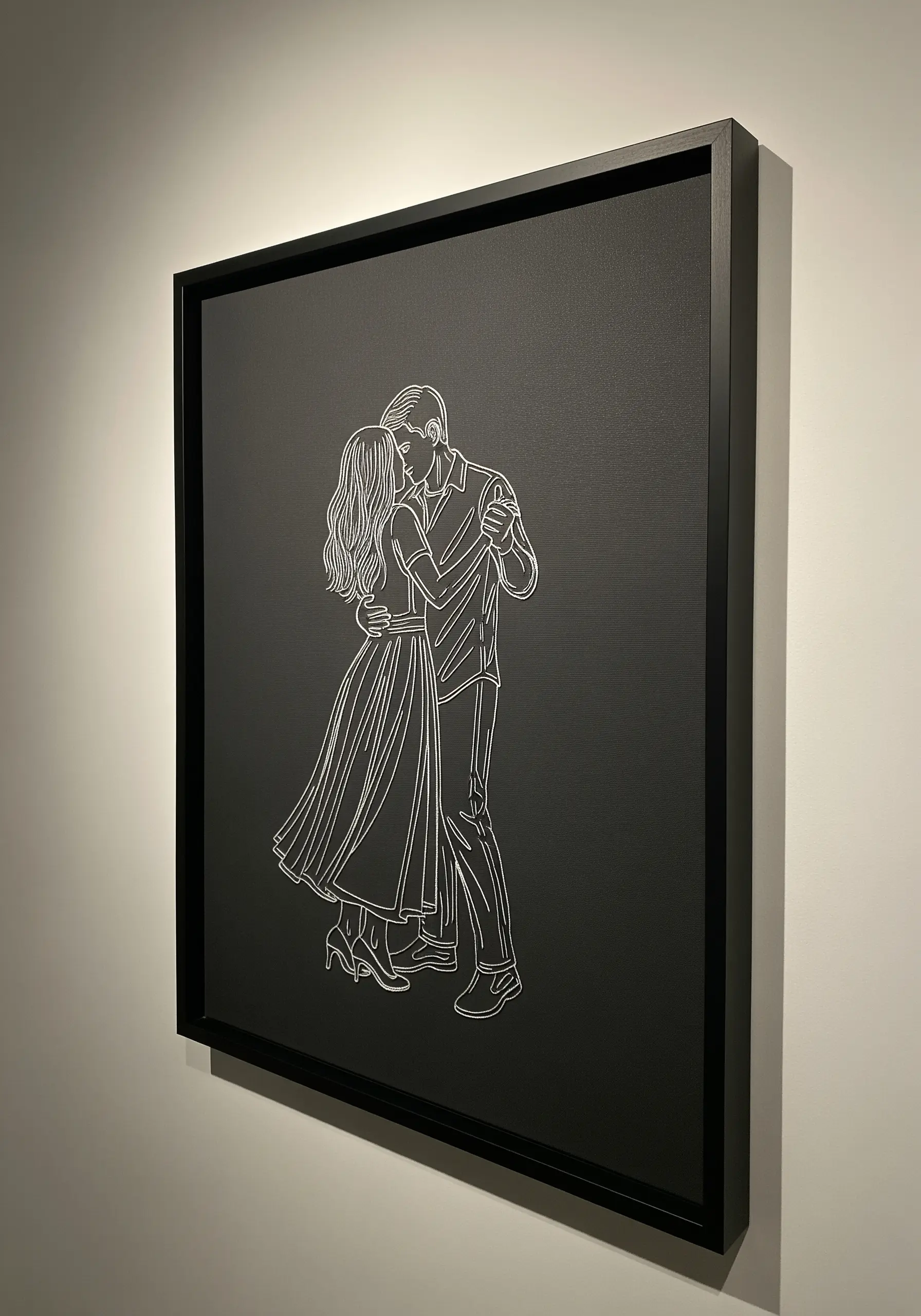
Elevate a simple line design to gallery-level art through impeccable finishing.
A high-contrast piece, like white thread on black canvas, gains incredible definition and presence when properly framed.
Opt for stretching the canvas over a frame rather than using a hoop, as this provides a taut, perfectly flat surface.
A simple, modern black frame creates a clean border that contains the artwork’s energy and gives it a professional, polished feel, proving that great finishing can make all the difference for your hand-stitched framed embroidery pieces.