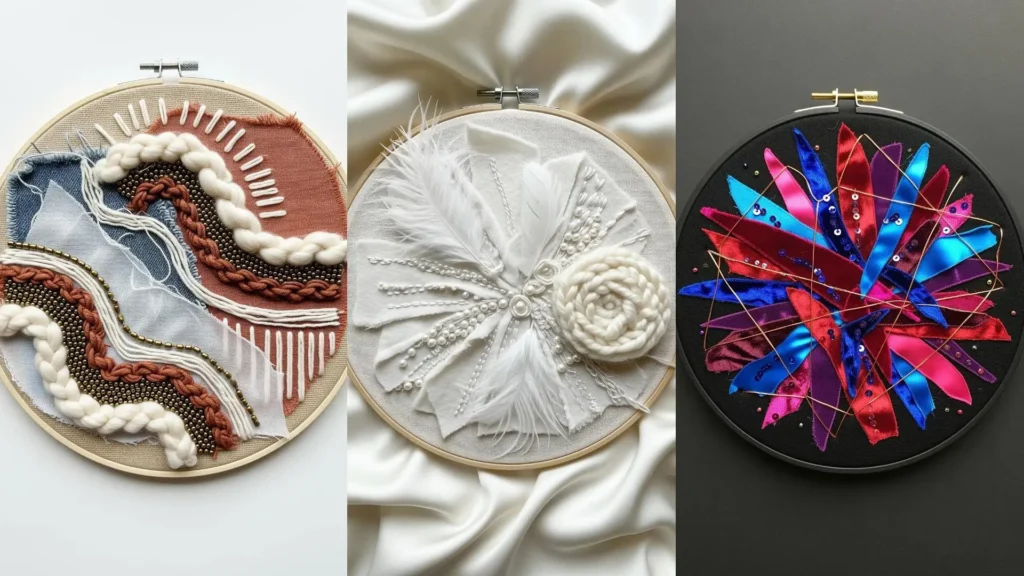
Let’s move beyond simply tracing lines and begin to truly draw with thread. The beauty of modern line art isn’t just in its simplicity, but in its potential for expression—in the weight of a line, the texture of a stitch, and the story told in negative space.
These pieces are more than just decoration; they are quiet conversations about strength, softness, and self-acceptance. They invite you to translate feeling into fiber, transforming a simple contour into a meaningful statement for your most personal space.
Here, you will find techniques to give your lines confidence and your compositions a calm, curated feel. This is your chance to stitch with intention, creating art that not only looks beautiful on your wall but also resonates with a quiet strength that is entirely your own.
1. Master the Bold, Continuous Outline
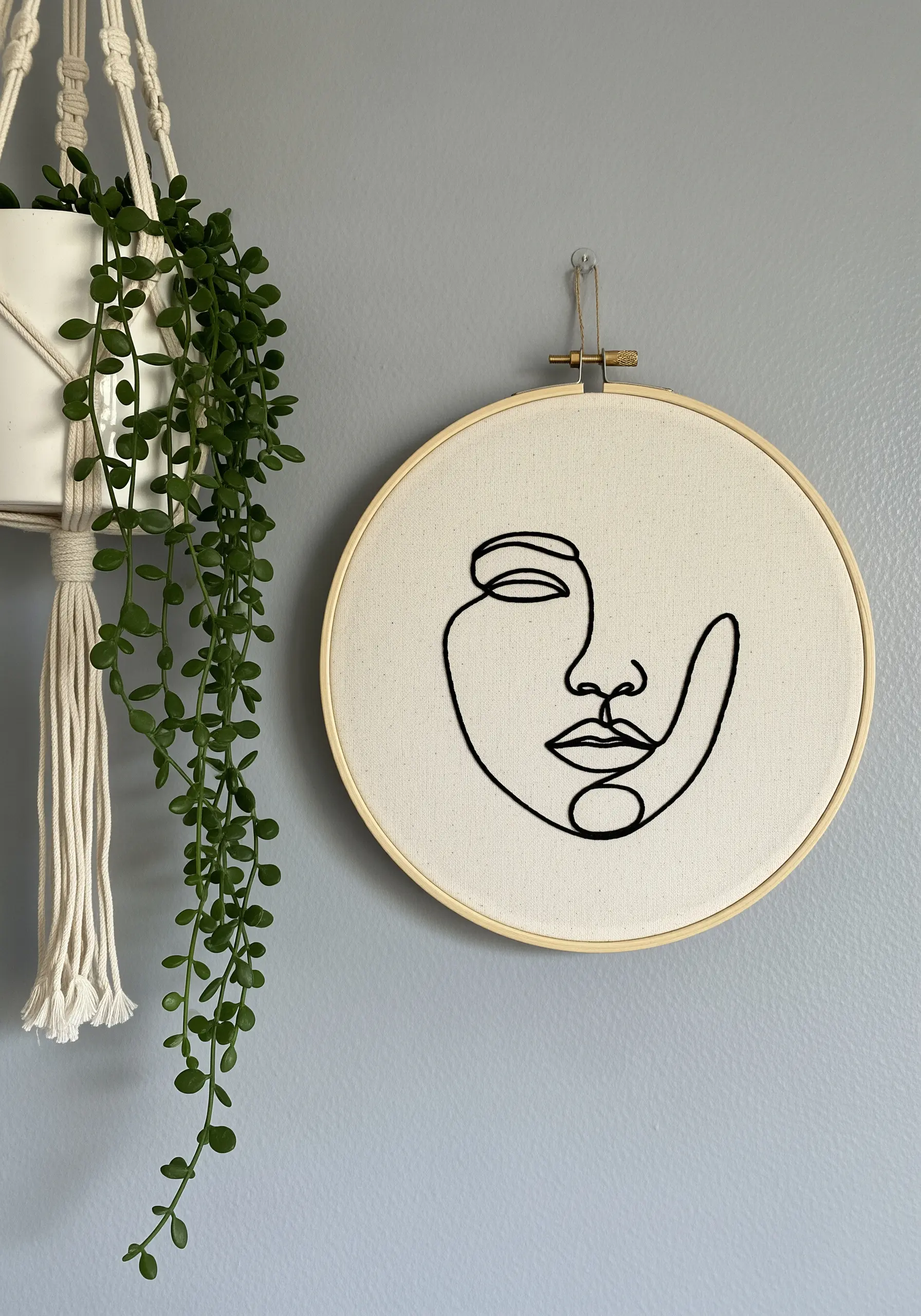
The power of this design lies in its unbroken line, creating a sense of fluid movement and confidence.
To achieve this bold, graphic look, use all six strands of your embroidery floss.
Opt for a stem stitch or a whipped backstitch; both will give you a smooth, rope-like texture that defines the curves without looking jagged.
Stitching on a neutral, medium-weight cotton or linen canvas allows the stark black thread to take center stage, turning a simple sketch into one of the most compelling one-line embroidery wall arts you can create.
2. Use Color Theory for Emotional Depth

A monochromatic palette instantly elevates your work, creating a sophisticated and cohesive piece.
Here, a warm terracotta thread on a dusty rose fabric feels intimate and gentle, perfectly suiting the body-positive theme.
Instead of a stark outline, this tonal approach softens the design, making it feel more integrated with the fabric.
Use a simple backstitch with two or three strands for a line that is delicate yet defined, transforming the figure into a piece of minimalist line art with quiet strength.
3. Introduce Metallics for a Touch of the Sacred
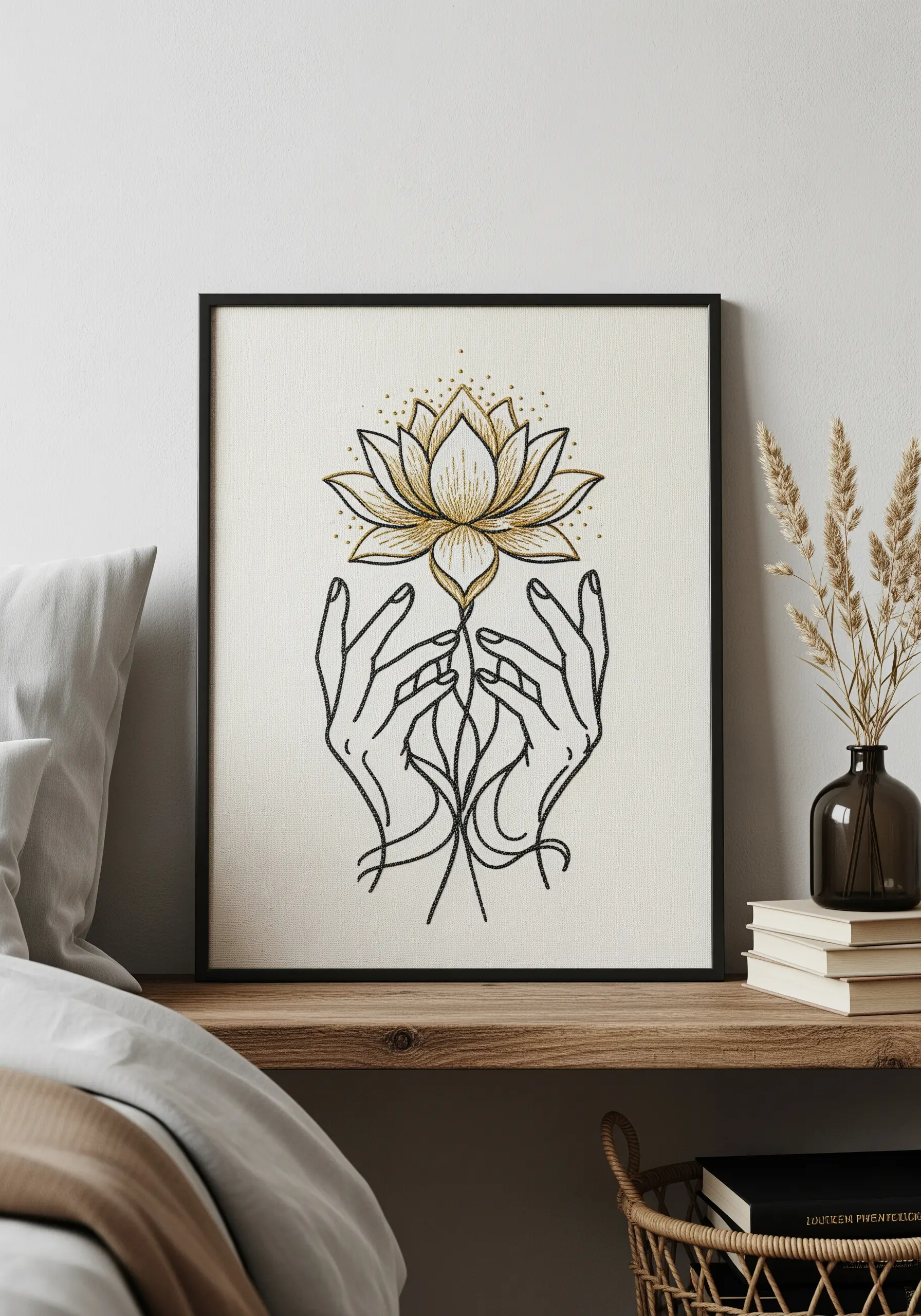
Elevate a simple line drawing by strategically introducing metallic thread for highlight and focus.
Stitch the hands and stems in a classic black floss using a backstitch for clarity.
Then, switch to a gold metallic thread for the lotus blossom and radiating dots to create a clear focal point that shimmers in the light.
Use tiny French knots for the dots to add texture and a sense of energy.
This thoughtful combination of materials turns your embroidery into an object of contemplation, perfect for handmade art pieces that feel personal.
4. Define Form with a Weighted Chain Stitch
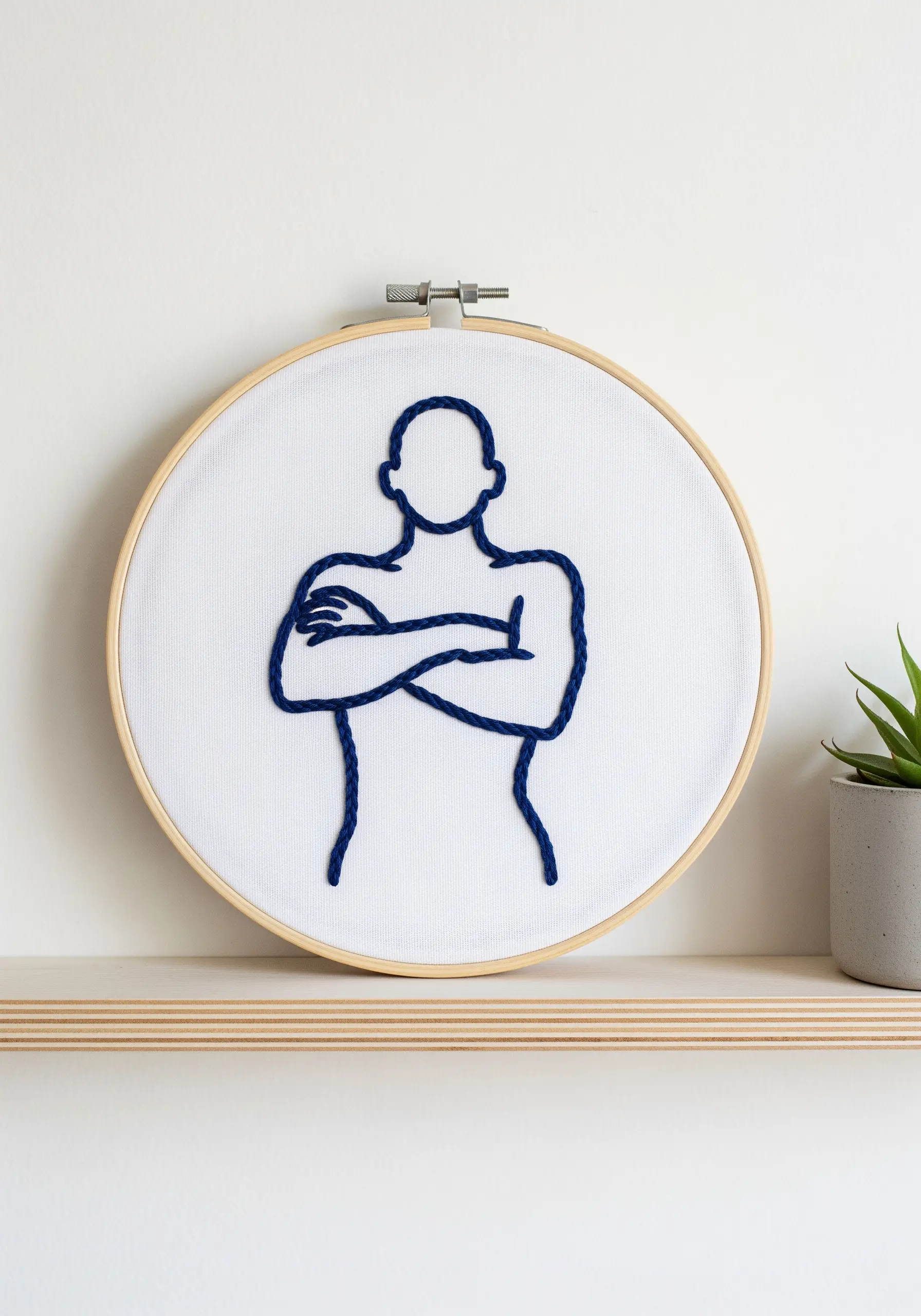
When a design relies purely on outline and negative space, the quality of your line is everything.
Instead of a basic backstitch, use a chain stitch to create a thicker, more substantial line that has presence and weight.
This technique gives the silhouette a sculptural quality, making it feel grounded and strong.
The clean white fabric emphasizes the form, demonstrating how negative space embroidery techniques can be incredibly powerful.
5. Imply Texture with Directional Stitches
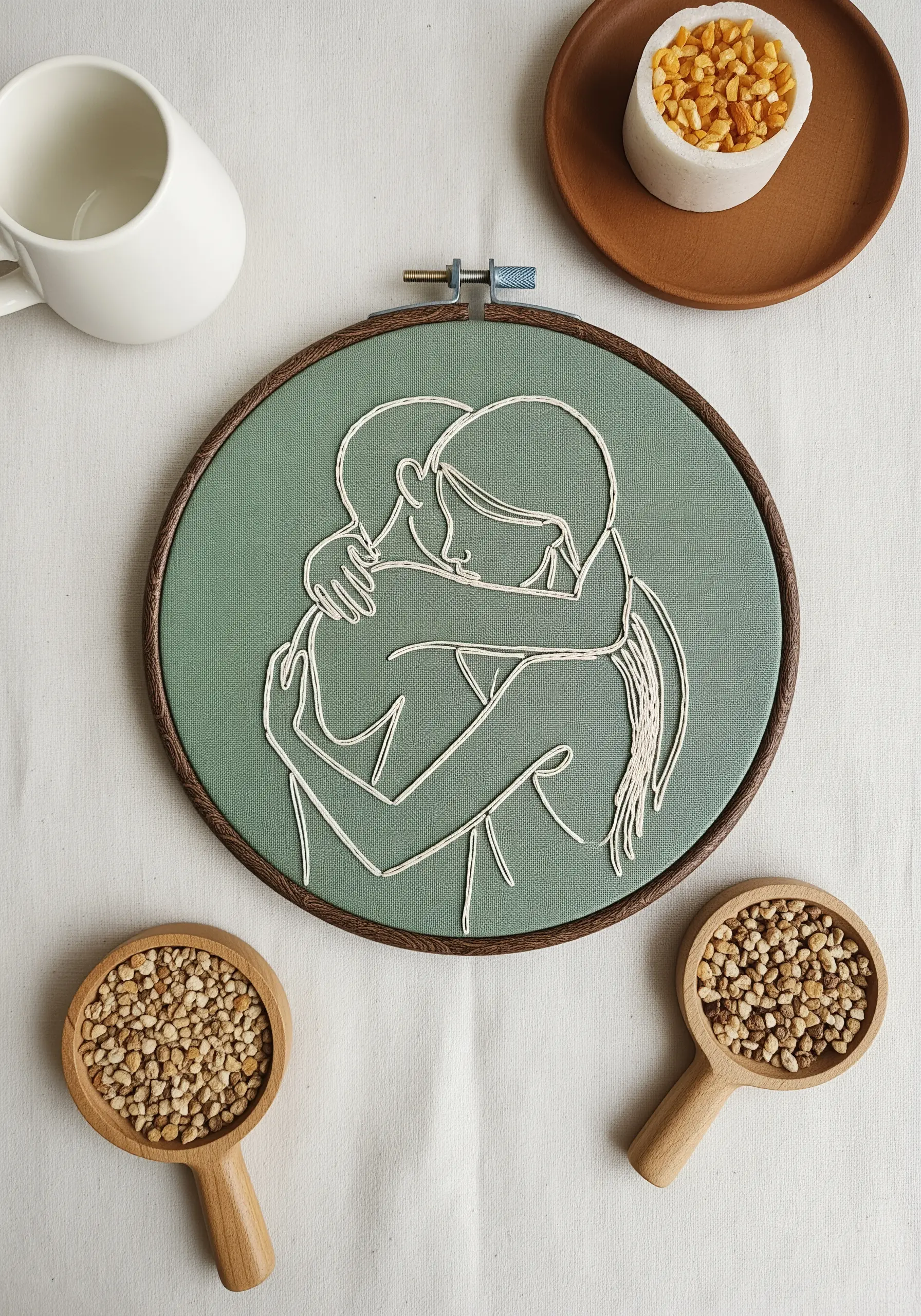
Even in a line-art piece, you can suggest texture and form through the direction of your stitches.
For the hair, use long, straight stitches that follow the natural flow and shape of the hairstyle.
This simple adjustment creates the illusion of movement and softness, contrasting beautifully with the clean backstitch used for the bodies.
It’s a subtle detail that adds a layer of realism to modern abstract couple silhouettes, making them feel more intimate.
6. Juxtapose Bold Lines with Soft Botanicals
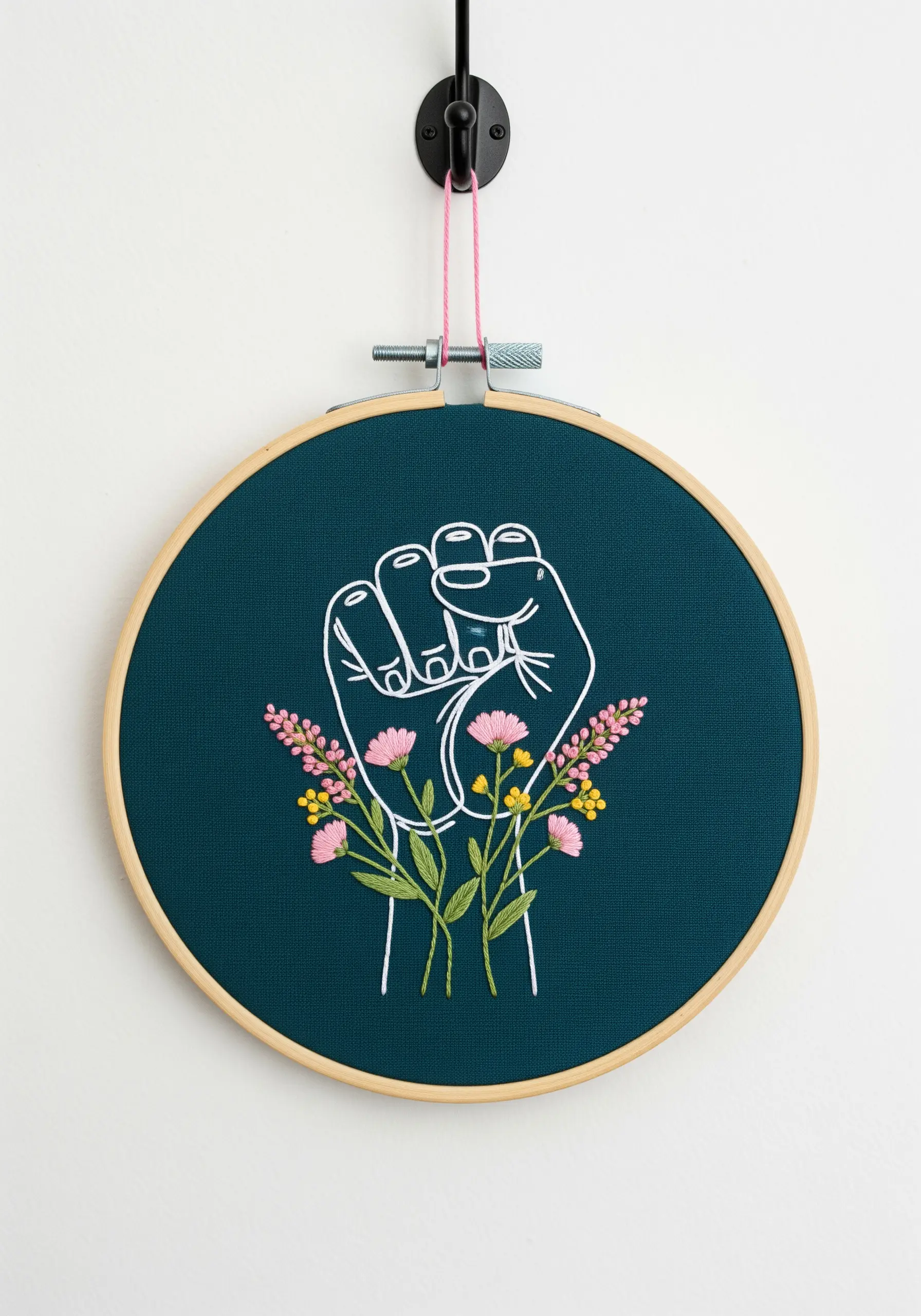
Create a powerful narrative by combining strong iconography with delicate details.
Use a bright white, six-strand floss in a stem stitch for the fist to ensure it stands out as the primary symbol.
For the florals, switch to finer, two-strand floss in soft colors.
Employ lazy daisy stitches for petals and small French knots for flower centers to add gentle texture.
This contrast between the bold outline and the soft, wildflower thread painting makes the piece visually and thematically dynamic.
7. Capture Expression by Varying Line Weight

To bring a stitched portrait to life, think like an illustrator and vary the weight of your lines.
Use three or four strands of floss for the main facial contours to make them bold and expressive.
For finer details like the teeth, wrinkles around the eyes, and subtle shading, drop down to a single strand of floss.
This technical shift adds incredible depth and realism, ensuring the emotion of the piece is communicated clearly.
The high-contrast fuchsia and ochre palette amplifies the joyful energy.
8. Create a Cohesive Gallery with a Thematic Trio

A set of small hoops creates more impact than a single piece, instantly looking like a curated collection.
To achieve a harmonious look, use the same neutral fabric and hoop style for all three pieces.
Keep the line art style and stitch (a clean stem stitch works perfectly) consistent across each flower.
The variation comes from the warm, analogous color palette—burnt orange, ochre, and brown—which ties them together while giving each piece its own identity.
This approach is perfect for turning simple stitches into handmade embroidery hoop designs that feel intentional.
9. Integrate Floral Motifs into Figurative Art
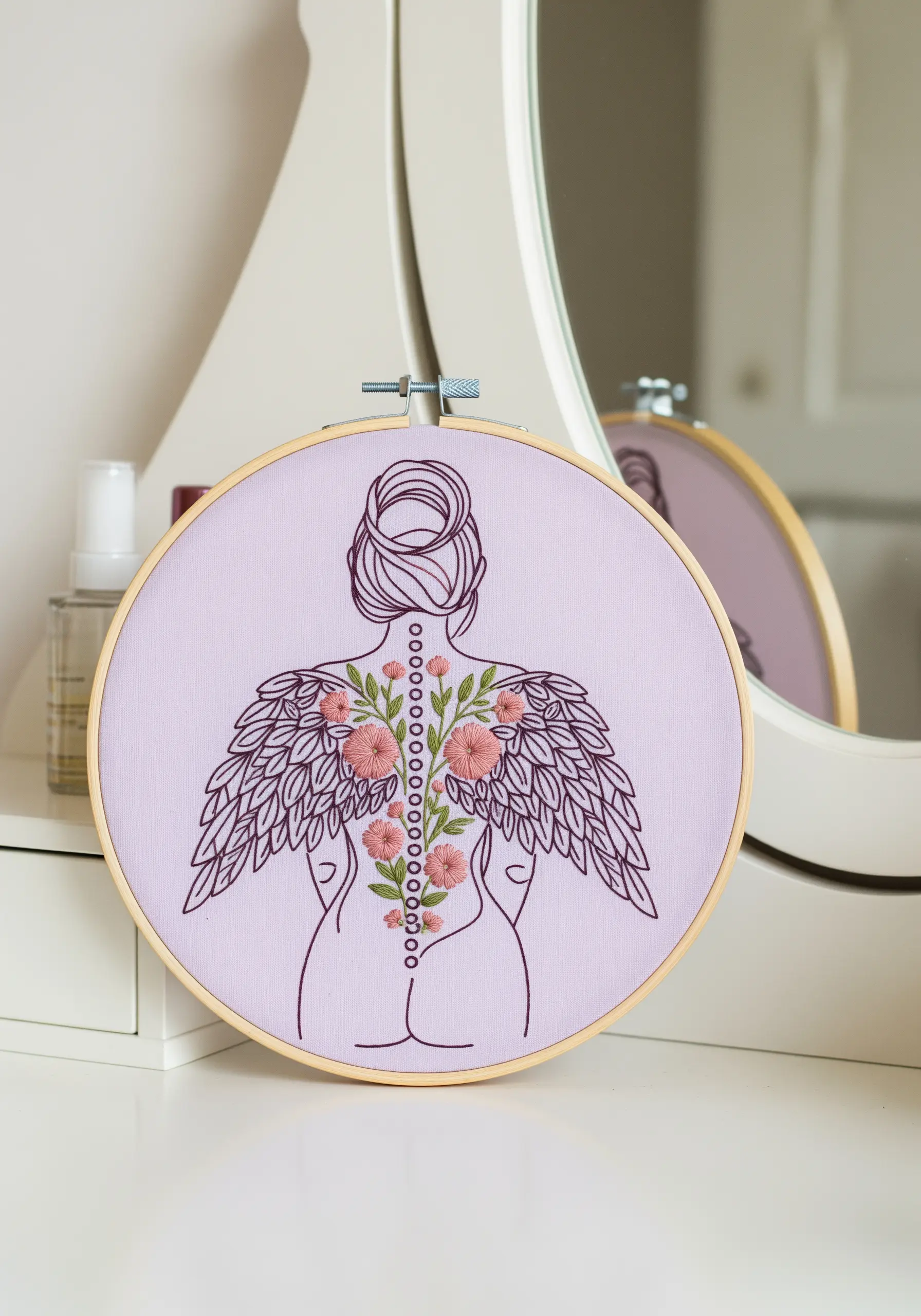
Merge the human form with botanical elements for a design that feels both symbolic and organic.
Use the spine of the figure as a natural ‘stem’ from which the flowers can grow, creating a seamless composition.
Contrast the fine backstitch of the body and wings with the soft texture of satin-stitched petals.
This blending of textures adds dimension and visual interest, turning a simple outline into a rich, narrative piece perfect for DIY embroidery projects that double as bedroom decor.
10. Craft a Celestial Scene with Metallics
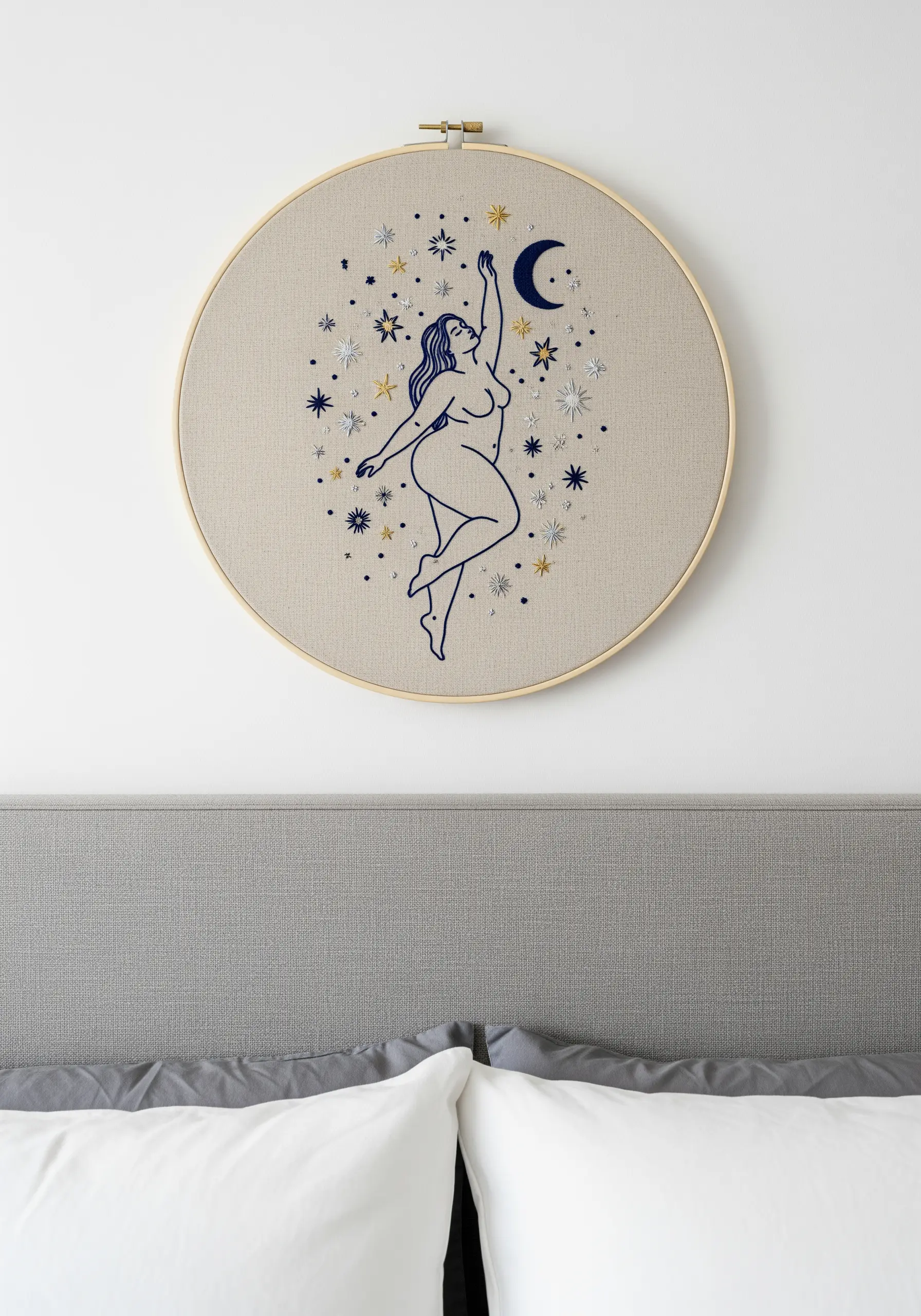
Capture the magic of a night sky by using different types of metallic and specialty threads.
Stitch the figure and the crescent moon with a standard six-strand floss for a solid, defined shape.
For the stars, use a mix of single-strand gold and silver metallic floss, stitching some as simple starbursts and others as French knots.
This variation in shimmer and size creates a sense of deep space and enchantment, ideal for minimal celestial embroidery wall designs.
11. Elevate Your Display with a Wrapped Hoop

The final presentation of your work is as important as the stitching itself.
Instead of leaving the wooden hoop plain, wrap it tightly with yarn, ribbon, or fabric strips in a color that complements your design.
This simple finishing touch frames your embroidery beautifully, giving it a polished and professional look.
It transforms the hoop from a tool into an integral part of the artwork, making your piece feel complete and ready for display.
12. Combine Line Work with Solid Fills for Contrast
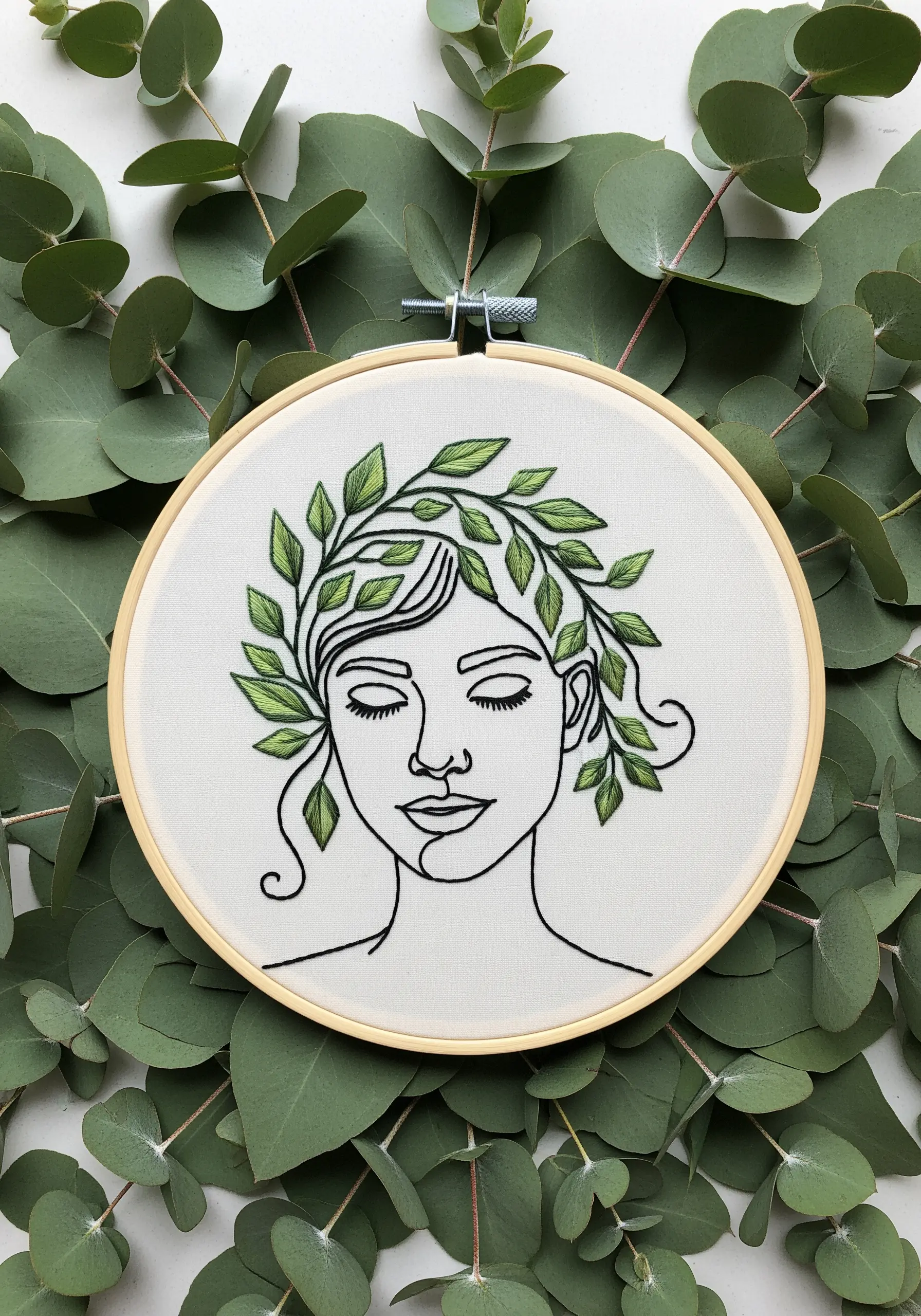
Create a dynamic composition by pairing delicate line art with solidly filled elements.
Stitch the face using a clean, single-strand backstitch to keep it light and expressive.
For the leaves, use a satin stitch or a fishbone stitch to create a smooth, solid fill.
This contrast in texture makes the leaves feel lush and three-dimensional against the simple facial outline.
These plant-inspired hoop art designs balance detail with minimalism perfectly.
13. Layer Stitches for a Mixed-Media Effect
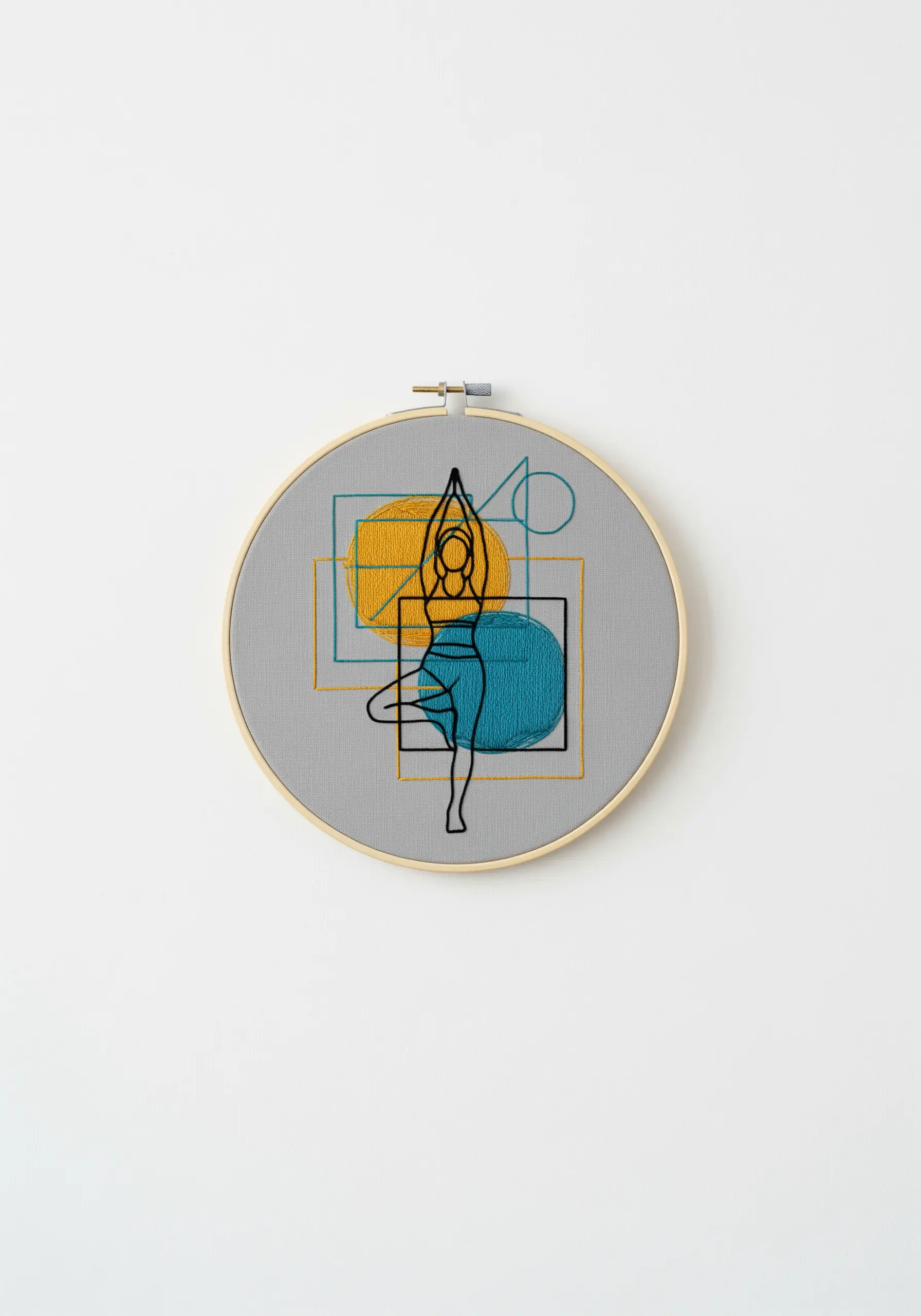
Build visual depth by stitching your design in layers, starting with the background elements.
First, fill the abstract geometric shapes using a long-and-short stitch to create solid blocks of color with a soft, painterly texture.
Once the background is complete, stitch the main figure over the top using a crisp, dark backstitch.
This layering technique makes the figure pop, giving the entire piece a modern, graphic quality reminiscent of collage art.
14. Embrace Expressive Freedom with Rainbow Satin Stitch
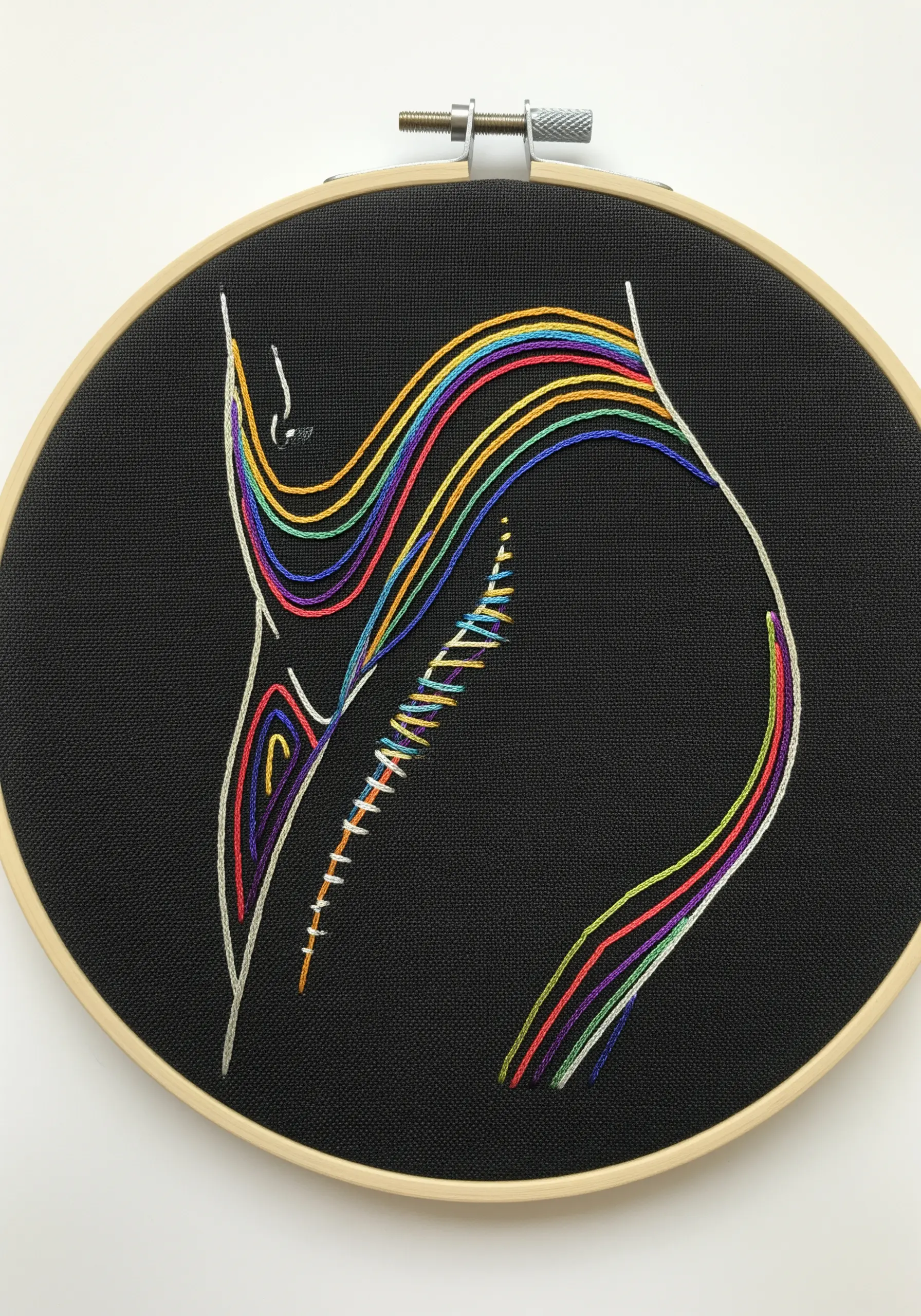
Move beyond simple outlines and use thread as if you are painting with color.
Lay down long, parallel satin stitches, changing your thread color every few stitches to create flowing bands of rainbow hues.
Don’t worry about perfect uniformity; the slight variations in stitch length and tension add to the organic, energetic feel of the piece.
This technique turns a simple silhouette into a vibrant piece of abstract thread art.
15. Add Dimension to Lettering with Couching
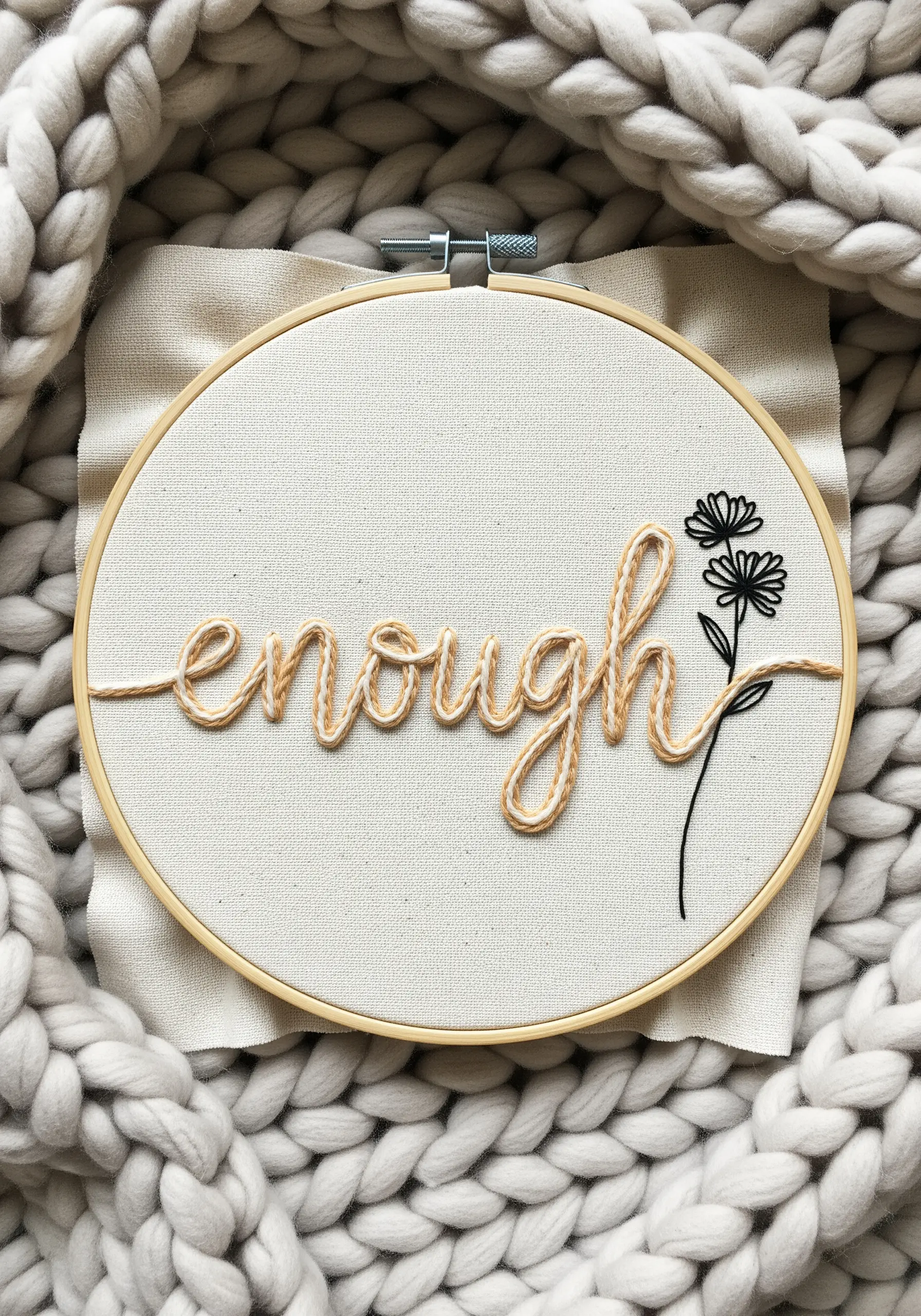
For bold, script-style lettering that stands up off the fabric, couching is the perfect technique.
First, lay down a thick cord, yarn, or multiple strands of embroidery floss along your design line.
Then, use a single, matching strand of floss to make small, perpendicular stitches over the cord, tacking it securely to the fabric.
This method creates beautiful, dimensional text, making it one of the most effective thread-based typography ideas for impactful words.
16. Convey Joyful Motion with a Whipped Stitch
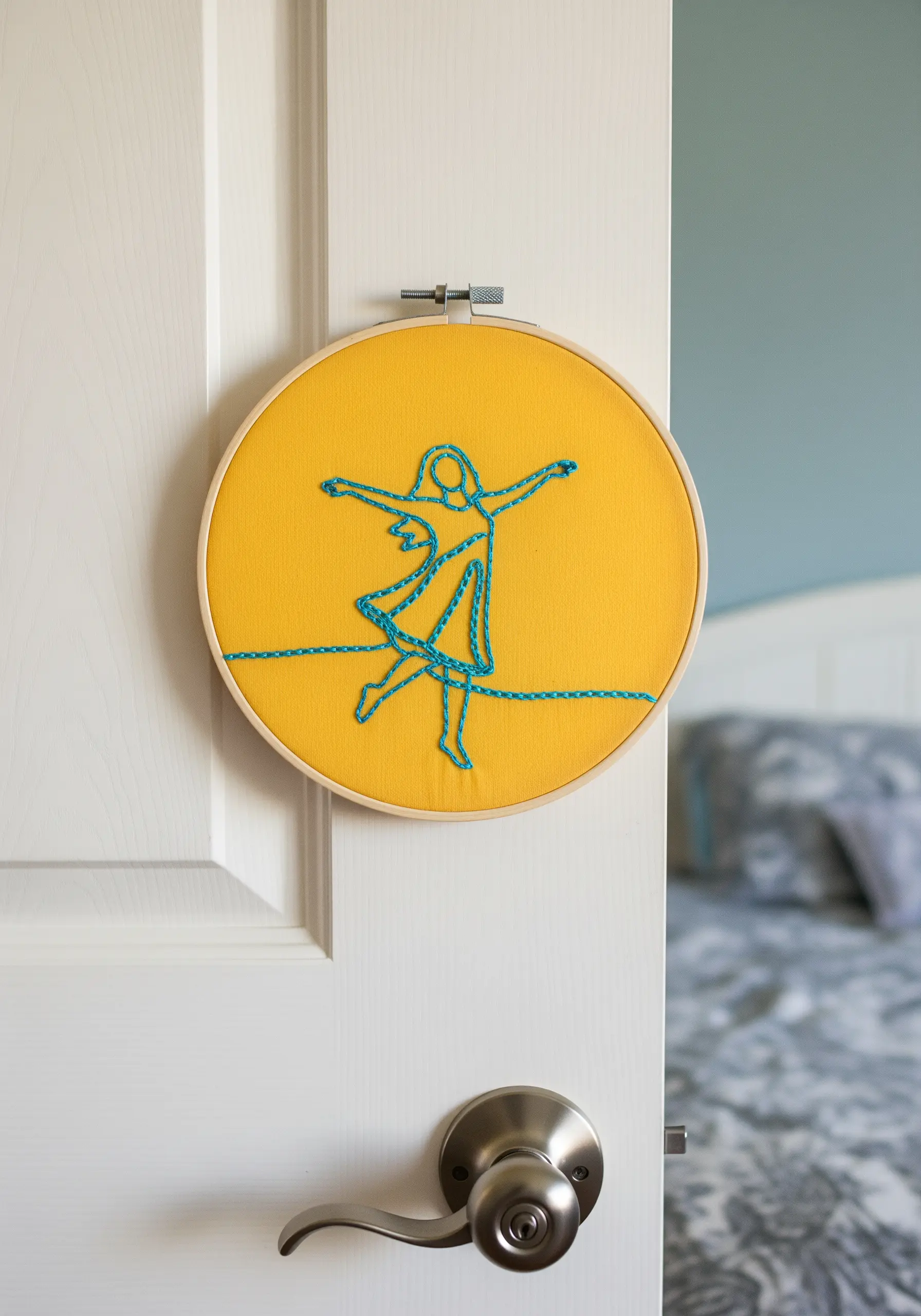
The stitch you choose can dramatically alter the mood of a piece.
To create the fluid, continuous line of this dancing figure, first lay down a foundation of backstitches.
Then, without piercing the fabric, whip a second thread around each backstitch to create a smooth, raised, and unbroken line.
This whipped backstitch enhances the sense of movement and energy, while the vibrant turquoise on yellow color palette screams pure joy.
17. Create an Ethereal Aura with Fine Threads
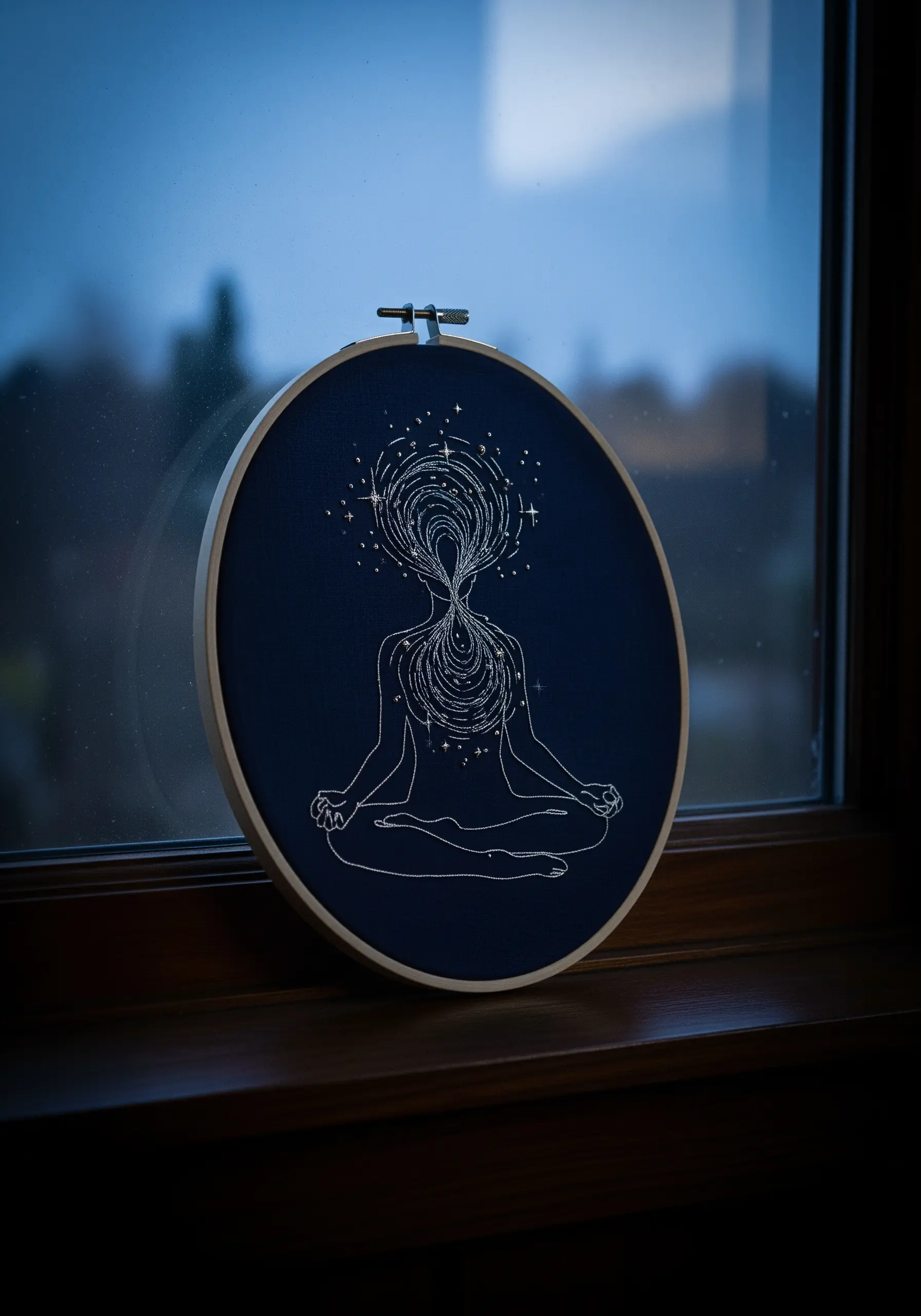
To embroider something as intangible as energy or light, your choice of thread is crucial.
Use a single strand of fine, light-colored floss, or even a metallic blending filament, for the swirling aura.
Stitch the lines densely near the center of the body and gradually space them out as they expand outward.
This gradient in stitch density creates a powerful illusion of radiating, weightless energy, perfect for a meditative and calm design.
18. Ground Your Design with Intricate Detail
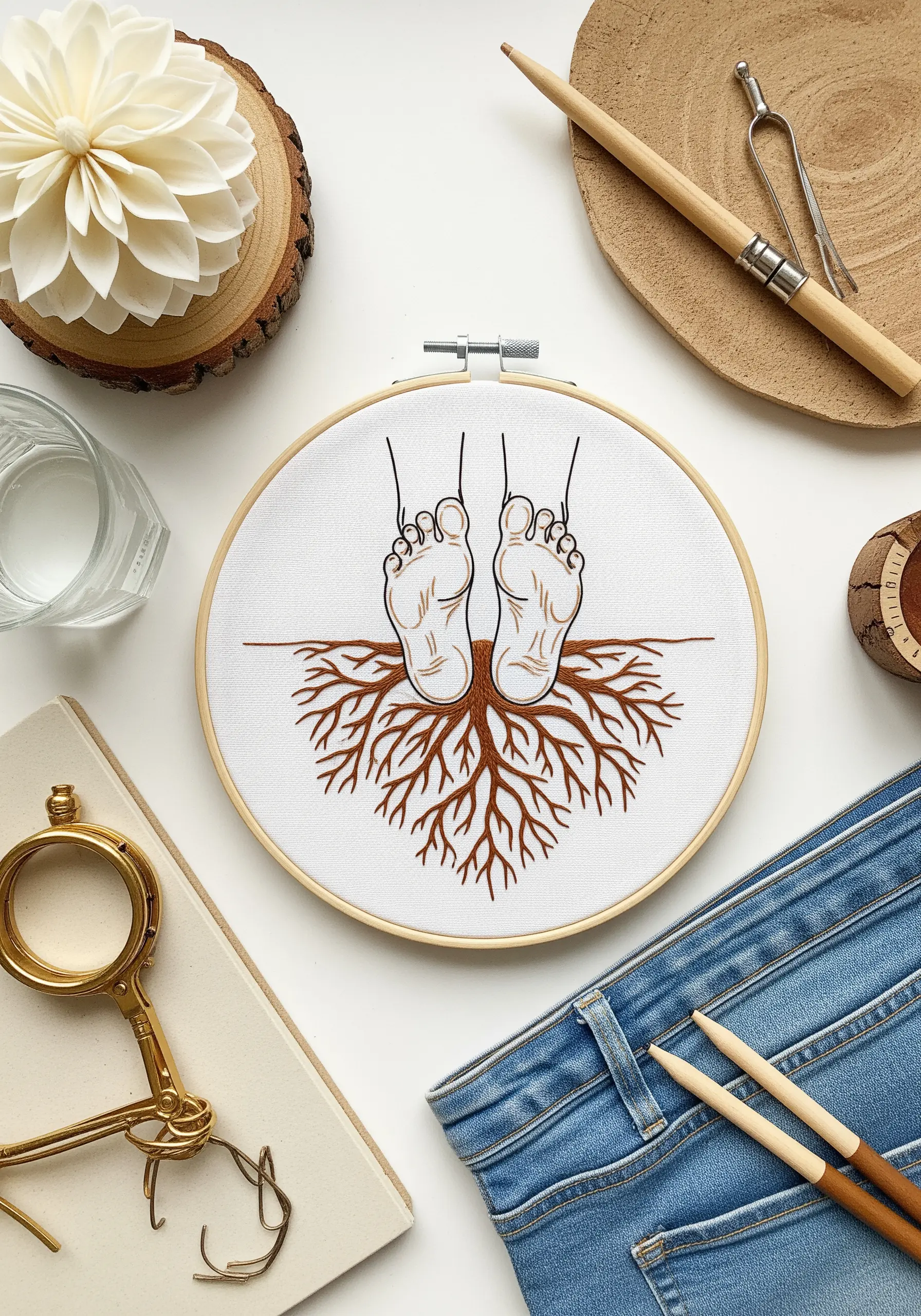
For complex, branching designs like these roots, a split stitch offers the ultimate control.
This stitch allows you to create sharp turns and fine, tapering lines with precision, which is essential for capturing the delicate, web-like structure of the roots.
Use two or three strands for the main roots and drop to a single strand for the finest tips to create a natural sense of depth.
The meticulous detail grounds the piece, giving it a powerful sense of connection and stability.