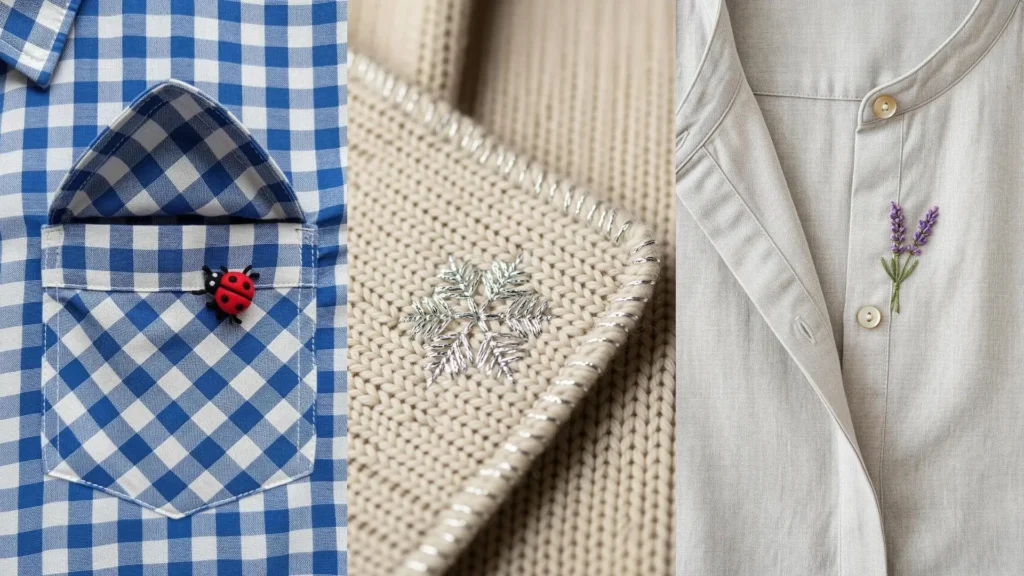
A pillow is more than just a piece of decor; it’s a canvas waiting for your story. When you stitch a landscape—a quiet forest, a majestic mountain, or a cascading waterfall—you are not just decorating a room. You are creating a small sanctuary, a textile escape you can hold in your hands.
Think of your thread as paint and your needle as a brush. With each stitch, you have the power to control texture, light, and mood. A smooth satin stitch can become a still lake, while a cluster of French knots can transform into a mossy riverbank. It’s in these small, intentional choices that your artistry truly emerges.
Let these ideas guide you beyond just following a pattern. See them as starting points for your own interpretation of nature. Adjust a color palette to match a memory, or experiment with a new stitch to capture the feeling of a place you love. This is how you elevate your embroidery from a craft to an expressive art form.
1. Painterly Sunset Sky
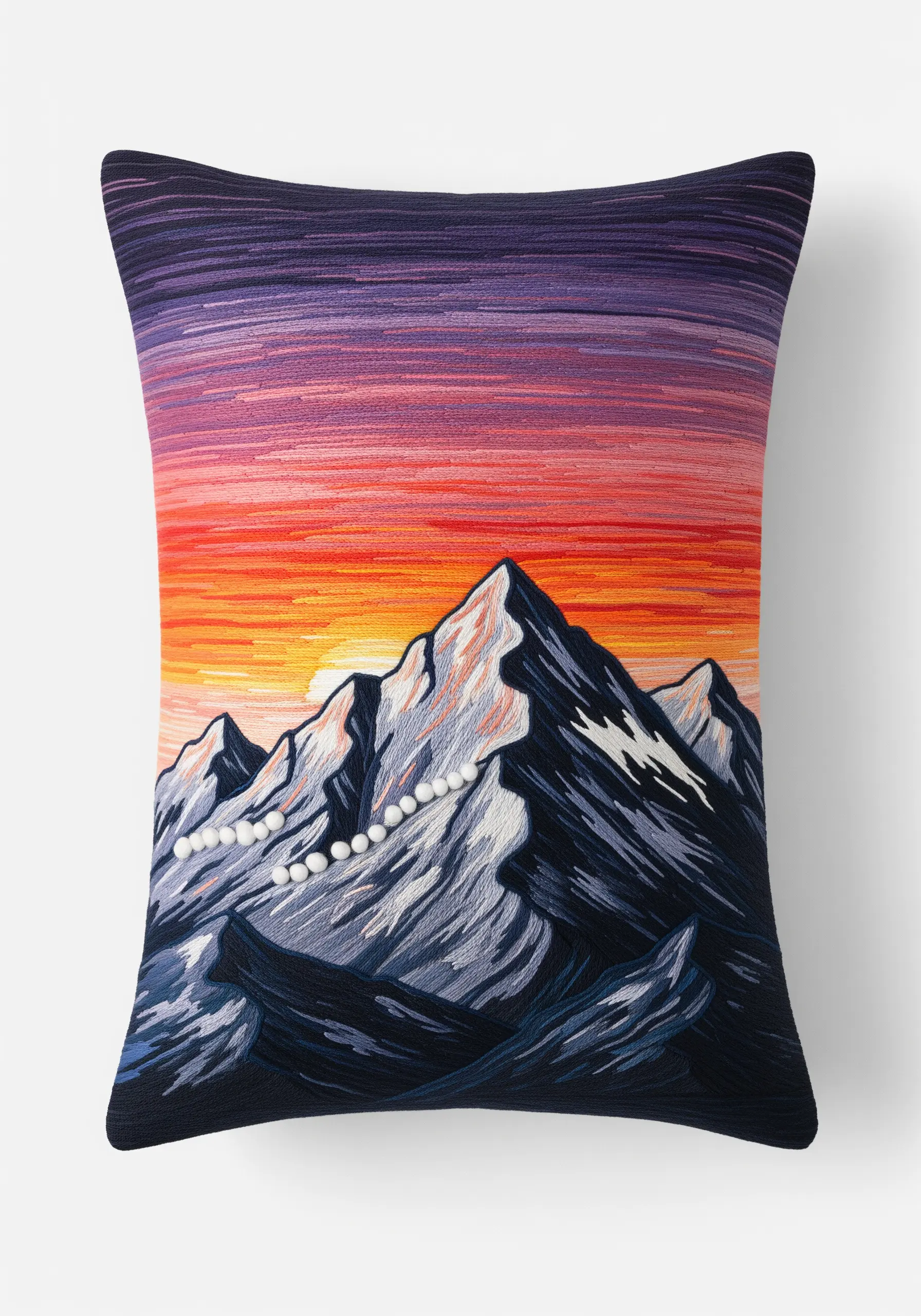
Create a vibrant, blended sky using the thread painting technique, also known as long-and-short stitch.
Use a single strand of embroidery floss for a smooth, seamless gradient, laying stitches side-by-side like brushstrokes.
For the mountains, vary the direction of your satin stitch to mimic the angles of rock faces, adding highlights with a lighter gray or off-white thread.
The snow-capped trail can be rendered with thick, plush French knots or by couching a piece of chenille yarn for rapid texture.
2. High-Texture Forest Floor
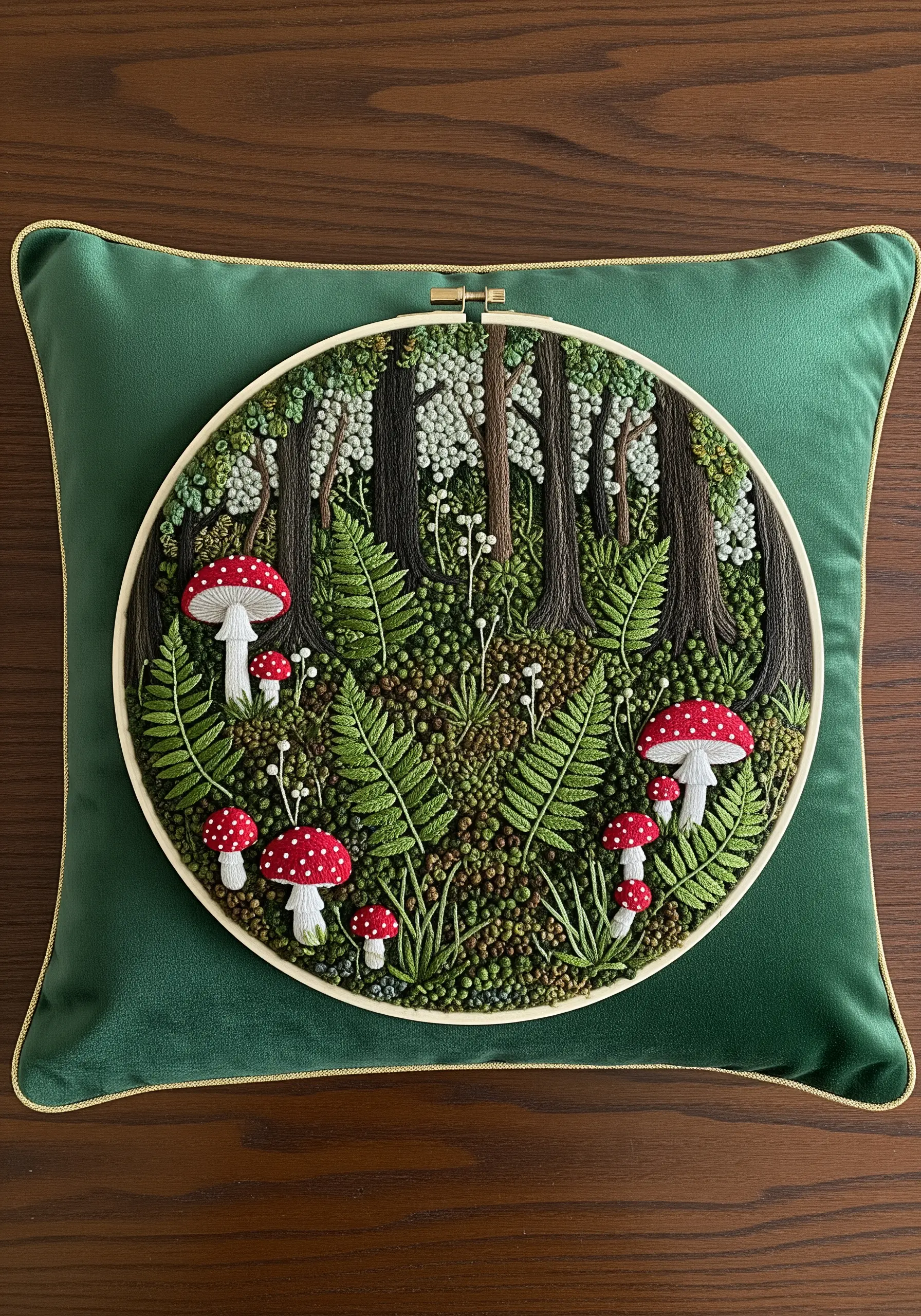
Build a deeply tactile woodland scene by dedicating different stitches to each natural element.
Use dense clusters of French knots in varied shades of green and brown for the mossy ground—this creates a lush, three-dimensional effect that invites touch.
Render tree bark with vertical straight stitches in dark brown and gray, and use padded satin stitch for the mushroom caps to make them pop off the fabric.
Stitching on velvet, as seen here, enhances the sense of luxury and depth, making the textures even richer.
For more inspiration, explore these forest floor botanical stitch ideas.
3. Dynamic Waterfall with Beaded Spray

Capture the movement of water by using long, vertical straight stitches for the waterfall.
Incorporate a single strand of metallic silver or light blue rayon thread alongside your cotton floss to create a subtle shimmer that mimics light on water.
Leave some threads slightly looser than others to enhance the illusion of flow.
For the waterfall’s spray and surrounding moss, scatter tiny seed beads and French knots—the beads add a sparkling, wet look that stitching alone cannot achieve.
4. Contrasting Geometric and Organic Forms
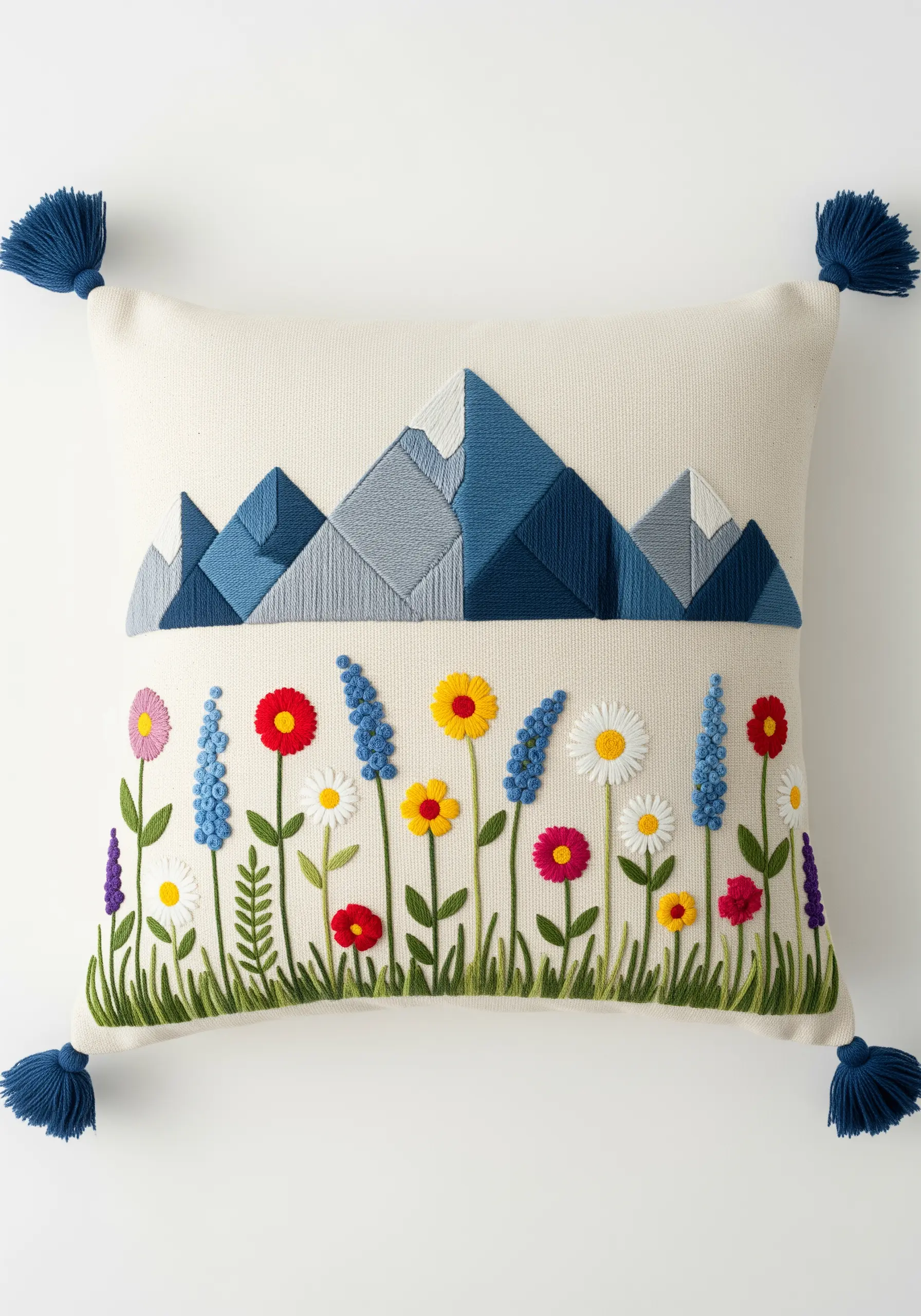
Create visual interest by pairing crisp, geometric mountains with soft, organic wildflowers.
Fill the mountain shapes with perfectly smooth satin stitch, ensuring your stitch direction enhances the angular planes.
For the flowers, use a variety of classic stitches: lazy daisy for petals, French knots for centers, and stem stitch for the stalks.
This contrast in style—hard lines against soft curves—makes the entire composition feel modern and intentionally designed.
5. High-Contrast Celestial Scene
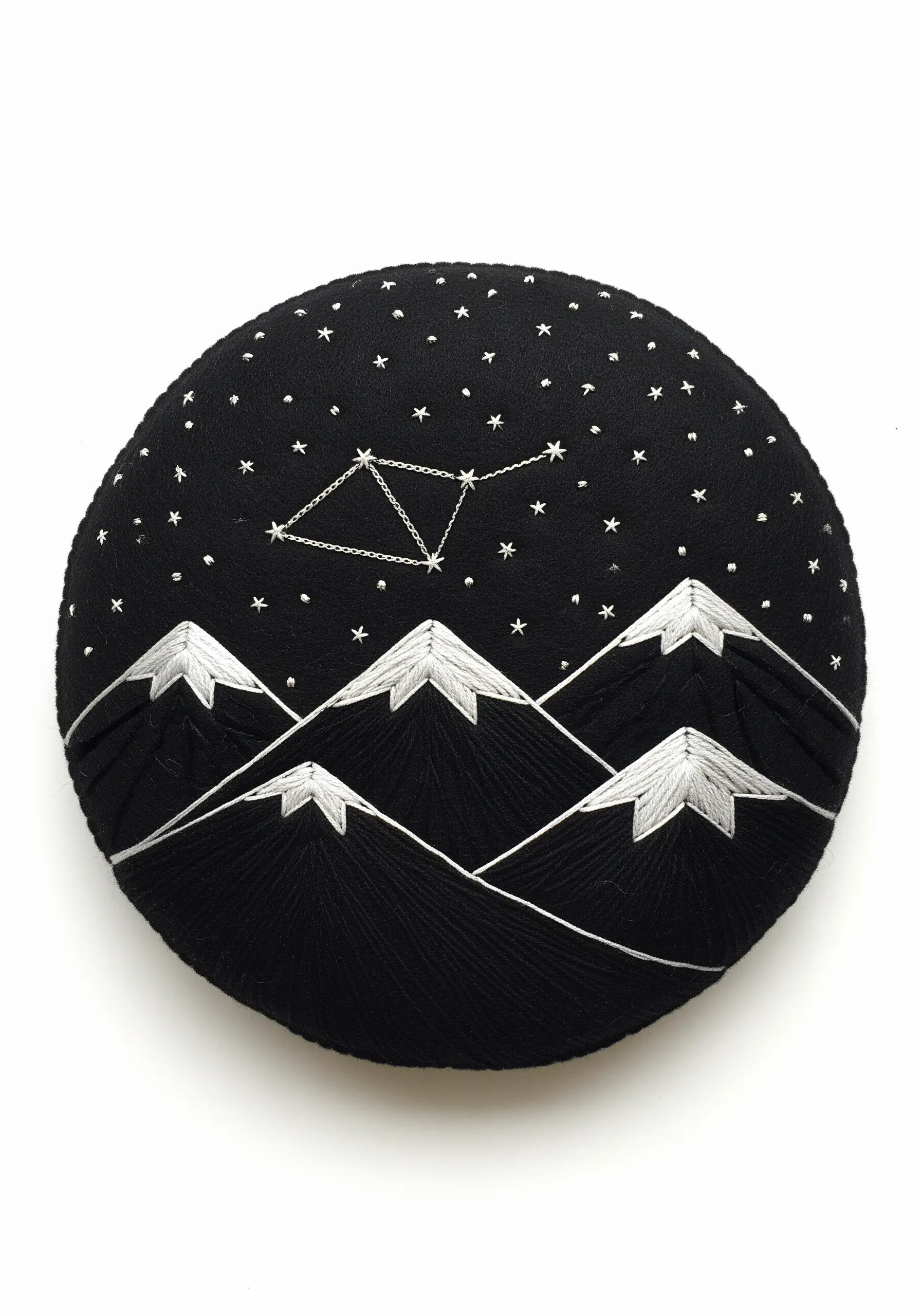
Achieve a striking, graphic look by using high-contrast threads on a dark fabric base.
Use a single strand of white or metallic silver thread for sharp, clean lines that stand out against black cotton or linen.
A simple backstitch is perfect for the constellation and mountain outlines, ensuring precision.
Scatter tiny seed stitches or pin-sized French knots for the stars to create a delicate, starry sky without overwhelming the minimalist aesthetic.
These minimalist embroidery projects show how less can be truly more.
6. Riverbank Moss with Dimensional Knots
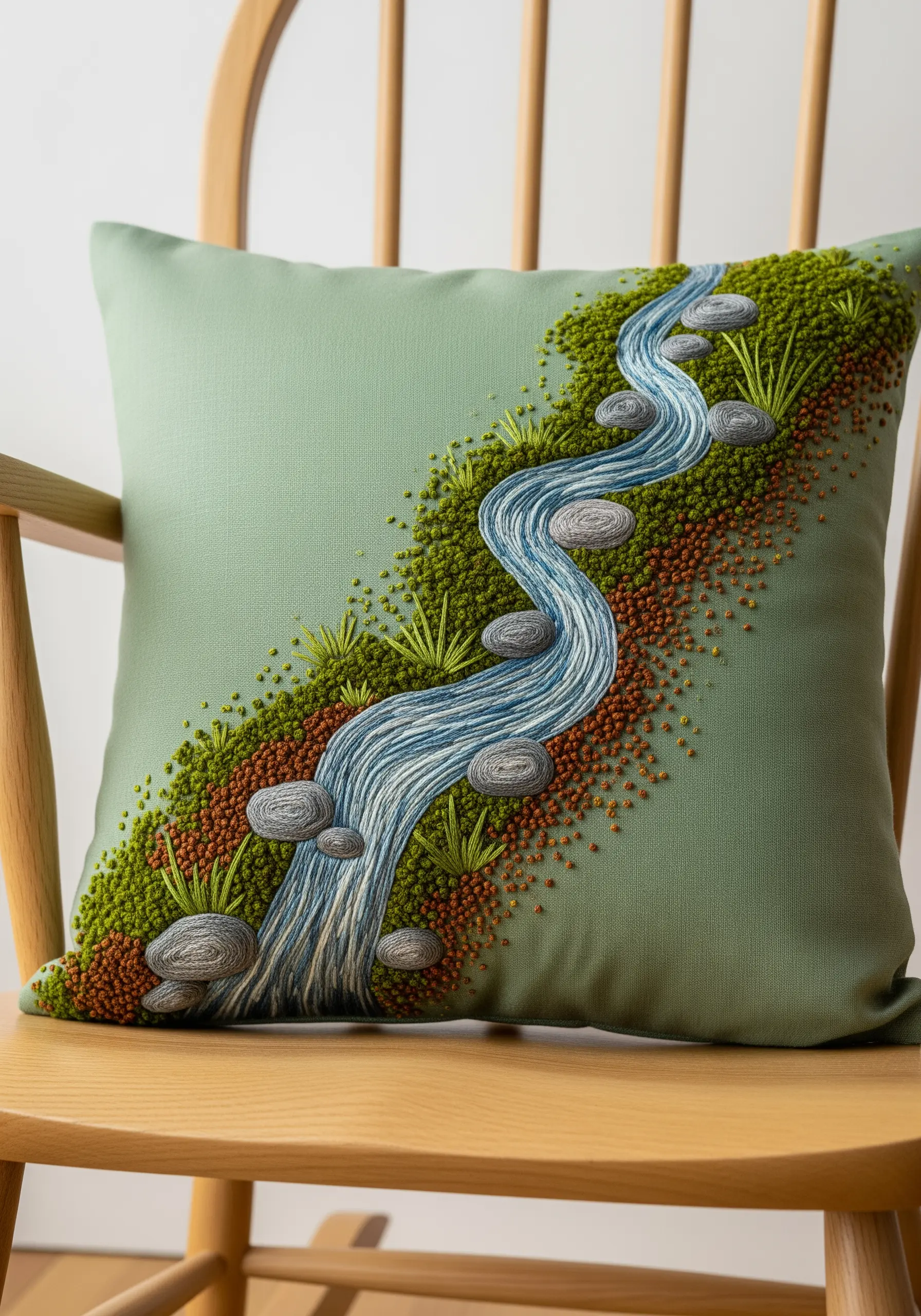
Give your landscape incredible texture by filling the riverbanks with dense French knots in earthy greens and ochres.
Vary the size of your knots by changing the number of times you wrap the thread around the needle—this creates a more natural, uneven surface like real moss.
For the water, use directional straight stitches that follow the river’s curve, blending shades of blue and white to suggest flow and depth.
The rocks, filled with smooth satin stitch, provide a necessary textural contrast to the knotted banks.
7. Symmetrical Lake Reflection
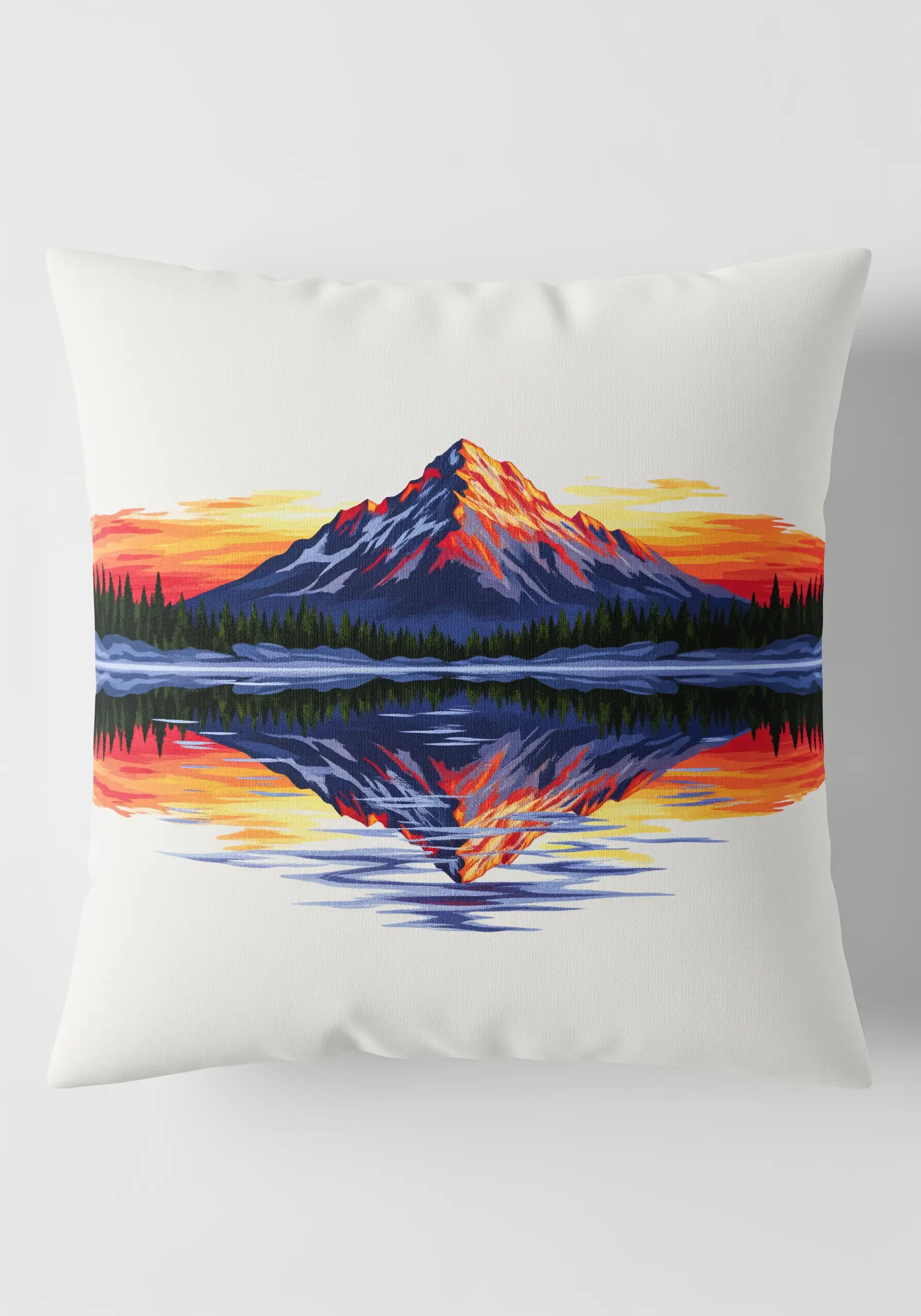
Master the art of reflection by creating a near-symmetrical design that plays with color and texture.
Stitch the mountain and sky first, using long-and-short stitch for smooth color blending.
For the reflection, use the same color palette but introduce horizontal satin stitches to mimic the flat surface of water.
Slightly blurring the colors and shapes in the reflection part of your stitching will create a more realistic water effect.
Explore more ways to stitch stunning scenes with mountain landscape thread painting techniques.
8. Dimensional Forest with Yarn
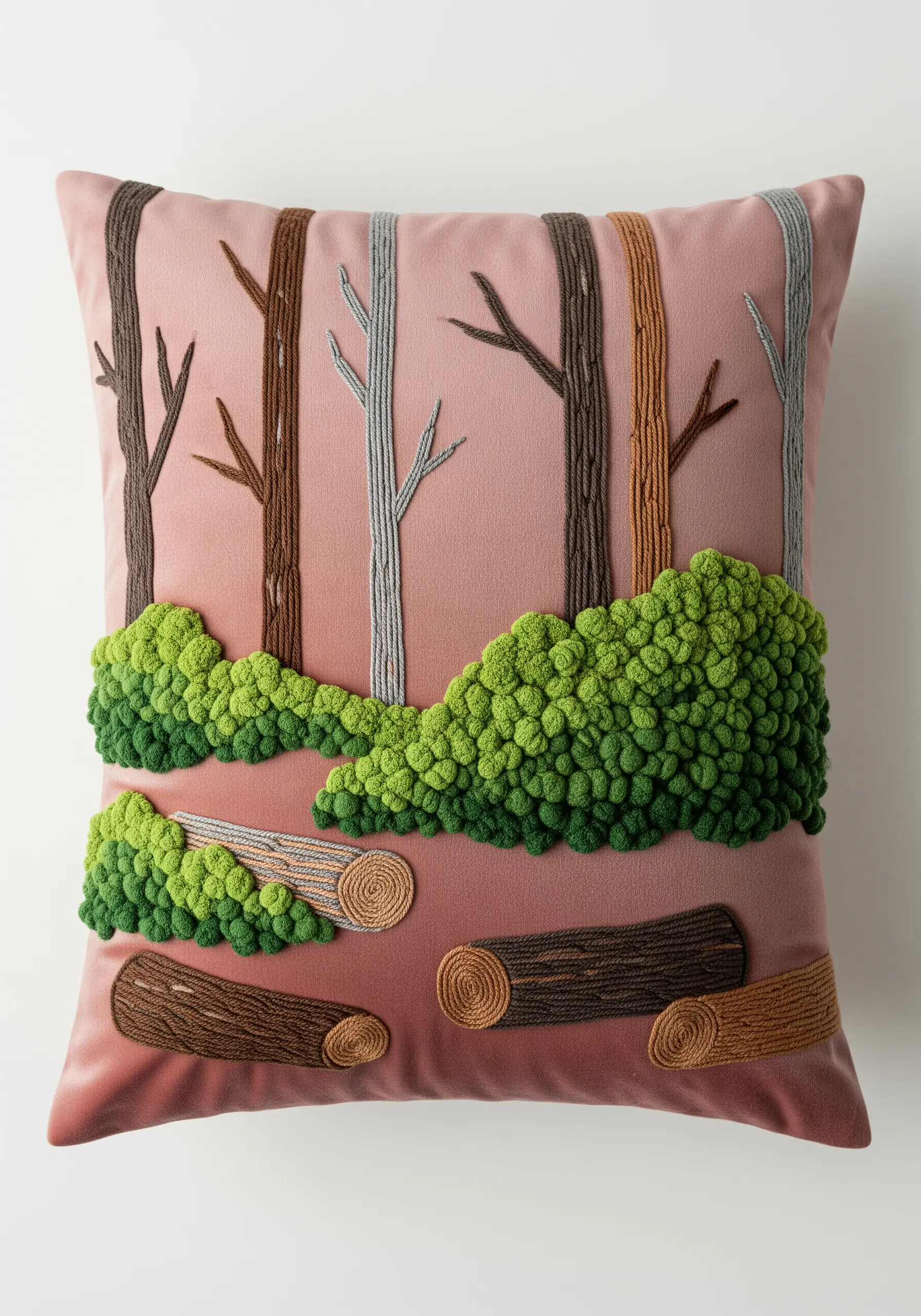
Introduce dramatic texture and depth by incorporating yarn into your embroidery.
Use couching—tacking down thick yarn with a thinner matching thread—to create bold tree trunks that stand out from the fabric.
For the vibrant green bushes, use Turkey work (or Ghiordes knot) to create plush, cut loops that you can trim to your desired height, giving the piece a sculptural quality.
This mixed-fiber approach is perfect for creating decor that truly makes a statement.
9. Autumnal Canopy on Corduroy

Amplify the cozy feeling of an autumn scene by choosing a textured fabric like corduroy as your canvas.
The fabric’s linear wales complement the vertical tree trunks and add an extra layer of visual interest.
Fill the tree canopies with a mix of fishbone stitch and satin stitch in a warm, analogous color palette of reds, oranges, and yellows.
Layering the trees—stitching the ones in the back first—creates a sense of a dense, overlapping forest canopy.
10. Icy Waterfall with Mixed Materials

Create a shimmering, frozen waterfall by combining thread with unconventional materials.
Use thick, chunky wool yarn for the cascading ice, allowing the threads to hang loosely for a natural effect.
Incorporate small, iridescent sequins and silver beads to mimic the sparkle of ice crystals catching the light.
For the snowy banks, try stitching with fluffy chenille thread or creating dense clusters of white bullion knots for a rounded, pillowy texture.
11. Aurora Borealis in Motion
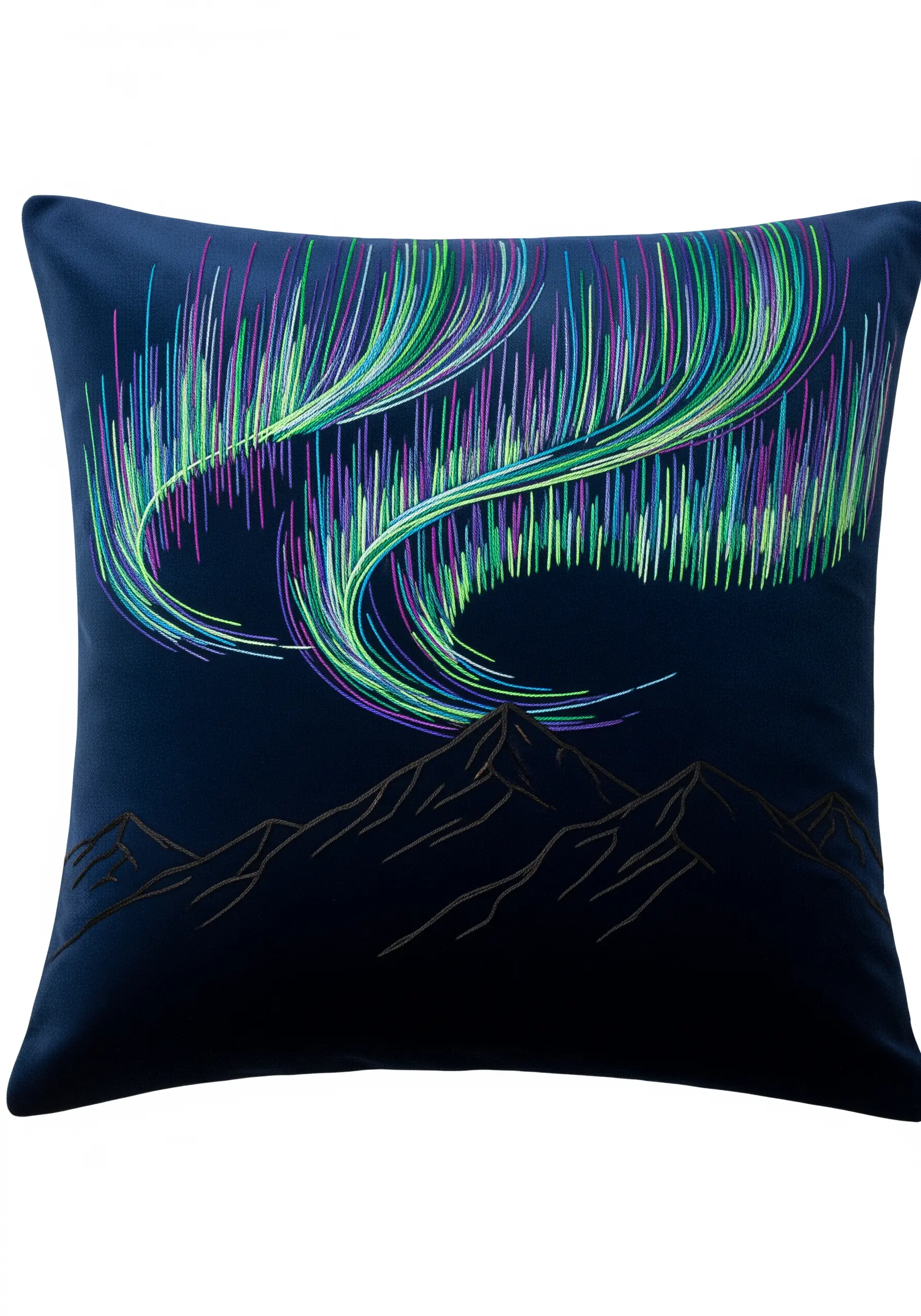
Capture the fluid, dancing movement of the Northern Lights with long, sweeping straight stitches.
Work on a dark navy or black fabric to make the colors pop.
Use a mix of fluorescent, variegated, and metallic threads in greens, purples, and blues, overlapping your stitches to blend the colors and create a glowing effect.
Keep the mountain silhouette simple—a clean backstitch outline—so that the dynamic sky remains the focal point of your piece.
12. Atmospheric Mountain Mist

Illustrate depth and distance in a mountain range using the principles of atmospheric perspective.
Stitch the farthest mountains in the lightest shade of gray and gradually use darker threads for the mountains closer to the foreground.
This simple tonal shift creates a powerful illusion of depth.
Add a delicate scattering of tiny white French knots or seed stitches across the peaks to suggest mist or light snowfall, enhancing the serene mood.
These monochrome embroidery ideas prove that you don’t need color to create drama.
13. Towering Redwood Perspective
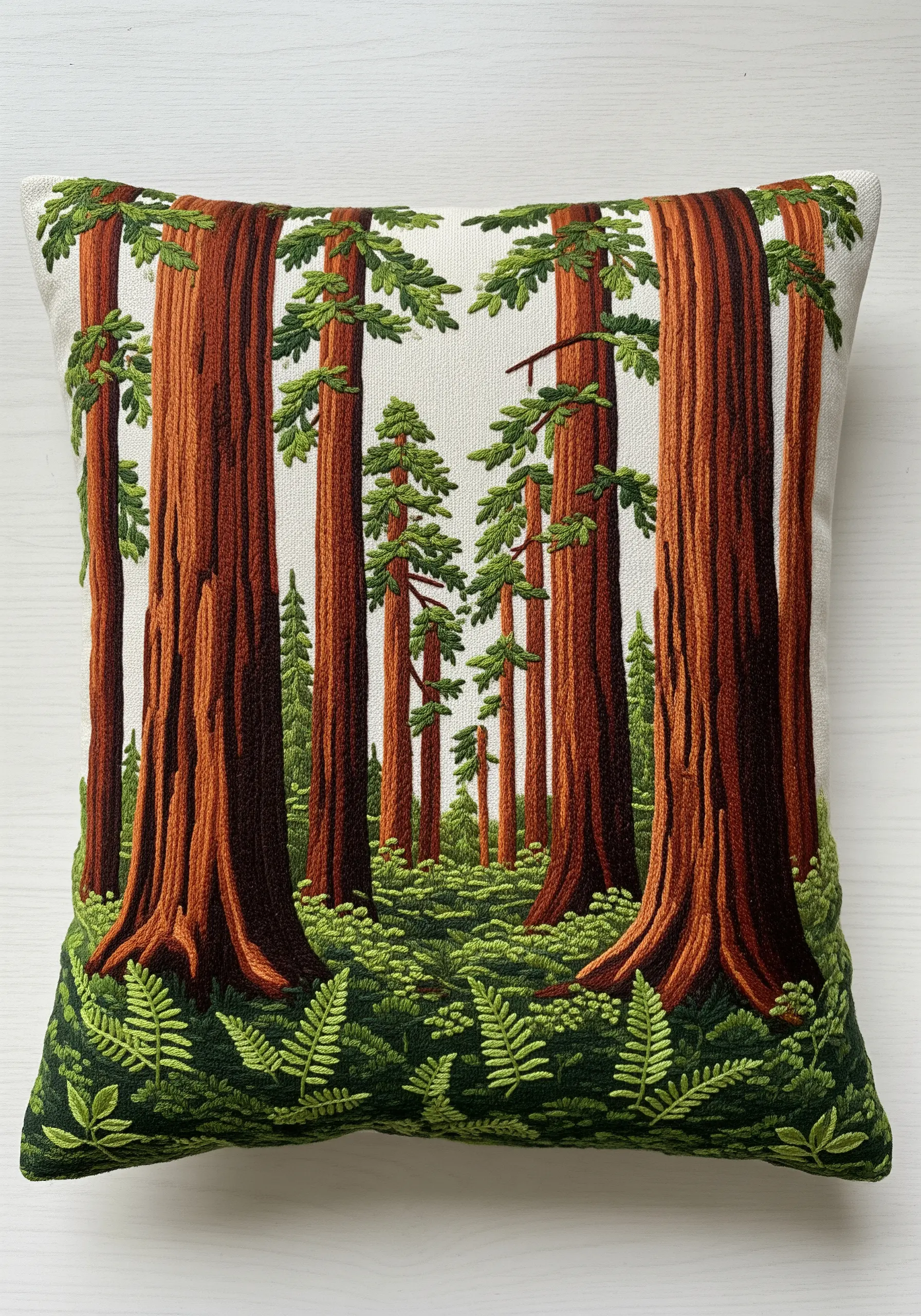
Convey the immense scale of a redwood forest by focusing on verticality and layering.
Use long, vertical satin stitches for the tree trunks, subtly varying the shades of brown and red to create roundedness and texture.
Stitch the trees in the background first, using slightly thinner and less detailed stitches.
The foreground trees should be bolder, with more detailed foliage made from fishbone or detached chain stitches, to create a strong sense of perspective.
14. Minimalist Mount Fuji with Floral Accent

Embrace the power of negative space for a refined, Japanese-inspired aesthetic.
Define the iconic shape of Mount Fuji with a simple, clean outline in backstitch, leaving the interior largely unstitched.
Concentrate color and texture in one area, like the delicate cherry blossom branch, using French knots and stem stitch to create a beautiful focal point.
This balanced composition feels calm, elegant, and intentional, proving that empty space is just as important as the stitches themselves.
15. Layered Straight Stitch Landscape

Build a stylized, textural landscape using layered straight stitches, a technique similar to Bargello work.
Fill the mountain areas with long stitches in earthy tones, overlapping them at different angles to suggest geological strata.
This method fills space quickly and creates a woven, tapestry-like appearance.
Contrast the angular texture of the mountains with a smooth, vertical satin stitch for the waterfall and fishbone stitch for the palm leaves.
16. Peeking Waterfall in a Lush Jungle

Create a sense of discovery by partially obscuring your focal point—the waterfall—with layers of foliage.
Stitch large, overlapping tropical leaves using satin stitch for the main fill and a contrasting backstitch for the veins.
Use a variety of greens to add realism and depth to the jungle canopy.
The sliver of the waterfall peeking through becomes a captivating detail that draws the viewer in, adding an element of mystery to the scene.
Master these delicate leaf stitch techniques for truly stunning results.
17. A Year in a Single Landscape
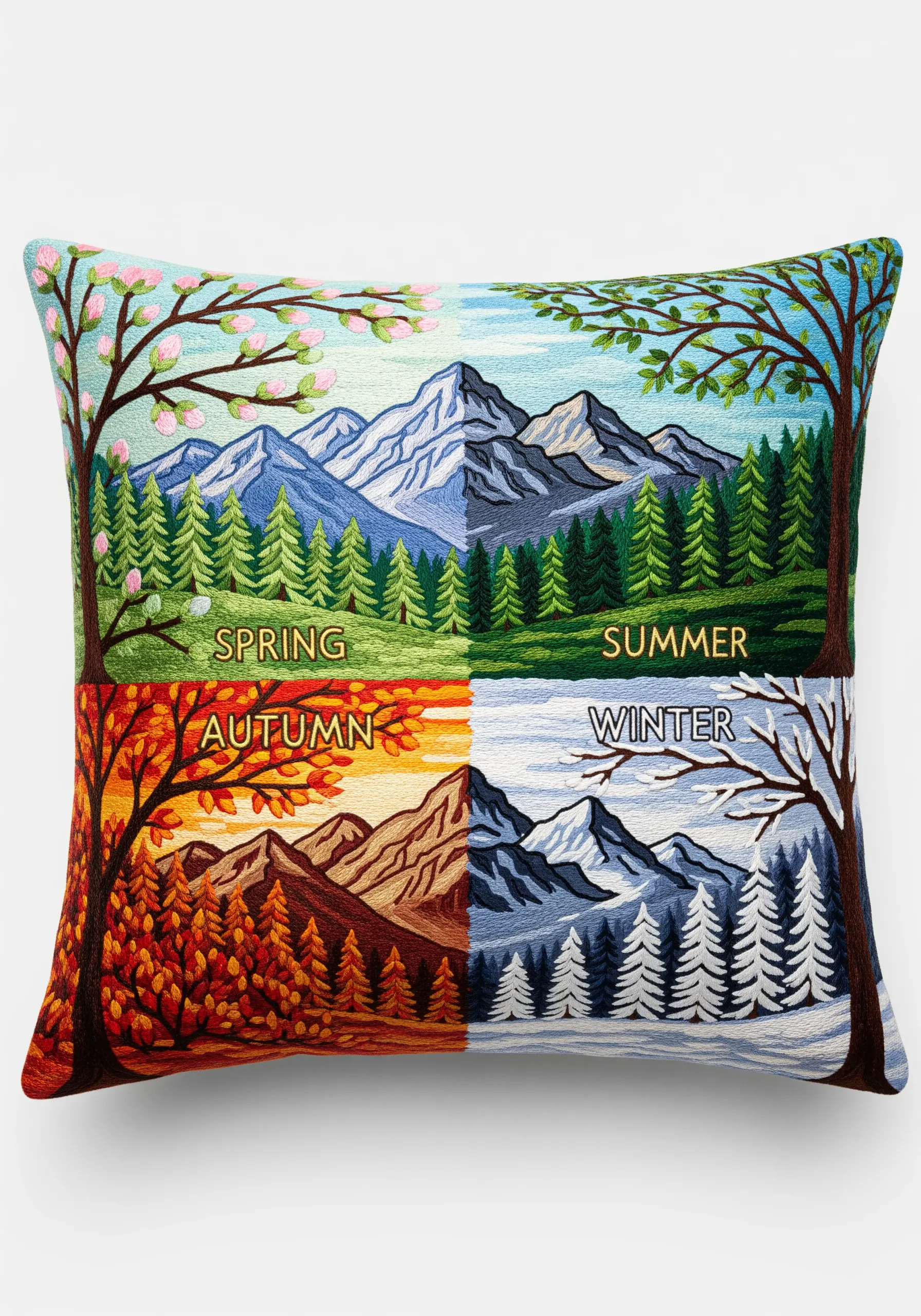
Tell a story of time and change by dividing your pillow into four seasonal panels.
Assign a distinct color palette to each quadrant: pastels for spring, vibrant greens for summer, warm earth tones for autumn, and cool blues and whites for winter.
Vary your stitch textures to match the season—use French knots for spring blossoms and sparse, open stitches for bare winter branches.
This sampler-style project is a wonderful way to practice different techniques while creating a cohesive, narrative piece. Explore more seasonal embroidery wall decor ideas for year-round inspiration.
18. Forest Scene within a Silhouette

Create a visually clever design by containing your landscape within a strong silhouette.
Lightly trace the outline of an animal, like a bear, and then fill the shape with a simplified forest scene.
Use simple stitches like vertical satin stitch for tree trunks and small seed stitches or detached chains for foliage.
The power of this design comes from the unexpected frame, turning a simple landscape into a compelling piece of graphic art.
19. Textured Coastal Cliffs and Seafoam

Mimic the rugged texture of a seaside cliff with a dense combination of French knots, colonial knots, and bullion stitches.
Incorporate various shades of gray, brown, and even hints of blue and green to create a realistic, weathered rock effect.
For the churning seafoam where the water meets the shore, use a thick cluster of white and pale blue French knots, and consider adding white or clear seed beads for a wet, bubbly look.
20. Dramatic Sunrise with Radiating Stitches
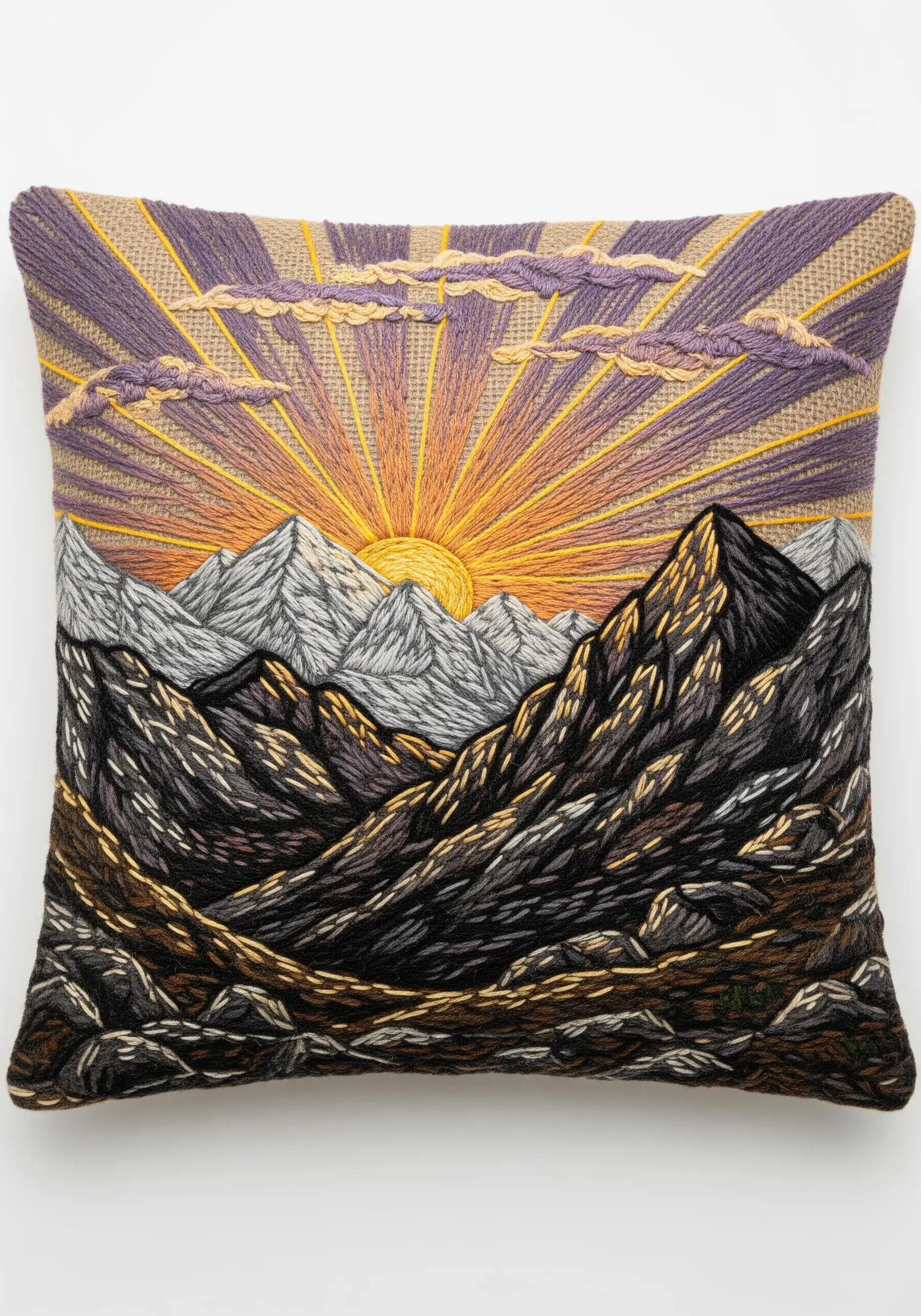
Capture the intense energy of a sunrise with long, radiating straight stitches.
Start with a central sun stitched in a dense, circular satin stitch or filled with French knots.
From this center point, work your sunrays outwards, using a gradient of threads from bright yellow to deep orange and purple.
The straight, graphic lines create a powerful sense of light and movement, making the entire composition feel dynamic and alive.
21. Geometric Mountains on Waffle Weave
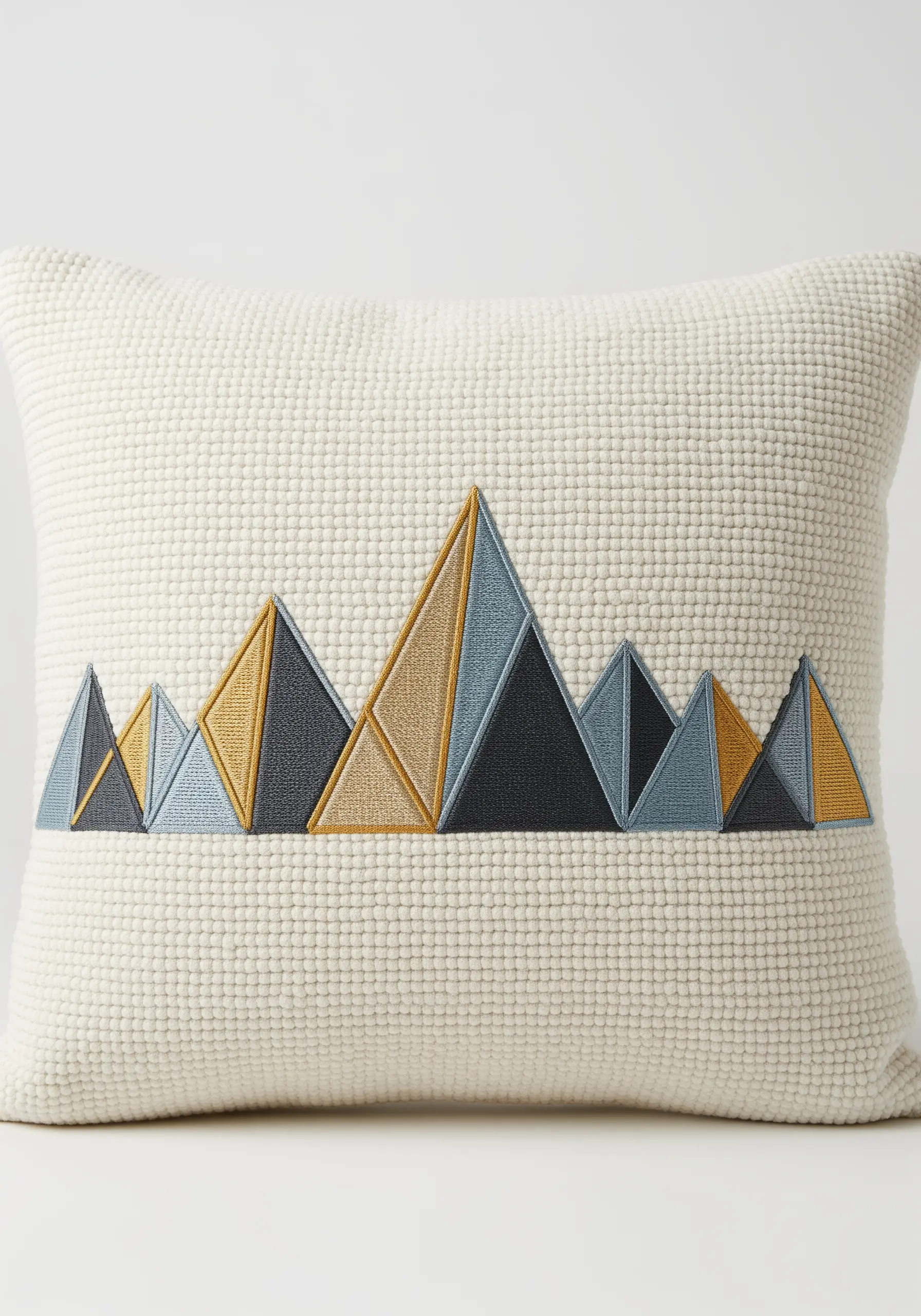
Let your fabric choice enhance your design by stitching a geometric pattern on a textured base like waffle or honeycomb weave.
The fabric’s inherent grid provides a subtle visual guide and adds a layer of texture that complements the clean lines of the motif.
Use a crisp satin stitch to fill the triangular mountain shapes, outlined with a neat backstitch for sharp definition.
This pairing of a simple design with interesting fabric creates a sophisticated, modern look.
22. Magical Glow-in-the-Dark Fireflies

Add a hidden element of surprise and magic to a night-time scene by using glow-in-the-dark embroidery floss.
Stitch the fireflies with a simple satin stitch for the body and two small straight stitches for the wings.
The background forest can be subtly rendered with tone-on-tone stitching—using dark blue and black threads on a dark fabric—so that when the lights go out, only the fireflies remain visible.
This thoughtful detail transforms a simple pillow into an enchanting experience.
23. Landscape as a Pen-and-Ink Drawing

Recreate the look of a classic etching or ink illustration using only black thread on a white or off-white fabric.
This technique, often called blackwork, relies on varying stitch density to create tone and texture.
Use single-strand floss for delicate details and fine lines. Use denser clusters of straight stitches or cross-hatching to build up darker, shaded areas in the trees and water reflections.
The result is a timeless, elegant piece with incredible detail and depth.
24. Contoured Rice Terraces
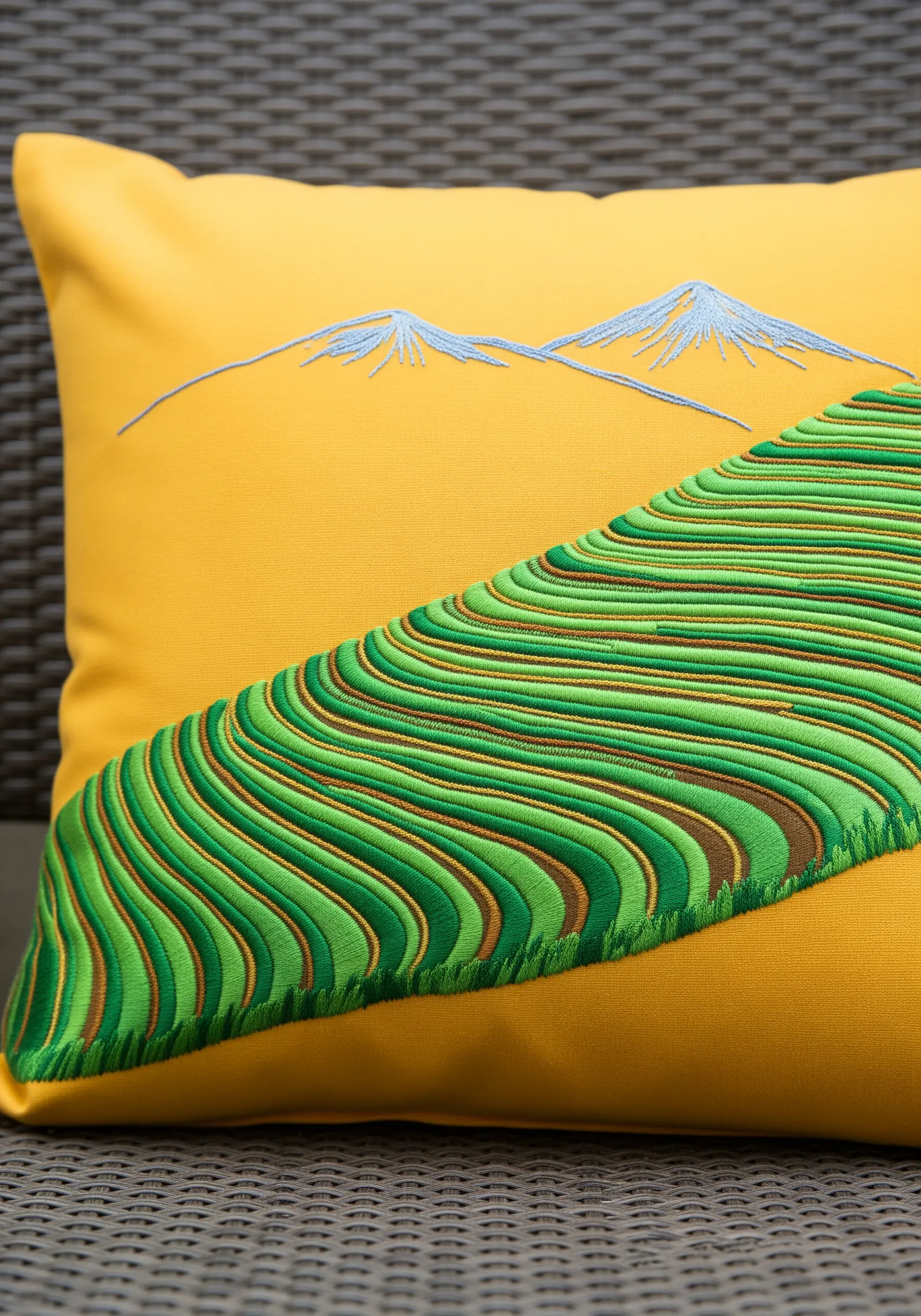
Emphasize the rolling contours of a landscape like rice terraces by using a raised stitch for the outlines.
A whipped backstitch or a padded satin stitch along the edge of each terrace will create a subtle 3D effect, making the layers physically stand out.
Fill the sections with smooth satin stitches, ensuring the direction of your stitches follows the curve of the land.
This attention to directional stitching and raised outlines brings the entire landscape to life.
25. Sculptural Wool Roving for Snow
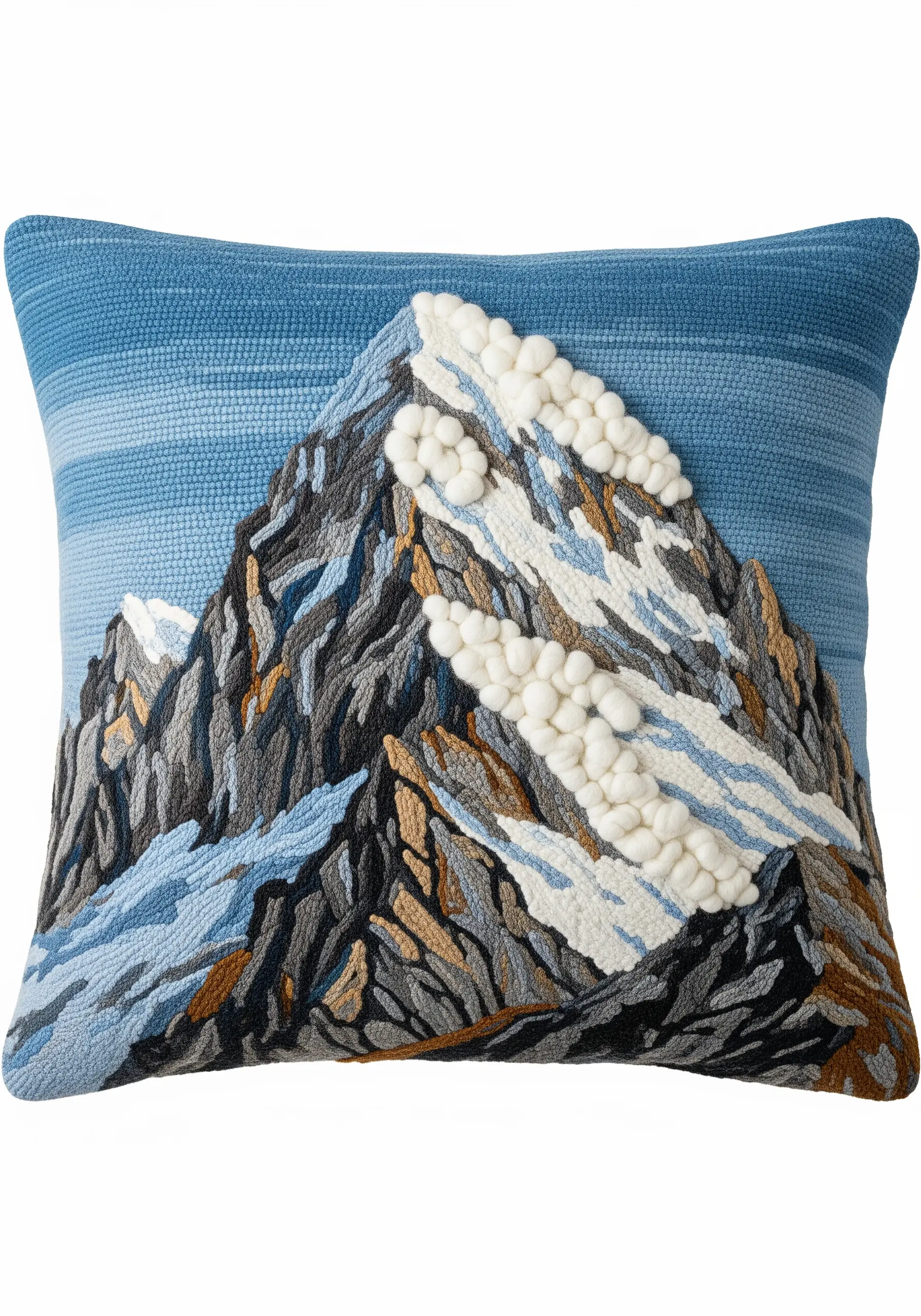
For the most dramatic and softest texture, incorporate wool roving into your mountain scene.
You can achieve this effect through needle felting the roving directly onto your fabric or by couching it down with a matching thread.
The thick, soft texture of the wool provides a stunning contrast to the flatter embroidery of the rocks, creating a piece that is both visually and tactilely engaging.
This is a perfect example of how to achieve stunning results with modern texture layering embroidery techniques.
26. Abstract Rainbow Waterfall
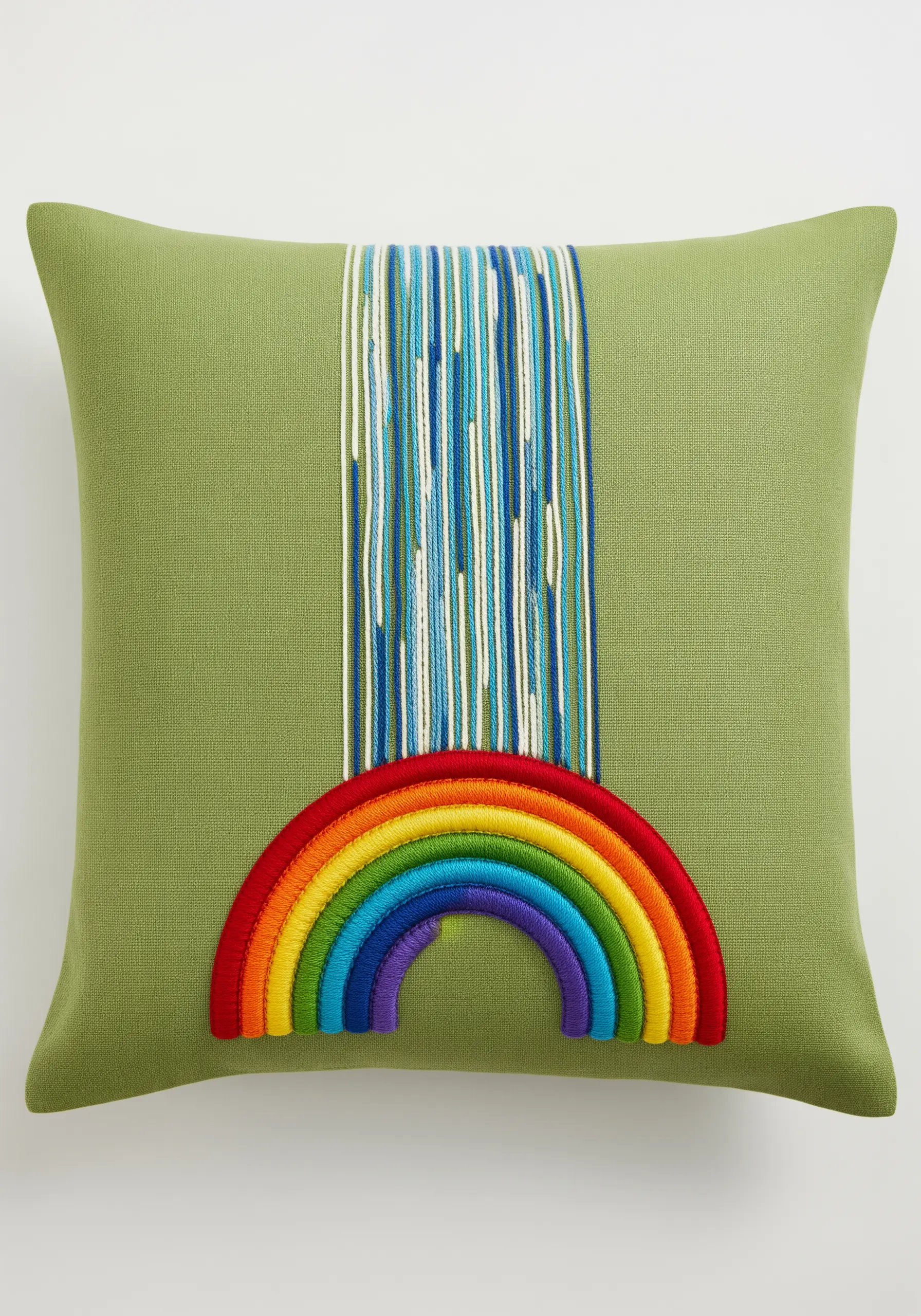
Create a playful, modern design by simplifying natural elements into bold, graphic shapes.
Stitch the rainbow with a perfectly executed, dense satin stitch, ensuring each color band is smooth and distinct.
For the waterfall, contrast the neatness of the rainbow with loose, long straight stitches in various shades of blue and white.
This combination of a tightly controlled shape with a free-flowing element makes the design feel balanced and creatively expressive.
27. Grotto with Metallic Thread Water

Create a captivating grotto scene by using contrast and light-reflecting materials.
Stitch the rocky cave interior in dark threads with a sprinkling of stars to create a sense of depth and mystery.
Use a high-sheen metallic or rayon thread for the waterfall, allowing the threads to hang free and catch the light from different angles.
The splash at the bottom can be made with looped bullion knots or by couching coiled metallic cord for a dynamic, churning effect.
28. Still Water Reflections

To create the effect of calm, still water, use horizontal satin stitches or long-and-short stitches.
Keeping your stitches perfectly parallel and smooth is key to mimicking a glassy surface.
The reflection of the trees and mountains should be a mirror image, but you can use slightly darker or more muted tones to suggest the depth of the water.
Adding a few single, horizontal stitches in a lighter color can represent ripples or light catching the surface.
29. Minimalist Line Art Range
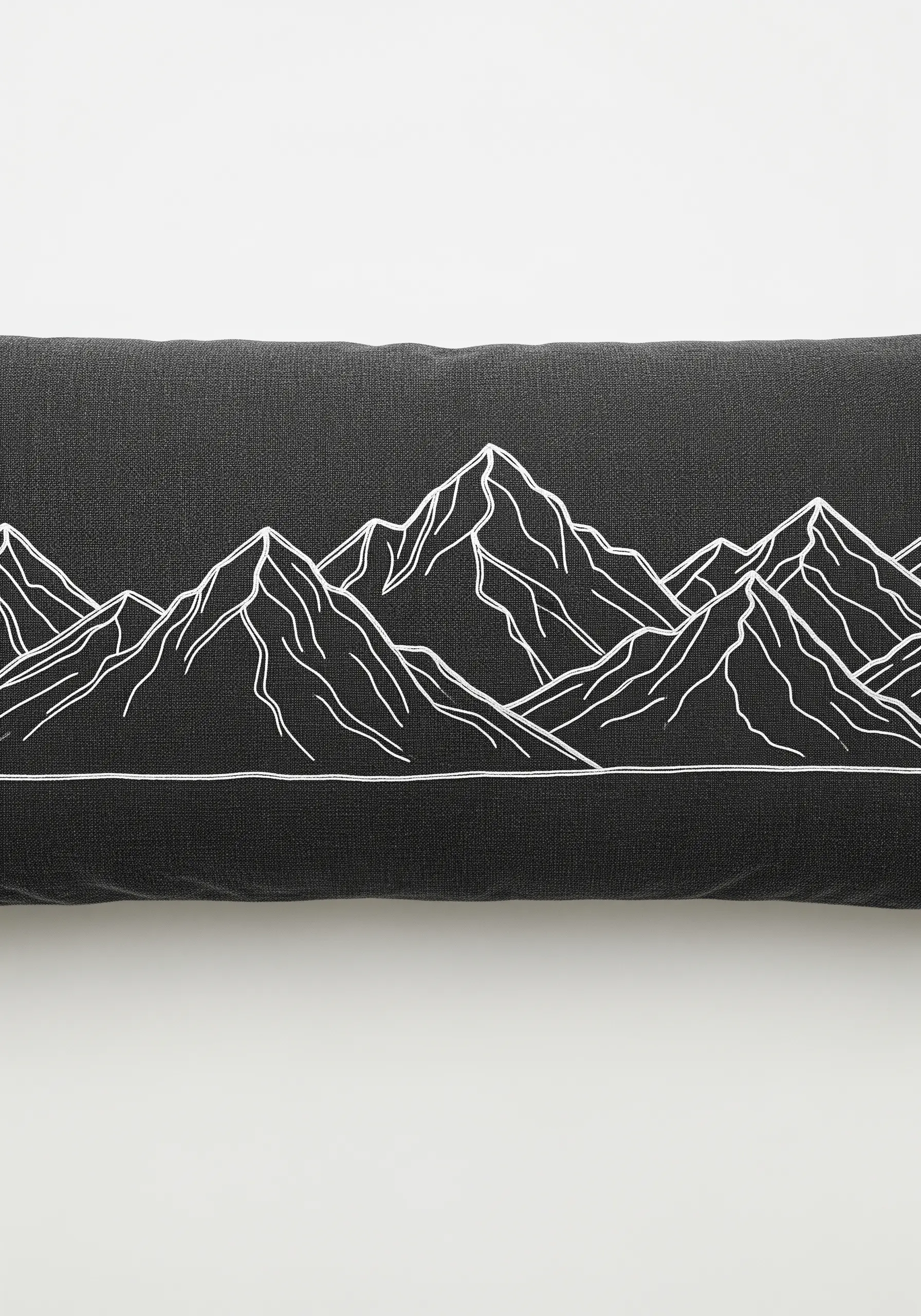
For a clean, modern aesthetic, reduce a mountain range to its essential lines.
Use a single, continuous line of backstitch or stem stitch to create a crisp, graphic drawing on your fabric.
The key to this style is precision—ensure your stitches are even and your curves are smooth.
Stitching in high-contrast white thread on dark gray or black fabric makes the design bold and sophisticated, perfect for a minimalist interior.
This is one of the most elegant minimal line art embroidery patterns you can try.