Working with dark fabric can feel like stepping into a different world. It asks you to rethink light, color, and contrast, but the reward is embroidery that possesses a unique depth and drama that lighter fabrics simply cannot offer.
Instead of relying on outlines to define your shapes, you’ll learn to use light-colored and metallic threads to carve your subjects out of the shadows. Every stitch becomes a source of light, every color choice more impactful. This is where you can create a mood—mysterious, elegant, or magical.
Think of your black, navy, or charcoal fabric not as an absence of color, but as a perfect, quiet stage. On this stage, metallic threads don’t just sparkle; they blaze. Your lightest floss doesn’t just sit on the surface; it glows. Let’s explore how to master this dramatic contrast together.
1. Render Ethereal Wings with Thread Painting
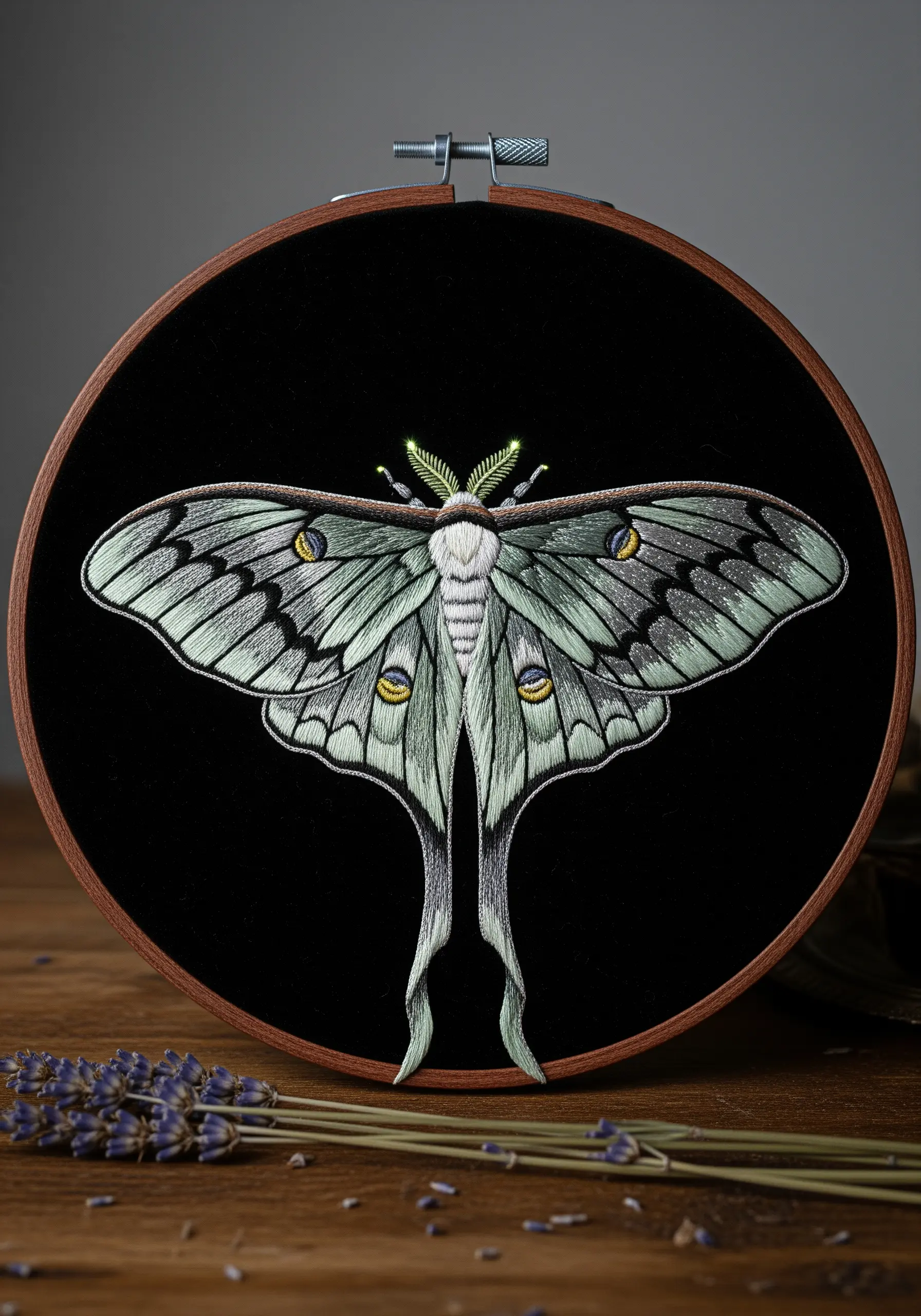
To capture the delicate translucence of a luna moth’s wings, use the long-and-short stitch technique with a single strand of thread.
Work with a palette of pale greens, grays, and creams, blending them softly to create subtle gradients that suggest moonlight filtering through the wings.
For the finest details like veins and antennae, switch to a sharp backstitch using a contrasting, slightly darker shade to define the structure without overwhelming the softness.
The deep black fabric acts as a natural shadow, making your lightest threads appear to glow and giving the moth a luminous, three-dimensional quality.
2. Contrast Metallic Texture with Soft Florals

Create a striking crescent moon by filling the shape with a tightly packed couching stitch using a thick metallic braid or multiple strands of gold thread.
This technique produces a solid, light-reflecting surface that contrasts beautifully with the softness of the flowers.
For the blossoms, use a classic satin stitch with pure white or ivory thread, adding dimension by layering the petals.
This juxtaposition of textures—the hard gleam of metal against the matte softness of cotton floss—is what gives the composition its modern, sophisticated energy.
3. Map the Stars with Metallic Stitches and Beads

Transform a simple cushion into a celestial map by using silver metallic thread for constellation lines.
A simple backstitch or stem stitch will give you clean, sharp lines that pop against the dark grey fabric.
For the stars, create small star stitches or asterisks, varying their size for a more dynamic sky.
Incorporate tiny silver or iridescent seed beads at key intersections or within star clusters to add a subtle, light-catching sparkle that elevates the design from flat to radiant.
4. Imply a Glow with Strategic Color Choice

Even without actual lights, you can create the illusion of a firefly’s glow.
Use a pale yellow or chartreuse thread for the body, then surround it with radiating straight stitches in a slightly brighter, warmer yellow-gold.
This creates a visual halo effect against the dark fabric.
For the surrounding foliage, use muted greens and near-blacks to push the background away, making the bright fireflies the undeniable focal point of your embroidered mixed media scene.
5. Master Monochrome Shading on a Dark Canvas
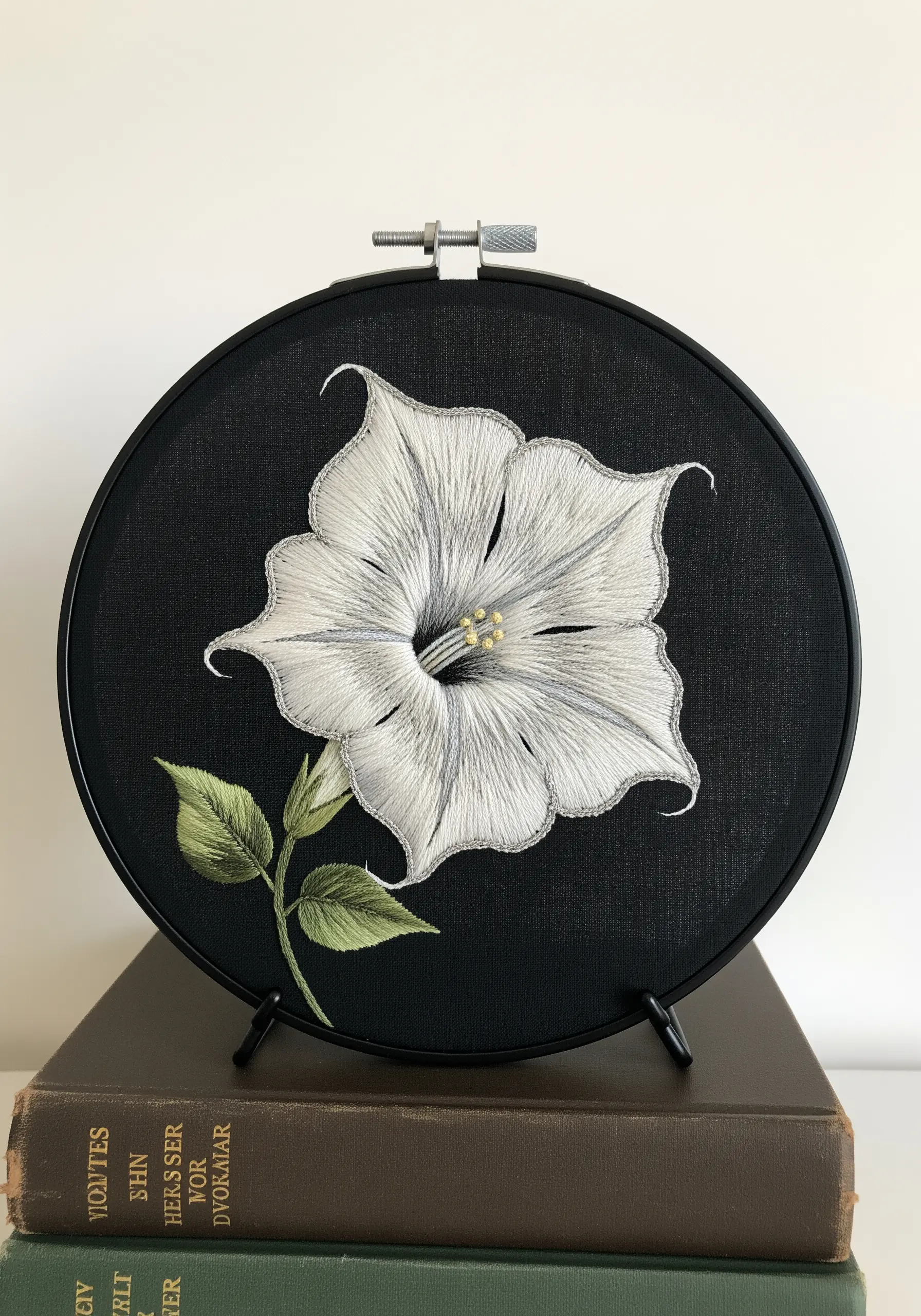
A white flower on black fabric is the perfect study in value and form.
Instead of pure white, use a range of very light grays to build shadows and highlights, reserving the brightest white only for the edges catching the most light.
This method of ways to embroider realistic shadows gives the petals a sculptural, realistic depth that a single color cannot achieve.
Use long-and-short stitch, ensuring your stitches follow the natural curve and direction of the petals to enhance the illusion of form.
6. Build Earthy Textures with Beads and Knots

Give your woodland scene a tactile quality by incorporating beads and French knots for the forest floor.
After stitching the mushrooms with directional satin stitch, scatter gold or bronze beads at the base to represent shimmering moss or damp earth.
This not only adds a beautiful metallic element but also introduces a three-dimensional texture that makes the composition more engaging.
The contrast between the smooth mushroom caps and the bumpy ground creates a richer, more dynamic piece of nature’s textures in your next embroidery project.
7. Embellish Denim with Bold, Metallic Motifs

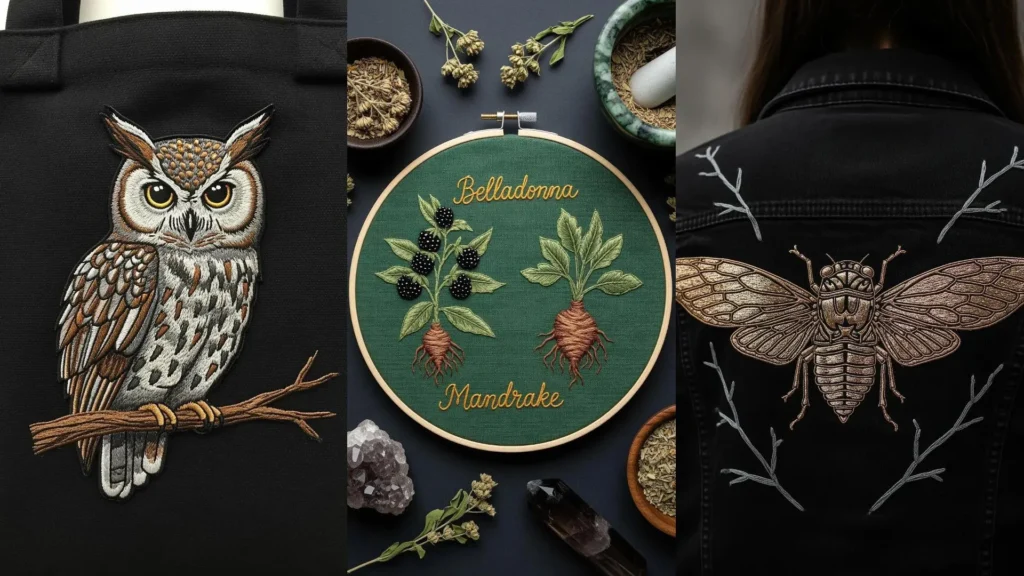
When stitching on heavy fabric like denim, choose a bold, graphic design like this cicada to make a statement.
Use a high-quality metallic thread and pay close attention to the direction of your satin stitches; angling them slightly can create different facets that catch the light, mimicking an insect’s iridescent shell.
Always use a stabilizer on the back of the denim to prevent puckering and ensure your stitches remain smooth and tight.
The simple, silvery branches frame the central motif, adding balance without competing for attention on your vintage-inspired denim jacket embroidery.
8. Create a Starry Sky with Textural Stitches
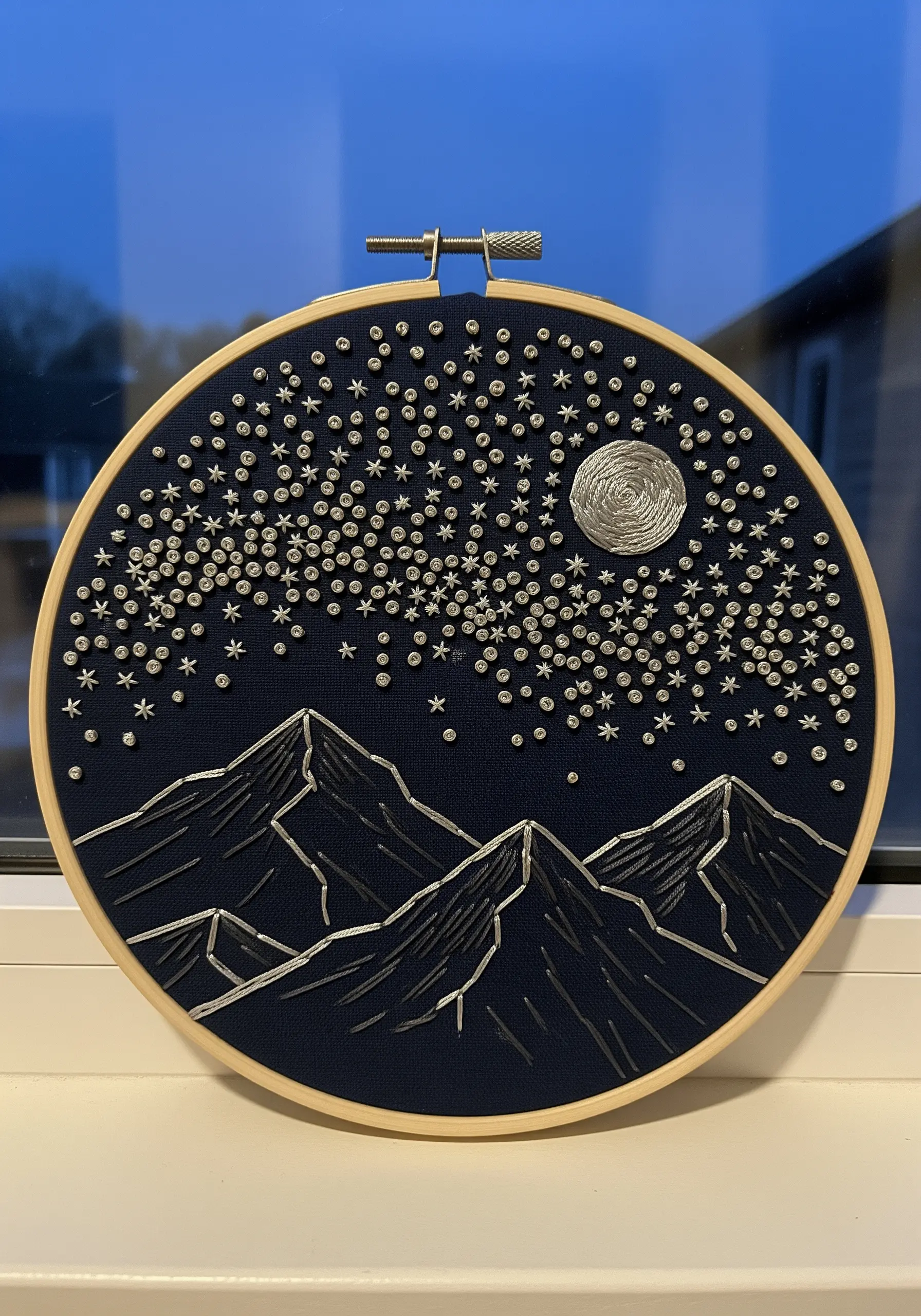
To achieve a dense, glittering night sky, move beyond simple French knots.
Combine them with tiny star stitches and straight stitches of varying lengths, all worked in silver metallic thread.
For the moon, create a tight coil of silver thread using a circular satin stitch or couching, which gives it a solid, cratered texture.
This multi-stitch approach prevents monotony and gives your embroidery ideas inspired by national parks a dynamic, shimmering depth.
9. Use Geometric Guides for Symmetrical Designs
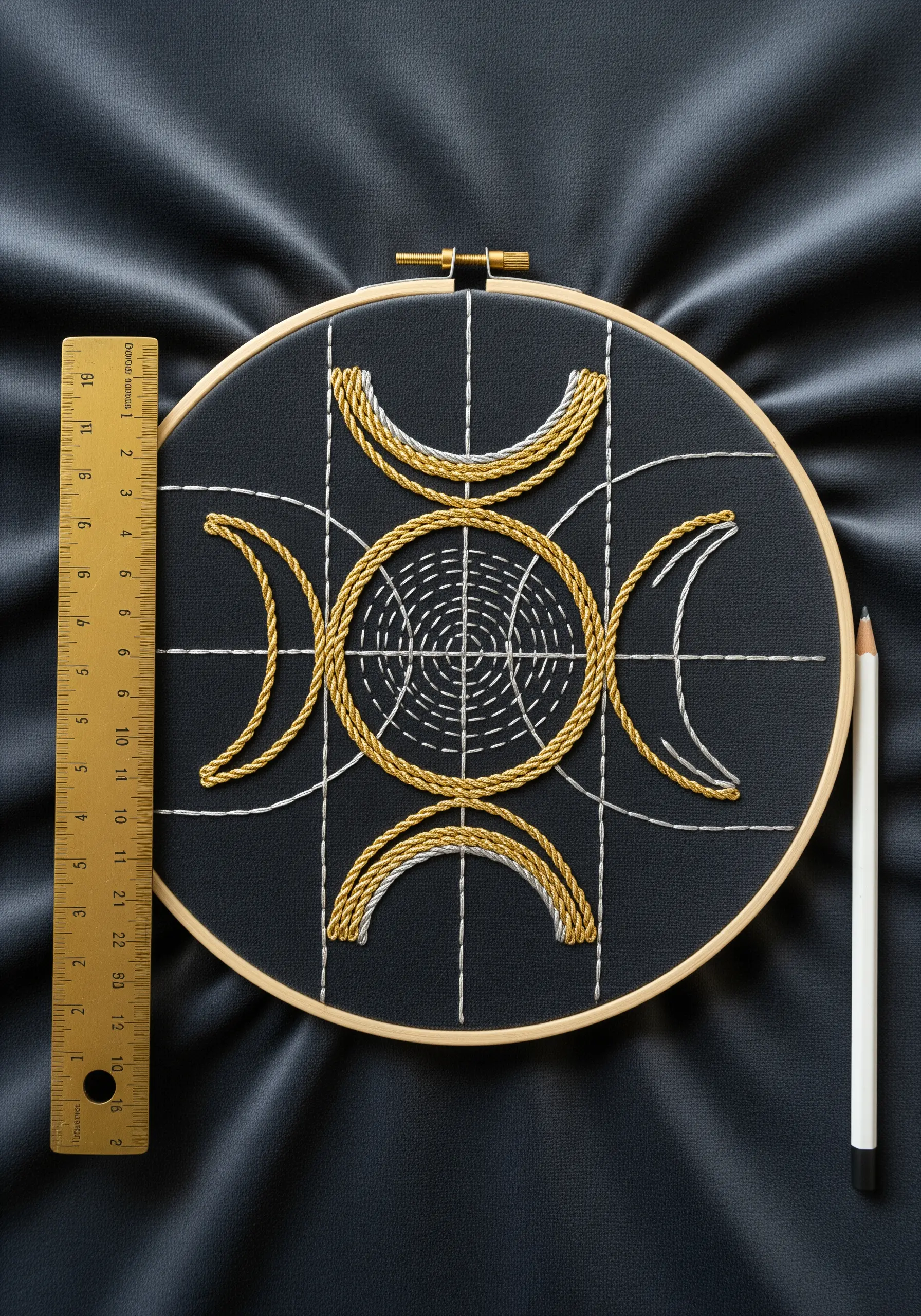
For precise, symmetrical patterns, start by drawing a grid on your fabric with a water-soluble pen or chalk pencil.
This ensures your motifs are perfectly balanced.
To create the thick, rope-like arcs, use a whipped backstitch with a heavy metallic thread, which provides a clean, raised line.
Contrast this with the delicate, spiraling straight stitches in the center, demonstrating how combining different line weights and textures can produce stunning yarn wall art projects inspired by geometric patterns.
10. Achieve Depth with Jewel-Toned Blending

Dark fabric, like this deep plum, intensifies colors, making them appear richer and more saturated.
When stitching florals, use this to your advantage by blending several shades of a single color—from lavender to deep violet—to create realistic, dimensional petals.
The long-and-short stitch is perfect for this, allowing you to seamlessly merge hues.
Tiny French knots in contrasting colors like gold and white draw the eye to the center of each blossom, adding a final touch of detail to your hand embroidered flower stitches.
11. Build Feather Textures with Layered Stitches

To embroider realistic birds, focus on mimicking the texture and direction of their feathers.
Use short, straight stitches for the soft downy areas and directional long-and-short stitches for the larger wing and tail feathers.
Layering shades of brown, grey, and white will create depth and prevent the design from looking flat.
The key is to vary your stitch length and angle slightly, just as real feathers would lie, to create realistic animal insect embroidery patterns with movement and life.
12. Emphasize Delicacy with Negative Space
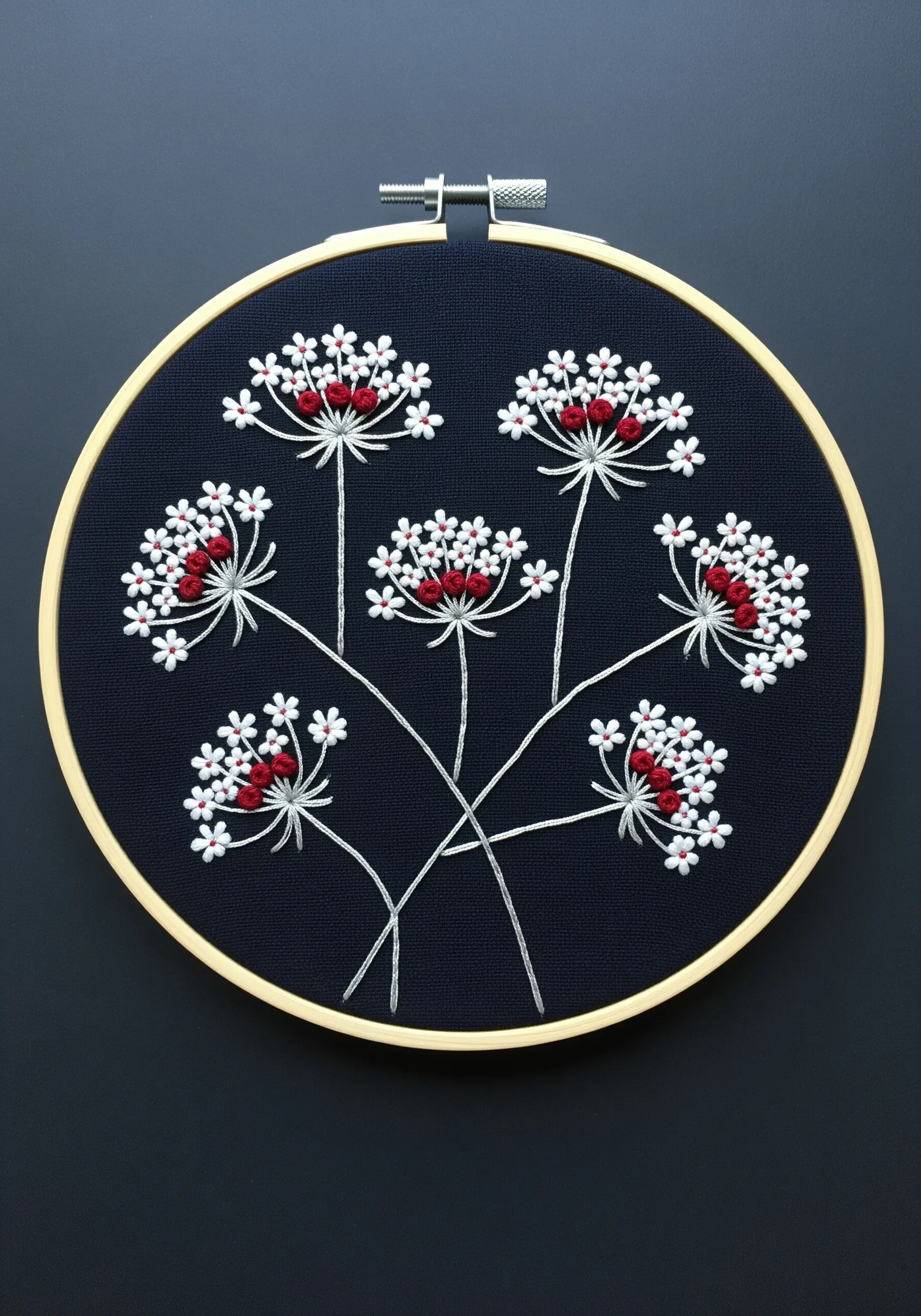
On a dark background, what you *don’t* stitch is as important as what you do.
This Queen Anne’s Lace design uses simple stitches—lazy daisy for petals, French knots for centers, and stem stitch for stalks—to create an airy, delicate composition.
The dark navy fabric becomes the deep space between the tiny florets, allowing the white and red threads to stand out with crisp clarity.
This technique is perfect for creating minimal embroidery patterns that look harder than they are but have maximum visual impact.
13. Capture Cosmic Motion with Swirling Stitches
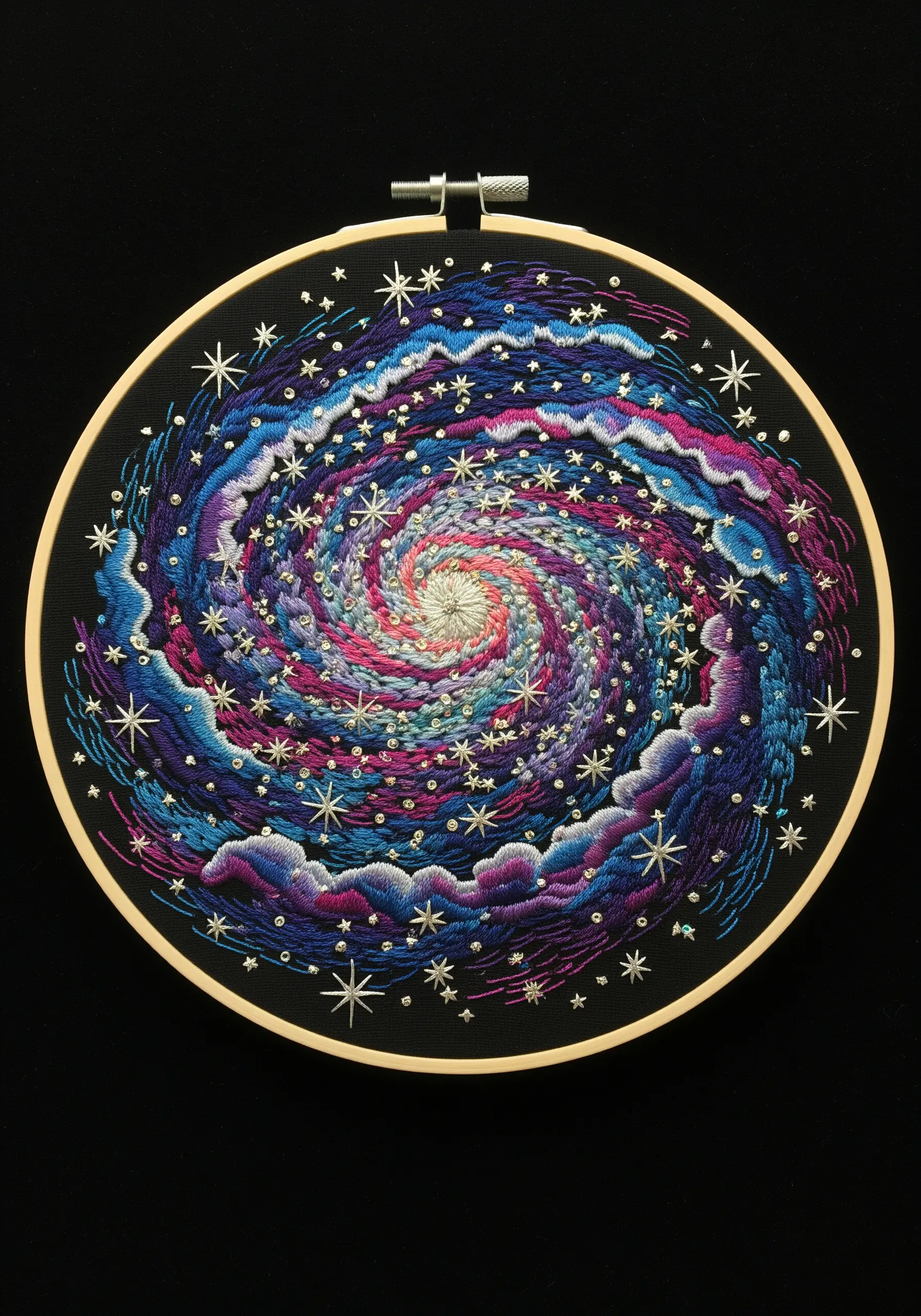
Create the swirling energy of a galaxy by arranging your stitches in a spiral formation.
Use a mix of stitches like French knots, chain stitch, and straight stitch in variegated and metallic threads to build layers of texture and color.
Place dense clusters of French knots along the spiral arms to represent star clouds, and scatter star stitches throughout.
This combination of color, texture, and directional stitching turns a flat surface into a dynamic piece of abstract thread waves & swirls.
14. Define Form with Contrasting Textures

This composition thrives on the dramatic contrast between the snake’s slick, metallic scales and the soft, matte petals of the flowers.
Achieve the scaled effect by filling each segment with tight, angled satin stitches, alternating a dark and light metallic thread to create a shimmering, 3D illusion.
For the flowers, use a gentle long-and-short stitch in off-white and grey to give them a soft, ethereal look.
This thoughtful pairing of textures is key to creating compelling botanical embroidery wall pieces.
15. Elevate Line Art with a Textural Outline
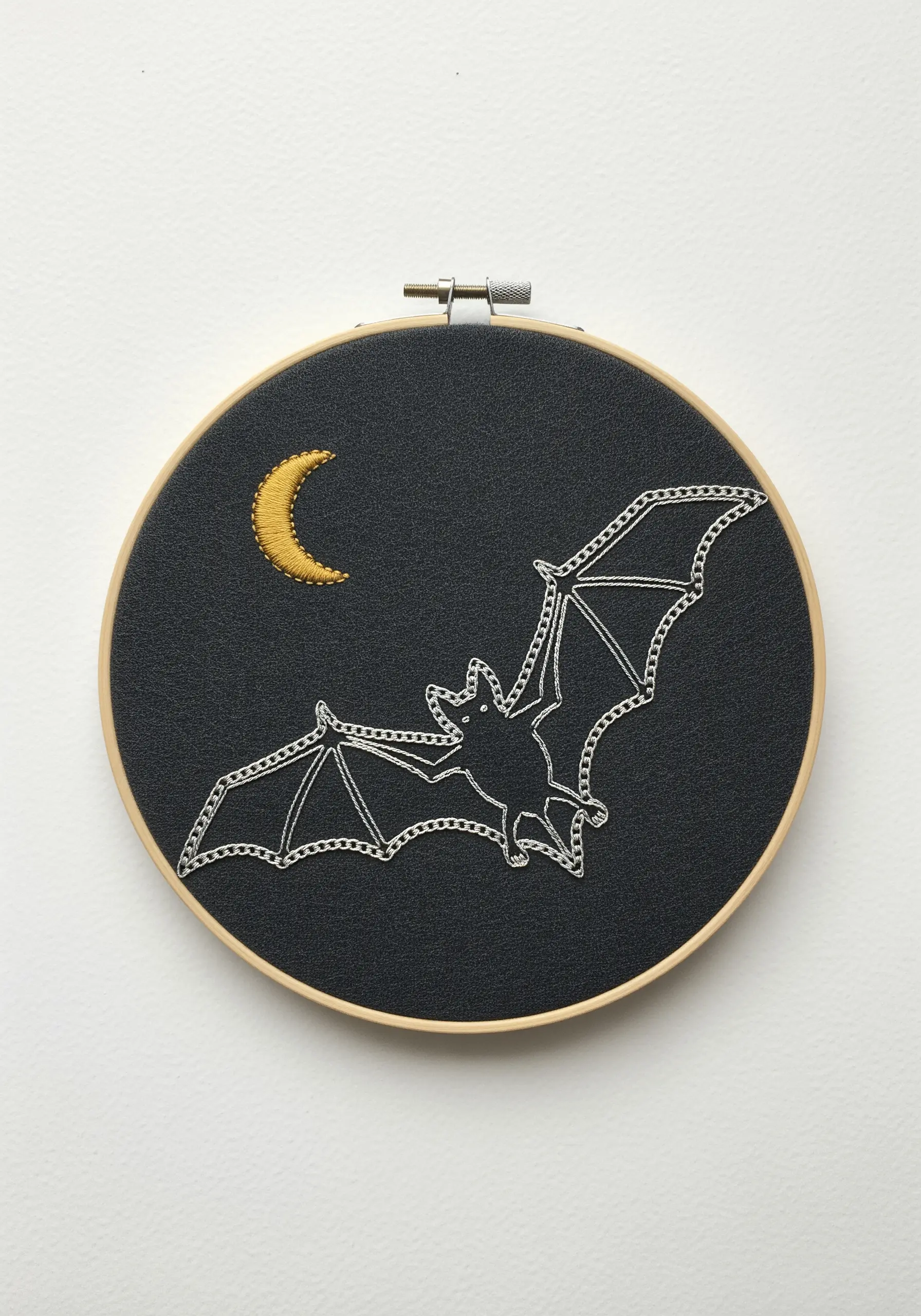
Instead of a simple backstitch, give your line art more presence by using a whipped backstitch or a heavy chain stitch for the outlines.
This creates a raised, almost corded effect that stands out beautifully against the dark fabric, especially when using a silver metallic thread.
For the crescent moon, fill the shape with a brick stitch to create a woven texture that contrasts with the smooth lines of the bat’s wings.
This is a simple way to make your delicate line art embroidery ideas feel more substantial and dimensional.
16. Recreate Botanical Illustrations with Precision

To capture the clean, academic feel of a botanical illustration, prioritize stitch consistency and fine detail.
Use a single strand of floss and a neat backstitch for all lettering and outlines.
Fill the leaves with fishbone stitch to create a realistic central vein, and use tightly packed satin stitch for the roots to give them a solid, woody texture.
French knots make perfect berries, adding a pop of dimension to these beautiful hand embroidery leaf patterns.
17. Stitch a Bioluminescent Glow
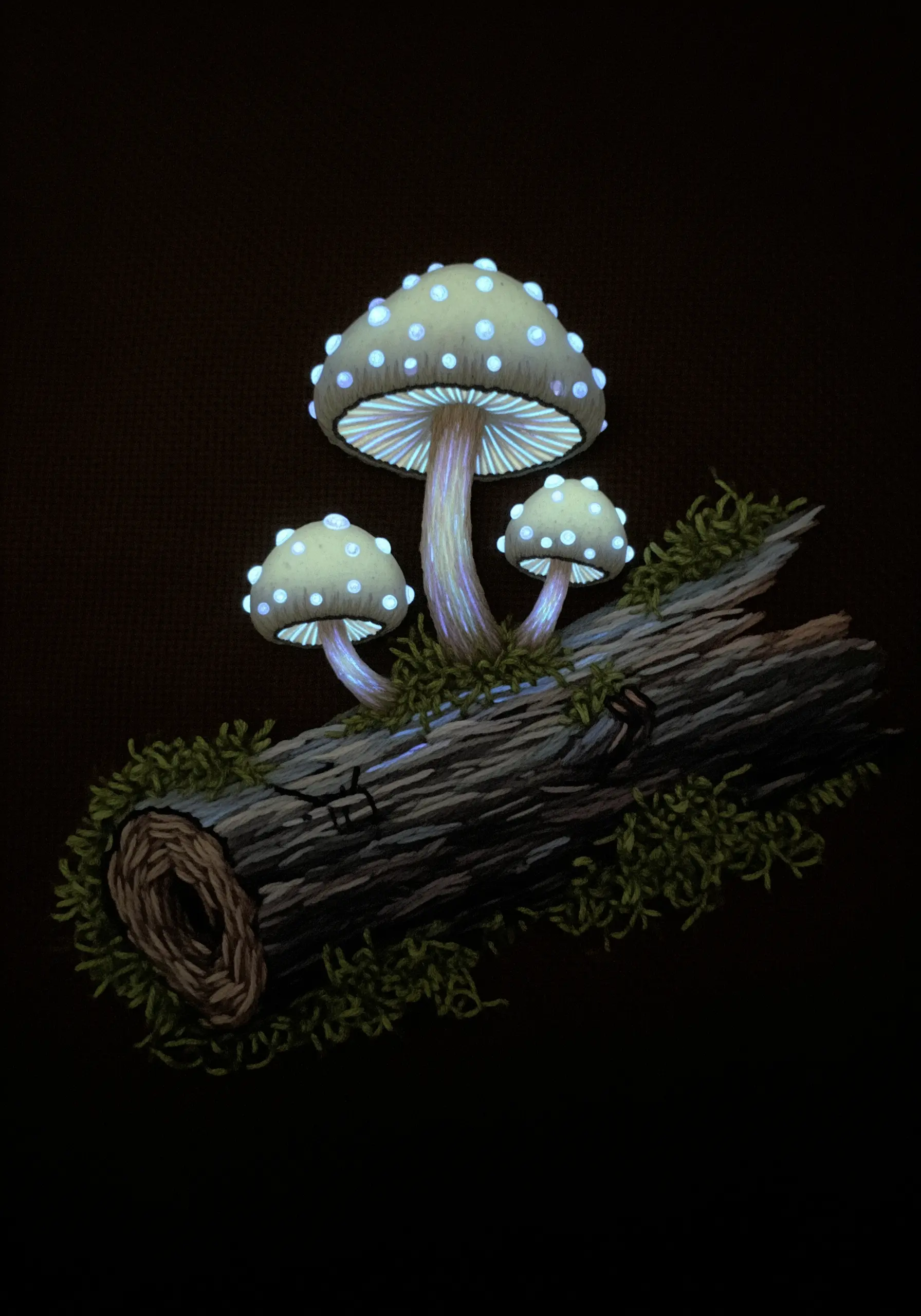
To create a glowing effect, work from your lightest color outward to your darkest.
Start with a bright white or pale blue at the center of the light source, then blend outwards using long-and-short stitch into progressively darker shades.
For an extra touch of magic, use a fluorescent or glow-in-the-dark thread for the brightest parts of the design.
This technique turns a simple woodland scene into one of the most creative embroidery ideas, capturing the mystery of the forest at night.
18. Mimic Iridescence with Color Blocking
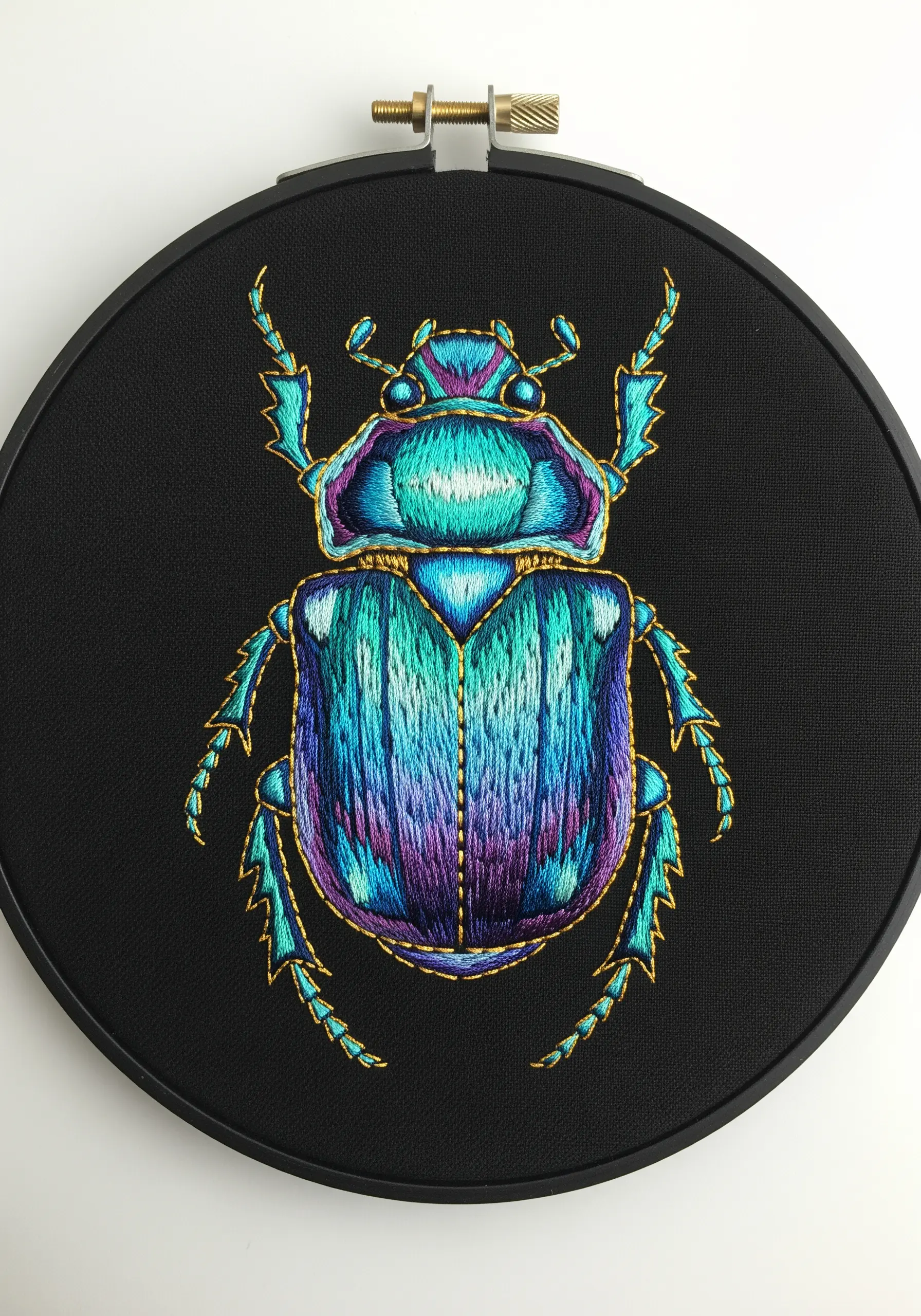
To recreate the shimmering, color-shifting effect of a beetle’s shell, use a technique called thread painting with a twist.
Instead of smooth blending, lay blocks of contrasting, vibrant colors—like turquoise, purple, and magenta—directly beside one another using long-and-short stitch.
This juxtaposition tricks the eye into seeing a shimmering, iridescent surface.
Outline the entire design with a bold gold metallic thread to contain the colors and add a final, jewel-like finish, resulting in texture-rich thread art ideas.
19. Personalize Linens with an Elegant Monogram
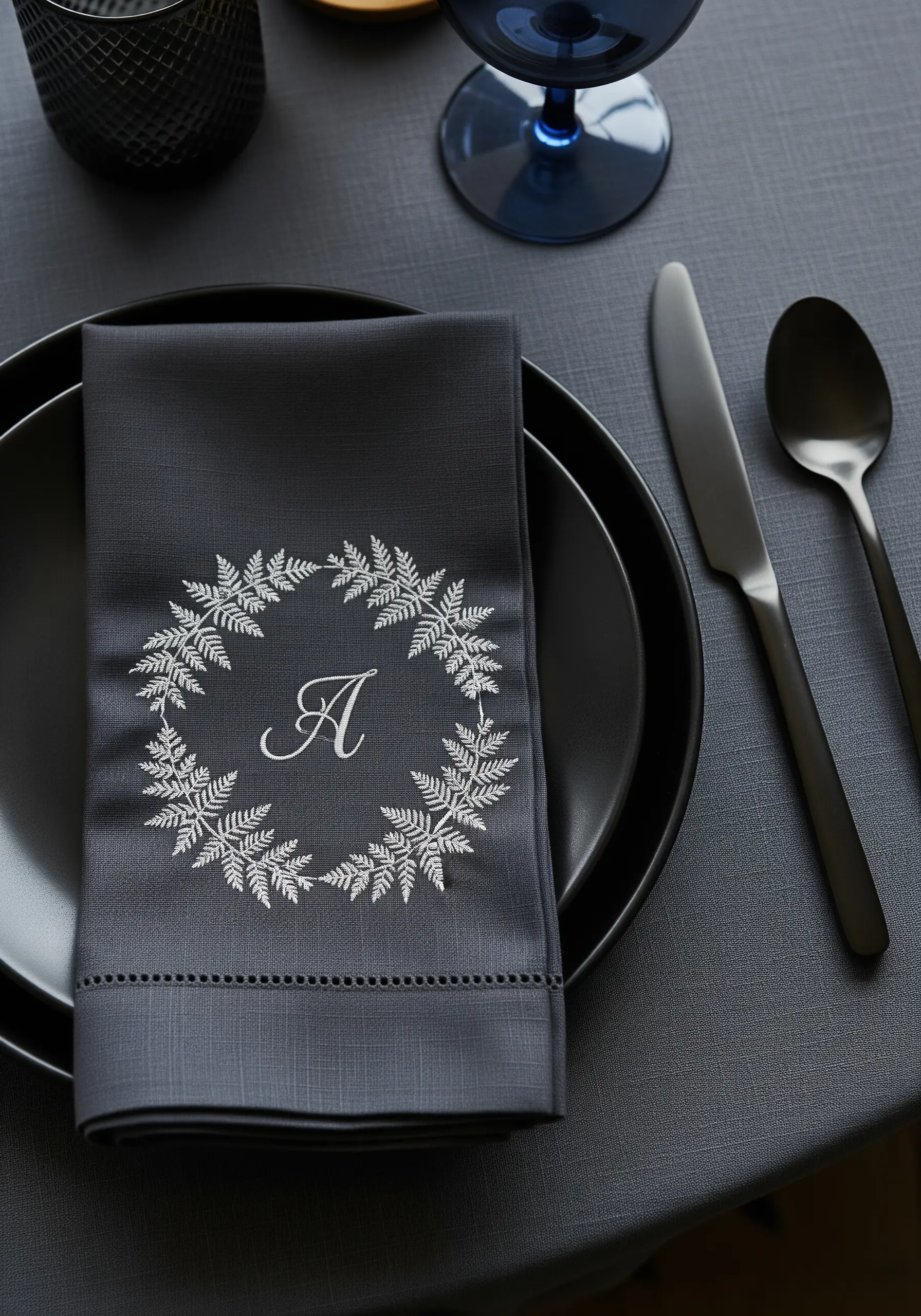
Elevate simple table linens by adding a sophisticated monogrammed wreath.
On dark fabric, a single color of metallic thread, like silver or pewter, creates a timeless, high-end look.
Use a delicate fishbone stitch or fly stitch for the fern leaves to give them a natural, feathery texture.
For the initial, a clean, graceful script executed in satin stitch provides a smooth contrast to the detailed foliage, making for perfect modern minimalist table linen embroidery.
20. Weave a Web with Thread and Beads
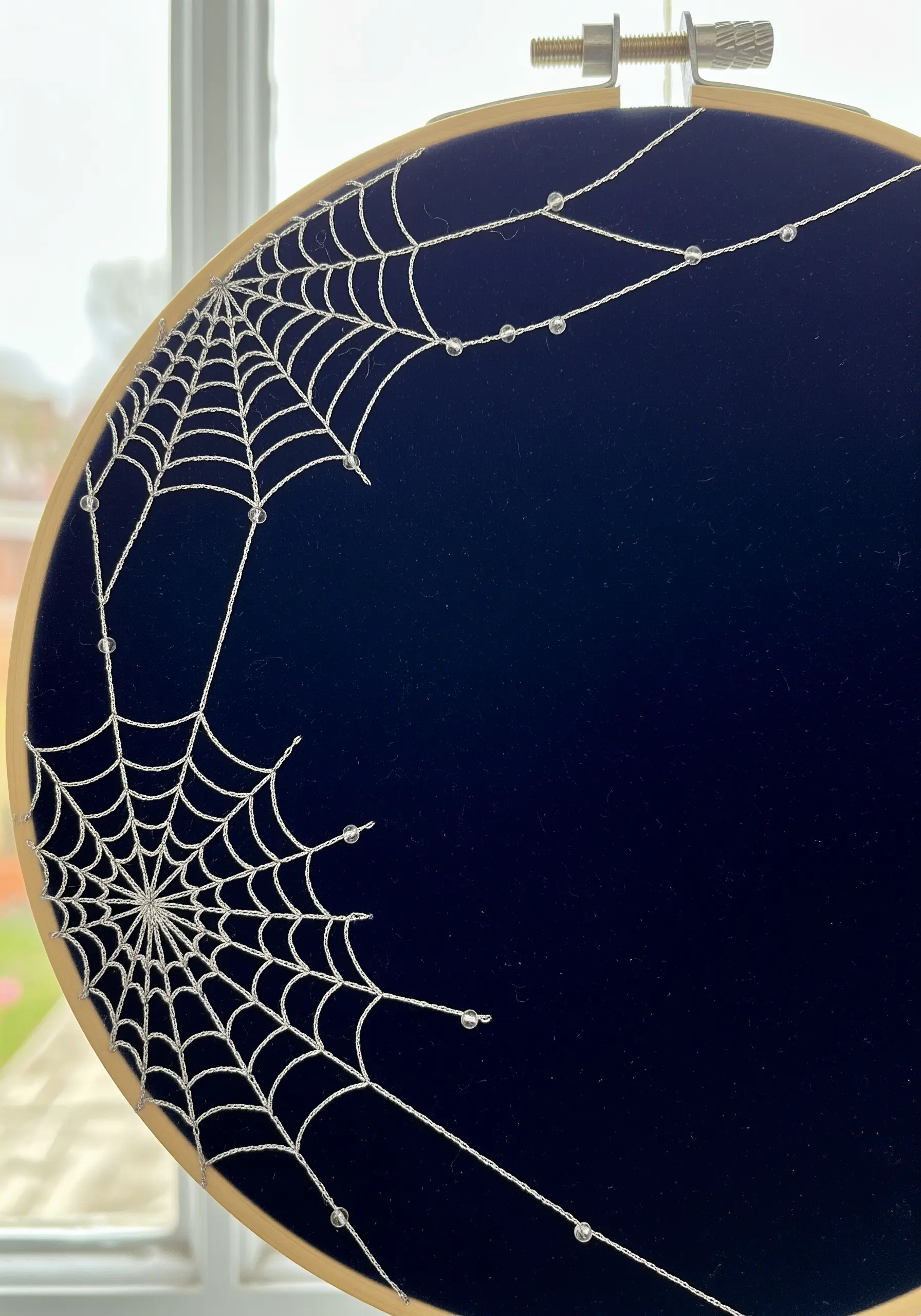
To create a delicate, glistening spiderweb, use a single strand of fine silver metallic thread.
First, stitch the radiating anchor lines using straight stitches, then weave the spiral threads around them.
For an extra touch of realism, stitch tiny, clear seed beads sporadically along the web’s strands.
These beads will catch the light like dewdrops, adding a subtle sparkle and transforming your work into one of those minimal stitch patterns that turn boring pillowcases into boutique home decor.
21. Combine Appliqué and Line Work for Tactile Depth

Introduce a powerful textural element by using appliqué for the moth’s body.
Cut the shape from a plush fabric like velvet or felt and attach it to your background fabric before embroidering the details on top.
This creates an immediate 3D effect that contrasts beautifully with the fine, delicate metallic line work of the wings and constellations.
This merging of techniques is a hallmark of fabric collage embroidery compositions that tell a richer story.
22. Build a Crystalline World in a Hoop

Create the illusion of glass and earth by combining sharp geometric lines with soft, organic textures.
Use a crisp silver backstitch for the terrarium’s frame to give it a metallic, structural feel.
Inside, fill the space with a variety of textural stitches: French knots for soil, bullion knots for succulents, and fishbone stitch for moss.
This contrast between the rigid frame and the soft interior is what makes these organic embroidery designs so visually captivating.