There is a quiet confidence in a single, well-placed line. It’s a mark of intention—proof that you don’t need more color, more stitches, or more complexity to create something beautiful.
This is where the artistry of one-line embroidery lies. It challenges you to capture the essence of a flower or a leaf in one continuous, flowing gesture. The elegance isn’t just in the final motif, but in the thoughtful restraint it takes to create it.
Forget the pressure to fill every space. Instead, let’s explore how a simple thread can transform neutral home decor, turning everyday objects like cushions, napkins, and wall hangings into pieces of understated, personal art. Here, you’ll find not just patterns, but a new way of thinking about your stitches—one that is modern, calm, and effortlessly chic.
1. The Sculptural Line Rose
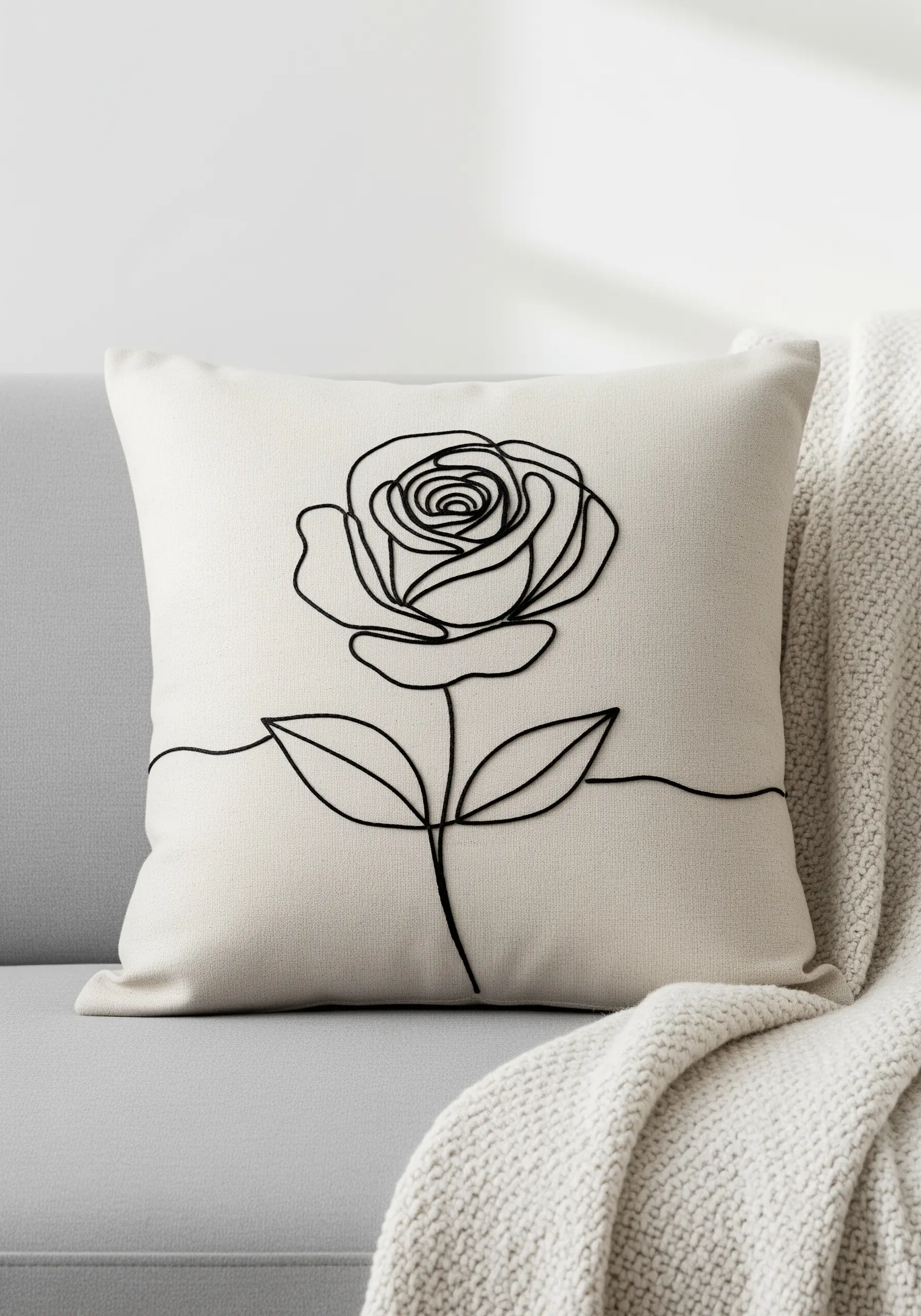
For a design with this much presence on a cushion, thread choice is paramount.
Opt for a full six strands of cotton floss or a pearl cotton #5 to give the line a bold, graphic weight that doesn’t get lost on the textile.
Use a whipped backstitch or a stem stitch; both create a smooth, continuous line that looks more like a deliberate, sculptural cord than a series of individual stitches.
This technique elevates a simple line drawing into a tactile object, turning a basic cushion into a piece of functional art.
2. The Poise of a Single Lavender Stem
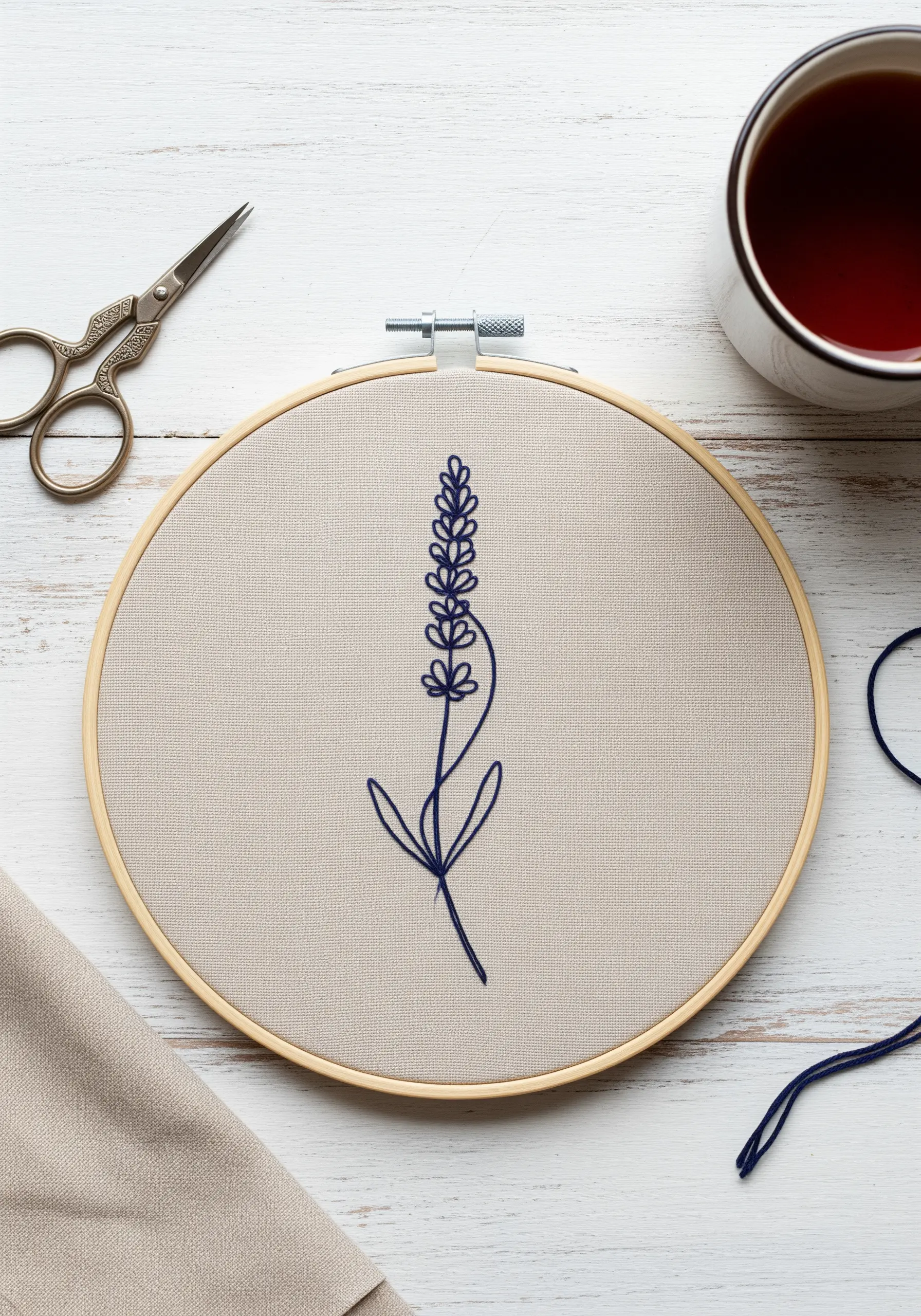
The elegance of this design lies in its restraint.
Choose a tightly woven fabric, like a cotton-linen blend, to provide a stable, clean canvas that allows the single line to stand out.
Instead of a predictable purple, a deep navy or charcoal grey thread offers a more modern and sophisticated interpretation of lavender.
Varying your stitch length along the bloom creates a subtle, organic taper, making these minimalist small hoop designs feel alive.
3. The Golden Poppy Horizon
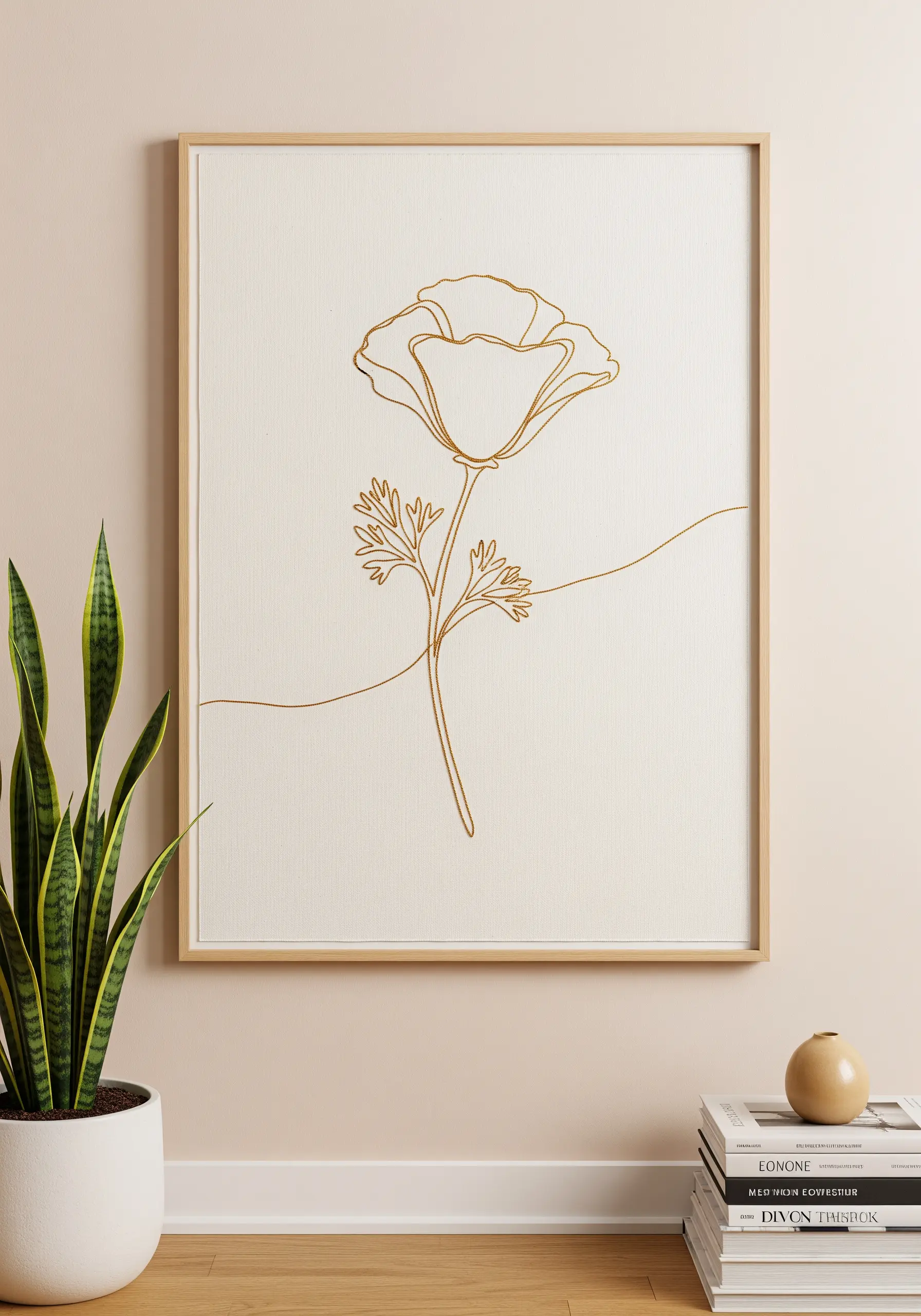
To transform your stitching into gallery-worthy art, consider the surface.
Stitching on heavyweight watercolor paper or a stiff fabric-covered board provides a taut, smooth base that mimics a fine art print.
Use a single strand of a quality metallic thread for a delicate shimmer that catches the light without overwhelming the design.
The simple horizon line grounds the poppy, turning a floral sketch into an evocative landscape and creating beautiful framed embroidery art pieces that double as conversation starters.
4. A Botanical Napkin Quartet
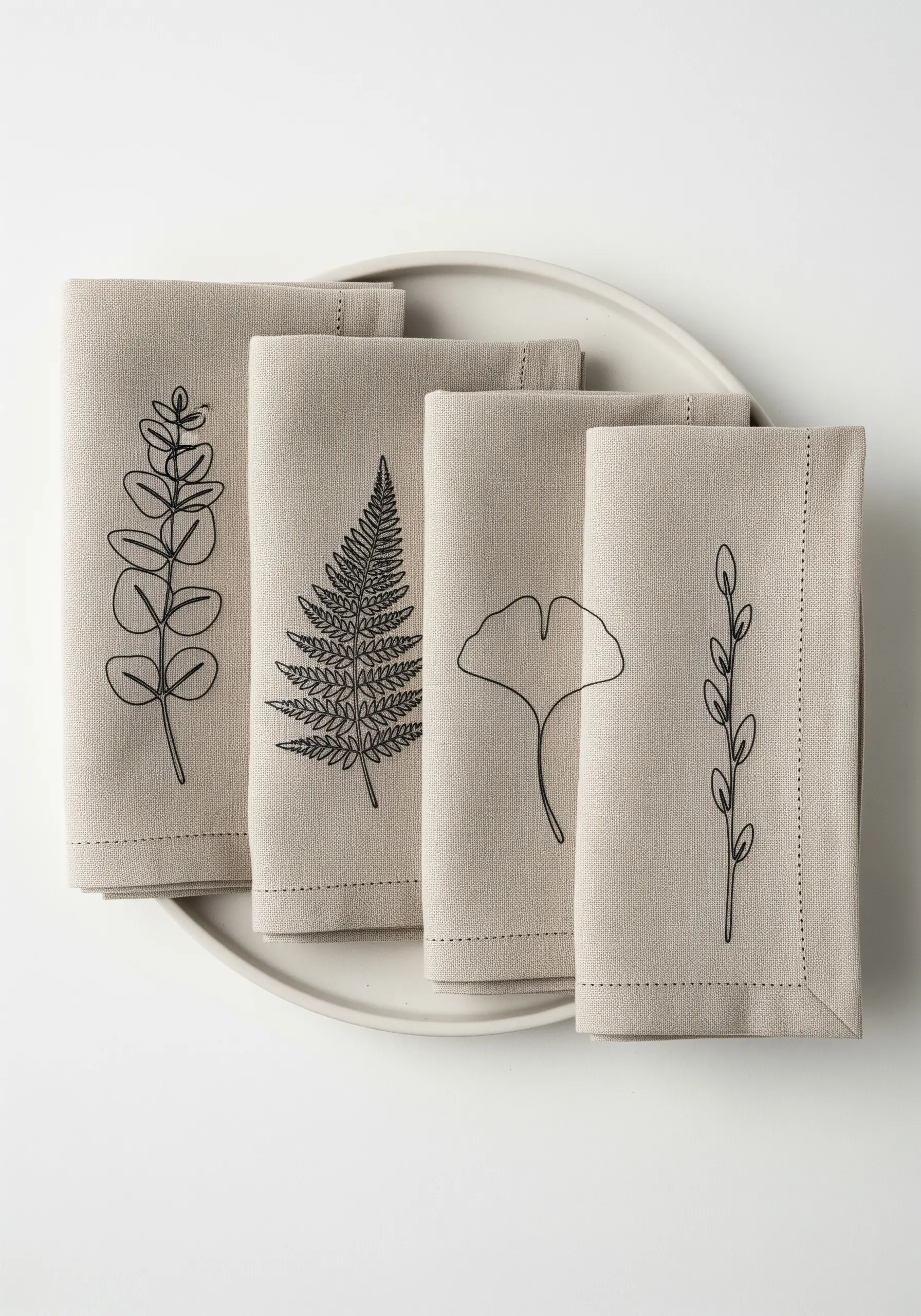
When creating a set, consistency is your most powerful tool for a polished look.
Keep the thread weight and color uniform across all four designs to create a cohesive collection.
For the more detailed motifs like the fern, switch to tiny, precise straight stitches for the leaflets while using a backstitch for the main stem—this adds texture without breaking the one-line aesthetic.
This is how you elevate linen table napkins from simple cloths to curated decor.
5. The Tulip’s Fluid Form
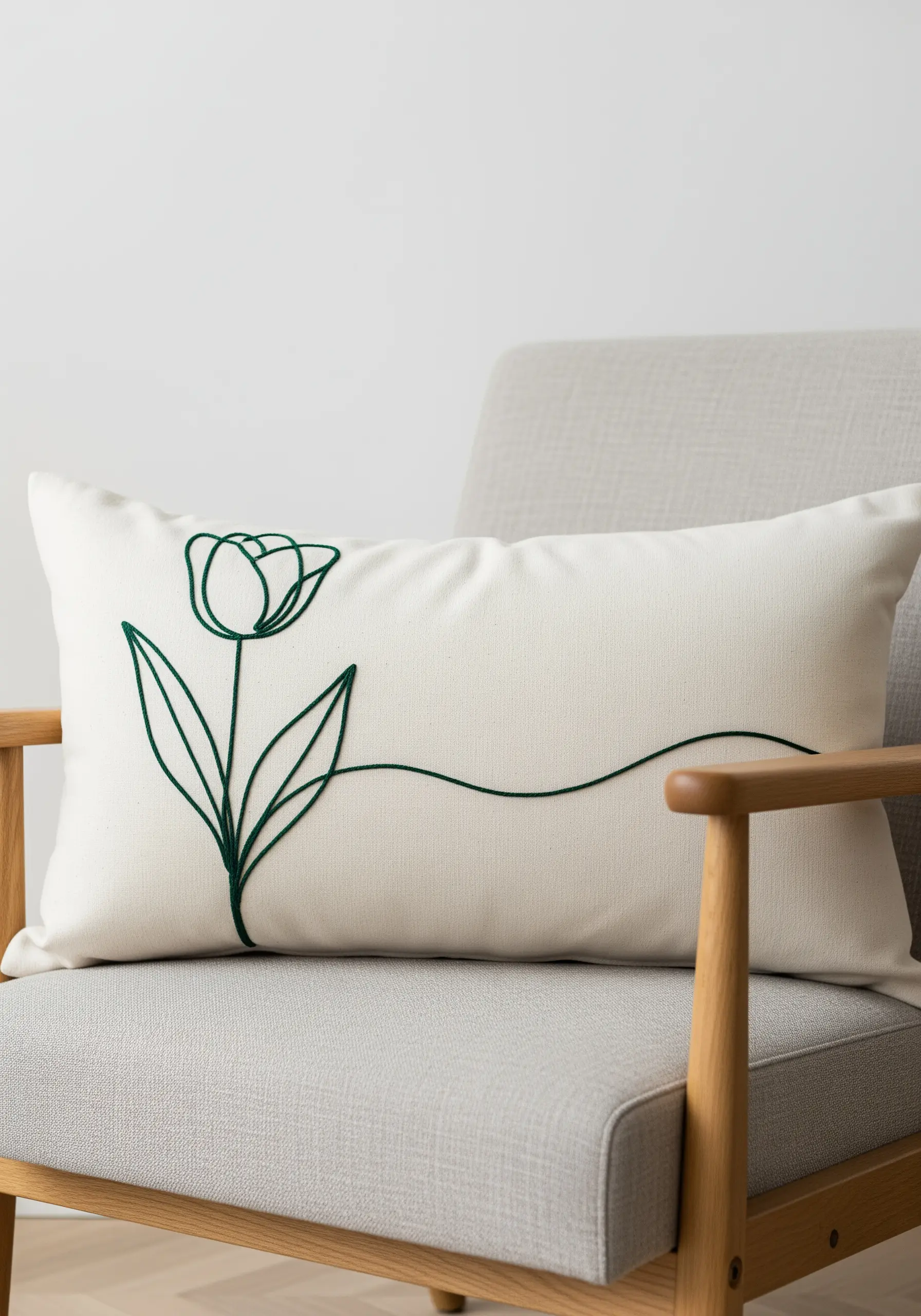
The success of a continuous line design depends entirely on the smoothness of its curves.
Before you even thread your needle, trace the pattern on paper with a pen, focusing on a single, uninterrupted movement to build muscle memory.
When stitching, a whipped backstitch is non-negotiable here; it covers the tiny gaps of a standard backstitch, resulting in a perfectly fluid, liquid line that defines the tulip’s form.
This thoughtful detail is what makes simple cozy pillow embroidery designs look professionally finished.
6. High-Contrast Monstera on Terrycloth
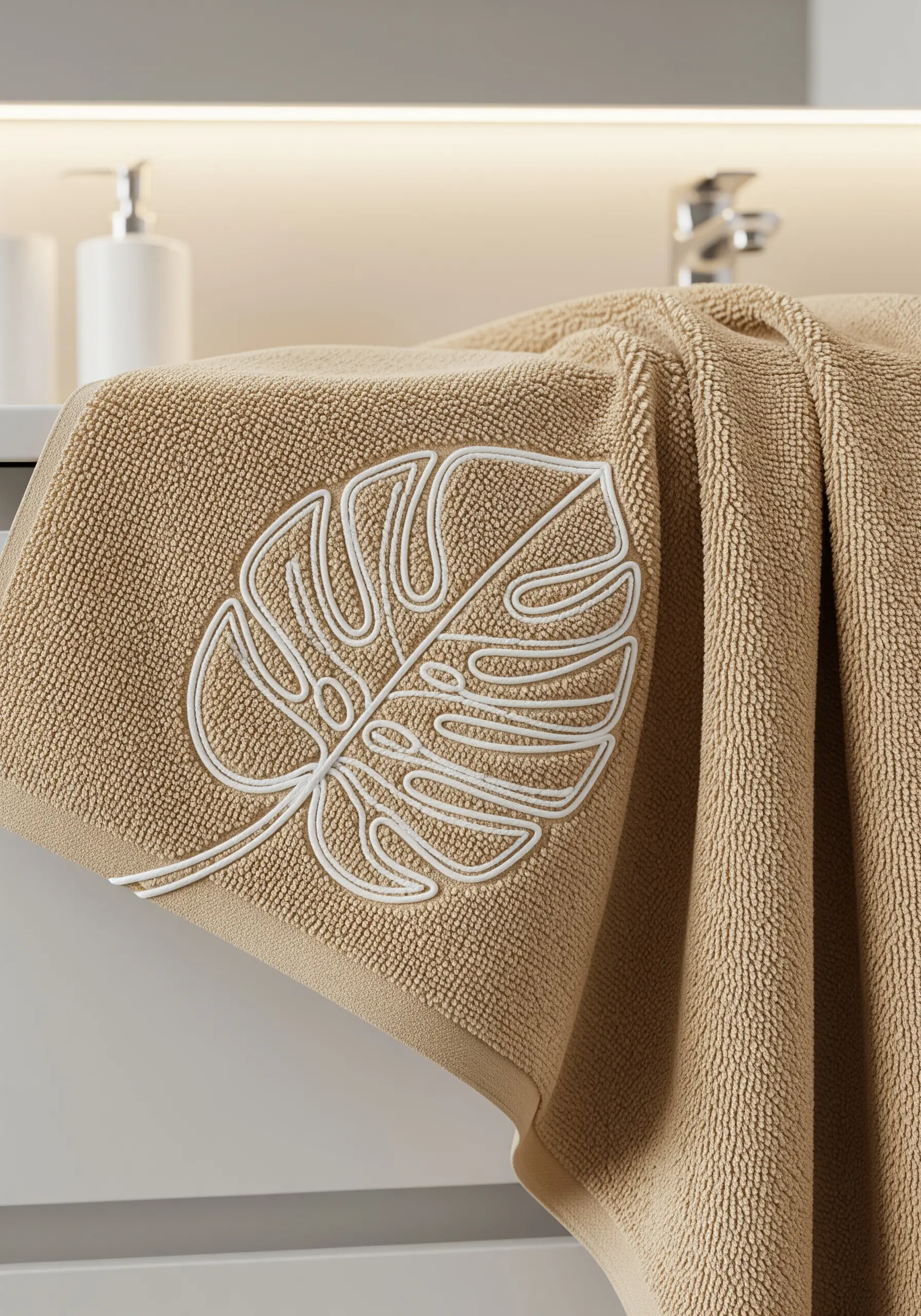
Stitching on a high-pile fabric like a towel presents a unique challenge: preventing the stitches from sinking and disappearing.
Always use a water-soluble stabilizer on top of the fabric; it creates a temporary smooth surface for your stitches to sit on, then washes away leaving crisp, clean lines.
A bold chain stitch or a thick stem stitch will create a raised, tactile line that stands out against the plush texture, making these tropical leaf embroidery designs both visible and touchable.
7. The Playful Daisy Composition
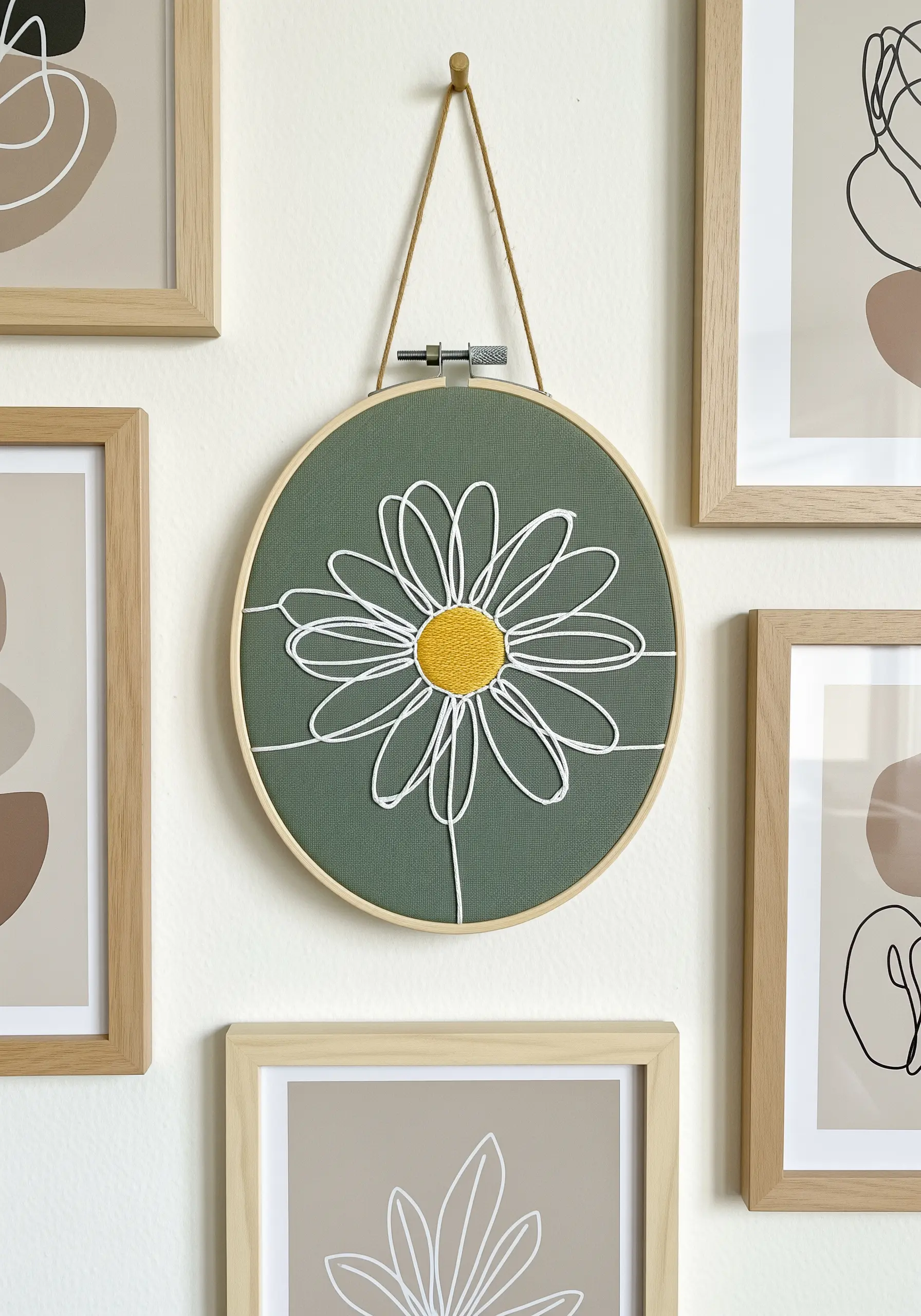
Even in a minimalist design, a single, deliberate pop of color can create a powerful focal point.
Here, the looping, open petals in a simple backstitch feel light and whimsical, while the densely filled satin-stitched center provides a point of visual rest.
This contrast between line and solid, open and filled, is a classic design principle that adds depth and sophistication to your gallery-style decor.
Choosing a contrasting background fabric, like this muted olive green, makes the white petals appear even brighter.
8. The Cascading Cherry Blossom Branch
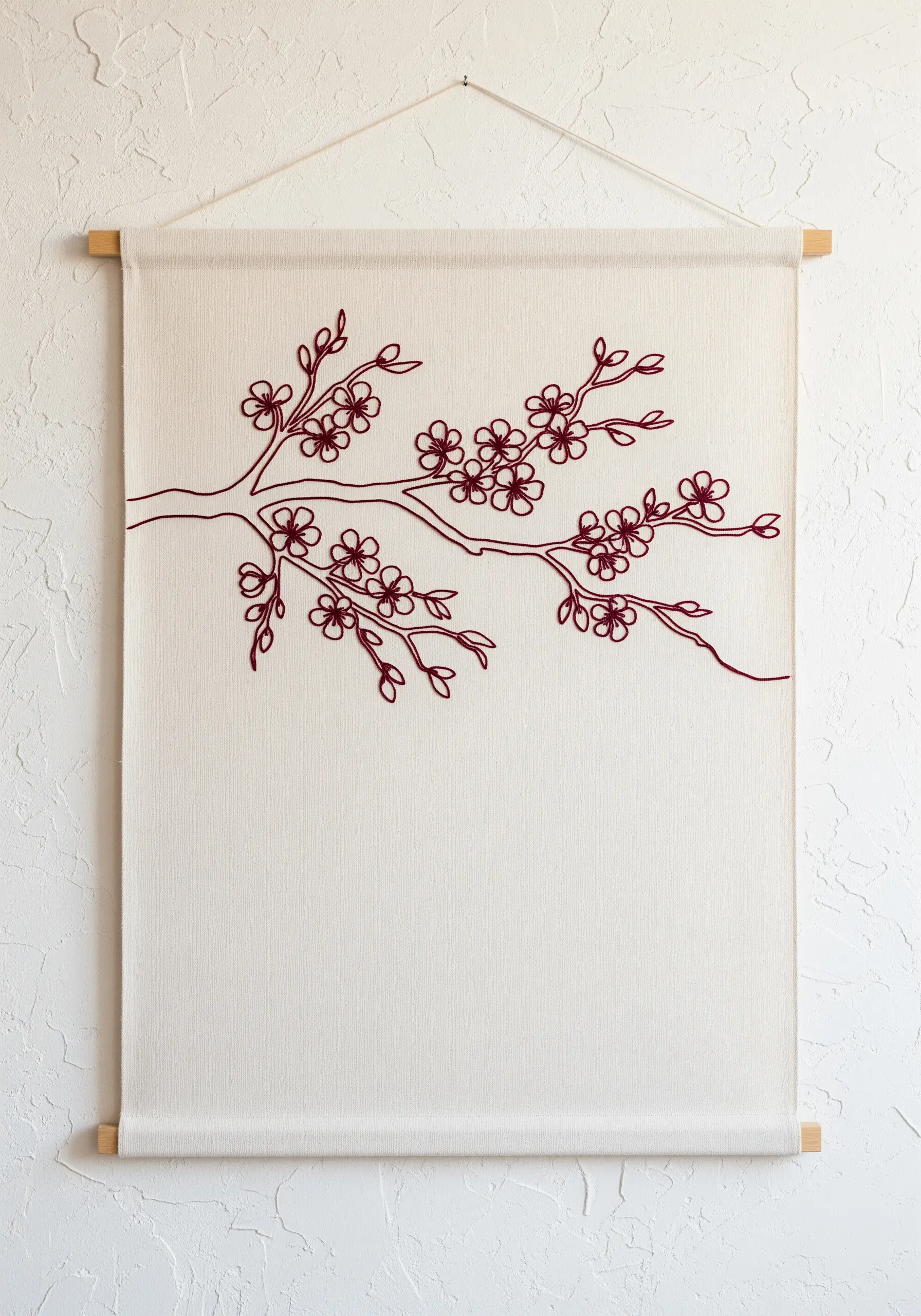
For large-scale pieces like a wall hanging, think like a painter and consider the entire canvas.
By having the branch enter from the side rather than the center, you create a more dynamic and natural composition that draws the eye across the fabric.
Use a slightly finer thread—perhaps two or three strands of floss instead of the full six—to ensure the tiny blossoms feel delicate and airy, not heavy or clumsy.
This thoughtful approach turns fabric into modern embroidered tapestry designs.
9. The Bold Iris for Everyday Use
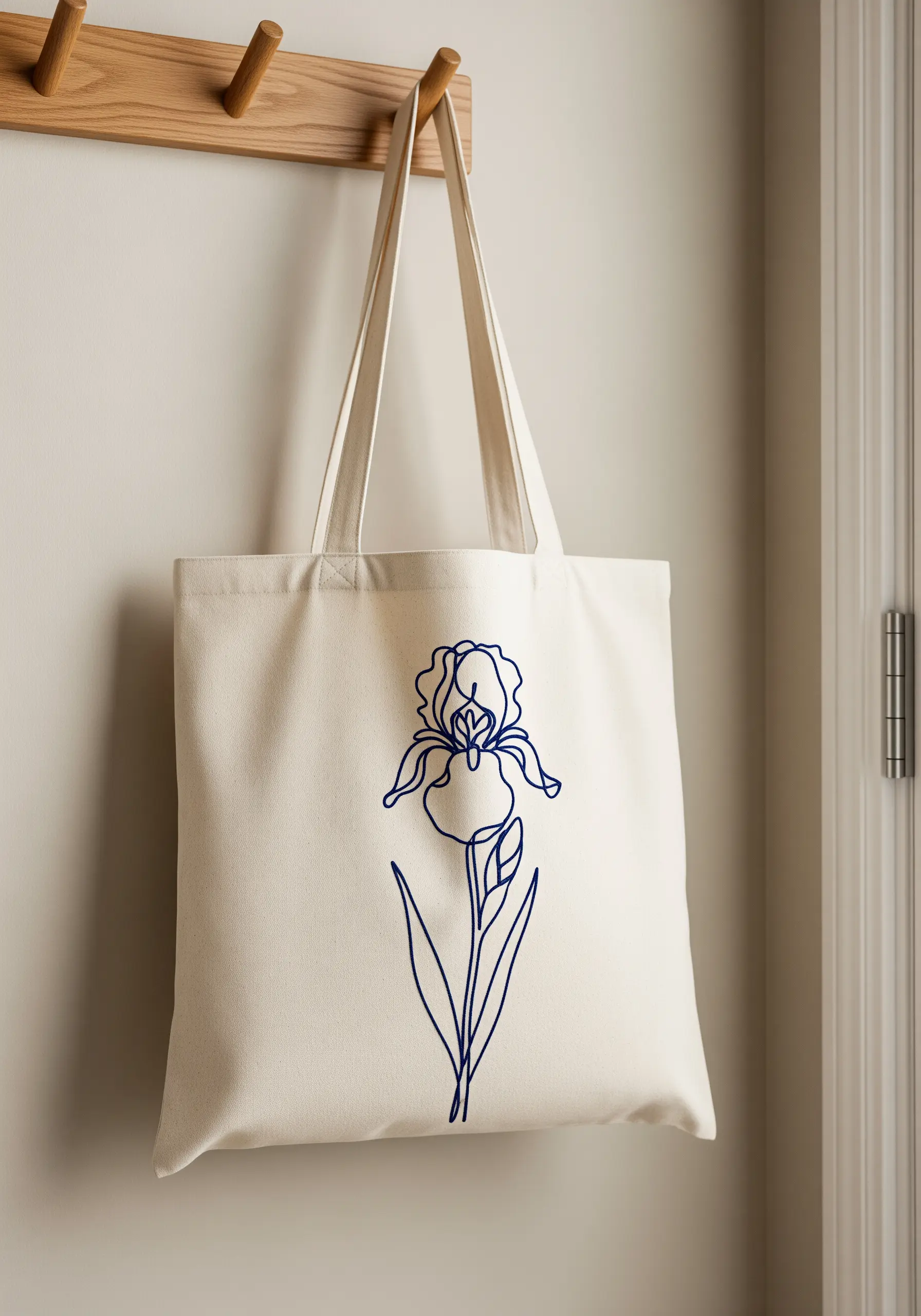
Items that see daily use, like a tote bag, demand stitches that are as durable as they are beautiful.
The stem stitch is your best choice here; its overlapping nature creates a strong, corded line that is less likely to snag or pull than a simple backstitch.
Choose a durable, heavy-duty canvas tote and a high-contrast thread color to ensure your artwork stands out and stands up to wear.
This is how you transform plain tote bags into functional, wearable art.
10. The Wildflower Sketchbook
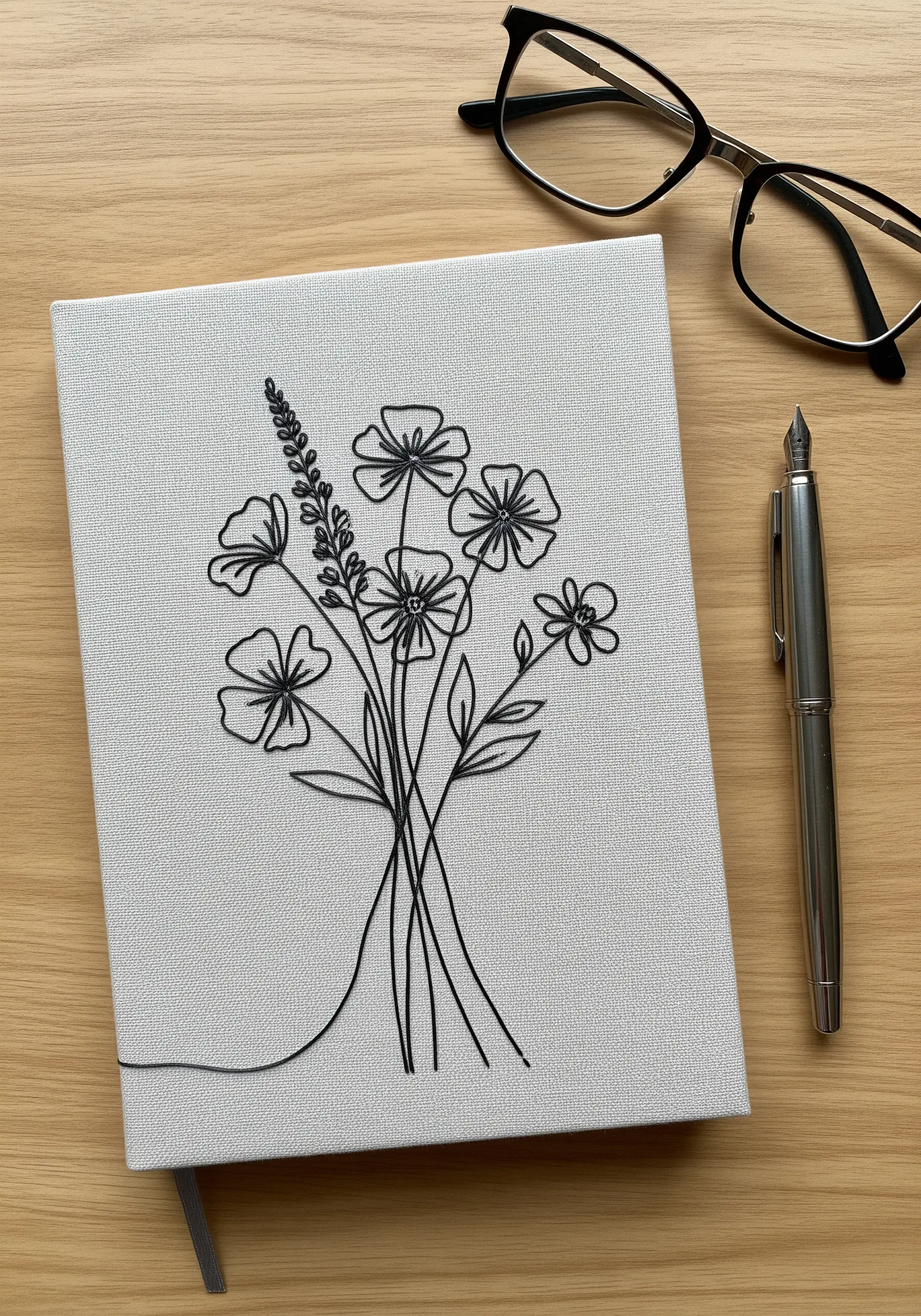
This design beautifully captures the loose, spontaneous energy of a pen-and-ink sketch.
To achieve that delicate, drawn quality, use only one or two strands of black cotton floss.
The key to the composition is the overlapping of the stems; this simple technique creates an illusion of depth and makes the bouquet feel like a naturally gathered bunch.
It’s a perfect way to beautify your notebooks and journals with a personal, artistic touch.
11. The Sunlit Climbing Vine
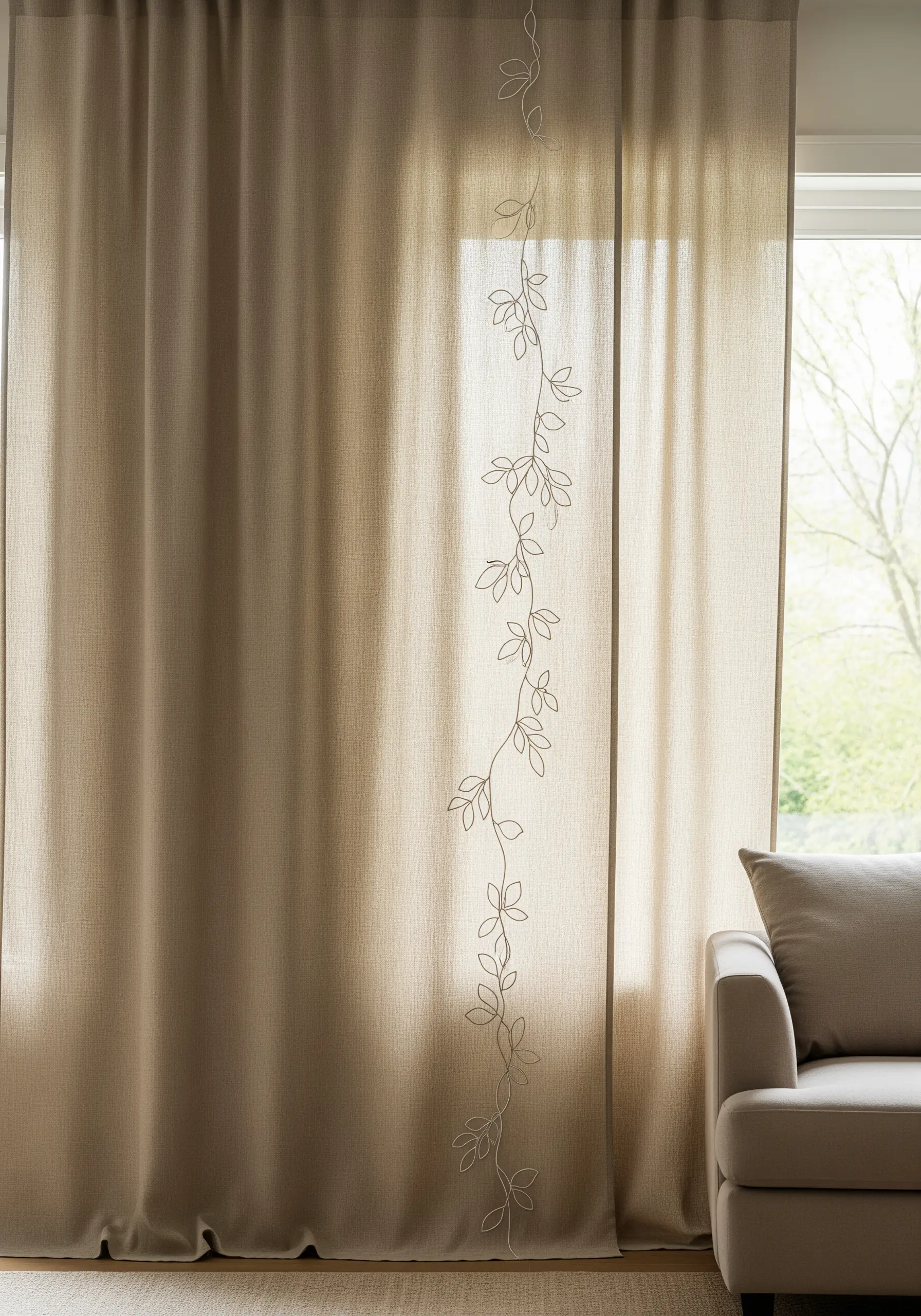
Embroidering on sheer or semi-sheer fabric adds an element of magic to your work, especially when placed near a window.
The light filters through the threads, making the design appear to float.
Use a very fine needle and a lightweight thread to prevent puckering the delicate fabric.
A simple, elegant backstitch is all you need for these climbing plant stitch designs, allowing the interplay of light and thread to be the main feature.
12. The Whispering Dandelion Wish
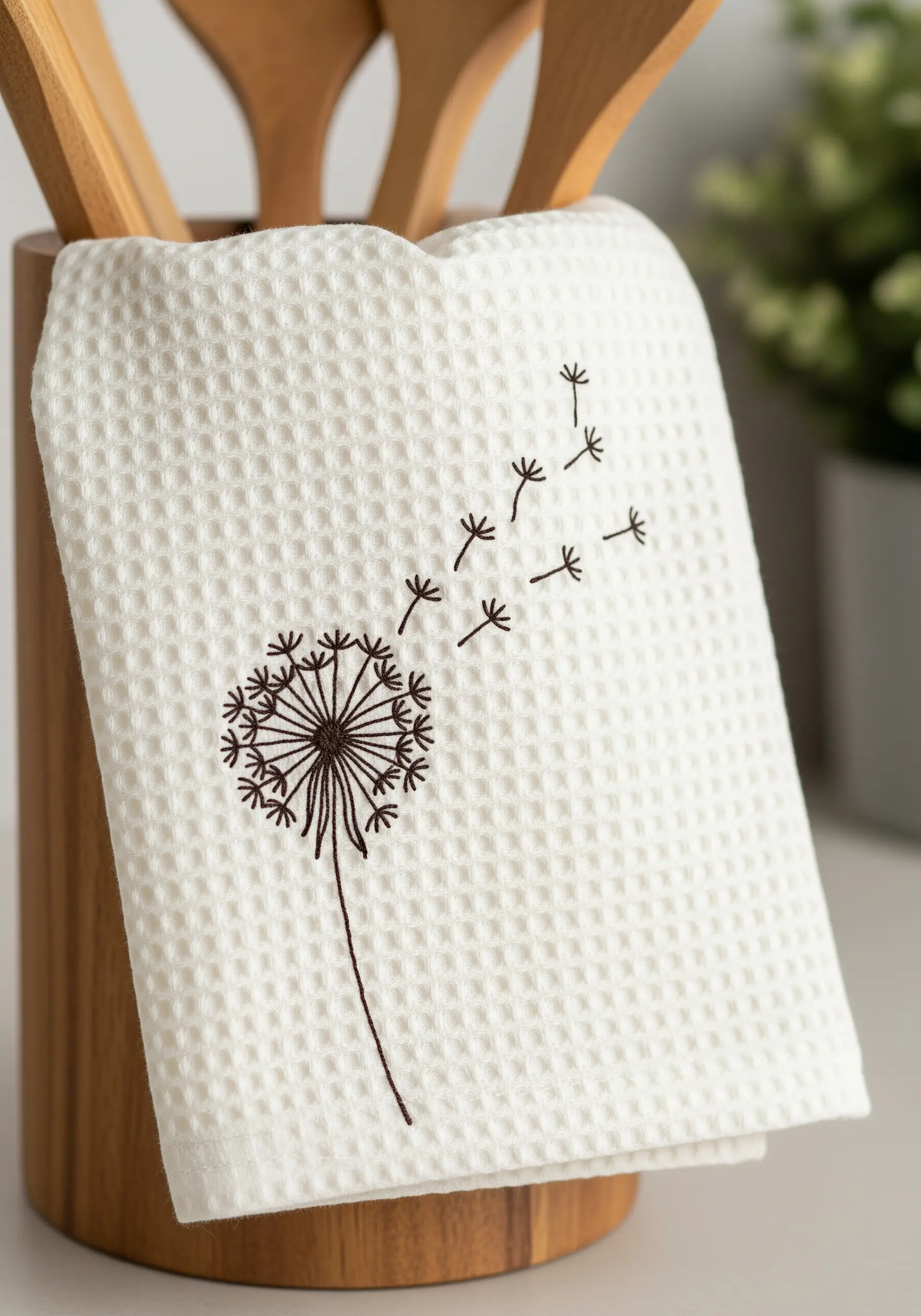
The deeply textured grid of a waffle-weave towel can easily swallow fine threads.
Counter this by using all six strands of your cotton floss, which gives the stitches enough body to sit proudly on top of the fabric’s surface.
The sense of motion is achieved by stitching the individual seeds with simple straight stitches, angled away from the dandelion head as if caught in a breeze.
This thoughtful detail is how you add charm to your kitchen towels.
13. The Architectural Protea
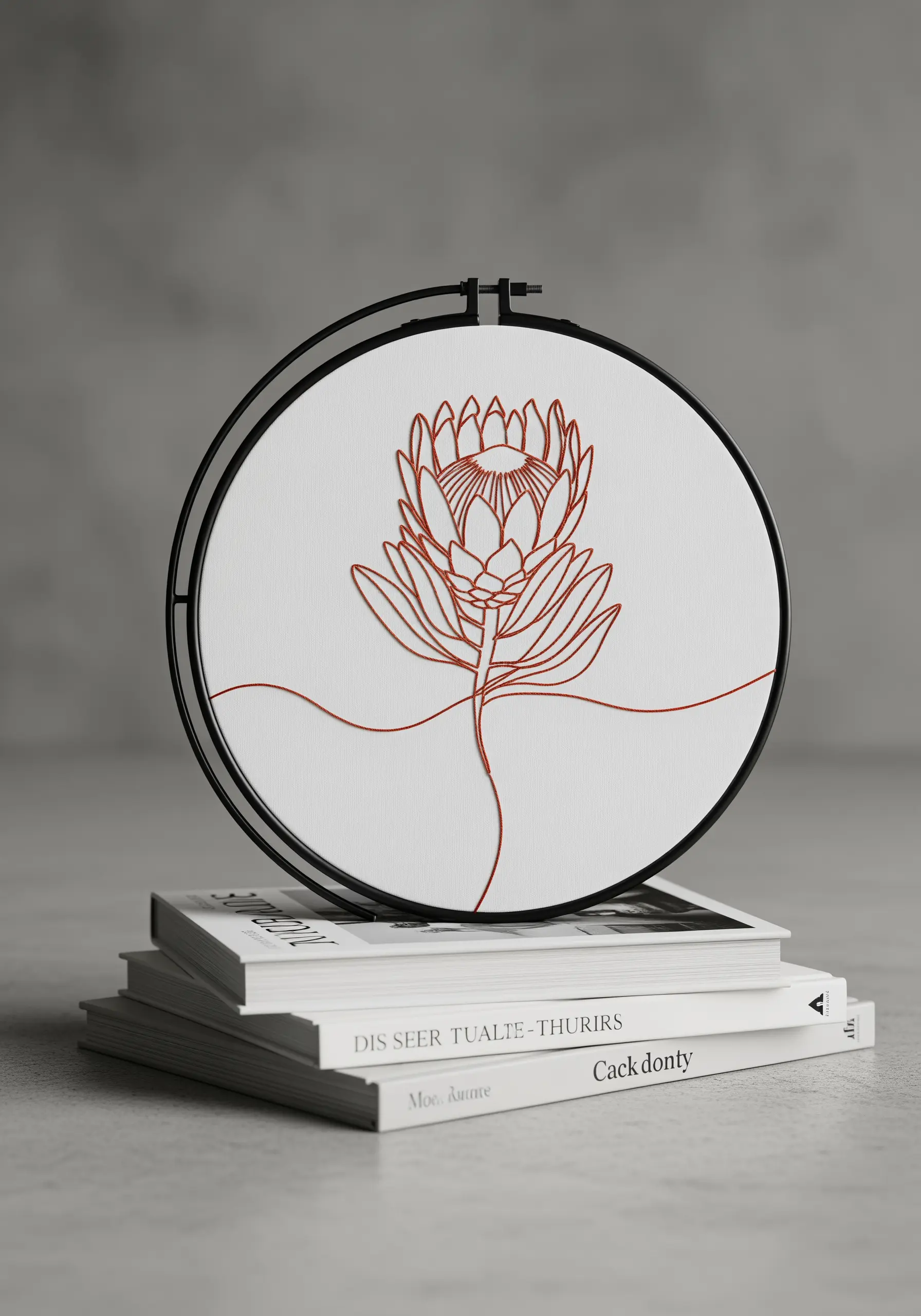
The protea is a flower of sharp angles and complex, overlapping shapes, making it a perfect subject for line art.
To maintain crispness in the tight corners and points, use a split stitch; its structure allows for sharp pivots without creating bulk.
Framing the piece in a modern black hoop instead of traditional wood complements the architectural nature of the flower, turning it into mesmerizing wall art.
14. The Gentle Fawn Nursery Wreath
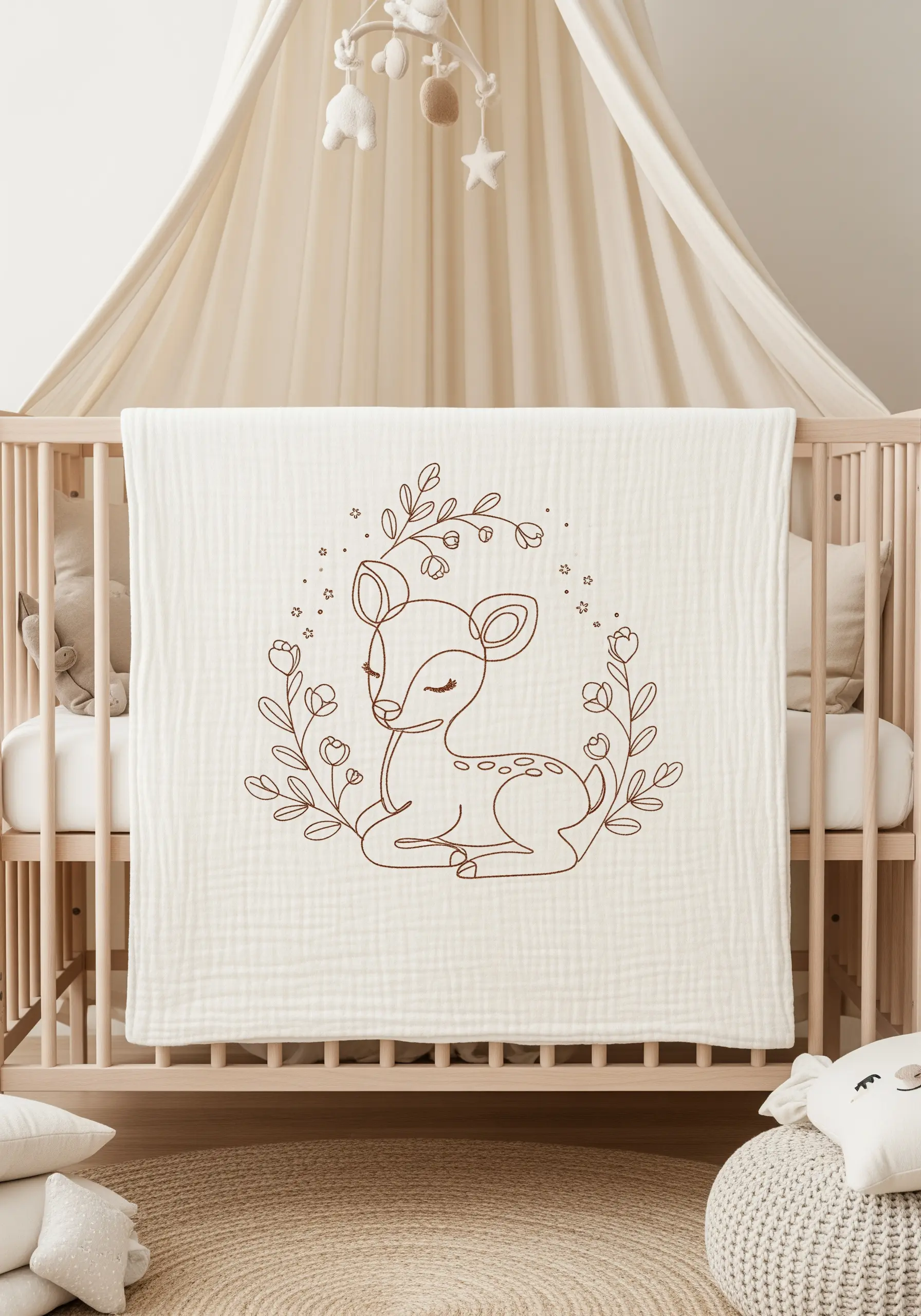
When stitching for little ones, softness and safety are your primary concerns.
Choose a soft, breathable fabric like cotton muslin and use a high-quality cotton floss that won’t feel scratchy against the skin.
Secure your thread ends with extra-tight knots that are woven into the back of your stitches to prevent any chance of them coming loose.
These are the details that make dreamy baby clothing embroidery ideas into treasured keepsakes.
15. The Calla Lily Statement Patch
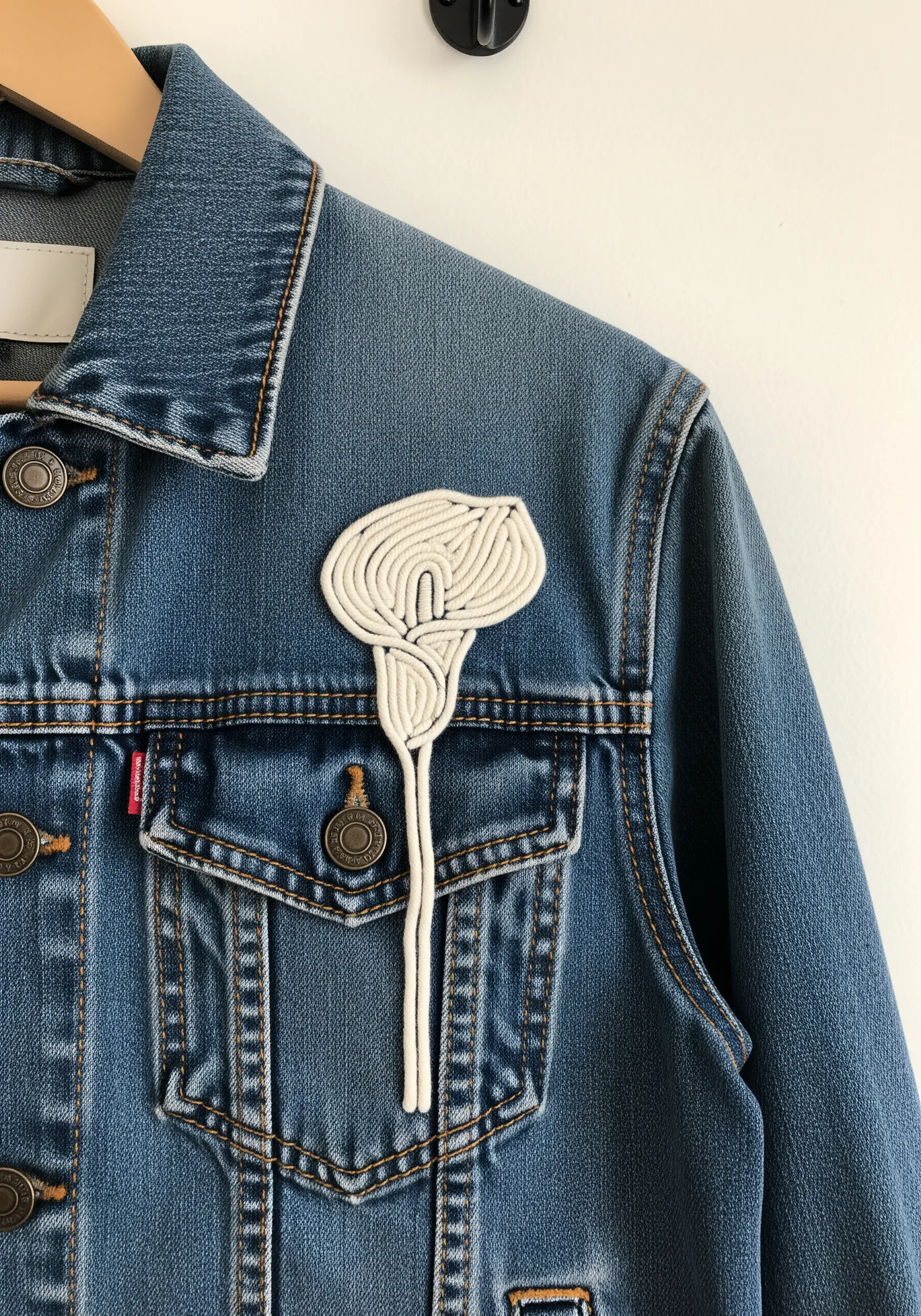
To achieve a truly bold, three-dimensional effect on a sturdy fabric like denim, move beyond traditional stitches.
This calla lily is created using couching: you lay down a thick cord or yarn in the desired shape, then use a thinner, matching thread to tack it down with small, almost invisible stitches.
This technique allows you to create raised sculptural embroidery effects that are impossible with floss alone, turning apparel into a canvas for textile art.
16. The Olive Branch Placemat Frame

Use embroidery to define a space, as seen with this olive branch that elegantly frames a place setting.
Stitching a border design like this helps to anchor the elements on the table—the plate, cutlery, and glass—creating a sense of intention and completeness.
An earthy green thread on a neutral linen ground is a timeless combination that feels both organic and refined.
It’s a simple way to transform a plain dining table into an elegant dining experience.
17. The Upholstered Peony Bloom
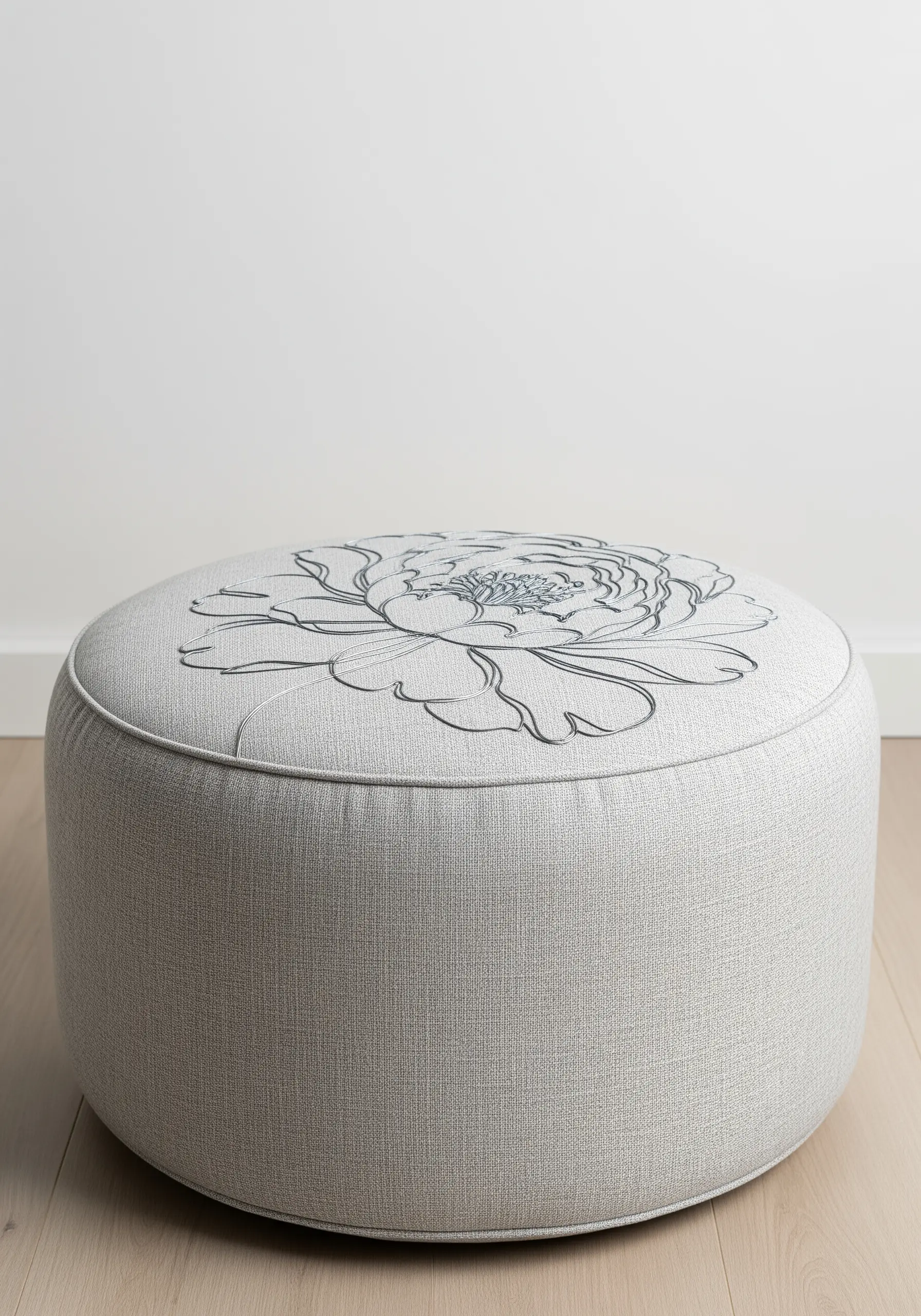
Taking your needle to furniture is a bold move that pays off in a truly custom, high-impact piece.
For upholstery fabric, you’ll need a heavy-duty, sharp needle, a thimble, and possibly a pair of pliers to help pull the needle through the dense weave.
Use a thick thread like tapestry wool or multiple strands of pearl cotton to ensure the design is substantial enough to make a statement.
Explore more Peony embroidery ideas to find a bloom that suits your style.
18. The Whispering Fox Pillowcase
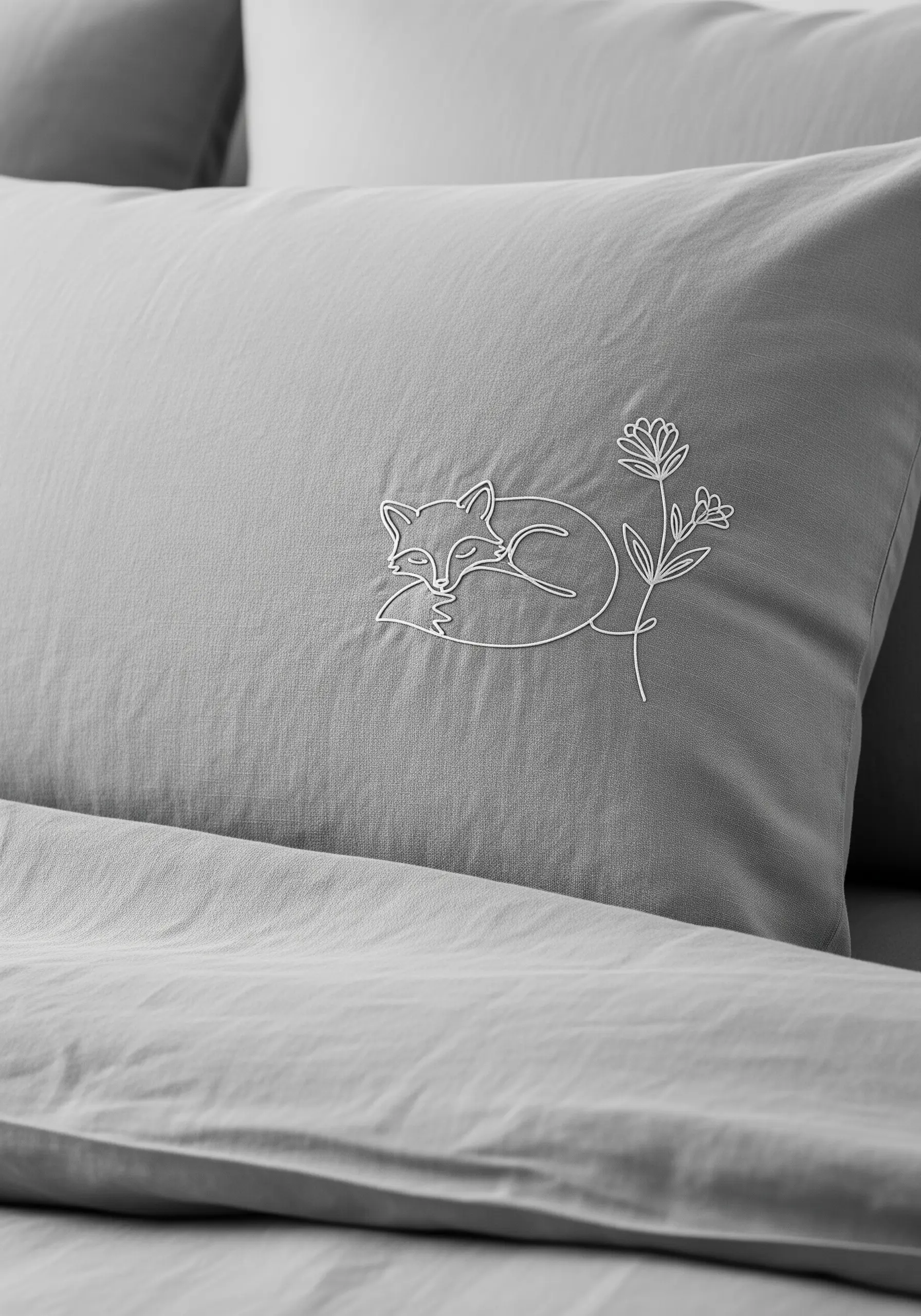
Subtlety can be more impactful than boldness, especially in a restful space like a bedroom.
A tone-on-tone color scheme—using a thread that is only a few shades lighter or darker than your fabric—creates an elegant, textural effect that you feel as much as you see.
Place your motif in an asymmetrical position, like the bottom corner, for a modern, considered look.
These are the charming embroidery designs for your pillowcases that whisper quiet luxury.