A simple linen table runner or a set of cotton towels holds so much potential. It’s not just fabric; it’s a canvas waiting for a story. With a needle and thread, you can bring the serene, rhythmic energy of the ocean right into your home.
Forget complicated patterns that feel intimidating. Instead, let’s focus on the small details that make a piece feel truly special: the way you blend two shades of blue to capture the depth of water, or the choice of a single raised stitch that gives a seashell tangible texture.
Here, you’ll discover how to use color, texture, and composition to elevate simple coastal motifs into refined pieces of functional art. These ideas are designed to give you both the inspiration and the technical confidence to make your next project your best one yet.
1. Render Majestic Whales with Thread Painting
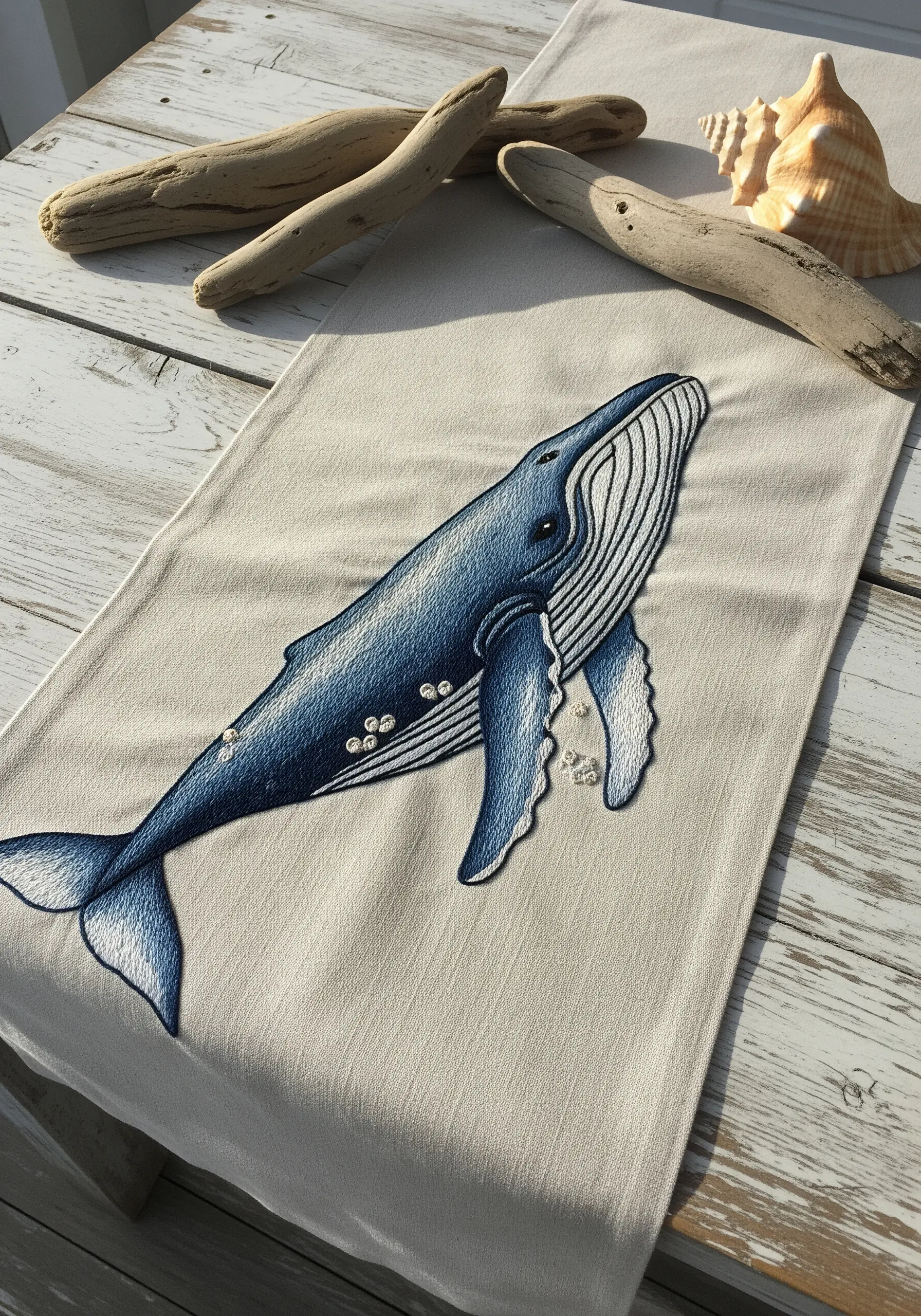
To achieve the smooth, rounded form of a whale, use long-and-short stitch, also known as thread painting.
Work with a single strand of embroidery floss in three to four shades of blue, blending from dark on the top to light along the belly.
This technique eliminates harsh lines and creates a realistic gradient that gives the animal dimension and life.
For the pleated throat grooves, use a crisp, bright white in a simple backstitch, creating a sharp contrast that defines the form.
Tiny seed beads or silver French knots can be scattered near the fin to suggest the effervescence of sea spray.
2. Create Graphic Impact with Bold Satin Stitch
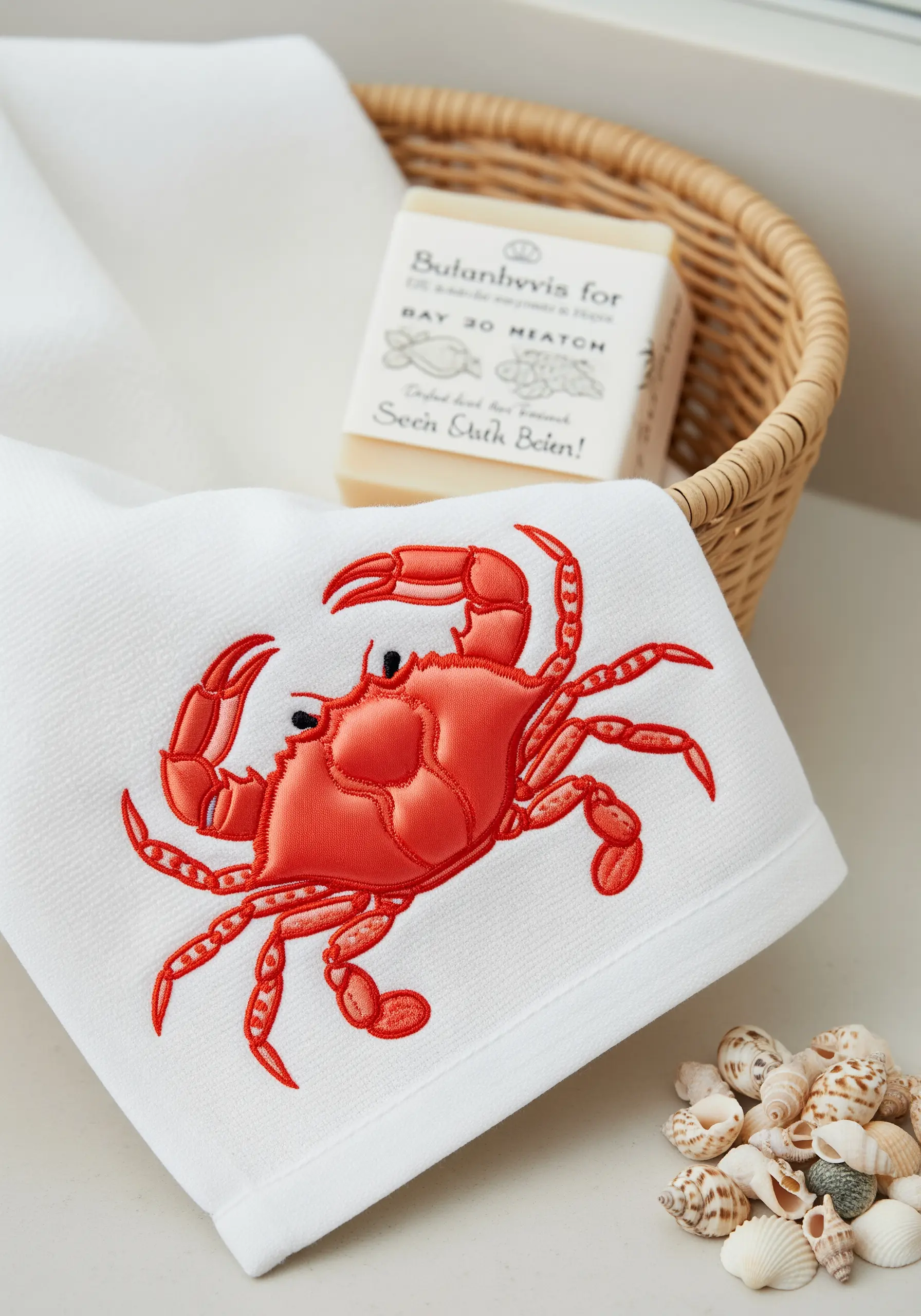
For a clean, high-impact design like this crab, rely on a dense, perfectly executed satin stitch.
Use three or four strands of cotton floss to ensure full coverage and a slight loft, which makes the motif pop against the towel’s texture.
To keep your edges sharp, outline the entire shape with a split stitch first; this acts as a raised barrier, guiding your satin stitches for a flawless finish.
The choice of a vibrant, singular color like this poppy red against white fabric creates a classic coastal statement that is both playful and chic.
3. Build a Mosaic Shell with Varied Fill Stitches
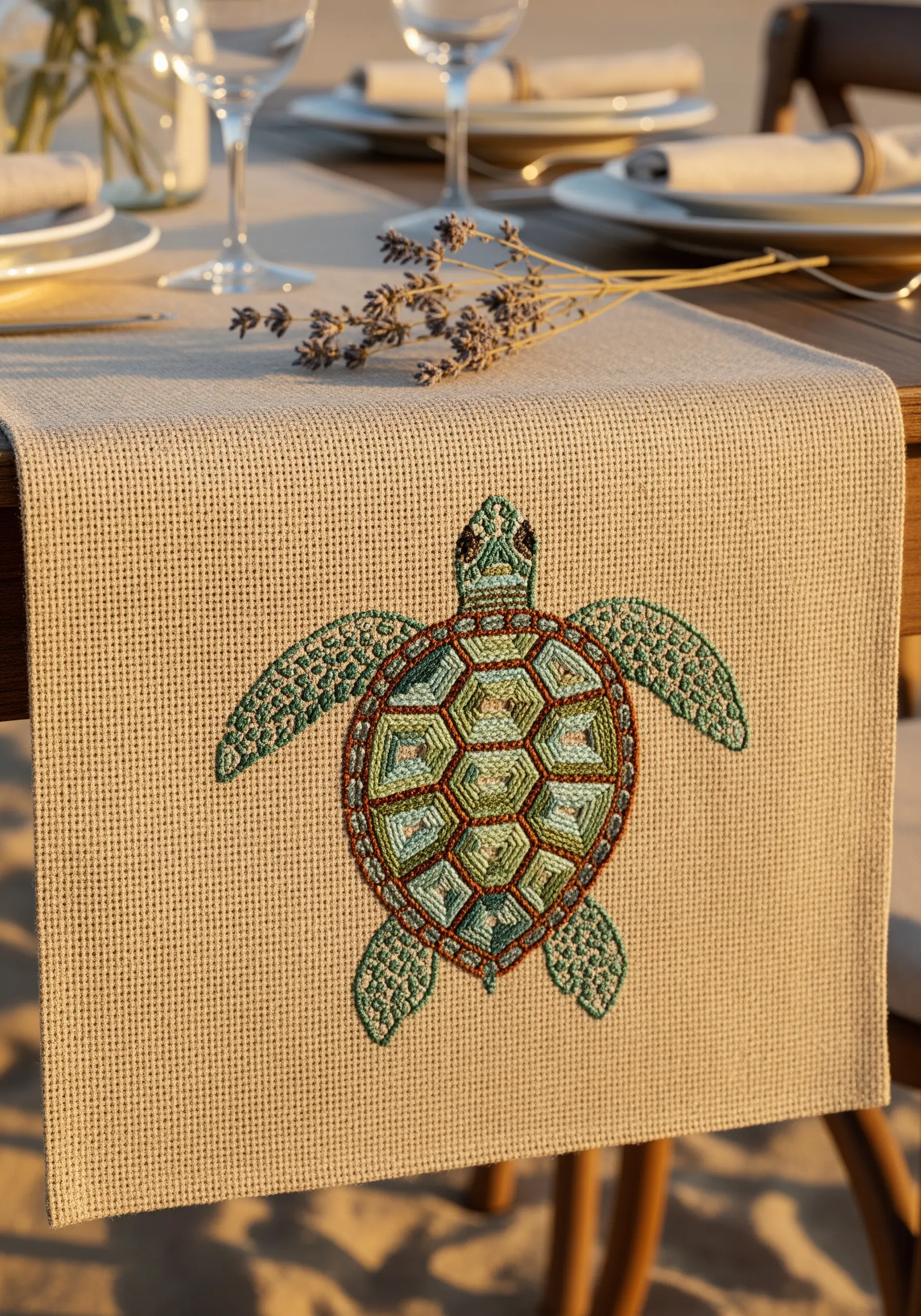
Transform a simple turtle motif into a work of art by treating its shell like a mosaic.
Divide the shell into its natural geometric segments and assign a different fill stitch or color gradient to each one.
Try combining long-and-short stitch, seed stitch, and small, directional satin stitches to create a rich tapestry of textures.
Using a mix of matte cottons and threads with a slight sheen will further enhance the tiled effect, catching the light in different ways.
This approach turns a simple outline into a complex, captivating focal point on a jute or canvas runner.
4. Imply Movement with Directional Shading
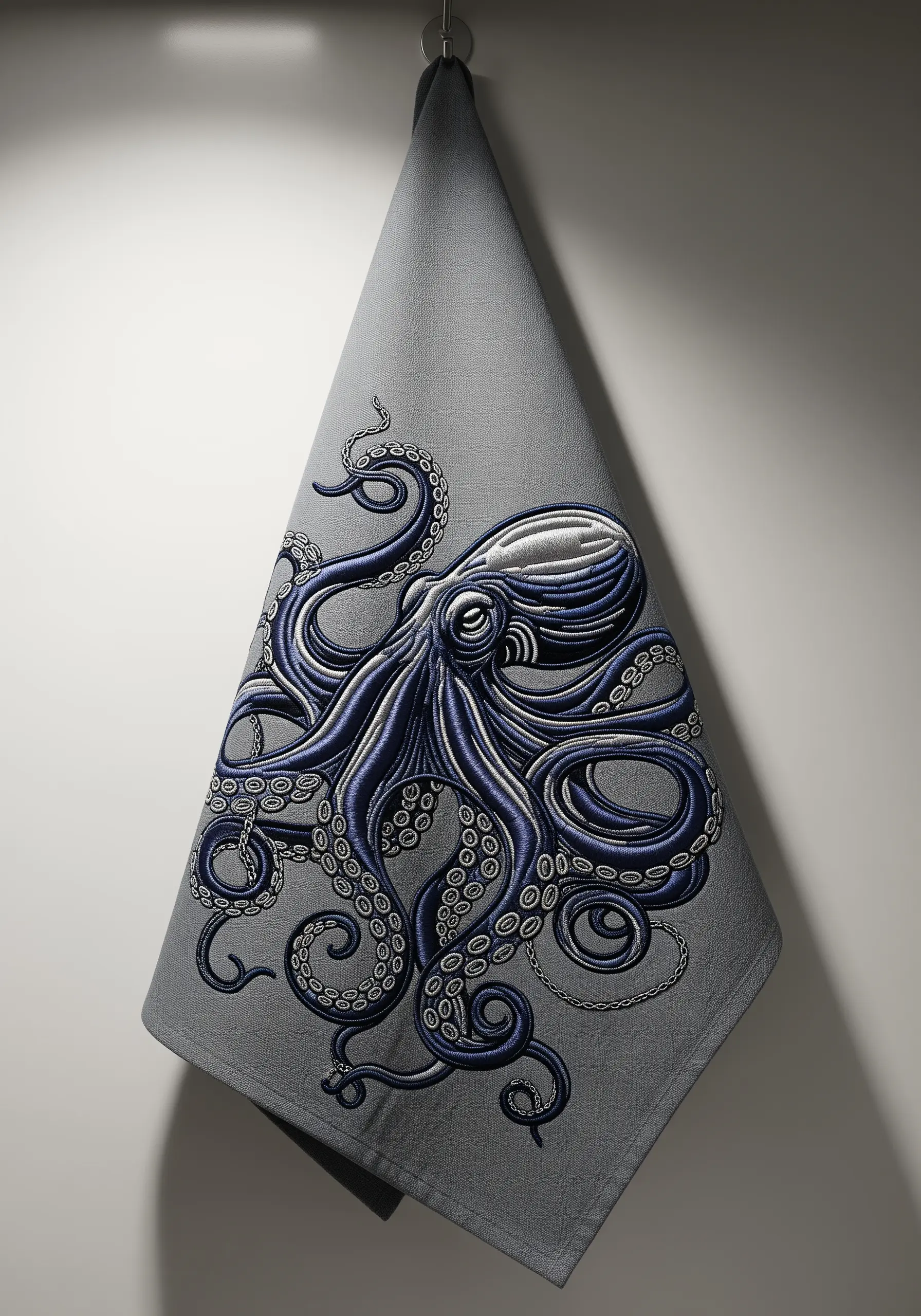
Capture the fluid, dynamic nature of an octopus by using directional long-and-short stitch on its tentacles.
Blend deep blues into lighter shades along the curves to create the illusion of volume and movement.
Ensure your stitches follow the direction of the tentacle’s curl; this small detail makes the entire piece feel more alive and less static.
A contrasting chain stitch for the suckers adds a tactile, rope-like texture that stands out against the smooth shading of the skin.
5. Design a Playful Scene with Mirrored Motifs
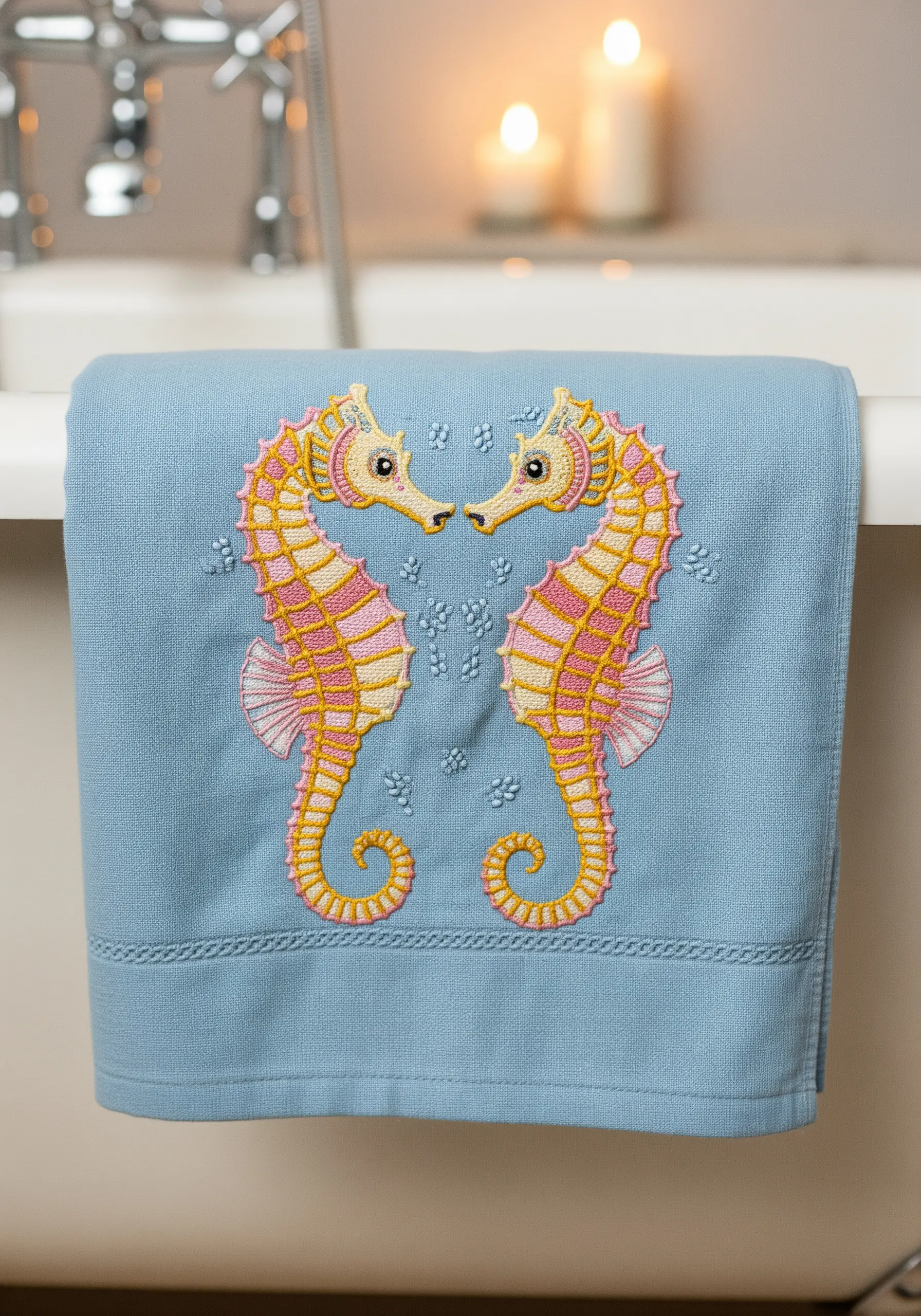
Create a sense of symmetry and charm by embroidering a mirrored pair of animals, like these seahorses.
Use bold color-blocking with satin stitch for the bodies, keeping the palette bright and cheerful—pinks and yellows against a cool blue ground create a lovely contrast.
Define the segments with a strong outline stitch, such as a whipped backstitch in a darker, contrasting color, to make the design crisp.
Scatter a few tiny French knots or seed stitches around them to serve as bubbles, completing the whimsical underwater narrative.
6. Capture Ethereal Lightness on Sheer Fabric
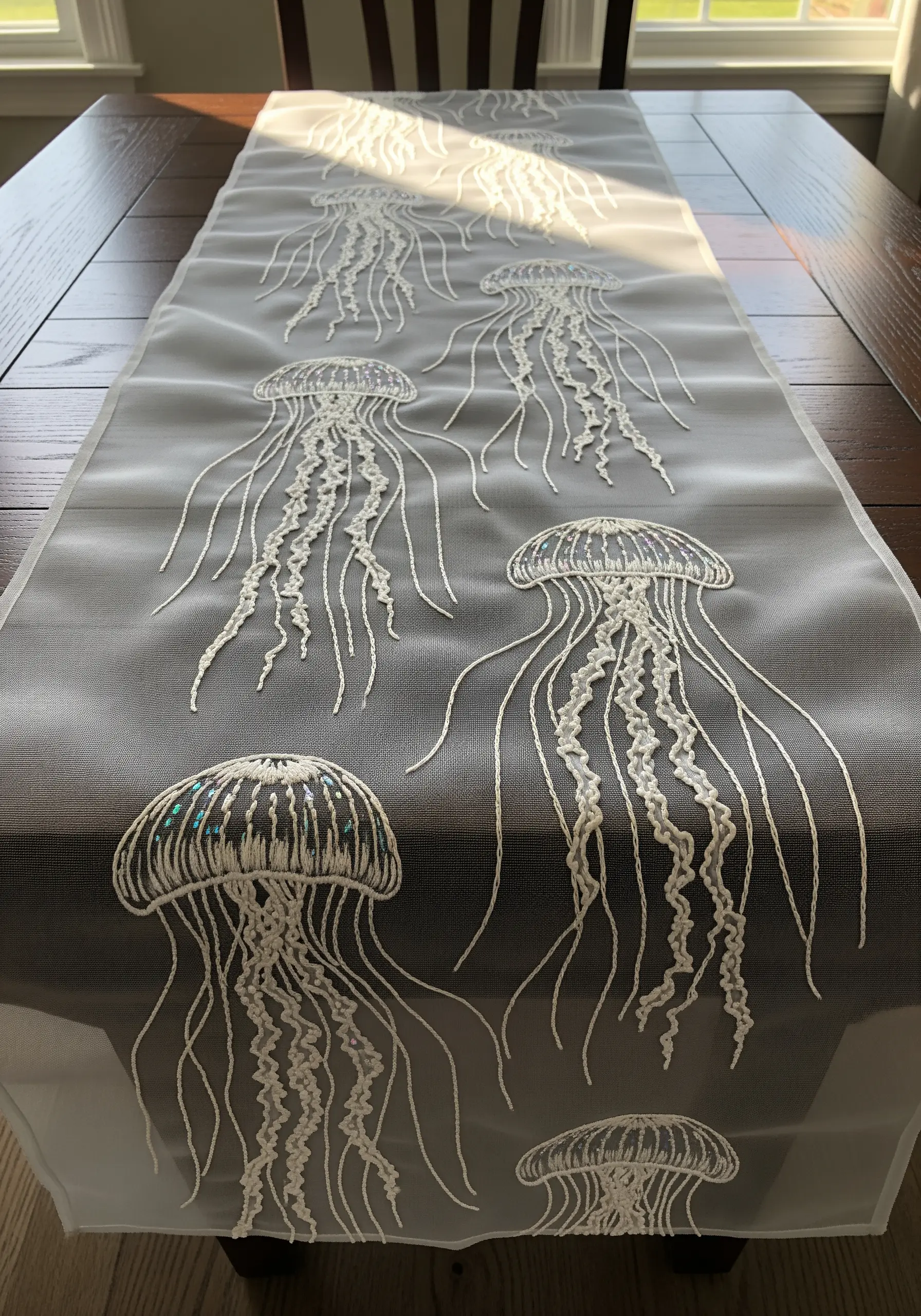
Stitching on sheer or organza fabric allows you to play with transparency, which is perfect for ethereal creatures like jellyfish.
Use a fine, bright white thread in varying densities—a denser satin stitch for the bell and looser, trailing straight stitches for the tentacles.
Incorporate a metallic or iridescent thread for some of the tentacles to mimic bioluminescence and add a subtle shimmer.
The negative space of the fabric becomes part of the design, enhancing the jellyfish’s ghostly, floating quality.
7. Design an Organic Border with Scattered Motifs
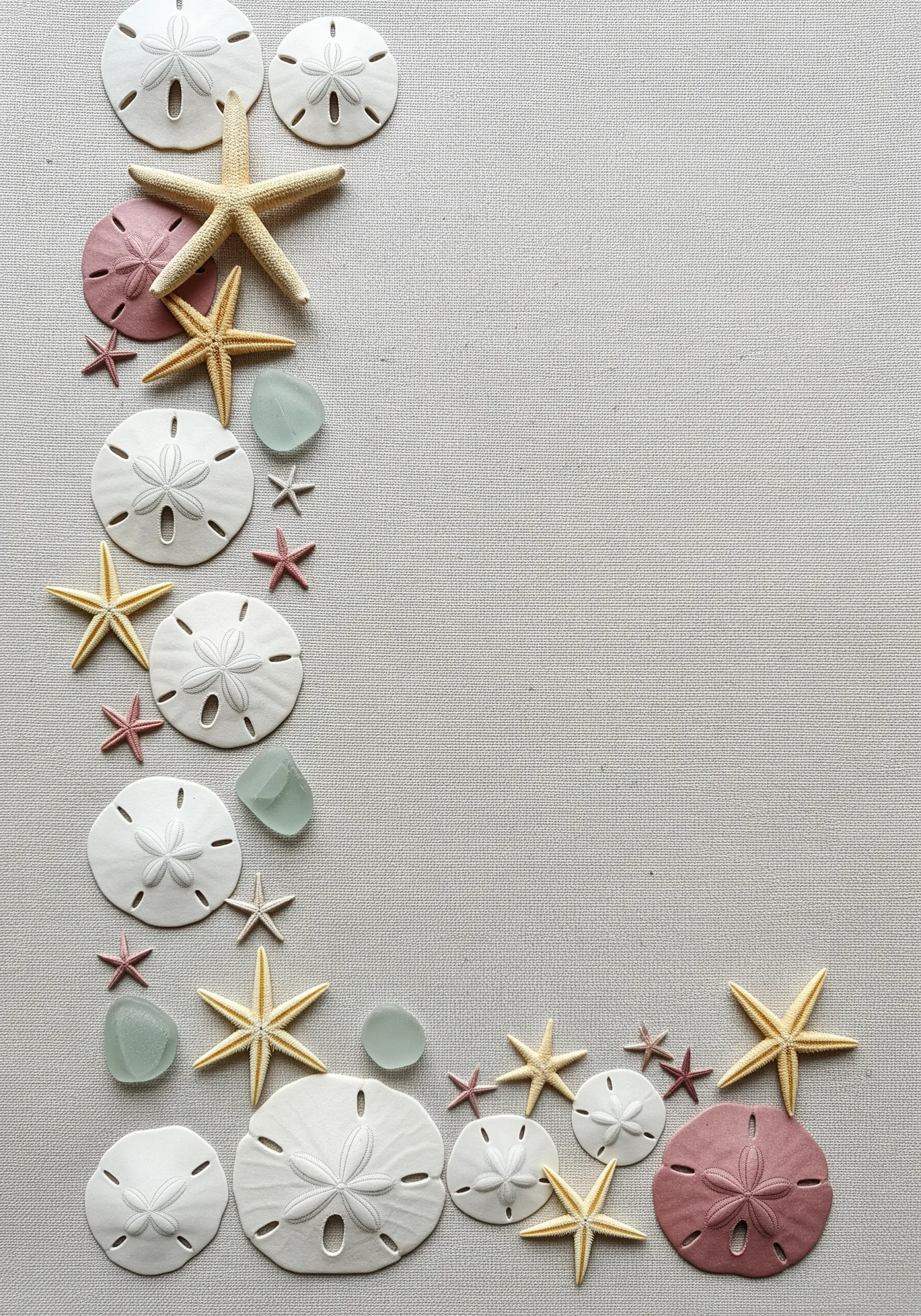
Instead of a traditional, linear border, create a more natural-looking edge for your table runner by scattering small coastal motifs.
Translate sand dollars, starfish, and sea glass into simple embroidered shapes using satin stitch, French knots, and simple fill stitches.
Vary the size and orientation of each motif, clustering some together and leaving small gaps, to mimic a shoreline.
This asymmetrical composition feels more modern and less rigid than a repeating pattern, adding a touch of understated elegance to your table linen.
8. Create Dynamic Flow with a School of Fish
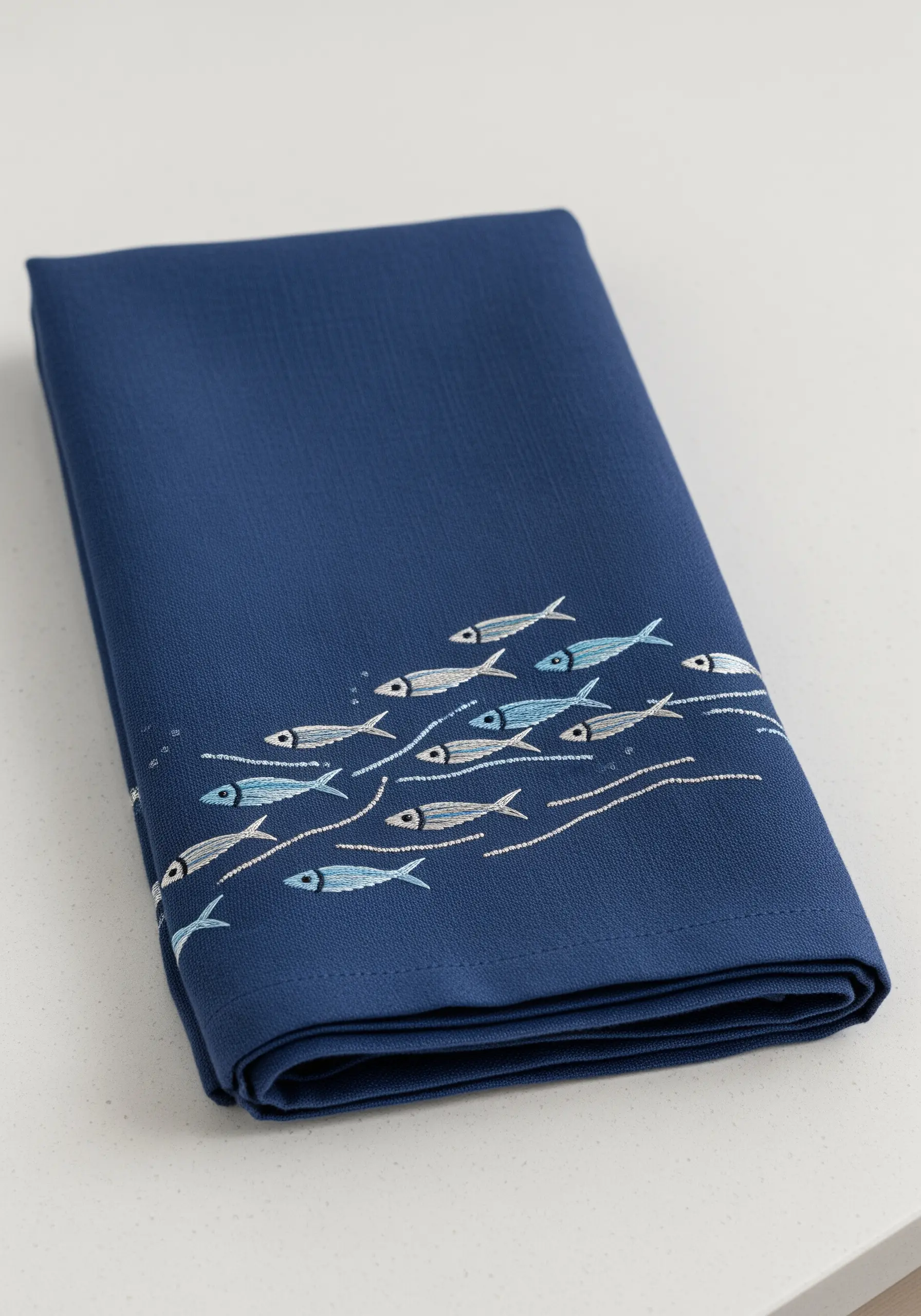
Evoke the feeling of movement by stitching a small school of fish swimming in unison across a napkin or towel.
Use simple fish silhouettes and a limited color palette of blues and whites to maintain a clean, cohesive look.
Vary the direction and spacing slightly between each fish to make the group feel fluid and alive.
Add a few simple, wavy lines using a whipped backstitch to suggest water currents, reinforcing the sense of motion. This is a perfect example of how minimalist embroidery ideas deliver sophisticated results.
9. Master Realism with Monochrome Thread Painting
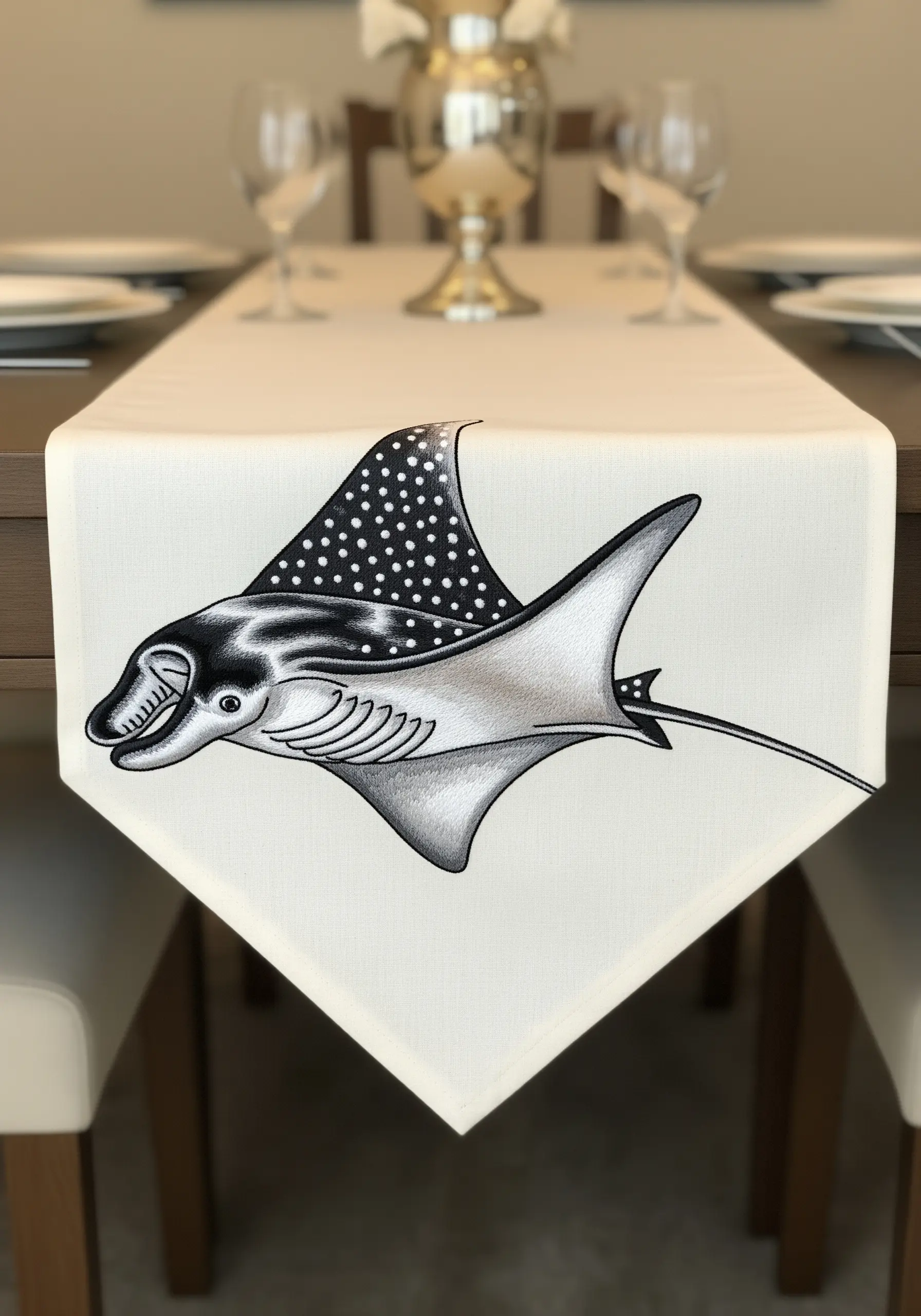
For a strikingly realistic design like a manta ray, focus on the nuances of light and shadow using a monochrome palette.
Employ long-and-short stitch with single strands of black, grey, and white floss to create seamless gradients across the wings.
Pay close attention to where light would naturally hit, using your lightest grey and white threads to create highlights that give the ray its shape and volume.
Tiny, well-placed French knots or seed stitches for the spots add a final layer of texture and detail.
10. Mimic Fur with Directional Seed Stitches
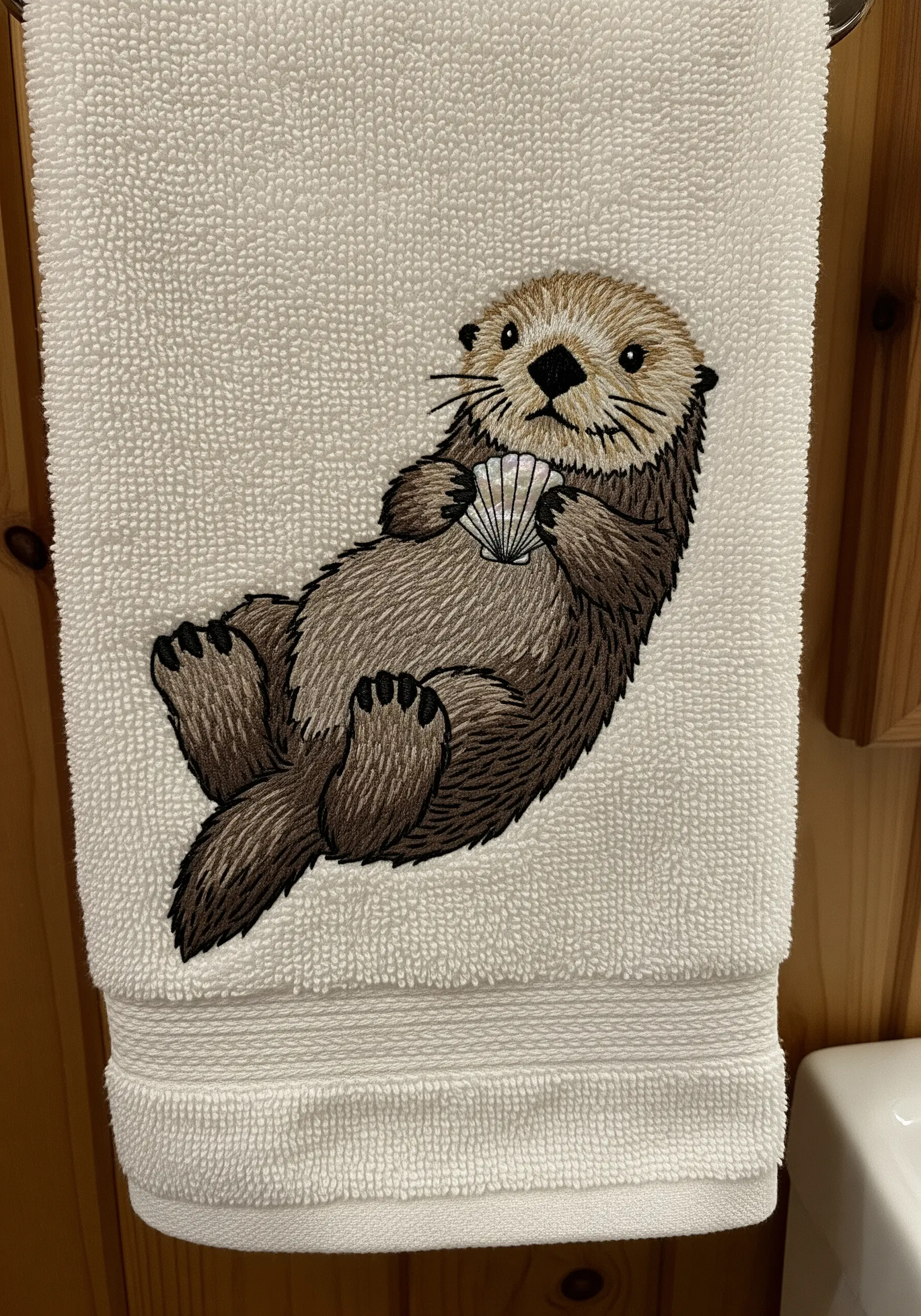
When embroidering furry animals like a sea otter, the key to realism is creating texture that suggests fur without stitching every single hair.
Use a dense application of short, directional seed stitches or tiny straight stitches, layering shades of brown, tan, and beige.
Vary the direction of your stitches to follow the contours of the body—down the back, around the face, and along the tail.
This technique creates a soft, plush texture that reads as fur, especially effective on the absorbent surface of a terrycloth towel.
11. Build a Tactile Reef with Raised Stitches
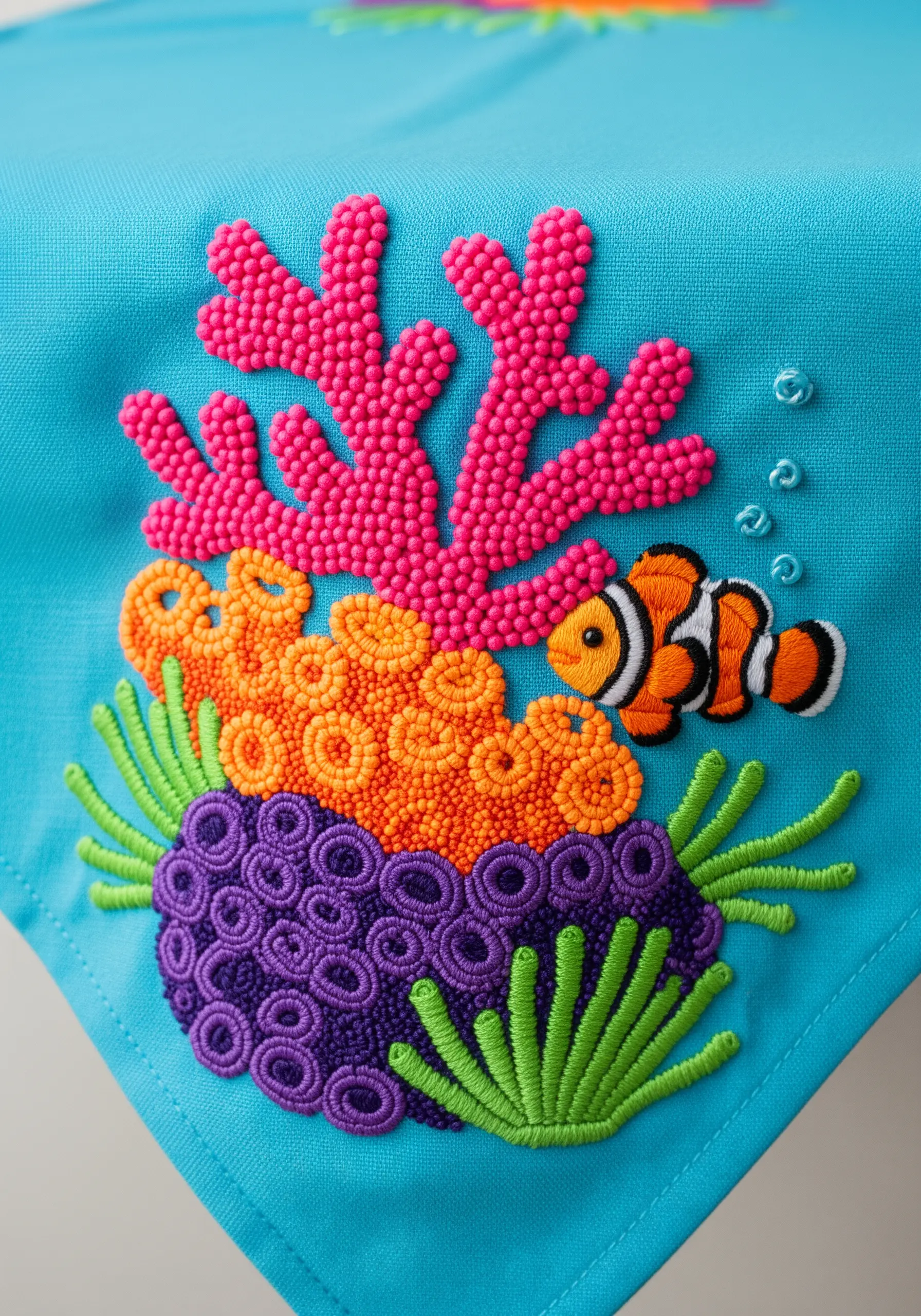
Create a vibrant, textural coral reef scene by assigning a different raised stitch to each element.
Use dense French knots for the bumpy texture of brain coral, packing them tightly together in bold colors like pink and orange.
For the sea anemone, stitch long, straight stitches radiating from a central point. The clownfish can be rendered in smooth satin stitch for contrast.
This combination of textures creates a highly tactile, dimensional piece that invites touch and makes the scene pop on bright fabric.
12. Embrace Simplicity on Textured Fabrics
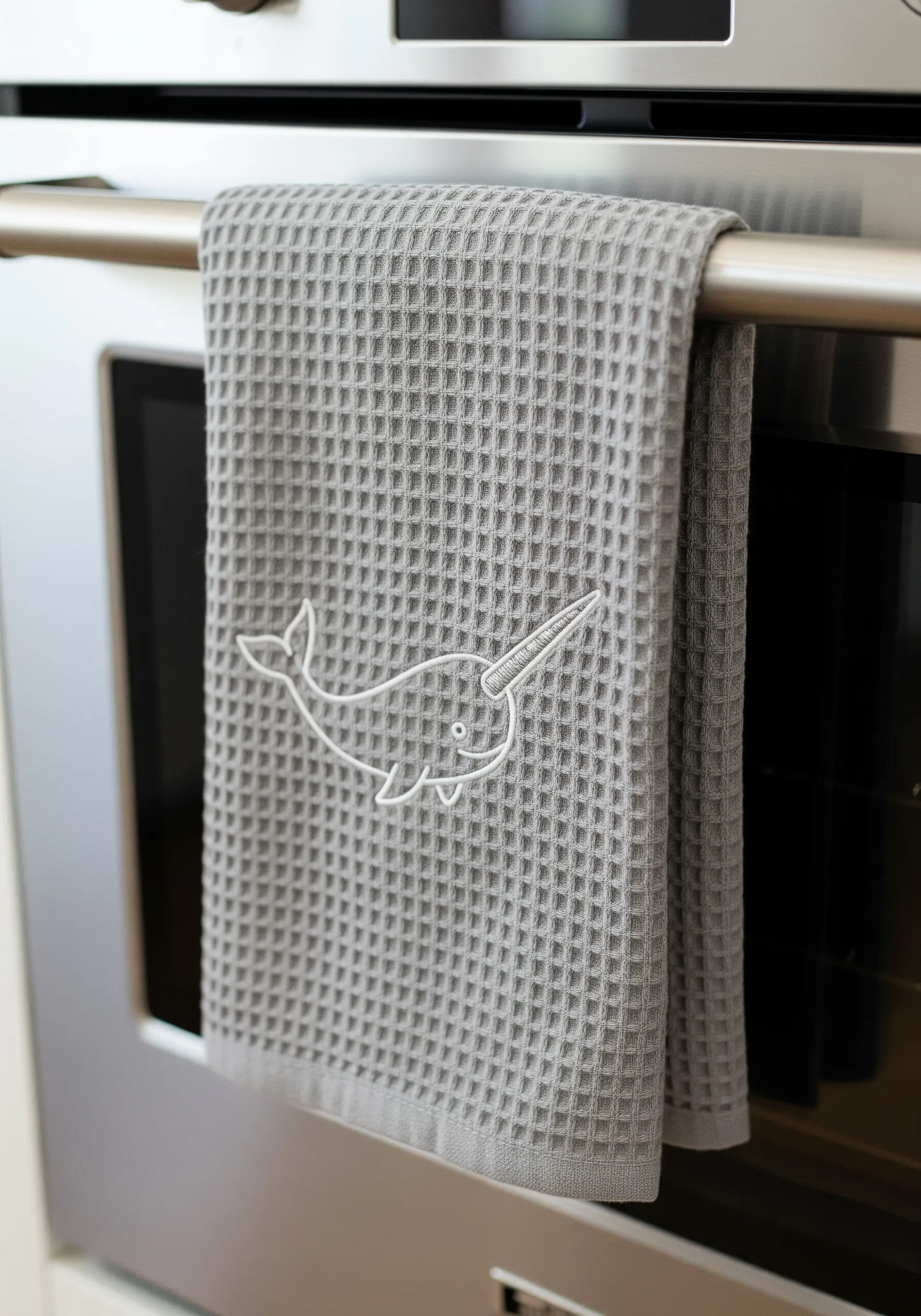
When working with a fabric that has a prominent texture, like this waffle-weave towel, a simple design often has the greatest impact.
Choose a minimalist line-art motif, such as this narwhal, and stitch it using a basic backstitch or stem stitch.
The clean lines of the embroidery contrast beautifully with the fabric’s grid pattern, allowing both the thread and the textile to shine.
A single, high-contrast color—like white on grey—keeps the look modern, chic, and sophisticated.
13. Anchor a Table with a Statement Motif
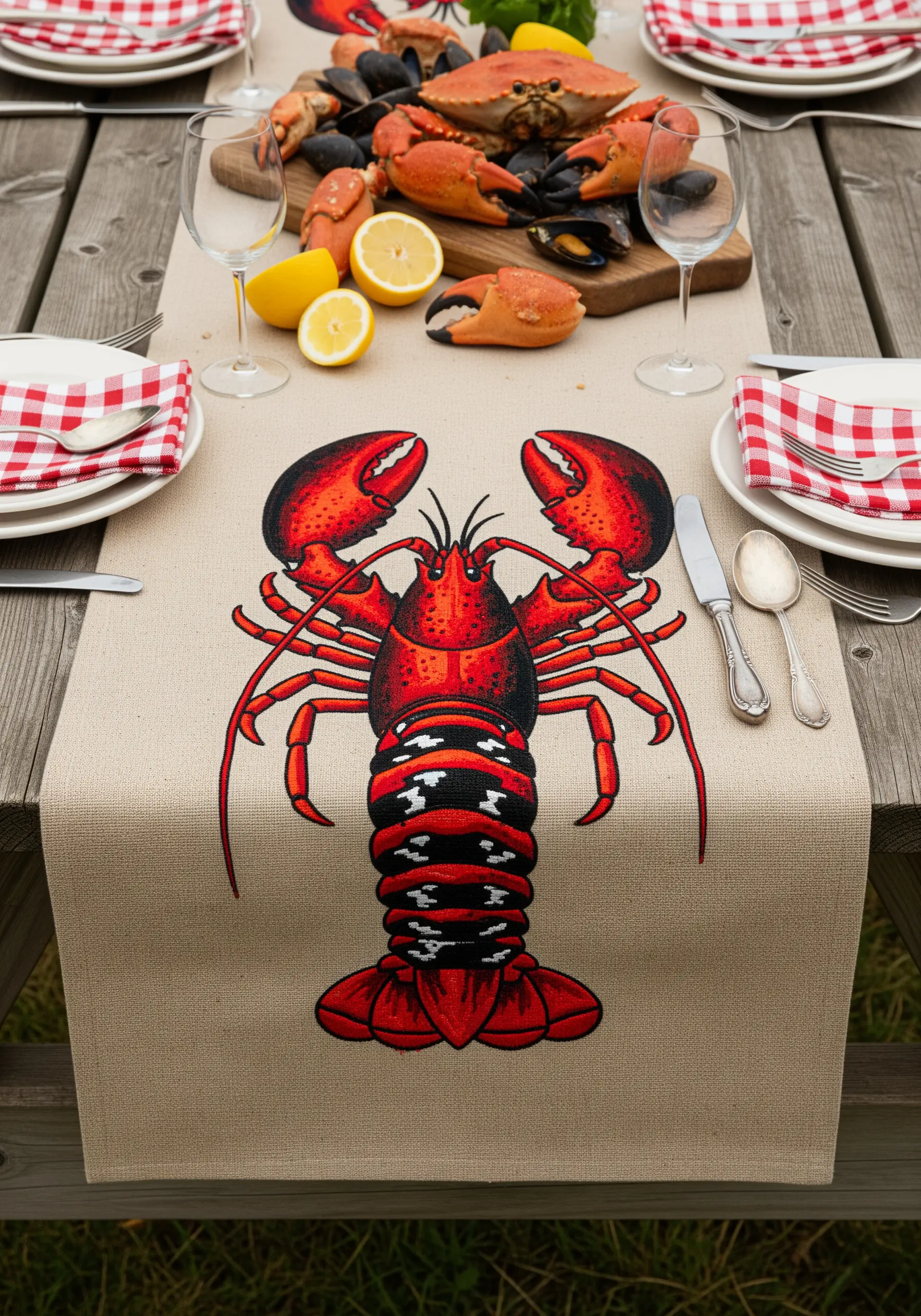
For a table runner, a single, large-scale motif can serve as a powerful centerpiece and anchor the entire tablescape.
Choose a bold subject like a lobster and render it in a rich, saturated red using dense satin stitch.
The key to making a large design work is including areas of detail—like the black and white bands on the tail—to break up the solid color and add visual interest.
Placing the motif at one end of the runner allows it to be showcased without being covered by dishes.
14. Create Harmony with a Limited Color Palette
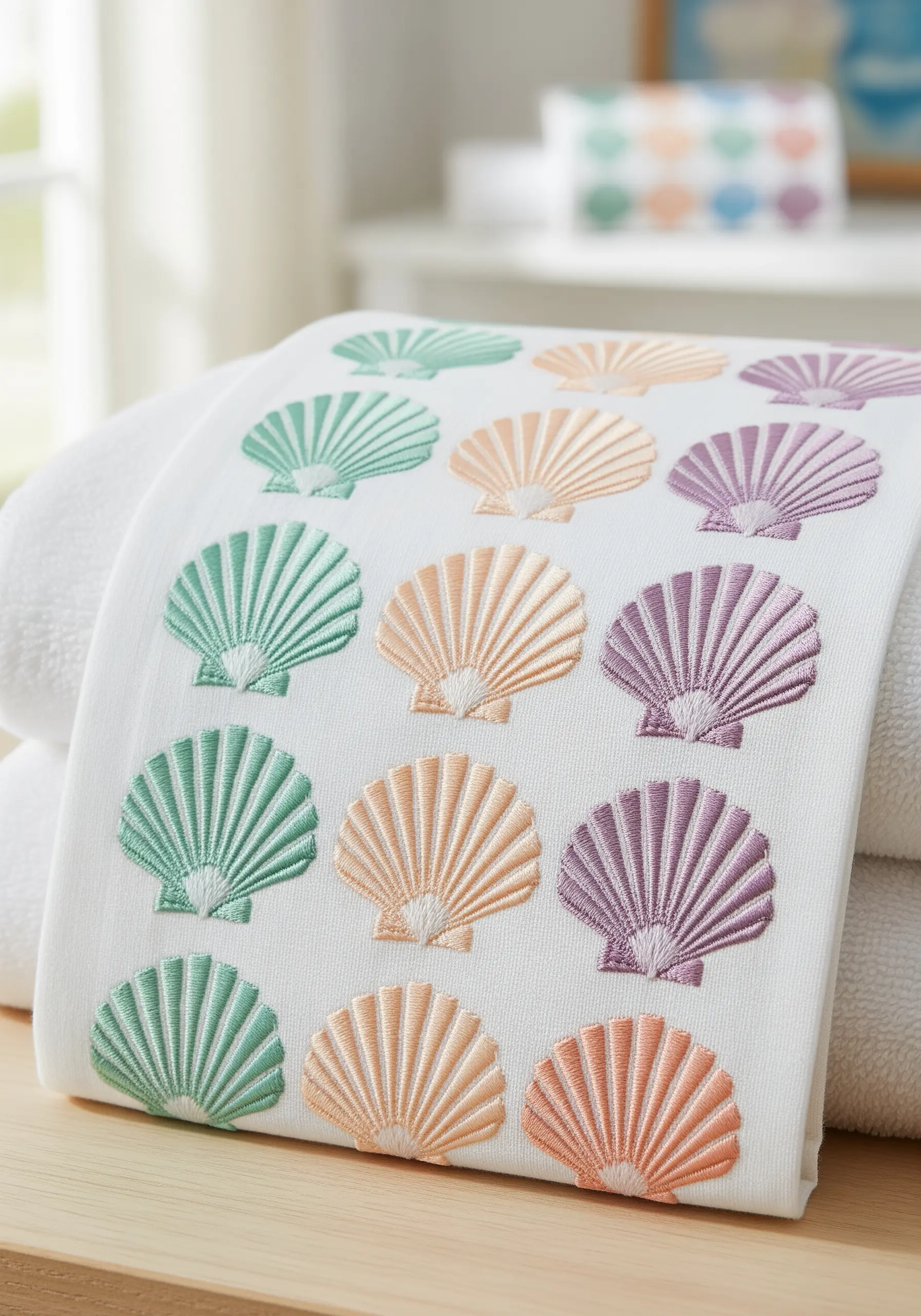
A repeating pattern feels instantly more sophisticated when you limit your color choices to a curated palette.
Select three or four complementary soft colors—like mint, peach, and lavender—to create a serene and harmonious design.
Use a radial satin stitch for each seashell, with the stitches fanning out from the base to mimic the shell’s natural ridges.
This grid-like arrangement of simple shapes and soothing colors turns a plain towel border into a piece of functional art.
15. Add Subtle Detail with Tone-on-Tone Stitching
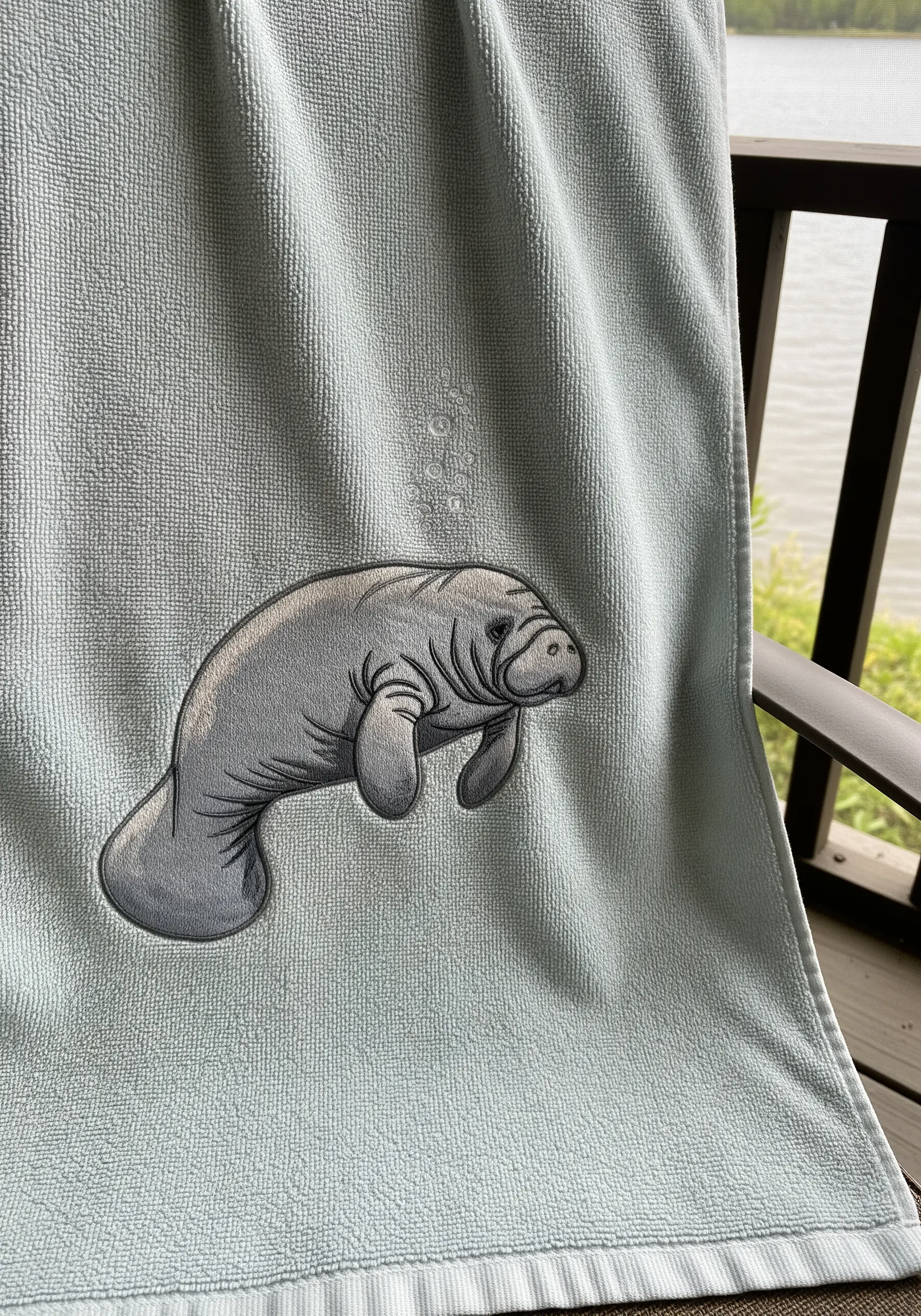
For an elegant, understated effect, embroider your design using threads that are only a few shades different from your base fabric.
This manatee, stitched in greys on a pale blue-grey towel, demonstrates how tone-on-tone work relies on texture and shadow rather than color.
The long-and-short stitches create subtle form, while the dark grey outline provides just enough definition to make the shape readable.
This technique is perfect for adding a touch of luxury to bath linens without overwhelming the space with bright colors.
16. Make a Statement with High-Contrast Appliqué
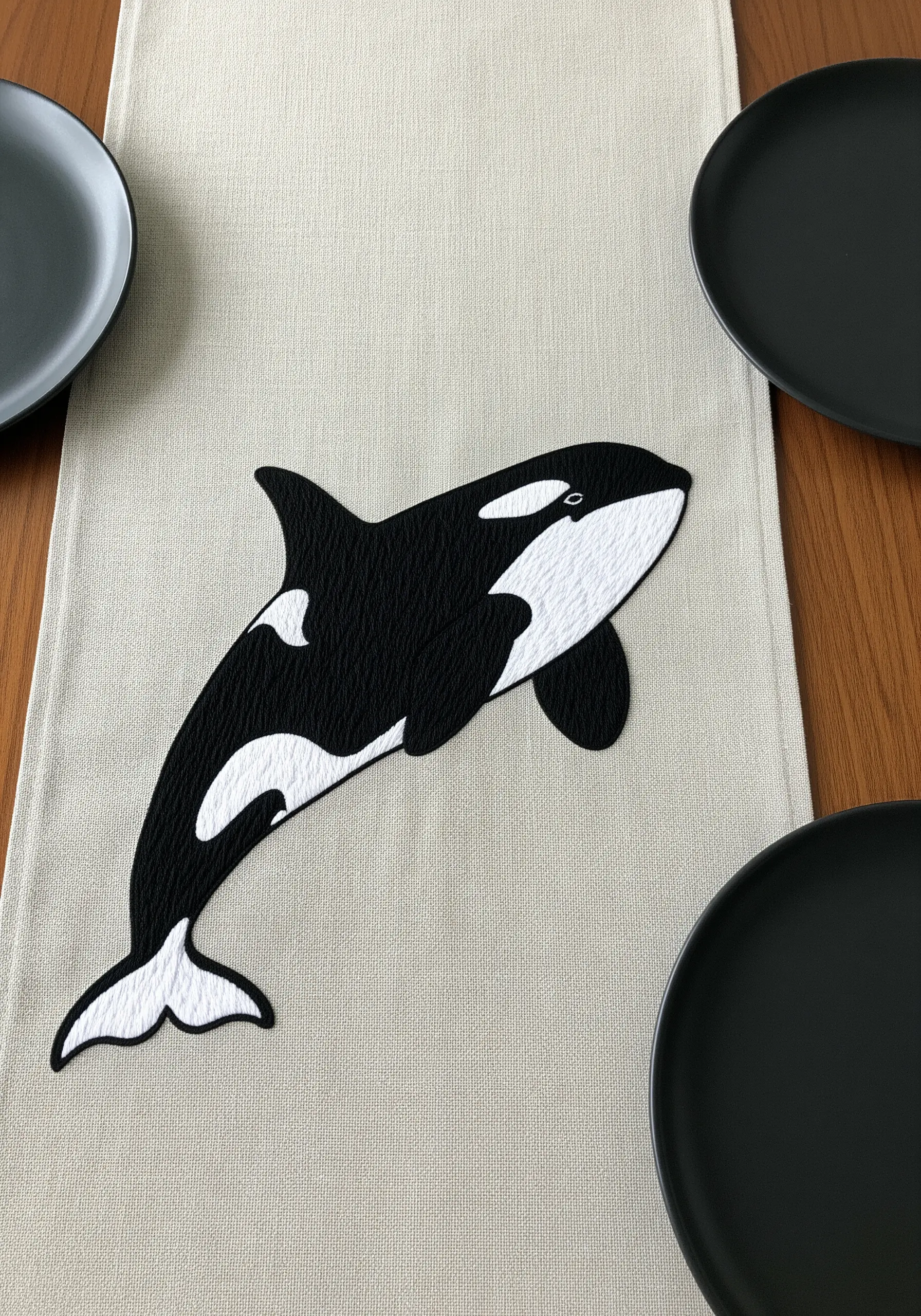
For a perfectly crisp, graphic design like an orca, consider using appliqué alongside your embroidery.
Cut the black and white shapes from felt or a non-fraying cotton fabric, then secure them to your runner with an adhesive stabilizer.
Finally, outline the edges with a tight, clean satin stitch border. This method guarantees perfectly smooth color fields and incredibly sharp edges.
It’s a fantastic technique for large motifs where filling the entire area with satin stitch would be too time-consuming or risk puckering.
17. Suggest 3D Form with Padded Stitches
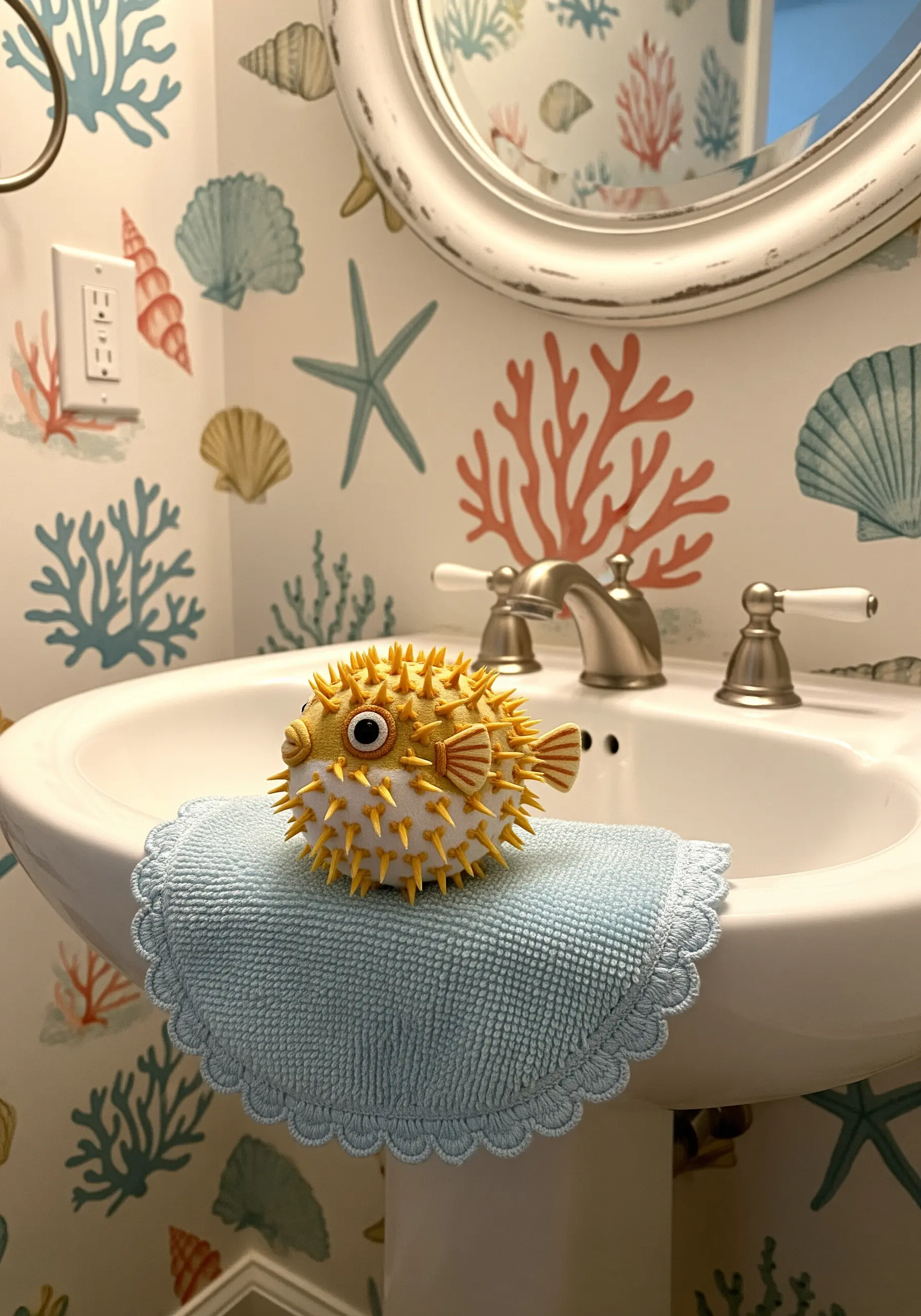
While this pufferfish is a 3D object, you can recreate its charmingly round shape in 2D embroidery using padded satin stitch.
First, fill the area you want to raise with a base of small, perpendicular straight stitches or a piece of felt.
Then, cover this padding with your final satin stitches; the underlying bulk will create a raised, dimensional effect.
For the spines, use detached chain stitches pulled taut or add tiny spike beads to achieve a prickly, three-dimensional texture.
18. Create Depth by Layering Your Elements
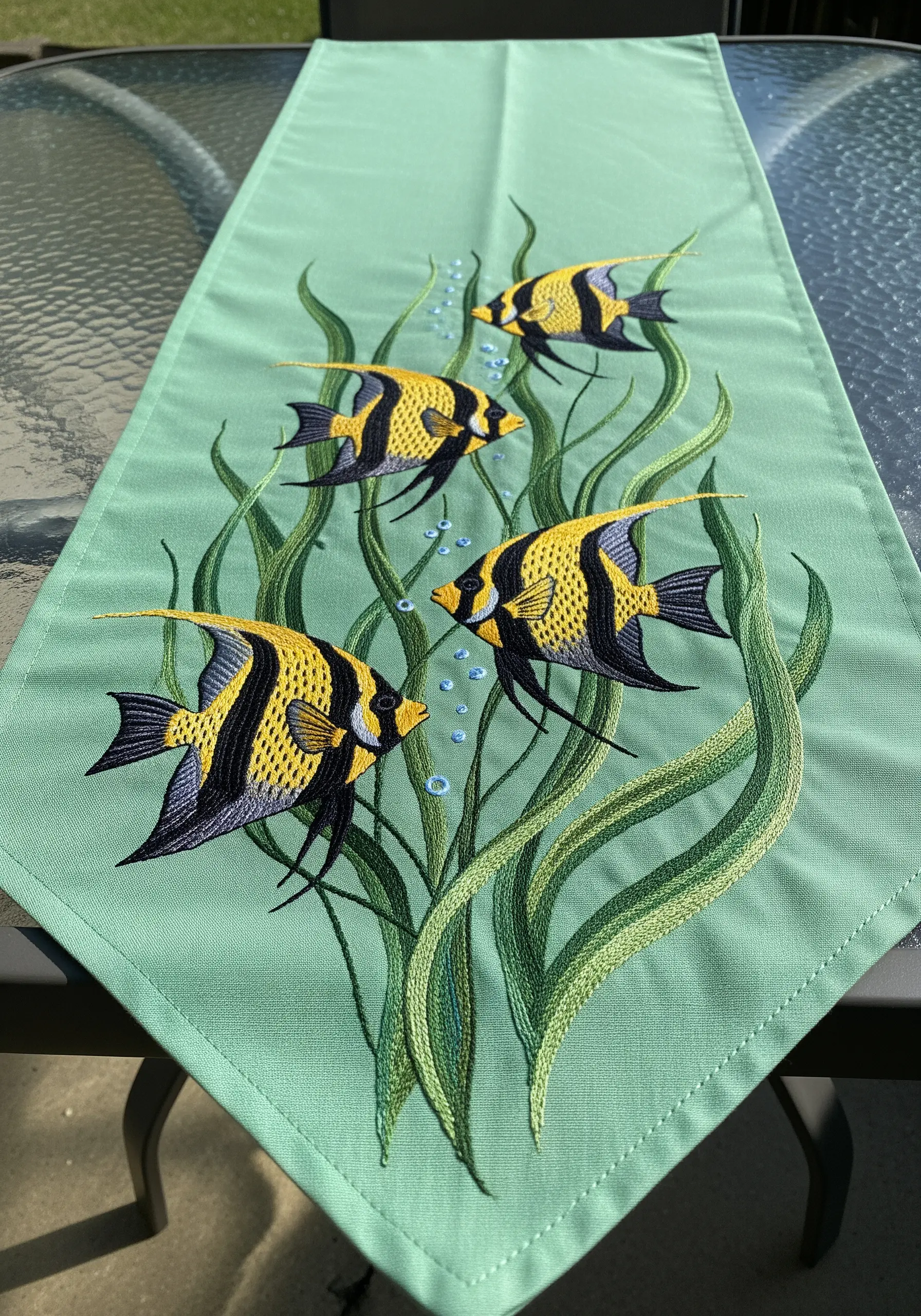
To build a convincing underwater scene, think in layers, just as a painter would.
Embroider the elements in the background, like the seaweed, first. Use varying shades of green and long, flowing fishbone or stem stitches.
Next, stitch the fish on top, allowing their fins to slightly overlap the background foliage. This simple layering trick immediately creates a sense of depth.
Add a few blue French knots or beads as bubbles, placing them so they appear to rise from the fish, to complete the scene.
19. Achieve Effortless Blending with Variegated Thread
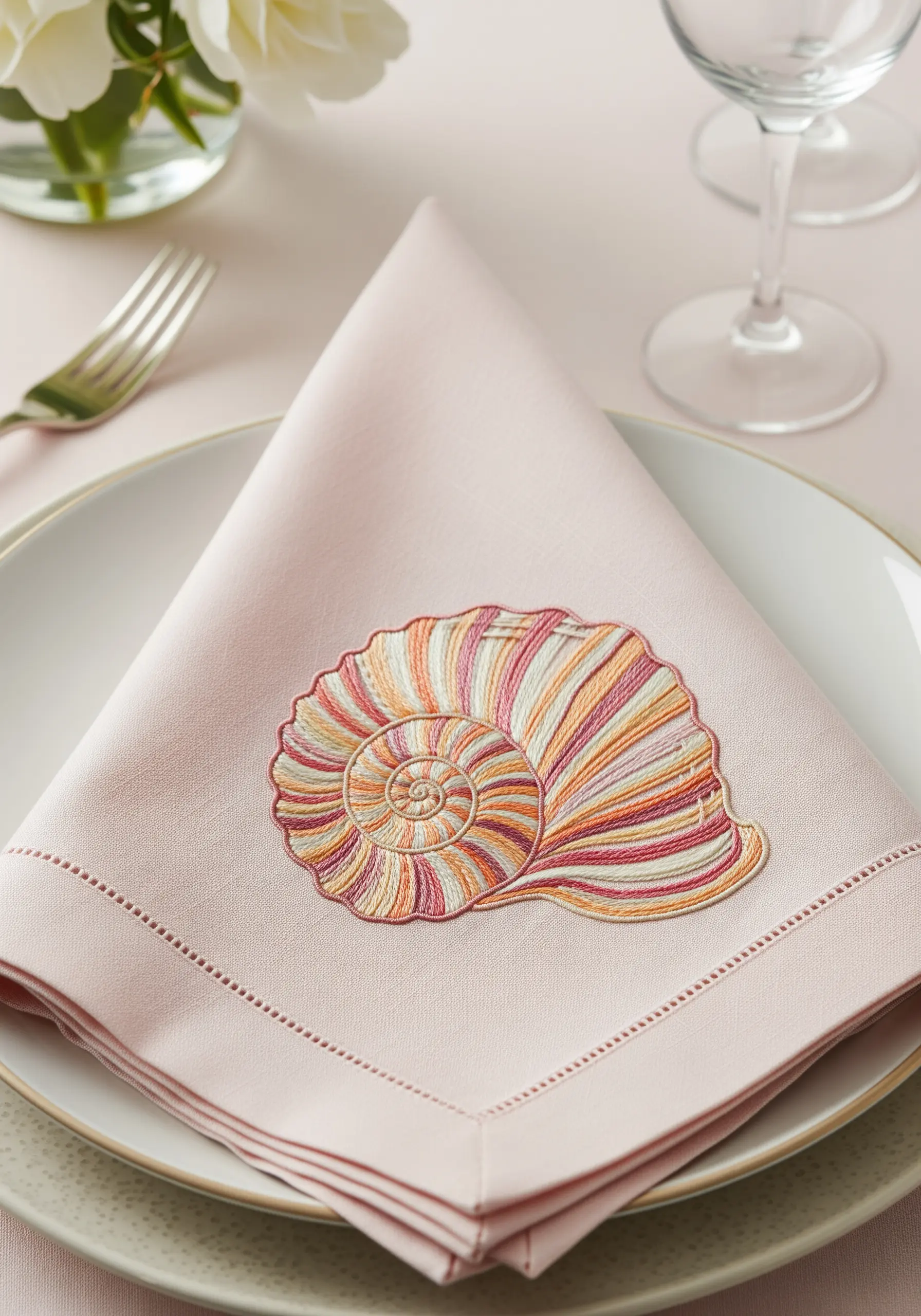
For a multi-tonal effect without constantly changing your floss, use a single variegated thread.
As you work the satin stitches across this seashell, the thread’s color will naturally shift, creating beautiful, organic stripes and gradients.
To maximize the effect, make sure your stitches are laid parallel to each other so the color changes flow smoothly.
This technique adds complexity and visual interest to even the simplest motif, making it an elegant choice for a single napkin embellishment.
20. Maximize Drama with Light-on-Dark Contrast
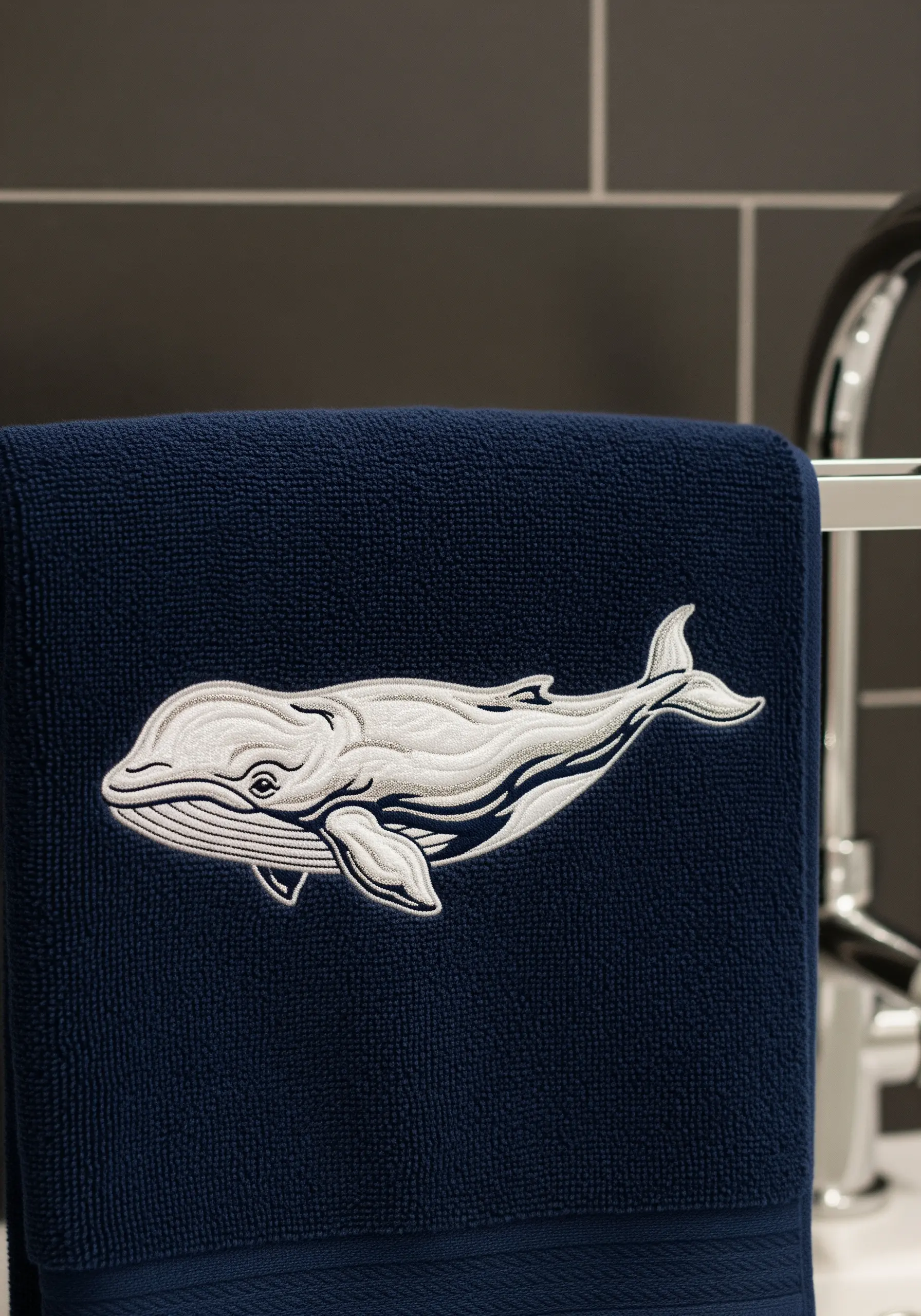
Create a bold, illustrative statement by stitching with a single light-colored thread on a dark, plush fabric.
On a navy towel, a design in white or silver thread appears to glow, giving it a modern, graphic quality.
Because every stitch is highly visible, precision is key. Use a stabilizing backing to prevent the towel’s pile from distorting your stitches.
A simple split stitch or stem stitch provides a clean, strong line that stands up to the fabric’s texture.
21. Add Playful Energy with Contrasting Textures
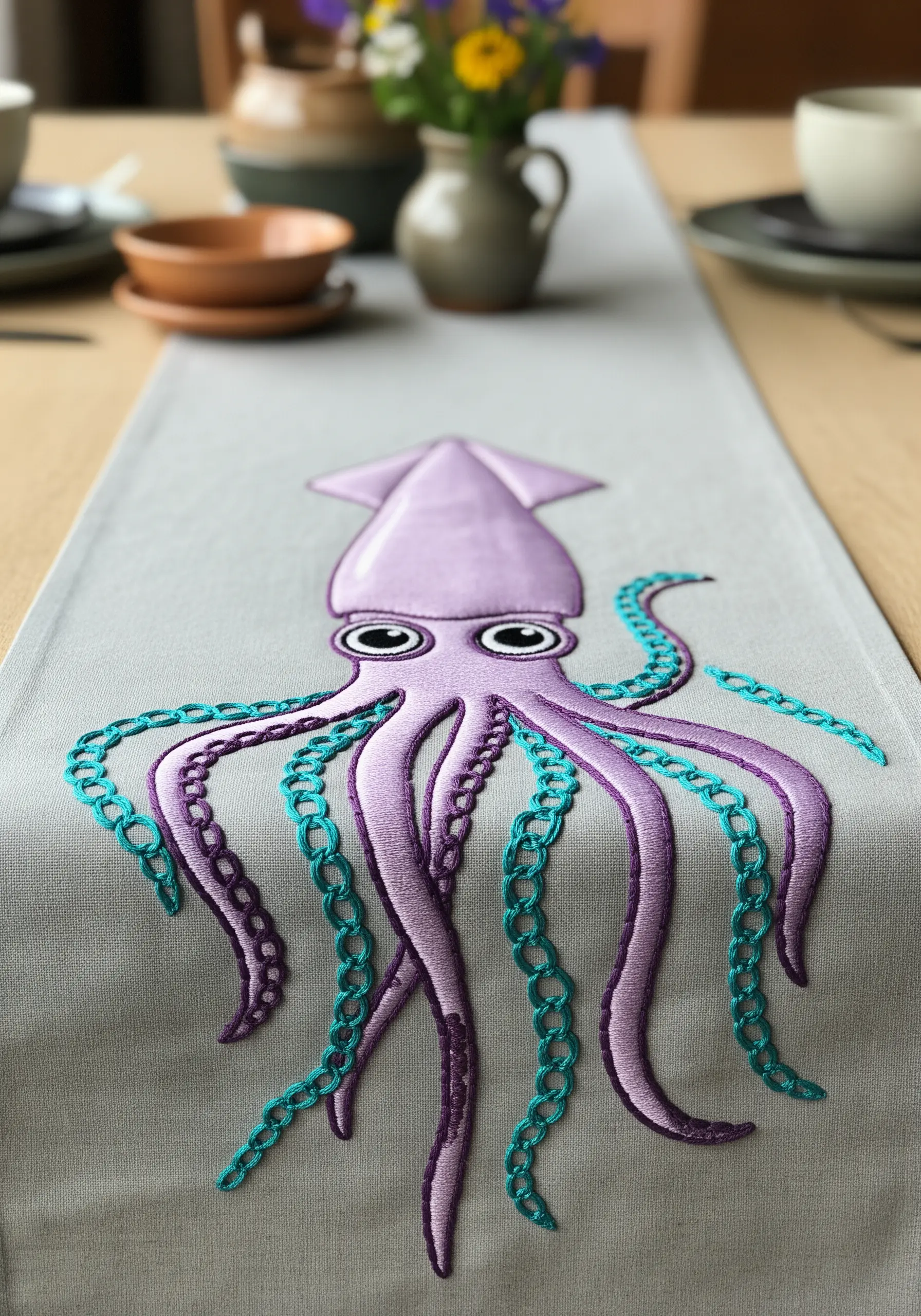
Inject a dose of fun into your design by combining different stitch types and unexpected colors.
Here, the squid’s body is filled with a smooth, solid satin stitch in a soft purple, creating a simple base form.
The tentacles, however, are rendered in a textured, open chain stitch using a vibrant turquoise thread.
This surprising contrast in both texture and color gives the piece a whimsical, lively personality that is perfect for casual table settings.
22. Harness the Power of Minimalist Line Art
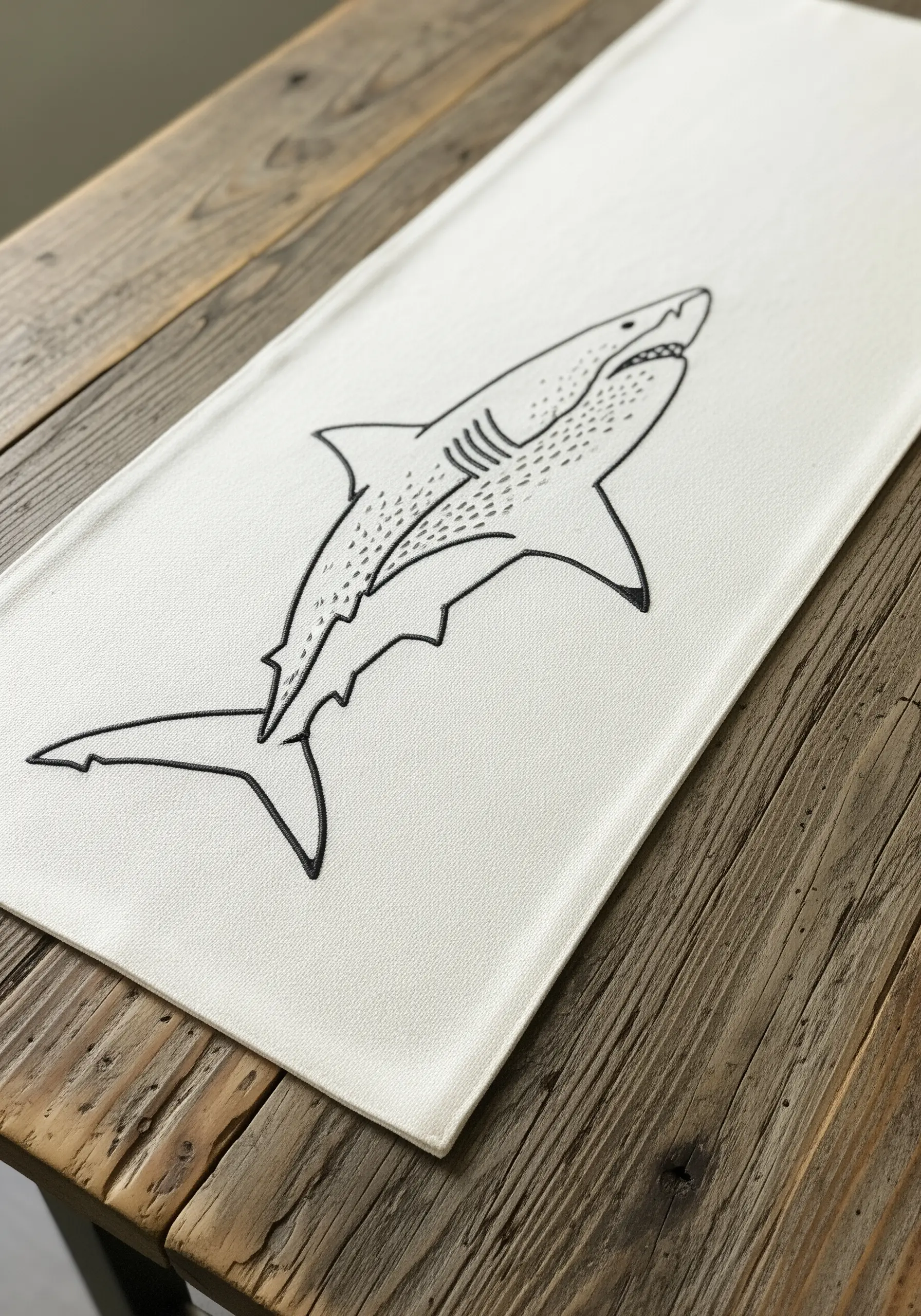
You don’t need dense fill stitches to make a powerful statement. A well-executed outline can be just as impactful.
Trace a dynamic shark motif and stitch it using only a black backstitch or stem stitch for a clean, modern aesthetic.
Use sparse seed stitches or tiny straight stitches to suggest shading and texture on the body, adding detail without sacrificing the design’s minimalist integrity.
This approach is quick to execute and looks incredibly chic on simple linen or cotton canvas. It’s a great choice for minimal line art animal designs.
23. Create Luster with Metallic and Silk Threads
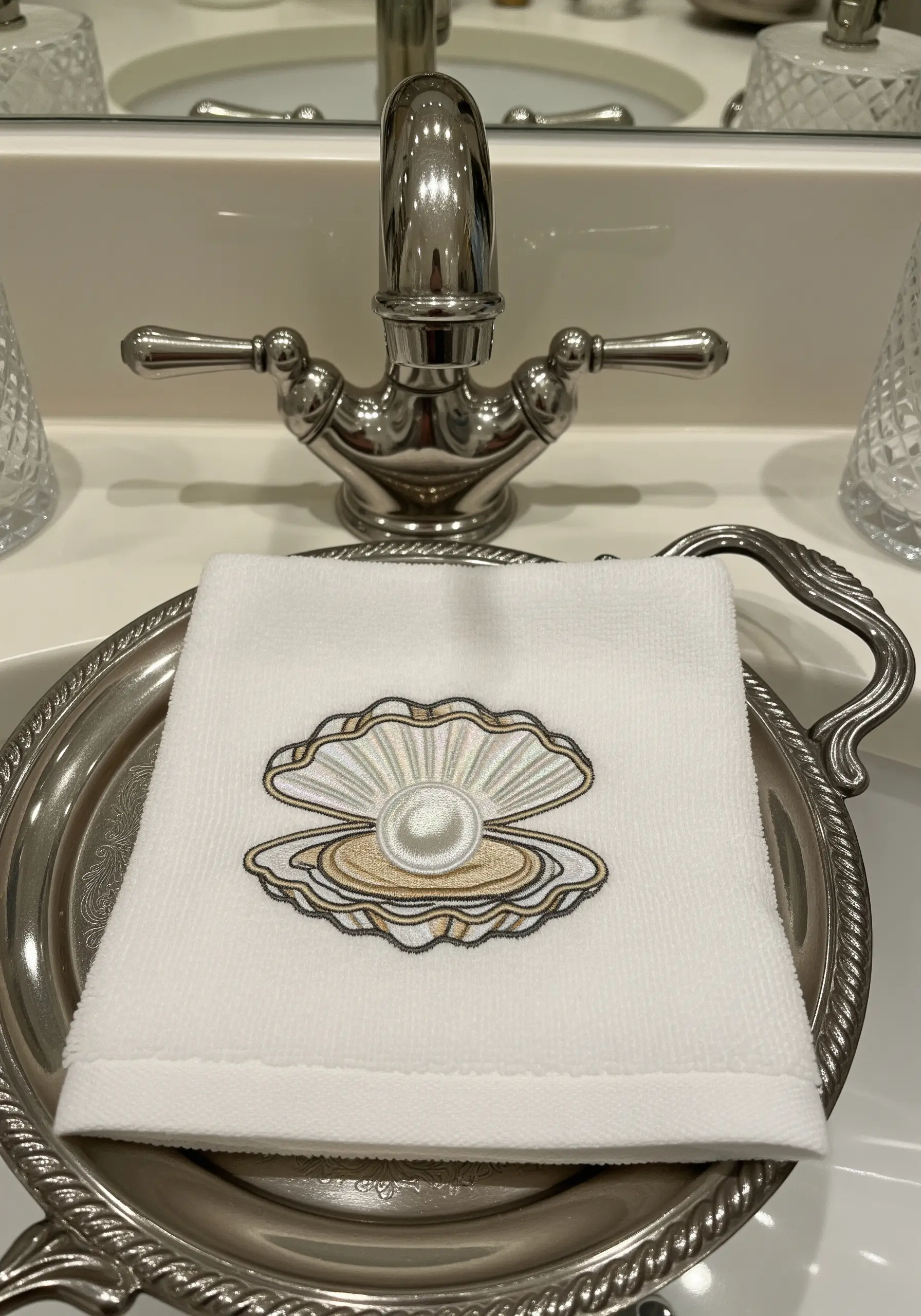
To make an element like a pearl truly shine, choose your thread wisely. A silk or satin floss will offer a natural luster, while a metallic thread will provide sparkle.
Use a padded satin stitch to give the pearl a raised, spherical shape. The light will catch the domed surface, enhancing its sheen.
For the surrounding shell, use a mix of matte cottons in neutral tones to create contrast, making the lustrous pearl the undeniable focal point.
24. Build a Pattern with Interacting Figures
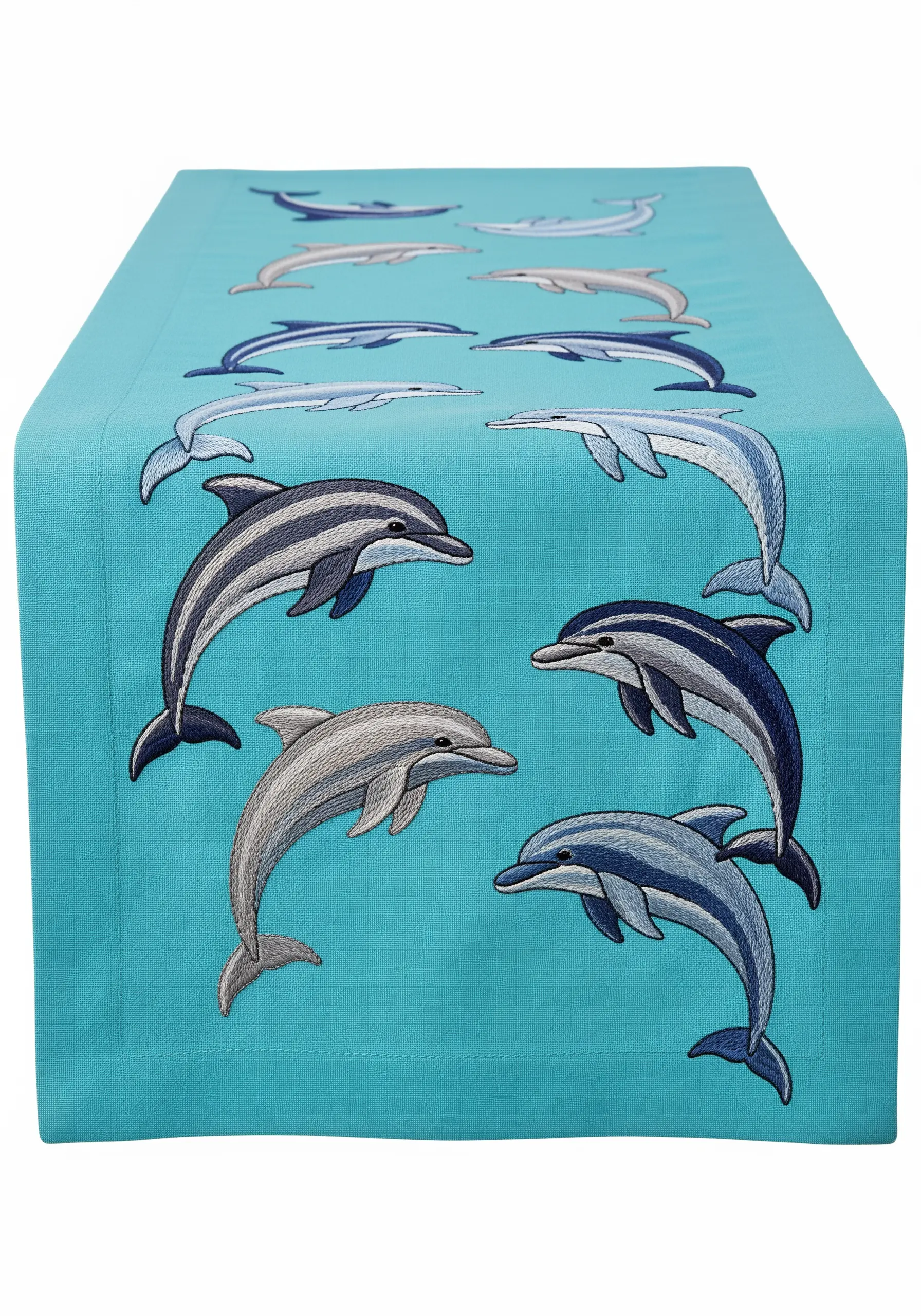
Design a lively table runner by arranging your motifs so they appear to interact with one another.
By placing these dolphins in pairs and circular groups, you create a dynamic scene full of energy and movement.
Alternate between two or three color variations for the dolphins to add visual interest and break up the repetition.
This thoughtful composition transforms a simple repeating pattern into a cohesive, narrative tablescape.
25. Experiment with Unconventional Color Palettes
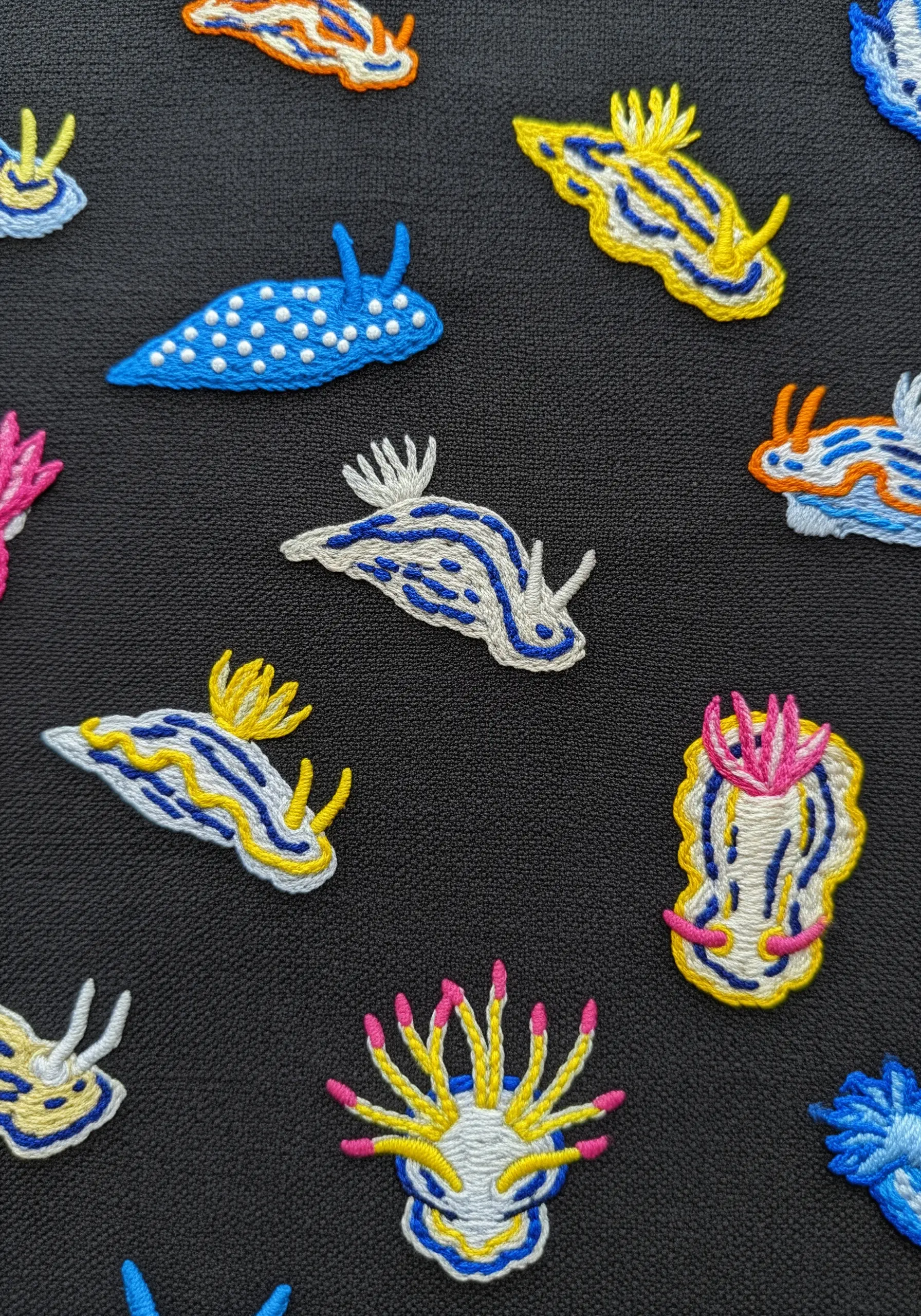
Sea creatures like nudibranchs offer the perfect excuse to break out your most vibrant and unusual thread colors.
Don’t be afraid to combine electric blues, hot pinks, and sunny yellows in a single, small motif.
Use a dark fabric, like black or navy, as your canvas. This will make the bright colors pop with an almost neon intensity.
Combine small satin stitches for the body with tiny French knots and straight stitches for the intricate patterns and details.
26. Convey Texture on Rustic Fabrics
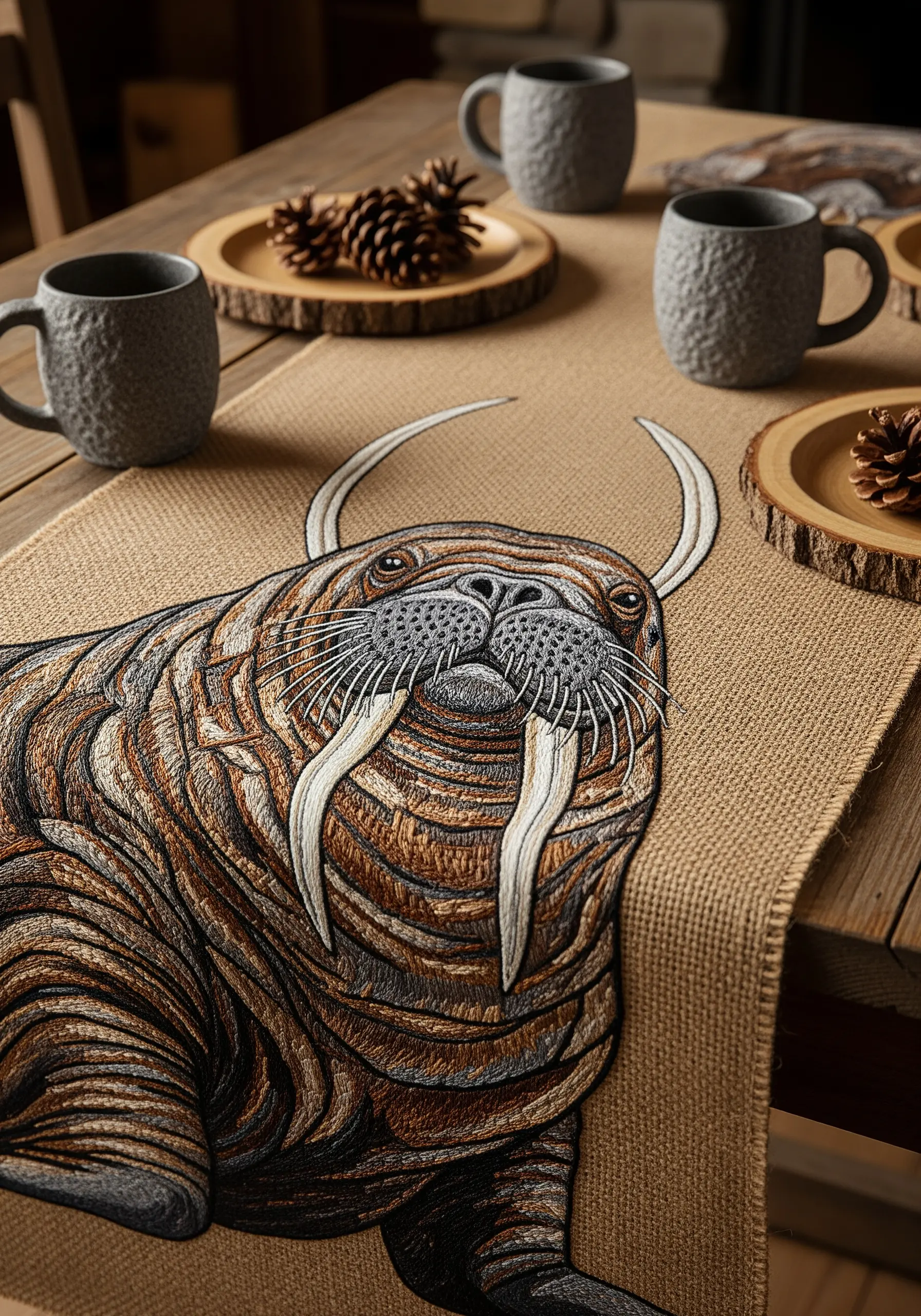
Pair a highly detailed, textural subject like a walrus with a rustic fabric like burlap or heavy linen for a cohesive, organic feel.
Use a complex blend of long-and-short stitches in various earth tones to capture the wrinkled, weathered skin.
For fine details like whiskers, use single, long straight stitches in a slightly thicker thread to make them stand out.
The natural texture of the fabric complements the embroidered texture, resulting in a rich, harmonious piece perfect for a rustic table setting.
27. Create Patterns with Perfectly Spaced Knots
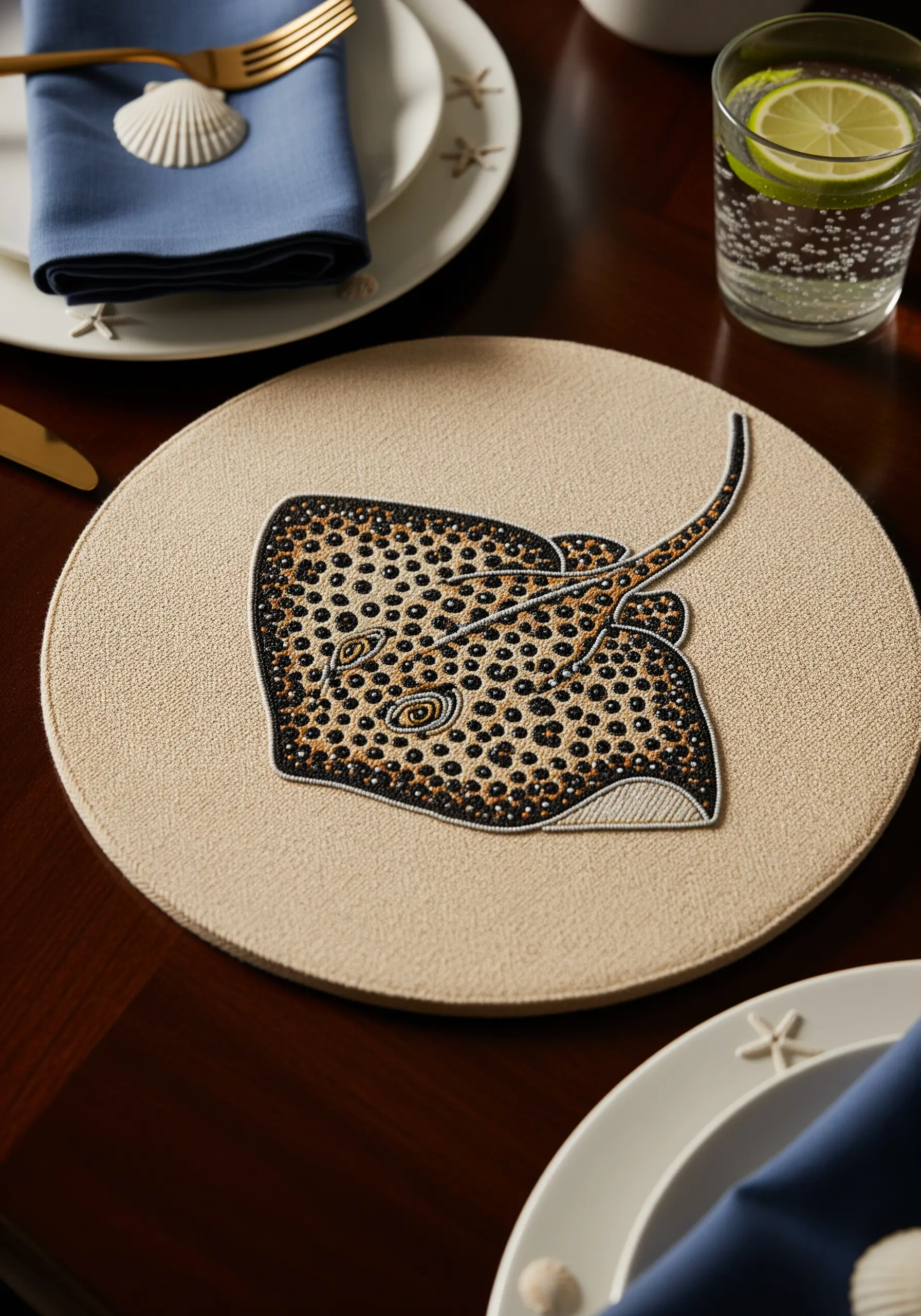
For animals with spotted or textured skin, like a stingray, French knots are an ideal choice for creating pattern and dimension.
Fill the body of the animal with evenly spaced French knots, using one or two wraps around the needle for a consistent size.
A mix of black and gold knots adds a touch of glamour and depth to the pattern.
Finish with a clean satin stitch or backstitch outline to contain the knotted texture and give the motif a sharp, defined edge.
28. Capture the Shoreline with Abstract Textures
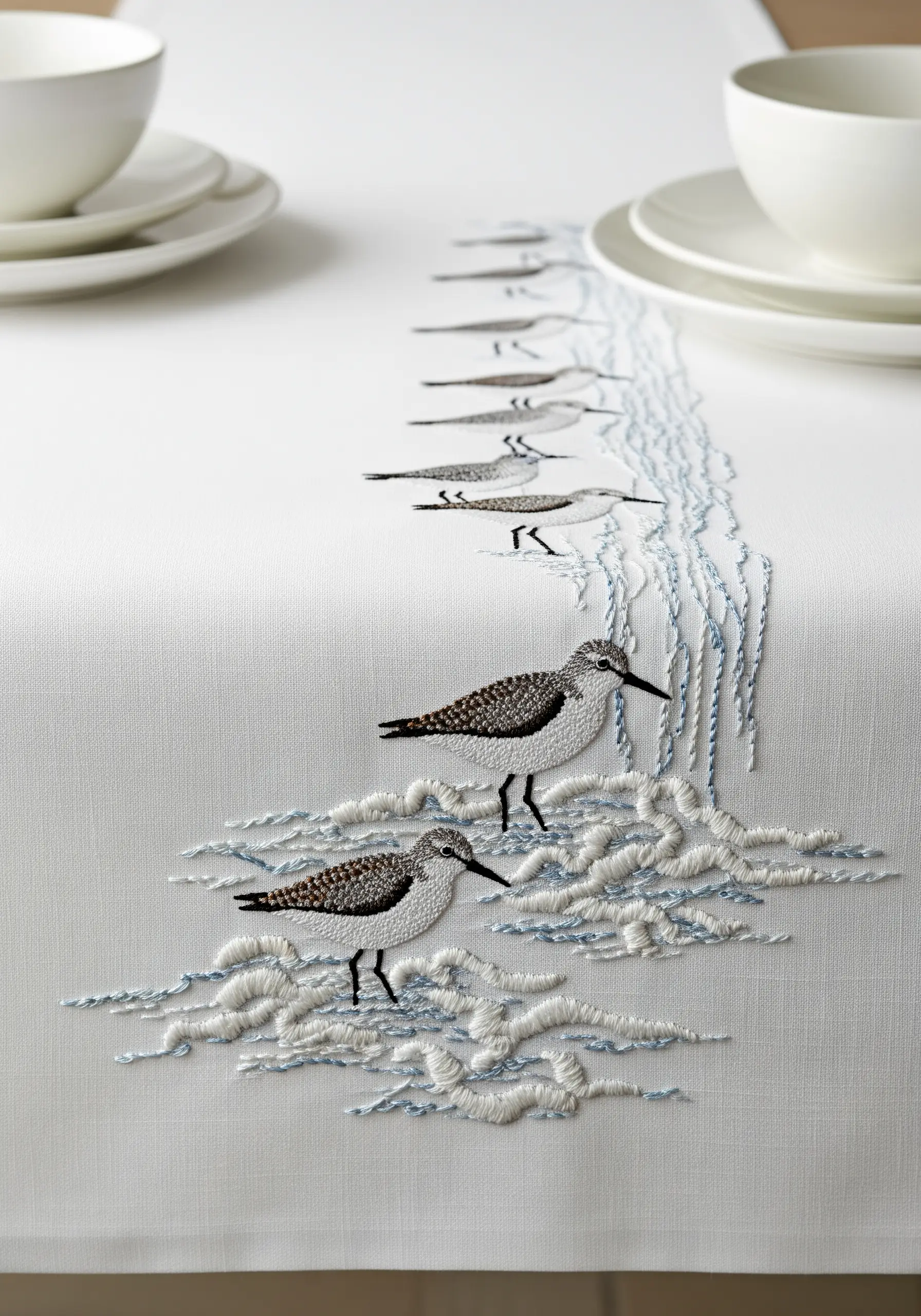
Evoke the feeling of the shore without literally stitching every grain of sand or drop of water.
Use textural, almost sculptural stitches like piled chain stitch, turkey work, or couched thick yarns to represent the chaotic energy of seafoam.
In contrast, stitch the sandpipers with small, neat seed stitches to give them a solid, defined form against the abstract waves.
Leaving some threads loose and trailing at the edge of the water adds an artistic, windswept quality to the entire composition.