A simple pillow cover is a blank canvas, waiting for a touch of intention. You don’t need complex patterns or dozens of colors to create something truly elegant. Often, the most beautiful results come from a single, well-chosen stitch, executed with care.
Think of each stitch not just as a way to make a mark, but as a way to add texture, catch the light, or create a line with personality. The ideas that follow are designed to shift your perspective—to help you see the power in a perfectly smooth satin stitch, a rhythmic row of running stitches, or the sculptural line of a couched cord.
Let these techniques inspire you to pick up a needle and transform a simple piece of fabric into a quiet statement of your own artistry. This is your chance to create something that feels both personal and polished.
1. The Sculptural Power of a Couched Line

Create a bold, graphic border using the couching technique instead of a simple backstitch.
Lay down a thicker cord, like a pearl cotton or fine yarn, and tack it in place with small, perpendicular stitches using a single strand of matching or contrasting floss.
This method adds a raised, three-dimensional line that provides architectural definition and a satisfying, tactile finish.
The contrast between the thick, smooth cord and the delicate tacking stitches is what creates the polished effect.
2. Fishbone Stitch for Organic Realism

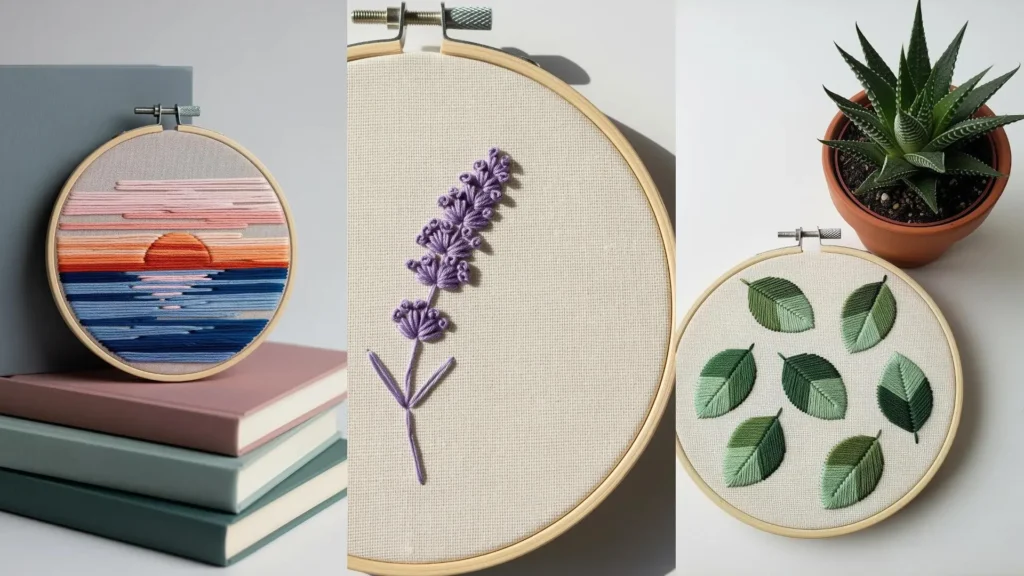
To give leaves a natural, realistic texture, use the fishbone stitch.
The stitch creates a central spine and angled sides that perfectly mimic the veins and structure of a fern or leaf.
Work with just two or three strands of floss to maintain delicate detail, allowing the slight overlap of the stitches to create subtle, natural shading without any complex blending.
This stitch turns a simple botanical outline into a dynamic, textured element.
3. The Woven Grid for Tactile Dimension

Build a modern, textured focal point with the woven grid stitch, also known as a woven cross stitch.
This highly dimensional stitch works by creating a foundation of straight stitches and then weaving your thread through them to form a raised, knot-like square.
Use a full six strands of embroidery floss or even a pearl cotton to maximize the sculptural effect.
Arranging these stitches in a neat grid transforms them from individual knots into a sophisticated, touchable pattern.
4. Radiant Lines with Metallic Thread

Turn simple straight stitches into a burst of light by using a high-quality metallic thread.
Create a dynamic sunburst by varying the length of each stitch radiating from a central point.
To prevent the metallic floss from fraying or tangling, work with shorter lengths—no more than 12 inches at a time—and use a thread conditioner.
The elegance here comes from the interplay of light on the thread and the intentional use of negative space, which gives the design room to breathe and shine.
This is a perfect example of minimal gold accent embroidery.
5. A Modern Cluster of Lazy Daisy Flowers

Reimagine floral embroidery with stylized lazy daisy stitches, also called detached chain stitches.
Instead of a traditional, sprawling design, group them in tight clusters of three or five for a contemporary, graphic feel.
Create the flower centers with French knots, using a contrasting color and slightly more strands of floss (three or four) to make them pop with dimension.
This simple combination creates a playful yet refined botanical accent.
6. Tone-on-Tone Texture for Subtle Luxury

Explore elegance without color by creating a design that focuses purely on texture.
Embroider a contained shape, like a square, using a variety of textural stitches—French knots, bullion knots, seed stitch, and chain stitch—all in a thread color that matches your pillow fabric.
This tone-on-tone approach creates a rich, tactile panel where the interest comes from how light and shadow play across the different stitch surfaces.
This demonstrates how powerful neutral thread texture combinations can be for creating a boutique-level look.
7. A Modern Border with Grid-Based Stitches

Elevate a simple pillow edge with a clean, geometric border.
Using the natural grid of a linen or even-weave cotton fabric, create a repeating pattern with basic straight and cross stitches.
The key to a polished look is absolute precision in your spacing and stitch length, so let the fabric’s weave be your guide.
This technique transforms a functional border into an intentional, graphic design element.
8. Satin Stitch for Luminous, Solid Shapes

To achieve a smooth, light-reflecting surface, the satin stitch is unparalleled.
For impeccably clean edges, first outline your shape with a split stitch. This creates a slightly raised boundary that you can tuck your satin stitches under.
Lay your stitches perfectly parallel and close enough to cover the fabric completely, ensuring your thread tension is even to avoid puckering.
The high contrast between a light thread and dark fabric makes the sheen of the floss the star of the design.
9. Celestial Scenes with Padded Satin Stitch

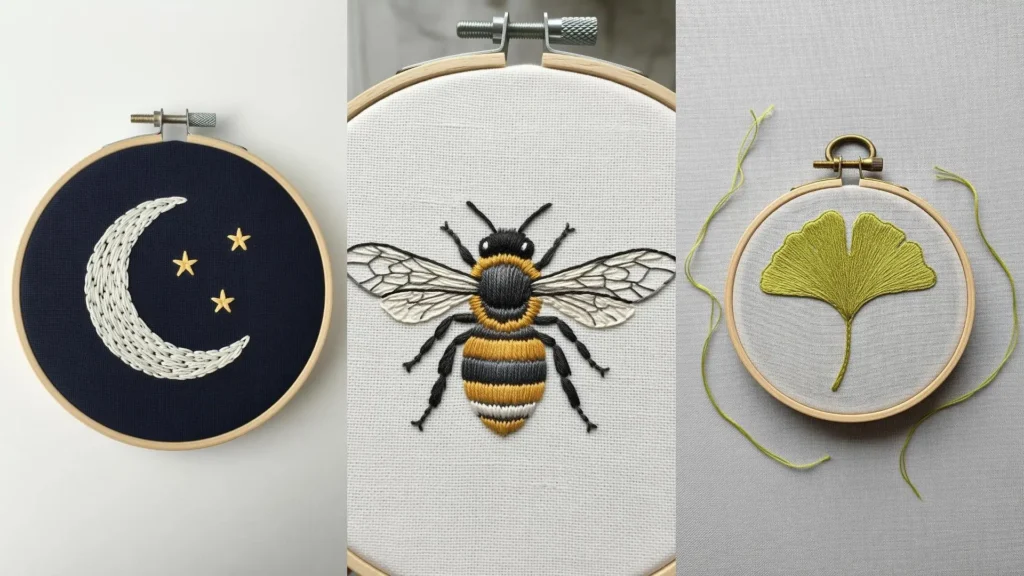
Give a simple motif, like a crescent moon, a subtle 3D effect with padded satin stitch.
Before you begin your top layer, fill the shape with a foundation of small seed stitches. Then, cover this padding with your final satin stitches, working in the opposite direction.
This lifts the design slightly from the fabric, creating depth and a more luxurious finish.
Frame your central motif with delicate straight-stitch stars to complete your celestial scene. You can discover more moon and stars embroidery ideas for creating a peaceful aesthetic.
10. The Meditative Rhythm of Chain Stitch Circles

Use the chain stitch to create textured, rope-like lines that are perfect for modern, circular designs.
When stitched in concentric rings, the chain stitch creates a geometric, mandala-like effect that is both calming to stitch and to look at.
For perfectly smooth curves, keep your stitch length short and consistent. This allows the line to bend gracefully without creating harsh angles.
The repeating rhythm of the stitch adds a layer of texture that a simple backstitch cannot achieve.
11. Capturing Movement with Fly and Straight Stitches

Evoke a sense of lightness and motion with a delicate dandelion design.
Use single, long straight stitches for the seed stems radiating from the center.
At the end of each stem, add a small V-shaped fly stitch to create the fluffy seed heads.
Enhance the feeling of movement by scattering a few individual fly stitches as if they are blowing away in the wind. This design masterfully uses dandelion and wildgrass stitch projects to create a story on fabric.
12. Flowing Color with a Variegated Running Stitch

A simple running stitch can create a sophisticated design when you focus on color and rhythm.
Create gentle, flowing waves using parallel lines of running stitches.
By using several shades of one color—or a single variegated floss—you can achieve a subtle ombré effect that adds depth and movement.
Maintain a consistent stitch length and spacing for a clean, polished pattern that feels intentional and modern.
13. The Raised Monogram for a Classic Finish

Give a personalized monogram a luxurious, three-dimensional quality using the padded satin stitch technique.
First, outline your letter with a stable stitch like the split stitch. Next, fill the shape with a dense layer of small seed stitches to create a padded base.
Finally, cover this foundation with smooth, uniform satin stitches. This raises the letter from the surface, creating a professional, embossed effect that feels timeless and elegant.
14. Architectural Detail with the Ladder Stitch

For a bold, graphic line that incorporates negative space, choose the ladder stitch.
This stitch creates a series of parallel bars, giving it a clean, structural appearance perfect for modern designs.
It’s an excellent choice for creating a central seam detail or a strong border, adding a touch of architectural interest that is both striking and simple to execute.
It’s a beautiful way to create line art geometry-based stitches with high impact.
15. Delicate Constellations for a Personal Touch

Stitch a meaningful constellation using a combination of simple, delicate stitches.
Use a fine backstitch to draw the connecting lines, and create the stars themselves with either a small, crisp star stitch or a tiny French knot.
Choosing a thread with a subtle sheen or a metallic filament against a muted fabric will enhance the celestial magic.
This is a wonderfully personal design that adds a quiet, thoughtful touch to any room.
16. The Stitch Sampler as a Modern Motif

Turn your practice stitches into a deliberate design element.
Arrange a small collection of your favorite textural stitches—like the woven wheel, stem stitch, French knots, and satin stitch—within a defined area.
By limiting yourself to a single color, you shift the focus to the unique textures and forms of each stitch.
This transforms a simple sampler into an abstract, modern motif that showcases your skill. It’s a great use for quick stitch inspirations.
17. The Flawless Curve of a Whipped Backstitch

When you need a perfectly smooth, uninterrupted line for curves or outlines, the whipped backstitch is your best choice.
First, create a standard line of backstitches. Then, take a second length of thread and, using a tapestry needle, weave it under and around each backstitch without piercing the fabric.
This action covers the small gaps inherent in a backstitch, resulting in a solid, cord-like line with a beautiful, subtle twist.
18. Rhythmic Patterns with Seed Stitch Chevrons

Use one of the simplest stitches—the straight or seed stitch—to build a sophisticated, modern pattern.
By arranging short, uniform stitches into repeating chevrons, you create a design that feels both organic and geometric.
The key to elegance is consistency in your stitch length and spacing. The clean, graphic result adds a touch of bohemian flair that feels effortlessly chic.
This approach is perfect for creating lovely, earthy embroidery projects.