The sky is never just a flat blue backdrop; it is a canvas of texture, light, and constant motion. When you translate this to embroidery, the mistake is often settling for a simple satin stitch fill, which leaves your landscape feeling static and two-dimensional.
To truly elevate your nature embroidery, you must think of your thread as a sculpting tool. Whether it is the wispy, fleeing tail of a cirrus cloud or the bruising purple weight of an approaching storm, the direction, weight, and layering of your stitches determine the atmosphere of the piece.
Below, you will find thirty specific techniques to rethink how you shade and structure the sky. From mixing fiber types for volume to utilizing negative space for luminosity, these ideas will help you stop merely coloring in the sky and start capturing the very air itself.
1. Layered gradients for seamless horizons
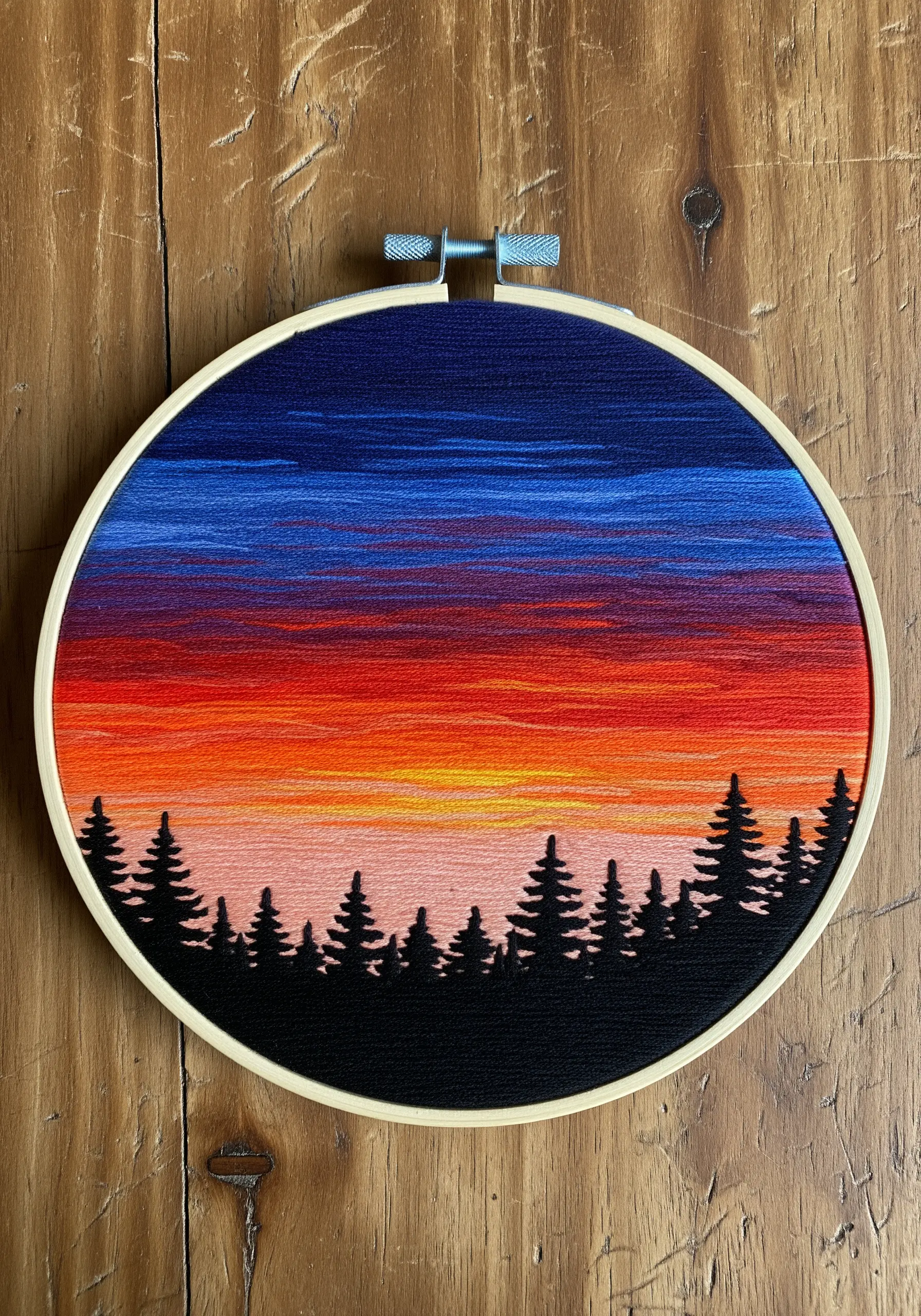
To capture the intensity of a setting sun, move beyond simple block shading and embrace layered horizontal satin stitches.
By varying the length of your stitches where colors meet, you create a jagged, organic transition that mimics the way light scatters through the atmosphere.
This technique allows you to create abstract thread-based gradient pieces that pinterest users can’t stop saving, turning a simple horizon into a vibrant focal point.
2. High-relief texture for cumulus clouds
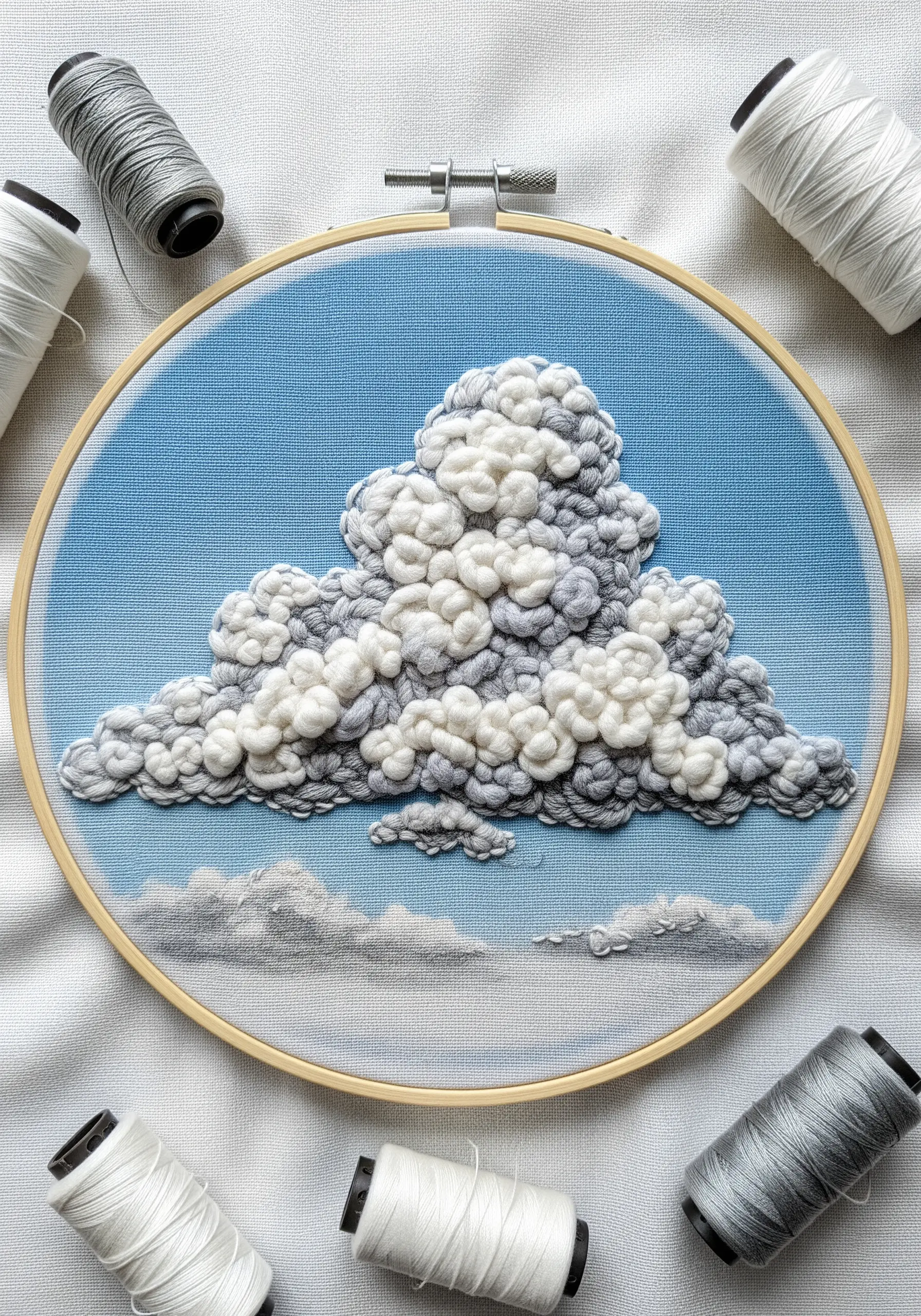
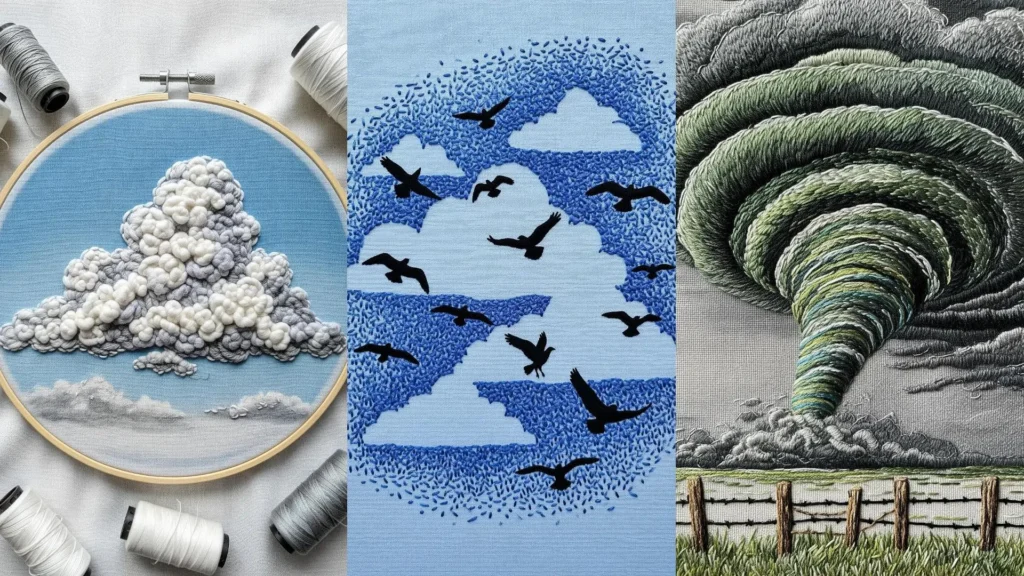
Clouds are rarely flat; they are voluminous masses of vapor, and your stitching should reflect that weight.
abandon standard flat stitches in favor of high-density French knots or a tight bullion loop technique to build physical height off the fabric.
This sculptural approach captures light and shadow naturally, giving your sky a tactile, billowy quality that demands to be touched.
3. Electrifying contrast for storm scenes
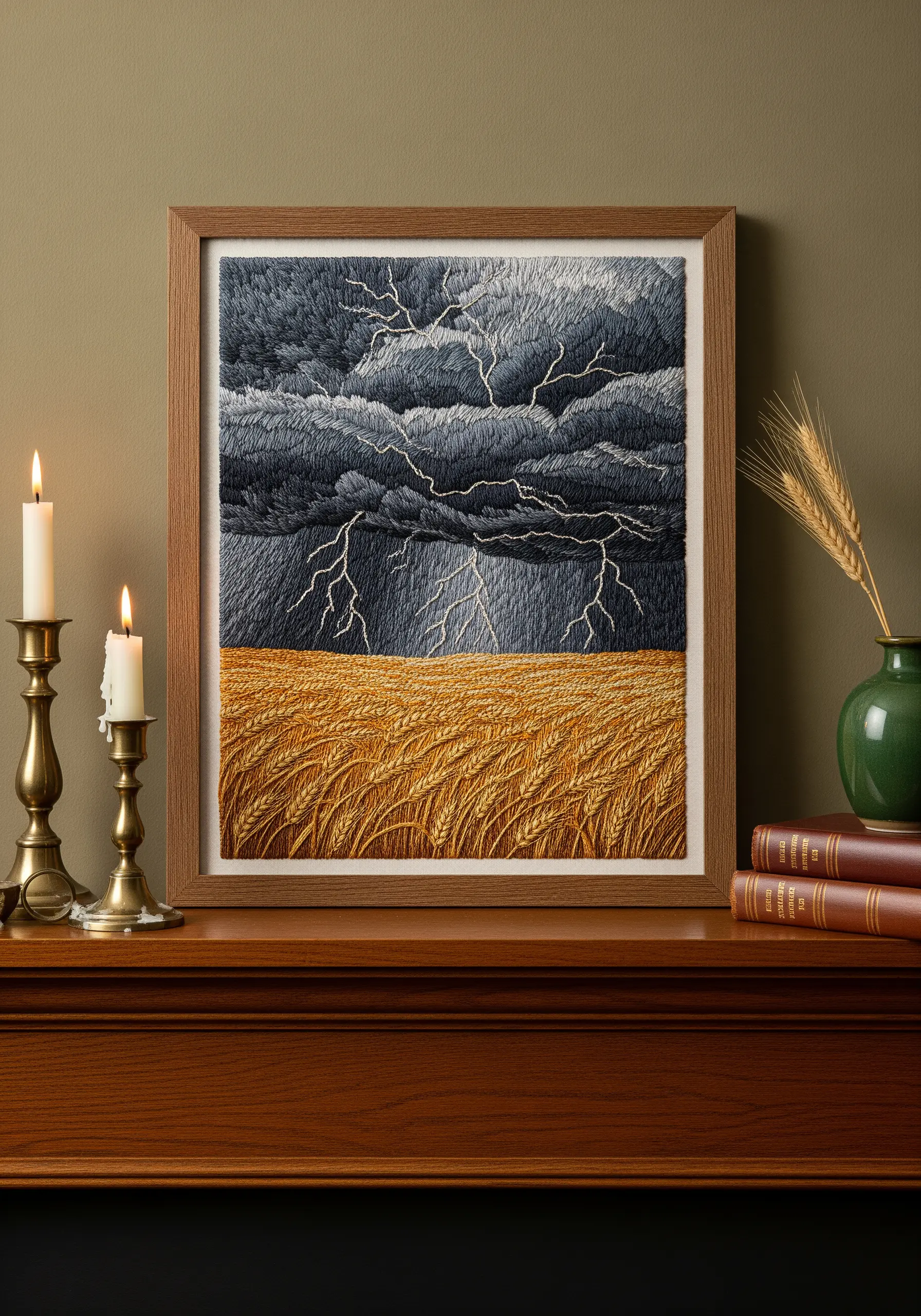
Capturing the energy of a thunderstorm requires a dramatic play between chaotic dark masses and sharp, blinding light.
Use a single strand of bright white silk or polished cotton for the lightning to ensure it cuts through the matte texture of the storm clouds.
For the heavy clouds, directional shading in deep greys creates the turbulence needed for nature inspired framed embroidery designs for calm spaces that still hold dynamic energy.
4. Atmospheric perspective with pastel drifts

When stitching a sunrise, the goal is softness rather than the harsh contrast of midday.
Blend pale yellows, soft creams, and lavenders using long-and-short stitch to create a watercolor effect that recedes gently behind your foreground subjects.
This subtle backdrop provides the perfect canvas for delicate floral details, adding depth without overwhelming the composition.
5. Appliqué lace for stylized night skies

Sometimes the best way to render a cloud isn’t with thread alone, but by layering translucent textiles.
Stitching fine lace or tulle onto a dark navy background creates instant ethereal clouds that feel light and airy.
This is one of those moon and stars embroidery ideas for peaceful bedtime vibes that relies on material contrast rather than complex shading.
6. Geometric shading for alpine clarity
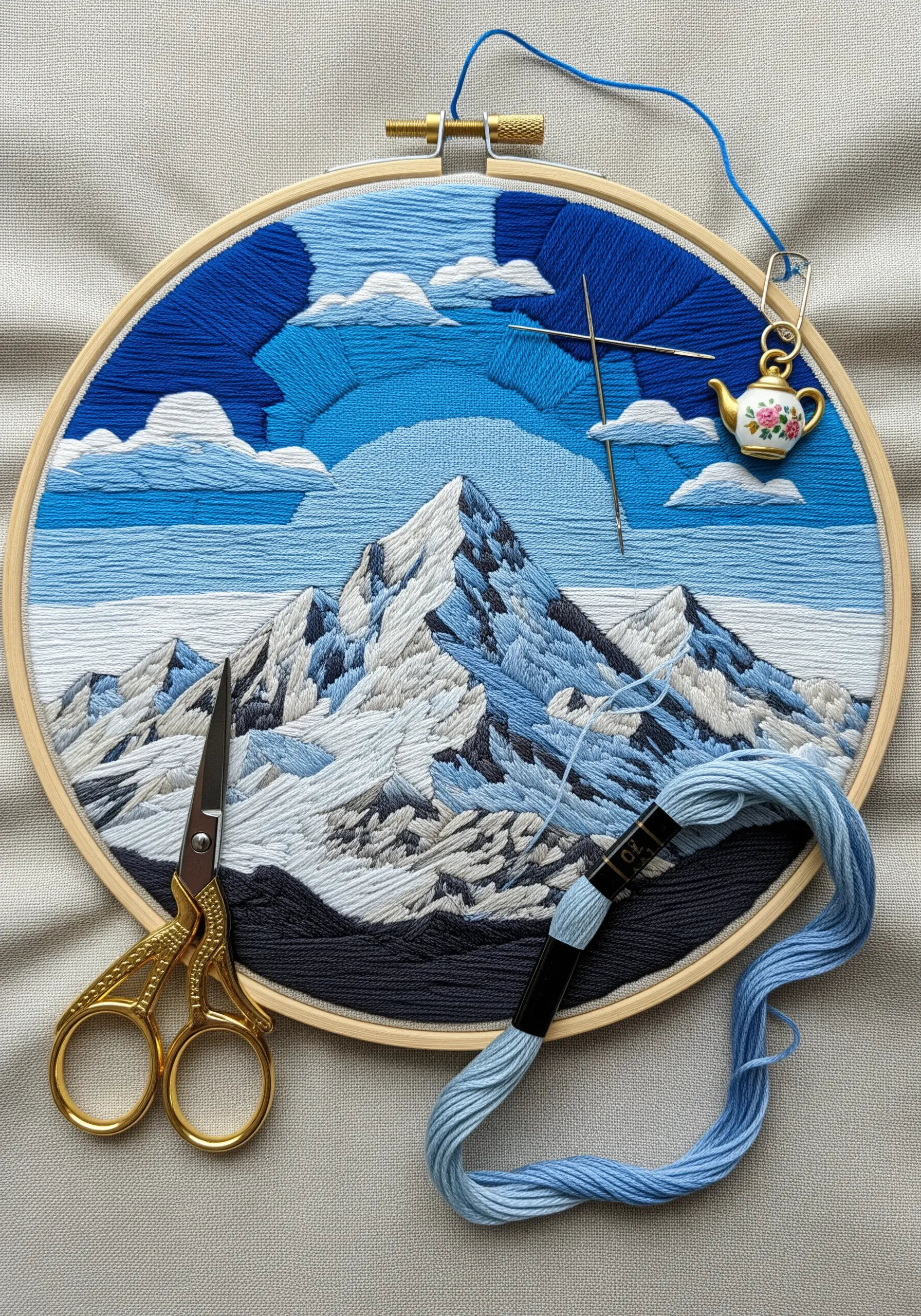
Mountain air is crisp, and your stitching can reflect this through sharp, geometric color blocking.
Instead of blending, use distinct bands of blue and white to define the hard edges of peaks and the distinct layers of the atmosphere.
This stylized approach works exceptionally well when you want to convey the cold, thin air of high altitudes.
7. Motion lines for windswept cirrus

To depict high-altitude wind, you need to stitch with velocity in mind.
Use long, sweeping stem stitches or split stitches that trail off into nothingness, mimicking the way wind tears clouds into wisps.
By leaving significant negative space between these lines, you allow the background fabric to suggest the vastness of the air itself.
8. Radial gradients for solar brilliance

The sun is a source of radiating energy, and your stitch direction should emanate outward from the horizon.
Use straight stitches that fan out from a central point, changing color temperature from warm pinks to cool teals as you move upward.
This technique creates a stunning embroidery mixed media wall hanging effect where the texture guides the eye exactly where you want it.
9. Watercolor backgrounds for airy lightness
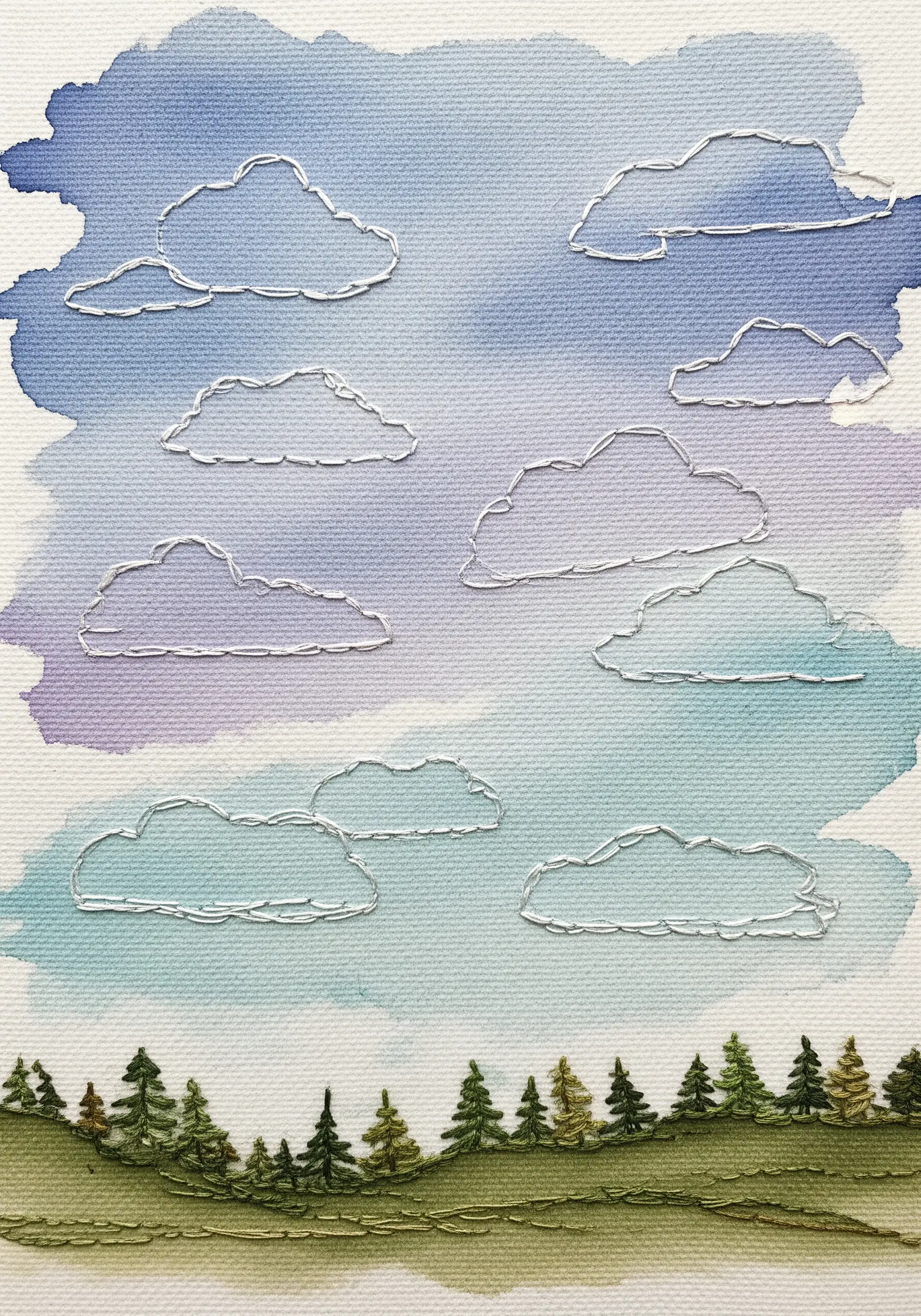
Thread creates texture, but paint creates atmosphere; combining them offers the best of both worlds.
Apply a wash of watercolor to your canvas before stitching to establish a mood, then use thread only to outline the cloud formations.
This mixed-media approach keeps the piece feeling breathable and prevents the sky from becoming too heavy or stiff.
10. Turbulence through chaotic directional stitching
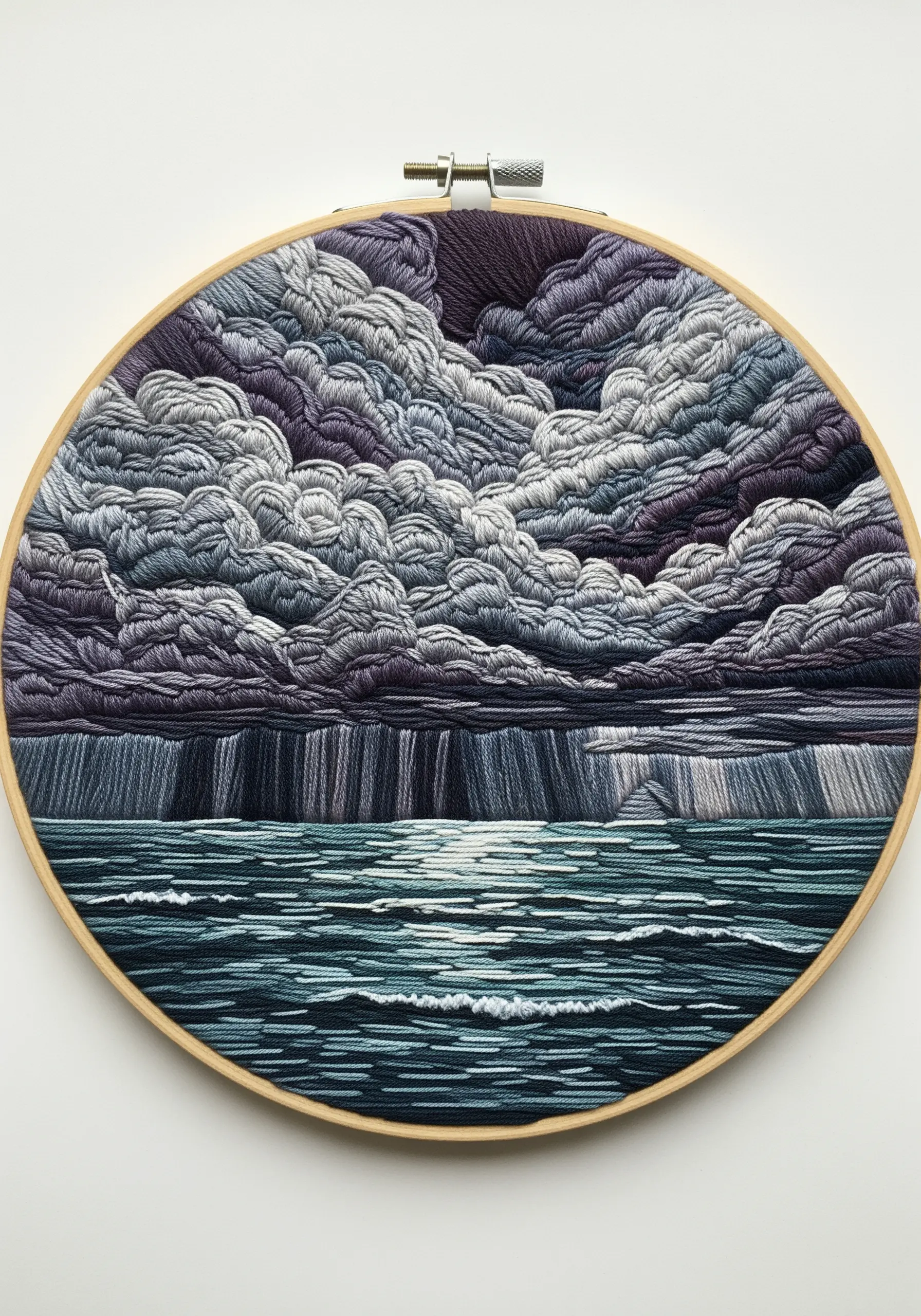
A storm at sea is chaotic, and your thread direction should mirror that turmoil.
Instead of smooth horizontal lines, swirl your stitches in colliding directions to mimic rolling thunderheads and crashing waves.
Using thick, wool-blend threads here adds a matte heaviness that reinforces the moody, oppressive feel of the storm.
11. Seed stitch for granular atmosphere
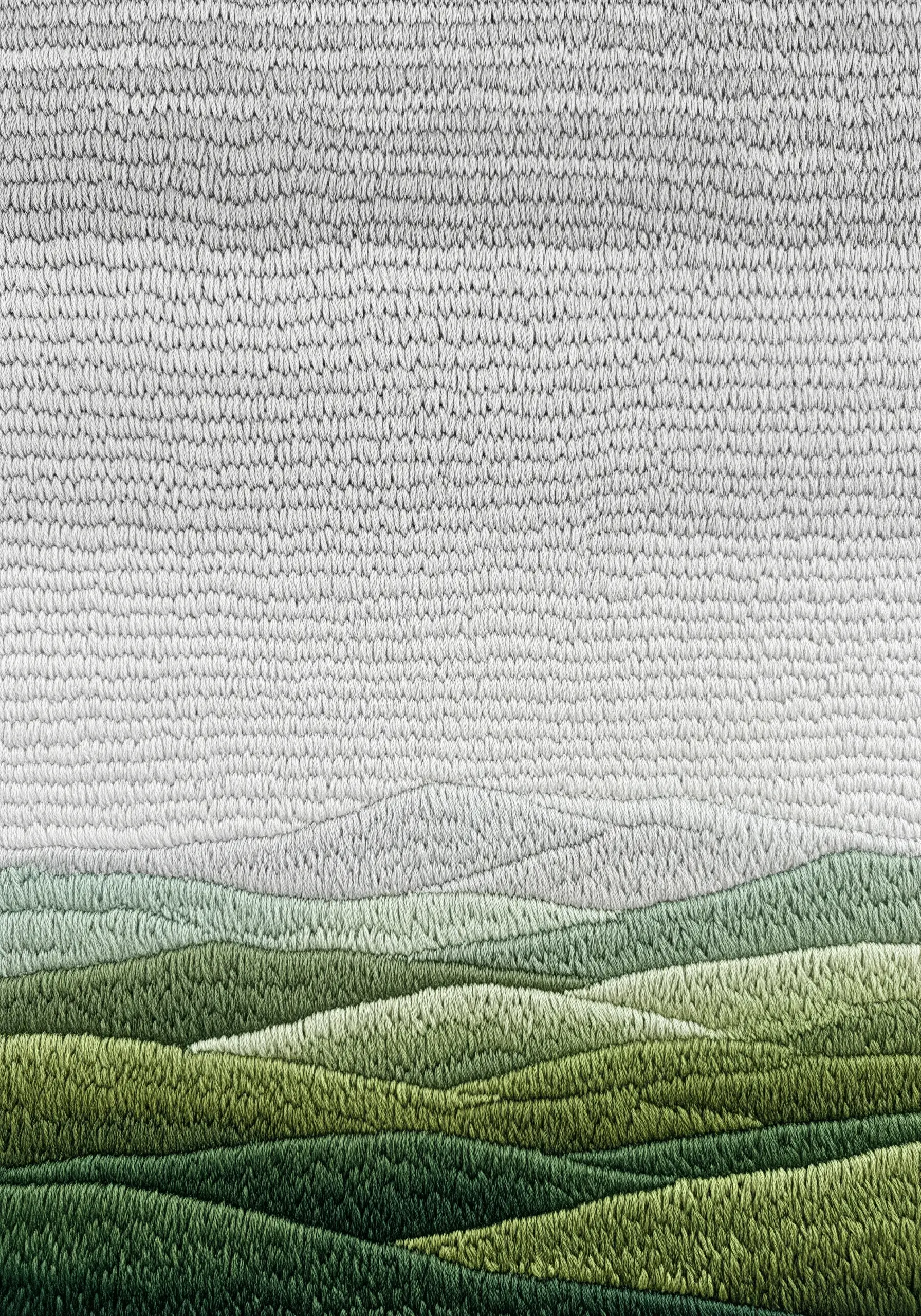
When you want a sky that feels textured but not heavy, the seed stitch is your most versatile tool.
By varying the density of these tiny, scattered stitches, you can create gradients that fade seamlessly into the fabric.
This pointillist technique is perfect for creating a hazy, overcast day where distinct cloud shapes are lost to the mist.
12. Massive volume with bullion knots
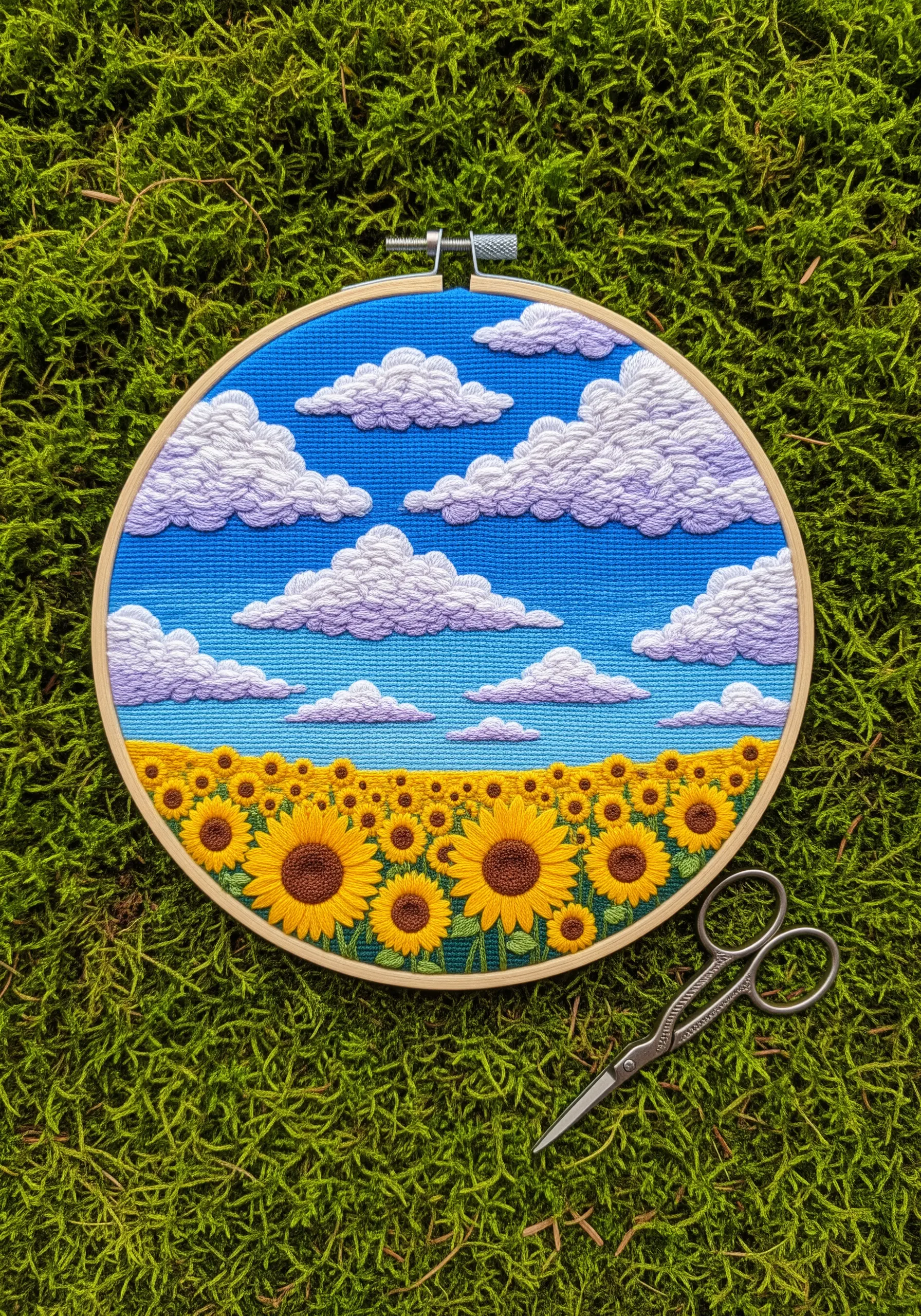
For clouds that look like giant cotton balls floating over a summer field, you need maximum projection.
Tightly packed bullion knots or a turkey work stitch that has been trimmed down can create a dense, rug-like texture.
This dramatic 3D effect pairs beautifully with nature inspired embroidery hoop art ideas to gift eco lovers, as it brings a tangible softness to the piece.
13. Defining clouds with negative space

Sometimes the most powerful way to stitch a cloud is not to stitch it at all.
Fill the sky around your cloud shapes with dense seed stitches or French knots in blue, leaving the white fabric bare to represent the clouds.
This uses negative space stitch ideas for striking contemporary canvas embroidery to create shapes that feel illuminated from within.
14. Sunset silhouettes against textured skies
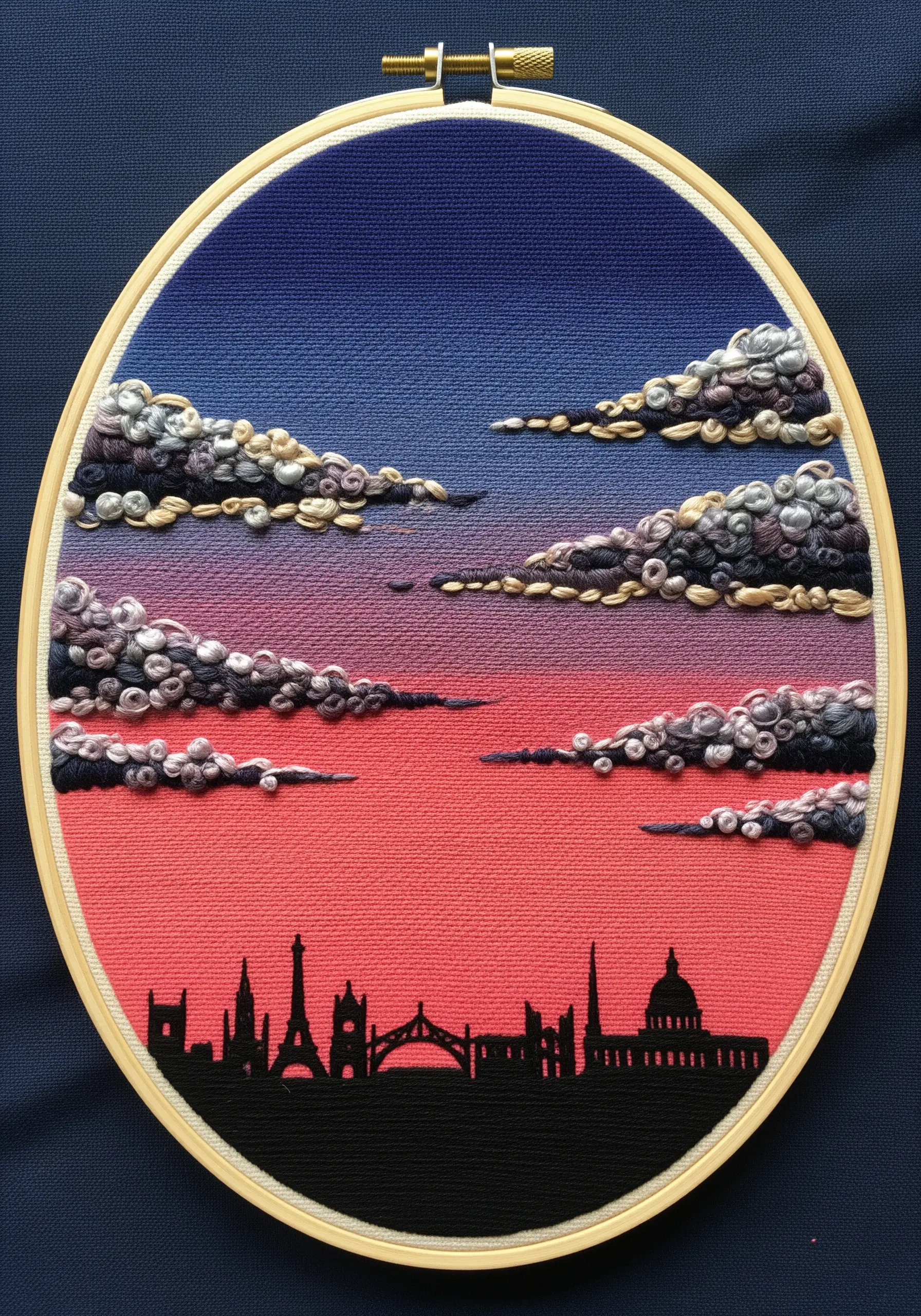
To make a skyline pop, you need to establish a strong contrast between the smooth silhouette and the textured heavens.
Use varied knot stitches for the clouds in a gradient of sunset hues, while keeping the architectural elements in flat, solid black satin stitch.
This contrast mimics the way city lights fade as the sun dips below the horizon in modern thread landscape projects inspired by city skylines and night lights.
15. Mixed fiber appliqué for soft contrasts

Embroidery doesn’t always have to be about thread; raw wool or felt can mimic the density of clouds perfectly.
Needle-felt or stitch wool roving directly onto your background to create soft, fuzzy cloud banks that contrast with the crisp lines of embroidered flora.
This technique adds a cozy, tactile element that makes the artwork feel warm and inviting.
16. Reflective symmetry in water scenes
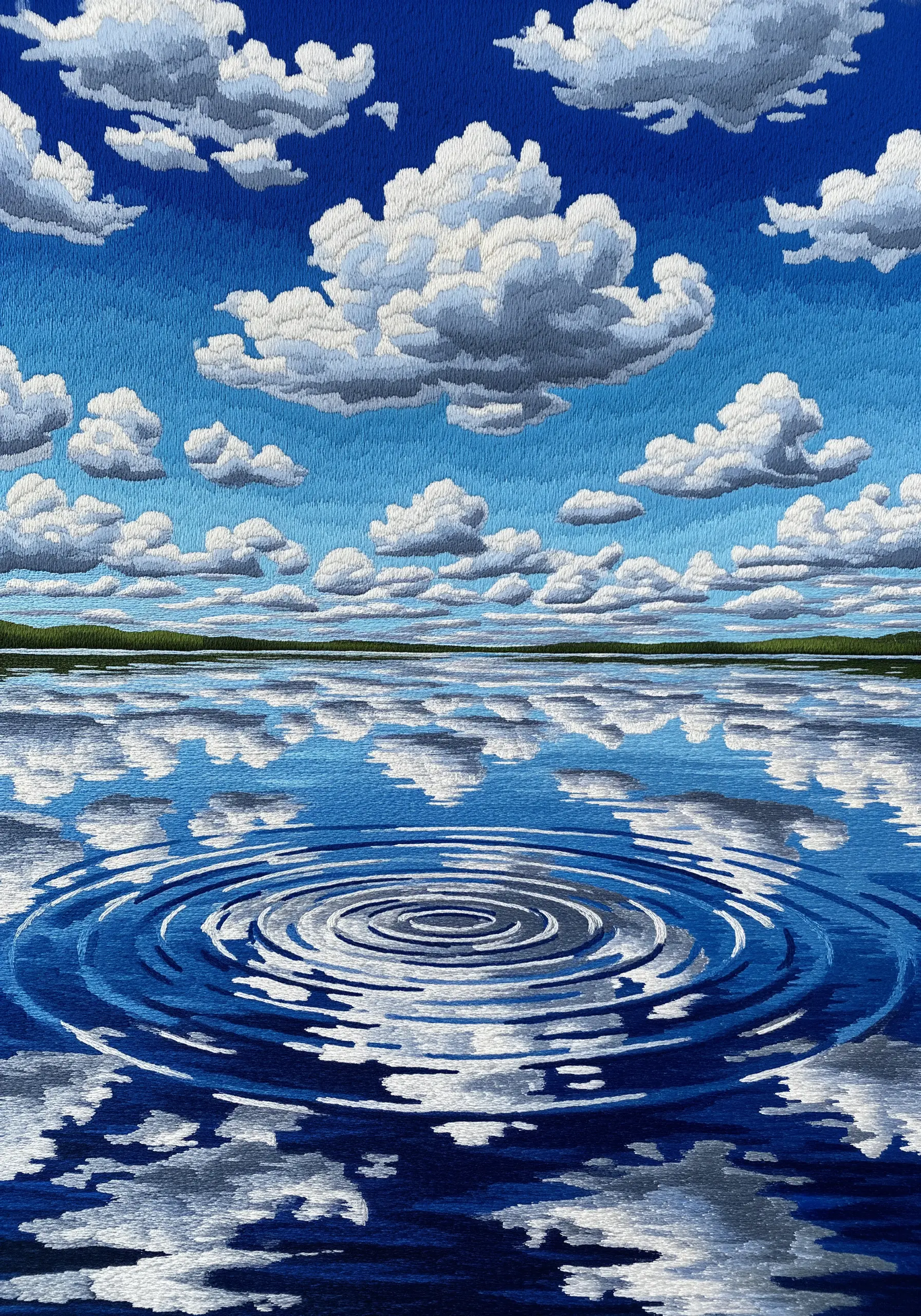
When a sky is reflected in water, the stitching needs to change character to indicate the liquid surface.
Mirror the cloud shapes from the sky but disrupt them with horizontal satin stitches to create the illusion of ripples.
This distortion is key to separating the ‘real’ sky from its reflection, grounding the viewer in the scene.
17. Conveying wind through directional flow
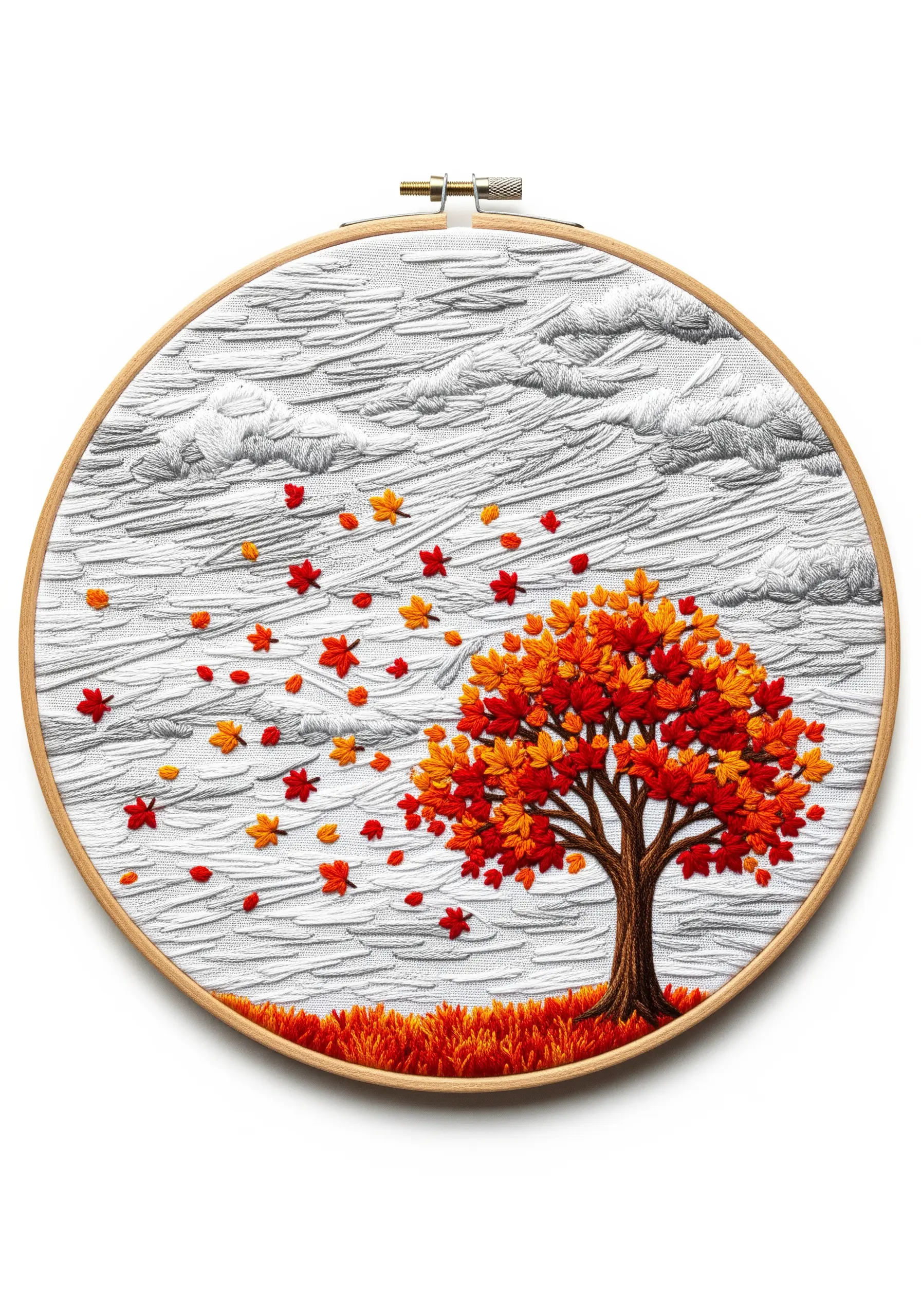
To show a blustery autumn day, your sky stitching should mimic the path of the wind.
Use long, horizontal strokes that curve slightly around invisible currents, reinforcing the movement of falling leaves.
This directional flow creates abstract thread motions based on wind, water, and gravity effects that make the scene feel dynamic and alive.
18. Sketch-style hatching for vintage moods
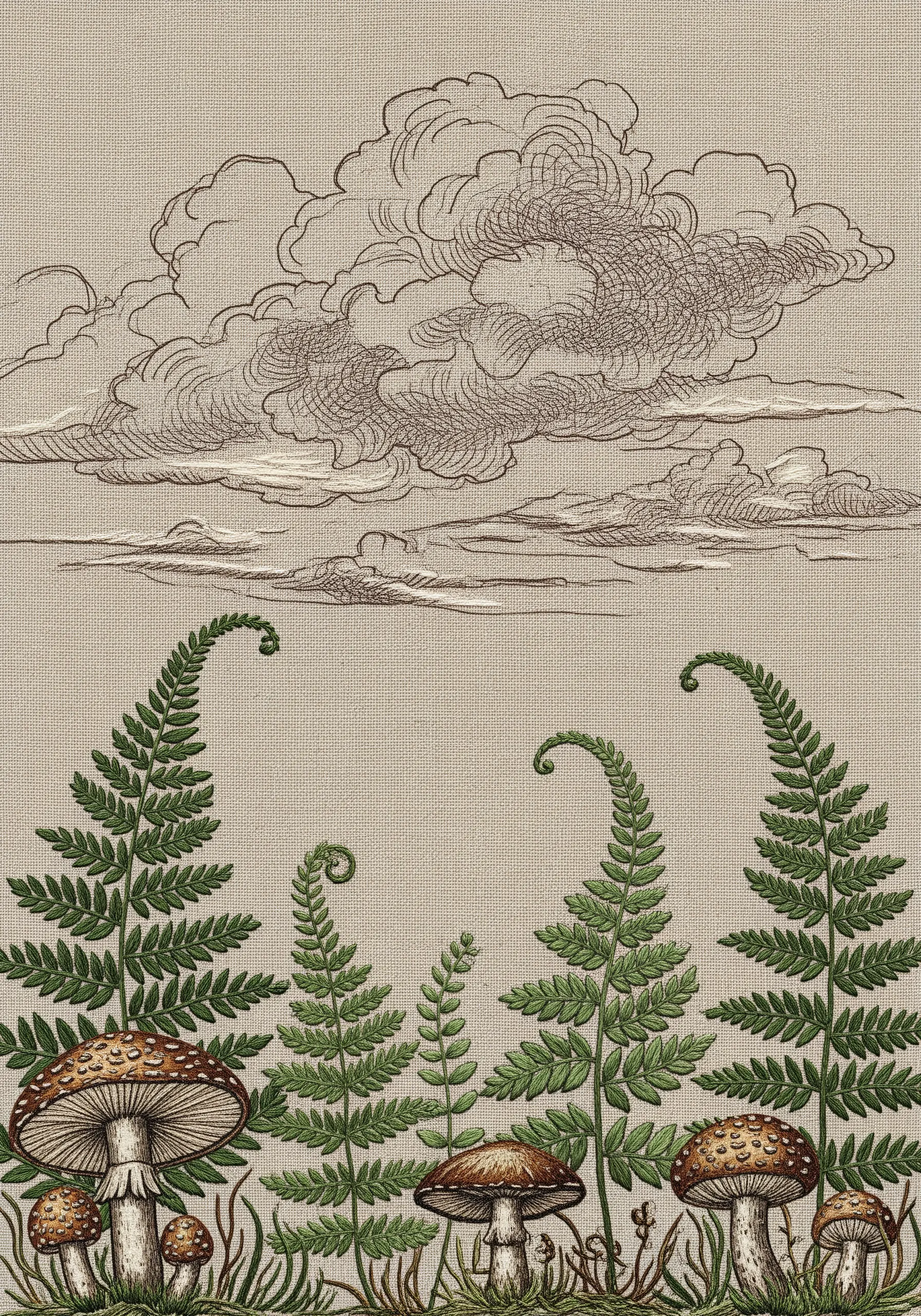
For a nostalgic, storybook aesthetic, replace solid fills with cross-hatching or intricate line work.
Treat your needle like an ink pen, building up shadow in the clouds through layers of fine, scribbled lines.
This etched look is perfect for botanical or woodland themes where you want to evoke the feel of an old scientific illustration.
19. Sheer layering for luminous sunsets

Capturing the transparency of light requires materials that allow light to pass through.
Layer strips of organza or chiffon in sunset tones, stitching them down with gold thread to define the edges of cloud banks.
This transparency adds a physical depth that thread alone cannot achieve, making the sun look like it’s truly glowing behind the layers.
20. Stylized curves for winter chills
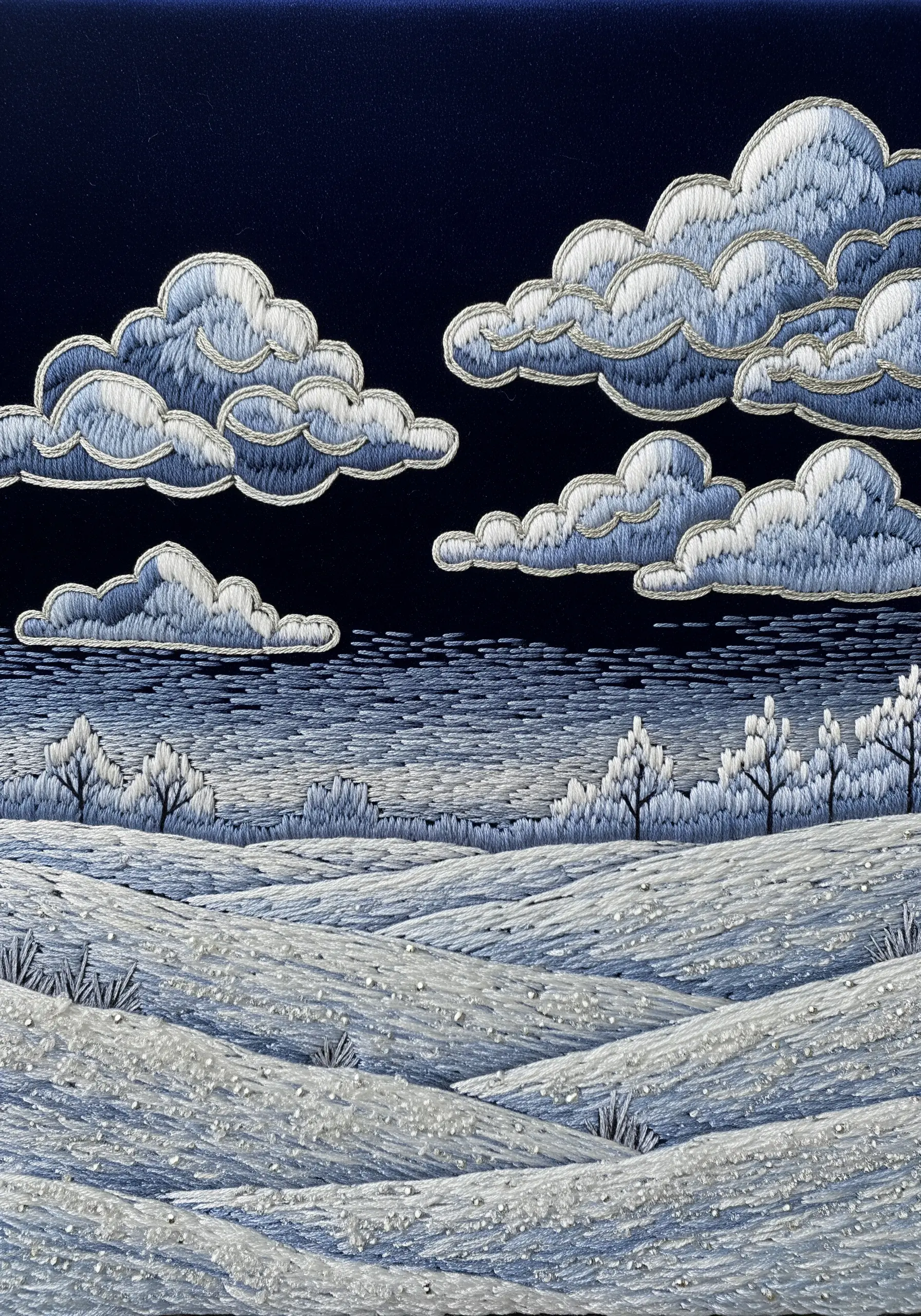
Winter skies often feel crisp and graphic; reflect this with clearly defined, scalloped cloud edges.
Use a split stitch or chain stitch to outline the clouds in silver or cool blue, filling them with orderly, directional stitching.
This stylized approach suits penguin and polar bear embroidery ideas for winter sweaters, giving the scene a frosty, illustrated charm.
21. Framing the sky with floral borders
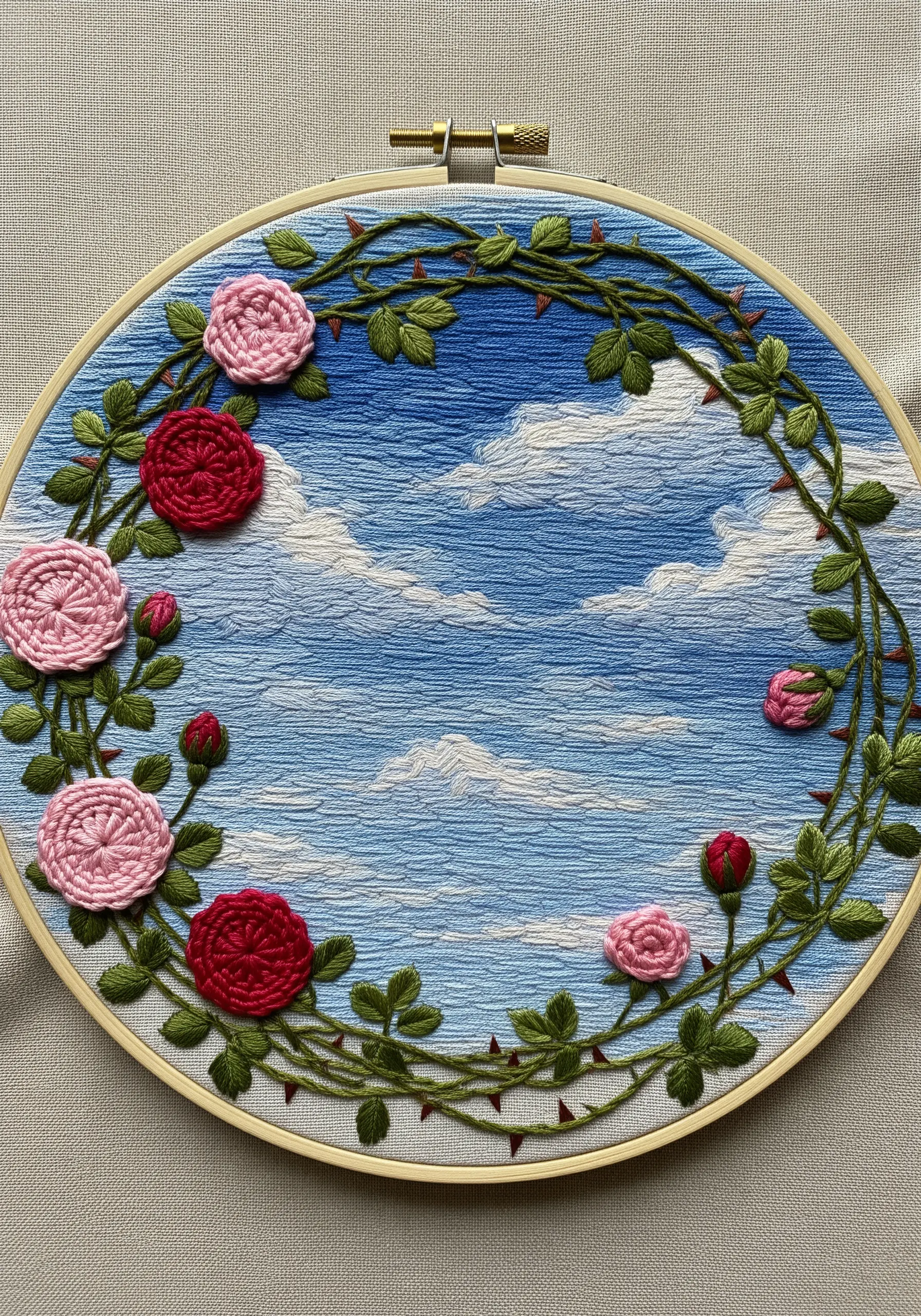
Sometimes the sky works best as a negative space that highlights a foreground element.
Create a dense, circular border of climbing roses or vines, leaving the center open for a textured blue sky.
This technique creates a ‘window’ effect, drawing the viewer’s eye through the foliage and into the distance.
22. Banded gradients for arid landscapes
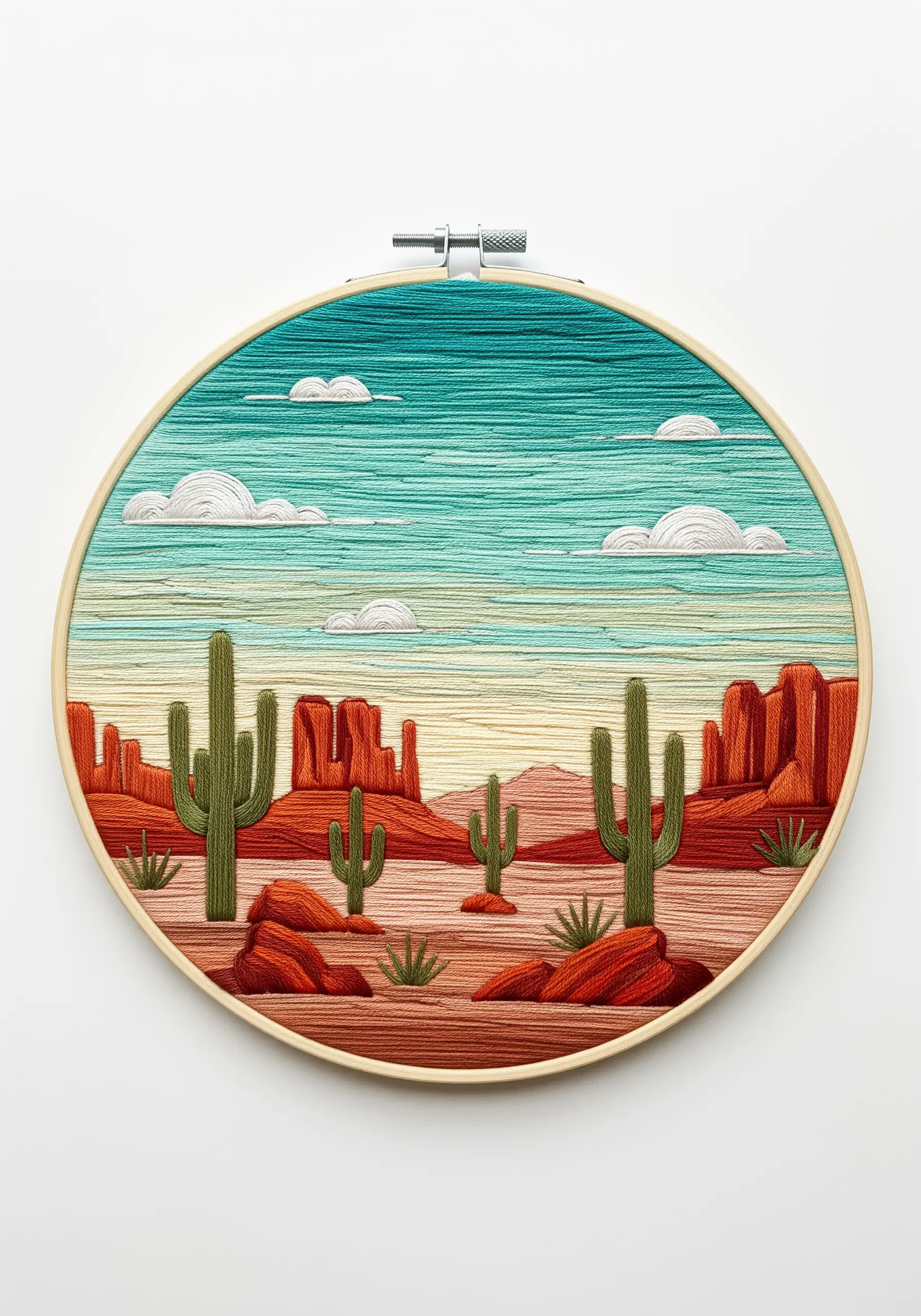
Desert skies often appear as distinct bands of color due to the heat and dust in the atmosphere.
Replicate this by stitching horizontal stripes of varying thickness in teal, turquoise, and sand, breaking them only for floating cloud puffs.
This linear style emphasizes the vast, flat horizon typical of desert environments.
23. Impressionist strokes for movement
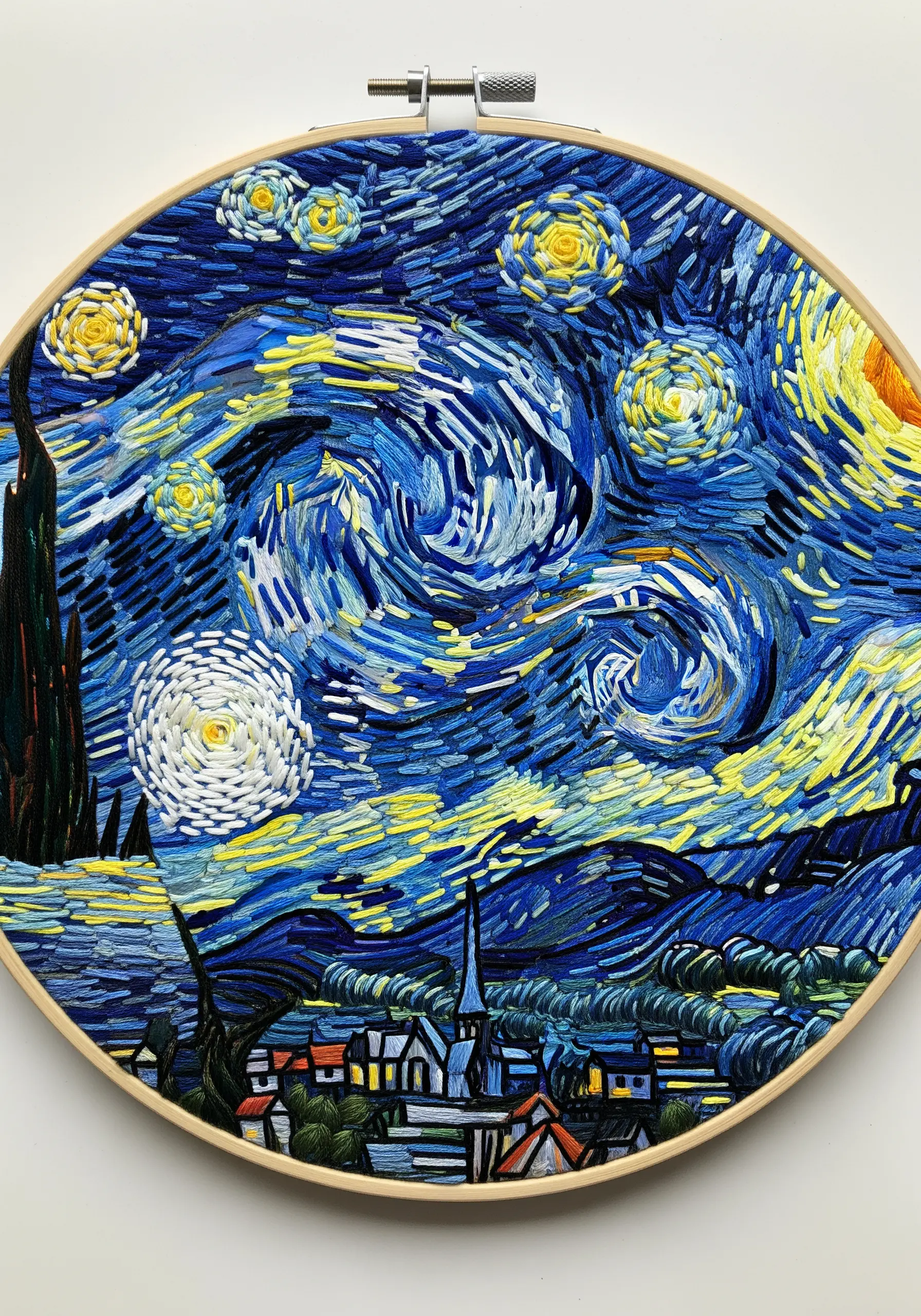
Borrow from the masters by using short, dashed stitches that follow the flow of energy in the sky.
Instead of blending, place contrasting colors side-by-side—blues next to yellows—to let the eye mix them optically.
This painterly texture brings a vibrant, vibrating energy to night scenes, reminiscent of Van Gogh’s famous works.
24. Soft color palettes for serenity
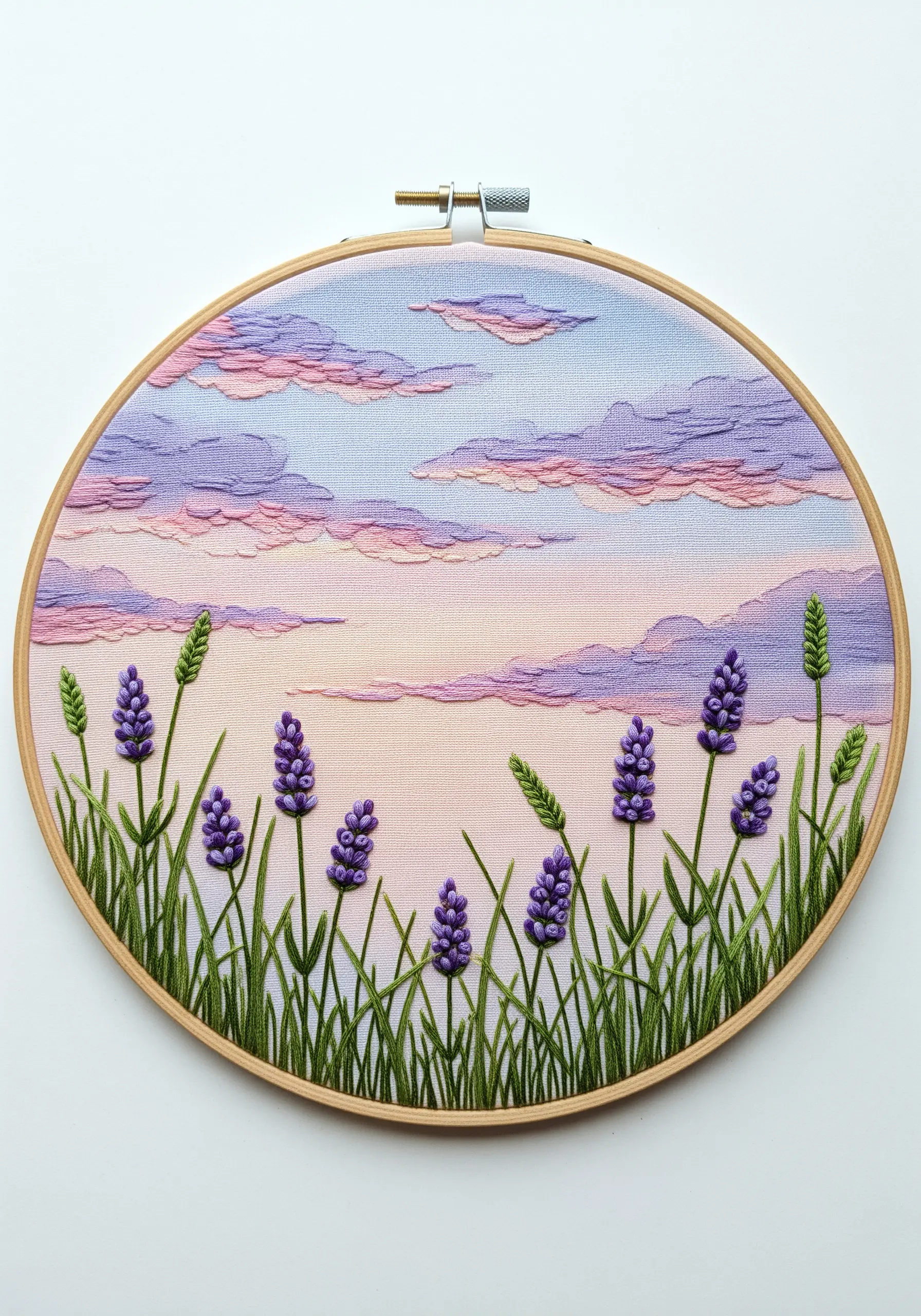
To evoke calm, avoid sharp contrasts and opt for a palette where the sky and clouds share similar tonal values.
Use purples, pinks, and blues that are close in intensity to create a dreamy, twilight atmosphere.
These lavender inspired embroidery designs for bedrooms meant for relaxation rely on harmony rather than drama.
25. Vertical stitching for heavy rain
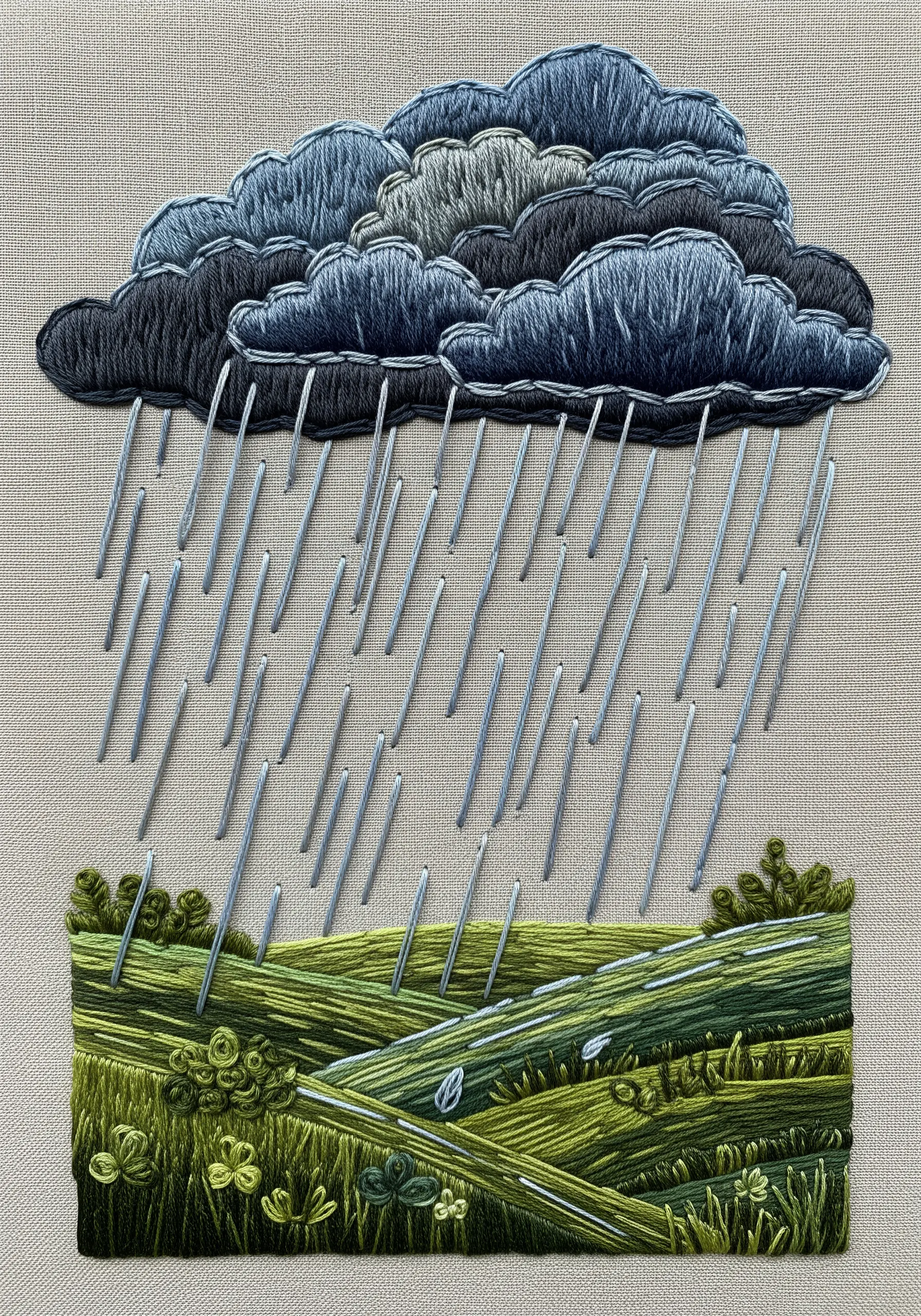
When the sky opens up, the visual dominance shifts from clouds to the falling rain itself.
Overlay your background with long, straight vertical stitches in silver or grey, spacing them to suggest the intensity of the downpour.
This top layer of stitching physically obscures the landscape behind it, just as real rain obscures the view.
26. Hyper-saturation for tropical vibes

Tropical sunsets defy subtlety; they demand your brightest neons and deepest blacks.
Use synthetic or silk threads that have a sheen to them, amplifying the glowing effect of the sunset against silhouette palm trees.
This high-contrast approach captures the humid, electric feel of a summer evening perfectly.
27. Monochromatic depth for moonlit scenes

You don’t need a full spectrum of color to create depth; a single hue in varying shades can be incredibly powerful.
Use five to seven shades of blue, from midnight to pale ice, to build a landscape illuminated solely by moonlight.
This restraint creates a cohesive, moody piece that feels focused and sophisticated.
28. Whimsical spirals for folk art skies
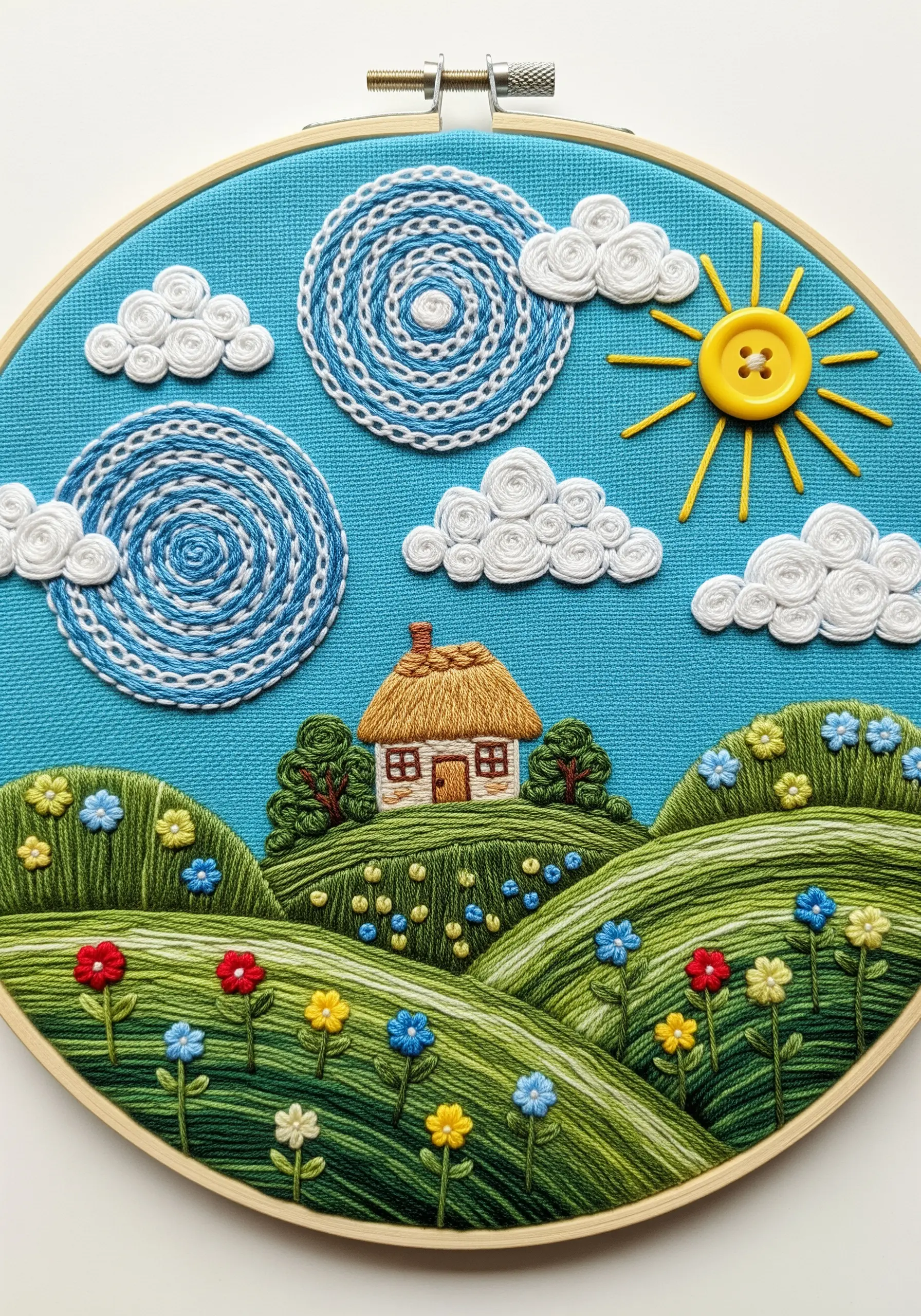
Realism isn’t the only goal; sometimes a stylized pattern tells a better story.
Stitch your clouds and sun as concentric spirals or chain stitches, leaning into a decorative, folk-art aesthetic.
This texture adds a playful rhythm to the piece, making the sky feel like it is dancing.
29. Floating elements on transparent mesh

For a sky that truly feels weightless, switch your base fabric to tulle or organza.
Stitch your clouds so they appear to float in mid-air, casting real shadows on the wall behind the hoop.
This technique mimics fiber art installations that look like they’re floating in mid-air, bringing an architectural element to your hoop art.
30. Spiraling intensity for tornadic energy
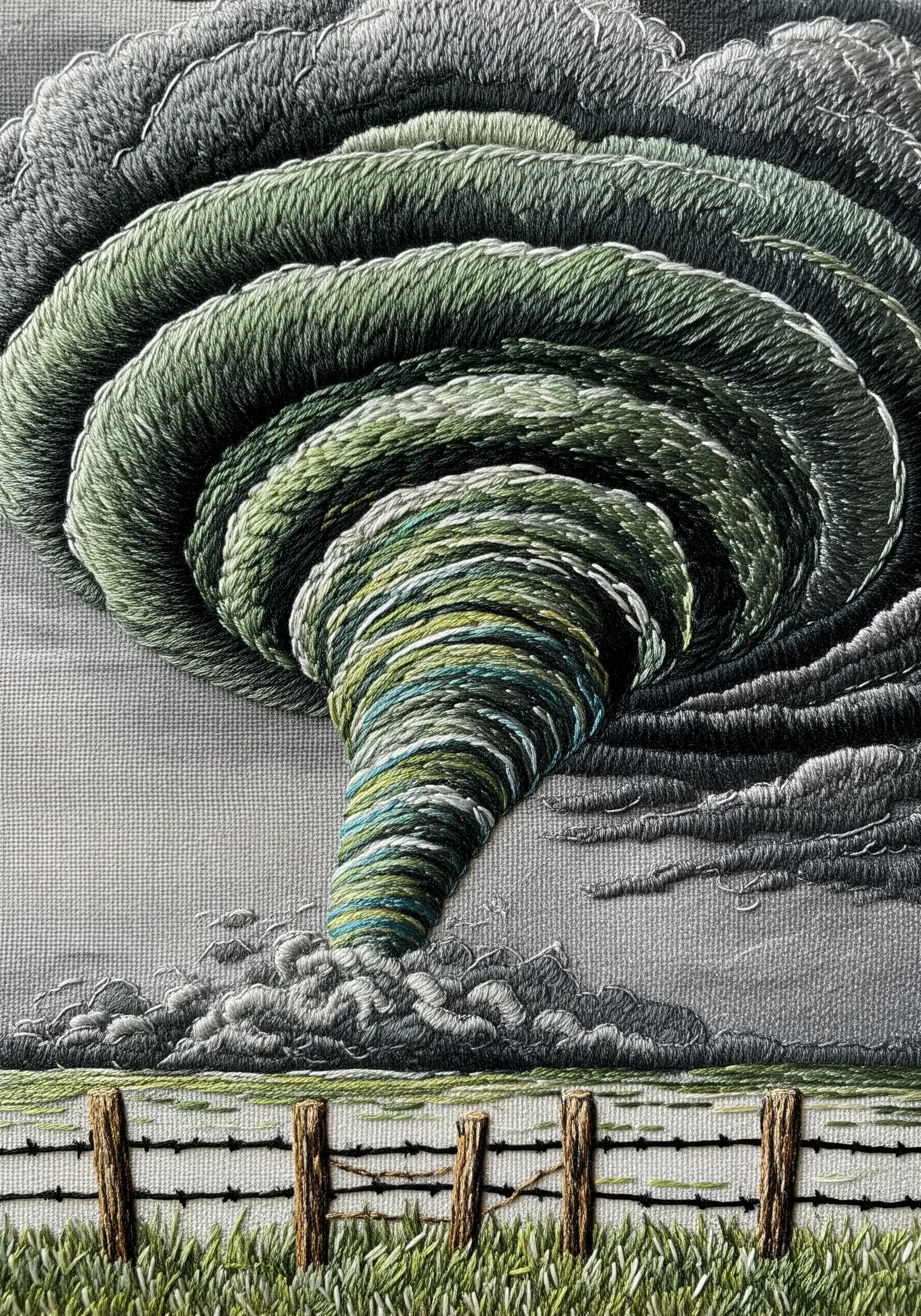
To depict the destructive power of a tornado, your stitches must follow the funnel’s rotation.
Use a heavy chain or stem stitch that wraps tighter and tighter as it descends, creating a physical coil on the fabric.
Blending greens and greys within this coil captures the bruising color of a storm-warned sky.