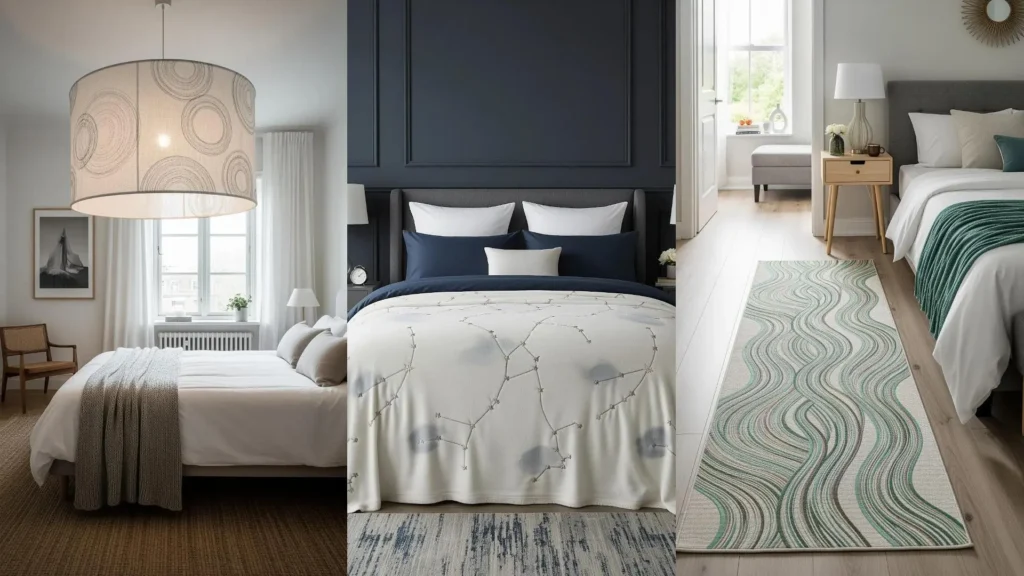
When you imagine embroidery for a minimal home, you might think of stark, empty designs. But subtlety isn’t about absence—it’s about intention. It’s about choosing a texture that catches the afternoon light, a single line that guides the eye, or a color palette that soothes rather than shouts.
Your stitching can be a quiet anchor in a room, a detail that adds warmth and personality without creating clutter. The key is to move beyond just filling shapes with color and to start thinking about the thread itself: its weight, its sheen, and the path it takes across the fabric.
Here, you’ll discover how a simple shift—like choosing a whipped backstitch over a standard one for smoother curves, or using a tone-on-tone palette to emphasize texture—can elevate your work instantly. These are not complex techniques, but thoughtful adjustments that make your embroidery feel less like a hobby and more like art.
1. Architectural Lines with Couching Stitch
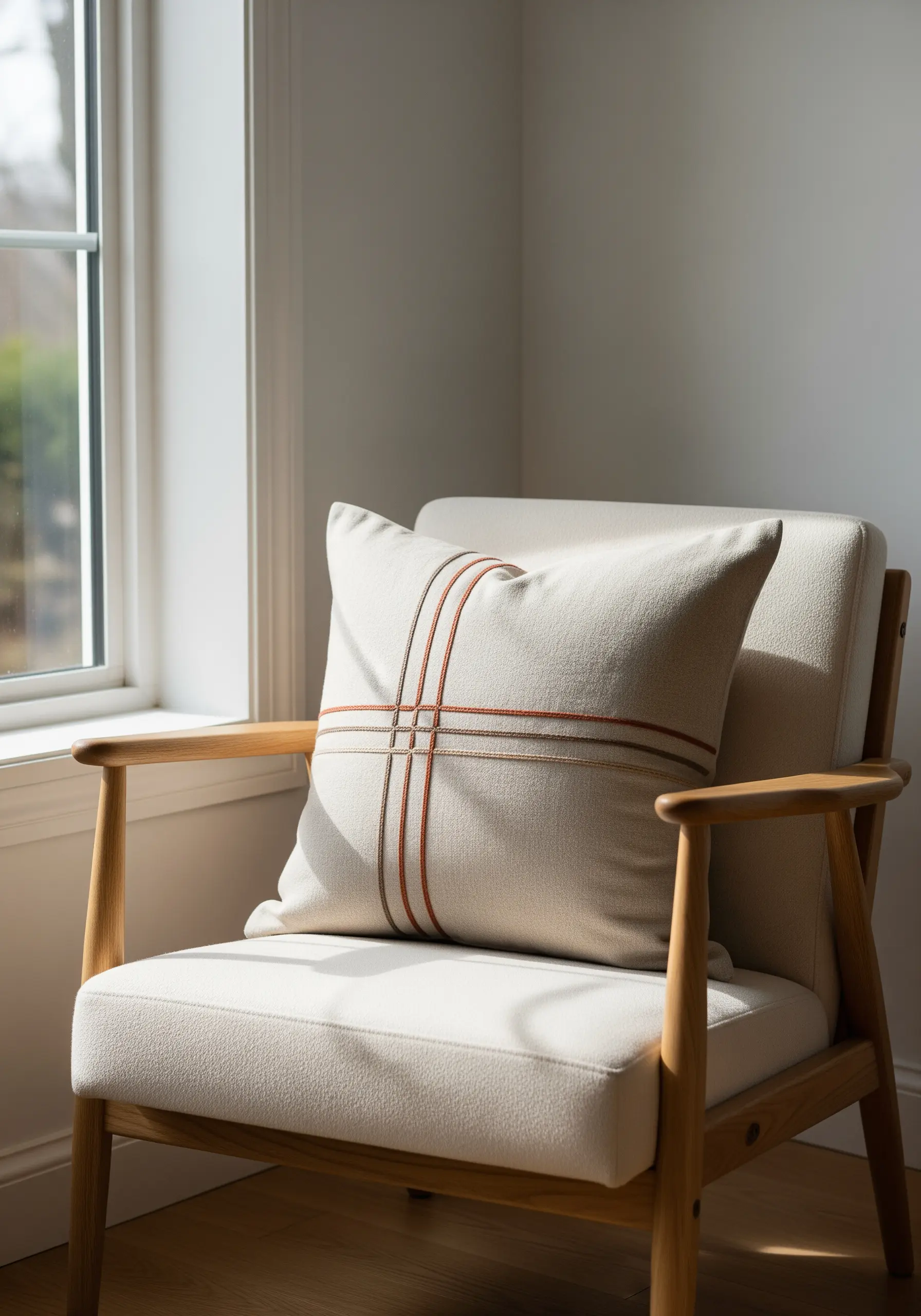
Transform a simple cushion with intersecting lines that feel both modern and tactile.
Instead of a standard backstitch, use the couching technique: lay down a thicker yarn or multiple strands of floss and tack it in place with a thinner, near-invisible thread.
This creates a raised, clean line with beautiful dimension that a simple stitch can’t replicate.
Choose a foundation thread in a warm terracotta and a tacking thread in a slightly lighter beige to add subtle depth to the design.
2. The Elegance of a Single Outline
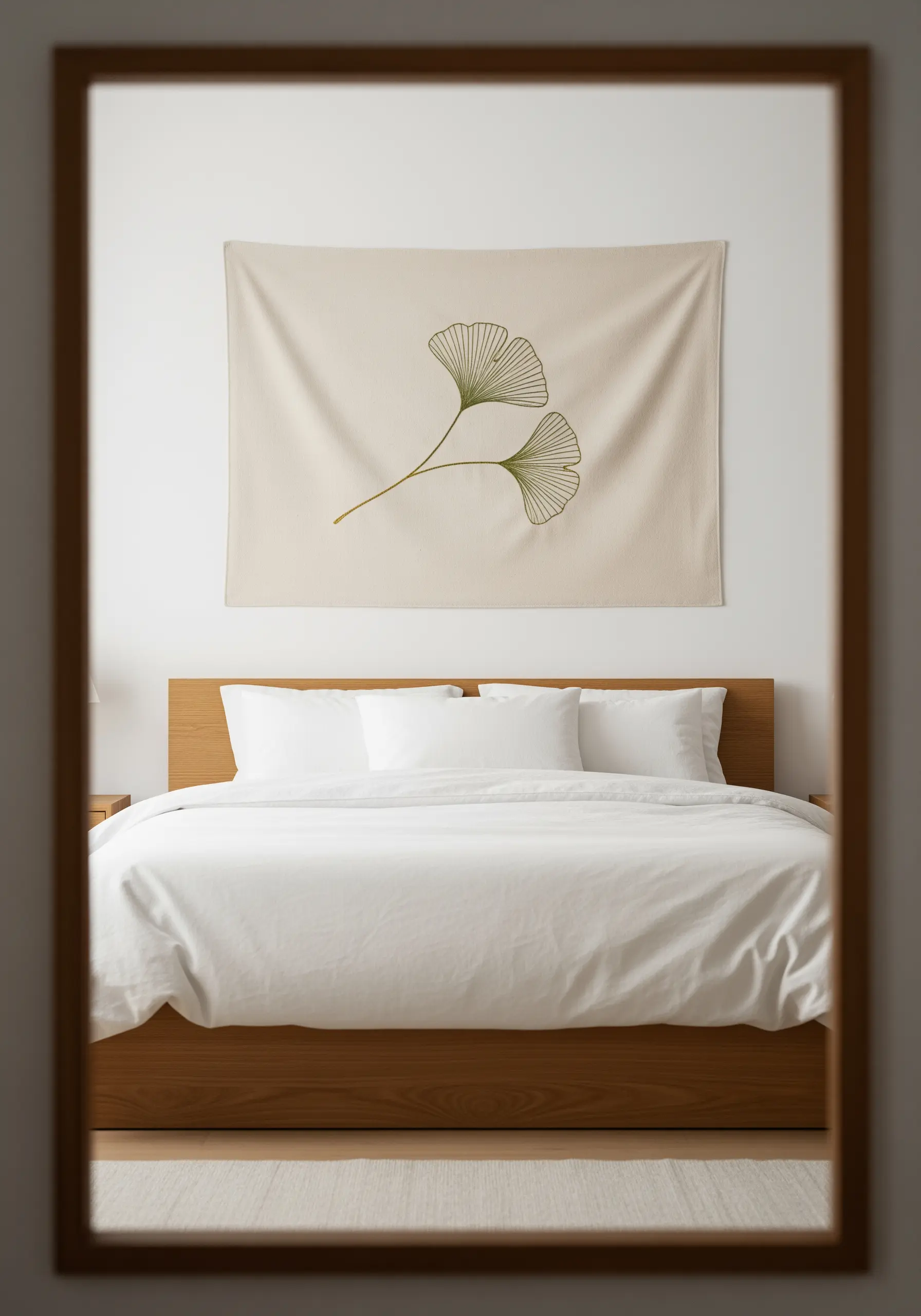
Elevate a large piece of fabric, like a wall hanging, with a single, graceful botanical motif.
To achieve perfectly smooth curves for a ginkgo leaf, trace your design and then use a whipped backstitch.
First, create a standard backstitch outline, then weave a second thread through the stitches without piercing the fabric.
This technique smooths out the jagged edges of a standard stitch, resulting in a fluid, ink-like line that gives the motif a professional finish.
This approach emphasizes negative space and transforms simple stitches into a statement piece.
3. Geometric Repetition for Modern Harmony
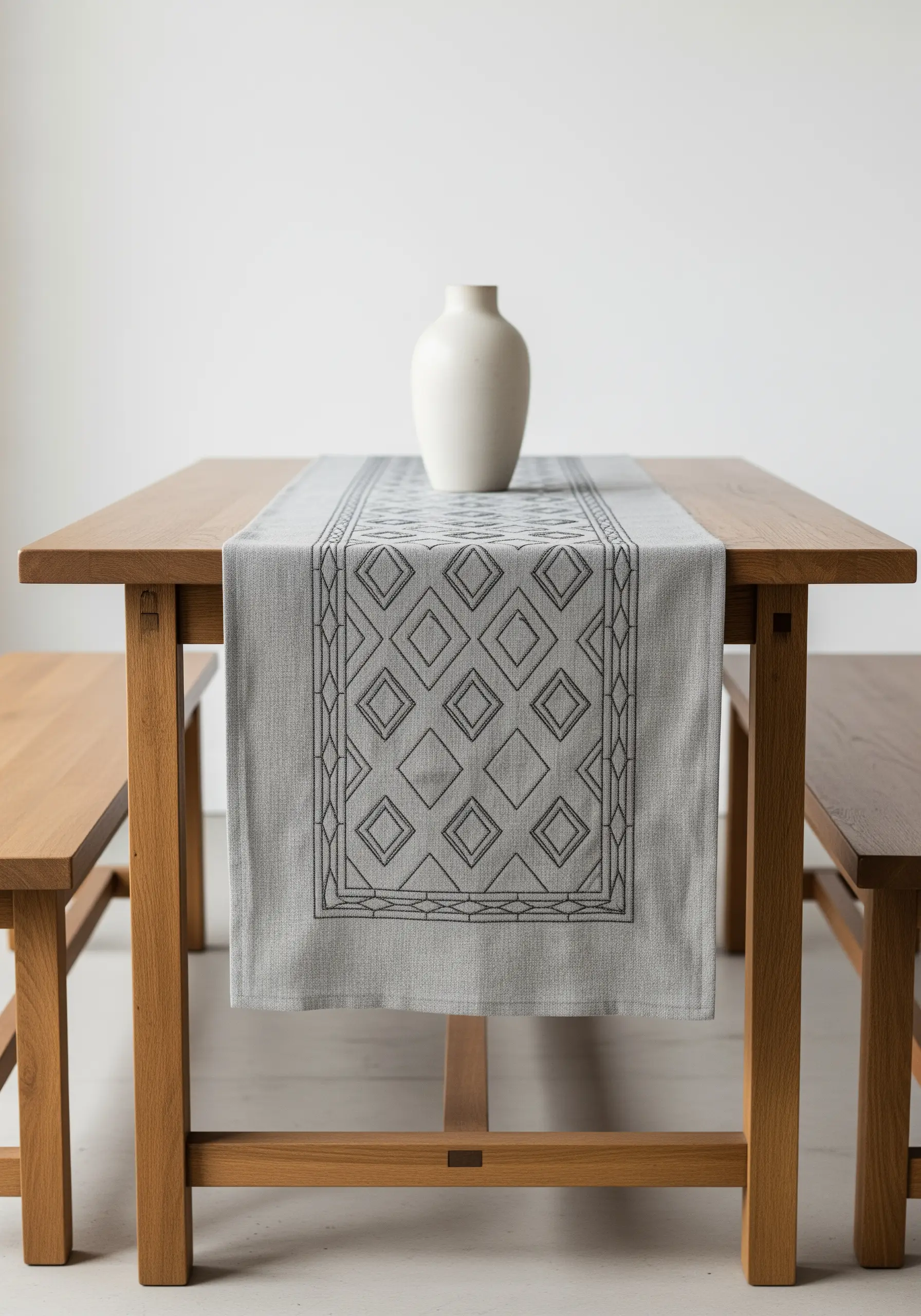
Create a sophisticated table runner by focusing on rhythmic, geometric patterns.
Use a simple backstitch or stem stitch in a contrasting charcoal thread on a lighter gray linen.
The key to making this design look intentional is precision; use the fabric’s weave to guide your stitches, ensuring every square and line is uniform.
This meditative process results in a piece that feels both handcrafted and impeccably designed, adding quiet structure to your dining space.
4. Add Sculptural Accents with Chunky Yarn
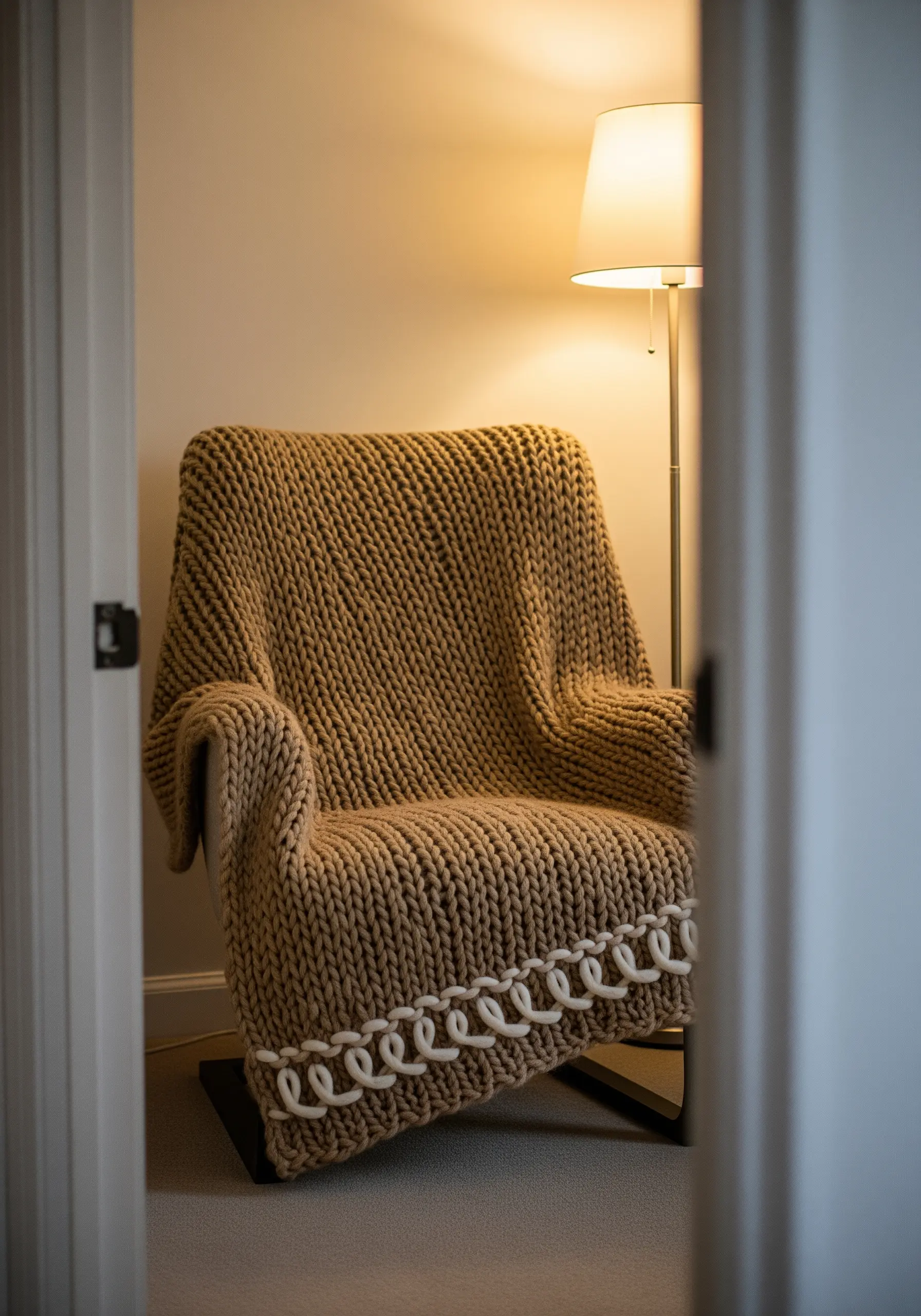
Embellish a heavily textured item, like a chunky knit blanket, with a bold, sculptural border.
This isn’t traditional embroidery, but an application of its principles: use a strong, complementary thread to couch a thick, soft cord onto the edge.
The contrast between the tight knit and the looping cord adds a playful yet sophisticated detail.
This technique works beautifully on items where fine thread would get lost, proving that embroidery is about adding texture, not just stitches.
5. Frame Your Stitches as Botanical Art
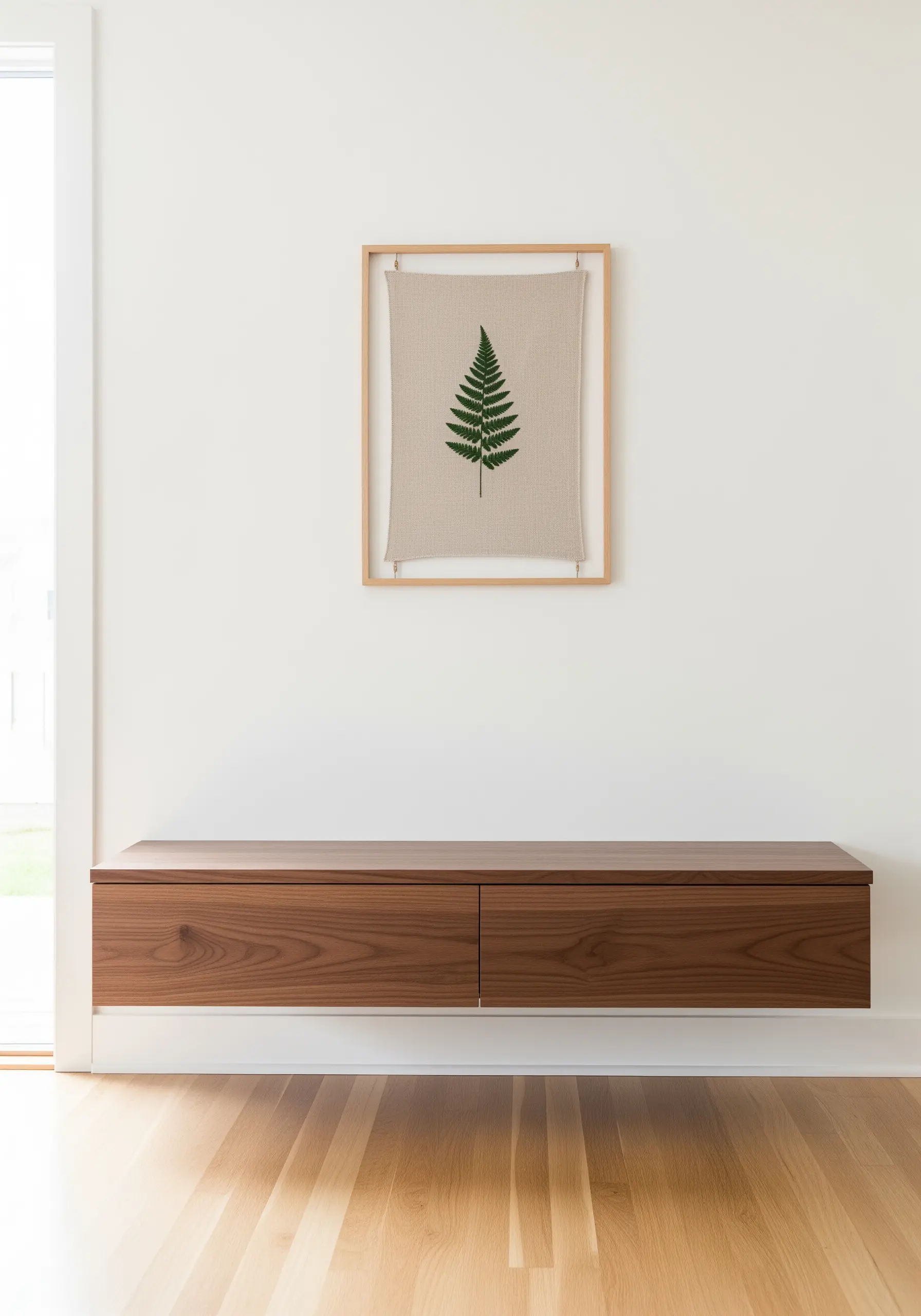
Turn a single embroidered motif into a piece of intentional wall decor by reconsidering its presentation.
Stitch a realistic fern using a fishbone stitch on a simple linen panel, allowing the texture of the fabric to become part of the artwork.
Instead of a standard hoop, stretch the finished piece inside a simple wooden frame or use dowels at the top and bottom.
This method of display elevates your embroidery from a craft project to a minimalist hoop art piece, perfect for modern interiors.
6. The Quiet Impact of a Stitched Grid
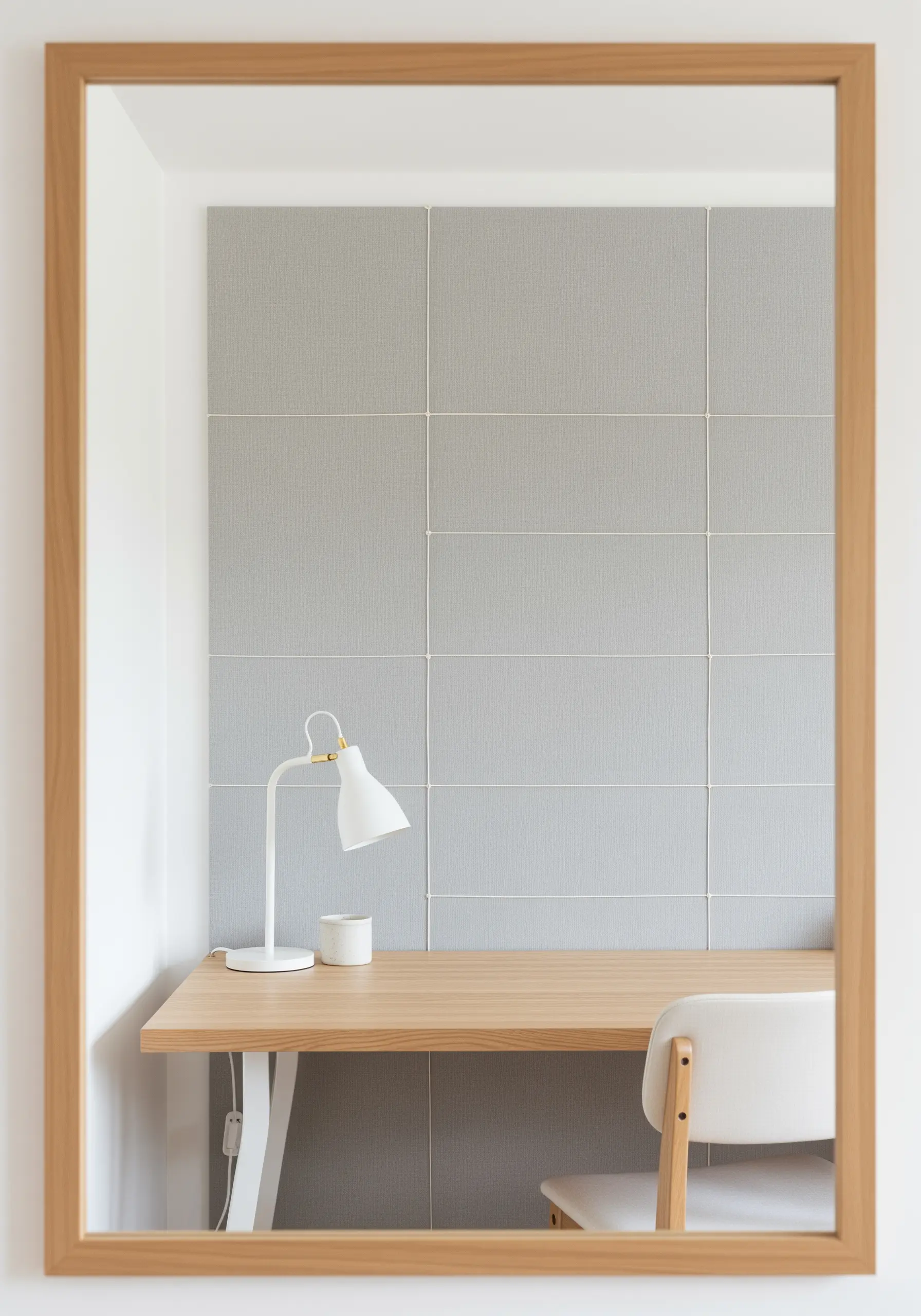
Introduce subtle texture to a functional space with a hand-stitched grid.
On a series of fabric panels, use a simple running stitch with a thread that’s only a shade or two lighter than the fabric itself.
The goal isn’t high contrast, but a quiet, tactile detail that catches the light.
Use an erasable fabric marker and a ruler to ensure your lines are perfectly straight, creating a sense of order and calm.
7. Playful Texture with French Knots
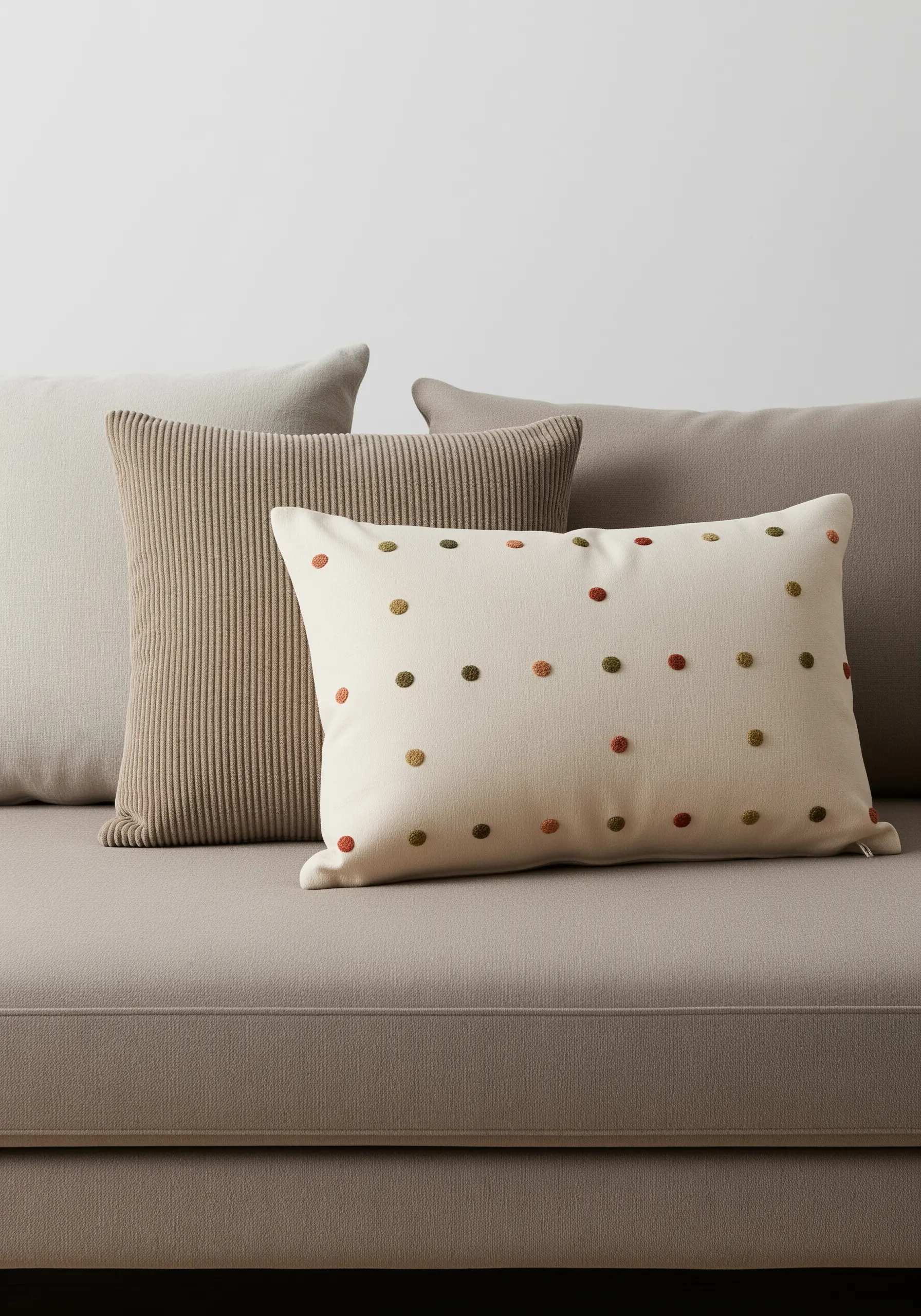
Add a sprinkle of color and dimension to a plain pillow with French knots.
Instead of a dense, filled pattern, scatter the knots randomly across the surface for an organic, confetti-like effect.
Use a limited palette of three to four complementary earth tones—like terracotta, olive, and ochre—to maintain a cohesive look.
Vary the number of times you wrap the thread (once for small knots, twice for larger ones) to create subtle differences in texture and size.
This technique is perfect for adding abstract texture-play to your decor.
8. Delicate Botanicals on Everyday Linens
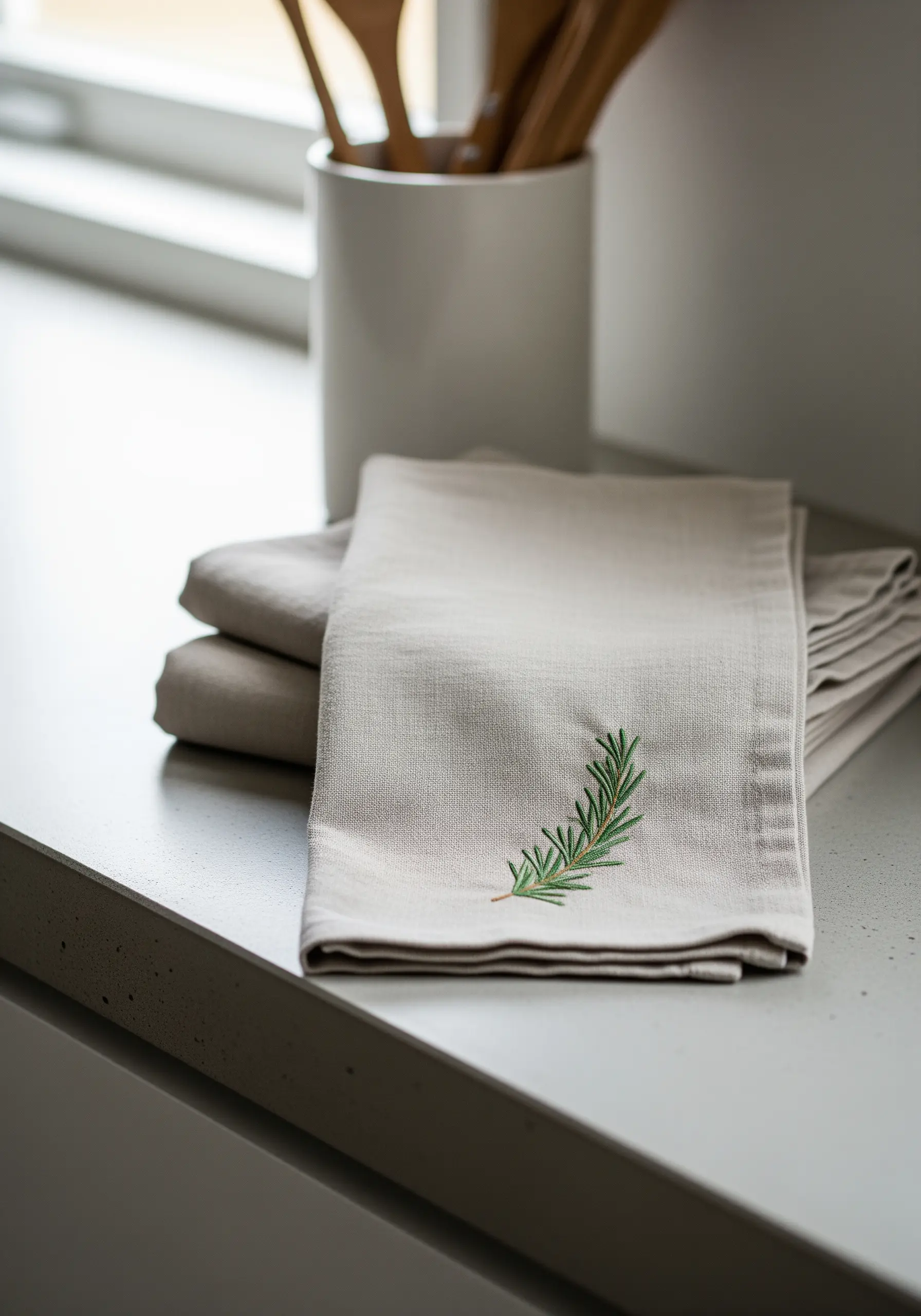
Upgrade simple linen napkins with a tiny, elegant sprig of rosemary.
Use a stem stitch for the main branch to give it a slightly raised, rope-like texture.
For the leaves, use single, detached chain stitches, keeping them small and varied in their angle to mimic natural growth.
Choose two shades of green—one slightly darker for the stem—to add realism to this minimal botanical pattern.
This small detail transforms a functional item into a piece of everyday luxury.
9. Linear Accents on Upholstery
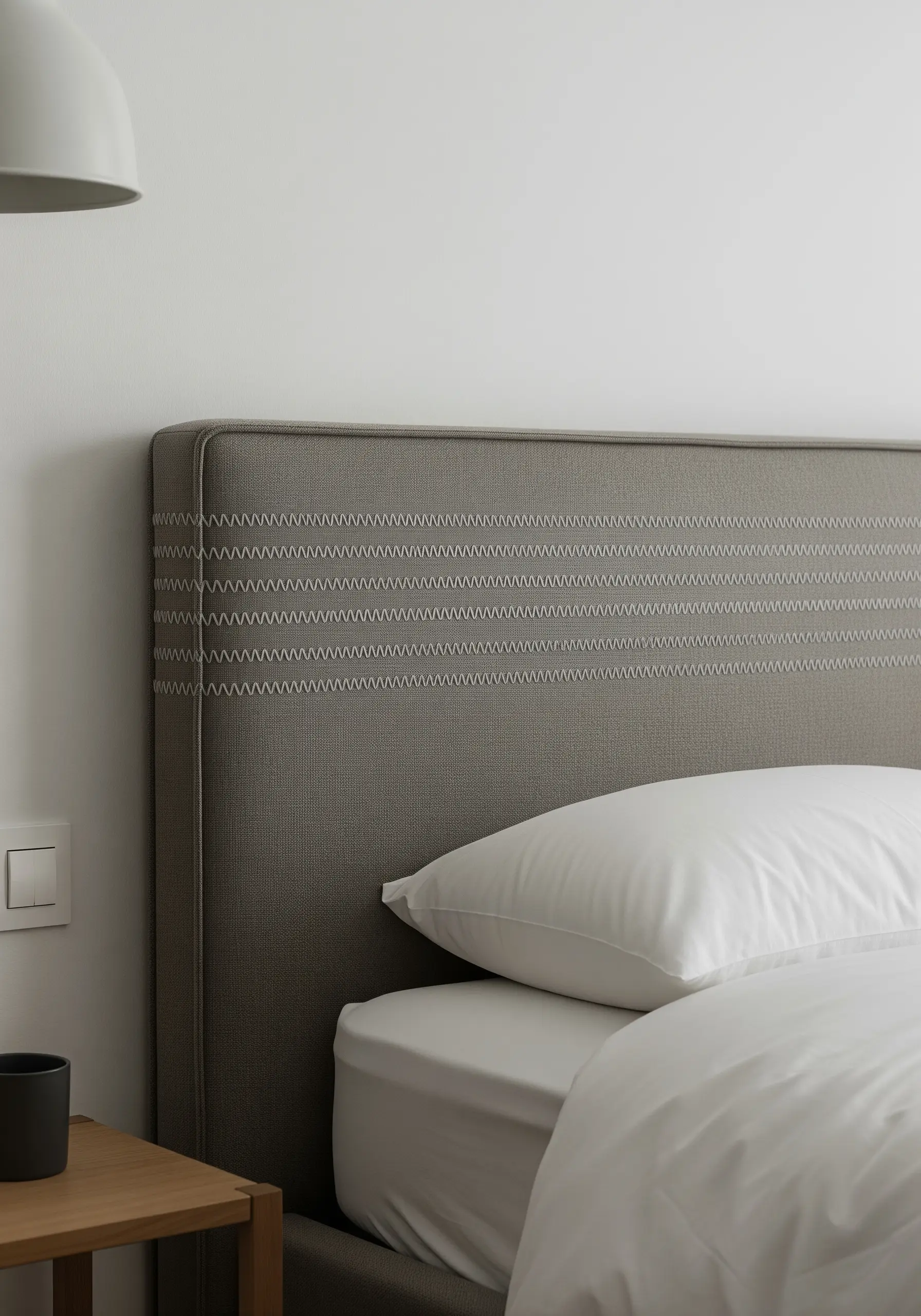
Add a bespoke detail to upholstered furniture, like a headboard, using linear stitching.
Replicate this look with a heavy-duty needle and thick thread, like a pearl cotton or tapestry wool.
Use a simple running stitch or a backstitch to create clean, horizontal bands of texture.
A pattern of alternating straight lines and zig-zags adds dynamic interest without introducing color, focusing purely on the tactile quality of the stitches.
10. Tone-on-Tone Mandala for Grounding Decor
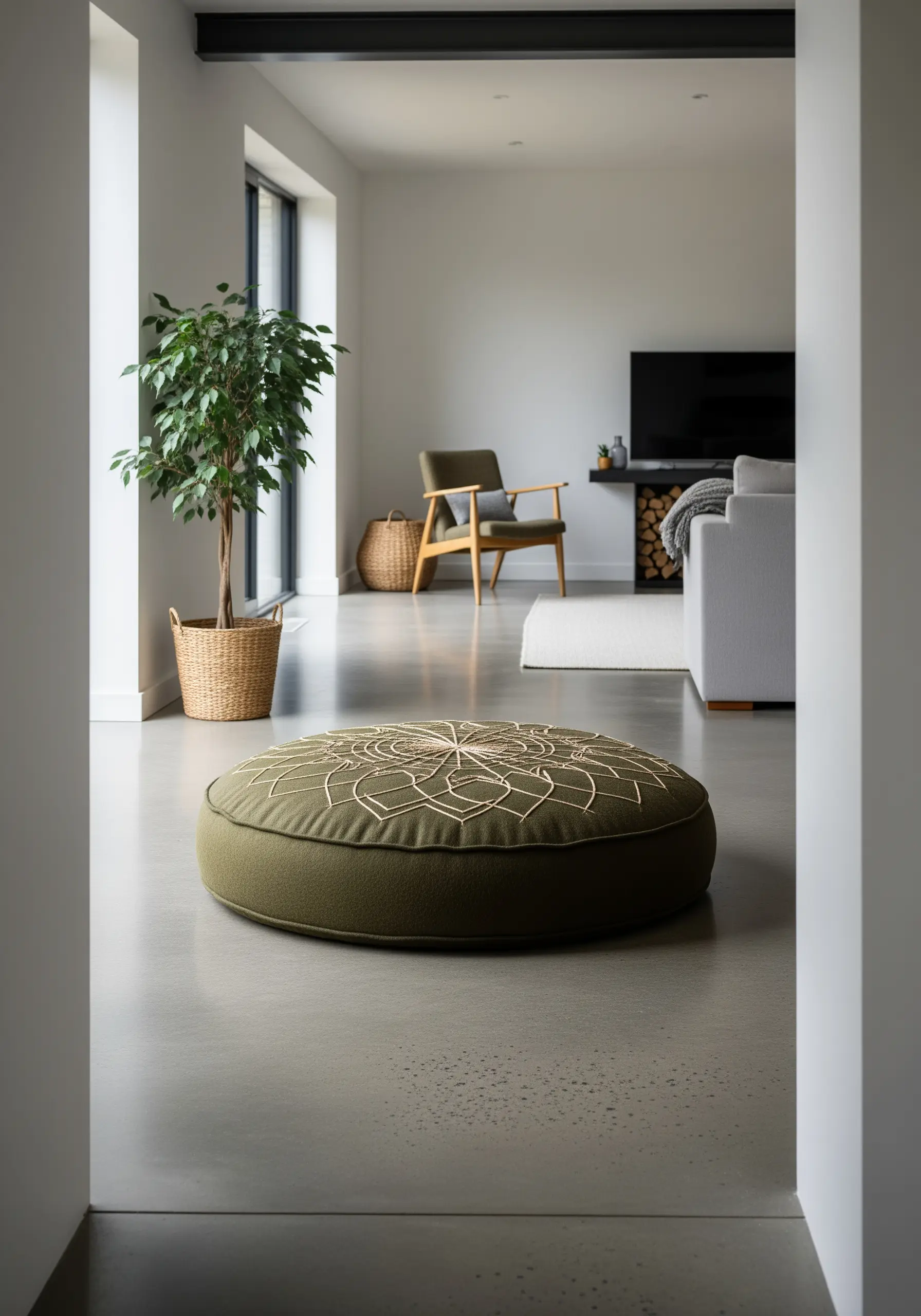
Embroider a large, intricate mandala on a floor cushion for a piece that invites calm and focus.
The key to keeping it subtle is a tone-on-tone color palette. Choose a thread that is only a few shades lighter or darker than your base fabric, like a sand color on olive green.
This ensures the detailed pattern reveals itself slowly, emphasizing texture over color.
Use a combination of backstitch for the outlines and seed stitch for filled areas to create varied, natural texture embroidery ideas.
11. Sheer Curtains with Botanical Silhouettes
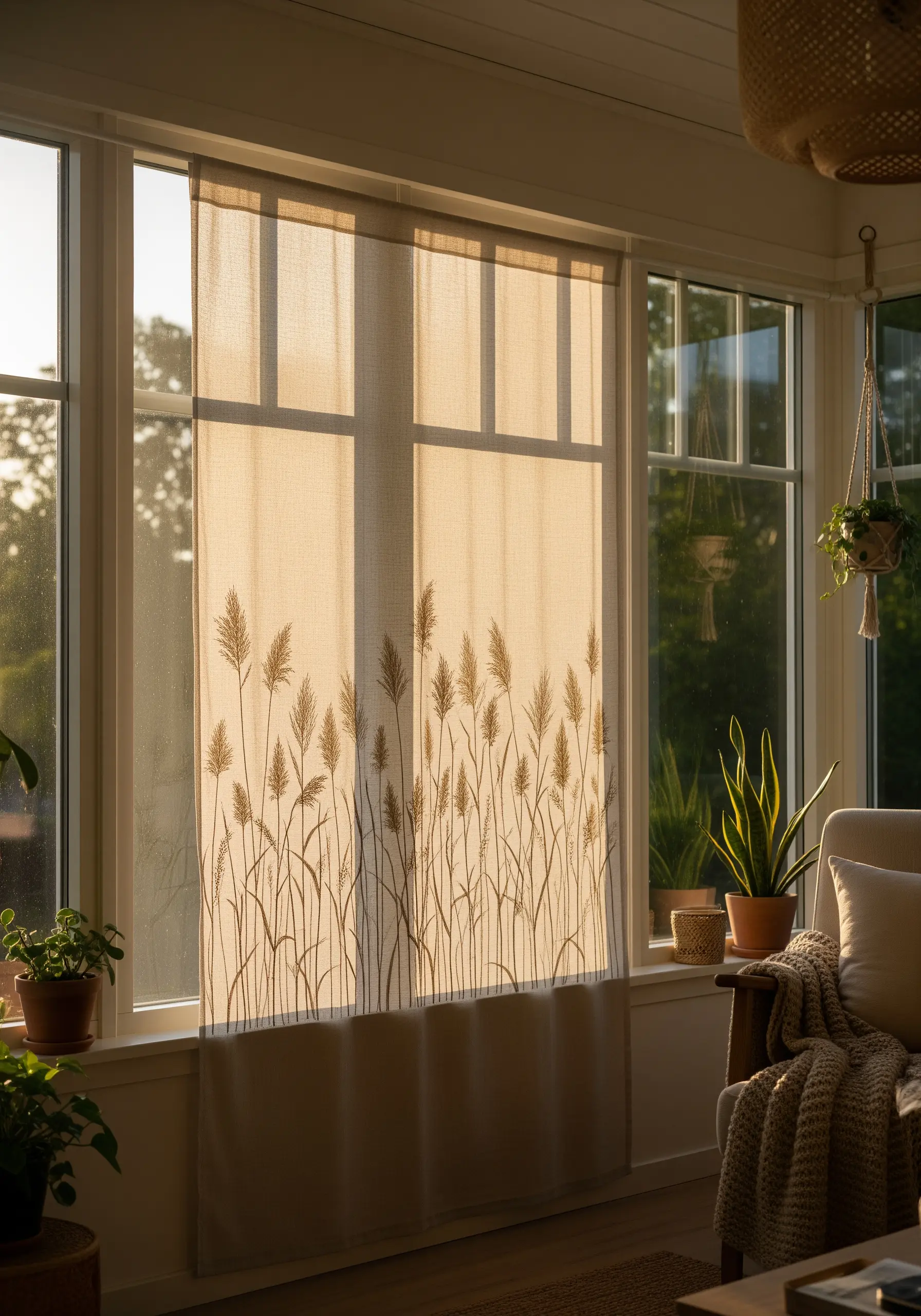
Stitch delicate botanical silhouettes along the border of sheer or semi-sheer curtains.
When stitching on lightweight fabrics, use a stabilizer behind your work to prevent puckering, then gently tear it away after you’re finished.
A simple stem stitch or backstitch is perfect for creating the elegant shapes of pampas grass or reeds.
The light filtering through the window will illuminate the threads, turning your embroidery into a beautiful, glowing display.
12. Bold Outlines on Utilitarian Objects
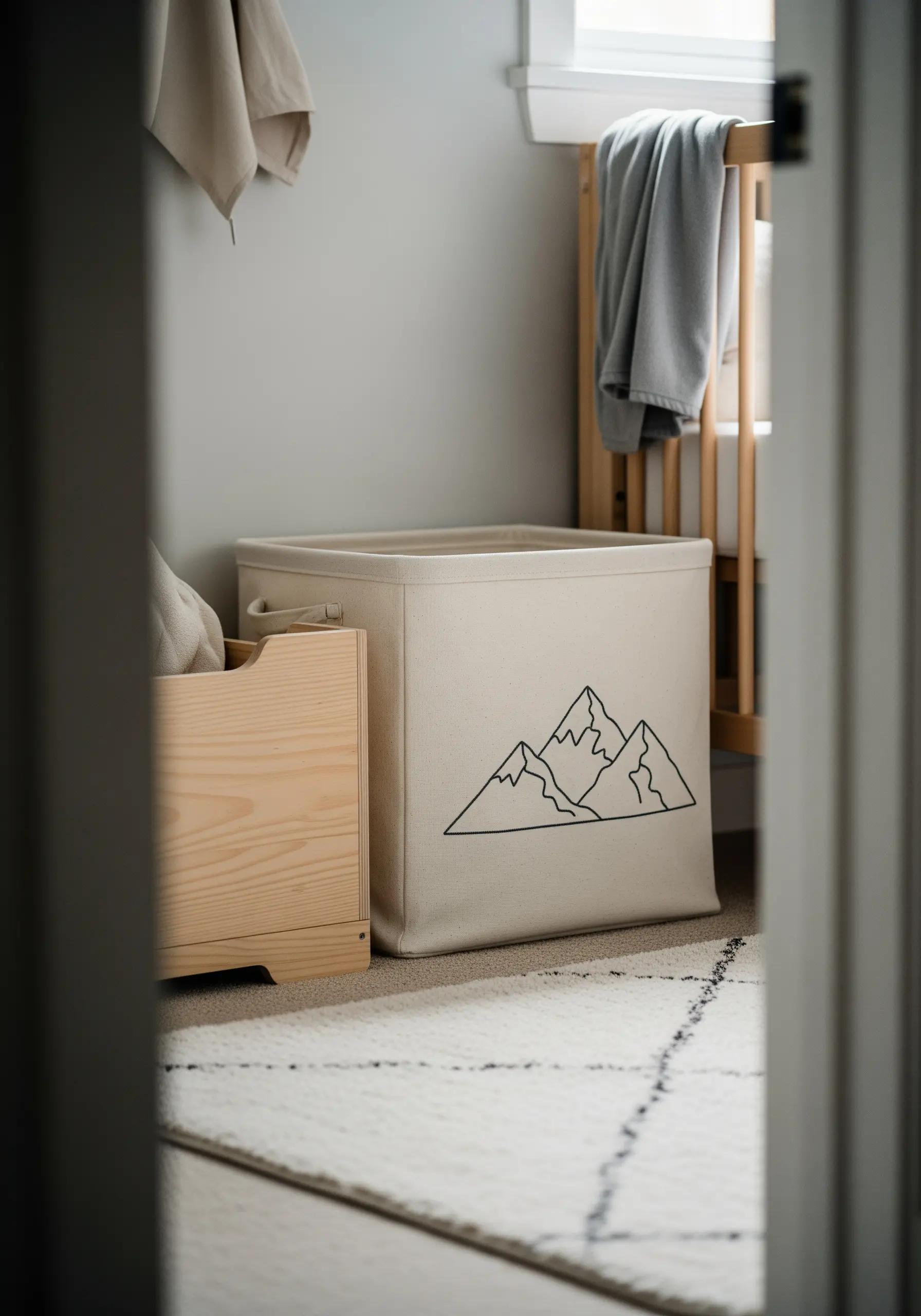
Personalize functional items like canvas storage bins with a bold, graphic outline.
For a clean and impactful mountain range, use a six-strand floss or even a fine yarn with a simple backstitch.
The thickness of the thread is what makes this design stand out, creating a strong contrast against the neutral canvas.
There is no need for complex fills; the power of this design lies in its simplicity and confident linework, a perfect example of minimalist line art nature embroidery.
13. Abstract Appliqué for Textural Contrast
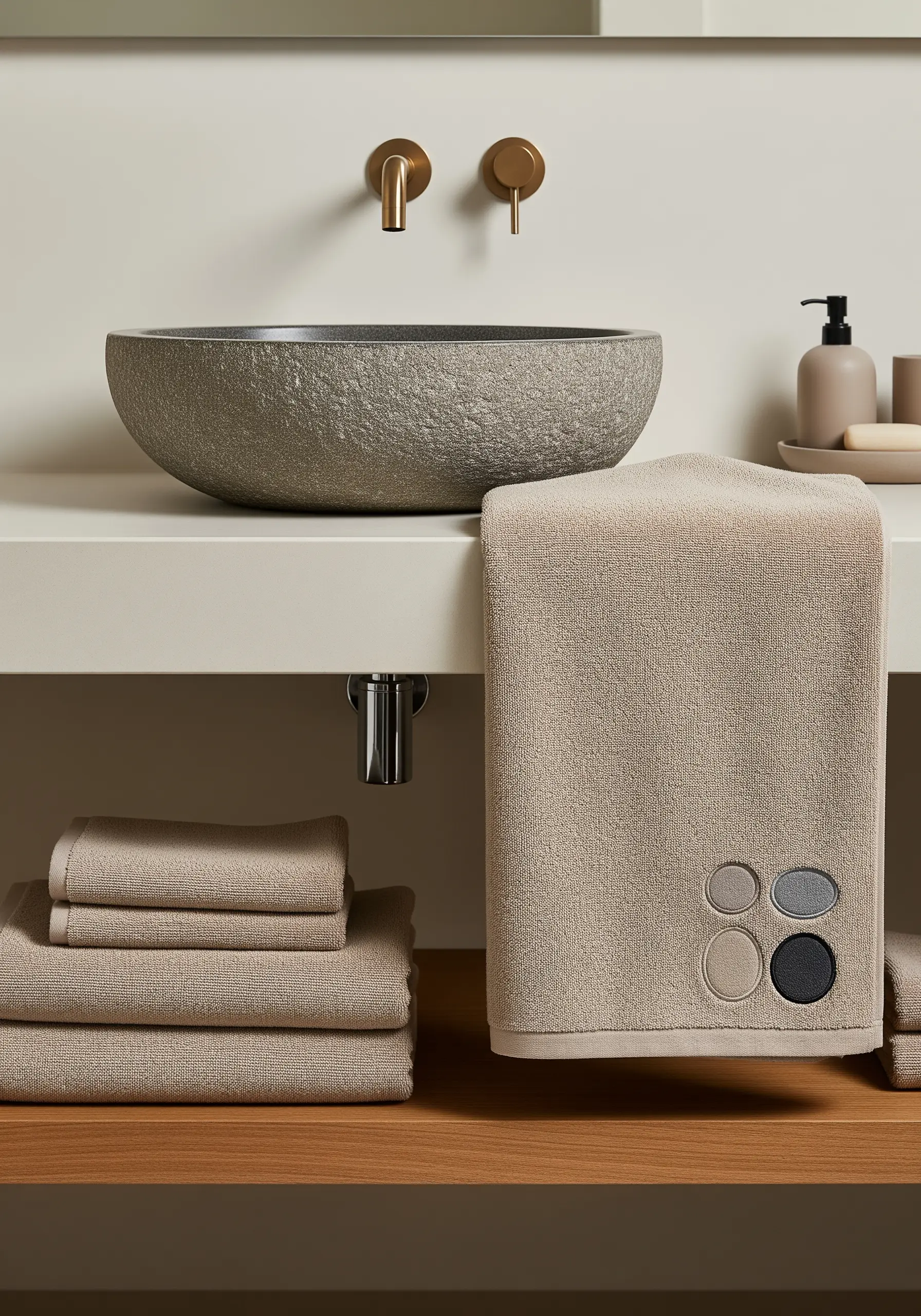
Create a sophisticated, abstract design on towels by combining appliqué with embroidery.
Cut simple circles or ovals from a smooth, tightly woven cotton in coordinating earth tones.
Secure them to the towel with an iron-on adhesive, then conceal the raw edges with a clean, dense satin stitch border.
This technique creates a beautiful contrast between the plush terrycloth and the smooth, stitched appliqué, adding a spa-like, custom feel.
14. Deconstructed Stitching on Furniture
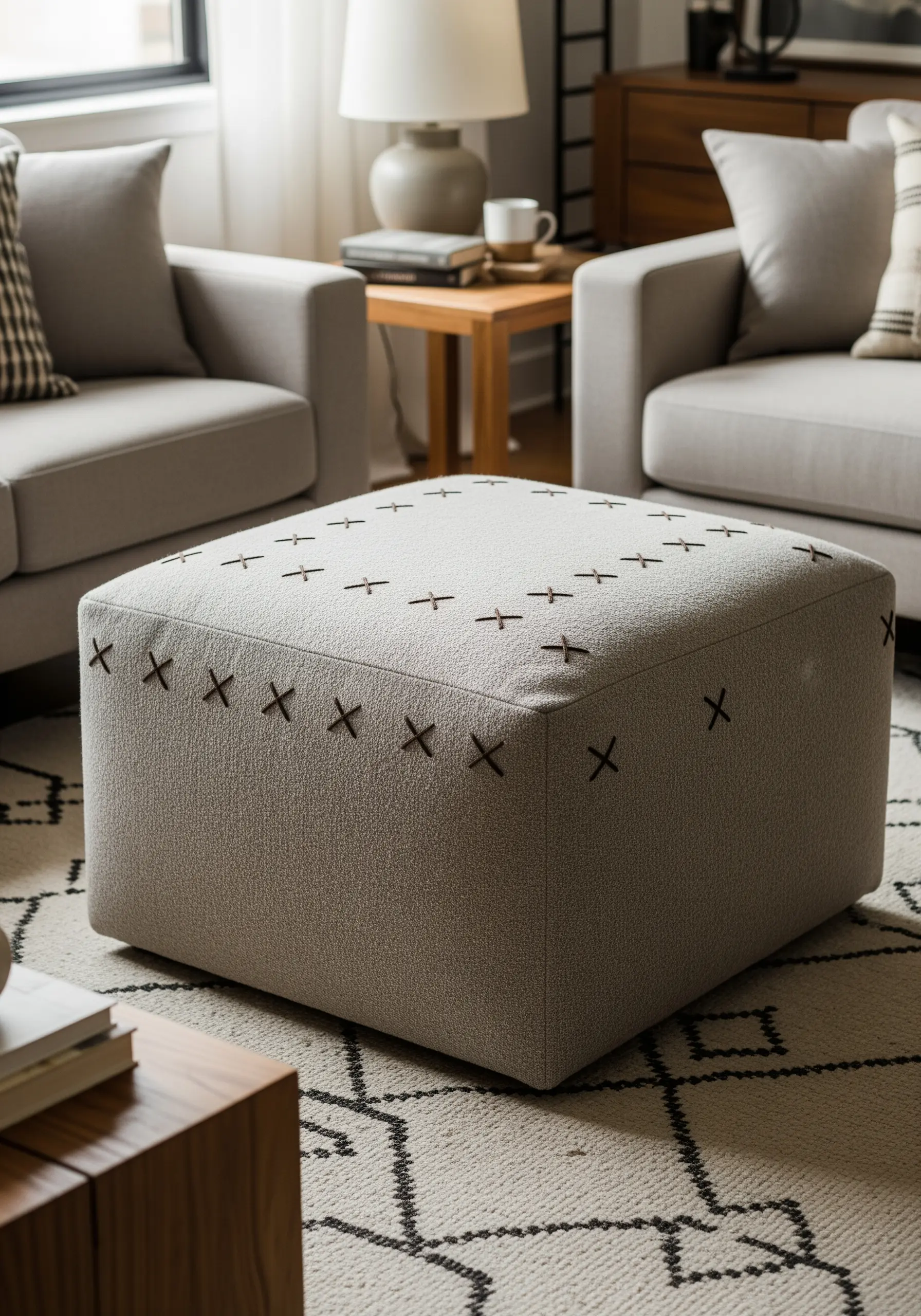
Add a rustic, handcrafted touch to upholstered furniture with large, visible stitches.
Use a thick yarn and a large upholstery needle to create a series of oversized cross stitches along the seams of an ottoman.
This technique, reminiscent of traditional leatherwork or bookbinding, highlights the construction of the piece.
It’s a simple, effective way to introduce a subtle, tactile detail that feels both rugged and refined.
15. Minimalist Lines for Table Linens
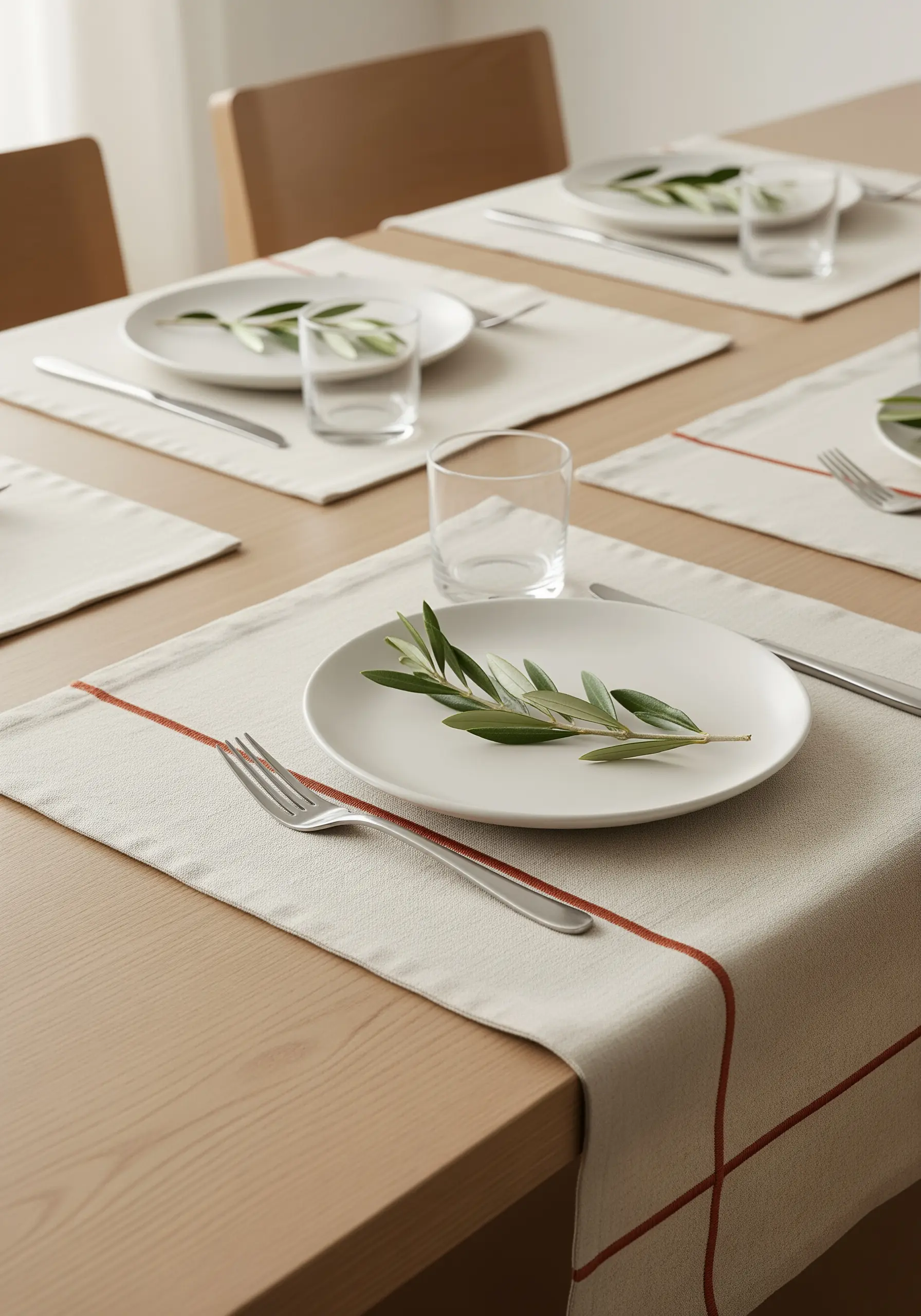
Define your dining space with the simplest of embroidered details: a single, clean line.
On placemats or a table runner, use a contrasting thread like terracotta on a cream linen to stitch a perfect border with a running stitch.
The key is consistency in stitch length and flawless lines—use a ruler and a water-soluble marker to guide you.
This minimalist approach adds a touch of bespoke elegance without competing with your dinnerware, proving that sometimes the simplest minimal embroidery patterns are the most effective.
16. A Subtle Accent with Satin Stitch
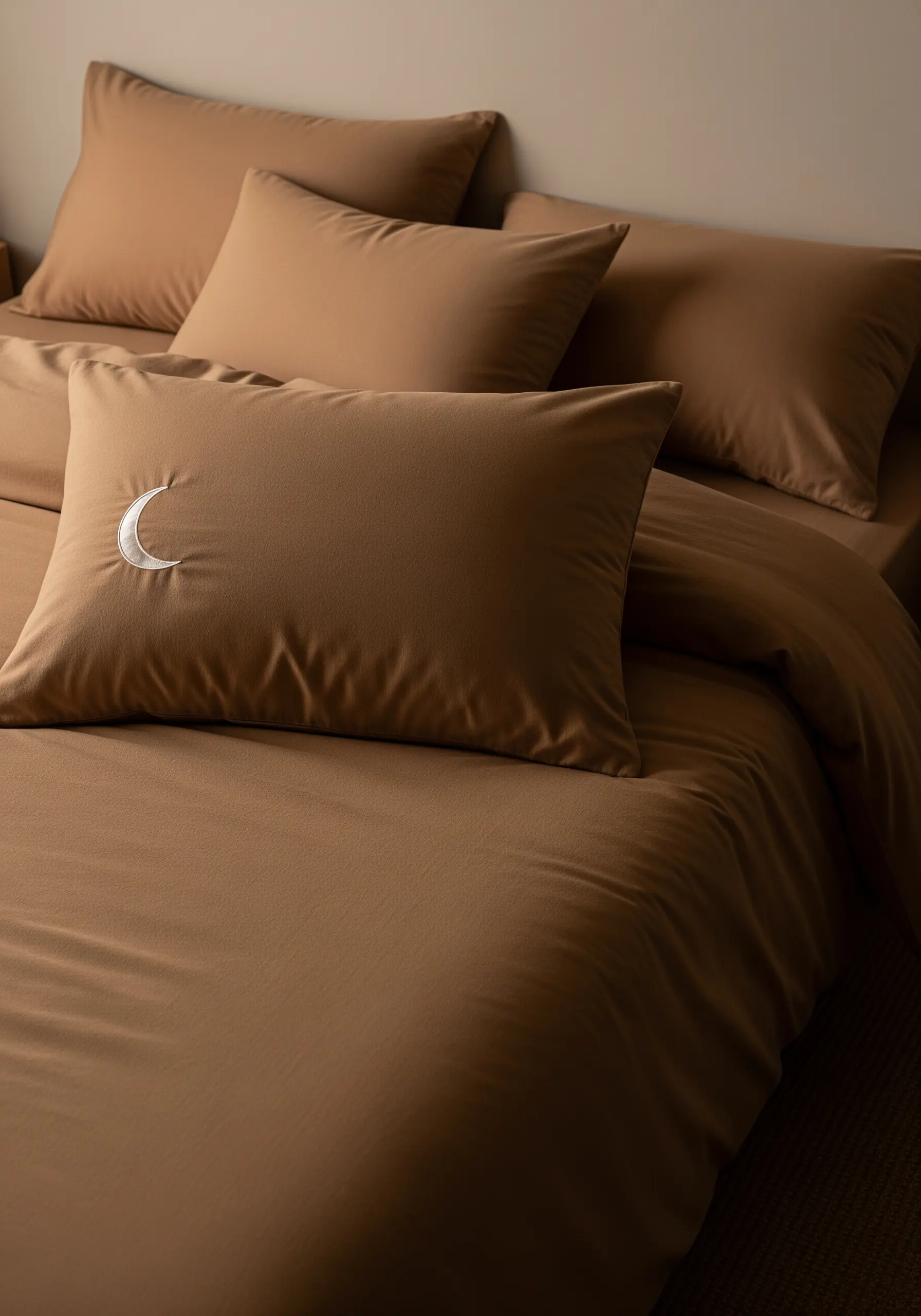
Place a single, small motif on a pillowcase for a touch of quiet personality.
To create a perfectly smooth and luminous crescent moon, first outline the shape with a tiny split stitch.
Then, fill the shape with satin stitches, using the split stitch outline as a raised edge to tuck your needle under.
This technique, called padded satin stitch, gives your motif a subtle, three-dimensional lift and incredibly sharp edges. It’s one of the best moon and stars embroidery ideas for a calm bedroom.
17. Capturing Movement with Directional Stitches
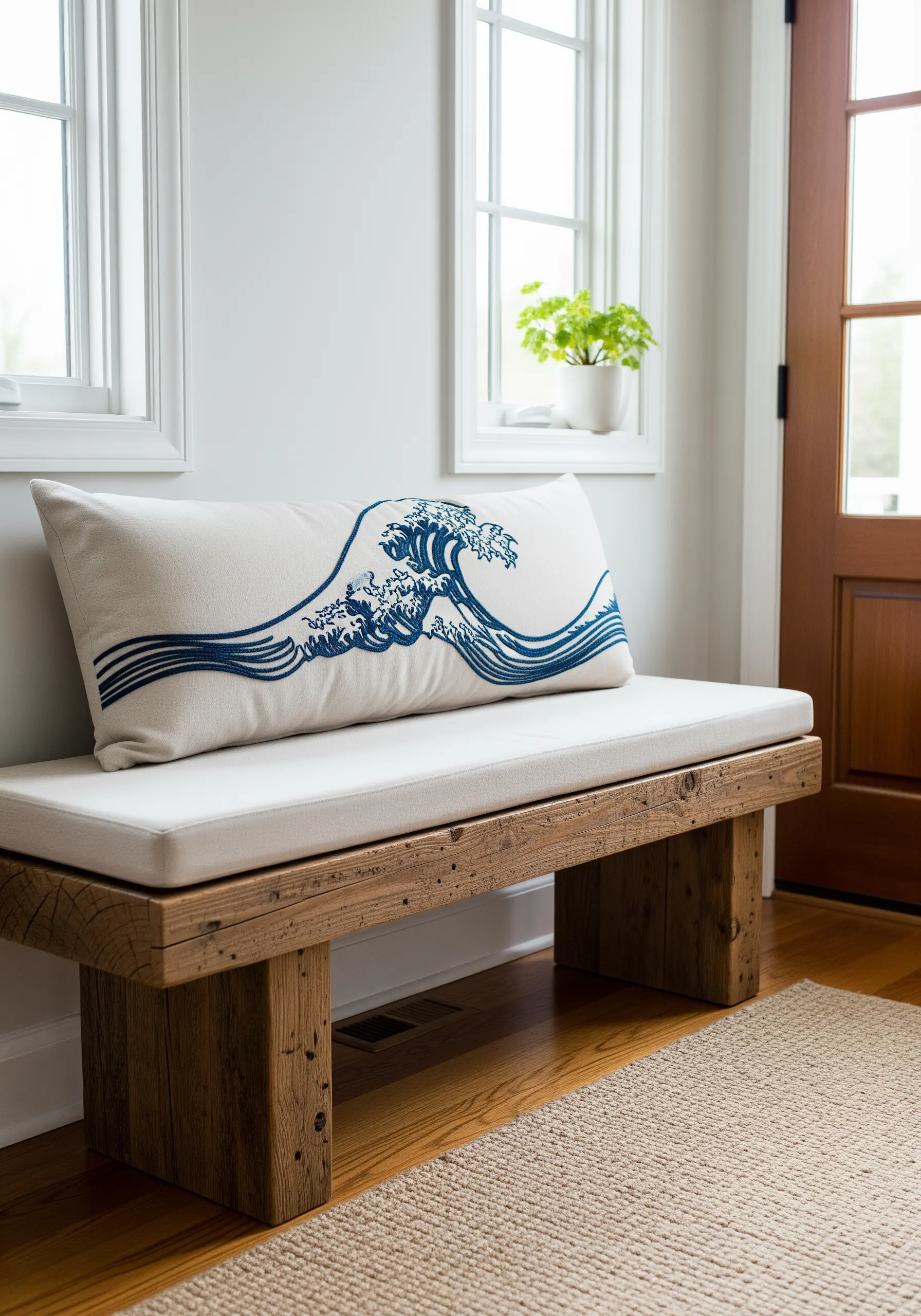
Embody the energy of nature, like a crashing wave, by paying attention to the direction of your stitches.
Use a chain stitch or a heavy split stitch to create the flowing lines of the water.
For the seafoam, switch to clusters of French knots and straight stitches, pointing them in multiple directions to mimic the chaotic spray.
By varying your stitch direction, you can turn a static image into a dynamic scene full of movement.
18. The Purity of a Single Geometric Shape
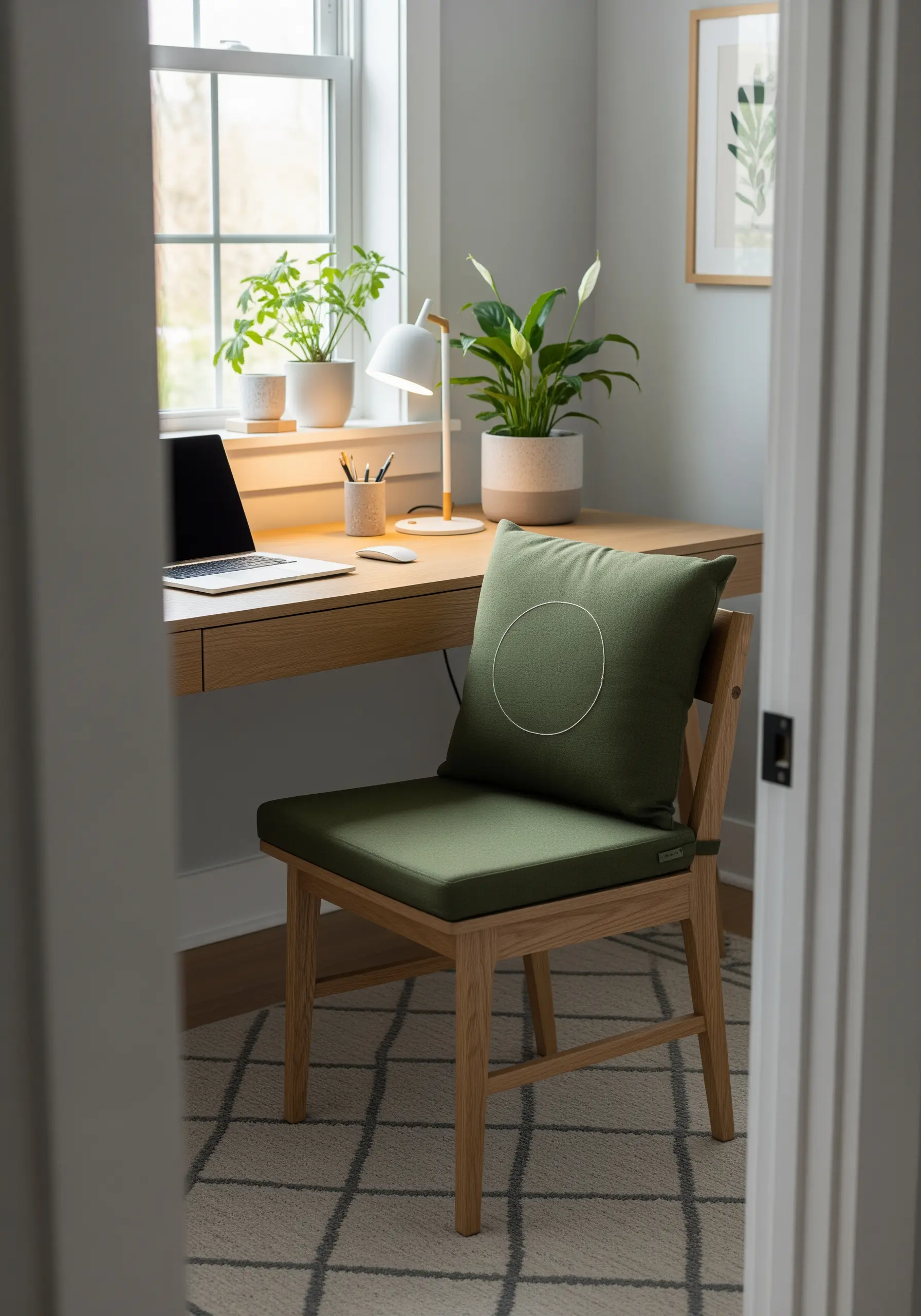
Make a strong minimalist statement with a single, perfectly executed geometric shape.
To stitch a flawless circle on a cushion, avoid free-handing it. Use a compass and a fabric pen to draw a perfect guideline.
A whipped backstitch or a stem stitch will create a smooth, solid line without the slight bumpiness of a standard backstitch.
Using a fine, single-strand thread in a contrasting color like off-white on olive adds a touch of graphic sophistication to embroidery cushion pillow ideas.
19. Create Depth with Tone-on-Tone Foliage
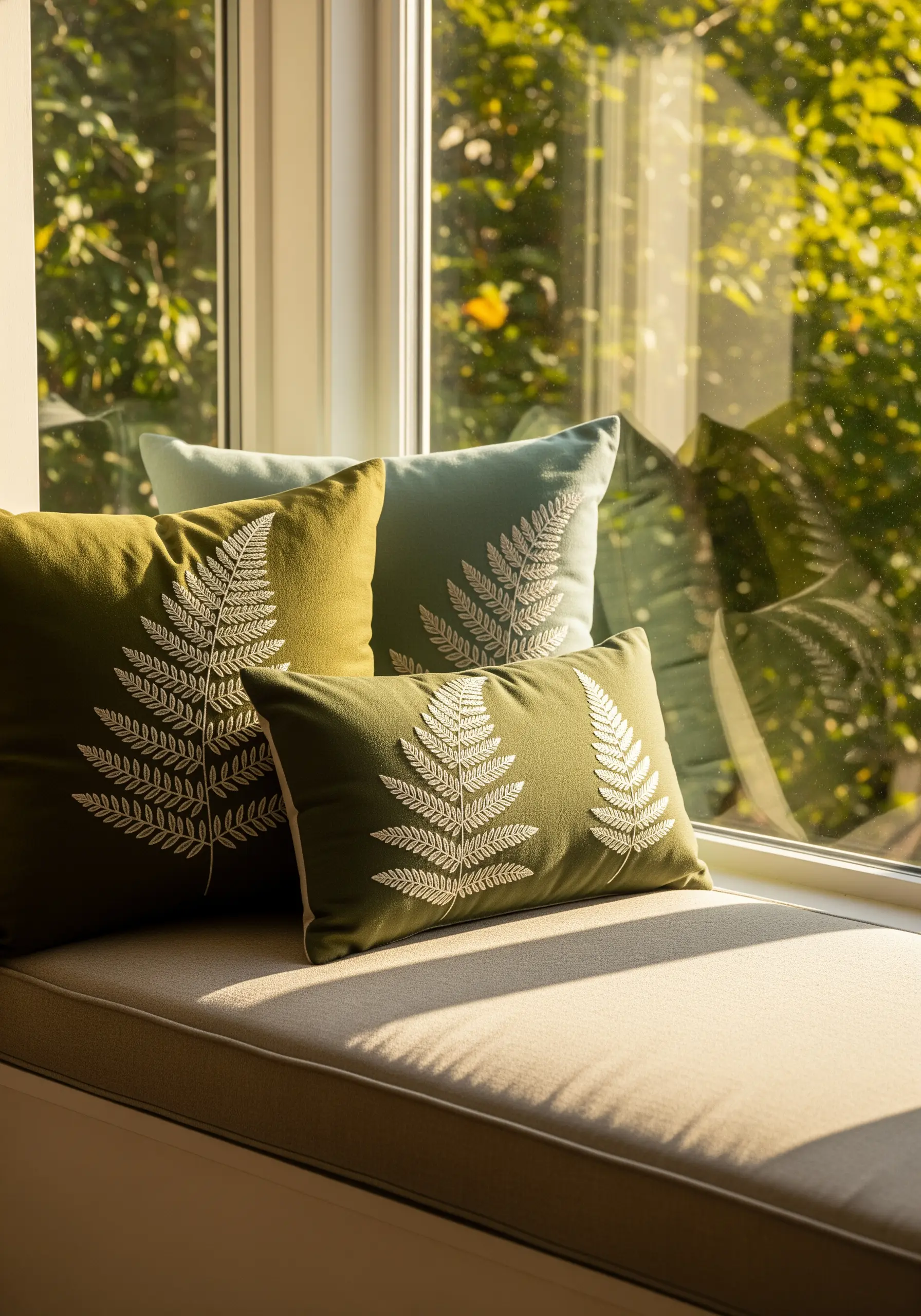
Explore the beauty of a monochrome palette by stitching motifs in a thread color that closely matches your fabric.
On these olive green cushions, the fern leaves are stitched in a slightly lighter, silvery-green thread.
This tone-on-tone approach shifts the focus from color to texture and light.
The fishbone stitches catch the light differently than the fabric, making the design appear and recede depending on the angle—a truly sophisticated effect for plant-inspired embroidery patterns.
20. Personalize Decor with Abstract Data
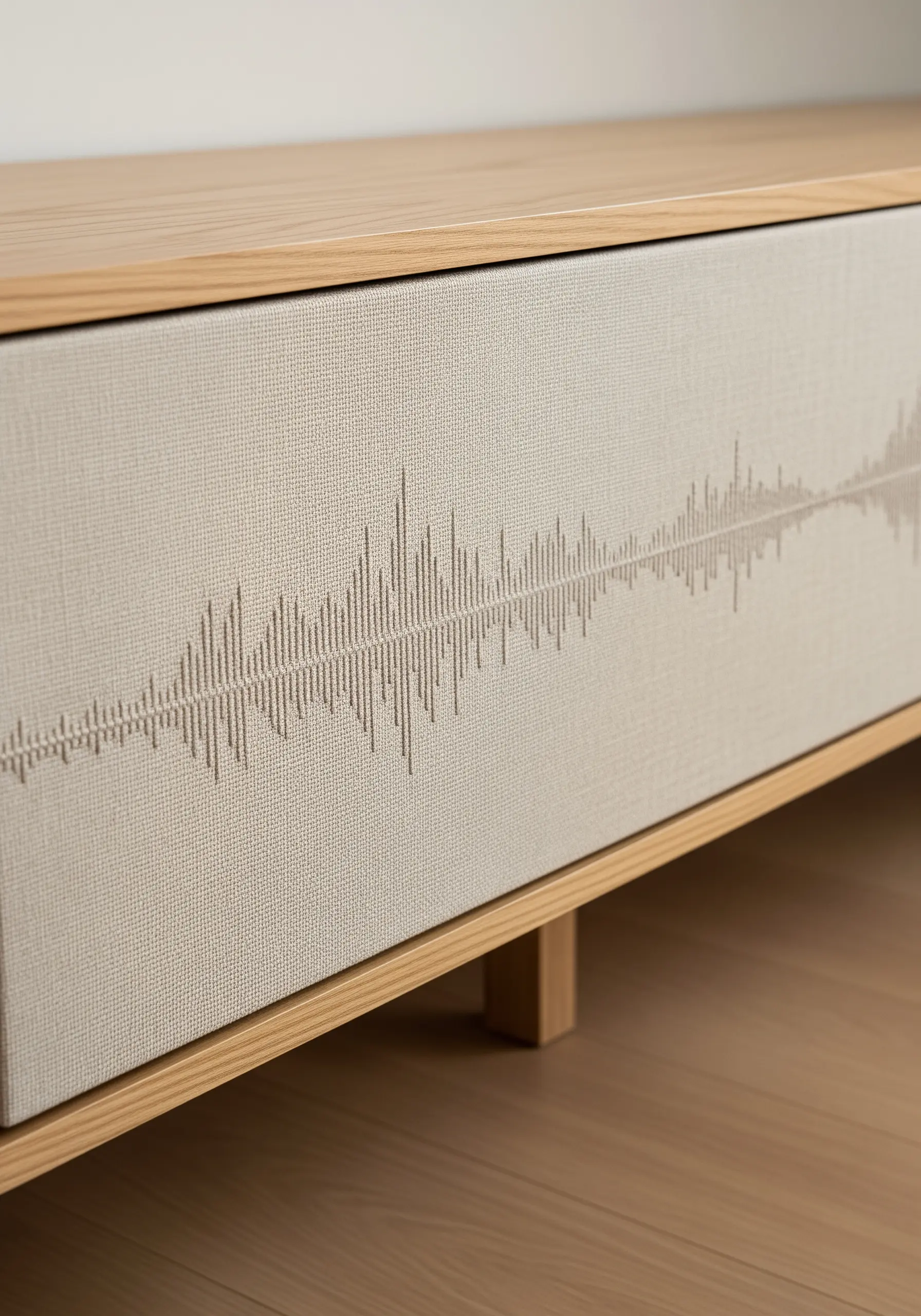
Translate a meaningful piece of data—like the soundwave of a voice or a favorite song—into a unique embroidered design.
Use a simple backstitch or a dense pattern of straight stitches on a fabric-covered panel or piece of furniture.
The beauty of this concept lies in its personal significance; it turns an abstract pattern into a secret message.
Keep the color palette minimal (tone-on-tone or a single muted shade) to let the unique form of the soundwave be the focus.
21. The Art of the Straight Stitch Wall Hanging
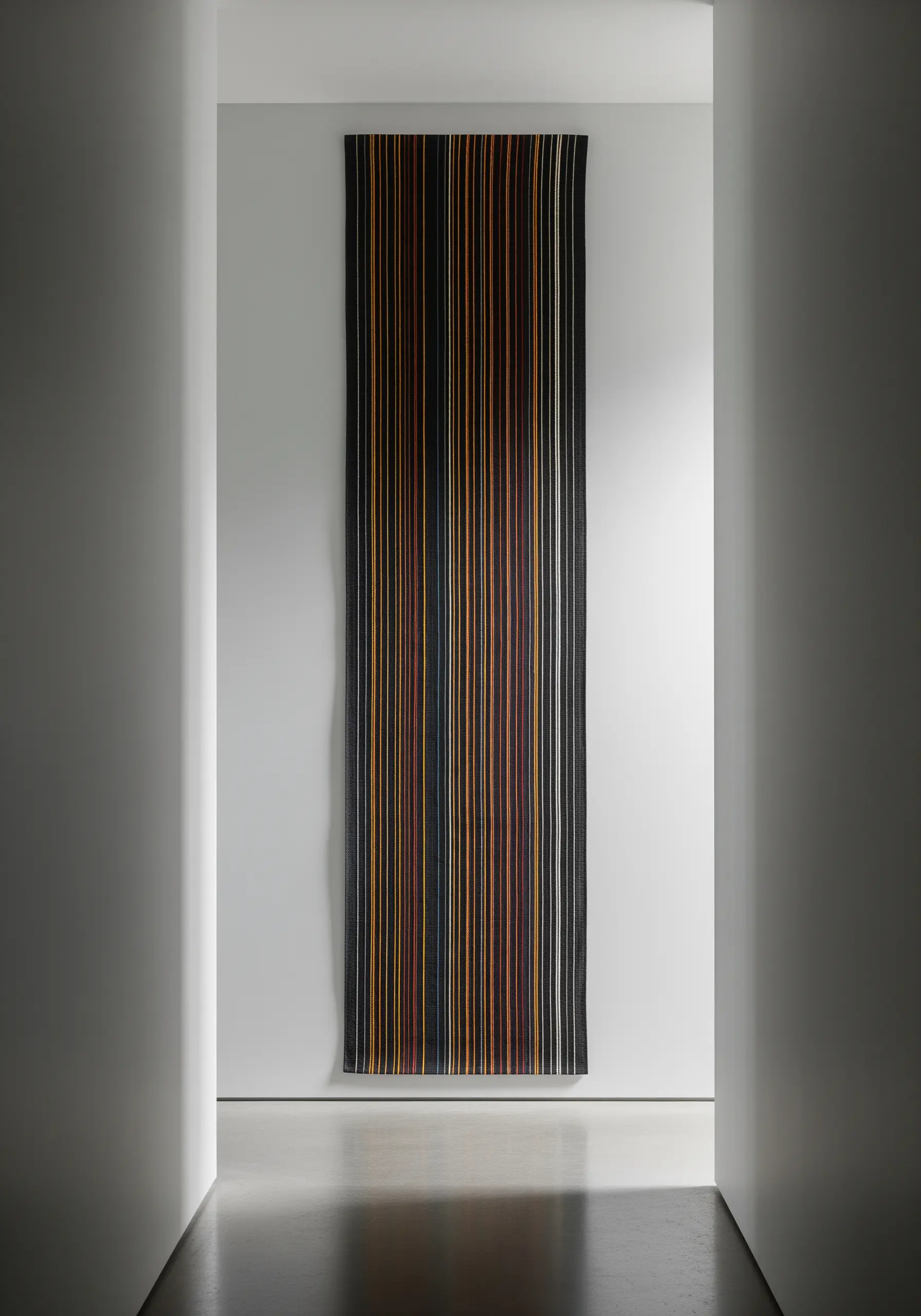
Create a dramatic piece of wall art using only straight stitches.
On a dark fabric base, stitch vertical lines in a palette of warm, earthy tones like ochre, rust, and deep brown.
The challenge with long straight stitches is maintaining even tension to avoid puckering the fabric.
Work in a large frame or hoop and stitch from the center outwards to ensure the fabric remains taut and your lines stay perfectly straight.
This technique transforms simple lines into a stunning modern embroidered tapestry.
22. Meditative Rhythm with Sashiko Stitching
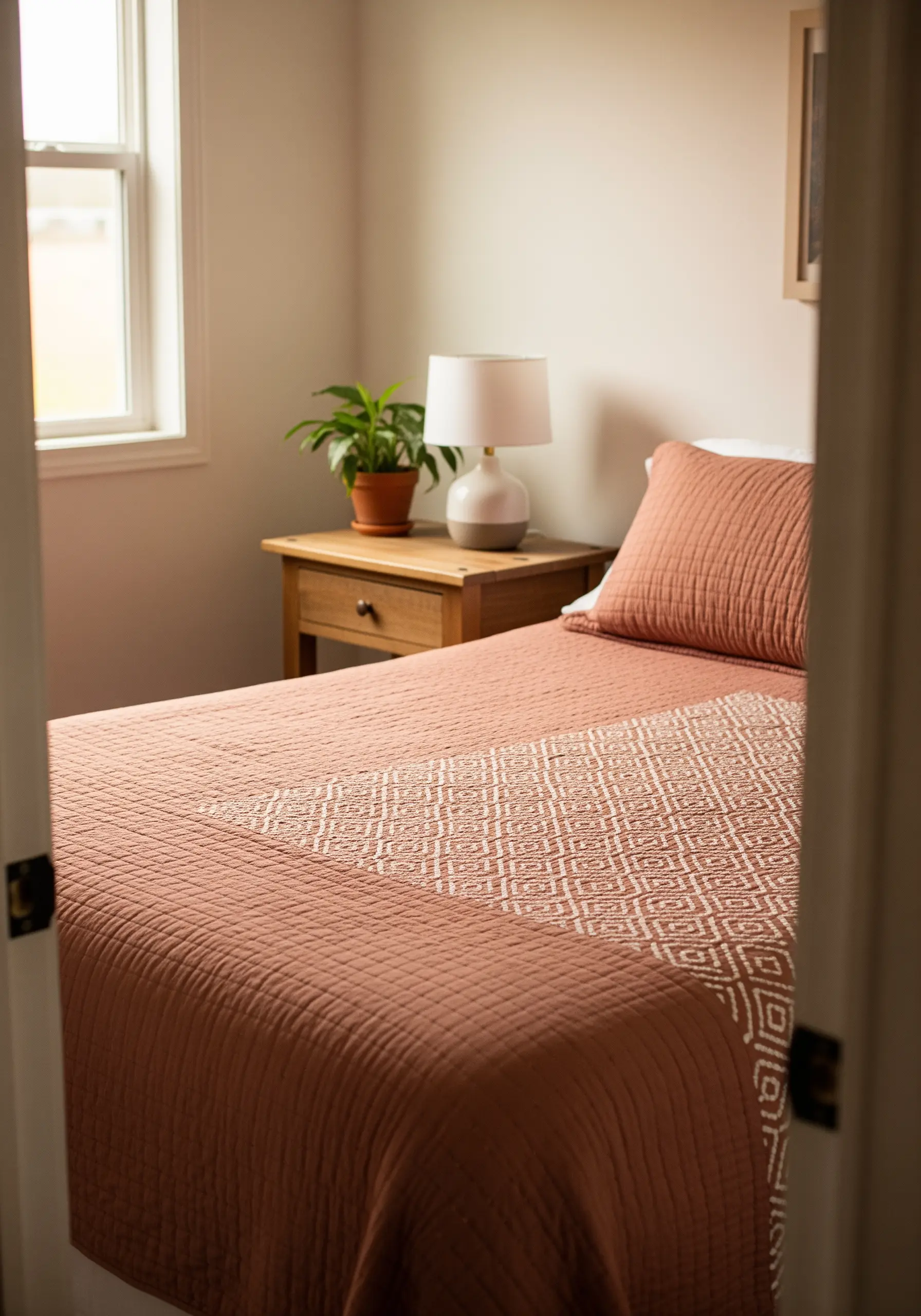
Add pattern to a quilt or bedspread with the calming technique of Sashiko-style stitching.
This method uses a simple running stitch to create intricate, repeating geometric patterns.
Use a thick, soft cotton thread (like Sashiko thread or pearl cotton) in a contrasting color to make the pattern pop.
The key is to maintain a consistent stitch length and to leave a tiny bit of slack in the thread on the back when turning corners to prevent puckering.
23. Go Large-Scale with Couched Rope
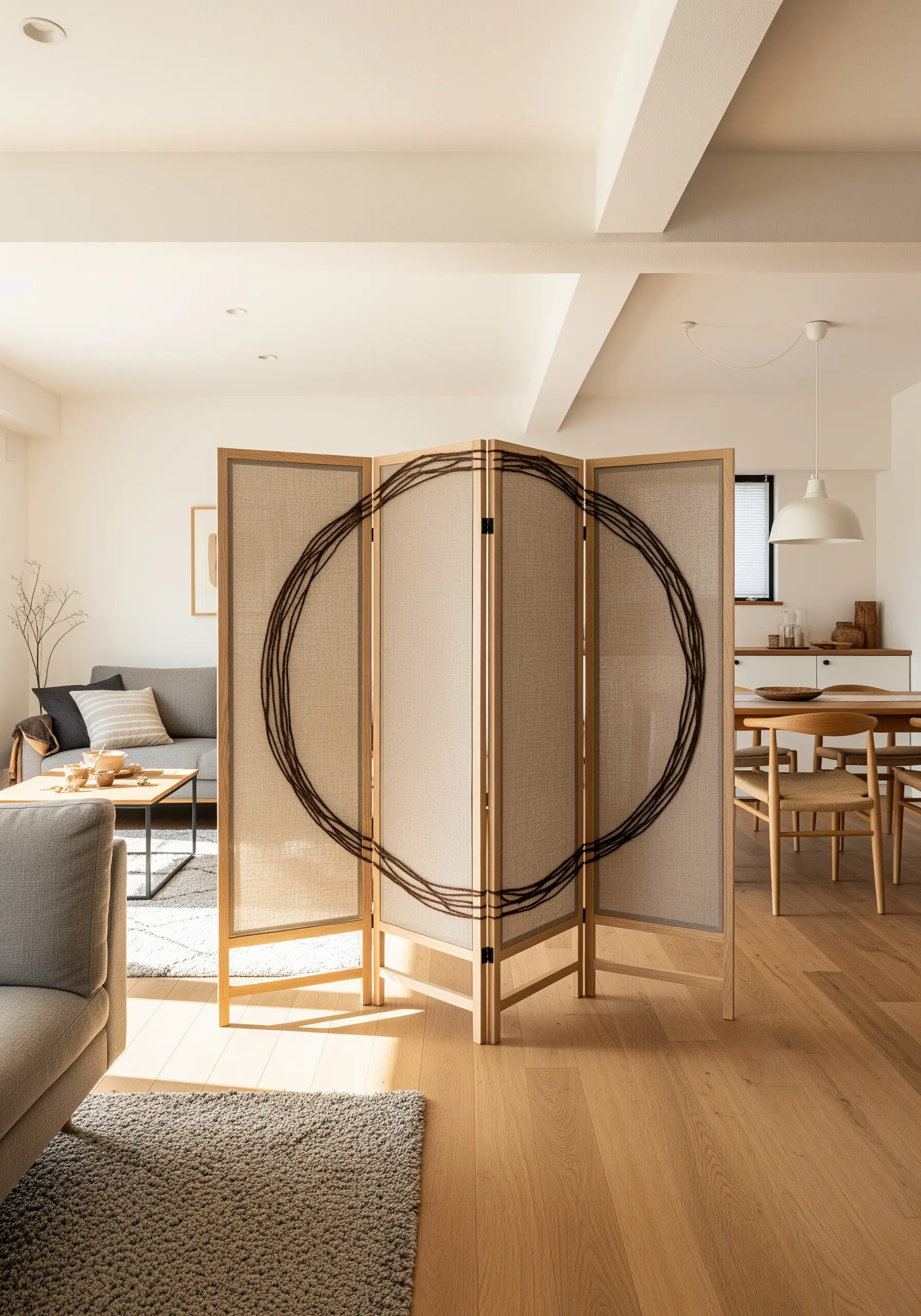
Make a bold statement by applying embroidery techniques to unconventional materials and scales.
On this fabric room divider, a thick, dark rope is couched onto the linen panels to create a massive, graphic circle.
Secure the rope with a strong, matching thread using small, evenly spaced tacking stitches.
This method allows you to create huge, impactful designs that would be impossible with thread alone, turning a simple object into a piece of installation art.
24. The Power of a Single, Centered Motif
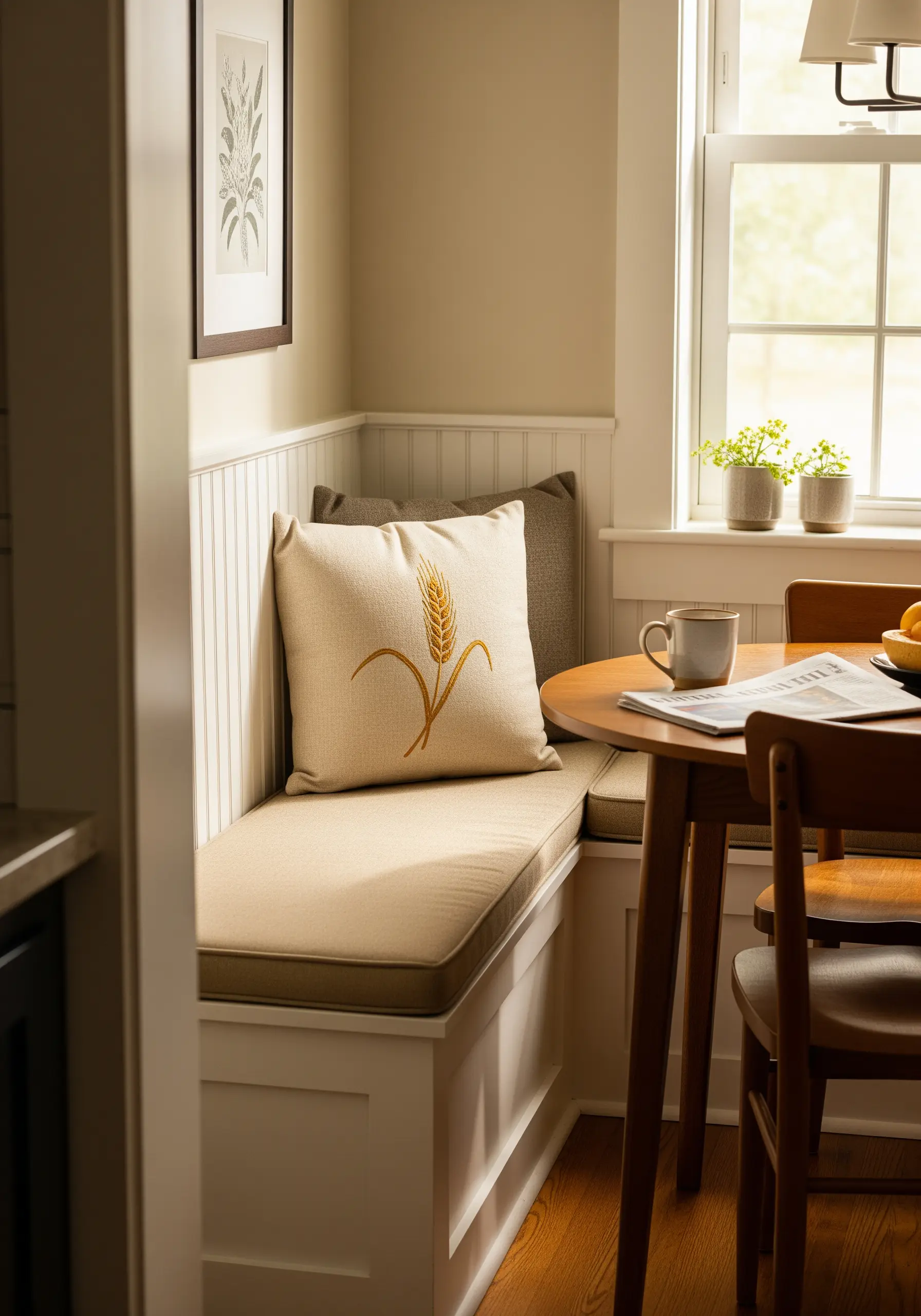
Give a single, simple motif importance by placing it thoughtfully within a composition.
A solitary wheat stalk, stitched in golden-brown thread, becomes a focal point when centered on a light-colored cushion.
Use a satin stitch for the grains to give them a subtle sheen and a stem stitch for the stalk.
The ample negative space around the motif allows it to breathe, creating a sense of calm and intention. This is a core principle of minimalist embroidery art.
25. Radiating Lines for Energy and Focus
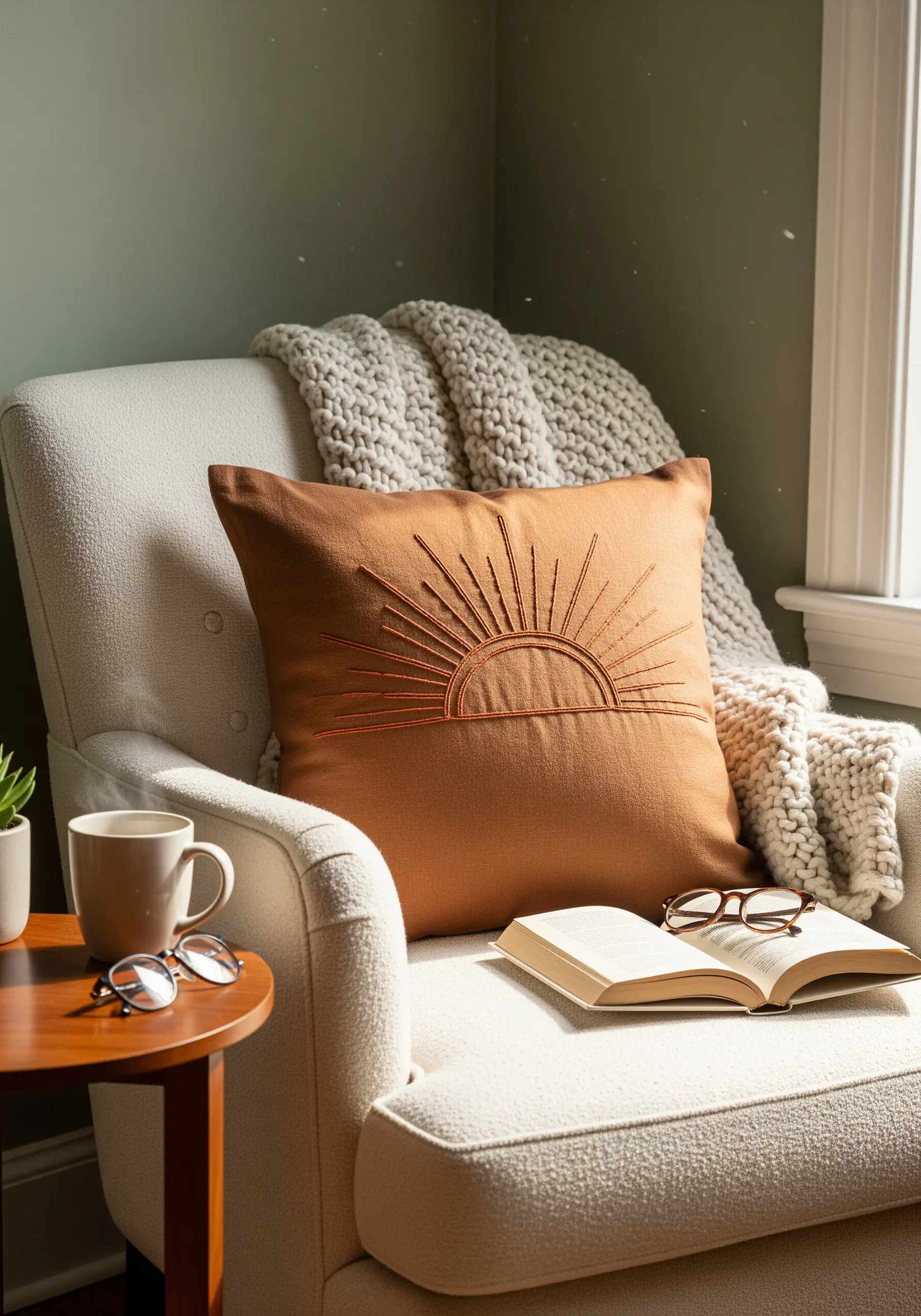
Create a sense of warmth and energy with a radiating sunburst pattern.
Use straight stitches of varying lengths, all emanating from a single arched line at the base.
For a clean, professional finish, ensure all your stitches are perfectly straight and evenly spaced.
A tone-on-tone effect, using a thread slightly lighter and shinier than the base fabric, adds a sophisticated glow that feels both modern and timeless.
26. Abstract Landscapes with Thread Painting
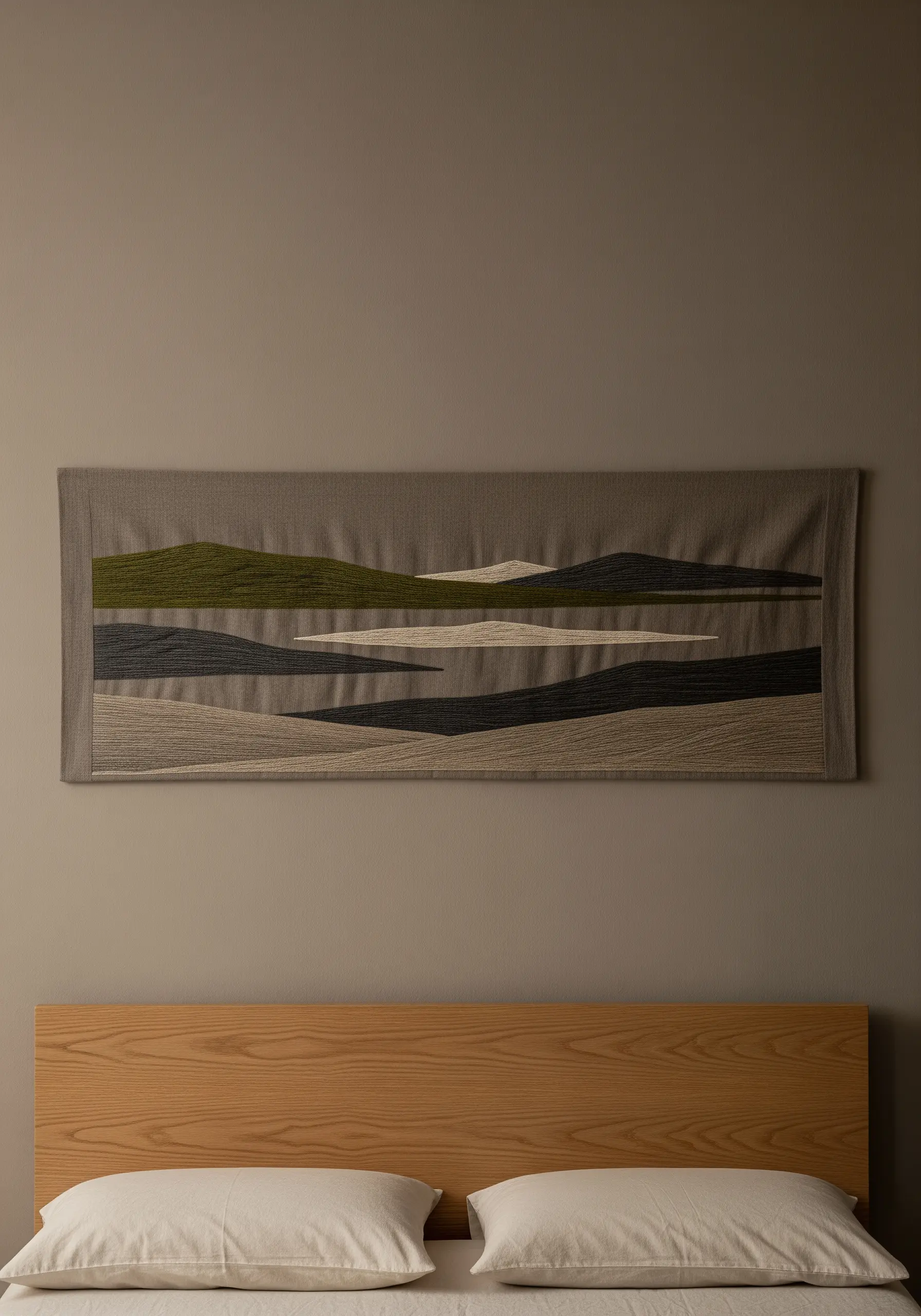
Paint a serene, abstract landscape using fields of color and texture.
Use the long-and-short stitch to blend shades of green, gray, and cream, creating soft, rolling hills.
Vary the direction of your stitches in each section to create distinct textural zones that mimic the contours of the land.
This approach moves beyond simple outlines, using thread to create blocks of color and emotion, perfect for abstract thread landscapes.
27. A Scatter of Tiny Botanical Sprigs
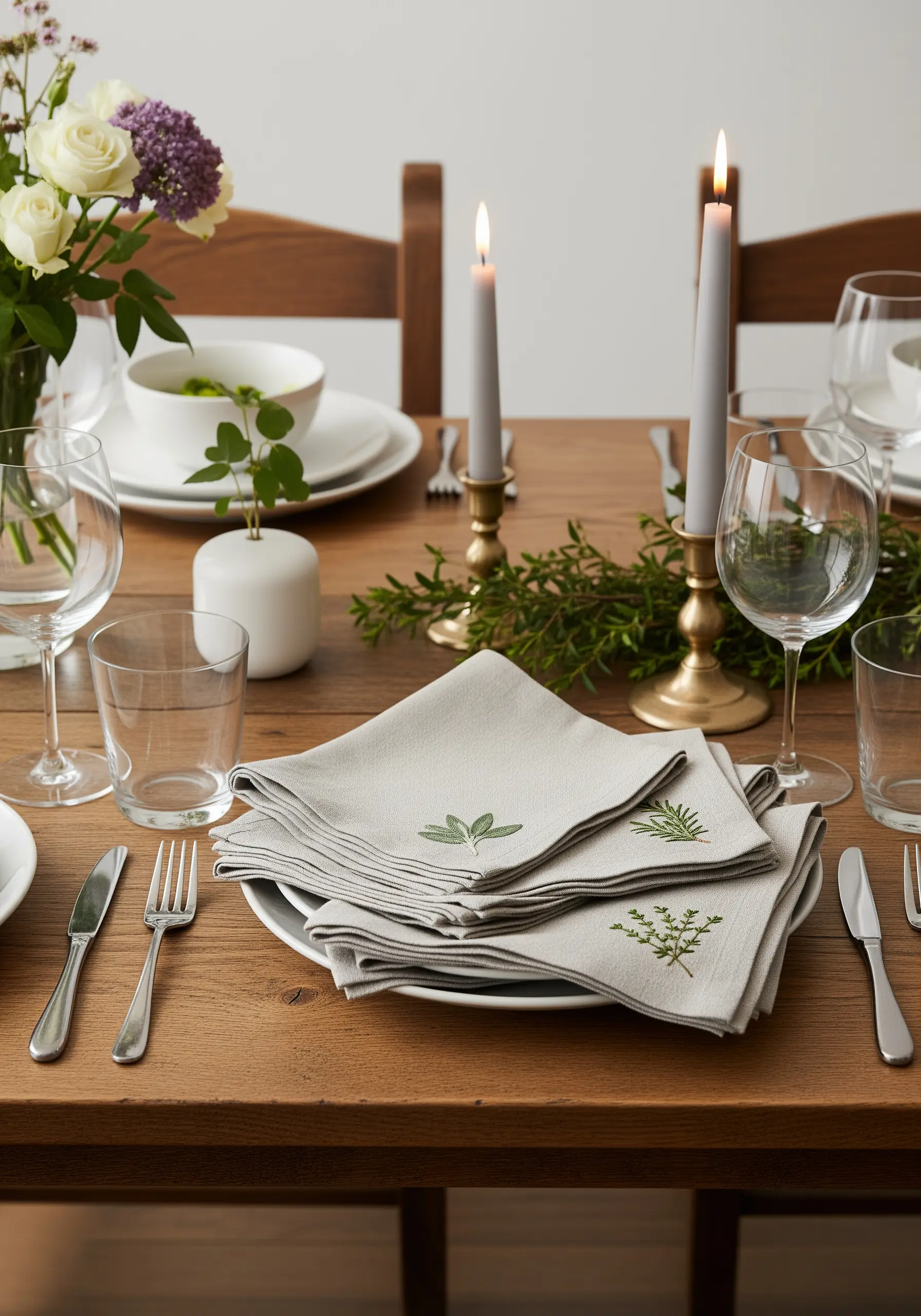
Instead of one large design, embellish table linens with several tiny, individual botanical motifs.
This creates a delicate, scattered effect that feels organic and effortless.
Vary the type of sprig on each napkin—one with leaves, one with buds, one with berries—using simple stitches like lazy daisies and French knots.
Stitching a collection of tiny leaf embroidery motifs is a wonderful way to practice different stitches while creating a cohesive, charming set.
28. Raised Texture with Corded Stitches
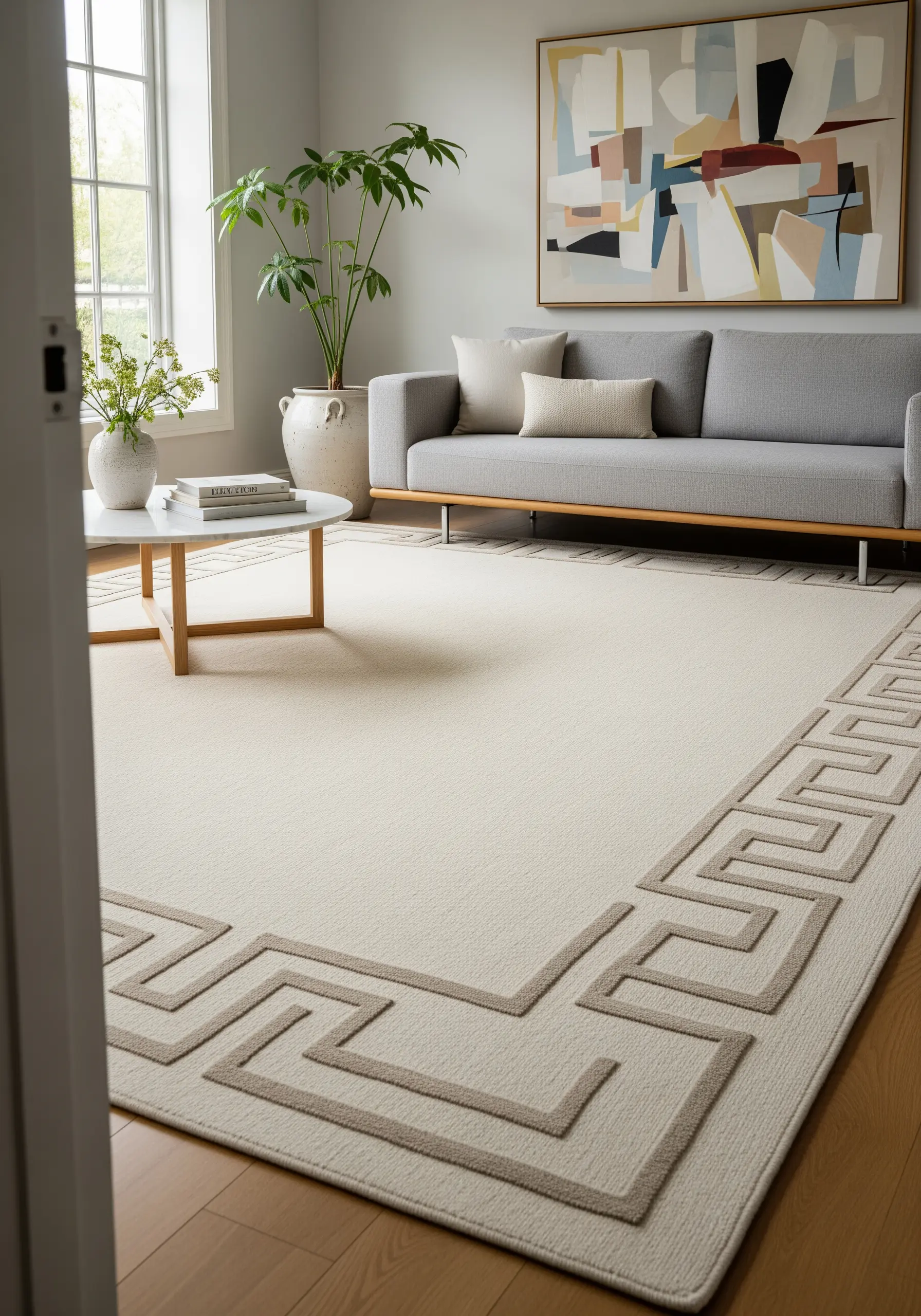
Mimic the raised, textural effect of this rug by using a padded satin stitch or couching in your embroidery.
To create a raised geometric border, first lay down a foundation of several parallel strands of yarn or thick thread.
Then, cover this padding completely with dense, perpendicular satin stitches.
The result is a highly dimensional, cord-like line that adds a luxurious, sculptural quality to your textile projects.
29. A Single, Meaningful Symbol
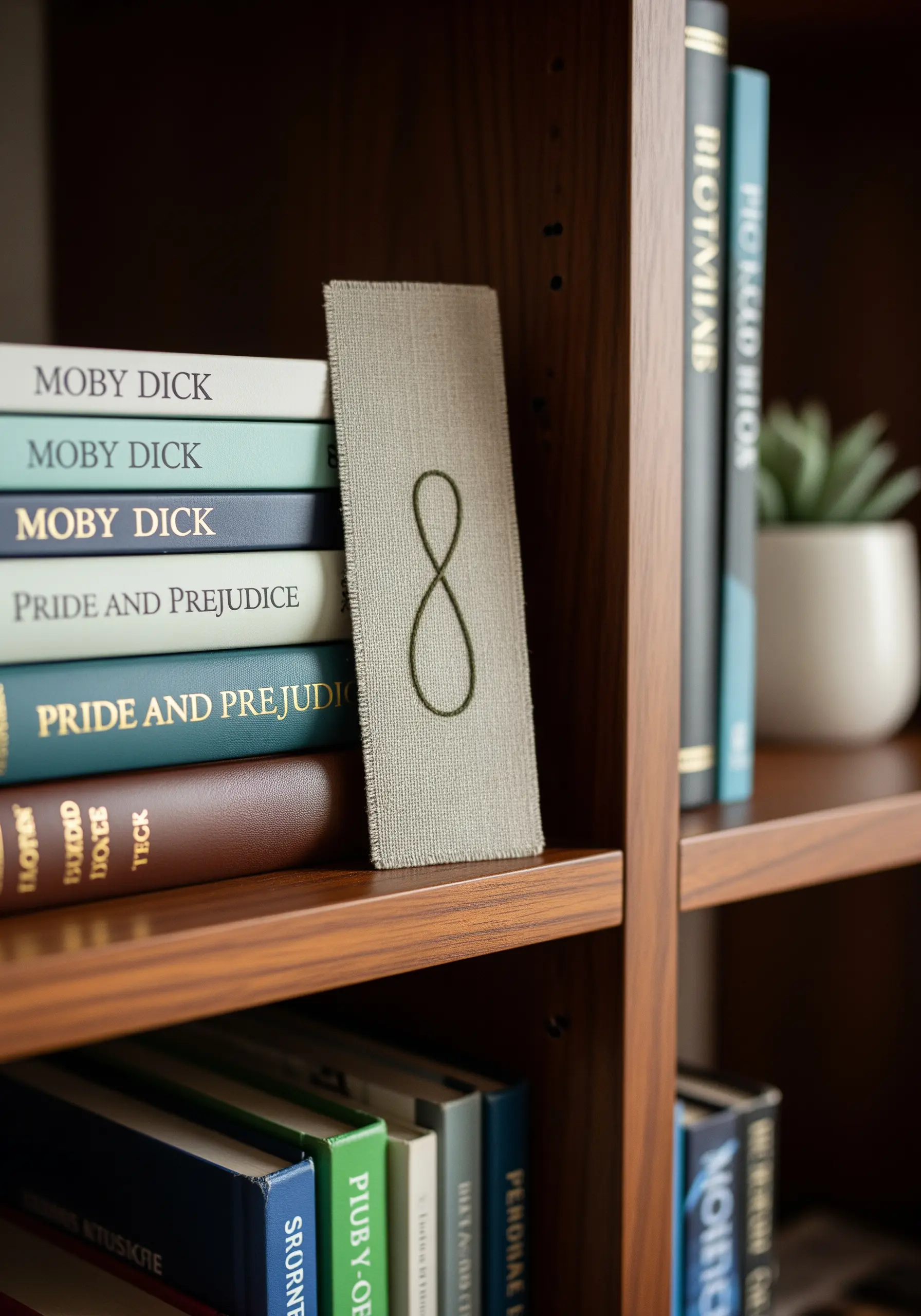
Embroider a small, personal symbol on an everyday object, like a bookmark, to turn it into a meaningful talisman.
Choose a simple shape, like an infinity loop or a personal monogram, and stitch it with a smooth, continuous line using a whipped backstitch.
The act of stitching infuses the object with intention.
This is one of the most effective simple line art word symbol embroidery ideas for creating a thoughtful, personalized gift.
30. High-Contrast Line Art for a Graphic Statement
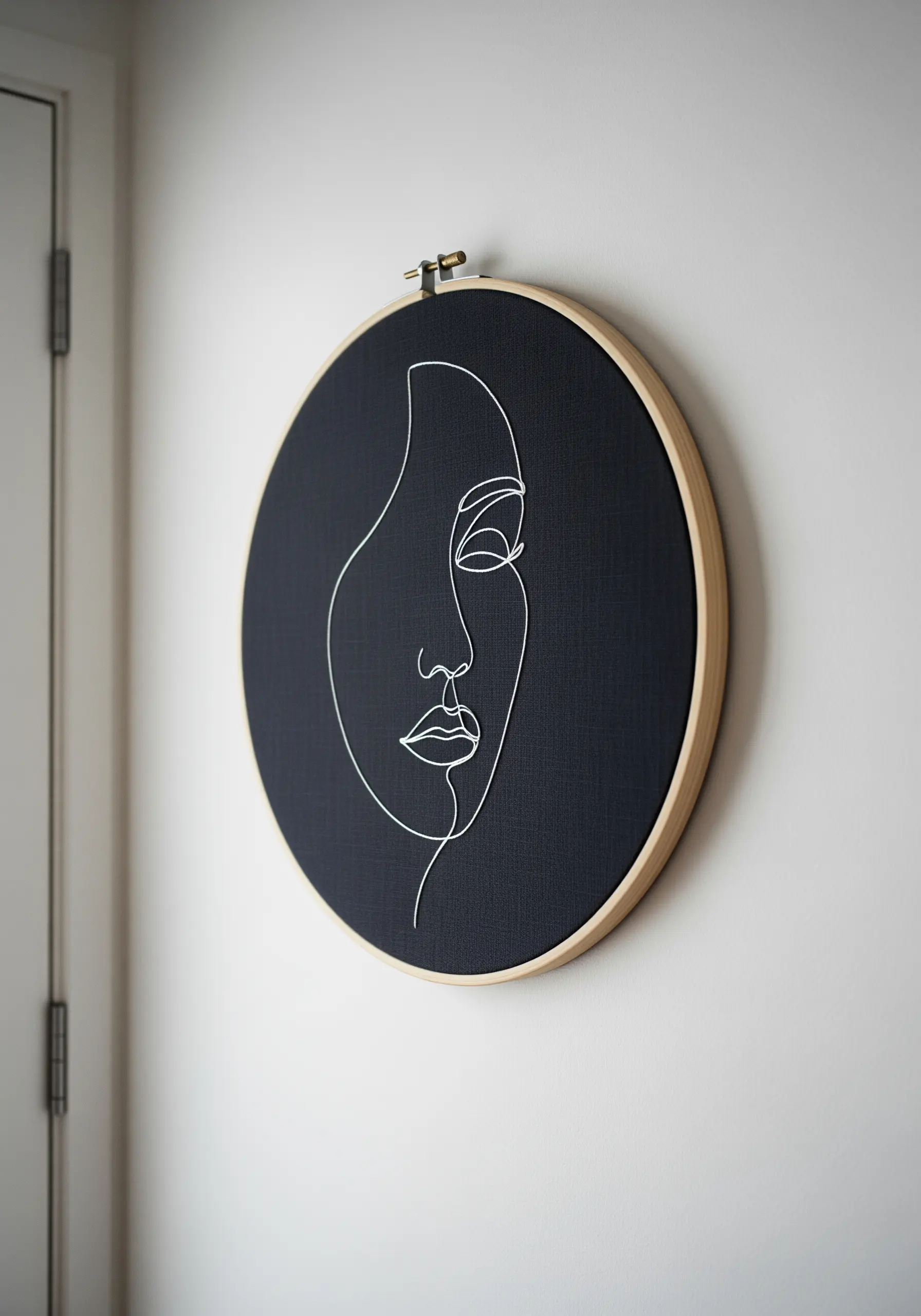
Create a powerful graphic statement by stitching with a fine, light-colored thread on a dark background.
Use a single strand of white floss to trace a continuous line-art portrait on black or charcoal linen.
A simple backstitch is all you need; the drama comes from the stark contrast and the delicacy of the line.
This technique strips a design down to its essential form, resulting in a piece that feels both modern and intensely personal. This style is perfect for modern line art faces.
31. The Storytelling Power of Visible Mending
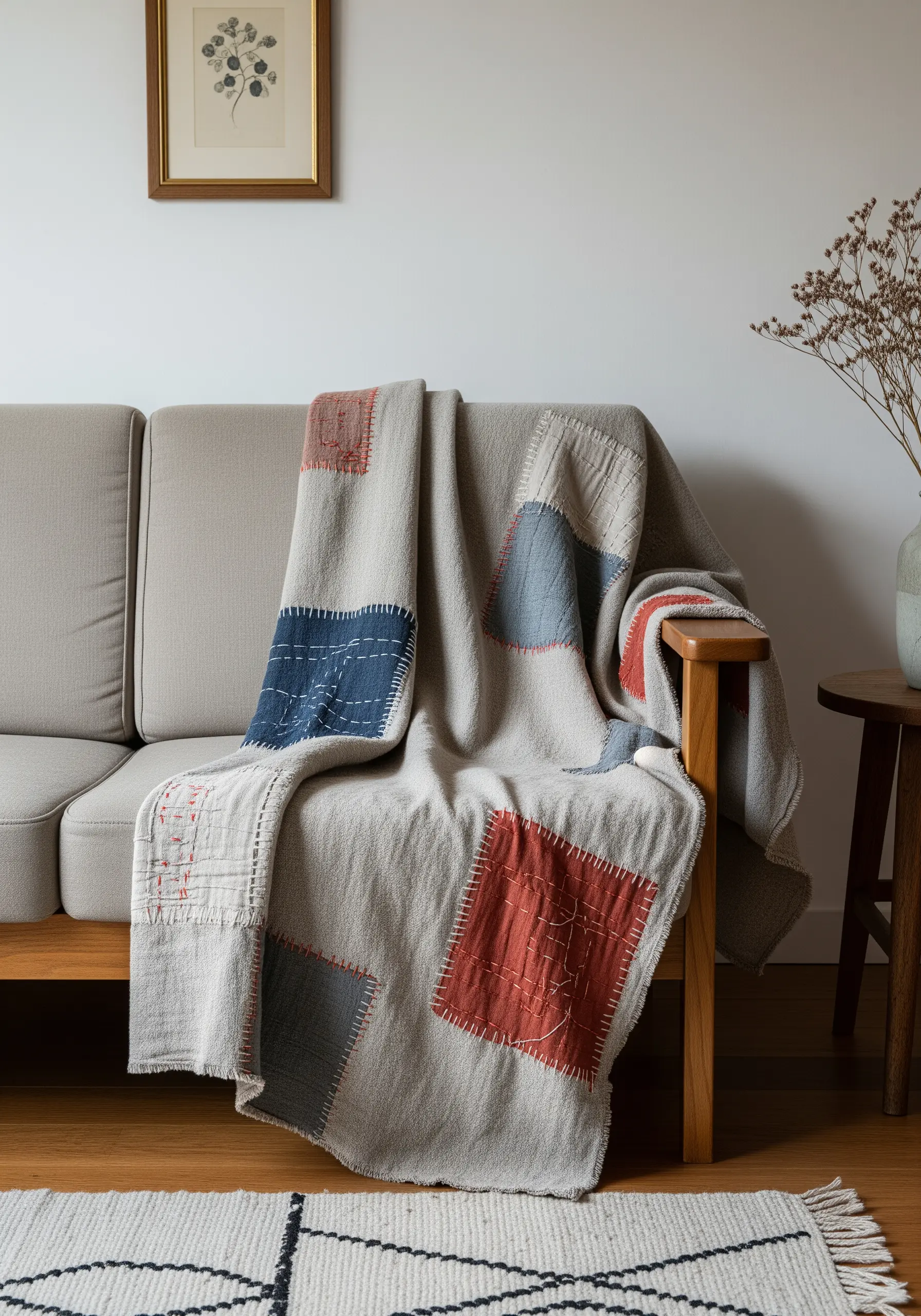
Embrace the beauty of imperfection and history with Boro-inspired stitching.
Layer patches of scrap fabric in harmonious earth tones onto a larger textile, like a throw blanket.
Instead of hiding your stitches, make them a feature. Use a simple running stitch in a contrasting color to secure the patches and add decorative patterns.
This technique of whimsical fabric collage embroidery doesn’t just add texture; it tells a story of use, care, and renewal.
32. Soft Gradients for Realistic Botanicals
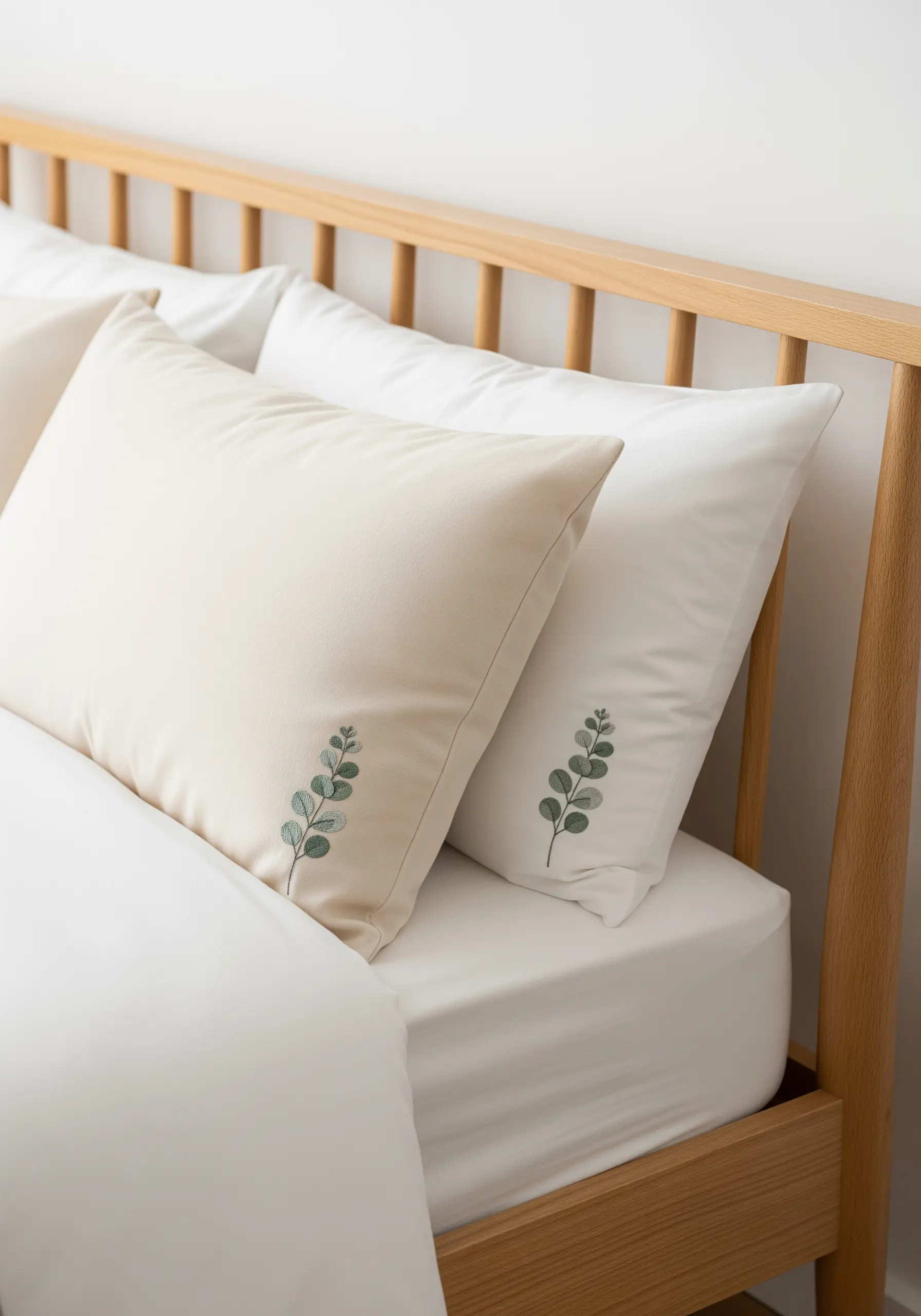
Give your embroidered leaves a soft, realistic look by using multiple shades of the same color.
For these eucalyptus sprigs, use two or three shades of dusty green and a touch of gray.
Instead of blocking the colors, allow them to blend organically. Use one strand of a lighter green and one strand of a darker green together in your needle for a subtle, heathered effect.
This simple trick adds depth and realism without requiring complex thread painting skills and it’s one of the best ways to use neutrals in leaf embroidery.
33. Create a Series for Greater Impact
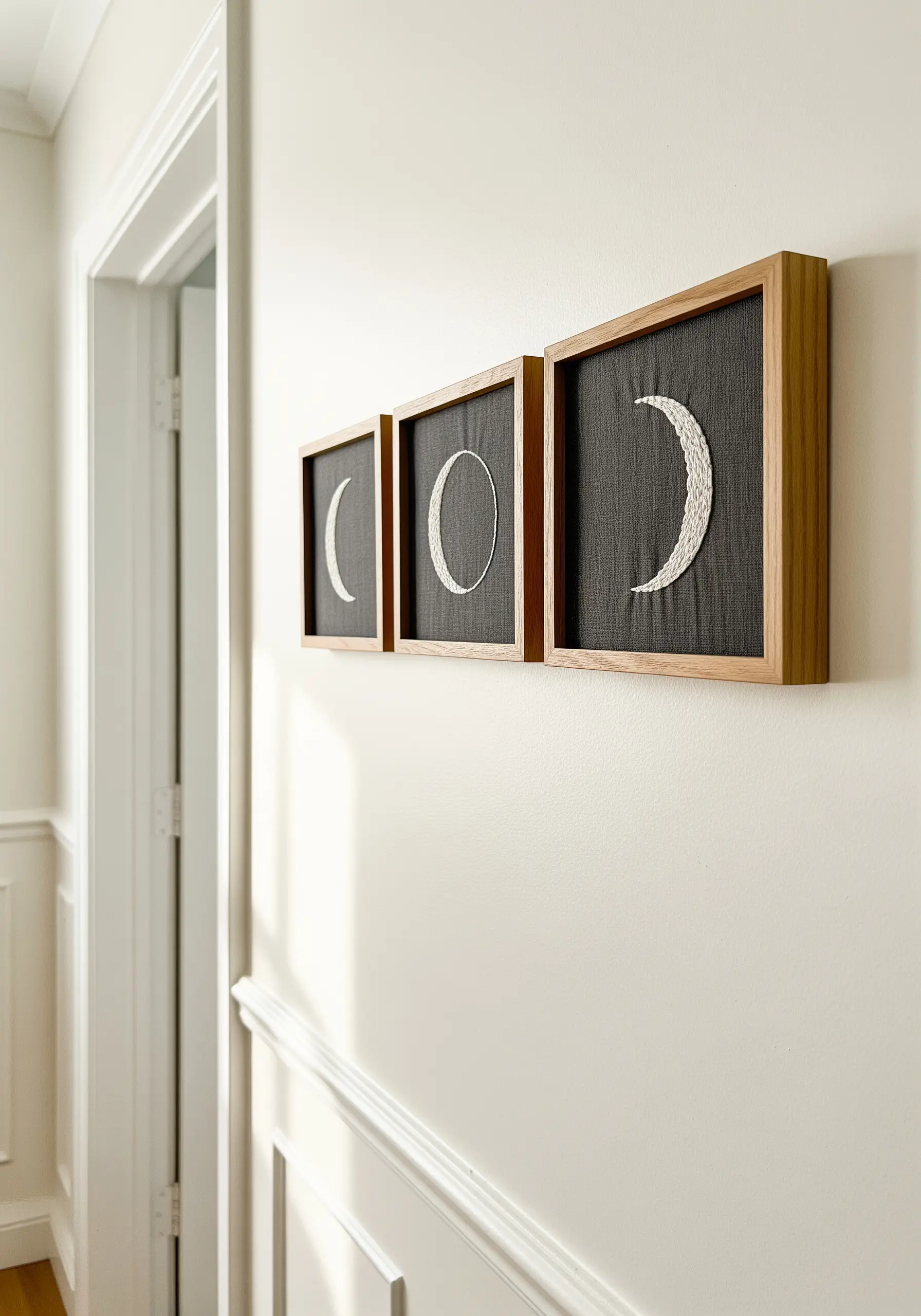
Amplify the impact of a simple motif by presenting it as a series.
Embroidering the phases of the moon on three separate, identically framed panels creates a cohesive piece of art with a strong narrative.
Use a textured fill stitch, like laid work or a dense seed stitch, to give the celestial bodies a tactile, cratered surface.
Displaying your work in a triptych turns small, individual embroideries into a significant installation, a great way to create hooped wall collage layouts.
34. Integrate Chunky Braids for 3D Texture
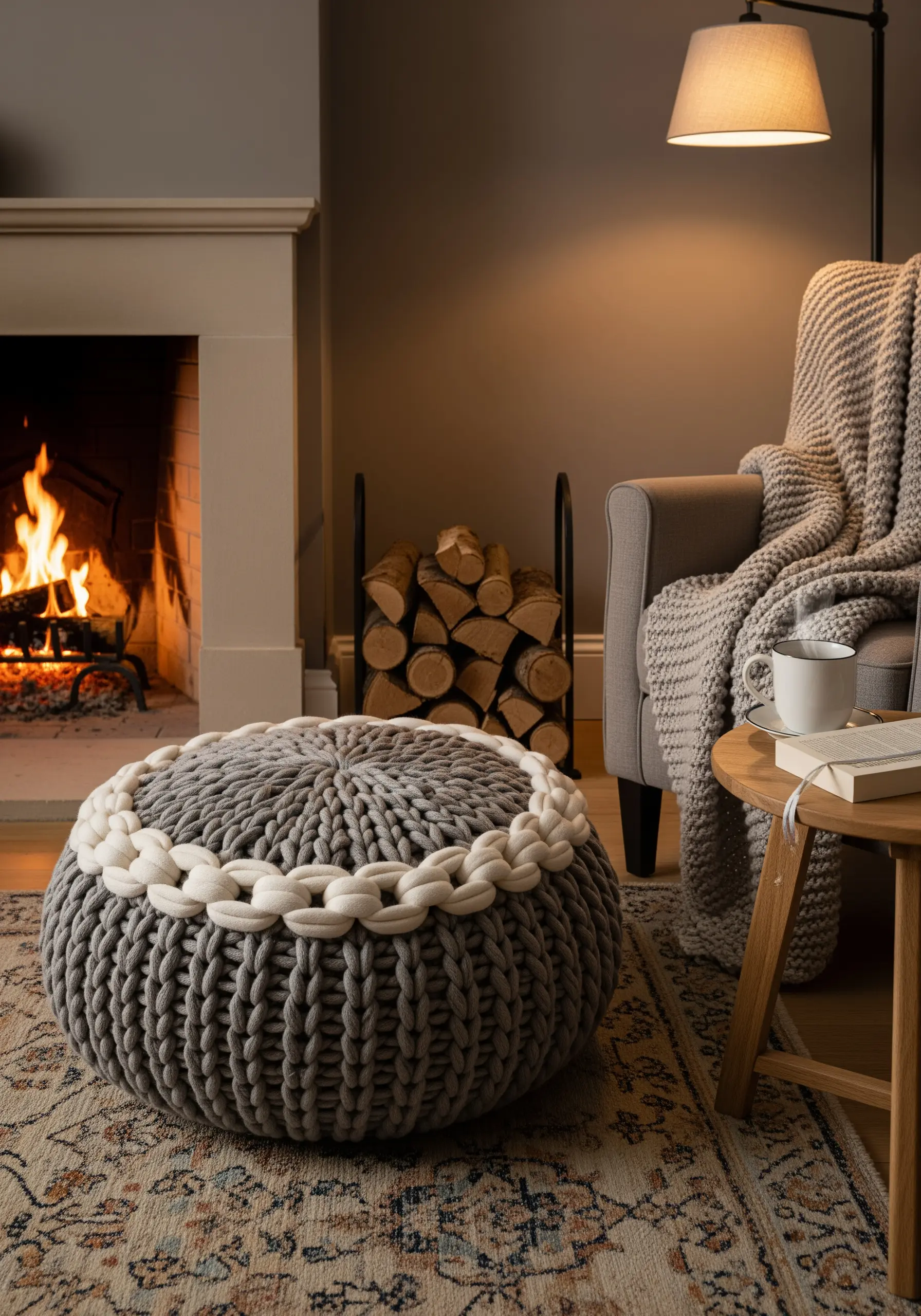
Add bold, three-dimensional texture to your textile projects by integrating braided or plaited fibers.
On a knit or woven piece like this pouf, a chunky, soft braid is attached around the circumference, creating a dramatic textural break.
You can create this effect by couching a pre-made braid or by using large-scale finger-knitting techniques directly onto the surface.
This method is perfect for adding a cozy, handcrafted feel to home decor items.
35. Functional Line Art for a Touch of Whimsy
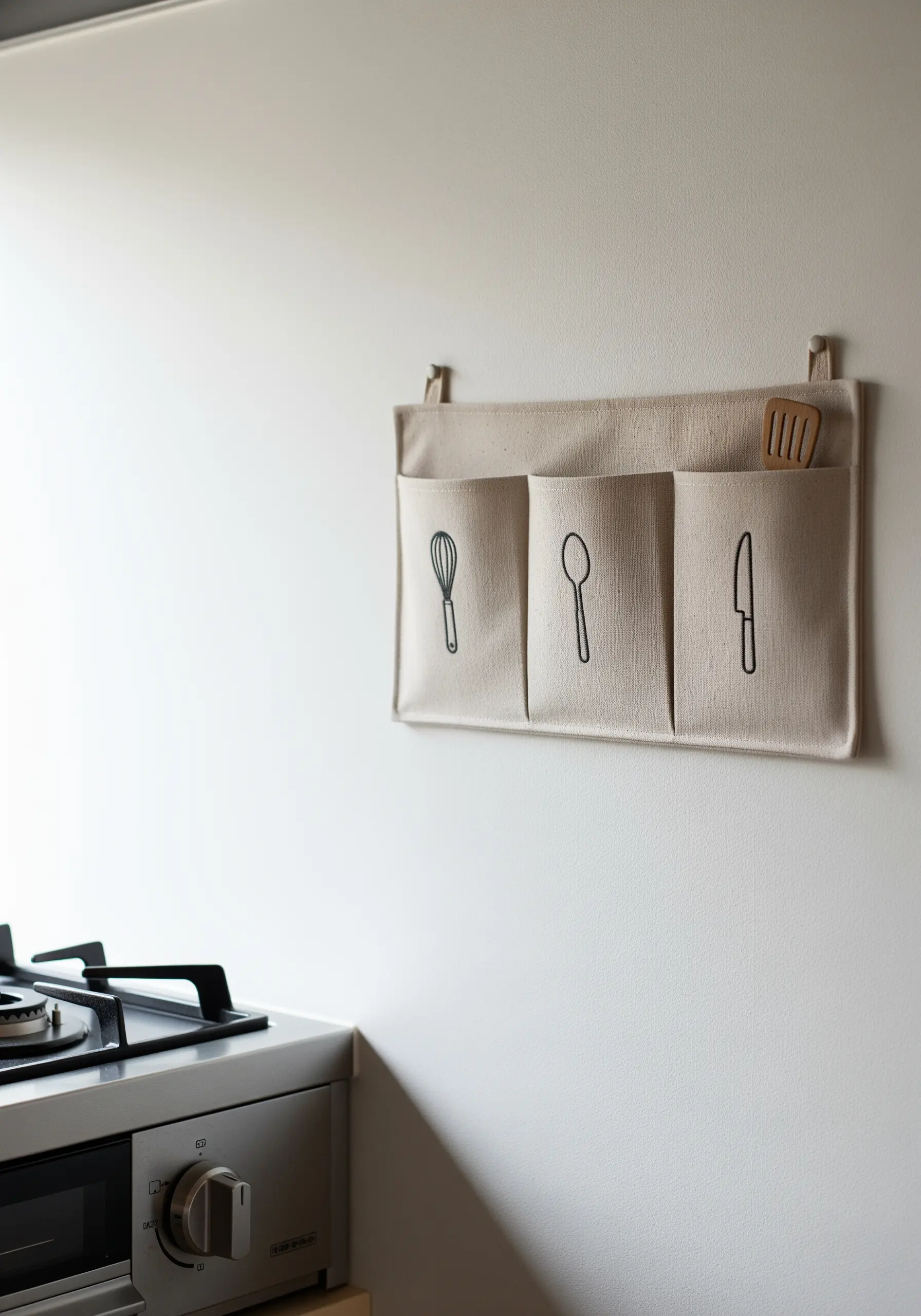
Bring a playful, artistic touch to everyday functional items with simple line-art embroidery.
On a kitchen wall organizer, stitch the outlines of the utensils that belong in each pocket—a whisk, a spoon, a knife.
Use a clean, simple backstitch with a dark thread for a clear, graphic look.
This is a charming way to blend organization with decor, turning a mundane object into a small piece of personalized art. This is a perfect example of DIY embroidery ideas for the kitchen.