

Have you ever felt that your embroidery, while technically sound, is missing a certain quiet confidence? It’s a common feeling—the desire to create something that feels less like a craft project and more like a piece of art that can calm a room.
The secret isn’t a complex new stitch or a riot of color. Instead, I invite you to explore the power of neutrals. Working with a palette of sand, stone, ecru, and charcoal isn’t about limiting your creativity; it’s about magnifying it. When color steps back, texture, line, and form take center stage. The direction of a single stitch, the weight of a thread, and the space between motifs suddenly have more impact.
In these 18 ideas, you’ll discover how to use earth tones to create leaf embroidery that feels intentional, sophisticated, and deeply organic. This is your invitation to slow down, observe the subtle details in nature, and translate them into stitches that feel both modern and timeless.
1. Create a Cascading Ginkgo Wall Tapestry
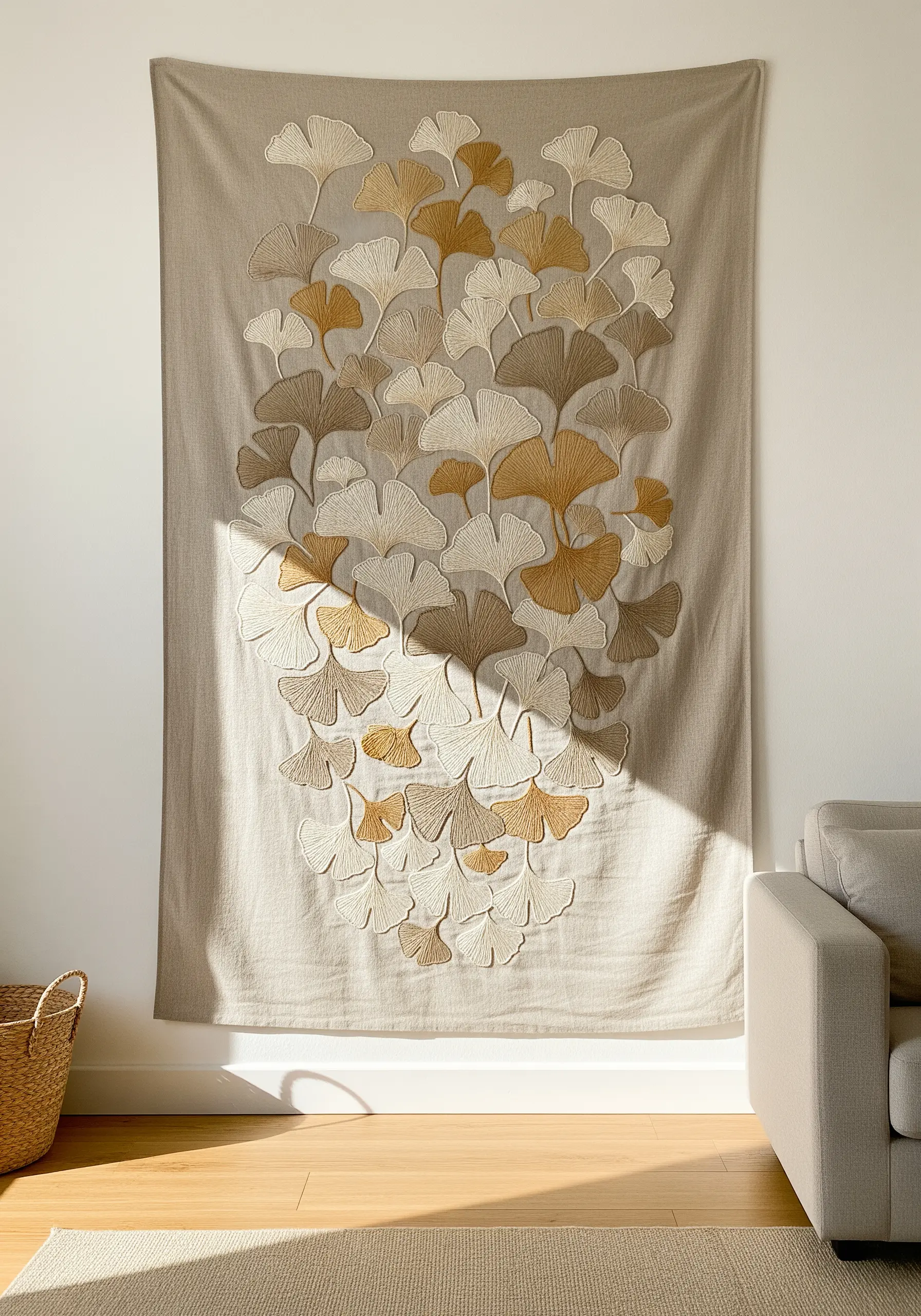
For a large-scale piece, focus on repetition and subtle variation.
Use a limited palette of sand, ecru, and muted gold to create a harmonious, cascading effect.
Fill each ginkgo leaf with a simple satin stitch, but alter the stitch direction from one leaf to the next.
This simple change allows the threads to catch the light differently, creating the illusion of depth and movement without needing complex shading.
The result is one of the most elegant hand-embroidered wall hangings that feel straight out of Pinterest.
2. Couch Thick Yarn for a Sculptural Monstera
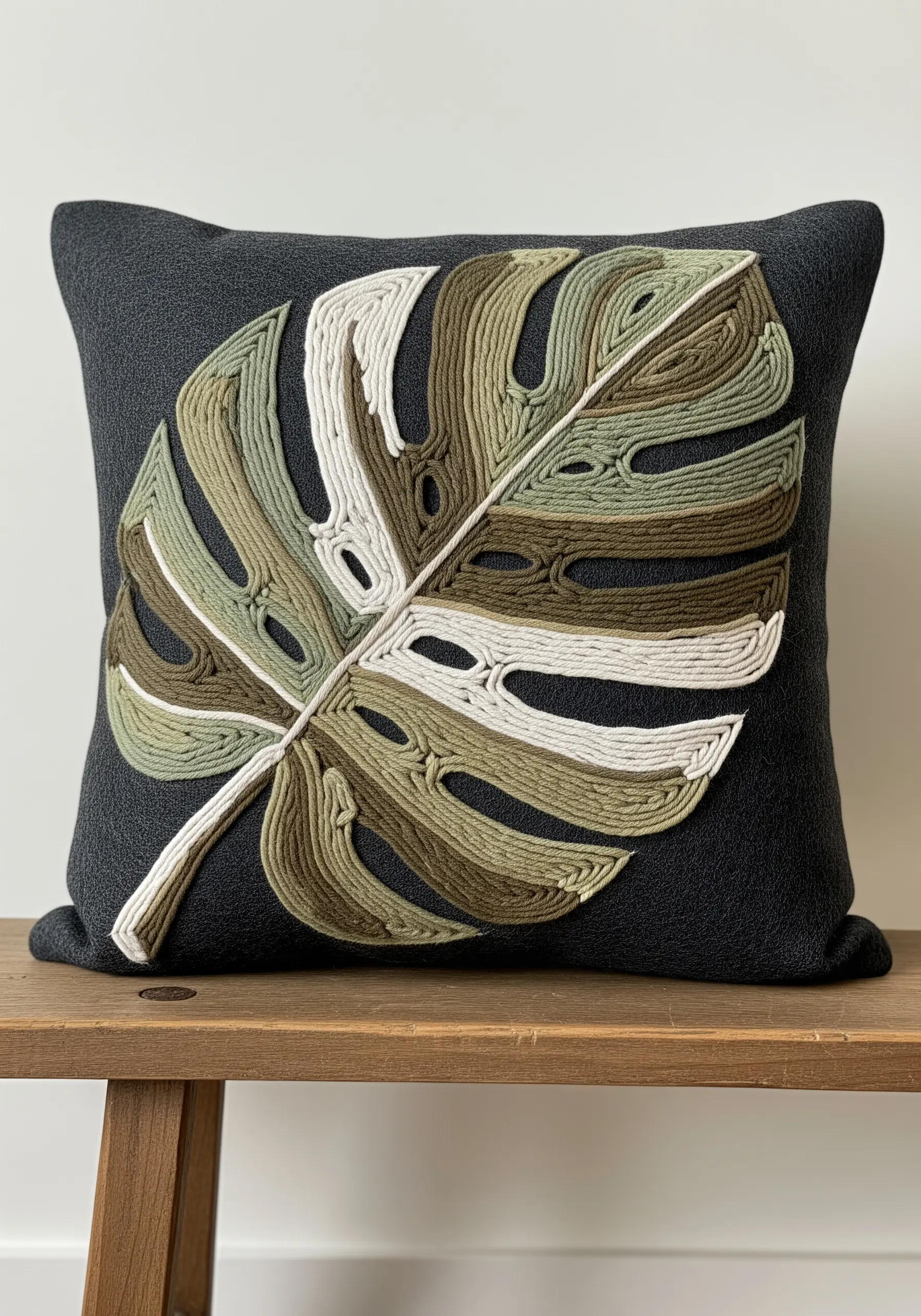
Move beyond standard floss and experiment with couching thick yarn or cotton cord to create bold, graphic leaves.
Lay down your main yarn and use a thinner, matching thread to tack it onto the fabric, following the contours of the monstera leaf.
This technique adds immediate sculptural dimension and works beautifully for statement pieces like cushions.
Block out sections of the leaf with different neutral tones—like olive, cream, and khaki—to give the classic motif a modern, abstract feel.
3. Stitch a Monochromatic Fern Triptych
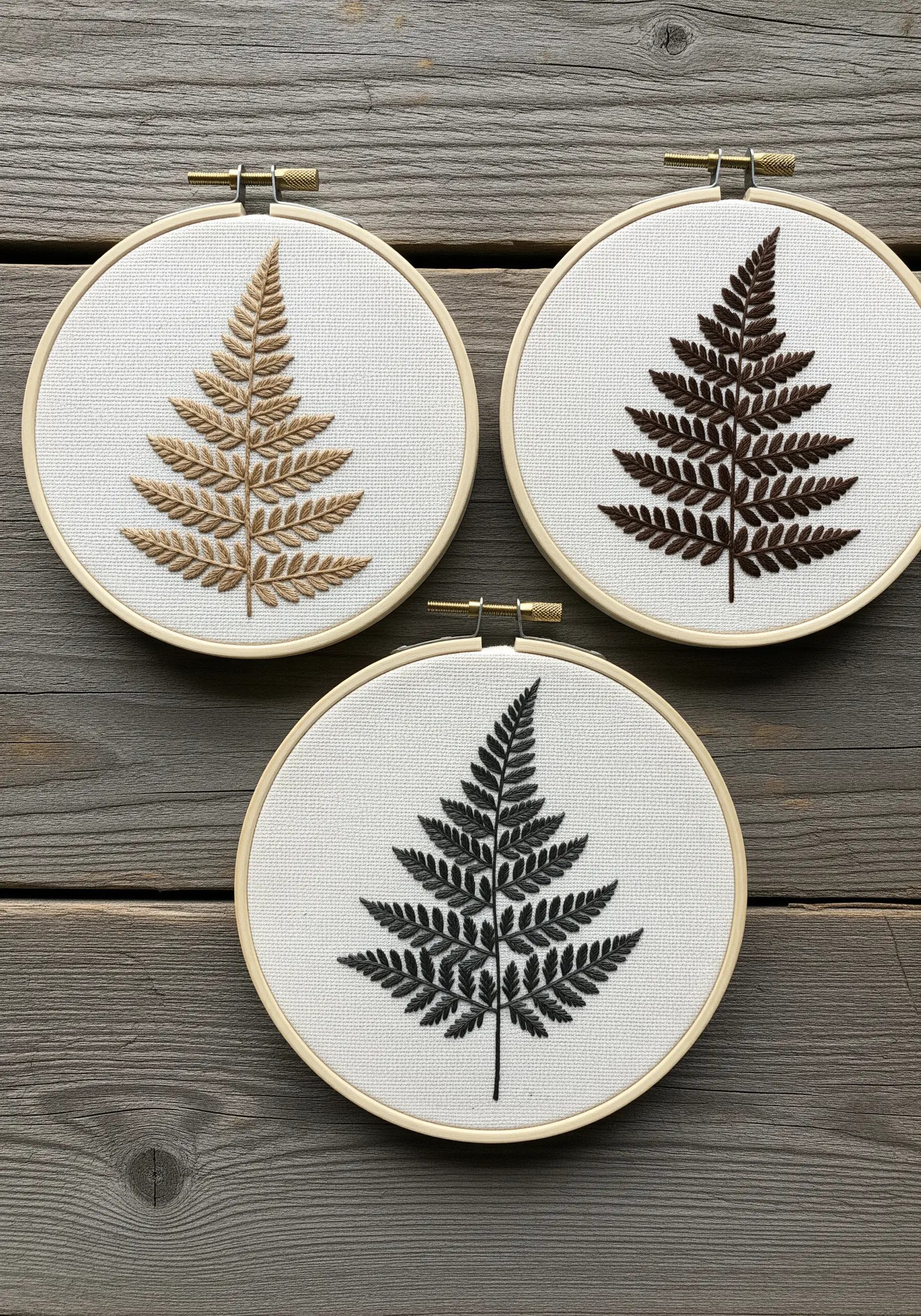
To create a cohesive gallery wall, stitch the same design in three distinct neutral shades.
Choose a single motif, like a delicate fern, and embroider it in ochre, deep brown, and charcoal gray on identical fabric.
Use a fishbone stitch for the fern fronds to create a beautiful, herringbone-like texture that defines the leaf’s structure.
Displaying them together transforms framed embroidery art pieces that double as conversation starters into a unified, sophisticated collection.
4. Design a Meandering Eucalyptus Table Runner
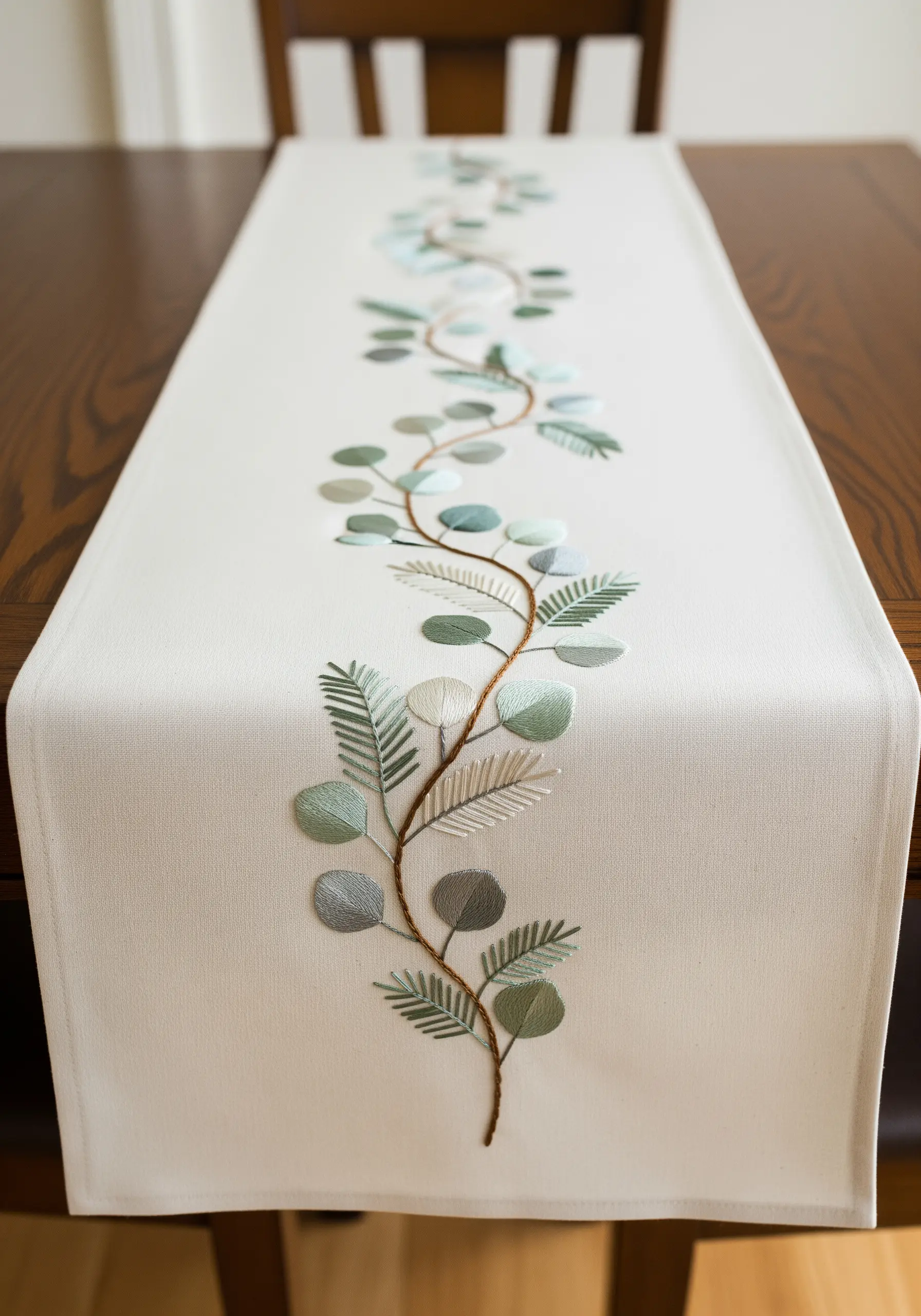
Give your table linen a touch of organic elegance with a winding eucalyptus branch.
Combine different stitches to represent various leaf types: use satin stitch for the round dollar eucalyptus and open fishbone stitch for the feathery leaves.
A palette of dusty sage, pale mint, and muted gray-greens keeps the design soft and sophisticated.
Use a simple twisted stem stitch for the central vine to create a rope-like texture that grounds the delicate leaves.
5. Frame a Skeleton Leaf on Sheer Fabric
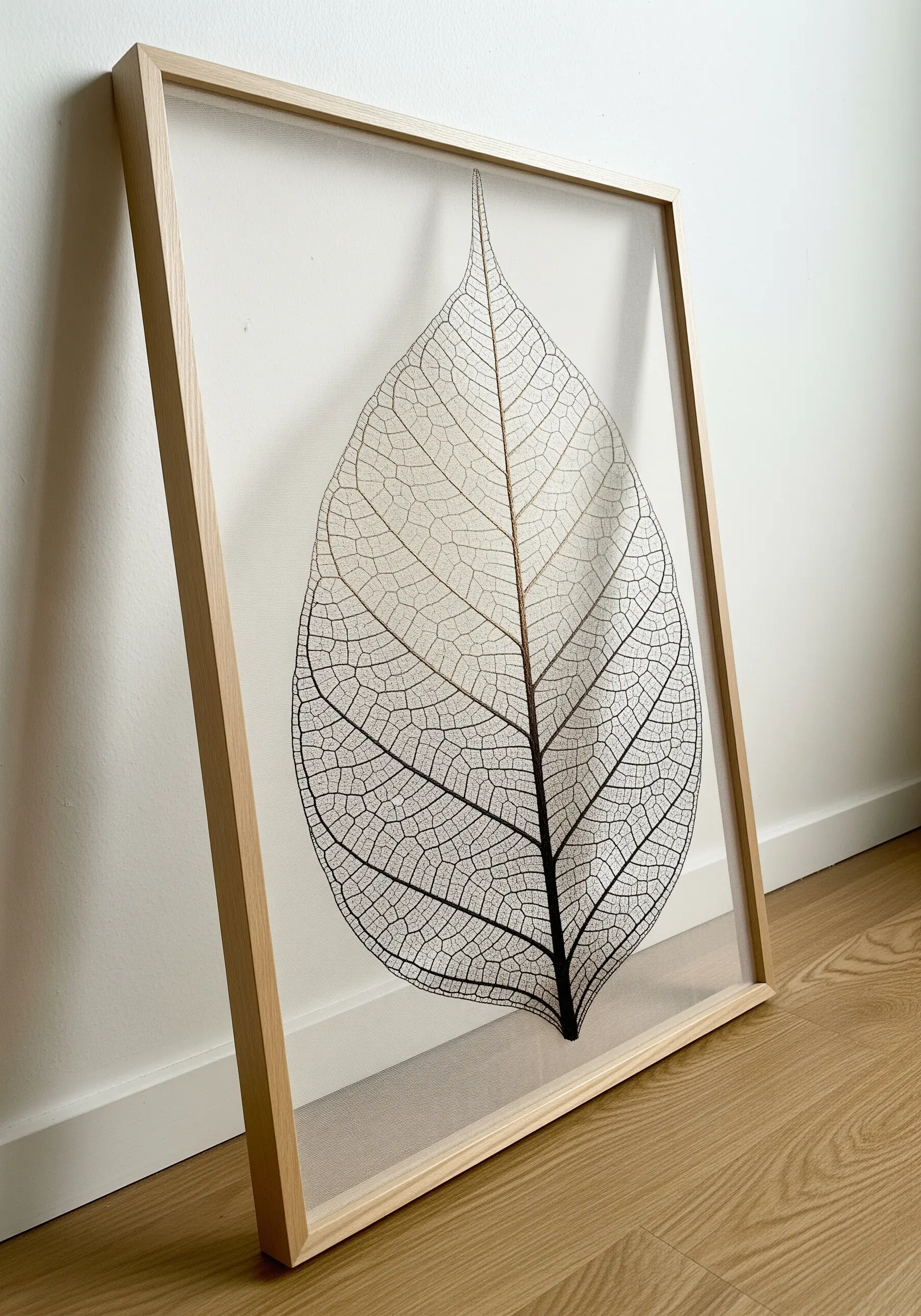
Create the illusion of a floating leaf by stitching on a sheer fabric like tulle or organza.
Trace the intricate pattern of a skeleton leaf and use a single strand of dark brown or black thread to replicate the veins with a fine backstitch or split stitch.
Introduce a subtle gradient by switching to a lighter tan thread for one half of the leaf.
Mounting the finished piece in a floating glass frame enhances its delicate, X-ray-like quality, turning it into one of those minimalist stitched art pieces you’ll actually want to hang.
6. Scatter Thread-Painted Autumn Leaves on a Tote
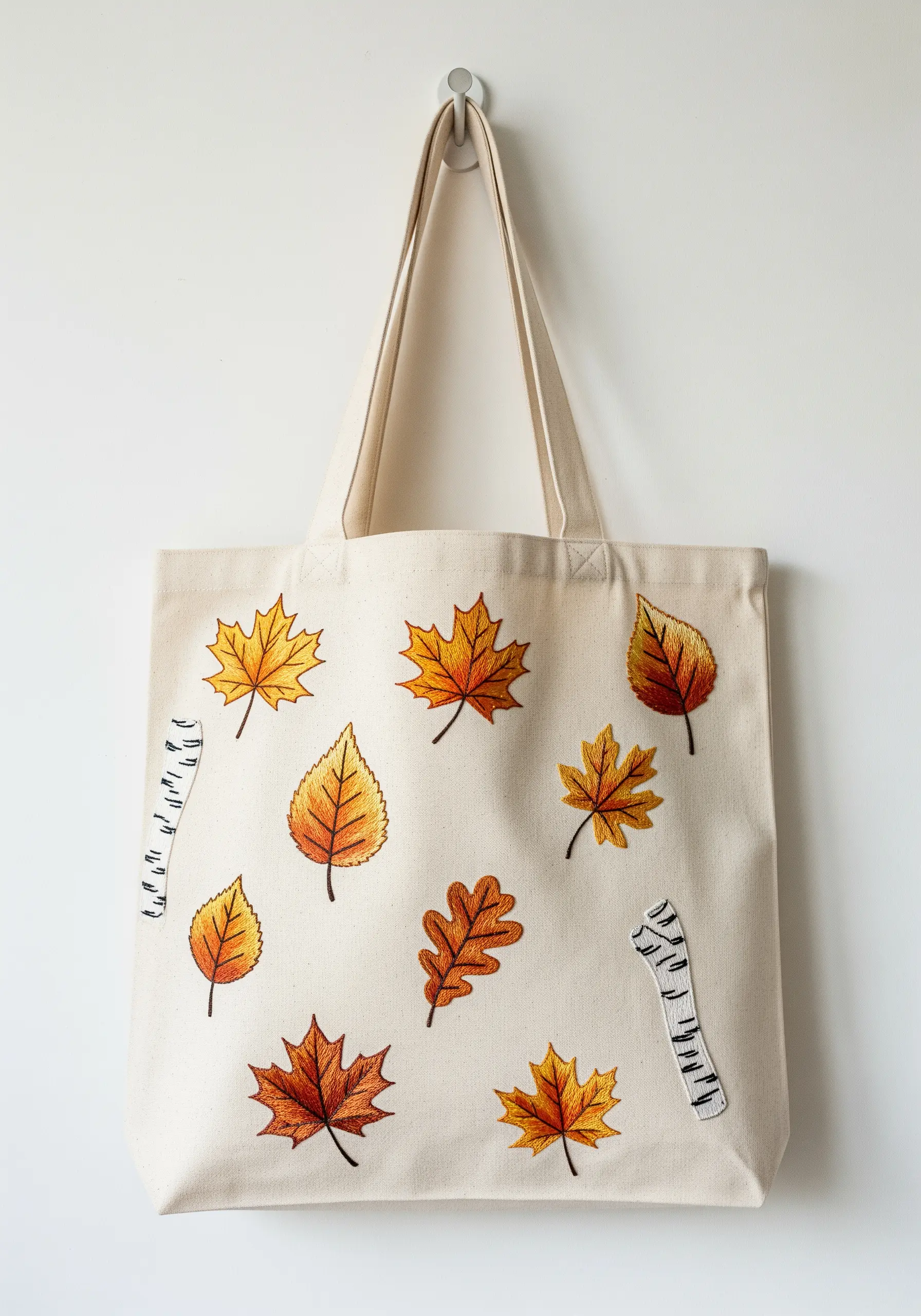
Give a plain canvas tote an autumnal feel by scattering various leaf motifs across the surface.
Use long-and-short stitch to blend 2-3 shades of ochre, rust, and gold within each maple or oak leaf, creating a realistic, thread-painted effect.
Arrange the leaves randomly, as if they’ve just fallen from a tree, to achieve a natural, effortless composition.
Adding a few appliqué birch bark segments introduces a contrasting texture and enhances the woodland theme.
7. Add a Cascading Ivy Border to Curtains
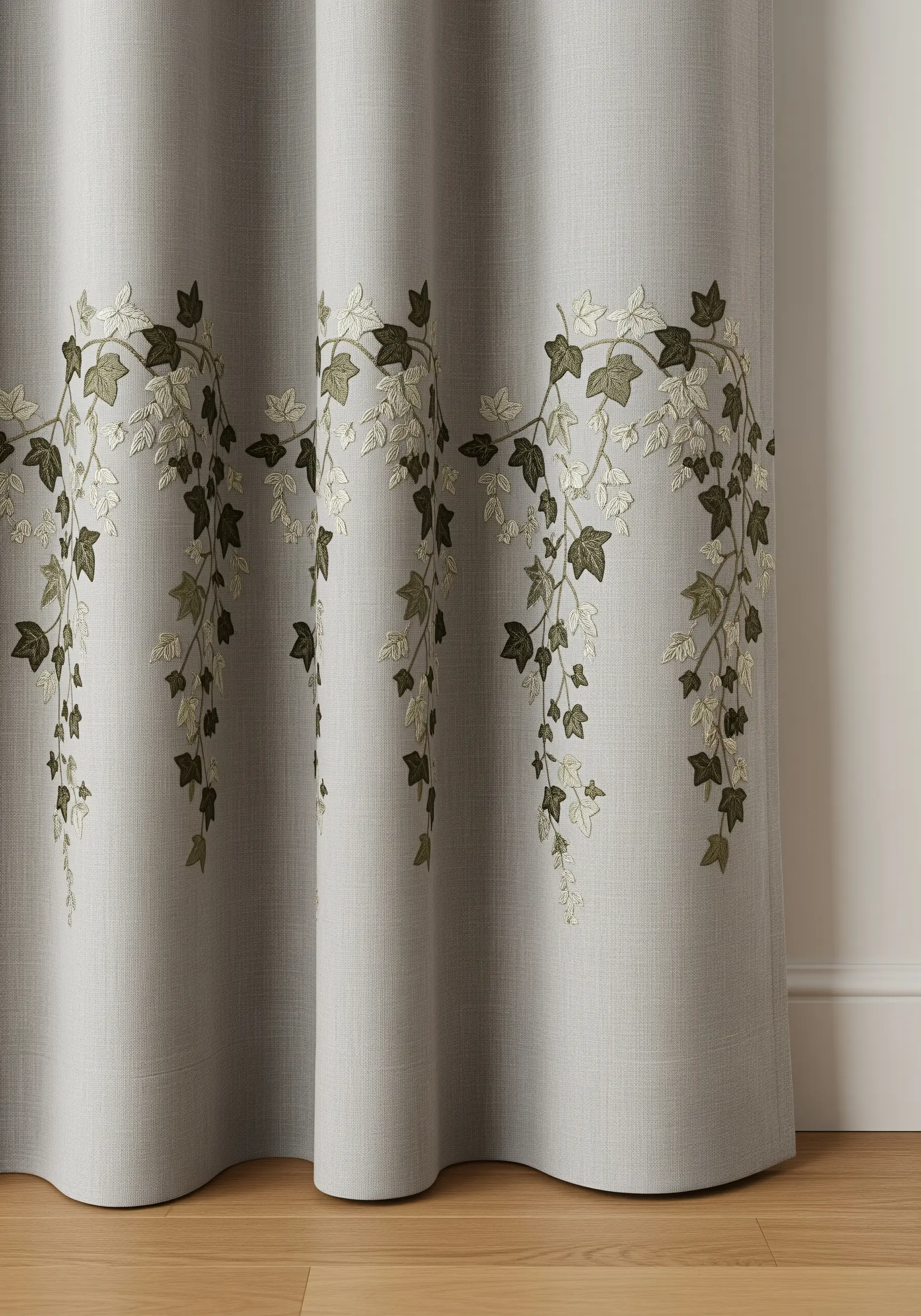
Elevate plain curtains by embroidering a border of trailing ivy that appears to grow up from the floor.
Create a sense of light by using a gradient of color: stitch the lower leaves in a deep forest green and gradually transition to a pale sage and ivory for the leaves at the top.
This tonal shift makes the design feel dynamic and integrated with the room’s light source.
This is one of the best embroidered curtain & blind ideas to brighten compact city apartments, adding custom detail without overwhelming the space.
8. Abstract Leaf Veins with Couching
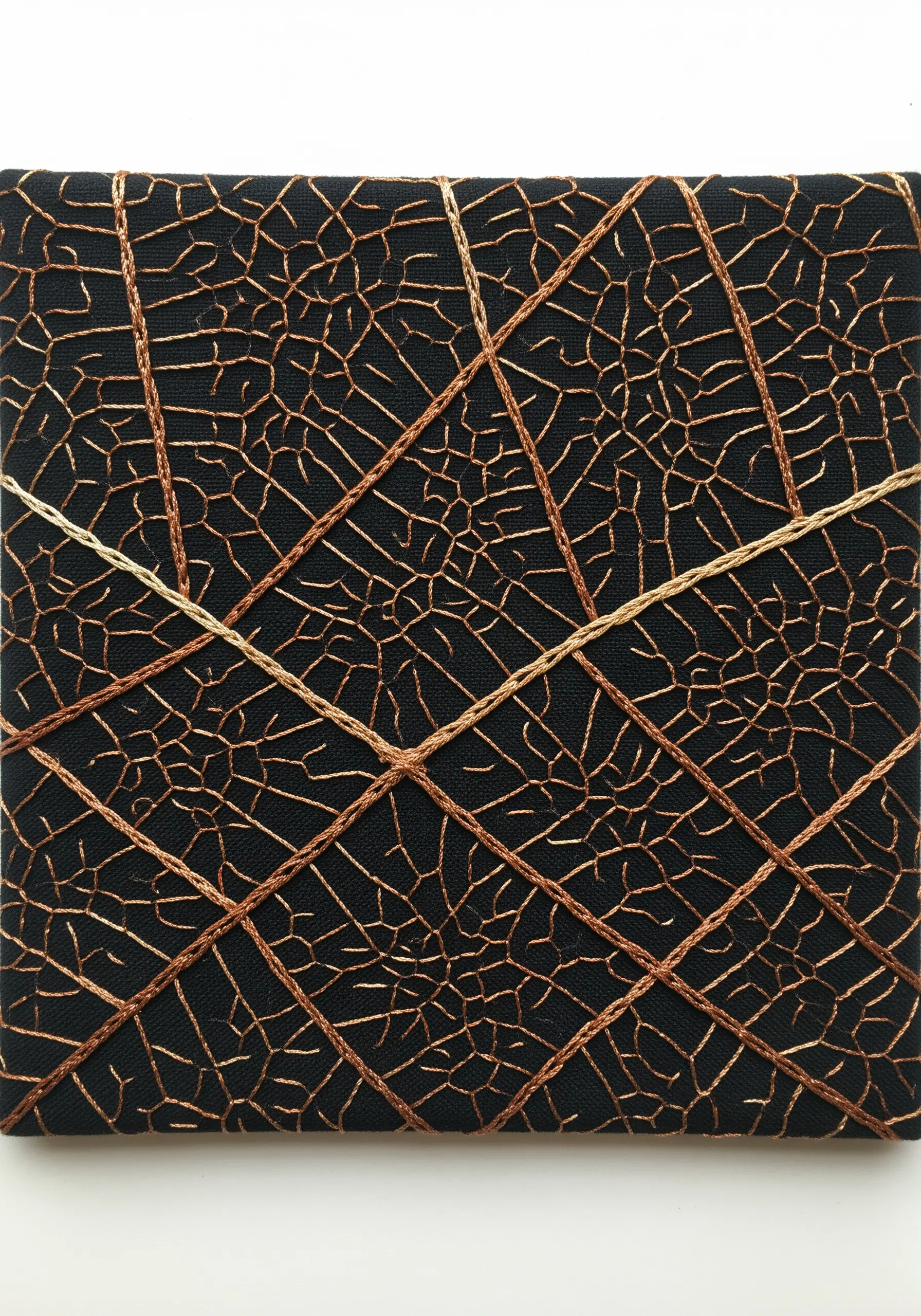
Transform the organic pattern of leaf veins into a modern, abstract piece of art.
On a dark fabric canvas, use a single strand of metallic or copper-colored thread to stitch a dense, web-like pattern inspired by a close-up photo of a leaf.
Then, couch thicker, contrasting threads in straight lines across the canvas to impose a geometric structure over the organic chaos.
This technique creates a stunning interplay between texture, pattern, and line.
9. Curate a Sampler of Leaf Stitch Textures
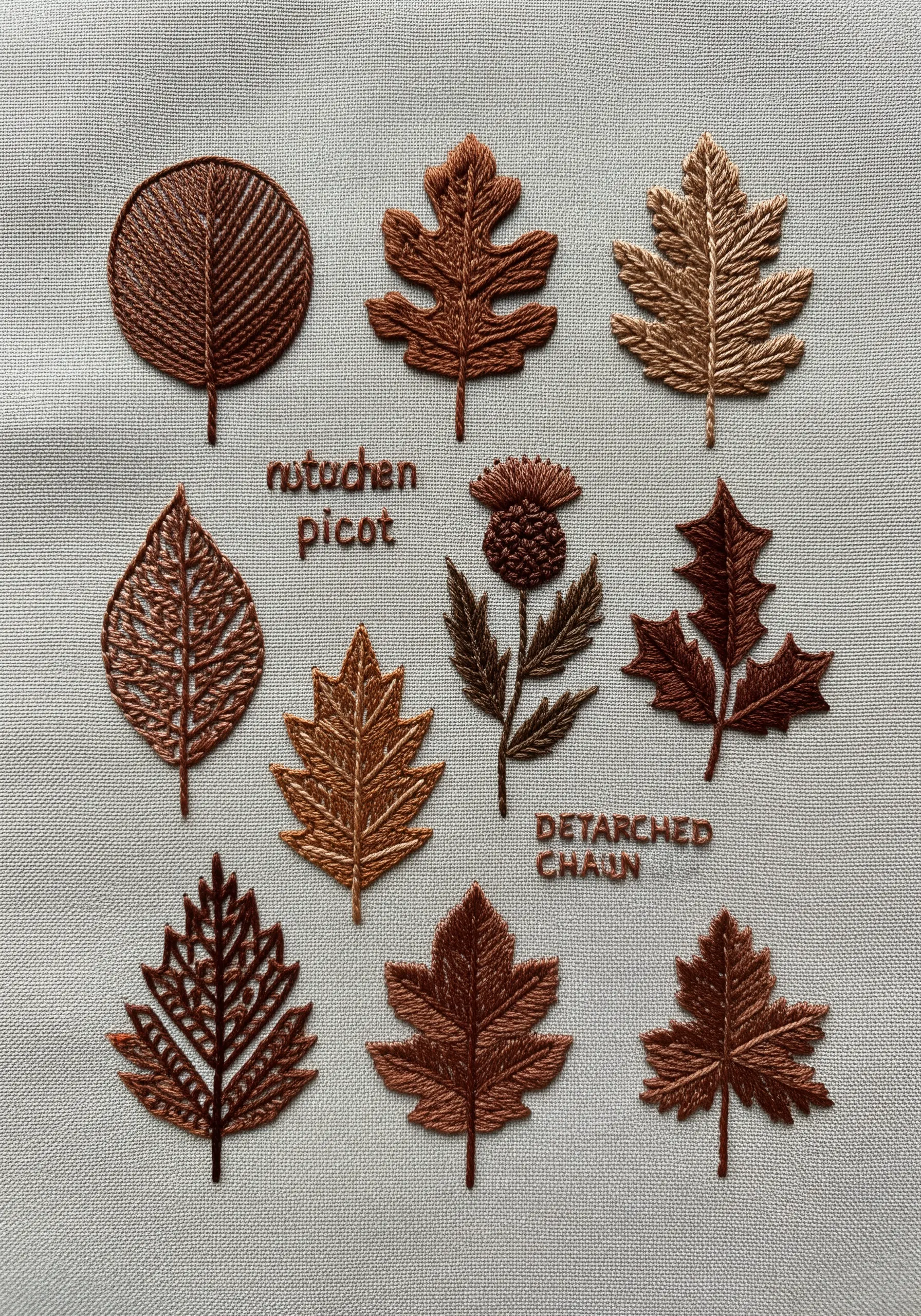
Dedicate a single piece to exploring texture by creating a sampler of different leaf shapes and fill stitches.
Using a cohesive palette of warm browns, fill each leaf with a unique stitch: try directional satin stitch, seed stitch, French knots, or woven wheel stitch.
This not only builds your skills but also creates a beautiful reference piece showcasing how different stitches interpret the same form.
Focus on leaf vein stitch methods for hyper-realistic botanical embroidery by varying their weight and style in each sample.
10. Embellish a Tablecloth with an Olive Branch Border
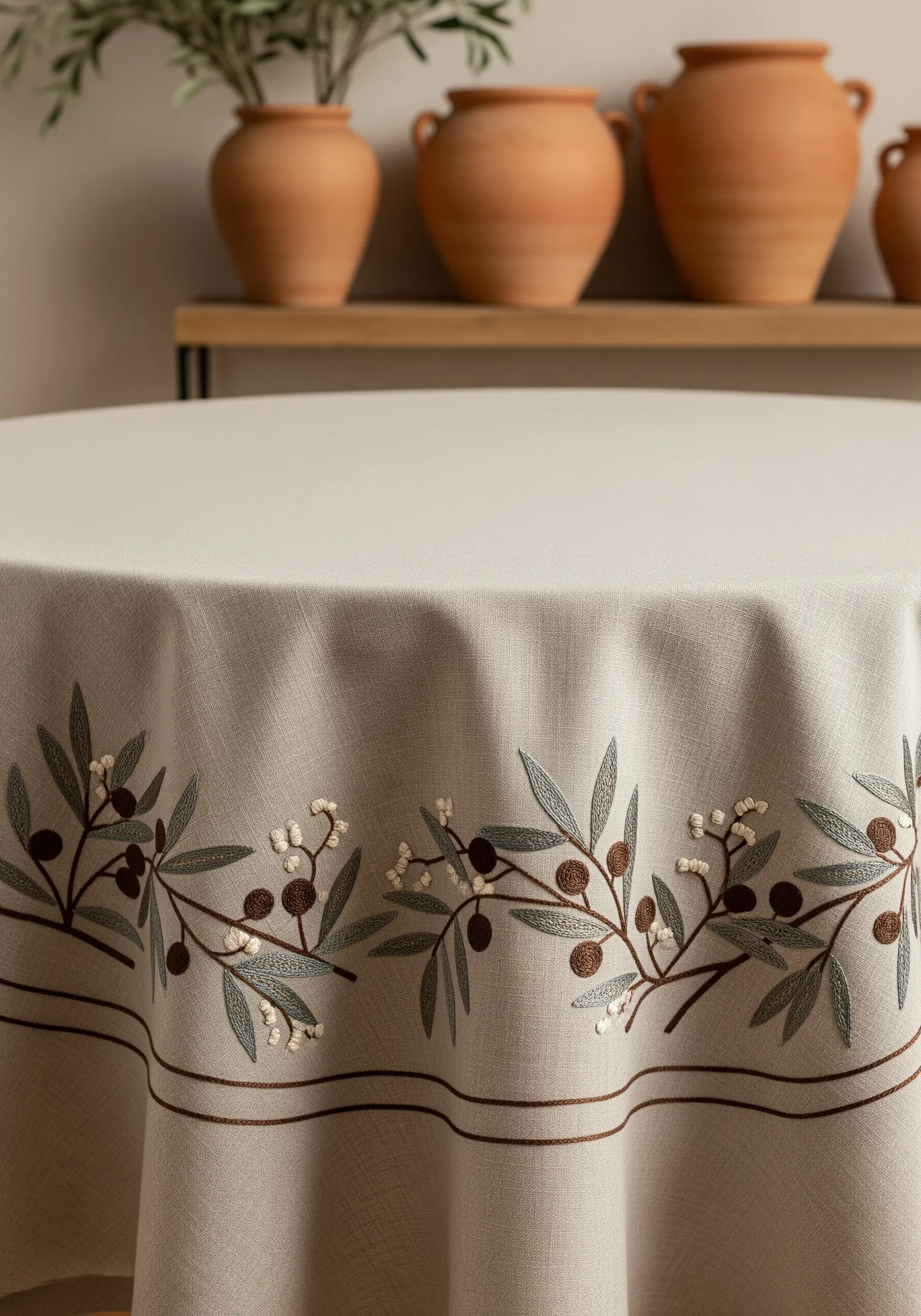
For a Mediterranean-inspired table setting, embroider a delicate olive branch border around your tablecloth.
Keep the design light and airy by using open fly stitches for the leaves in a muted sage green, allowing the fabric to show through.
Add small satin-stitched olives in a deep brown or black and clusters of white French knots for blossoms.
This combination of stitches adds sophisticated texture while maintaining a minimalist aesthetic.
11. Integrate Leaf Motifs into a Quilt
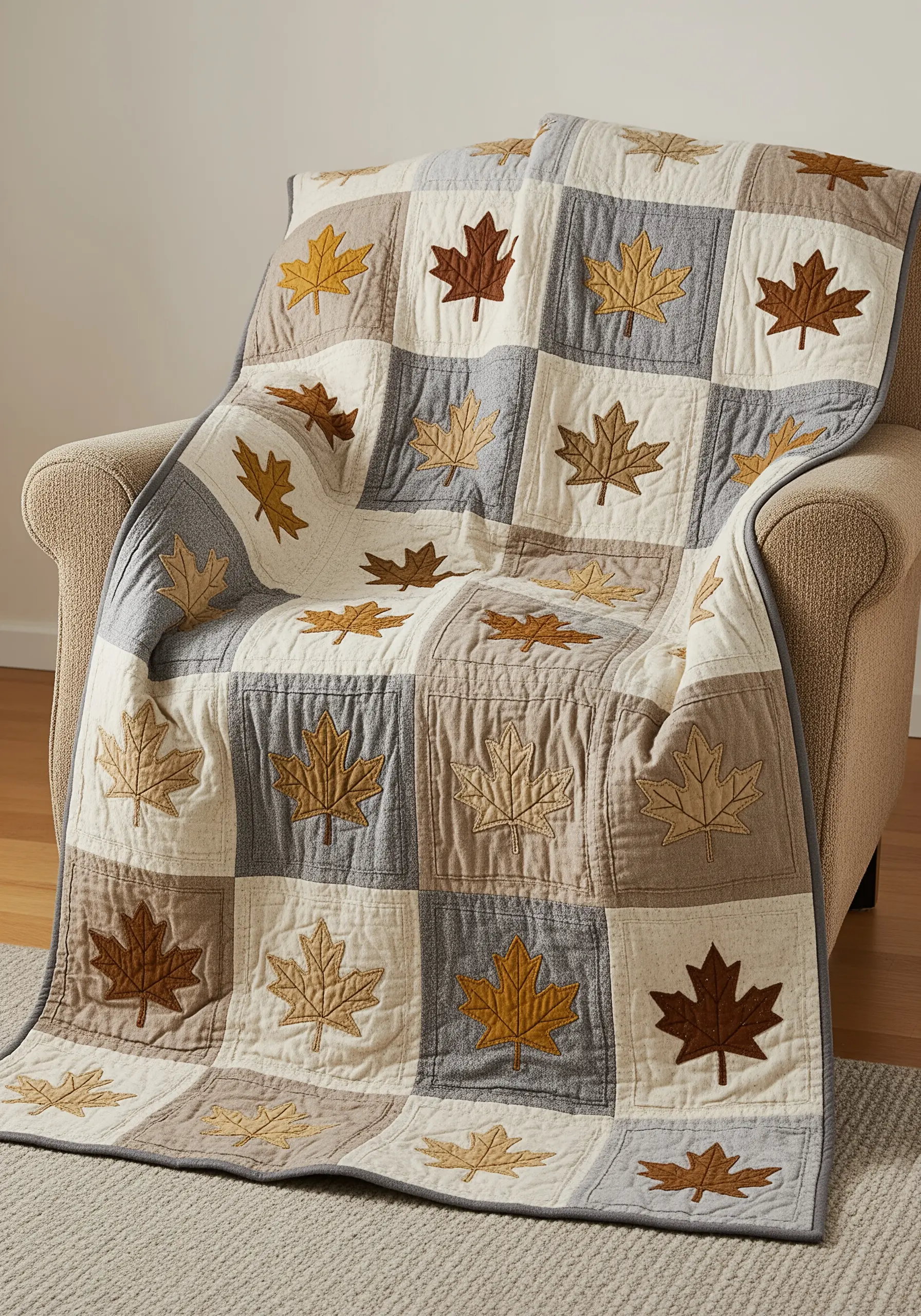
Combine embroidery with quilting for a cozy, heirloom-quality piece.
Create a checkerboard pattern with squares of neutral fabrics like oatmeal, gray, and cream.
On alternating squares, embroider a simple, stylized maple leaf using a basic backstitch or stem stitch for the outline and central veins.
This approach adds a handcrafted touch to each block without requiring dense, time-consuming stitching, making it perfect for a larger project like a throw blanket.
12. Illuminate a Simple Lampshade Design
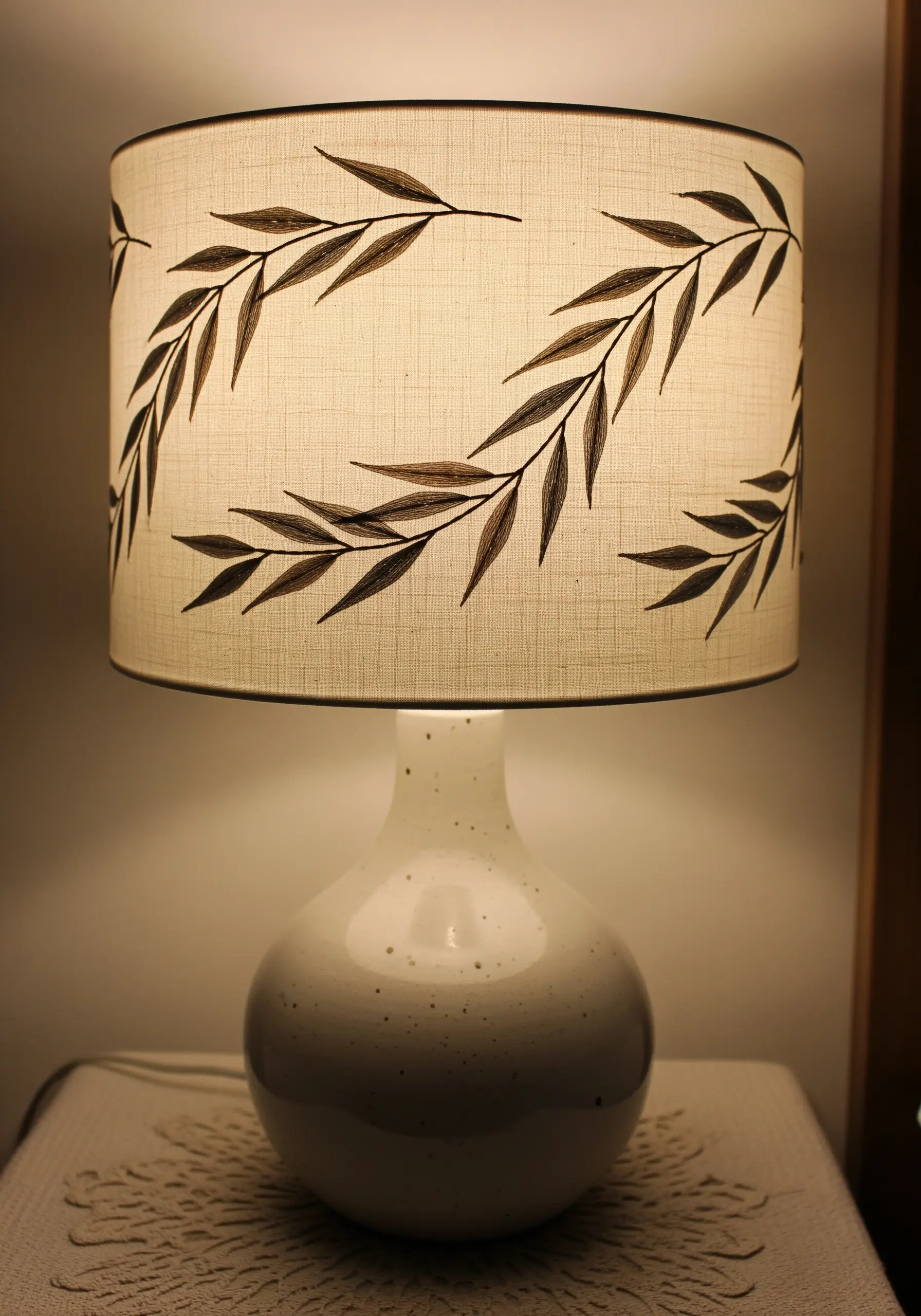
Turn a plain fabric lampshade into a piece of functional art with a minimalist botanical design.
Choose a simple, graphic pattern like a trailing willow branch and use a dark brown or black thread to create a strong silhouette.
A simple backstitch or stem stitch is all you need. The magic happens when the lamp is turned on, as the light shines through the fabric and illuminates your stitching from behind.
This creates a warm, ambient glow and highlights the texture of your work.
13. Use Chunky Roving for a Bold Palm Leaf
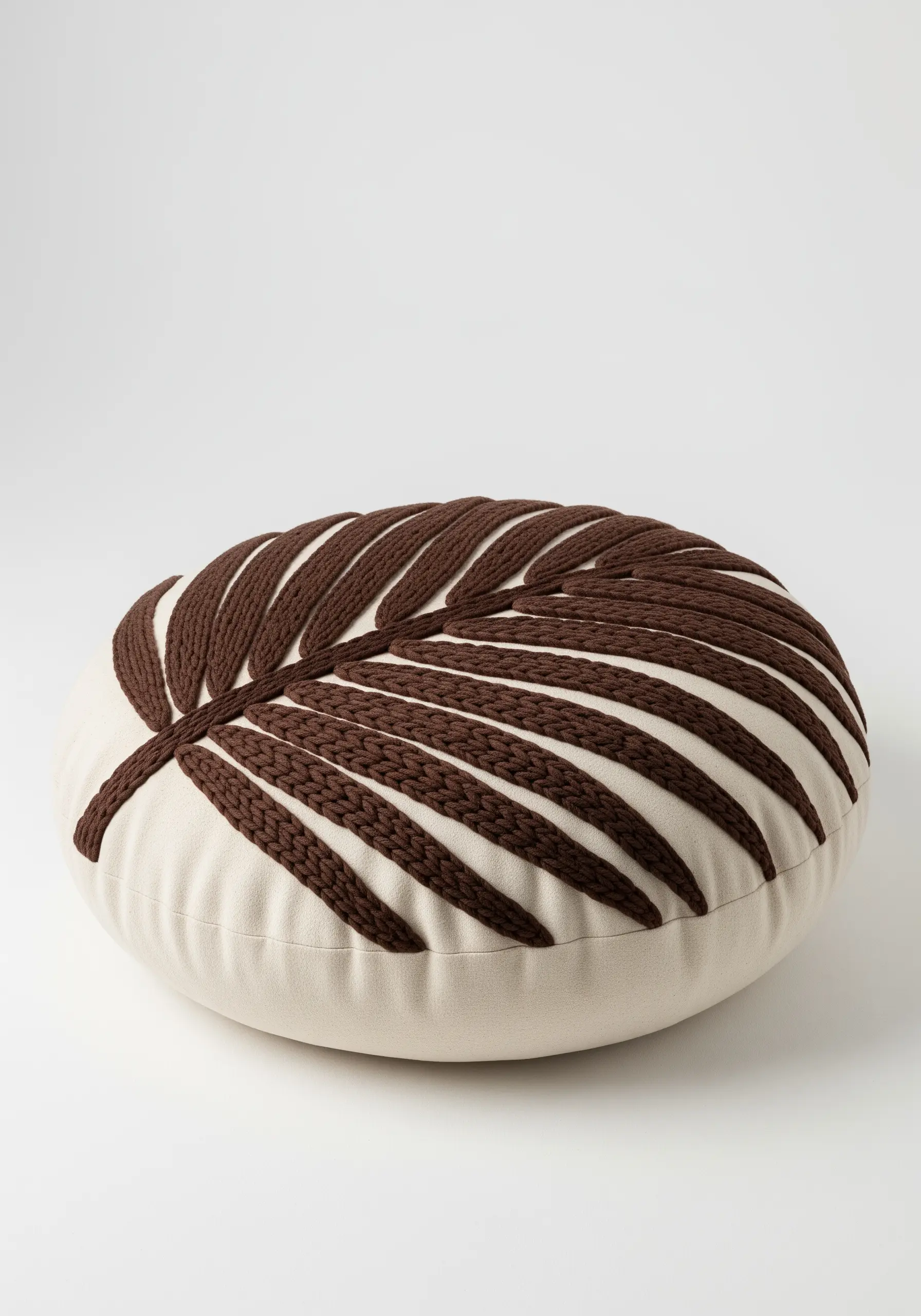
Create a high-impact, textural statement on a floor cushion using chunky wool roving or thick yarn.
Lay down long, straight stitches to form the sections of a palm leaf, creating a deeply ridged, three-dimensional surface.
The high contrast between a dark chocolate brown yarn and a light cream canvas emphasizes the leaf’s graphic shape.
Ensure your base fabric is a sturdy canvas or denim to support the weight of the heavy fibers.
14. Craft a Set of Minimalist Botanical Coasters
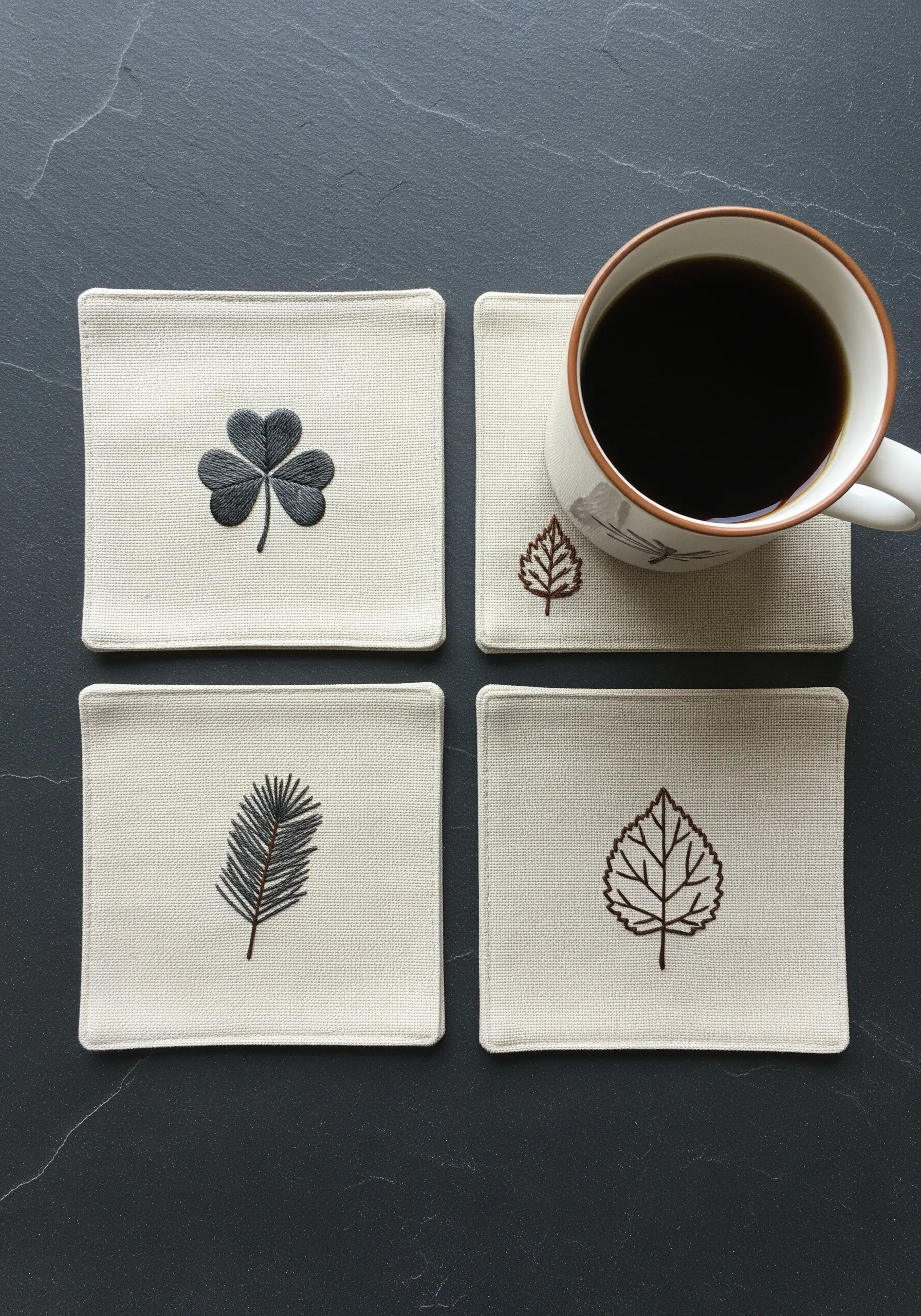
For a quick and satisfying project, create a set of coasters, each featuring a different minimalist leaf design.
On a tightly woven linen or cotton fabric, stitch a single, clean leaf outline—a clover, a pine needle, a linden leaf—using a dark, contrasting thread.
Focus on precision in your stitches, using a fine split stitch or backstitch to achieve crisp, clean lines.
These small embroidery ideas you can finish in under an hour make for a thoughtful and practical handmade gift.
15. Layer Felt Appliqué for a Tactile Journal Cover
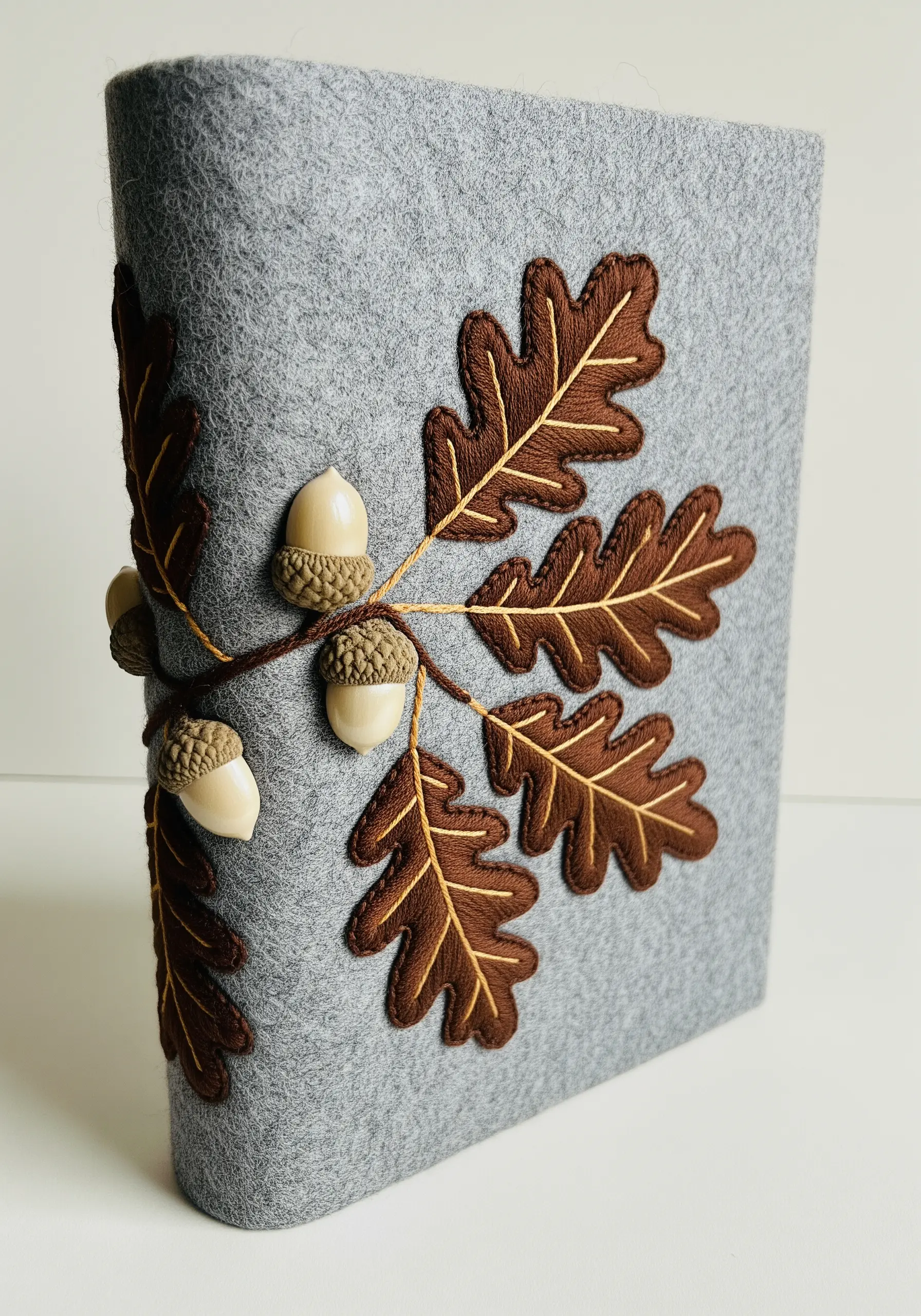
Combine felt appliqué and embroidery to create a richly textured and durable book or journal cover.
Cut oak leaf shapes from brown felt and secure them to a gray felt background with a neat blanket stitch around the edges.
Use a contrasting light gold or tan thread to add the central veins with a simple backstitch, which makes the details pop.
Incorporate small, three-dimensional elements like wooden beads or actual acorn caps to complete the woodland-inspired design.
16. Create a Delicate Wall Hanging with Leaf Prints
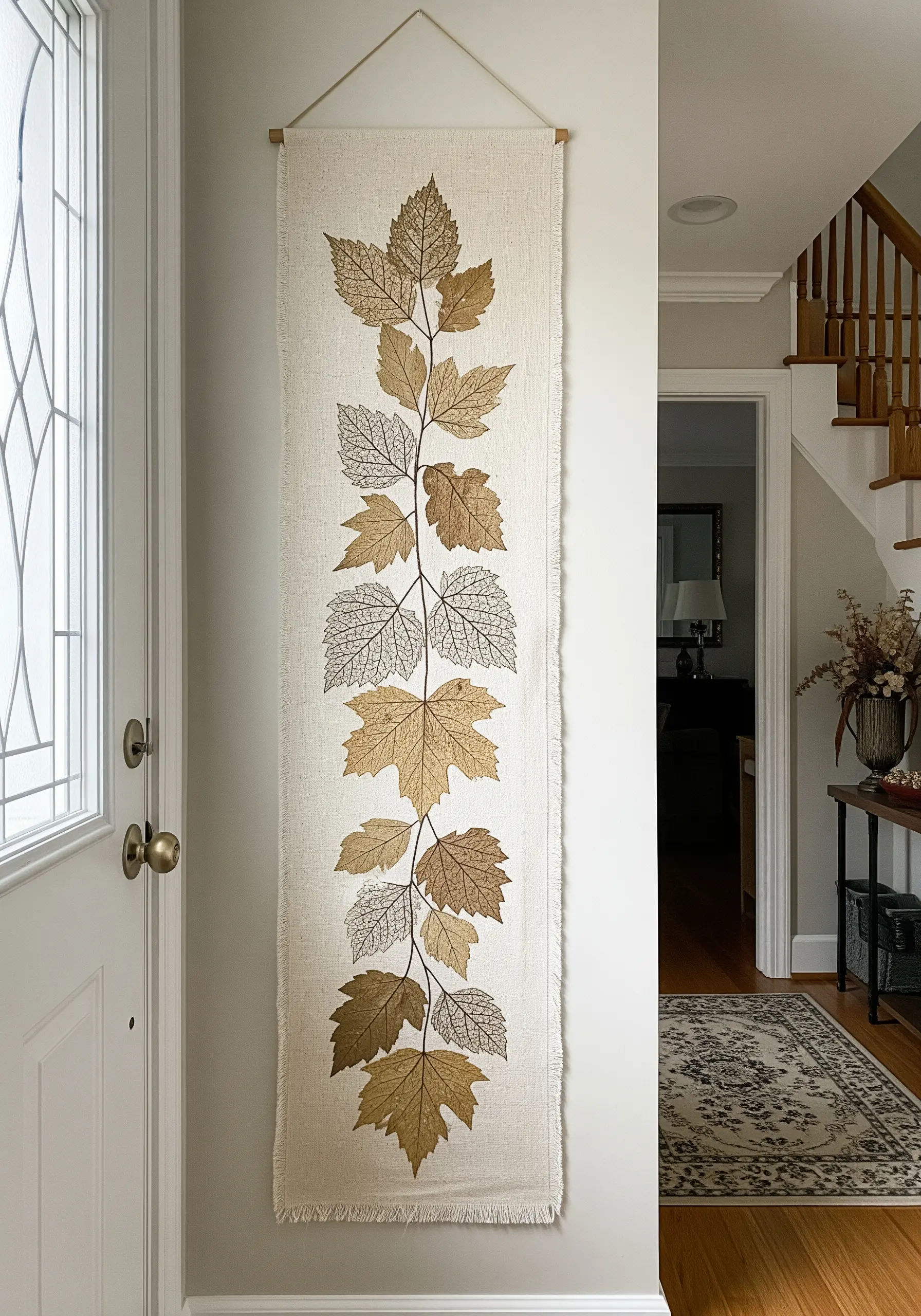
For hyper-realistic detail, combine fabric printing with delicate hand stitching.
Lightly print or transfer high-resolution images of skeleton leaves onto a long, narrow piece of linen or cotton canvas.
Use a single strand of thread in a matching neutral tone to trace over a few of the primary veins with a tiny backstitch, adding subtle texture and dimension.
Finish the piece with frayed, raw edges to enhance the organic, rustic aesthetic of your wall hanging.
17. Deconstruct Leaves into Geometric Shapes
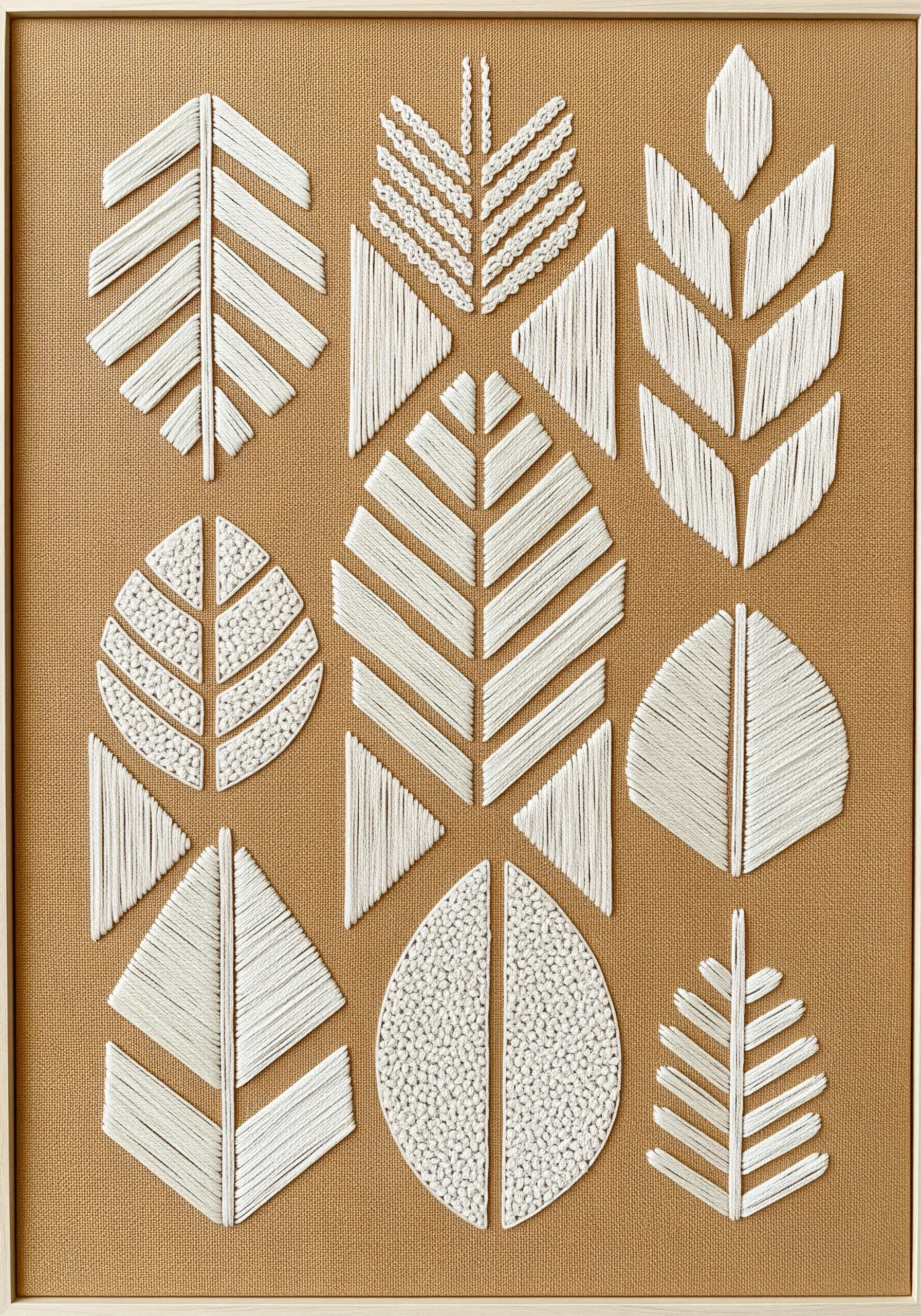
Give botanical art a modern twist by breaking down leaf forms into their essential geometric components.
Sketch out simplified, angular leaf shapes and divide them into sections like a mosaic.
Fill each segment with a different stitch or texture—try directional satin stitch, dense French knots, or straight stitches—all in a single color, like optic white.
Stitching on a colored background, such as tan or camel, makes the white thread stand out, emphasizing form and texture over color. This is perfect for geometric abstract thread patterns.
18. Assemble a Collage of Real, Preserved Leaves
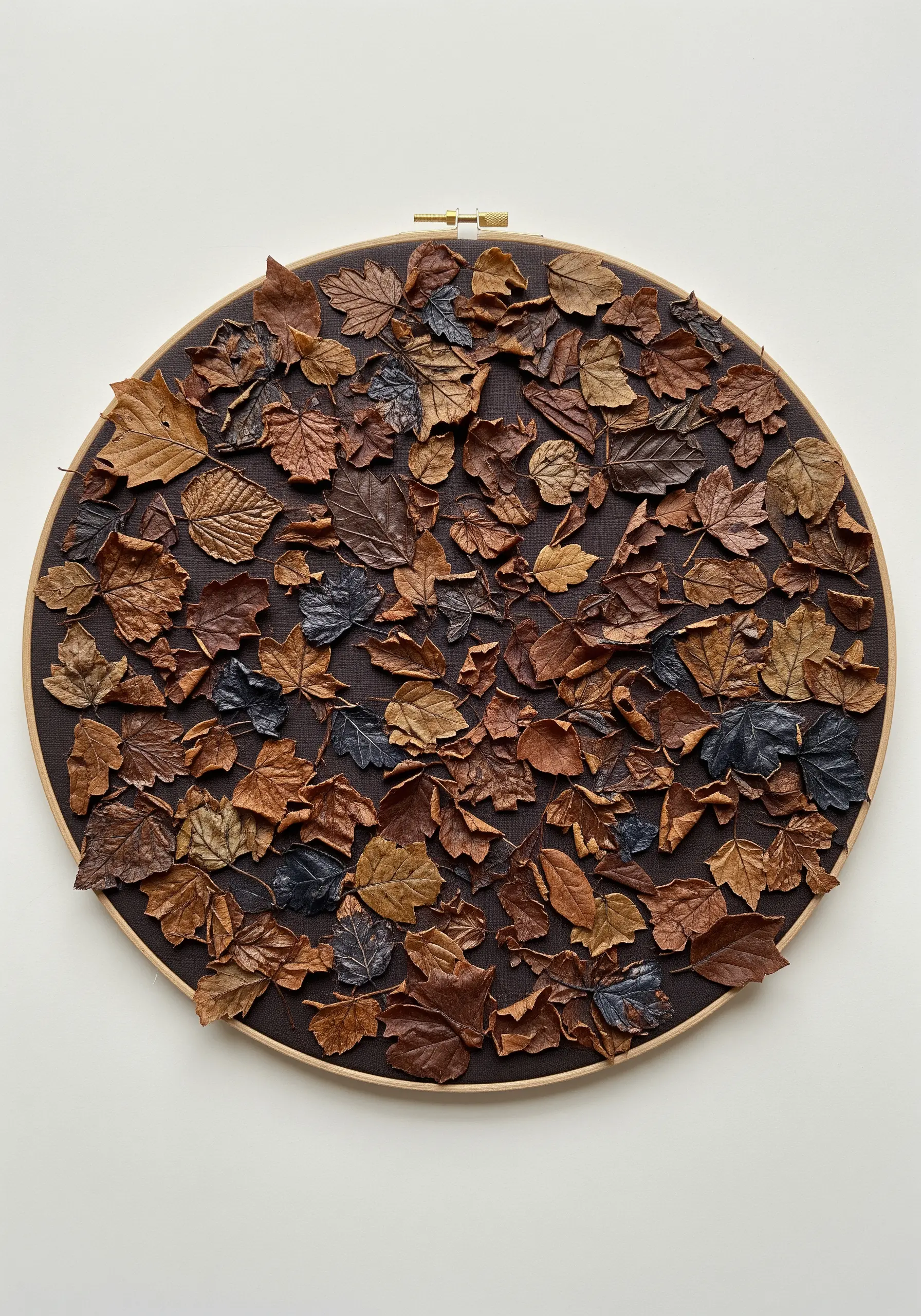
Step into mixed media by creating a collage with real, dried leaves for the ultimate organic texture.
Gather, press, and dry a variety of small leaves, preserving their natural colors and delicate forms.
Arrange and layer them on a dark, tightly stretched fabric within an embroidery hoop.
Secure each leaf with a small, discreet dab of fabric glue or a few tiny, almost invisible tacking stitches.
This technique celebrates the beauty of nature itself, creating a piece that is both embroidery-adjacent and deeply connected to the earth.


