
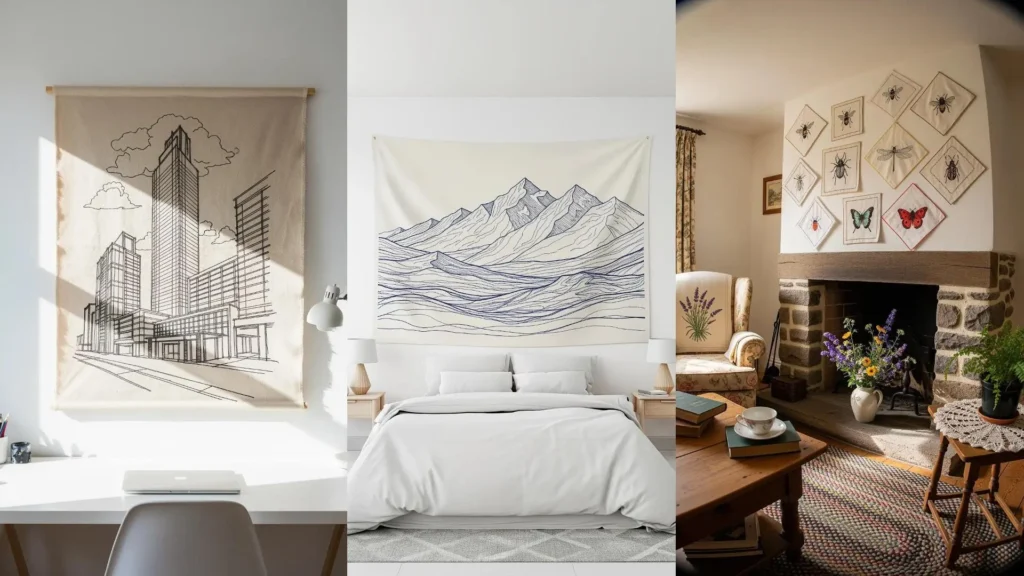
You have likely stared at a blank hoop, wondering how to bridge the gap between a simple craft project and the refined, art-gallery aesthetic you admire online. The secret isn’t in buying an industrial machine or sourcing rare silks. It lies in the intentional use of line, negative space, and texture.
Thread sketching—the art of using your needle like a drafting pen—allows you to create sophisticated, minimalist wall art for the cost of a single skein of floss. By stripping away the excess and focusing on the quality of your line work, you can transform humble canvas, denim, or linen into high-end decor.
Below, I have curated twenty-six specific concepts that elevate the humble stitch into modern design. From architectural precision to fluid, continuous-line portraits, these ideas are designed to help you see your thread not just as a filler, but as a fine-art medium. Let’s redefine what your embroidery can do.
1. Fluid line portraits on large-scale canvas

When working with continuous line portraits, the stability of your base is non-negotiable.
Opt for a heavyweight cotton canvas rather than standard linen; it supports long, sweeping stitches without puckering.
Use a split stitch for the facial contours to maintain a smooth line that doesn’t break the viewer’s eye.
This line art portrait embroidery ideas for beginners who love modern minimal aesthetics approach turns simple thread into a gallery-worthy statement.
2. The botanical gallery wall
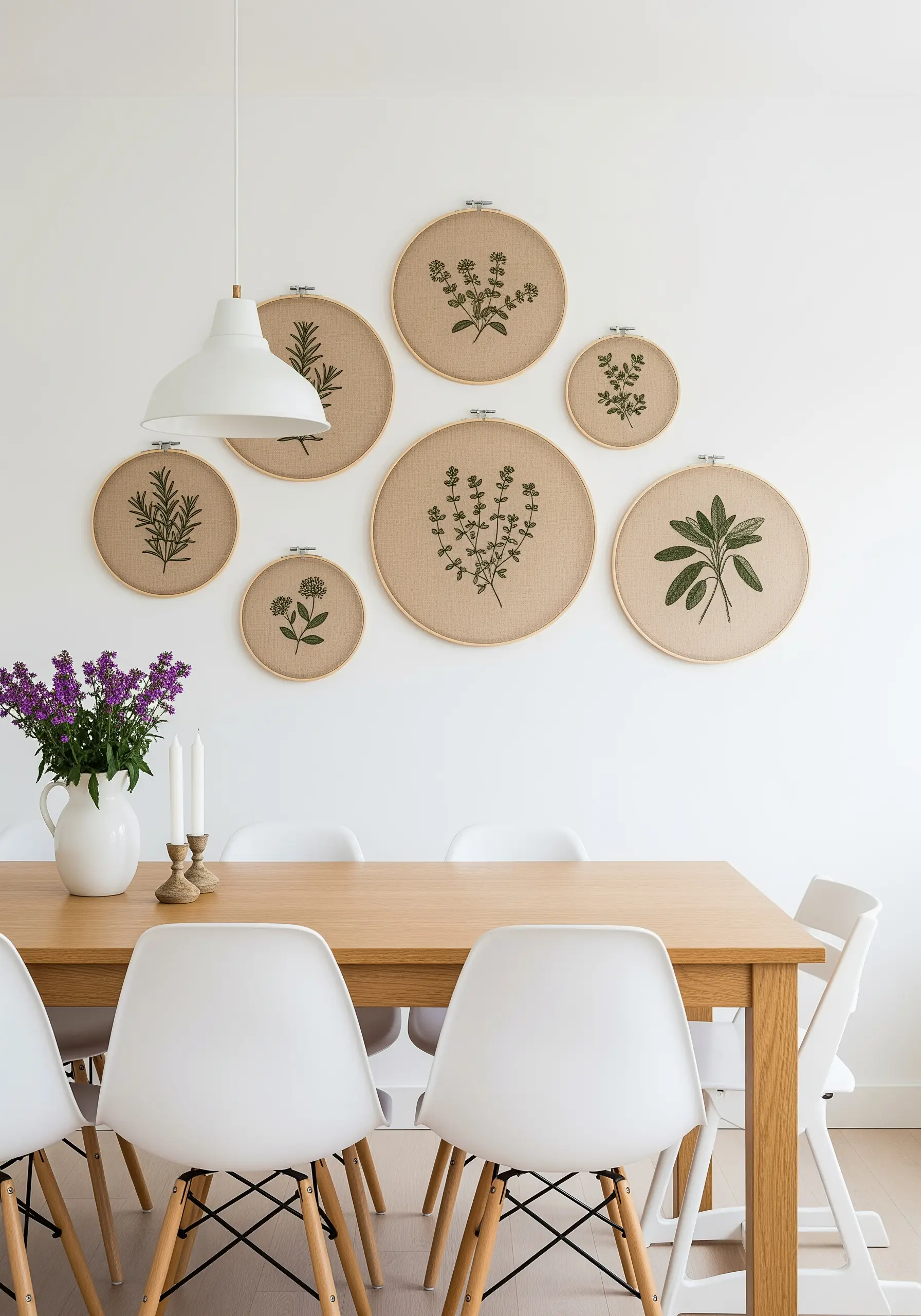
Creating a cohesive collection relies on a unified color palette and consistent framing.
Stitch these herbs using a single strand of dark olive floss on unbleached linen to mimic the look of vintage botanical illustrations.
Group them tightly to create visual impact; individual small hoops can look cluttered if spaced too far apart.
Explore garden herb embroidery patterns featuring mint thyme and basil blossoms to build your own kitchen collection.
3. Architectural sketching on fabric

Architectural embroidery demands precision that organic motifs do not.
Use a ruler to transfer your pattern and employ a Holbein stitch (double running stitch) to ensure your building lines look identical on the front and back, reducing shadow show-through.
This style of minimalist embroidery designs for a scandinavian home vibe adds a structured, urban edge to soft interiors.
4. Kinetic triptychs
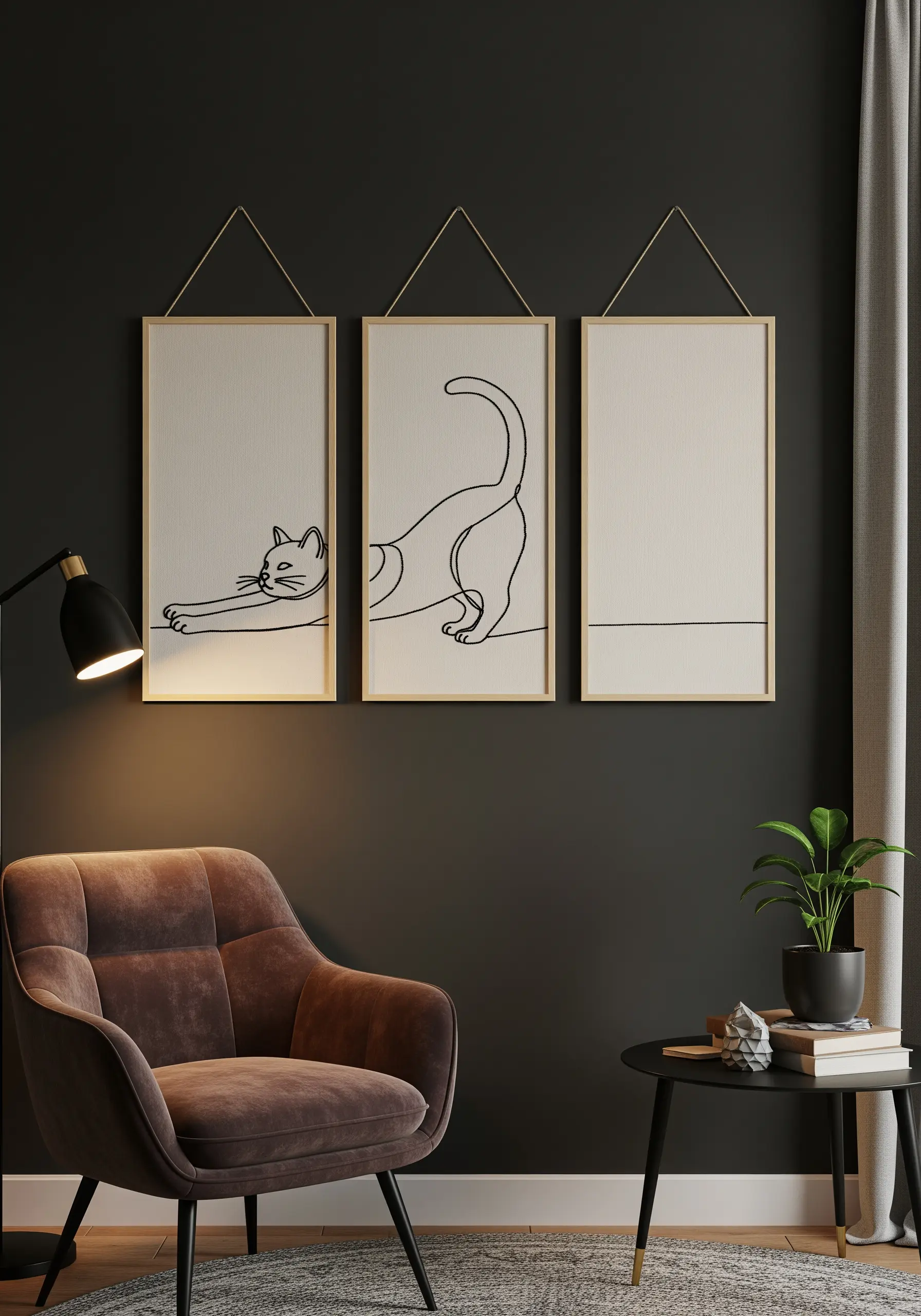
Split a single motion across multiple frames to create a sense of movement and narrative.
For this stretching cat, ensure your horizon line is perfectly level across all three frames before you secure the fabric.
A simple backstitch works best here; it provides a solid, graphic line that reads clearly from a distance.
You can apply this concept to cat kitten embroidery designs that capture emotion perfect for pet lovers.
5. Topographical landscape textures
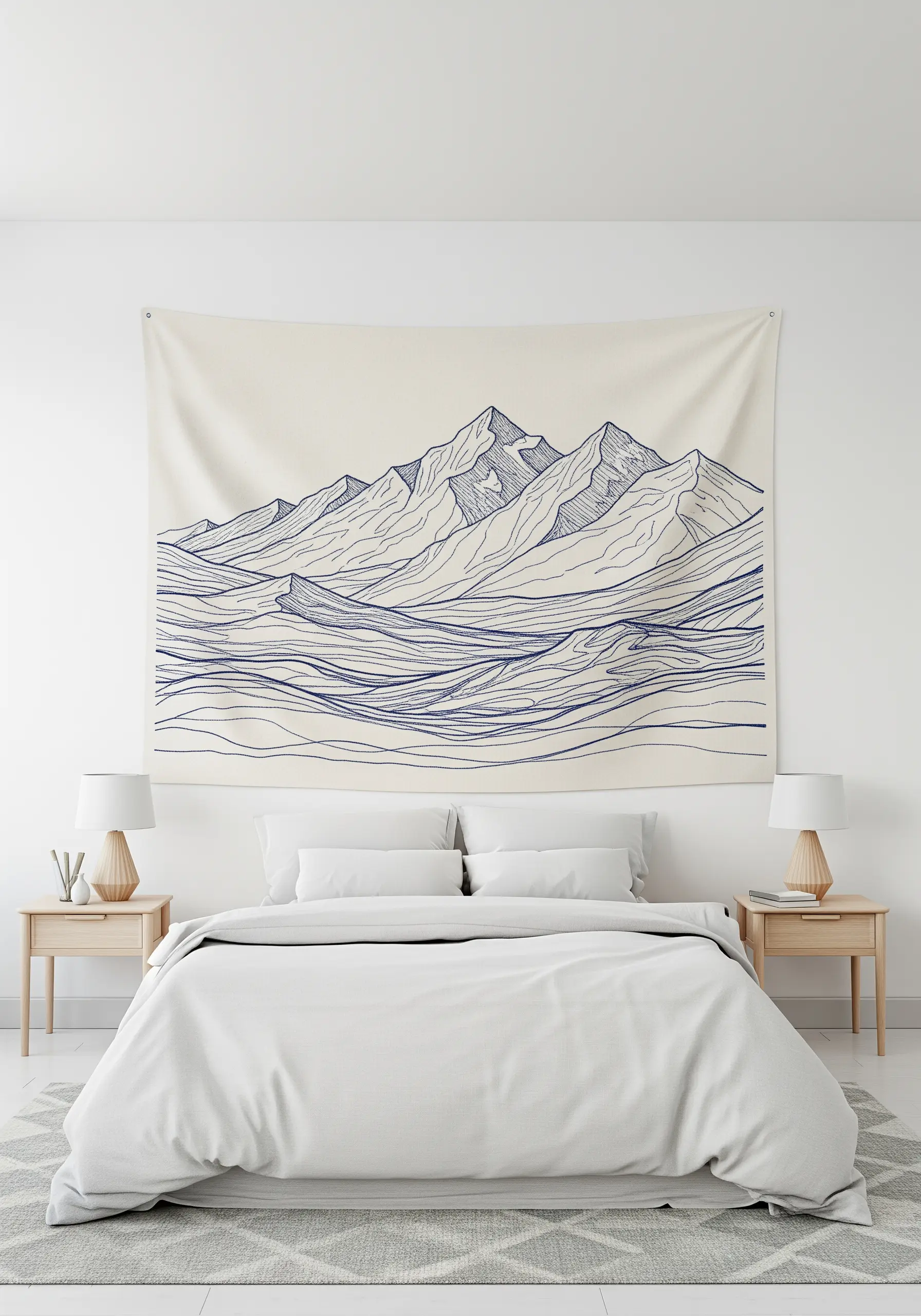
Mimic the look of woodcuts or engravings by varying the density of your lines.
Use darker blue threads and closer stitching for the foreground mountains, fading to lighter shades and wider spacing for the background.
This atmospheric perspective adds depth without requiring complex shading techniques.
These landscape embroidery wall pieces that turn fabric into painted scenery rely on line weight, not filler.
6. High-contrast botanical couching

For bold motifs on textured surfaces like burlap or jute, standard embroidery floss will get lost.
Switch to a couching technique using black yarn or heavy cord to create a raised, relief-like effect.
This method allows you to tackle large-scale minimalist leaf vine embroidery ideas for beginners who love modern minimal aesthetics quickly while adding significant tactile interest.
7. Upcycled denim celestial bunting

Repurposing denim pockets offers a sturdy, pre-finished edge that supports dense stitching.
Use a white sashiko thread or pearl cotton size 8 to ensure your celestial motifs pop against the indigo background.
The key is sharp needles; use a size 22 chenille or specific denim needle to glide through the heavy twill without hand fatigue.
These are perfect dreamy galaxy string art concepts to transform basic threads into cosmic embroidery art.
8. Abstract rhythm in thread
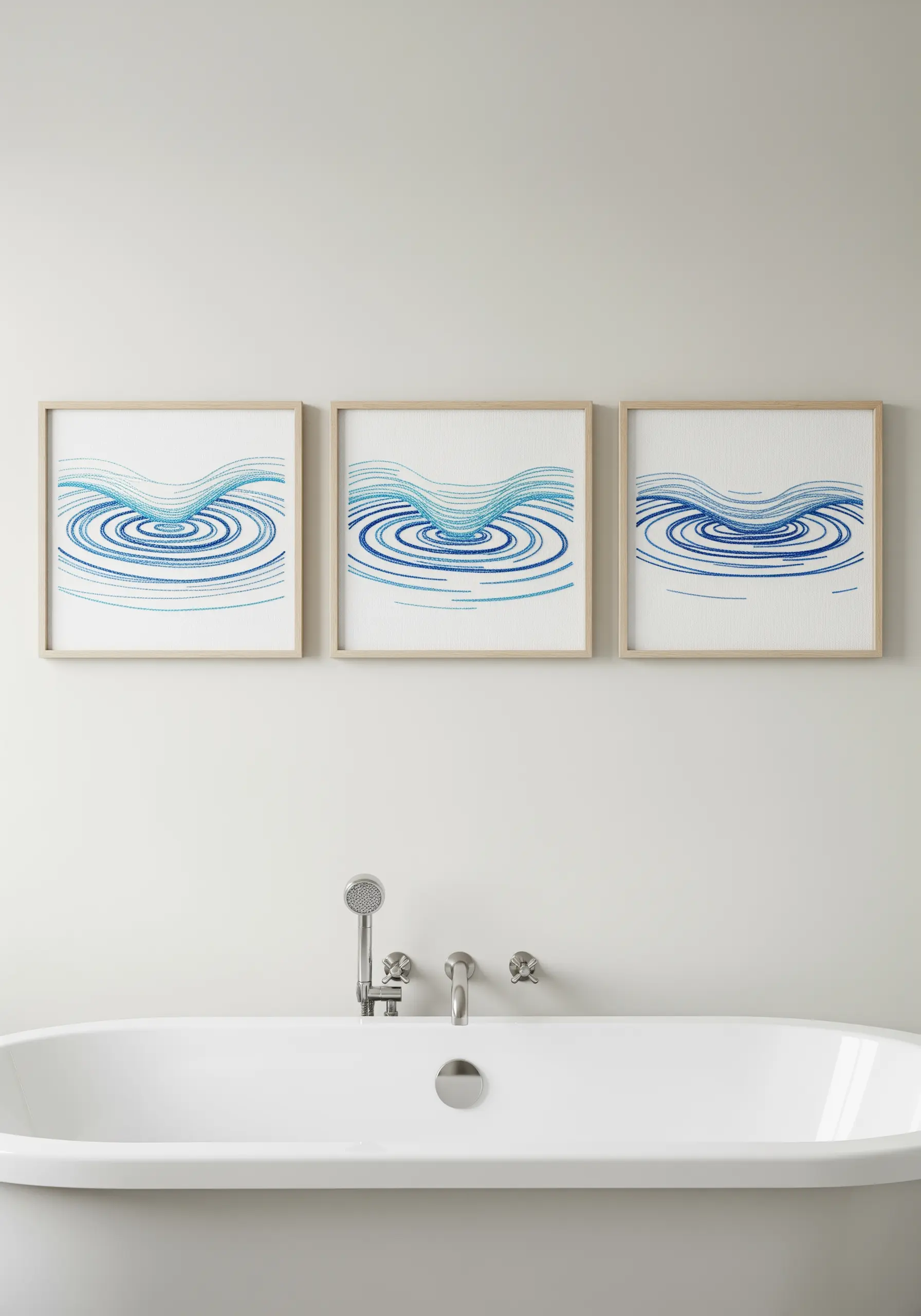
Use the chain stitch to create fluid, water-like ripples that have physical texture.
Gradient threads—transitioning from deep teal to sky blue—enhance the illusion of movement and depth.
To keep concentric circles perfect, use a compass to draw your guides; imperfections in geometry are instantly visible in this style.
Look into abstract thread flow patterns that mimic water fire wind for more motion-based inspiration.
9. The sketch-style giant fern

Embrace the ‘perfectly imperfect’ aesthetic by allowing your thread ends to hang loose or crossing lines intentionally.
This ‘sketch’ style mimics a graphite drawing and adds energy to static botanical subjects.
Work on a large scale with a dark charcoal thread on oatmeal linen for a sophisticated, natural look suitable for botanical embroidery ideas.
10. Metallic contours on dark grounds
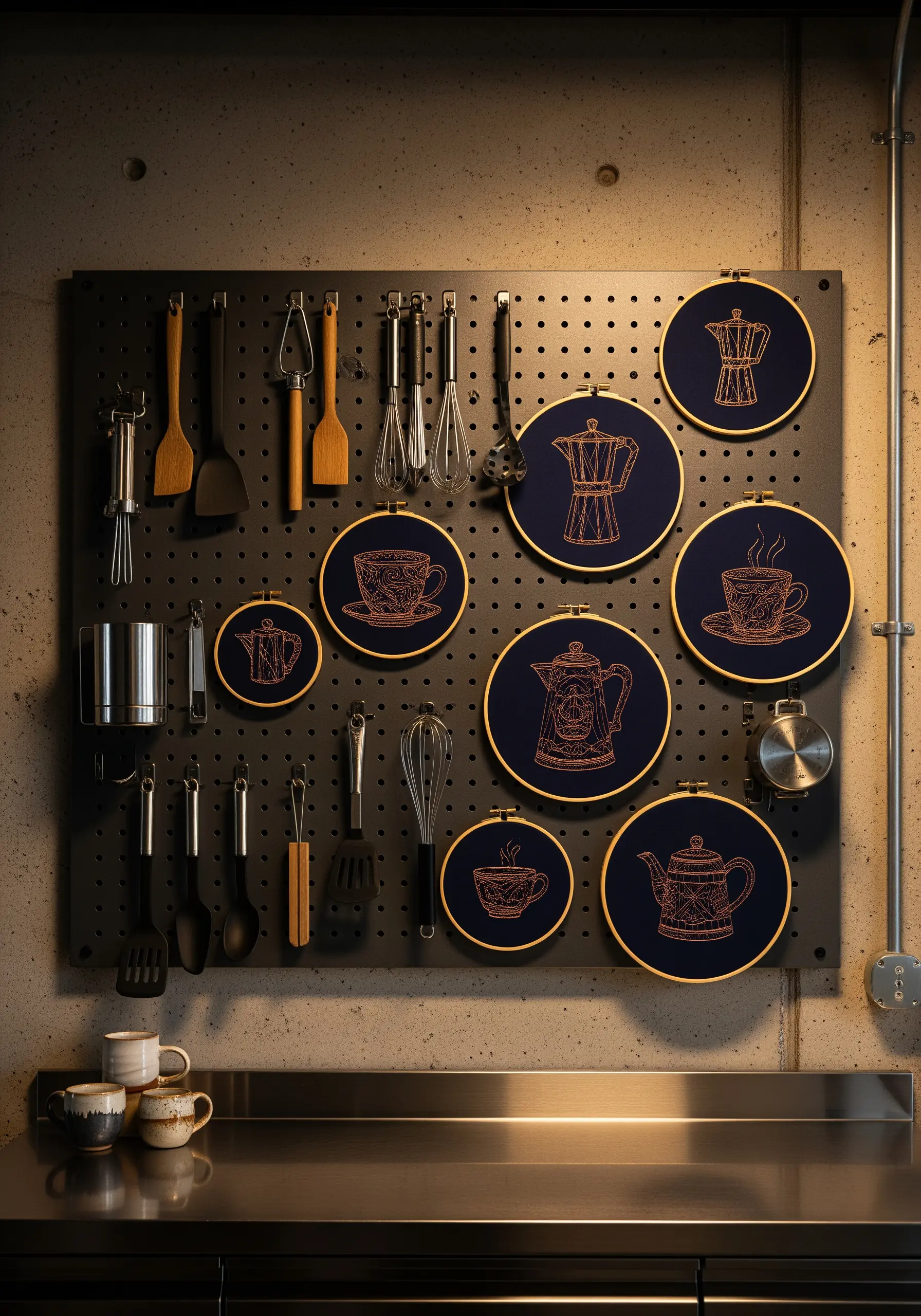
Drafting objects like Moka pots requires attention to industrial design lines.
Utilize a copper or gold metallic thread against a navy or black background to simulate the gleam of metal.
Keep your stitch length short to navigate the tight curves of handles and spouts without the metallic thread shredding.
These make excellent chic and simple stitched patterns for your coffee table decor.
11. Minimalist anatomy panels
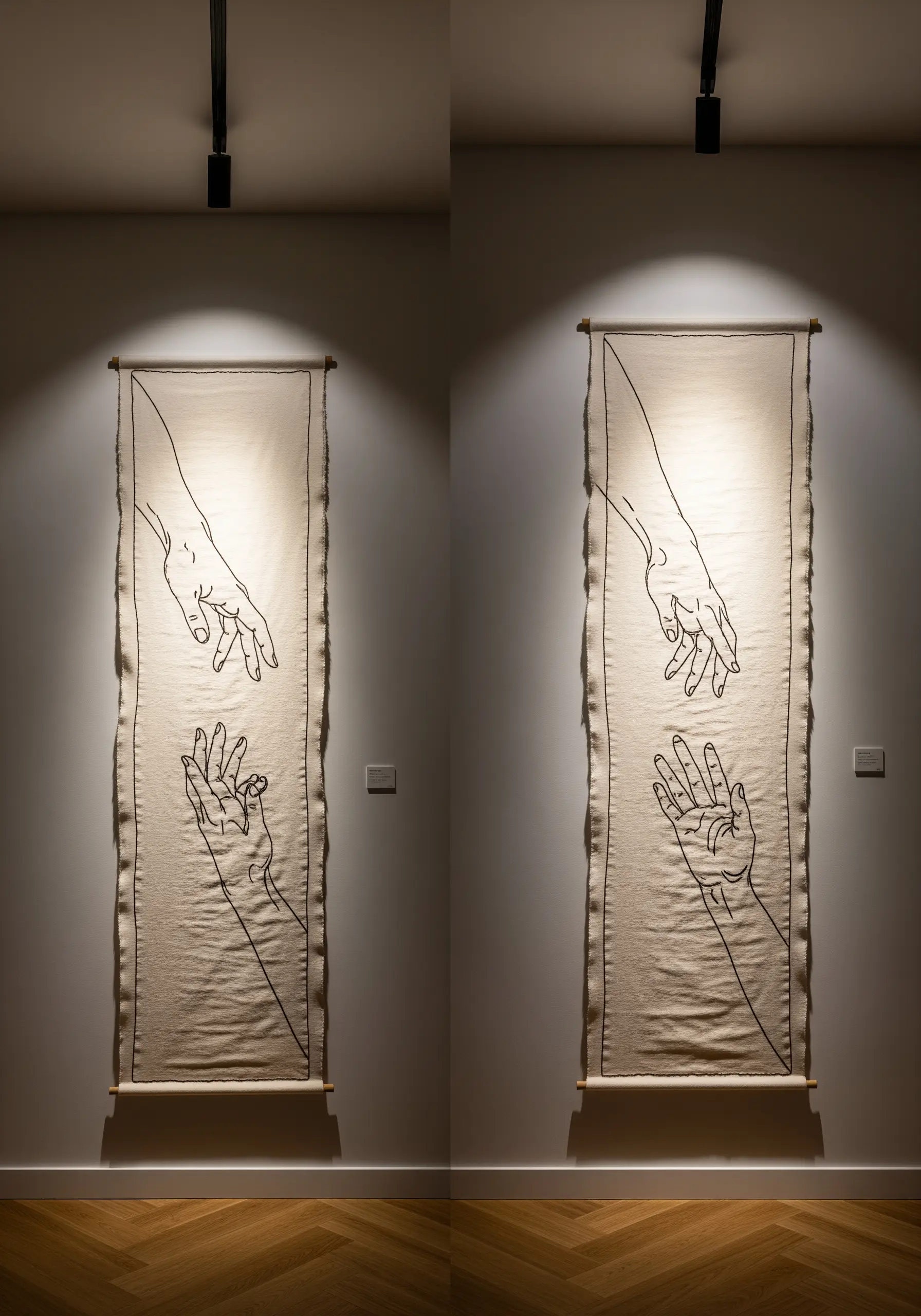
Hands are notoriously difficult to draw, and stitching them requires understanding line weight.
Use a stem stitch for the main outlines to create a rope-like, continuous flow that mimics ink.
Leave negative space between the fingers to let the viewer’s mind complete the image, a technique often seen in modern thread designs that turn simple outlines into emotional love story portraits.
12. Cohesive nursery silhouettes

Simplicity is your strength here; outline animals using a simple backstitch in a soft, pastel palette.
To make the set look ‘designer’ rather than ‘craft,’ ensure the scale of every animal is consistent—the elephant shouldn’t be smaller than the cat.
This approach transforms nursery stitch art wall ideas for cute soft baby room decor into a curated collection.
13. Industrial line work

For mechanical subjects like bicycles, precision is paramount.
Use a whipped backstitch to create raised, solid lines that mimic the metal frame of the bike.
For the tires, consider couching a thicker yarn to differentiate the texture of rubber from the steel spokes.
This fits perfectly with modern line art thread designs for people who love simple yet emotional embroidery.
14. Symmetrical floral framing

Flanking a mirror or artwork with embroidered panels creates a custom architectural feel.
Choose a muted thread color, like champagne or taupe, to keep the look elegant and not distracting.
Ensure your fabric tension is drum-tight; any sagging in large rectangular frames will distort the vertical lines of the stems.
This is a staple in minimalist embroidery projects for a chic modern bedroom.
15. Geometric string tension
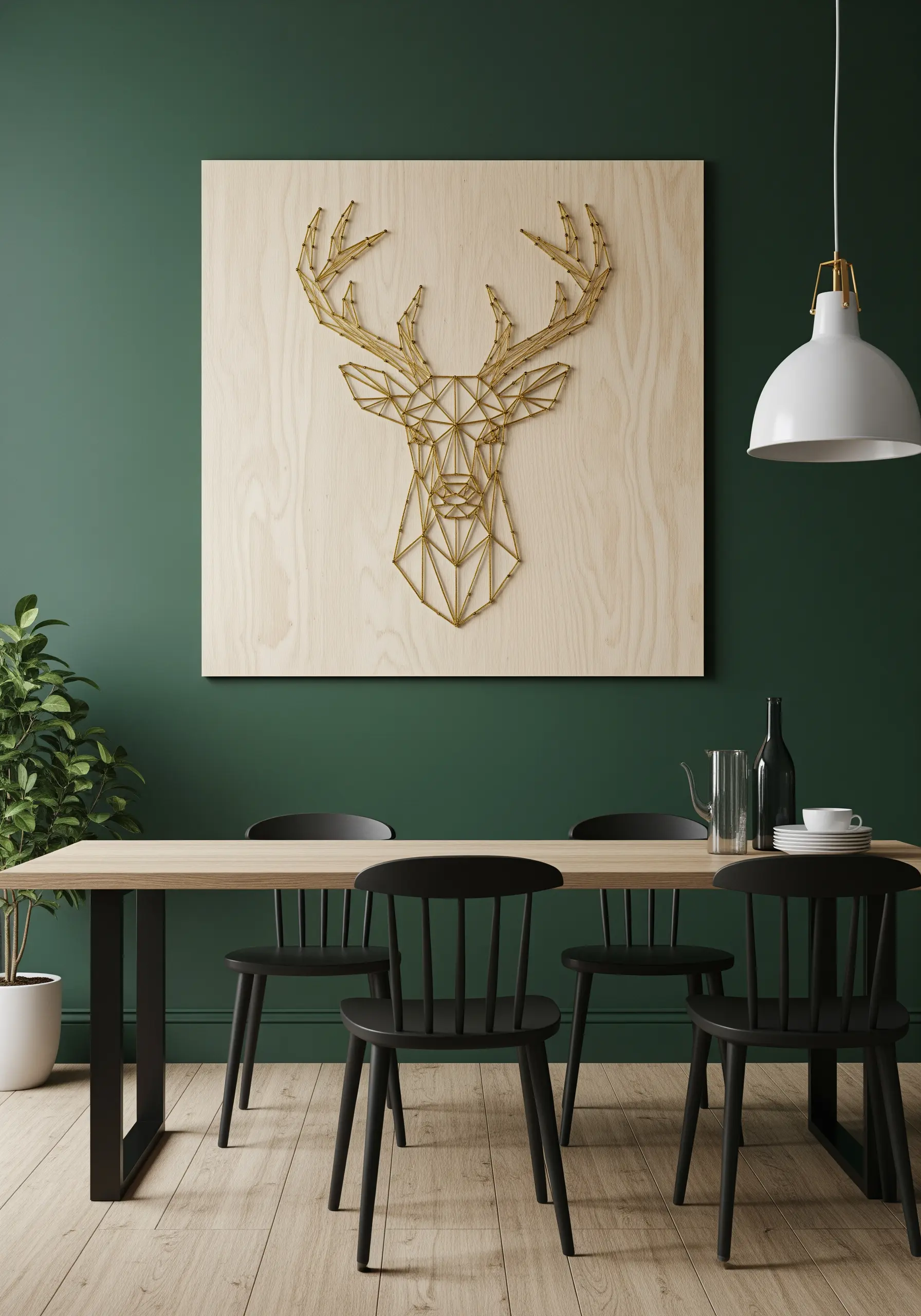
While technically string art, you can achieve this refinement by treating thread as a drafting tool.
Use brass escutcheon pins instead of standard nails for a polished, furniture-grade finish.
Map out your geometric vertices precisely; if one angle is off, the symmetry of the deer face collapses.
Explore animal silhouette string art designs that embroidery lovers can turn into whimsical nursery decor.
16. Controlled chaotic scribbles
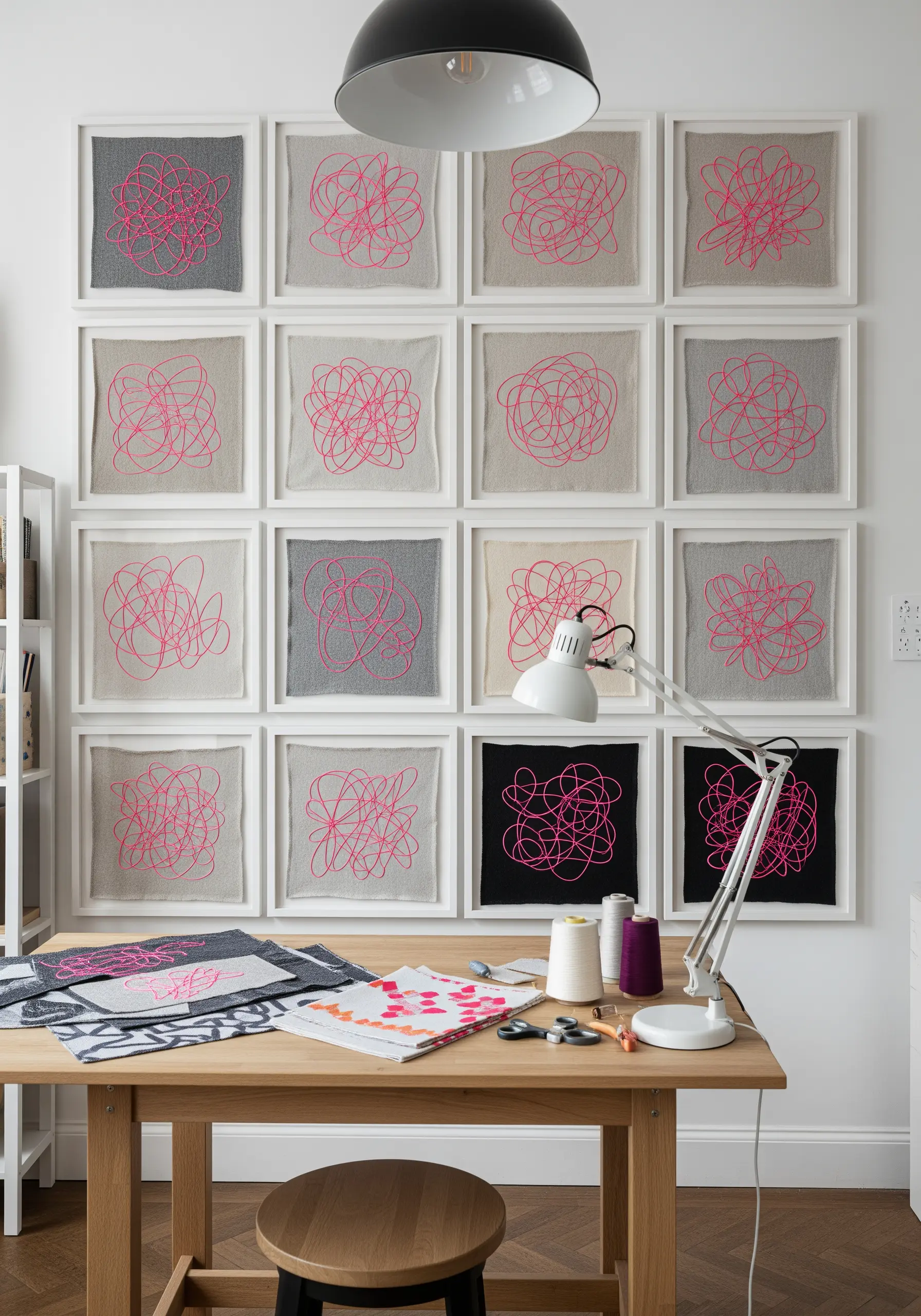
This technique, often called ‘thread painting’ or ‘free-motion embroidery,’ relies on layering.
Don’t just scribble randomly; build density in the center of the shape and feather it out to the edges.
Use a neon pink thread against a grey felt background for a high-impact, modern art aesthetic found in abstract thread collage ideas combining fabric scraps with free form stitching.
17. Segmented color blocking
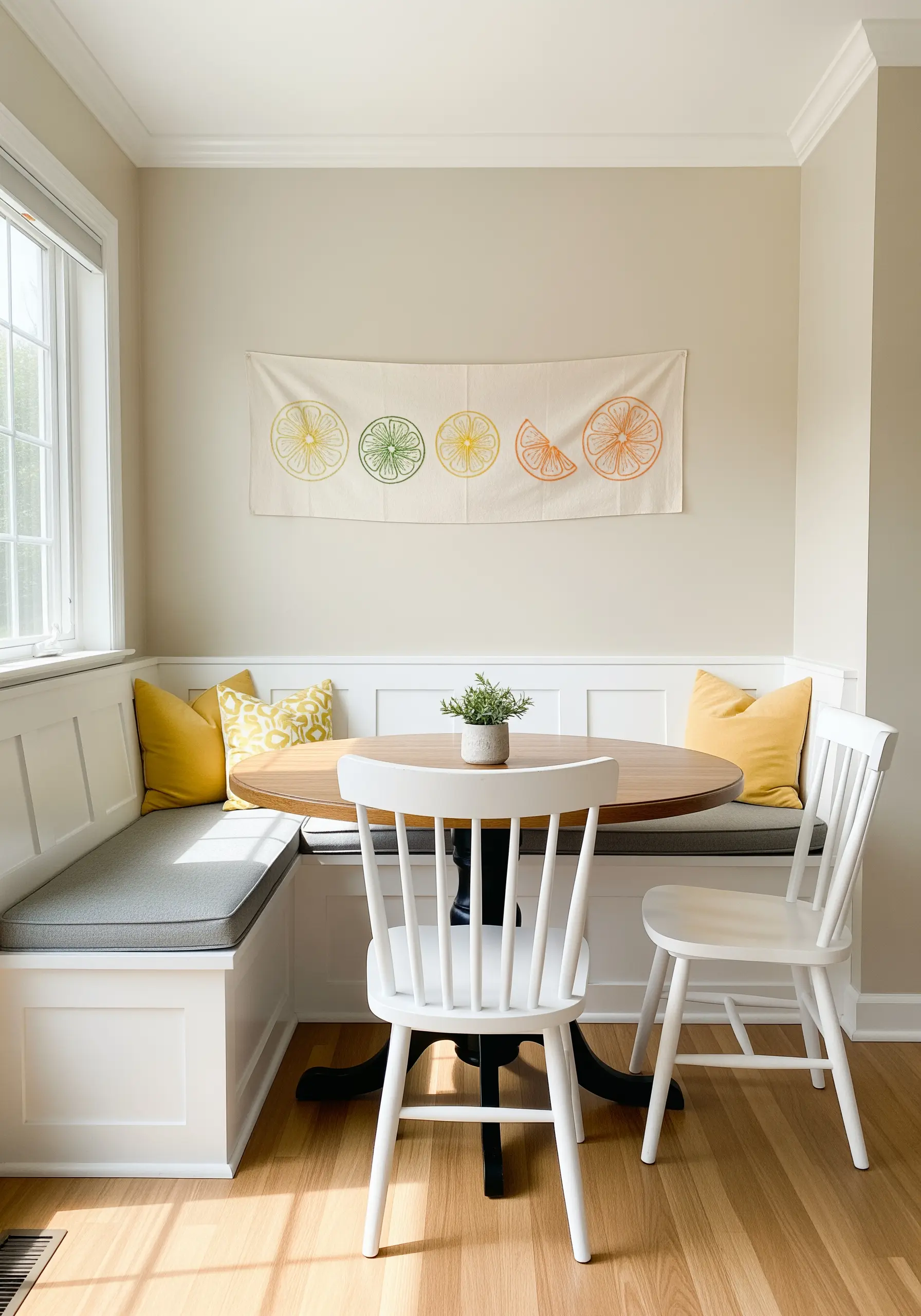
Fruit cross-sections are ideal for practicing precise curved lines and radial symmetry.
Use a split stitch for the rind to keep it solid, and a lighter running stitch for the inner segments to suggest transparency.
Iron your linen before and after stitching (face down) to ensure the banner hangs perfectly flat.
These are refreshing minimalist embroidery ideas perfect for tiny apartments.
18. Neon luminosity on black

To make a lightbulb ‘glow’ on fabric, contrast is your primary tool.
Use a high-sheen rayon or polyester neon thread rather than cotton; the synthetic shine mimics light.
Stitch on a matte black fabric to absorb surrounding light, making the thread appear to pop forward.
This technique is central to modern neon on black thread art ideas that glow under uv lights.
19. Negative space footwear
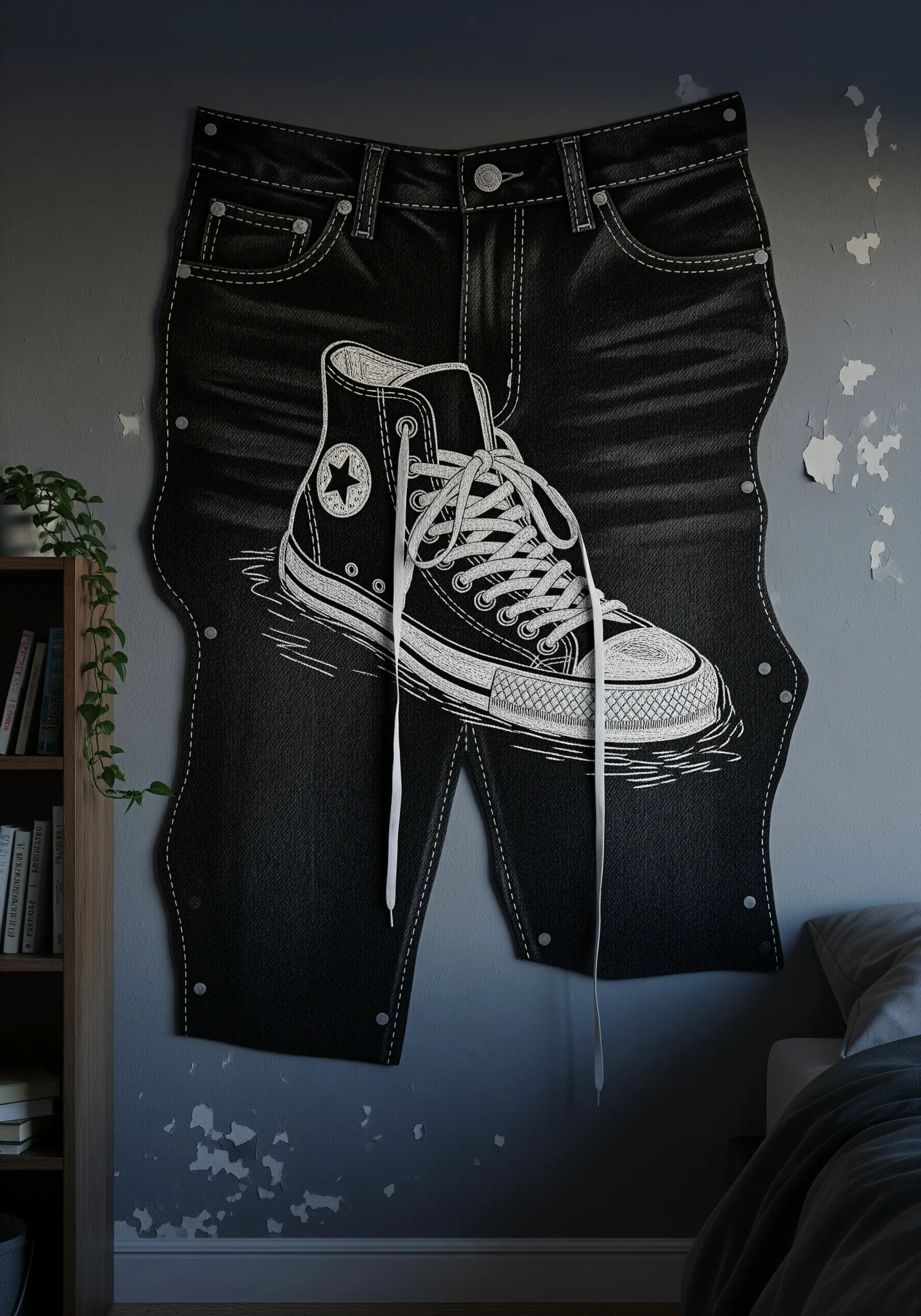
When stitching on dark denim or canvas, let the fabric color serve as the shadow.
Focus your white thread solely on the highlights—the laces, the rubber toe cap, and the stitching details.
This ‘negative drawing’ technique saves time and creates a striking, graphic impact perfect for sneaky small embroidery ideas on clothing that make people look twice.
20. Sheer transparency layering
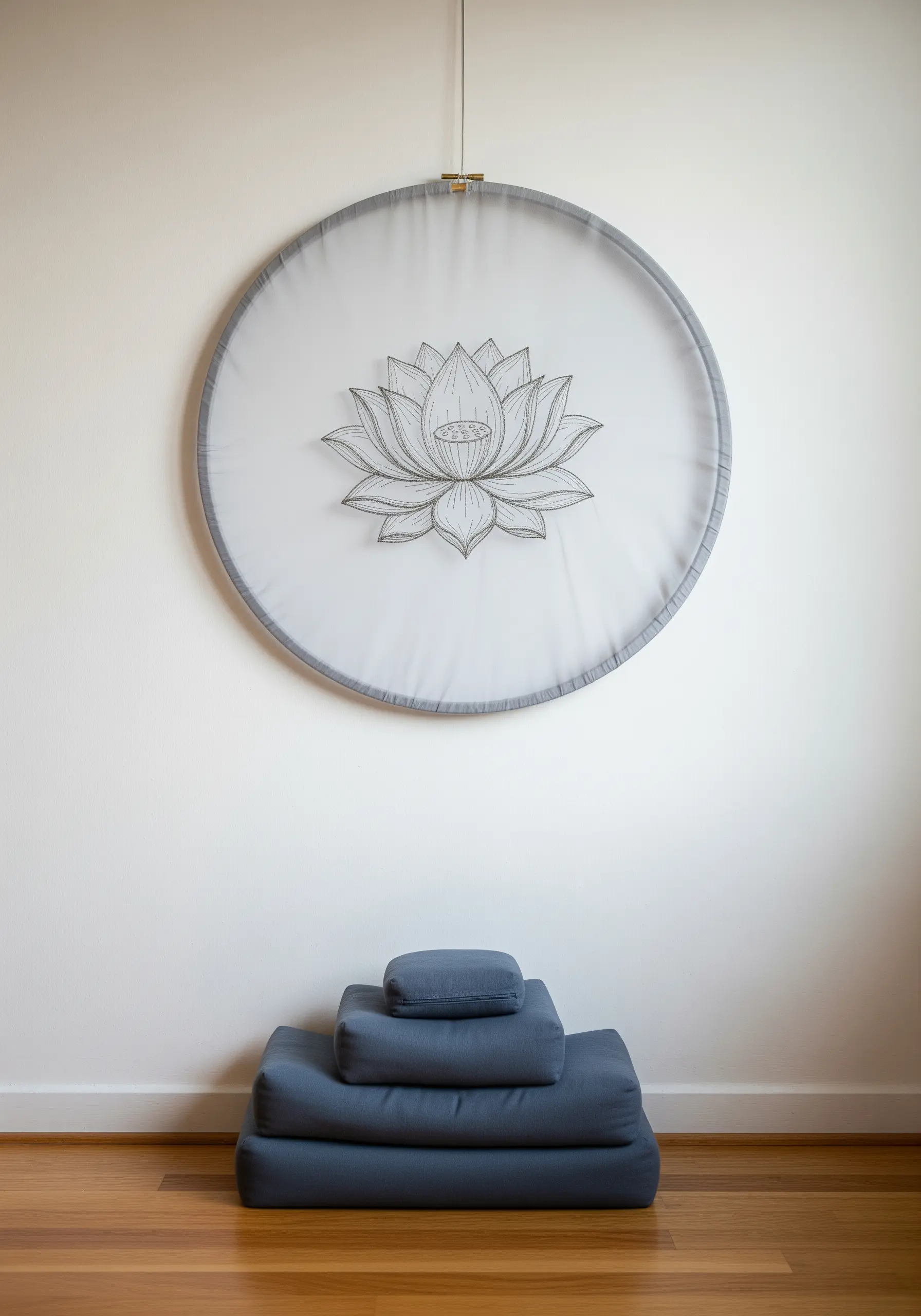
Working on organza or tulle creates a floating, ethereal effect for botanical motifs.
The challenge is the back; every knot will show. Use the ‘waste knot’ method or weave your ends carefully into the stitch line.
Double the fabric layer if your organza is too flimsy to hold the tension of the hoop.
This style elevates minimalist embroidery designs for a scandinavian home vibe.
21. Entomological gallery diamonds

Rotate your square frames 45 degrees to create a dynamic diamond layout.
Accuracy is key for insects; use reference photos to get the leg joints and antenna proportions correct.
The diamond orientation naturally leads the eye upward, making it a smart choice for filling vertical wall space.
Discover more butterfly moth embroidery patterns that feel like they could take flight.
22. Acoustical felt textures

Combine sound dampening with art by stitching directly into acoustic felt panels.
Use a tapestry needle (blunt tip) to avoid snagging the felt fibers, and opt for a thick wool yarn to stand out against the fuzzy texture.
Keep the designs large-scale; intricate details will get lost in the nap of the felt.
See how embroidery wall art hacks can transform functional items.
23. Trompe l’oeil headboards
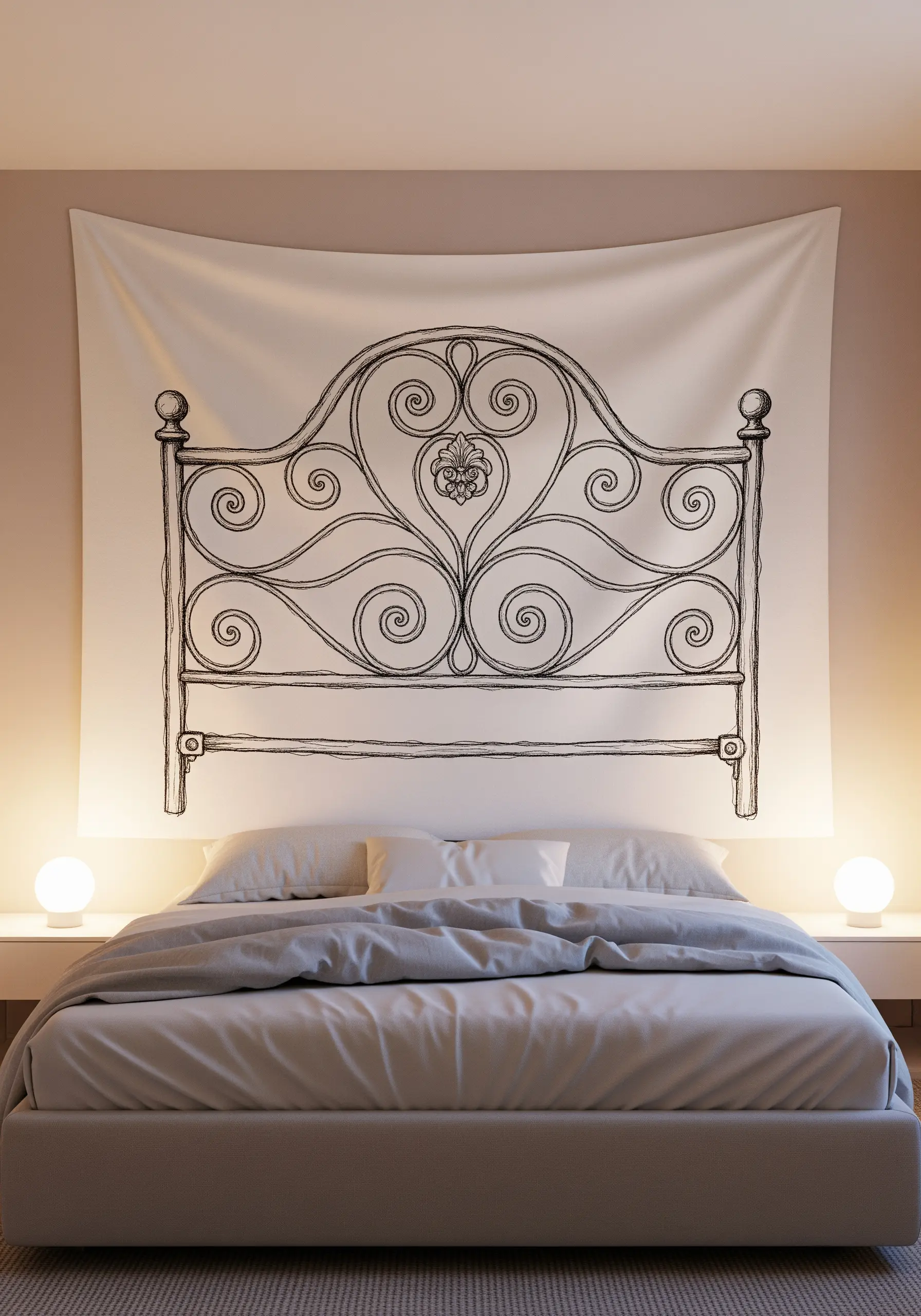
Create the illusion of furniture with a large-scale wall tapestry.
Transferring a design this size requires a projector; do not attempt to freehand it if you want symmetry.
Use a heavy chain stitch in black yarn to mimic the weight and thickness of wrought iron.
This is one of the most creative chic embroidery headboard hacks that create statement bedrooms in mini apartments.
24. Classical pop-art mashups
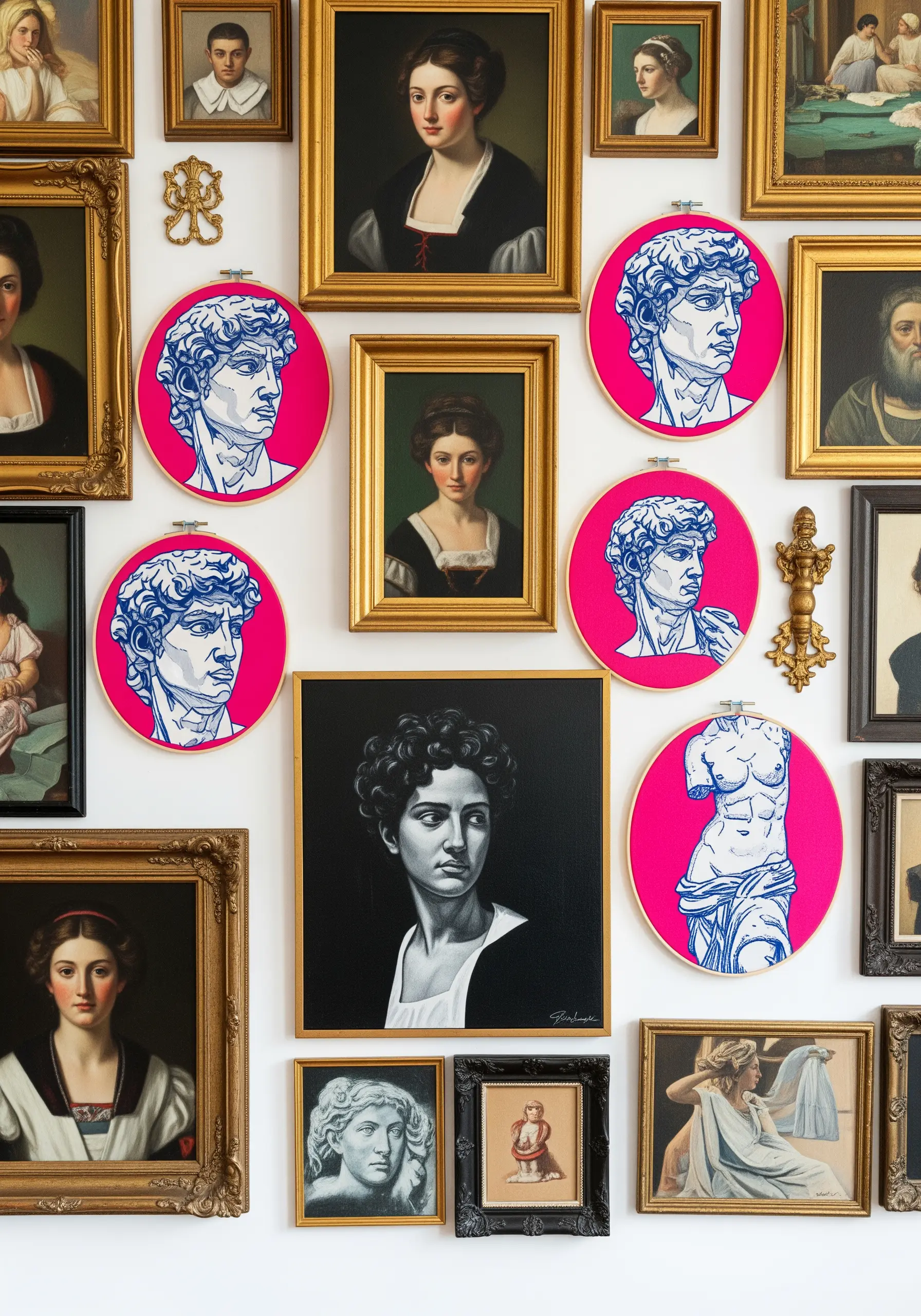
Modernize classical busts by setting them against vibrant, solid-color backgrounds.
You can achieve the background by painting the fabric with acrylics mixed with textile medium before stitching, or using appliqué.
Stitch the bust in blue or white thread to contrast sharply with the neon pink, emphasizing the pop-art aesthetic.
Try this with line art portrait embroidery ideas.
25. Large-scale curtain motifs
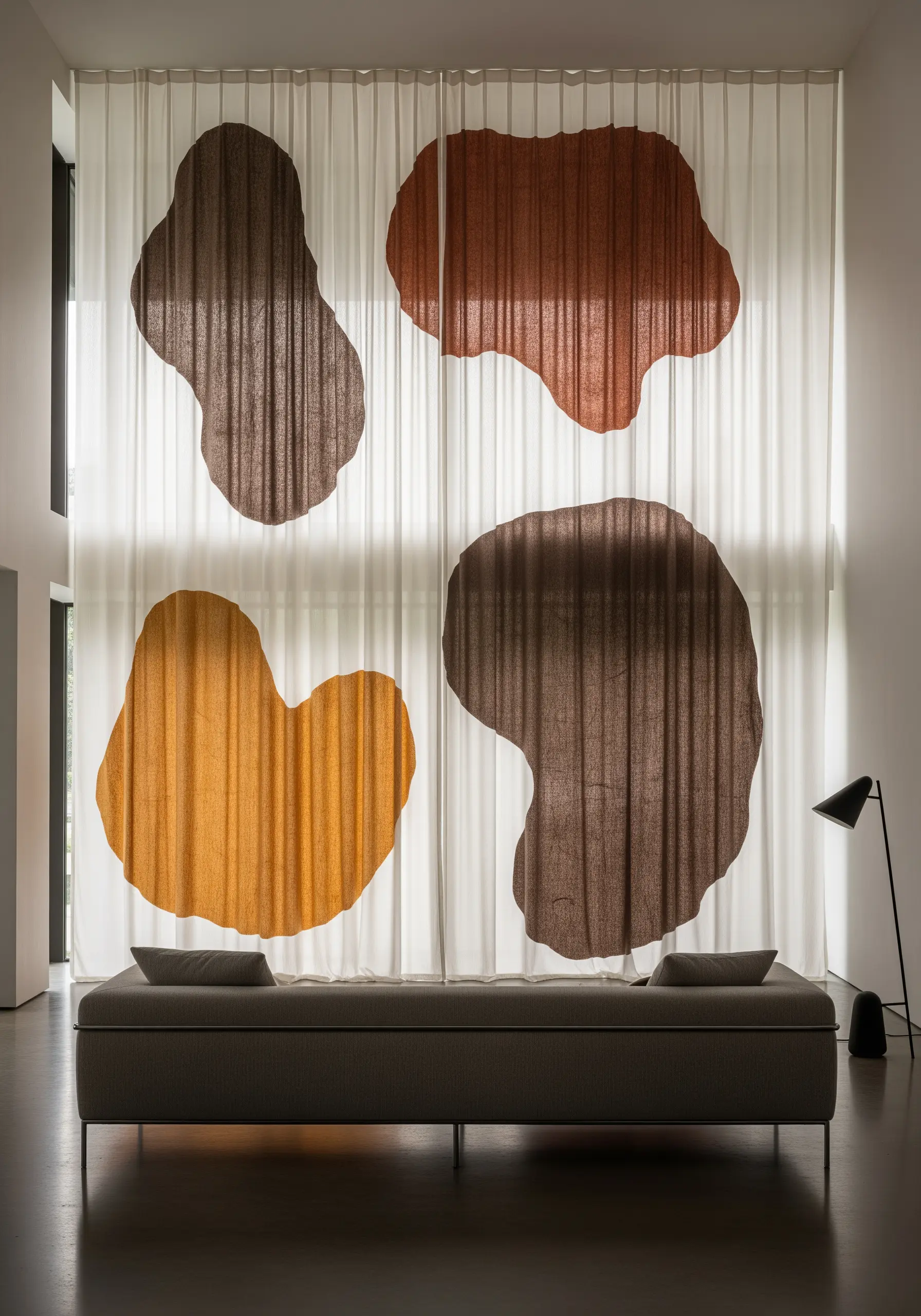
Transform sheer curtains into art by stitching massive, abstract shapes.
Use a long running stitch or a darning stitch; this allows the fabric to drape naturally without becoming stiff.
Choose threads that match the fabric weight—heavy floss will pull and tear sheer curtains.
This aligns with modern minimalist textile wall art designs to stitch for scandinavian interiors.
26. Script typography grids
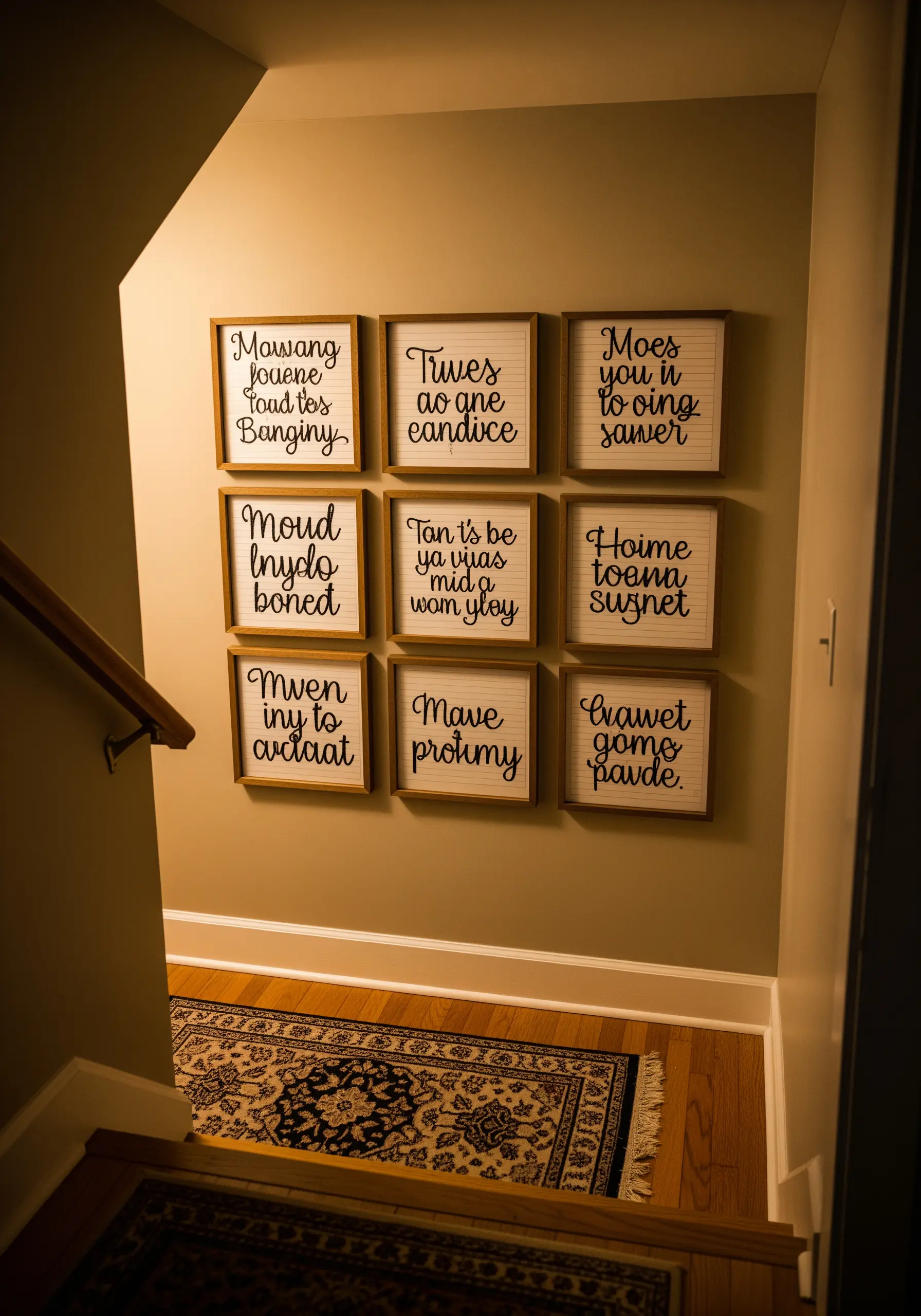
Hand-lettering in embroidery requires smooth curves and consistent baseline alignment.
Use a whipped backstitch to smooth out the jagged edges of a standard backstitch, creating a fluid, calligraphy-like line.
Framing them in a grid amplifies the impact of simple words, turning text into texture.
Perfect for inspirational quote word pillow embroidery patterns and wall art.


