

Sometimes, the desire to create something beautiful feels at odds with the time we actually have. You don’t need elaborate patterns or dozens of colors to make an impact. Instead, I want you to think about transforming your everyday surfaces—like the coasters and runners on your coffee table—into small canvases for quiet, intentional stitching.
Each of these ideas is built on a simple principle: a small adjustment in technique, a thoughtful color choice, or a new way of seeing texture can elevate your work from simply ‘handmade’ to ‘hand-crafted.’ We’re not just stitching; we are adding a layer of personal artistry to the functional items that furnish our lives.
Let this be an invitation to slow down, to appreciate the rhythm of a single, well-placed stitch, and to see the profound beauty in simplicity. You have the skill—now let’s refine it with intention and create decor that feels uniquely, beautifully yours.
1. The Art of Geometric Simplicity

Create a set of minimalist coasters by focusing on the precision of a simple backstitch.
Use a high-contrast, two-strand cotton floss, such as black on an oatmeal linen or cotton canvas, to make the lines sharp and intentional.
To ensure your lines are perfectly straight and the fabric doesn’t pucker, iron on a lightweight, tear-away stabilizer to the back of your coaster fabric before you begin stitching.
This simple preparation makes the difference between a homemade look and a piece of clean, modern design.
2. The Rhythmic Flow of Sashiko-Inspired Stitching
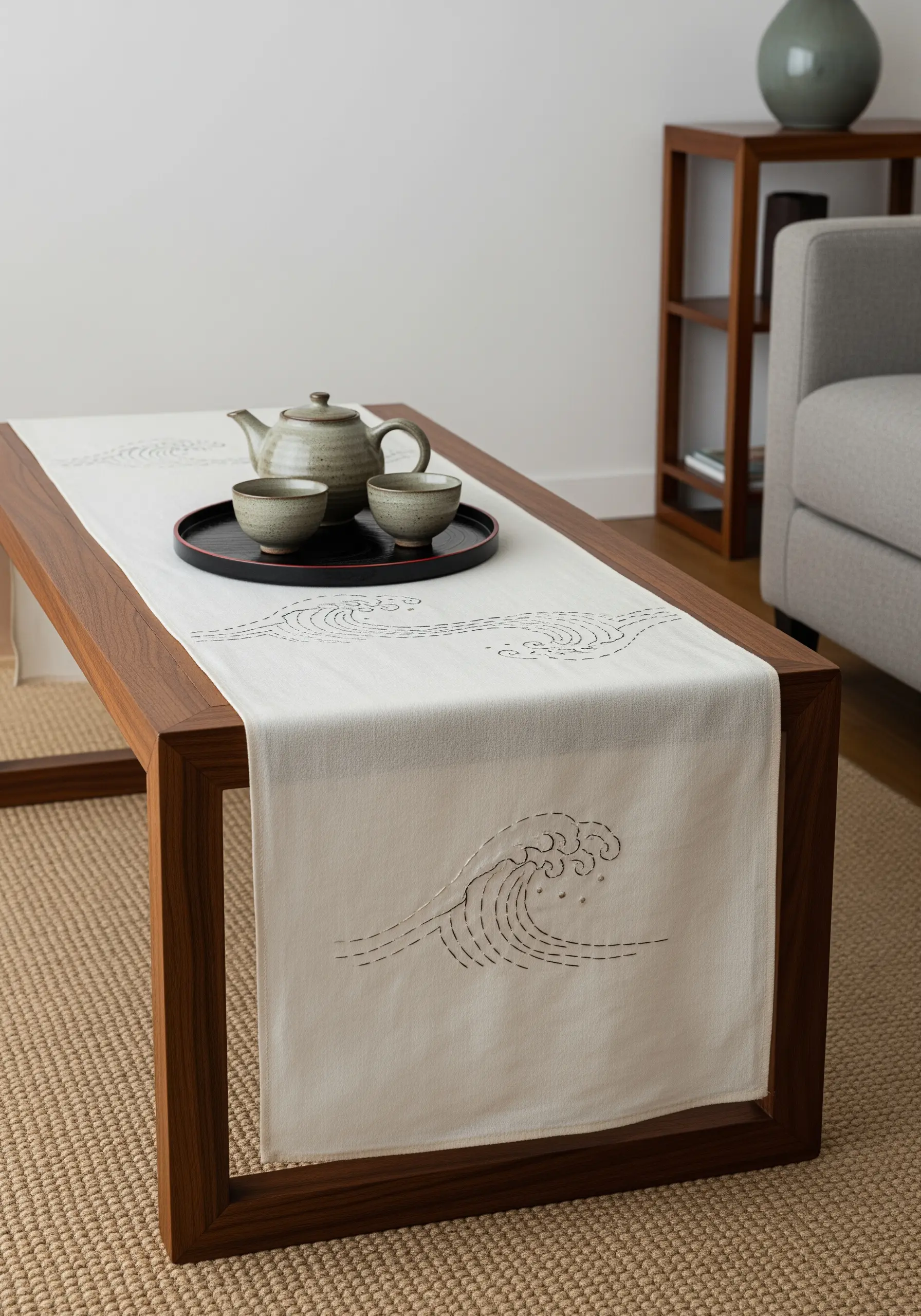
Capture the essence of Japanese wave patterns using a foundational running stitch.
The goal is not speed, but rhythm—keep your stitches and the gaps between them as uniform as possible for that signature, tranquil Sashiko effect.
Opt for a thicker pearl cotton or traditional Sashiko thread, which will give your lines beautiful definition on a neutral linen runner.
This meditative technique turns a simple piece of fabric into a narrative of movement and calm, perfect for a serene dining space.
3. Warm Textures with Layered Satin Stitch
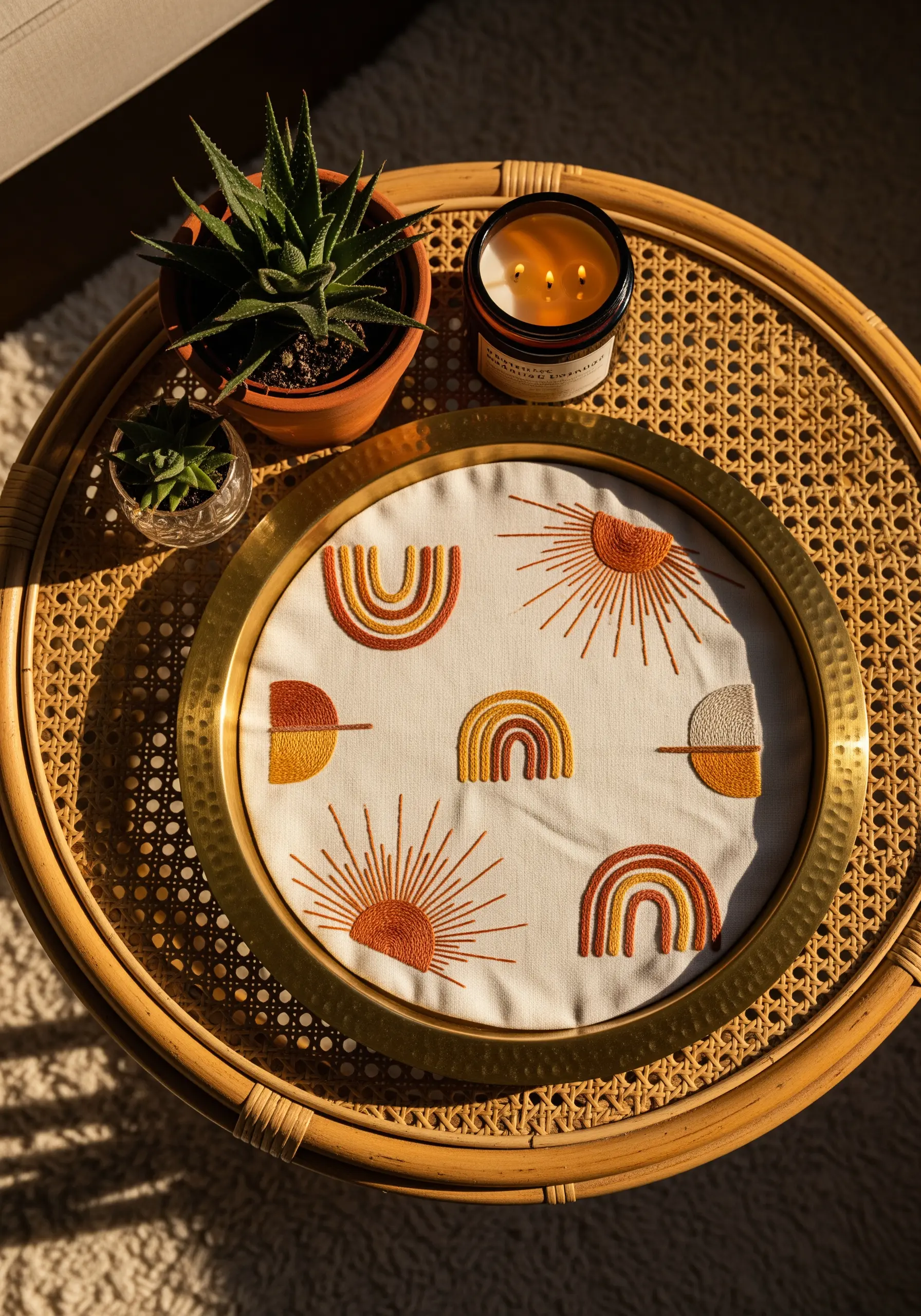
To achieve the smooth, dense color in these boho-style suns and rainbows, first outline each shape with a delicate split stitch.
This creates a raised, clean edge that makes your satin stitch easier to control, resulting in a perfectly smooth, filled surface.
Use a gradient of three or four earthy tones within each rainbow arc to create depth and warmth.
For the sun rays, use single, radiating straight stitches—their simplicity provides a beautiful contrast to the dense satin stitch semicircles.
4. Mid-Century Modern Thread Graphics
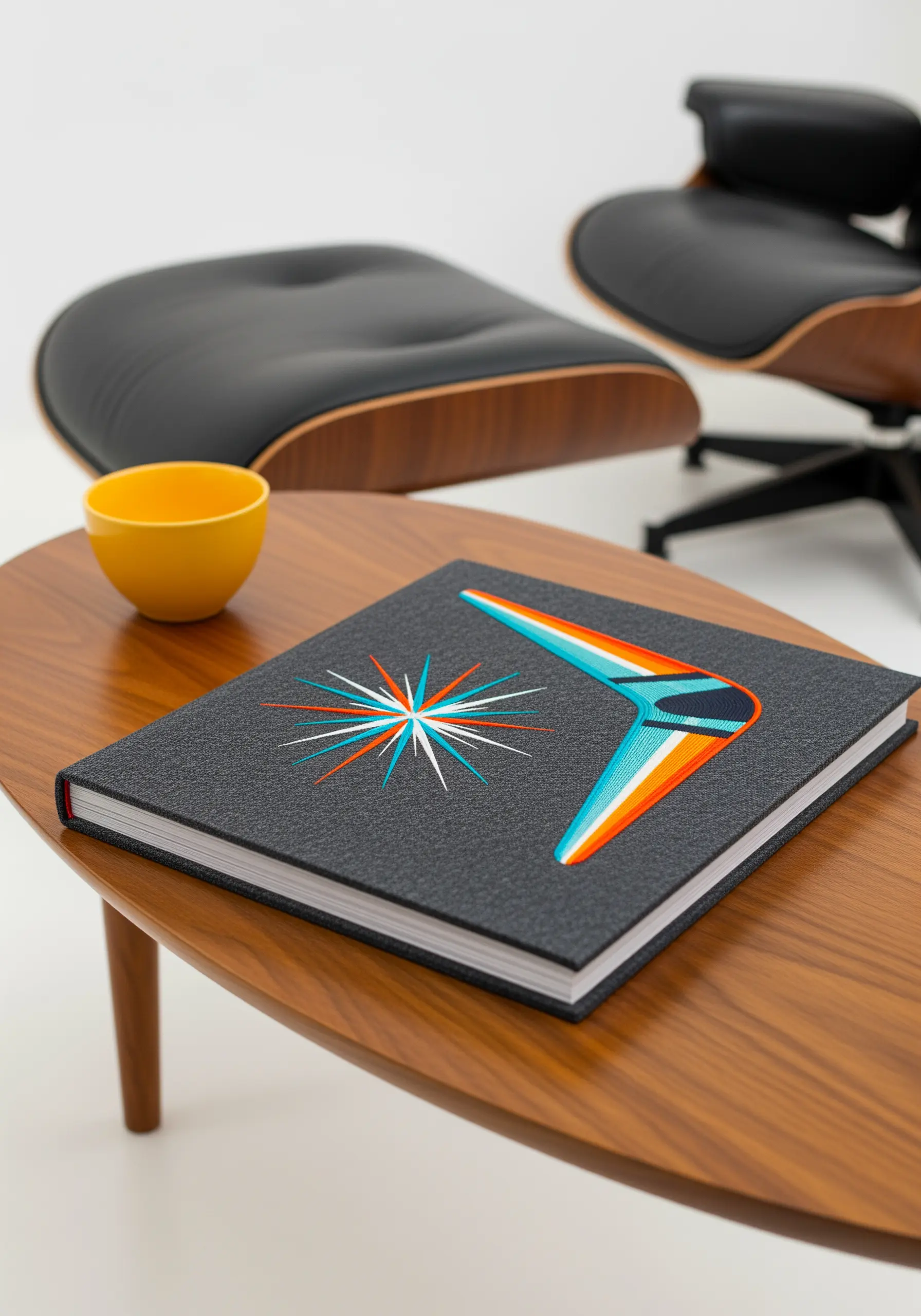
Recreate the sharp dynamism of Mid-Century Modern thread graphics by embroidering directly onto a fabric-bound notebook or book cover.
The key to success is flawless satin stitch; ensure your stitches lay parallel and close together for a solid block of color that catches the light uniformly.
Use a sharp needle and a thimble to pierce the sturdy cover material cleanly and protect your fingers.
Choose a vibrant, retro color palette—like teal, orange, and white on charcoal gray—to capture that iconic atomic-age aesthetic.
5. Delicate Coastal Line Art
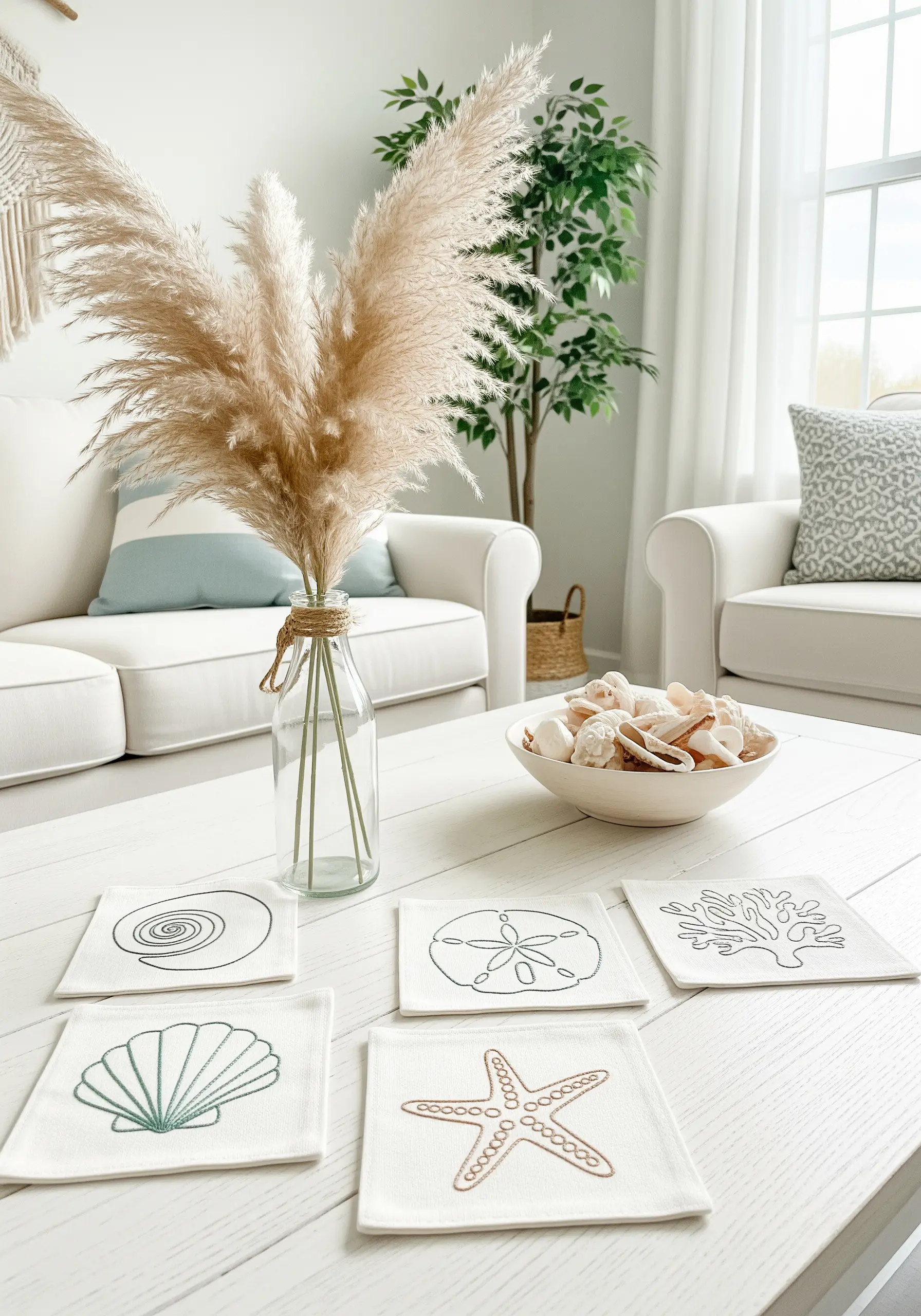
To give these shell motifs a refined, continuous line, use a whipped backstitch.
First, create a standard backstitch outline, then whip the stitches with the same thread without piercing the fabric—this smooths the line, giving it a polished, rope-like appearance.
Use only two strands of floss to keep the delicate coastal line art from looking heavy.
Stitching a set of coasters with varied motifs in a soft, coordinated palette of seafoam green and sandy beige creates a cohesive, beach-inspired collection.
6. A Bold, Graphic Border
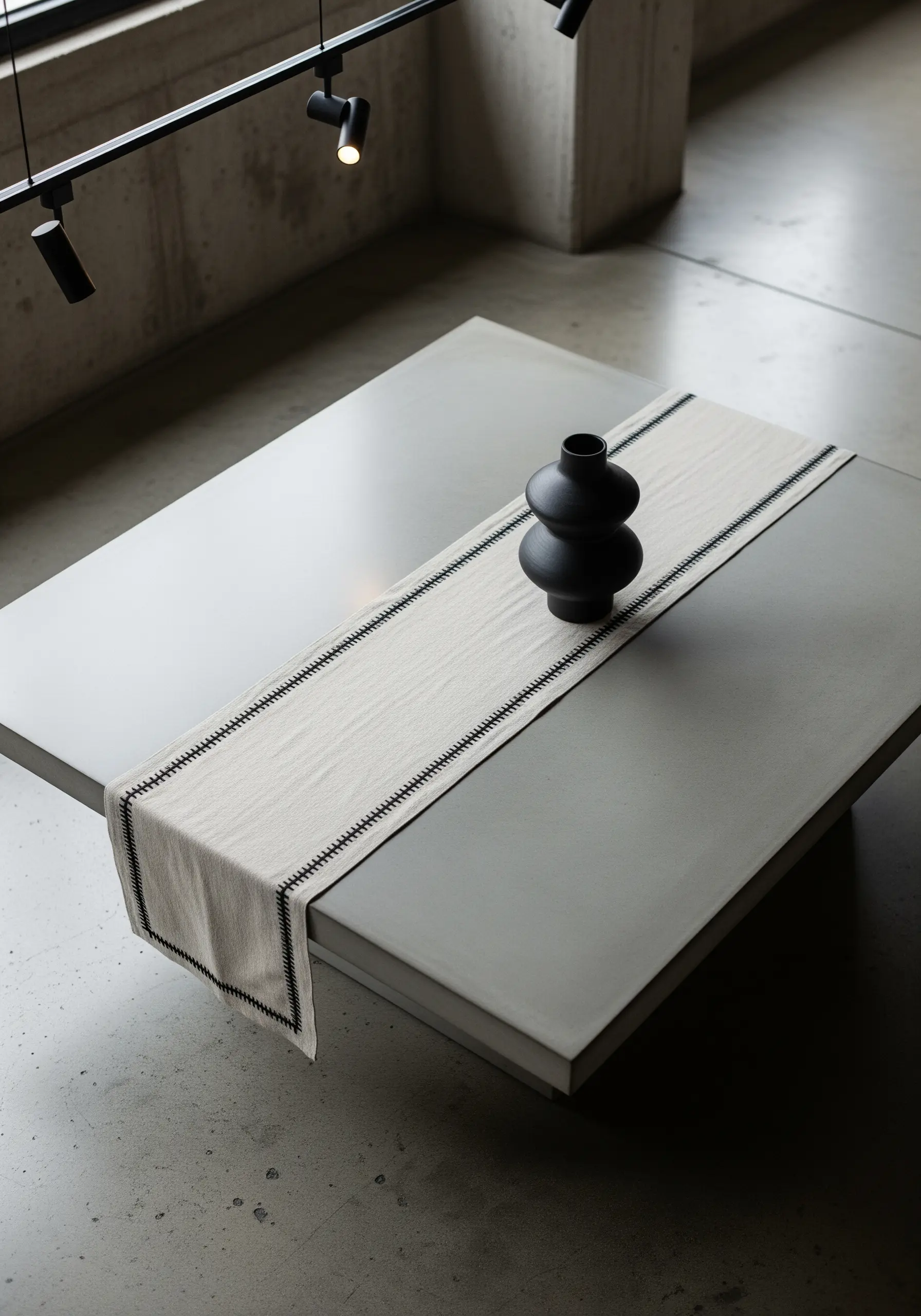
This high-impact design is achieved with a stitch that has significant presence, like a thick chain stitch or a Pekinese stitch.
Use a heavy-weight thread, like cotton perle No. 5 or even a fine wool yarn, to create a bold, graphic border that feels almost woven into the fabric.
Absolute precision is essential, so carefully mark your lines with a water-soluble fabric pen before starting.
The strong contrast of black thread on natural, unbleached linen provides a modern, sophisticated finish that frames your table beautifully.
7. Gilded Art Deco Radiance

Capture gilded Art Deco radiance using high-quality metallic thread for the radiating straight stitches.
To prevent the notorious tangling and fraying of metallics, use shorter lengths of thread and run them through a thread conditioner like beeswax or Thread Heaven.
Stitch onto a rich, deep-colored fabric like emerald green velvet or felt; the plush texture absorbs light, making the metallic thread shimmer even more intensely.
This project proves that simple straight stitches, when thoughtfully arranged, can create an effect of pure luxury.
8. Refined Farmhouse Cross-Stitch Border

Elevate a simple table runner with a refined farmhouse cross-stitch border.
For perfectly uniform stitches, use an even-weave fabric like chambray or linen where you can count the threads for placement.
Using a contrasting thread color, like crisp white on denim blue, gives the classic stitch a clean, contemporary feel.
This design adds a touch of thoughtful, handmade charm without feeling overly rustic or dated.
9. Layered Felt Appliqué with Contour Stitching
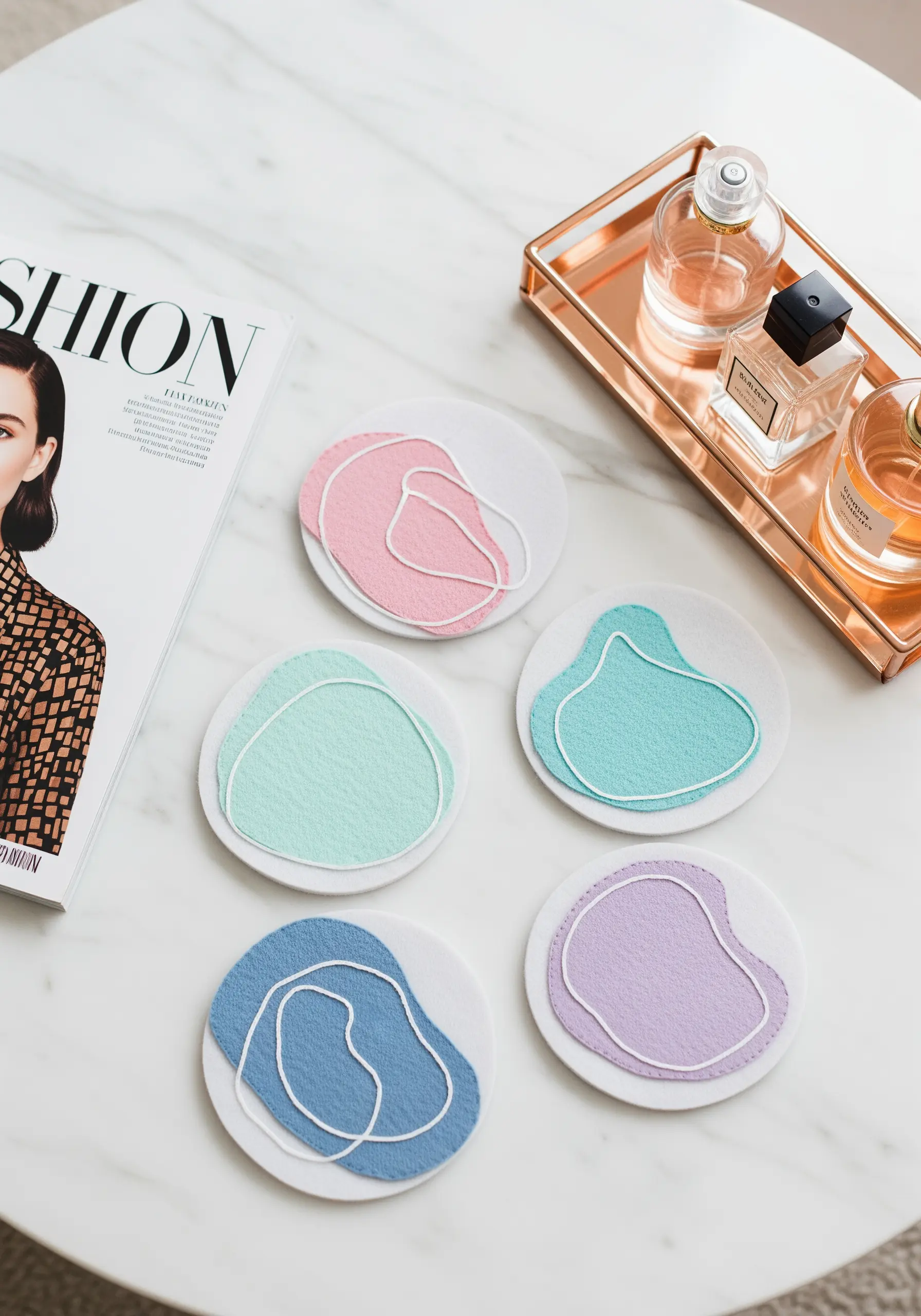
Explore texture and form by combining layered felt appliqué with simple line work.
Cut organic, free-form shapes from wool-blend felt and attach them to a coaster base with a few small, hidden stitches.
Then, use a contrasting two-strand floss to add a single, meandering line of stem stitch that flows over and around the felt shapes.
This playful technique creates a tactile, dimensional piece that feels like a small abstract collage.
10. Elegant Botanical Sprigs
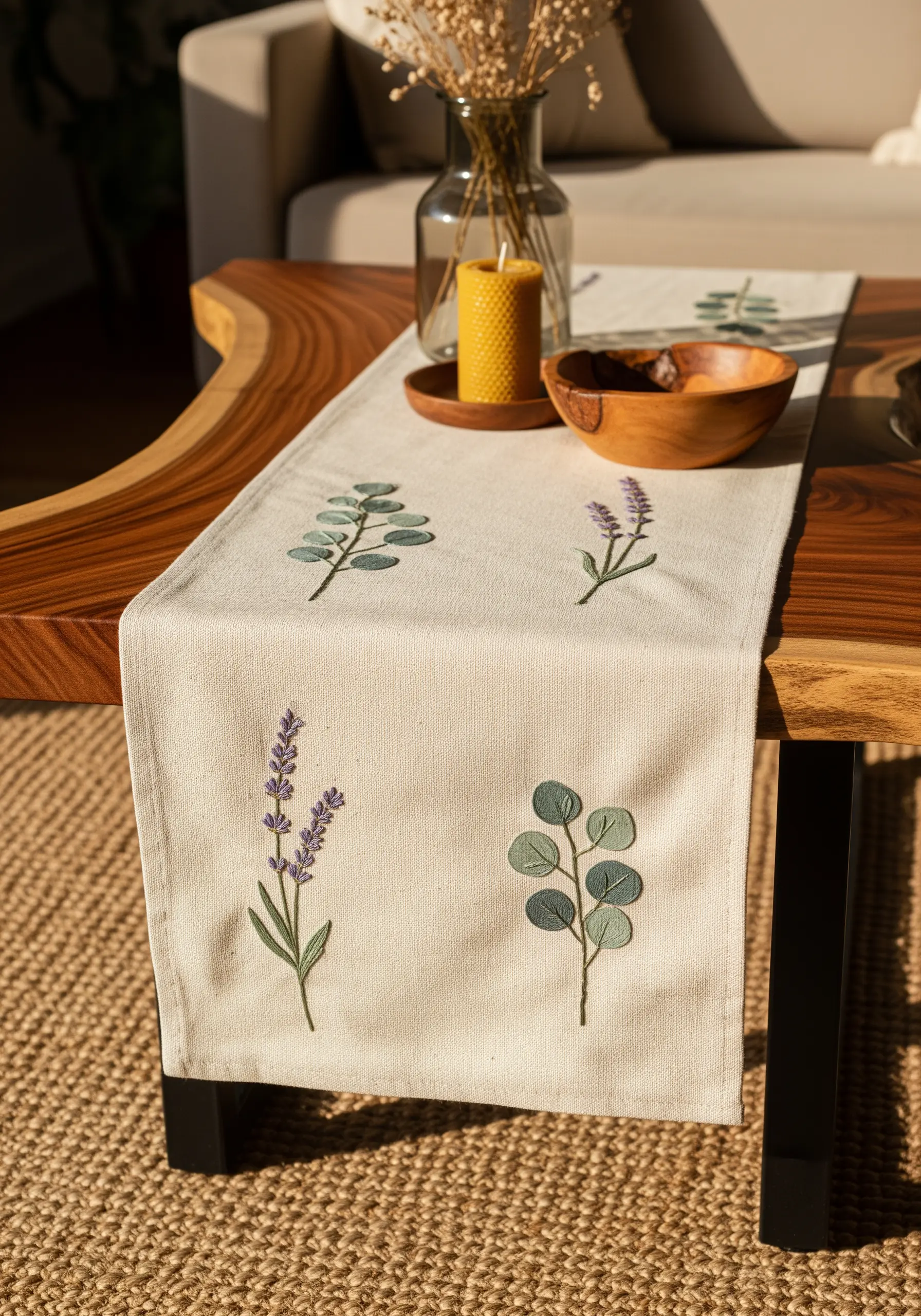
Bring your table runner to life with elegant botanical sprigs.
For the eucalyptus, create rounded leaves with detached chain stitches (lazy daisies), adding a single straight stitch down the center for a vein.
For lavender, use a simple stem stitch for the stalk and cluster tiny French knots in shades of purple and mauve for the blossoms.
Using slightly varied shades of green and purple thread will give your botanicals a subtle, realistic depth that feels both delicate and natural.
11. The Precision of Geometric Fill
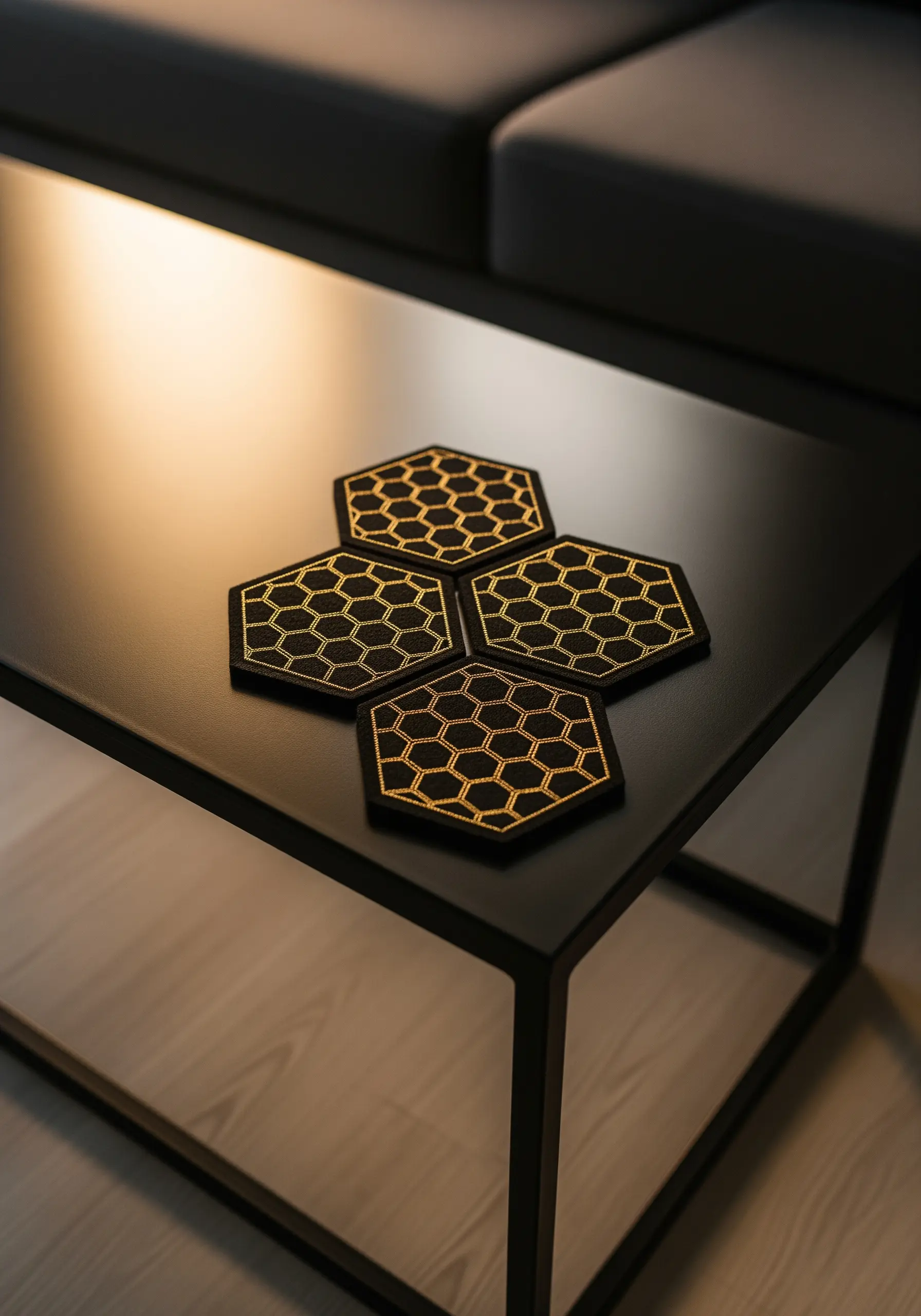
This honeycomb pattern is a masterclass in precision, delivering a look of high-end, modern luxury.
Use a shimmering metallic gold thread on a stark, non-stretch black fabric like felt to achieve maximum visual impact.
Transfer the pattern using a white chalk pencil and use a simple backstitch to create the lines.
The meticulousness required is what makes the final piece so striking—every stitch contributes to the flawless geometric whole.
12. Crystalline Snowflake Satin Stitch

To capture the delicate structure of a crystalline snowflake, work on a soft, thick fabric like wool felt, which prevents puckering and gives your stitches a plush base.
Use a combination of satin stitch for the wider, geometric sections and backstitch for the finer, connecting lines.
Alternate between a pure white cotton floss and a shimmering silver metallic thread to create a subtle sparkle that mimics glistening ice.
The key to a dynamic snowflake is varying the direction of your satin stitches within each segment to create light-reflecting facets.
13. Woven-Look Southwestern Motifs

Create the rich, textural feel of woven-look Southwestern motifs by using dense fill stitches.
Fill the geometric shapes with satin stitch or long-and-short stitch, ensuring your stitches are packed tightly together for an opaque, fabric-like finish.
Use tapestry wool or a full six strands of cotton floss in desert-inspired hues like terracotta, turquoise, and sand.
Leaving the placemat edges with a soft, hand-combed fringe completes the authentic, woven textile aesthetic.
14. Modern Color Blocking with Appliqué and Stitch

This sleek design proves that embroidery can be about assembly and texture, not just intricate stitches.
The project combines different materials: a base of colored faux leather or sturdy vinyl with a contrasting ribbon strip stitched cleanly down the center.
Use your sewing machine for a perfectly straight line, or achieve a similar look by hand with a meticulous backstitch.
The sophistication comes from the interplay of textures—the smooth faux leather, the woven ribbon, and the clean stitch line.
15. The Grace of Botanical Contour Lines
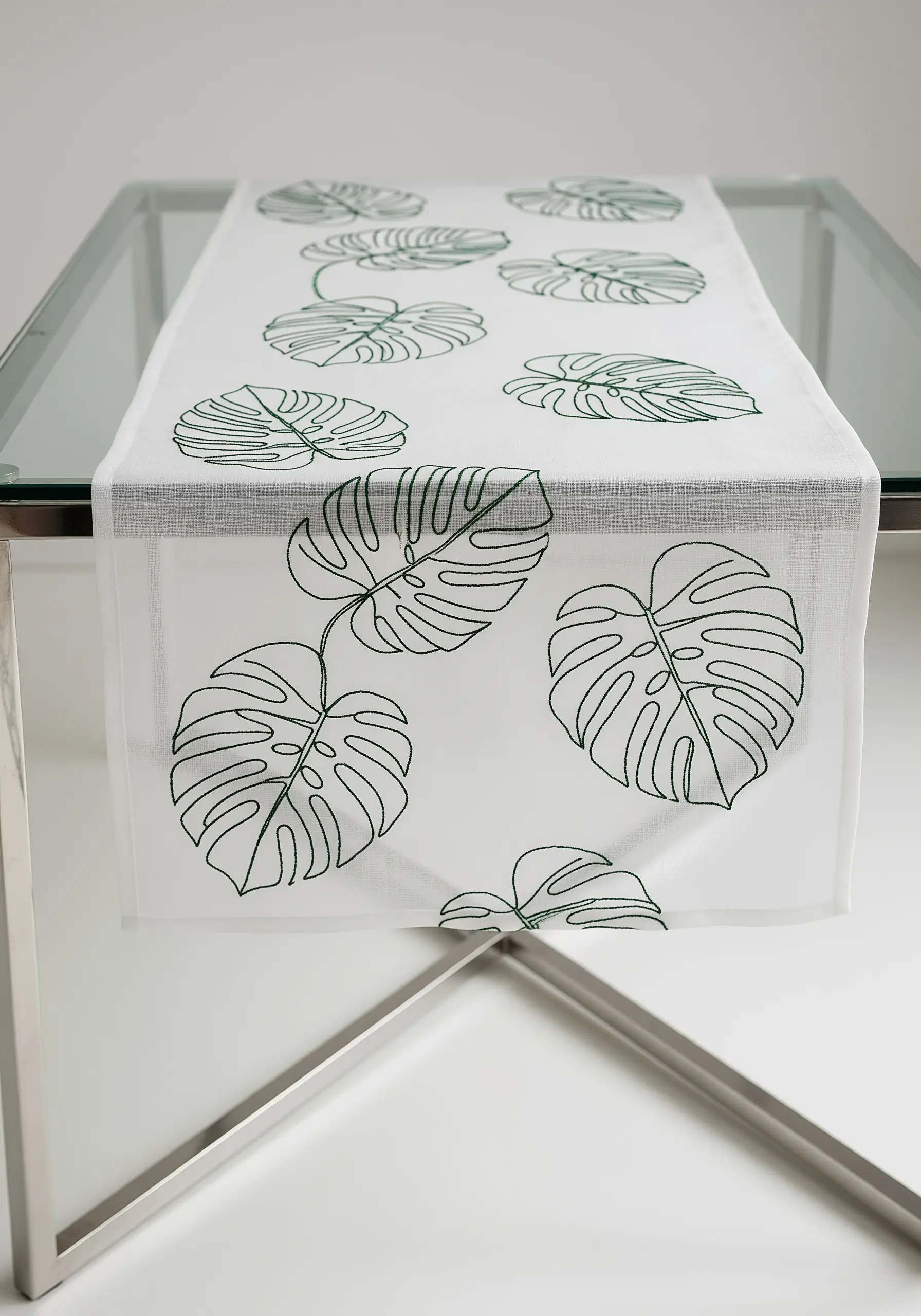
Achieve an effortlessly chic look with simple botanical contour lines.
A whipped backstitch or a smooth stem stitch is ideal for creating the unbroken, flowing outlines of the monstera leaves.
Stitch on a semi-sheer fabric like a linen voile or cotton lawn; this enhances the design’s light, airy quality, making the leaves appear to float on the surface.
A single, bold color like emerald green on pure white keeps the focus entirely on the elegance of the form.
16. Sculptural Dimension with Woven Knots
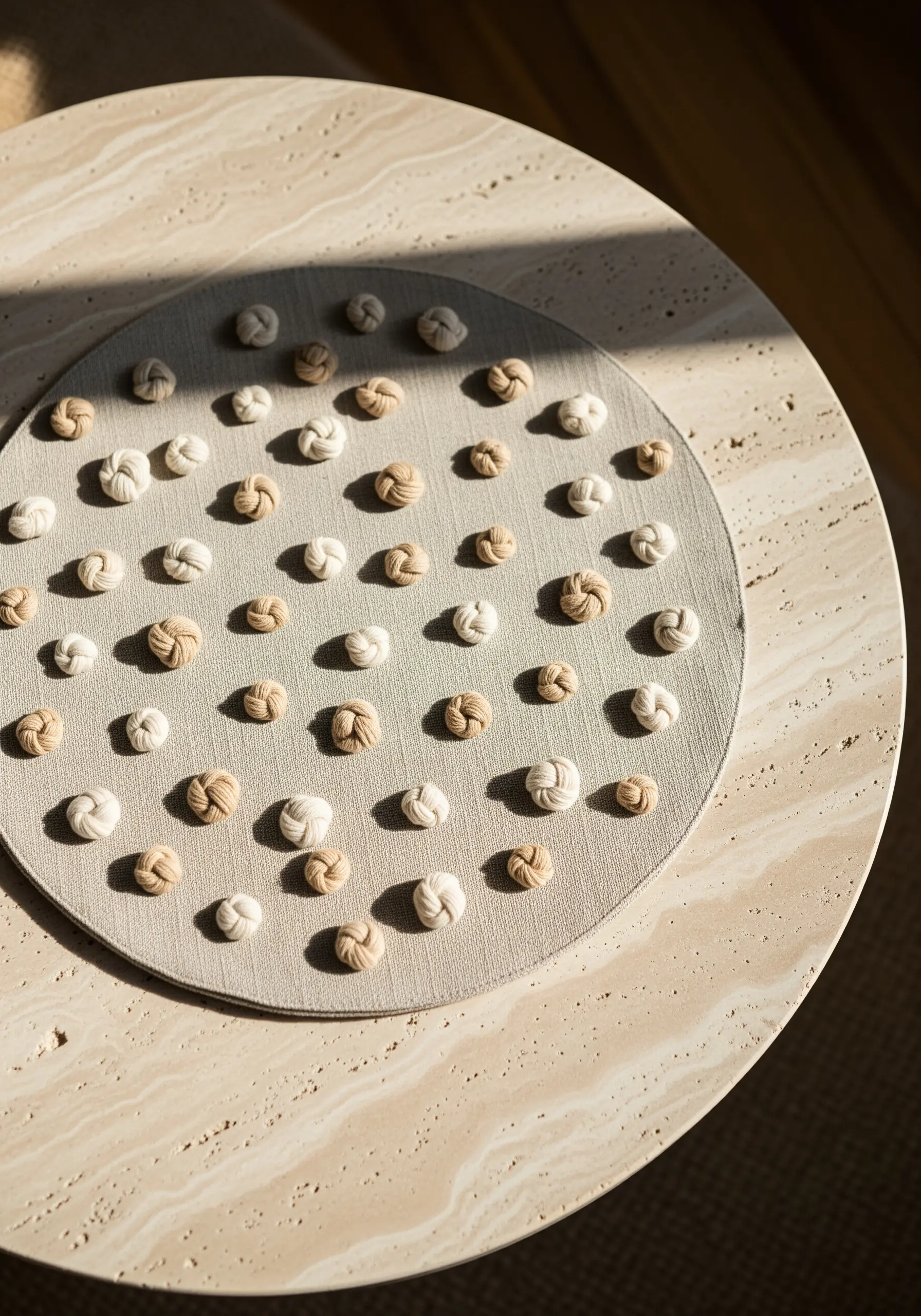
This placemat trades color and line for pure, tactile texture.
Achieve this sculptural dimension by covering the surface with a grid of colonial knots or bullion knots, which stand up higher and have more body than French knots.
Use a thick, soft yarn or multiple strands of cotton floss to make the knots substantial and plush.
By working in a calm, neutral palette, you allow the light and shadow across the knotted surface to become the central design element.
17. A Minimalist Grid with a Pop of Color

This incredibly modern design uses a simple but clever technique to create a clean, raised grid.
Instead of stitching through the fabric, wrap a thick, vibrant thread like pearl cotton around the coaster, securing it on the back.
This method avoids puckering and creates a sharp, graphic line that sits on the surface.
The high contrast of an electric blue against a dark, textured felt base delivers a powerful minimalist statement with a fun pop of color.
18. A Delicate Star-Stitched Border
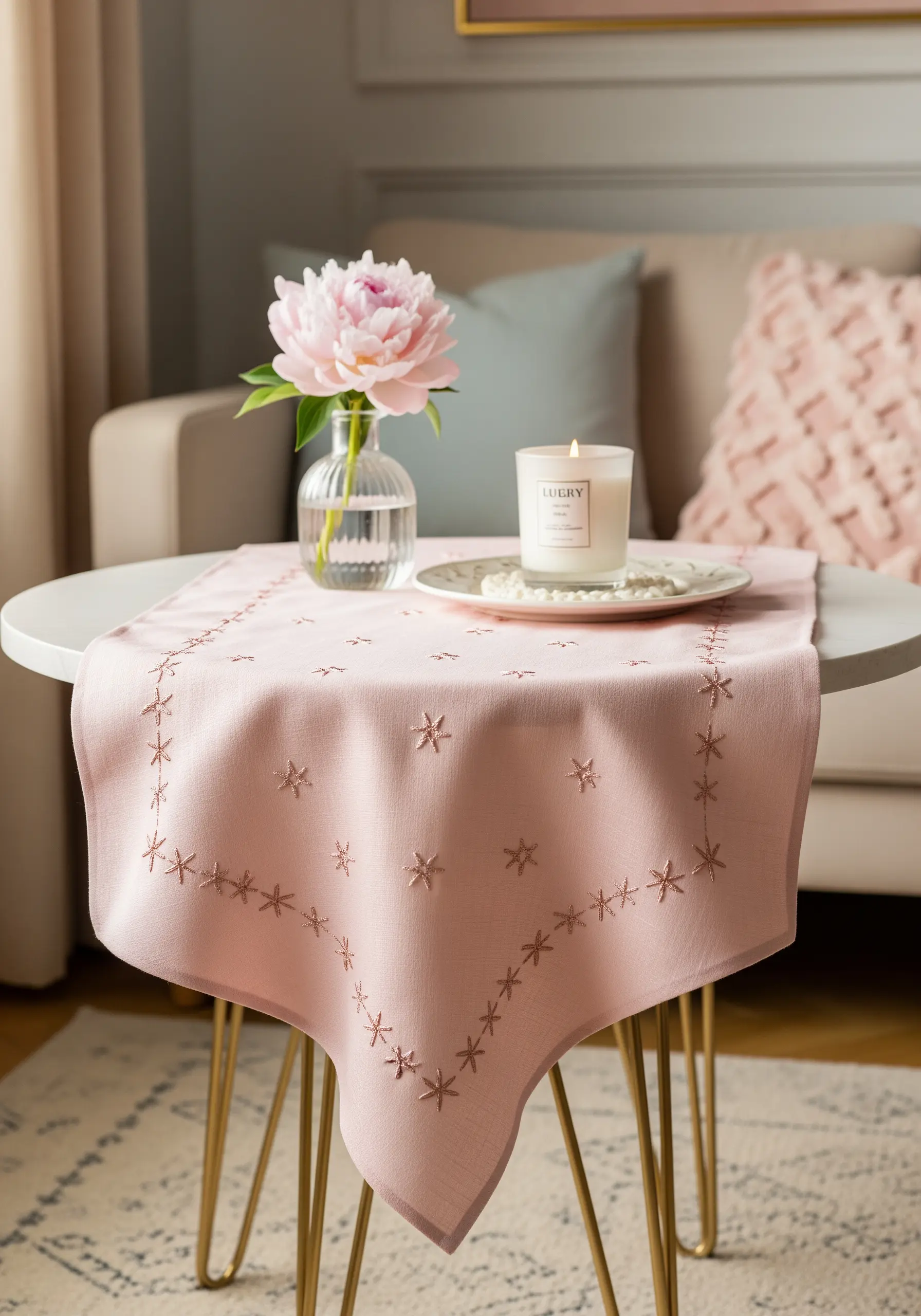
Create a subtle, magical celestial border with a scattering of eyelet stitches.
The Algerian eyelet stitch is perfect for these small, eight-pointed stars, as all stitches pull into a central hole, giving it a neat, woven look.
Connect the stars with a delicate, dashed line of running stitch to create a constellation effect.
Using a thread just a few shades darker than your base fabric, like rose gold on dusty pink, creates an elegant, tone-on-tone effect that shimmers delicately in the light.
19. Sculptural Lines with Couching
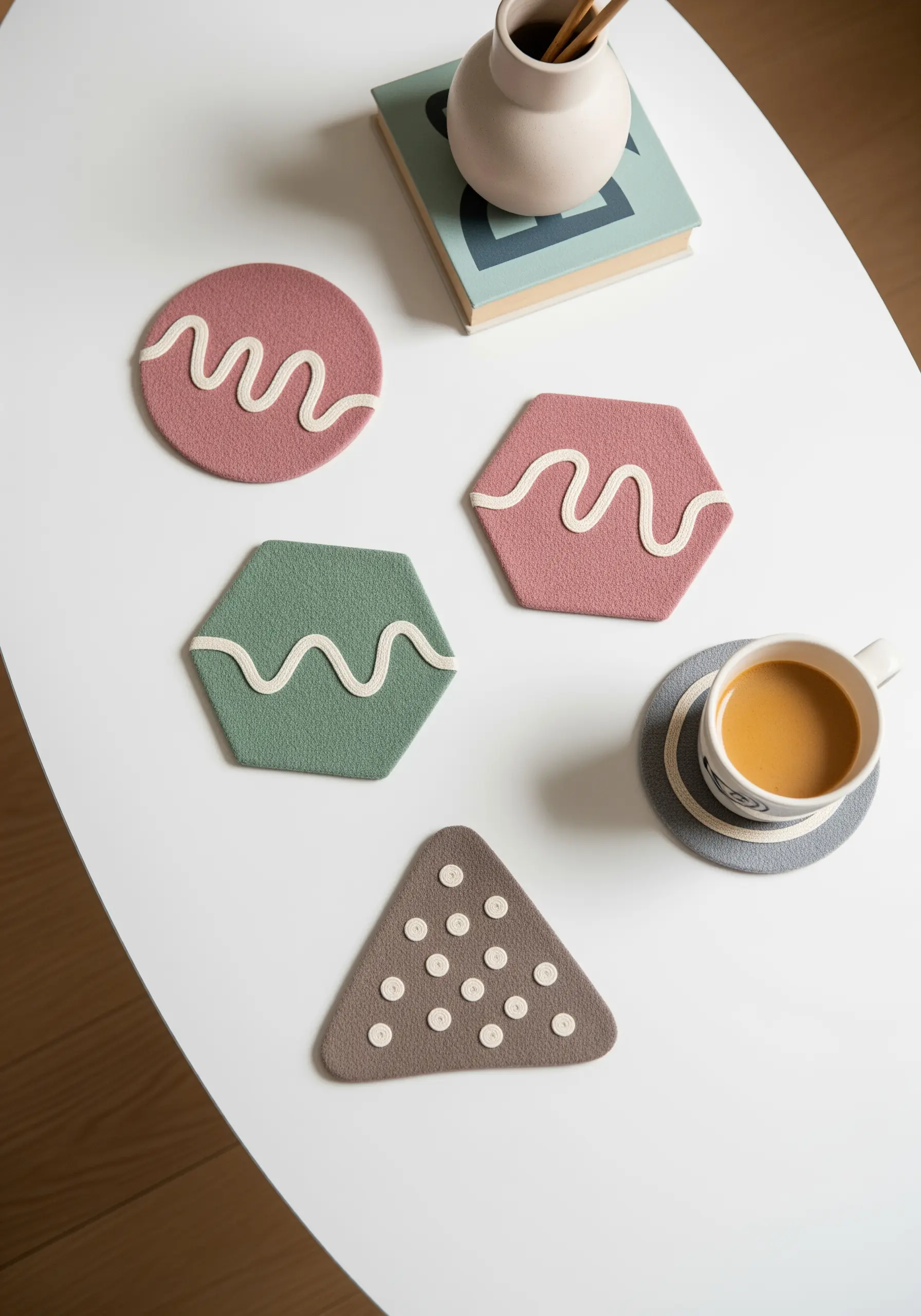
For bold, graphic lines that have real dimension, try the couching technique.
Simply lay a thick piece of yarn or cord onto your fabric in a free-flowing, abstract pattern.
Then, use a single strand of matching sewing thread to tack the yarn down with tiny, perpendicular stitches every quarter-inch.
The tacking stitches become nearly invisible, leaving you with clean, raised sculptural lines that bring a playful, modern energy to simple coasters.
20. Zen-Inspired Concentric Circle Runner
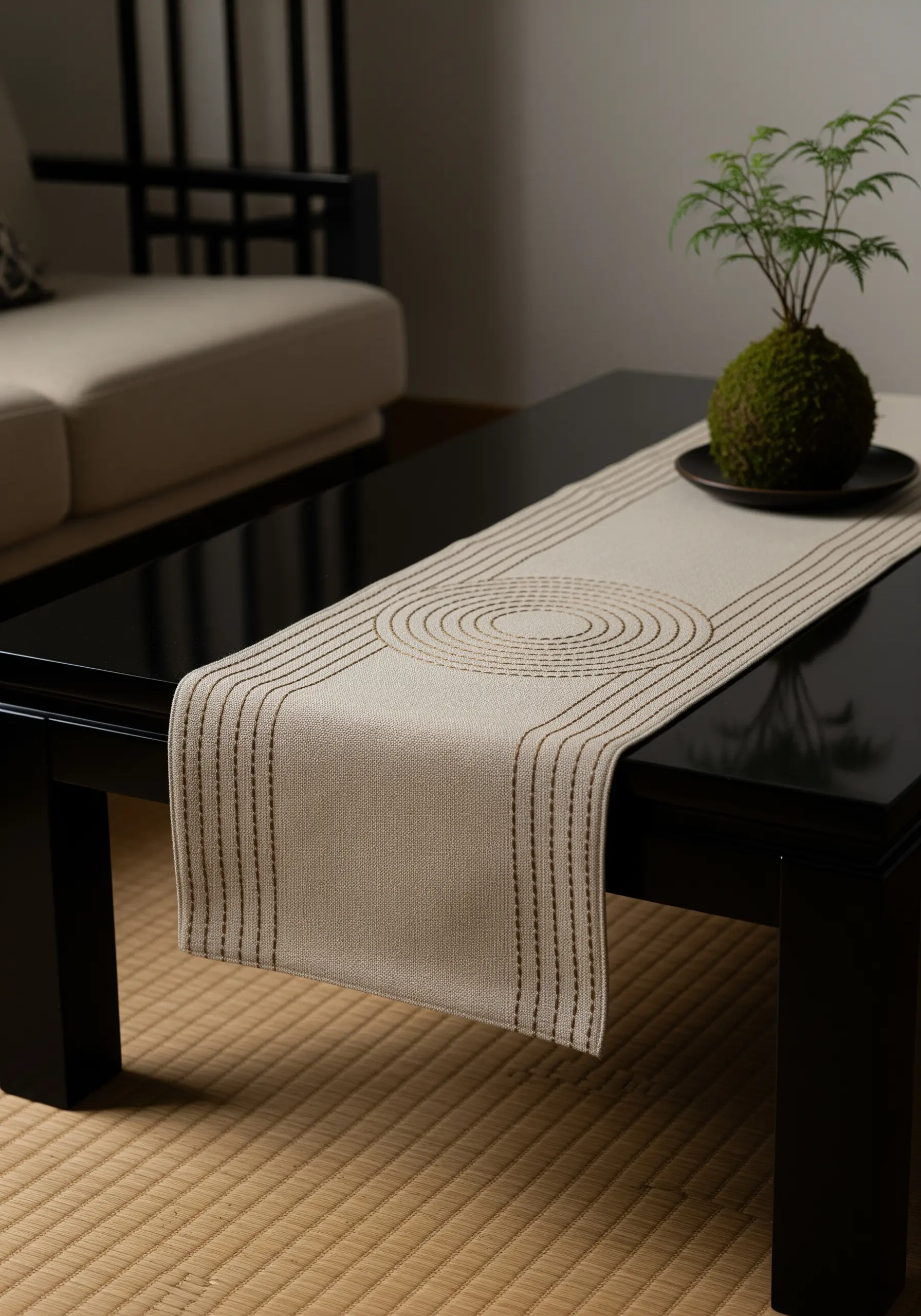
This minimalist Zen-inspired concentric circle runner is an exercise in meditative stitching.
The entire design is created with a simple running stitch, but its power comes from precision and consistency.
Use a water-soluble marker and a compass or plate to draw your guidelines perfectly.
Choose a subtly contrasting thread, like a deep charcoal on natural linen, to maintain a serene, organic feel. The repetitive motion of stitching the concentric lines is incredibly calming and results in a beautifully balanced design.


