You have a love for embroidery—the patient pull of the thread, the bloom of color on fabric. But perhaps you feel your work could be more… intentional. More impactful. You’re ready to move beyond following a pattern and start making design choices that truly elevate your craft.
This isn’t about learning dozens of complex new stitches. It’s about rethinking how you use the ones you know. It’s about understanding how thread weight can create drama, how stitch direction can mimic light, and how a well-chosen background can transform a simple motif into a statement piece of art.
Inspired by the graphic power of string art, these ideas will show you how to apply principles of line, tension, and texture to your embroidery. You’ll learn to create large-scale floral art for your walls that feels modern, personal, and profoundly beautiful—turning your quiet hobby into a source of confidence and a stunning feature in your home.
1. Master Painterly Petals with Thread Gradients
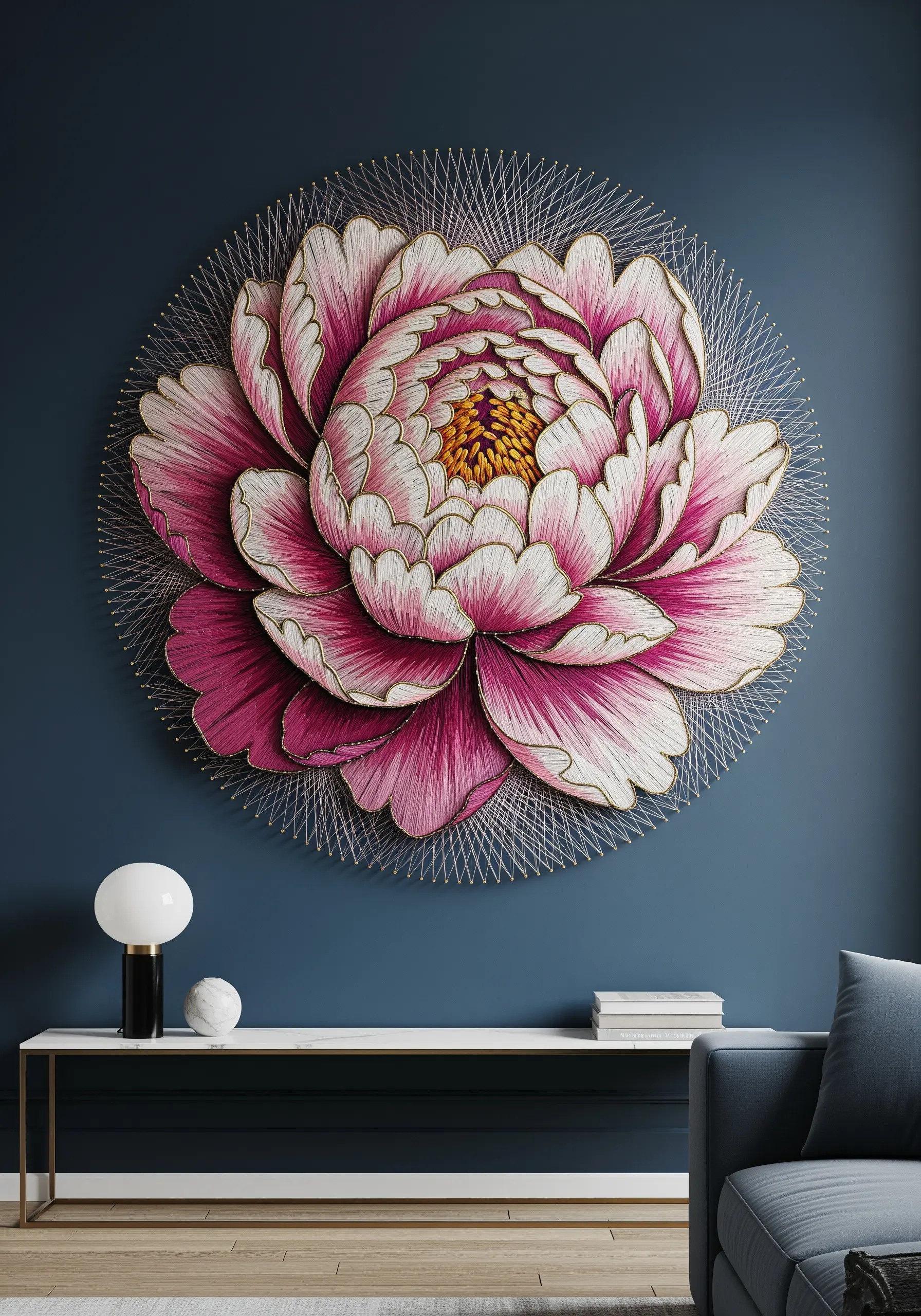
To achieve this peony’s incredible depth, think like a painter, not just a stitcher.
Use long-and-short stitch to blend at least three shades of pink for each petal, moving from a deep magenta at the edge to a soft blush near the center.
This technique eliminates hard lines and creates a soft, realistic gradient.
For the crisp golden edges, outline each finished petal with a single strand of fine metallic thread using a sharp backstitch; this adds definition and a touch of luxury without overpowering the delicate shading.
The radial string art effect can be translated into an airy, open couching stitch background, creating texture that doesn’t compete with the flower.
2. Create a Cascading Blossom Wall with 3D Stitches
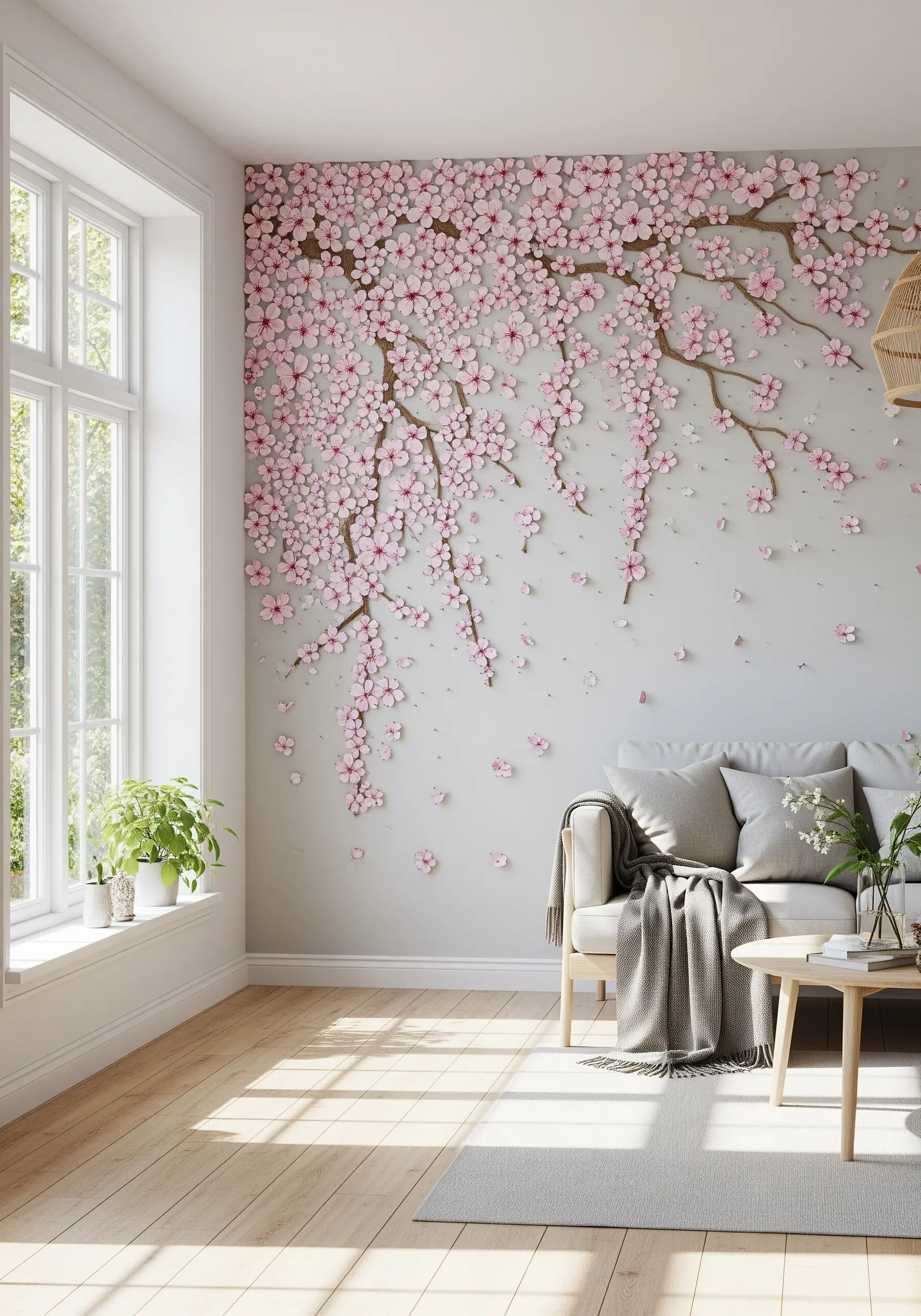
Transform a blank wall into a serene cherry blossom scene by moving beyond the flat surface.
Create individual blossoms using the detached buttonhole stitch or stumpwork techniques, working them on a separate piece of fabric before cutting them out.
This allows you to layer and position them freely, achieving a natural, ‘falling petal’ effect.
For the branches, use a thick, textural whipped backstitch with a dark brown wool or crewel thread to give them dimension and a rustic feel.
Arrange your finished elements directly onto the wall for one of the most impactful DIY embroidery wall hangings, creating a piece that interacts with the entire room.
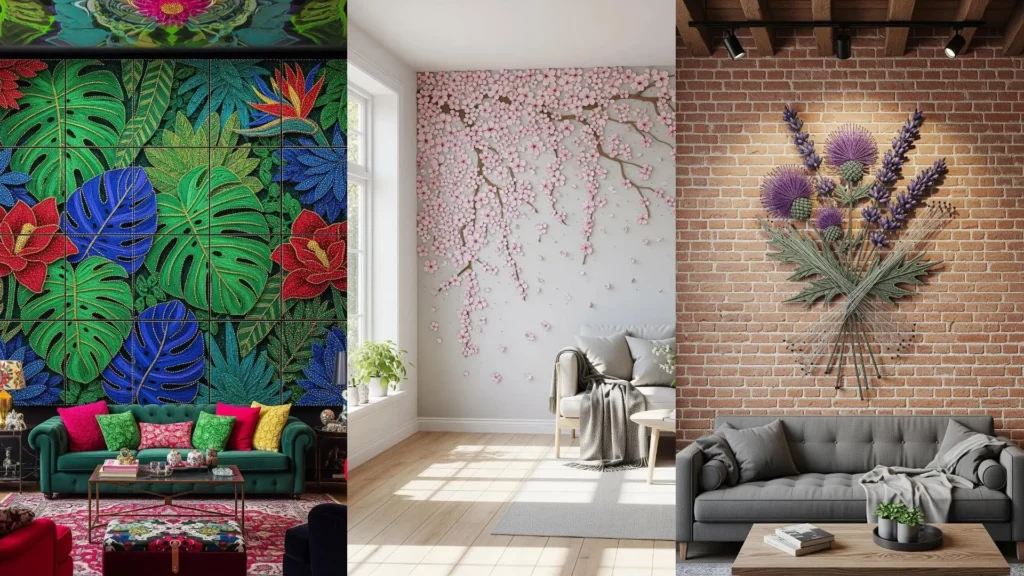
3. Use Bold Color Blocking for a Vibrant Tropical Display
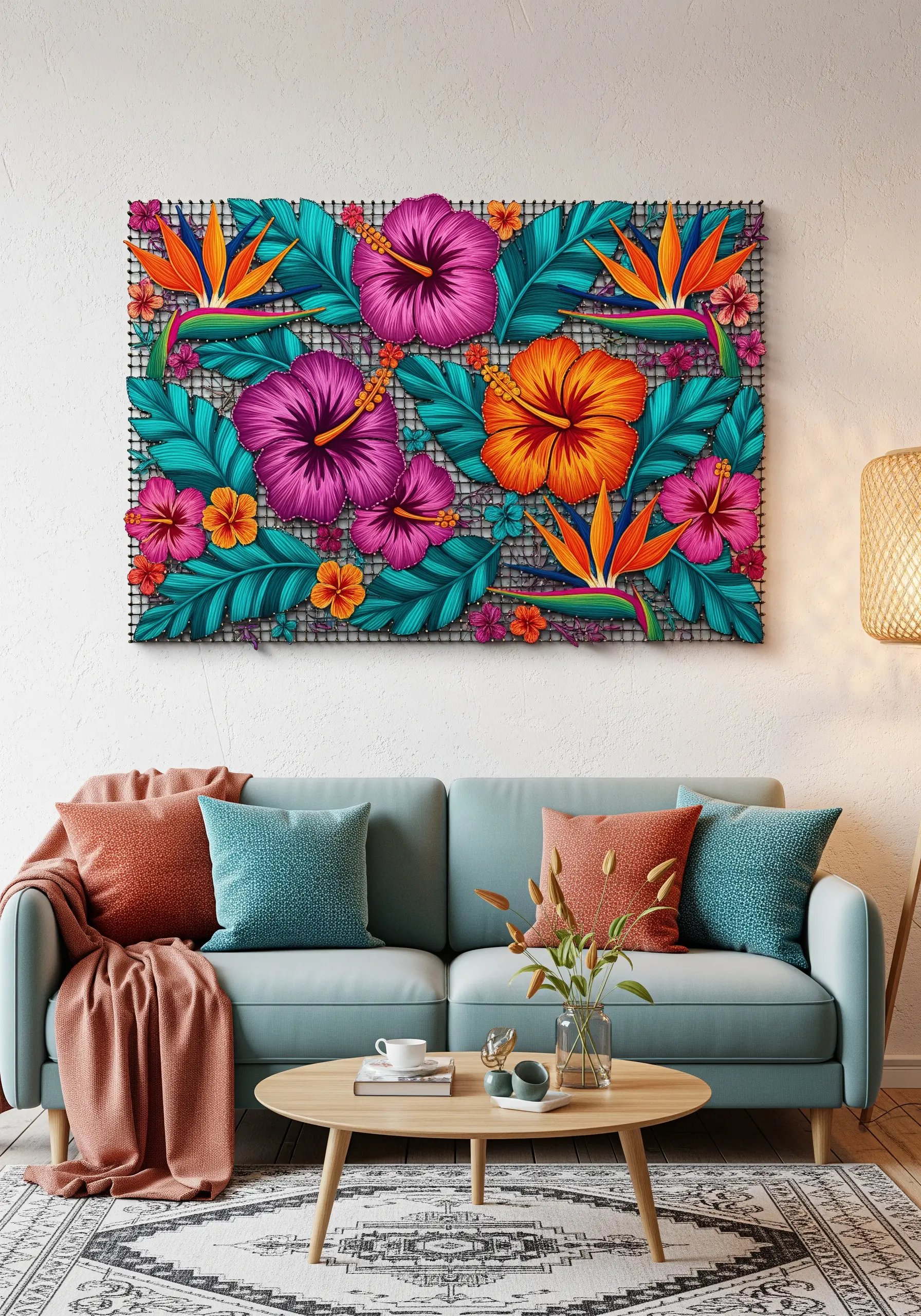
This high-impact tropical piece relies on confident color choices and dense, deliberate fills.
Instead of subtle blending, embrace bold color blocking with a satin stitch, ensuring your stitches lie perfectly parallel for a smooth, light-reflecting finish.
To keep the edges sharp and prevent puckering on such a large scale, first outline each shape with a split stitch; this creates a raised foundation for your satin stitches to rest against, resulting in a cleaner, more professional edge.
Use a high-contrast thread, like a bright yellow or gold, for the flower centers to draw the eye and balance the deep tones of the petals and leaves.
4. Capture Radiating Energy with Geometric Stitches
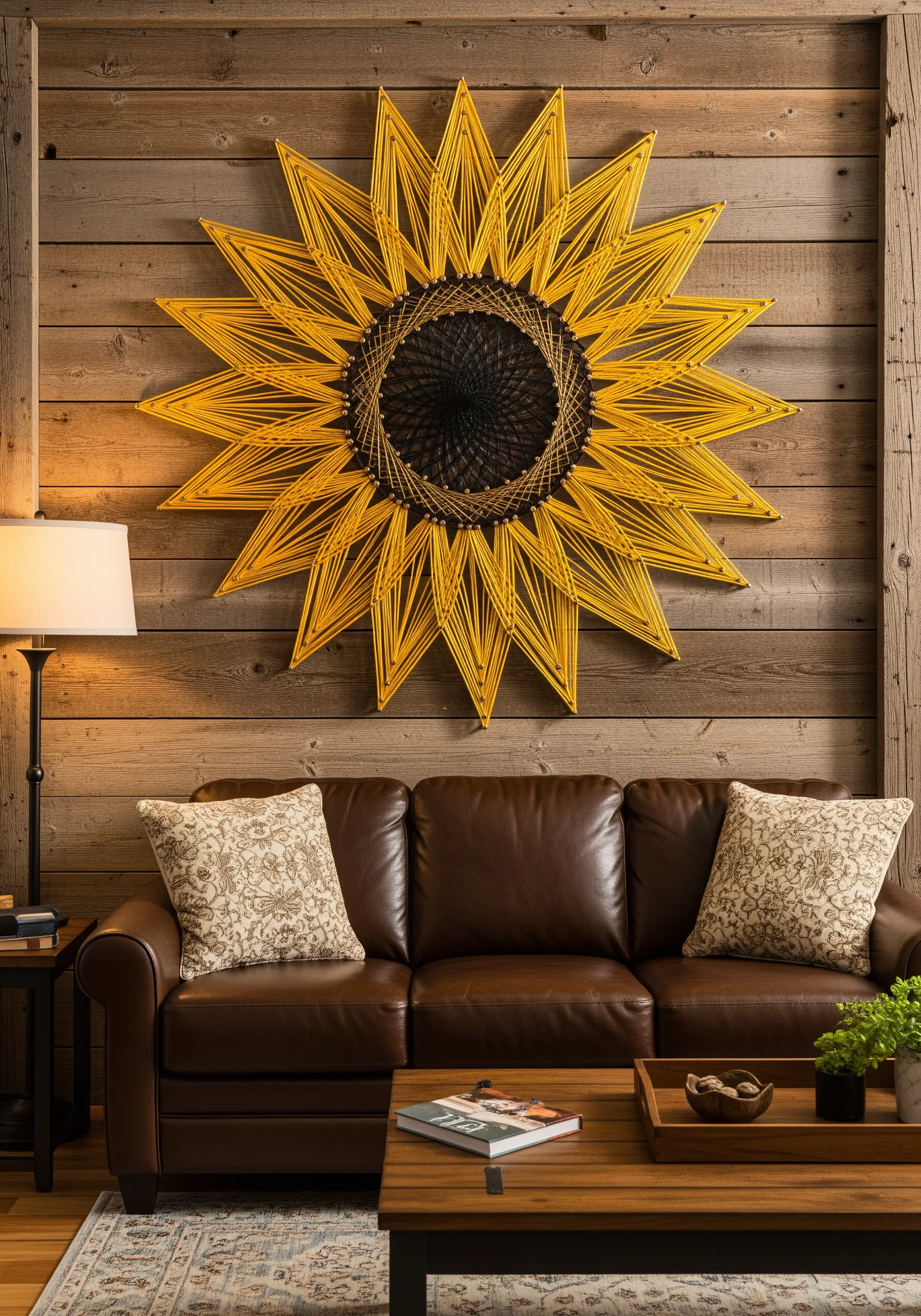
The power of this sunflower comes from its geometric precision, a principle you can apply directly to your embroidery.
Mimic the radiating lines by using long, straight stitches pulled taut from a central point to an outer ring.
For the dense, dark center, switch to tightly packed French knots using a dark brown or black perle cotton; this creates a wonderfully tactile contrast to the sleek, smooth petals.
This design is a perfect example of how combining textural stitches with clean lines can create rustic stitch art projects with a modern, graphic sensibility.
5. Elevate Elegance with Minimalist Line Art
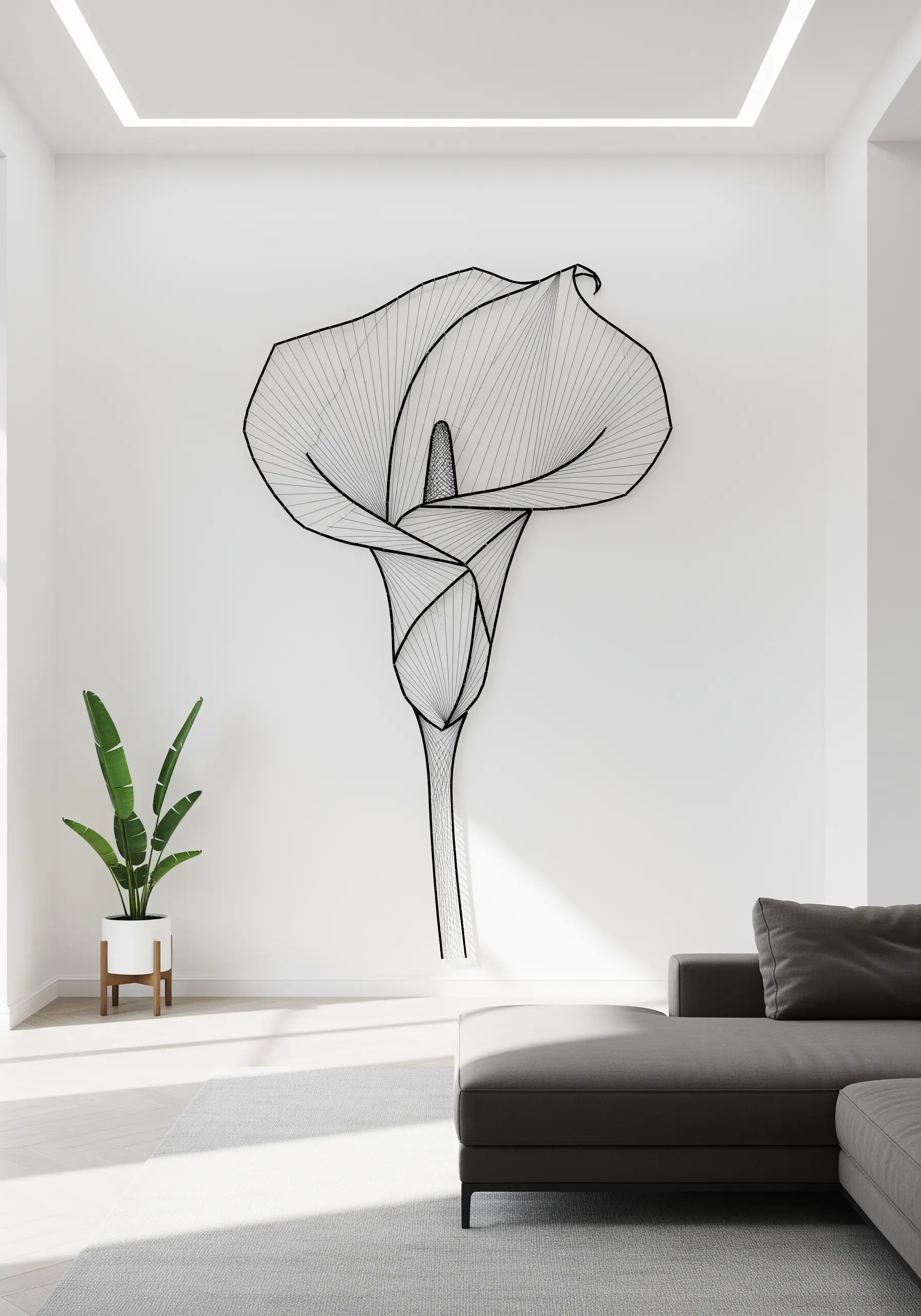
Prove that less is more by translating this calla lily into a sophisticated, single-line embroidery.
The key is varying your thread weight to create visual hierarchy.
Use a heavier thread, like a #5 perle cotton, for the main outlines to give them presence and authority.
For the delicate interior shading lines, switch to a single strand of standard embroidery floss.
This contrast in weight is what makes the design feel intentional and refined, turning negative space into an active component of your composition.
It’s one of the most effective minimal line drawing embroidery ideas for modern interiors.
6. Build a Botanical Bouquet with Layered Elements
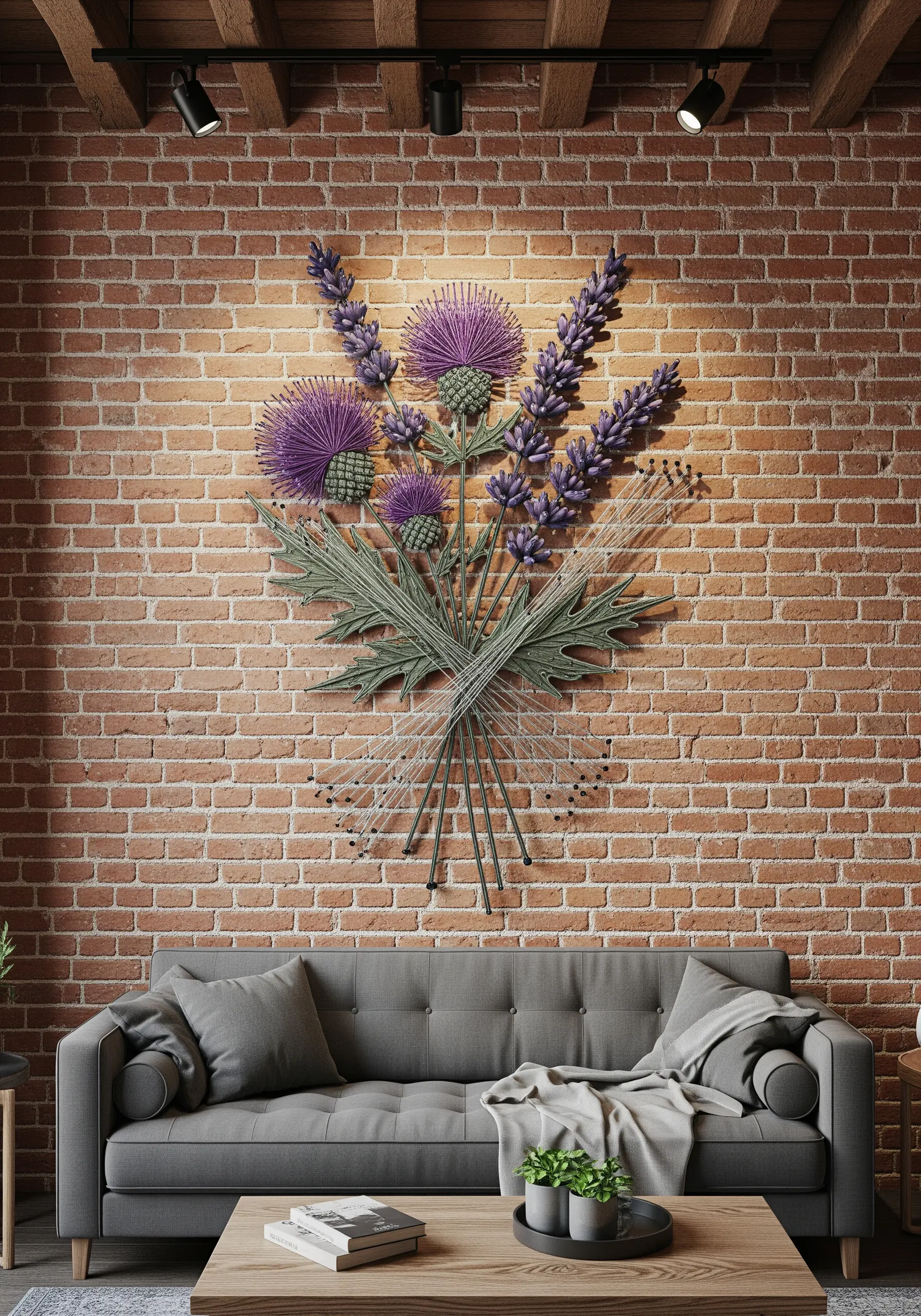
To create a bouquet with this much depth, you must think in layers.
Stitch the background elements, like the lavender and leaves, first, using simpler stitches like lazy daisies and stem stitch.
For the prominent thistle heads, come forward by using a dense, textural stitch like the turkey stitch, trimming the loops to create a fluffy, three-dimensional effect that mimics the real flower.
This layering technique, where textures are strategically placed, is what makes the final piece feel like a unified, sculptural object rather than a flat drawing.
7. Weave a Wisteria Canopy with French Knot Clusters
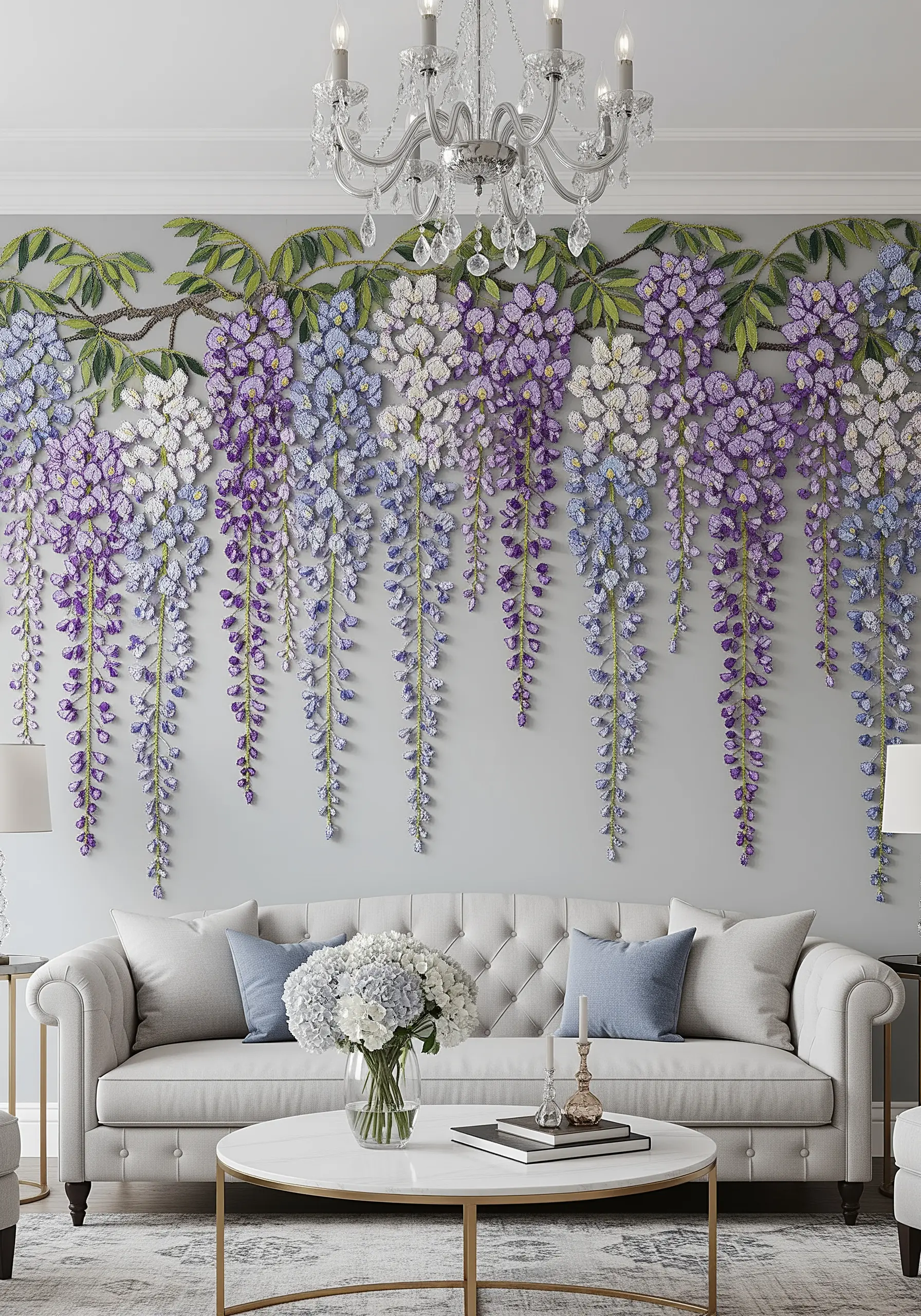
Capture the gentle droop of wisteria by focusing on stitch density and color variation.
Instead of filling each blossom, use clusters of French knots in shades of purple, lavender, and cream.
Vary the number of wraps around your needle (one for small knots, two for larger) to create a pebbled, organic texture that mimics the clustered petals.
Let the clusters become sparser as they descend, creating a natural fade that enhances the feeling of weight and movement.
This approach turns a simple stitch into a tool for creating landscape embroidery wall pieces with breathtaking realism.
8. Frame Serenity with Symmetrical Outlines
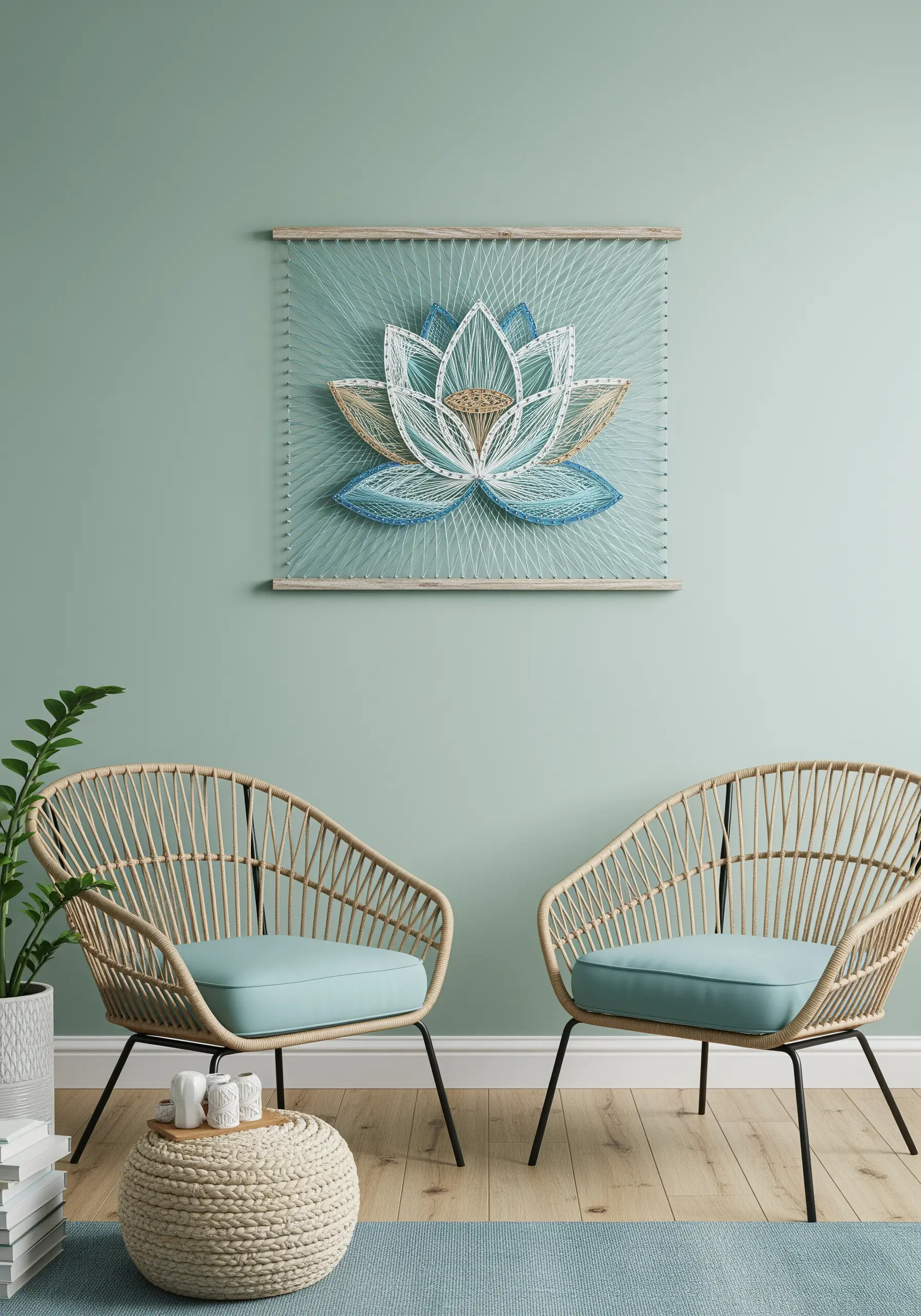
Achieve a calm, meditative quality by embracing symmetry and a restrained color palette.
Translate this geometric lotus by first creating a strong outline with a whipped backstitch in your main color.
Fill the inner sections with straight stitches radiating from a central point, keeping the tension consistent for a clean, graphic look.
The negative space between the filled sections is just as important as the stitches themselves; it provides breathing room and enhances the design’s tranquil, balanced feel.
These modern mandala stitch patterns are perfect for creating a focal point in a quiet space.
9. Stitch a Meadow with Varied Heights and Textures
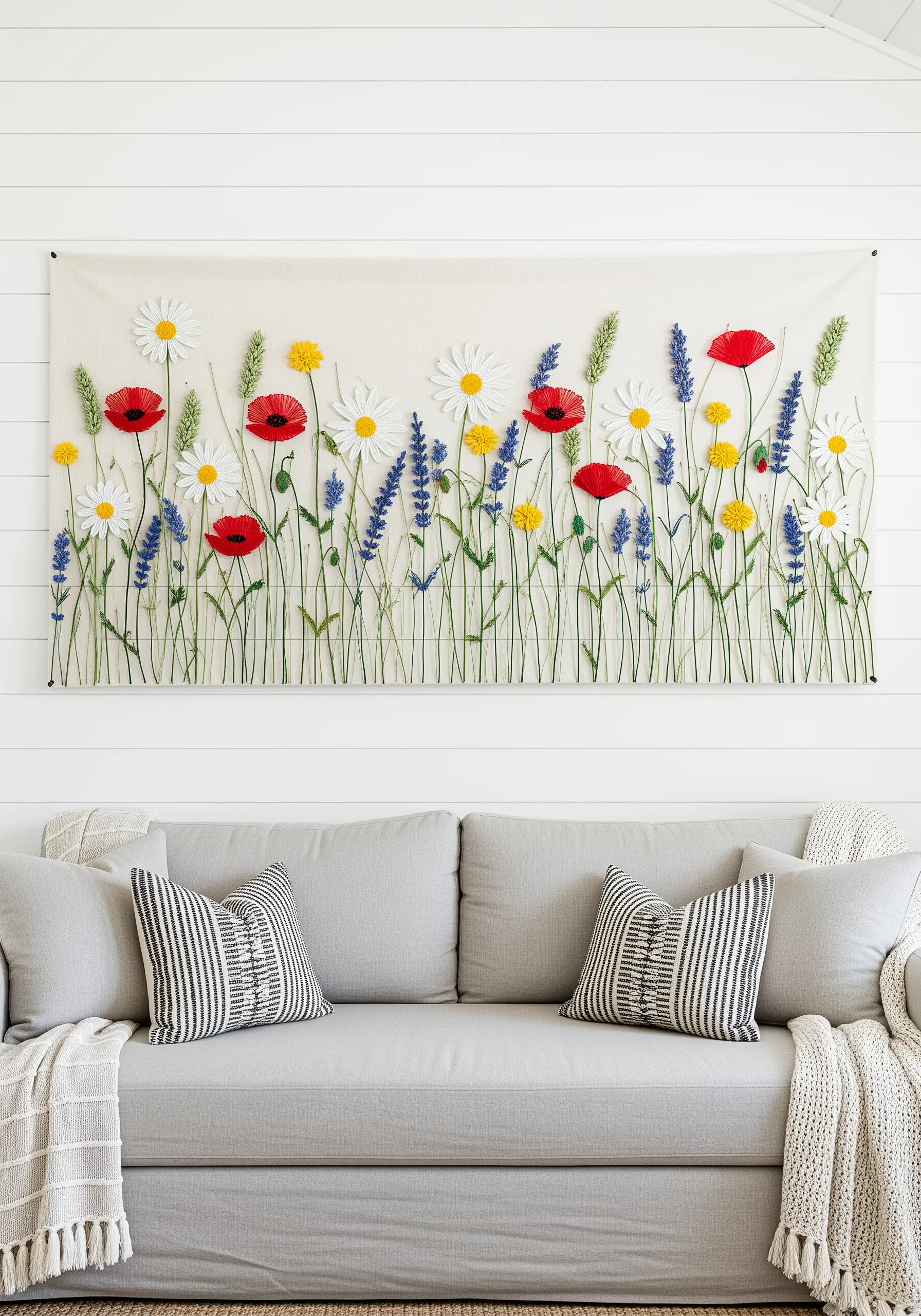
Create the illusion of a wildflower field by varying the scale and texture of your stitches.
For tall flowers like lavender, use a series of detached chain stitches (lazy daisies) stacked along a stem.
Render poppies and daisies with a wagon wheel stitch for a perfectly round, layered flower head.
The secret to the meadow effect is to overlap the elements slightly and vary the height of your stems, just as they would grow in nature.
This creates a sense of depth and wildness that makes your garden-inspired hand embroidery projects feel alive.
10. Create Dramatic Contrast on a Dark Background
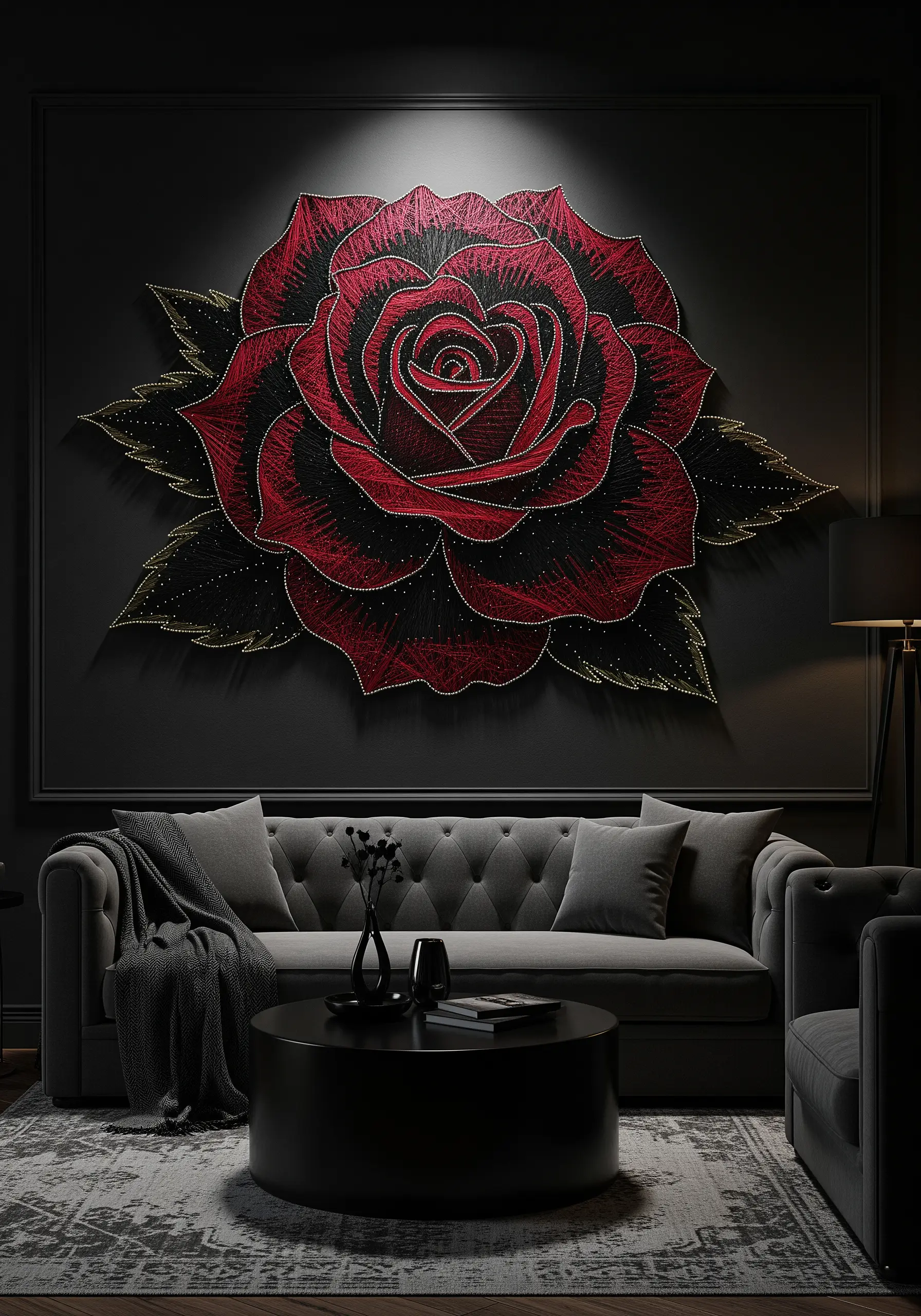
Make your colors vibrate by choosing a dark, moody fabric like black or charcoal linen.
The deep background makes even simple colors appear more luminous and intense.
Use a high-sheen rayon or silk thread for the red rose petals; their natural luster will catch the light beautifully against the matte fabric.
For the dotted gold accents, use small, precisely placed seed beads or a metallic thread for tiny French knots.
This combination of high-sheen thread and metallic details on a dark canvas creates a sense of drama and opulence.
11. Arrange a Triptych for Modern, Graphic Appeal
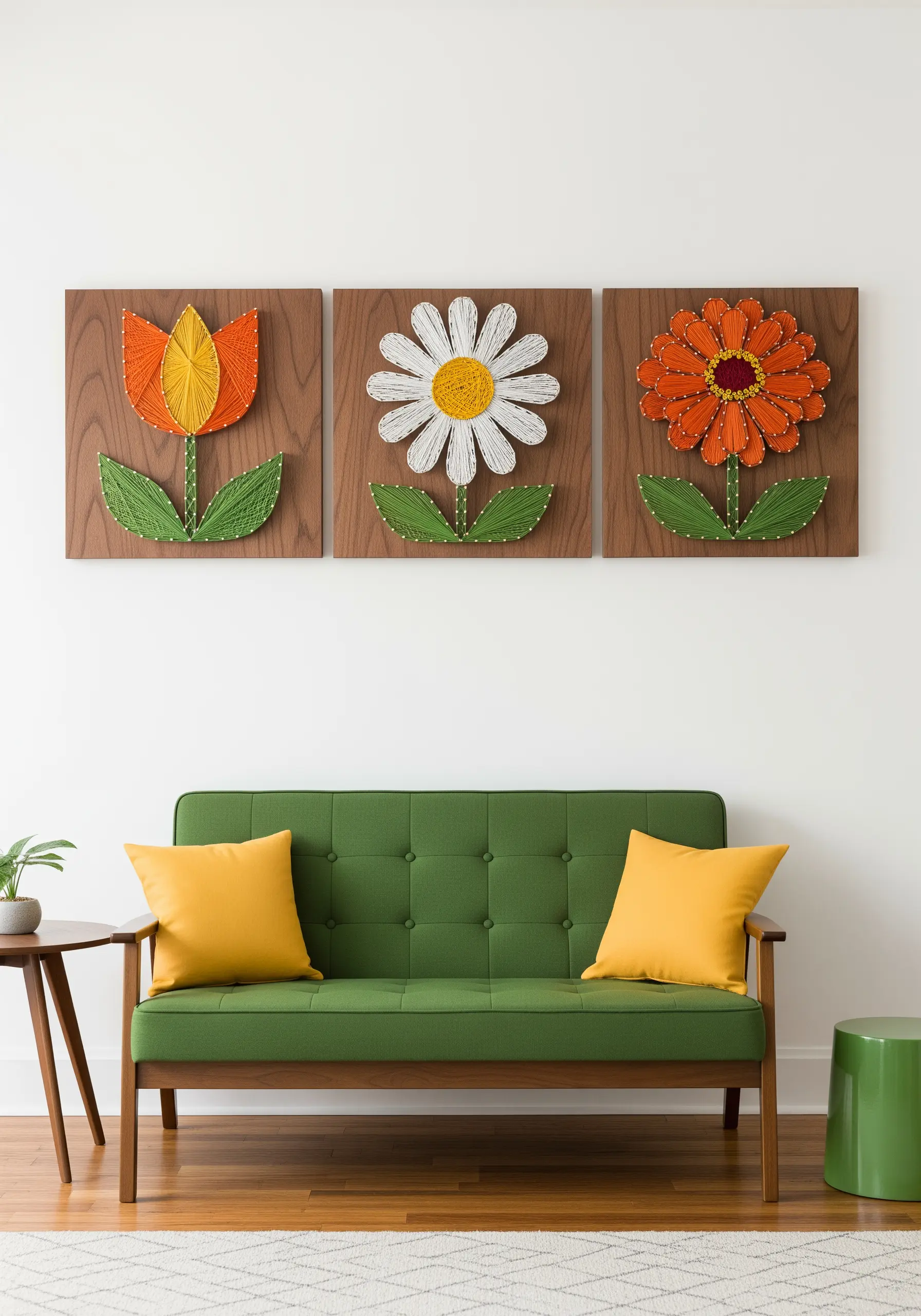
Elevate simple floral motifs by presenting them as a coordinated set.
Stitching three separate panels allows each flower to stand on its own while contributing to a larger, cohesive statement.
Keep your color palette consistent across all three pieces to ensure they feel connected.
Use a dense satin stitch or long straight stitches to fill the shapes, creating a bold, graphic look that complements the clean lines of the wooden panels.
This is a clever way to design bold and colorful framed embroidery patterns that feel both playful and polished.
12. Capture Whimsical Motion with Dispersed Elements
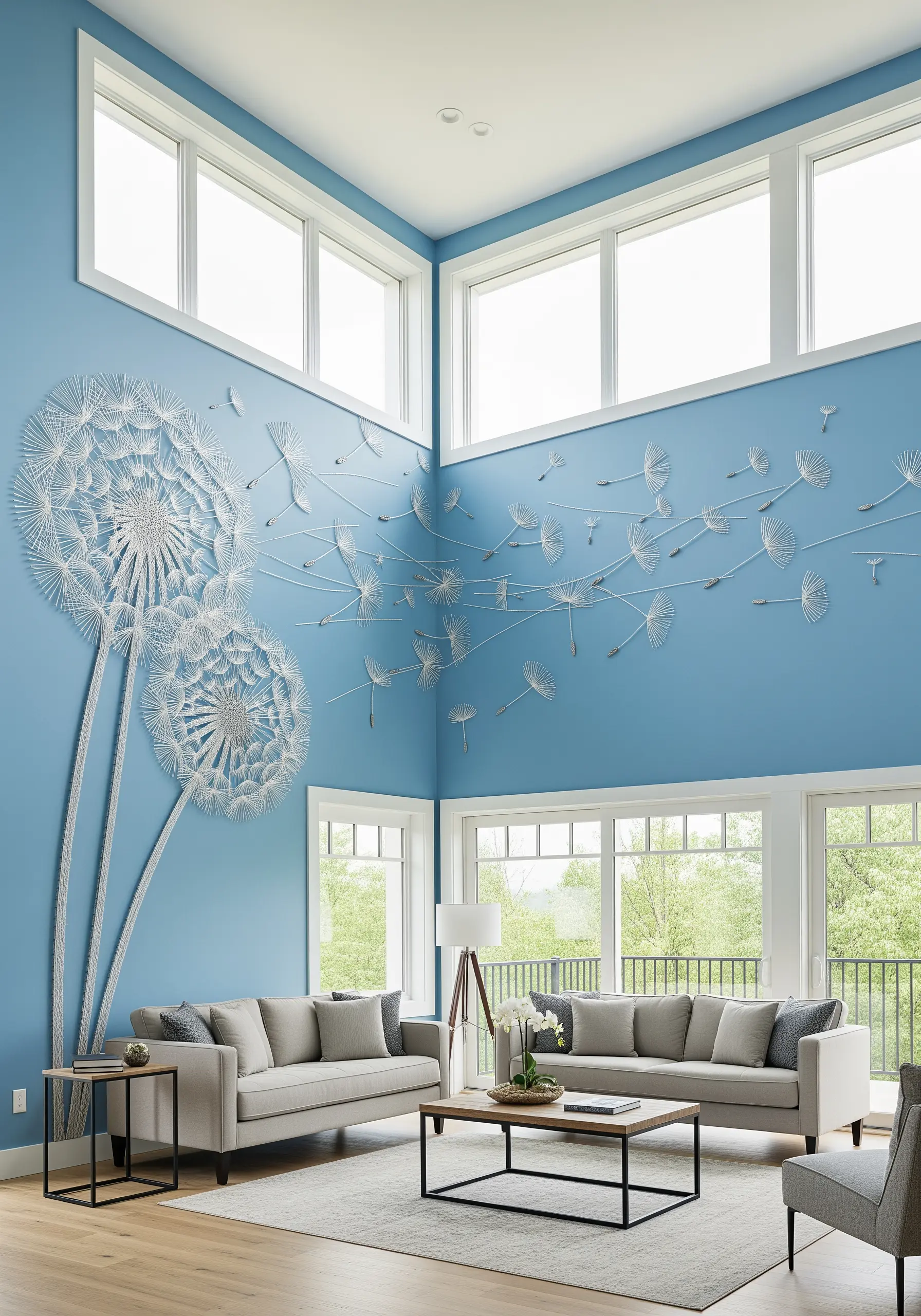
Suggest movement and lightness by breaking the design out of a traditional frame.
Stitch the main dandelion heads using dense, radiating straight stitches for a full, fluffy appearance.
Create the floating seeds as small, separate motifs using just a few straight stitches and a French knot.
By scattering these smaller elements across the wall, you create a visual path for the eye to follow, implying a gentle breeze.
This technique turns a simple subject into a dynamic, soft, breezy meadow aesthetic that fills the entire space.
13. Use a Striped Background to Guide the Eye
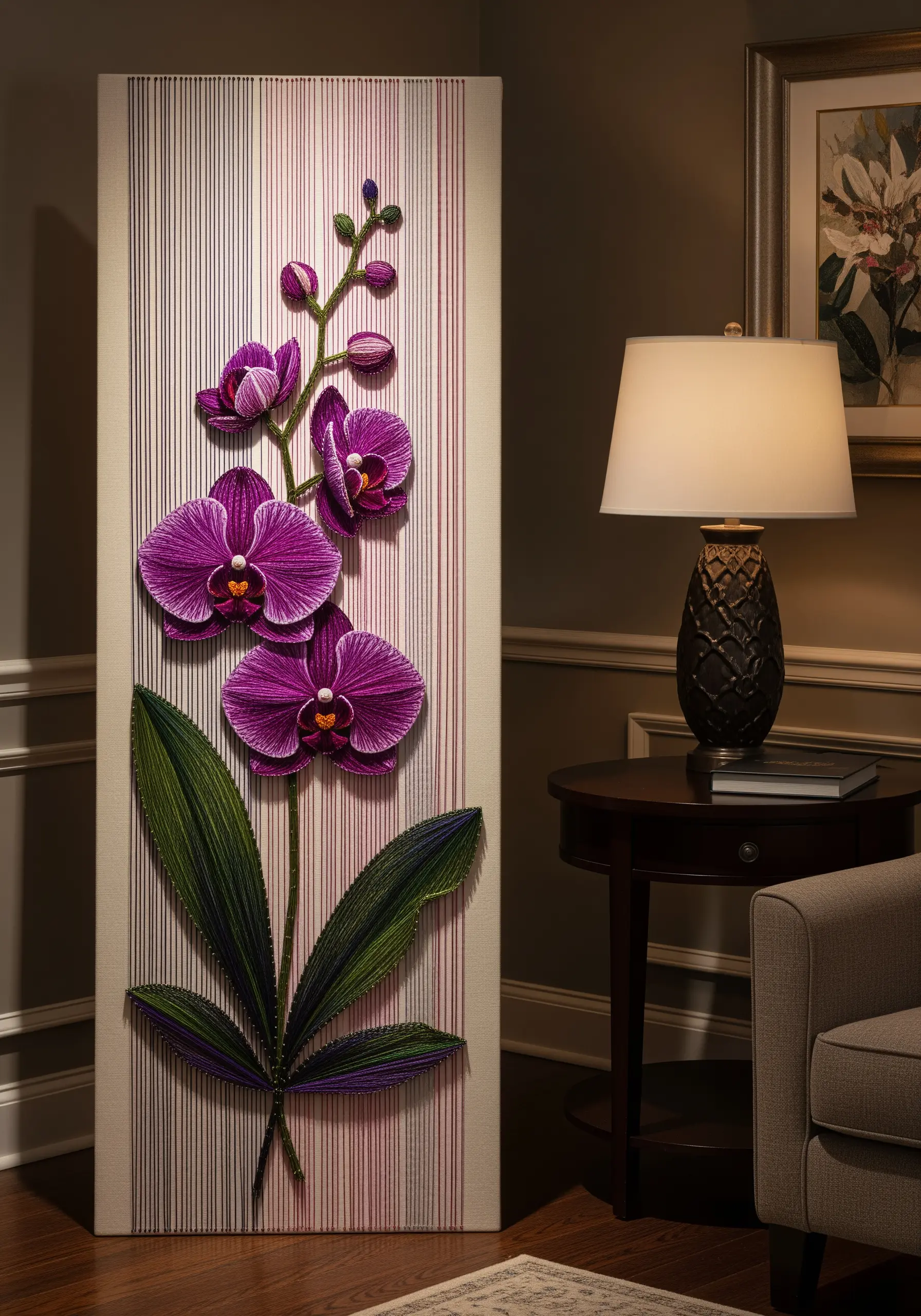
Integrate your background into the design by using it to create structure and flow.
Instead of a solid fabric, create a canvas of vertical straight stitches in a subtle, variegated thread.
This striped effect provides a quiet rhythm and draws the eye upward, complementing the vertical growth of the orchid stem.
Stitch your floral elements directly on top of this foundation. The contrast between the linear background and the organic curves of the flowers makes the entire composition feel more dynamic and intentional.
14. Go Maximalist with a Tiled Jungle Mural
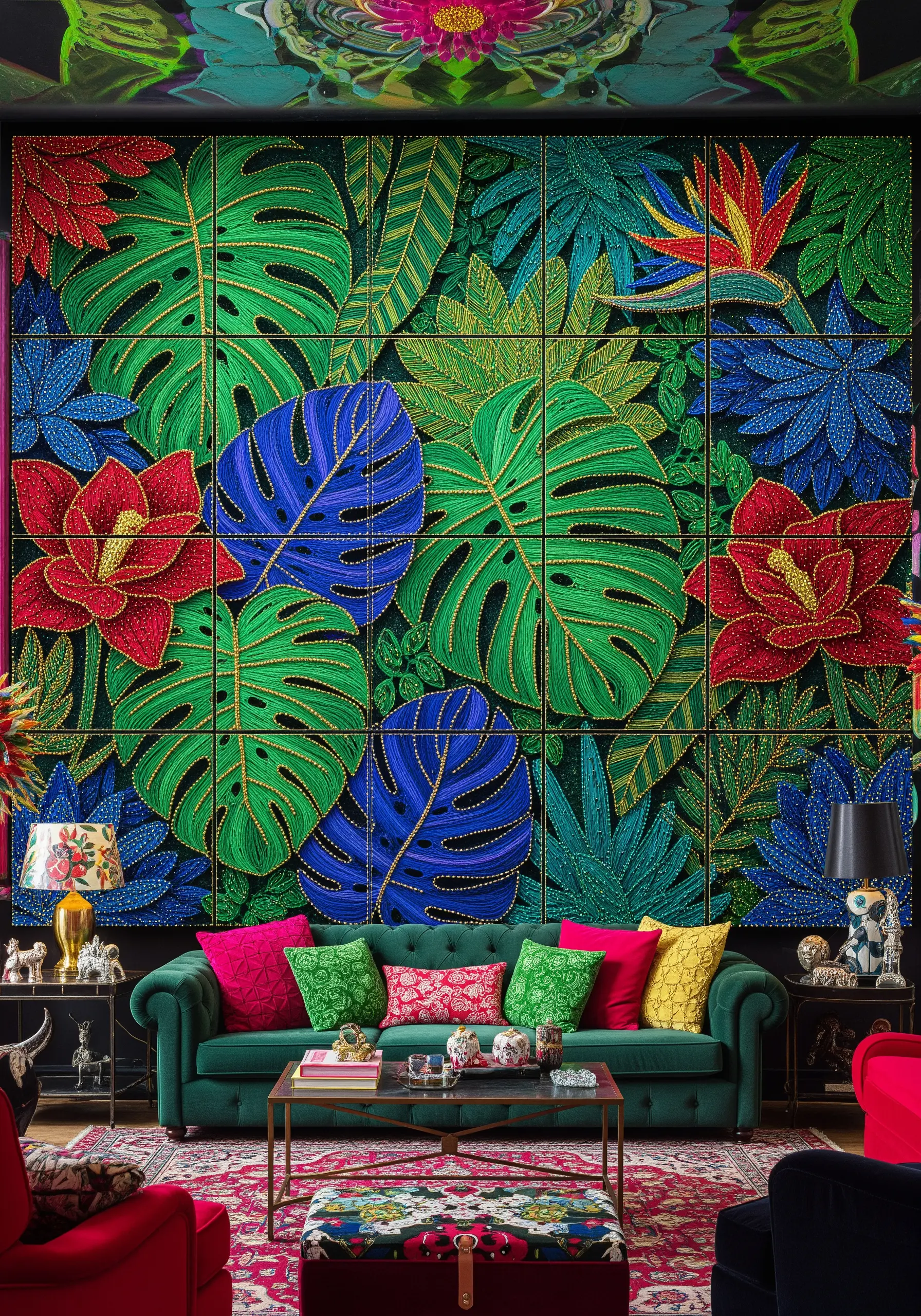
Create an immersive, floor-to-ceiling effect by thinking in modules.
Divide your grand design into a grid of smaller, manageable squares.
Stitch each panel with a section of the overall jungle pattern, using vibrant, high-contrast colors and dense fill stitches like satin stitch or even beading for extra texture.
When you assemble the panels on the wall, the grid lines become part of the aesthetic, adding a structured, graphic quality to the wild, organic botanicals.
This is how you create stunning giant wall-mounted fiber art installations that are achievable at home.
15. Create a Faded, Vintage Feel with a Muted Palette
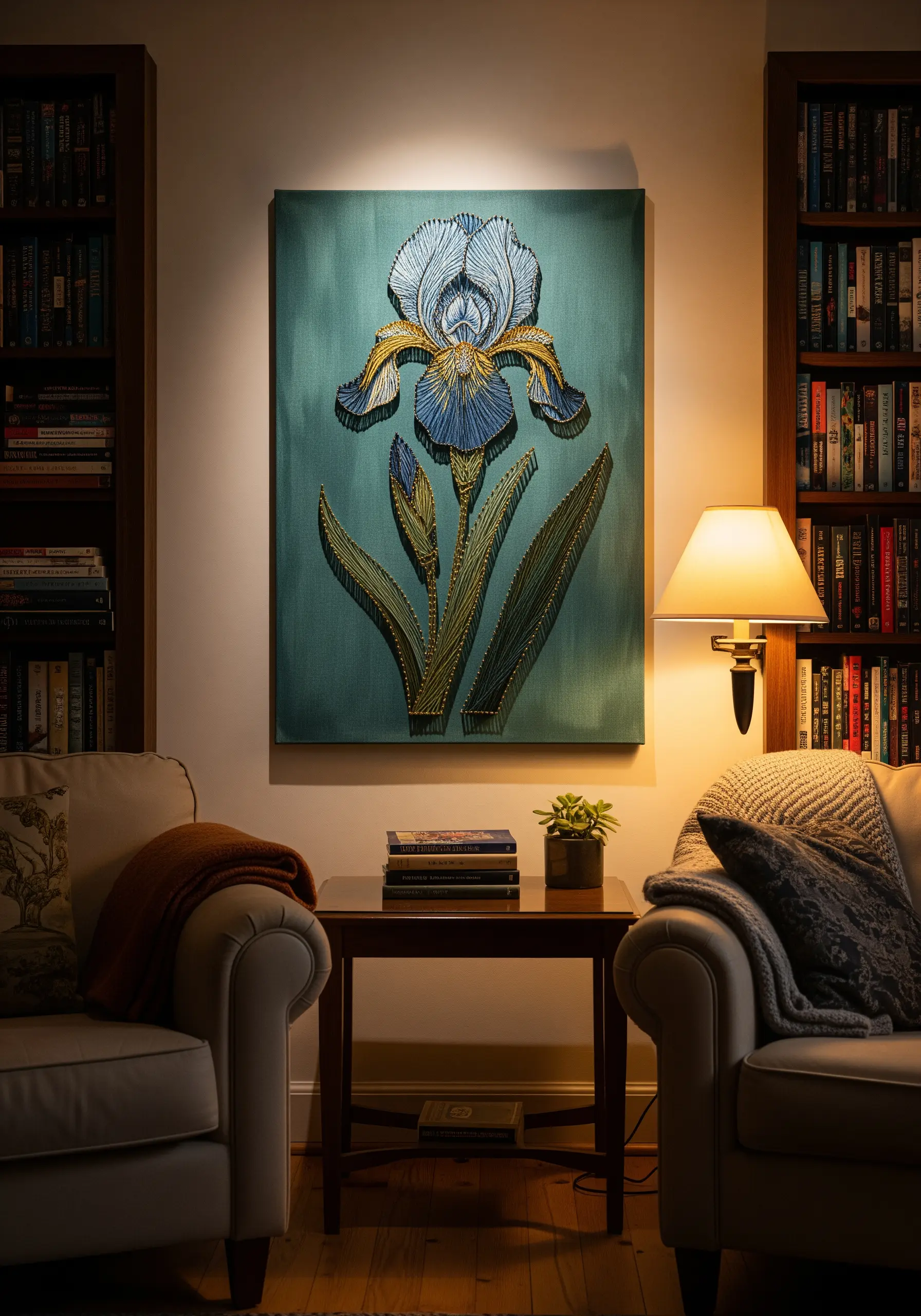
Evoke a sense of timeless elegance by choosing your colors carefully.
Select a palette of dusty blues, creams, and muted ochres on a soft, heathered green fabric.
This combination instantly gives your work a subtle, heirloom quality.
Use a fine-weight thread to render the delicate details of the iris, focusing on the direction of your stitches to mimic the graceful lines of the petals.
The gentle color harmony ensures the piece feels soothing and sophisticated, making it one of those soft, neutral nature-inspired stitch patterns that never goes out of style.
16. Illuminate Your Stitches with Backlighting
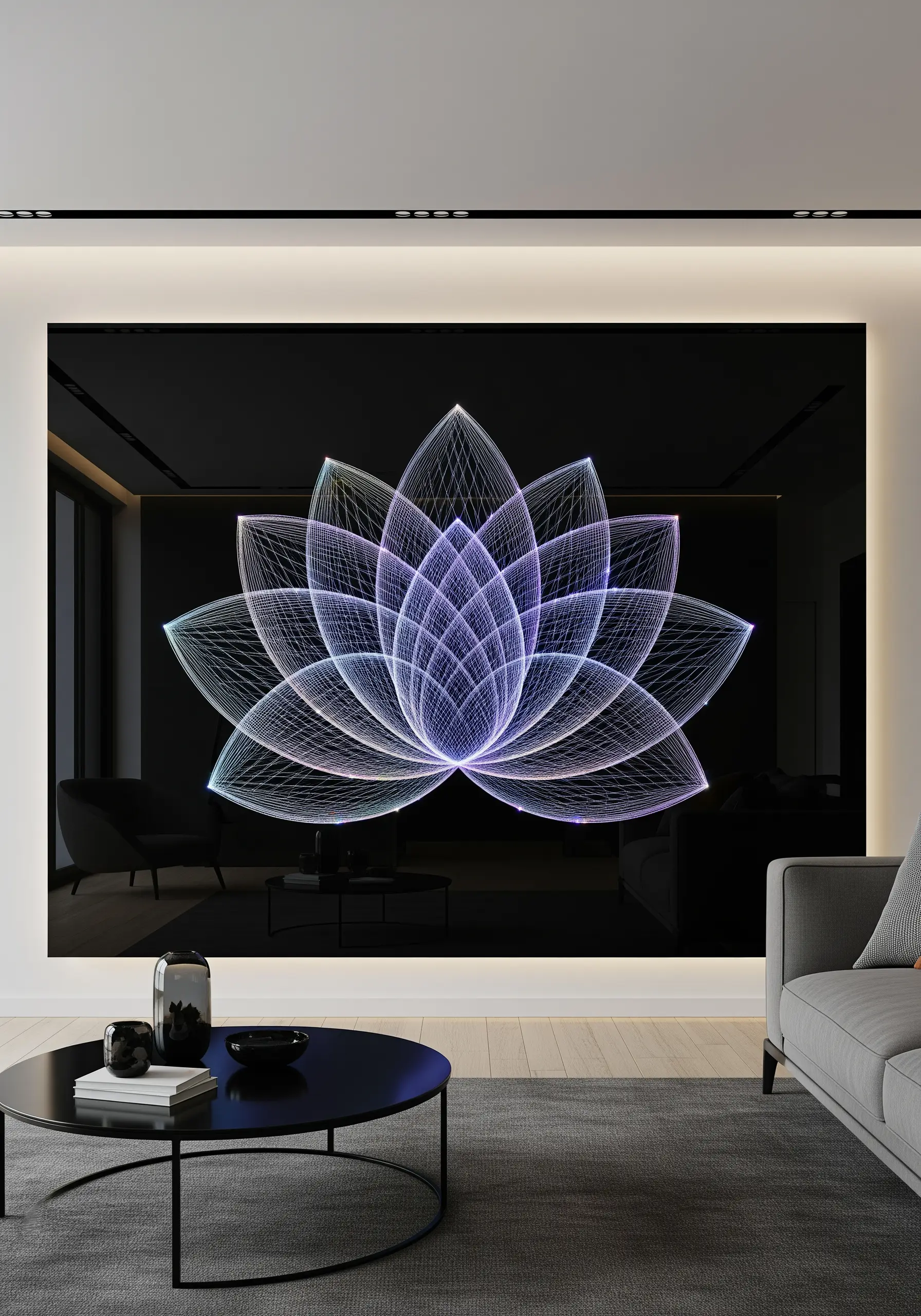
Transform your thread work into a modern light installation.
To achieve this ethereal glow, stitch your design on a semi-translucent fabric like organdy or a fine, even-weave linen stretched over a frame.
Install LED strip lighting behind the frame to make the threads appear as if they are floating in light.
Using a white or iridescent thread will capture and refract the light most effectively, creating a mesmerizing, almost holographic effect.
This technique merges traditional craft with contemporary thread art that uses light and shadow for a stunning result.
17. Add Playful Character with Whimsical Details
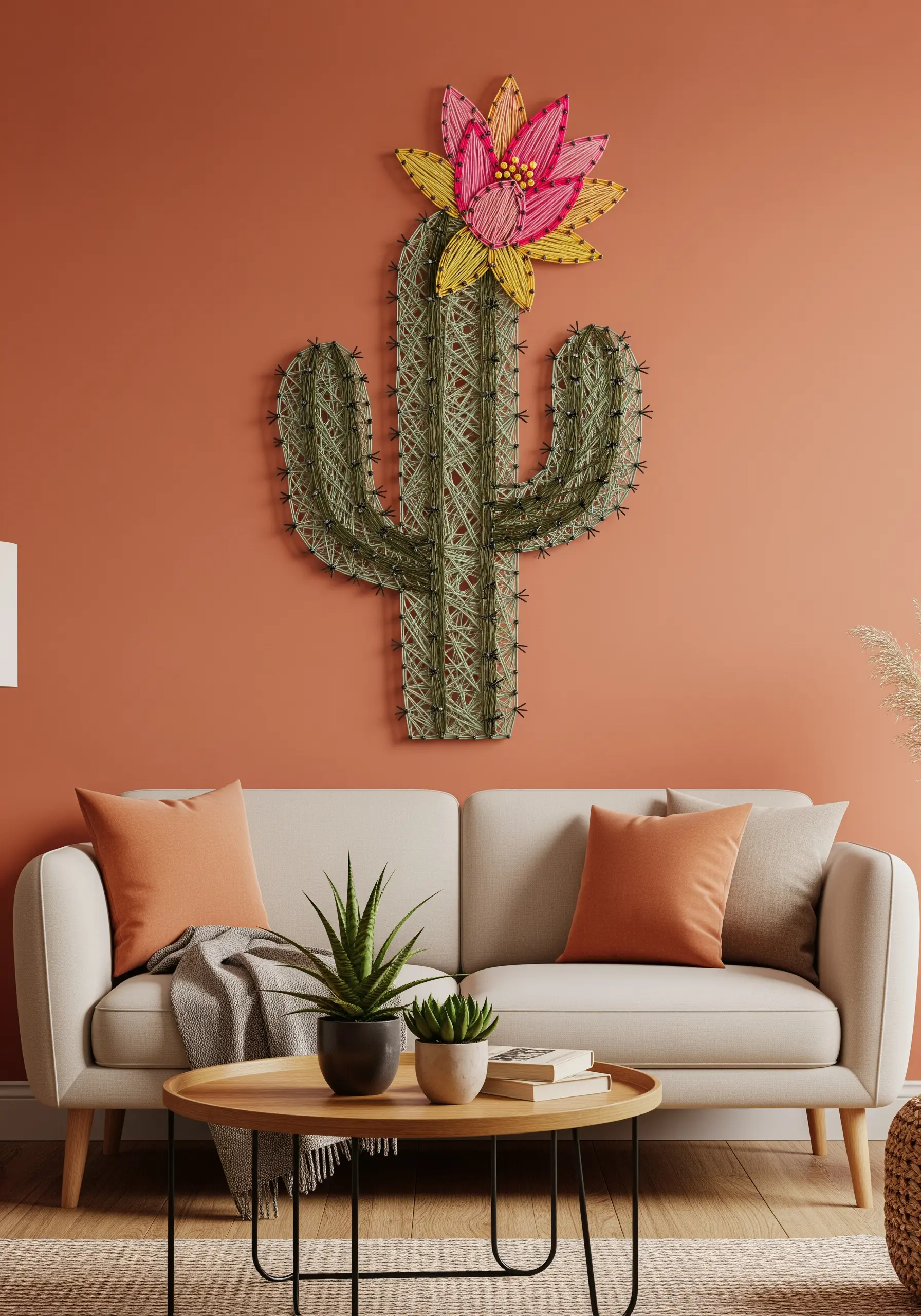
Inject personality into your work with stylized shapes and unexpected color combinations.
Don’t strive for perfect realism; instead, exaggerate the curves of the cactus and use a vibrant, almost cartoonish pink and yellow for the flower.
Create texture on the cactus body by wrapping your main threads with a finer, contrasting thread, or by adding randomly placed straight stitches to mimic spines.
This playful approach is perfect for creating cozy and colorful embroidery projects that bring a smile to your face.
18. Capture Classical Realism with Thread Painting
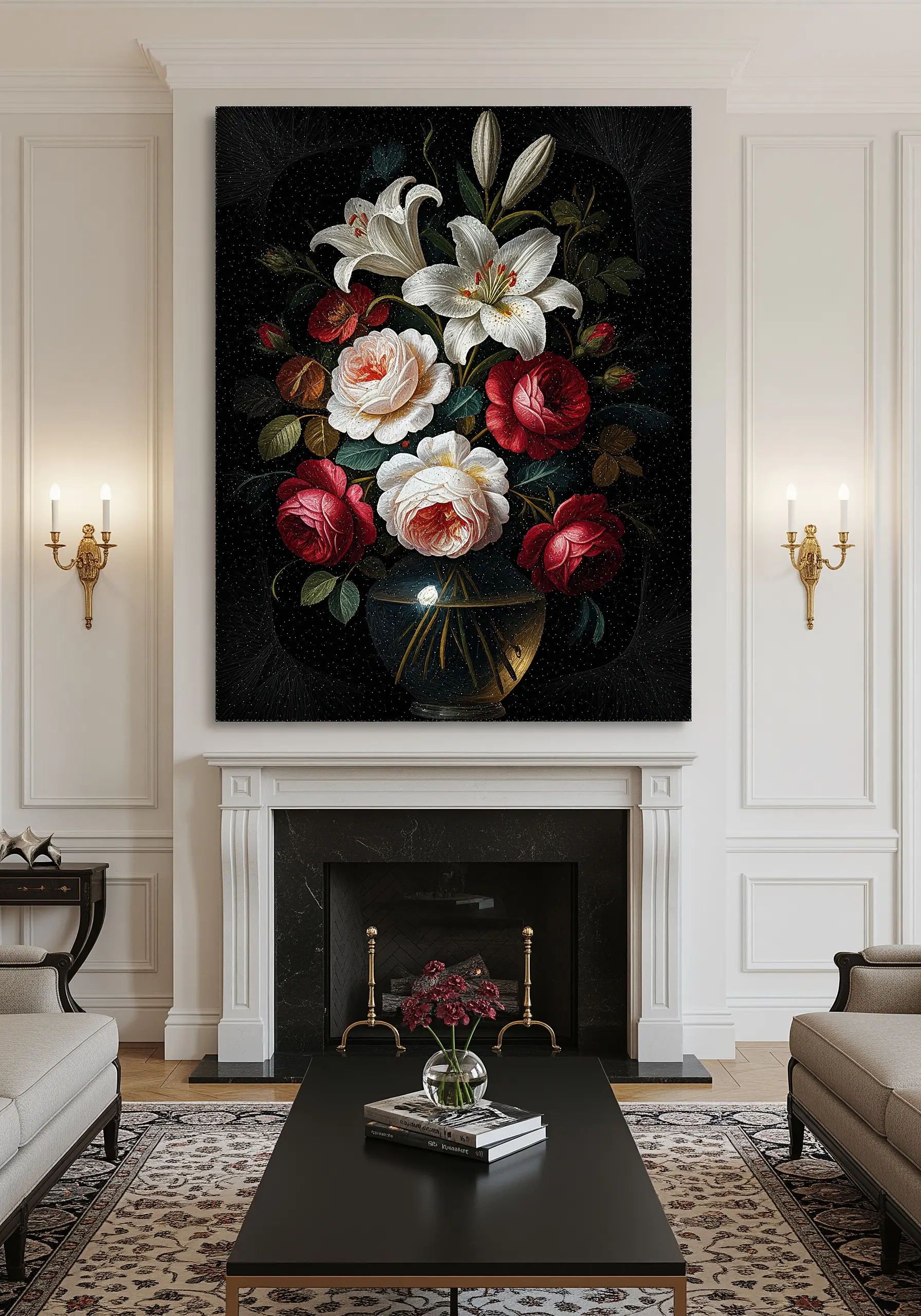
Recreate the look of an Old Master’s oil painting using the long-and-short stitch, also known as thread painting.
This technique allows for seamless blending of multiple colors within a single petal, crucial for achieving the subtle shadows and highlights seen in realistic florals.
Work with a single strand of floss to achieve the finest detail and smoothest transitions.
Stitching on a black or very dark background makes the colors appear richer and more saturated, enhancing the classical, dramatic effect of your wild garden floral embroidery ideas.
19. Blend Stitched Art with Real Botanicals
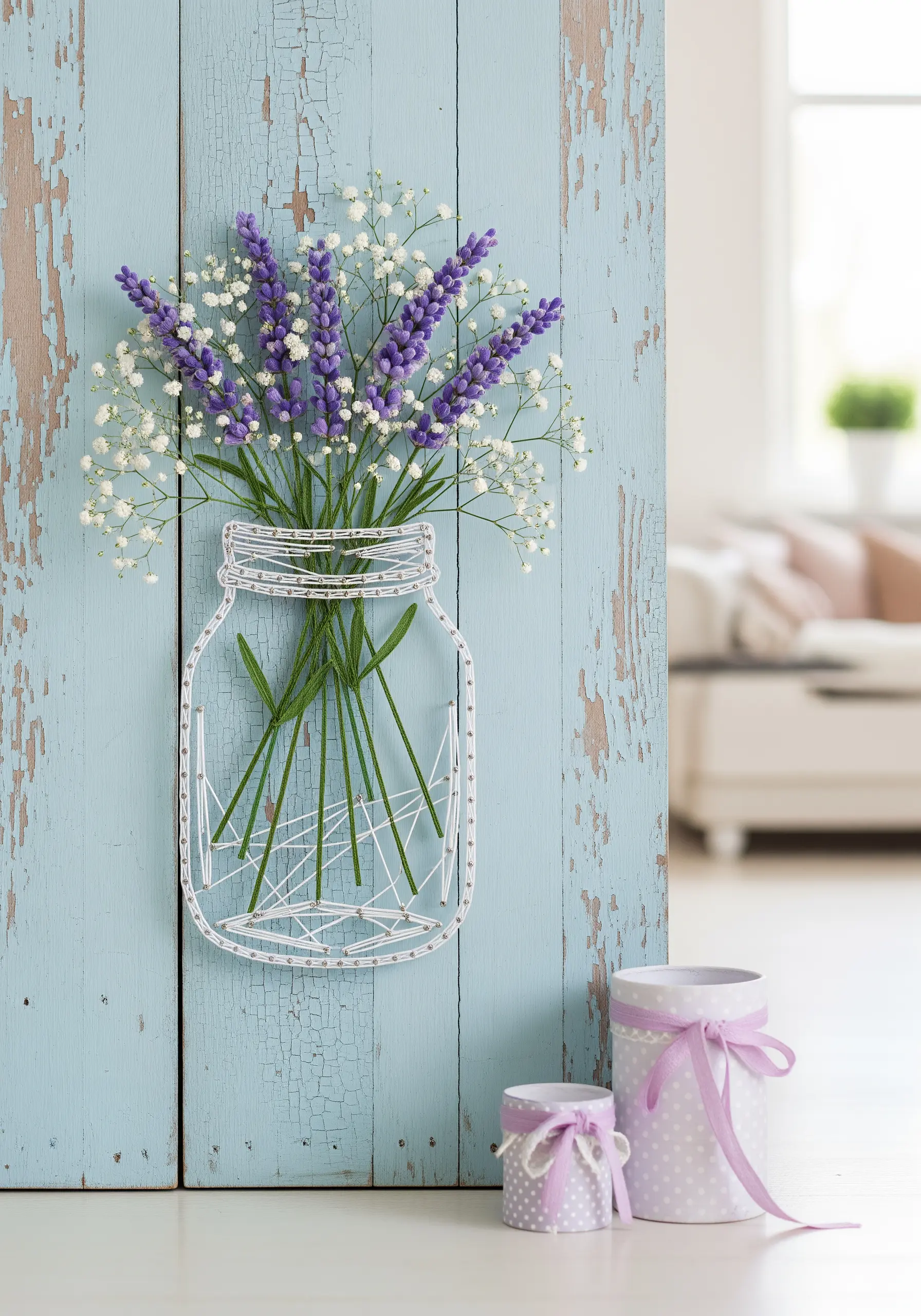
Create a charming mixed-media piece by combining the graphic lines of embroidery with the delicate texture of real flowers.
Stitch the outline of a mason jar directly onto a rustic wooden board using a simple backstitch or straight stitches for a clean, illustrative look.
Then, carefully arrange a small bouquet of dried or fresh flowers, like baby’s breath and lavender, within the stitched outline.
This delightful blend of mediums creates a piece that feels both handcrafted and alive, perfect for adding a touch of handmade embroidery hoop designs charm to any corner.