

When you think of embroidery, you might picture a small, tidy hoop. But what happens when you let your stitches breathe, grow, and climb across a much larger canvas, like a curtain or a hanging fabric panel? You open up a world of new expressive possibilities.
The key is to shift your perspective. A curtain isn’t just a window covering; it’s a vertical canvas that drapes, folds, and interacts with light. Your embroidery shouldn’t be a stiff decal applied to its surface, but a design that understands and complements this movement.
In these designs, you’ll discover how to use stitch direction to create flow, how to choose threads that catch the light, and how to compose a design that feels alive, whether it’s a single minimalist vine or a dense cascade of florals. It’s time to let your embroidery reach new heights.
1. Cascading Wisteria with Thread-Painted Gradients

To capture the heavy, drooping grace of wisteria, use long-and-short stitch to create soft gradients within each floral cluster.
Work with three to four shades of a single color, from light to dark, to build realistic depth and dimension.
For the leaves, a simple fishbone stitch adds just enough texture without competing with the blossoms.
When stitching on lighter curtain fabrics, always use a lightweight tear-away stabilizer to prevent the density of the stitches from causing puckering.
2. Gilded Ivy on Velvet for High-Contrast Drama

Stitching on a deep, plush fabric like velvet calls for a thread that makes a statement.
Choose a high-quality metallic thread and use shorter lengths (no more than 12 inches) to minimize fraying and tangling.
Outline the leaves with a split stitch before filling with a satin stitch; this creates a defined edge and prevents stitches from sinking into the pile.
For the smoothest vine, use a couching stitch—laying down a thicker metallic cord and tacking it in place with a finer, matching thread.
This is one of the most effective unexpected ways to use metallic thread to create pure luxury.
3. Graphic Monstera on Rustic Burlap
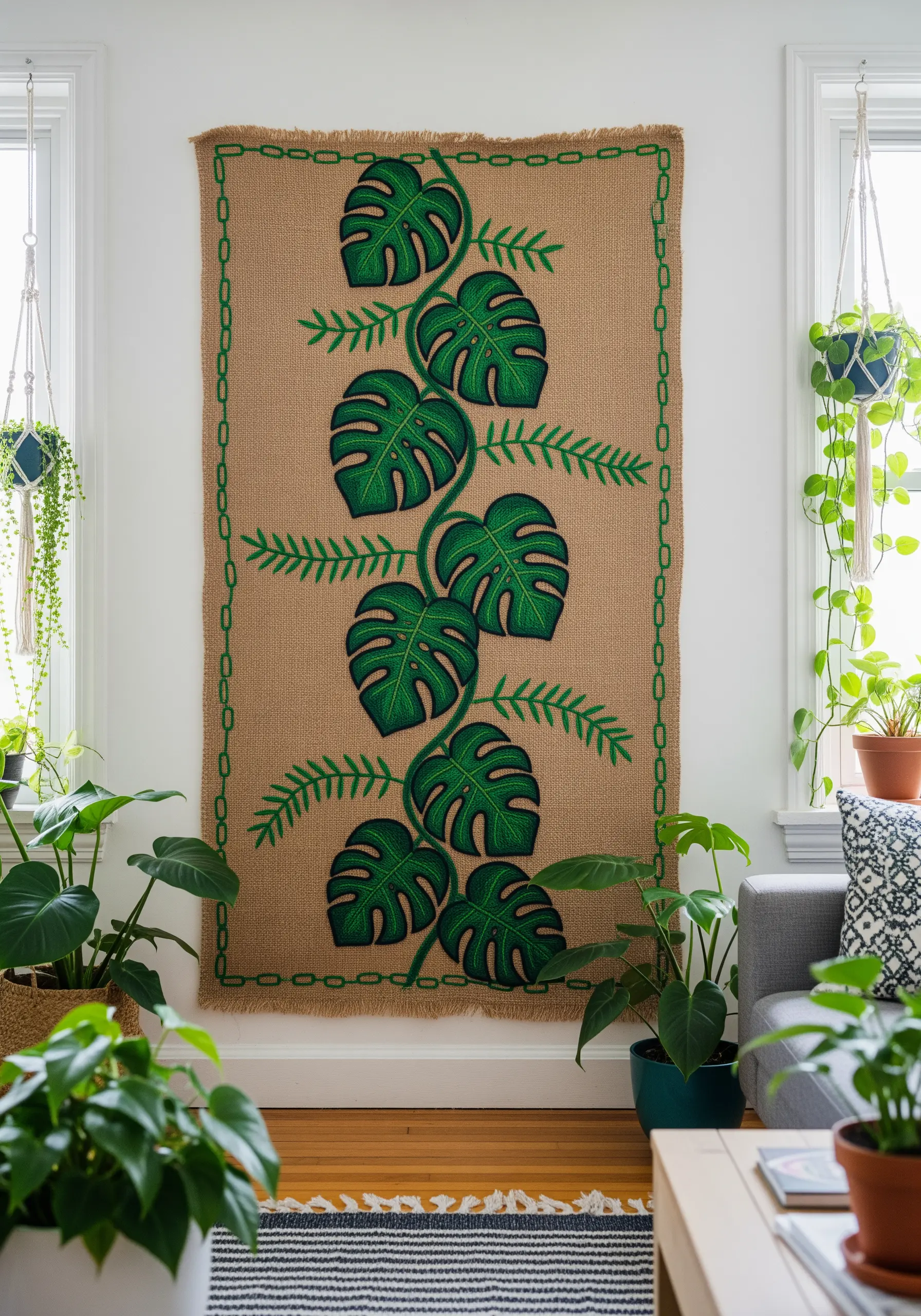
The impact of this design comes from the stark contrast between the smooth, dense stitching and the coarse, open weave of the burlap.
Use a thick thread, like cotton perle or all six strands of embroidery floss, to achieve full, bold coverage for the leaves.
To get those crisp edges, first outline each leaf shape with a split stitch.
This creates a raised border for your satin stitches to press against, ensuring a clean finish and preventing the burlap from showing through.
4. Ethereal Clematis on Sheer Fabric

When embroidering on sheer or semi-sheer fabric, remember that the back of your work is just as important as the front.
Use a water-soluble stabilizer to support your stitches; it will wash away completely, leaving no trace.
Keep the floral fills light and airy with an open long-and-short stitch, which prevents the design from becoming heavy and stiff.
Secure your threads by weaving the tails behind existing stitches rather than using knots, ensuring a clean, transparent finish.
5. Painterly Morning Glories on a Grand Scale

For a large-scale project like a room divider or full-length curtain, approach your composition like a painting.
Block in large areas of color with long-and-short stitch, blending two or three analogous shades within each petal to create vibrant, seamless gradients.
Pay close attention to stitch direction—it’s your most powerful tool for creating form and movement.
Follow the natural curves of the petals, stitching from the center outward to create a sense of unfurling.
Explore these abstract thread painting ideas to build confidence with color.
6. Whimsical Honeysuckle for a Kitchen Window
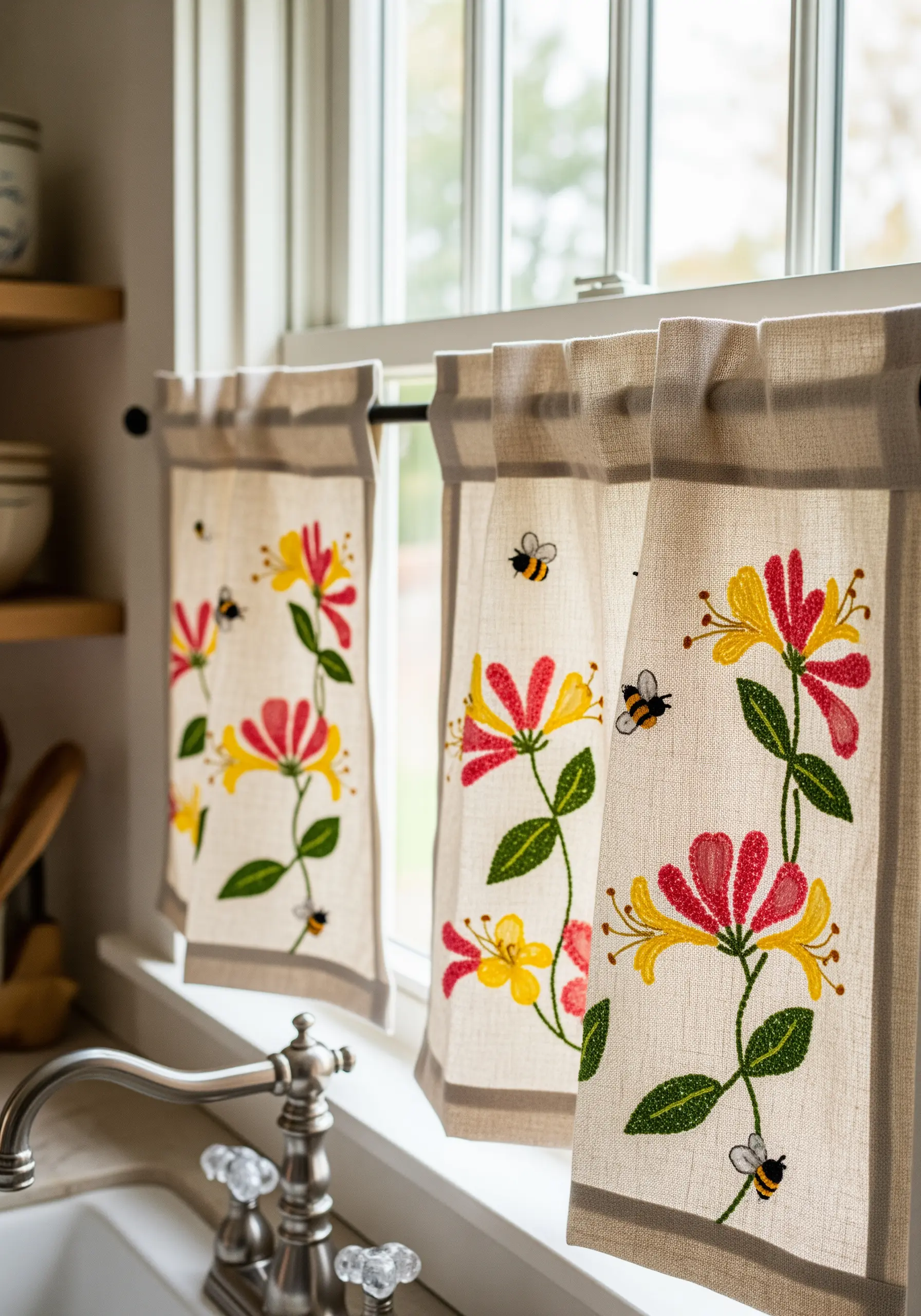
Achieve this charming, illustrative style by pairing flat color with strong outlines.
Fill the petals and leaves with a simple satin stitch, but don’t obsess over perfection; slight irregularities add to the hand-drawn character.
Then, use a dark, contrasting backstitch to outline every element, making the shapes pop with graphic clarity.
The tiny bees are easily created with a single yellow French knot for the body and two detached chain stitches in a light gray for the wings.
7. Monochrome Botanicals for Graphic Impact

This design’s quiet power comes from its disciplined, limited palette.
When color is removed, texture and light become the main story.
Use a padded satin stitch for the flower petals—a few straight stitches laid down first as underpinning—to create a raised, sculptural effect.
Vary the angle of your satin stitches in the leaves; this simple adjustment will make them catch the light differently, creating depth and definition without a single color change.
8. Layered Passion Flower with Dimensional Stitches
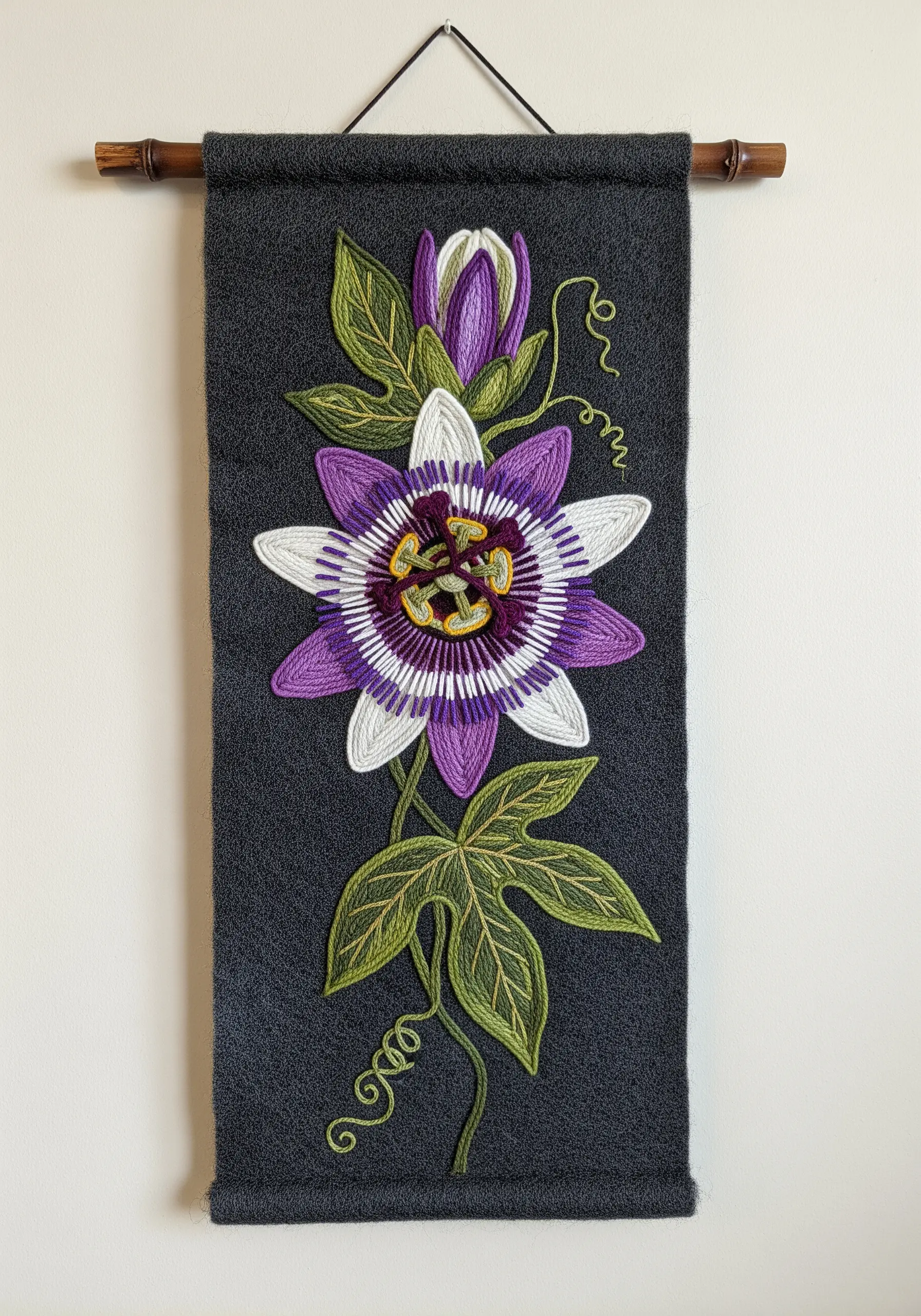
Recreate the architectural complexity of a passion flower by building layers of distinct stitches.
Use long, smooth satin stitches for the outer petals.
For the filament crown, create loops with Turkey work or a dense fan of straight stitches in a contrasting color.
Build up the center with clusters of French knots and chunky bullion knots to achieve a highly textured, three-dimensional effect that invites touch.
This is a perfect example of how statement textured embroidery techniques create realism.
9. Classic Grapevine Valance with Rich Texture
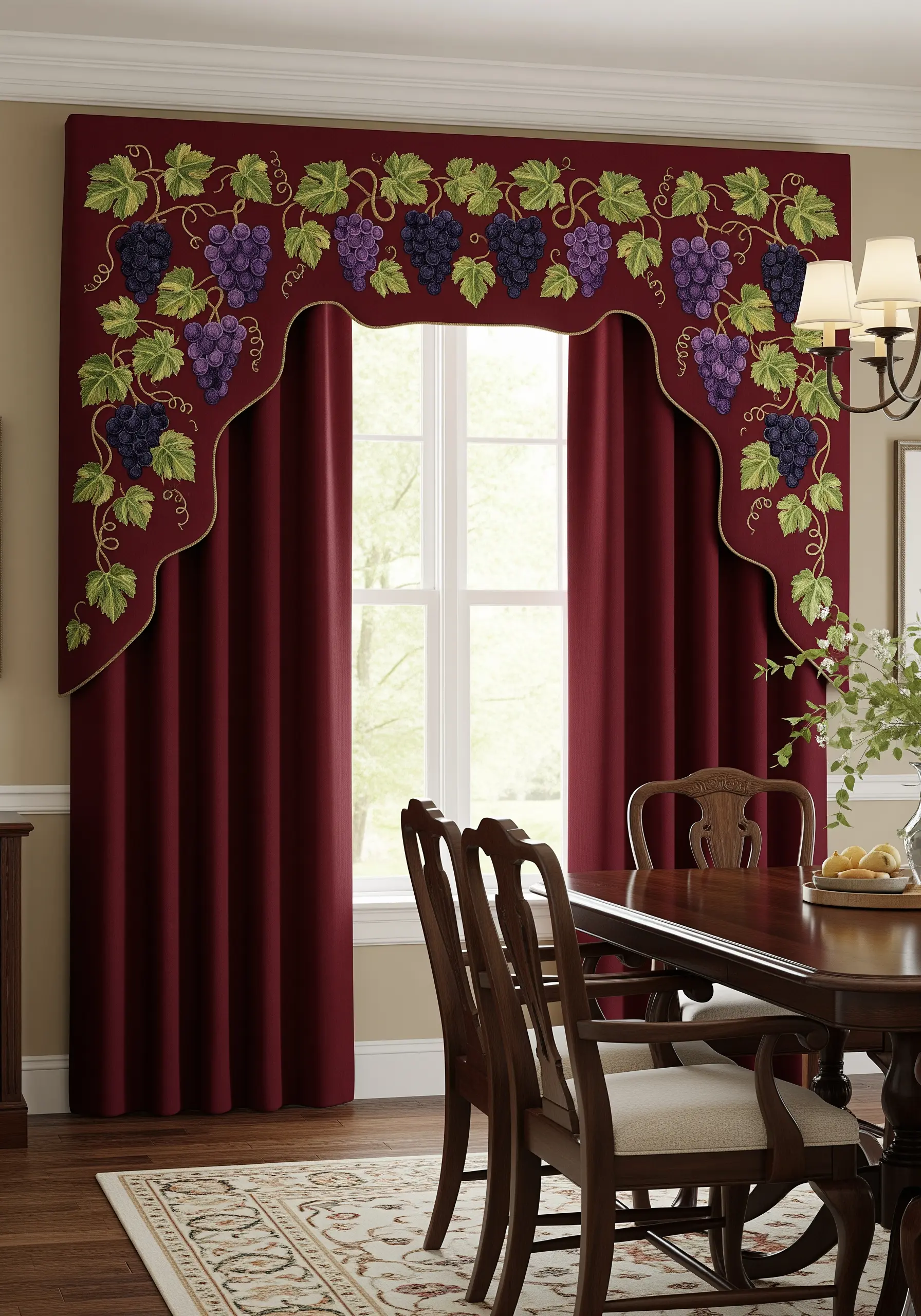
To give grapes a plump, rounded appearance, use dimensional stitches like bullion knots or tightly packed French knots.
Stitch them in clusters using two or three shades of purple and deep blue to suggest volume and shadow.
For the leaves, a fishbone stitch naturally creates a prominent central vein and beautifully textured fill.
Elevate the main vine by couching a thick, twisted cord onto the fabric, giving it a woody, robust presence that anchors the entire design.
10. Vibrant Bougainvillea for a Draped Canopy

Capture the joyful, cascading nature of bougainvillea with strategically placed stitch clusters.
Use detached chain stitches (lazy daisies) in a vibrant magenta for the iconic bracts, overlapping them slightly for a natural, abundant look.
A simple stem stitch in a lively green is all you need for the wandering vines.
This design is ideal for draped fabric, as the lightweight stitch clusters will move and flow beautifully with every fold.
11. Minimalist Diagonal Vine for a Modern Curtain

This design proves that a strong composition can be more impactful than dense stitching.
The clean diagonal line draws the eye upward, adding dynamic energy to a simple curtain panel.
Use a single, consistent stitch for the vine—like a backstitch or stem stitch—to maintain a crisp, graphic feel.
The tiny blossoms require just a few satin stitches or a single lazy daisy each, providing a delicate counterpoint to the strong line.
12. Trailing Jasmine for Soft, Romantic Draping

For embroidery on fabric that needs to drape softly, choose stitches that offer flexibility.
A whipped backstitch creates a smooth, cord-like vine that moves with the fabric instead of stiffening it.
Create the tiny jasmine flowers with five simple straight stitches arranged in a star shape, anchored by a single French knot at the center.
Using a variegated green thread for the leaves adds subtle color shifts, giving the design a more organic, lifelike feel without extra work.
13. Black-Eyed Susan Tapestry for a Dense Floral Effect

To create the illusion of a dense flower field, you need to think in layers.
Overlap your motifs, vary their scale slightly, and allow some to be partially obscured by others.
Use a long satin stitch for the yellow petals, radiating from the center to create movement.
The dark centers are the perfect opportunity for texture: a dense cluster of French knots will create a raised, seed-like effect that contrasts beautifully with the smooth petals.
14. A Botanical Collection of Hanging Ferns

Approach this design as a botanical sampler, assigning a unique stitch to each variety of fern to capture its specific character.
Use the open, feathery fly stitch for delicate fronds, a structured fishbone stitch for broader leaves, and the classic fern stitch for traditional shapes.
Working with a full spectrum of greens—from pale mint to deep forest—not only adds realism but also helps visually separate each plant, turning a shower curtain into a piece of textile illustration.
15. Sweet Peas Climbing a Printed Trellis Pattern

Elevate a fabric that already has a subtle pattern by integrating your embroidery directly into it.
Here, a simple trellis print becomes the structural guide for your stitches.
First, trace the existing lines with a chain stitch to add texture and dimension.
Then, allow your delicate sweet pea vines, rendered in stem stitch, to gracefully climb the newly defined structure for a truly custom, layered look.
16. Nasturtiums with Felt Appliqué and Yarn
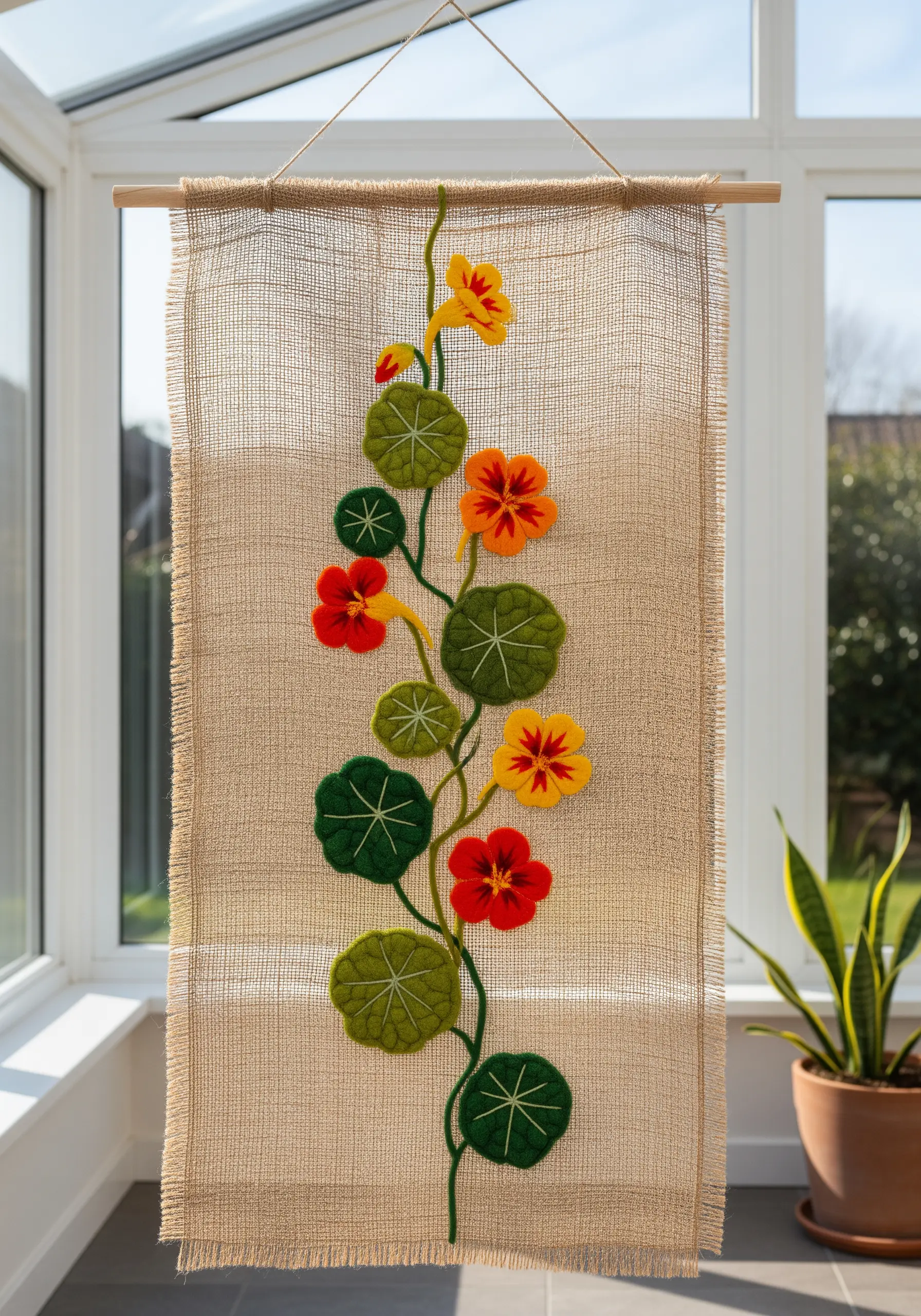
Combine the speed of appliqué with the refined detail of embroidery for a piece with incredible texture.
Cut the leaf and flower shapes from felt to create instant, bold blocks of color, securing them with a decorative blanket stitch.
Then, add embroidered details: stem stitch for the leaf veins and tiny straight stitches for petal markings.
Finally, couch a thick yarn for the vine to introduce a third layer of texture, creating a design that is visually and tactilely rich.
It’s one of those mixed-fiber embroidery ideas that yields stunning results.
17. Backlit Trumpet Vine for a Glowing Silhouette

When you know your embroidered piece will be backlit by a window, your design strategy changes.
Focus on creating strong, solid shapes that will hold their own against the light.
Use a dense, impeccably smooth satin stitch for the flowers and leaves.
Define the vines with a bold chain stitch or a heavy whipped backstitch.
When light streams through, your solid stitching is transformed into a dramatic, glowing silhouette.
18. Tone-on-Tone Ivy for Understated Texture
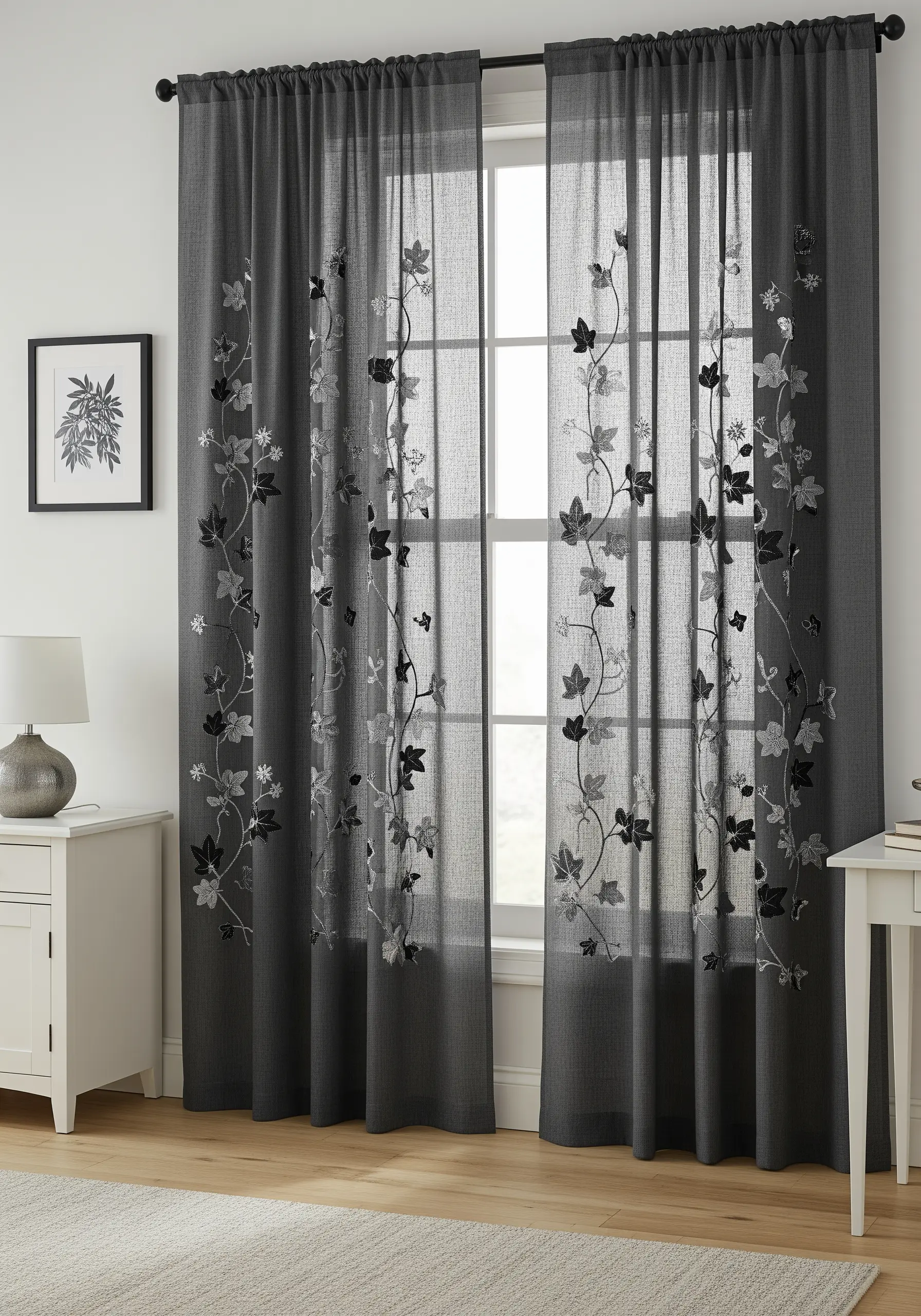
Create a sophisticated, ethereal look with a tone-on-tone embroidery technique.
On this sheer gray fabric, the design uses only black, charcoal, and silver threads.
The magic is in the interplay of different thread finishes: the matte black absorbs light, the satin charcoal gives a soft sheen, and the silver metallic reflects it.
This variation creates a dynamic, textured design that feels incredibly luxurious and refined, all without using a wide color palette.
19. Playful Cucumber Vine for a Kitchen Valance

Bring personality to your work by capturing the unique details of a plant.
The bumpy texture of cucumbers is perfectly replicated with French knots scattered over a satin stitch base.
For the whimsical, curling tendrils, couch a very fine, flexible craft wire onto the fabric alongside your thread.
Once stitched, you can gently bend and shape the tendrils into dynamic, three-dimensional spirals that stand away from the fabric.
20. Climbing Monstera on an Upholstered Headboard
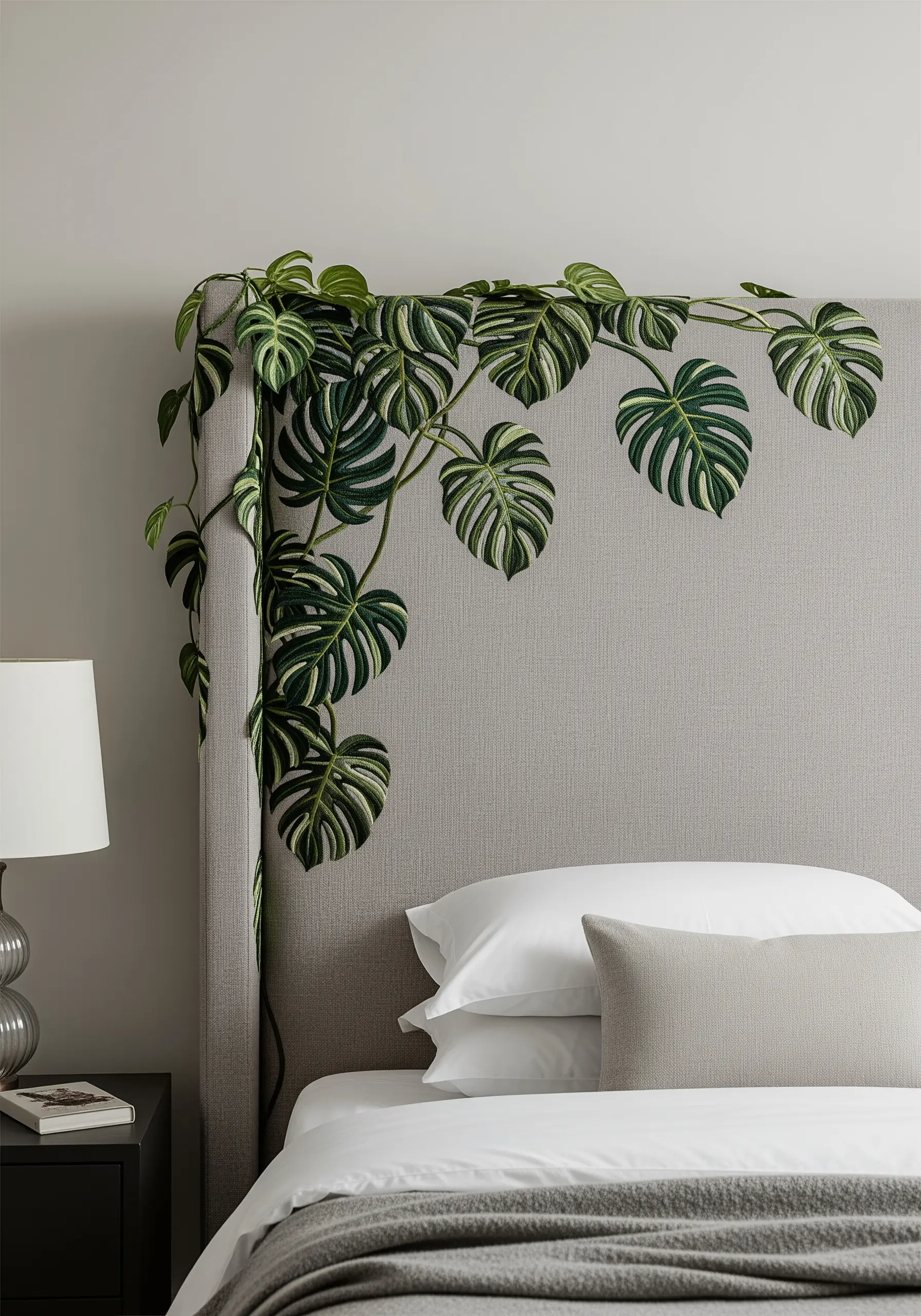
Embroidering directly onto upholstery transforms a piece of furniture into a functional work of art.
Use a strong, sharp needle and a thimble to work through the dense fabric.
Create the iconic variegated leaves of the Monstera Adansonii with directional long-and-short stitch, blending shades of green and off-white for a painterly effect.
Because the fabric is tightly upholstered, your stitches will sit beautifully on the surface, creating a stunning, integrated design.
21. Wisteria Silhouette on Backlit Sheers

This minimalist approach celebrates the elegance of the line itself.
Using a single strand of white or silver thread, carefully trace the outlines of wisteria clusters and leaves with a precise, consistent backstitch.
The goal is not to fill the shapes, but to define them against the dark fabric and the light behind it.
When the sun shines through, the delicate lines appear to float, creating a fragile, beautifully graphic effect.
22. Autumnal Vine on Textured Weave Fabric
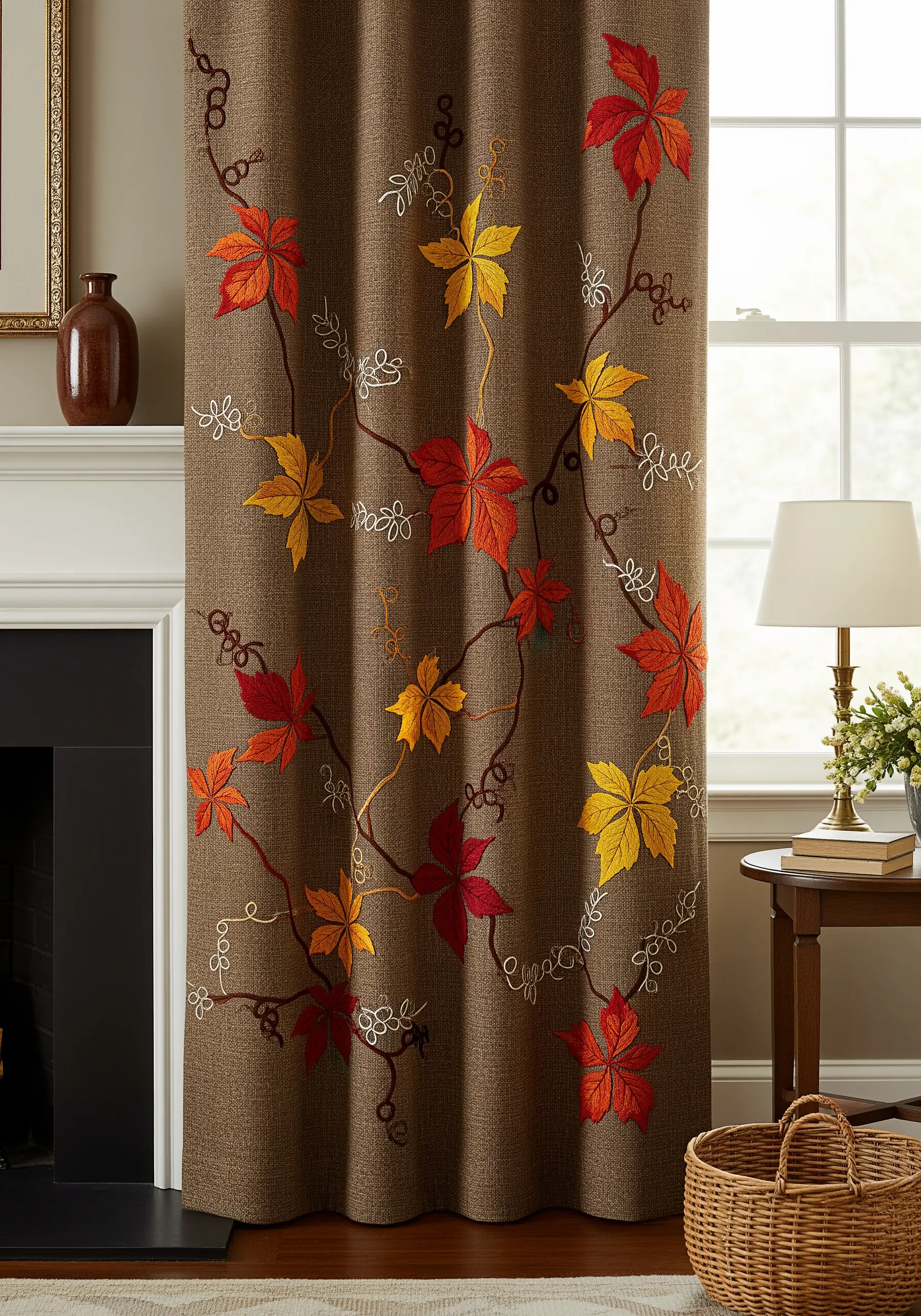
Embrace a seasonal palette with rich reds, oranges, and golds, a concept that translates beautifully to other seasonal wall art projects.
On a heavily textured fabric like this, let the weave become part of the design.
Use a fishbone stitch for the leaves; it pairs wonderfully with variegated threads to produce natural-looking color shifts within a single leaf.
Add looping, whimsical tendrils with a simple backstitch to introduce a sense of movement and prevent the design from feeling too heavy.
23. Continuous Jasmine Vine Across a Room Divider
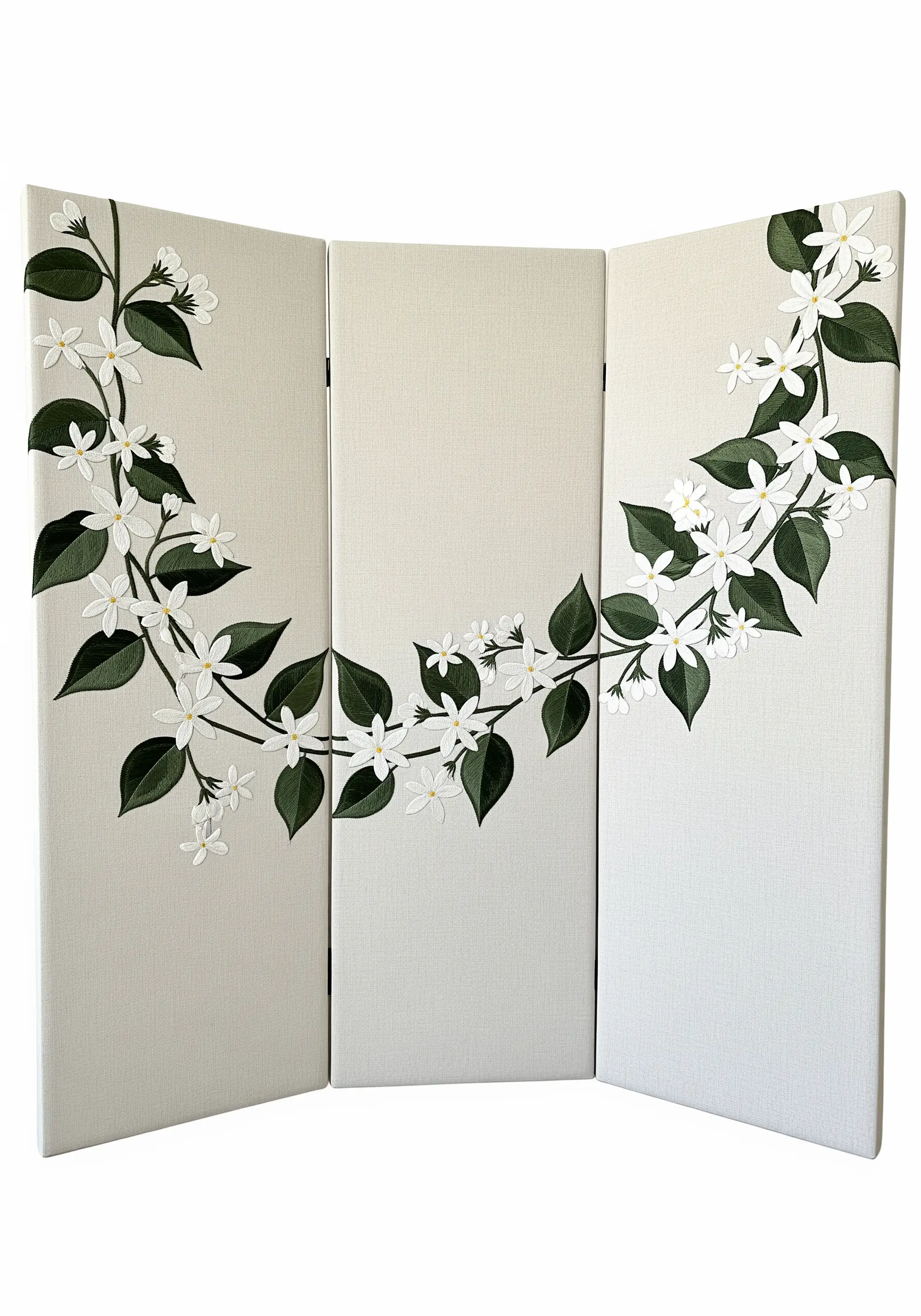
When your canvas consists of multiple panels, your primary goal is to create a single, unified composition.
Before you take a single stitch, lightly sketch the entire vine flowing seamlessly from one panel to the next.
This planning ensures that the curves and connections are graceful and intentional.
This technique transforms separate objects into a cohesive piece of art, ideal for embroidered wall panels and other large-scale installations.


