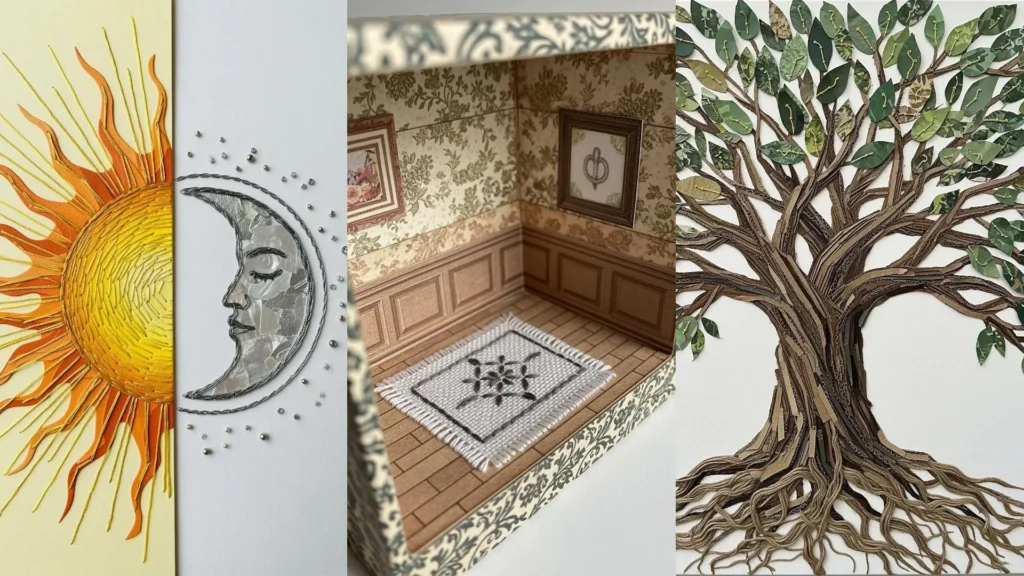
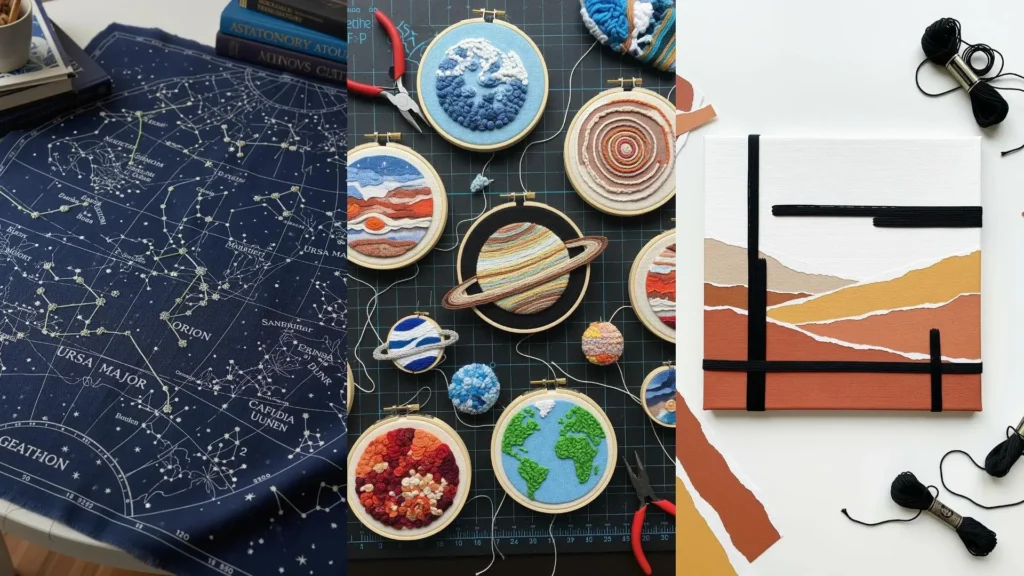
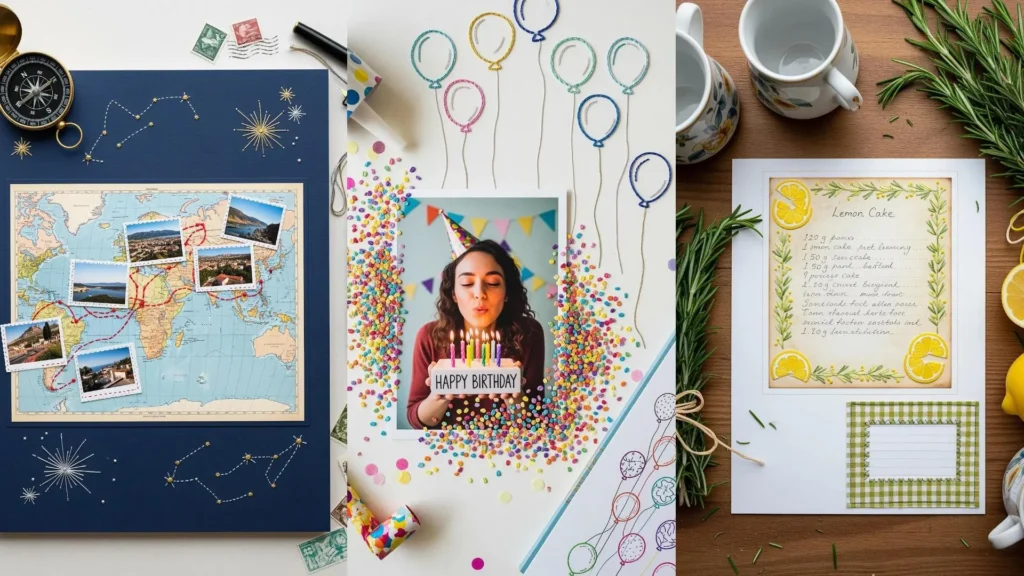
There’s a quiet magic that happens when you combine the crispness of paper with the softness of thread. It’s a conversation between two materials—one that holds a sharp fold, the other a gentle curve. If you’ve ever felt that your embroidery could be *more*, this is where you begin to explore that feeling.
Forget the pressure to create a perfect, complex masterpiece. Instead, think of your needle as a drawing tool and paper as your canvas. Each piece you’ll see here is built on a simple principle: using tiny hand-stitched details to add texture, story, and a focal point to collaged surfaces. It’s about letting the thread do more than just decorate; it can connect, define, and transform.
I want you to see these ideas not as projects to be copied, but as techniques to be borrowed. Try adding a single stitched line to a vintage postcard. Or use a French knot to add dimension to a paper flower. This is how you develop a style that is uniquely yours—one thoughtful stitch at a time.
1. Layer Organic Forms with Stitched Echoes
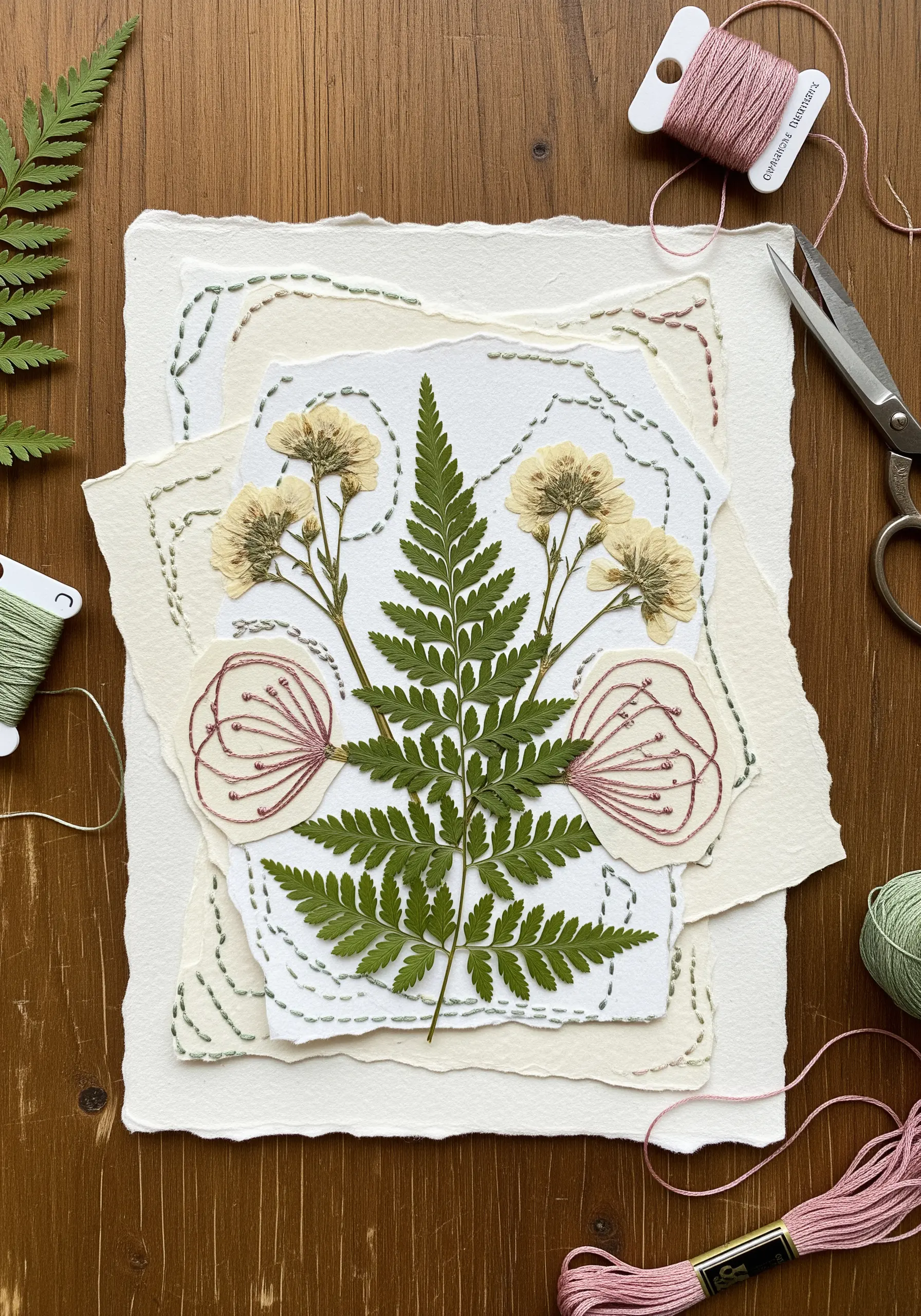
Create a sense of history and memory by layering pressed botanicals over stitched outlines of their shapes.
Use a simple running stitch on handmade paper to create a ‘ghost’ image before placing the real flower or leaf on top.
This technique adds a delicate illustrative quality without overpowering the natural specimen, making your work feel like a page from an artist’s journal.
For a cohesive look, choose thread colors that are muted echoes of the botanicals themselves—a dusty rose for a faded petal, a soft sage for a fern.
Consider making this one of your inspiring pressed flower art projects for a quick yet meaningful piece.
2. Juxtapose Graphic Shapes with Tactile Stitches
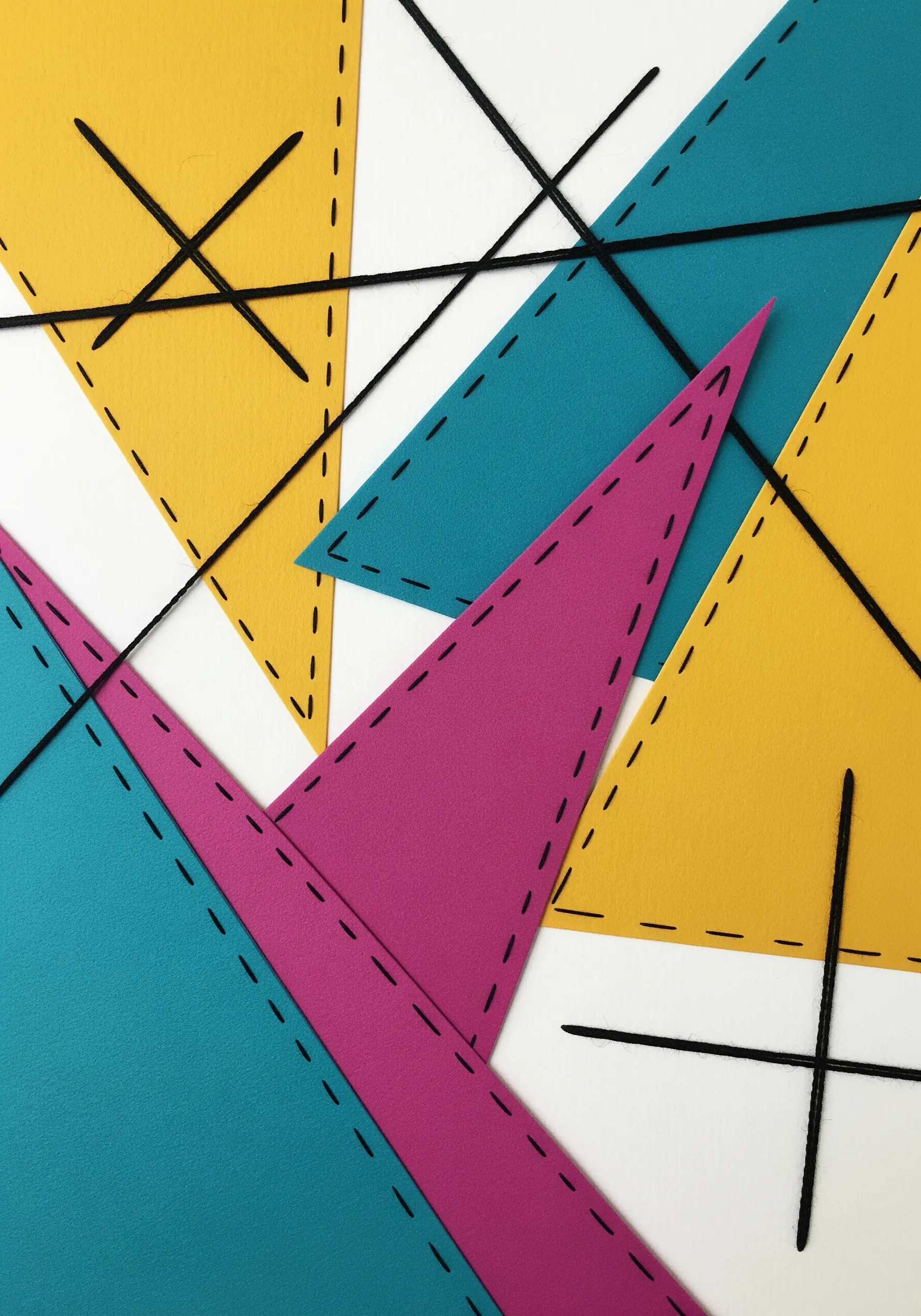
Elevate simple paper cutouts by using thread to add texture and definition.
First, pierce your paper shapes with a needle before stitching to avoid buckling.
Use a thick, high-contrast thread, like a black perle cotton against bright colors, to turn a functional running stitch into a bold design element.
The tension between the clean, sharp edges of the paper and the soft, pierced entry points of the thread creates a compelling visual and tactile experience.
This is a great foundation for creating striking yarn wall art projects inspired by geometric patterns.
3. Stitch Constellations with Metallic Thread
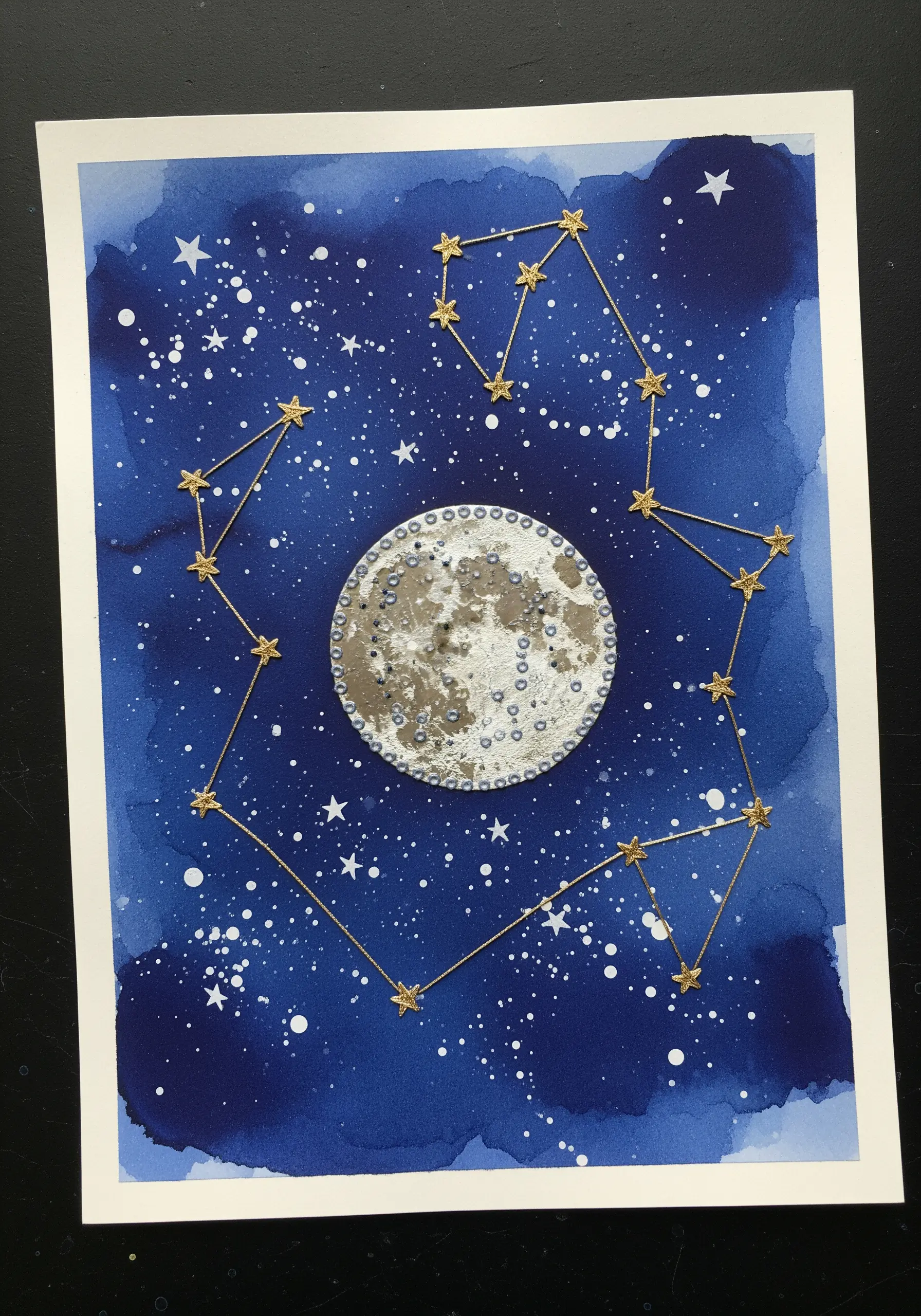
Transform a painted surface by stitching directly into it, adding a layer of texture and light.
For celestial scenes, use a fine metallic thread to connect small star-shaped sequins or beads, mapping out constellations over a watercolor galaxy.
The metallic fiber catches the light in a way that paint cannot, adding a subtle, magical shimmer that changes as the viewer moves.
To texturize the collaged moon, use tiny French knots or seed beads to give its surface a cratered, dimensional feel.
You can create stunning framed embroidery pieces with this technique.
4. Unify a Landscape with a Stitched Path
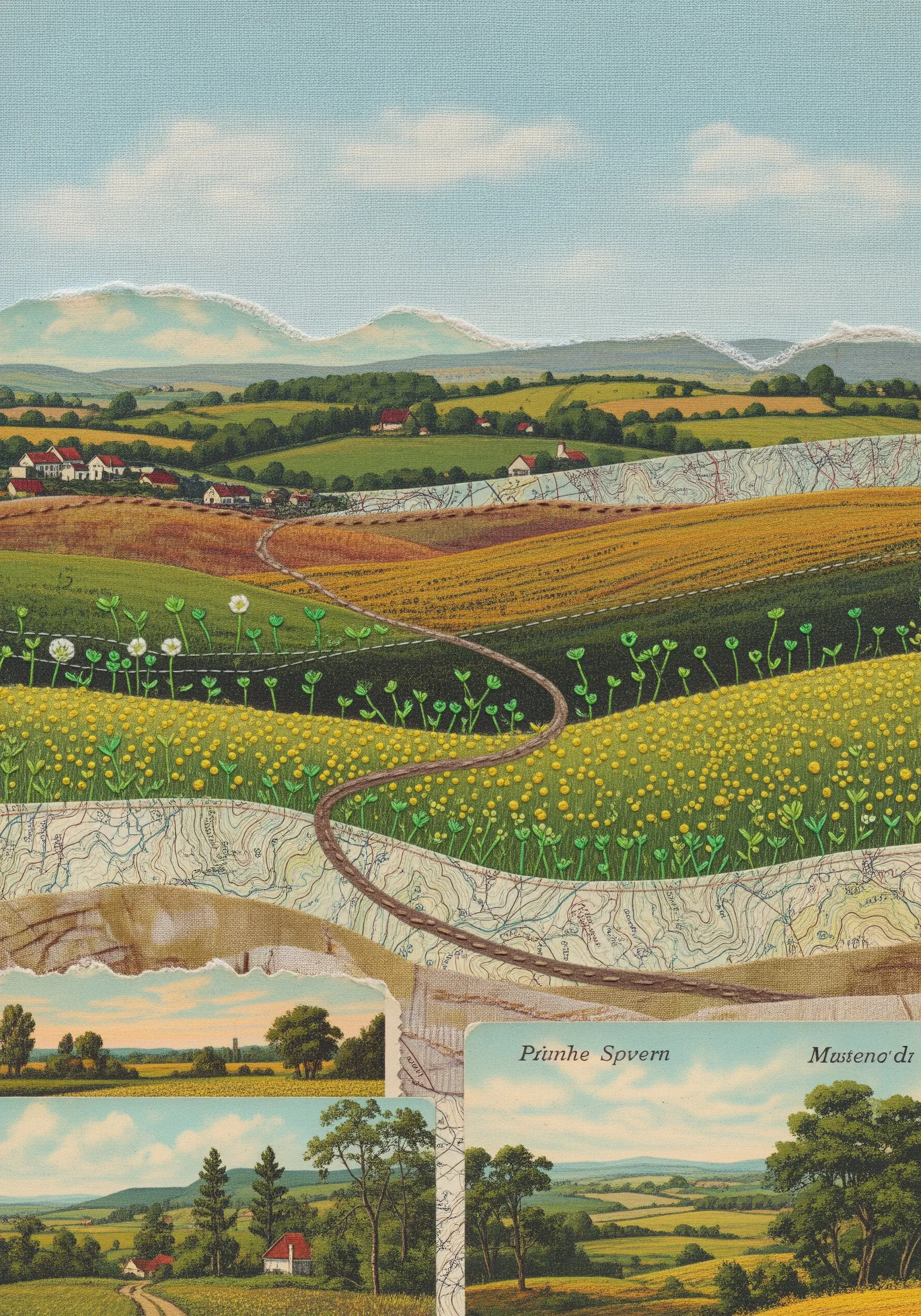
When composing a scene from disparate elements like postcards and maps, use thread to create a single, unifying line that guides the eye.
A simple backstitch or stem stitch tracing a road or river physically and visually connects the different paper pieces.
This transforms a static collage into a narrative journey, suggesting movement through the landscape.
The thread adds a soft, tactile contour that contrasts beautifully with the flat, printed paper, making the entire piece more cohesive.
Explore more creative collage inspirations for combining paper layers with subtle embroidery.
5. Imply Urban Texture with Minimalist Lines
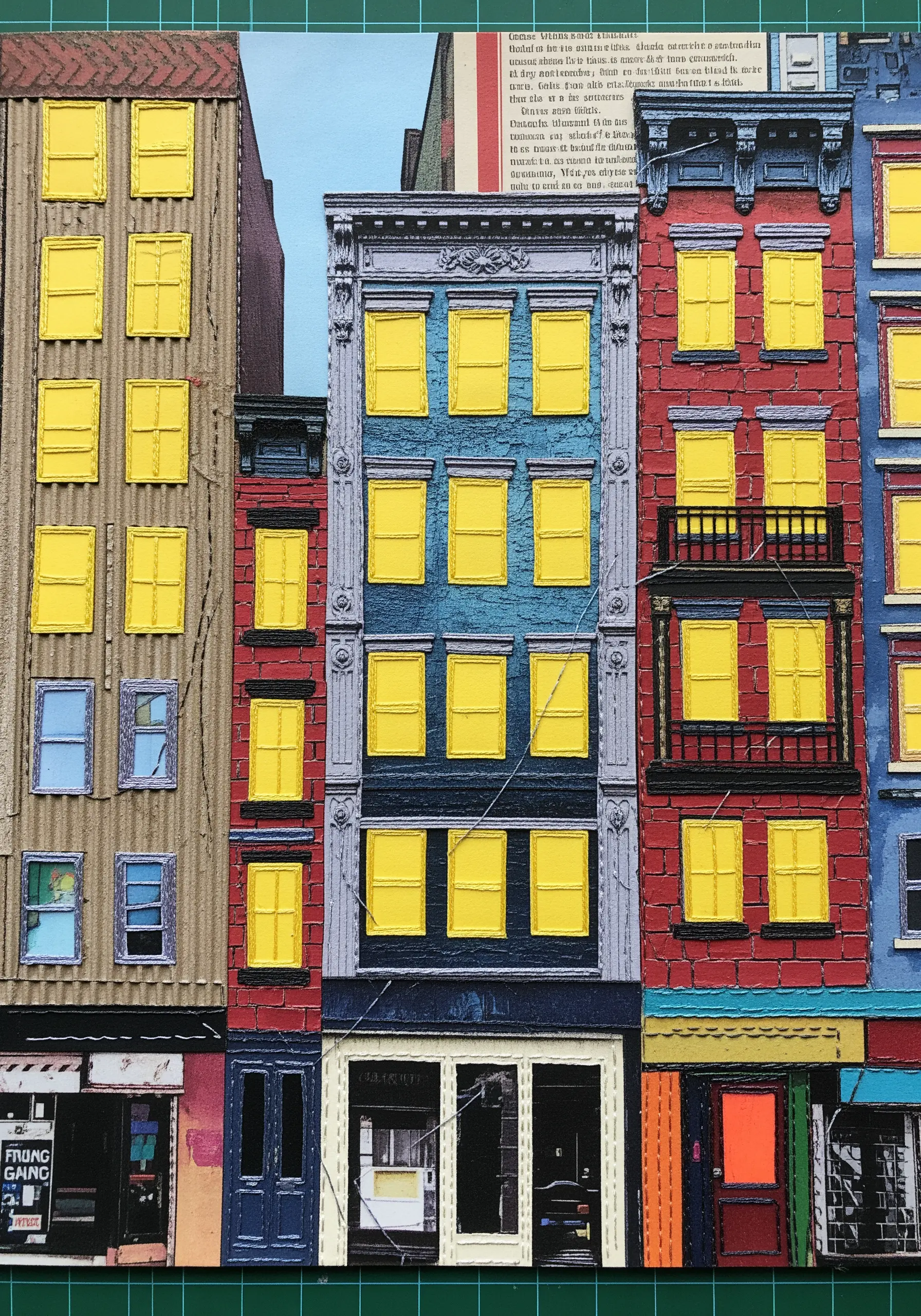
In a detailed paper collage, you don’t need elaborate embroidery; a few carefully placed stitches are enough to suggest texture and depth.
Use single, long straight stitches to represent power lines stretching between buildings, instantly adding a layer of urban realism.
A simple running stitch around a window frame or doorway can add just enough definition to make it pop.
These stitched details that make plain walls pop work because their subtlety invites closer inspection, rewarding the viewer with a hidden layer of craft.
6. Appliqué Fabric Motifs onto Paper
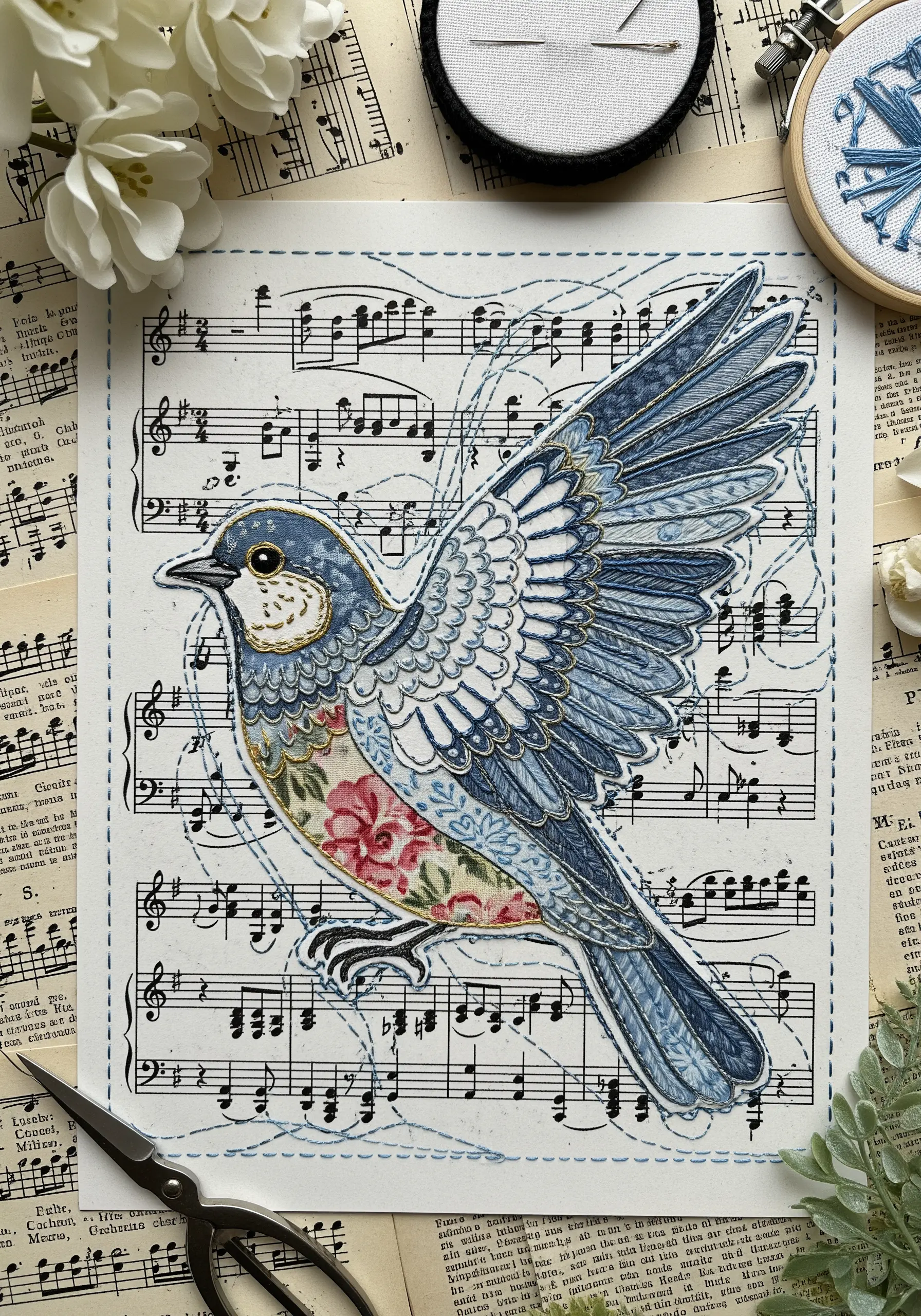
Combine the softness of fabric with the crispness of paper for a rich, textural effect.
Cut out a motif from patterned fabric and use a fine whipstitch or a neat running stitch to apply it to a paper background like sheet music or a vintage book page.
The needle perforations and thread add a charming, handcrafted border that frames the fabric and integrates it into the paper surface.
This is one of the most effective abstract mixed-media embroidery ideas for adding warmth and pattern.
7. Sculpt a Wave with Thread and Knots
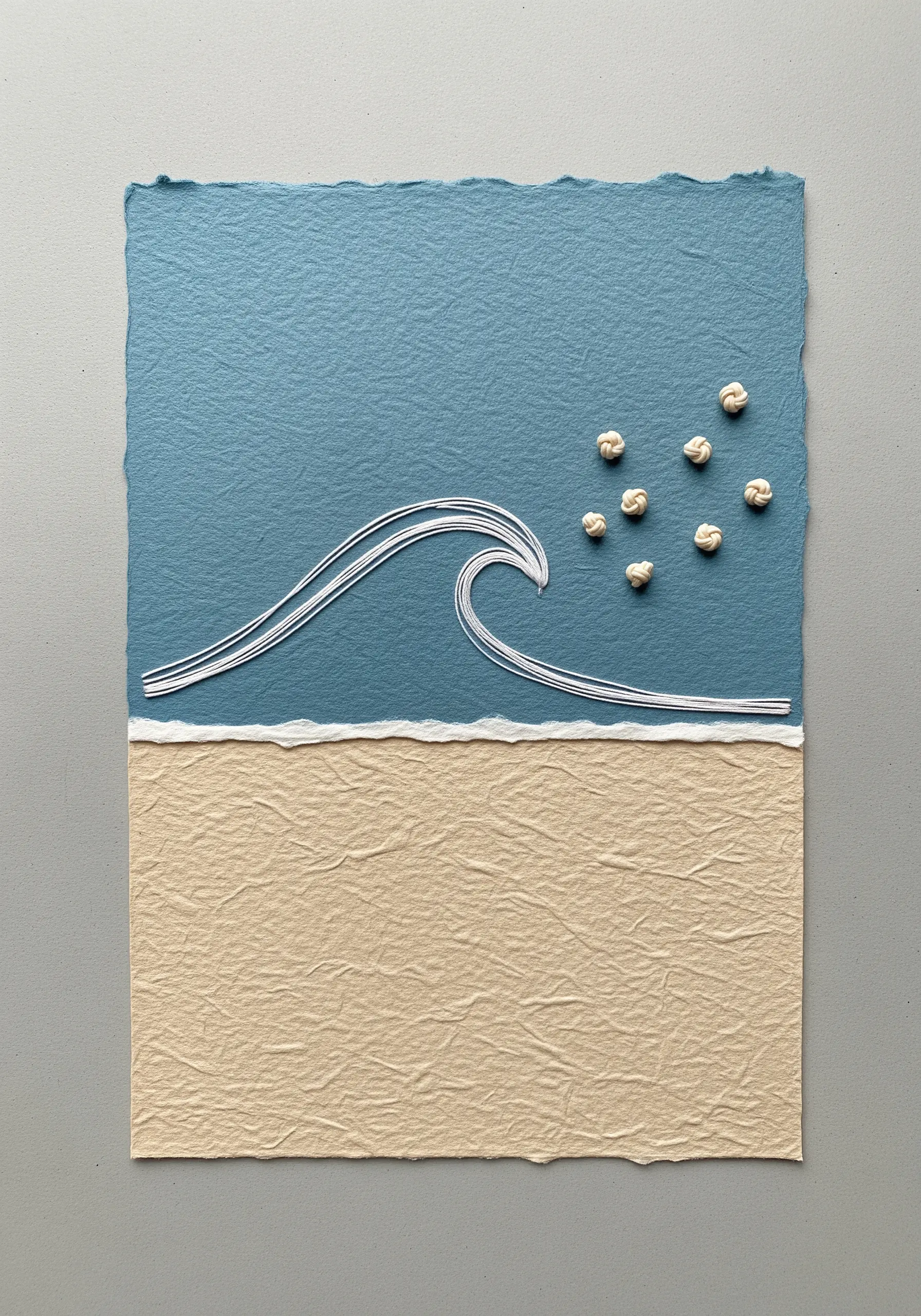
Use stitch direction and texture to create a sense of movement in a minimalist composition.
Create the crest of a wave with several parallel rows of whipped backstitch, which produces a smooth, raised, cord-like line.
Contrast this smooth line with a cluster of tightly packed French or colonial knots to represent the turbulent seafoam.
The interplay between the fluid stitched line and the nubby texture of the knots makes the composition feel dynamic and alive.
These are the kind of tiny embroidery designs inspired by everyday life that tell a big story.
8. Define Flat Shapes with Stitched Veins
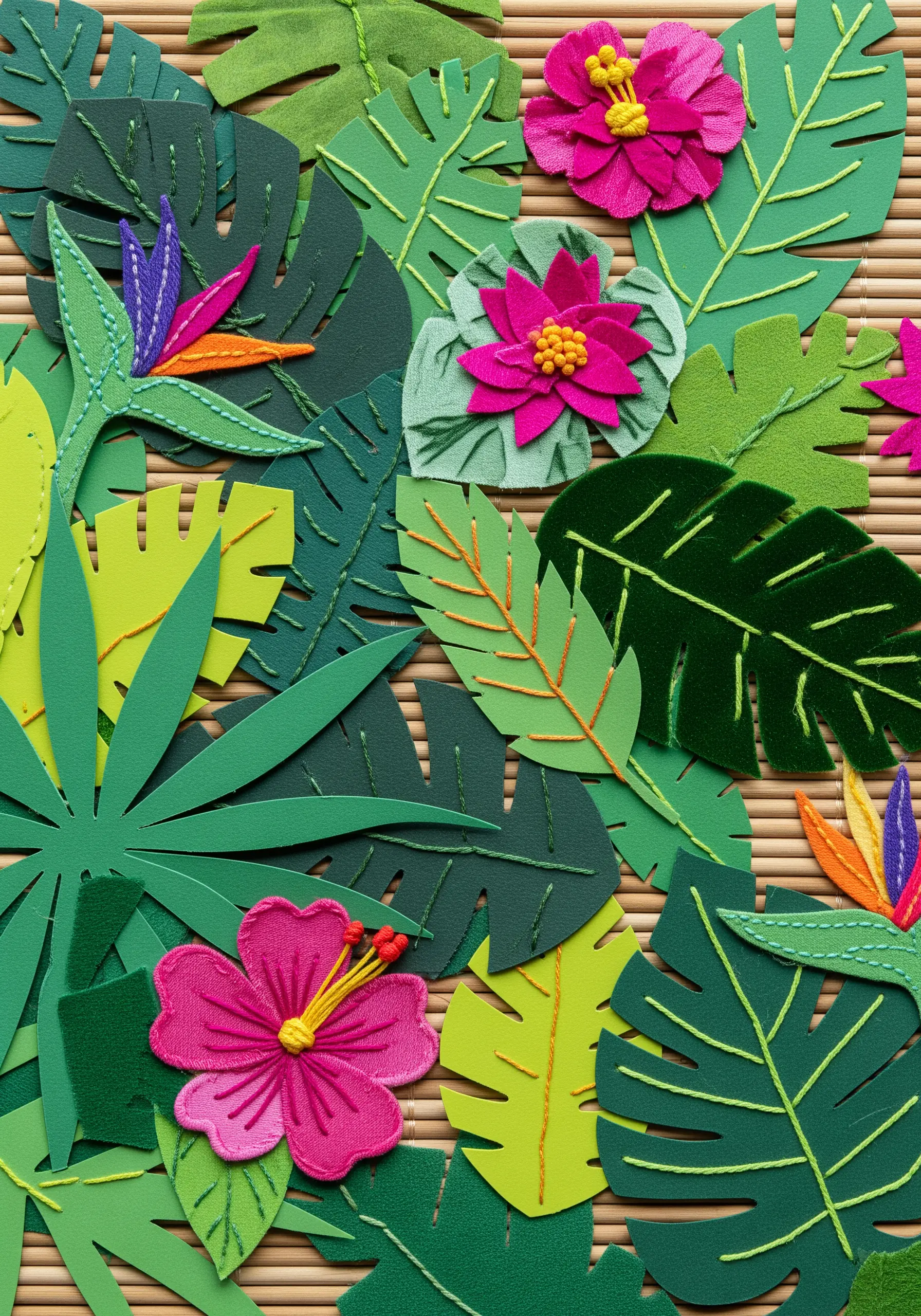
Add organic detail and a handcrafted feel to flat foam or felt cutouts with simple embroidery.
Use a basic backstitch or stem stitch to add veins to leaves or petals to flowers.
Choose a thread color that is a shade darker or lighter than the base material for a subtle, naturalistic effect, or a bright contrasting color for a more graphic, playful look.
This simple step transforms generic craft shapes into unique, textured elements for any collage.
These are perfect for embroidery projects inspired by textures you’d find on a nature walk.
9. Deconstruct and Reassemble with Chain Stitch
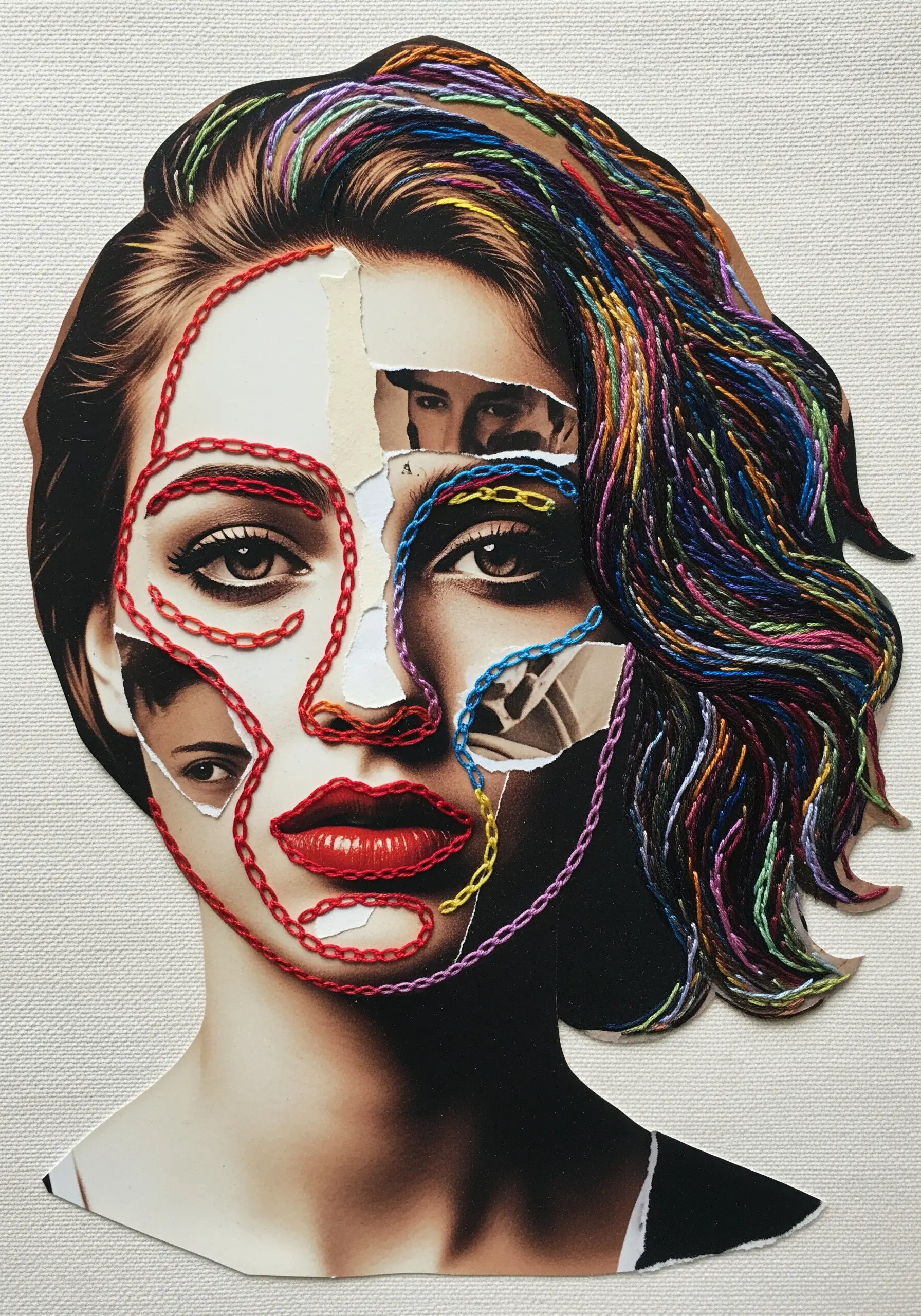
Use embroidery to physically and metaphorically reconnect fragmented images in a portrait collage.
A bold chain stitch works perfectly as a strong, graphic line that can outline and connect disparate pieces of a photograph.
For the hair, couch multiple strands of variegated thread to create a flowing, multi-tonal effect that adds incredible texture and movement.
The thread here isn’t just an embellishment; it’s a drawing tool that reconstructs the image in a new, expressive way, enhanced by contemporary rainbow blend stitches.
10. Create a Sampler of Stitched Paper Studies
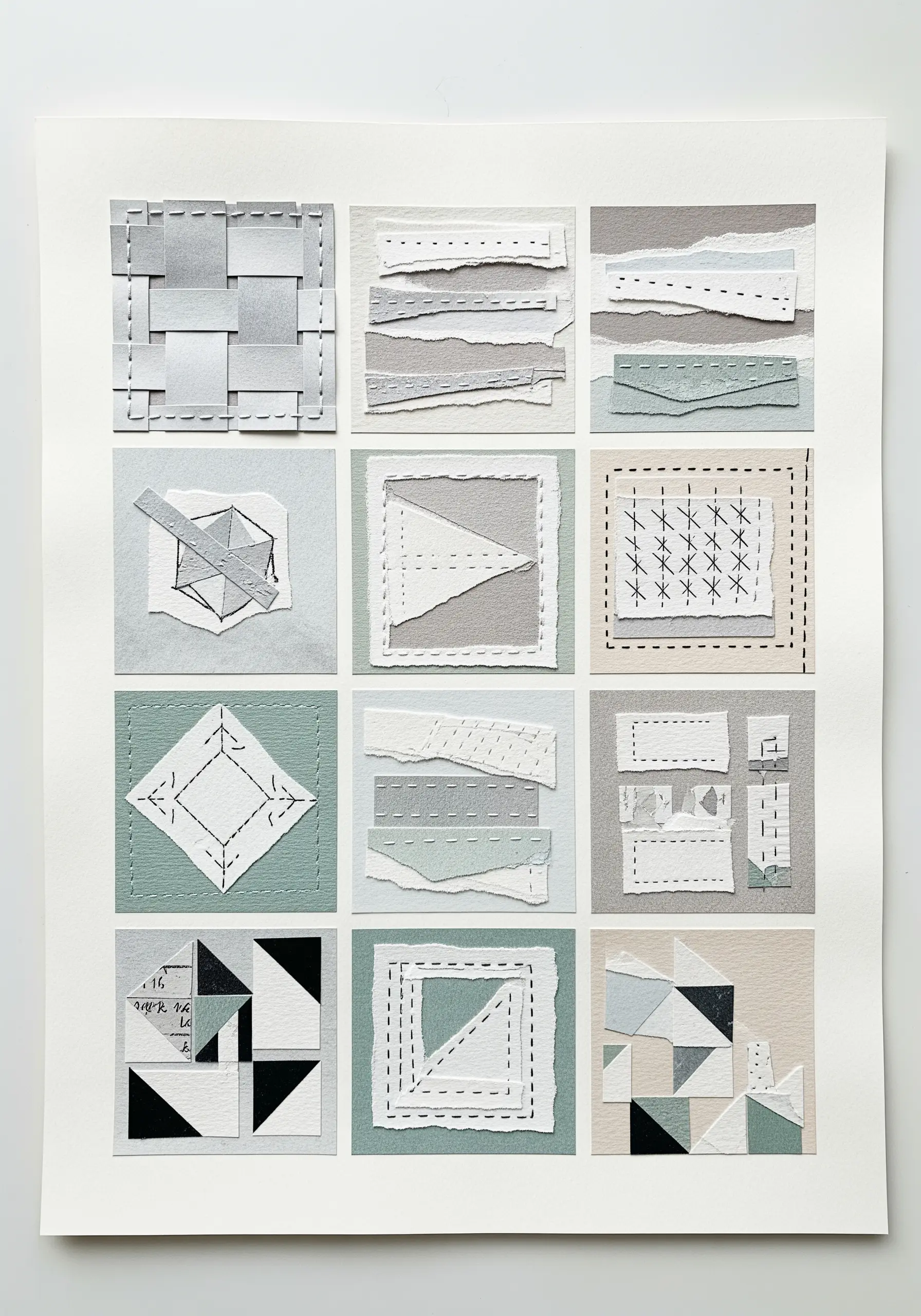
Build your visual vocabulary by creating a small grid of experimental paper and thread combinations.
Dedicate each square to exploring a different technique: torn versus cut paper edges, dense versus sparse stitching, or contrasting versus tonal thread colors.
This exercise frees you from the pressure of a finished piece and allows you to discover unexpected harmonies between materials.
Treat it as you would nature-themed embroidery samplers—a way to practice and refine your artistic voice on a small, manageable scale.
11. Add Delicate Details to 3D Papercraft
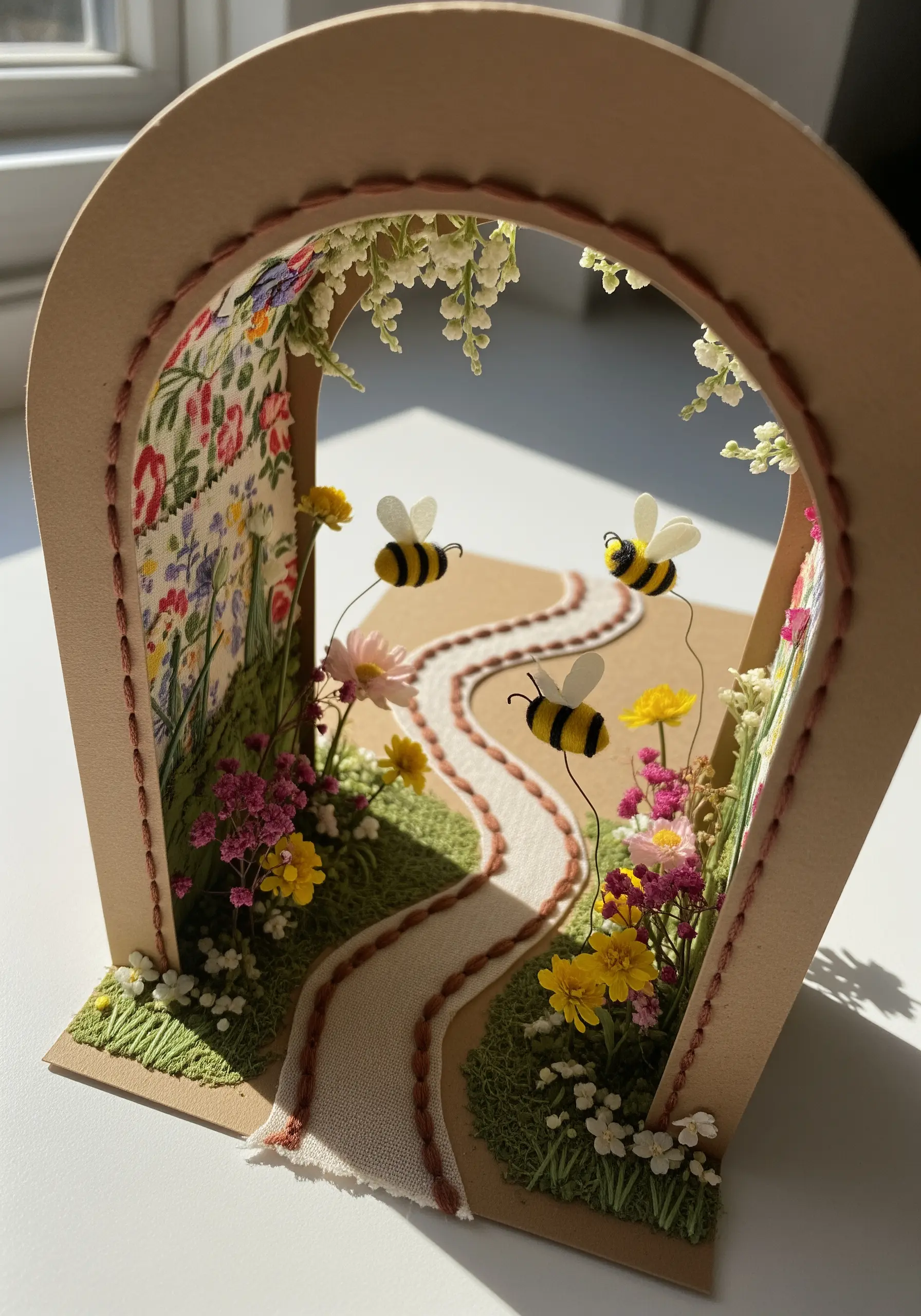
In a miniature paper diorama, thread adds a layer of texture that enhances the sense of scale and craftsmanship.
Use a simple running stitch in a contrasting color to define the edges of a path or architectural element.
Incorporate tiny French knots or seed stitches to represent flowers or gravel, adding tactile details that paper alone cannot achieve.
These small touches make the scene feel more alive and precious, drawing the viewer into your miniature world, similar to creating animal-themed pillow stitching ideas.
12. Use Thread for Expressive Mark-Making
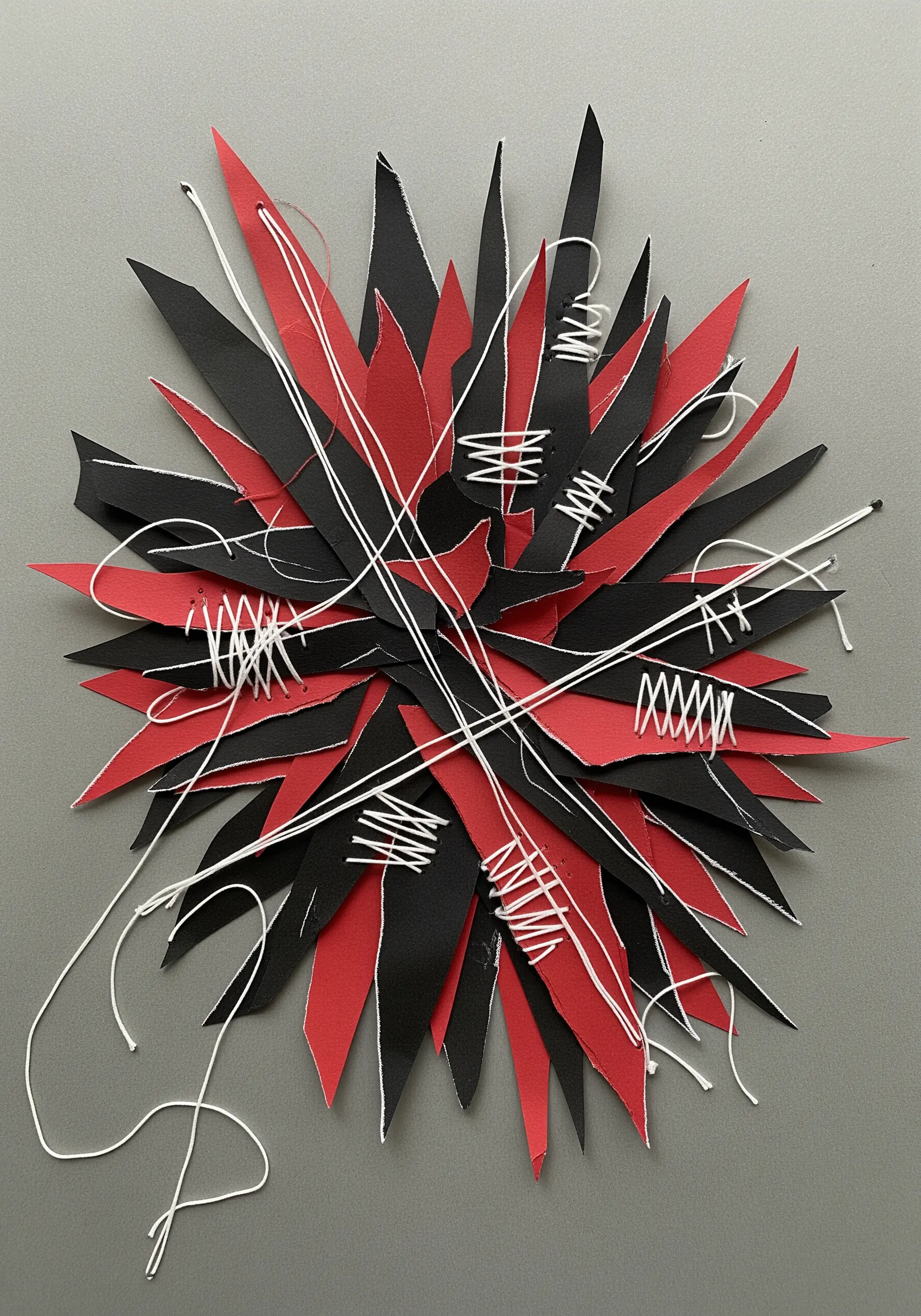
Move beyond decorative stitches and use your thread to make bold, energetic marks, much like a painter uses a brushstroke.
In an abstract collage, experiment with long, loose straight stitches that shoot across the composition, creating a sense of dynamic movement.
Try wrapping thread around paper shards or creating dense, chaotic cross-hatching to add raw, expressive texture.
This approach treats thread as a primary artistic medium, perfect for ambitious fiber art installations on a smaller scale.
13. Embellish Paper with Couture Beadwork
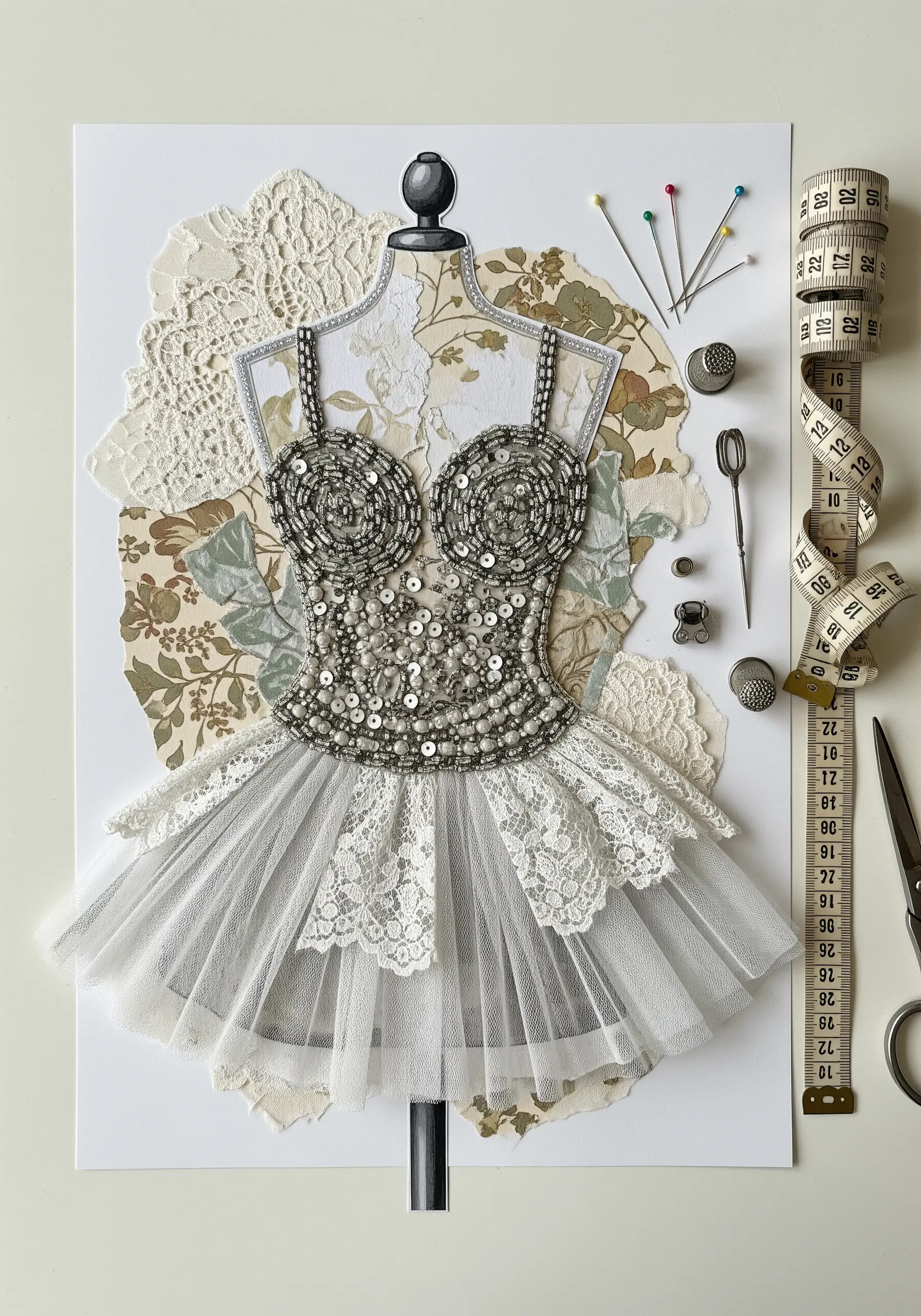
Combine beading, sequins, and embroidery to bring a touch of haute couture glamour to your paper art.
First, reinforce your paper from the back with a lightweight fusible interfacing to prevent tearing under the weight of the beads.
Use couching—tacking down a thick metallic thread with smaller stitches—to create elegant outlines and textures for a bodice or decorative swirl.
This technique turns a flat illustration into a dimensional, light-catching centerpiece, one of many aesthetic embroidery ideas adapted for paper.
14. Map Your Journeys with Stitched Lines
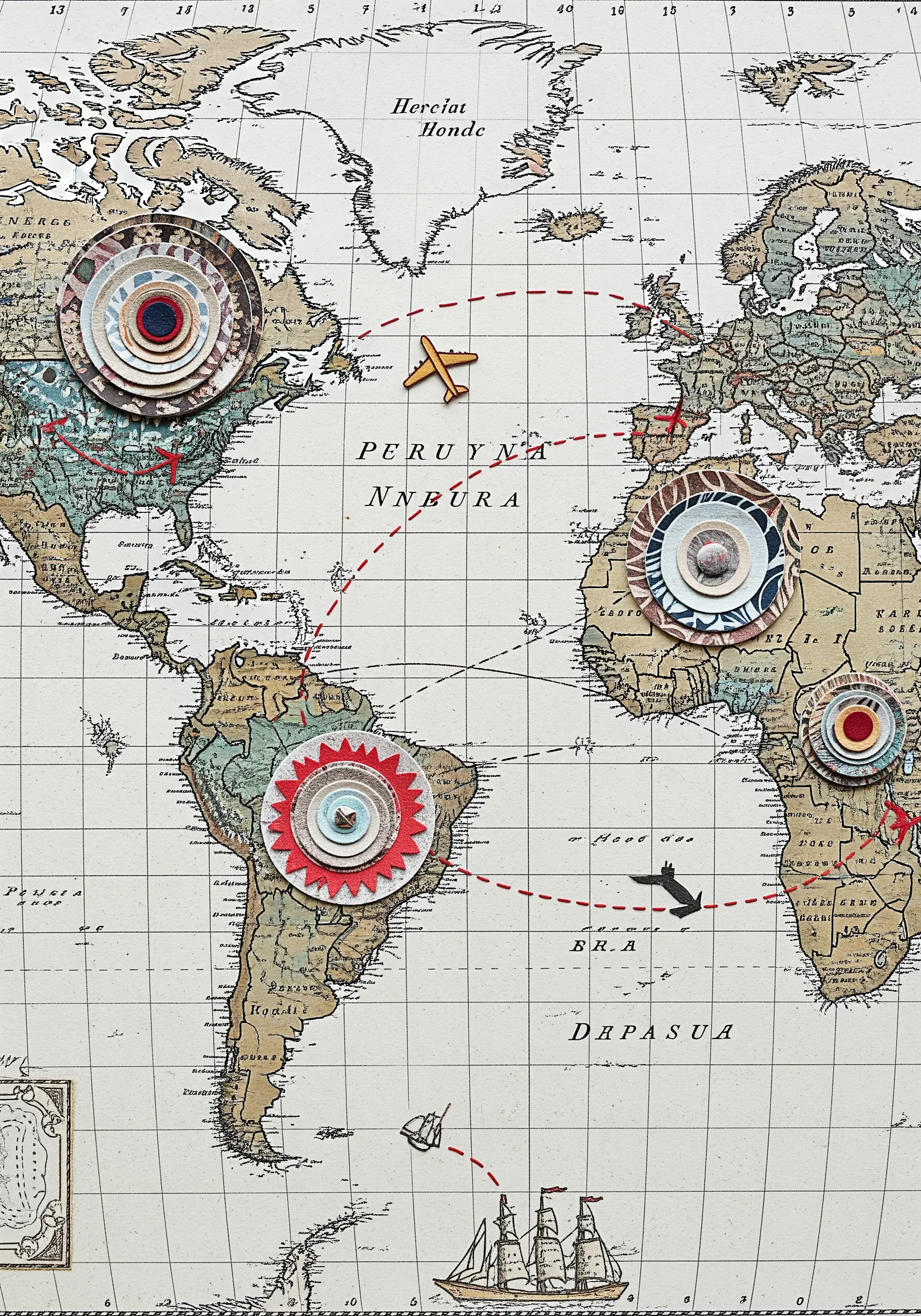
Personalize a vintage map by using a needle and thread to trace significant routes, creating a visual record of your travels or dreams.
A simple backstitch in a bright, contrasting color creates a clear and permanent line that feels more personal than ink.
For key locations, create layered paper medallions, securing them with a central French knot or a cross stitch.
This turns a decorative map into a meaningful story, a perfect project for those who love line art travel adventure symbols.
15. Add Subtle Dimension to Printed Illustrations

Elevate simple paper cutouts by adding minimal, almost-hidden stitched details that reward a closer look.
Use a single strand of thread to add a few straight stitches for the ribs on a leaf or a line of shine on a tomato.
A scattering of tiny white seed stitches or French knots on a strawberry instantly makes it feel more three-dimensional.
This technique adds a surprising tactile element that transforms a flat print into a charming piece of mixed-media art, much like intricate line art garden motifs.
16. Explore Texture with Monochrome Whitework
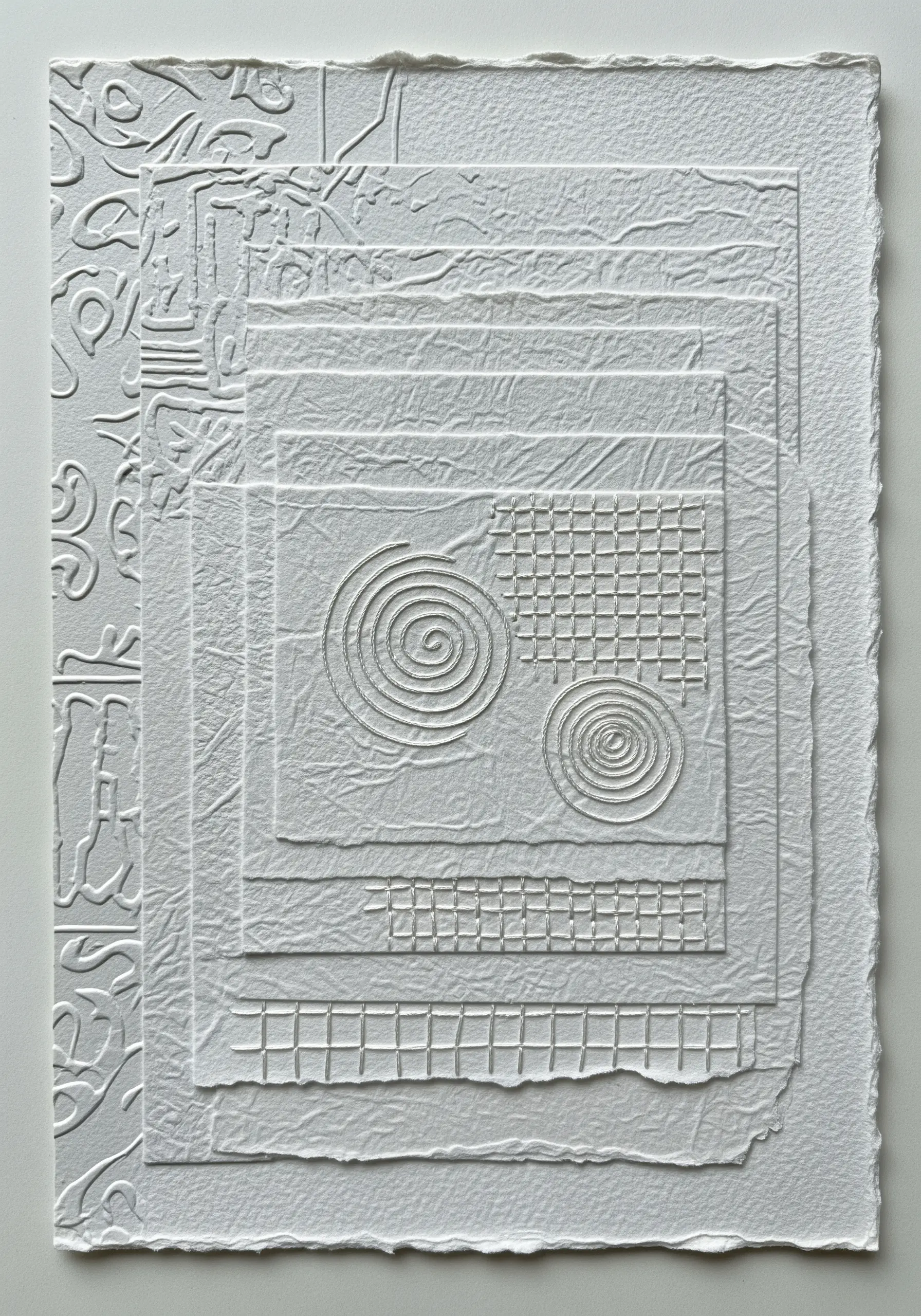
Create a sophisticated, gallery-worthy piece by removing color and focusing entirely on the interplay of texture.
Use white thread on white, high-quality cotton paper, combining simple geometric stitched lines with blind embossed patterns.
The magic happens as light moves across the surface, revealing the subtle differences between the pierced texture of stitches and the raised surface of embossing.
This is the essence of high-texture fabric collage embroidery projects, translated to the quiet elegance of paper.
17. Couch Chunky Yarn for Bold Textural Impact
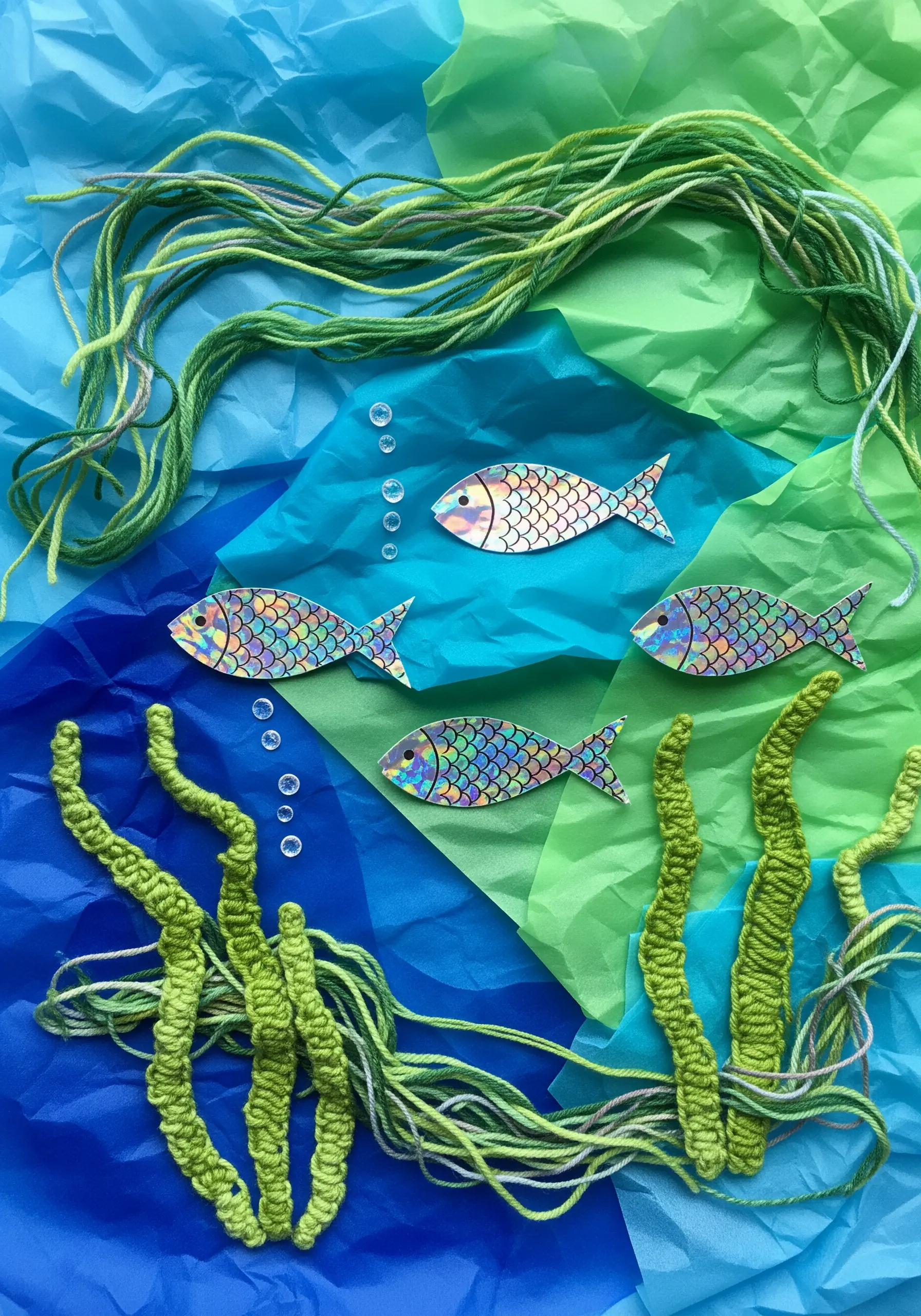
For creating elements like seaweed or vines, use a technique called couching to attach thick, textural yarns to your paper collage.
Lay your chunky yarn in the desired shape on the paper surface, then use a finer, coordinating thread to tack it down with small, evenly spaced stitches.
This allows you to add bold, dimensional lines without having to pull a thick fiber through the paper.
It’s an ideal way to incorporate mixed-fiber creations inspired by nature into your paper art, creating a dramatic contrast against delicate materials like tissue paper.
18. Craft a Library with Fabric and Thread
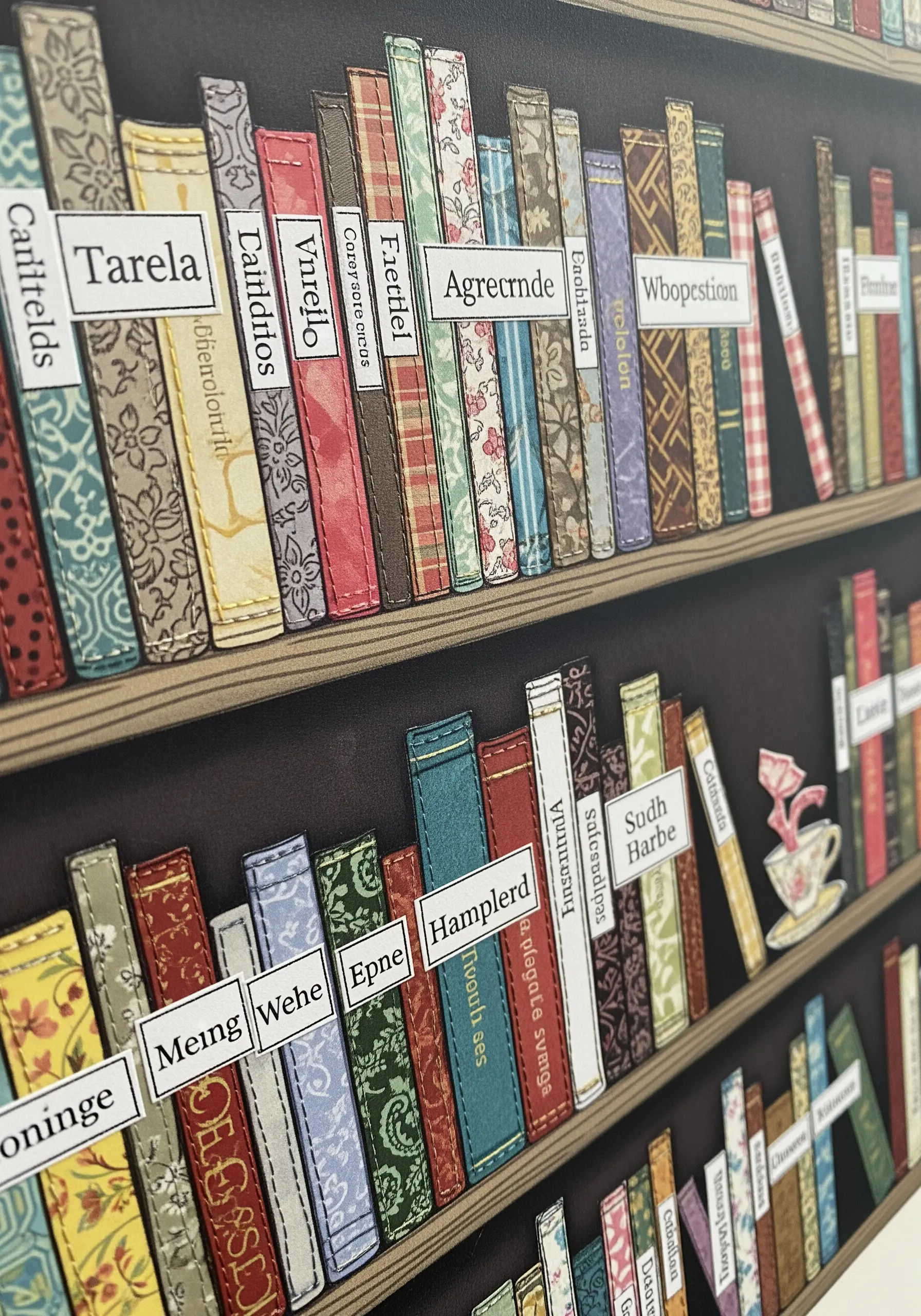
Use small scraps of patterned fabric to serve as the covers of collaged books, adding instant warmth and personality.
Secure each fabric rectangle to the paper background with a simple running stitch along the edges.
This not only attaches the fabric but also visually defines each book spine, giving the shelf a charming, tactile, and slightly imperfect handmade quality.
It’s one of the most delightful embroidery crafts that make every fabric piece special and unique.
19. Illuminate Details with Metallic Thread
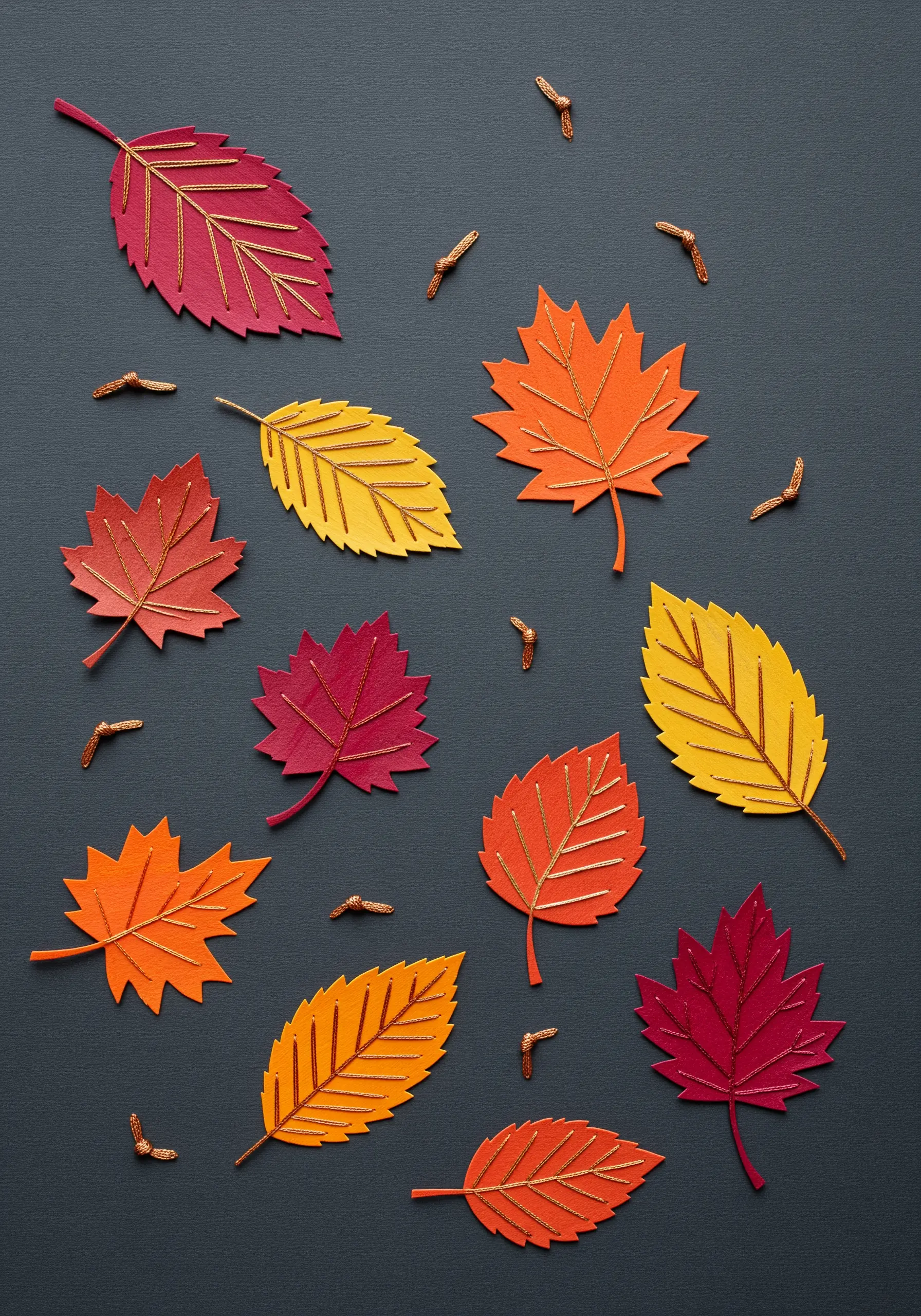
Bring a touch of light and elegance to paper cutouts by using a fine metallic thread for linear details.
Trace the veins of autumn leaves with a simple backstitch or stem stitch using a gold or copper thread.
The metallic fiber will catch the light, adding a subtle, festive shimmer that elevates the piece from a simple craft to a sophisticated decoration.
This technique helps you create minimal festive motifs that make holiday gifts look elegant without glitter.
20. Define Typography with Satin Stitch
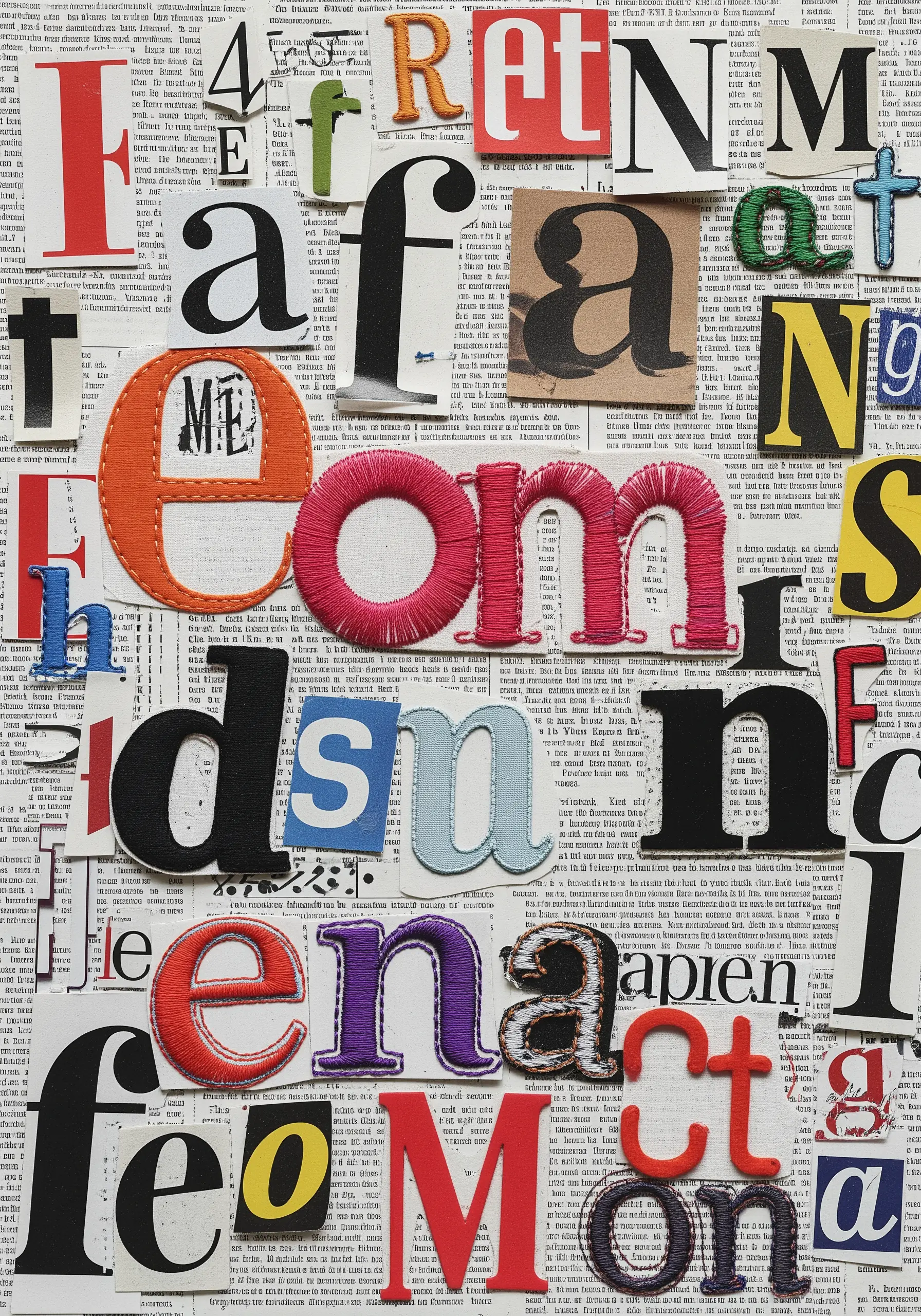
Make specific words or letters pop from a busy collage background by filling them with dense satin stitch.
To achieve a clean, raised edge, first outline your letters with a split stitch or backstitch before filling them in.
The solid, textural block of color and the slight dimension of the embroidery will give the words a physical presence, drawing the eye and emphasizing their meaning.
This is a powerful technique for creating inspirational quote string art designs with focus and impact.
21. Build Dimensionality with Stitched Layers
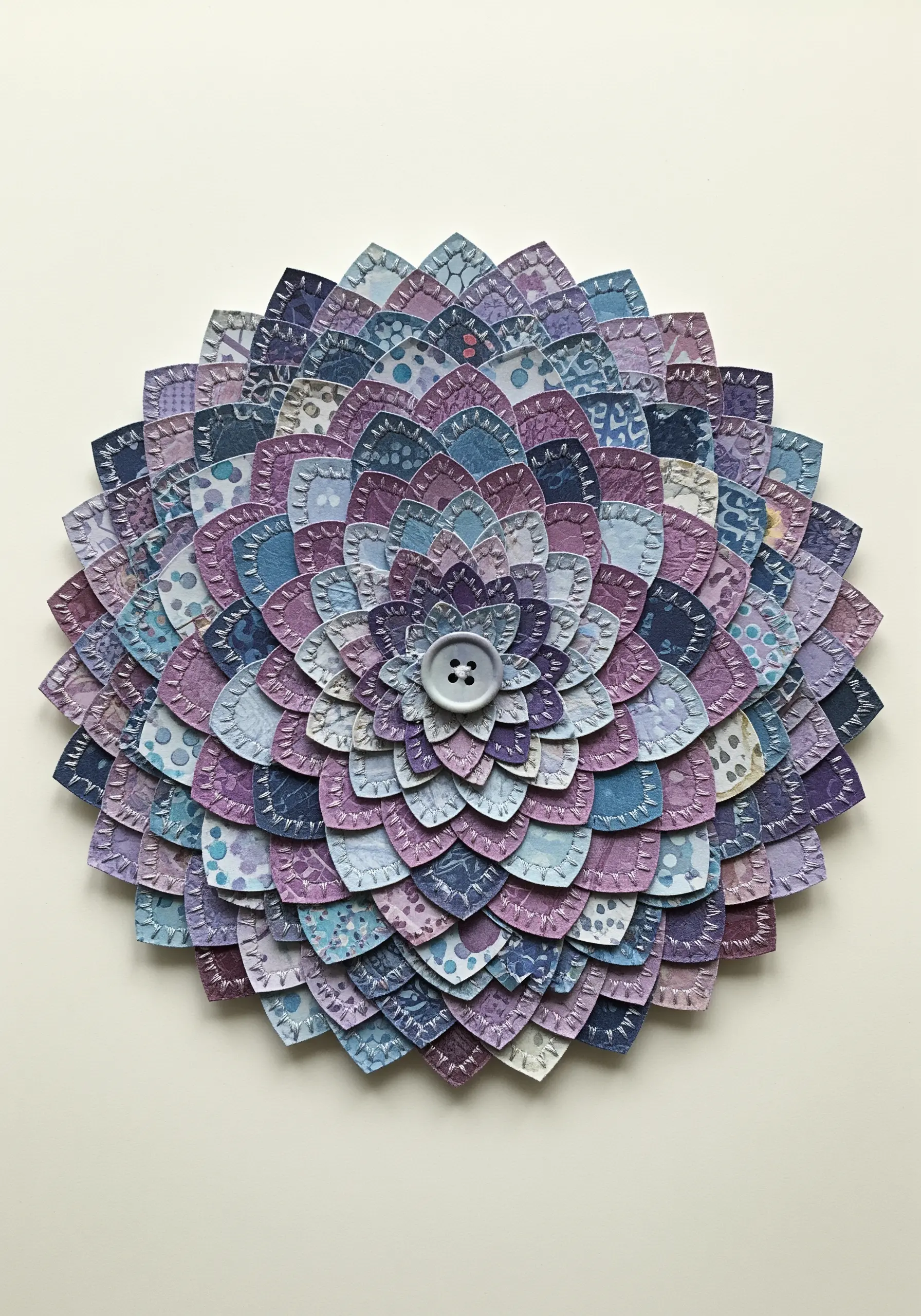
Create intricate, mandala-like forms by layering dozens of paper cutouts.
Before assembling, add a simple running stitch around the edge of each individual paper petal.
As you layer the pieces, the simple stitching on each part combines to create a complex and fascinating texture that draws the eye inward.
This method builds depth slowly, resulting in a stunning final piece, making it one of the most rewarding floral mandala embroidery ideas for a weekend.
22. Unify a Series with a Signature Stitch
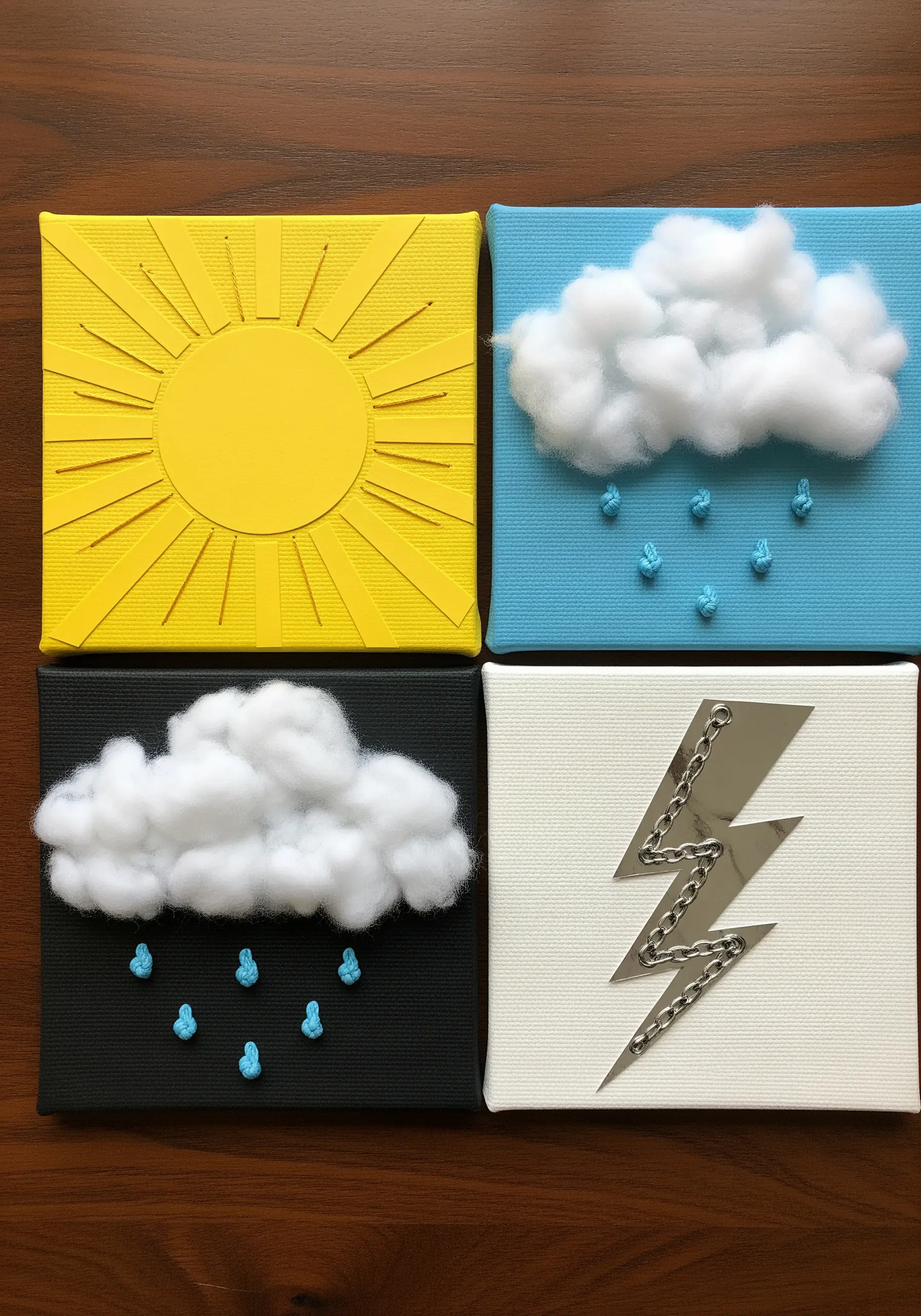
When creating a set of mixed-media pieces, use a recurring stitch to create a sense of cohesion.
In this weather-themed series, the consistent use of tiny blue French knots for raindrops provides a visual link between the different canvases.
This shared textural element ties the individual works together, making them feel like a deliberate, unified collection, even with varied materials like cotton balls and metal chains.
These are the kinds of easy small embroidery patterns that can become a powerful compositional tool.
23. Add Heritage with Hand-Stitched Text
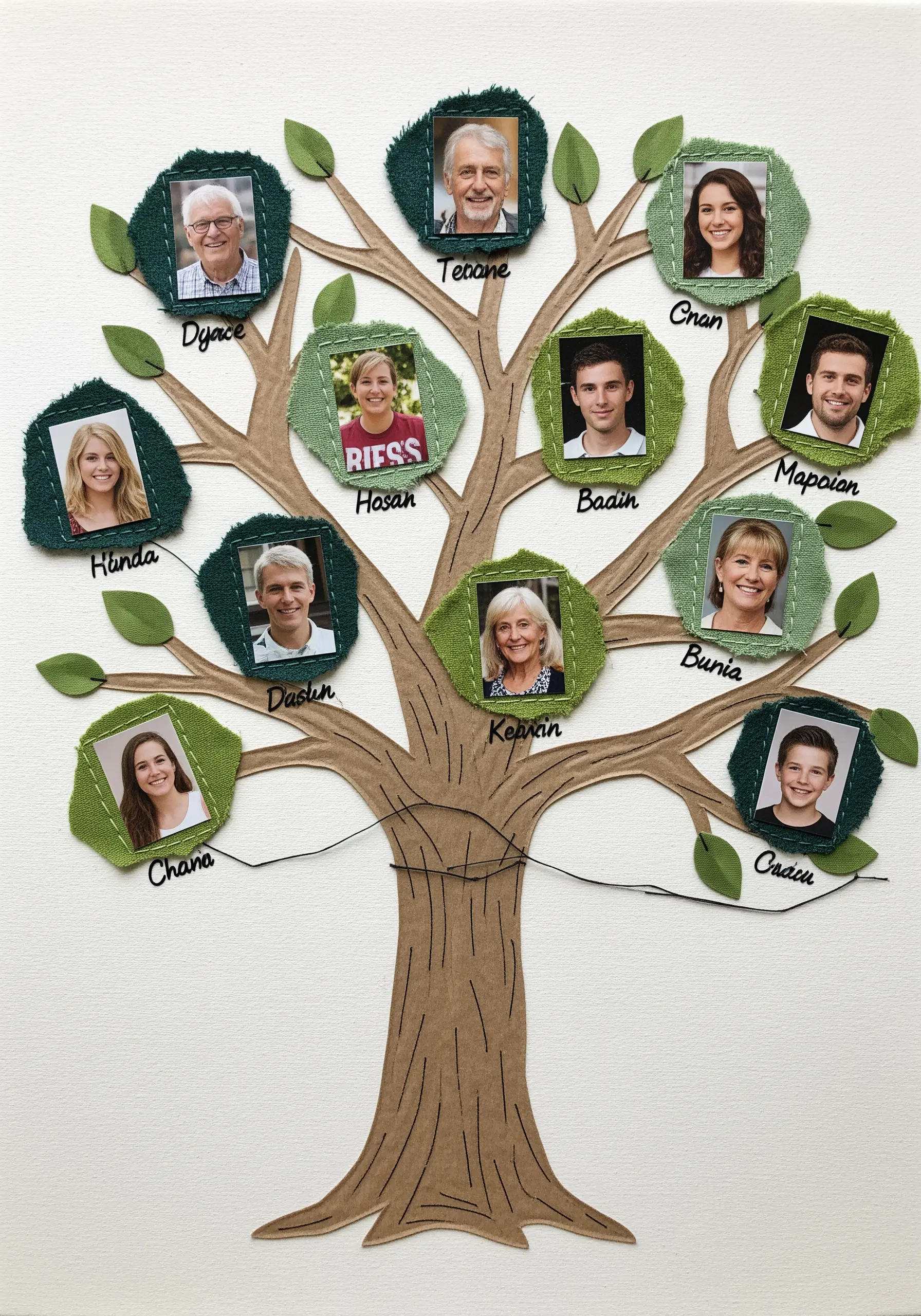
For a project as personal as a family tree, use hand-stitched lettering to add a layer of intimacy and permanence.
Use a single strand of embroidery floss and a neat backstitch to carefully embroider names beneath each portrait.
The slight imperfections and texture of hand embroidery feel far more personal and precious than printed or handwritten ink, turning the artwork into an instant heirloom.
This technique is perfect for creating emotional nursery decor and baby keepsakes.
24. Embrace a Folk-Art Feel with Bold Stitches
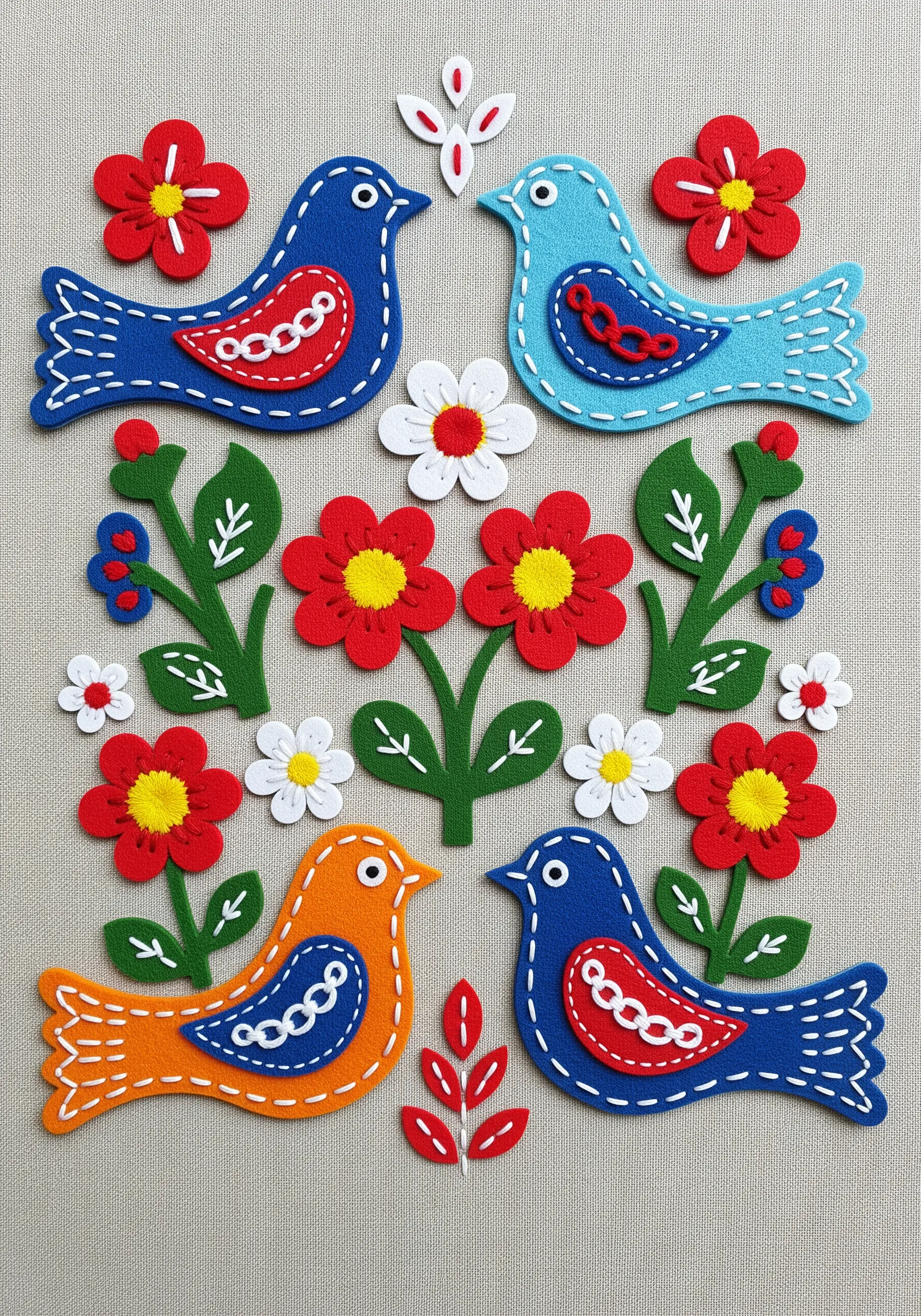
Capture the charm of folk art by making your stitches bold, visible, and decorative.
When working with felt appliqué, use a thick, contrasting thread—like a white #5 perle cotton on bright blue felt—and keep your running stitches or chain stitches prominent.
Don’t strive for perfect, invisible stitches; the rhythm and texture of the visible thread are central to the aesthetic, giving the piece a joyful, handmade energy.
These cartoon-style embroidery ideas are perfect for adding character to simple shapes.
25. Enhance Illustrations with Iridescent Details
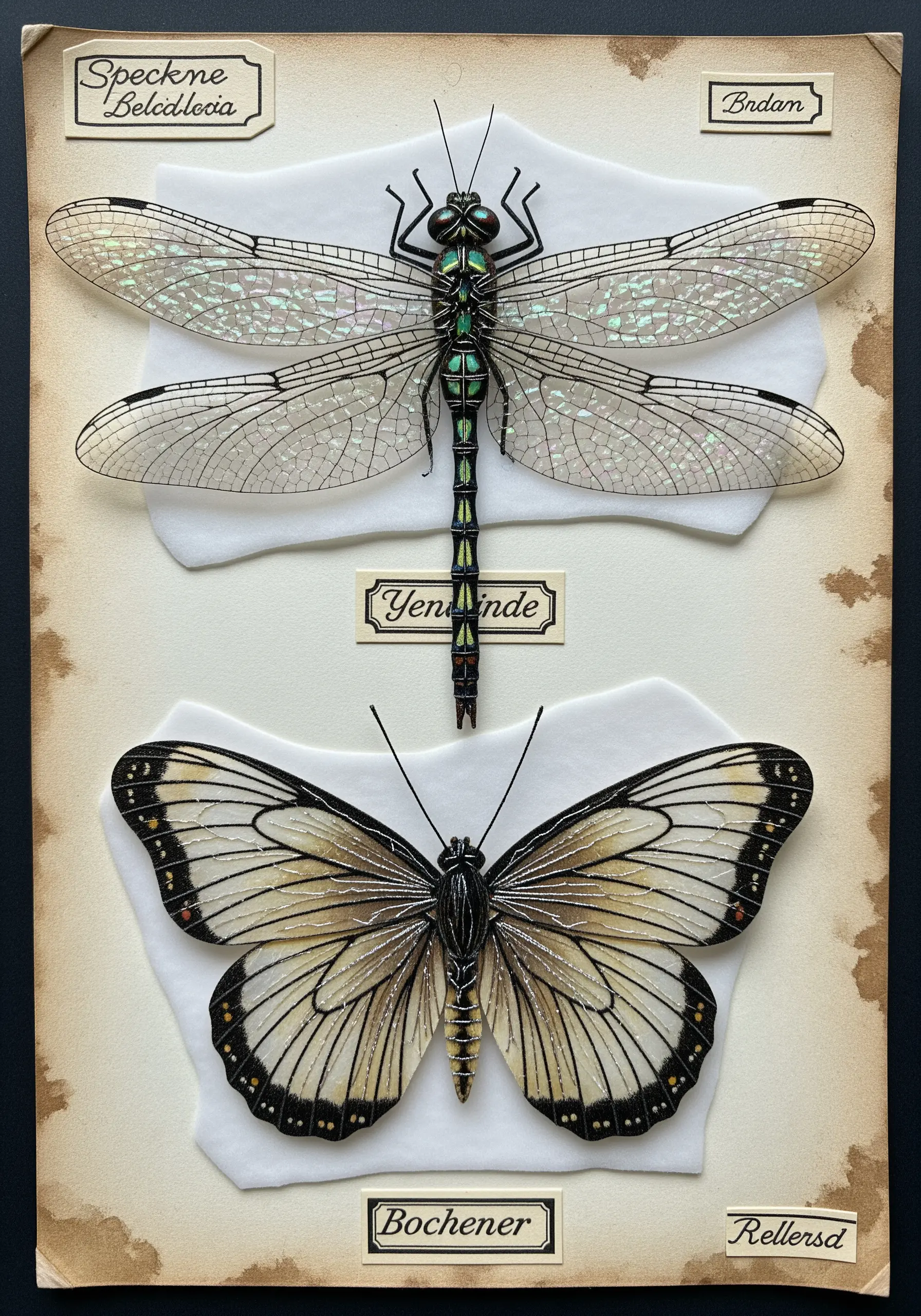
Bring scientific illustrations to life by adding subtle, realistic shimmer with specialty threads.
Use a single strand of iridescent or metallic thread to add a glint to the wings of a dragonfly or the segmented body of an insect.
A few carefully placed straight stitches are all you need to mimic the way light catches on an exoskeleton or a translucent wing.
It’s a sophisticated finishing touch that adds depth and realism, mirroring the techniques used to create depth that looks painted in botanical work.