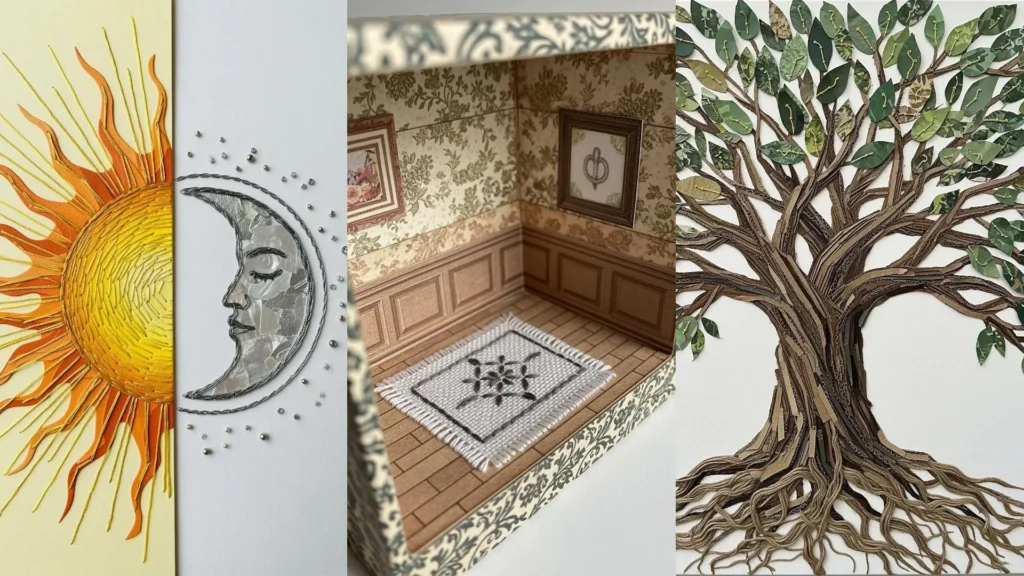
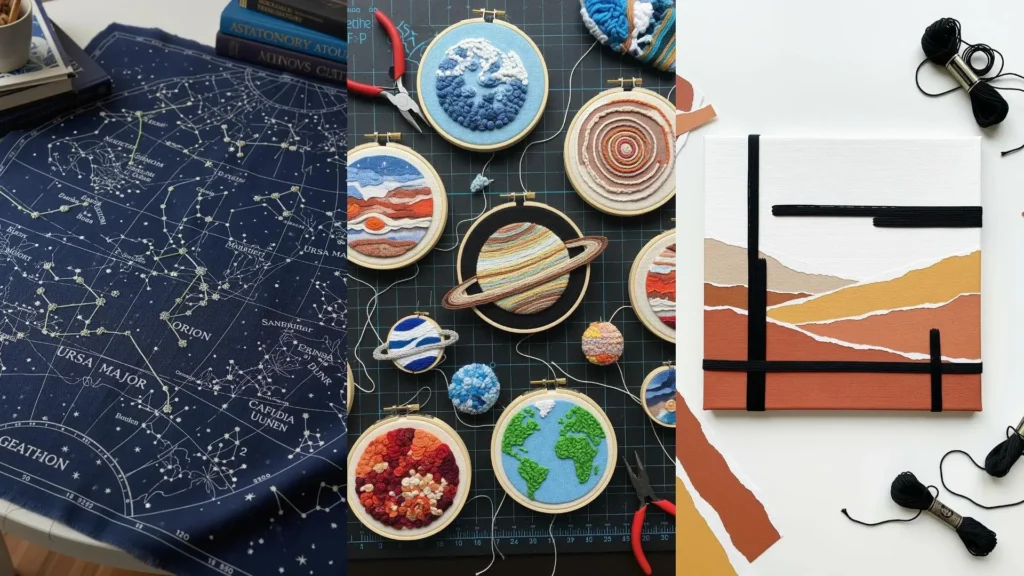
A bookmark is a quiet companion, a small piece of art that lives between the pages of a story. But what if that companion could be a story in itself—a tiny canvas where thread, paper, and paint meet?
Here, we move beyond simple embroidery on paper. You’ll discover how to create a rich foundation with a watercolor wash, how to layer paper ephemera for a vintage feel, and how to use specialty threads and beads to make your stitches shine. Each bookmark is an invitation to explore a new combination of materials.
Think of these small projects as your personal technique laboratory. They offer a chance to experiment with texture, color, and composition on a manageable scale, giving you the confidence to apply these mixed-media skills to any embroidery project you dream of next.
1. Botanical Grace on a Watercolor Wash
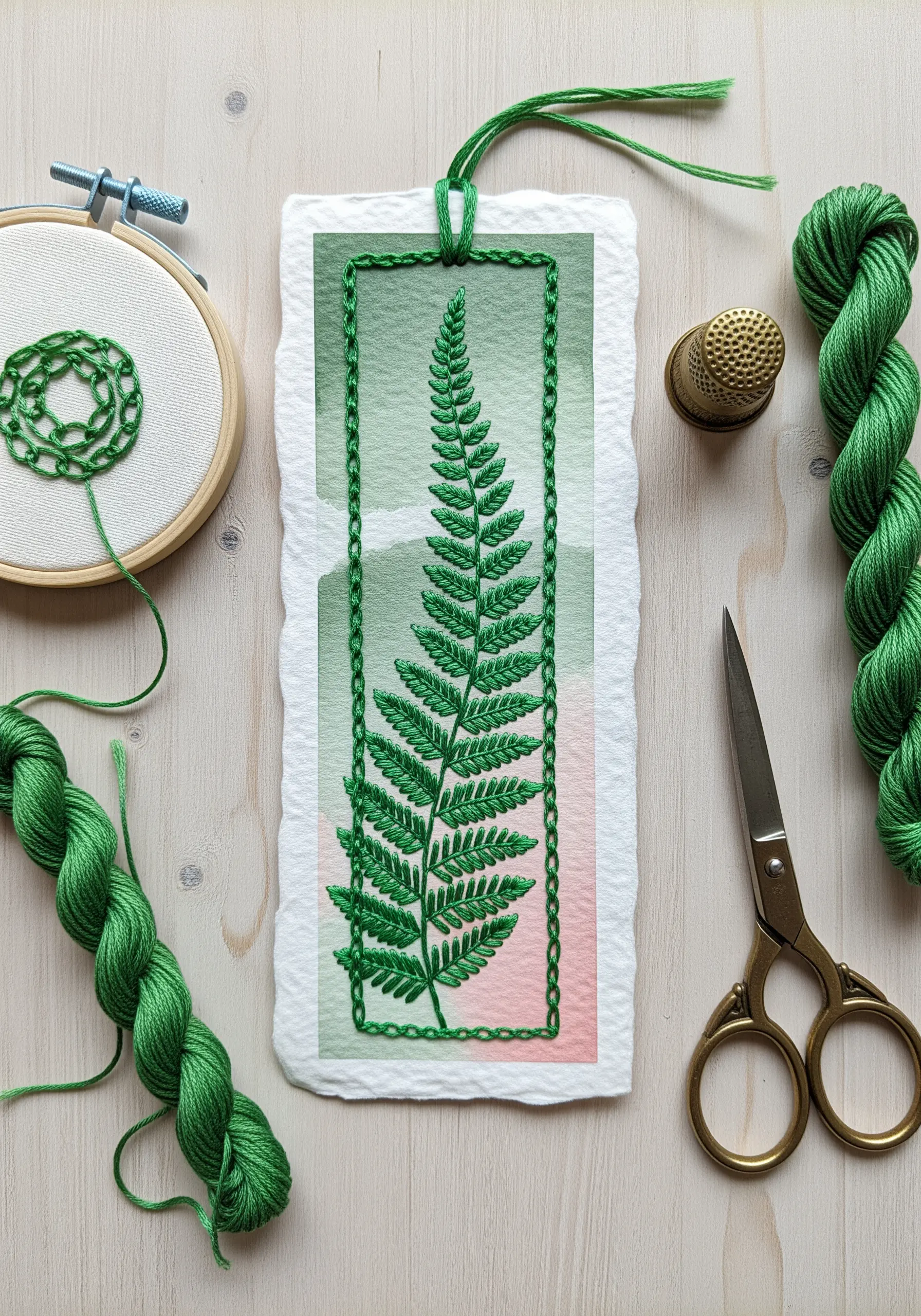
Begin by applying a soft watercolor wash to heavy, textured paper, allowing gentle colors to bleed into one another.
This creates an atmospheric background with organic depth before you make a single stitch, elevating the piece from simple line art to a layered composition.
For the fern’s central stem, use a whipped backstitch to create a smooth, raised line that stands out against the soft background.
Use a single, delicate backstitch for each leaflet to maintain a light, airy feel, and frame the design with a contrasting chain stitch for a classic, polished finish.
2. Celestial Sheen with Beads and Metallic Thread

Create a striking contrast by stitching with silver metallic thread on deep blue cardstock.
To prevent fraying, work with shorter lengths of metallic thread and consider using a thread conditioner or beeswax.
Fill the crescent moon with a dense satin stitch, ensuring each stitch lies flat and parallel for a uniform, liquid-metal sheen.
After splattering white paint for distant stars, sew on a few tiny silver seed beads; their three-dimensional sparkle catches the light differently, adding dynamic texture to your cosmic embroidery art.
3. Geometric Paper Collage with Stitched Accents

Elevate a simple paper collage by using thread as a subtle textural element.
First, arrange and glue down your paper hexagons, mixing patterns, text, and solid colors for visual interest.
Instead of outlining every piece, select just a few key hexagons to frame with a simple backstitch in a contrasting color.
This minimal approach secures the collage while adding a handcrafted touch that draws the eye without overwhelming the delicate paper patterns.
4. Layered Ephemera and Heirloom Florals
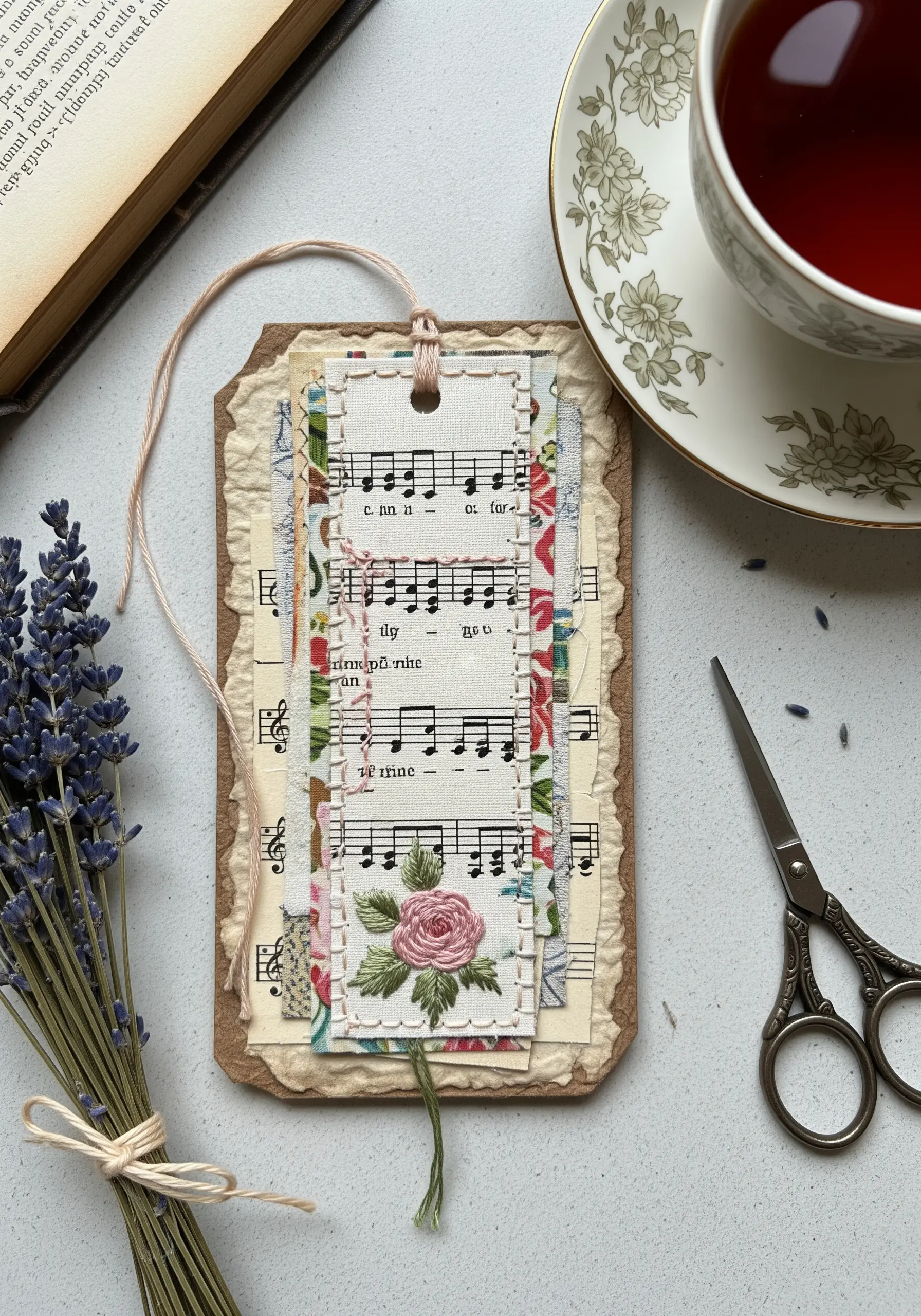
For complex layered fabric collage embroidery projects, work on each element separately to ensure a clean finish.
Embroider your rose motif on a small piece of evenweave linen or cotton fabric, which is far more forgiving than paper.
Once complete, carefully cut it out and appliqué it onto your layered paper base—composed of handmade paper and vintage sheet music—using a simple running stitch.
This technique allows for detailed, precise stitching while achieving a rich, multi-textured final piece.
5. Sculptural Ocean Waves with Thread and Paper
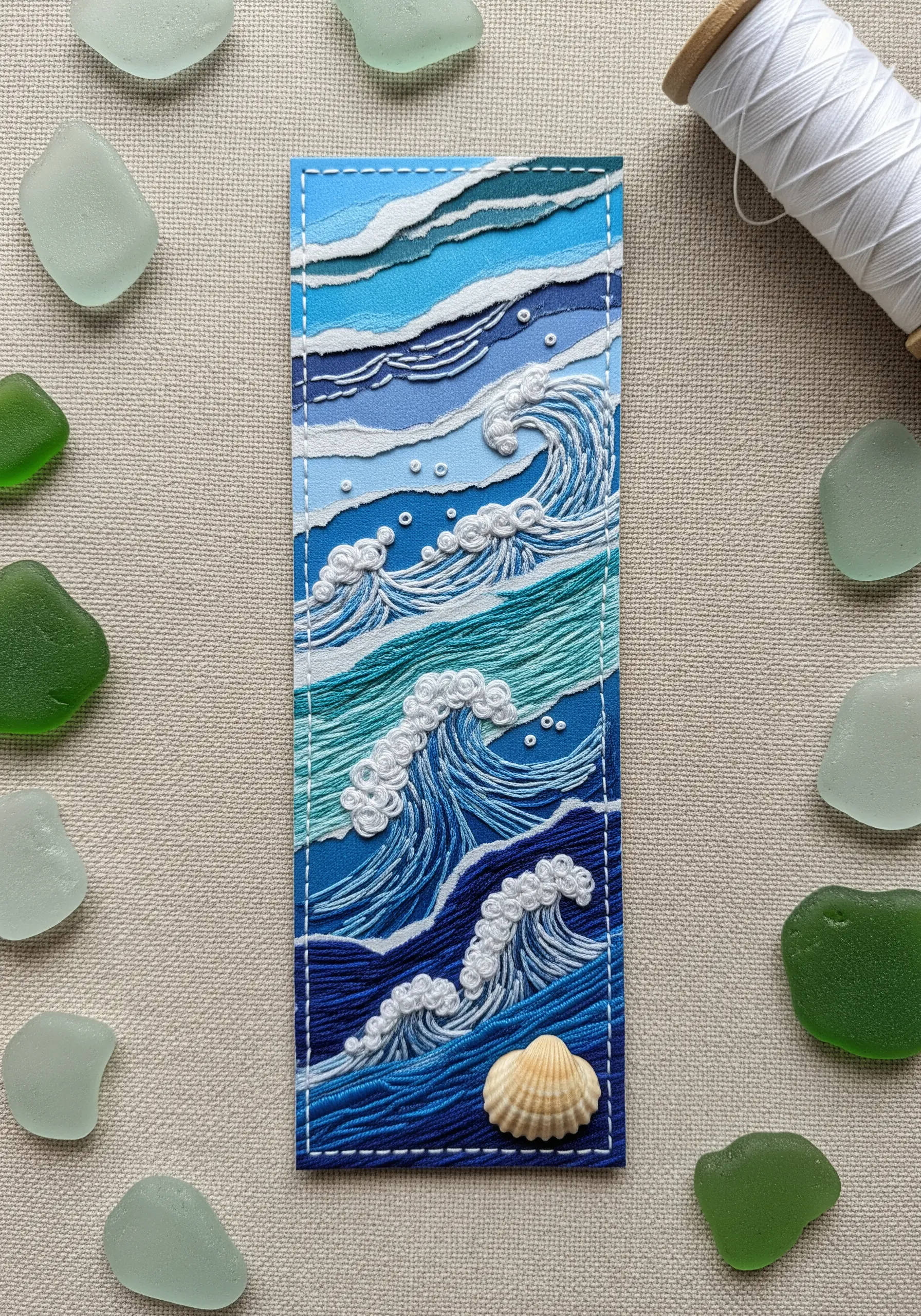
Build a dynamic seascape by first creating a base of torn paper strips in shades of blue and white.
Use long and short stitch with variegated blue thread to blend the colors of the water, creating a smooth, painterly effect.
For the cresting waves and seafoam, switch to high-texture stitches like tightly packed French knots or bullion knots in a crisp white.
This contrast between the flat, blended stitches and the dimensional knots makes the waves feel alive and sculptural.
6. Minimalist Landscape on a Fabric Canvas

Create a quiet, modern bookmark by mounting a panel of Aida or linen fabric onto a cardstock base.
The fabric itself becomes a key design element, its woven texture suggesting a vast, open landscape.
Using just a few strands of white thread, stitch a simple mountain range with a clean backstitch.
In this minimalist embroidery wall art style, the unstitched negative space is crucial, allowing the simple lines to carry maximum impact.
7. Autumnal Leaf with Blended Thread Painting

To capture the subtle color shifts of an autumn leaf, work with two or three related thread colors at once.
Use a long-and-short stitch to fill the shape, allowing the shades of gold, red, and brown to blend softly into one another for a natural, variegated effect.
Stitch directly onto heavily textured, handmade paper to enhance the organic feel.
Finally, outline the entire leaf with a sharp backstitch in a dark brown to define the silhouette and make the blended colors appear more vibrant.
8. Whimsical Felt Appliqué with Textural Grass

Combine the softness of felt with the detail of embroidery for a charming, dimensional piece.
Cut your mushroom shapes from felt and secure them to the bookmark with a neat whip stitch around the edges.
For the grass, move beyond simple straight stitches and use bullion knots or drizzle stitches in a variegated green thread.
This creates a lush, wonderfully tactile patch of grass that contrasts beautifully with the smooth, flat surface of the felt appliqué.
9. Abstract Impasto with Graphic Thread Lines
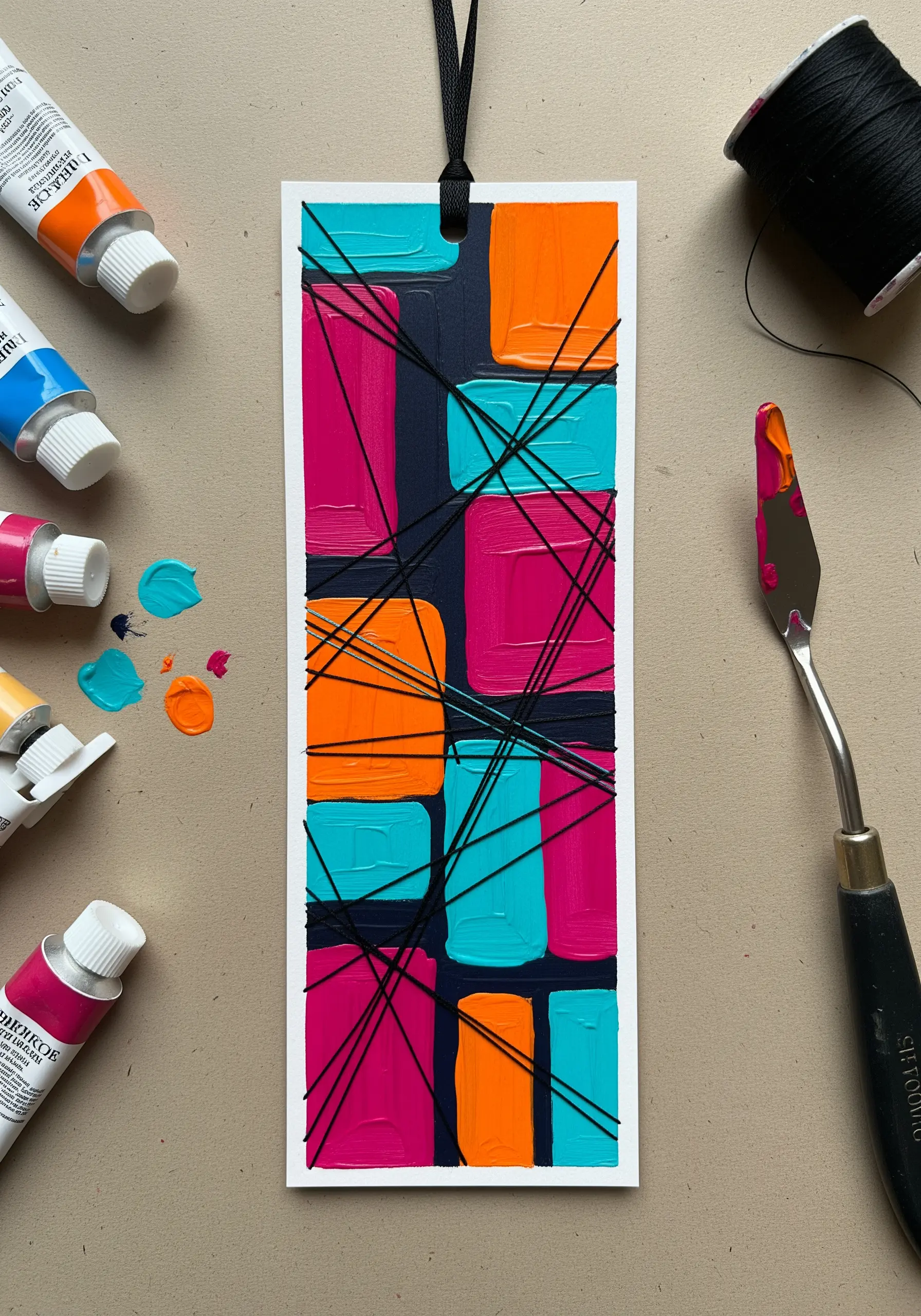
Explore thread as a graphic design tool rather than a stitch.
First, apply thick acrylic paint to your bookmark with a palette knife, creating bold blocks of color with a tactile, impasto finish.
Once the paint is completely dry, pierce holes along the edges of the bookmark and wrap a contrasting black thread across the surface in sharp, geometric lines.
The taut thread creates a visual tension against the freeform paint, resulting in a striking piece of abstract textile wall art.
10. Delicate Botanicals on a Watercolor Gradient
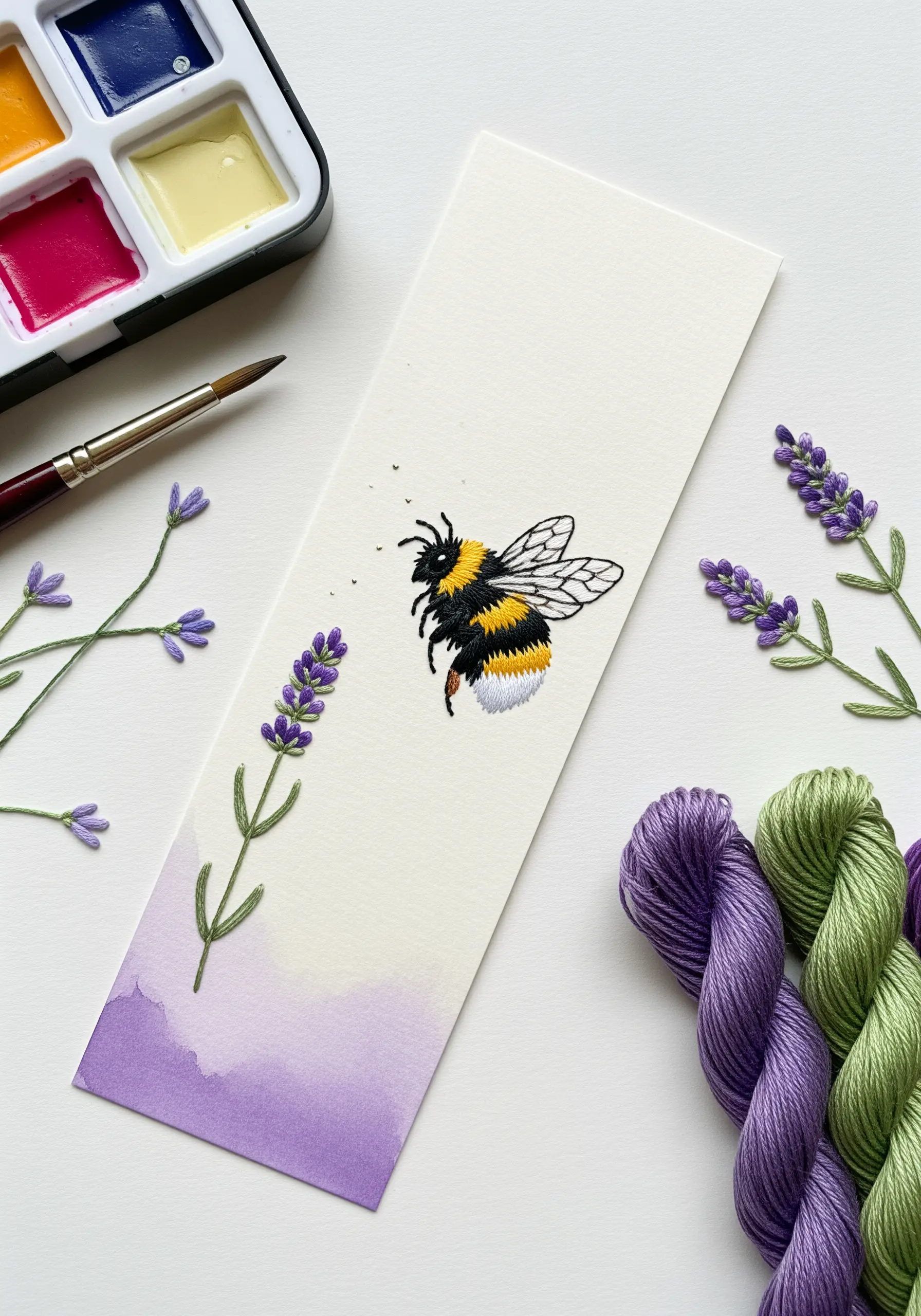
For a soft, illustrative style, apply a light watercolor wash to the paper before you begin stitching.
A gentle purple gradient at the bottom grounds the lavender stems and adds a touch of color without overwhelming the composition.
To create the bee’s fuzzy body, use a long-and-short stitch with just two strands of floss.
For its wings, switch to a single strand of light grey thread and use an open fishbone stitch; this technique creates a delicate, see-through effect that perfectly mimics the translucency of real wings.
11. Luminous Constellations with Specialty Thread
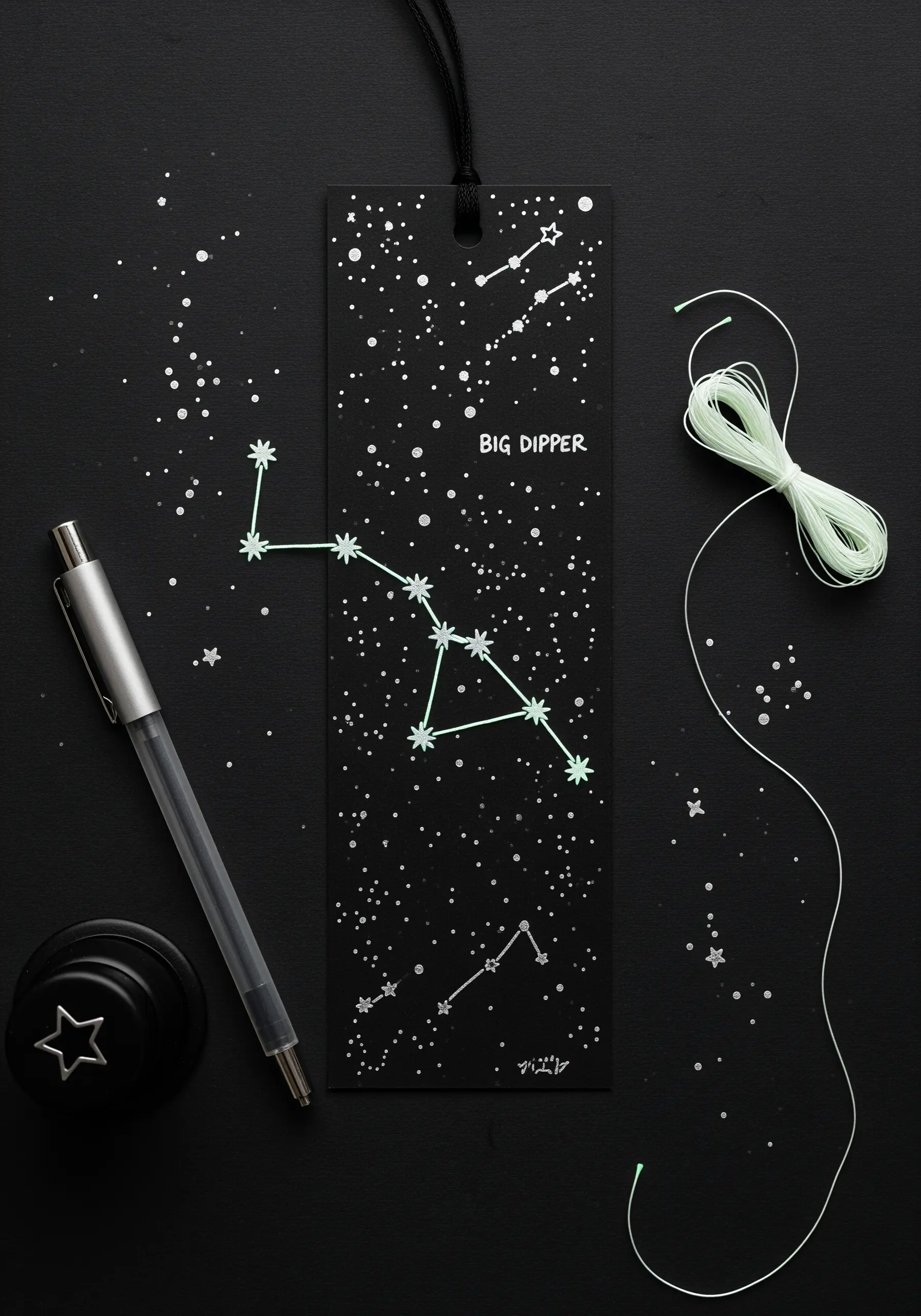
Add a magical, hidden element to your work by using glow-in-the-dark embroidery floss.
Start by creating a galaxy on black cardstock with splatters of white ink or acrylic paint.
Once dry, lightly mark your constellation points with a pencil and pierce the holes with a needle before you start stitching.
Connecting the dots with a simple backstitch using the specialty thread creates a clean design that comes to life after dark.
12. Plump Strawberries with Padded Satin Stitch

To make your embroidered fruit look juicy and three-dimensional, use padding beneath your satin stitch.
First, fill the strawberry shape with a layer of small, underlying seed stitches or a split stitch outline.
Then, work your final satin stitch in the opposite direction, completely covering the padding.
This simple preparation lifts the top layer of thread, creating a raised, rounded surface that looks wonderfully plump and realistic.
13. Tactile Rainbow with Yarn and Fabric

Create touchable textures by incorporating different fibers.
Layer frayed-edge fabric strips for the rainbow, allowing their raw edges to add to the design’s softness.
For the fluffy cloud, use couching: lay down strands of thick, chunky white yarn and tack them in place with small, discreet stitches using a thinner, matching thread.
Couching is the perfect technique for adding heavy-weight fibers like yarn to a project without having to pull them through your base material.
14. Art Deco Glamour on Translucent Vellum
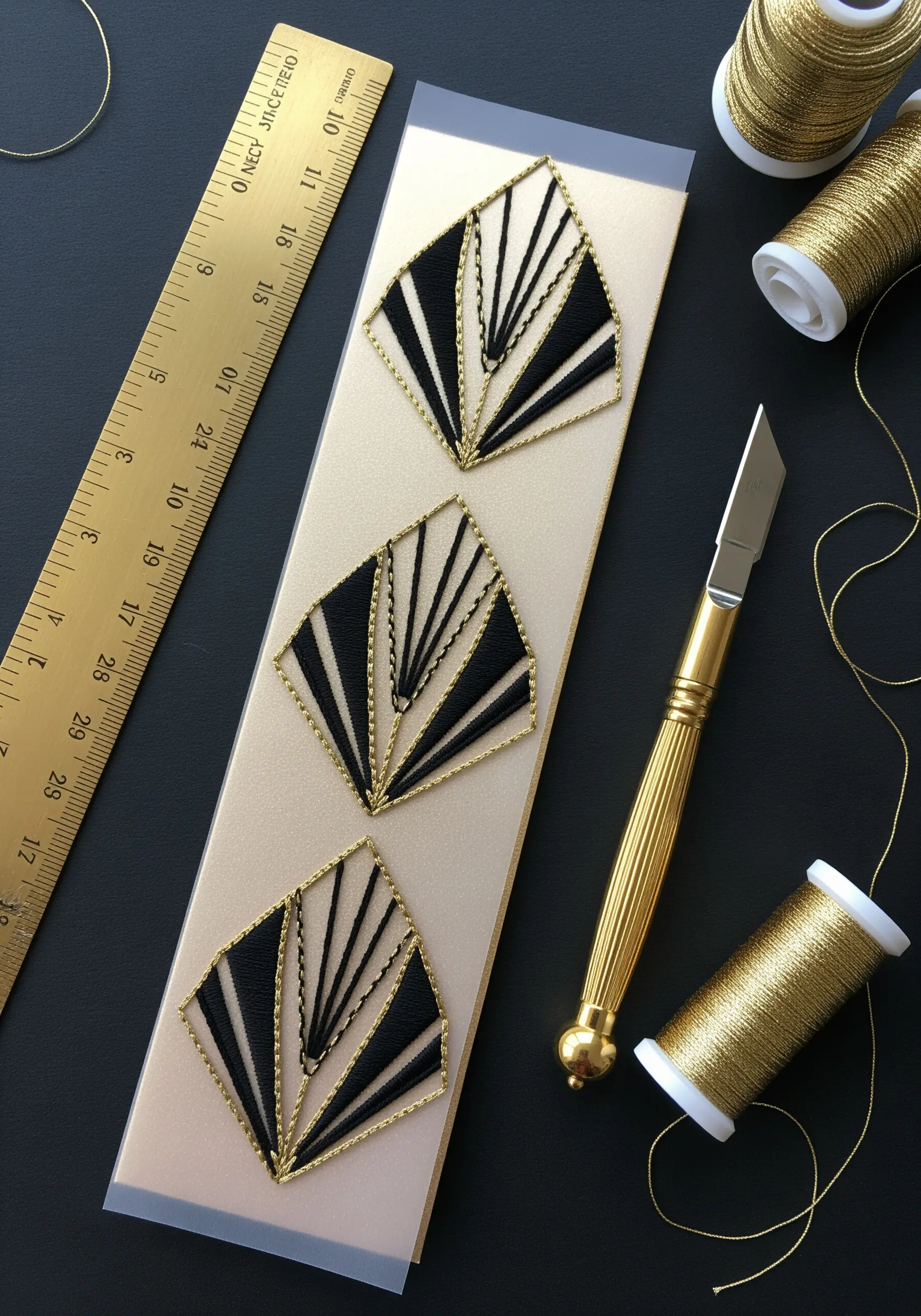
Achieve a sophisticated, layered look by stitching on vellum placed over colored cardstock.
The vellum softens the background color and provides a smooth, elegant surface for your stitches.
Use a sharp, fine needle to pre-pierce your holes to avoid tearing the delicate paper.
Combine a high-sheen gold metallic thread for the outlines with a matte black floss for the satin-stitched fills to create a classic Art Deco contrast that is both graphic and luxurious.
15. A Miniature Library of Stitches

Working in miniature requires precision and choosing the right stitch for the job.
Use single strands of floss to create the book spines with vertical satin stitches, which gives them a smooth, uniform appearance.
Vary the colors and add tiny horizontal straight stitches with metallic thread to mimic gilded titles and decorative bindings.
For any legible text, a whipped backstitch is ideal as it creates a solid, readable line even at a very small scale.
16. Botanical Still Life with Pressed Flowers

In this project, the art is in the arrangement, not the stitching.
Select an assortment of pressed flowers and foliage, playing with color, scale, and form to create a balanced composition on high-quality paper.
Use tweezers for precise placement and secure each element with a minuscule dot of acid-free craft glue applied with a toothpick.
The goal is to create a delicate botanical illustration where the natural beauty of the flowers is the undisputed focus.
17. Celestial Duality on a Painted Sky

Use color theory to enhance your design’s narrative.
Create a background that transitions from warm, vibrant yellow to a deep, cool indigo using a wet-on-wet watercolor technique for a seamless blend.
Once dry, stitch the sun using gold metallic thread, with a satin-stitched center and radiating straight stitches for rays.
Contrast this with a serene moon in silver or pale blue floss. The opposition of warm and cool tones in both the paint and thread reinforces the powerful symbolism of the sun and moon.
18. Coffee-Stained Canvas with Aromatic Motifs

Incorporate authentic textures into your work by using real coffee to stain your paper base.
Press the rim of a wet coffee mug onto the paper to create realistic rings, then add lighter washes for an aged, vintage feel.
After the paper is fully dry, stitch your design in a rich brown thread to complement the stains.
Use a clean whipped backstitch for the cup’s outline and a looser, more organic chain stitch for the swirling steam to create a delightful contrast in textures.