That small dining nook of yours isn’t just a place to eat—it’s a canvas waiting for a personal touch. A simple table runner or a set of placemats can completely redefine the space, turning it from merely functional into a corner that feels intentional, warm, and distinctly yours.
Forget thinking of these as large, intimidating projects. Instead, see each piece of linen as an opportunity for a small study in texture, color, or line. The right stitch or a thoughtful color choice can elevate a plain piece of fabric into a quiet masterpiece that enriches your daily rituals.
Here, you’ll find techniques that offer visible, polished results without unnecessary complexity. It’s about making smart, artistic choices that bring a sense of quiet luxury and handcrafted care into your home, one stitch at a time.
1. Achieve Serenity with Delicate Wildflower Borders

To create an airy, minimalist meadow on your runner, focus on the weight of your thread and the space between motifs.
Use a single strand of embroidery floss for stems and outlines—this prevents the design from feeling heavy and allows the fabric to breathe.
Form lavender blossoms with single, detached chain stitches (lazy daisies) or tiny French knots, varying their height and density to mimic natural growth.
For the finest stems, use a backstitch or a delicate stem stitch, ensuring your stitch length is consistent for a clean, professional line.
This restrained approach turns a simple runner into a piece of quiet, understated art, perfect for a calm dining space.
2. Master Bold Geometry with Directional Satin Stitch
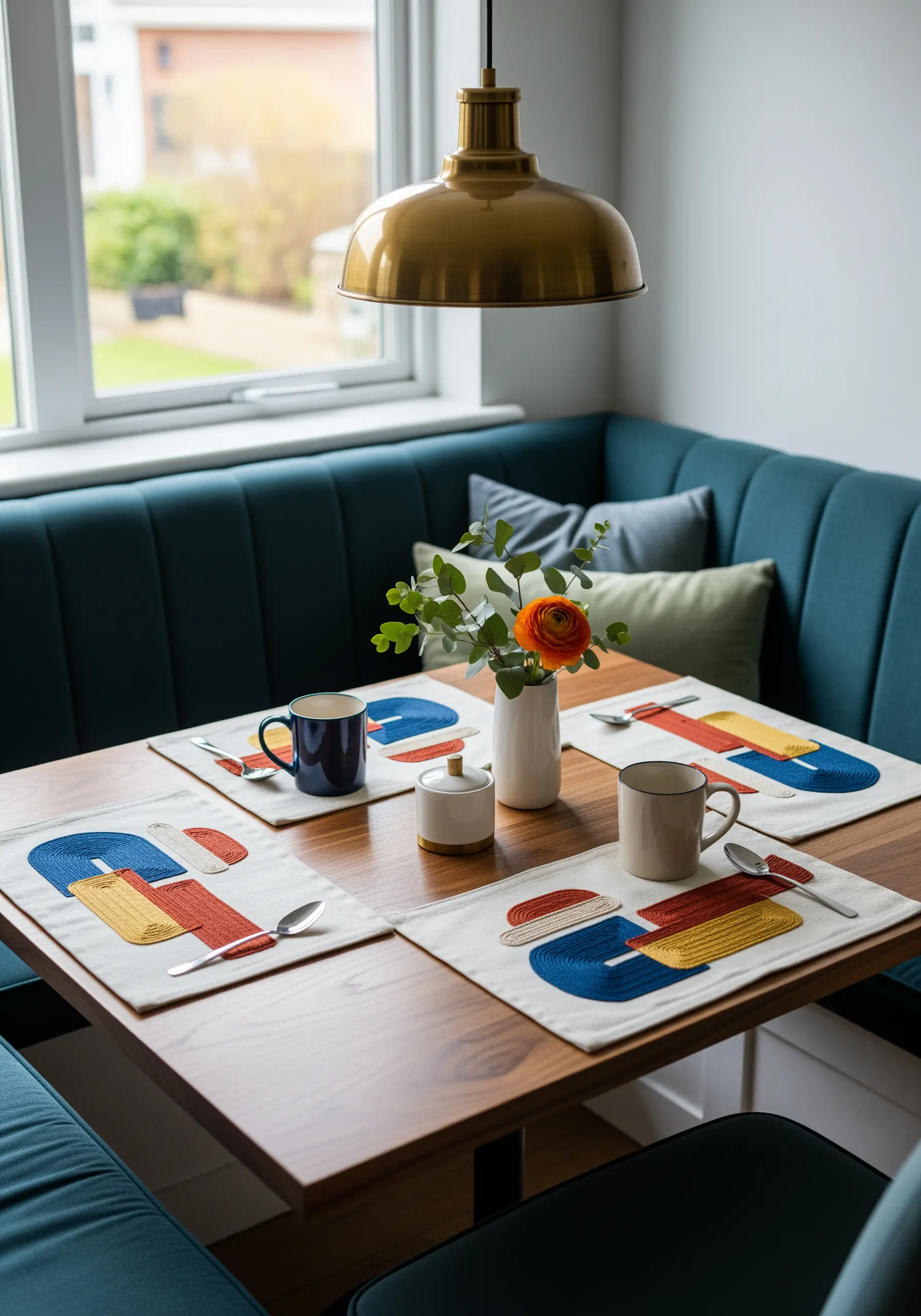
Transform your placemats into modern art by using dense, directional fill stitches to create graphic shapes.
Instead of randomly filling each block, align your satin stitches parallel to the longest edge of the shape—this creates a subtle sheen and a sense of visual order.
To achieve perfectly sharp edges where colors meet, outline each shape with a single backstitch before filling it in; this acts as a guide and prevents thread from spilling over.
Choose a high-contrast color palette—like primary colors against a neutral base—to make the abstract composition pop.
This technique elevates simple shapes into a dynamic, textured design that feels both playful and sophisticated.
3. Build Tactile Dimension with Layered, Chunky Stitches

For a vibrant, bohemian aesthetic, embrace texture by using thicker threads and dimensional stitches.
Create the sun’s rays with a padded satin stitch or a woven wheel stitch using a full six strands of floss or even fine wool yarn for a raised, sculptural effect.
For the large monstera leaves, use a fishbone stitch; the angled stitches naturally form a central vein, giving the leaf realistic dimension and movement.
Don’t be afraid to mix stitches within a single motif—a chain stitch outline combined with a seed stitch fill adds depth and visual interest.
This approach to bold, bohemian floral embroidery makes the design feel alive and invites touch, adding warmth to your dining nook.
4. Define Modern Spaces with a Precise Grid
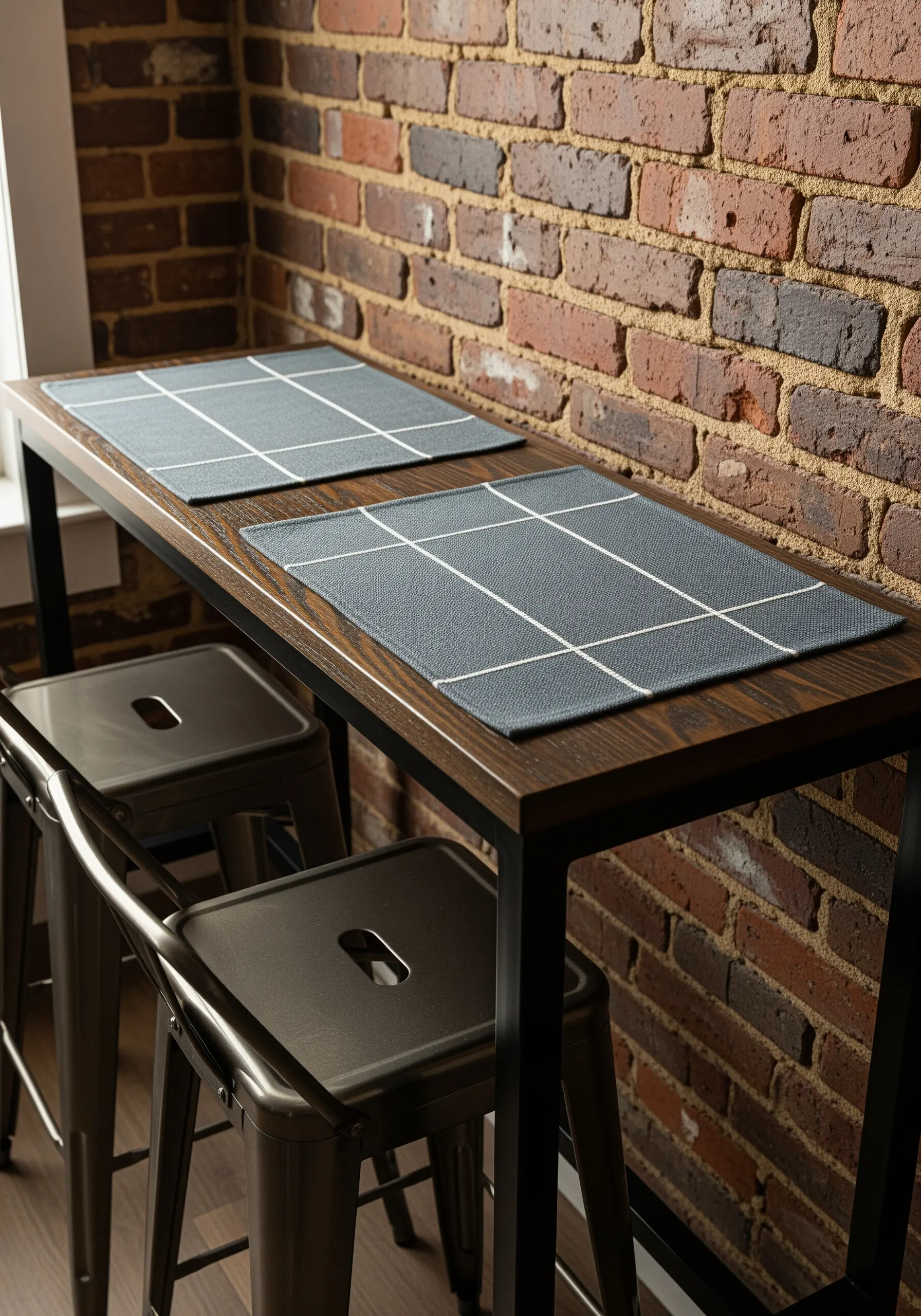
Create a sharp, architectural look on your placemats with a perfectly executed grid pattern.
Use a single, high-contrast thread color—like white on charcoal—to emphasize the clean lines and minimalist aesthetic.
Achieve flawless lines by first drawing your grid with a water-soluble fabric marker and a ruler, ensuring every intersection is a perfect 90-degree angle.
Stitch the grid using a simple backstitch or a two-sided insertion stitch, which creates an identical, unbroken line on both the front and back of the fabric.
This technique turns a basic placemat into a piece of intentional design that complements an industrial or modern interior.
5. Add Whimsical Charm to Rustic Burlap

Embroidering on coarse fabric like burlap requires a few adjustments for a clean result.
Always use a blunt-tipped tapestry needle; it will pass between the fabric threads rather than piercing and splitting them, which prevents fraying.
To keep your stitches from disappearing into the loose weave, use all six strands of embroidery floss or a thicker pearl cotton.
For the bees’ bodies, a simple satin stitch works perfectly, while their delicate wings can be created with a few detached chain stitches, forming a teardrop shape.
The combination of playful motifs and rustic texture creates a charming, farmhouse-inspired accent for your table.
6. Illuminate Your Table with Metallic Thread Artistry
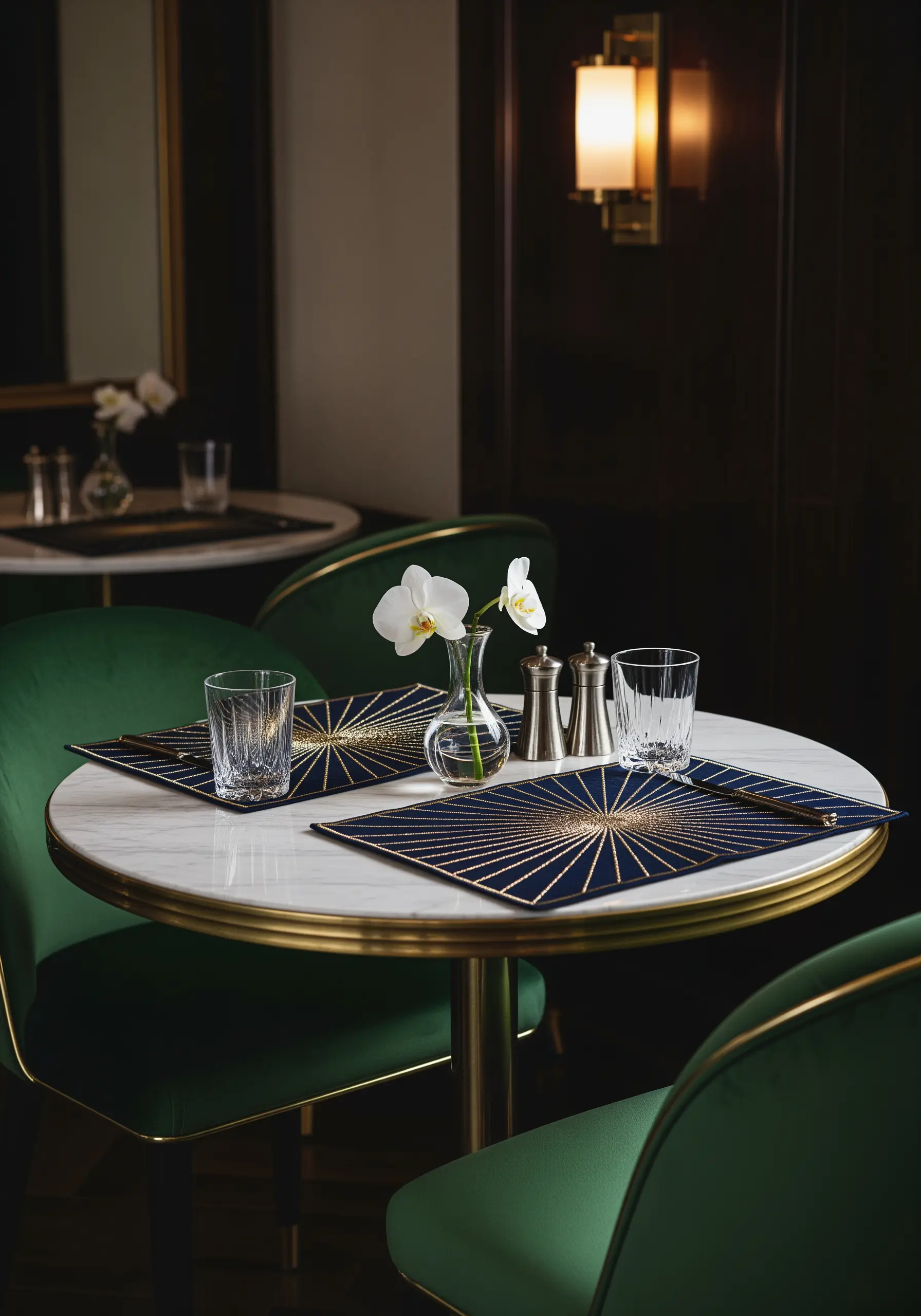
Create a dramatic, Art Deco-inspired sunburst using metallic thread for a touch of luxury.
Working with metallic floss can be challenging; cut your thread into shorter lengths (about 12 inches) to minimize twisting and fraying.
Use a needle with a larger eye to reduce friction on the thread, and consider a thread conditioner like beeswax to help it glide smoothly through the fabric.
A simple straight stitch is all you need—the magic comes from the precise placement of each ray and the way the metallic thread catches the light.
These contemporary metallic thread designs transform a placemat into a glamorous statement piece, perfect for evening dining.
7. Embrace Japandi Calm with Negative Space Silhouettes

This design’s power lies not in what is stitched, but in what is left unstitched.
To create a sharp silhouette, trace your leaf motif onto the fabric, then fill the *background* with dense, horizontal satin stitches worked in a contrasting color.
This technique, known as voiding, requires patience and precision, but the result is a striking, graphic design that highlights the shape of the motif itself.
Alternatively, outline the leaf with a meticulous split stitch in white to define the form against the deep indigo fabric.
These Japanese zen-inspired embroidery designs bring a sense of tranquility and balance to your table setting.
8. Capture Retro Joy with Playful Appliqué and Stitch

Combine simple embroidery with felt appliqué for a fun, retro-diner feel that’s quick to create.
Cut your star and abstract shapes from brightly colored felt, then attach them to the placemat using a single strand of matching floss and a neat running stitch just inside the edge.
For the embroidered details, use contrasting colors and simple stitches: a backstitch for lines and scattered seed stitches for texture.
Finish the edge of the placemat with a wide blanket stitch in a bold color to tie the whole design together.
This mixed-media approach adds dimension and a cheerful, handcrafted quality to your table setting.
9. Stitch an Organic Coral Border with Feather Stitch

Mimic the delicate, branching structure of coral by using a stitch that grows organically across the fabric.
The feather stitch is perfect for this, as each stitch builds upon the last, creating a flowing, natural line that looks like underwater foliage.
Use a variegated white or off-white thread to add subtle depth and variation, making the coral appear more realistic.
Combine this with rows of wavy backstitch at the base to represent gentle ocean currents, anchoring the design to the edge of the runner.
This elegant, coastal-inspired embroidery brings a serene, breezy feel to a sunlit dining nook.
10. Create Subtle Drama with Tone-on-Tone Texture
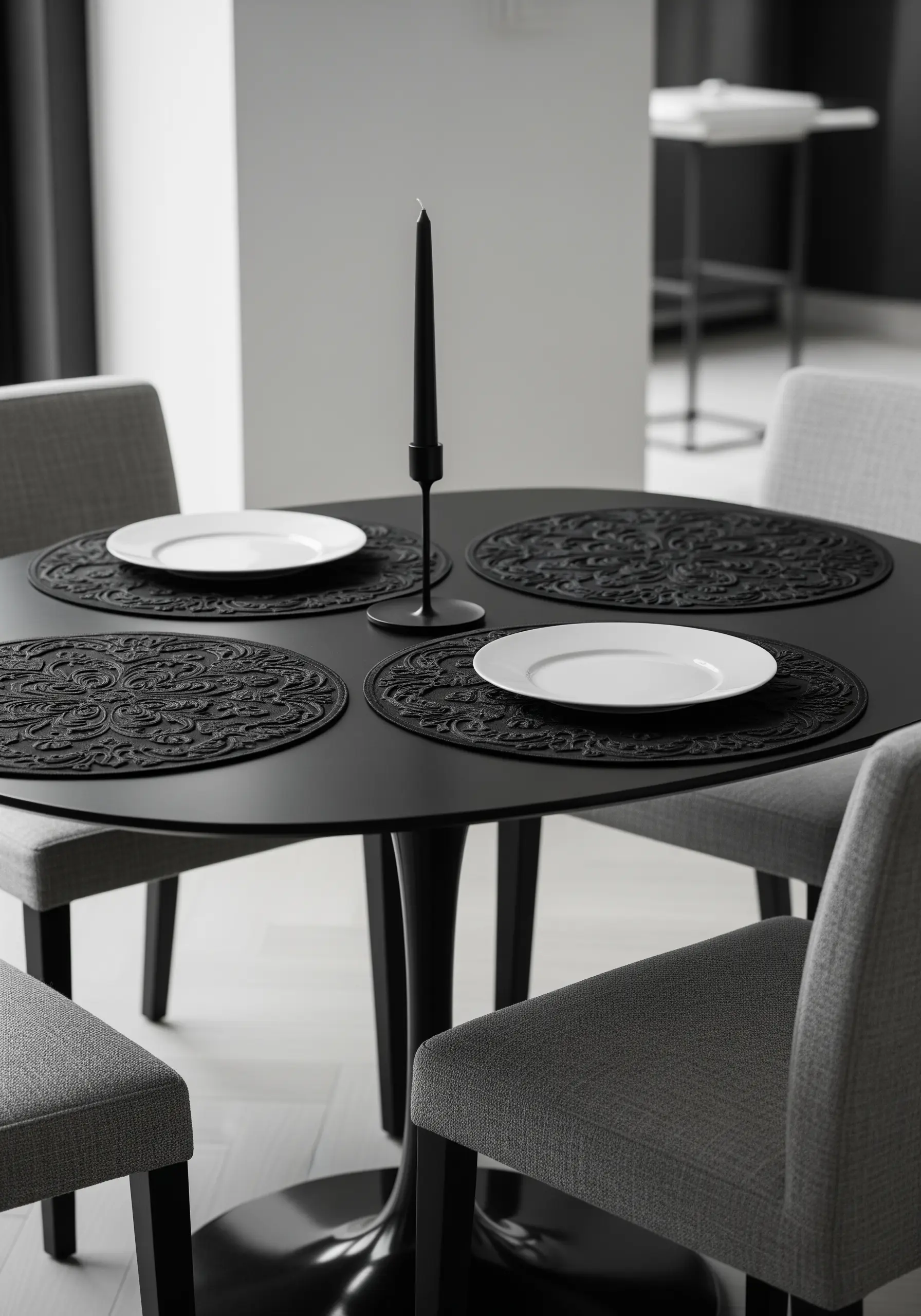
A monochrome design challenges you to create interest not with color, but with texture and light.
To make the damask pattern visible, choose a thread with a different finish from your fabric—for example, a matte cotton floss on a sateen placemat, or a silky rayon thread on a linen base.
Fill the intricate shapes with dense satin stitches, varying the direction of your stitches in adjacent sections to create planes that catch the light differently.
This subtle interplay of shadow and sheen creates a design that is incredibly sophisticated and reveals its complexity up close.
These tone-on-tone embroidery techniques deliver a high-end, luxurious finish that is pure elegance.
11. Infuse Energy with Dense Otomi-Inspired Florals

Capture the vibrant spirit of Otomi embroidery by filling your runner with dense, colorful stitches that leave very little fabric showing.
The traditional stitch is a close satin stitch, but a long-and-short stitch will also work beautifully to create a smooth, solid field of color.
Use a bold, high-contrast color palette with bright pinks, oranges, and blues to create a joyful, energetic feel.
Outline each motif with a darker shade in a simple backstitch to define the shapes and make the colors pop even more.
This maximalist style turns your table runner into a stunning focal point, radiating warmth and handmade artistry.
12. Express Modern Artistry with a Single, Confident Line

A continuous line-art design relies entirely on the quality and consistency of a single stitch.
To achieve a smooth, uninterrupted line, use a whipped backstitch. First, create a standard backstitch outline, then weave a second thread through the stitches without piercing the fabric, which smooths out the jagged edges.
Alternatively, a stem stitch worked with a single strand of floss will create a clean, rope-like line that is perfect for curves.
Transfer your design precisely, as every wobble will be visible. Minimal portrait line embroidery adds a touch of sophisticated, gallery-worthy art to even the smallest dining space.
13. Marry Gingham with Charming Folk-Art Motifs

Use the built-in grid of gingham fabric as a natural guide for your embroidery, making pattern placement effortless.
The squares are perfect for simple cross-stitch florals or geometric borders. You can create charming, symmetrical designs without any marking tools.
For the appliqué heart, attach it with a decorative blanket stitch, aligning your stitches with the corners of the gingham squares for perfect uniformity.
This approach combines the nostalgia of checked fabric with the handmade charm of folk art for a cozy, cottage-inspired table runner.
14. Paint with Thread on an Ethereal, Sheer Canvas

Stitching on a sheer fabric like organza or tulle creates a magical, floating effect, as if the design is suspended in air.
You must use a stabilizer to support the delicate fabric. A wash-away or heat-away stabilizer is ideal, as it provides a solid base for your stitches and then disappears completely.
Use mountain landscape thread painting techniques, blending shades of blue, gray, and white with long-and-short stitches to create depth and shadow on the peaks.
Keep the back of your work as neat as the front, as it will be visible through the transparent fabric.
This advanced technique results in a truly unique and breathtaking piece of textile art for your table.
15. Weave a Southwestern Rug with Thread

Recreate the look of a woven Southwestern rug by filling geometric shapes with dense, textured stitches.
Use a brick stitch or a long-and-short stitch worked in horizontal rows to mimic the appearance of woven threads.
To achieve the characteristic stepped or serrated edges of the diamonds, carefully plan your stitch placement, ending each row one stitch shorter or longer than the last.
A palette of turquoise, terracotta, and sand against a neutral background is key to capturing the authentic desert aesthetic.
These placemats bring a warm, earthy, and graphic element to a simple wooden table.
16. Add Romantic Flourishes with Typography and Roses

Combine delicate florals with elegant script for a timelessly romantic table runner.
For the roses, create dimensional petals by using a padded satin stitch—add a base of small straight stitches before covering them with satin stitch to raise the surface.
Achieve crisp, readable lettering by using a fine split stitch or whipped backstitch with just two strands of floss; this ensures smooth curves and sharp points.
Finish the runner with a small, gathered ruffle for an extra touch of shabby-chic elegance.
This project is perfect for adding a soft, Parisian-inspired feel to your dining nook.
17. Design a High-Tech Table with Circuit Board Embroidery

For an ultra-modern and unexpected design, embroider a pattern that mimics a glowing circuit board.
Use a vibrant blue thread that pops against the background, and lay down the conductive paths with precise, sharp straight stitches and perfectly angled turns.
For the connection points, use small, neat satin stitch circles or French knots to represent solder points.
To take it a step further, consider using actual glow-in-the-dark or reflective thread to create a design that truly comes alive in low light.
These futuristic stitch patterns are a bold choice for a minimalist, tech-forward dining space.
18. Weave a Woodland Tapestry with Narrative Detail

Turn your table runner into a storybook scene by layering different textures and motifs to create a rich, narrative tapestry.
Use a variety of stitches to differentiate elements: long-and-short stitch for the soft fur of the squirrel and fox, fishbone stitch for the ferns, and bullion knots for textured mushrooms.
Create a sense of depth by slightly overlapping the motifs, placing some ferns in front of tree trunks or mushrooms at the base of plants.
A dark, forest-green fabric provides the perfect backdrop, making the earthy tones of the thread colors stand out.
These adorable forest animal embroidery ideas create a captivating piece that draws you in, perfect for nature lovers.
19. Replicate Moroccan Tiles with Couching and Satin Stitch

Capture the intricate beauty of Moroccan Zellige tilework by combining bold outlines with vibrant, jewel-toned fills.
First, lay down the geometric outlines of the tile pattern using the couching technique with a metallic gold or dark thread. This involves laying a thicker thread on the surface and tacking it down with small, invisible stitches.
Once the grid is established, fill the individual shapes with dense satin stitch in rich colors like cobalt blue, emerald green, and ruby red.
This method perfectly mimics the look of grout lines and glazed tiles, transforming your placemats into exotic works of art.
20. Create a Gentle Rhythm with Dotted Vertical Lines
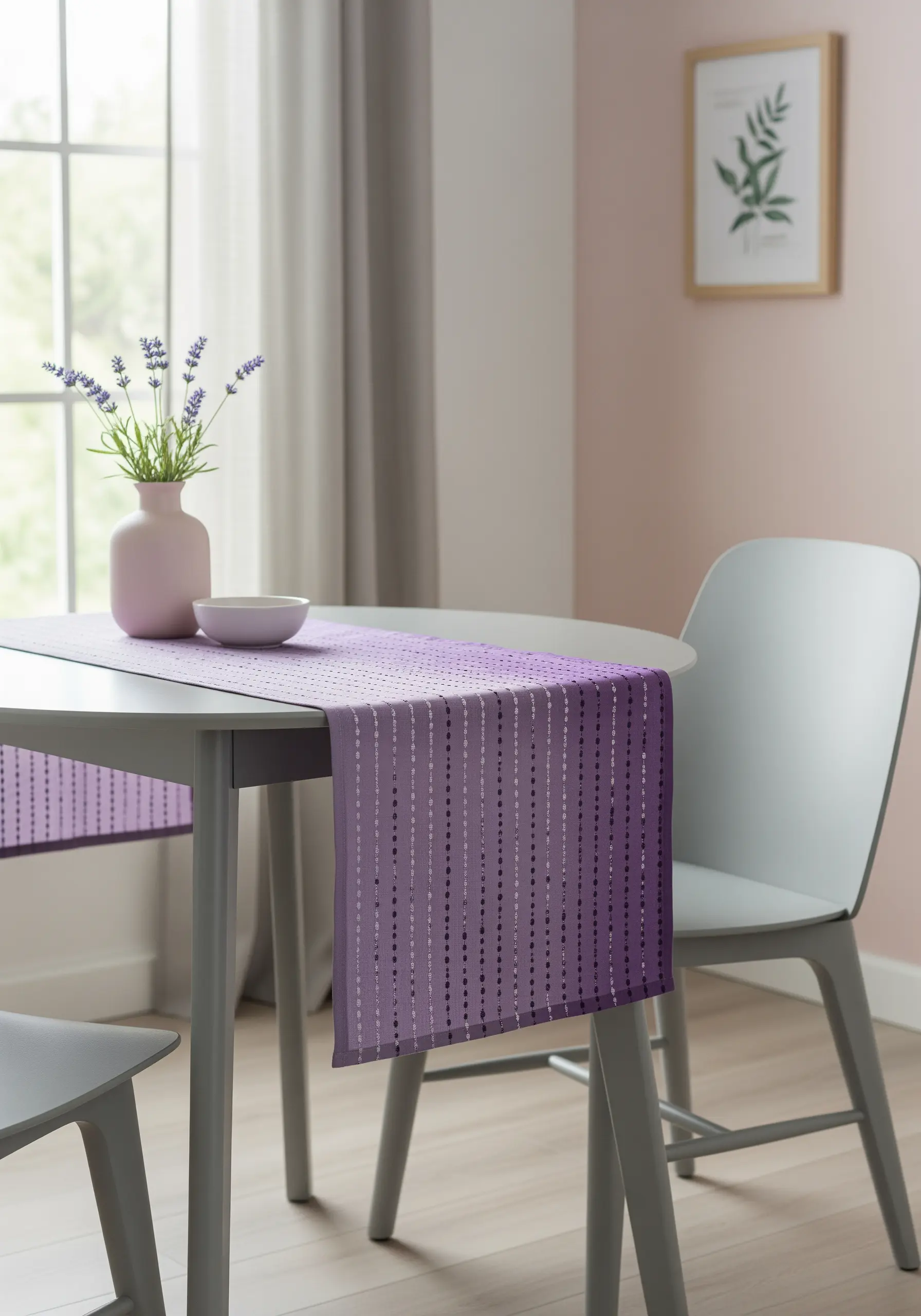
This minimalist design proves that simple, repeated elements can create a powerful visual impact.
Stitch vertical lines of tiny seed stitches or French knots, varying the spacing between the dots and the lines to create a subtle, rain-like effect.
Using a variegated thread in shades of lavender and white will add gentle color shifts throughout the runner without you needing to change your floss.
The key is consistency in the size of your stitches, which creates a clean, serene, and cohesive look.
This is one of the most calming and lavender-inspired embroidery designs, perfect for a modern, tranquil dining area.
21. Stitch Literary Elegance with Crisp Typography
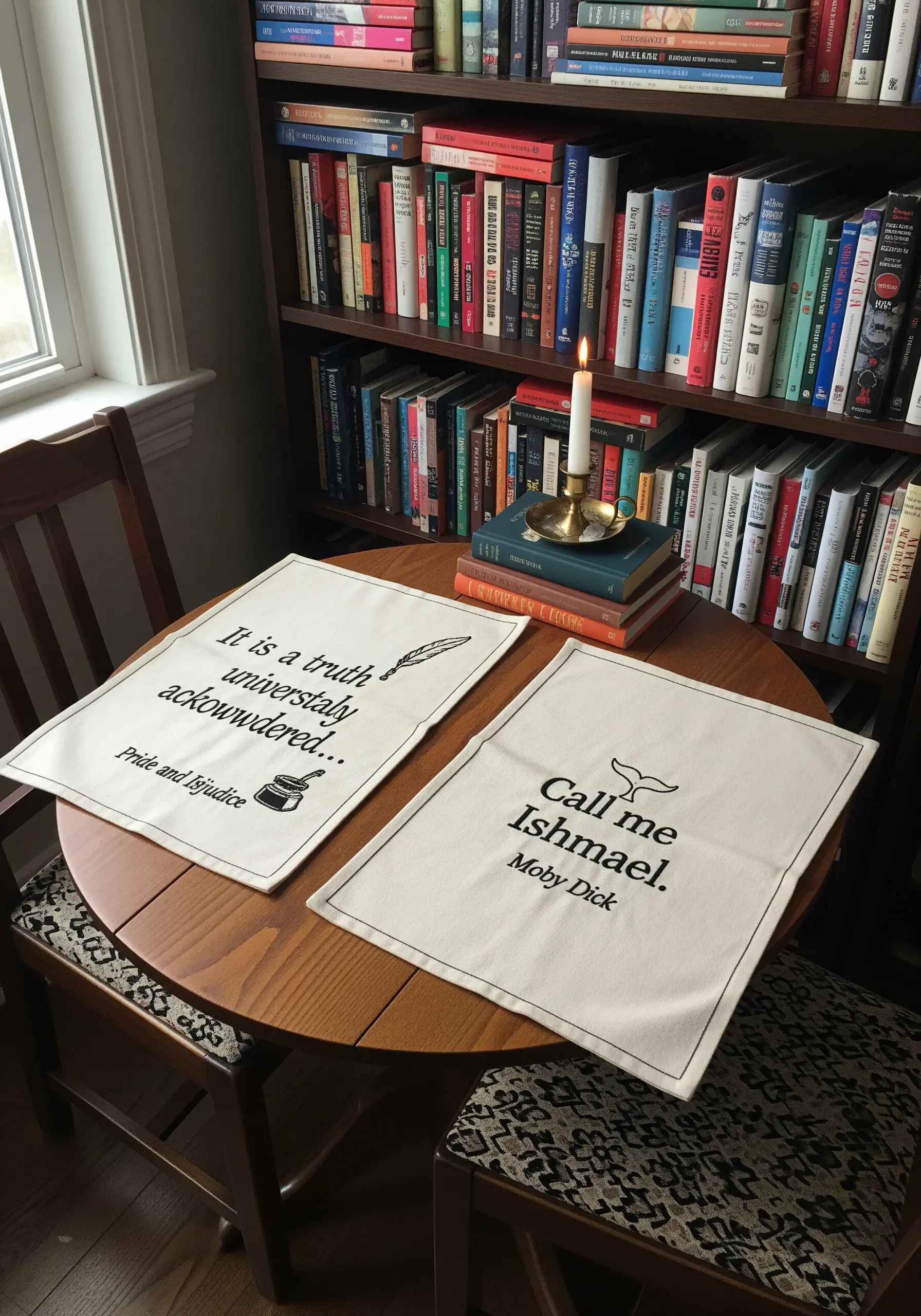
When embroidering text, clarity is everything. Choose a simple, clean font and focus on flawless execution.
Always use a stabilizer on the back of your fabric; this prevents puckering and ensures your stitches remain taut and even.
For fine lettering, a tiny backstitch or split stitch using just one or two strands of floss will give you the most control and the sharpest results.
For graphic elements like the quill or whale tail, a slightly thicker satin stitch will provide a nice contrast to the delicate text.
These placemats are a sophisticated nod to beloved literature, perfect for a cozy reading and dining nook.
22. Capture Tropical Vibrancy with Blended Stitches

To give your tropical leaf embroidery designs a realistic, painted look, focus on thread blending and directional stitching.
For the monstera leaves, use a fishbone stitch with two or three similar shades of green, alternating your stitches to create a natural, variegated appearance.
The bird of paradise flower is perfect for practicing long-and-short stitch, allowing you to seamlessly blend the bright orange, yellow, and fuchsia threads.
Vary the direction of your stitches to follow the natural curves of the petals and leaves, which adds a dynamic sense of realism and movement.
This technique turns your placemats into a vibrant, lush paradise that instantly brightens your table.