

You already have the skill and the passion for embroidery. But sometimes, you look at your finished piece and feel a small gap between what you envisioned and what’s in the hoop. You’re ready to move beyond just following a pattern and start making work that feels truly polished, intentional, and uniquely yours.
The secret often lies in learning to see the world like a textile artist—observing the subtle textures of a real petal, understanding how a single stitch can change the direction of light, and combining materials in a way that feels both timeless and modern.
This collection is your guide to that next step. We’ll explore how the delicate art of pressed flowers can inspire your needlework, not just in motif but in composition, texture, and feeling. You’ll learn simple adjustments that offer dramatic results, turning your embroidery into art that breathes with natural elegance.
1. The Art of Anchoring Real Botanicals
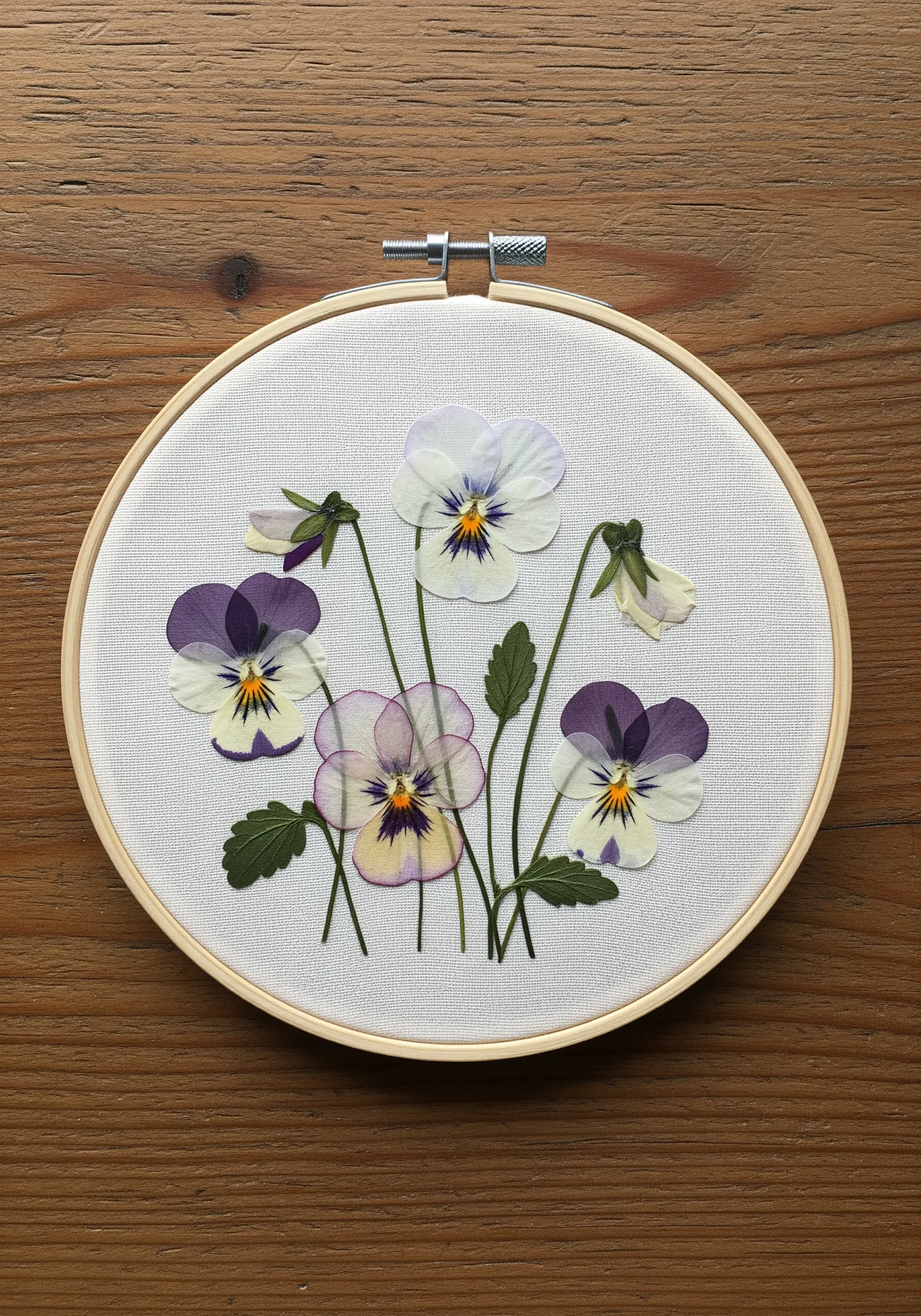
Combine real pressed flowers with embroidery by focusing on stability, not complexity.
Select a tightly woven fabric like cotton or linen to provide a firm base for delicate petals.
Use a single strand of thread in a matching color to couch down the stems with tiny, evenly spaced stitches.
For the flower heads, secure them with minuscule, almost invisible tacking stitches placed in the strongest parts of the petal, like near the center.
This method ensures the botanical is the star, and the thread work is a subtle, structural secret—one of the simplest secrets to making pressed flower art that everyone will admire.
2. Large-Scale Ferns for a Modern Wall Hanging
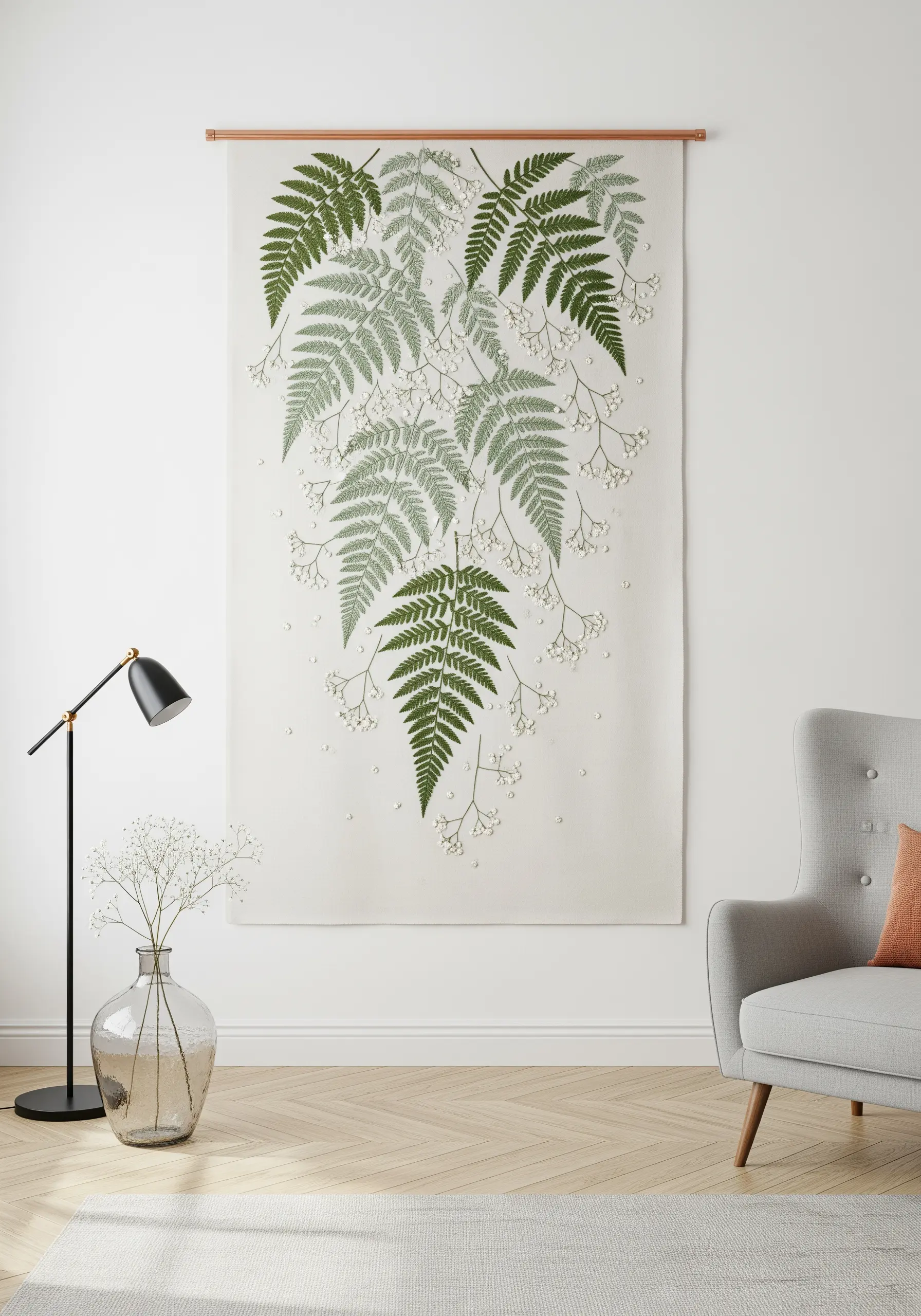
To create a statement piece, scale up a single botanical motif like a fern.
Use a long and short stitch for the leaves to create a soft, shaded effect that mimics natural light.
Vary the shades of green—from a deep forest green for the central stem to a lighter, mossy green at the tips—to add realistic depth.
For the tiny white flowers, a scattering of French knots provides just enough texture without overwhelming the composition.
These are statement textured embroidery techniques for 3D wall decor that pops, transforming a simple wall into a serene botanical feature.
3. The Asymmetrical Crescent for Apparel
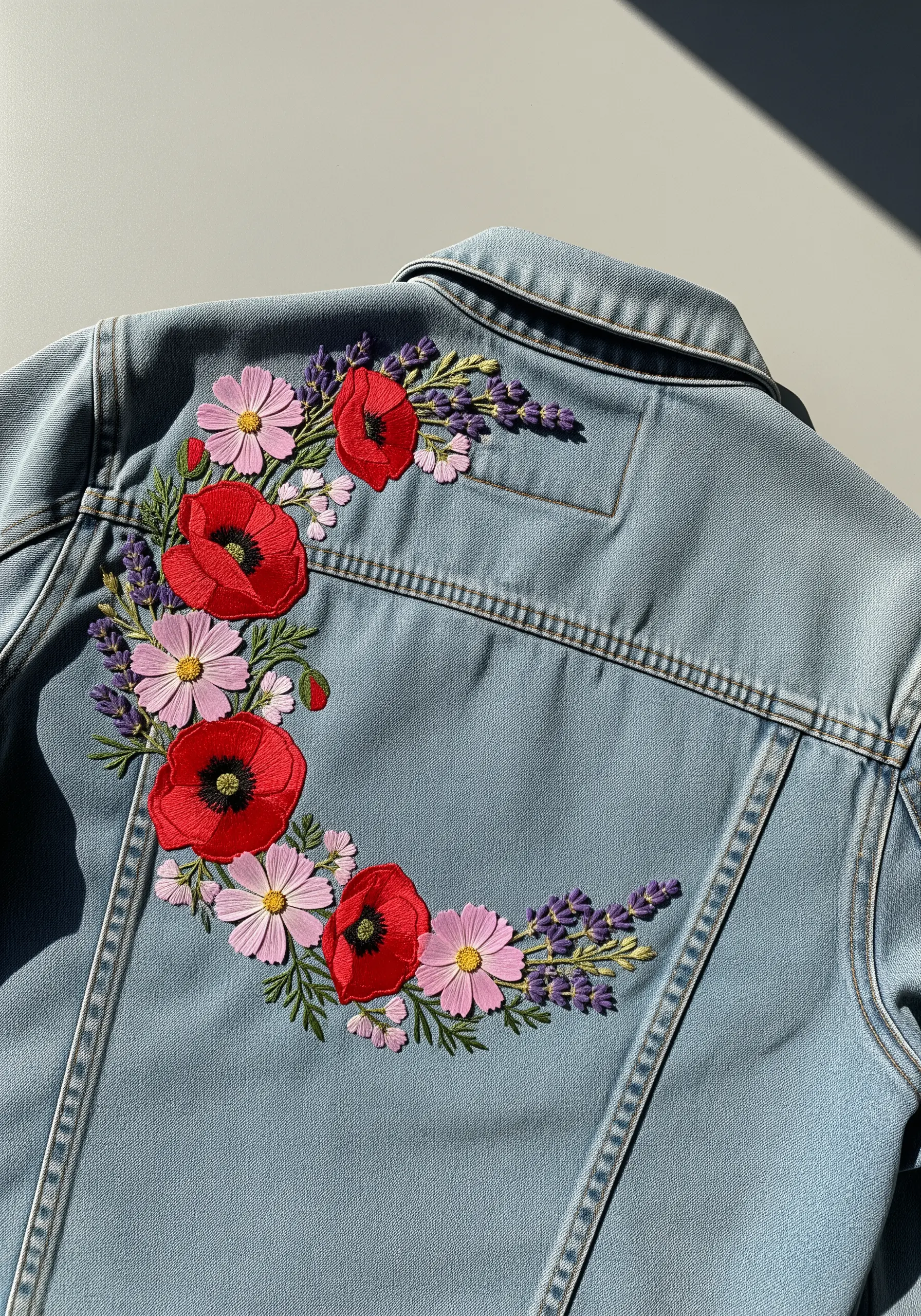
Elevate a simple denim jacket by stitching an asymmetrical floral crescent over the back panel.
This composition feels more organic and less rigid than a centered design.
Use a bold satin stitch for the poppy petals and dense French knots for their centers to create focal points.
Intersperse smaller, softer flowers like cosmos and lavender using detached chain stitches and straight stitches for contrast in scale and texture.
Always use a tear-away or water-soluble stabilizer on denim to prevent the fabric from puckering and ensure your stitches remain flat and professional, similar to high-end floral border stitch concepts for clothing hemlines that look boutique-designed.
4. Building Hydrangea Textures with French Knots
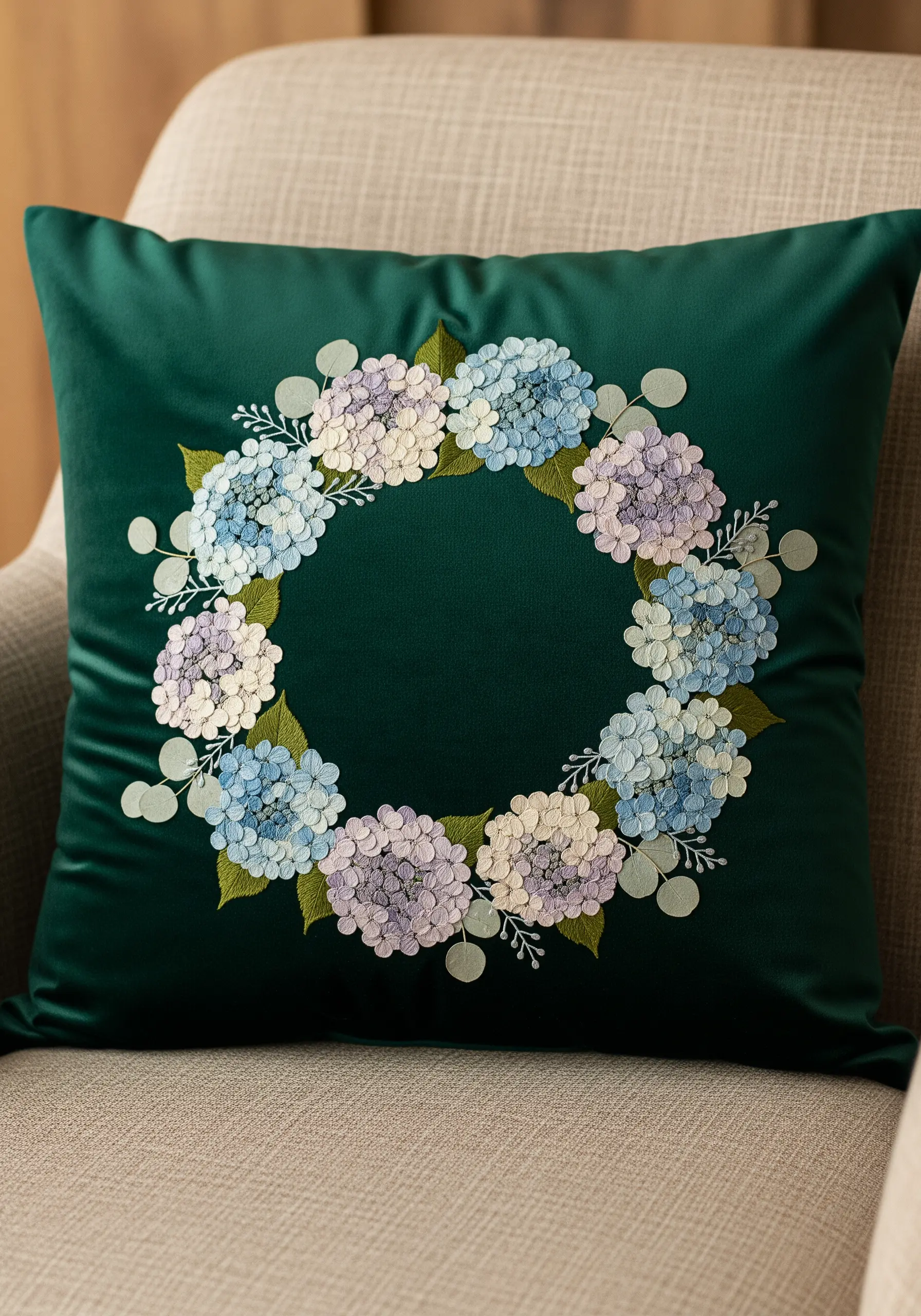
To capture the lush fullness of hydrangeas, rely on the texture of clustered French knots.
Work in sections, filling each flower head with knots using three to four harmonious shades—like lavender, pale blue, and cream—to create a multi-tonal, natural effect.
Vary the tightness of your knots slightly to add more dimension.
Stitching on a rich fabric like satin or velvet enhances the luxurious feel, making the texture of the thread stand out even more.
This technique turns a simple cushion into one of those handmade pillow cushion embroidery patterns for total comfort and style.
5. The Embroidered Botanical Specimen Chart
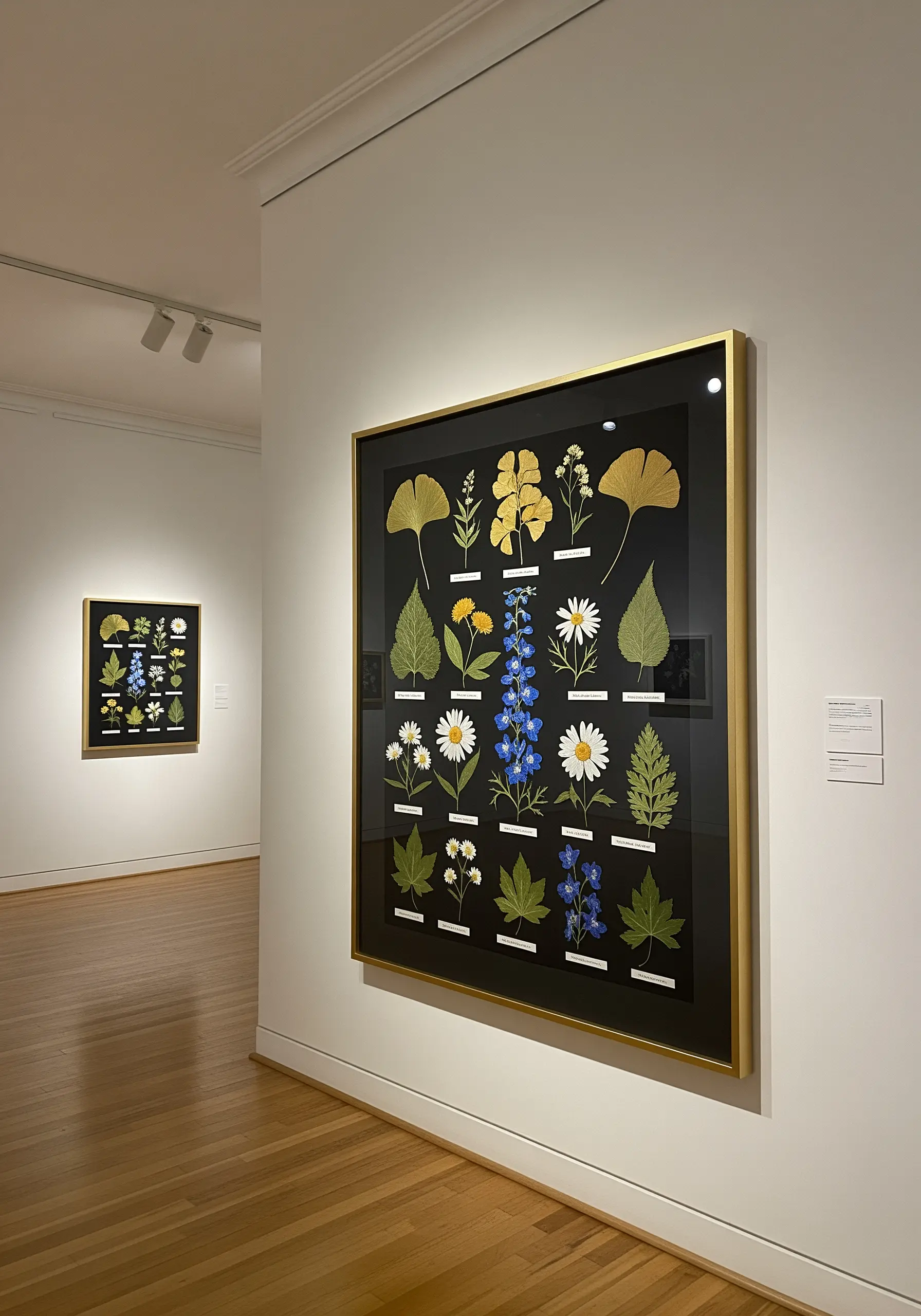
Recreate the classic elegance of a botanical specimen chart with thread instead of pressed flowers.
Dedicate each small square or hoop to a single plant, using precise stitches to capture its form—fishbone stitch for leaves, stem stitch for outlines.
Add a simple backstitched label beneath each specimen for a scientific, curated aesthetic.
The key to this look is consistency in your spacing and framing, transforming a collection of stitches into one of those inspiring hoop art projects for a creative gallery wall.
6. Minimalist Herbal Motifs on Linen Coasters
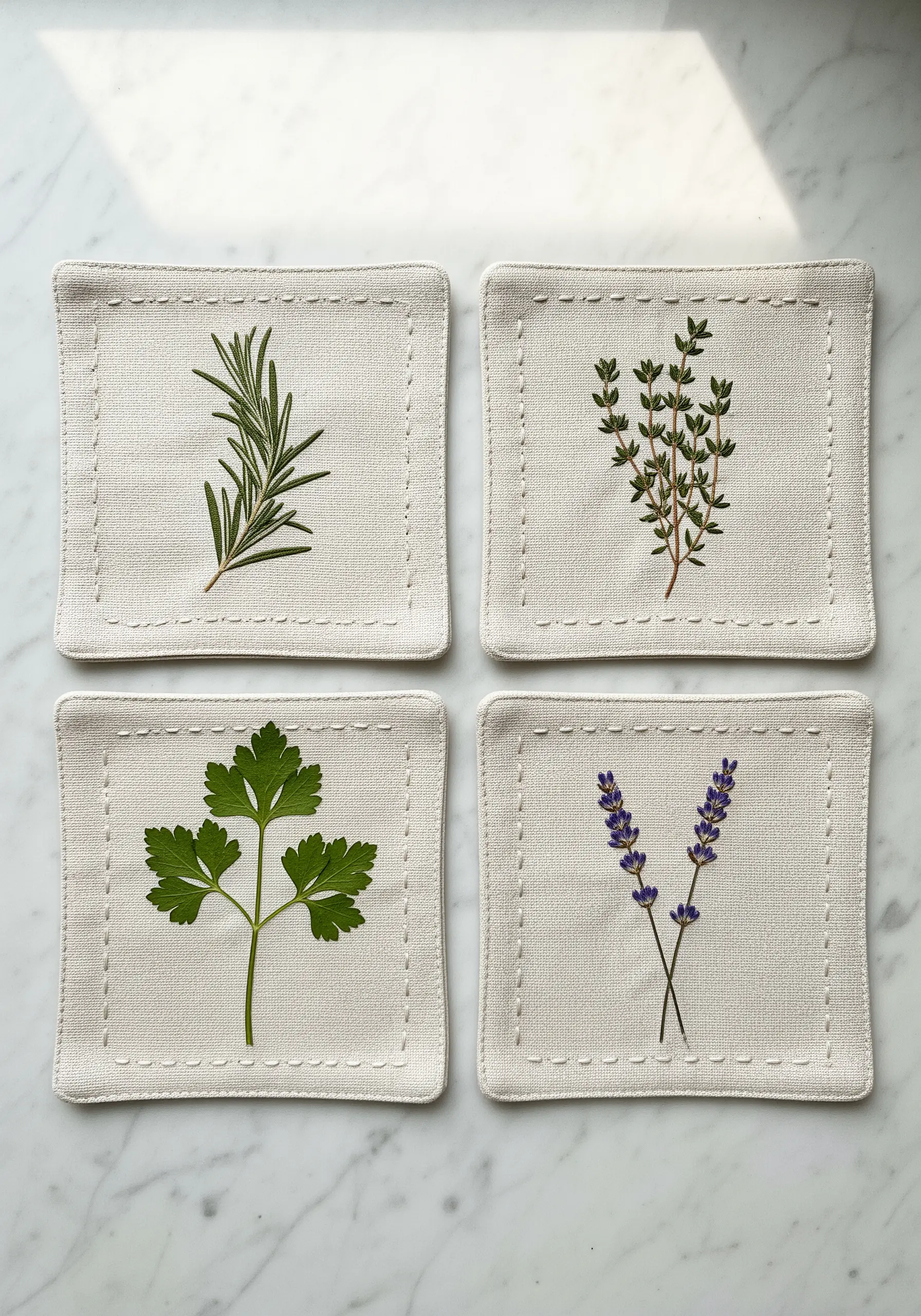
For functional pieces like coasters, choose simple, recognizable motifs like culinary herbs.
Use a single strand of six-strand floss to keep the details fine and delicate on the textured linen.
A whipped backstitch creates smooth, defined stems for rosemary, while tiny detached chain stitches are perfect for thyme leaves.
Frame each motif with a simple running stitch border; this small detail gives the piece a finished, intentional look, much like elegant minimal fruit botanical embroidery patterns for kitchen wall decor that looks boutique-made.
7. Integrating Lace with Delicate Florals
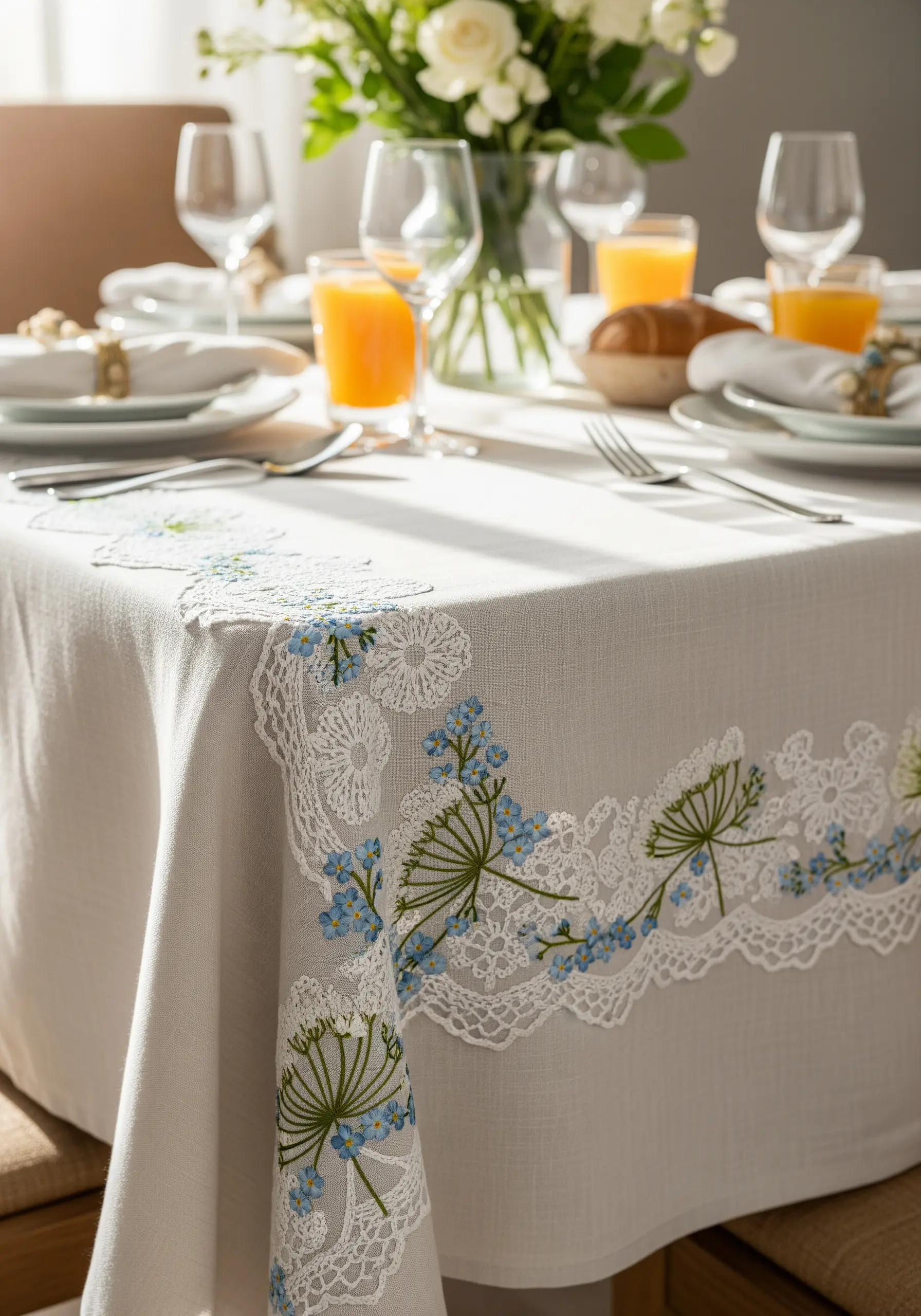
Combine the heirloom quality of lace with your embroidery for a truly unique textile.
First, appliqué a lace border onto your base fabric, securing it with small, hidden stitches.
Then, let your embroidery grow out from the lace, as if the flowers are climbing over it.
Use airy stitches like stem stitch and lazy daisies in a delicate color palette to complement the lace without competing with it.
This thoughtful layering elevates simple table linen embroidery motifs that instantly transform a plain dining table into a luxury statement.
8. Lifelike Petals with Directional Thread Painting
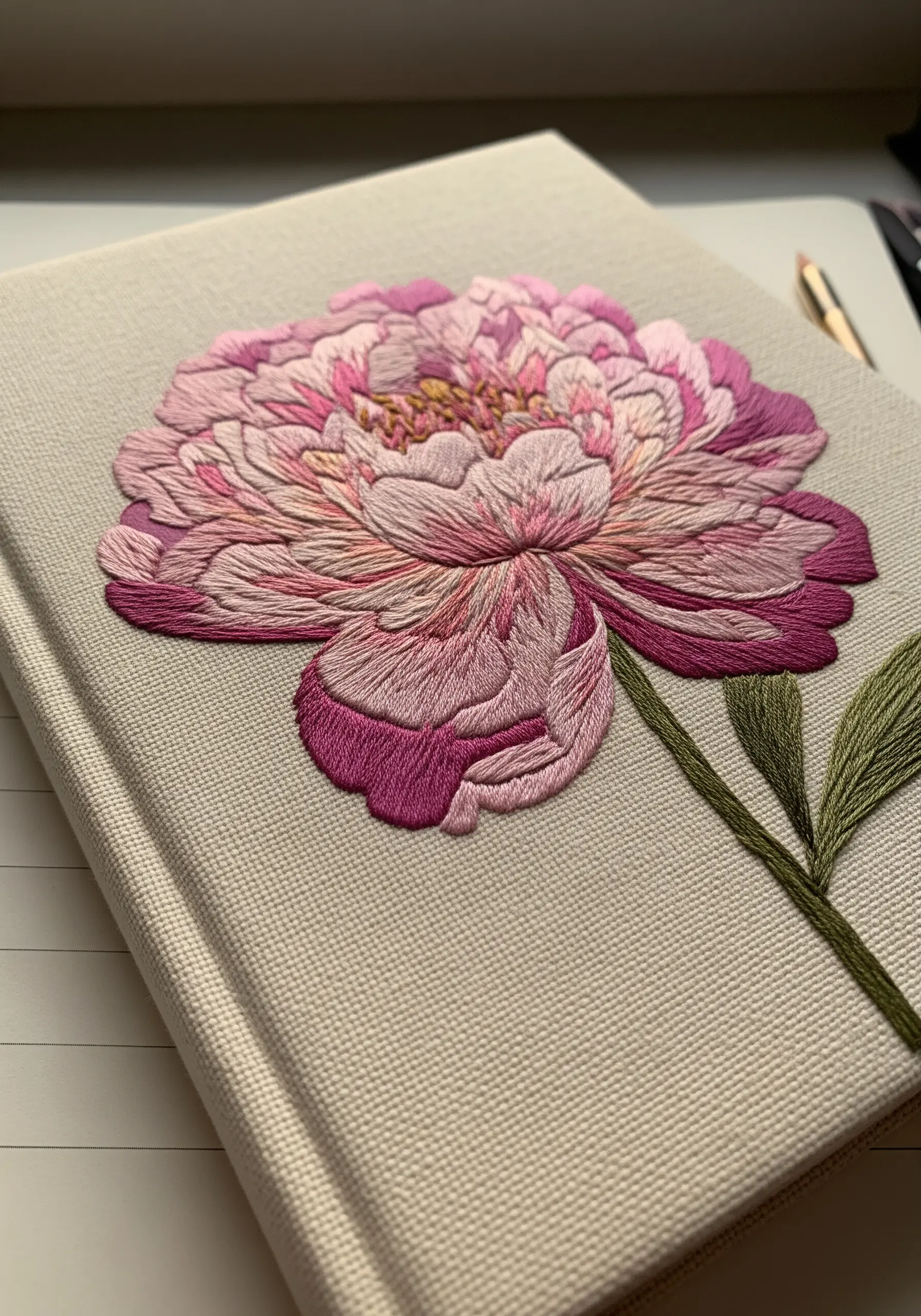
To achieve the realistic depth of a peony, you need to think like a painter.
Use the long-and-short stitch, blending at least three shades of pink for each petal section—a dark shade for the base, a mid-tone, and a light highlight.
The crucial element is stitch direction. Angle your stitches to follow the natural, curved flow of each petal.
This technique creates movement and tricks the eye into seeing dimension and light, turning your needle into a brush and your floss into paint, just as you would with abstract thread painting ideas to mix shades like a contemporary artist.
9. The ‘Stained Glass’ Effect on Fabric Panels
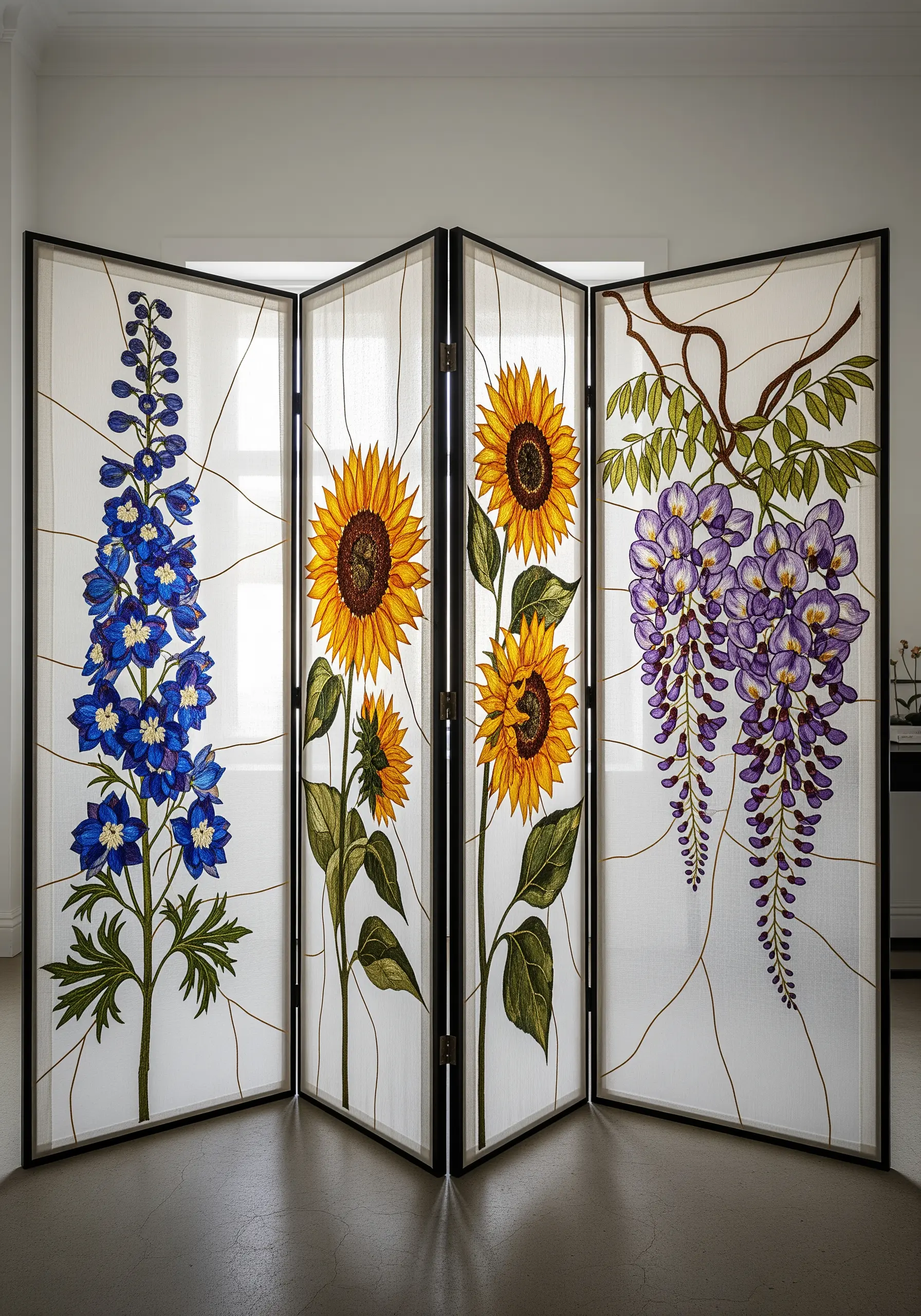
Create the illusion of stained glass on fabric by emphasizing bold outlines and flat, saturated color.
Use a thick, dark thread—like a black pearl cotton—and a heavy chain stitch or couched stitch to create the defining ‘lead’ lines of your design.
Fill in the sections with dense, uniform satin stitches, ensuring each stitch lies flat against the fabric.
This technique is perfect for large-scale projects like room dividers or curtains, creating dramatic, light-filtering embroidered wall panels that replace expensive wallpaper with handmade charm.
10. Crafting an Organic Wildflower Scatter
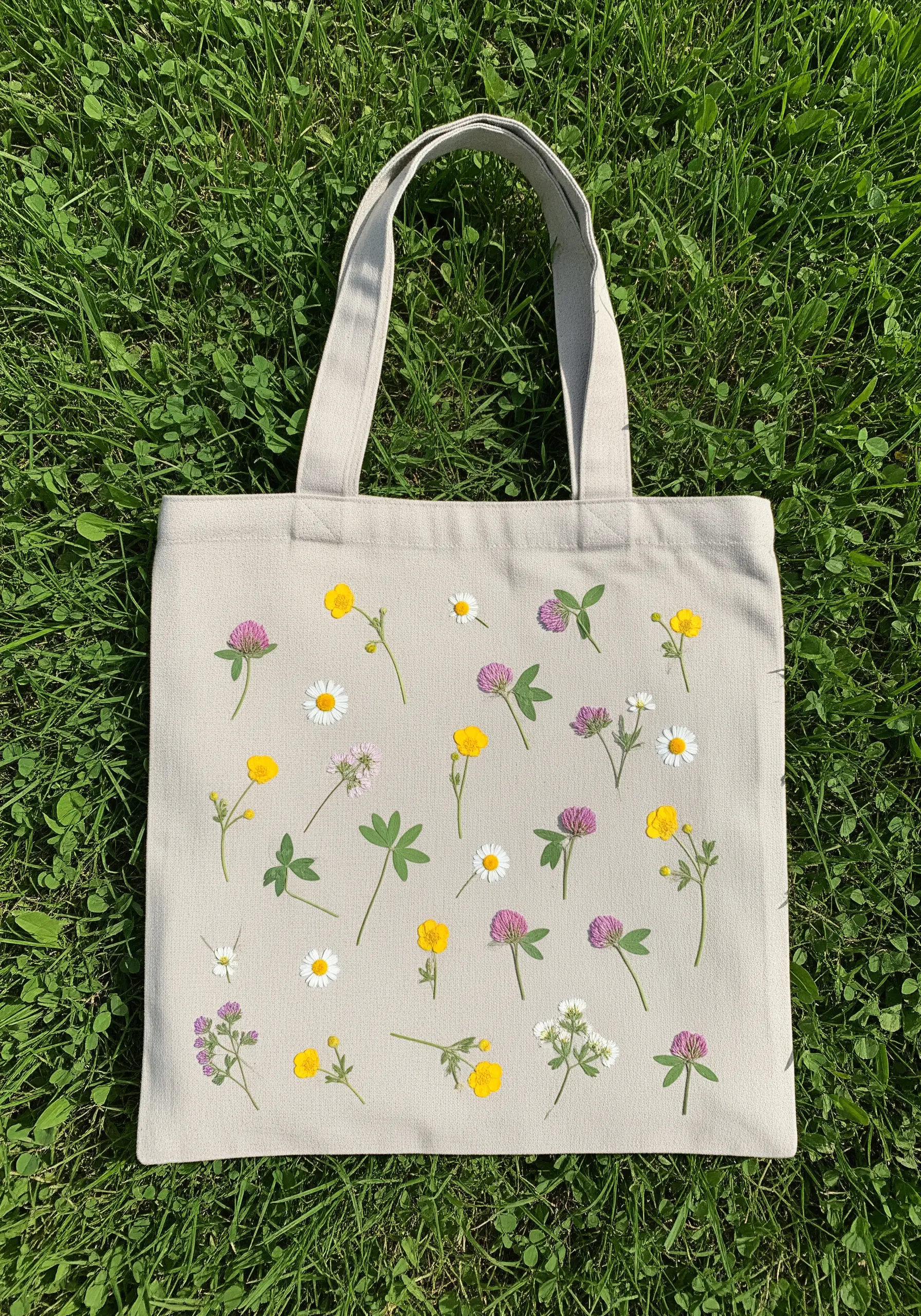
The key to a natural-looking scatter of wildflowers is intentional randomness.
Vary the orientation, spacing, and type of flower to avoid creating unintentional patterns or lines.
Keep the stitches simple and expressive: lazy daisy for petals, French knots for centers, and single straight stitches for stems.
Use a limited but harmonious color palette to ensure the overall design feels cohesive, not chaotic.
With the right wildflower thread palettes that make your hoop look like an actual meadow, you can transform a plain tote into a field in bloom.
11. Illuminating Your Stitches on a Lampshade
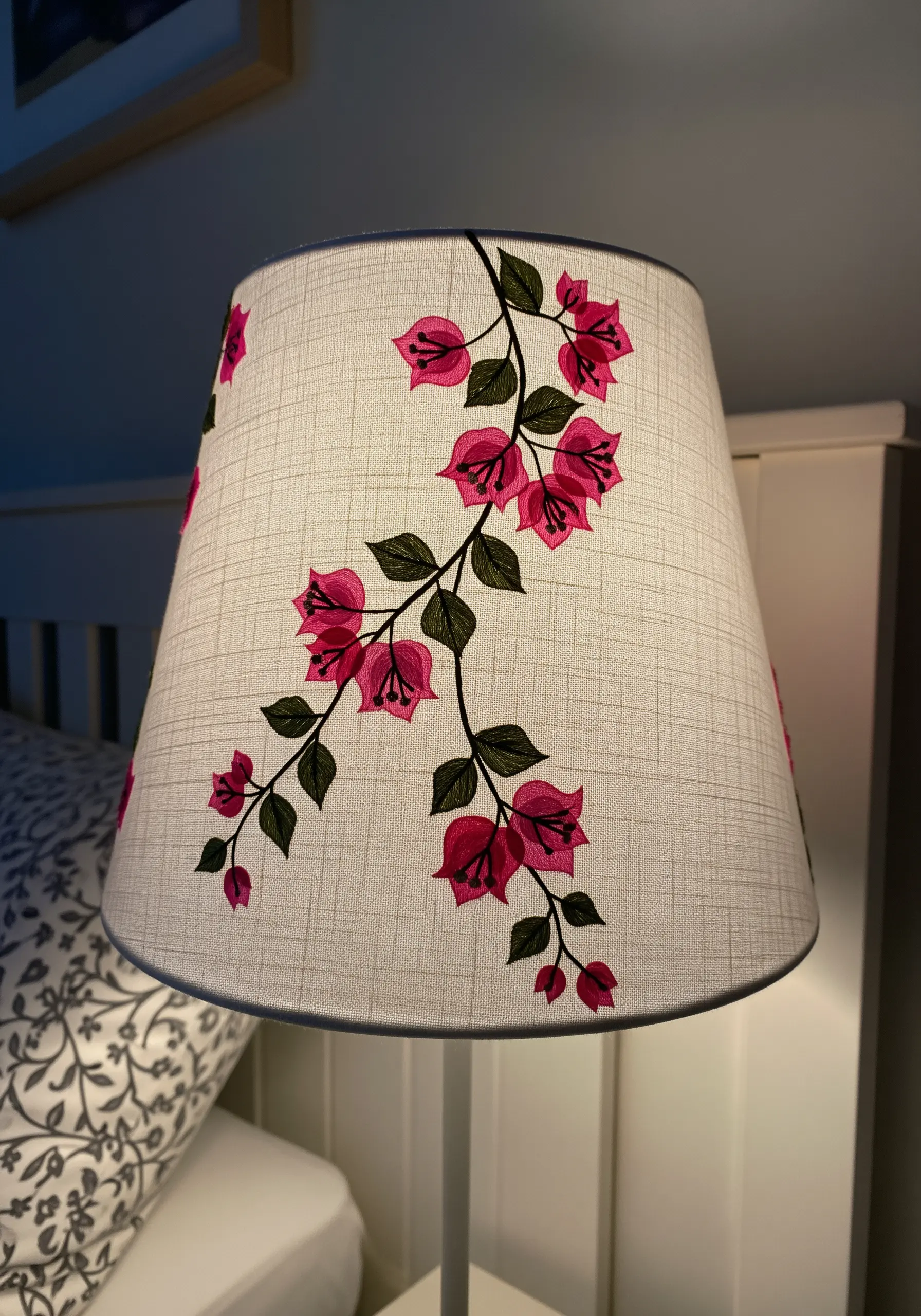
Embroidering on a lampshade brings your work to life with light.
If you can’t remove the fabric, use a curved upholstery needle to stitch directly onto the taut surface.
Choose a design with clear outlines, like climbing vines, so it remains legible when backlit.
Use appliqué for larger shapes like petals and a simple stem stitch for vines. This minimizes the number of times you have to push the needle through the tough material.
This is one of the most rewarding creative embroidery projects that transform ordinary fabric into a functional piece of art.
12. Symmetrical Florals for Collars and Cuffs
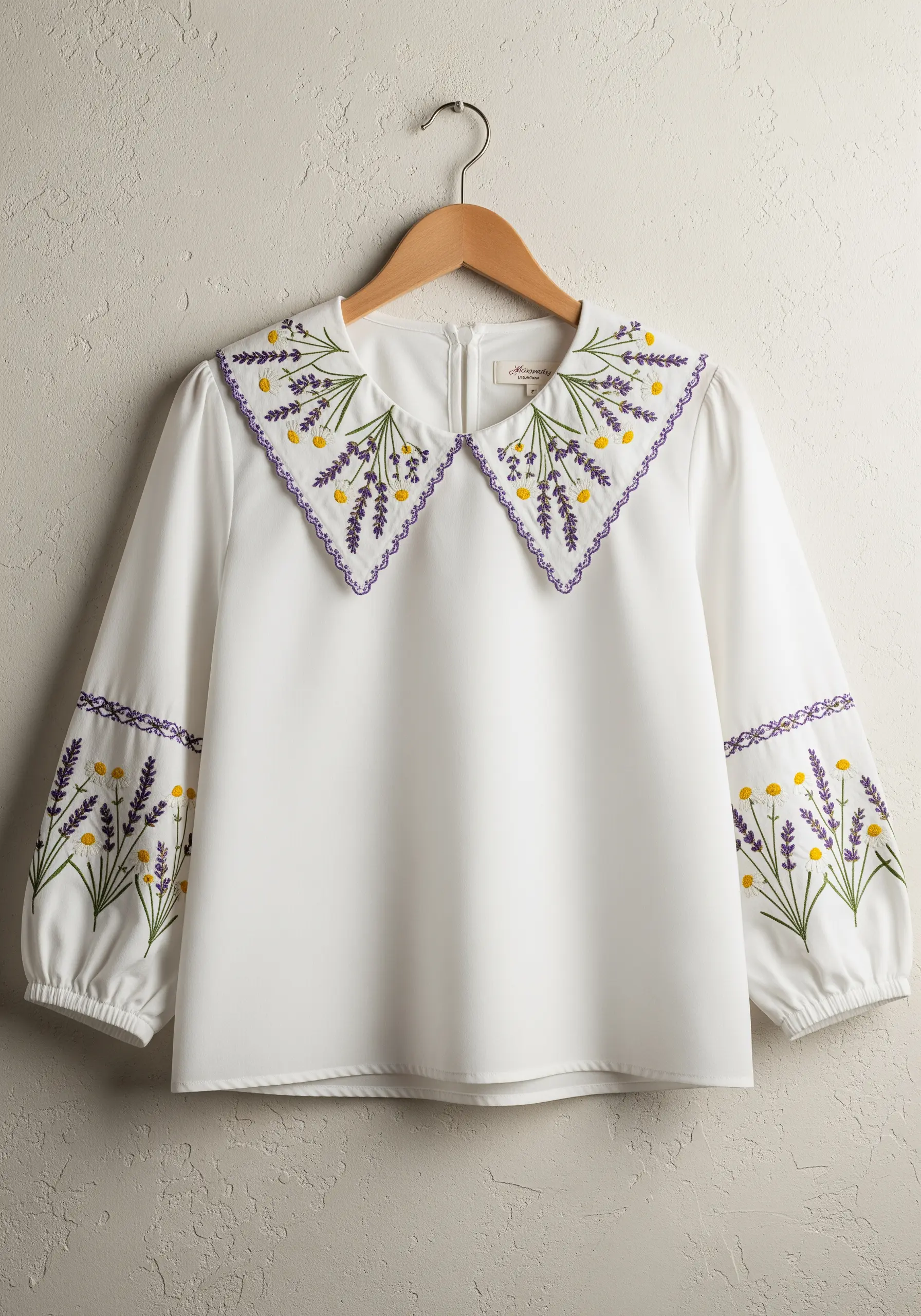
Adding embroidery to a collar creates a beautiful, face-framing detail.
Symmetry is essential for a polished look. Use a carbon paper or a water-soluble transfer pen to perfectly mirror your design on both sides.
Choose delicate motifs like lavender and craspedia that won’t overwhelm the garment’s structure.
Use fine stitches like detached chain stitch and French knots to keep the embroidery light and flexible, perfect for these high-movement areas. It’s a sophisticated take on whimsical floral embroidery ideas for kids clothing and nursery decor.
13. Translating Nature Directly into Thread
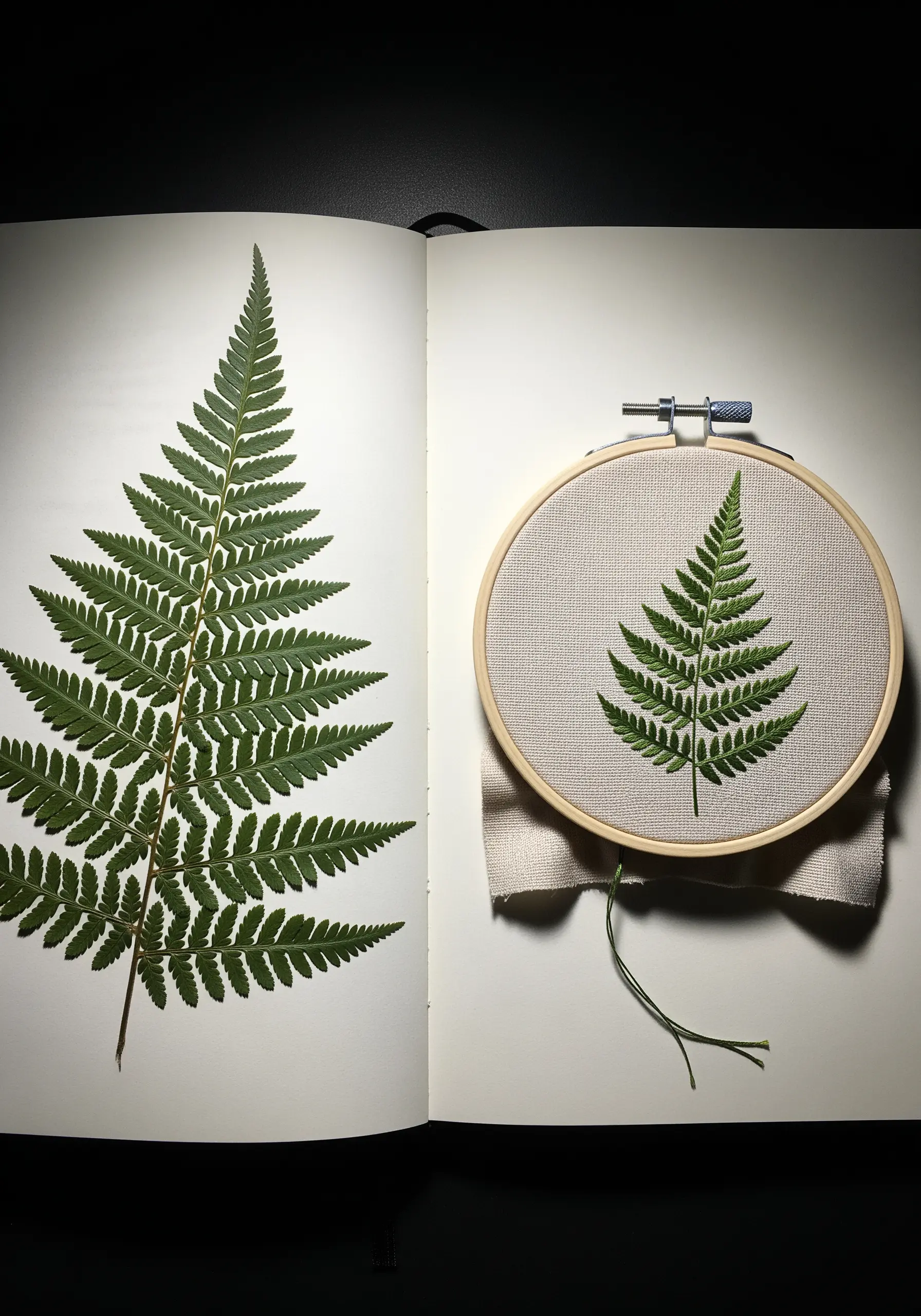
Elevate your work by using a real pressed leaf as your pattern and reference.
Place the leaf directly beside your hoop and focus on replicating its exact structure and texture.
Use a single stitch, like the fishbone stitch, to capture the intricate pattern of the leaflets.
Pay close attention to the angle and length of each stitch—this is what creates the realism.
This exercise in observation is one of the best ways to embroider natural textures that wow your friends and sharpen your skills.
14. A Cheerful Sunflower Border on Curtains
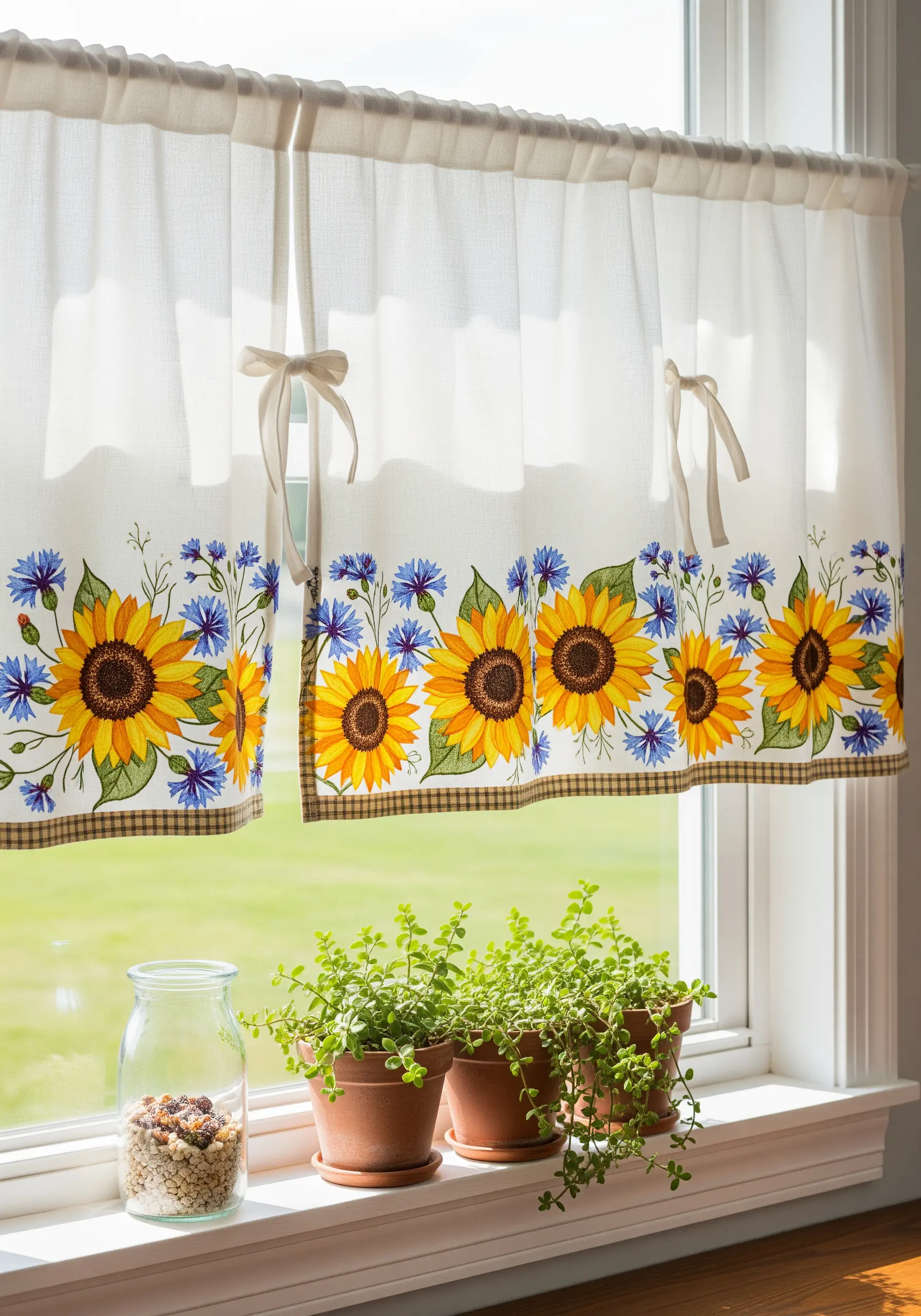
Brighten a room by adding a floral border to simple café curtains.
To create a dense, highly textured center for sunflowers, use the woven wheel stitch.
For the petals, layer two shades of yellow with long satin stitches to give them dimension.
Intersperse smaller flowers like cornflowers using a contrasting cool blue to make the warm yellows pop.
When stitching home decor that gets sunlight, always choose high-quality, colorfast threads to prevent fading. These embroidered curtain blind ideas to brighten compact city apartments add instant charm.
15. Layering Stitches on Felt Ornaments
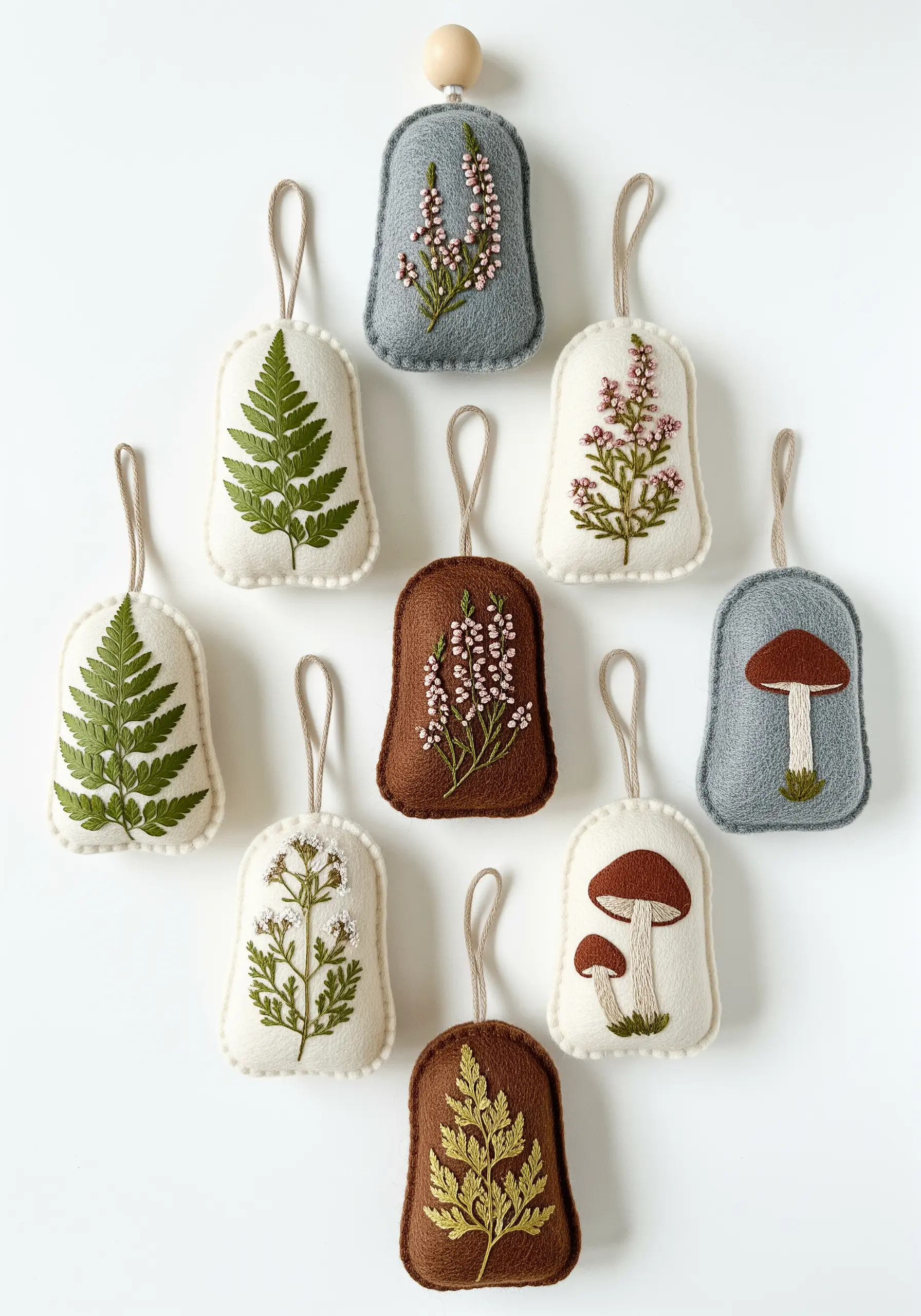
Felt provides a wonderful, forgiving base for small, detailed embroidery projects like ornaments.
Its stable, non-fraying nature means you can stitch close to the edge with confidence.
Use the felt as your canvas, adding delicate details like tiny fern leaves with fly stitch or heather blossoms with French knots.
You can even add a layer of felt appliqué, like the mushroom caps, for extra dimension before stitching the details. They are like tiny, festive string art holiday ornaments embroidery fans can create without advanced tools.
16. Embroidering on Canvas Footwear
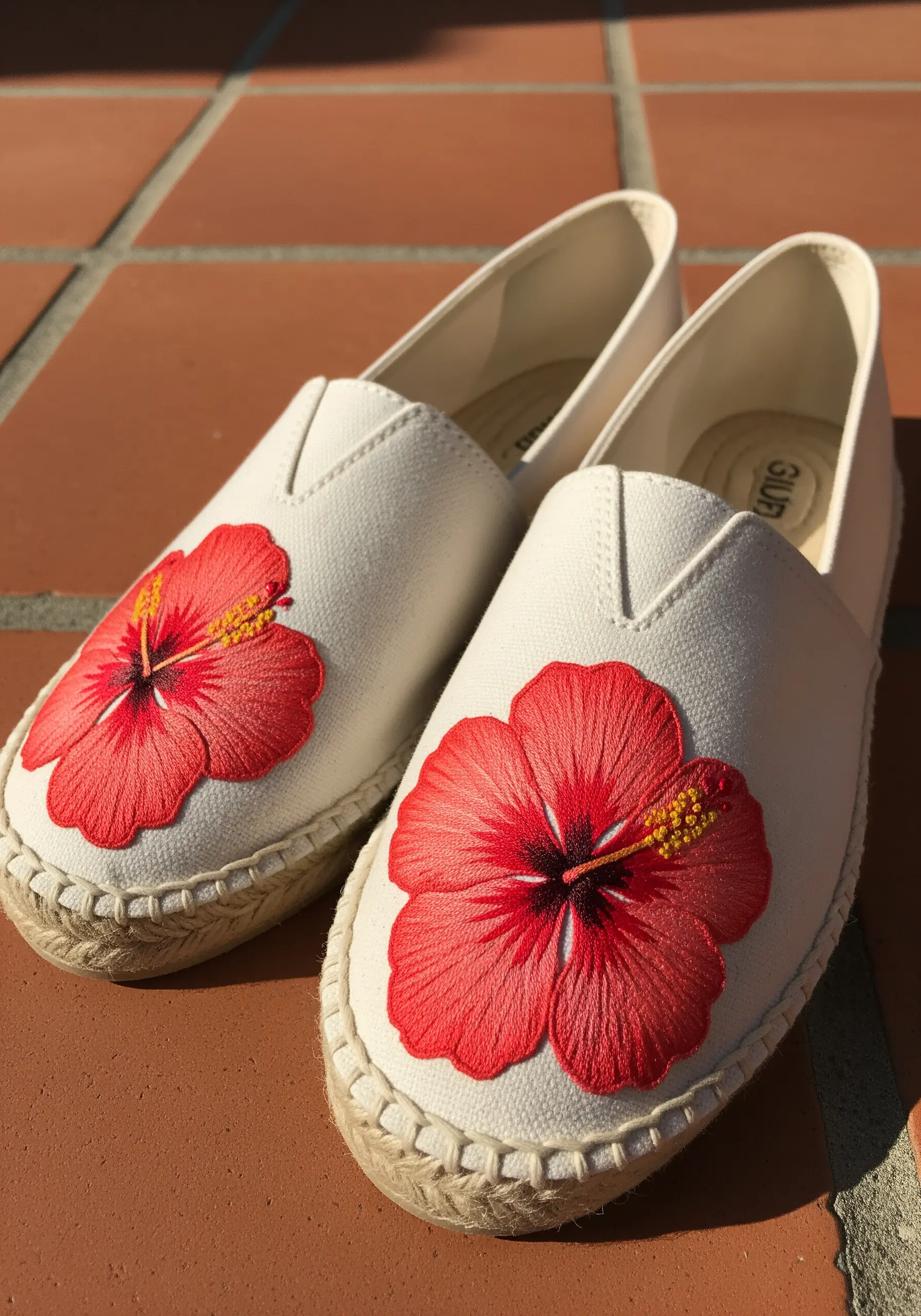
Transform plain espadrilles or canvas sneakers with a bold, statement floral.
Because you’re working on a thick, inflexible surface, a thimble is your best friend.
Use a strong, sharp needle and shorter lengths of thread to minimize friction and tangling.
A long-and-short stitch is perfect for blending the petal colors, while a few well-placed French knots add texture to the flower’s center.
Think of it as creating wearable art, much like the bold tote bag embroidery designs that make your grocery runs look chic.
17. An Autumnal Palette on Dark Wool
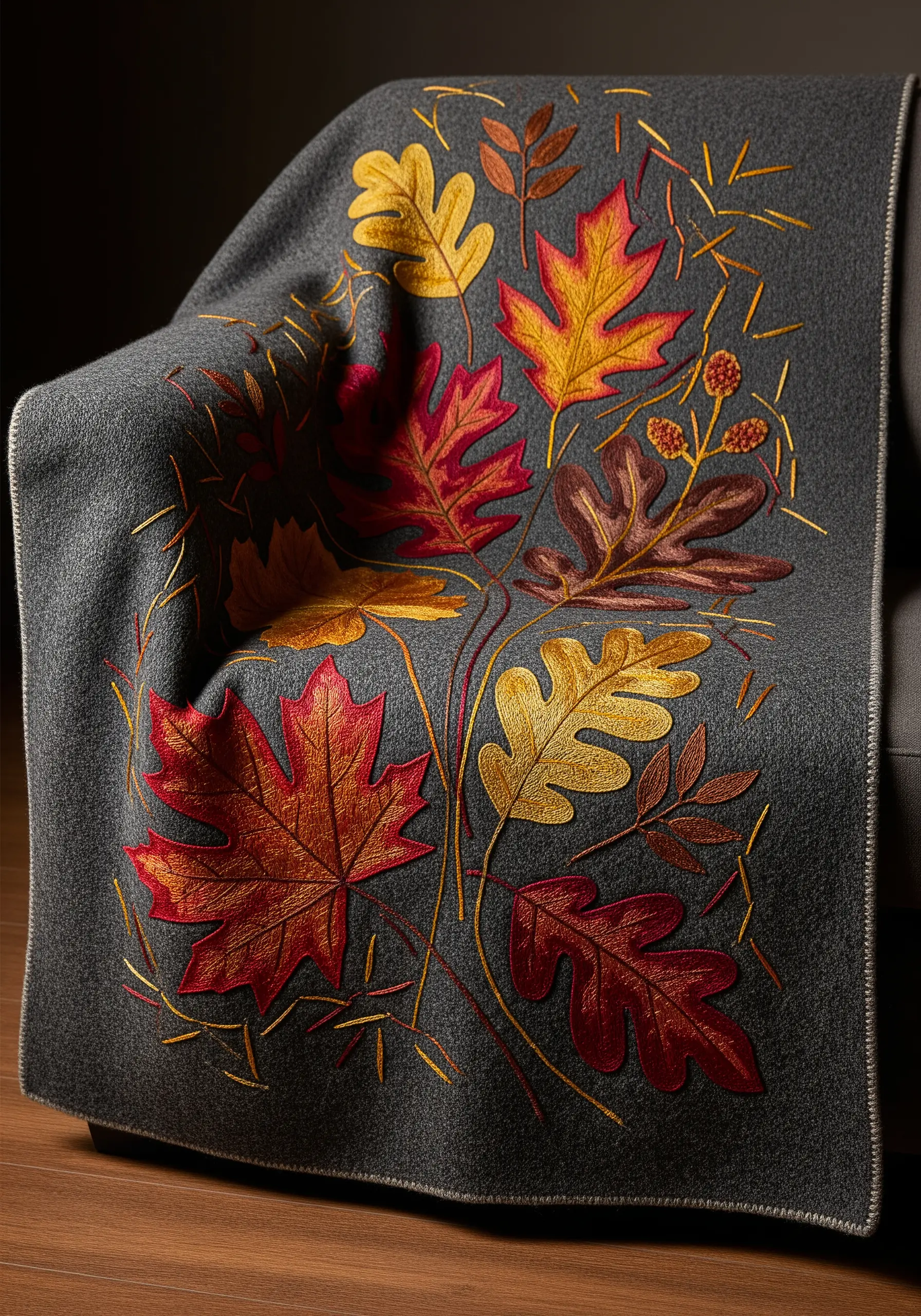
Let your thread colors truly sing by stitching them onto a dark, textured background like a wool blanket.
Use a full six strands of floss or even a fine wool thread to ensure your stitches have presence against the heavy fabric.
Create realistic autumn leaves using a gradient of reds, oranges, and golds with the long-and-short stitch.
Scatter loose, long straight stitches in gold or copper around the motifs to mimic fallen pine needles and add a sense of movement to the composition. It’s a perfect way to capture the feeling of the season, much like other seasonal embroidery wall decor ideas for all holidays from diwali to christmas.
18. Creating 3D Roses with Padded Stitching
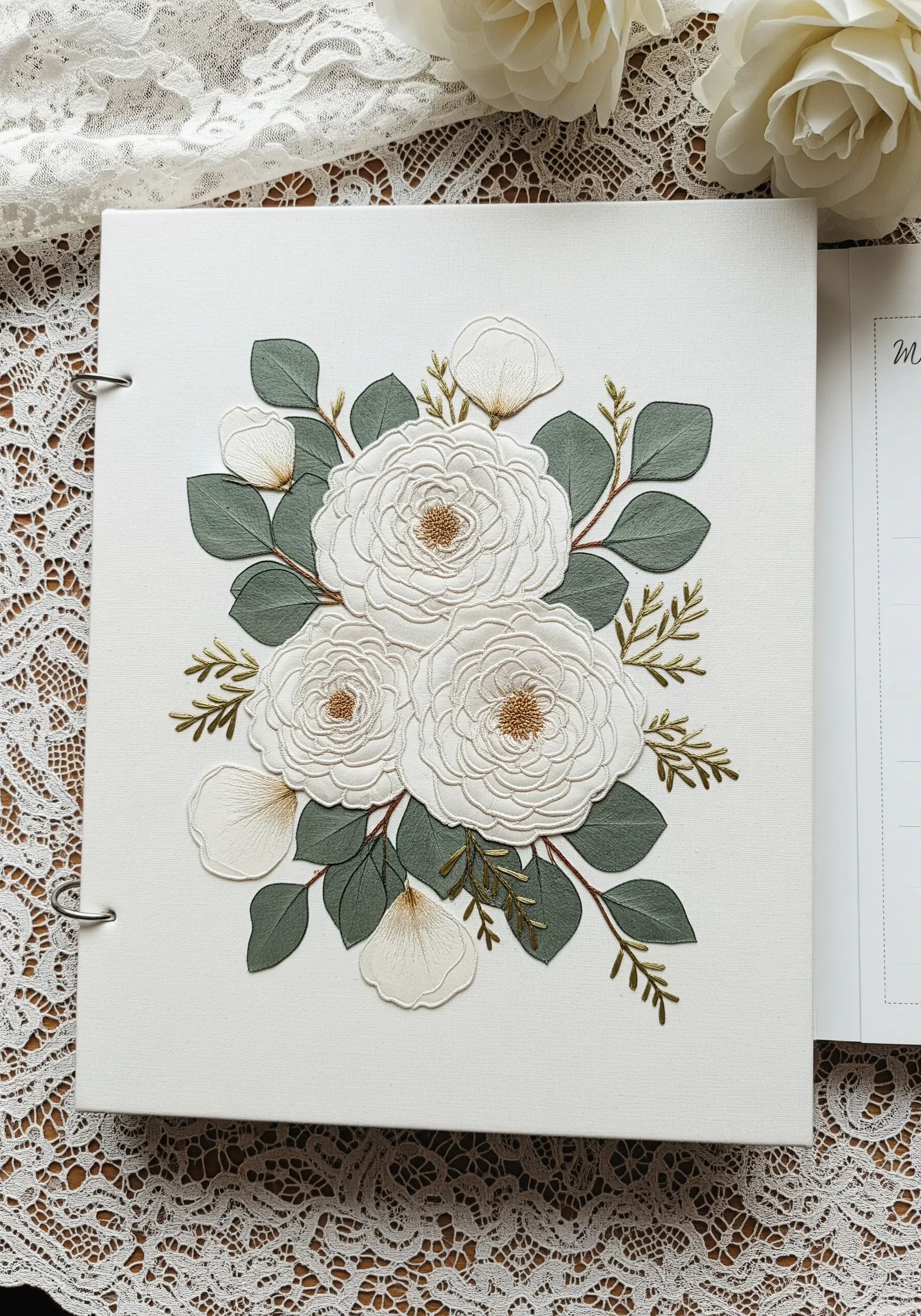
To give your flowers a sculptural, raised effect, use padded satin stitch.
First, create an under-layer of small, horizontal stitches within your petal shape. Then, cover this padding with your final satin stitches, worked vertically.
This simple technique lifts the thread off the surface, creating shadows and highlights that enhance realism.
For the detached, floating petals, explore stumpwork by stitching them onto a separate piece of fabric with a wire edge, then cutting them out and attaching them to your main piece. These are wonderful creative small diy decor ideas for your cozy nook.
19. Functional Art: The Botanical Bookmark
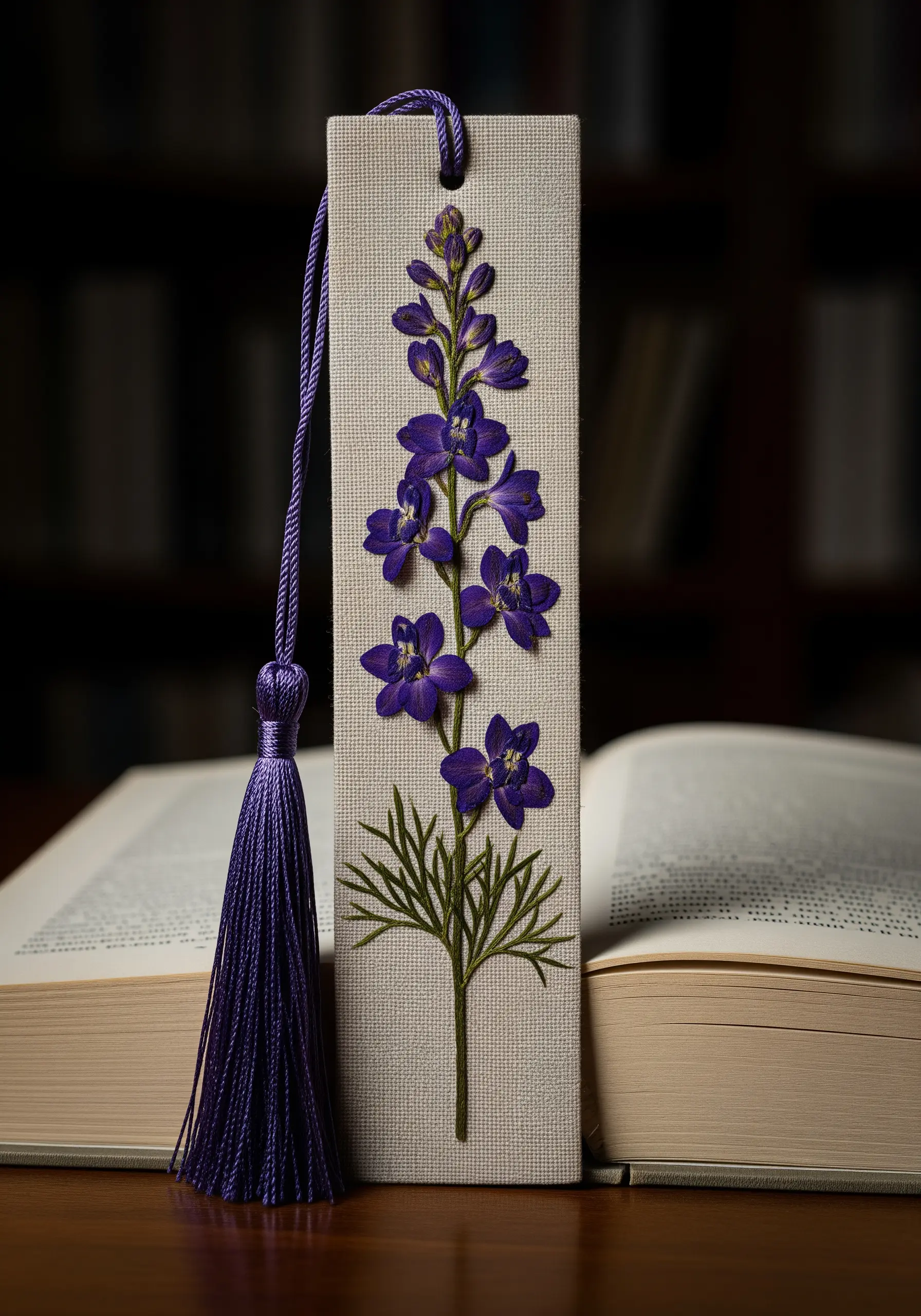
Turn a single pressed flower into a beautiful and functional piece of art.
Mount a sturdy piece of linen or canvas onto cardstock to create a firm base.
Carefully place your pressed botanical and use a single strand of thread to couch the stem and tack down the petals with nearly invisible stitches.
Adding a silky tassel not only looks professional but also makes the bookmark easy to find between pages. This is one of the most elegant diy cozy embroidery bookmarks that make reading magical.
20. A Triptych of Seasonal Wreaths
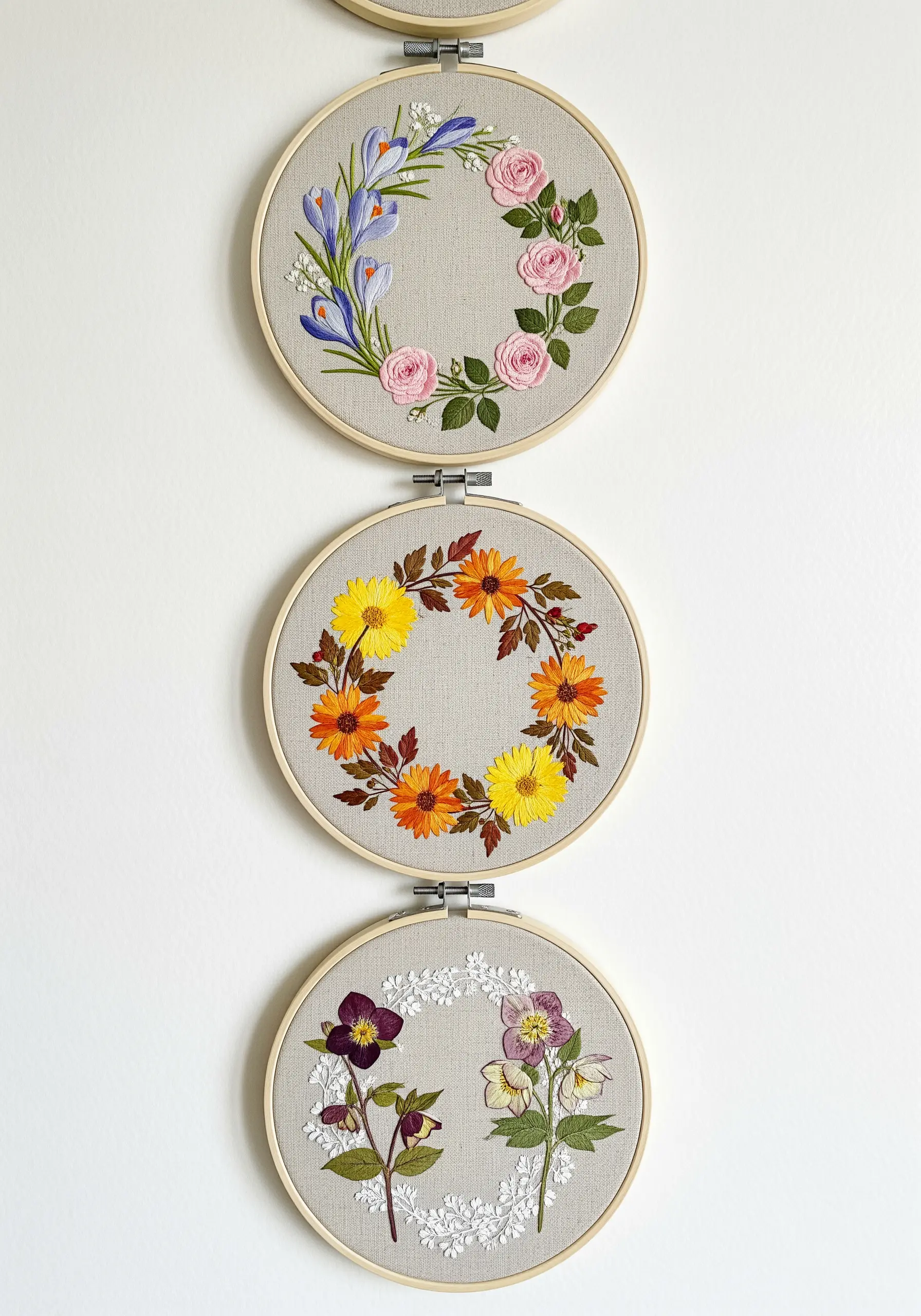
Tell a story through the seasons by creating a series of three related hoops.
Maintain cohesion by using the same size hoop and the same neutral linen fabric for each piece.
Vary the floral content and color palette to reflect each season: soft pinks and greens for spring, bright yellows and oranges for summer/autumn, and deep purples and whites for winter.
This approach allows you to practice different stitches and color combinations while building a cohesive set of seasonal wall art projects stitch spring summer autumn winter on fabric.
21. Delicate Botanicals on Gift Tags
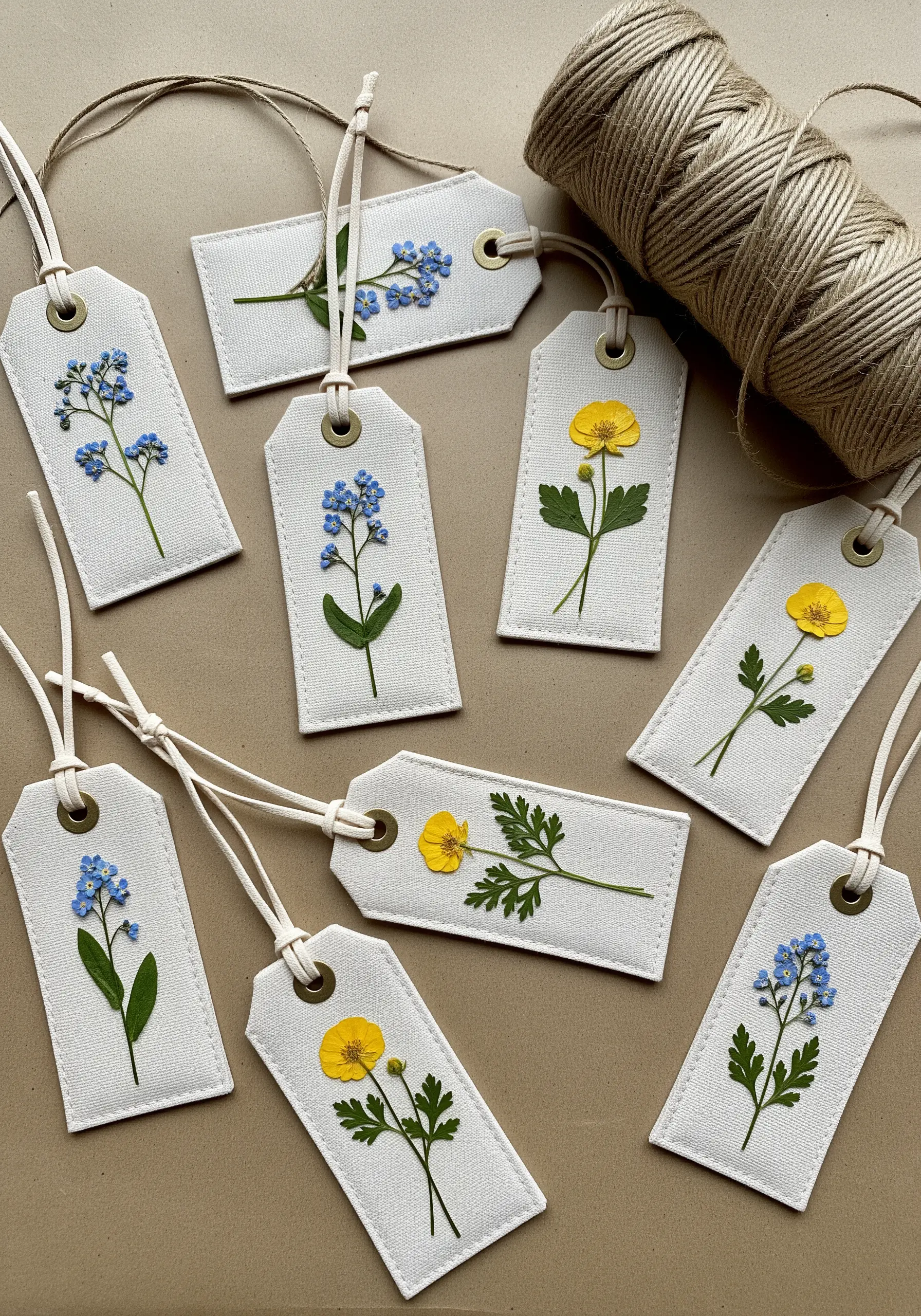
Elevate your gift-giving by adding a touch of embroidery to your tags.
Work on small fabric tags or even heavy cardstock (pre-pierce the holes with your needle to make it easier).
Use just one or two strands of floss to keep the scale delicate.
A single sprig of forget-me-nots, created with lazy daisy stitches and French knots, is all it takes to turn a simple tag into a thoughtful keepsake.
These are the perfect small embroidery ideas to add a personal touch to gifts that show you care.
22. The Upholstered Mandala Masterpiece
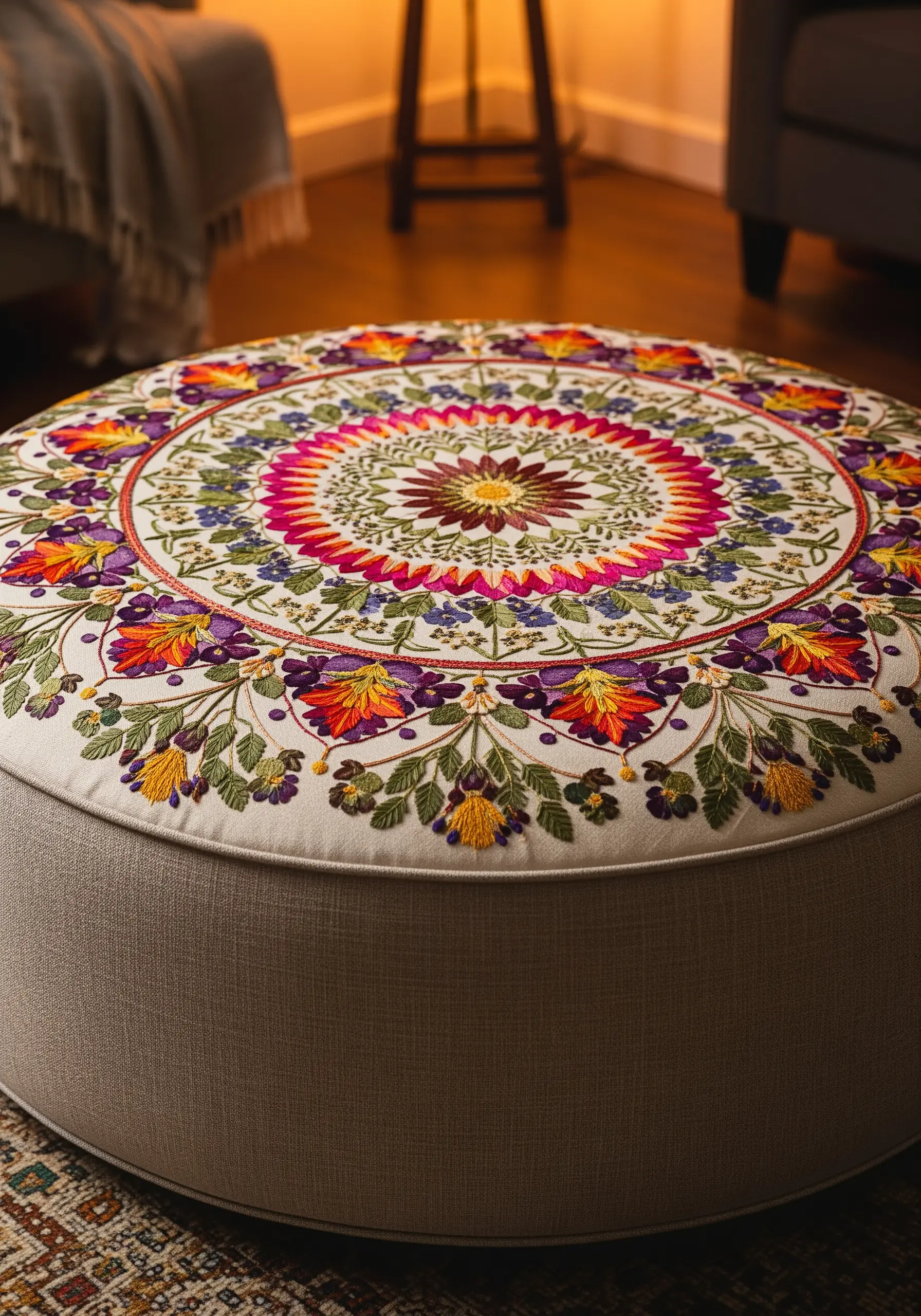
For a truly ambitious project, tackle an upholstered piece like an ottoman.
The key to a successful mandala is flawless symmetry. Take your time transferring the pattern accurately using a large sheet of transfer paper.
Use a rich variety of stitches to differentiate the sections of the design—satin stitch for bold color blocks, chain stitch for outlines, and French knots for textured centers.
Choose a durable, tightly woven upholstery fabric that can withstand both the dense stitching and everyday use, and explore modern thread mandala ideas for people obsessed with calming meditative embroidery for inspiration.
23. 3D Cherry Blossoms with Stumpwork
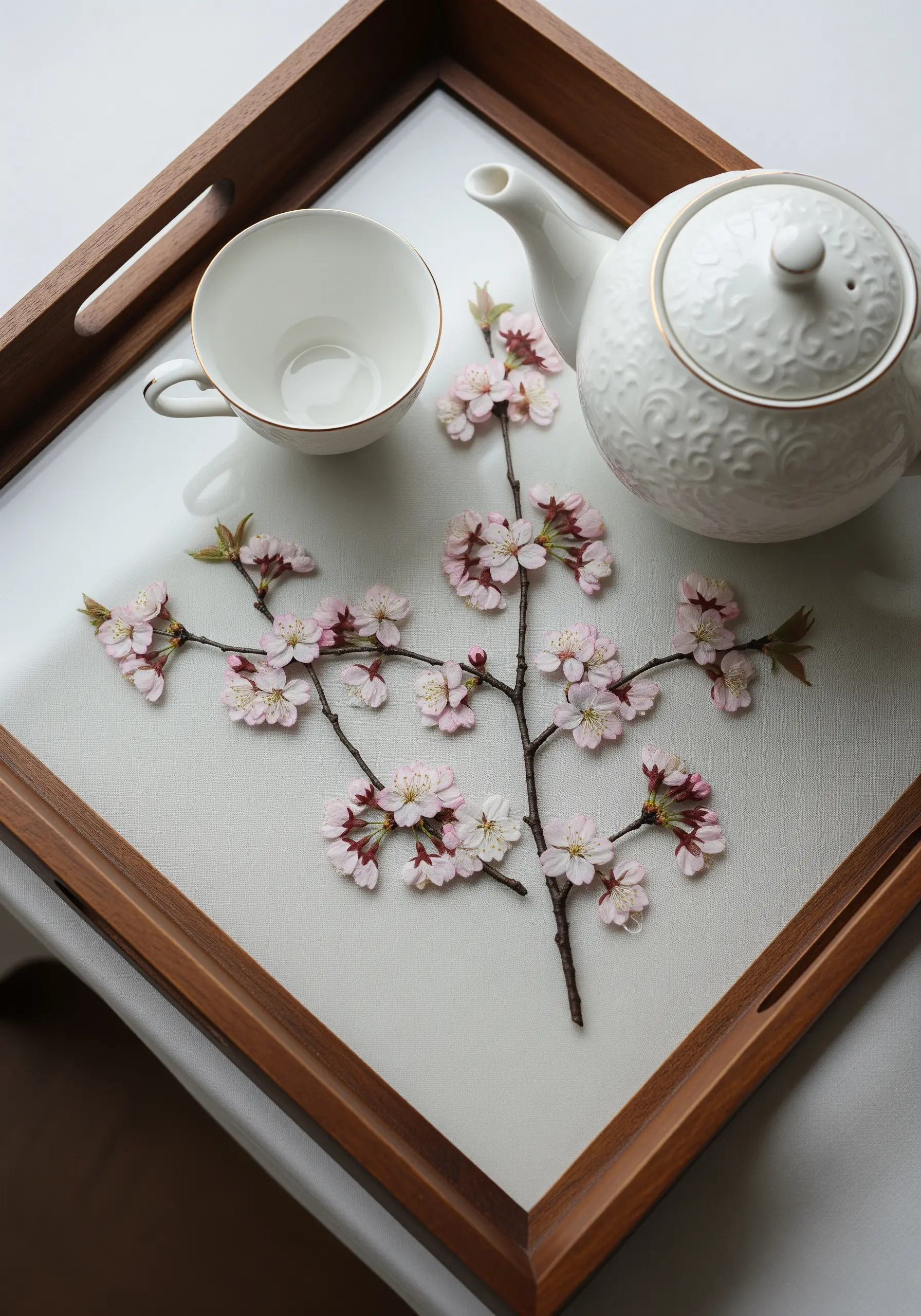
To achieve the delicate, layered look of cherry blossoms, explore stumpwork techniques.
Create the petals individually by stitching them onto a spare piece of fabric that has been stabilized. Leave a small fabric tab or stitch over a fine wire for support.
Cut out each petal and arrange them in layers on your main fabric, tacking them down at the base to create a realistic, three-dimensional flower.
The branches can be created with a padded satin stitch to give them a rounded, woody texture. This approach is similar to advanced floral-inspired ribbon embroidery ideas for textured petals and 3d statement pieces.
24. Tone-on-Tone Glamour on a Headboard
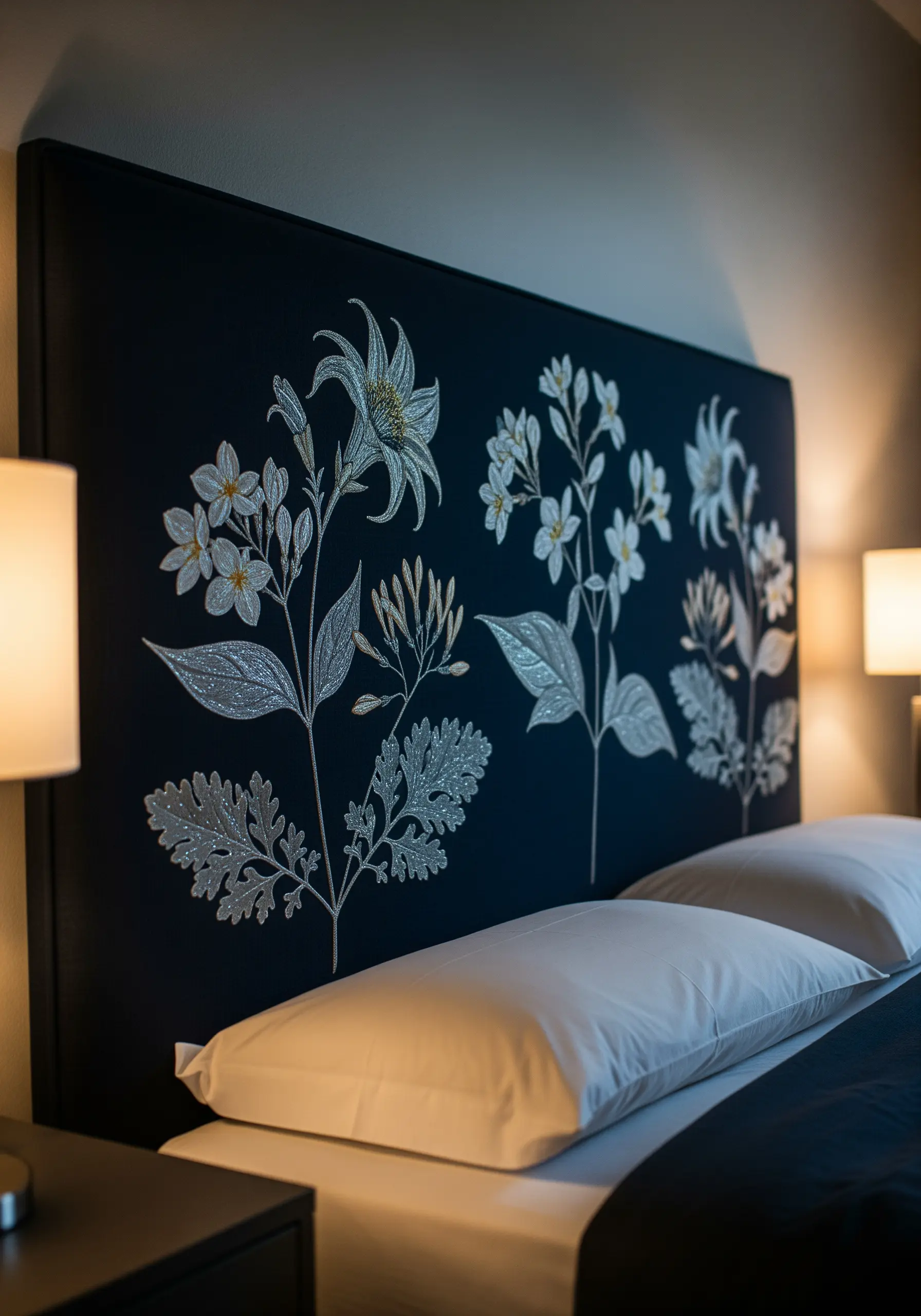
Create a sophisticated, high-impact design using a monochromatic palette with a hint of shimmer.
Stitching with light-colored metallic or silk threads on a dark, matte fabric like navy velvet or charcoal linen creates a stunning contrast.
Use a combination of satin stitch to catch the light and simple backstitch to define the elegant forms of the flowers and leaves.
This technique feels luxurious and serene, making it perfect for a bedroom headboard and one of the most glamorous metallic thread wall art designs for glamorous light-reflecting interiors.


