Have you ever finished an embroidery project, looked at it, and felt that something was missing? You followed the pattern, used the right colors, but it doesn’t have that polished, intentional quality you admire in other artists’ work. It’s a common feeling, but the solution is rarely about adding more complexity.
True artistry in embroidery often comes from small, deliberate choices. It’s in the way you choose a whipped backstitch over a standard one for a smoother line, or how you use a single strand of thread to paint with light and shadow. It’s about understanding which textures to combine, when to let the fabric breathe, and how a simple change in stitch direction can bring a motif to life.
These ideas are designed to shift your perspective. They aren’t just patterns to follow; they are techniques to internalize. Think of them as tools to help you translate the vision in your mind onto the fabric in your hands, with more confidence, precision, and personal style than ever before.
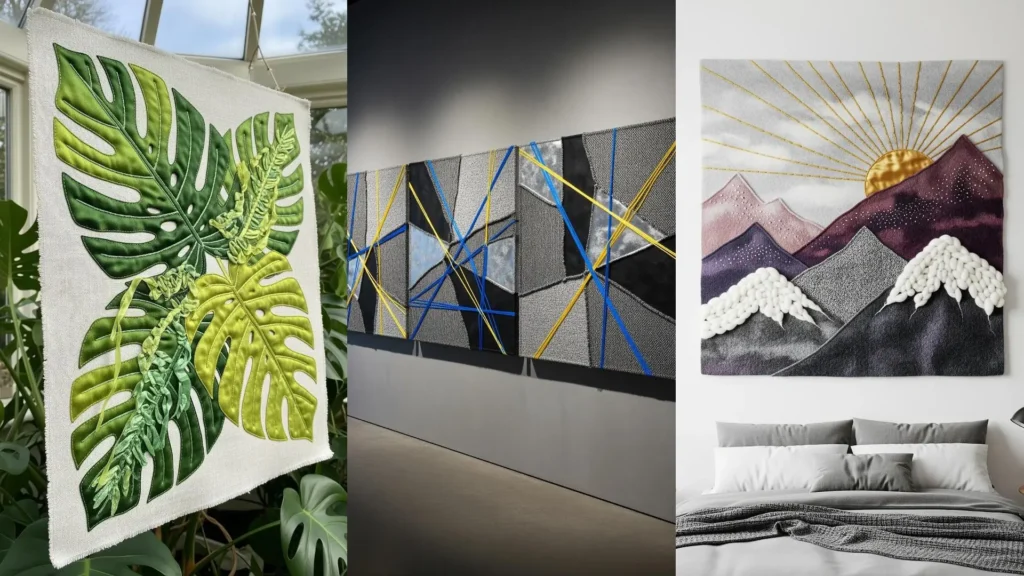
1. Create a Statement Textile Mural with Punch Needle
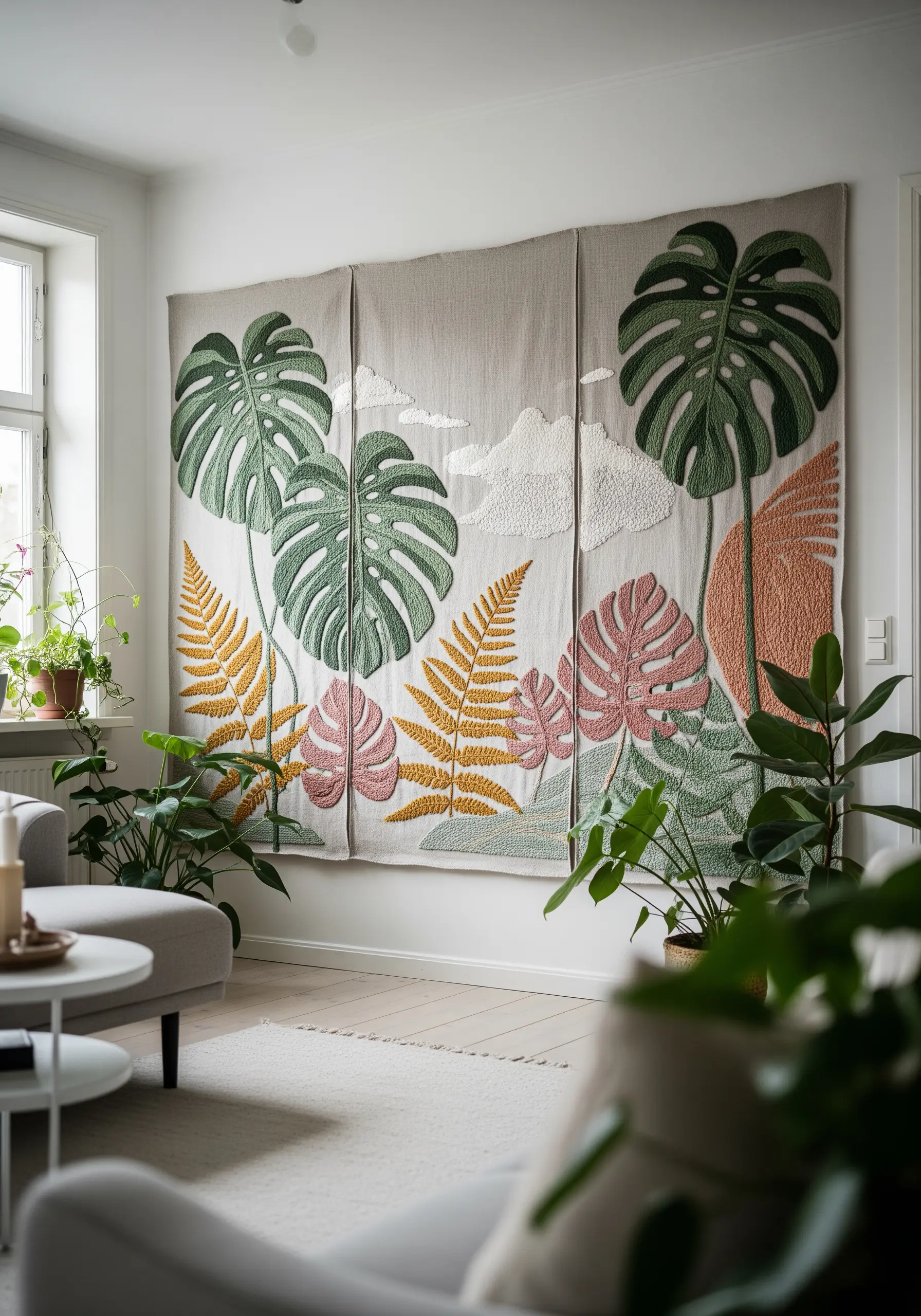
To transform an entire wall, think beyond the hoop and work in large, manageable panels.
Use a punch needle with thick yarn for filling in large areas like leaves and background clouds—it’s significantly faster than traditional stitching and creates a wonderfully plush, looped texture.
Reserve classic embroidery stitches, like satin or stem stitch, for defining edges and adding finer details.
This combination of techniques allows you to create statement-size embroidered textile hangings that feel both graphic and soft, turning a blank wall into a focal point.
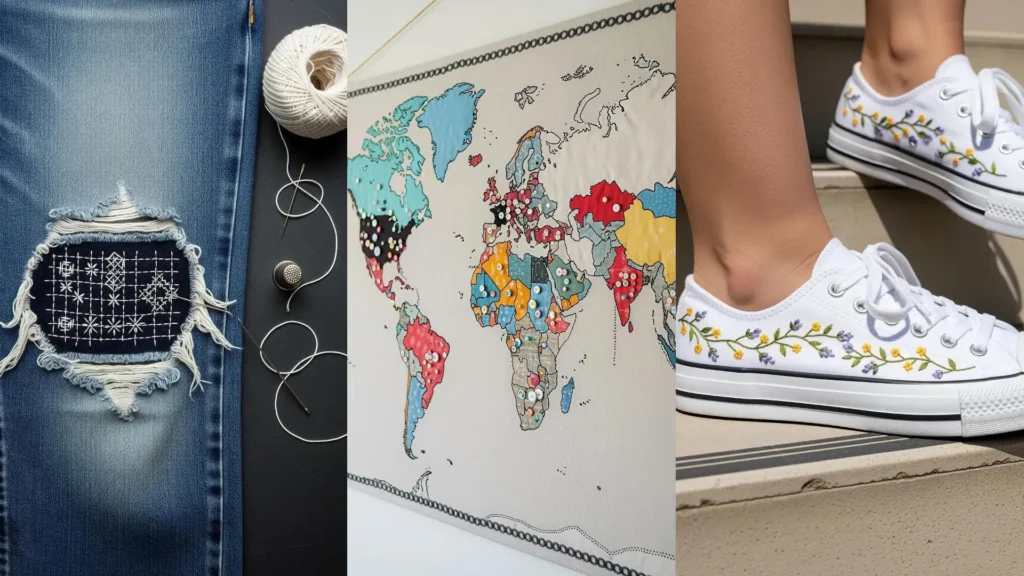
2. Elevate Denim with Iconic, High-Contrast Motifs

When embroidering on heavy fabric like denim, always use a stick-on, wash-away stabilizer to prevent the fabric from puckering and your stitches from sinking.
Choose a design with strong outlines and a high-contrast color palette—like white, red, and gold on dark denim—to ensure your work stands out.
Use a dense satin stitch for the color fills, and then outline every shape with a sharp, two-strand backstitch.
This outlining technique gives your design a clean, almost illustrative quality that makes it look professional and intentional.
These are the kinds of easy stitches that bring your plain denim jackets to life with bold personality.
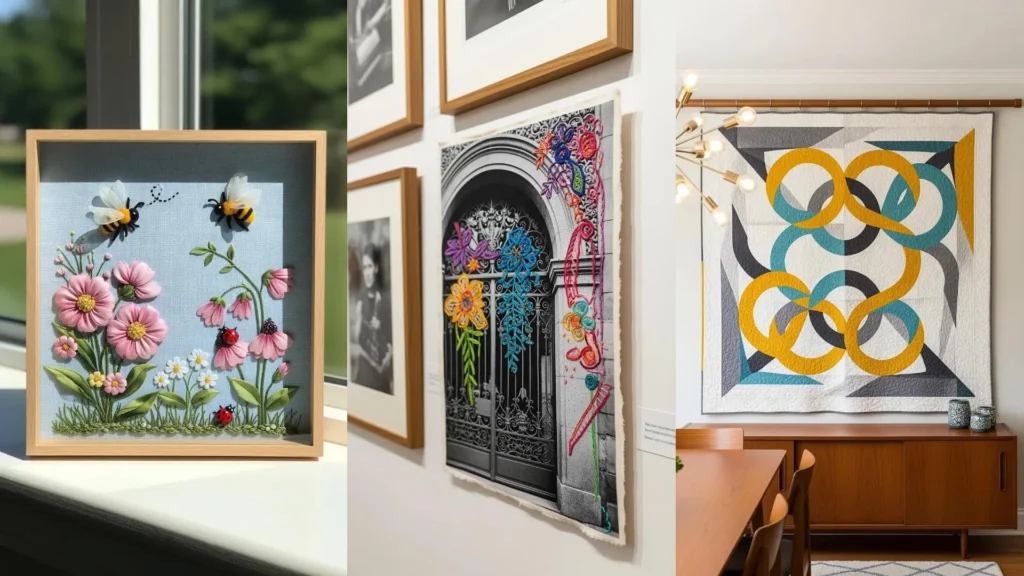
3. Master Stumpwork for Lifelike 3D Specimens
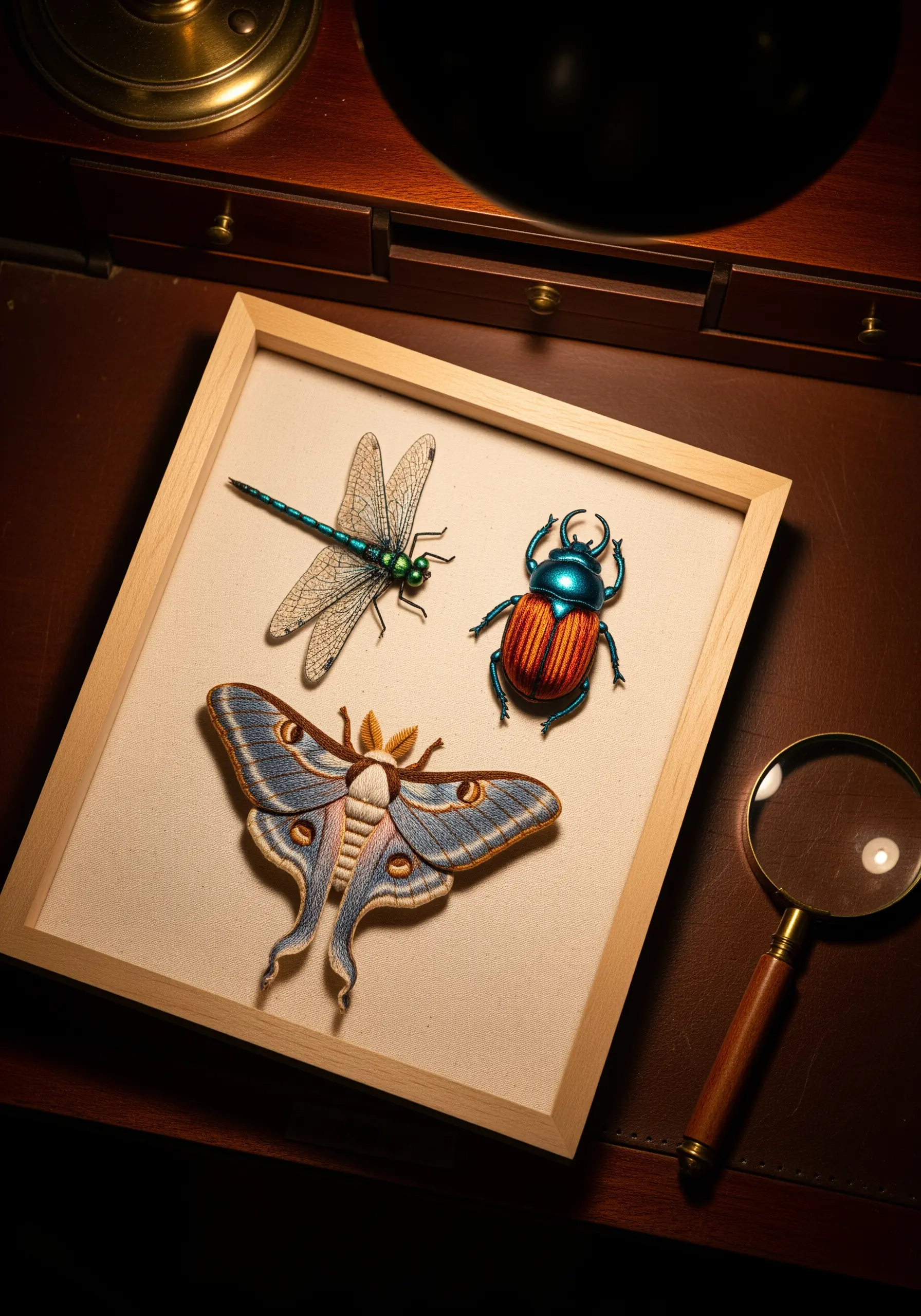
Bring your subjects off the fabric with stumpwork, or raised embroidery.
You create the individual elements, like wings or petals, on a separate piece of fabric, often incorporating fine wire around the edges for shaping.
Once complete, you cut them out and attach them to your main design, creating a stunning three-dimensional effect.
Use silk shading (long-and-short stitch) with single strands of thread to achieve the iridescent sheen on insect wings and bodies.
These are the contemporary texture techniques to create raised, sculptural embroidery effects that truly captivate the eye.
4. Refine Your Linework with Whipped Backstitch
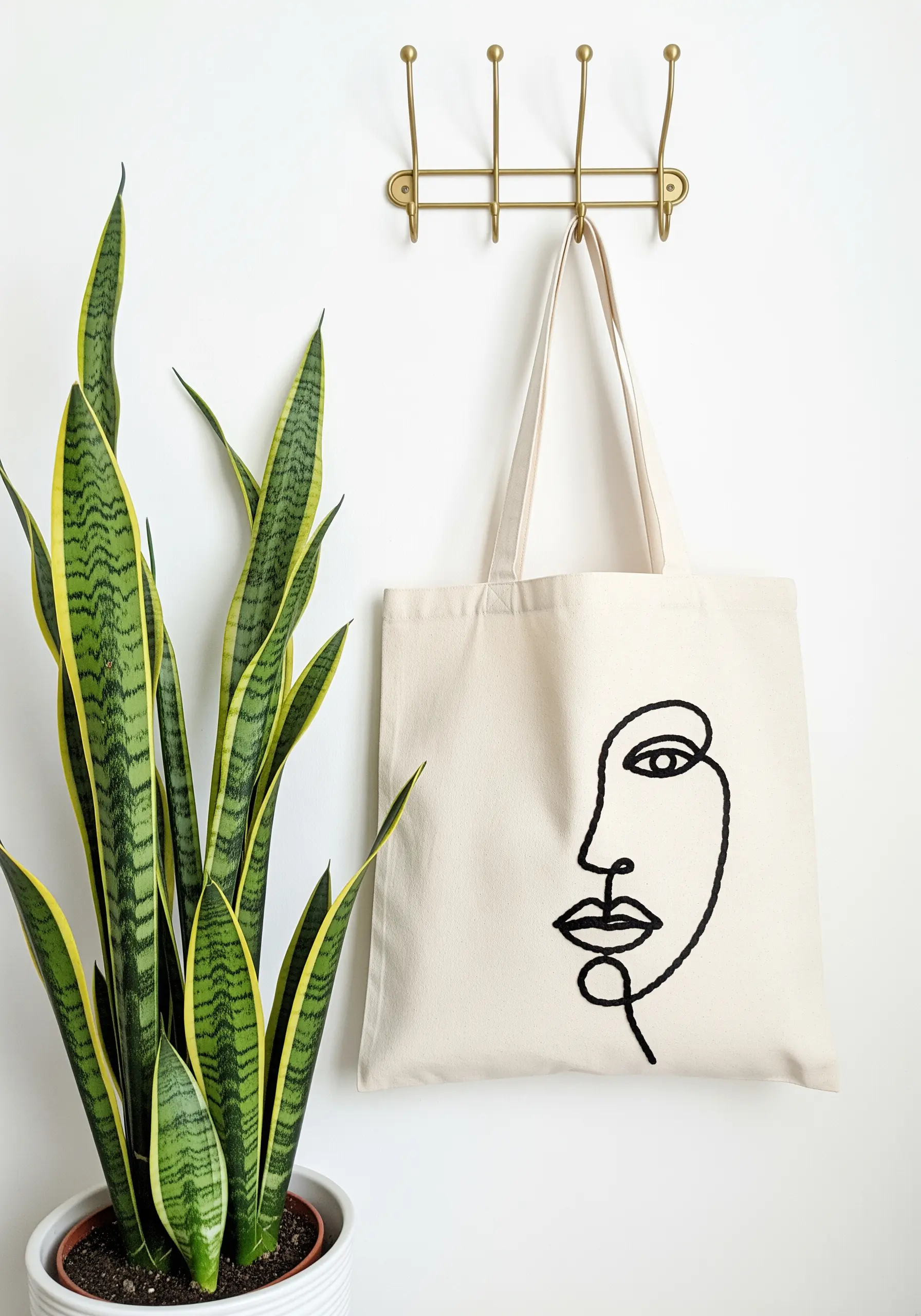
For minimalist line art, a standard backstitch can sometimes appear broken or uneven.
Elevate it by using a whipped backstitch: first, complete your backstitch outline as usual.
Then, take a second thread and ‘whip’ it around each stitch on the surface without piercing the fabric.
This simple addition transforms a basic line into a smooth, solid, and slightly raised cord, perfect for creating the continuous flow required for abstract faces and elegant script.
It’s one of the best minimal line art embroidery patterns to elevate linen into art.
5. Weave a Cosmic Scene with Layered Textures
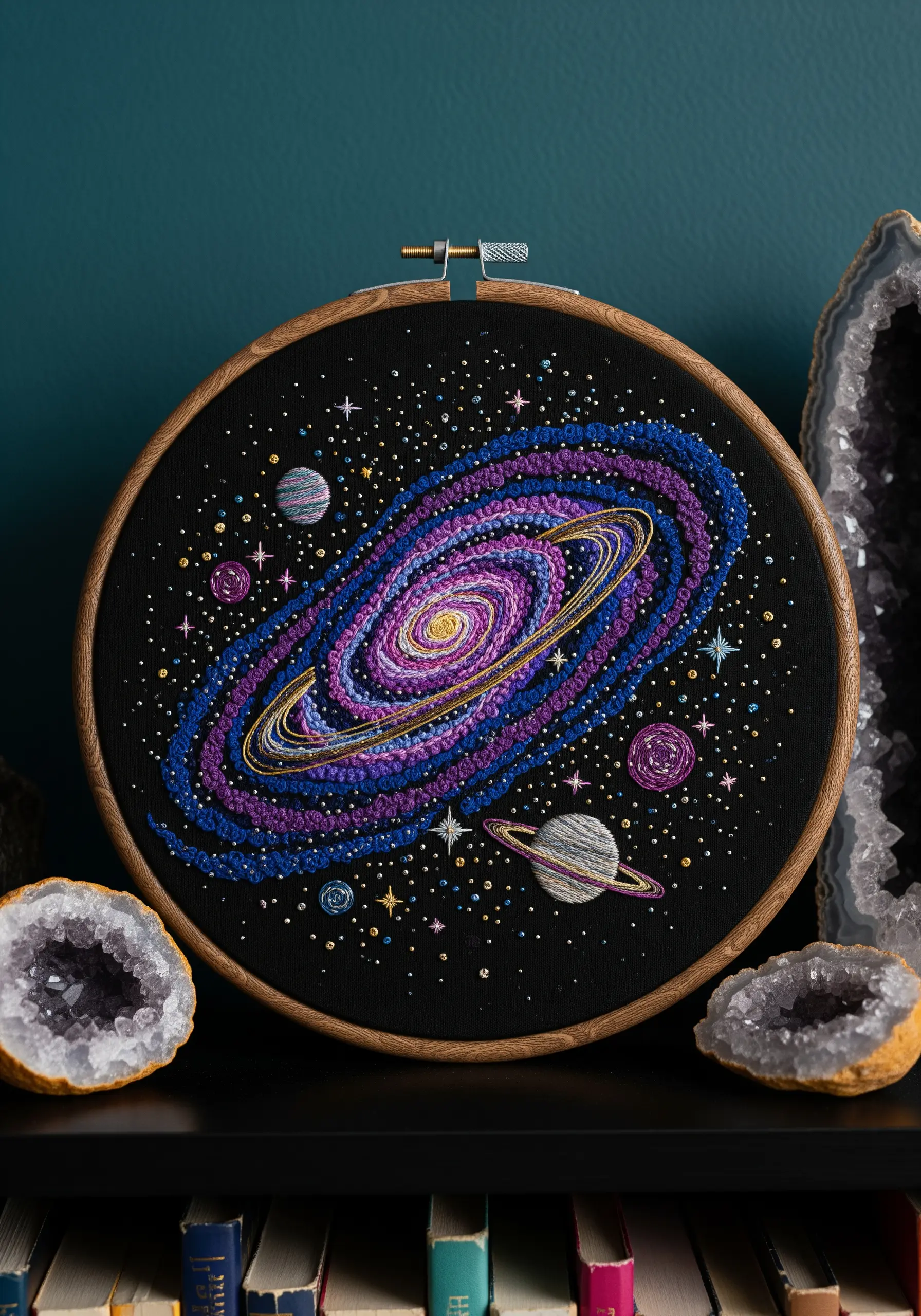
To create cosmic depth, rely on a variety of textured stitches instead of just color.
Form the swirling arms of a galaxy using concentric circles of chain stitch, which gives a braided, rope-like texture.
Then, scatter the background with French knots and colonial knots in different sizes and shades, using metallic or variegated thread for a shimmering effect.
These abstract thread layering techniques build a tactile universe that invites closer inspection.
6. Translate Architecture into Intricate Blackwork
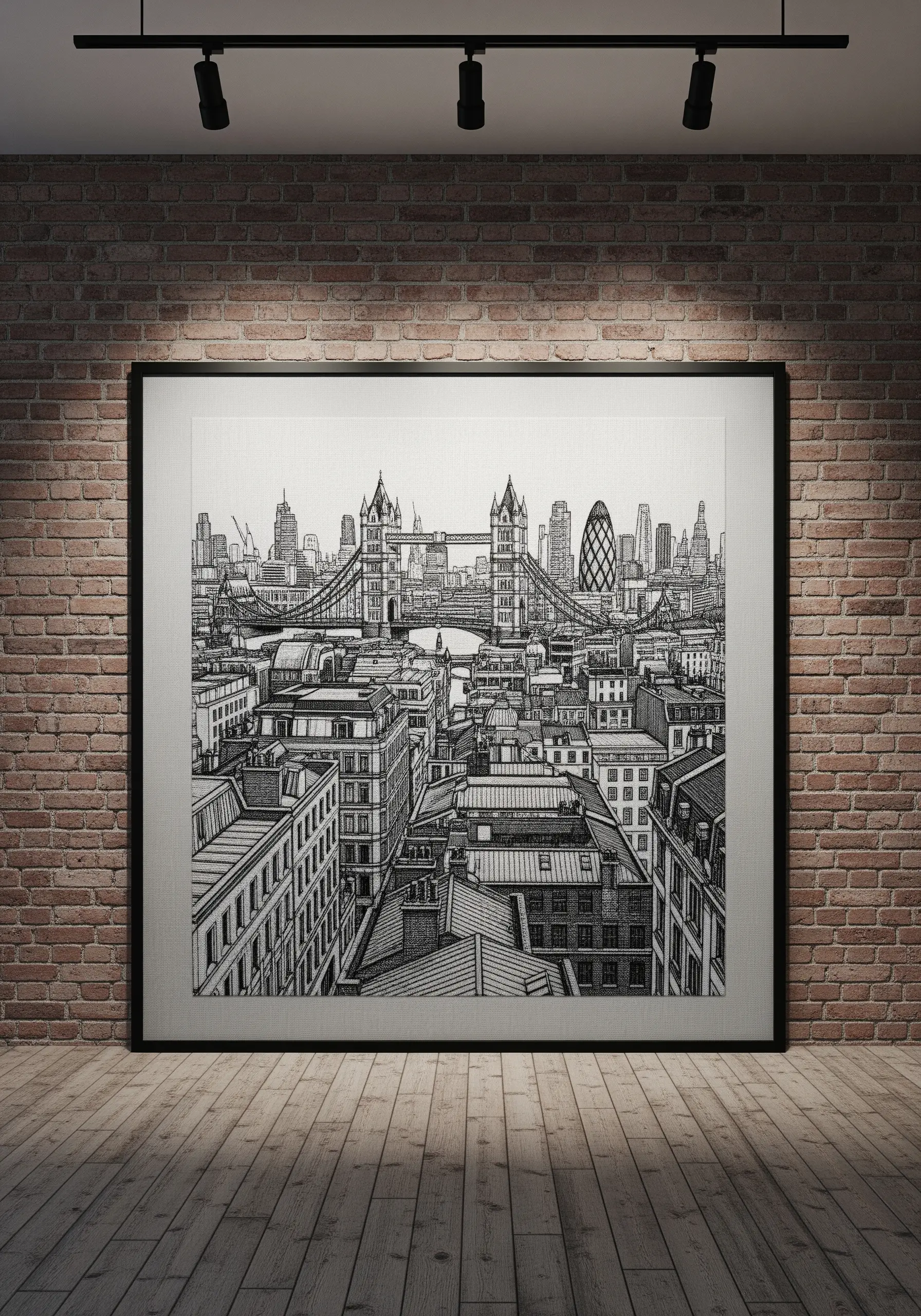
Blackwork embroidery uses repeating geometric patterns, stitched in black thread, to create tone and texture.
Instead of filling architectural shapes with solid satin stitch, use different blackwork fill patterns to represent shading, perspective, and material differences like glass or brick.
Use a single strand of floss on a high-count linen or even-weave fabric to achieve crisp, graphic detail.
This transforms a simple line drawing into a complex, visually rich piece that has the feel of a detailed etching.
7. Achieve Photorealism with Thread Painting
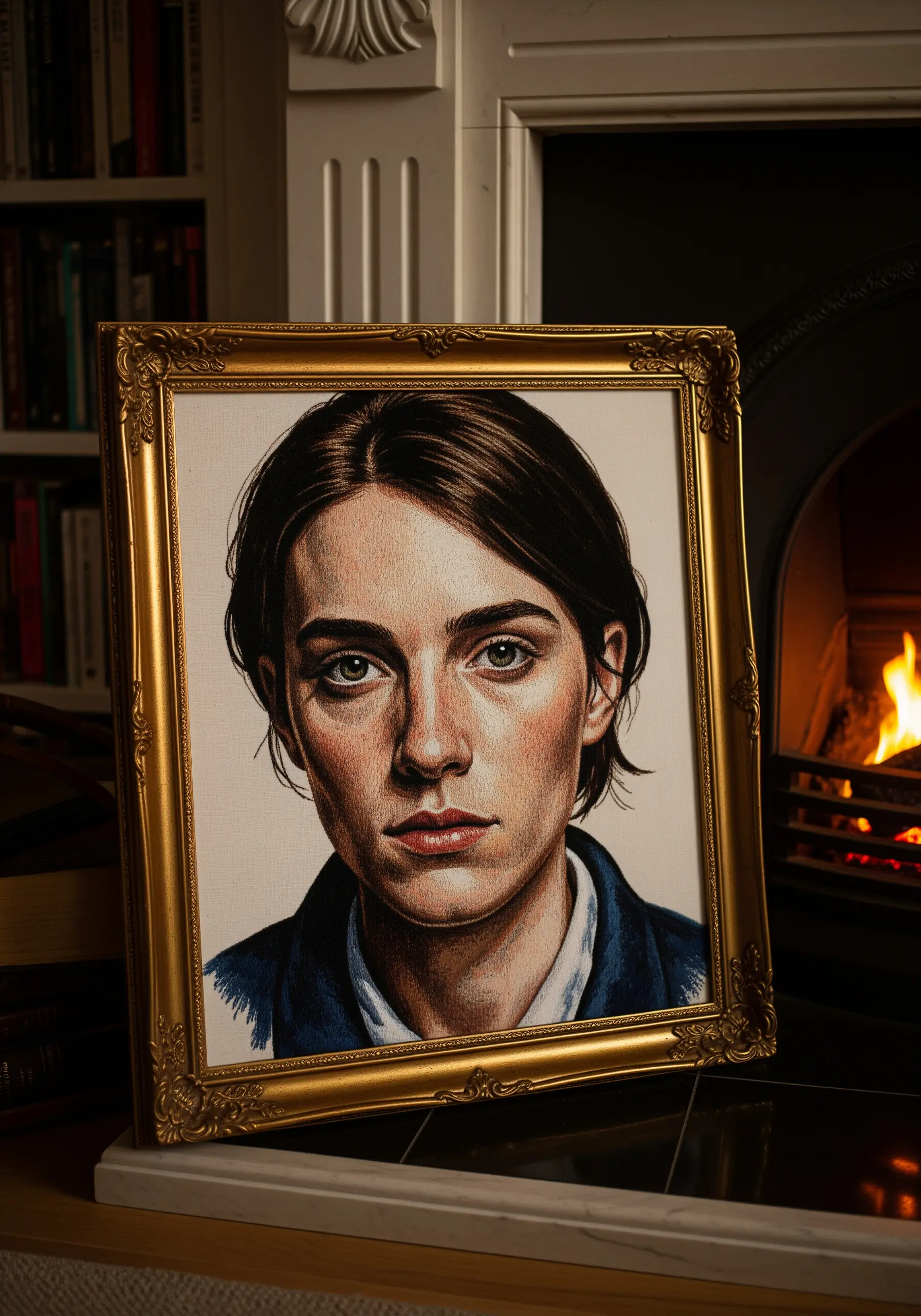
Thread painting, or needle painting, is the art of blending colors with long-and-short stitch to create a realistic, painterly effect.
Work with a single strand of six-strand floss to allow for the most subtle color transitions.
Always follow the natural contours and planes of the face with your stitches to build form and dimension—for instance, stitch outwards from the nose and curve stitches around the chin.
These are the skills you need for hand-stitched portrait wall art ideas that capture a true likeness.
8. Sculpt a Landscape with High-Texture Stitches
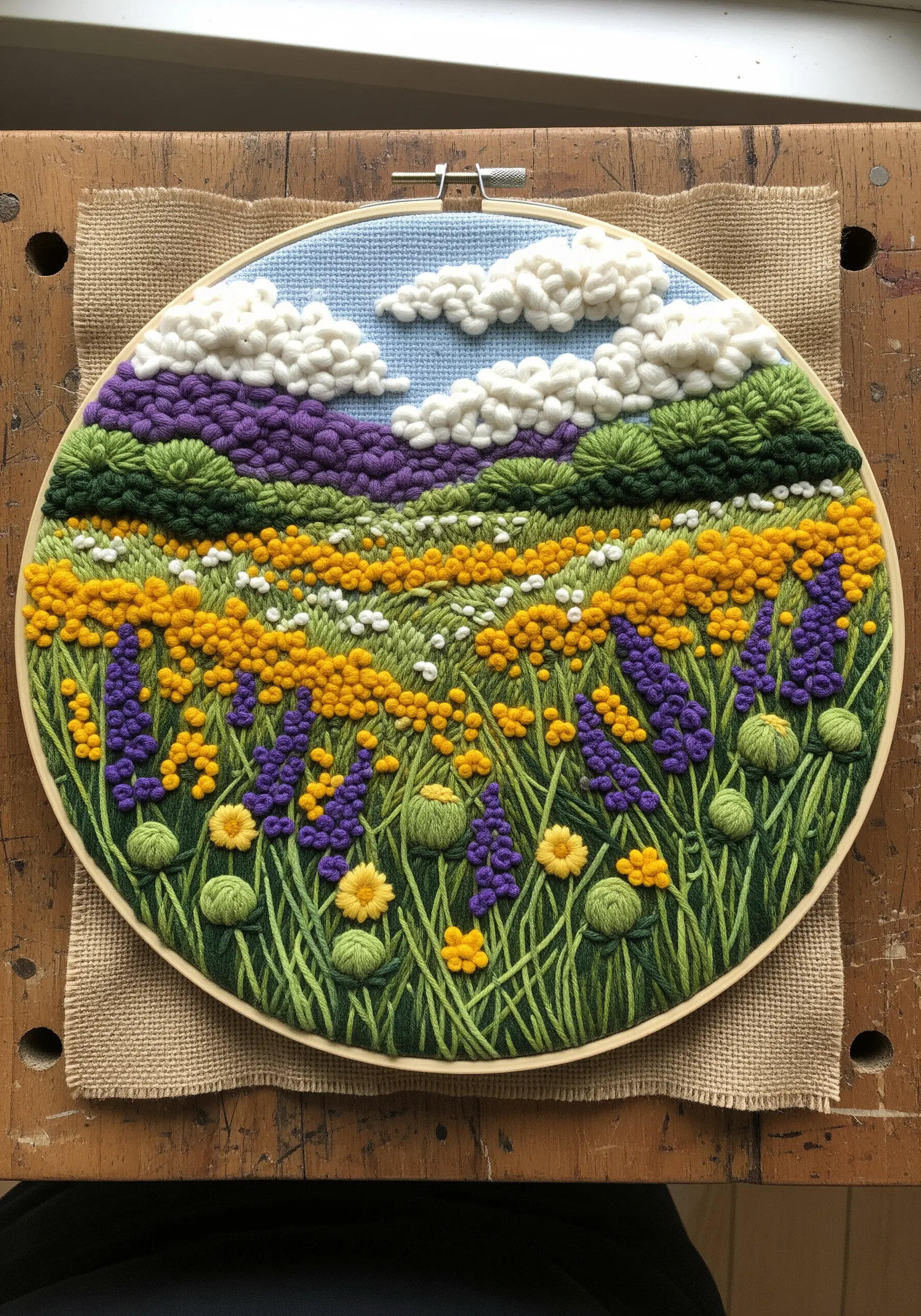
Give your landscapes a tangible quality by moving beyond flat stitches.
Use dense clusters of French knots or bullion knots to create the texture of flower fields or lavender bushes.
For fluffy clouds, use a series of loosely stitched loops (a detached chain stitch, pulled gently) to build a soft, billowy shape.
Contrast these high-texture areas with simple straight stitches for grass and stems to create a dynamic interplay between soft and sharp elements.
These are the nature-inspired texture patterns that feel as good as they look.
9. Define Modern Decor with Couching Techniques
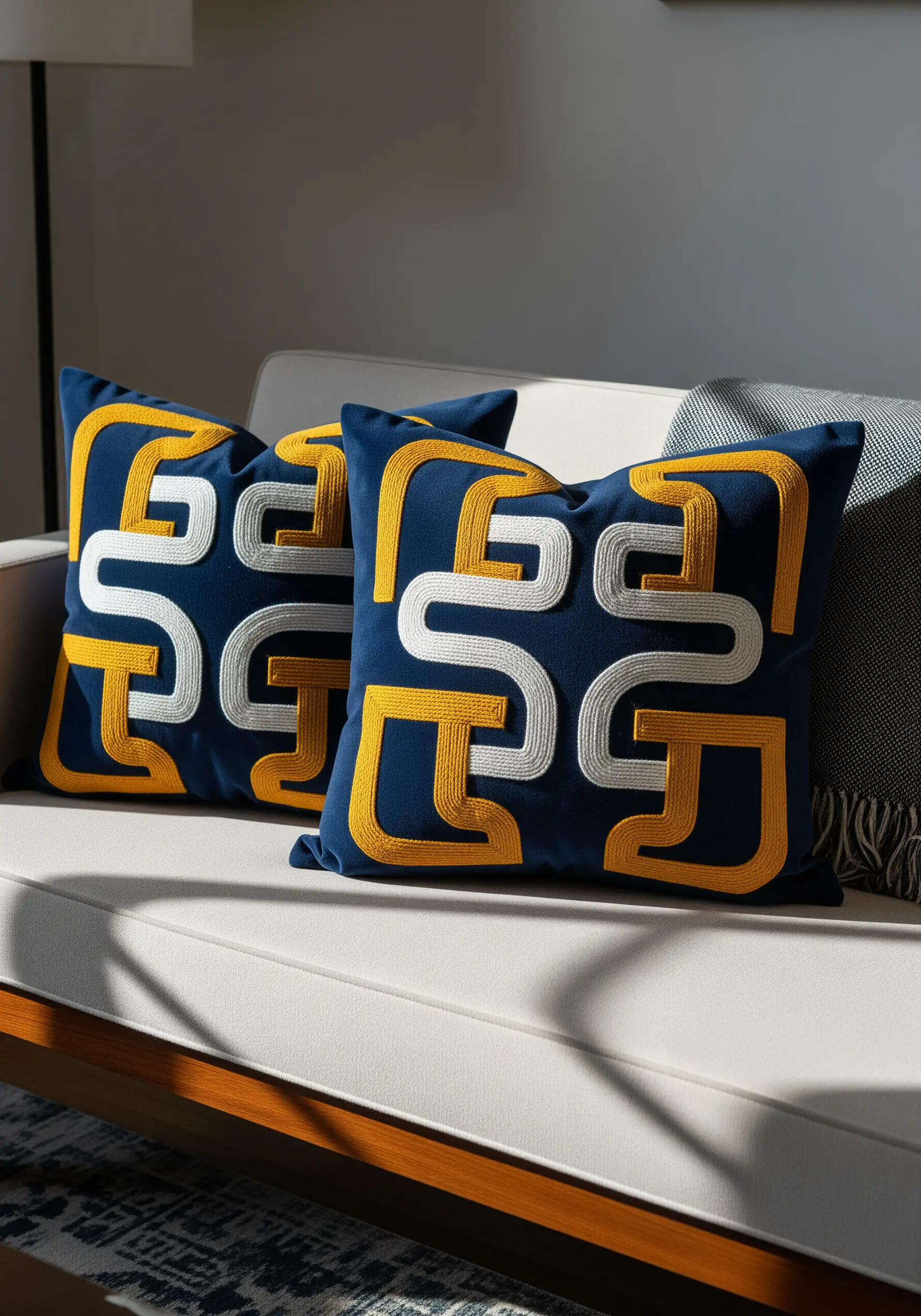
For bold, graphic designs on home decor like pillows, couching is your most powerful tool.
Instead of trying to fill large areas with satin stitch, lay down a thick yarn or cord along your design lines.
Then, use a thinner, matching or contrasting thread to tack it down with small, perpendicular stitches.
This technique creates exceptionally clean, raised lines that are perfect for geometric and abstract patterns, giving your project a high-end, contemporary finish.
You can even create hand-stitched cushion borders this way.
10. Embrace Mindful Repetition with Sashiko

Sashiko is a traditional Japanese embroidery style that uses a simple running stitch to create stunning geometric patterns.
The key is consistency: use a long Sashiko needle and a special thimble to help you load several even stitches onto the needle at once.
Work with a thick, high-contrast cotton thread on indigo-dyed fabric for an authentic look.
The rhythmic, meditative process is as rewarding as the beautiful, functional result.
It’s a way to explore traditional embroidery wall art ideas rooted in heritage from around the world.
11. Capture Pet Personalities with Realistic Fur Stitching
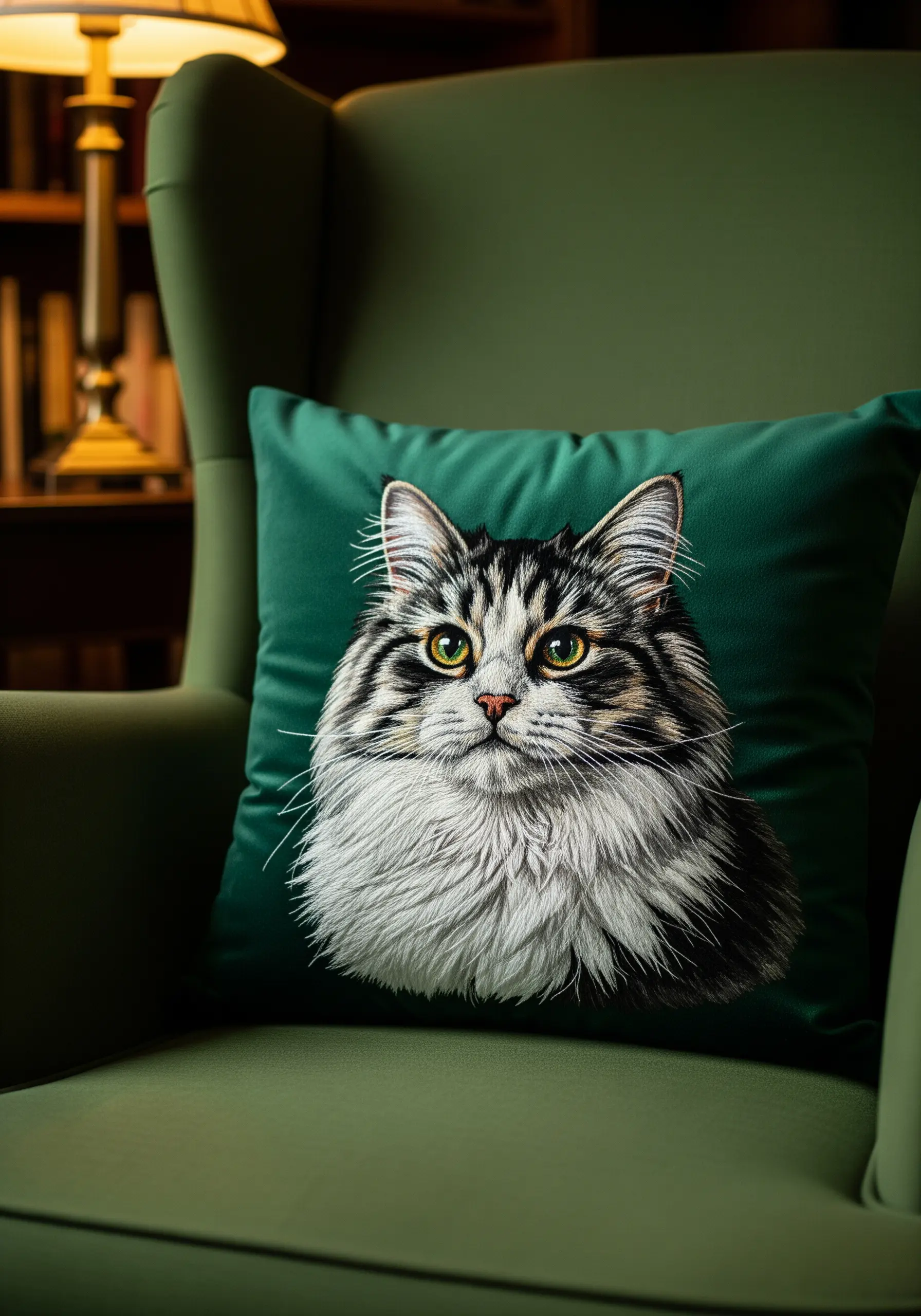
The secret to realistic embroidered fur is layering and direction.
Using single strands of floss, start with your darkest color and lay down long-and-short stitches that follow the natural growth pattern of the fur.
Gradually add lighter shades on top, using fewer and shorter stitches for highlights.
For fine whiskers, use a single strand of a stiff, pale thread in one long straight stitch, ensuring it’s anchored firmly on the back.
This turns a simple image into a set of delicate pet line art embroidery ideas for meaningful, personalized keepsakes.
12. Modernize Cross-Stitch with Graphic Blocking
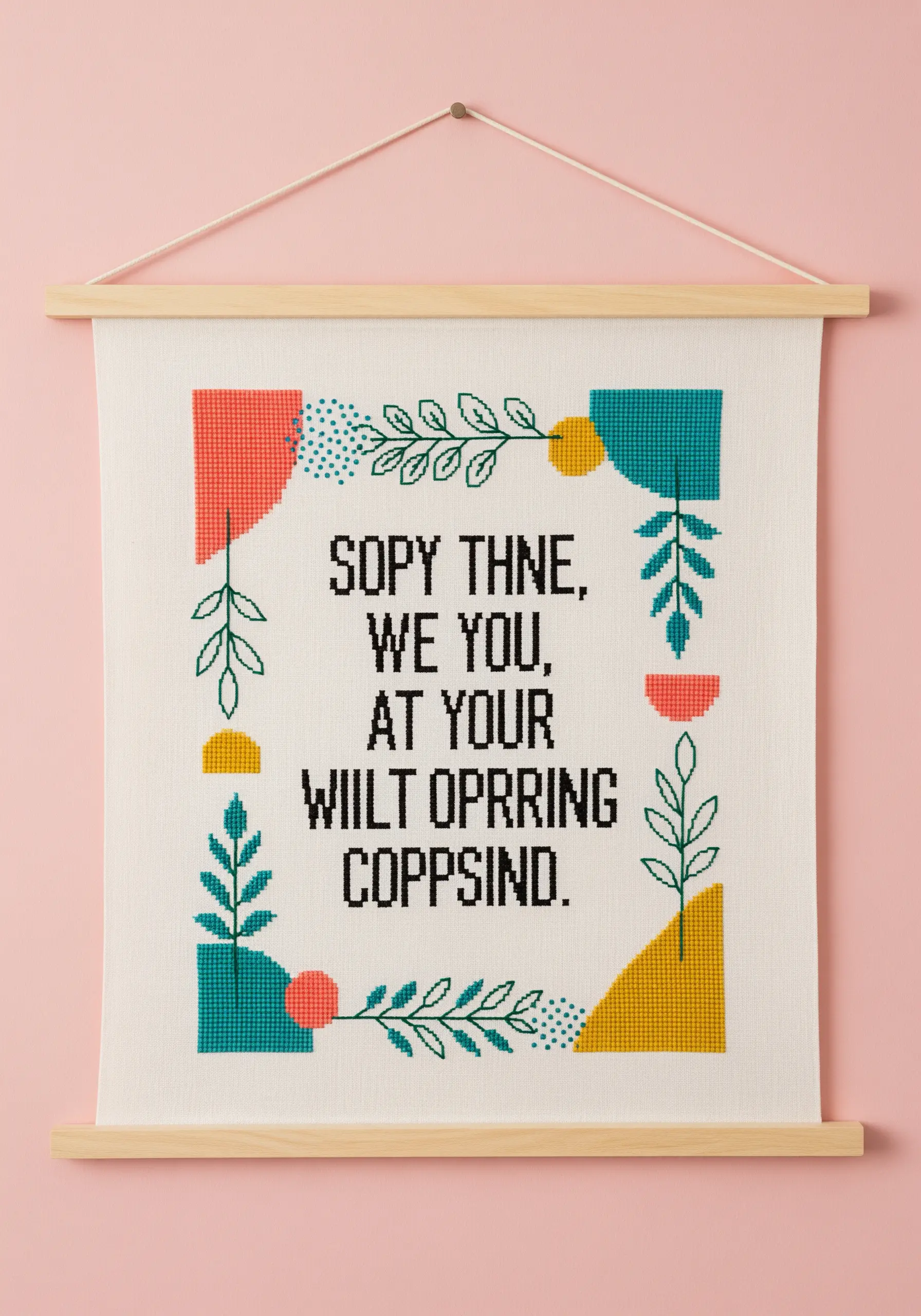
Break free from traditional samplers by integrating modern design principles into your cross-stitch.
Combine clean, sans-serif typography with abstract color blocks and minimalist botanical outlines.
By limiting your color palette to just three or four complementary shades, you create a cohesive and contemporary piece.
This approach proves that cross-stitch can be just as graphic and stylish as any other form of embroidery, especially for stitching minimal typography quotes that look trending on hoops.
13. Document Your Travels on a Stitched World Map
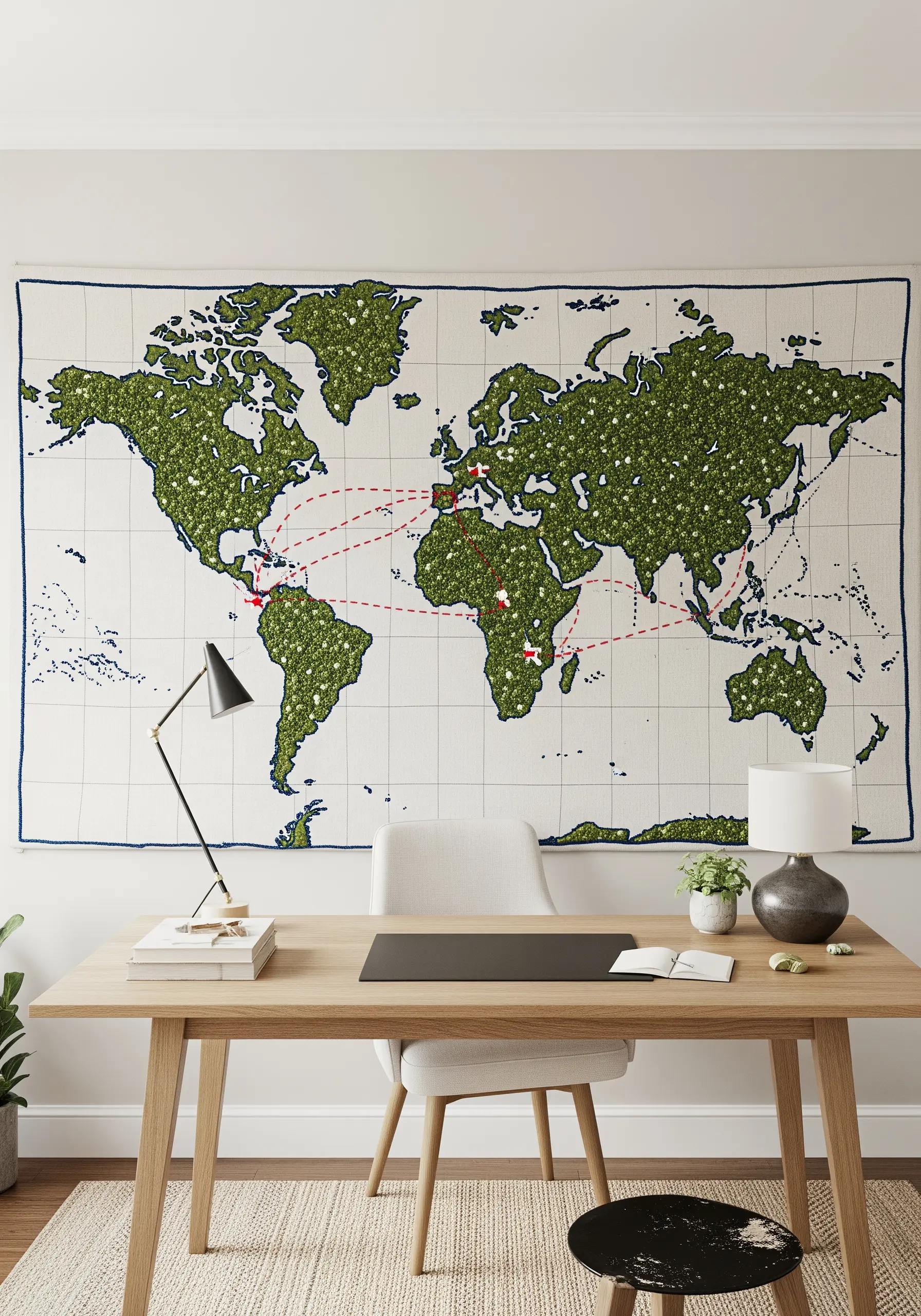
Create a living piece of art by embroidering a large-scale world map.
Fill in the continents with a single, highly textured stitch, like the seed stitch or French knots, to create a uniform, tactile surface.
Mount the finished piece on corkboard or foam core so you can add to it over time.
Use a contrasting color, like red, to stitch lines that mark your travels, turning your embroidery into a personal and evolving story.
It’s one of the ultimate minimal travel-themed embroidery ideas for souvenir-style fashion items—or in this case, decor.
14. Construct Sculptural Art with Free-Standing Stitches

Take your thread into the third dimension by stitching on water-soluble stabilizer fabric.
You must completely cover your design with dense, overlapping stitches so the piece can support itself.
Once finished, you simply wash the stabilizer away, leaving behind a rigid, lace-like structure made entirely of thread.
This method allows you to create incredible abstract thread sculpt designs that stand off the canvas and can be shaped into bowls, jewelry, or sculptures.
15. Illuminate Your Stitches on Functional Objects
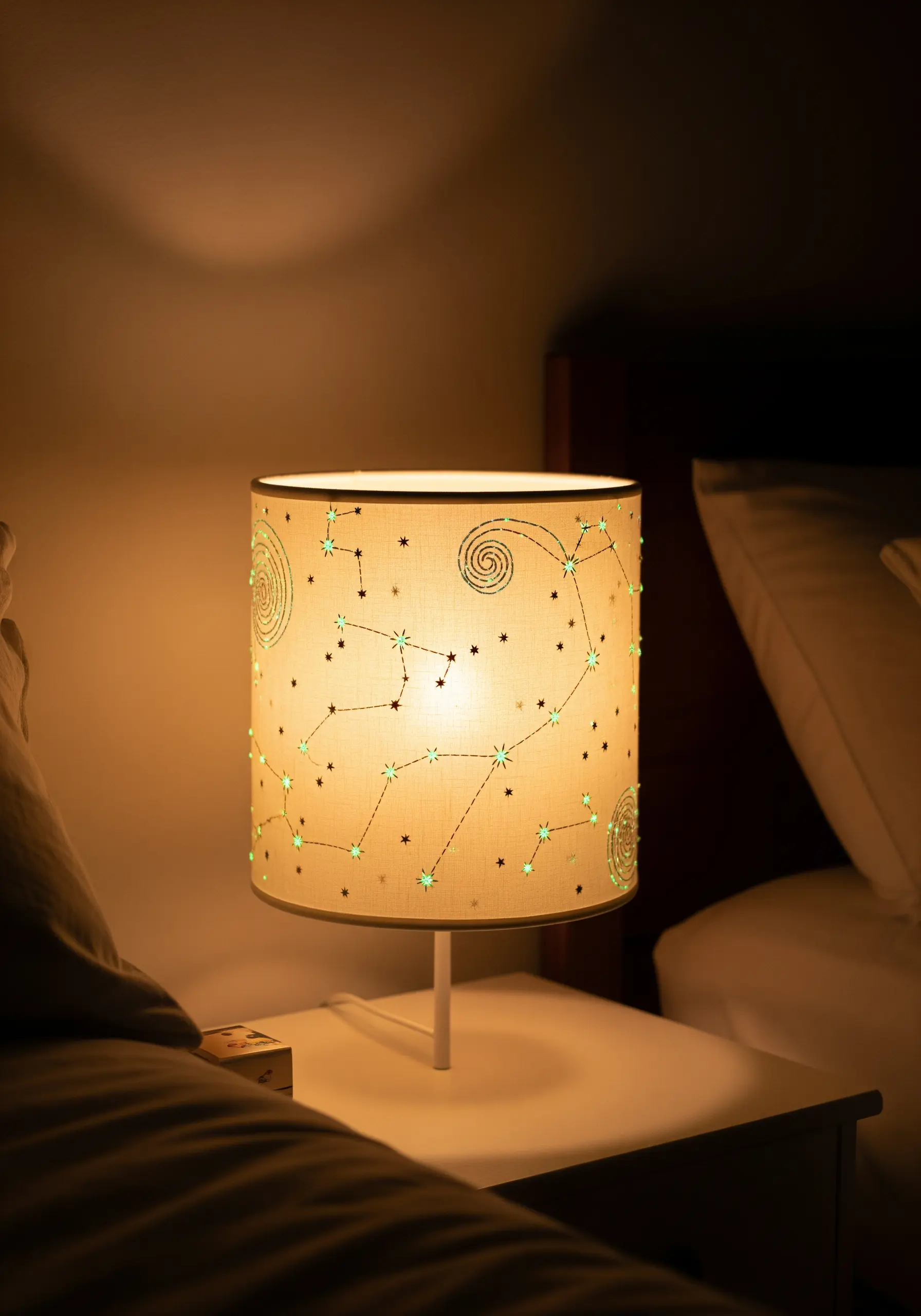
Why limit your embroidery to wall art? Transfer your skills to functional items like lampshades for a truly unique piece of decor.
Choose a simple pattern, like constellations, and use glow-in-the-dark thread for key details.
The design will be subtle during the day but reveal a magical, luminous quality in the dark.
Remember to keep the back of your work neat, as the light will shine through it.
It’s one of many DIY embroidery projects that keep your space clutter-free and stylish.
16. Create an Ethereal Effect on Sheer Curtains

Embroidering on sheer fabric like organza or tulle creates a magical, floating illusion.
The key is to use a high-quality, wash-away stabilizer to support the delicate fabric during stitching.
Choose lightweight threads and simple stitches—like detached chain stitches for petals and stem stitch for branches—to avoid weighing the fabric down.
Because the back of your work is visible, you must be meticulous about hiding thread tails, making these fabric collage embroidery projects using sheer fabrics a true test of refined skill.
17. Embellish a Journal Cover with Raised Goldwork

Goldwork, the art of stitching with metal threads, adds unparalleled luxury to any project.
To create a raised, three-dimensional effect, use a technique called padding.
Cut layers of felt or cardboard into your desired shape, secure them to the fabric, and then couch your metallic threads over the top.
This makes the motif stand proud of the surface, catching the light and creating a rich, tactile finish perfect for gold thread luxury wall art projects or treasured objects.
18. Blend Watercolor and Thread for Atmospheric Art
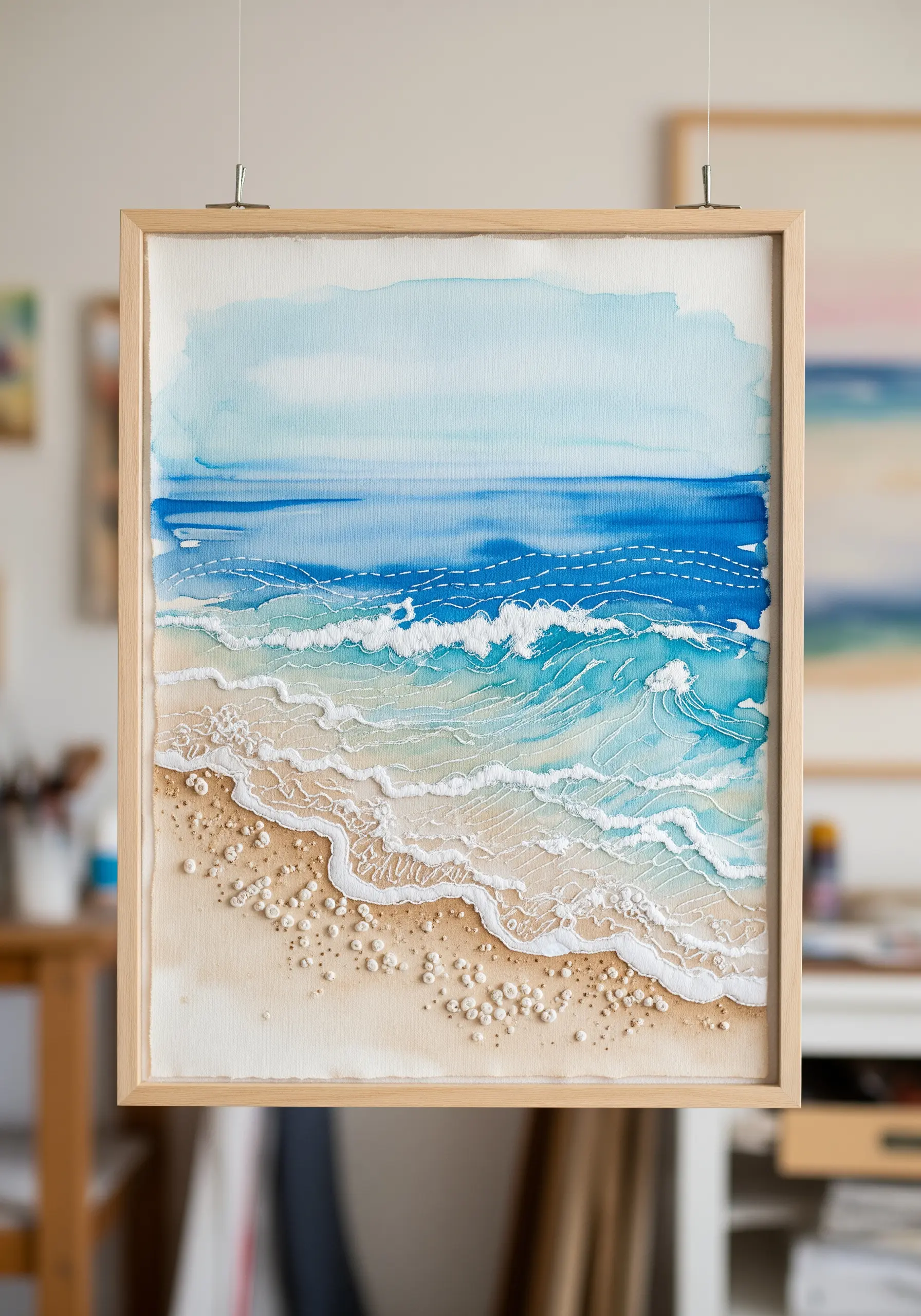
Combine the softness of watercolor with the texture of thread for a stunning mixed-media piece.
Lightly paint your background colors directly onto the fabric and allow it to dry completely before stretching it in the hoop.
Then, use selective embroidery to add detail and highlights—white running stitches for the movement of water, French knots for seafoam, and straight stitches for distant waves.
The paint provides the mood, while the thread provides the focus and texture, showing brilliant ways to combine embroidery and mixed media.
19. Decorate Table Linens with Seasonal Botanicals

When embroidering on functional linens, choose stitches that are both beautiful and durable.
Satin stitch is perfect for filling in leaves and berries, creating a smooth sheen that holds up well to washing.
Use a simple backstitch for vines and outlines to maintain clarity and structure.
Finish the piece with a neat border, like a hemstitch or a simple running stitch, to give your table runner a professional, heirloom quality.
These are the table linen embroidery motifs that instantly transform a plain dining table.