The beauty of a hydrangea isn’t just in its color, but in its form—that abundant, cloud-like cluster of tiny blossoms. Capturing that soft, almost three-dimensional quality in thread can feel intimidating, but it’s more accessible than you think.
The key isn’t necessarily learning dozens of complex stitches. It’s about understanding how to use simple stitches—like the lazy daisy, the French knot, and the bullion knot—to build volume, create shadow, and play with texture.
In these examples, I’ll show you how to think differently about layering your stitches, blending your colors, and choosing your materials. You’ll learn not just how to stitch a flower, but how to give it life, depth, and a presence that lifts right off the fabric.
1. Mastering Volume with Layered Lazy Daisy Stitch
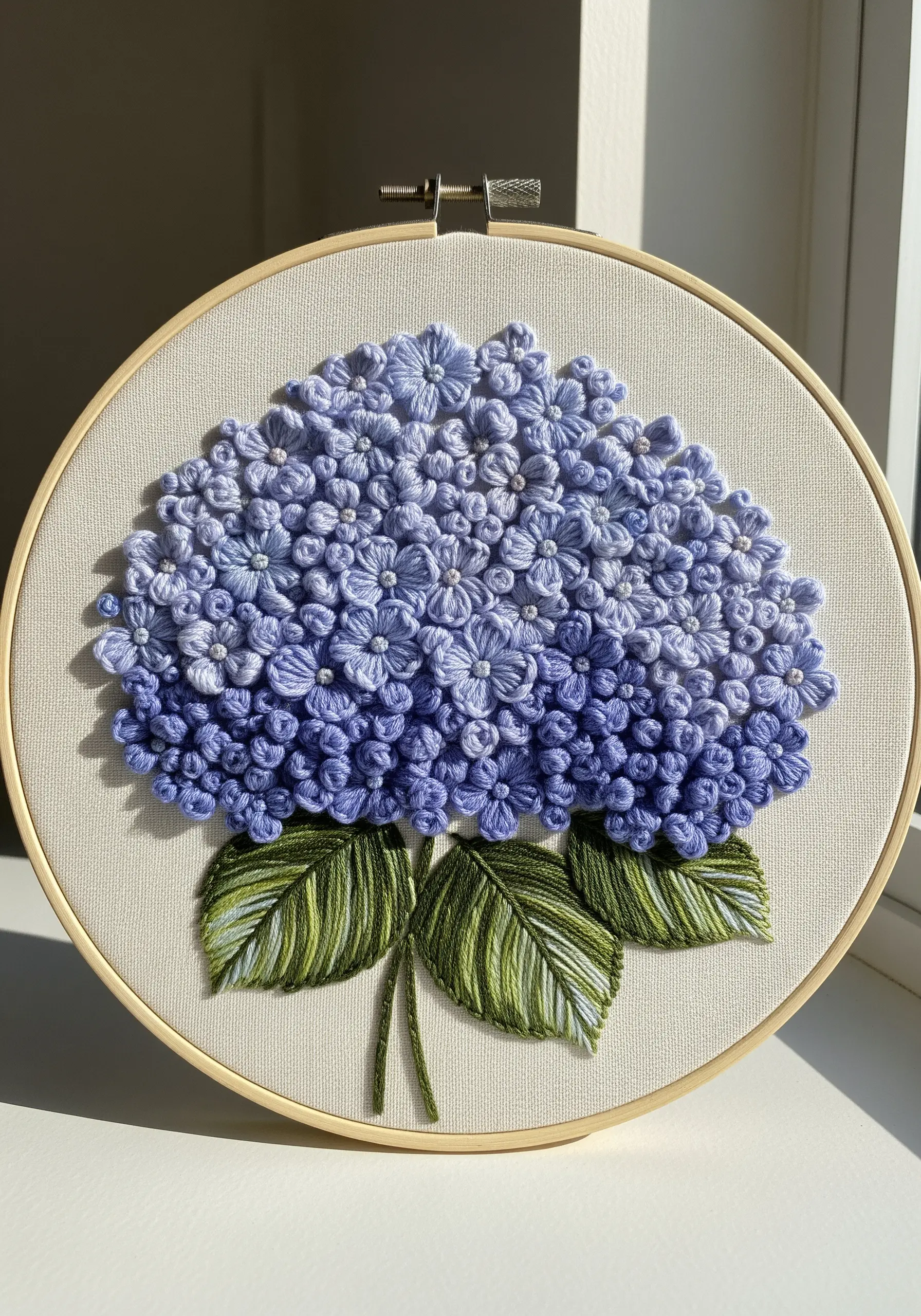
To build a truly dense and fluffy hydrangea, the secret is layering.
Work from the bottom up, stitching a base layer of lazy daisy stitches using a slightly darker shade of thread—this creates an illusion of shadow and depth.
Once the base is complete, stitch another layer directly on top, allowing the new petals to overlap the first set.
Use a lighter thread color for this top layer to mimic how light hits the flower head.
For the plumpest petals, use four to six strands of cotton floss, and finish the center of each flower with a tiny, delicate French knot.
2. The Elegance of Bullion Knots and Metallic Accents
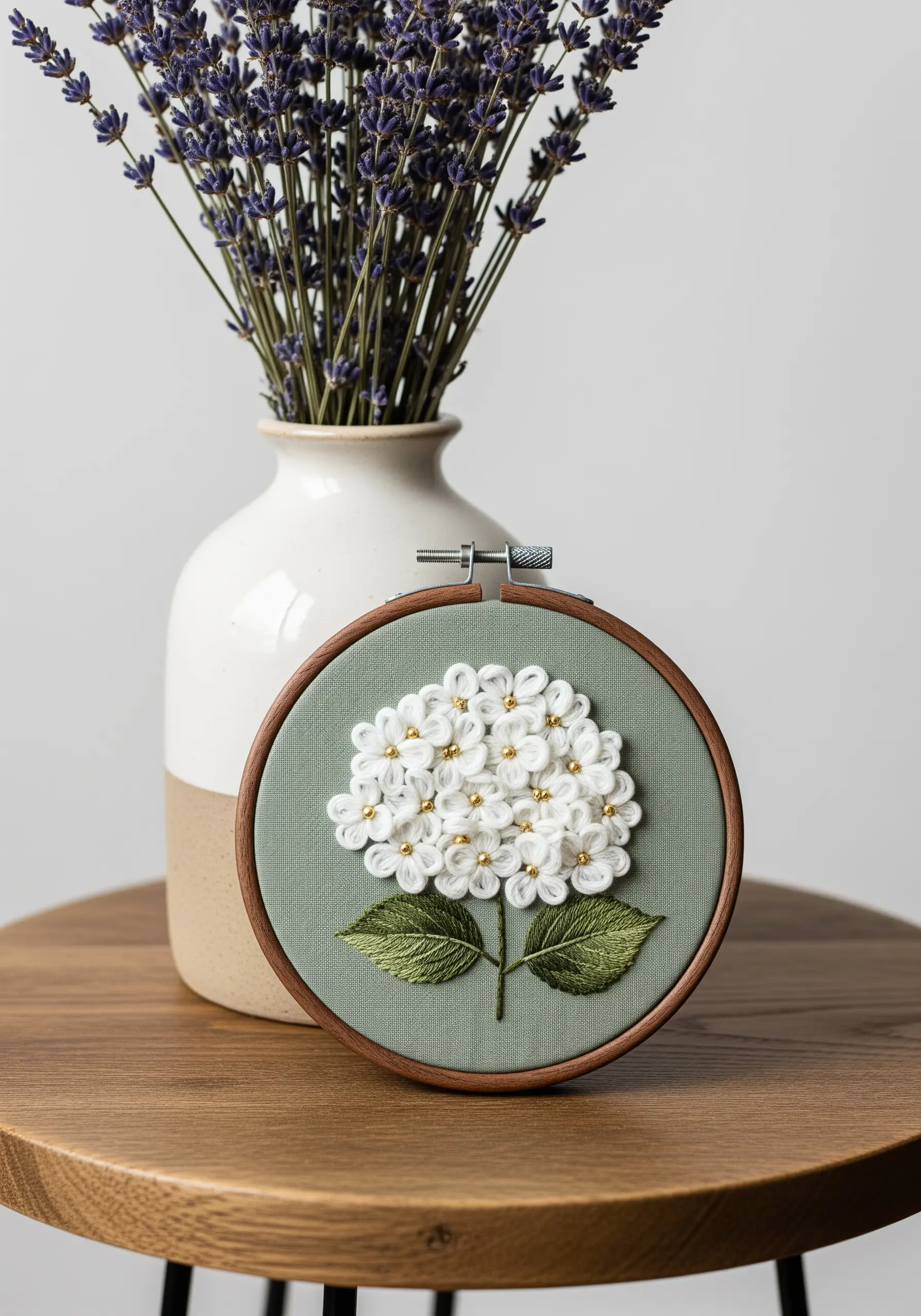
For perfectly rounded, dimensional petals that lift off the fabric, bullion knots are your best choice.
Create each petal with a single bullion knot, varying the number of wraps around your needle to adjust its size and curvature.
Instead of a standard French knot, place a single gold seed bead in the center of each flower cluster.
This adds a subtle touch of light and sophistication, elevating the entire piece from simple craft to refined art.
This technique looks particularly striking on muted, colored linen where the metallic accent can truly shine.
3. Crafting Ombré Realism with Detached Stitches
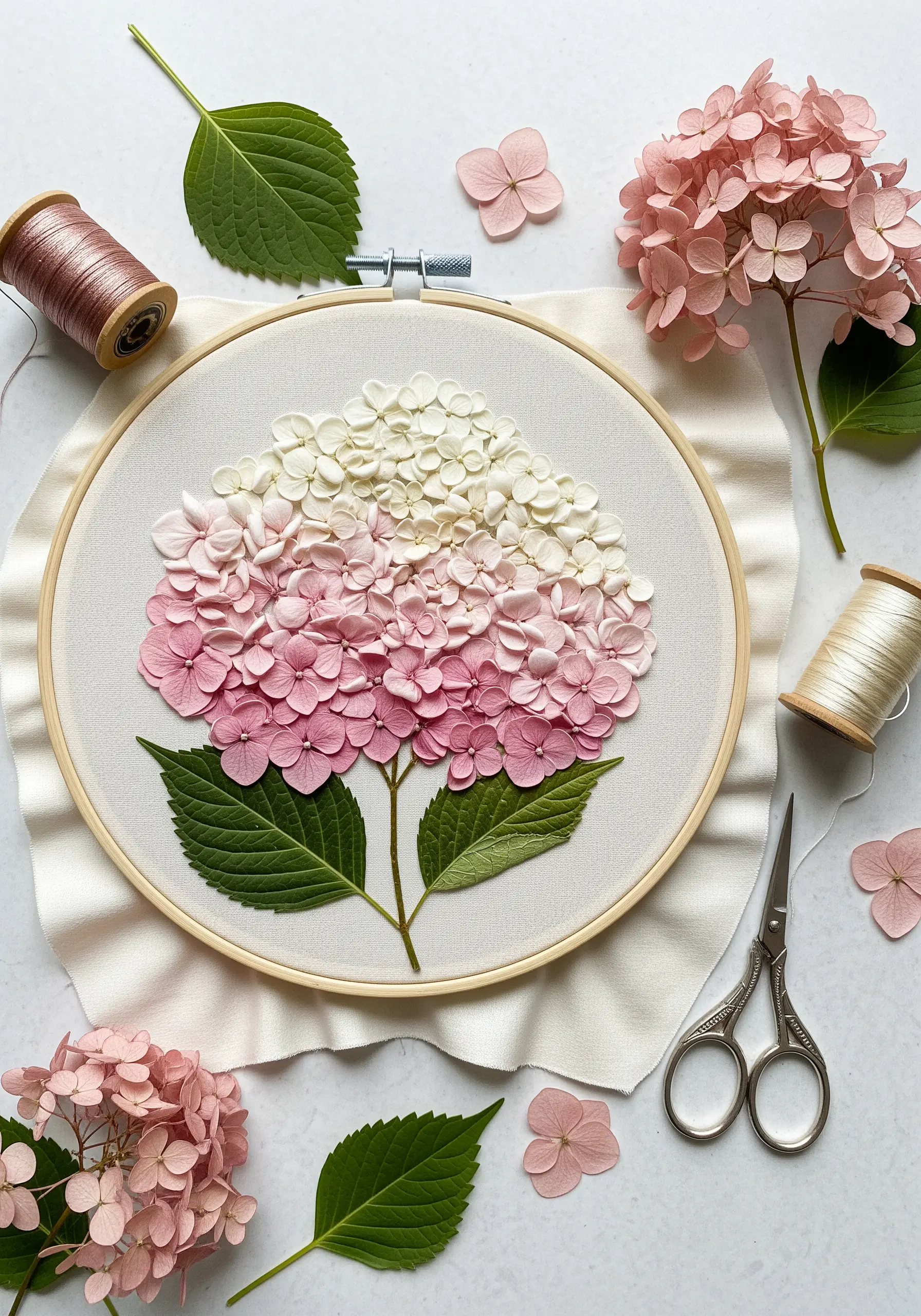
Achieve an astonishingly realistic, 3D effect with detached buttonhole stitches, a classic stumpwork technique.
Create each four-lobed petal individually, either over a wire guide or directly on the fabric, then tack it down at the base, leaving the edges free to lift.
Before you attach them, use long-and-short stitches to blend your colors from a soft cream to a deep rose directly on each petal.
This method gives you complete control over the color gradient, resulting in a soft, painterly finish that mimics nature perfectly.
4. High-Contrast Hydrangeas for Denim Embellishment

When you embroider on a heavy, textured fabric like denim, your stitches need to be bold to avoid getting lost in the weave.
Use woven wheel stitches (also known as spider web roses) to create raised, circular floral shapes that command attention.
Choose a high-contrast color palette, like this vibrant chartreuse and clean white, to ensure your design pops against the dark indigo.
Always use a strong, sharp needle and consider a thimble—denim is tough, and this will save your fingers while ensuring clean stitches.
5. Composing a Moody Hydrangea Wreath
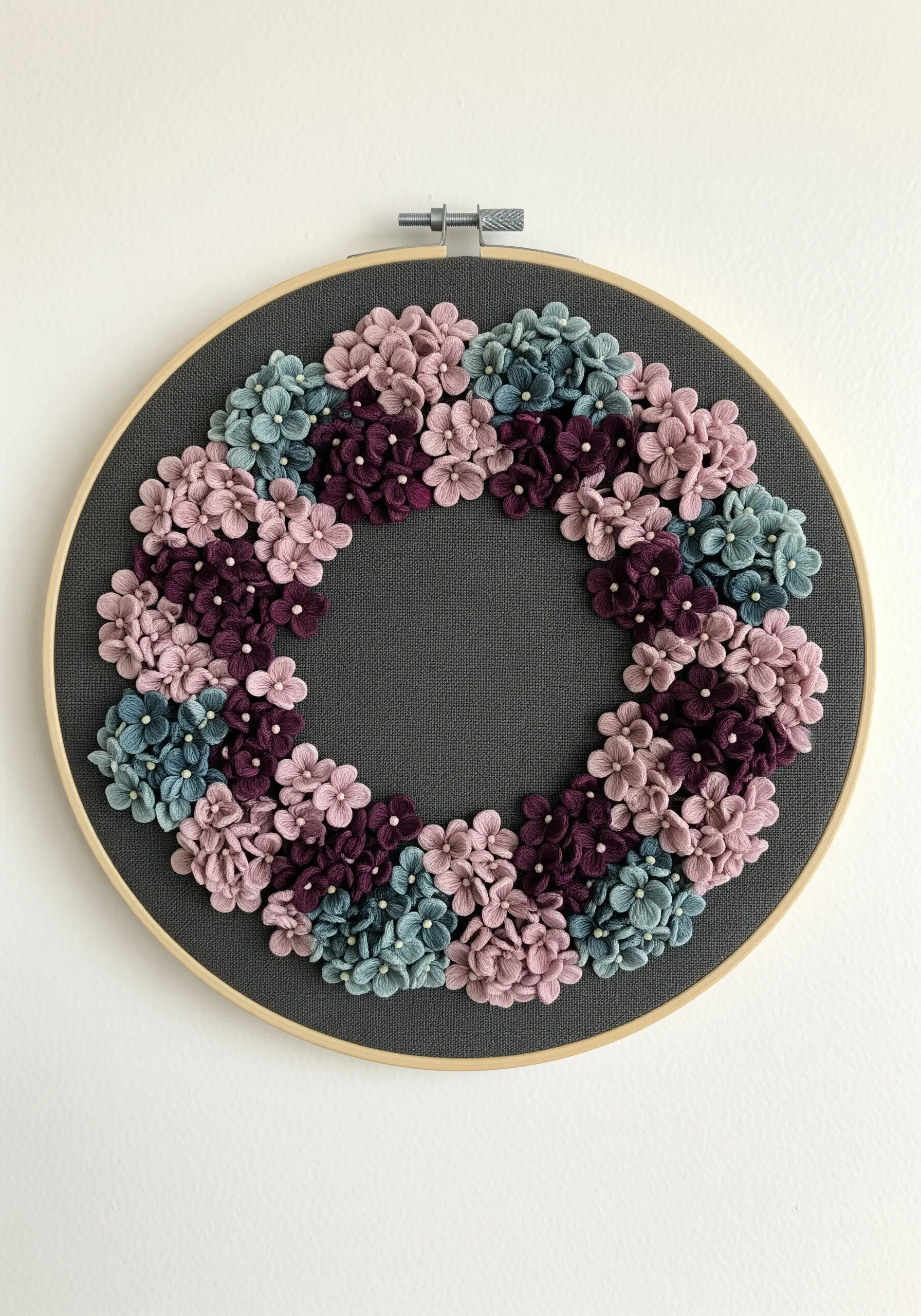
A dark fabric background is your greatest asset for creating a dramatic, moody floral piece.
It makes muted, jewel-toned colors like dusty rose, teal, and deep plum appear richer and more saturated.
When composing your wreath, arrange the flowers in distinct color clusters rather than mixing them randomly.
This creates a more intentional and visually pleasing rhythm, turning simple stitches into elegant handmade wall art.
Alternate between lazy daisy and small satin-stitched flowers to add subtle textural variety.
6. The Art of Subtlety on Sheer Organza
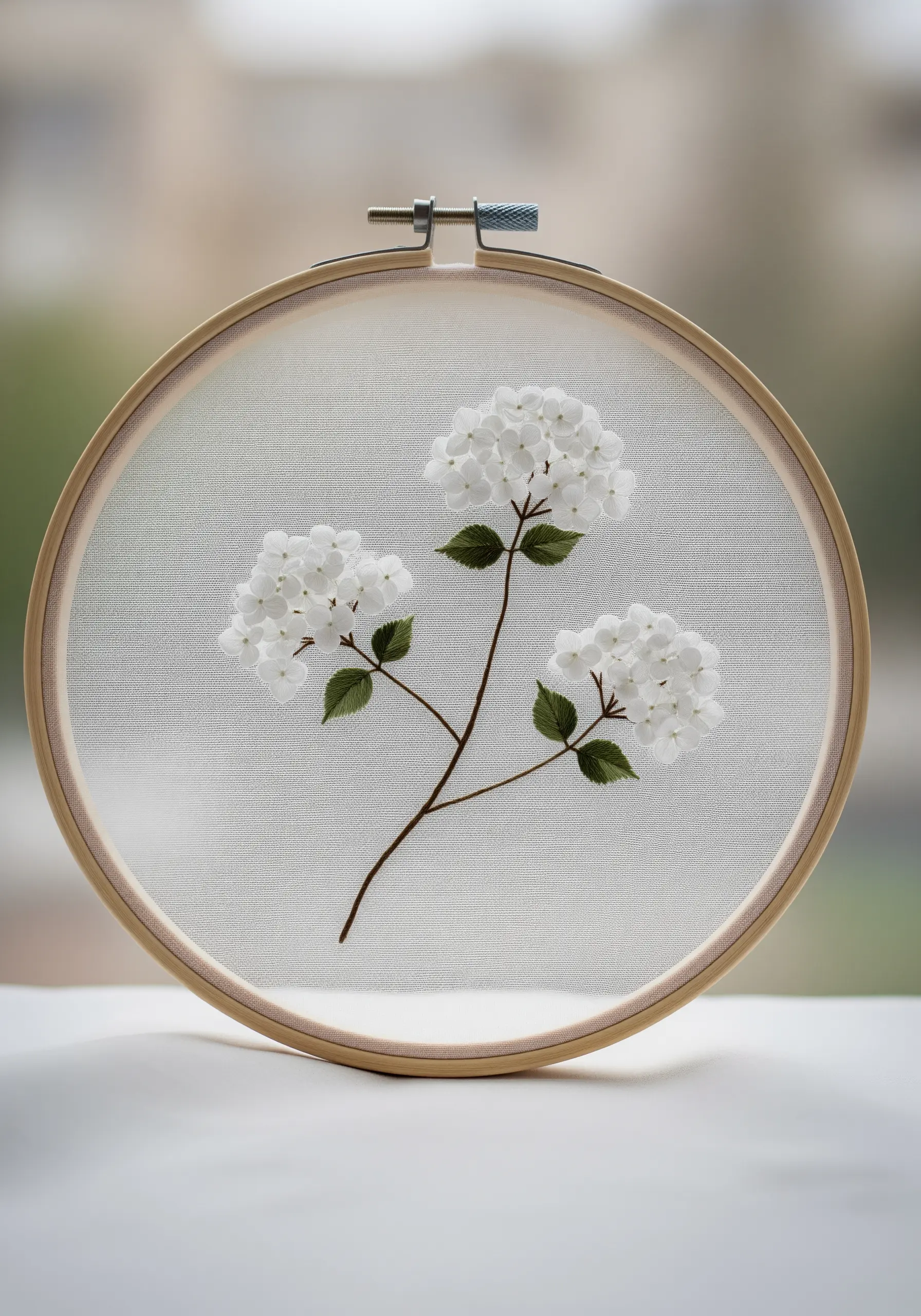
Stitching on a sheer fabric like organza is a lesson in restraint and precision.
Use only one or two strands of thread to maintain the fabric’s delicate, airy quality; anything more will weigh it down and look heavy-handed.
Your biggest challenge is hiding the threads on the back—secure them by weaving the tails under existing stitches rather than making knots.
The transparent background creates a magical, floating effect, transforming your embroidery into one of those minimalist embroidery art pieces you’ll want to frame immediately.
7. Designing Functional Art for Home Textiles
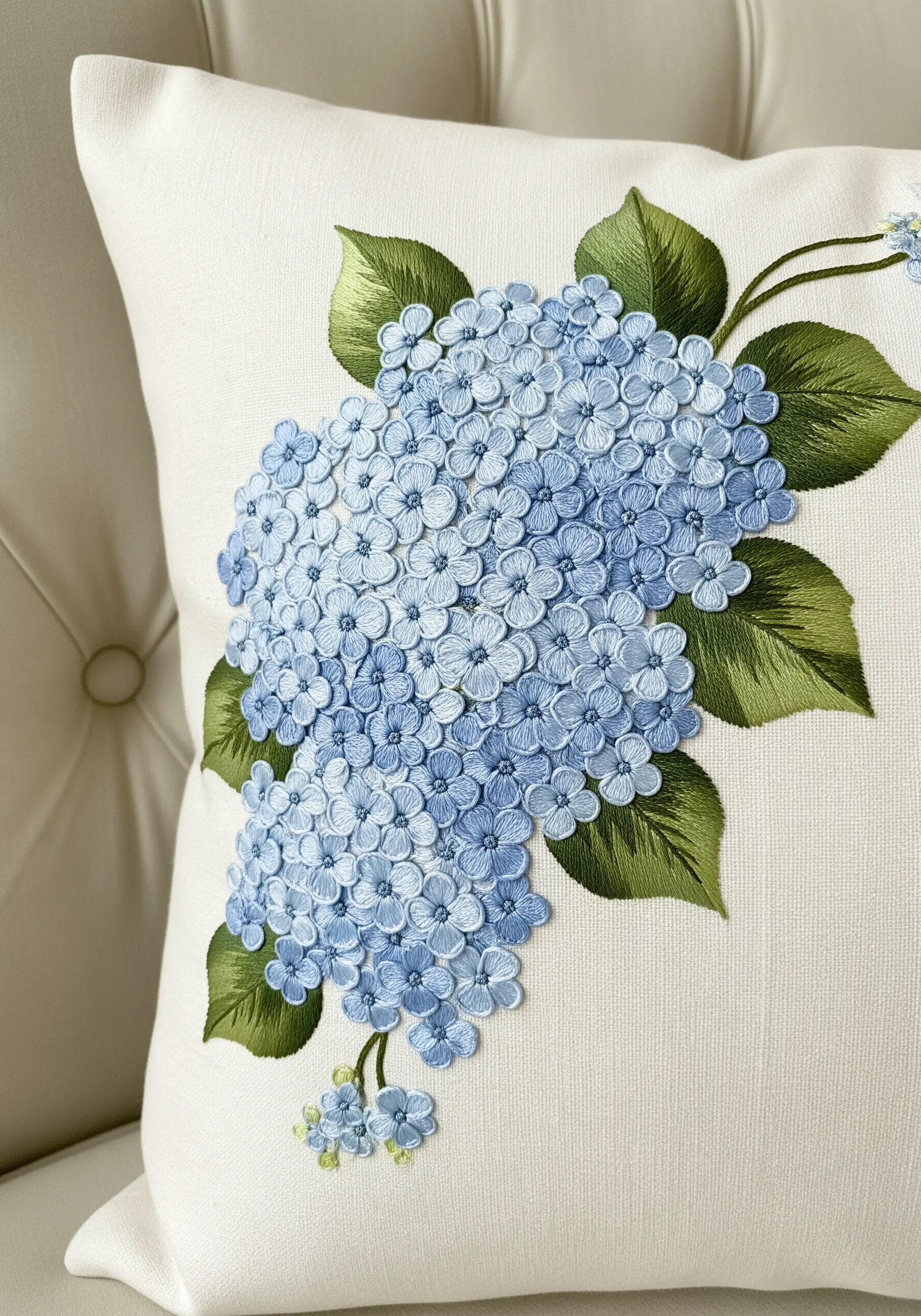
Embroidery on high-use items like cushions must be both beautiful and durable.
Choose stitches that lie relatively flat to resist snagging, such as tightly packed lazy daisy stitches or small, compact woven wheels.
Always use high-quality, colorfast cotton floss that can withstand washing.
Most importantly, apply an iron-on stabilizer to the back of your embroidery; this prevents puckering on the light fabric and protects the stitches from friction, turning your home into a relaxing haven.
8. Capturing Autumnal Tones on Textured Fabric
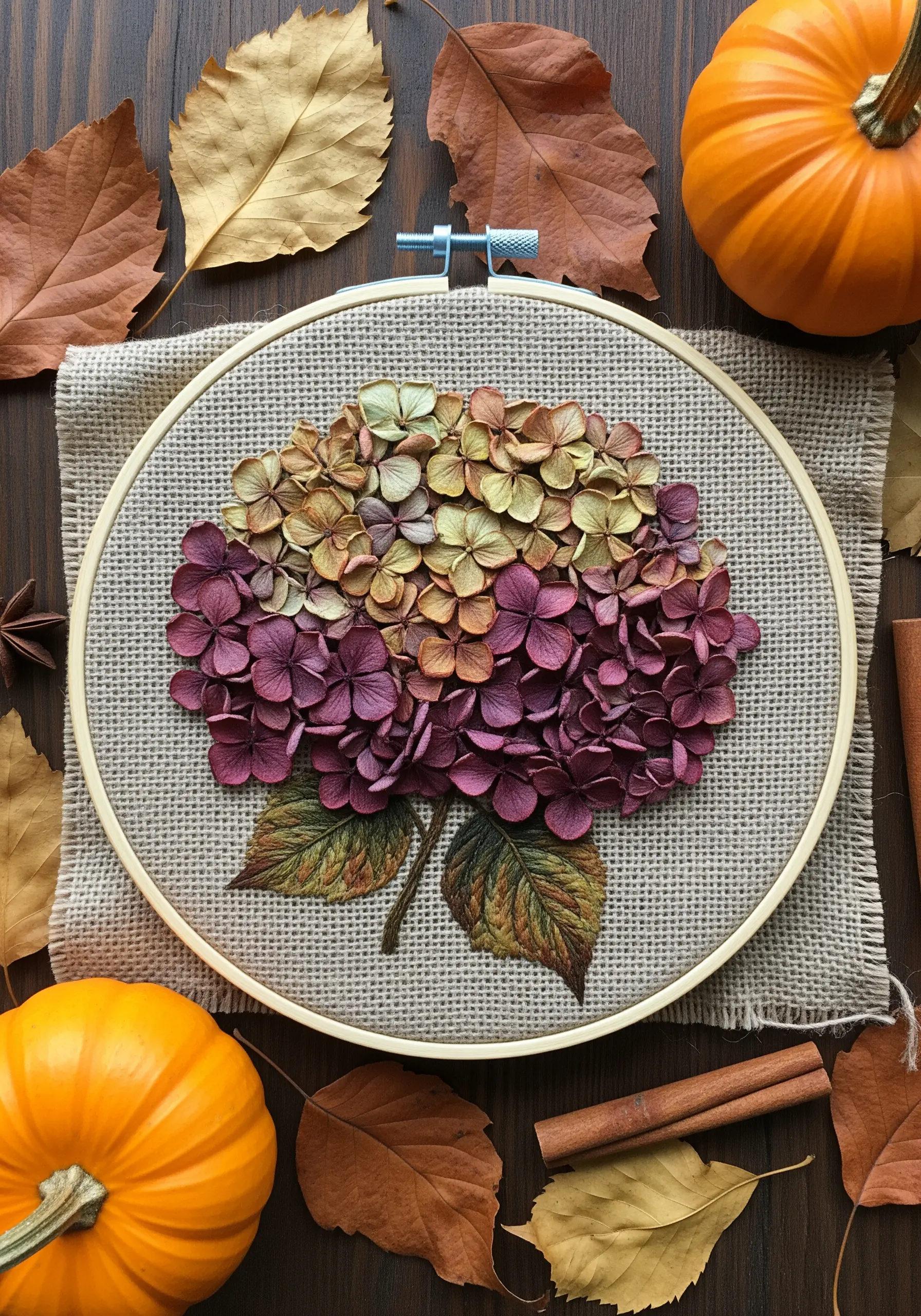
To capture the fragile, muted beauty of a dried hydrangea, your focus should be on nuanced color blending.
Use the long-and-short stitch to seamlessly blend shades of antique mauve, dusty gold, and olive green within each petal.
Ensure your stitches follow the natural curve and direction of the petals for maximum realism.
Choosing a rustic fabric like burlap or linen enhances the organic feel, making these earth-tone embroidery projects that feel effortlessly chic and grounded.
9. Dramatic Grayscale on a Stark Black Canvas
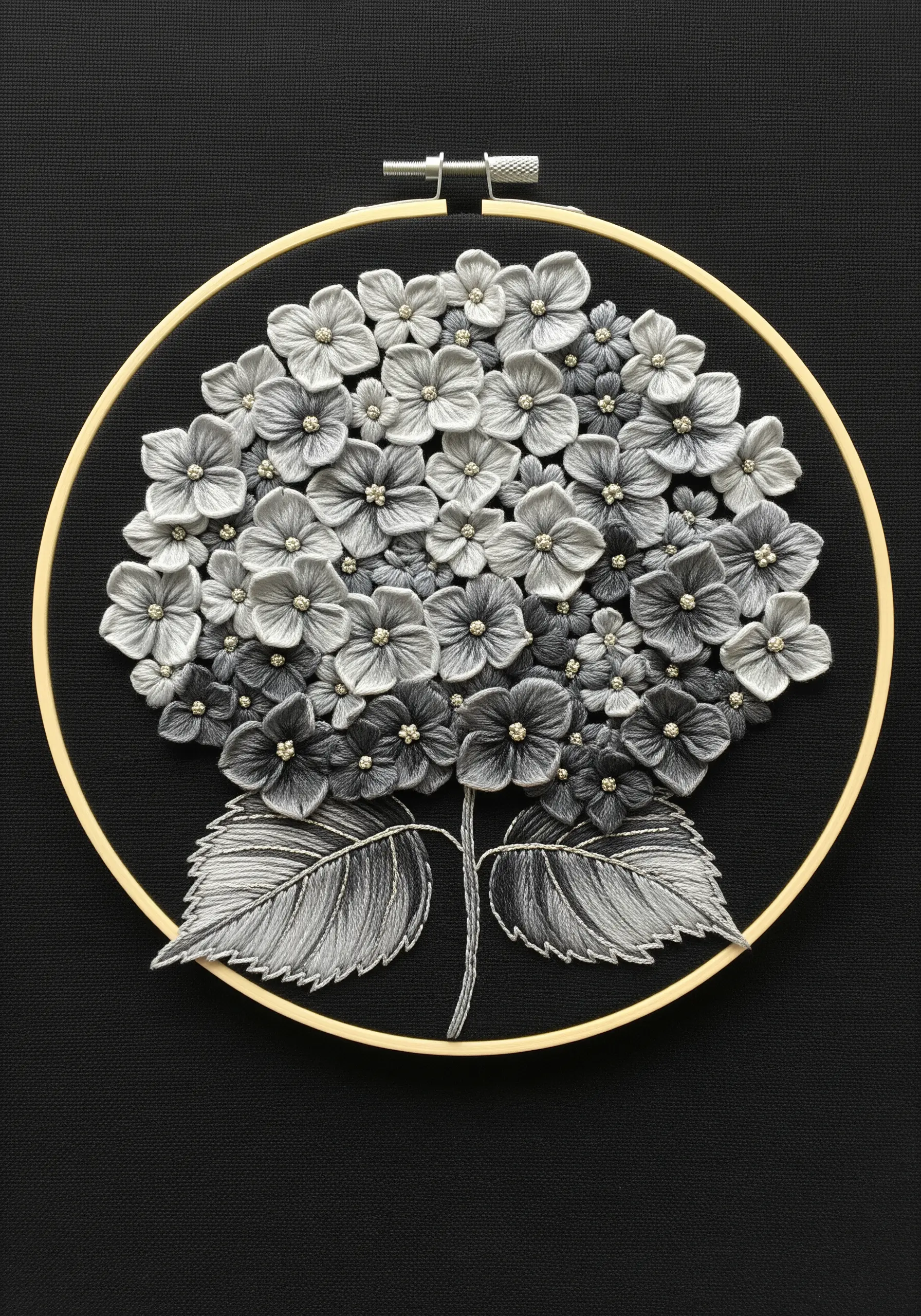
You don’t need color to create a dramatic impact; you need value.
Work with a full spectrum of grays—from a bright, near-white to a deep charcoal—against a stark black fabric.
Place your lightest gray threads at the top of the flower head where light would naturally hit, and use your darkest grays for the petals tucked underneath.
This tonal work creates a powerful illusion of light and shadow, resulting in sophisticated, abstract monochrome thread designs that feel both classic and modern.
10. Sculpting with French Knots for Playful Texture
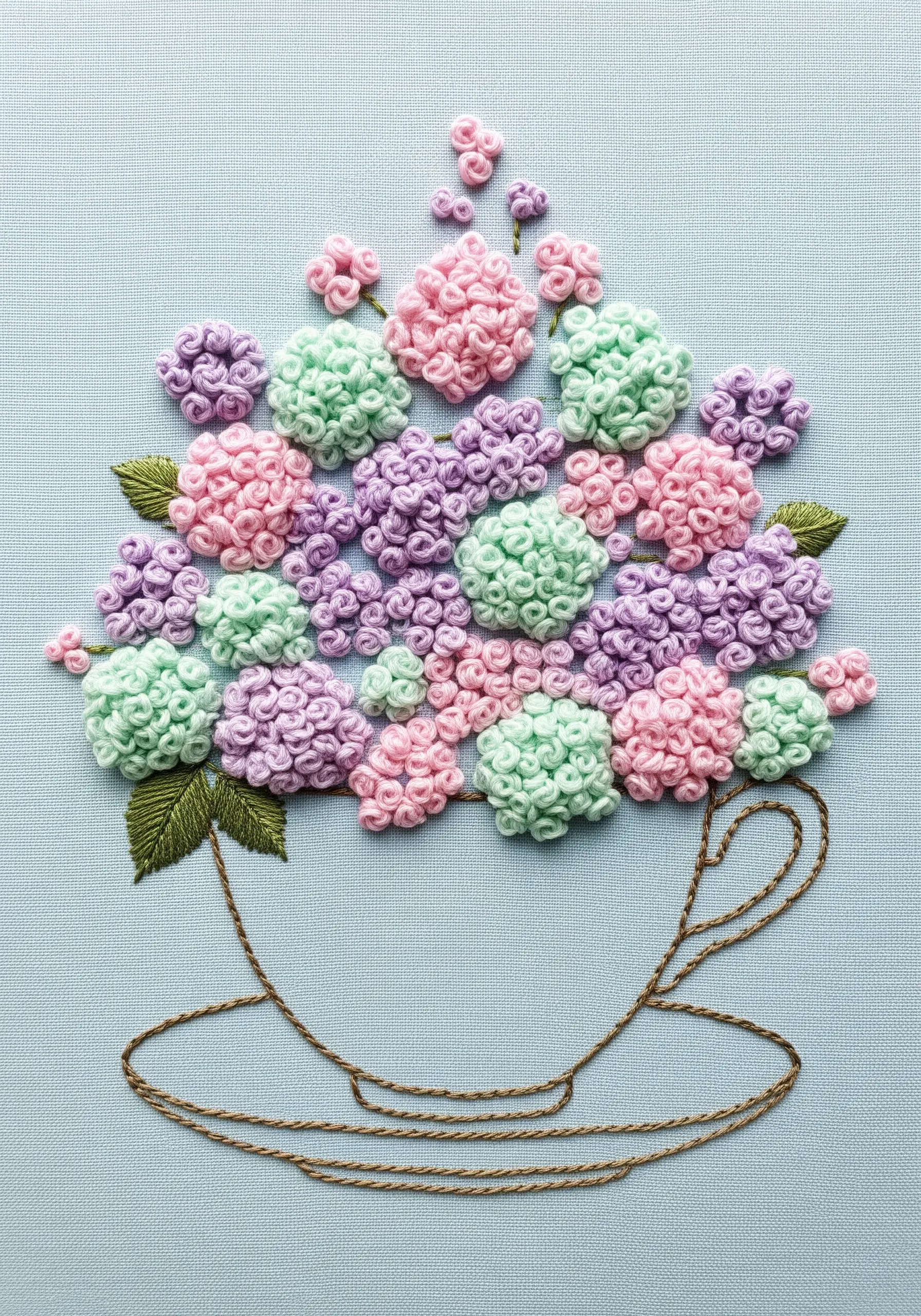
Reimagine the hydrangea by building its form entirely with French knots, creating a wonderfully fluffy, tactile surface.
Vary the texture by using a different number of thread strands (from three to six) and wraps around the needle (once or twice) to create knots of different sizes.
Tightly pack clusters of pastel pink, mint, and lavender knots to form the bouquet.
A simple outline for the teacup, using a chain stitch or backstitch, keeps the focus on the delightful texture of the flowers, making for one of the most aesthetic stitching projects to inspire your next creative hobby.
11. Thread Painting for Rich, Velvety Dimension

For this incredibly deep and saturated look, you must embrace the meticulous art of thread painting.
Using a single strand of floss, blend at least four or five shades of purple and blue within each tiny petal using the long-and-short stitch technique.
The key is to slightly overlap your stitches and place them at gentle angles to create a smooth, seamless gradient that avoids any harsh lines.
This patient process results in a luxurious, velvety finish, perfect for creating heirloom-quality table linens.
12. A Sunset Palette with Bold Color Blocking

Step away from traditional floral colors and embrace a vibrant, energetic palette inspired by a summer sunset.
The success of this design lies in confident color blocking.
Work in distinct sections, filling the top with a bright yellow, the middle with hot pink and orange, and the bottom with a deep magenta.
Use dense satin stitches or lazy daisies, allowing the colors to meet and slightly intermingle at the edges for a soft, natural transition.
13. Crafting a Personalized Hydrangea Monogram

Elevate a simple initial into a piece of personalized botanical art.
Begin by tracing your chosen letter onto the fabric.
Fill the entire shape with dense clusters of French knots or small bullion knots, using two or three complementary colors like soft coral and sage green.
For a crisp, professional finish, outline the letter with a neat split stitch *after* you’ve filled it in; this defines the edges and makes the textured filling pop.
These are truly thoughtful and personalized DIY embroidery ideas for couples and families.
14. Depicting Two-Tone Blooms with Soft Blending
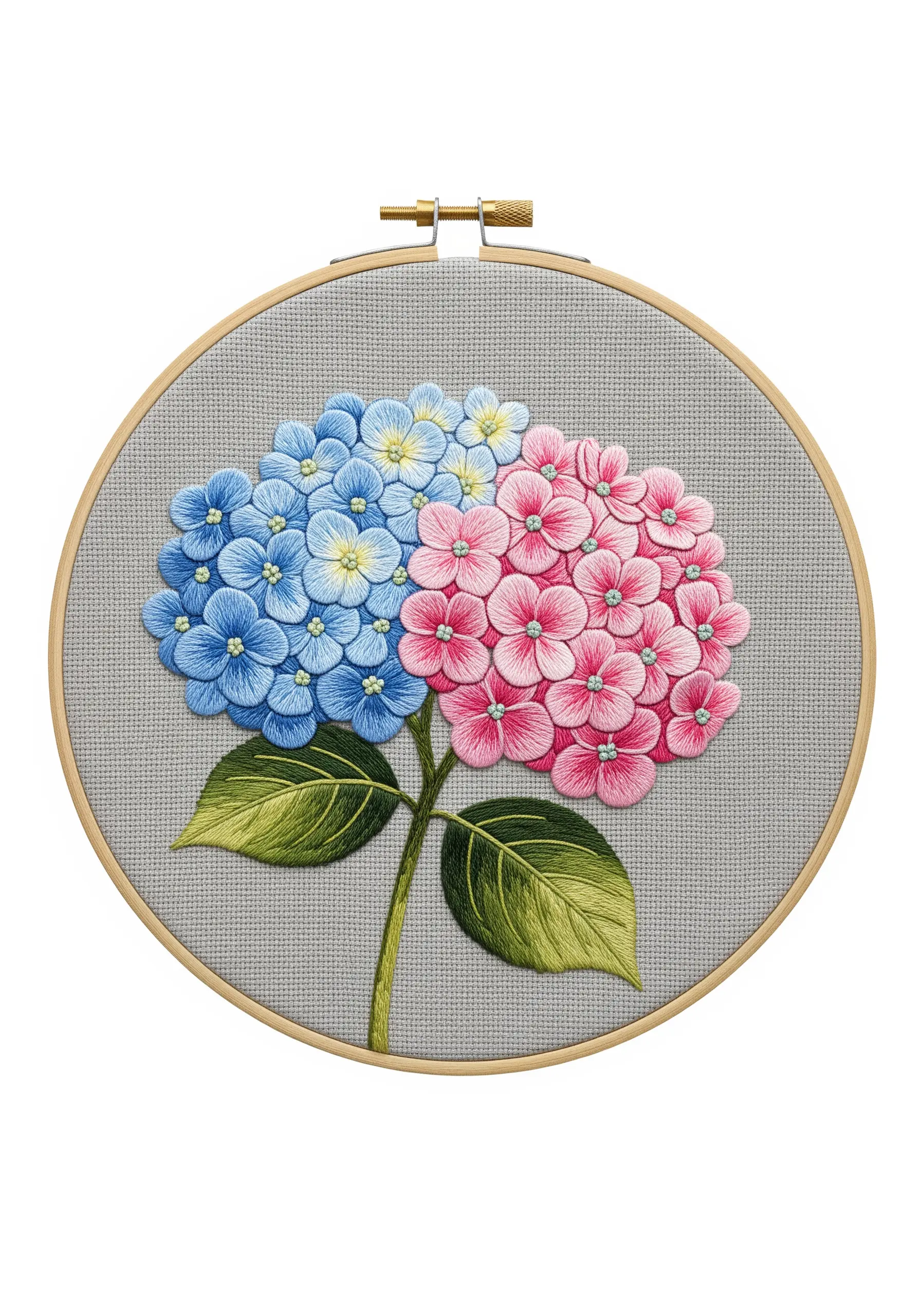
Capture the unique magic of hydrangeas that display both pink and blue blossoms on a single stem.
To make this transition look organic, avoid creating a hard, dividing line between the two colors.
Instead, stitch a few blue flowers into the pink section and a few pink ones into the blue section where they meet.
For an even more subtle blend, use a needle threaded with one strand of blue and one strand of pink to create a few transitional, multi-toned florets right in the middle.
15. An Abstract Study in Woven Wheel Stitches
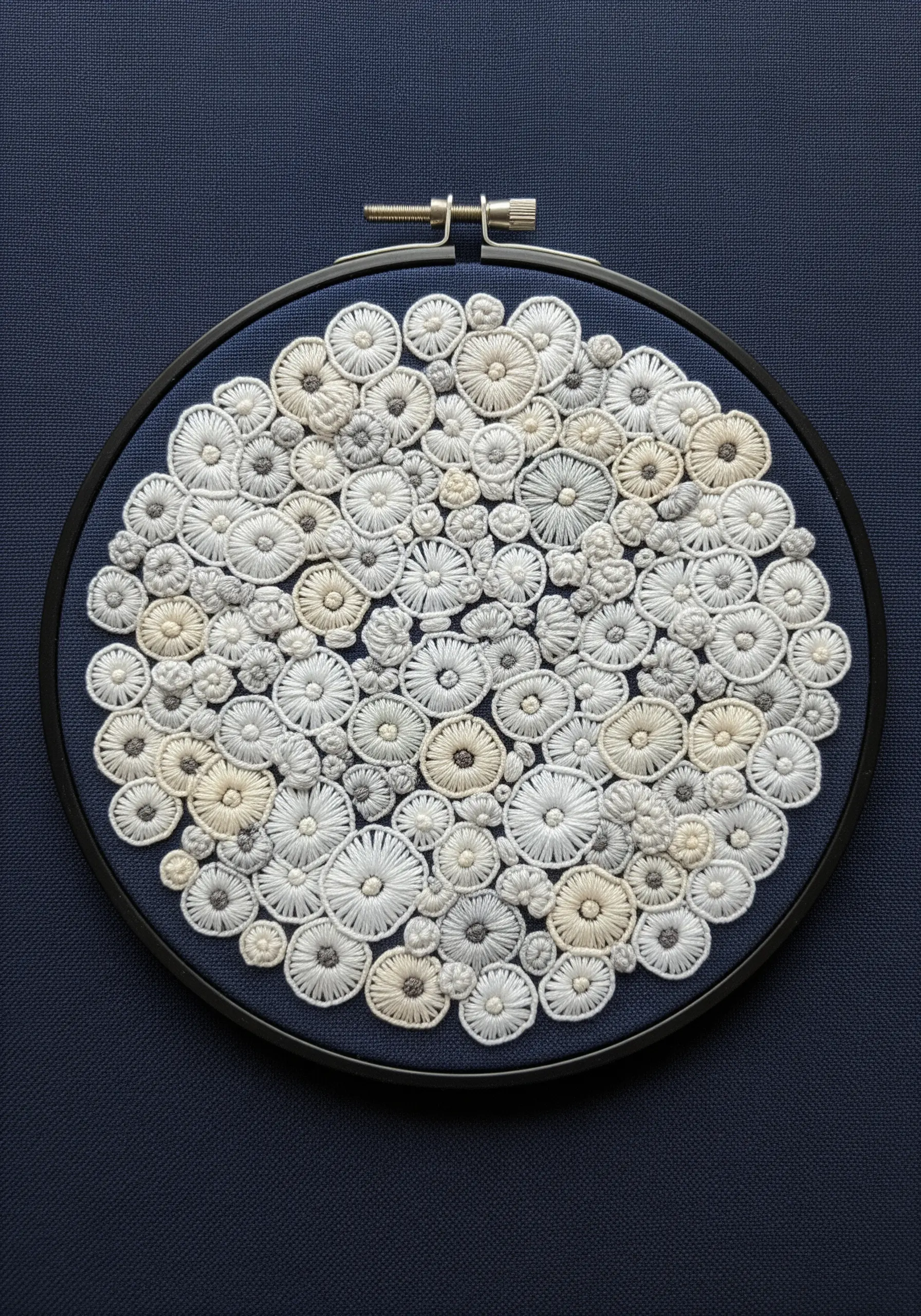
Deconstruct the hydrangea into its essential form—a collection of circles.
Instead of aiming for botanical accuracy, fill the flower’s silhouette with tightly packed woven wheel stitches of varying sizes.
Use a sophisticated, limited palette of off-whites and cool grays against a deep navy background.
This approach transforms a traditional floral subject into a captivating piece of texture-rich, minimalist abstract thread designs perfect for modern Scandinavian home decor.
16. Embellishing Stationery with 3D Ribbon Stitches
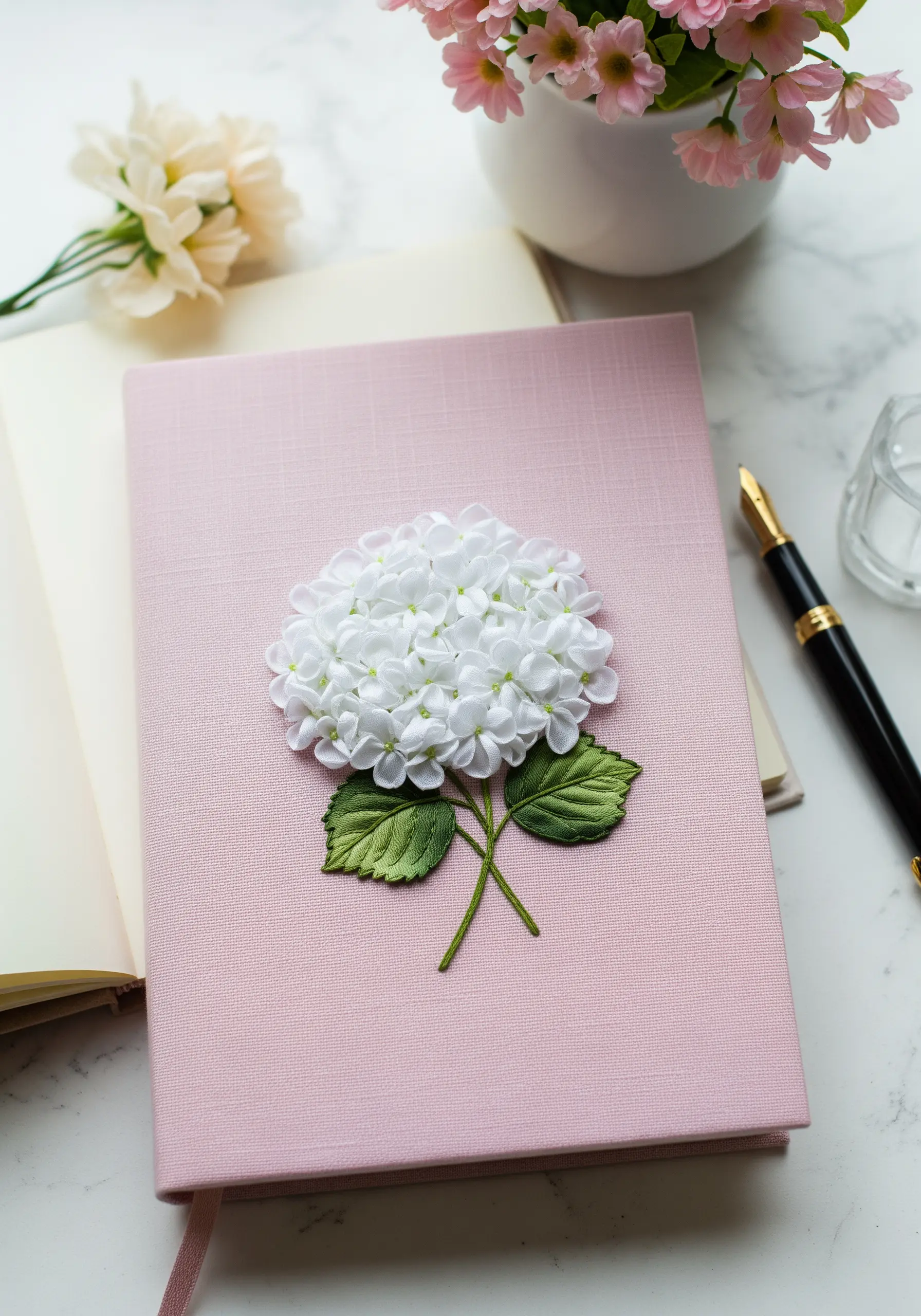
For a quick project with maximum dimensional impact, switch from cotton floss to fine silk ribbon.
Use a simple ribbon stitch to form each petal: bring the needle up through the fabric, lay the ribbon flat, and then pierce the center of the ribbon with your needle to go back down.
This creates a soft, folded petal shape with a beautiful natural sheen.
The inherent body of the ribbon builds instant volume, making it an ideal choice for embellishing a journal cover or handmade card.
17. Creating Perspective with Stitch Size and Color
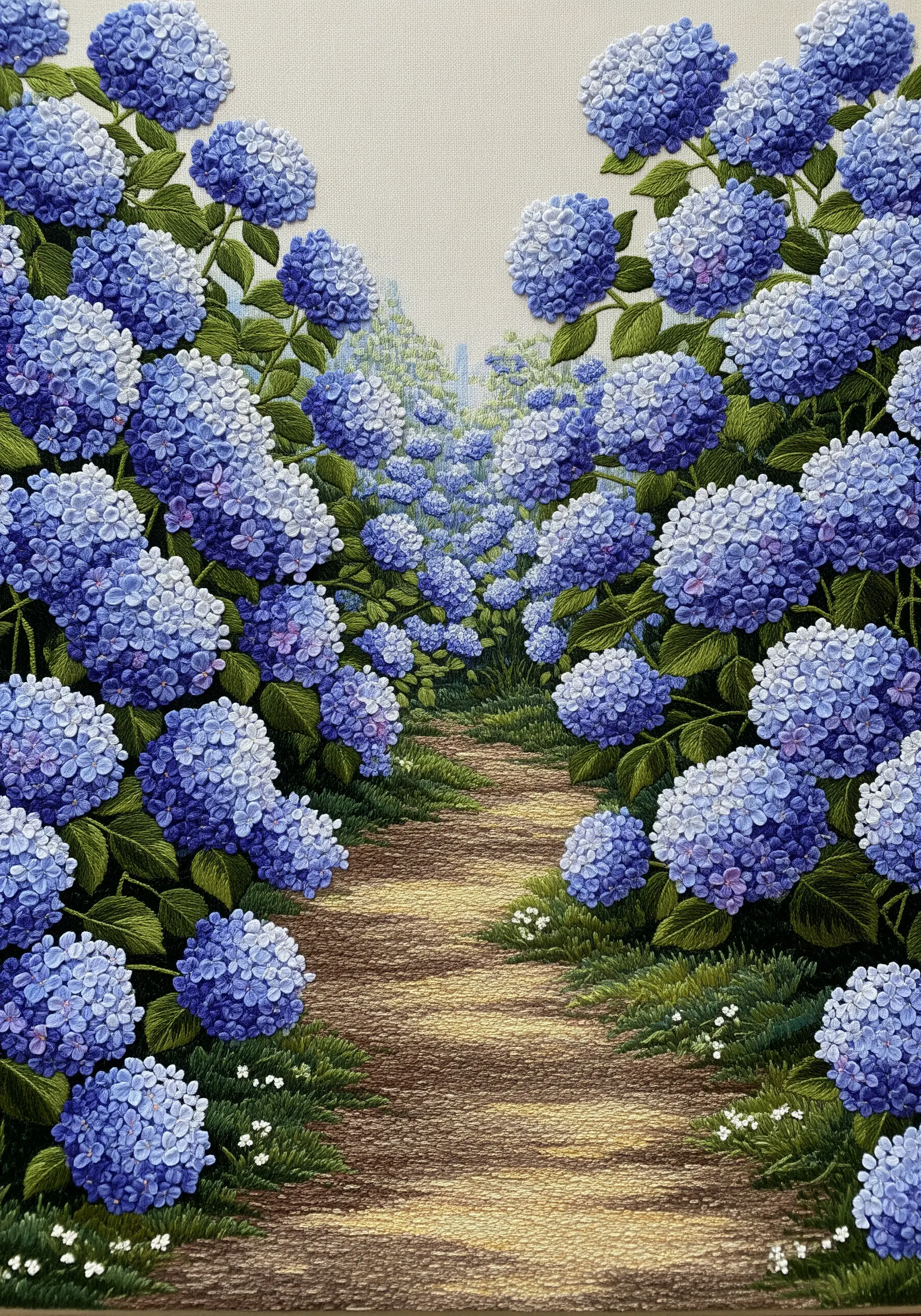
To create the illusion of a field of hydrangeas receding into the distance, you must master atmospheric perspective.
Stitch the hydrangeas in the foreground largest and with the most detail, using a full six strands of bright blue floss.
As you move back along the path, make the flower clusters progressively smaller and use fewer strands of thread.
Crucially, mute the colors of the distant flowers by blending your blue with a bit of gray or soft lavender to mimic how color fades over distance, creating a stunning piece of nature-inspired framed embroidery.