Have you ever finished an embroidery project and felt that something was missing? You mastered the stitches, followed the pattern, but the final piece lacks the energy or intention you envisioned. It’s a common feeling—the gap between a technically correct piece and one that feels truly alive.
A lion or a tiger is more than just an animal motif; it’s a canvas for exploring power, texture, and storytelling. These designs aren’t about simply outlining a shape. They’re about building a mane from three-dimensional yarn, blending colors to create a surrealist vision, or using negative space to capture a feeling of movement.
Each idea that follows is a gateway to elevating your work. These are tangible techniques—ways to think about layering, composition, and stitch choice—that will add that missing layer of artistry to your projects. You have the skill; now it’s time to stitch with fierce intention.
1. Autumnal Fire: Blending Foliage and Fur
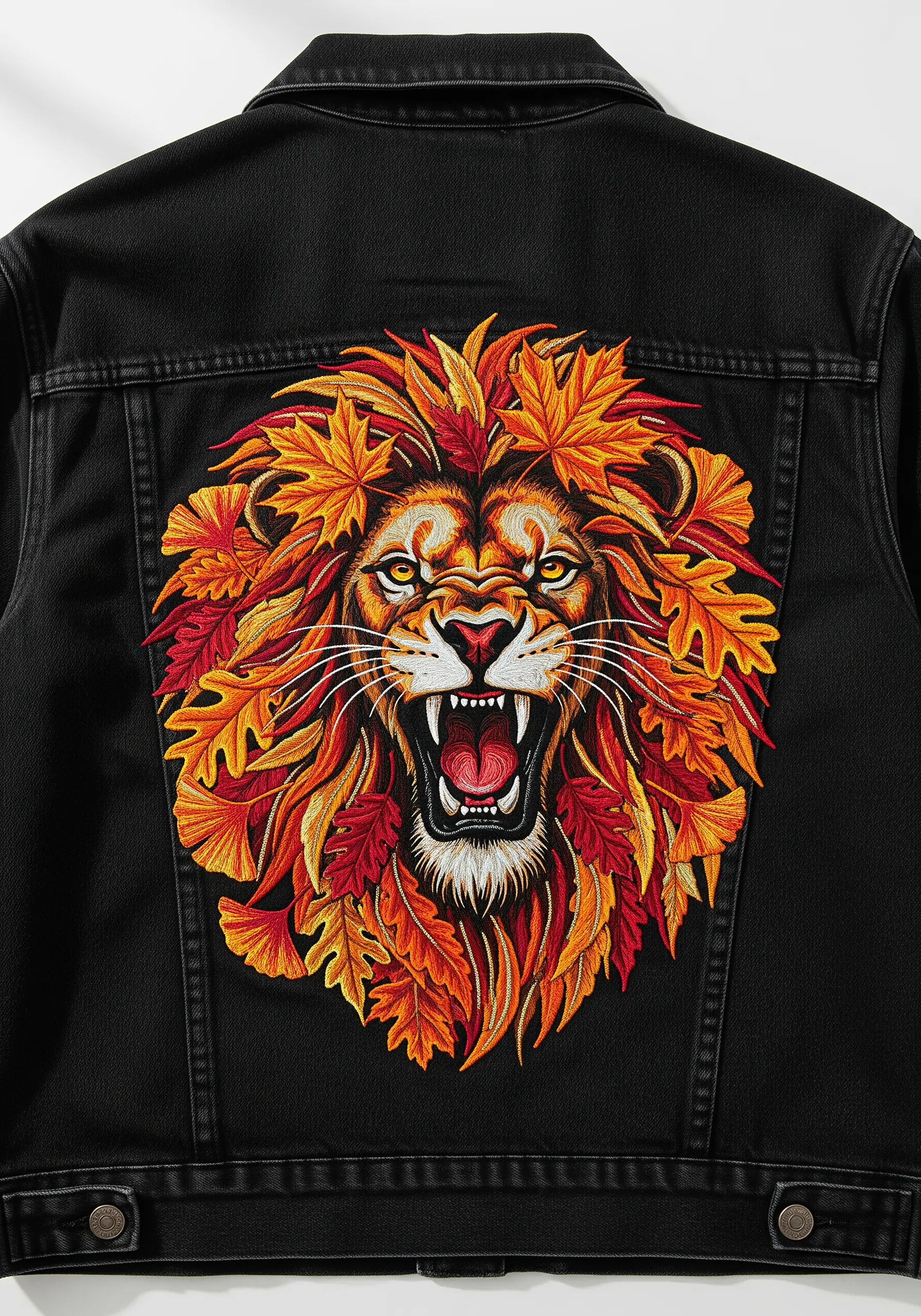
Create a mane with striking textural contrast by stitching the leaves and fur in opposing directions.
Use long-and-short stitch for the lion’s face to achieve smooth, painterly gradients, ensuring the stitches follow the contours of the muscles for realism.
For the leaves, apply satin stitch at varied angles to mimic their natural, chaotic arrangement.
Define the entire design by using a slightly thicker thread (3 strands) for the dark outlines, which makes the warm autumn colors pop dramatically against the black denim.
2. Camouflage Couture: Integrating Pattern and Form
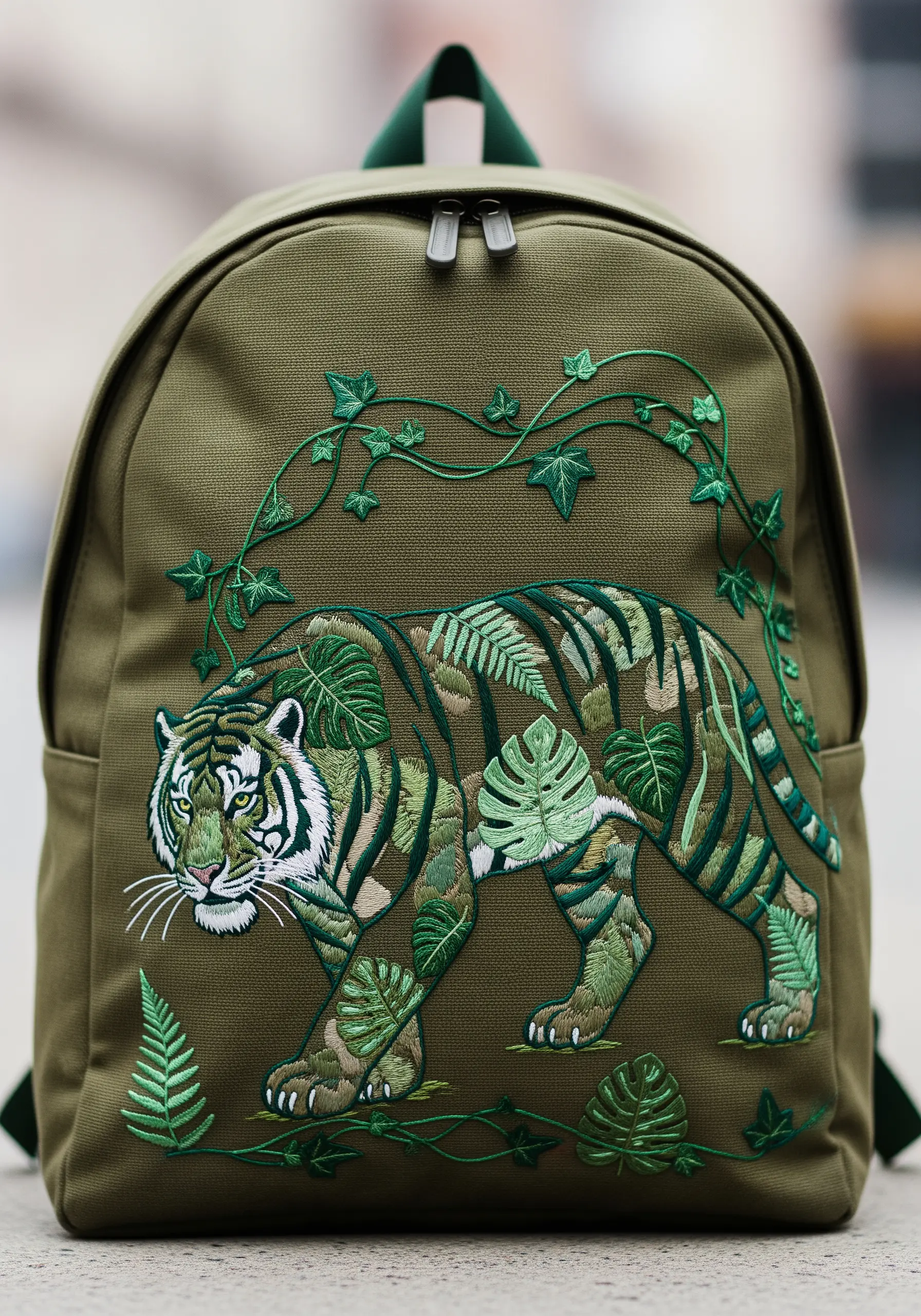
This design cleverly uses fabric appliqué to create complex patterns without hours of dense stitching.
First, trace the tiger’s stripe shapes onto small pieces of patterned fabric, then secure them to your backpack using a lightweight fusible web.
Encase each appliqué piece with a tight, clean satin stitch border to create a polished, patch-like effect that stands out.
For the surrounding vines and leaves, use fishbone stitch in several shades of green to build up a sense of natural depth and movement, making the tiger feel truly integrated into its environment.
3. The Duality Design: Balancing Line Art and Full Color
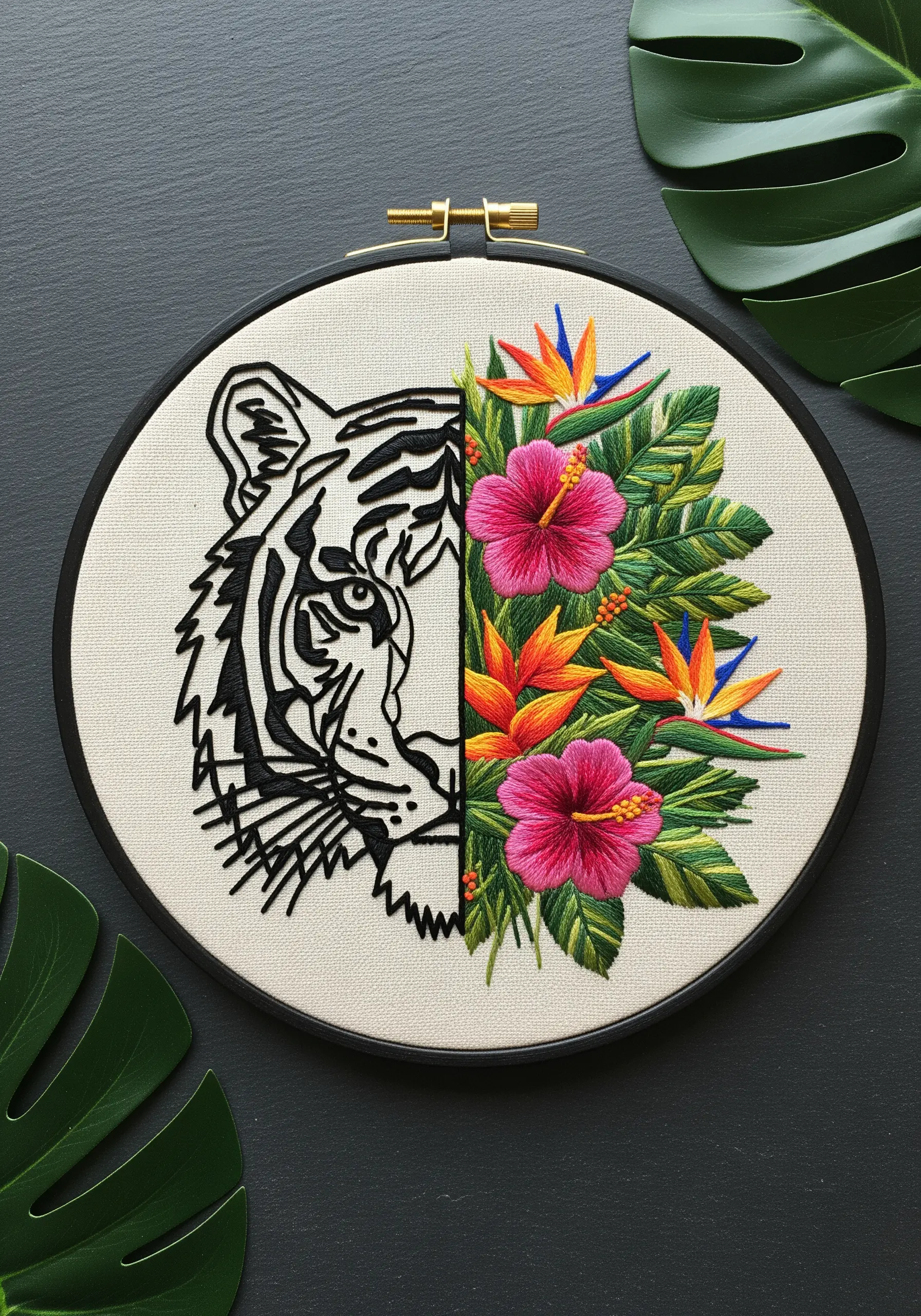
This composition’s power lies in the clean separation between two distinct embroidery styles.
For the line-art half, use a consistent 3-strand backstitch or stem stitch to achieve bold, graphic lines—keep your stitch length uniform, especially on curves, for a sharp finish.
For the floral side, employ abstract thread painting with a long-and-short stitch to seamlessly blend vibrant, saturated colors.
Create a natural sense of dimension by stitching the flower petals first, then layering the green leaves behind them, tucking your stitches just under the petal edges.
4. Minimalist Majesty: Dynamic Line Art with Color Accents
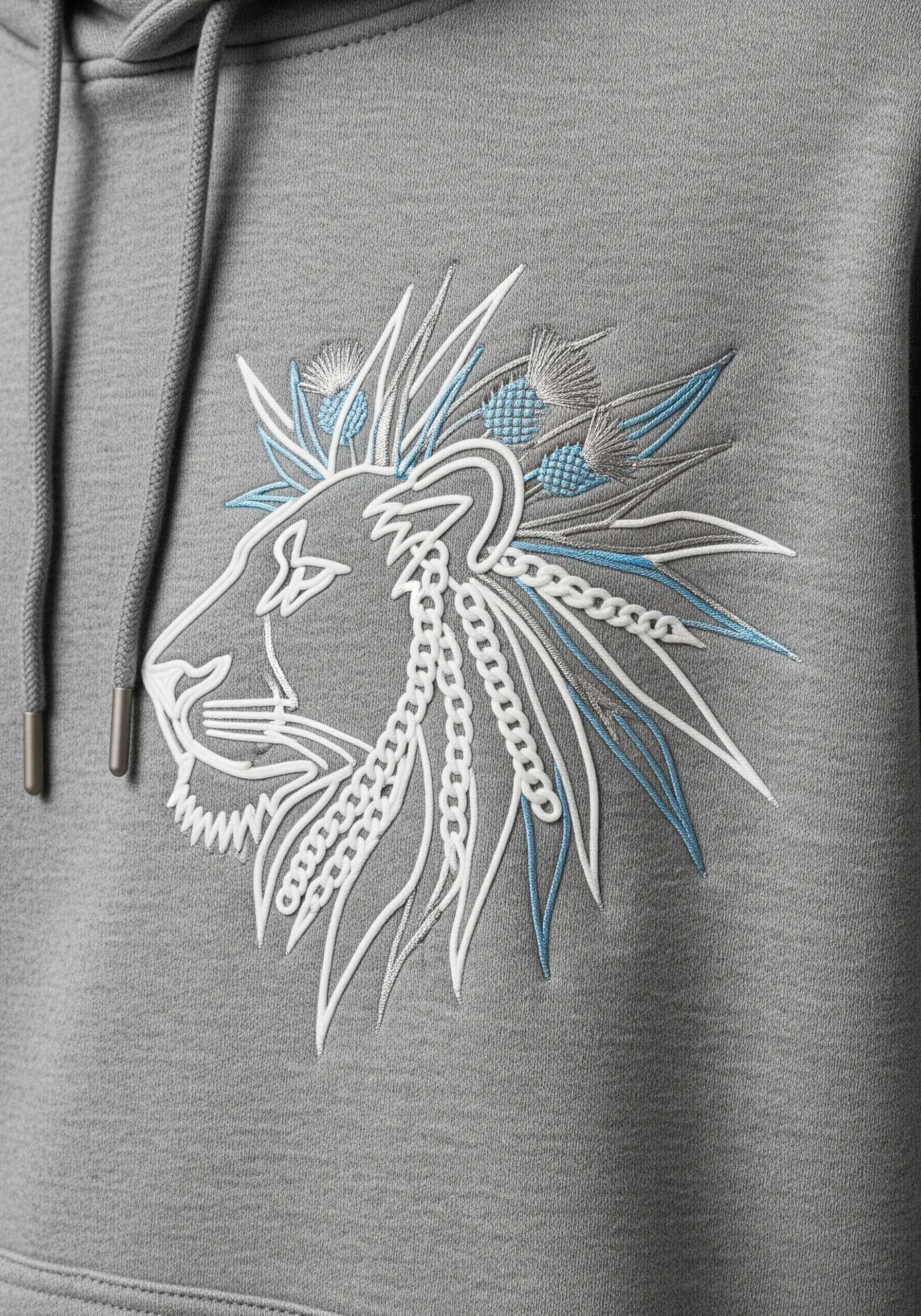
Prove that simplicity can be striking by focusing on line weight and selective color.
Use a single strand of thread for fine details like the eyes and nose, then switch to a bolder 2- or 3-strand thread for the main profile to create visual hierarchy.
Introduce color sparingly with satin-stitched blue thistles; this small pop of color draws the eye and adds personality without overwhelming the minimalist aesthetic.
Crucially, when stitching on stretchy knit fabrics like a hoodie, always apply a cut-away stabilizer to the back to prevent the design from puckering or distorting.
5. Celestial Tiger: High-Contrast Stitching on Satin
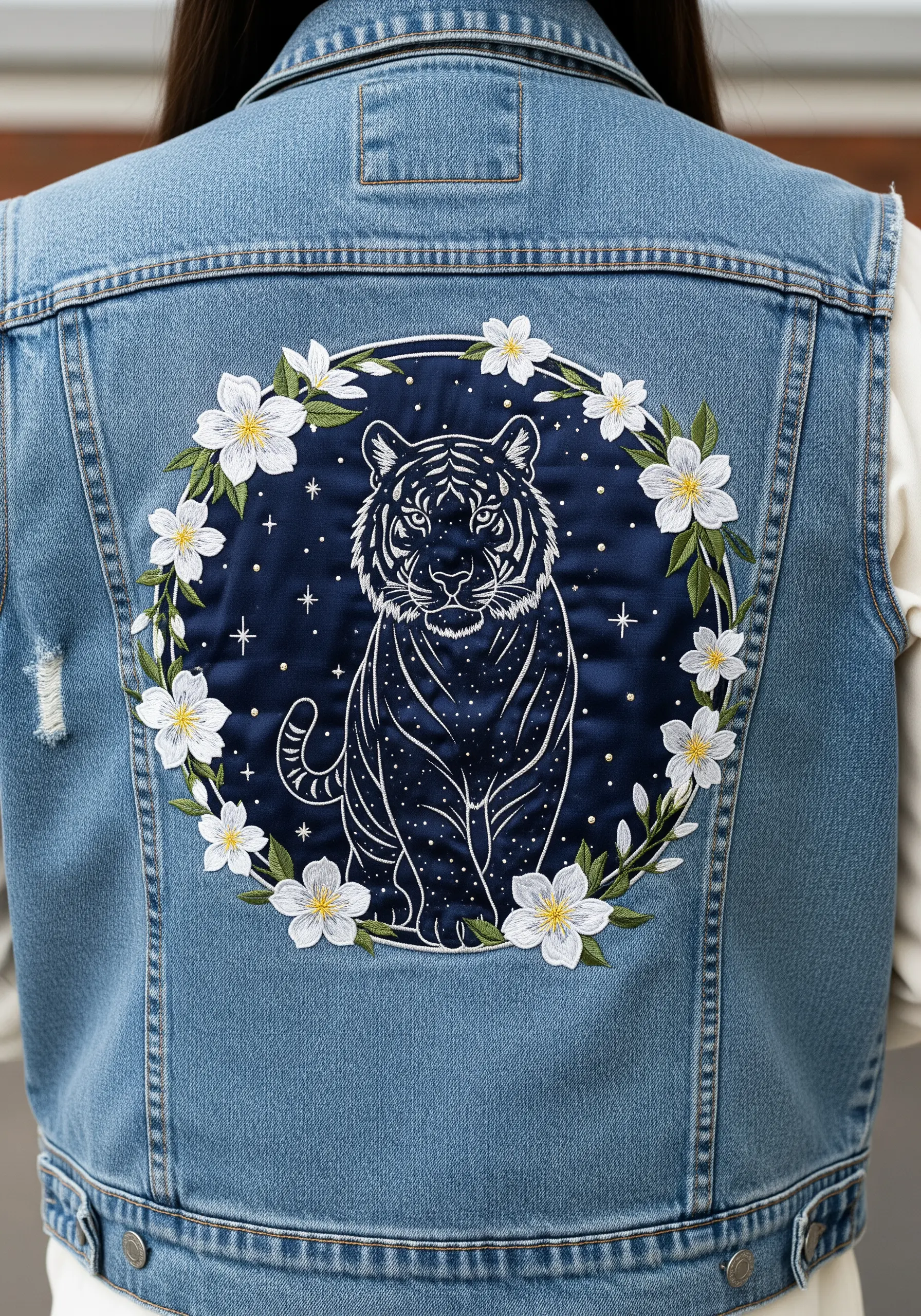
Stitching on a delicate fabric like satin requires precision to prevent snags—always use a sharp, fine needle (a size 9 or 10 is ideal).
The design’s drama comes from the stark contrast between bright white thread and the deep navy satin background.
Use a clean backstitch for the tiger’s outline and add tiny, scattered French knots or single straight stitches to represent stars.
Frame the scene with a floral wreath, using satin stitch for the petals and a single French knot for each flower’s center to complete the crisp, ethereal look.
6. Ferocious Florals: Juxtaposing Power and Delicacy
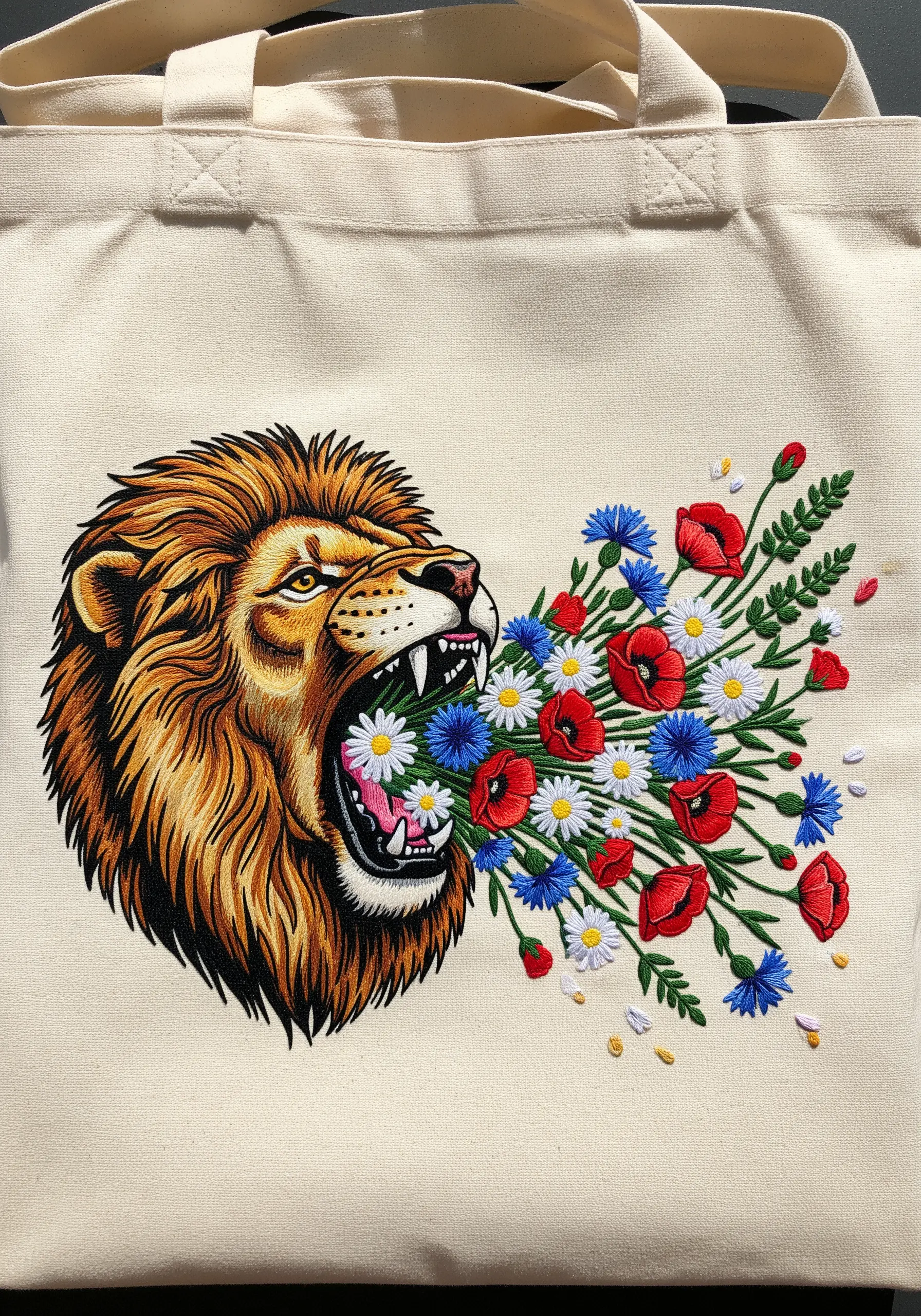
The artistic tension in this design comes from the contrast between the lion’s fierce power and the soft wildflowers.
Render the lion’s mane with long-and-short stitch using a rich palette of golds, browns, and ochres to create realistic depth and texture.
For the flowers, shift to more delicate stitches to enhance the contrast: lazy daisy stitch for small white petals, satin stitch for the bold red poppies, and tiny French knots for the blue cornflowers.
This thoughtful variation in stitch style ensures that both elements feel distinct and impactful.
7. Solar Power: Framing a Motif with Symbolic Shapes
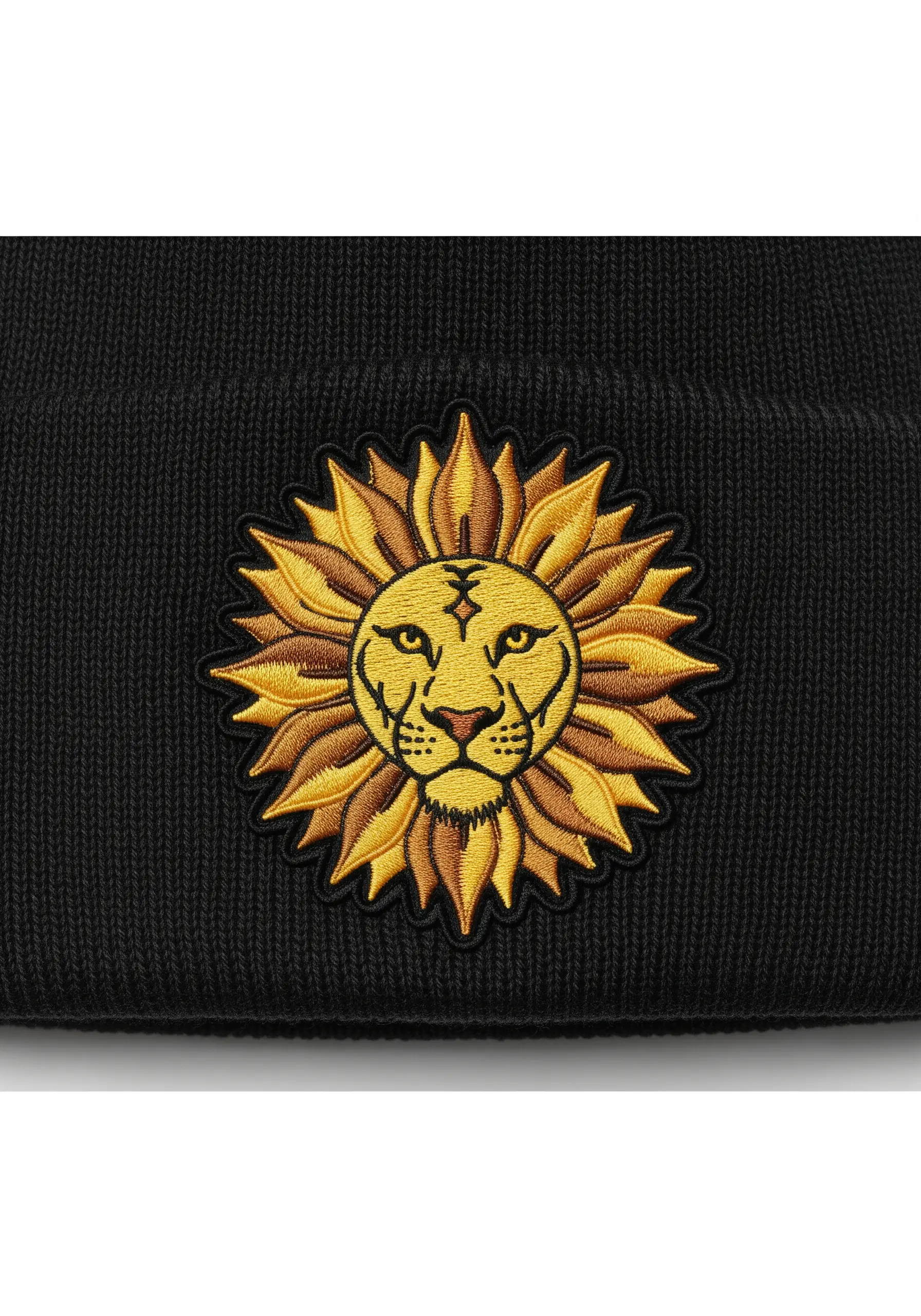
This strong, graphic design merges two powerful symbols into one cohesive statement patch.
To create the sharp, clean edges of the sunflower petals, use a dense satin stitch, angling your stitches to radiate from the center for a sense of energy and movement.
Inside, keep the lion’s facial features simple with a clean backstitch outline to avoid overcrowding the small space.
A disciplined color palette of gold, yellow, and brown keeps the design bold and readable, even from a distance.
8. Sleeve Story: Creating a Scene with Strategic Placement
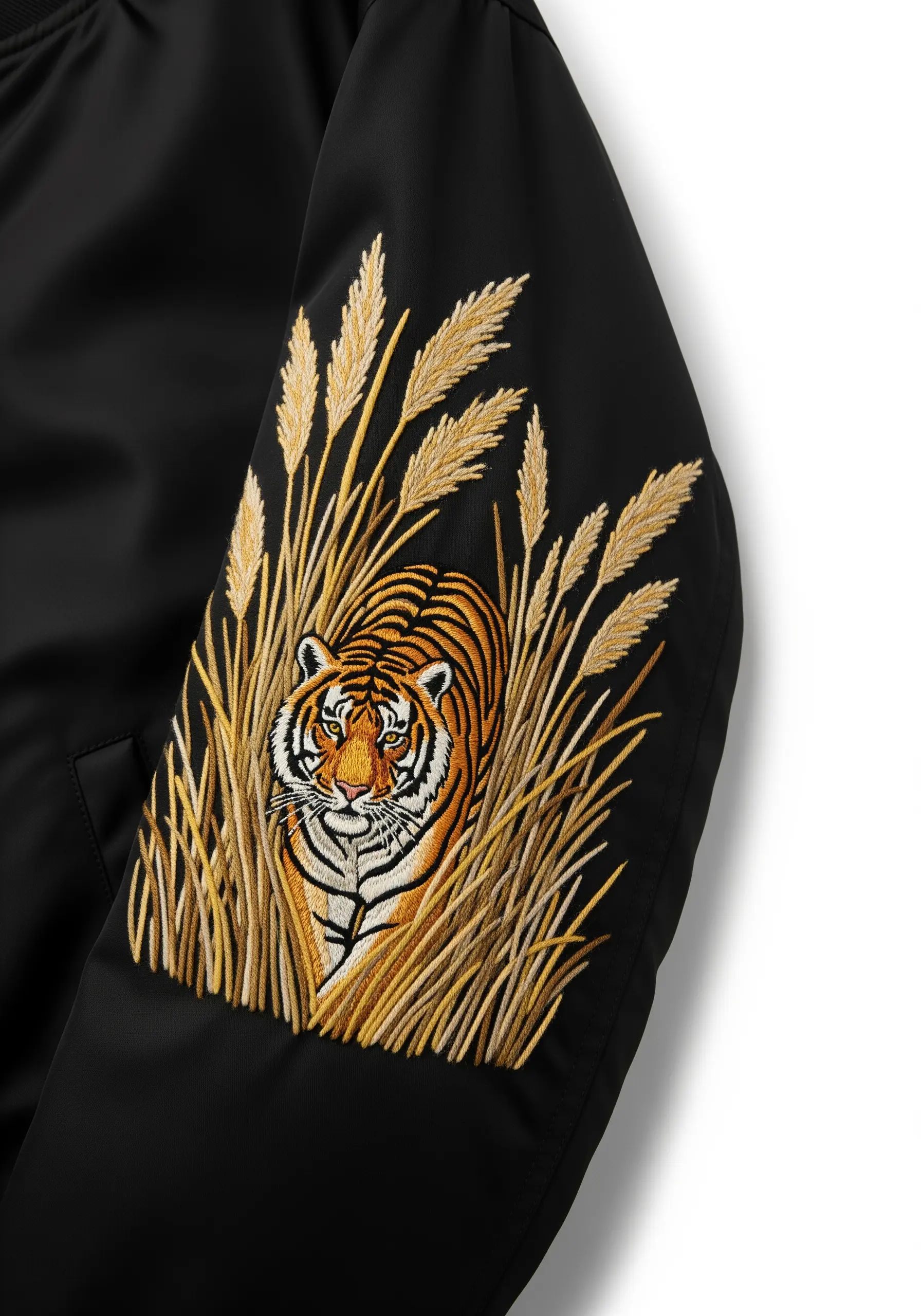
Use the unique canvas of a jacket sleeve to frame your embroidery and tell a miniature story.
The key to this scene is layering: stitch the tiger first, using thread painting to blend its orange and white fur seamlessly.
Next, add the tall grass in the foreground using long, overlapping straight stitches in varied shades of gold and beige.
By stitching some blades of grass *over* the tiger’s body, you create a convincing illusion of depth, making it look as though it’s truly hiding.
9. Sculptural Mane: Incorporating 3D and Mixed-Fiber Textures
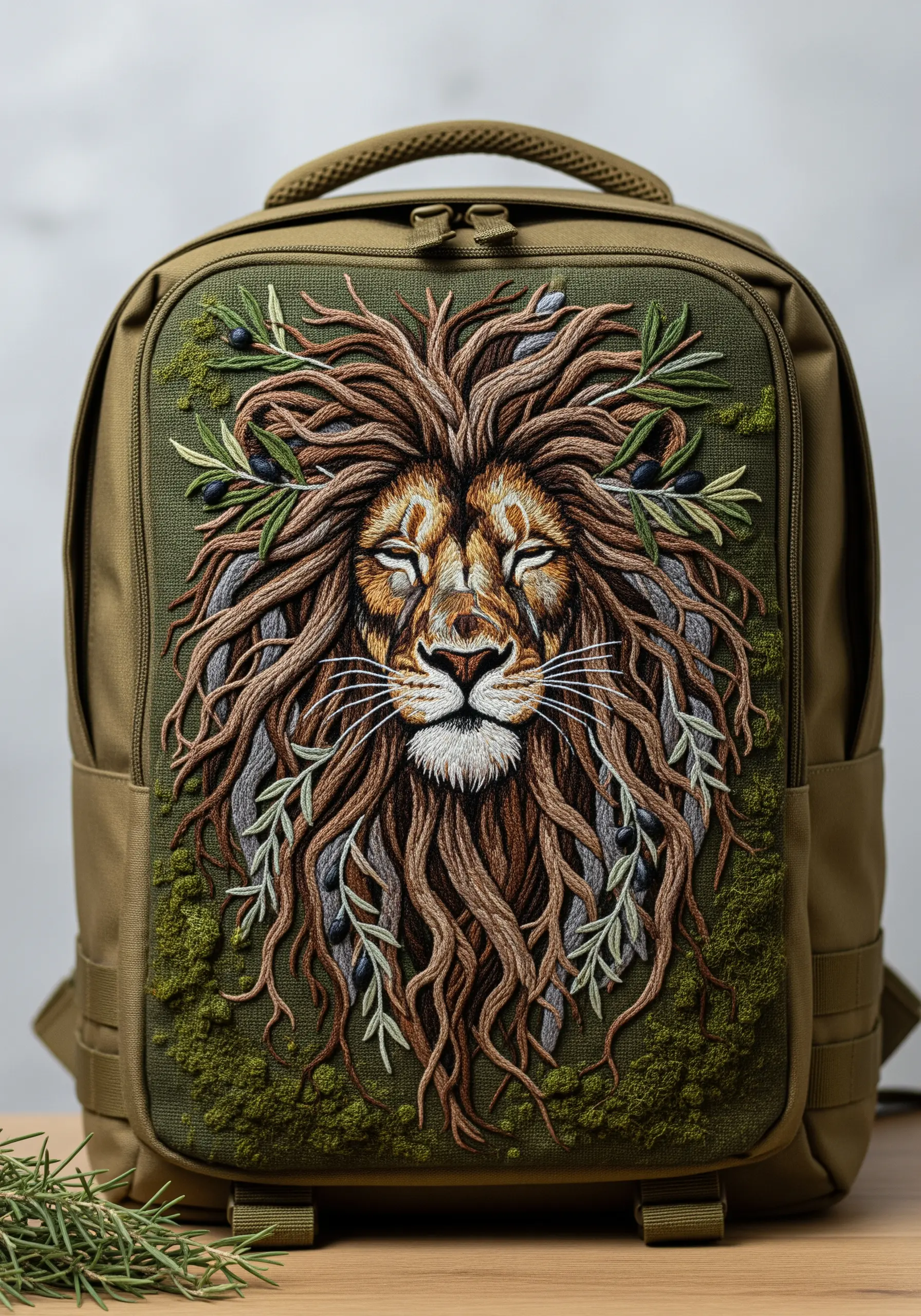
Take your embroidery off the flat surface by introducing sculptural, three-dimensional elements.
Build the lion’s mane using couching: lay down thick, twisted yarns and anchor them with small, discreet stitches.
Incorporate clusters of Turkey work or French knots with mossy green thread to mimic realistic texture, and use fishbone stitch for the delicate olive leaves.
This mixed-fiber embroidery approach creates a dynamic, tactile quality that truly brings the piece to life.
10. Pocket Power: Framing Your Art within Garment Lines
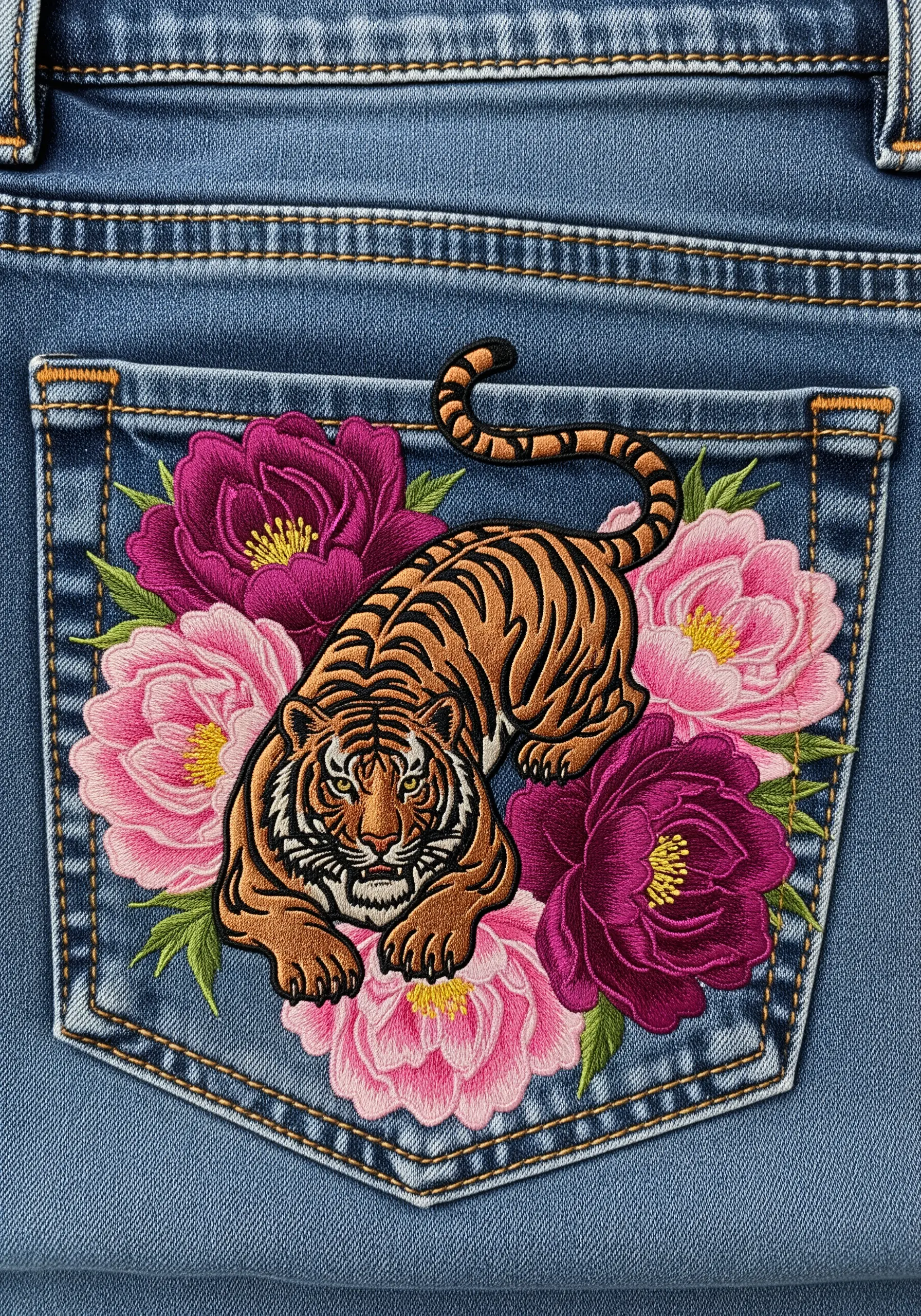
A jean pocket offers a perfect, pre-defined frame for a compact and impactful design.
To give the peony embroidery a full, plush appearance, use long-and-short stitch for smooth color blending on the petals, adding satin stitch highlights to the edges.
Use a bold, dark outline for the tiger to ensure it stands out as the focal point among the vibrant florals.
For the easiest stitching experience, carefully remove the pocket with a seam ripper, embroider the design, and then sew it back onto the jeans.
11. Mirrored Motif: Achieving Balance with Symmetrical Design
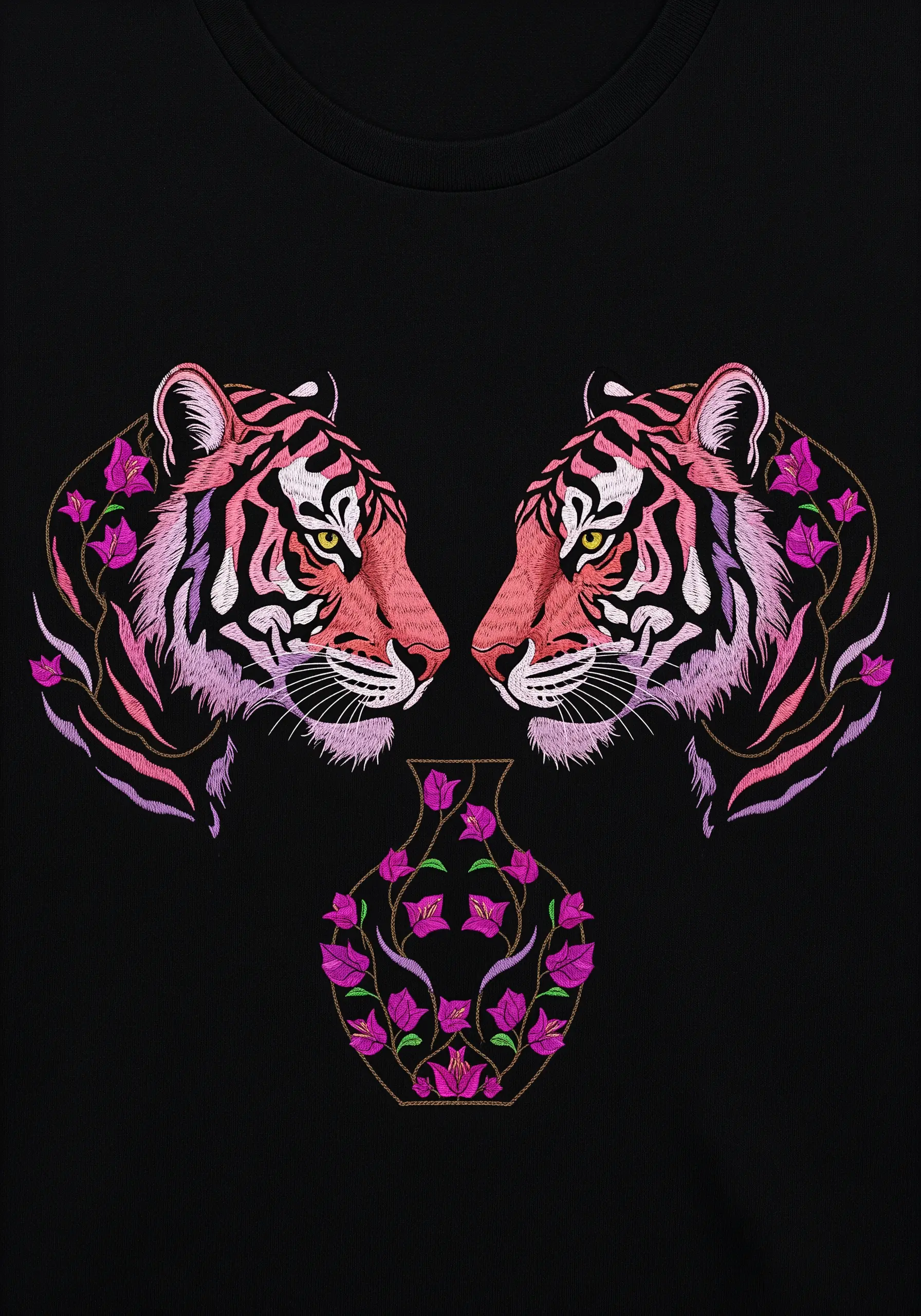
Symmetry creates an immediate sense of polish, elegance, and intentional artistry.
To ensure your mirrored design is flawless, print and trace your pattern using a light box or a bright window to transfer it perfectly onto the fabric.
Give a classic subject a modern, unexpected twist by choosing an unconventional color palette, like these shades of pink, rose, and purple.
For the central vase, use a whipped backstitch to create a raised, cord-like outline that adds a subtle textural contrast to the satin-stitched tigers.
12. Botanical Crown: Weaving Natural Elements into Fur
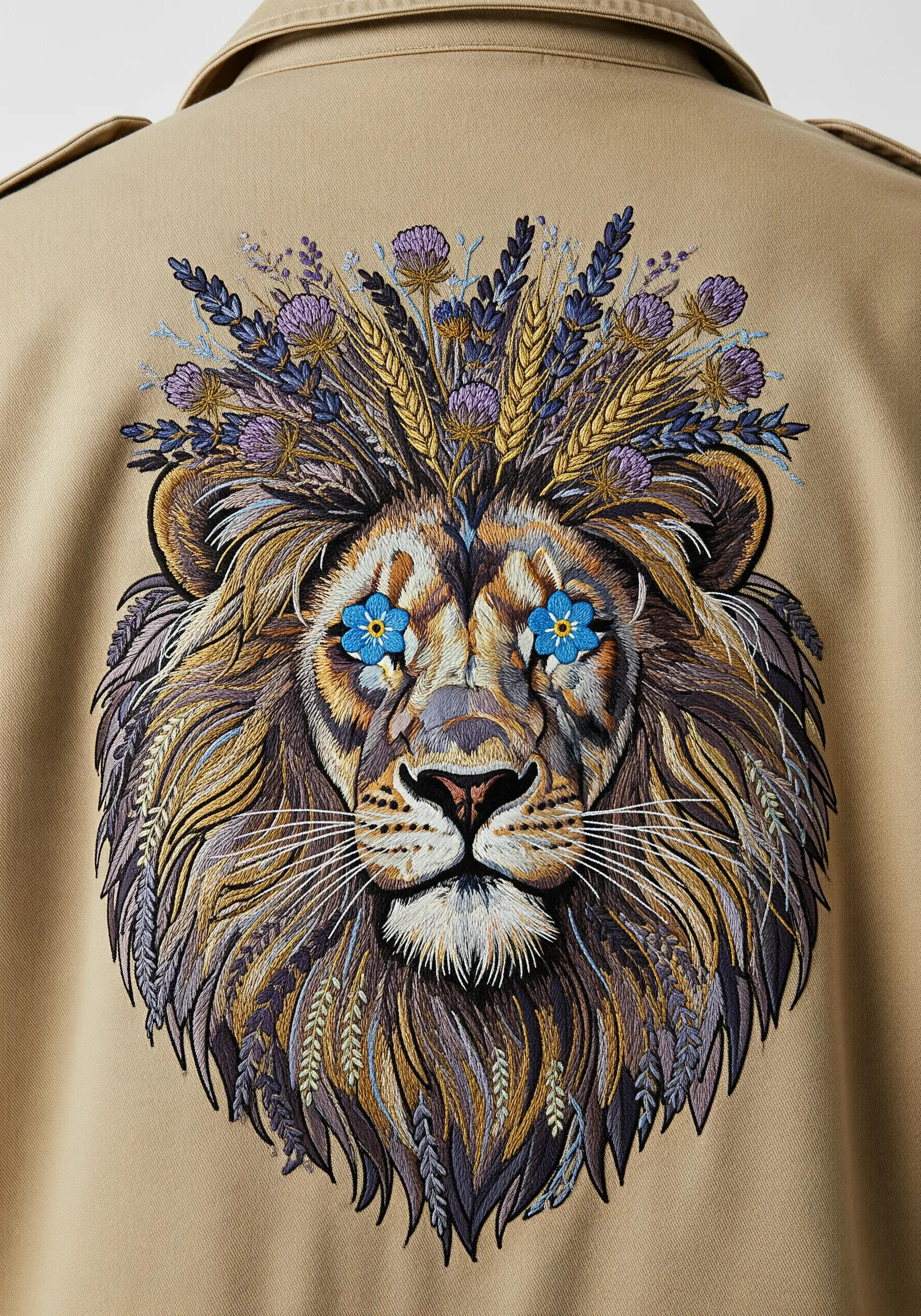
Reimagine a traditional silhouette by weaving botanical elements directly into the lion’s mane.
Create textural variety by using long straight stitches for wheat stalks, lazy daisy stitches for lavender, and French knots for thistle tops.
The piercing blue eyes, rendered in satin stitch, become a cool-toned focal point against the warm, earthy palette of the mane.
Allow the botanicals to extend beyond the typical outline of the mane for a softer, more organic, and windswept feel.
13. Surreal Fusion: Merging Unexpected Subjects
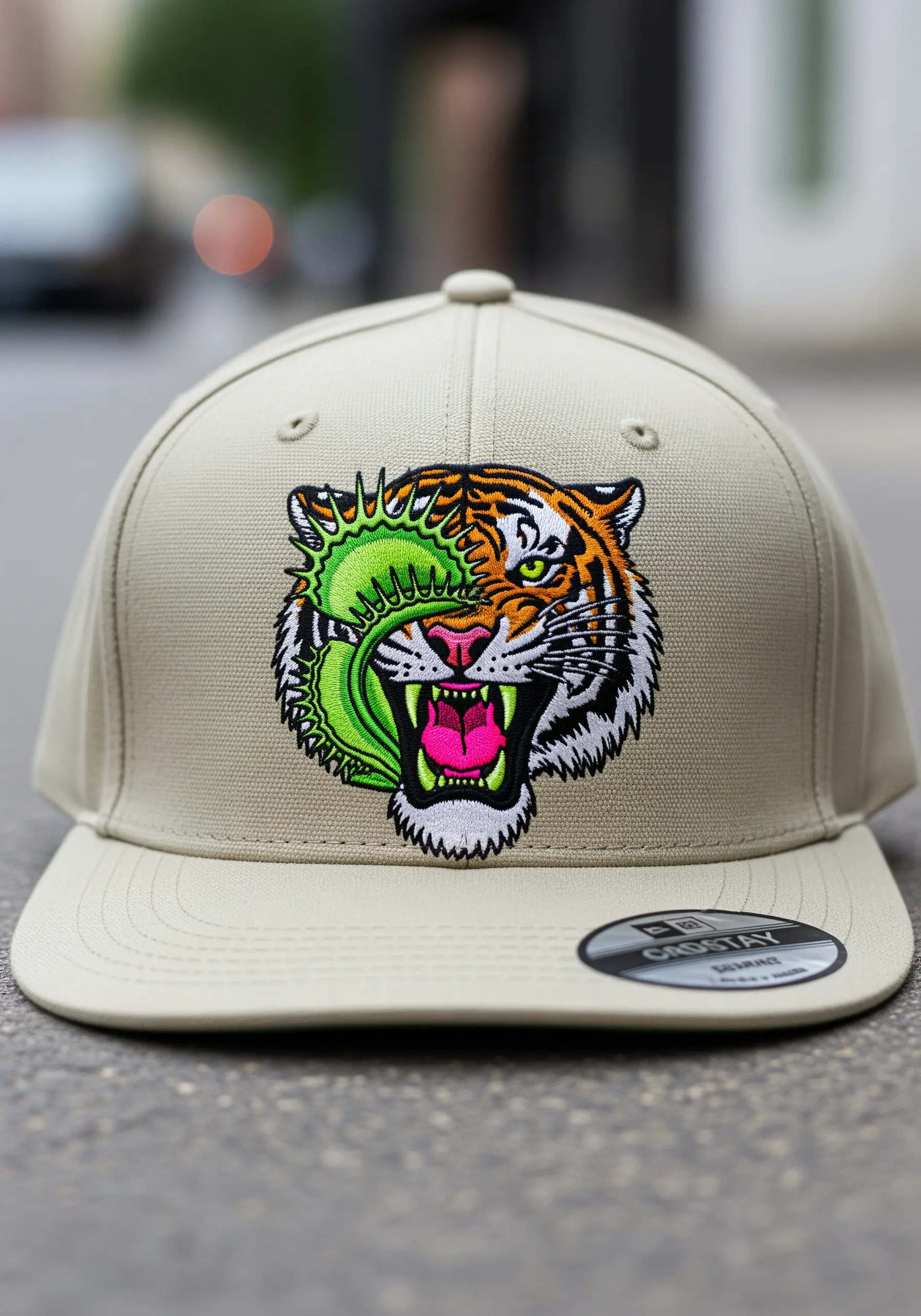
Create a truly unforgettable design by fusing two completely unexpected motifs into one surreal image.
The visual shock of the neon green and hot pink Venus flytrap against the tiger’s natural orange creates an exciting and modern aesthetic.
Use a dense, solid satin stitch for the plant to give it an almost graphic, sticker-like quality, which enhances the surrealist effect.
When embroidering on a curved surface like a cap, use a small 4-inch hoop and plenty of stabilizer to keep the fabric taut and prevent distortion.
14. Chromatic Shift: Reimagining a Tiger with a New Palette
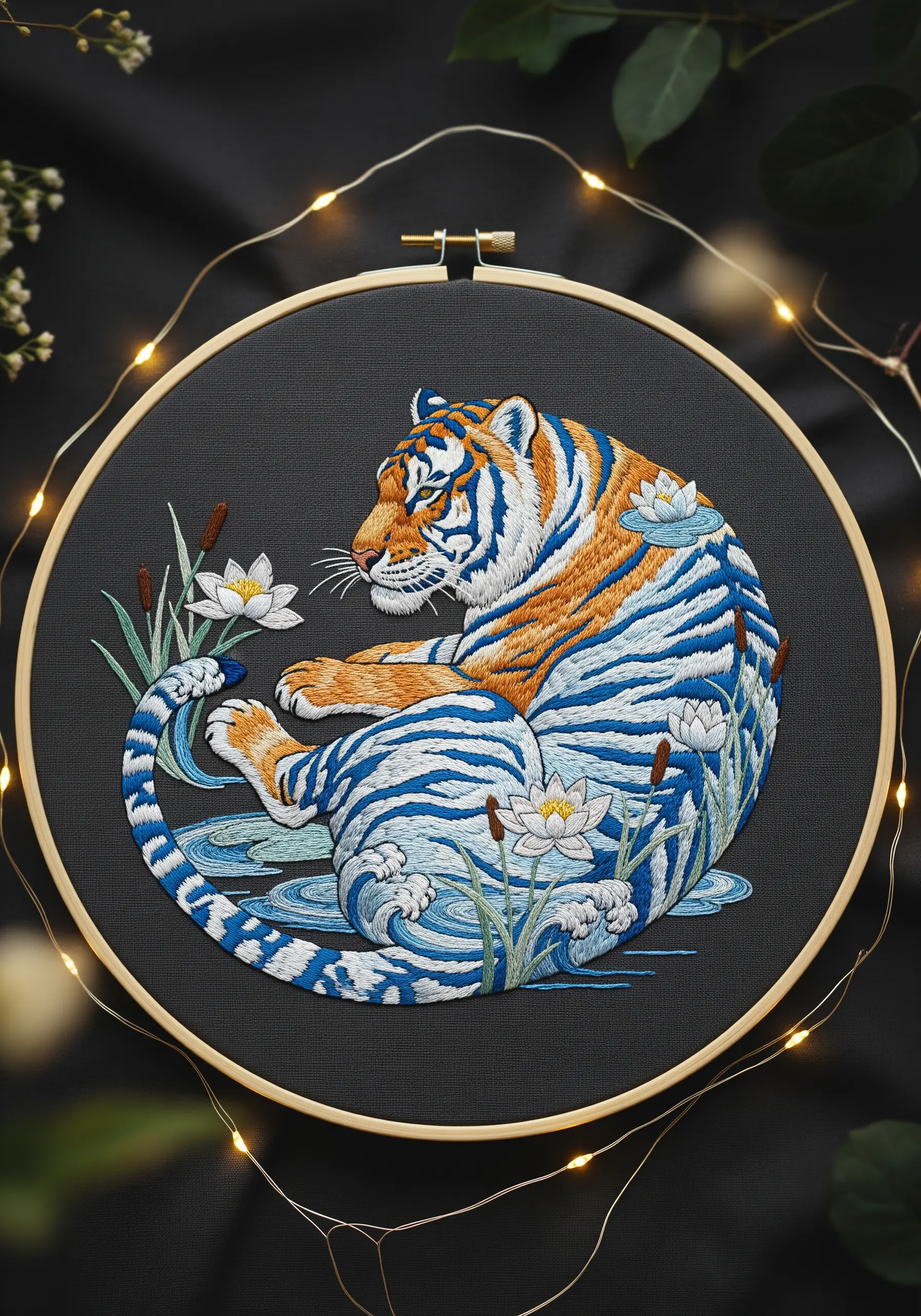
Break free from realism and give your work an artistic edge by assigning a new color story to a familiar subject.
Here, the cool blues and warm oranges create a beautiful, ethereal contrast that feels both calming and energetic.
To render the water ripples, use concentric lines of split stitch or stem stitch, varying the shades of blue to create a sense of light and depth.
Even with an abstract palette, ensure your satin stitches follow the contours of the tiger’s body to give the form a convincing, three-dimensional feel.
15. Ephemeral Mane: Capturing Movement with Line and Space

This design masterfully captures a sense of lightness and motion through delicate stitching and the use of negative space.
For each dandelion seed, use a single strand of white thread to create the parachute-like top with a series of detached straight stitches or an open lazy daisy stitch.
Anchor each one with a tiny brown French knot at the base to represent the seed.
The empty space between the floating seeds is just as crucial as the stitches—it’s what gives the piece its feeling of gentle, windswept movement.
16. Peek-a-Boo Perspective: Using Foliage to Create Depth
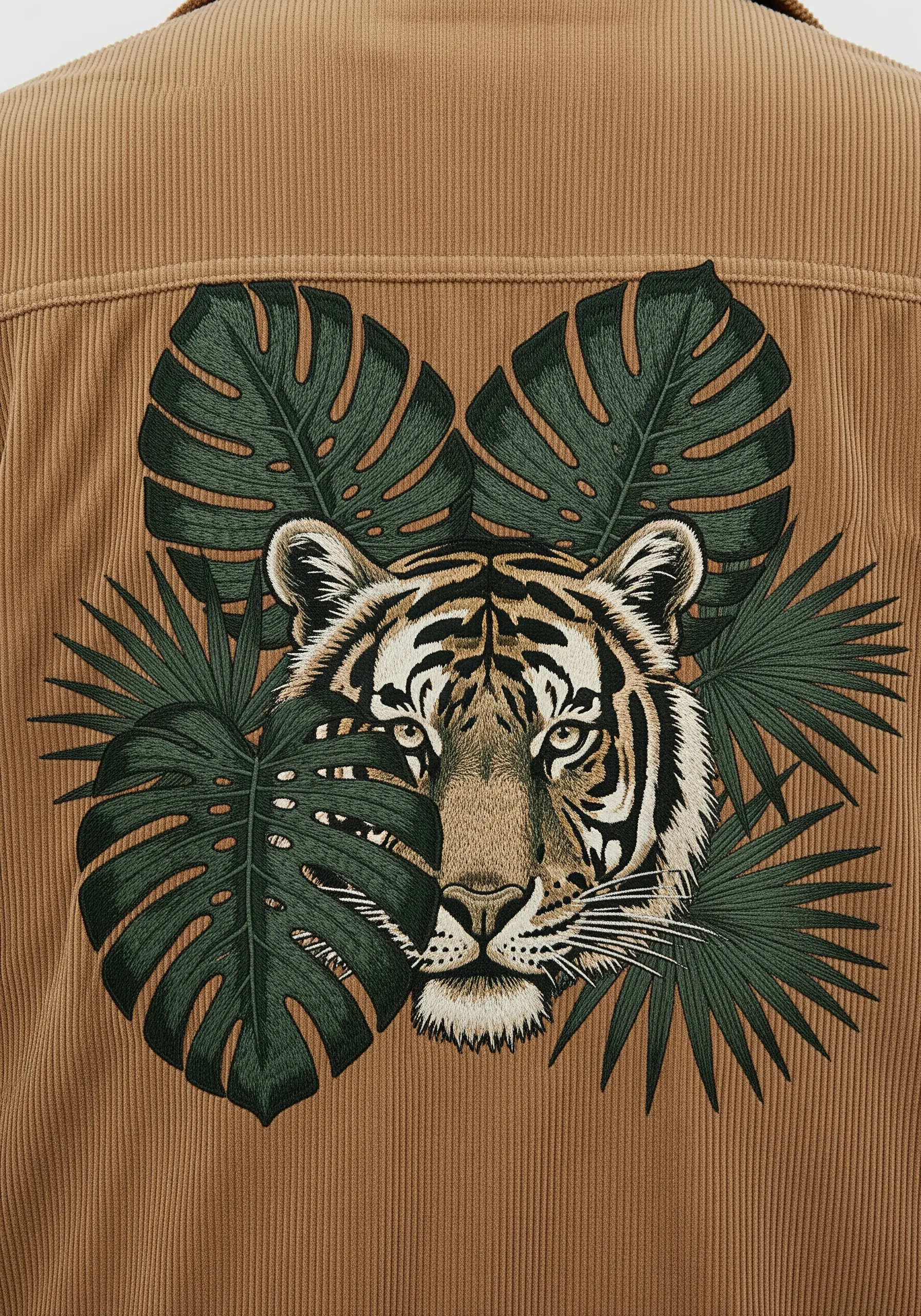
Create a compelling sense of mystery and depth by partially obscuring your main subject.
To achieve this effect, stitch the tiger’s face first, then add the large tropical leaves in the foreground so they overlap the animal slightly.
Use a fishbone stitch for the leaves to create a realistic central vein and give them dimension.
The texture of corduroy adds another layer of visual interest, but always back it with a stabilizer to prevent your stitches from sinking into the fabric’s grooves.
17. Folk Art Fusion: Embracing Bold Color and Pattern
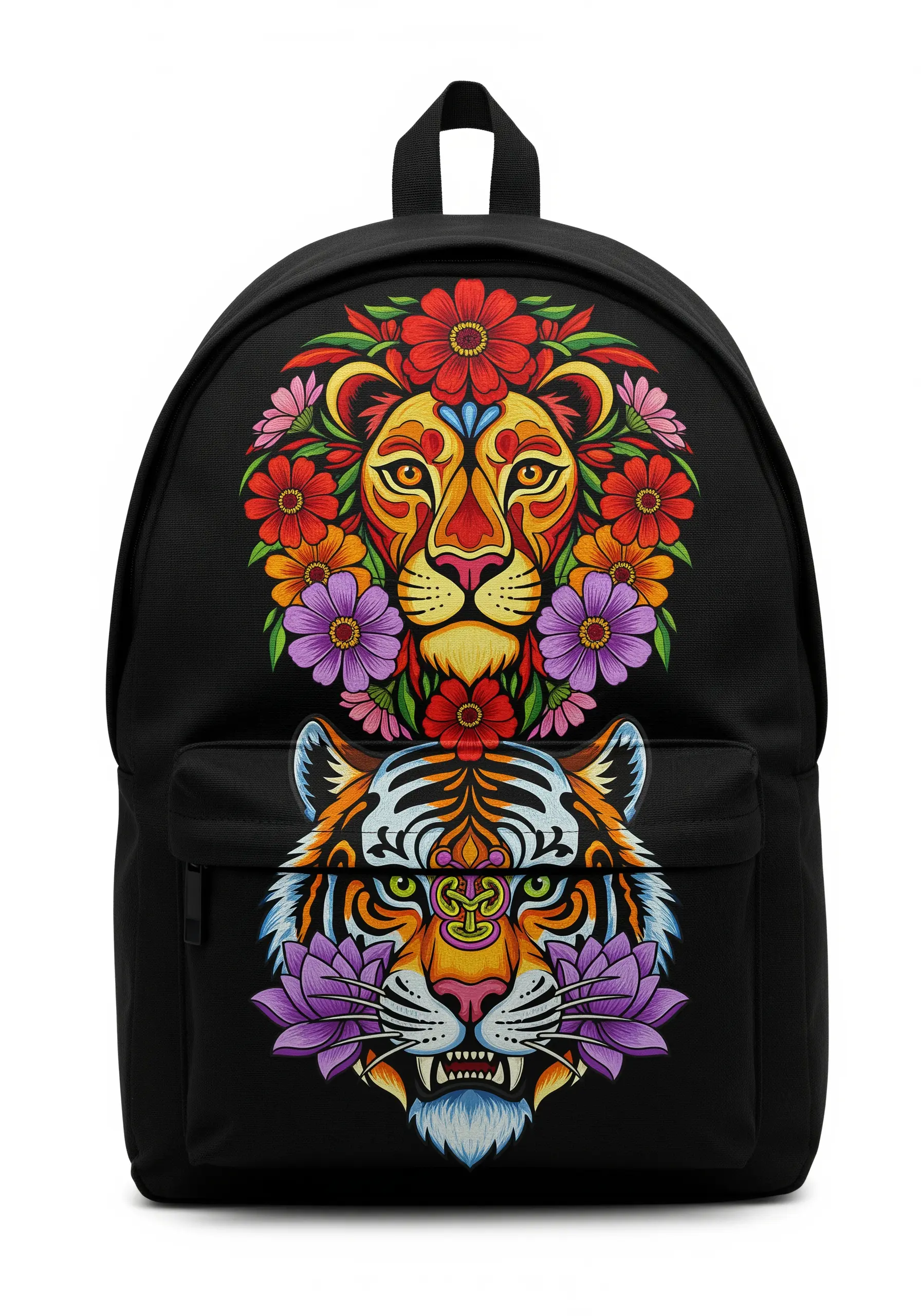
This vibrant style celebrates bold, flat fields of color and decorative patterning over realism.
Use a dense satin stitch to fill in each colored section, creating a smooth, solid appearance.
Make each shape pop by outlining it with a contrasting color, like black around the bright reds and oranges.
Incorporate small, repeating motifs like dots and swirls within larger shapes to enhance the folk-art feel, transforming the animals into energetic, symbolic figures perfect for a statement backpack.